
Showing 758 items matching "world world 1939 - 1945"
-
 Sunshine and District Historical Society Incorporated
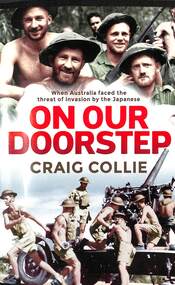
Book - On Our Doorstep, Craig Collie, 2020
... World World 1939 - 1945...The book was given to John Alchin, by Alan Dash curator of the Sunshine & District Historical Society for Christmas 2021 World World 1939 - 1945 history The history of when Australia faced the direct threat of a Japanese invasion during World War II On Our Doorstep When Australia faced the threat of invasion by the Japanese Soft covered book with photographs of Australian soldiers on the front. ...The history of when Australia faced the direct threat of a Japanese invasion during World War IISoft covered book with photographs of Australian soldiers on the front.non-fictionThe history of when Australia faced the direct threat of a Japanese invasion during World War IIworld world 1939 - 1945, history -
 Kew Historical Society Inc
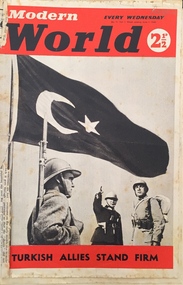
Magazine - Periodical, Oldhams (Watford) Limited, Modern World: The Pictorial Review, No.11. Vol.1, 1940
... world...second world war 1939-1945...Together it forms the largest privately-donated collection within the archives of the Kew Historical Society. modern world second world war 1939-1945 A magazine in tabloid format published in June 1940. The magazine includes a number of articles about the Second World War. ...Modern Wonder was a largely factual magazine aimed at boys and young men. It had many articles and pictures on science, engineering and warfare etc. In some of the magazines, the Flash Gordon comic strip is printed in colour on the back cover. Issues were usually around 20 pages in length, with the covers and inside two pages printed in colour. The magazine was printed in Great Britain by Oldhams (Watford) Limited, St. Albans Rd., Watford. The magazine was in "tabloid" format, approximate dimensions 36 cm x 27 cm. The magazine (cost two pence, every Wednesday) began publication in May 1937 under the title Modern Wonder, and went through a few name changes, becoming Modern Wonders in December 1939 and Modern World from March 1940 until the magazine stopped in March 1941, possibly due to wartime paper shortages in England. (Source: Wikipedia)This work forms part of the collection assembled by the historian Dorothy Rogers, that was donated to the Kew Historical Society by her son John Rogers in 2015. The manuscripts, photographs, maps, and documents were sourced by her from both family and local collections or produced as references for her print publications. Many were directly used by Rogers in writing ‘Lovely Old Homes of Kew’ (1961) and 'A History of Kew' (1973), or the numerous articles on local history that she produced for suburban newspapers. Most of the photographs in the collection include detailed annotations in her hand. The Rogers Collection provides a comprehensive insight into the working habits of a historian in the 1960s and 1970s. Together it forms the largest privately-donated collection within the archives of the Kew Historical Society.A magazine in tabloid format published in June 1940. The magazine includes a number of articles about the Second World War.modern world, second world war 1939-1945 -
 Returned Nurses RSL Sub-branch
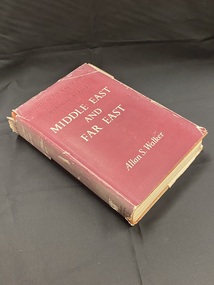
Book - Hardcover book, Allan Walker, Middle East and Far East, 1953
... World War...World War 1939-1945...World...WW2 WWII Second World War World War 1939-1945 World War 1939-1945 medical care Military medicine history medical units in the Second World War Australian Medical Services - Middle East and Malaya History of medical care in the A.I.F. leading up to and covering the Second World War in the Middle East and Malaya. ...History of medical care in the A.I.F. leading up to and covering the Second World War in the Middle East and Malaya.Burgundy cloth-bound book with torn burgundy dust-jacket. Series title printed in black across the top of the cover and title printed in white across the centre. Author's name printed in white across the bottom of the cover. The spine contains the same information, it is quite worn and marked.non-fictionHistory of medical care in the A.I.F. leading up to and covering the Second World War in the Middle East and Malaya.ww2, wwii, second world war, world war 1939-1945, world war 1939-1945 medical care, military medicine history, medical units in the second world war, australian medical services - middle east and malaya -
 Returned Nurses RSL Sub-branch
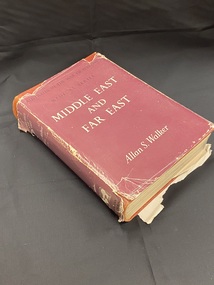
Book - Hardcover book, Allan Walker, Middle East and Far East, 1953
... World War...World War 1939-1945...World...WW2 WWII Second World War World War 1939-1945 World War 1939-1945 medical care Military medicine history medical units in the Second World War Australian Medical Services - Middle East and Malaya History of medical care in the A.I.F. leading up to and covering the Second World War in the Middle East and Malaya. ...History of medical care in the A.I.F. leading up to and covering the Second World War in the Middle East and Malaya.Burgundy cloth-bound book with torn burgundy dust-jacket. Series title printed in black across the top of the cover and title printed in white across the centre. Author's name printed in white across the bottom of the cover. The spine contains the same information, it is quite worn and marked.non-fictionHistory of medical care in the A.I.F. leading up to and covering the Second World War in the Middle East and Malaya.ww2, wwii, second world war, world war 1939-1945, world war 1939-1945 medical care, military medicine history, medical units in the second world war, australian medical services - middle east and malaya -
 Returned Nurses RSL Sub-branch
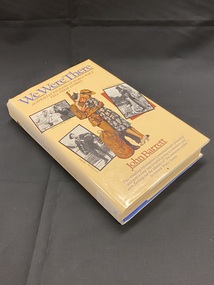
Book - Hardcover book, John Barrett, We were there: Australian soldiers of World War II, 1987
... World War...World War 1939-1945...World War World War 1939-1945 attitudes to war veterans Australian Armed Forces AIF 'We were there' provides an account of the "wide ranging lives and attitudes of some ordinary Australians who went to war". It includes brief references to discrimination, education, employment, prisoners of war, attitudes to religion, trackers, Aboriginal army service, promotions, valour and distinctions earned. - Trove 'PROPERTY OF VICTORIAN BRANCH RSL'[stamped in red ink on book block edges and title page] Cream coloured dust-jacket, title in blue along the spine. Cover shows an image of a soldier and a woman embracing, surrounded by three black and white photographs. Title is printed at the top and author at the bottom. There is a white spine label at the base of the spine. We were there: Australian soldiers of World ...'We were there' provides an account of the "wide ranging lives and attitudes of some ordinary Australians who went to war". It includes brief references to discrimination, education, employment, prisoners of war, attitudes to religion, trackers, Aboriginal army service, promotions, valour and distinctions earned. - TroveCream coloured dust-jacket, title in blue along the spine. Cover shows an image of a soldier and a woman embracing, surrounded by three black and white photographs. Title is printed at the top and author at the bottom. There is a white spine label at the base of the spine.non-fiction'We were there' provides an account of the "wide ranging lives and attitudes of some ordinary Australians who went to war". It includes brief references to discrimination, education, employment, prisoners of war, attitudes to religion, trackers, Aboriginal army service, promotions, valour and distinctions earned. - Troveww2, wwii, second world war, world war 1939-1945, attitudes to war, veterans, australian armed forces, aif -
 Returned Nurses RSL Sub-branch
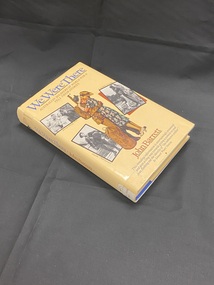
Book - Hardcover book, John Barrett, We were there: Australian soldiers of World War II, 1987
... World War...World War 1939-1945...World War World War 1939-1945 attitudes to war veterans Australian Armed Forces AIF 'We were there' provides an account of the "wide ranging lives and attitudes of some ordinary Australians who went to war". It includes brief references to discrimination, education, employment, prisoners of war, attitudes to religion, trackers, Aboriginal army service, promotions, valour and distinctions earned. - Trove 'PROPERTY OF VICTORIAN BRANCH RSL'[stamped in red ink on book block edges and title page] 'VICTORIAN BRANCH / LIBRARY / ANZAC HOUSE' [stamped in red ink on multiple pages] 'REVIEWED MUFTI DEC 1987' [Handwritten in blue ink along side edge of page before title page] Cream coloured dust-jacket, title in blue along the spine. Cover shows an image of a soldier and a woman embracing, surrounded by three black and white photographs. Title is printed at the top and author at the bottom. There is a white spine label at the base of the spine. We were there: Australian soldiers of World ...'We were there' provides an account of the "wide ranging lives and attitudes of some ordinary Australians who went to war". It includes brief references to discrimination, education, employment, prisoners of war, attitudes to religion, trackers, Aboriginal army service, promotions, valour and distinctions earned. - TroveCream coloured dust-jacket, title in blue along the spine. Cover shows an image of a soldier and a woman embracing, surrounded by three black and white photographs. Title is printed at the top and author at the bottom. There is a white spine label at the base of the spine.non-fiction'We were there' provides an account of the "wide ranging lives and attitudes of some ordinary Australians who went to war". It includes brief references to discrimination, education, employment, prisoners of war, attitudes to religion, trackers, Aboriginal army service, promotions, valour and distinctions earned. - Troveww2, wwii, second world war, world war 1939-1945, attitudes to war, veterans, australian armed forces, aif -
 Returned Nurses RSL Sub-branch
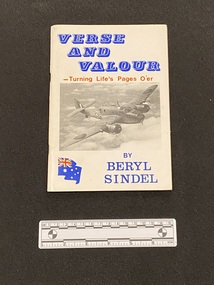
Book - Paperback booklet, Beryl Sindel, Verse and valour: turning life's pages o'er, 1985
... World War...World War 1939-1945...war poetry Australian war poetry Australian Army Nursing Service Voluntary Aid Detachment Australian women in the Second World War World War 1939-1945 WW2 WWII poetry A collection of poems written by ex-WAAAF (Women's Australian Auxilary Airforce) A.C.W. ...A collection of poems written by ex-WAAAF (Women's Australian Auxilary Airforce) A.C.W. (aircraftwoman) (92848), Beryl Sindel. 'In this volume of poems, Beryl Sindel pays tribute to those women who between the years 1939 and 1945, voluntarily changed the direction of their lives and faced the unknown with unselfish devotion and patriotism.' [taken from foreward written by David Young]Staple bound white booklet with an image of a military plane on the cover. Wording is printed in blue and red print to match the colours of the Australian flag which is depicted waving in the bottom corner.non-fictionA collection of poems written by ex-WAAAF (Women's Australian Auxilary Airforce) A.C.W. (aircraftwoman) (92848), Beryl Sindel. 'In this volume of poems, Beryl Sindel pays tribute to those women who between the years 1939 and 1945, voluntarily changed the direction of their lives and faced the unknown with unselfish devotion and patriotism.' [taken from foreward written by David Young] war poetry, australian war poetry, australian army nursing service, voluntary aid detachment, australian women in the second world war, world war 1939-1945, ww2, wwii, poetry -
 Returned Nurses RSL Sub-branch
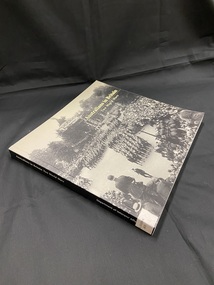
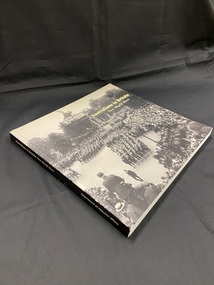
Book - Illustrated paperback book, Department of Veterans' Affairs, Canberra, Australians in Britain: two world wars, 2003
... World War...World War 1939-1945...Australian Armed Forces...WW1...WWI...World...WW2 WWII Second World War World War 1939-1945 Australian Armed Forces WW1 WWI World War One World War 1914-1918 Cemetaries Memorials Monuments Great Britain This book explores over twenty sites of significance to Australians in wartime Britain, telling some of the stories that made up the Australian experience of two world wars. ...This book explores over twenty sites of significance to Australians in wartime Britain, telling some of the stories that made up the Australian experience of two world wars. Contents: Crimson thread of kinship -- Australian War Memorial -- Tower Hill Memorial -- Australia House -- Imperial Camel Corps Memorial -- Cenotaph -- Australian Red Cross Worker Vera Deakin -- Grave of the unknow warrier -- Prime Ministers and High Commissioners -- Gunner Arthur Sullivan VC Plaque -- Buckingham Palace -- Battle of Britain -- Cavalry of the Empire Memorial -- AIF Cemetery -- Air Forces Memorial -- Brookwood Military Cemetery -- Chester Wilmot -- St John the Evangelist Church -- Leighterton Cemetery -- Commander William Warren DSO plaque -- Plymouth Naval Memorial -- 10 Squadron RAAF Memorial -- Grave of Pilot Officer Rawdon Middleton VC -- Grave of Sergeant Thomas Hunter -- St Michael's Chapel -- Women of the Empire Memorial -- Australian Servicemen remembered -- Australia in the United Kingdom -- Australians buried or commemorated in the United Kingdom. [taken from Trove record]Paperback book with black spine and white print. Front cover is a full page, black and white image, of the Victory March in London in 1919. The title is printed in the top right corner. There is a white spine label sticker at the base of the spine.non-fiction This book explores over twenty sites of significance to Australians in wartime Britain, telling some of the stories that made up the Australian experience of two world wars. Contents: Crimson thread of kinship -- Australian War Memorial -- Tower Hill Memorial -- Australia House -- Imperial Camel Corps Memorial -- Cenotaph -- Australian Red Cross Worker Vera Deakin -- Grave of the unknow warrier -- Prime Ministers and High Commissioners -- Gunner Arthur Sullivan VC Plaque -- Buckingham Palace -- Battle of Britain -- Cavalry of the Empire Memorial -- AIF Cemetery -- Air Forces Memorial -- Brookwood Military Cemetery -- Chester Wilmot -- St John the Evangelist Church -- Leighterton Cemetery -- Commander William Warren DSO plaque -- Plymouth Naval Memorial -- 10 Squadron RAAF Memorial -- Grave of Pilot Officer Rawdon Middleton VC -- Grave of Sergeant Thomas Hunter -- St Michael's Chapel -- Women of the Empire Memorial -- Australian Servicemen remembered -- Australia in the United Kingdom -- Australians buried or commemorated in the United Kingdom. [taken from Trove record]ww2, wwii, second world war, world war 1939-1945, australian armed forces, ww1, wwi, world war one, world war 1914-1918, cemetaries, memorials, monuments, great britain -
 Returned Nurses RSL Sub-branch
Book - Illustrated paperback book, Department of Veterans' Affairs, Canberra, Australians in Britain: two world wars, 2003
... World War...World War 1939-1945...Australian Armed Forces...WW1...WWI...World...WW2 WWII Second World War World War 1939-1945 Australian Armed Forces WW1 WWI World War One World War 1914-1918 Cemetaries Memorials Monuments Great Britain This book explores over twenty sites of significance to Australians in wartime Britain, telling some of the stories that made up the Australian experience of two world wars. ...This book explores over twenty sites of significance to Australians in wartime Britain, telling some of the stories that made up the Australian experience of two world wars. Contents: Crimson thread of kinship -- Australian War Memorial -- Tower Hill Memorial -- Australia House -- Imperial Camel Corps Memorial -- Cenotaph -- Australian Red Cross Worker Vera Deakin -- Grave of the unknow warrier -- Prime Ministers and High Commissioners -- Gunner Arthur Sullivan VC Plaque -- Buckingham Palace -- Battle of Britain -- Cavalry of the Empire Memorial -- AIF Cemetery -- Air Forces Memorial -- Brookwood Military Cemetery -- Chester Wilmot -- St John the Evangelist Church -- Leighterton Cemetery -- Commander William Warren DSO plaque -- Plymouth Naval Memorial -- 10 Squadron RAAF Memorial -- Grave of Pilot Officer Rawdon Middleton VC -- Grave of Sergeant Thomas Hunter -- St Michael's Chapel -- Women of the Empire Memorial -- Australian Servicemen remembered -- Australia in the United Kingdom -- Australians buried or commemorated in the United Kingdom. [taken from Trove record]Paperback book with black spine and white print. Front cover is a full page, black and white image, of the Victory March in London in 1919. The title is printed in the top right corner. There is a white spine label sticker at the base of the spine.non-fiction This book explores over twenty sites of significance to Australians in wartime Britain, telling some of the stories that made up the Australian experience of two world wars. Contents: Crimson thread of kinship -- Australian War Memorial -- Tower Hill Memorial -- Australia House -- Imperial Camel Corps Memorial -- Cenotaph -- Australian Red Cross Worker Vera Deakin -- Grave of the unknow warrier -- Prime Ministers and High Commissioners -- Gunner Arthur Sullivan VC Plaque -- Buckingham Palace -- Battle of Britain -- Cavalry of the Empire Memorial -- AIF Cemetery -- Air Forces Memorial -- Brookwood Military Cemetery -- Chester Wilmot -- St John the Evangelist Church -- Leighterton Cemetery -- Commander William Warren DSO plaque -- Plymouth Naval Memorial -- 10 Squadron RAAF Memorial -- Grave of Pilot Officer Rawdon Middleton VC -- Grave of Sergeant Thomas Hunter -- St Michael's Chapel -- Women of the Empire Memorial -- Australian Servicemen remembered -- Australia in the United Kingdom -- Australians buried or commemorated in the United Kingdom. [taken from Trove record]ww2, wwii, second world war, world war 1939-1945, australian armed forces, ww1, wwi, world war one, world war 1914-1918, cemetaries, memorials, monuments, great britain -
 Returned Nurses RSL Sub-branch
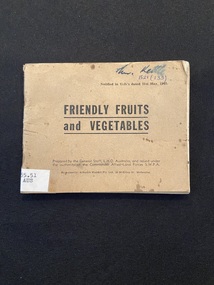
Booklet - Handbook, Allied Forces Southwest Pacific Area, Friendly fruits and vegetables, 1943
... World War...World War 1939-1945...World War 2. -from Trove record. WW2 WWII Second World War World War 1939-1945 Papua New Guinea Plants-Papua New Guinea Wild plants-Papua New Guinea 'VICTORIAN BRANCH / LIBRARY / ANZAC HOUSE' [stamped in red ink on first page] '? ...Practical reference for preparation and identification of indigenous foods in Papua New Guinea for allied soldiers during World War 2. -from Trove record.Small staple-bound booklet with light brown cardboard cover with black print. There is a white spine label at the base of spine.'VICTORIAN BRANCH / LIBRARY / ANZAC HOUSE' [stamped in red ink on first page] '? Kettle' [Handsigned in blue ink on the front cover, blurred by previous water damage] 'NX30892 / Lieut. R.E.W.Kettle / R.A.E. / New Guinea Force / June 1943-?' [Handwriiten on inside front cover in blue ink] 'R.S.W.Kettle / Lieut. (R.A.E.)' [Handsigned on inside back cover in blue ink].ww2, wwii, second world war, world war 1939-1945, papua new guinea, plants-papua new guinea, wild plants-papua new guinea -
 Returned Nurses RSL Sub-branch
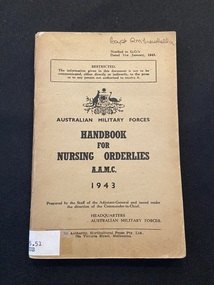
Booklet - Handbook, Horticultural Press, Handbook for Nursing Orderlies: A.A.M.C. 1943, 1943
... World War...World War 1939-1945.... - Preface page 3 WW2 WWII Second World War World War 1939-1945 Nursing orderlies Australian Army Medical Corps military nursing 'VICTORIAN BRANCH / LIBRARY / ANZAC HOUSE' [stamped in red ink on first two pages] 'Capt RM ?? ...The special object of this handbook is the instruction and guidance of Nursing orderlies A.A.M.C. for nursing duties in Dressing Stations and Hospitals. It is intended also to be a guide and reference book for instructors and tutors in assessing the standard required for training in nursing duties. In addition, it is intended to be a handy reference book for use by nursing orderlies in the field. - Preface page 3Staple-bound booklet with light brown cover with black print. Spine label taped to base of spine.'VICTORIAN BRANCH / LIBRARY / ANZAC HOUSE' [stamped in red ink on first two pages] 'Capt RM ??ewhella' [handwritten at top of front cover]ww2, wwii, second world war, world war 1939-1945, nursing orderlies, australian army medical corps, military nursing -
 Flagstaff Hill Maritime Museum and Village
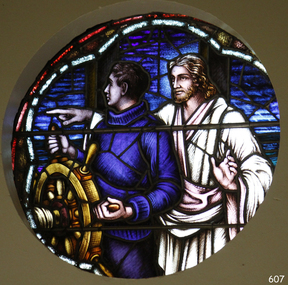
Artwork, other - Window, Brooks, Robinson & Co, Christ Showing the Helmsman the Way, circa August 1947
... World War, 1939-1945. The donor was the Williamstown Lightkeepers Auxiliary, an independent ladies' association working with the Williamstown Missions to Seamen (the Missions to Seamen organisation was re-named the Mission to Seafarers in the year 2000). The window was officially dedicated on December 14, 1947, by Geelong's Anglican Bishop, Rt. Rev. J.D. McKie. In the early months of 1948, a bronze plaque was also placed in the chapel above the altar. It recognises the lost souls of the Merchant Navy during World War 2, as well as the donor of the window, the Williamstown Lightkeepers Auxiliary. The inscription impressed on the rectangular bronze plaque, 20.4 x 10.2cm, is as follows: “IN MEMORY OF THE MEMBERS OF THE MERCHANT NAVY WHO WERE LOST IN THE SECOND WORLD...World War, 1939-1945. The donor was the Williamstown Lightkeepers Auxiliary, an independent ladies' association working with the Williamstown Missions to Seamen (the Missions to Seamen organisation was re-named the Mission to Seafarers in the year 2000). The window was officially dedicated on December 14, 1947, by Geelong's Anglican Bishop, Rt. Rev. J.D. McKie. In the early months of 1948, a bronze plaque was also placed in the chapel above the altar. It recognises the lost souls of the Merchant Navy during World War 2, as well as the donor of the window, the Williamstown Lightkeepers Auxiliary. The inscription impressed on the rectangular bronze plaque, 20.4 x 10.2cm, is as follows: “IN MEMORY OF THE MEMBERS OF THE MERCHANT NAVY WHO WERE LOST IN THE SECOND WORLD ...This round, stained glass window, titled "Christ Showing the Helmsman the Way", was also referred to as the Sanctuary Window or Memorial window. It was installed in the St Nicholas Seamen's Church at 139 Nelson Place, Williamstown, Victoria, inside the chapel above the altar. This memorial window has significance as a part of Victoria's War Heritage and is listed on the Victorian Heritage Database. The window and subsequent plaque were donated to St Nicholas Seamen’s Church as a memorial to the members of the Merchant Navy whose lives were lost in the Second World War, 1939-1945. The donor was the Williamstown Lightkeepers Auxiliary, an independent ladies' association working with the Williamstown Missions to Seamen (the Missions to Seamen organisation was re-named the Mission to Seafarers in the year 2000). The window was officially dedicated on December 14, 1947, by Geelong's Anglican Bishop, Rt. Rev. J.D. McKie. In the early months of 1948, a bronze plaque was also placed in the chapel above the altar. It recognises the lost souls of the Merchant Navy during World War 2, as well as the donor of the window, the Williamstown Lightkeepers Auxiliary. The inscription impressed on the rectangular bronze plaque, 20.4 x 10.2cm, is as follows: “IN MEMORY OF THE MEMBERS OF THE MERCHANT NAVY WHO WERE LOST IN THE SECOND WORLD WAR 1939-1945 FAITHFUL UNTO DEATH. THE WINDOW ABOVE THE ALTAR WAS ERECTED BY THE WILLIAMSTOWN LIGHTKEEPERS AUXILIARY 1947.” The Williamstown St Nicholas Seamen’s Church ceased operation in 1966. In 1979, the Victoria Missions to Seamen donated this round, stained glass window and the memorial plaque to Flagstaff Hill Maritime Village, along with many other items and furnishings. These items have been used to simulate the Williamstown Mission and Chapel as much as possible. The round space that formerly displayed the window can still be seen at the back of the old St Nicholas Seamen’s Church, previously the ES&A bank, in Williamstown. THE MISSIONS TO SEAMEN (Brief History): - The Missions to Seamen was an Anglican charity in Great Britain that has served the world's seafarers since 1856. Its symbol is a Flying Angel, inspired by a Bible verse. Today, there are centres in over 200 ports worldwide where seamen of all backgrounds are offered a warm welcome and provided with a wide range of facilities. In Victoria, the organisation began in Williamstown in 1857 as a Sailors’ Church, also known as ‘Bethel’ or the ‘Floating Church’ in an old hulk floating in Hobson’s Bay, Port of Melbourne. It soon became part of the Missions to Seamen, Victoria. In 2000, the organisation, now named Mission to Seafarers, still operated locally in Melbourne, Portland, Geelong and Hastings. The Ladies’ Harbour Lights Guild was formed in 1906 to support the Missions to Seamen in Melbourne and other centres, such as Williamstown. Two of the most significant ladies of the Guild were founder Ethel Augusta Godfrey and foundation member Alice Sibthorpe Tracy (who established a branch of the Guild in Warrnambool in 1920). The Guild continued its work until the 1960s. In 1943, a former Williamstown bank was purchased for the Missions to Seamen Club. The chapel was named St Nicholas’ Seamen’s Church and was supported by the Ladies’ Harbour Lights Guild, the Williamstown Lightkeepers’ Auxiliary and the League of Soldiers’ and Sailors’ Friends. It ceased operation in 1966. A Missions to Seamen Chapel and Recreation Room was a significant feature of ports during the late 1800s and 1900s. It seemed appropriate for Flagstaff Hill to include such a representation within the new Maritime Village, and the Melbourne Board of Management of Missions to Seamen Victoria gave its permission on 21st May 1979 for the entire furnishings of the Williamstown chapel to be transferred to Flagstaff Hill. The St Nicholas Seamen’s Church was officially opened on October 11, 1981, and resembles the Williamstown chapel. This stained glass window is historically significant for its connection to the St Nicholas Mission to Seamen's Church in Williamstown, established in 1857 to cater for the physical, social, and spiritual needs of seafarers. It was donated to the Mission by the Lightkeepers Auxiliary (Ladies Harbour Lights Guild, which was formed in 1905). The Missions to Seamen organisation had its origins in Bristol, England, when a Seamen's Mission was formed in 1837. The first Australian branch was started in 1856 by the Rev. Kerr Johnston, a Church of England clergyman, and operated from a hulk moored in Hobson’s Bay. Later, the Mission occupied buildings in Williamstown and Port Melbourne. The connection of this window, the Mission to Seamen and the Ladies Harbour Lights Guild highlights the strong community awareness of the life of people at sea, their dangers and hardships, and their need for physical, financial, spiritual and moral support. This memorial window is significant as a part of Victoria's War Heritage and is listed on the Victorian Heritage Database, Heritage Number 196973.Window, stained glass, circular, with reinforcing bars. The window represents Christ showing the helmsman the way. It shows a man in blue knitted jumper holding onto a ship's wheel, looking over his right shoulder. Behind him stands a man in a white robe, pointing to his right and looking to his left, his left hand gesturing to pause. The background has various shapes and patterns of blue glass, bordered by two arcs; the outer one is white, the inner one is red. This beautiful window is in our St Nicholas Seamen's Church Collection and was brought to Warrnambool from the original St Nicholas Seamen’s Church in Williamstown. flagstaff hill, warrnambool, shipwrecked coast, flagstaff hill maritime museum, maritime museum, shipwreck coast, flagstaff hill maritime village, great ocean road, mission to seamen williamstown, st nicholas seaman’s church williamstown, missions to seamen victoria, mission to seafarers, lightkeepers auxiliary, ladies harbour light guild, 139 nelson place williamstown, religion, religious service, sailors rest, bethel sailors’ church, bethel floating church, e. s. & a. bank williamstown, christ directing a sailor, christ showing the helmsman the way, quartermaster’s hand on the wheel, stained glass window, church window, religious window, sanctuary window, memorial window, war memorial window, victorian war heritage inventory, victorian heritage database, merchant navy ww2, 1939-1945, anglican church, bishop mckie, mrs musther, brooks robinson & co, flying angel club, williamstown lightkeepers' auxiliary, ladies' harbour lights guild, commemorative window -
 Federation University Historical Collection
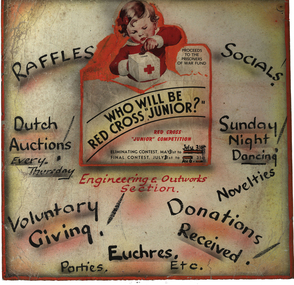
Sign, Red Cross Junior Competition, c1943
... This sign was made by Keith Rash, most probably made during World War 2 (1939-1945) keith rash red cross prisoner of war prisoner of war fund signwriter world war warld war two Original artwork sign on strawboard relating to a Red Cross Junior Competition with proceeds to the Prisoners of War Fund. ...This sign was made by Keith Rash, most probably made during World War 2 (1939-1945)Original artwork sign on strawboard relating to a Red Cross Junior Competition with proceeds to the Prisoners of War Fund. The artwork shows a small child dropping a coin into a box.keith rash, red cross, prisoner of war, prisoner of war fund, signwriter, world war, warld war two -
 Marysville & District Historical Society
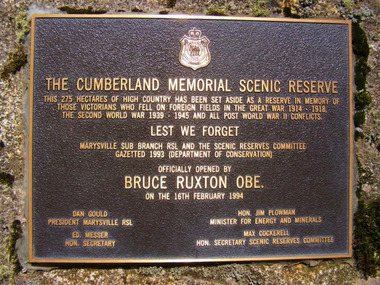
Photograph (item) - Colour photograph, Unknown
... World War One, World War Two, and conflicts since 1945. The reserve is situated on the Marysville-Wood's Point Road. cumberland memorial scenic reserve marysville victoria marysville-woods point road THE CUMBERLAND MEMORIAL SCENIC RESERVE THIS 275 HECTARES OF HIGH COUNTRY HAS BEEN SET ASIDE AS A RESERVE IN MEMORY OF/ THOSE VICTORIANS WHO FELL ON FOREIGN FIELDS IN THE GREAT WAR 1914 - 1918,/ THE SECOND WORLD WAR 1939 - 1945 AND ALL POST WAR II CONFLICTS LEST WE FORGET MARYSVILLE SUB BRANCH RSL AND THE SCENIC RESERVES COMMITTEE GAZETTED 1993 (DEPARTMENT OF CONSERVATION) OFFICIALLY OPENED BY BRUCE RUXTON OBE. ...A colour photograph of the plaque commemorating Victorian veterans who have lost their lives in various conflicts in world history which was placed in the Cumberland Memorial Scenic Reserve on 16th February 1994, the day of the opening of the reserve.The Cumberland Memorial Scenic Reserve comprises of 275 hectares set aside as a reserve to commemorate Victorians who have died in service or were killed in action in World War One, World War Two, and conflicts since 1945. The reserve is situated on the Marysville-Wood's Point Road.THE CUMBERLAND MEMORIAL SCENIC RESERVE THIS 275 HECTARES OF HIGH COUNTRY HAS BEEN SET ASIDE AS A RESERVE IN MEMORY OF/ THOSE VICTORIANS WHO FELL ON FOREIGN FIELDS IN THE GREAT WAR 1914 - 1918,/ THE SECOND WORLD WAR 1939 - 1945 AND ALL POST WAR II CONFLICTS LEST WE FORGET MARYSVILLE SUB BRANCH RSL AND THE SCENIC RESERVES COMMITTEE GAZETTED 1993 (DEPARTMENT OF CONSERVATION) OFFICIALLY OPENED BY BRUCE RUXTON OBE. ON THE 16TH FEBRUARY 1994 DAN GOULD/ PRESIDENT MARYSVILLE RSL ED MESSER/ HON SECRETARY HON. JIM PLOWMAN/ MINISTER FOR ENERGY AND MINERALS MAX COCKERERLL/ HON. SECRETARY SCENIC RESERVES COMMITTEEcumberland memorial scenic reserve, marysville, victoria, marysville-woods point road -
 Nhill Aviation Heritage Centre
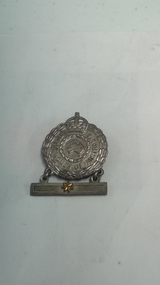
Badge, Female relative's badge
... World War 11. Each star on the bar below the badge represents a son or relative on active service. world war 11 1939-1945 badges Issued by the C'wlth Govt. ...Female Relative Badge was issued to the wife and/or mother or nearest female relative of Australians who were on active service abroad during World War 11. Each star on the bar below the badge represents a son or relative on active service.Circular badge with a central wreath surmounted with a crown. Within the wreath is an inscription TO THE WOMEN OF AUSTRALIA. with another wreath within, containing outline of Australia . A bar with a gold star is suspended below the main badge . Issued by the C'wlth Govt. AF 5519 G&E Rodd 1940world war 11, 1939-1945, badges -
 Flagstaff Hill Maritime Museum and Village
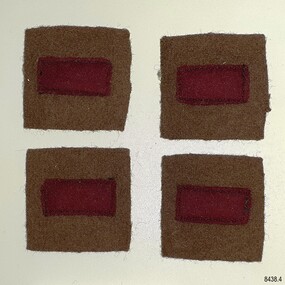
Badge - Australian Military cloth patch, Army Medical Corps, 108 Australian General Hospital, 1939-1945
... World War 2...Second World War...Australian Defence Forces...Army Medical Corps...108 Australian General Hospital...Great War...Military uniform...106 Australian General Hospital...1939-1945...Angus Collection Australian Army Surgeon Captain Ballarat Bonegilla badge insignia badge collection World War 2 Second World War Australian Defence Forces Army Medical Corps 108 Australian General Hospital Great War Military uniform 106 Australian General Hospital 1939-1945 Badges; set of four cloth patches, red rectangles on brown squares. ...The four cloth patches belonged to Dr William Roy Angus and are now part of Flagstaff Hill’s comprehensive W.R. Angus Collection, donated by the family of Dr W R Angus (1901-1970), surgeon and oculist. The badges date to the Second World War era, when Dr Angus was a Surgeon Captain for the Australian Defence Forces in the Army Medical Corps, 108 Australian General Hospital and 106 Australian General Hospital, stationed in Ballarat, Victoria, and in Bonegilla, N.S.W. He completed his service just before the end of the war due to suffering from a heart attack. In World War I the troops of the Australian Military Forces staked coloured flags of various shapes and colours in the ground where they camped to identify their units. These flag codes were quickly recognised. The system worked so well that miniature flags were called colour patches. They became part of the uniform, to be worn on both sleeves just below the shoulder. The system was slightly modified for use in the Second World War. The W.R. Angus Collection: - The W.R. Angus Collection includes historical medical equipment, surgical instruments and material belonging to Dr Edward Ryan and Dr Thomas Francis Ryan, (both of Nhill, Victoria) and Dr Angus’ own belongings. The Collection’s history spans the medical practices of the two Doctors Ryan, from 1885-1926 plus that of Dr Angus, up until 1969. It includes historical medical and surgical equipment and instruments from the doctors Edward and Thomas Ryan of Nhill, Victoria. Dr Angus married Gladys in 1927 at Ballarat, the nearest big city to Nhill where he began as a Medical Assistant. He was also Acting House surgeon at the Nhill hospital where their two daughters were born. During World War II He served as a Military Doctor in the Australian Defence Forces. Dr Angus and his family moved to Warrnambool in 1939, where Dr Angus operated his own medical practice. He later added the part-time Port Medical Officer responsibility and was the last person appointed to that position. Both Dr Angus and his wife were very involved in the local community, including the planning stages of the new Flagstaff Hill and the layout of the gardens there. Dr Angus passed away in March 1970.Dr W R Angus (1901-1970), surgeon and oculist, collected a range of military objects including those he personally used during his time as Surgeon Captain in the Australian Defence Forces in World War II. The objects allow insight into military life in the early-to-mid 20th century. The W.R. Angus Collection is significant for still being located at the site it is connected with, Doctor Angus being the last Port Medical Officer in Warrnambool. The Collection includes historical medical objects that date back to the late 1800s.Badges; set of four cloth patches, red rectangles on brown squares. Insignia of the Australian Defence Forces, Army Medical Corps, 108 Australian General Hospital, WWII era. Dr W R Angus owned the cloth patches that are now part of the W. R. Angus Collection.flagstaff hill, warrnambool, maritime village, maritime museum, shipwreck coast, great ocean road, flagstaff hill maritime museum and village, dr w r angus, w.r. angus collection, australian army, surgeon captain, ballarat, bonegilla, badge, insignia, badge collection, world war 2, second world war, australian defence forces, army medical corps, 108 australian general hospital, great war, military uniform, 106 australian general hospital, 1939-1945 -
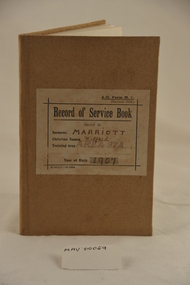 City of Moorabbin Historical Society (Operating the Box Cottage Museum)
Booklet - Armed Forces, Australian Service book 1921, 1919
... ...world war 1914 -1918...world war 1939-1945...Wilfred (Willie) died at the age of 14 on 31 July 1921. marriott wilfred marriott geoff australian military forces defence act 1903 militia forces record of service caulfield melbourne moorabbin bentleigh world war 1914 -1918 world war 1939-1945 AM Form M7 / (revised 1919) / Record of Service Book / issued to / Surname MARRIOTT / Christian Names Wilfred / Training Area AREA 37A / Year of Birth 1907 The 'Record of Service Book' of Wilfred Marriott, b. 30/4/1907, of Jasper Road, Bentleigh, issued on 3/2/1921 in Area 37A Caulfield Booklet Armed Forces, Australian Service book 1921 Albert J Mullett ...'Instructions " This book serves as proof of the fact that the bearer has performed the services required to fit him for the defence of his country, as prescribed by the (Defence) Act 1903-1918." 'Wilfred Marriott was from a family of early settlers in Moorabbin Shire. Wilfred (Willie) died at the age of 14 on 31 July 1921.The 'Record of Service Book' of Wilfred Marriott, b. 30/4/1907, of Jasper Road, Bentleigh, issued on 3/2/1921 in Area 37A Caulfield AM Form M7 / (revised 1919) / Record of Service Book / issued to / Surname MARRIOTT / Christian Names Wilfred / Training Area AREA 37A / Year of Birth 1907marriott wilfred, marriott geoff, australian military forces, defence act 1903, militia forces, record of service, caulfield, melbourne, moorabbin, bentleigh, world war 1914 -1918, world war 1939-1945 -
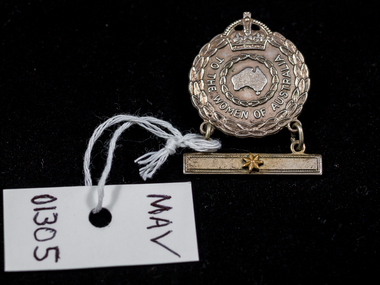 City of Moorabbin Historical Society (Operating the Box Cottage Museum)
WW2 Medal for Women relatives of serving soldiers, 1942
... Emma Olymphia Roper of Balaclava/ Ripponlea would also have received a medal like this with 4 four stars because her 4 sons were serving in the Australian Army 1939-45 This Military Medal was given to the wives and mothers of Australian Soldiers serving during World War 2 1939-1945 world war 1939-1945, military medals, roper alfred william , roper veronica, moore joan catherine, roper arthur leopold, roper emma olymphia, war memorials, bentleigh, city of moorabbin, totally and permanently invalid, returned service league, victoria barracks, department of defence australia, Around medal : For the Women of Australia Back : Issued by the / C'wealth Govt. / A 135699 / Angus & Coote / 1942 Bar : star/ asterisk Silver medal, engraved wreath of leaves, crown and map of Australia and pin clasp on back . ...Female Relative Badges were issued to the nearest female relative (usually wives or mothers) of those who engaged in active service overseas during the First and Second World Wars. For active service abroad during the Second World War, a single badge was issued to the nearest female relative of members of the RAN, the Australian Imperial Force (including members of the Australian Army Nursing Service), and the Royal Australian Air Force. Stars displayed on a bar suspended below the badge represented the number of relatives involved in the war effort. Authority for the issue of the badge was given under AIF Order 200,14 February 1941. This medal was given to Veronica ( White ) Roper in 1942 because her husband Alfred William Roper was a member of the Australian Army Signals Corp serving in New Guinea. Emma Olymphia Roper of Balaclava/ Ripponlea would also have received a medal like this with 4 four stars because her 4 sons were serving in the Australian Army 1939-45 This Military Medal was given to the wives and mothers of Australian Soldiers serving during World War 2 1939-1945Silver medal, engraved wreath of leaves, crown and map of Australia and pin clasp on back . A bar with one star is suspendedAround medal : For the Women of Australia Back : Issued by the / C'wealth Govt. / A 135699 / Angus & Coote / 1942 Bar : star/ asteriskworld war 1939-1945, military medals, roper alfred william , roper veronica, moore joan catherine, roper arthur leopold, roper emma olymphia, war memorials, bentleigh, city of moorabbin, totally and permanently invalid, returned service league, victoria barracks, department of defence australia, -
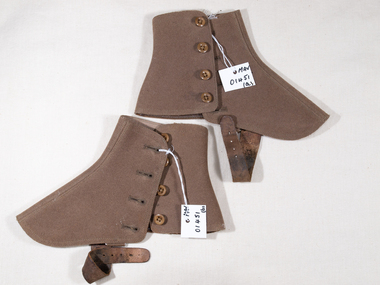 City of Moorabbin Historical Society (Operating the Box Cottage Museum)
Footwear, Spats, wool, 20thC
... footwear, spats, army uniform, clothing, knitting, craftwork, wool, world war 1 1914-18, world war 2 1939-1945, early settlers, city of moorabbin, bentleigh, mckinnon, ormond, moorabbin, post war settlers, hunt ailsa,...These spats are of a type commonly worn to protect good shoes early 20thC and may have been part of a soldiers uniform c 1914 footwear, spats, army uniform, clothing, knitting, craftwork, wool, world war 1 1914-18, world war 2 1939-1945, early settlers, city of moorabbin, bentleigh, mckinnon, ormond, moorabbin, post war settlers, hunt ailsa, MADE IN ENGLAND A pair of khaki wool spats with 4 buttons and leather strap, with metal buckle, to pass under instep. ...Spats, a shortening of spatter guards are a type of classic footwear accessory for outdoor wear, covering the instep and the ankle. Spats are distinct from gaiters, which are garments worn over the lower trouser leg as well as the shoe. Since the mid-19th century, soldiers of various nations, especially infantry, often wore leggings or spats to protect their lower leg, to keep dirt, sand, and mud from entering their shoes, and to provide a measure of ankle support.These spats are of a type commonly worn to protect good shoes early 20thC and may have been part of a soldiers uniform c 1914A pair of khaki wool spats with 4 buttons and leather strap, with metal buckle, to pass under instep.MADE IN ENGLANDfootwear, spats, army uniform, clothing, knitting, craftwork, wool, world war 1 1914-18, world war 2 1939-1945, early settlers, city of moorabbin, bentleigh, mckinnon, ormond, moorabbin, post war settlers, hunt ailsa, -
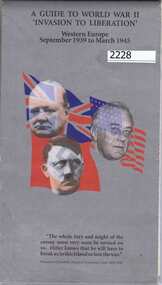 Greensborough Historical Society
Map, Scotprint, A Guide to World War II 'Invasion or Liberation': Western Europe Sept 1939 to March 1945, 1999_
... Notes of battles, military leaders, cemeteries and other features of World War 11 Western Europe. world war ii Double sided col. maps, with notes of battles, military leaders, cemeteries and other features of World War 11 Western Europe. A Guide to World War II 'Invasion or Liberation': Western Europe Sept 1939 to March 1945 ...Notes of battles, military leaders, cemeteries and other features of World War 11 Western Europe.Double sided col. maps, with notes of battles, military leaders, cemeteries and other features of World War 11 Western Europe.world war ii -
 Glenelg Shire Council Cultural Collection
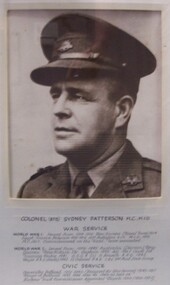
Photograph - Photograph - Colonel (RTD) Sydney Patterson, M.C., M.I.D, c. 1950
... World War 1. Served from 1914-1919 New Guinea (Naval Force) 1914. Egypt, France, Belgium 1915-1919, 20th Batalion A.I.F.M.I.D. 1916, M.C. 1917. Commissioned on the Field. Twice wounded. World War 2. Served from 1939-1945...World War 1. Served from 1914-1919 New Guinea (Naval Force) 1914. Egypt, France, Belgium 1915-1919, 20th Batalion A.I.F.M.I.D. 1916, M.C. 1917. Commissioned on the Field. Twice wounded. World War 2. Served from 1939-1945 ...On display in History House.Black and white photograph of man in military uniform, with peaked hat. Badges are pinned to hat and left lapel. ¾ turn to right. Below image is text stating man's identity and positions.Front: Colonel (RTD) Sydney Patterson M.C., M.I.D., War Service World War 1. Served from 1914-1919 New Guinea (Naval Force) 1914. Egypt, France, Belgium 1915-1919, 20th Batalion A.I.F.M.I.D. 1916, M.C. 1917. Commissioned on the Field. Twice wounded. World War 2. Served from 1939-1945 Australia (Darwin) New Guinea, New Britain, etc. Captain 1939, Adj. No. 7 Aust Int. Training Centre, 1941. G.S.O. 3 (O) G. Branch A.H.Q. 1942. Major R.A.E. (Docks) 1942. L.L. Colonel R.A.E. C.R.E 3rd Aust. Dock Group. CIVIC SERVICE Councillor, Portland 1931-1940 (Resigned for War Service) 1945-1957. Mayor of Portland 1935, 1938, 1939-40, 1949-50, 1953-54. Harbour Trust Commissioner, appointed March 1950 (1950-1957). Back: Mr. Stevenson (pencil, centre) -
 Orbost & District Historical Society
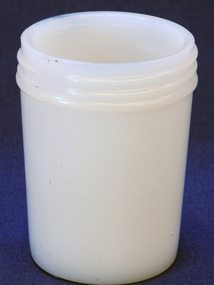
jar, 1935-1945
... 1939 Vegemite was officially endorsed by the British Medical Association as a good source of Vitamin B and was included in Australian Army rations during World War II. Buyers were now assured of the nutritional value of Vegemite, which has been a market leader ever since. The Fred Walker Company became the Kraft Walker Cheese Co. Pty Ltd in 1926 and Kraft Foods Limited in 1950. (from Powerhouse Museum) This type of jar was used to package Vegemite between 1935 and 1945. Vegemite has been an 'Australian icon' since World ...Vegemite hit the market in 1923 but failed to sell. In 1928 the company renamed its spread Parwill to compete against the top-selling British import, Marmite but Parwill flopped too. In 1922 the Fred Walker Company hired a chemist, Percy Callister, to develop a useful food from vitamin-rich used yeast being dumped by breweries. Using enzymes to split open the yeast cells, Callister extracted the contents and blended them with vegetables and salt into a sticky black paste with a sharp taste. They tried the Vegemite name again and gave the product away with Walker cheese products and a couple of cars as prizes before Australians finally fell for it. In 1939 Vegemite was officially endorsed by the British Medical Association as a good source of Vitamin B and was included in Australian Army rations during World War II. Buyers were now assured of the nutritional value of Vegemite, which has been a market leader ever since. The Fred Walker Company became the Kraft Walker Cheese Co. Pty Ltd in 1926 and Kraft Foods Limited in 1950. (from Powerhouse Museum) This type of jar was used to package Vegemite between 1935 and 1945. Vegemite has been an 'Australian icon' since World War II when it was recognised as one of the world's highest food sources of vitamin B. It was sent to war with the troops and rationed at home. The marketing strategy that put Vegemite in 9 out of every 10 Australian homes in the 1940s, 50s and 60s emphasised the value of Vegemite to children's health. A cylindrical Vegemite jar made of white opal glass. It has a threaded rim and two mould seams. On the base - AGM Vegemite V879 -
 Ringwood and District Historical Society
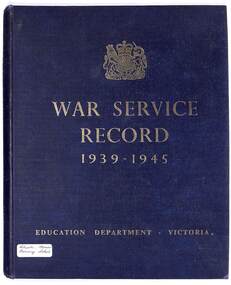
Book, Edcation Department, War Service Record 1939-1945 - Education Department, Victoria, 1959
... Foreword by Alan Ramsay, Director of Education, includes: Shortly after the First World War there was published "The Education Department's Record of War Service" - a book that has an honoured place in all our schools. ... This book is the record of the part played by the teachers and children in our schools during the Second World War of 1939-1945 ... ...Foreword by Alan Ramsay, Director of Education, includes: Shortly after the First World War there was published "The Education Department's Record of War Service" - a book that has an honoured place in all our schools. ... This book is the record of the part played by the teachers and children in our schools during the Second World War of 1939-1945 ... ...Blue hard cover book with gold embossed title and Coat of Arms.Foreword by Alan Ramsay, Director of Education, includes: Shortly after the First World War there was published "The Education Department's Record of War Service" - a book that has an honoured place in all our schools. ... This book is the record of the part played by the teachers and children in our schools during the Second World War of 1939-1945 ... It tells the story of the schools' war effort in those critical years when war came very close to our shores and when everyone was called on to bear a share of the war effort. -
 City of Moorabbin Historical Society (Operating the Box Cottage Museum)
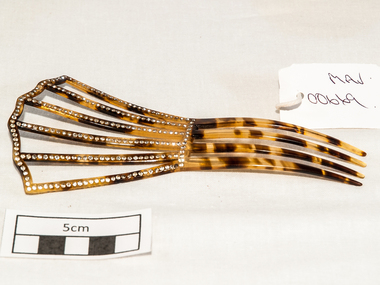
Personal Effects, lady's mantilla style haircomb, 20thC
... world war 1 1914-1918, world war 11 1939-1945, silk, ivory, bakelite,...world's first fully synthetic plastic was bakelite, invented in New York in 1907 by Leo Baekeland who coined the term 'plastics'. After World War I, improvements in chemical technology led to an explosion in new forms of plastics, with mass production beginning in the 1940s during World War 11 due to shortages of silk and ivory. hair fashion hairdressing coiffure plastic personal effects jewellery moorabbin bentleigh cheltenham early settlers world war 1 1914-1918, world war 11 1939-1945, silk, ivory, bakelite, A plastic, tortoise shell pattern, lady's hair-comb in the mantilla style with diamante decoration. ...A hair fashion accessory for 20thCentury ladies. Plastic is a material consisting of any of a wide range of synthetic or semi-synthetic organics that are malleable and can be moulded into solid objects of diverse shapes. Due to their relatively low cost, ease of manufacture, versatility, and imperviousness to water, plastics are used in an enormous and expanding range of products. They displaced many traditional materials, such as wood, stone, horn and bone, leather, paper, metal, glass, and ceramic, in most of their former uses including jewellery. Parkesine is considered the first man-made plastic. The plastic material was patented by Alexander Parkes, In Birmingham, UK in 1856.The world's first fully synthetic plastic was bakelite, invented in New York in 1907 by Leo Baekeland who coined the term 'plastics'. After World War I, improvements in chemical technology led to an explosion in new forms of plastics, with mass production beginning in the 1940s during World War 11 due to shortages of silk and ivory.A plastic, tortoise shell pattern, lady's hair-comb in the mantilla style with diamante decoration.hair fashion, hairdressing, coiffure, plastic, personal effects, jewellery, moorabbin, bentleigh, cheltenham, early settlers, world war 1 1914-1918, world war 11 1939-1945, silk, ivory, bakelite, -
 Mission to Seafarers Victoria
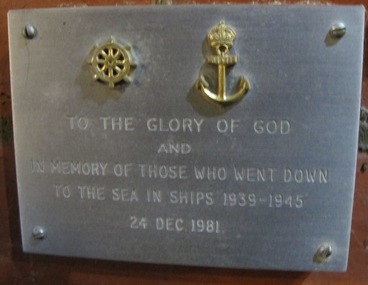
Plaque - Memorial Plaque, 1981
... World War II period in the merchant and navy services. The chapel originally designed as a Memorial to the Great War 1914-18 continues to be a place of commemoration for both merchant and naval services of WW2 and other conflicts. second world war world war two navy merchant plaque 1981 ww2 merchant navy To the glory of God and In memory of those who went down to the sea in ships 1939-1945 24 Dec, 1981. ...The plaque accompanying the stained glass window by Gerry Cummins was dedicated in 1981 to the men who gave their lives during the World War II period in the merchant and navy services.The chapel originally designed as a Memorial to the Great War 1914-18 continues to be a place of commemoration for both merchant and naval services of WW2 and other conflicts.Small rectangular plaque made of steel mounted on wood. The plaque features helm representing Merchant seamen and an anchor with a crown on top representing the Navy. Both are gold plated. To the glory of God and In memory of those who went down to the sea in ships 1939-1945 24 Dec, 1981.second world war, world war two, navy, merchant, plaque, 1981, ww2, merchant navy -
![Book, Commonwealth War Graves Commission, Their name liveth: some pictures of Commonwealth war cemeteries, 1914-1918 [and] 1939-1945. Volume VI Part 1, 1965](/media/collectors/4f729f5697f83e03086015b8/items/61f1fee6ff25d250155d267f/item-media/61f792992062ed2a3f229351/item-fit-380x285.jpg?cb=6) Greensborough Historical Society
Greensborough Historical SocietyBook, Commonwealth War Graves Commission, Their name liveth: some pictures of Commonwealth war cemeteries, 1914-1918 [and] 1939-1945. Volume VI Part 1, 1965
... This volume covers descriptions and photographs of cemeteries in Gallipoli and Greece world war I world war II war graves commonwealth war graves commission 50 p paperback, text and black and white photographs, red cover with gold lettering Their name liveth: some pictures of Commonwealth war cemeteries, 1914-1918 [and] 1939-1945. ...This volume covers descriptions and photographs of cemeteries in Gallipoli and Greece50 p paperback, text and black and white photographs, red cover with gold letteringworld war i, world war ii, war graves, commonwealth war graves commission -
 Greensborough Historical Society
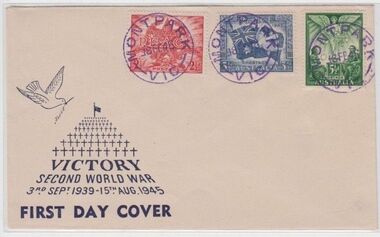
Postage Stamps - Digital Image, Victory Second World War: First Day Cover, 14/02/1946
... World War 2. Part of a collection of miscellaneous historical images. postage stamps first day envelopes world war 2 mont park "Victory. Second World War. 3rd Sept 1939 - 15th Aug 1945 ...Digital image of Australian postage stamps, First Day Cover, stamped at Mont Park in 1946. Commemorates the end of World War 2.Part of a collection of miscellaneous historical images.Digital image of first day cover and stamps, colour."Victory. Second World War. 3rd Sept 1939 - 15th Aug 1945. First Day Cover" Franked:"14FEB46"postage stamps, first day envelopes, world war 2, mont park -
 Red Cliffs Military Museum
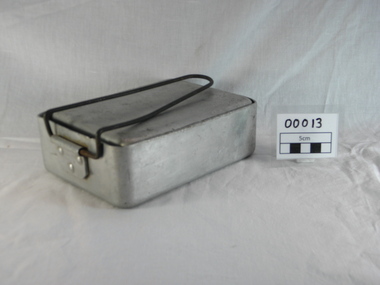
Mess kit, 1939 (exact)
... World War, the mess tins were marked with names of places, ships and battle locations. Other items include a postcard sent home in August 1941 and a photo of Australian troops on parade at Wewak in August 1945 darwin world war two pan set messing mess tins aluminium 2nd aif 8th battalion vx52576 pte mckenzie c mckenzie 1939 c b ltd 1941 1945 19th australian infantry training battalion b company 21st august 1941 finchaven wandecla cairns brisbane "Inscription on base of mess tin large. ...This is part of a collection donated by Mrs Margaret McKenzie that belonged to her husband and was issued to him during the Second World War, the mess tins were marked with names of places, ships and battle locations. Other items include a postcard sent home in August 1941 and a photo of Australian troops on parade at Wewak in August 1945Aluminium Mess tin set, 2 rectangular tins one smaller to fit into larger. Inscriptions engraved on 4 sides containing locations of training, ships and battle areas. Additional markings include year of manufacture and company along with Department of Defence broad arrow. Item is stamped metal with wire handle on the large tin. Wire carry handle missing on smaller tin. "Inscription on base of mess tin large. 'DARLEY ALBANY/ SYDNEY/ PERTH/ TRINCOMALEE:CEYLON/ PORT TUFIC/ SUEZ CANAL/ EL CANTARA/ GAZA/ JERUSALEM/ HIFA TELAVIV/ BETHALEM/ BAYROUTA/ JUDEDES FIAKE/darwin, world war two, pan set messing, mess tins, aluminium, 2nd aif, 8th battalion, vx52576, pte, mckenzie, c mckenzie, 1939, c b ltd, 1941 1945, 19th australian infantry training battalion, b company, 21st august 1941, finchaven, wandecla, cairns, brisbane -
 Australian Commando Association - Victoria
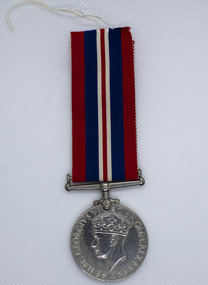
Medal - War Medal- William Alsop 2/10 Commando Squadron, c. 1945
... World War. This object displays Historic Significance through its connection with William Donald Alsop, his service in the 2/10 Command Squadron and World War Two. alsop second world war ww2 wwii world war two australian commando On front of medal, above the lion: 1939/1945 On reverse of medal, in a circle around the outside: GEORGIVS VI G. ...This object was issued to William Donald Alsop for his service in the 2/10 Commando Squadron during the Second World War.This object displays Historic Significance through its connection with William Donald Alsop, his service in the 2/10 Command Squadron and World War Two.The War Medal 1939-45 is cupro-nickel with the crowned effigy of King George VI on the obverse. The reverse has a lion standing on a fallen dragon. The top of the reverse shows the dates 1939 and 1945. The riband is 32 millimetres wide with a 5½ millimetres wide Army red band, a 3 millimetres wide navy blue band, a 6 millimetres wide dark green band, a 3 millimetres wide yellow band, a 6 millimetres wide dark green band, a 3 millimetres wide Royal Air Force blue band and a 5½ millimetres wide Army red band. The forests and beaches of the Pacific are represented by the dark green and yellow bands respectively, while the Royal Navy and Merchant Navy, the Armies and the Air Forces are represented by the dark blue, red and light blue bands respectively.On front of medal, above the lion: 1939/1945 On reverse of medal, in a circle around the outside: GEORGIVS VI G. BR. OMN. REX ET INDIAE IMP:alsop, second world war, ww2, wwii, world war two, australian commando -
 Flagstaff Hill Maritime Museum and Village
Badge - Set of Badges, circa 1940s
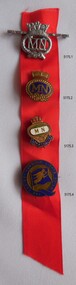
... world. The Sanctuary Window above the altar in Flagstaff Hill Maritime Village's St Nicholas Seamen’s Church’ is titled "Christ Showing the Helmsman the Way". This round, stained glass window was originally installed in the St Nicholas Seamen's Church at 139 Nelson Place, Williamstown, Victoria. The window was donated to St Nicholas Seamen’s Church as a memorial to the members of the Merchant Navy whose lives were lost in the Second World War, 1939-1945...world. The Sanctuary Window above the altar in Flagstaff Hill Maritime Village's St Nicholas Seamen’s Church’ is titled "Christ Showing the Helmsman the Way". This round, stained glass window was originally installed in the St Nicholas Seamen's Church at 139 Nelson Place, Williamstown, Victoria. The window was donated to St Nicholas Seamen’s Church as a memorial to the members of the Merchant Navy whose lives were lost in the Second World War, 1939-1945 ...The donor, Ada Barclay, was a member of the Flying Angel Club, Missions to Seamen (which is now Mission to Seafarers) in Townsville and Sydney. One of the badges connects her with the Ladies' Harbour Lights Guild in Queensland. The Sanctuary Window and other items at Flagstaff Hill Maritime Village are part of the St Nicholas Seamen’s Church Williamstown Collection. The window is dedicated to the seamen from the Merchant Navy and was organised by a group of women, some of whom were also in the Ladies’ Harbour Lights Guild, dedicated to the care of seafarers across the world. The Sanctuary Window above the altar in Flagstaff Hill Maritime Village's St Nicholas Seamen’s Church’ is titled "Christ Showing the Helmsman the Way". This round, stained glass window was originally installed in the St Nicholas Seamen's Church at 139 Nelson Place, Williamstown, Victoria. The window was donated to St Nicholas Seamen’s Church as a memorial to the members of the Merchant Navy whose lives were lost in the Second World War, 1939-1945. The donor was the Williamstown Lightkeepers Auxiliary, an independent ladies association working with the Williamstown Missions to Seamen. Some of the members of this Auxiliary were also members of the Ladies’ Harbour Lights Guild. This set of badges is significant historically for its connection to the Merchant Navy organisation, the Ladies’ Harbour Lights Guild and the Flying Angels Club. Through this connection, the badges are also connected to the history of the St Nicholas Mission to Seamen's Church in Williamstown, established in 1857 to cater for the physical, social, and spiritual needs of seafarers. It originated in Bristol, England when a Seamen's Mission was formed in 1837. The connection of this set of badges to the Ladies’ Harbour Lights Guild and what is now the Mission to Seafarers, highlights the strong historical and continuing community awareness of the life of people at sea, their dangers and hardships, and their need for physical, financial, spiritual and moral support. Set of four metal and enamel badges pinned in a vertical row to a red ribbon. Each badge is connected with seafarers. Three badges have a crown on the top of a circular badge, a wreath around the circle and the letters "MN" in the centre. One of these also has "Australia" below the circle. The remaining badge has the words "The Ladies' Harbour Lights Guild" around the border on a blue background, and a blue flag in the centre on a gold background. The flag has a gold angelic figure on it. The figure has wings and is holding a book. "MN" "AUSTRALIA". "THE LADIES' HARBOUR LIGHTS GUILD" Badge 02 - "ANGUS & COOTE / SYDNEY" Badge 04 "MANAFOLD / BRISBANE"flagstaff hill, warrnambool, shipwrecked coast, flagstaff hill maritime museum, maritime museum, shipwreck coast, flagstaff hill maritime village, great ocean road, religion, sailors rest, bethel sailors’ church, bethel floating church, ladies’ harbour lights guild, missions to seamen victoria, mission to seafarers, flying angel’s club, st nicholas seamen's church williamstown collection, mission to seamen williamstown, st nicholas seamen’s church flagstaff hill, 139 nelson place williamstown, anglican church, ethel godfrey, alice sibthorpe, pin badge, lapel badge, merchant navy, flying angel mission sydney, angus & coote sydney, manafold brisbane
