



Historical information
Part of a set of laparoscopy equipment donated by Dr Geoff Bishop. Dr Geoffrey Bishop, whilst at the Department of O and G, University of Liverpool, UK, began laparoscopy in 1969. On returning to Australia, Bishop and Grimwade together with Mr Peter Paterson introduced gynaecological laparoscopy to Melbourne, practising at the Queen Victoria Memorial Hospital (QVMH), Melbourne in 1969. The College, through the Victorian State Committee of the Australian Council, RCOG, ran training courses in laparoscopy for local and interstate gynaecologists. These were conducted by Bishop, Grimwade and Paterson. They established protocols, with particular reference to safety, for the conduct of laparoscopy. Laparoscopy was used initially for diagnosis and for limited treatment using diathermy for conditions such as endometriosis. The real impetus came with the great upsurge of tubal sterilization in the early 1970s. Early techniques included diathermy and division of the Fallopian tubes using the Palmer forceps. [Dr Peter Renou, former honorary curator.]
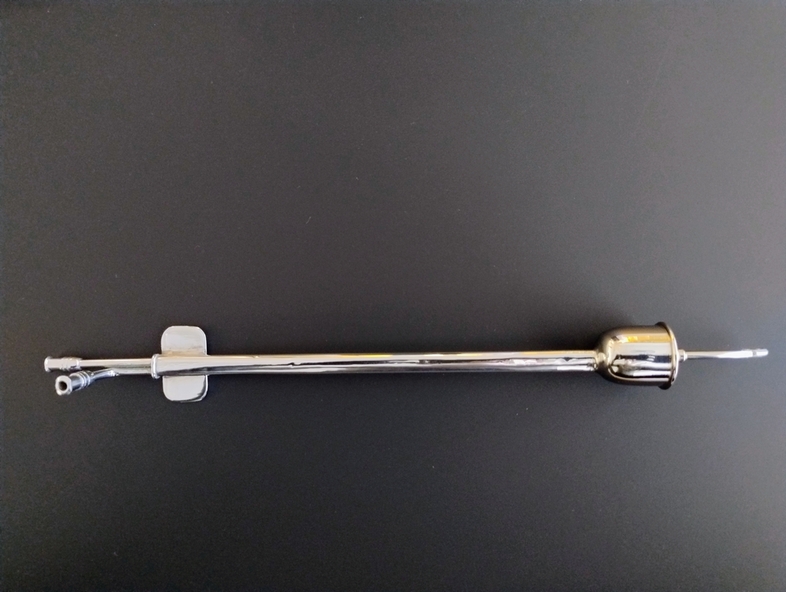
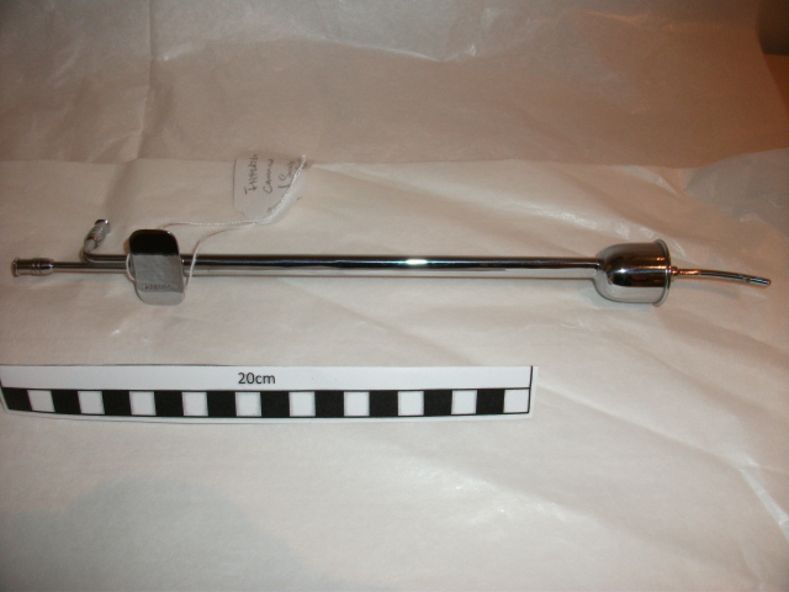
This object was used by Dr Geoff Bishop during gynaecological laparoscopic surgery. This instrument is commonly used for suction. It is also used for testing tubal patency by inserting dye through it.
Physical description
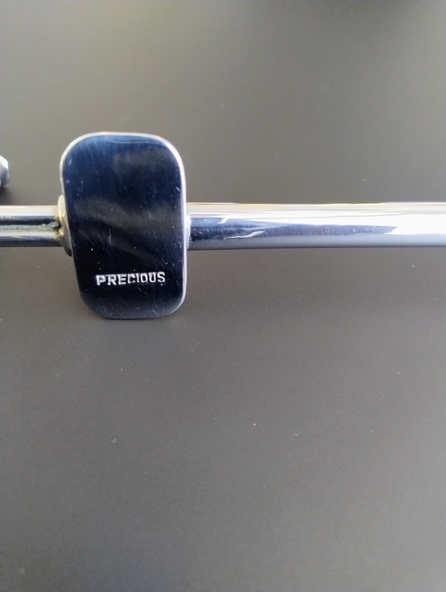
Cannula. Consists of a slender shaft with fittings at each end. There are two points for tubal attachments at one end, set into separate small metal tubes at ninety degrees to each other. At the other end, there is a bell cap enclosing a curved nozzle. The nozzle is punctured with six small holes. Manufacturers stamp on plate near the attachment points reads 'PRECIOUS'.
