

Historical information
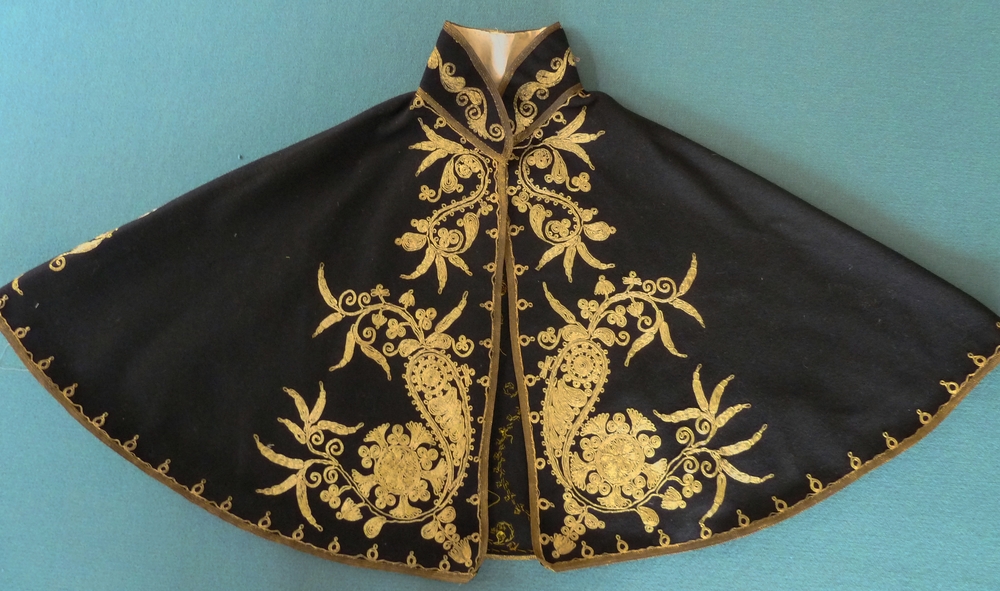
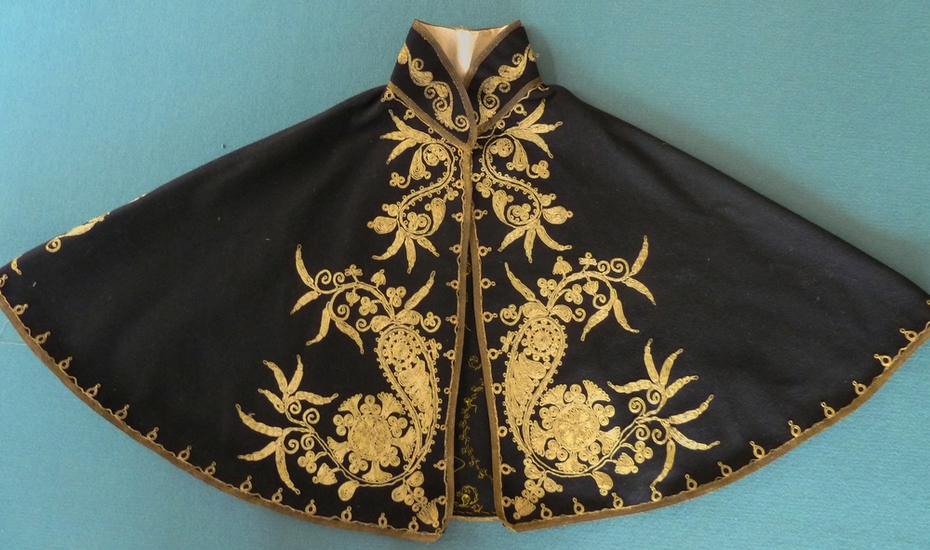
Victorian-era Ottoman Turkish capes from the 19th century are characterized by their luxurious materials, such as felted wool, velvet, or silk, and intensive hand-embroidered gold bullion thread (known as "Dival" or couched embroidery). These capes, which were often worn by urban elites, frequently feature high collars, short lengths designed to cover the arms, and intricate floral or paisley patterns.
Key Characteristics & Design (19th Century):
Fabric & Color: Deep black, red, cream, green, or blue "doeskin" wool or silk satin is common, often lined with bright silk.
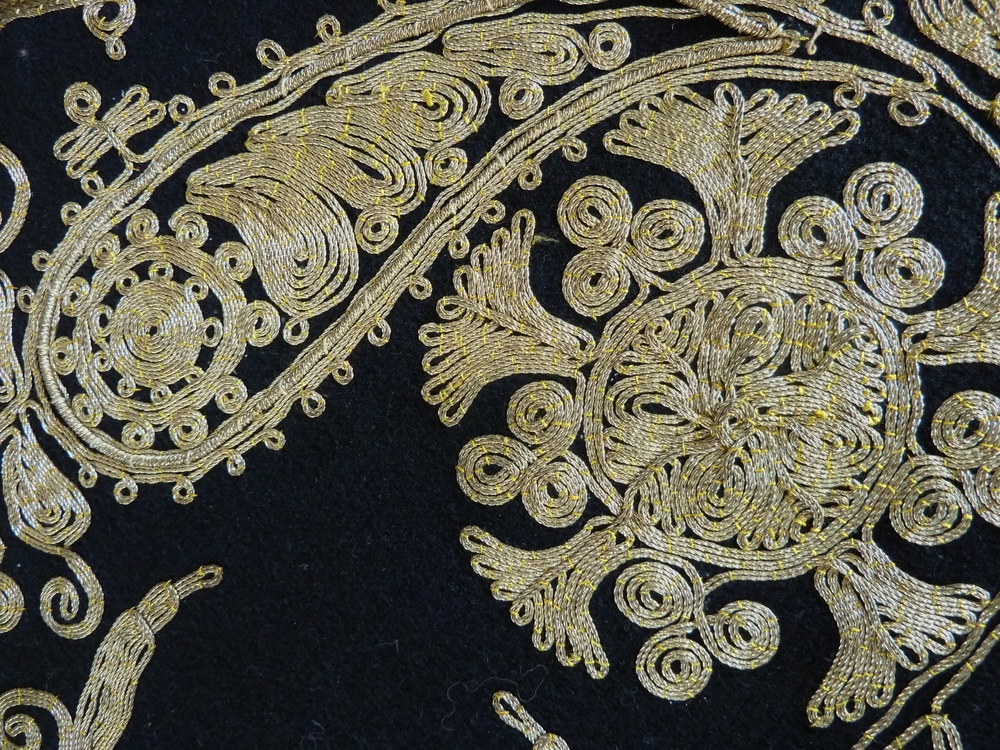
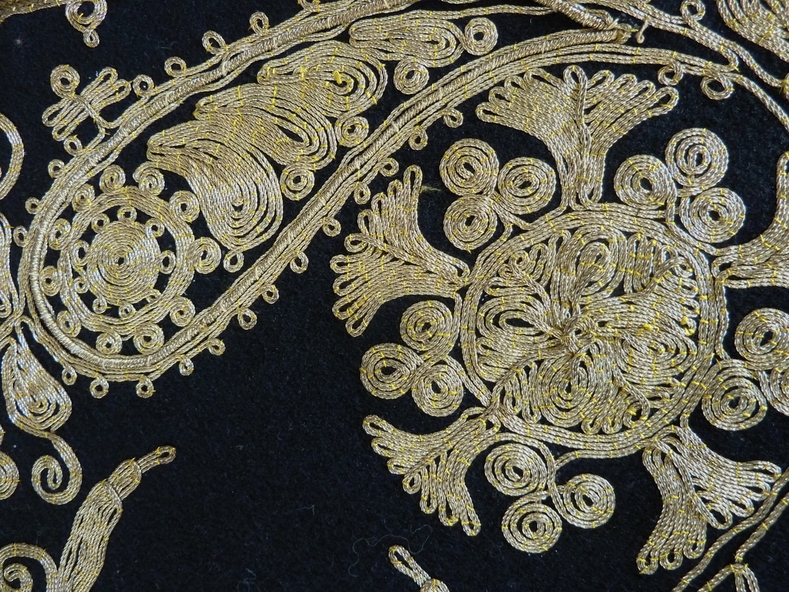
Goldwork: The defining feature is the lavish use of gold metallic couching stitches and gold bullion thread.
Structure: Often high-collared, short-length shoulder capes, sometimes closed with a single ball and loop fastening at the neck.
Origin: These were typically high-fashion items worn in large urban centres like Istanbul and İzmir during the late 19th century, influencing and being influenced by Western fashion trends.
Physical description
Black wool cape with stand-up collar. Interfaced, but lining missing. Heavily embroidered with gold metal thread.
0.8 mm gold metal braid round all edges and over neck seam. Gold metal thread embroidery in curvi-linear foliage style design on collar, centre back, front edges, lower side and small running design along bottom edge.