

Historical information
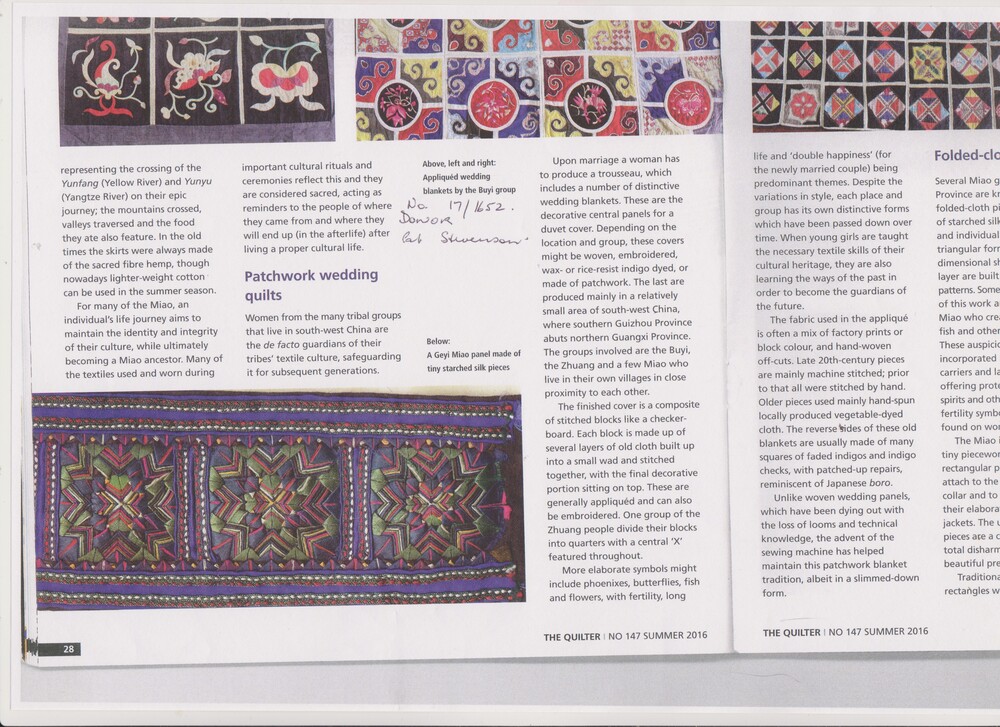
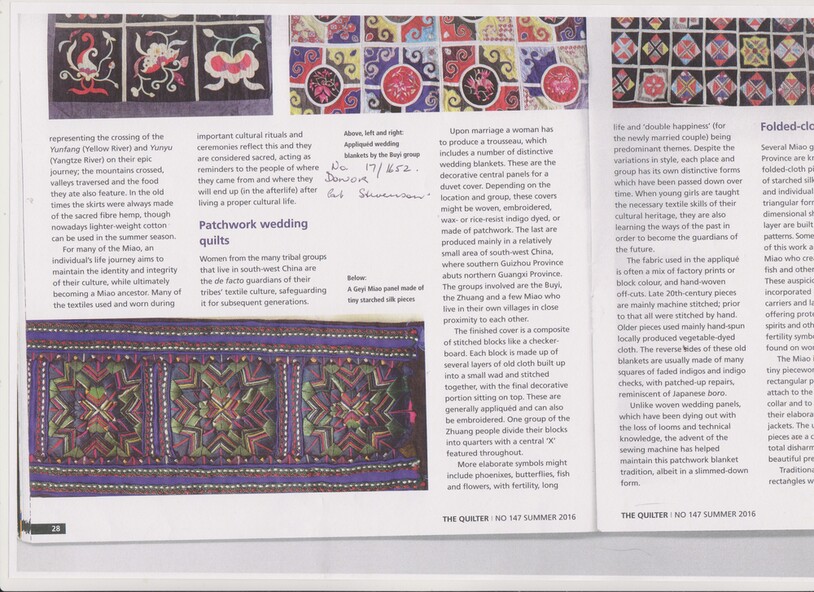
Women from the many tribal groups that live in south-west China are the de-facto guardians of their tribes' textile culture, safeguarding it for subsequent generations.
Upon marriage a woman has to produce a trousseau, which includes a number of distinctive wedding blankets. These are the decorative central panels for a duvet cover. Depending on the location and group, these covers might be woven, embroidered, wax or rice resist indigo dyed, or made of patchwork. These last are produced mainly in a relatively small area of south-west China, where southern Guizhou Province abuts the northern Guangxi Province. The groups involved are the Buyi, the Zhang and a few MIao who live in their own villages in close proximity to each other.
The finished cover is a composite of stitched blocks like a checker board. Each block is made up of several layers of old cloth built up into a small wad and stitched together, with the final decorative portion sitting on top. These are generally appliquéd and can also be embroidered. One group of the Zhang people divide with a central 'x' featured throughout.
More elaborate symbols might include phoenixes, butterflies, fish and flowers, with fertility, long life and 'double happiness'(for the newly married couple) being predominant themes. Despite the variations in style, each place and group has its own distinctive forms which have been passed down over time. When young girls are taught the necessary textile skills of their cultural heritage, they are also learning the ways of the past in order to become guardians of the future.
The Quilter # 147 Summer 2016
Physical description
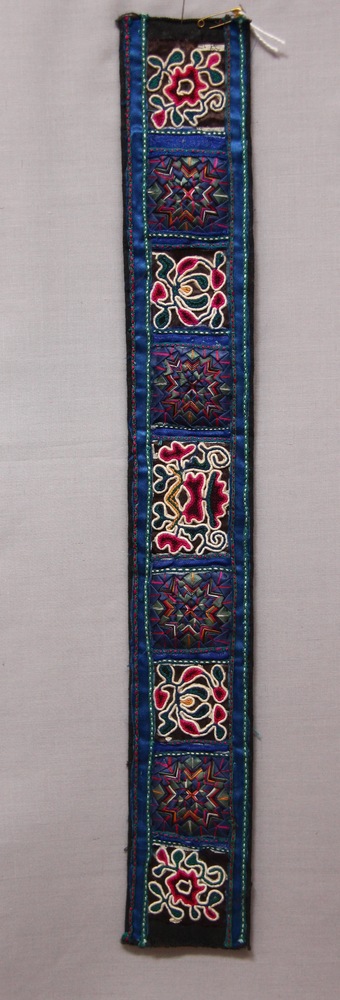
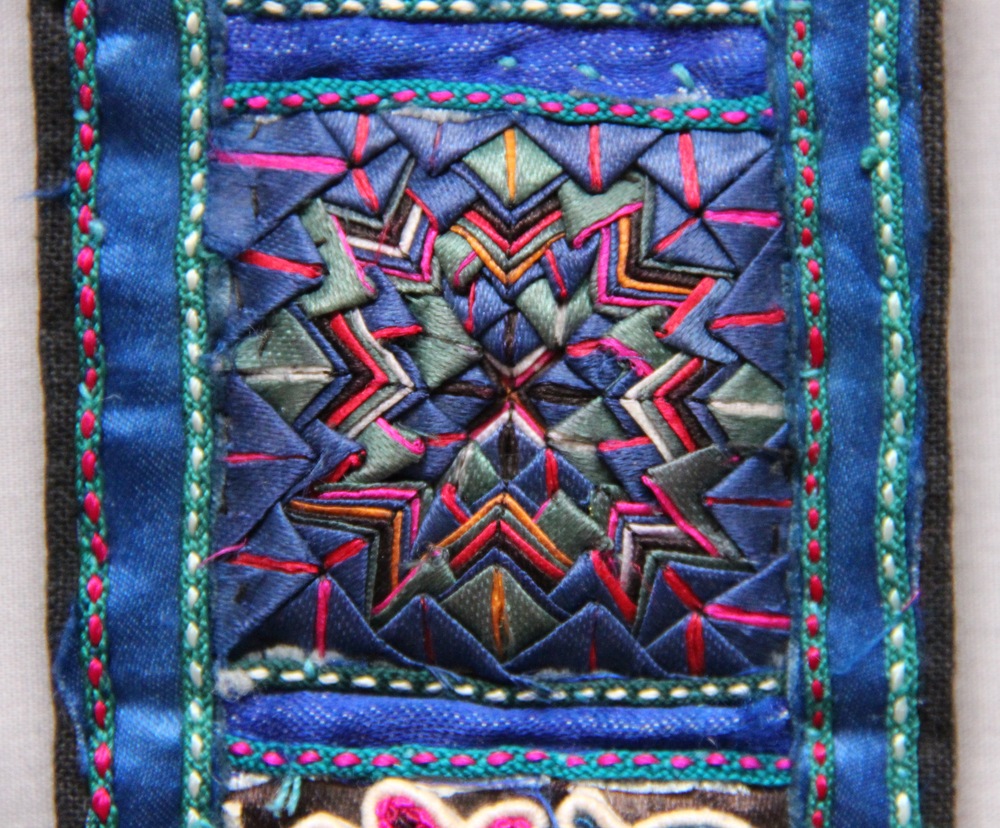
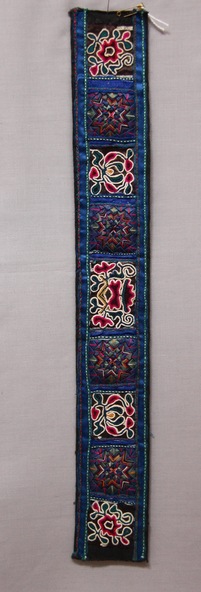
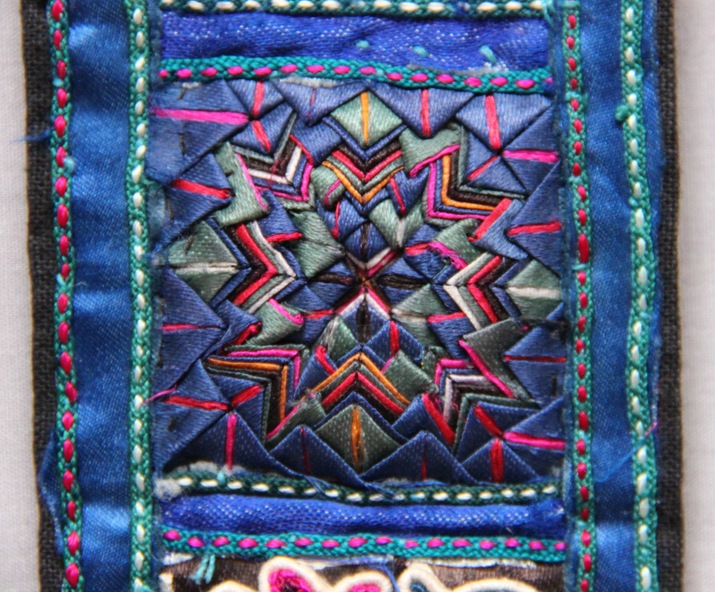
A "Geyi Miao" panel (band) of tiny stitched squares of silk fabric, with alternate squares of embroidered and folded patchwork fabrics, all enclosed with dark blue ribbon. Colours - dark blue, green, pink, yellow and cream. Back shows it was made on paper.