
Showing 25 items matching "language"
-
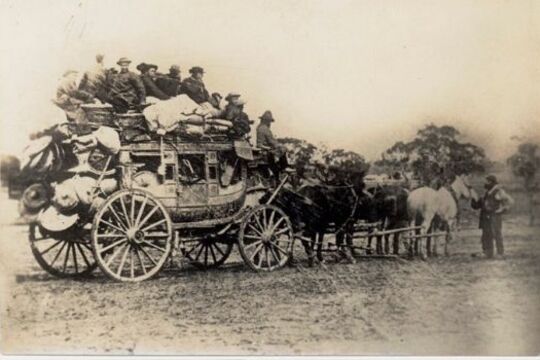
Language, A Key to Survival: Cantonese-English Phrasebooks in Australia
... ...language...Language, A Key to Survival: Cantonese-English Phrasebooks in Australia...In modern China over 200 languages have been documented. These languages can be categorised into seven groups: Gan, Hakka, Mandarin, Min, Wu, Xiang and Yue. There are numerous languages and dialects within each of these groups, all of which have changed over time. ...These books provide a guide to pronunciation, useful vocabulary, but most importantly lists of useful phrases to help travellers negotiate their way around a country where they don't speak the language. Anyone who has tried to communicate across the language divide without such a tool knows how valuable they are. This web story explores how Chinese from the gold rush period onwards have used phrasebooks to help them find their way in Australia. ...Most international travellers today are familiar with phrasebooks. These books provide a guide to pronunciation, useful vocabulary, but most importantly lists of useful phrases to help travellers negotiate their way around a country where they don't speak the language.
Anyone who has tried to communicate across the language divide without such a tool knows how valuable they are.
This web story explores how Chinese from the gold rush period onwards have used phrasebooks to help them find their way in Australia. You can compare examples of Cantonese-English phrasebooks from different eras; watch Museum volunteers Nick and David speak English using a gold-rush era phrasebook; learn a little about the lives of some of the people who owned these phrasebooks; and hear Mr Ng and Mr Leong discuss their experiences learning English in Australia and China in the early to mid-twentieth century.
This project is supported through funding from the Australian Government's Your Community Heritage Program.
-
Nyernila - Listen Continuously: Aboriginal Creation Stories of Victoria
... ...language...Message from the Victorian Aboriginal Corporation for Languages, 2015This publication represents a significant shift towards recognising the value of language in Aboriginal Culture. Language is ingrained in culture, stories and history.Culture is described as attitudes, customs, and beliefs that distinguish one group of people from another. ...Spelling of Language words in this book.The spoken Aboriginal Languages of Victoria were recorded in writing using the Roman alphabet, as used in English. Therefore Aboriginal language sounds were rendered in many different spellings. ...It is the first contemporary compilation of Victorian Aboriginal Creation Stories told by Victorian Aboriginal People, and it is the first to extensively use languages of origin to tell the stories.‘Nyernila’ to listen continuously – a Wergaia/Wotjobaluk word recorded in the 20th century. To listen continuously. What is meant by this term. ...This story is based on the unique publication Nyernila – Listen Continuously: Aboriginal Creation Stories of Victoria.
The uniqueness is differentiated by two significant and distinguishing features. It is the first contemporary compilation of Victorian Aboriginal Creation Stories told by Victorian Aboriginal People, and it is the first to extensively use languages of origin to tell the stories.
‘Nyernila’ to listen continuously – a Wergaia/Wotjobaluk word recorded in the 20th century. To listen continuously. What is meant by this term. What meaning is being attempted to be communicated by the speaker to the recorder? What is implied in this term? What is the recorder trying to translate and communicate to the reader?
‘Nyernila’ means something along the lines of what is described in Miriam Rose Ungemerrs ‘dadirri’ – deep and respectful listening in quiet contemplation of Country and Old People. This is how our Old People, Elders and the Ancestors teach us and we invite the reader to take this with them as they journey into the spirit of Aboriginal Victoria through the reading of these stories.
Our stories are our Law. They are important learning and teaching for our People. They do not sit in isolation in a single telling. They are accompanied by song, dance and visual communications; in sand drawings, ceremonial objects and body adornment, rituals and performance. Our stories have come from ‘wanggatung waliyt’ – long, long ago – and remain ever-present through into the future.
You can browse the book online by clicking the items below, or you can download a PDF of the publication here.
nyernila
nye
ny like the ‘n’ in new
e like the ‘e’ in bed
rn
a special kind of ‘n’
i
i like the ‘i’ in pig
la
la
-
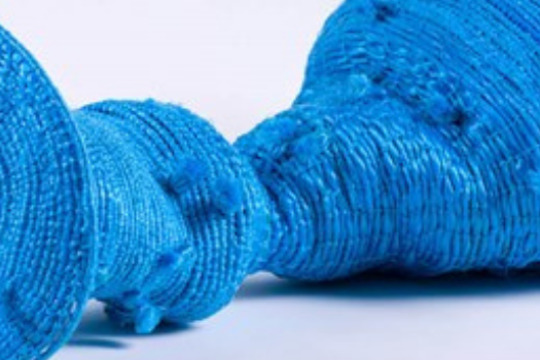 Koorie Heritage Trust / NGV Australia / State Library Victoria
Koorie Art and Artefacts
... ...language...I feel deeply emotionally stirred and saddened that what we can see of this way of life and identity, with the traditions of language, customs, beliefs and culture, were not able to be passed down through the generations. The Government policies and mission life all played a part ……….. and yet, some of the government policies and missions may have saved us from total extinction. ...Koorie makers of art and artefacts draw upon rich and ancient cultural traditions. There are 38 Aboriginal Language Groups in Victoria, each with unique traditions and stories. These unique traditions include the use of geometric line or free flowing curving lines in designs. This selection of artworks and objects has been chosen from artworks made across the range of pre-contact, mission era and contemporary times and reflects the richness and diverse voices of Koorie Communities. ...Koorie makers of art and artefacts draw upon rich and ancient cultural traditions. There are 38 Aboriginal Language Groups in Victoria, each with unique traditions and stories. These unique traditions include the use of geometric line or free flowing curving lines in designs.
This selection of artworks and objects has been chosen from artworks made across the range of pre-contact, mission era and contemporary times and reflects the richness and diverse voices of Koorie Communities. It showcases prehistoric stone tools, works by 19th century artists William Barak and Tommy McRae right through to artworks made in the last few years by leading and emerging Aboriginal artists in Victoria.
The majority of the items here have been selected from the extensive and significant collections at the Koorie Heritage Trust in Melbourne. The Trust’s collections are unique as they concentrate solely on the Aboriginal culture of south-eastern Australia (primarily Victoria). Over 100,000 items are held in trust for current and future generations of Koorie people and provide a tangible link, connecting Community to the past.
Within the vibrant Koorie Community, artists choose their own ways of expressing identity, cultural knowledge and inspiration. In a number of short films Uncle Wally Cooper, Aunty Linda Turner and Aunty Connie Hart practice a range of traditional techniques and skills. These short documentaries show the strength of Koorie culture today and the connection with past traditions experienced by contemporary Koorie artists.
Taungurung artist Mick Harding draws upon knowledge from his Country about deberer, the bogong moth: "The long zigzag lines represent the wind currents that deberer fly on and the gentle wavy lines inside deberer demonstrate their ability to use those winds to fly hundreds of kilometres to our country every year."
Koorie artists today also draw inspiration from the complex and changing society we are all part of. Commenting on his artwork End of Innocence, Wiradjuri/Ngarigo artist Peter Waples-Crowe explains: "I went on a trip to Asia early in the year and as I wandered around Thailand and Hong Kong I started to think about Aboriginality in a global perspective. This series of works are a response to feeling overwhelmed by globalisation, consumerism and celebrity."
Koorie culture is strong, alive and continues to grow.
CULTURAL WARNING: Aboriginal and Torres Strait Islander users are warned that this material may contain images and voices of deceased persons, and images of places that could cause sorrow.
-
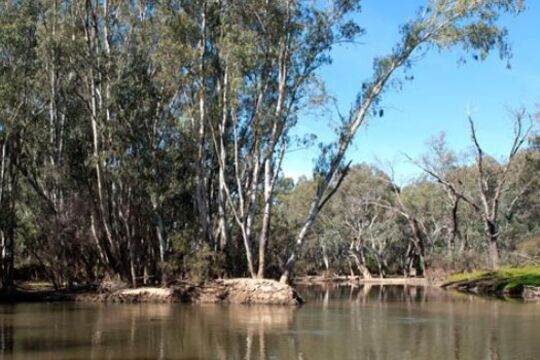
Pangerang Country with Freddie Dowling
... ...language...The word Pangerang is often written and known as Bangerang, and Banerang, 'because, in our language, "puh" and "buh" sound similar' (Freddie Dowling). ...Indigenous Warning: Please be aware that this story contains imagery and representation of people that may be deceased, and images of places that could cause sorrow.
In this story Freddie Dowling, Pangerang Elder, introduces us to several Pangerang stories and sites.
The Pangerang people were a nation of sub-clans who occupied much of what is now North Eastern Victoria stretching along the Tongala (Murray) River to Echuca and into the areas of the southern Riverina in New South Wales. Their land includes the Wangaratta, Yarrawonga and Shepparton areas through which the Kialla (Goulburn) and Torryong (Ovens) Rivers flow. The approximate boundaries are south to Mansfield, west to Echuca, east to Chiltern and north to near Narrandera in New South Wales.
Freddie Dowling learnt the stories of the indigenous people of this area from his grandmother, Annie Lewis, and his father, Frank ‘Munja’ Dowling.
The Pangerang words used in this story were written down by Annie Lewis in 1900. She learned them from her mother, Luana ‘Lily’ Milawa. Freddie remembers that both his grandmother and father spoke these words. His father also taught him to speak while hunting and travelling in the bush of their country.
The word Pangerang is often written and known as Bangerang, and Banerang, 'because, in our language, "puh" and "buh" sound similar' (Freddie Dowling).
-
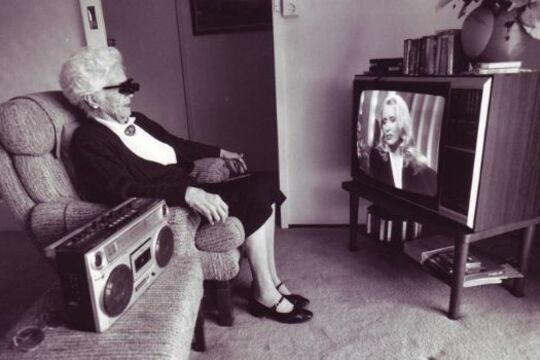
A Sensory Experience
... ...sign language...But this distinctive community has always rolled onwards. Its greatest boost was the recognition by linguists in the 1960s that sign languages were genuine languages, and in particular, the recognition and naming in the 1980s of the Australian Sign Language as Auslan. This was the standard-bearer. A shared language not only emphasises a sense of community among those who use it. ...The mainstream understanding of deaf and blind people has shifted over time. When once it was thought that blind people should be taken care of and sheltered, or deaf people taught to hear and speak, a deeper awareness of distinct culture and experience has emerged.
'A Sensory Experience' explores the world through the eyes and ears of the deaf and blind communities in Victoria and seeks to demystify some of the stereotypes and preconceptions that survive to this day.
The four films that make up part of this story highlight Victoria’s Deaf and blind communities within an historical framework, fostering new insights and provoking thought about the way we understand these communities today. Each film is an open invitation to share the experience of the world from another perspective.
The accompanying images complement the films, giving further understanding to the rich history held within the two groups. In addition, two contemporary essays by prominent writers offer the unique opportunity to share their lived experiences. Finally, the story contains an education kit for secondary students, which allows for a deeper study and understanding.
-
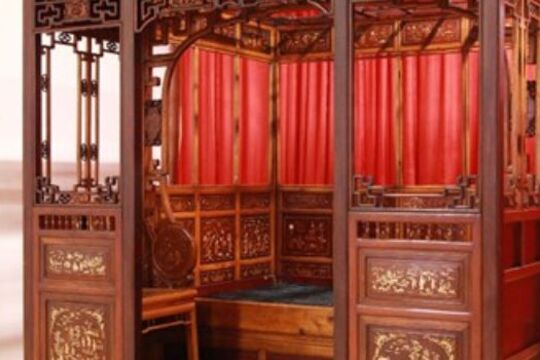
3D Puzzle: The Jones' Australian-Chinese bed
... ...language... • Chinese couplets don’t need to rhyme. They can be written in literary Chinese or any of the regional Chinese languages or even in a combination of both. This bed’s couplets are in literary Chinese which is generally considered more elegant. Couplets are rich in meaning and literary allusion. ...Watch as this beautiful late nineteenth century bed is reassembled at its new home at the Chinese Museum, discover how a Chinese bed ended up in Hobart and then Melbourne and unwravel the meanings that can be found in the couplets and decorations on it.
Assembling this bed was like putting together a 3D jigzaw puzzle but it is a puzzle in other ways too. Made in China in the late nineteenth century to a Chinese design this bed has spent most of its life in Australia and, as far as is we know, no person with Chinese ancestry ever slept in it. Is it a Chinese bed or an Australian bed? Maybe it is both?
-
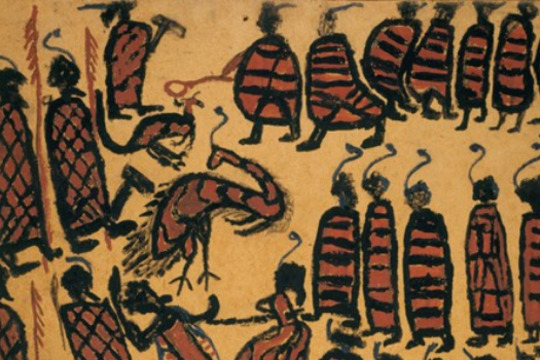
William Barak
... ...language...Batman had brought along several 'Sydney blacks' to help with negotiations, but regional differences meant the language barrier remained, and the conversation was conducted largely in mime. The resultant misunderstandings had dire consequences for the Kulin peoples of the Narrm (Melbourne) region. ...Diplomat, artist, story-teller and leader, Wurundjeri (Woiwurung) man William Barak worked all his life to protect the rights and culture of his people, and to bridge the gap between settlers and the land’s original custodians.
Barak was educated at the Yarra Mission School in Narrm (Melbourne), and was a tracker in the Native Police as his father had been, before becoming ngurungaeta (clan leader). Energetic, charismatic and mild mannered, he spent much of his life at Coranderrk Reserve - a self-sufficient Aboriginal farming community in Healesville.
Barak campaigned to protect Coranderrk, worked to improve cross-cultural understanding and created many unique artworks and artifacts, leaving a rich cultural legacy for future generations.
CULTURAL WARNING: Aboriginal and Torres Strait Islander users are warned that this material may contain images and voices of deceased persons, and images of places that could cause sorrow.
Further information on William Barak can be found at the State Library of Victoria's Ergo site.
-
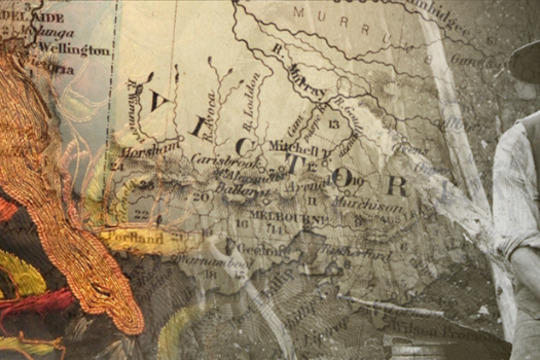 Wind & Sky Productions
Many Roads: Stories of the Chinese on the goldfields
... ...Sign: Chinese language...The gold fields were a melting pot of people from all around the world. They spoke different languages and dialects and often chose to live and work with people from their own country: Germans would set up a specific camp, for instance, as would the Irish and the Welsh. ...UNIQUE COMMUNITIES Chinese miners set up camps within their village dialect or ethnic units. See Yup language speakers (a variety of Cantonese spoken by residents of four counties south-west of Guangzhou/Canton) populated much of the goldfields. They congregated according to dialect, home village or family group. ...In the 1850s tens of thousands of Chinese people flocked to Victoria, joining people from nations around the world who came here chasing the lure of gold.
Fleeing violence, famine and poverty in their homeland Chinese goldseekers sought fortune for their families in the place they called ‘New Gold Mountain’. Chinese gold miners were discriminated against and often shunned by Europeans. Despite this they carved out lives in this strange new land.
The Chinese took many roads to the goldfields. They left markers, gardens, wells and place names, some which still remain in the landscape today. After a punitive tax was laid on ships to Victoria carrying Chinese passengers, ship captains dropped their passengers off in far away ports, leaving Chinese voyagers to walk the long way hundreds of kilometres overland to the goldfields. After 1857 the sea port of Robe in South Australia became the most popular landing point. It’s estimated 17,000 Chinese, mostly men, predominantly from Southern China, walked to Victoria from Robe following over 400kms of tracks.
At the peak migration point of the late 1850s the Chinese made up one in five of the male population in fabled gold mining towns of Victoria such as Ballarat, Bendigo, Castlemaine, Beechworth and Ararat. It was not just miners who took the perilous journey. Doctors, gardeners, artisans and business people voyaged here and contributed to Victoria’s economy, health and cultural life. As the nineteenth century wore on and successful miners and entrepreneurs returned home, the Chinese Victorian population dwindled. However some chose to settle here and Chinese culture, family life, ceremony and work ethic became a distinctive feature of many regional Victorian towns well into the twentieth century.
By the later twentieth century many of the Chinese relics, landscapes and legacy of the goldrush era were hidden or forgotten. Today we are beginning to unearth and celebrate the extent of the Chinese influence in the making of Victoria, which reaches farther back than many have realised.
-
Our Story
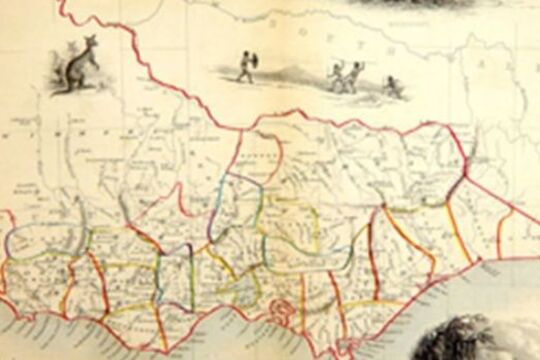
... ...indigenous language ...Welcome to Country! Learn about Koorie Culture: our people, our flags, and history.
CULTURAL WARNING: Aboriginal and Torres Strait Islander users are warned that this material may contain images and voices of deceased persons, and images of places that could cause sorrow.
-
Kylie's Costumes
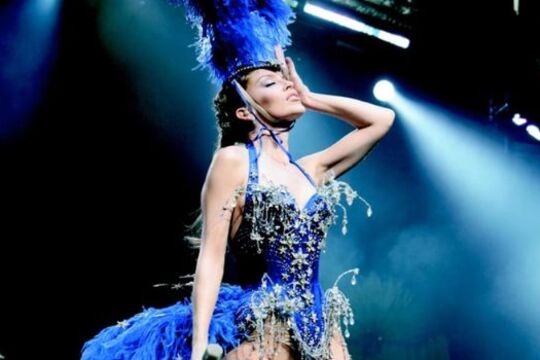
... ...Costume: 'Red Blooded Woman' [2004] video from the album Body Language, 2003 (1) ...From Neighbours character, Charlene, to international pop sensation, Kylie Minogue’s costumes chart her rise, her style, and her creative energy.
The Kylie Costume Collection at the Arts Centre, Melbourne, shows the range and development of Kylie's persona through costume, and her collaborations with international and national designers.
As Kylie donates her costumes to the Arts Centre directly, curators are able to keep an extensive, chronological and very complete material record of Kylie's career, across her tours, album cover shoots, music videos, and red carpet and special events.
-
William Buckley
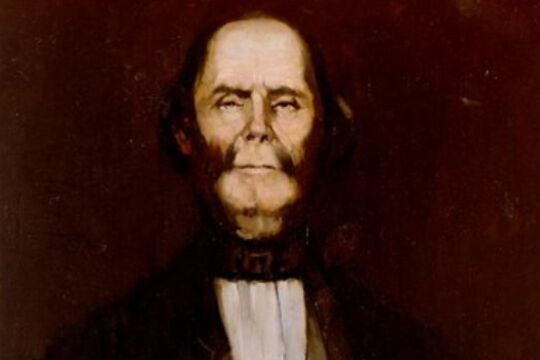
... In a lucky coincidence, the tall, pale Buckley, who carried a spear he’d found at a grave, was initially thought to be a reincarnation of a Wathaurang leader, who was also very tall. Over the next 32 years Buckley lived with the Wathaurang, learnt their language and customs, married and had a daughter. When Batman’s colonising party arrived in 1835, Buckley finally emerged to meet them. At first he couldn’t remember his own language or name but identified himself by the WB tattooed on his arm. ...He wandered alone for weeks before he was befriended by the Wathaurang people. Over the next 32 years Buckley lived with the Wathaurang, learnt their language and customs, married and had a daughter. In 1835 he finally emerged to meet Batman’s colonising party and tried to work as an intermediary between settlers and aborigines, but felt he wasn’t trusted by either. ...After convict William Buckley’s escape from a Victorian settlement he was discovered by the Wathaurang people who thought this pale, 198cm giant carrying a spear was the ghost of one of their leaders.
Buckley had arrived at Port Phillip from England in 1803 with about 300 soldiers, settlers and convicts after being sentenced to transportation for life. Before the Port Phillip and Sullivan Bay (Victoria’s first official European settlement) settlement was abandoned, Buckley escaped. He wandered alone for weeks before he was befriended by the Wathaurang people.
Over the next 32 years Buckley lived with the Wathaurang, learnt their language and customs, married and had a daughter. In 1835 he finally emerged to meet Batman’s colonising party and tried to work as an intermediary between settlers and aborigines, but felt he wasn’t trusted by either.
His name lives on in Australian slang with the ironic saying “you’ve got Buckley’s chance” or “Buckley’s hope”.
Further material can be found at the State Library of Victoria's Ergo site:-
William Buckley's Escape
Buckley and the Aborigines
Buckley's return to European life
-
Digital Stories of Immigration
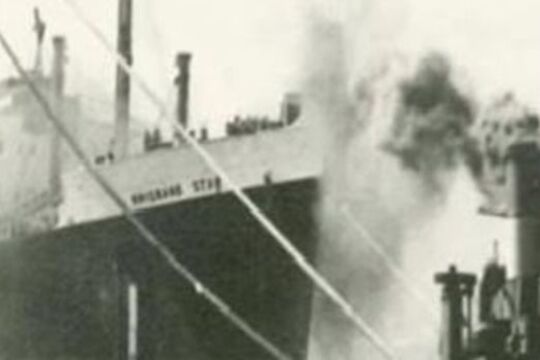
... These stories recount extraordinary journeys of courage for many have had to flee their homeland to start a new life in Australia enduring sinking boats, pirates and transit camps. New language, new culture, new landscapes and new climates are all part of the challenges of resettlement. Produced as part of the ACMI digital storytelling program these stories explore the waves of migration from Post war to stories from emerging communities and new arrivals. ...Migration is a strong theme of exploration for many who take part in the Australian Centre for the Moving Image (ACMI), Digital Storytelling workshops.
These stories recount extraordinary journeys of courage for many have had to flee their homeland to start a new life in Australia enduring sinking boats, pirates and transit camps.
New language, new culture, new landscapes and new climates are all part of the challenges of resettlement.
Produced as part of the ACMI digital storytelling program these stories explore the waves of migration from Post war to stories from emerging communities and new arrivals. Immigration has been significant in identifying Australia’s history and culture and the ACMI stories of migration celebrate the multitude of diverse communities in Victoria.
-
Badger Bates
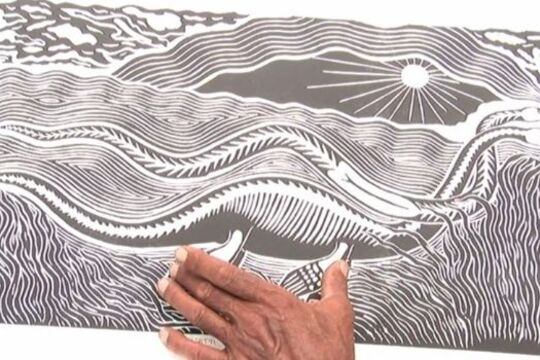
... Badger Bates (William Brian Bates) was raised by his extended family and his grandmother Granny Moysey, with whom he travelled the country, learning about the language, history and culture of the Paakantji people of the Darling River, or Paaka. When he was about 8 years old Granny Moysey started to teach him to carve emu eggs and make wooden artefacts in the traditional style, carving by ‘feeling through his fingers.’ ...Badger Bates (William Brian Bates) was raised by his extended family and his grandmother Granny Moysey, with whom he travelled the country, learning about the language, history and culture of the Paakantji people of the Darling River, or Paaka.
When he was about 8 years old Granny Moysey started to teach him to carve emu eggs and make wooden artefacts in the traditional style, carving by ‘feeling through his fingers.’
Badger works in linoprint, wood, emu egg and stone carving, and metalwork, reflecting the motifs, landforms, animals, plants and stories of Paakantji land. His art is an extension of a living oral tradition, and in his work we find the wavy and geometric lines from the region’s wooden artefacts; places of ceremonial and mythological importance; depictions of traditional life such as hunting and gathering bush tucker; and stories about the ancestral spirits; as well as contemporary issues such as the degradation of his beloved Darling River.
-
Nyabana Riek
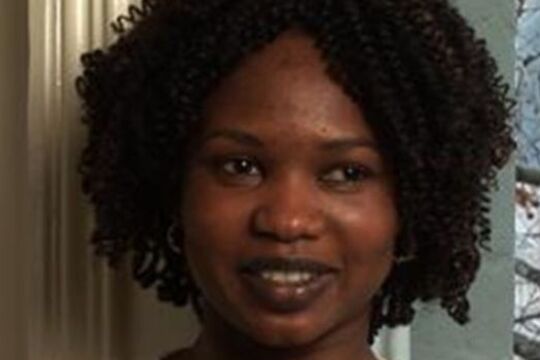
... When she arrived, Melbourne's Sudanese community was small; she was the first teenager from the Nuer language group and spoke little English. But things are different now - more family members have come to Melbourne, Nyabana completed a Bachelor of Business Management, and the Sudanese community and support networks are growing. ...Nyabana Riek left Nasir, southern Sudan, to escape civil war when she was only 9 years old.
With her older sister Mary, she travelled to a refugee camp in Itang, Ethiopia in 1986. But after years in various camps, the sisters made a dangerous trek at night across the mountains between Ethiopia and Kenya. The 12-hour journey was steep, sharp rocks tore their shoes and soldiers patrolled both sides of the border. They managed to cross the border into Kenya and then spent 3 years in a Kenyan refugee camp.
Finally, in 1995, Nyabana reached Australia. When she arrived, Melbourne's Sudanese community was small; she was the first teenager from the Nuer language group and spoke little English. But things are different now - more family members have come to Melbourne, Nyabana completed a Bachelor of Business Management, and the Sudanese community and support networks are growing.
-
 Megan Cardamone
Ganagan
... This online component of the Ganagan exhibition is sponsored by the Maritime Museums of Australia Project Support Scheme, supported by the Australian Government through the Australian National Maritime Museum. Ganagan means ‘deep water’ in the Taungurung language. CULTURAL WARNING: Aboriginal and Torres Strait Islander users of this website are warned that this story contains images of deceased persons and places that could cause sorrow. ...I dreamt about weaving a net. So I did just that. I wove a net! When I started weaving my net my mind wandered back in time and I thought about how it must have been for my ancestors who lived along the mighty Murray River.
GLENDA NICHOLLS Waddi Waddi/Yorta Yorta/Ngarrinjeri
Glenda Nicholls entered her Ochre Net into the Victorian Indigenous Art Awards in 2012 and was the winner of the Koorie Heritage Trust Acquisition Award.
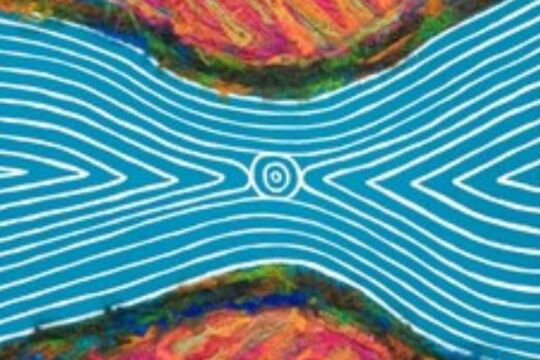
When Glenda’s Ochre Net came into the Trust’s care, it inspired this exhibition of artworks and stories relating to waterways and their significance to Koorie people. Powerful spiritual connections to waterways, lakes and the sea are central to Koorie life and culture.
The works shown in Ganagan Deep Water come from the Trust’s collections and represent many Koorie cultural groups from south-eastern Australia.
The Ganagan Deep Water exhibition at the Koorie Heritage Trust was sponsored by Melbourne Water.
This online component of the Ganagan exhibition is sponsored by the Maritime Museums of Australia Project Support Scheme, supported by the Australian Government through the Australian National Maritime Museum.
Ganagan means ‘deep water’ in the Taungurung language.
CULTURAL WARNING: Aboriginal and Torres Strait Islander users of this website are warned that this story contains images of deceased persons and places that could cause sorrow.
-
Possum Skin Cloaks
... Kooramook yakeen: possum dreaming Culture is the framework through which we connect to our Country, our Belonging. It defines and makes us who we are. Our language, stories, songs, dance, artefacts, cultural knowledge and practices demonstrate our continuing connections. Land, language and identity are fundamental to our Being. ...They're the Western Red Kangaroo because the image that came out of this mapping of language showed them the map of who they are. ‘She said to me: ‘We're the Western Red, you're the Eastern Grey.’ When you start to map all those things out you will see how we belong to certain parts of the Country and what meat we can eat and what meat we can't eat. ...CULTURAL WARNING: Aboriginal and Torres Strait Islander users are warned that this material may contain images and voices of deceased persons, and images of places that could cause sorrow.
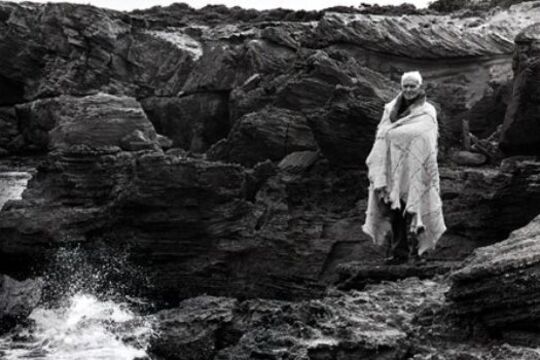
Continuing the practice of making and wearing possum skin cloaks has strengthened cultural identity and spiritual healing in Aboriginal communities across Victoria.Embodying 5,000 years of tradition, cultural knowledge and ritual, wearing a possum skin cloak can be an emotional experience. Standing on the barren escarpment of Thunder Point with a Djargurd Wurrong cloak around his shoulders, Elder Ivan Couzens felt an enormous sense of pride in what it means to be Aboriginal.
In this story, eight Victorian Elders are pictured on Country and at home in cloaks that they either made or wore at the 2006 Melbourne Commonwealth Games Opening Ceremony.
In a series of videos, the Elders talk about the significance of the cloaks in their lives, explain the meanings of some of the designs and motifs, and reflect on how the cloaks reinforce cultural identity and empower upcoming generations.
Uncle Ivan’s daughter, Vicki Couzens, worked with Lee Darroch, Treahna Hamm and Maree Clarke on the cloak project for the Games. In the essay, Vicki describes the importance of cloaks for spiritual healing in Aboriginal communities and in ceremony in mainstream society.
Traditionally, cloaks were made in South-eastern Australia (from northern NSW down to Tasmania and across to the southern areas of South Australia and West Australia), where there was a cool climate and abundance of possums. From the 1820s, when Indigenous people started living on missions, they were no longer able to hunt and were given blankets for warmth. The blankets, however, did not provide the same level of waterproof protection as the cloaks.
Due to the fragility of the cloaks, and because Aboriginal people were often buried with them, there are few original cloaks remaining. A Gunditjmara cloak from Lake Condah and a Yorta Yorta cloak from Maiden's Punt, Echuca, are held in Museum Victoria's collection. Reproductions of these cloaks are held at the National Museum of Australia.
A number of international institutions also hold original cloaks, including: the Smithsonian Institute (Washington DC), the Museum of Ethnology (Berlin), the British Museum (London) and the Luigi Pigorini National Museum of Prehistory and Ethnography (Rome).
Cloak-making workshops are held across Victoria, NSW and South Australia to facilitate spiritual healing and the continuation of this traditional practice.
