
Showing 201 items matching " grocer shops"
-
 Stawell Historical Society Inc
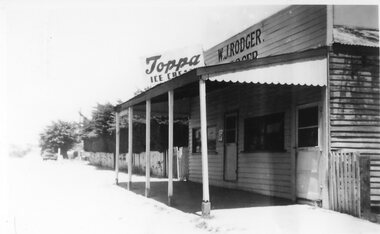
Photograph, Mr W J Rodger's Grocers Shop at 54 Patrick Street Stawell c1959
... Rodger Grocer 54 Patrick Street - Shop c1959...Rodger Grocer 54 Patrick Street - Shop c1959 Stawell Mr W J Rodger's Grocers Shop at 54 Patrick Street Stawell c1959 Photograph ...W.J. Rodger Grocer 54 Patrick Street - Shop c1959stawell -
 Eltham District Historical Society Inc
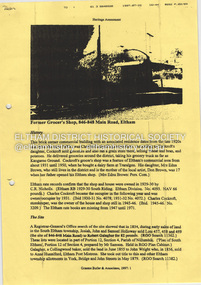
Document - Property Binder, 846 Main Road, Eltham
... Photocopy Heritage Assessment: Former Grocer's Shop, 846-848 Main Road, Eltham by Graeme Butler & Associates, 1997. ...Photocopy Heritage Assessment: Former Grocer's Shop, 846-848 Main Road, Eltham by Graeme Butler & Associates, 1997. ...Photocopy Newspaper Article: An old grain store faces a new role; Diamond Valley New, Tuesday, February 11, 1986, p13 (donated Geoff Watt28/2/2023). Photocopy Letterhead: Watt + Partners Pty Ltd, Architecture, Project Management (donated Geoff Watt28/2/2023). Photocopy Heritage Assessment: Former Grocer's Shop, 846-848 Main Road, Eltham by Graeme Butler & Associates, 1997. Newspaper article: Diamond Valley News, 16 July, 1997 Funeral parlour gets permit. Newspaper advertisement: Leader Associated Newspapers, Eltham Centenary Supplement, March 30, 1971, Eltham Produce Storemain road, eltham, property, shops, businesses, charles cockroft, edna brown, don brown, c r nicholls, josiah holloway, john holloway, samuel holloway, robert galagher, john wright, anne hunniford, a g cole, eltham produce store -
 Victoria Police Museum
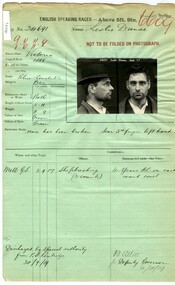
Prison record (Leslie Dunse), 4 October 1919
... In August 1917 Leslie Dunse, a police constable stationed at Brunswick police station, was accused of breaking into shops, particularly a boot store, grocers, butcher's shop and a drapers, and stealing goods. ...In August 1917 Leslie Dunse, a police constable stationed at Brunswick police station, was accused of breaking into shops, particularly a boot store, grocers, butcher's shop and a drapers, and stealing goods. ...In August 1917 Leslie Dunse, a police constable stationed at Brunswick police station, was accused of breaking into shops, particularly a boot store, grocers, butcher's shop and a drapers, and stealing goods. Three other constables were also charged - Arnold Wilson, Sidney Duckmanton and Hermann Johansen. Only Duckmanton was discharged.Prison record for Leslie Dunse, prisoner registered number 34691, giving details of the prisoner, his crimes and the dates and places of his trials.english speaking prisoner, leslie dunse, shopbreaking, police crimes -
 Phillip Island and District Historical Society Inc.
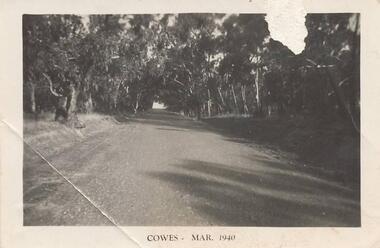
Photographs, 1940's
... One with sign showing ice-creams and a Grocer Shop next door....One with sign showing ice-creams and a Grocer Shop next door. Photographs A. J. Murray ...Seven photographs from a collection of 33 donated by Leonie Brennan. Photographs belonged to Edward (Ted) Sands, hairdresser.Photograph 215-10. Phillip Island Tourist Road (Cowes to Newhaven) in 1940, showing mature eucalypt trees on both sides of the road. Photograph 215-11. Car and tent possibly on a foreshore area on Phillip Island. The car was owned by "Roy". Photograph 215-12. Phillip Island Hotel in Walpole Street, Cowes. Photograph 215-13. Newhaven Boys Home showing farm buildings. Photograph 215-14. Bayview Guest House, The Esplanade, Cowes, with distinctive front fence. Photograph 215-15. The Chapel at Newhaven Boys Home, Phillip Island. Photograph 215-16. The Alvina ferry with passengers on board. Photograph 215-17. Very dark photograph of shops in Cowes. One with sign showing ice-creams and a Grocer Shop next door.Four photographs with "Cowes" month and 1940.main tourist road, phillip island, camp site phillip island, phillip island hotel cowes, hotels, guesthouses cowes phillip island, bayview guesthouse cowes, newhaven boys home phillip island, newhaven boys home chapel, the alvina, ferries, shops at cowes phillip island, mr edward (ted) sands, leonie brennan -
 Greensborough Historical Society
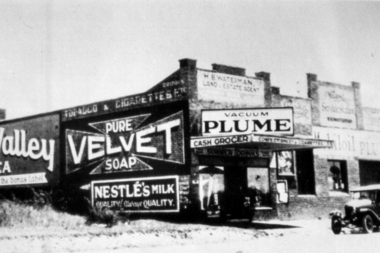
Photograph - Digital image, Watsonia Garage B, 1930c
... Photograph of Watsonia Garage and corner shop (cash grocer), early 20th century. Shows advertising on side of shop....Photograph of Watsonia Garage and corner shop (cash grocer), early 20th century. Shows advertising on side of shop. watsonia garage watsonia Digital copy of black and white photograph. ...Photograph of Watsonia Garage and corner shop (cash grocer), early 20th century. Shows advertising on side of shop.Digital copy of black and white photograph.watsonia garage, watsonia -
 Wodonga & District Historical Society Inc
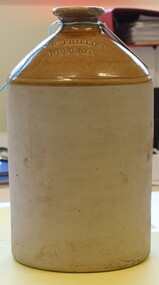
Functional object - Stoneware Demijohn, 1910
... On Friday 15 July 1921, a fire occurred in which Phillips grocer’s shop and a neighbouring draper’s shop, owned by Mr. ...On Friday 15 July 1921, a fire occurred in which Phillips grocer’s shop and a neighbouring draper’s shop, owned by Mr. ...Mr Robert Crone Phillips was born in Stanley, Victoria and later moved to Wangaratta where he worked at Pinkertons and Sons. On 1 April 1912 he purchased the grocery, ironmongery, and wine and spirits business conducted in Sydney Street, Wodonga, by Mr. D. M. Stavely. This business was beside the old Wodonga Police Station. He received a spirit merchant's license under the new Licensing Act in the Wodonga Licensing Court on 20 March 1912. This was the first occasion on which spirit merchants' licenses have been granted by the court. This license was renewed annually until November 1920. On Friday 15 July 1921, a fire occurred in which Phillips grocer’s shop and a neighbouring draper’s shop, owned by Mr. R. W. McLeish, were seriously damaged. In August 1921 Robert Philips filed for insolvency with assets of £660 10/ and liabilities of £1126 19/6. The cause of insolvency listed was loss sustained by fire and the pressure of creditors. Mr. Phillips retired to Wangaratta. He passed away in 1948. The demijohn is of local significance as it represents an artefact from a local business. Its provenance is clear due to the inscription in the item. It is representative of ceramic wares from the early 1900s.A ceramiic demijohn with business name"R C PHILLIPS/ WODONGA"wodonga businesses, sydney road wodonga, r c phillips -
 Bendigo Historical Society Inc.
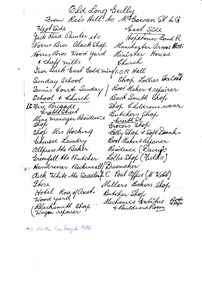
Document - LONG GULLY HISTORY GROUP COLLECTION: OLD LONG GULLY FROM RAE'S HILL TO MCGOWAN ST
... East Side - Hopetoun Band R, Manchester Arms Hotel, Minister House, Church, IOR Hall, Shop Lollies Icecream, Boot Maker & Repairer, Back Smith Shop, Shop Childrens Wear, Butchers Shop, Creeth Street, Grocers Shop, Lolly Shop & Soft Drinks, Boot Maker & Repairer, Residence (Davey's), Lollie Shop (Fields), Dressmaker, LG Post Office (M Webb), Millars Bakers Shop, Butcher Shop, Mechanics Institute Books & Paper & Billiard Room, Connell the Baker, Dr SElby, Pentreath Organ Builder & Tuner, Blacksmith Shop, Hexagon Toilet, Kocks Machine Shop, Kocks Mine Office, Kocks Material Shop, Police Station, Dyson's Dam Warm waer, Air Station, Mine Battery stone crusher 80 head approx, Kocks Mine, Needle Mine. ...East Side - Hopetoun Band R, Manchester Arms Hotel, Minister House, Church, IOR Hall, Shop Lollies Icecream, Boot Maker & Repairer, Back Smith Shop, Shop Childrens Wear, Butchers Shop, Creeth Street, Grocers Shop, Lolly Shop & Soft Drinks, Boot Maker & Repairer, Residence (Davey's), Lollie Shop (Fields), Dressmaker, LG Post Office (M Webb), Millars Bakers Shop, Butcher Shop, Mechanics Institute Books & Paper & Billiard Room, Connell the Baker, Dr SElby, Pentreath Organ Builder & Tuner, Blacksmith Shop, Hexagon Toilet, Kocks Machine Shop, Kocks Mine Office, Kocks Material Shop, Police Station, Dyson's Dam Warm waer, Air Station, Mine Battery stone crusher 80 head approx, Kocks Mine, Needle Mine. ...Titled Old Long Gully From Rae's Hill to McGowan St. LG. West Side - Jack Read Painter etc, Norris Bros Black Shop, Norris Bros Wood Yard & Chaff Mills, Iron Bark East Gold Mine, Sunday School, Tennis Courts Sunday School & Church, LG Fire Brigade, Creeth Street, Mine Managers Residence, Shop, Shop Mrs Hocking, Chinese Laundry, Allpress the Baker, Greenfell the Butcher, Hairdresser Beckinsall was the Fire Brigade Hotel, Dick White the Saddler, Store, Hotel Rose of Australia, Woodyard, Blacksmith Shop Wagon Repairer, Hotel Kocks (Pioneer Hotel), 2 China Shops owned by Chinese, Hotel Silver mines Hotel, Police Station, Grocers Shop (per? Reef Mine Hotel) E Bryant, Mine Windmill, Church Residence, Minister. East Side - Hopetoun Band R, Manchester Arms Hotel, Minister House, Church, IOR Hall, Shop Lollies Icecream, Boot Maker & Repairer, Back Smith Shop, Shop Childrens Wear, Butchers Shop, Creeth Street, Grocers Shop, Lolly Shop & Soft Drinks, Boot Maker & Repairer, Residence (Davey's), Lollie Shop (Fields), Dressmaker, LG Post Office (M Webb), Millars Bakers Shop, Butcher Shop, Mechanics Institute Books & Paper & Billiard Room, Connell the Baker, Dr SElby, Pentreath Organ Builder & Tuner, Blacksmith Shop, Hexagon Toilet, Kocks Machine Shop, Kocks Mine Office, Kocks Material Shop, Police Station, Dyson's Dam Warm waer, Air Station, Mine Battery stone crusher 80 head approx, Kocks Mine, Needle Mine. Some notes written at the end - Norm Shotples used to have Barber Shop - he has gone to Queensland, Violet Street started off as the German School, Wells Street used to run through Victorian Consol ? the other side, Comet Hill would like a visit. Contact Helen Gorlay at Violet Street would line to some video. Alan has good info on the Long Gully School. Betty has book. Views of Bendigo. Frank Cusack - Bendigo Trust. Bendigo School Hisking? School, Violet Street. Older levels lo?ing at Architecture.bendigo, history, long gully history group, the long gully history group - old long gully from rae's hill to mcgowan st, jack read, norris bros, iron bark east gold mine, long gully fire brigade, mrs hicking, allpress, greenfell, beckinsall, dick white, rose of australia, hopetoun band r, manchester arms hotel, ior hall, davey's, fields, m webb, millars, mechanics institute & billiard room, kocks pioneer hoel, silver mines hotel, e bryant, windmill mine, pere? reef mine hotel, connell, dr selby, pentreath, kocks machine shop, kocks mine office, kocks material shop, dyson's dam, kocks mine, needle mine, norm shotples, german school, victoria consols, helen gorlay, long gully school, frank cusack, bendigo trust -
 Surrey Hills Historical Society Collection
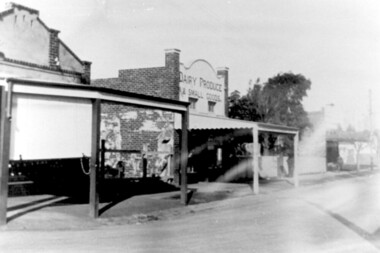
Photograph, Hamilton Street, Mont Albert in 1919, 1919
... The land occupied by the Hamilton Street shops was subdivided in the 1880s and the first purpose-built shop was 'Pope and Moran, Grocers'. This shop later became Tom Morris' Grocery. ...The land occupied by the Hamilton Street shops was subdivided in the 1880s and the first purpose-built shop was 'Pope and Moran, Grocers'. This shop later became Tom Morris' Grocery. ...The land occupied by the Hamilton Street shops was subdivided in the 1880s and the first purpose-built shop was 'Pope and Moran, Grocers'. This shop later became Tom Morris' Grocery. By 1930 shops stretched along both sides of Hamilton Street and part way along Churchill Street. The donor the late Norman Carter took many photos documenting Mont Albert and Surrey Hills from the 1920s. His subject matter often related to Church of England events and activities.Black and white photo taken from the centre of the road in Hamilton Street, Mont Albert. Three single storey shops can be seen with vacant blocks of land in between them. They have verandas extending over the pavement to the edge of the road which appears to have bluestone curb and channelling. One shop sells dairy produce and small goods.hamilton street, shops -
 Surrey Hills Historical Society Collection
Photograph, Churchill Street, Mont Albert and Mont Albert Station, looking towards Hamilton Street, 1919, 1919
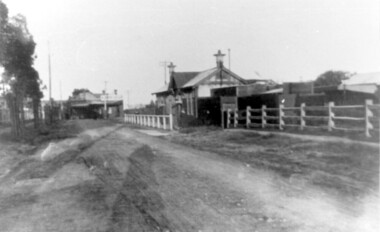
... The land occupied by the Hamilton Street shops was subdivided in the 1880s and the first purpose-built shop was 'Pope and Moran, Grocers'. This shop later became Tom Morris' Grocery. ...The land occupied by the Hamilton Street shops was subdivided in the 1880s and the first purpose-built shop was 'Pope and Moran, Grocers'. This shop later became Tom Morris' Grocery. ...The railway extended through to Mont Albert in 1882, but it wasn't until 1890 that a station was built with funds raised by a syndicate of local landowners.The buildings on the south side of the railway were built in 1910-1911 in the Arts and Crafts style by architect, K W Hardy. The land occupied by the Hamilton Street shops was subdivided in the 1880s and the first purpose-built shop was 'Pope and Moran, Grocers'. This shop later became Tom Morris' Grocery. By 1930 shops stretched along both sides of Hamilton Street and part way along Churchill Street. The donor, the late Norman Carter held a significant collection of photos taken around Mont Albert and Surrey Hills, in particular subjects related to the Church of England.Black and white photo taken from the centre of the road in Churchill Street, Mont Albert. Mont Albert station is on the RHS fenced off by a post and rail fence. Shops can be seen at the intersection of Hamilton and Churchill Streets. There do not appear to be any shops in Churchill Street. There are newly planted street trees within paling guards on the LHS. There does not appear to be any curb and channelling at the side of the road.Rear in blue biro in Jocelyn Hall's handwriting "Mont Albert Station 1919".mont albert station, railways, hamilton street, churchill street, shops, arts and crafts style, norman carter -
 Orbost & District Historical Society
pocket scales, 1920's
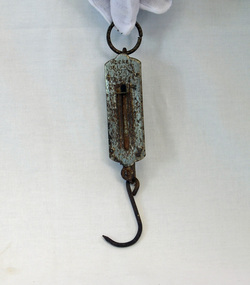
... From the late 18th century onwards these small scales were widely used in markets, grocers and farm shops – wherever people needed to be able to verify the weight of goods to be purchased in order to calculate the correct pricing. ...From the late 18th century onwards these small scales were widely used in markets, grocers and farm shops – wherever people needed to be able to verify the weight of goods to be purchased in order to calculate the correct pricing. ...The pocket balance was first created in 1770 by Richard Salter in the UK. From the late 18th century onwards these small scales were widely used in markets, grocers and farm shops – wherever people needed to be able to verify the weight of goods to be purchased in order to calculate the correct pricing. Because it was portable, and simple to use, the pocket balance was ideal for weighing goods where accuracy was not required. This balance appears to have been used for weighing fish.Pocket spring scales made of steel. There is a spring fixed at one end with a hook to which an object can be attached at the other. At the top of the scales there. is a metallic ring to fasten the object. This is attached to the main body which on one side has measurements inscribed into the metal surface. Inside the body is a spring loaded mechanism which moves along the scales when weight is added to a hook at the bottom of the shaft.At the top - POCKET BALANCE ARROW and the letters M P inside an oval.scales pocket-balance spring-balance measuring-instrument -
 Bendigo Historical Society Inc.
Document - SHORT ARTICLES (RHSV, BENDIGO BRANCH): ''LOOKING BACK 100 YEARS''
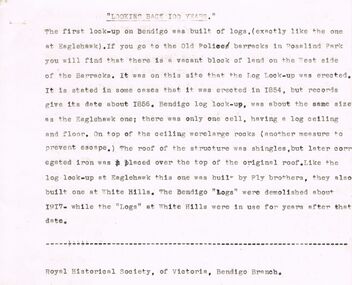
... Sandhurst Flour Mills. Goodwin's Grocer shop....Curnow's Auction Rooms, corner Mitchell and Queen Streets. with mention of Goodwin’s grocer shop and ''Her Majesties Theatre''; 3. ...Sandhurst Flour Mills. Goodwin's Grocer shop. Typewritten short articles (RHSV, Bendigo Branch): ''Looking back 100 Years''. ...Typewritten short articles (RHSV, Bendigo Branch): ''Looking back 100 Years''. Possibly all authored by John O'C Hattam, Bendigo and ?? Published in the Newsletter/magazine of the Society. Titles for the articles and key points within are as follow: 1. ''Lock-ups'' in Bendigo (Rosalind Park, Eaglehawk and White Hills); 2. Curnow's Auction Rooms, corner Mitchell and Queen Streets. with mention of Goodwin’s grocer shop and ''Her Majesties Theatre''; 3. Hebrew Synagogue (sic) in Dowling St (Hopetoun St); 4. Caltex oil deport (end of Hopetoun St) with mention of Knight's Brick kiln and quarry; 5. First fire brigade (Pall Mall, near Bull St); 6. Sandhurst Flour Mills (corners Lyttleton Terrace, Myers and Bernal (now Chapel Streets). Mention of Iser home on site; 7. Article similar to article #5 re first fire brigade with some different details; 8. Sly grog selling (from Bendigo Advertiser 18/4/1874); 9. Alexandra Fountain. Mention of Mr P Finn, monumental mason and building of the fountain; 10. ''Joke'' re pyrites/gold taken from Bendigo Advertiser 7/4/1874; 11. Interesting article from Bendigo Advertiser re ''lost'' including advertisement for one child; 12. Gambling on the Reserve from Bendigo Advertiser April 1874; 13. ''Settling a dispute'' from Bendigo Advertiser 11/4/1874; 14. Articles re ''selling liquor'' and ''furious riding'' taken from Bendigo Advertiser 15/4/1874;document, names of bendigo pioneers, bendigo advertiser, mr p. finn. curnow's auction room. sandhurst flour mills. goodwin's grocer shop. -
 Eltham District Historical Society Inc
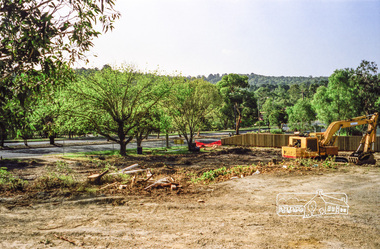
Photograph, Clearing land for Le Pine Funeral Home, cnr York Street and Main Road, Eltham, c.March 1998, 1998
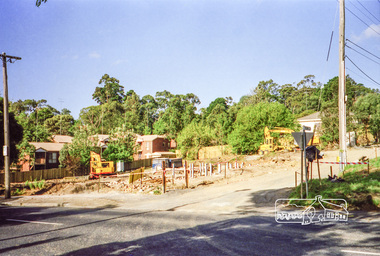
... The report summarized the historical significance as follows:- "This brick comer shop with associated residence has potential local historical significance as a late 1920's grocer's shop, now much altered and one of only a few shops of that era left in Eltham's Main Road. ...The report summarized the historical significance as follows:- "This brick comer shop with associated residence has potential local historical significance as a late 1920's grocer's shop, now much altered and one of only a few shops of that era left in Eltham's Main Road. ...Newsletter No. 116, September, 1997 846-848 MAIN ROAD ELTHAM Nillumbik Shire Council has granted a permit for a funeral parlour on land which includes this site at the corner of Main Road and York Street. The site contains an architect's office in a building which was formerly a shop and dwelling dating from the 1920's. The proposal requires demolition of this building which is one of the few remaining old shops which formed the rather spread out "town centre" of Eltham. Prior to making its decision the Council obtained a report from Graeme Butler and Associates, the heritage consultants who carried out Stage 1 of the Nillumbik Heritage Study. The report summarized the historical significance as follows:- "This brick comer shop with associated residence has potential local historical significance as a late 1920's grocer's shop, now much altered and one of only a few shops of that era left in Eltham's Main Road. This significance is qualified by the many changes. The other examples are better preserved and still function as shops." With this type of expert advice it is difficult to make a strong case for preservation of the building although, of course, it is a shame to see it demolished. The report includes details of the site itself and its history based on research carried out by Carlotta Kellaway. The building dates from the late 1920's when it was owned by C.R. Nicholls. From the early 1930's it was Charles Cockroft's grocery shop and he also ran a grain store there. According to his daughter, Edna Brown, he delivered groceries around the district taking his truck as far as Kangaroo Ground. In 1950 he shifted to Traralgon. Since then several different businesses have operated from the site including a bottle merchant and produce store. Conversion to the present office use involved alterations to the shop front and rebuilding the galvanized iron store at the rear. Newsletter 119 March 1998 In our Newsletter No. 116 it was reported that the former shop on the comer of Main Road and York Street, Eltham was to be demolished as part of a funeral parlour development. If you have passed the site recently you will have noticed that it has now been demolished - another part of the old Eltham township has disappeared.Roll of 35mm colour negative film, 6 strips Also photographic prints 10 x 15 cmKodak Gold 200-6a.r. warren, eltham feed store, le pine funeral home, main road, york street, c.r. nicholls, charles cockcroft, grocery store -
 Eltham District Historical Society Inc
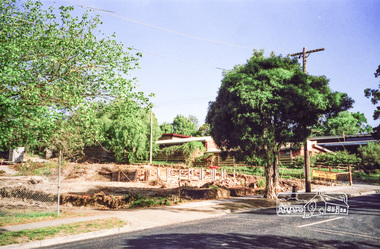
Photograph, Clearing land for Le Pine Funeral Home, cnr York Street and Main Road, Eltham, c.March 1998, 1998
... The report summarized the historical significance as follows:- "This brick comer shop with associated residence has potential local historical significance as a late 1920's grocer's shop, now much altered and one of only a few shops of that era left in Eltham's Main Road. ...The report summarized the historical significance as follows:- "This brick comer shop with associated residence has potential local historical significance as a late 1920's grocer's shop, now much altered and one of only a few shops of that era left in Eltham's Main Road. ...Newsletter No. 116, September, 1997 846-848 MAIN ROAD ELTHAM Nillumbik Shire Council has granted a permit for a funeral parlour on land which includes this site at the corner of Main Road and York Street. The site contains an architect's office in a building which was formerly a shop and dwelling dating from the 1920's. The proposal requires demolition of this building which is one of the few remaining old shops which formed the rather spread out "town centre" of Eltham. Prior to making its decision the Council obtained a report from Graeme Butler and Associates, the heritage consultants who carried out Stage 1 of the Nillumbik Heritage Study. The report summarized the historical significance as follows:- "This brick comer shop with associated residence has potential local historical significance as a late 1920's grocer's shop, now much altered and one of only a few shops of that era left in Eltham's Main Road. This significance is qualified by the many changes. The other examples are better preserved and still function as shops." With this type of expert advice it is difficult to make a strong case for preservation of the building although, of course, it is a shame to see it demolished. The report includes details of the site itself and its history based on research carried out by Carlotta Kellaway. The building dates from the late 1920's when it was owned by C.R. Nicholls. From the early 1930's it was Charles Cockroft's grocery shop and he also ran a grain store there. According to his daughter, Edna Brown, he delivered groceries around the district taking his truck as far as Kangaroo Ground. In 1950 he shifted to Traralgon. Since then several different businesses have operated from the site including a bottle merchant and produce store. Conversion to the present office use involved alterations to the shop front and rebuilding the galvanized iron store at the rear. Newsletter 119 March 1998 In our Newsletter No. 116 it was reported that the former shop on the comer of Main Road and York Street, Eltham was to be demolished as part of a funeral parlour development. If you have passed the site recently you will have noticed that it has now been demolished - another part of the old Eltham township has disappeared.Roll of 35mm colour negative film, 6 strips Also photographic prints 10 x 15 cmKodak Gold 200-6a.r. warren, eltham feed store, le pine funeral home, main road, york street, c.r. nicholls, charles cockcroft, grocery store -
 Eltham District Historical Society Inc
Photograph, Clearing land for Le Pine Funeral Home, cnr York Street and Main Road, Eltham, c.March 1998, 1998
... The report summarized the historical significance as follows:- "This brick comer shop with associated residence has potential local historical significance as a late 1920's grocer's shop, now much altered and one of only a few shops of that era left in Eltham's Main Road. ...The report summarized the historical significance as follows:- "This brick comer shop with associated residence has potential local historical significance as a late 1920's grocer's shop, now much altered and one of only a few shops of that era left in Eltham's Main Road. ...Newsletter No. 116, September, 1997 846-848 MAIN ROAD ELTHAM Nillumbik Shire Council has granted a permit for a funeral parlour on land which includes this site at the corner of Main Road and York Street. The site contains an architect's office in a building which was formerly a shop and dwelling dating from the 1920's. The proposal requires demolition of this building which is one of the few remaining old shops which formed the rather spread out "town centre" of Eltham. Prior to making its decision the Council obtained a report from Graeme Butler and Associates, the heritage consultants who carried out Stage 1 of the Nillumbik Heritage Study. The report summarized the historical significance as follows:- "This brick comer shop with associated residence has potential local historical significance as a late 1920's grocer's shop, now much altered and one of only a few shops of that era left in Eltham's Main Road. This significance is qualified by the many changes. The other examples are better preserved and still function as shops." With this type of expert advice it is difficult to make a strong case for preservation of the building although, of course, it is a shame to see it demolished. The report includes details of the site itself and its history based on research carried out by Carlotta Kellaway. The building dates from the late 1920's when it was owned by C.R. Nicholls. From the early 1930's it was Charles Cockroft's grocery shop and he also ran a grain store there. According to his daughter, Edna Brown, he delivered groceries around the district taking his truck as far as Kangaroo Ground. In 1950 he shifted to Traralgon. Since then several different businesses have operated from the site including a bottle merchant and produce store. Conversion to the present office use involved alterations to the shop front and rebuilding the galvanized iron store at the rear. Newsletter 119 March 1998 In our Newsletter No. 116 it was reported that the former shop on the comer of Main Road and York Street, Eltham was to be demolished as part of a funeral parlour development. If you have passed the site recently you will have noticed that it has now been demolished - another part of the old Eltham township has disappeared.Roll of 35mm colour negative film, 6 strips Also photographic prints 10 x 15 cmKodak Gold 200-6a.r. warren, eltham feed store, le pine funeral home, main road, york street, c.r. nicholls, charles cockcroft, grocery store -
 Linton and District Historical Society Inc
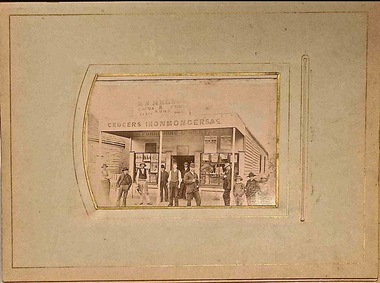
Photograph, R.S. Nelson, Grocers, Ironmongers
... shop. A sign above the verandah reads "R.S. Nelson & Son / China and Paint / Glass, Oils", and lettering across the verandah reads "Grocers Ironmongers &c". ...shop. A sign above the verandah reads "R.S. Nelson & Son / China and Paint / Glass, Oils", and lettering across the verandah reads "Grocers Ironmongers &c". ...This image shows the undertaker's premises/general store run by R. S. Nelson (Snr.) from the early 1860s and is thought to have been taken in the 1880s. This building was modified considerably by successive generations of the Nelson family over the years (see Registration nos. 338, 2019-314, 2019-320, 2019-325, and photos on p.33 & p.34 of the 'Photographic History''). It is currently used as the LDHS Resource Centre. The people standing at the front of the shop are unidentified. This image was copied in 2020 from a facebook post by Marcia Penny, a descendant of Linton's Craine family. Information with the image on facebook said the original photograph had been in a McIntyre family album (the McIntyre family was connected to the Craine family by marriage).Digital copy of an original photograph and its mounting card. The photograph shows a group of eight men and three children standing beneath the verandah of a shop. A sign above the verandah reads "R.S. Nelson & Son / China and Paint / Glass, Oils", and lettering across the verandah reads "Grocers Ironmongers &c". The shop front has a central doorway, and two large windows, each with twelve wood-framed, square panes of glass. Three posts support the verandah. Above the doorway of the shop, lettering reads "Furnishing Undertakers".r. s. nelson (1833-1893), buildings, shops, undertakers -
 The Beechworth Burke Museum Research Collection
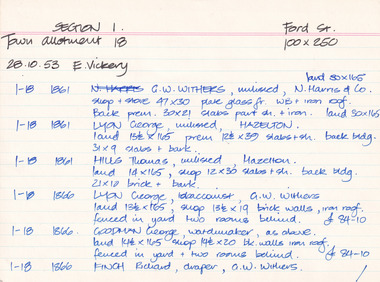
Card (Series) - Index Card, George Tibbits, Ford Street, Beechworth, 1976
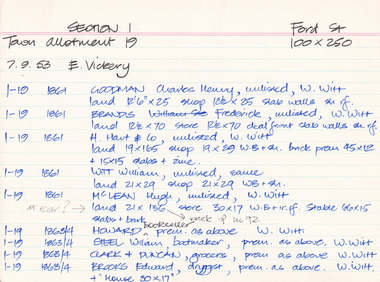
... shop 14'6"x20' bk iron roof. In rear 26'x13' WB, sh. rf. £80 1871 - Finch, Richard, clothier, G.W.W. land 14'6"x165' prem 14'6"x40 bk walls + ri, rf. 3 rooms in rear WB+sh rffs. £86 1-18+17 - 1871 - H.A. Crawford, bldg as 1866 let as follows - - Watson, Henry, tobacconist, street level, cellars under. £65 - Greer, Wm. John, grocer...shop 14'6"x20' bk iron roof. In rear 26'x13' WB, sh. rf. £80 1871 - Finch, Richard, clothier, G.W.W. land 14'6"x165' prem 14'6"x40 bk walls + ri, rf. 3 rooms in rear WB+sh rffs. £86 1-18+17 - 1871 - H.A. Crawford, bldg as 1866 let as follows - - Watson, Henry, tobacconist, street level, cellars under. £65 - Greer, Wm. John, grocer ...George Tibbits, University of Melbourne. Faculty of Architecture, Building and Town & Regional PlanningIndex system that support the research for Beechworth : historical reconstruction / [by] George Tibbits ... [et al]Arranged by street names of BeechworthEach index card includes: street name and number of property, image of property, allotment and section number, property owners and dates of ownership, description of the property according to rate records, property floor plan with dimensions.beechworth, george tibbitsbeechworth, george tibbits -
 Melbourne Tram Museum
Photograph - Tram Tracks at various locations - set of 3, Melbourne & Metropolitan Tramways Board (MMTB), 1960s
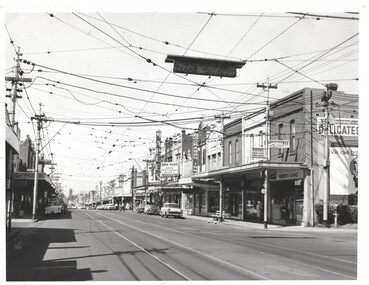
... In the background is a Continental Grocer, Tony's Fish Shop, JJ & TG Leech newsagent, and a Continental Butcher. ...In the background is a Continental Grocer, Tony's Fish Shop, JJ & TG Leech newsagent, and a Continental Butcher. ...Set of 3 photos showing tramway tracks and the road environment at various locations 1 - Glenferrie Road, Malvern Depot entrance looking south - Coldblo Road, showing the illuminated overhead "Trams crossing sign". In the background is Maples electrical store advertising Kelvinator, Dragon Inn, and a Greek small goods store. 2 - West Coburg terminus at Bell St - showing the end of the track arrangements, including a traffic light. In the background is a Continental Grocer, Tony's Fish Shop, JJ & TG Leech newsagent, and a Continental Butcher. Adverts for Winfield, Alimentari, Coca Cola, Doug Thorley caravans, The Age, The Sun, Herald, Sporting Globe, Macelleria. Note the newspaper stand by the traffic light. 3 - St Georges Road looking south over Normandy Road Thornbury - shows the tram track layout prior to the separation of the tracks on either side of the Median strip. A Shell Service station is visible on the left side of the photo and Milk bar on the right.Demonstrates the work of the MMTB to show various arrangements of roads and tram tracks.Black and white print with notes on the rearImage 1 - MMTB stamp P250.765 image 3 - MMTB stamp P257.1898tramways, motor traffic, glenferrie road, malvern depot, west coburg, bell st, st georges road -
 The Beechworth Burke Museum Research Collection
Card (Series) - Index Card, George Tibbits, Ford Street, Beechworth, 1976
... grocer, R.W. McDonald, prem as 1861 + Do 15'x15' + 18'x12' Bk. WB. + iron + sh. roofs. £75 1871 - Brook, Edward, druggist, R.W. McDonald, land 21'x165' prem 21'x29' WB. Sh. Rf. Do in rear 30'x17' WB. iron roof. £75 1876 - Mary Johnston, as above, £47 1876 - Jacobs, William, bootmaker £44 - Mary Johnston, prem as 1861 1876 - As above, £75 - Mary Johnston, prem as 1861 1876 - Dodd, Michael Henry, Saddler £75 - as above 1884 - as above, Mary Johnston, shop, prem + land 1884 - as above, Mary Johnston, shop, prem + land 1884 - no occupier, Mary Johnston, shop, prem + land 1884 - as above, Mary Johnston, shop, prem + land 1884 - as above, Mary Johnston, shop, prem + land £55 1889 - as above, Mary Johnston, shop, prem + land £55 1889 - as above, Gray, Elizabeth, Milliner, shop, prem + land £55 1889 - as above, McKenzie C.R. grocer, shop, prem + land £55 1900 - Ryan, Michael P., Solicitor, R.M. ...grocer, R.W. McDonald, prem as 1861 + Do 15'x15' + 18'x12' Bk. WB. + iron + sh. roofs. £75 1871 - Brook, Edward, druggist, R.W. McDonald, land 21'x165' prem 21'x29' WB. Sh. Rf. Do in rear 30'x17' WB. iron roof. £75 1876 - Mary Johnston, as above, £47 1876 - Jacobs, William, bootmaker £44 - Mary Johnston, prem as 1861 1876 - As above, £75 - Mary Johnston, prem as 1861 1876 - Dodd, Michael Henry, Saddler £75 - as above 1884 - as above, Mary Johnston, shop, prem + land 1884 - as above, Mary Johnston, shop, prem + land 1884 - no occupier, Mary Johnston, shop, prem + land 1884 - as above, Mary Johnston, shop, prem + land 1884 - as above, Mary Johnston, shop, prem + land £55 1889 - as above, Mary Johnston, shop, prem + land £55 1889 - as above, Gray, Elizabeth, Milliner, shop, prem + land £55 1889 - as above, McKenzie C.R. grocer, shop, prem + land £55 1900 - Ryan, Michael P., Solicitor, R.M. ...George Tibbits, University of Melbourne. Faculty of Architecture, Building and Town & Regional PlanningIndex system that support the research for Beechworth : historical reconstruction / [by] George Tibbits ... [et al]Arranged by street names of BeechworthEach index card includes: street name and number of property, image of property, allotment and section number, property owners and dates of ownership, description of the property according to rate records, property floor plan with dimensions.beechworth, george tibbitsbeechworth, george tibbits -
 Sunshine and District Historical Society Incorporated
Archive - Interview With Mace Myers, Mace Myers, 6th December 1976
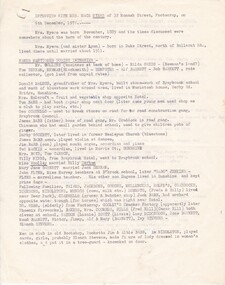
... Shop) Tom Babb (Boot Repairer) George Costello (Stone Breaker for a Road Construction Gang) James Babb (Boss of a Road Construction Gang) Chinaman (Gardener) Darby Rockett Ted Mackie Mrs. Boyd Tom Cannon Tilly Minns (Braybrook Hotel) Miss Wolley Billy Derham Mary Jane Barnett Jack Derham John Flynn Miss. Harvey "Gabo" Jenkins Eugene Flynn Tribe Jackson Gough Mullenger Rolfe Craddock Dickson Middleton Munro (Cows, milk, etc) Freda Roberts Billy Roberts Cranwell (Grocer...Shop) Tom Babb (Boot Repairer) George Costello (Stone Breaker for a Road Construction Gang) James Babb (Boss of a Road Construction Gang) Chinaman (Gardener) Darby Rockett Ted Mackie Mrs. Boyd Tom Cannon Tilly Minns (Braybrook Hotel) Miss Wolley Billy Derham Mary Jane Barnett Jack Derham John Flynn Miss. Harvey "Gabo" Jenkins Eugene Flynn Tribe Jackson Gough Mullenger Rolfe Craddock Dickson Middleton Munro (Cows, milk, etc) Freda Roberts Billy Roberts Cranwell (Grocer ...Gladys Maissie "Mace" Babb (b28/10/1889 d22/1/1982) married George Napier Myers (b29/10/1879 d23/9/1948) in 1912 in Victoria. Mace was the daughter of James Babb, a pioneer of Braybrook who worked as a caretaker and road contractor. This document is a summary of transcript of an interview between Mrs Mace Myers, aged 87 years old, of her memory of early Braybrook, Braybrook Junction and Sunshine in the early 19th century. Many of the early settlers of the Braybrook District are mentioned throughout the transcript.Interview with Mrs Mace Myers of 32 Monash Street, Footscray on 6th December 1976. Named mentioned during the interview. Lynn Myers Mr Collins (Business at back of home) Hilda Greig Newman's Land Tom Derham Newman (Blacksmith) Dempster Alf Barnett Bob Barnett Donald McLeod (Built stonework of the Braybrook School) Mrs. Holcroft (Fruit and Vegetable Shop) Tom Babb (Boot Repairer) George Costello (Stone Breaker for a Road Construction Gang) James Babb (Boss of a Road Construction Gang) Chinaman (Gardener) Darby Rockett Ted Mackie Mrs. Boyd Tom Cannon Tilly Minns (Braybrook Hotel) Miss Wolley Billy Derham Mary Jane Barnett Jack Derham John Flynn Miss. Harvey "Gabo" Jenkins Eugene Flynn Tribe Jackson Gough Mullenger Rolfe Craddock Dickson Middleton Munro (Cows, milk, etc) Freda Roberts Billy Roberts Cranwell (Grocer & butcher shop) Jack Babb Dr. Webb Gooley's Cracket Factory (Apparently later Phoenix Fireworks) Baker Mrs. Coomber Fred Hill Oscar Hill Lizzie Watson Lizzie Scott Lucy McDonough Rose Barnett Msud Barnett Victor Barnett Jimmy Barnett Alf Barnett Mary Barnett Ivy Steens Blanch Stevens Nurse Kerr Dr. Adamson Locations mentioned during the interview. Braybrook State School Braybrook Hotel Pennells Private School Pickett Street Footscray Sunshine Mechanics Hall Braybrook Public Hall Harrison's Hall (Next to the Deer Park Hotel) Maribyrnong River Fords (Mentions two fords across the river) Glengala Estatemace myers, george napier myrers, gladys maissie babb -
 Sunshine and District Historical Society Incorporated
Photograph - Sunshine Shopping Centre Sun Crescent Sunshine 1990 Photographs, Adam Ellwood, 14th November 1990
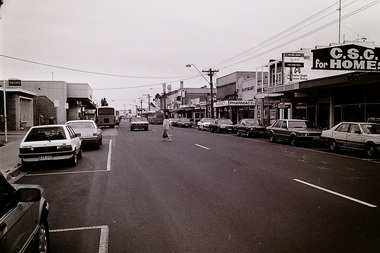
... Shops between 107–117 Hampshire Road were built during the 1923–1925 period, including: Homewood’s Café (a major social hub) Confectioners Grocers Butchers Timber yards Small specialty shops This cluster formed part of Sunshine’s early civic and retail centre. 1960s — Road realignment and renaming During Sunshine’s mid‑century redevelopment, the section of Hampshire Road near the Town Hall was realigned. ...Shops between 107–117 Hampshire Road were built during the 1923–1925 period, including: Homewood’s Café (a major social hub) Confectioners Grocers Butchers Timber yards Small specialty shops This cluster formed part of Sunshine’s early civic and retail centre. 1960s — Road realignment and renaming During Sunshine’s mid‑century redevelopment, the section of Hampshire Road near the Town Hall was realigned. ...Sun Crescent Shopping Centre emerged in the 1960s–1970s as a redeveloped section of Hampshire Road, created when the road alignment was altered and the former 1920s–1930s shop rows were renamed Sun Crescent. It became a small but important neighbourhood retail strip serving the residential blocks around the Sunshine Railway Station and Town Hall precinct. 1920s–1930s — Original Hampshire Road shops Before Sun Crescent existed, the area was part of the main Hampshire Road commercial strip. Shops between 107–117 Hampshire Road were built during the 1923–1925 period, including: Homewood’s Café (a major social hub) Confectioners Grocers Butchers Timber yards Small specialty shops This cluster formed part of Sunshine’s early civic and retail centre. 1960s — Road realignment and renaming During Sunshine’s mid‑century redevelopment, the section of Hampshire Road near the Town Hall was realigned. The old shop row at 107–117 Hampshire Road was renamed Sun Crescent. This renaming marks the birth of the Sun Crescent Shopping Centre. 1970s — Formation of a neighbourhood shopping strip By the 1970s, Sun Crescent had developed into a small but active local shopping centre. Typical businesses included: Milk bars Small grocers Hairdressers Takeaway shops Service businesses Local professional rooms Its customer base came from the dense residential blocks around the station, Town Hall, and Sunshine Technical School. 1980s–1990s — Stable neighbourhood centre Sun Crescent remained a modest but steady retail strip, overshadowed by the larger Hampshire Road and Sunshine Plaza precincts but still serving: Commuters Local residents Students Workers from nearby civic buildings Some older shops were redeveloped or replaced with modern commercial units. 2000s–2020s — Modern mixed‑use strip Today, Sun Crescent functions as: A secondary retail strip within the Sunshine Major Activity Centre A mix of small shops, services, and professional suites A transitional zone between the station precinct and residential streets Its heritage value lies in its connection to the original 1920s Hampshire Road shops and the mid‑century renaming that created the Sun Crescent identity.Sunshine Shopping Centres 492.3sunshine shopping centre, sun crescent, sunshine -
 Melton City Libraries
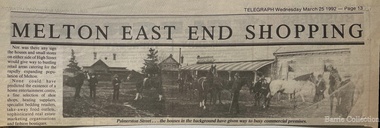
Newspaper, Melton East end shopping, 1992
... However as business was not thought good enough they reverted to a part time branch operated from Bacchus Marsh. Grocer shops were Chalmers, with a news agency and drapery now Arnolds, Jongebloeds had the bakery. ...However as business was not thought good enough they reverted to a part time branch operated from Bacchus Marsh. Grocer shops were Chalmers, with a news agency and drapery now Arnolds, Jongebloeds had the bakery. ...TOM COLLINS–from the reel to reel tape recording at Melton 1969 In the years between 1890 and to about 1913 Melton was a quiet little hamlet alongside the Toolern Creek, once called the Pennyroyal Creek, 24 miles from Melbourne on the Ballarat Road. There was a fair amount of woodland left around it, mostly grey and yellow box with sheoak, and golden wattle, which in spring time made a rather attractive setting. Most of the premises were in the main or High Street, with its line of elm and pepper trees on each side. Unitt, McKenzie and Henry streets each contained only a few dwellings. Hotels were four in number, Minns’s, Mrs Hay licencee, now Mac’s, Golden Fleece – Sheblers. The Royal or Ryan’s as it was then called, later Graham had the licence, and the Raglan - Kilpatricks had the licence and afterwards Tom Manning. This was situated about where Mr K. Young had his residence. There was a store attached to the hotel until about 1900. Both the Royal and the Raglan were delicensed, later on the Royal being converted to a green grocery and a boarding house, the Raglan was demolished. The Royal green grocery and boarding house was kept by E Carew and after he retired, E Radford. The Post and Telegraph Office was on the opposite side of the street to the Raglan Hotel about two doors west of the Shire Hall and was kept by Mrs Ferris and Lady Farmer until her retirement, when it was carried on by Miss Lottie Ross. A store was attached to the Post Office and was sometimes used as a store and at one time housed the National Bank. There were two full time banks at Melton, the other being the Commercial which built premises about 1904 and on the corner of High and Smith Streets, which it still occupies. Mr G Egan was the manager of the Commercial and Mr Stradling and later Mr Lee of the National. However as business was not thought good enough they reverted to a part time branch operated from Bacchus Marsh. Grocer shops were Chalmers, with a news agency and drapery now Arnolds, Jongebloeds had the bakery. Mr Fox also a produce merchant, was where Melton Real Estate is now, it was later occupied by Buchanans, Atleys, and Mrs Ross. Not long after the War Mrs Ross built the Post Office, since demolished where Miss Lottie Ross was the Post Mistress and later built the store which she conducted. It was later turned into a factory and in now the barbers shop. McNichols was just west of the Minns Hotel. He travelled as far a Ballan weekly, buying calves and dairy produce for sale in Melbourne. Afterwards he sold the business and bought Minns Hotel and changing the name to Macs. Blacksmiths were three in number. Blackwoods – later James Byrnes next door to Jongebloeds. Alex Cameron who learnt his trade with Blackwoods had his shop about the rear of where Ken Youngs Garage is now he later moved to the north west corner of High and Alexander Street. He was also the Registrar of Birth and Deaths and Electoral Registrar. After his retirement he was weighbridge keeper at Melton South. Two of his sons were engaged in the carpentry trade, but both died at an early age. Whittingtons shop was a few doors east of the Mechanics Hall and it was later occupied by Gordon Macdonald who did business there until about eight years ago. The butchers of the period were George Graham, that is where Mandy Lees hairdressing establishment is now. Euan MacDonald had premises later occupied by Whittingtons blacksmith shop. Later shifting next door. He left here about 1901, he slaughtererd animals at a slaughter house right where Chas Jones now resides, it had previously been a slaughter house and butcher shop of that site. George Spring also operated as a butcher for two or three years about the 1900 or so. Ted Simpsons shop was where John Kontek now has his Estate Agency, he used it as an branch shop from Bacchus Marsh bringing meat from there by a two horse lorry. Jimmy Butler the manager was well known and loved, his son was later a steeplechase jockey. The Court House and Police Station would be built sometime before 1900. The Constables at the time were McGuire, later Wade, Riely and McKenzie after that Robert Wilson and Seinfort were here, they were a bit later on. The Mechanics Hall was first opened by Ryan of the Royal Hotel who sold it to the Hall Committee. It was on Unitt Street and it was moved by McLellans the house shifters from Unitt Street to its present site. Bluestone premises formerly occupied by the bootmaker Carew, were later demolished and replaced by the brick frontage to the Hall. Keith Orensini [?] the local bricklayer built brick portion to the Hall. In the cottage adjoining the Hall a Frenchman named Baudin, had a boot repairing business.This cottage was the later residence of J Hill, a local carpenter and builder from whom I learnt my trade. Granny Watts was the well known local nurse and operated the Mid-Wifery Hospital in Yuille Street on the Sherwin Street corner. Mrs Nissen was on the opposite side of Yuille Street a short distance nearer the township. She conducted the laundry. Carew had a greengrocers shop next door to the Post Office in the High Street for some time before transferring to the Royal Hotel site. He also bought [?] calves for killing. W Cecil was a tank maker and also had a produce round, he lived on Pyke and Sherwin Street. Later Gus Shebler, builder and carpenter engaged in tank making being well known for good workmanship. Shebler was very energetic in forming the Gun Club which met for a good number of years where the golf course now has its headquarters. Of the four churches only three are in use, Christ Church, Scots and St Dominics. The Methodist closed down but later transferred to Melton South. Monthly stock sales were held at the yards in Unitt Street at Minns Hotel by McPhail Auctioneers, later held by McCarthur and McLeod. After the Council built the pound and sale yards they transferred sales to these premises, but lack of patronage caused them to be abandoned. A familiar sight in the district was blind Bob Nixon, who lived in a tumbled down cottage in Centenary Road near W Coburns, being led by his dog down the road to Melton, that is Palmerston street, to the Post Office, butcher and baker for his supplies and then back home. He was able to do his own cooking and other chores. Sundays he would come down Raleighs Road to the back of the church and tie his dog to a tree. Someone, mostly one of the boys would guide him into the church and out again after the service, when the dog would lead him home again. State School 430, a two roomed bluestone building it was the only school in the district, none at Melton South. The nearest would be Rockbank and Toolern Vale. Scholars had a fair distance to walk in most cases. The teachers were Mr T Lang Headmaster. I put a query here, Miss Winters, I’m not certain of the name, Mrs Skinner and Miss Silke as Assistant Teachers. Miss Augusta Cecil and Miss Maud Lang were Junior teachers. One boy who attended the school about the turn of the century was Hector Fraser who resided with his parents in Keilor Road, where Jim Gillespie now lives. He was an excellent gun shot and at the age of about 17 years his father took him to France or Monaco where he won the Gran Prix for pigeon shooting and became the champion boy shot of the world. However he died there from pneumonia. He shot under the name of “Parvo”. The Melbourne Hunt Club used to meet in Keilor Road north side just east of the Toolern Creek on what was originally Pykes Run. This was also the place where the races were held and the Sports Meetings. Dave Murphy, employed at Clarke’s Rockbank Station usually provided the fox which he liberated for the Club. Greyhound coursing was usually held on Moylans property Mt Kororoit, or Mt Misery as it was known then. Later it was held at Melton Park, Mr Matt Carberry was the judge and Percy Cook the slipper. Early in the 1900’s the Recreation Park was created and the Caledonian and the ANA sports meetings were held there, they were annual events. L Paterson from Melton South was a successful competitor in all the cycling events as a young man. He later in life became the Deputy Chief Officer of the Metropolitan Fire Brigade. The present Chief Officer of the Fire Brigade is John Paterson, nephew of his, and spent his early life in Exford where his father was manager of the Exford Estate. Notes Tom Collins was born c 1895. He lived on the south side of the Ballarat Road near the intersection of Keilor Road.Historical image of Palmerston Street in Meltonlocal architecture, landscapes of significance -
 Federation University Historical Collection
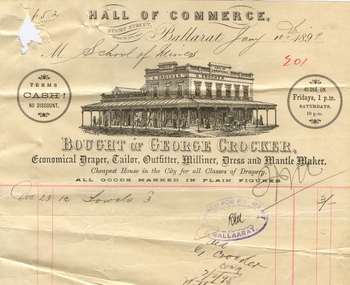
Document - Invoices, Letterhead and Invoices relating to the Ballarat School of Mines, 1898, 23/01/1898
... The City Cycle Shop built bicycles to order. city cycle works letterhead f. mitchell cycle bicycle william gooch r. collie & co. daily telegraph john king & co. arnall & jackson george crocker Ten invoices relating to the Ballarat School of Mines. .3) John King and Co., grocers .5) Crocker's Hall of Commerce .9) Printed invoice from F. ...The City Cycle Shop built bicycles to order.Ten invoices relating to the Ballarat School of Mines. .3) John King and Co., grocers .5) Crocker's Hall of Commerce .9) Printed invoice from F. Mitchell's City Cycle Works of 49 Lydiard Street.city cycle works, letterhead, f. mitchell, cycle, bicycle, william gooch, r. collie & co., daily telegraph, john king & co., arnall & jackson, george crocker -
 Ballarat Clarendon College
Book, The watches of the trails
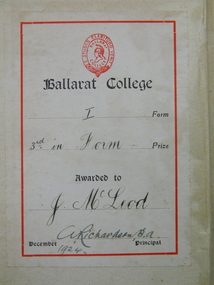
... grocers and Merchants in Lydiard Street, Ballarat. The business had been started by his great grandfather and they produced the famous Sirdar brand of products and a special tea blend called Afternoon Cup. There was a spice mill in nearby Market Street and there they roasted peanuts, coffee and ground spices for packaging and distribution to the small corner shops who were the mainstay of commercial grocery. ...grocers and Merchants in Lydiard Street, Ballarat. The business had been started by his great grandfather and they produced the famous Sirdar brand of products and a special tea blend called Afternoon Cup. There was a spice mill in nearby Market Street and there they roasted peanuts, coffee and ground spices for packaging and distribution to the small corner shops who were the mainstay of commercial grocery. ...John Anning MacLeod John was born in Ballarat as the second generation of Ballarat MacLeod’s, with his grandfather arriving in Geelong on the Hornet in 1857 as an 11 year old child with his 60 year old father John and mother Mary aged 37 years and 5 brothers and one sister. He grew up on the corner of Drummond Street and Mair Streets, opposite what became St John of God hospital, at his parents house of Dunvegan. John entered Ballarat College as a junior student in 1923. He received 3rd in Form prizes in both 1924 and 1925. His sister Margaret, attended Clarendon Ladies College. The household employed a chauffeur, a cook, a gardener and a ladies maid to care for them. In the 1930’s his father lost his fortune in the collapse of the jute future’s market so the staff were dismissed and he left Ballarat to go to Geelong College as a boarder. He was an officer in the Geelong College cadet corps and joined the Army as a private and rose to the permanent rank of Major after meritorious performance in the intelligence area of operations. He served in North Africa, in Palestine, Egypt, Moratai, the Philippines, Java and New Guinea. He was awarded his Military MBE by King George VI for exceptional devotion to duty and for brilliant coordination work amongst the allied intelligence team. During the war he met Mary Monica Carrol Bateman, a lietenant in the 2/4th Army General Hospital at a dinner party in Brisbane. The couple had four children, Hamish John Torquil born in 1945, Rory Hugh Alexander born in 1947 and twins Ian Donald and Katriona Margaret born in 1948. After the Second World War he worked for Lumley’s Insurance Brokers in London for a couple of years to follow up his accountancy training and then returned to Ballarat due to his father’s failing health and took over the management of John MacLeod and Co, Wholesale grocers and Merchants in Lydiard Street, Ballarat. The business had been started by his great grandfather and they produced the famous Sirdar brand of products and a special tea blend called Afternoon Cup. There was a spice mill in nearby Market Street and there they roasted peanuts, coffee and ground spices for packaging and distribution to the small corner shops who were the mainstay of commercial grocery. In the 1950’s John MacLeod and Co merged with James McKay and Sons to form McKay MacLeod Pty Ltd., wholesale tobacco, wine and spirits and grocery merchants who also manufactured the Sunny South brand of sweet mustard pickles, brewed vinegar and tomato sauce. He introduced the semi-automated system for extensions and financial records on the Bradma plates that saved staff the problems of sorting out the calculations for sales tax, miscellaneous charges etc. that greatly sped up the transactions at the checkout points. A new warehouse and office complex was built in Mair Street east up near Humffray Street, with the manufacturing factory on the opposite side of the street. They had a shop in St Arnaud and one in Geelong which was the local wholesaler for supplying to the corner shops of the greater Geelong area. With the development of supermarkets the demise of the corner store began and so the sales profiles began to diminish. He unsuccessfully stood for Liberal Party pre-selection for the seat of Ballarat in 1948 and served on the Liberal state finance and executive team for many years before resigning over the issue of conscripts being sent to Vietnam. He was instrumental in leading a group of Ballarat academics in opposition to the Vietnam war and publicly resigned from the Liberal Party over their foreign policy. John MacLeod saw the writing on the wall of the business in the early 1970’s and suggested that the firm restructured with focusing on tobacco, wine and spirits. His partners did not agree and so he sold out and retired to Barwon Heads. After a few years of golfing and surfing he became frustrated and joined SCORE, the Service Corp of Retired Executives. In this role he worked for ten years in the Geelong area solving accounting problems for Geelong small businesses and so helped Beaumont’s bakery back onto its feet. He worked gentlemen’s hours of 10 am to 3 pm which allowed him to have time for a round of 9 holes on the golf course at the end of the day and to have a surf before breakfast. He fully retired at the age of 65 and had ten years of voluminous reading of local library books before dying of burns at the age of 75. His war record has been documented in other archives at the College. He was a member of the Naval and Military Club and of the Barwon Heads Golf Club. He had good crafting skills and built a series of steam driven boats for his four children that used to be sailed at home on Lake Wendouree, Lake Learmonth and on the sheltered waters of the Barwon River. The boats are now being restored to operational order to be sailed by his great grandson Grayson Girardi. Red cloth bound book with title printed in gold lettering on spine, embossed publisher's mark centre of front cover and school crest in gold relief on front cover; book plate inside front cover. Book plate inside front cover: School crest / Ballarat College / I form / 3rd in form Prize / Awarded to / J MacLeod / December 1924 A Richardson B A Principaljohn-macleod, ballarat-college, book-prize, 1924 -
 Ballarat Clarendon College
Book, The school across the road
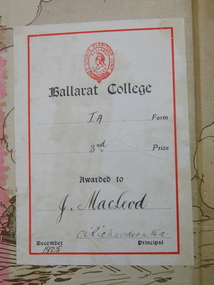
... grocers and Merchants in Lydiard Street, Ballarat. The business had been started by his great grandfather and they produced the famous Sirdar brand of products and a special tea blend called Afternoon Cup. There was a spice mill in nearby Market Street and there they roasted peanuts, coffee and ground spices for packaging and distribution to the small corner shops who were the mainstay of commercial grocery. ...grocers and Merchants in Lydiard Street, Ballarat. The business had been started by his great grandfather and they produced the famous Sirdar brand of products and a special tea blend called Afternoon Cup. There was a spice mill in nearby Market Street and there they roasted peanuts, coffee and ground spices for packaging and distribution to the small corner shops who were the mainstay of commercial grocery. ...John Anning MacLeod John was born in Ballarat as the second generation of Ballarat MacLeod’s, with his grandfather arriving in Geelong on the Hornet in 1857 as an 11 year old child with his 60 year old father John and mother Mary aged 37 years and 5 brothers and one sister. He grew up on the corner of Drummond Street and Mair Streets, opposite what became St John of God hospital, at his parents house of Dunvegan. John entered Ballarat College as a junior student in 1923. He received 3rd in Form prizes in both 1924 and 1925. His sister Margaret, attended Clarendon Ladies College. The household employed a chauffeur, a cook, a gardener and a ladies maid to care for them. In the 1930’s his father lost his fortune in the collapse of the jute future’s market so the staff were dismissed and he left Ballarat to go to Geelong College as a boarder. He was an officer in the Geelong College cadet corps and joined the Army as a private and rose to the permanent rank of Major after meritorious performance in the intelligence area of operations. He served in North Africa, in Palestine, Egypt, Moratai, the Philippines, Java and New Guinea. He was awarded his Military MBE by King George VI for exceptional devotion to duty and for brilliant coordination work amongst the allied intelligence team. During the war he met Mary Monica Carrol Bateman, a lietenant in the 2/4th Army General Hospital at a dinner party in Brisbane. The couple had four children, Hamish John Torquil born in 1945, Rory Hugh Alexander born in 1947 and twins Ian Donald and Katriona Margaret born in 1948. After the Second World War he worked for Lumley’s Insurance Brokers in London for a couple of years to follow up his accountancy training and then returned to Ballarat due to his father’s failing health and took over the management of John MacLeod and Co, Wholesale grocers and Merchants in Lydiard Street, Ballarat. The business had been started by his great grandfather and they produced the famous Sirdar brand of products and a special tea blend called Afternoon Cup. There was a spice mill in nearby Market Street and there they roasted peanuts, coffee and ground spices for packaging and distribution to the small corner shops who were the mainstay of commercial grocery. In the 1950’s John MacLeod and Co merged with James McKay and Sons to form McKay MacLeod Pty Ltd., wholesale tobacco, wine and spirits and grocery merchants who also manufactured the Sunny South brand of sweet mustard pickles, brewed vinegar and tomato sauce. He introduced the semi-automated system for extensions and financial records on the Bradma plates that saved staff the problems of sorting out the calculations for sales tax, miscellaneous charges etc. that greatly sped up the transactions at the checkout points. A new warehouse and office complex was built in Mair Street east up near Humffray Street, with the manufacturing factory on the opposite side of the street. They had a shop in St Arnaud and one in Geelong which was the local wholesaler for supplying to the corner shops of the greater Geelong area. With the development of supermarkets the demise of the corner store began and so the sales profiles began to diminish. He unsuccessfully stood for Liberal Party pre-selection for the seat of Ballarat in 1948 and served on the Liberal state finance and executive team for many years before resigning over the issue of conscripts being sent to Vietnam. He was instrumental in leading a group of Ballarat academics in opposition to the Vietnam war and publicly resigned from the Liberal Party over their foreign policy. John MacLeod saw the writing on the wall of the business in the early 1970’s and suggested that the firm restructured with focusing on tobacco, wine and spirits. His partners did not agree and so he sold out and retired to Barwon Heads. After a few years of golfing and surfing he became frustrated and joined SCORE, the Service Corp of Retired Executives. In this role he worked for ten years in the Geelong area solving accounting problems for Geelong small businesses and so helped Beaumont’s bakery back onto its feet. He worked gentlemen’s hours of 10 am to 3 pm which allowed him to have time for a round of 9 holes on the golf course at the end of the day and to have a surf before breakfast. He fully retired at the age of 65 and had ten years of voluminous reading of local library books before dying of burns at the age of 75. His war record has been documented in other archives at the College. He was a member of the Naval and Military Club and of the Barwon Heads Golf Club. He had good crafting skills and built a series of steam driven boats for his four children that used to be sailed at home on Lake Wendouree, Lake Learmonth and on the sheltered waters of the Barwon River. The boats are now being restored to operational order to be sailed by his great grandson Grayson Girardi. john-macleod, ballarat-college, 1925, book-prize -
![Image, [Where to Gussy?]](/media/collectors/4f729f6797f83e0308601707/items/5a20831c21ea670274c9a273/item-media/5a20836b21ea670274c9f821/item-fit-380x285.jpg?cb=6) Federation University Historical Collection
Federation University Historical CollectionImage, [Where to Gussy?]
... gussy stickjaw carne f. carne grocer wood's great pepperment cure. Handcoloured ink drawing shwing Carne's shop with lamp on the corder and people walking across the street. ...Handcoloured ink drawing shwing Carne's shop with lamp on the corder and people walking across the street. The drawing is glued onto a piece of card that has an advertisement on the other sife for Wood's Great Pepperment Cure. gussy, stickjaw, carne, f. carne, grocer, wood's great pepperment cure. -
 Greensborough Historical Society
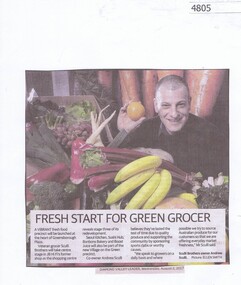
Newspaper Clipping, Diamond Valley Leader, Fresh Start for Green Grocer, 02/08/2017
... Veteran grocer Sculli Brothers will take centre stage in JB Hi Fi's former shop as the shopping centre reveals stage three of its redevelopment....Veteran grocer Sculli Brothers will take centre stage in JB Hi Fi's former shop as the shopping centre reveals stage three of its redevelopment. sculli family greensborough plaza sculli bothers News article 1 page, black text, colour image. ...Veteran grocer Sculli Brothers will take centre stage in JB Hi Fi's former shop as the shopping centre reveals stage three of its redevelopment.News article 1 page, black text, colour image.sculli family, greensborough plaza, sculli bothers -
 Greensborough Historical Society
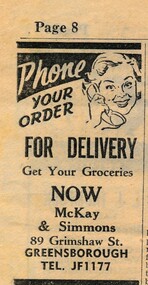
Advertisement - Digital image, Diamond Valley Local, McKay & Simmons Grocer, 15/12/1954
... This advertisement is for a Greensborough based shop which no longer operates. Digital copy of newspaper advertisement. McKay & Simmons Grocer Advertisement - Digital image Diamond Valley Local ...These advertisements were collected from the Diamond Valley Local newspaper. McKay & Simmons was grocery store in Grimshaw Street Greensborough.This advertisement is for a Greensborough based shop which no longer operates.Digital copy of newspaper advertisement. -
 Orbost & District Historical Society
token, mid 20th century
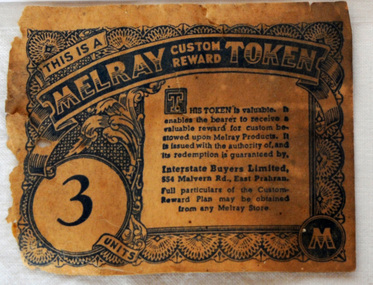
... Many Melray labels were discovered there, when the site was converted to a shopping centre in the 1970s, a period of industry-wide decline." (Information from australiapostcollectables web-site) The Melray Association of Independent Grocers consisted of the leading storekeepers throughout the State of Victoria, with a central headquarters and bulk store in Melbourne.These tokens were issued by Melray Stores as a reward for custom. ..." As well as preserving companies, various grocery chains, buying groups and wholesale co-operatives sold jam under their own brand names. One such company was Melray. Melray, founded in East Prahran, Melbourne, in 1932, was the forerunner of the Foodland chain (1958). It had branches across the country. Their jam labels included special reward tokens for redemption in-store. It is most likely that Melray jam was produced by Henry Jones’ Australasian Jam Company, or at least labelled at the iconic Jam Factory in South Yarra, Melbourne – a site of jam production in Australia for almost 100 years. Many Melray labels were discovered there, when the site was converted to a shopping centre in the 1970s, a period of industry-wide decline." (Information from australiapostcollectables web-site) The Melray Association of Independent Grocers consisted of the leading storekeepers throughout the State of Victoria, with a central headquarters and bulk store in Melbourne.These tokens were issued by Melray Stores as a reward for custom. This item is associated with the period when Australia produced and exported much more of its agricultural produce - including tinned jam.A paper token - Melray Custom Reward Token. This is a reward token issued by Melray for regular custom - 3 units.melray grocery-store custom commerce -
 Orbost & District Historical Society
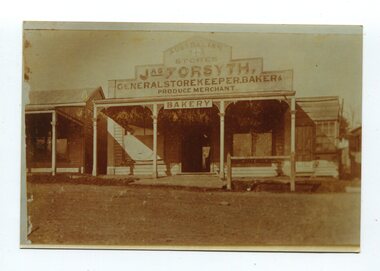
Photograph - James Forsyth store, Orbost, 1880s
... This photograph shows the Forsyth shop which was one of the earliest in Orbost. Orbost James Forsyth grocer as above A b/w photograph of a shop front on a street. ...James Forsyth's shop was one of the first in Orbost, dating from the 1880s. It was located in the southern section of Nicholson Street, on the eastern side. This building later became Frank and Gladys Matthews shop. The building was demolished in the early 2000s to make way for a Foodworks Supermarket. This photograph shows the Forsyth shop which was one of the earliest in Orbost. A b/w photograph of a shop front on a street. Verandah posts at the front, along with a separate hitching rail. Above the front of the building are painted the words JAS FORSYTH, General Storekeeper, Baker and Produce Merchant. Australian Stores. The word BAKERY is written above the entrance. This photo appears to be a copy, not an original photo. as above orbost, james forsyth, grocer -
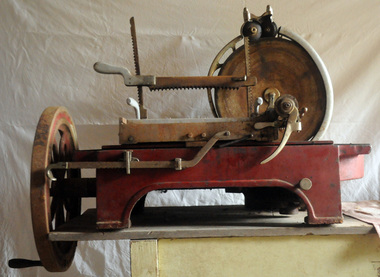 Orbost & District Historical Society
meat slicer, Early 20th century
... shops. The meat slicer was purchased from Henry Berry and Company a large wholesale grocers and general merchant company, first established in Melbourne in 1859....shops. The meat slicer was purchased from Henry Berry and Company a large wholesale grocers and general merchant company, first established in Melbourne in 1859. ...This item was used in Dicken's Store. Originally the Pardew Brothers store in Nicholson Street, Orbost, Frank Dicken purchased the shop business. It was a bakery and general store and was known as F.B. Dicken and Son. In 1948 they bought the shop freehold . The store remains today converted into two separate shops. The meat slicer was purchased from Henry Berry and Company a large wholesale grocers and general merchant company, first established in Melbourne in 1859.The Dicken store is a prominent Orbost building. Frank and May Dicken moved to Orbost in 1936 where Frank became manager of Pardew Brothers store in Nicholson Street. In 1945, Frank purchased the business and in 1947, formed a partnership with his son, Selwyn. The store was then called F.B. Dicken and Son. The premises are still retained by the Dicken family although the shop business was sold in 1981. (ref. In Times Gone By - Deborah Hall)A heavy commercial meat slicer which sits on bench. Frame is painted red. The tray moves as the handle turns. The main structure is cast iron. It has a circular steel blade. The chrome output tray is detachable. The movable carriage has a cast aluminium tray with spikes to hold the meat and there is an adjustable clamp to secure the meat.INVICTA Model No 302 21 HENRY BERRY PTY LTD MELBfood-preparation dicken-store meat-slicer
