
Showing 685 items matching " australian culture"
-
 Nillumbik Shire Council
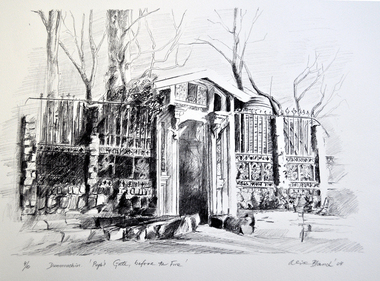
Print (Lithograph) Alice Blanch CHEHOVSKI, Alice B. (Blanch) Chehovski, Dunmoochin. Pugh's Gate, before the Fire, / Printed 2004
... culture was inhibited by the war and generally speaking it was not the time for arts. Alice said 'My soul and my hands were needed as a volunteer, to help the wounded soldiers survive'. Alice struggled through a lifetime of hardship and triumph before returning to her native land of Australia...culture was inhibited by the war and generally speaking it was not the time for arts. Alice said 'My soul and my hands were needed as a volunteer, to help the wounded soldiers survive'. Alice struggled through a lifetime of hardship and triumph before returning to her native land of Australia in 1981 at the age of 60. ...Alice Blanch Chehovski was born in Queensland to a Russian mother and Polish father. When her father died leaving three small children to bring up on her own, her took them back to Russia to visit her own parents. In the following fateful year, Stalin came into power and the family was trapped by Russia closing its borders. At the age of twenty three, 1944, Alice entered Moscow's Institute of Decorative Arts and Applied Arts to study ceramics. Neither the subject of ceramics nor the academic drawing in fine pencil inspired her. At that time Moscow was surrounded by German troops, Russian culture was inhibited by the war and generally speaking it was not the time for arts. Alice said 'My soul and my hands were needed as a volunteer, to help the wounded soldiers survive'. Alice struggled through a lifetime of hardship and triumph before returning to her native land of Australia in 1981 at the age of 60.This lithographic print is one of a set of ten produced at Dunmoochin at the time of Clifton Pugh.Black and white lithograph on paper depicting the elaborate stone and wrought iron (open) gate/ entrance to Pugh's artist colony 'Dunmoochin' situated at Cottles Bridge. Bottom left of print: ed. no. '4/10' and work title. Bottom right of print: artist signature 'Alice Blanch '04'chehovski, dunmoochin, pugh, gate, fire, lithograph -
 Nillumbik Shire Council
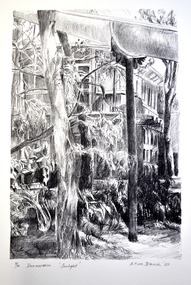
Print (Lithograph) Alice Blanch CHEHOVSKI, Alice B. (Blanch) Chehovski, Dunmoochin, Sunlight, / Printed 2004
... culture was inhibited by the war and generally speaking it was not the time for arts. Alice said 'My soul and my hands were needed as a volunteer, to help the wounded soldiers survive'. Alice struggled through a lifetime of hardship and triumph before returning to her native land of Australia...culture was inhibited by the war and generally speaking it was not the time for arts. Alice said 'My soul and my hands were needed as a volunteer, to help the wounded soldiers survive'. Alice struggled through a lifetime of hardship and triumph before returning to her native land of Australia in 1981 at the age of 60. ...Alice Blanch Chehovski was born in Queensland to a Russian mother and Polish father. When her father died leaving three small children to bring up on her own, her took them back to Russia to visit her own parents. In the following fateful year, Stalin came into power and the family was trapped by Russia closing its borders. At the age of twenty three, 1944, Alice entered Moscow's Institute of Decorative Arts and Applied Arts to study ceramics. Neither the subject of ceramics nor the academic drawing in fine pencil inspired her. At that time Moscow was surrounded by German troops, Russian culture was inhibited by the war and generally speaking it was not the time for arts. Alice said 'My soul and my hands were needed as a volunteer, to help the wounded soldiers survive'. Alice struggled through a lifetime of hardship and triumph before returning to her native land of Australia in 1981 at the age of 60.This lithographic print is one of a set of ten produced at Dunmoochin at the time of Clifton Pugh.Black and white lithograph on paper depicting the elaborate stone and wrought iron (open) gate/ entrance to Pugh's artist colony 'Dunmoochin' situated at Cottles Bridge.Bottom left of print: ed. no. '4/10' and work title. Bottom right of print: artist signature 'Alice Blanch '04'chehovski, dunmoochin, pugh, sunlight, lithograph -
 Nillumbik Shire Council
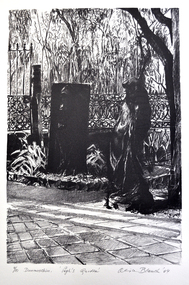
Print (lithograph) Alice Blanch Chehovski, Alice B. (Blanch) Chehovski, Dunmoochin, Pugh's Garden, Printed 2004
... culture was inhibited by the war and generally speaking it was not the time for arts. Alice said 'My soul and my hands were needed as a volunteer, to help the wounded soldiers survive'. Alice struggled through a lifetime of hardship and triumph before returning to her native land of Australia...culture was inhibited by the war and generally speaking it was not the time for arts. Alice said 'My soul and my hands were needed as a volunteer, to help the wounded soldiers survive'. Alice struggled through a lifetime of hardship and triumph before returning to her native land of Australia in 1981 at the age of 60. ...Alice Blanch Chehovski was born in Queensland to a Russian mother and Polish father. When her father died leaving three small children to bring up on her own, her took them back to Russia to visit her own parents. In the following fateful year, Stalin came into power and the family was trapped by Russia closing its borders. At the age of twenty three, 1944, Alice entered Moscow's Institute of Decorative Arts and Applied Arts to study ceramics. Neither the subject of ceramics nor the academic drawing in fine pencil inspired her. At that time Moscow was surrounded by German troops, Russian culture was inhibited by the war and generally speaking it was not the time for arts. Alice said 'My soul and my hands were needed as a volunteer, to help the wounded soldiers survive'. Alice struggled through a lifetime of hardship and triumph before returning to her native land of Australia in 1981 at the age of 60.This lithographic print is one of a set of ten produced at Dunmoochin at the time of Clifton Pugh.Lithographic print in black and white (very dark image) detailing Clifton Pugh's garden at Dunmoochin.Bottom left of print: ed. no. '4/10' and work title. Bottom right of print: artist signature 'Alice Blanch '04'chehovski, dunmoochin, pugh, garden, lithograph -
 Nillumbik Shire Council
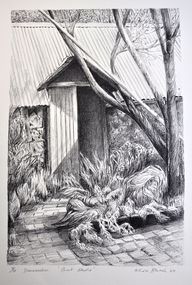
Alice Blanch CHEHOVSKI, Alice B. (Blanch) Chehovski, Dunmoochin, Print Studio, Printed 2004
... culture was inhibited by the war and generally speaking it was not the time for arts. Alice said 'My soul and my hands were needed as a volunteer, to help the wounded soldiers survive'. Alice struggled through a lifetime of hardship and triumph before returning to her native land of Australia...culture was inhibited by the war and generally speaking it was not the time for arts. Alice said 'My soul and my hands were needed as a volunteer, to help the wounded soldiers survive'. Alice struggled through a lifetime of hardship and triumph before returning to her native land of Australia in 1981 at the age of 60. ...Alice Blanch Chehovski was born in Queensland to a Russian mother and Polish father. When her father died leaving three small children to bring up on her own, her took them back to Russia to visit her own parents. In the following fateful year, Stalin came into power and the family was trapped by Russia closing its borders. At the age of twenty three, 1944, Alice entered Moscow's Institute of Decorative Arts and Applied Arts to study ceramics. Neither the subject of ceramics nor the academic drawing in fine pencil inspired her. At that time Moscow was surrounded by German troops, Russian culture was inhibited by the war and generally speaking it was not the time for arts. Alice said 'My soul and my hands were needed as a volunteer, to help the wounded soldiers survive'. Alice struggled through a lifetime of hardship and triumph before returning to her native land of Australia in 1981 at the age of 60.This lithographic print is one of a set of ten produced at Dunmoochin at the time of Clifton Pugh.Lithographic print in black and white depicting the Print Studio at Dunmoochin.Bottom left of print: ed. no. '4/10' and work title. Bottom right of print: artist signature 'Alice Blanch '04'chehovski, dunmoochin, pugh, studio, lithograph -
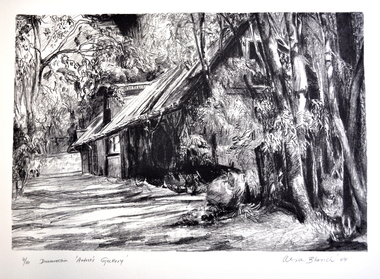 Nillumbik Shire Council
Print (lithograph): Alice Blanch CHEHOVSKI, Alice B. (Blanch) Chehovski, Dunmoochin, Artist's Gallery, Printed 2004
... culture was inhibited by the war and generally speaking it was not the time for arts. Alice said 'My soul and my hands were needed as a volunteer, to help the wounded soldiers survive'. Alice struggled through a lifetime of hardship and triumph before returning to her native land of Australia...culture was inhibited by the war and generally speaking it was not the time for arts. Alice said 'My soul and my hands were needed as a volunteer, to help the wounded soldiers survive'. Alice struggled through a lifetime of hardship and triumph before returning to her native land of Australia in 1981 at the age of 60. ...Alice Blanch Chehovski was born in Queensland to a Russian mother and Polish father. When her father died leaving three small children to bring up on her own, her took them back to Russia to visit her own parents. In the following fateful year, Stalin came into power and the family was trapped by Russia closing its borders. At the age of twenty three, 1944, Alice entered Moscow's Institute of Decorative Arts and Applied Arts to study ceramics. Neither the subject of ceramics nor the academic drawing in fine pencil inspired her. At that time Moscow was surrounded by German troops, Russian culture was inhibited by the war and generally speaking it was not the time for arts. Alice said 'My soul and my hands were needed as a volunteer, to help the wounded soldiers survive'. Alice struggled through a lifetime of hardship and triumph before returning to her native land of Australia in 1981 at the age of 60. This lithographic print is one of a set of ten produced at Dunmoochin at the time of Clifton Pugh.Lithographic print in black and white detailing the Artist's Gallery at Dunmoochin, located within bush surrounds at Cottles BridgeBottom left of print: ed. no. '4/10' and work title. Bottom right of print: artist signature 'Alice Blanch '04'chehovski, dunmoochin, pugh, gallery, lithograph -
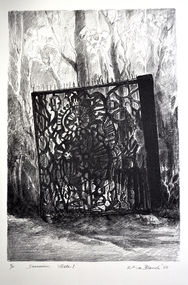 Nillumbik Shire Council
Print (lithograph): Alice Blanch CHEHOVSKI, Alice B. (Blanch) Chehovski, Dunmoochin, Gate 1, Printed 2004
... culture was inhibited by the war and generally speaking it was not the time for arts. Alice said 'My soul and my hands were needed as a volunteer, to help the wounded soldiers survive'. Alice struggled through a lifetime of hardship and triumph before returning to her native land of Australia...culture was inhibited by the war and generally speaking it was not the time for arts. Alice said 'My soul and my hands were needed as a volunteer, to help the wounded soldiers survive'. Alice struggled through a lifetime of hardship and triumph before returning to her native land of Australia in 1981 at the age of 60. ...Alice Blanch Chehovski was born in Queensland to a Russian mother and Polish father. When her father died leaving three small children to bring up on her own, her Mother took them back to Russia to visit her own parents. In the following fateful year, Stalin came into power and the family was trapped by Russia closing its borders. At the age of twenty three, 1944, Alice entered Moscow's Institute of Decorative Arts and Applied Arts to study ceramics. Neither the subject of ceramics nor the academic drawing in fine pencil inspired her. At that time Moscow was surrounded by German troops, Russian culture was inhibited by the war and generally speaking it was not the time for arts. Alice said 'My soul and my hands were needed as a volunteer, to help the wounded soldiers survive'. Alice struggled through a lifetime of hardship and triumph before returning to her native land of Australia in 1981 at the age of 60. This lithographic print is one of a set of ten produced at Dunmoochin.Lithographic print in black and white depicting Gate # 1 at Dunmoochin. Bottom left of print: ed. no. '4/10' and work title. Bottom right of print: artist signature 'Alice Blanch '04'chehovski, dunmoochin, pugh, gate 1, lithograph -
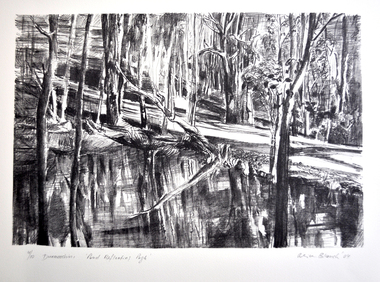 Nillumbik Shire Council
Print (lithograph): Alice Blanch CHEHOVSKI, Alice B. (Blanch) Chehovski, Dunmoochin, Pond Reflecting Pugh, Printed 2004
... culture was inhibited by the war and generally speaking it was not the time for arts. Alice said 'My soul and my hands were needed as a volunteer, to help the wounded soldiers survive'. Alice struggled through a lifetime of hardship and triumph before returning to her native land of Australia...culture was inhibited by the war and generally speaking it was not the time for arts. Alice said 'My soul and my hands were needed as a volunteer, to help the wounded soldiers survive'. Alice struggled through a lifetime of hardship and triumph before returning to her native land of Australia in 1981 at the age of 60. ...Alice Blanch Chehovski was born in Queensland to a Russian mother and Polish father. When her father died leaving three small children to bring up on her own, her took them back to Russia to visit her own parents. In the following fateful year, Stalin came into power and the family was trapped by Russia closing its borders. At the age of twenty three, 1944, Alice entered Moscow's Institute of Decorative Arts and Applied Arts to study ceramics. Neither the subject of ceramics nor the academic drawing in fine pencil inspired her. At that time Moscow was surrounded by German troops, Russian culture was inhibited by the war and generally speaking it was not the time for arts. Alice said 'My soul and my hands were needed as a volunteer, to help the wounded soldiers survive'. Alice struggled through a lifetime of hardship and triumph before returning to her native land of Australia in 1981 at the age of 60.This lithographic print is one of a set of ten produced at Dunmoochin at the time of Clifton Pugh.Lithographic print in black and white depicting bushland and a pond reflecting light.Bottom left of print: ed. no. '4/10' and work title. Bottom right of print: artist signature 'Alice Blanch '04'chehovski, dunmoochin, pugh, pond, lithograph -
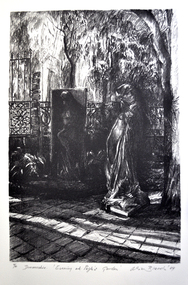 Nillumbik Shire Council
Print (lithograph): Alice Blanch CHEHOVSKI, Alice B. (Blanch) Chehovski, Dunmoochin, Evening at Pugh's Garden, Printed 2004
... culture was inhibited by the war and generally speaking it was not the time for arts. Alice said 'My soul and my hands were needed as a volunteer, to help the wounded soldiers survive'. Alice struggled through a lifetime of hardship and triumph before returning to her native land of Australia...culture was inhibited by the war and generally speaking it was not the time for arts. Alice said 'My soul and my hands were needed as a volunteer, to help the wounded soldiers survive'. Alice struggled through a lifetime of hardship and triumph before returning to her native land of Australia in 1981 at the age of 60. ...Alice Blanch Chehovski was born in Queensland to a Russian mother and Polish father. When her father died leaving three small children to bring up on her own, her took them back to Russia to visit her own parents. In the following fateful year, Stalin came into power and the family was trapped by Russia closing its borders. At the age of twenty three, 1944, Alice entered Moscow's Institute of Decorative Arts and Applied Arts to study ceramics. Neither the subject of ceramics nor the academic drawing in fine pencil inspired her. At that time Moscow was surrounded by German troops, Russian culture was inhibited by the war and generally speaking it was not the time for arts. Alice said 'My soul and my hands were needed as a volunteer, to help the wounded soldiers survive'. Alice struggled through a lifetime of hardship and triumph before returning to her native land of Australia in 1981 at the age of 60.This lithographic print is one of a set of ten produced at Dunmoochin at the time of Clifton Pugh.Print - lithographBottom left of print: ed. no. '4/10' and work title. Bottom right of print: artist signature 'Alice Blanch '04'chehovski, dunmoochin, pugh, garden, evening, lithograph -
 Nillumbik Shire Council
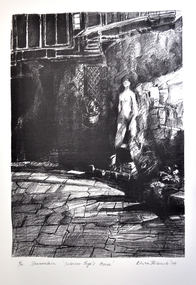
Print (Lithograph): Alice Blanch Chehovski, Alice B. (Blanch) Chehovski, Dunmoochin, Interior Pugh's House, Printed 2004
... culture was inhibited by the war and generally speaking it was not the time for arts. Alice said 'My soul and my hands were needed as a volunteer, to help the wounded soldiers survive'. Alice struggled through a lifetime of hardship and triumph before returning to her native land of Australia...culture was inhibited by the war and generally speaking it was not the time for arts. Alice said 'My soul and my hands were needed as a volunteer, to help the wounded soldiers survive'. Alice struggled through a lifetime of hardship and triumph before returning to her native land of Australia in 1981 at the age of 60. ...Alice Blanch Chehovski was born in Queensland to a Russian mother and Polish father. When her father died leaving three small children to bring up on her own, her took them back to Russia to visit her own parents. In the following fateful year, Stalin came into power and the family was trapped by Russia closing its borders. At the age of twenty three, 1944, Alice entered Moscow's Institute of Decorative Arts and Applied Arts to study ceramics. Neither the subject of ceramics nor the academic drawing in fine pencil inspired her. At that time Moscow was surrounded by German troops, Russian culture was inhibited by the war and generally speaking it was not the time for arts. Alice said 'My soul and my hands were needed as a volunteer, to help the wounded soldiers survive'. Alice struggled through a lifetime of hardship and triumph before returning to her native land of Australia in 1981 at the age of 60.This lithographic print is one of a set of ten produced at Dunmoochin at the time of Clifton Pugh.Lithographic print in black and white (dark image) detailing the interior of Clifton Pugh's house at Dunmoochin. Bottom left of print: ed. no. '4/10' and work title. Bottom right of print: artist signature 'Alice Blanch '04'chehovski, dunmoochin, pugh, interior, house, lithograph -
 Nillumbik Shire Council
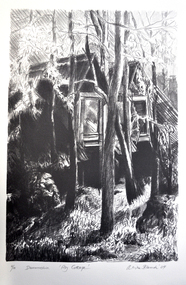
Print (Lithograph): Alice Blanch Chehovski, Alice B. (Blanch) Chehovski, Dunmoochin, My Cottage, Printed 2004
... culture was inhibited by the war and generally speaking it was not the time for arts. Alice said 'My soul and my hands were needed as a volunteer, to help the wounded soldiers survive'. Alice struggled through a lifetime of hardship and triumph before returning to her native land of Australia...culture was inhibited by the war and generally speaking it was not the time for arts. Alice said 'My soul and my hands were needed as a volunteer, to help the wounded soldiers survive'. Alice struggled through a lifetime of hardship and triumph before returning to her native land of Australia in 1981 at the age of 60. ...Alice Blanch Chehovski was born in Queensland to a Russian mother and Polish father. When her father died leaving three small children to bring up on her own, her took them back to Russia to visit her own parents. In the following fateful year, Stalin came into power and the family was trapped by Russia closing its borders. At the age of twenty three, 1944, Alice entered Moscow's Institute of Decorative Arts and Applied Arts to study ceramics. Neither the subject of ceramics nor the academic drawing in fine pencil inspired her. At that time Moscow was surrounded by German troops, Russian culture was inhibited by the war and generally speaking it was not the time for arts. Alice said 'My soul and my hands were needed as a volunteer, to help the wounded soldiers survive'. Alice struggled through a lifetime of hardship and triumph before returning to her native land of Australia in 1981 at the age of 60. This lithographic print is one of a set of ten produced at Dunmoochin at the time of Clifton Pugh.Lithographic print in black and white (very dark image) depicting Chehovskis' cottage at Dunmoochin. Small cottage, bushland and shrubs.Bottom left of print: ed. no. '4/10' and work title. Bottom right of print: artist signature 'Alice Blanch '04'chehovski, dunmoochin, pugh, cottage, lithograph -
 Sunshine and District Historical Society Incorporated
Archive - Two-Up Gambling Schools
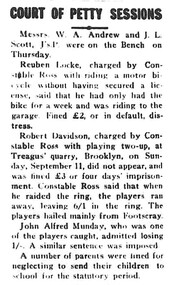
... Australian states on ANZAC Day, even where gambling laws would normally prohibit it. Two‑up has a surprisingly rich little history in Sunshine, Victoria, because of the suburb’s strong links to WWI and WWII service, the RSL, and the old industrial workforce culture where the game stayed alive long after it faded elsewhere. ...Two-up is a traditional Australian gambling game played with two coins tossed in the air, and players bet on whether they will land two heads, two tails, or odds (one of each). It’s one of the most iconic pieces of Australian cultural history. Two-up became famous among Australian soldiers in World War I, especially at Gallipoli and on the Western Front. It was simple, portable, and boosted morale. After the war, it became a symbol of mateship and remembrance. Two-up isn’t just a game, it’s a ritual of Mateship, Luck and Chance, Remembering diggers and Community gatherings. Because of this, Two-up is legally allowed to be played in most Australian states on ANZAC Day, even where gambling laws would normally prohibit it.Two‑up has a surprisingly rich little history in Sunshine, Victoria, because of the suburb’s strong links to WWI and WWII service, the RSL, and the old industrial workforce culture where the game stayed alive long after it faded elsewhere. Two-up was played in lunchrooms at the large factories throughout the district, such as at H.V. McKay’s Sunshine Harvester Factory, ICI & Wunderlich. It was played at private gatherings in back sheds, houses, paddocks, behind buildings and hotels around Albion, Braybrook, Matthews Hill, Sunshine & Sunshine North, and informally at the early Sunshine RSL. As the game was illegal, there are many reports in the local papers of places being raided by the police and fines being imposed by the courts on players that were caught playing the game. Many of the local two-up locations are listed in these newspaper's reports.5347.01 - Court Of Petty Sessions - Sunshine Advocate 1st October 1927 Page 5.pdf 5347.02 - Two-Up, Beer-Up And Betting School - Sunshine Advocate 14th February 1936 Page 2.pdf 5347.03 - Two-Up At Ding Sunshine Station Reserve - Sunshine Advocate 15th November 1935 Page 3.pdf 5347.04 - Young Bloods Playing Two-Up - Sunshine Advocate 24th October 1941 Page 1.pdf 5347.05 - Played Two-Up - Sunshine Advocate 1st May 1942 Page 1.pdf 5347.06 - Two-Up Players Fined - Sunshine Advocate 19th June 1942 Page 1.pdf 5347.07 - Alleged Two-Up School - Sunshine Advocate 15th October 1943 Page 1.pdf 5347.08 - Alleged Two-Up School Case Against Occupier Dismissed - Sunshine Advocate 3rd December 1943 Page 3.pdf 5347.09 - Two-Up Players Fined - Sunshine Advocate 19th May 1944 Page 1.pdf 5347.10 - The Police Infiltrated Two Uppers Landed Cold - Sunshine Advocate 22nd September 1944 Page 1.pdf 5347.11 - Hard Swearing In Two-Up Cases - Sunshine Advocate 15th June 1945 Page 1.pdf 5347.12 - Gambols In Paddock To Escape Gambling Police Raid - Sunshine Advocate 24th January 1947 Page 3.pdf 5347.13 - Obstructing Of Police Brings Fine - Sunshine Advocate 14th February 1947 Page 1.pdf 5347.14 - Charge Of Gambling Fails - Sunshine Advocate 21st February 1947 Page 1.pdf 5347.15 - Police Raid House For 'Swy' Game Occupier And Players Fined - Sunshine Advocate 3rd September 1948 Page 1.pdf 5347.16 - Caught Red Handed At Two-Up - Sunshine Advocate 21st October 1949 Page 1.pdf 5347.17 - Two-Up Players Fined - Sunshine Advocate 25th November 1949 Page 1.pdf 5347.18 - Two-up Players Caught - Sunshine Advocate 20th January 1950 Page 4.pdf 5347.19 - Gave Wrong Name To Police Two-Up Player Fined - Sunshine Advocate 17th March 1950 Page 4.pdf 5347.20 - Youth Won't Work - Sunshine Advocate 27th October 1950 Page 1.pdf 5347.21 - Bing Crosby Caught Playing Two-Up - Sunshine Advocate 13th April 1951 Page 1.pdf 5347.22 - Jotting From the Court Two-Up Player Fined - Sunshine Advocate 23rd November 1951 Page 4.pdf 5347.23 - No Claim Expected For This Money - Sunshine Advocate 11th January 1952 Page 1.pdf 5347.24 - Police Distrurb Two-Up Players In House - Sunshine Advocate 2nd July 1954 Page 1.pdf 5347.25 - The History Of Two-Up Schools In Melbourne West - The Westsider 26th April 2026 Page 15.pdf two-up, two up -
 Peterborough History Group
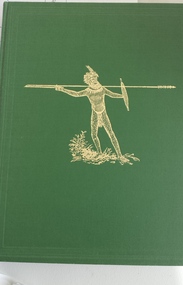
Book, Australian Aborigines: the languages and customs of several tribes of aborigines in the Western District of Victoria, Published 1981, First published 1881
... Information about local aboriginal tribes Doesn't specifically refer to Peterborough but explains early aboriginal culture and their relationship to the coast peterborough pre history kirrie wurung kaawirn kuunawarn hissing swan aborigines kirrae wurung yarruun parpur tarneen Adhesive book plate with the name H W Grimwade. Hardcover 111 page book with 104 page of annexures and index. Introduction by Jan Critchett, Warrnambool Institute of Advanced Education. Australian ...Information about local aboriginal tribesDoesn't specifically refer to Peterborough but explains early aboriginal culture and their relationship to the coastHardcover 111 page book with 104 page of annexures and index. Introduction by Jan Critchett, Warrnambool Institute of Advanced Education.Adhesive book plate with the name H W Grimwade.peterborough pre history, kirrie wurung, kaawirn kuunawarn, hissing swan aborigines, kirrae wurung, yarruun parpur tarneen -
 Sunshine and District Historical Society Incorporated
Coin - Australian One Dollar Coin - Centenary of Australia Scouting 2008
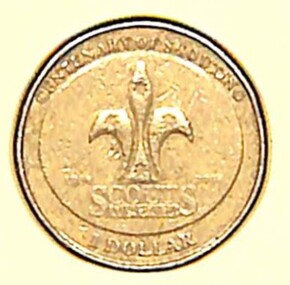
... Australia. Sunshine Scouts & Cubs are part of the global youth movement that empowers young people to become responsible, active citizens through adventure, education, and service. It fosters character development, leadership, and community engagement across cultures...Australia. Sunshine Scouts & Cubs are part of the global youth movement that empowers young people to become responsible, active citizens through adventure, education, and service. It fosters character development, leadership, and community engagement across cultures ...Over the years, Australia has issued numerous commemorative $2 coins, often featuring vibrant colors and themes honoring national events, heroes, and cultural milestones. This coin was issued in 2008 to celebrate the centenary of Scouting in Australia. Sunshine Scouts & Cubs are part of the global youth movement that empowers young people to become responsible, active citizens through adventure, education, and service. It fosters character development, leadership, and community engagement across cultures and continents. Activities include: - Camping: From weekend bush camps to international jamborees. - Hiking & Orienteering: Map reading, compass skills, and trail navigation. - Survival Skills: Shelter building, fire lighting, and water purification. - Nature Conservation: Tree planting, wildlife monitoring, and clean-up projects. - First Aid: Emergency response and safety training. - Cooking: Campfire meals, bush cooking, and nutrition. - Crafts & DIY: Knot tying, woodwork, leatherwork, and badge-making. - STEM Projects: Robotics, coding, and environmental science. - Drama & Performance: Skits, storytelling, and talent shows. - Music & Dance: Campfire songs, cultural dances, and instrument practice. - Art & Design: Poster-making, painting, and costume creation. - Service Projects: Volunteering, fundraising, and helping local causes. - Leadership Training: Patrol leader roles, mentoring, and public speaking. - Cultural Exchange: International pen pals, travel, and global awareness. - Badge Work: Earning merit badges in areas like fitness, communication, and innovation. - Team Challenges: Problem-solving games and cooperative tasks. - Reflection & Journaling: Personal growth and goal setting. - Environmental Advocacy: Sustainability campaigns and eco-challenges.Australian One Dollar Coin. The obverse side features the portrait of Queen Elizabeth II. The reverse side features the international symbol for scouting, the fleur-de-lis representing the compass which symbolizes the three promises made by all scouts and cubs throughout the world.Obverse Side - Elizabeth II Australia 2008 Reverse Side - Centenary of Scoting 1908 - 2008 Scouts Australia One Dollarscouting, scouts -
 Sunshine and District Historical Society Incorporated
Book - Growing up Aboriginal in Australia, Dr Anita Heiss, 2018
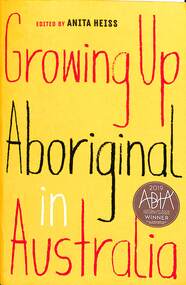
... It is one of the most important contemporary collections for understanding Aboriginal childhoods, identity, culture, and the lived impact of colonisation. Aborigine Aborginal First Nation Growing Up Aboriginal in Australia is a landmark 2018 anthology edited by Dr Anita Heiss, bringing together 52 first‑person stories from Aboriginal people across the country. ...Growing Up Aboriginal in Australia is a landmark 2018 anthology edited by Dr Anita Heiss, bringing together 52 first‑person stories from Aboriginal people across the country.Soft cover book with red and white writing on yellow backgroundnon-fictionGrowing Up Aboriginal in Australia is a landmark 2018 anthology edited by Dr Anita Heiss, bringing together 52 first‑person stories from Aboriginal people across the country.aborigine, aborginal, first nation -
 Plutarch Project
Film screening Log Book, Log Book, Collins late 1950's
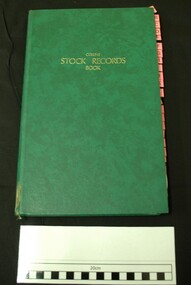
... From January 1959 and until 1982, “Cosmopolitan Motion Pictures”, owned by Mr Peter Yannoudes (Παναγιώτης Γιαννούδης) and Mr Stathis Raftopoulos (Στάθης Ραφτόπουλος) travelled around Australia to entertain the Greek, Turkish, Indian and Yugoslav speaking population of Australia and provide a significant cinema culture. They travelled as far as Perth in WA, Adelaide in SA, Tasmania, Darwin in Nt, Canberra in ACT and Sydney and NSW. ...From January 1959 and until 1982, “Cosmopolitan Motion Pictures”, owned by Mr Peter Yannoudes (Παναγιώτης Γιαννούδης) and Mr Stathis Raftopoulos (Στάθης Ραφτόπουλος) travelled around Australia to entertain the Greek, Turkish, Indian and Yugoslav speaking population of Australia and provide a significant cinema culture. They travelled as far as Perth in WA, Adelaide in SA, Tasmania, Darwin in Nt, Canberra in ACT and Sydney and NSW. ...Yiannoudes Family Film Memorabilia It is normally a time consuming and difficult task to accurately assess a collection’s significance to the primary criteria, however in the case of the “Yiannoudes Family Film Memorabilia” we have no hesitation of its high significance about its historic, social, rarity, interpretive, cultural and provenance to Australia, including the country side where most of this collection memorabilia visited. From January 1959 and until 1982, “Cosmopolitan Motion Pictures”, owned by Mr Peter Yannoudes (Παναγιώτης Γιαννούδης) and Mr Stathis Raftopoulos (Στάθης Ραφτόπουλος) travelled around Australia to entertain the Greek, Turkish, Indian and Yugoslav speaking population of Australia and provide a significant cinema culture. They travelled as far as Perth in WA, Adelaide in SA, Tasmania, Darwin in Nt, Canberra in ACT and Sydney and NSW. However they found themselves also in places like Berri and Renmark in NSW, where concentrations of migrants lived and thrived during the period. Initially they were travelling by train, carrying all their equipment by hand and placing them in boxes and suitcases. However after 1962 when they acquired their first automobile, travelling became less of a burden, nevertheless cumbersome and laborious. They carried with them initially two portable projectors (second one as a backup) and at times travelled with a third in order to ensure that technology will not be letting them down at the time of film projection. At times the films were projected onto a white sheet of cloth because there was no proper screen to project it on at the venue they were using. Mr P. Yiannoudes has also published a book in October 2010, titled “Greek Cinema Across Australia – Behind the Scenes”. The book was published in two languages, English and in Greek. Details about the launch can be found on the Diasporic Literature Spot website at this address (in the Greek language) http://diasporic.org/ellinika/biblia/greek-films-in-australia/. His book is devoted to those with whom he co-operated in order to bring for the first time Greek language films into Australia. Their names are: Stathis Raftopoulos, Andreas Papadopoulos, Andreas Katopodis, Theodoros Kanellopoulos, Michael Ioannou, Fotis Hatzipavlides, Kostas Vrahnas, Evaggelos Terpenos, Dionysis Lourantos, Dimitris Georgiou, Vasilis Florias and Jim Gragie. All businessmen with the right entrepreneurial spirit to be the first and to make their mark in the making of cultural Australia. Mr P. Yiannoudes a Cypriot by descent born in the town of Vouni, a village in the area of Lemesos. In Lemesos he learned the first few things about cinema which would help him in all his later life. He migrated to Australia in 1956 has been a prominent member of the Greek & Cypriot Communities in Melbourne for many decades. He has been President of the Cypriot Community, President of Federation of Cypriot Communities in Australia (for 18 years), President of SEKA (for 26 years) and highly regarded member of the Greek-Cypriots Diaspora since he also has been Vice-President of the Global Federation of Cypriots of Diaspora for 18 years. Mr P. Yiannoudes is now working on creating a small museum of these pieces in the back of the Westgarth Theatre with the help of the Plutarch Project and …. In this collection numbering hundreds of items, we will try and capture some of the glory that was the Greek film industry in Australia for 23 years between 1959 and 1982. “Cosmopolitan Motion Pictures” also owned a large number of cinemas in Melbourne, the National Theatre in Richmond, the Westgarth Theatre in Northcote (which is still owned by the Yiannoudes family today), Sun Theatre in Yarraville, Kinema in Albert Park, Empire Theatre in Brunswick, Paramount Theatre in Oakleigh, Globe Theatre in Richmond, Galaxy Theatre in Brunswick and the Cosmopolitan Theatre in Brusnwick. At the same time they were hiring other theatres for film projections. They were the Astor Theatre in St. Kilda, Victoria Theatre in Richmond, Sunshine Theatre in Sunshine. Apart from Melbourne they were using the Pantheon Theatre in Adelaide, the Norwood Town Hall in Adelaide, the Shepparton Town Hall in Shepparton, the Premier Theatre in Perth, the Rivoli Theatre in Berri and the Renmark Theatre in Renmark. The number of films shown around Australia were over 1500 in total whilst about 1218 of them were in the Greek language. Other languages shown were in Turkish (about 150 films), Yugoslavian (about 100 films), English, French, German, Swedish, Dutch language films. “Cosmopolitan Motion Pictures” was the first company to bring Swedish and Dutch films to Australia. They also showed Martial Arts films for the first time in Australia in 1975 at the Galaxy Theatre in Melbourne. However one of the most significant pieces that tell the story with places and dates is the Show Logbook. The Show Logbook has a large number of stories to tell. It is still intact and in fair condition after all these years of travelling around Australia. It is categorised with an alphabetic index on the right by film title. Greek, Indian, Turkish and Yugoslav language film titles adorn its pages alongside the place where they were first shown, the towns and cities they visited and the dates for each one. It is an extremely significant part of history of the settlement of migrants in Australia. This Log Book is of Primary Significance to the "Cosmopolitan Motion Pictures" and the Yiannoudes family film memorabilia collection. It has a Historic, Social, Provenance and Rarity significance for the settlement of migrants in Australia and the entertainment industry.This is the Log Book, manually updated and used by "Cosmopolitan Motion Pictures" for films shown in different parts of AustraliaCollins Stock Records Booklogbook, films, shown, cultural, language, greek, australia, γιαννούδης, κατάσταση, yiannoudes -
 Plutarch Project
35mm Projector, circa 1950's
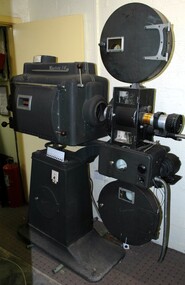
... Projector film culture language Greek entertainment Γιαννούδης Yiannoudes προβολέας INSCRIPTION 1 (red background) Westrex 14, High Intensity Arc Lamp, Serial Number A.5401018. Manufactured for Westrex (Australia ...This 35mm Westrex 14 projector was purchased from Waverley Theatre (Cnr Burke Road and Waverley Road in Malvern, in 1962) last used by "Cosmopolitan Motion Pictures" as follows: from 1962 to 1967 - National Theatre, Richmond. from 1967 to 1970 - in a small leatherette on Bridge Road, Richmond. from 1971 to 1985 - Galaxy Theatre Brunswick. After that it was stored at the back of Westgarth Theatre in Northcote. This projector has a primary historic significance as it covers the largest part of the history of film shows by "Cosmopolitan Motion Pictures", and cultural/social significance since it has been used to project a number of other language films (about 10 different languages) by the company. It also carries a secondary significance of rarity being the last used projector by the company at Galaxy Theatre.This metal (most probably steel) projector is part of a number of projectors owned by "Cosmopolitan Motion Pictures". It is in dark blue/grey colour and still operational to project 35mm films if needed. It has two inscriptions detailed below and was last used at Liberty/Galaxy Theatre in Brunswick in 1985 (for more details about the history of Galaxy Theatre follow this link http://technicolouryawn.com/?page_id=2988)INSCRIPTION 1 (red background) Westrex 14, High Intensity Arc Lamp, Serial Number A.5401018. Manufactured for Westrex (Australia) Pty. Limited by G.B.H. Electronic Laboratories - Made in N.S.W. Australia INSCRIPTION 2 (blue background) Westrex R4A Reproducer Made in Australia Western Electric Co. (Aust) Pty. Ltd.projector, film, culture, language, greek, entertainment, γιαννούδης, yiannoudes, προβολέας -
 Plutarch Project
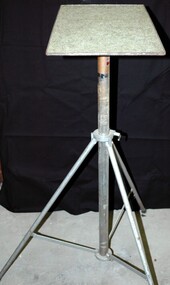
Projector tripod stand, circa 1950's
... From January 1959 and until 1982, “Cosmopolitan Motion Pictures”, owned by Mr Peter Yannoudes (Παναγιώτης Γιαννούδης) and Mr Stathis Raftopoulos (Στάθης Ραφτόπουλος) travelled around Australia to entertain the Greek, Turkish, Indian and Yugoslav speaking population of Australia and provide a significant cinema culture. They travelled as far as Perth in WA, Adelaide in SA, Tasmania, Darwin in Nt, Canberra in ACT and Sydney and NSW. ...Australia. Historic and rarity (only one left that was used by "Cosmopolitan Motion Pictures") Primary significance stand tripod projector film culture language Greek entertainment Yiannoudes Γιαννούδης τρίποδο T.J.N. ...From January 1959 and until 1982, “Cosmopolitan Motion Pictures”, owned by Mr Peter Yannoudes (Παναγιώτης Γιαννούδης) and Mr Stathis Raftopoulos (Στάθης Ραφτόπουλος) travelled around Australia to entertain the Greek, Turkish, Indian and Yugoslav speaking population of Australia and provide a significant cinema culture. They travelled as far as Perth in WA, Adelaide in SA, Tasmania, Darwin in Nt, Canberra in ACT and Sydney and NSW. However they found themselves also in places like Berri and Renmark in NSW, where concentrations of migrants lived and thrived during the period. Initially they were travelling by train, carrying all their equipment by hand and placing them in boxes and suitcases. However after 1962 when they acquired their first automobile, travelling became less of a burden, nevertheless cumbersome and laborious. They carried with them initially two portable projectors (second one as a backup) and at times travelled with a third in order to ensure that technology will not be letting them down at the time of film projection. At times the films were projected onto a white sheet of cloth because there was no proper screen to project it on at the venue they were using. This projector stand was the actual projector stand used in their trips around Australia.Historic and rarity (only one left that was used by "Cosmopolitan Motion Pictures") Primary significanceMetal construction Projector tripod with a cloth on top to stop damaging the projectors. It has an adjustable height depending that extends to about 1.5 metres.T.J.N. Macey - Toolmaker and Manufacturing Engineerstand, tripod, projector, film, culture, language, greek, entertainment, yiannoudes, γιαννούδης, τρίποδο -
 Plutarch Project
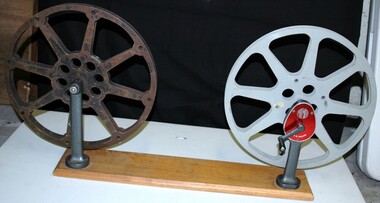
Film rewinder, circa 1950's
... From January 1959 and until 1982, “Cosmopolitan Motion Pictures”, owned by Mr Peter Yannoudes (Παναγιώτης Γιαννούδης) and Mr Stathis Raftopoulos (Στάθης Ραφτόπουλος) travelled around Australia to entertain the Greek, Turkish, Indian and Yugoslav speaking population of Australia and provide a significant cinema culture. They travelled as far as Perth in WA, Adelaide in SA, Tasmania, Darwin in Nt, Canberra in ACT and Sydney and NSW. ...From January 1959 and until 1982, “Cosmopolitan Motion Pictures”, owned by Mr Peter Yannoudes (Παναγιώτης Γιαννούδης) and Mr Stathis Raftopoulos (Στάθης Ραφτόπουλος) travelled around Australia to entertain the Greek, Turkish, Indian and Yugoslav speaking population of Australia and provide a significant cinema culture. They travelled as far as Perth in WA, Adelaide in SA, Tasmania, Darwin in Nt, Canberra in ACT and Sydney and NSW. ...From January 1959 and until 1982, “Cosmopolitan Motion Pictures”, owned by Mr Peter Yannoudes (Παναγιώτης Γιαννούδης) and Mr Stathis Raftopoulos (Στάθης Ραφτόπουλος) travelled around Australia to entertain the Greek, Turkish, Indian and Yugoslav speaking population of Australia and provide a significant cinema culture. They travelled as far as Perth in WA, Adelaide in SA, Tasmania, Darwin in Nt, Canberra in ACT and Sydney and NSW. However they found themselves also in places like Berri and Renmark in NSW, where concentrations of migrants lived and thrived during the period. Initially they were travelling by train, carrying all their equipment by hand and placing them in boxes and suitcases. However after 1962 when they acquired their first automobile, travelling became less of a burden, nevertheless cumbersome and laborious. They carried with them initially two portable projectors (second one as a backup) and at times travelled with a third in order to ensure that technology will not be letting them down at the time of film projection. At times the films were projected onto a white sheet of cloth because there was no proper screen to project it on at the venue they were using. This winder was part of the equipment they carried around Australia Historical significance Primarily as it is the actual unit used to manually rewind all films.A film rewinding gadget, perhaps home made, with a wooden base, two reels, and an metal winder used for transferring the film from one reel to the next."Premier - Made in England"winder, film, entertainment, language, greek, yiannoudes, γιαννούδης, plutarch -
 Plutarch Project
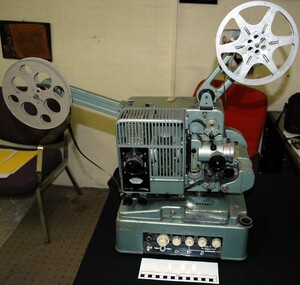
16mm Portable Optical & Magnetic Sound Projector, circa 1950's
... From January 1959 and until 1982, “Cosmopolitan Motion Pictures”, owned by Mr Peter Yannoudes (Παναγιώτης Γιαννούδης) and Mr Stathis Raftopoulos (Στάθης Ραφτόπουλος) travelled around Australia to entertain the Greek, Turkish, Indian and Yugoslav speaking population of Australia and provide a significant cinema culture. They travelled as far as Perth in WA, Adelaide in SA, Tasmania, Darwin in Nt, Canberra in ACT and Sydney and NSW. ...Primary historic significance as well as rarity significance projector film magnetic sound optical language Greek Siemens German Γιαννούδης προβολέας Yiannoudes Plutarch Siemens From January 1959 and until 1982, “Cosmopolitan Motion Pictures”, owned by Mr Peter Yannoudes (Παναγιώτης Γιαννούδης) and Mr Stathis Raftopoulos (Στάθης Ραφτόπουλος) travelled around Australia to entertain the Greek, Turkish, Indian and Yugoslav speaking population of Australia and provide a significant cinema culture. They travelled as far as Perth in WA, Adelaide in SA, Tasmania, Darwin in Nt, Canberra in ACT and Sydney and NSW. ...One of the three projectors used in every trip was this 16mm Portable Projector, which was used taken to about 60 towns and cities around Australia, as Mr Yiannoudes states. This projector is in working condition serviced by Mr Yiannoudes himself regularly. It is an optical and magnetic sound projector, a rare one of its type.Primary historic significance as well as rarity significanceFrom January 1959 and until 1982, “Cosmopolitan Motion Pictures”, owned by Mr Peter Yannoudes (Παναγιώτης Γιαννούδης) and Mr Stathis Raftopoulos (Στάθης Ραφτόπουλος) travelled around Australia to entertain the Greek, Turkish, Indian and Yugoslav speaking population of Australia and provide a significant cinema culture. They travelled as far as Perth in WA, Adelaide in SA, Tasmania, Darwin in Nt, Canberra in ACT and Sydney and NSW. However they found themselves also in places like Berri and Renmark in NSW, where concentrations of migrants lived and thrived during the period. Initially they were travelling by train, carrying all their equipment by hand and placing them in boxes and suitcases. However after 1962 when they acquired their first automobile, travelling became less of a burden, nevertheless cumbersome and laborious. They carried with them initially two portable projectors (second one as a backup) and at times travelled with a third in order to ensure that technology will not be letting them down at the time of film projection. At times the films were projected onto a white sheet of cloth because there was no proper screen to project it on at the venue they were using. One of the three projectors used in every trip was this 16mm Portable Projector, which was used taken to about 60 towns and cities around Australia, as Mr Yiannoudes states. This projector is in working condition serviced by Mr Yiannoudes himself regularly. It is an optical and magnetic sound projector, a rare one of its type. Apart from this projector these items were taken on each trip. -a- 3 projectors in total -b- 2 tripod stands -c- 1 20 feet x 10 feet screen -d- 6 projector lamps and 2 exider lamps for sound -e- 2 extra lamps per film to be shown -f- 1 film rewinder (see rewinder in same collection)Siemensprojector, film, magnetic, sound, optical, language, greek, siemens, german, γιαννούδης, προβολέας, yiannoudes, plutarch -
 Plutarch Project
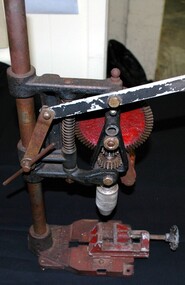
Hand Operated drill
... From January 1959 and until 1982, “Cosmopolitan Motion Pictures”, owned by Mr Peter Yannoudes (Παναγιώτης Γιαννούδης) and Mr Stathis Raftopoulos (Στάθης Ραφτόπουλος) travelled around Australia to entertain the Greek, Turkish, Indian and Yugoslav speaking population of Australia and provide a significant cinema culture. They travelled as far as Perth in WA, Adelaide in SA, Tasmania, Darwin in Nt, Canberra in ACT and Sydney and NSW. ...From January 1959 and until 1982, “Cosmopolitan Motion Pictures”, owned by Mr Peter Yannoudes (Παναγιώτης Γιαννούδης) and Mr Stathis Raftopoulos (Στάθης Ραφτόπουλος) travelled around Australia to entertain the Greek, Turkish, Indian and Yugoslav speaking population of Australia and provide a significant cinema culture. They travelled as far as Perth in WA, Adelaide in SA, Tasmania, Darwin in Nt, Canberra in ACT and Sydney and NSW. ...From January 1959 and until 1982, “Cosmopolitan Motion Pictures”, owned by Mr Peter Yannoudes (Παναγιώτης Γιαννούδης) and Mr Stathis Raftopoulos (Στάθης Ραφτόπουλος) travelled around Australia to entertain the Greek, Turkish, Indian and Yugoslav speaking population of Australia and provide a significant cinema culture. They travelled as far as Perth in WA, Adelaide in SA, Tasmania, Darwin in Nt, Canberra in ACT and Sydney and NSW. However they found themselves also in places like Berri and Renmark in NSW, where concentrations of migrants lived and thrived during the period. Initially they were travelling by train, carrying all their equipment by hand and placing them in boxes and suitcases. However after 1962 when they acquired their first automobile, travelling became less of a burden, nevertheless cumbersome and laborious. They carried with them initially two portable projectors (second one as a backup) and at times travelled with a third in order to ensure that technology will not be letting them down at the time of film projection. At times the films were projected onto a white sheet of cloth because there was no proper screen to project it on at the venue they were using.Primary historic significance in the context that it was used, as well as rarity significanceMetal adjustable height, hand operated drill. Rusty appearance. It seems to have a small piece at the bottom broken off, but still in working order according to Mr P. Yiannoudes. This drill was used to drill holes in cinema light carbon sticks in order to extend their life.drill, carbon, film, entertainment, greek, language, hand, yiannoudes, γιαννούδης, τρυπάνι -
 The Adam Lindsay Gordon Commemorative Committee Inc.
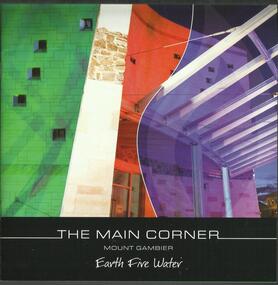
Booklet, The Main Corner, Mount Gambier : earth, fire, water, 2011
... culture. For two years he was stationed at Penola in the Mount Gambier region where he led a routine life with no remarkable incidents or exploits to interrupt his daily duties. (from Australian ...Information booklet about the new Main Corner complex located at 1 Bay Road, Mount Gambier. The building and surrounds offer the opportunity to learn about Mount Gambier's local history and culture.For two years he was stationed at Penola in the Mount Gambier region where he led a routine life with no remarkable incidents or exploits to interrupt his daily duties. (from Australian Dictionary of Biography: http://adb.anu.edu.au/biography/gordon-adam-lindsay-3635)22 pages booklet with colour illustrations. Front page depicting the entrance of the Main Corner in Mount Gambiermain corner, mount gambier, gretel sneath, adam lindsay gordon -
 Sunshine and District Historical Society Incorporated
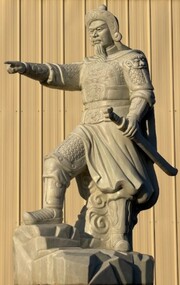
Photograph - Saint Tran Statue Vietnamese Community Center Sunshine North, Michael Huskii, 15th July 2026
... Michael Kuskii is an member of The Vietnamese Australian Organisation (VÀO, translated means to welcome one in) preserves and pass on Vietnamese cultural heritage to the next generation of Vietnamese and the broader Australian community through education workshops, media, arts and culture....Michael Kuskii is an member of The Vietnamese Australian Organisation (VÀO, translated means to welcome one in) preserves and pass on Vietnamese cultural heritage to the next generation of Vietnamese and the broader Australian community through education workshops, media, arts and culture. Trần Hưng Đạo (1228–1300) was the Trần dynasty’s greatest general, defeating the Mongol invasions of Đại Việt. ...The statue of Saint Tran (commonly known to Vietnamese as Tran Hung Dao), is a deified Vietnamese military strategist that repelled Mongol invasions during the 1200s) The statue located at the Vietnamese Community Center, 90 Knight Avenue, Sunshine North, is one of two statues that was given to the Vietnamese Community of Australia (VIC and QLD chapters) by Bùi Đức Ly, a Vietnam War navy veteran and the founder of the Vietnamese Cultural Center (est. 1997, Tran Hung Dao Foundation) in Seattle, Washington, USA. He gifted these statues to the Australian Vietnamese community when he visited Australia in 2016. Bùi Đức Ly is the great uncle of Michael Kuskii, the donator of these photographs. Michael's connection to Saint Tran is because he was put up for "spiritual adoption" to Saint Tran at Khanh Hoi Temple (71-73 Nguyen Tat Thanh Street, Ward 13, District 4, Ho Chi Minh City) in 1996, when he was two years old. It is a Vietnamese folk belief in which parents perform a ceremony to entrust their children to temples or shrines with the hope that the child will be protected by deities and Buddhas, be easy to raise and be healthy. Michael Kuskii is an member of The Vietnamese Australian Organisation (VÀO, translated means to welcome one in) preserves and pass on Vietnamese cultural heritage to the next generation of Vietnamese and the broader Australian community through education workshops, media, arts and culture.Trần Hưng Đạo (1228–1300) was the Trần dynasty’s greatest general, defeating the Mongol invasions of Đại Việt. After his death, he was deified and worshipped as Đức Thánh Trần, becoming one of Vietnam’s most important spiritual protectors. Trần Hưng Đạo is important to Vietnamese communities in Australia because he symbolizes national pride, resistance against oppression, moral leadership, and cultural continuity. He provides a shared identity anchor for communities rebuilding their lives after war, displacement, and migration.Saint Tran Statue (Commonly known to Vietnamese as Tran Hung Dao)saint tran, tran hung dao, knight avenue, sunshine north -
 Geelong Naval and Maritime Museum
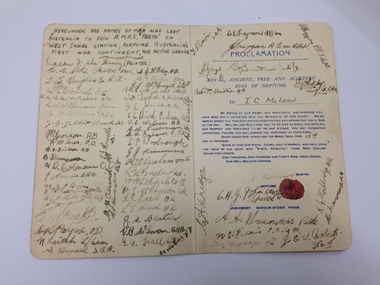
Document, Proclamation - Crossing the Line, mid 20th Century
... Australia. It also represents a tradition of Crossing the Line in RAN culture and has social value. ...Proclamation card presented to I. C. McLean and signed by all other crew members on board the RMS Remuera. The crew left Australia to join HMAS Perth and formed part of Australia's first war contingent for active service in WWII. The document is dated 15th October 1939.This document is significant as a tangible link to a former crew aboard the RMS Remuera. The card also notes that this crew formed part of Australia's first war contingent for active service for WWII. A number of servicemen who signed this card did not return from service. It represents the vital role of these men had in defending Australia. It also represents a tradition of Crossing the Line in RAN culture and has social value.Proclamation card presented to I. C. McLean and signed by all other crew members on board the RMS Remuera. The crew left Australia to join HMAS Perth and formed part of Australia's first war contingent for active service in WWII. The document is dated 15th October 1939.Hereunder are names of men who left Australia to join HMAS Perth on West Indies Station, forming Australia's first war contingent for active service. Mason, F. ... Henry (Printer), M. M. S.... (Printer's Devil), A.G.H. Foley A.B., L. H. Hughes E.R.A, M.G. Packer E.R.A, G.J. McKenzie, W.R. Birbich, R.A.A Shaw, R.de M. Baker O.D; J.N Taylor Ord Serv; R.W. Wilkinson ....; G.E Jones O.D; G.F. Bli... Ord Sea; E.E. Bird Ord Sea; V.L. Watson A.B; A.W. Newman; A.W. Graham O.D; L.P. Woolbrough; G.G. Kummins; H.W. Durham Sto II; R. McBryde Sto II; M. Gordon A.B.; F. Milner O.D; N.D. Coleman O.D; F. Norris ERA; M.J. O'Brien; E.R. Phillps Stok II; D.J. McPherson S.A; ....Liddell; L.E. Head A.B.; V.B. McGovern ERA; N. Leitch L/Sea; K.G. Stockbridge A.B.; F.W. Robinson (Master); C.H.G. John "Speed" Sto II; C.E. Ingram A.B. 64; E.V.W. Pockley Surg Lt RANR; George Christie A.B.; I.C. McLean.rms remuera, i.c. mclean, hmas perth, geelong naval and maritime museum, wwii, crossing the line wwii -
 Tatura Irrigation & Wartime Camps Museum
Booklet, Our Liverpool Boys
... This edition was supported by the Australian Government's Anzac Centenary Arts and Culture Fund,the Liverpool City Council & My Library Liverpool.` liverpool boys Messages. from Mayor of Liverpool Ned Mannoun, Sue Dredge, Heritage Collections Curator and Julie Senior, Family History Officer. ...This publication presents the stories of soldiers who were born or bred in Liverpool and who have a strong connection with Liverpool.This edition was supported by the Australian Government's Anzac Centenary Arts and Culture Fund,the Liverpool City Council & My Library Liverpool.`Light olive cardboard cover with black printing "Our Liverpool Boys" on cover. Photo on cover shows six Liverpool boys titled "at ease at Liverpool Military Camp".33 pages. black & white/ sepia photos of the Liverpool BoysMessages. from Mayor of Liverpool Ned Mannoun, Sue Dredge, Heritage Collections Curator and Julie Senior, Family History Officer. Sepia photo of Liverpool Army Camp from the station courtesy of Liverpool Heritage Collectionliverpool boys -
 Tatura Irrigation & Wartime Camps Museum
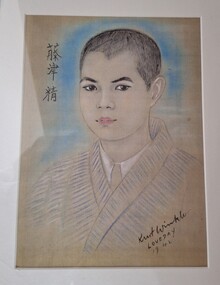
Artwork, other - Artwork, Sia FUJITSU
... Culture and his religion is Buddhist. He was captured at Tawao, North Borneo on 27th January, 1942 and was interned in Loveday South Australia until he was repatriated to Japan on 21st February, 1946. ...Culture and his religion is Buddhist. He was captured at Tawao, North Borneo on 27th January, 1942 and was interned in Loveday South Australia until he was repatriated to Japan on 21st February, 1946. ...Sia Fujitsu, the son of Jiroguma Fujitsu was born on 27 May 1926 in Yamaguchi-Ken, Japan. His trade is listed as Employee of Culture and his religion is Buddhist. He was captured at Tawao, North Borneo on 27th January, 1942 and was interned in Loveday South Australia until he was repatriated to Japan on 21st February, 1946. Kurt Winkler was born in Germany in 1902 and was a survivor of the "Arandora Star". He was sent to Australia on the "Dunera" where he was interned at Tatura 1940-1945.Photocopy of a pencil and ink Portrait of a Japanese youth Short black hair, dark eyes and pink lips. He is wearing a jacket that appears to be too large for him and white collar and beige coloured tie. There is light blue shading around is head and shoulders. Japanese lettering in black ink on the left of the picture translates to his name "Sia FUJITSU". Signed in black ink by artist Kurt Winkler, Loveday, 1942.Kurt Winkler LOVEDAY 1942fujitsu, japan, arandora star, dunera, kurt winkler, loveday, japanese -
 Tatura Irrigation & Wartime Camps Museum
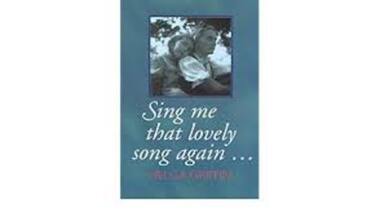
Book, Sing Me That Lovely Song Again, 2006
... Australia with her parents and young brother. Five years interned in Camp 3 near Rushworth, then released to Melbourne. Helga vividly describes her early childhood in Persia. The mixed emotions of her whole family during the internment experience and postwar, trying to adjust to a new country, new culture, new language. ...Australia with her parents and young brother. Five years interned in Camp 3 near Rushworth, then released to Melbourne. Helga vividly describes her early childhood in Persia. The mixed emotions of her whole family during the internment experience and postwar, trying to adjust to a new country, new culture, new language. ...Helga Griffin, daughter of Austrian engineer father and German mother. Interned aged 6 years and sent to Australia with her parents and young brother. Five years interned in Camp 3 near Rushworth, then released to Melbourne. Helga vividly describes her early childhood in Persia. The mixed emotions of her whole family during the internment experience and postwar, trying to adjust to a new country, new culture, new language. Very evocative memories of wartime dislocation.Blue/green front soft cover, red and white printing, white back cover and spine, black printing.With my very best wishes to the Tatura museum and the sterling work of the volunteers that contribute to its valuable presence. Helga 26.5.06ww2 camp 3, books, autobiography, helga griffin, helga griffin (girschik) -
Tatura Irrigation & Wartime Camps Museum
Book, Australia - Image of A Nation 1850-1950, 1989
... Captures variety of life in Australia 1850-1950 from aboriginal culture meeting european lifestyle and development of Australia...Captures variety of life in Australia 1850-1950 from aboriginal culture meeting european lifestyle and development of Australia australia 1850-1950 glover i tatura Pale green hard backcover. ...Pale green hard backcover. Dust jacket. Black writing, same photo on both covers. Photo of 5 workmen and line trolley on front. 1 adult and 3 girls - 1 with a cat on back. 385 pages.australia 1850-1950, glover i, tatura -
 Nhill and District Historical Society Inc.
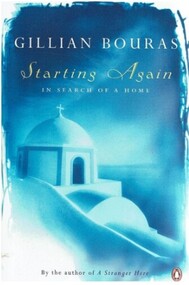
Book - Starting Again, In Search of a Home by Gillian Bouras, 1999
... Australia, where she was born and raised, she feels like an outsider. This journal deals with the complexity of finding your place in the world. Insightful and always engaging, Bouras explores the divide that exists between cultures, between the past and the present, between those who shut the world out and those who too readily let it in. ...For some, home is not simply a matter of place. Gillian Bouras comes and goes between London, where she spends long periods, and the village in the Peloponnese to which she migrated nearly twenty years ago. Unable to settle in either England or Greece, her life is one of perpetual journey, of constant goodbyes and starting again. Even in Australia, where she was born and raised, she feels like an outsider. This journal deals with the complexity of finding your place in the world. Insightful and always engaging, Bouras explores the divide that exists between cultures, between the past and the present, between those who shut the world out and those who too readily let it in.non-fictionFor some, home is not simply a matter of place. Gillian Bouras comes and goes between London, where she spends long periods, and the village in the Peloponnese to which she migrated nearly twenty years ago. Unable to settle in either England or Greece, her life is one of perpetual journey, of constant goodbyes and starting again. Even in Australia, where she was born and raised, she feels like an outsider. This journal deals with the complexity of finding your place in the world. Insightful and always engaging, Bouras explores the divide that exists between cultures, between the past and the present, between those who shut the world out and those who too readily let it in.bouras gillian - 1945 - diaries, australian - diaries, women immigrants, social life and customs, cultural assimilation, greek australians, biography & autobiography, psychology, social science, customs & traditions, emigration & immigration, personal memoirs -
 Central Goldfields Art Gallery
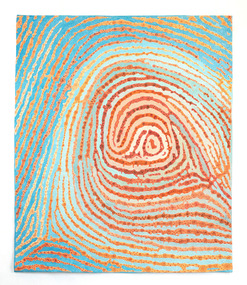
Textile - Australian Print, 2019
... Australian textile artist. With permission, and in collaboration with Elder Aunty Cynthia Hardie, Reid reproduced original drawings by Yorta Yorta man Troy Firebrace using acrylic paint, hand embroidery and machine quilting, to acknowledge and celebrate the world's oldest continuous living cultures, those of the First Nations peoples in Australia. ...Australian textile artist. With permission, and in collaboration with Elder Aunty Cynthia Hardie, Reid reproduced original drawings by Yorta Yorta man Troy Firebrace using acrylic paint, hand embroidery and machine quilting, to acknowledge and celebrate the world's oldest continuous living cultures, those of the First Nations peoples in Australia. ...Sue Reid is a non-Indigenous Australian textile artist. With permission, and in collaboration with Elder Aunty Cynthia Hardie, Reid reproduced original drawings by Yorta Yorta man Troy Firebrace using acrylic paint, hand embroidery and machine quilting, to acknowledge and celebrate the world's oldest continuous living cultures, those of the First Nations peoples in Australia. This work was acquired as the winner of the Golden Textures art quilt exhibition at Central Goldfields Art Gallery in Maryborough, Victoria in 2019. Held bi-annually at the Gallery, the Golden Textures Award Exhibition celebrates the region’s long connection with textile craft and textile manufacturing, especially in the early to mid-20th Century. Rights: © Sue Reid. Reproduced with permission of the artist. Artwork photographer: Megan Cardamone -
 Brighton Historical Society
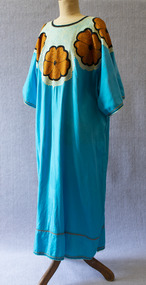
Dress
... Australia as refugees in 1998. Seeking to bring women together and foster connections, in 2012 Mariam opened her Brighton backyard to the community. The RAW community garden unites women from all cultures...Australia as refugees in 1998. Seeking to bring women together and foster connections, in 2012 Mariam opened her Brighton backyard to the community. The RAW community garden unites women from all cultures ...This dress belonged to Brighton woman Mariam Issa, an author, public speaker and co-founder with Katharina Kons of the nonprofit organisation Resilient Aspiring Women (RAW). Born in Somalia, Mariam and her family arrived in Australia as refugees in 1998. Seeking to bring women together and foster connections, in 2012 Mariam opened her Brighton backyard to the community. The RAW community garden unites women from all cultures through gardening, food and storytelling.Long loose kaftan-style dress, turquoise cotton with black, brown and cream embroidery around neck and shoulders, depicting large brown flowers surrounded by swirling cream border. Round neck and short, loose sleeves.mariam issa, migration, somalia, resilient aspiring women
