
Showing 948 items matching "guilding"
-
 Flagstaff Hill Maritime Museum and Village
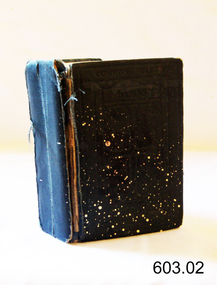
Book - Religious Book, Oxford University Press, The Book of Common Prayer, Early 20th century
... The Guild continued its work until the 1960s. ...The Guild continued its work until the 1960s. ...The Book of Common Prayer is the foundational liturgical text of the Church of England and the broader Anglican Communion. The subject book as a standard 730-page UK edition often printed in the late 19th or early 20th century by major privilege presses like Cambridge University Press, Oxford University Press, or William Clowes & Sons contains the complete 1662 standard text. The volume is structured into distinct sections designed for daily worship, sacramental rites, and personal devotion. There is introductory matter within the text that includes the original prefaces regarding the service of the Church and how the Psalter and Holy Scriptures are ordered to be read. Lectionary and calendar tables are also included as well as lessons for daily Bible readings, rules for determining the date of Easter, and the calendar of Holy Days and saints' days.The Book of Common Prayer. Blue cloth cover. Title: The Book of Common Prayer with the Additions and Deviations proposed in 1928 Publisher: Humphrey Milford, Oxford University Press, London. Spines have gold inlay print. 244 numbered pages. This is one of a set of original items in our ‘St Nicholas Seamen's Church Williamstown Collection’.non-fictionThe Book of Common Prayer is the foundational liturgical text of the Church of England and the broader Anglican Communion. The subject book as a standard 730-page UK edition often printed in the late 19th or early 20th century by major privilege presses like Cambridge University Press, Oxford University Press, or William Clowes & Sons contains the complete 1662 standard text. The volume is structured into distinct sections designed for daily worship, sacramental rites, and personal devotion. There is introductory matter within the text that includes the original prefaces regarding the service of the Church and how the Psalter and Holy Scriptures are ordered to be read. Lectionary and calendar tables are also included as well as lessons for daily Bible readings, rules for determining the date of Easter, and the calendar of Holy Days and saints' days.flagstaff hill, warrnambool, shipwrecked coast, flagstaff hill maritime museum, maritime museum, shipwreck coast, flagstaff hill maritime village, great ocean road, preyer books, book of common prayer, anglican church prayer book, religion, religious service, sailors rest, bethel sailors’ church, bethel floating church, ladies harbour light guild, missions to seamen victoria, mission to seafarers, flying angels club, st nicholas seaman’s church williamstown, st nicholas mission to seamen church williamstown, missions to seamen williamstown, st nicholas seamen’s church flagstaff hill, 139 nelson place williamstown, anglican church, religious book -
 Flagstaff Hill Maritime Museum and Village
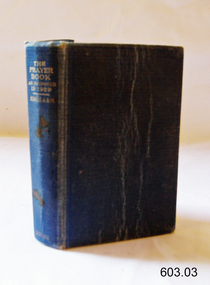
Book - Religious Book, Oxford University Press, The Book of Common Prayer, Early 20th century
... The Guild continued its work until the 1960s. ...The Guild continued its work until the 1960s. ...The Book of Common Prayer is the foundational liturgical text of the Church of England and the broader Anglican Communion. The subject book as a standard 730-page UK edition often printed in the late 19th or early 20th century by major privilege presses like Cambridge University Press, Oxford University Press, or William Clowes & Sons contains the complete 1662 standard text. The volume is structured into distinct sections designed for daily worship, sacramental rites, and personal devotion. There is introductory matter within the text that includes the original prefaces regarding the service of the Church and how the Psalter and Holy Scriptures are ordered to be read. Lectionary and calendar tables are also included as well as lessons for daily Bible readings, rules for determining the date of Easter, and the calendar of Holy Days and saints' days.The Book of Common Prayer. Blue cloth cover. Title: The Book of Common Prayer with the Additions and Deviations proposed in 1928 Publisher: Humphrey Milford, Oxford University Press, London. Spines have gold inlay print. 244 numbered pages. This is one of a set of original items in our ‘St Nicholas Seamen's Church Williamstown Collection’.non-fictionThe Book of Common Prayer is the foundational liturgical text of the Church of England and the broader Anglican Communion. The subject book as a standard 730-page UK edition often printed in the late 19th or early 20th century by major privilege presses like Cambridge University Press, Oxford University Press, or William Clowes & Sons contains the complete 1662 standard text. The volume is structured into distinct sections designed for daily worship, sacramental rites, and personal devotion. There is introductory matter within the text that includes the original prefaces regarding the service of the Church and how the Psalter and Holy Scriptures are ordered to be read. Lectionary and calendar tables are also included as well as lessons for daily Bible readings, rules for determining the date of Easter, and the calendar of Holy Days and saints' days.flagstaff hill, warrnambool, shipwrecked coast, flagstaff hill maritime museum, maritime museum, shipwreck coast, flagstaff hill maritime village, great ocean road, preyer books, book of common prayer, anglican church prayer book, religion, religious service, sailors rest, bethel sailors’ church, bethel floating church, ladies harbour light guild, missions to seamen victoria, mission to seafarers, flying angels club, st nicholas seaman’s church williamstown, st nicholas mission to seamen church williamstown, missions to seamen williamstown, st nicholas seamen’s church flagstaff hill, 139 nelson place williamstown, anglican church, religious book -
 Flagstaff Hill Maritime Museum and Village
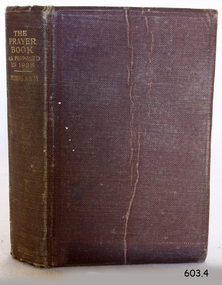
Book - Religious Book, Oxford University Press, The Book of Common Prayer, Early 20th century
... The Guild continued its work until the 1960s. ...The Guild continued its work until the 1960s. ...The Book of Common Prayer is the foundational liturgical text of the Church of England and the broader Anglican Communion. The subject book as a standard 730-page UK edition often printed in the late 19th or early 20th century by major privilege presses like Cambridge University Press, Oxford University Press, or William Clowes & Sons contains the complete 1662 standard text. The volume is structured into distinct sections designed for daily worship, sacramental rites, and personal devotion. There is introductory matter within the text that includes the original prefaces regarding the service of the Church and how the Psalter and Holy Scriptures are ordered to be read. Lectionary and calendar tables are also included as well as lessons for daily Bible readings, rules for determining the date of Easter, and the calendar of Holy Days and saints' days.The Book of Common Prayer. Red cloth cover. Title: The Book of Common Prayer with the Additions and Deviations proposed in 1928 Publisher: Humphrey Milford, Oxford University Press, London. Spines have gold inlay print. 244 numbered pages. This is one of a set of original items in our ‘St Nicholas Seamen's Church Williamstown Collection’.non-fictionThe Book of Common Prayer is the foundational liturgical text of the Church of England and the broader Anglican Communion. The subject book as a standard 730-page UK edition often printed in the late 19th or early 20th century by major privilege presses like Cambridge University Press, Oxford University Press, or William Clowes & Sons contains the complete 1662 standard text. The volume is structured into distinct sections designed for daily worship, sacramental rites, and personal devotion. There is introductory matter within the text that includes the original prefaces regarding the service of the Church and how the Psalter and Holy Scriptures are ordered to be read. Lectionary and calendar tables are also included as well as lessons for daily Bible readings, rules for determining the date of Easter, and the calendar of Holy Days and saints' days.flagstaff hill, warrnambool, shipwrecked coast, flagstaff hill maritime museum, maritime museum, shipwreck coast, flagstaff hill maritime village, great ocean road, preyer books, book of common prayer, anglican church prayer book, religion, religious service, sailors rest, bethel sailors’ church, bethel floating church, ladies harbour light guild, missions to seamen victoria, mission to seafarers, flying angels club, st nicholas seaman’s church williamstown, st nicholas mission to seamen church williamstown, missions to seamen williamstown, st nicholas seamen’s church flagstaff hill, 139 nelson place williamstown, anglican church, religious book, book -
 Flagstaff Hill Maritime Museum and Village
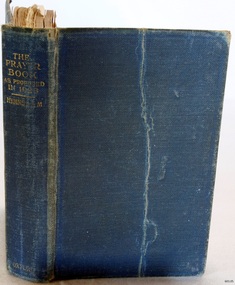
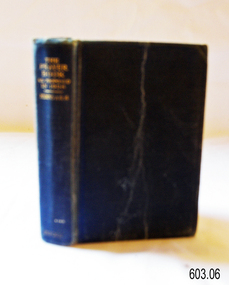
Book - Religious Book, Oxford University Press, The Book of Common Prayer, Early 20th century
... The Guild continued its work until the 1960s. ...The Guild continued its work until the 1960s. ...The Book of Common Prayer is the foundational liturgical text of the Church of England and the broader Anglican Communion. The subject book as a standard 730-page UK edition often printed in the late 19th or early 20th century by major privilege presses like Cambridge University Press, Oxford University Press, or William Clowes & Sons contains the complete 1662 standard text. The volume is structured into distinct sections designed for daily worship, sacramental rites, and personal devotion. There is introductory matter within the text that includes the original prefaces regarding the service of the Church and how the Psalter and Holy Scriptures are ordered to be read. Lectionary and calendar tables are also included as well as lessons for daily Bible readings, rules for determining the date of Easter, and the calendar of Holy Days and saints' days.The Book of Common Prayer. Blue cloth cover. Title: The Book of Common Prayer with the Additions and Deviations proposed in 1928 Publisher: Humphrey Milford, Oxford University Press, London. Spines have gold inlay print. 244 numbered pages. This is one of a set of original items in our ‘St Nicholas Seamen's Church Williamstown Collection’.non-fictionThe Book of Common Prayer is the foundational liturgical text of the Church of England and the broader Anglican Communion. The subject book as a standard 730-page UK edition often printed in the late 19th or early 20th century by major privilege presses like Cambridge University Press, Oxford University Press, or William Clowes & Sons contains the complete 1662 standard text. The volume is structured into distinct sections designed for daily worship, sacramental rites, and personal devotion. There is introductory matter within the text that includes the original prefaces regarding the service of the Church and how the Psalter and Holy Scriptures are ordered to be read. Lectionary and calendar tables are also included as well as lessons for daily Bible readings, rules for determining the date of Easter, and the calendar of Holy Days and saints' days.flagstaff hill, warrnambool, shipwrecked coast, flagstaff hill maritime museum, maritime museum, shipwreck coast, flagstaff hill maritime village, great ocean road, preyer books, book of common prayer, anglican church prayer book, religion, religious service, sailors rest, bethel sailors’ church, bethel floating church, ladies harbour light guild, missions to seamen victoria, mission to seafarers, flying angels club, st nicholas seaman’s church williamstown, st nicholas mission to seamen church williamstown, missions to seamen williamstown, st nicholas seamen’s church flagstaff hill, 139 nelson place williamstown, anglican church, religious book, book -
 Flagstaff Hill Maritime Museum and Village
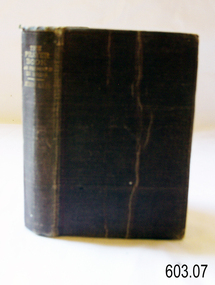
Book - Religious Book, Oxford University Press, The Book of Common Prayer, Early 20th century
... The Guild continued its work until the 1960s. ...The Guild continued its work until the 1960s. ...The Book of Common Prayer is the foundational liturgical text of the Church of England and the broader Anglican Communion. The subject book as a standard 730-page UK edition often printed in the late 19th or early 20th century by major privilege presses like Cambridge University Press, Oxford University Press, or William Clowes & Sons contains the complete 1662 standard text. The volume is structured into distinct sections designed for daily worship, sacramental rites, and personal devotion. There is introductory matter within the text that includes the original prefaces regarding the service of the Church and how the Psalter and Holy Scriptures are ordered to be read. Lectionary and calendar tables are also included as well as lessons for daily Bible readings, rules for determining the date of Easter, and the calendar of Holy Days and saints' days.The Book of Common Prayer. Blue cloth cover. Title: The Book of Common Prayer with the Additions and Deviations proposed in 1928 Publisher: Humphrey Milford, Oxford University Press, London. Spines have gold inlay print. 244 numbered pages. This is one of a set of original items in our ‘St Nicholas Seamen's Church Williamstown Collection’.non-fictionThe Book of Common Prayer is the foundational liturgical text of the Church of England and the broader Anglican Communion. The subject book as a standard 730-page UK edition often printed in the late 19th or early 20th century by major privilege presses like Cambridge University Press, Oxford University Press, or William Clowes & Sons contains the complete 1662 standard text. The volume is structured into distinct sections designed for daily worship, sacramental rites, and personal devotion. There is introductory matter within the text that includes the original prefaces regarding the service of the Church and how the Psalter and Holy Scriptures are ordered to be read. Lectionary and calendar tables are also included as well as lessons for daily Bible readings, rules for determining the date of Easter, and the calendar of Holy Days and saints' days.flagstaff hill, warrnambool, shipwrecked coast, flagstaff hill maritime museum, maritime museum, shipwreck coast, flagstaff hill maritime village, great ocean road, preyer books, book of common prayer, anglican church prayer book, religion, religious service, sailors rest, bethel sailors’ church, bethel floating church, ladies harbour light guild, missions to seamen victoria, mission to seafarers, flying angels club, st nicholas seaman’s church williamstown, st nicholas mission to seamen church williamstown, missions to seamen williamstown, st nicholas seamen’s church flagstaff hill, 139 nelson place williamstown, anglican church, religious book, book -
 Flagstaff Hill Maritime Museum and Village
Book - Religious Book, Oxford University Press, The Book of Common Prayer, Early 20th century
... The Guild continued its work until the 1960s. ...The Guild continued its work until the 1960s. ...The Book of Common Prayer is the foundational liturgical text of the Church of England and the broader Anglican Communion. The subject book as a standard 730-page UK edition often printed in the late 19th or early 20th century by major privilege presses like Cambridge University Press, Oxford University Press, or William Clowes & Sons contains the complete 1662 standard text. The volume is structured into distinct sections designed for daily worship, sacramental rites, and personal devotion. There is introductory matter within the text that includes the original prefaces regarding the service of the Church and how the Psalter and Holy Scriptures are ordered to be read. Lectionary and calendar tables are also included as well as lessons for daily Bible readings, rules for determining the date of Easter, and the calendar of Holy Days and saints' days.The Book of Common Prayer. Red cloth cover. Title: The Book of Common Prayer with the Additions and Deviations proposed in 1928 Publisher: Humphrey Milford, Oxford University Press, London. Spines have gold inlay print. 244 numbered pages. This is one of a set of original items in our ‘St Nicholas Seamen's Church Williamstown Collection’.non-fictionThe Book of Common Prayer is the foundational liturgical text of the Church of England and the broader Anglican Communion. The subject book as a standard 730-page UK edition often printed in the late 19th or early 20th century by major privilege presses like Cambridge University Press, Oxford University Press, or William Clowes & Sons contains the complete 1662 standard text. The volume is structured into distinct sections designed for daily worship, sacramental rites, and personal devotion. There is introductory matter within the text that includes the original prefaces regarding the service of the Church and how the Psalter and Holy Scriptures are ordered to be read. Lectionary and calendar tables are also included as well as lessons for daily Bible readings, rules for determining the date of Easter, and the calendar of Holy Days and saints' days.flagstaff hill, warrnambool, shipwrecked coast, flagstaff hill maritime museum, maritime museum, shipwreck coast, flagstaff hill maritime village, great ocean road, religion, religious service, sailors rest, bethel sailors’ church, bethel floating church, ladies harbour light guild, lightkeepers’ auxiliary, missions to seamen victoria, mission to seafarers, flying angel’s club, st nicholas seaman’s church williamstown, st nicholas mission to seamen church williamstown, st nicholas seamen's church williamstown collection, mission to seamen williamstown, st nicholas seamen’s church flagstaff hill, 139 nelson place williamstown, religious book, religious worship, anglican church, prayer book, book of common prayer -
 Flagstaff Hill Maritime Museum and Village
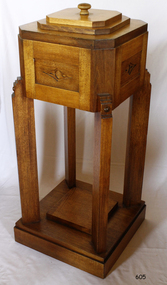
Ceremonial object - Font, 1940s
... The Guild continued its work until the 1960s. ...The Guild continued its work until the 1960s. ...This font is a piece of church furniture used in a baptism or christening service. It was originally installed in the St Nicholas Seamen's Church at 139 Nelson Place, Williamstown, Victoria. The church was a branch of the Victoria Missions to Seamen. THE MISSIONS TO SEAMEN (Brief History): - The Missions to Seamen was an Anglican charity that has served seafarers of the world since 1856 in Great Britain. Its symbol is a Flying Angel, inspired by a Bible verse. Today, there are centres in over 200 ports worldwide where seamen of all backgrounds are offered a warm welcome and provided with a wide range of facilities. In Victoria, the organisation began in Williamstown in 1857 as a Sailors’ Church, also known as ‘Bethel’ or the ‘Floating Church’ in an old hulk floating in Hobson’s Bay, Port of Melbourne. It soon became part of the Missions to Seamen, Victoria. In the year 2000, the organisation, now named Mission to Seafarers, still operated locally in Melbourne, Portland, Geelong and Hastings. The Ladies’ Harbour Lights Guild was formed in 1906 to support the Missions to Seamen in Melbourne and other centres, such as Williamstown. Two of the most significant ladies of the Guild were founder Ethel Augusta Godfrey and foundation member Alice Sibthorpe Tracy (who established a branch of the Guild in Warrnambool in 1920). The Guild continued its work until the 1960s. In 1943, a former Williamstown bank was purchased for the Missions to Seaman Club. The chapel was named St Nicholas’ Seamen’s Church and was supported by the Ladies’ Harbour Lights Guild, the Williamstown Lightkeepers’ Auxiliary and the League of Soldiers’ and Sailors’ Friends. It ceased operation in 1966. A Missions to Seamen Chapel and Recreation Room was a significant feature of ports during the late 1800s and into the 1900s. It seemed appropriate for Flagstaff Hill to include such a representation within the new Maritime Village, so the Melbourne Board of Management of Missions to Seamen Victoria gave its permission on 21st May 1979 for the entire furnishings of the Williamstown chapel to be transferred to Flagstaff Hill. The St Nicholas Seamen’s Church was officially opened on October 11, 1981, and closely resembles the Williamstown chapel. This font is significant through its association with the St Nicholas' Mission to Seamen Church in Williamstown, Melbourne, established in 1857. The collection of items from the Missions to Seamen in Williamstown, Victoria, has historical and social significance. They show that people of the 1800s and 1900s cared about the seafarers’ religious, moral, and social welfare, no matter what their religion, social status or nationality. It had its origins in Bristol, England, when a Seamen's Mission was formed in 1837. The first Australian branch was started in 1856 by the Rev. Kerr Johnston, a Church of England clergyman, and operated from a hulk moored in Hobson’s Bay; later, the Mission occupied buildings in Williamstown and Port Melbourne. Baptismal font: four-legged, varnished oak wood pedestal supporting a wooden box with a hand-beaten, rolled edge, copper ewer, bowl or basin insert. The box has a removable cover that has a round wooden knob. The sides of the box section have a decorative, diamond-shaped motif. The box and lid are octagonal, with four short sides and four long sides. The tops of the legs have an ornamental design. This is one of the original items in our St Nicholas Seamen's Church Williamstown Collection.flagstaff hill, warrnambool, shipwrecked-coast, flagstaff-hill, flagstaff-hill-maritime-museum, maritime-museum, shipwreck-coast, flagstaff-hill-maritime-village, font, baptisimal font, church furniture, religious ceremony, copper ewet, religious furniture, christening font, religion, religious service, sailors rest, bethel sailors’ church, bethel floating church, ladies harbour light guild, missions to seamen victoria, mission to seafarers, st nicholas seaman’s church williamstown, st nicholas mission to seamen church williamstown, mission to seamen williamstown, st nicholas seamen’s church flagstaff hill, 139 nelson place williamstown, anglican church, flying angel club, copper ewer, copper bowl, flagstaff hill maritime museum and village, maritime museum, maritime village, shipwreck coast, great ocean road, religious worship, worship service, st nicholas seamen’s church, williamstown, st nicholas missions to seamen’s church williamstown, missions to seamen, st nicholas missions to seamen’s church flagstaff hill, baptism, christening, ceremony, tradition, hand-beaten copper ewer -
 Flagstaff Hill Maritime Museum and Village
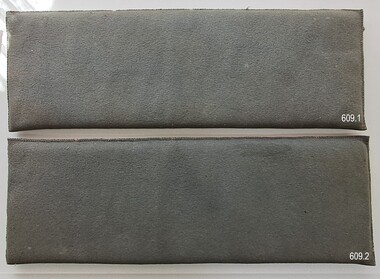
Ceremonial object - Kneeling Mat, ca. 1944
... The Guild continued its work until the 1960s. ...The Guild continued its work until the 1960s. ...This pair of comfortable kneeling mats is from the original furnishings of St Nicholas Seamen's Church, Williamstown, operated by the Williamstown Missions to Seamen organisation. THE MISSIONS TO SEAMEN (Brief History): - The Missions to Seamen was an Anglican charity that has served seafarers of the world since 1856 in Great Britain. Its symbol is a Flying Angel, inspired by a Bible verse. Today, there are centres in over 200 ports worldwide where seamen of all backgrounds are offered a warm welcome and provided with a wide range of facilities. In Victoria, the organisation began in Williamstown in 1857 as a Sailors’ Church, also known as ‘Bethel’ or the ‘Floating Church’ in an old hulk floating in Hobson’s Bay, Port of Melbourne. It soon became part of the Missions to Seamen, Victoria. In the year 2000, the organisation, now named Mission to Seafarers, still operated locally in Melbourne, Portland, Geelong and Hastings. The Ladies’ Harbour Lights Guild was formed in 1906 to support the Missions to Seamen in Melbourne and other centres, such as Williamstown. Two of the most significant ladies of the Guild were founder Ethel Augusta Godfrey and foundation member Alice Sibthorpe Tracy (who established a branch of the Guild in Warrnambool in 1920). The Guild continued its work until the 1960s. In 1943, a former Williamstown bank was purchased for the Missions to Seaman Club. The chapel was named St Nicholas’ Seamen’s Church and was supported by the Ladies’ Harbour Lights Guild, the Williamstown Lightkeepers’ Auxiliary and the League of Soldiers’ and Sailors’ Friends. It ceased operation in 1966. A Missions to Seamen Chapel and Recreation Room was a significant feature of ports during the late 1800s and into the 1900s. It seemed appropriate for Flagstaff Hill to include such a representation within the new Maritime Village, so the Melbourne Board of Management of Missions to Seamen Victoria gave its permission on 21st May 1979 for the entire furnishings of the Williamstown chapel to be transferred to Flagstaff Hill. The St Nicholas Seamen’s Church was officially opened on October 11, 1981, and closely resembles the Williamstown chapel. This pair of kneeling mats is historically significant for its origin in the St Nicholas Mission to Seamen's Church in Williamstown, established in 1857 to cater for seafarers’ physical, social, and spiritual needs. The organisation originated in Bristol, England, when a Seamen's Mission was formed in 1837. Mat, quantity of two. Kneeling mats used during prayer. Mats are rectangular and made of blue cloth with sewn edges and padding inside. The mats are part of the St. Nicholas Seamen's Church Williamstown Collection.flagstaff hill, warrnambool, shipwrecked coast, flagstaff hill maritime museum, maritime museum, shipwreck coast, flagstaff hill maritime village, great ocean road, religion, religious service, sailors rest, bethel sailors’ church, bethel floating church, ladies harbour light guild, lightkeepers’ auxiliary, missions to seamen victoria, mission to seafarers, flying angel’s club, st nicholas seaman’s church williamstown, st nicholas mission to seamen church williamstown, mission to seamen williamstown, st nicholas seamen’s church flagstaff hill, 139 nelson place williamstown, religious worship, anglican church, prayer accessory, kneeling mat, prayer mat, religious custom, religious tradition -
 Flagstaff Hill Maritime Museum and Village
Furniture - Missal Lectern
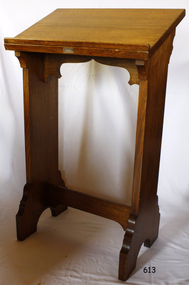
... The Guild continued its work until the 1960s. ...The Guild continued its work until the 1960s. ...The Missal lectern was part of the original furnishings of St Nicholas Seamen's Church, Williamstown, Victoria, and was donated by Mrs R J Eward for use in the religious services there. The church was operated by the Williamstown Missions to Seamen organisation. THE MISSIONS TO SEAMEN (Brief History): - The Missions to Seamen was an Anglican charity in Great Britain that has served the world's seafarers since 1856. Its symbol is a Flying Angel, inspired by a Bible verse. Today, there are centres in over 200 ports worldwide where seamen of all backgrounds are offered a warm welcome and provided with a wide range of facilities. In Victoria, the organisation began in Williamstown in 1857 as a Sailors’ Church, also known as ‘Bethel’ or the ‘Floating Church’ in an old hulk floating in Hobson’s Bay, Port of Melbourne. It soon became part of the Missions to Seamen, Victoria. In the year 2000, the organisation, now named Mission to Seafarers, still operated locally in Melbourne, Portland, Geelong and Hastings. The Ladies’ Harbour Lights Guild was formed in 1906 to support the Missions to Seamen in Melbourne and other centres, such as Williamstown. Two of the most significant ladies of the Guild were founder Ethel Augusta Godfrey and foundation member Alice Sibthorpe Tracy (who established a branch of the Guild in Warrnambool in 1920). The Guild continued its work until the 1960s. In 1943, a former Williamstown bank was purchased for the Missions to Seaman Club. The chapel was named St Nicholas’ Seamen’s Church and was supported by the Ladies’ Harbour Lights Guild, the Williamstown Lightkeepers’ Auxiliary and the League of Soldiers’ and Sailors’ Friends. It ceased operation in 1966. A Missions to Seamen Chapel and Recreation Room was a significant feature of ports during the late 1800s and into the 1900s. It seemed appropriate for Flagstaff Hill to include such a representation within the new Maritime Village, so the Melbourne Board of Management of Missions to Seamen Victoria gave its permission on 21st May 1979 for the entire furnishings of the Williamstown chapel to be transferred to Flagstaff Hill. The St Nicholas Seamen’s Church was officially opened on October 11, 1981, and closely resembles the Williamstown chapel. This Missal lectern is historically significant for its origin in the St Nicholas Mission to Seamen's Church in Williamstown, established in 1857 to cater for seafarers' physical, social, and spiritual needs. It originated in Bristol, England, when a Seamen's Mission was formed in 1837. It is also an example of a community-supported local charity organisation.Solid wooden Missal Lectern on two supporting legs. The top section has an angled back and a small shelf at the front, designed to support a bible. The two legs, with decorative feet, are supported by the decorative wooden bar. There appears to be a rectangular label in the centre front of the small shelf. This lectern is part of the St. Nicholas Seamen's Church Collection. flagstaff hill, warrnambool, shipwrecked coast, flagstaff hill maritime museum, maritime museum, shipwreck coast, flagstaff hill maritime village, great ocean road, religion, religious service, church furniture, religious furniture, lectern, preaching equipment, missal lectern, bible support, music stand -
 Flagstaff Hill Maritime Museum and Village
Furniture - Stool, ca. 1944
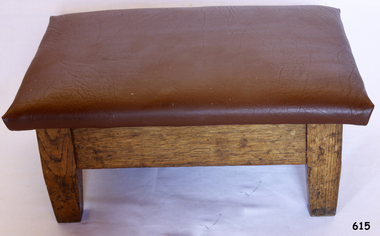
... The Guild continued its work until the 1960s. ...The Guild continued its work until the 1960s. ...This low kneeling stool was used for prayer and was part of the original furnishings of the St Nicholas' Mission to Seamen's Church at 139 Nelson Place, Williamstown, Victoria. The Church was operated by the Mission to Seamen organisation. THE MISSIONS TO SEAMEN (Brief History): - The Missions to Seamen was an Anglican charity in Great Britain that has served the world's seafarers since 1856. Its symbol is a Flying Angel, inspired by a Bible verse. Today, there are centres in over 200 ports worldwide where seamen of all backgrounds are offered a warm welcome and provided with a wide range of facilities. In Victoria, the organisation began in Williamstown in 1857 as a Sailors’ Church, also known as ‘Bethel’ or the ‘Floating Church’ in an old hulk floating in Hobson’s Bay, Port of Melbourne. It soon became part of the Missions to Seamen, Victoria. In 2000, the organisation, now named Mission to Seafarers, still operated locally in Melbourne, Portland, Geelong and Hastings. The Ladies’ Harbour Lights Guild was formed in 1906 to support the Missions to Seamen in Melbourne and other centres, such as Williamstown. Two of the most significant ladies of the Guild were founder Ethel Augusta Godfrey and foundation member Alice Sibthorpe Tracy (who established a branch of the Guild in Warrnambool in 1920). The Guild continued its work until the 1960s. In 1943, a former Williamstown bank was purchased for the Missions to Seamen Club. The chapel was named St Nicholas’ Seamen’s Church and was supported by the Ladies’ Harbour Lights Guild, the Williamstown Lightkeepers’ Auxiliary and the League of Soldiers’ and Sailors’ Friends. It ceased operation in 1966. A Missions to Seamen Chapel and Recreation Room was a significant feature of ports during the late 1800s and 1900s. It seemed appropriate for Flagstaff Hill to include such a representation within the new Maritime Village, and the Melbourne Board of Management of Missions to Seamen Victoria gave its permission on 21st May 1979 for the entire furnishings of the Williamstown chapel to be transferred to Flagstaff Hill. The St Nicholas Seamen’s Church was officially opened on October 11, 1981, and resembles the Williamstown chapel. This kneeling stool is significant historically for its origin in the St Nicholas Mission to Seamen's Church in Williamstown, established in 1857 to cater for the physical, social, and spiritual needs of seafarers. The Church originated in Bristol, England when a Seamen's Mission was formed in 1837. The stool is historically significant for its connection to the Ladies Lightkeepers’ Auxiliary, an organisation of women, formed to support seafarers. The connection of this stool to the Mission to Seamen and to the Ladies Lightkeepers’ Auxiliary highlights the strong community awareness of the life of people at sea, their dangers and hardships, and their need for physical, financial, spiritual and moral support. Stool; kneeling stool with textured vinyl cover and wooden base, with 4 wooden legs. The stool is part of the St Nicholas Mission to Seamen's Collection.flagstaff hill maritime museum and village, flagstaff hill, warrnambool, maritime museum, maritime village, shipwreck coast, great ocean road, religion, religious service, prayer, church furniture, prayer stool, worship -
 Flagstaff Hill Maritime Museum and Village
Functional object - Vase, circa 1944
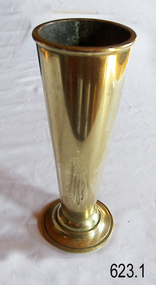
... The Guild continued its work until the 1960s. ...The Guild continued its work until the 1960s. ...This vase, one of a part of a pair of organ vases, was part of the original furnishings of the St Nicholas' Mission to Seamen's Church at 139 Nelson Place, Williamstown, Victoria. THE MISSIONS TO SEAMEN (Brief History: for more, see our Reg. No. 611, Set of Pews) The Missions to Seamen, an Anglican charity, has served seafarers of the world since 1856 in Great Britain. It symbol is a Flying Angel, inspired by a Bible verse. Today there are centr4es in over 200 ports world-wide where seamen of all backgrounds are offered a warm welcome and provided with a wide range of facilities. In Victoria the orgainsation began in Williamstown in 1857. It was as a Sailors’ Church, also known as ‘Bethel’ or the ‘Floating Church’. Its location was an old hulk floating in Hobson’s Bay, Port of Melbourne. It soon became part of the Missions to Seamen, Victoria. In the year 2000 the organisation, now named Mission to Seafarers, still operated locally in Melbourne, Portland, Geelong and Hastings. The Ladies’ Harbour Lights Guild was formed in 1906 to support the Missions to Seamen in Melbourne and other centres such as Williamstown. Two of the most significant ladies of the Guild were founder Ethel Augusta Godfrey and foundation member Alice Sibthorpe Tracy (who established a branch of the Guild in Warrnambool in 1920). The Guild continued its work until the 1960s. In 1943 a former Williamstown bank was purchased for the Missions to Seaman Club. The chapel was named St Nicholas’ Seamen’s Church and was supported by the Ladies’ Harbour Lights Guild, the Williamstown Lightkeepers’ Auxiliary and the League of Soldiers’ and Sailors’ Friends. It ceased operation in 1966. A Missions to Seamen Chapel and Recreation Room was a significant feature of ports during the late 1800s and into the 1900s. It seemed appropriate for Flagstaff Hill to include such a representation within the new Maritime Village, so the Melbourne Board of Management of Missions to Seamen Victoria gave its permission on 21st May 1979 for the entire furnishings of the Williamstown chapel to be transferred to Flagstaff Hill. The St Nicholas Seamen’s Church was officially opened on October 11, 1981 and closely resembles the Williamstown chapel. This vase, and its pair, is significant through its association with the St Nicholas' Mission to Seamen Church in Williamstown, Melbourne, established in 1857. The items in our collection from the Missions to Seamen in Williamstown, Victoria, have historical and social significance. They show that people of the 1800s and 1900s cared about the seafarers’ religious, moral, and social welfare, no matter what the religion, social status or nationality. It had its origins in Bristol, England when a Seamen's Mission was formed in 1837. The first Australian branch was started in 1856 by the Rev. Kerr Johnston, a Church of England clergyman, and operated from a hulk moored in Hobson’s Bay; later the Mission occupied buildings in Williamstown and Port Melbourne. Vase, one of a pair, of organ vases, polished brass church vases with truncated conical shapes. White sticker under vase with hand written number "136" This is one of the original items in our ‘St Nicholas Seamen's Church Williamstown Collection’.White sticker under vase with hand written number "136" flagstaff hill, warrnambool, shipwrecked-coast, flagstaff-hill, flagstaff-hill-maritime-museum, maritime-museum, shipwreck-coast, flagstaff-hill-maritime-village, vase, church vase, brass vase, conical vase, religion, religious service, sailors rest, bethel sailors’ church, bethel floating church, ladies harbour light guild, missions to seamen victoria, mission to seafarers, st nicholas seaman’s church williamstown, st nicholas mission to seamen church williamstown, mission to seamen williamstown, st nicholas seamen’s church flagstaff hill, 139 nelson place williamstown, flying angel club, organ vase -
 Flagstaff Hill Maritime Museum and Village
Furniture - Book Rest, circa 1930
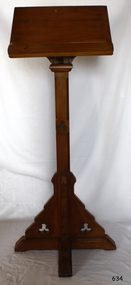
... The Guild continued its work until the 1960s. ...The Guild continued its work until the 1960s. ...This altar book rest, also called a lectern, was part of the original furnishings of the St Nicholas' Mission to Seamen's Church at 139 Nelson Place, Williamstown, Victoria, operated by the Mission to Seamen organisation. THE MISSIONS TO SEAMEN (Brief History): - The Missions to Seamen was an Anglican charity in Great Britain that has served the world's seafarers since 1856. Its symbol is a Flying Angel, inspired by a Bible verse. Today, there are centres in over 200 ports worldwide where seamen of all backgrounds are offered a warm welcome and provided with a wide range of facilities. In Victoria, the organisation began in Williamstown in 1857 as a Sailors’ Church, also known as ‘Bethel’ or the ‘Floating Church’ in an old hulk floating in Hobson’s Bay, Port of Melbourne. It soon became part of the Missions to Seamen, Victoria. In 2000, the organisation, now named Mission to Seafarers, still operated locally in Melbourne, Portland, Geelong and Hastings. The Ladies’ Harbour Lights Guild was formed in 1906 to support the Missions to Seamen in Melbourne and other centres, such as Williamstown. Two of the most significant ladies of the Guild were founder Ethel Augusta Godfrey and foundation member Alice Sibthorpe Tracy (who established a branch of the Guild in Warrnambool in 1920). The Guild continued its work until the 1960s. In 1943, a former Williamstown bank was purchased for the Missions to Seamen Club. The chapel was named St Nicholas’ Seamen’s Church and was supported by the Ladies’ Harbour Lights Guild, the Williamstown Lightkeepers’ Auxiliary and the League of Soldiers’ and Sailors’ Friends. It ceased operation in 1966. A Missions to Seamen Chapel and Recreation Room was a significant feature of ports during the late 1800s and 1900s. It seemed appropriate for Flagstaff Hill to include such a representation within the new Maritime Village, and the Melbourne Board of Management of Missions to Seamen Victoria gave its permission on 21st May 1979 for the entire furnishings of the Williamstown chapel to be transferred to Flagstaff Hill. The St Nicholas Seamen’s Church was officially opened on October 11, 1981, and resembles the Williamstown chapel. This altar book rest is significant historically for its origin in the St Nicholas Mission to Seamen's Church in Williamstown, established in 1857 to cater for the physical, social, and spiritual needs of seafarers. It originated in Bristol, England when a Seamen's Mission was formed in 1837. The lectern is historically significant for its connection to the Ladies Lightkeepers’ Auxiliary, an organisation of women, formed to support seafarers. The connection of this item to the Mission to Seamen and to the Ladies Lightkeepers’ Auxiliary highlights the strong community awareness of the life of people at sea, their dangers and hardships, and their need for physical, financial, spiritual and moral support. Book rest, or lectern: This is a traditional book rest made of kauri pine with column support. The top section, designed to support a Bible, has an angled backrest and shelf. The item has some decorative cutaway relief. This book restis part of the St. Nicholas Seamen's Church Collection. religious service, missions to seamen victoria, church furniture, religious worship, lectern, book rest, bible rest, preaching accessory, flagstaff hill, warrnambool, shipwrecked coast, flagstaff hill maritime museum, maritime museum, shipwreck coast, flagstaff hill maritime village, great ocean road, religion, sailors rest, bethel sailors’ church, bethel floating church, ladies harbour light guild, harbor lights guild, joy club for fighters, ladies lightkeepers’ auxiliary, mission to seafarers, flying angel’s club, st nicholas seamen’s church williamstown, st nicholas mission to seamen church williamstown, mission to seamen williamstown, st nicholas seamen’s church flagstaff hill, 139 nelson place williamstown, religious furniture, anglican church, altar book rest -
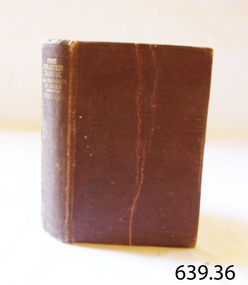 Flagstaff Hill Maritime Museum and Village
Book - Religious Book, The Book of Common Prayer, Circa 1944
... The Guild continued its work until the 1960s. ...The Guild continued its work until the 1960s. ...The book was previously part of the service at St Nicholas Seamen's Church in Williamstown, Melbourne. THE MISSIONS TO SEAMEN (Brief History: for more, see our Reg. No. 611, Set of Pews) The Missions to Seamen was an Anglican charity that served seafarers of the world since 1856 in Great Britain. It symbol is a Flying Angel, inspired by a Bible verse. Today there are centres in over 200 ports worldwide where seamen of all backgrounds are offered a warm welcome and provided with a wide range of facilities. In Victoria, the organisation began in Williamstown in 1857 as a Sailors’ Church, also known as ‘Bethel’ or the ‘Floating Church’ in an old hulk floating in Hobson’s Bay, Port of Melbourne. It soon became part of the Missions to Seamen, Victoria. In the year 2000 the organisation, now named Mission to Seafarers, still operated locally in Melbourne, Portland, Geelong and Hastings. The Ladies’ Harbour Lights Guild was formed in 1906 to support the Missions to Seamen in Melbourne and other centres such as Williamstown. Two of the most significant ladies of the Guild were founder Ethel Augusta Godfrey and foundation member Alice Sibthorpe Tracy (who established a branch of the Guild in Warrnambool in 1920). The Guild continued its work until the 1960s. In 1943 a former Williamstown bank was purchased for the Missions to Seaman Club. The chapel was named St Nicholas’ Seamen’s Church and was supported by the Ladies’ Harbour Lights Guild, the Williamstown Lightkeepers’ Auxiliary and the League of Soldiers’ and Sailors’ Friends. It ceased operation in 1966. A Missions to Seamen Chapel and Recreation Room was a significant feature of ports during the late 1800s and into the 1900s. It seemed appropriate for Flagstaff Hill to include such a representation within the new Maritime Village, so the Melbourne Board of Management of Missions to Seamen Victoria gave its permission on 21st May 1979 for the entire furnishings of the Williamstown chapel to be transferred to Flagstaff Hill. The St Nicholas Seamen’s Church was officially opened on October 11, 1981, and closely resembles the Williamstown chapel.This book is significant historically for its origin in the St Nicholas Mission to Seamen's Church in Williamstown, established in 1857 to cater for the physical, social, and spiritual needs of seafarers. It originated in Bristol, England when a Seamen's Mission was formed in 1837. The book is historically significant for its connection to the Ladies Lightkeepers’ Auxiliary, an organisation of women, formed to support seafarers. The connection of this book to the Mission to Seamen and to the Ladies Lightkeepers’ Auxiliary highlights the strong community awareness of the life of people at sea, their dangers and hardships, and their need for physical, financial, spiritual and moral support. This Book of Common Prayer was part of the original furnishings of St Nicholas Seamen's Church, Williamstown, Victoria. The church was operated by the Missions to Seamen organisation. It is one of a set of similar books. The hardcover is of red fabric over cardboard, with gold embossed letters on the spine. This book is part of the St Nicholas Seamen's Church Collection. On the front cover Symbol [CROSS]flagstaff hill maritime museum and village, flagstaff hill, warrnambool, maritime museum, maritime village, shipwreck coast, great ocean road, religion, religious service, st nicholas seamen’s church, williamstown, missions to seamen victoria, the book of common prayer, prayer book -
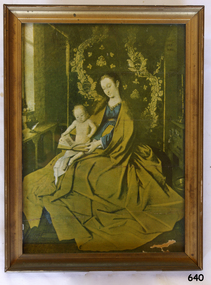 Flagstaff Hill Maritime Museum and Village
Print - Religious Print, ca. 1900
... The Guild continued its work until the 1960s. ...The Guild continued its work until the 1960s. ...This framed print was part of the original furnishings donated by the Williamstown Lightkeepers’ Auxiliary to the St Nicholas' Mission to Seamen's Church at 139 Nelson Place, Williamstown, Victoria, operated by the Missions to Seamen organisation. THE MISSIONS TO SEAMEN (Brief History): - The Missions to Seamen was an Anglican charity in Great Britain that has served the world's seafarers since 1856. Its symbol is a Flying Angel, inspired by a Bible verse. Today, there are centres in over 200 ports worldwide where seamen of all backgrounds are offered a warm welcome and provided with a wide range of facilities. In Victoria, the organisation began in Williamstown in 1857 as a Sailors’ Church, also known as ‘Bethel’ or the ‘Floating Church’ in an old hulk floating in Hobson’s Bay, Port of Melbourne. It soon became part of the Missions to Seamen, Victoria. In 2000, the organisation, now named Mission to Seafarers, still operated locally in Melbourne, Portland, Geelong and Hastings. The Ladies’ Harbour Lights Guild was formed in 1906 to support the Missions to Seamen in Melbourne and other centres, such as Williamstown. Two of the most significant ladies of the Guild were founder Ethel Augusta Godfrey and foundation member Alice Sibthorpe Tracy (who established a branch of the Guild in Warrnambool in 1920). The Guild continued its work until the 1960s. In 1943, a former Williamstown bank was purchased for the Missions to Seamen Club. The chapel was named St Nicholas’ Seamen’s Church and was supported by the Ladies’ Harbour Lights Guild, the Williamstown Lightkeepers’ Auxiliary and the League of Soldiers’ and Sailors’ Friends. It ceased operation in 1966. A Missions to Seamen Chapel and Recreation Room was a significant feature of ports during the late 1800s and 1900s. It seemed appropriate for Flagstaff Hill to include such a representation within the new Maritime Village, and the Melbourne Board of Management of Missions to Seamen Victoria gave its permission on 21st May 1979 for the entire furnishings of the Williamstown chapel to be transferred to Flagstaff Hill. The St Nicholas Seamen’s Church was officially opened on October 11, 1981, and resembles the Williamstown chapel. This print is significant historically for its origin in the St Nicholas Mission to Seamen's Church in Williamstown, established in 1857 to cater for the physical, social, and spiritual needs of seafarers. It originated in Bristol, England, when a Seamen's Mission was formed in 1837. The connection of this print to the Mission to Seamen and the Williamstown Lightkeepers’ Auxiliary highlights the strong community awareness of the life of people at sea, their dangers and hardships, and their need for physical, financial, spiritual and moral support. Framed coloured print depicting The Virgin Mary. An indoor scene of a seated female figure wearing a long dress showing a book to an unclothed infant on her lap. This print is part of the St Nicholas Seamen's Church Collection. flagstaff hill maritime museum and village, flagstaff hill, warrnambool, maritime museum, maritime village, shipwreck coast, great ocean road, religion, religious service, st nicholas seamen’s church, williamstown, missions to seamen victoria, print, religious print, virgin mary, religious worship, worship service, mission to seafarers, st nicholas missions to seamen’s church williamstown, missions to seamen, st nicholas missions to seamen’s church flagstaff hill, 139 nelson place williamstown, anglican church, church furnishings, religious furnishings -
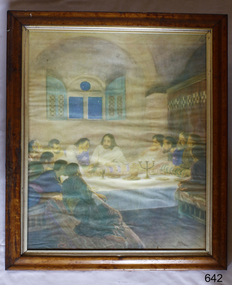 Flagstaff Hill Maritime Museum and Village
Print - Religious Print, The Last Supper, circa 1890
... The Guild continued its work until the 1960s. ...The Guild continued its work until the 1960s. ...This framed print is one of the items once used during religious services at the St. Nicholas Seamen’s Church and was donated to the organisation by the Williamstown Lightkeepers' Auxiliary. The church was located at 139 Nelson Place, Williamstown, Victoria, and operated by the Mission to Seamen organisation. THE MISSIONS TO SEAMEN (Brief History): - The Missions to Seamen was an Anglican charity in Great Britain that has served the world's seafarers since 1856. Its symbol is a Flying Angel, inspired by a Bible verse. Today, there are centres in over 200 ports worldwide where seamen of all backgrounds are offered a warm welcome and provided with a wide range of facilities. In Victoria, the organisation began in Williamstown in 1857 as a Sailors’ Church, also known as ‘Bethel’ or the ‘Floating Church’ in an old hulk floating in Hobson’s Bay, Port of Melbourne. It soon became part of the Missions to Seamen, Victoria. In 2000, the organisation, now named Mission to Seafarers, still operated locally in Melbourne, Portland, Geelong and Hastings. The Ladies’ Harbour Lights Guild was formed in 1906 to support the Missions to Seamen in Melbourne and other centres, such as Williamstown. Two of the most significant ladies of the Guild were founder Ethel Augusta Godfrey and foundation member Alice Sibthorpe Tracy (who established a branch of the Guild in Warrnambool in 1920). The Guild continued its work until the 1960s. In 1943, a former Williamstown bank was purchased for the Missions to Seamen Club. The chapel was named St Nicholas’ Seamen’s Church and was supported by the Ladies’ Harbour Lights Guild, the Williamstown Lightkeepers’ Auxiliary and the League of Soldiers’ and Sailors’ Friends. It ceased operation in 1966. A Missions to Seamen Chapel and Recreation Room was a significant feature of ports during the late 1800s and 1900s. It seemed appropriate for Flagstaff Hill to include such a representation within the new Maritime Village, and the Melbourne Board of Management of Missions to Seamen Victoria gave its permission on 21st May 1979 for the entire furnishings of the Williamstown chapel to be transferred to Flagstaff Hill. The St Nicholas Seamen’s Church was officially opened on October 11, 1981, and resembles the Williamstown chapel.This print is significant historically for its origin in the St Nicholas Mission to Seamen's Church in Williamstown, established in 1857 to cater for the physical, social, and spiritual needs of seafarers. It originated in Bristol, England when a Seamen's Mission was formed in 1837. The item is historically significant for its connection to the Williamstown Lightkeepers’ Auxiliary, an organisation of women, formed to support seafarers. The connection of this item to the Mission to Seamen and the Ladies Lightkeepers’ Auxiliary highlights the strong community awareness of the life of people at sea, their dangers and hardships, and their need for physical, financial, spiritual and moral support. Print of a watercolour painting, framed in Huon pine wood behind glass.Depicts the artist's impression of the Biblical event referred to as The Last Supper. Inscription marked on the back. Australian, circa 1890. The print is part of the St Nicholas Seamen's Church Collection On rear of board: "156" flagstaff hill maritime museum and village, flagstaff hill, warrnambool, maritime museum, maritime village, shipwreck coast, great ocean road, religion, religious service, st nicholas seamen’s church, williamstown, missions to seamen victoria, last supper, worship, religious worship, ladies lightkeepers’ auxiliary, williamstown lightkeepers' auxiliary, the last supper, mission to seafarers, st nicholas missions to seamen’s church williamstown, missions to seamen, st nicholas missions to seamen’s church flagstaff hill, 139 nelson place williamstown, anglican church, worship service, church furnishings, religious furnishings, wall hanging, framed print, religious print -
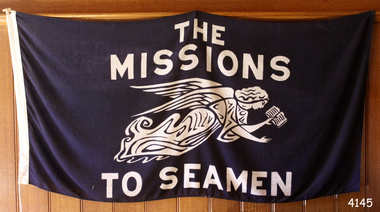 Flagstaff Hill Maritime Museum and Village
Flag - Missions to Seamen, Victoria Missions to Seamen, The Missions to Seamen, 1940s to 1960s
... The Guild continued its work until the 1960s. ...The Guild continued its work until the 1960s. ...This flag is one of four in the Missions to Seamen flag collection. The flags were part of the original furnishings of the St Nicholas' Mission to Seamen's Church at 139 Nelson Place, Williamstown, Victoria, which was operated by the Missions to Seamen organisation. THE MISSIONS TO SEAMEN: - The Missions to Seamen was an Anglican charity in Great Britain that has served the world's seafarers since 1856. Its symbol is a Flying Angel, inspired by a Bible verse. Today, there are centres in over 200 ports worldwide where seamen of all backgrounds are offered a warm welcome and provided with a wide range of facilities. In Victoria, the organisation began in Williamstown in 1857 as a Sailors’ Church, also known as ‘Bethel’ or the ‘Floating Church’ in an old hulk floating in Hobson’s Bay, Port of Melbourne. It soon became part of the Missions to Seamen, Victoria. In 2000, the organisation, now named Mission to Seafarers, still operated locally in Melbourne, Portland, Geelong and Hastings. The Ladies’ Harbour Lights Guild was formed in 1906 to support the Missions to Seamen in Melbourne and other centres, such as Williamstown. Two of the most significant ladies of the Guild were founder Ethel Augusta Godfrey and foundation member Alice Sibthorpe Tracy (who established a branch of the Guild in Warrnambool in 1920). The Guild continued its work until the 1960s. In 1943, a former Williamstown bank was purchased for the Missions to Seamen Club. The chapel was named St Nicholas’ Seamen’s Church and was supported by the Ladies’ Harbour Lights Guild, the Williamstown Lightkeepers’ Auxiliary and the League of Soldiers’ and Sailors’ Friends. It ceased operation in 1966. A Missions to Seamen Chapel and Recreation Room was a significant feature of ports during the late 1800s and 1900s. It seemed appropriate for Flagstaff Hill to include such a representation within the new Maritime Village, and the Melbourne Board of Management of Missions to Seamen Victoria gave its permission on 21st May 1979 for the entire furnishings of the Williamstown chapel to be transferred to Flagstaff Hill. The St Nicholas Seamen’s Church was officially opened on October 11, 1981, and resembles the Williamstown chapel. This collection of four flags is significant to the history of The Missions to Seamen organisation and the evolution of its name, flag and symbols. The flag represents the organisation and community care for the families of those who lost their lives at sea, and the support of seamen and mariners all over the world. This flag is historically significant for its origin in the St Nicholas Mission to Seamen's Church in Williamstown, established in 1857 to cater for seafarers’ physical, social, and spiritual needs. The organisation originated in Bristol, England, when a Seamen's Mission was formed in 1837. The flag is also significant for its connection with the St Nicholas Missions to Seamen's chapel, Williamstown, as the original building is now listed on the Victorian Heritage Register. Flag: one of four in the Missions to Seamen collection of flags. This flag is a dark blue rectangle with white print and an emblem. All four flags are Part of the St. Nicholas Seamen's Church Collection. Printed: THE MISSIONS TO SEAMEN" Logo: [flying angel] image"flagstaff hill, warrnambool, shipwrecked-coast, flagstaff-hill, flagstaff-hill-maritime-museum, maritime-museum, shipwreck-coast, flagstaff-hill-maritime-village, the missions to seamen, flag, flying angel, missions to seamen, banner, collection of four flags -
 Flagstaff Hill Maritime Museum and Village
Book - Religious Books set, early 20th century
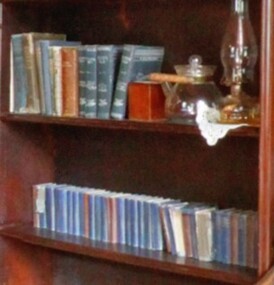
... The Guild continued its work until the 1960s. ...The Guild continued its work until the 1960s. ...This set of religious books was part of the original furnishings of the St Nicholas' Mission to Seamen's Church at 139 Nelson Place, Williamstown, Victoria. THE MISSIONS TO SEAMEN (Brief History: for more, see our Reg. No. 611, Set of Pews) The Missions to Seamen, an Anglican charity, has served seafarers of the world since 1856 in Great Britain. It symbol is a Flying Angel, inspired by a Bible verse. Today there are centr4es in over 200 ports world-wide where seamen of all backgrounds are offered a warm welcome and provided with a wide range of facilities. In Victoria the orgainsation began in Williamstown in 1857. It was as a Sailors’ Church, also known as ‘Bethel’ or the ‘Floating Church’. Its location was an old hulk floating in Hobson’s Bay, Port of Melbourne. It soon became part of the Missions to Seamen, Victoria. In the year 2000 the organisation, now named Mission to Seafarers, still operated locally in Melbourne, Portland, Geelong and Hastings. The Ladies’ Harbour Lights Guild was formed in 1906 to support the Missions to Seamen in Melbourne and other centres such as Williamstown. Two of the most significant ladies of the Guild were founder Ethel Augusta Godfrey and foundation member Alice Sibthorpe Tracy (who established a branch of the Guild in Warrnambool in 1920). The Guild continued its work until the 1960s. In 1943 a former Williamstown bank was purchased for the Missions to Seaman Club. The chapel was named St Nicholas’ Seamen’s Church and was supported by the Ladies’ Harbour Lights Guild, the Williamstown Lightkeepers’ Auxiliary and the League of Soldiers’ and Sailors’ Friends. It ceased operation in 1966. A Missions to Seamen Chapel and Recreation Room was a significant feature of ports during the late 1800s and into the 1900s. It seemed appropriate for Flagstaff Hill to include such a representation within the new Maritime Village, so the Melbourne Board of Management of Missions to Seamen Victoria gave its permission on 21st May 1979 for the entire furnishings of the Williamstown chapel to be transferred to Flagstaff Hill. The St Nicholas Seamen’s Church was officially opened on October 11, 1981 and closely resembles the Williamstown chapel. This set of books is significant historically for its origin in the St Nicholas Mission to Seamen's Church in Williamstown, established in 1857 to cater for the physical, social, and spiritual needs of all seafarers. It originated in Bristol, England, when a Seamen's Mission was formed in 1837. The set of books is historically significant for its connection to the Ladies Lightkeepers Auxiliary, a women's organisation formed to support seafarers. The connection of this set of books to the Mission to Seamen and to the Ladies Lightkeepers Auxiliary highlights the strong community awareness of the life of people at sea, their dangers and hardships, and their need for physical, financial, spiritual and moral support.Set of 51 religious books, including: - - The Book of Common Prayer with the Additions and Deviations proposed in 1928 (603.10) - The Book of Common Prayer, with black leather cover (604) - The Book of Common Prayer with the additions and deviations proposed in 1928 (627) - The Book of Common Prayer (639.36) - Hymns Ancient and Modern (604) - Hymns Ancient and Modern (619) - Hymns, Ancient and Modern Standard Edition (635) The books are stored in the same bookcase as part of the St Nicholas Missions to Seamen Church collection.flagstaff hill, warrnambool, shipwrecked coast, flagstaff hill maritime museum, maritime museum, shipwreck coast, flagstaff hill maritime village, great ocean road, preyer books, book of common prayer, anglican church prayer book, religion, religious service, sailors rest, bethel sailors’ church, bethel floating church, ladies harbour light guild, missions to seamen victoria, mission to seafarers, flying angels club, st nicholas seaman’s church williamstown, st nicholas mission to seamen church williamstown, mission to seamen williamstown, st nicholas seamen’s church flagstaff hill, 139 nelson place williamstown, anglican church, religious book, religious books collection, hymn books, prayer books -
 Flagstaff Hill Maritime Museum and Village
Book - Religious Book, Oxford University Press, The Book of Common Prayer, 20th Century
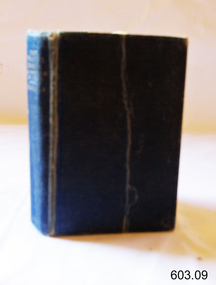
... The Guild continued its work until the 1960s. ...The Guild continued its work until the 1960s. ...The Book of Common Prayer is the foundational liturgical text of the Church of England and the broader Anglican Communion. The subject book as a standard 730-page UK edition often printed in the late 19th or early 20th century by major privilege presses like Cambridge University Press, Oxford University Press, or William Clowes & Sons contains the complete 1662 standard text. The volume is structured into distinct sections designed for daily worship, sacramental rites, and personal devotion. There is introductory matter within the text that includes the original prefaces regarding the service of the Church and how the Psalter and Holy Scriptures are ordered to be read. Lectionary and calendar tables are also included as well as lessons for daily Bible readings, rules for determining the date of Easter, and the calendar of Holy Days and saints' days.The Book of Common Prayer. Blue cloth cover. Title: The Book of Common Prayer with the Additions and Deviations proposed in 1928 Publisher: Humphrey Milford, Oxford University Press, London. Spines have gold inlay print. 244 numbered pages. This is one of a set of original items in our ‘St Nicholas Seamen's Church Williamstown Collection’.non-fictionThe Book of Common Prayer is the foundational liturgical text of the Church of England and the broader Anglican Communion. The subject book as a standard 730-page UK edition often printed in the late 19th or early 20th century by major privilege presses like Cambridge University Press, Oxford University Press, or William Clowes & Sons contains the complete 1662 standard text. The volume is structured into distinct sections designed for daily worship, sacramental rites, and personal devotion. There is introductory matter within the text that includes the original prefaces regarding the service of the Church and how the Psalter and Holy Scriptures are ordered to be read. Lectionary and calendar tables are also included as well as lessons for daily Bible readings, rules for determining the date of Easter, and the calendar of Holy Days and saints' days.flagstaff hill, warrnambool, shipwrecked coast, flagstaff hill maritime museum, maritime museum, shipwreck coast, flagstaff hill maritime village, great ocean road, preyer books, book of common prayer, anglican church prayer book, religion, religious service, sailors rest, bethel sailors’ church, bethel floating church, ladies harbour light guild, missions to seamen victoria, mission to seafarers, flying angels club, st nicholas seaman’s church williamstown, st nicholas mission to seamen church williamstown, missions to seamen williamstown, st nicholas seamen’s church flagstaff hill, 139 nelson place williamstown, anglican church, religious book, book -
 Mission to Seafarers Victoria
Flyer, The Victoria Missions to Seamen (being the Victorian Seamen's Mission and the Melbourne to Seamen amalgamated), c. 1920
... Charity organisation, Ladies' Harbour Lights Guild,was formed within The Missions to Seamen Institute to provide a home away from home, for visiting seamen. ...Charity organisation, Ladies' Harbour Lights Guild,was formed within The Missions to Seamen Institute to provide a home away from home, for visiting seamen. ...Charity organisation, Ladies' Harbour Lights Guild,was formed within The Missions to Seamen Institute to provide a home away from home, for visiting seamen. The flyer invited seafarers to use the institutes for 'Reading, Smoking and Writing and Special Events such as 'Sacred Song Service' and Concerts. This paper flyer holds historical significance at a local level because it illustrates the events and services that seafarers were invited to use and attend organized by the Mission to Seafarers.The Ladies' Harbour Lights Guild grew to become a significant charity in Melbourne raising large amounts of money which helped to establish the current MTS building, supporting seafarers as well as attending social events such as the ones promoted in the flyer. Paper Flyer in blue ink inviting seafarers to use the institutes for 'Reading, Smoking and Writing ;. Also invites them to Special events including dates venues for Socials, 'Sacred Song Services' and Concerts. Written in Black ink on the back: "The crues of the Cashelot" (?)missions to seamen institute, williamstown, port melbourne, special events, ladies' harbour lights guild, australian-wharf, lhlg, flinders street, seafarers, seamen, sailors, reading, smoking, writing, religious services, mission to seamen, seamen's institute, mission to seafarers -
 Mission to Seafarers Victoria
Domestic object - Forks, ea
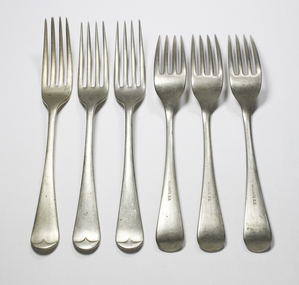
... Possible remnants of the dinner equipment used at mealtimes for seafarers at the Mission to Seafarers during the first half of the 20th C. and hosted and prepared by Ladies Harbour Light Guild members. Found early 21st C in a box of miscellaneous objects marked Ladies Harbour Lights....Possible remnants of the dinner equipment used at mealtimes for seafarers at the Mission to Seafarers during the first half of the 20th C. and hosted and prepared by Ladies Harbour Light Guild members. Found early 21st C in a box of miscellaneous objects marked Ladies Harbour Lights. ...Possible remnants of the dinner equipment used at mealtimes for seafarers at the Mission to Seafarers during the first half of the 20th C. and hosted and prepared by Ladies Harbour Light Guild members. Found early 21st C in a box of miscellaneous objects marked Ladies Harbour Lights.See images in this collection depicting mealtimes hosted by the LHLG.3 dinner forks and 3 dessert forks On underside of handles of 3 large dinner forks stamped: "ALLBRITE N.S."forks, cutlery, lhlg -
 Embroiderers Guild, Victoria
Textile - Rachel Grieve Woven Linen Hand Towel, Miss Rachel Grieve, Late 1940's
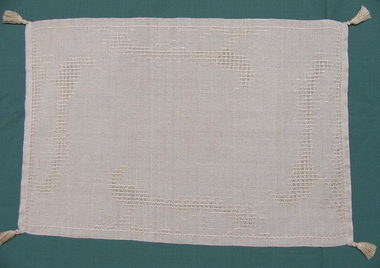
... Donated from the estate of Miss Phyllis Brown, former long time secretary of the Guild and Life Member....Donated from the estate of Miss Phyllis Brown, former long time secretary of the Guild and Life Member. Weaving Towels Hand towels Australia 1940-60 Ecru linen with woven design with small tassels at the corners. ...Designed and woven by Miss Rachel Grieve of Camberwell. She was the foremost handweaver in Victoria in the late 1940's. Examples of her weaving are in the National Gallery of Victoria. Donated from the estate of Miss Phyllis Brown, former long time secretary of the Guild and Life Member. Ecru linen with woven design with small tassels at the corners.weaving, towels, hand towels, australia, 1940-60 -
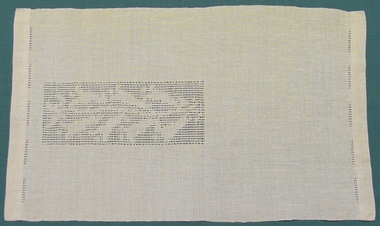 Embroiderers Guild, Victoria
Textile - Rachel Grieve Woven Hand Towel, Miss Rachel Grieve, Late 1940's
... Donated from the estate of Miss Phyllis Brown, former long time secretary of the Guild and Life Member....Donated from the estate of Miss Phyllis Brown, former long time secretary of the Guild and Life Member. Weaving Towels Hand towels Australia 1940-60 Pale yellow linen with woven design. ...Designed and woven by Miss Rachel Grieve of Camberwell. She was the foremost handweaver in Victoria in the late 1940's. Examples of her weaving are in the National Gallery of Victoria. Donated from the estate of Miss Phyllis Brown, former long time secretary of the Guild and Life Member.Pale yellow linen with woven design.weaving, towels, hand towels, australia, 1940-60 -
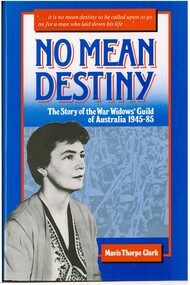 Melbourne Legacy
Book, Mavis Thorpe Clark, No Mean Destiny. The Story of the War Widows' Guild of Australia 1945-85, 1986
... The Story of the War Widows' Guild of Australia 1945-85...A book published in 1986 about the War Widows' Guild and its founder Jessie Vasey, the widow of Major-General George Alan Vasey. ...A record of the work done by Jessie Vasey and the War Widows Guild. War Widows Guild Jessie Vasey WWG Hardcover book with blue dustcover showing a black and white photo of Mrs Vasey. ...A book published in 1986 about the War Widows' Guild and its founder Jessie Vasey, the widow of Major-General George Alan Vasey. Book synopsis: 'Jessie Vasey was truly one of Australia’s great women. She brought into being what was to become the most powerful women’s bloc in Australia’s history. Her successful intent was to establish justice and care for Australia’s World War II widows. At the end of the conflict in 1945, this group of bereaved wives were in the same neglected state as had been the widows of World War I in 1918. Jessie herself was widowed only six months before World War II ended. Her husband died in an aircraft accident off the coast of Cairns. She was 48. But the seeds of compassion and caring for the war widows had been sown before her own loss.' The Victorian War Widows Guild closed in 2021. Some items, including this book, were donated to the Legacy archive for preservation. It was possible for a widow to be members of both Legacy and the War Widows Guild. Both organisations helped war widows in various ways.A record of the work done by Jessie Vasey and the War Widows Guild.Hardcover book with blue dustcover showing a black and white photo of Mrs Vasey.war widows guild, jessie vasey, wwg -
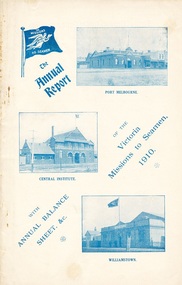 Mission to Seafarers Victoria
Administrative record (item) - Annual report, The Victoria Missions to Seamen, 1910 Annual Report of the Victoria Missions to Seamen, 1911
... The report was produced by and distributed to members, containing reports from the Committee, Chaplain, the Ladies Harbours Lights Guild, as well as a list of subscriptions and rules for the 1910 period. ...The report was produced by and distributed to members, containing reports from the Committee, Chaplain, the Ladies Harbours Lights Guild, as well as a list of subscriptions and rules for the 1910 period. ...The report was produced by and distributed to members, containing reports from the Committee, Chaplain, the Ladies Harbours Lights Guild, as well as a list of subscriptions and rules for the 1910 period. This copy is the first to feature images of all three main Mission venues established in Port Phillip pre WW1.Annual reports were published by the Mission to Seamen each year, and included reports from all seamen's missions and organisations in Victoria, as well as associated groups, such as the Ladies Harbour Lights Guild. These reports provide documentation of the activities conducted by the Mission, as well recording the people involved.written in pencil: MTS0235 (Front cover)1910, annual report, victorian seamen's mission, williamstown, sailors' rest, port melbourne, siddeley street, central institute, seamen's institute, mission to seafarers, melbourne, administrative document-annual report -
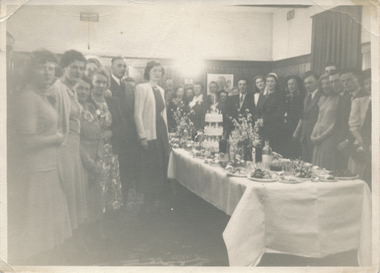 Mission to Seafarers Victoria
Photograph, c.13 August 1948
... She was also a ember of the Harbour Lights Guild. ...She was also a ember of the Harbour Lights Guild. celia little room beverley oliver frank leslie oliver 1897-1986 21st birthday birthday cake flowers Photograph Photograph ...Padre Oliver settled in the Mission with his family in 1930. His daughter, Beverley, born 13 August 1927, lived with them in the Mission for many years, was married and her children were baptised in the St Peter Chapel. She was also a ember of the Harbour Lights Guild. celia little room, beverley oliver, frank leslie oliver 1897-1986, 21st birthday, birthday cake, flowers -
 Uniting Church Archives - Synod of Victoria
Plate, cup and saucer
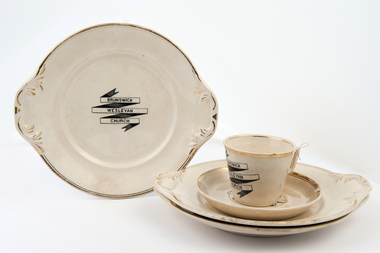
... Tag on cup: "Cup & saucer from Sydney Rd Methodist church used by the Ladies' Guild from ? until 1936 - 38 when each member paid 2/6 - 5/- for a set and the money went to buying a new set. ...Tag on cup: "Cup & saucer from Sydney Rd Methodist church used by the Ladies' Guild from ? until 1936 - 38 when each member paid 2/6 - 5/- for a set and the money went to buying a new set. ...Tag on cup: "Cup & saucer from Sydney Rd Methodist church used by the Ladies' Guild from ? until 1936 - 38 when each member paid 2/6 - 5/- for a set and the money went to buying a new set. This belonged to Mrs David Phillips".Four cream china serving plates, one cup and saucer with black transfer print and gold edging. Serving plates registration numbers CH011.3; CH011.4; CH011.5 & CH011.6. Cup registration number CH011.1. Saucer registration number CH011.2. Brunswick Wesleyan church. brunsick wesleyan church, wesleyan methodist -
 Mission to Seafarers Victoria
Photograph - Photograph, Colour, 1984
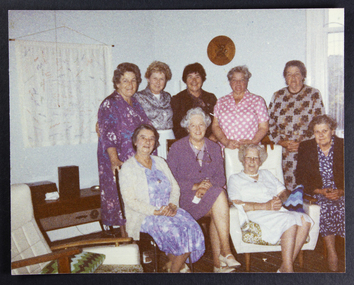
... Features a number of post-WW2 members of the Ladies Harbour Lights Guild. Two of the Ladies standing centre back are Sadie Wilson and one other, Berenice who provided personal memories of their time as young hostesses at the Mission on the DVD 'The Lightbearers' produced by Csilla Tsongaray circa 2005...Features a number of post-WW2 members of the Ladies Harbour Lights Guild. Two of the Ladies standing centre back are Sadie Wilson and one other, Berenice who provided personal memories of their time as young hostesses at the Mission on the DVD 'The Lightbearers' produced by Csilla Tsongaray circa 2005 The donations of Sadie Wilson are key sources of dates and information re the role of LHLG members mid to late 20th Century at the Mission, this photograph is thought to originate from one of these gifts of selected personal papers presented (date unknown) by Miss Wilson. sadie wilson lhlg ladies harbour lights guild hostesses Blue Ball point pen handwritten on verso: Jessie, Marg, Sadie, Berenice, / & Eunice / Pat, Mable, Nora, Sheela [sic] / Joan took the photo / Jan 1984 Colour photograph of a group of eight senior age women four standing and four seated Photograph Photograph, Colour ...Features a number of post-WW2 members of the Ladies Harbour Lights Guild. Two of the Ladies standing centre back are Sadie Wilson and one other, Berenice who provided personal memories of their time as young hostesses at the Mission on the DVD 'The Lightbearers' produced by Csilla Tsongaray circa 2005The donations of Sadie Wilson are key sources of dates and information re the role of LHLG members mid to late 20th Century at the Mission, this photograph is thought to originate from one of these gifts of selected personal papers presented (date unknown) by Miss Wilson. Colour photograph of a group of eight senior age women four standing and four seated Blue Ball point pen handwritten on verso: Jessie, Marg, Sadie, Berenice, / & Eunice / Pat, Mable, Nora, Sheela [sic] / Joan took the photo / Jan 1984sadie wilson, lhlg, ladies harbour lights guild, hostesses -
 Mission to Seafarers Victoria
Photograph - Photograph, Sepia, 1940-1950
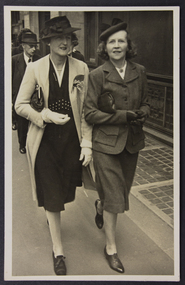
... They were active members of the Ladies' Harbour Lights Guild during the 1920s and 1930s and the objects we have relating to the women highlight the relationships forged between seafarers and those who offered their time and energy to the Mission....The Ladies' Harbour Lights Guild was instrumental in raising the necessary funds for the construction of the current Mission to Seafarers building. ...This photograph of Lillie and Olive Duncan is one of a number featuring the sisters. They were active members of the Ladies' Harbour Lights Guild during the 1920s and 1930s and the objects we have relating to the women highlight the relationships forged between seafarers and those who offered their time and energy to the Mission.The Ladies' Harbour Lights Guild was instrumental in raising the necessary funds for the construction of the current Mission to Seafarers building. They also worked to provide the tangible elements of seafarers' welfare, such as procuring donations of goods and money. However, their most important work, in many ways, was to provide company, conversation and support to seafarers. Lillie, Olive and their entire family were involved with the Mission over an extended period of time.Black and white photograph of Lillie Romana Duncan and Olive Harriet Duncan. Olive is on the left wearing a dark coloured dress with a 'V' neck, little coloured coat and gloves, carrying a clutch under her arm and wearing a dark hat. Olive (on the right) is wearing a ladies' suit and gloves, carrying a clutch under her arm, wearing a dark coloured hat and a brooch at her neck. The photograph has been turned into a postcard, complete with printed postcard division on reverse.In pencil on reverse: Lillie Morgan/Olive Hall/RHS/(DUNCAN) Printed: POST CARD/CORRESPONDENCE/ADDRESS -
 Flagstaff Hill Maritime Museum and Village
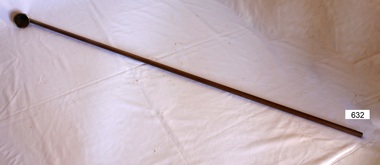
Tool - Candle Snuffer, circa 1840
... The Guild continued its work until the 1960s. ...The Guild continued its work until the 1960s. ...The design of this brass candle snuffer allowed the user to reach up to the candle and hold the domed end over the flame. This prevented the flame from receiving oxygen, so the flame went out. This item was part of the original furnishings of the St Nicholas' Mission to Seamen's Church at 139 Nelson Street, Williamstown, Victoria. The charity began in 1857 when a Sailors’ Rest was opened in Williamstown to offer sailors of all colours, creeds and races a warm welcome. In 1859 the Ladies Harbour Light Guild came into being to support the work with services and facilities. Much of the furniture and furnishings were donated to Flagstaff Hill Maritime Village by the Missions to Seamen Victoria on 29th May 1979, after the church closed. THE MISSIONS TO SEAMEN (Brief History: for more, see our Reg. No. 611, Set of Pews) The Missions to Seamen, an Anglican charity, has served seafarers of the world since 1856 in Great Britain. It symbol is a Flying Angel, inspired by a Bible verse. Today there are centr4es in over 200 ports world-wide where seamen of all backgrounds are offered a warm welcome and provided with a wide range of facilities. In Victoria, the orgainsation began in Williamstown in 1857. It was a Sailors’ Church, also known as ‘Bethel’ or the ‘Floating Church’. Its location was an old hulk floating in Hobson’s Bay, Port of Melbourne. It soon became part of the Missions to Seamen, Victoria. In the year 2000 the organisation, now named Mission to Seafarers, still operated locally in Melbourne, Portland, Geelong and Hastings. The Ladies’ Harbour Lights Guild was formed in 1906 to support the Missions to Seamen in Melbourne and other centres such as Williamstown. Two of the most significant ladies of the Guild were founder Ethel Augusta Godfrey and foundation member Alice Sibthorpe Tracy (who established a branch of the Guild in Warrnambool in 1920). The Guild continued its work until the 1960s. In 1943 a former Williamstown bank was purchased for the Missions to Seaman Club. The chapel was named St Nicholas’ Seamen’s Church and was supported by the Ladies’ Harbour Lights Guild, the Williamstown Lightkeepers’ Auxiliary and the League of Soldiers’ and Sailors’ Friends. It ceased operation in 1966. A Missions to Seamen Chapel and Recreation Room was a significant feature of ports during the late 1800s and into the 1900s. It seemed appropriate for Flagstaff Hill to include such a representation within the new Maritime Village, so the Melbourne Board of Management of Missions to Seamen Victoria gave its permission on 21st May 1979 for the entire furnishings of the Williamstown chapel to be transferred to Flagstaff Hill. The St Nicholas Seamen’s Church was officially opened on October 11, 1981, and closely resembles the Williamstown chapel. This candle snuffer is significant historically for its origin in the St Nicholas Mission to Seamen's Church in Williamstown, established in 1857 to cater for the physical, social, and spiritual needs of seafarers. It originated in Bristol, England when a Seamen's Mission was formed in 1837. The item is historically significant for its connection to the Ladies Lightkeepers’ Auxiliary, an organisation of women, formed to support seafarers. The connection of this item to the Mission to Seamen and to the Ladies Lightkeepers’ Auxiliary highlights the strong community awareness of the life of people at sea, their dangers and hardships, and their need for physical, financial, spiritual and moral support. Candle snuffer. Colonial pole snuffer has a polished brass cone-shaped snuffer on long mahogany handle. This is one of the original items in our St Nicholas Seamen's Church Collection.religion, religious service, sailors rest, ladies harbour light guild, missions to seamen victoria, st nicholas church williamstown, st nicholas mission to seamen church williamstown, mission to seamen williamstown, pole snuffer, colonial snuffer, flagstaff hill, warrnambool, shipwrecked coast, flagstaff hill maritime museum, maritime museum, shipwreck coast, flagstaff hill maritime village, great ocean road, bethel sailors’ church, bethel floating church, harbor lights guild, joy club for fighters, ladies lightkeepers’ auxiliary, mission to seafarers, flying angel’s club, st nicholas seamen’s church williamstown, st nicholas seamen’s church flagstaff hill, 139 nelson place williamstown, cantle light, tool, candle snuffer, candle extinguisher, flame extinguisher, flame snuffer -
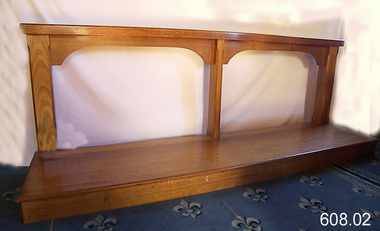 Flagstaff Hill Maritime Museum and Village
Furniture - Rail and Base, circa 1944
... The Guild continued its work until the 1960s. ...The Guild continued its work until the 1960s. ...This is one of a pair of kneeling rails that were part of the original furnishings of the St Nicholas Mission to Seamen's Church at 139 Nelson Place, Williamstown, Victoria. A kneeling rail is a part of the church's furniture and is used during religious prayer to assist the person in assuming the kneeling position. A padded kneeling mat or cushion would also be provided for comfort. THE MISSIONS TO SEAMEN (Brief History): - The Missions to Seamen was an Anglican charity in Great Britain that has served the world's seafarers since 1856. Its symbol is a Flying Angel, inspired by a Bible verse. Today, there are centres in over 200 ports worldwide where seamen of all backgrounds are offered a warm welcome and provided with a wide range of facilities. In Victoria, the organisation began in Williamstown in 1857 as a Sailors’ Church, also known as ‘Bethel’ or the ‘Floating Church’ in an old hulk floating in Hobson’s Bay, Port of Melbourne. It soon became part of the Missions to Seamen, Victoria. In 2000, the organisation, now named Mission to Seafarers, still operated locally in Melbourne, Portland, Geelong and Hastings. The Ladies’ Harbour Lights Guild was formed in 1906 to support the Missions to Seamen in Melbourne and other centres, such as Williamstown. Two of the most significant ladies of the Guild were founder Ethel Augusta Godfrey and foundation member Alice Sibthorpe Tracy (who established a branch of the Guild in Warrnambool in 1920). The Guild continued its work until the 1960s. In 1943, a former Williamstown bank was purchased for the Missions to Seamen Club. The chapel was named St Nicholas’ Seamen’s Church and was supported by the Ladies’ Harbour Lights Guild, the Williamstown Lightkeepers’ Auxiliary and the League of Soldiers’ and Sailors’ Friends. It ceased operation in 1966. A Missions to Seamen Chapel and Recreation Room was a significant feature of ports during the late 1800s and 1900s. It seemed appropriate for Flagstaff Hill to include such a representation within the new Maritime Village, and the Melbourne Board of Management of Missions to Seamen Victoria gave its permission on 21st May 1979 for the entire furnishings of the Williamstown chapel to be transferred to Flagstaff Hill. The St Nicholas Seamen’s Church was officially opened on October 11, 1981, and resembles the Williamstown chapel. This pair of kneeling rails is significant through its association with the St Nicholas' Mission to Seamen Church in Williamstown, Melbourne, established in 1857. The items in our collection from the Missions to Seamen in Williamstown, Victoria, have historical and social significance. They show that people of the 1800s and 1900s cared about the seafarers’ religious, moral, and social welfare, no matter what the religion, social status or nationality. It had its origins in Bristol, England when a Seamen's Mission was formed in 1837. The first Australian branch was started in 1856 by the Rev. Kerr Johnston, a Church of England clergyman, and operated from a hulk moored in Hobson’s Bay; later the Mission occupied buildings in Williamstown and Port Melbourne. Rail and base, one of a pair of two kneeling rails. Three varnished wood pillars and cap rail, mounted on a rectangular box-shaped base: a kneeling rail is used in religious worship. These kneeling rails are part of the St Nicholas Seamen's Church Williamstown Collection.flagstaff hill, warrnambool, shipwrecked-coast, flagstaff-hill, flagstaff-hill-maritime-museum, maritime-museum, shipwreck-coast, flagstaff-hill-maritime-village, rail for kneeling, rail, kneeling rail, religion, religious service, sailors rest, bethel sailors’ church, bethel floating church, ladies harbour light guild, missions to seamen victoria, mission to seafarers, st nicholas seaman’s church williamstown, st nicholas mission to seamen church williamstown, mission to seamen williamstown, st nicholas seamen’s church flagstaff hill, 139 nelson place williamstown, church furniture, religious furniture, religious worship, flying angel club, altar rail, kneeler, prayer, ceremonial furniture
