
Showing 214 items matching "congresses"
-
 Sunshine and District Historical Society Incorporated
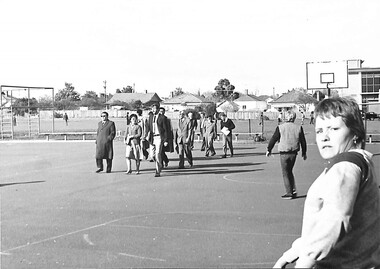
Photograph - Sunshine Technical School Memorabilia - Chinese Dignitary Tour
... The delegation was led by Han Peixin, honorary president of the Chinese People's Association for Friendship, Province Secretary to the local Communist Party, Deputy to the National People's Congress and former acting governor of Jiangus. ...The delegation was led by Han Peixin, honorary president of the Chinese People's Association for Friendship, Province Secretary to the local Communist Party, Deputy to the National People's Congress and former acting governor of Jiangus. ...In August 1985, a high powered delegation of Chinese officials visited the school. The five member delegation came from the Jiagsu rovince of China which is Victoria's sister state in the most populous nation on earth. The delegation visted a number of sites in Victoria during their five day tour. The delegation was led by Han Peixin, honorary president of the Chinese People's Association for Friendship, Province Secretary to the local Communist Party, Deputy to the National People's Congress and former acting governor of Jiangus. Was part of the Sunshine Technical School Collection.3560.01 - Peter Forbes (Principal) and the Chinese delegation walking across the basketball courts|3560.02 - Han Peixin on right|3560.03 - Han Peixin with back towards camera and the remaing four delegates|3560.04 - Han Peixin|3560.05 - Delegation looking at flags flying on a building|3560.06 - Newspaper Article The Advocate 21st August 1985 Page 5 - Han Peixin, student Michelle O'Brien and home economics teacher Sylvia Newberysunshine technical school, technical school -
 Melbourne Tram Museum
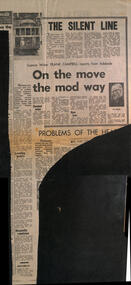
Newspaper, Herald Sun, "The Silent Line", 18-8-1969
... Reports on a Science Congress in Adelaide and a speech by Robert Risson about future transport possible systems - all types such as conveyor belts, air cushion vehicles, magnetic cushions, pneumatic tubes, moving footpaths, jet-propelled vehicles, gas turbine and diesel electric buses. ...Reports on a Science Congress in Adelaide and a speech by Robert Risson about future transport possible systems - all types such as conveyor belts, air cushion vehicles, magnetic cushions, pneumatic tubes, moving footpaths, jet-propelled vehicles, gas turbine and diesel electric buses. ...Reports on a Science Congress in Adelaide and a speech by Robert Risson about future transport possible systems - all types such as conveyor belts, air cushion vehicles, magnetic cushions, pneumatic tubes, moving footpaths, jet-propelled vehicles, gas turbine and diesel electric buses. These are known as "gadgetbahns" mooted proposals that seldom come to commercial fruition. His main emphasis was on the future all-electric tram fleet that was proposed for Melbourne. Also notes underground systems such as San Francisco. Item by Science Writer Frank Campbell.Yields information about possible future transport systems - gadgetbahnsNewspaper clipping - "The Silent line" and "On the move the mod way" - The Herald "18-8-1969" tramways, trams, melbourne, public transport, future transport, transport systems, electric trams, all-electric trams, robert risson, gadgetbahns, underground tramways -
 Melbourne Tram Museum
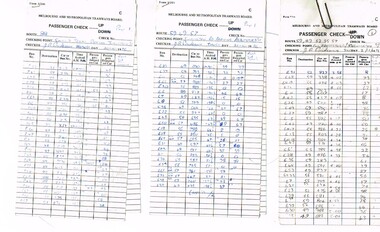
Document - Folder with papers, John Prideaux, "Passenger Counts", 1971 to mid 1970's
... Also includes a count for the Eucharistic Congress Feb. 1973 Set of 8 stapled sheets of examples of actual counts done by the donor - form 3/201, carbon copies giving date, routes, points and checker name....Also includes a count for the Eucharistic Congress Feb. 1973 Set of 8 stapled sheets of examples of actual counts done by the donor - form 3/201, carbon copies giving date, routes, points and checker name. ...Manila folder mark on the spine "MMTB Pass Count 1971 - 1983" - containing some 24 photocopied foolscap sheets of instructions and lists of names of people involved, including the donor for passenger counts at various points. Often includes a small diagram of where counts were to be taken at junctions - example for Oct. 1975 Inbound Peak scanned - See images i2 to i6. Also includes a count for the Eucharistic Congress Feb. 1973 Set of 8 stapled sheets of examples of actual counts done by the donor - form 3/201, carbon copies giving date, routes, points and checker name.trams, tramways, mmtb, passengers, junction, eucharistic congress -
 City of Melbourne Libraries
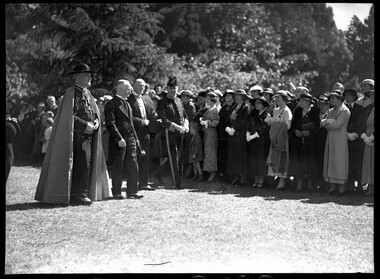
Photograph, Bull, Hugh Jones, 1897-1993, Cardinal MacRory meets "old girls" of Sacre Coeur Convent
... This event was one of the many that took place during the National Eucharistic Congress which took place from Sunday 2 to Sunday 9 December 1934. ...This event was one of the many that took place during the National Eucharistic Congress which took place from Sunday 2 to Sunday 9 December 1934. ...Photographer notations on slide: Cardinal MacRory meets "old girls" of Sacre Coeur Convent Age Dec 6 34 B61 Published: The Age, 6 Dec 1934 Published title and caption: CARDINAL MACRORY MEETS OLD GIRLS OF SACRE COEUR CONVENT. The Papal Legate, Cardinal MacRory, accompanied by Mr. E. L. Kiernan, M.L.C., Mr. T. Gaffney and the Papal Chamberlain, Mr. E. Hollingdale, at the garden party at the Sacre Coeur Convent yesterday. The Cardinal’s sister was at one time Mother Superior of this Convent, and many of the girls she had taught were presented to him. Reference: WOMAN'S INTERESTS (1934, December 6). The Age (Melbourne, Vic. : 1854 - 1954), p. 6. Retrieved January 23, 2024, from http://nla.gov.au/nla.news-article205082619 . Description: The photograph shows Cardinal MacRory in full regalia accompanied by diginaries walking beside a crowd of mostly women in an open garden setting. This event was one of the many that took place during the National Eucharistic Congress which took place from Sunday 2 to Sunday 9 December 1934. An initiative of the Roman Catholic Church, it was their contribution to Melbourne’s Centenary Celebrations. 200,000 Catholics resided in Melbourne at this time – one quarter of the city’s population. While the Congress was aimed at Catholics, and acted as an opportunity to reinforce their living faith and homage, it contained a variety of events of splendour, solemnity and significance designed to appeal to Melbournians, and would additionally provide incentive for people to travel to Victoria, thereby creating an economic benefit to the state. Photographer notations on slide: "Cardinal MacRory meets "old girls" of Sacre Coeur Convent Age Dec 6 34 B61".catholic church, centenaries, 1930-1939, schools, clothing and dress, religious festivals -
 Diamond Valley Vietnam Veterans Sub-Branch
Memorabilia - Medallions, 1/5/2014
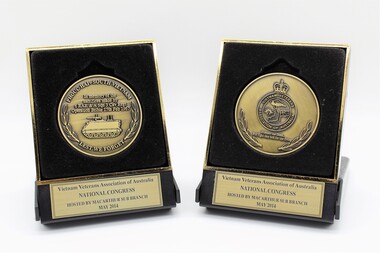
... Two medallions showing front and reverse faces of a medallion issued at Vietnam Veterans Association of Australia, 2014 National Congress, hosted by Macarthur Sub Branch. Front face shows an APC with text on upper edge: "Phouc Hai-South Vietnam" and text on bottom edge: "Lest We Forget"; the two text lines are joined by leaves. ...Two medallions showing front and reverse faces of a medallion issued at Vietnam Veterans Association of Australia, 2014 National Congress, hosted by Macarthur Sub Branch. Front face shows an APC with text on upper edge: "Phouc Hai-South Vietnam" and text on bottom edge: "Lest We Forget"; the two text lines are joined by leaves. ...The medallion pays respect to the sacrifices made by the units in Operation Bribie on 17th February 1967.The medallion takes its place amongst similar medallions and other commemorative items that revert to particular instances or event in Vietnam during the war.Two medallions showing front and reverse faces of a medallion issued at Vietnam Veterans Association of Australia, 2014 National Congress, hosted by Macarthur Sub Branch. Front face shows an APC with text on upper edge: "Phouc Hai-South Vietnam" and text on bottom edge: "Lest We Forget"; the two text lines are joined by leaves. Text in the middle of the face: "In memory of the sacrifice made by 6RAR & A Sqn 3 Cav Regt Operation Bribie 17th Feb 1967. The reverse face has the Vietnam Veterans Association of Australia logo in the middle, with the motto: "Honour the Dead but fight like hell for the living" underneath; two sprigs of leaf cradle the logo and motto.Front face shows an APC with text on upper edge: "Phouc Hai-South Vietnam" and text on bottom edge: "Lest We Forget"; the two text lines are joined by leaves. Text in the middle of the face: "In memory of the sacrifice made by 6RAR & A Sqn 3 Cav Regt Operation Bribie 17th Feb 1967. The reverse face has the Vietnam Veterans Association of Australia logo in the middle, with the motto: "Honour the Dead but fight like hell for the living" underneath; two sprigs of leaf cradle the logo and motto.vietnam, vietnam war, diamond valley vietnam veterans sub branch -
 Royal Australian and New Zealand College of Obstetricians & Gynaecologists (RANZCOG)
Equipment - Tin containing set of surgical scalpels associated with Sir Robert Wade and Dame Constance D'Arcy, Allen & Hanburys, England
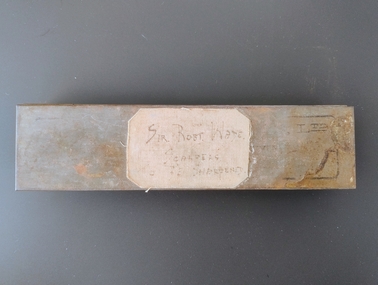
... He was also President of the State (NSW) branch of the British Medical Association, and inaugural president of the orthopaedic section of the Australian Medical Congress....He was also President of the State (NSW) branch of the British Medical Association, and inaugural president of the orthopaedic section of the Australian Medical Congress. Dame Constance D'arcy Surgery British Medical Association Royal Australian College of Surgeons Australian Medical Congress Metal tin containing three scalpels. ...This item was donated to RANZCOG's historical collection by Dr Ian Cope. In 1958, Dr Cope moved into rooms at 233 Macquarie Street, Sydney, which had previously been occupied by Dr Dame Constance D'arcy. He subsequently donated much of the material which remained in those rooms to the College. V2A, produced by Krupp (see third scalpel in this box), was the first commercially produced non-rusting steel. It was patented in 1912. (Montanstahl) Sir Robert Wade (1874-1954) was an orthopaedic surgeon. He was a Foundation Fellow of the Royal Australian College of Surgeons (RACS), and President of RACS 1935-1937. He was also President of the State (NSW) branch of the British Medical Association, and inaugural president of the orthopaedic section of the Australian Medical Congress.Metal tin containing three scalpels. Section of sticking plaster attached to lid of tin carries hardwriting which reads 'SIR ROBT. WADE/SCALPELS/TO BE SHARPENED'. Traces of an manufacturers label printed on the lid of the tin are visible beside the sticking plaster, resembling an Allen and Hanburys label. The first scalpel is engraved 'J.GRAY & SON/SHEFFIELD' near the base of the handle on one side, with a parital and unreadable engraving relating to a Sydney instrument maker on the other side. The second scalpel is very thin and narrow and is engraved with the text 'ALLEN&HANBURYS LONDON' on one side of the handle. The third scalpel is engraved with the logo of Krupp (a German instrument maker), 'V2A', and the number '1377.dame constance d'arcy, surgery, british medical association, royal australian college of surgeons, australian medical congress -
 Federation University Historical Collection
Photograph - Photograph - Colour, Thelma Rungkat and Neneng Komarich
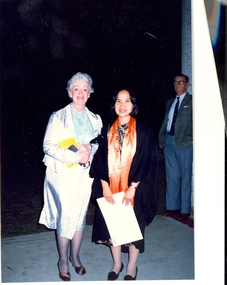
... Damataru and Neneng Komareah at the graduates Farewell dinner for Graduate Diploma of Librarianship students, 1987 .2) Thelma Rungkat with Graduate Diploma of Librarianship students Sri Wahyuni Soeriptito and Tetty Sartika at the South East Asian Librarian Congress, Jakarta, Indonesia, 1990 .3) Thelma Rungkat and Graduate Librarianship Graduate Neneng Komarich at Ballarat College of Advanced Education Graduation, 1988 .4) Tim Reddan, lecturer in Information Management receives a farewell gift from Thelma Rungkat at the first annual dinner of Ballarat Librarianship Graduates' Association, 1990 .5) Mrs Shiell, Andrew Shiell and Keith Davison (Senior Lecturer in Librarianship) taken at Tim Reddan's Farewell...Damataru and Neneng Komareah at the graduates Farewell dinner for Graduate Diploma of Librarianship students, 1987 .2) Thelma Rungkat with Graduate Diploma of Librarianship students Sri Wahyuni Soeriptito and Tetty Sartika at the South East Asian Librarian Congress, Jakarta, Indonesia, 1990 .3) Thelma Rungkat and Graduate Librarianship Graduate Neneng Komarich at Ballarat College of Advanced Education Graduation, 1988 .4) Tim Reddan, lecturer in Information Management receives a farewell gift from Thelma Rungkat at the first annual dinner of Ballarat Librarianship Graduates' Association, 1990 .5) Mrs Shiell, Andrew Shiell and Keith Davison (Senior Lecturer in Librarianship) taken at Tim Reddan's Farewell Thelma Rungkat and Neneng Komarich Photograph Photograph - Colour ...Thelma Rungkat was Head of the Librarianship Department at Ballarat College of Advanced Education, and by 1990 she was Head of Information Management. Keith Davidson retired from his role as Senior Lecturer in Librarianship at Ballarat College of Advanced Education in 1988..1) Thelma Rungkat with Graduate Diploma of Librarianship students Ninis A. Damataru and Neneng Komareah at the graduates Farewell dinner for Graduate Diploma of Librarianship students, 1987 .2) Thelma Rungkat with Graduate Diploma of Librarianship students Sri Wahyuni Soeriptito and Tetty Sartika at the South East Asian Librarian Congress, Jakarta, Indonesia, 1990 .3) Thelma Rungkat and Graduate Librarianship Graduate Neneng Komarich at Ballarat College of Advanced Education Graduation, 1988 .4) Tim Reddan, lecturer in Information Management receives a farewell gift from Thelma Rungkat at the first annual dinner of Ballarat Librarianship Graduates' Association, 1990 .5) Mrs Shiell, Andrew Shiell and Keith Davison (Senior Lecturer in Librarianship) taken at Tim Reddan's Farewellthelma rungkat, keith davidson, tim reddan, librarianship, library, libriarian, univerrsity women -
 Federation University Historical Collection
Magazine - Booklets, Ballarat School of Mines Students' Magazine 1954, 1953-1955
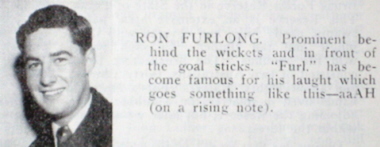
... Articles include: The Mining and Metallurgy Congress, Aboriginal research, Power from Water, Engineering Etiquette, Australian Art Images include: Queen Elizabeth 2, Ballarat Junior Technical School winning the Marching Competition, competitors in the Redex Trial. .2) 1954 - Articles include: Eureka Stockade; Working in East Africa and Canada, Greece, Images include; Craig's Hotel, Eureka Swimming Pool; Barry Jones, Harold Everett, "Tailspin" Taylor, Pastoral Skipton, Margaret McGregor, Nancy Rimmington, Janice Tonkin, First Roll Call in Girls' Junior Technical School .3) 1955. ...Articles include: The Mining and Metallurgy Congress, Aboriginal research, Power from Water, Engineering Etiquette, Australian Art Images include: Queen Elizabeth 2, Ballarat Junior Technical School winning the Marching Competition, competitors in the Redex Trial. .2) 1954 - Articles include: Eureka Stockade; Working in East Africa and Canada, Greece, Images include; Craig's Hotel, Eureka Swimming Pool; Barry Jones, Harold Everett, "Tailspin" Taylor, Pastoral Skipton, Margaret McGregor, Nancy Rimmington, Janice Tonkin, First Roll Call in Girls' Junior Technical School .3) 1955. ...Three soft covered Magazines - the Ballarat School of Mines Students' Magazine for 1953-5. .1) 1953 - The Coronation Number. Articles include: The Mining and Metallurgy Congress, Aboriginal research, Power from Water, Engineering Etiquette, Australian Art Images include: Queen Elizabeth 2, Ballarat Junior Technical School winning the Marching Competition, competitors in the Redex Trial. .2) 1954 - Articles include: Eureka Stockade; Working in East Africa and Canada, Greece, Images include; Craig's Hotel, Eureka Swimming Pool; Barry Jones, Harold Everett, "Tailspin" Taylor, Pastoral Skipton, Margaret McGregor, Nancy Rimmington, Janice Tonkin, First Roll Call in Girls' Junior Technical School .3) 1955. Articles include: Tales from Malaysia, Literary Society Images include; Craig's Hotel, Signatures: N.H. Andrews; J. Skuja: Alan E. Johnson, B.V. McDougall, L.J. Mathews, Daryl Schmidt, J, Collierballarat school of mines, tinney, faneco, jim john, dean, spiers, ngip, barrie smith, stewart rowe, elaine walton, stevens, max stevens, sawyer, ann mitchell, flavel, ingleton, bethune, blackburn, boag, brokenshire, carmichael, kirby, kinnane, alec kinnane, ludbrook, meagher, searl, sheppard, gillin, murray gillan, archer, beattie, bautovich, benjamin, buck, bunting, athol day, eddie, habel, heyes, maddox, phillips, schreenan, donald stevens, tinissen, whitcher, ian whitcher, mccallum, ryrie mccallum, marching competition, skuja, wilton, neil andrews, ellen freemantle, alan johnson, willey, graeme willey, mainwaring, diana mainwaring, mcdougall, little, margaret little, lance matthews, philp davis, eureka stockade, eureka swimming pool, pools, swimming pool, restarick, kempe, barry johns, harold everett, taylor, holmes, wendell holmes, skipton, john collier, collier, daryl schmidt, chris sanos, greece, andrews, doull, everett, seong, lockhead, pitzen, watts, technical school, junior technical school, girl's junior technical school, ballarat girl's junior technical school, baxendale, stan kisler, graham willey, murray, jim murray, grundell, cleland, furlog, ron furlong, judy johnson, russ whitcher, anita young, durant, malaysia, literary society, thurling, andrewartha, barnes, ditchfield, peter ditchfield, dunlop, kisler, mcneil, orgill, quinlan, saggers, bill saggers, seabrook, williams, paddle, graham, handmer, hetehrington, dow, pine, ballarat north junior technical school, william saggers -
 Uniting Church Archives - Synod of Victoria
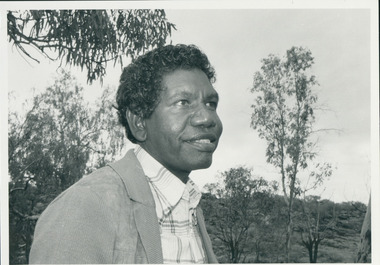
Photograph, Rev. Djiniyini Gondarra, 1986
... Over the years, Rev Djiniyini has served on many committees and councils including: Member of the Steering Committee of the Australian Indigenous Cultural Network (1998-2001), CEO of Aboriginal Resource and Development Services Inc (1998-2001), CEO of the Northern Regional Council of the Uniting Aboriginal and Islander Christian Congress (1998-2001), Director of Reconciliation Australia Limited (2000-2001), Member of Council for Aboriginal Reconciliation (1998-2000), Chairman of Uniting Aboriginal and Islander Christian Congress (1995-2000 & 1990-1993), Member of Central Committee of the World Council of Churches (1991-1994), Moderator of Northern Synod, Uniting Church in Australia (1985-1987), Secretary of newly formed Aboriginal Presbytery, Northern Synod, Uniting Church in Australia (1985), and Vice-President of Uniting Aboriginal and Islander Christian Congress Uniting Church in Australia (1983-1987). ...Over the years, Rev Djiniyini has served on many committees and councils including: Member of the Steering Committee of the Australian Indigenous Cultural Network (1998-2001), CEO of Aboriginal Resource and Development Services Inc (1998-2001), CEO of the Northern Regional Council of the Uniting Aboriginal and Islander Christian Congress (1998-2001), Director of Reconciliation Australia Limited (2000-2001), Member of Council for Aboriginal Reconciliation (1998-2000), Chairman of Uniting Aboriginal and Islander Christian Congress (1995-2000 & 1990-1993), Member of Central Committee of the World Council of Churches (1991-1994), Moderator of Northern Synod, Uniting Church in Australia (1985-1987), Secretary of newly formed Aboriginal Presbytery, Northern Synod, Uniting Church in Australia (1985), and Vice-President of Uniting Aboriginal and Islander Christian Congress Uniting Church in Australia (1983-1987). ...Rev Dr Djiniyini Gondarra OAM, was born in Milingimbi, eastern Arnhemland in 1945. He was educated at Milingimbi Mission School and pursued his theological education as a youth leader and Sunday School teacher through the Methodist Church, before attending college in Brisbane. In 1969 he trained as a Minister in Papua New Guinea and the Solomon Islands under the Uniting Church, before returning to Arnhemland to minister his own people at the Galiwin’ku parish, firstly as a lay pastor (1971-1972) and then as a Minister from 1976-1982. In 1983-84, Rev Djiniyini worked as a Lecturer in Theology at Nungalinya College, Darwin. He was honoured with a Diploma of Theology (Honorary) from there in 1984, and in 1991 received a Cultural Doctorate in Literature (Honorary) from the World University, Roundtable, Arizona USA. Rev Djiniyini was awarded the Order of Australia Medal (OAM) in 1995. As well as being the Chairman of ALPA since 1993, Rev Djiniyini is currently the Director of Duduy’ngu Pty Ltd, which provides consultancy and cross-cultural services. He is also Director of Yirrkala Business Enterprises. Over the years, Rev Djiniyini has served on many committees and councils including: Member of the Steering Committee of the Australian Indigenous Cultural Network (1998-2001), CEO of Aboriginal Resource and Development Services Inc (1998-2001), CEO of the Northern Regional Council of the Uniting Aboriginal and Islander Christian Congress (1998-2001), Director of Reconciliation Australia Limited (2000-2001), Member of Council for Aboriginal Reconciliation (1998-2000), Chairman of Uniting Aboriginal and Islander Christian Congress (1995-2000 & 1990-1993), Member of Central Committee of the World Council of Churches (1991-1994), Moderator of Northern Synod, Uniting Church in Australia (1985-1987), Secretary of newly formed Aboriginal Presbytery, Northern Synod, Uniting Church in Australia (1985), and Vice-President of Uniting Aboriginal and Islander Christian Congress Uniting Church in Australia (1983-1987). Rev Dr Djiniyini Gondarra OAM has also been extensively published, and his works include: • Information Papers (co authored), Aboriginal Resource and Development Services: • Confusion Between Cultures (1998) • MHead & Shoulders of Djiniyini Gondarra facing right of picture."Rev. Djiniyini Gondarra 1986. Moderator Northern Synod and Vice President of Uniting Aboriginal and Islander Christian Conference."gondarra, djiniyini, uaicc, northern synod uca -
 Embroiderers Guild, Victoria
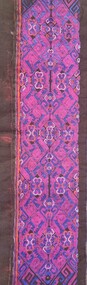
Textile - Embroidered Hmong Dress Panel
... Hmong Archives; Library of Congress. ...Hmong Archives; Library of Congress. Hill Tribe clothing panel in fuchsia pinks and royal blue, with white, green, orange highlights. ...During periods of harsh persecution, Hmong women developed a way to record their history by weaving it directly into their clothing. Called "pajntaub" , which means "flower cloth", and it was traditionally practiced only by the women of the community. Using a variety of complex stitching techniques, they created intricate geometric patterns. These designs were not just for decoration on clothes, collars and baby carriers. At times when their own language was suppressed, these symbols served as a form of communication and cultural documentation, with history hidden in the very pleats of their skirts. This tradition took on a new powerful meaning in the late 1970's after the wars in Southeast Asia. Forced into refugee camps in Thailand, Hmong women began creating "story cloths". These were larger tapestries that documented their lives, their traditions, and their harrowing journey from their homelands to the camps. These story cloths became a way to tell the world what had happened to them . They also became a vital source of income, sometimes selling for just one dollar, which helped families survive in the camps. Hmong Archives; Library of Congress. Hill Tribe clothing panel in fuchsia pinks and royal blue, with white, green, orange highlights. Embroidered in buttonhole stitch and satin stitch filling. Worked on black even weave linen. -
 Embroiderers Guild, Victoria
Textile - Embroidered Hmong Dress Panel
... Hmong Archives; Library of Congress. ...Hmong Archives; Library of Congress. Hill Tribe clothing panel in fuchsia pinks and royal blue, with white, green, orange highlights. ...During periods of harsh persecution, Hmong women developed a way to record their history by weaving it directly into their clothing. Called "pajntaub" , which means "flower cloth", and it was traditionally practiced only by the women of the community. Using a variety of complex stitching techniques, they created intricate geometric patterns. These designs were not just for decoration on clothes, collars and baby carriers. At times when their own language was suppressed, these symbols served as a form of communication and cultural documentation, with history hidden in the very pleats of their skirts. This tradition took on a new powerful meaning in the late 1970's after the wars in Southeast Asia. Forced into refugee camps in Thailand, Hmong women began creating "story cloths". These were larger tapestries that documented their lives, their traditions, and their harrowing journey from their homelands to the camps. These story cloths became a way to tell the world what had happened to them . They also became a vital source of income, sometimes selling for just one dollar, which helped families survive in the camps. Hmong Archives; Library of Congress. Hill Tribe clothing panel in fuchsia pinks and royal blue, with white, green, orange highlights. Embroidered in buttonhole stitch and satin stitch filling. Worked on black even weave linen. -
 Embroiderers Guild, Victoria
Textile - Embroidered Hmong Dress Panel
... Hmong Archives; Library of Congress. ...Hmong Archives; Library of Congress. Hill Tribe clothing panel in progress in fuchsia pinks and royal blue, with white, green, orange highlights. ...During periods of harsh persecution, Hmong women developed a way to record their history by weaving it directly into their clothing. Called "pajntaub" , which means "flower cloth", and it was traditionally practiced only by the women of the community. Using a variety of complex stitching techniques, they created intricate geometric patterns. These designs were not just for decoration on clothes, collars and baby carriers. At times when their own language was suppressed, these symbols served as a form of communication and cultural documentation, with history hidden in the very pleats of their skirts. This tradition took on a new powerful meaning in the late 1970's after the wars in Southeast Asia. Forced into refugee camps in Thailand, Hmong women began creating "story cloths". These were larger tapestries that documented their lives, their traditions, and their harrowing journey from their homelands to the camps. These story cloths became a way to tell the world what had happened to them . They also became a vital source of income, sometimes selling for just one dollar, which helped families survive in the camps. Hmong Archives; Library of Congress. Hill Tribe clothing panel in progress in fuchsia pinks and royal blue, with white, green, orange highlights. Embroidered in buttonhole stitch and satin stitch filling. Worked on black even weave linen. -
 Embroiderers Guild, Victoria
Textile - Embroidered Hmong Dress Panel
... Hmong Archives; Library of Congress. ...Hmong Archives; Library of Congress. Hill Tribe clothing panel in fuchsia pinks and royal blue, with white, green, orange highlights. ...During periods of harsh persecution, Hmong women developed a way to record their history by weaving it directly into their clothing. Called "pajntaub" , which means "flower cloth", and it was traditionally practiced only by the women of the community. Using a variety of complex stitching techniques, they created intricate geometric patterns. These designs were not just for decoration on clothes, collars and baby carriers. At times when their own language was suppressed, these symbols served as a form of communication and cultural documentation, with history hidden in the very pleats of their skirts. This tradition took on a new powerful meaning in the late 1970's after the wars in Southeast Asia. Forced into refugee camps in Thailand, Hmong women began creating "story cloths". These were larger tapestries that documented their lives, their traditions, and their harrowing journey from their homelands to the camps. These story cloths became a way to tell the world what had happened to them . They also became a vital source of income, sometimes selling for just one dollar, which helped families survive in the camps. Hmong Archives; Library of Congress. Hill Tribe clothing panel in fuchsia pinks and royal blue, with white, green, orange highlights. Embroidered in buttonhole stitch and satin stitch filling. Worked on black even weave linen. -
 Unions Ballarat
Book - Labour History No. 66 May 1994 (D.J. Spiers Collection), Irving, Terry
... This edition includes these articles: -Labourism: a Political Genealogy -Class, Populism and Labour Politics in Victoria, 1890-1914 -Keynesianism, Socialism and Labourism and the Role of Ideas in Labour Ideology -A Century of Laborism and the State, 1891-1993: An Historical Interpretation -We are of Age: Class, Locality and Region at Port Kembla, 1900-1940 -Researching Industrial Relations History: The Development of a Databas on Australian Trade Unions 1825-1900 -Loyalty and Communists: an interview with Bill Gollan -International Women's Day in Newcastle in the Fifties and Sixties: A Personal Account -Forthcoming: A Bibliography of Australian Communism -Postcard from California: the Hoover Institute -The ACTU Congress of 1993 -Australian Canadian Labour History Conference -The Australian Society for the Study of Labour History -The Classing Gaze: Sexuality, Class and Surveillance -Book reviews -Newcastle's Special Day; Australians in Spain Memorial Unveiling...This edition includes these articles: -Labourism: a Political Genealogy -Class, Populism and Labour Politics in Victoria, 1890-1914 -Keynesianism, Socialism and Labourism and the Role of Ideas in Labour Ideology -A Century of Laborism and the State, 1891-1993: An Historical Interpretation -We are of Age: Class, Locality and Region at Port Kembla, 1900-1940 -Researching Industrial Relations History: The Development of a Databas on Australian Trade Unions 1825-1900 -Loyalty and Communists: an interview with Bill Gollan -International Women's Day in Newcastle in the Fifties and Sixties: A Personal Account -Forthcoming: A Bibliography of Australian Communism -Postcard from California: the Hoover Institute -The ACTU Congress of 1993 -Australian Canadian Labour History Conference -The Australian Society for the Study of Labour History -The Classing Gaze: Sexuality, Class and Surveillance -Book reviews -Newcastle's Special Day; Australians in Spain Memorial Unveiling Labour and class politics; direct relevance to industrial relations; social issues in general that fall within the purview of the union movement. ...Published semi-annually, contains refereed, scholarly articles about social and labour history in Australasia, - labour politics, trade unions, management labour practices, co-operatives, gender and ethnicity. This edition includes these articles: -Labourism: a Political Genealogy -Class, Populism and Labour Politics in Victoria, 1890-1914 -Keynesianism, Socialism and Labourism and the Role of Ideas in Labour Ideology -A Century of Laborism and the State, 1891-1993: An Historical Interpretation -We are of Age: Class, Locality and Region at Port Kembla, 1900-1940 -Researching Industrial Relations History: The Development of a Databas on Australian Trade Unions 1825-1900 -Loyalty and Communists: an interview with Bill Gollan -International Women's Day in Newcastle in the Fifties and Sixties: A Personal Account -Forthcoming: A Bibliography of Australian Communism -Postcard from California: the Hoover Institute -The ACTU Congress of 1993 -Australian Canadian Labour History Conference -The Australian Society for the Study of Labour History -The Classing Gaze: Sexuality, Class and Surveillance -Book reviews -Newcastle's Special Day; Australians in Spain Memorial UnveilingLabour and class politics; direct relevance to industrial relations; social issues in general that fall within the purview of the union movement.Book; paper.btlc, ballarat trades and labour council, history - labour, labourism, politics - class, industrial relations, economics, politics - communism, women's rights, book reviews, conference reports -
 Alfred Hospital Nurses League - Nursing History Collection
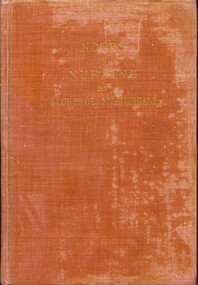
Book, Florence Nightingale, Notes on nursing: what it is, and what it is not, 1946
... Also on this page is a coloured book plate: Royal Victorian College of Nursing - This book was donated to the College by Miss C.E.Dossetor Congress of I.C.N. 1947. At the top of this page Marjorie Conner has written her name in ink. ...Also on this page is a coloured book plate: Royal Victorian College of Nursing - This book was donated to the College by Miss C.E.Dossetor Congress of I.C.N. 1947. At the top of this page Marjorie Conner has written her name in ink. ...This book was intended "to give hints for thought to women who have personal charge of the health of others...Knowledge which everyone ought to have-distinct from medical knowledge, which only a professional can have".Book with light brown cover, title and author's name embossed in gilt on front.non-fictionThis book was intended "to give hints for thought to women who have personal charge of the health of others...Knowledge which everyone ought to have-distinct from medical knowledge, which only a professional can have".nursing, florence nightingale -
 Victorian Aboriginal Corporation for Languages
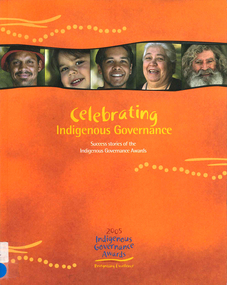
Book, Rowena Withers, Celebrating Indigenous governance : success stories of the Indigenous governance awards, 2005
... The Indigenous Governance Awards Key elements of good governance Finalists 2005: Koorie Heritage Trust, Victoria; Central Australian Aboriginal Congress, NT; Sunrise Health Service, NT; Goldfields Land and Sea Council, WA; Institute for Aboriginal Development, NT; Maari Ma Health Aboriginal Corporation NSW; North Coast Aboriginal Corporation for Community Health Qld; Tiwi Islands Local Government, NT What works: lessons from the 2005 Indigenous Governance awards Governing body: choosing the board; Size and frequency of meetings; Board change and continuity; Processes of decision-making; Making good decisions; Financial decision-making; Accountability tools Managing and implementing decisions: carrying out recommendations; Informing stakeholders Conflict resolution: conflicts among the board; Complaints from members; Staff conflicts Leadership development: developing youth; Staff development and training Cultural norms and values: Boards and elders; Community and culture Future planning....The Indigenous Governance Awards Key elements of good governance Finalists 2005: Koorie Heritage Trust, Victoria; Central Australian Aboriginal Congress, NT; Sunrise Health Service, NT; Goldfields Land and Sea Council, WA; Institute for Aboriginal Development, NT; Maari Ma Health Aboriginal Corporation NSW; North Coast Aboriginal Corporation for Community Health Qld; Tiwi Islands Local Government, NT What works: lessons from the 2005 Indigenous Governance awards Governing body: choosing the board; Size and frequency of meetings; Board change and continuity; Processes of decision-making; Making good decisions; Financial decision-making; Accountability tools Managing and implementing decisions: carrying out recommendations; Informing stakeholders Conflict resolution: conflicts among the board; Complaints from members; Staff conflicts Leadership development: developing youth; Staff development and training Cultural norms and values: Boards and elders; Community and culture Future planning. ...Good governance means good business What is governance? The Indigenous Governance Awards Key elements of good governance Finalists 2005: Koorie Heritage Trust, Victoria; Central Australian Aboriginal Congress, NT; Sunrise Health Service, NT; Goldfields Land and Sea Council, WA; Institute for Aboriginal Development, NT; Maari Ma Health Aboriginal Corporation NSW; North Coast Aboriginal Corporation for Community Health Qld; Tiwi Islands Local Government, NT What works: lessons from the 2005 Indigenous Governance awards Governing body: choosing the board; Size and frequency of meetings; Board change and continuity; Processes of decision-making; Making good decisions; Financial decision-making; Accountability tools Managing and implementing decisions: carrying out recommendations; Informing stakeholders Conflict resolution: conflicts among the board; Complaints from members; Staff conflicts Leadership development: developing youth; Staff development and training Cultural norms and values: Boards and elders; Community and culture Future planning.colour photographsbusiness enterprise, indigenous business -
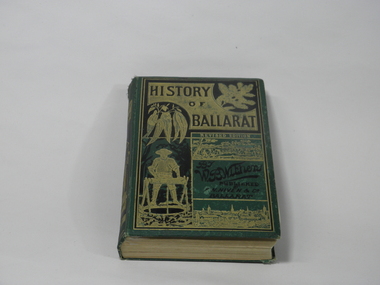 Blacksmith's Cottage and Forge
Book, F.W. Niven and Co, History of Ballarat, 1887
... Inscription in gold: PRESENTED TO/THE/MEMBERS/OF THE/Empire Commerce Congress/BY/BALLARAT'S PIONEER DIGGER,/MR.JAMES ODDIE,1851. ...Inscription in gold: PRESENTED TO/THE/MEMBERS/OF THE/Empire Commerce Congress/BY/BALLARAT'S PIONEER DIGGER,/MR.JAMES ODDIE,1851. ...This book came into our collection via a donation to the Book Barn, which operates as a second-hand book shop. The donor is unknown.This book was published in 1887, a time of consolidation of wealth after the initial gold rushes in Ballarat in the 1850s. Its full title is 'History of Ballarat from the First Pastoral Settlement to the Present Time.' By William Bramwell Withers, Journalist. Second Edition with Plans, Ilustrations and Original Documents. It is an invaluable history of the origins of Ballarat and its mining history, with a chapter devoted to the Eureka Stockade. Book bound in green cloth on hard cover. On cover: Title incised in black on gold: HISTORY/OF/BALLARAT In gold: REVISED EDITION In black:By/W.B.Withers/PUBLISHED/BY/F.W.NIVEN &Co/Ballarat. Front cover embossed with gold pictures, one of a spray of wattle, one of a spray of eucalyptus leaves, a picture of a miner standing at a winch, and two panoramas of Ballarat, one in its early days as a gold-mining camp, and one as a built-up city. On spine: In green on gold: HISTORY/OF/BALLARAT : BY W.B.WITHERS 1887 Picture of two miners in a lift cage descending a mine shaft. On back cover: In black, picture of an aborigine looking into the sun, which is either rising or setting. On inside front cover: label pasted in. Inscription in gold: PRESENTED TO/THE/MEMBERS/OF THE/Empire Commerce Congress/BY/BALLARAT'S PIONEER DIGGER,/MR.JAMES ODDIE,1851. Front brown flyleaf partially torn off. ballarat gold rush, w.b.withers, eureka stockade, mining history, early maps of ballarat, mr james oddie, empire commerce congress -
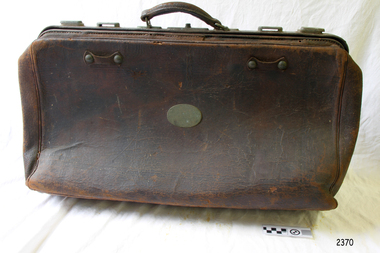 Flagstaff Hill Maritime Museum and Village
Functional object - Portmanteau, 1930-1950
... After the first United States Congress (1789–1791) the postmaster general allowed printers free postage to communicate reports and articles of Congressional informational newspapers with other publishers in other towns and cities for distribution. ...After the first United States Congress (1789–1791) the postmaster general allowed printers free postage to communicate reports and articles of Congressional informational newspapers with other publishers in other towns and cities for distribution. ...The etymology of the word portmanteau: A portmanteau was a travelling bag used as a mailbag. During the eighteenth and nineteenth centuries, both newspapers and letters were transported in these leather mailbags that opened into two sections. A portmanteau is a word created by the blending of two other words in terms of the sounds and meaning. Portmanteau itself is a portmanteau; made up of the French ‘porter’ meaning ‘to carry’ and ‘manteau’ meaning ‘cloak’. The other meaning of this word is ‘a travelling case or bag' but was coined by Lewis Carroll with its new meaning in 1882. History: English merchant Thomas Witherings established mail routes throughout Europe in the 1620s. He drew up a proposal in 1635 for an English mail system based in London in which portmanteaux (containing 2 leather bags lined with cotton) could travel to European towns with sealed bags of mail for protection against spies. The system was put into motion and some 26,000 letters were mailed safely and unopened between London and European towns each week. In the nineteenth century, the official portmanteau was used to carry the mail, letters and newspapers on Americas New England stagecoaches that travelled the postal routes. Before 1789 newspapers were mostly excluded from the mail and the official portmanteau. After the first United States Congress (1789–1791) the postmaster general allowed printers free postage to communicate reports and articles of Congressional informational newspapers with other publishers in other towns and cities for distribution. Example of a mid-20th-century leather bag not connected to a person of significance from history or a historic event. The significance lies in the historic social aspect of this type of bag and how it got its name. This type of bag was popular from the mid 19th century for personal use and fell out of favour in until the 1950s and the origin and meaning of the word used to describe this type of leather bag "portmanteau". Portmanteau leather bag, with brass oval badge, tan interior with compartment separator. Inscribed "Allchin Bros Makers Ballarat". flagstaff hill, warrnambool, shipwrecked-coast, flagstaff-hill, flagstaff-hill-maritime-museum, maritime-museum, shipwreck-coast, flagstaff-hill-maritime-village, portmanteau, allchin bros -
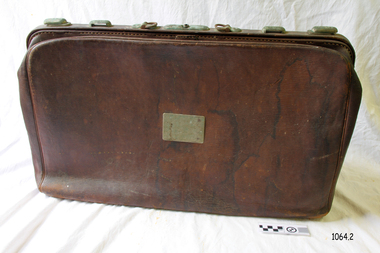 Flagstaff Hill Maritime Museum and Village
Functional object - Portmanteau
... After the first United States Congress (1789–1791) the postmaster general allowed printers free postage to communicate reports and articles of Congressional informational newspapers with other publishers in other towns and cities for distribution. ...After the first United States Congress (1789–1791) the postmaster general allowed printers free postage to communicate reports and articles of Congressional informational newspapers with other publishers in other towns and cities for distribution. ...The etymology of the word portmanteau: A portmanteau was a travelling bag used as a mailbag. During the eighteenth and nineteenth centuries, both newspapers and letters were transported in these leather mailbags that opened into two sections. A portmanteau is a word created by the blending of two other words in terms of the sounds and meaning. Portmanteau itself is a portmanteau; made up of the French ‘porter’ meaning ‘to carry’ and ‘manteau’ meaning ‘cloak’. The other meaning of this word is ‘a travelling case or bag' but was coined by Lewis Carroll with its new meaning in 1882. History: English merchant Thomas Witherings established mail routes throughout Europe in the 1620 s. He drew up a proposal in 1635 for an English mail system based in London in which portmanteau (containing 2 leather bags lined with cotton) could travel to European towns with sealed bags of mail for protection against spies. The system was put into motion and some 26,000 letters were mailed safely and unopened between London and European towns each week. In the nineteenth century, the official portmanteau was used to carry the mail, letters and newspapers on Americas New England stagecoaches that travelled the postal routes. Before 1789 newspapers were mostly excluded from the mail and the official portmanteau. After the first United States Congress (1789–1791) the postmaster general allowed printers free postage to communicate reports and articles of Congressional informational newspapers with other publishers in other towns and cities for distribution. Example of a mid-20th-century leather bag not connected to a person of significance from history or a historic event. The significance lies in the historic social aspect of this type of bag and how it got its name. This type of bag was popular from the mid 19th century for personal use and fell out of Portmanteau soft leather bag with lock, leather handles (one broken) and with metal plate on front.No inscription flagstaff hill, warrnambool, shipwrecked-coast, flagstaff-hill, flagstaff-hill-maritime-museum, maritime-museum, shipwreck-coast, flagstaff-hill-maritime-village -
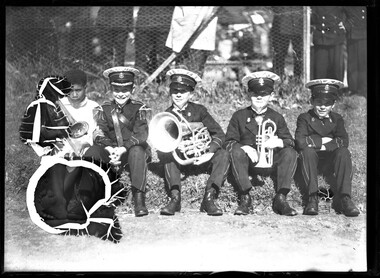 City of Melbourne Libraries
Photograph, Bull, Hugh Jones, 1897-1993, Boy bandsmen
... Published caption: Although the young Fijian here for the Eucharistic Congress had no uniform, he did not feel out of it with the members of St. ...Published caption: Although the young Fijian here for the Eucharistic Congress had no uniform, he did not feel out of it with the members of St. ...Published: 7 Dec 1934 Published title: A FIJIAN TROMBONIST. Published caption: Although the young Fijian here for the Eucharistic Congress had no uniform, he did not feel out of it with the members of St. Vincent de Paul’s Band at the Sacre Coeur, East Malvern, this week. Trove article identifier: http://nla.gov.au/nla.news-article205071643 Description: A young Fijian boy sits with young members of the St Vincent de Paul’s Band, all seated on the grass in sunshine. The three young band members are jauntily dressed in braided hats, long pants and smart dark jackets, white shirts, dark bow tie, and dark long trousers and boots. One holds a French horn, one a trumpet. In contrast, the young Fijian boy is shoeless, hatless, and dressed in white – a white shirt, and possibly a white “skirt” as observed to be worn by Fijian policemen in their home country at that time. He carries a trombone, which perhaps belongs to the young band member sitting beside him. Research by project volunteer, Louise McKenzie: A photo in the Argus on the previous day shows “two Papuans, Aloysius and Bernard, … talking to Archbishop O’Shea of Wellington (N.Z.).” In a turn of phrase which would be far from acceptable today, the caption notes that the juxtaposition of the dark skinned boys and the white skinned Archbishop makes “A picturesque Contrast”. The photo is also staged in a way that has the two dark skinned boys (wearing white shirts and white “skirts”, and no hats), standing, looking down on the Archbishop in his elaborate clothing and headcovering. The Age caption advises that they are at Sacre Coeur, East Melbourne. The reason for the event – a garden party – was held as part of the National Eucharistic Congress which took place in Melbourne from Sunday 2 – Sunday 9 December 1934. An initiative of the Roman Catholic Church, it was their contribution to Melbourne’s Centenary Celebrations. At this garden party the Papal Legate, Cardinal MacRory, accompanied by dignatories including the Papal Chamberlain, met Old Girls of Sacre Coeur Convent. The Cardinal’s sister was at one time Mother Superior of this Convent. The featuring of Fijian and Papuan boys in these articles reflected the diverse nature of Catholic Church representatives worldwide who attended the Eucharistic Congress which featured as part of Melbourne’s Centenary celebrations. Notable visitors to the Congress included the Papal Legate, His Excellence Cardinal MacRory, several Monsignors from Rome, the Archbishop of Liverpool representing England, Scotland and Wales, together with representatives from New Zealand, China, South Africa, Ireland, the Islands of the Pacific, India, Malta, USA, and of course from across Australia. St Vincent de Paul “Our History” advises that the Society was founded in France in 1833 by a group of dedicated Catholics who put their faith into action to support the poor in their community. The “Vinnies” website “1854 onwards” sets out milestones of the Society’s close involvement with Melbourne from its infancy in March 1854 up to today. A well researched blog by Jeremy de Korte dated February 28, 2024 – Band Blasts from the Past – Anecdotes, Stories and Personalities, notes: Orphanage bands in Australia were a copy of practices in England where the teaching of music in boys’ institutions was commonplace (Sheldon, 2009). There was, however, a major difference to the outcomes of this musical education between the two countries. Boys who were trained as musicians in English institutions readily found themselves recruited into the bands of the British Army and Navy (Sheldon, 2009). Whereas the musicians that graduated from the Orphanage bands in Australia found themselves positions in the wider band movement. … We know that Orphanage bands in Australia have had a long and distinguished history, as well as enviable reputations. The St. Augustine’s Band from Geelong is probably the most famous of them all, and it is mentioned that by 1898 they were already putting the call out for a new set of instruments (“ST. AUGUSTINE’S ORPHANAGE BAND.,” 1898). St. Augustine’s went on to win many competitions at South Street in Ballarat and toured extensively – in one instance, in 1906 they won the A Grade Championships at South Street (Royal South Street Society, 1906). The band at St. Vincent’s de Paul in Melbourne was no less famous than their counterpart in Geelong and in 1921 they gained the services of Mr. Leslie Hoffman, a graduate of the St. Augustine’s Band, as their conductor (“St. Vincent’s Bandmaster,” 1921). This slide is quite badly damaged, reminding us of the fragility of this photographic form. The colour is washed out across most of the slide, and the left of the slide is badly degraded as if the photographic solution hasn’t quite taken. But the culprits are most likely time and mode of storage. References: A FIJIAN TROMBONIST--SUITE FOR DOLL'S HOUSE--LUNCH TIME AT THE SPORTS--A FULL SLIDE. (1934, December 7). The Age (Melbourne, Vic. : 1854 - 1954), p. 3. Retrieved April 9, 2024, from http://nla.gov.au/nla.news-article205071643 "INTERSTATE TENNIS -- EUCHARISTIC GARDEN PARTY" The Argus (Melbourne, Vic. : 1848 - 1957) 6 December 1934: 9. Web. 9 Apr 2024 Photographer notations on slide: "Boy bandsmen B61".1930-1939, bands, catholic church -
 Seaworks Maritime Museum
Certificate
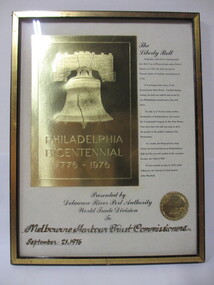
... ./ On July 4, 1776 the newly written/ Declaration of Independence was read to / The continental Congress in the State House./ Four days later the bell was rung to alert/ the people to the public reading of the / declaration./ As a result, the Pennsylvania State / House has become known as Independence / Hall and the revered symbol of the occasion / became our Liberty Bell./ it was cracked on July 8, 1835 while/ tolling for the funeral of Chief Justice/ John Marshall./ Presented by/ Delaware River Port Authority/ World Trade Division/ to/ Melbourne Harbor Trust Commissioners/ September 21, 1976." ..../ On July 4, 1776 the newly written/ Declaration of Independence was read to / The continental Congress in the State House./ Four days later the bell was rung to alert/ the people to the public reading of the / declaration./ As a result, the Pennsylvania State / House has become known as Independence / Hall and the revered symbol of the occasion / became our Liberty Bell./ it was cracked on July 8, 1835 while/ tolling for the funeral of Chief Justice/ John Marshall./ Presented by/ Delaware River Port Authority/ World Trade Division/ to/ Melbourne Harbor Trust Commissioners/ September 21, 1976." ...Certificate from the Delaware Port Authority featuring large gold image of the Liberty Bell, Short description of the bell and the seal of the organisation. Sits in a gold frame. Philadelphia/ Bicentennial/ 1776-1976/ The Liberty Bell/ originally ordered to commemorate/ the 50th year of Pennsylvania under Penn's/ charter of 1701, the bell was cast by/ Thomas Lister of London, arriving here in/ 1752/ It was hung in the tower of the/ Pennsylvania State House. Cracked during/ testing, the bell was melted and recast by/ two Philadelphia foundrymen, Pass and/ Stow./ On July 4, 1776 the newly written/ Declaration of Independence was read to / The continental Congress in the State House./ Four days later the bell was rung to alert/ the people to the public reading of the / declaration./ As a result, the Pennsylvania State / House has become known as Independence / Hall and the revered symbol of the occasion / became our Liberty Bell./ it was cracked on July 8, 1835 while/ tolling for the funeral of Chief Justice/ John Marshall./ Presented by/ Delaware River Port Authority/ World Trade Division/ to/ Melbourne Harbor Trust Commissioners/ September 21, 1976." verso: PMA 0288 -
 Sunshine and District Historical Society Incorporated
Archive - Library / Libraries
... Flyer Official opening of the Sunshine Harvester Branch Library 11 March 1997|Newspaper article The Advocate 15 May 1996 $2.7m project begins Up Front Info Turning of the first sod for the new Sunshine Harvester Branch Library|Typed Notes History of Corio Street Building Sunshine Library|Letter to Brimbank City Council 26 February 1997 S&DHS request to use the Corio Street Library as it's new home|Booklet An introduction to local history resources at the Sunshine Library|Letter from The Library of Congress Washington DC 31 March 1980 receipt of material received Edith Popp Glimpses of Early Sunshine Dawn of a district from aboriginal times to 1901|Letter from The Library of Congress Washington DC Exchange and Gift Division Exchange Program|Plans Harvester Branch Hampshire Rd Library Gound and First Floor|Sunshine Melton Service Annual Report 1990 and 1991|Pamplet ACLIS Australian Council of Libraries and Information Services|Notes on the Interpretive Central Harvester Library 2011 including the purpose of the centre and its history and the role S&DHS and Library Staff|Harvester Site Branch Council Service Centre & Library Preliminary Floor Plan 1995|Introducing The Sunshine Melton Library Service|The Sunshine Melton Library Service Newsletter No 1 January / February 1986|The Sunshine Melton Library Service Newsletter No 2 March / April 1986|The Sunshine Melton Library Service Newsletter No 3 May / June 1986|The Sunshine Melton Library Service Newsletter No 5 September / October 1986|Chief Librarian Susan J Moore letter to Cr. ...Library Flyer Official opening of the Sunshine Harvester Branch Library 11 March 1997|Newspaper article The Advocate 15 May 1996 $2.7m project begins Up Front Info Turning of the first sod for the new Sunshine Harvester Branch Library|Typed Notes History of Corio Street Building Sunshine Library|Letter to Brimbank City Council 26 February 1997 S&DHS request to use the Corio Street Library as it's new home|Booklet An introduction to local history resources at the Sunshine Library|Letter from The Library of Congress Washington DC 31 March 1980 receipt of material received Edith Popp Glimpses of Early Sunshine Dawn of a district from aboriginal times to 1901|Letter from The Library of Congress Washington DC Exchange and Gift Division Exchange Program|Plans Harvester Branch Hampshire Rd Library Gound and First Floor|Sunshine Melton Service Annual Report 1990 and 1991|Pamplet ACLIS Australian Council of Libraries and Information Services|Notes on the Interpretive Central Harvester Library 2011 including the purpose of the centre and its history and the role S&DHS and Library Staff|Harvester Site Branch Council Service Centre & Library Preliminary Floor Plan 1995|Introducing The Sunshine Melton Library Service|The Sunshine Melton Library Service Newsletter No 1 January / February 1986|The Sunshine Melton Library Service Newsletter No 2 March / April 1986|The Sunshine Melton Library Service Newsletter No 3 May / June 1986|The Sunshine Melton Library Service Newsletter No 5 September / October 1986|Chief Librarian Susan J Moore letter to Cr. ...Flyer Official opening of the Sunshine Harvester Branch Library 11 March 1997|Newspaper article The Advocate 15 May 1996 $2.7m project begins Up Front Info Turning of the first sod for the new Sunshine Harvester Branch Library|Typed Notes History of Corio Street Building Sunshine Library|Letter to Brimbank City Council 26 February 1997 S&DHS request to use the Corio Street Library as it's new home|Booklet An introduction to local history resources at the Sunshine Library|Letter from The Library of Congress Washington DC 31 March 1980 receipt of material received Edith Popp Glimpses of Early Sunshine Dawn of a district from aboriginal times to 1901|Letter from The Library of Congress Washington DC Exchange and Gift Division Exchange Program|Plans Harvester Branch Hampshire Rd Library Gound and First Floor|Sunshine Melton Service Annual Report 1990 and 1991|Pamplet ACLIS Australian Council of Libraries and Information Services|Notes on the Interpretive Central Harvester Library 2011 including the purpose of the centre and its history and the role S&DHS and Library Staff|Harvester Site Branch Council Service Centre & Library Preliminary Floor Plan 1995|Introducing The Sunshine Melton Library Service|The Sunshine Melton Library Service Newsletter No 1 January / February 1986|The Sunshine Melton Library Service Newsletter No 2 March / April 1986|The Sunshine Melton Library Service Newsletter No 3 May / June 1986|The Sunshine Melton Library Service Newsletter No 5 September / October 1986|Chief Librarian Susan J Moore letter to Cr. G. Goedecke dated 5th June 1986 - Mobile Library Sites North Sunshine|Sunshine Melton Library Service Annual Report 1983 / 1984|Newspaper Article Star Weekly 3/12/2024 Page 3 - St. Albans Library Upgrade is a hot topiclibrary -
Federation University Historical Collection
Newspaper - Newspaper - Article, VIOSH: Analysis of major killer - accidents at work; "The Age" 23 August 1974: Eric Wigglesworth
... Eric is a project officer with the Royal Australian College of Surgeons and gave a paper on occupational accidents at the Australian Medical Congress, 22 August 1974. In his analysis, he found certain times of the day were more prone to accidents and "that the more children a man has, the more chance he has of having an accident at work." ...Eric is a project officer with the Royal Australian College of Surgeons and gave a paper on occupational accidents at the Australian Medical Congress, 22 August 1974. In his analysis, he found certain times of the day were more prone to accidents and "that the more children a man has, the more chance he has of having an accident at work." ...Victorian Institute of Occupational Safety and Health (VIOSH) Australia is the Asia-Pacific centre for teaching and research in occupational health and safety (OHS) and is known as one of Australia's leaders on the field. VIOSH has a global reputation for its innovative approach within the field of OHS management. VIOSH had its first intake of students in 1979. At that time the Institution was known as the Ballarat College of Advanced Education. In 1990 it became known as Ballarat University College, then in 1994 as University of Ballarat. It was 2014 that it became Federation University. VIOSH Australia students are safety managers, senior advisors and experienced OHS professionals. They come from all over Australia and industry. Students are taught active research and enquiry; rather than textbook learning and a one-size fits all approach. VIOSH accepts people into the Graduate Diploma of Occupational Hazard Management who have no undergraduate degree - on the basis of extensive work experience and knowledge. Newspaper article about Eric Wigglesworth - Australian accidentologist - researcher who works full-time analysing the third killer in the country - accidents. Eric is a project officer with the Royal Australian College of Surgeons and gave a paper on occupational accidents at the Australian Medical Congress, 22 August 1974. In his analysis, he found certain times of the day were more prone to accidents and "that the more children a man has, the more chance he has of having an accident at work." "Some of his more humorous collegues have suggested this is because these people are not new to accidents". Eric became one of the initial group to form the Victorian Institute of Occupational Safety and Health (VIOSH) at Ballarat.A4 sheet with article stuck on. Photograph of speakerThe Age Date: Friday 23/08/74viosh, victorian institute of occupational safety and health, accidentologist, eric wigglesworth, researcher, royal australian college of surgeons, the age, australian medical congress, work accidents -
St Vincent's Hospital Melbourne Archives
Album - Images of the Royal Visit in 1927 and of St Vincent's Hospital Melbourne, the laying of the foundation stone, new wing, 1928
... Page 3, The Papal Legate Cardinal Cerretti XX1X eucharistic congress laying of the foundation stone SVHM1928. ...Page 3, The Papal Legate Cardinal Cerretti XX1X eucharistic congress laying of the foundation stone SVHM1928. ...Images in the album are related to the laying of the foundation stone of St Vincent's new wing in 1928 as well as the royal visit of the Duke and Duchess of York in 1927. A loose newspaper clipping contained in the album titled "Fitzroy's Welcome" provides information on the royal visit which extended into Fitzroy, Collingwood and Richmond. A minute photo on page 18 of the album shows an image of the royal yacht. Album contents and descriptions written: Page 1, Mother Mary Aikenhead foundress of the Sisters of Charity. Page 2, Mother Mary Berchmans foundress of St Vincent's. Page 3, The Papal Legate Cardinal Cerretti XX1X eucharistic congress laying of the foundation stone SVHM1928. Page 4, His Grace the Archbishop of Melbourne the most Rev Daniel Mannix 1928. Page 5, The stand from which the cardinal addressed the meeting. Page 6, En route to "Stand" SVH. Page 7, The stone ready to be blessed. Page 8, The Cardinal going to bless the stone. Page 9, The blessing of the stone. Page 10, Listening to the Cardinal. Page 11, The mallet and the trowel used. Page 12, The stone is well and truly laid, Page 13, Via the enclosure. Page 14, St V's nurses. Page 15, The Subway. Page 16, En route to Reception Hall. Page 17, The Reception Hall. Page 18, The Stage Garlands, CLC students entertained. Page 19, Royal visit His RH the Duke of York. Page 20, The Duchess of York. Page 21, The living check. Page 22, The guard of honour SVH nurses. Page 23, Fire station en fete opposite SVH. Page 24, Victoria Parade for a Royal Visit.Each page has script style black ink descriptions of the photograph.archbishop daniel mannix, mother mary berchmans daly, cardinal bonaventura cerretti, duke of york, duchess of york, mother mary aikenhead, st vincent's hospital melbourne, nurses, victoria parade, eastern hill fire station., tunnels, brenan hall -
 Unions Ballarat
Leaflets, pamphlets, periodicals, newspapers, cuttings and roneoed material retained by the Council, 1891-1962
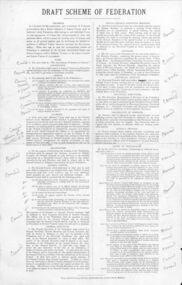
... Circular from Ballarat Trades and Labour Council to Ironmoulders' Society regarding the Congress. 1891. 10. List of subjects to be discussed at Congress. 11. ...Circular from Ballarat Trades and Labour Council to Ironmoulders' Society regarding the Congress. 1891. 10. List of subjects to be discussed at Congress. 11. ...TBATBATwo boxes, paper. 1. Anti-Hanging Committee - regarding hanging. 1962. 2. Ballarat Banking Co. Ltd. Chairman's address and 145th report. August 1954. 3. Country Municipal Association circular regarding conference on centralisation, Ballarat. 22 November 1916. 4. Geelong Town Band's weekly performance programme. n.d. 5. Ironmasters' Association of Victoria rules and regulations agreed upon at the General Iron Trades' Conference, Melbourne. 1891. 6. Melbourne Eight Hours Anniversary programme. 1901. 7. Museum of Applied Science of Victoria, on gas from our brown coal. n.d. 8. New Australian Trade Unionist Committee regarding rally to protect shooting of Polish workers. 195-? 9. Circular from Ballarat Trades and Labour Council to Ironmoulders' Society regarding the Congress. 1891. 10. List of subjects to be discussed at Congress. 11. Circular from Melbourne Trades Hall Council regarding financial help for Congress. 1891. 12. Reports of Standing Orders Committee appointed by the Congress, 23-29 April 1891. 13. Trade Mark Committee report. 14. Committee on Federation report. 15. Draft scheme of Federation (Australasian Federation of Labor). 16. Draft scheme of Federation (Australasian Federation of Labor) to the Labour Councils and Unions of Australasia. (2 copies.) 17. Asian and Pacific Regions Peace Conference, Peking, October 1962. Report on Peking, Melbourne. 1962. (2 copies). 18. Australian Bureau of Census and Statistics. Labour and Industrial Statistics, Melbourne. 1911. 19. Australia. Laws, Statutes, etc Trade Marks Bill, 1905. Workers' Trade Marks. Melbourne, 1905. 20. Australian Council of Trade Unions. Agenda paper for ... Congress, 1953. Melbourne, 1953. 21. Australian Labor Party. Work of the Labor government. Melbourne, 1928. 22. Australian Textile Union, Victorian Branch. Wages Sheet. Melbourne, 1953? 23. Baker, W.A. The Commonwealth Basic Wage. 1907-1953. Sydney, 1953? 24. Building Workers' Industrial Union. Building Workers support your convention. n.p. 1954? 25. Carters' and Drivers' Union. Committee of Management. Important to members of Carters and Drivers' Union. Melbourne, 1936. 26. Dougherty, Tom. Santamaria unmasked. Melbourne, 1954? 27. Eight Hours' Anniversary Sports Programme, 1893. Ballarat 1893. 28. Eight Hours' Anniversary Programme, 1894. Ballarat, 1894. 29. Fadden, Arthur W. The menace of political banking. Sydney, 1945. 30. Federated Clerks' Union, Victoria Branch. The Fennessy Story. The Braun Story. n.p., 1954. 31. Federated Clerks' Union, Victoria Branch. Manifesto, n.p., 1955. 32. Greater Ballarat Association. Seventeenth annual report. Ballarat, 1954. 33. Langridge, H.E. Employers in the Labor Party. Melbourne, 1914. 34. Metal Trades Federation. National Conference of Federal Council and delegates from State branches. Sydney, 1960. 35. Municipal Association of Victoria. Arbitration aware regarding employment of members of the Municipal Officers Association of Australia. Melbourne, 1950. 36. Municipality of the Town of Ballarat East. Annual report, 1919. Ballarat, 1919. 37. Plumbers and Gasfitters Employees' Association of Australia. Melbourne Branch. Why did Menzies abdicate when he had a working majority and 18 months to go? Melbourne, 1955? 38. Plumbers and Gasfitters Employees Union of Australia, Melbourne Branch. Who are the wreckers in the Australian Labor Party? Melbourne, 1955. 39. Spence, W.G. The ethics of New Unionism. Sydney, 1892. (42 copies) 40. Trades Hall Council, Melbourne. Statement of accounts, 1959. Melbourne, 1959. 41. Universal Business Directories (Australia) Pty. Ltd. Home edition for Ballarat. Melbourne, 1954. 42. Victoria, Apprenticeship Commission. Twenty-seventh annual report. Melbourne, 1956. 43. Victorian Labor College. Labor Colleges. Melbourne 191? (3 copies) 44. W.F. Williams. An appeal to the workers of Victoria. n.p., 19?? 45. Workers' Industrial Union of Australia. Preamble, classification and rules. Melbourne 1919? 46. ACTU Bulletin, 1955, Vol 2, No. 2 47. Amalgamated Engineering Union monthly journal, 1954, No. 3. March 48. American Economist, (New York), 1893, Vol 12, No 12, September 49. Australian Worker, (Sydney), 1955, Vol 64, No. 10, May; No. 15, September (held by ANU and at Trove online) 50. Building Workers' Organiser, official organ of the Building Trades Federation, 1954, June 51. Bulletin issued by the Economic Information Service, Melbourne. No. 2 1954, Nos. 10, September; 13 August; 1956, No 14, January 52. Ballarat Courier, 1890, Vol 46, No. 7096, April 53. Ballarat Star, 1888, Vol 33, No. 95, April 54. The Clerk, official journal of Federated Clerks' Union, Victorian Branch, 1955, Vol 10, No. 2, February/March 55. Common Cause, official journal of the Miners' Federation of Australia 1954 Vol 19, No. 10, March; No. 12, April 1955 Vol 20, No. 12, April; No. 19, May 1955 Vol 20, No. 23, June; No 28 July 1955 Vol 20, No. 29, August 1956 Vol 21, No. 17, May 56. Evening Echo, Ballarat, 1915, No. 6673, September 57. Evening Post, Ballarat, 1889, Vol 38, No. 6326, March 58. Industrial Herald, published by Labor Press, Geelong 1952 Vol 34, No. 35, June 1954 Vol 36, No. 20, March; No. 23, April 1954 No. 36, July; No. 39 July 1958 Vol 40, No. 19, March 59. Labor Call, published by Industrial Printing and Publicity Co., Melbourne. 1953, Vol 46, No. 2417, September 60. Labor Supplement. 1952, November 1954, February; March 61. Light, Ballarat diocesan journal. 1955, September. 62. Locomotive journal, published by the Australian Federated Union of Locomotive Enginemen. 1954, Vol. 16, No. 4, January. 63. People's Tribune Supplement, ed. by E.E. Jones, Melbourne. 1886, Vol 5, No. 20, April. 64. Railways' Union Gazette, published by J.D. Michie, Melbourne. 1919, June, Frank Byett in memoriam edition. 65. Rehab News issued by Central Ex-Servicemen's Office, Melbourne. 1946, Vol 2, No. 30, May. 66. Sheet Metal Workers, official organ of the Sheet Metal Working, Agricultural Implement and Stovemaking Union of Australia, Sydney. 1954, No. 107, February. 67. Socialist Comment, Socialist Party of Australia, Melbourne. 1937, No. 2, February. 68. Tocsin, A.L.P. Victorian Branch. 1955?, No. 2, October; No. 4, December. 1956, No. 5, February. 69. Tribune, CPA Sydney. 1965, No. 958, August. 70. UN World, published by Egbert White, New York. 1948, Vol 2, No. 11, December. 71. Miscellaneous newspaper cuttings. Posters 72. Eight Hours' Anniversary, Ballarat, 22 April 1892. 73. Eight Hours' Anniversary, Ballarat, 21 April 1894. 74. Eight Hours' Anniversary, Ballarat, 21 April 1913. 75A. Eight Hours' Anniversary, Ballarat, 3 April 1922. 75B. Electoral Rolls, persons entitled to be enrolled and to vote, 1922. 76. Progress, prospectus of debentures to publish a daily Labour paper to be called "Progress". 1904, Vol 1, No. 1, December. Cards 87. Smoke night social 88. Bi-election 89. How to vote card Roneoed material 77. Circular letter regarding new morning newspaper. n.d. 78. Circular letter from Trades Hall Council, Melbourne. 21 March 1955. 79. Article, History of the recent ALP dispute. n.d. 80. Article: What is freemasonry (from Ballarat St. Patrick's Gazette, October 1854). (2 copies) 81. Information summary of HRH Duke of Edinburgh's study conference on the human problems of industrial communities. ALP Broadcasts from Station 3KZ 82. Incentive payments by Norman A. Gibbs. 17 August 1953. 83. Escalating wages by F.J. Riley. 25 February 1954. 84. Margins by F.J. Riley. 4 March 1954. 85. Freezing margins by F.J. Riley. 17 March 1954. 86. The struggle across the Ages (No. 2) by F.J. Riley. 7 May 1954. ballarat trades and labour council, ballarat trades hall, unions, anti-hanging committee, hanging, ballarat banking co. ltd., country municipal association, geelong town band, ironmasters' association of victoria, general iron trades' conference, museum of applied science of victoria, new australian trade unionist committee, ironmoulders' society, melbourne trades hall council, btlc, intercolonial trades and labor union congress, 7th., trade mark committee report, committee on federation report, australasian federation of labor, asian and pacific regions peace conference, australian bureau of census and statistics, abs, australian bureau of statistics, trade marks bill, actu, australian council of trade unions, australian labor party, alp, australian textile union, w.a. baker, building workers' industrial union, carters and drivers' union, tom dougherty, eight hours' anniversary sports programme, labour and industrial statistics, workers' trade marks, building workers, santamaria, arthur w. fadden, federated clerks' union, fennessy, braun, greater ballarat association, h.e. langridge, metal trades federation, municipal association of victoria, ballarat east, plumbers and gasfitters employees' union of australia, menzies, w.g. spence, new unionism, universal business directories, victoria apprenticeship commission, victorian labor college, w.f. williams, workers' industrial union of australia. preamble, classification and rules. melbourne, 1919?, amalgamated engineering union, american economist, australian worker, building workers' organiser, building trades federation, economic information service, the courier, ballarat star, the clerk, common cause, miners' federation of australia, evening echo, evening post, industrial herald, labor call, labor supplement, light journal, locomotive journal, australian federated union of locomotive enginemen, people's tribune supplement, railways union gazette, frank hyett, rehab news, central ex-servicemen's office, sheet metal worker, sheet metal working, agricultural implement and stovemaking union of australia, socialist comment, tocsin, tribune, un world, eight hour anniversary, electoral rolls, progress, freemasonry, st patrick's gazette, hrh duke of edinburgh, incentive payments, wages, f.j. riley -
 Vision Australia
Document - Image, 1934 - 1954 - 50 Years of Talking Book Service, 1984
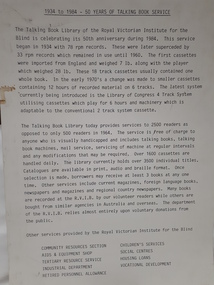
... The latest system currently being introduced is the Library of Congress 4 Track System utilising cassettes which play for 6 hours and machinery which is adaptable to the conventional 2 track system cassette. ...The latest system currently being introduced is the Library of Congress 4 Track System utilising cassettes which play for 6 hours and machinery which is adaptable to the conventional 2 track system cassette. ...The Talking Book Library of the Royal Victorian Institute for the Blind is celebrating its 50th anniversary during 1984. This service began in 1934 with 78 rpm records. These were later superceded by 33rpm records which remained in use until 1960. The first cassettes were imported from England and weighed 7 lb. along with the player which weighed 28 lb. These 18 track cassettes usually contained one whole book. In the early 1970's a change was made to smaller cassettes containing 12 hours of recorded material on 6 tracks. The latest system currently being introduced is the Library of Congress 4 Track System utilising cassettes which play for 6 hours and machinery which is adaptable to the conventional 2 track system cassette. The Talking Book Library today provides services to 2500 readers as opposed to only 500 in 1964. The service is free of charge to anyone who is visually handicapped and includes talking books, talking book machines, mail service, servicing of machines at regular intervals and any modifications that may be required. Over 1600 cassettes are handled daily. The library currently holds over 3500 individual titles. Catalogues are available in print, audio and braille format. Once selection is made, borrowers may receive at least 3 books at any one time. Other services include current magazines, foreign language books, newspapers and magazines and regional country newspapers. Many books are recorded at the R.V.I.B. by our volunteer readers while others are bought from similar agencies in Australia and overseas. The department of the R.V.I.B. relies almost entirely on voluntary donations from the public. Other services provided by the Royal Victorian Institute for the Blind Community Resources Section, Aids & Equipment Shop, Tertiary Resource Service, Industrial Department, Retired Personnel Allowance, Children's Services, Social Services, Housing Loans, Vocational Development1 digital image of typewritten pageroyal victorian institute for the blind, talking books -
 Federation University Historical Collection
Photograph - Photograph - Black and White, Meeting for the Australian Association for the Advancement of Science, Hobart, 1892, 1892
... AUSTALASIAN ASSOCIATION FOR THE ADVANCEMENT OF SCIENCE. The fourth congress of the Australasian Association for the Advancement of Science was commenced in Hobart at 11. o'olock on Thursday by the general Council assembling at the Royal Society's rooms, at the Museum. ...AUSTALASIAN ASSOCIATION FOR THE ADVANCEMENT OF SCIENCE. The fourth congress of the Australasian Association for the Advancement of Science was commenced in Hobart at 11. o'olock on Thursday by the general Council assembling at the Royal Society's rooms, at the Museum. ...Newspaper reports relating to the Australasian Association for the Advancement of Science, Hobart, 1892. "Australasian Association for the advancement OF SCIENCE. Several members of the Australasian Association for the Advancement of Science arrived in the city yesterday by the inter colonial steamers, some of whom went direct to Hobart, while others remained in the city, but leave for the capital this afternoon. Amongst those who arrived were Baron Von Mueller, the dis tinguished scientist, who has taken some interest in this colony's re sources, Professor W. Baldwin Spencer, M.A., professor of biology at the Melbourne University, who was general secretary at the Melbourne meeting; the Rev. Lorimer Fison, an able worker in the South Sea mission fields; Dr. Robert Giffen, L.L.D., C.ll.; Captain Pascoe, R.N.; Mr Napier Bell, C.E.; Professors Hutton, Nerich, Smith, and Morris, and Mr Richard Teece, F.T.A., the well-known actuary of the A.M.P. Society. A large number of other distinguished members also arrived. Judge Dorkerwho also arrived, was con ducted over the Exhibition in the after noon, and expressed pleasure with what he saw. His Honor leaves by express train to-day for Hobart. The hon. Dr. Campbell was met by Mr Arthur Day, the official agent for Great Britain to the Exhibition, an old friend, who conducted him over the Exhibition. The doctor confined his attention principally to the dry ore concentrator, in which he takes a great interest. He will, however, visit the Exhibition again after the meetings in Hobart has been brought to a termination. What he has seen of the Exhibition has impressed him favourably. (Launceston Advertiser, 6 January 1892.) "TASMANIA. AUSTALASIAN ASSOCIATION FOR THE ADVANCEMENT OF SCIENCE. The fourth congress of the Australasian Association for the Advancement of Science was commenced in Hobart at 11. o'olock on Thursday by the general Council assembling at the Royal Society's rooms, at the Museum. There was a good attendance, including the Governor, Sir B. G. Hamilton. In the absence of the president, Sir James Hector, the chair was occupied by Baron Von Muellor. In the afternoon Lady Hamilton gave a garden party at Government House to 600 guests, including the members of the association, the Judges, the members of the Ministry, and leading citizens." (Newcastle Morning Herald & Miners' Advocate, 9 January 1892.)Two sepia photographs mounted onto charcoal mount. A group of men in hats and coats, and women in hats and long dresses assemble in front of a double story building, thought to be Henry Dobson's of Ferntree near Hobart. In the background stumps of large trees are evident. The event was a garden party held in for members of the Australasian Association for the Advancement of Science who met in Hobart in 1892. .1 F.J. Martell of the Ballarat School of Mines is seated between two women in the right hand foreground. James Oddie, with white beard and top hat, is standing in the centre foreground between two women. .2) James Oddie is standing with cane in hand on the right of the bench in the foreground of the photo. australasian association for the advancement of science, hobart, oddie, james oddie, martell, von mueller, baldwin spencer, lorimer fison, robert giffen, napier bell, arthur day, dobson, henry dobson -
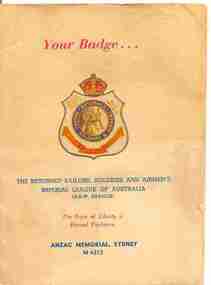 Red Cliffs Military Museum
Booklet, Eric Stephenson, Your Badge, 1945 (estimated)
... ./ "That this Federal congress - the first to be held since the declaration of war/ publicly states that the whole body of the/ RSS&AILA is heart and sole behind/ the new Australian Expiditionary Force, and/ gladly accepts the new obligations to protect/ the interests of all who shall serve the Empire/ in the present war.// Page 1: A Welcome home/ From your Reception Committee/ The Old and New Diggers.// Page 2& 3: A Message from the State President.// Page 4: Policy of the RSS&AILA.// Pages 5,6,7: R.S.L. ..../ "That this Federal congress - the first to be held since the declaration of war/ publicly states that the whole body of the/ RSS&AILA is heart and sole behind/ the new Australian Expiditionary Force, and/ gladly accepts the new obligations to protect/ the interests of all who shall serve the Empire/ in the present war.// Page 1: A Welcome home/ From your Reception Committee/ The Old and New Diggers.// Page 2& 3: A Message from the State President.// Page 4: Policy of the RSS&AILA.// Pages 5,6,7: R.S.L. ...A booklet of the Returned Sailors, Soldiers and Airmen's Imperial League of Australia NSW Branch. Front cover has the original RSL badge printed above the Price of Liberty is Eternal Vigilance. ANZAC Memorial Sydney M4313Front Cover: YOUR BADGE/ colour picture of original RSL Badge./ THE RETURNED SAILORS, SOLDIERS & AIRMEN'S IMPERIAL LEAGUE OF AUSTRALIA/ (NSW BRANCH)/ THE PRICE OF LIBERTY IS/ ETERNAL VIGILANCE/ ANZAC MEMORIAL SYDNEY/ M4313// Inside Cover: THE LEAGUES PLEDGE/ November 1939./ "That this Federal congress - the first to be held since the declaration of war/ publicly states that the whole body of the/ RSS&AILA is heart and sole behind/ the new Australian Expiditionary Force, and/ gladly accepts the new obligations to protect/ the interests of all who shall serve the Empire/ in the present war.// Page 1: A Welcome home/ From your Reception Committee/ The Old and New Diggers.// Page 2& 3: A Message from the State President.// Page 4: Policy of the RSS&AILA.// Pages 5,6,7: R.S.L. Policy.// Pages 8,9,10 & 11: Record of Service (outlines the services the RSL provides and the Principles on which it was established.// Pages 12, 13, 14, 15, 16 & 17: List of Sub-Branches NSW. Women's Services/ Merchant Navy// Centre Page: Nomination for Membership // Pages 18,19,20,& 21: War Pensions.// Page 22: Did you know.//Page 23: Eligiblity for Membership.// Page 24: If there were no League. // Pages 25, 26: ANZAC Centre. // Page 27: Memorandum (clear page)// Page 28 Personal memoranda (to be filled in) Conclusion.book, anzac, imperial, sailors, soldiers, league, badge, your, returned, airmen, memorial, hand -
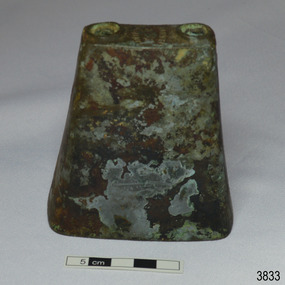 Flagstaff Hill Maritime Museum and Village
Functional object - Cow Bell, James Barwell, 1860s-1878
... According to his advertisement in the Exhibitors guide for the Church Congress of 1887, he made bells and fittings for churches and schools. ...According to his advertisement in the Exhibitors guide for the Church Congress of 1887, he made bells and fittings for churches and schools. ...This brass cow bell was recovered from the wreck of the sailing ship ‘Loch Ard’ at Mutton Bird Island, near Port Campbell, Victoria, from late 1960s to early 1970s. Cow bells were listed as part of the cargo on board the Loch Ard. This bell is now part of the John Chance collection. Flagstaff Hill Maritime Village’s divers also recovered similar bells from the Loch Ard wreck in 1973. One of them was found in a sandy hole in the centre of the wreck site. All of the recovered cow bells are without their hangers. A bell of this size could have been used by horse or cattle teams. Cow bells were a common Colonial item. They were hung around the necks of grazing domestic cows and goats, bullock and horse teams, even camel teams so that they could be found again. Sheep and cattle drovers used them as a warning for night time disturbances such as wild animals. The maker of the cow bell, James Barwell, was a bell founder established in Birmingham, England, from 1784. In 1842 he acquired Fiddian’s firm of ‘Steam and Water’, keeping its name and stamping it on some of his products. According to his advertisement in the Exhibitors guide for the Church Congress of 1887, he made bells and fittings for churches and schools. He also made bells for cloches and chimes, and made tuned musical handbells. He repaired and reproduced bells, and he had a team of experienced ringers to “inspect towers and report upon the tone and condition of bells and fittings.” In 1903 he became incorporated as a Limited Company, ‘engineers’ and plumbers’ brasswork, and bell founders.’ In 1914 he advertised as ‘Cock and Bell Founders’, specialising in plumbing and engineering fittings, church bells, and “every description of hanging and hand bells.” Some of Barwell’s products were stamped with his maker’s mark (his initials J. B. either side of a cross entwined with a ‘B’ in an oval of oak leaves (for Birmingham)). James Barwell bells were no longer made after 1920. James Barwell was among makers who exported bells to the Australian colony from the 1860s. Early Australian iron animal bells were also made from the 1860s by blacksmiths such as Anthony Morgan from 1861, August Menneke from 1867, and Samuel Jones from 1868. Few brass bells were produced here in those times. This bell is historically significant as typical of a cow bell used by farmers and herdsmen in Colonial Victoria. Its significance is increased by being an artefact recovered by John Chance, a diver from the wreck of the Loch Ard and other wrecks in the late 1960s to early 1970s. Items that come from several wrecks along Victoria's coast have since been donated to the Flagstaff Hill Maritime Village’s museum collection by his family, illustrating this item’s level of historical value. The cow bell is also significant for being part of Flagstaff Hill’s collection of artefacts from LOCH ARD, which is significant for being one of the largest collections of artefacts from this shipwreck in Victoria. It is significant for its association with the shipwreck, which is on the Victorian Heritage Register (VHR S417). The collection is significant because of the relationship between the objects, as together they have a high potential to interpret the story of the LOCH ARD. The LOCH ARD collection is archaeologically significant as the remains of a large international passenger and cargo ship. The LOCH ARD collection is historically significant for representing aspects of Victoria’s shipping history and its potential to interpret sub-theme 1.5 of Victoria’s Framework of Historical Themes (living with natural processes). The collection is also historically significant for its association with the LOCH ARD, which was one of the worst and best known shipwrecks in Victoria’s history. Cow bell; heavy brass, flat top, pyramid shape, rectangular head, shoulders flare out to rectangular mouth. The head has two same-sized tooled holes for adding the hanging yoke. Inscription on top and one side. Encrustations are on the metal in places. The hanger and clapper are missing. Made by James Barwell of Birmingham.Stamped on the head "BARWELL / - - - / - - -- ING" [Perhaps BARWELL - - - BIRMING. Could size be in centre? 3 3/4 IN?] Stamped on side [motif] (undecipherable) flagstaff hill, warrnambool, flagstaff hill maritime museum, maritime museum, shipwreck coast, flagstaff hill maritime village, great ocean road, john chance, loch ard, mutton bird island, glenample, eva carmichael, tom pearce, james barwell, cow bell, horse bell, bell founder, bell smith, vintage bell, birmingham bell foundry, farmer, shepherd, drover, stock bell -
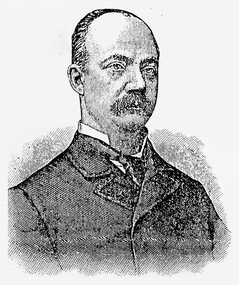 Bendigo Historical Society Inc.
Journal - Fortuna Articles - The Musical Times Band Journal - William Northcott, 1884
... Early Engagements (1873–1875):Solo cornetist at Congress Hall, Cape May, under Simon Hassler (summers of 1873, 1874, 1875). ...Early Engagements (1873–1875):Solo cornetist at Congress Hall, Cape May, under Simon Hassler (summers of 1873, 1874, 1875). ...This article provides a biographical overview of William Northcott, an accomplished English-born cornetist. Born in Devonshire, England, in 1811.He began studying music at age nine under the renowned cornetist Norton. He demonstrated rapid progress, leading to early opportunities in military bands. He joined the British Navy as a young teenager, initially aiming to serve on the St.Jean d'Acre during the Crimean War. He played the cornet aboard the Princess Royal and later the St. Jean d'Acre, becoming popular among officers and crew. William participated in significant events such as the Crimean War and the fall of Sebastopol before returning to England in 1856. He Continued naval service on the "Conqueror" (Mediterranean cruise, 1856–1859) and then the "Nile," where he served as leading cornet player and soloist. Accompanied the Prince of Wales on a tour of Canada, earning high praise for his performances.International Musical Caree. rAfter ten years in the British Navy, traveled to Australia to join his family and founded the Northcott Sandhurst Brass Band, introducing popular "sacred concerts." Moved to New Zealand, briefly led a band in Christchurch, and attempted gold mining before returning to music with a successful concert tour. On route to America, organized a concert in Honolulu and was hired by the local government to form and lead a band, which he developed into a respected ensemble. William arrived in San Francisco in 1871, performed as a soloist in a major benefit concert for Chicago fire victims, and gained popularity on the West Coast. Later he moved to New York City, performing with prominent groups and artists, including Henry Tissington and Mme. Parepa Rosa, and joined Carneross' Minstrels. Early Engagements (1873–1875):Solo cornetist at Congress Hall, Cape May, under Simon Hassler (summers of 1873, 1874, 1875). Performed with the San Francisco Minstrels (fall/winter 1873–74) and at the Chestnut Street Theatre, Philadelphia (fall/winter 1874). Centennial Exhibition (1876):Specially engaged to perform for several exhibitors, attracting large crowds (20,000–30,000 people daily).Played for major companies (Hook & Hastings Organ Co., Knabe Piano Co., Stieff Piano, etc.) and with the Centennial Band. Demonstrated remarkable endurance by performing multiple daily sets throughout the event.Subsequent Engagements (1877–1879): Soloist for the Permanent Exhibition (1877–79). Performed with renowned violinist Ole Bull in 1879 and impressed critics with technical feats, such as playing "America" in four octaves on the cornet.Concert Company Leadership (1891–1893): Managed and performed with his own Concert Company, recognized as one of the finest musical organizations in the country. The company featured top vocalists and instrumentalists, giving over fifty concerts in Philadelphia alone. Introduced an original comic opera, "Henrietta; or, the Power of Music," to diversify the repertoire. Northcott's career is marked by international travel, military service, musical leadership, and a reputation for both performance excellence and band organization. Williams and his brother James Northcott served in the military together. James settled in Bendigo and worked for George Lansell as his general manager for 26 years. James lived in Lily St Golden Square; he continued with the Northcott Band until his death in 1904Fortuna Articles - The J.W. Pepper's Philadelphia Musical Times Band Journal - Sketch of William Northcott April 1884 This item contains two copies of the following documents from Wendy Ellis, a descendant of the Northcotts. James (George Lansell's General Manager) Northcott's name was famous for his involvement with his band. William was his brother who joind him in Bendigo for four years. 11217.68a Black and white etching of William Northcott, Cornet Virtuosu, from the article (sketch) on him - the Musical Times Journal. 11217.68b, c, and d Part of the article on William Northcott 11217.68e This document is a personal letter focused on family history and genealogical research. The writer's great-grandfather was Richard Williams.The writer's grandfather, Albert James, married Annie Edith Northcott, who was George Lansell's niece. Annie's father was not William Northcott, but his brother. The writer enclosed photocopies related to the family history, as promised. An additional photocopy from a magazine was included, with the original held by the writer's sister. The writer asks for the names, address, or phone number of the Lansell sisters to obtain a copy of the family tree. The book "Bendigo and Vicinity" is mentioned as a resource, with copies available at the State Library in Melbourne.non-fictionbendigo, fortuna, george lansell, william northcott, james northcott band, wnedy ellis
