
Showing 160 items matching "isolation"
-
 Kiewa Valley Historical Society
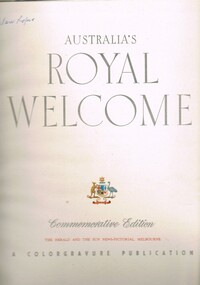
Book - Non Fiction History, Australia's Royal Welcome 1954, circa 1954
... This self reliance psyche was essentially a by product of World War II, and the isolation felt by the Australian People. The Queen (royalty) was the binding force holding the British Empire together which was emphasised with her popularity when touring Australia Queen Elizabeth's visited the MCG twice in 1954 1. to attend an assembly of ex-servicemen and women's organisations 2. to attend a Children's Display. ...This self reliance psyche was essentially a by product of World War II, and the isolation felt by the Australian People. The Queen (royalty) was the binding force holding the British Empire together which was emphasised with her popularity when touring Australia Queen Elizabeth's visited the MCG twice in 1954 1. to attend an assembly of ex-servicemen and women's organisations 2. to attend a Children's Display. ...This publication covers the mid 1900s and relates to a period where the majority of the Australian population was engrossed with the Queen of Australia, even though her Highness did not reside on this continent. The period covered was before the great immigration insurgence from Europe.The Labour Party's "White Australian" policy was a hinderance and a barrier towards the Asian and African prospective immigrants. The motto Queen and Country was still very ingrained in the rural population. This period in Australian domestic self reliance, brought about the growing strength and very active trade union movement and their staunch support for the Tariff protection against a growing swell of imported goods. This self reliance psyche was essentially a by product of World War II, and the isolation felt by the Australian People. The Queen (royalty) was the binding force holding the British Empire together which was emphasised with her popularity when touring Australia Queen Elizabeth's visited the MCG twice in 1954 1. to attend an assembly of ex-servicemen and women's organisations 2. to attend a Children's Display. She also visited Government House and visited Country Victoria on the Royal train from 24th Feb - 9th March.The Kiewa Valley and all the rural areas in the region were still very much tied to the "mother land" and trade between Britain and Australia was very strong. Trade with Asian manufacturers was minimal and needed the late 1900s to see both the trade and immigration barriers fall. This book was produced during a time when the majority of Australians looked more to England for trade and companionship. The agricultural trade with England and Europe was very high and the motto of the time was "Australia grows on the sheep's back". Late 1900's saw the motto "Australia grows on the miner's back" The Queen was still very popular then which was emphasised by the large crowds which greeted her on tour. Residents of Mt Beauty including Cubs, Brownies, Scouts and Guides travelled to Benalla to see the Queen. Clare Roper was a founding member of the KVHS and attended a garden party at Buckingham Palace representing the local CWA. She has purchased this book and therefore giving this a close historical significance connection, it has good provenance and interpretive capacity. This hard(blue coloured) covered book contains thirty six double sided pages. Both the first and last pages (inside cover included) has the royal crest of Australia (kangaroo and emu) balancing the individual six states crests ,united under the royal crown. The first six double pages, each portraying a coloured free hand sketches of various Australian scenery enclosing the Queen's day by day and State by State itinerary. There are 115 black and white photographs and 25 coloured photographs contained in this book.Third page has free hand penned signature "Clare Roper"1954 royal tour, queen elizabeth ii monarchy, british empire in the 1900s, god save the queen. -
 Returned Nurses RSL Sub-branch
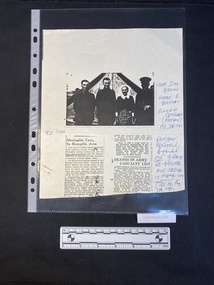
Newspaper - Photocopy of newspaper clippings and a photo, The Sun, Meningitis case in Bonegilla area, 4 and 19 Oct 1940
... The man was recovering, said the Deputy-Director of Medical Services, Southern Command,with all precautions against the spread being taken, including isolation of contacts and the unit. Colonel Shaw went on to emphasise that there was no need for alarm as the disease did not appear to present in epidemic form and the likelihood that it would assume epidemic proportions reduced every week. ...The man was recovering, said the Deputy-Director of Medical Services, Southern Command,with all precautions against the spread being taken, including isolation of contacts and the unit. Colonel Shaw went on to emphasise that there was no need for alarm as the disease did not appear to present in epidemic form and the likelihood that it would assume epidemic proportions reduced every week. ...Clipping one - 'Meningitis case in Bonegilla area' - A case of cerebro-spinal meningitis was reported from the troops on the Bonegilla military camp. The man was recovering, said the Deputy-Director of Medical Services, Southern Command,with all precautions against the spread being taken, including isolation of contacts and the unit. Colonel Shaw went on to emphasise that there was no need for alarm as the disease did not appear to present in epidemic form and the likelihood that it would assume epidemic proportions reduced every week. Clipping two - 'Deaths in army casualty list' - Army casualty lists for Victoria and New South Wales. Victoria - In Australia: Gunner J Burgess, Pte WH Chute: died of illness; Pte AD Mathers, Pte W Walsh: placed on dangerously ill list; Gunner OJ Carkeek: removed from seriosly ill list; Abroad: Pte JW Bruce: placed on dangerously ill list; Pte JW Nuttall: removed from seriusly ill list. New South Wales: Abroad: Pte EJ Maples: accidentally killed; Gunner AAGV Peterson: placed on seriously ill list.A photocopied page of two single column newspaper clippings from separate newspapers beneath a black and white photo of a woman in nurse's uniform and three men standing in front of a tent.'SEPT 1940' [blue ink, left side middle' 'CAPT. DON / BROWN / SISTER B. / HAYNES / GUNNER / CARKEEK / (PATIENT) / PTE. DE [MM]' [blue ink, right side middle] 'PATIENT / RE[CORDED/COVERED] / A[?ded] / OUT of ARMY / RE-EnlistED / AnD SERVED / In SAME[underlined] LM[E/] / [line leading into clipping text] 9211 FD. Reg. / IM ME.' [blue ink right side, lower] [line indicating a line in the text, blue ink, middle lower]lydia shaw, edith lydia shaw, artillery, infantry, engineers, ww2, wwii, world war two -
 Eltham District Historical Society Inc
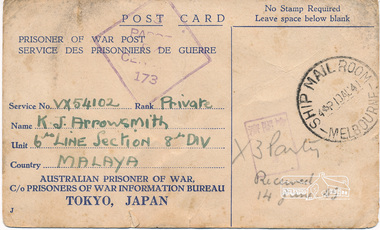
Post Card, Post Card sent to Private K.J. Arrowsmith, VX54102, 6th Line Section, 8 Div, Malaya via Prisoner of War Post, 8 August 1944 (received 14 June 1945), 8 Aug 1944
... Volunteers were called for to assist in this cholera ward; a disease highly contagious and with a terrific death rate. This meant isolation, but did not deter many men from offering their services, Bob and Kevin Arrowsmith being selected.” - Through the Burma-Thailand Railway, pp234-5, author unknown ...Volunteers were called for to assist in this cholera ward; a disease highly contagious and with a terrific death rate. This meant isolation, but did not deter many men from offering their services, Bob and Kevin Arrowsmith being selected.” - Through the Burma-Thailand Railway, pp234-5, author unknown This post card is significant for its rarity as very few ever made it through and were saved. ..."Dear Kevin, Everybody home here is well, hope you and Bobby are well. Sid, Laurie home, hear regular from Eddie. Lots love Polly DAD" Post Card sent to Private K.J. Arrowsmith, VX54102, 6th Line Section, 8 Div, Malaya via Prisoner of War Post, Australian Prisoners of War, C/o Prisoners of War Information Bureau Tokyo, Japan from his sister Polly (Mercia Castledine). “After the cholera had been evidence for a few days, the Nips decided that the works on the railway had to be carried on and so isolated all the cases (a number more had developed since we were first quarantined) and sent all other men back to work. By this time, the number of men unfit for work had increased tremendously and the medical officer and medical orderlies were hopelessly overworked. Volunteers were called for to assist in this cholera ward; a disease highly contagious and with a terrific death rate. This meant isolation, but did not deter many men from offering their services, Bob and Kevin Arrowsmith being selected.” - Through the Burma-Thailand Railway, pp234-5, author unknown This post card is significant for its rarity as very few ever made it through and were saved. In these instances the information provided by Polly was cryptic informing Kevin and Bob Arrowsmith that brother Eddie and brothers-in-law, Laurie Mears and Sid Castledine were all still alive.Digital image of original held in private collection of Joan Castledine, daughter of Sid and Polly (nee Arrowsmith) Castledine.bob arrowsmith, burma-thailand railway, eddie arrowsmith, joan castlemaine, kevin j. arrowsmith, laurie mears, lucy mears (nee arrowsmith), mercia (polly) castledine (nee arrowsmith), postcards, prisoner of war post, sid castledine -
 Eltham District Historical Society Inc
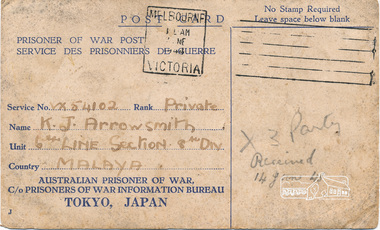
Post Card, Post Card sent to Private K.J. Arrowsmith, VX54102, 6th Line Section, 8 Div, Malaya via Prisoner of War Post, 16 June 1944 (received 14 June 1945), 16 Jun 1944
... Volunteers were called for to assist in this cholera ward; a disease highly contagious and with a terrific death rate. This meant isolation, but did not deter many men from offering their services, Bob and Kevin Arrowsmith being selected.” - Through the Burma-Thailand Railway, pp234-5, author unknown ...Volunteers were called for to assist in this cholera ward; a disease highly contagious and with a terrific death rate. This meant isolation, but did not deter many men from offering their services, Bob and Kevin Arrowsmith being selected.” - Through the Burma-Thailand Railway, pp234-5, author unknown This post card is significant for its rarity as very few ever made it through and were saved. ..."Dear Kevin, Hope you are both well, everybody well home here, constantly thinking of you, hear regular, Eddie, Laurie, Sid. Lots love Polly Dad" Post Card sent to Private K.J. Arrowsmith, VX54102, 6th Line Section, 8 Div, Malaya via Prisoner of War Post, Australian Prisoners of War, C/o Prisoners of War Information Bureau Tokyo, Japan from his sister Polly (Mercia Castledine). “After the cholera had been evidence for a few days, the Nips decided that the works on the railway had to be carried on and so isolated all the cases (a number more had developed since we were first quarantined) and sent all other men back to work. By this time, the number of men unfit for work had increased tremendously and the medical officer and medical orderlies were hopelessly overworked. Volunteers were called for to assist in this cholera ward; a disease highly contagious and with a terrific death rate. This meant isolation, but did not deter many men from offering their services, Bob and Kevin Arrowsmith being selected.” - Through the Burma-Thailand Railway, pp234-5, author unknown This post card is significant for its rarity as very few ever made it through and were saved. In these instances the information provided by Polly was cryptic informing Kevin and Bob Arrowsmith that brother Eddie and brothers-in-law, Laurie Mears and Sid Castledine were all still alive.Digital image of original held in private collection of Joan Castledine, daughter of Sid and Polly (nee Arrowsmith) Castledine.bob arrowsmith, burma-thailand railway, eddie arrowsmith, joan castlemaine, kevin j. arrowsmith, laurie mears, lucy mears (nee arrowsmith), mercia (polly) castledine (nee arrowsmith), postcards, prisoner of war post, sid castledine -
 The Beechworth Burke Museum
Audio - Oral History, Jennifer Williams, Evelyn Jensen, 13th April 2000
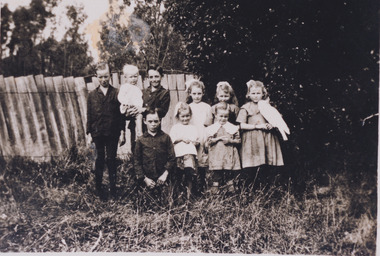
... ...isolation...Mytleford Road Beechworth three mile creek three mile beechworth twin nozzleman Goldrush gold rush work mother young mother children siblings baby grandmother father isolation bush water watertanks kerosene tins wash day bath day creek gardening provide poor money oral history twentieth century recording story Evelyn Jensen / This is a digital copy of a recording that was originally captured on a cassette tape. ...Miss Evelyn Jensen was born in 1908 near Mytleford Road in Beechworth. Miss Jensen was a twin but she also had twelve brothers and sisters. Miss Jensen went to school when she was nine years old but did not enjoy it. Her father was a nozzleman and had a role in finding and collecting gold. More specifically, a nozzleman operated a steel barrel with an interchangeable brass nozzle that sprayed high pressure water onto rock and similar surfaces. This broke down the surface for gold to be found. Unfortunately, when he began most of the gold was already gone. Miss Jensen's mother died when Miss Jensen was sixteen. As a result, Miss Jensen had to take care of the children and run the house. This included looking after a few months old baby. Her father was away at work most days so all of the responsibility fell on her. Her grandmother was present but she was too old to help Miss Jensen. Miss Jensen and her family lived a very long way from the main town and often had to carry kerosene tins full of water half a mile to their house. This was because they have no access to water at their home. This lack of water also meant they had to either bathe in the creek or carry the water back home for a bath. On wash day, they washed their clothes in the creek too. Miss Jensen never married but continued to provide for her family. She spent her days gardening and cooking. They did not have much money so gardening was a way that they provided food for themselves. This oral history recording was part of a project conducted by Jennifer Williams in the year 2000 to capture the everyday life and struggles in Beechworth during the twentieth century. This project involved recording seventy oral histories on cassette tapes of local Beechworth residents which were then published in a book titled: Listen to what they say: voices of twentieth century Beechworth. These cassette tapes were digitised in July 2021 with funds made available by the Friends of the Burke.Miss Jensen's oral history is significant because it demonstrates the struggles of living remotely during this early part of the twentieth century. When Miss Jensen's mother died, she had to take on a lot of responsibility and did not have much support. This history sheds light on these struggles of being a young caregiver but it also gives details on how large families lived in isolated places. An example of this is the way that Miss Jensen often had to do the washing in the creek because that was the only place there was running water. In addition, Miss Jensen's story is significant because her father was a nozzleman. It indicates one of the processes was used to find gold. This oral history account is socially and historically significant as it is a part of a broader collection of interviews conducted by Jennifer Williams which were published in the book 'Listen to what they say: voices of twentieth-century Beechworth.' While the township of Beechworth is known for its history as a gold rush town, these accounts provide a unique insight into the day-to-day life of the town's residents during the 20th century, many of which will have now been lost if they had not been preserved.This is a digital copy of a recording that was originally captured on a cassette tape. The cassette tape is black with a horizontal white strip and is currently stored in a clear flat plastic rectangular container. It holds up 40 minutes of recordings on each sideEvelyn Jensen /mytleford road, beechworth, three mile creek, three mile beechworth, twin, nozzleman, goldrush, gold rush, work, mother, young mother, children, siblings, baby, grandmother, father, isolation, bush, water, watertanks, kerosene tins, wash day, bath day, creek, gardening, provide, poor, money, oral history, twentieth century, recording, story -
 Emerald Museum & Nobelius Heritage Park
Photograph - Photograph - Emerald Community House group, 2017
... It grew out of local community need, particularly the isolation of women in the community, with a vision to bring people together and enhance the opportunities of people and communities. ...It grew out of local community need, particularly the isolation of women in the community, with a vision to bring people together and enhance the opportunities of people and communities. ...In 2016, the Cardinia Shire Council decided to replace an existing bus shelter outside the Emerald Community House (ECH) - this shelter had been decorated with mosaics - with a bus shelter compliant with the current safety regulations. This caused a strong protest by people who did not wish to lose their loved bus shelter. Protesters, supported by the ECH, completed all-night vigils and garnered considerable publicity. Eventually, the Council agreed that, although the planned bus shelter would go ahead, the mosaics from the original shelter would be saved and a shelter approximating the original would be built close to the ECH. This outcome was accepted by the protesters. The Victorian Neighbourhood House movement was born in the early 1970s during the Whitlam era of significant social change. It grew out of local community need, particularly the isolation of women in the community, with a vision to bring people together and enhance the opportunities of people and communities. Another initial emphasis was to provide an informal, non-threatening and nurturing environment that supported individualised learning. The Emerald Community House (ECH) began in 1974 - one of the oldest continuously running incorporated community houses in Victoria. The State Government changed service providers for the ECH in 2025. The previous service providers have donated records of the ECH including this photograph.The Emerald Community House has been a significant and valued contributor to community life since its inception in 1974.Colour photograph of Emerald Community House (ECH) group of sixteen supporters and staff in front of newly installed shelter decorated with original mosaics following the resolution of a dispute with Cardinia Shire Council which had decided to demolish the shelter and replace it with a new bus shelter which would meet community safety and disability compliance standards.photographs, emerald community house, bus shelter, protest movement, 2016 -
 Sunshine and District Historical Society Incorporated
Photograph - Town Of Maidstone North Footscray Auction Brochure
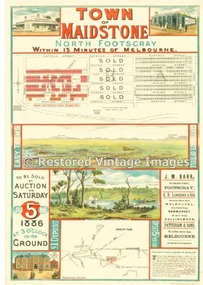
... Maidstone began as an 1858 speculative township on Ballarat Road, grew slowly due to isolation from rail transport, then expanded rapidly in the 20th century through tram extensions, defence industries, migrant hostels, and Housing Commission estates.Today it is a diverse, residential‑industrial suburb shaped by waves of working‑class settlement, post‑war migration, and late‑20th‑century redevelopment. ...Maidstone began as an 1858 speculative township on Ballarat Road, grew slowly due to isolation from rail transport, then expanded rapidly in the 20th century through tram extensions, defence industries, migrant hostels, and Housing Commission estates.Today it is a diverse, residential‑industrial suburb shaped by waves of working‑class settlement, post‑war migration, and late‑20th‑century redevelopment. ...Maidstone began as an 1858 speculative township on Ballarat Road, grew slowly due to isolation from rail transport, then expanded rapidly in the 20th century through tram extensions, defence industries, migrant hostels, and Housing Commission estates.Today it is a diverse, residential‑industrial suburb shaped by waves of working‑class settlement, post‑war migration, and late‑20th‑century redevelopment. Early Foundations (1840s–1860s- The broader district saw activity from the 1840s, including Joseph Raleigh’s meat‑preserving works on the Maribyrnong River, which sat on the boundary of what became Maidstone. - Land speculator J.W. Thompson launched the township with great fanfare, including a German band and a banner proclaiming “Every man his own landlord.” - Despite the marketing, by 1860 only about ten homes existed. - - Maidstone grew slowly because it was isolated from the railway, relying instead on punts across the Maribyrnong River. - A National School opened in 1858, but the area remained sparsely settled. - The district’s early industrial landscape included: - Raleigh’s meat works (1843) - Victorian Powder Magazine, later expanded for military use These sites later became part of Pipemakers Park and the Living Museum of the West. - The arrival of trams from Footscray in 1921 finally unlocked residential growth. - A Progress Association formed, and the suburb gained amenities including its own cinema in the 1940s. - Housing stock from this era included weatherboard, Art Deco, and Californian Bungalow homes. Town of Maidstone North Footscray Within 15 Minutes of Melbourne To be sold by Auction on Saturday 5th June 1886 at 3 O'Clock on the ground J. M. Barr Nicholson Street Footscraymaidstone -
 Ambulance Victoria Museum
Humidicrib, CIG, Port-O-Cot, The Commonwealth Industrial Gases Limited
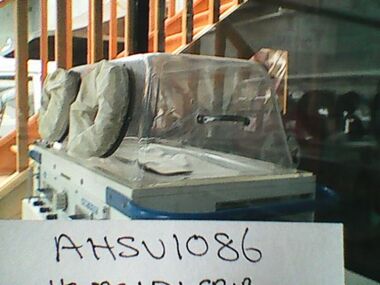
... Even though the baby is in complete isolation nursing is a straight forward matter… The iris armholes allow nurses to feed, weigh, take temperatures, change napkins or, in fact, carry out any procedures without changing or disturbing the atmosphere within the cot. ...Even though the baby is in complete isolation nursing is a straight forward matter… The iris armholes allow nurses to feed, weigh, take temperatures, change napkins or, in fact, carry out any procedures without changing or disturbing the atmosphere within the cot. ...Humidicribs are used to transport sick babies from small hospitals to major hospitals for specialist care. They work by maintaining normal body temperature and provide oxygen if needed during ambulance transit. Known by a variety of commercial names, earlier humidicribs were ones heated with water bottles. Not part of an ambulances standard equipment, humidicribs are kept in ambulance stations and carried if babies needed to be transported. In the early days before humidicribs came into use and when air ambulances did not exist, many more babies died during emergency transits than do today Manufactured by the Commonwealth Industrial Gases Limited (better known as CIG), Australian-made Port-O-Cot brand humidicribs came replaced timber home-made humidicribs. They had electrical heating and easy to control oxygen flow and humidity control equipment. CIG also noted that noted that: Once the baby has been placed inside, the cot need not be opened, all nursing operations being carried out through the iris armholes. Even though the baby is in complete isolation nursing is a straight forward matter… The iris armholes allow nurses to feed, weigh, take temperatures, change napkins or, in fact, carry out any procedures without changing or disturbing the atmosphere within the cot. Happily for ambulance officers and nurses, the new Port-O-Cots were also much lighter and easy to carry than their old timber ones! metal box with carry handles and Perspex opening top. Carry handles at each end.PORT-O-COTinfant -
 Flagstaff Hill Maritime Museum and Village
Book - Fictional Short Stories, Katherine Mansfield, The Doves Nest & Other Stories, 1923-1932
... Like much of Mansfield's best work, these stories explore subtle interpersonal dynamics, class distinctions, emotional isolation, gender roles, and the quiet epiphanies of everyday life. ...Like much of Mansfield's best work, these stories explore subtle interpersonal dynamics, class distinctions, emotional isolation, gender roles, and the quiet epiphanies of everyday life. ...The Doves' Nest and Other Stories is not a single novel, but a collection of short stories by the modernist pioneer Katherine Mansfield. The collection comprises fifteen short fiction pieces six completed stories and nine unfinished fragments written during the final, highly productive years of Mansfield's life in France and Switzerland.Hard cover book. The Doves Nest & Other Stories Author: Katherine Mansfield Publisher: Constable & Co Ltd Date: 1923-1932 Further Information: Light blue Cloth hardcover with lettering and patterning to spine in gilt. The spine has a Library label with an inscription.fictionThe Doves' Nest and Other Stories is not a single novel, but a collection of short stories by the modernist pioneer Katherine Mansfield. The collection comprises fifteen short fiction pieces six completed stories and nine unfinished fragments written during the final, highly productive years of Mansfield's life in France and Switzerland.warrnambool, shipwrecked-coast, flagstaff-hill, flagstaff-hill-maritime-museum, maritime-museum, shipwreck-coast, flagstaff-hill-maritime-village, shipwrecked-artefact, book, the doves nest and other stories, katherine mansfield, warrnambool mechanics’ institute, pattison collection, warrnambool library, ralph eric pattison, corangamite regional library service, warrnambool city librarian, mechanics’ institute library, victorian library board, warrnambool books and records, warrnambool children’s library -
 Federation University Art Collection
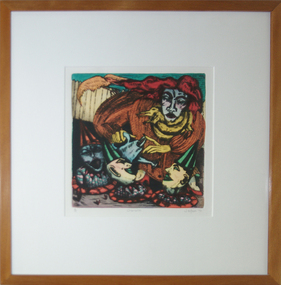
Work on paper - Artwork - Printmaking, Juli Haas, "Nutone Ball" by Juli Haas, 1992
... The psychological drama that informs this narrative exposes the darker side of life, expressing elements of anger, violence and isolation. Juli Haas obtained the following qualifications: * 1994-95 Master of Arts (Research). ...The psychological drama that informs this narrative exposes the darker side of life, expressing elements of anger, violence and isolation. Juli Haas obtained the following qualifications: * 1994-95 Master of Arts (Research). ...Juli HAAS (26 April 1952- 02 March 2014) Born Melbourne Juli HAAS (1952-2013) Born Melbourne Juli Haas mainly produced watercolours, artist’s books and limited edition prints using the printmaking technique of Drypoint. She often explores the lives of everyday people with her work often portraying the darker side of human nature in an interior world filled with fantasy and absurdity. Themes throughout her work incorporate the use of childhood memory, place and a sense of personal history. Inspiration is derived from observing her own environment, which is then developed into a portrayal of the absurdity and drama of everyday human situations. Haas applies layers of intense and vibrant colour, which also serves to reinforce the narrative element that runs through the work. The psychological drama that informs this narrative exposes the darker side of life, expressing elements of anger, violence and isolation. Juli Haas obtained the following qualifications: * 1994-95 Master of Arts (Research). Monash University, Victoria * 1989-90 Graduate Diploma of Arts (Visual Arts), Monash University, Victoria * 1987-89 Bachelor Of Arts (Visual Arts), Gippsland Institute of Advanced Education, Victoria (now Federation University Australia) * 1971-74 Fine Arts, Caulfield Institute Of Technology, Victoria. Haas exhibited in most states of Australia and participated in numerous group shows. She is represented in most major Australian collections including the National Gallery of Australia. Career highlights include winning the Sir John Sulman prize in 1995 at the Art Gallery of NSW and in 1994 and 1997 the Martin Hanson Memorial Works on Paper Prize. In 2008 her artist’s book A Wife Of Silver was acquired for the Public Art Collection of the Arts Centre Melbourne as part of the Maxwell and Merle Silver Bequest. Career highlights include winning the Sir John Sulman prize in 1995; and in 1994 and 1997 the Martin Hanson Memorial Works on Paper Prize. Framed limited etching by Julie Haas. juli haas, gippsland campus, churchill, gippsland institute of advanced education, alumni -
 The Beechworth Burke Museum
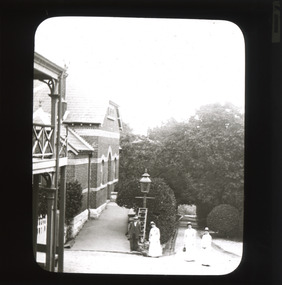
Photograph - Lantern Slide, c1900
... It was recognised that the unsettled living conditions, poverty and relative isolation of the Goldfields environment could produce 'mental disturbances' which required local treatment facilities as services in Melbourne were too far away. ...It was recognised that the unsettled living conditions, poverty and relative isolation of the Goldfields environment could produce 'mental disturbances' which required local treatment facilities as services in Melbourne were too far away. ...This image appears to show nurses at what is now the Mayday Hills Mental Asylum arriving for work in approximately 1900. These individuals are part of a long history of nursing in Beechworth. Three medical or social welfare facilities opened in the mid-1800s as part of a push by the township to become a regional centre for Government services. These were the Ovens District Hospital (opened in 1857), the Ovens Benevolent Asylum (opened in 1863), and the Beechworth Mental Hospital (opened in 1867 and renamed Mayday Hills Hospital at Centenary celebrations in 1967). It was recognised that the unsettled living conditions, poverty and relative isolation of the Goldfields environment could produce 'mental disturbances' which required local treatment facilities as services in Melbourne were too far away. Carole Woods' publication 'A Titan's Field' describes activities undertaken by patients at Beechworth Mental Hospital as including monthly balls and occasional concerts as well as work to make the facility self-supporting such as farm work and making clothes. She mentions a report in 1870 that the approximately 300 patients were clean and neat with 'no-one in restraint or seclusion' but that by 1905 the organisation had 623 patients which placed strain on building infrastructure such as heating and water supplies, leading to high turnover of nurses and other issues. A program of building works to extend and improve facilities followed over subsequent decades. Lantern slides, sometimes called 'magic lantern' slides, are glass plates on which an image has been secured for the purpose of projection. Glass slides were etched or hand-painted for this purpose from the Eighteenth Century but the process became more popular and accessible to the public with the development of photographic-emulsion slides used with a 'Magic Lantern' device in the mid-Nineteenth Century. Photographic lantern slides comprise a double-negative emulsion layer (forming a positive image) between thin glass plates that are bound together. A number of processes existed to form and bind the emulsion layer to the base plate, including the albumen, wet plate collodion, gelatine dry plate and Woodburytype techniques. Lantern slides and magic lantern technologies are seen as foundational precursors to the development of modern photography and film-making techniques This glass slide is significant because it provides insight into Beechworth's social and medical amenities in the early Twentieth Century, around the time of Australia's Federation into one nation. It is also an example of an early photographic and film-making technology in use in regional Victoria in the time period.Thin translucent sheet of glass with a rectangular image printed on the front and framed in a black backing. It is held together by metals strips to secure the edges of the slide.Obverse: i /burke museum, beechworth, lantern slide, slide, glass slide, plate, burke museum collection, photograph, monochrome, magic lantern, indigo shire, north-east victoria, nineteenth century, 1900s, twentieth century, emulsion slides, nursing, nurses, mental hospitals, lunatic asylums, asylums, social services, social welfare, insane asylums, mental health, infrastructure -
 The Beechworth Burke Museum
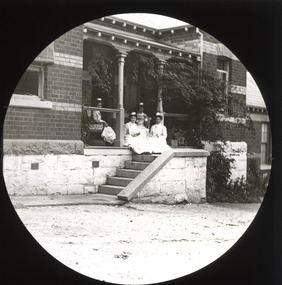
Photograph - Lantern Slide, c1900
... It was recognised that the unsettled living conditions, poverty and relative isolation of the Goldfields environment could produce 'mental disturbances' which required local treatment facilities as services in Melbourne were too far away. ...It was recognised that the unsettled living conditions, poverty and relative isolation of the Goldfields environment could produce 'mental disturbances' which required local treatment facilities as services in Melbourne were too far away. ...This image appears to show nurses at what is now the Mayday Hills Mental Asylum in approximately 1900. These individuals are part of a long history of nursing in Beechworth. Three medical or social welfare facilities opened in the mid-1800s as part of a push by the township to become a regional centre for Government services. These were the Ovens District Hospital (opened in 1857), the Ovens Benevolent Asylum (opened in 1863), and the Beechworth Mental Hospital (opened in 1867 and renamed Mayday Hills Hospital at Centenary celebrations in 1967). It was recognised that the unsettled living conditions, poverty and relative isolation of the Goldfields environment could produce 'mental disturbances' which required local treatment facilities as services in Melbourne were too far away. Carole Woods' publication 'A Titan's Field' describes activities undertaken by patients at Beechworth Mental Hospital as including monthly balls and occasional concerts as well as work to make the facility self-supporting such as farm work and making clothes. She mentions a report in 1870 that the approximately 300 patients were clean and neat with 'no-one in restraint or seclusion' but that by 1905 the organisation had 623 patients which placed strain on building infrastructure such as heating and water supplies, leading to high turnover of nurses and other issues. A program of building works to extend and improve facilities followed over subsequent decades. Lantern slides, sometimes called 'magic lantern' slides, are glass plates on which an image has been secured for the purpose of projection. Glass slides were etched or hand-painted for this purpose from the Eighteenth Century but the process became more popular and accessible to the public with the development of photographic-emulsion slides used with a 'Magic Lantern' device in the mid-Nineteenth Century. Photographic lantern slides comprise a double-negative emulsion layer (forming a positive image) between thin glass plates that are bound together. A number of processes existed to form and bind the emulsion layer to the base plate, including the albumen, wet plate collodion, gelatine dry plate and Woodburytype techniques. Lantern slides and magic lantern technologies are seen as foundational precursors to the development of modern photography and film-making techniques.This glass slide is significant because it provides insight into Beechworth's social and medical amenities in the early Twentieth Century, around the time of Australia's Federation into one nation. It is also an example of an early photographic and film-making technology in use in regional Victoria in the time period.Thin translucent sheet of glass with a circular image printed on the front and framed in a black backing. It is held together by metals strips to secure the edges of the slide.burke museum, beechworth, lantern slide, slide, glass slide, plate, burke museum collection, photograph, monochrome, magic lantern, indigo shire, north-east victoria, nineteenth century, 1900s, twentieth century, emulsion slides, nursing, nurses, mental hospitals, lunatic asylums, asylums, social services, social welfare, insane asylums, mental health, infrastructure -
 The Beechworth Burke Museum
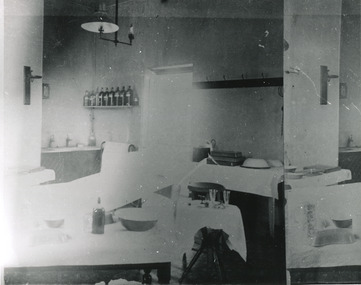
Photograph, c. 1910
... The asylum was established in response to the need for the regional shire to locally care for those particularly affected by their time working the Ovens goldfield during the Indigo Shire gold rush era where poor living conditions and isolation were significantly affecting the welfare of a great many people through poverty and lack of resources. ...The asylum was established in response to the need for the regional shire to locally care for those particularly affected by their time working the Ovens goldfield during the Indigo Shire gold rush era where poor living conditions and isolation were significantly affecting the welfare of a great many people through poverty and lack of resources. ...Taken approximately 1910, this black and white photograph shows the interior of the surgery and consulting rooms at the Mayday Hills mental hospital known at that time as a lunatic asylum in Beechworth. Mayday Hills Hospital, then known as the Beechworth Lunatic Asylum was constructed between 1864-67 designed by The Public Works Department. The hospital is made up of a number of buildings, landscaping, ha-ha, workshops, laundry, administrative facilities and farmland, it was constructed in 'Italianate' style by a team of up to two hundred and fifty workers (Woods p. 122). The asylum was established in response to the need for the regional shire to locally care for those particularly affected by their time working the Ovens goldfield during the Indigo Shire gold rush era where poor living conditions and isolation were significantly affecting the welfare of a great many people through poverty and lack of resources. The gaol and orphan labour systems were not able to effectively support to give housing, rehabilitation and ongoing care for the mentally ill, and transporting to Melbourne by waggon was a time consuming and counter-productive solution when the metro facilities were already overcrowded. According to Woods (A Titan's Field p. 122), between 1901 and 1911 a large percentage (thirty five percent in 1901 and twenty four in 1911) of the Beechworth population were either patients or inmates of Beechworth institutions, Mayday Hills accounted for some six hundred and seventy four patients in 1901, Beechworth's Mayday Hills was chosen as the site of Victoria's newest asylum, at the time, due to the landscape and altitude. The hilltop atmosphere and the native fauna, it was argued, would assist in the cure of the patients kept at the hospital (Wood 1985, 122). The positioning of the hospital had a beneficial effect on the rural town and the large volume of people living at the hospital and contributing to this population growth is counted as reason for the survival of Beechworth as a regional township. Mayday Hills continued to function as a mental hospital up until 1995 when it was sold to LaTrobe university. The building and grounds are listed on the Victorian Heritage Register under criterion A, B, D, E and F. Although grainy, the image gives a good indication of a functioning interior space of a surgery and consulting room at Mayday Hills in the early 1900's, from which we might interpret (from the types of tools and furniture present), the medical practices being performed at the time.Black and white rectangular photographmedical, asylum, surgery, hospital, beechworth, mayday hills, mayday hills asylum, mayday hills hospital, mental hospital, beechworth lunatic asylum, beechworth institutions, social welfare, public works department, consulting room -
 The Beechworth Burke Museum
Photograph - Postcard, George Rose, c. 1910
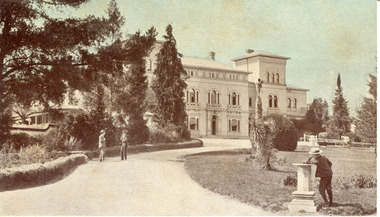
... The asylum was established in response to the need for the regional shire to locally care for those particularly affected by their time working the Ovens goldfield during the Indigo Shire gold rush era where poor living conditions and isolation were significantly affecting the welfare of a great many people through poverty and lack of resources. ...The asylum was established in response to the need for the regional shire to locally care for those particularly affected by their time working the Ovens goldfield during the Indigo Shire gold rush era where poor living conditions and isolation were significantly affecting the welfare of a great many people through poverty and lack of resources. ...Produced c. 1910 by The Rose Stereograph co. This colourised photographic postcard shows the exterior of the administrative buildings at Mayday Hills mental hospital with three young boys in the foreground. This postcard forms part of the extensive Rose Series. (P. 4689) of postcards being produced by the Rose Stereograph co. which depicted landmarks from across Australia. Despite the early date attributed to this image, according to Walsh dates from this series place the postcards being produced typically between 1920-54. Mayday Hills Hospital, then known as the Beechworth Lunatic Asylum was constructed between 1864-67 designed by The Public Works Department. The hospital is made up of a number of buildings, landscaping, ha-ha, workshops, laundry, administrative facilities and farmland, it was constructed in 'Italianate' style by a team of up to two hundred and fifty workers (Woods p. 122). The asylum was established in response to the need for the regional shire to locally care for those particularly affected by their time working the Ovens goldfield during the Indigo Shire gold rush era where poor living conditions and isolation were significantly affecting the welfare of a great many people through poverty and lack of resources. The gaol and orphan labour systems were not able to effectively support to give housing, rehabilitation and ongoing care for the mentally ill, and transporting to Melbourne by waggon was a time consuming and counter-productive solution when the metro facilities were already overcrowded. According to Woods (A Titan's Field p. 122), between 1901 and 1911 a large percentage (thirty five percent in 1901 and twenty four in 1911) of the Beechworth population were either patients or inmates of Beechworth institutions, Mayday Hills accounted for some six hundred and seventy four patients in 1901, Beechworth's Mayday Hills was chosen as the site of Victoria's newest asylum, at the time, due to the landscape and altitude. The hilltop atmosphere and the native fauna, it was argued, would assist in the cure of the patients kept at the hospital (Wood 1985, 122). The positioning of the hospital had a beneficial effect on the rural town and the large volume of people living at the hospital and contributing to this population growth is counted as reason for the survival of Beechworth as a regional township. Mayday Hills continued to function as a mental hospital up until 1995 when it was sold to LaTrobe university. The building and grounds are listed on the Victorian Heritage Register under criterion A, B, D, E and F. Through the colourisation of the photograph and through the unusual choice of the subject matter being used as a postcard, we can get a good indication of aesthetic interests of the time.Rectangular coloured photograph printed as postcardObverse: Beautiful / Beechworth / (Vic.) / 1800 ft. / above / Sea / Level / - / Asylum / for / insane / (Front / View) / Copyright. / F. / Foxcroft / Photo Reverse: 1997.2454 / Postcard / THIS / SPACE / MAY / BE / USED / FOR / CORRESPONDENCE: / THIS / SPACE / FOR / NAME / AND / ADDRESS / STAMPpostcard, rose series, mayday hills hospital, mayday hills, beechworth lunatic asylum, photographic postcard, george rose, the rose stereograph co., social welfare, welfare services, ovens goldfield, lunatic asylum, the public works department, australian landmark, regional shire, indigo shire council, gold rush, beechworth institution, victorian heritage register -
 The Beechworth Burke Museum
Photograph - Photographs, E. Yellard, c. 1950's
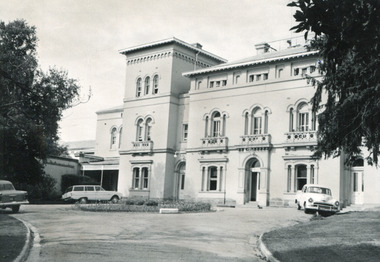
... The asylum was established in response to the need for the regional shire to locally care for those particularly affected by their time working the Ovens goldfield during the Indigo Shire gold rush era where poor living conditions and isolation were significantly affecting the welfare of a great many people through poverty and lack of resources. ...The asylum was established in response to the need for the regional shire to locally care for those particularly affected by their time working the Ovens goldfield during the Indigo Shire gold rush era where poor living conditions and isolation were significantly affecting the welfare of a great many people through poverty and lack of resources. ...Two rectangular black and white photographs of the Beechworth Mental Hospital (Mayday Hills) administrative building showing the left and right hand sides of the exterior building with three cars parked in driveway turning circle in the foreground taken in the 1950's by E. Yellard. Mayday Hills Hospital, originally known as the Beechworth Lunatic Asylum was constructed between 1864-67 designed by The Public Works Department. The hospital is made up of a number of buildings, landscaping, ha-ha, workshops, laundry, administrative facilities and farmland, it was constructed in 'Italianate' style by a team of up to two hundred and fifty workers (Woods p. 122). The asylum was established in response to the need for the regional shire to locally care for those particularly affected by their time working the Ovens goldfield during the Indigo Shire gold rush era where poor living conditions and isolation were significantly affecting the welfare of a great many people through poverty and lack of resources. The gaol and orphan labour systems were not able to effectively support to give housing, rehabilitation and ongoing care for the mentally ill, and transporting to Melbourne by waggon was a time consuming and counter-productive solution when the metro facilities were already overcrowded. According to Woods (A Titan's Field p. 122), between 1901 and 1911 a large percentage (thirty five percent in 1901 and twenty four in 1911) of the Beechworth population were either patients or inmates of Beechworth institutions, Mayday Hills accounted for some six hundred and seventy four patients in 1901, Beechworth's Mayday Hills was chosen as the site of Victoria's newest asylum, at the time, due to the landscape and altitude. The hilltop atmosphere and the native fauna, it was argued, would assist in the cure of the patients kept at the hospital (Wood 1985, 122). The positioning of the hospital had a beneficial effect on the rural town and the large volume of people living at the hospital and contributing to this population growth is counted as reason for the survival of Beechworth as a regional township. According to the Victorian Heritage database, during the period 1921-1950 Mayday Hills underwent some modernisation by Public Works Department architect Percy Everett which included a nurses' hostel and new ward which were further developed and continued to function as a mental hospital up until 1995 when it was sold to LaTrobe university. The building and grounds are listed on the Victorian Heritage Register under criterion A, B, D, E and F.These photographs give a good indication of the ongoing use of Mayday Hills from its original establishment in the 1860's through to almost one hundred years later when these photographs were taken. The clarity of the images combined with the style and make of the cars in the foreground give a good indication of the time period and show the continued use and need for the facility over the years. Through images of building facades such as these, we might gain fuller understanding of the structural and aesthetic characteristics to be used in any future development or restorative work.2 x black and white rectangular photographs [copies] printed on Ilford photographic paper8688.1 reverse: Beechworth / Mental / Hospital / 80% 19cm / 12 cm / 80% / 728 / New / Print / BMM / 8688.1 / E. / Yellard / [Stamped : ILFORD] 8688.2 reverse: Beechworth / Mental / Hospital / E. / Yellard / BMM / 8688.1 / [Stamped : ILFORD]administrative building, black and white photographs, beechworth, mental hospital, beechworth mental hospital, mayday hills, cars, 1950, e. yellard, the public works department, public works department, hospital, mayday hills hospital, beechworth lunatic asylum, lunatic asylum, asylum, ovens goldfield, indigo shire, indigo shire gold rush -
 Eltham District Historical Society Inc
Photograph - Digital Photograph, Alan King, St Margaret's Anglican Church, Pitt Street, Eltham, 30 January 2008
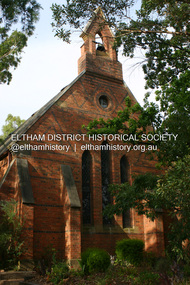
... The nearest church at that time was at Heidelberg and the Eltham settlement was part of the parish of St Johns Heidelberg. Isolation and the tedious, time consuming journey between Heidelberg and Eltham resulted in the Eltham community taking its own action. ...The nearest church at that time was at Heidelberg and the Eltham settlement was part of the parish of St Johns Heidelberg. Isolation and the tedious, time consuming journey between Heidelberg and Eltham resulted in the Eltham community taking its own action. ...St Margaret’s Church of England was officially opened on December 12, 1861. It is the oldest intact church building in Eltham. At the time it was known as Christ Church until its consecration in 1871, when it was completely free of debt (£1,700 for the church and parsonage) despite the district’s poverty. This was largely due to the free labour and materials, including locally made bricks donated by local artisans and others. The church is historically significant because it is the oldest church in the former Shire of Eltham and has associations with the philanthropist and founder of Brighton, Henry Dendy (who donated the land on which the church is built), the architect Nathaniel Billing and the prominent local builder, George Stebbing. The church is architecturally and aesthetically significant because it is constructed in the Gothic Revival style with several stained-glass windows of various dates and is also a very early use of polychromatic brickwork in Victoria. Billing was one of the first Melbourne architects to employ polychromatic brickwork and an important early architect. The rear wall was intended to be temporary. A major feature of the design is the large buttresses with long, steeply graded upper faces. The overall design is well proportioned with the surface brick patterns relieving an otherwise austere design. The church is spiritually and socially significant because it has been an important place of worship for the people of Eltham for almost 150 years. The land on which the buildings stand was donated by Henry Dendy. Dendy arrived in Melbourne in 1841 after purchasing in England eight square miles at Brighton under the system of "special surveys". After this land passed out of his hands, Dendy moved about Victoria, visited England, then returned to settle in Eltham where he purchased a flour mill. Dendy chaired the meeting held in 1860 “for the purpose of devising such means as may be expedient for the establishment of a Church of England in the township of Eltham”. He became chairman and treasurer of the church committee. Unlike the establishment of many early churches in Victoria where a vicar was appointed to a parish and later a permanent church was constructed, the population at Eltham initiated action to build a church. The nearest church at that time was at Heidelberg and the Eltham settlement was part of the parish of St Johns Heidelberg. Isolation and the tedious, time consuming journey between Heidelberg and Eltham resulted in the Eltham community taking its own action. The original vicarage (Dendy House) at the rear of the church is also an important part of the cultural significance of this place because it is connected to the church and the development of the Eltham area. Together, the church and the vicarage are aesthetically significant because they form a significant streetscape feature. The mud-brick community hall designed by Robert Marshall was added in 1978. In 2014 the original temporary rear wall was removed as part of a modern extension designed by Architects Atelier Wagner and constructed by Conrad Construction and Management. Covered under Heritage Overlay, Nillumbik Planning Scheme. National Trust of Australia (Victoria) State significance Victorian Heritage Published: Nillumbik Now and Then / Marguerite Marshall 2008; photographs Alan King with Marguerite Marshall.; p67This collection of almost 130 photos about places and people within the Shire of Nillumbik, an urban and rural municipality in Melbourne's north, contributes to an understanding of the history of the Shire. Published in 2008 immediately prior to the Black Saturday bushfires of February 7, 2009, it documents sites that were impacted, and in some cases destroyed by the fires. It includes photographs taken especially for the publication, creating a unique time capsule representing the Shire in the early 21st century. It remains the most recent comprehenesive publication devoted to the Shire's history connecting local residents to the past. nillumbik now and then (marshall-king) collection, eltham, st margaret's anglican church, st margaret's church, christ church -
 Sunshine and District Historical Society Incorporated
Book - Power Over Darkness A Journey of Self-Discovery, Trauma & Healing, Infinity Books USA, LLC, 2022
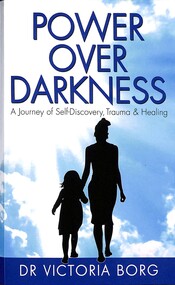
... So does the great sense of isolation, especially among the elderly and lack of digital literacy." ...So does the great sense of isolation, especially among the elderly and lack of digital literacy." ...A memoir of the author's journey on mental illness and self-discovery.A soft covered book with title and author's name written on frontnon-fictionA memoir of the author's journey on mental illness and self-discovery.mental illness and self discovery, trauma and healing, reconciliation -
 Eltham District Historical Society Inc
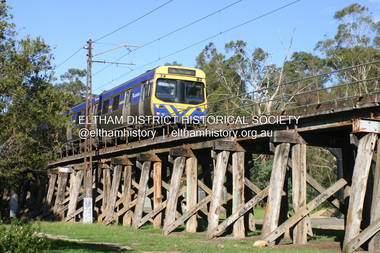
Photograph - Digital Photograph, Alan King, Eltham Railway Trestle Bridge, 28 December 2007
... This extension resulted in one of the greatest social changes experienced in Eltham Shire, as it considerably lessened its isolation attracting tourists, artists and suburban commuters particularly after World War Two.2 The bridge has been classified by the National Trust as historically, scientifically, aesthetically and socially significant at state level. ...This extension resulted in one of the greatest social changes experienced in Eltham Shire, as it considerably lessened its isolation attracting tourists, artists and suburban commuters particularly after World War Two.2 The bridge has been classified by the National Trust as historically, scientifically, aesthetically and socially significant at state level. ...Covered under National Trust of Australia (Victoria) State Significance and Heritage Overlay, Nillumbik Planning Scheme. Published: Nillumbik Now and Then / Marguerite Marshall 2008; photographs Alan King with Marguerite Marshall.; p103 The Eltham railway trestle bridge is the only one of its kind still regularly used in Melbourne’s metropolitan railway network. Opened in 1902, it is also one of Victoria’s very few timber rail bridges that still carries trains.1 The bridge is part of the railway line extension from Heidelberg - extended to Hurstbridge in 1912. This extension resulted in one of the greatest social changes experienced in Eltham Shire, as it considerably lessened its isolation attracting tourists, artists and suburban commuters particularly after World War Two.2 The bridge has been classified by the National Trust as historically, scientifically, aesthetically and socially significant at state level. But this has not always been recognised, and in 1977, locals fought to save it from destruction. The Victorian Railways proposed to replace the bridge with an earth embankment and large culverts to avoid maintenance problems and fire. This was rejected by the Eltham Council who protested that the bridge helped maintain the area’s rural character, historic link and beauty, as well as avoiding possible serious flooding on the flood plain if a culvert was blocked. The bridge stands as part of a National Trust classified landscape which includes the Alistair Knox Park, named after the local conservationist and architect who helped to make Eltham famous for its mud-brick houses. The landscape includes tall and spreading manna gums and candlebarks, and the historic Shillinglaw Cottage. Artist Walter Withers, one of the Heidelberg School of painters, painted the bridge early in the 20th century. The 38 span single-track railway bridge over creek and road has 34 timber-beam spans and four steel-joist spans, supported by four-pile timber piers and timber abutments. It has almost 200m of timber deck. All of the timbers have been replaced over the years, but the only change to the bridge’s character was the addition of pylons and wiring for electric trains in 1923. A petition for a railway to the shire was first made in 1883. A large deputation of local citizens to the Commissioner of Railways proposed a route passing through Alphington to midway between Greensborough and Eltham up the Diamond Creek valley towards Queenstown and Kinglake. As a result the Princes Bridge-Heidelberg Railway was opened in 1888. From 1888 locals demanded a railway extension. Kangaroo Ground farmers in particular, led by Shire Councillor and Member for Evelyn, Ewen Cameron, said it would assist local farmers and orchardists send their produce to the Melbourne market. In 1890, before the severe economic Depression, an extension of the line to Hurst’s Bridge (now Hurstbridge) was included in a new Railways Bill. The parliamentary delegations were regaled with a banquet at Hurst’s barn and entertained by the Diamond Creek Brass Band, but the extension was abandoned when the Depression struck in 1892-1893. The extension of the railway to Eltham, completed in 1902, was one of the few built in those hard times. That is why the Eltham timber-trestle railway bridge is a rare example of a broad-gauge rail bridge constructed between 1893 and 1910. At the opening, despite persistent drizzle, 300 children waving flags and banners were among the large crowd welcoming the first train, carrying official dignitaries, to Eltham. It had taken 24 years to bring the railway to Eltham. From then Eltham became a popular destination for outings. Mr Orford of Eltham recalled that after the railway came to Eltham ‘the craze for picnics on weekends and holidays began…. During the wattle season, wattle trains came to Eltham frequently. The visitors roamed the creek pulling great armfuls of wattle blossom to take back with them to Melbourne’.3 In 1926 the railway line was electrified as part of the metropolitan rail network. But the Victorian Railways decided not to complete the formerly planned Diamond Valley Railway to Queenstown (now St Andrews) and Kinglake.This collection of almost 130 photos about places and people within the Shire of Nillumbik, an urban and rural municipality in Melbourne's north, contributes to an understanding of the history of the Shire. Published in 2008 immediately prior to the Black Saturday bushfires of February 7, 2009, it documents sites that were impacted, and in some cases destroyed by the fires. It includes photographs taken especially for the publication, creating a unique time capsule representing the Shire in the early 21st century. It remains the most recent comprehenesive publication devoted to the Shire's history connecting local residents to the past. nillumbik now and then (marshall-king) collection, eltham railway trestle bridge, eltham trestle bridge -
 Eltham District Historical Society Inc
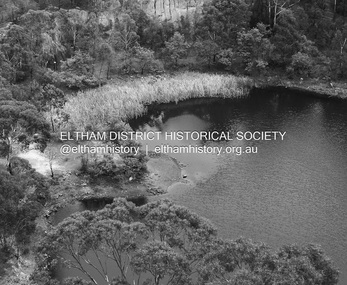
Photograph - Digital Photograph, Alan King, Blue Lake, Plenty Gorge Park, 2008
... Pioneer life could be very hard because of isolation, flooding, bushfires and bushrangers. ...Pioneer life could be very hard because of isolation, flooding, bushfires and bushrangers. ...A quarry was transformed into the Blue Lake. Published: Nillumbik Now and Then / Marguerite Marshall 2008; photographs Alan King with Marguerite Marshall.; p179 The dramatic steep-sided Plenty Gorge lies along the divide of two geological areas, and separates the Nillumbik Shire and the City of Whittlesea. On the Nillumbik side are undulating hills and sedimentary rock, and in Whittlesea, lies a basalt plain formed by volcanic action up to two million years ago. This provides the Plenty Gorge Park with diverse vegetation and habitats, making it one of Greater Melbourne’s most important refuges for threatened and significant species. The park, established in 1986, consists of around 1350 hectares, and extends 11 kilometres along the Plenty River, from Greensborough to Mernda. It provides a wildlife corridor for around 500 native plant and 280 animal species. The area’s plentiful food and water attracted the Wurundjeri Aboriginal people and then European settlers. By 1837 squatters had claimed large runs of land for their sheep and cattle. The Plenty Valley was among the first in the Port Phillip District to be settled - mainly in the less heavily timbered west - and was proclaimed a settled district in 1841.But by the late 1880s, the settlers’ extensive land clearing for animal grazing, then agriculture, depleted the Wurundjeri’s traditional food sources, which helped to drive them away. Many Wurundjeri artefacts remain (now government protected), and so far 57 sites have been identified in the park, including scarred trees, burial areas and stone artefacts. Pioneer life could be very hard because of isolation, flooding, bushfires and bushrangers. Following the Black Thursday bushfires of 1851, basalt was quarried to build more fire-resistant homes. Gold discoveries in the early 1850s swelled the population, particularly around Smugglers Gully; but food production made more of an impact. In the late 1850s wheat production supplanted grazing. In the 1860s the government made small holdings available to poorer settlers. These had the greatest effect on the district, particularly in Doreen and Yarrambat, where orchards were established from the 1880s to 1914. Links with a prominent early family are the remains of Stuchbery Farm, by the river’s edge bounded by Smugglers Gully to the north and La Trobe Road, Yarrambat, to the east. The Stuchberys moved to the valley in 1890, and the family still lives in the area. In 1890, Alfred and Ada first lived in a tent where four children were born, then Alfred built the house and outbuildings around 1896. They planted an orchard, then a market garden, and developed a dairy. The family belonged to the local Methodist and tennis communities. Their grandson Walter, opened the Flying Scotsman Model Railway Museum in Yarrambat, which his widow, Vi, continues to run. Wal was also the Yarrambat CFA Captain for 22 years until 1987. Walter sold 24 hectares in 1976 for development - now Vista Court - and in 1990, the remaining 22.6 hectares for the park. Remaining are an early stone dairy and remnants of a stone barn, a pig sty and a well. Until it was destroyed by fire in 2003, a slab hut stood on the Happy Hollow Farm site, at the southern end of the park. The hut is thought to have been built in the Depression around 1893. This was a rare and late example of a slab hut with a domestic orchard close to Melbourne. Emmet Watmough and his family first occupied the hut, followed by a succession of families, until the Bell family bought it around 1948. There they led a subsistence lifestyle for 50 years, despite encroaching Melbourne suburbia. The Yellow Gum Recreation Area includes the Blue Lake, coloured turquoise at certain times of the year. Following the 1957 bushfires, this area was quarried by Reid Quarries Pty Ltd for Melbourne’s first skyscrapers, then by Boral Australia. However in the early 1970s water began seeping into the quarry forming the Blue Lake and the quarry was closed. The State Government bought the site in 1997 and opened it as a park in 1999.This collection of almost 130 photos about places and people within the Shire of Nillumbik, an urban and rural municipality in Melbourne's north, contributes to an understanding of the history of the Shire. Published in 2008 immediately prior to the Black Saturday bushfires of February 7, 2009, it documents sites that were impacted, and in some cases destroyed by the fires. It includes photographs taken especially for the publication, creating a unique time capsule representing the Shire in the early 21st century. It remains the most recent comprehenesive publication devoted to the Shire's history connecting local residents to the past. nillumbik now and then (marshall-king) collection, blue lake, plenty gorge park -
 Eltham District Historical Society Inc
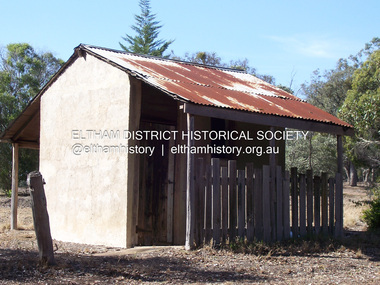
Photograph - Digital Photograph, Marguerite Marshall, Stuchbery Farm dairy, 14 March 2008
... Pioneer life could be very hard because of isolation, flooding, bushfires and bushrangers. ...Pioneer life could be very hard because of isolation, flooding, bushfires and bushrangers. ...Stuchbery Farm was situated on the Plenty River bounded by Smugglers Gully to the north and La trobe Road, Yarrambat, to the east. Alan and Ada Stutchbery moved to the valley in 1890, first living in a tent where four children were born. Alfred built a home and outbuildings around 1896. They planted an orchard, then a market garden and developed a dairy. Published: Nillumbik Now and Then / Marguerite Marshall 2008; photographs Alan King with Marguerite Marshall.; p179 The dramatic steep-sided Plenty Gorge lies along the divide of two geological areas, and separates the Nillumbik Shire and the City of Whittlesea. On the Nillumbik side are undulating hills and sedimentary rock, and in Whittlesea, lies a basalt plain formed by volcanic action up to two million years ago. This provides the Plenty Gorge Park with diverse vegetation and habitats, making it one of Greater Melbourne’s most important refuges for threatened and significant species. The park, established in 1986, consists of around 1350 hectares, and extends 11 kilometres along the Plenty River, from Greensborough to Mernda. It provides a wildlife corridor for around 500 native plant and 280 animal species. The area’s plentiful food and water attracted the Wurundjeri Aboriginal people and then European settlers. By 1837 squatters had claimed large runs of land for their sheep and cattle. The Plenty Valley was among the first in the Port Phillip District to be settled - mainly in the less heavily timbered west - and was proclaimed a settled district in 1841. But by the late 1880s, the settlers’ extensive land clearing for animal grazing, then agriculture, depleted the Wurundjeri’s traditional food sources, which helped to drive them away. Many Wurundjeri artefacts remain (now government protected), and so far 57 sites have been identified in the park, including scarred trees, burial areas and stone artefacts. Pioneer life could be very hard because of isolation, flooding, bushfires and bushrangers. Following the Black Thursday bushfires of 1851, basalt was quarried to build more fire-resistant homes. Gold discoveries in the early 1850s swelled the population, particularly around Smugglers Gully; but food production made more of an impact. In the late 1850s wheat production supplanted grazing. In the 1860s the government made small holdings available to poorer settlers. These had the greatest effect on the district, particularly in Doreen and Yarrambat, where orchards were established from the 1880s to 1914. Links with a prominent early family are the remains of Stuchbery Farm, by the river’s edge bounded by Smugglers Gully to the north and La Trobe Road, Yarrambat, to the east. The Stuchberys moved to the valley in 1890, and the family still lives in the area. In 1890, Alfred and Ada first lived in a tent where four children were born, then Alfred built the house and outbuildings around 1896. They planted an orchard, then a market garden, and developed a dairy. The family belonged to the local Methodist and tennis communities. Their grandson Walter, opened the Flying Scotsman Model Railway Museum in Yarrambat, which his widow, Vi, continues to run. Wal was also the Yarrambat CFA Captain for 22 years until 1987. Walter sold 24 hectares in 1976 for development - now Vista Court - and in 1990, the remaining 22.6 hectares for the park. Remaining are an early stone dairy and remnants of a stone barn, a pig sty and a well. Until it was destroyed by fire in 2003, a slab hut stood on the Happy Hollow Farm site, at the southern end of the park. The hut is thought to have been built in the Depression around 1893. This was a rare and late example of a slab hut with a domestic orchard close to Melbourne. Emmet Watmough and his family first occupied the hut, followed by a succession of families, until the Bell family bought it around 1948. There they led a subsistence lifestyle for 50 years, despite encroaching Melbourne suburbia. The Yellow Gum Recreation Area includes the Blue Lake, coloured turquoise at certain times of the year. Following the 1957 bushfires, this area was quarried by Reid Quarries Pty Ltd for Melbourne’s first skyscrapers, then by Boral Australia. However in the early 1970s water began seeping into the quarry forming the Blue Lake and the quarry was closed. The State Government bought the site in 1997 and opened it as a park in 1999.This collection of almost 130 photos about places and people within the Shire of Nillumbik, an urban and rural municipality in Melbourne's north, contributes to an understanding of the history of the Shire. Published in 2008 immediately prior to the Black Saturday bushfires of February 7, 2009, it documents sites that were impacted, and in some cases destroyed by the fires. It includes photographs taken especially for the publication, creating a unique time capsule representing the Shire in the early 21st century. It remains the most recent comprehenesive publication devoted to the Shire's history connecting local residents to the past. nillumbik now and then (marshall-king) collection, ada stuchbery, alan stuchbery, dairy, stuchbery farm, farm buildings, yarrambat, plenty gorge park -
 Eltham District Historical Society Inc
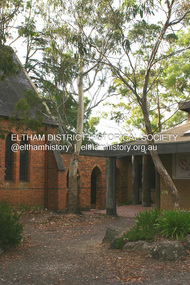
Photograph - Digital Photograph, Alan King, St Margaret's Anglican Church, Pitt Street, Eltham, 30 January 2008
... The nearest church at that time was at Heidelberg and the Eltham settlement was part of the parish of St Johns Heidelberg. Isolation and the tedious, time consuming journey between Heidelberg and Eltham resulted in the Eltham community taking its own action. ...The nearest church at that time was at Heidelberg and the Eltham settlement was part of the parish of St Johns Heidelberg. Isolation and the tedious, time consuming journey between Heidelberg and Eltham resulted in the Eltham community taking its own action. ...St Margaret’s Church of England was officially opened on December 12, 1861. It is the oldest intact church building in Eltham. At the time it was known as Christ Church until its consecration in 1871, when it was completely free of debt (£1,700 for the church and parsonage) despite the district’s poverty. This was largely due to the free labour and materials, including locally made bricks donated by local artisans and others. The church is historically significant because it is the oldest church in the former Shire of Eltham and has associations with the philanthropist and founder of Brighton, Henry Dendy (who donated the land on which the church is built), the architect Nathaniel Billing and the prominent local builder, George Stebbing. The church is architecturally and aesthetically significant because it is constructed in the Gothic Revival style with several stained-glass windows of various dates and is also a very early use of polychromatic brickwork in Victoria. Billing was one of the first Melbourne architects to employ polychromatic brickwork and an important early architect. The rear wall was intended to be temporary. A major feature of the design is the large buttresses with long, steeply graded upper faces. The overall design is well proportioned with the surface brick patterns relieving an otherwise austere design. The church is spiritually and socially significant because it has been an important place of worship for the people of Eltham for almost 150 years. The land on which the buildings stand was donated by Henry Dendy. Dendy arrived in Melbourne in 1841 after purchasing in England eight square miles at Brighton under the system of "special surveys". After this land passed out of his hands, Dendy moved about Victoria, visited England, then returned to settle in Eltham where he purchased a flour mill. Dendy chaired the meeting held in 1860 “for the purpose of devising such means as may be expedient for the establishment of a Church of England in the township of Eltham”. He became chairman and treasurer of the church committee. Unlike the establishment of many early churches in Victoria where a vicar was appointed to a parish and later a permanent church was constructed, the population at Eltham initiated action to build a church. The nearest church at that time was at Heidelberg and the Eltham settlement was part of the parish of St Johns Heidelberg. Isolation and the tedious, time consuming journey between Heidelberg and Eltham resulted in the Eltham community taking its own action. The original vicarage (Dendy House) at the rear of the church is also an important part of the cultural significance of this place because it is connected to the church and the development of the Eltham area. Together, the church and the vicarage are aesthetically significant because they form a significant streetscape feature. The mud-brick community hall designed by Robert Marshall was added in 1978. In 2014 the original temporary rear wall was removed as part of a modern extension designed by Architects Atelier Wagner and constructed by Conrad Construction and Management. Covered under Heritage Overlay, Nillumbik Planning Scheme. National Trust of Australia (Victoria) State significance Victorian Heritage Published: Nillumbik Now and Then / Marguerite Marshall 2008; photographs Alan King with Marguerite Marshall.; p67 St Margaret’s Anglican Church in Pitt Street, Eltham, which officially opened on December 12, 1861, is the oldest intact church building in Eltham.1 With the nearby courthouse and police station, it was one of the first permanent community buildings in the district. The church and vicarage are on the Register of the Heritage Council of Victoria and the National Trust of Australia – Victoria. The church is important as an early example of polychrome brickwork by the notable architect Nathaniel Billings. It is also notable for its historic associations with the early settlement of the Shire of Eltham and its connection with Henry Dendy, Brighton’s founder.2 Henry Dendy, who lived in Eltham much longer than at Brighton, chaired the original meeting which planned the church, and he donated the half-acre (0.2ha) site. Dendy had arrived in Melbourne in 1841 after buying eight square miles (20.7sq km) at Brighton while in England. After this land passed out of his hands, he eventually settled in Eltham where he bought a flour mill, west from the corner of Main Road and Pitt Street (then called Brewery Lane). The vicarage was named Dendy House after him. The Eltham settlers were unusual in initiating the establishment of a church. Usually in Victoria a vicar was appointed to a parish and then a permanent church was constructed. But then, the nearest church was at Heidelberg, which was a tedious and time-consuming journey. St Margaret’s builder was a local, George Stebbing, who also constructed the former Methodist, later Uniting, Church at John Street and the Shillinglaw Cottage near Eltham’s Central Park. It is believed the first Anglican Bishop of Melbourne, Bishop Perry, dedicated the church. After the ceremony he joined in the festivities at the nearby pub and a bill was sent to the parish for teas taken there by the bishop with other participants. The first vicar was the Reverend Robert Mackie from 1864 to1866. St Margaret’s Church was originally called Christ Church until its consecration in 1871, when it was completely free of debt (£1700 pounds for the church and parsonage) despite the district’s poverty. This was largely due to the free labour and materials, including local bricks, donated by local artisans and others. St Margaret’s Church is in the Gothic Revival tradition with a buttressed nave, paired lancet windows, porch and bell-cote. It was the first polychromatic brick church in Australia, using softly contrasting coloured brickwork.3 Billing was one of the first architects to introduce polychrome brickwork into Melbourne. His original drawings for St Margaret’s survive in a folio of his architectural work. However the church’s brickwork is more subdued than in his drawings. About half the windows – those in clear glass with gold borders – are original. The stained glass windows were made much later, but the one behind the altar is thought to be the oldest in the Diamond Valley. It was to be temporary until the congregation could afford to extend the church. In the early 1960s the original cedar pews were replaced by blonde timber pews and the originals were sold to restaurants and to private individuals. Eminent local sculptor Matcham Skipper created a crucifix for the church. A major addition was made in 1978, when the weatherboard hall was replaced by a mud-brick hall. Made of local material, it was designed by local architect and a former shire president Robert Marshall. The mud-brick hall reflects the style of building in Eltham of the late 1970s and for which Eltham is well-known. Perhaps because its earthy tones blend with the surrounding environment, the hall sits well with the church building. St Margaret’s membership has included economist and ABC chairman, Richard Downing; political commentator, diplomat and academic, William Macmahon Ball; Eltham civic leader, Charles Wingrove; artist, Peter Glass; and Eltham’s first postmaster, Frederick Falkiner.This collection of almost 130 photos about places and people within the Shire of Nillumbik, an urban and rural municipality in Melbourne's north, contributes to an understanding of the history of the Shire. Published in 2008 immediately prior to the Black Saturday bushfires of February 7, 2009, it documents sites that were impacted, and in some cases destroyed by the fires. It includes photographs taken especially for the publication, creating a unique time capsule representing the Shire in the early 21st century. It remains the most recent comprehenesive publication devoted to the Shire's history connecting local residents to the past. nillumbik now and then (marshall-king) collection, eltham, st margaret's anglican church, st margaret's church, st margarets church hall, christ church -
The Beechworth Burke Museum
Audio - Oral History, Jennifer Williams, Mr Ken Blake and Mrs Doreen Blake, 30th March 2000
... They demonstrate the highs and lows of living and running a business in Beechworth through economic lows and the impact of both social and physical isolation. Newspaper Blakes Ken and doreen Ovens and Murray advertiser Beechworth development o&m 1960s 1980s 1970s This is a digital copy of a recording that was originally captured on a cassette tape. ...Ken and Doreen came to Beechworth on boxing day in 1959, when they were offered a business at a good price. This business was the Ovens and Murray advertiser, one of the oldest running newspapers in Australia. When they arrived Ken already had a background as a professional linotype operator, however both him and Doreen had no experience running a town newspaper. Ken and Doreen owned the paper till the 1980s, when they formed the Blake press. Throughout the years the Blakes kept up to date with Beechworth news, politics and events happening throughout the community, Ken was even permitted to sit in on the town committee meetings. They saw the town develop from a small mining town in rural Victoria, to a bustling, tourist hotspot.This oral history is significant because it shows how the town of Beechworth developed from a small outpost mining town to a popular tourist destination. It also showcases a different perspective of the towns development, that of the new owners (at the time) of the Ovens and Murrary Advertiser. The advertiser is an integral part of Beechworth's history and has been running since it was proclaimed a town (proclaimed a town in 1856, the advertiser first ran its paper in 1855). Without the advertiser the history of Beechworth would be buried, but with newspapers dating back all the way to 1855, Beechworth is provided with a rich and vibrant retelling of the history of their town and what life was like from 1855 to present day. Ken and Doreen's oral history provides an insight into what it was like revitalising a worn out part of history, of restoring it back to its former glory. They demonstrate the highs and lows of living and running a business in Beechworth through economic lows and the impact of both social and physical isolation.This is a digital copy of a recording that was originally captured on a cassette tape. The cassette tape is black with a horizontal white strip and is currently stored in a clear flat plastic rectangular container. It holds up 40 minutes of recordings on each side.newspaper, blakes, ken and doreen, ovens and murray advertiser, beechworth, development, o&m, 1960s, 1980s, 1970s -
 The Beechworth Burke Museum
Audio - Oral History, Jennifer Williams, Barry Pope, 26/6/2000
... Beechworth 1960s 1970s 1980s Stanley Mill Logging Hotel Wentworth Oral history Hospital garden Mayday Hill Hospital Met Hospital Social Welfare Department Loyola Lyolla Pentridge Prison Fairlea Women's Prison Prison officer training Drug crimes Prison daily life Prison farm Prison wood workshop Prison industry Prison escapes Beechworth Prison Prison suicides Prison violence Prisoner attitudes to crime Mental health Isolation cells Walking Dog Scheme Guide Dogs Prison concerts Prison plays George Smee Prison food Prison officer accommodation Barry Pope / This is a digital copy of a recording that was originally captured on a cassette tape. ...Barry Pope left Melbourne at the intentions of travelling around Australia, met a local girl in Beechworth and decided to stay. He worked firstly in logging operations at the mill in Stanley, had some bartending jobs at Beechworth hotels, then got a job as a kitchen-hand at the Mayday Hill Hospital. Taking up new opportunities to advance his career and earning potential, he trained as a prison officer, working for several months at Pentridge Prison and Fairlea Women's Prison in Melbourne. He then returned to Beechworth to work in the prison system. In his story Mr Pope discusses many aspects of prison life for both prisoners and prison officers, from the food and daily routine, attitudes to discipline and rehabilitation, industries and opportunities available to prisoners and how prisoners were viewed in society after their period in prison was finished. This oral history recording was part of a project conducted by Jennifer Williams in the year 2000 to capture the everyday life and struggles in Beechworth during the twentieth century. This project involved recording seventy oral histories on cassette tapes of local Beechworth residents which were then published in a book titled: Listen to what they say: voices of twentieth century Beechworth. These cassette tapes were digitised in July 2021 with funds made available by the Friends of the Burke.Barry Pope's account of his career is historically and socially significant as it details practices within the prison industry in the Twentieth Century as well as the operations of regional hospitals. This oral history account is socially and historically significant as it is a part of a broader collection of interviews conducted by Jennifer Williams which were published in the book 'Listen to what they say: voices of twentieth-century Beechworth.' While the township of Beechworth is known for its history as a gold rush town, these accounts provide a unique insight into the day-to-day life of the town's residents during the 20th century, many of which will have now been lost if they had not been preserved.This is a digital copy of a recording that was originally captured on a cassette tape. The cassette tape is black with a horizontal white strip and is currently stored in a clear flat plastic rectangular container. It holds up 40 minutes of recordings on each side.Barry Pope /beechworth, 1960s, 1970s, 1980s, stanley mill, logging, hotel wentworth, oral history, hospital garden, mayday hill hospital, met hospital, social welfare department, loyola, lyolla, pentridge prison, fairlea women's prison, prison officer training, drug crimes, prison daily life, prison farm, prison wood workshop, prison industry, prison escapes, beechworth prison, prison suicides, prison violence, prisoner attitudes to crime, mental health, isolation cells, walking dog scheme, guide dogs, prison concerts, prison plays, george smee, prison food, prison officer accommodation -
Marysville & District Historical Society
THE TRIANGLE NEWS-VOL 36 NO 15-MAY 1 2009
... marysville victoria australia postcards from morocco travel diary buxton residents what's on when narbethong & granton community meeting men's breakfast buxton progress assocn alexandra cinema narbethong community & tourism group mobile vet family fishing festival eildon pondage narbethong community old hall site new building ideas narbethong public hall committee free bus service free shoulder bags advertisements triangle distribution & fire relief centre murrindindi shire council councillor comment rebuilding our community first steps church notices welcome back to marysville greaternoosa-virgin blue big sister program victorian bushfire appeal grants marysville medical clinic alexandra community health in buxton temporary relocation opportunities begin buxton rural fire brigade fire restrictions wanted local musicians welcome back flags public health forum men's health merv hughes marysville golfers meet golfer peter thompson community recovery update mayor's chair update on buxton gym suggestion health & wellbeing dangers of isolation p/t vacancy business recovery officer new beginnings fellowship paster conrad & ruth halyburton marysville community facility THE TRIANGLE NEWS-VOL 36 NO 15-MAY 1 2009 ...marysville, victoria, australia, postcards from morocco, travel diary buxton residents, what's on when, narbethong & granton community meeting, men's breakfast, buxton progress assocn, alexandra cinema, narbethong community & tourism group, mobile vet, family fishing festival, eildon pondage, narbethong community, old hall site new building ideas, narbethong public hall committee, free bus service, free shoulder bags, advertisements, triangle distribution & fire relief centre, murrindindi shire council, councillor comment, rebuilding our community first steps, church notices, welcome back to marysville, greaternoosa-virgin blue big sister program, victorian bushfire appeal grants, marysville medical clinic, alexandra community health in buxton temporary relocation, opportunities begin, buxton rural fire brigade, fire restrictions, wanted local musicians, welcome back flags, public health forum men's health, merv hughes, marysville golfers meet golfer peter thompson, community recovery update, mayor's chair, update on buxton gym suggestion, health & wellbeing, dangers of isolation, p/t vacancy business recovery officer, new beginnings fellowship, paster conrad & ruth halyburton, marysville community facility -
 Flagstaff Hill Maritime Museum and Village
Book - A Fictional Adventure Story, Jules Verne, Abandoned, 1892
... As they explore the island further, they discover signs of a mysterious benefactor and eventually meet the “abandoned” character Ayrton, a former convict who has lived in isolation while the island itself faces natural and human threats that test their survival and moral choices. ..."Abandoned" is the second part of Jules Verne’s “The Mysterious Island trilogy”, continuing the story of a group of castaways testing their ingenuity and courage on a remote Pacific island. The 1892 Sampson Low, Marston, Searle & Rivington edition is an early English language reprint of this work.This novel is not among Verne’s absolute core masterpieces like “Twenty Thousand Leagues Under the Seas” or “Around the World in Eighty Days”. Abandoned (also known as its original French title, "L’Île mystérieuse: Deuxième partie L’Abandonné" picks up the narrative of five or six men (including the engineer Cyrus Harding and the sailor Pencroff) who have already survived a balloon crash and built a rudimentary civilisation on a seemingly uninhabited island. As they explore the island further, they discover signs of a mysterious benefactor and eventually meet the “abandoned” character Ayrton, a former convict who has lived in isolation while the island itself faces natural and human threats that test their survival and moral choices. The story blends adventure, technology, and social Utopian themes, showing how rational cooperation can triumph over hardship and moral degeneration.Hard cover book, Abandoned. Author: Jules Verne Publisher: Sampson Low Marston Searle and Rivington, St. Dunstans House, Fetter Lane Fleet Street, London. EC. Date: 1892 Light blue hardcover with the title on the spine having lettering to spine in black hand written text pen. fiction"Abandoned" is the second part of Jules Verne’s “The Mysterious Island trilogy”, continuing the story of a group of castaways testing their ingenuity and courage on a remote Pacific island. The 1892 Sampson Low, Marston, Searle & Rivington edition is an early English language reprint of this work.This novel is not among Verne’s absolute core masterpieces like “Twenty Thousand Leagues Under the Seas” or “Around the World in Eighty Days”. Abandoned (also known as its original French title, "L’Île mystérieuse: Deuxième partie L’Abandonné" picks up the narrative of five or six men (including the engineer Cyrus Harding and the sailor Pencroff) who have already survived a balloon crash and built a rudimentary civilisation on a seemingly uninhabited island. As they explore the island further, they discover signs of a mysterious benefactor and eventually meet the “abandoned” character Ayrton, a former convict who has lived in isolation while the island itself faces natural and human threats that test their survival and moral choices. The story blends adventure, technology, and social Utopian themes, showing how rational cooperation can triumph over hardship and moral degeneration.warrnambool, shipwrecked-coast, flagstaff-hill, flagstaff-hill-maritime-museum, maritime-museum, flagstaff-hill-maritime-village, shipwrecked-artefact, book, warrnambool mechanics’ institute, pattison collection, warrnambool library, corangamite regional library service, warrnambool city librarian, mechanics’ institute library, victorian library board, warrnambool books and records, warrnambool children’s library, ralph eric pattison, jules verne, voyages extraordinaire series, l’école des robinson's -
 Kiewa Valley Historical Society
Booklet - Pre-natal, Pre-Natal Booklet - A Practical Guide for every Expectant Mother by Department of Health Victoria
... Pre-natal information was important for expectant mothers especially those living in isolation eg. the farming community in the Kiewa Valley. ...The Maternal, Infant, and Pre-school Welfare division of the Victorian Health Department published this booklet to assist expectant mothers with information regarding their confinement.Pre-natal information was important for expectant mothers especially those living in isolation eg. the farming community in the Kiewa Valley.Cream coloured booklet with 65 pages held by 2 staples. It has 10 chapters on pre-natal and 4 chapters on post natal. It is very comprehensive with a few black & white illustrations. There is an 'Obstetric Table' on page 5 "To calculate the date of confinement." It was produced by the Maternal, Infant, and Pre-School Welfare Division. prenatal, victorian health department -
 Kiewa Valley Historical Society
Dress Knitted
... It demonstrates that the conditions of relative isolation within the Kiewa Valley was not extreme and that local manufacture of clothing items were available and at a very high level of quality. ...This dress was possibly manufactured by a local seamstress in the period circa early 1900.The quality of the dress suggests that the lady who wore it was from middle to upper range of the socio-economic structure within the Kiewa ValleyHistorically this item dating in the early 1900s was made by a very competent seamstress (lack of manufacturer's label). It demonstrates that the conditions of relative isolation within the Kiewa Valley was not extreme and that local manufacture of clothing items were available and at a very high level of quality. This item demonstrates that the hand made era was alive and an essential part of community/social adhesion within the valley.Beige knitted dress, sleeveless ladies pin weaved running from waist to bottom. Fine pin weave from bust to waist. Two mother of pearl buttons fastening opening front neck 11cm from neck to upper breastno manufacturer's label suggesting manufacturer was a very talented local seamstress costume, woollen, knitted, dress, female clothing -
 Kiewa Valley Historical Society
Pillow Sham, circa 1900
... Historically this item represents the requirement by families to manufacture a whole range of bedroom coverings due to the lack of professionally manufactured goods. Isolation from big towns or cities required local seamstress activities and therefore closer social bonding was a necessity. ...This Item is one of four bedroom items hand made in circa 1900 by Amalihe Pierin. Her Son brought the item when he emigrated to Australia and members of the family still reside in the Kiewa Valley. Historically this item represents the requirement by families to manufacture a whole range of bedroom coverings due to the lack of professionally manufactured goods. Isolation from big towns or cities required local seamstress activities and therefore closer social bonding was a necessity. Although this item was transported from Italy to Australia by the son of Amalihine Pierin the significance still remains the sameLinen (white) cut work and hand embroidered central floral scene with decorative cut work above, leaf shapes 2cm border with triangular hand stitching tatting embroidery, handcrafts, bedroom linen, trimmings, cut work -
 Kiewa Valley Historical Society
Pillow Sham
... Historically this item represents the requirement by families to manufacture a whole range of bedroom coverings due to the lack of professionally manufactured goods. Isolation from big towns or cities required local seamstress activities and therefore closer social bonding was a necessity. ...This Item is one of four bedroom items hand made in circa 1900 by Amalihe Pierin. Her Son brought the item when he emigrated to Australia and members of the family still reside in the Kiewa Valley. Historically this item represents the requirement by families to manufacture a whole range of bedroom coverings due to the lack of professionally manufactured goods. Isolation from big towns or cities required local seamstress activities and therefore closer social bonding was a necessity. Although this item was transported from Italy to Australia by the son of Amalihine Pierin the significance still remains the sameLinen (white) cut work and embroidered central floral scene with decorative cut work above leaf shapes 2cm border with triangular hand stitching attine.embroidery, handcrafts, bedroom linen, trimmings, cut work -
 Kiewa Valley Historical Society
Bed Runner, circa 1900
... Historically this item represents the requirement by families to manufacture a whole range of bedroom coverings due to the lack of professionally manufactured goods. Isolation from big towns or cities required local seamstress activities and therefore closer social bonding was a necessity. ...This Item is one of four bedroom items hand made in circa 1900 by Amalihe Pierin. Her Son brought the item when he emigrated to Australia and members of the family still reside in the Kiewa Valley. Historically this item represents the requirement by families to manufacture a whole range of bedroom coverings due to the lack of professionally manufactured goods. Isolation from big towns or cities required local seamstress activities and therefore closer social bonding was a necessity. Although this item was transported from Italy to Australia by the son of Amalihine Pierin the significance still remains the samelinen white cut work and embroidered central oval shape with matching floral design at either end with leaf leaf shapes above 2cm border with triangular stitching tattine embroidery, handcrafts, bedroom linen, trimmings, cut work
