
Showing 529 items matching "medical items"
-
 Bendigo Military Museum
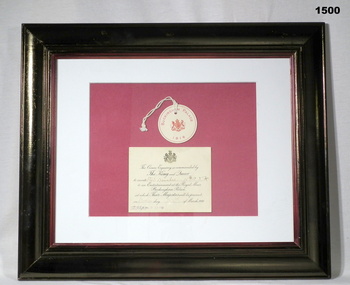
Programme - INVITATION, FRAMED, 22.3.1916
... Embarked for Egypt 2.2.1915, embark for Gallipoli 12.4.1915, WIA 27.8.1915 GSW to left leg severe, admitted 4th Field Ambulance then to Mudros Island, admitted 3rd London General Hospital England 12.9.1915, leg amputated (appears to have been halfway between knee and ankle), embark for Australia 8.5.1916, discharged from the AIF 25.12.1916 medically unfit. documents - inviation Buckingham palace O’Donahoo In text on back: “Paul O'Donahoo” Framed, wooden, dark lacquer within which is displayed 2 items mounted on red background: 1. ...Robert Raymond O’DONAHOO No 1399 enlisted in the AIF in 2nd reinforcements to 14th Battalion on 19.10.1914 age 21 years 11 months. Embarked for Egypt 2.2.1915, embark for Gallipoli 12.4.1915, WIA 27.8.1915 GSW to left leg severe, admitted 4th Field Ambulance then to Mudros Island, admitted 3rd London General Hospital England 12.9.1915, leg amputated (appears to have been halfway between knee and ankle), embark for Australia 8.5.1916, discharged from the AIF 25.12.1916 medically unfit.Framed, wooden, dark lacquer within which is displayed 2 items mounted on red background: 1. Invitation card with Royal crest from the King & Queen to Pte O'Donahoo, Wednesday 22 March 1916. 2. Red ink, round cardboard disc - Buckingham Palace 1916.In text on back: “Paul O'Donahoo”documents - inviation, buckingham palace, o’donahoo -
 Bendigo Military Museum
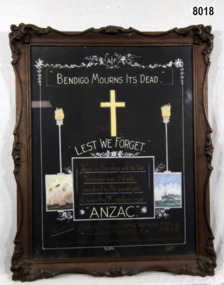
Painting - BENDIGO MOURNS, FRAMED, Paul Sarony, C.1929
... item was placed in what is now called the "Building and RSL History Room" William Darwin No 780 enlisted on 18.8.1914 age 22 years in G Coy 7th BN AIF. Embark for Eygpt 19.10.1914, Hospital 15.3.1915 - 3.5.1915, embark for Gallipoli 5.4.1915, promoted to Act/Sgt 28.8.1915, on 28.9.1915 he was buried in an explosion and dug out 3/4 hours later, was unconcious for 2/3 days and had a leg wound. In amongst this he appears to have got Typhoid and never comes out of Hospital till 13.3.1916. He is returned to Australia and discharged medically...item was placed in what is now called the "Building and RSL History Room" William Darwin No 780 enlisted on 18.8.1914 age 22 years in G Coy 7th BN AIF. Embark for Eygpt 19.10.1914, Hospital 15.3.1915 - 3.5.1915, embark for Gallipoli 5.4.1915, promoted to Act/Sgt 28.8.1915, on 28.9.1915 he was buried in an explosion and dug out 3/4 hours later, was unconcious for 2/3 days and had a leg wound. In amongst this he appears to have got Typhoid and never comes out of Hospital till 13.3.1916. He is returned to Australia and discharged medically ...This item was hung in the Gallery of Honour, foyer of the Soldiers Memorial Institute since 11.11.1929. Commissioned by Drum Major WM DARWIN to comrades & citizens of his native city, Bendigo. After closure of the SMI for renovations 2016 - 18 the item was placed in what is now called the "Building and RSL History Room" William Darwin No 780 enlisted on 18.8.1914 age 22 years in G Coy 7th BN AIF. Embark for Eygpt 19.10.1914, Hospital 15.3.1915 - 3.5.1915, embark for Gallipoli 5.4.1915, promoted to Act/Sgt 28.8.1915, on 28.9.1915 he was buried in an explosion and dug out 3/4 hours later, was unconcious for 2/3 days and had a leg wound. In amongst this he appears to have got Typhoid and never comes out of Hospital till 13.3.1916. He is returned to Australia and discharged medically unfit classed "Shell Shock".Rectangular dark brown ornate frame with glass, displaying a luminous painting. Pictured are 2 torches, a cross, a ship & a battlefield scene.“AIF. Bendigo Mourns Its Dead. Lest We Forget”brsl, smirsl, honors -
 Bendigo Military Museum
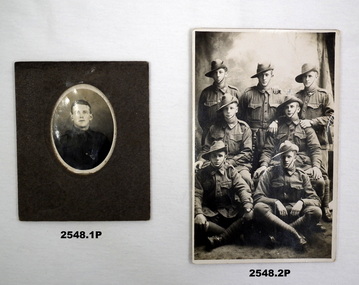
Photograph - PHOTOGRAPHS WW1, 2) Kitchener Studio - Ainar Studio Auburn, c.WWI
... medically unfit 14.3.1919. He again enlisted in the Volunteer Defence Corp on 28.3.1942 as No V352711, promoted to Lieutenant 10.12.1942, discharged from the Corp on 31.10.1945. Items...medically unfit 14.3.1919. He again enlisted in the Volunteer Defence Corp on 28.3.1942 as No V352711, promoted to Lieutenant 10.12.1942, discharged from the Corp on 31.10.1945. Items ...William HOLMES served 6 months in the Junior Cadets prior to WW1(National Archives records) As No 6826 he enlisted in the AIF in 20th reinforcements 22nd Batt on 28.7.1917 age 18 years 10 months. Embarked 21.11.1917 and arrived Suez 15.12.1917, embark for England 9.1.1918, allotted letter A on Regt No due to duplication (6826A), hospital 16.4.1918 (unclear), rejoin unit 25.4.1918, embark for France 29.4.1918, WIA 17.7.1918 Gassed, move to overseas Training Brigade 2.11.1918, embark for Australia 8.1.1919, discharged medically unfit 14.3.1919. He again enlisted in the Volunteer Defence Corp on 28.3.1942 as No V352711, promoted to Lieutenant 10.12.1942, discharged from the Corp on 31.10.1945. Items are part of a collection. .1) Small oval portrait in dark grey mount. .2) Group photo of WWI uniformed soldiers. WILLIAM HOLMES marked with blue ink above his head - middle row RHS..1) Handwritten: “W HOLMES, Dad when a boy” .2) Handwritten: “Dad when away” Stamped in blue ink: - Kitchener Studio Broadmeadows Camp - Ainar Studio Auburnphotography-photographs, military history - army -
 Bendigo Military Museum
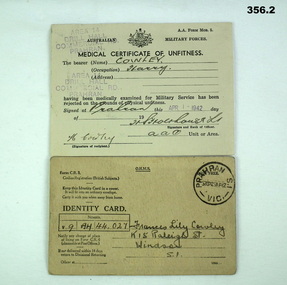
Card - MEDICAL CERTIFICATE AND ID CARD, 1942
... Items relating to Harry and Lily COWLEY. Refer 347.3. Refer 347.3 for Harry Cowley, WW1 service history. Obviously he tried to enlist in WW2 but was rejected on medical grounds....Items relating to Harry and Lily COWLEY. Refer 347.3. Refer 347.3 for Harry Cowley, WW1 service history. Obviously he tried to enlist in WW2 but was rejected on medical grounds. documents Medical identification .1) For "Harry Cowley, Area 14 Drill Hall Prahran, Dated 1 Apr 1942" .2) For "Francis Lily Cowley, K15 Raleigh St Windsor S1" .1) Medical Certificate of Unfitness AA.Form MoB 5 .2) ID Card Civilian Registration ( British Subjects ) Number V9 F94 44,027 Stamped Prahran Vic 29 April 1942 Card MEDICAL CERTIFICATE AND ID CARD ...Items relating to Harry and Lily COWLEY. Refer 347.3. Refer 347.3 for Harry Cowley, WW1 service history. Obviously he tried to enlist in WW2 but was rejected on medical grounds..1) Medical Certificate of Unfitness AA.Form MoB 5 .2) ID Card Civilian Registration ( British Subjects ) Number V9 F94 44,027 Stamped Prahran Vic 29 April 1942.1) For "Harry Cowley, Area 14 Drill Hall Prahran, Dated 1 Apr 1942" .2) For "Francis Lily Cowley, K15 Raleigh St Windsor S1"documents, medical, identification -
 Glen Eira Historical Society
Newsletter - Southwick, David
... This file contains one item A newsletter on the activities of David Southwick MP for Caulfield dated Autumn 2011 Southwick David Caulfield Parliamentary Representative Members of Parliament Politicians Government offices Medical Sciences Political Roles Health Medical Sciences Public Transport Transport Violence Parks and Reserves Crime Social Problems Youth Glover Jesse Caulfield Park Bowls Club Pizze Vini Spuntini Molino’s Schools Educational Institutions Ride2School Day St Josephs Primary School Caulfield Junior College Clean Up Australia Day McDonalds Elsternwick Paice Kelly Voluntary Workers World’s Greatest Shave Leukaemia Foundation Caulfield Primary School Bowls Clubs Elsternwick Carre Street Elsternwick Glen Huntly Road Caulfield South Parliament Recreation Government Environment Coalition Newsletter Southwick, David ...This file contains one item A newsletter on the activities of David Southwick MP for Caulfield dated Autumn 2011southwick david, caulfield, parliamentary representative, members of parliament politicians, government offices medical sciences, political roles, health, medical sciences, public transport, transport, violence, parks and reserves, crime, social problems, youth, glover jesse, caulfield park bowls club, pizze vini spuntini, molino’s, schools, educational institutions, ride2school day, st josephs primary school, caulfield junior college, clean up australia day, mcdonalds elsternwick, paice kelly, voluntary workers, world’s greatest shave, leukaemia foundation, caulfield primary school, bowls clubs, elsternwick, carre street elsternwick, glen huntly road caulfield south, parliament, recreation, government, environment, coalition -
 Running Rabbits Military Museum operated by the Upwey Belgrave RSL Sub Branch
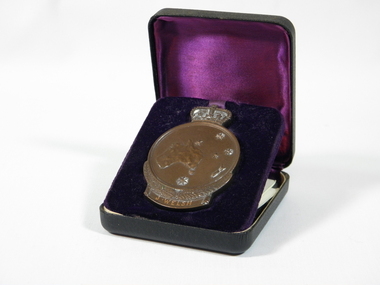
Medallion, Anzac Commemorative Medallion
... Medical practitioner Army Medical Corps 1st Field Ambulance. Mentioned in despatches This Item is significance because apart from only being issued to members who served in GALLIPOLI, This Medallion is significant because Lieutenant-Colonel John Basil Welch "Army Medical Corps" was Mentioned in Despatches and Awarded the "DSO" Distinguished Service Order Medal medal anzac gallipoli medalion welch 1915 ANZAC ON FRONT "J.WELSH" ON BACK Bronze /Round /Crown with Anzac on lower part Australia on back with southern cross Anzac Commemorative Medallion Medallion Commonwealth of Australia ...In commemoration of the heroic deeds of the men of ANZAC at GALLIPOLI in 1915 and in recognition of the great debt owed by all Australians. Medical practitioner Army Medical Corps 1st Field Ambulance. Mentioned in despatchesThis Item is significance because apart from only being issued to members who served in GALLIPOLI, This Medallion is significant because Lieutenant-Colonel John Basil Welch "Army Medical Corps" was Mentioned in Despatches and Awarded the "DSO" Distinguished Service Order Medal Bronze /Round /Crown with Anzac on lower part Australia on back with southern cross1915 ANZAC ON FRONT "J.WELSH" ON BACKmedal, anzac, gallipoli, medalion, welch -
 Running Rabbits Military Museum operated by the Upwey Belgrave RSL Sub Branch
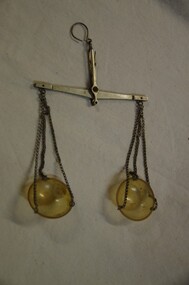
Medical Item
... Medical Item...Equipment WW1 Army apocatharies scales Medical Item ...apocatharies scalesequipment, ww1, army -
 Bendigo Military Museum
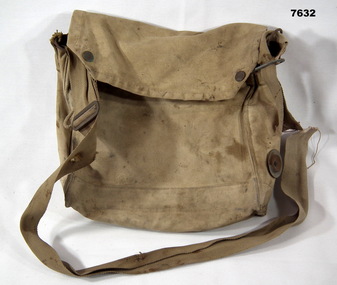
Equipment - MEDICAL BAG, CANVAS
... Ambulance Medical Bag On back of bag in black "AMBULANCE" and No. "1606". Canvas carry bag. Inside a series of pockets and slots to carry various items. ...Belonged to No1606 Frederick Robey Nicholls. Enlisted 18.5.1915 in No.1 A.G.H age 18 years and 2 months and embarked 26.5.1915. Transferred to 5th Field Ambulance. Discharged 11.8.1919. Used for carrying medical supplies.Canvas carry bag. Inside a series of pockets and slots to carry various items. Fold over lid to close pack via two metal studs. A shoulder strap on top of bag connected to bag by 2 metal rings. Strap is broken. Two small copper studs at bottom of bag and one larger. Metal and leather stud on right side of bag.On back of bag in black "AMBULANCE" and No. "1606".ambulance, medical bag -
 Kiewa Valley Historical Society
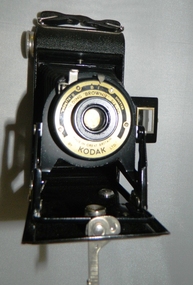
Camera Box Brownie Folding, Six 20 Folding Brownie KodetteII, Circa 1948 to late 1970s
... The significance of this item is that at the time of its introduction to Mount Beauty the camera was a "state of the art", for general public, camera introduced by an ever increasing influx of retirees. This identifies the Kiewa Valley not only as an attraction for sightseers and overseas tourists but also retirees. The social implications of this trend will continue to provide a broader requirement for medical ...This camera was made for the mobile photographer and the camera manufacturer Kodak was at the peak of production. Mr. George Eastman, the company's founder, who invented roll film, which could withstand the outdoor activities and therefor replaced photographic plates. In 1900, the Box Brownie camera was first released Kodak's motto was' "You push the button, we do the rest," The film used in this camera was Kodak Verichrome 620 introduced in 1936 and only went out of production 2009. This camera was a vintage 1970s one. Between 1963 and 1970 the company sold 50 million of this type of camera. The production of smaller and more user friendly digital cameras, mainly from Japan finally nailed the coffin lid on the Kodak Company. Ironically, one of Kodak's engineers called Steve Sasson, devised a camera that could save images using electronic circuits. The images were transferred onto a tape cassette and were viewable by attaching the camera to a TV screen, however Kodak tried to maintain its photographic film products beyond its "use by date". In1975 Kodak becomes the first company to make a digital camera, however the Japanese manufacturers could make smaller and more compact cameras ending Kodak's monopoly and eventual demise.This particular "box brownie" was used by Margaret Shefford, nee Turner, who with her husband retired, in the 1980s, to Mount Beauty. The camera was purchased in the 197's and used on their cruise to England. The significance of this item is that at the time of its introduction to Mount Beauty the camera was a "state of the art", for general public, camera introduced by an ever increasing influx of retirees. This identifies the Kiewa Valley not only as an attraction for sightseers and overseas tourists but also retirees. The social implications of this trend will continue to provide a broader requirement for medical and other facilities geared up to the requirements of an aging population. As a lot of cities in Australia have increasing levels of violence (mainly drug related) rural "retreats" are becoming more sought after by sections of "the gentle populous"This is a black metal rectangular camera, rounded on the ends and has silver colored fittings(stainless steel) and a small leather handle on hinges the left side (facing the lens). The folding lens and shutter component fold out from the main compartment. Two metal arms swing out and hold the lens and collapsible lens body to the required length. When not in use this collapsible (folding) lens extension is fastened to the main body structure providing security and preventing damage to the folding material. The camera has a collapsible eye piece or view finder at the top end. The right hand bottom end has a cylindrical film wider (polished steel). Inside there are two cylindrical cavities, one holding the roll of unexposed film and the other (winder) end a cylinder onto which the unexposed film is wound through for each picture frame. There is a locking mechanism to hold the folding lens structure to the main box structure. See KVHS 0419B for its carrying caseNo external makings but when the lens is folded out it exposes manufacturing information on metal base around the lens " Kodette II B I shutter"(B= Bulb and I= Instant), underneath this, in larger print, is "'FOLDING 'BROWNIE' SIX - 20" below the lens and in smaller print, "made in Great Britain" and underneath this "by KODAK ltd"kodak kodette ii, folding brownie camera, photography, hobby personal item, tourist gadgets. -
 Kiewa Valley Historical Society
Typewriter Mechanical Portable, 1950s
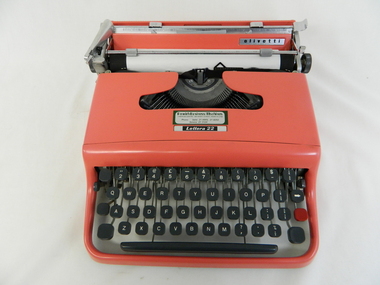
... The ease of setting up this typewriter and its compact mobility was its major benefit to trades people and travelling professionals, e.g. rural doctors, other medical professionals, accountants, lawyers and educators. This item facilitated the growing numbers of professional nomads requiring a relatively light office stationery package e.g. travelling novelist, writer, businessman and academics. ...The ease of setting up this typewriter and its compact mobility was its major benefit to trades people and travelling professionals, e.g. rural doctors, other medical professionals, accountants, lawyers and educators. This item facilitated the growing numbers of professional nomads requiring a relatively light office stationery package e.g. travelling novelist, writer, businessman and academics. ...The Olivetti company was founded in Italy in 1908.This particular typewriter is a Olivetti Lettera 22, oblique front stroke and portable manufactured after 1950. The 1950s and 1960s was a time when British manufactured goods were still purchased by many Australian consumers. The later 1960s onwards, there was a shift, mainly in the cities, to European made goods. The invasion of Japanese manufactured goods was relatively slower, especially in rural areas. The demand for long lasted and dependable merchandise was in the rural area still the most important criteria. The ease of setting up this typewriter and its compact mobility was its major benefit to trades people and travelling professionals, e.g. rural doctors, other medical professionals, accountants, lawyers and educators. This item facilitated the growing numbers of professional nomads requiring a relatively light office stationery package e.g. travelling novelist, writer, businessman and academics. This typewriter needed no electrical or battery power to operate it. Outback Australia, where at this point in time, was still relatively isolated from a good available electrical power reticulation and battery power, and therefore could not be totally measured as a highly efficient office environment.Although this typewriter was purchased from a business in Penrith, Sydney, N.S.W., it is significant that it travelled easily to the Kiewa Valley, demonstrating the mobility of certain sections of the community. This typewriter was designed by an Italian industrial designer, Marcello Nizzoli, in line with the art deco style of the 1930s and the colour and flexibility of the vibrant 1950s. The underlying theme of manufacturing in the 1950s was to produce equipment that was more efficient than what was inherited from the earlier period of 20th century. Improvements were made to this Olivetti typewriter by Giuseppe Beccio by reducing the number of parts made from 3,000 to 2,000. This reduction of parts and therefore cost of production was the major principle of the Japanese manufacturing juggernauts of the post World War II era. Efficiency and low costs material was becoming prime factors in the success of rural industries from the 1960s. Competition from overseas producers was starting to affect rural industries and the removal of the large range of tariff protection, especially rural products, required not only a shift of farm management but a more efficient cost savings modus operandi. This Olivetti Lettera 22, oblique front stroke portable (weighs 4kg) mechanical typewriter has a coral coloured plastic casing. The keys are made of black hardened plastic with white lettering, numbers and symbols (imperial fractions, and pound). It has a QWERTY keyboard as opposed to the Italian QZERTY. It has a lever to move the ribbon between black, neutral (for mimeograph stencils)and red colours (a red key is provided for highlighting specific words,letters or symbols) . This machine is fitted with only a black ribbon. It has a black rubber paper rollers and chromed metal parts on the carriage way. It has four rubber feet underneath the main body. On the left side of the roller there is a lever to adjust the roller from fixed (when mobile) through 1,2 and 3 line space gradients. This model has a key for zero but not one for the number one (uppercase letter l is used) see KVHS 0459 for the carrying bag.On the cover over the ribbon wheels letter strikers has a plate marked "Lettera 22" and the back plate behind the paper roller and in front of the paper supports has a silver metal label marked "olivetti made in great britain".commercial, mobile office equipment, mechanical typewriter -
 Kiewa Valley Historical Society
Box First Aid, Snake and Spider Outfit, Circa 1940's
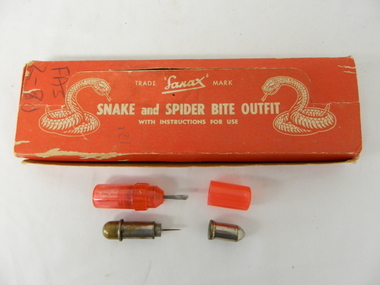
... This item was in use at a time when the air ambulance and rescue facilities were not in existence and remote locations were more isolated and the availability of anti venom was hard to obtain locally. snake spider first aid kiewa hydro scheme portable medical supplies On top of the pull up lid, and flanked by two coiled snakes (at the strike position) is printed: "Trade Sanax Mark" below this " SNAKE and SPIDER BITE OUTFIT" and below this with instructions for use". ...At the time of manufacture, circa 1940's, the first aid treatment for snake bites, was to lance(cut) open the bite, wash it out and apply a ligature or tourniquet between the bite and the heart. This method was abandoned later after scientific evidence suggested that it was better to stop the blood system from carrying the poison to the heart (pressure immobilization). Australian snakes do not have long fangs therefore deep incisions into main arteries is rare. This research took many years to develop therefore the information supplied with the "Sanax" kits of this era is well outdated. Rural areas were more attuned to the possibilities of snake activity on farms, in sheds and in out houses and farm homesteads. This was not the case for mainly city and large townships environments. The mice plagues in wheat areas during the warmer month s has always been a high risk time for encountering snakesThese snake bite kits were issued to workers on the Kiewa Hydro Electricity Scheme. Some of these snake bite kits were kept at doctor's surgeries e.g. Bogong Village, House 13. The kit was carried by bushwalkers, scouts, farmers and high plains cattlemen. This item is of significance because it demonstrates the main dangers faced by all rural industries and towns, especially remote areas, and the portable remedies that where required as a necessity of the Australian bush environment. This item was in use at a time when the air ambulance and rescue facilities were not in existence and remote locations were more isolated and the availability of anti venom was hard to obtain locally.This item is a red coloured cardboard box(250 - 300 g/m) with white writing and containing the following 12 items. 7 clear red coloured capsules, 2 opaque red plastic capsules, 2 wooden capsules and 1 brass screw on capsule. The capsules are divided into two sections (compartments) horizontally. Each compartment has a screw lid. One compartment contains a lancet (for piercing the snake bite) and the other compartment contains the "Condy's" crystals compete with tightly rolled instructions.On top of the pull up lid, and flanked by two coiled snakes (at the strike position) is printed: "Trade Sanax Mark" below this " SNAKE and SPIDER BITE OUTFIT" and below this with instructions for use". Front side: "Sanax snake and spider bite outfit" underneath "Nepean Highway Morabbin" The later printing has been severely scratched but decipherable. The back side of the box has "Note to the retailer" and due to wear no more of the writing can be read. Each side of the box is printed "SANAX" snake, spider, first aid, kiewa hydro scheme, portable medical supplies -
 Kiewa Valley Historical Society
Functional object - Pocket First Aid, Circa mid 1900s
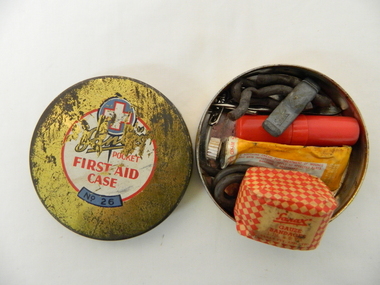
... item was made by an Australian company when the motto "true blue" was the catch cry for quality Australian made goods. This was in the period where the isolation of many rural communities required the basic first aid kits to be of a tougher quality than those offered in large cities and towns. This pocket first aid kit was very compact and would have been easy to carry without taking up too much space for bush walkers, camping scouts, drovers and independent miners and cattlemen. The Kiewa Valley and surrounding rural settlements did not have the medical ...This pocket First Aid kit is small and compact which became available to those venturing out in the outback and required an easily managed first aid kit. It was manufactured in the mid 1900s well before vinyl and or plastic pouches or bags where used. It was in an era where valuable items were stored in durable containers due to the harsh and rugged conditions of the Australian bush. Cheaper and less durable containers from Asian manufacturers had been kept out by the heavy Tariff imposed on their goods. This changed in the 1980's when the Tariff Board was dismantled by a then Labour Government. The Australian manufacturing industry was severely reduced by the Influx of cheaper goods. This item was made by an Australian company when the motto "true blue" was the catch cry for quality Australian made goods. This was in the period where the isolation of many rural communities required the basic first aid kits to be of a tougher quality than those offered in large cities and towns.This pocket first aid kit was very compact and would have been easy to carry without taking up too much space for bush walkers, camping scouts, drovers and independent miners and cattlemen. The Kiewa Valley and surrounding rural settlements did not have the medical backup that the larger cities and towns had up until the mid 1900s when the Hydro Electricity Schemes were built and the additional influx of workers made it feasible to have a hospital and better local health facilities. This influx of the construction workers associated with the Hydro Scheme. also brought European workers who where more inclined to go bush walking and climbing the Victorian alps than the average Australian rural worker. This item is a Sanax pocket first aid round tin, gold in colour with red and white print. It's contents are: one small tube of Sanax antiseptic cream, one small one inch x six yards of gauze bandages, rubber band type ligatures with a cast iron tightener., one small tweezers three safety pins, and one lancet.On the lid there are: are outlined white cross on a blue circular background. underneath is a whiite circle encased with a red line with the following printed "Sanax pocket first aid case" (in red print underneath this is a small curved blue background and in black print "No. 26"medicine, first aid tin, camping medical supplies, personal first aid, sanax -
 Kiewa Valley Historical Society
Ash Tray Pocket, Circa mid to late 1900s
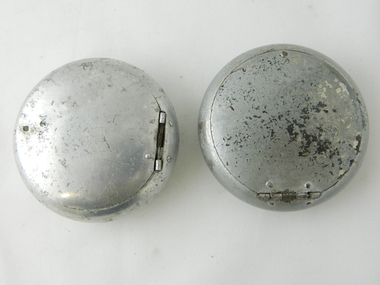
... medical evidence supported a ground swell of the anti smoking movement which resulted in further restrictions of the use cigarette smoking in public places. Before the anti cigarette smoking revolution, it was both fashionable and manly to either roll your own cigarette or open up a packet of "tailor made's". In the rural and man's man environment the roll your own provided a visual acknowledgement that the user was "true blue" Aussie male and not a city boy. The cycle of use of cigarettes has drastically changed from when this item...medical evidence supported a ground swell of the anti smoking movement which resulted in further restrictions of the use cigarette smoking in public places. Before the anti cigarette smoking revolution, it was both fashionable and manly to either roll your own cigarette or open up a packet of "tailor made's". In the rural and man's man environment the roll your own provided a visual acknowledgement that the user was "true blue" Aussie male and not a city boy. The cycle of use of cigarettes has drastically changed from when this item ...This flip top pocket steel ash tray was at the beginning of the social "cleaning up" of cigarette ash and related products. This cigarette waste container was for those occasions when it was polite not to throw the cigarette ash and used up cigarettes "buts" on the ground, or if working in any rural area during a dry fire prone season, when discarding burning cigarette waste could set up a severe "bush" fire. It was also at the beginning of an intensive look at the affects of smoking upon the health of users. Later in the 1900s was a time when medical evidence supported a ground swell of the anti smoking movement which resulted in further restrictions of the use cigarette smoking in public places. Before the anti cigarette smoking revolution, it was both fashionable and manly to either roll your own cigarette or open up a packet of "tailor made's". In the rural and man's man environment the roll your own provided a visual acknowledgement that the user was "true blue" Aussie male and not a city boy. The cycle of use of cigarettes has drastically changed from when this item was first used. Today's society (post 2000) has produced a ground swell of government and non government organisations whose aim is provide a cigarette "ash" free environment and society. This is highlighted in the beginning of the 2000 millennium by a cigarette "Free" Australia campaign, and the pocket flip top personal ash tray as a practical solution for butt litter disposal.This pocket ash tray not only was used when social graces required it to, but also provided a container for any unfinished cigarettes or stogies (cheap half used cigars). In rural areas (open fresh air countryside), where time was always made available for the "smoko" (Australian rest period), at any time, especially after some hard physical work, the ability to have a self contained ashing apparatus, not to offend the gentler folk, was a pre-requisite . The rural environment, in the days of these cigarette ash containers,was one which could range from harsh and unforgiving to mild and relaxing. Smoking could be enjoyed anywhere and at any time without too much "fussing" around. This ash tray was mobile, convenient, unobtrusive and regarded by the user as being considerate to those around. It also eliminated the tell tale evidence that the "no smoking" signs had been ignored. The Kiewa Valley was like many rural ares that found it hard for smokers to come to grips with a governmental "non smoking policy" to indoor recreational and other "confined space" environments. Tin plated mild steel round container with a lid. The opening lid is spring loaded, hinged top, circular and fixed by a clasp, pop- riveted (4) onto the main housing. Opposite the hinge the lid is held closed by a small metal ball fitting tightly to the top wall of the container. The lid is opened by the use of a fingernail positioned at junction of lid to body. This edge is bevelled to allow access. personal effects, tobacco waste products, smoking accessories -
 Kiewa Valley Historical Society
Ash Tray Pocket
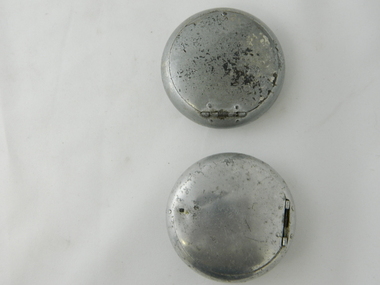
... medical evidence supported a ground swell of the anti smoking movement which resulted in further restrictions of the use cigarette smoking in public places. Before the anti cigarette smoking revolution, it was both fashionable and manly to either roll your own cigarette or open up a packet of "tailor made's". In the rural and man's man environment the roll your own provided a visual acknowledgement that the user was "true blue" Aussie male and not a city boy. The cycle of use of cigarettes has drastically changed from when this item...medical evidence supported a ground swell of the anti smoking movement which resulted in further restrictions of the use cigarette smoking in public places. Before the anti cigarette smoking revolution, it was both fashionable and manly to either roll your own cigarette or open up a packet of "tailor made's". In the rural and man's man environment the roll your own provided a visual acknowledgement that the user was "true blue" Aussie male and not a city boy. The cycle of use of cigarettes has drastically changed from when this item ...This flip top pocket aluminium ash tray was at the beginning of the social "cleaning up" of cigarette ash and related products. This cigarette waste container was for those occasions when it was polite not to throw the cigarette ash and used up cigarettes "buts" on the ground, or if working in any rural area during a dry fire prone season, when discarding burning cigarette waste could set up a severe "bush" fire. It was also at the beginning of an intensive look at the affects of smoking upon the health of users. Later in the 1900s was a time when medical evidence supported a ground swell of the anti smoking movement which resulted in further restrictions of the use cigarette smoking in public places. Before the anti cigarette smoking revolution, it was both fashionable and manly to either roll your own cigarette or open up a packet of "tailor made's". In the rural and man's man environment the roll your own provided a visual acknowledgement that the user was "true blue" Aussie male and not a city boy. The cycle of use of cigarettes has drastically changed from when this item was first used. Today's society (post 2000) has produced a ground swell of government and non government organisations whose aim is provide a cigarette "ash" free environment and society. This is highlighted in the beginning of the 2000 millennium by a cigarette "Free" Australia campaign, and the pocket flip top personal ash tray as a practical solution for butt litter disposal.This light weight aluminium pocket ash tray not only was used when social graces required it to, but also provided a container for any unfinished cigarettes or stogies (cheap half used cigars). In rural areas (open fresh air countryside), where time was always made available for the "smoko" (Australian rest period), at any time, especially after some hard physical work, the ability to have a self contained ashing apparatus, not to offend the gentler folk, was a pre-requisite . The rural environment, in the days of these cigarette ash containers,was one which could range from harsh and unforgiving to mild and relaxing. Smoking could be enjoyed anywhere and at any time without too much "fussing" around. This ash tray was mobile, convenient, unobtrusive and regarded by the user as being considerate to those around. It also eliminated the tell tale evidence that the "no smoking" signs had been ignored. The Kiewa Valley was like many rural ares that found it hard for smokers to come to grips with a governmental "non smoking policy" to indoor recreational and other "confined space" environments. The covered lid reduces odors and eliminates ashes from being blown around.Aluminium round container with a lid. The opening lid is spring loaded, hinged top, circular and fixed by a clasp, pop- riveted (4) onto the main housing. Opposite the hinge the lid is held closed by a small metal ball fitting tightly to the top wall of the container. The lid is opened by the use of a fingernail positioned at junction of lid to body. This edge is bevelled to allow access.personal effects, tobacco waste products, smoking accessories, tobacco -
 Kiewa Valley Historical Society
Sigmoidoscope Rigid, Mid to late 1900s
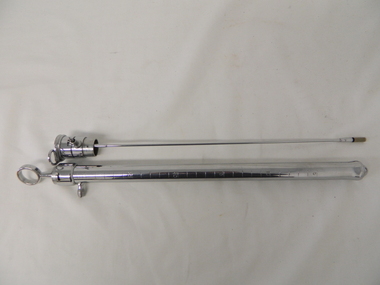
... This item was used before the flexible sigmoidoscope (1996) and before the introduction of fibre optics late 1900s. The 1900s saw an incredible leap forward in the field of medical procedures. ...This item was used before the flexible sigmoidoscope (1996) and before the introduction of fibre optics late 1900s. The 1900s saw an incredible leap forward in the field of medical procedures. ...This item was used before the flexible sigmoidoscope (1996) and before the introduction of fibre optics late 1900s. The 1900s saw an incredible leap forward in the field of medical procedures. The ability to visually see what was happening within the human body (in real time) provided greater analysis about certain biological abnormalities during a greater time elapse than before. This procedure involved less trauma to the patient and greater flexibility to the Physician in treatment schemes. The rigid signoidscope, however provided the first visual of the colon in situ, but was highly invasive to the patient.This item was used in the Mount Beauty Hospital for qualified Physicians to use in their diagnostic evaluation of patients. This would not be an instrument used by a General Physician. This item is still a internal observatory method which may, in some instances, cause some minor complications. This item does point to the level of medical diagnostics, equivalent to those available in larger towns and cities, which brings this rural area (once considered to be an isolated region) to a higher level of medical care.This rigid 35 cm long sigmoidoscope (internal probe) is made of stainless steel outer hollowed rounded rod, which permits the use of both a fixed (very thin) lighting rod and two flexible cord lights access. Both the lighting rod and the flexible lights can be lowered within the main rod to allow the physician to see the colon at the bottom of the rod.These items are all contained within a specifically inlaid wooden box. The box has separate open compartments for the main instruments and a small lidded compartment containing replacement light bulbs. The hollowed tube permits the physician to visually observe the signoid (an S shaped part) of the colon.On the stainless steel main rod body are engraved the lengths of the body,in centimetres ,with numbers starting at the five centimeter mark and then every five centimetres up to the thirty centimetre mark. On the front inside rim of the box are two inlaid white plastic strips with black print, "ALLEN & HANBURYS Ltd" and the other "LONDON"medical diagnostics, sigmoidoscope examinations, medical examinations, hospital equipment -
 Warrnambool and District Historical Society Inc.
Promotion, Olympic games Melb 1956, 1956
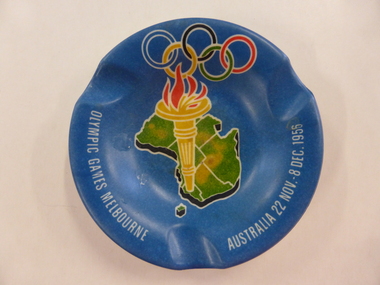
... This item is kept as a memento of the 1956 Melbourne Olympic Games, an event that interested and affected all Australians as it made Melbourne and Australia via press and television coverage etc. the centre of attention in the world at the time. It is also a memento that would no longer be made or sold today as cigarette smoking in general is no longer socially and medically ...This ash tray is a souvenir of the Olympic Games held in Melbourne in 1956. This was an important event in post World War Two Australia and the first time the Olympic Games had been held in the Southern Hemisphere. The Opening and Closing Ceremonies, the athletics events and some other events were held at the Melbourne Cricket Ground. These were the first televised Olympic Games. To mark the occasion many souvenir items were produced for tourists and collectors.This item is kept as a memento of the 1956 Melbourne Olympic Games, an event that interested and affected all Australians as it made Melbourne and Australia via press and television coverage etc. the centre of attention in the world at the time. It is also a memento that would no longer be made or sold today as cigarette smoking in general is no longer socially and medically acceptable. It will be useful for display.This is a plastic circular ash tray. It has a blue base with a multi-coloured image in the centre of the base of a map of Australia, an Olympic Games torch and the Olympic Games ring motifs. The printing is in white and the name of the maker is embossed on the back of the tray. There are three indents around the base for stubbing out the cigarettes. ‘Olympic Games Melbourne Australia 22 Nov. - 8 Dec. 1956’ ‘British Plastics Pty Ltd Melbourne Reg. Des.’ olympic games melbourne, 1956 olympics -
 Warrnambool and District Historical Society Inc.
Functional object - Printing plate: Visitor Card
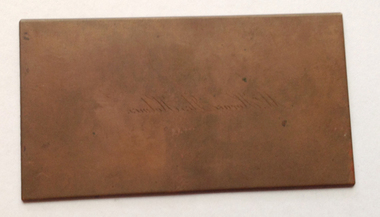
... Dr Holmes retired in 1939, briefly returned to medical practice as a locum during the war years, and died in 1959. He was a foundation member of the Warrnambool Rotary Club. This printing plate is a significant item ...This printing plate was made for Dr Horace Holmes to be used by him as a calling card. Dr Horace Holmes, born in Tasmania in 1877, came to Warrnambool in 1905 taking over the practice of Dr Fleetwood at ‘Ierne’, at the corner of Spence and Kepler Streets. In 1906 he built a new home at the corner of Liebig Street and Raglan Parade and moved his practice there in 1912 (Currently occupied by Oz Child in 2024). Dr Holmes retired in 1939, briefly returned to medical practice as a locum during the war years, and died in 1959. He was a foundation member of the Warrnambool Rotary Club. This printing plate is a significant item as it belonged to Dr Holmes, a prominent doctor and a leading community member in Warrnambool for 50 years. It also is a good example of a custom of the time – the use of a calling card when visiting homes or contacting clients and business people. (This practice continues today)This is a printing plate for Dr Horace Iles Holmes. It is made of brass and is quite worn, particularly on the reverse side where the name of the manufacturer is almost obliteratedDr Horace Iles Holmesdr horace holmes, printing plate -
 Kiewa Valley Historical Society
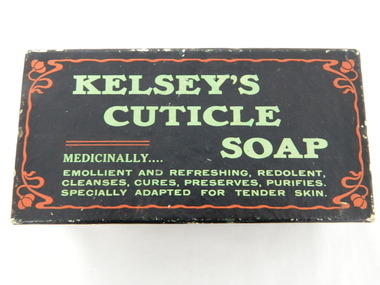
Box Cuticle Soap, mid to late 1900's
... 'selling This subliminally,"medically" endorsed product was one of many during the great "spin" revolution of product marketing and selling. This item ...The mid 1900's provided the start of "the body beautiful" revolution. The cosmetic industry, with the help of quasi scientific selling advertising slant targeted those "customers" that needed the "extra care" factor that only their product could offer. At this period in time their advertising power was based on in store, radio and newspaper media channels with saturation levels relatively low. In the later years of the 1900's saturation levels and a wider range of products and increased competition further increased the product saturation levels available to the buying residents. With the introduction of television the advertisements become more elaborate and "catchy" words, phrases and comedy type situations helped boost the advertising "pitch" and subliminal undertones to effective levels required for a highly competitive health related market place. 'sellingThis subliminally,"medically" endorsed product was one of many during the great "spin" revolution of product marketing and selling. This item is significant in that it demonstrates that greater infusion of product awareness throughout rural areas was highly successful through a greater variety of advertising media. It also demonstrates that in a highly competitive marketplace there are no physical boundaries that impinge upon the distribution of products and services. The rural sector is a highly lucrative region for any product that helps protect the body from all the "nasty's" that become more noticeable in a rural environment. This rectangular box which had contained cuticle soap is constructed from cardboard and reinforced by a black nylon impregnated sheeting. This impregnation was required to keep the box from soaking up any water from the user's hands. The top section of the box(lid) has and in large print "KELSEY'S" top line followed by "CUTICLE" off to the right and underneath and to the right "SOAP". Below this and in smaller print is "MEDICINALLY..." below this and in smaller print "EMOLLIENT AND REFRESHING, REDOLENT, CLEANSES, CURES, PRESERVES, PURIFIES." and last line underneath "SPECIALLY ADAPTED FOR TENDER SKIN" On each of the sides of the top lid are, side 1 "INVALUABLE FOR THE NURSERY." underneath in smaller print "JOHN M. KELSEY CO." to the left of this and on a green backed highlighter "No. 1744 - Guaranteed under Pure Food Act, 1908, N.S.W. by John M. Kelsey Co. - No. 1744. Melbourne, Victoria." On the right side and in large print "KELSEY'S CUTICLE SOAP" on the next side and also a similar sign on the opposite side "SPECIALLY ADAPTED FOR TENDER SKIN." below this "JOHN M. KELSEY CO." "Registered" and on the other long side in large print "SPECIALLY ADAPTED FOR TENDER SKIN" underneath in smaller print JOHN M. KELSEY CO. Registered"specialised soap, toilet requisites, nursery health., bathroom, domestic -
 Bendigo Military Museum
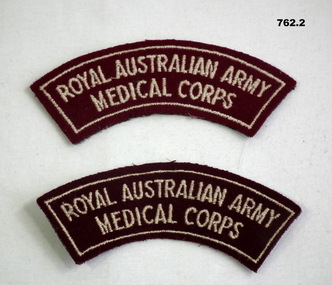
Accessory - SHOULDER FLASHES UNIFORM
... Items issued to Dr Warwick Rosenthal, refer Cat No 622.3 for his service details. uniforms army badges .1) Shoulder flash, cloth , curved shape with white lettering sewn in. " Royal Australian Army Medical Corps." ...Items issued to Dr Warwick Rosenthal, refer Cat No 622.3 for his service details..1) Shoulder flash, cloth , curved shape with white lettering sewn in. " Royal Australian Army Medical Corps." Background is purple .2) Same as .1 with background colour reduniforms, army, badges -
 Bendigo Military Museum
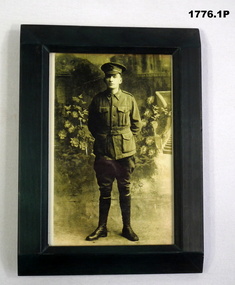
Photograph - PHOTOGRAPHS WW1, FRAMED, All three, 19414 - 18
... medically unfit 21.8.1918. Harold Hindley No 2570 enlisted in the AIF in 8th reinforcements 5th Batt on 8.7.1915 age 30 years 8 months. Embark for Egypt 15.9.1915, on Gallipoli 7.12.1915, embark for France 25.3.1916, hospital 11.7.1916, with I.C.F Heel, rejoin unit 19.7.1916, WIA 16.8.1916 GSW right thigh severe, shell contusions back and shoulder, from there he moves through various convalescent depots and units until embark for Australia for discharge on 19.10.1918, discharged from the AIF 11.2.1919. photography-photographs military history B&W portraits of the Hindley brothers in uniform. All items ...John James Hindley No 2747 enlisted in the AIF on 2.7.1915 age 26 years 9 months. Embarked for Egypt 15.9.1915 then joined unit on Gallipoli 13.11.1915, hospital 14.12.1915 with Influenza, rejoin unit 22.12.1915, transfer to 4th machine Gun Coy 6.4.1916, embark for France 1.6.1916, reported WIA and missing reincourt 11.4.1917, reported POW, died while POW at Dulmen Germany 6.5.1917. Francis Grant Hindley No 790 enlisted in the AIF on 18.8.1914 age 19 years. Embark for Egypt 19.10.1914, embark for Gallipoli 5.4.1915, WIA 6.7.1915 with shock/concussion and then gets Influenza, rejoin unit 9.1.1916, transfer to 59th Batt 24.2.1916, transfer to 57th Batt 20.3.1916, embark for France 17.6.1916, transfer to 58th Batt 23.7.1916, promoted Sgt 1.4.1917, hospital with Scabies 21.7.1917, rejoin unit 25.7.1917, reverts to ranks 5.8.1917, promoted L/Cpl 15.9.1917, hospital 15.10.1917, with Haemorroids, rejoin unit 22.10 1917, embark for Australia 25.3.1918, discharged medically unfit 21.8.1918. Harold Hindley No 2570 enlisted in the AIF in 8th reinforcements 5th Batt on 8.7.1915 age 30 years 8 months. Embark for Egypt 15.9.1915, on Gallipoli 7.12.1915, embark for France 25.3.1916, hospital 11.7.1916, with I.C.F Heel, rejoin unit 19.7.1916, WIA 16.8.1916 GSW right thigh severe, shell contusions back and shoulder, from there he moves through various convalescent depots and units until embark for Australia for discharge on 19.10.1918, discharged from the AIF 11.2.1919.B&W portraits of the Hindley brothers in uniform. All items have dark green wooden frames. .1) John Hindley, full length standing, hands behind back with flowers and stairs in background. .2) Francis Hindley, full length standing with dog. .3) Harold Hindley, head and shoulders, photo is oval shaped.photography-photographs, military history -
 Warrnambool and District Historical Society Inc.
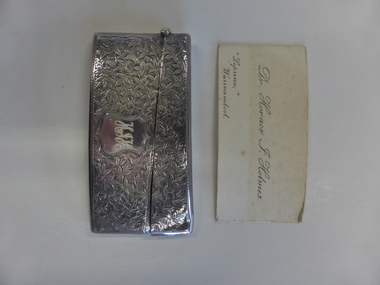
Functional object - Silver Card Case (Holmes), Mid 20th century
... Medical Officer at the Warrnambool Hospital. He retired in 1939 selling his practice to Dr Berryman but came out of retirement and practised as a locum until 1944. His interests included rowing golf, bowls and fishing. In the 1950s he lived at ‘Leprena’ in Canterbury Road. He was a foundation member of the Warrnambool Rotary Club. This is a most significant item ...The owner of this card case was Dr Horace Holmes who was a doctor in Warrnambool for over 40 years. Dr Holmes (1877-1959) was born in Tasmania and completed a medical course at Melbourne University. He came to Warrnambool in 1905, taking over the practice of Dr Fleetwood at ‘Ierne’, at the corner of Spence and Kepler Streets. In 1906 he built a new home at the corner of Liebig Street and Raglan Parade and moved his practice there in 1912 (today this building is the Warrnambool Medical Clinic). Dr Holmes was an honorary Medical Officer at the Warrnambool Hospital. He retired in 1939 selling his practice to Dr Berryman but came out of retirement and practised as a locum until 1944. His interests included rowing golf, bowls and fishing. In the 1950s he lived at ‘Leprena’ in Canterbury Road. He was a foundation member of the Warrnambool Rotary Club. This is a most significant item as it belonged to a prominent local doctor, Dr Horace Holmes. It also has considerable social significance as it is an example of the practice of past times of carrying calling cards and the silver case is a sign of the affluence of the owner. This is a silver card case, heavily embossed, with a slightly curved shape and a hinged lid. It has the initials ‘HIH’ engraved in a shield on the front of the case. It contains nine calling cards (Dr Horace Holmes, Warrnambool). These are made of light card with printing in black on a white background. The cards are somewhat marked and discoloured. Case: ‘HIH’ Cards: ‘Dr. Horace I. Holmes, Leprena, Warrnambool’card case, dr horace holmes, warrnambool -
 Bendigo Military Museum
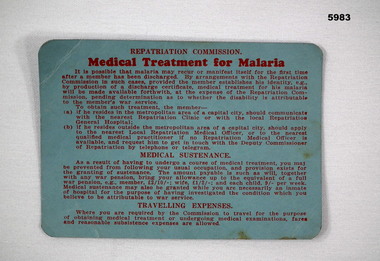
Administrative record - CARD, MALARIA
... Item relates back to Cat No 4316.4 Malaria Repatriation Commission Writing in as contact on back; "Dr Blumer A.C. 362 Chapel Street Bankstown" Blue piece of cardboard. Card on one side headed "Medical ...Servicemen were issued this card upon return from service if they have previously had Malaria, in case the disease returns. Gives them their rights and the proper contacts if required. Item relates back to Cat No 4316.4Blue piece of cardboard. Card on one side headed "Medical Treatment for Malaria". From Repatriation Commission. details what to do if symptoms of Malaria returns - in small red writing. On other side lists Repatriation Local Medical Officer for District.Writing in as contact on back; "Dr Blumer A.C. 362 Chapel Street Bankstown"malaria, repatriation commission -
 Kiewa Valley Historical Society
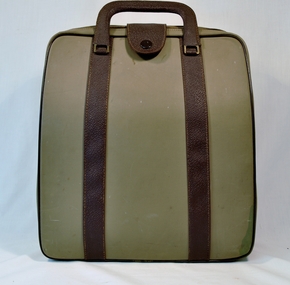
Typewriter Case Olivetti, Circa 1950
... The ease of setting up this typewriter and its compact mobility was its major benefit to trades people and travelling professionals, e.g. rural doctors, other medical professionals, accountants, lawyers and educators. This item(carrying case) facilitated the growing numbers of professional nomads requiring a relatively light office stationery package e.g. travelling novelist, writer, businessman and academics. ...The ease of setting up this typewriter and its compact mobility was its major benefit to trades people and travelling professionals, e.g. rural doctors, other medical professionals, accountants, lawyers and educators. This item(carrying case) facilitated the growing numbers of professional nomads requiring a relatively light office stationery package e.g. travelling novelist, writer, businessman and academics. ...This typewriter case allowed the Olivetti typewriter to be securely and free from contaminants to be totally mobile. The Olivetti typewriter company was founded in Italy in 1908 and became a leader in portable dependable typewriters.This particular typewriter contained is a Olivetti Lettera 22, oblique front stroke and portable manufactured after 1950. During the 1950s and 1960s was a time when British and European manufactured goods were still purchased by many Australian consumers. After the 1970s however, there was a shift, mainly in the cities, to Japanese made goods. The invasion of Japanese manufactured goods was relatively slower, especially in rural areas. The demand for long lasting and dependable merchandise was in the rural area still the most important criteria. The ease of setting up this typewriter and its compact mobility was its major benefit to trades people and travelling professionals, e.g. rural doctors, other medical professionals, accountants, lawyers and educators. This item(carrying case) facilitated the growing numbers of professional nomads requiring a relatively light office stationery package e.g. travelling novelist, writer, businessman and academics. This typewriter needed no electrical or battery power to operate it therefore the inside compartment did not require additional storage pockets . Outback Australia, where at this point in time, good available electrical power reticulation and battery power, was a scarce and therefore could not be totally measured as a highly efficient office environment. The protective carrying bag provided the only mobile way to operate in some business and home locations.Although this typewriter cover and its typewriter was purchased from a business in Penrith, Sydney, N.S.W., it is significant that it travelled easily to the Kiewa Valley, demonstrating the mobility of certain sections of the community. This typewriter cover protected the expensive typewriter it contained which was designed by an Italian industrial designer, Marcello Nizzoli, in line with the art deco style of the 1930s and the colour and flexibility of the vibrant 1950s. The underlying theme of manufacturing in the 1950s was to produce equipment that was more efficient than what was inherited from the earlier period of 20th century. Improvements were made to this Olivetti typewriter by Giuseppe Beccio by reducing the number of parts made from 3,000 to 2,000. Protection of such a typewriter was of an utmost necessity. The need for mobile expensive typewriters waned as less expensive typewriters became available. This was the major principle of the Japanese manufacturing juggernauts of the post World War II. Efficiency and low cost material was becoming prime factors in the success of rural industries from the 1960s. Competition from overseas producers was starting to affect rural industries and the removal of the large range of tariff protection, especially rural products, required not only a shift of farm management but a more efficient cost savings modus operandi.This is a semi hard cover (cloth over cardboard on inside, plastic over cardboard on outside), camel coloured outside and tartan cloth covered pattern inside the typewriter case. the case can be opened up by "unzipping" the top from the bottom halves of the case. For carrying purposes the case has two plastic covering metal handles with brass fittings. There are two stitched on brown reinforcement straps encompassing both sides of the case. The two reinforcing straps are brown in colour and a securing strap with a press button at one end to allow an extra securing tongue to keep the cover secure. The top inside of the case has a three quarters long paper compartment (flap style). See KVHS 0455 for Olivetti Lettera typewriter.commercial, protective carry bags/cases for mobile office equipment, mechanical typewriter -
 Kiewa Valley Historical Society
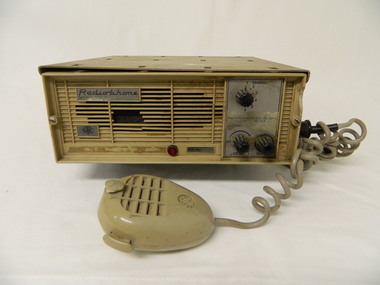
Radio - Phone
... SEC magazine March - April 1948 page 25 and photo of the radio telephone in their home (different to this item) page 26. radio phone transmission 2 way radio ambulance communications doctor medical equipment 'Radiophone / MTR 25 161 AG' 'STC' in a rectangle and 'Ser. ...Radio telephones were used to connect people living or working in isolation with other people.This radio phone was used by ambulance officers,working on the Kiewa Hydro Electric Scheme, to communicate with the doctor. The SECV had received an ambulance by April 1940. It had been modified for long and rough trips, departing from usual ambulance designs of the time. Ref. April 1940 SECV magazine. Mrs Beveridge (Skippy) lived and worked with her husband on the High Plains during winter. They had immediate contact with the outside world as they were connected by radio telephone with the Commission's (SECV) Bogong office. Hence, measurements taken of the snowfall and rainfall and observations from the experimental raceline are reported to head office of the Kiewa Hydro electric Scheme at Bogong. Ref. SEC magazine March - April 1948 page 25 and photo of the radio telephone in their home (different to this item) page 26. This radio phone is in a metal case with a separate steel lid attached with two large screws on either side. The front has a cream plastic face with open slits. It has a cover to protect the speaker behind it. There are 3 tuning knobs (volume, muting & channel) and a small red light. The phone cord is coiled and extends from the right hand side with a speaker attached. The speaker is for sending and receiving messages.'Radiophone / MTR 25 161 AG' 'STC' in a rectangle and 'Ser. No. 21480'.radio phone, transmission, 2 way radio, ambulance, communications, doctor, medical equipment -
 Kiewa Valley Historical Society
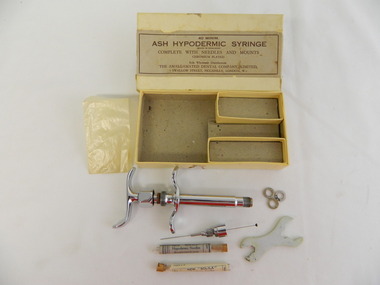
Syringe - Dental
... medical hospital ash hypodermic syringe Label: 40 minim. / Ash Hypodermic Syringe / (Made in England) sic / Complete with Needles and Mounts / Chromium Plated / Sole Wholesale Distributors / The Amalgamated Dental Company, Limited, / 7 Swallow Street Piccadilly, London, W.1 On side of box in hand writing 'Dental Syringe' Cardboard cream coloured box with brown label on front and sides. Inside the box is a stainless steel syringe with stainless steel needles and mounts. These items ...This medical / hospital instrument was used in the Tawonga District General Hospital which was built in the 1950's specifically for the increase in population due to the Kiewa Hydro Scheme.Historical: Shows the development of scientific hospital equipment. Provenance: Used in the Tawonga District General Hospital which was remote and therefore required good equipment. Good condition and good interpretation capacity.Cardboard cream coloured box with brown label on front and sides. Inside the box is a stainless steel syringe with stainless steel needles and mounts. These items are packed in the appropriate sections inside the box.Label: 40 minim. / Ash Hypodermic Syringe / (Made in England) sic / Complete with Needles and Mounts / Chromium Plated / Sole Wholesale Distributors / The Amalgamated Dental Company, Limited, / 7 Swallow Street Piccadilly, London, W.1 On side of box in hand writing 'Dental Syringe' dental syringe, medical, hospital, ash hypodermic syringe -
Frankston RSL Sub Branch
Dressing, Field, John Tye & Son, 1917
... There is a label affixed to this item with the following inscription printed in black: "War Office", "Medical Division", "First Field Dressing", "JOHN TYE & SON, London, May (?) ...world war 1 ww1 dressing There is a label affixed to this item with the following inscription printed in black: "War Office", "Medical Division", "First Field Dressing", "JOHN TYE & SON, London, May (?) ...Small, packaged First Field Dressing issued to Australian and British service personnel during World War 1. The package is made of a tough, protective (waterproof?) fabric and comes complete with a safety pin for use as a bandage. These were carried by soldiers and used for initial treatment of wounds. This item has a printed label with instructions for use and was packaged by John Tye & Son, London in May (?) 1917.There is a label affixed to this item with the following inscription printed in black: "War Office", "Medical Division", "First Field Dressing", "JOHN TYE & SON, London, May (?) 1917"world war 1, ww1, dressing -
Frankston RSL Sub Branch
Collection, A.C. Hill
... items, including documents and photographs, relating to the World War 1 Australian Army service of Private Alfred Charles Hill. A.C. Hill enlisted on 14th April, 1916 at the age of 44 years and 6 months. He lived in Frankston, Victoria and was married to Charlotte Eliza. He served with the 2nd Pioneer Battalion and embarked from Melbourne on the 28th July, 1916 on the HMAT Thermistocles (ship A32). He was in England and France briefly, returning to Australia on 22nd July, 1917 and discharged on the 5th November, 1917 as medically...items, including documents and photographs, relating to the World War 1 Australian Army service of Private Alfred Charles Hill. A.C. Hill enlisted on 14th April, 1916 at the age of 44 years and 6 months. He lived in Frankston, Victoria and was married to Charlotte Eliza. He served with the 2nd Pioneer Battalion and embarked from Melbourne on the 28th July, 1916 on the HMAT Thermistocles (ship A32). He was in England and France briefly, returning to Australia on 22nd July, 1917 and discharged on the 5th November, 1917 as medically ...Collection of items, including documents and photographs, relating to the World War 1 Australian Army service of Private Alfred Charles Hill. A.C. Hill enlisted on 14th April, 1916 at the age of 44 years and 6 months. He lived in Frankston, Victoria and was married to Charlotte Eliza. He served with the 2nd Pioneer Battalion and embarked from Melbourne on the 28th July, 1916 on the HMAT Thermistocles (ship A32). He was in England and France briefly, returning to Australia on 22nd July, 1917 and discharged on the 5th November, 1917 as medically unfit. Hill was involved with the formation of the Frankston RSL Sub Branch in 1918/1919 and was Sub Branch Treasurer from 1919 'til 1923. see following items 00325.1 to 00325.8 -
Frankston RSL Sub Branch
Set, Draughts
... This trench art item consists of a set of 12 pieces (the white pieces) in natural wood and 11 pieces of the same wood which have been dyed a dark colour (the black pieces). An accompanying note, written on military "Field Report" stationery, states "Cut from tree branch in the jungle of Malaysia - 1965" "Coloured with medical dressing"....This trench art item consists of a set of 12 pieces (the white pieces) in natural wood and 11 pieces of the same wood which have been dyed a dark colour (the black pieces). An accompanying note, written on military "Field Report" stationery, states "Cut from tree branch in the jungle of Malaysia - 1965" "Coloured with medical dressing". ...An incomplete set of hexagonal shaped wooden discs intended for use as the playing pieces in a game of draughts. This trench art item consists of a set of 12 pieces (the white pieces) in natural wood and 11 pieces of the same wood which have been dyed a dark colour (the black pieces). An accompanying note, written on military "Field Report" stationery, states "Cut from tree branch in the jungle of Malaysia - 1965" "Coloured with medical dressing". -
Frankston RSL Sub Branch
Collection, A E Wilson, Government issue
... Collection of items relating to the WWl service of Australian Army Private Albert Edward Wilson MM, service number 12435 of the 10th Field Ambulance, Australian medical Corp (AMC), Australian Imperial Force (AIF). ...ww1 field identification tag a e wilson 10th ambulance Collection of items relating to the WWl service of Australian Army Private Albert Edward Wilson MM, service number 12435 of the 10th Field Ambulance, Australian medical Corp (AMC), Australian Imperial Force (AIF). ...Collection of items relating to the WWl service of Australian Army Private Albert Edward Wilson MM, service number 12435 of the 10th Field Ambulance, Australian medical Corp (AMC), Australian Imperial Force (AIF). Private Wilson gave his address as Moorooduc, Victoria at the time of enlistment, he embarked Melbourne with the 10th FA on 6th June, 1916. more details can be found at the following NAA webpage ... < https://recordsearch.naa.gov.au/SearchNRetrieve/Interface/ViewImage.aspx?B=1995801 > see also 00019.1 and 00019.2ww1, field, identification, tag, a e wilson, 10th, ambulance -
 J. Ward Museum Complex
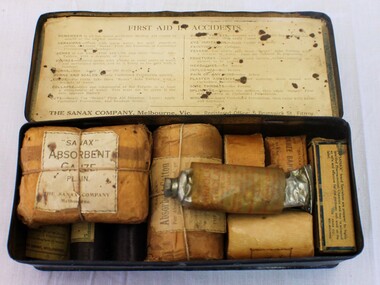
Container - First Aid in Accidents Kit, The Sanax Company – Melbourne Vic
... medical supplies sanax Due to its portable nature, the kit contains many dents and scratches. Black tin container. Inside lid shows printed instructions regarding treating various ailments. Contains: Absorbent gauze Canister of castor oil Petroleum jelly First Aid dressing Absorbent dressing Salvolatile ointment Gauze bandage x 3 Ache tablets x 25 3 loose metal safety pins The contents are not dissimilar to items used in first aid kits today. ...This small, portable 1930’s Sanax First Aid in Accidents Kit has been strongly constructed, the case reinforced with metal to take knocks and bumps as it was transported to the site of an emergency. Having these supplies organised into a kit made them easily accessible and reduces time to take them to the accident site. The text of the printed brand “Sanax - First Aid” embossed on the lid. In Aradale Mental Hospital and J Ward, people are well aware of the institutions remoteness and of the importance of quick treatment when accidents occur. However, prior to the first commercial First Aid Kit being produced in 1888 by Johnson & Johnson, there was limited knowledge about treating injuries and about medical supplies to have ready for emergencies. A quote from Johnson’s & Johnson’s 1888 price list states, “It is a fact ... that many lives are lost and much suffering entailed in such accidents on account of the lack of the simple but necessary articles required to afford prompt assistance to the wounded.” [cited Flagstaff Hill Maritime Village]The kit is significance because it illustrates the first aid paraphernalia used in the care of staff and patients at Aradale Mental Hospital and J Ward. Black tin container. Inside lid shows printed instructions regarding treating various ailments. Contains: Absorbent gauze Canister of castor oil Petroleum jelly First Aid dressing Absorbent dressing Salvolatile ointment Gauze bandage x 3 Ache tablets x 25 3 loose metal safety pins The contents are not dissimilar to items used in first aid kits today. Due to its portable nature, the kit contains many dents and scratches. first aid, medical supplies, sanax
