
Showing 1850 items matching "social development"
-
 Sunshine and District Historical Society Incorporated
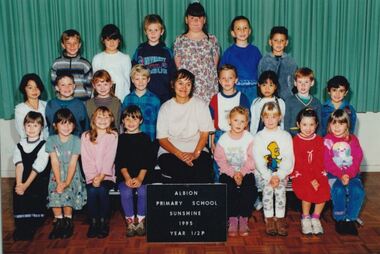
Photograph - Albion State School 1995 Class Photographs
... social and academic success. In terms of learning, the highest priority is placed on the work in English and Mathematics. We also have a range of specialist and extra-curricular programs that we provide. Our specialist teacher-librarian is involved in reading extension programs that support development ...The current school, Albion Primary School, No 4265 opened in 1926. It was built on a site once owned by John Fitzgerald (1850s). The land was later acquired by H. V. McKay who had transferred his Sunshine Harvester Works to the area in 1905 - 7. In 1920, the Albion railway station was moved nearer Ballarat Road at the request of Mr McKay. More people came to live in the area including soldier settlers.Albion Primary School's mission is to 'Aim High' in all we do so that our students grow to be socially capable, reach their full academic potential and become caring, respectful community minded people. Albion Primary School is located in a residential area in Albion, a small pocket of the local government area of Brimbank, approximately 10 kilometres west of Melbourne and was established in 1926. Our current enrolment is 199 students. We have a rich cultural diversity amongst our school community. The school is set around a courtyard with spacious playing areas including a grassed oval, running track, games courts, an adventure playground, sand pit, jumping pits, shady courtyard and garden areas, a vegetable garden and fruit tree orchard. As well as classroom groups, we have our learning teams, student house groups (siblings are allocated to the same house) and a Junior School Council. The school has four main buildings. All classrooms have air conditioning and interactive screens. Block A houses classrooms, staff areas and the administration offices. Our newest building has classrooms and some small group/office spaces. Block B includes our library, canteen and a multi-purpose room used for indoor physical education, Perceptual Motor Program, drama, visiting performers, and community activities. Block C houses classrooms and specialist rooms. We expect and receive the best from our students in terms of their learning and behaviour. The school’s dedicated and effective staff is strongly committed to helping students achieve personal, behavioural, social and academic success. In terms of learning, the highest priority is placed on the work in English and Mathematics. We also have a range of specialist and extra-curricular programs that we provide. Our specialist teacher-librarian is involved in reading extension programs that support development in literacy. All children are able to develop their artistic abilities through visual arts and music program. Our music program is supported by the Australian Children's Music Foundation. A specialist Physical Education teacher provides lessons for all children as well as the opportunity for students to participate in organised lunch time sporting competitions between the house groups. Auslan is the additional language all students learn at Albion. All children participate in a student wellbeing program that focuses on developing strong connections and a sense of belonging within the school. Our school student leaders participate in programs that help develop their leadership skills. 5148.01 - Albion State School 1995 Grade 1 2R 5148.01 - Albion State School 1995 Grade 1 2R Names Front Row L2R Michelle Gauci Miki ORegan Jessica James Jessika Bilanovic Tracey Coldrey Sarah Kennedy Caterina Viterale Jessica Smith Second Row L2R Vanessa Dano Rory Markovic Sarah Quinsee Jarrod Montague Jason Hamilton Anna Evangelista Aaron Gray Andrew Demicoli Back Row L2R Darren Cain Madelaine Burrows Dillion Hayward Rachel Jude Joseph Leggio Aaron Batty Absent Krystal Spiteri Mario James Teacher Mrs Patricia Porigneaux Principal Mr Alan Jones 5148.02 - Albion State School 1995 Grade 2 3H 5148.02 - Albion State School 1995 Grade 2 3H Names Front Row L2R Rachel Testa Hakan Beyit Bradley Dale Brodie Wightman Raja Shah Corey Pearson Brooke Elso Second Row L2R Samuel Sella Ashleigh Barnett Jacquiline Mayne Amanda Kennedy Kathleen Maguire Dale Bavage Raymond Gulan Back Row L2R Ryan Tishlet Troy Hearn Andrew Kinder Aaron Neumann Ross Wileman Sarah Caruana Absent Pamela Broadwood Teachers Mr Haren Mrs Farrugia Principal Mr Alan Jones 5148.03 - Albion State School 1995 Grade 3 4SW 5148.03 - Albion State School 1995 Grade 3 4SW Names Front Row L2R Shaun Wright Matthew Sultana Jessie Lyon Ilona Berecz Scott Kirby Sarah Demicoli Stephanie Theuma Lucian Harabor Phuc Ung Second Row L2R James Nardella Daniel Hall Matthew Gulan Jay Swift Ben Scicluna Ashleigh Vandenberg Matthew Kindred Michael Baker Kent Hunyh Back Row L2R Evelyn Cameron Alex Burrows Jarrod Heath Viorica Neascu Jackie Roberts Paul Harrip Belinda Pollard Lesley Gray Absent Beth Anh Nguyen Teachers Mrs J Sullivan Mrs T Woods Principal Mr Alan Jones 5148.04 - Albion State School 1995 Grade 4EW 5148.04 - Albion State School 1995 Grade 4EW Names Front Row L2R Jun Yang Rebecca Meilak Van Nguyen Kristy Butterfield Ryan Loft Mrisa Grima Candeece Brown Marlena Chajter Stephen Archer Second Row L2R Cristanto Evangelista Caylan Goring Joseph Scicluna Helena Lake Zorica Stanojevic Christina Brooks Michael Berecz Kyle Strinovic Absent Ian Spiteri Teachers Mrs A Erwood Mrs T Woods Principal Mr Alan Jones Back Row L2R 5148.05 - Albion State School 1995 Grade 5 6C 5148.05 - Albion State School 1995 Grade 5 6C Names Front Row L2R Trinh Ung Elizabeth Trinh Jenny Keane Kylie Skew Kim Duffy Kayte Whitlow Andrea Gonzalez Ngoc Nguyen Second Row L2R Jacob Savage Terry Kaminnyj Mark Dale Adam Souter Gregg Dennis Brent Davis Nicholas Pahos Tony Trajkovski Third Row L2R Luke McComb Maucauley Goring Tim Perry Ebony Batty Edin Karastanovic Ravinder Shah Stevie White Back Row L2R Jillian Allender Sara Christopoulos Jarema Bogdanowicz Melissa Jude Maria Brown Absent John Harmsworth Scotland Mayo Carlos James Teacher Mr Tom Cook Principal Mr Alan Jones 5148.06 - Albion State School 1995 Grade Prep 1F 5148.06 - Albion State School 1995 Grade Prep 1F Names Front Row L2R Jennifer Pucek John Clifton Bradley Rolfe Andy Moffitt Matthew Archer Steve Bernacki Michael Darby Jackson Ash Yu Second Row L2R Michael Trice Stacey Hamilton Adrian Wooding Larissa Barnett Tiffany Thomas Gavin Stone Katherine Ho Reno Ierafa Back Row L2R Thomas Foss Mathew Tiemes Doreen Roberts Troy Strinovic Matthew Baker Ana Maria Ast Daniel Harmsworth Richky Lyos Teacher Mrs Ann Fabbro Principal Mr Alan Jones 5148.07 - Albion State School 1995 Grade Prep 1H 5148.07 - Albion State School 1995 Grade Prep 1H Names Front Row L2R Aaron Trough Samantha Williams Matthew Gauci Yukun Liang Cong Le Robert Anderson Caitlin Tippet Joshua Neumann Second Row L2R Alarna Swift Celebi Uzun John Tanuska Tom Morgan Mathew Grima Alison Testa Back Row L2R Sara Kindred Priya Shah Kylie Harrip Dwayne Brown Jilliah Johnson Absent Lisa Broadwood Teachers Julie Hrovatin Betty Batty Principal Mr Alan Jones 5148.08 - Albion State School 1995 Staff 5148.08 - Albion State School 1995 Staff Names Front Row L2R Bogusia Goring Betty Batty Sue Rossa Alan Jones Jan Talbot Adrienne Erwood Pat Porigneaux Second Row L2R Rose Buttigieg Kellie Rozank Susan Carpenter Sandy Dennis Lorraine Farrugia Ann Fabbro Back Row L2R Joanne Sullivan Tom Cook Wayne Haren Teresa Woods albion state school, albion primary school, adelaide street, albion -
 Sunshine and District Historical Society Incorporated
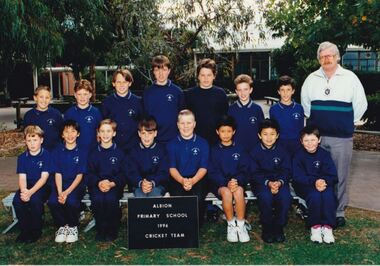
Photograph - Albion State School 1996 Class Photographs
... social and academic success. In terms of learning, the highest priority is placed on the work in English and Mathematics. We also have a range of specialist and extra-curricular programs that we provide. Our specialist teacher-librarian is involved in reading extension programs that support development ...The current school, Albion Primary School, No 4265 opened in 1926. It was built on a site once owned by John Fitzgerald (1850s). The land was later acquired by H. V. McKay who had transferred his Sunshine Harvester Works to the area in 1905 - 7. In 1920, the Albion railway station was moved nearer Ballarat Road at the request of Mr McKay. More people came to live in the area including soldier settlers.Albion Primary School's mission is to 'Aim High' in all we do so that our students grow to be socially capable, reach their full academic potential and become caring, respectful community minded people. Albion Primary School is located in a residential area in Albion, a small pocket of the local government area of Brimbank, approximately 10 kilometres west of Melbourne and was established in 1926. Our current enrolment is 199 students. We have a rich cultural diversity amongst our school community. The school is set around a courtyard with spacious playing areas including a grassed oval, running track, games courts, an adventure playground, sand pit, jumping pits, shady courtyard and garden areas, a vegetable garden and fruit tree orchard. As well as classroom groups, we have our learning teams, student house groups (siblings are allocated to the same house) and a Junior School Council. The school has four main buildings. All classrooms have air conditioning and interactive screens. Block A houses classrooms, staff areas and the administration offices. Our newest building has classrooms and some small group/office spaces. Block B includes our library, canteen and a multi-purpose room used for indoor physical education, Perceptual Motor Program, drama, visiting performers, and community activities. Block C houses classrooms and specialist rooms. We expect and receive the best from our students in terms of their learning and behaviour. The school’s dedicated and effective staff is strongly committed to helping students achieve personal, behavioural, social and academic success. In terms of learning, the highest priority is placed on the work in English and Mathematics. We also have a range of specialist and extra-curricular programs that we provide. Our specialist teacher-librarian is involved in reading extension programs that support development in literacy. All children are able to develop their artistic abilities through visual arts and music program. Our music program is supported by the Australian Children's Music Foundation. A specialist Physical Education teacher provides lessons for all children as well as the opportunity for students to participate in organised lunch time sporting competitions between the house groups. Auslan is the additional language all students learn at Albion. All children participate in a student wellbeing program that focuses on developing strong connections and a sense of belonging within the school. Our school student leaders participate in programs that help develop their leadership skills. 5149.01 - Albion State School 1996 Cricket Team 5149.02 - Albion State School 1996 Grade 1 2H 5149.02 - Albion State School 1996 Grade 1 2H Names Front Row L2R Samantha Williams Daniel Axisa Matthew Gauci Victoria Brown Bradley Rolfo Sean Ung Anh Vu Robert Anderson Second Row L2R Andy Moffitt Jennifer Pucek Emma Jean Mayne Mary Nguyen Kellie Davis Krystle Luhrs Larissa Barnett Yukun Liang Third Row L2R Samantha Skew Sasha Clowser Tracey Coldrey Burak Hoban Jessica James Ricky Liddy Mathew Tiemes Back Row L2R Tom Morgan Lisa Broadwood Brody Woodbury Troy Strinovic Ricky Lyon Aaron Gray Teacher Mrs Julie Hrovatin Principal Mr Alan Jones 5149.03 - Albion State School 1996 Grade 2 3FT 5149.03 - Albion State School 1996 Grade 2 3FT Names Front Row L2R Jessica Smith Alarna Swift Caterina Viterale Sara Kindred Andrew Demicoli Rebecca Trinh Michelle Gauci Dominique Sales Second Row L2R Jilliah Johnson Doreen Roberts Michael Woodhouse Heidi McKinnon Krystal Spiteri Dwayne Brown Miki OReagan Yen Le Third Row L2R Phillip Souter Benjamin Huynh Matthew Baker Jarrod Montague Sarah Quinsee Jason Hamilton Rory Markovic Joseph Micallef Back Row L2R Raja Shah Jerolim Markovic Todd Feeley Dean Garrison Ashleigh Barnett Melanie Schlepp Teachers Mrs Talbot Mrs Farrell Principal Mr Alan Jones 5149.04 - Albion State School 1996 Grade 3 4P 5149.04 - Albion State School 1996 Grade 3 4P Names Front Row L2R Tony Culhane Vanessa Dano Anthony Rolfo Brodie Wightman Beruk Million Aaron Batty Darren Cain Mark Micallef Anna Evangelista Brooke Elso Smith Second Row L2R Skye Trice James Brown Richard Elliott Rachel Testa Phi Nguyen Bradley Dale Matthew Sultana Samuel Sella Eunice Sales Back Row L2R Madeline Burrows Ryan Tishlet Jacquiline Mayne Ashleigh Vandenberg Rachel Jude Matthew Kindred Troy Hearn Kathleen Maguire Scott Kirby Absent Amanda Kennedy Marina Krasavcic Teacher Mrs Patricia Porigneaux Principal Mr Alan Jones 5149.05 - Albion State School 1996 Grade 4 5D 5149.05 - Albion State School 1996 Grade 4 5D Names Front Row L2R Beth Anh Nguyen Hakan Beyit Belinda Cullen Stephanie Theuma Thomas Brown Jessie Lyon Pamela Broadwood Shaun Wright Phuc Ung Second Row L2R Ilona Berecz Dale Bavage Ross Wileman Daniel Hall Aaron Neumann Lesley Gray Sarah Caruana James Taylor Raymond Gulan Back Row L2R Jay Swift Andrew Kinder Alex Burrows Evelyn Cameron Daniel Tevelein Miranda Woodbury Zorica Stanojevic Dragan Trogrlic Henok Million Absent Kristy Quilligan Teacher Miss Sandra Dennis Principal Mr Alan Jones 5149.06 - Albion State School 1996 Grade 5 6 5149.06 - Albion State School 1996 Grade 5 6 Names Front Row L2R Joseph Scicluna Ian Spiteri Stephen Archer Ngoc Nguyen Kristy Butterfield Jarrod Heath Crisanto Evangelista Rebecca Meilak Sarah Demicoli Melissa Brown Van Nguyen natalie Strinovic Second Row L2R Mathew Gulan Ryan Loft Jun Yang James Nardella Casey Jones Mark Dale Mitchell Graham Candeece Brown Jacob Savage Kyle Strinovic Trinh Ung Ben Scicluna Third Row L2R Marissa Grima Michael Baker Brent Davis Catherine Formosa John Harmsworth Paul King Elizabeth Trinh Belinda Pollard Simon Farrugia Tony Trajkovski Michael Berecz Caylan Goring Back Row L2R Kellie Rago Paul Harrip Macauley Goring Maria Brown Tim Perry Wardo Sterio Kerryn Taylor Shaun Kerr Talbot Neil Parker Xiaodong Liv Jackie Roberts Samantha Schlepp Absent Helena Lake Jessica Archer Mrs Bogusia Goring Mrs Lorraien Farrugia Teacher Mr Tom Cook Mr W Haren Ms K Veale Principal Mr Alan Jones 5149.07 - Albion State School 1996 Grade 6 Graduation 5149.08 - Albion State School 1996 Grade Prep 1ET 5149.08 - Albion State School 1996 Grade Prep 1ET Names Front Row L2R Cong Le Christopher Dymott Aaron Tough Jared DAlfonso Courtney TeRay Steven Cameron Bryce Atkinson Nikki Durham Nicholas Rosener Second Row L2R Shane Quinsee Steven Pucek Marko Markovic Patrick Geoghegan Megan Montague Dale Feeley Steve Bernacki Mathew Smith Blake Cain Back Row L2R Chantelle Noack Brodie Allen Adrian Wooding Kylie Harrip Robert Sterio Mathew Grima Alexander Visappa Joshua Neumann Absent Melissa Kennedy Teachers Mrs A Erwood Mrs J Turner Mrs B Batty Principal Mr Alan Jones 5149.09 - Albion State School 1996 Grade Prep 1WT 5149.09 - Albion State School 1996 Grade Prep 1WT Names Front Row L2R Caitlin Tippett Thuy Vu Desmond Wilson Caitlin Elso Smith Sarah Robertson Miranda Hall Zayne Duggan Hayley Riley Minh Le Second Row L2R Billy Morrow Meg McKinnon Garratt Stone Aaron Caruana Troy Maguire Graeme Turnball Codey Feeley Matthew Archer Dylan Markovic Back Row L2R Charmie Cook Stacey Hamilton Gavin Stone Thomas Foss Priya Shah Daniel Harmsworth Alison Testa Michael Trice Mitchell Pollard Teachers Mrs T Woods Mrs J Turner Principal Alan Jones 5149.10 - Albion State School 1996 Staff Front Row L2R Betty Batty Sandy Dennis Jan Talbot Alan Jones Jann Turner Joy Farrell Pat Porigneaux Second Row L2R Adrienne Erwood Kristen Thomas Joanne Sullivan Robyn Scott Kathy Veale Pedro Batres Back Row L2R Julie Hrovatin Tom Cook Wayne Haren Teresa Woods 5149.11 - Albion State School 1996 Whole Schoolalbion state school, albion primary school, adelaide street, albion -
 Sunshine and District Historical Society Incorporated
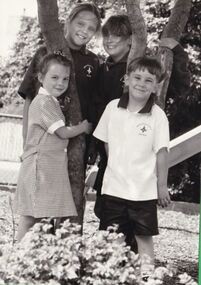
Photograph - Albion State School 1997 Class Photographs
... social and academic success. In terms of learning, the highest priority is placed on the work in English and Mathematics. We also have a range of specialist and extra-curricular programs that we provide. Our specialist teacher-librarian is involved in reading extension programs that support development ...The current school, Albion Primary School, No 4265 opened in 1926. It was built on a site once owned by John Fitzgerald (1850s). The land was later acquired by H. V. McKay who had transferred his Sunshine Harvester Works to the area in 1905 - 7. In 1920, the Albion railway station was moved nearer Ballarat Road at the request of Mr McKay. More people came to live in the area including soldier settlers.Albion Primary School's mission is to 'Aim High' in all we do so that our students grow to be socially capable, reach their full academic potential and become caring, respectful community minded people. Albion Primary School is located in a residential area in Albion, a small pocket of the local government area of Brimbank, approximately 10 kilometres west of Melbourne and was established in 1926. Our current enrolment is 199 students. We have a rich cultural diversity amongst our school community. The school is set around a courtyard with spacious playing areas including a grassed oval, running track, games courts, an adventure playground, sand pit, jumping pits, shady courtyard and garden areas, a vegetable garden and fruit tree orchard. As well as classroom groups, we have our learning teams, student house groups (siblings are allocated to the same house) and a Junior School Council. The school has four main buildings. All classrooms have air conditioning and interactive screens. Block A houses classrooms, staff areas and the administration offices. Our newest building has classrooms and some small group/office spaces. Block B includes our library, canteen and a multi-purpose room used for indoor physical education, Perceptual Motor Program, drama, visiting performers, and community activities. Block C houses classrooms and specialist rooms. We expect and receive the best from our students in terms of their learning and behaviour. The school’s dedicated and effective staff is strongly committed to helping students achieve personal, behavioural, social and academic success. In terms of learning, the highest priority is placed on the work in English and Mathematics. We also have a range of specialist and extra-curricular programs that we provide. Our specialist teacher-librarian is involved in reading extension programs that support development in literacy. All children are able to develop their artistic abilities through visual arts and music program. Our music program is supported by the Australian Children's Music Foundation. A specialist Physical Education teacher provides lessons for all children as well as the opportunity for students to participate in organised lunch time sporting competitions between the house groups. Auslan is the additional language all students learn at Albion. All children participate in a student wellbeing program that focuses on developing strong connections and a sense of belonging within the school. Our school student leaders participate in programs that help develop their leadership skills. 5150.01 - Albion State School 1997 Belinda Pollard and Friends 5150.02 - Albion State School 1997 Belinda Pollard 5150.03 - Albion State School 1997 Football Premiers 5150.03 - Albion State School 1997 Football Premiers Names Front Row L2R Aaron Batty Jessie Lyon Jarrod Heath James Nardello Stephen Archer Darren Cain Second Row L2R Bradley Dale Dale Bavage Scott Kirby Michael Berecz Ryan Tishlet Matthew Sultana Sam Sella Back Row L2R Ryan Loft Ross Wileman Henok Million Luke OBrien Hakan Beyit Absent Caylan Goring Daniel Tevelein Coach Mr Tom Cook 5150.04 - Albion State School 1997 Grade 1 2WS 5150.04 - Albion State School 1997 Grade 1 2WS Names Front Row L2R Carly Mateos Nikki Durham Miranda Hall Courtney TeRay Caitlin Tippet Aaron Tough Cong Le Second Row L2R Carratt Stone Suggan Zayne Anh vu Dylan Markovic Liang Yukun Charmie Cook Sarah Robertson Matthew Gauci Back Row L2R Troy Maguire Mathew Smith Jennifer Pucek Mathew Grima Priya Shah Mthew Tiemes Alison Testa Megan Montague Blake Cain Absemt Meg McKinnon Brodie Allen Joshua Wilson Teachers Mrs Teresa Woods Mrs Joanne Sullivan Mrs Betty Batty Principal Mr Alan Jones 5150.05 - Albion State School 1997 Grade 2 3H 5150.05 - Albion State School 1997 Grade 2 3H Names Front Row L2R Robert Anderson Son Tran Samantha Williams Rebecca Thinh Stacey Hamilton Damian Stanley Sean Ung Second Row L2R Bradley Rolfo Gavin Stone Daniel Harmsworth Krystle Luhrs Adrian Pandeloglou Daniel Walker Patrick Geoghegan Steven Bernacki Third Row L2R Adrian Wooding Doreen Roberts Terrence Sinclair Celebi Uzun Sasha Clowser Ricky Liddy Sara Kindred Back Row L2R Thomas Foss Kylie Harrip Jarrod Montague Sarah Kennedy Jilliah Johnson Absent Matthew Archer Teacher Mrs Julie Hrovatin Principal Mr Alan Jones 5150.06 - Albion State School 1997 Grade 3 4D 5150.06 - Albion State School 1997 Grade 3 4D Names Front Row L2R Kellie Davis Caterina Viterale Samantha Skew Andrew Demicoli Troy Strinovic Skie Cooke Emma Jean Peterson Second Row L2R Anna Evangelista Tracey Coldrey Mark Micallef Richard Elliott Samuel Sella Jessica Croce Lisa Broadwood Phillip Souter Third Row L2R Jaspm Hamilton Matthew Baker Madeline Burrows Mark King Andrew Nguyen Brody Woodbury Krystal Spiteri Back Row L2R Jacqui Mayne Rachel Jude Beruk Million Dean Garrison Absent Ryan Tishler Vanessa Dano Phi Nguyen Tacher Miss Sandy Dennis Principal Mr Alan Jones 5150.07 - Albion State School 1997 Grade 3 4P 5150.07 - Albion State School 1997 Grade 3 4P Names Front Row L2R Skye Trice Michelle Gauci Michael Woodhouse Andy Moffitt Dwayne Brown Yen Le Mary Nguyen Second Row L2R Miki OReagan Rory Markovic Tony Culhane Aaron Batty Darren Cain Aaron Gray Ricky Lyon James Brown Third Row L2R Anthony Rolfo Sarah Quinsee Brodie Wightman Heidi McKinnon Rachel Testa Benjamin Huynh Jessica James Back Row L2R Dejan Samoukovic Melanie Schlepp Kathleen Maguire Davor Grozdanic Belma Turkusic Rajender Shah Mario Radic Teacher Mrs Patricia Porigneaux Principal Mr Alan Jones 5150.08 - Albion State School 1997 Grade 5 6 5150.08 - Albion State School 1997 Grade 5 6 Names Front Row L2R Shaun Wright Matthew Sultana Ian Spiteri Pamela Broadwood Marijana Radic Beth Anh Nguyen Marina Krasavcic Phuc Ung Second Row L2R Bradley Dale Dale Bavage Sarah Demicoli Luke OBrien Daniel Hall Rebecca Meilak Ben Scicluna Ross Wileman Scott Kirby Ryan Loft Natalie Strinovic Third Row L2R Jessie Lyon Melissa Sinclair Kyle Strinovic Cris Evangelista Craig Wild Zelen Marisa Grima Amanda Kennedy Van Nguyen Candeece Brown James Nardella Caylan Goring Kristy Butterfield Ilona Berecz Fourth Row L2R Belinda Cullen Mathew Kindred Michael Berecz Joseph Scicluna Henoke Million Lesley Gray Michael Baker Andrew Kinder Evelyn Cameron Ashleigh Vanderberg Amy Wei Jun Yang Stephanie Theuma Back Row L2R Helena Lake Samantha Schlepp Jarrod Heath Miranda Woodbury Paul Harrip Shaun Kerr Talbot Daniel Tevelein Jackie Roberts Alex Burrows Casey Jones Belind Pollard Teachers Mr Tom Cook Mr W Haren Mrs Goring Mrs A Waleryszek Principal Mr Alan Jones 5150.09 - Albion State School 1997 Grade 6 Graduation 5150.09 - Albion State School 1997 Grade 6 Graduation Names Front Row L2R Ryan Loft Ian Spiteri Sarah Demicoli Rebecca Meilak Kristy Butterfield Ben Scicluna Luke OBrien Beth Anh Nguyen Second Row L2R Caylan Goring Crisanto Evangelistqa Candeece Brown Michael Berecz Jun Yang Van Nguyen Marisa Grima Kyle Strinovic James Nardella Natalie Strinovic Third Row L2R Amy Wei Evelyn Cameron Helena Lake Casey Jones Belinda Pollard Michael Baker Lesley Gray Joseph Scicluna Back Row L2R Jarrod Heath Miranda Woodbury Paul Harrip Shaun Kerr Talbot Daniel Tevelein Jackier Roberts Alex Burrows Samantha Schlepp Teachers Mr Tom Cook Mr W Haren Mrs Goring Mrs A Waleryszek Principal Mr Alan Jones 5150.10 - Albion State School 1997 Grade Prep 1F 5150.10 - Albion State School 1997 Grade Prep 1F Names Front Row L2R Dusan Zarkovic Nicholas Rusener Caitlyn Foss Jared DAlfonso Christopher Dymott Minh Le Lynda Ferrara Second Row L2R Silviu Lefter Thuy Vu Jack Wightman Billy Morrow Adam Stanley Shane Quinsee Jacqulyn Te Ray Silvia Vera Third Row L2R Steven Cameron Meliss Kennedy Steven Pucek Nikola Samoukovic Desmond Wilson Hayley Riley Back Row L2R Michael Trice Mitchell Pollard Luke Carroll Chantelle Nook Absent Aaron Caruana Teachers Mrs Ann Fabbro Mrs Bogusia Goring Principal Mr Alan Jones 5150.11 - Albion State School 1997 Grade Prep E 5150.11 - Albion State School 1997 Grade Prep E Names Front Row L2R Peter Mayne Nichalos Davie Brooke Hamilton Emily Folino Jayde Stanley Michael Nardella Jason Warriner Second Row L2R Daniel Kindred Dion Johnson Jason Cookson Jade Formosa Tiani Megens Domenico Mazza Jesse Da Silva Loretta Sheldrick Back Row L2R Adam Davis Stephanie Stronell David Kennedy Graeme Turnbull Simon Kinder Rachel Elliott Peter Horak Muhammed Uzun Absent Stephen Thai Teacher Mrs Adrienne Erwood Principal Mr Alan Jones 5150.12 - Albion State School 1997 Staff 5150.12 - Albion State School 1997 Staff Names Front Row L2R Jann Turner Lorraine Farrugia Adrienne Erwood Alan Jones Jan Talbot Pat Porigneaux Sandy Dennis Second Row L2R Julie Hrovatin Joanne Sullivan Betty Batty Bogusia Goring Susan Carpenter Joy Farrell Ann Fabbro Back Row L2R Pedro Batres Tom Cook Teresa Woods Wayne Haren April Waleryszekalbion state school, albion primary school, adelaide street, albion -
 Sunshine and District Historical Society Incorporated
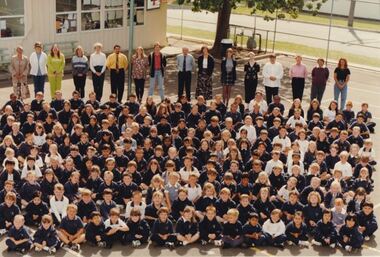
Photograph - Albion State School 1998 Class Photographs
... social and academic success. In terms of learning, the highest priority is placed on the work in English and Mathematics. We also have a range of specialist and extra-curricular programs that we provide. Our specialist teacher-librarian is involved in reading extension programs that support development ...The current school, Albion Primary School, No 4265 opened in 1926. It was built on a site once owned by John Fitzgerald (1850s). The land was later acquired by H. V. McKay who had transferred his Sunshine Harvester Works to the area in 1905 - 7. In 1920, the Albion railway station was moved nearer Ballarat Road at the request of Mr McKay. More people came to live in the area including soldier settlers.Albion Primary School's mission is to 'Aim High' in all we do so that our students grow to be socially capable, reach their full academic potential and become caring, respectful community minded people. Albion Primary School is located in a residential area in Albion, a small pocket of the local government area of Brimbank, approximately 10 kilometres west of Melbourne and was established in 1926. Our current enrolment is 199 students. We have a rich cultural diversity amongst our school community. The school is set around a courtyard with spacious playing areas including a grassed oval, running track, games courts, an adventure playground, sand pit, jumping pits, shady courtyard and garden areas, a vegetable garden and fruit tree orchard. As well as classroom groups, we have our learning teams, student house groups (siblings are allocated to the same house) and a Junior School Council. The school has four main buildings. All classrooms have air conditioning and interactive screens. Block A houses classrooms, staff areas and the administration offices. Our newest building has classrooms and some small group/office spaces. Block B includes our library, canteen and a multi-purpose room used for indoor physical education, Perceptual Motor Program, drama, visiting performers, and community activities. Block C houses classrooms and specialist rooms. We expect and receive the best from our students in terms of their learning and behaviour. The school’s dedicated and effective staff is strongly committed to helping students achieve personal, behavioural, social and academic success. In terms of learning, the highest priority is placed on the work in English and Mathematics. We also have a range of specialist and extra-curricular programs that we provide. Our specialist teacher-librarian is involved in reading extension programs that support development in literacy. All children are able to develop their artistic abilities through visual arts and music program. Our music program is supported by the Australian Children's Music Foundation. A specialist Physical Education teacher provides lessons for all children as well as the opportunity for students to participate in organised lunch time sporting competitions between the house groups. Auslan is the additional language all students learn at Albion. All children participate in a student wellbeing program that focuses on developing strong connections and a sense of belonging within the school. Our school student leaders participate in programs that help develop their leadership skills. 5151.01 - Albion State School 1998 Student and Staffalbion state school, albion primary school, adelaide street, albion -
 Sunshine and District Historical Society Incorporated
Photograph - Albion State School 2000 Class Photographs
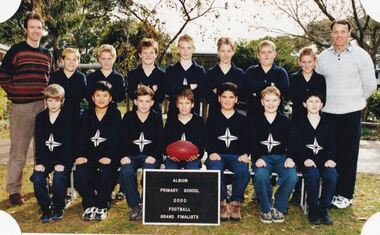
... social and academic success. In terms of learning, the highest priority is placed on the work in English and Mathematics. We also have a range of specialist and extra-curricular programs that we provide. Our specialist teacher-librarian is involved in reading extension programs that support development ...The current school, Albion Primary School, No 4265 opened in 1926. It was built on a site once owned by John Fitzgerald (1850s). The land was later acquired by H. V. McKay who had transferred his Sunshine Harvester Works to the area in 1905 - 7. In 1920, the Albion railway station was moved nearer Ballarat Road at the request of Mr McKay. More people came to live in the area including soldier settlers.Albion Primary School's mission is to 'Aim High' in all we do so that our students grow to be socially capable, reach their full academic potential and become caring, respectful community minded people. Albion Primary School is located in a residential area in Albion, a small pocket of the local government area of Brimbank, approximately 10 kilometres west of Melbourne and was established in 1926. Our current enrolment is 199 students. We have a rich cultural diversity amongst our school community. The school is set around a courtyard with spacious playing areas including a grassed oval, running track, games courts, an adventure playground, sand pit, jumping pits, shady courtyard and garden areas, a vegetable garden and fruit tree orchard. As well as classroom groups, we have our learning teams, student house groups (siblings are allocated to the same house) and a Junior School Council. The school has four main buildings. All classrooms have air conditioning and interactive screens. Block A houses classrooms, staff areas and the administration offices. Our newest building has classrooms and some small group/office spaces. Block B includes our library, canteen and a multi-purpose room used for indoor physical education, Perceptual Motor Program, drama, visiting performers, and community activities. Block C houses classrooms and specialist rooms. We expect and receive the best from our students in terms of their learning and behaviour. The school’s dedicated and effective staff is strongly committed to helping students achieve personal, behavioural, social and academic success. In terms of learning, the highest priority is placed on the work in English and Mathematics. We also have a range of specialist and extra-curricular programs that we provide. Our specialist teacher-librarian is involved in reading extension programs that support development in literacy. All children are able to develop their artistic abilities through visual arts and music program. Our music program is supported by the Australian Children's Music Foundation. A specialist Physical Education teacher provides lessons for all children as well as the opportunity for students to participate in organised lunch time sporting competitions between the house groups. Auslan is the additional language all students learn at Albion. All children participate in a student wellbeing program that focuses on developing strong connections and a sense of belonging within the school. Our school student leaders participate in programs that help develop their leadership skills. 5153.01 - Albion State School 2000 Football Grand Finalists 5153.02 - Albion State School 2000 Grade 1 2E 5153.02 - Albion State School 2000 Grade 1 2E Names Back Row L2R Alisi Faingaanuku Ashley Skew Michael Nardella Julie Rand Tyson Stone Mary Guglielmi Robert Depietro Second Row L2R Jennifer Truong Jayde Stanley Corine Markovic Malgorzata Wasilewska Robert Reynolds Jessica Nedelkovska Annie Lam Carl Schwencke Front L2R Kasey Davis Danielle Williams Joshua Folino Laura Demicoli Cavan Chen Jenny Le Jake Raye Jennifer Williams Tully Tran 5153.03 - Albion State School 2000 Grade 2 3H 5153.03 - Albion State School 2000 Grade 2 3H Names Back Row L2R Cody Mayne Timothy McGrath David Kennedy Simon Kinder Peter Horak Dion Johnson Second Row L2R Aiden Wileman Tiani Megens Monique Zerni Rachel Elliott Stephanie Stronell Kelly Kennedy Tony Tongpoon Front Row L2R Luke Cleland Meyer Teagan Maguire Christopher Dymott Callan Tishlet Helen Ha Michael Dipietro Jame schwencke Emily Folino Roger Cini Absent William Burrows Tiffany Smith 5153.04 - Albion State School 2000 Grade 3 4D 5153.04 - Albion State School 2000 Grade 3 4D Names Back Row L2R Benjamin Milicevic William Raye Jack Wightman Mathew Grima Mitchell Pollard Steven Cameron Shane Quinsee Rafael Protacio Second Row L2R Nikki Durham Miranda Hall Thuy Vu Melissa Kennedy Megan Montague Zayne Duggan Jacquilyn TeRay Dusan Zarkovic Front Row L2R Nichalos Davie Shannan Weeks Minh Le Cassandra Williams Olivia Moore Jade Formosa Shannan Salmon Lynda Ferrara Daniel Kindred 5153.05 - Albion State School 2000 Grade 4 5T 5153.05 - Albion State School 2000 Grade 4 5T Names Back Row L2R Cong Le Adis Husejnovic Troy Maguire Chantelle Noack Kamil Bulinski Dylan Markovic Steven Pucek Second Row L2R Blake Cain Mathew Smith Mathew Tiemes Jilliah Johnson Priya Shah Justin Wemyss Gul Resuloglu Garratt Stone Front Row L2R Samantha Williams Caitlin Tippet Steve Bernacki Adam Stanley Meg MKinnon Helen Milsom Nicholas Rosener Courtney Te Ray Jared DAlfonso Teachers Mrs Jann Turner Mrs Teresa Woods Mrs Betty Batty Mr Gareth Dainton Principal Mr Joe Vella 5153.06 - Albion State School 2000 Grade 5 6H 5153.06 - Albion State School 2000 Grade 5 6H Names Back Row L2R Alison Testa Jarrod Montague Heidi McKinnon Matthew Baker Brody Woodbury Doreen Roberts Second Row L2R Katherine ONeill Bradley Rolfo Benjamin Huynh Sarah Kennedy Lisa Broadwood Ricky Liddy Nicholas Miller Front Row L2R Sara Kindred Gavin Stone Terence Sinclair Mary Nguyen Farisha Zammit Katie Hamilton Damian Stanley Anh Vu Matthew Gauci 5153.07 - Albion State School 2000 Grade 5 6P 5153.07 - Albion State School 2000 Grade 5 6P Names Back Row Troy Strinovic Miki ORegan Kellie Davis Dwayne Brown Binh Nguyen Second Row L2R Samantha Skew Ricky Lyon Jessica James Charly Attard Garry Gath Caterina Viterale Rory Markovic Front Row L2R Sean Ung Matthew Archer Patrick Geoghegan Jimmy Phan Catherine Protacio Brendon Stephens Jennifer Pucek Rebecca Trinh Robert Anderson Teacher Mrs Patricia Porigneaux Mrs Lynn Mahoney Principal Mr Joe Vella 5153.08 - Albion State School 2000 Grade Prep 1X 5153.08 - Albion State School 2000 Grade Prep 1X Names Back Row Jarrod Doherty Ebony Wemyss Nicolle Reynolds Jade Burling Ethan Morgan Jim Murphy Second Row L2R Jack Schofield Julie Ung Jessica Heeps Reece Mayne Anthony Buttiegieg Casey James Amanda Mustafa Kieran Azzopardi Front Row L2R Luke DAlfonso Naomi Truong Jesse Culhane Saamu Melissa Hall Natalie Coburn Nicole Williams Imran Clancy Nasim Jamal David Tran 5153.09 - Albion State School 2000 Whole School Hands Up 5153.10 - Albion State School 2000 House Captains 5153.11 - Albion State School 2000 JSC 5153.12 - Albion State School 2000 Netball Squad Grand Finalists 5153.13 - Albion State School 2000 Newcombe 5153.14 - Albion State School 2000 Whole School 5153.15 - Albion State School 2000 Staff 5153.15 - Albion State School 2000 Staff Names Back Row L2R Valentina Risteska Donna El Daief Ann Fabbro Lorraine Farrugia Second Row L2R Sandra Spurr Jann Turner Adrieene Erwood Gareth Dainton Wayne Haren Anna Xasteroulis Julie Hrovatin Betty Batty Front Row L2R Kathryn Ceballos Lynn Mahoney Susan Carpenter Joe Vella Teresa Woods Angela Paschalidis Sandy Dennis Absent Pat Porigneaux Chris Sortino 5153.16 - Albion State School 2000 T Ballalbion state school, albion primary school, adelaide street, albion -
 Sunshine and District Historical Society Incorporated
Photograph - Albion State School 2001 Class Photographs
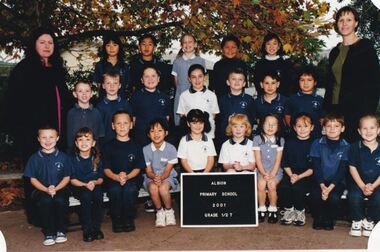
... social and academic success. In terms of learning, the highest priority is placed on the work in English and Mathematics. We also have a range of specialist and extra-curricular programs that we provide. Our specialist teacher-librarian is involved in reading extension programs that support development ...The current school, Albion Primary School, No 4265 opened in 1926. It was built on a site once owned by John Fitzgerald (1850s). The land was later acquired by H. V. McKay who had transferred his Sunshine Harvester Works to the area in 1905 - 7. In 1920, the Albion railway station was moved nearer Ballarat Road at the request of Mr McKay. More people came to live in the area including soldier settlers.Albion Primary School's mission is to 'Aim High' in all we do so that our students grow to be socially capable, reach their full academic potential and become caring, respectful community minded people. Albion Primary School is located in a residential area in Albion, a small pocket of the local government area of Brimbank, approximately 10 kilometres west of Melbourne and was established in 1926. Our current enrolment is 199 students. We have a rich cultural diversity amongst our school community. The school is set around a courtyard with spacious playing areas including a grassed oval, running track, games courts, an adventure playground, sand pit, jumping pits, shady courtyard and garden areas, a vegetable garden and fruit tree orchard. As well as classroom groups, we have our learning teams, student house groups (siblings are allocated to the same house) and a Junior School Council. The school has four main buildings. All classrooms have air conditioning and interactive screens. Block A houses classrooms, staff areas and the administration offices. Our newest building has classrooms and some small group/office spaces. Block B includes our library, canteen and a multi-purpose room used for indoor physical education, Perceptual Motor Program, drama, visiting performers, and community activities. Block C houses classrooms and specialist rooms. We expect and receive the best from our students in terms of their learning and behaviour. The school’s dedicated and effective staff is strongly committed to helping students achieve personal, behavioural, social and academic success. In terms of learning, the highest priority is placed on the work in English and Mathematics. We also have a range of specialist and extra-curricular programs that we provide. Our specialist teacher-librarian is involved in reading extension programs that support development in literacy. All children are able to develop their artistic abilities through visual arts and music program. Our music program is supported by the Australian Children's Music Foundation. A specialist Physical Education teacher provides lessons for all children as well as the opportunity for students to participate in organised lunch time sporting competitions between the house groups. Auslan is the additional language all students learn at Albion. All children participate in a student wellbeing program that focuses on developing strong connections and a sense of belonging within the school. Our school student leaders participate in programs that help develop their leadership skills. 5154.01 - Albion State School 2001 Grade 1 2T 5154.01 - Albion State School 2001 Grade 1 2T Names Back Row L2R Julie Ung Nathaniel Dizon Casey James Jesse Culhane Saamu Annie Lam Second Row L2R Jim Murphy Travis Montague Timothy ONeill Amy Caruana Smith Carl Schwencke Joshua Boudoloh Aaron McIntyre Front Row L2R Alfie Kennedy Danielle Williams Luc Owen Thuy Tran Elisa Mustafa Nicolle Reynolds Zoe Ward Narrell Raye Kieran Azzopardi Isaac McMillen Teachers Mrs Teresa Woods Mrs Angela Paschalidis Mrs Jann Turner Principal Mr Joe Vella 5154.02 - Albion State School 2001 Grade 2 3D 5154.02 - Albion State School 2001 Grade 2 3D Names Back Row L2R Melissa Hall James Schwencke Michael Nardella Tyson Stone Tarick Halaseh Jake Raye Kasey Davis Second Row L2R Jessica Nedelkovska Jade Burling Krystal Bogoevski Owen Malolo Billy Burrows Jayde Stanley Zorana Popovic Tiffany Smith Front Row L2R Nicole Williams Joshua Folino Amanda Mustafa Skakira Lever Laura Demicoli Jessica Heeps Ethan Morgan Luke Cleland Meyer Imran Clancy Rashid Absent Allyssa Leggerini Cavan Chen Teachers Miss Sandy Dennis Mrs Lorraine Farrugia Principal Mr Joe Vella 5154.03 - Albion State School 2001 Grade 3 4H 5154.03 - Albion State School 2001 Grade 3 4H Names Back Row L2R Daniel Kindred Callan Tishler Rachel Elliott David Kennedy Timothy McGrath Robert Reynolds Aidan Wileman Peter Mayne Second Row L2R Corine Markovic Rafael Protacio Cody Mayne Malgorzata Wasilewska Julie Rand Kelly Kennedy Dion Johnson Ladd John Merren Smart Front Row L2R Jennifer Williams Jennifer Truong Tony Tongpoon Ashley Skew Teagan Maguire Helen Ha Nicholas Davie Emily Folino Alisa Faingaanuku Tess The Dog Teacher Mrs Julie Hrovatin Principal Mr Joe Vella 5154.04 - Albion State School 2001 Grade 5 6H 5154.04 - Albion State School 2001 Grade 5 6H Names Back Row L2R Mitchell Pollard Sara Kindred Megan Montague Gul Resuloglu Jennifer Pucek Chantelle Noack Katherine ONeill Adam Stanley Second Row L2R James Durham Blake Cain Matthew Archer Justin Wemyss Brad Scott Binh Nguyen Matthew Gauci Garratt Stone Front Row L2R Cong Le Catherine Protacio Adis Husejnovic Patrick Geoghegan Caitlin Tippetd William Raye Anh Vu Meg McKinnon Robert Anderson Teacher Mr Wayne Haren Mrs Lorraine Farrugia Mrs Sandra Spurr Principal Mr Joe Vella 5154.06 - Albion State School 2001 Grade Prep 1B 5154.06 - Albion State School 2001 Grade Prep 1B Names Back Row L2R Brendan Stendt Nicholas Alexander Helena Guina Reece Mayne Jack Schofield Second Row L2R Melisa Husejnovic Meghan Douglas Christene Protacio Nathan Wineti Turde Ebony Wemyss Benjamin Britton Natalie coburn Annalise McMillan Front Row L2R Nhung Ha David Ung Kurtis Maguire Orlando Major Ashleigh Gauci Hayden Formossa Jayden Mamone Joshua Micallef Bethany Tippet Teacher Miss Elissa Barr Principal Mr Joe Vella 5154.07 - Albion State School 2001 Grade Prep 1G 5154.07 - Albion State School 2001 Grade Prep 1G Names Back Row L2R Milos Zarkovic My Bui Kristian Djulic Matthew McGrath Anthony Buttigieg Nicholas Burrows Jamie Megens Second Row L2R Aaron Mayne Luisa Malolo Carmen Rosca Kalista Uzelac Bojana Kakuca Jarrod Doherty Nikolce Blazeski Mile Ajder Emma Gruescu Front Row L2R Ashley Rattray Stephanie Nedelkovska David Tran Malea Culhane Saamu Luke DAlfonso Jessica Tawaf Naomi Truong Chelsea Lever Jennifer Ung Teachers Miss Marnie Galea Mrs Betty Batty Principal Mr Joe Vella 5154.08 - Albion State School 2001 House Captains 5154.09 - Albion State School 2001 JSC 5154.09 - Albion State School 2001 JSC Names Back Row L2R Reece Mayne Patrick Geoghegan Sara Kindred Rachel Elliott Samantha Williams Tim McGrath Thuy Vu Front Row L2R Nicole Williams Nikolce Blazeski Bojana Kakuca Zayne Duggan Ashleigh Gauci Amy Caruana Smith Minh Le Luke Cleland Meyer Isaac McMillen Teachers Miss Marnie Galea Miss Sandy Dennis Principal Mr Joe Vella 5154.10 - Albion State School 2001 Whole School 5154.11 - Albion State School 2001 Staff 5154.11 - Albion State School 2001 Staff Names Back Row L2R Lorraine Farrugia Sandy Dennis Julie Hrovatin John Milne Scott Garnsworthy Wayne Haren Angela Paschalidis Susan Carpenter Pat Porigneaux Front Row L2R Adrienne Erwood Jennifer Ryan Betty Batty Joe Vella Teresa Woods Elissa Barr Marnie Galea Absent Jann Turneralbion state school, albion primary school, adelaide street, albion -
 Sunshine and District Historical Society Incorporated
Photograph - Albion State School 2002 Class Photographs
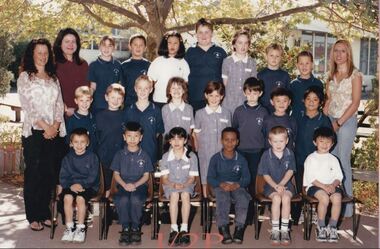
... social and academic success. In terms of learning, the highest priority is placed on the work in English and Mathematics. We also have a range of specialist and extra-curricular programs that we provide. Our specialist teacher-librarian is involved in reading extension programs that support development ...The current school, Albion Primary School, No 4265 opened in 1926. It was built on a site once owned by John Fitzgerald (1850s). The land was later acquired by H. V. McKay who had transferred his Sunshine Harvester Works to the area in 1905 - 7. In 1920, the Albion railway station was moved nearer Ballarat Road at the request of Mr McKay. More people came to live in the area including soldier settlers.Albion Primary School's mission is to 'Aim High' in all we do so that our students grow to be socially capable, reach their full academic potential and become caring, respectful community minded people. Albion Primary School is located in a residential area in Albion, a small pocket of the local government area of Brimbank, approximately 10 kilometres west of Melbourne and was established in 1926. Our current enrolment is 199 students. We have a rich cultural diversity amongst our school community. The school is set around a courtyard with spacious playing areas including a grassed oval, running track, games courts, an adventure playground, sand pit, jumping pits, shady courtyard and garden areas, a vegetable garden and fruit tree orchard. As well as classroom groups, we have our learning teams, student house groups (siblings are allocated to the same house) and a Junior School Council. The school has four main buildings. All classrooms have air conditioning and interactive screens. Block A houses classrooms, staff areas and the administration offices. Our newest building has classrooms and some small group/office spaces. Block B includes our library, canteen and a multi-purpose room used for indoor physical education, Perceptual Motor Program, drama, visiting performers, and community activities. Block C houses classrooms and specialist rooms. We expect and receive the best from our students in terms of their learning and behaviour. The school’s dedicated and effective staff is strongly committed to helping students achieve personal, behavioural, social and academic success. In terms of learning, the highest priority is placed on the work in English and Mathematics. We also have a range of specialist and extra-curricular programs that we provide. Our specialist teacher-librarian is involved in reading extension programs that support development in literacy. All children are able to develop their artistic abilities through visual arts and music program. Our music program is supported by the Australian Children's Music Foundation. A specialist Physical Education teacher provides lessons for all children as well as the opportunity for students to participate in organised lunch time sporting competitions between the house groups. Auslan is the additional language all students learn at Albion. All children participate in a student wellbeing program that focuses on developing strong connections and a sense of belonging within the school. Our school student leaders participate in programs that help develop their leadership skills. 5155.01 - Albion State School 2002 Grade 1 2T Names Back Row L2R Aaron Mayne Christene Protacio Julie Ung Nicholas Burrows Ebony Wemyss David Truong Natasha Malolo Second Row L2R Joshua Micallef Rochaell Donoghue Mana Lumm Meghan Douglas Jarrod Doherty Orlando Mayor Hayden Formosa Paige Mackenzie Front Row L2R Chelsea Lever Naomi Truong Nuri Nurhussien Stephanie Nedelkovska Emma Gruescu Ashleigh Gauci David Tran Zoe Ward Malea Culhane Saamu Teacher Mrs Jann Turner Mr Angela Paschalidis Principal Mr Joe Vella 5155.02 - Albion State School 2002 Grade 2 3M 5155.02 - Albion State School 2002 Grade 2 3M Names Back Row L2R Bethany Tippet Narrell Raye Aaron McIntyre Joshua Boudoloh Reece Mayne Travis Montague Jesse Culhane Saamu Nicolle Reynolds Second Row L2R Annie Lam Jessica Nedelkovska Paloma Donato Travis Blacket Tim ONeill Bojana Kakuca Thuy Tran Melissa Hall Front Row L2R Alfie Kennedy Imran Rashid Danielle Williams Jim Murphy Kobi HOle Marsden Chantel Attard Natalie Coburn Kieran Azzopardi Luke DAlfonso Teacher Ms Andrea Murray Principal Mr Joe Vella 5155.03 - Albion State School 2002 Grade 3 4H 5155.03 - Albion State School 2002 Grade 3 4H Names Back Row L2R Peter Mayne Safia Ali William Burrows David Kennedy Jesse Hearn James Schwencke Samantha Firth Second Row L2R Alisi Faingaanuku Jessica Heeps Nathaniel Dizon Owen Malolo Tarick Haleseh Amy Caruana Smith Ashley Skew Ethan Morgan Front Row L2R Nicole Williams Rahma Nurhussien Daniel Falzon Tiffany Smith Kasey Davis Natalie Miranda Zorana Popovic Jenny Le Shakira Lever Teacher Mrs Julie Hrovatin Mrs Lorraine Farrugia Principal Mr Joe Vella 5155.04 - Albion State School 2002 Grade 4 5R 5155.04 - Albion State School 2002 Grade 4 5R Names Back Row L2R Merren Smart Robert Reynolds Mitchell Durbin Zayne Duggan Cody Mayne Callan Tishler Ladd John Second Row L2R Nivaar Rolston Gosia Wasilewska Sam Malolo Stephanie Stronell Julie Rand Kelly Kennedy Aidan Wileman Michael Nardella Teagan Maguire Front Row L2R Jennifer Williams Daniel Kindred Corine Markovic Jade Formosa Nichalos Davie Jahnah Clark Luke Meyer Jake Raye Jennifer Truong Teacher Miss Jennifer Ryan Principal Mr Joe Vella 5155.05 - Albion State School 2002 Grade 6H 5155.05 - Albion State School 2002 Grade 6H Names Back Row L2R James Durham Kristy Ward Melissa Kennedy Sharnee Adams Courtney Teray Troy Maguire Steven Puckek Second Row L2R Shane Quinsee Steven Cameron IKamil Bulinski Megan Montague Phillip Cetwerschuk Mathew Smith Adis Husejnovic William Raye Absent Mathew Grima Teacher Mr Wayne Haren Mrs Sandra Spurr Principal Mr Joe Vella Front Row L2R 5155.06 - Albion State School 2002 Grade Prep 1B 5155.06 - Albion State School 2002 Grade Prep 1B Names Back Row L2R Travis Rand Benjamin Britton Jack Schofield John Huynh David Ung Second Row L2R Stephen Coburn Kurtis Maguire Jayde Page Milos Zarkovic Kaliesha Birch Melisa Husejnovic Tyson Freeman Annalise McMillan Front Row L2R Nerys Davie Chelsea TeRay Blake MacKenzie Brayden Lumm Mile Ajder Jordan Boudoloh Nhu Nguyen Jessica Tawaf Sang Lam Teacher Miss Elisaa Barr Mrs Betty Batty Principal Mr Joe Vella 5155.07 - Albion State School 2002 Grade Prep G 5155.07 - Albion State School 2002 Grade Prep G Names Back Row L2R Liam Noack Brendan Stendt Steven Firth Ashley Rattray Second Row L2R Cecilia Nguyen Jennifer Ung Dale Reynolds Samuel Miranda Kyle Durbin Sharon Mach Hani Mohammad Front Row L2R Shae Scholfield Kelvin Quach Brenden Smith Dean Pegram Amanda Mach Jamie Wooding Brandon Marsh Howe Alexis Ante Absent Elias Boudoloh Linh Tran Teacher Miss Marnie Galea Principal Mr Joe Vella 5155.08 - Albion State School 2002 Staff 5155.08 - Albion State School 2002 Staff Names Back Row L2R Marnie Galea Andrea Murray Elissa Barr John Milne Julie Hrovatin Sandra Spurr Jennifer Ryan Sandy Dennis Front Row L2R Lynn Mahoney Angela Paschalidis Susan Carpenter Joe Vella Teresa Woods Lorraine Farrugia Pt Porigneaux Absent Wayne Haren Jann Turner Betty Battyalbion state school, albion primary school, adelaide street, albion -
 Sunshine and District Historical Society Incorporated
Photograph - Albion State School 2003 Class Photographs
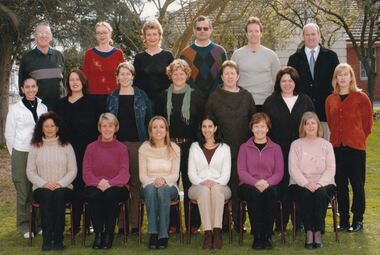
... social and academic success. In terms of learning, the highest priority is placed on the work in English and Mathematics. We also have a range of specialist and extra-curricular programs that we provide. Our specialist teacher-librarian is involved in reading extension programs that support development ...The current school, Albion Primary School, No 4265 opened in 1926. It was built on a site once owned by John Fitzgerald (1850s). The land was later acquired by H. V. McKay who had transferred his Sunshine Harvester Works to the area in 1905 - 7. In 1920, the Albion railway station was moved nearer Ballarat Road at the request of Mr McKay. More people came to live in the area including soldier settlers.Albion Primary School's mission is to 'Aim High' in all we do so that our students grow to be socially capable, reach their full academic potential and become caring, respectful community minded people. Albion Primary School is located in a residential area in Albion, a small pocket of the local government area of Brimbank, approximately 10 kilometres west of Melbourne and was established in 1926. Our current enrolment is 199 students. We have a rich cultural diversity amongst our school community. The school is set around a courtyard with spacious playing areas including a grassed oval, running track, games courts, an adventure playground, sand pit, jumping pits, shady courtyard and garden areas, a vegetable garden and fruit tree orchard. As well as classroom groups, we have our learning teams, student house groups (siblings are allocated to the same house) and a Junior School Council. The school has four main buildings. All classrooms have air conditioning and interactive screens. Block A houses classrooms, staff areas and the administration offices. Our newest building has classrooms and some small group/office spaces. Block B includes our library, canteen and a multi-purpose room used for indoor physical education, Perceptual Motor Program, drama, visiting performers, and community activities. Block C houses classrooms and specialist rooms. We expect and receive the best from our students in terms of their learning and behaviour. The school’s dedicated and effective staff is strongly committed to helping students achieve personal, behavioural, social and academic success. In terms of learning, the highest priority is placed on the work in English and Mathematics. We also have a range of specialist and extra-curricular programs that we provide. Our specialist teacher-librarian is involved in reading extension programs that support development in literacy. All children are able to develop their artistic abilities through visual arts and music program. Our music program is supported by the Australian Children's Music Foundation. A specialist Physical Education teacher provides lessons for all children as well as the opportunity for students to participate in organised lunch time sporting competitions between the house groups. Auslan is the additional language all students learn at Albion. All children participate in a student wellbeing program that focuses on developing strong connections and a sense of belonging within the school. Our school student leaders participate in programs that help develop their leadership skills. 5156.01 - Albion State School 2003 Grade 1 2P 5156.01 - Albion State School 2003 Grade 1 2P Names Back Row L2R Jessica Tawaf Tyson Freeman Christene Protacio Nicholas Burrows Ebony Wemyss Kaliesha Birch Brandon Marsh Howe Second Row L2R Dale Reynolds Liam Noack Jack Scholfield Chelsea TeRay Melisa Husejnovic mile Ajder David Ung Joshua Kanongataa Front Row L2R Elias Condadis Boudoloh David Tran Chelsea Lever Nuri Nurhussien Travis Rand Sang Lam Teacher Mrs L Parnis Mrs Betty Batty Mrs A Paschalidis 5156.02 - Albion State School 2003 Grade 3 4T 5156.02 - Albion State School 2003 Grade 3 4T Names Back Row L2R Nicole Williams Paloma Donato Carl Schwencke Mitchell Jessica Heeps Thuy Tran Amy Caruana Smith Tarick Halaseh Travis Montague Bethany Tippet Second Row L2R Imran Clancy Nicolle Reynolds Aaron McIntyre Bojana Kakuca Melissa Hall Jesse Culhane Saamu Sasa Opacic Luke DAlfonso Front Row L2R Suerour Abdul Alrahman Jim Murphy Julie Ung Zoe Ward Kasey Davis Hayden Formosa Kobi Marsden Teachers Mary Talbot Sadnra Spurr 5156.03 - Albion State School 2003 Grade 5 6H 5156.03 - Albion State School 2003 Grade 5 6H Names Back Row L2R Dusan Zarkovic Scott Leetham Owen Malolo Aidan Wileman Zayne Duggan Rafael Protacio Michael Nardella Second Row L2R James Schwencke Mitchell Olivia Moore Julie Rand Stephanie Stronell Sang Nguyen Jacqulyn TeRay Dion Johnson Corine Markovic Front Row L2R Daniel Kindred Jennifer Truong Tony Tongpoon Jahnah Anne Clark Lynda Ferrara Merren Smart Peter Mayne Absent Alisi Faingaanuku Teacher Wayne Haren 5156.04 - Albion State School 2003 Grade 5 6T 5156.04 - Albion State School 2003 Grade 5 6T Names Back Row L2R Cody Mayne William Burrows Sam Malolo Rachel Elliott David Kennedy Jack Wightman Peter Horak Second Row L2R Callan Tishler Christopher Dymott Malgorzata Wasilewska Jade Formosa Kelly Kennedy Jenny Williams Robert Reynolds Ben Milicevic Front Row L2R Jake Raye Hayley McPhan Lindsay Ladd John Teagan Maguire Tiffany Smith Jesse Hearn Nichalos Davie Teacher Jann Turner 5156.05 - Albion State School 2003 Grade Prep 1B 5156.05 - Albion State School 2003 Grade Prep 1B Names Back Row L2R Nerys Davie Jamie Wooding Amanda Mach Michelle Banh Shannae Marsh Howe Adam Ferrara Second Row L2R Bronwyn Testa Steven Firth Alexis Ante Nhu Nguyen Darko Grezlov Jenny Truong Front Row L2R Jordan Birch Dylan Tishler Cindy Nguyen Hani Mohammad Jake Lever Teacher Miss E Barr Mrs Betty Batty 5156.06 - Albion State School 2003 Grade Prep G 5156.06 - Albion State School 2003 Grade Prep G Names Back Row L2R Haylee Markinkovic Dylan Harris Rhiannon Clayton Courtney Doggett Second Row L2R Linh Tran Madelyne Markovic Ethan Caruana Smith Elsie Kanongataa Jai Banda Cecilia Nguyen Bradley Rickard Front Row L2R Leah Maguire David Le Tiffany Anne Murphy Selina Heeps Liam McIntyre Allison Smart Teacher Mrs D George Ms J Shaw 5156.07 - Albion State School 2003 Staff 5156.07 - Albion State School 2003 Staff Names Back Row L2R Angela Paschalidis Betty Batty Jann Turner John Milne Wayne Haren Andrea Murray Lorraine Farrugia Second Row L2R Lynn Mahoney Sandra Spurr Elissa Barr Julie Hrovatin Marnie Galea Susan Carpenter Adrienne Erwood Front Row L2R Mary Talbot Lorraine Parnis Teresa Woods Julie Shaw Donna George Emily Dimitracopoulos Absent Chris Sortinoalbion state school, albion primary school, adelaide street, albion -
 Sunshine and District Historical Society Incorporated
Photograph - Albion State School 2004 Class Photographs
... social and academic success. In terms of learning, the highest priority is placed on the work in English and Mathematics. We also have a range of specialist and extra-curricular programs that we provide. Our specialist teacher-librarian is involved in reading extension programs that support development ...The current school, Albion Primary School, No 4265 opened in 1926. It was built on a site once owned by John Fitzgerald (1850s). The land was later acquired by H. V. McKay who had transferred his Sunshine Harvester Works to the area in 1905 - 7. In 1920, the Albion railway station was moved nearer Ballarat Road at the request of Mr McKay. More people came to live in the area including soldier settlers.Albion Primary School's mission is to 'Aim High' in all we do so that our students grow to be socially capable, reach their full academic potential and become caring, respectful community minded people. Albion Primary School is located in a residential area in Albion, a small pocket of the local government area of Brimbank, approximately 10 kilometres west of Melbourne and was established in 1926. Our current enrolment is 199 students. We have a rich cultural diversity amongst our school community. The school is set around a courtyard with spacious playing areas including a grassed oval, running track, games courts, an adventure playground, sand pit, jumping pits, shady courtyard and garden areas, a vegetable garden and fruit tree orchard. As well as classroom groups, we have our learning teams, student house groups (siblings are allocated to the same house) and a Junior School Council. The school has four main buildings. All classrooms have air conditioning and interactive screens. Block A houses classrooms, staff areas and the administration offices. Our newest building has classrooms and some small group/office spaces. Block B includes our library, canteen and a multi-purpose room used for indoor physical education, Perceptual Motor Program, drama, visiting performers, and community activities. Block C houses classrooms and specialist rooms. We expect and receive the best from our students in terms of their learning and behaviour. The school’s dedicated and effective staff is strongly committed to helping students achieve personal, behavioural, social and academic success. In terms of learning, the highest priority is placed on the work in English and Mathematics. We also have a range of specialist and extra-curricular programs that we provide. Our specialist teacher-librarian is involved in reading extension programs that support development in literacy. All children are able to develop their artistic abilities through visual arts and music program. Our music program is supported by the Australian Children's Music Foundation. A specialist Physical Education teacher provides lessons for all children as well as the opportunity for students to participate in organised lunch time sporting competitions between the house groups. Auslan is the additional language all students learn at Albion. All children participate in a student wellbeing program that focuses on developing strong connections and a sense of belonging within the school. Our school student leaders participate in programs that help develop their leadership skills. 5157.01 - Albion State School 2004 Staff 5157.01 - Albion State School 2004 Staff Names and Individuals Top Row L2R Elissa Barr Betty Batty Lorraine Farrugia Donna George Wayne Haren Second Row L2R Julie Hrovatin Ngare Knight Third Row L2R Lyn Mahoney Gillian McGillivray David Moss Andrea Murray Lorraine Parnis Front Row L2R Jan Van Beerendonk Jann Turner Mary Talbot Sandra Spurr Angela Paschalidiws 5157.02 - Albion State School 2004 School Leaders 5157.03 - Albion State School 2004 Grade Prep B 5157.03 - Albion State School 2004 Grade Prep B Names and Individuals Back Row L2R Elissa Barr Tristan Adams Dejan Ajder Adam Carter Craig Coburn Adrian Czopowski Brianna Doggett Second Row L2R Georgia Doslov Seth Duggan Third Row L2R Nathaniel Ioannou Andy Khong Madelyne Markovic Leigh Marsden Cristina Mendoza Jack Mooney Front Row L2R Melissa Petras Joyce Protacio Jordan Raye Chad Smith Tonga Tuaimeiuta Rachael Zerni Absent Harlee Graham 5157.04 - Albion State School 2004 Grade 5 6T Names and Individuals Back Row L2R Mary Talbot Peter Anthony Mayne Chantel Attard Amy Caruana Smith Kasey Davis Samantha Firth Second Row L2R Jessica Heeps Ladd John Third Row L2R Annie Lam Shakira Lever Corine Markovic Julie Rand Jake Raye Nivaar Rolston Front Row L2R Carl Schwencke Mitchell Tiffany Smith Alicia Stankus Callan Tishler Danielle Williams Jennifer Williams Absent Merren Smart 5157.05 - Albion State School 2004 Grade 5 6H Names and Individuals Front Row L2R Wayne Haren William Burrows Crystal Carter Imran Clancy Melissa Hall Samantha Hastings Jesse Hearn Second Row L2R David Kennedy Chantelle Langanke Third Row L2R Jenny Le Teagan Maguire Cody Mayne Michael Nardella Rahma Nurhussien Timothy ONeill Robert Reynolds Back Row L2R James schwencke Mitchell Danielle Tarroza Thuy Tran Jennifer Truong Malgorzata Wasilewska Nicole Williams Absent Nargis Thakur 5157.06 - Albion State School 2004 Grade 3 4T 5157.06 - Albion State School 2004 Grade 3 4T Names and Individuals Front Row L2R Jann Turner Milorad Aider Kieran Azzopardi Nicholas Burrows Natalie Coburn Jesse Culhane Saamu Luke DAlfonso Second Row L2R Meghan Douglas Ashleigh Gauci Third Row L2R Melisa Husejnovic Alfred Kennedy Kobi Marsden Reece Mayne Annalise McMillan Joshua Micallef John Milan Back Row L2R Jayde Page Narrell Raye Nicole Reynolds Bethany Tippet David Tran David Ung Ebony Wemyss Absent Joshua Cancino 5157.07 - Albion State School 2004 Grade 3 4M 5157.07 - Albion State School 2004 Grade 3 4M Names and Individuals Front Row L2R Gillian McGillivray Suerour Abdul Alrahman Jessica Bretherton Benjamin Britton Malea Culhane Saamu Hayden Formosa Second Row L2R Emilia Gruescu Joshua Kanongataa Third Row L2R Chelsea Lever Aaron Mayne Orlando Mayor Travis Montague Jim Murphy Christene Protacio Back Row L2R Jack Schofield Jessica Tawaf David Truong Naomi Truong Julie Ung Milos Zarkovic Absent Joshua Boudoloh Shaian Luke albion state school, albion primary school, adelaide street, albion -
 Sunshine and District Historical Society Incorporated
Photograph - Albion State School 2005 Class Photographs
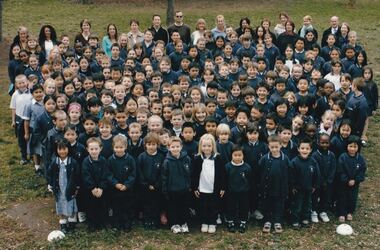
... social and academic success. In terms of learning, the highest priority is placed on the work in English and Mathematics. We also have a range of specialist and extra-curricular programs that we provide. Our specialist teacher-librarian is involved in reading extension programs that support development ...The current school, Albion Primary School, No 4265 opened in 1926. It was built on a site once owned by John Fitzgerald (1850s). The land was later acquired by H. V. McKay who had transferred his Sunshine Harvester Works to the area in 1905 - 7. In 1920, the Albion railway station was moved nearer Ballarat Road at the request of Mr McKay. More people came to live in the area including soldier settlers.Albion Primary School's mission is to 'Aim High' in all we do so that our students grow to be socially capable, reach their full academic potential and become caring, respectful community minded people. Albion Primary School is located in a residential area in Albion, a small pocket of the local government area of Brimbank, approximately 10 kilometres west of Melbourne and was established in 1926. Our current enrolment is 199 students. We have a rich cultural diversity amongst our school community. The school is set around a courtyard with spacious playing areas including a grassed oval, running track, games courts, an adventure playground, sand pit, jumping pits, shady courtyard and garden areas, a vegetable garden and fruit tree orchard. As well as classroom groups, we have our learning teams, student house groups (siblings are allocated to the same house) and a Junior School Council. The school has four main buildings. All classrooms have air conditioning and interactive screens. Block A houses classrooms, staff areas and the administration offices. Our newest building has classrooms and some small group/office spaces. Block B includes our library, canteen and a multi-purpose room used for indoor physical education, Perceptual Motor Program, drama, visiting performers, and community activities. Block C houses classrooms and specialist rooms. We expect and receive the best from our students in terms of their learning and behaviour. The school’s dedicated and effective staff is strongly committed to helping students achieve personal, behavioural, social and academic success. In terms of learning, the highest priority is placed on the work in English and Mathematics. We also have a range of specialist and extra-curricular programs that we provide. Our specialist teacher-librarian is involved in reading extension programs that support development in literacy. All children are able to develop their artistic abilities through visual arts and music program. Our music program is supported by the Australian Children's Music Foundation. A specialist Physical Education teacher provides lessons for all children as well as the opportunity for students to participate in organised lunch time sporting competitions between the house groups. Auslan is the additional language all students learn at Albion. All children participate in a student wellbeing program that focuses on developing strong connections and a sense of belonging within the school. Our school student leaders participate in programs that help develop their leadership skills. 5158.01 - Albion State School 2005 Whole School 5158.02 - Albion State School 2005 JSC 5158.03 - Albion State School 2005 House Captains 5158.04 - Albion State School 2005 Grade 6 Graduation 5158.05 - Albion State School 2005 Names and Individuals Photo a Front Row L2R Dejan Ajder Milorad Ajder Alexis Ante Kurtis Arenas Talyshar Arenas Chantel Attard Kieran Azzopardi Cooper Balasopoulos Jai Banda Second Row L2R Olivia Burguss Nicholas Burrows Joshua Cancino Crystal Carter Amy Acruana Smith Ethan Caruana Smith Imran Clancy Rhiannon Clayton Craig Coburn Third Row L2R Jesse Culhane Saamu Malea Culhane Saamu Adrian Czopowski Luke DAlfonso Nerys Davie Kasey Kavis Alfred Dixon Brianna Doggett Courtney Doggett Back Row L2R Samantha Firth Steven Firth Hayden Formosa Jenny Frank Lina Frank Natalia Fuller Meneses Ashleigh Gauci Donna George Zachary Green 5158.06 - Albion State School 2005 Names and Individuals Photo b 5158.07 - Albion State School 2005 Names and Individuals Photo c Back Row L2R Jessica Baniaga Betty Batty Joshua Boudoloh Jessica Bretherton Second Row L2R Natalie Coburn Stephen Coburn Elias Conadis Boudoloho Jordan Conadis Boudoloh Trae Cope Third Row L2R Meghan Douglas Seth Duggan Lorraine Farrugia Adam Ferrar Katherine Firth Fourth Row L2R Natalia Fuller Menese Ashleigh Gauci Donna George Zachary Green Damon Grima David Gruescu Emilia Gruescu Melissa Hall Rhiannon Hamilton 5158.08 - Albion State School 2005 Names and Individuals Photo d Top Row L2R Samantha Hastings Jessica Heeps Second Row L2R John Huynh Kenny Huynh Ayaa Iedom Nathaniel Ioannou Alfred Kennedy Andy Khong Annie Lam Sang Lam Third Row L2R Jake Lever Shakira Lever Cindy Liddy Robbie Lindsay Amanda Mach Becky Mach Sharon Mach Kurtis Maguire Fourth Row L2R Leigh Marsden Tyler Marsden Aaron Mayne Reece Mayne Orlando Mayor Angie McDonald Keegan McDonald Christina Mendoza 5158.09 - Albion State School 2005 Names and Individuals Photo e Second Row L2R Chantelle Langanke Third Row L2R Leah Maguire Fourth Row L2R Sofia Mendoza Fifth Row L2R Hani Mohammad Travis Montague Jack Mooney Tiffany Anne Murphy Cecilia Nguyen Ivy Nguyen Nhu Nguyen 5158.10 - Albion State School 2005 Names and Individuals Photo f Top Row L2R Selina Heeps Melisa Husejnovic Second Row L2R Maria Laureta Jenny Le Jimmy Le Chelsea Lever Third Row L2R Haylee Marinkovic Megan Marinkovic Madelyne Markovic Kobi Marsden Fourth Row L2R Alison Meneses Joshua Michallef John Milan Adam Mohammad 5158.11 - Albion State School 2005 Names and Individuals Photo g Fifth Row L2R Liam Noack Nuri Nurhussen Rahma Nurhussen Timothy ONeill 5158.12 - Albion State School 2005 Names and Individuals Photo h Second Row L2R Ahmet Ozkan Jayde Page Lorraine Parnis Dean Pegram Melissa Petras Dalena Phan Kim Plan Christene Protacio Jose Protacio Third Row L2R Narrell Raye Dale Reynolds Nicolle Reynolds Bradley Rickard Yasmyn Richard Jack Schofield Shae Schofield Carl Schwencke Mitchell Brenden Smith Fourth Row L2R Chelsea Teray Bronwyn Testa Bethany Tippet Dylan Tishler David Tran Leah Tran Linh Tran Thuy Tran David Truong 5158.13 - Albion State School 2005 Names and Individuals Photo i Fifth Row L2R Tonga Tuaimeiuta David Ung Jennifer Ung Julie Ung Jeremy Urquiola Michelle Urquiola Sebastian Urquiola Danielle Williams Chantai Workman 5158.14 - Albion State School 2005 Names and Individuals Photo j Second Row Joyce Protacio Kelvin Quach Travis Rand Ashley Rattray Jordan Raye Third Row L2R Alicia Stankus Danielle Grace Tarroza David Tarroza Jessica Tawaf Joshua Tawaf Fourth Row L2R Jenny Truong Naomi Truong Abbey Tuah Fatu Tuah Konah Tuah 5158.15 - Albion State School 2005 Names and Individuals Photo k Fifth Row L2R Milos Zarkovic Rachael Zerni Cindy Zhang Ivana Zvizdala Milan Zvizdalo Second Row L2R Back Row L2R albion state school, albion primary school, adelaide street, albion -
 Sunshine and District Historical Society Incorporated
Photograph - Albion State School 1929 Class Photographs
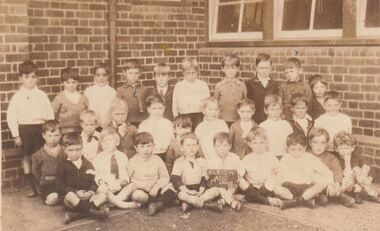
... social and academic success. In terms of learning, the highest priority is placed on the work in English and Mathematics. We also have a range of specialist and extra-curricular programs that we provide. Our specialist teacher-librarian is involved in reading extension programs that support development ...The current school, Albion Primary School, No 4265 opened in 1926. It was built on a site once owned by John Fitzgerald (1850s). The land was later acquired by H. V. McKay who had transferred his Sunshine Harvester Works to the area in 1905 - 7. In 1920, the Albion railway station was moved nearer Ballarat Road at the request of Mr McKay. More people came to live in the area including soldier settlers.Albion Primary School's mission is to 'Aim High' in all we do so that our students grow to be socially capable, reach their full academic potential and become caring, respectful community minded people. Albion Primary School is located in a residential area in Albion, a small pocket of the local government area of Brimbank, approximately 10 kilometres west of Melbourne and was established in 1926. Our current enrolment is 199 students. We have a rich cultural diversity amongst our school community. The school is set around a courtyard with spacious playing areas including a grassed oval, running track, games courts, an adventure playground, sand pit, jumping pits, shady courtyard and garden areas, a vegetable garden and fruit tree orchard. As well as classroom groups, we have our learning teams, student house groups (siblings are allocated to the same house) and a Junior School Council. The school has four main buildings. All classrooms have air conditioning and interactive screens. Block A houses classrooms, staff areas and the administration offices. Our newest building has classrooms and some small group/office spaces. Block B includes our library, canteen and a multi-purpose room used for indoor physical education, Perceptual Motor Program, drama, visiting performers, and community activities. Block C houses classrooms and specialist rooms. We expect and receive the best from our students in terms of their learning and behaviour. The school’s dedicated and effective staff is strongly committed to helping students achieve personal, behavioural, social and academic success. In terms of learning, the highest priority is placed on the work in English and Mathematics. We also have a range of specialist and extra-curricular programs that we provide. Our specialist teacher-librarian is involved in reading extension programs that support development in literacy. All children are able to develop their artistic abilities through visual arts and music program. Our music program is supported by the Australian Children's Music Foundation. A specialist Physical Education teacher provides lessons for all children as well as the opportunity for students to participate in organised lunch time sporting competitions between the house groups. Auslan is the additional language all students learn at Albion. All children participate in a student wellbeing program that focuses on developing strong connections and a sense of belonging within the school. Our school student leaders participate in programs that help develop their leadership skills. 5159.01 - Albion State School 1929 Grade 1 5159.02 - Albion State School 1929 Grade 2 5159.02 - Albion State School 1929 Grade 2 Names Back Row L2R Unknown Unknown Betty Markham Unknown Unknown Jean Mill Unknown Kathy Lawson Betty Affleck Unknown Second Row L2R Ray Vivian Unknown Tommy Clayton Unknown Harry Williams Unknown Ian Warmington Ern Clayton Ken Schmidt Wally Hyett Jack Clark Front Row L2R Unknown Unknown Murray Hutchingson Unknown Jeff Garde Gary Bridges Stan Gillman Frank Dunstan 5159.03 - Albion State School 1929 Grade 4 5159.04 - Albion State School 1929 In Front of Building 5159.05 - Albion State School 1929 Grade 1 Girls 5159.05 - Albion State School 1929 Grade 1 Girls Names Back Row L2R Zena Vivian Elsie Phillips Berta Oke Lilian Day Betty Thompson Betty Affleck Beryl Higgins Alice Legg Jean McKenzie Roma White Maise Thompson Second Row L2R Dorothy Legg Peggy Unknown Doris Widdig Unknown Unknown Unknown Unknown Unknown Joyce Hodge Betty Markham Front Row L2R Unknown Unknown Unknown Joan Ashton Nerle Ellingsen Unknown Unknown Marjorie Firth 5159.06 - Albion State School 1929 In Front of School Building and Groundsalbion state school, albion primary school, adelaide street, albion -
 Sunshine and District Historical Society Incorporated
Photograph - Albion State School 1934 Class Photographs
... social and academic success. In terms of learning, the highest priority is placed on the work in English and Mathematics. We also have a range of specialist and extra-curricular programs that we provide. Our specialist teacher-librarian is involved in reading extension programs that support development ...The current school, Albion Primary School, No 4265 opened in 1926. It was built on a site once owned by John Fitzgerald (1850s). The land was later acquired by H. V. McKay who had transferred his Sunshine Harvester Works to the area in 1905 - 7. In 1920, the Albion railway station was moved nearer Ballarat Road at the request of Mr McKay. More people came to live in the area including soldier settlers.Albion Primary School's mission is to 'Aim High' in all we do so that our students grow to be socially capable, reach their full academic potential and become caring, respectful community minded people. Albion Primary School is located in a residential area in Albion, a small pocket of the local government area of Brimbank, approximately 10 kilometres west of Melbourne and was established in 1926. Our current enrolment is 199 students. We have a rich cultural diversity amongst our school community. The school is set around a courtyard with spacious playing areas including a grassed oval, running track, games courts, an adventure playground, sand pit, jumping pits, shady courtyard and garden areas, a vegetable garden and fruit tree orchard. As well as classroom groups, we have our learning teams, student house groups (siblings are allocated to the same house) and a Junior School Council. The school has four main buildings. All classrooms have air conditioning and interactive screens. Block A houses classrooms, staff areas and the administration offices. Our newest building has classrooms and some small group/office spaces. Block B includes our library, canteen and a multi-purpose room used for indoor physical education, Perceptual Motor Program, drama, visiting performers, and community activities. Block C houses classrooms and specialist rooms. We expect and receive the best from our students in terms of their learning and behaviour. The school’s dedicated and effective staff is strongly committed to helping students achieve personal, behavioural, social and academic success. In terms of learning, the highest priority is placed on the work in English and Mathematics. We also have a range of specialist and extra-curricular programs that we provide. Our specialist teacher-librarian is involved in reading extension programs that support development in literacy. All children are able to develop their artistic abilities through visual arts and music program. Our music program is supported by the Australian Children's Music Foundation. A specialist Physical Education teacher provides lessons for all children as well as the opportunity for students to participate in organised lunch time sporting competitions between the house groups. Auslan is the additional language all students learn at Albion. All children participate in a student wellbeing program that focuses on developing strong connections and a sense of belonging within the school. Our school student leaders participate in programs that help develop their leadership skills. 5160.01 - Albion State School 1934 Grade 3 5160.02 - Albion State School 1934 Grade 1 2albion state school, albion primary school, adelaide street, albion -
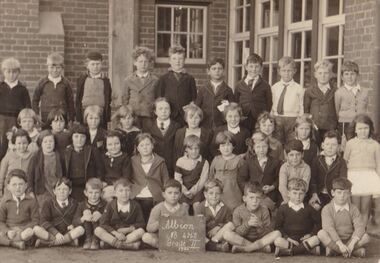 Sunshine and District Historical Society Incorporated
Photograph - Albion State School 1935 Class Photographs
... social and academic success. In terms of learning, the highest priority is placed on the work in English and Mathematics. We also have a range of specialist and extra-curricular programs that we provide. Our specialist teacher-librarian is involved in reading extension programs that support development ...The current school, Albion Primary School, No 4265 opened in 1926. It was built on a site once owned by John Fitzgerald (1850s). The land was later acquired by H. V. McKay who had transferred his Sunshine Harvester Works to the area in 1905 - 7. In 1920, the Albion railway station was moved nearer Ballarat Road at the request of Mr McKay. More people came to live in the area including soldier settlers.Albion Primary School's mission is to 'Aim High' in all we do so that our students grow to be socially capable, reach their full academic potential and become caring, respectful community minded people. Albion Primary School is located in a residential area in Albion, a small pocket of the local government area of Brimbank, approximately 10 kilometres west of Melbourne and was established in 1926. Our current enrolment is 199 students. We have a rich cultural diversity amongst our school community. The school is set around a courtyard with spacious playing areas including a grassed oval, running track, games courts, an adventure playground, sand pit, jumping pits, shady courtyard and garden areas, a vegetable garden and fruit tree orchard. As well as classroom groups, we have our learning teams, student house groups (siblings are allocated to the same house) and a Junior School Council. The school has four main buildings. All classrooms have air conditioning and interactive screens. Block A houses classrooms, staff areas and the administration offices. Our newest building has classrooms and some small group/office spaces. Block B includes our library, canteen and a multi-purpose room used for indoor physical education, Perceptual Motor Program, drama, visiting performers, and community activities. Block C houses classrooms and specialist rooms. We expect and receive the best from our students in terms of their learning and behaviour. The school’s dedicated and effective staff is strongly committed to helping students achieve personal, behavioural, social and academic success. In terms of learning, the highest priority is placed on the work in English and Mathematics. We also have a range of specialist and extra-curricular programs that we provide. Our specialist teacher-librarian is involved in reading extension programs that support development in literacy. All children are able to develop their artistic abilities through visual arts and music program. Our music program is supported by the Australian Children's Music Foundation. A specialist Physical Education teacher provides lessons for all children as well as the opportunity for students to participate in organised lunch time sporting competitions between the house groups. Auslan is the additional language all students learn at Albion. All children participate in a student wellbeing program that focuses on developing strong connections and a sense of belonging within the school. Our school student leaders participate in programs that help develop their leadership skills. 5161.01 - Albion State School 1935 Grade 2 5161.02 - Albion State School 1935 Grade 1 5161.03 - Albion State School 1935 Grade 5albion state school, albion primary school, adelaide street, albion -
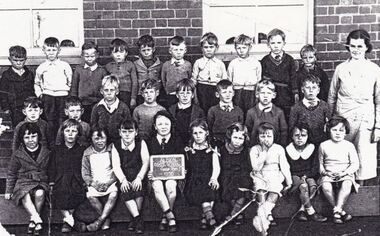 Sunshine and District Historical Society Incorporated
Photograph - Albion State School 1938 Class Photographs
... social and academic success. In terms of learning, the highest priority is placed on the work in English and Mathematics. We also have a range of specialist and extra-curricular programs that we provide. Our specialist teacher-librarian is involved in reading extension programs that support development ...The current school, Albion Primary School, No 4265 opened in 1926. It was built on a site once owned by John Fitzgerald (1850s). The land was later acquired by H. V. McKay who had transferred his Sunshine Harvester Works to the area in 1905 - 7. In 1920, the Albion railway station was moved nearer Ballarat Road at the request of Mr McKay. More people came to live in the area including soldier settlers.Albion Primary School's mission is to 'Aim High' in all we do so that our students grow to be socially capable, reach their full academic potential and become caring, respectful community minded people. Albion Primary School is located in a residential area in Albion, a small pocket of the local government area of Brimbank, approximately 10 kilometres west of Melbourne and was established in 1926. Our current enrolment is 199 students. We have a rich cultural diversity amongst our school community. The school is set around a courtyard with spacious playing areas including a grassed oval, running track, games courts, an adventure playground, sand pit, jumping pits, shady courtyard and garden areas, a vegetable garden and fruit tree orchard. As well as classroom groups, we have our learning teams, student house groups (siblings are allocated to the same house) and a Junior School Council. The school has four main buildings. All classrooms have air conditioning and interactive screens. Block A houses classrooms, staff areas and the administration offices. Our newest building has classrooms and some small group/office spaces. Block B includes our library, canteen and a multi-purpose room used for indoor physical education, Perceptual Motor Program, drama, visiting performers, and community activities. Block C houses classrooms and specialist rooms. We expect and receive the best from our students in terms of their learning and behaviour. The school’s dedicated and effective staff is strongly committed to helping students achieve personal, behavioural, social and academic success. In terms of learning, the highest priority is placed on the work in English and Mathematics. We also have a range of specialist and extra-curricular programs that we provide. Our specialist teacher-librarian is involved in reading extension programs that support development in literacy. All children are able to develop their artistic abilities through visual arts and music program. Our music program is supported by the Australian Children's Music Foundation. A specialist Physical Education teacher provides lessons for all children as well as the opportunity for students to participate in organised lunch time sporting competitions between the house groups. Auslan is the additional language all students learn at Albion. All children participate in a student wellbeing program that focuses on developing strong connections and a sense of belonging within the school. Our school student leaders participate in programs that help develop their leadership skills. 5162.01 - Albion State School 1938 Grade 5 5162.02 - Albion State School 1938 Grade Prep 1albion state school, albion primary school, adelaide street, albion -
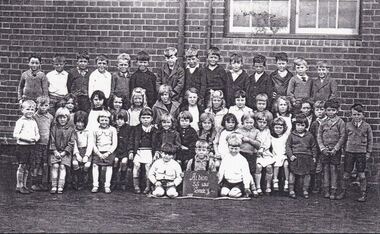 Sunshine and District Historical Society Incorporated
Photograph - Albion State School 1932 Class Photographs
... social and academic success. In terms of learning, the highest priority is placed on the work in English and Mathematics. We also have a range of specialist and extra-curricular programs that we provide. Our specialist teacher-librarian is involved in reading extension programs that support development ...The current school, Albion Primary School, No 4265 opened in 1926. It was built on a site once owned by John Fitzgerald (1850s). The land was later acquired by H. V. McKay who had transferred his Sunshine Harvester Works to the area in 1905 - 7. In 1920, the Albion railway station was moved nearer Ballarat Road at the request of Mr McKay. More people came to live in the area including soldier settlers.Albion Primary School's mission is to 'Aim High' in all we do so that our students grow to be socially capable, reach their full academic potential and become caring, respectful community minded people. Albion Primary School is located in a residential area in Albion, a small pocket of the local government area of Brimbank, approximately 10 kilometres west of Melbourne and was established in 1926. Our current enrolment is 199 students. We have a rich cultural diversity amongst our school community. The school is set around a courtyard with spacious playing areas including a grassed oval, running track, games courts, an adventure playground, sand pit, jumping pits, shady courtyard and garden areas, a vegetable garden and fruit tree orchard. As well as classroom groups, we have our learning teams, student house groups (siblings are allocated to the same house) and a Junior School Council. The school has four main buildings. All classrooms have air conditioning and interactive screens. Block A houses classrooms, staff areas and the administration offices. Our newest building has classrooms and some small group/office spaces. Block B includes our library, canteen and a multi-purpose room used for indoor physical education, Perceptual Motor Program, drama, visiting performers, and community activities. Block C houses classrooms and specialist rooms. We expect and receive the best from our students in terms of their learning and behaviour. The school’s dedicated and effective staff is strongly committed to helping students achieve personal, behavioural, social and academic success. In terms of learning, the highest priority is placed on the work in English and Mathematics. We also have a range of specialist and extra-curricular programs that we provide. Our specialist teacher-librarian is involved in reading extension programs that support development in literacy. All children are able to develop their artistic abilities through visual arts and music program. Our music program is supported by the Australian Children's Music Foundation. A specialist Physical Education teacher provides lessons for all children as well as the opportunity for students to participate in organised lunch time sporting competitions between the house groups. Auslan is the additional language all students learn at Albion. All children participate in a student wellbeing program that focuses on developing strong connections and a sense of belonging within the school. Our school student leaders participate in programs that help develop their leadership skills. 5163.01 - Albion State School 1932 Grade 1albion state school, albion primary school, adelaide street, albion -
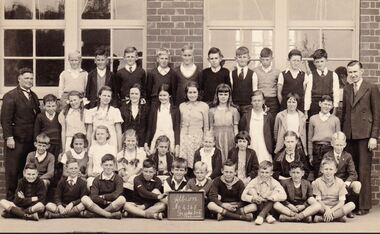 Sunshine and District Historical Society Incorporated
Photograph - Albion State School 1940 Class Photographs
... social and academic success. In terms of learning, the highest priority is placed on the work in English and Mathematics. We also have a range of specialist and extra-curricular programs that we provide. Our specialist teacher-librarian is involved in reading extension programs that support development ...The current school, Albion Primary School, No 4265 opened in 1926. It was built on a site once owned by John Fitzgerald (1850s). The land was later acquired by H. V. McKay who had transferred his Sunshine Harvester Works to the area in 1905 - 7. In 1920, the Albion railway station was moved nearer Ballarat Road at the request of Mr McKay. More people came to live in the area including soldier settlers.Albion Primary School's mission is to 'Aim High' in all we do so that our students grow to be socially capable, reach their full academic potential and become caring, respectful community minded people. Albion Primary School is located in a residential area in Albion, a small pocket of the local government area of Brimbank, approximately 10 kilometres west of Melbourne and was established in 1926. Our current enrolment is 199 students. We have a rich cultural diversity amongst our school community. The school is set around a courtyard with spacious playing areas including a grassed oval, running track, games courts, an adventure playground, sand pit, jumping pits, shady courtyard and garden areas, a vegetable garden and fruit tree orchard. As well as classroom groups, we have our learning teams, student house groups (siblings are allocated to the same house) and a Junior School Council. The school has four main buildings. All classrooms have air conditioning and interactive screens. Block A houses classrooms, staff areas and the administration offices. Our newest building has classrooms and some small group/office spaces. Block B includes our library, canteen and a multi-purpose room used for indoor physical education, Perceptual Motor Program, drama, visiting performers, and community activities. Block C houses classrooms and specialist rooms. We expect and receive the best from our students in terms of their learning and behaviour. The school’s dedicated and effective staff is strongly committed to helping students achieve personal, behavioural, social and academic success. In terms of learning, the highest priority is placed on the work in English and Mathematics. We also have a range of specialist and extra-curricular programs that we provide. Our specialist teacher-librarian is involved in reading extension programs that support development in literacy. All children are able to develop their artistic abilities through visual arts and music program. Our music program is supported by the Australian Children's Music Foundation. A specialist Physical Education teacher provides lessons for all children as well as the opportunity for students to participate in organised lunch time sporting competitions between the house groups. Auslan is the additional language all students learn at Albion. All children participate in a student wellbeing program that focuses on developing strong connections and a sense of belonging within the school. Our school student leaders participate in programs that help develop their leadership skills. 5164.01 - Albion State School 1940 Grade 5 6albion state school, albion primary school, adelaide street, albion -
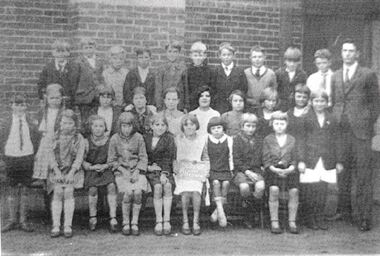 Sunshine and District Historical Society Incorporated
Photograph - Albion State School 1930 Class Photographs
... social and academic success. In terms of learning, the highest priority is placed on the work in English and Mathematics. We also have a range of specialist and extra-curricular programs that we provide. Our specialist teacher-librarian is involved in reading extension programs that support development ...The current school, Albion Primary School, No 4265 opened in 1926. It was built on a site once owned by John Fitzgerald (1850s). The land was later acquired by H. V. McKay who had transferred his Sunshine Harvester Works to the area in 1905 - 7. In 1920, the Albion railway station was moved nearer Ballarat Road at the request of Mr McKay. More people came to live in the area including soldier settlers.Albion Primary School's mission is to 'Aim High' in all we do so that our students grow to be socially capable, reach their full academic potential and become caring, respectful community minded people. Albion Primary School is located in a residential area in Albion, a small pocket of the local government area of Brimbank, approximately 10 kilometres west of Melbourne and was established in 1926. Our current enrolment is 199 students. We have a rich cultural diversity amongst our school community. The school is set around a courtyard with spacious playing areas including a grassed oval, running track, games courts, an adventure playground, sand pit, jumping pits, shady courtyard and garden areas, a vegetable garden and fruit tree orchard. As well as classroom groups, we have our learning teams, student house groups (siblings are allocated to the same house) and a Junior School Council. The school has four main buildings. All classrooms have air conditioning and interactive screens. Block A houses classrooms, staff areas and the administration offices. Our newest building has classrooms and some small group/office spaces. Block B includes our library, canteen and a multi-purpose room used for indoor physical education, Perceptual Motor Program, drama, visiting performers, and community activities. Block C houses classrooms and specialist rooms. We expect and receive the best from our students in terms of their learning and behaviour. The school’s dedicated and effective staff is strongly committed to helping students achieve personal, behavioural, social and academic success. In terms of learning, the highest priority is placed on the work in English and Mathematics. We also have a range of specialist and extra-curricular programs that we provide. Our specialist teacher-librarian is involved in reading extension programs that support development in literacy. All children are able to develop their artistic abilities through visual arts and music program. Our music program is supported by the Australian Children's Music Foundation. A specialist Physical Education teacher provides lessons for all children as well as the opportunity for students to participate in organised lunch time sporting competitions between the house groups. Auslan is the additional language all students learn at Albion. All children participate in a student wellbeing program that focuses on developing strong connections and a sense of belonging within the school. Our school student leaders participate in programs that help develop their leadership skills. 5165.01 - Albion State School 1930 Grade 4 5165.02 - Albion State School 1930 Grade 2 5165.03 - Albion State School 1930 5165.04 - Albion State School 1930 Grade 3 4 albion state school, albion primary school, adelaide street, albion -
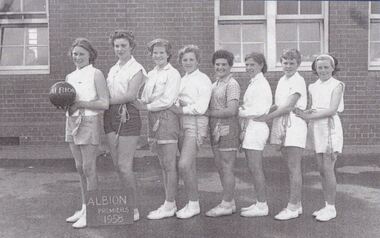 Sunshine and District Historical Society Incorporated
Photograph - Albion State School 1958 Class Photographs
... social and academic success. In terms of learning, the highest priority is placed on the work in English and Mathematics. We also have a range of specialist and extra-curricular programs that we provide. Our specialist teacher-librarian is involved in reading extension programs that support development ...The current school, Albion Primary School, No 4265 opened in 1926. It was built on a site once owned by John Fitzgerald (1850s). The land was later acquired by H. V. McKay who had transferred his Sunshine Harvester Works to the area in 1905 - 7. In 1920, the Albion railway station was moved nearer Ballarat Road at the request of Mr McKay. More people came to live in the area including soldier settlers.Albion Primary School's mission is to 'Aim High' in all we do so that our students grow to be socially capable, reach their full academic potential and become caring, respectful community minded people. Albion Primary School is located in a residential area in Albion, a small pocket of the local government area of Brimbank, approximately 10 kilometres west of Melbourne and was established in 1926. Our current enrolment is 199 students. We have a rich cultural diversity amongst our school community. The school is set around a courtyard with spacious playing areas including a grassed oval, running track, games courts, an adventure playground, sand pit, jumping pits, shady courtyard and garden areas, a vegetable garden and fruit tree orchard. As well as classroom groups, we have our learning teams, student house groups (siblings are allocated to the same house) and a Junior School Council. The school has four main buildings. All classrooms have air conditioning and interactive screens. Block A houses classrooms, staff areas and the administration offices. Our newest building has classrooms and some small group/office spaces. Block B includes our library, canteen and a multi-purpose room used for indoor physical education, Perceptual Motor Program, drama, visiting performers, and community activities. Block C houses classrooms and specialist rooms. We expect and receive the best from our students in terms of their learning and behaviour. The school’s dedicated and effective staff is strongly committed to helping students achieve personal, behavioural, social and academic success. In terms of learning, the highest priority is placed on the work in English and Mathematics. We also have a range of specialist and extra-curricular programs that we provide. Our specialist teacher-librarian is involved in reading extension programs that support development in literacy. All children are able to develop their artistic abilities through visual arts and music program. Our music program is supported by the Australian Children's Music Foundation. A specialist Physical Education teacher provides lessons for all children as well as the opportunity for students to participate in organised lunch time sporting competitions between the house groups. Auslan is the additional language all students learn at Albion. All children participate in a student wellbeing program that focuses on developing strong connections and a sense of belonging within the school. Our school student leaders participate in programs that help develop their leadership skills. 5166.01 - Albion State School 1958 Baseball Team 5166.02 - Albion State School 1958 Grade 5Aalbion state school, albion primary school, adelaide street, albion -
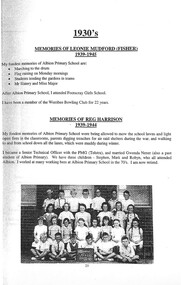 Sunshine and District Historical Society Incorporated
Essay - Albion State School 1930s Memories
... social and academic success. In terms of learning, the highest priority is placed on the work in English and Mathematics. We also have a range of specialist and extra-curricular programs that we provide. Our specialist teacher-librarian is involved in reading extension programs that support development ...The current school, Albion Primary School, No 4265 opened in 1926. It was built on a site once owned by John Fitzgerald (1850s). The land was later acquired by H. V. McKay who had transferred his Sunshine Harvester Works to the area in 1905 - 7. In 1920, the Albion railway station was moved nearer Ballarat Road at the request of Mr McKay. More people came to live in the area including soldier settlers.Albion Primary School's mission is to 'Aim High' in all we do so that our students grow to be socially capable, reach their full academic potential and become caring, respectful community minded people. Albion Primary School is located in a residential area in Albion, a small pocket of the local government area of Brimbank, approximately 10 kilometres west of Melbourne and was established in 1926. Our current enrolment is 199 students. We have a rich cultural diversity amongst our school community. The school is set around a courtyard with spacious playing areas including a grassed oval, running track, games courts, an adventure playground, sand pit, jumping pits, shady courtyard and garden areas, a vegetable garden and fruit tree orchard. As well as classroom groups, we have our learning teams, student house groups (siblings are allocated to the same house) and a Junior School Council. The school has four main buildings. All classrooms have air conditioning and interactive screens. Block A houses classrooms, staff areas and the administration offices. Our newest building has classrooms and some small group/office spaces. Block B includes our library, canteen and a multi-purpose room used for indoor physical education, Perceptual Motor Program, drama, visiting performers, and community activities. Block C houses classrooms and specialist rooms. We expect and receive the best from our students in terms of their learning and behaviour. The school’s dedicated and effective staff is strongly committed to helping students achieve personal, behavioural, social and academic success. In terms of learning, the highest priority is placed on the work in English and Mathematics. We also have a range of specialist and extra-curricular programs that we provide. Our specialist teacher-librarian is involved in reading extension programs that support development in literacy. All children are able to develop their artistic abilities through visual arts and music program. Our music program is supported by the Australian Children's Music Foundation. A specialist Physical Education teacher provides lessons for all children as well as the opportunity for students to participate in organised lunch time sporting competitions between the house groups. Auslan is the additional language all students learn at Albion. All children participate in a student wellbeing program that focuses on developing strong connections and a sense of belonging within the school. Our school student leaders participate in programs that help develop their leadership skills. 5167.01 - Albion State School 1930s Memories of Reg Harrison 1939 to 1944 5167.02 - Albion State School 1930s Memories of Ron Phillips 1934 to 1939 5167.03 - Albion State School 1930s Memories of Beth Hamilton Nee Powell Page 1 5167.03 - Albion State School 1930s Memories of Beth Hamilton Nee Powell Page 2 5167.04 - Albion State School 1930s Memories of Veda Heath Ashford 5167.05 - Albion State School 1930s Memories of Gwenda Powell Lusted 1935 to 1940 albion state school, albion primary school, adelaide street, albion -
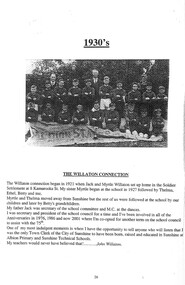 Sunshine and District Historical Society Incorporated
Essay - Albion State School 1920s The Willaton Connection
... social and academic success. In terms of learning, the highest priority is placed on the work in English and Mathematics. We also have a range of specialist and extra-curricular programs that we provide. Our specialist teacher-librarian is involved in reading extension programs that support development ...The current school, Albion Primary School, No 4265 opened in 1926. It was built on a site once owned by John Fitzgerald (1850s). The land was later acquired by H. V. McKay who had transferred his Sunshine Harvester Works to the area in 1905 - 7. In 1920, the Albion railway station was moved nearer Ballarat Road at the request of Mr McKay. More people came to live in the area including soldier settlers.Albion Primary School's mission is to 'Aim High' in all we do so that our students grow to be socially capable, reach their full academic potential and become caring, respectful community minded people. Albion Primary School is located in a residential area in Albion, a small pocket of the local government area of Brimbank, approximately 10 kilometres west of Melbourne and was established in 1926. Our current enrolment is 199 students. We have a rich cultural diversity amongst our school community. The school is set around a courtyard with spacious playing areas including a grassed oval, running track, games courts, an adventure playground, sand pit, jumping pits, shady courtyard and garden areas, a vegetable garden and fruit tree orchard. As well as classroom groups, we have our learning teams, student house groups (siblings are allocated to the same house) and a Junior School Council. The school has four main buildings. All classrooms have air conditioning and interactive screens. Block A houses classrooms, staff areas and the administration offices. Our newest building has classrooms and some small group/office spaces. Block B includes our library, canteen and a multi-purpose room used for indoor physical education, Perceptual Motor Program, drama, visiting performers, and community activities. Block C houses classrooms and specialist rooms. We expect and receive the best from our students in terms of their learning and behaviour. The school’s dedicated and effective staff is strongly committed to helping students achieve personal, behavioural, social and academic success. In terms of learning, the highest priority is placed on the work in English and Mathematics. We also have a range of specialist and extra-curricular programs that we provide. Our specialist teacher-librarian is involved in reading extension programs that support development in literacy. All children are able to develop their artistic abilities through visual arts and music program. Our music program is supported by the Australian Children's Music Foundation. A specialist Physical Education teacher provides lessons for all children as well as the opportunity for students to participate in organised lunch time sporting competitions between the house groups. Auslan is the additional language all students learn at Albion. All children participate in a student wellbeing program that focuses on developing strong connections and a sense of belonging within the school. Our school student leaders participate in programs that help develop their leadership skills. 5168.01 - Albion State School 1930s The Willaton Connection Page 1 5168.02 - Albion State School 1930s The Willaton Connection Page 2 5168.03 - Albion State School 1930s The Willaton Connection Page 3albion state school, albion primary school, adelaide street, albion, john willaton -
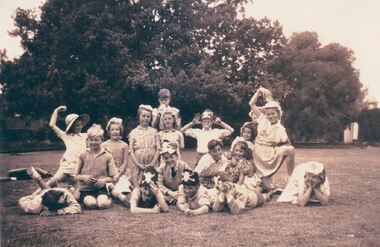 Sunshine and District Historical Society Incorporated
Essay - Albion State School 1940s Collection of Photographs
... social and academic success. In terms of learning, the highest priority is placed on the work in English and Mathematics. We also have a range of specialist and extra-curricular programs that we provide. Our specialist teacher-librarian is involved in reading extension programs that support development ...The current school, Albion Primary School, No 4265 opened in 1926. It was built on a site once owned by John Fitzgerald (1850s). The land was later acquired by H. V. McKay who had transferred his Sunshine Harvester Works to the area in 1905 - 7. In 1920, the Albion railway station was moved nearer Ballarat Road at the request of Mr McKay. More people came to live in the area including soldier settlers.Albion Primary School's mission is to 'Aim High' in all we do so that our students grow to be socially capable, reach their full academic potential and become caring, respectful community minded people. Albion Primary School is located in a residential area in Albion, a small pocket of the local government area of Brimbank, approximately 10 kilometres west of Melbourne and was established in 1926. Our current enrolment is 199 students. We have a rich cultural diversity amongst our school community. The school is set around a courtyard with spacious playing areas including a grassed oval, running track, games courts, an adventure playground, sand pit, jumping pits, shady courtyard and garden areas, a vegetable garden and fruit tree orchard. As well as classroom groups, we have our learning teams, student house groups (siblings are allocated to the same house) and a Junior School Council. The school has four main buildings. All classrooms have air conditioning and interactive screens. Block A houses classrooms, staff areas and the administration offices. Our newest building has classrooms and some small group/office spaces. Block B includes our library, canteen and a multi-purpose room used for indoor physical education, Perceptual Motor Program, drama, visiting performers, and community activities. Block C houses classrooms and specialist rooms. We expect and receive the best from our students in terms of their learning and behaviour. The school’s dedicated and effective staff is strongly committed to helping students achieve personal, behavioural, social and academic success. In terms of learning, the highest priority is placed on the work in English and Mathematics. We also have a range of specialist and extra-curricular programs that we provide. Our specialist teacher-librarian is involved in reading extension programs that support development in literacy. All children are able to develop their artistic abilities through visual arts and music program. Our music program is supported by the Australian Children's Music Foundation. A specialist Physical Education teacher provides lessons for all children as well as the opportunity for students to participate in organised lunch time sporting competitions between the house groups. Auslan is the additional language all students learn at Albion. All children participate in a student wellbeing program that focuses on developing strong connections and a sense of belonging within the school. Our school student leaders participate in programs that help develop their leadership skills. 5169.01 - Albion State School 1940s Pirate Hat Group 5169.02 - Albion State School 1940s Standing In Front of the Building 5169.03 - Albion State School 1940s 2 Little Girls 5169.04 - Albion State School 1940s 6 Adults 5169.05 - Albion State School 1940s 6 Flower Girl and Boy 5169.06 - Albion State School 1940s Small Group Sitting Down 5169.07 - Albion State School 1940s Class Photo 5169.08 - Albion State School 1940s Albion Trestle Bridge Teachers Visiting Bridge 5169.09 - Albion State School 1940s Albion Trestle Bridge 5169.10 - Albion State School 1940s John Darling Flour Millsalbion state school, albion primary school, adelaide street, albion -
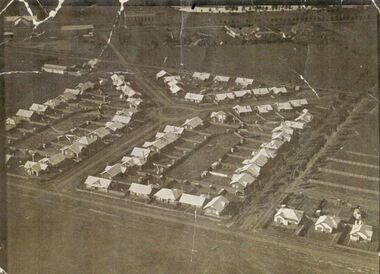 Sunshine and District Historical Society Incorporated
Essay - The Soldier Settlement
... social and academic success. In terms of learning, the highest priority is placed on the work in English and Mathematics. We also have a range of specialist and extra-curricular programs that we provide. Our specialist teacher-librarian is involved in reading extension programs that support development ...The current school, Albion Primary School, No 4265 opened in 1926. It was built on a site once owned by John Fitzgerald (1850s). The land was later acquired by H. V. McKay who had transferred his Sunshine Harvester Works to the area in 1905 - 7. In 1920, the Albion railway station was moved nearer Ballarat Road at the request of Mr McKay. More people came to live in the area including soldier settlers.Albion Primary School's mission is to 'Aim High' in all we do so that our students grow to be socially capable, reach their full academic potential and become caring, respectful community minded people. Albion Primary School is located in a residential area in Albion, a small pocket of the local government area of Brimbank, approximately 10 kilometres west of Melbourne and was established in 1926. Our current enrolment is 199 students. We have a rich cultural diversity amongst our school community. The school is set around a courtyard with spacious playing areas including a grassed oval, running track, games courts, an adventure playground, sand pit, jumping pits, shady courtyard and garden areas, a vegetable garden and fruit tree orchard. As well as classroom groups, we have our learning teams, student house groups (siblings are allocated to the same house) and a Junior School Council. The school has four main buildings. All classrooms have air conditioning and interactive screens. Block A houses classrooms, staff areas and the administration offices. Our newest building has classrooms and some small group/office spaces. Block B includes our library, canteen and a multi-purpose room used for indoor physical education, Perceptual Motor Program, drama, visiting performers, and community activities. Block C houses classrooms and specialist rooms. We expect and receive the best from our students in terms of their learning and behaviour. The school’s dedicated and effective staff is strongly committed to helping students achieve personal, behavioural, social and academic success. In terms of learning, the highest priority is placed on the work in English and Mathematics. We also have a range of specialist and extra-curricular programs that we provide. Our specialist teacher-librarian is involved in reading extension programs that support development in literacy. All children are able to develop their artistic abilities through visual arts and music program. Our music program is supported by the Australian Children's Music Foundation. A specialist Physical Education teacher provides lessons for all children as well as the opportunity for students to participate in organised lunch time sporting competitions between the house groups. Auslan is the additional language all students learn at Albion. All children participate in a student wellbeing program that focuses on developing strong connections and a sense of belonging within the school. Our school student leaders participate in programs that help develop their leadership skills. 5170.01 - The Soldier Settlement 5170.02 - The Soldier Settlement Detailsalbion state school, albion primary school, adelaide street, albion -
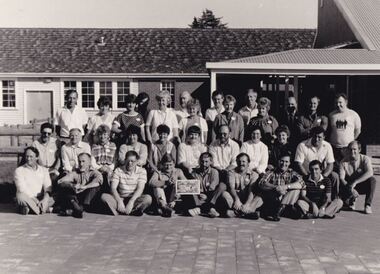 Sunshine and District Historical Society Incorporated
Essay - Albion State School Reunion
... social and academic success. In terms of learning, the highest priority is placed on the work in English and Mathematics. We also have a range of specialist and extra-curricular programs that we provide. Our specialist teacher-librarian is involved in reading extension programs that support development ...The current school, Albion Primary School, No 4265 opened in 1926. It was built on a site once owned by John Fitzgerald (1850s). The land was later acquired by H. V. McKay who had transferred his Sunshine Harvester Works to the area in 1905 - 7. In 1920, the Albion railway station was moved nearer Ballarat Road at the request of Mr McKay. More people came to live in the area including soldier settlers.Albion Primary School's mission is to 'Aim High' in all we do so that our students grow to be socially capable, reach their full academic potential and become caring, respectful community minded people. Albion Primary School is located in a residential area in Albion, a small pocket of the local government area of Brimbank, approximately 10 kilometres west of Melbourne and was established in 1926. Our current enrolment is 199 students. We have a rich cultural diversity amongst our school community. The school is set around a courtyard with spacious playing areas including a grassed oval, running track, games courts, an adventure playground, sand pit, jumping pits, shady courtyard and garden areas, a vegetable garden and fruit tree orchard. As well as classroom groups, we have our learning teams, student house groups (siblings are allocated to the same house) and a Junior School Council. The school has four main buildings. All classrooms have air conditioning and interactive screens. Block A houses classrooms, staff areas and the administration offices. Our newest building has classrooms and some small group/office spaces. Block B includes our library, canteen and a multi-purpose room used for indoor physical education, Perceptual Motor Program, drama, visiting performers, and community activities. Block C houses classrooms and specialist rooms. We expect and receive the best from our students in terms of their learning and behaviour. The school’s dedicated and effective staff is strongly committed to helping students achieve personal, behavioural, social and academic success. In terms of learning, the highest priority is placed on the work in English and Mathematics. We also have a range of specialist and extra-curricular programs that we provide. Our specialist teacher-librarian is involved in reading extension programs that support development in literacy. All children are able to develop their artistic abilities through visual arts and music program. Our music program is supported by the Australian Children's Music Foundation. A specialist Physical Education teacher provides lessons for all children as well as the opportunity for students to participate in organised lunch time sporting competitions between the house groups. Auslan is the additional language all students learn at Albion. All children participate in a student wellbeing program that focuses on developing strong connections and a sense of belonging within the school. Our school student leaders participate in programs that help develop their leadership skills. 5171.01 - Albion State School Reunionalbion state school, albion primary school, adelaide street, albion -
 Melbourne Athenaeum Archives
Video - ABC 7.30 Report: The Athenaeum 's 170th birthday, Australian Broadcasting Corporation, Melbourne, Athenaeum building celebrates 170 years, 11/11/2009
... © 2010 ABC | Privacy Policy Beginning as the Melbourne Mechanics' Institution in 1839, the Melbourne Athenaeum has a long history that reflects the cultural and social development of Melbourne. It continues to be managed as a not-for-profit organisation by a volunteer board, with a subscription library (maintained since 1839) and a leased theatre. athenaeum australian broadcasting corporation kerry o’brien kevin quigley lisa whitehead marjorie dalvean ray lawler margaret bowman frank thring. ...Transcript: Athenaeum building celebrates 170 years Australian Broadcasting Corporation Broadcast: 11/11/2009 Reporter: Lisa Whitehead Tomorrow marks the 170th birthday of one of the nation's historic cultural landmarks. Melbourne’s Athenaeum building has, in one form or other, provided education and entertainment for the Victorian colony as it became a city; and along the way, documented its growth. Transcript KERRY O’BRIEN, PRESENTER: Tomorrow marks the 170th birthday of one of the nation's historic cultural landmarks. Melbourne's Athenaeum building has, in one form or another, provided education and entertainment. For the Victorian colonies it became a city and along the way documented its growth. The building's original library and theatre still draw devotees and as Lisa Whitehead reports, a loyal band of volunteers. KEVIN QUIGLEY, ATHENAEUM PRESIDENT: There's nothing like us that has been here from day one, four years after the boat pushed ashore, here we are. It's a thread that runs through the life of Melbourne. LISA WHITEHEAD, REPORTER: In the heart of Melbourne's CBD, the Athenaeum is a celebrity in disguise, the oldest cultural icon in the city, but barely noticed. MARJORIE DALVEAN, VOLUNTEER HISTORIAN: People of Melbourne walk past this area and they have no idea what it is. RAY LAWLER, PLAYWRIGHT: It seemed to me to be a place that absolutely, or breathes Melbourne, I suppose, culture. LISA WHITEHEAD: Just four years after Melbourne was founded, the colony built a Mechanic's Institution, one of the first in the world, a place where the working class could meet and learn. KEVIN QUIGLEY: People think of it as Wild West sort of place where these hearty types drank and rushed about, but Melbourne was freely settled. It was a city of people who wanted to better themselves - entrepreneurs. And the Mechanic's Institution was that innovative idea that had grown up in Edinburgh and London about providing an opportunity for education for the working people. LISA WHITEHEAD: Mark Twain lectured there. Later, other buildings were added and a theatre to host classic plays. And it adopted its more bourgeois friendly title of the Athenaeum. Crucially from the start there was the library, the first to offer affordable lending to the working man. And it still attracts devotees. Former University lecturer Margaret Bowman, 89, comes in every Wednesday, along with her dog to join an enthusiastic band of volunteers sorting through the archives. MARGARET BOWMAN, FORMER UNIVERSITY LECTURER: Doing research is something that I find actually I enjoy more than anything. Every old lady needs to have a project and now I've got a project. MARJORIE DALVEAN: Margaret, Christine has just found out that Alfred Deakin was a member here from 1874 to 1877. This place is not flashy, we've never been flashy. But book lovers walk in here and they know this is the place for them. ARCHIVAL FOOTAGE: Old times and old names. The Athenaeum theatre in Melbourne for more than 40 years has been one of the city's best known cinemas. LISA WHITEHEAD: In the 20th century, the theatre surrendered to the new craze of talking pictures, and one particular fan was famous Australian playwright Ray Lawler. At 13, he dropped out of school to work in a Footscray factory and two years later his first trip to the glamorous Athenaeum cinema hinted at the education he was missing. RAY LAWLER: It just had a style about it which I responded to, I think. I was looking for something and this seemed to be part of it. Ray Lawler went on to write "Summer of the Seventeenth Doll" and found literary fame overseas. About a century after it had started as an educational place for the working man, Ray Lawler had, in effect, become an Athenaeum graduate. RAL LAWLER: If they had been looking for the sort of person that they were hoping to encourage along the way, I suppose I would have been somebody that might have fitted the mould, you know. LISA WHITEHEAD: In time, the cinema was returned to its theatrical roots. FRANK THRING, 1977: It has a great resemblance to the Theatre Royal in Hobart which Larry Olivier has called the best theatre he's ever worked in. And it's almost identical. It is the true Victorian playhouse. The horseshoe shaped thing: stalls, dress circle and gallery. And you're close to the audience and they're close to you. Marvellous feeling. LISA WHITEHEAD: Today, it's still a theatre. But time has brought compromises. The once vaunted art gallery has now covered its windows and become a comedy club and performance space. TV and suburban life have eaten away at the library membership. It offers an online service now, and a recent federal government grant will pay for the upkeep of its gracious interior, including the 1930s elevator Ray Lawler used to ride. For him, it's money well spent on history quietly made and discreetly observed. RAY LAWLER: It's the lack of awareness, I think, that people don't know what they've got here. They've really got the whole history of Melbourne almost. KEVIN QUIGLEY: It was a similar organisation in Sydney but we are the only one that's got a continual lineage on the same spot. We started here and we're still here and we'll be here for another 100 years. KERRY O'BRIEN: Lisa Whitehead on a great Melbourne landmark. © 2010 ABC | Privacy Policy Beginning as the Melbourne Mechanics' Institution in 1839, the Melbourne Athenaeum has a long history that reflects the cultural and social development of Melbourne. It continues to be managed as a not-for-profit organisation by a volunteer board, with a subscription library (maintained since 1839) and a leased theatre.Video broadcast ABC 7:30 Report for 11/11/2009. "Tomorrow marks the 170th birthday of one of the nation's historic cultural landmarks. Melbourne’s Athenaeum building has, in one form or other, provided education and entertainment for the Victorian colony as it became a city; and along the way, documented its growth."athenaeum, australian broadcasting corporation, kerry o’brien, kevin quigley, lisa whitehead, marjorie dalvean, ray lawler, margaret bowman, frank thring. -
 Nillumbik Historical Society Incorporated
Book - Softcover book, T & S Printers, St Andrews A Village Built on Gold - The History to Present Times of St Andrews and District, 1998
... Produced by St Andrews Primary School, covering the area's history from early settlement, discovery of gold, the Caledonia Diggings, social and community history, fruitgrowing and development through the latter half of the 1900's into and covering the 20th century....Produced by St Andrews Primary School, covering the area's history from early settlement, discovery of gold, the Caledonia Diggings, social and community history, fruitgrowing and development through the latter half of the 1900's into and covering the 20th century. ...Produced by St Andrews Primary School, covering the area's history from early settlement, discovery of gold, the Caledonia Diggings, social and community history, fruitgrowing and development through the latter half of the 1900's into and covering the 20th century.A concise history of the origins of St Andrews, Victoria, Australia from gold mining to the diverse community it is todaySoftcover book with orange brown tones and black and white lettering and highlights, with historic photographs on front and back cover and 149 pages.#gold, #goldmining, #caledoniadiggings -
 Sunshine and District Historical Society Incorporated
Archive - Sunshine And District Historical Society Sporting Club And The Community 2025 Exhibition
... Social Connection Physical & mental well-being Community pride & identity Support for youth & development Economic impact In 2025, this exhibition was displayed at the Sunshine Library. ...Social Connection Physical & mental well-being Community pride & identity Support for youth & development Economic impact In 2025, this exhibition was displayed at the Sunshine Library. ...Sporting clubs play a crucial role in shaping strong, connected communities. They go beyond just fostering athletic talent, they create spaces where people of all ages and backgrounds can come together, bond, and build a shared sense of identity. Here's why they matter so much. Social Connection Physical & mental well-being Community pride & identity Support for youth & development Economic impact In 2025, this exhibition was displayed at the Sunshine Library. It consisted of number of photographs of the districts long-gone sporting teams, clubs, uniforms and equipment. 5551.01 - Sunshine And District Historical Society Sporting Club And The Community 2025 Exhibition.jpg 5551.02 - Sunshine And District Historical Society Sporting Club And The Community 2025 Exhibition.jpg 5551.03 - Sunshine And District Historical Society Sporting Club And The Community 2025 Exhibition.jpg 5551.04 - Sunshine And District Historical Society Sporting Club And The Community 2025 Exhibition.jpg 5551.05 - Sunshine And District Historical Society Sporting Club And The Community 2025 Exhibition.jpg 5551.06 - Sunshine And District Historical Society Sporting Club And The Community 2025 Exhibition.jpg 5551.07 - Sunshine And District Historical Society Sporting Club And The Community 2025 Exhibition.jpg 5551.08 - Sunshine And District Historical Society Sporting Club And The Community 2025 Exhibition.jpg 5551.09 - Sunshine And District Historical Society Sporting Club And The Community 2025 Exhibition.jpgspaldings, sunshine harvester works golf club, r. j. rowe, sunshine potteries cricket club, albion cricket club, east sunshine cricket club, albert "bert" kevin davenport, dennis thornton -
 City of Ballarat
Artwork, other - Public Artwork, Leaf Design Studio, Coming Home to Nest by Katherine Masiulanis
... development of the ‘Village’. Cardigan Village is home to about 450 residents on the outskirts of Ballarat. It was established in the 70s, with all the positivity and optimism of the period. The artwork is of aesthetic and social ...At the crossover between placemaking and public art, this space designed and constructed by Katherine Masiulanis embeds local stories to enliven the local community centre. Masiulanis has designed the public artwork to reflect the lines of crops and ploughed fields and mountains in the surrounding landscape. The artwork also refers to the seasonal travel of Aboriginal people from Wendouree to Burrumbeet and migratory birds making a similar journey. The style of the refurbished courtyard will reflect the 1970s positivity style reflected in the Community Centre architectural design and the history of the first development of the ‘Village’. Cardigan Village is home to about 450 residents on the outskirts of Ballarat. It was established in the 70s, with all the positivity and optimism of the period.Painted walls, metal bird shapes, metal cut out wall shapes, stone bowl -
 Broadmeadows Historical Society & Museum
Book - Souvenir Book, Jacana Primary School, Jacana Primary School No. 4839 Silver Anniversary 1960 to 1985, 1985
... development, shaping generations of students. The school’s history from 1960 to 1985 represents a formative era marked by educational innovation, social change, and deep local engagement....development, shaping generations of students. The school’s history from 1960 to 1985 represents a formative era marked by educational innovation, social change, and deep local engagement. ...History of the Jacana Primary School between the years 1960 to 1985.A5 Book 12 pages with card cover (white).non-fictionHistory of the Jacana Primary School between the years 1960 to 1985.jacana, education, jacana primary school, silver anniversary, 1960 -
 Broadmeadows Historical Society & Museum
Photograph, Neighbourhood Connections in Broadmeadows, 1998, 3 February 1998
... Established to provide affordable and accessible housing, the development reflects the social and economic priorities of the era. ...Established to provide affordable and accessible housing, the development reflects the social and economic priorities of the era. ...This photograph from 1998 captures a significant public housing development in Broadmeadows. It offers valuable insight into the architectural design and living conditions within the estate during the late 1990s. Established to provide affordable and accessible housing, the development reflects the social and economic priorities of the era. It served as a vital community hub, fostering social connections and offering essential support to residents. The image stands as a historical record of efforts to build stable and inclusive communities through public housing initiatives.This photograph from 1998 captures a public housing estate in Broadmeadows, reflecting the architectural style and living conditions of the time. The image offers valuable insight into the social and economic priorities of the late 1990s, when affordable and accessible housing was a key focus. The estate served as an important community hub, fostering social connections, providing essential support, and enhancing the quality of life for residents. This photograph stands as a testament to the role of public housing in building stable and inclusive communities.Black and white photograph on glossy paper.Public Housing Estate/Banksia Gardens 1998/(Upside down bottom left corner) 28broadmeadows, 1998, public housing, public housing estate in broadmeadows -
 Broadmeadows Historical Society & Museum
Photograph, Basketball Court at Banksia Gardens, Broadmeadows 1998, 3 February 1998
... social interaction, and community cohesion. It reflects the broader efforts to create a supportive and engaging environment for the residents of Banksia Gardens, contributing to the overall development and well-being of the community. ...social interaction, and community cohesion. It reflects the broader efforts to create a supportive and engaging environment for the residents of Banksia Gardens, contributing to the overall development and well-being of the community. ...This glossy colour photograph from 1998 captures the basketball court at Banksia Gardens in Broadmeadows. The image is a valuable piece of the social history of Banksia Gardens Estate, illustrating the recreational facilities available to residents at the time. The basketball court served as a vital community space, promoting physical activity, social interaction, and community cohesion. It reflects the broader efforts to create a supportive and engaging environment for the residents of Banksia Gardens, contributing to the overall development and well-being of the community. This glossy colour photograph of the basketball court at Banksia Gardens in Broadmeadows, taken in 1998, holds significant historical value. The basketball court is emblematic of the recreational facilities provided within the Banksia Gardens Estate, reflecting the social priorities of the time. It served as a crucial community space where residents could engage in physical activity, foster social interactions, and build community cohesion. The presence of such facilities highlights the efforts made to create a supportive and engaging environment for the residents, contributing to the overall development and well-being of the community. This image stands as a testament to the importance of recreational spaces in enhancing the quality of life within public housing estates.Glossy Colour Photograph of a basketball court.Basketball Court at/Banksia Gardens Broadmeadows 1998banksia gardens estate, broadmeadows, 1998, basketball court
