
Showing 40 items matching " artist parents"
-
 Women's Art Register
Archive (Series) - Motherhood. Subject File 1
... ... Artist Parents...Family Children Parenting Pregnancy Artist Parents Foolscap white archival 4 flap folder or document wallet Archive Motherhood. ...Catalogues, Promotional Material, Articlesfamily, children, parenting, pregnancy, artist parentsfamily, children, parenting, pregnancy, artist parents -
Women's Art Register
Archive (Collection) - Motherhood Compilation Archive
... ... Artist Parents...Family Children Parenting Pregnancy Artist Parents Archive Motherhood Compilation Archive ...family, children, parenting, pregnancy, artist parentsfamily, children, parenting, pregnancy, artist parents -
 Marysville & District Historical Society
Ephemera (item) - Advertisement, MOUNTAIN RETREAT MARYSVILLE, Unknown
... ./ Was an artist's commune from/ about 1968-1985./ Before that was a chicken farm/ owned by the Edwards. (Parents..../ Was an artist's commune from/ about 1968-1985./ Before that was a chicken farm/ owned by the Edwards. (Parents ...An advertisement for Mountain Retreat near Marysville.An advertisement for Mountain Retreat near Marysville....from Paradise Art Village, 114 Mt Margaret Rd./ Bought from "Angela" in 1985 by the/ Dowling family./ Was an artist's commune from/ about 1968-1985./ Before that was a chicken farm/ owned by the Edwards. (Parents of Betty/ Argent who lived on a 1/2 acre block just/ off from the main block with her husband,/ Charlie Argent.)marysville, victoria, australia, mountain retreat, betty argent, charlie argent, venusian light co, paradise art village, dowling family, advertisement -
 Federation University Historical Collection
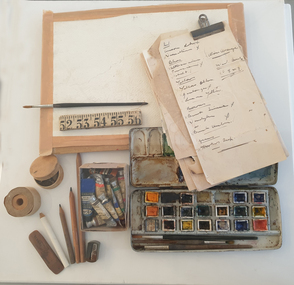
Equipment - Object, Artist's Box, c 1940
... parents until their deaths 1972 and 1988. Watson was 74 years old. Alice Watson died in Ballarat, aged 95, having conserved her beautiful student folio. Alice's comprehensive folio of Ballarat Technical Art School work is held by the University's Geoffrey Blainey Research Centre. alice watson edith alice watson ballarat school of mines artists workbook ballarat technical art school paint oil paint A cardboard box containing items used by Alice Watson to produce paintings. ...Edith (Alice) Watson (1914–2010) studied at the Ballarat Technical Art School, at the School of Mines Ballarat, from 1930 until 1933. Watson was warmly regarded in her home town, Murtoa, easily winning local fundraiser, ‘Most Popular Girl’ in 1936. Upon graduating, Watson taught at the Murtoa High School, living with her parents until their deaths 1972 and 1988. Watson was 74 years old. Alice Watson died in Ballarat, aged 95, having conserved her beautiful student folio. Alice's comprehensive folio of Ballarat Technical Art School work is held by the University's Geoffrey Blainey Research Centre.A cardboard box containing items used by Alice Watson to produce paintings. The items included are: tubes of oil colour; two paint palettes; paint brushes; imperial measure tape measure; pencils; an erasure; two pencil sharpeners; a roll of brown, gummed tape; small, round container of various pins; a State Savings Bank Victoria ruler; and a collection of scraps of artists paper held together with a metal clip which includes a list of paint colour names and a design tracing of a fuschia. There is a small, plywood, stretching board. alice watson, edith alice watson, ballarat school of mines, artists workbook, ballarat technical art school, paint, oil paint -
 Ringwood and District Historical Society
Archive - Parent Record, "Art & Artists" Collection (Parent Record)
... "Art & Artists" Collection (Parent Record) Archive Parent Record ... -
 Mission to Seafarers Victoria
Artwork, other - Stained glass window, William Aikman (1868-1959), In memory of William Digges Latouche Balden, 1947
... The window commissionned by his parents, was made by William Aikman (1868-1959), a reknown scottish stained-glass artist, and sent from England. ...The window commissionned by his parents, was made by William Aikman (1868-1959), a reknown scottish stained-glass artist, and sent from England. ...William Digges Latouche Balden was an 18 year-old cadet on the Samarkund. He and three other crew members: William Archibald Jones, 35 (ship mate), Christopher Ewbank, 19 (third officer) and George P. Worsp, 45 (chief steward) died of oxygen starvation in the ballast tank of the ship on 20 August 1945 while in Geelong. Padre Oliver delivered a service in the St Peter chapel, on the 26th of August 1945, in the 4 men's memory. The window commissionned by his parents, was made by William Aikman (1868-1959), a reknown scottish stained-glass artist, and sent from England. Padre Oliver had met them during a voyage to England. It was unveiled on the 10 April 1949. This is the only imported window and according to Brownwyn Hughes the best quality one from all the opter windows.Arched windows depicting St Nicholas, patron Saint of Ships and Sailors, floating on the sea with a gallon shilling in the background. The small portrait of William Digges La Touche Balden, set within a laurel wreath in the window’s lower section.st peter chapel, flinders street, mission to seafarers, seamen's mission, mission to seamen, st peter, sailors, seamen, stained glass windows, win, memorial chapel, ww2, samarkand, william digges latouche balden, cadets, officers, geelong, deaths, victory ship, merchant navy, st nicholas, galleon, william aikman (1868-1959), christopher ewbank, george p. worsp, william archibald jones -
 Supreme Court of Victoria Library
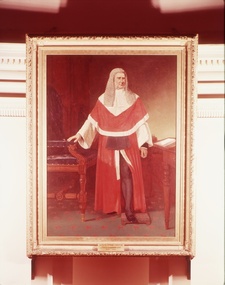
Portrait, Robert Dowling, Sir Redmond Barry, 1886
... parents. Dowling worked in both Tasmania and Victoria as an artist, before returning to England in 1857. ...parents. Dowling worked in both Tasmania and Victoria as an artist, before returning to England in 1857. ...This painting was created by Robert Dowling (1827-1886) in 1885. At this time Dowling was considered Australia's best portraitist. Dowling had been born in England, but migrated to Van Diemen's Land in the early 1830s with his parents. Dowling worked in both Tasmania and Victoria as an artist, before returning to England in 1857. He did not return to Australia until 1884 and received eighteen commissions for portraits. The Barry portrait was commissioned after Barry's death which explains some of the mistakes in the depiction of Barry's robes; the fur cuffs and collar are too large, and the cummerbund is sitting in the wrong place. Sir Redmond Barry is an important figure in Colonial Victorian History, responsible for the establishment and support of some of our finest cultural institutions (the University of Melbourne, the State Library of Victoria, the Supreme Court Library, and aspects of the Museum of Victoria's collection). This is in addition to his role as barrister defending aborigines in the 1840s and his position as a foundation judge of the Supreme Court of Victoria, a position he held for nearly 30 years, presiding over two of the most well known of colonial trials: the Eureka Trials in 1854 and the Kelly trial in 1880.The portrait of Sir Redmond Barry is significant because of the historical importance of Redmond Barry in colonial Victorian history. The painting is also of aesthetic significance as the work of the distinguished portraitist Robert Dowling. Portrait in oils of Sir Redmond Barry. Barry is depicted standing, dressed in red Judicial robes, his hand resting on a chair; behind is a table with books.Signed and dated 1886 (lower left) by Robert Dowling.redmond barry, portraits, judges, robert dowling -
 Supreme Court of Victoria Library
Portrait, Justice Sir Thomas a'Beckett
... parents in 1851. His uncle was the former Chief Justice, his father a well known solicitor. At the Bar Sir Thomas mainly worked in the Equity jurisdiction, which he took as a specialisation with him to the bench. This is an early work of Meldrum, he won the Archibald prize for portraiture in 1939 and 1940. The portrait is of interest for whom it portrays and as the early work of a well known artist ...The Argus reports that “In 1916 the members of the bar took the opportunity afforded by his [a’Beckett’s] 80th birthday, and the completion of 30 years on the bench to present to the judges of the Supreme Court, with his permission a portrait of himself, to be placed in line with portraits of other judges in the Supreme Court library. The portrait which depicts Sir Thomas a’Beckett in his robes, was an excellent piece of work of Mr Max Meldrum. The unveiling was made the occasion of a little demonstration at which some congratulatory speeches were made." Sir Thomas a'Beckett arrive in Melbourne as a teenager with his parents in 1851. His uncle was the former Chief Justice, his father a well known solicitor. At the Bar Sir Thomas mainly worked in the Equity jurisdiction, which he took as a specialisation with him to the bench. This is an early work of Meldrum, he won the Archibald prize for portraiture in 1939 and 1940.The portrait is of interest for whom it portrays and as the early work of a well known artist.A full length portrait in oils of Justice Sir Thomas a'Beckett. Sir Thomas is seated, his feet placed on a plush red foot stool. He is dressed in his red judicial robes with white fur trimming and black trousers and a full bottomed wing. Justice a’Beckett has a white beard and moustache, he was 80 years of age when this portrait was painted. In his hand he holds a rolled document. At his elbow, there are books upon a table. He sits in a fine carved wood and leather chair, in the background a gold frame is just visible. A line in the canvas indicates that the size of the painting was expanded. The frame is gold with a gum leaf motif.Max Meldrum 1916a beckett, max meldrum, judge -
 Eltham District Historical Society Inc
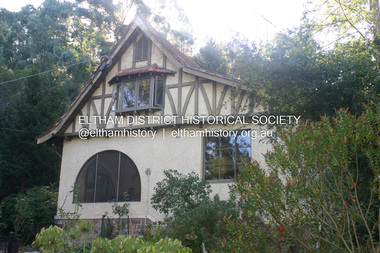
Photograph - Digital Photograph, Alan King, The Robins, 13 Kangaroo Ground-Warrandyte Road, North Warrandyte, 2 March 2008
... parents. Several people have since owned the house, including political journalist, Owen Webster. Boyd was born at Penleigh House, Wiltshire, and studied at Haileybury College, Melbourne and The Hutchins School, Hobart. He attended the Melbourne National Gallery School and in his final year exhibited at the Victorian Artists...parents. Several people have since owned the house, including political journalist, Owen Webster. Boyd was born at Penleigh House, Wiltshire, and studied at Haileybury College, Melbourne and The Hutchins School, Hobart. He attended the Melbourne National Gallery School and in his final year exhibited at the Victorian Artists ...Built by noted artist Theodore Penleigh Boyd, father of architect Robin Boyd. Covered under National Estate, National Trust of Australia (Victoria) Local Significance and Heritage Overlay, Nillumbik Planning Scheme. Published: Nillumbik Now and Then / Marguerite Marshall 2008; photographs Alan King with Marguerite Marshall.; p111 The Robins at Warrandyte,* was once home to a member of a famous family and is also one of the first reinforced concrete houses in Victoria. The builder, Theodore Penleigh Boyd, born in 1890, was a talented painter1 noted for his works of the Warrandyte bush. He was the father of architect Robin Boyd, author of the Australian Ugliness and the uncle of painter, Arthur Boyd. Penleigh Boyd’s great grandfather was Sir William A’Beckett, Victoria’s first Chief Justice. Penleigh Boyd is considered by some to be an ‘unsung hero’ overshadowed by more famous members of his family. Mornington Gallery Director Andrea May said many believed Boyd ‘had never received the national acclaim that he deserved’.2 Classified by the National Trust3 and part of the Australian National Heritage,4 The Robins is set well back near the end of Kangaroo Ground – Warrandyte Road, unobserved by passers-by. Built in 1913, The Robins has some Art Nouveau influences and is a descendant of the Queen Anne style. It is covered in stucco and has a prominent attic, which Boyd used as a studio. Some parts of the house are up to 33 centimetres thick and built in part with pisé (rammed earth) and in part with reinforced concrete. Amazingly, Boyd built The Robins without an accessible driveway, and only a narrow track along which he had to cart building materials. The journey was uphill and Boyd terraced the land with Warrandyte rock5 without the aid of machinery. At only 33 years, Boyd was killed in a car accident in 1923. He was buried in Brighton near the home of his parents. Several people have since owned the house, including political journalist, Owen Webster. Boyd was born at Penleigh House, Wiltshire, and studied at Haileybury College, Melbourne and The Hutchins School, Hobart. He attended the Melbourne National Gallery School and in his final year exhibited at the Victorian Artists’ Society. He arrived in London in 1911 and his painting Springtime was hung at the Royal Academy. He painted in several studios in England and then worked in Paris.6 There he met painter Phillips Fox through whom he met artists of the French modern school and also his wife-to-be, Edith Anderson, whom he married in Paris in 1912. After touring France and Italy, the couple returned to Melbourne. In 1913 Boyd held an exhibition and won second prize in the Federal Capital site competition, then the Wynne Prize for landscape in 1914. In 1915 Boyd joined the Australian Imperial Force, and became a sergeant in the Electrical and Mechanical Mining Company. However he was severely gassed at Ypres and invalided to England. In 1918 in London Boyd published Salvage, writing the text and illustrating it with 20 black-and-white ink-sketches of army scenes. Later that year he returned to Melbourne, and, despite suffering from the effects of gas, he held several successful one-man shows, quickly selling his water-colour and oil paintings. In his short career Penleigh Boyd was recognized as one of Australia’s finest landscape painters. He loved colour, having been influenced early by Turner and McCubbin. His works are in all Australian state galleries, the National Collection in Canberra as well as in regional galleries.7 His wife Edith was also an artist having studied at the Slade School, London, and in Paris with Phillips Fox. After her marriage she continued to paint and excelled in drawing. In later years she wrote several dramas, staged by repertory companies, and radio plays for the Australian Broadcasting Commission, in which she took part. She was the model for the beautiful red-haired woman in several of Phillips Fox’s paintings and the family hold three of his portraits of her. *Possibly named after the Aboriginal words warran, meaning ‘object’ and dyte, meaning ‘thrown at’.This collection of almost 130 photos about places and people within the Shire of Nillumbik, an urban and rural municipality in Melbourne's north, contributes to an understanding of the history of the Shire. Published in 2008 immediately prior to the Black Saturday bushfires of February 7, 2009, it documents sites that were impacted, and in some cases destroyed by the fires. It includes photographs taken especially for the publication, creating a unique time capsule representing the Shire in the early 21st century. It remains the most recent comprehenesive publication devoted to the Shire's history connecting local residents to the past. nillumbik now and then (marshall-king) collection, kangaroo ground-warrandyte road, north warrandyte, the robins -
 Eltham District Historical Society Inc
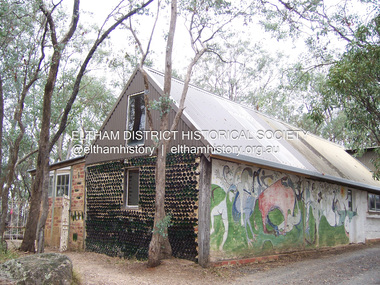
Photograph - Digital Photograph, Marguerite Marshall, Art Gallery at Clifton Pugh's Artists' Colony, Dunmoochin, Barreenong Road, Cottles Bridge, 5 February 2008
... Now in place of Pugh’s house, are two double-storey mud-brick artists’ studios topped with corrugated roofs curved like birds’ wings, with accommodation for seven. The original studios, gallery and other buildings remain.3 Pugh grew up on his parents’ hobby farm at Briar Hill and attended the Briar Hill Primary School, then Eltham High School and later Ivanhoe Grammar. ...Now in place of Pugh’s house, are two double-storey mud-brick artists’ studios topped with corrugated roofs curved like birds’ wings, with accommodation for seven. The original studios, gallery and other buildings remain.3 Pugh grew up on his parents’ hobby farm at Briar Hill and attended the Briar Hill Primary School, then Eltham High School and later Ivanhoe Grammar. ...Art Gallery with mural painted by Clifton Pugh (1924-1990) at his Artists' Colony, Dunmoochin, Barreenong Road, Cottles Bridge. Following military service in the second world war, Clifton Pugh studied under artist Sir William Dargie at the National Gallery School in Melbourne as well as Justus Jorgensen, founder of Montsalvat. For a while he lived on the dole but also worked packing eggs for the Belot family saving sufficient to purchase six acres (2.4 ha) of land at Barreenong Road, Cottles Bridge. He accumulated more land and persuaded several other artists and friends to buy land nearby, resulting in a property of approximately 200 acres, stablishing it as one of the first artistic communes in Australia alongside Montsalvat in Eltham. It was around 1951 that Pugh felt he had '"done moochin' around" and so the name of the property evolved. He bought timber from Alistair Knox to build his house on the crest of a hill. Inspired by local goldminer's huts, it was a one room wattle-and-daub structure with dirt floor. Over the years it expanded with thick adobe walls made from local clay, high ceilings and stone floors. All materials other than the local earth were sourced from second hand materials, most found at wreckers' yards. Artists from across the nation were drawn to Dunmoochin, with several setting up houses and shacks on the property, maintaining their independence but sharing their artistic zeal. Artists who worked or resided at Dunmoochin included Mirka Mora, John Perceval, Albert Tucker, Fred Williams, Charles Blackman, Arthur Boyd and John Olsen. In 2002, Pugh's house along with its treasure trove of art and a library of some 20,000 books was destroyed by fire. Traces of Pugh's home remain with the presence of the Victorian doorframe archway with leadlight of intricate design, procured from a demolished Melbourne mansion; and two bronze life-sized female statues created by Pugh and cast by Matcham Skipper. In place of Pugh's house rose two double-storey mud-brick artists' studios topped with corrugated iron rooves curved like the wings of a bird with accommodation for seven. The original studios, gallery and other buildings survived the fire. Covered under Heritage Overlay, Nillumbik Planning Scheme. Published: Nillumbik Now and Then / Marguerite Marshall 2008; photographs Alan King with Marguerite Marshall.; p153 It’s not surprising that artist Clifton Pugh was drawn to Cottles Bridge to establish his artists’ colony Dunmoochin. Undisturbed by the clamour of modern life at Barreenong Road, Pugh was surrounded by the Australian bush he loved, and where his ashes were later scattered. The 200 acres (81ha) of bushland, broken by glimpses of rolling hills, has more than 50 species of orchids and Pugh shared his property with native animals including kangaroos, emus, phascogales, wombats, and diverse bird life. Pugh encouraged these creatures to join him in the bush by creating, with Monash University, a holding station where the animals were raised. Dunmoochin inspired Pugh for such paintings as in a book on orchids and the Death of a Wombat series.1 But his love for the bush was accompanied by the fear that Europeans were destroying it and much of his painting illustrated this fear and his plea for its conservation.2 However it was his house rather than the surrounding bush that was to be destroyed. Tragically in 2002 Pugh’s house, with its treasure of art and library of 20,000 art books, was destroyed by fire. Traces of the beauty of Pugh’s home still remain, however, in the magnificent Victorian doorframe archway with leadlight of intricate design procured from a demolished Melbourne mansion; and two bronze life-sized female statues created by Pugh and cast by Matcham Skipper. Now in place of Pugh’s house, are two double-storey mud-brick artists’ studios topped with corrugated roofs curved like birds’ wings, with accommodation for seven. The original studios, gallery and other buildings remain.3 Pugh grew up on his parents’ hobby farm at Briar Hill and attended the Briar Hill Primary School, then Eltham High School and later Ivanhoe Grammar. At 15 he became a copy boy for the Radio Times newspaper, then worked as a junior in a drafting office. Pugh was to have three wives and two sons. After serving in World War Two in New Guinea and Japan, Pugh studied under artist Sir William Dargie, at the National Gallery School in Melbourne.4 Another of his teachers was Justus Jörgensen, founder of Montsalvat the Eltham Artists’ Colony. Pugh lived on the dole for a while and paid for his first six acres (2.4ha) at Barreenong Road by working as an egg packer for the Belot family. Pugh accumulated more land and persuaded several other artists and friends to buy land nearby, resulting in the 200 acre property. They, too, purchased their land from the Belot family by working with their chickens. Around 1951 Pugh felt he had ‘Done moochin’ around’ and so the name of his property was born. Pugh bought some used timber from architect Alistair Knox to build his house on the crest of a hill. Inspired by local goldminers’ huts it was a one-room wattle-and-daub structure with a dirt floor. It was so small that the only room he could find for his telephone was on the fork of a tree nearby.5 Over the years the mud-brick house grew to 120 squares in the style now synonymous with Eltham. It had thick adobe walls (sun-dried bricks) made from local clay, high ceilings and stone floors with the entire structure made of second-hand materials – most found at wreckers’ yards. Pugh’s first major show in Melbourne in 1957, established him as a distinctive new painter, breaking away from the European tradition ‘yet not closely allied to any particular school of Australian painting’.6 Pugh became internationally known and was awarded the Order of Australia. He won the Archibald Prize for portraiture three times, although he preferred painting the bush and native animals. In 1990 not long before he died, Pugh was named the Australian War Memorial’s official artist at the 75th anniversary of the landing at Gallipoli. Today one of Pugh’s legacies is the Dunmoochin Foundation, which gives seven individual artists or couples and environmental researchers the chance to work in beautiful and peaceful surroundings, usually for a year. By November 2007, more than 80 people had taken part, and the first disabled artist had been chosen to reside in a new studio with disabled access.1 In 1989, not long before Pugh died in 1990 of a heart attack at age 65, he established the Foundation with La Trobe University and the Victorian Conservation Trust now the Trust for Nature. Pugh’s gift to the Australian people – of around 14 hectares of bushland and buildings and about 550 art works – is run by a voluntary board of directors, headed by one of his sons, Shane Pugh. La Trobe University in Victoria stores and curates the art collection and organises its exhibition around Australia.2 The Foundation aims to protect and foster the natural environment and to provide residences, studios and community art facilities at a minimal cost for artists and environmental researchers. They reside at the non-profit organisation for a year at minimal cost. The buildings, some decorated with murals painted by Pugh and including a gallery, were constructed by Pugh, family and friends, with recycled as well as new materials and mud-bricks. The Foundation is inspired by the tradition begun by the Dunmoochin Artists’ Cooperative which formed in the late 1950s as one of the first artistic communes in Australia. Members bought the land collaboratively and built the seven dwellings so that none could overlook another. But, in the late 1960s, the land was split into private land holdings, which ended the cooperative. Dunmoochin attracted visits from the famous artists of the day including guitarists John Williams and Segovia; singer and comedian Rolf Harris; comedian Barry Humphries; and artists Charles Blackman, Arthur Boyd and Mirka Mora. A potters’ community, started by Peter and Helen Laycock with Alma Shanahan, held monthly exhibitions in the 1960s, attracting local, interstate and international visitors – with up to 500 attending at a time.3 Most artists sold their properties and moved away. But two of the original artists remained into the new millennium as did relative newcomer Heja Chong who built on Pugh’s property (now owned by the Dunmoochin Foundation). In 1984 Chong brought the 1000-year-old Japanese Bizan pottery method to Dunmoochin. She helped build (with potters from all over Australia) the distinctive Bizan-style kiln, which fires pottery from eight to 14 days in pine timber, to produce the Bizan unglazed and simple subdued style. The kiln, which is rare in Australia, is very large with adjoining interconnected ovens of different sizes, providing different temperatures and firing conditions. Frank Werther, who befriended Pugh as a fellow student at the National Gallery Art School in Melbourne, built his house off Barreenong Road in 1954. Werther is a painter of the abstract and colourist style and taught art for about 30 years. Like so many in the post-war years in Eltham Shire, as it was called then, Werther built his home in stages using mud-brick and second-hand materials. The L-shaped house is single-storey but two-storey in parts with a corrugated-iron pitched roof. The waterhole used by the Werthers for their water supply is thought to be a former goldmining shaft.4 Alma Shanahan at Barreenong Road was the first to join Pugh around 1953. They also met at the National Gallery Art School and Shanahan at first visited each weekend to work, mainly making mud-bricks. She shared Pugh’s love for the bush, but when their love affair ended, she designed and built her own house a few hundred yards (metres) away. The mud-brick and timber residence, made in stages with local materials, is rectangular, single-storey with a corrugated-iron roof. As a potter, Shanahan did not originally qualify as an official Cooperative member.This collection of almost 130 photos about places and people within the Shire of Nillumbik, an urban and rural municipality in Melbourne's north, contributes to an understanding of the history of the Shire. Published in 2008 immediately prior to the Black Saturday bushfires of February 7, 2009, it documents sites that were impacted, and in some cases destroyed by the fires. It includes photographs taken especially for the publication, creating a unique time capsule representing the Shire in the early 21st century. It remains the most recent comprehenesive publication devoted to the Shire's history connecting local residents to the past. nillumbik now and then (marshall-king) collection, art gallery, clifton pugh, dunmoochin, cottlesbridge, cottles bridge, barreenong road -
 Eltham District Historical Society Inc
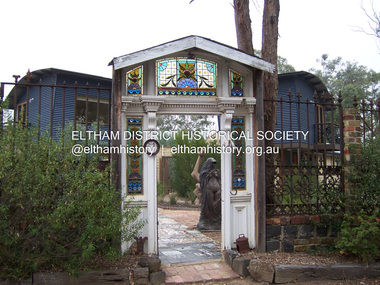
Photograph - Digital Photograph, Marguerite Marshall, Doorway of Clifton Pugh's former house at Dunmoochin, Barreenong Road, Cottles Bridge, 5 February 2008
... Now in place of Pugh’s house, are two double-storey mud-brick artists’ studios topped with corrugated roofs curved like birds’ wings, with accommodation for seven. The original studios, gallery and other buildings remain.3 Pugh grew up on his parents’ hobby farm at Briar Hill and attended the Briar Hill Primary School, then Eltham High School and later Ivanhoe Grammar. ...Now in place of Pugh’s house, are two double-storey mud-brick artists’ studios topped with corrugated roofs curved like birds’ wings, with accommodation for seven. The original studios, gallery and other buildings remain.3 Pugh grew up on his parents’ hobby farm at Briar Hill and attended the Briar Hill Primary School, then Eltham High School and later Ivanhoe Grammar. ...Following military service in the second world war, Clifton Pugh studied under artist Sir William Dargie at the National Gallery School in Melbourne as well as Justus Jorgensen, founder of Montsalvat. For a while he lived on the dole but also worked packing eggs for the Belot family saving sufficient to purchase six acres (2.4 ha) of land at Barreenong Road, Cottles Bridge. He accumulated more land and persuaded several other artists and friends to buy land nearby, resulting in a property of approximately 200 acres, stablishing it as one of the first artistic communes in Australia alongside Montsalvat in Eltham. It was around 1951 that Pugh felt he had '"done moochin' around" and so the name of the property evolved. He bought timber from Alistair Knox to build his house on the crest of a hill. Inspired by local goldminer's huts, it was a one room wattle-and-daub structure with dirt floor. Over the years it expanded with thick adobe walls made from local clay, high ceilings and stone floors. All materials other than the local earth were sourced from second hand materials, most found at wreckers' yards. Artists from across the nation were drawn to Dunmoochin, with several setting up houses and shacks on the property, maintaining their independence but sharing their artistic zeal. Artists who worked or resided at Dunmoochin included Mirka Mora, John Perceval, Albert Tucker, Fred Williams, Charles Blackman, Arthur Boyd and John Olsen. In 2002, Pugh's house along with its treasure trove of art and a library of some 20,000 books was destroyed by fire. Traces of Pugh's home remain with the presence of the Victorian doorframe archway with leadlight of intricate design, procured from a demolished Melbourne mansion; and two bronze life-sized female statues created by Pugh and cast by Matcham Skipper. In place of Pugh's house rose two double-storey mud-brick artists' studios topped with corrugated iron rooves curved like the wings of a bird with accommodation for seven. The original studios, gallery and other buildings survived the fire. Covered under Heritage Overlay, Nillumbik Planning Scheme. Published: Nillumbik Now and Then / Marguerite Marshall 2008; photographs Alan King with Marguerite Marshall.; p155 It’s not surprising that artist Clifton Pugh was drawn to Cottles Bridge to establish his artists’ colony Dunmoochin. Undisturbed by the clamour of modern life at Barreenong Road, Pugh was surrounded by the Australian bush he loved, and where his ashes were later scattered. The 200 acres (81ha) of bushland, broken by glimpses of rolling hills, has more than 50 species of orchids and Pugh shared his property with native animals including kangaroos, emus, phascogales, wombats, and diverse bird life. Pugh encouraged these creatures to join him in the bush by creating, with Monash University, a holding station where the animals were raised. Dunmoochin inspired Pugh for such paintings as in a book on orchids and the Death of a Wombat series.1 But his love for the bush was accompanied by the fear that Europeans were destroying it and much of his painting illustrated this fear and his plea for its conservation.2 However it was his house rather than the surrounding bush that was to be destroyed. Tragically in 2002 Pugh’s house, with its treasure of art and library of 20,000 art books, was destroyed by fire. Traces of the beauty of Pugh’s home still remain, however, in the magnificent Victorian doorframe archway with leadlight of intricate design procured from a demolished Melbourne mansion; and two bronze life-sized female statues created by Pugh and cast by Matcham Skipper. Now in place of Pugh’s house, are two double-storey mud-brick artists’ studios topped with corrugated roofs curved like birds’ wings, with accommodation for seven. The original studios, gallery and other buildings remain.3 Pugh grew up on his parents’ hobby farm at Briar Hill and attended the Briar Hill Primary School, then Eltham High School and later Ivanhoe Grammar. At 15 he became a copy boy for the Radio Times newspaper, then worked as a junior in a drafting office. Pugh was to have three wives and two sons. After serving in World War Two in New Guinea and Japan, Pugh studied under artist Sir William Dargie, at the National Gallery School in Melbourne.4 Another of his teachers was Justus Jörgensen, founder of Montsalvat the Eltham Artists’ Colony. Pugh lived on the dole for a while and paid for his first six acres (2.4ha) at Barreenong Road by working as an egg packer for the Belot family. Pugh accumulated more land and persuaded several other artists and friends to buy land nearby, resulting in the 200 acre property. They, too, purchased their land from the Belot family by working with their chickens. Around 1951 Pugh felt he had ‘Done moochin’ around’ and so the name of his property was born. Pugh bought some used timber from architect Alistair Knox to build his house on the crest of a hill. Inspired by local goldminers’ huts it was a one-room wattle-and-daub structure with a dirt floor. It was so small that the only room he could find for his telephone was on the fork of a tree nearby.5 Over the years the mud-brick house grew to 120 squares in the style now synonymous with Eltham. It had thick adobe walls (sun-dried bricks) made from local clay, high ceilings and stone floors with the entire structure made of second-hand materials – most found at wreckers’ yards. Pugh’s first major show in Melbourne in 1957, established him as a distinctive new painter, breaking away from the European tradition ‘yet not closely allied to any particular school of Australian painting’.6 Pugh became internationally known and was awarded the Order of Australia. He won the Archibald Prize for portraiture three times, although he preferred painting the bush and native animals. In 1990 not long before he died, Pugh was named the Australian War Memorial’s official artist at the 75th anniversary of the landing at Gallipoli. Today one of Pugh’s legacies is the Dunmoochin Foundation, which gives seven individual artists or couples and environmental researchers the chance to work in beautiful and peaceful surroundings, usually for a year. By November 2007, more than 80 people had taken part, and the first disabled artist had been chosen to reside in a new studio with disabled access.1 In 1989, not long before Pugh died in 1990 of a heart attack at age 65, he established the Foundation with La Trobe University and the Victorian Conservation Trust now the Trust for Nature. Pugh’s gift to the Australian people – of around 14 hectares of bushland and buildings and about 550 art works – is run by a voluntary board of directors, headed by one of his sons, Shane Pugh. La Trobe University in Victoria stores and curates the art collection and organises its exhibition around Australia.2 The Foundation aims to protect and foster the natural environment and to provide residences, studios and community art facilities at a minimal cost for artists and environmental researchers. They reside at the non-profit organisation for a year at minimal cost. The buildings, some decorated with murals painted by Pugh and including a gallery, were constructed by Pugh, family and friends, with recycled as well as new materials and mud-bricks. The Foundation is inspired by the tradition begun by the Dunmoochin Artists’ Cooperative which formed in the late 1950s as one of the first artistic communes in Australia. Members bought the land collaboratively and built the seven dwellings so that none could overlook another. But, in the late 1960s, the land was split into private land holdings, which ended the cooperative. Dunmoochin attracted visits from the famous artists of the day including guitarists John Williams and Segovia; singer and comedian Rolf Harris; comedian Barry Humphries; and artists Charles Blackman, Arthur Boyd and Mirka Mora. A potters’ community, started by Peter and Helen Laycock with Alma Shanahan, held monthly exhibitions in the 1960s, attracting local, interstate and international visitors – with up to 500 attending at a time.3 Most artists sold their properties and moved away. But two of the original artists remained into the new millennium as did relative newcomer Heja Chong who built on Pugh’s property (now owned by the Dunmoochin Foundation). In 1984 Chong brought the 1000-year-old Japanese Bizan pottery method to Dunmoochin. She helped build (with potters from all over Australia) the distinctive Bizan-style kiln, which fires pottery from eight to 14 days in pine timber, to produce the Bizan unglazed and simple subdued style. The kiln, which is rare in Australia, is very large with adjoining interconnected ovens of different sizes, providing different temperatures and firing conditions. Frank Werther, who befriended Pugh as a fellow student at the National Gallery Art School in Melbourne, built his house off Barreenong Road in 1954. Werther is a painter of the abstract and colourist style and taught art for about 30 years. Like so many in the post-war years in Eltham Shire, as it was called then, Werther built his home in stages using mud-brick and second-hand materials. The L-shaped house is single-storey but two-storey in parts with a corrugated-iron pitched roof. The waterhole used by the Werthers for their water supply is thought to be a former goldmining shaft.4 Alma Shanahan at Barreenong Road was the first to join Pugh around 1953. They also met at the National Gallery Art School and Shanahan at first visited each weekend to work, mainly making mud-bricks. She shared Pugh’s love for the bush, but when their love affair ended, she designed and built her own house a few hundred yards (metres) away. The mud-brick and timber residence, made in stages with local materials, is rectangular, single-storey with a corrugated-iron roof. As a potter, Shanahan did not originally qualify as an official Cooperative member.This collection of almost 130 photos about places and people within the Shire of Nillumbik, an urban and rural municipality in Melbourne's north, contributes to an understanding of the history of the Shire. Published in 2008 immediately prior to the Black Saturday bushfires of February 7, 2009, it documents sites that were impacted, and in some cases destroyed by the fires. It includes photographs taken especially for the publication, creating a unique time capsule representing the Shire in the early 21st century. It remains the most recent comprehenesive publication devoted to the Shire's history connecting local residents to the past. nillumbik now and then (marshall-king) collection, art gallery, clifton pugh, dunmoochin, cottlesbridge, cottles bridge, barreenong road -
 Wycheproof & District Historical Society Inc.
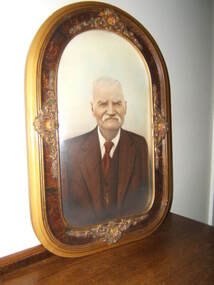
Photograph - Coloured photograph, framed, 1940
... parents' land, sold it and lived out their final years at Quambatook. Typical of many early local residents,Michael was born into a large family and did not move far from his beginnings. Farming and family was his life. This photograph is of Michael Forrester a local member of the community who spent most of his adult life in the area. michael forester branxholme Heirloom Product Style 37. F.L. Wirth Art Director. Price 5 Guineas. Large glass framed 'Heirloom' photo reproduced from a 1940 photo- ornate and oval framed.Coloured formal photo with bronze attachment with words, "portrayed by the artist ...Michael Forrester b.1866 Branxholme,Victoria,d.1945 age 79 years. Buried Quambatook,he was the 8th of 10 children of parents, Pat and Johanna Forrester, both buried at Wycheproof. A bachelor farmer, Michael worked on the selection property at East Towaninnie.He and his unmarried sister, Ellen Forrester, inherited some of the parents' land, sold it and lived out their final years at Quambatook. Typical of many early local residents,Michael was born into a large family and did not move far from his beginnings. Farming and family was his life. This photograph is of Michael Forrester a local member of the community who spent most of his adult life in the area.Large glass framed 'Heirloom' photo reproduced from a 1940 photo- ornate and oval framed.Coloured formal photo with bronze attachment with words, "portrayed by the artist in a manner and quality befitting work to be passed on to future genertions as a priceless heirloom.Workmanship and materials guaranteed." Heirloom Product Style 37. F.L. Wirth Art Director. Price 5 Guineas.michael forester, branxholme -
 Bendigo Historical Society Inc.
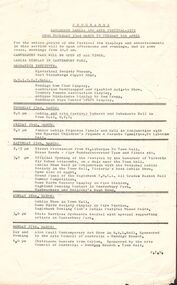
Document - EAGLEHAWK DAHLIA AND ARTS FESTIVAL 1972 PROGRAM
... EVENT Exhibition eaglehawk dahlia & arts festival Eaglehawk Dahlia and Arts Festival 1972 Program Historical Society Museum Karl Steinbergs Puppet Show Bendigo Gem Club Australian Handicapped and Disabled Artists Country Women’s Association Sam Cragg Sandhurst Boys Centre Spastic Children's Friends & Parents Committee Sir Rohan Delacombe National Dahlia Society Eaglehawk Y M C A All Grade Basket Ball Summer Competition Game Birds Society Bushwackers and Bullocky's Bush Band Eaglehawk Bowling Club State Services Orchestra Recital Alan Paull Arts Council of Australia Chitrasana Dancers from Ceylon Eaglehawk Croquet Club Bendigo Music Advancement Society Phillip Miechel Henry Wenig Margaret Schofield Shirley Jacobs The German National Circus Bendigo Clay Target Club Bendigo Photographic Society Eaglehawk Bowling Club Kennel Club Eaglehawk Citizen's Band Society of Organists Bendigo Field Naturalists Typed program for the Eaglehawk Dahlia and Arts Festival from 23rd March to Tuesday 4th April 1972. ...Typed program for the Eaglehawk Dahlia and Arts Festival from 23rd March to Tuesday 4th April 1972. Program lists the displays and entertainment for the duration of the Festival.event, exhibition, eaglehawk dahlia & arts festival, eaglehawk dahlia and arts festival 1972 program, historical society museum, karl steinbergs puppet show, bendigo gem club, australian handicapped and disabled artists, country women’s association, sam cragg, sandhurst boys centre, spastic children's friends & parents committee, sir rohan delacombe, national dahlia society, eaglehawk y m c a all grade basket ball summer competition, game birds society, bushwackers and bullocky's bush band, eaglehawk bowling club, state services orchestra recital, alan paull, arts council of australia, chitrasana dancers from ceylon, eaglehawk croquet club, bendigo music advancement society, phillip miechel, henry wenig, margaret schofield, shirley jacobs, the german national circus, bendigo clay target club, bendigo photographic society, eaglehawk bowling club, kennel club, eaglehawk citizen's band, society of organists, bendigo field naturalists -
 Eltham District Historical Society Inc
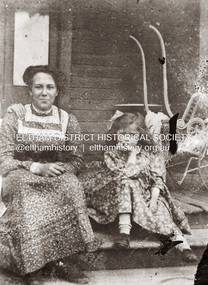
Photograph, Believed to be Fanny Withers and daughter Margery, c.1900
... artist Walter Withers in London, England in 1887/1888. Margery Pitt Withers was their daughter who was born January 13, 1890 at Handsworth, Warwickshire, England during a visit by her mother Fanny to her parents. ...artist Walter Withers in London, England in 1887/1888. Margery Pitt Withers was their daughter who was born January 13, 1890 at Handsworth, Warwickshire, England during a visit by her mother Fanny to her parents. ...Fanny Flinn married artist Walter Withers in London, England in 1887/1888. Margery Pitt Withers was their daughter who was born January 13, 1890 at Handsworth, Warwickshire, England during a visit by her mother Fanny to her parents. Walter Withers became associated with the Heidelberg School of Artists. Withers and his family lived in Eltham from 1903. Many items in this collection have suffered from significant water damage and black mouldjohn withers collection, heidelberg, 1900, fanny withers (nee flinn), scan - 3¼ × 4¼ inch quarter-plate glass neg, margery pitt withers -
 Eltham District Historical Society Inc
Photograph, Believed to be Margery Withers, c.1900
... Margery Pitt Withers was the daughter of artist Walter Herbert Withers and Fanny (nee Flinn) She was born January 13, 1890 at Handsworth, Warwickshire, England during a visit by her mother Fanny to her parents...Margery Pitt Withers was the daughter of artist Walter Herbert Withers and Fanny (nee Flinn) She was born January 13, 1890 at Handsworth, Warwickshire, England during a visit by her mother Fanny to her parents John Withers Collection Heidelberg 1900 Postcard Margery Pitt Withers Many items in this collection have suffered from significant water damage and black mould Digital file created from scan of original document on loan from private collection Believed to be Margery Withers Photograph Photograph ...Margery Pitt Withers was the daughter of artist Walter Herbert Withers and Fanny (nee Flinn) She was born January 13, 1890 at Handsworth, Warwickshire, England during a visit by her mother Fanny to her parentsMany items in this collection have suffered from significant water damage and black mouldjohn withers collection, heidelberg, 1900, postcard, margery pitt withers -
 Nillumbik Shire Council
Sculpture: Deborah HALPERN (b.1957 Melb., AUS), Deborah Halpern, Wayfarer, 2010
... Local resident Deborah Halpern is a highly recognised and respected contemporary artist with an acclaimed national and international reputation in the arts community. She has a strong artistic connection to the area as her parents were founding members of Potters Cottage - a group of local ceramicists who were influential in the development of ceramics in Australia. ...Local resident Deborah Halpern is a highly recognised and respected contemporary artist with an acclaimed national and international reputation in the arts community. She has a strong artistic connection to the area as her parents were founding members of Potters Cottage - a group of local ceramicists who were influential in the development of ceramics in Australia. ...Local resident Deborah Halpern is a highly recognised and respected contemporary artist with an acclaimed national and international reputation in the arts community. She has a strong artistic connection to the area as her parents were founding members of Potters Cottage - a group of local ceramicists who were influential in the development of ceramics in Australia. Deborah Halpern donated Wayfarer through the Australian Government Cultural Gift Program. A cubist inspired kinetic work in three parts, the artwork depicts a semi abstract figure, a ‘traveller’ made out of reflective mirror and colourful ceramic tiles. Wayfarer is an excellent example of Halpern’s tile construction technique and playful style that she is renowned for. Wayfarer is one of Halpern’s first works exploring kinetics as well as combining mirror with painted ceramic tiles. Sculpture - Kinetic Ceramic, Glass, Fibreglass, Aluminium deborah halpern, wayfarer, nillumbik shire council -
 Nillumbik Shire Council
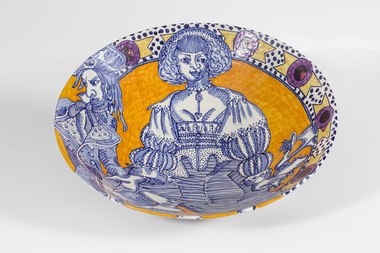
Ceramic (bowl): Alexandra COPELAND, Alexandra Copeland, Vanity, 1/9/1994
... parents are John and Betty Hipwell, one of the founding members of Potters Cottage (an influential ceramic collective that grew out of Nillumbik) / Copeland grew up surrounded by this artform. Reg Preston (another founding member of Potter's Cottage) introduced her to the Majolica technique which has influenced her ceramic work to this day / This bowl is characteristic of Copeland's speciality and mastery of the Majolica technique. copeland earthenware majolica potters cottage vanity bowl eighteen century french marie antoinette Underside has in colbalt blue artist signature and date / 'A. ...This bowl is part of a series completed in 1994 on the subject of the sin of 'Vanity' / A smug looking woman flirts coquettishly with a manservant who helps her to put on her shoes / The people depicted on the bowl are dressed in 18th century costumes / The court of Marie Antoinette of France is evoked / The blue and white drawing is in the style of 18th century woodblock prints and was drawn freehand / The bowl is signed and dated on the base / The technique is traditional tin glaze (majolica, maiolica or delft) / Coloured oxides were painted onto a clear glaze which had been opacified with tin oxide, and then fired at 900 degrees / The bowl was exhibited at Christine Abrahams Gallery, Melbourne in 1994 / A bowl from the 'Vanity' series is held in the Collection of the Queen Victoria Museum and Art Gallery in Launceston, Tasmania. Copeland's parents are John and Betty Hipwell, one of the founding members of Potters Cottage (an influential ceramic collective that grew out of Nillumbik) / Copeland grew up surrounded by this artform. Reg Preston (another founding member of Potter's Cottage) introduced her to the Majolica technique which has influenced her ceramic work to this day / This bowl is characteristic of Copeland's speciality and mastery of the Majolica technique. This bowl is hand painted with an image of a couple flirting (man-left side and woman-centre) in 18th century French dress / Decorative circle and polka dot pattern along the rim and underside of the bowl / The bowl is predominantly painted in cobalt blue and orange colour using the Majolica (maiolica or delft) technique; a traditional tinglaze method of application. Coloured oxides are painted onto a clear glaze which has been opacified with tin oxide / The bowl is then fired at 900 degrees.Underside has in colbalt blue artist signature and date / 'A. Copeland . 1.9.1994'.copeland, earthenware, majolica, potters cottage, vanity, bowl, eighteen century, french, marie antoinette -
 Duldig Studio museum + sculpture garden
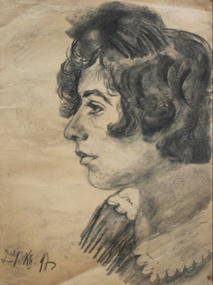
Drawing, Slawa Horowitz-Duldig, Portrait of Rella by Slawa Horowitz-Duldig 1917, 1917
... parents and grandparents, who have yet to be identified conclusively. It is these images of family and friends that particularly demonstrate Slawa’s confidence with pen, charcoal and crayon on paper. Amongst the group are several portraits that indicate the artist’s...parents and grandparents, who have yet to be identified conclusively. It is these images of family and friends that particularly demonstrate Slawa’s confidence with pen, charcoal and crayon on paper. Amongst the group are several portraits that indicate the artist’s ...Slawa Horowitz-Duldig) was both an artist and a designer, and both aspects of her practice are represented in the collection. There is an archive of approximately 255 drawings by Slawa dating from 1917 until 1922. Slawa’s sketchbooks from this period provide an insight into her early training and demonstrate the artist’s early interest in portraiture. A number of the drawings have been framed, but the majority remains 'in situ'. Slawa was a student at the Viennese Kunstschule für Frauen und Mädchen (the Viennese Art School for Women and Girls) (KFM) from 1917 until 1921, and in 1922 she became a student of Anton Hanak. The KFM School had been established in 1897 as a private school, and it was highly regarded both for its teaching staff and academic curriculum. By 1918 it had introduced stringent admission policy similar to those of the Austrian Academy of Fine Arts, and obtained government funding for its academic program, and began to focus on students seeking to pursue careers as professional artists. In 1921 when Slawa applied to the Austrian Academy of Arts for a place in its program, her application was unsuccessful, as her work was considered advanced, and a place in the third or fourth year of the program was not available. In 1922 she became a private student of Anton Hanak. Many of the portrait images from this early period concentrate on capturing the physical appearance of the face of the model. A number of these studies, in which the subject is not identified, display an academic approach to the genre. Her technical skills in capturing precise facial features of the model, the expression of eyes and the texture of hair are evident. These drawings were perhaps completed in the studio of the KFM School. There are also portraits of friends and family members, including her sister Rella and others, perhaps parents and grandparents, who have yet to be identified conclusively. It is these images of family and friends that particularly demonstrate Slawa’s confidence with pen, charcoal and crayon on paper. Amongst the group are several portraits that indicate the artist’s interest in conveying the inner psyche of a subject, as well as capturing a likeness. Ann Carew 2016The drawings from this period give us an insight into the artist’s early training, and the teaching methods of Viennese Kunstschule für Frauen und Mädchen, one of the first professional art schools for women in Vienna. The drawings and sketchbooks have artistic, interpretative and research significance as records of the art education of women in Vienna in the early 20th century. Ann Carew 2016Charcoal over pencil sketch on paper of Slawa's sister Rella.Artist signature in the bottom left corner. -
 Ballarat Base Hospital Trained Nurses League
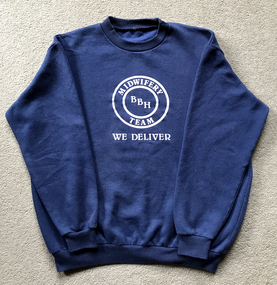
Midwifery Windcheater - "Midwifery Team, BBH, We Deliver" - early to mid 1980's, plus Courier newspaper - new Director of Nursing, Lorraine Broad, 1995
... Graphic artist and seamstress, Geraldine Roberts of Wendouree, made the windcheaters as well as screen printed the logo which the staff designed. Geraldine also did the graphics for an educational booklet the staff produced for expectant parents. ...Graphic artist and seamstress, Geraldine Roberts of Wendouree, made the windcheaters as well as screen printed the logo which the staff designed. Geraldine also did the graphics for an educational booklet the staff produced for expectant parents. ...Windcheater which the midwives in old E1 had made and were sold to staff to fund raise. Some proceeds were to assist midwives attend state conferences. Other fundraising activities were also undertaken at that time to modify the stark hospital environment of E1 to a more homely environment. Graphic artist and seamstress, Geraldine Roberts of Wendouree, made the windcheaters as well as screen printed the logo which the staff designed. Geraldine also did the graphics for an educational booklet the staff produced for expectant parents. These activities were initiated by the enthusiastic staff of E1 during the early to mid 1980s."Midwifery Team, BBH, We Deliver"midwifery, 1980s, windcheater, logo, courier, new, director of nursing, broad, 1995 -
 Federation University Art Collection
Work on paper, 'Sun and Moon Nature' by Kees Hos, 1964
... parents were transported to Auschwitz and Dachau. Kees was on the run using his printmaking skills to forge passports but was eventually captured and jailed, the war’s end saving his life. artist artwork kees hos gippsland campus gippsland director's collection printmaking Wall of Honour in the Garden of the Righteous Signed and dated lower right in pencil "Kees Hos '64" Gippsland Director's Collection, Acquired 1973. ...Kees HOS In 1956 Kees and his wife Tina made a new life with their two children in the arts community of New Zealand. In Australia Kees established the art school at Gippsland College of Advanced Education in 1971 with a radical multidisciplinary approach to art education. He generously delivered encouragement and opportunities to many people including lecturers, visiting artists and students. His small team literally built an art school from zero. Temporary accommodation in an old factory and service station in Morwell moved to three student-built studios on the Gippsland Campus. His highest recognition was 1997 when the names of Kees and Albertine Hos were added to the Wall of Honour in the Garden of the Righteous at Yad Vasheem in Jerusalem along with many others who put their lives on the line against the biggest killing machine the world had known. The ‘hiding-place’ in Kees and Tina’s home was discovered but Tina managed to rescue a baby as her own while the Jewish parents were transported to Auschwitz and Dachau. Kees was on the run using his printmaking skills to forge passports but was eventually captured and jailed, the war’s end saving his life. Gippsland Director's Collection, Acquired 1973.Signed and dated lower right in pencil "Kees Hos '64"artist, artwork, kees hos, gippsland campus, gippsland director's collection, printmaking, wall of honour in the garden of the righteous -
 Federation University Art Collection
Painting, Ronald Edwards-Pepper, 2020
... Artist Ronald Edwards-Pepper is keen to express himself through painting and telling stories of his Gunai/Kurnai ancestors. "My nanna and her stories have been part of my life, and who I have become today, and this influences my artworks. My grand-parents...Artist Ronald Edwards-Pepper is keen to express himself through painting and telling stories of his Gunai/Kurnai ancestors. "My nanna and her stories have been part of my life, and who I have become today, and this influences my artworks. My grand-parents ...Ronald EDWARDS PEPPER Gunai Ronald Edwards Pepper is the grandson of Dulcie (Dolly) Mullet and Watson Pepper, Ronald’s family moved to Morwell in the 1960s from Lake Tyers Mission. He graduated from Federation University with a Bachelor of Visual and Media Arts in 2017, and has completed several commissions and participated in numerous exhibitions, in Australia and overseas. Artist Ronald Edwards-Pepper is keen to express himself through painting and telling stories of his Gunai/Kurnai ancestors. "My nanna and her stories have been part of my life, and who I have become today, and this influences my artworks. My grand-parents are Dolly Mullet & Watson Pepper. They came from Lake Tyers Mission and moved to Morwell in the 1960s with their mob of kids. Now this is the family home." EDUCATION: 2013-2017 - Bachelor of Visual & Media Arts/Federation University. 2010 - Trainee Mentor in Education (Latrobe Regional Gallery, Morwell) 2008 - Certificate III in Aboriginal Torres Strait Islander in Languages 2007 - Traineeships, Young Ambassador at the Latrobe Regional Gallery, Morwell 2006 - Completed & Graduated - Awarded 'Student of the Year’ 2005 - Certificate IV ATSI Cultural Arts, TAFE Mid-valley Campus Gippsland 2003 - Certificate 4 in Aboriginal and Torres Strait lslander Art & Design, TAFE Mid-valley Campus, Gippsland 2002 - Certificate 3 in Aboriginal and Torres Strait Islander Art & Design, TAFE Mid-valley Campus, Gippsland AboriginalSigned verso "R.Edwards"ronald edwards, aboriginal, gunai kurnai -
 Ballarat Heritage Services
Photograph, 'The Big Malleeefowl' sculptures installed by artist Phil Rigg in 2013
... parents some of the most dedicated. Their breeding season is between September and January, and use the same malleefowl mounds for multiple seasons. Malleefowl chicks often hatch from November to January. Mallee is a type of bushland found in parts of Victoria and South Australia. It’s made up of scraggly, multi-stemmed eucalyptus trees that are very tough and can survive in dry, harsh conditions. Colour photograph of malleefowl sculpture built almost entirely from painted corrugated iron. They are located near the Patchewollock Railway Station. 'The Big Malleeefowl' sculptures installed by artist ...Malleefowls (Leipoa Ocellata) are shy, ground-dwelling birds that make their homes in Mallee country. The nearby Wyperfeld National Park in Hopetoun is a known habitat. The malleefowl mounds are one of the most fascinating things about the malleefowl. Unlike most birds, they don’t build nests in trees or on the ground. Instead, they create large nesting mounds of sand, soil, and organic material, sometimes up to 5 metres in diameter and 1 metre in height. After the female malleefowl lays the eggs, the heat generated by the decomposition of the organic material inside the mound incubates them. The male bird constantly adjusts the temperature by adding or removing material. It’s a process that can take several months and requires meticulous care, making the malleefowl parents some of the most dedicated. Their breeding season is between September and January, and use the same malleefowl mounds for multiple seasons. Malleefowl chicks often hatch from November to January. Mallee is a type of bushland found in parts of Victoria and South Australia. It’s made up of scraggly, multi-stemmed eucalyptus trees that are very tough and can survive in dry, harsh conditions. Patchewollock, Mallee, Malleefowl, mallee fowl, Phil RiggColour photograph of malleefowl sculpture built almost entirely from painted corrugated iron. They are located near the Patchewollock Railway Station. -
 Linton and District Historical Society Inc
Photograph, The Queen Studio Ballarat, V R Chuck, Artist, Isabella Edwards (afterwards Mrs Taylor)
... parents George and Margaret Edwards, became a pupil-teacher at Linton State School no. 880 in 1883 and taught there for three years before transferring to other schools. She married James Edward Taylor in 1899. Photograph is part of Old Lintonian collection ; No. 129. Isabella Edwards Mrs Taylor Old Lintonian Collection "Isabella Edwards". Sepia photograph of a young woman in long, high necked dress with long sleeves, hair drawn severely back off face, left hand resting on high rail in front of her. Isabella Edwards (afterwards Mrs Taylor) Photograph The Queen Studio Ballarat, V R Chuck, Artist ...Isabella Edwards, born at Linton in 1867 to parents George and Margaret Edwards, became a pupil-teacher at Linton State School no. 880 in 1883 and taught there for three years before transferring to other schools. She married James Edward Taylor in 1899. Photograph is part of Old Lintonian collection ; No. 129.Sepia photograph of a young woman in long, high necked dress with long sleeves, hair drawn severely back off face, left hand resting on high rail in front of her."Isabella Edwards".isabella edwards, mrs taylor, old lintonian collection -
 Linton and District Historical Society Inc
Photograph, Duffus Bros, Photo Artists, Johannesburg S.A, Carrie (Charlotte) Smith, née Gee, c. 1905, 1905
... parents Joseph Brindley and Anne Elizabeth Gee. She married James Grenville Smith (son of George and Emma Smith, née Keys), and died at Linton in 1948, age 57. Carrie (Charlotte) Smith Carrie (Charlotte) Gee "Yrs sincerely Carrie 1905" Black and white photograph of a young woman wearing long sleeved, high necked gown with ribbed bodice. Carrie (Charlotte) Smith, née Gee, c. 1905 Photograph Duffus Bros, Photo Artists ...Charlotte Maria (Carrie) Gee was born in South Africa in 1891 to parents Joseph Brindley and Anne Elizabeth Gee. She married James Grenville Smith (son of George and Emma Smith, née Keys), and died at Linton in 1948, age 57.Black and white photograph of a young woman wearing long sleeved, high necked gown with ribbed bodice."Yrs sincerely Carrie 1905"carrie (charlotte) smith, carrie (charlotte) gee -
 Mrs Aeneas Gunn Memorial Library
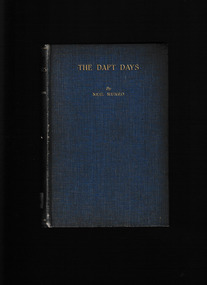
Book, Blackwood, The daft days, 1923
... parents and comes to stay with her relatives in a small Scottish town (clearly based on Inveraray). She progresses, thanks to her enlightened but only semi-liberated Aunt Ailie, to become a Shakespearean actress in London's West End - in spite of the negativity of the Scottish education system and the background of social and religious attitudes which regarded the theatre as unsuitable and rather sinful. It is especially interesting because it confronts the problem of the female creative artist ...It is the story of a little American girl, Bud, who has lost her parents and comes to stay with her relatives in a small Scottish town (clearly based on Inveraray). She progresses, thanks to her enlightened but only semi-liberated Aunt Ailie, to become a Shakespearean actress in London's West End - in spite of the negativity of the Scottish education system and the background of social and religious attitudes which regarded the theatre as unsuitable and rather sinful. It is especially interesting because it confronts the problem of the female creative artist in a society whose mores inhibit the expression of her talent.p.284.fictionIt is the story of a little American girl, Bud, who has lost her parents and comes to stay with her relatives in a small Scottish town (clearly based on Inveraray). She progresses, thanks to her enlightened but only semi-liberated Aunt Ailie, to become a Shakespearean actress in London's West End - in spite of the negativity of the Scottish education system and the background of social and religious attitudes which regarded the theatre as unsuitable and rather sinful. It is especially interesting because it confronts the problem of the female creative artist in a society whose mores inhibit the expression of her talent.england - fiction, feminism -
 Merri-bek City Council
Pigment inkjet print, Hayley Millar Baker, I Will Survive 5, 2020
... artist. Her series I Will Survive is about the cautionary tales and bush survival stories that Millar Baker heard as a child. Her Aboriginal and migrant parents...artist. Her series I Will Survive is about the cautionary tales and bush survival stories that Millar Baker heard as a child. Her Aboriginal and migrant parents ...Hayley Millar Baker is a Gunditjmara and Djabwurrung artist. Her series I Will Survive is about the cautionary tales and bush survival stories that Millar Baker heard as a child. Her Aboriginal and migrant parents and grandparents shared warnings, myths and ghost stories with her. As Millar Baker grew up, these stories evolved, becoming more emotionally charged with each retelling. As stories are retold, they are reformed and embellished, sometimes becoming more vivid and meaningful. In I Will Survive, Millar Baker inserts herself into the stories. Millar Baker says, ‘Recalling memories formed in my childhood and ruminating on these stories in adulthood, I can’t help but dissect my memory’s influences and influencers, and what roles my Aboriginal and migrant parents and grandparents played in feeding lessons and myths into my subconscious.’ -
 Flagstaff Hill Maritime Museum and Village
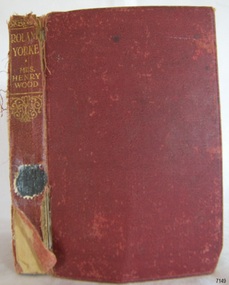
Book - A Fictional Story, Ellen (Mrs Henry) Wood, Roland Yorke, 1903-1920s
... artist. The publisher Collins' Clear-Type Press was roughly active through the 1890s–1930s and was not an independent publishing house but a trade imprint of the Glasgow firm William Collins, Sons & Co. one of the great Scottish printing and publishing dynasties of the nineteenth and twentieth centuries. The parent...artist. The publisher Collins' Clear-Type Press was roughly active through the 1890s–1930s and was not an independent publishing house but a trade imprint of the Glasgow firm William Collins, Sons & Co. one of the great Scottish printing and publishing dynasties of the nineteenth and twentieth centuries. The parent ...Roland Yorke is a Victorian sensation and mystery novel. It was written as a sequel to Wood’s The Channings (1862), which contrasts the virtuous Channing siblings with the unprincipled Yorkes. The sequel focuses on Roland, the irrepressible second Yorke boy, and shows him making good after the theft of a cheque in the earlier novel. The main interest lies in the murder sub-plot. John Ollivera, a young barrister, is shot through the heart while lodging at Mrs Jones’s house in Helstonleigh. The detective Butterby, who also appears in The Channings, investigates. One reviewer described the book as a murder mystery in which several characters are suspected in turn. It ran monthly in Wood’s magazine The Argosy throughout 1869.Hard cover book. Roland Yorke Author: Ellen (Mrs Henry) Wood Illustrator: Joseph Finnemore Publisher: Collins Clear-Type Press Date: 1903-1920s Further Information: Red Cloth hardcover with lettering and patterning to spine in gilt. The spine has a Library label with an inscription.fictionRoland Yorke is a Victorian sensation and mystery novel. It was written as a sequel to Wood’s The Channings (1862), which contrasts the virtuous Channing siblings with the unprincipled Yorkes. The sequel focuses on Roland, the irrepressible second Yorke boy, and shows him making good after the theft of a cheque in the earlier novel. The main interest lies in the murder sub-plot. John Ollivera, a young barrister, is shot through the heart while lodging at Mrs Jones’s house in Helstonleigh. The detective Butterby, who also appears in The Channings, investigates. One reviewer described the book as a murder mystery in which several characters are suspected in turn. It ran monthly in Wood’s magazine The Argosy throughout 1869.shipwrecked-coast, flagstaff-hill, flagstaff-hill-maritime-museum, warrnambool, maritime-museum, shipwreck-coast, flagstaff-hill-maritime-village, shipwrecked-artefact, book, pattison collection, warrnambool library, warrnambool mechanics’ institute, ralph eric pattison, corangamite regional library service, warrnambool city librarian, mechanics’ institute library, victorian library board, warrnambool books and records, warrnambool children’s library, roland yorke, mrs henry wood -
 Flagstaff Hill Maritime Museum and Village
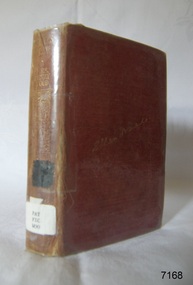
Book - A Fictional Story, Ellen (Mrs Henry) Wood, Verners Pride, 1900s–1910s
... artist who painted mainly in oils and watercolour, and he is classed with the Orientalist painters. He was also one of the first British aviators. In 1909 his aircraft was destroyed in a storm, and in 1911 he tested a floatplane at Shoreham, after which he never attempted to fly again. The publisher Collins' Clear-Type Press was roughly active through the 1890s–1930s and was not an independent publishing house but a trade imprint of the Glasgow firm William Collins, Sons & Co. one of the great Scottish printing and publishing dynasties of the nineteenth and twentieth centuries. The parent...artist who painted mainly in oils and watercolour, and he is classed with the Orientalist painters. He was also one of the first British aviators. In 1909 his aircraft was destroyed in a storm, and in 1911 he tested a floatplane at Shoreham, after which he never attempted to fly again. The publisher Collins' Clear-Type Press was roughly active through the 1890s–1930s and was not an independent publishing house but a trade imprint of the Glasgow firm William Collins, Sons & Co. one of the great Scottish printing and publishing dynasties of the nineteenth and twentieth centuries. The parent ...Verner’s Pride is a Victorian domestic novel published in 1863. It opens with the mysterious death of a young servant in the small town of Deerham. Stephen Verner, owner of the estate, then suspects his nephew Lionel, the designated heir. Stephen’s stepsons, John and Frederick Massingbird, also have a stake in the estate, but Lionel is his favourite. Fred dies in Australia and Lionel takes over the estate. Fred’s widow, Sibylla, then arrives, and Lionel proposes to her in a moment of passion. The marriage that follows is a strained one. The book explores gender relations, money and the role of wealth in a community, including quarrels over a milliner’s bill and a French novel. The opening murder mystery fades, and the story becomes mainly about the estate changing hands.Hard cover book. Verners Pride Author: Ellen (Mrs Henry) Wood Illustrator: Harold Piffard Publisher: Collins Clear-Type Press Date: 1900s–1910s. Further Information: Red Cloth hardcover with lettering and patterning to spine in gilt. The spine has a Library label with an inscription.fictionVerner’s Pride is a Victorian domestic novel published in 1863. It opens with the mysterious death of a young servant in the small town of Deerham. Stephen Verner, owner of the estate, then suspects his nephew Lionel, the designated heir. Stephen’s stepsons, John and Frederick Massingbird, also have a stake in the estate, but Lionel is his favourite. Fred dies in Australia and Lionel takes over the estate. Fred’s widow, Sibylla, then arrives, and Lionel proposes to her in a moment of passion. The marriage that follows is a strained one. The book explores gender relations, money and the role of wealth in a community, including quarrels over a milliner’s bill and a French novel. The opening murder mystery fades, and the story becomes mainly about the estate changing hands.verners pride, mrs henry wood, ellen price, shipwrecked-coast, flagstaff-hill, flagstaff-hill-maritime-museum, warrnambool, maritime-museum, shipwreck-coast, flagstaff-hill-maritime-village, shipwrecked-artefact, book, pattison collection, warrnambool library, warrnambool mechanics’ institute, ralph eric pattison, corangamite regional library service, warrnambool city librarian, mechanics’ institute library, victorian library board, warrnambool books and records, warrnambool children’s library, great ocean road -
 Merri-bek City Council
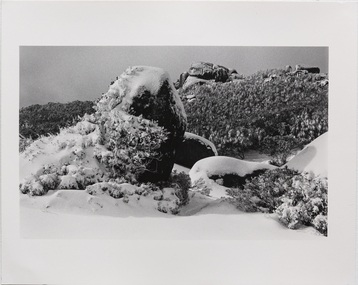
Hand printed vintage black and white silver print, Stephen Wickham, Untitled 2, c. 1980
... A long standing preoccupation with Mt Buffalo since the 1980's has seen the artist produce a number of photographic suites and exhibitions that have been likened to German Romantic iconography and associated heavily with the European migrant experience (Robert Nelson, The Age 16 June 2001). Born to Viennese parents...A long standing preoccupation with Mt Buffalo since the 1980's has seen the artist produce a number of photographic suites and exhibitions that have been likened to German Romantic iconography and associated heavily with the European migrant experience (Robert Nelson, The Age 16 June 2001). Born to Viennese parents ...Stephen Wickham is an Australian photographer and painter who has been actively exhibiting his works since the 1980s. A long standing preoccupation with Mt Buffalo since the 1980's has seen the artist produce a number of photographic suites and exhibitions that have been likened to German Romantic iconography and associated heavily with the European migrant experience (Robert Nelson, The Age 16 June 2001). Born to Viennese parents, hiking in the mountains for Wickham represents a traditional European family pastime. This series of work is comprised of expeditionary photographs taken between 1980 and 1985. Charles Green describes Wickham's landscape photographs as sublime, transcendental, spiritual and symbolic (Art in Australia Spring 1988). Set in Victoria’s Mount Buffalo National Park, the Mount Buffalo series captures the mountain plateau during winter. Rather than focusing on a lush green landscape, Wickham presents the viewer with close-ups of the snow-covered flaura and fauna of the alpine region.Donated through the Australian Government's Cultural Gifts Program by Miriam Kenter in memory of Master George Willibrord Kenter -
 Merri-bek City Council
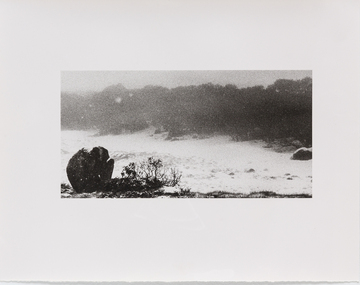
Hand printed vintage black and white silver print, Stephen Wickham, Untitled 5, c. 1980
... A long standing preoccupation with Mt Buffalo since the 1980's has seen the artist produce a number of photographic suites and exhibitions that have been likened to German Romantic iconography and associated heavily with the European migrant experience (Robert Nelson, The Age 16 June 2001). Born to Viennese parents...A long standing preoccupation with Mt Buffalo since the 1980's has seen the artist produce a number of photographic suites and exhibitions that have been likened to German Romantic iconography and associated heavily with the European migrant experience (Robert Nelson, The Age 16 June 2001). Born to Viennese parents ...Stephen Wickham is an Australian photographer and painter who has been actively exhibiting his works since the 1980s. A long standing preoccupation with Mt Buffalo since the 1980's has seen the artist produce a number of photographic suites and exhibitions that have been likened to German Romantic iconography and associated heavily with the European migrant experience (Robert Nelson, The Age 16 June 2001). Born to Viennese parents, hiking in the mountains for Wickham represents a traditional European family pastime. This series of work is comprised of expeditionary photographs taken between 1980 and 1985. Charles Green describes Wickham's landscape photographs as sublime, transcendental, spiritual and symbolic (Art in Australia Spring 1988). Set in Victoria’s Mount Buffalo National Park, the Mount Buffalo series captures the mountain plateau during winter. Rather than focusing on a lush green landscape, Wickham presents the viewer with close-ups of the snow-covered flaura and fauna of the alpine region.Donated through the Australian Government's Cultural Gifts Program by Miriam Kenter in memory of Master George Willibrord Kenter
