
Showing 53 items matching " australian women's league"
-
 Glen Eira Historical Society
Letter - AUSTRALIAN WOMEN’S NATIONAL LEAGUE IN ELSTERNWICK
... AUSTRALIAN WOMEN’S NATIONAL LEAGUE IN ELSTERNWICK...Australian Women’s National League...Enclosure is a copy of his grandmother’s certificate of life membership in the Australian Women’s National League, Elsternwick Branch. His inquiry is about this organisation. 2/Carbon copy of letter from Hazel Ford, Honorary Secretary of the Glen Eira Historical Society dated 06/03/2002, responding to the previous and stat that the Society has no records relating to the Women’s League. 3/Photocopy of Certificate of life membership from the Elsternwick Branch of the Australian Women’s National League to Mrs Jennings aka Annie Maria Jennings, sent with the letter from Graham Barker. ...Enclosure is a copy of his grandmother’s certificate of life membership in the Australian Women’s National League, Elsternwick Branch. His inquiry is about this organisation. 2/Carbon copy of letter from Hazel Ford, Honorary Secretary of the Glen Eira Historical Society dated 06/03/2002, responding to the previous and stat that the Society has no records relating to the Women’s League. 3/Photocopy of Certificate of life membership from the Elsternwick Branch of the Australian Women’s National League to Mrs Jennings aka Annie Maria Jennings, sent with the letter from Graham Barker. ...Four items about this group: 1/Handwritten letter not dated but presumably early 2002, from Graham Barker of 10 Blake Street, Caulfield to Mrs Campbell of the Glen Eira Historical Society. Enclosure is a copy of his grandmother’s certificate of life membership in the Australian Women’s National League, Elsternwick Branch. His inquiry is about this organisation. 2/Carbon copy of letter from Hazel Ford, Honorary Secretary of the Glen Eira Historical Society dated 06/03/2002, responding to the previous and stat that the Society has no records relating to the Women’s League. 3/Photocopy of Certificate of life membership from the Elsternwick Branch of the Australian Women’s National League to Mrs Jennings aka Annie Maria Jennings, sent with the letter from Graham Barker. The Certificate is dated 23/11/1944 and handwritten note says that she died on 23/10/1946. 4/Letter from Graham Barker to Miss Hazel Ford, Honorary Secretary, Glen Eira Historical Society, undated, in response to No 2 above, thanking her and stating that he would seek information from the Royal Historical Society or the State Library.australian women’s national league, caulfield, jennings mrs, rogers e, donaldson a.e, campbell mrs, barker g mr, ford hazel miss, glen eira historical society, ‘wilpena’, blake street -
Canterbury History Group
Document - Going on to war, Daynes, Neville, 22/02/2013 12:00:00 AM
... ... Australian Women's League...G(Sir) Canterbury Bowling Club Australian Women's League Canterbury Primary School United Australia Party Emulation Hall A copy of the talk given by Neville Daynes to the Canterbury History Group, 22 February 2013 describing life in Canterbury leading up top to and during World War 2. ...A copy of the talk given by Neville Daynes to the Canterbury History Group, 22 February 2013 describing life in Canterbury leading up top to and during World War 2.canterbury, canterbury memorial hall, menzies> r. g(sir), canterbury bowling club, australian women's league, canterbury primary school, united australia party, emulation hall -
 Coburg Historical Society
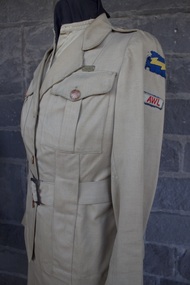
Uniform AWL, Uniform of Australian Women's Legion
... Impey AWM website: Australian Women’s League (AWL) ‘was a patriotic voluntary organisation committed to raising funds for the war effort and to giving practical support to military personnel within Australia.’...Impey AWM website: Australian Women’s League (AWL) ‘was a patriotic voluntary organisation committed to raising funds for the war effort and to giving practical support to military personnel within Australia.’ ...worn by G. Impey AWM website: Australian Women’s League (AWL) ‘was a patriotic voluntary organisation committed to raising funds for the war effort and to giving practical support to military personnel within Australia.’Number "139" -
 Greensborough Historical Society
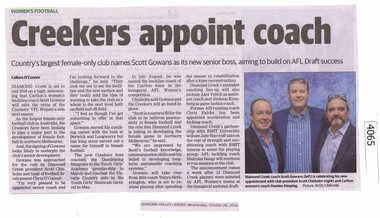
Newspaper Clipping, Diamond Valley Leader, Creekers appoint new coach, 26/10/2016
... The Diamond Creek Women's Australian Football League side named Scott Gowans as senior coach for 2016....The Diamond Creek Women's Australian Football League side named Scott Gowans as senior coach for 2016. diamond creek womens football club womens football scott gowans News clipping, black text and colour image. ...The Diamond Creek Women's Australian Football League side named Scott Gowans as senior coach for 2016.News clipping, black text and colour image. diamond creek womens football club, womens football, scott gowans -
 Federation University Historical Collection
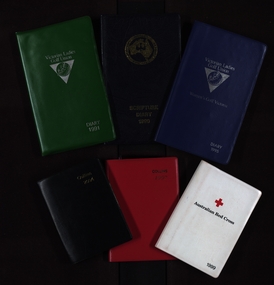
Diaries, Chatham-Holmes Collection: Elizabeth Chatham's Diaries, 1970-2004, 1970-2004
... Red Cross Australia, Catholic Women's League Scripture Diary and Women's Golf Australia. ...Red Cross Australia, Catholic Women's League Scripture Diary and Women's Golf Australia. ...Personal diaries of Elizabeth Chatham containing appointments, addresses and comments. There are 31 from different organisations - a fund raising activity, and commercially produced, e.g. Red Cross Australia, Catholic Women's League Scripture Diary and Women's Golf Australia. One larger diary with addresses and times. This possibly Philip Chatham's work diary for 1991. Small pocket size diaries. One larger diary and note bookDates, addresseselizabeth chatham, chatham-holmes collection, diaries, philip chatham, red cross australia, women's golf australia, catholic women's league, scripture diary -
 Eltham District Historical Society Inc
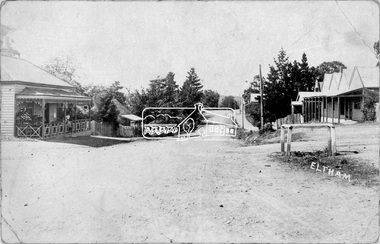
Negative - Photograph, Main Road, Eltham, c.1910
... Also believed to be the Scarce house at some stage, Mrs Emily Scarce was President of the Australian Women's National League. On the right is Webster's then the Commercial Bank of Australia branch, the Methodist Church just behind it on John Street. ...Also believed to be the Scarce house at some stage, Mrs Emily Scarce was President of the Australian Women's National League. On the right is Webster's then the Commercial Bank of Australia branch, the Methodist Church just behind it on John Street. ...Main Road looking north from Pitt Street. On the far left is Mrs Mary Ann Morris' house and shop and Hill's House. William Morris was the publican for the Evelyn Hotel which was on the opposite corner of Pitt Street and Main Road. Also believed to be the Scarce house at some stage, Mrs Emily Scarce was President of the Australian Women's National League. On the right is Webster's then the Commercial Bank of Australia branch, the Methodist Church just behind it on John Street. To the immediate right out of visibility is Watson's Eltham Hotel.This photo forms part of a collection of photographs gathered by the Shire of Eltham for their centenary project book,"Pioneers and Painters: 100 years of the Shire of Eltham" by Alan Marshall (1971). The collection of over 500 images is held in partnership between Eltham District Historical Society and Yarra Plenty Regional Library (Eltham Library) and is now formally known as the 'The Shire of Eltham Pioneers Photograph Collection.' It is significant in being the first community sourced collection representing the places and people of the Shire's first one hundred years.Digital image 4 x 5 inch B&W Negshire of eltham pioneers photograph collection, eltham, main road, scarce house, cba bank, gas lamp, hill's house, hostelry, john street, methodist church, pitt street, websters house, mrs morris shop -
 Brighton Historical Society
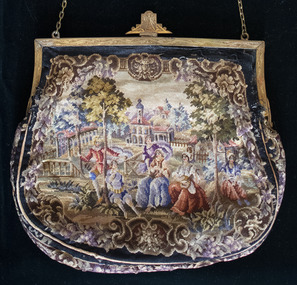
Bag, Evening purse, circa 1930
... Australian suffragist, social welfare campaigner and longtime resident of 59 North Road, Brighton. Born Alice Frances Mabel Wilson in Ballarat, in 1887 May married Isidore Moss, the son of Norwood's builder Mark Moss. While her children were young, she began to campaign for the rights of women and served as vice-president of the Australian Women's National League in 1906-14, during which time she actively campaigned in Victoria for women's suffrage. ...Australian suffragist, social welfare campaigner and longtime resident of 59 North Road, Brighton. Born Alice Frances Mabel Wilson in Ballarat, in 1887 May married Isidore Moss, the son of Norwood's builder Mark Moss. While her children were young, she began to campaign for the rights of women and served as vice-president of the Australian Women's National League in 1906-14, during which time she actively campaigned in Victoria for women's suffrage. ...This bag belonged to by Mrs Alice "May" Moss CBE (1869-1948), Australian suffragist, social welfare campaigner and longtime resident of 59 North Road, Brighton. Born Alice Frances Mabel Wilson in Ballarat, in 1887 May married Isidore Moss, the son of Norwood's builder Mark Moss. While her children were young, she began to campaign for the rights of women and served as vice-president of the Australian Women's National League in 1906-14, during which time she actively campaigned in Victoria for women's suffrage. She was an Australian delegate at the League of Nations Assembly at Geneva in 1927, where she was the first woman to sit on a finance committee. She attended the International Council of Women in Geneva in the same year and in 1928 was elected as vice president of the ICW, a position she held until her death. She was the first president of the National Council of Women of Australia, serving from 1931 to 1936. May was active in many other community organisations and causes, including the Royal Women's Hospital, the Collingwood Crèche and the Free Kindergarten movement. She served on the board of management of the City Newsboys' Society in 1906-48 and was the first woman lay-member of the National Health and Medical Research Council in 1936-45. She was also member of the International and Lyceum clubs, with an interest in the theatre, painting and woodcarving.French petit point tapestry bag featuring seven people in a bucolic scene, with trees and buildings in the background. Black border. Gold metal hinged opening with ornamental clasp and gold chain.may moss, petit point, 1930s -
 Eltham District Historical Society Inc
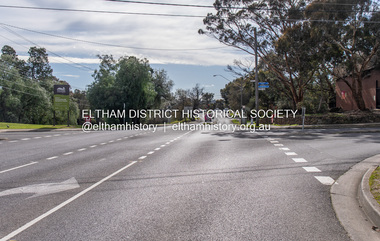
Photograph, Peter Pidgeon, Main Road at Pitt Street, Eltham, 2 Aug. 2022
... Also believed to be the Scarce house at some stage, Mrs Emily Scarce was President of the Australian Women's National League. On the right is Webster's then the Commercial Bank of Australia branch, the Methodist Church just behind it on John Street. ...Also believed to be the Scarce house at some stage, Mrs Emily Scarce was President of the Australian Women's National League. On the right is Webster's then the Commercial Bank of Australia branch, the Methodist Church just behind it on John Street. ...Main Road looking north from Pitt Street. Comparison photo: SEPP_0626 - Main Road north of Pitt Street, c.1910 On the far left is Mrs Mary Ann Morris' house and shop and Hill's House. William Morris was the publican for the Evelyn Hotel which was on the opposite corner of Pitt Street and Main Road. Also believed to be the Scarce house at some stage, Mrs Emily Scarce was President of the Australian Women's National League. On the right is Webster's then the Commercial Bank of Australia branch, the Methodist Church just behind it on John Street. To the immediate right out of visibility is Watson's Eltham Hotel. Part of a presentation by Peter Pidgeon to the Society, 13 August 2022 showcasing a series of photographs taken by John Henry Clark over the period 1895 to 1930. John Henry Clark was the youngest of three boys born to William Henry Clark (1823-1877) and Maria White (1843-1914). He and his brothers, William Charles Clark (1872-1945), Clement Kent Clark (1874-1912) operated a photography business (Clark Bros.) from 25 Thomas Street, Windsor near Prahran during the period c.1894 to 1914. Following death of Clement in September 1912 and their mother in 1914, the Clark Bros business appears to have dissolved, the premises demolished, and a new house was under construction in 1915. John set up business independently in 1914 operating out of 29 Moor Street, Fitzroy where he is registered in the 1914 and 1915 Electoral Rolls. By 1916 John had relocated to Eltham where he continued his practice as a photographer and took many of the early images around the district of Little Eltham. Around 1930 John changed professions and opened a small cobbler's shop in 1931 near the pond opposite Dalton Street adjacent to the Jarrold family cottage. He never married and continued his profession as a bootmaker from this little shop, maintaining a close relationship with Mrs Jarrold for the rest of their lives. His bootmaker shop remains today beside the Whitecloud cottage and is one of only three remaining shops in the area from the early 20th century.Comparative photo taken 2022 with one taken from same location over 100 years earlier by noted local photographer J.H. ClarkBorn Digitaleltham, j.h. clark photo (2022), main road, pitt street -
 Lara RSL Sub Branch
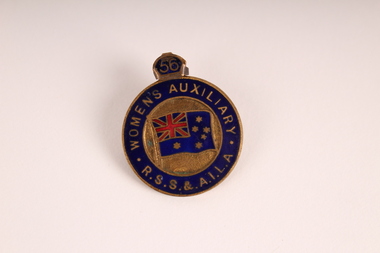
Metal badge, RSSA&AILA Women's Auxiliary Badge
... The RSS&AILA was the name of the RSL in 1956, called Returned Sailors and Soldiers and Airmen Imperial League of Australia. The Australian Imperial Service of Women’s Auxiliary of the RSL was formed by mothers, wives, widows, sisters, daughters and aunts of men who served in the Australian Imperial Forces in the First World War (1914-1918). ...The RSS&AILA was the name of the RSL in 1956, called Returned Sailors and Soldiers and Airmen Imperial League of Australia. The Australian Imperial Service of Women’s Auxiliary of the RSL was formed by mothers, wives, widows, sisters, daughters and aunts of men who served in the Australian Imperial Forces in the First World War (1914-1918). ...The RSS&AILA was the name of the RSL in 1956, called Returned Sailors and Soldiers and Airmen Imperial League of Australia. The Australian Imperial Service of Women’s Auxiliary of the RSL was formed by mothers, wives, widows, sisters, daughters and aunts of men who served in the Australian Imperial Forces in the First World War (1914-1918). The auxiliaries grew from this beginning to raise money for the welfare of men and women who served and their widows and families. In Victoria, the RSL Women’s Council of Victoria is headquarters for Auxiliaries throughout Victoria. The aim of Women’s Council is to support the Auxiliaries, in assisting the Returned & Services League to give a helping hand to Service Members, their families and the wider community. RSL Sub-Branches and their Women’s Auxiliaries work together towards the same goals. As of August 2015 there are 64 Women’s Auxiliaries with approximately 1250 members. The Lara Ladies Auxiliary was disbanded in September 1952, due to not enough members to continue the auxiliary (the ladies from the beginning becoming too old – First World War). Those left promised to continue to support the RSL in all its future activities, which the ladies continue to do today as members and Associate members. Here is the last entry, dated 8th September, 1952: “Since our last meeting our President Mrs Marshall has passed away. It was decided that as there is not enough members to continue the Auxiliary the Lara Sub Branch was requested to have the Auxiliary disbanded. Assistance was promised the League by the ladies present in all its futher activities.” There were four present at this meeting. Signed by P. Walker, Hon Secretary and Treasurer.This badge is of historic significance as it represented a badge held by a member of the Ladies Auxiliary of the RSL in 1956.A metal circular badge with outer blue rim with words R.S.S.&.A.I.L.A. Women's Auxiliary. Inner gold circle has blue Australian flag. At top of badge is 56.On the reverse side of the badge is the stamped number 6965 -
 City of Moorabbin Historical Society (Operating the Box Cottage Museum)
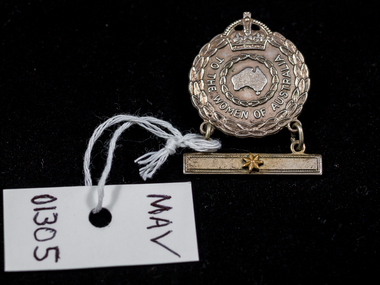
WW2 Medal for Women relatives of serving soldiers, 1942
... Emma Olymphia Roper of Balaclava/ Ripponlea would also have received a medal like this with 4 four stars because her 4 sons were serving in the Australian Army 1939-45 This Military Medal was given to the wives and mothers of Australian Soldiers serving during World War 2 1939-1945 world war 1939-1945, military medals, roper alfred william , roper veronica, moore joan catherine, roper arthur leopold, roper emma olymphia, war memorials, bentleigh, city of moorabbin, totally and permanently invalid, returned service league, victoria barracks, department of defence australia, Around medal : For the Women of Australia Back : Issued by the / C'wealth Govt. / A 135699 / Angus & Coote / 1942 Bar : star/ asterisk Silver medal, engraved wreath of leaves, crown and map of Australia and pin clasp on back . ...Female Relative Badges were issued to the nearest female relative (usually wives or mothers) of those who engaged in active service overseas during the First and Second World Wars. For active service abroad during the Second World War, a single badge was issued to the nearest female relative of members of the RAN, the Australian Imperial Force (including members of the Australian Army Nursing Service), and the Royal Australian Air Force. Stars displayed on a bar suspended below the badge represented the number of relatives involved in the war effort. Authority for the issue of the badge was given under AIF Order 200,14 February 1941. This medal was given to Veronica ( White ) Roper in 1942 because her husband Alfred William Roper was a member of the Australian Army Signals Corp serving in New Guinea. Emma Olymphia Roper of Balaclava/ Ripponlea would also have received a medal like this with 4 four stars because her 4 sons were serving in the Australian Army 1939-45 This Military Medal was given to the wives and mothers of Australian Soldiers serving during World War 2 1939-1945Silver medal, engraved wreath of leaves, crown and map of Australia and pin clasp on back . A bar with one star is suspendedAround medal : For the Women of Australia Back : Issued by the / C'wealth Govt. / A 135699 / Angus & Coote / 1942 Bar : star/ asteriskworld war 1939-1945, military medals, roper alfred william , roper veronica, moore joan catherine, roper arthur leopold, roper emma olymphia, war memorials, bentleigh, city of moorabbin, totally and permanently invalid, returned service league, victoria barracks, department of defence australia, -
Glenelg Shire Council Cultural Collection
Book - Book - The Quest For Peace As I Have Known It In Australia, Moore, Eleanor M, The Quest For Peace As I Have Known It In Australia, 1949
... Donated by the Women's International League for Peace and Freedom, Australian Section to the Portland Free Library Museum and Literary Institution....Front: Label attached to the first page 'with compliments from the Women's International League for Peace and Freedom, Australian Section' Hon. ...Donated by the Women's International League for Peace and Freedom, Australian Section to the Portland Free Library Museum and Literary Institution. ...Blue cloth-covered board covers and spine. Black text on front cover and spine. -
 Phillip Island and District Historical Society Inc.
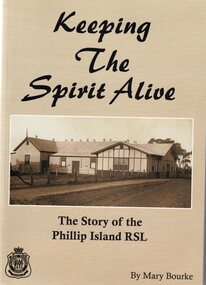
Book, BOURKE, Mary, Keeping the spirit alive : the story of the Phillip Island RSL, 2008
... Veterans stories World War 1 Historical Returned Services League of Australia phillip island sub branch history victoria Mary Bourke Military Vietnam Afghanistan Women's Land Army Gambling Veterans' Stories Part 1 - The Story of Phillip Island RSL Part 2 - The Stories of our Veterans A5 soft covered, beige colour book with black & white & coloured photographs Keeping the spirit alive : the story of the Phillip Island RSL Book Book BOURKE, Mary Phillip Island RSL Sub Branch Inc. ...History of Phillip Island RSL and life on the Island during the War. Veterans stories World War 1HistoricalA5 soft covered, beige colour book with black & white & coloured photographsPart 1 - The Story of Phillip Island RSL Part 2 - The Stories of our Veteransreturned services league of australia, phillip island sub branch, history, victoria, mary bourke, military, vietnam, afghanistan, women's land army, gambling, veterans' stories -
 Montmorency–Eltham RSL Sub Branch
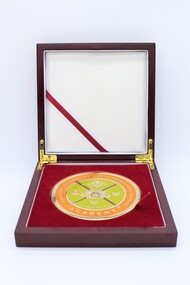
Medal - Medallion, Warrant Officer and Non Commissioned Officer Academy
... The importance of Return Servicemen Leagues are integral establishments for returning service men & women and it is reflected in the appreciation given. appreciation medallion victoria wing certificate australian coat of arms insignia Warrant Officer and Non Commissioned Officer Academy, Lead Mentor Train, Insignia Australian Coat of Arms, Insignia for Sergeant, Insignia for Corporal, Insignia for Warrant Officer Housed in a wooden box and nestled on red felt with white satin lining, brass with colours orange and grreen. ...Presented to Montmorency RSL by Major GA Van der Walt Officer Commanding Victoria Wing on November 24th, 2014. To show their appreciation and to thank the RSL for their support. A certificate item no 0060 explain exact details.The importance of Return Servicemen Leagues are integral establishments for returning service men & women and it is reflected in the appreciation given.Housed in a wooden box and nestled on red felt with white satin lining, brass with colours orange and grreen.Warrant Officer and Non Commissioned Officer Academy, Lead Mentor Train, Insignia Australian Coat of Arms, Insignia for Sergeant, Insignia for Corporal, Insignia for Warrant Officerappreciation, medallion, victoria wing, certificate, australian coat of arms, insignia -
 Montmorency–Eltham RSL Sub Branch
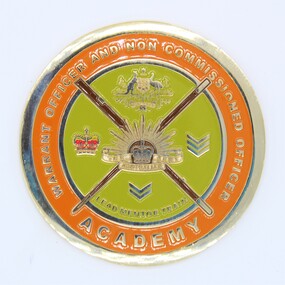
Medal - Medallion, Warrant Officer and Non Commissioned Officer Academy
... The importance of Return Servicemen League are integral establishments for returning service men and women and it is reflected in the appreciation given. appreciation medallion victoria wing certificate australian coat of arms Warrant Officer and Non Commissioned Officer Academy, Lead Mentor Train, Insignia Australian Coat of Arms, Insignia for Sergeant, Insignia for Corporal, Insignia for Warrant Officer House in a wooden box and nestled on red felt with white satin lining, brass with colours orange and green. ...Presented to Montmorency RSL by Major GA Van der Walt Officer Commanding Victoria Wing on November 24th, 2014. To show their appreciation and to thank the RSL for their support. A certificate item no. 0060 explain details.The importance of Return Servicemen League are integral establishments for returning service men and women and it is reflected in the appreciation given.House in a wooden box and nestled on red felt with white satin lining, brass with colours orange and green.Warrant Officer and Non Commissioned Officer Academy, Lead Mentor Train, Insignia Australian Coat of Arms, Insignia for Sergeant, Insignia for Corporal, Insignia for Warrant Officerappreciation, medallion, victoria wing, certificate, australian coat of arms -
 Red Cliffs Military Museum
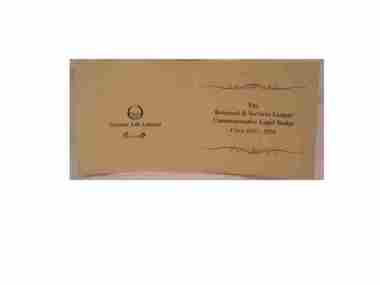
Badge Replica, Commemorative Badge R.S.L, (estimated); 1980-1990
... Australia./ Right side of paper: Oceanic Life is proud to present this commemorative Badge to you, as a small/ token of our continuing commitment to/ the Men and Women who have served/ their country. Reverse Sise left: Symbol of Oceanic Life Ltd./ Right side: The Returned & Services League...Australia./ Right side of paper: Oceanic Life is proud to present this commemorative Badge to you, as a small/ token of our continuing commitment to/ the Men and Women who have served/ their country. Reverse Sise left: Symbol of Oceanic Life Ltd./ Right side: The Returned & Services League ...This reproduction of the first R.S.L. Badge is a Limited Edition released as a commemorative badge cira 1980-1990The First R.S.L. Badge/ This specially crafted lapel badge is a/limited edition replica of the very first/ R.S.L. badge which decorated our soldiers/ and sailors returning from WW1/ This badge was worn with Pride from/ 1919-1926 by the founding members of/ the R.S.L., as they Returned Home to a Victorious Australia./ Right side of paper: Oceanic Life is proud to present this commemorative Badge to you, as a small/ token of our continuing commitment to/ the Men and Women who have served/ their country. Reverse Sise left: Symbol of Oceanic Life Ltd./ Right side: The Returned & Services League/ Commemorative Lapel Badge/ Circ 1919-1926badge, r s l, commemorative, circa, 1980 1990 -
 Red Cliffs Military Museum
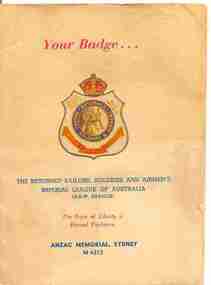
Booklet, Eric Stephenson, Your Badge, 1945 (estimated)
... Women's Services/ Merchant Navy// Centre Page: Nomination for Membership // Pages 18,19,20,& 21: War Pensions.// Page 22: Did you know.//Page 23: Eligiblity for Membership.// Page 24: If there were no League. // Pages 25, 26: ANZAC Centre. // Page 27: Memorandum (clear page)// Page 28 Personal memoranda (to be filled in) Conclusion. A booklet of the Returned Sailors, Soldiers and Airmen's Imperial League of Australia ...A booklet of the Returned Sailors, Soldiers and Airmen's Imperial League of Australia NSW Branch. Front cover has the original RSL badge printed above the Price of Liberty is Eternal Vigilance. ANZAC Memorial Sydney M4313Front Cover: YOUR BADGE/ colour picture of original RSL Badge./ THE RETURNED SAILORS, SOLDIERS & AIRMEN'S IMPERIAL LEAGUE OF AUSTRALIA/ (NSW BRANCH)/ THE PRICE OF LIBERTY IS/ ETERNAL VIGILANCE/ ANZAC MEMORIAL SYDNEY/ M4313// Inside Cover: THE LEAGUES PLEDGE/ November 1939./ "That this Federal congress - the first to be held since the declaration of war/ publicly states that the whole body of the/ RSS&AILA is heart and sole behind/ the new Australian Expiditionary Force, and/ gladly accepts the new obligations to protect/ the interests of all who shall serve the Empire/ in the present war.// Page 1: A Welcome home/ From your Reception Committee/ The Old and New Diggers.// Page 2& 3: A Message from the State President.// Page 4: Policy of the RSS&AILA.// Pages 5,6,7: R.S.L. Policy.// Pages 8,9,10 & 11: Record of Service (outlines the services the RSL provides and the Principles on which it was established.// Pages 12, 13, 14, 15, 16 & 17: List of Sub-Branches NSW. Women's Services/ Merchant Navy// Centre Page: Nomination for Membership // Pages 18,19,20,& 21: War Pensions.// Page 22: Did you know.//Page 23: Eligiblity for Membership.// Page 24: If there were no League. // Pages 25, 26: ANZAC Centre. // Page 27: Memorandum (clear page)// Page 28 Personal memoranda (to be filled in) Conclusion.book, anzac, imperial, sailors, soldiers, league, badge, your, returned, airmen, memorial, hand -
 Bendigo Military Museum
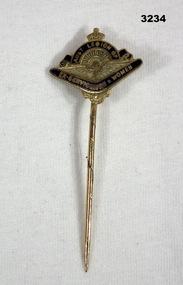
Badge, post WW2
... Australian League of Ex Servicemen & Women badge. Small lapel pin badge, gold & blue enamel colour. ...Item relates to S W ROSS VX78589, refer Cat No 3147 for his service details. numismatics-badges societies-service clubs military history "AUST LEGION OF EX-SERVICEMEN & WOMEN" Australian League of Ex Servicemen & Women badge. ...Item relates to S W ROSS VX78589, refer Cat No 3147 for his service details.Australian League of Ex Servicemen & Women badge. Small lapel pin badge, gold & blue enamel colour. Crown on top of a banner. In centre are stylised Rising Sun, pair of aircraft wings, an anchor and a boomerang."AUST LEGION OF EX-SERVICEMEN & WOMEN"numismatics-badges, societies-service clubs, military history -
Glen Eira Historical Society
Article - South Metro Junior Football League
... This file contains five items An article from the Caulfield/Port Phillip leader on the development of the South Metro Junior Football League, dated 21/02/2012 An article from the Glen Eira News on the South Metro Junior Football League providing girls with an opportunity to be involved in football, dated May 2012 An article from the Herald Sun on the increase of interest of girls in playing football, dated 24/05/2012 A flyer for a “Chick Kick” Day to encourage young girls to get involved in Australian Rules football in the South Metro Junior Football League An article from the Caulfield/Port Phillip leader on the resignation of the Southern Football Leagues CEO, dated 19/06/2012 Glen Eira Clubs Associations Societies Football Clubs Football Associations Sporting Clubs Sports Recreations Competitions Leisure Cultural events Cultural activities Cannizzo David South Metro Junior Football League Cultural establishments Australian Rules Football AFL Auskick 'Chick Kick' Day Caulfield/Port Phillip Leader Glen Eira News Herald Sun Kurdas Chyloe Southern Football League Holdsworth Wayne Seymour Mark Children's sports Moorabbin Women in sports Moorabbin Saints Junior Football League Article South Metro Junior Football League ...This file contains five items An article from the Caulfield/Port Phillip leader on the development of the South Metro Junior Football League, dated 21/02/2012 An article from the Glen Eira News on the South Metro Junior Football League providing girls with an opportunity to be involved in football, dated May 2012 An article from the Herald Sun on the increase of interest of girls in playing football, dated 24/05/2012 A flyer for a “Chick Kick” Day to encourage young girls to get involved in Australian Rules football in the South Metro Junior Football League An article from the Caulfield/Port Phillip leader on the resignation of the Southern Football Leagues CEO, dated 19/06/2012glen eira, clubs, associations, societies, football clubs, football associations, sporting clubs, sports, recreations, competitions, leisure, cultural events, cultural activities, cannizzo david, south metro junior football league, cultural establishments, australian rules football, afl auskick, 'chick kick' day, caulfield/port phillip leader, glen eira news, herald sun, kurdas chyloe, southern football league, holdsworth wayne, seymour mark, children's sports, moorabbin, women in sports, moorabbin saints junior football league -
 Waverley RSL Sub Branch
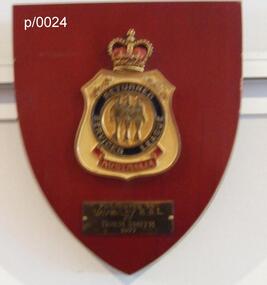
Plaque RSL Australia, RSL Australia
... The Returned and Services League of Australia (often abbreviated to RSL) is a support organisation for men and women who have served or are serving in the Australian Defence Force (ADF). ...The Returned and Services League of Australia (often abbreviated to RSL) is a support organisation for men and women who have served or are serving in the Australian Defence Force (ADF). ...The Returned and Services League of Australia (often abbreviated to RSL) is a support organisation for men and women who have served or are serving in the Australian Defence Force (ADF). It was formed as the Returned Sailors and Soldiers Imperial League of Australia in 1916, became the Returned Sailors', Soldiers' and Airmens Imperial League of Australia in 1940, and became the Returned Services League of Australia in 1965. The change to its current name was made in 1990 to reflect the organisation's concern for current as well as former servicemen and servicewomen. The patron of the RSL is Queen Elizabeth II. The current National President of the League is Rear Admiral Ken Doolan, AO RAN (rtd).[2] As of 31 December 2009, the League comprised 186,652 members from 1,306 sub-branches and 5,533 members of the League's women's auxiliary from 381 sub-branches. Membership levels have been declining for at least ten years http://en.wikipedia.org/wiki/Returned_and_Services_League_of_AustraliaWooden Plaque 15cm x 13cmRSL Australia -
 Eltham District Historical Society Inc
Book, Northern Metropolitan College of TAFE, Diamond Valley Remembers 1939-1945, 1995
... The Australia Remembers 1945-1995 campaign was a pageant of events commemorating the end of World War II. 34 chapters include reminiscences from 34 men and women mainly from the Watsonia Returned Servicemen's League recording their memories of the war years for the benefit of the [Shire of] Diamond Valley community. ...The Australia Remembers 1945-1995 campaign was a pageant of events commemorating the end of World War II. 34 chapters include reminiscences from 34 men and women mainly from the Watsonia Returned Servicemen's League recording their memories of the war years for the benefit of the [Shire of] Diamond Valley community. ...An Oral History Project - An Australia Remembers New Work Project funded by the Department of Employment, Education and Training. Sponsored by Northern Metropolitan College of TAFE. The Australia Remembers 1945-1995 campaign was a pageant of events commemorating the end of World War II. 34 chapters include reminiscences from 34 men and women mainly from the Watsonia Returned Servicemen's League recording their memories of the war years for the benefit of the [Shire of] Diamond Valley community. This copy is signed by Eleanor Sumner who is also a contributor.This book comprises a collection of unique and individual personal narratives of World War 2, written 50 years after the war and preserved for future generations. The collection is linked through the association of the participants living in the Diamond Valley area in Melbourne's north in 1995.roy hillard, eleanor sumner, bob campbell, dulcie cox, lancelot riky, charles nelson, reg johnson, frank collings, george armstrong, stan ware, lorna mill, ann hewett, reg angwin, ruby talbot, dion hogan, elean dansey, mary keppel, charles baker, elaine grigg, len grigg, kathleen kennedy, arthur dykes, eric wood, frances jensen, mary edwards, frank wilson, harry hewett, mick marks, audrey wass, ian wall, joyce anderson, john grant, jean gee, noel mcintyre, allan dunn, reminscences, oral history, world war 1939-1945, world war 2, ww2, australia remembers, northern metropolitan college of tafe, watsonia, personal narrative, watsonia barracks -
 Emerald Museum & Nobelius Heritage Park
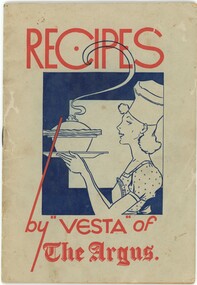
Booklet - The Argus Recipe Book, Stella Allan, Recipes by Vesta of the Argus, Circa 1939
... Women’s Writers’ Club, the Lyceum Club, and a foundation member of the Australian Journalists’ Association. Even after her retirement from the Argus, her journalism continued to have an influence; during the Second World War, Stella reported from England on the wartime experiences of women and children. This recipe book was one of several written by "Vesta" - most likely, this is the 1939 edition - and aimed to provide a collection of nutritious recipes to aid women in choosing meals to cook for their households. The introduction to the book stresses the importance of nutrition, referring to a League...Women’s Writers’ Club, the Lyceum Club, and a foundation member of the Australian Journalists’ Association. Even after her retirement from the Argus, her journalism continued to have an influence; during the Second World War, Stella reported from England on the wartime experiences of women and children. This recipe book was one of several written by "Vesta" - most likely, this is the 1939 edition - and aimed to provide a collection of nutritious recipes to aid women in choosing meals to cook for their households. The introduction to the book stresses the importance of nutrition, referring to a League ...This is a recipe book, with sections for recipes for "Soups", "Meat Dishes", "Breakfast, Luncheon and Supper Dishes", "Egg Dishes and Pastry Recipes", "Sweets Course", and "For Afternoon Tea". The pages alternate between a page on the left containing recipes, and a page on the right instructing readers to paste recipes cut out from the Argus there. "Vesta," also known as Stella Allan, began her journalistic career as an active feminist and socialist in New Zealand who, after qualifying to practice law, overcame gendered exclusion from the all-male press gallery to work a prestigious position as a parliamentary correspondent. After moving to Melbourne in 1903, she was swiftly employed by the Argus newspaper and became the lead writer for the women's sections in 1908, continuing to work in the role until she retired in 1939. During this time she extensively covered domestic and community welfare topics, alongside advice columns replying to a vast quantity of letters; her writing contributed to creating a space in newspaper journalism to address the interests of women at the time. During her time at the Argus she moved away from the radical activism of her youth, becoming an establishment figure over the course of her long career. She was a prominent figure in Melbourne life as President of the Victorian Women’s Writers’ Club, the Lyceum Club, and a foundation member of the Australian Journalists’ Association. Even after her retirement from the Argus, her journalism continued to have an influence; during the Second World War, Stella reported from England on the wartime experiences of women and children. This recipe book was one of several written by "Vesta" - most likely, this is the 1939 edition - and aimed to provide a collection of nutritious recipes to aid women in choosing meals to cook for their households. The introduction to the book stresses the importance of nutrition, referring to a League of Nations survey that revealed that "in spite of our abundant and varied food supply, nutritional and dental diseases are much too prevalent in Australia." It calls on the women of Australia to fulfil the "great responsibility," of choosing and cooking nutritious meals.The cardstock front cover of this 32-page booklet features text denoting the title and author in red, and an illustration in blue of a woman wearing a chef's hat holding a pie in front of her, with steam rising from it. The rear features publication information and an advertisement. The booklet is bound with a single staple through the spine, and constructed from eight individual pieces of paper each with two pages of text printed on each side.non-fictionThis is a recipe book, with sections for recipes for "Soups", "Meat Dishes", "Breakfast, Luncheon and Supper Dishes", "Egg Dishes and Pastry Recipes", "Sweets Course", and "For Afternoon Tea". The pages alternate between a page on the left containing recipes, and a page on the right instructing readers to paste recipes cut out from the Argus there. "Vesta," also known as Stella Allan, began her journalistic career as an active feminist and socialist in New Zealand who, after qualifying to practice law, overcame gendered exclusion from the all-male press gallery to work a prestigious position as a parliamentary correspondent. After moving to Melbourne in 1903, she was swiftly employed by the Argus newspaper and became the lead writer for the women's sections in 1908, continuing to work in the role until she retired in 1939. During this time she extensively covered domestic and community welfare topics, alongside advice columns replying to a vast quantity of letters; her writing contributed to creating a space in newspaper journalism to address the interests of women at the time. During her time at the Argus she moved away from the radical activism of her youth, becoming an establishment figure over the course of her long career. She was a prominent figure in Melbourne life as President of the Victorian Women’s Writers’ Club, the Lyceum Club, and a foundation member of the Australian Journalists’ Association. Even after her retirement from the Argus, her journalism continued to have an influence; during the Second World War, Stella reported from England on the wartime experiences of women and children. This recipe book was one of several written by "Vesta" - most likely, this is the 1939 edition - and aimed to provide a collection of nutritious recipes to aid women in choosing meals to cook for their households. The introduction to the book stresses the importance of nutrition, referring to a League of Nations survey that revealed that "in spite of our abundant and varied food supply, nutritional and dental diseases are much too prevalent in Australia." It calls on the women of Australia to fulfil the "great responsibility," of choosing and cooking nutritious meals.books, domestic life, 1930s, cooking, the argus -
Bendigo Historical Society Inc.
Document - The Victorian Country Volleyball Council (VCVC) Correspondence and Country Championship Reports, 1984
... This item contains Correspondence of the Council in 1984 and reports on the Country Championships for that year; it include. the following documents: 11171.17a Attendance forms for the VCVC two day conference 11171.17b U20 Country Championships Draw and entry information 11171.17c U20 Country Championships Draw and entry information (Contact BHS for Information) 11171.17d State U17 Women's trials 11171.17e VCVC Representative Country Sides 11171.17f VCVC Record Secretary Report 1984 11171.17g VCVC Country Representative U20s side 11171.17h U15 Australian Volleyball Championships Sept 1984 Report 11171.17i A guide to state team management by John Barker VAVA 11171.17j VAVA Financial statements and records 11171.17k Tribunal section of the By-laws 11171.17l VAVA u17 Women's State team selection trials 11171.17m VAVA Red Wine Promotion 11171.17n VAVA Victorian U15 Girls selection trials 11171.17o VAVA National Volleyball League womens draw 11171.17p Australian Volleyball Federation Country Championship Entry Form 11171.17q Executive Director's 1984 Annual report 11171.17r VAVA Notices of Meetings and Financials Jan 1984 11171.17s VAVA Executive Meeting Minutes Feb 1984 11171.17t VAVA Executive Meeting and AGM Minutes March 1984 11171.17u VAVA Executive Meeting April 1984 11171.17v VAVA Executive Meeting May 1984 11171.17w VAVA Executive Meeting June 1984 11171.17x Notice of VAVA Executive Meeting May1984 11171.17y VAVA Executive Officer Bob Rowe report - "planning for the future" 11171.17z VAVA Executive Meeting July 1984 11171.17aa VAVA Executive Meeting Aug 1984 11171.17ab VAVA Executive Meeting Financial Statement Sept 1984 11171.17ac VAVA Executive Meeting Sept 1984 11171.17ad VAVA Executive Meeting Notice Oct 1984 11171.17ae VAVA Special General Meeting Notice Oct 1984 11171.17af VAVA Suspension of a player Sept 1984 - contact BHS for details 11171.17ag VAVA Coaching Commission Appointment of Regional Coaches...In 2023, the Commission handed the organisation of the Championships back to VVI, who with paid staff, were better equipped to manage the event. victorian country volleyball council vcvc victorian amateur volleyball association volleyball victoria This item contains Correspondence of the Council in 1984 and reports on the Country Championships for that year; it include. the following documents: 11171.17a Attendance forms for the VCVC two day conference 11171.17b U20 Country Championships Draw and entry information 11171.17c U20 Country Championships Draw and entry information (Contact BHS for Information) 11171.17d State U17 Women's trials 11171.17e VCVC Representative Country Sides 11171.17f VCVC Record Secretary Report 1984 11171.17g VCVC Country Representative U20s side 11171.17h U15 Australian Volleyball Championships Sept 1984 Report 11171.17i A guide to state team management by John Barker VAVA 11171.17j VAVA Financial statements and records 11171.17k Tribunal section of the By-laws 11171.17l VAVA u17 Women's State team selection trials 11171.17m VAVA Red Wine Promotion 11171.17n VAVA Victorian U15 Girls selection trials 11171.17o VAVA National Volleyball League womens draw 11171.17p Australian Volleyball Federation Country Championship Entry Form 11171.17q Executive Director's 1984 Annual report 11171.17r VAVA Notices of Meetings and Financials Jan 1984 11171.17s VAVA Executive Meeting Minutes Feb 1984 11171.17t VAVA Executive Meeting and AGM Minutes March 1984 11171.17u VAVA Executive Meeting April 1984 11171.17v VAVA Executive Meeting May 1984 11171.17w VAVA Executive Meeting June 1984 11171.17x Notice of VAVA Executive Meeting May1984 11171.17y VAVA Executive Officer Bob Rowe report - "planning for the future" 11171.17z VAVA Executive Meeting July 1984 11171.17aa VAVA Executive Meeting Aug 1984 11171.17ab VAVA Executive Meeting Financial Statement Sept 1984 11171.17ac VAVA Executive Meeting Sept 1984 11171.17ad VAVA Executive Meeting Notice Oct 1984 11171.17ae VAVA Special General Meeting Notice Oct 1984 11171.17af VAVA Suspension of a player Sept 1984 - contact BHS for details 11171.17ag VAVA Coaching Commission Appointment of Regional Coaches Document The Victorian Country Volleyball Council (VCVC) Correspondence and Country Championship Reports. ...Volleyball has been played in regional Victoria since the early-1960’s. During those early days, most competitions, like the founders of our great sport, were run by, or in conjunction with, the YMCA. Competitions were running at the Ballarat School of Mines and the YMCA’s of Bendigo, Geelong and Warrnambool. In August 1966, an invitation was extended by the Victorian Amateur Volleyball Association to play in the first State-wide event at Monash University. Geelong and Bendigo accepted the invitation with Melbourne represented by Sisu. For Bendigo players at least, this was the first exposure to ‘international rules’, which prevented upward scoops with open hands, introduced an action called a ‘dig’ and seemed to penalise most overhead actions using the fingers as ‘double hits’! Over the next few years, the sport expanded through the YMCA movement with weekly competitions starting up in Ararat, Warrnambool and Latrobe Valley. The Victorian Regional Council of YMCA’s proposed the first Victorian YMCA Championship in Warrnambool on 30th March 1968 with an entry fee of $4.00 per team. The sport continued to grow with additional regional associations affiliating with the Victorian Amateur Volleyball Association (now VVI) who provided the coaching and refereeing assistance needed to raise the standard of play. In 1970, the YMCA Championships started to give way to the Victorian Country Championships with the first ever event held in Bendigo. In 1973, a re-organisation of the VAVA saw the proposal to create separate Victorian Country and Metropolitan Volleyball Councils. The VCVC was established in 1974 and took over the organisation of the Victorian Country Championships. For the next 10-12 years, the Country Championships grew in stature with the inclusion of two divisions for open men and women and junior divisions for boys and girls. Representative teams successfully contested Australian Country Championships between Victoria, South Australia and New South Wales on several occasions. In October 1985, the VCVC voluntarily wound up the Council and handed the responsibility for the Country Championships back to Volleyball Victoria, who by that time had full-time State Executive and Coaching Directors. Since that time, the Long Weekend in June has continued to be the date of the major annual volleyball event for most regional associations, even though in 1986 the Junior Country Championships were wound up in favour of state and national schools events. A number of regional associations have ceased to exist, as have a number of regional tournaments. Regional leagues were created in both the Gippsland and Central, North-West regions, with Gippsland the only one to survive. Some associations have successfully competed in the State League competitions at various times. Following the experience gained by a number of regional administrators working on the Sydney Olympic Games, a proposal to revamp the Victorian Country Championship was put to VVI in early 2002. Later that year, the Volleyball Victoria Country Championships Commission was formed to implement the recommendations of the review and take control of the event into the future. These championships now provide regional players and officials an opportunity to participate in a consistently well-managed event, using many international protocols and a high standard of presentation. Without doubt, this event now ranks as one of the best volleyball events in Australia. Source: 2022 Country Championship regulations The management of the Country Championships by the Victorian Country Championship Commission certainly achieved the objective of raising the standard of presentation, and delivering a consistently high quality event. However, the demands on Host Associations began to take their toll, with several Associations declining the opportunity to host the event due to the high workload. Similarly, the workload of the volunteer Commissioners also took its toll, with the Commission unable to fill casual vacancies. In 2023, the Commission handed the organisation of the Championships back to VVI, who with paid staff, were better equipped to manage the event.This item contains Correspondence of the Council in 1984 and reports on the Country Championships for that year; it include. the following documents: 11171.17a Attendance forms for the VCVC two day conference 11171.17b U20 Country Championships Draw and entry information 11171.17c U20 Country Championships Draw and entry information (Contact BHS for Information) 11171.17d State U17 Women's trials 11171.17e VCVC Representative Country Sides 11171.17f VCVC Record Secretary Report 1984 11171.17g VCVC Country Representative U20s side 11171.17h U15 Australian Volleyball Championships Sept 1984 Report 11171.17i A guide to state team management by John Barker VAVA 11171.17j VAVA Financial statements and records 11171.17k Tribunal section of the By-laws 11171.17l VAVA u17 Women's State team selection trials 11171.17m VAVA Red Wine Promotion 11171.17n VAVA Victorian U15 Girls selection trials 11171.17o VAVA National Volleyball League womens draw 11171.17p Australian Volleyball Federation Country Championship Entry Form 11171.17q Executive Director's 1984 Annual report 11171.17r VAVA Notices of Meetings and Financials Jan 1984 11171.17s VAVA Executive Meeting Minutes Feb 1984 11171.17t VAVA Executive Meeting and AGM Minutes March 1984 11171.17u VAVA Executive Meeting April 1984 11171.17v VAVA Executive Meeting May 1984 11171.17w VAVA Executive Meeting June 1984 11171.17x Notice of VAVA Executive Meeting May1984 11171.17y VAVA Executive Officer Bob Rowe report - "planning for the future" 11171.17z VAVA Executive Meeting July 1984 11171.17aa VAVA Executive Meeting Aug 1984 11171.17ab VAVA Executive Meeting Financial Statement Sept 1984 11171.17ac VAVA Executive Meeting Sept 1984 11171.17ad VAVA Executive Meeting Notice Oct 1984 11171.17ae VAVA Special General Meeting Notice Oct 1984 11171.17af VAVA Suspension of a player Sept 1984 - contact BHS for details 11171.17ag VAVA Coaching Commission Appointment of Regional Coachesvictorian country volleyball council, vcvc, victorian amateur volleyball association, volleyball victoria -
 Bendigo Historical Society Inc.
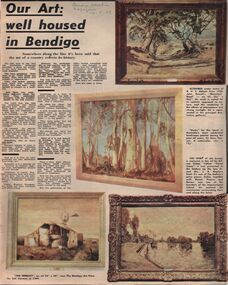
Newspaper - LYDIA CHANCELLOR COLLECTION: 'OUR ART: WELL HOUSED IN BENDIGO.'
... Australian landscape history R.H.S. Abbott Prize John Rowell 'Mountain Road ' 'Gums ' Sir Hans Heyton Alfred Sisley 'Canal Scene ' Dr. and Mrs. J. A. Neptune Scott Impressionism 'The Derelict ' Sali Herman Bendigo Art Prize Emmeline Pankhurst Victorian Women's Franchise League print photograph porcelain Porcelain Study Design No. 599 W. ...A Bendigo Advertiser supplement titled 'Our Art: well housed in Bendigo.' The Education Officer of the Bendigo Art Gallery, Geoff Paynter, gives an insight into some of the acquisitions purchased by, or donated to, the gallery. There is also an article imbedded within this article on 'Woman of the franchise era.' 14/5/1969.bendigo, buildings, bendigo art gallery, lydia chancellor collection, collection, bendigo, bendigo art gallery, gallery, art, art work, recreation, landscapes, australian landscape, history, r.h.s. abbott prize , john rowell, 'mountain road, ' 'gums, ' sir hans heyton, alfred sisley, 'canal scene, ' dr. and mrs. j. a. neptune scott, impressionism, 'the derelict, ' sali herman, bendigo art prize, emmeline pankhurst, victorian women's franchise league, print, photograph, porcelain, porcelain study design no. 599, w. j. strauchair, 'bondi 1961, ' william dobell, william beebe, arthur boyd, 'pinchin's farm, ' 'the clearing, ' louis buvelot, george bell, 'farm buildings, ' franz kempf, 'burnt orange fern at the wind's return, ' 'old bendigo art gallery, ' kenneth jack, 'the digger and his log, ' sir arthur streeton -
 Alfred Hospital Nurses League - Nursing History Collection
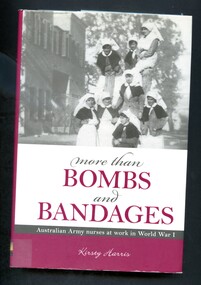
Book - Illustrated Book, Kirsty Harris, More than bombs and bandages: Australian Army nurses at work in World War 1, 2011
... Of significance to the AHNL as well as being a significant history of Army nursing in World War I, the103 Alfred graduates who served are listed in the appendices Australian Army Nurses Military nursing-Australia-History Nurses-Australia-History World War 1914-1918 - Medical Care Alfred Nurses The author draws on personal diaries, interviews, service records, hospital diaries and autobiographies to create an absorbing and meticulously constructed book showcasing the breadth and significance of the contributions Army nurses made during World War I. In becoming part of the AIF these women fashioned the role of the Australian military nurse On the front-end page is a handwritten dedication: To the Alfred Hospital Nurses League ...The author draws on personal diaries, interviews, service records, hospital diaries and autobiographies to create an absorbing and meticulously constructed book showcasing the breadth and significance of the contributions Army nurses made during World War I. In becoming part of the AIF these women fashioned the role of the Australian military nurseIllustrated book with dustjacket. Book has a black cover with title, author's name and Australian Army badge embossed in gold on spine. Front of dustjacket has a black and white photo 'Westen Australian night nurses in 14 AGH, Abbassia, Egypt in 1918. Under this part of tile is printed in dark grey and red brown on a cream background. Rest of title is printed in white on a dark grey band. Authors name is printed in white on a red brown background. Title and authors name are printed in white on a red brown background along with Australian Army Badge (gold) and publisher's mark. On the back of the dustjacket is a summary of the book printed on a cream background, below which is a black and white photo 'No 2 Australian General Hospital, Mena, Egypt, January 1915non-fictionThe author draws on personal diaries, interviews, service records, hospital diaries and autobiographies to create an absorbing and meticulously constructed book showcasing the breadth and significance of the contributions Army nurses made during World War I. In becoming part of the AIF these women fashioned the role of the Australian military nurseaustralian army nurses, military nursing-australia-history, nurses-australia-history, world war 1914-1918 - medical care, alfred nurses -
 Alfred Hospital Nurses League - Nursing History Collection
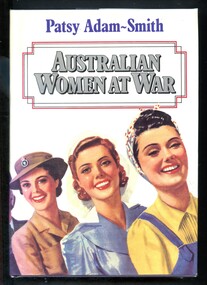
Book - Illustrated book, Thomas Nelson (Australia) Ltd, Australian women at war, 1984
... World War 1914-1918 World War 1939-1945 Women and war-Australia Women-Australia-social conditions women-employment-Australia-History-20th centuary A history of how Australian women have responded to war, from 1900 when the first nurses sailed to the Boer War, to 1945 and its aftermath. At the bottom right of the front end-page is a printed black and white donation sticker: black Maltese cross in circle, "This book was donated to Alfred Archival Association Nursing Division by" Alfred Hospital Nurses League (handwritten in black ink) Also previous catalogue number handwritten in black ink on this sticker Illustrated book with dustjacket. ...A history of how Australian women have responded to war, from 1900 when the first nurses sailed to the Boer War, to 1945 and its aftermath.Illustrated book with dustjacket. Book has a purple cover with the title and author's name embossed in silver on the spine. The dust jacket has the title printed in silver within a decorative border. Authors name is printed in black above this. Also on the front cover and extending across the spine and back cover is a coloured illustration of non-fictionA history of how Australian women have responded to war, from 1900 when the first nurses sailed to the Boer War, to 1945 and its aftermath.world war 1914-1918, world war 1939-1945, women and war-australia, women-australia-social conditions, women-employment-australia-history-20th centuary -
 Alfred Hospital Nurses League - Nursing History Collection
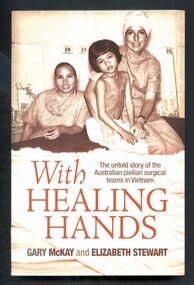
Book - Illustrated book, Gary McKay et al, With healing hands: the untold stories of the Australian civilian nursing teams in Vietnam, 2009
... Australian civilians at war is told here, based on interviews with many of those who served in the teams, The book includes two appendices: one lists the dates of service of the teams, the other lists the members of the teams. At the top of the front pageis a printed black and white donation sticker: black Maltese cross in circle, "This book was donated to Alfred Archival Association Nursing Division by'. Alfred Hospital Nurses League handwritten in black ink. Beside this label the previous catalogue number. is written in black ink. Illustrated book, Fronts cover has a photograph of two women ...From October 1964 until the end of 1972, over 450 surgeons, nurses and other medical specialists from Australian hospitals volunteered to work in South Vietnam. In the towns of Long Xuyen, Bien Hoa, Vung Tau and Ba Ria they brought expert medical and surgical care, comfort and support to a war-weary and traumatised civilian population. The extraordinary story of these Australian civilians at war is told here, based on interviews with many of those who served in the teams, The book includes two appendices: one lists the dates of service of the teams, the other lists the members of the teams.Illustrated book, Fronts cover has a photograph of two women in operating theatre dress with a young child (Vietnamese anaesthetic technician Tran Thi Dung, theatre nurse Cathy Blackmore and a young patient in an operating theatre at Bien Hoa Hospital, in early 1972). Below this on a background photo of bandages title and authors names are printed in shades of brown. Abbreviated title (light brown ink) and authors names (dark brown ink) are also printed on the spine along with the publisher's mark. A summary of the book, along with information about the authors, is [rinted on the back cover. non-fictionFrom October 1964 until the end of 1972, over 450 surgeons, nurses and other medical specialists from Australian hospitals volunteered to work in South Vietnam. In the towns of Long Xuyen, Bien Hoa, Vung Tau and Ba Ria they brought expert medical and surgical care, comfort and support to a war-weary and traumatised civilian population. The extraordinary story of these Australian civilians at war is told here, based on interviews with many of those who served in the teams, The book includes two appendices: one lists the dates of service of the teams, the other lists the members of the teams.vietnam war 1961-1975-medical care, vietnam war 1961-1975-participation-australia, vietnam war 1961-1975-personal narratives-australian, volunteer workers in medical car-vietnam-history, alfred hospital -
Eltham District Historical Society Inc
Document - Folder, Osborne, William Alexander and Ethel Elizabeth
... Ethel, born in Leeds U.K., graduated in medicine in the 1920s and was active in social issues.She represented Australia at international conferences of The League of Nations and the Pan Pacific Womens Conference; during World War ; she was appointed by the British Ministry of Munitions on working conditions of women and played a major role in the establishment of The Emily McPherson College of Domestic Economy..Locally she was involved with the construction of Evarard Drive, the War Memorial at Warrandyte, the War Memorial Tower at Kangaroo Ground, and the Warrandyte Womens Hospital Auxiliary. ...Ethel, born in Leeds U.K., graduated in medicine in the 1920s and was active in social issues.She represented Australia at international conferences of The League of Nations and the Pan Pacific Womens Conference; during World War ; she was appointed by the British Ministry of Munitions on working conditions of women and played a major role in the establishment of The Emily McPherson College of Domestic Economy..Locally she was involved with the construction of Evarard Drive, the War Memorial at Warrandyte, the War Memorial Tower at Kangaroo Ground, and the Warrandyte Womens Hospital Auxiliary. ...William Alexander Osborne married Ethel Elizabeth Osborne in 1903; they came to Australia when he became Professor of Physiology at the University of Melbourne, later Dean, Faculty of Medicine, retiring in 1938. In 1904 they lived in Warrandyte at "Lowestoft", later moving to "The Hall" at Kangaroo Ground. Their children were Audrey, Gerard, Yrsa and Charis. Ethel, born in Leeds U.K., graduated in medicine in the 1920s and was active in social issues.She represented Australia at international conferences of The League of Nations and the Pan Pacific Womens Conference; during World War ; she was appointed by the British Ministry of Munitions on working conditions of women and played a major role in the establishment of The Emily McPherson College of Domestic Economy..Locally she was involved with the construction of Evarard Drive, the War Memorial at Warrandyte, the War Memorial Tower at Kangaroo Ground, and the Warrandyte Womens Hospital Auxiliary. She was a foundation member of the Catalysts, The Lyceum and the British Ex-service Womens Clubs and was interested in the arts, knowing many local artists. Contents Photocopy page of book: Paragraph about Professor William Alexander Osborne.Newspaper clippings, A4 photocopies, etcwilliam alexander osborne, clement byrne christensen, william longstaff, sir john longstaff, t l handfield, bishop reginald stephen, nin christensen, ethel elizabeth osborne nee goodson, audrey osborne, gerard osborne, yrsa osborne, charis osborne, "lowestoft" at warrandyte, "the hall" at kangaroo ground, "woodlands" at kangaroo ground, p j mcmahon, faculty of medicine university of melbourne, the league of nations, pan pacific womens conference, everard drive, war memorial warrandyte, war memorial tower kangaroo ground, warrandyte womens hospital auxiliary, catalysts club, the lyceum, british ex-service womens clubs, penleigh boyd, clara southern, jo sweatman, commonwealth court of conciliation and arbitration, st vincent's hospital shool of dietetics -
Eltham District Historical Society Inc
Document - Folder, Pearce, Daisy
... League of her own: Daisy Pearce can feel the change", The Weekend Australian Magazine, 13 February 2021. Daisy Pearce to play Australian Rules at the Docklands stadium. Newspaper article: "Pearce lands top job at the Eagles", The Age, 12 December 2023. Daisy Pearce to be AFLW head coach at West Coast in 2024 and continue as commentator for Channel Seven. Newspaper article: "Nine greats rewarded with a hall of fame nod", The Age, 11 June 2025. Daisy Pearce among thoseadmitted to the hall of fame. Daisy Pearce AFLW E J Whitten Legends games West Coast AFLW Darebin women's ...Daisy Pearce played for Australia in the 2006 international series in Ireland, after becoming captain of the Darebin women's football club, and in 2007 played in the E J Whitten Legends game at the Docklands stadium. She was named in the All-Australian team and played for her local Eltham club. She was the first Number 1 pick in the 2013 AFLW draft, and captained the Melbourne Football Club since the first season in 2017. Later she was a Channel Seven commentator on the men's game and, in 2024, she became AFLW head coach at West Coast. In 2025 she was admitted to the AFL Hall of Fame. Contents Newspaper article: "Not too young to be a legend", Diamond Valley Leader, 13 June 2007. Daisy Pearce to play Australian Rules at the Docklands stadium. .Newspaper article: "Daisy is starting to bloom", Diamond Valley Leader, 25 July 2007. Daisy Pearce aiming to be her club's best and fairest. Newspaper article: "League of her own: Daisy Pearce can feel the change", The Weekend Australian Magazine, 13 February 2021. Daisy Pearce to play Australian Rules at the Docklands stadium. Newspaper article: "Pearce lands top job at the Eagles", The Age, 12 December 2023. Daisy Pearce to be AFLW head coach at West Coast in 2024 and continue as commentator for Channel Seven. Newspaper article: "Nine greats rewarded with a hall of fame nod", The Age, 11 June 2025. Daisy Pearce among thoseadmitted to the hall of fame.Newspaper clippings, A4 photocopies, etcdaisy pearce, aflw, e j whitten legends games, west coast aflw, darebin women's football club, eltham women's football club, melbourne club afwl -
Glen Eira Historical Society
Article - Elsternwick Park
... Australian Broadcasting Commission McDonald A.J. Mr McCutcheon R.G. Mr Melbourne Cricket Club Victorian Cricket League Wardill B. Mr Melbourne & Metropolitan Board of Works Elsternwick Golf Club Clubs and associations Balme Kate Stevens Phil New Tommy Pratt Bob Elsternwick Cricket Club Searle Barney Blundell Norm Power John Gartrell Rob Victorian Junior Cricket Association Victorian Turf Cricket Association Australian Cricket Board Victorian Cricket Association Russell Simon Cr. White Cameron Abbey Alan Blizzard Aiden Bull Adam Murphy Liam Scorgie Stuart Tenace Kane Victorian Women’s ...This file contains items pertaining to Elsternwick Park: 1/A clipping from the Caulfield/Port Philip Leader (titled ‘Hunter takes reins at Elsternwick’, author unspecified, 17/04/2012), which pertains to Justin Hunter being installed as the captain of the Elsternwick Amateur Football Club. 2/A clipping from the Caulfield/Port Philip Leader (titled ‘Wicks lose a champion’, by Brad Beitzel, undated), which pertains to Graham Holmes of the Elsternwick Amateur Football club dying of cancer. 3/A book titled Bazaar Beginnings: A Century of Sport at Elsternwick Park (author unspecified, undated, 37 pages), which describes the history of Elsternwick Park from 1901 to 2003, with an emphasis on sports.elsternwick park, parks and reserves, sport, sporting clubs, sportsgrounds, australian rules football, elsternwick amateur football club, elsternwick hockey club, sculthorpe a. , elsternwick park committee of management, world war 1939-1945, langford-jones andrew, dunstan mark, todd barry, price , bill, riddell mrs, riddell ken, scott arthur, coombs percy, emburey john, potter jack, holmes graham, blumfield chris, jorgensen james, baxter andrew, taft shura, hunter justin, mahony craig, beddingfield lachie, hodskiss nathan, cesario john, mcdonald jack, rose james, warren phil, gaze andrew, local history, cricket, miller keith r., burgoyne a.d. mr, beadle ken cr., bent thomas, st. kilda cricket club, south st. kilda cricket club, muntz mr, lloyd c.d. cr., fundraising events, ground improvement fund, elsternwick hall, sargood frederick sir, foote ian, hockey, victorian hockey association, elsternwick baptist cricket club, elsternwick methodist cricket club, soccer, brighton soccer club, barr alex, loghran frank, bignell bonb, pettigrew john, morrow bruce, baseball, brighton baseball club, victorian baseball league, victorian baseball association, elsternwick baseball club, brighton football club, williamson col., mcindoe rus, warburton keith, blood michael, sherrin cup, bourke mick, l.a. adamson cup, watt judy, anderson sue, connell brett, lawry bill, stackpole keith, hookes david, hurst alan, graf shaun, madden simon, dipierdimenico robert, parkin david, malthouse mick, cleary phil, madden justin, jordan ray, michael barry, carroll wayne, mildenhall bill, brown joyce, matthews alf, madigan laurie, lane tim, roberts sandy, leonard tony, cover ian, phillips steven, marmalade trevor, fleet greg, whittle slim, marasco con, warne shane, elsternwick, elsternwick hotel, cox charles mr, turner george sir, fairbairn mr, russell-brown j. mr, peacock cr., huntley cr., taylor j.h. mr, elsternwick lacrosse club, elsternwick football club, elsternwick district football club, elsternwick junior football club, victorian amateur football association, elwood central school, elsternwick primary school, australian broadcasting commission, mcdonald a.j. mr, mccutcheon r.g. mr, melbourne cricket club, victorian cricket league, wardill b. mr, melbourne & metropolitan board of works, elsternwick golf club, clubs and associations, balme kate, stevens phil, new tommy, pratt bob, elsternwick cricket club, searle barney, blundell norm, power john, gartrell rob, victorian junior cricket association, victorian turf cricket association, australian cricket board, victorian cricket association, russell simon cr. , white cameron, abbey alan, blizzard aiden, bull adam, murphy liam, scorgie stuart, tenace kane, victorian women’s cricket association, hunt reg, hatch ron, community groups, elliot matthew, fraser colin, pike arthur, young darryl, mills alf, werf pat van der, leather tom, gregory ross, fullerton norma, sharkie keith, johnson alex, dixon brian, trezise neil, rundle noel, corner donald dr., loysh len cr., french peter, francis chris, johnson cameron, miles john, de la salle old collegians club, old xavierans club, victorian amateur football association umpires’ association, hinton wayne, cultural events and activities -
 Warrnambool and District Historical Society Inc.
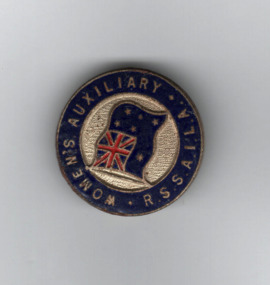
Badge, Women's Auxillary
... The Returned Soldiers, Sailors and Airmen Imperial League of Australia was formed in 1916 as welfare group to assist military personnel returning from the overseas active service. In 1965 the organization was renamed the Returned Services League of Australia and assists military personnel, and their families, both past and present. The Women's...Women's Auxiliary RSSAILA. ( Returned soldiers and sailors Imperial league of Australia)...The Returned Soldiers, Sailors and Airmen Imperial League of Australia was formed in 1916 as welfare group to assist military personnel returning from the overseas active service. In 1965 the organization was renamed the Returned Services League of Australia and assists military personnel, and their families, both past and present. The Women's ...The Returned Soldiers, Sailors and Airmen Imperial League of Australia was formed in 1916 as welfare group to assist military personnel returning from the overseas active service. In 1965 the organization was renamed the Returned Services League of Australia and assists military personnel, and their families, both past and present. The Women's Auxiliaries assisted in the past with the work of the R.S.S.A.I.L.A. and today assist with the work of the Returned Services League. (The K.G.Luke company was founded in 1925 and continued until the 1980s.)This badge is of interest as one issued by the Women's Auxiliary of the R.S.S.A.I.L.A. It is not known if it has any connection to a local branch of the Women's Auxiliary. Small circular metal badge with dark blue circle around the edge and an Australian flag surrounded by a cream section. Pin on the reverse. Women's Auxiliary RSSAILA. ( Returned soldiers and sailors Imperial league of Australia)women's auxiliaries, returned services league of australia, returned soldiers, warrnambool history
