
Showing 114 items matching " farmer mrs"
-
 Glen Eira Historical Society
Article - SHELFORD GIRLS’ SCHOOL AND KINDERGARTEN
... ... Farmer Mrs...Mr Chalk Mrs Godley Mrs Nattrass Miss Gill Miss Farmer Mrs Biggs Mrs Fulton Mrs Armstrong Mrs Thompson G.H. ...This file contains 9 items relating to the purchase of ‘Helenslea’ for Shelford Girls’ School and its early years there. 1/1 photocopy of a notice advertising a public meeting on 04/12/1922 concerning fundraising for the purchase of ‘Helenslea’ for Shelford Girls’ School, dated 29/11/1922, publication unknown. 2/1 leaflet requesting donations and gifts for the purchase and fitting out of ‘Helenslea’ for Shelford Girls’ School, dated 04/12/1922, publication unknown. 3/1 photocopy of 2 pages from the ‘St Mary’s Church Chronicle’ dated 16/12/1922., describing Shelford’s history, the purchase of ‘Helenslea’ and related fundraising efforts. 4/1 photocopy of an invitation to Mr & Mrs Reeves to attend the dedication of ‘Helenslea’ for use by Shelford Girls’ School on 22/02/1923. 5/1 photocopy of an article and 5 photographs in ‘Punch’, 01/03/1923, about the dedication of ‘Helenslea’ for use by Shelford Girls’ School. The photographs are of various visitors, staff and students with one showing the front of ‘Helenslea’. 6/1 photocopy of a one-page prospectus including rules for Shelford Girls’ School and Kindergarten with a photograph of the school dated approximately 1922-23. Date and publication unknown. The photograph shows ‘Helenslea’ prior to the alterations done for the school. 7/1 Photocopy of a photograph titled ‘Retrospect’ of the staff of Shelford Girls’ School in 1923 including E.H. Naylor, Rev. James Townsend, A.M. Thomas, D. Champion, P.M. Evans, and L. Fulton. Another photocopy of a second photograph of the school approx. 1923 and a list of teaching staff. Date and publication unknown. 8/2 photocopies of an article from an unknown, undated publication containing an extract from the ‘The Argus’, December 1928 describing the Shelford Speech Night. Also contains several notes about Shelford events and a photograph of the school in 1929. 9/1 photocopy of an undated photograph of Shelford Girls’ School from an unknown publication. Development of the gardens indicates a later date than 1929.st mary’s church, caulfield, shelford girls’ school and kindergarten, glen eira road, ‘helenslea’, hood crescent, hayman archdeacon, eggleston f.w., fundraising events, public meetings, schools, st mary’s school hall, blundell dora miss, allison road, school committees, mansions, stables, hood justice mr, views, churches, clergy residences, classrooms, halls, langley h.t., st mary’s church of england, moffit graham j, swale. d.h. mr, children, kindergartens, smith ogg and serpell (architects), smith sydney, dodgson miss, falls councillor, prendergast a.i. (churchwarden), slaney f miss, dumas mr, thomas miss, pollard mr, gill miss, beggs f.g. miss, beggs c miss, hollow s mr, irwin t mr, lloyd m.c. mr, graham j.m. mr, fredrickson mrs, langley canon, askew a.j. mr, scales a.w. mr, dixon emily miss, seymour road, stephen george sir, douglas sholto mr, ludbrook e.c. mr, langley mrs, reeves mr, reeves mrs, openings (events), lees harrington mrs, brookes mrs (mayoress), mayors, crotty c reverend, crotty mrs, wells j.s. reverend, wells mrs, scheiger c.p. reverend, scheiger mrs, cole t. reverend, cole mrs, gumas g. mr, gumas mrs, creswick h.e. mr, creswick mrs, askew mr, askew mrs, falls mrs, mowle councillor, mowle mrs, scales mr, scales mrs, welshford smithers t mr, welshford smithers mrs, walker h.k. mrs, lansell clarke mrs, head mrs, slaney miss, moffit graham mrs, whittington mrs, horsley a. mrs, townsend l. reverend, britten a.e. reverend, burns h. reverend, burns mrs, crockett reverend, crockett mrs, mclennan mr, mclennan mrs, mclellan miss, schofield reverend, brain reverend, wagg reverend, reeves reverend, archer f.h., archer mrs, akehurst miss, hoggart mrs, mcgowan mr, mcgowan mrs, chalk a.s. mr, chalk mrs, godley mrs, nattrass miss, gill miss, farmer mrs, biggs mrs, fulton mrs, armstrong mrs, thompson g.h. mr, thompson mrs, hall councillor, hall mrs, murray councillor, murray mrs, robertson h.j. mrs, thomas a.m. miss, education, naylor e.h. miss, townsend james reverend, champion d. (female), evans p.m. miss, fulton l. (female), davidson m.j. miss, allen e miss, smart m mrs, giderson h mrs, dunstan g mrs, forte e mrs, morres t miss, pollard e miss, varley m miss, tuckwell charles, howden l miss, massey ella miss, mitchell m miss, mollison f miss, lascelles k miss, england s.p. mr, miller e miss, smith m miss, speech nights, baker donald bishop, patton councillor (mayor), old girls association, dances and balls, green bishop, scarlett captain, king frank reverend, choirs, hayman archdeacon, awards -
 Bendigo Historical Society Inc.
Document - HARRY BIGGS COLLECTION: BAPTISM CERTIFICATE, 1816
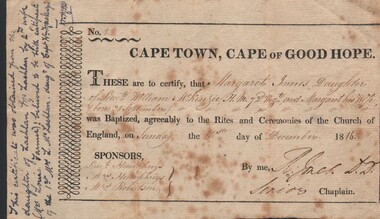
... Written on the side of the certificate in ink is: This certificate was obtained from the daughter of Lachlan McLachlan by 2nd wife (Mrs. Louis Farmer); believed to be birth certificate of the 1st Mrs. ...Lachlan McLachlan Louis Farmer A baptism certificate for Margaret Innes, who was baptised in the Church of England on Sunday the first day of December 1816 in Cape town, Cape of Good Hope. Written on the side of the certificate in ink is: This certificate was obtained from the daughter of Lachlan McLachlan by 2nd wife (Mrs. ...A baptism certificate for Margaret Innes, who was baptised in the Church of England on Sunday the first day of December 1816 in Cape town, Cape of Good Hope. Written on the side of the certificate in ink is: This certificate was obtained from the daughter of Lachlan McLachlan by 2nd wife (Mrs. Louis Farmer); believed to be birth certificate of the 1st Mrs. L. McLachlan, daughter of Captain William Mackenzieperson, individual, baptism certificate, margaret innes, william mckenzie. h.m. 72nd regiment. lachlan mclachlan, louis farmer -
 Halls Gap & Grampians Historical Society
Newspaper - B/W
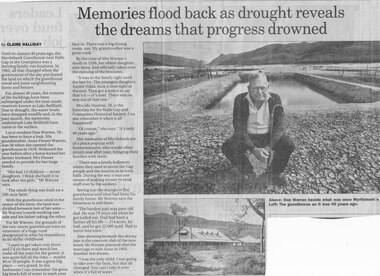
... Widowed, the year before after a horse kicked her farmer husband, Mrs Flower needed to provide for their large family. ...Widowed, the year before after a horse kicked her farmer husband, Mrs Flower needed to provide for their large family. ...Until the closure 40 years ago, the Myrtlebank Guesthouse near Halls Gap in the Grampians was a thriving family - run business. In 1962, all that changed when the government of the day purchased the land on which the guesthouse stood and some neighbouring farms and houses. For almost 40 Years, the remains of the buildings have been submered under the man made reservoir known as Lake Bellfield. Due to drought, the eater levels have dropped steadily and, in the past month, the memories underneath Lake Bellfield have come to the surface. Local resident Don warren 70, has been to have a look. His grandmother Anne Flower Warren, was 56 when she opened the guesthouse in 1916. Widowed, the year before after a horse kicked her farmer husband, Mrs Flower needed to provide for their large family. "She had 13 children - seven daughters. I think she built it to look after the girls," Mr Warren says, "The whole think was built on a 500 acre farm." With the guesthouse sited in the centre of the farm, the land was divided between two of her sons- Mr Warren's uncle working one side and his father taking the other. For Mr Warren, the grounds of the two-storey guesthouse were an extension of a huge rural playground in what he remembers as an idyllic childhood. "I used to get taken over there and I'd sit there and watch her make all the toast for the guests. It was quite full all the time - maybe 40 or 50 people. It was a great big place - very grand. In the bedrooms I can remember the great big bowls full of water to wash your face in. There was a big dining room, too. My grandmother was a great cook." By the time of Mrs Warren's death in 1936, her eldest daughter also Anne, had officially taken over the running of the business. "It was in the family right until the last bit. The youngest daughter, Auntie Hilda, took it over right at the end. they got a notice to say that's it - it's over There was no way out of that one." Mrs Ida Stanton, 78, is the historian for the Halls Gap and Grampians Historical Society. Can she remember it when it all happened? "Of course" she says "It's only 40 years ago" Her memories of Myrtlebank are of a place popular with honeymooners, who would often return year after year, bringing their families with them. "There was a lovely ballroom where they used to invite the Gap people and the tourists in to have balls. During the war it was one means of making money to send stuff over to the soldiers." Seeing just the stumps of the guesthouse and what had been his family home, Mr Warren says the bitterness is still there. "The hardest part was poor old dad. He was 70 years old when he got turfed out. Dad had been a farmer all his life - 214 acres, he had, and he got 22,000 quid. Had to move into town" Also showing beneath the drying lake is the concrete slab of the new home Mr Warren planned after his marriage to wife Anne in 1955. Another lost dream. " I was the only child, I was going to take over the farm, but that all changed. You can't take it over when it's full of water.Newspaper clipping of history of Myrtlebank by Don Warren and photo of Don at old site of pooland guest House photo Article by Claire Halliday from newspaper 2002accommodation, guesthouses, myrtlebank -
Bendigo Historical Society Inc.
Document - THE MAYORAL AUXILIARY, 25 Sept. 1947
... Bride: Miss Phyllis Farmer. Nanny & the Children: Mrs T O Hunter...Bride: Miss Phyllis Farmer. Nanny & the Children: Mrs T O Hunter, Misses Janice Morgan & Gladys Brown. ...Bride: Miss Phyllis Farmer. Nanny & the Children: Mrs T O Hunter Misses Janice Morgan & Gladys Brown. ...The Mayoral Auxiliary. Entertainment arranged by The Mayoral Auxiliary in aid of The Food For Britain Appeal. 25 Sept., 1947. Part 1 - Musical Programme. 1.Piano & Violin: Misses Leggo & McNair. Vocal Solo: Mr Arthur Nicholls. Trio: Mesdames Ennor & Lober & Miss Pianto. Dramatic Scene, Song & Dance: Miss Janice Morgan. Vocal Solo: Mr Beckwith. Specialty Act: Miss Gladys Brown. Vocal Solo: Mrs Ennor. Part 2 - Dramatic Entertainment. Dramatic Personage: Dreamer: Mr Jack Hocking. Grandparents: Mr Mac Walker & Mrs Oliver. Suitors: Messers Beckwith & Harvey. Daughter: Miss Letty White. Dancer: Miss Eileen Clarke. Sports Girl: Miss Mary Stanistreet. Marie & Mary: Misses A Taylor. The Cook & the Lady: Misses Dorothy Farmer & Helen Sargeant. Widow: Miss Beverly Dyer. Sister: Miss Judy Edwards. Bride: Miss Phyllis Farmer. Nanny & the Children: Mrs T O Hunter, Misses Janice Morgan & Gladys Brown. Nurses: Misses D Farmer & Helen Sargeant. Orchestra: Misses Leggo (Piano); McNair (Violin) & Kerr (Viola). Costumieres: Mr & Mrs L V Lansell. Cake Stall: Mesdames Amer, Bryenton & Poulston. Sweets: Mesdames Chellew & Guthery. Sellers: Girls School Students. Doorkeepers: Mesdames Anderson and Streader. Sweets supplied by Girls School, High School, Mr Wilkinson, Mrs Body, Misses Burgess & Weller. Tickets donated by Mr Albert Matthews. Stage Manager: Mrs T O Hunter. Compere: Mess L MacGillivray. Assistant: Mr L M Green. 3 copies of program 4268 a,b,c. 4 pages.entertainment, theatre, the mayoral auxiliary, the mayoral auxiliary in aid the food for britain appeal. 25 sept., 1947. piano & violin: misses leggo & mcnair. vocal solo: mr arthur nicholls. trio: mesdames ennor & lober & miss pianto. dramatic scene, song & dance: miss janice morgan. vocal solo: mr beckwith. specialty act: miss gladys brown. vocal solo: mrs ennor. dramatic personage: dreamer: mr jack hocking. grandparents: mr mac walker & mrs oliver. suitors: messers beckwith & harvey. daughter: miss letty white. dancer: miss eileen clarke. sports girl: miss mary stanistreet. marie & mary: misses a taylor. the cook & the lady: misses dorothy farmer & helen sargeant. widow: miss beverly dyer. sister: miss judy edwards. bride: miss phyllis farmer. nanny & the children: mrs t o hunter, misses janice morgan & gladys brown. nurses: misses d farmer & helen sargeant. orchestra: misses leggo (piano); mcnair (violin) & kerr (viola). costumieres: mr & mrs l v lansell. cake stall: mesdames amer, bryenton & poulston. sweets: mesdames chellew & guthery. sellers: girls school students. doorkeepers: mesdames anderson and streader. sweets supplied by girls school, high school, mr wilkinson, mrs body, misses burgess & weller. tickets donated by mr albert matthews. stage manager: mrs t o hunter. compere: mess l macgillivray. assistant: mr l m green. -
 Federation University Historical Collection
Photograph, Catherine Coghill, 1860s
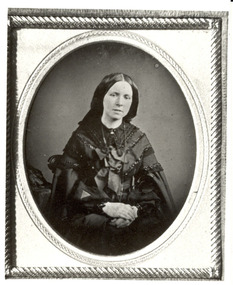
... Holmes a farmer at Ascot and her companion Mrs. Mark Gardiner [Gardner], wife of the contractor for laying down the wood pavement in Elizabeth- street, sailed for Queensland aboard the elegant steamship, ‘Ly-ee-Moon’ to visit her sister Adelaide Reid and purchase a property in the Darling Downs, Qld. ...Holmes a farmer at Ascot and her companion Mrs. Mark Gardiner [Gardner], wife of the contractor for laying down the wood pavement in Elizabeth- street, sailed for Queensland aboard the elegant steamship, ‘Ly-ee-Moon’ to visit her sister Adelaide Reid and purchase a property in the Darling Downs, Qld. ...Catherine Holmes married William Coghill Junior. William died in 1884. This is possibly a photo of Catherine in her mourning clothes. They had no children. His estate passed to Catherine. In 1886 Catherine accompanied by her brother, Edward Carter Holmes, Mr. Holmes a farmer at Ascot and her companion Mrs. Mark Gardiner [Gardner], wife of the contractor for laying down the wood pavement in Elizabeth- street, sailed for Queensland aboard the elegant steamship, ‘Ly-ee-Moon’ to visit her sister Adelaide Reid and purchase a property in the Darling Downs, Qld. Tragically all three, and the gold sovereigns they were carrying to purchase same, were lost when the steamship struck rocks and was wrecked off the rugged Green Cape Coast, just south of Bega, New South Wales [Jane Dyer, 15 June 2024]Black and white photograph of a seated woman wearing black clothing, a cap with centrally parted hair. The woman is Catherine Coghill (formerly Holmes), who married William Coghill Jnr. catherine coghill, catherine holmes, william coghill, william coghill junior, holmes family collection, chatham-holmes family collection, ly-ee-moon, mourning, shipwreck, women, pioneer women, family history -
 Federation University Historical Collection
Book - Programme, South Street Eisteddfod Official Guide, 1907, 1907
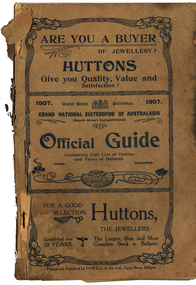
... Mrs F. Allen Caterer, Coles & Pullum, J.C. Dillon & Co., Surrey Tannery, Coulthard's Ballarat Business College, George Farmer, MrBride's Boots, L.J. ...Mrs F. Allen Caterer, Coles & Pullum, J.C. Dillon & Co., Surrey Tannery, Coulthard's Ballarat Business College, George Farmer, MrBride's Boots, L.J. ...South Street competitions have been held in Ballarat since 1991.Official guide to the 1907 South Street competitions. Images include: Prince of Wales, Lord Northcote, W.D. Thomas, South Street Competition Executive Committee (W.H. Pearson, W.H. Chandler, A. Prichard, W.H. Richards, W.D. Hill, Col. Williams, W.D. Thomas, F. Besemeres, F.J. Martell, J.T. Morris. F.J. Williams, R. Maddern, R.J. Gribble), Sir John Madden, Lord Tennyson, W.D. Hill, Frederick Bevan, Ballarat (Sturt Street), Lake Wendouree (Yachts), J.W. Beswick, Lawrence Campbell, City of Ballarat Mayor and Councillor (Mayor Brawn, E. Williams, E. Morey. Cr Brokenshire, J. Whykes, J.M. Barker, G. Crocker, W.D. Hill, R. Pearse, T. Hollway), Ballarat East Mayor and Councillors (J. Gent, Cr Glendenning, J.N. Dunn, I. Pearce, C. Bunting, A. Levy, J. Ritchie, J. McNeil, A. McKenzie, Cr Penhalluriak), Sturt Street Looking West, Old Curiosity House, Entrance to the Ballarat Fine Art Gallery, Interior of the Ballarat Fine Art Gallery, Ballarat East Town Hall and Gardens, Lake Wendouree Ferry, W.E. Swenson, S.B. Swenson, J.G.M. Swenson, Rev. T. Flynn, Edwards' Pyrites, Lestor's Hotel, Sunshine Sheild, W to W Shield, Frank Herman, W.F. Coultman, Marks' Trophy, Lighthouse Port Fairy, R. Correll Music Seller, James Smith, Isaac Pitman, Arthur Brumfield, Hugh Leschen, John Robson, St Augustine's Band Geelong, Moorabool Falls, Kirks Dam, Ballarat Choral Society, Alfred Deakin, James Long, Hugh McKay Advertisements include: Huttons the Jewellers, Sam Jamieson, Sun Foundry, City Saw Mills, Blomeley Bros Iron and Brass Founders, G. Bongiorno- Railway Fruit Palace, Henry Brind & Co., Andrew Cant, Harrison's Foundry, Umbrella and Sunshade Emporium, Ballarat City Baths, Ballarat Coffee Palace, Irwin's Provincial Hotel, Victa Studio; D. Lem Chinese Medical Practitioner, Bosisto's Eucalyptus Oil, Ronaldson Bros & Tippett, Unicorn HOtel, Mrs F. Allen Caterer, Coles & Pullum, J.C. Dillon & Co., Surrey Tannery, Coulthard's Ballarat Business College, George Farmer, MrBride's Boots, L.J. Austin, Dyason's, Ballarat Brewing Company, Phoenix Brewery, Royal Standard Brewery, Edwards' Pyrites, Lestor's Hotel, Robson's College of Music, James A. Gear, Williams Shoemen, Tekardo Brothers, Powell & Co.south street competitions, eisteddfod, chinese herbalist, south street, r.b. lemmon, g. bongiorno, w.d. thomas, john madden, lord tennyson, w.d. hill, frederick bevan, j.w. beswick, lawrence campbell, boer war memorial, queen victoria statue, curiosity shop, m.b. john foundry, ballarat east town hall and gardens, sunshine shield, hugh victor mckay, w to w shield, w.j. coltman, frank herman, j. hutton-jones, t. downer, j. marks, hutton and co trophy, marks trophy, hugh leschen, john robson, st augustine's band, geelong, downer trophy, trekardo brothers, moorabool falls, kirks dam, ballarat choral society, alfred deakin, challenge cup, james long, grand national eisteddfod of australasia, ballarat east gardens, ballarat east town hall -
 The Beechworth Burke Museum
Audio - Oral History, Jennifer Williams, Mrs Val Mason, 5 January 2001
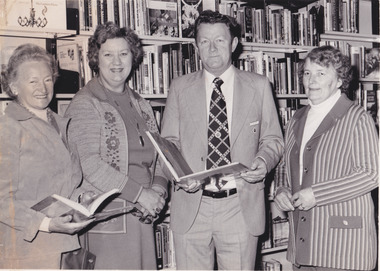
... Mrs. Valerie (Val) Mason (1927-2019) was a local sheep farmer, business-woman, Beechworth shire councillor, and mother to five children. ...Mrs. Valerie (Val) Mason (1927-2019) was a local sheep farmer, business-woman, Beechworth shire councillor, and mother to five children. ...Mrs. Valerie (Val) Mason (1927-2019) was a local sheep farmer, business-woman, Beechworth shire councillor, and mother to five children. With her husband, Charles, Mrs. Mason developed and managed the Big Valley farm estate, at Everton, which is now part of a vineyard and farm stay. Mrs. Mason was instrumental in introducing a 'paddock to plate' philosophy and business model, opening a butcher shop on the farm in 1973. Concerned with improving infrastructure and developing economic opportunities in the region, Mrs. Mason successfully stood as a local council representative for South Riding in the United Shire of Beechworth, and later become the first woman Shire President in 1979. Mrs Mason was a member of the local Business and Professional Women's Club for 37 years. This oral history recording was part of a project conducted by Jennifer Williams in the year 2000 to capture the everyday life and struggles in Beechworth during the twentieth century. This project involved recording seventy oral histories on cassette tapes of local Beechworth residents which were then published in a book titled: 'Listen to what they say: voices of twentieth century Beechworth. These cassette tapes were digitised in July 2021 with funds made available by the Friends of the Burke.Mrs. Mason's story is historically significant for understanding economic and social changes in the Beechworth region during the latter half of the twentieth century. As a council representative, issues such as road and infrastructure modernisation and the transition from traditional government employment sectors, like Beechworth's care institutions, were challenges for local government. As a farmer and local employer, Mrs. Mason's story is testimony to the region's economic diversification as businesses like Big Valley farm shop helped shape the region's contemporary character. Mrs. Mason was among the first women to broach the traditionally all-male Beechworth Council Chambers and her story is socially significant for understanding the changing role of women in rural and regional Australia. This oral history recording offers interpretive capacity for social history themes and may be compared with other oral histories in the Burke Museum's collection. This oral history account is socially and historically significant as it is a part of a broader collection of interviews conducted by Jennifer Williams which were published in the book 'Listen to what they say: voices of twentieth-century Beechworth.' While the township of Beechworth is known for its history as a gold rush town, these accounts provide a unique insight into the day-to-day life of the town's residents during the 20th century, many of which will have now been lost if they had not been preserved.This is a digital copy of a recording that was originally captured on a cassette tape. The cassette tape is black with a horizontal white strip and is currently stored in a clear flat plastic rectangular container. It holds up 40 minutes of recordings on each side.Mrs Val Mason /listen to what they say, beechworth, oral history, burke museum, working women, trail blazers, farm to plate, farm shop, paddock to plate, woman farmer, united shire of beechworth, rural and regional women, beechworth's first woman shire president, women in leadership positions, women leaders, australian settlement history, settler societies, victorian gold rush, heritage tourism, culinary tourism, regional land use, indigo winery, farm stay, social history -
 Flagstaff Hill Maritime Museum and Village
Clothing - Evening Outfit, before April 1874
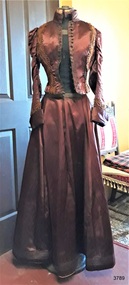
... These items represent a period of interaction between the native and European peoples, highlighting the cultural exchanges that occurred within the region. flagstaff hill warrnambool shipwrecked coast flagstaff hill maritime museum maritime museum shipwreck coast flagstaff hill maritime village great ocean road evening outfit wedding outfit bridesmaid’ outfit matron of honour outfit clothing female clothing late 19th century clothing wedding late 19th century clothing bridesmaid late 19th century clothing antique clothing ladies women’s clothing women’s fashion alexander russell eliza russell eliza moore isabella mitchell bella mitchell bella russell isabella russell ralph russell ian mccusker ruby akers fredrick william akers ruby mclauchlan margaret jane mclaughlan nee mitchell margaret jane mclaughlan centenarian william mclaughlan robert russell elizabeth russell nee mitchell irish immigrants warrnambool volunteer defence corps 1938-1945 antique satin outfit warrnambool wedding 1874 congregational church warrnambool reverend uriah coombs dennington farmer yarpturk farmer purnim district farmer camperdown resident 1905 dennington bridge indigenous corroboree in dennington corroboree in warrnambool 1880s corroboree in warrnambool lubra and baby indigenous corroboree in warrnambool McCullagh family This lady’s evening outfit is made from amber coloured satin fabric. It comprises a short-waisted, long-sleeved jacket and a long skirt, and it has its own neck-to-floor wooden mannequin on a pedestal. The outfit was worn by Mrs ...This amber satin evening outfit was worn by Mrs Isabella Mitchell (nee Russell, 1840 – 1929) at the wedding of her brother Alexander (c.1846–1938) and Eliza (nee Moore, c.1854–1939). The jacket and skirt attach at the waist by joining the metal rings around the base of the jacket, and the metal hooks on the waistband of the skirt. The outfit was donated with its own mannequin and fits it perfectly. In the colonial days, outer clothing was rarely, if ever, washed, due to the expense of fabrics and the difficulty in careful laundering. Clever methods were employed to reduce the occurrence of soiling. The mannequin included with the donation would also help keep the outfit in good shape and ensure a flattering fit. FAMILIES’ HISTORY The families connected with this wedding, where the outfit was worn, are from Warrnambool’s colonial days. Isabella and Alexander’s parents, Robert Russell and Elizabeth (nee Mitchell), were born in 1808 and married about 1830. They were from farming families in Northern Ireland, where they raised their seven children before migrating to Australia in the early colonial days, around 1857. Their graves are in the Tower Hill Cemetery. Alexander’s wife, Eliza (nee Moore, born in 1854), was also from Northern Ireland and migrated to Australia in 1858 with her parents, Thomas and Nancy Moore, in the last voyage of the sailing ship “Chance”. Isabella (Bella) talked with her granddaughter Ruby Akers about her memories of Alexander and Eliza’s wedding and other events in her life. Ruby recorded these memories in a letter. She says, “They were married in the Warrnambool Congregational Church by a pioneer minister, the Reverend Uriah Coombs. The bride wore a pale blue silk wedding gown, which she made herself. Bella was Matron of Honora, and Ian McCasker was best man. In those days, the transport to the church was usually a carriage – similar to a cab – and a pair of white ponies. They would have the reception at home, go for a drive afterwards, and at night there would be a dance. They did all the catering themselves … Eliza carried on farming in the Dennington, Yarpturk and Purnim districts until they moved to Camperdown around 1905…” Ruby’s letter later mentions “[Isabella] could recall seeing a blackfellows’ corroboree being performed near where the Dennington Bridge now stands. It was rather a terrifying experience; they seemed to be in a warlike mood, and one never knew what they would do next. One lubra came running to Granny, crying, Hide me, bad man kill me. She was bleeding from a wound in the head: probably the result of a blow from a waddy. My mother [Margaret Jane McLaughlan nee Mitchell], coming home from school in the 1800s, often met blackfellows walking ahead with spears and boomerang, the two lubras – they usually had two – following in the rear, carrying the children or any burdens they had.“ Margaret was probably in primary school at the time she saw these things. Alexander and Eliza had ten children. One of their daughters, Margaret Jane, was born in Warrnambool in 1879. She married William McCullagh, and they had eleven children. Margaret made headlines in the Warrnambool newspapers for celebrating her 100th birthday. She had lived in the district for 60 years before moving to Melbourne. Alexander passed away at the age of 92, and Eliza passed away six months later, aged 85. Their graves are in the Colac cemetery. Isabella married Ralph Mitchell, and their daughter Margaret Jane married John McLauchlan in 1891. Margaret and John’s daughter, Ruby Elizabeth Jane, married Fredrick Akers in 1938. Fredrick, born in England, was a Boer War veteran and served in the British Army. He migrated to Queensland, Australia, in 1913, and joined the Australian Army to fight in World War I. In 1935, he moved to Warrnambool, where he served in the Volunteer Defence Corps from 1938 to 1945. Both Ruby and Fredrick are buried in the Tower Hill Cemetery.The evening outfit and its accompanying mannequin serve as notable examples of female fashion from the mid to late 1900s. These items reflect the styles and trends that were prevalent during this period, offering insight into the clothing choices and cultural influences that shaped women's attire. Beyond their representation of period fashion, the outfit and mannequin are significant due to their association with colonial pioneer families from Australia, specifically Victoria and Warrnambool. These families played an important role in the development and history of the region, and the items are linked to their legacy. The evening outfit and mannequin are also notable for their connection to a wedding that united two colonial families originating from Northern Ireland. These families immigrated to Australia in the mid-1850s and became influential figures within the Warrnambool district. The wedding marked a significant event, symbolising the merging of two prominent family lineages. Furthermore, the significance of the evening outfit and mannequin extends to their connection with the colonial families’ contact with the indigenous culture of the district. These items represent a period of interaction between the native and European peoples, highlighting the cultural exchanges that occurred within the region. This lady’s evening outfit is made from amber coloured satin fabric. It comprises a short-waisted, long-sleeved jacket and a long skirt, and it has its own neck-to-floor wooden mannequin on a pedestal. The outfit was worn by Mrs Isabella Mitchell (nee Russell) as the Matron of Honour at the wedding of her brother Alexander Russell and his fiancée Eliza Moore in Warrnambool, 29th April 1874.flagstaff hill, warrnambool, shipwrecked coast, flagstaff hill maritime museum, maritime museum, shipwreck coast, flagstaff hill maritime village, great ocean road, evening outfit, wedding outfit, bridesmaid’ outfit, matron of honour outfit, clothing female, clothing late 19th century, clothing wedding late 19th century, clothing bridesmaid late 19th century, clothing antique, clothing ladies, women’s clothing, women’s fashion, alexander russell, eliza russell, eliza moore, isabella mitchell, bella mitchell, bella russell, isabella russell, ralph russell, ian mccusker, ruby akers, fredrick william akers, ruby mclauchlan, margaret jane mclaughlan nee mitchell, margaret jane mclaughlan centenarian, william mclaughlan, robert russell, elizabeth russell nee mitchell, irish immigrants, warrnambool volunteer defence corps 1938-1945, antique satin outfit, warrnambool wedding 1874, congregational church warrnambool, reverend uriah coombs, dennington farmer, yarpturk farmer, purnim district farmer, camperdown resident 1905, dennington bridge, indigenous corroboree in dennington, corroboree in warrnambool, 1880s corroboree in warrnambool, lubra and baby, indigenous corroboree in warrnambool, mccullagh family -
 Greensborough Historical Society
Photograph (Framed), Mrs Samuel Haylock Poulter 1858-1896, 1890c
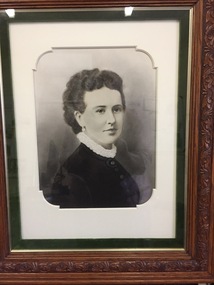
... farmer. She married Samuel Haylock Poulter in 1881 at Heidelberg. Samuel was born in 1853, son of William Poulter Seven children were born to Samuel an Margaret. Margaret, aged 38, died on 02/08/1896 seven weeks after the birth of Edith May, from complications of the birth. She was buried at Eltham by rites of the Church of England. This portrait is presented to the Greensborough Historical Society at the request of Mrs...farmer. She married Samuel Haylock Poulter in 1881 at Heidelberg. Samuel was born in 1853, son of William Poulter Seven children were born to Samuel an Margaret. Margaret, aged 38, died on 02/08/1896 seven weeks after the birth of Edith May, from complications of the birth. She was buried at Eltham by rites of the Church of England. This portrait is presented to the Greensborough Historical Society at the request of Mrs ...Margaret Morrow was born in County Tyrone, Ireland in 1858. Her father was John Morrow, a farmer. She married Samuel Haylock Poulter in 1881 at Heidelberg. Samuel was born in 1853, son of William Poulter Seven children were born to Samuel an Margaret. Margaret, aged 38, died on 02/08/1896 seven weeks after the birth of Edith May, from complications of the birth. She was buried at Eltham by rites of the Church of England. This portrait is presented to the Greensborough Historical Society at the request of Mrs Barbara Lenne (nee Cooke) (1935-2017), great grand daughter of Margaret Morrow and Samuel Poulter.Large timber-framed photograph. Studio portrait of woman. Biographical notes.samuel haylock poulter, margaret morrow, poulter family -
 City of Moorabbin Historical Society (Operating the Box Cottage Museum)
Photograph - Back to Cheltenham State School - A memento 28.11.1936, 1936
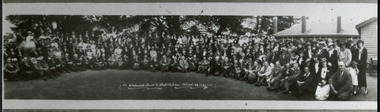
... A reunion gathering for past students of Cheltenham State School held in November 1936 Cheltenham Primary School state school charman road cheltenham school charman stephen gettens mary spring grove balcombe road nepean road dairy farmers market agrdeners poultry farmers methodist church cancel 1936 A black and white photograph of a large group of men and women in a semicircle on a school play yard beside a weatherboard building .They all appear to be smartly dressed, many women wearing hats and the men in suits. Cheltenham School Reunion. The third annual "Back to Cheltenham State school" reunion attracted an attendance of 600 former scholars to the school on Saturday afternoon. The proceedings were opened by tho mayor of Moorabbin (Cr. J. W. Allnut). The oldest teacher present was Mrs ...A reunion gathering for past students of Cheltenham State School held in November 1936A black and white photograph of a large group of men and women in a semicircle on a school play yard beside a weatherboard building .They all appear to be smartly dressed, many women wearing hats and the men in suits. Cheltenham School Reunion. The third annual "Back to Cheltenham State school" reunion attracted an attendance of 600 former scholars to the school on Saturday afternoon. The proceedings were opened by tho mayor of Moorabbin (Cr. J. W. Allnut). The oldest teacher present was Mrs. Grant, of Sorrento, who, as Miss Fraser, had charge of the school from 1880 to 1883. Another old identity was Mr. T. Evans, of Kew, who is 82 years of age — he was the head teacher from 1802 to 1800. Photographs were taken of Mrs. Grant with fifteen of her former pupils, and of Mr. Evans, who mustered 72 of his old scholars. The roll call showed that there were 50 pupils present who attended tho school more than half a century ago. Mrs. Buckley, of Mentone, who is 84, and Mr. W. P. Fairlam, of Cheltenham, 80 years, were the oldest former scholars in attendance. Mr. Fairlam, notwithstanding his age, still carries on the business of an auctioneer. Bouquets were presented to Mrs. Grant and Mrs Buckley by the president of the mothers' club (Mrs. Marshall). An enjoyable day was wound up by a dance at night in the mechanical institute, when 200 attended. (Age, Monday 30 November 1936, page 5)cheltenham primary school, state school, charman road, cheltenham, school, charman stephen, gettens mary, spring grove, balcombe road, nepean road, dairy farmers, market agrdeners, poultry farmers, methodist church, cancel, 1936 -
 Colac & District Historical Society
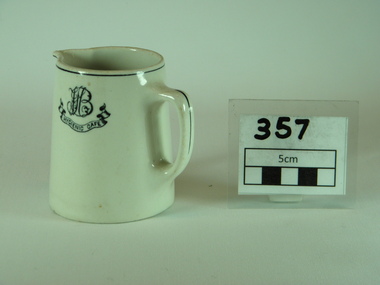
china milk jug, "DURALING" Super vitrified Grindley Hotel Ware et al, hygeienic cafe milk jug, Early 20th Century 1920's
... Mrs. H. Bartlett in the late 1930's. It was popular with farmers who patronised it on market days. ...Mrs. H. Bartlett in the late 1930's. It was popular with farmers who patronised it on market days. ...The Hygeienic Cafe was conducted by Mrs. H. Bartlett in the late 1930's. It was popular with farmers who patronised it on market days. Many wedding receptions were held in this cafe It was sited near Blane's Newsagency in Murray St.One of very few peices of china from this popular Colac cafe remaining in existance. Cafe closed during WW2This milk jug is made of vitrified English china. Colour- White with blue markings.Elaborate H/B with banner and name beneath lined rim and handle.No 357 (Society No.) and makers markings on base.hygeienic cafe china milk jug -
 Orbost & District Historical Society
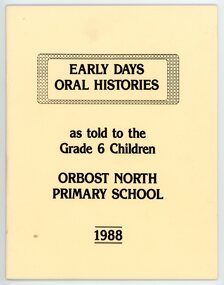
Booklet - Oral history book, Orbost North Primary School, EARLY DAYS, ORAL HISTORIES as told to the Grade 6 children Orbost North Primary School 1988, 1988
... Henderson (Smith); Mrs Alice Slatter (nee Gibbs); Mrs Edith Emily Hughes (nee Courtnage); Mr Gordon Malcolm Farmer ...Henderson (Smith); Mrs Alice Slatter (nee Gibbs); Mrs Edith Emily Hughes (nee Courtnage); Mr Gordon Malcolm Farmer This item is significant because it tells stories of local histories. ...Oral histories as told to the Grade 6 children of Orbost North Primary School in 1988 Project funded by Country Education Contains interviews of: Mrs Florence Sheills (nee McDonald); Mrs Lily White (nee Wickham); Mrs Gladys Matthews (nee Fox); Mr Jim Holden; Mrs Marj. Henderson (Smith); Mrs Alice Slatter (nee Gibbs); Mrs Edith Emily Hughes (nee Courtnage); Mr Gordon Malcolm Farmer This item is significant because it tells stories of local histories. A thin paper back, stapled, cream cover, black print black and white 44 page bookletEARLY DAYS ORAL HISTORIES as told to the Grade 6 children ORBOST NORTH PRIMARY SCHOOL 1988oral history, orbost, grade 6, orbost north primary school -
 Orbost & District Historical Society
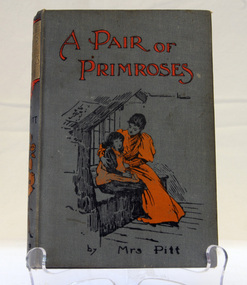
book, Cassell and Company Limited, A Pair of Primroses by Mrs Pitt, 1900
... farmers and relatives still live in Orbost. This book, together with a writing box form part of the history of the Close family who were early settlers at Murrangowar in the late 19th century. book Close Murrangowar Prize awarded to Daisy Close 1st class For most popular child in the school SS 3693 Murrangowar Dec 12th-1911 A grey- covered hard back book with black and orange illustration. The title is in orange print. A Pair of Primroses by Mrs ...This book was won by Daisy Close, born in 1899, of Murrangowar. She was Ethel Pike's mother. Daisy Close married Ed Jensen. The Jensen family lived at Murrangowar in the 1890's. they were farmers and relatives still live in Orbost.This book, together with a writing box form part of the history of the Close family who were early settlers at Murrangowar in the late 19th century.A grey- covered hard back book with black and orange illustration. The title is in orange print.Prize awarded to Daisy Close 1st class For most popular child in the school SS 3693 Murrangowar Dec 12th-1911book close murrangowar -
 Orbost & District Historical Society
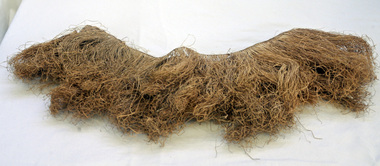
grass skirt, approx. 1905
... Worn by Mrs Jack Mundy while in New Hebrides. The Mundy family were farmers / settlers in the Snowy River area since c. 1880s. ...Worn by Mrs Jack Mundy while in New Hebrides. The Mundy family were farmers / settlers in the Snowy River area since c. 1880s. ...Worn by Mrs Jack Mundy while in New Hebrides. The Mundy family were farmers / settlers in the Snowy River area since c. 1880s. The original Mundy family moved to a land "selection" at Bete Bolong in the early 1880's from Buchan. Mundy familyHandmade grass skirt made of native plant fibres and held together with knotting along the top. Natural colour.nonegrass-skirt new-hebrides mundy costume-female native-materials -
 Orbost & District Historical Society
dress, c. 1884
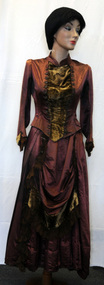
... Mrs David Nixon. John Russell was an early Orbost blacksmith in Orbost, and director of the Orbost Butter Factory for 50 years. He came to Orbost in c. 1890 at the invitation of another early settler, James Nixon, became a blacksmith, and later a farmer and landholder. ...This beautiful costume was the 'going-away' dress worn by Mrs John Russell at her wedding in c.1884. It has been passed down through the Russell family and was donated by her grand-daughter Mrs David Nixon. John Russell was an early Orbost blacksmith in Orbost, and director of the Orbost Butter Factory for 50 years. He came to Orbost in c. 1890 at the invitation of another early settler, James Nixon, became a blacksmith, and later a farmer and landholder. Many of his descendants still live in the Orbost area. This full length female costume is made of moroon satin with gold velvet inserts. It has a small train at the back, scalloped folds with lace edging down the front of the skirt, and two rows of 14 buttons each down the bodice.going-away-dress 1890s-dress -
 Orbost & District Historical Society
tea cosy, circa 1900
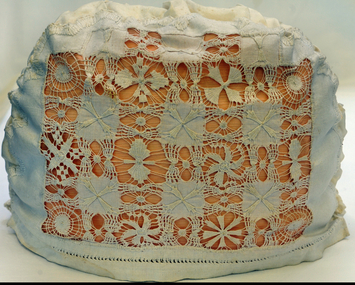
... From the trousseau of Lynn, Sam (Mrs). Samuel Lynn (1865-1949) was a farmer and grazier at Jarrahmond. ...From the trousseau of Lynn, Sam (Mrs). Samuel Lynn (1865-1949) was a farmer and grazier at Jarrahmond. ...From the trousseau of Lynn, Sam (Mrs). Samuel Lynn (1865-1949) was a farmer and grazier at Jarrahmond. Bred Clydesdales.This item has aesthetic significance as an example of a hand-made item of the early 20th century.Lace worked tea cosy with thick wadding to help preserve heat. White thread on white linen with silk lining.tea-cosy handcrafts lacemaking trousseau lynn-sam -
 Orbost & District Historical Society
black and white photograph, early 20th century
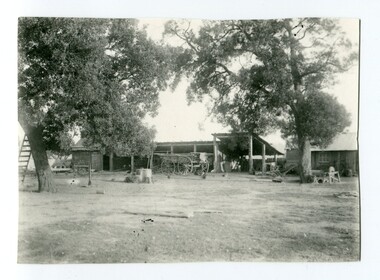
... The Watt family settled in Orbost as farmers being one of the first farming families in the district. Watt- farm agriculture-buildings on back - Mrs Watts farm A black / white photograph showing wooden farm sheds and wagons. a small wooden house is on the right hand side and there are tall trees in the fioreground. black and white photograph ...Mr John Watt set up farming in 1879. He was a native of Port Fairy. He was educated in Scotland and came back to Victoria and selected 320 acres on the Snowy River.The property extended from Majors Creek Road to around about Gilbert's Gulch.The Watt family settled in Orbost as farmers being one of the first farming families in the district.A black / white photograph showing wooden farm sheds and wagons. a small wooden house is on the right hand side and there are tall trees in the fioreground.on back - Mrs Watts farmwatt- farm agriculture-buildings -
 Ringwood and District Historical Society
Document - Department of Lands and Survey, Wire Netting Branch, Melbourne, Victoria, Application for Vermin-Proof Fence Certificate - L.J. Mills vs John Collins, Grandview Grove, Ringwood, Victoria - 1939
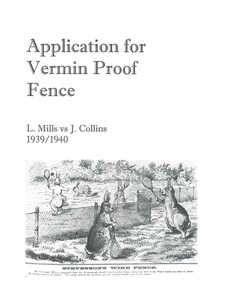
... Mrs Linda Collins and John Collins resp of Brysons Road East Ringwood. - Jas H Allison (Inspector, Vermin and Noxious Weeds Branch, Lands Department, Lilydale)." Photocopied file of corresponence and documentation relating to a claim by L.J. Mills, Nurseryman, that adjoining property owner, J. Collins, Farmer ...Photocopied file of corresponence and documentation relating to a claim by L.J. Mills, Nurseryman, that adjoining property owner, J. Collins, Farmer, assists with replacement of a vermin proof wire netting dividing fence destroyed by 1939 bushfire. File includes 1939 and 1940 detailed property inspection reports by Vermin and Noxious Weeds Branch, Lands Department, Lilydale, describing land use in the area and signs of vermin activity. Application approved 18th April, 1940. Appeal lodged by Mr Collins disallowed in May, 1940. File closed June, 1940 with Departmental suggesion that Mr Mills consider further legal action through a Solicitor as fence had still not been wire-netted. TRANSCRIPTS: Vermin & Noxious Weeds Inspection Reports "19/9/1939 (To) Superintendent (Department of Lands and Survey, Melbourne) Re L.J. Mills application for Vermin Proof Fence. I called on Mr Mills yesterday 18th instant in connection with this matter. Mr Mills has a flower farm and claims that rabbits and hares are damaging his flowers. He showed me a bed of carnations which he stated were being damaged by rabbits. There was evidence of some leaves being nipped off, but I am unable to say whether this is due to rabbits or grubs. Very little if any real damage is being done. The property is netted on the east and south boundary and on half the north and west boundary. The surrounding country is undlating and fairly steep in places. The land to the east across Grandview Avenue (sic) is all planted out in old established orchards and well cultivated. Cleared grass land adjoins the south boundary and bush land adjoins the north and west boundaries. I walked over a large area surrounding Mr Mills land and never saw any rabbits or hares or any indications of rabbits. This locality is not rabbit infested and very little wire netting is being used. I do not consider that a vermin proof fence is necessary between these allotments. - Jas H Allison (Inspector, Vermin and Noxious Weeds Branch, Lands Department, Lilydale)." Follow up report following renewal of application for Certificate by Mr Mills, citing rabbits causing considerable damage to his flowers. He laid poison and obtained 9 carcases and stated that there is evidence of rabbit infestation from the adjoing land. "19/3/1940 (To) Mr Hannah (Superintendant, Department of Lands and Survey, Melbourne) Re L.J. Mills, Grandview Grove Ringwood, Lot 4 Grandview Estate Pt CG20 Ph of Warrandyte. I interviewed Mr Mills at his home on 15th inst. He showed me carcases of rabbits which he stated had been poisoned on his land. In places young plants had been nipped off apparently by rabbits. I made an inspection of adjoining properties and found one live burrow close to Mr Mills northern boundary. There were scratches and other evidence of rabbits on land north and west of Mr Mills property. In view of the present evidence of rabbits I consider that a vermin proof fence is now necessary to protect the flowers grown by Mr Mills. His land is netted on whole of east and south boundary and half way on west and north boundary. The adjoining land on west and north boundaries is owned by Mrs Linda Collins and John Collins resp of Brysons Road East Ringwood. - Jas H Allison (Inspector, Vermin and Noxious Weeds Branch, Lands Department, Lilydale)." -
 City of Moorabbin Historical Society (Operating the Box Cottage Museum)
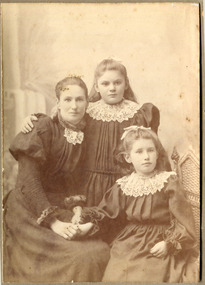
Photograph - Photograph, Mrs Carroll c1910, Mrs Carroll c1910, possibly c1910
... Mrs Caroll and children. In 'Moorabbin A Pictorial History 1862 - 1994 ' by John Cribbin, The Carroll family migrated from Ireland and purchased land in the East Brighton ( now Bentleigh ) area of Henry Dendy's Special Survey 1841. Edward, J.W. & Daniel are shown in the Rate Book 1862 as owner occupiers and owner of property in Tuckers Road, Bryants Road and Centre Road. children chapel st 287 prahran carroll edward, carroll, j.w., carroll daniel, ireland, brighton, henry dendy's special survey 1841, market gardeners, pioneers, early settlers, dairy farmers, poultry farmers, bentleigh, mckinnon, ormond, prahran, yeoman photographers co. ...Date unknown: Mrs Caroll and children. In 'Moorabbin A Pictorial History 1862 - 1994 ' by John Cribbin, The Carroll family migrated from Ireland and purchased land in the East Brighton ( now Bentleigh ) area of Henry Dendy's Special Survey 1841. Edward, J.W. & Daniel are shown in the Rate Book 1862 as owner occupiers and owner of property in Tuckers Road, Bryants Road and Centre Road.Photograph is black and white. There are three women in this photograph, a mother and her two children. The mother is sitting down on a chair to the left and her daughter sitting next to her, on the right (they are both holding hands), and her other daughter (child) right in between her mother and sister, with he arm around the mother's shoulder. All three of them are wearing their best dresses that have lace collars. As the clothes are similar to MAV Cat No. 00519 the photo may have been taken c 1910Front of Mount : Yeoman Co 287 Chapel St. Prahran, Victoria.children, chapel st, 287, prahran, carroll edward, carroll, j.w., carroll daniel, ireland, brighton, henry dendy's special survey 1841, market gardeners, pioneers, early settlers, dairy farmers, poultry farmers, bentleigh, mckinnon, ormond, prahran, yeoman photographers co. -
 City of Moorabbin Historical Society (Operating the Box Cottage Museum)
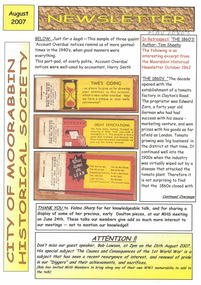
Newsletter - City of Moorabbin Historical Society Aug 2007, August 2007
... Mrs Helen Stanley in August 2007. Members of the CMHS are shown 3 photocopies of ‘quaint Account Overdue ‘ notices c 1940,. An excerpt from the 1962 Moorabbin Historical Society Newsletter, edited by the President Tom Sheehy, describing the 1860’s decade that saw ‘the establishment of Edward Zorn’s Tomato factory in Clayton’s Road in 1862 and then Henry Comport’s Sauce factory in Cheltenham. ‘New settlers’ arriving in the area were William Highett , near Hampton, Mr McKinnon , an Oakleigh farmer...Mrs Helen Stanley in August 2007. Members of the CMHS are shown 3 photocopies of ‘quaint Account Overdue ‘ notices c 1940,. An excerpt from the 1962 Moorabbin Historical Society Newsletter, edited by the President Tom Sheehy, describing the 1860’s decade that saw ‘the establishment of Edward Zorn’s Tomato factory in Clayton’s Road in 1862 and then Henry Comport’s Sauce factory in Cheltenham. ‘New settlers’ arriving in the area were William Highett , near Hampton, Mr McKinnon , an Oakleigh farmer ...The City of Moorabbin Historical Society was formed c 1960 by a group of Moorabbin residents who were concerned that the history of the area should be preserved. A good response to a call for items related to the historical area of Moorabbin Shire brought donations of a wide variety of artefacts which are now preserved by the current members of CMHS at Box Cottage Museum . Helen Stanley, Secretary of CMHS, began producing a Newsletter for members in April 2007 to provide current information and well researched items of historical interest.Helen Stanley has produced a bi-monthly Newsletter, 2007 - 2013, for the members of the City of Moorabbin Historical Society that contains well researched interesting historical items, notification of upcoming events, current advice from Royal Australian Historical Society , Museums Australia Victoria and activities of Local Historical Societies. The Newsletter is an important record of the activities of the CMHS. Tom Sheehy, a past President of CMHS, was an Historian and Author of ‘Battlers tamed the Sandbelt’, the Lawson family were early settlers, Dr Graham Whitehead, is Historian for Kingston CC and the Henry Lawson Society promotes the Poet’s works.A4 paper printed both sides x1. Issue 3 of the bi-monthly, City of Moorabbin Historical Society Newsletter produced by Society member and Secretary, Mrs Helen Stanley in August 2007. Members of the CMHS are shown 3 photocopies of ‘quaint Account Overdue ‘ notices c 1940,. An excerpt from the 1962 Moorabbin Historical Society Newsletter, edited by the President Tom Sheehy, describing the 1860’s decade that saw ‘the establishment of Edward Zorn’s Tomato factory in Clayton’s Road in 1862 and then Henry Comport’s Sauce factory in Cheltenham. ‘New settlers’ arriving in the area were William Highett , near Hampton, Mr McKinnon , an Oakleigh farmer, and Mr Stephen Tuck and wife to Cheltenham while Mr John Kingston was looking for land.. 60 children were enrolled at St Stephen’s Common School on Tucker Road. George Higginbotham., William Highett and Tommy Bent were confident of the years ahead.’ Upcoming events at CMHS were August 26th Mr Bob Lawson will talk about World War 1, on October 28th a talk by Dr G Whitehead titled ‘Murder’, and at the last meeting for year November 25th Frank Thatcher, CMHS, will welcome the Henry Lawson Society and Australian Natives Association who will again come to Box Cottage to celebrate their Bryan Kelleher Memorial Picnic Day. CITY of MOORABBIN HISTORICAL SOCIETY / AUGUST 2007 NEWSLETTERcity of moorabbin historical society, stanley helen, melbourne, moorabbin, brighton, cheltenham, ormond, bentleigh, oakleigh, kingston, highett, hampton, clayton, market gardeners, pioneers, early settlers, moorabbin shire, sheehy tom, thatcher frank, tucker road, st stephen’s common school, henry lawson society, australian natives association, whitehead dr graham, lawson bob, lawson nan, kelleher bryan, comport henry, zorn edward, highett william, bent tommy, higginbotham george, kingston john, le roy tracy pty.ltd, sydney, tomato sauce factory -
 City of Moorabbin Historical Society (Operating the Box Cottage Museum)
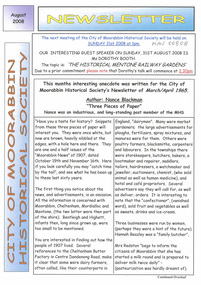
Newsletter, City of Moorabbin Historical Society Aug 2008, August 2008
... The Blackman family were early settlers in Moorabbin Shire city of moorabbin historical society stanley helen melbourne moorabbin mentone mordialloc cheltenham ormond bentleigh market gardeners farmers dairymen confectioner pioneers early settlers moorabbin shire blackman nance box cottage museum highett booth dorothy mentone railway station gardens cheltenham butter factory beazley hannah redstron mrs. bickerton mrs. oriental laundry cheltenham biehl mr. matthews mr. gas-light electric light smith j.l. journeaux james king george grommann’s hotel mordialloc telephones fire brigades CITY of MOORABBIN HISTORICAL SOCIETY / AUGUST 2008 NEWSLETTER A4 paper printed both sides x1. ...The City of Moorabbin Historical Society was formed c 1960 by a group of Moorabbin residents who were concerned that the history of the area should be preserved. A good response to a call for items related to the historical area of Moorabbin Shire brought donations of a wide variety of artefacts which are now preserved by the current members of CMHS at Box Cottage Museum . Helen Stanley, Secretary of CMHS, began producing a Newsletter for members in April 2007 to provide current information and well researched items of historical interest. Helen Stanley has produced a bi-monthly Newsletter, 2007 - 2013, for the members of the City of Moorabbin Historical Society that contains well researched interesting historical items, notification of upcoming events, current advice from Royal Australian Historical Society , Museums Australia Victoria and activities of Local Historical Societies. The Newsletter is an important record of the activities of the CMHS. The Blackman family were early settlers in Moorabbin Shire A4 paper printed both sides x1. Issue 8 of the bi-monthly, City of Moorabbin Historical Society Newsletter produced by Society member and Secretary, Mrs Helen Stanley in August 2008. Notices of a talk by Dorothy Booth, “ The Historic Mentone Railway Gardens’ on August 31st and a request for volunteers to begin an Inventory of the Box Cottage artefacts and to assist at upcoming Open Days. An excerpt from the CMHS Newsletter March 1965 ‘ Three Pieces of Paper’, by Mrs Nance Blackman, a member, describing items from “The Moorabbin News” ‘ 1907 that included The Cheltenham Butter Factory, and advertisements aimed at the local people and their occupations. Note is made of 3 businesses run by Women – butcher, milk delivery and a ‘delicatessen’ - and an ‘Oriental Laundry’ in Cheltenham, as well as the trading hours for shops and weekly wages. Gas light and candles were in common use because Electricity did not come to Bentleigh until 1916 and several Fire Brigades were formed in the Shire. A photocopied photograph of an Electric Power pole c1930.CITY of MOORABBIN HISTORICAL SOCIETY / AUGUST 2008 NEWSLETTER city of moorabbin historical society, stanley helen, melbourne, moorabbin, mentone, mordialloc, cheltenham, ormond, bentleigh, market gardeners, farmers, dairymen, confectioner, pioneers, early settlers, moorabbin shire, blackman nance, box cottage museum, highett, booth dorothy, mentone railway station gardens, cheltenham butter factory, beazley hannah, redstron mrs., bickerton mrs., oriental laundry cheltenham, biehl mr., matthews mr., gas-light, electric light, smith j.l., journeaux james, king george, grommann’s hotel mordialloc, telephones, fire brigades -
 Phillip Island and District Historical Society Inc.
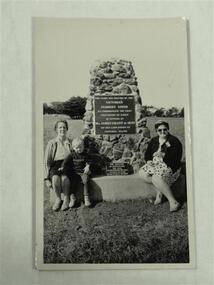
Black and White Photograph, Churchill Island Cairn, 04/11/1968
... Mrs J Jenner with grandson on left hand side of photograph and daughter Nancy on right hand side of photograph sitting on the Cairn which was erected by the Victorian Farmer's Union commemorating the first cultivation of wheat in Victoria by Mr James Grant in 1801 on Churchill Island. ...MLC unveiled the Cairn on the 4th May of November 1968. churchill island cairn victorian farmer's union james grant first wheat crops for victoria Hand written "Unveiling Plaque 4/11/68 / Back To" Mrs J Jenner with grandson on left hand side of photograph and daughter Nancy on right hand side of photograph sitting on the Cairn which was erected by the Victorian Farmer's Union commemorating the first cultivation of wheat in Victoria by Mr James Grant in 1801 on Churchill Island. ...Churchill Island was discovered by Lieut. James Grant in 1801 and he planted the first wheat crop in Victoria there. The Cairn was erected to commemmorate this by the Victorian Farmer's Union. The Minister of Agriculture The Hon. G. L. Chandler CMG. MLC unveiled the Cairn on the 4th May of November 1968.Mrs J Jenner with grandson on left hand side of photograph and daughter Nancy on right hand side of photograph sitting on the Cairn which was erected by the Victorian Farmer's Union commemorating the first cultivation of wheat in Victoria by Mr James Grant in 1801 on Churchill Island. Plaque unveiled on 4/11/1968Hand written "Unveiling Plaque 4/11/68 / Back To"churchill island, cairn, victorian farmer's union, james grant, first wheat crops for victoria -
 Orbost & District Historical Society
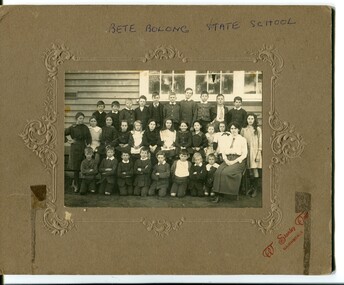
black and white photograph, 1912 - 1920
... Mrs Hannak (?) Conner - teacher n 1912 the school at Pumpkin Point opened to serve the children of farmers living in the Bete Bolong district. ...Mrs Hannak (?) Conner - teacher n 1912 the school at Pumpkin Point opened to serve the children of farmers living in the Bete Bolong district. ...This school photograph has been identified by Mary Gilbert as being of Bete Bolong students with their teacher. The names are written on a separate piece of paper which was attached to the photograph. Back Row - George Healey; George Madden; Bert Paton; Harold Cumming; Charlie Ingram; Stan Paton; Bill Madden; Frank Sealey; Tom Cumming; Ted Johnston Middle Row - Rita Mundy; Ruby Richardson; Mary Cumming; Mollie Ingram; Clarrie Paton; Irene Richardson; Ella Paton; Ena Cumming; Grace Mundy; Violet Sealey; Maggie Webb; Bertha Johnstone Front Row - Billy Ingram; Ernie Sealey; Archie Johnston; Rupert Madden; Ron Healey; Jack Cumming; Gordon Healey; Mrs Hannak (?) Conner - teacher n 1912 the school at Pumpkin Point opened to serve the children of farmers living in the Bete Bolong district. This meant a big change in their way of life because in the past the children had been rowed across the Snowy River each day to attend school at Jarrahmond. Myrtle Bunting was the first HT of the school which had been erected on a block of land purchased from H. Richardson. The school functioned until 1952 when a shortage of pupils caused its closure. As a bus service to Orbost now operated, the school at Pumpkin Point faced permanent closure.This photograph is associated with education in Orbost. There is no longer a school at Bete Bolong.A black / white photograph of a group of school children with an adult. Behind the three rows of children is a wall and windows. The back row is standing,the middle seated and the front row kneeling. The photograph is glued onto a brown cardboard mount with embossed decoration. On the front bottom right in red lettering "W Stanley Vogt, BAIRNSDALE".BETE BOLONG STATE SCHOOL W.Stanley Vogt, BAIRNSDALEbete-bolong-state-school education-orbost -
 Orbost & District Historical Society
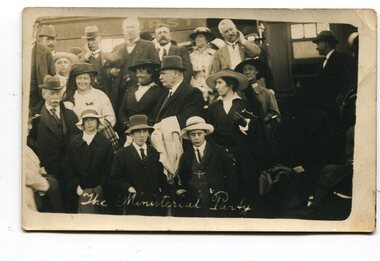
black and white photographs, April 1916
... Mrs Shaw and son; ? Gay; and Pen Gilbert. In 3150.4 L-R front " Mary Gilbert; Bet Gilbert (sitting with glasses); Pen Gilbert(Richardson); Marion Gilbert ( middle front little girl) About 1912 work began at Newmerella on clearing the track for the railway line from Bairnsdale to Orbost. A canvas town sprang up on the higher land adjacent to the river flats. Local farmers...Mrs Shaw and son; ? Gay; and Pen Gilbert. In 3150.4 L-R front " Mary Gilbert; Bet Gilbert (sitting with glasses); Pen Gilbert(Richardson); Marion Gilbert ( middle front little girl) About 1912 work began at Newmerella on clearing the track for the railway line from Bairnsdale to Orbost. A canvas town sprang up on the higher land adjacent to the river flats. Local farmers ...These photographs were taken at the official opening of the Orbost - Bairnsdale Railway Line. In 3150.3 which is of a group of children and two adults those identified in the photograph are ; L - R front row Mary Gilbert; Warren; Betty Gilbert; Marion Gilbert; Mrs Shaw and son; ? Gay; and Pen Gilbert. In 3150.4 L-R front " Mary Gilbert; Bet Gilbert (sitting with glasses); Pen Gilbert(Richardson); Marion Gilbert ( middle front little girl) About 1912 work began at Newmerella on clearing the track for the railway line from Bairnsdale to Orbost. A canvas town sprang up on the higher land adjacent to the river flats. Local farmers supplied meat, milk and fresh produce to the camp, as well as gaining employment carting and labouring. The line opened in 1916, the Orbost railway station being built on the Newmerella side of the river.This item is associated with the history of the Orbost-Bairnsdale railway line and therefore reflects the role that the rail line played in the social and economic history of Orbost. It is a pictorial record of a significant event in Orbost's history. On April 10 1916, the first scheduled train service left Orbost for Bairnsdale. The Bairnsdale-Orbost railway was opened to serve the agricultural and timber ndustry. Because of the decline in traffic and heavy operating costs, the line was finally closed in August, 1987. Four black / white postcards of people at the opening of The Orbost - Bairnsdale Railway. 3150.1 - on front - "The Ministerial Party" 3150.2 - on front - hand-written - " The Hon James Cameron" with arrow pointing to a man standing in the back row. at bottom - "The Ministerial Party X Florie Cameron" on back- "Opening the Orbost Railway" 3150.3 and 3150.4 - on back - hand-written "First train to Orbost with a list of names.orbost-bairnsdale-railway celebration-opening-of-railway east-gippsland-railway -
 Warrnambool and District Historical Society Inc.
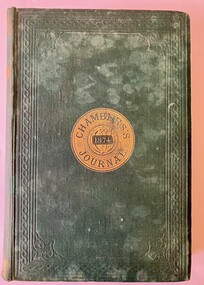
Book - Chambers Journal 1874, Chambers’s Journal 1874, 1874
... Mrs J. Davidson would be the wife of John Davidson, the brother of James and a farmer at ‘Rosebank’, Woodford. ...Mrs J. Davidson would be the wife of John Davidson, the brother of James and a farmer at ‘Rosebank’, Woodford. ...Chambers's Journal was published weekly from 1832 through to 1956 in Edinburgh. It was a popular magazine and was priced at one penny. Topics included history, religion, language, and science. Publication moved to London around 1856. Some articles were stand alone while others were serialised. This is a bound copy of a years collection of the weekly publication. This is a book given to Margaret Davidson in 1875 by her aunt, Mrs J. Davidson. Margaret Milne Davidson (1839-1928) was the eldest child of James and Isabella Davidson and she was born in Kirriemuir, Scotland. She came to the Warrnambool area in 1850. The property, ‘Woodend’, was near Cassadys Bridge (Caramut Road today). The aunt, Mrs J. Davidson would be the wife of John Davidson, the brother of James and a farmer at ‘Rosebank’, Woodford. The portraits of John and James Davidson are on the Warrnambool Pioneer Honour Board. This book is of interest because of its inscription. The book is connected to the Davidson families, prominent in Warrnambool’s pioneer history.This is a hard cover book of 832 pages. The book has a dark green cover with dark green and gold lettering with ornamental gold surrounds. The book has an index, short stories, poems, essays and articles on science and the arts. The book contains monthly journals for 1874 combined in one volume. The cover is stained and blotched. There are several stamps of the Warrnambool & District Historical Society. The inscription on the first page is handwritten in black ink. ‘Margaret M. Davidson, Woodend, from her aunt, Mrs J. Davidson, 30/9/75’.margaret davidson, james and john davidson, history of warrnambool, chambers journal, chambers journal 1874 -
 Eltham District Historical Society Inc
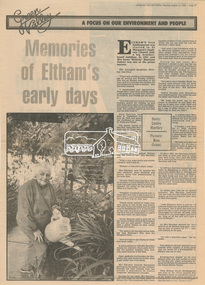
Newsclipping, Linley Hartley, Memories of Eltham's early days by Linley Hartley; picture by Ron Grant, Diamond Valley News, 13 August 1985, p37, 13 Aug 1985
... Memories of Mrs Irene "Rennie" Harrison 1939 bushfire Alf Isherwood Annie Bremmer Arthur Munday Beryl Bradbury (nee Stokes) Collection Bible Street Bremmer's Flat buses butcher Cheddar Black Clarrie White Collis Dalton Street Eltham Hotel Eltham Kindergaten Eltham Lower Park Eltham Primary School Eltham Railway Station Eltham South Kindergarten eltham tea rooms Farmer Walsh franklin street freddie griffiths greengrocer Grocers Eltham Infant Welfare Centre Irene Rennie Harrison jack carrucan josie shannon Justus Jorgensen Len Harrison Main Road Markets Matcham skipper Metery Road Milk Bar Montsalvalt Mount Pleasant road Shirley Harrison St Margaret's church hall Wingrove Park reminscences Digital file only - Digitised by EDHS from a scrapbook on loan from Beryl Bradbury (nee Stokes), daughter of Frank Stokes. ...Memories of Mrs Irene "Rennie" HarrisonDigital file only - Digitised by EDHS from a scrapbook on loan from Beryl Bradbury (nee Stokes), daughter of Frank Stokes.1939 bushfire, alf isherwood, annie bremmer, arthur munday, beryl bradbury (nee stokes) collection, bible street, bremmer's flat, buses, butcher, cheddar black, clarrie white, collis, dalton street, eltham hotel, eltham kindergaten, eltham lower park, eltham primary school, eltham railway station, eltham south kindergarten, eltham tea rooms, farmer walsh, franklin street, freddie griffiths, greengrocer, grocers, eltham infant welfare centre, irene rennie harrison, jack carrucan, josie shannon, justus jorgensen, len harrison, main road, markets, matcham skipper, metery road, milk bar, montsalvalt, mount pleasant road, shirley harrison, st margaret's church hall, wingrove park, reminscences -
 Eltham District Historical Society Inc
Photograph, Peter Pidgeon, Grave of Charlotte Amelia Taylor, Lillian Jane Taylor and Robert David Taylor, Eltham Cemetery, 5 April 2021
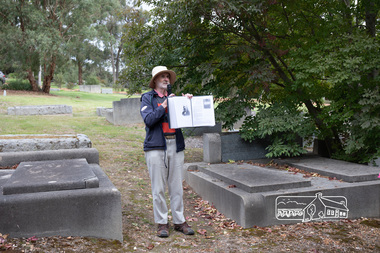
... Robert David Taylor was a farmer who lived in Eltham all his life and died in 1934 at the age of 76. Mr and Mrs Bowman lived in York Street; Taylor was their neighbour. ...Robert David Taylor was a farmer who lived in Eltham all his life and died in 1934 at the age of 76. Mr and Mrs Bowman lived in York Street; Taylor was their neighbour. ...Robert David Taylor was a farmer who lived in Eltham all his life and died in 1934 at the age of 76. Mr and Mrs Bowman lived in York Street; Taylor was their neighbour. In 1933 he subdivided his land, the plan showing a proposed Grey Street flanked by residential blocks for sale. Mrs Bowman bought one: her family would be able to walk through it and along Grey Street to Henry Street, thus providing quicker access to the railway station. But Taylor retained ownership of Grey Street itself. He fenced it off at each end and charged the Bowmans with trespass when they used it. The matter went to Court. The ruling was that Mrs Bowman could use Grey Street, as she owned land in it, but her husband could not. (Taylor also accused the Bowmans of having broken the fences, but could not prove it.) Taylor had wanted to subdivide his land in 1914. Plans were submitted to Council and were approved, but the subdivision did not proceed. In 1919, Taylor doctored the plans to make it appear that a totally different subdivisional arrangement had been approved. The Titles Office immediately detected fraud, and the Crown charged Taylor with forgery and counterfeiting. But charges were later dropped (reason not recorded). He was an Eltham Shire Councillor between 1911 and 1920. In 1920, Council charged him with illegally felling 91 eucalyptus trees in Eltham Park (60% of them in a healthy condition), presumably to be sold as firewood. He was imprisoned pending trial. Taylor claimed that he had acquired from another man the right to remove timber and sued the Council for wrongful prosecution. The case eventually went to the State Full Court, with judgement given in favour of Council, on the grounds that any right acquired by Taylor covered only the removal of logs and refuse, not sound green timber. And his position as Councillor precluded him from acquiring the right anyway. Robert David Taylor was also a Trustee of the Wesleyan Church owned land at Lot 20 Henry Street, originally purchased in January 1855 for a chapel and from which David and Catherine Clark first ran their private school, the forerunner of the Eltham Primary School. The land was sold in November 1901 to the Hope of Eltham Tent No. 195 Victoria District Independent Order of Rechabites, for which his brother William John Taylor was a Trustee and became the home of the Eltham Rechabite Hall. In December 1921 it was again sold, this time to the community for use as the Eltham Public Hall, Robert David Taylor being a member of the Committee.Born Digitaleltham cemetery, gravestones, charlotte amelia taylor, eltham district historical society, heritage excursion, lillian jane taylor, richard pinn, robert david taylor -
 Eltham District Historical Society Inc
Photograph - Digital Photograph, Alan King, Kangaroo Ground Presbyterian Church, 28 December 2007
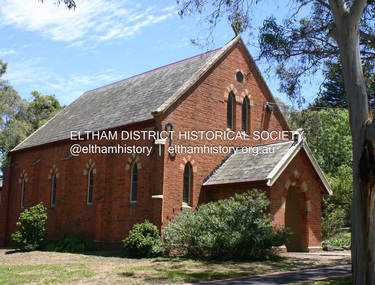
... One window has stained glass commemorating Mrs Jessie Agnes Cameron and her ancestors – the pioneering Bell family. It depicts The Sower because the family comprised farmers who came to a strange land to sow the seeds of their faith as much as their crops. ...One window has stained glass commemorating Mrs Jessie Agnes Cameron and her ancestors – the pioneering Bell family. It depicts The Sower because the family comprised farmers who came to a strange land to sow the seeds of their faith as much as their crops. ...Built in 1878, the orange polychromatic brick structure replaced a slab building which had been used since 1951. The building has changed little with its handsome bricks buttressed on both sides, a slate roof and a Celtic cross on top of the front gable. The carved wooden pulpit and 18 pews are original. The cathedral-style ceiling is fully lined with tongue-and-groove pine boards and the floor is also pine. The walls have arched oblong leadlight windows. In 1977 the congregaton decided not to join the Uniting Church, whcih amalgamated some Presbyterian churches with all the Methodist and Congregational churches in Australia. Together with the store and school, the church is one of Kangaroo Ground's three public buildings. Covered under Heritage Overlay, Nillumbik Planning Scheme. Published: Nillumbik Now and Then / Marguerite Marshall 2008; photographs Alan King with Marguerite Marshall.; p91 The small Presbyterian church in Main Road, Kangaroo Ground, has been a spiritual centre for more than a century. Built in 1878, the orange polychromatic brick structure replaced a rude slab building, which had been used as both a church and school since 1851. Earliest settlers, who were Scottish farmers, had worshipped together since 1841 in a barn owned by farmer James Donaldson and led by a layman called Smith.1 However, from 1843, the Reverend Peter Gunn conducted church services. Prominent early church members include the Donaldson, Bell and Cameron families. In 1851, Samuel Furphy (father of author Joseph) built their first church building, a 30 feet x 18 feet (9m x 5.5m) slab structure on half an acre (0.2ha) donated by Mr Donaldson. Conditions could be very uncomfortable in extreme weather.The green slabs of timber and sapling logs, covered partly with mud, had centimetre-wide cracks, allowing rain and wind through, when not blocked out by folds of paper.2 However this did not deter the first couple marrying there in 1857: John Wilson of Nillumbik and Christina Macpherson of Christmas Hills. The Reverend Peter Gunn seldom visited so it was usually left to Andrew Ross, the settlement’s first teacher and founder of the newspaper The Evelyn Observer, to lead the divine services instead.3 In 1877 the settlers raised £355/19/- and hired architect, Charles Maplestone and builder, Mr Self, to construct today’s church building. Each family rented a pew or pews for ten shillings a half-year; they also paid quarterly subscriptions for the minister’s stipend.4 It was not until 1886 that the church celebrated its first wedding, that of John Bell (junior) from Violet Bank and Elizabeth Charlton of Cunis Nillen. The Sunday School’s first recorded meeting was also held that year. In 1892 a weatherboard vestry was built, and the following year John Bell donated a church bell, which the fire brigade used as a warning for several years. Conditions have varied greatly during the century. In 1893 the Reverend Darroch had to travel more than 2000 miles (3220km) to attend to his scattered parishioners. Then in the Depression, the minister Mr Brown, subsisted only on lodgings with no stipend. The Sunday School ceased for many years because of the small population, but reopened in 1949. The building has changed little with its handmade bricks buttressed on both long sides, a slate roof and a Celtic cross on top of the front gable. The carved wooden pulpit and 18 pews are original and in fine condition. The cathedral-style ceiling is fully lined with tongue-and-groove pine boards and the floor is also of pine. The walls have arched oblong leadlight windows. One window has stained glass commemorating Mrs Jessie Agnes Cameron and her ancestors – the pioneering Bell family. It depicts The Sower because the family comprised farmers who came to a strange land to sow the seeds of their faith as much as their crops. Thistles signify their Scottish ancestry and the pigeons are a symbol of Pigeon Bank, the Kangaroo Ground farming property where Jessie Cameron was born.5 Other historical ties are seen on two marble memorial tablets and carved wooden chairs dedicated to former members. The Church still has the original Bible with gold edged paper, presented by the women of the congregation in 1871, although it is no longer used. In 1977 the Presbyterian congregation decided not to join the Uniting Church, which amalgamated some Presbyterian churches with all the Methodist and Congregational churches in Australia. Together with the store and school, the church is one of Kangaroo Ground’s three public buildings.This collection of almost 130 photos about places and people within the Shire of Nillumbik, an urban and rural municipality in Melbourne's north, contributes to an understanding of the history of the Shire. Published in 2008 immediately prior to the Black Saturday bushfires of February 7, 2009, it documents sites that were impacted, and in some cases destroyed by the fires. It includes photographs taken especially for the publication, creating a unique time capsule representing the Shire in the early 21st century. It remains the most recent comprehenesive publication devoted to the Shire's history connecting local residents to the past. nillumbik now and then (marshall-king) collection, kangaroo ground presbyterian church -
 Eltham District Historical Society Inc
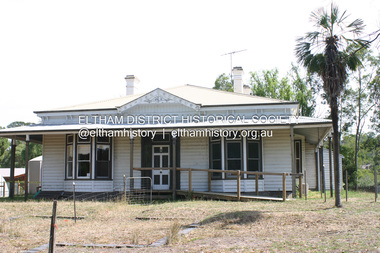
Photograph - Digital Photograph, Alan King, Edendale Farm Homestead, 29 January 2008
... In 1918 Cool bought an extra seven acres (2.8ha) but in 1919 sold the estate to farmer John Cox. In 1933 Cox sold Edendale to Mrs Elizabeth Gaston, after whom the road leading to the centre was named. ...In 1918 Cool bought an extra seven acres (2.8ha) but in 1919 sold the estate to farmer John Cox. In 1933 Cox sold Edendale to Mrs Elizabeth Gaston, after whom the road leading to the centre was named. ...Edendale Farm is Nillumbik Shire Council's environment centre situated in Gastons Road, Eltham between the railway and the Diamond Creek. The homestead on the property was built in 1896 and is of historical significance, being the subject of a Heritage Overlay under the Nillumbik Planning Scheme. The Edendale property was originally part of an extensive land purchase in 1852 from the Crown by pioneer Eltham farmer Henry Stooke. He initially purchased 51 acres and later expanded his holdings by purchasing another three adjacent Crown allotments extending northerly from Josiah Holloway's Little Eltham subdivision. Despite clearing the land, Stooke did not build on this property, choosing to live on his property "Rosehill" at Lower Plenty. In 1896 Thomas Cool, Club Manager of the Victoria Coffee Palace in Melbourne purchased 7 acres of the original Stooke land and built the house now known as Edendale. Cool did not farm the land, instead using it as a gentleman’s residence, retiring to Eltham at weekends. In 1918 he purchased an additional 7 acres but in 1919 he sold the property. Later owners included J.W. Cox, the Gaston family and D. Mummery. In the 1980s the Eltham Shire Council purchased the site for use as a Council depot, but this use did not proceed. Subsequently, it was used as the Council pound. The Edendale Farm Pet Education and Retention Centre was established in the summer of 1988/1989 and was set up to replace the existing dog kennels with a high standard pet retention centre. The design style of the building was established to compliment the features of the existing house. It was equipped with 10 retention pens, a veterinary room and a pet education area where school children and other interested parties learnt about pet care procedures. It was later developed into a community farm and was run by an advisory committee and in 2000 it became an Environment Centre. In early 2006 an advisory committee was established for the development of a master plan for future development at Edendale Farm. The committee included Russell Yeoman, a former long-time shire planner and founding member of the Eltham District Historical Society. At the time of filming the Master Plan and future for Edendale was about continuing to develop Edendale as a centre of environment learning and looking at expanding displays and school program, running a lot more of life-long learning and workshops around sustainable living. Covered under Heritage Overlay, Nillumbik Planning Scheme. Published: Nillumbik Now and Then / Marguerite Marshall 2008; photographs Alan King with Marguerite Marshall.; p101 A sharp turn from busy Wattletree Road by the railway line, brings a surprise. Only 1.4 km from Eltham’s centre, sheep feed, blissfully unaware of the hectic suburban activity so close by. At the entrance to the 5.6ha Edendale Farm is another surprise. A work of art that looks like huge tree trunks transformed into bowler and top-hatted men. The Fences Act 1968 by Tony Trembath with Mark Cain and John Doyle, 1996, is classified by the National Trust of Australia as having Regional Significance. The title refers to a government act on disputes between neighbors over the placement of fences and boundaries. This takes a ‘wry swipe’ at a community divided by trivial squabbles. It also celebrates making do with limited resources.1 Further along on the left, the office wall is decorated with a massive Eltham Copper Butterfly, designed by Robert Tickner and made by school children with used plastic bottles and other waste material. Nillumbik Council runs Edendale as an Environmental Education Centre, to help preserve and enhance the local environment. As early as 1988 the former Eltham Shire Council realised Edendale’s importance in meeting people’s needs, particularly of children, to enjoy farmland. The centre, with the Eltham North Reserve to the north - including remnant bushland and open parkland - makes up the major part of the public open space for this area. The council considers this area will become increasingly important to the local community for recreational use.2 Educational programs aim to encourage community involvement to ensure the long-term rehabilitation and protection of natural bushland areas. Edendale is used by people of all ages - from school children to adults - for environmental programs and workshops, as well as for recreation, to enjoy the domestic animals and to picnic. Edendale is also home to the Environmental Works staff who manage reserves and roadsides and support Nillumbik Friends environmental groups. The Friends propagate plants at the nursery, which grows indigenous plants and sells these to the public.3 The centre demonstrates the sustainable living the farm teaches, with features like solar hot water and drive lighting and for the fireplace, logs of recycled cardboard. Edendale has had a varied history as a dog pound and even as a retreat for Thomas Cool, Club Manager of the Victoria Coffee Palace in Melbourne. His single-storey weatherboard house built in 1896, which still stands, was grander than most homes in Eltham. Although such buildings were common in many other parts of Melbourne, Eltham’s poverty and remoteness did not encourage such construction. The Victorian rectangular-shaped house, with a corrugated iron roof and veranda, has elegant large rooms, leadlight windows, ceiling roses, two bay windows and ornately carved wooden fireplace surrounds. Cool bought seven acres (2.8ha) from pioneer Eltham farmer Henry Stooke’s 200 acre (81ha) farm, which he had bought from the Crown in 1852. In 1918 Cool bought an extra seven acres (2.8ha) but in 1919 sold the estate to farmer John Cox. In 1933 Cox sold Edendale to Mrs Elizabeth Gaston, after whom the road leading to the centre was named. The property was owned by several Gaston family members, who called it Edendale, then by a police constable, Douglas Mummery, until the Shire of Eltham bought it in 1970. Oddly Edendale was known as Mummery’s for almost 20 years, although Mummery owned it only for a short time.4 The shire used Edendale as a dog pound until amalgamation with other municipalities in 1996. The pound then moved to the Yan Yean Road, Plenty site, which had been used by the former Diamond Valley Shire Council. To the west and north the centre is bounded by Diamond Creek and on the east by the Melbourne-Hurstbridge railway line. Part of the Research creek forms the centre’s southern boundary.This collection of almost 130 photos about places and people within the Shire of Nillumbik, an urban and rural municipality in Melbourne's north, contributes to an understanding of the history of the Shire. Published in 2008 immediately prior to the Black Saturday bushfires of February 7, 2009, it documents sites that were impacted, and in some cases destroyed by the fires. It includes photographs taken especially for the publication, creating a unique time capsule representing the Shire in the early 21st century. It remains the most recent comprehenesive publication devoted to the Shire's history connecting local residents to the past. nillumbik now and then (marshall-king) collection, edendale farm -
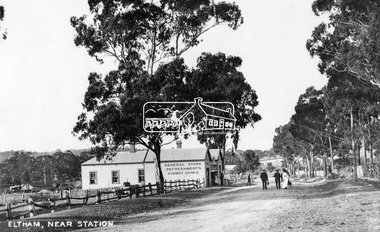 Eltham District Historical Society Inc
Photograph, Eltham, Main Road near station, c.1910
... Mrs Sarah Burgoyne in 1902. The store later was known as Staff's Store. Followed by the saleyards, entrance to station, slaughter yard and William J Capewell’s butcher shop. Contained within the saleyards facing the street, a small shelter with the name H.H. Clark upon it. Horace Harold Clark was the son of Eltham State School’s first Head Teacher, David George Clark. As well as being a farmer...Mrs Sarah Burgoyne in 1902. The store later was known as Staff's Store. Followed by the saleyards, entrance to station, slaughter yard and William J Capewell’s butcher shop. Contained within the saleyards facing the street, a small shelter with the name H.H. Clark upon it. Horace Harold Clark was the son of Eltham State School’s first Head Teacher, David George Clark. As well as being a farmer ...View looking north along Main Road, Eltham from near present day Dudley Street. On the immediate left is the railway station. The large weatherboard building on the bend (opposite present-day Arthur Street) with signs for General Store, Refreshments and Summer Drinks painted on the side is Luther and Ada Haley’s General Store and Bakery, built 1902. This was the first building in what is now Eltham’s present shopping town centre. Haley previously ran the General Store and Bakery on the corner of Main Road and York Street until his lease expired and the premises were bought by Mrs Sarah Burgoyne in 1902. The store later was known as Staff's Store. Followed by the saleyards, entrance to station, slaughter yard and William J Capewell’s butcher shop. Contained within the saleyards facing the street, a small shelter with the name H.H. Clark upon it. Horace Harold Clark was the son of Eltham State School’s first Head Teacher, David George Clark. As well as being a farmer, he was an Estate Agent and conducted auction sales, presumably from this shelter. On the eastern (right) side of Main Street is Haley’s Paddock, which was used on occasions for community picnics. Capable of holding 10,000 people, with ample shade and hilly surroundings it was an ideal place for any community gathering such as the State Schools’ Picnic in 1904. A worker from the bakery store is standing in the gateway at the rear of the store observing the photographer. People in the ‘Sunday Best’ are milling in front of the bakery or strolling down the centre of Main Road. The picture was most likely taken on a Sunday. With the opening of the railway to Eltham in 1902, Melbourne residents would regularly enjoy a Sunday excursion journey on the train to Eltham for a day’s outing to the countryside or beyond to Hurstbridge from 1912 when the railway was extended. Picture dated as c.1910 based on similar picture published in the Weekly Times, Feb. 1912. Cross Ref: 609 (looking south), 612, 611 (later stage), 613.This photo forms part of a collection of photographs gathered by the Shire of Eltham for their centenary project book,"Pioneers and Painters: 100 years of the Shire of Eltham" by Alan Marshall (1971). The collection of over 500 images is held in partnership between Eltham District Historical Society and Yarra Plenty Regional Library (Eltham Library) and is now formally known as the 'The Shire of Eltham Pioneers Photograph Collection.' It is significant in being the first community sourced collection representing the places and people of the Shire's first one hundred years.Digital image (4 x 5 inch negative missing - scanned from print) Printbaker, eltham, eltham railway station, general store, haley's paddock, luther haley, luther haley general store, main road, shire of eltham pioneers photograph collection, sign, summer drinks, butcher, railway station, w.j. capewell, eltham town centre, hot water, m.m. clark, eltham sale yards, eltham slaughter yard, staffs general store
