
Showing 79 items matching " stamp collecting"
-
 Flagstaff Hill Maritime Museum and Village
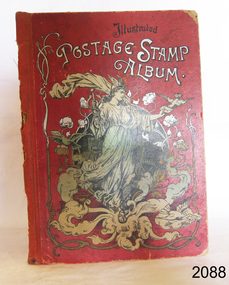
Book - Stamp Album, CF Lucke, publisher, Illustrated Postage Stamp Album, ca 1900
... ...stamp collecting...It represents the hobbies and past times of the people of that era. flagstaff hill warrnambool shipwrecked-coast flagstaff-hill flagstaff-hill-maritime-museum maritime-museum shipwreck-coast flagstaff-hill-maritime-village illustrated postage stamp album postage stamp album stamp album book postage stamp stamp Edwin J Dale May 13th 1901 stamp collecting German stamp album Spottiswoode & Co Ltd Germany CF Lucke Leipzig CF Lucke Leipzig Inscription: Edwin J Dale, May 13th 1901" Cover: "Illustrated POSTAGE STAMP ALBUM" Inage on cover: "within a floral border, a robed figure wearing a winged helmet, holding a staff with two snakes in one hand, and a sealed letter in the other." ...The inscription in the book indicates that it once belonged to Edwin J Dale, who may have received it May 13th 1901, the date on the inscription. The album was made in Germany and has English, German, French and Spanish language on the fly page. It has 2000 pockets for holding stamps and is illustrated. The printer, Spottiswoode and Co., was established in 1738 by William Strahan, with premises in New Street Square, London. The growing firm advertised as Printers, Lithographers, Stationers, Electrotypers, Publishers, and Booksellers and by 1914 there were 1,000 employees.The stamp album is of Victorian vintage and shows that at the end of the 19th century people collected stamps. It represents the hobbies and past times of the people of that era.Illustrated Postage Stamp Album. Publisher: Lalso by CF Lucke, Leipzig, Germany Printer: Spottiswoode & Co Ltd, London Date: 1908 Red hardcover, illustrated with a robed figure image and text in English, German, French and Spanish. Book has information, advertising and pages divided into blank squares for attaching stamps. Some pages have cutouts where squares would have been, perhaps holding stamps. An inscription with the name Edwin J Dale, 13 May 1901 is on the first turned page..Inscription: Edwin J Dale, May 13th 1901" Cover: "Illustrated POSTAGE STAMP ALBUM" Inage on cover: "within a floral border, a robed figure wearing a winged helmet, holding a staff with two snakes in one hand, and a sealed letter in the other." Fly: "Registered" "Schaubeks Postage Stamp Album" "Victoria" "Briefmarken"[German - stamps] "Pour Timbres-poste" [French - for postage Stamps] "Para Selloyde Correo" [Spanish - for postage stamps] "With 1070 reduced illustrations, 2200 blank cases for stamps" (also in German, French and Spanish) "Made in Germany"flagstaff hill, warrnambool, shipwrecked-coast, flagstaff-hill, flagstaff-hill-maritime-museum, maritime-museum, shipwreck-coast, flagstaff-hill-maritime-village, illustrated postage stamp album, postage stamp album, stamp album, book, postage stamp, stamp, edwin j dale, may 13th 1901, stamp collecting, german stamp album, spottiswoode & co ltd, germany, cf lucke leipzig, cf lucke, leipzig -
 Glen Eira Historical Society
Newsletter - Fethers, Geoffrey
... ... Stamp Collecting...Fethers Geoffrey 1st Elsternwick Scout Group Elsternwick Stamp Collecting Scout Groups Wears E.W. World War 1914-1918 Veterinarians Radio Broadcasting The Weekly Times Writer Newsletter Fethers, Geoffrey ...Photograph and short history of Geoffrey Fethers, aged ten years in 1907 in Australian Queen’s Scout Association News Vol.7, No.2, dated December 2007. He was an early scout.fethers geoffrey, 1st elsternwick scout group, elsternwick, stamp collecting, scout groups, wears e.w., world war 1914-1918, veterinarians, radio broadcasting, the weekly times, writer -
Glen Eira Historical Society
Book - Nathan, Bertram
... ... Stamp Collecting...Celebrations Optician Wellington College[NZ] 500 Victorians Centenary Edition 1934 Nathan Bertram Legacy club Education Sports and recreations Occupations Secondary education Stamp Collecting Health Professional Wesley College Angling Golfers Book Nathan, Bertram ...This site comprises of the entry for Bertran Nathan in the publication ‘500 Victorians Centenary Edition 1934 [page 215]’. The entry consists of a cartoon figure of Mr.Nathan with a superimposed photograph of his head together with sketches illustrating his interest. Below the cartoon is a modified ‘who’s who entry for Mr.Nathan with his occupation academic qualification, date of birth, schooling details, address, club membership, hobbies and recreational interests.celebrations, optician, wellington college[nz], 500 victorians centenary edition 1934, nathan bertram, legacy club, education, sports and recreations, occupations, secondary education, stamp collecting, health professional, wesley college, angling, golfers -
 Mrs Aeneas Gunn Memorial Library
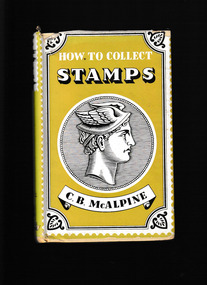
Book, Temple, How to collect stamps, 1950
... Stamp collecting...Stamp collecting Philately A users guide to stamp collecting p.230. ...A users guide to stamp collectingp.230.non-fictionA users guide to stamp collectingstamp collecting, philately -
 Mrs Aeneas Gunn Memorial Library
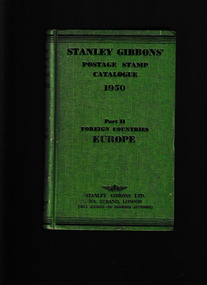
Book, Stanley Gibbons, Stanley Gibbons Postage stamp catalogue 1950, Part II Foreign countries Europe, 1950
... Stamp collecting...Stamp collecting Philately Stanley Gibbons Postage stamp catalogue 1950, Part II Foreign countries Europe Ill, p.859. ...Stanley Gibbons Postage stamp catalogue 1950, Part II Foreign countries EuropeIll, p.859.non-fictionStanley Gibbons Postage stamp catalogue 1950, Part II Foreign countries Europestamp collecting, philately -
 Bendigo Historical Society Inc.
Book - SCRAPBOOK
... Scrapbook containing cuttings relating to stamp collecting....BOOKS Technical scrapbook Scrapbook containing cuttings relating to stamp collecting. Book SCRAPBOOK ...Scrapbook containing cuttings relating to stamp collecting.books, technical, scrapbook -
 Eltham District Historical Society Inc
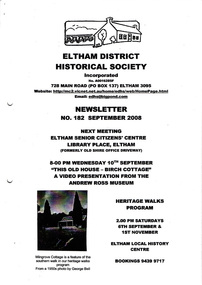
Newsletter, Newsletter, No. 182 September 2008
... Contents: • Next meeting, ‘This Old House – Birch Cottage’; a video presentation from the Andrew Ross Museum • September Meeting • Coming Events • President’s Findings • History in Stamp Collecting by Diana Bassett-Smith • Continuing Pat Baddeley’s Story • Andrew Ross Museum • Other News ...Contents: • Next meeting, ‘This Old House – Birch Cottage’; a video presentation from the Andrew Ross Museum • September Meeting • Coming Events • President’s Findings • History in Stamp Collecting by Diana Bassett-Smith • Continuing Pat Baddeley’s Story • Andrew Ross Museum • Other News The Shire of Eltham Historical Society was formed in October 1967. ...Contents: • Next meeting, ‘This Old House – Birch Cottage’; a video presentation from the Andrew Ross Museum • September Meeting • Coming Events • President’s Findings • History in Stamp Collecting by Diana Bassett-Smith • Continuing Pat Baddeley’s Story • Andrew Ross Museum • Other News The Shire of Eltham Historical Society was formed in October 1967. The first newsletter of the Society was issued May 1978 and has been published continuously ever since on a bi-monthly basis. With the cessation of the Shire of Eltham in late 1994, the Society's name was revised to Eltham District Historical Society and this name first appeared with issue No. 103, July 1995. The collection of the Society's newsletters provides a valuable resource on the history of the Society's activities, office bearers and committee members, guest speakers and subjects of historical interest pertinent to the former Shire of Eltham and the Eltham District.A4 photocopied newsletter distributed to membersnewsletter, eltham district historical society, shire of eltham historical society -
 Melbourne Legacy
Photograph - Photo, Stamp sorting, Keesing Photographic Pty Ltd, Widows activities, 1992
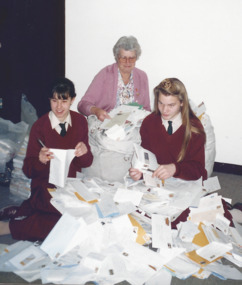
... stamp ladies. They had chosen Legacy as a cause they wanted to help and decided to collect stamps, they donated over 5,000 stamps. ...stamp ladies. They had chosen Legacy as a cause they wanted to help and decided to collect stamps, they donated over 5,000 stamps. ...A Legacy widow, Beryl Billing, with two school girls from Siena College and a lot of loose letters. Six school girls came to Legacy house to meet the weekly gathering of the stamp ladies. They had chosen Legacy as a cause they wanted to help and decided to collect stamps, they donated over 5,000 stamps. The widows clubs have sorted used stamps and sold to a stamp dealer for many years to the present day. It raises funds and provides a purpose for gathering together. Beryl Billings was the co-ordinator of the stamp sorting for many years. This photo was featured on the back cover of The Answer newsletter in September 1992.A record of the type of activities Legacy provided as a social outlet for widows and for fundraising. Colour photo of Beryl Billing with two school girls and bags of letters.Hand written "A / Pg 20 / Crop top" in blue penwidows, fundraising, answer, stamps, beryl billing -
 Melbourne Legacy
Photograph, Keesing Photographic Pty Ltd, Widows activities - Stamp Sorting, 1992
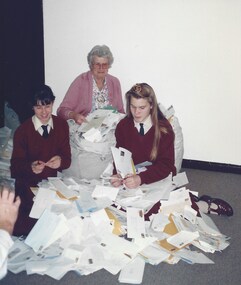
... stamp ladies. They had chosen Legacy as a cause they wanted to help and decided to collect stamps, they donated over 5,000 stamps. ...stamp ladies. They had chosen Legacy as a cause they wanted to help and decided to collect stamps, they donated over 5,000 stamps. ...Six school girls from Siena College came to Legacy house to meet the weekly gathering of the stamp ladies. They had chosen Legacy as a cause they wanted to help and decided to collect stamps, they donated over 5,000 stamps. The widows clubs have sorted used stamps and sold to a stamp dealer for many years to the present day. It raises funds and provides a purpose for gathering together. Photos included Beryl Billing, with two school girls from Siena College and a lot of loose letters. Also a cake and sandwiches enjoyed by the gathering. Beryl Billing was the co-ordinator of the stamp sorting for many years. This photo was featured on the back cover of The Answer newsletter in September 1992.A record of the type of activities Legacy provided as fundraising and a social outlet for widows. Also that Siena College was appreciated for collecting stamps.Colour photo x 4 of school girls from Siena College at Legacy House.widows, fundraising, stamps, beryl billing -
 Flagstaff Hill Maritime Museum and Village
Nibs & box, late 19th to early 20th century
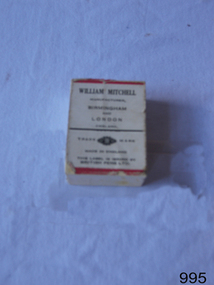
... The hole at the front of the nib is for collecting ink from a well, which is then stored in a reservoir at the back of the nib. The nibs are stamped with their nib size and Pedigree (what type of nib it is) and maker’s details. ...The hole at the front of the nib is for collecting ink from a well, which is then stored in a reservoir at the back of the nib. The nibs are stamped with their nib size and Pedigree (what type of nib it is) and maker’s details. ...Box of dip pen nibs made by William Mitchell Calligraphy dating back to late 19th or early 20th century when dip pens with steel nibs were the main writing instruments. The pen nibs are shaped to fit into a slot in the base of a wooden or Bakelite pen holder. The hole at the front of the nib is for collecting ink from a well, which is then stored in a reservoir at the back of the nib. The nibs are stamped with their nib size and Pedigree (what type of nib it is) and maker’s details. William Mitchell Calligraphy still makes these nibs today with a slightly difference finish. (ref: Sales and Marketing Director of William Mitchell Calligraphy in 2016). HISTORY of the Ink Pen Quills and ink were common writing tools until the early 19th century when the pen trade began mass producing steel nibs and pens. The steel nibs each have a hole in the middle that acts like a well for the ink. When the nib is dipped into the ink well the writer needs to ensure that it is dipped to only just past that well. India Ink was one of the most popular inks used with the nib pens, notable for its satin-like smooth flow. This ink is composed of a particularly fine carbon mixed with water; it can also be obtained as a dry stick that is then crushed and mixed with water as required. The Jewellery Quarter of Birmingham had the largest concentration of independent jewellers in Europe. Birmingham became the centre of the world’s pen trade for many years -, during the 1800’s over 100 factories, employing 1000s of skilled workers, manufactured the ‘Birmingham Pen’. ABOUT WILLIAM MITCHELL CALLIGRAPHY LTD.* (*The following text is quoted from the William Mitchell Calligraphy website) British based William Mitchell Calligraphy has been designing and manufacturing exceptional pens for almost 200 years. The William Mitchell heritage in making pen nibs began whilst working with his brother John Mitchell in the early 1820s. William Mitchell established his own business in 1825 to become one of the leading nib manufacturers and famous for lettering pens. Almost 100 years later William Mitchell merged with Hinks, Wells & Co, another pen manufacturer, to form British Pens, employing around 1000 people in the Bearwood Road area of Birmingham. During the early 1960s British Pens acquired the pen business of other pen manufacturers Perry & Co and John Mitchell, once again reuniting the two brothers. Joseph Gillott, who were famous for their artist drawing and mapping nibs, amalgamated with British pens in 1969. William Mitchell and Joseph Gillott established in Birmingham during the early part of the nineteenth century and [their products] are still proudly made here. British Pens were subsequently purchased by its current owner Byron Head, the owner of William Mitchell (Sinkers) in 1982, and was subsequently renamed William Mitchell (calligraphy) Ltd. Established in 1827 Joseph Gillott was one of the pioneers of mass steel pen nib manufacturing. The company was particularly strong in the American market, prompting Elihu Burrit, the American consul, to write “In ten thousand school houses across the American continent between two oceans, a million children are as familiarly acquainted with Joseph Gillott as with Noah Webster” (The compiler of the famous American dictionary). The company consequently received visits from many notable Americans, including president Ulysses S Grant. Email on file, from Mike Chappell, Sales and Marketing Manager, William Mitchell Calligraphy, “20161122 - William Mitchell re pen nibs” How to use a dip pen to create modern calligraphy, https://thepostmansknock.com/how-to-use-a-dip-pen-to-create-modern-calligraphy/ India Ink, Wikipedia https://en.wikipedia.org/wiki/India_ink birmingham Pen Trade, Wikipedia, https://en.wikipedia.org/wiki/Birmingham_pen_trade The Pen Museum, http://penmuseum.org.uk/ The early 19th century invention and later mass production of pen nibs such these in our collection had a large impact on education and literacy because the nibs could be produced in great numbers and affordable prices.Box of patent Mitchell nibs containing 48 "Pedigree" nibs. Box depicts picture of William Mitchell on lid, and picture of nib pen on lid and side. Made in Birmingham, England. Nib “0505 Wm MITCHELLS PEDIGREE ENGLAND” Box “PEDIGREE / MAINFOLD SLIP”, “WILLIAM MITCHELL / BIRM - - - - - - LOND” flagstaff hill, warrnambool, shipwrecked-coast, flagstaff-hill, flagstaff-hill-maritime-museum, maritime-museum, shipwreck-coast, flagstaff-hill-maritime-village, william mitchell calligraphy ltd, pen nib, writing implement, writing accessories, dip pen, birmingham manufacturer, communication in writing, mass produced pen nibs -
 Flagstaff Hill Maritime Museum and Village
Tool - Moulding wood Plane, John Manners, 1792-1822
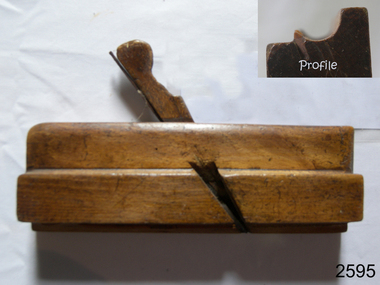
... collectable tool maker in the early 19th century. This item would be sought after by wood working tool collectors and it gives us a snapshot of how cabinet makers went about creating furniture during this time period. flagstaff hill warrnambool shipwrecked-coast flagstaff-hill flagstaff-hill-maritime-museum maritime-museum shipwreck-coast flagstaff-hill-maritime-village Stamped Manners (Maker) (also inside stamped GN, & W, M. ...A moulding plane is a specialised plane used for making the complex shapes found in wooden mouldings that are used to decorate furniture or other wooden objects. Traditionally, moulding planes were blocks of wear-resistant hardwood, often beech or maple, which were worked to the shape of the intended moulding. The blade or iron was likewise formed to the intended moulding profile and secured in the body of the plane with a wooden wedge. A traditional cabinetmakers shop might have many, perhaps hundreds, of moulding planes for the full range of work to be performed. Large crown mouldings required planes of six or more inches in width, which demanded great strength to push and often had additional peg handles on the sides, allowing the craftsman's apprentice or other workers to pull the plane ahead of the master who guided it. Company History: We know little of John Manners other than his firm was acquired by Alexander Mathieson & Sons in 1822, Mathieson were one of the leading makers of hand tools in Scotland at this time. 1792 was deemed by Mathieson & Sons to be that of its foundation and it was in all likelihood the year in which John Manners had also set up his plane-making workshop on Saracen Lane off the Gallowgate in the heart of Glasgow, not far from the Saracen's Head Inn. Alexander Mathieson (1797–1851) is recorded in 1822 as a plane-maker at 25 Gallowgate, but in the following year at 14 Saracen's Lane, it is presumed having taken over the premises of John Manners. The 1841 national census described Alexander Mathieson as a master plane-maker at 38 Saracen Lane with his son Thomas Adam working as a journeyman plane-maker, from 1822 we hear nothing regards what happened to John Manners.A vintage tool made by a known maker John Manners the item is a significant wood working tool from the late 18th century that today is quite rare. As this maker sold his business to Alexander Mathieson another collectable tool maker in the early 19th century. This item would be sought after by wood working tool collectors and it gives us a snapshot of how cabinet makers went about creating furniture during this time period. Wood Moulding plane Side Bead - Single Box type Stamped Manners (Maker) (also inside stamped GN, & W, M. Nicol also F W. probably owners of item over the years.)flagstaff hill, warrnambool, shipwrecked-coast, flagstaff-hill, flagstaff-hill-maritime-museum, maritime-museum, shipwreck-coast, flagstaff-hill-maritime-village -
 Flagstaff Hill Maritime Museum and Village
Instrument - Chronometer
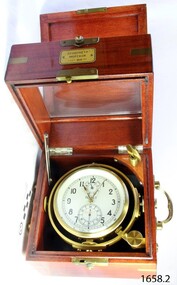
... The movements of very-early products were still stamped "Dueber-Hampden, Canton, Ohio, USA" (examples of these watches are very collectible today). ...The movements of very-early products were still stamped "Dueber-Hampden, Canton, Ohio, USA" (examples of these watches are very collectible today). ...First State Watch Factory: This factory was founded in 1930 under orders from Joseph Stalin, the "First State Watch Factory" was the first large-scale Soviet watch and mechanical movement manufacturer in the USSR. Via its USA-based trading company (Amtorg), the Soviet government bought the defunct Ansonia Clock Company of Brooklyn, New York in 1929, and the "Dueber-Hampden Watch Company of Canton", based in Ohio. The soviets moved twenty-eight freight cars full of machinery and parts from the USA to Moscow in order to establish the factory. Twenty-one former "Dueber-Hampden" watchmakers, engravers and various other technicians helped to train the Russian workers in the art of watchmaking as part of the Soviet's first five-year plan. The movements of very-early products were still stamped "Dueber-Hampden, Canton, Ohio, USA" (examples of these watches are very collectible today). In 1935 the factory was named after the murdered Soviet official Sergei Kirov. During the second world war, as the Germans closed in on Moscow in 1941, the factory was hurriedly evacuated to (Zlatoust USSR). By 1943 the Germans were in retreat, and the factory was moved back to Moscow, adopting the "First Moscow Watch Factory" name. In 1947 the first wristwatches under the brand name "Pobeda" and the first Marine Chronometers and Deck watches were produced. By 1951 the production of wristwatches had increased to 1.1 million. In 1975 new machinery and equipment for manufacturing complex watches were imported from Switzerland. The first chronograph called "Okean" (3133) was produced for the space station "Soyuz-23."The Chronometer is of recent manufacture and an excellent example of the type of instrument used to navigate the seas in the 19th century. It is of good quality and of a type regarded as very accurate and well made. The maker, First Watch Factory, has a dept that is still producing the "8916" standard Chronometer for horologists and collectors. Marine chronometer of Russian make in wooden case, metal handles on sides, inscription on a metal plaque on the front of the case. Polished square wooden outer case with green felt lining and, a leather carrying strap and buckle. Outer case is hinged and has a metal latch on the front. Outer case has a red velvet covering with a button and loop closure. Inscription on box are in Russian & translate as follows: ХРОНОМЕТР, = CHRONOMETER МОРСКОЙ, = NAUTICAL ГОСТ, 8916-77 = Gost ЛОЛ ЕТ, on dial face = LOL ETflagstaff hill, warrnambool, shipwrecked-coast, flagstaff-hill, flagstaff-hill-maritime-museum, maritime-museum, shipwreck-coast, flagstaff-hill-maritime-village, chonometer, russian, watch factory, marine, navigational instrument -
 Flagstaff Hill Maritime Museum and Village
Tool - Chisel, Ward, 1855 - 1911
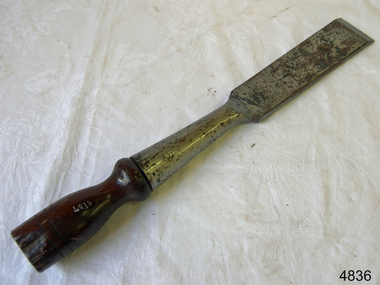
... collect vintage woodworking tools. However for further details regards provenance see the note in the provenance section this document. flagstaff hill warrnambool shipwrecked-coast flagstaff-hill flagstaff-hill-maritime-museum maritime-museum shipwreck-coast flagstaff-hill-maritime-village hand tool ward chisel woodwork chisel Has "E" stamped on blade Socket chisel with 1 inch blade end of handle has been sawn off. ...Ward & Payne was founded in Sheffield by David Ward, an edge-tool manufacturer in 1803. The company had the name, David Ward. David Ward's son Edward joined the company around 1837 and the company name was changed to David Ward & Sons or David Ward & Co. Perhaps both names were used in succession it is unclear. Henry Payne appears as an edge tool maker in 1837 and joins the company before 1845. Perhaps he joined in 1837, as a result, this caused the name change to David Ward & Co. In 1843 Henry Payne registered the trademark name of Ward & Payne consisting of the crossed hammers above an anvil with W to the left and P to the right. Henry Payne became the junior partner in 1845 and died in 1850 and ownership of the company then reverted to the Ward family. After 1845 the firm built a large business in edge tools concentrating on carving tools, chisels, and gouges. Another David Ward (1835 - 1889), possibly the son of Edward Ward, took over the company in 1855 and was an aggressive young executive with the company before that. He grew the company's fortunes in both the sheep shearing scissor and carving tool businesses. The company grew and expanded its factory to a full city block and published a 501-page catalog in 1911. The company was still in business up to around 1970. A tool made by a well-known company and regarded today as a collector's item for those enthusiasts that collect vintage woodworking tools. However for further details regards provenance see the note in the provenance section this document.Socket chisel with 1 inch blade end of handle has been sawn off.Has "E" stamped on bladeflagstaff hill, warrnambool, shipwrecked-coast, flagstaff-hill, flagstaff-hill-maritime-museum, maritime-museum, shipwreck-coast, flagstaff-hill-maritime-village, hand tool, ward chisel, woodwork chisel -
 Marysville & District Historical Society
Book, Maroondah Country, 1979
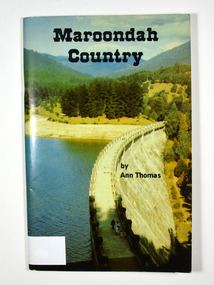
... collecting of these few impressions of the old times./ Thanks are due to the obliging attendants at MMBW/ and LaTrobe libraries, where frequent checks of old/ newspapers - including "The Healesville & Yarra Glen/ Guardian" - and records were essential./ Thanks also to my friends, and cousin Dave./ Ann Thomas Stamp of Marysville & District / Historical Society Inc / P.O. ...collecting of these few impressions of the old times./ Thanks are due to the obliging attendants at MMBW/ and LaTrobe libraries, where frequent checks of old/ newspapers - including "The Healesville & Yarra Glen/ Guardian" - and records were essential./ Thanks also to my friends, and cousin Dave./ Ann Thomas Stamp of Marysville & District / Historical Society Inc / P.O. ...A history of the Maroondah ReservoirPaperback. Front cover shows a colour photograph of the Maroondah Dam wall. Back cover shows a black and white photograph of the Maroondah Dam under construction.Madge Stevens / 85 Rose Street / West Coburg From Mena & Bill on / birthday 5.9.82 AN APPRECIATION Living all my earlier life at my birth-place, Heales-/ ville, with my sisters and brothers and our good parents,/ it was a privilege to return and re-acquaint during the/ collecting of these few impressions of the old times./ Thanks are due to the obliging attendants at MMBW/ and LaTrobe libraries, where frequent checks of old/ newspapers - including "The Healesville & Yarra Glen/ Guardian" - and records were essential./ Thanks also to my friends, and cousin Dave./ Ann Thomas Stamp of Marysville & District / Historical Society Inc / P.O. Box 22 / Marysville 3779maroondah dam, maroondah, fernshawe, healesville, maroondah aqueduct, maroondah reservoir, victoria, history -
 Federation University Historical Collection
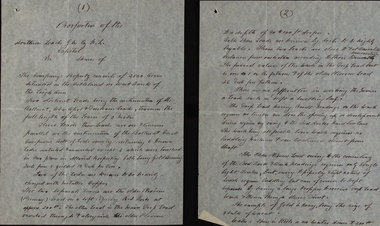
Ephemera, Various papers relating to Richard Squire Mines
... Pearson William Barrett Ballarat Deep Lead Extension Harwood & Pincott Edmund Woodlock leigh river tunnel syndicate Federal Debt Collecting Coy The Southern Extension of Main Ballarat Gold Fields Telegram Received Telegram Mt Mercer Lease Souvenir Telegram Mining Date stamps Various papers relating to Richard Squire Mines including telegrams, reports, receipts, letters and newspaper clippings. .1 Souvenir Telegram .2 Telegram .3 Telegram .4 Telegram .5 Telegram .6 Telegram .7 Telegram .8 Telegram .9 Telegram .10 Telegram .11 Telegram .12 Telegram .13 Telegram .14 Telegram .15 Telegram .16 Newspaper article Mt Mercer Lease 8109, Ballarat .17 Report on the Southern Extension of Main Ballarat Goldfield .18 Letter from Harwood & Pincott Solicitors and Notaries re: Agreement .19 Ballarat Deep Leads Extensions .20 Leigh River Tunnel Syndicate Voucher x 4 .21 Debt Collector Letter .22 HY. ...In 1905 Richard Squire was manager of the West Berry Consols at Allendale, and developed an improved system of mine ventilation, which was supported in "The Age."[4] He was successful in combating and remedying the gas and ventilation troubles of the Deep Mines of Creswick and Allendale Districts after all had failed. MINE MANAGERS’ ASSOCIATION. Ballarat Branch. ... Mr R. B. Squire, manager of the West Berry Consols, at Allendale, submitted a paper detailing what he had done tor the betterment of ventilation in the alluvial mines of Smeaton and Mary borough districts- Members gave Mr Squire every credit for the results that he claimed to have effected; the adoption of his ideas had testified to their value to mine-owners. It was painted out, however, that for want of a thorough debate of the subject with experienced men the author had unwittingly included some general statements that required modifying in some points and extending in others, in justice to other workers among the earlier and the present day managers of mines. It was decided to invite the author to meet a sub-committee on this subject!Various papers relating to Richard Squire Mines including telegrams, reports, receipts, letters and newspaper clippings. .1 Souvenir Telegram .2 Telegram .3 Telegram .4 Telegram .5 Telegram .6 Telegram .7 Telegram .8 Telegram .9 Telegram .10 Telegram .11 Telegram .12 Telegram .13 Telegram .14 Telegram .15 Telegram .16 Newspaper article Mt Mercer Lease 8109, Ballarat .17 Report on the Southern Extension of Main Ballarat Goldfield .18 Letter from Harwood & Pincott Solicitors and Notaries re: Agreement .19 Ballarat Deep Leads Extensions .20 Leigh River Tunnel Syndicate Voucher x 4 .21 Debt Collector Letter .22 HY. W. Pearson Account .23 William Barrett Mining and General Blacksmith Quote and Account .24 Letter from Department of Mines, Melbourne dated 5th December 1934 .25 Letter from Mines Department, Melbourne dated 27th August 1937 .26 Documentsrelating to the purcghase of a wreath for R. Woolley .27 Prospectus of the Southern Leads .28 Propsal prospectus of Leigh River .29 Letter to Tom Squire from his brother Jim .30 Letter to Mr Squire from C Hayes regarding wages owed .31 3 copies of report on mine 8th August 1935 .32 Letter regarding unpaid account .33 Contributary causes of Collapse at Mt Mercer .34 Letter from D. Crawford re payment for timber .35 Letter from John McLeod apologising for not sending cheque .36 Letter from Department of Mines regarding Neil Cameron purchases of portions 64, 65. 66 and 71 .37 3 Letters from Department of Mines granting an extension of time to pay overdue rent. .38 Letter from Department of Mines regarding Mining Lease No. 8217 .39 Letter from Department of Mines regarding Lease Rents .40 Letter from the Department of Mines regarding further boring at Mt Mercer .41 Letter from E.R Hodge requesting that Richard Squire meet with Board members of Glenfine South .42 Letter from G Brown regarding Leases not being paid for .43 Letter from daughter Judy .44 Newspaper article regarding Berry United Deep Leads .45 Envelope addressed to R.T Squire Box 2 Tresco .46 Letter to Richard Squire from A.L. Read Date stamps richard squire, tom squire, jim squire, reports, contributary causes, account, c. hayes, proposal, prospectus, leigh river, southern leads, una cooperative society ltd., wreath, r. woolley, department of mines, e. woodlock, a.l. read, geo brown, hy. w. pearson, william barrett, ballarat deep lead extension, harwood & pincott, edmund woodlock, leigh river tunnel syndicate, federal debt collecting coy, the southern extension of main ballarat gold fields, telegram, received telegram, mt mercer lease, souvenir telegram, mining -
 Flagstaff Hill Maritime Museum and Village
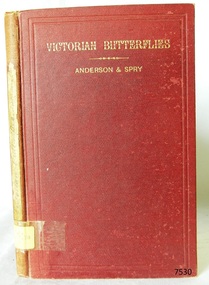
Book - Reference Book/Biology/Scientific, Field Naturalist Club of Victoria, Victorian Butterflies and How to Collect Them, 1893
... It is a valuable record of the species of butterflies discovered in Victoria at the time. book warrnambool mechanics’ institute victorian butterflies ernest anderson frank palmer spry shipwrecked-coast flagstaff-hill warrnambool flagstaff-hill-maritime-museum maritime-museum shipwreck-coast flagstaff-hill-maritime-village shipwrecked-artefact warrnambool library warrnambool city librarian mechanics’ institute library victorian library board warrnambool books and records warrnambool children’s library great ocean road Warrnambool Public Museum butterfly collectors botanists hobbies naturia A reference book for butterflies in the Australian State of Victoria Label on spine cover with typed text R.A. 595.73 AND Pastedown front endpaper has a sticker from the Warrnambool Mechanics Institute and Free Library Interspersed on internal pages: dark blue oval stamp with "WARRNAMBOOL PUBLIC MUSEUM" Red hardcover book with imprinted lined borders and embossed gold titles. A white label is attached to the spine. Title: Victorian Butterflies and How to Collect ...A reference book for butterflies in the Australian State of VictoriaRed hardcover book with imprinted lined borders and embossed gold titles. A white label is attached to the spine. Title: Victorian Butterflies and How to Collect Them Authors: Ernest Anderson and Frank Palmer Spry. Field Naturalists' Club of Victoria Publisher: H Hearne & Co Printers: H Hearne & Co, Paragon Printing Works, 208-210 Little Lonsdale Street, Melbourne Date: 1893non-fictionA reference book for butterflies in the Australian State of Victoriabook, warrnambool mechanics’ institute, victorian butterflies, ernest anderson, frank palmer spry, shipwrecked-coast, flagstaff-hill, warrnambool, flagstaff-hill-maritime-museum, maritime-museum, shipwreck-coast, flagstaff-hill-maritime-village, shipwrecked-artefact, warrnambool library, warrnambool city librarian, mechanics’ institute library, victorian library board, warrnambool books and records, warrnambool children’s library, great ocean road, warrnambool public museum, butterfly collectors, botanists, hobbies, naturia -
 Flagstaff Hill Maritime Museum and Village
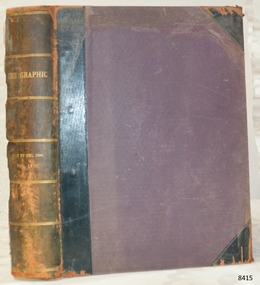
Newspaper - Bound Compilation of Newspapers July to December 1898, Edward Joseph Mansfield, Publisher, The Graphic Illustrated Newspaper Vol 58, 1898
... collect six months' worth of weekly issues and have them custom-bound into a hardback volume for preservation. This Compilation of Newspapers has no fly paper. Paste down front end paper has a sticker from Warrnambool Mechanics Institute and Free Library. Inside page has a stamp ...To understand exactly what this item is, it helps to clear up a common misconception: it is not a book, nor is it a traditional literary novel. Instead, it is a bound volume of The Graphic, a weekly British newspaper that ran from 1869 to 1932. Because newspapers back then were flimsy, readers or libraries would collect six months' worth of weekly issues and have them custom-bound into a hardback volume for preservation.Bound Compilation, The Graphic Illustrated Newspaper Vol 58 Author: Various, Publisher: Edward Joseph Mansfield 1898 Date: 1898 Reddish hardcover with a damaged browns spine, reinforced corners to hardcover gold edging to spine. non-fictionTo understand exactly what this item is, it helps to clear up a common misconception: it is not a book, nor is it a traditional literary novel. Instead, it is a bound volume of The Graphic, a weekly British newspaper that ran from 1869 to 1932. Because newspapers back then were flimsy, readers or libraries would collect six months' worth of weekly issues and have them custom-bound into a hardback volume for preservation.flagstaff hil, warrnambool, flagstaff hill maritime museum, maritime museum, shipwreck coast, flagstaff hill maritime village, great ocean road, book, pattison collection, warrnambool library, warrnambool mechanics’ institute, ralph eric pattison, corangamite regional library service, warrnambool city librarian, mechanics’ institute library, victorian library board, warrnambool books and records, warrnambool children’s library, the graphic illustrated newspaper vol 58, edward joseph mansfield -
 Flagstaff Hill Maritime Museum and Village
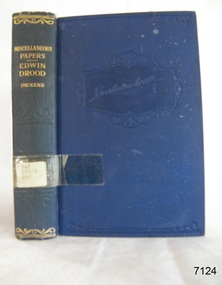
Book - Unfinished Fictional story, Charles Dickens, Miscellaneous Papers with (The Mystery of Edwin Drood), 1935
... collects mid 19th century essays on topics like agriculture, crime, education, capital punishment, and includes tributes to figures such as W.M. Thackeray and Adelaide Anne Procter. Appended to the novel is “The Mystery of Edwin Drood,” Dickens's 1870 unfinished novel about Edwin Drood's disappearance amid opium addiction, obsession, and intrigue in Cloisterham, involving various suspects like John Jasper. The label on spine with the typed text PAT 823.8 DIC Paste down front end paper has a sticker from Warrnambool Public Library covered by a sticker from Corangamite Regional Library Service Front loose end paper has a stamp ...Charles Dickens (1812–1870) was one of the great English novelists of the Victorian era, famous for vivid characters, social criticism, and stories that were first published in serial form. He began as a journalist, rose to enormous popularity during his lifetime, and wrote major works such as Oliver Twist, David Copperfield, and Great Expectations. The subject novel “Miscellaneous Papers” with excerpts from “The Mystery of Edwin Drood” collects mid 19th century essays on topics like agriculture, crime, education, capital punishment, and includes tributes to figures such as W.M. Thackeray and Adelaide Anne Procter. Appended to the novel is “The Mystery of Edwin Drood,” Dickens's 1870 unfinished novel about Edwin Drood's disappearance amid opium addiction, obsession, and intrigue in Cloisterham, involving various suspects like John Jasper.Miscellaneous Papers and (The Mystery of Edwin Drood) Author: Charles Dickens Publisher: Hazell Watson and Viney Limited Date: 1935 Light blue leather embossed hardcover with a blue spine and lettering in gold. The spine has a Library label.fictionCharles Dickens (1812–1870) was one of the great English novelists of the Victorian era, famous for vivid characters, social criticism, and stories that were first published in serial form. He began as a journalist, rose to enormous popularity during his lifetime, and wrote major works such as Oliver Twist, David Copperfield, and Great Expectations. The subject novel “Miscellaneous Papers” with excerpts from “The Mystery of Edwin Drood” collects mid 19th century essays on topics like agriculture, crime, education, capital punishment, and includes tributes to figures such as W.M. Thackeray and Adelaide Anne Procter. Appended to the novel is “The Mystery of Edwin Drood,” Dickens's 1870 unfinished novel about Edwin Drood's disappearance amid opium addiction, obsession, and intrigue in Cloisterham, involving various suspects like John Jasper.book, the old curiosity shop, charles dickens, shipwrecked-coast, flagstaff-hill, flagstaff-hill-maritime-museum, warrnambool, maritime-museum, flagstaff-hill-maritime-village, pattison collection, warrnambool library, warrnambool mechanics’ institute, ralph eric pattison, corangamite regional library service, warrnambool city librarian, mechanics’ institute library, victorian library board, warrnambool books and records, warrnambool children’s library, great ocean road -
 Flagstaff Hill Maritime Museum and Village
Container - Money box
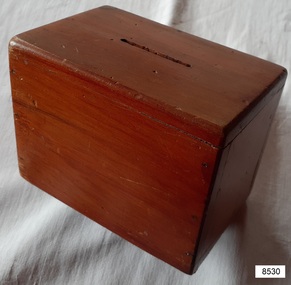
... collecting money as a donation or contribution for an organisation or charity. Flagstaff Hill Flagstaff Hill Maritime Museum and Village Warrnambool Maritime Museum Maritime Village Great Ocean Road Shipwreck Coast money box money safe Vintage money box wooden money box savings donations collection contribution Stamp (indecipherable) Money box, rectangular polished wood money box with coin slot in the top and a blue felt fabric pad on the base. ...Metal money boxes shaped like common familiar objects became a popular from the 18th century. In the 20th century they were used to promote and advertise events and businesses. In the 1950s money boxes shaped like a bank building were given away to children by their parents' bank to encourage them to save money. This money box was possibly used in an organisation such as the Missions to Seamen as a donation box, particularly as there is no means of easily opening the box or tampering with it.The money box is an example of a way of collecting money as a donation or contribution for an organisation or charity.Money box, rectangular polished wood money box with coin slot in the top and a blue felt fabric pad on the base. The base has a purple stamped inscription which is indecipherable. There is no obvious means of opening the box. The box has contents.Stamp (indecipherable)flagstaff hill, flagstaff hill maritime museum and village, warrnambool, maritime museum, maritime village, great ocean road, shipwreck coast, money box, money safe, vintage money box, wooden money box, savings, donations, collection, contribution -
 City of Moorabbin Historical Society (Operating the Box Cottage Museum)
Equipment - Omega Breast Reliever, 1920
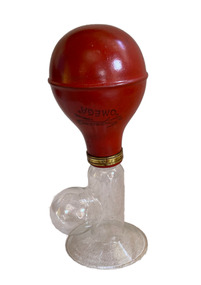
... Owned and used by one of the pioneer families in the City of Moorabbin nursing midwife emma warburton cheltenham moorabbin city of moorabbin mentone child birth breast feeding medical equipment breast pump Stamp in black ink on red bulb reads "Ingram's/'Omega'/London." Glass tube with a collecting reservoir that opens into a funnel (or breast piece). ...Equipment used by Emma Warburton, a midwife, who lived in the City of Moorabbin. The pump was used by women who needed that extra help to relieve the pressure build-up in their breasts when lactating. The pump was made by J.G. Ingram & Sons Ltd, and sold in the early 1900’s.Owned and used by one of the pioneer families in the City of MoorabbinGlass tube with a collecting reservoir that opens into a funnel (or breast piece). Round red rubber bulb attached to one end of the glass. Stamp in black ink on red bulb reads "Ingram's/'Omega'/London."nursing, midwife, emma warburton, cheltenham, moorabbin, city of moorabbin, mentone, child birth, breast feeding, medical equipment, breast pump -
Glenelg Shire Council Cultural Collection
Book - Collection of reference texts on shells, 1964-2004
... Stamp Book of Seashells", Wisonsin: Golden Books, 1975 (4111.7); Taylor, John & Jerry G. Walls, "Cowries", Neputune City: T.F.H. Pblications, 1975 (4111.8); Child, John & John Currey, "Shells and the Seashore", Melbourne: Landsdowne Press, 1972 (4111.9); "Sea Shells", London: Orbis Books, 1971 (4111.10); Dance, S. Peter, "Shells and shell collecting...Stamp Book of Seashells", Wisonsin: Golden Books, 1975 (4111.7); Taylor, John & Jerry G. Walls, "Cowries", Neputune City: T.F.H. Pblications, 1975 (4111.8); Child, John & John Currey, "Shells and the Seashore", Melbourne: Landsdowne Press, 1972 (4111.9); "Sea Shells", London: Orbis Books, 1971 (4111.10); Dance, S. Peter, "Shells and shell collecting ...Collection of reference texts on seashells. Includes: Dance, Peter S., "Seashells", London: Treasure Press, 1971 (4111.1); "Handy Pocket Guide to Tropical Seashelss of Indonesia, 2004 (4111.2); Dance, Peter S., "Shells", Pymble: Harper Collins, 1992 (4111.3); Linder, Gert, "Seahshells of the world", Sydney: Australia & New Zealand Book Company, 1977 (4111.4); Wilson, B. R. & K. Gillett, "Australian Shells", Sydney: Reed, 1971 (4111.5); Harasewych, M.G., "Shells: Jewels from the Sea", New York: Rizzoli, 1989 (4111.6); "The Golden Stamp Book of Seashells", Wisonsin: Golden Books, 1975 (4111.7); Taylor, John & Jerry G. Walls, "Cowries", Neputune City: T.F.H. Pblications, 1975 (4111.8); Child, John & John Currey, "Shells and the Seashore", Melbourne: Landsdowne Press, 1972 (4111.9); "Sea Shells", London: Orbis Books, 1971 (4111.10); Dance, S. Peter, "Shells and shell collecting", London: Hamlyn, 1972 (4111.11); Clayton, JM, "All colour book of Seashells:, London: Octopus Books, 1974 (4111.12); "Exploring the Secrets of Nature", London: Reader's Digest, 1994 (4111.13); Habe, Tadashige, "Shells of the Western Pacific in colour: Vol I", Osaka: Hoikusha, 1964 (4111.14); Habe, Tadashige, "Shells of the Western Pacific in colour: Vol II", Osaka: Hoikusha, 1964 (4111.15); Dance, Peter S. (ed.), "The Encyclopedia of Shells", Sydney: Australia & New Zealand Book Company, 1977 (4111.16); Hinton, Alan, "Guide to Shells of Papua New Guinea", Port Moseby: Robert Brown and Associates, nd (4111.17); Hinton, Alan, "Guide to Australian Shells", Port Moseby: Robert Brown and Associates, nd (4111.18); "The How and Why wonder book of seashells", New York: Grosset & Dunlap, 1972 (4111.19); Child, J., "Australian Golden Stamp Book: Australian Seashells",Sydney: Golden Press, 1971 (4111.20); Hinton, Alan, "Shells of New Guinea and the Central Indo-Pacific", Port Morsby; Milton: Robert Brown and Associates Pty Ltd; The Jacaranda Press, 1975 (4111.21); Coleman, Neville, "Shells in Australia", Sydney: Reed, 1978 (4111.22); Coleman, Neville, "What Shell is That?", Sydney: Ure Smith Press, 1988 (4111.23); Coleman, Neville, "Shells Alive!", Adelaide: Rigby Publishers, 1981 (4111.24); Deas, Walter, "Seashells of Australia", Adelaide: Rigby Ltd, 1974 (4111.25).maritime, marine ecology, sea shells, reference, natural history -
 Orbost & District Historical Society
book, Winchester, Ian, The P.S. Curlip & the Snowy River 1880-1919, 2008
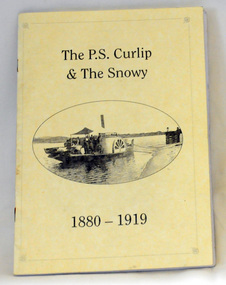
... collect the maize grown along the Snowy River. This book is a useful reference on the history of the Paddle Steamer Curlip. winchester curlip snowy-river On front page -stamped "Orbost & District Historical Society" A thin, 22 pp, stapled paperback book, titled "P.S. ...This book was written by Ian Winchester, the grandson of James Winchester, early settler in Marlo, who worked with Alan Richardson. The book is dedicated to those who colonised the Snowy River. James Winchester was born in Geelong in 1856. He first sailed into Marlo, aged 15 and returned in the 1870's. he worked on the snagging punt on the Snowy River and also on the Paddle Steamer Curlip which towed the barges to collect the maize grown along the Snowy River.This book is a useful reference on the history of the Paddle Steamer Curlip.A thin, 22 pp, stapled paperback book, titled "P.S. Curlip & The Snowy River". It has a cream cover with a b/w photo of the Paddle Steamer Curlip in the centre. Print is black. It contains a history of the Curlip built by Samuel Richardson and is written in verse. There are b/w photographs and sketches.On front page -stamped "Orbost & District Historical Society"winchester curlip snowy-river -
 Flagstaff Hill Maritime Museum and Village
Pen Nibs, 1920's
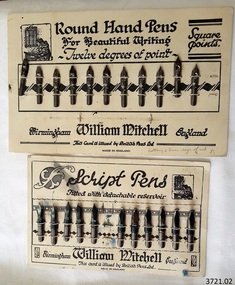
... The hole at the front of the nib is for collecting ink from a well, which is then stored in a reservoir at the back of the nib. The nibsare stamped with their nib size and Pedigree (what type of nib it is) and maker’s details. ...The hole at the front of the nib is for collecting ink from a well, which is then stored in a reservoir at the back of the nib. The nibsare stamped with their nib size and Pedigree (what type of nib it is) and maker’s details. ...The two cards of nibs are retail display cards of the dip pen nibs that William Mitchell Calligraphy produced, dating back to around the 1920’s, which was the time of the Great Exhibition in the UK. At that time dip pens with steel nibs were the main writing instruments. British Pens Ltd. had recently formed as a company and its subsidiaries included the the company William Mitchell, which is why British Pens Ltd. is named on the cards as well. One card (1) has the Round Hand nib, which is widely used today for calligraphy scripts. The other card (2) has the Script nib that has round upturned points for monocline or unshaded lettering that is also used for calligraphy. The nibs also have a detachable reservoir. The pen nibs are shaped to fit into a slot in the base of a wooden or Bakelite pen holder. The hole at the front of the nib is for collecting ink from a well, which is then stored in a reservoir at the back of the nib. The nibsare stamped with their nib size and Pedigree (what type of nib it is) and maker’s details. William Mitchell Calligraphy still makes these nibs today with a slightly difference finish. (ref: Sales and Marketing Director of William Mitchell Calligraphy in 2016). HISTORY of the Ink Pen Quills and ink were common writing tools until the early 19th century when the pen trade began mass producing steel nibs and pens. The steel nibs each have a hole in the middle that acts like a well for the ink. When the nib is dipped into the ink well the writer needs to ensure that it is dipped to only just past that well. India Ink was one of the most popular inks used with the nib pens, notable for its satin-like smooth flow. This ink is composed of a particularly fine carbon mixed with water; it can also be obtained as a dry stick that is then crushed and mixed with water as required. The Jewellery Quarter of Birmingham had the largest concentration of independent jewellers in Europe. Birmingham became the centre of the world’s pen trade for many years -, during the 1800’s over 100 factories, employing 1000s of skilled workers, manufactured the ‘Birmingham Pen’. ABOUT WILLIAM MITCHELL CALLIGRAPHY LTD.* (*The following text is quoted from the William Mitchell Calligraphy website) British based William Mitchell Calligraphy has been designing and manufacturing exceptional pens for almost 200 years. The William Mitchell heritage in making pen nibs began whilst working with his brother John Mitchell in the early 1820s. William Mitchell established his own business in 1825 to become one of the leading nib manufacturers and famous for lettering pens. Almost 100 years later William Mitchell merged with Hinks, Wells & Co, another pen manufacturer, to form British Pens, employing around 1000 people in the Bearwood Road area of Birmingham. During the early 1960s British Pens acquired the pen business of other pen manufacturers Perry & Co and John Mitchell, once again reuniting the two brothers. Joseph Gillott, who were famous for their artist drawing and mapping nibs, amalgamated with British pens in 1969. William Mitchell and Joseph Gillott established in Birmingham during the early part of the nineteenth century and [their products] are still proudly made here. British Pens were subsequently purchased by its current owner Byron Head, the owner of William Mitchell (Sinkers) in 1982, and was subsequently renamed William Mitchell (calligraphy) Ltd. Established in 1827 Joseph Gillott was one of the pioneers of mass steel pen nib manufacturing. The company was particularly strong in the American market, prompting Elihu Burrit, the American consul, to write “In ten thousand school houses across the American continent between two oceans, a million children are as familiarly acquainted with Joseph Gillott as with Noah Webster” (The compiler of the famous American dictionary). The company consequently received visits from many notable Americans, including president Ulysses S Grant. The early 19th century invention and mass production of pen nibs such these in our collection had a large impact on education and literacy because the nibs could be produced in great numbers and affordable prices.Pen nibs; 2 cards of steel dip pen nibs from the 1920’s. The steel nibs are attached to cards by 2 rows of entwined cotton cord. Reverse sides of cards have some hand written marks. Manufacturer; William Mitchell, Birmingham, England. Card issued by British Pens Ltd. Nibs have shaped ends, a hole in the centre with a well on the underside, and the tops are shaped approximately quarter circle. Inscriptions are pressed into each nib. The script pens have detachable reservoirs made of a metal different to the nib. (Card 1) Round Hand Pens, 11 nibs remain from card of 12. Printed on card “Round Hand Pens for Beautiful Writing, Twelve degrees of point, Square points. William Mitchell, Birmingham, England. This card is issued by British Pens Ltd. MADE IN ENGLAND” Also printed on top left of card is a pen drawing of a person writing at a desk, background of decorative 3-paned window in brick wall. (Card 2) Script Pens; 11 nibs remain from card of 12. “Script pens fitted with detachable reservoir. William Mitchell, Birmingham, England. This card is issued by British Pens Ltd. MADE IN ENGLAND” Also printed on top right of card is a pen drawing of a person writing at a desk, background of decorative 3-paned window in brick wall. On Card 1, - each nib is stamped with its size, and “Wm MITCHELLS / PEDIGREE / ROUND HAND / ENGLAND” - hand written on front bottom of card in ball point pen “Lettering 5 times size of nib” - hand drawn on back of card in red and blue ball point pen are scribbled lines On Card 2 - each nib is stamped with its size, and “WILLIAM / MITCHELLS / SCRIPT PEN / ENGLAND” - a black circle corresponding to the nib is printed on the card above each nib. - hand written on back of card in black felt tip pen are numerals - hand drawn on back, 4 parallel lines in red ball point pen with the numbers “10” between 2 of the lines flagstaff hill, warrnambool, shipwrecked coast, flagstaff hill maritime museum, maritime museum, shipwreck coast, great ocean road, william mitchell calligraphy ltd, british pens ltd., pen nib, writing implement, dip pen, round hand nib, script nib, birmingham manufacturer, communication in writing, mass produced pen nibs -
 Ringwood and District Historical Society
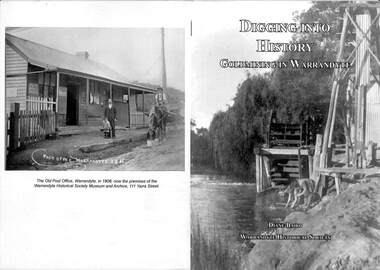
Book, Diane Baird, Digging Into History - Goldmining in Warrandyte, 2007
... collect, preserve and share Warrandyte's history. In particular, the research by the late Bruce Bence and the dedicated work of the late Jo Laurence have been an invaluable contribution to the history of Warrandyte. Information about early mining in Victoria's first gold field. Cover photographs: Front cover - Fossickers working below the water-wheen driven stamper ...Information about early mining in Victoria's first gold field. Cover photographs: Front cover - Fossickers working below the water-wheen driven stamper battery located on the south side of the Yarra River upstream of the Warrandyte Bridge. Back cover - The Old Post Office, Warrandyte, in 1906, now the premises of the Warrandyte Historical Society Museum and Archive, 111 Yarra Street.Acknowledgements: Several members of the Warrandyte Historical Society were involved in the development of this publication. It was developed and written by Diane Baird; Murray Houghton and Ted Rotherham provided specialist historical details and further references; Jo Laurence and Shirley Rotherham collected and identified photographs; Brian Laurence prepared images for electronic format; and Richard Morton edited and formatted the text. The Society gratefully acknowledges the dedicated work of all its members who collect, preserve and share Warrandyte's history. In particular, the research by the late Bruce Bence and the dedicated work of the late Jo Laurence have been an invaluable contribution to the history of Warrandyte. -
 Flagstaff Hill Maritime Museum and Village
Barrel Calipers, Early 20th Century
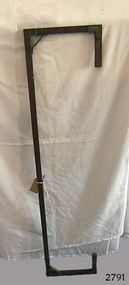
... The item demonstrates a long social history of the practice of Government's collecting duty on alcoholic beverages and thereby makes this item historically significant as it was used locally at Port Fairy by the ports Customs agents. flagstaff hill warrnambool shipwrecked coast flagstaff hill maritime museum maritime museum shipwreck coast flagstaff hill maritime village great ocean road customs long calipers excise duty barrel calipers "Dring & Fage Makers to the Customs" stamped on side. ...The firm Dring and Fage were active from 1790 to 1940 in London and were manufacturers of hydrometers and mathematical instruments they became established in London in 1790 by John Dring, who was a brass worker and hydrometer maker, and William Fage. Dring and Fage manufactured also saccharometers and other instruments used to measure the strength of alcohol. These instruments were primarily used to calculate excises. They traded at various addresses in London and they were at 56 Stamford St. between 1903 and 1938. By 1850 the company was owned by Edward Hall and Edward Jenkin and in 1940 the company became Dring & Fage Ltd, trading till the 1960s.Historically, gauging has meant measuring a volume, these gauging instruments were used by Customs and Excise and manufacturers for determining the volume and contents of liquid containers. For Customs the determination and collection of duty on imported goods which has had a very long history. Chaucer was a Customs Officer as was his father and grandfather, excise was first officially introduced in 1643, with the aim of maintaining military forces raised by the English Parliament at that time. Excise was initially a duty on home produced alcoholic beverages and soap but being easily applied, spread rapidly to a wide range of goods including imports of varying kinds. The government departments of Customs and Excise merged only in 1909 and it is from around this time that our instrument was made and used. The item demonstrates a long social history of the practice of Government's collecting duty on alcoholic beverages and thereby makes this item historically significant as it was used locally at Port Fairy by the ports Customs agents. Boxwood barrel calipers, wooden slide-rule with right angles at each end and brass fittings used for measuring casks length."Dring & Fage Makers to the Customs" stamped on side.flagstaff hill, warrnambool, shipwrecked coast, flagstaff hill maritime museum, maritime museum, shipwreck coast, flagstaff hill maritime village, great ocean road, customs, long calipers, excise duty, barrel calipers -
 Bendigo Military Museum
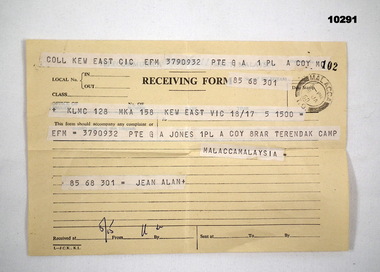
Administrative record - TELEGRAM, MALAYA, C.1968
... The telegram appears to be to Jean - Alan to collect a parcel or similar at Kew East Vic. telegram g a jones mallacca Main points, "85 68 301" - "3790932 Pte G. A. Jones" Telegram, paper light brown colour, all print and additions in black, the additions are on a white stick on label, stamped "Malacca". ...Collection re G.A. Jones 3790932, refer Cat No 10053.2P for his service details. The telegram appears to be to Jean - Alan to collect a parcel or similar at Kew East Vic.Telegram, paper light brown colour, all print and additions in black, the additions are on a white stick on label, stamped "Malacca".Main points, "85 68 301" - "3790932 Pte G. A. Jones"telegram, g a jones, mallacca -
 Eltham District Historical Society Inc
Photograph, Believed to be Jean Watson, c.1910
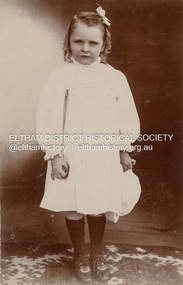
... collecting craze by large numbers of people, and were often kept in albums through which the interested visitor could browse. Postcards were posted or exchanged in huge numbers. Postal authorities in Australia only allowed the private printing of postcards from 1898. At this time the back of the card was reserved for the address and postage stamp...collecting craze by large numbers of people, and were often kept in albums through which the interested visitor could browse. Postcards were posted or exchanged in huge numbers. Postal authorities in Australia only allowed the private printing of postcards from 1898. At this time the back of the card was reserved for the address and postage stamp ...Jean Watson born 1906 was the only child of Christopher and Carrie Watson (nee Shillinglaw). She died at age 14 in 1920 as a result of an accident, cause as yet unknown. POSTCARD 1905-1940s Like the carte-de-visite, postcards enjoyed a collecting craze by large numbers of people, and were often kept in albums through which the interested visitor could browse. Postcards were posted or exchanged in huge numbers. Postal authorities in Australia only allowed the private printing of postcards from 1898. At this time the back of the card was reserved for the address and postage stamp, and the front was used for the message and a picture. In 1902 British authorities allowed a "divided back", so that the left side could be used for the message, the right side for the address and stamp, and the whole of the front was devoted to the picture. France followed suit in 1904, Germany and Australia in 1905, and the United States in 1907. - Frost, Lenore; Dating Family Photos 1850-1920; Valiant Press Pty. Ltd., Berwick, Victoria 1991cabinet photo, marg ball collection, shillinglaw family photo album 3, 1910, jean watson (1906-1920), postcard -
 Eltham District Historical Society Inc
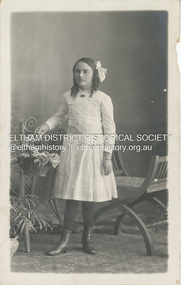
Photograph, Phillip Shillinglaw's neice, May, c.1910
... collecting craze by large numbers of people, and were often kept in albums through which the interested visitor could browse. Postcards were posted or exchanged in huge numbers. Postal authorities in Australia only allowed the private printing of postcards from 1898. At this time the back of the card was reserved for the address and postage stamp...collecting craze by large numbers of people, and were often kept in albums through which the interested visitor could browse. Postcards were posted or exchanged in huge numbers. Postal authorities in Australia only allowed the private printing of postcards from 1898. At this time the back of the card was reserved for the address and postage stamp ...Believed to be addressed to her cousin, Mary Ann Shillinglaw, from May ? - This could be Ethel May Bottle b. 1883, daughter of Edward Henry Bottle and step-daughter of Catherine Shillinglaw but this type of post-card photo only commenced in 1905 when she would have been 22. The girl looks more like 15. It is not known if Elizabeth Docherty (nee Shillinglaw) had any children. Born 1861 and married 1894 at 33 years of age, it is possible that she could have had a daughter who would have been 15 in 1910. "Dear Mary I hope this will find you all well. I hope Uncle Phillip is better. This is for the home it is among the lot. You must excuse me for sending one among the lot I haven’t enough to go all round. I will get more copied and send one to Carrie and Florrie. Well I think I have told you all this time I haven’t much room. So good bye from your loving cousin Mary 100 xxxxxxxxxxxxxx" Possibilities to investigate are the Kidd side families: Wilson Stewart Renolds Mills Mason Williams Post Card printed on back with photographer's details: W. Mason & Co., 144 Bridge Road, Richmond. W. Mason & Co. operated from this adress from 1903-c.1932 POSTCARD 1905-1940s Like the carte-de-visite, postcards enjoyed a collecting craze by large numbers of people, and were often kept in albums through which the interested visitor could browse. Postcards were posted or exchanged in huge numbers. Postal authorities in Australia only allowed the private printing of postcards from 1898. At this time the back of the card was reserved for the address and postage stamp, and the front was used for the message and a picture. In 1902 British authorities allowed a "divided back", so that the left side could be used for the message, the right side for the address and stamp, and the whole of the front was devoted to the picture. France followed suit in 1904, Germany and Australia in 1905, and the United States in 1907. - Frost, Lenore; Dating Family Photos 1850-1920; Valiant Press Pty. Ltd., Berwick, Victoria 1991marg ball collection, shillinglaw family photo album 3, postcard, 1903-1932, 1910, agnes mary shillinglaw 1881-1968, ethel may bottle, mary ann shillinglaw (1880-1963), w. mason & co. photographer 144 bridge rd melbourne -
 Eltham District Historical Society Inc
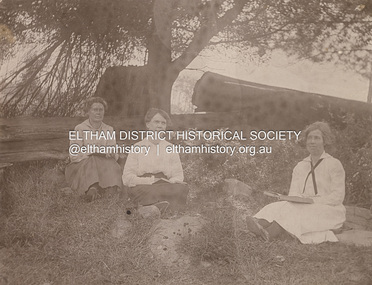
Photograph, Elizabeth Shillinglaw in middle, possibly sister Mary on right, c.1925
... collecting craze by large numbers of people, and were often kept in albums through which the interested visitor could browse. Postcards were posted or exchanged in huge numbers. Postal authorities in Australia only allowed the private printing of postcards from 1898. At this time the back of the card was reserved for the address and postage stamp...collecting craze by large numbers of people, and were often kept in albums through which the interested visitor could browse. Postcards were posted or exchanged in huge numbers. Postal authorities in Australia only allowed the private printing of postcards from 1898. At this time the back of the card was reserved for the address and postage stamp ...Elizabeth (Lizzie) Ann Shillinglaw born August 15, 1879 at Bundoora, Victoria was the fith child of Phillip Shillinglaw and Sarah Ann (nee Kidd). She commenced school at Eltham State School No. 209 (Register No. 391) in 1883 at age 3 years, her final year being 1892. She was engaged to a local Eltham lad who enslisted in the First World War and presented her with a gold ring with Lizzie inscribed on it. He never returned from war and Lizzie never married. Lizzie was quite involved with the local Methodist church where father Phillip was a Lay Preacher. She also had a dress making business in Smitrh Street, Collingwood. At the time of her father's death in 1914 she was living at 18 Stanley Street, Richmond. She returned to Wattle Brae in Eltham where she and her unmarried sisters, Mary and Ada and brother Ernest Samuel continued to live. Mary Shillinglaw born November 5, 1880 at Bundoora, Victoria was the sixth child of Phillip Shillinglaw and Sarah Ann (nee Kidd). She commenced school at Eltham State School No. 209 (Register No. 423) in 1885 at age 4 years. Mary did not marry and spent most of her life at Wattle Brae (Shillinglaw Cottage). In his Will, Phillip Shillinglaw provided that any of his unwed sisters would be able to live at Wattle Brae, rent free. When Eltham Shire Council aquired the property in 1963 to build new Shire Offices, both Mary and her sister Lizzie (also unmarried) were still living at the cottage. Council paid for the women to relocate. Mary moved to Elizabeth House, a nursing home in Ivanhoe but found it very hard to adapt to her new surroundings and living consdtions. She died there only a few months after departing Eltham on October 29, 1963 at age 83 years. Lizzie died June 28, 1972 at age 93 years. Post Card printed on back with photographer's details: W. Mason & Co., 144 Bridge Road, Richmond. W. Mason & Co. operated from this adress from 1903-c.1932 POSTCARD 1905-1940s Like the carte-de-visite, postcards enjoyed a collecting craze by large numbers of people, and were often kept in albums through which the interested visitor could browse. Postcards were posted or exchanged in huge numbers. Postal authorities in Australia only allowed the private printing of postcards from 1898. At this time the back of the card was reserved for the address and postage stamp, and the front was used for the message and a picture. In 1902 British authorities allowed a "divided back", so that the left side could be used for the message, the right side for the address and stamp, and the whole of the front was devoted to the picture. France followed suit in 1904, Germany and Australia in 1905, and the United States in 1907. - Frost, Lenore; Dating Family Photos 1850-1920; Valiant Press Pty. Ltd., Berwick, Victoria 1991marg ball collection, postcard, 1925, elizabeth (lizzie) ann shillinglaw (1879-1972), elizabeth docherty (nee shillinglaw 1861-1942)*, mary ann shillinglaw (1880-1963), reading -
 Emerald Museum & Nobelius Heritage Park
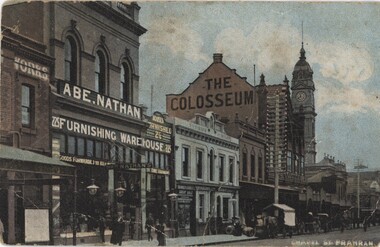
Postcard - Postcard of Chapel Street Prahan, c. 1900s
... collecting postcards in Australia which reached a height in the early 1900s until around 1920. Postcard 1900s "Green Postcard Album" Front, bottom right: 'CHAPEL ST PRAHAN' Back, top: 'POST CARD' Back, left: 'This space may be used for Correspondence / within the Commonwealth without / extra postage' Back, right: 'THIS SPACE FOR NAME AND / ADDRESS' Back, top right corner: 'Stamp / Here' This postcard depicts Chapel Street, Prahan in the c.1890s-1900s. ...These postcards are part of an album of postcards which date from late 19th century to mid 20th century.This postcard is in an album of postcards dating from the late 19th century to mid 20th century and, as such, indicate the popularity of collecting postcards in Australia which reached a height in the early 1900s until around 1920.This postcard depicts Chapel Street, Prahan in the c.1890s-1900s.Front, bottom right: 'CHAPEL ST PRAHAN' Back, top: 'POST CARD' Back, left: 'This space may be used for Correspondence / within the Commonwealth without / extra postage' Back, right: 'THIS SPACE FOR NAME AND / ADDRESS' Back, top right corner: 'Stamp / Here'postcard, 1900s, "green postcard album"
