
Showing 105 items matching " wellington company"
-
 Old Colonists' Association of Ballarat Inc.
Artwork, other, Nelson and Wellington Gold Mining Company, Sebastopol
... Nelson and Wellington Gold Mining Company, Sebastopol...Nelson and Wellington Gold Mining Company...The Nelson and Wellington Gold Mining Company, Sebastopol was registered in May 1856....The framed hand coloured lithograph shows the exterior of the Nelson and Wellington Gold Mining Company, Sebastopol, and the interior of the puddling machine and sluicinf house. ...The Nelson and Wellington Gold Mining Company, Sebastopol was registered in May 1856. ...The Nelson and Wellington Gold Mining Company, Sebastopol was registered in May 1856.The framed hand coloured lithograph shows the exterior of the Nelson and Wellington Gold Mining Company, Sebastopol, and the interior of the puddling machine and sluicinf house. It also includes a lost of shareholders. nelson and wellington gold mining company, sebastopol, herman deutsch -
 Bendigo Historical Society Inc.
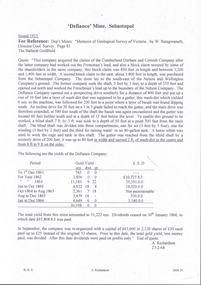
Document - MINING REPORTS - DEFIANCE MINE, SEBASTAPOL
... Nelson and Wellington Company...DOCUMENT Gold Mining Reports Defiance Mine Sebastapol Dept Mines Memoirs of Geological Survey of Victoria W Baragwanath The Ballarat Goldfield The Cumberland Durham and Cornish Company Sebastapol Company Nelson and Wellington Company Defiance Company A Richardson Carbon copy of handwritten quote from Dept. of Mines, Memoirs of Geological Survey of Victoria by W. ...Carbon copy of handwritten quote from Dept. of Mines, Memoirs of Geological Survey of Victoria by W. Baragwanath. Notes include the workings of the Company, gold yield, dividends and re-organization of the Company.document, gold, mining reports, defiance mine sebastapol, dept mines, memoirs of geological survey of victoria, w baragwanath, the ballarat goldfield, the cumberland durham and cornish company, sebastapol company, nelson and wellington company, defiance company, a richardson -
 Bendigo Historical Society Inc.
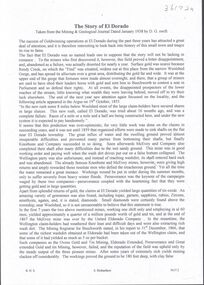
Document - ELDORADO - THE STORY OF EL DORADO
... Company... Wellington Party...DOCUMENT Gold eldorado Eldorado The Story of El Dorado Mining & Geological Journal January 1938 D G Swift The Argus 19/10/1855 Kneebone & Company Wellington Party McEvoy Mine Kneebone Mine Tin Oxide Gemstones United Eldorado Company Mining Registrar Ovens Gold and Tin Mining Eldorado Extended Perserverance Great Extended Gold and Tin Mining Wellington Company Mr William Dunstan United Ovens Gold and Tin The Warrior Try Again Company McEvoy Disaster Cock's Pioneer Electric Gold and Tin Sluicing Company Mr H Falsoner Cock's Pioneer Gold and Tin Mines N L Company State Electricity Commission Hydraulic Sluicing Gold Dredge Cock's Eldorado Company L G Schilling Typed notes titled 'The Story of El Dorado' taken from the Mining & Geological Journal, dated January 1938 by D. ...Typed notes titled 'The Story of El Dorado' taken from the Mining & Geological Journal, dated January 1938 by D. G. Swift. Notes typed by L. G. Schilling, 13/10/69. Notes mention the disappointments, difficulties with water and the ground and floods, As well as gold they also found large quantities of tin oxide and a large variety of gemstones. A powerful jet of water was used for the mining.document, gold, eldorado, eldorado, the story of el dorado, mining & geological journal january 1938, d g swift, the argus 19/10/1855, kneebone & company, wellington party, mcevoy mine, kneebone mine, tin oxide, gemstones, united eldorado company, mining registrar, ovens gold and tin mining, eldorado extended, perserverance, great extended gold and tin mining, wellington company, mr william dunstan, united ovens gold and tin, the warrior, try again company, mcevoy disaster, cock's pioneer electric gold and tin sluicing company, mr h falsoner, cock's pioneer gold and tin mines n l company, state electricity commission, hydraulic sluicing, gold dredge, cock's eldorado company, l g schilling -
Old Colonists' Association of Ballarat Inc.
Prince of Wales Gold Mining Co Registered, Sebastopol, Ballarat
... The Nelson and Wellington Gold Mining Company, Sebastopol was registered in May 1856....The Nelson and Wellington Gold Mining Company, Sebastopol was registered in May 1856. ...The Nelson and Wellington Gold Mining Company, Sebastopol was registered in May 1856.The framed hand coloured lithograph shows the exterior of the Prince of Wales Gold Mining Co Registered, Sebastopol, Ballarat, and the interior of the quartz Crushing and Engine House. It also includes a lost of shareholders. sebastopol, herman deutsch, prince of wales gold mining company of sebastopol -
 Federation University Historical Collection
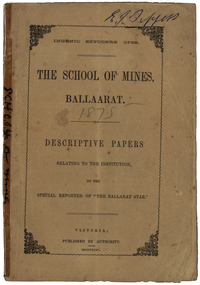
Booklet, The School of Mines Ballaarat: Descriptive papers relating to the institution by the special reporter of "The Ballarat Star", 1875 (exact)
... Company), and alluvial mines by Messrs Bockett, Kent, Martin and Mitchell. Engineers and Engine driving was examined by W.H. Keast,Peter Matthews, Jonathan Robinson and J.M. Troup. Section XI - Covers Annual reports of the school, and honorary correspondents of the school including: John Day (Geelong); R. Evan Day (London); W.W. Evans, M.J.C.E. of New York; J.Y. Fishburne, M.B. of Ararat; Felice Giordano, Inspector of Mines, Italy; Julius Von Haast, Ph. D.F.R.S., Government Geologist of Canterbury; James Hector, M.D., F.R.S., Government Geologist of Wellington...Company), and alluvial mines by Messrs Bockett, Kent, Martin and Mitchell. Engineers and Engine driving was examined by W.H. Keast,Peter Matthews, Jonathan Robinson and J.M. Troup. Section XI - Covers Annual reports of the school, and honorary correspondents of the school including: John Day (Geelong); R. Evan Day (London); W.W. Evans, M.J.C.E. of New York; J.Y. Fishburne, M.B. of Ararat; Felice Giordano, Inspector of Mines, Italy; Julius Von Haast, Ph. D.F.R.S., Government Geologist of Canterbury; James Hector, M.D., F.R.S., Government Geologist of Wellington ...The booklet comprises of a series of papers published in the Ballarat Star, with some revisions. The Administrative Council hoped the publication would increase interest in Technical Education, especially the Art of Mining. He would also hope the public would recognise the Ballarat School of Mines as an institution adapted to supply technical education. The Ballarat School of Mines Council listed at the front of the book includes: Redmond Barry (President and Trustee), Judge Rogers (Vice-President), Somerville Livingstone Learmonth (Trustee), Rivett Henry Bland (Trustee), Charles Gavan Duffy, John A. MacPherson (MLA), William McLellan (MLA), Duncan Gillies (MLA), F. McCoy (University of Melbourne), John I. Bleasdale, W.H. Barnard, James M. Bickett, Henry Richards Caselli, P. Chauncy, J.M. Davey, Joseph Flude, R.F. Hudson, Robert Lewis, James Oddie, Robert M. Serjeant, J. F. Usher, John Walker, J. Williamson, Mayor of the City of Ballaarat, chairman (for the time being) of each of the seven Mining Boards of Victoria. The President of Examiners was Judge Rogers, and the Honorary Auditor was Richard Ford.Stapled, brown soft covered booklet of 48 pages. Section I outlines the establishment of the Ballarat School of Mines, the buildings and land used by the school, describes in detail the former Ballarat Circuit Court and describes the lecture rooms. Section II describes the Ballarat School of Mines Museum, including a description of exhibits. Section III describes the lecture hall, and the apartments on either side of the hall, including the office of the registrar W.H. Barnard, mathematical classroom, chemical laboratory, and metallurgical laboratory. Section IV outlines the subjects offered by the Ballarat School of Mines, including Mathematics taught by John Victor of Grenville College, who had been educated at Trinity College Dublin. Mining and Land Surveying was taught by C.W. Thomas. Mr Croll taught mechanical drawing, followed by Jonathan Robinson of the Union Foundry, and finally S. Keast. It then lists some text books used in the school. Section V mentions the School Council, lack of funds, future directions, mining laboratory. Vi- Describes the land and out buildings, and the proposed building for metal and wood turning, brass foundry, blacksmith, working engine, etc. This section describes some large donations to the school - 50 pounds from the Misses Meglin of Melbourne, 10 pounds 10 shillings to the 'Pyrites fund' by the Walhalla and Long Tunnel Companies in Gippsland. Section VII covers the teaching of chemistry by Joseph Flude. Section VIII outlines the metallurgy classes and the process of assaying. Section IX covers telegraphy taught by Mr Bechervaise Section X describes the examination process at the Ballarat School of Mines. Examiners in mathematics were G.J. Russell (Buninyong) and John Lynch (Smythesdale), mining and land surveying John Lynch and P.C. Fitzpatrick (Ballarat), Principles and Practice of Mining R.M. Serjeant (Band and Albion Consols), Mechanical Engineering John Lewis (New North Company Clunes, Mineralogy and Geology G.H. F. Ulrich, Assayign and Chemistry J. Cosmo Newberry, and Telegraphy R.L.J. Ellery (government astronomer) and Sam W. Macgowan. Underground managers and captains in quart mining was examined by Henry Rosales (Walhalla Company), and alluvial mines by Messrs Bockett, Kent, Martin and Mitchell. Engineers and Engine driving was examined by W.H. Keast,Peter Matthews, Jonathan Robinson and J.M. Troup. Section XI - Covers Annual reports of the school, and honorary correspondents of the school including: John Day (Geelong); R. Evan Day (London); W.W. Evans, M.J.C.E. of New York; J.Y. Fishburne, M.B. of Ararat; Felice Giordano, Inspector of Mines, Italy; Julius Von Haast, Ph. D.F.R.S., Government Geologist of Canterbury; James Hector, M.D., F.R.S., Government Geologist of Wellington, New Zealand, W.F. Hopkins (Grant); Charles A. La Trobe, C.E. (Engineer-in-Chief International Railway Plant, London); Archibald Liversidge, F.G.S. (Professor of Mineralogy and Reader in geology at Sydney University; J.J. Macgregor, M.D. (Creswick); J.T. McKenna (1st class of SMB underground management - Northern Territory); Henry Rosales, M.E. and M. (Walhalla); Harrie Wood (SMB founder and Under-secretary for Mines, Sydney); John Walthew (Stockport, England) .2) Signed 'E.J. Tippett', former President of the Ballarat School of Mines Council melbourne, mla, ballarat school of mines, redmond barry, j f usher, james bickett, w f hopkins, rivett henry bland, s m b, judge rogers, somerville learmonth, charles gavan duffy, gavan duffy, john macpherson, william mclellan, duncan gillies, f mccoy, university, john bleasdale, henry richards caselli, henry caselli, p chauncy, j m davey, joseph flude, r f hudson, robert lewis, james oddie, robert m serjeant, john walker, j williamson, richard ford, ballarat court house, assay, john victor, grenville college, trinity college dublin, c w thomas, jonathan robinson, union foundry, s keast, blessdale, john day, r evan day, w w evans, j y fishburne, felice giordano, julius von haast, james hector, charles a la, trobe, archibald liversidge, j j macgregor, j t mckenna, henry rosales, harrie wood, john walthew, fees, frederick mccoy, w.h. barnard -
Federation University Historical Collection
Letter, Inward Correspondence to the Ballarat School of Mines, 1910, 08/1910
... Company...L. Hansen...Victorian Railways...Edmund C. Earles...Lawrence...R. Welesteo...Wellington...Company L. Hansen Victorian Railways Edmund C. Earles Lawrence R. Welesteo Wellington Cyanide Works Clunes OCtavius Williams H.J. ...Inward Correspondence to the Ballarat School of Mines, August 1910letterhead, education department, roland graham, coleraine, m. carew, row brothers, mount gambier, joseph row, r. blackburn, max kohl, wilfred p. avery, jubilee hall, broken hill, frederick e. barclay, pharmacy board victoria, harry shinningham, hobson's gold mining company, macquarie steam brick yards, james dewar, henrey sotheran & co, piccadilly, london, salop, thomas parker, frank tate, dressmaking, steiglitz, telegram, postcard, lahasa fiji, r. palmerf, church of england grammar school of girls, f. abrams, radium hill, welcome gold mine, stanley b. white, new golden gate gold mining company, n.j. wise, h.g. taylor, kout morrien harrow, l.f. fairthorne & sons, h.b. silberberg & co, skipton, henry f. hull, birthday tunnel company, l. hansen, victorian railways, edmund c. earles, lawrence, r. welesteo, wellington cyanide works, clunes, octavius williams, h.j. thwaites, tolarno station, gilbert pa, gilbert palmer, wool sorting, r.j. webster, w.a.t. davies, henry markwald, e. rolland -
 Federation University Historical Collection
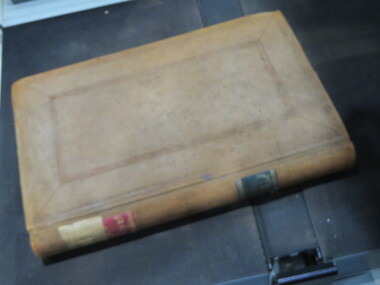
Book - Ledger, Ballarat School of Mines Assay and Analysis Ledger, 1887-1890, 1887-1890
... company...a. sutherland...saxon consols...j.b. triggs...h. townsend...harold turnley...c. taylor, melbourne...c. thorpe...a. vandenberg...charles walker...charles wilson...thomas wellington...Copies of assays undertaken are compiled together in this book. ballarat school of mines a.c. allan brittania g.m. co. s. body black horse company john m. bickett william bell james barker w. bliss w. bailey william barrou w.h. batten w. bechervaise band and albion budd bros charles barker i. cahir a. chamber w. cahill james coglan d. clarke a.w. dobbie john dosett john dunstan j.a. evans l. eggleton charles forbes d. fitzpatrick e. ford michael goold j. graham john greenwood james hayes ed hardy arthur harvey george hodges john hall jubilee gold mining company krause luplau lempiere mt lyell co john law ed meadway john murray j.h. middleton c.m. miles m. muir e. mcmillan w. mcdougall c. napier w.r. nicholls napier freehold w.b, ochiltree oakleigh gold mining company dr pinnock c. quin james ross c.b. retallack e. rowlands royal standard, linton frank rabling william russell charles soloman f. selby w.j. scott sulieman pasha co south clunes united h.w. sinclair george selby e.h. schroeder, horsham e.w. spain c.h. sheary sir henry loch gold mining company a. sutherland saxon consols j.b. triggs h. townsend harold turnley c. taylor, melbourne c. thorpe a. vandenberg charles walker charles wilson thomas wellington a. wynne r. warne e. wattis john wood walter warner, armidale c. winterbottom w.l. willliams j.c. young Leatherbound ledger with transfer copies assay reports from the Ballarat School of Mines. ...The Ballarat School of Mines had a 'Model Mine' that was used to teach students. Practical work was undertaken for a fee, supervised by laboratory superintendents. Copies of assays undertaken are compiled together in this book. Leatherbound ledger with transfer copies assay reports from the Ballarat School of Mines. Those seeking assaying work from the Ballarat School of Mines are listed in alphabetical order in the front of the ledger. The ledger contains 543 pages. .2) Foolscap assay report on foolscap Ballarat School of Mines letterhead, and signed by Alfred Mica Smith, Superintendent of Laboratories. The report was on eight samples of Quartz submitted by R.C. Morgan, Scotts, Hotel, Melbourne .3) Assay report on Ballarat School of Mines letterhead, dated 14 August 1985, and signed by Andrew Berry, Registrar. The assay was supervised by Professor Alfred Mica Smith, and undertaken for James Burke, Broken Hill, New South Wales. .4) Assay report on Ballarat School of Mines letterhead, dated 18 August 1988, and signed by Alfred Mica Smith, Superintendent of Laboratories. The assay was undertaken on samples of Limonite submitted by James Burke and others, Broken Hill, New South Wales. The report includes information the the Ballarat School of Mines museum and the search for geological specimens from all Australian colonies for the collection. .5) A 'rough' assay report on samples of stone submitted by H. Major Senr, Wilcannia, New South Wales. 5) A 'rough' assay report on sample quartz drillings from quartz reef submitted by H. Morris, Egerton, and an sample of quartz and pyrites for determination by Professor Krause submitted by R.M. Serjeant. ballarat school of mines, a.c. allan, brittania g.m. co., s. body, black horse company, john m. bickett, william bell, james barker, w. bliss, w. bailey, william barrou, w.h. batten, w. bechervaise, band and albion, budd bros, charles barker, i. cahir, a. chamber, w. cahill, james coglan, d. clarke, a.w. dobbie, john dosett, john dunstan, j.a. evans, l. eggleton, charles forbes, d. fitzpatrick, e. ford, michael goold, j. graham, john greenwood, james hayes, ed hardy, arthur harvey, george hodges, john hall, jubilee gold mining company, krause, luplau, lempiere, mt lyell co, john law, ed meadway, john murray, j.h. middleton, c.m. miles, m. muir, e. mcmillan, w. mcdougall, c. napier, w.r. nicholls, napier freehold, w.b, ochiltree, oakleigh gold mining company, dr pinnock, c. quin, james ross, c.b. retallack, e. rowlands, royal standard, linton, frank rabling, william russell, charles soloman, f. selby, w.j. scott, sulieman pasha co, south clunes united, h.w. sinclair, george selby, e.h. schroeder, horsham, e.w. spain, c.h. sheary, sir henry loch gold mining company, a. sutherland, saxon consols, j.b. triggs, h. townsend, harold turnley, c. taylor, melbourne, c. thorpe, a. vandenberg, charles walker, charles wilson, thomas wellington, a. wynne, r. warne, e. wattis, john wood, walter warner, armidale, c. winterbottom, w.l. willliams, j.c. young -
 Federation University Historical Collection
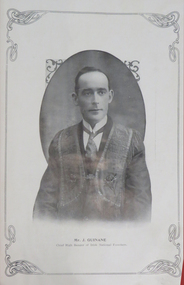
Book, St Patrick's College Annual Magazine, 1914, 1914
... wellington furnishing undertaker...w. cornell...eden photographs...w.e. longhurst bread...sacred heart boarding school...st anes' ladies' college geelong...ballarat brewing company...Wellington furnishing undertaker, W. Cornell, Eden Photographs, W.E. Longhurst Bread, Sacred Heart Boarding School, St Anes' Ladies' College Geelong, Ballarat Brewing Company, J.S. ...Wellington furnishing undertaker, W. Cornell, Eden Photographs, W.E. Longhurst Bread, Sacred Heart Boarding School, St Anes' Ladies' College Geelong, Ballarat Brewing Company, J.S. ...St Patrick's College is a Catholic bous secondary school in Ballarat in the Christian Brothers tradition,School Magazine of St Patrick's College, Ballarat. Includes a boarders' Roll Call. Articles include: Ireland's Freedom, The Catholic Federation, Dr Daniel Mannix Images: Physics Laboratory, Sloyd and Manual Art Room. Senior Public Class, Commercial Class, Intercollegiate Athletics, Orchestra, Rev. Dr Higgins, Br Keniry, J. Guinane of the Irish National Forresters, Gerald O'Day, P. Ryan, Frank Keys, L. Bartels, G. Hickey, T. Keys, O. Daly, J. Wolf, A. McKean, T.H. Jenkins, Football Team, Dr Devine, J. Sowersby, Chemistry Laboratory, Gerard Little, Rev. J. McHugh, Andrew Mulquiney, Bernard Heinz Advertisements: Ballarat Trustees, Heinz Brothers Butchers, Middleton and Morris, National Trustees, F. Cannon Hairdresser, G. Werner & Co, Clegg, Miller and Morrow, Rowlands, Gordon Brothers, Loreto Convent, St Alysius Junior Boys' School Portland, Coghlan Boase and Co, Briant's Red Shop Tea Rooms, Ballarat Supply Stores, Stephen Wellington furnishing undertaker, W. Cornell, Eden Photographs, W.E. Longhurst Bread, Sacred Heart Boarding School, St Anes' Ladies' College Geelong, Ballarat Brewing Company, J.S. Young Suit Builders, George Smithm, Kearns Brothers Fish and Oyster Saloon, T.G. Skewes Pharmacy, J.A. Reynolds Wal paper Wahehouse, Walter Gude Music Teacher, Snows, Auldana Wines, J. Ewins Book Store, Cowdell, Tonner and Ellis, Richards and Co, Kruse's Fluid Magnesia, Jago's Ballarat Boot Palace, R.J. Miller Undertaker, W.C. Thomas and Sons Flour Millers, Broadbent Bros, W.E. Thomas American Dentist, Harry Davies and Co., Permewan Wright, William P. Linehan, Tyler's Clothing Arcadem C. Marks and Co, Coad and Hewitson Chaff Cutters.st patrick's college ballarat, daniel mannix, rev. dr higgins, br keniry, j. guinane, irish national forresters, gerald o'day, p. ryan, frank keys, l. bartels, g. hickey, t. keys, o. daly, j. wolf, a. mckean, t.h. jenkins, dr devine, j. sowersby, gerard little, rev. j. mchugh, andrew mulquiney, bernard heinz, ballarat trustees, heinz brothers butchers, middleton and morris, national trustees, f. cannon hairdresser, g. werner & co, clegg, miller and morrow, gordon brothers, loreto convent, st alysius junior boys' school portland, coghlan boase and co, briant's red shop tea rooms, ballarat supply stores, stephen wellington furnishing undertaker, w. cornell, eden photographs, w.e. longhurst bread, sacred heart boarding school, st anes' ladies' college geelong, ballarat brewing company, j.s. young suit builders, george smith, kearns brothers fish and oyster saloon, t.g. skewes pharmacy, j.a. reynolds wal paper warehouse, walter gude music teacher, snows, auldana wines, j. ewins book store, cowdell, tonner and ellis, richards and co, kruse's fluid magnesia, jago's ballarat boot palace, r.j. miller undertaker, w.c. thomas and sons flour millers, broadbent bros, w.e. thomas american dentist, harry davies and co., permewan wright, william p. linehan, tyler's clothing arcade, c. marks and co, coad and hewitson chaff cutters, loret oconvent portland -
 Federation University Historical Collection
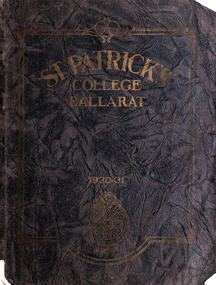
Magazine - Book, St Patrick's College Annual Magazine, 1930-31, 1930-1931
... wellington furnishing undertaker...w. cornell...eden photographs...w.e. longhurst bread...sacred heart boarding school...st anes' ladies' college geelong...ballarat brewing company...Wellington furnishing undertaker, W. Cornell, Eden Photographs, W.E. Longhurst Bread, Sacred Heart Boarding School, St Anes' Ladies' College Geelong, Ballarat Brewing Company, J.S. ...Wellington furnishing undertaker, W. Cornell, Eden Photographs, W.E. Longhurst Bread, Sacred Heart Boarding School, St Anes' Ladies' College Geelong, Ballarat Brewing Company, J.S. ...School Magazine of St Patrick's College, Ballarat. Includes a boarders' Roll Call. Articles include: Ballarat Still a Golden City, What Shall I Be? Images:S.P.C. From the Air, Senior Dormitory, A Scene in the Botanical Gardens, Ballarat, dining rooom, Christian Brothers' Novitate and Training College, Strathfield, N.S.W. Advertisements: Ballarat Trustees, Heinz Brothers Butchers, Middleton and Morris, National Trustees, F. Cannon Hairdresser, G. Werner & Co, Clegg, Miller and Morrow, Rowlands, Gordon Brothers, Loreto Convent, St Alysius Junior Boys' School Portland, Coghlan Boase and Co, Briant's Red Shop Tea Rooms, Ballarat Supply Stores, Stephen Wellington furnishing undertaker, W. Cornell, Eden Photographs, W.E. Longhurst Bread, Sacred Heart Boarding School, St Anes' Ladies' College Geelong, Ballarat Brewing Company, J.S. Young Suit Builders, George Smithm, Kearns Brothers Fish and Oyster Saloon, T.G. Skewes Pharmacy, J.A. Reynolds Wal paper Wahehouse, Walter Gude Music Teacher, Snows, Auldana Wines, J. Ewins Book Store, Cowdell, Tonner and Ellis, Richards and Co, Kruse's Fluid Magnesia, Jago's Ballarat Boot Palace, R.J. Miller Undertaker, W.C. Thomas and Sons Flour Millers, Broadbent Bros, W.E. Thomas American Dentist, Harry Davies and Co., Permewan Wright, William P. Linehan, Tyler's Clothing Arcadem C. Marks and Co, Coad and Hewitson Chaff Cutters.Written on first page Walsh, Vectis South, Horsham.st patrick's college ballarat, rev. dr. foley, rev. dr higgins, br keniry, thomas walsh, j. guinane, irish national forresters, gerald o'day, p. ryan, frank keys, l. bartels, g. hickey, t. keys, o. daly, j. wolf, a. mckean, t.h. jenkins, dr devine, j. sowersby, gerard little, rev. j. mchugh, andrew mulquiney, bernard heinz, ballarat trustees, heinz brothers butchers, middleton and morris, national trustees, f. cannon hairdresser, g. werner & co, clegg, miller and morrow, gordon brothers, loreto convent, st alysius junior boys' school portland, coghlan boase and co, briant's red shop tea rooms, ballarat supply stores, stephen wellington furnishing undertaker, w. cornell, eden photographs, w.e. longhurst bread, sacred heart boarding school, st anes' ladies' college geelong, ballarat brewing company, j.s. young suit builders, george smith, kearns brothers fish and oyster saloon, t.g. skewes pharmacy, j.a. reynolds wal paper warehouse, walter gude music teacher, snows, auldana wines, j. ewins book store, cowdell, tonner and ellis, richards and co, kruse's fluid magnesia, jago's ballarat boot palace, r.j. miller undertaker, w.c. thomas and sons flour millers, broadbent bros, w.e. thomas american dentist, harry davies and co., permewan wright, william p. linehan, tyler's clothing arcade, c. marks and co, coad and hewitson chaff cutters, loreto convent portland -
 Flagstaff Hill Maritime Museum and Village
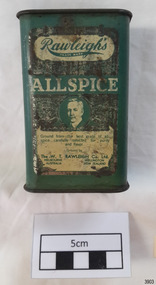
Container - Tin, W T Rawleigh, Circa 1930s
... The company had operated in Melbourne, Australia, and Wellington, New Zealand. ...The company had operated in Melbourne, Australia, and Wellington, New Zealand. ...This tin once contained Rawleigh's Allspice, a cooking ingredient. It was donated with other similar tins that were used by the donor’s mother who was married in 1932. It those times in Australia all manner of household items, including food and drink, were sold by hawkers (salesmen) who travelled from door to door in both suburban and rural areas. The donor remembered the tin on her mother’s pantry shelf. The Rawleigh Nutmegs label stated “Selected whole nutmegs not ground but granulated to preserve full strength and flavour.” The company had operated in Melbourne, Australia, and Wellington, New Zealand. W.T. Rawleigh & Co. was established by William Rawleigh in America in 1889 and later expanded into Australia. The company made a variety of household products in a factory in Collins Place, Melbourne, between 1930 and 1935. It specialised in medicines and remedies, food additives, cleaning products and toiletries. The company in Melbourne expanded into their factory in Dawson Street, Brunswick, in the mid-1930s. Independent salesmen, often referred to as ‘The Rawleigh’s man’, sold Rawleigh products door-to-door between the wars and after the Second World War in the Melbourne suburbs. Rayleigh’s products are still produced today. The tin is significant for its association with W.T Rawleigh, one of Melbourne’s strong growing manufacturers in period particularly between the World Wars. Rawleigh’s was, and still is, well known for its household and cleaning products, medicines, food additives and toiletries. The tin increases in significance for its use as a recognised object found in many Australian kitchens since early days. It gives a snapshot into domestic life and social norms of the pre and post war period in Melbourne The tin is significant for its association with a local family in the 1930s for the preparation of family meals. Rawleigh's rectangular Allspice spice tin, green, with directions for use on back and sides of container.Text “Rawleigh’s ALLSPICE” “The W.T. RAWLEIGH Co. Ltd.” “MELGOURNE / AUSTRALIA” “WELLINGTON / NEW ZEALAND” Motif: Man’s portrait in a circle. Other text includes information about spices.flagstaff hill museum, container, spice container, rawleigh company, tin container, kitchen item, tin, cooking ingredient, food container, grocery, allspice, rawleigh co. -
 Flagstaff Hill Maritime Museum and Village
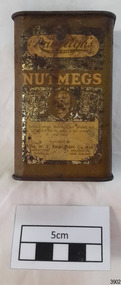
Container - Tin, W T Rawleigh, Circa 1930s
... The company had operated in Melbourne, Australia, and Wellington, New Zealand. ...The company had operated in Melbourne, Australia, and Wellington, New Zealand. ...This tin once contained Rayleigh's Nutmegs, a cooking ingredient. It was donated with other similar tins that were used by the donor’s mother who was married in 1932. It those times in Australia all manner of household items, including food and drink, were sold by hawkers (salesmen) who travelled from door to door in both suburban and rural areas. The donor remembered the tin on her mother’s pantry shelf. The Rawleigh Nutmegs label stated “Selected whole nutmegs not ground but granulated to preserve full strength and flavour.” The company had operated in Melbourne, Australia, and Wellington, New Zealand. W.T. Rawleigh & Co. was established by William Rawleigh in America in 1889 and later expanded into Australia. The company made a variety of household products in a factory in Collins Place, Melbourne, between 1930 and 1935. It specialised in medicines and remedies, food additives, cleaning products and toiletries. The company in Melbourne expanded into their factory in Dawson Street, Brunswick, in the mid-1930s. Independent salesmen, often referred to as ‘The Rawleigh’s man’, sold Rawleigh products door-to-door between the wars and after the Second World War in the Melbourne suburbs. Rayleigh’s products are still produced today. The tin is significant for its association with W.T Rawleigh, one of Melbourne’s strong growing manufacturers in period particularly between the World Wars. Rawleigh’s was, and still is, well known for its household and cleaning products, medicines, food additives and toiletries. The tin increases in significance for its use as a recognised object found in many Australian kitchens since early days. It gives a snapshot into domestic life and social norms of the pre and post war period in Melbourne The tin is significant for its association with a local family in the 1930s for the preparation of family meals. Rawleigh spice tin, rectangular, tall, used for storing Rawleigh's nutmeg. Tin has a flip-top lid, is coloured gold and comes with directions for use on front, back and sides of container.Text includes “W.T. RAWLEIGH Co. Ltd.”, “MELBOURNE / AUSTRALIA”, WELLINGTON / NEW ZEALAND” “Rawleigh’s / NUTMEGS” Motif: man’s portrait in a circle. Other text includes information about spices.tin container, flagstaff hill, warrnambool, shipwrecked coast, flagstaff hill maritime museum, maritime museum, shipwreck coast, flagstaff hill maritime village, great ocean road, food container, tin, kitchen item, container, cooking ingredient, grocery, spice container, nutmeg, rawleigh co. -
 City of Moorabbin Historical Society (Operating the Box Cottage Museum)
Manufactured Glass, bottle 'Mendaco' tablets, mid 20thC
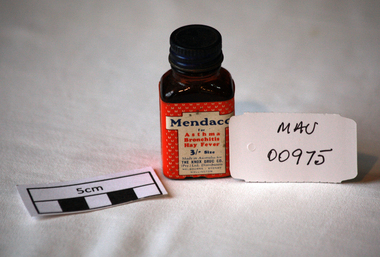
... Since 1989, we have grown into a large and successful pharmaceutical distribution company based in Ripon , UK pharmacy medicines the knox drug company pty ltd melbourne early settlers market gardeners moorabbin bentleigh cheltenham asthma mendaco Front ; MENDACO / for / Asthma / Bronchitis / Hay Fever / 3/- size / Made in Australia for / THE KNOX DRUG CO. /(Pty Ltd ) Distributors / Melbourne, Sydney, / Wellington ...Knox Pharmaceuticals Ltd is a UK registered pharmaceutical wholesaler that offers a wide range of prescription, non-prescription and other pharmacy related items. Knox Ltd are licensed to supply pharmacies, hospitals, clinics and other healthcare providers; both in the UK and overseas. Since 1989, we have grown into a large and successful pharmaceutical distribution company based in Ripon , UKAn empty brown glass bottle that contained ;Mendaco' tablets used for treating Asthma, Bronchitis and Hay Fever.Front ; MENDACO / for / Asthma / Bronchitis / Hay Fever / 3/- size / Made in Australia for / THE KNOX DRUG CO. /(Pty Ltd ) Distributors / Melbourne, Sydney, / Wellington. Left side ; Contains ……. Right side ; SAVE MONEY / ……….By purchasing the larger sizes……… Back; DIRECTIONS / Adult dose ….. Children dose ……..Base: A F583 Mpharmacy, medicines, the knox drug company pty ltd, melbourne, early settlers, market gardeners, moorabbin, bentleigh, cheltenham, asthma, mendaco -
Warrnambool RSL Sub Branch
Uniform - Cap Badge, Taranaki XI Rifles Regiment
... the regiment provided a company to each of the battalions of the Wellington Infantry Regiment and saw combat at Gallipoli and on the Western Front....the regiment provided a company to each of the battalions of the Wellington Infantry Regiment and saw combat at Gallipoli and on the Western Front. ...the regiment provided a company to each of the battalions of the Wellington Infantry Regiment and saw combat at Gallipoli and on the Western Front.Main feature is image of Mt TaranakiMain image is of Mt Taranaki the 2nd highest mountain on the NZ North Island, with banner across base reading " TARANAKI XI RIFLES REGIMENT" -
 B-24 Liberator Memorial Restoration Australia Inc
Book - Pilot's Notes - M.D. Frecker, The Bristol Aeroplane Company, Limited, February 1943
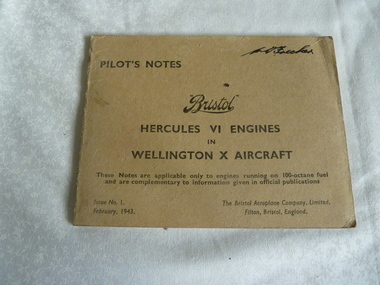
... Wellington aircraft. Book - Pilot's Notes - M.D. Frecker The Bristol Aeroplane Company, Limited ...Used by pilots during WWIIPilot's Notes for Bristol - Hercules V1 Engines in Wellington aircraft.Issue No. 1 February 1943 (M.D. Frecker) These Notes are applicable only to engines running on 100-octane fuel and are complementary to information given in official publications.a22.05 -
 Bendigo Historical Society Inc.
Document - BILL ASHMAN COLLECTION: W.N.ABBOTT MEDICAL RESEARCH PAPER
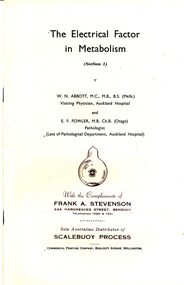
... Abbott and E.F .Fowler with reference to Scalebuoys, printed by Commercial Printing Company Boulcott Avenue Wellington, distributed with the compliments of Frank A Stevenson 244 Hargreaves Street Bendigo....Abbott and E.F .Fowler with reference to Scalebuoys, printed by Commercial Printing Company Boulcott Avenue Wellington, distributed with the compliments of Frank A Stevenson 244 Hargreaves Street Bendigo. ...9 copies of a medical research paper The Electrical Factor in Metabolism (Section 1) written by W.N. Abbott and E.F .Fowler with reference to Scalebuoys, printed by Commercial Printing Company Boulcott Avenue Wellington, distributed with the compliments of Frank A Stevenson 244 Hargreaves Street Bendigo.medical, new zealand medical journal -
 Bendigo Historical Society Inc.
Document - BILL ASHMAN COLLECTION: W.N.ABBOTT MEDICAL RESEARCH PAPER
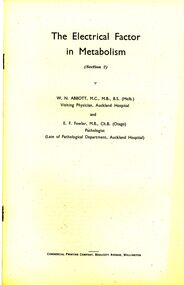
... Fowler with references to Scalebuoys, printed by Commercial Printing Company Boulcott Avenue Wellington....Fowler with references to Scalebuoys, printed by Commercial Printing Company Boulcott Avenue Wellington. Document BILL ASHMAN COLLECTION: W.N.ABBOTT MEDICAL RESEARCH PAPER ...10 copies of a Medical Research Paper, The Electrical Factor in Metabolism (Section 2) by W.N. Abbott and E.F. Fowler with references to Scalebuoys, printed by Commercial Printing Company Boulcott Avenue Wellington.medical, new zealand medical journal -
 Bendigo Historical Society Inc.
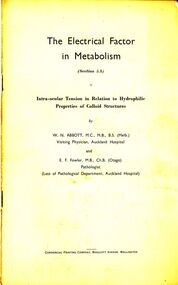
Document - BILL ASHMAN COLLECTION: W.N.ABBOTT MEDICAL RESEARCH PAPER
... Fowler , printed by Commercial Printing Company Boulcott Avenue Wellington....Fowler , printed by Commercial Printing Company Boulcott Avenue Wellington. Document BILL ASHMAN COLLECTION: W.N.ABBOTT MEDICAL RESEARCH PAPER ...Small booklet of 15 pages, The Electrical Factor in Metabolism (Section 5A) by W.N. Abbott and E.F. Fowler , printed by Commercial Printing Company Boulcott Avenue Wellington.medical, research paper -
 Bendigo Historical Society Inc.
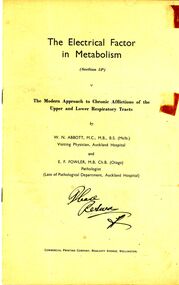
Document - BILL ASHMAN COLLECTION: W.N.ABBOTT MEDICAL RESEARCH PAPER
... Fowler, printed by the Commercial printing Company Boulcott Avenue Wellington....Fowler, printed by the Commercial printing Company Boulcott Avenue Wellington. Document BILL ASHMAN COLLECTION: W.N.ABBOTT MEDICAL RESEARCH PAPER ...Small booklet of 8 pages, The Electrical Factor in Metabolism (Section 5P) The Modern Approach to Chronic Afflictions of the Upper and Lower Respiratory Tracts, by W.N. Abbott and E.F. Fowler, printed by the Commercial printing Company Boulcott Avenue Wellington.medical, research paper -
 National Wool Museum
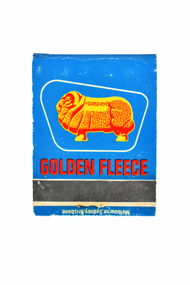
Souvenir - Golden Fleece Matchbook, Hanna Matches, 1960s
... Golden Fleece is also known to have produced other giveaways / souvenirs (such as games, swap cards, calendars, badges, roadmaps etc) to advertise its brand. golden fleece petroleum company h.c. sleigh pty ltd logo merino: sheep in australian art and design - exhibition (29/07/2000 - 04/02/2001) Sheep Matches Souvenirs Petrol California Caltex Ram GOLDEN FLEECE S. & A. Stolzenburg / P/L. / BLACKWELL SERVICE / STATION / Cnr. / Blackburn & Wellington ...Matchbook is a give-away / souvenir for Golden Fleece Petrol and Service Stations. The Golden Fleece Petroleum Company was established by H.C. Sleigh in 1913 importing petroleum from California, and was acquired by Caltex in 1981. The Golden Fleece ram trademark was created in 1951 when Golden Fleece petroleum became a single-brand service. The Golden Fleece ram was based on an actual prize winning merino ram named 'David of Dalkeith' from Boonoke Stud, run by the Falkiner family. Single brand service stations did not appear until the 1950s, and distinctive trademarks and logos were used to differentiate and promote the brands. Golden Fleece is also known to have produced other giveaways / souvenirs (such as games, swap cards, calendars, badges, roadmaps etc) to advertise its brand.Matchbook, containing twenty white-tipped, wooden matches. The matchbook has a fold-over, card cover. The front of the matchbook is blue and is printed with the image of a ram in yellow. Below this is the rough area to strike the matches. The back of the matchbook is yellow and is printed with text in red.GOLDEN FLEECE S. & A. Stolzenburg / P/L. / BLACKWELL SERVICE / STATION / Cnr. / Blackburn & Wellington / Roads / CLAYTON 3168 / PHONE 543-1863 GOLDEN FLEECE / MADE IN AUSTRALIA BY / HANNA MATCH . CONTENTS 20 / For Match Supplies Bladon & Puckridge / Melbourne, Sydney, Brisbane.golden fleece petroleum company h.c. sleigh pty ltd, logo merino: sheep in australian art and design - exhibition (29/07/2000 - 04/02/2001), sheep, matches, souvenirs, petrol, california, caltex, ram -
Ballarat Tramway Museum
Photograph - Miscellaneous Images, Set of 15 Images. . There are 12 photos listed as 1901 in AS Box 72 (6" x 4" photos). Three photos in archive, 1901A, in AS Box 75(.5, .6 and .7 - 5" x 8" photos.)), 1960s
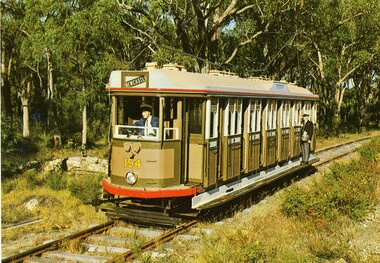
... Produced by Museum, with full details on rear. 1901.7 - Colour illustration of Wellington tram No. 257, central or downtown Wellington, outside the Parliament grounds. Full details on rear of card - produced by Shell Oil Company? ...Produced by Museum, with full details on rear. 1901.7 - Colour illustration of Wellington tram No. 257, central or downtown Wellington, outside the Parliament grounds. Full details on rear of card - produced by Shell Oil Company? ...Set of 15 items personally collected or given to Les Denmead by visiting Tramway enthusiasts or other interested people to Ballarat. Retained as a sample of images or other mementoes given by people though not directly of Ballarat. The following items are a summary only: 1901.1 - Postcard from South Pacific Electric Railway of L/P class tram No. 154 on SPER track , SPER-1 - Nucolorvue. 1901.2 - Photograph of Brisbane FM 440? and drop centre behind - CBD area Brisbane. Has 'Brisbane' written on back. 1901.3 - Photograph of Brisbane FM 473, showing Grange, as for 1901.2. 1901.4 - Photograph of Brisbane FM 422, showing Chermside, Brisbane CBD area, has "Brisbane May 1955' written on front of photo. 1901.5 - Illustration of Christchurch Horse Tram, Tramway Historical Society / Shell Oil company produced card, full details on rear. 1901.6 - Illustration of Wellington 'Fiducia' tram No. 238, operating on Wellington Tramway Museum track. Produced by Museum, with full details on rear. 1901.7 - Colour illustration of Wellington tram No. 257, central or downtown Wellington, outside the Parliament grounds. Full details on rear of card - produced by Shell Oil Company? 1901.8 - Photo of four H class trams at Victoria Sq. Adelaide, 25/3/1967. Taken by Douglas A. Colquhoun. On left hand side is a single car 378 and on the other track a three car set 366, 367 and 368. 1901.9 - Photo of Adelaide E1 111, crossing the Holland St. Bridge, 24.10.1953. Photo by Douglas A. Colquhoun. 1901.10 - Photo of Adelaide A 82, Wayville Junction, Feb. 1952. Photo by Douglas A. Colquhoun. 1901.11 - Photo of Adelaide A 10, later SEC Ballarat 21, in Adelaide CBD, with Ferors Gresham Hotel alongside. Has written note on background re tram. 1901.12 - Two prints of the front vestibule of a Toronto PCC tram, with operator (driver) seated. 1901.13 - Two prints of Toronto PCC 4400 and 4404, coupled together, 9/8/1949 with a depot? or carbarn building in the background. Has caption on the base of the photograph - copy photograph. 1901.14 - Two prints of a close up photograph of the coupling between the two cars in 1901.13. 1901.15 - Photograph of a Fare Box on a Toronto Streetcar. (1901.13 to .14) have "Canada" written on the back. 1trams, tramways, sydney, brisbane, adelaide, wellington, christchurch, toronto, pcc, victoria sq., tram 21 -
 Ballarat Tramway Museum
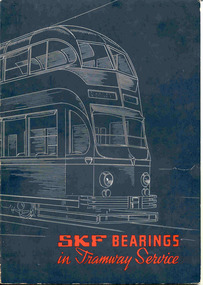
Book, SKF Ball Bearing Co, "SKF Bearings in Tramway Service", Aug. 1939
... Published by the "The SKF Ball Bearing Company Ltd" in August 1939, gives details of the type of ball bearings available for tramcars - axle boxes, tramway motors, current collection - trolley poles and pantographs. Has drawings, illustrations, photographs etc. Photographs include Hobart 8 and a Wellington...Published by the "The SKF Ball Bearing Company Ltd" in August 1939, gives details of the type of ball bearings available for tramcars - axle boxes, tramway motors, current collection - trolley poles and pantographs. Has drawings, illustrations, photographs etc. Photographs include Hobart 8 and a Wellington ...Sixty page book - gloss paper, plus end papers and heavy card covers, titled "SKF Bearings in Tramway Service". Published by the "The SKF Ball Bearing Company Ltd" in August 1939, gives details of the type of ball bearings available for tramcars - axle boxes, tramway motors, current collection - trolley poles and pantographs. Has drawings, illustrations, photographs etc. Photographs include Hobart 8 and a Wellington Fiduca tram. Address of Melbourne office given as 539 Bourke St, also addresses for Sydney and Brisbane. Printed in Sweden.$20 inside front cover.trams, tramways, tramcars, bearings, skf ball bearings, hobart -
 Ballarat Tramway Museum
Photograph - Miscellaneous Images, Set of 15 (Only three photos in archive, .5, .6 and .7. Location of remaining 12 photos under investigation), 1960s
... Produced by Museum, with full details on rear. 1901.7 - Colour illustration of Wellington tram No. 257, central or downtown Wellington, outside the Parliament grounds. Full details on rear of card - produced by Shell Oil Company? ...Produced by Museum, with full details on rear. 1901.7 - Colour illustration of Wellington tram No. 257, central or downtown Wellington, outside the Parliament grounds. Full details on rear of card - produced by Shell Oil Company? ...Set of 15 items personally collected or given to Les Denmead by visiting Tramway enthusiasts or other interested people to Ballarat. Retained as a sample of images or other mementoes given by people though not directly of Ballarat. The following items are a summary only: 1901.1 - Postcard from South Pacific Electric Railway of L/P class tram No. 154 on SPER track , SPER-1 - Nucolorvue. 1901.2 - Photograph of Brisbane FM 440? and drop centre behind - CBD area Brisbane. Has 'Brisbane' written on back. 1901.3 - Photograph of Brisbane FM 473, showing Grange, as for 1901.2. 1901.4 - Photograph of Brisbane FM 422, showing Chermside, Brisbane CBD area, has "Brisbane May 1955' written on front of photo. 1901.5 - Illustration of Christchurch Horse Tram, Tramway Historical Society / Shell Oil company produced card, full details on rear. 1901.6 - Illustration of Wellington 'Fiducia' tram No. 238, operating on Wellington Tramway Museum track. Produced by Museum, with full details on rear. 1901.7 - Colour illustration of Wellington tram No. 257, central or downtown Wellington, outside the Parliament grounds. Full details on rear of card - produced by Shell Oil Company? 1901.8 - Photo of four H class trams at Victoria Sq. Adelaide, 25/3/1967. Taken by Douglas A. Colquhoun. On left hand side is a single car 378 and on the other track a three car set 366, 367 and 368. 1901.9 - Photo of Adelaide E1 111, crossing the Holland St. Bridge, 24.10.1953. Photo by Douglas A. Colquhoun. 1901.10 - Photo of Adelaide A 82, Wayville Junction, Feb. 1952. Photo by Douglas A. Colquhoun. 1901.11 - Photo of Adelaide A 10, later SEC Ballarat 21, in Adelaide CBD, with Ferors Gresham Hotel alongside. Has written note on background re tram. 1901.12 - Two prints of the front vestibule of a Toronto PCC tram, with operator (driver) seated. 1901.13 - Two prints of Toronto PCC 4400 and 4404, coupled together, 9/8/1949 with a depot? or carbarn building in the background. Has caption on the base of the photograph - copy photograph. 1901.14 - Two prints of a close up photograph of the coupling between the two cars in 1901.13. 1901.15 - Photograph of a Fare Box on a Toronto Streetcar. (1901.13 to .14) have "Canada" written on the back. 1trams, tramways, sydney, brisbane, adelaide, wellington, christchurch, toronto, pcc, victoria sq., tram 21 -
 Kew Historical Society Inc
Photograph, The Bartered Bride / by Smetana, 1970s
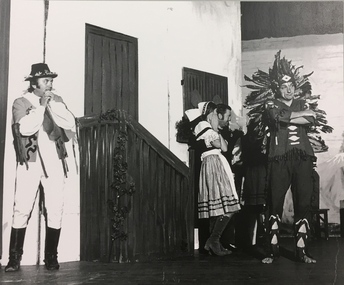
... Company that had been formed in 1953. The first performances of the Guild occurred in the Kew Recreation Hall in Wellington Street. ...Company that had been formed in 1953. The first performances of the Guild occurred in the Kew Recreation Hall in Wellington Street. ...The donor, Rosemary Lade, was a member of the Q Theatre Guild for a short period in the 1970s when this photo of a performance of The Bartered Bride was taken. The Q Theatre Guild had previously evolved out of the Kew Light Opera Company that had been formed in 1953. The first performances of the Guild occurred in the Kew Recreation Hall in Wellington Street. From 1960, the Guild performed at the new Kew Civic (later City) Hall. During the 1970s, the donor participated in performances of The Bartered Bride by Bedřich Smetana, The Gypsy Baron by Johan Strauss II, and Amahl and the Night Visitors by Gian Carlo Menotti.One of a set of four photographs of a performance of Smetana's Bartered Bride in the Kew City Hall in the 1970s. The performance was given by the "Q" Theatre Guild."The Bartered Bride" Smetana. Q Theatre Guild 1970s."q" theatre guild, the bartered bride, kew city hall, performing arts -- kew (vic.) -
 Kew Historical Society Inc
Photograph, The "Q" Theatre Guild, The Bartered Bride / by Smetana, 1970s
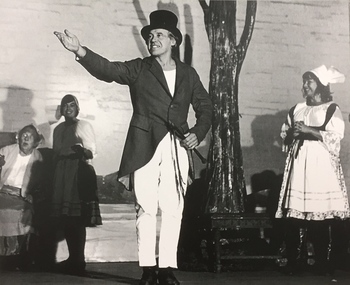
... Company that had been formed in 1953. The first performances of the Guild occurred in the Kew Recreation Hall in Wellington Street. ...Company that had been formed in 1953. The first performances of the Guild occurred in the Kew Recreation Hall in Wellington Street. ...The donor, Rosemary Lade, was a member of the Q Theatre Guild for a short period in the 1970s when this photo of a performance of The Bartered Bride was taken. The Q Theatre Guild had previously evolved out of the Kew Light Opera Company that had been formed in 1953. The first performances of the Guild occurred in the Kew Recreation Hall in Wellington Street. From 1960, the Guild performed at the new Kew Civic (later City) Hall. During the 1970s, the donor participated in performances of The Bartered Bride by Bedřich Smetana, The Gypsy Baron by Johan Strauss II, and Amahl and the Night Visitors by Gian Carlo Menotti.Photograph of a performance of Smetana's Bartered Bride in the Kew City Hall in the 1970s. The performance was given by the "Q" Theatre Guild."The Bartered Bride" Smetana. Q Theatre Guild 1970s.Left Rear - Molly Stillwell (seated) Rosemary Lademolly stilwell, rosemary lade, "q" theatre guild, kew civic hall, performing arts -- kew (vic.), smetana -- the bartered bride -
 Kew Historical Society Inc
Photograph, The "Q" Theatre Guild, The Bartered Bride / by Smetana, 1970s
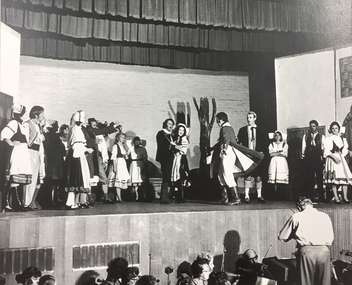
... Company that had been formed in 1953. The first performances of the Guild occurred in the Kew Recreation Hall in Wellington Street. ...Company that had been formed in 1953. The first performances of the Guild occurred in the Kew Recreation Hall in Wellington Street. ...The donor, Rosemary Lade, was a member of the Q Theatre Guild for a short period in the 1970s when this photo of a performance of The Bartered Bride was taken. The Q Theatre Guild had previously evolved out of the Kew Light Opera Company that had been formed in 1953. The first performances of the Guild occurred in the Kew Recreation Hall in Wellington Street. From 1960, the Guild performed at the new Kew Civic (later City) Hall. During the 1970s, the donor participated in performances of The Bartered Bride by Bedřich Smetana, The Gypsy Baron by Johan Strauss II, and Amahl and the Night Visitors by Gian Carlo Menotti.Photograph of a performance of Smetana's Bartered Bride in the Kew City Hall in the 1970s. The performance was given by the "Q" Theatre Guild."The Bartered Bride" Smetana. Q Theatre Guild 1970s."q" theatre guild, smetana -- the bartered bride, performing arts -- kew (vic.), kew civic hall -
 Kew Historical Society Inc
Photograph, The "Q" Theatre Guild, The Bartered Bride / by Smetana, 1970s
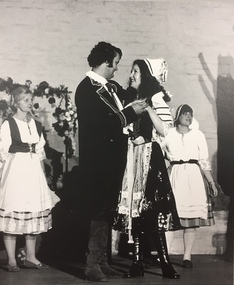
... Company that had been formed in 1953. The first performances of the Guild occurred in the Kew Recreation Hall in Wellington Street. ...Company that had been formed in 1953. The first performances of the Guild occurred in the Kew Recreation Hall in Wellington Street. ...The donor, Rosemary Lade, was a member of the Q Theatre Guild for a short period in the 1970s when this photo of a performance of The Bartered Bride was taken. The Q Theatre Guild had previously evolved out of the Kew Light Opera Company that had been formed in 1953. The first performances of the Guild occurred in the Kew Recreation Hall in Wellington Street. From 1960, the Guild performed at the new Kew Civic (later City) Hall. During the 1970s, the donor participated in performances of The Bartered Bride by Bedřich Smetana, The Gypsy Baron by Johan Strauss II, and Amahl and the Night Visitors by Gian Carlo Menotti.Photograph of a performance of Smetana's Bartered Bride in the Kew City Hall in the 1970s. The performance was given by the Q Theatre Guild."The Bartered Bride" Smetana. Q Theatre Guild 1970s. Rosemary Lade (far right)"q" theatre guild, rosemary lade, kew civic hall, smetana -- the bartered bride, performing arts -- kew (vic.) -
 Beechworth RSL Sub-Branch
Cigarette tobacco tin, Player's Airman, 1930, to 50,s
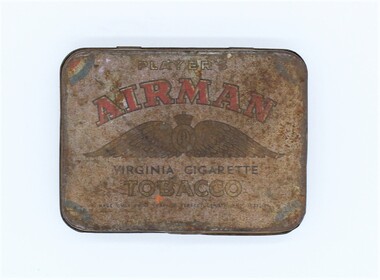
... Players Airman virginia cigarette tobacco Made only from leaf of perfect length and texture 20 by 12 very small pressed dots pressed on bottom in area in middle 40x24mm Raundel on front lid corners(4) in colours red(on corner)white then blue- total of 10 mm from lid corner towards centre Written in very small print along edge of lid(side) - 2 oz net wgt when packed Written along front of lid is - MAnufactured by ..........tobacco company of New Zealand.......wellington ...Found by Rudy Kraus in a building at ELDORADO (town) Found 2019 Typical of cigarette tin used by airmen in WW2 tin tobacco virginia airman Players Airman virginia cigarette tobacco Made only from leaf of perfect length and texture 20 by 12 very small pressed dots pressed on bottom in area in middle 40x24mm Raundel on front lid corners(4) in colours red(on corner)white then blue- total of 10 mm from lid corner towards centre Written in very small print along edge of lid(side) - 2 oz net wgt when packed Written along front of lid is - MAnufactured by ..........tobacco company of New Zealand.......wellington Tin 107mmx80mmx20mm , kharki colour.hinged lid ie two part Player's Airman Cigarette tobacco tin PLAYER’S/IMPERIAL TOBACCO CO ...Found by Rudy Kraus in a building at ELDORADO (town) Found 2019Typical of cigarette tin used by airmen in WW2Tin 107mmx80mmx20mm , kharki colour.hinged lid ie two partPlayers Airman virginia cigarette tobacco Made only from leaf of perfect length and texture 20 by 12 very small pressed dots pressed on bottom in area in middle 40x24mm Raundel on front lid corners(4) in colours red(on corner)white then blue- total of 10 mm from lid corner towards centre Written in very small print along edge of lid(side) - 2 oz net wgt when packed Written along front of lid is - MAnufactured by ..........tobacco company of New Zealand.......wellington tin, tobacco, virginia, airman -
 Kew Historical Society Inc
Album, Marion Tilley, Kew Light Opera Company & "Q" Theatre Guild Scrapbook, 1952-1965
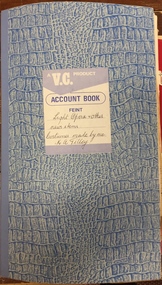
... Most of the Company's performances took place in the Kew Recreation Hall in Wellington Street, Kew. ...Most of the Company's performances took place in the Kew Recreation Hall in Wellington Street, Kew. ...The Kew Light Opera Company was formed in 1952, and mounted a number of musical and variety productions each year until it was subsumed in the "Q" Theatre Guild in 1957. Most of the Company's performances took place in the Kew Recreation Hall in Wellington Street, Kew. A list of its productions by year includes: 1952 Florodora 1953 The Cingalee 1953 San Toy OR The Emperor’s Own 1953 Celebratory variety performance 195? While the Sun Shines 1954 A Country Girl 1954 Our Miss Gibbs 1955 The Toreador 1955 The Arcadians 1956 The Maid of the Mountains 1956 Whiteoaks 1956 Good night Vienna! 1957 A Country Girl The "Q" Theatre Guild, which subsumed the earlier Kew Light Opera Company, performed in the Kew Recreation Hall from 1957 and later in the Kew Town Hall from 1960. Its productions include: 1957 The Geisha 1958 Maritana 1959 They All Do It (Cosi Fan Tutti) c.1959 Blossom Time 1959 Love’s a Luxury 1960 There And Back & The Bohemian Girl [1960 Die Fledermaus]??? 1961 Gay Rosalinda 1961 The Land of Smiles 1961 Kisses For A Kid & Hansel and Gretel 1962 Die Fledermaus 1964 Monsieur Beaucaire 1964 Macbeath [The Beggars’ Opera] 1964 The Beggars’ Opera ? And So To BedThe Marion Tilley scrapbook is a significant record of performing arts in Melbourne during the 1950s and 1960s. The scrapbook includes programmes, photographs, newspaper reports and personal annotations which are a rich source of detail about repertoire, performers, and artistic sensibility in the period.Scrapbook of newspaper reviews cast photographs and programmes of the Kew Light Opera Company (later amalgamated into the "Q" Theatre Guild). Compiled by Marion Tilley, a cast member and wardrobe mistress for both companies, it was donated to the Society by her daughter. The scrapbook covers performances during the years 1952 to c. 1965. See image carouselkew light opera company, "q" theatre, performing arts -
 Kew Historical Society Inc
Programme, Kew Light Opera Company, Florodora, 1952
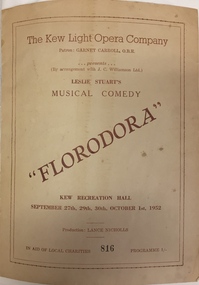
... Most of the Company's performances took place in the Kew Recreation Hall in Wellington Street, Kew. ...Most of the Company's performances took place in the Kew Recreation Hall in Wellington Street, Kew. ...The Kew Light Opera Company was formed in 1952, and mounted a number of musical and variety productions each year until it was subsumed in the "Q" Theatre Guild in 1957. Most of the Company's performances took place in the Kew Recreation Hall in Wellington Street, Kew. A known list of its productions by year includes: 1952 Florodora 1953 The Cingalee 1953 San Toy OR The Emperor’s Own 1953 Celebratory variety performance 195? While the Sun Shines 1954 A Country Girl 1954 Our Miss Gibbs 1955 The Toreador 1955 The Arcadians 1956 The Maid of the Mountains 1956 Whiteoaks 1956 Good night Vienna! 1957 A Country GirlThe Marion Tilley scrapbook is a significant record of performing arts in Melbourne during the 1950s and 1960s. The scrapbook includes programmes, photographs, newspaper reports and personal annotations which are a rich source of detail about repertoire, performers, and artistic sensibility in the period.Souvenir programme isued by the Kew Light Opera Company for a performance of Leslie Stuart's light musical comedy - Florodora. Performances were held in the Kew Recreation Hall on 27, 28, 29 September and 1 October 1952. This was the first production by the company. No. 816kew light opera company, performing arts, florodora (musical), theatre groups (kew), kew recreation hall -
 Kew Historical Society Inc
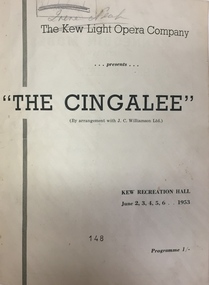
Programme, Kew Light Opera Company, The Cingalee OR Sunny Ceylon, 1953
... Most of the Company's performances took place in the Kew Recreation Hall in Wellington Street, Kew. ...Most of the Company's performances took place in the Kew Recreation Hall in Wellington Street, Kew. ...The Kew Light Opera Company was formed in 1952, and mounted a number of musical and variety productions each year until it was subsumed in the "Q" Theatre Guild in 1957. Most of the Company's performances took place in the Kew Recreation Hall in Wellington Street, Kew. A list of its productions by year includes: 1952 Florodora 1953 The Cingalee 1953 San Toy OR The Emperor’s Own 1953 Celebratory variety performance 195? While the Sun Shines 1954 A Country Girl 1954 Our Miss Gibbs 1955 The Toreador 1955 The Arcadians 1956 The Maid of the Mountains 1956 Whiteoaks 1956 Good night Vienna! 1957 A Country GirlThe Marion Tilley scrapbook is a significant record of performing arts in Melbourne during the 1950s and 1960s. The scrapbook includes programmes, photographs, newspaper reports and personal annotations which are a rich source of detail about repertoire, performers, and artistic sensibility in the period.Souvenir programme isued by the Kew Light Opera Company for a performance of 'The Cingalee'. Performances were held in the Kew Recreation Hall on 2, 3, 4, 5, 6 June 1953. The programme forms part of a scrapbook that includes programmes, photographs and theatre reviews for the Kew Light Opera Company and later "Q" Theatre Guild.kew light opera company, theatre, performing arts
