
Showing 92 items matching "1907 1919"
-
 Canterbury Primary School
Photo Album 1907 - 1919
... Photo Album 1907 - 1919...Archival storage album containing school photos. Covers years 1907 - 1919...PHOTOS/ 1907 - 1919...Covers years 1907 - 1919 Photo Album 1907 - 1919 Allbox ...Archival storage album containing school photos. Covers years 1907 - 1919PHOTOS/ 1907 - 1919photograph, school, students, canterbury -
 Learmonth and District Historical Society Inc.
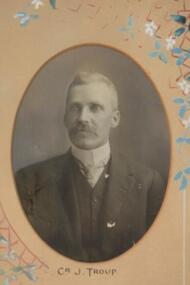
Photo - Troup, Richards & Co. Photos Ballaarat, Councilor J.Troup, "Circa 1912"
... ...1907 1919...Councilor J.Troup was elected as a member of council in 1907 until 1919.He was appointed Shire President in 1913-14....Councilor J.Troup was elected as a member of council in 1907 until 1919.He was appointed Shire President in 1913-14. ...Councilor J.Troup was elected as a member of council in 1907 until 1919.He was appointed Shire President in 1913-14.Original Hstoric Photo.Sepia Photo, oval,of Councilor J.Troup,set in pinkish/tan mount with decorative features of flowers in tan,blue and white.It is at left of bottom row of composite photos of all councilors for 1911-12.Presented to the Ballarat Shire Council.J.Dickie Esq. J.P.President 1911-12.ballarat shire council, troup j, 1907 1919, president 1913 1914 -
 Running Rabbits Military Museum operated by the Upwey Belgrave RSL Sub Branch
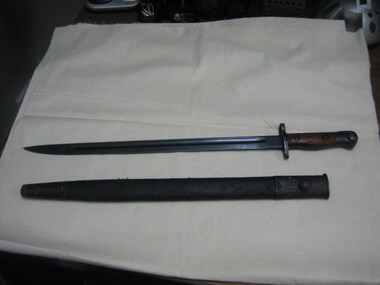
Bayonet
... Baoynet - Pattern 1907, Lee Enfield. 1919 Lithgow Sn MD71578...Weapon 1919 Army Baoynet - Pattern 1907, Lee Enfield. 1919 Lithgow Sn MD71578 Bayonet ...Baoynet - Pattern 1907, Lee Enfield. 1919 Lithgow Sn MD71578weapon, 1919, army -
 Uniting Church Archives - Synod of Victoria
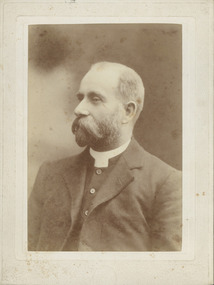
Photograph, Rev. Thomas Watt Leggatt
... B. 1859 Glasgow; Glasgow University; 1886 ordained in Scots Church Melbourne; to New Hebrides Mission, Aulua, Malekula; 1907 Dunolly; 1910 Sunbury; 1919 Convener of Board of Missions; editor "Record"; 1923 Abbotsford; 1929 Glen Iris; 1931 Moderator, Victoria; 1944 died 23 August. ...B. 1859 Glasgow; Glasgow University; 1886 ordained in Scots Church Melbourne; to New Hebrides Mission, Aulua, Malekula; 1907 Dunolly; 1910 Sunbury; 1919 Convener of Board of Missions; editor "Record"; 1923 Abbotsford; 1929 Glen Iris; 1931 Moderator, Victoria; 1944 died 23 August. ...B. 1859 Glasgow; Glasgow University; 1886 ordained in Scots Church Melbourne; to New Hebrides Mission, Aulua, Malekula; 1907 Dunolly; 1910 Sunbury; 1919 Convener of Board of Missions; editor "Record"; 1923 Abbotsford; 1929 Glen Iris; 1931 Moderator, Victoria; 1944 died 23 August. Son, William Watt Leggatt was a politician in the Bolte Government in Victoria.Sepia photo of Leggatt posed facing his right; dressed in 19th century clerical suit, collar and waistcoat."Thomas Watt Leggatt - Aulua, New Hebrides - minister Sunbury, Abbotsford. Father of Sir William (Bill) Watt Leggatt, Ormond Law Agent for (?) in London - Deaconess Dorothy Leggatt."leggatt, thomas watt, new hebrides -
 Wangaratta RSL Sub Branch
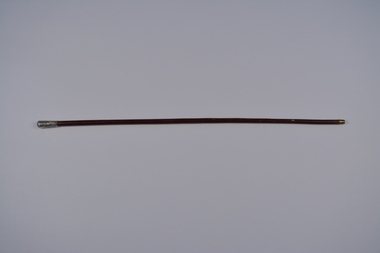
Equipment - Swagger Stick, c1863
... This swagger stick belonged to Private Ernest LUCAS who served with the Royal Defence Corps between 17/6/1907 and 18/5/1919 including the 6th Battalion Middlesex Regiment In the British Army before World War I, swagger sticks were carried by all other ranks when off duty as part of their walking out uniform. ...This swagger stick belonged to Private Ernest LUCAS who served with the Royal Defence Corps between 17/6/1907 and 18/5/1919 including the 6th Battalion Middlesex Regiment In the British Army before World War I, swagger sticks were carried by all other ranks when off duty as part of their walking out uniform. ...This swagger stick belonged to Private Ernest LUCAS who served with the Royal Defence Corps between 17/6/1907 and 18/5/1919 including the 6th Battalion Middlesex Regiment In the British Army before World War I, swagger sticks were carried by all other ranks when off duty as part of their walking out uniform. The stick took the form of a short cane of polished wood, with an ornamented metal head of regimental pattern. The usual custom was for the private soldier or NCO to carry the stick tucked under his arm. Until 1939 swagger sticks were still carried by peacetime regular soldiers when "walking out" of barracks but the practice ceased with the outbreak of World War II. The 6th Battalion Middlesex Regiment can trace its history back to 7 August 1760 as part of the Middlesex Militia. In 1778 it was titled the 1st East Middlesex Militia. By royal order the regiment was later designated the Royal East Middlesex Militia on 24 April 1804. By 1855 it was using the formal title of "1st or Royal East Middlesex Regiment of Militia". In 1900 the number of regular Middlesex Regiment battalions was doubled with the formation of a new the 3rd and 4th battalions; and the two militia battalions were renumbered as 5th and 6th battalions of the regiment. The unit's standing orders of 1863 record the regimental insignia as being somewhat unusual, in that it did not include standard royal crown, but featured a five-pointed Saxon Crown atop a shield with the arms of the East Saxon Kingdom i.e. three stylised Seaxes hilt and pommel.Long narrow round cane made from polished reddish/brown wood with brass metal tip and embossed silver topSilver metal top embossed with a crown above a shield inscribed 6th Battalion Middlesex Regtswagger stick, 6th battalion middlesex regiment, private ernest lucas -
 Flagstaff Hill Maritime Museum and Village
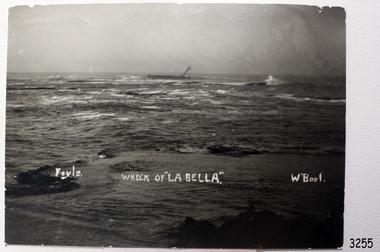
Photograph, Foyle Photographic Studio, Wreck of La Bella, about 11/11/1905
... 1919 . A letter to the editor (by Mr Edward Vidler) in the Melbourne Argus, 3rd August, 1907, mentions that in that year Warrnambool would celebrate its 60th anniversary of its proclamation as a town, and that talented local artist Miss Lily Foyle would paint 200 portraits in watercolour of the pioneers who settled in the district prior to 1860. ...1919 . A letter to the editor (by Mr Edward Vidler) in the Melbourne Argus, 3rd August, 1907, mentions that in that year Warrnambool would celebrate its 60th anniversary of its proclamation as a town, and that talented local artist Miss Lily Foyle would paint 200 portraits in watercolour of the pioneers who settled in the district prior to 1860. ...The photograph shows the wreck of La Bella in Lady Bay, Warrnambool, Australia. It was probably taken on 11th November 1905, the morning after she was wrecked. “Foyle” written on the photograph is the name of Foyle’s Photographic studio. At the time of the photograph the studio was owned by both Charles and Lilian Foyle (sometimes known as Lillian or Lily), either of whom could have taken this photograph. They also worked together at a later date on the photographs, sketches and paintings of the famous and historical Pioneers’ Honour Board, which is currently on view in the Warrnambool Library. Foyles Photography was the studio of James Charles Foyle. He owned “Foyle’s Photo Card Studios” in Liebig St , Warrnambool, which operated between 1889 – 1919 . A letter to the editor (by Mr Edward Vidler) in the Melbourne Argus, 3rd August, 1907, mentions that in that year Warrnambool would celebrate its 60th anniversary of its proclamation as a town, and that talented local artist Miss Lily Foyle would paint 200 portraits in watercolour of the pioneers who settled in the district prior to 1860. The Pioneer Honour Board can still be seen on display in the Warrnambool Library. In the Warrnambool Standard, Dec. 1917, “Mr Foyle’s studio was awarded contract to decorate rail cars on newly opened Trans-Continental railway, assisted by his sister, Miss Findlay.” The subject of the painting, La Bella, has its own tragic story. Read on for further details … On November 10th, 1905, the Norwegian-built barquentine La Bella approached Warrnambool at the end of her 37 day voyage. She was carrying a cargo of timber from Lyttleton, New Zealand, in heavy seas and evening mist. (On its only other visit to Warrnambool a year earlier the master had gone to shore to find a tow. He returned to the ship to find the crew drunk and unwilling to take up their posts, even though the ship was dragging its anchors and in a dangerous position.) As Captain Mylius steered La Bella to Lady Bay Channel the ship was tossed onto its side by heavy breakers and ran aground on what is now known as La Bella Reef. The sea was so rough that it wrenched a one-and-a- half ton anchor from the vessel. Several attempts were made by parties of volunteers in lifeboats to rescue the stricken sailors, but the rough conditions made this difficult for the boats to get close enough to the ship and the parties had to return to shore. The La Bella’s crew became exhausted and sailors were being washed overboard, one by one. By sunrise only five of the twelve crew still clung to the wreck. A local fisherman, 25 year old William Ferrier, rowed his small dingy through the heavy seas and managed to rescue the captain, whilst the volunteer lifeboat crew rescued a further three sailors, returning to shore. Ferrier made a final attempt at rescue and was able to reach its stern as the conditions eased slightly, saving the last remaining, terrified sailor just before the ship broke up and sank. William Ferrier became a national hero as news of the daring rescue spread. He was awarded the Silver Medal for bravery by the Royal Humane Society and was honoured by the Prime Minister and the Governor. He was presented with several other awards for his daring rescue. Ferrier’s rescue efforts are one of the most heroic in Victoria’s shipwreck history. The wreck now lies in 13m of water and is home to an abundance of marine life. Flagstaff Hill’s La Bella Collection includes a rail holder from La Bella, a photograph of William Ferrier with four of the five men rescued, a rail holder from the ship and the letter from the Prime Minister and other Members of Parliament that was sent to William Ferrier to commend him for his bravery. La Bella has been protected under the Commonwealth Historic Shipwrecks Act (1976) as a Historic Shipwreck since 23 April 1982 (VHR S401). It is archaeologically significant as the remains of an international and inter-colonial passenger and cargo ship. Flagstaff Hill’s collection of artefacts from the La Bella is of historical and archaeological significance because of its association with the La Bella, which is on the Victorian Heritage Register, and because of the relationship between the objects. The collection represents aspects of Victorian history, and the letter to William Ferrier demonstrates how important his rescue efforts were to Victoria and Australia. Black and white photograph of the wreck of the sailing ship La Bella in the bay at Warrnambool. The photograph shows the ship lying on its side in rough sea, with mast and rope rigging hanging loosely. Several large rocks are also visible. The photograph is a rectangle shape, mounted on heavy card, with slightly ragged edges. The photographer’s name, a title for the photograph and the location are hand written in white along the bottom third of the photograph. The back of the photograph is blank. Printed in white hand writing “Foyle”, “WRECK OF “LA BELLA”, “W’Bool”foyle, la bella, william ferrier, lady bay, lifeboats, lilian foyle, lillian foyle, charles foyle, james foyle, royal humane society medal, flagstaff hill, warrnambool, shipwrecked coast, flagstaff hill, flagstaff hill maritime museum, maritime museum, shipwreck coast, flagstaff hill maritime village -
 Flagstaff Hill Maritime Museum and Village
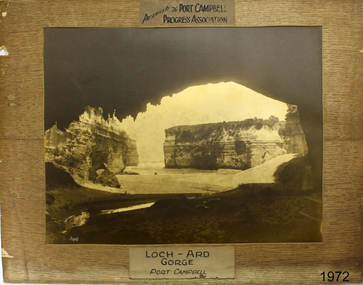
Photograph - Coastal Scene, Foyle Photographic Studio, Loch Ard Gorge Port Campbell, 1889-1919
... 1919. A letter to the editor (by Mr Edward Vidler) in the Melbourne Argus, 3rd August 1907, mentions that in that year Warrnambool would celebrate the 60th anniversary of its proclamation as a town, and that talented local artist Miss Lily Foyle would paint 200 portraits in watercolour of the pioneers who settled in the district prior to 1860. ...1919. A letter to the editor (by Mr Edward Vidler) in the Melbourne Argus, 3rd August 1907, mentions that in that year Warrnambool would celebrate the 60th anniversary of its proclamation as a town, and that talented local artist Miss Lily Foyle would paint 200 portraits in watercolour of the pioneers who settled in the district prior to 1860. ...The photograph shows the popular tourist attraction, Loch Ard Gorge, which is located along the Great Ocean Road in Victoria, near Port Campbell. The gorge is named after the famous sailing ship, the LOCH ARD, that was wrecked there in 1878. Only two of the 54 passengers and crew survived. FOYLE “Foyle” written on the photograph is the name of Foyle’s Photographic studio. At the time of the photograph, the studio was owned by both Charles and Lilian Foyle (sometimes known as Lillian or Lily), either of whom could have taken this photograph. They also worked together at a later date on the photographs, sketches and paintings of the famous and historical Pioneers’ Honour Board, which is currently on view in the Warrnambool Library. Foyles Photography was the studio of James Charles Foyle. He owned “Foyle’s Photo Card Studios” in Liebig St, Warrnambool, which operated between 1889 – 1919. A letter to the editor (by Mr Edward Vidler) in the Melbourne Argus, 3rd August 1907, mentions that in that year Warrnambool would celebrate the 60th anniversary of its proclamation as a town, and that talented local artist Miss Lily Foyle would paint 200 portraits in watercolour of the pioneers who settled in the district prior to 1860. The Pioneer Honour Board can still be seen on display in the Warrnambool Library. In the Warrnambool Standard, Dec. 1917, “Mr Foyle’s studio was awarded the contract to decorate rail cars on newly opened Trans-Continental railway, assisted by his sister, Miss Findlay.” HISTORY OF THE LOCH ARD The LOCH ARD belonged to the famous Loch Line which sailed many ships from England to Australia. Built-in Glasgow by Barclay, Curdle and Co. in 1873, the LOCH ARD was a three-masted square-rigged iron sailing ship. The ship measured 262ft 7" (79.87m) in length, 38ft (11.58m) in width, 23ft (7m) in depth and had a gross tonnage of 1693 tons. The LOCH ARD's main mast measured a massive 150ft (45.7m) in height. LOCH ARD made three trips to Australia and one trip to Calcutta before its final voyage. LOCH ARD left England on March 2, 1878, under the command of Captain Gibbs, a newly married, 29-year-old. She was bound for Melbourne with a crew of 37, plus 17 passengers and a load of cargo. The general cargo reflected the affluence of Melbourne at the time. Onboard were straw hats, umbrella, perfumes, clay pipes, pianos, clocks, confectionary, linen and candles, as well as a heavier load of railway irons, cement, lead and copper. There were items included that intended for display in the Melbourne International Exhibition in 1880. The voyage to Port Phillip was long but uneventful. At 3 am on June 1, 1878, Captain Gibbs was expecting to see land and the passengers were becoming excited as they prepared to view their new homeland in the early morning. But LOCH ARD was running into a fog which greatly reduced visibility. Captain Gibbs was becoming anxious as there was no sign of land or the Cape Otway lighthouse. At 4 am the fog lifted. A man aloft announced that he could see breakers. The sheer cliffs of Victoria's west coast came into view, and Captain Gibbs realised that the ship was much closer to them than expected. He ordered as much sail to be set as time would permit and then attempted to steer the vessel out to sea. On coming head-on into the wind, the ship lost momentum, the sails fell limp and LOCH ARD's bow swung back. Gibbs then ordered the anchors to be released in an attempt to hold its position. The anchors sank some 50 fathoms - but did not hold. By this time LOCH ARD was among the breakers and the tall cliffs of Mutton Bird Island rose behind the ship. Just half a mile from the coast, the ship's bow was suddenly pulled around by the anchor. The captain tried to tack out to sea, but the ship struck a reef at the base of Mutton Bird Island, near Port Campbell. Waves broke over the ship and the top deck was loosened from the hull. The masts and rigging came crashing down knocking passengers and crew overboard. When a lifeboat was finally launched, it crashed into the side of LOCH ARD and capsized. Tom Pearce, who had launched the boat, managed to cling to its overturned hull and shelter beneath it. He drifted out to sea and then on the flood tide came into what is now known as LOCH ARD Gorge. He swam to shore, bruised and dazed, and found a cave in which to shelter. Some of the crew stayed below deck to shelter from the falling rigging but drowned when the ship slipped off the reef into deeper water. Eva Carmichael had raced onto the deck to find out what was happening only to be confronted by towering cliffs looming above the stricken ship. In all the chaos, Captain Gibbs grabbed Eva and said, "If you are saved Eva, let my dear wife know that I died like a sailor". That was the last Eva Carmichael saw of the captain. She was swept off the ship by a huge wave. Eva saw Tom Pearce on a small rocky beach and yelled to attract his attention. He dived in and swam to the exhausted woman and dragged her to shore. He took her to the cave and broke and opened the case of brandy, which had washed up on the beach. He opened a bottle to revive the unconscious woman. A few hours later Tom scaled a cliff in search of help. He followed hoof prints and came by chance upon two men from nearby Glenample Station three and a half miles away. In a state of exhaustion, he told the men of the tragedy. Tom returned to the gorge while the two men rode back to the station to get help. By the time they reached LOCH ARD Gorge, it was cold and dark. The two shipwreck survivors were taken to Glenample Station to recover. Eva stayed at the station for six weeks before returning to Ireland, this time by steamship. In Melbourne, Tom Pearce received a hero's welcome. He was presented with the first gold medal of the Royal Humane Society of Victoria and a £1000 cheque from the Victorian Government. Concerts were performed to honour the young man's bravery and to raise money for those who lost family in the LOCH ARD disaster. Of the 54 crew members and passengers on board, only two survived: the apprentice, Tom Pearce and the young woman passenger, Eva Carmichael, who lost all of her family in the tragedy. Ten days after the LOCH ARD tragedy, salvage rights to the wreck were sold at auction for £2,120. Cargo valued at £3,000 was salvaged and placed on the beach, but most washed back into the sea when another storm developed. The wreck of LOCH ARD still lies at the base of Mutton Bird Island. Much of the cargo has now been salvaged, and some of it was washed up into what is now known as LOCH ARD Gorge. Cargo and artefacts have also been illegally salvaged over many years before protective legislation was introduced. One of the most unlikely pieces of cargo to have survived the shipwreck was a Minton porcelain peacock - one of only nine in the world. The peacock was destined for the Melbourne International Exhibition in 1880. It had been well packed, which gave it adequate protection during the violent storm. Today, the Minton peacock can be seen at the Flagstaff Hill Maritime Museum in Warrnambool. From Australia's most dramatic shipwreck it has now become Australia's most valuable shipwreck artefact and is one of very few 'objects' on the Victorian State Heritage Register.Flagstaff Hill’s collection of artefacts from LOCH ARD is significant for being one of the largest collections of artefacts from this shipwreck in Victoria. It is significant for its association with the shipwreck, which is on the Victorian Heritage Register (VHR S417). The collection is significant because of the relationship between the objects, as together they have a high potential to interpret the story of the LOCH ARD. The LOCH ARD collection is archaeologically significant as the remains of a large international passenger and cargo ship. The LOCH ARD collection is historically significant for representing aspects of Victoria’s shipping history and its potential to interpret sub-theme 1.5 of Victoria’s Framework of Historical Themes (living with natural processes). The collection is also historically significant for its association with the LOCH ARD, which was one of the worst and best-known shipwrecks in Victoria’s history. Foyle's photographs date from the late 19th century to the early 20th century, representing a time of growth in the Warrnambool district and a time when the still relatively new technology of photography was more available to the community.Photograph of Loch Ard Gorge. This sepia coloured rectangular photograph is mounted on a brown cardboard backing that has a wood grain pattern. The photograph has an inscription above it, below it, and in the bottom left corner. It was made for the purpose of a presentation by the Port Campbell Progress Association. Printed above the photograph "PRESENTED BY THE PORT CAMPBELL / PROGRESS ASSOCIATION". Printed below the photograph "LOCH ARD GORGE / PORT CAMPBELL". Hand written on bottom left corner "Foyle". flagstaff hill, warrnambool, shipwrecked coast, flagstaff hill maritime museum, maritime museum, shipwreck coast, flagstaff hill maritime village, great ocean road, loch line, loch ard, captain gibbs, eva carmichael, tom pearce, glenample station, mutton bird island, loch ard gorge, photograph, port campbell, port campbell progress association, foyle photograph, foyle photographic studio warrnambool, warrnambool photo studio -
 Mission to Seafarers Victoria
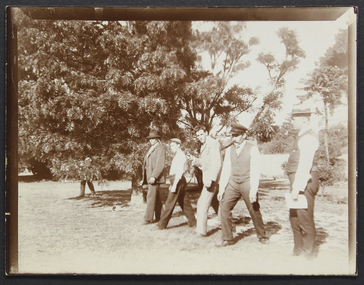
Photograph - Photograph, Sepia, Mr and Mrs Gurney Goldsmith, Picnic at Melby, Christmas Day 1907: foot race, 25 December 1907
... 1907. Melby was the house of Mr William Peter Peterson, a station owner and merchant. The house was named after his birthplace, a small town in the Shetlands, Scotland. William Peterson had married Louisa Eliza, the sister of Frederick Sargood,who he was in business with. She died in 1867 and he remarried to Emma Paulin Hutchinson, she is the Mrs Peterson who welcomed the seamen during picnics on the ground of Melby on several occasions in 1914, 1916, 1917 and 1919 (or 1918) generally for Boxing Day. ...1907. Melby was the house of Mr William Peter Peterson, a station owner and merchant. The house was named after his birthplace, a small town in the Shetlands, Scotland. William Peterson had married Louisa Eliza, the sister of Frederick Sargood,who he was in business with. She died in 1867 and he remarried to Emma Paulin Hutchinson, she is the Mrs Peterson who welcomed the seamen during picnics on the ground of Melby on several occasions in 1914, 1916, 1917 and 1919 (or 1918) generally for Boxing Day. melbe balaclava race 1907 melby melbi william peter peterson (1823-1898) louisa eliza sargood (1838-1867) emma pauline hutchinson (c1840-1928) picnic lhlg ladies harbour lights guild seamen's mission mission to seamen mission to seafarers seamen sailors Christmas Day at "Melbe" Balaclava, 1907 Small monochrome photograph, some fading to right hand side Picnic at Melby, Christmas Day 1907: foot race Photograph Photograph, Sepia Mr and Mrs Gurney Goldsmith ...Several seafarers gathered in preparation to run a foot race, 'Melby' Balaclava, Christmas day, 1907. Melby was the house of Mr William Peter Peterson, a station owner and merchant. The house was named after his birthplace, a small town in the Shetlands, Scotland. William Peterson had married Louisa Eliza, the sister of Frederick Sargood,who he was in business with. She died in 1867 and he remarried to Emma Paulin Hutchinson, she is the Mrs Peterson who welcomed the seamen during picnics on the ground of Melby on several occasions in 1914, 1916, 1917 and 1919 (or 1918) generally for Boxing Day. Small monochrome photograph, some fading to right hand sideChristmas Day at "Melbe" Balaclava, 1907melbe, balaclava, race, 1907, melby, melbi, william peter peterson (1823-1898), louisa eliza sargood (1838-1867), emma pauline hutchinson (c1840-1928), picnic, lhlg, ladies harbour lights guild, seamen's mission, mission to seamen, mission to seafarers, seamen, sailors -
 Flagstaff Hill Maritime Museum and Village
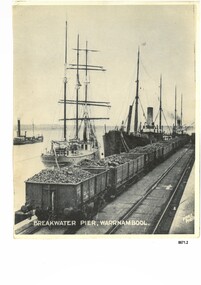
Photograph - Vessels at Breakwater Pier, Warrnambool, Foyle Photographic Studio, circa 1906
... 1907 it was brought in as a temporary replacement on the Melbourne to Warrnambool route for the S.S. Flinders. In 1912 the S. S. Barrabool ran aground off the Fitzroy River in Queensland and was found to be uneconomic to repair. It was brought back to Sydney and converted into a hulk. In August 1952 it was towed 17 miles off Sydney and scuttled. “Foyle” written on the photograph is the name of Foyle’s Photographic studio - originally owned by James Charles Foyle. He owned “Foyle’s Photo Card Studios” in Liebig St, Warrnambool, which operated between 1889 – 1919...1907 it was brought in as a temporary replacement on the Melbourne to Warrnambool route for the S.S. Flinders. In 1912 the S. S. Barrabool ran aground off the Fitzroy River in Queensland and was found to be uneconomic to repair. It was brought back to Sydney and converted into a hulk. In August 1952 it was towed 17 miles off Sydney and scuttled. “Foyle” written on the photograph is the name of Foyle’s Photographic studio - originally owned by James Charles Foyle. He owned “Foyle’s Photo Card Studios” in Liebig St, Warrnambool, which operated between 1889 – 1919 ...This photograph was one of ten photographs donated to Flagstaff Hill Maritime Museum and Village by Fred Trewartha. Frederick John Fox Trewartha (Fred) was a well-known Warrnambool businessman. He was born in Beeac near Geelong in 1920 and came to Warrnambool with his family as a very young child. He was apprenticed to his father John, as a saddler and later opened his own shop on Raglan Parade. He then moved into working with tarpaulins and canvases for the trucking industry. Fred was keenly interested in photography (and was a member of the Warrnambool Cine Club), yachting and boat building. He kept his yacht moored at Port Fairy for many years and participated in sailing events locally and interstate. He also built boats with his sons. He had the opportunity to meet many older sailors and it's thought this photo (and others in the set) may have been given to him by one of these men. Fred Trewartha died in 2016 in Warrnambool. The three identifiable ships in this picture are the "Speculant", the "S. S. Barrabool" and the "S. S. Flinders" - coastal trading vessels that regularly came and went from Warrnambool. The steamer on the left hasn't been identified. The barquentine SPECULANT was a steel, three-masted sailing ship built in 1895 in Inverkeithing, Scotland, registered in Warrnambool, Victoria and wrecked at Cape Paton, Victoria, 10th February 1911. The SPECULANT had been involved in the timber trade between the United Kingdom and Russia, until sold to its Warrnambool owners and timber merchants Messrs. P.J. McGennan & Co. (Peter John McGennan) in 1902 for 3000 pounds and had her sailed to Warrnambool as her new port. Peter John McGennan was born in 1844 and worked as a builder and cooper in Holyhead, Anglesea, Wales. He immigrated to Australia in 1869 as a free settler and arrived in Warrnambool in 1871 and undertook management of a property in Grassmere for Mr. Palmer. Peter met his wife Emily in South Melbourne and they married in 1873. They had ten children including Harry who lived to 1965, and Andrew who lived until 1958. (The other children were their four brothers - John who was killed in the Dardenalles aged 35, Frederick who died aged 8, Peter who died aged 28, Frank who died aged 5 weeks - and four sisters - Beatrice who died age 89, Edith who died aged 49, Blanche who died aged 89 and Eveline who died aged 48.) In 1874 Peter starting a boating establishment on the Hopkins River. In 1875 he opened up a Coopers business in Kepler Street next to what was Bateman, Smith and Co., moving to Liebig Street, next to the Victoria Hotel, in 1877. In 1882 he then moved to Lava Street (which in later years was the site of Chandlers Hardware Store). He was associated with the establishment of the Butter Factory at Allansford. He started making Butter Boxes to his own design and cheese batts for the Butter Factory. In 1896 established a Box Factory in Davis Street Merrivale, employing 24 people at its peak, (it was burnt down in 1923); and in Pertobe Road from 1912 (now the Army Barracks building). Peter was a Borough Councillor for Albert Ward from 1885 to 1891, he commenced the Foreshore Trust (including the camping grounds along Pertobe Road), and he was an inaugural Director of the Woollen Mill in Harris Street, buying an extensive share-holding in 1908 from the share trader Edward Vidler. They lobbied the Town Hall to have a formal ‘Cutting’ for the waters of the Merri River to be redirected from its natural opening south of Dennington, to its existing opening near Viaduct Road, in order to have the scourings from the wool at the Woollen Mill discharged into the sea. He sold Butter Boxes around the state, and had to ship them to Melbourne by rail. Peter’s purchase of the SPECULANT in 1902 enabled him to back-load white pine from Kaipara, New Zealand to Warrnambool to make his butter boxes then, to gain profitability, buy and ship potatoes and other primary produce bound to Melbourne. (McGennan & Co. had also owned the LA BELLA, which had traded in timber as well, until she was tragically wrecked with the loss of seven lives, after missing the entrance channel to Warrnambool harbour in 1905. It appears that the SPECULANT was bought to replace the LA BELLA.) In 1911 the SPECULANT had been attempting to depart Warrnambool for almost the entire month of January to undergo docking and overhaul in Melbourne. A month of east and south-easterly winds had forced her to remain sheltered in Lady Bay, Warrnambool apart from one morning of northerlies, when an attempt was made to round Cape Otway; she had to return to shelter in Portland after failing to make any headway. With only 140 tons of sand ballast aboard, the ship would not have been easy to handle. Captain Jacobsen and his crew of nine, mainly Swedes, decided to make for Melbourne, leaving Portland Harbour on 5th February 1911. By the 9th they had reached Cape Otway, where they encountered a moonless night, constant heavy rain, and a heavy sea with a south-easterly wind blowing. After safely rounding Cape Otway the course was changed to east, then north-east to take the vessel to a point six miles off Cape Patton, following the orders of Captain Jacobsen, who told the crew to be very careful with the steering, as the wind and sea was running to leeward. The patent log (used to measure speed) had been out of order for the last four months as no-one in Warrnambool was able to fix it: it was intended to have it repaired in Melbourne. In the meantime the crew measured the vessel's speed by looking over the side and estimating wind strength. This compounded the difficulties of imprecise positioning, as the strong cross wind and sea were acting on the lightly laden vessel to steadily drive it towards the shore. At 3.30am on Friday 10 February 1911 Captain Jacobsen and the first mate were looking over the side of the vessel when they heard the sound of breakers and suddenly struck the rocks. The crew immediately knew they had no chance of getting the SPECULANT off, and attempted to rescue themselves by launching the lifeboat, which was instantly smashed to pieces. One of the crew then volunteered to take a line ashore, and the rest of the crew were all able to drag themselves to shore, some suffering hand lacerations from the rocks. Once ashore they began to walk along the coast towards Lorne, believing it was the nearest settlement. Realising their mistake as dawn broke they returned westwards to Cape Patton, and found a farm belonging to Mr C. Ramsden, who took them in and gave them a change of clothes and food. After resting for a day and returning to the wreck to salvage some of their personal possessions, at 10am on Saturday they set out for Apollo Bay, a voyage that took six hours, sometimes wading through flooded creeks up to their necks. The Age described the wreck as "listed to starboard. All the cabin is gutted and the ballast gone. There is a big rock right through the bottom of her, and there is not the slightest hope of getting her off". A Board of Marine inquiry found that Captain Jacobson was guilty of careless navigation by not taking steps to accurately verify the position of the vessel with respect to Cape Otway when the light was visible and by not setting a safe and proper course with respect to the wind and sea. It suspended his certificate for 6 months and ordered him to pay costs. The location of the wreck site was marked for a long time by two anchors on the shoreline, until in 1970 the larger of the two anchors was recovered by the Underwater Explorers' Club and mounted on the foreshore at Apollo Bay. The bell from the wreck was also donated to the Apollo Bay Surf Lifesaving Club but is recorded to have been stolen. Rusting remains of the wreck can still be found on the shoreline on the southern side of, and directly below Cape Patton. Parts of the SPECULANT site have been buried by rubble from construction and maintenance works to the Great Ocean Road, as well as by naturally occurring landslides. Peter J McGennan passed away in 1920. The Gates in the western wall of the Anglican Church in Henna Street/Koroit St are dedicated to him for his time of community work, which is matched with other prominent Warrnambool citizens; Fletcher Jones, John Younger, J.D.E (Tag) Walter, and Edward Vidler. After Peter J McGennan's death Harry, Andrew and Edith continued to operate the family business until July 11th 1923 when the company was wound up. (Andrew lived in Ryot Street Warrnambool, near Lava Street.) Harry McGennan (Peter and Emily’s son) owned the Criterion Hotel in Kepler Street Warrnambool (now demolished). His son Sid and wife Dot lived in 28 Howard Street (corner of Nelson Street) and Sid managed the Criterion until it was decided by the family to sell, and for he remained Manager for the new owners until he retired. Harry commenced the Foreshore Trust in Warrnambool around 1950. The McGennan Carpark in Pertobe Road is named after Harry and there are Memorial-Stone Gates in his memory. (The Gates were once the original entrance to the carpark but are now the exit.). The Patent Log (also called a Taffrail log) from the SPECULANT, mentioned above, and a number of photographs, are now part of the Collection at Flagstaff Hill Maritime Village.. The S. S. Flinders was built by A. J. Inglis, Ltd, Pointhouse, Glasgow in 1878 for the "Tasmanian Steam Navigation Company', Hobart which merged with the "Union Steamship Company" of New Zealand and it was later sold to the firm "McIlwraith, McEacham and Company". It was built of iron and was 1000 tons and 227 feet, 1 inch long. It was described as "splendidly fitted up for the carriage of passengers and her cargo space was also very large". In the saloon about 130 passengers could be accommodated while the second class had sufficient room for one hundred passengers. In 1890, the S. S. Flinders would leave Melbourne on Mondays and Thursdays at 5 pm and reach Warrnambool the following morning at 8 am. On the return it would leave Warrnambool on Wednesdays and Saturdays at 5 pm and reach Melbourne the following morning. In 1896, the Weekly Times described the "steamer Flinders (otherwise known as "the Warrnambool mailboat") as "as good a sample of a seagoing steamer as there is trading on the Victorian Coast at the present time". In April 1896 newspaper reports noted the S. S. Flinders took 2915 bags of potatoes from Warrnambool to Melbourne (the largest shipment of that season) as well as 50 tons of tinned rabbits from the Hamilton Preserving Factory. It was also noted that particularly during the Christmas period, there were excessive demands for berths from holiday makers wanting to enjoy a holiday in Warrnambool. In May 1903, the S. S. Flinders narrowly escaped destruction when an explosion and subsequent fire occurred during the passage from Melbourne to Warrnambool. A drum (which apparently contained carbide of calcium) exploded and blew off a hatch cover. As the steamer got to within a mile or two of Warrnambool, smoke was seen coming out of the hold and (unknown to the passengers) flames had taken hold. The crew quickly got to work - closing down all the hatches and pumping water into the hold through a hole in the saloon floor. There were 30 or 40 cases of kerosene on board. The Flinders continued on to Warrnambool and berthed at the Breakwater. The passengers all went ashore - many unaware of the danger they had been in. A telephone message was sent to the local Fire Brigade Station however the fire was extinguished before the firemen and their equipment arrived. After the hold was checked, the Flinders was certified as seaworthy and left for Portland. The Flinders continued to transport Western District produce as well as passengers from Warrnambool to Melbourne until 1906 when (due to a decrease in shipping trade during the Winter and the availability of train services) the Flinders was replaced by the smaller steamer "Dawn" and in 1907 when it was sold to the "Adelaide Steamship Company" for use in the Western Australia coastal trade, it was replaced by the "S. S. Barrabool". The S. S. Barrabool was a coastal steamer built by "Palmer Shipbuilding and Iron Company Limited" in Jarrow, Durham in 1874. It was bought by "Howard Smith Ltd" who was a pioneer in the coal trade between Melbourne and Newcastle. Howards Smith's early fleet contained ships named after local hills and mountains -"You Yangs", "Macedon", "Dandenongs" and "Barrabool". Later they extended their fleet to include ships that were well known in Warrnambool including the "Dawn" and the "Edina". The S. S. Barrabool had a chequered start and was nicknamed the "Great Australian Ram" because of the numerous accidents it was involved in. Between 1875 and 1883 it collided with three other vessels - sinking the "Queensland" on August 3rd, 1876, near Wilson's Promontory and sinking the "Bonnie Dundee" on 10th March 1879 off Lake Macquarie, New South Wales (with the loss of five lives). In August 1884 the Barrabool collided with the steamer "Birksgate" in Port Jackson causing considerable damage to "Birksgate". However in a newspaper article published in the "Truth" in March 1899 the S. S. Barrabool was described as "one of the fine old type of vessels" and "still a stout a craft as ever". The article was describing the practice of a "two-mate" system on board many ships (the Barrabool being one) whereby the company only employs two men (a first and second mate who must alternate watches of four hours each) rather than three mates who work four hours on and eight hours off. It was suggested that ships employing the "two-mate" system may find their insurance policies "null and void" should an accident occur. However the writer did note that the Barrabool was "officered by a captain and first and second mates .. whom it would be impossible to find more capable officers amongst the maritime fleet of the colonies". Between 1900 and 1909 the Barrabool was making regular trips along the east coast of Australia, carrying coal to Hobsons Bay (Melbourne) from Newcastle, Bellambi and Sydney. In 1907 it was brought in as a temporary replacement on the Melbourne to Warrnambool route for the S.S. Flinders. In 1912 the S. S. Barrabool ran aground off the Fitzroy River in Queensland and was found to be uneconomic to repair. It was brought back to Sydney and converted into a hulk. In August 1952 it was towed 17 miles off Sydney and scuttled. “Foyle” written on the photograph is the name of Foyle’s Photographic studio - originally owned by James Charles Foyle. He owned “Foyle’s Photo Card Studios” in Liebig St, Warrnambool, which operated between 1889 – 1919 At the time of the photograph the studio was owned by both Charles and Lilian Foyle (sometimes known as Lillian or Lily), either of whom could have taken this photograph. They also worked together at a later date on the photographs, sketches and paintings of the famous and historical Pioneers’ Honour Board.This photograph is a significant record of three of the well-known coastal traders (the "Speculant", the "S. S. Barrabool" and the "S. S. Flinders") that sailed along the southwest coast of Victoria for many years - transporting goods and passengers between Melbourne and Warrnambool.A black and white photograph titled "Breakwater Pier, Warrnambool". A line of coal trucks on rails are on the Breakwater. There are three ships (one sailing ship and two steamers) moored at the pier. In the left side of the picture is another ship. The name of the photographer is printed in the lower right corner. On the back of the photograph are the handwritten names of the moored ships written in blue pen. It also has the handwritten name, town and telephone number of the donor. In the bottom right hand corner is an upside down stamped number in black ink.Front of photograph - "BREAKWATER PIER, WARRNAMBOOL." "FOYLE PHOTO" Back of photograph - "Sailing Ship" "Speculant sail ship" "Barrabool coal ship" "Flinders Passenger ship" Name of donor W'Bool (and telephone number) "K-7148 M" (stamped upside down)flagstaff hill maritime museum and village, warrnambool, great ocean road, shipwreck coast, speculant, barque speculant, p. j. mcgennan, peter john mcgennan, speculant wreck, captain jacobsen, s. s. flinders, steamer flinders, a. j. inglis ltd, tasmanian steam navigation company, mcilwraith mceacham and company, warrnambool mailboat, coastal steamer, s. s. barrabool, howard smith ltd, two-mate system, coal ship, dawn, edina, lady bay, breakwater, warrnambool breakwater, foyle, foyle photographic studio warrnambool -
 City of Moorabbin Historical Society (Operating the Box Cottage Museum)
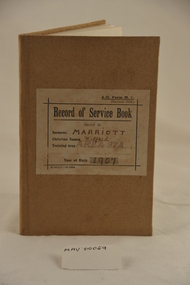
Booklet - Armed Forces, Australian Service book 1921, 1919
... AM Form M7 / (revised 1919) / Record of Service Book / issued to / Surname MARRIOTT / Christian Names Wilfred / Training Area AREA 37A / Year of Birth 1907...Wilfred (Willie) died at the age of 14 on 31 July 1921. marriott wilfred marriott geoff australian military forces defence act 1903 militia forces record of service caulfield melbourne moorabbin bentleigh world war 1914 -1918 world war 1939-1945 AM Form M7 / (revised 1919) / Record of Service Book / issued to / Surname MARRIOTT / Christian Names Wilfred / Training Area AREA 37A / Year of Birth 1907 The 'Record of Service Book' of Wilfred Marriott, b. 30/4/1907, of Jasper Road, Bentleigh, issued on 3/2/1921 in Area 37A Caulfield Booklet Armed Forces, Australian Service book 1921 Albert J Mullett ...'Instructions " This book serves as proof of the fact that the bearer has performed the services required to fit him for the defence of his country, as prescribed by the (Defence) Act 1903-1918." 'Wilfred Marriott was from a family of early settlers in Moorabbin Shire. Wilfred (Willie) died at the age of 14 on 31 July 1921.The 'Record of Service Book' of Wilfred Marriott, b. 30/4/1907, of Jasper Road, Bentleigh, issued on 3/2/1921 in Area 37A Caulfield AM Form M7 / (revised 1919) / Record of Service Book / issued to / Surname MARRIOTT / Christian Names Wilfred / Training Area AREA 37A / Year of Birth 1907marriott wilfred, marriott geoff, australian military forces, defence act 1903, militia forces, record of service, caulfield, melbourne, moorabbin, bentleigh, world war 1914 -1918, world war 1939-1945 -
 City of Moorabbin Historical Society (Operating the Box Cottage Museum)
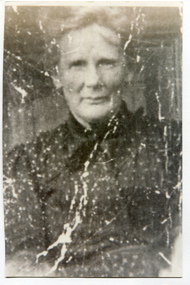
Photograph, B&W, Anna Box 1849 - 1919, c1912
... In 1907 the family lived on a 30acre property in Ringwood. which Anna bequeathed to her children. – Beatrice, Norman and Laura. In 1911 they moved to Surrey Hills where Anna died in 1919. ...In 1907 the family lived on a 30acre property in Ringwood. which Anna bequeathed to her children. – Beatrice, Norman and Laura. In 1911 they moved to Surrey Hills where Anna died in 1919. ...Anna Box 1849- 1919 was born in Withyham, Sussex England had her 7th birthday en route from Liverpool to Australia. George Box 1808-1867 of Sussex England, married Mary Cripps in 1831 and with 3 three of their 4 four sons and 3 three of their 4 four daughters left Liverpool in the Sailing Ship 'Atlanta' in March 1856 to begin a new life in Melbourne, Victoria , Australia. Their baby daughter Cecilia Lydia died a few days later. Caroline Box, the eldest daughter, remained in England working as a cook until she joined the family in Australia in 1863. William Box 1834-1902, the eldest son of George Box, married Elizabeth Avis 1833- 1914 and they resided in Box Cottage 1865 -1914 where they established a market garden and raised 13 children. William and Elizabeth had emigrated in 1854 so George worked on their market garden before setting up in Patterson Road. Sadly Mary drowned in a water hole only 4 months after their arrival in Brighton. It is supposed that Elizabeth helped George raise the children while he established his market garden. George died from Tetanus following an infected broken leg caused by falling from his dray in 1867. Anna was a dressmaker and in 1881 she married Henry Pay , a painter, from London and they had 3 children . In 1907 the family lived on a 30acre property in Ringwood. which Anna bequeathed to her children. – Beatrice, Norman and Laura. In 1911 they moved to Surrey Hills where Anna died in 1919. Henry died in 1935 in Montrose where he was living with his son Norman Henry Pay, a farmer . Box Cottage Museum, a reconstruction of an early settler hut, is named after the Box family who resided there 1865 -1913 . William Box who, with his wife Elizabeth Avis Box and 13 children, lived and farmed on the block of land in Jasper Road, East Brighton ( now McKinnon / Ormond) that was part of the Henry Dendy Special Survey 1841. George Box 1808-1867 migrated in 1856 and worked with his son William Box until he established a market garden in Patterson Rd . East Brighton ( now Bentleigh). Anna Box –Pay was the 3rd daughter of George and Mary Box. A black and white photograph of Anna Box 1849-1919nilbox anna, pay henry, pay norman, box william, box elizabeth avis, box george, box mary, moorabbin, bentleigh, brighton, ormond, market gardeners, pioneers, early settlers, withyham sussex england, ringwood melbourne, pay beatrice, pay laura, st kilda, melbourne, -
 City of Moorabbin Historical Society (Operating the Box Cottage Museum)
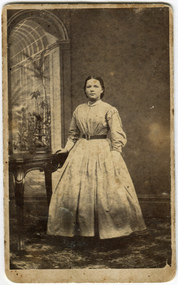
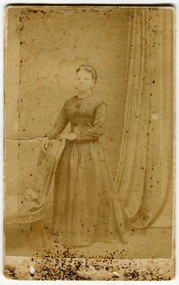
Photograph - Photographs x2, B&W, possibly Anna Box and Henry Pay, c1881
... In 1907 the family lived on a 30acre property in Ringwood which Anna bequeathed to her children. – Beatrice, Norman and Laura. In 1911 they moved to Surrey Hills where Anna died in 1919. ...In 1907 the family lived on a 30acre property in Ringwood which Anna bequeathed to her children. – Beatrice, Norman and Laura. In 1911 they moved to Surrey Hills where Anna died in 1919. ...Anna Box 1849- 1919 was born in Withyham, Sussex England had her 7th birthday en route from Liverpool to Australia. George Box 1808-1867 of Sussex England, married Mary Cripps in 1831 and with 3 three of their 4 four sons and 3 three of their 4 four daughters left Liverpool in the Sailing Ship 'Atlanta' in March 1856 to begin a new life in Melbourne, Victoria , Australia. Their baby daughter Cecilia Lydia died a few days later. Caroline Box, the eldest daughter, remained in England working as a cook until she joined the family in Australia in 1863. William Box 1834-1902, the eldest son of George Box, married Elizabeth Avis 1833- 1914 and they resided in Box Cottage 1865 -1914 where they established a market garden and raised 13 children. William and Elizabeth had emigrated in 1854 so George worked on their market garden before setting up in Patterson Road. Sadly Mary drowned in a water hole only 4 months after their arrival in Brighton. It is supposed that Elizabeth helped George raise the children while he established his market garden. George died from Tetanus following an infected broken leg caused by falling from his dray in 1867. Anna was a dressmaker and in 1881 she married Henry Pay , a painter, from London and they had 3 children . In 1907 the family lived on a 30acre property in Ringwood which Anna bequeathed to her children. – Beatrice, Norman and Laura. In 1911 they moved to Surrey Hills where Anna died in 1919. Henry died in 1935 in Montrose where he was living with his son Norman Henry Pay, a farmer . Box Cottage Museum, a reconstruction of an early settler hut, is named after the Box family who resided there 1865 -1913 . William Box who, with his wife Elizabeth Avis Box and 13 children, lived and farmed on the block of land in Jasper Road, East Brighton ( now McKinnon / Ormond) that was part of the Henry Dendy Special Survey 1841. George Box 1808-1867 migrated in 1856 and worked with his son William Box until he established a market garden in Patterson Rd . East Brighton ( now Bentleigh). Anna Box –Pay was the 3rd daughter of George and Mary Box. 2 black and white photographs that may be of A ) Anna Box and B) her husband Henry Pay A) nil B) J P LIND Photo 82 Swanston St.box anna, pay henry, pay norman, box william, box elizabeth avis, box george, box mary, moorabbin, bentleigh, brighton, ormond, market gardeners, pioneers, early settlers, withyham sussex england, ringwood melbourne, pay beatrice, pay laura, st kilda, melbourne -
 City of Moorabbin Historical Society (Operating the Box Cottage Museum)
Photographs, 2 x B&W, possibly Anna Box 1849 - 1919, c1880
... In 1907 the family lived on a 30acre property in Ringwood. which Anna bequeathed to her children. – Beatrice, Norman and Laura. In 1911 they moved to Surrey Hills where Anna died in 1919. ...In 1907 the family lived on a 30acre property in Ringwood. which Anna bequeathed to her children. – Beatrice, Norman and Laura. In 1911 they moved to Surrey Hills where Anna died in 1919. ...Anna Box 1849- 1919 was born in Withyham, Sussex England had her 7th birthday en route from Liverpool to Australia. George Box 1808-1867 of Sussex England, married Mary Cripps in 1831 and with 3 three of their 4 four sons and 3 three of their 4 four daughters left Liverpool in the Sailing Ship 'Atlanta' in March 1856 to begin a new life in Melbourne, Victoria , Australia. Their baby daughter Cecilia Lydia died a few days later. Caroline Box, the eldest daughter, remained in England working as a cook until she joined the family in Australia in 1863. William Box 1834-1902, the eldest son of George Box, married Elizabeth Avis 1833- 1914 and they resided in Box Cottage 1865 -1914 where they established a market garden and raised 13 children. William and Elizabeth had emigrated in 1854 so George worked on their market garden before setting up in Patterson Road. Sadly Mary drowned in a water hole only 4 months after their arrival in Brighton. It is supposed that Elizabeth helped George raise the children while he established his market garden. George died from Tetanus following an infected broken leg caused by falling from his dray in 1867. Anna was a dressmaker and in 1881 she married Henry Pay , a painter, from London and they had 3 children . In 1907 the family lived on a 30acre property in Ringwood. which Anna bequeathed to her children. – Beatrice, Norman and Laura. In 1911 they moved to Surrey Hills where Anna died in 1919. Henry died in 1935 in Montrose where he was living with his son Norman Henry Pay, a farmer . Box Cottage Museum, a reconstruction of an early settler hut, is named after the Box family who resided there 1865 -1913 . William Box who, with his wife Elizabeth Avis Box and 13 children, lived and farmed on the block of land in Jasper Road, East Brighton ( now McKinnon / Ormond) that was part of the Henry Dendy Special Survey 1841. George Box 1808-1867 migrated in 1856 and worked with his son William Box until he established a market garden in Patterson Rd . East Brighton ( now Bentleigh). Anna Box –Pay was the 3rd daughter of George and Mary Box. 2 black and white photographs that Avis Box Leigh thinks may be Anna Box c1880A unreadable B Ferry 49 Elizabeth St . Melbournebox anna, pay henry, pay norman, box william, box elizabeth avis, box george, box mary, moorabbin, bentleigh, brighton, ormond, market gardeners, pioneers, early settlers, withyham sussex england, ringwood melbourne, pay beatrice, pay laura, st kilda, melbourne -
 Ringwood and District Historical Society
Ephemera - Packet, Gwen Reed nee Woodford family memorabilia, Circa 1880s to c1980s
... 1919 (Hilda Obst Jeparit East) Christmas card from Ethel to Gwen 1927 Christmas card from Anne (MCGrath) to Gwen Christmas card from S. Hoober(?) (School teacher, Bygalorie) to Mr & Mrs Woodford, Gwen & Ollie) 1924 Christmas card from May and George to Mum and Dad 1925 Christmas card to Gwen Syd & Family from May Dad & Kiddies (Stepmother) Christmas card from George to May 1907 Postcard (signed Dulcie) to Mrs G. ...1919 (Hilda Obst Jeparit East) Christmas card from Ethel to Gwen 1927 Christmas card from Anne (MCGrath) to Gwen Christmas card from S. Hoober(?) (School teacher, Bygalorie) to Mr & Mrs Woodford, Gwen & Ollie) 1924 Christmas card from May and George to Mum and Dad 1925 Christmas card to Gwen Syd & Family from May Dad & Kiddies (Stepmother) Christmas card from George to May 1907 Postcard (signed Dulcie) to Mrs G. ...Collection of various family and personal documents, photographs, and early 1900s greeting cards. Papers of Gwen Reed from Edith Graham of Ware Cres, Ringwood East. (Provided by Nicki Shea, Granddaughter of Stan & Jo Bridgman of Eastwood Cycles) Contents: Hand-written notes – Woodford Family Tree, by Gwen Reed Autograph book with entries "To Gwen" Bookmark - with name "Lorrie B" Christmas card to May with love from George 1906 Christmas card from May to George 1906 Christmas card from Edie to Gwen (Cousin Ede) Christmas card from Dot to Gwen 1925 (from Dot Grundy, dc'd) Christmas card from Ollie S to Gwen 1924 Happy New Year card to Gwen from Grandma (Woodford) Christmas card from Mum & Ethel to Gwen 1926 Christmas card to Gwen from Emily (Gawith, Jeparit East) Christmas card from Olive to Gwen 1919 (Olive Janetski, Jeparit East) Christmas card from Hilda (Obst) to Gwen 1929 Postcard to Miss G Woodford "Bygalorie Park" Tullibigeal PO NSW (To Gwen from Effie - Effie Robson, Jeparit East) Christmas card to Gwennie from C. S. Graham 1915 (School teacher) Christmas card from Mum to May & George Christmas postcard from Grandfather to Gwenny Christmas card to Dear Daddie from Gwen Christmas card from May with love to George Christmas card from Nellie Parker (Nell Rodgers - Albury) to Gwen 1924 Greeting card from Hilda to Gwen 1919 (Hilda Obst Jeparit East) Christmas card from Ethel to Gwen 1927 Christmas card from Anne (MCGrath) to Gwen Christmas card from S. Hoober(?) (School teacher, Bygalorie) to Mr & Mrs Woodford, Gwen & Ollie) 1924 Christmas card from May and George to Mum and Dad 1925 Christmas card to Gwen Syd & Family from May Dad & Kiddies (Stepmother) Christmas card from George to May 1907 Postcard (signed Dulcie) to Mrs G. Reed, 9 Laurence Grove, East Ringwood Vic 3055 postmarked 1993 Envelope (only) addressed to Mrs. G. Reed, 9 Laurence Grove, Ringwood East Vic. 3135 Birth Certificate District of Balmoral, Victoria – Sonia Woodford b.1856 (Issued 1987) Death Certificate District of Stawell, Vic – Archibald Brown d.1914 Marriage Certificate District of Hamilton, Vic – John Brown & Margaret Dale m.1895 Coroner’s Post-Mortem report – Edward John Reed d.1981 Family Data Tree (Family Tree) William Walker/Elizabeth Silk, Hamilton Vic & children b.1842-1862 Newspaper clipping – May & Archibald Brown drowned at North Hamilton, 1887 Pictorial Souvenir – Selected Views of Mount Gambier to Miss L. Boyce, postmarked 1959 Hand-written poems/song lyrics by Gwen Reed (4 pages) Newspaper extract - Weekly Times Magazine Section “At Hamilton”, 1937 Photograph – “My mother standing with Foster parents” Photograph of Gracie (?) Grandma (?) Murray (?) Photograph of costumed performers Photograph of child Photograph of lady at John Mansell dispensary (Chemist at Forest Hill Vic?) Postcard photograph – Gwen & Ethel Woodford Photograph of grave – Victoria May Woodford (died 1957 aged 56 years) Photograph of grave – William Woodford and Sarah Woodford Photograph of un-named male Photograph of baby on chair Photograph – “Myself. Hope you like it May" Photograph (colour) – un-named group on train at Currumbin Qld Photograph – 2 un-named girls Autographs include Arthur Young Rosie Sturgess Joff Ellen Carlu Carter Toni Lamond Dick Curtis Billy Daniels Margaret Whiting Horrie Dargie Duo Moreno Therese Talbert Richard Gray Three Apollos Robert Leeman -
 Bendigo Military Museum
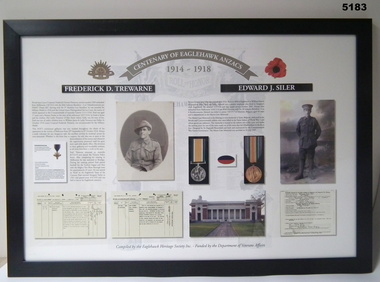
Memorabilia - CENTENARY of EAGLEHAWK ANZACS, FRAMED, Eaglehawk Heritage Society, FREDERICK D. TREWARNE/ EDWARD J. SILER, C2014
... RTA 8/07/1919 Awarded the Military Medal in 1918 Private EDWARD JOHN SILAR No 1907, 38th Infantry Battalion, Killed in action 7/06/1917 in Messines, Belgium...RTA 8/07/1919 Awarded the Military Medal in 1918 Private EDWARD JOHN SILAR No 1907, 38th Infantry Battalion, Killed in action 7/06/1917 in Messines, Belgium Framed item ANZACS EAGLEHAWK FREDERICK D. ...Lance Corporal FREDERICK DAWSON TREWARNE No 2295, 60th Infantry Battalion. RTA 8/07/1919 Awarded the Military Medal in 1918 Private EDWARD JOHN SILAR No 1907, 38th Infantry Battalion, Killed in action 7/06/1917 in Messines, BelgiumMemorabilia- Framed story of two soldiers, in colour, using memorabilia of the two soldiers and their lives. Printed on paper Frame- black extruded plastic, glass front, cardboard backing.FREDERICK D. TREWARNE/ EDWARD J. SILERframed item, anzacs, eaglehawk -
 Kiewa Valley Historical Society
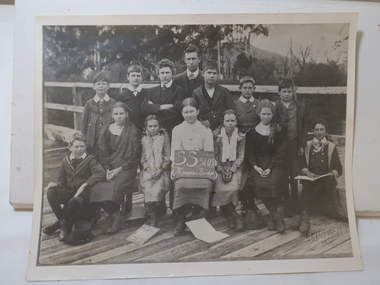
Photo - Mongan's Bridge School (no date)
... In 1907 the school worked half time with Upper Gundowring School. It continued to struggle with numbers until it became full time in January 1919, closed in September in 1923. ...In 1907 the school worked half time with Upper Gundowring School. It continued to struggle with numbers until it became full time in January 1919, closed in September in 1923. ...Mongan's Bridge opened on 1st March 1902. By 1906 there were 20 students. In 1907 the school worked half time with Upper Gundowring School. It continued to struggle with numbers until it became full time in January 1919, closed in September in 1923. It reopened in 1932 closed 1940, reopened in 1943 and closed 1964. Ref. Vision and Realisation Volume 3 Page Page 1006Mongan's Bridge was a small school in the Kiewa Valley. The school struggled to stay open due to the number of enrolments, and at one stage, due to the condition of the building. The clothes of the students and the dates that it opened may assist in dating the photo.Black and white photo of 14 people with blackboard indicating it is Mongan's Bridge School. The photo is mounted on cardboard. The students and teacher names are written on the back.On the Back: S. Baker's address written on the bottom left-hand corner.mongan's bridge school, school photo -
 Warrnambool and District Historical Society Inc.
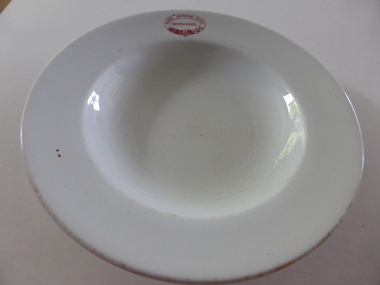
Plate, Humms Criterion Hotel Warrnambool, Early 20th century
... George Humm’s widow, Elizabeth, was the licensee from 1894 to 1907, her son, John was the licensee from 1907 to 1916 and his widow, Bridget, was the licensee from 1916 to 1919. The plate could have been in use for all or part of these years but is most likely to have been bought early in the 20th century. ...George Humm’s widow, Elizabeth, was the licensee from 1894 to 1907, her son, John was the licensee from 1907 to 1916 and his widow, Bridget, was the licensee from 1916 to 1919. The plate could have been in use for all or part of these years but is most likely to have been bought early in the 20th century. ...This plate has been produced by the English firm of W.H.Grindley for use at the Criterion Hotel in Warrnambool. The Criterion Hotel was on the western side of Kepler street near Lava Street and was established in 1872 with the first licensee being John Tate. The hotel closed in 2008, was partially destroyed by fire in 2010 and was demolished in 2013. The Humm family had a long association with the Criterion Hotel, with George Humm of Woodford taking over as the licensee in 1882 and buying the hotel in 1887 and remaining there until his death in 1894. George Humm’s widow, Elizabeth, was the licensee from 1894 to 1907, her son, John was the licensee from 1907 to 1916 and his widow, Bridget, was the licensee from 1916 to 1919. The plate could have been in use for all or part of these years but is most likely to have been bought early in the 20th century. This plate is of considerable interest because it came from the Criterion Hotel, a prominent hotel in Warrnambool for over 130 years.This is a white china plate which has a red embedded stamp in the shape of a belt (the maker’s trademark) on the front and on the back it has the blue markings of the maker with an image of a crown. The bowl has a shallow base and was perhaps a soup plate. The edges of the plate are somewhat worn and scuffed. ‘Humms Criterion Hotel Warrnambool’ ‘Grindley Hotel Ware England Vitrified’ criterion hotel, humm family of woodford, history of warrnambool -
 Warrnambool and District Historical Society Inc.
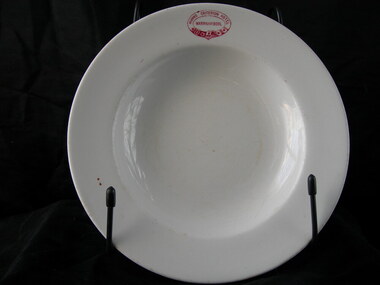
Plate, Humms Criterion Hotel, Early 20th century
... George Humm’s widow, Elizabeth, was the licensee from 1894 to 1907, her son, John, was the licensee from 1907 to 1916 and his widow, Bridget, was the licensee from 1916 to 1919. The plate could have been in use for all or part of these years but is most likely to have been bought early in the 20th century. ...George Humm’s widow, Elizabeth, was the licensee from 1894 to 1907, her son, John, was the licensee from 1907 to 1916 and his widow, Bridget, was the licensee from 1916 to 1919. The plate could have been in use for all or part of these years but is most likely to have been bought early in the 20th century. ...This plate has been produced by the English firm of W.H.Grindley for use at the Criterion Hotel in Warrnambool. The Criterion Hotel was on the western side of Kepler Street near Lava Street and was established in 1872 with the first licensee being John Tate. The hotel closed in 2008, was partially destroyed by fire in 2010 and was demolished in 2013. The Humm family had a long association with the Criterion Hotel with George Humm of Woodford taking over as licensee in 1882, buying the hotel in 1887 and remaining there until his death in 1894. George Humm’s widow, Elizabeth, was the licensee from 1894 to 1907, her son, John, was the licensee from 1907 to 1916 and his widow, Bridget, was the licensee from 1916 to 1919. The plate could have been in use for all or part of these years but is most likely to have been bought early in the 20th century. This plate is of considerable interest because it came from the Criterion Hotel, a prominent hotel in Warrnambool for over 130 years. This is a white china plate which has been broken into three pieces and inexpertly mended. The plate is much stained. It has a red embedded stamp in the shape of a belt (the maker’s trademark) on the front and on the back it has the blue markings of the maker with an image of a crown. The bowl has a shallow curved base and was perhaps used for soup. ‘Humms Criterion Hotel Warrnambool’ ‘Grindley Hotel Ware England Vitrified’ criterion hotel, humm family of woodford, history of warrnambool -
 Warrnambool and District Historical Society Inc.
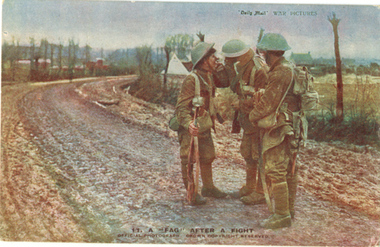
Postcard - A fag after a fight, !914-1918
... He served in Egypt and France and returned to Australia in 1919. Daisy Ogier (1907-1987) was a student and then a teacher at Warrnambool Technical School with her early teaching years there from 1925 to 1936 and in 1949. ...He served in Egypt and France and returned to Australia in 1919. Daisy Ogier (1907-1987) was a student and then a teacher at Warrnambool Technical School with her early teaching years there from 1925 to 1936 and in 1949. ...This is number 13 of 27 items in the Daisy Vickers collection of World War One memorabilia. These items were sent or given to Daisy Ogier (nee Vickers) during World War One by Corporal Arthur Anderson who enlisted from Warrnambool in 1915 at the age of 21. He served in Egypt and France and returned to Australia in 1919. Daisy Ogier (1907-1987) was a student and then a teacher at Warrnambool Technical School with her early teaching years there from 1925 to 1936 and in 1949. She became the head mistress from 1950 to 1963 and in 1968. She officially retired in 1976. Daisy Vickers was one of the best loved and dedicated teachers that the school ever had. She married the Reverend Fred Ogier and continued her association with the school after her husband's death.This card is interesting because of its association with World War One and with two local people: Daisy Vickers and Arthur Anderson. This is a colour postcard from World War One with a coloured picture showing three British soldiers in battle dress smoking cigarettes. The background is a road leading to a small settlement probably in France.There is text on both sides and on the back space for correspondence, an address and a stamp. A "FAG" AFTER A FIGHT "Daily Mail" WAR PICTURESdaisy ogier nee vickers, world war one, world war one postcards, daisy vickers -
 Warrnambool and District Historical Society Inc.
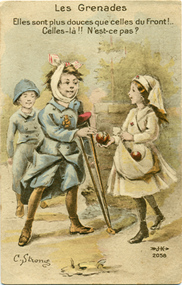
Postcard - Les Grenades, 1914-1918
... He served in Egypt and France and returned to Australia in 1919. Daisy Ogier (1907-1987) was a student and then a teacher at Warrnambool Technical School with her early teaching years there from 1925 to 1936 and in 1949. ...He served in Egypt and France and returned to Australia in 1919. Daisy Ogier (1907-1987) was a student and then a teacher at Warrnambool Technical School with her early teaching years there from 1925 to 1936 and in 1949. ...This is number 22 of 27 items in the Daisy Vickers collection of World War One memorabilia. These items were sent or given to Daisy Ogier (nee Vickers) during World War One by Corporal Arthur Anderson who enlisted from Warrnambool in 1915 at the age of 21. He served in Egypt and France and returned to Australia in 1919. Daisy Ogier (1907-1987) was a student and then a teacher at Warrnambool Technical School with her early teaching years there from 1925 to 1936 and in 1949. She became the head mistress from 1950 to 1963 and in 1968. She officially retired in 1976. Daisy Vickers was one of the best loved and dedicated teachers that the school ever had. She married the Reverend Fred Ogier and continued her association with the school after her husband's death. This card is interesting because of its association with World War One and with two local people: Daisy Vickers and Arthur Anderson. This is a coloured postcard with a sketch of three children dressed in military outfits. The child dressed as a nurse is giving a piece of fruit to a child dressed as a wounded soldier. On the back it has space for correspondence and an address.Les Grenadesdaisy vickers, warrnambool, world war one post card, postcard ww1 -
 Warrnambool and District Historical Society Inc.
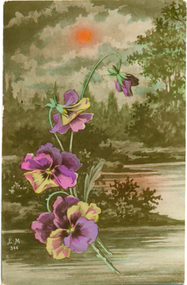
Postcard - Pansies, 1914-1918
... He served in Egypt and France and returned to Australia in 1919. Daisy Ogier (1907-1987) was a student and then a teacher at Warrnambool Technical School with her early teaching years there from 1925 to 1936 and in 1949. ...He served in Egypt and France and returned to Australia in 1919. Daisy Ogier (1907-1987) was a student and then a teacher at Warrnambool Technical School with her early teaching years there from 1925 to 1936 and in 1949. ...This is number 19 of 27 items in the Daisy Vickers collection of World War One memorabilia. These items were sent or given to Daisy Ogier (nee Vickers) during World War One by Corporal Arthur Anderson who enlisted from Warrnambool in 1915 at the age of 21. He served in Egypt and France and returned to Australia in 1919. Daisy Ogier (1907-1987) was a student and then a teacher at Warrnambool Technical School with her early teaching years there from 1925 to 1936 and in 1949. She became the head mistress from 1950 to 1963 and in 1968. She officially retired in 1976. Daisy Vickers was one of the best loved and dedicated teachers that the school ever had. She married the Reverend Fred Ogier and continued her association with the school after her husband's death.This card is interesting because of its association with World War One and two local people Daisy Vickers ans Arthur AndersonThis postcard features pansies and an idyllic sylvan background. On the back it has space for correspondence and an address. There are initials and lettering on the front.E.M. 344 Fabrication Francaise daisy ogier nee vickers, arthur anderson, warrnambool technical school, world war one postcard -
 Warrnambool and District Historical Society Inc.
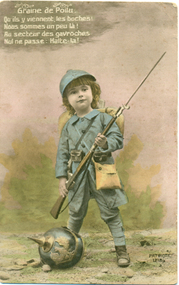
Postcard - Child Soldier, 1914-1918
... He served in Egypt and France and returned to Australia in 1919. Daisy Ogier (1907-1987) was a student and then a teacher at Warrnambool Technical School with her early teaching years there from 1925 to 1936 and in 1949. ...He served in Egypt and France and returned to Australia in 1919. Daisy Ogier (1907-1987) was a student and then a teacher at Warrnambool Technical School with her early teaching years there from 1925 to 1936 and in 1949. ...Daisy Vickers collection: Item 5 of 27Historical Information This is number 24 of 27 items in the Daisy Vickers collection of World War One memorabilia. These items were sent or given to Daisy Ogier (nee Vickers) during World War One by Corporal Arthur Anderson who enlisted from Warrnambool in 1915 at the age of 21. He served in Egypt and France and returned to Australia in 1919. Daisy Ogier (1907-1987) was a student and then a teacher at Warrnambool Technical School with her early teaching years there from 1925 to 1936 and in 1949. She became the head mistress from 1950 to 1963 and in 1968. She officially retired in 1976. Daisy Vickers was one of the best loved and dedicated teachers that the school ever had. She married the Reverend Fred Ogier and continued her association with the school after her husband's death.This card is interesting because of its association with World War One and two local people Daisy Vickers and Arthur AndersonThis postcard has an image of a child soldier holding a gun with a helmet at his foot, There is printing in French on the front and on the back space for correspondence and an address.Graine de Poilu Qu'ils y viennente les boches Nous sommes un peu la! An secteur des gavroches Nul ne passe Halte - la! ! daisy vickers, arthur anderson, world war one, world war one postcard -
 Warrnambool and District Historical Society Inc.
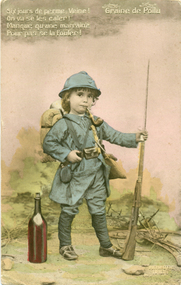
Postcard - Child Soldier 2, 1914-1918
... He served in Egypt and France and returned to Australia in 1919. Daisy Ogier (1907-1987) was a student and then a teacher at Warrnambool Technical School with her early teaching years there from 1925 to 1936 and in 1949. ...He served in Egypt and France and returned to Australia in 1919. Daisy Ogier (1907-1987) was a student and then a teacher at Warrnambool Technical School with her early teaching years there from 1925 to 1936 and in 1949. ...This is number 23 of 27 items in the Daisy Vickers collection of World War One memorabilia. These items were sent or given to Daisy Ogier (nee Vickers) during World War One by Corporal Arthur Anderson who enlisted from Warrnambool in 1915 at the age of 21. He served in Egypt and France and returned to Australia in 1919. Daisy Ogier (1907-1987) was a student and then a teacher at Warrnambool Technical School with her early teaching years there from 1925 to 1936 and in 1949. She became the head mistress from 1950 to 1963 and in 1968. She officially retired in 1976. Daisy Vickers was one of the best loved and dedicated teachers that the school ever had. She married the Reverend Fred Ogier and continued her association with the school after her husband's death. Keywords This card is interesting because of its association with World War One and two local people Daisy Vickers and Arthur Anderson This postcard has an image of a child soldier smoking a pipe, holding a gun and with a bottle at his feet. In the background are some ruins. There is French writing on the back and the front as well as space for an address and correspondence on the back. Graine de Poilu Six jours de perme ; Veine! On va se les caler! Manque qu'une marraine Pour pas se la Fouler! Pour pas se la Fouler caler Fabrication Francaise Patriotic 1218/4 150 PLATINE - A- NOYER -PARIS.. VISE PARIS NO versodaisy ogier nee vickers, arthur anderson, world war 1 postcard -
 Warrnambool and District Historical Society Inc.
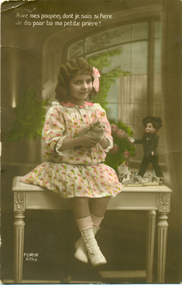
Postcard - Seated girl, 1914-1918
... He served in Egypt and France and returned to Australia in 1919. Daisy Ogier (1907-1987) was a student and then a teacher at Warrnambool Technical School with her early teaching years there from 1925 to 1936 and in 1949. ...He served in Egypt and France and returned to Australia in 1919. Daisy Ogier (1907-1987) was a student and then a teacher at Warrnambool Technical School with her early teaching years there from 1925 to 1936 and in 1949. ...This is number 20 of 27 items in the Daisy Vickers collection of World War One memorabilia. These items were sent or given to Daisy Ogier (nee Vickers) during World War One by Corporal Arthur Anderson who enlisted from Warrnambool in 1915 at the age of 21. He served in Egypt and France and returned to Australia in 1919. Daisy Ogier (1907-1987) was a student and then a teacher at Warrnambool Technical School with her early teaching years there from 1925 to 1936 and in 1949. She became the head mistress from 1950 to 1963 and in 1968. She officially retired in 1976. Daisy Vickers was one of the best loved and dedicated teachers that the school ever had. She married the Reverend Fred Ogier and continued her association with the school after her husband's death.This card is interesting because of its association with World War One and two local people Daisy Vickers and Arthur AndersonThis postcard features a seated girl wearing a pink dress and a pink bow with her dolls on the bench beside her. She is holding a toy kitten. It appears to be a coloured photograph. There is French writing on the front and the back and English writing on the back.Avec mes poupees dont je suis si fiere Je dis pour toi ma petite priere! Furia 615/2 France Oct 10th 1916 Miss Daisy Vickers Bushfield Victoria Australia.daisy vickers, arthur anderson, warrnambool technical school, world war one postcard -
 Warrnambool and District Historical Society Inc.
Postcard - Bonne Annee, 1914-1918
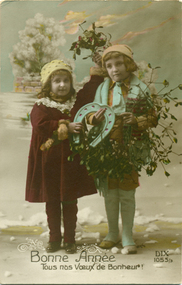
... He served in Egypt and France and returned to Australia in 1919. Daisy Ogier (1907-1987) was a student and then a teacher at Warrnambool Technical School with her early teaching years there from 1925 to 1936 and in 1949. ...He served in Egypt and France and returned to Australia in 1919. Daisy Ogier (1907-1987) was a student and then a teacher at Warrnambool Technical School with her early teaching years there from 1925 to 1936 and in 1949. ...This is number 21 of 27 items in the Daisy Vickers collection of World War One memorabilia. These items were sent or given to Daisy Ogier (nee Vickers) during World War One by Corporal Arthur Anderson who enlisted from Warrnambool in 1915 at the age of 21. He served in Egypt and France and returned to Australia in 1919. Daisy Ogier (1907-1987) was a student and then a teacher at Warrnambool Technical School with her early teaching years there from 1925 to 1936 and in 1949. She became the head mistress in 1950 to 1963 and in 1968. Daisy Vickers was one of the best loved and dedicated teachers the school has ever had. She married the Reverend Fred Ogier and continued her association with the school after her husband's death. This card is interesting because of its association with World War One and two local people Daisy Vickers and Arthur AndersonThis postcard features two children standing together holding a horseshoe and flowers. In the background are more flowers. One child is wearing a deep red coloured dress with a lace collar and a hat The other child is wearing a hat, a scarf and leggings.There is black printing on the front. On the back is a hand written letter. Bonne Annee Tous nos Voeux de Bonheur DIX 105.5/3 Belgium August 13th. Dear Daisy, It is a long time since I had a letter from you so I thought I would give you a reminder to write one. Its some time now since I had a letter from Home . They don't come too often now as the Germans sink the mail boats . I am sending a handkerchief along with this card I hope you like it Arthur daisy vickers, warrnambool technical school, world war one postcard -
 Warrnambool and District Historical Society Inc.
Postcard - Basilica Notre Dame Albert France, 1914-1918
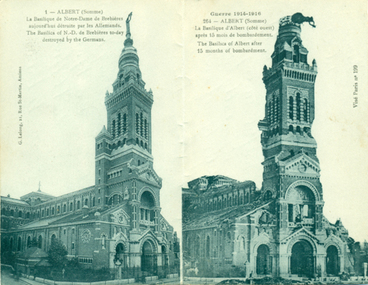
... He served in Egypt and France and returned to Australia in 1919. Daisy Ogier (1907-1987) was a student and then a teacher at Warrnambool Technical School with her early teaching years there from 1925 to 1936 and in 1949. ...He served in Egypt and France and returned to Australia in 1919. Daisy Ogier (1907-1987) was a student and then a teacher at Warrnambool Technical School with her early teaching years there from 1925 to 1936 and in 1949. ...This is number 20 of 27 items in the Daisy Vickers collection of World War One memorabilia. These items were sent or given to Daisy Ogier (nee Vickers) during World War One by Corporal Arthur Anderson who enlisted from Warrnambool in 1915 at the age of 21. He served in Egypt and France and returned to Australia in 1919. Daisy Ogier (1907-1987) was a student and then a teacher at Warrnambool Technical School with her early teaching years there from 1925 to 1936 and in 1949. She became the head mistress from 1950 to 1963 and in 1968. She officially retired in 1976. Daisy Vickers was one of the best loved and dedicated teachers that the school ever had. She married the Reverend Fred Ogier and continued her association with the school after her husband's death.This card is interesting because of its association with World War One and two local people Daisy Vickers and Arthur Anderson This is a piece of paper folded in two to make four pages. Two pages have printed lettering and handwriting . Two pages have black and white photographs of the basilica in Albert, France. 1 - ALBERT (Somme) La Basilique de Notre Dame de Brebieres aujourd' hui detruite par les Allemands . The Basilica of N.D. de Brebieres today destroyed by the Germans. Dear Daisy Just to let you know I received the scarf you sent. It came in very useful during the cold weather especially when there were plenty of snow and ice around. Arthur Miss Daisy Vickers, Bushfield Post Office Victoriadaisy vickers, arthur anderson, world war one postcard, world war one correspondence -
 Warrnambool and District Historical Society Inc.
Postcard - A Gallant Rescue Under Fire, 1914-1918
... He served in Egypt and France and returned to Australia in 1919. Daisy Ogier (1907-1987) was a student and then a teacher at Warrnambool Technical School with her early teaching years there from 1925 to 1936 and in 1949. ...He served in Egypt and France and returned to Australia in 1919. Daisy Ogier (1907-1987) was a student and then a teacher at Warrnambool Technical School with her early teaching years there from 1925 to 1936 and in 1949. ...This is number 16 of 27 items in the Daisy Vickers collection of World War One memorabilia. These items were sent or given to Daisy Ogier (nee Vickers) during World War One by Corporal Arthur Anderson who enlisted from Warrnambool in 1915 at the age of 21. He served in Egypt and France and returned to Australia in 1919. Daisy Ogier (1907-1987) was a student and then a teacher at Warrnambool Technical School with her early teaching years there from 1925 to 1936 and in 1949. She became the head mistress from 1950 to 1963 and in 1968. She officially retired in 1976. Daisy Vickers was one of the best loved and dedicated teachers that the school ever had. She married the Reverend Fred Ogier and continued her association with the school after her husband's death.This card is interesting because of its association with World War One and two local people Daisy Vickers and Arthur AndersonThis postcard shows a photograph of a soldier carrying another soldier under fire. A Gallant Rescue Under Fire. This man saved twenty lives like this. Office photograph Crown Copyright Reserved "Daily Mail" Miss Daisy Vickers Bushfield Post Office Victoria Aus.daisy vickers, arthur anderson, warrnambool technical school, world war 1 postcard -
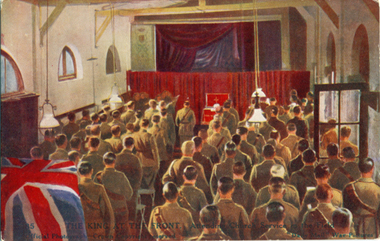 Warrnambool and District Historical Society Inc.
Postcard - The King at the Front, WW1 Postcard, 1914-1918
... He served in Egypt and France and returned to Australia in 1919. Daisy Ogier (1907-1987) was a student and then a teacher at Warrnambool Technical School with her early teaching years there from 1925 to 1936 and in 1949. ...He served in Egypt and France and returned to Australia in 1919. Daisy Ogier (1907-1987) was a student and then a teacher at Warrnambool Technical School with her early teaching years there from 1925 to 1936 and in 1949. ...This is a World War 1 postcard which was sent from France with an image of a gathering of soldiers with the King.This coloured postcard shows soldiers in a hall attending a church service. There is a Union Jack in the foreground and the King is centre front. On the back is space for a stamp and an address and also pencilled writing.This is a World War 1 postcard which was sent from France with an image of a gathering of soldiers with the King. daisy vickers, arthur anderson, world war one -
 Warrnambool and District Historical Society Inc.
Postcard - Mrs Caudle's Curtain Lectures, 1914-1918
... He served in Egypt and France and returned to Australia in 1919. Daisy Ogier (1907-1987) was a student and then a teacher at Warrnambool Technical School with her early teaching years there from 1925 to 1936 and in 1949. ...He served in Egypt and France and returned to Australia in 1919. Daisy Ogier (1907-1987) was a student and then a teacher at Warrnambool Technical School with her early teaching years there from 1925 to 1936 and in 1949. ...This is number 18 of 27 items in the Daisy Vickers collection of World War One memorabilia. These items were sent or given to Daisy Ogier (nee Vickers) during World War One by Corporal Arthur Anderson who enlisted from Warrnambool in 1915 at the age of 21. He served in Egypt and France and returned to Australia in 1919. Daisy Ogier (1907-1987) was a student and then a teacher at Warrnambool Technical School with her early teaching years there from 1925 to 1936 and in 1949. She became the head mistress from 1950 to 1963 and in 1968. She officially retired in 1976. Daisy Vickers was one of the best loved and dedicated teachers that the school ever had. She married the Reverend Fred Ogier and continued her association with the school after her husband's deathisy Vickers collection: Item 12 of 27This card is interesting because of its association with World War One and two local people Daisy Vickers and Arthur Anderson.This is a coloured postcard featuring two parrots in bed and handwritten material on the back. Jan 6th 1918 Dear Daisy, Its some time since I had a letter from you. Can you play the Piano yet. Christmas is over now. It is cold over here and there is is plenty of snow and ice about. Arthur daisy vickers, arthur anderson, warrnambool technical school, world war 1 postcard -
 Warrnambool and District Historical Society Inc.
Postcard - My Landlady's Cat, 1914-1918
... He served in Egypt and France and returned to Australia in 1919. Daisy Ogier (1907-1987) was a student and then a teacher at Warrnambool Technical School with her early teaching years there from 1925 to 1936 and in 1949. ...He served in Egypt and France and returned to Australia in 1919. Daisy Ogier (1907-1987) was a student and then a teacher at Warrnambool Technical School with her early teaching years there from 1925 to 1936 and in 1949. ...This is number 17 of 27 items in the Daisy Vickers collection of World War One memorabilia. These items were sent or given to Daisy Ogier (nee Vickers) during World War One by Corporal Arthur Anderson who enlisted from Warrnambool in 1915 at the age of 21. He served in Egypt and France and returned to Australia in 1919. Daisy Ogier (1907-1987) was a student and then a teacher at Warrnambool Technical School with her early teaching years there from 1925 to 1936 and in 1949. She became the head mistress from 1950 to 1963 and in 1968. She officially retired in 1976. Daisy Vickers was one of the best loved and dedicated teachers that the school ever had. She married the Reverend Fred Ogier and continued her association with the school after her husband's deathThis card is interesting because of its association with World War One and two local people Daisy Vickers and Arthur AndersonThis coloured postcard features a man looking into an empty bottle held against his eye. There is a grey and white cat wearing a bow in the foreground and black and blue printing. The reverse has hand written ink writing and space for a stamp.My Landlady's Cat wears a Blue Ribbon but I don't believe it's a Teetotaller !!. Il me semble qu'on y a mis un doigt France Jan 26th Dear Daisy I received your letter dated 6th Nov saying you had been to the show what are you learning to play on the piano Arthur daisy vickers, arthur anderson, warrnambool technical school, world war 1 postcard
