
Showing 39 items matching "1914 32"
-
 Learmonth and District Historical Society Inc.
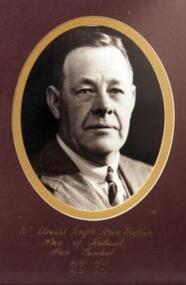
Photo - Coghlan J M, Unknown, Coghlan, Oswald Joseph Moore.Councilor,1919-20, 1928-29
... ...1914 32...Original Historic Photo. ballarat shire council coghlan oswald joseph moore 1914 32 Councilor Oswald Joseph Moore Coghlan,Ballarat Shire. ...Oswald Joseph Moore Coghlan was elected to Ballarat Shire Council in 1914 serving until 1932. he served two terms as Shire President,1919-20 and 1928-29.Original Historic Photo.Photo is sepia in colour, in a narrow brown wooden frame ,with brown mount, gold edges the photo. It is of Councilor Oswald Joseph Moore Coghlan,he was on council in 1919-20 and 1928-29.Councilor Oswald Joseph Moore Coghlan,Ballarat Shire. Shire President 1919-1920,1928-1929.ballarat shire council, coghlan oswald joseph moore, 1914 32 -
 Flagstaff Hill Maritime Museum and Village
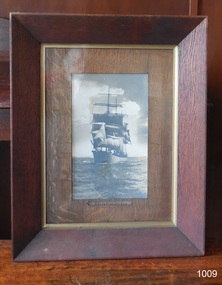
Photograph - Ship, Monkbarns, ca. 1924
... In 1914 John Stewart & Co. owned ten sailing vessels, one of which was the Monkbarns, but by the end of the first World War, the fleet had only four vessels survived the war, including the Monkbarns. The Monkbarns traded across the world. Some of the destinations included Port Adelaide, Table Bay in South Africa, Liverpool, Sydney, London and New York. Her last commercial voyage was in 1926. Overall, the ship traded for 32...In 1914 John Stewart & Co. owned ten sailing vessels, one of which was the Monkbarns, but by the end of the first World War, the fleet had only four vessels survived the war, including the Monkbarns. The Monkbarns traded across the world. Some of the destinations included Port Adelaide, Table Bay in South Africa, Liverpool, Sydney, London and New York. Her last commercial voyage was in 1926. Overall, the ship traded for 32 ...This photograph was taken in about 1924 as it approached Newcastle, New South Wales before the sailing ship Monkbarns was converted for use as a hulk. The steel-hulled, 3-masted fully rigged ship was built in 1895 by Archibald McMillan & Son at Dumbarton in Scotland. It was 267 feet long, 40.1 feet wide and 23.5 feet deep. In 1914 John Stewart & Co. owned ten sailing vessels, one of which was the Monkbarns, but by the end of the first World War, the fleet had only four vessels survived the war, including the Monkbarns. The Monkbarns traded across the world. Some of the destinations included Port Adelaide, Table Bay in South Africa, Liverpool, Sydney, London and New York. Her last commercial voyage was in 1926. Overall, the ship traded for 32 years before it was converted in Spain in 1927 for use as a hulk for carrying coal. There were several owners of the ship over its lifetime. They were - 1895, first owner, Charles Webster Corsar, Liverpool - 1902, the owner was D. Corsar & Son, Liverpool - 1909, owned by John Hardie & Sons, Glasgow - 1911, John Stewart & Co., Liverpool - by1915, James A. Young, London - 1926, L.H. Wilson, Liverpool - 1927, Ballener Espando (Brunn & van Lippe, Tonsberg).Photograph, black and white, of the ship "Monkbarns" , a steel hulled sailing ship under sail, bow facing viewer. Rectangular wooden frame has an inner gilt frame around a wide, natural bark matte. The lover edge of the matte has a decorative rectangular cut-out surrounding an inscription with the ship's name. On the back is a handwritten inscription about the ship and the presentation of the photograph..Front: "MONKBARNS" Reverse handwritten in pen: "PRESENTED TO A.F. WATSON / FOR S.S.V. BY / CAPT. F.K. BAXTER / 74 VERDON ST/ WILLIAMSTOWN " Reverse: "STEEL SHIP MONKBARNS / 1771 TONS REGISTER / 267 x 40' X 27'2" Draft / Build 1895 by McMillan, Dumbarton, Scotland / Converted to a hulk in /Spain 1927. / Photo taken in - Converted from NEWCASTLE N.S.W. about 1924"flagstaff hill, warrnambool, maritime village, maritime museum, flagstaff hill maritime museum & village, shipwreck coast, great ocean road, monkbarns, sailing ship, newccastle, new south wales, hulk -
 Flagstaff Hill Maritime Museum and Village
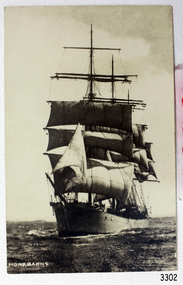
Postcard - Ship, Monkbarns, ca. 1924
... In 1914 John Stewart & Co. owned ten sailing vessels, one of which was the Monkbarns, but by the end of the first World War, the fleet had only four vessels survived the war, including the Monkbarns. The Monkbarns traded across the world. Some of the destinations included Port Adelaide, Table Bay in South Africa, Liverpool, Sydney, London and New York. Her last commercial voyage was in 1926. Overall, the ship traded for 32...In 1914 John Stewart & Co. owned ten sailing vessels, one of which was the Monkbarns, but by the end of the first World War, the fleet had only four vessels survived the war, including the Monkbarns. The Monkbarns traded across the world. Some of the destinations included Port Adelaide, Table Bay in South Africa, Liverpool, Sydney, London and New York. Her last commercial voyage was in 1926. Overall, the ship traded for 32 ...This photograph of the Monkbarns was taken prior to 1927 before the sailing ship was converted for use as a hulk. The steel-hulled, 3-masted fully rigged ship was built in 1895 by Archibald McMillan & Son at Dumbarton in Scotland. It was 267 feet long, 40.1 feet wide and 23.5 feet deep. In 1914 John Stewart & Co. owned ten sailing vessels, one of which was the Monkbarns, but by the end of the first World War, the fleet had only four vessels survived the war, including the Monkbarns. The Monkbarns traded across the world. Some of the destinations included Port Adelaide, Table Bay in South Africa, Liverpool, Sydney, London and New York. Her last commercial voyage was in 1926. Overall, the ship traded for 32 years before it was converted in Spain in 1927 for use as a hulk for carrying coal. There were several owners of the ship over its lifetime. They were - 1895, first owner, Charles Webster Corsar, Liverpool - 1902, the owner was D. Corsar & Son, Liverpool - 1909, owned by John Hardie & Sons, Glasgow - 1911, John Stewart & Co., Liverpool - by1915, James A. Young, London - 1926, L.H. Wilson, Liverpool - 1927, Ballener Espando (Brunn & van Lippe, Tonsberg).The postcard shows and example of the sailing ships that traded across the seas and into Australia in the late 19th and early 20th century.Black and white postcard of a sailing ship, fully rigged, at sea. Handwritten on front of card is "Monkbarns"Handwritten on front "MONKBARNS". monkbarns, postcard, sailing ship, flagstaff hill, warrnambool, maritime village, maritime museum, flagstaff hill maritime museum & village, shipwreck coast, great ocean road, newccastle, hulk -
 Federation University Historical Collection
Book, The College of Domestic Economy Prospectus, 1944, 1914
... 1914 the superintendent was Miss M. Sandes. The Training College and University of Melbourne proveded instructors for some courses. college of domestic economy m. sandes donald clark a,c. mountain jean greig constance ellis marjory robertson mabel sandes e eddie mrs storer miss vieusseux miss williams mr graham mr varey prof berry prof spencer dr bull prof osborne university of melbourne training college elementary drawing designs form and colour first aid care of children applied hygiend dr jean greig dr eileen fitzgerald Brown soft covered book of 32 pages. ...The College of Domestic Economy was located at 450 Lonsdale Street, Melbourne. In 1914 the superintendent was Miss M. Sandes. The Training College and University of Melbourne proveded instructors for some courses.Brown soft covered book of 32 pages. Includes four photographs of work on display.college of domestic economy, m. sandes, donald clark, a,c. mountain, jean greig, constance ellis, marjory robertson, mabel sandes, e eddie, mrs storer, miss vieusseux, miss williams, mr graham, mr varey, prof berry, prof spencer, dr bull, prof osborne, university of melbourne, training college, elementary drawing, designs, form and colour, first aid, care of children, applied hygiend, dr jean greig, dr eileen fitzgerald -
 Federation University Historical Collection
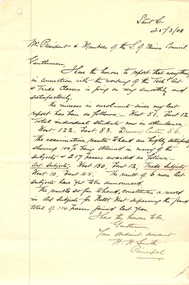
Document - Documents, Ballarat School of Mines Correspondence Relating to the Ballarat Technical Art School, 1907-1914, 24/12/1907 - 28/08/1914
... Smith suggested she be appointed to teach the class, 1910 .31) Report on the Junior Technical School, 1915 .32) Quarterly Report on the Ballarat Technical Art School by Principal Herbert H. Smith, 1911 .34) Report on the progress of the Ballarat Technical Art School by Principal Herbert H. Smith, 1914...Smith suggested she be appointed to teach the class, 1910 .31) Report on the Junior Technical School, 1915 .32) Quarterly Report on the Ballarat Technical Art School by Principal Herbert H. Smith, 1911 .34) Report on the progress of the Ballarat Technical Art School by Principal Herbert H. Smith, 1914 ...The dates 1907-1914 cover the first eight years of the Ballarat Technical Art School No. 15, a division of the Ballarat School of Mines. This covers that time before the custom built Ballarat Technical Art School opened in 1915.48 pieces of hand and type written correspondence relating to the Ballarat Technical Art School, covering its first eight years. .1) Transferal of money from the Ballarat Fine Art Public Gallery Association to the Ballarat School of Mines for credit to the Ballarat Technical Art School No 15. .3) Letter from Herbert H. Smith reporting on the appointment of Thomas Trengove to the position of Art Director at the Stawell School of Mines, and the appointment of Arthur Lilburne and Pridgeon as student assistants. .5) Application from Arthur M. Lilburne for a position at the Ballarat Technical Art School. .7) Resignation of Thomas Trengrove from the Ballarat Technical Art School so he could take up a position at the Stawell School of Mines, 1908. .9) Correspondence from H.H. Smith concerning expectations. 1908 .10) Report from Herbert H. Smith on the number of Art enrolments at the Ballarat West Art School, the Ballarat East Art School and the Drawing Centre. .8) Correspondence from Henry H. Hall regarding his teaching appointment, 1908 .11) A Report on architectural studies at the Ballarat Technical Art School on Clegg and Miller letterhead. .12) Report from M.C. Young. .13) Report from Arthur Lilburne .14) Reorrt from J.A. Wright, 1908 .15) Report on student numbers from Edith M. Cornell, 1908 .16) Report on classes in Freehand Geometry and Perspective by Fred Foster, 1908 .16b) Report by Decorating and Signwriting teacher John Barber, 1908 .17) Report from Esther and Lily Green from the East Public Library, 1908 .18) Report from Percy Isaac of the Ballarat East Public Library re manual training and Sloyd classes. .19) Report on the progress of the Ballarat Technical Art School by Principal Herbert H. Smith, 1908 .20) Report from Arthur M. Lilburn on the Elementary Evening Classes and the State School Teachers Saturday class, 1908 .21) Report by M.C. Young on drawing classes at the Ballarat Technical Art School, 1908 ,22) Report by Fred Foster on Freehand Geometry of Perspective classes at the Ballarat Technical Art School, 1908 .24) Report by E. and L. Green on classes at the Ballarat Technical Art School, 1908 .25) Report by Miss Wright on Dresscutting classes at the Ballarat Technical Art School, 1908 .26) Report by John Barber on Signs and Decorating classes at the Ballarat Technical Art School, 1908 .27) Report by Edith Cornell on Millinery classes at the Ballarat Technical Art School, 1908 .28) Report by Percy R. Green on Manual Training ad Carpentry classes at the Ballarat Technical Art School, 1908 .29) Correspondence from Posenby Carew-Smyth and Melbourne Education Department letterhead, 1908, .30) Report on the need for instruction in Decorative Needlework at the Ballarat Technical Art School by Principal Herbert H. Smith. Ida Johnston undertook classes from Miss Macgeorge in Melbourne at the suggestion of Posonby Carew-Smyth, and H.H. Smith suggested she be appointed to teach the class, 1910 .31) Report on the Junior Technical School, 1915 .32) Quarterly Report on the Ballarat Technical Art School by Principal Herbert H. Smith, 1911 .34) Report on the progress of the Ballarat Technical Art School by Principal Herbert H. Smith, 1914 .34b) Invoice from James Ingram and Son, Booksellers and School Stationers, 1908 .35) Report on the progress of the Ballarat Technical Art School by Principal Herbert H. Smith, 1914 .36) Correspondence from F.N. King seeking employment at the Ballarat Junior Technical Scool due to the resignation of A.W. Steane, 1914 .37) Correspondence regarding the qualifications of F.N. King, including Sloyd at NAAS, Sweden, 1914 Reference from F.V. Burridge of the London County Council Central School of Arts and Crafts (incorporating The Royal Female School of Art), Southamoton Row, London, regarding Francis N. King, 1913 .40) Correspondence on Ballarat Junior Technical School letterhead when it was located at 104 Doveton Street, Ballarat (Dana Street Primary School) from Albert W. Steane. The report mentioned to appointment of R.W. Richards commencing duties as a science ad mathematics master and Francis N. King as Woodwork and Modeling instructor, 1914 .41) Report on the progress of the Ballarat Technical Art School by Principal Herbert H. Smith, 1914 .42) Correspondence on Stanley Mullen Company letterhead requesting a junior (lady) to help in designing and drawing from Needlework, 1914 .43) Report on the progress of the Ballarat Technical Art School by Principal Herbert H. Smith, 1914 .44) Report on the progress of the Ballarat Technical Art School by Principal Herbert H. Smith, 1914. The report includes the resignation of Donadl Johnston to take up the position of assistant to Posonby Carew-Smyth. Harold Herbert to travel to England, and Edwin Cannon to to apply his art knowledge commercially. H.H. Smith suggested they be replaced with Ken Moss and Harold Brown .45) Report on the progress of the Ballarat Technical Art School by Principal Herbert H. Smith .46) Hours and duties of the caretaker and attendant at the Ballarat Technical Art School .47) Letter from the J.A. Powell, secretary of the Ballarat West Art School to the Ballarat School of Mines. ballarat technical school, henry j. hall, arthur m lilburn, thomas h. trengrove, herbert h. smith, g.w. clegg, m.c. young, j.w. wright, fred foster, j. barber, etsher green, lily green, p. isaac, e.m. cornell, albert steane, f.n. king, letterhead, ballarat fine art public gallery association, richard maddern, j. powell, j.a. powell, frederick martell, ponsonby carew-smyth, stawell school of mines, lilburne, pridgeon, arthur lilburne, henry hall, edith m. cornell, john barber, east ballarat library, esther green, percy isaac, sloyd, millinery, r.w. richards, frank king, a.w. steane, naas, majorie walker, art needlework, stanley mullen company, donald johnston, ted cannon, edwin cannon, harold brown, harold herbert, art gallery of ballarat -
 Geelong RSL Sub Branch
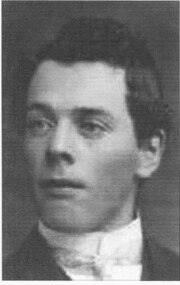
Medals 293 Hughie McLean, Early 21st century
... He was Killed in Action on 19 July 1916 in France. 293 Hughie McLean's original Medals were forwarded to his brother Mr J W McLean on 22 July 1922. 293 hughie mclean, 32 aust inf battalion, kia, france The Medals are reproductions, there are no markings or names 3 x Medals - 1914-1915 Star, British War Medal 1914-1918, Victory Medal 1914-1919 Reproductions Medals 293 Hughie McLean There are no makers names ...293 Hughie McLean was a Victorian born in Tamagulla, Victoria. Hughie McLean was living in Adelaide when he enlisted on 30 June 1915 and joined 'K' Group Base Infantry. 293 Hughie McLean was subsequently posted to 32 Australian Infantry Battalion and Killed in Action in France on the 19 July 1916. 32 Australian Intantry Battalion was raised as part of the 8th Brigade at Mitcham, South Australia.293 Hughie McLean was a Victorian man who was living in Adelaide at the time of his enlistment 30 June 1915. He was Killed in Action on 19 July 1916 in France. 293 Hughie McLean's original Medals were forwarded to his brother Mr J W McLean on 22 July 1922.3 x Medals - 1914-1915 Star, British War Medal 1914-1918, Victory Medal 1914-1919 ReproductionsThe Medals are reproductions, there are no markings or names293 hughie mclean, 32 aust inf battalion, kia, france -
 Ringwood and District Historical Society
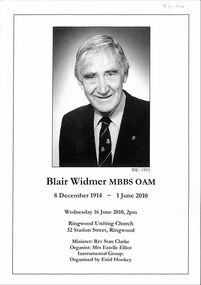
Document, Obituary of Blair Widmer MBBS OAM 8 December 1914 - 1 June 2010 Wednesday 16th. June 2010, 2 pm. Ringwood Uniting Church 32, Station Street, Ringwood Minister : Rev. Stan Clarke Organist: Mrs. Estelle Elliot. Organised by Enid Hookey
... Obituary of Blair Widmer MBBS OAM 8 December 1914 - 1 June 2010 Wednesday 16th. June 2010, 2 pm. Ringwood Uniting Church 32, Station Street, Ringwood Minister : Rev. ...Buff coloured covers with with paper insert and photograph on front Obituary of Blair Widmer MBBS OAM 8 December 1914 - 1 June 2010 Wednesday 16th. June 2010, 2 pm. Ringwood Uniting Church 32, Station Street, Ringwood Minister : Rev. ...Dr. Blair Widmer was the Medical Officer for Ringwood for many years. Among other things he supervised innoculations and vaccinations of babies and children.Buff coloured covers with with paper insert and photograph on front -
Glenelg Shire Council Cultural Collection
Book, Walter Tyndale, Japan and the Japanese, 1910
... 'Portland Free Library Museum and Literary Institute' etc. purchased 6.4.14 (1914) Light blue, cloth-covered covers and spine. Text and graphics in gold. Coloured illustration on front cover-garden scene. 32 coloured illustrations by the author. ...Light blue, cloth-covered covers and spine. Text and graphics in gold. Coloured illustration on front cover-garden scene. 32 coloured illustrations by the author.japan, travel, social life, customs -
 Bendigo Military Museum
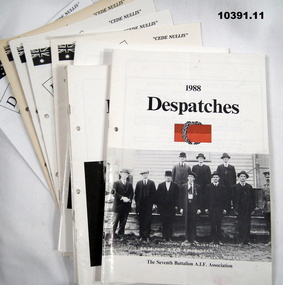
Magazine - A.I.F. ASSOCIATION, SEVENTH BATTALION, 7th Battalion AIF 1914-1918, "DESPATCHES", 1988 to 1998
... 1914-1918 11. April 1998 "This was the last Despatch Publication Magazines 7th Battalion AIF Henry Trevor Clutterbuck 1. to 6. Magazines - cover white colour paper with black ink print. Illustrated front, brown over red colour with Laurel wreath colour patch. Front cover illustrated with black and white photographs. 32 ...Magazines issued to HENRY TREVOR CLUTTERBUCK, 1st WW, 7462, 2nd WW VX From Donation sheet,; 1.1988 The Seventh Battalion AIF Association 'Despatches'. 2.1989 The Seventh Battalion AIF Association 'Despatches'. 3.1990 The Seventh Battalion AIF Association 'Despatches'. 4.1991 The Seventh Battalion AIF Association 'Despatches'. 5.1991 The Seventh Battalion AIF Association 'Despatches'. 6.1992 The Seventh Battalion AIF Association 'Despatches'. Final Edition. 7. April 1993 "Despatches" 7th Battalion AIF 1914-1918 'CEDE NULLIS'. 8. April 1994 "Despatches" 7th Battalion AIF 1914-1918 'CEDE NULLIS'. 9. April 1995 "Despatches" 7th Battalion AIF 1914-1918 includes Dad's Diary entry in WW1. 10. April 1996 "Despatches" 7th Battalion AIF 1914-1918 11. April 1998 "This was the last Despatch 1. to 6. Magazines - cover white colour paper with black ink print. Illustrated front, brown over red colour with Laurel wreath colour patch. Front cover illustrated with black and white photographs. 32 to 40 pages, cut, plain, white colour paper. Illustrated black and white photographs. Two metal staples on spine. 7. to 11. Magazines - on cover, heading on first page includes illustration of Australian flag and Rising Sun Badge. Black ink print, 8 pages, white paper. Fastened with two metal staples.publication, magazines, 7th battalion, aif, henry trevor clutterbuck -
 Bendigo Military Museum
Administrative record - COMPENDIUM WW1 - WW2, 4) A H Pettifer, Government Printer et al, 2) 14.2.1946; .3) 1.3.1919; .4) 30.11.1954 .5) 24.11.19? - WWI; .6) 31.10.1917; .7) 12.6.1917; .8) Page 1: 20.12.1915, Page 2: 10.12.1915, Page 6: 19.1915; .9) 10.9.1918; .10) 18.4.1919; .11) c.2.3.19?; .12) 18.9.1920; .14) post WWI; .15) 24.4.1920; .17) 18.4.1942; .18) 19.6.1943; .19) 18.3.1947; .20) 1944; .21) 1944; .23) 22.10.1941; .26) 13.9.1944; .27) 1.1944; .30) 7.3.1950; .31) 31.7.1944; .32) 16.4.1942; .33) 13.6.1946; .34) 6.5.1946; .36) a) & b) 3.11.1947; .37) 24.10.1951; .38) 24.9.1957; .39) 9.10.1957; .40) 19.2.1958; .41) 26.2.1958; .42) 1.3.1958; .43) & .44) 7.3.1958; .45) 25.2.1958; .46) 3.1.1948; .47) 26.2.1948; .48) 22.4.1958; .49) 24.2.1958; .50) 12.3.1958; .51) 6.1958; .52) c.Mar/Apr 1958; .53) 5.4.1958; .54) c.end WWII; .55) a.b. 13.6.1967; .56) 26.5.1967; .57) 18.2.1954
... Handwritten bottom L corner: Col H T Allan Bottom R corner: OBE, MC, 1914-19, Victory, ED, MID 1914-18, MID 1939-45 On back: Steak & Kidney Morris ) Clark ) Vowood ) 10/- 70215 Maughan ) Allan ) .31) Top of page: Imprinted Coat of Arms Top LHS in black ink: TOP SECRET AND PERSONAL Handwritten signature: Stanley Sauige .32) Embossed top L corner: Seal of the Most Excellent Order of the British Empire. ...Handwritten bottom L corner: Col H T Allan Bottom R corner: OBE, MC, 1914-19, Victory, ED, MID 1914-18, MID 1939-45 On back: Steak & Kidney Morris ) Clark ) Vowood ) 10/- 70215 Maughan ) Allan ) .31) Top of page: Imprinted Coat of Arms Top LHS in black ink: TOP SECRET AND PERSONAL Handwritten signature: Stanley Sauige .32) Embossed top L corner: Seal of the Most Excellent Order of the British Empire. ...Herbert Trangmar Allan, refer 2755.4 for his extensive service history and wards. .2) Details gifting of a pair of Japanese binoculars to Col H T ALLAN by Pacific Island Regiment. .3) Certificate issued by Winston Churchill, Secretary of State for War (The War of 1914-1918), awarded to Capt H T ALLAN MC. .4) Herbert Trangman ALLAN born 5.1.1895 at Woolwich, NSW. Middle name misspelled, should be Trangmar not Trangman. .6) Congratulating H T ALLAN on receiving the Military Cross award for leading 2 companies which had lost officers during action on Passchendaele Ridge on 9.10.1917. .7) Describes life behind the lines whilst H T ALLAN's battalion has been resting for a month. Daily life consisted of training drills, sport & entertainment. Writer takes time to describe the countryside & weather. .8) Relate to H T ALLAN's military exam results & his promotion to 2nd Lieutenant in 1915. .9) To Herbert Allan's father, Mr P Allan detailing the citation for awarding of the Military Cross to Herbert ALLAN. Original citation appeared in the London Gazette,5.4.1918. .10) Form addressed to Capt H ALLAN MC, 17th Battalion stating his period of enlistment in the 1st AIF was to expire 26.5.1919. .11) Letter from Lord BIRDWOOD (General) to Herbert ALLAN in response to a letter received 19.11.19?. General BIRDWOOD expresses his opinions on difficulties the allied troops face in their fight against the Japanese. .12) Letter to Capt H T ALLAN advising of MID oak leaves sent to him. Details guidelines for attaching oak leaves to both the larger Victory Medal & the small service dress medal. .13) Form details H T ALLAN's WWII Army No, Rank, Unit & Decorations & Medals held. The form has not been signed & dated. .14) Details service record of Lt Col H T ALLAN NX12229. Includes military service from 1912 - 1944, schools & courses attended, decorations, promotions & overseas service. .16) Form issued to H T ALLAN on 15.12.1939 granting permission to leave New Guinea for Australia & return within a period of 12 months. Issued by Customs Office in Salamaua. Lists H T ALLAN's age as 44, height 5' 10" & occupation. .17) Letter from Major General MORSHEAD GOC, AIF (ME) to Major H T ALLAN, OBE, MC congratulating him on being awarded the OBE for outstanding service at Tobruch. .18) Letter from Major General MORSHEAD to Major H T ALLAN, OBE, MC replying to ALLAN's letter of 15.6.1943. MORSHEAD is congratulating ALLAN on his appointment to New Guinea Force, also acknowledges his excellent service record. .19) Letter acknowledges H T ALLAN's resignation from the Office of Production Member of the Australian New Guinea Production Control Board, effective from 28.8.1946. .20) Major General WINDEYER commanded the 20th Brigade from 1942-1946. .22) Card sent from the CO of the 3rd Australian Anti-Tank Regiment. .23) Menu for Farewell Dinner held in the Officer's Mess of the 20th Infantry Brigade, Tobruch on 22.10.1941. .24) Menu & Toast list for Farewell Dinner to Brigadier J J MURRAY DSO MC VD. Attended by H T ALLAN & held in the Officers Mess, 2/17 Australian Infantry Battalion on 22.12.1941. .25) Invitation to Col H T ALLAN by Lady Gowrie (wife of Governor General Baron Gowrie) to attend a Luncheon at Government House, Canberra, ACT. .26) Letter to Major (T/Lt Col) H T ALLAN from Major W A JENNER advising him of his secondment to 2/17 Australian Infantry Battalion & appointment to command 5 Aust Base Sub Area. .27) Application for Africa Star with Eighth Army Clasp signed by H T ALLAN & approved by Lt Colonel of 2/17 Australian Infantry Battalion. H T ALLAN held the rank of Major (substantive) at the time of qualification, 1.3.1942 - 11.1942. He held the rank of Lt Colonel at the time of application in 2.1944. .28) Detailing changes in command & promotions including that of Lt Col H T ALLAN, dated 1.4.19? .29) For Lt Col H T ALLAN detailing movements required by First Australian Army command. .30) Acknowledgement & confirmation of Col H T ALLAN's application for campaign awards for WWII. .31) Letter addressed to Lt Col H T ALLAN from Lt Gen Stanley Sauige requesting information on New Britain for a forthcoming visit. .32) Certificate was presented to H T ALLAN on 16.4.1942 when he was awarded an OBE by King George VI. .33) Document details H T ALLAN's relinguishing of Command of the HQ of Pacific Islands Regiment. ALLAN also relinguished the rank of temporary Colonel & was transferred to the Reserve of Officers with rank of substantive Lt Colonel. .35) Official letter to Colonel H T ALLAN from Joseph Francis, Minister for the Army. The letter acknowledges Col ALLAN's long & distinguished career during both peace & wartime. .36) a) & b) From H T ALLAN (assumed) to Prime Minister J B CHIFFLEY referring to the production of copra in New Guinea, the actions of the Commonwealth Bank in relation to planters & the collaboration of New Guinea natives with the Japanese. Assumed to be a copy of original. .37) Letter to H T ALLAN indicating he had been placed on the Retired List with the rank of Honorary Colonel. .38) Letter invites H T ALLAN to officially open the State Conference in Lae in late March or early April 1958. Invitation was extended due to H T ALLAN for distinguished service in PNG. .39) Letter to H T ALLAN thanking him for accepting the invitation to open the Papua & New Guinea State Conference in late March or early April 1958. .40) Letter from H T ALLAN to Lt Gen Sir Henry WELLS, Chief of the General Staff, Victoria Barracks, Melbourne. ALLAN requests permission to wear his uniform for official engagements during his upcoming visit to New Guinea. ALLAN also offers advice on how to deal with native troops including serving time with them, learning their language & studying their customs. He suggests that this would help quell & dissent & revolt. .41) Reply from Major General DALY to HT ALLAN thanking him for his offer to spend time with the CO of the Pacific Island Regiment to address concerns with that unit. This meeting would coincide with ALLAN's upcoming visit to PNG. .42) HT ALLAN's reply to Major General T J DALY's letter of 26.2.1958. ALLAN requests an opportunity to discuss PIR issues with Major General DALY prior to his visit to PNG. .43) Major General T J DALY's reply to HT ALLAN's request for a meeting to discuss ongoing issues with the Pacific Island Regiment. .44) Letter from HT ALLAN to Brigadier D M CLELAND notifying him that he will be staying in Port Moresby on his way to the RSS&AILA Congress in Lae. .45) Lieutenant Colonel MCGUINN writes to invite Colonel ALLAN to visit the PIR during his visit to New Guinea at the end of March of the beginning of April 1959. .46) Letter of appreciation to H T ALLAN thanking him for his efforts in presenting the case for the Territory of New Guinea during the post WWII transition period. .47) Letter to H T ALLAN from New Guinea Citizens Association, Lae Branch, thanking him for his service on behalf of the people of the Territory of New Guinea. The association offered to send ALLAN a suitable present in recognition of his service. .48) Major General T J DALY's reply to HT ALLAN's suggestions for handling disquiet amongst the native troops in the Pacific Island Regiment. .49) Reply from Lieutenant General WELLS to H T ALLAN granting him permission to wear his uniform on his forthcoming visit to New Guinea. WELLS also notes that he has passed other requests made by ALLAN to Major General DALY. .50) Copy of H T ALLAN's reply to Lieutenant General WELL's letter of 24.2.1958 [.49)]. .51) A written account of Colonel H T Blue ALLAN's visit to New Guinea in 3.1958. Article appeared on p.65 & 67 of the 6.1958 edition of Pacific Islands Monthly. .52) Newspaper account of Colonel H T Blue ALLAN's opening of the Rabaul Branch of the Native Ex Servicemen's Association. Colonel ALLAN spoke of the involvement of the Pacific Islands Regiment during WWII. .53) The Rabaul Times account of Colonel H T Blue ALLAN's opening of the Rabaul Branch of Native Ex Servicemen's Club. Featured on p1, concluded p3. .54) Biographical account of Colonel H T ALLAN's service in WWI & WWII. In addition an account of his success in New Guinea between the wars is included. .55) a.b. Biography of Colonel H T ALLAN written by R W Robson who was the founder of the Pacific Islands Monthly. Article was written following ALLAN's death on 23.5.1967 aged 72. This item is a pre publication copy of Robson's article which appeared in the Pacific Islands Monthly. .56) Text of a valedictory given at the funeral of Colonel Herbert Trangmar ALLAN OBE, MC, ED, NX12229 held 26.5.1967 following his death on 23.5.1967. The speech summarized his life in both wars & civilian life. 57) Invitation issued to Colonel H T & Mrs ALLAN to attend a Garden Party at Government House on 18.2.1954. At this function Colonel H T & Mrs ALLAN were to be presented to her Majesty Queen Elizabeth II.Herbert T ALLAN Collection. The contents are all of various size, the Album is the size documented. .1) Large teal green album containing 16 plastic pockets each with white card insert. Various documents & photos contained in each pocket. .2) Typed letter, black type on cream paper. .3) Certificate mounted on fawn card backed with dark brown veneer. Presented to Capt H T ALLAN MC for being mentioned in despatches on 7.11.1917. .4) New South Wales Birth Certificate extract, printed on pink paper with watermark. .5) Telegram on tissue paper to a sheet of cream paper. Pin located top L corner. Requests the attendance of Lt Herbert ALLAN, Russell Hotel, Russell Square. .6) Typed letter mounted on grey cardboard. .7) 2 page letter on foolscap paper, secured by pin top L corner. Written from France by Herbert (Bert) ALLAN & addressed to his father. .8) 11 pages secured with a clip top L corner. 1st document typed, 2nd handwritten, remainder printed. Relate to H T ALLAN's military exam results. .9) Typed letter from Department of Defence Base Records Office to P ALLAN. .10) Document, printed form to inform the recipient that their period of enlistment in the 1st AIF had expired. .11) 4 page handwritten letter on 2 sheets of paper. 1st page has a printed letterhead. .12) BR Form No 20. Typed formal letter from AIF Base Records Office to accompany Mentioned in Despatches oak leaves sent to the recipient. .13) Form AAFA36 used for recommending the awarding of an Efficiency Decoration. Form details service record & details of a serving soldier. .14) 1 large / 1 small page, numbered, detailing the service record of Lt Col H T ALLAN. Black type on cream paper. 2 pages are loose but evidence of attachment visible. .15) Bachelor of Arts Degree Certificate (testamur) granted by the University of Sydney, awarded to Herbert Trangmar ALLAN. Printed on cream parchment. .16) Proforma document issued by the Territory of New Guinea permitting leave & return to the Territory. Printed 2 sides, black type on cream paper. .17) Letter on Australian Imperial Force letterhead from Major General MORSHEAD to Major H T ALLAN. .18 Letter on HQ2 Aust Corps letterhead from Major General MORSHEAD to Major H T ALLAN. .19) Typed letter on External Territories letterhead from J R Halligan to H T ALLAN. .20) Cream Christmas card folded in 2, sent to H T ALLAN. On front in black lettering is HQ 20th Australian Infantry Brigade below black Rising Sun emblem. Inside in black lettering is With Best Wishes for Christmas and New Year. Christmas 1944. .21) Cream card folded in 2. Front illustration depicts a devil figure riding a platypus & carrying a pennant with 2/13 on it. The devil is depicted attacking a German & Japanese soldier. Below the devil is a boomerang with Greetings Xmas 1944 printed on it. Illustration is in green & black. Inside on LHS is a message from 2/13 Battalion. On RHS is a list of 2/13 battle honours from 1940-1943. On back in black print is 1944-1945 New Guinea Australia. .22) Cream Christmas card folded in 2. Front illustration in brown with word Greetings in green. RHS inside printing in green & brown letters. Artillery badge on back in brown. .23) Cream card folded in 2. Typed menu on cream paper attached inside. Front cover illustrated with 20th Infantry Brigade colour patch & a rat over a scroll with words - So What? .24) Cream card folded in 2. On front black printing accompanied by 2/17 Battalion colour patch that is black over green diamond shape. Inside a list of Toasts & Dinner Menu printed in black. Back page for autographs. .25) Cream invitation card. Black cursive script printing below gold crown on front. .26) Typed letter on cream paper. .27) Typed foolscap application form to claim the Africa Star. .28) & .29) Message form filled with typed orders. .30) Typed letter acknowledging an application for campaign medals & listing eligible awards. .31) Typed letter on bond paper. .32) Certificate on cream parchment. Black print in cursive script. Text details the awarding of an OBE to the recipient. .33) Typed text on Australian Military Forces letterhead. Cream paper. .34) Typed text. Temporary note for H T ALLAN's discharge from AMF. .35) Typed letter on Commonwealth of Australia, Minister for the Army letterhead. .36) a) & b) 2 page letter in black type on cream paper. Pages are loose, letter unsigned. .37) 1 page typed letter on Australian Military Forces letterhead. .38) & .39) 1 page typed letter on Return Sailors, Soldiers & Airmen's Imperial League of Australia, Papua & New Guinea Branch letterhead. .40) 1 page typed letter, unsigned. .41) Single sided typed letter on Australian Military Forces letterhead on cream paper. .42) 1 page typed letter, unsigned on cream paper. .43) Single sided typed letter on Australian Military Forces, Northern Command, Victoria Barracks, Brisbane letterhead on cream paper. .44) Single sided typed letter on cream paper. .45) 2 page typed letter on folded cream paper bearing the letterhead of the Pacific Islands Regiment. .46) 1 page typed letter on cream, lined paper. .47) 1 page typed letter on cream paper. .48) 1 page typed letter on Australian Military Forces, Northern Command Headquarters, Victoria Barracks, Brisbane letterhead on cream paper. .49) 1 page typed letter on Chief of General Staff, Australian Military Forces, Army Headquarters, Victoria Barracks, Melbourne letterhead on cream paper. .50) 1 page copy of an unsigned letter on cream paper. .51) Magazine article: Building a New Nation in New Guinea : Some advice from Colonel Blue ALLAN. Black & white article with a 2nd small section stapled to the main page. Large page features a black & white captioned photo of a group listening to a uniformed Officer deliver a speech. Also features advertising front & back. .52) Newspaper article: Official Opening of Native Ex Servicemen's Club. Black & white typed newspaper article featuring a captioned black & white photo of a uniformed Australian Officer & a group of New Guinea Ex Servicemen. .53) a. b. c. Newspaper article: Master Blue Came Back to the Islands: 4000 Attend Club Opening. 3 Section article cut from a newspaper. One part is the banner of the newspaper with date published. Other sections contain the text of the article. The larger section features a black & white photo of an Australian Army Officer in uniform. .54) Newspaper article, untitled. Black & white typed newspaper article with black & white caricature of an Australian Army Officer featured. .55) a. b. Magazine article: The Story of a Big Man who Loved Soldiering. 2 page black & white typed article with sub headings. .56) Text of a Speech. 2 page typed text written for a valedictory given at a funeral. Pages connected with a staple in the top L corner. .57) Printed, cream card invitation to a Garden Party for the recipient to meet Queen Elizabeth II & The Duke of Edinburgh. Text is in cursive script under the Coat of Arms of Her Majesty. .2) Signature ? Capt S C PIR. .4) Date of issue typed: 30.11.1954 Name of recipient: Herbert Trangman Allan Stamped: T Wells, Registrar General NSW .5) Handwritten: To Lt Herbert Allan, Russell Hotel, Russell Square. Typed: Buckingham Palace OHS. Your attendance is required at Buckingham Palace on Wednesday next the Twentyeighth inst (28.11.19?) at ten o'clock am service dress please telegraph acknowledgement Lord Chamberlain London. Stamped: Central District 24 NO 19. .6) Signed in pencil: W Birdwood. In pencil on back: 15 x 12. .8) p1: Handwritten signature. Copy dated 29.12.1915. p2 Handwritten in ink: P Allan Esq, Mount Hunter Hill. Military Examination. Copy dated 29.12.1915. Handwritten in pencil: Results: H T Allan. Tactics - Distinction 92% HE Barff p3 Underlined in ink: 38th Infantry Herbert Trangmar Allan to be 2nd Lieutenant (provisionally). Dated 16 June 1914. p5 Handwritten: Total 139. Lieut Allan tied with 15 others for 20 place. p7, 9, 10 & 11underlined in ink: H T Allan. p8 Underlined in ink: Allan HT. .9) & .10) Signature in black ink. .12) Handwritten signature in black ink: On back handwritten signature in black ink: Clive Wilkinson, Buddong, Robinson St, Chatswood. Also ? Rd, Cremorne Pt. .13) Handwritten in black ink: Details of HT Allan's Commission Service from 16.6.1914 - 18.2.1946. .15) Handwritten signature of the University Chancellor, Dean of Faculty of Arts & Registrar. Handwritten name of recipient. Seal of the University of Sydney imprinted bottom LHS. .16) Handwritten in black ink: Details of recipient. Stamped in red ink: New Guinea Customs. Stamped in blue ink: H M Customs, Cooktown, dated 17.12.1939. Handwritten on reverse: Signature. Stamped on reverse in red ink: New Guinea Customs, dated 15.12.1939. .17) & .18) Handwritten signature: Major General Morshead. .19) Handwritten signature in black ink: J R Halligan. .20) Handwritten inside in blue ink: Lt Col Allan. Good wishes from your many friends here. Signed by Major General Windeyer. .21) Inside LHS handwritten in blue ink: Lt Col Allan & an indecipherable signature. .22) Inside RHS handwritten: To Major (Blue) Allan OBE MC from Lt Col? .23) On front handwritten in blue ink: H T Allan?. Inside in black ink & pencil are 19 signatures. .24) On front: 3 signatures in black ink & pencil. On back: 36 signatures in black & blue ink & pencil. .25) On back handwritten in black ink: Colonel H T Allan OBE MC, with 3 ink lines below name. .26) Handwritten in blue/black ink: Signature. Handwritten in blue pencil top R corner: A32/3477. Handwritten in black ink bottom L corner: Cond (?) 15/9A. Handwritten in black ink: Signature. .27) Stamped top R corner: 2/17 Bn Received 9.2.1944. Signature in black ink: H T Allan. Signature in black ink: ? Lt Col 2/17 Aust Inf Bn 10.2.1944 Page bottom in pencil: Blue will keep 1 1/4 for you? .30) Handwritten: Details of eligible medals. Handwritten signature: J C K Miller Capt 7.3.50. Handwritten bottom L corner: Col H T Allan Bottom R corner: OBE, MC, 1914-19, Victory, ED, MID 1914-18, MID 1939-45 On back: Steak & Kidney Morris ) Clark ) Vowood ) 10/- 70215 Maughan ) Allan ) .31) Top of page: Imprinted Coat of Arms Top LHS in black ink: TOP SECRET AND PERSONAL Handwritten signature: Stanley Sauige .32) Embossed top L corner: Seal of the Most Excellent Order of the British Empire. Handwritten: Mary R. .32) Signed: Queen Mary, mother of George VI. .33) Handwritten signature. .34) Handwritten in blue ink: HERBERT TRANGMAR ALLAN 6 MAY 46 Handwritten signature. .35) Handwritten signature in blue ink: Joseph Francis, Minister for the Army. .37) Handwritten signature. .38) & .39) Handwritten signature: J W Knight. .41), .43) & .45) Handwritten signature in blue ink. .46) & .47) Handwritten signature in black ink: Henry G Eckhoff. .48) Handwritten signature in blue ink: With best wishes Yours sincerely T J Daly. .49) Handwritten signature in black ink: Yours sincerely H Wells. .57) Handwritten in black ink: Colonel & Mrs H T Allan.certificates, records, awards, administrative, compendium -
 Bendigo Military Museum
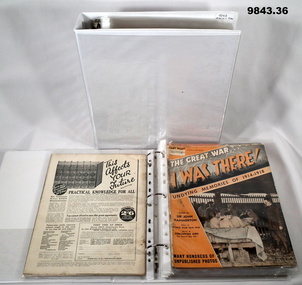
Magazine - PICTORIAL COLLECTION, 1914-18, The Amalgamated Press Ltd, "THE GREAT WAR...I WAS THERE!", 1938 -1939
... 32. Part 47 August 22nd 1939. 33. Part 48. August 29th 1939. 34. Part 49 September 5th 1939. 35. Part 50 September 12th 1939. 36. Part 24 March 14th 1939. "THE GREAT WAR...I WAS THERE!" Magazine PICTORIAL COLLECTION, 1914 ...Information from Magazine front cover; "Part Five to complete in about 40 Parts/ THE GREAT WAR/ I WAS THERE/ UNDYING MEMORIES OF 1914-1918/ edited by Sir John HAMMERTON/ Editor of WORLD WAR 1914-1918/ Writer of FORGOTTEN MEN/ The Famous War Film/ MANY HUNDREDS OF/ UNPUBLISHED PHOTOS". Part of the William (Bill) THOMASON Collection. Refer Cat No. 4136P for more items.Magazine Collection stored in clear plastic A4 pockets in two folders. Folder One; 1. to 17. Folder Two; 18. to 36. Folders - 3 metal ring, cardboard and plastic cover. A4 clear plastic binder pockets. 1. to 36. Cover, heavy paper with black and orange colour print on front. Illustrated on front sepia toned photographs of soldiers in various battle locations. Back - advertisements in black and white print. 40 pages approx, cut, plain, off white paper. Illustrated black and white and sepia photographs with related articles in black print. BINDER ONE 1. Part Five October 31st 1938. 2. Part Six November 8th 1938. 3. Part Seven November 15th 1938. 4. Part Eight November 22nd 1938. 5. Part Nine November 29th 1938. 6. Part Twelve December 20th 1938. 7. Part 13 December 27th 1938. 8. Part 14 January 3rd 1939. 9. Part 15 January 10th 1939. 10. Part 16 January 17th 1939. 11. Part 17 January 24th 1939. 12. Part 18 January 31st 1939. 13. Part 19 February 7th 1939. 14. Part 20 February 14th 1939. 15. Part 22 February 29th 1939. 16. Part 23. Cover missing. 17. Part 24 March 14th 1939. BINDER TWO 18. Part 25 March 21st 1939. 19. Part 26 March 28th 1939. 20. & 21. Part 27 April 4th 1939. 22. Part 29 April 18th 1939. 23. Part 30 April 25th 1939. 24. Part 34 May 23rd 1939. 25. Part 35 May 30th 1939. 26. Part 37 June 13th 1939. 27. Part 38 June 20th 1939. 28. Part 40 July 4th 1939 29. Part 41 July 11th 1939. 30. Part 44 August 1st 1939. 31. Part 45 August 8th 1939. 32. Part 47 August 22nd 1939. 33. Part 48. August 29th 1939. 34. Part 49 September 5th 1939. 35. Part 50 September 12th 1939. 36. Part 24 March 14th 1939. Adhesive white label - black ink print - price label "Price in Australia/ and New Zealand 1/-".publications, magazines, pictorial, ww1, william (bill) thomason collection -
 Bendigo Military Museum
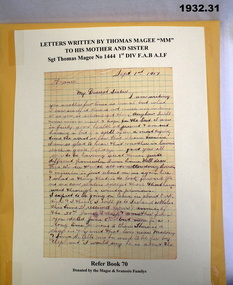
Literary work - LETTERS WW1, 1914-18 (exact)
... 32 in total written by Thomas Magee MM to his sister & mother. All letters are either pencil, red & black ink. Some are parts of letters with no dates or who to. The letters begin Tues 25th 1914...Embark for Egypt 20.10.1914, embark for Gallipoli 4.5.1915, hospital with Mumps 19.2.1916, transfer to 4th Div Artillery 27.2.1916, embark for France 1.4.1916, promoted Bombadier 2.2.1917, promoted Cpl 30.9.1917, awarded the Military Medal (MM) at Westhoek 4.10.1917, promoted T/Sgt 23.10.1917, WIA Gassed 3.11.1917, rejoins unit 13.3.1918, promoted Sgt 7.5.1918, to No 2 Army Field rest Camp 16.7.1918 to 2.8.1918, to England 13.10.1918 special leave 1914 men, hospital with Influenza then Pnuemonia and dies in England on 25.10.1918. Documents letters MM Series of letters, 32 in total written by Thomas Magee MM to his sister & mother. ...Letters written by Thomas Magee No 1444 enlisted in F.A.Brigade 2 Ammunition Colunm AIF on 20.8.1914 age 26 years. Embark for Egypt 20.10.1914, embark for Gallipoli 4.5.1915, hospital with Mumps 19.2.1916, transfer to 4th Div Artillery 27.2.1916, embark for France 1.4.1916, promoted Bombadier 2.2.1917, promoted Cpl 30.9.1917, awarded the Military Medal (MM) at Westhoek 4.10.1917, promoted T/Sgt 23.10.1917, WIA Gassed 3.11.1917, rejoins unit 13.3.1918, promoted Sgt 7.5.1918, to No 2 Army Field rest Camp 16.7.1918 to 2.8.1918, to England 13.10.1918 special leave 1914 men, hospital with Influenza then Pnuemonia and dies in England on 25.10.1918.Series of letters, 32 in total written by Thomas Magee MM to his sister & mother. All letters are either pencil, red & black ink. Some are parts of letters with no dates or who to. The letters begin Tues 25th 1914 possibly August and continue through to Sept 1918. Letters are various sizes, some on blue paper, some on note pad size & graph paper.documents, letters, mm, -
 Bendigo Military Museum
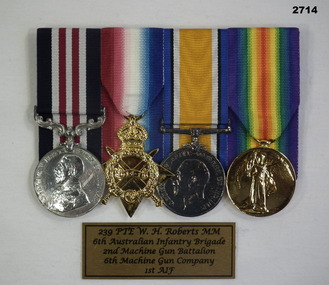
Award - MEDAL SET WW1, Post 1919
... 32 years 8 months. Embarked for Eygpt then Gallipoli on 30.8.15, embark for France 19.3.16, WIA 22.4.16 GSW neck, return to France 5.6.16, hospital 14.11.16 with Diarrehoea, transfer to 6th MG Coy 8.12.16, awarded the Military Medal near Bullecourt on 3.5.17, discharged from the AIF on 20.7.19. Awards medals Bravery Passchendaele Barracks Trust "239 Pte W H ROBERTS 6/Aust M.G.C." Medal set, court mounted, set of (4) Re W H ROBERTS " MM" .1) Military Medal .2) 1914 ...William Henry Roberts (born Bendigo, enlisted Inglewood Vic) No 239 enlisted in the 22nd Batt AIF on 4.2.15 age 32 years 8 months. Embarked for Eygpt then Gallipoli on 30.8.15, embark for France 19.3.16, WIA 22.4.16 GSW neck, return to France 5.6.16, hospital 14.11.16 with Diarrehoea, transfer to 6th MG Coy 8.12.16, awarded the Military Medal near Bullecourt on 3.5.17, discharged from the AIF on 20.7.19.Medal set, court mounted, set of (4) Re W H ROBERTS " MM" .1) Military Medal .2) 1914 - 15 Star, replica not engraved. .3) War Medal 1914 - 18, replica not engraved .4) Victory Medal 1914 - 1919, replica not engraved"239 Pte W H ROBERTS 6/Aust M.G.C."awards, medals, bravery, passchendaele barracks trust -
 Bendigo Military Museum
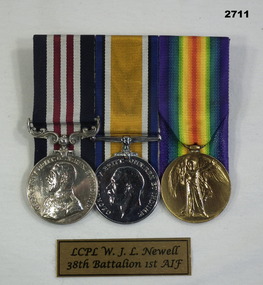
Award - MEDAL SET WW1, Post 1918
... 32 years 4 months. Embarked for England 20.6.16, embark for France 22.11.16, hospital with Scabies 23.12.16. As a Battalion Runner on 12.10.17 east of Ypres he was awarded the Military Medal for bravery, discharged from the AIF on 27.7.19. medals military bravery Passchendaele Barracks Trust on the “MM”, " 485 Pte W J L Newell 38/ Aust Inf" Medal set, court mounted, set of (3) Re W J L Newell "MM". .1) Military medal .2) War medal 1914 - 1918, replica not engraved. .3) Victory medal 1914 - 1919, not engraved but appears to be an original medal. ...William James Leslie Newell (Born Bendigo, enlisted Bendigo) No 485 enlisted in A Coy 38th Batt AIF on 2.3.16 age 32 years 4 months. Embarked for England 20.6.16, embark for France 22.11.16, hospital with Scabies 23.12.16. As a Battalion Runner on 12.10.17 east of Ypres he was awarded the Military Medal for bravery, discharged from the AIF on 27.7.19.Medal set, court mounted, set of (3) Re W J L Newell "MM". .1) Military medal .2) War medal 1914 - 1918, replica not engraved. .3) Victory medal 1914 - 1919, not engraved but appears to be an original medal.on the “MM”, " 485 Pte W J L Newell 38/ Aust Inf"medals, military, bravery, passchendaele barracks trust -
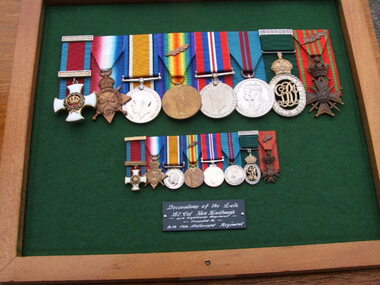 4th/19th Prince of Wales's Light Horse Regiment Unit History Room
Medal Set, Col S G A Hindhaugh, 1914-1945
... March 1918 - In action at Passchendaele - Awarded Belgian Croix de Guerre. 7 December 1918 - To 2nd Light Horse Regiment. 2nd ANZAC Mounted Regiment. 15 May 1919 - Returned to Australia. 11 October 1919 - Transferred to Reserve of Officers. 1932 - Commanded 20th Light Horse Regiment. 1934 - Commanded 11th Light Horse Regiment. 15 November 1941 - Retired. medals world war 1 victory medal 4th light horse militia western front dso king george v coronation colonial officers auxiliary decoration 1914 1918 star mid croix de guerrre belgium passchendaele 2nd anzac mounted regiment 20th light horse 11th light horse Plaque in case enscribed: "Decorations of the late Lt Col Stan Hindhaugh 4th Light Horse Regiment. Presented to 4th 19th Motorised Regiment". Adhesive label on case: Alwyn and Barbara Catmore 32 ...Stanley George Allen Hindhaugh (1883-1962), soldier, was born on 12 December 1883 at Camperdown, Victoria. His occupation was Station Manager. 14 April 1904 - Appointed Lieutenant 11th Light Horse Regiment Militia. 3 April 1911 - Promoted to Captain in the Militia. 20 August 1914 - Appointed to the Australian Imperial Forces to A Squadron, 4th Light Horse Regiment at Broadmeadows camp. 19 October 1914 - Embarked for the Middle East from Melbourne with the 4th Light Horse Regiment per Tranport A18 "Wiltshire". 11 December 1914 - Disembarked at Alexandria for camp Mena. 19 May 1915 - Promoted to Major. From 22 May 1915 - On operations at Gallipoli. 6 August 1915 - Noted in the fierce engagement at Leane's Post. 19 August 1915 - Appointed Second in Command 4th Light Horse Regiment. December 1915 - To camp at Tel El Kebir. January 1916 - Acting CO 4th Light Horse Regiment. 21 March 1916 - Embarked Alexandria per "Cestrian" for Marseilles with B Squadron 4th Light Horse Regiment for operations in France and Flanders. 16 February 1917 - Promoted to Lt Colonel. March 1918 - In action at Passchendaele - Awarded Belgian Croix de Guerre. 7 December 1918 - To 2nd Light Horse Regiment. 2nd ANZAC Mounted Regiment. 15 May 1919 - Returned to Australia. 11 October 1919 - Transferred to Reserve of Officers. 1932 - Commanded 20th Light Horse Regiment. 1934 - Commanded 11th Light Horse Regiment. 15 November 1941 - Retired. Full size and miniature sets of medals awarded to Colonel Stanley George Allen Hindhaugh. Comprising: Distinguished Service Order (Flanders 1 June 1918), 1914-1918 Star, British War Medal 1914-1920, Victory Medal (with MID) 1919, War Medal 1939-1945, King George V Coronation 1911, Colonial Officers Auxiliary Forces Decoration, Croix de Guerre (Belgium) 1917. Mounted in glass fronted display case.Plaque in case enscribed: "Decorations of the late Lt Col Stan Hindhaugh 4th Light Horse Regiment. Presented to 4th 19th Motorised Regiment". Adhesive label on case: Alwyn and Barbara Catmore 32 Morrie Crescent Blackburn Vic 3130 (03)8984124 medals, world war, 1, victory medal, 4th light horse, militia, western front, dso, king george v coronation, colonial officers auxiliary decoration, 1914 1918 star, mid, croix de guerrre belgium, passchendaele, 2nd anzac mounted regiment, 20th light horse, 11th light horse -
4th/19th Prince of Wales's Light Horse Regiment Unit History Room
Medal
... During the First World War, he was again one of the first to enlist, joining the AIF on 19 August 1914, and becoming Lance Corporal number 32 with the First Divisional Signals Company. ...During the First World War, he was again one of the first to enlist, joining the AIF on 19 August 1914, and becoming Lance Corporal number 32 with the First Divisional Signals Company. ...Title Peace of 1919 medalet issued to Australian schoolchildren Object type Medalet Place made Australia: Victoria, Melbourne Date made 1919 Summary Designed by C Douglas Richardson, 'The Peace of 1919' medalet was issued by the Defence Department to school children throughout Australia to commemorate the signing of the Versailles Peace Treaty in 1919. The medals were originally suspended from a narrow piece of red, white and blue striped cotton ribbon. This medalet is associated with one of the children of Lance Corporal Giles Daniel, 1st AIF. Born in Ballarat, western Victoria on 16 December 1870, Giles Felix Daniel moved to Oakleigh, Victoria aged 15. A member of the Victorian permanent forces, he served as a corporal (regimental number 8) with the First Victorian Mounted Infantry Company, part of the first Victorian Contingent to the war in South Africa in 1899. This unit was one of the first Australian formations to see action during the Boer War. It was largely drawn from serving members of the Victorian forces. Demoted to private following a Court Martial on 19 November 1900, Daniel returned to Australia in December of the same year. During the First World War, he was again one of the first to enlist, joining the AIF on 19 August 1914, and becoming Lance Corporal number 32 with the First Divisional Signals Company. He served with this unit during the Gallipoli campaign and until his return to Australia on 11 April 1916. Silver-plated brass Circular medalet with a plain edge and integral suspension loop. The obverse features a symbolic female figure of Peace, holding a sword and standing on a plinth marked 'PEACE 1919'. Behind her flies a dove, and at her left and right feet are two figures freed from their shackles. The reverse features a central panel surrounded by laurel leaves, surmounted by the King's Crown with the word 'VICTORY' over the rays of the rising sun. A sailor and a digger stand at ease on either side of the panel on which is cast 'THE / TRIUMPH / OF / LIBERTY / AND / JUSTICE'. Below the leaves is a very small panel with the words 'THE PEACE OF 1919' and the manufacturer's name.peace medal 1919 -
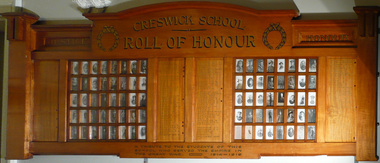 Creswick Museum
Honour Board, 1920 approx
... 1914-1919. Photos in LHS 1. JS Anderson 2 A Anderson 3 R Anderson 4 A Beckerleg, 5 R Bell 6 A Bernado 7 J Bernado 8 EG Booth 9 M Boradale 10 R Boradale 11 R Boradale 12 WJ Bowley 13 FA Canning 14 HGN Cassell 15 E Clarkson 16 A Clausen 17 V Crougey 18 HG Dean 19 W K Dean 20 CV Gardner 21 WG Gardner 22 RJ Gardner 23 EH Goats 24 R Gray 25 B Gray 26 AB Grose 27 CT Grose 28 BA Grose 29 JB Grose 30 W Hadler 31 W Hartley 32 GT Hewitson 33 CC Hewitson 34 W Howie 35 R Howie 36 C Howie 37 WH James 38 P Kennedy 39 WJ Lambert 40 A Lambert 41 F Lambert RHS 42 H Lambert 43 WH McFarlane 44 VH Malone 45 PJA Malone 46 J Maughan 47 J Mendham 48 AE Merriman* 49 AC New 50 T New 51 W Parkes* 52 R Pasco 53 FH Pavarno 54 EP Pavarno 55 AB Peters* 56 G Petrie* 57 T Porter 58 G Porter 59 F Porter 60 H Praetz 61 R Praetz 62 S Reeves 63 W Sherriff 64 P Short 65 J Skewes 66 N Slade 67 JC Smith 68 J Still 69 GW Tait 70 DG Toohey 71 A Tonkins 72 SH Townshend 73 E Townshend* 74 HE Townshend 75 H H Townshend 76 S Treloar 77 RJ Ward 78 WE Westcott* 79 FC Whitfield* 80 AC Wisby* Writen Names T Anderson, T Arnold, S,D,G & W Barclay, G Beaucort, B Bentwich, J Berry, E&C Blake, S&A Bush, AF, WJW & R, Bowley, J,F & HB Brady, Alex Bowley, L Brotherton, JC Caddy*, J Canning, SF Carlyon, R Chaulkey, F Clausen, F*,G & J Clifton,V Creati,B Crosbie, H* & V Clover, A Chandler, J&G Davidson, S Dean, W Denny, W Digby, C Douglas D,H* & J Drummond, G Donald*, JP Dooley, W*&A Edmends, Percy Ellis, P,SW & T Ellis, A Egglestone, W & R Fricker, A,C & Clive Falla, G Fricker, A* & W Gibson, H Gardner, EJA Gray, WEC, N & H Grose, H Green, M Glass, FP Grady, W Hadler, W Hartley, N&T Hammon, H & J Harris, W & L Hartland, R Hawkey, PA Hertford, T Hogo, R Forrestor, A,F & N James, J Jebb, Alex,A & FT Johnson, WE Jordan, P Jory, E Jane, HC,RJ & JW Kelly, A King, S knight* M Lang(Sister), Clint'n Lavas, Mat Lang, C&TJ Liddicoat, RG* & ED Lindsay, W Little, L Lucas(navy), W & C Mann, WHS Merriman, J Mitchell, S Northcott, S New, W Nicholas, V Northcott, L Orange, JT & HC Packham, E Pearce, E Pilling, J Praetz, R Williams, AM & F* Robertson, A Romeo, J Rowe, H Russell, H & C Woods, C Sandford, G Sherriff, W & F Smith, J & R Snell, A & J* Spence, W Stephenson, J A Still, W,WL & AJ Surredge, J Shaw, Jas Wisby, A Treeby, F Tregonning, FL & W Treloar, A Tremearne, R Tilt, H Vague, A Wade, H Wall, BT,IW & J Ward, J,M & O Whatman, D Wilson, H & A Wood, DG Wormald, A Wright, L Watt, A Whitfield*....1914-1919. Photos in LHS 1. JS Anderson 2 A Anderson 3 R Anderson 4 A Beckerleg, 5 R Bell 6 A Bernado 7 J Bernado 8 EG Booth 9 M Boradale 10 R Boradale 11 R Boradale 12 WJ Bowley 13 FA Canning 14 HGN Cassell 15 E Clarkson 16 A Clausen 17 V Crougey 18 HG Dean 19 W K Dean 20 CV Gardner 21 WG Gardner 22 RJ Gardner 23 EH Goats 24 R Gray 25 B Gray 26 AB Grose 27 CT Grose 28 BA Grose 29 JB Grose 30 W Hadler 31 W Hartley 32 GT Hewitson 33 CC Hewitson 34 W Howie 35 R Howie 36 C Howie 37 WH James 38 P Kennedy 39 WJ Lambert 40 A Lambert 41 F Lambert RHS 42 H Lambert 43 WH McFarlane 44 VH Malone 45 PJA Malone 46 J Maughan 47 J Mendham 48 AE Merriman* 49 AC New 50 T New 51 W Parkes* 52 R Pasco 53 FH Pavarno 54 EP Pavarno 55 AB Peters* 56 G Petrie* 57 T Porter 58 G Porter 59 F Porter 60 H Praetz 61 R Praetz 62 S Reeves 63 W Sherriff 64 P Short 65 J Skewes 66 N Slade 67 JC Smith 68 J Still 69 GW Tait 70 DG Toohey 71 A Tonkins 72 SH Townshend 73 E Townshend* 74 HE Townshend 75 H H Townshend 76 S Treloar 77 RJ Ward 78 WE Westcott* 79 FC Whitfield* 80 AC Wisby* Writen Names T Anderson, T Arnold, S,D,G & W Barclay, G Beaucort, B Bentwich, J Berry, E&C Blake, S&A Bush, AF, WJW & R, Bowley, J,F & HB Brady, Alex Bowley, L Brotherton, JC Caddy*, J Canning, SF Carlyon, R Chaulkey, F Clausen, F*,G & J Clifton,V Creati,B Crosbie, H* & V Clover, A Chandler, J&G Davidson, S Dean, W Denny, W Digby, C Douglas D,H* & J Drummond, G Donald*, JP Dooley, W*&A Edmends, Percy Ellis, P,SW & T Ellis, A Egglestone, W & R Fricker, A,C & Clive Falla, G Fricker, A* & W Gibson, H Gardner, EJA Gray, WEC, N & H Grose, H Green, M Glass, FP Grady, W Hadler, W Hartley, N&T Hammon, H & J Harris, W & L Hartland, R Hawkey, PA Hertford, T Hogo, R Forrestor, A,F & N James, J Jebb, Alex,A & FT Johnson, WE Jordan, P Jory, E Jane, HC,RJ & JW Kelly, A King, S knight* M Lang(Sister), Clint'n Lavas, Mat Lang, C&TJ Liddicoat, RG* & ED Lindsay, W Little, L Lucas(navy), W & C Mann, WHS Merriman, J Mitchell, S Northcott, S New, W Nicholas, V Northcott, L Orange, JT & HC Packham, E Pearce, E Pilling, J Praetz, R Williams, AM & F* Robertson, A Romeo, J Rowe, H Russell, H & C Woods, C Sandford, G Sherriff, W & F Smith, J & R Snell, A & J* Spence, W Stephenson, J A Still, W,WL & AJ Surredge, J Shaw, Jas Wisby, A Treeby, F Tregonning, FL & W Treloar, A Tremearne, R Tilt, H Vague, A Wade, H Wall, BT,IW & J Ward, J,M & O Whatman, D Wilson, H & A Wood, DG Wormald, A Wright, L Watt, A Whitfield*. ...Pupils who listed World War 1. Wooden Board with 80 small glass panels holding photographs. Four wooden panels listing 157 names of the pupils in gold lettering with red cross against the names of the soldiers who were killed. Top Creswick School Roll of Honour Botton: A tribute to the Students of this school who served the Empire. The Great War 1914-1919. Photos in LHS 1. JS Anderson 2 A Anderson 3 R Anderson 4 A Beckerleg, 5 R Bell 6 A Bernado 7 J Bernado 8 EG Booth 9 M Boradale 10 R Boradale 11 R Boradale 12 WJ Bowley 13 FA Canning 14 HGN Cassell 15 E Clarkson 16 A Clausen 17 V Crougey 18 HG Dean 19 W K Dean 20 CV Gardner 21 WG Gardner 22 RJ Gardner 23 EH Goats 24 R Gray 25 B Gray 26 AB Grose 27 CT Grose 28 BA Grose 29 JB Grose 30 W Hadler 31 W Hartley 32 GT Hewitson 33 CC Hewitson 34 W Howie 35 R Howie 36 C Howie 37 WH James 38 P Kennedy 39 WJ Lambert 40 A Lambert 41 F Lambert RHS 42 H Lambert 43 WH McFarlane 44 VH Malone 45 PJA Malone 46 J Maughan 47 J Mendham 48 AE Merriman* 49 AC New 50 T New 51 W Parkes* 52 R Pasco 53 FH Pavarno 54 EP Pavarno 55 AB Peters* 56 G Petrie* 57 T Porter 58 G Porter 59 F Porter 60 H Praetz 61 R Praetz 62 S Reeves 63 W Sherriff 64 P Short 65 J Skewes 66 N Slade 67 JC Smith 68 J Still 69 GW Tait 70 DG Toohey 71 A Tonkins 72 SH Townshend 73 E Townshend* 74 HE Townshend 75 H H Townshend 76 S Treloar 77 RJ Ward 78 WE Westcott* 79 FC Whitfield* 80 AC Wisby* Writen Names T Anderson, T Arnold, S,D,G & W Barclay, G Beaucort, B Bentwich, J Berry, E&C Blake, S&A Bush, AF, WJW & R, Bowley, J,F & HB Brady, Alex Bowley, L Brotherton, JC Caddy*, J Canning, SF Carlyon, R Chaulkey, F Clausen, F*,G & J Clifton,V Creati,B Crosbie, H* & V Clover, A Chandler, J&G Davidson, S Dean, W Denny, W Digby, C Douglas D,H* & J Drummond, G Donald*, JP Dooley, W*&A Edmends, Percy Ellis, P,SW & T Ellis, A Egglestone, W & R Fricker, A,C & Clive Falla, G Fricker, A* & W Gibson, H Gardner, EJA Gray, WEC, N & H Grose, H Green, M Glass, FP Grady, W Hadler, W Hartley, N&T Hammon, H & J Harris, W & L Hartland, R Hawkey, PA Hertford, T Hogo, R Forrestor, A,F & N James, J Jebb, Alex,A & FT Johnson, WE Jordan, P Jory, E Jane, HC,RJ & JW Kelly, A King, S knight* M Lang(Sister), Clint'n Lavas, Mat Lang, C&TJ Liddicoat, RG* & ED Lindsay, W Little, L Lucas(navy), W & C Mann, WHS Merriman, J Mitchell, S Northcott, S New, W Nicholas, V Northcott, L Orange, JT & HC Packham, E Pearce, E Pilling, J Praetz, R Williams, AM & F* Robertson, A Romeo, J Rowe, H Russell, H & C Woods, C Sandford, G Sherriff, W & F Smith, J & R Snell, A & J* Spence, W Stephenson, J A Still, W,WL & AJ Surredge, J Shaw, Jas Wisby, A Treeby, F Tregonning, FL & W Treloar, A Tremearne, R Tilt, H Vague, A Wade, H Wall, BT,IW & J Ward, J,M & O Whatman, D Wilson, H & A Wood, DG Wormald, A Wright, L Watt, A Whitfield*. -
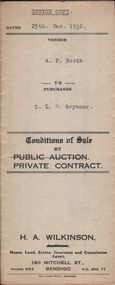 Bendigo Historical Society Inc.
Document - H.A. & S.R. WILKINSON COLLECTION: CONTRACT OF SALE
... 1914-1995), Henry's son, was married to Florence Jean McKerlie in 1937. ORGANIZATION Business h.a. & s.r wilkinson real estate Conditions of sale by private contract dated 25th January, 1932 between A.P. Booth (seller) and C.L.H. Seymour (buyer) for land situate 32 ...This business was owned by father and son, Henry Archibald Wilkinson and Samuel Ronald "Ron" Wilkinson. Henry (1882-1954) was born in Shepparton and died in Bendigo. He was married to Grace Hovendon in 1908. Samuel Ronald "Ron" (1914-1995), Henry's son, was married to Florence Jean McKerlie in 1937.Conditions of sale by private contract dated 25th January, 1932 between A.P. Booth (seller) and C.L.H. Seymour (buyer) for land situate 32 Condon Street, Bendigo being Crown allotment 250 section H described in certificate of title volume 5433 folio 1086448, together with 6-roomed weatherboard dwelling and all sundry. Also gas stove, gas copper, bath heather, electric light fittings, shaving cabinet, duck blind on sleep out, gas fire in front room, clothes line, built-in presses, wire doors and wire screens on windows. Price 825 pounds.organization, business, h.a. & s.r wilkinson real estate -
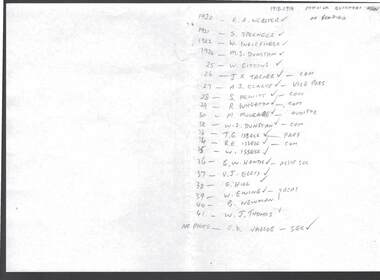 Bendigo Historical Society Inc.
Document - 1913 TO 1914 MASTER BUTCHERS ASSN. OF BENDIGO
... 1914 Master Butchers Assn of Bendigo. Listed is: 1920 - E A Webster, 1921 - S Sprenger, 1922 - W Inglefinger, 1924 - M S Dunstan, 25 - W Gittins, 26 - J K Tarner - Com, 27 - A J Clarke - Vice Pres, S Hewitt - Com, 29 - R Wheaton - Com, 30 - M Mulcare - Auditor, 32 - W S Dunstan - Com, 33 - T G Issell - Pres, 34 - R E Issell - Com, 35 - W Issell, 36 - E W Hands - Assist Sec, 37 - V J Ellis, 38 - G Hill, 39 - W Ewing - Treasurer, 40 - B Newman, 41 - W J Thomas, No Photo - E K Varcoe - Sec....1914 Master Butchers Assn of Bendigo. Listed is: 1920 - E A Webster, 1921 - S Sprenger, 1922 - W Inglefinger, 1924 - M S Dunstan, 25 - W Gittins, 26 - J K Tarner - Com, 27 - A J Clarke - Vice Pres, S Hewitt - Com, 29 - R Wheaton - Com, 30 - M Mulcare - Auditor, 32 - W S Dunstan - Com, 33 - T G Issell - Pres, 34 - R E Issell - Com, 35 - W Issell, 36 - E W Hands - Assist Sec, 37 - V J Ellis, 38 - G Hill, 39 - W Ewing - Treasurer, 40 - B Newman, 41 - W J Thomas, No Photo - E K Varcoe - Sec. ...Piece of paper headed 1913 - 1914 Master Butchers Assn of Bendigo. Listed is: 1920 - E A Webster, 1921 - S Sprenger, 1922 - W Inglefinger, 1924 - M S Dunstan, 25 - W Gittins, 26 - J K Tarner - Com, 27 - A J Clarke - Vice Pres, S Hewitt - Com, 29 - R Wheaton - Com, 30 - M Mulcare - Auditor, 32 - W S Dunstan - Com, 33 - T G Issell - Pres, 34 - R E Issell - Com, 35 - W Issell, 36 - E W Hands - Assist Sec, 37 - V J Ellis, 38 - G Hill, 39 - W Ewing - Treasurer, 40 - B Newman, 41 - W J Thomas, No Photo - E K Varcoe - Sec.business, retail, butchers, 1913 - 1914 master butchers association of bendigo, e a webster, s sprenger, w inglefinger, m s dunstan, w gittins, j k tarner, a j clarke, s hewitt, r wheaton, m mulcare, w s dunstan, t g issell, r e issell, w issell, e w hands, v j ellis, g hill, w ewing, b newman, w j thomas, e k varcoe -
 Narre Warren and District Family History Group
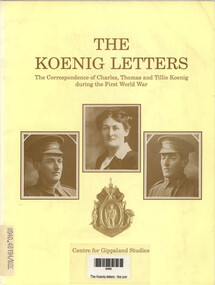
Book, John Pearson, The Koenig letters : the correspondence of Charles, Thomas and Tillie Koenig during the First World War, 1990
... World War 1914-1918 Charles Koenig Thomas Koenig Tillie Koenig The correspondence of Charles, Thomas and Tillie Koenig during the World War 1 32 p.; 25 cm The Koenig letters : the correspondence of Charles, Thomas and Tillie Koenig during the First World War Book John Pearson ...The correspondence of Charles, Thomas and Tillie Koenig during the World War 132 p.; 25 cmnon-fictionThe correspondence of Charles, Thomas and Tillie Koenig during the World War 1world war 1914-1918, charles koenig, thomas koenig, tillie koenig -
 Warrnambool and District Historical Society Inc.
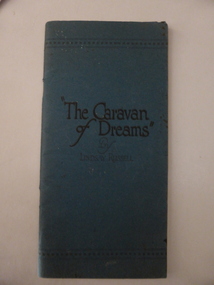
Booklet, The Caravan of Dreams and Other verses of the Grampians Road, 1923
... 1914 Ethel Stonehouse married Dr John Scott and came to live in Mortlake, Victoria. ‘The Caravan of Dreams’ was her last publication. This book is of considerable significance as a book of original poems by Lindsay Russell, an Australian author who lived in the local area (Mortlake). The book was printed at the Terang Express newspaper office in 1923. Lindsay Russell (Ethel Stonehouse) History of Mortlake Australian Literature warrnambool history Daisy Quick Allanbee Terang This is a soft cover book of 32 ...This book contains poems written by Lindsay Russell. This was the pen name of Ethel Stonehouse (1883-1964) who was born in Nhill, Victoria and published verse, short stories and novels. She gained a national reputation for her novels, many of which were controversial at the time, dealing with rebellious women and they were often critical of some aspects of the Catholic Church. Her first novel, ‘Smouldering Fires’ sold 100,000 copies in Australia alone. In 1914 Ethel Stonehouse married Dr John Scott and came to live in Mortlake, Victoria. ‘The Caravan of Dreams’ was her last publication. This book is of considerable significance as a book of original poems by Lindsay Russell, an Australian author who lived in the local area (Mortlake). The book was printed at the Terang Express newspaper office in 1923. This is a soft cover book of 32 pages. It has a dark blue cover with a border at the top and bottom of the front cover and black printing. The ornate borders are repeated throughout the pages. The book contains 28 poems. The cover is a little stained. Daisy Quick Allanbee Teranglindsay russell (ethel stonehouse), history of mortlake, australian literature, warrnambool history -
 Warrnambool and District Historical Society Inc.
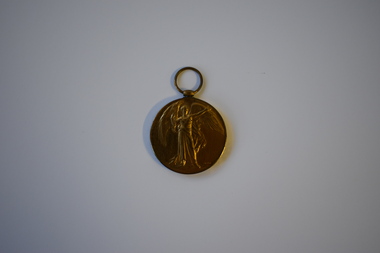
Medal, The Great War 1914, C 1920
... Snell, a resident of Nullawarre, about 32 kilometres from Warrnambool. victory medal private a.e.snell warrnambool THE GREAT WAR FOR CIVILISATION 1914-1919 2419 PTE. ...This medal was issued in 1919 to members of the Armed Forces to celebrate the victory of the Allies in World War One. Australian Armed Forces members were issued with the medal produced in Great Britain. The medal was issued to Private A.E.Snell. Albert Edward Snell enlisted in World War One from Nullawarre. He was listed as aged 21, single and a labourer. He was at first in the 8th Battalion (7 Reinforcement Group) and embarked on the Wandilla in 1915 and later transferred to the 14th Battalion. He was wounded in action and returned to Australia in1917.This medal is of considerable significance, firstly as an example of the medal issued after World War One to Australian Armed Forces members and secondly because it was issued to Private A.E. Snell, a resident of Nullawarre, about 32 kilometres from Warrnambool.This is a circular brass medal with a laurel wreath and an inscription on the reverse side. The obverse side features a winged figure of victory with her left arm extended and holding a palm branch in her right hand. There is a metal ring at the top .There is text around the rim.THE GREAT WAR FOR CIVILISATION 1914-1919 2419 PTE. A.S.SNELL 8 BN A.I.F.victory medal, private a.e.snell, warrnambool -
 Sunshine and District Historical Society Incorporated
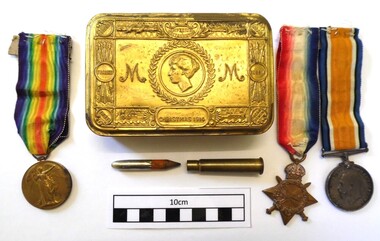
Memorabilia - Ray Nutting Collection, Circa 1914 -1918
... 32 King Edward Ave, and 15 Kamarooka St. At one stage he was involved in a window cleaning and gardening business, and both he and his wife Janet were very good dancers. George Nutting was also involved in the Loyal Sunshine Lodge and was presented with a Past Grand's Collar in 1943. He lived at 15 Kamarooka St until he passed away on March 20th 1979 at the age of 85. The above information was sourced from http://www.kinnethmont.co.uk/1914...32 King Edward Ave, and 15 Kamarooka St. At one stage he was involved in a window cleaning and gardening business, and both he and his wife Janet were very good dancers. George Nutting was also involved in the Loyal Sunshine Lodge and was presented with a Past Grand's Collar in 1943. He lived at 15 Kamarooka St until he passed away on March 20th 1979 at the age of 85. The above information was sourced from http://www.kinnethmont.co.uk/1914 ...A 'Sailors & Soldiers Christmas Fund' created by Princess Mary had overwhelming response and so it was decided to give every person 'wearing the King's uniform on Christmas Day 1914' the brass tin along with a Christmas card and a picture of the princess, and items such as pipe, lighter, tobacco, and 20 cigarettes. Non-smokers and boys received a bullet pencil and a packet of sweets. Indian troops often received sweets and spices, and nurses received chocolates. Many of the items were sent separately from the boxes because of lack of space. Not all the tins could be sent out by Christmas and so those sent in January 1915 contained a New Year card. Shortage of brass meant that many did not received their tins until summer 1916, however by January 1919 some still did not receive them. After using up the contents many service people then used the tins to store small items. The brass tin, bullet pencil, and medals belonged to Pte George Nutting of the 2nd London regiment, and regimental number 2080/230442. After World War 1 George Nutting sailed for Melbourne on June 1, 1922 aboard the S.S. Borda. He then lived at several addresses in the Sunshine/Albion area including Dawson St, 32 King Edward Ave, and 15 Kamarooka St. At one stage he was involved in a window cleaning and gardening business, and both he and his wife Janet were very good dancers. George Nutting was also involved in the Loyal Sunshine Lodge and was presented with a Past Grand's Collar in 1943. He lived at 15 Kamarooka St until he passed away on March 20th 1979 at the age of 85. The above information was sourced from http://www.kinnethmont.co.uk/1914-1918_files/xmas-box-1914.htm (accessed 1/3/2014), and from http://museumvictoria.com.au/collections/items/1329146/tin-princess-mary-s-Christmas-gift-1914 (accessed 1/3/2014), and from research work done by Eva and Marie of S&DHS.The tin and medals provide a visible historical record of the Christmas gift, and the awards that the average WW1 British service person received about 100 years ago. The bullet pencil may indicate that Pte G. Nutting was probably a non-smoker, at least around circa 1914.Brass rectangular box with an embossed and hinged lid. The lid features the profile of Princess Mary with an 'M' on each side, and the names of Britain's allies in 1914. The pencil fits into the brass bullet casing to give the appearance of a bullet. The WW1 British medals are: 1. 1914 - 1915 Star, 2. British War Medal 1914 - 1918 (Silver), 3. Allied Victory Medal.TIN: Imperium Brittanicum, Christmas 1914, Belgium, France, Servia, Japan, Russia, Montenegro. MEDALS: 2080 Pte G. Nutting 2 - Lond.R bullet pencil, g nutting, princess mary tin, christmas 1914, british ww1 medals, 1914-1915 star, allied victory medal, british war medal 1914 -1918 -
 Ballarat Tramway Museum
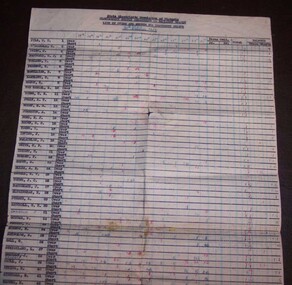
Document - List, State Electricity Commission of Victoria (SECV), "List of Overs and Shorts for Fortnight Ending 30 October 1943", 3/11/1943 12:00:00 AM
... Photocopies of sheet made - A3 and left hand side scanned image stitched together - see i3 (left hand half only) List of names: List of Employees– Overs and Unders return – 30/10/1943 SEC Ballarat Branch 1 Pyle NT 2 O’Donnell T 3 Prisk J 4 McDonald GJ 5 Furlong P 6 Preston H 7 McWilliam N 8 Bartlett C 9 Mason R 10 Van Berkel S 11 Young CE 12 Jolly At 13 Bodey HG 14 Johnston A 15 Ford EJ 16 Brown GC 17 Young T 18 Irving J 19 McLachlan D 20 White CF 21 Knight H 22 Bowden F 23 Scott S 24 Ellis AE 25 Sewell RW 26 Young JC 27 McCormack J 28 Eltringham E 29 Purdue A 30 Satchell GH 31 Smerdon J 32 Scruse F 33 McGann V 34 Morrow R 35 Reynolds S 36 Hall G 37 Strickland L 38 Skurrie 39 Paull J 40 Atikins B 41 Mitchell S 42 Browne M 43 Cheney J 44 Lawrence A 45 Doncaster T 46 Hudson T 47 Ritchie ME 48 Harrison J 49 Horbury T 50 Moss H 51 Tonkin P 52 Tucker V (Verna May Tucker - email of 23-9-2020 - 1914-2001 from [email protected]) 53 Denmead KI 54 Etty CC 55 Spielvogel J 56 Wightwick J 57 Jakobi EA 58 Egan V 59 Dixon DA 60 Cole M 61 Chibnall L 62 Grundell HP 63 Duke F Fox A (no number alongside)...Photocopies of sheet made - A3 and left hand side scanned image stitched together - see i3 (left hand half only) List of names: List of Employees– Overs and Unders return – 30/10/1943 SEC Ballarat Branch 1 Pyle NT 2 O’Donnell T 3 Prisk J 4 McDonald GJ 5 Furlong P 6 Preston H 7 McWilliam N 8 Bartlett C 9 Mason R 10 Van Berkel S 11 Young CE 12 Jolly At 13 Bodey HG 14 Johnston A 15 Ford EJ 16 Brown GC 17 Young T 18 Irving J 19 McLachlan D 20 White CF 21 Knight H 22 Bowden F 23 Scott S 24 Ellis AE 25 Sewell RW 26 Young JC 27 McCormack J 28 Eltringham E 29 Purdue A 30 Satchell GH 31 Smerdon J 32 Scruse F 33 McGann V 34 Morrow R 35 Reynolds S 36 Hall G 37 Strickland L 38 Skurrie 39 Paull J 40 Atikins B 41 Mitchell S 42 Browne M 43 Cheney J 44 Lawrence A 45 Doncaster T 46 Hudson T 47 Ritchie ME 48 Harrison J 49 Horbury T 50 Moss H 51 Tonkin P 52 Tucker V (Verna May Tucker - email of 23-9-2020 - 1914-2001 from [email protected]) 53 Denmead KI 54 Etty CC 55 Spielvogel J 56 Wightwick J 57 Jakobi EA 58 Egan V 59 Dixon DA 60 Cole M 61 Chibnall L 62 Grundell HP 63 Duke F Fox A (no number alongside) "List of Overs and Shorts for Fortnight Ending 30 October 1943" Document List State Electricity Commission of Victoria (SECV) ...Typed carbon copy headed State Electricity Commission of Victoria, Electricity Supply Department - Ballarat Branch "List of Overs and Shorts for Fortnight Ending 30 October 1943". Typed with employee names, number, Over, Short, Fares Collected, Total and Balance of Over/Unders. Ruled in black and blue lines. Gives overs and unders for each day for each person and a total for each person and day and blue and red ink. Initialled in pencil and dated 3/11/43. Photocopies of sheet made - A3 and left hand side scanned image stitched together - see i3 (left hand half only) List of names: List of Employees– Overs and Unders return – 30/10/1943 SEC Ballarat Branch 1 Pyle NT 2 O’Donnell T 3 Prisk J 4 McDonald GJ 5 Furlong P 6 Preston H 7 McWilliam N 8 Bartlett C 9 Mason R 10 Van Berkel S 11 Young CE 12 Jolly At 13 Bodey HG 14 Johnston A 15 Ford EJ 16 Brown GC 17 Young T 18 Irving J 19 McLachlan D 20 White CF 21 Knight H 22 Bowden F 23 Scott S 24 Ellis AE 25 Sewell RW 26 Young JC 27 McCormack J 28 Eltringham E 29 Purdue A 30 Satchell GH 31 Smerdon J 32 Scruse F 33 McGann V 34 Morrow R 35 Reynolds S 36 Hall G 37 Strickland L 38 Skurrie 39 Paull J 40 Atikins B 41 Mitchell S 42 Browne M 43 Cheney J 44 Lawrence A 45 Doncaster T 46 Hudson T 47 Ritchie ME 48 Harrison J 49 Horbury T 50 Moss H 51 Tonkin P 52 Tucker V (Verna May Tucker - email of 23-9-2020 - 1914-2001 from [email protected]) 53 Denmead KI 54 Etty CC 55 Spielvogel J 56 Wightwick J 57 Jakobi EA 58 Egan V 59 Dixon DA 60 Cole M 61 Chibnall L 62 Grundell HP 63 Duke F Fox A (no number alongside)In pencil "Miss Gullock" ?? crossed out and "Mr. Munro"tickets, fares, employees, conductors, motormen, conductresses, uniforms -
 Ballarat Base Hospital Trained Nurses League
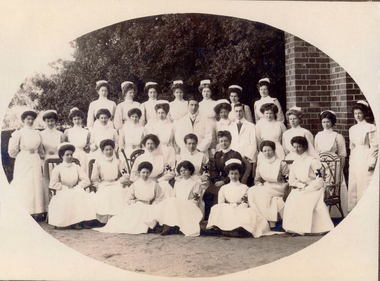
Priscilla Wardle - Trainee Ballarat District Hospital, 27/02/1905 to 01/03/1908 and WW1 Nurse. Also Edith Popplewell & Lily MacKenzie
... In late 1913 Lily travelled to Otaki, 32 kms north of Wellington in New Zealand and worked at the Otaki Cottage Hospital with close friend Edith Catheina Popplewell “Poppy” (1884-1976) who also grew up and trained as a nurse at the Ballarat Hospital. In 1914...In late 1913 Lily travelled to Otaki, 32 kms north of Wellington in New Zealand and worked at the Otaki Cottage Hospital with close friend Edith Catheina Popplewell “Poppy” (1884-1976) who also grew up and trained as a nurse at the Ballarat Hospital. In 1914 ...No 1: Matron Eagleton with Nursing Staff, Ballarat & District Hospital. Priscilla Wardle, far right - trainee nurse 1905-1908. No 2: This could be a group of trainee nurses at Ballarat Hospital. Circa 1906/1907. The nurses with the grey looking sleeves in this black and white photograph may be wearing the lilac uniform of Trainee nurses. The sitting nurse on the far right may already be qualified because she appears to be wearing the white of a trained nurse. Sitting in the middle with the cheeky grin could be Priscilla and the standing nurse on the far left could be Edith Popplewell. No 3: This photograph is labelled 1907 and Priscilla would have just commenced her training. She appears to be “fanning” a female patient presumably to cool her down. This could be upstairs in the Queen Victoria’s Women’s Ward. Priscilla graduated as a nurse in 1908. In this photograph Priscilla was at age 23 years. No 5: Sheila Kelly (left) and Priscilla Wardle. This photograph is labelled 1909 and shows Priscilla in an all white uniform indicating she has qualified as a nurse. Sheila Kelly appears to have darker sleeves/blouse (lilac) and may still be a trainee. No 6: There is a very good chance that this photograph is Edith Popplewell, standing left, Lily MacKenzie , standing on the right and Priscilla seated. Writing in her album is very hard to read but it appears to be “Pop McK & I”. The arm bands with the St John Cross denote they are “charge nurses” maybe in charge of a ward. Taking all this into account the photograph could be circa 1909/1910. No 8 & 9: Priscilla painting what appears to be a gate while wearing her nurse uniform. She has a big grin on her face. Together with Lily MacKenzie they were the principals in the Mount Stuart Private Hospital at 18 Duke Street. Daylesford. This property is now known as Mount Stuart House. Priscilla appears to be on Central Spring Road with the Daylesford Post Office in the background. Photograph 9 is labelled 1914 which would make it near the end of their tenancy between 1911 and 1914. No 10: This photograph raises some questions. Priscilla appears to have darker sleeves /blouse (lilac) which may indicate she is still a trainee however Priscilla is also wearing a “charge nurse” arm band. While my research shows trainee nurses can be a “charge nurse” this is not common practise. The scene appears to be at the door of a house/home. I am not sure if the children’s ward/orphanage at the Ballarat Hospital at this time was in such a building. It could be that it is at the Mount Stuart Hospital but this would mean Priscilla and Lily have duplicated the wearing of the “charge nurse” arm band. The St John’s logo looks different too. Priscilla Isabel “Pearl” Wardle (1884-1967). The armband indicates Priscilla is a Charge Nurse at the Ballarat Hospital. Nothing else known. No 11: Mary & I at Mount Stuart – House Daylesford – This is probably the nursery at the Mount Stuart House Private Hospital being run by Priscilla Isabel “Pearl” Wardle (1884 – 1967) and Selina Lily (Lil) MacKenzie or McKenzie (1882 – 1975) between 1910 and 1914. Mary is certainly Mary Young MacKenzie or McKenzie (1865- 1942) Lily’s stepsister who trained at Ballarat Hospital as “Mary Young “at the same time as Priscilla and Lily. Mount Stuart House still stands at 18 Duke Street Daylesford. Photo date 1912. No 12: Priscilla wearing her distinctive Queen Alexandra’s Imperial Military Nursing Service Reserve cape and badge. Possibly while nursing in London for a month in 1919 after the war. No 12A: Priscilla Wardle - WW1 Diary, OCR enabled. No 13: Priscilla and friends at No. 7 General Hospital, Malassises, Saint Omer, France in July 1915 The old monastery being used as a hospital can be seen in the background. The tents are the nurses quarters. This photograph may have been taken at the same time as the group photograph on page 250 of the diary transcription. Priscilla is thought to be the nurse at the centre in the QAIMNSR uniform. The nurses quarters at the No 7 General Hospital in Saint Omer in France where Priscilla worked for most of the first year of her Diary. Their Monastery (Hospital) at Malassises can be seen in the background. No 15: Priscilla is an Acting Sister working at the 2nd General Hospital for Officers in Havre, France, between March and July 1918. The nurses were enjoying their “tea party”. (see also page 253 of the Diary transcription) No 17: Priscilla at Havre - at 2nd General Hospital (Officers Hospital) in Havre., France Friday 29 March 1918 to Monday 29 July 1918 note the two dark bands on her right sleeve denoting that she is an “Acting Sister”. Priscilla is 34 years of age in this picture and in the three weeks prior to this posting she met Cyril Terence Charles Kirby (1892-1968) her future husband at the 42nd Stationary Hospital in Flixecourt while he was serving with the British Army during the battle and evacuation of Amiens. No 18: Priscilla Wardle at No 8 Stationary Hospital Wimereux, France - from Saturday 24 June 1916 to Tuesday 18 September 1917, Priscilla worked at this hospital for 15 months her longest time in one hospital. during the war. While at Wimereux on Sunday 1 July 1917 she was appointed an Acting Sister. Priscilla once said she disliked nursing in her cape and badges and here she is in her favourite “uniform” for work “the robe” as she called it. She may be leaving the “operating theatre” at Wimereux in this photograph. No 19: Priscilla worked in various operating theatres throughout France. This could be after she became an anaesthetist in 1918 and worked with this team. She is wearing her favourite uniform which is more comfortable. She did not like the collars and capes that were required to be worn. No 20: Priscilla and Sister Michael Meeke? (details not found) are having a quiet drink at the 2nd General Hospital for Officers in Havre, France. Note the dark bands on their sleeves denote their rank as nursing “Sisters”. While it looks like they are smoking look more closely they are in fact holding a “flute” style probably “cocktail” glass. Tea parties and cocktails, Havre could almost have been fun. No 22: 1913 – Ballarat nurse Priscilla Isabell “Pearl” Wardle (1884-1967) in Cannes on the French Riviera during leave from between Friday 20 February 1918 and Friday 6 March 1918.Priscilla is second from the left wearing her distinctive QAIMNSR cape of grey with dark “wine” coloured border. The other nurses are wearing their “travelling” army uniform. They were rudely called “Salvation Army Lassies” by American nurses for the way they were dressed. (see page 232 of Priscilla’s War Diary) The description of 1913 on this photograph is confusing. No 23: Priscilla with her best friend Edith Victoria Donaldson somewhere in the “mysterious far east” on their trip on the Orontes. Priscilla is second from left - this may have been taken at Durban during Priscilla's return to Australia in 1919. No 25: Priscilla Wardle, Ballarat nurse in her Queen Alexandra’s Imperial Military Nursing Service Reserve (QAIMNSR) uniform. Notice the distinctive grey cape with “wine coloured” border Priscilla is also wearing her QAIMNSR qualification badge (medal) on the right side. Because she has no dark (wine coloured) bands on her sleeves so this photograph may be before 1 July 1918. No 26: Priscilla met her husband to be English army Lieutenant Cyril Terrence Charles Kirby during the battle and subsequent evacuation of Amiens in France. As an army nursing “Sister” Priscilla also held the rank of Lieutenant. Priscilla was stationed at the 42nd Stationary Hospital between 7/3/18 and 23/3/18. She had just completed a fortnight break at Cannes on the French Riviera. They were married at Priscilla’s home “Waverley" at 215 Dawson Street Ballarat on Saturday 15 November 1919. Nov 15, 1919 – Mr and Mrs Kirby. The bride Priscilla Isabell “Pearl” Kirby (nee Wardle) (1884-1967) and the groom Cyril Terence Charles Kirby (1892– 1968) on their wedding day. Priscilla was 34 years of age and Cyril 27 years of age however their marriage certificate states that they were both 34 years of age. Their marriage certificate states they were married at Waverley, Dawson St, South, Ballarat in a Presbyterian service conducted by the Rev. John Walker, a Minister of the Presbyterian Church of Australia and the Moderator General of the Church we think for Victoria. Was it in an outdoor setting as the surrounds in this photograph seem to indicate. Their witnesses were Robert and Olive, Priscilla’s brother and sister. Cyril signed as C. Terence. C. Kirby and Priscila signed as Priscilla I. Wardle. The certificate lists Cyril (Terence) as a Bachelor, Born at sea on a British ship and his occupation as Sailor. His father interestingly is listed as Charles John Kirby, of independent means and his mother as Emily Newman. Priscilla is listed as a Spinster, born in Ballarat with occupation as a Nurse. Her father is listed as Henry Thomas Wardle, Timber Merchant and her mother as Isabella Allan. They are both resident at 215 Dawson St. Ballarat which was Waverley the Wardle family home. No 28: Reverse in Poppy’s handwriting: “Lovingly yours Poppy, Dec 1908” Taken the year after Poppy qualified at BBH. No 29: Reverse in Poppy’s handwriting: “With much love to you Cilla, Poppy 1915” This picture was taken in the same year as the Marquette sinking incident. Edith Catheina Popplewell RRC (1884-1972) in her New Zealand Army Nursing Service (NZANS) Uniform. Poppy is at age 29 years in this photograph. Poppy was awarded the Royal Red Cross (RRC) medal for her heroism during the sinking of the Marquette transport ship. She lost her best friend NZ nurse Lorna Ratray. No 30: Taken in Cairo. Poppy is in the centre and wearing her New Zealand army badge and cape. The two nurses on either side are Australian nurses probably wearing their unique silver Australian Army sunrise badge and cape. No 31: Reverse in Poppy’s handwriting: “Ward 7 on Xmas day 1917, with my love, Poppy, A Happy New Year to you – had the sweetest letter from Bobbie”. (Bobbie is Priscilla’s brother Robert). It is thought the nurse in the centre of the three on the left is Poppy. It is 1917 two years after the Marquette sinking. Poppy appears to be a “sister” note the two dark bands on her sleeve. The uniform also matches that of Poppy 2. This photograph is in Post Card form very common during WWI. Edith Popplewell RRC is the “Sister” in the middle of the group of three nurses on the left. She is a sister not a general nurse because of the two bands on her left wrist denoting her rank. She was in fact the Charge Nurse ( in charge) of Ward 7 at this time. Note the Christmas decorations. Poppy is at age 33 years of age in this photograph.Bobbie is Priscilla’s brother Robert Norman “Bobbie” Wardle (1895-1979). No 32: Lilly MacKenzie & Poppy – Otaki - Australian nurse Selina Lily (Lil) MacKenzie sometimes McKenzie (1882– 975) grew up and trained as a nurse in Ballarat Victoria. After completing her training Lily and Priscilla Isabell “Pearl” Wardle (1884 – 1967) conducted the Mount Stuart House Private Hospital in Daylesford Victoria. In late 1913 Lily travelled to Otaki, 32 kms north of Wellington in New Zealand and worked at the Otaki Cottage Hospital with close friend Edith Catheina Popplewell “Poppy” (1884-1976) who also grew up and trained as a nurse at the Ballarat Hospital. In 1914 Lily was matron of a private hospital in Taihape 150kms north of Wellington. Both Lily and Poppy volunteered for New Zealand but as New Zealand were not accepting Australian trained nurses she returned to Australia and enlisted in the Australian Army Nursing Service (AANS) in October 1915. Lily went on to serve in Egypt, England, France and Italy where she was awarded the Royal Red Cross (RRC) medal for her service. This photograph is while Lily and Poppy were working at Otaki Cottage Hospital in New Zealand. Circa 1914. trainee, charge sister, ballarat, hospital, 1905, 1908, ww1, mount stuart house, sleeman, wardle, popplewell, mackenzie, military, queen alexandra's imperial military nursing service reserve, daylesford, nurses, private hospital, edith popplewell, france, cairo, diary, ww1 diary, havre, lily mackenzie, eagleton, matron, otaki, new zealand, donaldson, malassises, kelly, young, kirby, priscilla -
Inglewood & District Historical Society
Framed black and white print showing Bandsmen, Bridgewater Brass Band, 1910
... 32 members. The second bandmaster was Mr George Prouse, Eaglehawk, followed by Mr William Wallace of Inglewood who was in charge until the band disbanded in 1914 due to the WW1. ...Names of members on back of photograph. BACK ROW: J.S.Lechan, H.Beechley, N.Lucas, B.Wodetzki, B.Lucas, B.Wright, A.Harrison, T.Coghlan, J.Gook, C.Wright MIDDLE ROW: T. Kossock, F.Harrison, *. Wilson, A.Cumming, R.Lucas, B.Wylie, E.Fogarty, P.Lucas, E.Burge, B.Pissoli, J.Scholes SEATED: T.Stewart, B.Harrison, A.Broewn, B.Prouse, J.Harrison, *. Brown, B.CarrThe band originally started in 1910. Mr William Heap was the first bandmaster with about 32 members. The second bandmaster was Mr George Prouse, Eaglehawk, followed by Mr William Wallace of Inglewood who was in charge until the band disbanded in 1914 due to the WW1. Twenty Eight of the 32 members enlisted and served overseas. More REF in Catalogue No 11. Framed black and white photographic print of Bridgewater Brass Bandsmen in Formal Suits standing in an outdoor settingA.G. Lo--- (in lower right hand corner) -
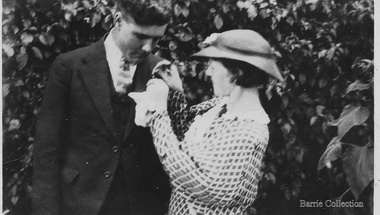 Melton City Libraries
Photograph, Tom and May Barrie, 1935
... Marion Elizabeth nee Ferris born 29th of August 1914 -died 5th of June 1990 SUMMARY - Thomas Lindsay Barrie 1914 – 1990 A life long resident of Melton Son of Jessie and Charles Ernest Barrie of Darlingsford Melton Married Marion Ferris at Christ Church Melton on 11th May 1939. They lived on the family farm at Ferris Road Melton. They had one son, Ian who has continued in farming in Melton. He served the community in the following – Shire of Melton Councillor Member for 32...Marion Elizabeth nee Ferris born 29th of August 1914 -died 5th of June 1990 SUMMARY - Thomas Lindsay Barrie 1914 – 1990 A life long resident of Melton Son of Jessie and Charles Ernest Barrie of Darlingsford Melton Married Marion Ferris at Christ Church Melton on 11th May 1939. They lived on the family farm at Ferris Road Melton. They had one son, Ian who has continued in farming in Melton. He served the community in the following – Shire of Melton Councillor Member for 32 ...Ferris Road–Ferris Lane family farm of John and Elizabeth Ferris until 1939, until daughter Marion married Thomas Linsday Barrie. Marion Elizabeth nee Ferris born 29th of August 1914 -died 5th of June 1990 SUMMARY - Thomas Lindsay Barrie 1914 – 1990 A life long resident of Melton Son of Jessie and Charles Ernest Barrie of Darlingsford Melton Married Marion Ferris at Christ Church Melton on 11th May 1939. They lived on the family farm at Ferris Road Melton. They had one son, Ian who has continued in farming in Melton. He served the community in the following – Shire of Melton Councillor Member for 32 years 1941 – 1970 Elected as Councillor for Melton South 1970 – 1973 Councillor for Rockbank 1943 – 1944 Shire President for three terms 1958 – 1959 ditto 1964 – 1965 ditto Council Representative: Bacchus Marsh High School and Western Suburbs Municipalities. Representative on delegation to prevent Melton post primary students being sent to Deer Park prior to the establishment of Melton High School. Melton Bush Fire Brigade 1941 Member Melton Bush Fire Brigade Registered No. 425 1942 1942 2nd Lieutenant 1943 – 1944 4th Lieutenant Country Fire Authority Rural Services Award 1963 20 Years Long Service Badge Scots Presbyterian Church Melton Member of the Board of Management 1947 – 1969 information from Annual Reports note more research needed at Uniting Church Archives Tom farmed the family property with his father and brothers, and later the Ferris Road property which continued with his son Ian. His childhood interest in horses began with the draft horses kept at the bluestone stable and barn at Darlingsford. When the stables were empty in the late 1980s visit, he vividly recalled the names of the horses he had handled in his youth. When the draft horse became obsolete with the introduction of tractors and trucks this interest continued with the breeding and training of harness racers. Darlingsford Drafts and Ponies. Order of Stalls Clydesdales – Dick, Dolly, Flower, Nugget, Blossom, Lofty, Prince. Roger, Rose, Violet, Don, Beauty, Baldy, Diamond. Cart and Mounts Creamy, Digger, Popsy Couple at Francis McGregor Barrie and Linda Willaton's wedding at Sunshine Methodist Church 20th April 1935?local identities -
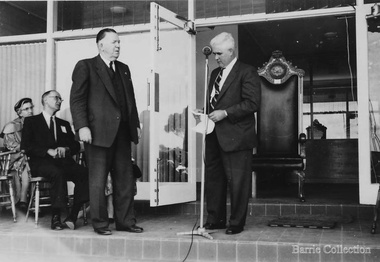 Melton City Libraries
Photograph, Opening of the Shire Hall, c.1964
... Summary of Thomas Lindsay Barrie (1914 – 1990) A life long resident of Melton Son of Jessie and Charles Ernest Barrie of Darlingsford Melton Married Marion Ferris at Christ Church Melton on 11th May 1939. They lived on the family farm at Ferris Road Melton. They had one son, Ian who has continued in farming in Melton. He served the community in the following – Shire of Melton Councillor Member for 32...Summary of Thomas Lindsay Barrie (1914 – 1990) A life long resident of Melton Son of Jessie and Charles Ernest Barrie of Darlingsford Melton Married Marion Ferris at Christ Church Melton on 11th May 1939. They lived on the family farm at Ferris Road Melton. They had one son, Ian who has continued in farming in Melton. He served the community in the following – Shire of Melton Councillor Member for 32 ...Summary of Thomas Lindsay Barrie (1914 – 1990) A life long resident of Melton Son of Jessie and Charles Ernest Barrie of Darlingsford Melton Married Marion Ferris at Christ Church Melton on 11th May 1939. They lived on the family farm at Ferris Road Melton. They had one son, Ian who has continued in farming in Melton. He served the community in the following – Shire of Melton Councillor Member for 32 years 1941 – 1970 Elected as Councillor for Melton South 1970 – 1973 Councillor for Rockbank 1943 – 1944 Shire President for three terms 1958 – 1959 ditto 1964 – 1965 ditto Council Representative: Bacchus Marsh High School and Western Suburbs Municipalities. Representative on delegation to prevent Melton post primary students being sent to Deer Park prior to the establishment of Melton High School. Melton Bush Fire Brigade 1941 Member Melton Bush Fire Brigade Registered No. 425 1942 1942 2nd Lieutenant 1943 – 1944 4th Lieutenant Country Fire Authority Rural Services Award 1963 20 Years Long Service Badge Scots Presbyterian Church Melton Member of the Board of Management 1947 – 1969 information from Annual Reports note more research needed at Uniting Church Archives to determine the earliest and last date. Tom farmed the family property with his father and brothers, and later the Ferris Road property which continued with his son Ian. His childhood interest in horses began with the draft horses kept at the bluestone stable and barn at Darlingsford. When the stables were empty in the late 1980s visit, he vividly recalled the names of the horses he had handled in his youth. When the draft horse became obsolete with the introduction of tractors and trucks this interest continued with the breeding and training of harness racers. Darlingsford Drafts and Ponies. Order of Stalls Clydesdales – Dick, Dolly, Flower, Nugget, Blossom, Lofty, Prince. Roger, Rose, Violet, Don, Beauty, Baldy, Diamond. Cart and Mounts Creamy, Digger, Popsy Compiled by Wendy Barrie 2013 Councillor Tom Barrie, Shire President and a group of children at the opening of the building.council, local identities -
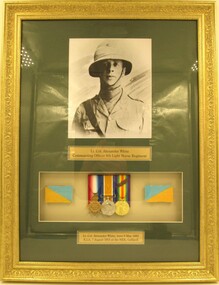 8th/13th Victorian Mounted Rifles Regimental Collection
Mixed media - Lt Col AH White, April 2024
... Following the outbreak of World War One he applied for a commission in the AIF 19 November 1914 and was appointed as Commanding Officer 8th Light Horse regiment. He was 32 yers of age, married with one child. ...Following the outbreak of World War One he applied for a commission in the AIF 19 November 1914 and was appointed as Commanding Officer 8th Light Horse regiment. He was 32 yers of age, married with one child. ...Alexander Henry White, born 9 May 1882 was educated at Greenville College Ballarat. He enlisted in the Victorian Mounted rifles in 1899 and continued to serve in the Light Horse followinh Federation. Following the outbreak of World War One he applied for a commission in the AIF 19 November 1914 and was appointed as Commanding Officer 8th Light Horse regiment. He was 32 yers of age, married with one child. He sailed with the regiment to Egypt in December 1914, and in May 1915 landed at Gallipoli. Lieutenant Colonel received a shrapnel wound to the scalp 27June, was treated at the Casualty Clearing Station, and returned to duty 4 July. In the Charge at the Nek, 7 August, White chose to lead the first wave of the 8th Light Horse. He was killed in action and his body never identified. His name is recorded on Lone Pine Memorial, Gallipoli Peninsula. He was posthumously mentioned in dispatches for his leadership in commanding the 8th Light Horse. Framed case containing portrait of Lieutenant Colonel Alexander Henry White, together with his medals (replica) and colour patches of 8th Light Horse.On plaque under portrait 'Lt Col Alexander White / Commanding Officer 8 Light Horse Regiment' and under medals 'Lt. Col. Alexander White borne 9 May 1882 / K.I.A. 7 August 1915 at the NEK Gallipoli'gallipoli, white, wwi, 8lh, ballarat -
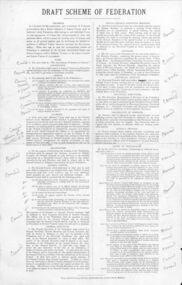 Unions Ballarat
Leaflets, pamphlets, periodicals, newspapers, cuttings and roneoed material retained by the Council, 1891-1962
... 32. Greater Ballarat Association. Seventeenth annual report. Ballarat, 1954. 33. Langridge, H.E. Employers in the Labor Party. Melbourne, 1914...32. Greater Ballarat Association. Seventeenth annual report. Ballarat, 1954. 33. Langridge, H.E. Employers in the Labor Party. Melbourne, 1914 ...TBATBATwo boxes, paper. 1. Anti-Hanging Committee - regarding hanging. 1962. 2. Ballarat Banking Co. Ltd. Chairman's address and 145th report. August 1954. 3. Country Municipal Association circular regarding conference on centralisation, Ballarat. 22 November 1916. 4. Geelong Town Band's weekly performance programme. n.d. 5. Ironmasters' Association of Victoria rules and regulations agreed upon at the General Iron Trades' Conference, Melbourne. 1891. 6. Melbourne Eight Hours Anniversary programme. 1901. 7. Museum of Applied Science of Victoria, on gas from our brown coal. n.d. 8. New Australian Trade Unionist Committee regarding rally to protect shooting of Polish workers. 195-? 9. Circular from Ballarat Trades and Labour Council to Ironmoulders' Society regarding the Congress. 1891. 10. List of subjects to be discussed at Congress. 11. Circular from Melbourne Trades Hall Council regarding financial help for Congress. 1891. 12. Reports of Standing Orders Committee appointed by the Congress, 23-29 April 1891. 13. Trade Mark Committee report. 14. Committee on Federation report. 15. Draft scheme of Federation (Australasian Federation of Labor). 16. Draft scheme of Federation (Australasian Federation of Labor) to the Labour Councils and Unions of Australasia. (2 copies.) 17. Asian and Pacific Regions Peace Conference, Peking, October 1962. Report on Peking, Melbourne. 1962. (2 copies). 18. Australian Bureau of Census and Statistics. Labour and Industrial Statistics, Melbourne. 1911. 19. Australia. Laws, Statutes, etc Trade Marks Bill, 1905. Workers' Trade Marks. Melbourne, 1905. 20. Australian Council of Trade Unions. Agenda paper for ... Congress, 1953. Melbourne, 1953. 21. Australian Labor Party. Work of the Labor government. Melbourne, 1928. 22. Australian Textile Union, Victorian Branch. Wages Sheet. Melbourne, 1953? 23. Baker, W.A. The Commonwealth Basic Wage. 1907-1953. Sydney, 1953? 24. Building Workers' Industrial Union. Building Workers support your convention. n.p. 1954? 25. Carters' and Drivers' Union. Committee of Management. Important to members of Carters and Drivers' Union. Melbourne, 1936. 26. Dougherty, Tom. Santamaria unmasked. Melbourne, 1954? 27. Eight Hours' Anniversary Sports Programme, 1893. Ballarat 1893. 28. Eight Hours' Anniversary Programme, 1894. Ballarat, 1894. 29. Fadden, Arthur W. The menace of political banking. Sydney, 1945. 30. Federated Clerks' Union, Victoria Branch. The Fennessy Story. The Braun Story. n.p., 1954. 31. Federated Clerks' Union, Victoria Branch. Manifesto, n.p., 1955. 32. Greater Ballarat Association. Seventeenth annual report. Ballarat, 1954. 33. Langridge, H.E. Employers in the Labor Party. Melbourne, 1914. 34. Metal Trades Federation. National Conference of Federal Council and delegates from State branches. Sydney, 1960. 35. Municipal Association of Victoria. Arbitration aware regarding employment of members of the Municipal Officers Association of Australia. Melbourne, 1950. 36. Municipality of the Town of Ballarat East. Annual report, 1919. Ballarat, 1919. 37. Plumbers and Gasfitters Employees' Association of Australia. Melbourne Branch. Why did Menzies abdicate when he had a working majority and 18 months to go? Melbourne, 1955? 38. Plumbers and Gasfitters Employees Union of Australia, Melbourne Branch. Who are the wreckers in the Australian Labor Party? Melbourne, 1955. 39. Spence, W.G. The ethics of New Unionism. Sydney, 1892. (42 copies) 40. Trades Hall Council, Melbourne. Statement of accounts, 1959. Melbourne, 1959. 41. Universal Business Directories (Australia) Pty. Ltd. Home edition for Ballarat. Melbourne, 1954. 42. Victoria, Apprenticeship Commission. Twenty-seventh annual report. Melbourne, 1956. 43. Victorian Labor College. Labor Colleges. Melbourne 191? (3 copies) 44. W.F. Williams. An appeal to the workers of Victoria. n.p., 19?? 45. Workers' Industrial Union of Australia. Preamble, classification and rules. Melbourne 1919? 46. ACTU Bulletin, 1955, Vol 2, No. 2 47. Amalgamated Engineering Union monthly journal, 1954, No. 3. March 48. American Economist, (New York), 1893, Vol 12, No 12, September 49. Australian Worker, (Sydney), 1955, Vol 64, No. 10, May; No. 15, September (held by ANU and at Trove online) 50. Building Workers' Organiser, official organ of the Building Trades Federation, 1954, June 51. Bulletin issued by the Economic Information Service, Melbourne. No. 2 1954, Nos. 10, September; 13 August; 1956, No 14, January 52. Ballarat Courier, 1890, Vol 46, No. 7096, April 53. Ballarat Star, 1888, Vol 33, No. 95, April 54. The Clerk, official journal of Federated Clerks' Union, Victorian Branch, 1955, Vol 10, No. 2, February/March 55. Common Cause, official journal of the Miners' Federation of Australia 1954 Vol 19, No. 10, March; No. 12, April 1955 Vol 20, No. 12, April; No. 19, May 1955 Vol 20, No. 23, June; No 28 July 1955 Vol 20, No. 29, August 1956 Vol 21, No. 17, May 56. Evening Echo, Ballarat, 1915, No. 6673, September 57. Evening Post, Ballarat, 1889, Vol 38, No. 6326, March 58. Industrial Herald, published by Labor Press, Geelong 1952 Vol 34, No. 35, June 1954 Vol 36, No. 20, March; No. 23, April 1954 No. 36, July; No. 39 July 1958 Vol 40, No. 19, March 59. Labor Call, published by Industrial Printing and Publicity Co., Melbourne. 1953, Vol 46, No. 2417, September 60. Labor Supplement. 1952, November 1954, February; March 61. Light, Ballarat diocesan journal. 1955, September. 62. Locomotive journal, published by the Australian Federated Union of Locomotive Enginemen. 1954, Vol. 16, No. 4, January. 63. People's Tribune Supplement, ed. by E.E. Jones, Melbourne. 1886, Vol 5, No. 20, April. 64. Railways' Union Gazette, published by J.D. Michie, Melbourne. 1919, June, Frank Byett in memoriam edition. 65. Rehab News issued by Central Ex-Servicemen's Office, Melbourne. 1946, Vol 2, No. 30, May. 66. Sheet Metal Workers, official organ of the Sheet Metal Working, Agricultural Implement and Stovemaking Union of Australia, Sydney. 1954, No. 107, February. 67. Socialist Comment, Socialist Party of Australia, Melbourne. 1937, No. 2, February. 68. Tocsin, A.L.P. Victorian Branch. 1955?, No. 2, October; No. 4, December. 1956, No. 5, February. 69. Tribune, CPA Sydney. 1965, No. 958, August. 70. UN World, published by Egbert White, New York. 1948, Vol 2, No. 11, December. 71. Miscellaneous newspaper cuttings. Posters 72. Eight Hours' Anniversary, Ballarat, 22 April 1892. 73. Eight Hours' Anniversary, Ballarat, 21 April 1894. 74. Eight Hours' Anniversary, Ballarat, 21 April 1913. 75A. Eight Hours' Anniversary, Ballarat, 3 April 1922. 75B. Electoral Rolls, persons entitled to be enrolled and to vote, 1922. 76. Progress, prospectus of debentures to publish a daily Labour paper to be called "Progress". 1904, Vol 1, No. 1, December. Cards 87. Smoke night social 88. Bi-election 89. How to vote card Roneoed material 77. Circular letter regarding new morning newspaper. n.d. 78. Circular letter from Trades Hall Council, Melbourne. 21 March 1955. 79. Article, History of the recent ALP dispute. n.d. 80. Article: What is freemasonry (from Ballarat St. Patrick's Gazette, October 1854). (2 copies) 81. Information summary of HRH Duke of Edinburgh's study conference on the human problems of industrial communities. ALP Broadcasts from Station 3KZ 82. Incentive payments by Norman A. Gibbs. 17 August 1953. 83. Escalating wages by F.J. Riley. 25 February 1954. 84. Margins by F.J. Riley. 4 March 1954. 85. Freezing margins by F.J. Riley. 17 March 1954. 86. The struggle across the Ages (No. 2) by F.J. Riley. 7 May 1954. ballarat trades and labour council, ballarat trades hall, unions, anti-hanging committee, hanging, ballarat banking co. ltd., country municipal association, geelong town band, ironmasters' association of victoria, general iron trades' conference, museum of applied science of victoria, new australian trade unionist committee, ironmoulders' society, melbourne trades hall council, btlc, intercolonial trades and labor union congress, 7th., trade mark committee report, committee on federation report, australasian federation of labor, asian and pacific regions peace conference, australian bureau of census and statistics, abs, australian bureau of statistics, trade marks bill, actu, australian council of trade unions, australian labor party, alp, australian textile union, w.a. baker, building workers' industrial union, carters and drivers' union, tom dougherty, eight hours' anniversary sports programme, labour and industrial statistics, workers' trade marks, building workers, santamaria, arthur w. fadden, federated clerks' union, fennessy, braun, greater ballarat association, h.e. langridge, metal trades federation, municipal association of victoria, ballarat east, plumbers and gasfitters employees' union of australia, menzies, w.g. spence, new unionism, universal business directories, victoria apprenticeship commission, victorian labor college, w.f. williams, workers' industrial union of australia. preamble, classification and rules. melbourne, 1919?, amalgamated engineering union, american economist, australian worker, building workers' organiser, building trades federation, economic information service, the courier, ballarat star, the clerk, common cause, miners' federation of australia, evening echo, evening post, industrial herald, labor call, labor supplement, light journal, locomotive journal, australian federated union of locomotive enginemen, people's tribune supplement, railways union gazette, frank hyett, rehab news, central ex-servicemen's office, sheet metal worker, sheet metal working, agricultural implement and stovemaking union of australia, socialist comment, tocsin, tribune, un world, eight hour anniversary, electoral rolls, progress, freemasonry, st patrick's gazette, hrh duke of edinburgh, incentive payments, wages, f.j. riley
