
Showing 118 items matching "1938 - 1948"
-
 University of Melbourne, Burnley Campus Archives
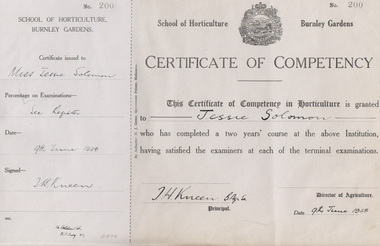
Book - Used certificate booklet, Dept of Agriculture, Victoria, Register book of Certificate of Competency - issued certificates 1938-1948, 1938-1948
... Register book of Certificate of Competency - issued certificates 1938-1948......1938 - 1948...Register of certificates of Competency in Horticulture issued at Burnley Campus between 1938 to 1948 listed names of Students including CRTS students. ...Issued between 1938 and 1948, numbered from 101-200 and one complete certificate not removed from the book. 2. ...1938-1948...Issued between 1938 and 1948, numbered from 101-200 and one complete certificate not removed from the book. 2. ...Register of certificates of Competency in Horticulture issued at Burnley Campus between 1938 to 1948 listed names of Students including CRTS students. 1. Book of stubs of certificates, listed names for students attaining the certificate of Competency includes those issued to students under the Commonwealth Reconstruction Training Scheme (CRTS). Issued between 1938 and 1948, numbered from 101-200 and one complete certificate not removed from the book. 2. Includes a sample Certificate of Competency. (See paper catalogue for list of recipients.)Certificates issued under the principalships of Alexander William Jessep (1926-41) James Leslie Proven (1942-6) and Thomas Hugh Kneen (1946 - 67) - signed and written on stub.certificates, students, commonwealth reconstruction training scheme, crts, certificate of competency, register, student group, 1938 - 1948 -
 Canterbury History Group
Document - My Canterbury 1938 - 1948, Daynes, N.P, 1/02/2011 12:00:00 AM
... My Canterbury 1938 - 1948...Canterbury Bryson Street Daynes> Neville Maling Road Theatre Place Shops Public Transport World War 1939-1945 Notes of a talk by Neville Daynes to the Annual General Meeting of the Canterbury History Group 2011 Document My Canterbury 1938 - 1948 Daynes, N.P. ...Notes of a talk by Neville Daynes to the Annual General Meeting of the Canterbury History Group 2011canterbury, bryson street, daynes> neville, maling road, theatre place, shops, public transport, world war 1939-1945 -
![Cr. W.D. Vaughan, Mayor [of Kew] 1937-1938 and 1947-1948](/media/collectors/550653872162f11fb04854aa/items/5922be86d0cde6131c21e128/item-media/5c1b12fe21ea810a58620f86/item-fit-380x285.jpg?cb=6) Kew Historical Society Inc
Kew Historical Society IncPhotograph, C Stuart Tompkins ARPS, Cr. W.D. Vaughan, Mayor [of Kew] 1937-1938 and 1947-1948, 1937
... Vaughan, Mayor [of Kew] 1937-1938 and 1947-1948...Vaughan, Mayor of Kew 1937-1938 and 1947-1948. The mounting and framing of the photograph follows a typical layout or style in that each is framed in dark wood, glazed, and laid down on an inscribed board. ...Vaughan / Mayor 1937-1938 and 1947-1948 C Stuart Tompkins / ARPS / Camberwell...Vaughan / Mayor 1937-1938 and 1947-1948 C Stuart Tompkins / ARPS / Camberwell Framed portrait of Cr. ...Kew achieved independence from the Boroondara Roads Board in 1860. As a new municipality, its first three leaders were designated as chairmen. On becoming a borough in 1863, its leaders were identified as mayors. The earliest photographs date from ca.1906, when the Town of Kew commissioned the noted local photographer Josiah E Barnes to produce standardised portraits of former mayors to be displayed in the Mayoral Chamber of the Town Hall. The collection also includes photographs by other well-known photographic studios such as Burlington Studios, Melba – Melbourne, Stuart Tompkins, Spencer Shier and Talma & Co. The majority of mounts identify the photographer. Eighty photographs are housed in their original frames.This portrait is one of a series of mounted and framed photographic portraits of Mayors and Town Clerks of the former Borough, Town and City of Kew, for the period 1863 to 1969. The portraits were transferred by the City of Kew to the Kew Historical Society in March 1989. A Significance Assessment in 2018, funded by the National Library of Australia confirmed the historic, and often artistic significance of the series. Framed portrait of Cr. W. D. Vaughan, Mayor of Kew 1937-1938 and 1947-1948. The mounting and framing of the photograph follows a typical layout or style in that each is framed in dark wood, glazed, and laid down on an inscribed board. The inscription identifies the name of the mayor and the year/s that he/she served.Cr. W.D. Vaughan / Mayor 1937-1938 and 1947-1948 C Stuart Tompkins / ARPS / Camberwellmayors of kew (vic), cr. w. d. vaughan, kew (vic.) — municipal collection -
Moorabbin Air Museum
Magazine (series) - Aircraft Australasia 1938 to 1948
... Aircraft Australasia 1938 to 1948...Magazine Aircraft Australasia 1938 to 1948 ... -
 National Wool Museum
Currency - One Pound Note, John Ash, 1938 - 1948
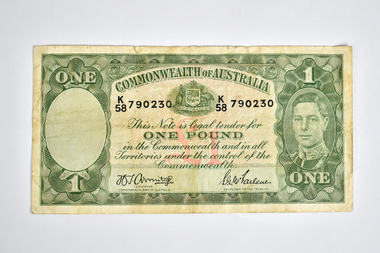
... 1938 - 1948 ...John Ash succeeded Thomas Harrison as the Australian Note Printer in 1927 and oversaw the printing of a new series of banknotes, known as the Ash Series. First issued between 1933 and 1934, the new banknotes sought to improve the currency's resistance to counterfeiting. A special watermark was created to increase the security of the new series. Shaped as a medallion, the watermark showed the profile of Edward, the Prince of Wales. A new portrait of the King was also introduced, depicting him frontally rather than in profile as he had appeared in the prior banknotes of the Harrison Series (1923-1925). The back of each denomination contained an individual vignette that reflected a sector of the country's economy. The wool and agricultural industries were represented, as they had been in the first series of the nation's banknotes (1913-1914), and they were joined by manufacturing and commerce. The prominent British sculptor, Paul Montford, contributed to the design of the new series. Recognised for his sculptural works on the exterior of Melbourne's Shrine of Remembrance, Montford was commissioned to produce relief sculptures that formed the basis of the banknotes' vignettes. His sculptures were translated into wash drawings by Frank Manley, the artist and engraver for the Commonwealth Bank's Note Printing Branch. Manley accentuated the sculpture's three-dimensional qualities with deep shadows and touches of illusionism. A sheep in Montford's pastoral scene, for example, stands forward from the frame as if entering the viewer's space to escape branding and Manley preserves this visual conceit in his drawing. Whereas the printing of the previous series of Australian banknotes had been criticised for its poor definition, the sculptural basis of the Ash Series clarified the banknotes' imagery. During a period of record unemployment, the scenes emphasised the strength of the human figure in gestures of labour, evoking classical, heroic qualities in their poses. The sculptural forms suggested stability in the turbulence of the Great Depression and imparted a sense of solidity to paper currency. - museum.rba.gov.auCommonwealth of Australia paper one pound note in green and white tones depicting graphics and text. The obverse has a framed design with a blank portal to the left and King George VI in the right portal. The centre shows the Australian Coat of Arms, serial number, and detail over one pound symbol on a mosaic background, with signatories below. The reverse features a framed pastoral scene with farmers tending sheep, with a blank portal to the right.Obverse: ONE / 1 / 1 / ONE / COMMONWEALTH OF AUSTRALIA / K / 58 / 790230 / K / 58 / 790230 / This Note is legal tender for / ONE POUND / in the Commonwealth and in all / Territories under the control of the / Commonwealth. / [signature] / GOVERNOR / COMMONWEALTH BANK ON AUSTRALIA / [signature] / SECRETARY TO THE TREASURY Reverse: 1 /1 / 1 / 1 / PASTORALcurrency, money, pound note, pastoral scene, industry, commonwealth of australia, paul montford, king george vi, frank manly, john ash -
 National Wool Museum
Currency - One Pound Note, John Ash, 1938 - 1948
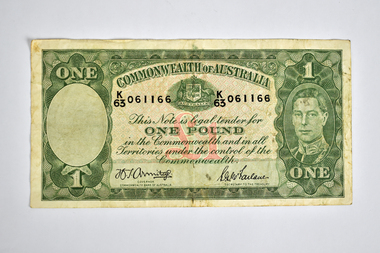
... 1938 - 1948 ...John Ash succeeded Thomas Harrison as the Australian Note Printer in 1927 and oversaw the printing of a new series of banknotes, known as the Ash Series. First issued between 1933 and 1934, the new banknotes sought to improve the currency's resistance to counterfeiting. A special watermark was created to increase the security of the new series. Shaped as a medallion, the watermark showed the profile of Edward, the Prince of Wales. A new portrait of the King was also introduced, depicting him frontally rather than in profile as he had appeared in the prior banknotes of the Harrison Series (1923-1925). The back of each denomination contained an individual vignette that reflected a sector of the country's economy. The wool and agricultural industries were represented, as they had been in the first series of the nation's banknotes (1913-1914), and they were joined by manufacturing and commerce. The prominent British sculptor, Paul Montford, contributed to the design of the new series. Recognised for his sculptural works on the exterior of Melbourne's Shrine of Remembrance, Montford was commissioned to produce relief sculptures that formed the basis of the banknotes' vignettes. His sculptures were translated into wash drawings by Frank Manley, the artist and engraver for the Commonwealth Bank's Note Printing Branch. Manley accentuated the sculpture's three-dimensional qualities with deep shadows and touches of illusionism. A sheep in Montford's pastoral scene, for example, stands forward from the frame as if entering the viewer's space to escape branding and Manley preserves this visual conceit in his drawing. Whereas the printing of the previous series of Australian banknotes had been criticised for its poor definition, the sculptural basis of the Ash Series clarified the banknotes' imagery. During a period of record unemployment, the scenes emphasised the strength of the human figure in gestures of labour, evoking classical, heroic qualities in their poses. The sculptural forms suggested stability in the turbulence of the Great Depression and imparted a sense of solidity to paper currency. - museum.rba.gov.auCommonwealth of Australia paper one pound note in green and white tones depicting graphics and text. The obverse has a framed design with a blank portal to the left and King George VI in the right portal. The centre shows the Australian Coat of Arms, serial number, and detail over one pound symbol on a mosaic background, with signatories below. The reverse features a framed pastoral scene with farmers tending sheep, with a blank portal to the right.Obverse: ONE / 1 / 1 / ONE / COMMONWEALTH OF AUSTRALIA / K / 58 / 790230 / K / 58 / 790230 / This Note is legal tender for / ONE POUND / in the Commonwealth and in all / Territories under the control of the / Commonwealth. / [signature] / GOVERNOR / COMMONWEALTH BANK ON AUSTRALIA / [signature] / SECRETARY TO THE TREASURY Reverse: 1 /1 / 1 / 1 / PASTORALcurrency, money, pound note, pastoral scene, industry, commonwealth of australia, paul montford, king george vi, frank manly, john ash -
 Melbourne Tram Museum
Administrative record - Depot List, Don Storey, "Appendix 2 - Depot Allocation of Trams", c2000
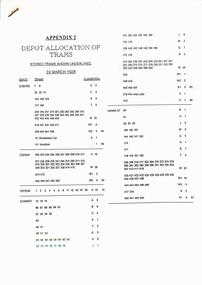
... Photocopy - 15 pages - of "Appendix 2 - Depot Allocation of Trams", providing a set of 8 different MMTB depot tramcar fleet lists; Dated 24/3/1928 9/6/1934 30/6/1938 11/9/1948 29/1/1954 Jan. 1961 1/1/1977 28/10/1991 Similar in style to Don Story version from 1928 to 1991 - See Reg Item 840....Trams tramways Tramcars MMTB Lists Depots Depot Allocation Photocopy - 15 pages - of "Appendix 2 - Depot Allocation of Trams", providing a set of 8 different MMTB depot tramcar fleet lists; Dated 24/3/1928 9/6/1934 30/6/1938 11/9/1948 29/1/1954 Jan. 1961 1/1/1977 28/10/1991 Similar in style to Don Story version from 1928 to 1991 - See Reg Item 840. ...Photocopy - 15 pages - of "Appendix 2 - Depot Allocation of Trams", providing a set of 8 different MMTB depot tramcar fleet lists; Dated 24/3/1928 9/6/1934 30/6/1938 11/9/1948 29/1/1954 Jan. 1961 1/1/1977 28/10/1991 Similar in style to Don Story version from 1928 to 1991 - See Reg Item 840.trams, tramways, tramcars, mmtb, lists, depots, depot allocation -
Federation University Historical Collection
Document - Document - Syllabus, Education Department, Victoria,Technical Schools, Syllabuses
... They outline the requirements for various subjects, covering the following: .1: Sound and Light; .2: Course for Public Analysts, Day and Evening; .3: Sheet Metal Work; .4 Land, Engineering and Mine Surveying (1914); .5: Surveying (1921); .6: Physics (1924); 7: Iron, Steel and Engineering Alloys (1924); .8: Instrument Making(1924); .9: Elementary Science (1924); .10: Shorthand (1925); .11: Elementary Science- for Girls (1926); .12: Physic- Women's School (1928); .13: Typewriting (1929); .14: Painting and Decorating (1929); .15: Plumbing and Gasfitting (1929); .16: Plastering (1929); .17: Signwriting (1929); .18 Plumbing and Gasfitting (1937); .19: Course for Fibrous Plastering (1937); .20: Plumbing and Gasfitting (1938); .21: Course for Fitting and/or Turning and Machinist (1948). This is a 48 page booklet. ...They outline the requirements for various subjects, covering the following: .1: Sound and Light; .2: Course for Public Analysts, Day and Evening; .3: Sheet Metal Work; .4 Land, Engineering and Mine Surveying (1914); .5: Surveying (1921); .6: Physics (1924); 7: Iron, Steel and Engineering Alloys (1924); .8: Instrument Making(1924); .9: Elementary Science (1924); .10: Shorthand (1925); .11: Elementary Science- for Girls (1926); .12: Physic- Women's School (1928); .13: Typewriting (1929); .14: Painting and Decorating (1929); .15: Plumbing and Gasfitting (1929); .16: Plastering (1929); .17: Signwriting (1929); .18 Plumbing and Gasfitting (1937); .19: Course for Fibrous Plastering (1937); .20: Plumbing and Gasfitting (1938); .21: Course for Fitting and/or Turning and Machinist (1948). This is a 48 page booklet. technical schools syllabuses victoria education department sound and light public analysts sheet metal work land engineering and mine survey surveying physics iron steel and engineering alloys instrument making elementary science shorthand elementary science for girls physics women's schools typewriting painting and decorating plumbing and gasfitting plastering signwriting fibrous plastering fitting and/or turning machinist 1914 1921 1924 1925 1926 1928 1929 1937 1938 1949 21 A5 sheets typed Education Department, Victoria,Technical Schools, Syllabuses Document Document - Syllabus ...Technical Schools Syllabuses produced by the Education Department of Victoria. Items cover the period between 1914 and 1948. They outline the requirements for various subjects, covering the following: .1: Sound and Light; .2: Course for Public Analysts, Day and Evening; .3: Sheet Metal Work; .4 Land, Engineering and Mine Surveying (1914); .5: Surveying (1921); .6: Physics (1924); 7: Iron, Steel and Engineering Alloys (1924); .8: Instrument Making(1924); .9: Elementary Science (1924); .10: Shorthand (1925); .11: Elementary Science- for Girls (1926); .12: Physic- Women's School (1928); .13: Typewriting (1929); .14: Painting and Decorating (1929); .15: Plumbing and Gasfitting (1929); .16: Plastering (1929); .17: Signwriting (1929); .18 Plumbing and Gasfitting (1937); .19: Course for Fibrous Plastering (1937); .20: Plumbing and Gasfitting (1938); .21: Course for Fitting and/or Turning and Machinist (1948). This is a 48 page booklet. 21 A5 sheets typedtechnical schools, syllabuses, victoria, education department, sound and light, public analysts, sheet metal work, land engineering and mine survey, surveying, physics, iron steel and engineering alloys, instrument making, elementary science, shorthand, elementary science for girls, physics women's schools, typewriting, painting and decorating, plumbing and gasfitting, plastering, signwriting, fibrous plastering, fitting and/or turning, machinist, 1914, 1921, 1924, 1925, 1926, 1928, 1929, 1937, 1938, 1949 -
Glenelg Shire Council Cultural Collection
Administrative record - Scorebook - Portland Rifle Club, Portland Rifle Club, 1937-1949
... Vivian; years 1937, 1938, 1947 b) S. Taylor; 1948, 1949 c) H. L. Vivian; 1930, 1931, 1956...Vivian; years 1937, 1938, 1947 b) S. Taylor; 1948, 1949 c) H. L. Vivian; 1930, 1931, 1956 Administrative record Scorebook - Portland Rifle Club Portland Rifle Club ...3 scorebooks, Portland Rifle Club. Cardboard covers. Scorebooks belonged to: a) H.L. Vivian; years 1937, 1938, 1947 b) S. Taylor; 1948, 1949 c) H. L. Vivian; 1930, 1931, 1956sports, records, recording, portland rifle club -
 Ringwood and District Historical Society
Administrative record - Minute Book, Ringwood Cool Stores Co-operative Society Ltd - Minutes Book 1934 to 1960 in Kalamazoo Binder
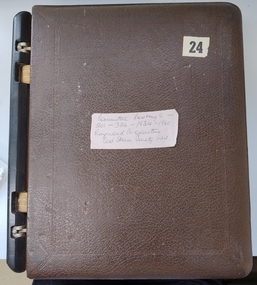
... Key to VC Records of Scanned Minutes from Bound Kalamazoo Minute Book (VC 11220): VC ID Identification_Title 11221 Ringwood Cool Stores Co-operative Society Ltd - Minutes Book-Minutes 1934-1935 11222 Ringwood Cool Stores Co-operative Society Ltd - Minutes Book-Minutes 1936-1937 11223 Ringwood Cool Stores Co-operative Society Ltd - Minutes Book-Minutes 1938-1939 11224 Ringwood Cool Stores Co-operative Society Ltd - Minutes Book-Minutes 1940-1941 11225 Ringwood Cool Stores Co-operative Society Ltd - Minutes Book-Minutes 1942-1943 11226 Ringwood Cool Stores Co-operative Society Ltd - Minutes Book-Minutes 1944-1945 11227 Ringwood Cool Stores Co-operative Society Ltd - Minutes Book-Minutes 1946-1947 11228 Ringwood Cool Stores Co-operative Society Ltd - Minutes Book-Minutes 1948-1949 11229 Ringwood Cool Stores Co-operative Society Ltd - Minutes Book-Minutes 1950-1951 11230 Ringwood Cool Stores Co-operative Society Ltd - Minutes Book-Minutes 1952-1953 11231 Ringwood Cool Stores Co-operative Society Ltd - Minutes Book-Minutes 1954-1955 11232 Ringwood Cool Stores Co-operative Society Ltd - Minutes Book-Minutes 1956-1957 11233 Ringwood Cool Stores Co-operative Society Ltd - Minutes Book-Minutes 1958-1959 11234 Ringwood Cool Stores Co-operative Society Ltd - Minutes Book-Minutes 1960 including windup of the Society ...Key to VC Records of Scanned Minutes from Bound Kalamazoo Minute Book (VC 11220): VC ID Identification_Title 11221 Ringwood Cool Stores Co-operative Society Ltd - Minutes Book-Minutes 1934-1935 11222 Ringwood Cool Stores Co-operative Society Ltd - Minutes Book-Minutes 1936-1937 11223 Ringwood Cool Stores Co-operative Society Ltd - Minutes Book-Minutes 1938-1939 11224 Ringwood Cool Stores Co-operative Society Ltd - Minutes Book-Minutes 1940-1941 11225 Ringwood Cool Stores Co-operative Society Ltd - Minutes Book-Minutes 1942-1943 11226 Ringwood Cool Stores Co-operative Society Ltd - Minutes Book-Minutes 1944-1945 11227 Ringwood Cool Stores Co-operative Society Ltd - Minutes Book-Minutes 1946-1947 11228 Ringwood Cool Stores Co-operative Society Ltd - Minutes Book-Minutes 1948-1949 11229 Ringwood Cool Stores Co-operative Society Ltd - Minutes Book-Minutes 1950-1951 11230 Ringwood Cool Stores Co-operative Society Ltd - Minutes Book-Minutes 1952-1953 11231 Ringwood Cool Stores Co-operative Society Ltd - Minutes Book-Minutes 1954-1955 11232 Ringwood Cool Stores Co-operative Society Ltd - Minutes Book-Minutes 1956-1957 11233 Ringwood Cool Stores Co-operative Society Ltd - Minutes Book-Minutes 1958-1959 11234 Ringwood Cool Stores Co-operative Society Ltd - Minutes Book-Minutes 1960 including windup of the Society Ringwood Cool Stores Co-operative Society Ltd - Minutes Book 1934 to 1960 in Kalamazoo Binder Administrative record Minute Book ...A large brown Kalamazoo binder containing Minutes of the society from 1934 through to its winding up in 1960. The binder is opened with a key to insert or remove pages. The original key is lost, but RDHS Archivist Nevelle Burns made up two replacement keysm to allow the Pages to be removed for scanning. Once scanned the pages were reinsrted and the key used to close and lock the binder. The scanned minutes are in VC items 11221 to 11234 (2 years per item). VC Item 11235 is the Auction Catalogue associated with the closure of the Coolstores in 1960. This minute book was Item 24 at an Auction and was donated to RDHS (donor unknown). Key to VC Records of Scanned Minutes from Bound Kalamazoo Minute Book (VC 11220): VC ID Identification_Title 11221 Ringwood Cool Stores Co-operative Society Ltd - Minutes Book-Minutes 1934-1935 11222 Ringwood Cool Stores Co-operative Society Ltd - Minutes Book-Minutes 1936-1937 11223 Ringwood Cool Stores Co-operative Society Ltd - Minutes Book-Minutes 1938-1939 11224 Ringwood Cool Stores Co-operative Society Ltd - Minutes Book-Minutes 1940-1941 11225 Ringwood Cool Stores Co-operative Society Ltd - Minutes Book-Minutes 1942-1943 11226 Ringwood Cool Stores Co-operative Society Ltd - Minutes Book-Minutes 1944-1945 11227 Ringwood Cool Stores Co-operative Society Ltd - Minutes Book-Minutes 1946-1947 11228 Ringwood Cool Stores Co-operative Society Ltd - Minutes Book-Minutes 1948-1949 11229 Ringwood Cool Stores Co-operative Society Ltd - Minutes Book-Minutes 1950-1951 11230 Ringwood Cool Stores Co-operative Society Ltd - Minutes Book-Minutes 1952-1953 11231 Ringwood Cool Stores Co-operative Society Ltd - Minutes Book-Minutes 1954-1955 11232 Ringwood Cool Stores Co-operative Society Ltd - Minutes Book-Minutes 1956-1957 11233 Ringwood Cool Stores Co-operative Society Ltd - Minutes Book-Minutes 1958-1959 11234 Ringwood Cool Stores Co-operative Society Ltd - Minutes Book-Minutes 1960 including windup of the Society Label on cover reading "Committee Meetings - 201 -374 1934-1960. Ringwood Co-operative Cool Stores Society Ltd"coolstores -
 Warrnambool and District Historical Society Inc.
Pants, Fletcher Jones, Mid 20th century
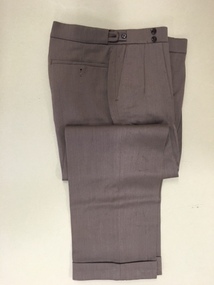
... 1938 he had a staff of 40. By 1945 FJ trousers were sold in 123 stores in Victoria and in 1948 the Fletcher Jones factory was established in Flaxman Street Warrnambool, officially named Pleasant Hill. ...1938 he had a staff of 40. By 1945 FJ trousers were sold in 123 stores in Victoria and in 1948 the Fletcher Jones factory was established in Flaxman Street Warrnambool, officially named Pleasant Hill. ...These trousers have been made by Fletcher Jones and Staff. This business was established by David Fletcher Jones (1895-1977) in 1924 when he leased three shops in Liebig Street, Warrnambool. In 1928 he moved his business to the main retailing area near the Liebig Street/Koroit Street intersection. In 1931 a shop built to Fletcher Jones’ requirements was erected and by 1938 he had a staff of 40. By 1945 FJ trousers were sold in 123 stores in Victoria and in 1948 the Fletcher Jones factory was established in Flaxman Street Warrnambool, officially named Pleasant Hill. In 1951 the company became Fletcher Jones and Staff and by the mid 1970s the staff had 75% ownership. By this time FJ and Staff had become one of the largest clothing manufacturers in Australia with 55 shops and almost 3000 employees. The range of clothing was enlarged to include both men’s and women’s wear. In the 1980s, after the death of Fletcher Jones, the abolition of import tariffs and the availability of cheap imported clothing caused the Fletcher Jones Company to decline and to be sold to a Geelong company. By 2011 all Fletcher Jones shops had closed. These trousers are of great interest as they are a product of a Warrnambool business that was nationally and internationally known in the 20th century for its quality men’s wear, especially the Coverdine brand trousers. The Fletcher Jones business remains one of the most important businesses, (if not the most important), that ever existed in Warrnambool. It employed a great number of local people in the second half of the 20th century, and is remembered with great fondness by many people in the city and surrounds today. The Fletcher Jones Gardens at the Factory site are still maintained today and are a tourist attraction in the city. These are a pair of brown Fletcher Jones trousers made of Coverdine material (87.5% wool with nylon). There is some lining around the waist area and the legs are turned up at the end with some leather binding inside the bottom legs. The waist band is stiffened and is fastened with a metal clip and two buttons. The waist band has two adjustable areas using tabs and two buttons each side. The back pockets also have buttons.fletcher jones and staff, coverdine fletcher jones trousers, history of warrnambool, david fletcher jones -
 Warrnambool and District Historical Society Inc.
Medal - Four medals - Melbourne to Warrnambool Cycle Race
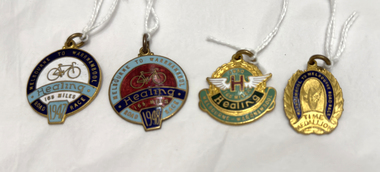
... 1938 it became a Melbourne to Warrnambool race After 1995 it became a scratch race and today the distance is shorter with the race starting from Avalon. It is the second oldest one-day cycling race in the world and the longest one-day cycling race in Australia. Four of these medals were awarded to Ron Vernon from the Footscray Club. All riders who complete the race in a given time are awarded a Time Medallion. In 1947 Ron Vernon, riding the latest Healing Championship Cycle came in 26th. In 1948...1938 it became a Melbourne to Warrnambool race After 1995 it became a scratch race and today the distance is shorter with the race starting from Avalon. It is the second oldest one-day cycling race in the world and the longest one-day cycling race in Australia. Four of these medals were awarded to Ron Vernon from the Footscray Club. All riders who complete the race in a given time are awarded a Time Medallion. In 1947 Ron Vernon, riding the latest Healing Championship Cycle came in 26th. In 1948 ...These four medals relate to the Melbourne to Warrnambool Cycle Race. This race was first held in 1895 and continues to the presenr day. It was originally a handicap race from Warrnambool to Melbourne but after 1938 it became a Melbourne to Warrnambool race After 1995 it became a scratch race and today the distance is shorter with the race starting from Avalon. It is the second oldest one-day cycling race in the world and the longest one-day cycling race in Australia. Four of these medals were awarded to Ron Vernon from the Footscray Club. All riders who complete the race in a given time are awarded a Time Medallion. In 1947 Ron Vernon, riding the latest Healing Championship Cycle came in 26th. In 1948, riding off the 47 minute handicap, he took 7th place. IHe also won the Colac Sprint in that race. In 1950 he took 9th place. The fourth medal is a Time Medallion awarded to a cyclist in 1960. These medals are of considerable interest as mementoes of the Melbourne to Warrnambool Cycle Race, an important sporting event associated with Warrnambool and one that is known Australia-wide and internationally..1 A round metal medal with a dark blue band around the edge, a light blue strip across the middle and a light blue tab at the bottom of the medal. The medal has gold-coloured printing and a gold image of a bicycle. A metal ring is attached at the top. .2 a round metal medal similar in design to .1 above with light blue, dark blue and red colouring. A metal ring is attached at the top .3 a green and gold round metal medal with a green curved strip attached to the bottom of the medal and white wings placed in the middle of the medal. The labelling is red and gold. A metal ring is attached at the top. .4 A gold and dark blue oval-shaped metal medal. A metal ring is attached at the top. .1 Melbourne to Warrnambool Road Race 165 miles Healing 1947 .2 Melbourne to Warrnambool Road Race 165 miles Healing 1948 .3 Melbourne-Warrnambool 165 miles Healing 1950 .4 Warrnambool to Melbourne Road Race Time Medallion 1960melbourne to warrnambool cycle race, ron vernon cyclist, warrnambool sport -
 Eltham District Historical Society Inc
Photograph, Peter Pidgeon, Memorial to Peter Glass and Cecile Glass, Eltham Cemetery, Victoria, 5 April 2021
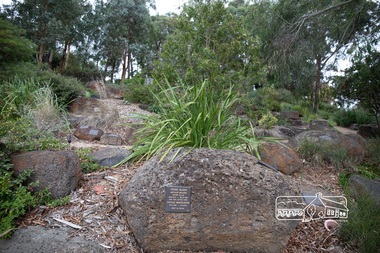
... 1938, Arthur William Glass (known as Peter Glass) was studying painting under Max Meldrum. Much of their inspiration came from the Eltham bush and the nearby Yarra River. With his friends jazz musicians Graeme and Roger Bell, Peter bought land at the top of John Street: enchanted by Montsalvat, he had the objective of building a mud-brick house. War intervened, but then in 1948...1938, Arthur William Glass (known as Peter Glass) was studying painting under Max Meldrum. Much of their inspiration came from the Eltham bush and the nearby Yarra River. With his friends jazz musicians Graeme and Roger Bell, Peter bought land at the top of John Street: enchanted by Montsalvat, he had the objective of building a mud-brick house. War intervened, but then in 1948 ...In 1938, Arthur William Glass (known as Peter Glass) was studying painting under Max Meldrum. Much of their inspiration came from the Eltham bush and the nearby Yarra River. With his friends jazz musicians Graeme and Roger Bell, Peter bought land at the top of John Street: enchanted by Montsalvat, he had the objective of building a mud-brick house. War intervened, but then in 1948 he began working for Alistair Knox as a carpenter and mud-brick builder. By then, Peter had married, necessitating a larger house, which he built with help from Alistair Knox. As a trained architectural draftsman, Peter later progressed to working for Alistair in that role, eventually running the drafting office during the 1960s. He was deeply involved in the foundation of the Australian Institute of Landscape Architects, and went on to design many gardens, some in partnership with Alistair Knox and Gordon Ford. He died in 1997 and is buried in Eltham Cemetery with his wife Cecile. Peter Glass (Arthur William) Artist A.I.L.A. 28.8.1917 - 28.12.1997 and his loving wife Cecile Madeleine 23.2.1927 - 6.2.2006 Rest In PeaceBorn Digitaleltham cemetery, gravestones, heritage excursion, cecile madeleine glass, peter glass -
 Emerald Museum & Nobelius Heritage Park
Golf Trophy
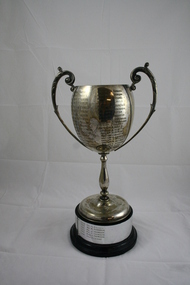
... 1938 Mrs T.W. Gunnersen 1939 Mrs Norman 1940 Mrs A. Baker 1946 Mrs L.A. Fenton 1947 Mrs A.L. Newold 1948...1938 Mrs T.W. Gunnersen 1939 Mrs Norman 1940 Mrs A. Baker 1946 Mrs L.A. Fenton 1947 Mrs A.L. Newold 1948 ...Emerald Country Club Associates Ladies Championship Trophy from 1937 to 1996Local golf club trophy donated by ex committee member Rosalie LeakeSilver Golf Trophy Cup (Ladies) on wooden base.. engraved with winners from 1937 to 1996 Emerald Country Club Associates E.M..KENNON CUP 1937 Mrs G.L. Elkins 1938 Mrs T.W. Gunnersen 1939 Mrs Norman 1940 Mrs A. Baker 1946 Mrs L.A. Fenton 1947 Mrs A.L. Newold 1948 Mrs C. Bedgood 1949 Mrs A. Baker 1950 Miss P. Massey 1951 Mrs W.H. Symon 1952 Mrs W.H. Symon 1953 Mrs A.L. Newbold 1954 Mrs W.H. Symon 1955 Miss M. Jamison 1956 Mrs W.H. Symon 1957 Miss J. Mellor 1958 Mrs L. Bulmer 1959 Mrs W.H. Symon 1960 Miss J. Mellor 1961 Mrs E. Hoy 1962 Mrs L. Bulmer 1963 Miss D. Smith 1964 Mrs N. Tuxen 1965 Mrs M. Hanger 1966 Mrs A. Howard 1967 Mrs R. Morgan 1968 Mrs P. Young 1969 Mrs J. Little 1970 Mrs J. Fountain 1971 Miss P. Jackson 1972 Mrs J. Little 1973 Mrs J. Houghton 1974 Mrs J. Meldrum 1975 Mrs. B. Barraclough 1976 Mrs J. Meldrum 1977 Mrs F. Gooch 1978 Mrs S. Hunter 1979 Ms F. Fenton 1980 Mrs J. Martin 1981 Mrs C. Grand-Court 1982 Mrs J. Pugh 1983 Mrs M. Ruigrok 1984 Mrs P. Summers 1985 Miss A. Scurry 1986 Mrs P. White 1987 Mrs M. Ruigrok 1988 Mrs P. White 1989 J. Ross 1990 Miss B. Bates 1991 Ms A. Felgate 1992 Ms M. Purbrick 1993 Ms J. Thomson 1994 Ms J Tomson 1995 Ms J Thomson 1996 Mrs R. Leake emerald country club, wm kennon cup, golf trophy 1937 to 1996 -
 Kiewa Valley Historical Society
Black and white photograph of farmland, Kiewa, 25/8/38, circa 1938
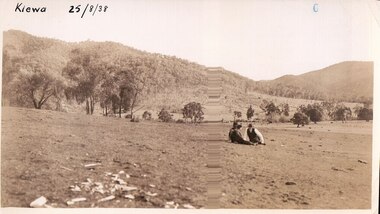
... Beauty and by 1948 street construction in the southern part of the town was completed as far as Hill Street. kiewa mt. beauty construction grazing secv Handwritten in black ink is the inscription 'Kiewa 25/8/1938'. ...This photograph was taken in August, 1938 at the time of road making in the area and some eight years prior to the establishment of Mt. Beauty township. The area was still being used for grazing, and the land was eventually acquired from the local land owners by the State Electricity Commission. The construction of the road, from Tawonga to the High Plains, was commenced in April of this year. This allowed men and heavy equipment to be transported to the work sites for the construction of the Kiewa Hydro Electric Scheme. An important photograph as it shows the upper Kiewa Valley as it was before the establishment of the town of Mt. Beauty. The land had been cleared of natural growth and has been used for grazing cattle. By 1946 housing construction had commenced for the new town of Mt. Beauty and by 1948 street construction in the southern part of the town was completed as far as Hill Street.A black and white photograph taken in the upper Kiewa Valley showing farmland with a group of three unidentified people sitting on the grass.Handwritten in black ink is the inscription 'Kiewa 25/8/1938'. In the right corner of the photograph has been stamped the number 6. On the back in a circle, some 14mm across, are the words 'Kodak Print'. The word Velox is also printed on the back.kiewa, mt. beauty, construction, grazing, secv -
 Kiewa Valley Historical Society
Black and white photograph of farmland, Kiewa, 25/8/38, circa 1938
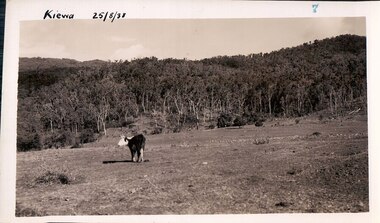
... 1938. This allowed men and heavy equipment to be transported to the work sites for the construction of the Kiewa Hydro Electric Scheme. Prior to this access was by bridle trail, either on horse back or on foot. By 1946 housing construction had commenced for the new town of Mt. Beauty and by 1948...1938. This allowed men and heavy equipment to be transported to the work sites for the construction of the Kiewa Hydro Electric Scheme. Prior to this access was by bridle trail, either on horse back or on foot. By 1946 housing construction had commenced for the new town of Mt. Beauty and by 1948 ...This photograph was taken in August, 1938, some eight years prior to the establishment of Mt. Beauty a a township. The area was still being used for grazing, and the land was eventually acquired from the local land owners by the State Electricity Commission. The construction of the road, from Tawonga to the High Plains, was commenced in April, 1938 and this photograph was taken August, 1938. This allowed men and heavy equipment to be transported to the work sites for the construction of the Kiewa Hydro Electric Scheme. Prior to this access was by bridle trail, either on horse back or on foot. By 1946 housing construction had commenced for the new town of Mt. Beauty and by 1948 street construction in the southern part of the town was completed as far as Hill Street.This photograph is important as it shows the upper Kiewa Valley as it was before the establishment of the town of Mt. Beauty. The land has been cleared of natural vegetation to allow grazing of cattle. Black and white photograph of grazing farmland with one animal standing in the paddock. The area could possibly be where the golf course now stands with the road to the high plains not yet commenced.Handwritten in the upper left hand corner 'Kiewa 25/8/38'. The number 7 has been stamped in the upper right hand corner. It is part of a set of 8 photographs. On the back are the words Velox repeated several times, indicating the type of photographic papergrazing, kiewa, mt. beauty, secv -
 Kiewa Valley Historical Society
Photograph Farm Land, Kiewa, 25/8/38, circa 1938
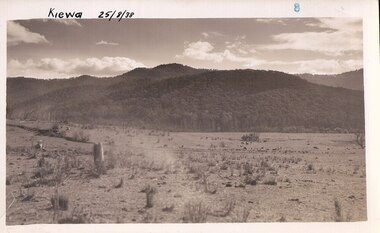
... 1938. This allowed men and heavy equipment to be transported to the work sites for the construction of the Kiewa Hydro Electric Scheme. Prior to this access was by bridle trail, either on horse back or by foot. By 1946 housing construction had commenced for the new town of Mt. Beauty and by 1948...1938. This allowed men and heavy equipment to be transported to the work sites for the construction of the Kiewa Hydro Electric Scheme. Prior to this access was by bridle trail, either on horse back or by foot. By 1946 housing construction had commenced for the new town of Mt. Beauty and by 1948 ...This photograph was taken in august, 1938 some eight years prior to the establishment of Mt. Beauty as a township. The area was still being used for grazing cattle and the land was eventually acquired from the local land owners by the State Electricity Commission. The construction of the road, from Tawonga to the High Plains, was commenced in April of 1938. This allowed men and heavy equipment to be transported to the work sites for the construction of the Kiewa Hydro Electric Scheme. Prior to this access was by bridle trail, either on horse back or by foot. By 1946 housing construction had commenced for the new town of Mt. Beauty and by 1948 street construction in the southern part of the town was completed as far as Hill Street.This is an important photograph as it shows the upper Kiewa Valley and the site for Mt. Beauty as it was before the establishment of the town. The land has been cleared of natural vegetation and used for grazing cattle.Black and white photograph of farmland, cattle in the distance, hills in the backgroundHandwritten in the upper left hand corner, in black ink, 'Kiewa 25/8/38'. The number 8 has been stamped in the upper right hand side of the photograph. On the back have been stamped the words Velox, indicating the type of photographic paper.kiewa, mt. beauty, construction, grazing, secv -
 Bendigo Historical Society Inc.
Financial record - INVOICE COLLECTION: BOLTON BROS PTY LTD
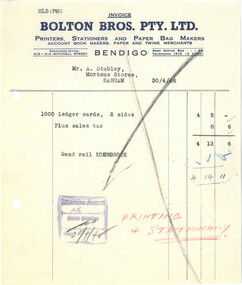
... 1948 Invoice for 1000 ledger cards purchased by A. Stubley, Morton's Stores, Barham 10934.25b Monthly settlement AC Morton & Co. Little slips April 1938...1948 Invoice for 1000 ledger cards purchased by A. Stubley, Morton's Stores, Barham 10934.25b Monthly settlement AC Morton & Co. Little slips April 1938 ...Bolton Bros. Pty Ltd. History tells us that Benjamin Bolton and his two eldest sons, William and Arthur, began a printing business known as Bolton & Sons on March 25, 1885. Since its commencement in 1885, Bolton Office National has been locally owned and operated and is committed to being the leader in the provision of service and procurement solutions. Located in Bendigo, Bolton’s Office National is Central Victoria’s premier service provider of office products & solutions, providing procurement solutions for Stationery & Office Supplies, Office Furniture & Equipment, Business Technology Equipment, Printing Services, Industrial & Corporate Workwear, Photocopiers & Multi-Function Device Support. The location of the original printing business was in High Street but later moved to Williamson Street where the business underwent a name change to Bolton Bros and expanded into manufacturing paper bags and other stationery lines. In 1902, Bolton Bros moved to 43 Mitchell Street, which housed the retail stationery department and the main office, while the printing factory was on the second and third floors. Next door at 47 Mitchell Street, the wholesale division and machine service department operated. William and Arthur Bolton and their sons travelled throughout central and northern Victoria selling their own products and representing other companies. They are credited with being the innovators of the loose-leaf ledger. Today, of course, the business is back in Williamson Street with an even greater presence but the same entrepreneurial flair that has seen it survive and flourish through everything history has thrown at it. Having gone through five generations of family ownership, current company director-David Bolton, is proud of his company’s history and contribution to the local economy. https://www.officenational.com.au/shop/en/boltons/about-us10934.25a Bolton Bros. Pty. Ltd. 30 April 1948 Invoice for 1000 ledger cards purchased by A. Stubley, Morton's Stores, Barham 10934.25b Monthly settlement AC Morton & Co. Little slips April 1938 10934.25c Invoice to AC Morton & Co. binders 9 October 1942 10934.25d Invoice to Mr Stubley 1 Jan 1946 10934.25e Bolton bros. Pty Ltd. letter/telegram 5th September 1945 From Bolton Bro's to Morton's Stores 10934.25f Follow up letter to Morton's Stores 10 Sep 1945 10934.25g Invoice 27 Aug 1940 10934.25h Invoice to Morton & Co. 20 Dec 1939bolton bros pty ltd., bendigo, morton's stores -
 Victorian Interpretive Projects Inc.
Photograph - Colour, Clare Gervasoni, White Flat Grandstand, 07/10/2012
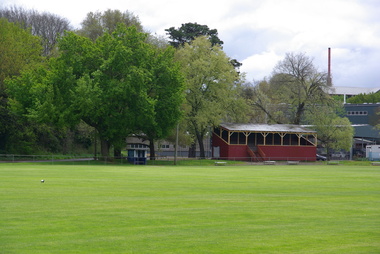
... 1938. Sonny served as a Member of the White Flat committee from 1932/1933 to 1948/1949. ...1938. Sonny served as a Member of the White Flat committee from 1932/1933 to 1948/1949. ...In 1925 there was a group known as the White Flat Improvement Committee. The White Flat Sports Reserve was officially opened on 18 March 1925 at which time Sir Alexander Peacock said that 'a wonderful change had been brought about at White Flat , and those who had brought it about would have the gratification of knowing that they were providing inestimable pleasure for the children and young people.' In 1934 the grandstand was moved to White Flat from the defunct Buninyong Racing Club. Albert Edward (Sonny) Mark was a foundation member of the Golden Point Cricket Club in 1910/1911 and part of the first Premiership side. He was a prominent A grade player and committee member for many years, including being Treasurer of the Club from at least 1933/34 to 1938/39. He acted as Golden Point delegate to the Ballarat District Cricket Association from 1934 to 1938. Sonny served as a Member of the White Flat committee from 1932/1933 to 1948/1949. Every year from the year 1933 until the Club went into recess in 1942 he took the chair for the election of President at annual meetings, an honour now reserved for Life Members. The B.D.C.A. B Grade shield named in Sonny Mark's honour for his contribution to the Golden Point Cricket Club and also to Ballarat cricket . He was instrumental in having the Grandstand at White Flat constructed and it was named in his honour. (http://goldenpoint.cricketvictoria.com.au/lifemembers.html)Five digital photographs of the grandstand at the White Flat Oval, Ballarat. Known as the A.E. 'Sonny' Mark Stand, it was opened in May 1934. ballarat, white flat, white flat sports ground, hickman street, south street, armstong street, oval -
 Bendigo Historical Society Inc.
Administrative record - BENDIGO NORTH PRIMARY SCHOOL: HONOUR BOARD, 1873-1999
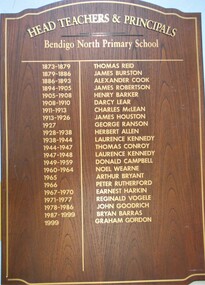
... Digital Photograph of Honour Board from Bendigo North Primary School: Head Teachers and Principals. 1873 - 1879 Thomas Read 1879 - 1886 James Burston 1886 - 1893 Alexander Cook 1894 - 1905 James Robertson 1905 - 1908 Henry Barker 1908 - 1910 Darcy Lear 1911 - 1913 Charles McLean 1913 - 1926 James Houston 1927 George Ranson 1928 - 1938 Herbert Allen 1938 - 1944 Laurence Kennedy 1944 - 1947 Thomas Conroy 1947 - 1948 Laurence Kennedy 1949 - 1959 Donald Campbell 1960 - 1964 Noel Wearne 1965 Arthur Bryant 1966 Peter Ri\utherford 1967 - 1970 Earnest Harkin 1971 - 1977 Reginald Vogele 1978 - 1986 John Goodrich 1987 - 1989 Bryan Barras 1999 Graham Gordon Honour Board in Container 1. ...Digital Photograph of Honour Board from Bendigo North Primary School: Head Teachers and Principals. 1873 - 1879 Thomas Read 1879 - 1886 James Burston 1886 - 1893 Alexander Cook 1894 - 1905 James Robertson 1905 - 1908 Henry Barker 1908 - 1910 Darcy Lear 1911 - 1913 Charles McLean 1913 - 1926 James Houston 1927 George Ranson 1928 - 1938 Herbert Allen 1938 - 1944 Laurence Kennedy 1944 - 1947 Thomas Conroy 1947 - 1948 Laurence Kennedy 1949 - 1959 Donald Campbell 1960 - 1964 Noel Wearne 1965 Arthur Bryant 1966 Peter Ri\utherford 1967 - 1970 Earnest Harkin 1971 - 1977 Reginald Vogele 1978 - 1986 John Goodrich 1987 - 1989 Bryan Barras 1999 Graham Gordon Honour Board in Container 1. ...North Bendigo Primary School operated from 1873 to 2010 when it amalgamated with Comet Hill Primary to become Lightening Reef Primary School, initially in Nolan Street before moving to a new building in Holmes Road.Digital Photograph of Honour Board from Bendigo North Primary School: Head Teachers and Principals. 1873 - 1879 Thomas Read 1879 - 1886 James Burston 1886 - 1893 Alexander Cook 1894 - 1905 James Robertson 1905 - 1908 Henry Barker 1908 - 1910 Darcy Lear 1911 - 1913 Charles McLean 1913 - 1926 James Houston 1927 George Ranson 1928 - 1938 Herbert Allen 1938 - 1944 Laurence Kennedy 1944 - 1947 Thomas Conroy 1947 - 1948 Laurence Kennedy 1949 - 1959 Donald Campbell 1960 - 1964 Noel Wearne 1965 Arthur Bryant 1966 Peter Ri\utherford 1967 - 1970 Earnest Harkin 1971 - 1977 Reginald Vogele 1978 - 1986 John Goodrich 1987 - 1989 Bryan Barras 1999 Graham Gordon Honour Board in Container 1. Decision to be made re keeping the Honour Board. Yellow Label -
 Ithacan Historical Society
Photograph, Speros Defteros, fruiterer, c 1950s
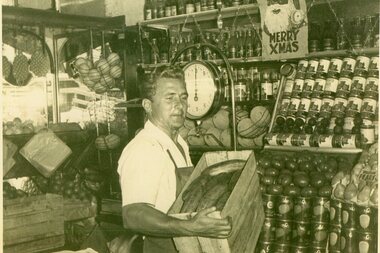
... 1938 to join his father in a Coburg fruit shop. During his working life he had fruit shops in Toorak Road in South Yarra, Centre Road in Bentleigh and Domain Road in South Yarra. He later supplied fruit to restaurants and hotels in Melbourne. As a result of racial prejudice he experienced on his arrival, Spero took up boxing and later wrestling where he experienced success and was nominated to compete for Greece in the London Olympics of 1948. ...1938 to join his father in a Coburg fruit shop. During his working life he had fruit shops in Toorak Road in South Yarra, Centre Road in Bentleigh and Domain Road in South Yarra. He later supplied fruit to restaurants and hotels in Melbourne. As a result of racial prejudice he experienced on his arrival, Spero took up boxing and later wrestling where he experienced success and was nominated to compete for Greece in the London Olympics of 1948. ...Speros Defteros is the fruiterer in the photograph. He arrived in Melbourne in 1938 to join his father in a Coburg fruit shop. During his working life he had fruit shops in Toorak Road in South Yarra, Centre Road in Bentleigh and Domain Road in South Yarra. He later supplied fruit to restaurants and hotels in Melbourne. As a result of racial prejudice he experienced on his arrival, Spero took up boxing and later wrestling where he experienced success and was nominated to compete for Greece in the London Olympics of 1948. As he was unnaturalised at the time of the Melbourne Olympics he competed once again for Greece in 1956. Spero is an example of many young Ithacans who left Greece between the war years to join relations in Melbourne and to work in a family business. They later went on to open their own business, mostly in food retailing businesses such as fruit, fish and chips, milk bars and restaurants. A black and white photograph of a man holding a box of cucumbers in his fruit shop. -
 Ithacan Historical Society
Photograph, Spero Defteros, c1960s
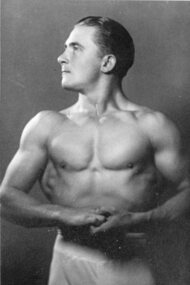
... A black and white photograph of the wrestler, Speros Defteros who represented Greece in the 1948 London and 1956 Melbourne Olympic Games. Although he had migrated to Melbourne in 1938 he was eligible to represent Greece as he was not naturalised. ...A black and white photograph of the wrestler, Speros Defteros who represented Greece in the 1948 London and 1956 Melbourne Olympic Games. Although he had migrated to Melbourne in 1938 he was eligible to represent Greece as he was not naturalised. ...A black and white photograph of the wrestler, Speros Defteros who represented Greece in the 1948 London and 1956 Melbourne Olympic Games. Although he had migrated to Melbourne in 1938 he was eligible to represent Greece as he was not naturalised. The IPS raised funds through an appeal to send Speros Defteros to the Olympic Games in London.A black and white photograph of an athletic male mounted on chip board.spiro -
Glen Eira Historical Society
Document - Glenhuntly Community Singers
... Also listed are the inscriptions on the cups won by the Glenhuntly Community Singers, one dated 25/10/1938 and the other 23/02/1948. These cups are located in room 1, wall 3, display case 1, shelves 2 and 3 respectively....Also listed are the inscriptions on the cups won by the Glenhuntly Community Singers, one dated 25/10/1938 and the other 23/02/1948. These cups are located in room 1, wall 3, display case 1, shelves 2 and 3 respectively. ...This file contains one item: 1/A typed and annotated sheet detailing a brief history of the Glenhuntly Community Singers. The history has been written by Carmel Finn and is dated 15/12/1987. Also listed are the inscriptions on the cups won by the Glenhuntly Community Singers, one dated 25/10/1938 and the other 23/02/1948. These cups are located in room 1, wall 3, display case 1, shelves 2 and 3 respectively.caulfield, caulfield historical society, the glenhuntly community singers, glenhuntly community singers, elliott douglas mr., royal avenue, glenhuntly, finn nina mrs., cohen beatrice, tattersall lorna, farmer ruby, eagle lottie, lang ruby, mann tiny, mathewson olive, pearse thelma, finn carmel, ormond, o’connor debora, music, conductors, people associated with culture, entertainers, singers, musical instruments, community organisations, community groups, competitions, world war 1939 – 1945, wars, social services, war effort, charitable organisations, glen huntly -
 Kiewa Valley Historical Society
Photograph - Building of Myrtleford Ski Club
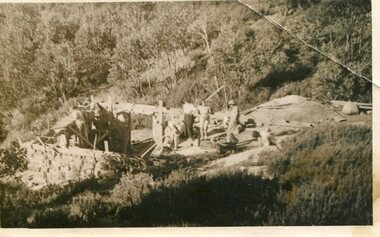
... 1938. It is an excellent example of early sporting and community activities in the Upper Kiewa Valley area. Photograph shows family members, including women, involved in the construction. Myrtleford Ski Club Skiing Snow sports Victorian Alps Falls Creek Handwritten on the back of photograph in black pen - Building Myrtleford Ski Club (about 1948) Stamped on back of photograph - 6 2511 Sepia photograph of the building of the Myrtleford Ski Club about 1948 Photograph - Building of Myrtleford Ski Club ...Myrtleford Ski Club is a non-commercial, family friendly club. It was one of the earliest lodges to be built at Falls Creek and was one of the earliest ski clubs formed and celebrated its 75th anniversary in 2013. In 1949, Myrtleford Ski Club obtained permission for occupancy and began planning the MSC Lodge. There were only three other huts on the mountain, Bogong Ski Club in an old Army hut, Skyline as the Ski Club of Victoria lodge and the Albury Ski Club lodge. The lodge was built mostly from donated materials. The basement was dug out and lined with stone from the Ruined Castle area, timber was cut (using cross-saws) from the Walpole properties and was milled then carted up to Falls Creek on either the Walpole or Calvert trucks. The iron on the roof was originally a tobacco kiln on Billy McNamara's property. The lodge has undergone many improvements over the years including a second storey added in the 1950’s, updating of accommodation, shower and toilet facilities to meet the changing needs of members. The lodge now caters for 38 people in a variety of shared rooms from two to eight beds per room. Toilet and shower facilities are also shared. The club has a Lodge Managers for the winter season. Myrtleford Ski Lodge was one of the earliest ski lodges built in the Falls Creek area in 1938. It is an excellent example of early sporting and community activities in the Upper Kiewa Valley area. Photograph shows family members, including women, involved in the construction.Sepia photograph of the building of the Myrtleford Ski Club about 1948Handwritten on the back of photograph in black pen - Building Myrtleford Ski Club (about 1948) Stamped on back of photograph - 6 2511myrtleford ski club, skiing, snow sports, victorian alps, falls creek -
 Warrnambool and District Historical Society Inc.
Trophy, 4/19 L H Camp 1938, 1930s
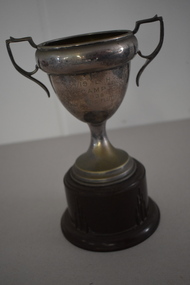
... 1948 the 17th Prince of Wales Light Horse, the 19th Yarrowee Light Horse and the 4th (ex 20th ) Corangamite Light Horse amalgamated to form a revived 4/19 Light Horse. This regiment kept alive the tradition of the original Light Horse units, becoming part of the Australian Army Reserve and members served in Vietnam and East Timor. This cup is of interest as an example of the trophies awarded for competition at a Light Horse regiment camp in the 1930s. Light Horse Regiments. Warrnambool district history of warrnambool ‘Westminster’ 4/19 L.H. Camp 1938 ...This is a trophy awarded at a camp of the 4/19 Light Horse Regiment. This regiment appeared to have been based in the Corangamite region of the Western District and included regiment members from Warrnambool. It is not known exactly what type of competition was an ‘Officers Flutter’. Light Horse regiments were cavalry regiments that were established at the time of the Crimean War in the 1860s. During the First World War the 4th Light Horse served with distinction in France, Gallipoli and Palestine. In 1948 the 17th Prince of Wales Light Horse, the 19th Yarrowee Light Horse and the 4th (ex 20th ) Corangamite Light Horse amalgamated to form a revived 4/19 Light Horse. This regiment kept alive the tradition of the original Light Horse units, becoming part of the Australian Army Reserve and members served in Vietnam and East Timor. This cup is of interest as an example of the trophies awarded for competition at a Light Horse regiment camp in the 1930s. This is a metal cup (silver amalgam)) with two side handles and a narrow stem attached to a silver base. The cup is attached to a brown Bakelite stand. The inside of the cup has some white paint streaks and the cup itself is much stained and pock-marked. ‘Westminster’ 4/19 L.H. Camp 1938 Officers Flutter light horse regiments. warrnambool district, history of warrnambool -
 Sunshine and District Historical Society Incorporated
Archive - Sunday School, St John's Deer Park
... 1938-1942. Hand-written reports on St John's Sunday School, Deer Park 1950-1958. Sunday School accounts 1943-1957, Financial records except for 1946 and 1948. ...1938-1942. Hand-written reports on St John's Sunday School, Deer Park 1950-1958. Sunday School accounts 1943-1957, Financial records except for 1946 and 1948. ...See 1815'Sunday School' 'St John's SS, Deer Park, Vic.' 'Collections 1943 to 1957' - all on front of accounts bookst. johns church, deer park, miles street, church -
 Robin Boyd Foundation
Slide, Robin Boyd, 1950
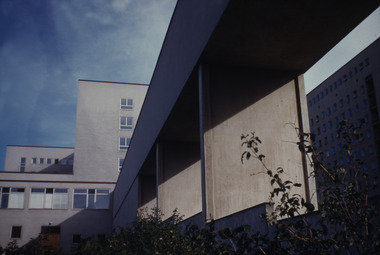
... 1948 Robin Boyd was awarded ‘joint first place’ in the Robert Haddon competition for his design of Mildura art gallery. The scholarship helped fund their first overseas trip. Robin and Patricia were passengers on the Greek ship “Cyrenia” departing in May 1950, passing through the Suez Canal and landing in Genoa five weeks later. For six months, they travelled extensively throughout Europe (predominantly driving themselves) - France, Italy, United Kingdom, Sweden, Denmark, Germany, Austria, Switzerland and Spain. Haddon Travelling Scholarship Haddon robin boyd slide Stockholm / 1 / Hospital / Hospital / Arch. H. Cedestrom / 1938 ...Penleigh Boyd, Robin and Patricia Boyd's son, writes “Prior to 1950 Robin, like most other amateur or hobby photographers, took black and white printed photographs. The oldest slides date from 1950 when Robin and Patricia travelled to Europe on Robin’s Robert Haddon Travelling Scholarship.” In 1948 Robin Boyd was awarded ‘joint first place’ in the Robert Haddon competition for his design of Mildura art gallery. The scholarship helped fund their first overseas trip. Robin and Patricia were passengers on the Greek ship “Cyrenia” departing in May 1950, passing through the Suez Canal and landing in Genoa five weeks later. For six months, they travelled extensively throughout Europe (predominantly driving themselves) - France, Italy, United Kingdom, Sweden, Denmark, Germany, Austria, Switzerland and Spain.Colour slide in a mount. Stockholm Hospital (1938-) , Stockholm, Sweden. (Architect: Hjalmar Cederstom .)Stockholm / 1 / Hospital / Hospital / Arch. H. Cedestrom / 1938- / Encircled 4B (All Handwritten)haddon travelling scholarship, haddon, robin boyd, slide -
 Robin Boyd Foundation
Slide, Robin Boyd, 1950
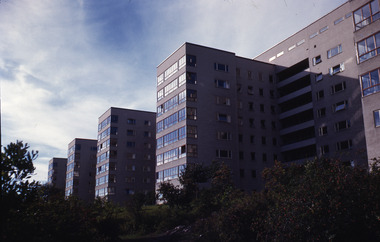
... 1948 Robin Boyd was awarded ‘joint first place’ in the Robert Haddon competition for his design of Mildura art gallery. The scholarship helped fund their first overseas trip. Robin and Patricia were passengers on the Greek ship “Cyrenia” departing in May 1950, passing through the Suez Canal and landing in Genoa five weeks later. For six months, they travelled extensively throughout Europe (predominantly driving themselves) - France, Italy, United Kingdom, Sweden, Denmark, Germany, Austria, Switzerland and Spain. Haddon Travelling Scholarship Haddon robin boyd slide Stockholm / Hospital / Hospital / Arch: H, Cederstrom / 1938 ...Penleigh Boyd, Robin and Patricia Boyd's son, writes “Prior to 1950 Robin, like most other amateur or hobby photographers, took black and white printed photographs. The oldest slides date from 1950 when Robin and Patricia travelled to Europe on Robin’s Robert Haddon Travelling Scholarship.” In 1948 Robin Boyd was awarded ‘joint first place’ in the Robert Haddon competition for his design of Mildura art gallery. The scholarship helped fund their first overseas trip. Robin and Patricia were passengers on the Greek ship “Cyrenia” departing in May 1950, passing through the Suez Canal and landing in Genoa five weeks later. For six months, they travelled extensively throughout Europe (predominantly driving themselves) - France, Italy, United Kingdom, Sweden, Denmark, Germany, Austria, Switzerland and Spain.Colour slide in a mount. Stockholm Hospital (1938-), Stockholm, Sweden. (Architect: Hjalmar Cederstom .)Stockholm / Hospital / Hospital / Arch: H, Cederstrom / 1938- (All Handwritten)haddon travelling scholarship, haddon, robin boyd, slide -
 Robin Boyd Foundation
Slide, Robin Boyd, 1950
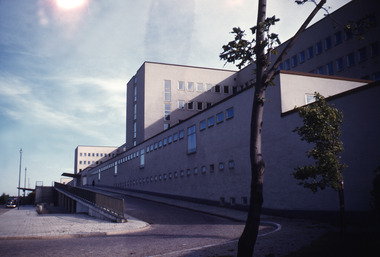
... 1948 Robin Boyd was awarded ‘joint first place’ in the Robert Haddon competition for his design of Mildura art gallery. The scholarship helped fund their first overseas trip. Robin and Patricia were passengers on the Greek ship “Cyrenia” departing in May 1950, passing through the Suez Canal and landing in Genoa five weeks later. For six months, they travelled extensively throughout Europe (predominantly driving themselves) - France, Italy, United Kingdom, Sweden, Denmark, Germany, Austria, Switzerland and Spain. Haddon Travelling Scholarship Haddon robin boyd slide Stockholm / Hospital / Hospital / Arch: H. Cederstrom / 1938 ...Penleigh Boyd, Robin and Patricia Boyd's son, writes “Prior to 1950 Robin, like most other amateur or hobby photographers, took black and white printed photographs. The oldest slides date from 1950 when Robin and Patricia travelled to Europe on Robin’s Robert Haddon Travelling Scholarship.” In 1948 Robin Boyd was awarded ‘joint first place’ in the Robert Haddon competition for his design of Mildura art gallery. The scholarship helped fund their first overseas trip. Robin and Patricia were passengers on the Greek ship “Cyrenia” departing in May 1950, passing through the Suez Canal and landing in Genoa five weeks later. For six months, they travelled extensively throughout Europe (predominantly driving themselves) - France, Italy, United Kingdom, Sweden, Denmark, Germany, Austria, Switzerland and Spain.Colour slide in a mount. Stockholm Hospital (1938-) , Stockholm, Sweden. (Architect: Hjalmar Cederstom .)Stockholm / Hospital / Hospital / Arch: H. Cederstrom / 1938- (All Handwritten)haddon travelling scholarship, haddon, robin boyd, slide -
 Uniting Church Archives - Synod of Victoria
Photograph, C. early 20th century
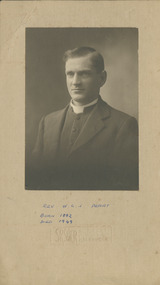
... Arnaud 1938; Seymour & Nagambie 1942; Echuca 1946; Mornington 1948; Supernumerary 1949....Arnaud 1938; Seymour & Nagambie 1942; Echuca 1946; Mornington 1948; Supernumerary 1949. peart, w.c.j. ...Rev William Peart was born in Victoria in 1881 (not 1882), ordained in 1911 and died in Springvale in 1949. He was stationed at: Goroke 1911; Yackandandah 1912; Wodonga and Bethanga; 1916 A.I.F combatant soldier 3 years, Chaplain 1 year; Drouin & Bunyip 1920; Footscray 1913; Mildura 1914; 1926 resting (war disability); Boort 1932; Launceston South 1935; St. Arnaud 1938; Seymour & Nagambie 1942; Echuca 1946; Mornington 1948; Supernumerary 1949.B & W waist length studio portrait of Rev. William C.J. Peart mounted on buff card."Rev. W.C.J. Peart Born 1882 Died 1949"peart, w.c.j.
