
Showing 61 items matching "activ"
-
 Flagstaff Hill Maritime Museum and Village
Photograph
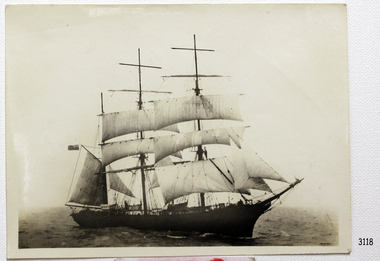
... ...activ...Black and White Photograph of the sailing ship Activ. 164mm x 120mm. SH 024 Ships A - B....flagstaff hill warrnambool shipwrecked-coast flagstaff-hill flagstaff-hill-maritime-museum maritime-museum shipwreck-coast flagstaff-hill-maritime-village activ sailing ship activ Black and White Photograph of the sailing ship Activ. 164mm x 120mm. ...Black and White Photograph of the sailing ship Activ. 164mm x 120mm. SH 024 Ships A - B.flagstaff hill, warrnambool, shipwrecked-coast, flagstaff-hill, flagstaff-hill-maritime-museum, maritime-museum, shipwreck-coast, flagstaff-hill-maritime-village, activ, sailing ship activ -
 Ringwood and District Historical Society
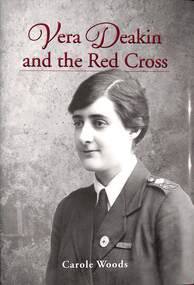
Book, Royal Historical Society of Victoria, Vera Deakin and the Red Cross - Carole Woods, 2020
... Hardcover book exploring Vera Deakin's national and international humanitarian activism and assisting several welfare groups, particularly the Red Cross....Hardcover book exploring Vera Deakin's national and international humanitarian activism and assisting several welfare groups, particularly the Red Cross. ...Hardcover book exploring Vera Deakin's national and international humanitarian activism and assisting several welfare groups, particularly the Red Cross.The centenary of World War 1 has focused attention on the 32,000 case files of the Australian enquiry bureau and given renewed redcognition to Vera Deakin's key role in the search for the missing. Carole Woods OAM is a Fellow and Honorary Secretary of the Royal HistoricalSociety of Victoria. A longtime advocate for community history, she chaired the judges' panel of the Victorian Community History Awards for seven years. Carole curated two major exhibitions at the RHSV related to the Australian Red Cross. Her books include Vision Fugitive: The Story of David Allen, and Beechworth: A Titan's Field. -
 National Wool Museum
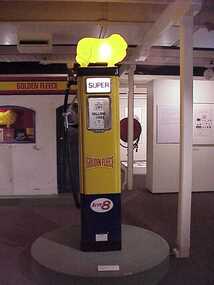
Petrol Bowser, Golden Fleece petrol bowser with ram and hose
... SUPER / Wayne / GOLDEN FLEECE / ACTIV-8 / Contains / LEAD / TETRA-ETHYL / To be used as motor / fuel only and not for / other purposes. ...Wayne / DOLLARS CENTS / GALLONS / AT / CENTS PER GALLON THIS GLASS / MUST BE FULL / BEFORE AND AFTER / DELIVERY Wayne / GOLDEN FLEECE / ACTIV-8 / Contains / Lead / TETRA-ETHYL / To be used as motor / fuel only and not for / other purposes. ...The Golden Fleece Petroleum Company was established by H.C. Sleigh in 1913 importing petroleum from California, and was acquired by Caltex in 1981. The Golden Fleece ram trademark was created in 1951 when Golden Fleece petroleum became a single-brand service. The Golden Fleece ram was based on an actual prize winning merino ram named 'David of Dalkeith' from Boonoke Stud, run by the Falkiner family. Single brand service stations did not appear until the 1950s, and distinctive trademarks and logos were used to differentiate and promote the brands. This bowser is a fully restored example of a 'Wayne' model (a typical bowser from the 1950s).Image of Golden Fleece bowser installed in Logo Merino exhibition at the National Wool Museum. Information and pictures from various websites re: Golden Fleece. Golden Fleece and Caltex information from the Caltex website.SUPER / Wayne / GOLDEN FLEECE / ACTIV-8 / Contains / LEAD / TETRA-ETHYL / To be used as motor / fuel only and not for / other purposes. Avoid spilling. Wayne / DOLLARS CENTS / GALLONS / AT / CENTS PER GALLON THIS GLASS / MUST BE FULL / BEFORE AND AFTER / DELIVERY Wayne / GOLDEN FLEECE / ACTIV-8 / Contains / Lead / TETRA-ETHYL / To be used as motor / fuel only and not for / other purposes. Avoid spilling.h.c. sleigh pty ltd golden fleece petroleum company, logo merino: sheep in australian art and design - exhibition (29/07/2000 - 04/02/2001) -
 Unions Ballarat
Each in his office: Studies of men in power (Don Woodward Collection), Mallaby, George, 1972
... An analysis of men in leadership positions, encompassing politics, the public service, education, the armed forces, & activism. There is one chapter about the power of women....An analysis of men in leadership positions, encompassing politics, the public service, education, the armed forces, & activism. There is one chapter about the power of women. ...An analysis of men in leadership positions, encompassing politics, the public service, education, the armed forces, & activism. There is one chapter about the power of women.Britons, biographies, leadership.Book; 190 pages. Dustjacket: blue background; green and white lettering; author's name and title. Cover: blue background; gold lettering; author's name and title.btlc, ballarat trades hall, ballarat trades and labour council, mallaby, george, leadership - male, leadership - female, politics and government - united kingdom, armed forces, public servants, activism -
 Women's Art Register
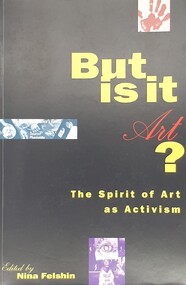
Book - Anthology, Nina Felshin, But is it Art? The Spirit of Art as Activism, 1995
... Documenting the hybrid of community organising and political activism which emerged in the mid-1970s,. Includes work by The Guerrilla Girls, The Women's Action Coalition and Gran Fury. ...The Spirit of Art as Activism Book Anthology Nina Felshin Bay Press ...A collection of essays by art critics, historians and journalists exploring 12 individual and group practices of activist art making. An overview of the dynamic exhibitions, events, happenings and cultural practices engaged in creating social change.BookA collection of essays by art critics, historians and journalists exploring 12 individual and group practices of activist art making. An overview of the dynamic exhibitions, events, happenings and cultural practices engaged in creating social change.public art, collective, interdisciplinary, body, racism, durational art, social practice, museology, feminism, collaboration -
 Merri-bek City Council
Artwork, other - Marble, terrazzo and porcelain inlaid pavers, Enver Camdal et al, Freedom Flock, 2020
... 'Freedom Flock' commemorates prisoners of conscience who were imprisoned for anti-conscription, anti-war, or peace activism at Pentridge Prison and other prisons across Victoria. ...'Freedom Flock' commemorates prisoners of conscience who were imprisoned for anti-conscription, anti-war, or peace activism at Pentridge Prison and other prisons across Victoria. ...'Freedom Flock' commemorates prisoners of conscience who were imprisoned for anti-conscription, anti-war, or peace activism at Pentridge Prison and other prisons across Victoria. Australia has a long history of jailing peace activists who protest against war and conscription, and this artwork pays homage to these people who have sacrificed their freedom for peace. This artwork commemorates prisoners of conscience who were imprisoned for anti-conscription, anti-war, or peace activism at Pentridge Prison and other prisons across Victoria.merri-bek public art collection -
 Sunshine and District Historical Society Incorporated
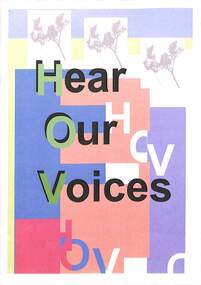
Book - Hear Our Voices, Melbourne's Living Museum of the West, 1999
... The book highlights grassroots histories, featuring local women across a variety of roles in the community, arts, politics, social activism, and education. Olwen Ford, former Melbourne's Living Museum of the West Director, wrote the Foreword....The book highlights grassroots histories, featuring local women across a variety of roles in the community, arts, politics, social activism, and education. Olwen Ford, former Melbourne's Living Museum of the West Director, wrote the Foreword. migration political activism social history women in the western suburbs The book showcases, through an exhibition, the contributions, achievements, and stories of women in Melbourne’s western suburbs, emphasizing their vital roles in the society they lived in. ...The book showcases, through an exhibition, the contributions, achievements, and stories of women in Melbourne’s western suburbs, emphasizing their vital roles in the society they lived in.Soft covered booknon-fictionThe book showcases, through an exhibition, the contributions, achievements, and stories of women in Melbourne’s western suburbs, emphasizing their vital roles in the society they lived in.migration, political activism, social history, women in the western suburbs -
 Orbost & District Historical Society
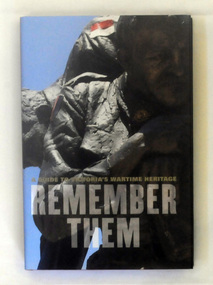
book, Remember Them, 2009
... Garrie Hutchinson has authored and edited over 30 books, In the early 1970s Hutchinson was heavily involved in anti-war activism and alternative journalism. From the late 1970s Hutchinson moved away from writing poetry and towards a journalistic career....Garrie Hutchinson has authored and edited over 30 books, In the early 1970s Hutchinson was heavily involved in anti-war activism and alternative journalism. From the late 1970s Hutchinson moved away from writing poetry and towards a journalistic career. ...This guidebook shares the personal stories of the individuals honoured in 250 of Victoria's key war memorials. It covers metropolitan Melbourne and regional Victoria, providing a unique insight into wartime history and the local heroes who fought overseas. Garrie Hutchinson has authored and edited over 30 books, In the early 1970s Hutchinson was heavily involved in anti-war activism and alternative journalism. From the late 1970s Hutchinson moved away from writing poetry and towards a journalistic career.This is a significant research tool.A 308 pp hard cover book with a dust jacket titled Remember Them, A guide to Victoria's Wartime Heritage. The author is Garrie Hutchinson. On the front cover is a photograph of a close-up image of a sculpture of a soldier. The text is dark grey.It is arranged geographically, with accompanying maps and photographs,military-history memorials-victoria -
 Victorian Aboriginal Corporation for Languages
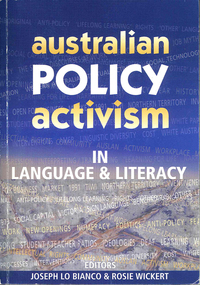
Book, Joseph Lo Bianco, Australian policy activism in language and literacy, 2001
... Australian Policy Activism in Language and Literacy presents the dynamics of language and literacy policy activism in Australia by capturing accounts of many of those most deeply engaged in Australia?...language activism linguistic diversity adult literacy education sign language reconciliation esl programs Australian Policy Activism in Language and Literacy presents the dynamics of language and literacy policy activism in Australia by capturing accounts of many of those most deeply engaged in Australia? ...Australian Policy Activism in Language and Literacy presents the dynamics of language and literacy policy activism in Australia by capturing accounts of many of those most deeply engaged in Australia?s distinctive practice of Language and Literacy policy-making and its effects. This book describes how policy texts came about. 1. From policy to anti-policy: how fear of language rights took policy-making out of community hands /? Joseph Lo Bianco 2. Australia's language /? Paul Brock 3. Politics, activism and processes of policy production: adult literacy in Australia /? Rosie Wickert 4. Although it wasn't broken, it certainly was fixed: interventions in the Australian Adult Migrant English Program 1991-1996 /? Helen Moore 5. Advocating the sustainability of linguistic diversity /? Michael Singh 6. The cost of literacy for some /? Anthea Taylor 7. (E)merging discourses at work: bringing together new and old ways to account for workplace literacy policy /? Geraldine Castleton 8. The melody changes but the dance goes on - tracking adult literacy education in Western Australia from 'learning for life' to 'lifelong learning': policy impacts on practice 1973-1999 /? Margaret McHugh, Jennifer Nevard and Anthea Taylor 9. Sleight of hand: job myths, literacy and social capital /? Ian Falk 10. National literacy benchmarks and the outstreaming of ESL learners /? Penny McKay 11. Open for business: the market, the state and adult literacy in Australia up to and beyond 2000 /? Peter Kell 12. Inventiveness and regression: interpreting/?translating and the vicissitudes of Australian language policy /? Uldis Ozolins 13. Deafness and sign language in government policy documents 1983-1990 /? Des Power 14. Imprisoned by a landmark narrative? Student/?teacher ratios and the making of policy /? Merilyn Childs 15. Ideologies, languages, policies: Australia's ambivalent relationship with learning to communicate in 'other' languages /? Angela Scarino and Leo Papademetre 16. Reconciled to what? Reconciliation and the Norther Territory's bilingual education program, 1973-1998 /? Christine Nicholls 17. Sing out that song: the textual activities of social technologies in an Aboriginal community /? Jack Frawley.language activism, linguistic diversity, adult literacy, education, sign language, reconciliation, esl programs -
 Sunshine and District Historical Society Incorporated
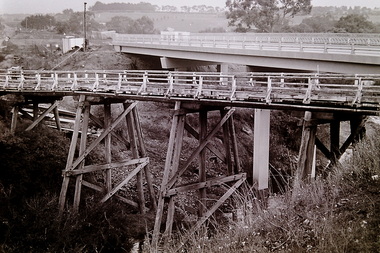
Photograph - Arundel Road Bridge Keilor 1988 Photographs, The Sunshine Advocate, 17th June 1988
... Its story spans construction challenges, floods, community activism, restoration, closure, and finally its destruction in the 2022 Maribyrnong floods....Its story spans construction challenges, floods, community activism, restoration, closure, and finally its destruction in the 2022 Maribyrnong floods. ...The Arundel Road Bridge is one of the most historically significant river crossings in Melbourne’s west, a rare surviving timber trestle bridge directly tied to the Closer Settlement movement and early agricultural development in Keilor. In 1991, the Keilor Council decided to demolish the bridge due to the high restoration and annual maintenance costs. After significant backlash from the community, the Council reversed their decision later in the same year. Its story spans construction challenges, floods, community activism, restoration, closure, and finally its destruction in the 2022 Maribyrnong floods.These photographs were taken shortly before the new concrete bridge opened just upstream in 1989. They offer a rare glimpse of vehicles using the old timber trestle bridge in its final years.Arundel Road Bridge Keilor 537.2arundel road bridge, arundel farm, maribyrnong river, keilor -
 Uniting Church Archives - Synod of Victoria
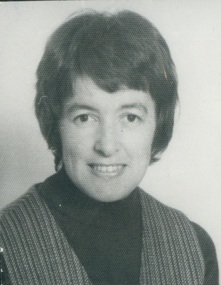
BW photo, Undated, pre-1977
... A retired Uniting Church Minister, Dorothy McRae-McMahon was a former Minister of the Pitt Street, Sydney Church, which was renowned for its work in human rights and local activism. She received recognition for her work with the award of the Australian Government Peace Medal in 1987 and in 1988 with the Australian Human Rights Medal. ...A retired Uniting Church Minister, Dorothy McRae-McMahon was a former Minister of the Pitt Street, Sydney Church, which was renowned for its work in human rights and local activism. She received recognition for her work with the award of the Australian Government Peace Medal in 1987 and in 1988 with the Australian Human Rights Medal. ...A retired Uniting Church Minister, Dorothy McRae-McMahon was a former Minister of the Pitt Street, Sydney Church, which was renowned for its work in human rights and local activism. She received recognition for her work with the award of the Australian Government Peace Medal in 1987 and in 1988 with the Australian Human Rights Medal. In 1997, she came out as a lesbian at the National Assembly of the Uniting Church in Perth and resigned from her position later in the year, citing the focus on her sexuality, which she felt was affecting the church. She is active in publishing books of services of worship, prayers, etc.Rev. Dorothy McRae McMahon; head and shoulders portraitRev. D. McMahon (original name when photograph taken) Presbyterian Life 24 September ? p12rev. dorothy mcrae mcmahon, retired uca minister; pitt street sydney uca; author -
 Sunshine and District Historical Society Incorporated
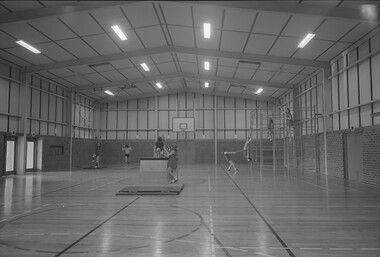
Photograph - Maribyrnong High School Gymnasium Photographs
... The school became known for its multicultural student body and union activism in the 1970s. This included the 1971 teacher’s “Control of Entry” strike of 11 weeks, one of the most important industrial actions in Victorian education history that helped to establish the principle that all students must be taught by qualified teachers. ...The school became known for its multicultural student body and union activism in the 1970s. This included the 1971 teacher’s “Control of Entry” strike of 11 weeks, one of the most important industrial actions in Victorian education history that helped to establish the principle that all students must be taught by qualified teachers. ...Maribyrnong High School opened in 1958. The school served in the rapidly growing Maidstone and Maribyrnong districts. During the post war and migration era’s (1950s–1970s), the school became increasingly multicultural due to the nearby Maribyrnong Migrant Hostel (opened 1949) with many European, Middle Eastern, and later Asian migrant students. The school became known for its multicultural student body and union activism in the 1970s. This included the 1971 teacher’s “Control of Entry” strike of 11 weeks, one of the most important industrial actions in Victorian education history that helped to establish the principle that all students must be taught by qualified teachers. The school was later renamed to the Maribyrnong Secondary College and then Maribyrnong College. The school is now well known for its sports academy program. maribyrnong high school, river street, maribyrong, maidstone -
 Sunshine and District Historical Society Incorporated
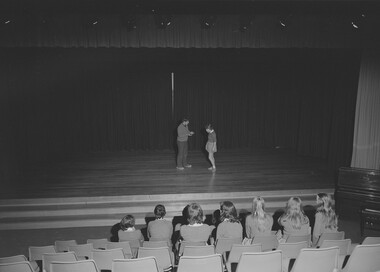
Photograph - Maribyrnong High School Drama Class Photograph
... The school became known for its multicultural student body and union activism in the 1970s. This included the 1971 teacher’s “Control of Entry” strike of 11 weeks, one of the most important industrial actions in Victorian education history that helped to establish the principle that all students must be taught by qualified teachers. ...The school became known for its multicultural student body and union activism in the 1970s. This included the 1971 teacher’s “Control of Entry” strike of 11 weeks, one of the most important industrial actions in Victorian education history that helped to establish the principle that all students must be taught by qualified teachers. ...Maribyrnong High School opened in 1958. The school served in the rapidly growing Maidstone and Maribyrnong districts. During the post war and migration era’s (1950s–1970s), the school became increasingly multicultural due to the nearby Maribyrnong Migrant Hostel (opened 1949) with many European, Middle Eastern, and later Asian migrant students. The school became known for its multicultural student body and union activism in the 1970s. This included the 1971 teacher’s “Control of Entry” strike of 11 weeks, one of the most important industrial actions in Victorian education history that helped to establish the principle that all students must be taught by qualified teachers. The school was later renamed to the Maribyrnong Secondary College and then Maribyrnong College. The school is now well known for its sports academy program. maribyrnong high school, river street, maribyrong, maidstone -
 Ararat Gallery TAMA
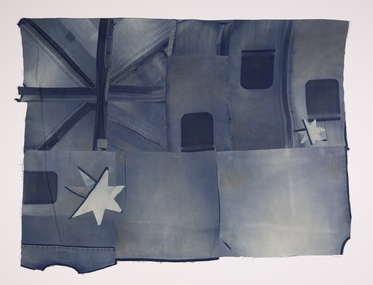
Raquel Ormella, Workers Blues # 2, 2016
... Raquel Ormella is an artist working at the intersections of art and activism, with a diverse practice that includes textiles, video, installation, drawings, and zines. ...Raquel Ormella is an artist working at the intersections of art and activism, with a diverse practice that includes textiles, video, installation, drawings, and zines. ...Raquel Ormella is an artist working at the intersections of art and activism, with a diverse practice that includes textiles, video, installation, drawings, and zines. Ormella explores how contemporary art can prompt viewers to reflect on their own beliefs and values regarding political consciousness and social action. Her art practice is also grounded in exploring the nature of the relationship between humans and the natural environment. This artwork, Workers Blues #2, reimagines the Australian National Flag, constructing a rough-hewn approximation of it from blue workers shirts. Flags are one of the most powerful uses of fabric; Ormella is echoing the flag design to explore tensions between aspirational nationhood and the personal effect of this has on individuals, marginalised social groups and the environment. Ormella’s choice of material – blue cotton workers shirts - also references gendered associations with cloth, with masculine nationalism symbolised by the workers shirts, including in the mining industry. The work is an example of the symbolic power of cloth as a marker of identity, including gender and class. -
Federation University Historical Collection
Article - Article - Women, Ballarat Girls' Technical School: Women of Note; Joan Kirner (1938 - 2015)
... Like all women at the time, her marriage to her husband, Ron, a teacher at the Ballarat Junior Technical School in 1960, meant that she was precluded from permanency in the service, an injustice which fueled much of her activism as an education lobbyist and later, as Minister for Education. ...Like all women at the time, her marriage to her husband, Ron, a teacher at the Ballarat Junior Technical School in 1960, meant that she was precluded from permanency in the service, an injustice which fueled much of her activism as an education lobbyist and later, as Minister for Education. ...Joan Kirner was born on the 20th June, 1938, the only child of John Keith Hood and Beryl Edith Cole, whose belief that girls could do anything holds importance in explaining Joan's commitment to improving the status of girls and women Joan graduated from Melbourne University in 1958, and was sent to Ballarat where she taught at the Ballarat Girls' Technical College. Like all women at the time, her marriage to her husband, Ron, a teacher at the Ballarat Junior Technical School in 1960, meant that she was precluded from permanency in the service, an injustice which fueled much of her activism as an education lobbyist and later, as Minister for Education. The birth of three children, and the move back to Melbourne, marked the beginning of Joan's career as a community activist. Joan Kirner's career in politics has two distinctive phases: twelve years in the Victorian Parliament (1982-1994), the remaining decades in community politics. In the Victorian parliament, Joan held the positions of Minister for Conservation, 1985, Minister for Education, 1988, Deputy Premier, 1989, and Victoria's first woman Premier, 1990 to 1992. She retired from parliament in May, 1994. She was a Co-founder of Emily's List which supports women wishing to enter Parliament. Joan Kirner introduced the Victorian Certificate of Education. Awarded Companion of the Order of Australia in 2012 and Centenary Medal in 2001.women of note, joan kirner, joan hood, melbourne university, ballarat girls' technical school, ballarat junior technical school, education lobbyist, minister for education, community activist, victorian parliament, 1982-1994, minister for conservation, deputy premier, first woman premier, emily's list, victorian certificate of education, companion of the order of australia, centenary medal -
 Brighton Historical Society
Dress, 1975
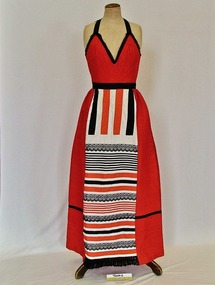
... Mary's involvement in activism began in 1966 when she joined the staff of the Association of Architects, Engineers & Draughtsmen (AAESDA), where she was responsible for advertising, layout and proofreading editorial for its journal 'Blueprint'. ...Mary's involvement in activism began in 1966 when she joined the staff of the Association of Architects, Engineers & Draughtsmen (AAESDA), where she was responsible for advertising, layout and proofreading editorial for its journal 'Blueprint'. ...Mary Owen OAM (1921-2017) purchased this dress in 1975 in Mexico while attending the first World Conference on Women and wore it to the reception there. A dedicated feminist, unionist and activist, she was a vocal campaigner for the empowerment of women, particularly in the fight for equal pay. Mary's involvement in activism began in 1966 when she joined the staff of the Association of Architects, Engineers & Draughtsmen (AAESDA), where she was responsible for advertising, layout and proofreading editorial for its journal 'Blueprint'. Her contact with the union awoke an interest in women's rights in the workplace, and in 1969 after she joined Dr Bertram Wainer's Progressive Reform Party, which advocated for legalised abortion. She joined the Women's Electoral Lobby in 1972 and remained an active member for over forty-three years, representing the WEL on many government committees. She was a founding co-coordinator of the Working Women's Centre Melbourne from 1975 until 1986, a founding member of EMILY's List Australia, an early member of the Melbourne Press Club and an early supporter of the Australian Women's Archives Project. An annual Mary Owen Dinner was held in her honour for twenty years from 1986 until 2007, which brought together hundreds of women each year. Mary was awarded the Queen's Silver Jubilee Medal in 1977 and the Order of Australia Medal in 1984. She was added to the Victorian Honour Roll of Women in 2001.Red, white and black cotton halter neck dress with rows of pin tucking on the bodice and applied horizontal strips of red and black cotton and black lace to the skirt. Label, woven black on white acetate, centre back: Disenado con carino por / GEORGIA CHARUHAS / HECHO / EN MEXICO Label, woven black on white acetate, centre back: Gerorgia's / BOUTIQUE LAS MARIPOSAS / Designer: / Georgia Charuhas / MERIDA YUCATAN, MEXICOmexico, international women's conference, 1970s fashion, georgia charuhas, feminism, mary owen -
 Ararat Gallery TAMA
David McDiarmid, Untitled (T-shirt), 1984
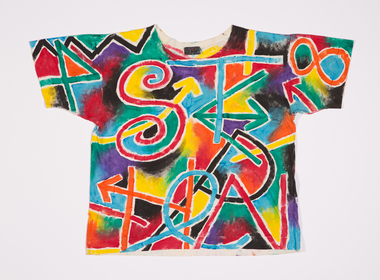
... McDiarmid was an important figure in gay activism in Melbourne and Sydney-based protests for gay rights and was one of the original activists for of the first Sydney Mardi Gras Parade in 1978. ...McDiarmid was an important figure in gay activism in Melbourne and Sydney-based protests for gay rights and was one of the original activists for of the first Sydney Mardi Gras Parade in 1978. ...David McDiarmid was a queer artist, designer and activist, born in Hobart, and lived between Melbourne, Sydney and New York. McDiarmid’s art practice was kaleidoscopic, celebratory and political. This artwork, Untitled (T-shirt), was presented to Stephen Allkins, a pioneering Sydney DJ, as a gift of the artist. The front of the t-shirt includes the letters for the word, STEPHEN, and the numbers for the year it was made, 84, while the back of the t-shirt includes the letters for the word, SYDNEY. The period in which this artwork was produced was a particularly tumultuous time. The HIV/AIDS epidemic emerged in the early 1980s and rapidly became a global public health emergency. McDiarmid was living in New York at the time, witnessing the forefront of epidemic and with his community deeply affected, and friends and lovers dying, he “suspected he was HIV-Positive…[and] would be dead with two years”. McDiarmid was an important figure in gay activism in Melbourne and Sydney-based protests for gay rights and was one of the original activists for of the first Sydney Mardi Gras Parade in 1978. Later he served as designer and then artistic director for the Sydney Gay and Lesbian Mardi Gras (1988-1990) and, in 1992, produced a series of posters for the AIDS Council of New South Wales. McDiarmid advocated for artists’ intellectual property, presenting at Sydney Writers' Festival and the Arts Law Centre of Australia on the management of artists’ estates in the face of HIV/AIDS epidemic. -
 Emerald Museum & Nobelius Heritage Park
Booklet - The Argus Recipe Book, Stella Allan, Recipes by Vesta of the Argus, Circa 1939
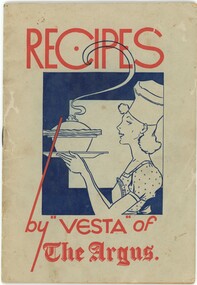
... During her time at the Argus she moved away from the radical activism of her youth, becoming an establishment figure over the course of her long career. ...During her time at the Argus she moved away from the radical activism of her youth, becoming an establishment figure over the course of her long career. ...This is a recipe book, with sections for recipes for "Soups", "Meat Dishes", "Breakfast, Luncheon and Supper Dishes", "Egg Dishes and Pastry Recipes", "Sweets Course", and "For Afternoon Tea". The pages alternate between a page on the left containing recipes, and a page on the right instructing readers to paste recipes cut out from the Argus there. "Vesta," also known as Stella Allan, began her journalistic career as an active feminist and socialist in New Zealand who, after qualifying to practice law, overcame gendered exclusion from the all-male press gallery to work a prestigious position as a parliamentary correspondent. After moving to Melbourne in 1903, she was swiftly employed by the Argus newspaper and became the lead writer for the women's sections in 1908, continuing to work in the role until she retired in 1939. During this time she extensively covered domestic and community welfare topics, alongside advice columns replying to a vast quantity of letters; her writing contributed to creating a space in newspaper journalism to address the interests of women at the time. During her time at the Argus she moved away from the radical activism of her youth, becoming an establishment figure over the course of her long career. She was a prominent figure in Melbourne life as President of the Victorian Women’s Writers’ Club, the Lyceum Club, and a foundation member of the Australian Journalists’ Association. Even after her retirement from the Argus, her journalism continued to have an influence; during the Second World War, Stella reported from England on the wartime experiences of women and children. This recipe book was one of several written by "Vesta" - most likely, this is the 1939 edition - and aimed to provide a collection of nutritious recipes to aid women in choosing meals to cook for their households. The introduction to the book stresses the importance of nutrition, referring to a League of Nations survey that revealed that "in spite of our abundant and varied food supply, nutritional and dental diseases are much too prevalent in Australia." It calls on the women of Australia to fulfil the "great responsibility," of choosing and cooking nutritious meals.The cardstock front cover of this 32-page booklet features text denoting the title and author in red, and an illustration in blue of a woman wearing a chef's hat holding a pie in front of her, with steam rising from it. The rear features publication information and an advertisement. The booklet is bound with a single staple through the spine, and constructed from eight individual pieces of paper each with two pages of text printed on each side.non-fictionThis is a recipe book, with sections for recipes for "Soups", "Meat Dishes", "Breakfast, Luncheon and Supper Dishes", "Egg Dishes and Pastry Recipes", "Sweets Course", and "For Afternoon Tea". The pages alternate between a page on the left containing recipes, and a page on the right instructing readers to paste recipes cut out from the Argus there. "Vesta," also known as Stella Allan, began her journalistic career as an active feminist and socialist in New Zealand who, after qualifying to practice law, overcame gendered exclusion from the all-male press gallery to work a prestigious position as a parliamentary correspondent. After moving to Melbourne in 1903, she was swiftly employed by the Argus newspaper and became the lead writer for the women's sections in 1908, continuing to work in the role until she retired in 1939. During this time she extensively covered domestic and community welfare topics, alongside advice columns replying to a vast quantity of letters; her writing contributed to creating a space in newspaper journalism to address the interests of women at the time. During her time at the Argus she moved away from the radical activism of her youth, becoming an establishment figure over the course of her long career. She was a prominent figure in Melbourne life as President of the Victorian Women’s Writers’ Club, the Lyceum Club, and a foundation member of the Australian Journalists’ Association. Even after her retirement from the Argus, her journalism continued to have an influence; during the Second World War, Stella reported from England on the wartime experiences of women and children. This recipe book was one of several written by "Vesta" - most likely, this is the 1939 edition - and aimed to provide a collection of nutritious recipes to aid women in choosing meals to cook for their households. The introduction to the book stresses the importance of nutrition, referring to a League of Nations survey that revealed that "in spite of our abundant and varied food supply, nutritional and dental diseases are much too prevalent in Australia." It calls on the women of Australia to fulfil the "great responsibility," of choosing and cooking nutritious meals.books, domestic life, 1930s, cooking, the argus -
 Eltham District Historical Society Inc
Book, Nillumbik Shire Council, Celebrating Nillumbik Women 2008-2013, 2013
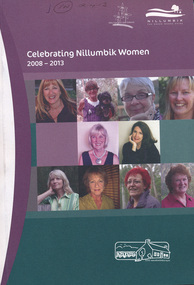
... We continue to be inspired by the quality and activism of our local women. Many of the biographies tell of women’s contribution to the building of the ‘social’ infrastructure of the Shire. ...We continue to be inspired by the quality and activism of our local women. Many of the biographies tell of women’s contribution to the building of the ‘social’ infrastructure of the Shire. ...This book was conceived by the Nillumbik Women's Network as a way of writing women into local history. When seeking nominations for the 2010 editon, the press release stated: Nillumbik Shire’s official histories don’t reflect the important but often unacknowledged contribution of local women to the development of the area. To redress this, the Nillumbik Women’s Network (NWN) initiated a small project, Celebrating Nillumbik women in late 2007.( For details of the Nillumbik Women’s Network refer to attachment) The NWN sought nominations of local women who had made, or continue to make, a significant contribution to the social and cultural life of our community. The brief profiles of the nominees were published in a booklet, which was launched at an International Women’s Day celebration in March 2008, and a second publication was produced in 2009. We continue to be inspired by the quality and activism of our local women. Many of the biographies tell of women’s contribution to the building of the ‘social’ infrastructure of the Shire. These stories complement the official historical accounts which primarily document men’s role in building the physical infrastructure of the Shire. One begins to develop a clearer picture of how women went about developing the services which we take for granted today, from the small kindergartens operating out of church halls to the wide ranging network of occasional and long day childcare care to the development of home based services for older frail and disabled residents of the area. They also tell of the bravery and resilience of women in their response to the devastating impact of the Black Saturday bushfires. This volume includes profiles of 23 women, 2013 Nominees in addition to those included since the project was launched in 2008. The 2008 nominations are: Wendy Alexander, Jane Ashton, Sharon Banner, Janet Boddy, Catherine Cervasio, Belinda Clarkson, Helen Coleman, Cathy Dean, Judy Duffy, Gwen Ford, Jenny Graves, Cath Giles, Meera Govil, Ona Henderson, Jill Jameson, Vicki Kaye, Mrs Kimber, Nerida Kirov, Jane Lauber, Pam Lawson, Anne Manne, Chris Marks, Elizabeth Marshall, Dawn McDonnell, Jenny Millar, Grace Mitchell, Jenni Mitchell, Michelle Molinaro, Joy Murphy, Rosie Murphy, Barbara Murray, Tracey Naughton, Josephine Norman, Pamela Pederson, Mary Robertson, Vicki Ruhr, Geraldine Sanderson, Dawn Shaw, Fiona Sievers, Myra Skipper, Selina Sutherland, Barbara Talbot, Marjorie Taylor, Julie Tipene-O’Toole, Susie Walker, Donna Zander. 2009: Jan Aitken, Rosemary Aitken – OAM, Edith Apted, Betty Anderson, Thelma Barkway, Diana Bassett-Smith, Jenneke Bateman-Korteweg, Amy Bryans, Sabi Buehler, Jenni Bundy, Audrey Cahn, Linda Cornelissen, Janice Crosswhite, Elean Dansey, Christine Durham Claire Fitzpatrick, Ailsa Fitzmaurice, Lucinda Flynn, Sheryl Garbutt MP, Fran Gronow, Ev Hales, Irene “Rennie” Harrison, Ena Jarvis, Heather Kaufmann. 1948-2007: Helen Kenney, Margot Knox – Pederson, Lois Loftus-Hills, Nina Mikhailovna Christesen AM (nee Maximov), Penny Mullinar, Gwayne Naug, Nanette Oates, Lisal O’Brien, Stella Reid, Laura Rohricht, Meg Russell, Sonia Skipper, Bronwyn South, Pauline Toner MP, Lisa Walton, Diana Warrell, Rachel Watt. The 2013 nominations are: Roslyn Addison, Sue Aldred, Lucy Anderson, Sue Arnold, Mary Avola, Anna Foletta, Morag Fraser, Danielle Green MP, Colleen Hackett, Pam Hayes, Barbara Joyce, Carol Leeson, Sandra and Bruce Poloni, Many Press, Carolyn Royse, Hannah Sky, Lorna Smith, Lynlee Tozer, Kilanthi Vassiliadis, Kerry Wailes, Gale Weiss, Irma Winton and Alexis Wright.This book is a significant in the recording of the contribution of local women to the development of the Shire of Nillumbik, especially for the time frame 2008 -- 2013. Historically women's stories generally have not been told at all, let alone their contributions acknowledged. This book profiles and documents women's stories that otherwise may not have been told.women, nillumbik women's network -
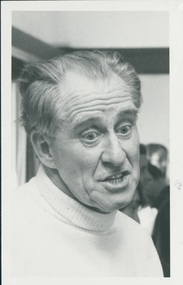 Uniting Church Archives - Synod of Victoria
Bw photo, Undated
... Harvey Perkins was a Methodist minister and a peacemaker throughout his life of service and social activism. He knew the certainty that without justice there can be no peace, within, or between, communities and nations. ...Harvey Perkins was a Methodist minister and a peacemaker throughout his life of service and social activism. He knew the certainty that without justice there can be no peace, within, or between, communities and nations. ...Harvey Perkins was a Methodist minister and a peacemaker throughout his life of service and social activism. He knew the certainty that without justice there can be no peace, within, or between, communities and nations. He was greatly influenced by ''liberation theology'' and framed his life of thought, analysis and action on the teachings of the Bible. He was also a visionary in working closely with Asian churches on ecumenical and social justice issues in a way that anticipated by decades the closer relationships Australia now enjoys with Asia. He understood that any form of intervention altered the power relationship within a community and often challenged the dominant social interests in the post-colonial Asian countries. He knew any form of aid had to empower its recipients and be based on a partnership of equality. In the early 1960s, Perkins was an opponent of the war in Indochina and conscription in Australia and played an important role in activating congregations to protest against the war. His keen intelligence, knowledge of history and analytical skills demolished the false foundation on which the US and its allies entered the war and he organised medical and social work teams in South Vietnam and Laos to help refugees and displaced persons. In the 1970s Perkins played an important role in ''decolonising'' and devolving power in the Methodist Church missions in Aboriginal Australia and the Pacific Islands by analysing power structures and relationships through what he had learnt in Asia. Harvey Perkins and his twin sister, Jean, were born in Tasmania on January 29, 1919, children of Leslie Perkins and his wife, Doris (nee Cook). Leslie was a Methodist minister and Harvey and Jean's childhood was spent in parishes in urban and rural areas of Tasmania and Victoria. The family saw the grinding poverty and desperate human need wrought by the Depression as a ceaseless tide of people came knocking at the door of the local parsonage for help. In 1941, Perkins enlisted as an officer in the Australian Navy and served in the Pacific theatre until 1946. To his children, he explained his justification as being the real threat of invasion but it was a war that altered the direction of his life. On discharge he abandoned his completed studies at Melbourne University in law and commerce and studied for a degree in divinity. He was active in the World Student Christian Federation and in 1949, was ordained into the Methodist Church. A few years later, Perkins travelled to a World Student Christian Federation conference in Canada, on his way to study in Cambridge, and met an expatriate, Jill McCrory. They married in 1953. After Cambridge, Perkins returned to Australia and served as a minister in the Mitcham area of the growing Melbourne outer suburbs until 1956, when he was appointed General Secretary of the Australian Council of Churches and director of the Inter-Church Aid and Refugee World Service. From 1968 to 1971, Perkins worked with the East Asian Christian Conference and then took a position with the World Council of Churches in Geneva with its Commission on Churches Participation in Development. He returned to Australia in 1973 to a position with the Methodist Board of Missions and then returned to the Christian Conference of Asia in 1976 and relocated to Singapore for several years. Before retiring in 1984 he worked with the Uniting Church Board of Social Responsibility. In retirement Perkins continued to work in the Dee Why parish, enjoying preaching, leading study groups and working as a pastor in a local community. Along with his work, Perkins had a lifelong passion for AFL and his beloved team North Melbourne. Wherever he was in the world he could be found fiddling with a short-wave radio to listen to a game. In later years, Perkins developed Alzheimer's and his home became his haven until two weeks before his death. Harvey Perkins is survived by Jill, children Mary, Ro, David, Marguerite, Anna, Harvey and Kate and their partners, 13 grandchildren and two great-grandchildren. Jean died in 1981. (Obituary in the SMH by David Perkins) Head and shoulders portrait of Rev. Harvey PerkinsRev. Harvey Perkinsrev. harvey perkins; methodist minister; christian conference of asia; australian council of churches -
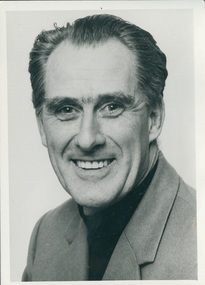 Uniting Church Archives - Synod of Victoria
BW photo, Undated
... Harvey Perkins was a Methodist minister and a peacemaker throughout his life of service and social activism. He knew the certainty that without justice there can be no peace, within, or between, communities and nations. ...Harvey Perkins was a Methodist minister and a peacemaker throughout his life of service and social activism. He knew the certainty that without justice there can be no peace, within, or between, communities and nations. ...Harvey Perkins was a Methodist minister and a peacemaker throughout his life of service and social activism. He knew the certainty that without justice there can be no peace, within, or between, communities and nations. He was greatly influenced by ''liberation theology'' and framed his life of thought, analysis and action on the teachings of the Bible. He was also a visionary in working closely with Asian churches on ecumenical and social justice issues in a way that anticipated by decades the closer relationships Australia now enjoys with Asia. He understood that any form of intervention altered the power relationship within a community and often challenged the dominant social interests in the post-colonial Asian countries. He knew any form of aid had to empower its recipients and be based on a partnership of equality. In the early 1960s, Perkins was an opponent of the war in Indochina and conscription in Australia and played an important role in activating congregations to protest against the war. His keen intelligence, knowledge of history and analytical skills demolished the false foundation on which the US and its allies entered the war and he organised medical and social work teams in South Vietnam and Laos to help refugees and displaced persons. In the 1970s Perkins played an important role in ''decolonising'' and devolving power in the Methodist Church missions in Aboriginal Australia and the Pacific Islands by analysing power structures and relationships through what he had learnt in Asia. Harvey Perkins and his twin sister, Jean, were born in Tasmania on January 29, 1919, children of Leslie Perkins and his wife, Doris (nee Cook). Leslie was a Methodist minister and Harvey and Jean's childhood was spent in parishes in urban and rural areas of Tasmania and Victoria. The family saw the grinding poverty and desperate human need wrought by the Depression as a ceaseless tide of people came knocking at the door of the local parsonage for help. In 1941, Perkins enlisted as an officer in the Australian Navy and served in the Pacific theatre until 1946. To his children, he explained his justification as being the real threat of invasion but it was a war that altered the direction of his life. On discharge he abandoned his completed studies at Melbourne University in law and commerce and studied for a degree in divinity. He was active in the World Student Christian Federation and in 1949, was ordained into the Methodist Church. A few years later, Perkins travelled to a World Student Christian Federation conference in Canada, on his way to study in Cambridge, and met an expatriate, Jill McCrory. They married in 1953. After Cambridge, Perkins returned to Australia and served as a minister in the Mitcham area of the growing Melbourne outer suburbs until 1956, when he was appointed General Secretary of the Australian Council of Churches and director of the Inter-Church Aid and Refugee World Service. From 1968 to 1971, Perkins worked with the East Asian Christian Conference and then took a position with the World Council of Churches in Geneva with its Commission on Churches Participation in Development. He returned to Australia in 1973 to a position with the Methodist Board of Missions and then returned to the Christian Conference of Asia in 1976 and relocated to Singapore for several years. Before retiring in 1984 he worked with the Uniting Church Board of Social Responsibility. In retirement Perkins continued to work in the Dee Why parish, enjoying preaching, leading study groups and working as a pastor in a local community. Along with his work, Perkins had a lifelong passion for AFL and his beloved team North Melbourne. Wherever he was in the world he could be found fiddling with a short-wave radio to listen to a game. In later years, Perkins developed Alzheimer's and his home became his haven until two weeks before his death. Harvey Perkins is survived by Jill, children Mary, Ro, David, Marguerite, Anna, Harvey and Kate and their partners, 13 grandchildren and two great-grandchildren. Jean died in 1981. (Obituary in the SMH by David Perkins) Head and shoulders portrait of the Rev. Harvey Perkins. Photo taken some years before the photo of him in F524 -9Rev. Harvey Perkinsrev. harvey perkins; methodist minister; christian conference of asia; australian council of churches -
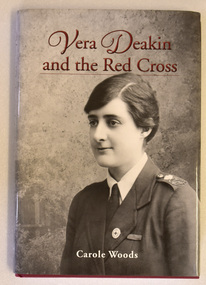 Warrnambool and District Historical Society Inc.
Book, Carole Woods, Vera Deakin and the Red Cross, 2020
... vera deakin red cross world war one This book is a biographical account of Vera Deakin, daughter of Alfred and Pattie Deakin and explores Vera's national and international humanitarian activism and the key role she played in searching for the missing in World War One. ...This book is a biographical account of Vera Deakin, daughter of Alfred and Pattie Deakin and explores Vera's national and international humanitarian activism and the key role she played in searching for the missing in World War One.A hard cover book of 244 pages. The front of glossy paper dust jacket has a black and white, 1918 portrait of Vera Deakin in uniform with a red cross badge on her left lapel. The rear cover has a black and white photo of a family home. The book title is in maroon print and the author's name is in white print at the bottom of the front cover non-fictionThis book is a biographical account of Vera Deakin, daughter of Alfred and Pattie Deakin and explores Vera's national and international humanitarian activism and the key role she played in searching for the missing in World War One.vera deakin, red cross, world war one -
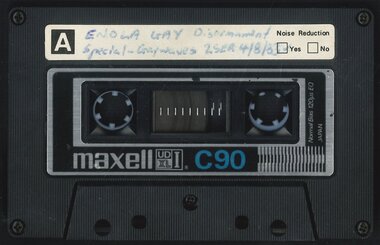 Australian Queer Archives
Audio, 2SER 107.3 FM (Radio Station : Sydney, NSW) : Gaywaves : 4/8/1983 : Enola Gay special on disarmament, 1983
... Produced for Enola Gay's participation in Hiroshima Day, Sat 6 August 1983, assembling at Belmore Park at 10 am under the Enola Gay banners. 0:00: Introduction and song; 3:50: Japanese instrumental music; 9:08: Commentary resumes - history of the bombing of Hiroshima, 6 Aug 1945, and Nagasaki 3 days later; 15:30: Music Tomorrow never comes until it's too late; 19:45: Commentary including accounts from survivors; 26:58: Music, Take the toys from the boys; 29:25: Commentary regarding arms race, including voice of Fabian LoSchiavo regarding dissident religious views in the USA; 33:05: Music, California dreaming; 36:10: Commentary re the practicalities of bomb shelters; 38:00: Music, Cancer, cancer; 41:40: Commentary re peace marches in Europe, health effects of radiation, civil defense in nuclear war, music; 47:35: Music, Universal soldier (cut off towards end), anti-war parody of Yankee Doodle Uncle Sam with Australian refs (Omega, Pine Gap etc); 59:10: Commentary regarding nuclear bomb testing at Marilinga (SA) and Monte Bello islands; 1:01:15: Music, 'But I aint a marchin' any more'; 1:04:05: Commentary re costs of arms race - refs to gay and feminist anti-war groups overseas; 1:05:58: Music, Down by the riverside/Aint gonna study war no more, promo for Enola Gay and prep for Hiroshima Day, instrumental music, music US forces (Midnight Oil), Soft touch (Poison Girls); 1:26:56: Music, Thank Christ for the bomb, eerie instrumental music, Maralinga (Midnight Oil), Not another bomb song, ending at 1:39:00. Anti-nuclear activism Gay and lesbian activism Hiroshima Day Inscribed in biro on label: "ENOLA GAY Disarmament Special - Gaywaves 2SER 4/8/83." ...Produced for Enola Gay's participation in Hiroshima Day, Sat 6 August 1983, assembling at Belmore Park at 10 am under the Enola Gay banners. 0:00: Introduction and song; 3:50: Japanese instrumental music; 9:08: Commentary resumes - history of the bombing of Hiroshima, 6 Aug 1945, and Nagasaki 3 days later; 15:30: Music Tomorrow never comes until it's too late; 19:45: Commentary including accounts from survivors; 26:58: Music, Take the toys from the boys; 29:25: Commentary regarding arms race, including voice of Fabian LoSchiavo regarding dissident religious views in the USA; 33:05: Music, California dreaming; 36:10: Commentary re the practicalities of bomb shelters; 38:00: Music, Cancer, cancer; 41:40: Commentary re peace marches in Europe, health effects of radiation, civil defense in nuclear war, music; 47:35: Music, Universal soldier (cut off towards end), anti-war parody of Yankee Doodle Uncle Sam with Australian refs (Omega, Pine Gap etc); 59:10: Commentary regarding nuclear bomb testing at Marilinga (SA) and Monte Bello islands; 1:01:15: Music, 'But I aint a marchin' any more'; 1:04:05: Commentary re costs of arms race - refs to gay and feminist anti-war groups overseas; 1:05:58: Music, Down by the riverside/Aint gonna study war no more, promo for Enola Gay and prep for Hiroshima Day, instrumental music, music US forces (Midnight Oil), Soft touch (Poison Girls); 1:26:56: Music, Thank Christ for the bomb, eerie instrumental music, Maralinga (Midnight Oil), Not another bomb song, ending at 1:39:00.Maxwell UD XL I - C90 cassette tapeInscribed in biro on label: "ENOLA GAY Disarmament Special - Gaywaves 2SER 4/8/83."anti-nuclear activism, gay and lesbian activism, hiroshima day -
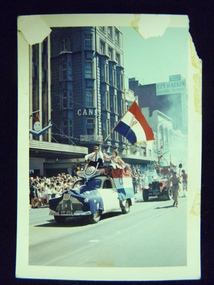 Croatian-Australian Immigration Museum
Photograph, April 1962
... The struggle for independence of Croatia and Croatian identity in Australia. photograph 1960s parade demonstration activism Handwritten inscription on the back of the photograph "April 1962". ...The struggle for independence of Croatia and Croatian identity in Australia. This is a photograph taken in April 1962 of a motor vehicle in a parade taking place in Swanston Street, Melbourne, which is decorated in the Croatian and Australian National Flags. Handwritten inscription on the back of the photograph "April 1962". photograph, 1960s, parade, demonstration, activism -
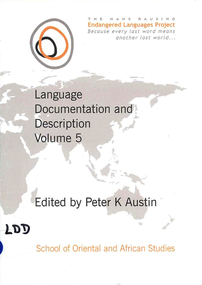 Victorian Aboriginal Corporation for Languages
Journal, Peter K Austin, Language documentation and description, Vol. 5, 2008
... linguistics language documentation language activism B&w photographs, graphs, word lists, screen shots Language documentation and description, Vol. 5 Journal Peter K Austin ...B&w photographs, graphs, word lists, screen shotslinguistics, language documentation, language activism -
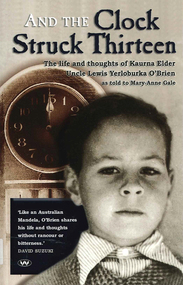 Victorian Aboriginal Corporation for Languages
Book, Lewis Yerloburka O'Brien, And the clock struck thirteen : the life and thoughts of Kaurna Elder Uncle Lewis Yerloburka O'Brien /? as told to Mary-Anne Gale, 2007
... Kaurna South Australia political activism colour photographs, maps, b&w photographs The story of Kaurna man Uncle Lewis O'Brien and his family, beginning with his great, great grandmother Kudnarto - the first Aboriginal woman to marry a white man in South Australia. ...The story of Kaurna man Uncle Lewis O'Brien and his family, beginning with his great, great grandmother Kudnarto - the first Aboriginal woman to marry a white man in South Australia. Contents: 1: Padniadlu wadu: Let's walk together in harmony 2: Kudnarto of Skillogalee Creek 3: Who was Tom Adam senior? 4: Tom and Tim Adams of Poonindie 5: The Adams Family of Point Pearce mission 6: Treasured memories and lessons from the mission 7: My difficult childhood 8: Leaving school and doing an apprenticeship 9: Joining the Merchant Navy 10: Becoming a 'land-lover' and settling down 11: Reflections on working in schools and university 12: Sharing our space 13: Achievements and celebrations.colour photographs, maps, b&w photographskaurna, south australia, political activism -
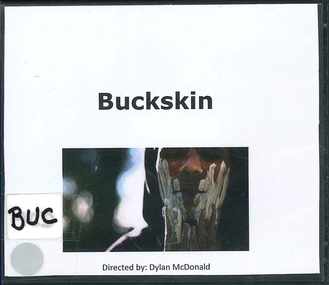 Victorian Aboriginal Corporation for Languages
DVD, Dylan McDonald, Buckskin, 2013
... Kaurna South Australia language activism DVD Jack Buckskin is a man whose mission is to sculpt a new urban Aboriginal language and culture, and through that bring hope back to his people. ...Jack Buckskin is a man whose mission is to sculpt a new urban Aboriginal language and culture, and through that bring hope back to his people. Broadcast on ABC1 Television on 13 October, 2013DVDkaurna, south australia, language activism -
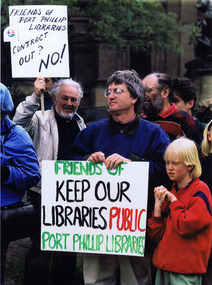 St Kilda Historical Society
Photograph - Activism, 1996
... Colour photograph Photograph Activism ...Protest by the Friends of Port Phillip Libraries (FOPPL) outside the State Library of Victoria about the contracting out of Port Phillip Library Services in 1996. According to the FOPPL, this was the only documented case of privatisation of a public library service in Australia. Archives of the campaign: St Kilda Historical Society.Colour photographL to R Colin S Watson, Hans Lofgren, Kai Lofgren. Demonstration at State Library of Victoria by Friends of Port Phillip Libraries, 1996, opposing contracting out of the library service, City of Port Phillip. Only documented case of privatisation of a public library service in Australia. Archives of the campaign: St Kilda Historical Society.st kilda, port phillip, port phillip library, port phillip library service, 1996 -
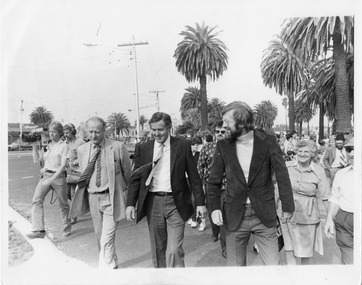 St Kilda Historical Society
Photograph - Activism, Save St Kilda Train protest, 1981
... Black and white photograph, unmounted Save St Kilda Train protest Photograph Activism ...There was strong community opposition to the planned closure of the St Kilda line after 130 years of operation. The line officially closed on 31 July 1987. In the front line on the left is Clyde Holding MP (federal Member for Melbourne Ports). On the right is Andrew McCutcheon MLA (State Member for St Kilda). The group is walking along the Esplanade towards Fitzroy Street.Black and white photograph, unmountedStamped on reverse: SUNDAY OBSERVER PHOTOGRAPH 46 PORTER ST., PRAHRAN Phone: 520 5555 30 MAR 1981 Written in pencil on reverse: Do not cut! david rae collection, st kilda, st kilda train, save st kilda trains campaign -
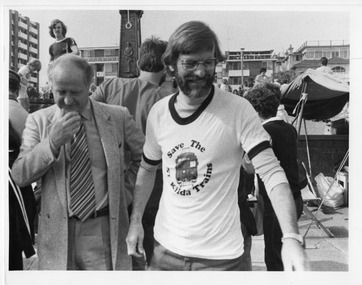 St Kilda Historical Society
Photograph - Activism, Save St Kilda Train protest, 1981
... Black and white photograph, unmounted Save St Kilda Train protest Photograph Activism ...Save St Kilda Train protest in March 1981. The group is in Alfred Square. The Boer War memorial is behind them. The men in the foreground are, from left, Clyde Holding MP (federal Member for Melbourne Ports) and Andrew McCutcheon MLA (State Member for St Kilda). There was strong community opposition to the planned closure of the St Kilda line after 130 years of operation. The line officially closed on 31 July 1987. Black and white photograph, unmountedWritten in pencil on reverse: Do not cut! david rae collection, st kilda, st kilda train, save st kilda trains campaign
