
Showing 123 items matching "agricultural machine"
-
 University of Melbourne, Burnley Campus Archives
Photograph - Black and white print, Farm Machine, c. 1920
... ...agricultural machine...Kneen - may have some relevance to teaching of Agricultural Science in the early 1920's." teaching agricultural science agricultural machine farm machine Black and white photograph. ...Possibly not Burnley. Note by T.H. Kneen 26 February 1992, "Origin of this photograph not known to E.B.L. & T.H. Kneen - may have some relevance to teaching of Agricultural Science in the early 1920's."Black and white photograph. Farm machine.teaching, agricultural science, agricultural machine, farm machine -
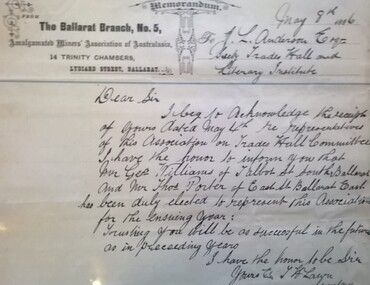 Unions Ballarat
General incoming correspondence of the Ballarat Trades and Labour Council, 1884-1923; 1925; 1931; 1937; 1938; 1949-1950; 1952-1955
... victorian agricultural implement and machine makers' society...Victorian Agricultural Implement and Machine Makers' Society - regarding Sunshine Harvesting Works. 29 October 1904. 1. ...Victorian Agricultural Implement and Machine Makers' Society - regarding Sunshine Harvesting Works. 29 October 1904. 1. ...Paper/letters stored in two boxes. Arranged in separate folders by year. The lists below are alphabetical. Located by year and number. 1884 - J.W. Graham, Secretary 18. Amalgamated Mining Engine Drivers' Association - regarding appointing a delegate to Council. 12 December 1884. 14. Bendigo Amalgamated Miners' Association, Mr Phillips, Secretary - regarding formation of a Bendigo Trades and Labor Council. 22 July 1884. 1. B? Secretary for Lands, Victoria - regarding deputation from Council to him. 8 January 1884. 15. A.R. Davie - regarding half holiday Union appointing delegates to Council. 77 July 1884. 8. D.M. Davies - regarding deputation to Minister for Lands, Victoria. 11 January 1884. 7. J.L. Dowe - regarding deputation to Minister for Lands, Victoria. 11 January 1884. 6. F.R. Fincham - regarding deputation to Minister for Lands, Victoria. 11 January 1884. 16. J.W. Grahame - regarding leave of absence. 10 October 1884. 17. W. Hosking - regarding alteration of rule 14. n.d. 2. J. Kline - regarding apologies for absence from Council meeting. 10 January 1884. A copy of a letter to The Courier is attached. 4. Painters' Union (Geoff Ludbrook) - regarding assisting at Eight Hour Anniversary. 11 January 1884. 13. J. Pearce - regarding apologies for absence from Council. 11 July 1884. 12. G. Rasy? - regarding apologies for absence from Council. 9 May 1884. 3. J.R. Richardson - regarding presence on deputation to Minister for Lands. 10 January 1884. 10. R.D. Reid - regarding apologies for absence from Council. 11 January 1884. 9. A. Sutherland - regarding presence on deputation to Minister for Lands. 10 January 1884. 11. Specifications for stamping marbles for Council. n.d. 5. A. Young - deputation to Minister for Lands. 10 January 1884. 1885 - J.L. Anderson, Secretary 8. Amalgamated Mining Engine Drivers' Association - regarding delegates to Council. 8 May 1885. 11. J. Anderson (Secretary of Council) to H. Uren MLA - regarding amalgamation of the Council with the City Free Library. 10 August 1885. 24. Ballarat Cricket Club - regarding using the oval for Eight Hour Anniversary. 9 December 1885. 7. Ballarat Woollen Mills Operative Union - regarding giving name of Union, list of Union members. 8 May 1885. 4. Ballarat Typographical Association - regarding printing of Council material. 8 May 1885. 2. J. Binner - regarding prizes given at Eight Hour Anniversary. 26 April 1885. 19. Cabmens Union, Ballarat - regarding delegate to Council. 8 October 1885. 12. Carpenters and Joiners Trade Society - regarding delegate to Council. 7 September 1885. 23. Carpenters and Joiners Trade Society - forwarding a copy of rules. 8 December 1885. 14. H. Clotz, et al - regarding Friday half holiday for hairdressers. 10 September 1885. 1. Eight Hours Anniversary Programme. 21 April 1885. 15. Friendly Society of Ironmoulders of Victoria, Ballarat Branch - new Secretary of same. 11 September 1885. 17. Friendly Society of Ironmoulders of Victoria, Ballarat Branch - regarding delegate to Council. 7 October 1885. 21. Friendly Society of Ironmoulders of Victoria, Ballarat Branch - regarding delegate to Council. 22 November 1885. 5. E. Ingram - regarding losses incurred at Eight Hour Anniversary. 8 May 1885. 20. L. Mills - regarding apologies for absence. 9 October 1885. 3. Painters' Union - regarding delegates to Council. 4 May 1885. 18. Painters' Union - regarding delegates to Council. 8 October 1885. 25. J. Pearce - regarding apologies for absence. 11 December 1885. 26. C. Salter - regarding donations to Eight Hours Anniversary. 14 December 1885. 6. A. Smith - regarding apologies for absence. 8 May 1885. 9. E.H. Swifte - regarding amalgamation of Council with Free City Library. 13 July 1885. 10. E.H. Swifte - regarding amalgamation of Council with Free City Library. 7 August 1885. 13. Tanners and Curriers of Ballarat - regarding forming a branch of the Union in Ballarat. 8 September 1885. 16. Trades and Labor Council, Brisbane - regarding formation of same. 8 November 1885. 7. J. Treloar - regarding apologies for absence. 8 May 1885. 1886 - J.L. Anderson, Secretary 7. Amalgamated Miners' Association of Australasia - regarding Delegates to Council. 8 May 1886. 3. Amalgamated Mining Engine Drivers Association, Ballarat Branch - regarding Delegates to Council. 7 May 1886. 5. Amalgamated Society of Engineers - regarding Delegates to Council. 11 May 1886. 1. Half Holiday Union, Ballarat - regarding Delegates to Council. 7 May 1886. 6. Operative Bakers' Society - regarding Delegates to Council. 11 May 1886. 4. Painters' Union - regarding Delegates to Council. 11 May 1886. 2. Victorian Operative Bootmakers Union, Ballarat Branch - regarding delegates to Council. 12 May 1886. 8. Ballarat United Friendly Societies' Dispensary - accepting an offer of a deputation to special meeting of General Committee. 1887 - T. Bayley, Secretary Nil. 1888 - T.S. Bayley, Secretary 24. Amalgamated Miners' Association of Australasia - regarding meeting to hear Dr Siscs on the Worn out Miners Sustentation Fund. 6 December 1888. 7. Australian Natives' Association, Ballarat Branch - regarding alienation of portion of public park. 21 June 1888. 19. Ballarat Trades and Labour Council (to various unions) - regarding support of direct labor representation in Parliament from Ballarat West. 20 October 1888. 11. Ballarat Typographical Society - regarding room for meeting. 6 July 1888. 22. A. Callaway (Chief Secretary for A. Deakin) - regarding names submitted for Commission of the Peace. 19 November 1888. 9. Eight Hours' Anniversary Committee - regarding money for tickets sold. 27 June 1888. 15. W.F. Emery - regarding apologies for absence. 14 September 1888. 6. Gillies (for the Victorian Premier) - regarding Chinese immigrants. 8 May 1888. 1. Grocers Association of Geelong - regarding joining Council. 14 April 1888. 5. Half Holiday Union - regarding delegates to Council. 3 May 1888. 18. Intercolonial Trades and Labor Union Congress, 6th, Hobart, 5-8 February 1888 (Hugh Kirk, Secretary of Hobart Trades and Labor Council) - regarding printed invitations to the Congress. 27 October 1888. 13. Ironworkers Assistants' Society of Victoria, Ballarat Branch - regarding delegates to Council. 8 August 1888. 14. Ironworkers Assistants' Society of Victoria, Ballarat Branch - regarding delegates to Council. 4 September 1888. 23. Ironworkers Assistants' Society of Victoria, Ballarat Branch - regarding delegates to Council. 14 December 1888. 8. H. Jones - regarding Major Dane's lectures. 25 June 1888. 2. Locomotive Engine Drivers and Firemen's Association - regarding delegates to Council. 17 April 1888. 17. A. McKenzie - regarding apologies for absence. n.d. 3. V.M. Pearson - regarding organisation of a trades union in Colac. 14 April 1888. 10. John Shiels - regarding overdraft of Council. 6 July 1888. 21. Tanners and Curriers Union, Ballarat Branch - regarding delegates to Council. 12 November 1888. 20. Trades Hall Council, Geelong - thanking for assistance from Council. 11 November 1888. 4. Trades Hall Council, Melbourne. (David Bennett, Secretary) - regarding new regulations by-laws and standing orders. 17 April 1888. 16. Victorian Operative Bricklayers Society - regarding end of dispute. 14 September 1888. 12. John Wilson - regarding Report of Committee on opening of the new Trades Hall. 13 July 1888. 1889 - J. Wilson, Secretary 8. Ballarat Woollen and Worsted Company - regarding support of products by working class. 2 November 1889. 9. Butchers Employees' Association - regarding delegate to Council. 2 December 1889. 1A. Copy of an award of the arbitration in the dispute between Messrs Whitten and Cairns and the Ballarat Bootmakers' Union. 14 February 1889. 10. Half Holiday Union - regarding delegate to Council. 3 December 1889. 1-6. Ironworkers Assistants' Society of Victoria, Ballarat Branch - regarding Phoenix Foundry dispute. 20 March 1889-29 March 1889. 11. Painters' Union - regarding formation of a non-union society. 4 December 1889. 13. Painters' Union - regarding formation of a non-union society. 6 December 1889. 12. Messers Stansfield, Bush and Shepphard, Decorators - accuses Painters' Union of instigating a strike. 5 December 1889. 7. Working Men's College and Trades Hall Council, Melbourne - regarding memorial to the late Hon. Francis Ormond. n.d. 1890 - J. Wilson, Secretary 81. James Alexander - regarding request for financial assistance. 30 October 1890. 21. Amalgamated Millers, Engine Drivers and Mill Employees' Association of Australasia - regarding supplying list of firms employing union labour. 4 June 1890. 2. Amalgamated Miners of Australasia (W.C. Spence, Secretary) - thanking Council for their supportive letter. March 1890. 52. Amalgamated Miners of Australasia, Ballarat Branch - regarding suggestion to canvass Ballarat district for funds for strikers. 88. Amalgamated Miners of Australasia (W.G. Spence) - regarding donation from residents of Clementston for Ballarat men out of work and not receiving funds from Council. 15. Amalgamated Society of Engineers, Ballarat Branch - regarding supplying list of shops employing Union labour. 28 April 1890. 44. Amalgamated Society of Engineers, Ballarat Branch - regarding giving numbers of men out of work. 30 September 1890. 69. Amalgamated Society of Engineers, Ballarat Branch - regarding approving members of their union being placed on the relief list. 23 October 1890. 70. T. Bailey - regarding apology for being unable to canvas for strike fund. 23 October 1990. 102. Balance sheet of strike fund of the Council and bundle of receipts. 18. Ballarat Plumbers' Union - regarding supplying a list of firms employing union labour. 6 June 1890. 16. Ballarat Saddle Harness and Collar Makers' Society - regarding supplying a list of firms employing union labour. 5 May 1890. 42. Ballarat Tailoresses' Union - regarding donation to strike fund. 25 September 1890. 45. Ballarat Town Council Employees - regarding donation to strike fund. n.d. 12. Ballarat Typographical Society - regarding supplying name of Secretary and list of firms employing union labour. 19 April 1990. 5. Ballarat Woollen Mills Operative's Union - regarding seeking advice on how to get men to join the union. 22 April 1890. 26B. E. Batterly - regarding apology for being unable to come to mass meeting about strike. 11 September 1890. 46. E. Blayney (hotel owner) - regarding donation to strike fund. n.d. 56. G. Blyman - regarding donation to strike fund. 8 October 1890. 55. J. Brady - regarding donation to strike fund. 6 October 1890. 76. J. Braidie et al - querying reason for getting no strike pay. 27 October 1890. 22. M. Bregazzi - regarding donation to strike fund. 2 September 1890. 34. M. Bregazzi - regarding donation to strike fund. 12 September 1980. 40. M. Bregazzi - regarding donation to strike fund. 23 September 1890. 72. M. Bregazzi - regarding donation to strike fund. 24 October 1890. 57. J. Clement - regarding donations from residents of Clementston for use in Ballarat. 9 October 1890. 3A. D.M. Davies (Minister of Mines, Victoria) - regarding cannot come to mass meeting in Ballarat (telegram). 12 September 1890. 53. W Davies et al - regarding seeking financial from Council though not members of a union. 6 October 1890. 59. W. Davies - objecting to refusal of financial assistance. 10 October 1890. 94. Hugh Dunlop - regarding request for financial assistance. 28 November 1890. 32. John Dunn - regarding apologies for unable to attend mass meeting. 12 September 1890. 60. John Dunn - regarding donation to strike fund. 11 October 1890. 71. W. Evans - regarding resignation as Treasurer and member from strike committee. 24 October 1890. 48. Fitzgerald Bros (Drapers) - regarding donation to strike fund. 1 October 1890. 63. Friendly Society of Ironmoulders of Victoria, Ballarat Branch - recommending financial assistance for a member of their Union. 13 October 1890. 29. J. Hancock - regarding being able to attend mass meeting (telegram). 12 September 1890. 74. Horse Drivers' Union, Ballarat - regarding request for financial help for a union member. 25 October 1890. 64. W. Howat - regarding letting of Academy of Music Ballarat for a meeting. 14 October 1890. 50. Hughes and Opie (Drapers) - donation to strike fund. 3 October 1890. 66. J. Hurst (Bucks Head Hotel owner) - regarding donation to strike fund. 18 October 1890. 25. Iron Founders' Society - regarding a request for financial assistance for out of work members. 9 September 1890. 87. Iron Founders' Trade Union, Ballarat - regarding request for financial help for out of work members. 23 September 1890. 39. Ironworkers' Assistants' Society of Victoria, Ballarat Branch (Mr Sheldon, Secretary) - regarding request for financial help for out of work members. 23 September 1890. 79. Ironworkers' Assistants' Society of Victoria, Ballarat Branch (Mr Sheldon, Secretary) -regarding request for financial help. 30 October 1890. 84. Ironworkers' Assistants' Society of Victoria, Ballarat Branch (Mr Sheldon, Secretary) - regarding eligibility of a member to be placed on the strike relief list. 6 November 1890. 89. Ironworkers' Assistants' Society of Victoria, Ballarat Branch (Mr Sheldon, Secretary) -regarding payment to Council of levies on working members for strike fund. 20 November 1890. 98. W. Kean (tobacconist) - regarding suggesting a concert to be held to help the strike relief fund and his offer to help. n.d. 61. W. Kenna (Warrenheip Breweries) - regarding donation to strike fund. 13 October 1890. 38. Joseph Kirtin (Auctioneer) - regarding donation to strike fund. 22 September 1890. 17. Labourers' Protective and Building Society - regarding names of contractors who employ union men. 12 May 1890. 62. D. Lessels - regarding recommendation of J. David for relief. 13 October 1890. 65. List of machinists out of work at the Phoenix Foundry, Ballarat. 14 October 1890. 78. John Lynch - regarding request for financial help. 27 October 1890. 85. John McAuly - regarding dispute settled at Horsham. 10 November 1980. 9. Jas Martin - regarding list of shops employing union men. 14 April 1890. 49. Jas Martin - regarding declaration of being out of work and needing financial help. 2 October 1890. 10. Masons' Society - regarding name of Secretary and list of shops employing union men. 15 April 1890. 58. Master Tailors' Association, Ballarat - regarding donation to strike fund. 10 October 1890. 90. W. Meher - regarding expression of thanks for money given. 24 November 1890. 27. W.E. Murphy - regarding able to come to mass meeting (telegram). 11 September 1890. 30. W.E. Murphy - regarding missed the train (telegram). 12 September 1890. 77. W.E. Murphy - regarding arranging a meeting (telegram). 27 October 1890. 83. W.E. Murphy - regarding thanks for money given. 31 October 1890. 3. Officers of the Ballarat Gas Company - regarding non-union bricklayer working for same. 8 March 1890. 19. Operative Bakers' Society - regarding list of employers using union labour. n.d. 20. Painters' Union - list of shops employing union men. n.d. 23. Painters' Union - regarding suggestion to call a meeting in support of Melbourne strikers. 6 September 1890. 24. Painters' Union - regarding donation to maritime strike, Melbourne. 6 September 1890. 51. Painters' Union - regarding donation to maritime strike, Melbourne. 5 October 1890. 86. G. Philbrook - regarding request for financial assistance. 18 November 1890. 97. G. Philbrook - regarding request for financial assistance. 22 December 1980. 82. T. Porter - regarding apology for absence. n.d. 35. Resolutions (passed at meeting) and list of movers and seconders. 12 September 1890. 41. Saddle, Harness and Collar Makers Society, Ballarat - regarding donation to strike fund. 25 September 1890. 4. Sandhurst and District Trades and Labour Council - regarding thanks for helping them obtain a building for use of their Council. 10 March 1890. 36. John Sayers (hotel owner) - regarding donation to strike fund. 17 September 1890. 93. (?), Sheldon - regarding receipt for money received from emergency fund. 28 November 1890. 26. W. Smith - regarding thanks for invitation to mass meeting (telegram). 10 September 1890. 99. T. (?) Stephen - financial help for members of his union. n.d. 100. Subscription list in aid of the strikers for Unionism by the shareholders and 'employees' of the Jubilee Mine, Long Gully, Black Ball, Scarsdale. n.d. 6. Tanners and Curriers, Ballarat Branch - regarding list of employers using union labour. 3 April 1890. 101. D. Temple (Secretary, Amalgamated Shearers' Union) - regarding request for copy of newspapers publishing correspondence between sheep owners and the Union. n.d. 37. Trades Hall Council, Melbourne. Committee of finance and control - regarding thanks to Ballarat Council for efforts to assist the cause of Labour. 18 September 1890. 43. Trades Hall Council, Melbourne. Committee of finance and control - regarding advice to Ballarat Council to distribute its own funds and applications for financial help. 29 September 1890. 67. Trades Hall Council, Melbourne. Committee of finance and control - regarding seeking continued financial aid from Council. 21 October 1890. 91. Trades Hall Council, Melbourne. (Secretary, D. Bennett) - regarding thanks to Ballarat Council for donation. 24 November 1890. 92. Trades Hall Council Melbourne, Committee of finance and control - regarding acknowledging receipt of money from Ballarat Council. 27 November 1890. 95. Trades Hall Council, Melbourne. (Secretary, D. Bennett) - regarding thanks to Ballarat Council for donation. 2 December 1890. 96. Trades Hall Council, Melbourne. (Secretary, D. Bennett) - regarding thanks to Ballarat Council for donation and explaining why amounts received to not appear in the "Age". 20 December 1890. 68. W. Treloar - regarding public meeting at Buninyong. 21 October 1890. 11. United Society of Boilermakers and Iron Shipbuilders of Victoria, Ballarat Branch - regarding list of shops employing union men. 10 April 1890. 26c. W.H. Uren (MLA) - regarding inability to come to mass meeting (telegram). 11 September 1890. 75. United Society of Boilermakers and Iron Shipbuilders of Victoria, Ballarat Branch - regarding request for funds for out of work members as own funds exhausted. 27 October 1890. 8. Victorian Operative Bootmakers' Union, Ballarat Branch - regarding giving name of union, list of shops using union men. 10 April 1890. 13. Victorian Operative Bricklayers' Society, Ballarat Branch - giving list of shops using union men. 24 April 1890. 14. Victorian Operative Bricklayers' Society, Ballarat Branch - giving name of Secretary. 24 April 1890. 33. N. Wanliss (Solicitor, Ballarat) - regarding donation to strike fund. 12 September 1890. 1. A.C. Whitten - regarding reply to charges of working a percentage system in his boot factory and men taking work home. 17 January 1890. 26a. A. Young (MLA) - regarding inability to attend mass meeting. 11 September 1890. 1891 - J. Wilson, Secretary 2. W.L. Anderson (Secretary, Ironmoulders Society) to W. Stokeld (Secretary, Ballarat Branch of Ironmoulders Society) - regarding conference with employers about wages and recognised public holidays. 18 May 1891. 3. W.L. Anderson (Secretary, Ironmoulders Society) to W. Stokeld (Secretary, Ballarat Branch of Ironmoulders Society) - regarding conference with employers about wages, striking and donation to shearers. 20 June 1890. 1. F. Meagher and E. Hobson - regarding The Industrial Labor League (newspaper cutting from the Ballarat Courier). 21 April 1891. 6. J. Verty - regarding asking J. Wilson (Secretary, Ballarat Trades and Labour Council) to come and speak at Allendale. 3 October 1891. 4. Victoria Reform League - regarding forwarding manifesto for Council's consideration. 21 September 1891. 5. P. (?) Wallis - regarding asking J. Wilson to come and speak at public meeting. Enclosed circular (not there). 21 September 1891. 7. J. Wilson - circular to Ironmoulders Society regarding money for Congress (7th Intercolonial) and refers to the Draft Scheme of Federation. n.d. 8. J. Wilson - circular to Ironmoulders Society regarding Eight Hour demonstration. n.d. 1892 – J. Wilson, Secretary Nil. 1893 - John Wilson, Secretary 9. W. Bannow - regarding seeking information about the Ballarat Trades and Labour Council constitution and affiliated unions. 11 April 1893. 1. Bendigo Miners' Association - regarding unemployment in Bendigo. 16 January 1893. 10. Bendigo and District Trades and Labour Council - suggesting a resolution to call Parliament together regarding unemployment and use of credit notes as legal tender. 16 May 1893. 3. Builders Labourers' Union - regarding stopping their meetings in the Ballarat Trades and Labour Council. 1 February 1893. 17.W.S. Curzon-Siggers - regarding Ballarat Relief Society Fund closed. 8 September 1893. 12. Doctor's certificate. 5 March 1893. 11. Henry Douglass - regarding difficulties of the Woollen Mills Union. 5 July 1893. 13. Federated Seamen's Union of Victoria - regarding visits to Ballarat, Creswick asking for financial help. 28 July 1893. 18. E. Hobson - regarding electoral support for H. Porter (Progressive Political League). n.d. 2. W.J. Lormer and S. Mauger - regarding inaugural meeting of the Protection Liberal and Federation Alliance. 30 January 1893. 6. Operative Bakers' Society, Ballarat - regarding non-union workers. 24 March 1893. 19. Operative Bootmakers' Union, Ballarat Branch - regarding employment of non-union foreman. 14 December 1893. 4. Painters' Union, Ballarat district - regarding its organisation. n.d. (missing) 5. Painters' Union, Ballarat district - regarding village settlements in Ballarat district. n.d. 14. Railway Department - regarding employment on lines. 4 August 1893. 15. Railway Department - regarding Ballarat men employed on railways. 16 August 1893. 8. John Wilson - regarding notice of motion to withdraw certificate of registration of the organisation from the Register. 8 April 1893. 16. John Wilson - regarding weavers’ strike and seeking donations from the Ironmoulders’ union. 22 August 1893. 7. Women's Christian Temperance Union of Victoria - regarding liquor consumption. 5 April 1893. 1894 - John Wilson, Secretary until his death in April 5. W. Anderson - regarding meeting about Parliament assembling. 26 February 1894. 8. H.J. Armytage - regarding meeting about Parliament assembling. 27 February 1894. 21. Balance sheet of the Council. 16 July 1894. 17. J. Barret, Secretary of Melbourne Trades Hall Council - regarding death of J. Wilson. 4 May 1894. 20. Joseph Barret (not the above) - regarding Chinese furniture. 11 August 1894. 31. Bendigo and District Cooperative Movement Society - regarding cooperative movement. 2 February 1894. 9. D.M. Davies – meeting regarding Parliament assembling. 27 February 1894. 15. John Dunn – meeting regarding Parliament assembling. 1 March 1894. 14. John Dunn – cannot come to meeting. n.d. 6. J.W. Kirton – meeting regarding Parliament assembling. 26 February 1894. 12. E. Murphy – meeting regarding Parliament assembling. 1 March 1894. 18. Operative Bootmakers’ Union, Ballarat Branch – regarding evening work. 28 June 1894. 16. To J.B. Patterson, Premier of Victoria, from Council – regarding resolutions passed at meeting about unemployment. 5 March 1894. 7. A.J. Peacock – meeting regarding Parliament assembling. 26 February 1894. 10. A.J. Peacock – telegram to advise non-attendance. 5 March 1894. 13. T. Porter – meeting regarding Parliament assembling. 5 March 1894. 1. Trades and Labor Council of Otago – regarding unionism in New Zealand. 23 January 1894. 19. United Labor and Liberal Party - regarding request for donations. 16 July 1894. 4. A.T. Vale - regarding meeting about Parliament assembling. 26 February 1894. 38. John Wilson - regarding request to Ironmoulders for donation to Eight Hour Sports Fund. 6 February 1894. 11. Alex Young - regarding meeting about Parliament assembling. 1 March 1894. 1895 – W. Hurtsfield, Secretary 1. J. Barret (Secretary of Melbourne Trades and Labor Council) - regarding pensioners working. 15 February 1895. 2. EP Date - regarding university extension lectures. 9 June 1895. 3. Agreement (unsigned) between the Trustees of the Ironmoulders' Society and the members thereof. n.d. 1896 - W. Hurtsfield, Secretary 10. Amalgamated Miners' Association - regarding dispute between BHP and miners. 9 October 1896. 4. Amalgamated Miners' Association, district - regarding aid for miners. 4 May 1896. 12. Ballarat Typographical Society - regarding request for Council to meet on Saturdays. 13 November 1896. 2. J. Barrett - regarding press for a Bill for Conciliation and Compulsory Arbitration. 22 July 1896. 7. J. Barrett - regarding cooperation, Labor-Liberal Party arbitration. 22 July 1896. 9. J. Barrett - regarding Employers' Law Liability Amendment Act. 26 August 1896. 9A. Bendigo Trades and Labor Council (A. Campbell, Secretary) - regarding opening of Hall. 31 August 1896. 11. Bendigo Trades and Labor Council (A. Campbell, Secretary) - Employers' Liability Amendment Act. 9 November 1896. 14. F.H. Bromly - regarding raising finance for W.A. Trenwith, M.P. n.d. 1. M. Campbell - regarding support for the People's Party. 5 February 1896. 3. H.M. Champion - regarding May Day Demonstration. March 1896. 6. Cigar Makers' Union - regarding employing non-union labor. 1 June 1896. 5. L. Corstorphan (Secretary, Woollen Mills' Union) - regarding new name of Union (Ballarat Operative Weavers' Union). 23 May 1896. 13. R. Surtees - impressions of W.A. 9 November 1896. 12. T. Young (Secretary, Ballarat Typographical Society) - regarding BHP and miners' dispute. 13 November 1896. 1897 - W. Hurtsfield, Secretary 1. S. Barker - regarding leaflet about International Labor Day. 2 May 1897. 4. J. Barrett - regarding Ben Tillet's visit to Victoria. 23 August 1897. 5. J. Barrett - regarding Ben Tillet's visit to Victoria. 23 August 1897. 6. J. Barrett - regarding subscription for Ben Tillet's visit. n.d. 2. Bendigo District Trades and Labor Council (H. Hanton, Secretary) - regarding corn and flour duties. 7 June 1897. 3. C. Harris - regarding Eight Hours' monies. 21 July 1897. 7. J.P. Jones - regarding finance for Tocsin. 30 August 1897. 1898 - W. Hurtsfield, Secretary 11. Adelaide Labor Conference 1898 - invitation. 8 August 1898. 1. J. Barrett - regarding conference of Labor bodies. 7 March 1898. 10. J. Barrett - private to Hurdsfield regarding resolutions of Melbourne Trades and Labor Council. 19 September 1898. 13. T. McCoates - regarding Ballarat Benevolent Asylum and Lying in Hospital and Ben Tillet. 22 November 1898. 3. Findley, E. - regarding finance of "Tocsin". 27 March 1898. 4. Findley, E. - regarding finance of "Tocsin". 24 March 1898. 2. P.J. Mullaney - regarding May Day, 1898. 27 March 1898. 6. A.C. Nichols - regarding Rating Reform League. 30 July 1898. 7. A.C. Nichols - regarding printed invitation to a public meeting to support R.R.L. 30 July 1898. 8. A.C. Nichols - printed leaflet from Single Tax League, Victoria. 8 July 1898. 8 July 1898. 9. A.C. Nichols - printed leaflet from Rating Reform League. n.d. 5. James Oldham - regarding portrait of James Stephens. 22 September 1898. 12. Wanliss and Gray (Solicitors) - regarding agreement. 22 September 1898. 1899 - W. Hurtsfield, Secretary 3. S. Barker and Dr Wm Moloney - regarding May Day, 1899. n.d. 8. J. Barrett - regarding Eight-Hours Bill. 29 August 1899. 9. J. Barrett - regarding draft scheme for Intercolonial Labor Federation. 30 May 1899. 7. T. Campbell - regarding resignation.18 August 1899. 6. Denmark - regarding printed material on lock out in Denmark; appeal for help. 2 May 1899. 1. H. Hanton - regarding People's Party, Bendigo. 13 February 1899. 2. H. Hanton - regarding People's Party, Bendigo. 16 February 1899. 5. M. Hirsch - regarding Committee of the Convention on unemployment. 25 April 1899. 4. J.B. Meier - regarding Victorian Tobacco Operatives Association and unemployment. 18 May 1899. 1900 - W. Hurtsfield, Secretary 9. Amalgamated Engine Drivers' Association, Bendigo Branch - regarding boycotting and dismissal of union men. 2 March 1900. 25. Amalgamated Miners' Association of Victoria, head office - regarding printed report of executive council meeting regarding Chiltern dispute. 25 September 1900. 26. Amalgamated Miners' Association of Victoria, head office - regarding covering letter for "25" (above). 15. Anti-Sweating League of Victoria - regarding list of office bearers. 26 July 1900. 1. John Barrett - regarding support for candidates of the United Labor Party. 17 January 1900. 2. John Barrett - regarding Australasian Labor Federation. 28 February 1900. 8. John Barrett - regarding fund for the family of late John Hancock, MLA. 13 February 1900. 19. John Barrett - regarding contesting seats in the coming State election and possibly in a Federal election. 18 July 1900. 21. Bootmakers' Union, Ballarat - regarding inspectors not using factories regarding infringements of Act. 31 July 1900. 17. J. Cairns - regarding late shopping. 3 July 1900. 10. Coach Makers Society - regarding branch of Union formed in Ballarat. 16 June 1900. 11. Coach Makers Society - regarding petition about wages. n.d. 12-13. Coach Makers Society - regarding petition about wages. 7 July 1900. (one document) 14. Coach Makers Society - regarding petition about wages. 17 July 1900. 22. J. Hume Cook, MLA - regarding old age pensions. 15 August 1900. 23. J. Hume Cook, MLA - regarding Herald newspaper cutting written by Cook on old age pensions. 13 August 1900. 18. J. Lemmon - regarding Woollen Mills Operatives' Union. 11 July 1900. 16. Master Butchers' Association, Ballarat and District - regarding printed notice regarding hours of business. 14 June 1900. 3-4. Melbourne Typographical Society - regarding subscriptions for the late J. Hancock's family. 15 January 1900. (one document) 20. O. Rees - regarding women's franchise. 19 July 1900. 24. United Council for Women's suffrage - women's franchise. 24 August 1900. 6. Victorian Amalgamated Butchers' Union - regarding photograph of John Hancock and about Mr Williams not being a delegate of the Union. 2 June 1900. 7. Victorian Amalgamated Butchers' Union - regarding photograph of John Hancock. 1 July 1900. 5. Tom Williams - regarding photograph of John Hancock. 5 May 1900. 1901 - W. Hurtsfield, Secretary 1. Ballarat Operative Bootmakers' Union - regarding resignation of Secretary, J. Eva. 2 April 1901. 2. Receipts, hiring agreement for a light generator. 2 August 1901. 1902 – W. Hurtsfield, Secretary Nil 1903 - W. Hurdsfield, Secretary 2. Amalgamated Miners' Association, Creswick Branch - regarding visit of Tom Mann to Creswick and Allendale. 8 May 1903. 3. Amalgamated Miners' Association, Creswick Branch - regarding visit of Tom Mann (telegram). 8 May 1903. 18. Ballarat Trades and Labour Council - Christmas card. 1903-1904. 11. Bendigo Trades and Labor Council - regarding request for Council's rules and standing orders. 24 October 1903. 1A. Andrew Christie - regarding visit of Tom Mann to Berringa. 5 April 1903. 9. Alfred Deakin - regarding thanks to Council for support. 28 September 1903. 12. Alfred Deakin - regarding meeting Council to discuss Arbitration Bill. 27 October 1903. 6. Eight Hour Demonstration Committee - regarding invitation to H. Brooks. 21 October 1903. 1B. Eight Hours Monument Fund - regarding unveiling of the monument. 3 April 1903. 14-16. Andrew Gray - regarding cooperative venture in mining coal at Outtrim. 9 November 1903. 10. Political Labour League (J. Eva, Secretary) - regarding deputation to Prime Minister for early introduction of an Arbitration and Conciliation Bill. 23 October 1903. 17. Protectionist Association of Victoria (S. Mauger, Secretary) - regarding distribution of their literature. 7 December 1903. 4. W.H. Rees - regarding visit of Tom Mann to Maryborough. 7 May 1903. 5C. Soldiers' Statue Fund, Ballarat - regarding meeting of Committee. 18 August 1903. 7. Trades Hall Council, Melbourne (Stephen Barker, Secretary) - regarding protesting dropping of Conciliation and Arbitration Bill. 16 September 1903. 8. Trades Hall Council, Melbourne (Stephen Barker, Secretary) - regarding petition regarding State Reform Bill. 19 September 1903. 5A. Trades Hall Council, Melbourne (Stephen Barker, Secretary) - regarding position occupied during late railway strike. ca 1 June 1903. 5B. Trades Hall Council, Melbourne (Stephen Barker, Secretary) - regarding petition about Conciliation and Arbitration Bill. 2 June 1903. 5D. Trades Hall Council, Melbourne (Stephen Barker, Secretary) - regarding helping Tinsmiths' Union. 7 July 1903. 13. Frank Tudor - regarding why there was a delay in answering a letter from the Council. 2 November 1903. 1904 - W. Hurtsfield, Secretary 4. Amalgamated Society of Engineers, Ballarat Branch - regarding iron trade and tariffs. 1 July 1904. 9-9A. P. Brandt - regarding Brandt's system of absolute majority vote. 30 July 1904. 12. Alfred Deakin - regarding details of imports and exports of iron and steel. 20 August 1904. 13, 13A, 13B. Alfred Deakin - regarding Arbitration Bill. 17 August 1904. 6. Eight Hours Celebration Union, Adelaide - invitation. July 1904. 14. Eureka Stockade Celebration - regarding celebration of the fiftieth anniversary. 1 September 1904. 11. Operative Bootmakers' Union - regarding delegates to Council. 12 August 1904. 7. Political Labor League - regarding raising funds for striking miners at Outtrim. 25 July 1904. 8. Political Labor League - regarding raising funds for striking miners at Outtrim. 29 July 1904. 15. Australian Workers Union - regarding raising funds for striking miners at Outtrim. n.d. 19. Preferential Trade with Great Britain - invitation to public meeting. 17 November 1904. 5. Robert Rogers (Secretary to the Premier of Victoria) - regarding acknowledgement of receiving letter. 22 July 1904. 21. Tom Mann Organisation Fund - printed balance sheet. 9 August 1904. 2. Edward Meagher - regarding high wages and their exploitation (printed pamphlet). 31 May 1904. 3. Trades Hall Council, Melbourne - regarding conference. 24 June 1904. 16. Trades Hall Council, Melbourne - regarding resolution submitted for consideration. 14 October 1904. 18. Trades Hall Council, Melbourne - regarding interstate Eight Hours Day. November 1904. 20, 20A. Trades Hall Council, Melbourne - regarding federal tariffs. 1904. 17. Victorian Agricultural Implement and Machine Makers' Society - regarding Sunshine Harvesting Works. 29 October 1904. 1. R. Williams (Town Clerk, Ballarat) - regarding Galloway monument as a drinking fountain. 28 April 1904. 1905 - W. Hurtsfield, Secretary 4. S.M. Bull - regarding gold saving machine. 3 August 1905. 1. Eight Hours Anniversary Union, Brisbane - regarding sympathy with fellow artisans in Russia. 26 January 1905. 10. Federal Labor Party - regarding Workers Trade Mark (union label). 18 December 1905. 2. National Progress Newspaper Society Ltd - establishment of new daily paper in Melbourne. 10 February 1905. 3. Secretary for Lands - regarding excising of part of common lands by Golf Club. 15 June 1905. 5. Secretary for Mines - regarding providing work for unemployed miners. 7 August 1905. 6. Secretary for Mines - regarding providing work for unemployed miners. 9 August 1905. 7. Secretary for Mines - regarding providing work for unemployed miners. 21 August 1905. 8. Trades Hall Council - regarding sweating in the tailoring trade. 16 August 1905. 9. Chas Vaughan and Co. - regarding whether trustees will comply with their request. 30 November 1905. 1906 - W. Hurtsfield, Secretary 1. Castlemaine Hibernian Sports Programme. 26 December 1906. 1907 - W. Hurtsfield, Secretary 1. Church of Christ - regarding renting the Council Hall. 7 August 1907. 2. R. McGregor - regarding interview with the Chief Secretary. 19 December 1907. 3. Timber Workers Relief Fund - regarding acknowledgement of donation. 21 May 1907. 1908 - W. Hurtsfield, Secretary 1. Federated Saw Mill, Timber Yard and General Woodworkers Employees' Association - regarding delegates to Council. 4 August 1908. 1909 – W. Hurtsfield, Secretary Nil. 1910 – W. Hurtsfield, Secretary Nil. 1911 – W. Keane, Secretary Nil. 1912 – W. Keane, Secretary Nil. 1913 – W. Keane, Secretary Nil. 1914 – W. Keane, Secretary Nil. 1915 – W. Keane, Secretary Nil. 1916 – W. Keane, Secretary 1. Interstate Trades Union Congress - regarding report of proceedings. 15-18 May 1916. 2. Resolutions of executive meeting. January 1916. 3. Australian Builders Laborers Federation, Victorian Branch - regarding establishing a Labor Daily for Victoria. 15 November 1916. 1917 - W.J. Kean, Secretary 1. Australian Boot Trade Employees' Association - regarding delegates to Council. 25 January 1917. 2. Ballarat Typographical Society - regarding delegates to Council. 22 January 1917. 3. W. Kean - to editor of The Courier regarding employees of Lucus and Co. not being allowed to join a union. 14 July 1917. 4. Newspaper cuttings from The Courier - Kean v. "contented" on class (n.d.); Kean v. Price Lucus and Co (see 3, above). 16 July 1917. 5. United Grocers, Tea and Dairy Produce Employees' Union - regarding applying for permission to hold annual conference of Victorian Branch at the Trades Hall. 24 January 1917. 6. Victorian Railways Union - circular regarding the strike ballot (printed). 14 March 1917. 7. From W. Kean to Mr. R. Rose - regarding W. Hughes' attempt at political party organisation in Ballarat. 12 March 1917. 1918 - W.J. Kean, Secretary 3. Agreement regarding Ballarat Trades and Labour Council building. 26 October 1918. 2. Citizens' Loyalist Committee - regarding meetings and fact the committee is not affiliated with any political party. 25 April 1918. 1. Newspaper cutting from Ballarat Courier - regarding Loyalist Meeting at Alfred Hall. 4 April 1918. 1919 - W. Kean, Secretary 1. E.J. Hogan, State Parliament House to W. Kean - regarding work at Ballarat North workshops. 10 January 1919. 1920 – W. Keane, Secretary Nil. 1921 – W. Keane, Secretary 1. Federated Moulders' (Metals) Union of Australia - regarding Report of the Federal Council Conference (printed). 17 January 1921. 2. Ironmoulders' Board - determination (printed). 6 April 1921. 1922 - W.J. McAdam, Secretary 1. Trades Hall Council, Melbourne. (E.J. Holloway, Secretary) - regarding report of Eight Hours Committee of Enquiry. 24 October 1922. 1923 – Secretary, Mr WJ McAdam 1. From FJ Jones, Secretary, Australian Timber Workers Union to Mr McAdam - Affiliation dues. 3 April 1923. 2. From Mr W. Powe to Mr McAdam – Union membership and request for Mr McAdam to visit Clunes and meet with him. 3 April 1923. 1924 – Secretary, W.J. McAdam Nil. 1925 – Secretary, W.J. McAdam Nil. 1926 – Secretary, S. Miller Nil. 1927 – Secretary, S. Miller Nil. 1928 – Secretary, S. Miller Nil. 1929 - Secretary, S. Miller Nil. 1930 - Secretary, S. Miller Nil. 1931 – Secretary, Mr S Miller 1. From John Jeanes, Assistant Registrar, Offices of the Registrar General and Registrar of Titles to Mr Miller. 8 October 1931. 1932 – Secretary, Mr S Miller Nil. 1933– Secretary, Mr S Miller Nil. 1934– Secretary, Mr S Miller Nil. 1935– Secretary, Mr S Miller Nil. 1936 – Secretary, Mr S Miller Nil. 1937 – Secretary, Mr S Miller 1. From Mr Miller to Managing Director, Ballarat Brewing Company – Requesting donation for BTLC Picnic Sports Meeting. 2 March 1937. 1938 – Secretary, Mr S Miller 1. From C. Knight, Secretary, Law Department to no addressee – Advising that Mr William Henry Green is authorised to take declarations etc under the Evidence act. 7 June 1938. 1939 – Secretary, Mr S Miller Nil. 1940 – Secretary, Mr S Miller Nil. 1941 – Secretary, Mr S Miller Nil. 1942 – Secretary, Mr S Miller/Mr WJ McAdam Nil. 1943 – Secretary, Mr WJ McAdam Nil. 1944 – Secretary, Mr WJ McAdam Nil. 1945 – Secretary, Mr WJ McAdam Nil. 1946 – Secretary, Mr WJ McAdam Nil. 1947 – Secretary, Mr WJ McAdam Nil. 1948 – Secretary, Mr WJ McAdam 1. From Mr/Ms Healy, Labour Council, Brisbane to Secretary Labour Council, Ballarat - telegram stamped 415 regarding current industrial action and unions being undermined by Premier Hanlon's Industrial Law Amendment Bill. 10 March 1948 2. From Accountant, Head Office, The Ballarat Brewing Co Ltd, to Mr WJ Mc Adam, Secretary, Ballarat Eight Hours Anniversary Committee - regarding donation of £2.2.0 to the Annual Eights Hours Celebrations. 23 April 1948 3. From Miss M Zacharin, Secretary, Jewish to Combat Fascism and Anti-Semitism to Secretary, Trades Hall, Ballarat - forwarding a copy of the pamphlet "Israel Reborn" (no longer attached, but can be viewed online at https://tinyurl.com/jccfas48) by Mrs. Evelyn Rothfield. Requests assistance with distribution of the pamphlet. 26 July, 1948 4. From Mrs A.W. Nicholson (signed Beryl Nicholson), Co-Secretary, Ballarat Baby Health Centres' Ladies Committee to Mr WJ McAdam, Secretary, Trades and Labor Council, Ballarat - Requesting partial rebate of rent paid for the Hall for a fundraising lecture/recital. 9 November 1948 1949 – Secretary, Mr WJ McAdam 1. From JS Toohey, Chairman and MB Duffy, Secretary, Industrial Printing and Publicity Co. Ltd., circular to Trade Union and ALP Branch Secretaries - Emphasising the need for "Labor Call" (previously Tocsin) to continue and encouraging subscriptions and/or bulk ordering. 2. From Thomas E. Carter, Ballarat ALP to Secretary, TLC, Ballarat - Regarding a deputation to the Premier about the Essential Services Act. 25 January 1949 3. From Russell Jones to "To Whom it May Concern", The Courier - Regarding Painters Union debate at BTLC on 25 August 1949; clarifying about severe censure of Mr TE Carter. 17 September 1949 4. Decisions of the ACTU Congress held Sydney, September 19 to 23, 1949 5. From William?, office of the Bishop of Ballarat to Mr WJ McAdam, Secretary, BTLC - Thanking WJ McAdam for his apology for an event at Craig's Hotel about slum conditions, offering to show films at BTLC and present a lecture. 6 October 1949 6. From William? office of the Bishop of Ballarat to Mr WJ McAdam, Secretary, BTLC - Thanking WJ McAdam for making the Hall available for an event the previous evening. 11 November 1949 1950 - Secretary Mr WJ McAdam 1. From H. Crutch, Property Officer, Department of the Interior to Mr McAdam – Lease of accommodation for Mr RT Pollard, MHR, no longer required. 20 January 1950. 2. From unnamed author to Mr D Aronson, Solicitor, Ballarat – Seeking legal opinion/interpretation of rules relating to provincial delegates on VTHC (with enclosures). 23 May 1950. 3. From Mr McAdam to Mr C Ellis, Secretary, Plasterer’s Union – Affiliation fees. 15 September 1950. 1951 – Secretary, Mr WJ McAdam Nil. 1952 – Secretary, Mr WJ McAdam 1. From Mr McAdam, Secretary, BTLC to Miss Wilkins, Philharmonic Singers - use of Trades Hall, insurance risk and care of the Hall piano. 10 September 1952. 1953 Secretary – Mr WJ McAdam 1. From AW Nicholson and RG Caddell, Greater Ballarat Association to Mr McAdam – Royal Tour decorations and lighting. 28 January 1953. 2. From Sunshine Biscuit Company to Mr McAdam – Supply of biscuits. 5 March 1953. 3. From L. Higgins, Secretary, Vehicle Builders Employees Federation to Mr McAdam – Donation to Ballarat Labor Day Appeal. 5 March 1953. 4. From Secretary, Clothing and Allied Trades Union of Australia to Mr McAdam – Donation to repair BTLC building (24 Camp Street, Ballarat). 5 March 1953. 5. From WJ Morrison, Manager, International Bookshop to “Dear Sir” – Complimentary copies of a pamphlet “Ballarat Riggers at Work” pamphlet (pamphlet copy not included). 5 March 1953. 6. From Mrs D Hughes to Mr McAdam – Regarding terms and entitlements relating to her dismissal. Letter From the Department of Labour about pay rights is attached. 7 March 1953. 7. From the State Secretary, The Victorian Potato, Onion and Vegetable Growers Association to Mr McAdam – Regarding an appointment for Mr Kinsella to address BTLC. 10 March 1953. 8. From Mr McAdam to JJ Sheehan, MLA – Workers Compensation Act – pressing for provision of compensation to parents of workers who die at work. 16 March 1953. 9. From Ballarat Brewing Company Ltd to Mr McAdam – Donation to Labor Day celebrations. 16 March 1953. 10. From Mr Arrowsmith, Campaign Director for Frank Hardy to Mr McAdam – Seeking permission for Frank Hardy, Communist Party candidate to address Council. 23 March 1953. 11. From ? to JV Stout, Secretary, VTHC – ACTU delegates provincial councils – protesting the method of counting votes. 9 April 1953. 12. From Fibson to BTLC – Telegram requesting advice about how much notice a temporary teacher needs to provide to their employer. 14 April 1953. 13. From Mr McAdam to Mr JV Stout, Secretary, VTHC – ACTU Delegates Provincial Council – nominations. 18 April 1953. 14. From the Town Clerk, Town Hall, Ballaarat to Mr McAdam – Requesting a list of executive officers at BTLC (list attached with reply). 23 April 1953. 15. From Mr McAdam to [blank] – Representation from the Society of Carpenters and Joiners and the Building Workers Industrial Union on BTLC. 2 May 1953. 16. From Mr McAdam to Mr G Hall, Secretary, ATMO Employees Association – Congratulating the Union of their successful campaign on behalf of tram conductors. 6 March 1953. (Back: General Board (Cake Ornament Section) pay determination.) 17. From Mr McAdam to Mr Maddern, City Clerk, City Hall, Ballarat – Seating needs in Ballarat Civic Hall. 6 May 1953. (Back: Victorian Government Gazette, 16 May 1951.) 18. From Mr McAdam to Mr Maddern, City Clerk, City Hall, Ballarat – Enforcement of the Weights and Measures Act by Ballarat Council. 6 May 1953. (Back: Wage rates Printing-Ink Grinders 1951.) 19. From Mr McAdam to Mr Bartrop, President Begonia Festival Committee – Enquiry about distribution of profits of Begonia Festival. 8 May 1953. (Back: Letterhead with beginning of a draft of this letter.) 20. From Mr McAdam to JV Stout, Secretary, VTHC – Eureka Centenary celebrations. 15 May 1953. 21. From Mr McAdam to ? - Recommendation of Council Executive seeking meeting of the rank and file – towards reaching agreement within the industry. 20 May 1953. 22. From Mr McAdam to the Hon W Galvin, MLA, Acting Premier – Resolution regarding Ballarat North railway workshops. Concern about outsourcing to private enterprise. Seeking improvement of work and a public enquiry. 10 June 1953. (Back: Government Gazette, 25 November 1952.) 23. From Mr McAdam to the Hon PL Coleman, MLA, Minister for Transport – Forwarding a Council motion supporting workers’ right to strike and the Minister’s interference in that. 10 June 1953. 24. From Mr McAdam to Mr JJ Sheehan, MLA – Letter of resolution: thanking him for assistance to the railway unions and requesting further help in training of railway engineers in Ballarat Railway Workshops. 12 June 1953. (Back: Government Gazette, 13 November 1952.) 25. From Mr McAdam to Mr Linaker, State Electricity Commission – Request that the timetable should synchronise with the train timetable on Sundays. 19 June 1953. (Back: Tar and Bitumen Board, Pay Department, 30 January 1951.) 26. From Mr McAdam to Mr Dawson, State Accident Insurance Officer – Workers compensation payment criteria – how payment corresponds with incremental pay rises. 19 June 1953. (Back: General Board – Blue Print Section. Pay rate determinations.) 27. From Mr Mc Adam to Mr JV Stout, Secretary, VTHC – Funding of provincial trades and labour council delegates to attend the ACTU congress in Sydney. 20 June 1953. 28. From LJ Buchanan, Honourable Secretary, Victorian Teachers Union to Mr McAdam – Typewritten and handwritten copies of same correspondence – reply to BTLC. Regarding children’s participation in the 1953 Begonia Festival. 23 June 1953. (Back: Extraordinary Government Gazette, 30 March 1953.) 29. From Mr McAdam to Mr Connell, Secretary, Fibrous Plasterers Union – Regarding overdue affiliation fees to BTLC. 25 June 1953. (Back: pay determinations sports grounds staff.) 30. From Mr JA Connell, Secretary, Fibrous Plasterers Union to Mr McAdam – Cheque for outstanding BTLC affiliation fees. 10 July 1953. 31. Circular from JT Long, Organising Secretary, Australian Convention on Peace and War to various recipients – Information on Peace and War Convention – pamphlet and A5 flyer attached. 14 July 1953. 32. From H Booley to Mr WJ McAdam – Resigning as BTLC delegate to VTHC. 19 July 1953. 33. No author or addressee – Election of Executive Committee, BTLC, financial position, delegates to Peace and War Convention, installation of new President. (Includes photocopies of the same document.) 34. No author or addressee – Peace Convention delegates’ expenses. August/September 1953. (Back: Government Gazette, 26 February 1953.) 35. From Mr McAdam to JV Stout, Secretary, VTHC – Advising resignation of Mr Booley as BTLC to VTHC; Mr Booley to be replaced by Mr JJ Brown. 11 August 1953. 36. From Mr McAdam to Mr JJ Brown, Unity Hall – Advising that the addressee was successful in his nomination as BTLC delegate to VTHC. N.d. (Back: Ballot paper, 20 September 1953.) 37. From Mr McAdam to Dr Evatt, MHR, Leader ALP – Requesting support in stopping the Menzies government interference in Amalgamated Engineering Union elections. 12 August 1953. 37A. From Dr Evatt, MHR, Leader ALP – Reply from Dr Evatt expressing legal inability to assist the Amalgamated Engineering Union. 24 August 1953. 37B. Mr McAdam to Mr R Joshua, MHR – Seeking Mr Joshua’s assistance by raising the above matter in parliament. 7 September 1953. (Back: Ballot paper, Trades and Labour Council Elections, 21 September 1953.) 38. From Mr McAdam to Mr JJ Sheehan, MLA – Requesting a date for a deputation from the Metal Trades Unions about pay rates. 12 August 1953. (Back: Ballot paper, Trades and Labour Council Elections, 21 September 1953.) 39. From Mr McAdam to Mr Maddern, City Clerk, Ballaarat – Road quality and pedestrian access in Ballarat North. 12 August 1953. (Back: Ballot paper, Trades and Labour Council Elections, 21 September 1953.) 40. From Mr McAdam to Mr Broadby, Secretary of the ACTU – Seeking support of the ACTU to resist government interference in Amalgamated Engineering Union’s elections. 12 August 1953. (Back: Trades and Labour Council elections, 1952.) 41. From Mr McAdam to Mr Buchanan, Secretary, Teachers Union – Regarding Teachers Union correspondence about children’s participation in the Begonia Festival. 13 August 1953. (Back: Regulations Weights and Measures Act.) 42. From Mr McAdam to Hon PL Coleman, MLC, Minister of Transport – Seeking clarification about abolition of penalty rates. 14 August 1953. (Back: Trades and Labour Council elections, 1952.) 43. From Mr McAdam to JV Stout, Secretary, VTHC – Requesting fifty copies of all ACTU reports in future. 24 August 1953. (Back: Trades and Labour Council elections, 1952.) 44. From Mr McAdam to Minister for Railways, Hobart. Regarding abolition of weekend penalty rates. 24 August 1953. (Back: Trades and Labour Council elections, 1952.) 45. From Mr McAdam to Minister for Railways, Adelaide. Regarding abolition of weekend penalty rates. 24 August 1953. (Back: Trades and Labour Council elections, 1952.) 46. From Mr McAdam to Minister for Railways, Sydney. Regarding abolition of weekend penalty rates. 24 August 1953. (Back: Trades and Labour Council elections, 1952.) 47. From Mr McAdam to Hon W Calvin, MLA, Chief Secretary, Melbourne – Seeking clarification of Workers’ Compensation Act; in particular, the clause regarding average weekly payments at the time of injury. (Back: Trades and Labour Council elections, 1952.) 48. From Mr McAdam to Cr JC Rowe, Chairman, By-laws Committee, City Hall, Ballarat – seeking a meeting of BTLC with the Town Hall by-laws committee about traffic hazards on Creswick Road and other parts. 24 August 1953. (Back: Trades and Labour Council elections, 1952.) 49. From Mr McAdam to Hon W Galvin, MLA, Chief Secretary, Melbourne - Seeking amendment of Workers Compensation Act so that workers may appeal decisions. Further, seeks that the government ensures payments are made once a fortnight as required in the regulations. 24 August 1953. (Back: Trades and Labour Council elections, 1952.) 50. From Mr McAdam to Hon J Cain, MLA, Premier of Victoria – Requesting government’s attention to dispensing of level crossings in Victoria. 24 August 1953. (Back: Trades and Labour Council elections, 1952.) 51. From Mr McAdam to JJ Sheehan, MLA – Seeking support to include craft unions/FEDFA members in the service agreement at Ballarat Base Hospital. 28 August 1953. 52. Council of Aboriginal Rights – Bulletin #2 (i) Sentence of hanging in WA (ii) Aboriginal Co-op Marble Bar (iii) Use of pidgin English (iv) Affiliation (v) Conditions at Dubbo NSW and Victoria. 8 September 1953. 53. From Mr McAdam to Mr GW Harris, Secretary, Convening Unions – Sending a copy of Council rules. 21 September 1953. (Back: Australian Theatrical and Amusement Employees’ Association – New wage agreement, 30 June 1953.) 54. From FJ Riley, Secretary, The Manufacturing Grocers Employees’ Federation to unspecified addressee. Regarding Match Industry Report; excises on matches and cigarette lighters. 21 September 1953. 55. Circular – Peace or War Convention. N.d. (Back: Trades and Labour Council elections, 1952.) 56. From Austin McCallum, President, Ballarat Y’s Men’s Club to Secretary, BTLC – Support for a play centre for mentally ill children. 26 September 1953. 57. Meeting 1 October 1953 - Carriers delivering on weekends. - Erection of crematorium in Ballarat. - Resolution opposing wages’ freeze. - Protesting manner that railway shop matters are dealt with by the Minister for Transport. (Back: Australian Theatrical and Amusement Employees’ Association – New wage agreement, 30 June 1953.) 58. From Mr McAdam to Hon J Cain, Premier of Victoria – Regarding action about service grants for Metal Trades Railwaymen. 2 October 1953. (Back: Financial statement 1/1/51-30/6/51.) 59. From Mr McAdam to Hon J Cain, Premier of Victoria – Protesting the Minister of Transport’s decision to have shop matters of Railwaymen dealt with by the ARU. 2 October 1953. (Back: Financial statement 1/1/51-30 June 1951.) 60. From Mr McAdam to Hon WP Barry, MLA – Urging that erection of the Ballarat New Cemetery proceeds as soon as possible. 2 October 1953. (Back: BWIU Investigation – conduct of election.) 61. From J Collins and W Vance to the President, BTLC – Apology regarding vandalism to BTLC building. N.d. 62. From JW Wilson, Association for Advancement of the Blind to Mr McAdam – Request for donation. 6 October 1953. 63. From Mr RJ Lightfoot, Secretary, Blind Workers Union to Mr McAdam – Melbourne Cup Sweep. 9 October 1953. 64. From Mr K Liversidge to BTLC – Sick leave entitlements. October 1953. 65. From Mrs Mary Haddow, Wonthaggi Old Age and Invalid Pensioners, to addressee not specified – Seeking assistance to improve income and other conditions for pensioners. 12 October 1953. 66. From Mr McAdam to Mr Maddern, City Clerk, Ballarat – Need for traffic lights (various sites) including safety issues and enforcement. 19 October 1953. (Back: flyer, “Are You A Trade Unionist?”) 67. From Mr McAdam to Hon J Cain, Premier of Victoria – Addressing dangerous level crossings. 19 October 1953. (Back: Ballot paper 21 September 1953.) 68. From Mr McAdam to Hon J Cain, Premier of Victoria – Thanking the Premier for the Long Service Leave Bill. 19 October 1953. (Back: flyer, “Are You A Trade Unionist?”) 69. From Mr McAdam to Mr JJ Sheehan, MLA – Crematorium in Ballarat New Cemetery. 20 October 1953. (Back: Ballot paper 21 September 1953.) 70. From F. Cutts, Mayor to no addressee. Public meeting regarding Centre for Mentally Retarded Children. 21 October 1953. 71. From Mr McAdam to Mr Swenson, Organiser, Begonia Festival - Regarding combined sports meeting on Labor Day 1953. 23 October 1953. (Back: Ballot paper 21 September 1953.) 72. From Doepal, Lilley and Taylor to Mr McAdam – Renewal workplace insurance (including yellow slip – explanation of Increased Bonus Distribution). 26 October 1953. 73. From Dick Diamond, Actors and Announcers Equity Association of Australia to Mr McAdam – Payment by “Ashton Varieties” to members who were stood down. 27 October 1953. 74. From Alexander, General Secretary, Actors Equity to Mr McAdam – Telegram urging BTLC to black ban Ashton’s follies show. 29 October 1953. 75. From A Wallace, Ministering Children’s League to Mr McAdam – A thank you for donation to the Ministering Children’s League. 29 October 1953. 76. From RA Hunt, State Electricity Commission to Mr EO Allan, c/- Mr McAdam – Inviting BTLC to purchase securities of 10-15 years. Prospectus attached. 29 October 1953. 77. From Mr RW Richards, Principal School of Mines and Industries, Ballarat – Seeking the continuing support of the School’s Prize Fund. 31 October 1953. 78. From Secretary, Kingsville Yarraville Citizens’ Band to Mr McAdam – Payment for use of Trades Hall space. 2 November 1953. 79. From Dick Diamond, Victorian Divisional Secretary, Actors and Announcers Equity Association of Australia to Mr McAdam – Thanking BTLC for support in relation to the dispute with Ashton’s Varieties. 4 November 1953. 80. From Mr Ritchie, Hon Secretary, Ballarat Fine Art Public Gallery Association to Mr McAdam – Declining BTLC’s offer to loan a portrait of Cardinal Manning. 4 November 1953. 81. Circular from Mrs N Stephens and Mrs B Ferguson, The Queen Elizabeth Benevolent Home – Seeking donation for Christmas gifts for elderly patients. 5 November 1953. 82. From Mr Maddern, Town Clerk, City of Ballarat to Mr McAdam- Declining request to install traffic lights at various sites. 10 November 1953. 83. From Mr Maddern, Town Clerk, City of Ballarat to Mr McAdam- Reply. Undertaking to inspect roads and footpaths in Ballarat North. 10 November 1953. 84. BTLC – Meeting 12 November 1953 - erection of crematorium - long service leave entitlements - workplace illnesses, including asbestosis - traffic control, Ballarat (Back: Ballot Paper, 21 September 1953.) 85. From Mr McAdam to Mr JJ Brown – Thanking him for report to Council regarding dust nuisance and health impacts. 16 November 1953. 86. From Mr McAdam to Mr W Gray, Secretary, Pensioners League Ballarat – Forwarding copy of letter from Wonthaggi Pensioners for opinion. 16 November 1953. (Back: Plastic Moulding Board Determination.) 87. From Mr W Gray, Secretary, Pensioners League Ballarat to Mr McAdam– Reply to BTLC regarding Wonthaggi Pensioners. 18 November 1953. 88. From Mrs N Stephens, President, Queen Elizabeth Benevolent Home Ladies’ Auxiliary – Christmas Tree Appeal – thanking BTLC for its donation. 19 November 1953. 89. From S Murray-Smith, Organising Secretary, Australian Peace Council to Mr McAdam – Thanking BTLC for its interest in the peace movement. Participation by ex-senator in a six-month fact finding mission abroad. 25 November 1953. 90. From Doepel, Lilley and Taylor to Mr McAdam – Request for BTLC to pay excess premium amount. 27 November 1953. 91. From CH Frampton, National Poultry Farmers Association to Mr McAdam – Wheat stabilisation – campaign for subsidy. 27 November 1953. 92. From WL Rowe, Secretary, Department of Health, to Mr McAdam – Deferred consideration of proposal to build crematorium until end of the financial year. 27 November 1953. 93. From WL Rowe, Secretary, Department of Health, to Hon J Jones, MLC – Deferred consideration of proposal to build crematorium until end of the financial year. 27 November 1953. 94. From Bruce Wallace, Hon Secretary, Ballaarat Begonia Festival to Mr McAdam - Reply. Ballarat Begonia Festival. Unable to combine with a sports meeting. 30 November 1953. 95. From RF Mayberry, Secretary, Mentally Retarded Children’s Welfare Association – no addressee – Confirmation that special school/playground has been trialled and will continue. Invitation to BTLC to become a member of the Association. 2 December 1953. 96. From Mr McAdam to Mr Styles, Secretary, Bendigo Trades Hall Council – Re-establishment of Provincial Councils Association and nominees from BTLC. 4 December 1953. (Back: Ballot Paper 21 September 1953.) 97. From RW Richards, School of Mines and Industries, Ballarat to Mr McAdam – Appreciation of money donated to the annual School of Mines prize. 14 December 1953. 98. From WK McMahon to Mr McAdam – Resignation as Trades and Labour Council representative on Ballarat Youth Council. 18 December 1953. 99. WJ McAdam – Secretary’s Report notes. N.d. 100. No author – Notes of BTLC meeting. n.d. 1954 Secretary – Mr WJ Mc Adam 1. BTLC - BTLC 1/7/53-31/12/53 Financial statement, Auditor’s Report. 21 January 1954. 2. WJ McAdam, Secretary, BTLC to PJ Hill, Secretary, Sheet Metal Workers’ Union – Regarding poor attendance of SMWU delegates at Council. 8 January 1954. 3. LA Chung to President, BTLC – Consent by LA Chung to be nominated as BTLC auditor. 12 January 1954. 4. William K. Moore, Ballarat Youth Centre to WJ McAdam, Secretary, BTLC – Request for financial support for Ballarat Youth Centre. 14 January 1954. 5. From ? to Mr Leslie Ashton, Sydney – Regarding matter referred to Industrial Registry. 14 January 1954. 6. From WJ McAdam to Hon John Cain, Premier of Victoria – Requesting the Premier that wages boards include a “preference unionists” clause in their judgements. 18 January 1954. (Other side: Government Gazette Victoria, 31 July 1953.) 7. From WJ McAdam, Secretary, BTLC to Mr Fogarty, Secretary of Central Gippsland Trades and Labour Council – Requesting most recent rules of Central Gippsland Trades and Labour Council. 20 January 1954. 8. From WJ McAdam, Secretary, BTLC to Mr GG Styles, Secretary of Bendigo Trades Hall Council – Regarding possible breach of BTLC rules. Status of Mr Walsh as delegate for Bendigo. 24 January 1954. (Other side: Ballot Paper 1953 Provincial Trades Hall Council Delegates at ACTU Congress.) 9. From WJ McAdam, Secretary, BTLC to Mr J Walsh, Ballarat - Seeking explanation about Mr Walsh’s nomination as a delegate for Bendigo Trades Hall. 25 January 1954. (Other side: Ballot Paper 1953 Provincial Trades Hall Council Delegates at ACTU Congress.) 10. From D. Diamond, Actors and Announcers Equity Association of Australia – Regarding whether there is a ban on Mr Ashton’s show in Ballarat. 28 January 1954. 11. From Mr McAdam, Secretary BTLC to Actors and Announcers Equity Association of Australia – Reply about black ban of Ashton’s show in Ballarat. 3 February 1954. 12. From JJ Browne, Armadale to Mr McAdam, Secretary, BTLC – Meetings of VTHC report. Concern about ALP’s sending in nominees for Clerks Union delegates to VTHC. 8 February 1954. 13. From K.E. Rash, Signwriter, Ballarat to Mr McAdam, Secretary, BTLC – Submission of design and quotation for window decoration for Queen’s visit to Ballarat. 17 February 1954. 14. From GV Stafford, Department of Health to Mr McAdam, Secretary, BTLC – Electrical defects at BTLC requiring attention. 18 February 1954. 15. From Mr McAdam, BTLC to GV Stafford, Department of Health – Advising that electrical defects at BTLC were rectified. 20 February 1954. (Other side: Ballot Paper 1953 Provincial Trades Hall Council Delegates at ACTU Congress.) 15A. From JW Wilson, Managing Secretary, Association for Advancement of the Blind to Mr McAdam – Request for donation. 22 February 1954. 16. From Mr McAdam, Secretary, BTLC to JJ Sheehan, MLA – Regarding protest from the Australian Tramways and Motor Omnibus Employees’ Association about the Hon. P.L. Coleman’s (MLC) using private enterprise to undermine the Tramway’s Union. 26 February 1954. (Other side: Ballot Paper 1953 Provincial Trades Hall Council Delegates at ACTU Congress.) 17. From GV Stafford, Department of Health to Mr McAdam, Secretary, BTLC – Advising that the Health Inspector will visit when next in Ballarat. 2 March 1954. 17A. From Colin Williams, Secretary, May Day Committee to no addressee – Circular. Regarding meeting of May Day Committee and requesting names of BTLC delegates who will attend. 17 March 1954. 18. From Mr McAdam, Secretary, BTLC to Mr JV Stout, ACTU – Interstate Executive support of ACTU. 18 March 1954. (Other side: Ballot Paper 1953 Provincial Trades Hall Council Delegates at ACTU Congress.) 19. From Mr McAdam, Secretary, BTLC to Senator Cooper, Minister for Repatriation – Protesting closure of repatriation ward at Ballarat Hospital. 18 March 1954. 20. From MP Brown, Secretary of BWIU to Mr McAdam, Secretary, BTLC – Advising that Mr S King is the delegate to Council for the Building Workers’ Industrial Union. 24 March 1954. 21. From unknown author, Secretary, Local Branch, Federated Engine Drivers and Firemen’s Association of Australia to Mr McAdam, Secretary, BTLC – Request for BTLC’s support of legislative change ensuring safety of engineers and foremen operating machinery and engines. 24 March 1954. 22. From Mr McAdam, Secretary, BTLC to Mr VG Delmenico, Trades Hall, Castlemaine – Regarding Labor Day celebrations – RSVP. 26 March 1954. (Other side: Determinations by the Shops Board, Brushmakers Board and Saddlery and Harness Board.) 23. ? - Proposed process for election of officers to BTLC Executive Committee. 1954. (Back: Government Gazette, 23 November 1951.) 24. From Mr McAdam to the Hon John Cain, MLA Premier of Victoria – Intention of the State Government to remove the authority of the Mines Department to issue certificates to members of their Association. 29 March 1954. 25. From Mr McAdam to Mr McDonald, Secretary, Trades Hall Council, Geelong – Nominations and delegates to represent Geelong Trades Hall Council and Ballarat Trades Hall Council. 20 April 1954. (Back: BTLC Financial Statement 1 January-30 June 1951) 26. From Mr McAdam to JJ Healey, Secretary, Cold Storage and Meat Preserving Employee’s Union – Dairy employees in Ballarat – rectifying underpayment. 22 April (Back: Financial Statement 1 January-30 June 1951) 27. From Mr McAdam to Mr R. Joshua, MHR – Regarding the Postal Department’s hiring a detective to make enquiry into a member's sick leave. 4 April 1954. 28. From Mr McAdam to Mr WC Robertson, President, RSS and AILA – Regarding closure of the repatriation ward, Ballarat Hospital. 5 April 1954. (Back: Financial Statement 1 January-30 June 1951) 29. From Mr McAdam to Mr C. McDonald, Secretary, Trades Hall Council, Geelong – Offer to assist Geelong Trades Hall Council to campaign and elect Hon J Dedman for the seat of Corio. 22 April 1954. 30. From Mr McAdam to Mr Mac Sween, Secretary, Clothing Trades Union – Sending a newspaper clipping about TCU Congress in Ballarat, encouraging TCU to change the venue to BTLC. (Clipping not included.) (Back: Financial Statement 1 January-30 June 1951) 31. From Ballarat Trades and Labour Council - Policy of BTLC on stabilisation of wheat. N.d. 32. Mr McAdam to Mr TE Carter, Eureka Centenary Committee – Requesting BTLC representation on the Ballarat Centenary Celebrations’ Committee. 17 May 1954. 33. Ballarat Trades and Labour Council – Motion about the quality of bread. 20 May 1954. 34. Mr McAdam to the Hon John Cain, MLA, Premier – Advising the Premier of BTLC support for the Deputation by the Metal Trade Unions to the Minister of Transport requesting a 5/- per day payrise. 24 May 1954. (Back: Government Gazette, Victoria 27 July 1953) 35. Mr McAdam to the Hon John Cain, MLA, Premier – Advising a motion from BTLC regarding improved standard of bread. 24 May 1954. (Back: Determinations Nickelward Board, Agricultural Implements Board, Shops Board) 36. From Jack Wood to Mr McAdam – Resolution by the ALP Federal Executive in June 1952 declaring News Weekly an anti-Labour Party organ. 4 June 1954. 37. From JV Stout, Secretary, VTHC to Mr McAdam – Visit by JN Stephen, St Bernardo’s Homes. 16 June 1954. 38. From Mr McAdam to Mr. MB John, Ballarat Base Hospital – Equity of service grants between members of the Artisans’ Union and the Hospital Employee’s Union. 18 June 1954. 39. From Mr McAdam to The Chief Inspector, Commonwealth Arbitration Inspectors – Request for Arbitration Inspector to visit Ballarat more regularly after three months of non-attendance. 23 June 1954. (Back: Determinations of the Commercial Clerks Board and the Shops Board (Fish and Poultry).) 40. From Mr McAdam to the Hon Slater, MLA – Refusal of management committee of Hospitals and Benevolent Homes to meet deputations from BTLC. 5 July 1954. 41. From Mr McAdam to Mr TW Carter, Secretary, Eureka Centenary Celebrations – Eureka Centenary programme. Noted that it does not include a pilgrimage to the statue of Peter Lalor. 20 July 1954. (Back: Wage rates Storemen and Packer 1953.) 42. From Mr McAdam to JV Stout, Secretary, VTHC – Union coverage and poaching of members by other unions. 20 July 1954. 43. From The Town Clerk, Ballarat Town Hall to BTLC – Letter including cutting (a description of BTLC) from the last Mayoral Annual Report. Requests current information about BTLC for the next report. 25 July 1954. 44. From Ministering Children’s League President to Mr McAdam – Requesting support for annual appeal. 28 July 1954. 45. From W. Carter to Mr McAdam – Meeting apology. 29 July 1954. 46. From Mr Brown, Secretary, Anti-Communist Union Movement to ??? (addressee name has been cut out) – Election of Theatrical Employees Union delegate to BTLC – ballot in progress. 3 August 1954. 47. From TE Carter, Eureka Centenary Committee to Mr McAdam – Pilgrimage to Peter Lalor’s Statue is now in the Centenary Program. 7 August 1954. 48. From Mr McAdam to TE Carter, Secretary, Eureka Centenary Committee – Requesting eight copies of the Centenary Program. 16 August 1954. 49. From JN Stephen, St Bernardo’s Homes to Mr McAdam – Regarding promulgation of leaflets about Dr Bernardo’s Homes. 17 August 1954. 50. From Mr McAdam to Mr Linaker, Manager, State Electricity Commission – Regarding income from Department of the Army. 23 August 1954. 51. From Mr Mc Adam to ? Regional Trades and Labour Councils – Eureka Centenary Celebrations. 31 August 1954. 51A. From VE Walmsley, Industrial Finance Department, Commonwealth Bank of Australia - Commonwealth Bank Industrial Travelling Scholarships- circular. N.d. 52. From Mr McAdam to Mr CJ O’Brien – Raising money for the widow of Jack Henry. 2 September 1954. 53. From Mr McAdam to the Hon S Merrifield, MLA, Minister of Public Works – Rate paying immigrants not granted a vote at the Wendouree election despite being on the roll. 14 September 1954. (Back: Nurserymen’s Board wage rates.) 54. From Mr McAdam to Mr Maddern, City Clerk, Ballarat – Improvement of traffic lights in Ballarat. 14 September 1954. 55. From Mr McAdam to Mr Dawson, Workers’ Compensation Board – Delay in workers’ compensation payment. 14 September 1954. 56. From Mr McAdam to Mr R Joshua, MHR – Closing of the Ballarat Telegraph Office at 5pm. 14 September 1954. (Back: Hairdressers’ Board pay rates 1953.) 57. From Mr McAdam to Mr Dawson, Workers’ Compensation Board – Eligibility for workers’ compensation. 14 September 1954. 58. From Mr McAdam to JV Stout, Secretary, VTHC – Exclusion of Dr Evatt at the Petrov Inquiry, preventing full disclosure of events. Seeking support. 16 September 1954. (Back: Opticians’ Board, pay rates 1953.) 59. From Town Clerk, Town Hall, Ballaarat to Mr McAdam – Unsatisfactory control of traffic in Ballarat (reply to correspondence). 21 September 1954. 60. From the Minister of Transport and Railway Administration Offices to Mr JJ Sheehan Esq, MLA – Train stops between Ballarat and Ballan. 27 September 1954. 60A. From JV Stout, Secretary, VTHC to all unions – Judgement by Privy Council regarding workers’ compensation award to Mrs D Sharpe; copy of determination and handwritten notes and a covering memo. 14 October 1954. 61. From the Secretary, the Ballarat Water Commissioners to Mr McAdam – Regarding loan of trucks to BTLC for the Eureka Celebrations Pageant. 18 October 1954. 62. From GE Davis, Licencing Department, Australasian Performing Rights Association Ltd to Mr McAdam – Overdue account (form of application for licence attached). 18 October 1954. 63. From LC Garner, Head Master, School of Mines to Mr McAdam – Talk to students by BTLC. 18 October 1954. 64. From TE Byrne, Barristers and Solicitors to Secretary, BTLC - Application for determination – JR Orchard. (Application not included.) 20 October 1954. (Back: Shops Board No. 9 (Drapers and Men’s Clothing pay rates.) 65A. Mr McAdam (Secretary) to the Victorian Secretary for Labor (Victoria) - seeking interpretation of clause 7 of the Factories and Shops (Long Service Leave Act) 65. From Mr McAdam to Mr JJ Sheehan, MLA - Resolution of appreciation for assistance given in securing service increments for craft unionists (FEDFA members). 10 November 1954. 66. From Mr McAdam to Mr JJ Sheehan, MLA – Protesting requirement to produce birth certificates as a prerequisite to a child’s commencing school. 19 November 1954. (Back: Federated Storemen and Packers Union, Metal Trades Award, pay rates 1953.) 67. From Mr McAdam to Mr O’Donoghue, Command Paymaster, Southern Command, Albert Park – Overpayment of £52 for Army rental of space at BTLC. 23 December 1954. (Back: Shops Board No. 19 (Confectionary, Pastry, Fruit and Vegetables, pay rates 1954.) 68. From Mr McAdam (?) to “The Editor” – Regarding long service leave entitlements. N.d. 69. From Mr McAdam (?) to Mr W Robertson, Secretary, Municipal Employees Union – Financial standing – CJ O’Brien. N.d. 70. Authors to “The Editor”: (a) John R. Steele (b) WJ McAdam (c) CT Collins (d) John R. Steele (e) WJ McAdam (f) WJ Mc Adam (g) WJ Mc Adam (h) no author – Productivity wages. N.d. (Back: Determinations Tanners Board, Jam Trade Board, Horsehair Board, Shops Board No. 15 (Grocers). 71. Motion negating decisions of the ACTU regarding non-productive workers, right to prosecute for unpaid union dues, union power at wages boards and National Service. N.d. 1955 Secretary – Mr W.J. Mc Adam 1. From Secretary of BTLC to JJ Sheehan, MLA - Seeking information about utilisation of funds allotted to the CRB. 25 March 1955. 2. From ? to The Honourable John Cain, MLA, Premier’s Office – Crematorium for Ballarat and funding to go with it. 6 April 1955 (Other side: Painters Board pay rates.) 3. From Secretary of BTLC to Dr HV Evatt – Labor Day dinner, Ballarat, 21 April 1955. 12 April 1955. 4. From JJ Sheehan, Minister for Housing to WJ McAdam, Secretary BTLC – Provisional acceptance to Eight Hours’ Anniversary 21 April 1955. From JJ Sheehan to WJ McAdam, Secretary BTLC. 19 April 1955. 5. From Secretary of BTLC to Mr Wishart, Chairman, Railway Commissioners - Request for attachment of a buffet car to the Melbourne: Horsham train. 20 May 1955. (Other side: Meat Industry Employers’ Union – Work Vote for Workers’ Candidates flyer.) 6. From unknown to Mr W Robertson, Secretary, Municipal Employees’ Union – Regarding MEU tickets to Labor Day Dinner. 20 May 1955. (Other side: Shops Board No. 21: Booksellers and Newsagents pay rates.) 7. From H. Hatfield, Ballarat, to Mr McAdam, BTLC Secretary – Regarding union dues from Mr Krikmann. 21 May 1955. 8. From Secretary of BTLC to JV Stout – Regarding Secretary of BTLC’S sick leave provisions. 27 May 1955. (Other side: Meat Industry Employers’ Union – Work Vote for Workers’ Candidates flyer.) 9. From Secretary of BTLC TO Mr Krikmann – Contributions to the union. 30 May 1955. 10. From ? to Mr Schellenberger, Hospital Employees Federation – Awards and conditions at Ballarat Orphanage. 2 June 1955. (Other side: Amendment to conditions – Cork Trade Board.) 11. Affiliation fees, BWIU – From Secretary of BTLC to Mr JC Chandler, Secretary, BWIU. 2 June 1955. (Other side: gardeners’ pay rates.) 12. Regarding Mr Robert Charles Morgan – clarification about workers’ compensation payment – from ? to Mr J Wilkinson, Workers’ Compensation Board, Melbourne. 4 June 1955. 13. Appointment of Commonwealth Arbitration Court Inspector for Ballarat – from Secretary of BTLC to Mr AE Urch, Secretary, Engine Drivers and Firemen’s Association. 15 July 1955. (Other side: Egg Packing Establishments pay rates.) 14. Regarding resolution recommending nationalisation of all transport systems – from Secretary of BTLC to Dr HV Evatt, MHR. 15 July 1955. 15. A. Regarding termination of lease at Trades Hall by the Army – from the Secretary of BTLC to Mr FJ Doolan, Department of the Interior. 15 July 1955. B. Final account for heating used by the Department of Army – from the Secretary of BTLC to FJ Doolan, Department of the Interior. 9 August 1955. (Other side: Hospitality workers’ pay rates.) 16. Appointment of inspector to police federal awards in Ballarat – Secretary of BTLC to Hon HE Holt, Minister for Labor. 15 July 1955. (Other side: Storemen and Packer’s pay rates.) 17. Requesting extension of Tradesmen’s Rights Act (due to expire) – Secretary of BTLC to Hon HE Holt, Minister for Labor. 18 July 1955. 18. Breach of the Musician’s Award, pay rates - ? to State Secretary of Labor, Melbourne. 19 July 1955. (Other side: Meat Industry Employers’ Union – Work Vote for Workers’ Candidates flyer.) 19. Regarding fine to the Boilermakers Union for raising funds to assist striking Ironmakers Union members – requesting that it be quashed – from Secretary of BTLC to Hon HE Holt, Minister of Labor. 19 July 1955. (Other side: Meat Industry Employers’ Union – Work Vote for Workers’ Candidates flyer.) 20. Regarding Workers Compensation claim by Mrs Tieman, St Patrick’s College – BTLC to the Principal of St Patrick’s College. 28 July 1955. (Other side: Meat Industry Employers’ Union – Work Vote for Workers’ Candidates flyer.) 21. Regarding motions of Council supporting price and rent control. Requests that the state government lends its support – from Secretary of BTLC to Hon Rylah, MLA. 29 July 1955. (Other side: Meat Industry Employers’ Union – Work Vote for Workers’ Candidates flyer.) 22. Regarding Long Service Leave Act – Secretary of BTLC to Mr Rylah, MLA. 29 July 1955. (Other side: Meat Industry Employers’ Union – Work Vote for Workers’ Candidates flyer.) 23. Regarding visit to Ballarat by Mr Stephen of Dr Bernardo’s Homes and donations to this organisation – from Secretary of BTLC to ? 3 August 1955. (Other side: Meat Industry Employers’ Union – Work Vote for Workers’ Candidates flyer.) 24. Regarding increase in railway fares and freight costs – Council resolution – from Secretary of BTLC to Hon HE Bolte, Premier of Victoria. 15 August 1955. (Other side: Garden Employees Board, pay rates.) 25. Regarding excess profits by GMH Co and underpayment of workers – from Secretary of BTLC to Right Hon. RG Menzies (PM Australia). 15 August 1955. (Other side: BTLC letter head and partial first draft of the above letter.) 26. Regarding control of business monopolies and consideration of graduated tax on profits – from Secretary of BTLC to Right Hon. RG Menzies (PM Australia). 16 August 1955. 27. Request for Premier to lift wages freeze and about restoration of quarterly cost of living adjustments – Secretary of BTLC to Hon HE Bolte, MLA (Premier of Victoria). 16 August 1955. 28. Regarding assistance for Tramway Employers’ Union of Geelong Trades Hall Council. Establishing government authority to control transport in Geelong – from Secretary of BTLC to Mr Poyser, Secretary, Geelong Trades and Labour Council. 16 August 1955. (Other side: Storemen and Packers’ pay rates.) 1956-1976 – Secretary, A.C. Williams 1976-1982 – Secretary, J. Burns 1982-1984 – Secretary, F.S. Knight 1984 – Secretary, G.A. Shearer 1985 – Secretary, G.A. Shearer 1986 – Secretary, G.A. Shearer 1. From F.S. Knight (Frazza), BTLC to Mr RB Yates, Assistant Secretary, Wages and Employment Conditions Policy Branch - Regarding the wages Accord and need for review of wage structures. 14 February 1986 2. From F.S. Knight (Frazza) to Mr J.J. Brown, Federal Industrial Officer, Unity Hall - Regarding work value of car and wagon painters, train examiners and 1987 – Secretary, G.A. Shearer 1. Authored by FS Knight - Speech delivered in 1987(?) - unsure of the occasion/launch - at which Bob Hawke (Prime Minister) and (John Cain) were present. References to the ALP, unions and communism. 1987(?) 1988 – Secretary, G.A. Shearer 1989 – Secretary, G.A. Shearer 1990 – Secretary, G.A. Shearer 1991 – Secretary, G.A. Shearer 1. From Mr F.S. Knight to Mrs Joan Kirner, Premier of Victoria - Regarding a fair deal for working class people especially in Victoria. F.S. Knight was a member of the ARU, Secretary of Ballarat Trades and Labour Council, a member of the Ballarat North ALP and long-time party supporter. 4 December 1991 2. From Mr F.S. Knight to The Editor, Herald-Sun Newspaper - Regarding immigration, ineffective management of industry and community needs. 4 December 1991 3. From Mr F.S. Knight to Mr John Halfpenny, Secretary, Victorian Trades Hall Council - Regarding terms and conditions for transport drivers and traffic management/roads in Ballarat. 5 December 1991 4. From F.S. Knight (?) to Senator Gareth Evans - Regarding the federal Labor Government's policies on poverty, Beijing massacre, foreign policy, Indonesia and ALP's electoral fortunes. 17 December 1991 1992 – Secretary, G.A. Shearer 1. From John Halfpenny, Secretary, Victorian Trades Hall Council to Mr Francis S. Knight - In response to Mr Knight's letter in 1991 about road transport; Mr Knight's concerns referred to the Transport Workers Union. 14 January 1992 1993 – Secretary, G.A. Shearer 1994 – Secretary, G.A. Shearer 1995 – Secretary, G.A. Shearer 1996 – Secretary, G.A. Shearer 1997 – Secretary, G.A. Shearer 1998 – Secretary, G.A. Shearer 1999 – Secretary, G.A. Shearer 2000 – Secretary, G.A. Shearer 2001 – Secretary, G.A. Shearer 2002 – Secretary, G.A. Shearer 2003 – Secretary, G.A. Shearer 2004 – Secretary, G.A. Shearer 2005 – Secretary, G.A. Shearer 2006 – Secretary, G.A. Shearer 2007 – Secretary, G.A. Shearer 2008 – Secretary, G.A. Shearer 2009 – Secretary, G.A. Shearer 2009-2014 – Secretary, P.R. Clempson 2014 - Secretary, B. Edgington The correspondence is a core historical source of information from the inception of BTLC, and represents the history of unionism in the Ballarat region. Correspondence relates to industrial campaigns, social justice and is of political significance to the region. Paper/letters stored in two boxes.correspondence, btlc, ballarat trades and labour council, eight hours anniversary committee, unions, ballarat trades hall, amalgamated mining engine drivers' association, bendigo amalgamated miners' association, lands, victoria, a.r. davie, delegates, d.m. davies, j.l. dowe, f.r. fincham, j.w. grahame, w. hosking, council rules, rules, j. kline, painters union, eight hour anniversary, j. pearce, g. rasy?, r.d. reid, h. richardson, a. sutherland, a. young, specifications, stamping marbles, j.l. anderson, h. uren, ballarat cricket club, city free library, membership, ballarat woollen mills operative union, ballarat typographical association, j. binner, cabmen union, carpenters and joiners trade society, h. clotz, hairdressers, friendly society of ironmoulders of victoria, e. ingram, l. mills, painters' union, c. salter, a. smith, e.h. swifte, tanners and curriers of ballarat, trades and labor council, brisbane, j. treloar, donations, free city library, amalgamated miners' association of australasia, amalgamated society of engineers, half holiday union, operative bakers' society, victorian operative bookmakers union, ballarat branch, t.s. bailey, dr siscs, worn out miners sustentation fund, parks, australian natives association, major dane, colac, overdraft, tanners and curriers union, trades hall council, melbourne, david bennett, victorian operative bricklayers society, industrial disputes, john wilson, ballarat woollen and worsted company, butchers employees' association, awards, ballarat bootmakers' union, whitten, cairns, stansfield, bush, shepphard, working men's college, francis ormond, phoenix foundry dispute, john alexander, amalgamated millers, engine drivers, and mill employees' association of australasia, amalgamated miners of australasia, w.g. spence, w.l. anderson, friendly ironmoulders' society, w. stokeld, wages, clementston, strike funds, t. bailey, ballarat plumbers union, ballarat saddle harness and collar makers' society, ballarat tailoresses' union, ballarat town council employees, e. batterly, e. blayney, g. blyman, m. bregazzi, j. clement, minister for mines, victoria, w. davies, hugh dunlop, john dunn, w. evans, fitzgerald bros, j. hancock, horse drivers' union ballarat, hughes and opie, academy of music ballarat, j. hurst, w. kean, w. kenna, warrenheip breweries, joseph kirton, labourers' protective and building society, d. lessels, john lynch, john mcauly, jas martin, masons' society, master tailors' association, ballarat, w. meher, j. david, w.e. murphy, ballarat gas company, g. philbrook, t. porter, maritime strike, saddle, harness and collar makers society, sandhurst and district trades and labour council, john sayers, sheldon, w. smith, t (?) stephen, jubilee mine, long gully, black ball, scarsdale, amalgamated shearers' union, sheep owners, united society of boilermakers and iron shipbuilders of victoria, w.h. uren, n. wanliss, a.c. whitten, f. meagher, e. hobson, p. (?) wallis, the industrial labour league, w. bannow, bendigo miners' association, bendigo and district trades and labour council, builders labourers' union, w.s. curzon-sniggers, henry douglass, federated seamans' union of victoria, w.j. lormer, s. mauger, railway department, h. porter, non-union workers, women's christian temperance union of victoria, j. barret, joseph barret, bendigo and district cooperative movement society, united labor and liberal party, alex young, e.p. date, w. herdafield, amalgamated miners' association barrier branch, eight hour sports fund, pensioners, bhp, broken hill proprietary, amalgamated miners' association hunter district, j. barrett, a. campbell, f.h. bromly, m. campbell, h.m. champion, w.a. trenwith, people's party, may day demonstration, cigar makers' union, l. corstorphan, r. surtees, t. young, s. barker, w. hurdsfield, h. hanton, c. harris, j.p. jones, ballarat operative weavers' union, international labor day, ben tillet, tocsin, adelaide labor conference, t. mccoates, e. findley, p.j. mullaney, ballarat benevolent asylum and lying in hospital, rating reform league, r.r.l., single tax league, victoria, james oldham, wanliss and gray, dr wm moloney, t. campbell, denmark, m. hirsch, james stephens, intercolonial labor federation, denmark lock out, people's party bendigo, committee of the convention on unemployment, j.b. meier, amalgamated engine drivers' association, bendigo branch, anti-sweating league of victoria, victorian tobacco operations association, chiltern dispute, united labour party, australasian labor federaton, elections, j. cairns, coach makers' society, j. hume cook, j. lemmon, master butchers' association, ballarat and district, o. rees, united council for women's suffrace, women's franchise, old age pensions, tom williams, amalgamated miners' association, creswick branch, tom mann, j. eva, andrew christie, alfred deakin, eight hour demonstration committee, eigh hours monument fund, andrew gray, protectionist association of victoria, soldiers' statue fund, ballarat, arbitration bill, h. brooks, arbitration and conciliation bill, stephen barker, state reform bill, tinsmiths' union, p. brandt, tariffs, eight hours celebration union, adelaide, eureka stockade, eureka stockade celebration, preferential trade with great britain, robert rogers, tom mann organisation fund, edward tregear, outtrim, victorian agricultural implement and machine makers' society, r. williams, s.m. bull, eight hours anniversary union, brisbane, federal labor party, national progress newspaper society ltd., sunshine harvesting works, galloway monument, gold saving machine, workers trade mark, union label, secretary for mines, chas vaughan and co., castlemaine hibernian sports programme, church of christ, r. mcgregor, timber workers relief fund, federated saw mill timber yard and general woodworkers employees' association, interstate trades union congress, australian builders labourers federation, united grocers, tea and dairy produce employees' union, victorian railways union, the courier, ballots, r. rose, w. hughes, citizens loyalist committee, e.j. hogan, e.j. holloway, eight hours committee of enquiry, minister for lands, wilkins, miss, philharmonic singers, f.s. knight -
 Wodonga & District Historical Society Inc
Tool - Hay Bale Saw
... These balers quickly spread throughout the world and became a common agricultural machine. The hale bale saw was used to cut up the bales when distributing feed to livestock. ...These balers quickly spread throughout the world and became a common agricultural machine. The hale bale saw was used to cut up the bales when distributing feed to livestock. ...Hay bale saws were a common agricultural tool. Ed Nolt, a Dutch resident of Pennsylvania, USA, invented the prototype for the small square baler back in the 1930s. His patent was purchased and mass produced during the 1940s. These balers quickly spread throughout the world and became a common agricultural machine. The hale bale saw was used to cut up the bales when distributing feed to livestock. As modern agricultural production has turned more to the use of large round bales, these small saws have become obsolete. This saw was used by a farmer in North Barnawatha approximately 18 kilometres from Wodonga, Victoria.This saw is representative of the agricultural tools in the mid to late 20th century.A metal saw with 2 wooden handles. The saw has a very coarse serrated edge. One of the handles is parallel to the blade, and the other handle is perpendicular to the blade.agricultural tools, hay bale saws, north east victoria -
 Department of Energy, Environment and Climate Action
Rega fire knapsack
... REGA established themselves as leaders in the production of agricultural and horticultural spraying machines, including smaller knapsacks....REGA established themselves as leaders in the production of agricultural and horticultural spraying machines, including smaller knapsacks. ...Spraying units were manufactured in Australia by REGA Products Ltd. from 1926. REGA established themselves as leaders in the production of agricultural and horticultural spraying machines, including smaller knapsacks.Fire knapsack with carry handle Brass pump handle and adjustable nozzle attached.forests commission victoria (fcv), bushfire, planned burning, fire pump -
 Department of Energy, Environment and Climate Action
Rega fire knapsack for use with bulldozer
... REGA established themselves as leaders in the production of agricultural and horticultural spraying machines, including smaller knapsacks....REGA established themselves as leaders in the production of agricultural and horticultural spraying machines, including smaller knapsacks. ...Spraying units were manufactured in Australia by REGA Products Ltd. from 1926. REGA established themselves as leaders in the production of agricultural and horticultural spraying machines, including smaller knapsacks.Metal fire knapsack usually attached to the back of machinery Brass pump handle and adjustable nozzle attached.REGAforests commission victoria (fcv), bushfire, planned burning, fire pump -
 Department of Energy, Environment and Climate Action
Rega fire knapsack for use with bulldozer
... REGA established themselves as leaders in the production of agricultural and horticultural spraying machines, including smaller knapsacks....REGA established themselves as leaders in the production of agricultural and horticultural spraying machines, including smaller knapsacks. ...Spraying units were manufactured in Australia by REGA Products Ltd. from 1926. REGA established themselves as leaders in the production of agricultural and horticultural spraying machines, including smaller knapsacks.Plastic fire knapsack usually attached to the back of machinery Brass pump handle and adjustable nozzle attached.REGAforests commission victoria (fcv), bushfire, planned burning, fire pump -
 Department of Energy, Environment and Climate Action
Rega Knapsack, c 1945
... REGA established themselves as leaders in the production of agricultural and horticultural spraying machines, including smaller knapsacks. ...REGA established themselves as leaders in the production of agricultural and horticultural spraying machines, including smaller knapsacks. ...Spraying units were manufactured in Australia by REGA Products Ltd. from 1926. REGA established themselves as leaders in the production of agricultural and horticultural spraying machines, including smaller knapsacks. Their metal knapsacks were quickly adapted to a range of applications and were widely used by the Forests Commission and Country Fire Authority (CFA). They were metal and very robust but heavy and uncomfortable to wear REGA was later purchased by the Garrard family and still operate as part of Garrads Pty Ltd. This sprayer was used by the FCV at Creswick No longer in use.The REGA spray unit includes brass fittings, leather straps with a brass pump handle and adjustable nozzle attached. Adjustable leather straps have "quick release" clips and studs Camm lock lid with chain attached FCV Creswick REGA stampbushfire, fire pump, forests commission victoria (fcv) -
 Department of Energy, Environment and Climate Action
Rega Knapsack, c 1945
... REGA established themselves as leaders in the production of agricultural and horticultural spraying machines, including smaller knapsacks. ...REGA established themselves as leaders in the production of agricultural and horticultural spraying machines, including smaller knapsacks. ...Spraying units were manufactured in Australia by REGA Products Ltd. from 1926. REGA established themselves as leaders in the production of agricultural and horticultural spraying machines, including smaller knapsacks. Their metal knapsacks were quickly adapted to a range of applications and were widely used by the Forests Commission and Country Fire Authority (CFA). They were metal and very robust but heavy and uncomfortable to wear REGA was later purchased by the Garrard family and still operate as part of Garrads Pty Ltd. This sprayer was used by the FCV at CreswickThe REGA spray unit includes brass fittings, leather straps with a brass pump handle and adjustable nozzle attached. Adjustable leather straps have "quick release" clips and studs Camm lock lid with chain attachedREGA Creswickforests commission victoria (fcv), bushfire, planned burning, fire pump -
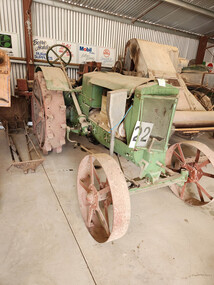 Arapiles Historical Society
Vehicle - WALLIS Tractor
... agricultural production during the early twentieth century and contributed to the expansion of grain farming throughout western Victoria. The tractor demonstrates the transition from horse-drawn implements to engine-powered machinery and represents an important stage in the evolution of Australian farming practices. Machines...The tractor is finished in green paint, much of which has weathered and worn through years of agricultural use. The machine incorporates a large radiator assembly at the front, an exposed engine and transmission, operator's platform, steering wheel and steel wheel lugs designed to provide traction in cultivated soil. ...The tractor is finished in green paint, much of which has weathered and worn through years of agricultural use. The machine incorporates a large radiator assembly at the front, an exposed engine and transmission, operator's platform, steering wheel and steel wheel lugs designed to provide traction in cultivated soil. ...FROM - Albert KLOWSS of Natimuk Lake This Wallis tractor represents one of the early generations of internal-combustion-powered agricultural machinery that transformed farming practices during the first decades of the twentieth century. Manufactured by the Wallis Tractor Company of Racine, Wisconsin, USA, these tractors gained a reputation for durability and reliability and were imported into Australia in significant numbers. Wallis tractors were widely used throughout grain-growing regions such as the Wimmera, where they gradually replaced horse teams for ploughing, cultivation, seeding and haulage work. Their introduction allowed farmers to cultivate larger areas, reduce labour requirements and improve efficiency during critical farming operations. The tractor belongs to a period when Australian agriculture was undergoing rapid mechanisation. Early tractors such as this often worked alongside horses for many years before fully replacing animal power on farms. Significance: This Wallis tractor is significant as an example of the machinery that helped usher in the mechanised farming era in Australia. It illustrates the technological advances that transformed agricultural production during the early twentieth century and contributed to the expansion of grain farming throughout western Victoria. The tractor demonstrates the transition from horse-drawn implements to engine-powered machinery and represents an important stage in the evolution of Australian farming practices. Machines such as this reduced the reliance on horse teams and enabled farmers to increase productivity on larger holdings. As a surviving example of an early imported tractor, it provides valuable insight into the development of agricultural technology and the changing nature of rural life in the Natimuk district and the wider Wimmera region. An early Wallis tractor mounted on four steel-spoked wheels, featuring a compact engine unit positioned between the front and rear axles. The tractor is finished in green paint, much of which has weathered and worn through years of agricultural use. The machine incorporates a large radiator assembly at the front, an exposed engine and transmission, operator's platform, steering wheel and steel wheel lugs designed to provide traction in cultivated soil. The tractor retains many of its original mechanical components, including the engine, transmission housing, steering system and drawbar arrangement. Its narrow profile and steel wheels are characteristic of tractors manufactured during the transition from horse-powered farming to mechanised agriculture in the early twentieth century.farm equipment, transport, klowss, wallis -
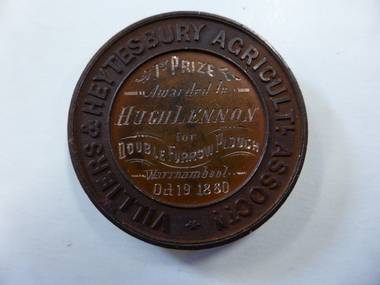 Warrnambool and District Historical Society Inc.
Medal - Medal VHAS, Villiers and Heytesbury Agricultural Association, Circa 1880
... It initially embraced the following: ploughing, agricultural produce, machines and implements, and livestock of all descriptions. ...It initially embraced the following: ploughing, agricultural produce, machines and implements, and livestock of all descriptions. ...Historical information: this medallion has historical details on three fronts. Firstly the Villiers & Heytesbury Agricultural Association. This association began with the first meeting held on May 17th 1853 at Woodford. The minutes of that meeting read “That in the opinion of this meeting, the formation of an agricultural association would be of great benefit to persons in this district engaged in farming and pastoral pursuits. It initially embraced the following: ploughing, agricultural produce, machines and implements, and livestock of all descriptions. The first show was held at Warrnambool on April 10th 1855 on a green bounded by Fairy, Henna, and Koroit Streets. It was held there until 1875 when it moved to the present Showgrounds site in Koroit Street. At the 37th Annual show in 1890 Warrnambool held its first Grand National Show, being granted by the Chamber of Agriculture in turn, in Victoria. It became known as the Warrnambool Agricultural Society in 1911. Secondly the winner, Mr Hugh Lennon. He was one of the most successful innovators and manufacturers of agricultural implements in early Australia. Although born in Ireland, he served an apprenticeship in Scotland in mechanical engineering. The Lennon plough became known Australia wide. For many years he operated his business at the northern of Elizabeth Street in Melbourne. He was active in local affairs. He died in 1886 at the age of 52. Thirdly, Stokes and Martin. Thomas Stokes came to Australia in the 1850’s and established a successful business at Mincing Lane Melbourne, manufacturing buttons, medals and tokens. Martin joined the partnership in 1873, which lasted until a disastrous fire in 1893. The business was renamed Stokes & Sons Pty Ltd and it became a public company in 1962. It is currently situated at Ringwood in the business of spare parts for electrical equipment The Villiers and Heytesbury Agricultural Association was a significant event and organisation within the Western District over a large number of years. It was one of the earliest organisations in the district and is testament to its importance to the agricultural, social, and cultural life of the district. It is significant that this particular medallion was awarded to an innovator in the ploughing industry and that it was made by a company which is still in business 130 years later. Circular copper medallion cast with Villiers & Heytesbury Agricultural Assoctn around edge with winner and event details engraved in centre. The reverse is cast with horse, cow and sheep standing above wheat sheaf and farm implements. The edge of the medallion is plain.Villiers & Heytesbury Agricultl Assoctn around rim. 1st Prize awarded to Hugh Lennon for double furrow plough, Warrnambool Oct 19 1880. Stokes & Martin Melbourne in small lettering on the reverse.warrnambool, villiers & heytesbury, hugh lennon, stokes & martin, lennon plow, lennon plough -
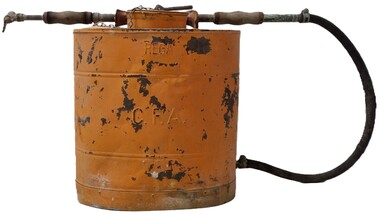 Wodonga & District Historical Society Inc
Equipment - Fire Fighting Knapsack, REGA Products Ltd, c1945
... They established themselves as leaders in the production of agricultural and horticultural spraying machines, including smaller knapsacks. ...They established themselves as leaders in the production of agricultural and horticultural spraying machines, including smaller knapsacks. ...The spraying units were manufactured in Australia by REGA Products. Ltd. in 1926. They established themselves as leaders in the production of agricultural and horticultural spraying machines, including smaller knapsacks. Knapsacks were quickly adapted to a range of applications and were widely used by the C.F.A (Country Fire Authority). They were also widely used for defence during World War II. REGA was later purchased by the Garrard family and still operate as part of Garrads Pty Ltd. This sprayer was one of the units used by the C.F. A. in Wodonga. The Country FIre Authority was established in 1945 following a Royal Commission into the 1939 Black Friday fires which recommended a single firefighting authority for country Victoria, bringing together the Bush Fire Brigades, Country Fire Brigades and Forest Commission. The first fire brigade, the Wodonga Urban Fire Brigade was formed in 1891 and registered in May 1893. Since that time its volunteers have provided ongoing support to the Wodonga and District communities through events such as urban fires, bushfires and other emergency situations. This item is representative of the Wodonga Country Fire Authority and its many volunteers.A knapsack sprayer designed to be used for spraying insects. The unit includes brass fittings, leather straps and a spray arm and nozzle attached. It was also adapted to be widely used by firefighters.On front: REGA / C.F.A. Around lid: REGA SPRAYERSrega sprayers, cfa region 24, cfa volunteers, cfa wodonga, wodonga urban fire brigade, fire fighting equipment -
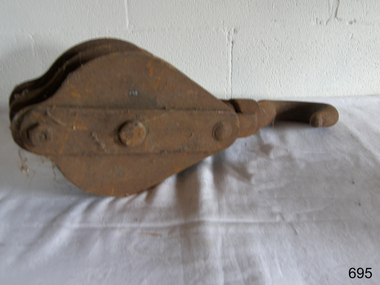 Flagstaff Hill Maritime Museum and Village
Equipment - Block, Tangyes engineering, Early 20th century
... agriculture and industry. Even today, new Tangye machinery is available for a subsidiary of Allspeeds. An extensive account of the firm’s history, names, inventions, and further references is available in Grace’s Guide, which also includes references to and diagrams of the Tangye horizontal steam engine. The block is significant for its connection to the renowned and innovative Tangye machine ...This metal block may have been used as part of a boat or ship's rigging or winch. The becket is the loop or ring where a shackle could be attached to use as a pulley. The two-sheaved block has a mechanical advantage over a single-sheave block, using less power to lift a load. The block was made by Tangyes, established in Birmingham, UK, in 1857, and renowned for producing high-quality, reliable machines, equipment, and tools in the late 19th and early 20th centuries. Richard Tangye (1833–1906) and four of his brothers—James, Joseph, Edward, and George—were the sons of Joseph Tangye, a Quaker Cornish miner. In 1857, they founded the engineering firm Richard Tangye & Brothers in Birmingham, UK. In 1860, the firm became Tangye Brothers and moved to Cornwall Works in Birmingham. The business encouraged inventors to join the company and develop their patents there, as happened with Weston’s differential pulley block, invented by the Englishman Thomas Aldridge Weston in 1854. Tangye bought the patent in 1858, giving the firm the sole right to manufacture it. The design received a medal for “original application, practical utility and success” at the 1862 International Exhibition in London. Also in 1858, the Tangye firm was commissioned by Brunel’s shipping company to manufacture hydraulic lifting jacks, or rams, to launch the steamship SS Great Eastern. The success of this project brought favourable attention to the firm, and it became involved in other notable projects, including the erection of Cleopatra’s Needle in London in 1878 and work on the Forth Road Bridge in Scotland. The firm underwent several name changes over the years, including James Tangye and Brothers (1857), Tangye Brothers and Price (1859), Tangye Brothers (1860), Tangye Brothers & Holman (1876), Tangye Brothers (by 1878), Tangye Ltd. (1881), and then simply Tangye. Its machinery and equipment were exported worldwide. In 1884, a branch with showrooms, offices, and a warehouse was opened in Melbourne at Cornwall House, Collins Street West. The firm was well known for producing high-quality machinery for agriculture and industry. Even today, new Tangye machinery is available for a subsidiary of Allspeeds. An extensive account of the firm’s history, names, inventions, and further references is available in Grace’s Guide, which also includes references to and diagrams of the Tangye horizontal steam engine. The block is significant for its connection to the renowned and innovative Tangye machine makers, respected for their high quality and standards. The block's maker,, Tangyes, also manufactured an 1880s steam engine, sold by a Melbourne merchant, and locally significant for its use in a late-19th century cheese factory. The block also represents the many blocks used in many industries, including the marine concerns, for rigging and lifting. Flagstaff Hill has a wide variety of these simple but very important pieces of equipment.Becket block: a metal block with two sheaves, a hook, a becket attachment point, and straps. Inscription embossed. Made by Tangyes."TANGYES"warrnambool, flagstaff hill maritime museum and village, maritime museum, maritime village, great ocean road, shipwreck coast, block, metal block, two sheave block, marine technology, rigging, tangye, ship rigging, block with hook and becket, becket block, sailing block, cargo block, tangyes block, vintage, nautical pulley, rigging equipment, pulley system, functional machine, machine, lifting equipment, marine equipment, richard tangye & brothers, james tangye and brothers, tangye brothers and price, tangye brothers, tangye brothers & holman, tangyes ltd., cornwall works -
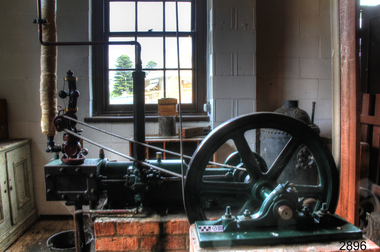 Flagstaff Hill Maritime Museum and Village
Machine - Steam Engine, Tangyes engineering, Mid-1880s
... machine merchants...1880s...mid-1880s...cheese manufacturer...butter manufacturer...diary industry...Warrnambool Technical School...belt driven machinery...agriculture...Tangye Richard Tangye James Tangye Joseph Tangye Edward Tangye George Tangye Cornwall Works Birmingham Pickering governor Pickering Portland Connecticut USA 19th century dairy plant steam power Tangye's Patent 238930 Tangye B Size engine Cameron & Sutherland machine merchants 1880s mid-1880s cheese manufacturer butter manufacturer diary industry Warrnambool Technical School belt driven machinery agriculture mechanical governor Farnham Butter Factory Warrnambool Butter Factory TANGEYS PATENT BIRMINGHAM B SIZE 238930 CAMERON & SUTHERLAND MELBOURNE THE PICKERING PORTLAND . ...This Tangye B-size, single-cylinder, horizontal steam engine was likely manufactured in England around the mid-1880s. It was distributed by Melbourne machinery merchants Cameron & Sutherland, which also operated in Bendigo and Ballarat. A local cheese maker once used the engine to drive factory equipment. It was later donated to the Warrnambool Technical School, which then donated it to Flagstaff Hill to add to its historical steam engine collection. Between its manufacture and its donation to Flagstaff Hill, the governor had been replaced by the current Pickering governor. This engine design was very popular in the late 19th and early 20th centuries. When connected and powered up, the engine could drive an overhead line shaft via a flat belt off its flywheel. The line shaft would then drive the machinery via flat belts. It could drive virtually any type of machinery, such as water and sewerage pumps, mine elevators, winches, cranes, metal forges, air blowers, and marine machinery. This engine features a mechanical governor, which controls the speed of the engine regardless of whether it is under load. It also has a water pump built into the valve rod, which is used to supply the boiler with water. Steam enters the cylinder via a slide valve and applies pressure to the piston; it is like a modern internal combustion engine, but in the case of the steam engine, the pressure is exerted in turn on either side of the piston. In other words, the connecting rod is pushed by steam via the piston and piston rod and then pulled back again by steam pushing on the opposite side of the piston. Thus, power is exerted almost continuously, except at the end of each piston stroke, when it reverses direction. In the 1880s, many local butter and cheese manufacturers installed Tangye steam engines to power their machinery. A comprehensive article in the Gippsland Mercury in September 1889 extolled the magnificence of the Farnham Butter Factory in Dennington, Warrnambool, and described how one Tangye engine was used to drive several machines in the cheese- and butter-making processes. A report in the Warragul Guardian in December 1890 notes that the newly opened Warrnambool Butter Factory used a Tangye steam engine to pump water from a 60-foot well. Tangye: Richard Tangye (1833–1906) and four of his brothers—James, Joseph, Edward, and George—were the sons of Joseph Tangye, a Quaker Cornish miner. In 1857, they founded the engineering firm Richard Tangye & Brothers in Birmingham, UK. In 1860, the firm became Tangye Brothers and moved to Cornwall Works in Birmingham. The business encouraged inventors to join the company and develop their patents there, as happened with Weston’s differential pulley block, invented by the Englishman Thomas Aldridge Weston in 1854. Tangye bought the patent in 1858, giving the firm the sole right to manufacture it. The design received a medal for “original application, practical utility and success” at the 1862 International Exhibition in London. Also in 1858, the Tangye firm was commissioned by Brunel’s shipping company to manufacture hydraulic lifting jacks, or rams, to launch the steamship SS Great Eastern. The success of this project brought favourable attention to the firm, and it became involved in other notable projects, including the erection of Cleopatra’s Needle in London in 1878 and work on the Forth Road Bridge in Scotland. The firm underwent several name changes over the years, including James Tangye and Brothers (1857), Tangye Brothers and Price (1859), Tangye Brothers (1860), Tangye Brothers & Holman (1876), Tangye Brothers (by 1878), Tangye Ltd. (1881), and then simply Tangye. Its machinery and equipment were exported worldwide. In 1884, a branch with showrooms, offices, and a warehouse was opened in Melbourne at Cornwall House, Collins Street West. The firm was well known for producing high-quality machinery for agriculture and industry. Even today, new Tangye machinery is available for a subsidiary of Allspeeds. An extensive account of the firm’s history, names, inventions, and further references is available in Grace’s Guide, which also includes references to and diagrams of the Tangye horizontal steam engine. The horizontal steam engine was made by the well-known engineering firm Tangye, known for its high quality of manufacture. It was an important development in machinery because it helped improve productivity. Engines of this type are still used in some parts of the world today. This engine is a good example of a late 19th-century steam engine used in industry and agriculture and adapted for many different purposes. It is also important locally because it was connected to a local cheese making business and part of the thriving western district dairy industry. It may have been one of the Tangyes engines used at the Farnham butter factory or the Warrnambool Butter Factory, which was reported to be one of the most important in the Colony. It is also connected to the Warrnambool Technical School, established in 1968. Steam engine: stationary Tangye Size B, single-cylinder, horizontal Mill type steam engine. It has a 4-inch diameter cylinder with an 8-inch stroke. The body is painted green, and the Pickering governor is red. It was manufactured in Birmingham, England, in accordance with Tangye's Patent 238930, and distributed by Cameron and Sunderland, Melbourne, in the mid-1880s. TANGEYS PATENT BIRMINGHAM B SIZE 238930 CAMERON & SUTHERLAND MELBOURNE THE PICKERING PORTLAND . GOVERNOR . CONN. U.S.A.flagstaff hill, warrnambool, maritime village, maritime museum, flagstaff hill maritime museum and village, shipwreck coast, great ocean road, machine, invention, engine, steam, steam engine, horizontal steam engine, tangyes horizontal steam engine, stationary steam engine, single cylinder steam engine, manufacturing, farming, pumps, lifting equipment, engines, machine tools, hydraulic rams, hydraulic pumps, steam pumps, differential pulleys, mill type steam engine, 4 inch cylinder, weston’s differential pulley, thomas aldridge weston, 1862 international exhibition in london, brunel, ss great eastern, cleopatra’s needle, forth road bridge, cornwall house, collins street melbourne, agricultural machinery, industrial machinery, allspeeds, dairy, pump, richard tangye & brothers, james tangye and brothers, tangye brothers and price, tangye brothers, tangye brothers & holman, tangyes ltd., tangye, richard tangye, james tangye, joseph tangye, edward tangye, george tangye, cornwall works, birmingham, pickering governor, pickering portland connecticut usa, 19th century, dairy plant, steam power, tangye's patent 238930, tangye b size engine, cameron & sutherland, machine merchants, 1880s, mid-1880s, cheese manufacturer, butter manufacturer, diary industry, warrnambool technical school, belt driven machinery, agriculture, mechanical governor, farnham butter factory, warrnambool butter factory -
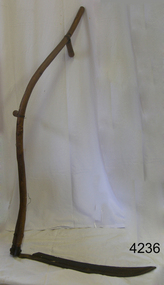 Flagstaff Hill Maritime Museum and Village
Tool - Scythe, 1930-1960
... agricultural developments of the Carolingian era (8th century AD) in Europe, when the harvesting and storing of hay became important to support livestock through winters. Scythes can still be found in use today by hobby farmers and permaculturists. ( producing food, by using ways that do not deplete the earth's natural resources) to cut grass in a more eco-friendly way as opposed to using a machine...agricultural developments of the Carolingian era (8th century AD) in Europe, when the harvesting and storing of hay became important to support livestock through winters. Scythes can still be found in use today by hobby farmers and permaculturists. ( producing food, by using ways that do not deplete the earth's natural resources) to cut grass in a more eco-friendly way as opposed to using a machine ...A Scythe was one of the most important of all agricultural hand tools, consisting of a curved blade fitted at an angle to a long, curved handle and used for cutting grain. In modern scythes the handle has a projecting peg that is grasped by one hand, facilitating control of the swinging motion by which grass and grain are cut. The exact origin of the scythe is unknown, but it was little used in the ancient world. It came into wide use only with agricultural developments of the Carolingian era (8th century AD) in Europe, when the harvesting and storing of hay became important to support livestock through winters. Scythes can still be found in use today by hobby farmers and permaculturists. ( producing food, by using ways that do not deplete the earth's natural resources) to cut grass in a more eco-friendly way as opposed to using a machine.A hand tool used for the cutting of crops and grain, modern versions are still being produced today in Europe. The subject item gives us a snapshot into agricultural practices in times past.Scythe with long wood Snath (curved handle) with 1 hand holding piece & curved blade. Noneflagstaff hill, warrnambool, shipwrecked-coast, flagstaff-hill, flagstaff-hill-maritime-museum, maritime-museum, shipwreck-coast, flagstaff-hill-maritime-village -
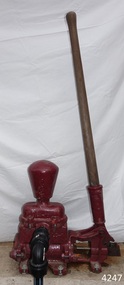 Flagstaff Hill Maritime Museum and Village
Equipment - Pump, circa 1930's - 1940's
... The former McPherson’s Pty Ltd building in Collins Street Melbourne is now on the Victorian Heritage Register VHR H0942 This pump is representative of mechanical pumps popular in the early to mid-1900’s and still used today. flagstaff hill warrnambool flagstaff hill maritime museum shipwreck coast flagstaff hill maritime village great ocean road ajax pump works tottenham melbourne ajax pump factory kyneton william edward mcpherson thomas mcpherson of melbourne mcpherson’s pty ltd melbourne acme bolt company tool equipment co. pty. ltd associated machine tools australia pty ltd ajax bolt and rivet co. pty ltd new zealand forrers company ipswich queensland ksb ajax pumps ksb australia pty ltd macson lathes tool manufacturer early to mid- 20th century ajax double acting hand pump ajax type l2 series a pump qisjax pumps water pump 1940’s fuel pump 1940’s hand operated constant flow pressure pump reciprocating suction pump agricultural hand pump plumber’s hand pump portable hand pump Embossed on lower section of pump "L2 - 10", "L2 - -1", "AJAX" “(?) ...This pump is an Ajax Type L2 Series A model, made and sold by McPherson’s Pty Ltd of Melbourne circa 1930’s to 1940’s, is a mechanical, hand operated, constant flow pressure pump. It would have been used to pump fluids from one area to another, for example from a dam to a tank or used as a bilge pump on a small vessel, mounted on the vessel’s bulkhead, floor or deck. This type of hand pump is sometimes called a ‘Reciprocating Suction Pump’. It has a mechanical pumping action of the lever moves the piston inside the pump up and down. The water is lifted from below the pump through the inlet pipe and into the pump’s cylinder. This action causes the lower valve to close and the piston’s valve opens and the pressure within the pump forces the water out of the pump through the exit pipe. The limitation of this type of pump is that it can only raise the water a maximum of about 7 metres from beneath the ground and yields 24-26 Litres per minute. This type of pump could be used for many purposes such as pumping water or fuel. McPherson’s 1940’s advertisement proclaims “For all jobs on the land – irrigation, spraying, tank, plumbing, fire-fighting – there’s a suitable “Ajax” pump. Send us the details of you pumping problem. Our Expert’s advice will help you choose the right pump – the one that will give you most years of PROFITABLE PUMPING.” (The Australasian (Melbourne) Sat. 26th October 1940.) McPherson’s Pty Ltd, the manufacturer, advertised a similar pump to this one in The Australasian (Melbourne) in 1936, calling it the Ajax Double Acting Hand Pump. In 1942 another advertisement advised that a representative for a fire-fighting equipment supplier was visiting the western district of Victoria. The company could now supply double-action two-spray Ajax pumps at lower prices than similar pumps the district had recently purchased from Adelaide. McPHERSON’S FOUNDER and COMPANY TIMELINE 1860 – Thomas McPherson, a Scottish immigrant (c. 1853 ), founded McPherson’s in Melbourne, supplying pig iron (lead ingots imported as ballast in ships) to local manufacturers. 1882 – Thomas McPherson established a warehouse in Collins St Melbourne and included tools, steam fittings and machinery in his wares. The business expanded to include steam saw mills and became known as Thomas McPherson and Sons (William Murray and Edward). 1888 – Thomas passed away and his sons inherited the business. In 1896 William Murray became the sole proprietor after his brother Edward’s death. 1900 – The firm expanded, establishing Acme Bolt Company to manufacture nuts and bolts. 1912 – McPhersons Pty Ltd established a machinery warehouse and showroom in 554-556 Collins St Melbourne. McPherson’s went on to establish branches in Sydney (1911), Adelaide (1921) and Perth (1930) 1917 - McPherson’s supplied ‘dog spikes’ for the transcontinental railway, running from Eastern to Western Australia. 1918 – A tool works set up in Kensington, Melbourne, manufacturing Macson lathes and made machine tools that previously had to be imported. 1924 – The Bolt Works was transferred to a new building in Melbourne. McPhersons began making pumps. 1929 – McPherson retired. His son (Sir) William Edward McPherson (known as ‘WE’), was born in Hawthorne, Melbourne, in 1898. After his education he began work in his father’s Melbourne hardware and machinery business He took over as governing director when his father retired. 1929-1932 – McPherson’s supplied thousands of tons of rivets from its Richmond (Melbourne) Bolt Works for the construction of the Sydney Harbour Bridge. 1936 – McPherson’s Pty Ltd is advertising Ajax Pumps in newspapers 1934 – McPhersons purchased the property adjoining the warehouse in Collins Street, and during 1935-1936 built a new office and showrooms on the site of 546-445 Collins St. 1939 - McPherson’s acquired the Tool Equipment Co. Pty. Ltd and Associated Machine Tools Australia Pty Ltd was formed to separate McPherson’s machine-tool manufacturing and merchandising interests. 1939 – Ajax Pump Works, a foundry and pump manufacturing plant, was established in Tottenham, Melbourne, and the Ajax Bolt and Rivet Co Pty Ltd began manufacturing in New Zealand. 1944 - McPherson’s became a public company, McPherson’s Ltd. 1948 - The Ajax Pump Foundry opened at Kyneton, Victoria and in the post war years it grew to became a large manufacturer. 1980’s – Ajax Pumps brochure lists the address as 6 Buckhurst St, South Melbourne, Vic 3205 with the Telephone number 03 669 3588 1988 - Ajax Pumps acquired the Forrers Company, which was established in 1921. Manufacturing in Ipswich, Queensland, specialising in submersible sewage pumps. 1991 – KSB Ajax was formed, bringing together the companies KSB and Ajax Pumps 1993 – Manufacturing was moved to state-of-the-art premises in Tottenham, Victoria 2001 - The Forrers facility was moved to Tottenham. 2007 - Company name KSB Ajax Pumps was changed to KSB Australia Pty Ltd. 2009 - KSB Australia opened a branch in Townsville, Queensland. 2011 - KSB Australia moved to its dedicated Water and Waste Water Competence Centre in Bundamba, Queensland. DISPLAY OF THIS AJAX PUMP This pump was installed at Flagstaff Hill Maritime Village as part of a working display in the village by the Friends of Flagstaff Hill, in acknowledgement of the dedicated involvement of one of its long serving members, Bob Crossman. The display was officially opened 31st March 2018 and incorporates a restored Furphy Tank and Water Pipe Stand. The pump is used to draw water from the lake, through the water stand pipe and into the reconditioned Furphy Tank. This Ajax pump made by McPherson’s Pty Ltd is significant for its association with McPherson’s, a prominent manufacturer of hardware in Victoria. McPherson’s is famous for supplying ‘dog-spikes’ for the transcontinental railway (eastern to western Australia, 1917) and rivets for the Sydney Harbour Bridge (1929-1932). The Ajax pump is also of significance because of its association with McPherson’s Governing Director (Sir) William McPherson, former premier and treasurer in Victoria 1928-1929. The former McPherson’s Pty Ltd building in Collins Street Melbourne is now on the Victorian Heritage Register VHR H0942 This pump is representative of mechanical pumps popular in the early to mid-1900’s and still used today. Hand operated pressure pump, double acting. Cast metal case, painted red, with steel hose attachments and long metal lever. Pump is bolted to wooden plank. Model of pump is AJAX, Type L2, Series A pump. Embossed on lower section of pump "L2 - 10", "L2 - -1", "AJAX" “(?) –2-1” Embossed on lower handle “3-7” “L – 4” Embossed on attached plate “FOR SPARE PARTS / TYPE L2 / SERIES A / PUMP ASSEMBLED BY T R” Manufactured by McPherson’s Pty Ltd of Melbourne circa 1930’s - 1940’s.flagstaff hill, warrnambool, flagstaff hill maritime museum, shipwreck coast, flagstaff hill maritime village, great ocean road, ajax pump works tottenham melbourne, ajax pump factory kyneton, william edward mcpherson, thomas mcpherson of melbourne, mcpherson’s pty ltd melbourne, acme bolt company, tool equipment co. pty. ltd, associated machine tools australia pty ltd, ajax bolt and rivet co. pty ltd new zealand, forrers company ipswich queensland, ksb ajax pumps, ksb australia pty ltd, macson lathes, tool manufacturer early to mid- 20th century, ajax double acting hand pump, ajax type l2 series a pump, qisjax pumps, water pump 1940’s, fuel pump 1940’s, hand operated constant flow pressure pump, reciprocating suction pump, agricultural hand pump, plumber’s hand pump, portable hand pump -
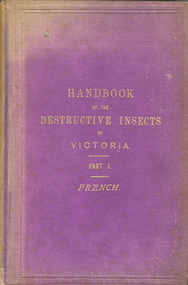 Federation University Historical Collection
Book, C. French, A Handbook of the Destructive Insects of Victoria, Part One, 1891 (exact)
... Agriculture, Melbourne, 14th July 1891 Purple hardcovered book153 pages plus 20 figures. Contents inlcude: Introduction to Entimology, classification of insects, quarantine rules, Woolly Aphis, Codlin Moth, Curve-winged Apple moth, Apple-tree borer, Apple-bark Scale, Apple Beetle, Red Spider, Harlequin Fruit Bug, Pear and Cherry Slug, Rutherglen Fly-pest, Cherry borer, Pear Phytoptus. Coloured plates (by C. Brittlebank)of insects and figures (by Hart Vonarx) include the Knowles' Pump, Charnwood Spray, Danks' Lever Spray Pump, Spawn's Climax Spray, Apparatus for Sparying Orange Trees, Strawsonizer, French Portable Hand Spraying Machine ...Purple hardcovered book153 pages plus 20 figures. Contents inlcude: Introduction to Entimology, classification of insects, quarantine rules, Woolly Aphis, Codlin Moth, Curve-winged Apple moth, Apple-tree borer, Apple-bark Scale, Apple Beetle, Red Spider, Harlequin Fruit Bug, Pear and Cherry Slug, Rutherglen Fly-pest, Cherry borer, Pear Phytoptus. Coloured plates (by C. Brittlebank)of insects and figures (by Hart Vonarx) include the Knowles' Pump, Charnwood Spray, Danks' Lever Spray Pump, Spawn's Climax Spray, Apparatus for Sparying Orange Trees, Strawsonizer, French Portable Hand Spraying Machine, Lowe and Park's Insect Exterminator, Greenhill Codlin Moth Lamp, Wolfskill Fumigator, Tutus Fumigator, Oliver Fumigator, Agitator Spray PumpBookplate - Ballarat School of Mines Ballaarat No 1201. Presented by Secretary for Agriculture, Melbourne, 14th July 1891 insects, pumps, c brittlebank, hart vonarx, c french -
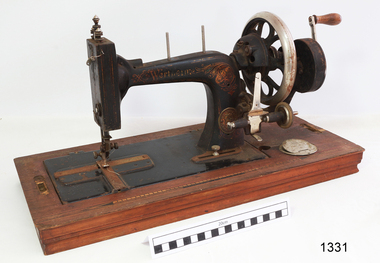 Flagstaff Hill Maritime Museum and Village
Domestic object - Sewing Machine, 1903
... In a short time, with extensive advertising, Hugo established a substantial business, selling sewing machines, bicycles, pianos and other mechanical devices, under brands such as Wertheim, Electra, Planet, Griffin and Hapsburg. He also mounted elaborate displays at agricultural shows and in 1901 at the Pan American Exposition, Buffalo, United States of America. ...In a short time, with extensive advertising, Hugo established a substantial business, selling sewing machines, bicycles, pianos and other mechanical devices, under brands such as Wertheim, Electra, Planet, Griffin and Hapsburg. He also mounted elaborate displays at agricultural shows and in 1901 at the Pan American Exposition, Buffalo, United States of America. ...Hugo Wertheim (1854-1919), was a merchant and manufacturer and was born on the 12th July 1854 at Lispenhausen, in the German electorate of Hesse-Kassel, son of Meyer Wertheim and his wife Minna, née Heinemann. Hugo reached Melbourne in October 1875. He soon began advertising, from premises at 39 Flinders Lane East, as agent for his father's cousin Joseph Wertheim, a well-established manufacturer of sewing machines. Hugo returned to Germany where he married Joseph Wertheim's daughter Sophie Emilie (1864-1953) on 30 August 1885 at Frankfurt. the couple then came to Melbourne. In a short time, with extensive advertising, Hugo established a substantial business, selling sewing machines, bicycles, pianos and other mechanical devices, under brands such as Wertheim, Electra, Planet, Griffin and Hapsburg. He also mounted elaborate displays at agricultural shows and in 1901 at the Pan American Exposition, Buffalo, United States of America. O. C. Beale worked with him before setting up his own piano business in New South Wales. Hugo continued to own 25 per cent of one of Beale's companies, which became Wertheim's Queensland business. In 1908 Wertheim opened a large, innovative piano factory at Richmond, Melbourne, intending to produce 2000 pianos and player pianos annually, predominantly using Australian materials. In laying the foundation stone, Prime Minister Alfred Deakin observed that “few men with such opportunities for a life of ease would have embarked on such an enterprise” Hugo died of chronic hepatitis on 11 July 1919 at his home at South Yarra, his wife, two daughters and three sons survived him; Herbert Joseph (1886-1972), the eldest, continued the business. Rupert became a share broker and went on to represent Victoria in inter-State tennis in 1913-27 and Australia in Davis Cup matches against Czechoslovakia in 1922. The piano factory closed in 1935, becoming a Heinz food processing plant and in 1955, GTV Channel 9 studios and offices.Early Australians had to be self-reliant in regards to making and mending their clothes and utensils. This sewing machine was one of many items used that exhibit the skill and craftsmanship of the women in these early families. A sewing machine was a necessary part of each home and this item demonstrates how women of the time managed had to become self-reliant in the repair and making of their families clothes to make their household budgets go further.Wertheim sewing machine in carry case, hand operated with two spindles, handle with locking pin, which turns lever between spokes of main handle, hand brake. The machine is table-mounted with a Turkish walnut base. The base can be attached to a cast iron table with a foot treadle as an optional extra. The walnut base has marquetry to the front set out as a measure for material. There is also an accessory box inside the carry case containing 20 additional items for use with the machine. Wertheim brass trademark badge riveted to the body of the machine of a crouching dwarf with a hammer with the name of the company Wertheim and Frankfurt. Gold filigree decoration in gold paint adorns the main body of the machine. flagstaff hill, warrnambool, shipwrecked-coast, flagstaff-hill, flagstaff-hill-maritime-museum, maritime-museum, shipwreck-coast, flagstaff-hill-maritime-village, sewing machine, hand operated sewing machine, crank handle sewing machine, wertheim, dressmaking, taylor, domestic, clothing, hugo wertheim, joseph wertheim -
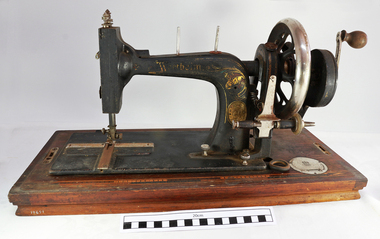 Flagstaff Hill Maritime Museum and Village
Domestic object - Sewing Machine and case, Joseph Wertheim, late 19th century
... In a short time, with extensive advertising, Hugo established a substantial business, selling sewing machines, bicycles, pianos and other mechanical devices, under brands such as Wertheim, Electra, Planet, Griffin and Hapsburg. He also mounted elaborate displays at agricultural shows and in 1901 at the Pan American Exposition, Buffalo, United States of America. ...In a short time, with extensive advertising, Hugo established a substantial business, selling sewing machines, bicycles, pianos and other mechanical devices, under brands such as Wertheim, Electra, Planet, Griffin and Hapsburg. He also mounted elaborate displays at agricultural shows and in 1901 at the Pan American Exposition, Buffalo, United States of America. ...Hugo Wertheim (1854-1919), was a merchant and manufacturer and was born on the 12th July 1854 at Lispenhausen, in the German electorate of Hesse-Kassel, son of Meyer Wertheim and his wife Minna, née Heinemann. Hugo reached Melbourne in October 1875. He soon began advertising, from premises at 39 Flinders Lane East, as agent for his father's cousin Joseph Wertheim, a well-established manufacturer of sewing machines. Hugo returned to Germany where he married Joseph Wertheim's daughter Sophie Emilie (1864-1953) on 30 August 1885 at Frankfurt. the couple then came to Melbourne. In a short time, with extensive advertising, Hugo established a substantial business, selling sewing machines, bicycles, pianos and other mechanical devices, under brands such as Wertheim, Electra, Planet, Griffin and Hapsburg. He also mounted elaborate displays at agricultural shows and in 1901 at the Pan American Exposition, Buffalo, United States of America. O. C. Beale worked with him before setting up his own piano business in New South Wales. Hugo continued to own 25 per cent of one of Beale's companies, which became Wertheim's Queensland business. In 1908 Wertheim opened a large, innovative piano factory at Richmond, Melbourne, intending to produce 2000 pianos and player pianos annually, predominantly using Australian materials. In laying the foundation stone, Prime Minister Alfred Deakin observed that “few men with such opportunities for a life of ease would have embarked on such an enterprise” Hugo died of chronic hepatitis on 11 July 1919 at his home at South Yarra, his wife, two daughters and three sons survived him; Herbert Joseph (1886-1972), the eldest, continued the business. Rupert became a share broker and went on to represent Victoria in inter-State tennis in 1913-27 and Australia in Davis Cup matches against Czechoslovakia in 1922. The piano factory closed in 1935, becoming a Heinz food processing plant and in 1955, GTV Channel 9 studios and offices.Early Australians had to be self-reliant in regards to making and mending their clothes and utensils. This sewing machine was one of many items used that exhibit the skill and craftsmanship of the women in these early families. A sewing machine was a necessary part of each home and this item demonstrates how women of the time managed had to become self-reliant in the repair and making of their families clothes to make their household budgets go further.Sewing machine, Wertheim brand “ Syst 182” hand crank operated machine with folding handle, timber case and carry handle. Metal machine is painted black, with remnants of gold, red and green scrolls and floral decoration. Machine has base with inlaid measuring rule across front and 2 holes drilled through the base (perhaps for mounting machine to a bench). Machine tilts open, hinged on one side, after thumb screw is unwound, revealing machine’s workings and serial number. Base has a fitted round, concave, silver metal pin holder with lid that hinges open, and symbol pressed into lid; several pins are inside. Body of machine has brand name transfer across front and oval metal trademark disc on front. Metal sliding covers over footplates have stamped lettering. Timber machine case or cover includes an accessory box with sliding cover and metal hook and eye latch, and inside the box are 23 metal sewing attachments, a disc and a stick of black crayon with maker’s trademark on it paper cover. Workings of machine have seized up. The crayon wrapper has printed on it “For the wonderful Wertheim new family machine made in Germany ‘Syst. 182’”, and the maker’s symbol with “Trademark” beside it. Made for Hugo Wertheim.“WERTHEIM” transfer across front and back of machine body. Cover of pin holder has symbol ‘Wings above a shield’. Maker’s trademark on gold oval disc, “WERTHEIM / FRANCFURT” and picture of a dwarf with a hammer. Left footplate has script “Syst 182”, right footplate has stamp in oval shape “MANUFACTURED IN - - /SPECIALLY FOR / HUGO WERTHEIM” Serial Number “7501”flagstaff hill, warrnambool, shipwrecked-coast, flagstaff-hill, flagstaff-hill-maritime-museum, maritime-museum, shipwreck-coast, flagstaff-hill-maritime-village, sewing machine, hand crank sewing machine, hugo wertheim, wertheim, clothing manufacturer, sewing, syst 182 -
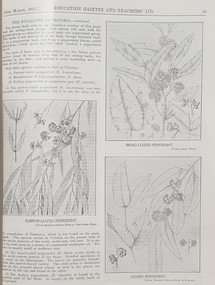 Federation University Historical Collection
Book, Victoria Education Gazette and Teachers' Aid, 1921-1930, 1921-1930
... Agriculture, T.W. Bothroyd, The Swimmer - A Summer School Sketch (H.H. Croll), Swimming woodwork, Farewell to Dr Sutton. ,Drowning, War Savings Movement, White Beech. George S. Browne , Example of School Honor Book, Blackwood, Optimistic teacher, Soldier settlement around Shapparton, Oral Hygiene, Cinema Machines, Basketball, Wakter M. ...Agriculture, T.W. Bothroyd, The Swimmer - A Summer School Sketch (H.H. Croll), Swimming woodwork, Farewell to Dr Sutton. ,Drowning, War Savings Movement, White Beech. George S. Browne , Example of School Honor Book, Blackwood, Optimistic teacher, Soldier settlement around Shapparton, Oral Hygiene, Cinema Machines, Basketball, Wakter M. ...The Victoria Education Gazette and Teachers' Aid was published for Victoria's teachers and was sent to all school on the state. In 1920 The Ballarat School of Mines had donated 136 pounds 14 shillings and 10 pence to the Victorian Education Department's War Relief Account, and the Ballarat Junior Technical School had donated 10 pounds 6 shillings and 10 pence.Ten black hard covered volumes with red tape spine, covering 1921 to 1930. The gazettes include Education Department appointments, transfers, resignations and retirements, vacancies, notices, queries, notices of books, examination papers, original articles, lesson plans, suggestions for lessons, drawing, obituaries, notes on nature study, mathematics, music, sloyd woodwork, English grammar, Victorian State School Swimming Clubs, Geography, penmanship, science, History, Latin, Geography, The School Garden, horticulture, singing, World War One; ANZAC Day, lifesaving, Astronomy, Empire Day, ANZAC Buffet London, Victorian Education Department's War Relief Fund .1) 1928. Articles include: New Caledonia, Swimming and Lifesaving, School forestry, a visit to the pyramids, Exploration of Gippsland, paul de Strezelecki, Angus McMillan, Villers Bretonneux Memorial School, American Black Walnut, Red Gum, Messmate Stringybark, The Great Barrier Reef, retirement of Frank Tate, Stawell High School, Report on Some Aspects of Education in the United States, Jubilee Education Exhibition , New School Readers; measured Drawing Images include: Macarthur Street School's Plantation, Maryborough School Plantation, Pinus Insignis (Radiata) ready for Milling, Creswick State Forest, Metalwork, Daylesford Pine Plantation four years old, Henry Harvey (art Inspector); Omeo School Endowment Plantation; Frank Tate; Stawell High School Drawings From Casts; Lake Tyers School Endowment Plantation, measured drawing, Thomas H. Stuart, GEorge Swinburne. J.R. Tantham-Fryer, Cookery Class, John Edward Thomas. .3) War Savings Stampsm Swimming and Life-saving, Teh Rural School System of Victoria, Imaginative Composition, ANZAC Day, Retardation, Teh Bright Child Hudson Hard Obituary, Leeches, Relief for Distress in Europe, Dental, Teachers' Library, History of Portarlington, J.E. Stevens Obituary, Victorian Teachers in England Images: Swimming and Life-Saving Medallion .3) Swimming and Lifesaving, Bronze medallion, Victoria Leage of Victori, War Savings Stamps, Rural School Sytem of Victoria, .4) War Relief, Talbot Colony for Epileptics Masonmeadows, Discipline New and Old (Percy Samson), Soldier teachers, Preservation of Australian Birds, Arbor Day, Jubilee of Free Education, Teaching Geography, Poery in Schools, School Committees, Shelter Pavilion, Mysia Memorial School, Clovers, Jubilee Exhibition, Domestic Arts, Louis Pasteur, .5) Victoria League of Victoria, An Endowment Scheme (Pine Plantations), School Endowment Plantations, Protecting our trees by Owen Jones,. Victorian State Schools Horticultural Society, Sloyd Woodwork, School Forestry, Thomas Brodribb Obituary and portrait, Imperial Education Conference London, school Management and Method, School plantations, Eucalypt plantations in the Bendix and Heathcote District, Junior Red Cross, Jubilee Education Exhibition, Gould League Competitions, handwriting, The School Magazine, Frank Tate in London, Victorian beetles, Council of Public Education, Villers Bretonneux and its new School, Death of Samuel Summons, Woodwork Summer School, Swimming, Japanese Relief Fund, Retirement of John Cross, reminiscences of the Late Mr Albert Mattingley .6) Thomas H. Trengrove and the Villers Bretonneux School hall and pilaster carvings, forestry, visit of Maryborough teachers to Ballarat Water Reserves, noxious weeds, relief for Distressed Europe, The Dalton Plan, Empire Day, Retirement of Mr Fussell, Centenary of Hume and Hovell Expedition, League of Kindness, Effective Nature Study in a Rural School, Some Facts About Paper and their Bearing Upon School Plantations, Council of the Working Men's College Melbourne, Maria Montessori, University Vacation School, Horticulture in State Schools, An Informal Chat About French Schools (C.R. McRae), The Vacation School, Johann Heinrich Pestalozzi, Inspector's Report on a 5th-class School, Can Children Write Verse, John Adams, Victoria League of Victoria, R.F. Toutcher, Sir James Barbie's Address to High-School Girls, Impressions of a High School Teacher Abroad (R.D. Collman), The Spirit of the School Plantation Scheme, Monument of the Late Mr and Mrs A.T. Sharp at Box Hill Cemetery, The Teaching of Geography, The Treatment of Poetry in Class, Two Difficult Arithmetic Lessons, Location of Principal Australian Timbers, Dr John Smyth, Stammering and its Influence on Education, Wireless Broadcasting as an Educational Medium, Boys School at Villers Brettonneux, The New School at Villers Brettonneux, Bird Day, Messmate or Stringybark, What Every Woman Knows, Director's Report on Denmark .7)1925 . Includes: School Forestry, horticulture, J.H. Betheras retirement, Ivanhoe School, Coburg School, Moorabool Junior Technical School, Villers Bretonneux School hall and pilaster carvings, Francis Ormond, William Charles Kernot, Corsican Pnes at Creswick, Ballarat High School Plantation, Workin Men's College, RMIT, Naorrow LEafed Peppermint, Education and World Peace, Eucalypts of Victoria, John C. Eccles, Blue Gum. Manners, Giving the Poorly Nourished Boy A Chance, Native Ferns, Marybourough Technical School, Memorial School at Villers-Brettonneux .8) Experimental Plots in Country Schools (W.W. Gay), Villers Bretonneaux and its Memorial School. nominated classes for Art Teachers, The Teachers Act 1925, Horsham High School, Richmond Technical School, Farewell to Messrs C.R. Long and Ponsonby Carew-Smyth, Frank Tate, Phyiscal Training, Arbor Day, ANZAC Day, Shakespeare Day,Bendigo Junior Techncial School, Musical Appreciation, Motor Dental Unit, School Camps, Education Act of 1872: Mr Angus McKay's Part (George Mackay), A Bush Fire Experience (Irene Stable), Black Sunday, Californian Red Pine, Women's Education in America, Farewell to Lord and Lady Stradbroke, Grevilia Robusta, Silky Oak, Redwood, John E. Grant, The Need for Research (Donald Clark), Junior Drama, Ida D. Marshall, John Pounds, Australian Books, Fish Creek School, State Boundaries, History in the Curriculum, Ceramic Art in Australia (Percy E. Everett), Choice of School Songs, Tasmanian Beech, Should History be Taught on a National or an International Basis, Hydatid Disease, James Holland Obituary, Florrie Hodges, Queensland Maple, Post Bushfire Ruins at Fumina, Arbor Day at Fumina, Queensland Rosewood, Omeo Endowment Plantation, Bird Day, Junior Red Cross, Pioneers' Day, Edward Henty, Junior Technical Schools, Yellow Pine, History and Progress of Needlework, A.B.C. of Astronomy, Northumberland Mental tests, Queensland Red Cedar, Teh Globe Theatre, .9) 1927 includes The ABC of Astronomy, Atr Theatre, English Beech, Angus McMillan Art Pottery, School Singing, State Schools' Nursery, School endowment plantations, Making a Man, experimental proof of Charles's Law, John Smyth obituary and portrait, Linton Pine Planation, motivation of arithmetic, Women's Classes at Dookie, Swimming and Lifesaving, Pioneers Day, Drawing, Ballarat High School planation, biting fly, Tir-Na-N'og, John Byatt retirement and portrait, Technical Schools Conference at Daylesford, Ethel Osborne and portrait, library. Francis Thompson portrait, Adam Lindsay Gordon, Solar movement, motor transport, Liverpool Cathedral, Teh Story of the Cathedral, Bendigo School of Mines, Omeo School pine plantation, Egypt and the Nile, Self-Criticism Images include Ballarat High School Pine Plantation, Vale Park, Francis Ormond, Woking Men's College (RMIT), W.N. Kernot, A Stand of Corsican Pines at Creswick, Victoria .10) Some Remarks on the Relationship of the technical Schools to the University (Donald Clark) , Present Day Education in England , Memorial to Joseph Cornwall, Spelling, motivation, Singing, State Scholarships, Agriculture, T.W. Bothroyd, The Swimmer - A Summer School Sketch (H.H. Croll), Swimming woodwork, Farewell to Dr Sutton. ,Drowning, War Savings Movement, White Beech. George S. Browne , Example of School Honor Book, Blackwood, Optimistic teacher, Soldier settlement around Shapparton, Oral Hygiene, Cinema Machines, Basketball, Wakter M. Camble obituary, ANZAC day Pilgrimage in England, Froebel's System, Montessori Method, War Relief Fund, New Zealand Kauri Tree, Bat Tenis at a Bush School., Advice to Australian Girls, Chrysanthemums, Royal Visit, National Parks of Victoria, Maurice Copland Obituary, total eclipse of the Moon, School libraries, The teacher and the COmmunity (A.M. Barry), The Reading Lesson, Swimming and Life-saving, MElbourne Teachers' College War Memorial Windows Old Trainees War Memorial, Cultivating a Natinoal Art education gazette, school, education, teaching, teacher, world war one, school plantations, macarthur street pine plantation, school forestry, creswick state forest, anzac day, armistance celebrations, frank tate, frank tate retirement, drawing from cast, education department school readers, lake tyers pine plantation, w.n. kernot, rmit, working men's college, francis ormond, pine plantations, calenbeem park, creswick, villers-brettonneux school hall and carvings, thomas trengrove, corsican pines, creswick, pine endowment plantations, mccarthur st primary school pine plantation, ballarat high school pine plantation, vale park, mount pleasant primary school pine plantation, golden point pine plantation, angus macmillan, paul de strzelecki, gippsland, villers-bretonneaux memorial school, francis thompson, english ash, pestalozzi centenary, shakespeare day, swimming classes, clear pine, cinema in education, american black walnut, red gum, thomas wolliam bothroyd obituary, and portrait, physical training displays, teaching of spelling, ohm's law, blue gum -
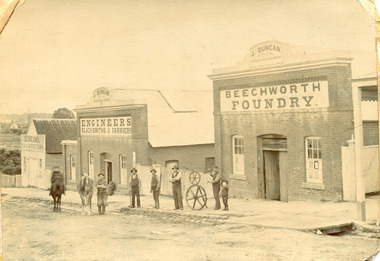 The Beechworth Burke Museum
Photograph, c1900
... agricultural industries. The foundry business collapsed in 1896 after the death of it’s founder, John Duncan, the same year (Straughair had died in 1882). The foundry was reopened by W H Phillips in 1905 and taken over by H Delora in 1906 This image is significant as it shows some of the many buildings of the Beechworth Foundry, which was a fundamental business to the running of the town and surrounding district, and supplied many of the tools and machines required for the mining and agricultural industries, as well as other aspects of life between the 1850s and early 1900s Duncan John Duncan J Duncan M Straughair Straughair Foundry Beechworth Foundry industry factory Newtown New Ford Street Foundry A Roger Roger W H Phillips Phillips W Phillips H Delora Delora Metalwork Farming and agriculture Tools Mining workmen Reverse 97.2321 / BMM A03115 Sepia rectangular photograph printed on paper. ...The Beechworth Foundry was vital to the industry of the town and surrounding district in the early years of the town’s development. Originally opened as the New Ford Street Foundry by A. Roger in 1858, J Duncan and M Straughair amalgamated and established the Beechworth Foundry in 1867. The business was extensive and operated out of many buildings, each with their own specialisation. All of the buildings pictured in this image are part of the larger Beechworth Foundry. In the late 1860s it employed 16 men. The foundry was fundamental to the running of the town and surrounding district, as it manufactured all manner of items, including tools and machinery for the mining and agricultural industries. The foundry business collapsed in 1896 after the death of it’s founder, John Duncan, the same year (Straughair had died in 1882). The foundry was reopened by W H Phillips in 1905 and taken over by H Delora in 1906 This image is significant as it shows some of the many buildings of the Beechworth Foundry, which was a fundamental business to the running of the town and surrounding district, and supplied many of the tools and machines required for the mining and agricultural industries, as well as other aspects of life between the 1850s and early 1900sSepia rectangular photograph printed on paper. It has rough, torn-looking edgesReverse 97.2321 / BMM A03115duncan, john duncan, j duncan, m straughair, straughair, foundry, beechworth foundry, industry, factory, newtown, new ford street foundry, a roger, roger, w h phillips, phillips, w phillips, h delora, delora, metalwork, farming and agriculture, tools, mining, workmen -
Federation University Historical Collection
Booklet, Longman's, Green, and Co, A Select List of Books suitable for use in Science and Technical Schools, September 1904, 1904
... Machine Construction and Drawing, 15. Navigation, 16. Mineralogy, 17. Metallurgy, Astronomy, 18. Naval Architecture, 19. Principles of Mining, 20. Manufactures, Technology, 21. Geology, Physiography, 22.Hygiene, 23. Zoology, 24. Human Physiology, 25. General Biology, 26. Botany, 27. Principles of Agriculture...Machine Construction and Drawing, 15. Navigation, 16. Mineralogy, 17. Metallurgy, Astronomy, 18. Naval Architecture, 19. Principles of Mining, 20. Manufactures, Technology, 21. Geology, Physiography, 22.Hygiene, 23. Zoology, 24. Human Physiology, 25. General Biology, 26. Botany, 27. Principles of Agriculture ...Used at Ballarat School of Mines and Industries. The book was produced by Longmans, Green and Co. in 1904. The books are divided into sections: 1. Practical Elementary Science Series, 2. Elementary Science Manuals, 3. Advanced Science Manuals, 4. Text-books of Science, 5. Chemistry, 6. Physics, 7. Mechanics, Theoretical and Applied, 8. Optics and Photography, 9, Sound, Light and Heat, 10. Steam, 11. Building and Construction, 12. Magnetism and Electricity, 13. Engineering, Strength of Materials, 14. Machine Construction and Drawing, 15. Navigation, 16. Mineralogy, 17. Metallurgy, Astronomy, 18. Naval Architecture, 19. Principles of Mining, 20. Manufactures, Technology, 21. Geology, Physiography, 22.Hygiene, 23. Zoology, 24. Human Physiology, 25. General Biology, 26. Botany, 27. Principles of Agriculture, 28. Mathematics, 29. Geometry, 30. Trigonometry, Beige coloured soft covered book with 30 pages. Lists books suitable for use in technical and science schools.list of books, science and technical school, longmans, green and co., subject sections of books available -
 Federation University Historical Collection
Books, H.E. Daw Government Printer, Ballarat School of Mines and Industries Departmental Papers, 1914-1950, 1914-1950
... agriculture...algebra...architecture...arithmetic...applied mechanics...assaying...biology...botany...boilermaking...building design...blacksmithing...bricklaying...carpentry and joinery...coachbuilding...cabinet making...civil engineering...commercial, chemistry...engineering drawing...economics...english...electrical technology...electricity and magnetism...electric wiring...electric welding...electrical fitting...electrical trades...food analysis...geology...geological mapping...graphics...geometry...heat engines...heat treatment...hydraulics...hand railing...instrument making...millinery...milling and gearouting...machine...Examinations include: Agriculture, Algebra, Architecture, Arithmetic, Applied Mechanics, Assaying, Biology, Botany, Boilermaking, Building Design, Blacksmithing, Bricklaying, Carpentry and Joinery, Coachbuilding, Cabinet Making, Civil Engineering, Cabinet Making, Commercial, Chemistry, Engineering Drawing, Economics, English, Electrical technology, Electricity and Magnetism, Electric Wiring, Electric Welding, Electrical Fitting, Electrical Trades, Food Analysis, Geology, Geological Mapping, Graphics, Geometry, Heat Engines, Heat Treatment, Hydraulics, Hand Railing, Instrument Making, Millinery, Milling and Gearouting, Machine Shop Practice. ...Examinations include: Agriculture, Algebra, Architecture, Arithmetic, Applied Mechanics, Assaying, Biology, Botany, Boilermaking, Building Design, Blacksmithing, Bricklaying, Carpentry and Joinery, Coachbuilding, Cabinet Making, Civil Engineering, Cabinet Making, Commercial, Chemistry, Engineering Drawing, Economics, English, Electrical technology, Electricity and Magnetism, Electric Wiring, Electric Welding, Electrical Fitting, Electrical Trades, Food Analysis, Geology, Geological Mapping, Graphics, Geometry, Heat Engines, Heat Treatment, Hydraulics, Hand Railing, Instrument Making, Millinery, Milling and Gearouting, Machine Shop Practice. ...Used at the Ballarat School of Mines and the Ballarat Technical Art SchoolThis collection of examinations is significant because of its completeness with the full range of examinations between 1914 and 1950.Large leather bound books, with leather spine, containing all examinations held at the Ballarat School of Mines (including the Ballarat Technical Art School and Ballarat Junior Technical School). The examination papers were supplied and printed by the Education Department, Victoria. Examinations include: Agriculture, Algebra, Architecture, Arithmetic, Applied Mechanics, Assaying, Biology, Botany, Boilermaking, Building Design, Blacksmithing, Bricklaying, Carpentry and Joinery, Coachbuilding, Cabinet Making, Civil Engineering, Cabinet Making, Commercial, Chemistry, Engineering Drawing, Economics, English, Electrical technology, Electricity and Magnetism, Electric Wiring, Electric Welding, Electrical Fitting, Electrical Trades, Food Analysis, Geology, Geological Mapping, Graphics, Geometry, Heat Engines, Heat Treatment, Hydraulics, Hand Railing, Instrument Making, Millinery, Milling and Gearouting, Machine Shop Practice. Metal Founding, Mining, Metallurgy, Mineralogy, Mathematics, Motor Mechanics, Mine Surveying, Mining Mechanics, Petrology, Physics, Painting and Decorating, Pattern Making, Plastering, Plumbing and Gasfitting, Printing, Refrigeration, Spelling, Science , Shorthand, Surveying. Signwriting. Sheet Metalwork, Toolmaking, Ladies Tailoring, Trigonometry, Typewriting, Welding, Commercial Geography. Millinery, Dressmaking, Needlework, Decorative Needlework, Architecture, Building Design and Construction, Art (Composition in Form and Colour), Art (Casting Clay MOdels) Art (Drapery), Art (Drawing the Human Figure From Casts), Art (Drawing the Antique from Memory), Art (Drawing from Memory); Art (Drawing Plant Forms from Nature, Art (Drawing Plant Forms From Memory), Art (Drawing from Models and Objects), (Drawing From a Flat Example). Art (Drawing in Light and Shade from a Cast of Ornament or Lower Nature), Art (Drawing Ornament from the Cast), Art (Drawing from Models or Objects), Art (Drawing fro Dressmakers' and Milliners' Fashions), Art (Drawing With the Brush), Art (Drawing from a Flat Example); Art (Modelled Design), Art (General Design), Art (Embossed Leatherwork), Art (Practical Plane Geometry), Art (Practical Solid Geometry), Art (Geometrical Drawing), Carpentry and Joinery, Art (Human Anatomy), Art (Historic Ornament), Art (House Decoration), Art (LEttering), Signwriting, Art (Light Metalwork), Art (Modelling), Art (Modelling the Human Figure from a Life), Art (Stencilling); Art (Wood Carving) Refrigeration, Teaching, Boilermaking, Blacksmithing, Carpentry and Joinery, Coachbuilding and Carriage Drafting, Electric Wiring, Electrical Fitting, Graining and Marbling, Instrument Making , Machine Shop Practice, Metal Founding, Milling and Gear Cutting, Motor Mechanics, Painting and Decorating, Sheet Metalwork, Toolmaking, Printing, Pattern Making, Plumbing and gasfitting, examinations, ballarat school of mines, ballarat technical art school, trades, education department victoria, agriculture, algebra, architecture, arithmetic, applied mechanics, assaying, biology, botany, boilermaking, building design, blacksmithing, bricklaying, carpentry and joinery, coachbuilding, cabinet making, civil engineering, commercial, chemistry, engineering drawing, economics, english, electrical technology, electricity and magnetism, electric wiring, electric welding, electrical fitting, electrical trades, food analysis, geology, geological mapping, graphics, geometry, heat engines, heat treatment, hydraulics, hand railing, instrument making, millinery, milling and gearouting, machine shop practice, metal founding, mining, metallurgy, mineralogy, mathematics, motor mechanics, mine surveying, mining mechanics, petrology, physics, painting and decorating, pattern making, plastering, plumbing and gasfitting, printing, refrigeration, spelling, science, shorthand, surveying, signwriting, sheet metalwork, toolmaking, ladies tailoring, trigonometry, typewriting, welding., dressmaking, needlework, decorative needlework, architecture, building design and construction, art (composition in form and colour), art (casting clay models), art (drapery), art (drawing the human figure from casts), art (drawing the antique from memory), art (drawing from memory), art (drawing plant forms from nature, art (drawing plant forms from memory), art (drawing from models and objects), (drawing from a flat example), art (drawing in light and shade from a cast of ornament or lower nature), art (drawing ornament from the cast), art (drawing from models or objects), art (drawing for dressmakers' and milliners' fashions), art (drawing with the brush), art (drawing from a flat example), art (modelled design), art (general design), art (embossed leatherwork), art (practical plane geometry), art (practical solid geometry), art (geometrical drawing), art (human anatomy), art (historic ornament), art (house decoration), art (lettering), art (light metalwork), art (modelling), art (modelling the human figure from a life, art (stencilling), art (wood carving), teaching, coachbuilding and carriage drafting, graining and marbling, milling and gear cutting, commercial geography, exams, examination book -
 Federation University Historical Collection
Photograph, Farming scene in the Wimmera, c1915, c1915
... In the background another horse is also yoked up to a machine. farm horse team agriculture Wimmera c1915 ploughing Farming c1915 Verso: Scene in the Wimmera about 1915 Black and white photograph of a farming scene in the Wimmera, Victoriia Farming scene in the Wimmera, c1915 Photograph ...A team of eight horses being driven by a man to prepare a paddock. In the background another horse is also yoked up to a machine.Black and white photograph of a farming scene in the Wimmera, VictoriiaVerso: Scene in the Wimmera about 1915farm, horse team, agriculture, wimmera c1915, ploughing, farming c1915 -
Federation University Historical Collection
Document, Apprenticeship Commission of Victoria Enrolment Forms, 1969
... machining Albert L. Ferrara M.B John & Hattersley Ltd Bruce M. Schulz Colin H Jennings Victorian Railways Department Richard J. Stewart Villiers Australia Pty Ltd Jeffrey H. Jenkins Humes Limited Hans Gram Concrete Industries (Monier) Ltd Terence W. Glazner John W. Berriman Ian G. Butson Christopher Brand Norman L. Plover Burton & Co Pty Ltd Eddo Dellore Barry E. Harrison John G. Flynn Firth & Cleveland Pty Ltd Geoffrey P. Gladman James D. Hutchins Burridges Agricultural ...Blue enrolment formstrades, fitting and turning, carpentry, machining, albert l. ferrara, m.b john & hattersley ltd, bruce m. schulz, colin h jennings, victorian railways department, richard j. stewart, villiers australia pty ltd, jeffrey h. jenkins, humes limited, hans gram, concrete industries (monier) ltd, terence w. glazner, john w. berriman, ian g. butson, christopher brand, norman l. plover, burton & co pty ltd, eddo dellore, barry e. harrison, john g. flynn, firth & cleveland pty ltd, geoffrey p. gladman, james d. hutchins, burridges agricultural development pty ltd, devan w mcphan, john l. dolan, t.j. coutts pty ltd, philip j. ritchie, david j. douglas, colin a. hill, john bennett, lindsay i litchfield, collin w ludbrook, rodney j page, alexander f r lloyd, vashti a f lloyd, robert l. rowe, james h. jolly & patricia m jolly, jacobus t weyers, g. irish and sons pty ltd, peter j. slater, louis o deutscher, edward h. fairhall, geoffrey r. pfeiffer, gary j. lorensene, gregory r tingate, ronaldson bros & tippett pty ltd., peter c. isaac, chris p. molenkamp, john l. mcniece, russell g harbour, barry r. ward, michael i. kennedy -
 Orbost & District Historical Society
black and white photograph, first half 20th century
... This photograph records early an early type of excavator used to construct drainage channels in rural Victoria. agricultural-machinery drainage-channels Ruston A black / white photograph / postcard of a man digging in a very large trench, probably a drainage channel, with an earth mover in the background. The machine ...Ruston & Hornsby, later known as Ruston, was an industrial equipment manufacturer in Lincoln, England, the company's history going back to 1840. The company is best known as a manufacturer of narrow and standard gauge diesel locomotives and steam shovels. This photograph records early an early type of excavator used to construct drainage channels in rural Victoria.A black / white photograph / postcard of a man digging in a very large trench, probably a drainage channel, with an earth mover in the background. The machine has the name "RUSTON" on it. In the foreground is a man, dressed in a long dark coat, watching.agricultural-machinery drainage-channels ruston -
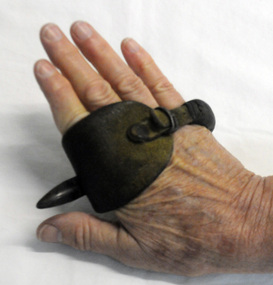 Orbost & District Historical Society
Tool - Maize tool
... machine harvesting coming about in the 1960s, each cob of maize had to picked by hand using this tool. Maize growing was a huge industry in the Orbost district and the job of picking the maize involved hand labour by many employees. This small hand-tool would have been common, but is now rare. This particular tool was owned and used by Nelson Northrope (from Orbost) in the early 20th Century and used at Murrungowar by Frances Eilman (nee Somerville). A highly significant small hand tool associated with the maize industry. This item is rare. maize growing agriculture ...This small hand-held tool was used in the maize industry in Murrungowar and Orbost district during 1900-1960s. Prior to machine harvesting coming about in the 1960s, each cob of maize had to picked by hand using this tool. Maize growing was a huge industry in the Orbost district and the job of picking the maize involved hand labour by many employees. This small hand-tool would have been common, but is now rare. This particular tool was owned and used by Nelson Northrope (from Orbost) in the early 20th Century and used at Murrungowar by Frances Eilman (nee Somerville). A highly significant small hand tool associated with the maize industry. This item is rare. A small hand-held metal and leather tool. A metal 'knife' has a curved shape and is attached to 2 leather straps which are connected by a small buckle. maize growing, agriculture, orbost district -
 Orbost & District Historical Society
black and white photograph, 1892
... He was educated in Scotland and came back to Victoria and selected 320 acres on the Snowy River.The property extended from Majors Creek Road to around about Gilbert's Gulch. this item is associated with John Watt an early Orbost settler. agriculture-machinery farming-orbost watt-john A black / white photograph of a large wooden slatted barn with motorised farm machinery outside . There are three men with the machines ...The photograph shows a chaff cutter on John Watt's farm about 1892. Mr John Watt set up farming in 1879. He was a native of Port Fairy. He was educated in Scotland and came back to Victoria and selected 320 acres on the Snowy River.The property extended from Majors Creek Road to around about Gilbert's Gulch.this item is associated with John Watt an early Orbost settler.A black / white photograph of a large wooden slatted barn with motorised farm machinery outside . There are three men with the machines and a young girl watching.agriculture-machinery farming-orbost watt-john -
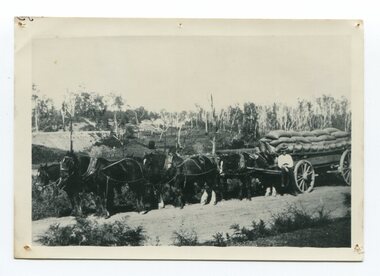 Orbost & District Historical Society
black and white photograph, late 19th century - early 20th century
... machine. A good day’s work would thresh about 50 bushels or about 12 bags (4 bushels). The task then was to cart the maize to market. For a few years this was done by horses and dray carrying about 60 bushels to Mossiface, where it was loaded onto river boats to Lakes Entrance, and then by ocean boats to Melbourne. ( from NEWSLETTER OCTOBER, 2006) This is a pictorial record of farming practices in Orbost in the early 20th century. farming-Orbost agriculture maize corn transport A black / white photograph of a horse team hauling a wagon loaded with bags of maize.A man is sitting on the edge of the wagon. black and white photograph ...Maize, or corn as it is called in America and New South Wales, has been grown on the Orbost flats for at least 70 years. When early settlers began to arrive on the Snowy River somewhere in the 1880s, the land was mostly swamps and heavily timbered jungle on the river frontages. The swamps were drained, bit by bit, by stout hearted men with short handled shovels and working in mud and water. The frontages were cleared by axe and shovel and fire. Several kinds of crops were experimented with such as hops, hemp and maize, the latter grew particularly well and became the main crop of district. The problem then was to thresh and deliver the product to the market. A small single cob machine was brought here and one man turned the handle, while the boy or Mum fed the cobs singly into the machine. A good day’s work would thresh about 50 bushels or about 12 bags (4 bushels). The task then was to cart the maize to market. For a few years this was done by horses and dray carrying about 60 bushels to Mossiface, where it was loaded onto river boats to Lakes Entrance, and then by ocean boats to Melbourne. ( from NEWSLETTER OCTOBER, 2006) This is a pictorial record of farming practices in Orbost in the early 20th century.A black / white photograph of a horse team hauling a wagon loaded with bags of maize.A man is sitting on the edge of the wagon.farming-orbost agriculture maize corn transport -
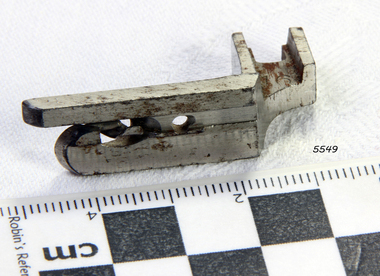 Flagstaff Hill Maritime Museum and Village
Accessory - Hemmer Foot, Joseph Wertheim, ca. 1891
... The couple came back to Melbourne, and Hugo quickly established a substantial business selling sewing machines, bicycles, pianos and other mechanical devices, under brands such as Wertheim, Electra, Planet, Griffin and Hapsburg. He exhibited at agricultural...The couple came back to Melbourne, and Hugo quickly established a substantial business selling sewing machines, bicycles, pianos and other mechanical devices, under brands such as Wertheim, Electra, Planet, Griffin and Hapsburg. He exhibited at agricultural ...This sewing machine accessory was donated with our collection's Wertheim sewing machine accessory box. The box contains twelve accessories, the instruction book and the receipt for the purchase of a Wertheim sewing machine. The receipt was written on July 23rd 1891 by the Wertheim distributor in Melbourne, Hugo Wertheim. His business was the Wertheim Sewing Machine and Hapsburg Piano Depot, trading at 173 Williams Street, Melbourne. The purchaser was Mrs Burrowes from Burrumbeet, Victoria, a district northwest of Ballarat. She paid £6-6 (six pounds and six shillings) in cash. The receipt was signed by H. Wertheim and the other signatory looks like John A. Cherry. Hugo Wertheim (1854-1919) was an agent for his father’s cousin Joseph Wertheim, a well-established sewing machine manufacturer in Germany. He was born in Lispenhausen, Germany, and migrated to Melbourne in October 1875, where he opened a merchandising business at 39 Flinders Lane East. He returned to Germany in 1885 to marry Joseph Wertheim's daughter Sophie Emilie. The couple came back to Melbourne, and Hugo quickly established a substantial business selling sewing machines, bicycles, pianos and other mechanical devices, under brands such as Wertheim, Electra, Planet, Griffin and Hapsburg. He exhibited at agricultural shows and in 1901 at the Pan American Exposition, Buffalo, United States of America. One of his staff was O. C. Beale, who later set up his own piano business in New South Wales. Hugo continued to own 25 per cent of one of Beale's companies, which became Wertheim's Queensland business. In 1908 Hugo Wertheim opened a piano factory in Richmond, Melbourne, aiming to produce 2000 pianos and player pianos a year, predominantly using Australian materials. In laying the foundation stone, Prime Minister Alfred Deakin observed that “few men with such opportunities for a life of ease would have embarked on such an enterprise” Hugo died of chronic hepatitis in 1919 at his home in South Yarra. His eldest son, Herbert Joseph (1886-1972), continued the business. The piano factory closed in 1935, becoming a Heinz food processing plant and in 1955, GTV Channel 9 studios and offices. The Wertheim Sewing Machine Company – Joseph Wertheim (1804–1899) founded the company in 1868 in Frankfurt, Germany. At this time Joseph was the Frankfurt city delegate for the Democratic Party. At its height, the Wertheim factory employed approximately 650 workers. The company used a trademark of a dwarf holding a hammer which is known to have been used until at least 1925, however in 1909 a Star of David was also registered. In 1870 a Wertheim subsidiary was formed in Barcelona, Spain. The business imported and sold complete machines, including the English Jones machine. Locals began calling the sewing machines “las rapidas”, and the business became known as “las casa de las rapidas”. In 1915 production began of a totally manufactured Spanish Wertheim machine. Wertheim in Germany continued manufacturing machines until 1932 when the Wertheim family fled to Spain. Despite converting to Christianity from Judaism, they feared the political unrest in Germany during that time. Wertheim Spain became Rapida SA and was then the sole manufacturer of the Wertheim machines. The factory was managed by Karl Wertheim under the alias Carlos Vallin. The sewing machine accessory is part of a donation that connected to domestic life in 1891 during the Victorian era. It is significant for connecting the Melbourne distributor of Wertheim sewing machines, Hugo Wertheim, to Victoria’s northwest district where the purchaser lived. It is also significant for connecting the Melbourne distributor to the importing of goods from the well-known German manufacturer of early domestic sewing machines, Joseph Wertheim. Broad Hemmer Foot for a Wertheim sewing machine. Joseph Wertheim manufacturer, Germany, distributed by Hugo Wertheim William Street Melbourne. Circa 1891flagstaff hill, flagstaff hill maritime museum and village, warrnambool, maritime museum, maritime village, great ocean road, shipwreck coast, wertheim, sewing machine, victorian era, sewing machine accessory, wertheim sewing machine and hapsburg piano depot, wertheim sewing machines, sewing machine foot, domestic machines, dressmaking, home industry, fashion -
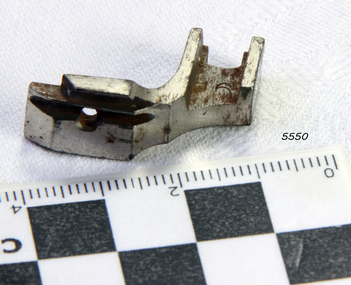 Flagstaff Hill Maritime Museum and Village
Accessory - Small Corder Foot, ca. 1891
... The couple came back to Melbourne, and Hugo quickly established a substantial business selling sewing machines, bicycles, pianos and other mechanical devices, under brands such as Wertheim, Electra, Planet, Griffin and Hapsburg. He exhibited at agricultural...The couple came back to Melbourne, and Hugo quickly established a substantial business selling sewing machines, bicycles, pianos and other mechanical devices, under brands such as Wertheim, Electra, Planet, Griffin and Hapsburg. He exhibited at agricultural ...This sewing machine accessory was donated with our collection's Wertheim sewing machine accessory box. The box contains twelve accessories, the instruction book and the receipt for the purchase of a Wertheim sewing machine. The receipt was written on July 23rd 1891 by the Wertheim distributor in Melbourne, Hugo Wertheim. His business was the Wertheim Sewing Machine and Hapsburg Piano Depot, trading at 173 Williams Street, Melbourne. The purchaser was Mrs Burrowes from Burrumbeet, Victoria, a district northwest of Ballarat. She paid £6-6 (six pounds and six shillings) in cash. The receipt was signed by H. Wertheim and the other signatory looks like John A. Cherry. Hugo Wertheim (1854-1919) was an agent for his father’s cousin Joseph Wertheim, a well-established sewing machine manufacturer in Germany. He was born in Lispenhausen, Germany, and migrated to Melbourne in October 1875, where he opened a merchandising business at 39 Flinders Lane East. He returned to Germany in 1885 to marry Joseph Wertheim's daughter Sophie Emilie. The couple came back to Melbourne, and Hugo quickly established a substantial business selling sewing machines, bicycles, pianos and other mechanical devices, under brands such as Wertheim, Electra, Planet, Griffin and Hapsburg. He exhibited at agricultural shows and in 1901 at the Pan American Exposition, Buffalo, United States of America. One of his staff was O. C. Beale, who later set up his own piano business in New South Wales. Hugo continued to own 25 per cent of one of Beale's companies, which became Wertheim's Queensland business. In 1908 Hugo Wertheim opened a piano factory in Richmond, Melbourne, aiming to produce 2000 pianos and player pianos a year, predominantly using Australian materials. In laying the foundation stone, Prime Minister Alfred Deakin observed that “few men with such opportunities for a life of ease would have embarked on such an enterprise” Hugo died of chronic hepatitis in 1919 at his home in South Yarra. His eldest son, Herbert Joseph (1886-1972), continued the business. The piano factory closed in 1935, becoming a Heinz food processing plant and in 1955, GTV Channel 9 studios and offices. The Wertheim Sewing Machine Company – Joseph Wertheim (1804–1899) founded the company in 1868 in Frankfurt, Germany. At this time Joseph was the Frankfurt city delegate for the Democratic Party. At its height, the Wertheim factory employed approximately 650 workers. The company used a trademark of a dwarf holding a hammer which is known to have been used until at least 1925, however in 1909 a Star of David was also registered. In 1870 a Wertheim subsidiary was formed in Barcelona, Spain. The business imported and sold complete machines, including the English Jones machine. Locals began calling the sewing machines “las rapidas”, and the business became known as “las casa de las rapidas”. In 1915 production began of a totally manufactured Spanish Wertheim machine. Wertheim in Germany continued manufacturing machines until 1932 when the Wertheim family fled to Spain. Despite converting to Christianity from Judaism, they feared the political unrest in Germany during that time. Wertheim Spain became Rapida SA and was then the sole manufacturer of the Wertheim machines. The factory was managed by Karl Wertheim under the alias Carlos Vallin.The sewing machine accessory is part of a donation that connected to domestic life in 1891 during the Victorian era. It is significant for connecting the Melbourne distributor of Wertheim sewing machines, Hugo Wertheim, to Victoria’s northwest district where the purchaser lived. It is also significant for connecting the Melbourne distributor to the importing of goods from the well-known German manufacturer of early domestic sewing machines, Joseph Wertheim. Small corder foot for a Wertheim sewing machine. Joseph Wertheim manufacturer, Germany, distributed by Hugo Wertheim William Street Melbourne. Circa 1891flagstaff hill, flagstaff hill maritime museum and village, warrnambool, maritime museum, maritime village, great ocean road, shipwreck coast, wertheim, sewing machine, victorian era, sewing machine accessory, wertheim sewing machine and hapsburg piano depot, wertheim sewing machines, sewing machine foot, small corder foot, domestic machines, dressmaking, home industry, fashion
