
Showing 41 items matching "agriculture in warrnambool district"
-
 Warrnambool and District Historical Society Inc.
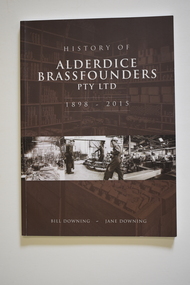
Book - History of Alderdice Brassfounders Warrnambool, Bill Downing and Jane Downing, History of Alderdice Brassfounders Pty Ltd 1898-2015, 2016
... ...Agriculture in Warrnambool district...agricultural sector - bore pumps for windmills, foot valves and check valves for pumps and float valves used in water troughs. This book is of considerable interest as it gives information on the history of an important industry in Warrnambool, one which has been operating for over 120 years. Alderdice Brassfounders Pty Ltd Agriculture in Warrnambool district ...History of Warrnambool Factory - Alderdice Brassfounders Pty LtdThis is a book of 108 pages. It has a brown cover with white printing and a black and white photograph on the front cover and printing and seven black and white photographs on the back cover. The pages contain printed material and black and white photographs. non-fictionHistory of Warrnambool Factory - Alderdice Brassfounders Pty Ltdalderdice brassfounders pty ltd, agriculture in warrnambool district, william & charles downing -
 Flagstaff Hill Maritime Museum and Village
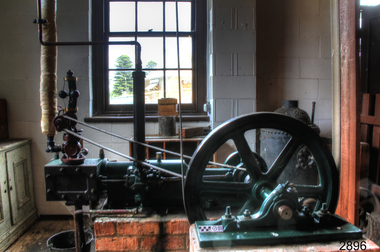
Machine - Steam Engine, Tangyes engineering, Mid-1880s
... agriculture and adapted for many different purposes. It is also important locally because it was connected to a local cheese making business and part of the thriving western district dairy industry. It may have been one of the Tangyes engines used at the Farnham butter factory or the Warrnambool ...This Tangye B-size, single-cylinder, horizontal steam engine was likely manufactured in England around the mid-1880s. It was distributed by Melbourne machinery merchants Cameron & Sutherland, which also operated in Bendigo and Ballarat. A local cheese maker once used the engine to drive factory equipment. It was later donated to the Warrnambool Technical School, which then donated it to Flagstaff Hill to add to its historical steam engine collection. Between its manufacture and its donation to Flagstaff Hill, the governor had been replaced by the current Pickering governor. This engine design was very popular in the late 19th and early 20th centuries. When connected and powered up, the engine could drive an overhead line shaft via a flat belt off its flywheel. The line shaft would then drive the machinery via flat belts. It could drive virtually any type of machinery, such as water and sewerage pumps, mine elevators, winches, cranes, metal forges, air blowers, and marine machinery. This engine features a mechanical governor, which controls the speed of the engine regardless of whether it is under load. It also has a water pump built into the valve rod, which is used to supply the boiler with water. Steam enters the cylinder via a slide valve and applies pressure to the piston; it is like a modern internal combustion engine, but in the case of the steam engine, the pressure is exerted in turn on either side of the piston. In other words, the connecting rod is pushed by steam via the piston and piston rod and then pulled back again by steam pushing on the opposite side of the piston. Thus, power is exerted almost continuously, except at the end of each piston stroke, when it reverses direction. In the 1880s, many local butter and cheese manufacturers installed Tangye steam engines to power their machinery. A comprehensive article in the Gippsland Mercury in September 1889 extolled the magnificence of the Farnham Butter Factory in Dennington, Warrnambool, and described how one Tangye engine was used to drive several machines in the cheese- and butter-making processes. A report in the Warragul Guardian in December 1890 notes that the newly opened Warrnambool Butter Factory used a Tangye steam engine to pump water from a 60-foot well. Tangye: Richard Tangye (1833–1906) and four of his brothers—James, Joseph, Edward, and George—were the sons of Joseph Tangye, a Quaker Cornish miner. In 1857, they founded the engineering firm Richard Tangye & Brothers in Birmingham, UK. In 1860, the firm became Tangye Brothers and moved to Cornwall Works in Birmingham. The business encouraged inventors to join the company and develop their patents there, as happened with Weston’s differential pulley block, invented by the Englishman Thomas Aldridge Weston in 1854. Tangye bought the patent in 1858, giving the firm the sole right to manufacture it. The design received a medal for “original application, practical utility and success” at the 1862 International Exhibition in London. Also in 1858, the Tangye firm was commissioned by Brunel’s shipping company to manufacture hydraulic lifting jacks, or rams, to launch the steamship SS Great Eastern. The success of this project brought favourable attention to the firm, and it became involved in other notable projects, including the erection of Cleopatra’s Needle in London in 1878 and work on the Forth Road Bridge in Scotland. The firm underwent several name changes over the years, including James Tangye and Brothers (1857), Tangye Brothers and Price (1859), Tangye Brothers (1860), Tangye Brothers & Holman (1876), Tangye Brothers (by 1878), Tangye Ltd. (1881), and then simply Tangye. Its machinery and equipment were exported worldwide. In 1884, a branch with showrooms, offices, and a warehouse was opened in Melbourne at Cornwall House, Collins Street West. The firm was well known for producing high-quality machinery for agriculture and industry. Even today, new Tangye machinery is available for a subsidiary of Allspeeds. An extensive account of the firm’s history, names, inventions, and further references is available in Grace’s Guide, which also includes references to and diagrams of the Tangye horizontal steam engine. The horizontal steam engine was made by the well-known engineering firm Tangye, known for its high quality of manufacture. It was an important development in machinery because it helped improve productivity. Engines of this type are still used in some parts of the world today. This engine is a good example of a late 19th-century steam engine used in industry and agriculture and adapted for many different purposes. It is also important locally because it was connected to a local cheese making business and part of the thriving western district dairy industry. It may have been one of the Tangyes engines used at the Farnham butter factory or the Warrnambool Butter Factory, which was reported to be one of the most important in the Colony. It is also connected to the Warrnambool Technical School, established in 1968. Steam engine: stationary Tangye Size B, single-cylinder, horizontal Mill type steam engine. It has a 4-inch diameter cylinder with an 8-inch stroke. The body is painted green, and the Pickering governor is red. It was manufactured in Birmingham, England, in accordance with Tangye's Patent 238930, and distributed by Cameron and Sunderland, Melbourne, in the mid-1880s. TANGEYS PATENT BIRMINGHAM B SIZE 238930 CAMERON & SUTHERLAND MELBOURNE THE PICKERING PORTLAND . GOVERNOR . CONN. U.S.A.flagstaff hill, warrnambool, maritime village, maritime museum, flagstaff hill maritime museum and village, shipwreck coast, great ocean road, machine, invention, engine, steam, steam engine, horizontal steam engine, tangyes horizontal steam engine, stationary steam engine, single cylinder steam engine, manufacturing, farming, pumps, lifting equipment, engines, machine tools, hydraulic rams, hydraulic pumps, steam pumps, differential pulleys, mill type steam engine, 4 inch cylinder, weston’s differential pulley, thomas aldridge weston, 1862 international exhibition in london, brunel, ss great eastern, cleopatra’s needle, forth road bridge, cornwall house, collins street melbourne, agricultural machinery, industrial machinery, allspeeds, dairy, pump, richard tangye & brothers, james tangye and brothers, tangye brothers and price, tangye brothers, tangye brothers & holman, tangyes ltd., tangye, richard tangye, james tangye, joseph tangye, edward tangye, george tangye, cornwall works, birmingham, pickering governor, pickering portland connecticut usa, 19th century, dairy plant, steam power, tangye's patent 238930, tangye b size engine, cameron & sutherland, machine merchants, 1880s, mid-1880s, cheese manufacturer, butter manufacturer, diary industry, warrnambool technical school, belt driven machinery, agriculture, mechanical governor, farnham butter factory, warrnambool butter factory -
 Flagstaff Hill Maritime Museum and Village
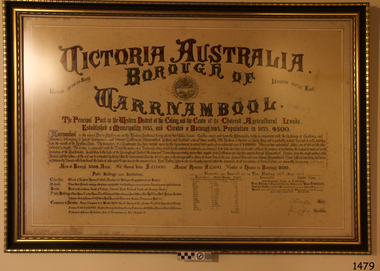
Document - Framed Poster, Borough of Warrnambool, Victoria, Australia, after 30/06/1875
... Warrnambool. Latitude, 30.24.50 South, Longitude 142.32 East The Principal Port in the Western District of the Colony and the Centre of its Choicest Agricultural Lands. ...Warrnambool. Latitude, 30.24.50 South, Longitude 142.32 East The Principal Port in the Western District of the Colony and the Centre of its Choicest Agricultural Lands. ...This document, also referred to as a word picture or Tablet, is framed in glass and timber with gilt trim, is handwritten with colour highlights. The penned letters rest on ruled guide lines, decorated where the lines intersect. The writing gives a description of the state of Borough of Warrnambool around 1875; its location, the area it covers, its population, Harbour and facilities, public buildings and institutions, imports and exports, financial worth, number of houses, connection with other areas of the Colony. A possible reason and origin for the document is found in an article ‘Link with US Exhibition’ from the Warrnambool Standard of December 19, 1981, written by local historian Bruce Morris. The writer mentions that the Warrnambool Borough Council met on 15th June 1875 and recorded a letter from G.C. Levey , secretary to the Melbourne group of commissioners representing the Colony, and Victoria in particular, for the Philadelphia Centennial Exhibition of 1876. The letter asks Council to provide “statistics as to the population, social condition and commercial and industrial state of the district in and around Warrnambool.” A sub committee was formed for the project. The Mayor, Cr. Thomas King, wrote and signed a Report, presented to the council on July 14, 1875, in which “The Committee … begs to recommend that a Tablet be prepared setting for the particulars respecting the following matters relating to the Borough”. The matters included area, population, annual income, churches, schools, other public buildings, societies and companies, general description of houses erected, and returns of exports and imports for 1874. The minutes note that the Report was adopted. The article above also notes the opinion of Warrnambool printers who have examined the document; it is almost certainly to be an old lithograph, which means there could be several copies. It is possible that there may be a copy in Melbourne and another in Philadelphia. It is interesting to note that (1) the quoted location co-ordinates are for an “Unnamed Road, Packsaddle NSW 2880, Australia”, and that the DMS co-ordinates for Warrnambool’s Council Offices differ, being 38.23.9.12 South, 142.28.52.887. (2) the date for “Exports and Imports for the Year Ending 30th June 1875” is different to the period mentioned by Cr. King in the sub committee’s Report of recommendation “returns of exports and imports for 1874”. The information required to have the figures for the end of June 1875 would need to have been compiled very quickly for the Tablet to be ready for the opening of the Philadelphia Exhibition on 10 May 1876. The document/certificate shows the following – - - - - - - - - - - - - - - -- - - - - - - - - - - - - - -- - - - - - - - - - - - - - -- - - - - - - - - - - - - - - “Victoria Australia, Borough of Warrnambool. Latitude, 30.24.50 South, Longitude 142.32 East The Principal Port in the Western District of the Colony and the Centre of its Choicest Agricultural Lands. Established a Municipality in 1855, and Created a Borough 1863. Population in 1875 4,500. Warrnambool is the nearest Port to Melbourne on the Western Seaboard, being about 160 miles distant. Coaches run to and from the Metropolis daily, in connexion [connection] with the Railway of Geelong and Steamers belonging to Local Companies sail between Melbourne, Warrnambool, Belfast [renamed Port Fairy], and Portland several times weekly. The Harbour is known as Lady Bay, and is partially protected by a reef of rocks stretching from the mouth of the Hopkins River. The formation of a Breakwater has been decided upon by the Government, to extend 600 yards, at an estimated cost of £100,000. There are two substantial Jetties, one of 800 and the other of 600 feet in length. The former is connected with the Town by means of a Tramroad, along which Goods, inwards & outwards, are conveyed, & the latter has been constructed solely for the purpose of facilitating the transit of material for the formation of the Breakwater. In addition to the trade of the Borough and District, the principal Townships up country receive their supplies from Melbourne and ship their exports through Warrnambool. Potatoes form the staple produce of the district, and the richness of the soil can be estimated by the fact that the Government Statistics for 1875 give as the average yield a return of Seven Tons to the acre. Several thousand acres between Warrnambool and Tower Hill are now being laid down in Potatoes by Tenants who have leased the lands at rates up to £5 per acre for the season 1875-6. Wool, Tallow, hides &c are also largely exported, while the shipments of all descriptions of Farm Produce are annually increasing. Area of Borough, 3362 Acres. Net Annual Value £27,000. Annual Revenue £5,500. Number of Houses in Borough 800. Public Buildings and Institutions Churches. Church of England, Roman Catholic, Presbyterian, Wesleyan, Congregational and Baptist. Schools. Three State Schools, average attendance nearly 1000. New Building in course of erection. Several private establishments. Banks. Bank of Australasia, Bank of Victoria, National Bank, Colonial Bank and Savings Bank. Public Buildings. Court house, Custom house, Post & Telegraph Offices, Survey & Land Offices, Shire £, Town Hall, Mechanics Institute, Volunteer Orderly Room, Odd Fellows Hall, Hospital & Benevolent Asylum, Temperance Hall &c. Companies & Societies. Steam Navigation Co, Woolen Mill Co, Gas Co, Racing Club, Amateur Turf Club, Agricultural Society, Farmers’ Club, Cricket Club, Anglers’ Society, Building Society, Freemasons Odd Fellows, Foresters, Druids, Hibernians. Protestant Alliance, Rechabites, Sons of Temperance, &c, Fire Brigade &c. --- Exports and Imports for the Year Ending 30th June 1875 –-- --Exports Total Tonnage 27,800 (Calculated at the Current Warrnambool Market Prices) Potatoes Wool Wheat Barley Hides Skins Fowls Butter Cheese Eggs Tallow Leather Ale Pigs Sheep Sundries --Imports 13,000 Tons Of the Estimated Value of £520,000 Total Tonnage of Exports and Imports 40m900 Tons, Value £806,627 Passenger Travels, to ad from Warrnambool during year, 10,000 persons Revenue from all sources paid through Warrnambool Sub Treasury From 1860 to June 1875 £1, 292, 300 Thomas King [signed] Mayor Henry T Read [signed] Town Clerk” - - - - - - - - - - - - - - -- - - - - - - - - - - - - - -- - - - - - - - - - - - - - -- - - - - - - - - - - - - - - The document is of historical, social, economic and local significance in that it summarises activities, business, community, trade, travel and government at a point in time in Warrnambool’s history – 30th June 1875.Document, also referred to as a ‘word picture’ or ‘tablet’. Document is framed in glass and timber with gilt trim, handwritten with colour highlights. The penned letters rest on ruled guide lines, decorated where the lines intersect. Document outlines the establishment of Warrnambool as a Municipality in 1855 and Borough in 1863, with a population of 4,500 in 1875. It states geographic location, public buildings and institutions, harbor facilities and imports and exports for the year ending 30th June 1875. Two signatures "Thomas King" Mayor and "Henry T Read" Town Clerk. It shows the Coat of Arms of the Borough of Warrnambool.Signatures - "Thomas King" Mayor and "Henry T Read" Town Clerk. Warrnambool Coat of Arms; “British Coat of Arms, above sailing vessel and sheaf of wheat in sun, motto “By these we flourish” and around circumference “Borough of Warrnambool 1855”flagstaff hill, warrnambool, shipwrecked coast, flagstaff hill maritime museum, maritime museum, shipwreck coast, flagstaff hill maritime village, great ocean road, borough of warrnambool, municipality of warrnambool, document borough of warrnambool 1875, word picture of warrnambool 1875, tablet of borough of warrnambool 1875, statistics borough of warrnambool 1875, lithograph borough of warrnambool 1875, coat of arms warrnambool, warrnambool city motto – in these we flourish, establishment of warrnambool, warrnambool history, thomas king mayor of warrnambool, henry t read town clerk of warrnambool, warrnambool breakwater, warrnambool jetty, warrnambool imports and exports 1875, warrnambool agriculture 1875, warrnambool business 1875, warrnambool population 1875, centennial exhibition philadelphia 1876, framed certificate -
 Flagstaff Hill Maritime Museum and Village
Medal
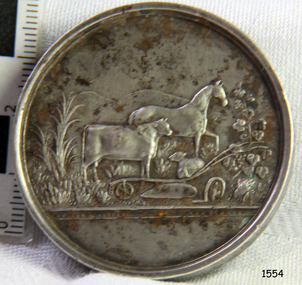
... flagstaff hill warrnambool shipwrecked-coast flagstaff-hill flagstaff-hill-maritime-museum maritime-museum shipwreck-coast flagstaff-hill-maritime-village Medal, silver stating "Jas Kelly" surround by floral design and the further statement "Horsham and Wimmera District Pastoral and Agricultural Society" On the other face is a country scene depicting a horse, bull, sheep and plough. ...Medal, silver stating "Jas Kelly" surround by floral design and the further statement "Horsham and Wimmera District Pastoral and Agricultural Society" On the other face is a country scene depicting a horse, bull, sheep and plough.flagstaff hill, warrnambool, shipwrecked-coast, flagstaff-hill, flagstaff-hill-maritime-museum, maritime-museum, shipwreck-coast, flagstaff-hill-maritime-village -
 Flagstaff Hill Maritime Museum and Village
Harness, Late 19th to early 20th century
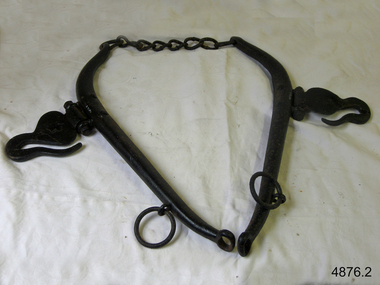
... This pair of hames would have probably been used on a farm or delivery wagon in the Warrnambool district. Horses played a vital role of the agricultural industry in Warrnambool before the mechanisation of farm machinery. ...Hames are attached to a horse collar used to distribute the load around a horse's neck and shoulders when pulling a wagon or plough. The collar often supports and pads a pair of curved metal or wood pieces, called hames, to which the traces, which attach to the wagon or plough, of the harness are attached. The collar allows the horse to use its full strength when pulling. This pair of hames would have probably been used on a farm or delivery wagon in the Warrnambool district. Horses played a vital role of the agricultural industry in Warrnambool before the mechanisation of farm machinery. This item is associated with that time.Hames - Harness pieces (2) black metal with hooks, rings & chain. Wattle stamped.flagstaff hill, warrnambool, shipwrecked-coast, flagstaff-hill, flagstaff-hill-maritime-museum, maritime-museum, shipwreck-coast, flagstaff-hill-maritime-village -
 Flagstaff Hill Maritime Museum and Village
Document - Permit, Miner's Right - Collins, 1888
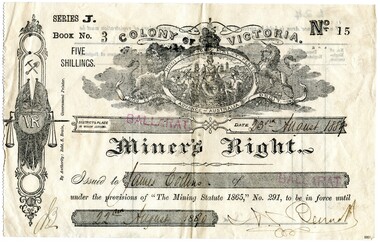
... Warrnambool Branch, 2004, p137. As are numerous other Collins pioneer families of the district. This item is significant in that it illustrates that people associated with the region were interested in taking their chances in prospecting for gold similar to many others. A lure that is still present for some today. Although the southwest region found it's source of wealth in other industries from whaling and fishing, wool and other agricultural ...This Miner’s Right, one of a pair of two in our collection, was issued post the rush of the 1850s-60s but is testament to the ongoing interest in gold although the great rush had dwindled. Local papers continued to report on findings and hopes of success, including syndicates and explorations across the south-west district of Victoria and Otways. The Warrnambool correspondent of the “Hamilton Spectator”, 31/1/1878, p4 attest to the price of a good season of potatoes comparing “favourably with the unsteady returns of any precarious gold-bearing quartz reefs in the colony.” A James Collins (1842-1918) is listed in the Pioneers’ Register, Warrnambool, Township and Shire 1839-1900, Volume One, A.I.G.S Warrnambool Branch, 2004, p137. As are numerous other Collins pioneer families of the district. This item is significant in that it illustrates that people associated with the region were interested in taking their chances in prospecting for gold similar to many others. A lure that is still present for some today. Although the southwest region found it's source of wealth in other industries from whaling and fishing, wool and other agricultural pursuits. Miner's Rights permit, one of two, This is a top to bottom upright image of a Miner’s Right. It is a buff coloured document printed in black ink. It was issued in “BALLARAT” and rubber stamped twice in red ink. The issue to “James Collins”, is dated “23rd August 1889” to “22nd August 1890”. The signature of the authority could be Bennet. All handwriting is script style in black ink. Looking from the front the lefthand side has a serrated edge. The back is printed in black ink and there are no “particulars of registration”. The Miner’s Right is from “Series J, Book No. 3, ticket “No. 15”. A “Colony of Victoria” coat of arms is displayed at the top of the document. An insignia runs along the lefthand side of the license featuring coat of arms with a kangaroo and emu, then a miner’s pick and shovel, two crossed Union Jack flags sit behind a monogram “VR” with a hanging set of scales supported by a sword. "By Authority Robt. S. Brain, Government Printer.""Series J. Book No. 3 Five Shillings. No. 15. Colony of Victoria. Miner's Right"flagstaff hill, warrnambool, shipwrecked coast, flagstaff hill maritime museum, maritime museum, shipwreck coast, flagstaff hill maritime village, great ocean road, james collins, australian goldfields, miner's rights, the history of ballarat, gold rush -
 Cheese World Museum
Licence, Pig Breeders Licence, 1903
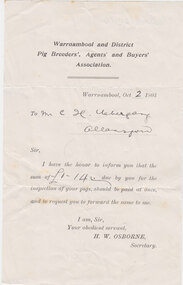
... agriculture...warrnambool and district pig breeders...This licence is significant as it assists in understanding the relationship between the dairy industry and the pig industry. allansford uebergang pigs pig breeders dairy industry agriculture warrnambool and district pig breeders Warrnambool and District/Pig Breeders', Agents' and Buyers'/Association/Warrnambool, Oct 2 1903/To Mr C H Uebergang/Allansford/Sir,/I have the honor to inform you that the sum of £1-14 due by you for the inspection of your pigs, should be paid at once, and to request you to forward the same to me. ...The Uebergang family came from Silesia to Australia in 1848 and were early settlers in the Allansford area. The sons and other descendants also purchased farms in the area. The Percy Uebergang family lived at Tooram Park, Allansford from 1912 until 1992. Percy and Myrtle Uebergang's children were twins, Ray and Joyce born in 1926 who lived at Tooram Park until their deaths, Ray in 1986 and Joyce in 1992 after which the property was sold. Neither Ray nor Joyce married and following the death of her brother Joyce set up the Ray and Joyce Uebergang Foundation which supports the local community. The collection of items from their property was put into store for a number of years before being given into the care of the Cheese World Museum. The family often re-used, recycled and repaired items and examples can be seen in the museum. This item is part of the collection of items given into the care of the Cheese World Museum. The Warrnambool and District Pig Breeders', Agents and Buyers' Association was responsible for inspecting pigs. During the early 20th century the pig industry was included as part of the dairy industry. After milk was separated the cream went to the factory and the skim milk went back to the farm to feed the pigs. Early newspaper reports include information relating to the price of bacon in the list of dairy goods. Warrnambool Cheese and Butter Factory commenced a bacon factory in the early 1900s but it was a short-lived operation. This licence is significant as it assists in understanding the relationship between the dairy industry and the pig industry.A5 size paper with black printed details of the Warrnambool and District Pig Breeders', Agents' and Buyers' Association with the date of the licence, name of licensee and fee due.Warrnambool and District/Pig Breeders', Agents' and Buyers'/Association/Warrnambool, Oct 2 1903/To Mr C H Uebergang/Allansford/Sir,/I have the honor to inform you that the sum of £1-14 due by you for the inspection of your pigs, should be paid at once, and to request you to forward the same to me./I am, Sir,/Your obedient servant,/H.W. OSBORNE,/Secretary [on reverse in pencil] M Millard £20.16.0allansford, uebergang, pigs, pig breeders, dairy industry, agriculture, warrnambool and district pig breeders -
 Flagstaff Hill Maritime Museum and Village
Craft - Ship Model, after 1850
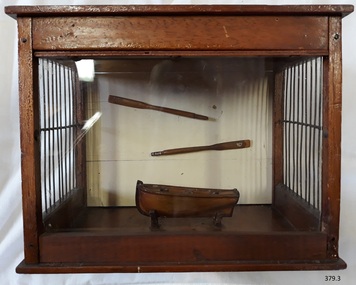
... Warrnambool and District Historical Society. After the museum closed, this model was eventually transferred to Flagstaff Hill. Edward’s son, Herman, was also a model maker, making model boats and even boats in bottles. Edward passed away in Warrnambool in 1937. THE ENTERPRISE 1847-1850 The wooden, two-masted schooner Enterprise was built in New Zealand in 1847 and registered in Melbourne, Australia. The Enterprise carried cargos of agricultural...Warrnambool and District Historical Society. After the museum closed, this model was eventually transferred to Flagstaff Hill. Edward’s son, Herman, was also a model maker, making model boats and even boats in bottles. Edward passed away in Warrnambool in 1937. THE ENTERPRISE 1847-1850 The wooden, two-masted schooner Enterprise was built in New Zealand in 1847 and registered in Melbourne, Australia. The Enterprise carried cargos of agricultural ...This little model dinghy or rowing boat, together with its two oars and its display case, was made by Edward Richter using timber from the New Zealand-built schooner, the Enterprise, wrecked in Lady Bay, Warrnambool, in 1850 after only three years of sailing. The dinghy was originally presented to the old Warrnambool Museum and transferred to Flagstaff Hill along with its two descriptive card tags. EDWARD RICHTER (1853-1937) Edward Richter was the son of Henry and Charlotte Richter, who migrated from London and arrived in Port Phillip, Victoria, in 1850. Henry had worked in the Bank of England in London. In Australia, he worked for the Morning Herald and was a business partner in the Geelong Daily News. He served in the Volunteer Corps and had the honour of being one of the 500 Volunteers in the firing party at the grave of Sir Charles Hotham, Governor of Victoria. In Warrnambool, Henry was the Host/Licensee of the Royal Archer Hotel. He was also connected with Sheldrich's brewery (the Western Brewery) there. Henry and Charlotte’s son Edward was born in Collingwood, a Melbourne suburb, in 1853. The family moved to Warrnambool in 1867. In 1878 Edward married Susan (nee Saltz) and they had a family of twelve children. Sadly their son, Edward Henry Richter, died from drowning in Warrnambool’s Shelly Beech in 1907, aged 29 years. Edward was a prominent Warrnambool citizen. He worked as a coach painter and his hobbies included model making. He made this model dinghy and presented it to the old Warrnambool Museum in the late 1800s. He also made some model violins that are now in the care of the Warrnambool and District Historical Society. After the museum closed, this model was eventually transferred to Flagstaff Hill. Edward’s son, Herman, was also a model maker, making model boats and even boats in bottles. Edward passed away in Warrnambool in 1937. THE ENTERPRISE 1847-1850 The wooden, two-masted schooner Enterprise was built in New Zealand in 1847 and registered in Melbourne, Australia. The Enterprise carried cargos of agricultural produce and other commodities for trade between the ports of the Colony. On September 14, 1850, the Enterprise was at anchor in Lady Bay under its Master, James Gardiner Caughtt, loaded with a cargo of wheat and potatoes. A strong south-easterly wind caused the vessel to drag on its only anchor and the rudder was lost. The gale-force wind blew it sideways and it became grounded. A local indigenous Buckawall, braved the rough sea to take a line from the shore to the Enterprise. All five members of the crew were able to make it safely to land. The Enterprise was wrecked. The Enterprise wreck was in an area called Tramway Jetty in Lady Bay. Since then the area became the location of the Lady Bay Hotel and now, in 2019, it is in the grounds of the Deep Blue Apartments. In fact, with the constantly changing coastline through built-up sand, the wreck site is now apparently under the No 2 Caravan Park on Pertobe Road, perhaps 150 metres from the high tide. Its location was found by Ian McKiggan (leader of the various searches in the 1980s for the legendary Mahogany Ship). DIFFERENTIATING the New Zealand Schooner “Enterprise” from John Fawkner’s “Enterprize“ Dr Murray Johns, Melbourne, says in his article The Mahogany Ship Story “… As I documented in 1985, the Warrnambool wreck was of an entirely different ship, also called Enterprize [with the spelling ‘Enterprise’], but built in New Zealand in 1847. Fawkner’s ship had already been sold to Captain Sullivan in 1845 and was wrecked on the Richmond Pier in northern New South Wales early in 1847. “ - (further details are in NOTES: and FHMV documents)The model of a dinghy is significant for its association wreck of the schooner Enterprise, now on the Victorian Heritage List VHR S238, being a New Zealand built but Australian owned coastal trader. The wreck is also significant, by connection with the Enterprise, for its association with indigenous hero Buckawall who saved the lives of the five crew on board. The maker of the model, Edward Richter, is significant as a member of one of Warrnambool’s pioneering families, which has contributed to the growth of the community in several ways over the years, living, working and bringing up their families in the coastal city. Ship model; model of a small wooden boat or dinghy and wooden two oars, displayed in timber case with open sides that have vertical wire strands from top to bottom. The model was made by Mr Edward Richter from the timber of the schooner Enterprise, built in New Zealand 1847 and wrecked three years later in Lady Bay, Warrnambool.Handwritten tag in pen and ink: "Model of Boat made from the timber of the schooner "Enterprise" wrecked at Warrnambool" Type written tag "MODEL DINGEY Made from Timber of Schooner "Enterprise". Made and presented by Mr Edward Richter."flagstaff hill, warrnambool, shipwrecked coast, flagstaff hill maritime museum, maritime museum, shipwreck coast, flagstaff hill maritime village, great ocean road, wooden ship building, carpentry, ship modelling hobby, dinghy, dingey, dingy, edward richter, enterprise, lady bay warrnambool, schooner enterprise, wreck of the enterprise 1850, richter family, warrnambool history, buckawall -
 Warrnambool and District Historical Society Inc.
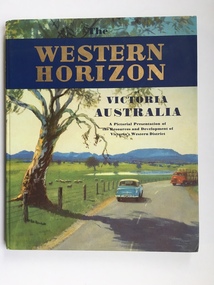
Book, Western Horizon, C 1960
... District such as water supply,architecture,ports,produce,and agriculture. It also presents the various scenic spots around the district. The publishers of this book , the Australian publicity Council is dedicated to publicising the state of Victoria and its natural resources in an effort to attract overseas investment and industry. This book provides a snapshot of the Western District in the 1960 's both with the information and the photographs contained within, including some which were taken by Ralph Illidge who was one on Warrnambool's ...This book presents a pictorial history of the western District of Victoria. It explores various aspects of the Western District such as water supply,architecture,ports,produce,and agriculture. It also presents the various scenic spots around the district. The publishers of this book , the Australian publicity Council is dedicated to publicising the state of Victoria and its natural resources in an effort to attract overseas investment and industry.This book provides a snapshot of the Western District in the 1960 's both with the information and the photographs contained within, including some which were taken by Ralph Illidge who was one on Warrnambool's best known photographers. Coloured hard board cover with country scene with road with two vehicles on a road which continues to the back cover.. A large gum tree sits beside the road. The title is gold on a navy blue banner. Thereis a small blurb on the back cover. 112 pages.Australian Publicity Council. Henry Bolte Premier of Victoria.history of warrnambool, western horizon, western victoria, ralph illidge, warrnambool 1960's -
 Warrnambool and District Historical Society Inc.
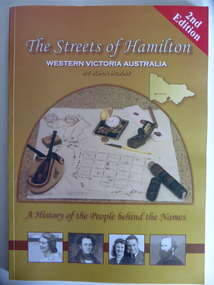
Book, Streets of Hamilton, 2007 (revised and reprinted 2009)
... agricultural district. The book won an award in the 2008 Victorian Community History Awards. This book is of interest as it gives information on the Hamilton streets and the origin of their names. The history of Hamilton is of particular interest to those also living in the Western District. The book will be a useful research tool. Hamilton, Victoria John McKay Street Names of Hamilton Warrnambool ...This is a book providing information on the streets of Hamilton, Victoria and the origin of the names. Hamilton is a city in Western Victoria at the intersection of the Glenelg Highway and the Henty Highway. European settlement began with the arrival of pastoralists following the 1836 explorations of Major Thomas Mitchell. The Wedge family in 1839 had the property ‘The Grange’ which covered the site of Hamilton today. The town was gazetted in 1851 and named after a place in Scotland. Hamilton Victoria is the centre of a sheep-grazing and agricultural district. The book won an award in the 2008 Victorian Community History Awards. This book is of interest as it gives information on the Hamilton streets and the origin of their names. The history of Hamilton is of particular interest to those also living in the Western District. The book will be a useful research tool. This is a soft cover book of 174 pages. The back cover has a white background with black and white photographs of five local Hamilton people. The front cover has a yellow and brown background with black and white photographs of five local Hamilton people, an outline of a map of Victoria and a photograph of a map of the Hamilton area with some artefacts placed on the map. The book contains an Introduction, a Preface, a Foreword, an Early Days Overview, a list of Contents, a list of the streets in alphabetical order with information on the origin of the names, two Appendices and an Index. The book has many black and white photographs and sketches. Front Cover: ‘2nd Edition’ ‘The Streets of Hamilton’ ‘Western Victoria Australia’ ‘By John McKay’ ‘A History of the People behind the Names’hamilton, victoria, john mckay, street names of hamilton, warrnambool -
 Warrnambool and District Historical Society Inc.
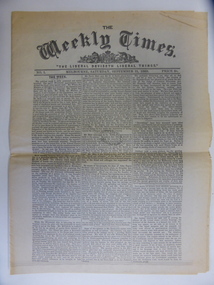
Document, The Weekly Times, Originally produced - 1869
... agriculture, science and politics’. In 1892 it was acquired by the Herald Newspaper group which has been publishing The Weekly Times ever since. The Weekly Times is now regarded as the most important newspaper especially published for those living outside of Melbourne in rural Victoria. This newspaper reprint is of minor interest as it is a copy of the first edition of a newspaper that is widely read in rural Victoria, including Warrnambool and the Western District ...This is a reprint of the first edition of The Weekly Times – originally printed on September 11th 1869. The paper was first published by the Daily Telegraph Newspaper Company and was described as ‘a Journal of literature, sport, agriculture, science and politics’. In 1892 it was acquired by the Herald Newspaper group which has been publishing The Weekly Times ever since. The Weekly Times is now regarded as the most important newspaper especially published for those living outside of Melbourne in rural Victoria. This newspaper reprint is of minor interest as it is a copy of the first edition of a newspaper that is widely read in rural Victoria, including Warrnambool and the Western District.This is a reprint of the first edition of the Melbourne newspaper, the Weekly Times (1869). It has 16 pages and includes news items, advertisements, black and white sketches, poems, agricultural information, ladies’ columns etc. The first page has the masthead and motto of the paper – ‘The Liberal Reviseth Liberal Things’. The paper is yellowed with age and some pages are tattered at the edges. The front page has originally had a stamp on it from the Melbourne Public Library. the weekly times, victorian newspapers, warrnambool history -
 Warrnambool and District Historical Society Inc.
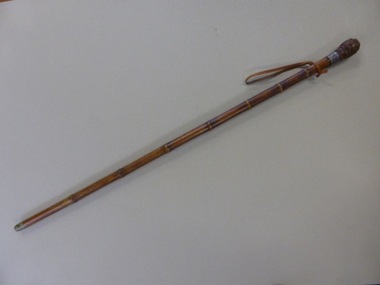
Walking Stick, Mr Bendall Walking & Measuring Stick, c.1920
... Warrnambool he took an interest in trotting and owned several trotters. For the last sixteen years of his life Atwell Bendall was a handicapper for most of the Western District race clubs and his keen judgment and knowledge of horses were greatly admired and appreciated. He was also a judge at agricultural...Warrnambool he took an interest in trotting and owned several trotters. For the last sixteen years of his life Atwell Bendall was a handicapper for most of the Western District race clubs and his keen judgment and knowledge of horses were greatly admired and appreciated. He was also a judge at agricultural ...This walking stick, which is also a horse measurer, belonged to Atwell George Bendall, the well-known racing man, judge and handicapper in the Western District early in the 20th century. Born in the Caramut district, he was the manager of the ‘Green Hills’ estate at Winslow, a property owned by his father who also operated a livery and coach service at Caramut. When his father died Bendall carried on the family business until the end of the 19th century when he went to live in Warrnambool. A lover of horses, Bendall was an amateur rider of note and an owner of several racehorses. He also took a keen interest in coursing and owned and bred many successful dogs. In Warrnambool he took an interest in trotting and owned several trotters. For the last sixteen years of his life Atwell Bendall was a handicapper for most of the Western District race clubs and his keen judgment and knowledge of horses were greatly admired and appreciated. He was also a judge at agricultural shows and other horse events and this is probably where he was made use of this horse-measuring walking stick. He died in 1922. This is a most significant item as it belonged to the prominent early 20th century horse racing identity in the Western District – Atwell Bendall. It is also of general historical interest as an ingenious object – a walking stick doubling as a horse measurer. This is a mottled brown-coloured wooden walking stick, slightly tapered and with seven segments. It has a wooden knob at the top curved and indented in an acorn shape. The knob has silver coloured nails or tacks driven into the raised sections. The knob lifts out and is actually a wooden ruler with silver casing at the top of the ruler. Also at the top of the ruler, at a right angle to the ruler, is a lift-out metal piece which has a spirit level at the top end and this metal piece is used to rest on the horse to estimate its measurement in hands. There is a leather strap near the top of the walking stick for attachment to the wrist and a gold metal cap at the bottom of the stick. A silver band near the top of the stick has an inscription. ‘A G. Bendall Warrnambool’ atwell bendall, history of horse racing in the western district, history of warrnambool -
 Warrnambool and District Historical Society Inc.
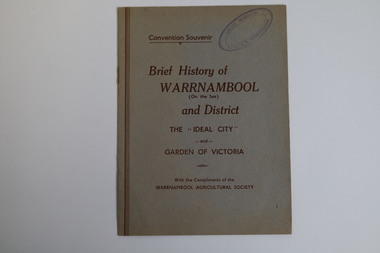
Booklet - Convention Souvenir, Kaye & Son, Printers, Brief History of Warrnambool (On the Sea) and District, 1949-1950
... Agriculture held annual rural conventions attended by farmers and industry representatives from throughout the state. This booklet, detailing Warrnambool and its history, was published by the Warrnambool Agricultural Society and printed by Kaye & Son, Printers. warrnambool agricultural society warrnambool convention warrnambool history victorian chamber of agriculture kaye & son This is a souvenir booklet containing a brief history of Warrnambool and District and given by the Warrnambool Agricultural Society to delegates at the Warrnambool Rural convention of the Victorian Chamber of Agriculture held in April 1950 This is a four page booklet with a grey heavier weight cover. ...This is a souvenir booklet containing a brief history of Warrnambool and District and given by the Warrnambool Agricultural Society to delegates at the Warrnambool Rural convention of the Victorian Chamber of Agriculture held in April 1950This is a four page booklet with a grey heavier weight cover. The cover has brown ink printing.non-fictionThis is a souvenir booklet containing a brief history of Warrnambool and District and given by the Warrnambool Agricultural Society to delegates at the Warrnambool Rural convention of the Victorian Chamber of Agriculture held in April 1950warrnambool agricultural society, warrnambool convention, warrnambool history, victorian chamber of agriculture, kaye & son -
 Warrnambool and District Historical Society Inc.
Booklet - Regional Tourist Guide, W. Payne, Western Districts Illustrated Guide, c. 1914
... District. It dates from about 1914 and includes advertisements, text and black and white photographs of the towns of Warrnambool, Camperdown, Port Fairy, Koroit, Colac and Lorne. The advertisements are of local businesses and these no doubt contributed to the cost of publishing the booklet. Tourism in the region became important in the late 19th century with efforts, especially in Warrnambool, to promote the benefits of the bracing climate, coastal scenery and agricultural...District. It dates from about 1914 and includes advertisements, text and black and white photographs of the towns of Warrnambool, Camperdown, Port Fairy, Koroit, Colac and Lorne. The advertisements are of local businesses and these no doubt contributed to the cost of publishing the booklet. Tourism in the region became important in the late 19th century with efforts, especially in Warrnambool, to promote the benefits of the bracing climate, coastal scenery and agricultural ...Regional Tourist Guide with photographs and textThis is a small booklet of 32 pages. The cream-coloured cover contains an ornamental border, four black and white photographs and black printing. The pages contain advertisements, black and white photographs and printed text. The booklet has been stapled but the staples have been removed. non-fictionRegional Tourist Guide with photographs and textwestern district of victoria, warrnambool tourism, early 20th century tourist guides -
 Warrnambool and District Historical Society Inc.
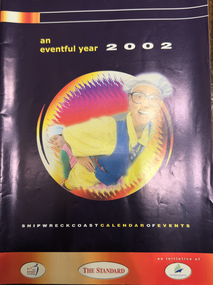
Booklet - Calendar of Events, The Standard, Warrnambool, An Eventful Year 2002 Shipwreck Coast Calendar of Events, 2001
... Warrnambool has been a centre for tourism promotion since the 1890s, advertising the bracing climate, the beaches, the coastal scenery. the historical aspects, especially the many shipwreck sites and the rich agricultural lands. This booklet is of some historical importance as it details the many sporting, cultural and commercial events held in Warrnambool and district ...Shipwreck Coast Calendar of EventsThis is a small booklet of 44 pages. The cover is multi-coloured with an image of two chefs on the front cover and fantasy images on the back cover. The cover has plain and ornamental printing. The pages contain colour photographs, colour advertisements and printed text. The booklet has been stapled but the staples have been removed. non-fictionShipwreck Coast Calendar of Eventswarrnambool tourism, shipwreck coast tourism -
 Warrnambool and District Historical Society Inc.
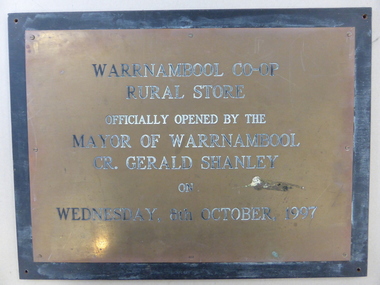
Plaque, Warrnambool Co-op Rural Store, 1997
... district. By the late 1990's they had 8000 members and employed 84 full time and 120 casual staff. It met a sorry end in the 2000's.This plaque commemorates the opening of the Rural store which consolidated the large rural aspect of the business. It opened up the site from Merri Street at the back of the Timor Street building trading in all agricultural products, , chemicals and fuels. A link to one of Warrnambool's ...The Warrnambool Co-operative had its beginnings as the Allansford Artificial Breeders Co-operative in the 1960's. In the 1970s they opened a retail store in Timor Street which had a strong rural and farming base which gradually expanded to become the largest trading department store in the district. By the late 1990's they had 8000 members and employed 84 full time and 120 casual staff. It met a sorry end in the 2000's.This plaque commemorates the opening of the Rural store which consolidated the large rural aspect of the business. It opened up the site from Merri Street at the back of the Timor Street building trading in all agricultural products, , chemicals and fuels.A link to one of Warrnambool's largest stores of the latter part of the 20th century and as such it has historical and social significance. Rectangular brass plaque with stamped black text with eight screws around the edge attaching it to a piece of heavy particle board , painted black.Warrnambool Co-Op rural Store officially opened by the Mayor of Warrnambool Cr. Gerald Shanley on Wednesday, 8th October 1997.warrnambool co-operative society limited, warrnambool co-operative rural store, warrnambool -
 Warrnambool and District Historical Society Inc.
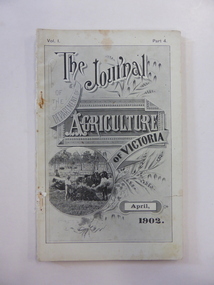
Journal, The Journal of the Department of Agriculture of Victoria April 1902, 1902
... agriculture in Victoria, including the dairying industry in the Western District. This journal is of some interest because of the photographs and information on dairying in the Western District in the early 20th century, including dairy inspection, milking controls in Koroit, prize-winning cows at Koroit and dairy bacteriology. Dairying in the Western District Koroit Dairying Warrnambool ...This booklet has been produced in April 1902 for the Government of Victoria under the direction of the Minister for Agriculture, Hon John Morrissey M.L.A. It contains articles on agriculture in Victoria, including the dairying industry in the Western District. This journal is of some interest because of the photographs and information on dairying in the Western District in the early 20th century, including dairy inspection, milking controls in Koroit, prize-winning cows at Koroit and dairy bacteriology. This is a soft cover booklet of 102 pages - pages 350 to 452 of Part 4 of a journal published monthly. The back cover is missing. The front cover is black and white and has an inset of a photograph showing wheat harvesting. The booklet is bound with cotton thread and shows rust where the thread is tied, perhaps from metal staples now removed. The cover has a slight tear and there is some staining throughout the pages. The booklet contains maps, diagrams, sketches and black and white photographs. dairying in the western district, koroit dairying, warrnambool history -
 Warrnambool and District Historical Society Inc.
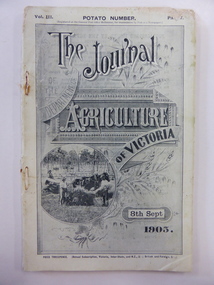
Journal, The Journal of the Department of Agriculture of Victoria Sept 1905, 1905
... agriculture in Victoria, including an article on how to increase and improve our dairy products and an article on the Grasmere Butter Factory. This journal produced in 1905 is of considerable interest because it has an article on the inspection of the Grasmere Butter Factory and the resultant erection of a new building on the site. Dairying is a major industry in the Warrnambool area and this journal contains important historical information and photographs. Grasmere Butter Factory Dairying in the Western District ...This journal has been produced in 1905 for the Government of Victoria under the direction of the Minister for Agriculture, the Hon. George Swinburne, M.L.A. It has articles on agriculture in Victoria, including an article on how to increase and improve our dairy products and an article on the Grasmere Butter Factory. This journal produced in 1905 is of considerable interest because it has an article on the inspection of the Grasmere Butter Factory and the resultant erection of a new building on the site. Dairying is a major industry in the Warrnambool area and this journal contains important historical information and photographs.This is a soft cover journal of 68 pages (pages 482 to 550 in Part 7 of a monthly publication). The front cover has a black and white photograph of a wheat harvesting scene. The back cover is missing. The first two pages have advertisements for insurance and banking firms. The journal contains black and white photographs and statistics tables. The pages show considerable silverfish damage. The journal is bound with cotton thread and rust marks show where metal staples may have been removed. grasmere butter factory, dairying in the western district, warrnambool history -
 Warrnambool and District Historical Society Inc.
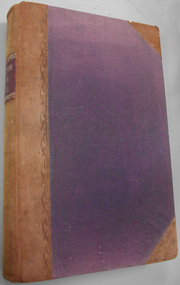
Book, Agricultural Notes 1909-1912, Circa 1909
... Comprehensive notes on agriculture which were well used as a reference point for farmers and is well linked to the district through George Rolfe and his family warrnambool boorcan bonnington g. rolfe webb a. j webb roseworthy college Agriculture Notes 1909-1912 on spine. ...A. J. Perkins was an agricultural scientist and viticulturist and his teaching of European viticultural methods was his first major contribution to Australian agriculture. He was appointed Principal of Roseworthy College in 1904. He also did research into stock, cereal growing manure use and wheat varieties.Comprehensive notes on agriculture which were well used as a reference point for farmers and is well linked to the district through George Rolfe and his familyMaroon hard cover with tan suede corners and spine. 270 pages with purple text Agriculture Notes 1909-1912 on spine. G Rolfe Webb handwritten in block capitals inside front cover. Sticker inside front cover: Bound by F Binns and Co., Adelaide. Lectures by Pro. A J Perkins in grey lead above title. warrnambool, boorcan, bonnington, g. rolfe webb, a. j webb, roseworthy college -
 Warrnambool and District Historical Society Inc.
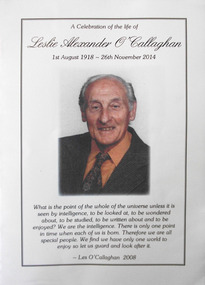
Programme - Order of Service, Les O'Callaghan, 2014
... Warrnambool Cheese and Butter Factory in Allansford . His research work here formed the basis of the Department of Agriculture guidelines for dairy production in Victoria. He was a noted Warrnambool historian and was President of the Warrnambool and District...Warrnambool Cheese and Butter Factory in Allansford . His research work here formed the basis of the Department of Agriculture guidelines for dairy production in Victoria. He was a noted Warrnambool historian and was President of the Warrnambool and District ...This is the funeral Order of Service for Les O' Callaghan. Born in Balmoral Victoria, he came to Warrnambool in 1932 to study at the Warrnambool Technical School. He worked for forty years in the laboratory as a microbiologist in the Kraft Cheese Factory based at the Warrnambool Cheese and Butter Factory in Allansford . His research work here formed the basis of the Department of Agriculture guidelines for dairy production in Victoria. He was a noted Warrnambool historian and was President of the Warrnambool and District Historical Society for forty years.This item is a memento of Les O Callaghan a prominent 20th century identity in Warrnambool.A sheet of white paper folded in two to make four pages. There are three photographs and black printing. Two of the pages have black edging.A Celebration of the life of Leslie Alexander O'Callaghan 1st August 1918 -26th November 2014les o callaghan, kraft factory allansford -
 Warrnambool and District Historical Society Inc.
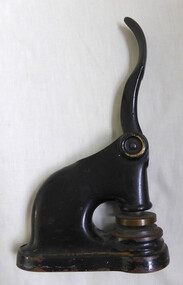
Functional object - G.S. Mackay company seal, Late 19th century
... Warrnambool Agricultural High School. He built the offices which still stand at 131 Kepler Street. He died in 1926. The firm celebrated its centenary in 1993. A commonly used office item which is well linked to both a long established business in Warrnambool and G. S. Mackay who contributed greatly to the community of Warrnambool and district ...George Sutherland Mackay came to Warrnambool in 1891 and in 1893 joined his practice with that of James Fletcher and the firm became known as Mackay and Fletcher later changed to Mackay and Taylor. G S Mackay served for a long time on the Warrnambool City Council including 4 terms as Mayor. He was also an active member of the Presbyterian Church and worked to establish the Warrnambool Agricultural High School. He built the offices which still stand at 131 Kepler Street. He died in 1926. The firm celebrated its centenary in 1993.A commonly used office item which is well linked to both a long established business in Warrnambool and G. S. Mackay who contributed greatly to the community of Warrnambool and district. Cast iron painted black with rounded rectangular base. Circular seal and shaped handle which moves down 45 degrees. Trimmed with worn gold paint. Excelsior in gold on the front. The oval seal reads G. S. Mackay Warrnambool solicitor.warrnambool, g s mackay, mackay & taylor, mackay solicitor, company seal -
 Warrnambool and District Historical Society Inc.
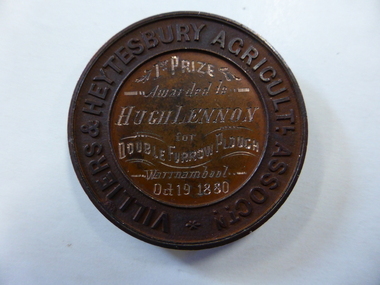
Medal - Medal VHAS, Villiers and Heytesbury Agricultural Association, Circa 1880
... agricultural association would be of great benefit to persons in this district engaged in farming and pastoral pursuits. It initially embraced the following: ploughing, agricultural produce, machines and implements, and livestock of all descriptions. The first show was held at Warrnambool...Agricultural Association was a significant event and organisation within the Western District over a large number of years. It was one of the earliest organisations in the district and is testament to its importance to the agricultural, social, and cultural life of the district. It is significant that this particular medallion was awarded to an innovator in the ploughing industry and that it was made by a company which is still in business 130 years later. warrnambool ...Historical information: this medallion has historical details on three fronts. Firstly the Villiers & Heytesbury Agricultural Association. This association began with the first meeting held on May 17th 1853 at Woodford. The minutes of that meeting read “That in the opinion of this meeting, the formation of an agricultural association would be of great benefit to persons in this district engaged in farming and pastoral pursuits. It initially embraced the following: ploughing, agricultural produce, machines and implements, and livestock of all descriptions. The first show was held at Warrnambool on April 10th 1855 on a green bounded by Fairy, Henna, and Koroit Streets. It was held there until 1875 when it moved to the present Showgrounds site in Koroit Street. At the 37th Annual show in 1890 Warrnambool held its first Grand National Show, being granted by the Chamber of Agriculture in turn, in Victoria. It became known as the Warrnambool Agricultural Society in 1911. Secondly the winner, Mr Hugh Lennon. He was one of the most successful innovators and manufacturers of agricultural implements in early Australia. Although born in Ireland, he served an apprenticeship in Scotland in mechanical engineering. The Lennon plough became known Australia wide. For many years he operated his business at the northern of Elizabeth Street in Melbourne. He was active in local affairs. He died in 1886 at the age of 52. Thirdly, Stokes and Martin. Thomas Stokes came to Australia in the 1850’s and established a successful business at Mincing Lane Melbourne, manufacturing buttons, medals and tokens. Martin joined the partnership in 1873, which lasted until a disastrous fire in 1893. The business was renamed Stokes & Sons Pty Ltd and it became a public company in 1962. It is currently situated at Ringwood in the business of spare parts for electrical equipment The Villiers and Heytesbury Agricultural Association was a significant event and organisation within the Western District over a large number of years. It was one of the earliest organisations in the district and is testament to its importance to the agricultural, social, and cultural life of the district. It is significant that this particular medallion was awarded to an innovator in the ploughing industry and that it was made by a company which is still in business 130 years later. Circular copper medallion cast with Villiers & Heytesbury Agricultural Assoctn around edge with winner and event details engraved in centre. The reverse is cast with horse, cow and sheep standing above wheat sheaf and farm implements. The edge of the medallion is plain.Villiers & Heytesbury Agricultl Assoctn around rim. 1st Prize awarded to Hugh Lennon for double furrow plough, Warrnambool Oct 19 1880. Stokes & Martin Melbourne in small lettering on the reverse.warrnambool, villiers & heytesbury, hugh lennon, stokes & martin, lennon plow, lennon plough -
 Warrnambool and District Historical Society Inc.
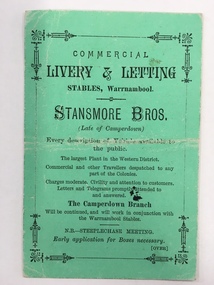
Document, Business Advertising Livery & Letting, 1882
... Warrnambool Racing Club acceptances on one side for the Winter steeplechase meeting for the June meeting in 1882. Stansmore Bros. operated livery stables near the Commercial Hotel in Liebig Street around this time having commenced their business in Camperdown.They later moved to Kepler Street. The Stansmore family had a long association with the racing and agricultural industry in the Camperdown and Heytesbury areas. This little card has links to one of Warrnambool's premier sporting events and a local business which has strong family connections in the district ...The Warrnambool Amateur Turf Club was first formed in September 1859, but didn't become a properly constituted club until April 1873, when a meeting was held at the Commercial Hotel, now the Whaler's Inn, and a committee was elected.Part of the present racecourse of 100 acres was set aside as a racing and recreation reserve in August 1855. It is one of the finest racecourses in Australia, ringed by the gentle slopes of a huge basin.The first race meeting was held on the course in August 1858. The Warrnambool Racing Club has managed racing at Warrnambool since it was formed on 5 April 1873.Apart from a number of smaller meetings held throughout the year, the feature of racing in the district is the Grand Annual Steeplechase. The first steeplechase over the now famous cross-country course was run on 13th June 1872 then known as the Grand Annual Steeplechase. The paddocks now know as Brierly and Granters were first used on that date. The course, over four miles, was made up of different kinds of jumps including a stone wall, a log fence, a ditch and parapet, a paling fence and numerous post and rails.This card has Warrnambool Racing Club acceptances on one side for the Winter steeplechase meeting for the June meeting in 1882. Stansmore Bros. operated livery stables near the Commercial Hotel in Liebig Street around this time having commenced their business in Camperdown.They later moved to Kepler Street. The Stansmore family had a long association with the racing and agricultural industry in the Camperdown and Heytesbury areas. This little card has links to one of Warrnambool's premier sporting events and a local business which has strong family connections in the district.Small green card with black text on front and back. Edged with small lined border. The back has a racing schedule.Commercial Livery & letting Stables Warrnambool.Stanmore Bros. Warrnambool Racing Club, J.A Archibald Secretary WRCwarrnambool,, commercial livery & letting stables, stansmore brothers stables, warrnambool racing club 1882 -
 Warrnambool and District Historical Society Inc.
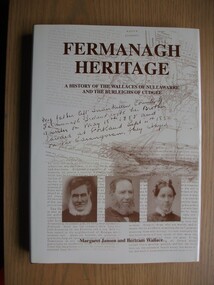
Book, Margaret Jansen et al, Fermanagh Heritage: A History of the Wallaces of Nullawarre and the Burleighs of Cudgee, 2001
... Warrnambool district – the Wallaces of Nullawarre and the Burleighs of Cudgee. Both authors, Margaret Jansen and Bertram Wallace, had strong connections with the local area, Bertram having spent his childhood on the Wallace Mepunga farm and Margaret living in the Noorat area for many years. Thomas and Oliver Wallace and Elliza Burleigh were pioneer settlers in the Warrnambool area and these and their descendants have been prominent in the history of farming in the Nullawarre and Cudgee areas. This book is a valuable resource for family history researchers and for those interested in the development of agriculture ...History of the Wallace family of Nullawarre and the Burleigh family of CudgeeThis is a hard cover book with a cream and sepia-coloured paper cover and a dark red hard cover with gold lettering. There are 392 pages, including an indexnon-fictionHistory of the Wallace family of Nullawarre and the Burleigh family of Cudgeewallace family, burleigh family, mepunga, oliver wallace, thomas wallace, eliza burleigh, warrnambool history, fermanagh history, cudgee -
 Warrnambool and District Historical Society Inc.
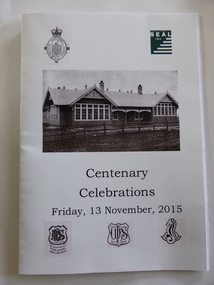
Invitation, Centenary of the School on the Hill, 2015
... An Invitation to the Centenary of the School on the Hill which housed at various times, the Warrnambool Agricultural High School, Warrnambool High School, Warrnambool Technical School SEAL Inc and with the Warrnambool Special School on the same site. Many students from Warrnambool and the surrounding district ...An Invitation to the Centenary of the School on the Hill which housed at various times, the Warrnambool Agricultural High School, Warrnambool High School, Warrnambool Technical School SEAL Inc and with the Warrnambool Special School on the same site.Many students from Warrnambool and the surrounding district would have been students at one of the various schools which have occupied this site from time to time from the earliest in 1915 to the present time and as such has historic and social significance to the town.White paper with black print A4sizewarrnambool agricultural high school, warrnambool high school, warrnambool technical school, schools of warrnambool, warrnambool special school -
 Warrnambool and District Historical Society Inc.
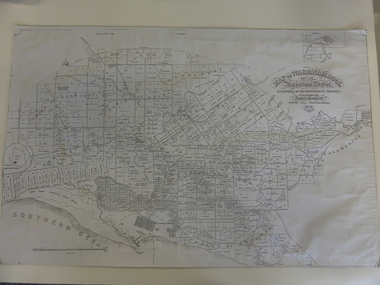
Map, Warrnambool 1859, Late 20th century (copy)
... This is a copy of a map of Warrnambool and its agricultural district published by James Astley Bromfield in 1856. ...‘Map of Warrnambool and its Agricultural District according to the Government Survey’s published by Astley Bromfield, Medical Hall, Warrnambool 1856, James Ferguson, Lithr., Melbne.’...Warrnambool and the surrounding district. It is a frequently-used resource by historians. Bromfield’s 1856 map Warrnambool and District ‘Map of Warrnambool and its Agricultural District according to the Government Survey’s published by Astley Bromfield, Medical Hall, Warrnambool 1856, James Ferguson, Lithr., Melbne.’ ...This is a copy of Bromfield’s 1856 map of Warrnambool and district. James Astley Bromfield was a pioneer settler in Warrnambool. He established a chemist’s shop in 1854, initially situated in Timor Street. He moved his shop to Liebig Street with a new building erected in 1875. Bromfield was a prominent resident of Warrnambool (Shire Councillor, Fire Brigade member, Cricket Club member, associated with horse racing etc). He was interested in preserving the history of Warrnambool and this map he produced in 1856 was an example of this interest.This is a copy only but this 1856 map is of prime importance as it contains the names of the original landowners of land in north Warrnambool and the surrounding district. It is a frequently-used resource by historians.This is a copy of a map of Warrnambool and its agricultural district published by James Astley Bromfield in 1856. The map is mounted on cardboard and has black printing on a white background. ‘Map of Warrnambool and its Agricultural District according to the Government Survey’s published by Astley Bromfield, Medical Hall, Warrnambool 1856, James Ferguson, Lithr., Melbne.’bromfield’s 1856, map, warrnambool and district -
 Warrnambool and District Historical Society Inc.
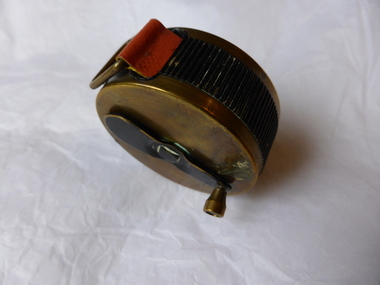
Artefact, Stock measuring tape - retractable
... agriculture in the district. It will be useful for display. stock tape measure history of warrnambool agricultural history ‘We –Bo’ ‘Comb Maal” On tape: ‘We-Bo Made in Denmark’ ‘Live weight of pigs in lbs in relation to chest-measure in inches’ ‘Live weight of cattle in lbs in relation to chest-measure in inches’ This is a glassfibre measuring tape (imperial measure) in a circular brass holder. ...This stock measurer would have been used on a farm during the first half of the 20th century. A similar item with decimal measurements may perhaps be used today though mechanized weighing machines are now available. This stock tape measure has no known local significance but it is an interesting item and has its place in the history of agriculture in the district. It will be useful for display. This is a glassfibre measuring tape (imperial measure) in a circular brass holder. The tape has a metal clip at the end. The tape is yellow on one side (measuring weight of pigs) and red on the other side (measuring weight of cattle). The holder has a winding mechanism on the top attached by a brass screw. There is a knob on the winder to hold while turning the winder to bring out the tape to the measurement required and to retract it back into the holder. The holder has a black ridged pattern around the sides. The maker’s marks are etched into the back of the container and printed on the tape. ‘We –Bo’ ‘Comb Maal” On tape: ‘We-Bo Made in Denmark’ ‘Live weight of pigs in lbs in relation to chest-measure in inches’ ‘Live weight of cattle in lbs in relation to chest-measure in inches’ stock tape measure, history of warrnambool, agricultural history -
 Warrnambool and District Historical Society Inc.
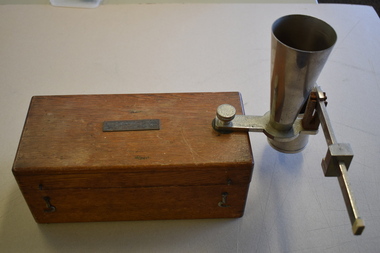
Household, Scales - Grain tester, Early 20th century
... District in the past and similar objects may still be in use. This grain scale tester is retained as a good example of an agricultural item from the past. agricultural instruments history of warrnambool grain scale tester ‘Lbs per bushel’ ‘Australian Manufacture by Australasian Scale Co. ...This grain scale tester was used to work out the percentage weight of a sack of grain after the grain husk, dust and dirt were removed, thereby allowing for the calculation of the true value of the sack. The parts were attached to the box via the screw on top of the box and the cleaned grain went into the funnel to measure a fixed grain amount, before being released from the bottom of the funnel into the barrel which was then hung on the end of the scale. The weight was then slid down the graduated ruler until the scale balanced. Grain scale testers would have been used in farming in the Western District in the past and similar objects may still be in use. This grain scale tester is retained as a good example of an agricultural item from the past.This is a grain tester scale in a wooden box. .1 The wooden box has two metal hinges and wooden inserts inside with blue felt on the tops of the inserts. The box has a metal plaque on the lid and a round metal hole section for inserting a piece of equipment. .2 This is a metal flask on a stand. Part of it is rusty. .3 This is small metal cylinder with a lid. .4 This is a metal bar with measurements, a hook at the top and a slide or weight fitting on to the bar. .5 This is a small metal screw. ‘Lbs per bushel’ ‘Australian Manufacture by Australasian Scale Co. Ltd., Thomas Street, Sydney N.S.W.’ agricultural instruments, history of warrnambool, grain scale tester -
 Warrnambool and District Historical Society Inc.
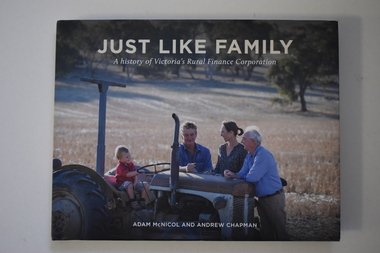
Book, Ten Bag Press, Just Like Family, 2015
... agricultural businesses had access to Government programs and assistance from this corporation. In 2014 the Rural Finance Corporation’s business and assets were transferred to the Bendigo and Adelaide Bank This book is kept as a library copy because its contents contain several references to Warrnambool and district and the Rural Finance Corporation was well-known to local people, particularly those in the agricultural sector and it was appreciated by so many in the district. ...This book details the history of Victoria’s Rural Finance Corporation. For more than 70 years farmers and other agricultural businesses had access to Government programs and assistance from this corporation. In 2014 the Rural Finance Corporation’s business and assets were transferred to the Bendigo and Adelaide BankThis book is kept as a library copy because its contents contain several references to Warrnambool and district and the Rural Finance Corporation was well-known to local people, particularly those in the agricultural sector and it was appreciated by so many in the district.This is a hard cover book of 197 pages. It has a multi-coloured front cover showing a child on a tractor with three adults nearby and four colour photographs on the back cover. The dust cover has similar images. The book has a message from the Treasurer, a foreword, seven chapters of text, a timeline, references and an index. The book has many black and white and colour photographs, diagrams and other illustrations. There is a loose page which contains names relating to some of the photographs. history of warrnambool, rural finance corporation -
 Warrnambool and District Historical Society Inc.
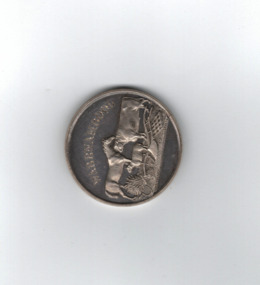
Medal, Villiers and Heytesbury Agricultural Association (Daniel Hourigan 1877), C 1877
... Agricultural Association became known as the Warrnambool Agricultural Show in 1911. Daniel Hourigan was a farmer, road contractor, poundkeeper and auditor who lived in the Tower Hill area in the 19th century. This medal is of considerable interest as it is a memento of the Villiers and Heytesbury Agricultural Association Annual Show in the 19th century. Annual Agricultural Shows have been an important feature of agricultural life in Victoria since the early days of European settlement and a feature of agricultural life in the Warrnambool district ...This medal was awarded at the Villiers and Heytesbury Agricultural Association Annual Show to Daniel Hourigan in 1877 for his yearling colt by 'Prince of the Isles'. The formation of the Villiers and Heytesbury Agricultural Association arose out of a meeting at Woodford in 1853 and the first Show was held in Warrnambool in 1855 on a green bound by Fairy, Henna and Koroit Streets. It was held there until 1875 when it moved to the present Warrnambool Showgrounds in Koroit Street. At the 37th Annual Show in 1890 Warrnambool held its first Grand National Show, a title granted by the Chamber of Agriculture in Victoria. The Villiers and Heytesbury Agricultural Association became known as the Warrnambool Agricultural Show in 1911. Daniel Hourigan was a farmer, road contractor, poundkeeper and auditor who lived in the Tower Hill area in the 19th century. This medal is of considerable interest as it is a memento of the Villiers and Heytesbury Agricultural Association Annual Show in the 19th century. Annual Agricultural Shows have been an important feature of agricultural life in Victoria since the early days of European settlement and a feature of agricultural life in the Warrnambool district since the 1850s. The medal is also of great interest because it was awarded to Daniel Hourigan, a prominent settler in the Warrnambool district in the 19th century. .1 Circular silver disc with image of horse, bull, sheep, wheat sheaf and plough on the reverse with script around edge of obverse with awardees details engraved in the centre. Edge of the medal is plain. .2 Square maroon leather case with small metal clasp and hinge. Lined on the interior with blue velvet and cream silk.Obverse :" Warrnambool" engraved above image of cattle. W J Taylor London Reverse : Villiers & Heytesbury Agricultural Association in low relief around the edge. 1st prize awarded to Daniel Houriganfor yearling colt , "Prince of the Isles Annual Show 10th October 1877.warrnambool, villiers and heytesbury, daniel hourigan, prince of the isles, 1877, villiers & heytesbury agricultural show
