
Showing 125 items matching "albert field"
-
 Federation University Historical Collection
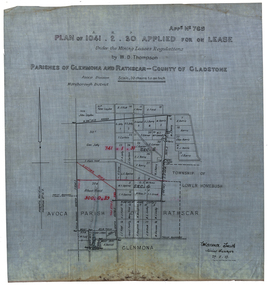
Plan, Plan applied for a Lease, Parishes of Glenmora and Rothcar, 27/05/1913
... ...albert field...glenmona rathcar gladstone maryborough mining clarence smith homebush clarence smith w d thompson peter leyden b elliot c horne a field john leydon g jolly r e jolly d garner s j barry m harris a harris w j mcconnell ellen harris r j harris j barry t curtain s garner e barry m j barry l e squires wilkins jnr e c grace e j field mary field m broughton b l lusby m j lusby j e field f broughton j gillock m simmons glenmona rathscar parish of avoca maryborough district albert field g grose j harris Plan on linen showing mining leases around the township of Lower Homebush, District of Maryborough. ...Plan on linen showing mining leases around the township of Lower Homebush, District of Maryborough. Scale: 20 chains to in inch (1:15840) WGS 84 Centroid Lat: 37 degrees 01 feet 35 inches S Long: 143 degrees 30 feet 35 inches S NS: 3.2km EW: 2.8km glenmona, rathcar, gladstone, maryborough, mining, clarence smith, homebush, clarence smith, w d thompson, peter leyden, b elliot, c horne, a field, john leydon, g jolly, r e jolly, d garner, s j barry, m harris, a harris, w j mcconnell, ellen harris, r j harris, j barry, t curtain, s garner, e barry, m j barry, l e squires, wilkins jnr, e c grace, e j field, mary field, m broughton, b l lusby, m j lusby, j e field, f broughton, j gillock, m simmons, glenmona, rathscar, parish of avoca, maryborough district, albert field, g grose, j harris -
 Bendigo Historical Society Inc.
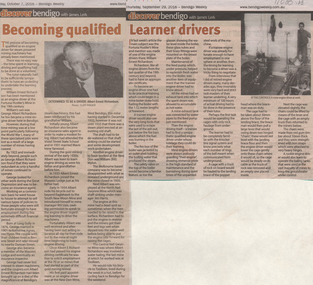
Newspaper - Albert Ernest Richardson, Peter Anderson's article 2020
... Albert Richardson's childhood activities in Duncan Street, Long Gully, were influenced strongly by the occupation of his father and grandfather, both of whom were engine drivers on the Bendigo field. ...Albert Richardson's childhood activities in Duncan Street, Long Gully, were influenced strongly by the occupation of his father and grandfather, both of whom were engine drivers on the Bendigo field. ...Albert Richardson was born on 22nd. June, 1902 to George Albert Richardson and Catherine Agnes (nee Flynn). He married Mavis Irene Yarwood on 23rd. December, 1931. Albert Richardson's childhood activities in Duncan Street, Long Gully, were influenced strongly by the occupation of his father and grandfather, both of whom were engine drivers on the Bendigo field. Albert had his own model goldmine, complete with poppet head, baling tanks etc and was up and ready to start work with the sound of the 7 a.m. mine whistles. Albert spent a short time working as a motor mechanic and then took up0 welling insurance with T & G. However, his heart was with the mines and he worked daytimes with T. & G. and then took off to learn engine driving with night shift in one of the mines. He gained his engine drivers' ticket in 1938 and began work at the Nell Gwynne. His longest work time was at the North Nell but he also had shorter spells at other mines. His leter work years were spent at John Brown, from where he retired in 1968. Albert had a deep regard for the working man and worked for many years in the position of Secretary at the Trades Hall, Bendigo. (adapted from biography in BHS Collection, written by I. Hendry, 1972) The Bendigo Historical Society holds a wide range of Bendigo mining records researched and written by Mr. Albert Richardson. He was President of the Bendigo Branch of the Royal Historical Society of Victoria from 1969 to 1971.When he joined the Bendigo Branch in 1966 he began compiling a history of the Bendigo mines. He spent many long hours researching at the Bendigo Mines Department, summarising mine records. He gathered relevant mining material wherever it could be obtained. He devoted most of his spare time and energy to the Society, conducting tours of the goldfields, writing articles and presenting talks to various organisations. His first and foremost interest lay in Victoria Hill. He examined mining reports and early newspaper articles to document its history. He envisaged the once fabulously rich hill as becoming a tourist attraction and campaigned vigorously to achieve this. In 1971 his dream was realised, when, with the help of South Bendigo Rotary Club 'The Hill' was cleaned up and historical site4s sign-posted. In 1972 the Bendigo Trust produced a booklet on Victoria Hill. Albert Richardson is acknowledged as the person ' on whose work and writings the text of this booklet has been based' The park adjoining Victoria Hill was named the Albert Richardson Reserve in his honour. Four newspaper clippings on mining, focusing on Albert Richardson's life; his passion for mining history and more generally, the work of engine drivers on the Bendigo goldfield. Clippings taken from the 'Bendigo Weekly' 2016, dated September 29 'Learner Drivers' , October 7 'Becoming qualified', October 14 'Steam power in his veins' and November 11 ' Victoria Hill over the decades'. All articles written by James Lerk in a series titled 'Discover Bendigo'. One page biography on Albert Richardson, on yellow paper.albert richardson, engine driver, mining, bendigo, boiler, engine room, mining cage, albert richardson reserve, victoria hill, george ellis, south bendigo rotary club -
 City of Melbourne Libraries
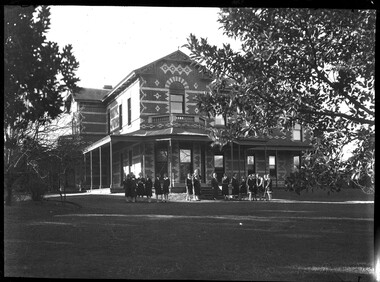
Photograph, Bull, Hugh Jones, 1897-1993, Ruyton Girls School 1933
... As well as Tarring, the Henty family Melbourne residences included Findon (in Kew, overlooking Studley Park), Offington (St Kilda Road overlooking Albert Park) and Field Place (Henty Court, Kew), and descriptions of the houses in Wikipedia –Melbourne Architecture 1870s - reflect the development of Melbourne society. ...As well as Tarring, the Henty family Melbourne residences included Findon (in Kew, overlooking Studley Park), Offington (St Kilda Road overlooking Albert Park) and Field Place (Henty Court, Kew), and descriptions of the houses in Wikipedia –Melbourne Architecture 1870s - reflect the development of Melbourne society. ...Published: Age (Melbourne, Vic.: 1854- ), 4 August 1933, page 3 Published title: GIRLS’ SCHOOLS – MODEL YACHTING - FOOTBALL Published caption: The headmistress, Miss H. Daniell, and girls at Ruyton, Selbourne Road, Kew, snapped after school hours. Trove article identifier: http://nla.gov.au/nla.news-article204381763 Research by Project Volunteer, Louise McKenzie: Rather than the people, this charming building takes the eye! Originally named “Tarring”, it was built in 1872 by Mr Henry Henty and his wife Mrs Marion Anne Henty (nee McKellar) for their family. Located at 82 Selbourne Road, Kew, it is described by Melbourne’s Open House organisation as “… a two-storey, polychrome brick mansion built for them by prominent Melbourne architect Albert Purchas. The house and nearly four acres of grounds served as their family home until the death of Marian Henty in 1919. “ (See below for further information on Albert Purchas.) In 1920 it was sold to Ruyton Girls School. Ruyton was established in 1878 by its first principal, Charlotte Anderson (1838-1906), who named it in honour of the parish in Shropshire, England, Ruyton-XI-Towns, where her great-great-grandfather David Evans had been vicar. Its motto is Recte et Fideliter, meaning "Upright and Faithful", which is also the name of the school song. The original school, one of Victoria’s oldest independent schools for girls, was located at the home of Mrs Anderson at 63 High Street South, Kew. In 1882 she moved the school to Edgecombe in Studley Park Road. Mrs Anderson retired due to ill health and sold the school to her friend Miss Eliza Bromby. One of Ruyton's four Houses, Anderson, is named for Charlotte Anderson. When Ruyton Girls School was moved to the site in 1920 it established the building as a Boarding House, and renamed the building “Henty House” in honour of its original owners. Today the school remains an all girls’ school, and pays tribute to its founder and the historic significance of Henty House and its magnificent Moreton Bay Fig tree, which still stands today. The building retains many original, Victorian-era features, while also showing the layers of change, made over the decades in order to meet the evolving needs of one of Melbourne’s leading schools. The headmistress mentioned in the caption for MCK016 is Miss Hilda Daniell, shown standing in front of Henty House in the midst of a group of Ruyton girls in their school uniforms, some holding hockey sticks. Miss Daniell was the longest serving Principal of Ruyton 1913-1952. She was originally a student in 1893, then joined the teaching staff in 1898. It was under her leadership that the School purchased and moved to “Tarring”. The boarding house included a flat for Hilda to live onsite. An article in the Ruyton Heritage Collection – Bedford Series, dated 21 May 2021 cites that Miss Daniell “was affectionately known as “Dream” by Ruytonians of her era” apparently due to a tendency to quiet reflection. The article continues, “After her retirement in 1952 Miss Daniell was awarded an Order of the British Empire for her many services to education, an award she received from the hands of the Queen during the 1954 Royal Tour. Also in 1952, the Kew Council honoured her by renaming Brougham Place as ‘Daniell Place’.” Arthur Purchas, architect: The architect responsible for the design of “Tarring”. Arthur Purchas, was extremely active and highly regarded at this time. Born in Wales in 1825, he emigrated to Melbourne in 1851 and soon established a private practice as a surveyor and architect, with offices variously in Little Collins, Queen Street, Chancery Lane, and finally 462 Little Collins Street. Wikipedia notes in an early reference to Purchas that “An early story is that one of his first jobs, when he would have been about 25 years old, was a position under Surveyor-General Robert Hoddle, and disagreeing with him over the line for St Kilda Road, appealed to Governor La Trobe, and successfully got the road diverted around the hill which eventually became the site of the Shrine of Remembrance. There may not be much truth to this, since by 1851 St Kilda Road was already a well worn track running around the hill, the top of which La Trobe had reserved for a Government House in 1840.” The timing of Purchas’s arrival in Melbourne was perfect. The Victorian gold rush of the 1850’s generated enormous wealth in Melbourne, and a building boom followed. The Wikipedia entry continues … that alone, or with his brother in law Charles R Swyer, “Purchas is said to have designed over 140 houses, offices, churches, banks and cemetery buildings in Victoria in his long career. Berkely Hall, St Kilda dating from 1854 is one of his first buildings, and still exists, though the original house is obscured by an early C20th verandah. Another notable early design was the head office of the Melbourne Savings Bank, built on the corner Flinders Lane and Market Street in 1857-58, in an elaborately detailed Renaissance Revival style. His churches were mostly Gothic Revival, built for the Anglican Church, along with some parsonages, while most of the bank buildings were Renaissance Revival designs for the Bank of Australasia. He also designed city buildings in the 1860s and 70s, such as the Mutual Insurance Co, Northern Insurance Co, and the first premises for George & George, destroyed by fire in 1889. One of his most outstanding designs is St George's Presbyterian Church in Chapel Street, St Kilda (1877–80), in a striking polychrome brick Gothic Revival style, unusually carried on through to the interior. Purchas produced one of the few published maps and compilations of the early pastoral settlers runs in Victoria in 1853. In the same year he designed the layout of the Melbourne General Cemetery, the first 'garden' cemetery in Victoria, a curvilinear layout with extensive plantings, as well as the gate lodge and gates (the gates lodge were demolished and the gates relocated to their present position in the 1930s). He was a long time member of the Cemetery Trust, serving as secretary from 1876-1886. He was also Chairman of the Boroondara General Cemetery Board of Trustees 1867 to 1909, and designed many aspects of the cemetery, including the landscape, the cast iron entrance gates (1889), the rotunda (1890) and the surrounding brick wall (1895–6). Purchas was a keen inventor having applied for a patent for an invention for lighting a railway carriage with gas in 1861, and won a competition for a model farm complex, in 1862. This unusual design had the dairy either underground or half underground, to keep it cool, with a 'dry lining' around the outside of the sunken portions. In 1883, with fellow architect Alfred Smith, he took out a patent for fire-proof floors, arches, staircases and other parts of buildings.” Purchas died in his home in Kew in 1909 and, not surprisingly, was buried at Boroondara Cemetery. Henty family history in Australia: Henry Henty (b.1833-d.1912) was a successful businessman, and briefly a MLA for the seat of Grenville, Victoria in 1866. He was one of three sons of James Henty, and nephew of Edward Henty who is considered to be the first permanent European colonist to take up residence in Victoria. The Australian Dictionary of Biography provides a riveting overview of the complex and enthusiastic activities of the Henty family, and its entanglement in the development of mercantile life in WA, Tasmania, SA and Victoria from 1828 onwards. The family had a focussed commitment to creating thriving businesses in Australia, despite being regularly thwarted by legislative pushbacks and law changes, instigated in Britain as the Australian colony developed. Areas of greatest influence were merino sheep, beef and horse breeding, whaling, farm establishment, membership of the legal and political fraternities, sporting prowess, and board directorships in banking and railways. The Dictionary of Biography summarises: “As settlers the Henty men were notable not merely for being the first to settle in Victoria but also for their number and quality: a father and seven educated sons experienced in farming and trading, occupations of prime importance to a new colony, and importers of unusually substantial capital in money, skilled workers and thoroughbred stock.” As well as Tarring, the Henty family Melbourne residences included Findon (in Kew, overlooking Studley Park), Offington (St Kilda Road overlooking Albert Park) and Field Place (Henty Court, Kew), and descriptions of the houses in Wikipedia –Melbourne Architecture 1870s - reflect the development of Melbourne society. References RUYTON (1934, December 15). The Argus (Melbourne, Vic. : 1848 - 1957), p. 18. Retrieved March 12, 2025, from http://nla.gov.au/nla.news-article11001092 https://en.wikipedia.org/wiki/Ruyton_Girls%27_School#:~:text=Ruyton%20Girls'%20School%2C%20commonly%20referred,of%20Melbourne%2C%20Victoria%2C%20Australia. https://www.ruyton.vic.edu.au/our-school#:~:text=With%20an%20international%20reputation%20as,opportunity%20and%20challenge%20for%20girls. https://victoriancollections.net.au/items/5bea06b121ea690bf4eb08ed https://www.ruyton.vic.edu.au/our-school/campus-and-facilities Biography of Edward Henty and family: https://adb.anu.edu.au/biography/henty-edward-2247 Article on Offington House: http://nla.gov.au/nla.news-article196554993 Article on Field Place House : https://vhd.heritagecouncil.vic.gov.au/places/64881 Article on Findon: https://www.facebook.com/KewHistoryGroup/posts/in-the-book-jubilee-history-of-kew-1803-1910-by-fga-barnard-there-is-a-photo-of-/4389837914376555/ Charlotte Anderson/Ruyton: https://victoriancollections.net.au/items/5be4b8c821ea6a039c7a13e3 https://victoriancollections.net.au/items/6179e90da912eb195970bdf8 https://victoriancollections.net.au/items/5bea06b121ea690bf4eb08ed https://victoriancollections.net.au/items/65d3e05c5b5e5c61346420a2 Photo of Charlotte Anderson: https://viewer.slv.vic.gov.au/?entity=IE1515776&mode=browse Photo of Charlotte Anderson: https://victoriancollections.net.au/items/6179e90da912eb195970bdf8 https://victoriancollections.net.au/items/5be4b8c821ea6a039c7a13e3 Wikipedia: Architecture of Melbourne: https://en.wikipedia.org/wiki/Architecture_of_Melbourne Open House Melbourne: Henty House: https://www.universe.com/events/henty-house-ruyton-girls-school-tickets-Z45LYH Albert Purchas: https://en.wikipedia.org/wiki/Albert_Purchas Leader (Melbourne, Vic. : 1862 - 1918, 1935), Saturday 3 June 1876, page 9 – Article on Offington http://www.ohta.org.au/organs/organs/BoxHillUC.html Melb Architecture 1870s - Wikipedia Victorian Collections: Letters of Hilda Daniell https://victoriancollections.net.au/items/65d3e05c5b5e5c61346420a2 Photographer notations on slide: "Ruyton Girls School 1933".schools, 1930-1939, architecture, victorian architecture, trees, architects -
 Flagstaff Hill Maritime Museum and Village
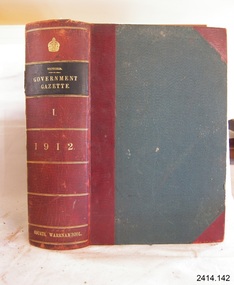
Book - Reference/State Government Notification Gazette, Albert John Mullett, The Victorian Government Gazette 1912 Vol 1 /146, 1912
... These government gazettes are a unique, useful and extremely fascinating resource for local, family and social historians and researchers in other fields, since they contain information of great use in establishing an image of Australia and its people in the past, covering land transactions, legal notices, proclamations, insolvency and bankruptcy notices, impoundments, private advertisements, patent and trademark applications, partnerships, licences, mining contracts, government positions, statistics, and a lot more. Albert...These government gazettes are a unique, useful and extremely fascinating resource for local, family and social historians and researchers in other fields, since they contain information of great use in establishing an image of Australia and its people in the past, covering land transactions, legal notices, proclamations, insolvency and bankruptcy notices, impoundments, private advertisements, patent and trademark applications, partnerships, licences, mining contracts, government positions, statistics, and a lot more. Albert ...The Victoria Government Gazette and other government documents from 1887 were printed and published by Robert S. Brain, Government Printer, Melbourne. Brain held the position of Victorian Government Printer through the 1890s and into the early 1900s. The same imprint appears on other official Victorian publications from that era, such as the annual reports of the Board for the Protection of the Aborigines and the colony's Statistical Register. There wasn't really an editor in the modern sense the Gazette was compiled and issued under the authority of the colonial government, via the Chief Secretary's Department, with Brain's printing office producing and publishing it. In May 1906, James Kemp succeeded him, serving as Government Printer from May 1906 to August 1912, with the title of Acting Government Printer right at the very start of his tenure he was stepping into the role Brain had just vacated, and by later in December 1906 he was signing gazettes in that capacity, apparently before his appointment was made permanent. Then in 1912 Albert John Mullett took over the role starting from January 1912 the same way Kemp had as Acting Government Printer with his appointment made permanent in 1913 where he served all through the 1920s.Hard cover book. The Victorian Government Gazette 1912 Vol 1 /146 Printer: Albert John Mullett Publisher: Albert John Mullett Publisher: Authority of The Colonial Government Date: 1912 Further Information: Textured hard cover bound book leather burgundy colour spine with gilt lettering, covers embossed blue cloth & reinforced corners to front and back cover. non-fictionThe Victoria Government Gazette and other government documents from 1887 were printed and published by Robert S. Brain, Government Printer, Melbourne. Brain held the position of Victorian Government Printer through the 1890s and into the early 1900s. The same imprint appears on other official Victorian publications from that era, such as the annual reports of the Board for the Protection of the Aborigines and the colony's Statistical Register. There wasn't really an editor in the modern sense the Gazette was compiled and issued under the authority of the colonial government, via the Chief Secretary's Department, with Brain's printing office producing and publishing it. In May 1906, James Kemp succeeded him, serving as Government Printer from May 1906 to August 1912, with the title of Acting Government Printer right at the very start of his tenure he was stepping into the role Brain had just vacated, and by later in December 1906 he was signing gazettes in that capacity, apparently before his appointment was made permanent. Then in 1912 Albert John Mullett took over the role starting from January 1912 the same way Kemp had as Acting Government Printer with his appointment made permanent in 1913 where he served all through the 1920s. flagstaff hill, warrnambool, shipwrecked-coast, flagstaff-hill, flagstaff-hill-maritime-museum, maritime-museum, shipwreck-coast, flagstaff-hill-maritime-village, book, the victoria government gazette 1912 1 vol 146, the victoria government gazette 1912, the victoria government gazette -
 Federation University Historical Collection
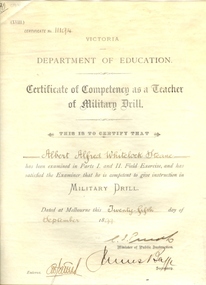
Certificate, Education Department Victoria, Certificate of Competencey as a Teacher of Military Drill, 1899, 25/09/1899
... Albert Steane...Victorian Education Department...military drill...military...armed forces...field...It certifies that Albert Alfred Whitelock Steane was successfully examined in Field Exercise part 1 and 2, and was deemed competent to give instruction in Military Drill. ...Steane Albert Steane Victorian Education Department military drill military armed forces field exercise parchment Printed Victorian Education Department certificate on parchment. ...Albert Steane was an early teacher of Sloyd and was appointed Principal of the Ballarat Junior Technical School in 1913.Printed Victorian Education Department certificate on parchment. It certifies that Albert Alfred Whitelock Steane was successfully examined in Field Exercise part 1 and 2, and was deemed competent to give instruction in Military Drill. It is certificate number 11194.steane, albert steane, victorian education department, military drill, military, armed forces, field exercise, parchment -
 Federation University Historical Collection
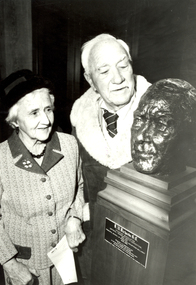
Photograph - Photograph - Black and White, Ballarat Courier, Dick Richards and his sister, Mrs V.S. Greenhalgh with the Bust of Dick Richards, 06/1983
... Albert Medal for their heroic devotion to duty. Later an inlet on the Antartic continent was named after Richards. Dick Richards wrote the following years after the ordeal "To me no undertaking carried through to conclusion is for nothing. And so I don't think of our struggle as futile. It was something the human spirit accomplished." Prime Minister Bob Hawke wrote in 1984 'Your incredible journey of almost 2000 miles across the Antarctic Wastelands - involving some 9 months in the field...Albert Medal for their heroic devotion to duty. Later an inlet on the Antartic continent was named after Richards. Dick Richards wrote the following years after the ordeal "To me no undertaking carried through to conclusion is for nothing. And so I don't think of our struggle as futile. It was something the human spirit accomplished." Prime Minister Bob Hawke wrote in 1984 'Your incredible journey of almost 2000 miles across the Antarctic Wastelands - involving some 9 months in the field ...Dick Richards joined the Ballarat School of Mines in 1914, and soon afterwards was granted leave to join an expedition to Antartica. In 1915 he sailed from Australia with the Antartic Exploraton Expedition, led by Sir Ernest Shackleton. Most Antarctic enthusiasts know of Ernest Shackleton's attempt to cross the continent, only to be thwarted by the sinking of the ship 'Endurance'. Dick Richards was the physicist and sled manager for Shackleton's Ross Sea Party - with the task to meet Shackleton on the other side of the continent. When Shackleton planned his transcontinental crossing he decided to use supply depots as loads of supplies were too heavy to pull. The depots would enable Shackleton's party to carry just enough to reach the Pole, relying on the depots which were to be left by the Aurora's crew every 60 miles, stowed in 2 sledge journeys in 1915 and 1916. Dick Richards spent 3 freezing years in Antarctica between 1914 and 1917. Richards' worst experience was when his ship Aurora, tethered offshore, was blown away in a gale leaving Richards marooned for two years with nine other men on the ice floe. The expedition, consisting of two teams, were attempting to cross Antarctica from opposite sides, linking up somewhere near the middle. "That was with pretty poor equipment by today's standards, and we did not make it." (Dick Richards) The Ross Sea Party arrived in McMurdo Sound aboard the Aurora in January 1915. The men planned to make two sledging trips to leave supply depots every 60 nautical miles to Mount Hope about 400 miles away. The going was tough as the sledges were overloaded. Temperatures were as low as minus 68F. In June 1916 the party crossed on foot to Cape Evans, occupied Scott's Hut (from his Terra Nova Expedition, erected in January 1911) in May 1915, for two months. On 10 January 1917 Richards was hunting for seals when he saw a ship on the horizon. It was 'The Aurora'. Picking up the relieved survivors 'The Aurora' arrived in New Zealand on 9 February 1917 to a hero's welcome. Joyce, Wild, Hayward and Richards later won the Albert Medal for their heroic devotion to duty. Later an inlet on the Antartic continent was named after Richards. Dick Richards wrote the following years after the ordeal "To me no undertaking carried through to conclusion is for nothing. And so I don't think of our struggle as futile. It was something the human spirit accomplished." Prime Minister Bob Hawke wrote in 1984 'Your incredible journey of almost 2000 miles across the Antarctic Wastelands - involving some 9 months in the field with makeshift equipment - and you're adherence to duty in the face of enormous difficulty, suffering from scurvy, and the death of comrades, will; be an inspiration to your countrymen of the future as it is to us today." After returning to Australia Dick Richards resumed his work at SMB as Lecturer in Physics and Mathematics, and developed many pieces of experimental equipment. During World War Two he acted as a scientific adviser in the production of optical apparatus in Australia. In 1946 he was appointed Principal and twelve years later he retired after a total of 44 years service. Dick Richards has been honoured through the naming of a Ballarat School of Mines prize - The R.W. Richards Medal. This medal later became a University of Ballarat prize. It has been awarded annually since 1959 to the Bachelor of Applied Science graduate considered to have achieved the most outstanding academic performance of their course. (See http://guerin.ballarat.edu.au/aasp/is/library/collections/art_history/honour-roll/honourroll_Richards,Dick.shtml )A man and lady inspect a bust of Richard (Dick) Richards by sculptor Victor Greenhalgh. The scultpure is at the Ballarat School of Mines. The man is Dick Richards, and the woman is his sister and wife of sculptor Victor Greenhalgh. Both Dick Richards and Victor Greenhalgh were former students and teachers at the Ballarat School of Mines. The bust of Dick Richards was Victor Greenhalgh's last work and was cast in bronze after his death. The bust was presented to the Ballarat School of Mines by Mrs V.S. Greenhalgh (widow of the sculptor and sister of the subject). At the presentation Victor Greenhagh's son said "the two men had been friends as well as brothers-in-law, were of similar age, both enjoyed red wine, beer and cricket and both were educationalists, one an artist the other a mathematician."dick richards, r.w. richards, richards, richard w. richards, victor greenhalgh, bust, sculpture, ballarat school of mines, antarctica, ross shore -
 Federation University Historical Collection
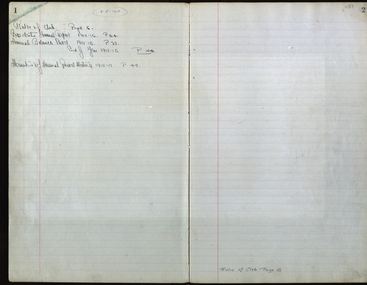
Book, Minute Book of the Ballarat School of Mines Science and Field Naturalists Club, 1915-1918, 8 May 1915 - October 1918
... field naturalists club...fenner...charles fenner...albert...Also mentioned in Annual Report 1889, p.195) ballarat school of mines smb science and field naturalists club fenner charles fenner albert w. steane william baragwanath john brittain lal lal lal lal excursion Science nad Field Naturalists Club Ballarat field naturalists wild flower show Maurice copland alfred mica smith sunnyside woollen mill excursion Wilson's promontory charles hoadley Included: State Savings Bank of Victoria account booklet No. 128.155, issued to School of Mines Science and Field Naturalists Club. ...This minute book records the reformed Science and Field Naturalists Club of the Ballarat School of Mines. Such a club had existed in 1888 and 1889. Final recorded meeting took place on 17th November 1918, resolved that "there would be no further meeting of the Club until further notice was given." (Ballarat School of Mines Annual Report of 1888, p.17. Also mentioned in Annual Report 1889, p.195)Dark blue hard-cover minute book with dark red spine. 186 numbered lined pages with left hand margin. Last entry on p.128. Courier Newspaper article 'Victorian National Park: Our Fauna and Fauna' by Charles Hoadley published 16/06/1915 Included: State Savings Bank of Victoria account booklet No. 128.155, issued to School of Mines Science and Field Naturalists Club.ballarat school of mines, smb, science and field naturalists club, fenner, charles fenner, albert w. steane, william baragwanath, john brittain, lal lal, lal lal excursion, science nad field naturalists club, ballarat field naturalists wild flower show, maurice copland, alfred mica smith, sunnyside woollen mill excursion, wilson's promontory, charles hoadley -
 Federation University Historical Collection
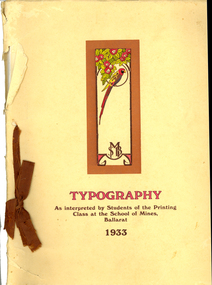
Book, Typography: As interpreted by students of the Printing Class at the School of Mines, Ballarat, 1933, 1933
... Albert E. Dorling was the Instructor in Printing at the Ballarat Technical Art School in 1933. The art school was a division of the Ballarat School of Mines. The objectives of Typographical Instruction at the Ballarat Technical Art School was to develop an appreciation of art in printing; to create and foster a wholesome respect for books; to develop a justifiable pride in persona achievement; to broaden the educational and social outlook; to broaden the field of vocational choice; to prepare for effective entrance into the printing trade; to give mastery of many of the principles of design; to help in forming habits of accuracy, thoroughness, neatness and industry; to give opportunity to turn out a product of use, beauty and value; to cultivate appreciation of the value of co-operation and service; to aid in mastery of other school subjects,particularly English; to provide an appropriate instructional medium for pupils whose constructive instincts desire this method of expression; to provide experience which will show the practical application and value of academic subjects....Albert E. Dorling was the Instructor in Printing at the Ballarat Technical Art School in 1933. The art school was a division of the Ballarat School of Mines. The objectives of Typographical Instruction at the Ballarat Technical Art School was to develop an appreciation of art in printing; to create and foster a wholesome respect for books; to develop a justifiable pride in persona achievement; to broaden the educational and social outlook; to broaden the field of vocational choice; to prepare for effective entrance into the printing trade; to give mastery of many of the principles of design; to help in forming habits of accuracy, thoroughness, neatness and industry; to give opportunity to turn out a product of use, beauty and value; to cultivate appreciation of the value of co-operation and service; to aid in mastery of other school subjects,particularly English; to provide an appropriate instructional medium for pupils whose constructive instincts desire this method of expression; to provide experience which will show the practical application and value of academic subjects. typography, printing, ballarat school of mines, ballarat technical art school, bickart's diamond shop, lydiard street methodist choir, south street competitions, allambee guest house, buninyong lodge, ballarat journalists' association, thornton studios, harry davies, harry brown & co., nautilus corsets, toti dal monte, symmons flower shop, ritz club, ballarat symphony orchestra, ladies' art association typography ballarat school of mines ballarat technical art school printing albert dorling Coloured soft covered book bound with a brown ribbon. ...Albert E. Dorling was the Instructor in Printing at the Ballarat Technical Art School in 1933. The art school was a division of the Ballarat School of Mines. The objectives of Typographical Instruction at the Ballarat Technical Art School was to develop an appreciation of art in printing; to create and foster a wholesome respect for books; to develop a justifiable pride in persona achievement; to broaden the educational and social outlook; to broaden the field of vocational choice; to prepare for effective entrance into the printing trade; to give mastery of many of the principles of design; to help in forming habits of accuracy, thoroughness, neatness and industry; to give opportunity to turn out a product of use, beauty and value; to cultivate appreciation of the value of co-operation and service; to aid in mastery of other school subjects,particularly English; to provide an appropriate instructional medium for pupils whose constructive instincts desire this method of expression; to provide experience which will show the practical application and value of academic subjects.Coloured soft covered book bound with a brown ribbon. It is a book of specimens of work by the students attending the Typography Classes at the Ballarat Technical Art School under the instruction of Albert Dorling. Illustrations include: Ariel [sic] View from Art School by Fred Longhurst, 1932 Other work includes Bickart's Diamond Shop, Lydiard Street Methodist Choir, South Street Competitions, Allambee Guest House, Buninyong Lodge, Ballarat Journalists' Association, Thornton Studios, Harry Davies, Harry Brown & Co., Nautilus Corsets, Toti dal Monte, Symmons Flower Shop, Ritz Club, Ballarat Symphony Orchestra, Ladies' Art Associationtypography, printing, ballarat school of mines, ballarat technical art school, bickart's diamond shop, lydiard street methodist choir, south street competitions, allambee guest house, buninyong lodge, ballarat journalists' association, thornton studios, harry davies, harry brown & co., nautilus corsets, toti dal monte, symmons flower shop, ritz club, ballarat symphony orchestra, ladies' art association, typography, ballarat school of mines, ballarat technical art school, printing, albert dorling -
 Flagstaff Hill Maritime Museum and Village
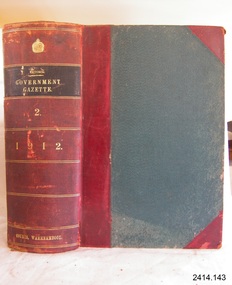
Book - Reference/State Government Notification Gazette, Albert John Mullett, The Victorian Government Gazette 1912 Vol 2 /147, 1912
... These government gazettes are a unique, useful and extremely fascinating resource for local, family and social historians and researchers in other fields, since they contain information of great use in establishing an image of Australia and its people in the past, covering land transactions, legal notices, proclamations, insolvency and bankruptcy notices, impoundments, private advertisements, patent and trademark applications, partnerships, licences, mining contracts, government positions, statistics, and a lot more. Albert...These government gazettes are a unique, useful and extremely fascinating resource for local, family and social historians and researchers in other fields, since they contain information of great use in establishing an image of Australia and its people in the past, covering land transactions, legal notices, proclamations, insolvency and bankruptcy notices, impoundments, private advertisements, patent and trademark applications, partnerships, licences, mining contracts, government positions, statistics, and a lot more. Albert ...The Victoria Government Gazette and other government documents from 1887 were printed and published by Robert S. Brain, Government Printer, Melbourne. Brain held the position of Victorian Government Printer through the 1890s and into the early 1900s. The same imprint appears on other official Victorian publications from that era, such as the annual reports of the Board for the Protection of the Aborigines and the colony's Statistical Register. There wasn't really an editor in the modern sense the Gazette was compiled and issued under the authority of the colonial government, via the Chief Secretary's Department, with Brain's printing office producing and publishing it. In May 1906, James Kemp succeeded him, serving as Government Printer from May 1906 to August 1912, with the title of Acting Government Printer right at the very start of his tenure he was stepping into the role Brain had just vacated, and by later in December 1906 he was signing gazettes in that capacity, apparently before his appointment was made permanent. Then in 1912 Albert John Mullett took over the role starting from January 1912 the same way Kemp had as Acting Government Printer with his appointment made permanent in 1913 where he served all through the 1920s.Hard cover book. The Victorian Government Gazette 1912 Vol 2 /147 Printer: Albert John Mullett Publisher: Albert John Mullett Publisher: Authority of The Colonial Government Date: 1912 Further Information: Textured hard cover bound book leather burgundy colour spine with gilt lettering, covers embossed blue cloth & reinforced corners to front and back cover. non-fictionThe Victoria Government Gazette and other government documents from 1887 were printed and published by Robert S. Brain, Government Printer, Melbourne. Brain held the position of Victorian Government Printer through the 1890s and into the early 1900s. The same imprint appears on other official Victorian publications from that era, such as the annual reports of the Board for the Protection of the Aborigines and the colony's Statistical Register. There wasn't really an editor in the modern sense the Gazette was compiled and issued under the authority of the colonial government, via the Chief Secretary's Department, with Brain's printing office producing and publishing it. In May 1906, James Kemp succeeded him, serving as Government Printer from May 1906 to August 1912, with the title of Acting Government Printer right at the very start of his tenure he was stepping into the role Brain had just vacated, and by later in December 1906 he was signing gazettes in that capacity, apparently before his appointment was made permanent. Then in 1912 Albert John Mullett took over the role starting from January 1912 the same way Kemp had as Acting Government Printer with his appointment made permanent in 1913 where he served all through the 1920s. flagstaff hill, warrnambool, shipwrecked-coast, flagstaff-hill, flagstaff-hill-maritime-museum, maritime-museum, shipwreck-coast, flagstaff-hill-maritime-village, book, the victoria government gazette 1912 1 vol 146, the victoria government gazette 1912, the victoria government gazette -
 Flagstaff Hill Maritime Museum and Village
Book - Reference/State Government Notification Gazette, Albert John Mullett, The Victorian Government Gazette 1912 Vol 3 /148, 1912
... These government gazettes are a unique, useful and extremely fascinating resource for local, family and social historians and researchers in other fields, since they contain information of great use in establishing an image of Australia and its people in the past, covering land transactions, legal notices, proclamations, insolvency and bankruptcy notices, impoundments, private advertisements, patent and trademark applications, partnerships, licences, mining contracts, government positions, statistics, and a lot more. Albert...These government gazettes are a unique, useful and extremely fascinating resource for local, family and social historians and researchers in other fields, since they contain information of great use in establishing an image of Australia and its people in the past, covering land transactions, legal notices, proclamations, insolvency and bankruptcy notices, impoundments, private advertisements, patent and trademark applications, partnerships, licences, mining contracts, government positions, statistics, and a lot more. Albert ...The Victoria Government Gazette and other government documents from 1887 were printed and published by Robert S. Brain, Government Printer, Melbourne. Brain held the position of Victorian Government Printer through the 1890s and into the early 1900s. The same imprint appears on other official Victorian publications from that era, such as the annual reports of the Board for the Protection of the Aborigines and the colony's Statistical Register. There wasn't really an editor in the modern sense the Gazette was compiled and issued under the authority of the colonial government, via the Chief Secretary's Department, with Brain's printing office producing and publishing it. In May 1906, James Kemp succeeded him, serving as Government Printer from May 1906 to August 1912, with the title of Acting Government Printer right at the very start of his tenure he was stepping into the role Brain had just vacated, and by later in December 1906 he was signing gazettes in that capacity, apparently before his appointment was made permanent. Then in 1912 Albert John Mullett took over the role starting from January 1912 the same way Kemp had as Acting Government Printer with his appointment made permanent in 1913 where he served all through the 1920s.Hard cover book. The Victorian Government Gazette 1912 Vol 3 /148 Printer: Albert John Mullett Publisher: Albert John Mullett Publisher: Authority of The Colonial Government Date: 1912 Further Information: Textured hard cover bound book leather burgundy colour spine with gilt lettering, covers embossed blue cloth & reinforced corners to front and back cover. non-fictionThe Victoria Government Gazette and other government documents from 1887 were printed and published by Robert S. Brain, Government Printer, Melbourne. Brain held the position of Victorian Government Printer through the 1890s and into the early 1900s. The same imprint appears on other official Victorian publications from that era, such as the annual reports of the Board for the Protection of the Aborigines and the colony's Statistical Register. There wasn't really an editor in the modern sense the Gazette was compiled and issued under the authority of the colonial government, via the Chief Secretary's Department, with Brain's printing office producing and publishing it. In May 1906, James Kemp succeeded him, serving as Government Printer from May 1906 to August 1912, with the title of Acting Government Printer right at the very start of his tenure he was stepping into the role Brain had just vacated, and by later in December 1906 he was signing gazettes in that capacity, apparently before his appointment was made permanent. Then in 1912 Albert John Mullett took over the role starting from January 1912 the same way Kemp had as Acting Government Printer with his appointment made permanent in 1913 where he served all through the 1920s. flagstaff hill, warrnambool, shipwrecked-coast, flagstaff-hill, flagstaff-hill-maritime-museum, maritime-museum, shipwreck-coast, flagstaff-hill-maritime-village, book, the victoria government gazette 1912 1 vol 146, the victoria government gazette 1912, the victoria government gazette -
 Flagstaff Hill Maritime Museum and Village
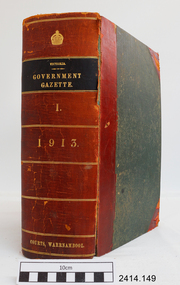
Book - Reference/State Government Notification Gazette, Albert John Mullett, The Victorian Government Gazette 1913 Vol 1 /149 ( Vol Number Mis Print on Volume Title CXLVIX See Note Section), 1913
... These government gazettes are a unique, useful and extremely fascinating resource for local, family and social historians and researchers in other fields, since they contain information of great use in establishing an image of Australia and its people in the past, covering land transactions, legal notices, proclamations, insolvency and bankruptcy notices, impoundments, private advertisements, patent and trademark applications, partnerships, licences, mining contracts, government positions, statistics, and a lot more. Albert...These government gazettes are a unique, useful and extremely fascinating resource for local, family and social historians and researchers in other fields, since they contain information of great use in establishing an image of Australia and its people in the past, covering land transactions, legal notices, proclamations, insolvency and bankruptcy notices, impoundments, private advertisements, patent and trademark applications, partnerships, licences, mining contracts, government positions, statistics, and a lot more. Albert ...The Victoria Government Gazette and other government documents from 1887 were printed and published by Robert S. Brain, Government Printer, Melbourne. Brain held the position of Victorian Government Printer through the 1890s and into the early 1900s. The same imprint appears on other official Victorian publications from that era, such as the annual reports of the Board for the Protection of the Aborigines and the colony's Statistical Register. There wasn't really an editor in the modern sense the Gazette was compiled and issued under the authority of the colonial government, via the Chief Secretary's Department, with Brain's printing office producing and publishing it. In May 1906, James Kemp succeeded him, serving as Government Printer from May 1906 to August 1912, with the title of Acting Government Printer right at the very start of his tenure he was stepping into the role Brain had just vacated, and by later in December 1906 he was signing gazettes in that capacity, apparently before his appointment was made permanent. Then in 1912 Albert John Mullett took over the role starting from January 1912 the same way Kemp had as Acting Government Printer with his appointment made permanent in 1913 where he served all through the 1920s.Hard cover book. The Victorian Government Gazette 1913 Vol 1 /149 Printer: Albert John Mullett Publisher: Albert John Mullett Publisher: Authority of The Colonial Government Date: 1913 Further Information: Textured hard cover bound book leather burgundy colour spine with gilt lettering, covers embossed blue cloth & reinforced corners to front and back cover. non-fictionThe Victoria Government Gazette and other government documents from 1887 were printed and published by Robert S. Brain, Government Printer, Melbourne. Brain held the position of Victorian Government Printer through the 1890s and into the early 1900s. The same imprint appears on other official Victorian publications from that era, such as the annual reports of the Board for the Protection of the Aborigines and the colony's Statistical Register. There wasn't really an editor in the modern sense the Gazette was compiled and issued under the authority of the colonial government, via the Chief Secretary's Department, with Brain's printing office producing and publishing it. In May 1906, James Kemp succeeded him, serving as Government Printer from May 1906 to August 1912, with the title of Acting Government Printer right at the very start of his tenure he was stepping into the role Brain had just vacated, and by later in December 1906 he was signing gazettes in that capacity, apparently before his appointment was made permanent. Then in 1912 Albert John Mullett took over the role starting from January 1912 the same way Kemp had as Acting Government Printer with his appointment made permanent in 1913 where he served all through the 1920s. flagstaff hill, warrnambool, shipwrecked-coast, flagstaff-hill, flagstaff-hill-maritime-museum, maritime-museum, shipwreck-coast, flagstaff-hill-maritime-village, book, the victoria government gazette 1912 1 vol 146, the victoria government gazette 1912, the victoria government gazette -
 Flagstaff Hill Maritime Museum and Village
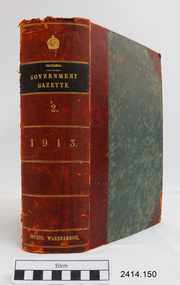
Book - Reference/State Government Notification Gazette, Albert John Mullett, The Victorian Government Gazette 1913 Vol 2 /150, 1913
... These government gazettes are a unique, useful and extremely fascinating resource for local, family and social historians and researchers in other fields, since they contain information of great use in establishing an image of Australia and its people in the past, covering land transactions, legal notices, proclamations, insolvency and bankruptcy notices, impoundments, private advertisements, patent and trademark applications, partnerships, licences, mining contracts, government positions, statistics, and a lot more. Albert...These government gazettes are a unique, useful and extremely fascinating resource for local, family and social historians and researchers in other fields, since they contain information of great use in establishing an image of Australia and its people in the past, covering land transactions, legal notices, proclamations, insolvency and bankruptcy notices, impoundments, private advertisements, patent and trademark applications, partnerships, licences, mining contracts, government positions, statistics, and a lot more. Albert ...The Victoria Government Gazette and other government documents from 1887 were printed and published by Robert S. Brain, Government Printer, Melbourne. Brain held the position of Victorian Government Printer through the 1890s and into the early 1900s. The same imprint appears on other official Victorian publications from that era, such as the annual reports of the Board for the Protection of the Aborigines and the colony's Statistical Register. There wasn't really an editor in the modern sense the Gazette was compiled and issued under the authority of the colonial government, via the Chief Secretary's Department, with Brain's printing office producing and publishing it. In May 1906, James Kemp succeeded him, serving as Government Printer from May 1906 to August 1912, with the title of Acting Government Printer right at the very start of his tenure he was stepping into the role Brain had just vacated, and by later in December 1906 he was signing gazettes in that capacity, apparently before his appointment was made permanent. Then in 1912 Albert John Mullett took over the role starting from January 1912 the same way Kemp had as Acting Government Printer with his appointment made permanent in 1913 where he served all through the 1920s.Hard cover book. The Victorian Government Gazette 1913 Vol 2 /150 Printer: Albert John Mullett Publisher: Albert John Mullett Publisher: Authority of The Colonial Government Date: 1913 Further Information: Textured hard cover bound book leather burgundy colour spine with gilt lettering, covers embossed blue cloth & reinforced corners to front and back cover. non-fictionThe Victoria Government Gazette and other government documents from 1887 were printed and published by Robert S. Brain, Government Printer, Melbourne. Brain held the position of Victorian Government Printer through the 1890s and into the early 1900s. The same imprint appears on other official Victorian publications from that era, such as the annual reports of the Board for the Protection of the Aborigines and the colony's Statistical Register. There wasn't really an editor in the modern sense the Gazette was compiled and issued under the authority of the colonial government, via the Chief Secretary's Department, with Brain's printing office producing and publishing it. In May 1906, James Kemp succeeded him, serving as Government Printer from May 1906 to August 1912, with the title of Acting Government Printer right at the very start of his tenure he was stepping into the role Brain had just vacated, and by later in December 1906 he was signing gazettes in that capacity, apparently before his appointment was made permanent. Then in 1912 Albert John Mullett took over the role starting from January 1912 the same way Kemp had as Acting Government Printer with his appointment made permanent in 1913 where he served all through the 1920s. flagstaff hill, warrnambool, shipwrecked-coast, flagstaff-hill, flagstaff-hill-maritime-museum, maritime-museum, shipwreck-coast, flagstaff-hill-maritime-village, book, the victoria government gazette 1912 1 vol 146, the victoria government gazette 1912, the victoria government gazette -
 Flagstaff Hill Maritime Museum and Village
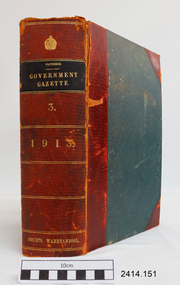
Book - Reference/State Government Notification Gazette, Albert John Mullett, The Victorian Government Gazette 1913 Vol 3 /151, 1913
... These government gazettes are a unique, useful and extremely fascinating resource for local, family and social historians and researchers in other fields, since they contain information of great use in establishing an image of Australia and its people in the past, covering land transactions, legal notices, proclamations, insolvency and bankruptcy notices, impoundments, private advertisements, patent and trademark applications, partnerships, licences, mining contracts, government positions, statistics, and a lot more. Albert...These government gazettes are a unique, useful and extremely fascinating resource for local, family and social historians and researchers in other fields, since they contain information of great use in establishing an image of Australia and its people in the past, covering land transactions, legal notices, proclamations, insolvency and bankruptcy notices, impoundments, private advertisements, patent and trademark applications, partnerships, licences, mining contracts, government positions, statistics, and a lot more. Albert ...The Victoria Government Gazette and other government documents from 1887 were printed and published by Robert S. Brain, Government Printer, Melbourne. Brain held the position of Victorian Government Printer through the 1890s and into the early 1900s. The same imprint appears on other official Victorian publications from that era, such as the annual reports of the Board for the Protection of the Aborigines and the colony's Statistical Register. There wasn't really an editor in the modern sense the Gazette was compiled and issued under the authority of the colonial government, via the Chief Secretary's Department, with Brain's printing office producing and publishing it. In May 1906, James Kemp succeeded him, serving as Government Printer from May 1906 to August 1912, with the title of Acting Government Printer right at the very start of his tenure he was stepping into the role Brain had just vacated, and by later in December 1906 he was signing gazettes in that capacity, apparently before his appointment was made permanent. Then in 1912 Albert John Mullett took over the role starting from January 1912 the same way Kemp had as Acting Government Printer with his appointment made permanent in 1913 where he served all through the 1920s.Hard cover book. The Victorian Government Gazette 1913 Vol 3 /151 Printer: Albert John Mullett Publisher: Albert John Mullett Publisher: Authority of The Colonial Government Date: 1913 Further Information: Textured hard cover bound book leather burgundy colour spine with gilt lettering, covers embossed blue cloth & reinforced corners to front and back cover. non-fictionThe Victoria Government Gazette and other government documents from 1887 were printed and published by Robert S. Brain, Government Printer, Melbourne. Brain held the position of Victorian Government Printer through the 1890s and into the early 1900s. The same imprint appears on other official Victorian publications from that era, such as the annual reports of the Board for the Protection of the Aborigines and the colony's Statistical Register. There wasn't really an editor in the modern sense the Gazette was compiled and issued under the authority of the colonial government, via the Chief Secretary's Department, with Brain's printing office producing and publishing it. In May 1906, James Kemp succeeded him, serving as Government Printer from May 1906 to August 1912, with the title of Acting Government Printer right at the very start of his tenure he was stepping into the role Brain had just vacated, and by later in December 1906 he was signing gazettes in that capacity, apparently before his appointment was made permanent. Then in 1912 Albert John Mullett took over the role starting from January 1912 the same way Kemp had as Acting Government Printer with his appointment made permanent in 1913 where he served all through the 1920s. flagstaff hill, warrnambool, shipwrecked-coast, flagstaff-hill, flagstaff-hill-maritime-museum, maritime-museum, shipwreck-coast, flagstaff-hill-maritime-village, book, the victoria government gazette 1912 1 vol 146, the victoria government gazette 1912, the victoria government gazette -
 Flagstaff Hill Maritime Museum and Village
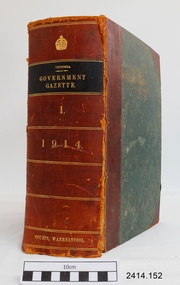
Book - Reference/State Government Notification Gazette, Albert John Mullett, The Victorian Government Gazette 1914 Vol 1 /152, 1914
... These government gazettes are a unique, useful and extremely fascinating resource for local, family and social historians and researchers in other fields, since they contain information of great use in establishing an image of Australia and its people in the past, covering land transactions, legal notices, proclamations, insolvency and bankruptcy notices, impoundments, private advertisements, patent and trademark applications, partnerships, licences, mining contracts, government positions, statistics, and a lot more. Albert...These government gazettes are a unique, useful and extremely fascinating resource for local, family and social historians and researchers in other fields, since they contain information of great use in establishing an image of Australia and its people in the past, covering land transactions, legal notices, proclamations, insolvency and bankruptcy notices, impoundments, private advertisements, patent and trademark applications, partnerships, licences, mining contracts, government positions, statistics, and a lot more. Albert ...The Victoria Government Gazette and other government documents from 1887 were printed and published by Robert S. Brain, Government Printer, Melbourne. Brain held the position of Victorian Government Printer through the 1890s and into the early 1900s. The same imprint appears on other official Victorian publications from that era, such as the annual reports of the Board for the Protection of the Aborigines and the colony's Statistical Register. There wasn't really an editor in the modern sense the Gazette was compiled and issued under the authority of the colonial government, via the Chief Secretary's Department, with Brain's printing office producing and publishing it. In May 1906, James Kemp succeeded him, serving as Government Printer from May 1906 to August 1912, with the title of Acting Government Printer right at the very start of his tenure he was stepping into the role Brain had just vacated, and by later in December 1906 he was signing gazettes in that capacity, apparently before his appointment was made permanent. Then in 1912 Albert John Mullett took over the role starting from January 1912 the same way Kemp had as Acting Government Printer with his appointment made permanent in 1913 where he served all through the 1920s.Hard cover book. The Victorian Government Gazette 1914 Vol 1 /152 Printer: Albert John Mullett Publisher: Albert John Mullett Publisher: Authority of The Colonial Government Date: 1914 Further Information: Textured hard cover bound book leather burgundy colour spine with gilt lettering, covers embossed blue cloth & reinforced corners to front and back cover. non-fictionThe Victoria Government Gazette and other government documents from 1887 were printed and published by Robert S. Brain, Government Printer, Melbourne. Brain held the position of Victorian Government Printer through the 1890s and into the early 1900s. The same imprint appears on other official Victorian publications from that era, such as the annual reports of the Board for the Protection of the Aborigines and the colony's Statistical Register. There wasn't really an editor in the modern sense the Gazette was compiled and issued under the authority of the colonial government, via the Chief Secretary's Department, with Brain's printing office producing and publishing it. In May 1906, James Kemp succeeded him, serving as Government Printer from May 1906 to August 1912, with the title of Acting Government Printer right at the very start of his tenure he was stepping into the role Brain had just vacated, and by later in December 1906 he was signing gazettes in that capacity, apparently before his appointment was made permanent. Then in 1912 Albert John Mullett took over the role starting from January 1912 the same way Kemp had as Acting Government Printer with his appointment made permanent in 1913 where he served all through the 1920s. flagstaff hill, warrnambool, shipwrecked-coast, flagstaff-hill, flagstaff-hill-maritime-museum, maritime-museum, shipwreck-coast, flagstaff-hill-maritime-village, book, the victoria government gazette 1912 1 vol 146, the victoria government gazette 1912, the victoria government gazette -
 Flagstaff Hill Maritime Museum and Village
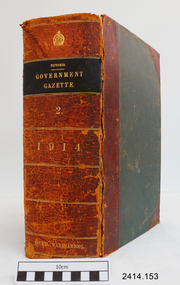
Book - Reference/State Government Notification Gazette, Albert John Mullett, The Victorian Government Gazette 1914 Vol 2 /153, 1914
... These government gazettes are a unique, useful and extremely fascinating resource for local, family and social historians and researchers in other fields, since they contain information of great use in establishing an image of Australia and its people in the past, covering land transactions, legal notices, proclamations, insolvency and bankruptcy notices, impoundments, private advertisements, patent and trademark applications, partnerships, licences, mining contracts, government positions, statistics, and a lot more. Albert...These government gazettes are a unique, useful and extremely fascinating resource for local, family and social historians and researchers in other fields, since they contain information of great use in establishing an image of Australia and its people in the past, covering land transactions, legal notices, proclamations, insolvency and bankruptcy notices, impoundments, private advertisements, patent and trademark applications, partnerships, licences, mining contracts, government positions, statistics, and a lot more. Albert ...The Victoria Government Gazette and other government documents from 1887 were printed and published by Robert S. Brain, Government Printer, Melbourne. Brain held the position of Victorian Government Printer through the 1890s and into the early 1900s. The same imprint appears on other official Victorian publications from that era, such as the annual reports of the Board for the Protection of the Aborigines and the colony's Statistical Register. There wasn't really an editor in the modern sense the Gazette was compiled and issued under the authority of the colonial government, via the Chief Secretary's Department, with Brain's printing office producing and publishing it. In May 1906, James Kemp succeeded him, serving as Government Printer from May 1906 to August 1912, with the title of Acting Government Printer right at the very start of his tenure he was stepping into the role Brain had just vacated, and by later in December 1906 he was signing gazettes in that capacity, apparently before his appointment was made permanent. Then in 1912 Albert John Mullett took over the role starting from January 1912 the same way Kemp had as Acting Government Printer with his appointment made permanent in 1913 where he served all through the 1920s.Hard cover book. The Victorian Government Gazette 1914 Vol 2 /153 Printer: Albert John Mullett Publisher: Albert John Mullett Publisher: Authority of The Colonial Government Date: 1914 Further Information: Textured hard cover bound book leather burgundy colour spine with gilt lettering, covers embossed blue cloth & reinforced corners to front and back cover. non-fictionThe Victoria Government Gazette and other government documents from 1887 were printed and published by Robert S. Brain, Government Printer, Melbourne. Brain held the position of Victorian Government Printer through the 1890s and into the early 1900s. The same imprint appears on other official Victorian publications from that era, such as the annual reports of the Board for the Protection of the Aborigines and the colony's Statistical Register. There wasn't really an editor in the modern sense the Gazette was compiled and issued under the authority of the colonial government, via the Chief Secretary's Department, with Brain's printing office producing and publishing it. In May 1906, James Kemp succeeded him, serving as Government Printer from May 1906 to August 1912, with the title of Acting Government Printer right at the very start of his tenure he was stepping into the role Brain had just vacated, and by later in December 1906 he was signing gazettes in that capacity, apparently before his appointment was made permanent. Then in 1912 Albert John Mullett took over the role starting from January 1912 the same way Kemp had as Acting Government Printer with his appointment made permanent in 1913 where he served all through the 1920s. flagstaff hill, warrnambool, shipwrecked-coast, flagstaff-hill, flagstaff-hill-maritime-museum, maritime-museum, shipwreck-coast, flagstaff-hill-maritime-village, book, the victoria government gazette 1912 1 vol 146, the victoria government gazette 1912, the victoria government gazette -
 Marysville & District Historical Society
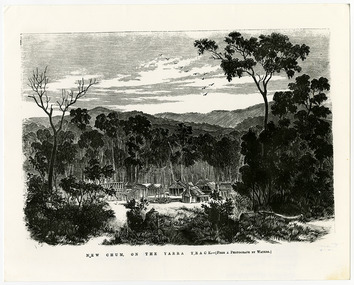
Work on paper (item) - Print of wood engraving, Frederick Grosse et al, New Chum on the Yarra Track, 27-09-1866
... The Yarra Track is the former name of the gold fields road from Healesville to the Woods Point and Jordan Goldfields in Victoria. new chum healesville yarra track victoria frederick grosse albert charles cooke thomas waters wood engraving A copy of an early wood engraving taken from a photograph of the deserted township of New Chum, near Healesville, on the Yarra Track in Victoria. ...A copy of an early wood engraving taken from a photograph of the deserted township of New Chum, near Healesville, on the Yarra Track in Victoria.A copy of an early wood engraving taken from a photograph of the deserted township of New Chum, near Healesville, on the Yarra Track in Victoria. The Yarra Track is the former name of the gold fields road from Healesville to the Woods Point and Jordan Goldfields in Victoria.new chum, healesville, yarra track, victoria, frederick grosse, albert charles cooke, thomas waters, wood engraving -
 Marysville & District Historical Society
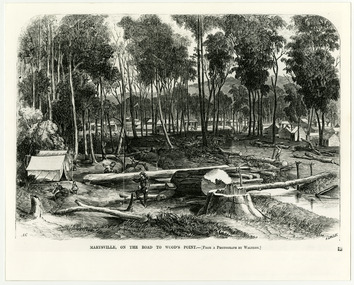
Work on paper (item) - Print of wood engraving, Frederick Grosse et al, Marysville, on the road to Wood's Point, 27-11-1866
... The Yarra Track is the former name of the gold fields road from Healesville to the Woods Point and Jordan Goldfields in Victoria. victoria frederick grosse albert charles cooke thomas waters wood engraving marysville wood's point road A copy of an early wood engraving taken from a photograph of the town of Marysville in Victoria. ...A copy of an early wood engraving taken from a photograph of the township of Marysville in Victoria.A copy of an early wood engraving taken from a photograph of the township of Marysville in Victoria. The Yarra Track is the former name of the gold fields road from Healesville to the Woods Point and Jordan Goldfields in Victoria.victoria, frederick grosse, albert charles cooke, thomas waters, wood engraving, marysville, wood's point road -
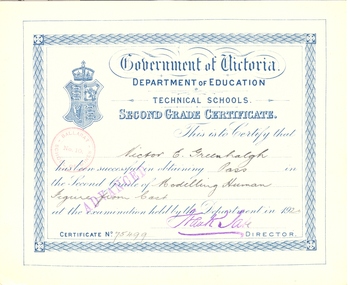 Federation University Historical Collection
Certificate, Education Department, Victoria, Victorian Education Department Certificates, 1916-1928
... albert c. ferguson...alma ferguson...hilda m. ferguson...john f. ferguson...beatrice m. field...Ballarat Technical Art School was a division of the Ballarat School of Mines. ann duke plain needlework victor greenhalgh frank tate ballarat technical art school arnold j. allen florence allen m.a. ansen dressmaking modelling human figure from cast ruby e. allison drawing fro memory nancy b. angwin maude arberry douglas w. arch muriel j. arch eileen bailey annie c. baker percy j. baker general design light metal work bessie m. barbery commerical arithmetic decorative needlework bert bernaldo drawing from a flat example lorna m. mccallum brush drawing stanley g.a. barnett millinery mavis g. beacham theodore k. beckwith isabel j. bell kelva e. bellingham leslie bennett olive van berkel elizabeth e. berry beatrice m. blake thomas g. blake catherine m. bowers nancy w. bowe clarice v. branagh harold r. brown architecture modelling the head from life henry bull light metalwork ivan d. brown thyra j. brown henry j. bull leila m. burford embossed leathwork lettering drawing fro dressmakers irene m. burke josephine m. callery modelling mona r. callow herbert cameron lillias cameron william e. carlyon doris l. carter ruth e. catt hiram e. chamberlain stephen chambers jack d. chand jack d. chard clara v. clegg beryl e. coad john c. collins keith m. collins robert g. collins kathleen m. conway athol b. cornish ballantyne cottier douglas s. cotton lilith s. christmas perspective doreen coughlan ivy g. crompton phyllis culliver joan m. cuthbertson alan r. cutter john l. daniel arthur dansey katherine d'arcy dorothy f. darling myrtle f. darling reginal a. davey gwladys h. davies annie dellaca henry a. deller ivy f. denovan joyce doepel bessie donacaster charles o. dowie horace b. dowsing walter dunstan mary dwyer allan r. egglestone melville g. ellingsen hugh o. elliott beryl r. ellis cecil f. engish allan e. evans matson l. eves olive j. fairlie robert j. falla mavis felstead lena featherston albert c. ferguson alma ferguson hilda m. ferguson john f. ferguson beatrice m. field clarice f. fisher philip h. fleischer building construction olive p. francis agnes fraser essie gale gilbert foster pearle fricke effie gascoigne enid m. gates clarice gear james a. geary sylvia f. greenhalgh evelyn f. geddes thomas j. gibson wavie b. gilbert edna m. gilmer nancy govan eula h. gower doris e. gray lesley j. gower henry n. graham victor e. greenhalgh melva e. gribble human anatomy roy k. griggs jack gullan robert gullan alma m. gunn dorothy j. hallan lucy hamilton james hammer dorothy e. hamond christopher j. hanlon catherin hardess lily haymes gladys hedges irene h. hewitt john hill victor j. hill olive hillings john a. hobill frances k. holmes gertrude m. hopkins alice horan marjorie hudson linda m. hughes lydia hughes winifred humphreys commercial english agnes a. humphries colin hunt kathleen hutchinson francis n. king jean king hilda knox john kopke isabel a. kopke hazel jackson freda jacobi agnes james william r. james alexander johnson edward j. jones eleanor w.h. jones nellie kau thomas kean francis kelly roy k. kelly thomas g. kierce theo e. leonard esther f. leviston bessie lockett norman h. long ena mackay gwenda e. mann robert v. maddison herbert w. malin dorothy m. marriott john c. mcarthur james p. mcculloch doris mcdougall cyril mcgibbony thelma mcgibbony jean mcgregor kenneth mciver constance m. mckenzie elsie j. mckissock alexander k.mcleod grace b. mclean john f.w. mclean rebecca mcphan vera meeny edna merritt dougald miller florence h. mingst agnes m. monteith doreen j. montgomery jean e. montgomery robert w.p. montgomery margaret b. moore harry e. morrish james mow gwendoline r. neagle gerald r. newson robert j. nicol helen f. nicholl george m. norton edward s. oliver mavis e. oliver hector h, osborne henry parker norma e. parr doris m. patterson elsie pearce celia pearlman leslie pearlman edna pearson william j. perriman eulalie perry ernest b. pinney charles e. peverill clarence r. pittock raymond b. pitts phyllis polson cynthia b. power bessie puzey john m. punshon evelyn a.v. ramsay robert i ramsay william a. rattray drawing for builders and artisans george h. reed fred reeves mavis i. regelhuth george r. renkin annie e. reynolds lizzie rice eileen l. richards henry c. riegelhuth gladys m. riley charles a. rimmington amy robson ernest w. robson florence a. rogers dorothy rppney kathleen rooney hugh n. ross stella m. rowe agnes w. ryan rosaling e. sage cora sandberg eric c. sanders douglas f. scott sylvia e. selkirk dorine a. shearer gladys sheldon emily e. simper veri slattery florence c. smith hilda m. spencer rose spiers mopna g. spiller alma m. stapleton joyce w. stark marcus m. stone commercial correspondence beatrice m. stuart ena v. sullivan margaret a. sydes rita tainsh norman b. tamlyn arthur w. thane alma m. thomas david e. thomas william h. thompson william m. thomas edgatr j.t. tippett sidnet tippett gladys tongway mavis toop hugh d. trainor annie e. treloar john h. treloar eilleen trumain linda f. treewk percival a. trompf percy trompf jean tunbridge ruth e. tunbridge allan j. twaits irene m. utting elizabeth van beek william a. wade agnes a. walker james a. walker vera v. aller john walsh marjorie walters rex warrillow edith watson bernice e. webb constance i weeks ina m. westcott pearl whan violet wheeler myrtle d. whitfield annie whitl richard l. whitla charles f. whitla grace a. wilcock murray a. wilkie andrew w. william arthur williams baden p. williams david d. williams grace f. williams maude h. williams mavis m. williams james williamson ivy wilson hector g wilson frederick w.r. wilson david s. wood Stamped Ballarat School of Mines No.10 Stamped signature "Frank Tate" 373 certificates in 2 boxes. ...Ballarat Technical Art School was a division of the Ballarat School of Mines.373 certificates in 2 boxes. Most appear to be related to subjects undertaken at the Ballarat Technical Art School. Director of education stamped signature Frank Tate.Stamped Ballarat School of Mines No.10 Stamped signature "Frank Tate"ann duke, plain needlework, victor greenhalgh, frank tate, ballarat technical art school, arnold j. allen, florence allen, m.a. ansen, dressmaking, modelling human figure from cast, ruby e. allison, drawing fro memory, nancy b. angwin, maude arberry, douglas w. arch, muriel j. arch, eileen bailey, annie c. baker, percy j. baker, general design, light metal work, bessie m. barbery, commerical arithmetic, decorative needlework, bert bernaldo, drawing from a flat example, lorna m. mccallum, brush drawing, stanley g.a. barnett, millinery, mavis g. beacham, theodore k. beckwith, isabel j. bell, kelva e. bellingham, leslie bennett, olive van berkel, elizabeth e. berry, beatrice m. blake, thomas g. blake, catherine m. bowers, nancy w. bowe, clarice v. branagh, harold r. brown, architecture, modelling the head from life, henry bull, light metalwork, ivan d. brown, thyra j. brown, henry j. bull, leila m. burford, embossed leathwork, lettering, drawing fro dressmakers, irene m. burke, josephine m. callery, modelling, mona r. callow, herbert cameron, lillias cameron, william e. carlyon, doris l. carter, ruth e. catt, hiram e. chamberlain, stephen chambers, jack d. chand, jack d. chard, clara v. clegg, beryl e. coad, john c. collins, keith m. collins, robert g. collins, kathleen m. conway, athol b. cornish, ballantyne cottier, douglas s. cotton, lilith s. christmas, perspective, doreen coughlan, ivy g. crompton, phyllis culliver, joan m. cuthbertson, alan r. cutter, john l. daniel, arthur dansey, katherine d'arcy, dorothy f. darling, myrtle f. darling, reginal a. davey, gwladys h. davies, annie dellaca, henry a. deller, ivy f. denovan, joyce doepel, bessie donacaster, charles o. dowie, horace b. dowsing, walter dunstan, mary dwyer, allan r. egglestone, melville g. ellingsen, hugh o. elliott, beryl r. ellis, cecil f. engish, allan e. evans, matson l. eves, olive j. fairlie, robert j. falla, mavis felstead, lena featherston, albert c. ferguson, alma ferguson, hilda m. ferguson, john f. ferguson, beatrice m. field, clarice f. fisher, philip h. fleischer, building construction, olive p. francis, agnes fraser, essie gale, gilbert foster, pearle fricke, effie gascoigne, enid m. gates, clarice gear, james a. geary, sylvia f. greenhalgh, evelyn f. geddes, thomas j. gibson, wavie b. gilbert, edna m. gilmer, nancy govan, eula h. gower, doris e. gray, lesley j. gower, henry n. graham, victor e. greenhalgh, melva e. gribble, human anatomy, roy k. griggs, jack gullan, robert gullan, alma m. gunn, dorothy j. hallan, lucy hamilton, james hammer, dorothy e. hamond, christopher j. hanlon, catherin hardess, lily haymes, gladys hedges, irene h. hewitt, john hill, victor j. hill, olive hillings, john a. hobill, frances k. holmes, gertrude m. hopkins, alice horan, marjorie hudson, linda m. hughes, lydia hughes, winifred humphreys, commercial english, agnes a. humphries, colin hunt, kathleen hutchinson, francis n. king, jean king, hilda knox, john kopke, isabel a. kopke, hazel jackson, freda jacobi, agnes james, william r. james, alexander johnson, edward j. jones, eleanor w.h. jones, nellie kau, thomas kean, francis kelly, roy k. kelly, thomas g. kierce, theo e. leonard, esther f. leviston, bessie lockett, norman h. long, ena mackay, gwenda e. mann, robert v. maddison, herbert w. malin, dorothy m. marriott, john c. mcarthur, james p. mcculloch, doris mcdougall, cyril mcgibbony, thelma mcgibbony, jean mcgregor, kenneth mciver, constance m. mckenzie, elsie j. mckissock, alexander k.mcleod, grace b. mclean, john f.w. mclean, rebecca mcphan, vera meeny, edna merritt, dougald miller, florence h. mingst, agnes m. monteith, doreen j. montgomery, jean e. montgomery, robert w.p. montgomery, margaret b. moore, harry e. morrish, james mow, gwendoline r. neagle, gerald r. newson, robert j. nicol, helen f. nicholl, george m. norton, edward s. oliver, mavis e. oliver, hector h, osborne, henry parker, norma e. parr, doris m. patterson, elsie pearce, celia pearlman, leslie pearlman, edna pearson, william j. perriman, eulalie perry, ernest b. pinney, charles e. peverill, clarence r. pittock, raymond b. pitts, phyllis polson, cynthia b. power, bessie puzey, john m. punshon, evelyn a.v. ramsay, robert i ramsay, william a. rattray, drawing for builders and artisans, george h. reed, fred reeves, mavis i. regelhuth, george r. renkin, annie e. reynolds, lizzie rice, eileen l. richards, henry c. riegelhuth, gladys m. riley, charles a. rimmington, amy robson, ernest w. robson, florence a. rogers, dorothy rppney, kathleen rooney, hugh n. ross, stella m. rowe, agnes w. ryan, rosaling e. sage, cora sandberg, eric c. sanders, douglas f. scott, sylvia e. selkirk, dorine a. shearer, gladys sheldon, emily e. simper, veri slattery, florence c. smith, hilda m. spencer, rose spiers, mopna g. spiller, alma m. stapleton, joyce w. stark, marcus m. stone, commercial correspondence, beatrice m. stuart, ena v. sullivan, margaret a. sydes, rita tainsh, norman b. tamlyn, arthur w. thane, alma m. thomas, david e. thomas, william h. thompson, william m. thomas, edgatr j.t. tippett, sidnet tippett, gladys tongway, mavis toop, hugh d. trainor, annie e. treloar, john h. treloar, eilleen trumain, linda f. treewk, percival a. trompf, percy trompf, jean tunbridge, ruth e. tunbridge, allan j. twaits, irene m. utting, elizabeth van beek, william a. wade, agnes a. walker, james a. walker, vera v. aller, john walsh, marjorie walters, rex warrillow, edith watson, bernice e. webb, constance i weeks, ina m. westcott, pearl whan, violet wheeler, myrtle d. whitfield, annie whitl, richard l. whitla, charles f. whitla, grace a. wilcock, murray a. wilkie, andrew w. william, arthur williams, baden p. williams, david d. williams, grace f. williams, maude h. williams, mavis m. williams, james williamson, ivy wilson, hector g wilson, frederick w.r. wilson, david s. wood -
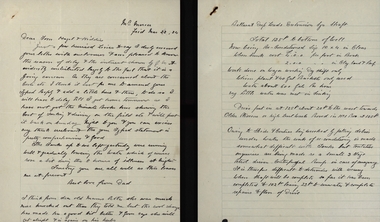 Federation University Historical Collection
Letter, Letters from Richard Squire to his son Tom 1934
... Hayes Illness Poppet Carburetor Mum Ned Shaft Balance Weight Hazel Squire Pearson Pulleys Syndicate Goon Len Hopkins Suction Dunstown Lease Jim Squire Bannockburn Nina Albert Mrs Trenery Connie Jay Judy Squire Cohuna Bladder Attack Reports Estimates Dunstan & Coy Jelbarts Barrett Flat Fields Brown Gold Estates Berry Leads Parsley Roots Share Book Meredith Reef Pay Sheet Colin Mr Gibbs L.R.G Plan Banagwanth McNaughton Bores Glenfine Allan William Thomas John Lynch Crawford Shelford Liz the Car Trucks Chandlers Ballarat Trustees Cameron Elaine Mrs Read Clark J. ...In 1905 Richard Squire was manager of the West Berry Consols at Allendale, and developed an improved system of mine ventilation, which was supported in "The Age."[4] He was successful in combating and remedying the gas and ventilation troubles of the Deep Mines of Creswick and Allendale Districts after all had failed.[5] MINE MANAGERS’ ASSOCIATION. Ballarat Branch. ... Mr R. B. Squire, manager of the West Berry Consols, at Allendale, submitted a paper detailing what he had done tor the betterment of ventilation in the alluvial mines of Smeaton and Mary borough districts- Members gave Mr Squire every credit for the results that he claimed to have effected; the adoption of his ideas had testified to their value to mine-owners. It was painted out, however, that for want of a thorough debate of the subject with experienced men the author had unwittingly included some general statements that required modifying in some points and extending in others, in justice to other workers among the earlier and the present day managers of mines. It was decided to invite the author to meet a sub-committee on this subject![6]Handwritten letters from Richard Squire to his son Tom and Family reporting happening at the mine richard squire, tom squire, engine trouble, basil, f.l. smythe broker, trembath, w. ryall, mt mercer, flu, plant, skids, pump, c. hayes, illness, poppet, carburetor, mum, ned, shaft, balance weight, hazel squire, pearson, pulleys, syndicate, goon, len hopkins, suction, dunstown, lease, jim squire, bannockburn, nina, albert, mrs trenery, connie, jay, judy squire, cohuna, bladder attack, reports, estimates, dunstan & coy, jelbarts, barrett, flat fields, brown, gold estates, berry leads, parsley roots, share book, meredith, reef, pay sheet, colin, mr gibbs, l.r.g plan, banagwanth, mcnaughton bores, glenfine, allan, william thomas, john lynch, crawford, shelford, liz the car, trucks, chandlers, ballarat trustees, cameron, elaine, mrs read, clark, j. hayes, dunlop, dr lawrence, eye specialist, reid, mullock bank, jack squire, herman, peter's legal inc. ballarat, freddie reid, j.r. whipp, a.b. reid, grenville, leigh river plan, johnstone's, premier petrol coy, chandler's, ballarat deep leads extension, harwood & pincott, a. rice, lillas, l. e. walker, secretary for mines, pipeclay, sandstone, mr saville, weymouth & carroll, suction pipe, valves, financiers, gold mines of australia, mr hanley hunter, sadowa coy, kerang shareholder, buninyong, stanley hunter, len, fran, max, dr jones, honeycomb rock, booth, sandy mcnab, emily shaw, john cock, ross creek, mitchell, rowe, neil cameron, walker, kidney disease, holst, nellie, ronaldson's, ronaldson & tippett, brokers, investors, lockett, miller & co, wellesly, john sharpe, elizabeht ellen, old lawaluk, mining -
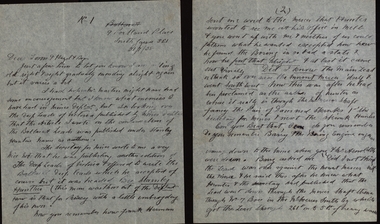 Federation University Historical Collection
Letter, Letters written by Richard Squire to his son Tom Squire 1938
... Field...Courier...School of Mines...Bewick Mining & Co....Broken Hill Syndicate...Morrison's Lead...Baragwanath...Creswick...Duke of Wellington Plant...The Moorabool Lead...Kohinoor Band and Alluvian...Star of the East...Bonshaw...Epidemic...Polio...K.W. Steedman...Mr Newman...Allendale Mines...Professor Mica Smith...Alfred Mica Smith...Mr Hodge...W. Taylor...McPherson's Reward Coy...Mr Mitchell...Billy Thomas...John Bull...Albert...Field Courier School of Mines Bewick Mining & Co. Broken Hill Syndicate Morrison's Lead Baragwanath Creswick Duke of Wellington Plant The Moorabool Lead Kohinoor Band and Alluvian Star of the East Bonshaw Epidemic Polio K.W. Steedman Mr Newman Allendale Mines Professor Mica Smith Alfred Mica Smith Mr Hodge W. Taylor McPherson's Reward Coy Mr Mitchell Billy Thomas John Bull Albert ...In 1905 Richard Squire was manager of the West Berry Consols at Allendale, and developed an improved system of mine ventilation, which was supported in "The Age."[4] He was successful in combating and remedying the gas and ventilation troubles of the Deep Mines of Creswick and Allendale Districts after all had failed. MINE MANAGERS’ ASSOCIATION. Ballarat Branch. ... Mr R. B. Squire, manager of the West Berry Consols, at Allendale, submitted a paper detailing what he had done tor the betterment of ventilation in the alluvial mines of Smeaton and Mary borough districts- Members gave Mr Squire every credit for the results that he claimed to have effected; the adoption of his ideas had testified to their value to mine-owners. It was painted out, however, that for want of a thorough debate of the subject with experienced men the author had unwittingly included some general statements that required modifying in some points and extending in others, in justice to other workers among the earlier and the present day managers of mines. It was decided to invite the author to meet a sub-committee on this subjectHandwritten letters written by Richard Squire to his son Tom Squire 1938 on lined paperrichard squire, tom squire, hazel squire, jack squire, jim squire, ned, mt mercer, plant, skids, pump, poppet, carburetor, shaft, balance weight, pulleys, syndicate, suction, lease, reports, estimates, flat fields, reef, trucks, pipeclay, sandstone, suction pipe, valves, honeycomb rock, yarrowee, ballarat, reef combs, cheques, yellow slate, leigh river, dyke, quartz, ballarat deep leads, ballarat deep leads extension, bore, reads, bedrock, cemented sand, g m of a, gold mines of australia, liz the car, geoff squire, lode, hayes timber, ethel, ross creek field, ross creek gold mining co., frank herman, lillas, jack hayes, eyres brothers, g.gay & co, buninyong, glenfine, the star mine of avoca fields, talbot alluvials, guildford plateau, a.b.c. special supply store, geological branch, shell coy, lawaluk, almanac, mcbinny, bingley's paddock, cargaire valley and lead, stand and deliver demands, sheehan's, smeaton hotel, john charleson, ballarat main lead, goon, dereel, the bay leads, avoca field, ballarat alluvials, haddon field, courier, school of mines, bewick mining & co., broken hill syndicate, morrison's lead, baragwanath, creswick, duke of wellington plant, the moorabool lead, kohinoor band and alluvian, star of the east, bonshaw, epidemic, polio, k.w. steedman, mr newman, allendale mines, professor mica smith, alfred mica smith, mr hodge, w. taylor, mcpherson's reward coy, mr mitchell, billy thomas, john bull, albert, nina, stanley hunter, frederick the great, ross creek south, bislolo, brilolo, birlolo, ballarat east coy, maxwells, reginald murray, bob allan, vendetta, john lynch, dodson, mnster of mines, e.j. hogan, jonah ward, mcnaughton's paddock, bellesby, alec peacock, jenkins, h.c. jenkins, conspiracy, argus, mr ellerby, dr lawrence, occulist, mining -
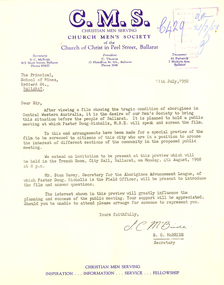 Federation University Historical Collection
Letter - Correspondence, S.C. McBride, Letter concerning the work of Pastor Doug Nicholls and the Aborigines Advancement League, 1958, 11/07/1958
... Field Officer. Early activities included lobbying for a referendum to change the Australian constitution to allow the Federal government to legislate on Aboriginal affairs, and an establishing a legal defence fund for Albert Namatjira, after he was charged with supplying liquor to an Aboriginal ward.[1] By 1967 it had moved to being fully controlled by Aboriginal people with Bill Onus as the first Aboriginal President....Field Officer. Early activities included lobbying for a referendum to change the Australian constitution to allow the Federal government to legislate on Aboriginal affairs, and an establishing a legal defence fund for Albert Namatjira, after he was charged with supplying liquor to an Aboriginal ward.[1] By 1967 it had moved to being fully controlled by Aboriginal people with Bill Onus as the first Aboriginal President. doug nicholls c. thomas aborigines ballarat town hall stan davey s.c. mcbride letterhead Typed letter on Church Men's Society (C.M.S.) letterhead. ...The Church Men's Society was a part of the Church of Christ in Peel Street, Ballarat. In 1958 the President was C. Thomas, and S.C. McBride was Secretary. The Aborigines Advancement League (also known as the Aboriginal Advancement League) claims to be the oldest Aboriginal organisation in Australia. It is primarily concerned with Aboriginal welfare issues and the preservation of Aboriginal culture and heritage, and is based in Melbourne. The League was established in 1957 as a response to an enquiry by retired magistrate, Charles McLean, into the circumstances of Aboriginal Victorians. McLean was critical of conditions in the Lake Tyers and Framlingham Aboriginal Reserves. McLean recommended that persons of mixed Aboriginal and European descent be removed from the reserves. The people of Lake Tyers objected to this, and the League was formed out of their campaign. The new League drew from two already existing organisations, the Australian Aborigines League, established 1934 and the Save the Aborigines Committee, which had been established in 1955 as a response to the Warburton Ranges crisis. Founding President of the League was Gordon Bryant, with Doris Blackburn as Deputy President, Stan Davey as Secretary and Douglas Nicholls as Field Officer. Early activities included lobbying for a referendum to change the Australian constitution to allow the Federal government to legislate on Aboriginal affairs, and an establishing a legal defence fund for Albert Namatjira, after he was charged with supplying liquor to an Aboriginal ward.[1] By 1967 it had moved to being fully controlled by Aboriginal people with Bill Onus as the first Aboriginal President.Typed letter on Church Men's Society (C.M.S.) letterhead. The letter concerns a film 'showing the tragic condition of aborigines in Central Western Australia ...' The C.M.S. (Ballarat) planned to hold a public meeting in Ballarat at which Pastor Doug Nicholls, M.B.E. will speak and screen the film. doug nicholls, c. thomas, aborigines, ballarat town hall, stan davey, s.c. mcbride, letterhead -
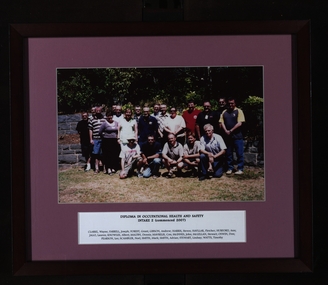 Federation University Historical Collection
Photograph - Photograph - Colour, Diploma in Occupational Health and Safety, Intake 2, 2007, 2007
... field of OHS management. Federation University VIOSH Australia students are safety managers, senior advisors and experienced OHS professionals. They come from all over Australia and industry. Students are taught active research and enquiry; rather than textbook learning and a one-size fits all approach. VIOSH accepts people into the Graduate Diploma of Occupational Hazard Management who have no undergraduate degree – on the basis of extensive work experience and knowledge. viosh viosh australia victorian institute of occupational safety and health wayne clarke joseph farrell grant forest andrew gibson steven harris fletcher hayllar anne hurford lauren jago albert knowles dennis maliby con mavrelis john mcinnes stuart mclellan don oswin les pearson noel scambler mark smithy adrian smith lindsay stewart timothy watts Framer - Creative Framing Gallery brown and gold framed photograph with title and names of students underneath. ...Victorian Institute of Occupational of Safety and Health (VIOSH) Australia is the Asia-Pacific centre for teaching and research in occupational health and safety (OHS) and is known as one of Australia's leaders in the field. VIOSH has a global reputation for its innovative approach within the field of OHS management. Federation University VIOSH Australia students are safety managers, senior advisors and experienced OHS professionals. They come from all over Australia and industry. Students are taught active research and enquiry; rather than textbook learning and a one-size fits all approach. VIOSH accepts people into the Graduate Diploma of Occupational Hazard Management who have no undergraduate degree – on the basis of extensive work experience and knowledge.brown and gold framed photograph with title and names of students underneath.Framer - Creative Framing Galleryviosh, viosh australia, victorian institute of occupational safety and health, wayne clarke, joseph farrell, grant forest, andrew gibson, steven harris, fletcher hayllar, anne hurford, lauren jago, albert knowles, dennis maliby, con mavrelis, john mcinnes, stuart mclellan, don oswin, les pearson, noel scambler, mark smithy, adrian smith, lindsay stewart, timothy watts -
 Ringwood and District Historical Society
Pamphlet, Ringwood Secondary College - Gratitude Walks- Education Week 1999
... Lavis Pavilion (Albert George Lavis - Mayor and Councillor), Russell Lucas Oval (situated at Jubilee Park), Mahon Reserve (Hugh and his son Arthur Mahon - apple and Cherry orchardists), H.E. Parker Reserve (Henry Ernest Parker), Herman Pump Reserve, F.J.C. Rogers Reserve (Fred), Staley Gardens (named after Andrew Gray Staley), Kevin Pratt Pavilion (at Jubilee Park), A.C. Robertson Field...Lavis Pavilion (Albert George Lavis - Mayor and Councillor), Russell Lucas Oval (situated at Jubilee Park), Mahon Reserve (Hugh and his son Arthur Mahon - apple and Cherry orchardists), H.E. Parker Reserve (Henry Ernest Parker), Herman Pump Reserve, F.J.C. Rogers Reserve (Fred), Staley Gardens (named after Andrew Gray Staley), Kevin Pratt Pavilion (at Jubilee Park), A.C. Robertson Field ...Red, Pink, Green and White coloured multi-fold gloss publication- six small pages and one large image on the rear of all of the small pagesThis publication deals with a Ringwood Secondary College Walkathon, in which they sought support for their Building Fund Appeal, and also wished to show their gratitude for the contribution made to the Ringwood community by leaders of the past. The notable locations and people written about are arranged alphabetically. They are - Dexters Bush (Mick and Liz Dexter), Harpers Bush (John and Joan Harper), A.F.B. Long Reserve (Arthur Frederick Burbridge Long), McAlpin Reserve (George McAlpin and family Reserve), Fred Dwerryhouse Pool, B.J.Hubbard (Ben) Reserve, Loughies Bushland (named after Anthony Loughnan- early settler), Douglas Maggs Reserve, Greenwood Park (named after Edmund Wilson Greenwood (local MLA from 1927 to 1929), A.G. Lavis Pavilion (Albert George Lavis - Mayor and Councillor), Russell Lucas Oval (situated at Jubilee Park), Mahon Reserve (Hugh and his son Arthur Mahon - apple and Cherry orchardists), H.E. Parker Reserve (Henry Ernest Parker), Herman Pump Reserve, F.J.C. Rogers Reserve (Fred), Staley Gardens (named after Andrew Gray Staley), Kevin Pratt Pavilion (at Jubilee Park), A.C. Robertson Field (Alan Robertson - Proclamation Park), R.O. Spencer Pavilion (Reginald Owen Spencer), Peter Vergers Reserve.-------- The rear of this pamphlet is largely a map of the locations of the people honoured on the Gratitude Walks. -
Eltham District Historical Society Inc
Document - Folder, Spence, Maxwell
... field...Ben Barnett...Bill Slater...Colin Pugh...Clifton Pugh...St Helena...Karingal Drive St Helena...Ted Walker...Weidligh...Roslind Miller...Graham Kennedy...Jimmy Beale...Leach Street St Helena...Plenty River...St Faith's Chrch of England Briar Hil...St Andrew's Church Briar Hill...St Francis Xavier Catholic Church Briar Hill...Herbie Wilson...Victoria Coffee Palace...Eltham Higher Elementary School...Kate McKenie...Diamond Creek...Frank Phillips...Wingrove Park...Bremner's Park...Orrs Dam...Pecks Dam...Wal Scriver...Montmorency Tennis Club...Albert...Maxwell Spence Briar Hill Montmorency Fernside Avenue Briar Hill Montmorency State School Were Street Montmorency Briar Hill State School Stan Stainsby Hee Alcock Ned Haughton Australian Paper Mills Lovitool Tomasetti baker of Greensborough Gladstone Avenue Briar Hill Beaconsfield Road Briar Hill Williams Road Briar Hill Ellis family Hillcrest playfield field Ben Barnett Bill Slater Colin Pugh Clifton Pugh St Helena Karingal Drive St Helena Ted Walker Weidligh Roslind Miller Graham Kennedy Jimmy Beale Leach Street St Helena Plenty River St Faith's Chrch of England Briar Hil St Andrew's Church Briar Hill St Francis Xavier Catholic Church Briar Hill Herbie Wilson Victoria Coffee Palace Eltham Higher Elementary School Kate McKenie Diamond Creek Frank Phillips Wingrove Park Bremner's Park Orrs Dam Pecks Dam Wal Scriver Montmorency Tennis Club Albert Price Hill Fred Balaam Greensborough RSL Joe Poulter Fairfield RSL Youth Club Bristcoes Hardware Merchants Montmorency RSL Jack Shallard Ted Weiland Petrie Park South Riding Ratepaers and Tenants Association Dr Keith Alexander Fred Durham Eltham Shire Council Meruka Park Max Watson Eric Harmer Spence Park Montmorency Mountain View Railway Bridge Montmrency Pre School Lower Plenty Fire Brigade Eltham High School Newspaper clippings, A4 photocopies, etc Spence, Maxwell Document Folder ...Max Spence came to Briar Hill as a child in 1923, and lived in the area for many years. Contents Typed and manuscript notes (2pp missing from MS), undated but ?c1990. "Spence: My Briar Hill and Montmorency." Reminiscences of Maxwell Spence of Briar Hill and Montmorency from 1923. Manuscript notes, AGM 1991, "Max Spence". Newspaper clippings, A4 photocopies, etcmaxwell spence, briar hill, montmorency, fernside avenue briar hill, montmorency state school, were street montmorency, briar hill state school, stan stainsby, hee alcock, ned haughton, australian paper mills, lovitool, tomasetti baker of greensborough, gladstone avenue briar hill, beaconsfield road briar hill, williams road briar hill, ellis family, hillcrest playfield field, ben barnett, bill slater, colin pugh, clifton pugh, st helena, karingal drive st helena, ted walker, weidligh, roslind miller, graham kennedy, jimmy beale, leach street st helena, plenty river, st faith's chrch of england briar hil, st andrew's church briar hill, st francis xavier catholic church briar hill, herbie wilson, victoria coffee palace, eltham higher elementary school, kate mckenie, diamond creek, frank phillips, wingrove park, bremner's park, orrs dam, pecks dam, wal scriver, montmorency tennis club, albert price hill, fred balaam, greensborough rsl, joe poulter, fairfield rsl youth club, bristcoes hardware merchants, montmorency rsl, jack shallard, ted weiland, petrie park, south riding ratepaers and tenants association, dr keith alexander, fred durham, eltham shire council, meruka park, max watson, eric harmer, spence park montmorency, mountain view railway bridge, montmrency pre school, lower plenty fire brigade, eltham high school -
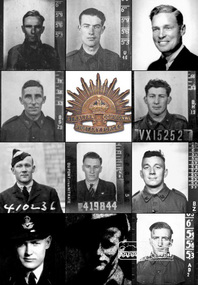 Eltham District Historical Society Inc
Document (Item) - Article, The Eltham Roll of Honour: Second World War, 9 Aug 2020
... albert feldbauer...valerie (feldbauer) waller...violet amelda (teagle) feldbauer...vx51733...247 ‘china-british’ squadron...caithness...cloppenburg...donlad hemphill rutter...essen...gloucester...hanover war cemetery...hanover-limmer british military cemetery...holten-lochem...oldenburg...r.a.f. castletown...r.a.f. station lealing...stoppenburg...typhoon ib jp443...typhoon ib sw526...15th australian infantry brigade...1940 cup...3rd division...57th/60th bn...best and fairest...bougainville island...buin road...mary field...Lt., 410262 (KIA 5 Apr 1945, Varrelbusch, Germany) FIELD, Kevin Francis, Pte., VX144763 (KIA 28 Jun 1945, Bougainville, PNG) BUTHERWAY, Jack Herbert, Pte, VX37645 (DOD 8 Jul 1945, Borneo) eltham war memorial roll of honour second world war eltham eltham roll of honour shire of eltham 2/4 field workshop 22 independent brigade group ordnance workshop a.i.f. australian army ordnance corps australian corps of electrical and mechanical engineers changi falkiner street florence mary butherway jack herbert butherway prisoner of war (pow) ranau number 1 jungle camp sandakan death march singapore thomas james butherway vx37645 2/2 field company 6th division abington annie castledine arthur frederick castledine george ernest castledine greece jean simonson lower plenty old eltham road royal australian engineers vx10044 sapper g. e. castledine 2/23 bn derril gahan house main road rats of tobruk studley manston gahan tobruk vx48379 3 squadron r.a.a.f. aboukir alamein memorial beulah alice (simpson) rutter bir el gubbi broken hill aero club david rutter egypt hubert rutter libya yarra braes 2/21 bn 23rd australian infrantry brigade 8th division alfred charles clerke ambon island battle of ambon bidgeland park estate inga caroline (nicholls) clerke inga mary nicholls laha airfield nora ann clerke rose matilda clerke vx23112 william charles clerke 2/14 bn 2/16 bn 21st brigade 7th division cuthbert douglas dunlop gona gona war cemetery henry street janet dunlop kokoda track new guinea palestine papua new guinea port moresby (bomana) war cemetery reuben cuthbert dunlop syria vx15252 10 operational training unit 410236 ada (key) ingram berkshire bomber command england group no. 91 john ingram lester neil ingram longworth n.1374 r.a.a.f. r.a.f. r.a.f. abington research (vic.) whitley v bomber 419844 514 bomber squadron emmerich germany gordon stanley mclean ji-g2 kleve lancaster lm735 lucy mclean mount pleasant road r.a.f. waterbeach reichswald forest war cemetery stanley mclean 2/10 ordnance workshops albert feldbauer eltham cricket association eltham girls club frank street henry feldbauer jessie margarette feldbauer june feldbauer ken ingram margaret (feldbauer) ingram montmorency imperials research cricket club research state school sandakan number 1 camp sandakan number 2 camp theodore albert feldbauer valerie (feldbauer) waller violet amelda (teagle) feldbauer vx51733 247 ‘china-british’ squadron caithness cloppenburg donlad hemphill rutter essen gloucester hanover war cemetery hanover-limmer british military cemetery holten-lochem oldenburg r.a.f. castletown r.a.f. station lealing stoppenburg typhoon ib jp443 typhoon ib sw526 15th australian infantry brigade 1940 cup 3rd division 57th/60th bn best and fairest bougainville island buin road mary field mayona road mivo river mobiai river montmorency vx144763 william field Word/PDF document file The Eltham Roll of Honour: Second World War Document Article ...Information regarding the circumstances of the eleven men of the Shire of Eltham who died serving their country in the Second World War and for whom the Eltham War Memorial was dedicated. Their names are listed on the Eltham Roll of Honour in order of rank. The image portrayed shows the eleven men (left to right, top to bottom) by date of fatality: CASTLEDINE, George Ernest, Spr., VX10044 (KIA 18 Apr 1941, Greece) GAHAN, Studley Manston, Capt., VX48379 (KIA 17 May 1941, Tobruk, Libya) RUTTER, David, Flying Off., 833 (400833) (KIA 9 Dec 1941, Bir El Gubbi, Libya) CLERKE, Alfred Charles, Cpl., VX23112 (KIA 2 Feb 1942, Laha, Ambon Island) DUNLOP, Cuthbert Douglas, Sgt., VX15252 (KIA 22 Nov 1942, Gona, New Guinea) INGRAM, Lester Neil, Flt. Sgt., 410236 (DOD 22 Apr 1943, Longworth, England) McLEAN, Stanley, Flt. Sgt., 419844 (KIA 7 Oct 1944, Emmerich, Germany) FELDBAUER, Theodore, Sgt., VX51733 (DOD 27 Mar 1945, Borneo) RUTTER, Donald Hemphill, Flt. Lt., 410262 (KIA 5 Apr 1945, Varrelbusch, Germany) FIELD, Kevin Francis, Pte., VX144763 (KIA 28 Jun 1945, Bougainville, PNG) BUTHERWAY, Jack Herbert, Pte, VX37645 (DOD 8 Jul 1945, Borneo)eltham war memorial, roll of honour, second world war, eltham, eltham roll of honour, shire of eltham, 2/4 field workshop, 22 independent brigade group ordnance workshop, a.i.f., australian army ordnance corps, australian corps of electrical and mechanical engineers, changi, falkiner street, florence mary butherway, jack herbert butherway, prisoner of war (pow), ranau number 1 jungle camp, sandakan death march, singapore, thomas james butherway, vx37645, 2/2 field company, 6th division, abington, annie castledine, arthur frederick castledine, george ernest castledine, greece, jean simonson, lower plenty, old eltham road, royal australian engineers, vx10044 sapper g. e. castledine, 2/23 bn, derril, gahan house, main road, rats of tobruk, studley manston gahan, tobruk, vx48379, 3 squadron r.a.a.f., aboukir, alamein memorial, beulah alice (simpson) rutter, bir el gubbi, broken hill aero club, david rutter, egypt, hubert rutter, libya, yarra braes, 2/21 bn, 23rd australian infrantry brigade, 8th division, alfred charles clerke, ambon island, battle of ambon, bidgeland park estate, inga caroline (nicholls) clerke, inga mary nicholls, laha airfield, nora ann clerke, rose matilda clerke, vx23112, william charles clerke, 2/14 bn, 2/16 bn, 21st brigade, 7th division, cuthbert douglas dunlop, gona, gona war cemetery, henry street, janet dunlop, kokoda track, new guinea, palestine, papua new guinea, port moresby (bomana) war cemetery, reuben cuthbert dunlop, syria, vx15252, 10 operational training unit, 410236, ada (key) ingram, berkshire, bomber command, england, group no. 91, john ingram, lester neil ingram, longworth, n.1374, r.a.a.f., r.a.f., r.a.f. abington, research (vic.), whitley v bomber, 419844, 514 bomber squadron, emmerich, germany, gordon stanley mclean, ji-g2, kleve, lancaster lm735, lucy mclean, mount pleasant road, r.a.f. waterbeach, reichswald forest war cemetery, stanley mclean, 2/10 ordnance workshops, albert feldbauer, eltham cricket association, eltham girls club, frank street, henry feldbauer, jessie margarette feldbauer, june feldbauer, ken ingram, margaret (feldbauer) ingram, montmorency imperials, research cricket club, research state school, sandakan number 1 camp, sandakan number 2 camp, theodore albert feldbauer, valerie (feldbauer) waller, violet amelda (teagle) feldbauer, vx51733, 247 ‘china-british’ squadron, caithness, cloppenburg, donlad hemphill rutter, essen, gloucester, hanover war cemetery, hanover-limmer british military cemetery, holten-lochem, oldenburg, r.a.f. castletown, r.a.f. station lealing, stoppenburg, typhoon ib jp443, typhoon ib sw526, 15th australian infantry brigade, 1940 cup, 3rd division, 57th/60th bn, best and fairest, bougainville island, buin road, mary field, mayona road, mivo river, mobiai river, montmorency, vx144763, william field -
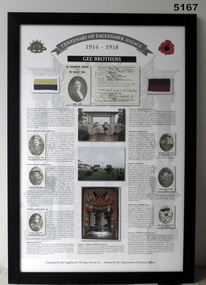 Bendigo Military Museum
Memorabilia - CENTENARY of EAGLEHAWK ANZACS, FRAMED, Eaglehawk Heritage Society, GEE BROTHERS, c2014
... No 3309, 6th Field Company Engineers, RTA. PRIVATE ALBERT (BERT) GEE. No 379, Gas poisoning, RTA. ...No 3309, 6th Field Company Engineers, RTA. PRIVATE ALBERT (BERT) GEE. No 379, Gas poisoning, RTA. ...PRIVATE WILLIAM JAMES POWER GEE. No 3112, 16th Battalion, RTA. DRIVER WALTER CHARLES GEE. No 3309, 6th Field Company Engineers, RTA. PRIVATE ALBERT (BERT) GEE. No 379, Gas poisoning, RTA. PRIVATE JOHN GEE, No 61149, 1 to 17 (Vic) Reinforcements, Died 20/10/1918. SERGEANT THOMAS GEE, No 858, 14th Infantry Battalion, 4th Pioneer Battalion, RTA. PRIVATE DAVID GEE, No 1090, 5th Infantry Battalion, 7th Battalion, Killed in Action 8/5/1915. CORPORAL FREDERICK GEE, No.762, 7th Inf Battalion, wounded on 26th April 1915, RTA 26th February 1916.Memorabilia - framed story of seven brothers, soldiers, in colour, using memorabilia of the soldiers and their lives. Printed on paper. Frame - black extruded plastic, glass front, cardboard backing.GEE BROTHERSframed item, anzacs, eaglehawk -
 Bendigo Military Museum
Manual - MAP READING, London War Office, 1958, 1973
... Passchendaele Barracks Trust Maps Air Photography Field Sketching PBT 69 98 99 1. 3 OCTU 3 TRG GP, Albert Rd, South Melbourne 3205. ...Medium sized manuals to enable officers and NCO's to make use of air photographs when ground reconnaissance is impossible. 1. Manual of map reading, Air Photo Reading and Field Sketching Part II. 2. Training Information Bulletin - map folding. 3. Map Reading AIDE-MEMOIRE 1973 ( x 7 booklets.)1. 3 OCTU 3 TRG GP, Albert Rd, South Melbourne 3205.passchendaele barracks trust, maps, air photography, field sketching, pbt 69 98 99 -
 Bendigo Military Museum
Photograph - FRAMED WW1 PHOTOGRAPH, Wayne Eels, C.2008/2009
... Albert Gilhooley No 890 38th Bn, KIA 31.8.1918. Refer Cat No 5074P for his photo. Refer Cat No. 1280 for Jack Grintons service details. Framed accessories Camera on the Somme 38th Bn WW1 Grinton Field Grave "Group 4: Portraiture and remembrance". ...The Grinton Collection. The original grave of Albert Gilhooley No 890 38th Bn, KIA 31.8.1918. Refer Cat No 5074P for his photo. Refer Cat No. 1280 for Jack Grintons service details. Photograph framed. Photograph - black and white photograph on paper depicting a field grave with a cross in a field of grass. Frame - Timber, light varnish finish, Perspex front, cardboard backing."Group 4: Portraiture and remembrance". "M. Field grave of a 38th Battalion soldier - Gilhooley".framed accessories, camera on the somme, 38th bn, ww1, grinton, field grave -
 Bendigo Military Museum
Book - HOLY BIBLE, Oxford University Press, C.1930’s
... Church of Christ)" The Nominal roll shows an Albert Searle Watson No VX1315 enlisted in the 2nd AIF on 26.10.1939 aged 27 years. At discharge from the Army on 4.3.1946 he was serving in 2/8th Field Coy with the rank of Sapper. ...Church of Christ)" The Nominal roll shows an Albert Searle Watson No VX1315 enlisted in the 2nd AIF on 26.10.1939 aged 27 years. At discharge from the Army on 4.3.1946 he was serving in 2/8th Field Coy with the rank of Sapper. books - religion religion - christian Bible “92 GINGELL ST CASTLEMAINE ALBERT SERLE WATSON A.I.F. ...Card within Bible from E. PARKINSON, 10 Brooke Crt. Bendigo (M: 041429946620) stating: "Bert WATSON was I believe despatch rider (motorbike) for Sir Thomas BLAMEY carried this bible through WWII. (Was a certificate from View St. Church of Christ)" The Nominal roll shows an Albert Searle Watson No VX1315 enlisted in the 2nd AIF on 26.10.1939 aged 27 years. At discharge from the Army on 4.3.1946 he was serving in 2/8th Field Coy with the rank of Sapper. Brown leather covered bible. Paper, printed and illustrated with colour plates. Page edges gilded; 1152 pages, gilded cross motif on cover.“92 GINGELL ST CASTLEMAINE ALBERT SERLE WATSON A.I.F. ARMY Number VX1315 2/2n FLD COY. R.A.E. & 80 L.A.D. Workshops All Coth Div. A.I.F.”books - religion, religion - christian, bible -
 Bendigo Military Museum
Photograph - PHOTOGRAPH & POSTCARDS, 2) 17/02/1916
... Albert BOLDISTON is on 2nd left front row. .2) Postcard photo, B&W, soldier in peak cap standing. Letter on rear in ink from J.M. BURKE. .3) Postcard photo, B&W featuring "King George" in a gun pit. .4) Postcard photo, B&W featuring "Australian heavy gun at work". .5) Postcard photo, B&W featuring "Australians loading a trench mortar". .6) Postcard photo, B&W showing a camouflaged troopship. .7) Postcard photo, B&W, soldier keeping a lookout in trench. .8) Postcard photo, B&W showing "An observation balloon". .9) Postcard photo, B&W showing wounded waiting for the field ambulance. .10) Postcard photo, B&W showing "Australian gunners at work". .11) Card, yellow with black print both sides relating to a 37th Batt. 1st & 2nd A.I.F reunion "Whippbang 1950"....Albert BOLDISTON is on 2nd left front row. .2) Postcard photo, B&W, soldier in peak cap standing. Letter on rear in ink from J.M. BURKE. .3) Postcard photo, B&W featuring "King George" in a gun pit. .4) Postcard photo, B&W featuring "Australian heavy gun at work". .5) Postcard photo, B&W featuring "Australians loading a trench mortar". .6) Postcard photo, B&W showing a camouflaged troopship. .7) Postcard photo, B&W, soldier keeping a lookout in trench. .8) Postcard photo, B&W showing "An observation balloon". .9) Postcard photo, B&W showing wounded waiting for the field ambulance. .10) Postcard photo, B&W showing "Australian gunners at work". .11) Card, yellow with black print both sides relating to a 37th Batt. 1st & 2nd A.I.F reunion "Whippbang 1950". ....1) Albert BOLDISTON, No. 747 enlisted 02/11/1916 ANZAC cyclist Batt. then 37th Bn. Discharged 29/01/1919. .2) Letter is to "Mr & Mrs DILLON from Pte. J. BURKE No. 3477 21st Batt. A.I.F", dated 17/02/1916. .3)-.10) These are "Daily mail official war pictures". Series 18. Albert Boldiston No 747 enlisted in the AIF in reinforcements 7 Anzac Cyclist Batt on 2.11.1916 age 24 years. Embarked for England 16.12.1916, transfer to 8th Batt 7.3.1917, embark for France 14.6.1917, transfer to 37th Batt 29.6.1917, hospital accidental injury (sprained ankle) 5.7.1917, rejoin unit 10.9.1917, hospital 18.11.1917 with Trench Feet, rejoin unit 13.6.1918, WIA 10.8.1918 GSW left wrist (through the joint) return to Australia 20.10.1918, discharged from the AIF 29.1.1919. Joseph Martin Burke No 3477 enlisted in the AIF in 8th reinforcements 21st Batt on 16.7.1915 age 21 years 4 months. Embark for Egypt 29.12.1915, transfer to 60th Batt 26.2.1916, then 57th 21.3.1916, then 13th FAB (Artillery) 27.3.1916, embark for France 16.6.1916, transfer to 25th FAB 9.7.1916 then 13th FAB 24.1.1917, hospital England while on leave 29.10.1918 with Influenza, return to Australia 21.12.1918 re the Influenza for discharge, discharged from the AIF 21.3.1919..1) Photo, B&W on cardboard, group of soldiers (20) seated outside building. Albert BOLDISTON is on 2nd left front row. .2) Postcard photo, B&W, soldier in peak cap standing. Letter on rear in ink from J.M. BURKE. .3) Postcard photo, B&W featuring "King George" in a gun pit. .4) Postcard photo, B&W featuring "Australian heavy gun at work". .5) Postcard photo, B&W featuring "Australians loading a trench mortar". .6) Postcard photo, B&W showing a camouflaged troopship. .7) Postcard photo, B&W, soldier keeping a lookout in trench. .8) Postcard photo, B&W showing "An observation balloon". .9) Postcard photo, B&W showing wounded waiting for the field ambulance. .10) Postcard photo, B&W showing "Australian gunners at work". .11) Card, yellow with black print both sides relating to a 37th Batt. 1st & 2nd A.I.F reunion "Whippbang 1950"..5) "Troopship in port".photography-photographs, military history - army
