
Showing 113 items matching "american combat"
-
 Bendigo Military Museum
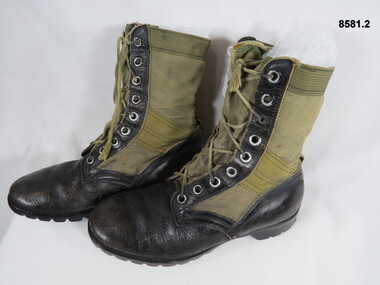
Footwear - BOOTS, COMBAT, AMERICAN, Unknown
... BOOTS, COMBAT, AMERICAN ......American Combat... American Military combat boots giving the appearance of having a black base colour and a top khaki appearance. ...Footwear BOOTS, COMBAT, AMERICAN ...American Military combat boots giving the appearance of having a black base colour and a top khaki appearance. These boots were worn by some Australian Vietnam Combat soldiers.“CIC 8W”passchendaele barracks trust, boots, american combat -
 National Vietnam Veterans Museum (NVVM)
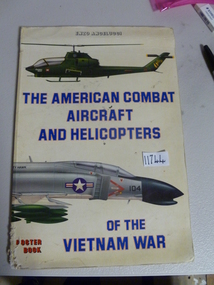
Poster, The American Combat Aircraft and Helicopters of the Vietnam War, 1986 (exact)
... The American Combat Aircraft and Helicopters of the Vietnam War...Book Vietnam War American Aircraft and Helicopters A book noting all aircraft & helicopters the US used during the Vietnam War (there is some damage to the lower spine) The American Combat Aircraft and Helicopters of the Vietnam War Poster Poster Bay Books Pty :Ltd ...A book noting all aircraft & helicopters the US used during the Vietnam War (there is some damage to the lower spine)book, vietnam war, american aircraft and helicopters -
 Moorabbin Air Museum
Book - American military aircraft, American Combat Planes
... American Combat Planes...American military aircraft The wars & the aircraft Army attack & light bombers Air force bombers Air force fighters Navy patrol aircraft Navy attack planes Navy fighters History & specifications of US combat aircraft from WW1 to late 1960s, circa 1968 American Combat Planes Book American military aircraft ...History & specifications of US combat aircraft from WW1 to late 1960s, circa 1968non-fictionHistory & specifications of US combat aircraft from WW1 to late 1960s, circa 1968the wars & the aircraft, army attack & light bombers, air force bombers, air force fighters, navy patrol aircraft, navy attack planes, navy fighters -
 Chiltern Athenaeum Trust
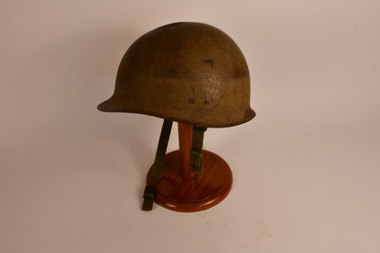
WW2 Combat Helmet (American Issue), Circa 1940-1945
... WW2 Combat Helmet (American Issue)...WW2 Combat Helmet (American Issue) ...Found in 1945 in the Pacific Islands and donated by Bill and Jan Cook. Once owned by Harry Dyson, Chiltern Resident Associated with WW2 American GI's.Manganese metal combat helmet used as head protection against mortar, grenades, bullets and shells. -
 National Vietnam Veterans Museum (NVVM)
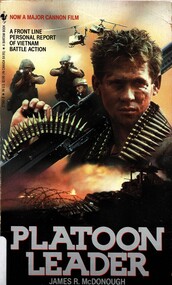
Book, McDonough, James R, Platoon Leader: A Front Line Personal Report of Vietnam Battle Action
... American...Jungle Combat...Army - Officers - Biography Vietnam War 1961-1975- Personal narratives American Jungle Combat In the green hell that was Vietnam, men grew up quickly. ...In the green hell that was Vietnam, men grew up quickly. And the young lieutenants, if they survived, grew up quicker than most.In the green hell that was Vietnam, men grew up quickly. And the young lieutenants, if they survived, grew up quicker than most.united states. army - officers - biography, vietnam war, 1961-1975- personal narratives, american, jungle combat -
 National Vietnam Veterans Museum (NVVM)
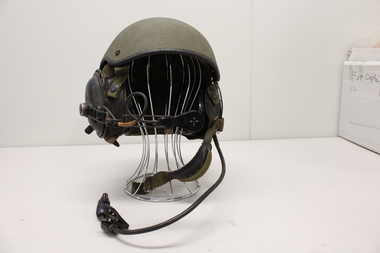
Headwear - Combat Vehicle Crewman's Helmet
... The American -made Combat Vehicle Crewman's helmet was worn by crewmembers requiring access to a vehicle's communication system. ...The American -made Combat Vehicle Crewman's helmet was worn by crewmembers requiring access to a vehicle's communication system. ...The American -made Combat Vehicle Crewman's helmet was worn by crewmembers requiring access to a vehicle's communication system. The helmet was intended to offer head protection inside the vehicle but it did provide some protection against shrapnel.Khaki coloured helmet with chinstrap. Lined inside with black padding, it has built in earphones with attachments and plug connection and a small mounted microphone.NIL GENTEX CARBON DALE P.A. 18407helmet, gentex, communication, crewman's helmet, us helmet -
 Shepparton RSL Sub Branch
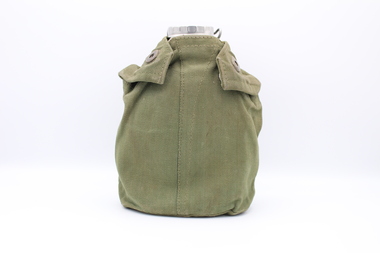
Water Bottle, c. 1940s
... combat experience proved that the metal ones were too loud when opening or closing. This bottle is recorded as being a United States-issued item so may have been collected during the interactions between Australian and American troops in Vietnam. ...combat experience proved that the metal ones were too loud when opening or closing. This bottle is recorded as being a United States-issued item so may have been collected during the interactions between Australian and American troops in Vietnam. ...According to the Australian War Memorial, these types of water bottles were used by the Australian Army during the Korean War, Malayan Confrontation and during the early to mid period of the Vietnam War. The metal lids were often replaced with a much quieter rubber lid, as combat experience proved that the metal ones were too loud when opening or closing. This bottle is recorded as being a United States-issued item so may have been collected during the interactions between Australian and American troops in Vietnam. It is also noted as being of Second World War era, which predates the AWM suggestion of Korea.Thin stainless steel water bottle, oval in shape with flat base. Around neck of bottle there is a brown cotton string and khaki woven cord with the press stud at end which would insert into the top of the lid. Bottle has twist-on lid with a hole in the top. Bottle dinted throughout. Canvas carry case is cylindrical in shape with oval-shaped flat base. Pieces topstitched with khaki thread. Back of case is woven khaki with a long pin threaded through the top, bent into inward facing hook shapes at end. Bottle is fastened into case via press studs. There is a subtle pocket in the interior of the case.Press studs read "LIFT/THE DOT"water bottle, equipment, united states, korea, malayan confrontation, vietnam war, 1960s -
4th/19th Prince of Wales's Light Horse Regiment Unit History Room
Flag, 173rd Airborne Brigade (US)
... America. In 1965 the spirit of this treaty appeared as 173d Airborne Brigade (Sep) a tri-national brigade. The only such tri-national fighting force formed during the Vietnam War. On deployment to South Vietnam in 1965, 1 Troop A Squadron, 4th/19th Prince of Wales's Light Horse Regiment was part of the US 173rd Airborne Brigade combat group. flag, 173rd airborne, south vietnam Flag, two colours divided vertically, hoist half mid blue, fly half red. ...173 AIRBORNE BRIGADE (SEPARATE) US ARMY 1 RAR BATTLE GROUP BIEN HOA 1965-1966 On May 5, 1965, the Brigade deployed to South Viet Nam as the first US Army ground combat unit in that war. Upon arrival, the 1st Battalion of the Royal Australian Regiment (1 RAR) and a battery from New Zealand (161Royal NZ Artillery) were attached to the Brigade -- making the 173d Airborne the only multi-national combat unit in the war. Initially headquartered in Bien Hoa, the Brigade operated in the four provinces around Saigon. (Xuan Loc, Long Khanh, Phuoc Long & Phuoc Tuy), but (in its roll as a "Fire Brigade") also went to the Central Highlands (Pleiku / Kontum) to fight Viet Cong. The 173d also conducted constant operations against the southern stronghold of the VC Main Force in the legendary Iron Triangle in War Zone D. The brigade was organized as a balanced airborne combat force consisting of two infantry battalions, an artillery battalion, a support battalion, an engineer company, a cavalry troop, an armour company, and a headquarters company. Upon activation, it became the first and only separate airborne brigade in the United States Army. This was the beginning of a long series of "Firsts" for the Brigade. On 5 May 1965, it became the first US Army ground combat unit committed to the war in South Vietnam, where further organizational changes were to take place. Australians attached to the Brigade were: 1st Battalion, of the Royal Australian Regiment (I RAR) and support troops of the 4/19th Prince of Wales Light Horse Regiment (1Troop), 105 Field Battery Royal Australian Artillery, 161 Field Battery Royal New Zealand Artillery, 3 Field Troop Royal Australian Engineers, 161 Reconnaissance Flight, Royal Australian Army Air Corps, 1st Australian Logistical Support Company. The Brigade's two infantry battalions, the First Battalion of the 503' Infantry (1/503`d) and the Second Battalion, of the 503`d Infantry (2/503`) and the attached Australians of 1 RAR constituted the infantrymen available to the Brigade. Their mission was to protect the Bien Hoa Air Base and to close with and destroy or capture the enemy. This was in fact the first operational ground force formed under the ANZUS Defence Treaty. ANZUS was a mutual defence treaty signed in 1951 between Australia, New Zealand and the United States of America. In 1965 the spirit of this treaty appeared as 173d Airborne Brigade (Sep) a tri-national brigade. The only such tri-national fighting force formed during the Vietnam War. On deployment to South Vietnam in 1965, 1 Troop A Squadron, 4th/19th Prince of Wales's Light Horse Regiment was part of the US 173rd Airborne Brigade combat group. Flag, two colours divided vertically, hoist half mid blue, fly half red. Badge of 173rd Airborne Brigade (730 x 490 mm) in centreflag, 173rd airborne, south vietnam -
 Monbulk RSL Sub Branch
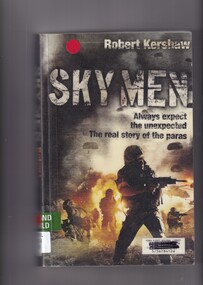
Book, Robert Kershaw, Sky men: The real story of the paras, 2010
... Dropping into the middle of enemy territory, these "Sky Men"- British, American, German, and Russian soldiers - engage in gruelling combat in the most dangerous conflict zones around the world. ...From the 1930s through WWII to Afghanistan today, from total war to counterinsurgency, this history unravels and defines the intangible qualities that differentiate the "Sky Men" from other soldiers Seventy years ago the Parachute Regiment was formed - the army's elite air assault force was tough, well-trained, and designed to fight hazardous operations behind enemy lines with little or no backup. Dropping into the middle of enemy territory, these "Sky Men"- British, American, German, and Russian soldiers - engage in gruelling combat in the most dangerous conflict zones around the world. Ex-Parachute Regiment officer Robert Kershaw reveals the history of these airborne forces and their role during the most dramatic battles of the 20th century. He finds out what drives a "Sky Man" to take these extraordinary risks, and what marks these sky warriors out from ordinary soldiers. How do military paratroopers conquer the fear of jumping from aircraft at low level, by night, and frequently under fire? Has the helicopter replaced the need for parachutists in the 21st Century? Has the increasing lethality of anti-aircraft weapons made the airborne option redundant? These issues are examined alongside the personal experiences of the Soviet "Locust Warriors," German Fallschirmjäger, British Red Devils, American "devils in baggy-pants," and Les Paras. Based on letters, diaries, and exclusive interviews with soldiers from around the world, this book is full of vivid personalities and nail-biting action.Index, bibliography, notes, ill (b/w), p.348.From the 1930s through WWII to Afghanistan today, from total war to counterinsurgency, this history unravels and defines the intangible qualities that differentiate the "Sky Men" from other soldiers Seventy years ago the Parachute Regiment was formed - the army's elite air assault force was tough, well-trained, and designed to fight hazardous operations behind enemy lines with little or no backup. Dropping into the middle of enemy territory, these "Sky Men"- British, American, German, and Russian soldiers - engage in gruelling combat in the most dangerous conflict zones around the world. Ex-Parachute Regiment officer Robert Kershaw reveals the history of these airborne forces and their role during the most dramatic battles of the 20th century. He finds out what drives a "Sky Man" to take these extraordinary risks, and what marks these sky warriors out from ordinary soldiers. How do military paratroopers conquer the fear of jumping from aircraft at low level, by night, and frequently under fire? Has the helicopter replaced the need for parachutists in the 21st Century? Has the increasing lethality of anti-aircraft weapons made the airborne option redundant? These issues are examined alongside the personal experiences of the Soviet "Locust Warriors," German Fallschirmjäger, British Red Devils, American "devils in baggy-pants," and Les Paras. Based on letters, diaries, and exclusive interviews with soldiers from around the world, this book is full of vivid personalities and nail-biting action.great britain - history - military, great britain - parachute regiment -
 Monbulk RSL Sub Branch
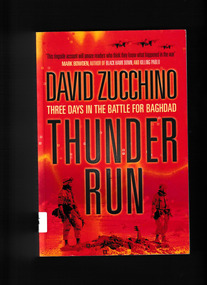
Book, : Atlantic Books, Thunder run : three days in the battle for Baghdad, 2004
... Thunder Run is the story of the surprise assault on Baghdad - one of the most decisive battles in American combat history - by the Spartan Brigade, the Second Brigade of the Third Infantry Division (Mechanized Notes, maps, p.325. ...In one of the boldest gambles in modern military history, just three battalions and fewer than a thousand men launched a violent thrust of tanks and Bradley Fighting Vehicles into the heart of a city of 5 million people and, in three bloody days of combat, ended the Iraqi war. Thunder Run is the story of the surprise assault on Baghdad - one of the most decisive battles in American combat history - by the Spartan Brigade, the Second Brigade of the Third Infantry Division (MechanizedNotes, maps, p.325.non-fictionIn one of the boldest gambles in modern military history, just three battalions and fewer than a thousand men launched a violent thrust of tanks and Bradley Fighting Vehicles into the heart of a city of 5 million people and, in three bloody days of combat, ended the Iraqi war. Thunder Run is the story of the surprise assault on Baghdad - one of the most decisive battles in American combat history - by the Spartan Brigade, the Second Brigade of the Third Infantry Division (Mechanizediraq war 2003, iraq war - us involvement -
 Monbulk RSL Sub Branch
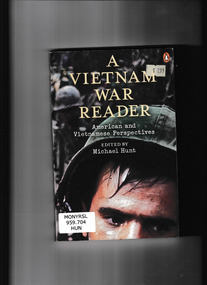
Book, University of North Carolina Press, A Vietnam War reader : a documentary history from American and Vietnamese perspectives, 2010
... The materials gathered here, from both the American and Vietnamese sides, remind readers that the conflict touched the lives of many people in a wide range of social and political situations and spanned a good deal more time than the decade of direct U.S. combat. ...An essential new resource for students and teachers of the Vietnam War, this concise collection of primary sources opens a valuable window on an extraordinarily complex conflict. The materials gathered here, from both the American and Vietnamese sides, remind readers that the conflict touched the lives of many people in a wide range of social and political situations and spanned a good deal more time than the decade of direct U.S. combat. Hunt brings together the views of the conflict's disparate players--from Communist leaders, Vietnamese peasants, Saigon loyalists, and North Vietnamese soldiersIndex, bibliography, p.223.non-fictionAn essential new resource for students and teachers of the Vietnam War, this concise collection of primary sources opens a valuable window on an extraordinarily complex conflict. The materials gathered here, from both the American and Vietnamese sides, remind readers that the conflict touched the lives of many people in a wide range of social and political situations and spanned a good deal more time than the decade of direct U.S. combat. Hunt brings together the views of the conflict's disparate players--from Communist leaders, Vietnamese peasants, Saigon loyalists, and North Vietnamese soldiersvietnam war 1961-1975 – history, vietnam war 1961-1975 - sources -
 Monbulk RSL Sub Branch
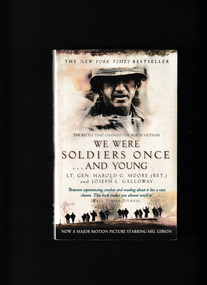
Book, Transworld et al, We were soldiers once -and young : Ia Drang : the battle that changed the war in Vietnam, 2002
... Americans faced what seemed to be certain destruction. How these men persevered - sacrificed themselves for their comrades and never gave up - makes a vivid portrait of war at its most inspiring and devastating. General Moore and Joe Galloway, the only journalist on the ground throughout the fighting, have interviewed hundreds of men who fought there, including the North Vietnamese commanders. The result is a story of unparalleled human interest. We Were Soldiers Once... and Young also brings the war back home with unforgettable stories of those who lost family members to combat ...In November 1965, some 450 men of the 1st Battalion, 7th Cavalry, under the command of Lt. Col. Hal Moore, were dropped by helicopter into a small clearing in the Ia Drang Valley. They were immediately surrounded by 2,000 North Vietnamese soldiers. Three days later, only two and half miles away, a sister battalion was chopped to pieces. Together, these actions at landing zones X-Ray and Albany constitute one of the most savage and significant battles of the Vietnam War. The Americans faced what seemed to be certain destruction. How these men persevered - sacrificed themselves for their comrades and never gave up - makes a vivid portrait of war at its most inspiring and devastating. General Moore and Joe Galloway, the only journalist on the ground throughout the fighting, have interviewed hundreds of men who fought there, including the North Vietnamese commanders. The result is a story of unparalleled human interest. We Were Soldiers Once... and Young also brings the war back home with unforgettable stories of those who lost family members to combat. This devastating account rises above the specific ordeal it chronicles to present a picture of men facing the ultimate challenge, dealing with it in ways they would have found unimaginable only a few hours earlier. It reveals to us, as rarely before, man's most heroic and horrendous endeavor. Collapse summaryIndex, bibliography, notes, ill, maps. p.483.non-fictionIn November 1965, some 450 men of the 1st Battalion, 7th Cavalry, under the command of Lt. Col. Hal Moore, were dropped by helicopter into a small clearing in the Ia Drang Valley. They were immediately surrounded by 2,000 North Vietnamese soldiers. Three days later, only two and half miles away, a sister battalion was chopped to pieces. Together, these actions at landing zones X-Ray and Albany constitute one of the most savage and significant battles of the Vietnam War. The Americans faced what seemed to be certain destruction. How these men persevered - sacrificed themselves for their comrades and never gave up - makes a vivid portrait of war at its most inspiring and devastating. General Moore and Joe Galloway, the only journalist on the ground throughout the fighting, have interviewed hundreds of men who fought there, including the North Vietnamese commanders. The result is a story of unparalleled human interest. We Were Soldiers Once... and Young also brings the war back home with unforgettable stories of those who lost family members to combat. This devastating account rises above the specific ordeal it chronicles to present a picture of men facing the ultimate challenge, dealing with it in ways they would have found unimaginable only a few hours earlier. It reveals to us, as rarely before, man's most heroic and horrendous endeavor. Collapse summary vietnam war 1961-1975 – us involvement, vietnam war 1961-1975 – battles – ia drang valley -
 Monbulk RSL Sub Branch
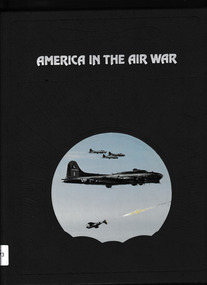
Book, Edward Jablonski, America in the air war, 1982
... combat-ready planes. No one could have imagined then that within the next four years the AAF would become the mighty weapon commemorated in the paintings reproduced on the following pages, or that it would have to scope to engage in what its commander, General Henry H. "Hap" Arnold, described as a "global mission." Nevertheless, by 1944 the AAF had grown into 16 separate air forces stationed around the world, and its 1,100 planes had grown to nearly 80,000. Index, bib, ill, p.171. America ...When the Japanese attacked Pearl Harbor on December 7, 1941, the Army Air Forces had only 1,100 combat-ready planes. No one could have imagined then that within the next four years the AAF would become the mighty weapon commemorated in the paintings reproduced on the following pages, or that it would have to scope to engage in what its commander, General Henry H. "Hap" Arnold, described as a "global mission." Nevertheless, by 1944 the AAF had grown into 16 separate air forces stationed around the world, and its 1,100 planes had grown to nearly 80,000.Index, bib, ill, p.171.non-fictionWhen the Japanese attacked Pearl Harbor on December 7, 1941, the Army Air Forces had only 1,100 combat-ready planes. No one could have imagined then that within the next four years the AAF would become the mighty weapon commemorated in the paintings reproduced on the following pages, or that it would have to scope to engage in what its commander, General Henry H. "Hap" Arnold, described as a "global mission." Nevertheless, by 1944 the AAF had grown into 16 separate air forces stationed around the world, and its 1,100 planes had grown to nearly 80,000. world war 1939-1945 - aerial operations - united states, united states air force - history - 1939-1945 -
 Monbulk RSL Sub Branch
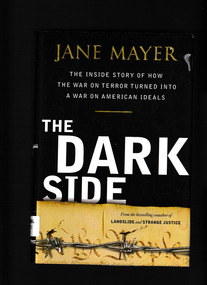
Book, Jane Mayer, The dark side : the inside story of how the War on Terror turned into a war on American ideals, 2008
... Radical decisions about how to combat terrorists and strengthen national security were made in a state of chaos and fear, but the key players, Vice President Cheney and his powerful, secretive adviser David Addington, used the crisis to further a long-held agenda to enhance presidential powers to a degree never known in U.S. history, and obliterate Constitutional protections that define the very essence of the American experiment. ...In the days immediately following September 11th, the most powerful people in the country were panic-stricken. Radical decisions about how to combat terrorists and strengthen national security were made in a state of chaos and fear, but the key players, Vice President Cheney and his powerful, secretive adviser David Addington, used the crisis to further a long-held agenda to enhance presidential powers to a degree never known in U.S. history, and obliterate Constitutional protections that define the very essence of the American experiment.Ill, index, bib, p.392.non-fictionIn the days immediately following September 11th, the most powerful people in the country were panic-stricken. Radical decisions about how to combat terrorists and strengthen national security were made in a state of chaos and fear, but the key players, Vice President Cheney and his powerful, secretive adviser David Addington, used the crisis to further a long-held agenda to enhance presidential powers to a degree never known in U.S. history, and obliterate Constitutional protections that define the very essence of the American experiment.september 2011 terrorist attacks, prisoners of war - abuse of - united states -
 National Vietnam Veterans Museum (NVVM)
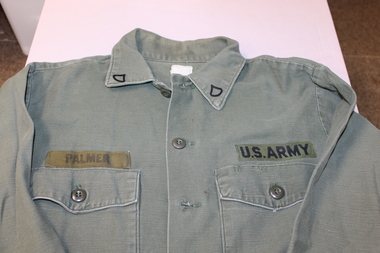
Uniform - Shirt, US Army
... Later, the Tropical Combat Uniform (TCU) made of a lighter poplin fabric and featuring angled pockets, became standard, although the OG-107 remained in use. US Army Shirt Palmer Vietnam US uniform American ...Early in the Vietnam war, US troops wore this heavy cotton OG-107 utility shirt. Later, the Tropical Combat Uniform (TCU) made of a lighter poplin fabric and featuring angled pockets, became standard, although the OG-107 remained in use. Olive drab long sleeved shirt with embroidery on the collar peaks. Button front with square, buttoned flap chest pockets. A cloth name is stitched above the right-hand pocket. US Army/Palmerus army, shirt, palmer, vietnam, us uniform, american uniform, united states army -
 National Vietnam Veterans Museum (NVVM)
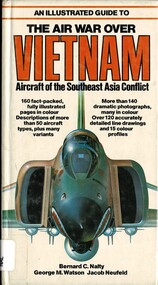
Book, Nalty, Bernard C., Watson, George M., Neufeld, Jacob, The Air War Over Vietnam: Aircraft of the Southeast Asia Conflict
... Vietnam American Aircraft and Helicopters The air war over vietnam involved a wide variety of operations- from air-to-air combat to massive and concentreated aerial bombardment. ...The air war over vietnam involved a wide variety of operations- from air-to-air combat to massive and concentreated aerial bombardment.The air war over vietnam involved a wide variety of operations- from air-to-air combat to massive and concentreated aerial bombardment.vietnam, american aircraft and helicopters -
 National Vietnam Veterans Museum (NVVM)
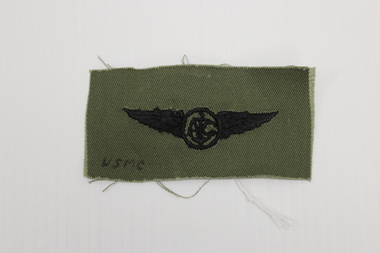
Textile - Patch: US Navy Aircrew
... combat uniforms. It was collected by WO2 Robert Palmer Matthew (34974) of the Royal Australian Army Ordnance Corps. USMC Badge - Embroidery patch marines US AIr Crew US Navy AIrcrew American military USA Navy Air US Marine U.S.M.C in blue pen bottom left corner Rectangular khaki textile patch with USMC insignia. ...This embroidered US military Air Crew Master wings patch was designed for wear on combat uniforms. It was collected by WO2 Robert Palmer Matthew (34974) of the Royal Australian Army Ordnance Corps.Rectangular khaki textile patch with USMC insignia. Black embroidery of a circle with wings each side, the letters A and C with an anchor between. The patch features an embroidered black wings insignia with an "AC" (Air Crew) in the center on an olive drab green fabric background.U.S.M.C in blue pen bottom left cornerusmc, badge - embroidery, patch, marines, us air crew, us navy aircrew, american military, usa navy air, us marine -
 National Vietnam Veterans Museum (NVVM)
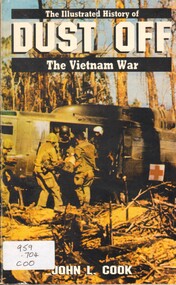
Book, Cook, John L, The Illustrated History of Dust Off: The Vietnam War
... Vietnam War - Military helicopters Vietnam War 1961-1975 - Participation American Huey "Dust Off" Their mason was to evacuate American combat causalities. Their Hueys were flying ambulances. ...Their mason was to evacuate American combat causalities. Their Hueys were flying ambulances. And their call sign DUST OFF was the most famous of the of the Vietnam WarTheir mason was to evacuate American combat causalities. Their Hueys were flying ambulances. And their call sign DUST OFF was the most famous of the of the Vietnam Warvietnam war - military helicopters, vietnam war, 1961-1975 - participation, american, huey, "dust off" -
 National Vietnam Veterans Museum (NVVM)
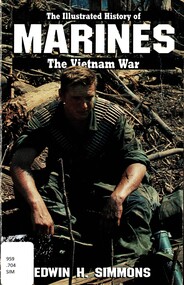
Book, Simmons, Edwin H, Marines: the Vietnam War, 1987
... combat troops into Vietnam and the last to leave. They bore an even greater proportion of the fighting in Vietnam that in any previous American War. ...The Marines were the first combat troops into Vietnam and the last to leave. They bore an even greater proportion of the fighting in Vietnam that in any previous American War.The Marines were the first combat troops into Vietnam and the last to leave. They bore an even greater proportion of the fighting in Vietnam that in any previous American War.1961-1975 -- united states - marines, battle of khe sanh, con thien -
 National Vietnam Veterans Museum (NVVM)
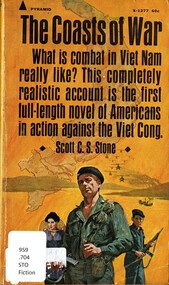
Book, Stone, Scottt C.S, The Coasts of War, 1966
... combat in Viet Nam really like? This completely realistic account is the first full-length novel of Americans in action agains the Viet Cong. ...What is combat in Viet Nam really like? This completely realistic account is the first full-length novel of Americans in action agains the Viet Cong.What is combat in Viet Nam really like? This completely realistic account is the first full-length novel of Americans in action agains the Viet Cong.vietnam war, 1961 - 1975 - veterans - fiction, mekong delta, viet cong, the province of kien hoa -
 National Vietnam Veterans Museum (NVVM)
Book, Lansdale, Edward Geary, In the Midst of Wars: An American's Mission to Southeast Asia. (Copy 1), 1972
... Military assistance American -- Vietnam Vietnam War 1961-1975 -- United States Battalion Combat Team Barrio United Defense Corps Operation Brotherhood When a man leaves home, he sometimes travels more that mere physical distance. ...When a man leaves home, he sometimes travels more that mere physical distance.When a man leaves home, he sometimes travels more that mere physical distance. military assistance, american -- vietnam, vietnam war, 1961-1975 -- united states, battalion combat team, barrio united defense corps, operation brotherhood -
 National Vietnam Veterans Museum (NVVM)
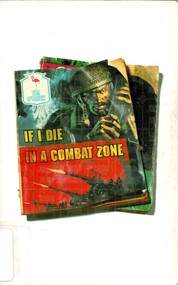
Book, O'Brien, Tim, If I die in a combat zone (Copy 3), 1973
... Vietnam War 1961-1975 - Personal narratives American A work of passion and protest. One of the few good things to come out of the Vietnam War If I die in a combat zone (Copy 3) Book O'Brien, Tim ...A work of passion and protest. One of the few good things to come out of the Vietnam WarA work of passion and protest. One of the few good things to come out of the Vietnam Warvietnam war, 1961-1975 - personal narratives, american -
 National Vietnam Veterans Museum (NVVM)
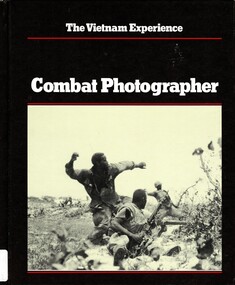
Book, Mills, Nick, The Vietnam Experience: Combat Photographer (Copy 3)
... America's longest war. It was also the most photgraphed. The Vietnam Experience: Combat Photographer (Copy 3) Book Mills, Nick ...Not only was Vietnam America's longest war. It was also the most photgraphed.Not only was Vietnam America's longest war. It was also the most photgraphed.vietnam war - 1961-1975, war photographers -
 National Vietnam Veterans Museum (NVVM)
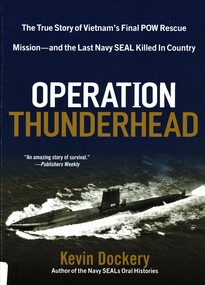
Book, Dockery, Kevin, Operation Thunderhead: The True Story of Vietnam's Final POW Rescue Mission - and the Last Navy Seal Killed in Country, 2008
... Navy Seals Operation Thunderbird POWs Son Tay Raid As the Vietnam War ground to an end, American forces were being withdrawn from combat duty. But some were still fighting for their lives: the prisioners of war. ...As the Vietnam War ground to an end, American forces were being withdrawn from combat duty. But some were still fighting for their lives: the prisioners of war. There were two operations lauched to rescue the POWs. One - the legendary Son Tay Raid - was revealed to the public. The other was classified as Top Secret. This is the incredible true story of that almost-forgotten mission..As the Vietnam War ground to an end, American forces were being withdrawn from combat duty. But some were still fighting for their lives: the prisioners of war. There were two operations lauched to rescue the POWs. One - the legendary Son Tay Raid - was revealed to the public. The other was classified as Top Secret. This is the incredible true story of that almost-forgotten mission.. 1961-1975 - prisoners and prisons, north vietnamese, prisoners of war - united states, vietnam war - 1961-1975 - search and rescue operations, u.s. navy seals, operation thunderbird, pows, son tay raid -
 National Vietnam Veterans Museum (NVVM)
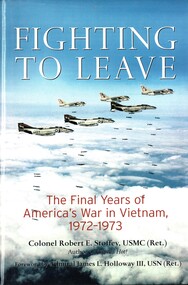
Book, Stoffey, Robert E., Colonel, Fighting to Leave: The Final Years of America's War in Vietnam, 1972-1973, 2008
... American NVA Fall of Quang Tri City Bat 21 Redeye Missile Operation Linebacker Hue City Operation End Sweep Operation Homecoming Col. Robert E. Stoffey Fighting to Leave covers the Vietnam War during 1972-1973, the tumultuouse final years of U.S. involvement, as experienced by Coloel Robert E. Stoffey, a Marine Corps aviator who served three combats ...Fighting to Leave covers the Vietnam War during 1972-1973, the tumultuouse final years of U.S. involvement, as experienced by Coloel Robert E. Stoffey, a Marine Corps aviator who served three combats in Vietnam.Fighting to Leave covers the Vietnam War during 1972-1973, the tumultuouse final years of U.S. involvement, as experienced by Coloel Robert E. Stoffey, a Marine Corps aviator who served three combats in Vietnam. 1961-1975 - naval operations, 1961-1975 - aerial operations, vietnam war, 1961 - 1975, personal narratives, american, nva, fall of quang tri city, bat 21, redeye missile, operation linebacker, hue city, operation end sweep, operation homecoming, col. robert e. stoffey -
 National Vietnam Veterans Museum (NVVM)
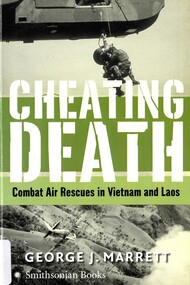
Book, Marrett, George J, Cheating Death: Combat Air Rescues in Vietnam and Laos, 2006
... American So that others may live - that was the pilots' creed. They flew low and slow, at treetop level, at night, on monsoons, amd in point blank range of enemy guns and missiles. Cheating Death: Combat ...So that others may live - that was the pilots' creed. They flew low and slow, at treetop level, at night, on monsoons, amd in point blank range of enemy guns and missiles.So that others may live - that was the pilots' creed. They flew low and slow, at treetop level, at night, on monsoons, amd in point blank range of enemy guns and missiles. 1961-1975 - search and rescue operations - vietnam, vietnamese conflict , 1961-1975 - search and rescue operations - laos, 1961-1975 - aerial operations - american -
 National Vietnam Veterans Museum (NVVM)
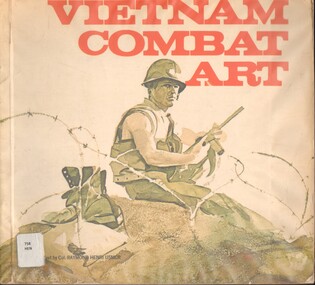
Book, Henri, Raymond, Vietnam Combat Art
... . - Art collections Vietnam War 1961-1975 - Art and the war Since the days of Valley Forge, artists have witnessed and documented the annals of Americans at war. Vietnam Combat Art. Book Book Henri, Raymond ...Since the days of Valley Forge, artists have witnessed and documented the annals of Americans at war.Since the days of Valley Forge, artists have witnessed and documented the annals of Americans at war.united states. marine corps. - art collections, vietnam war, 1961-1975 - art and the war -
National Vietnam Veterans Museum (NVVM)
Book, Lost in Translation: Vietnam - a Combat Advisor's story, 2003
... Qua^n l uc -- History -- Vietnamese Conflict 1961-1975 Vietnam War 1961-1975 -- Aerial operations American Military assistance American -- Vietnam (Republic) Lost in Translation: Vietnam - a Combat Advisor's story. ...vietnam (republic). qua^n l uc -- history -- vietnamese conflict, 1961-1975, vietnam war, 1961-1975 -- aerial operations, american, military assistance, american -- vietnam (republic) -
 National Vietnam Veterans Museum (NVVM)
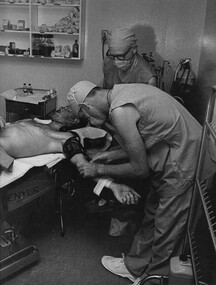
Photograph, Gibbons, Denis, Prepared For Surgery
... combat zones before being flown out in late November 1970 after sustaining injuries. The images held within the National Vietnam Veterans Museum make up the Gibbons Collection. Photograph Cpl Alex (Chuck) Berry 1st Australian Field Hospital Vung Tau Gibbons Collection Catalogue American Soldier Anaeshetists Helicopter pilots -- United States. ...Denis Gibbons (1937 – 2011) Trained with the Australian Army, before travelling to Vietnam in January 1966, Denis stayed with the 1st Australian Task Force in Nui Dat working as a photographer. For almost five years Gibbons toured with nine Australian infantry battalions, posting compelling war images from within many combat zones before being flown out in late November 1970 after sustaining injuries. The images held within the National Vietnam Veterans Museum make up the Gibbons Collection. A black and white photograph of Cpl Alex (Chuck) Berry, while the Anaeshetists looks on, in the operating theatre at 1st Australian Field Hospital, Vung Tau, South Vietnam, inserts a needle into the arm of a badly burned American helicopter pilot as he is prepared for surgeryphotograph, cpl alex (chuck) berry, 1st australian field hospital, vung tau, gibbons collection catalogue, american soldier, anaeshetists, helicopter pilots -- united states., surgery, denis gibbons -
 National Vietnam Veterans Museum (NVVM)
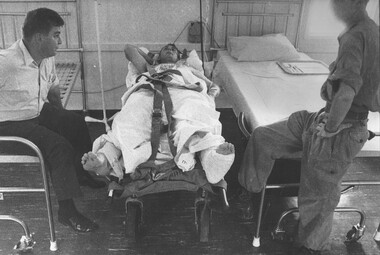
Photograph, Gibbons, Denis, Wounded War Correspondent
... combat zones before being flown out in late November 1970 after sustaining injuries. The images held within the National Vietnam Veterans Museum make up the Gibbons Collection. Photograph 1st Australian Field Hospital Horst Faas American ...Denis Gibbons (1937 – 2011) Trained with the Australian Army, before travelling to Vietnam in January 1966, Denis stayed with the 1st Australian Task Force in Nui Dat working as a photographer. For almost five years Gibbons toured with nine Australian infantry battalions, posting compelling war images from within many combat zones before being flown out in late November 1970 after sustaining injuries. The images held within the National Vietnam Veterans Museum make up the Gibbons Collection. A black and white photograph of Horst Faas, Bureau Chief at American Associated Press visits the 1st Australian Field Hospital, Vung Tau, South vietnam, to farewell one of his war correspondents Graham McInerny from Adelaide, South Australia. McInerny had been severly wounded in the legs.photograph, 1st australian field hospital, horst faas, american associated press, gibbons collection catalogue, bureau chief, vung tau, graham mcinerny, war correspondents - united states, war correspondents - australia, wounded serviceman, denis gibbons
