
Showing 341 items matching "ann street"
-
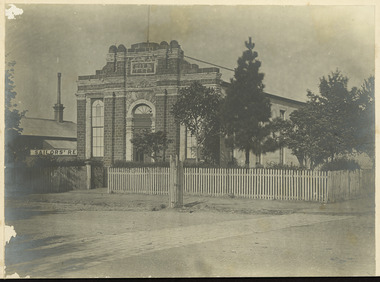 Mission to Seafarers Victoria
Photograph - Photograph, Sepia, Andrew Rider, c. 1885
... ...ann street...Typed sheet attached to verso: No. 15: The Sailor's Rest, Ann Street, Williamstown, about 1885. Written on verso: Photograph - Andrew Rider. ...Photograph of the first Institute locales in Williamstown. williamstown ann street sailors' rest seamen's mission andrew rider (1821-1903) wesleyan church Typed sheet attached to verso: No. 15: The Sailor's Rest, Ann Street, Williamstown, about 1885. ...This Wesleyan Chapel was used as the first Sailor's Rest in Williamstown in 1875. Photograph of the first Institute locales in Williamstown.View looking across street to a brick building with arched doorway on a corner block. A sign on the left reads: Sailors' Re[st].Typed sheet attached to verso: No. 15: The Sailor's Rest, Ann Street, Williamstown, about 1885. Written on verso: Photograph - Andrew Rider. Written on verso: Sailors' Rest, Ann St., Williamtown, 1880's.williamstown, ann street, sailors' rest, seamen's mission, andrew rider (1821-1903), wesleyan church -
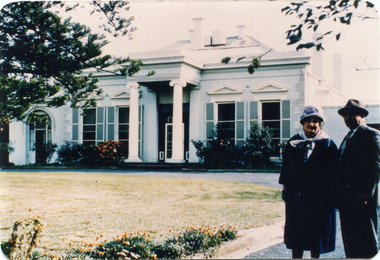 City of Moorabbin Historical Society (Operating the Box Cottage Museum)
Photograph, Black & White, 'Oak Bank' later 'Whitehouse' Ann St. McKinnon c1920, c1960
... oakbank house mckinnon, whitehouse mckinnon, ann street general hospital, moorabbin community hospital, monash hospital clayton, smith robert, lees seedling growers ltd. thomas street mckinnon,mith j l; smith mary ann, stanley helen, smith vic, chaff cutter, horse drawn carts, toll gates brighton, motor cars 1900, steam engines, early settlers, bentleigh, mckinnon, parish of moorabbin, city of moorabbin, county of bourke, moorabbin roads board, shire of moorabbin, henry dendy's special survey 1841, were j.b.; bent thomas, o'shannassy john, king richard, charman stephen, highett william, ormond francis, maynard dennis, market gardeners, vineyards, orchards...'Oak Bank ' , in Ann Street McKinnon, was originally owned by Mr Robert Smith. ...'Oak Bank ' , in Ann Street McKinnon, was originally owned by Mr Robert Smith. ...'Oak Bank ' , in Ann Street McKinnon, was originally owned by Mr Robert Smith. The house was later renamed 'The Whitehouse' and was still in use as a General Hospital in the 1950's, known as the Ann Street Hospital.. This small hospital handled some Surgery, Midwifery and general Medical cases from the fast growing Bentleigh / McKinnon area. As time progressed the Hospital became too small, and was unable to meet new medical standards When Moorabbin Community Hospital opened c1974 in Centre Road East Bentleigh, the Ann St Hospital closed. The Moorabbin Hospital is now a campus of Monash Medical Centre Clayton. 'The Whitehouse' was used as a general Hospital for the residents of McKinnon, Bentleigh, and Ormond for many years during the 20thC.Colour photograph showing Mrs John Marriott ( nee Ann Smith) , her son Fred Marriott standing outside 'The Whitehouse' undated ? c1960Back ; Handwritten informationoakbank house mckinnon, whitehouse mckinnon, ann street general hospital, moorabbin community hospital, monash hospital clayton, smith robert, lees seedling growers ltd. thomas street mckinnon,mith j l; smith mary ann, stanley helen, smith vic, chaff cutter, horse drawn carts, toll gates brighton, motor cars 1900, steam engines, early settlers, bentleigh, mckinnon, parish of moorabbin, city of moorabbin, county of bourke, moorabbin roads board, shire of moorabbin, henry dendy's special survey 1841, were j.b.; bent thomas, o'shannassy john, king richard, charman stephen, highett william, ormond francis, maynard dennis, market gardeners, vineyards, orchards -
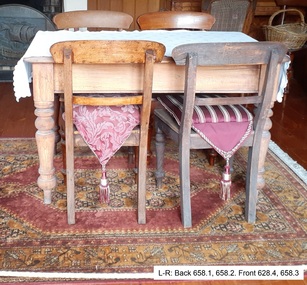 Flagstaff Hill Maritime Museum and Village
Furniture - Set of Chairs, ca. 1949
... ...ann street williamstown...The Australian colonial wooden chairs date to the late 1880s and are most likely to have been purchased for use in the Sailors’ Rest when it moved into Ann Street, Williamstown, around the 1880s. ...The Australian colonial wooden chairs date to the late 1880s and are most likely to have been purchased for use in the Sailors’ Rest when it moved into Ann Street, Williamstown, around the 1880s. ...This set of four dining chairs was part of the original furnishings of the St Nicholas' Mission to Seamen's Church at 139 Nelson Place, Williamstown, Victoria. The chairs were provided by the Lightkeepers' Auxiliary in 1949, for the use of men in the hall. The Australian colonial wooden chairs date to the late 1880s and are most likely to have been purchased for use in the Sailors’ Rest when it moved into Ann Street, Williamstown, around the 1880s. THE MISSIONS TO SEAMEN (Brief History: for more, see our Reg. No. 611, Set of Pews) The Missions to Seamen, an Anglican charity, has served seafarers of the world since 1856 in Great Britain. Its symbol is a Flying Angel, inspired by a Bible verse. Today, there are centres in over 200 ports worldwide where seamen of all backgrounds are offered a warm welcome and provided with a wide range of facilities. In Victoria, the orgainsation began in Williamstown in 1857. It was a Sailors’ Church, also known as ‘Bethel’ or the ‘Floating Church’. Its location was an old hulk floating in Hobson’s Bay, Port of Melbourne. It soon became part of the Missions to Seamen, Victoria. In the year 2000, the organisation, now named Mission to Seafarers, still operated locally in Melbourne, Portland, Geelong and Hastings. The Ladies’ Harbour Lights Guild was formed in 1906 to support the Missions to Seamen in Melbourne and other centres such as Williamstown. Two of the most significant ladies of the Guild were founder Ethel Augusta Godfrey and foundation member Alice Sibthorpe Tracy (who established a branch of the Guild in Warrnambool in 1920). The Guild continued its work until the 1960s. In 1943, a former Williamstown bank was purchased for the Missions to Seaman Club. The chapel was named St Nicholas’ Seamen’s Church and was supported by the Ladies’ Harbour Lights Guild, the Williamstown Lightkeepers’ Auxiliary and the League of Soldiers’ and Sailors’ Friends. It ceased operation in 1966. A Missions to Seamen Chapel and Recreation Room was a significant feature of ports during the late 1800s and into the 1900s. It seemed appropriate for Flagstaff Hill to include such a representation within the new Maritime Village, so the Melbourne Board of Management of Missions to Seamen Victoria gave its permission on 21st May 1979 for the entire furnishings of the Williamstown chapel to be transferred to Flagstaff Hill. The St Nicholas Seamen’s Church was officially opened on October 11, 1981 and closely resembles the Williamstown chapel. This set of chairs is significant historically for its origin in the St Nicholas Mission to Seamen's Church in Williamstown, established in 1857 to cater for the physical, social, and spiritual needs of seafarers. It originated in Bristol, England when a Seamen's Mission was formed in 1837. The set of chairs is historically significant for its connection to the Ladies Lightkeepers’ Auxiliary, an organisation of women formed to support seafarers. The connection of this set of chairs to the Mission to Seamen and to the Ladies Lightkeepers’ Auxiliary highlights the strong community awareness of the life of people at sea, their dangers and hardships, and their need for physical, financial, spiritual and moral support. Chairs: set of four (4) cedar wood dining chairs. Each chair has a rounded rail back, flat cross rail, flat wooden seat, curved back legs and colonial turned front legs. Mid-brown colour, veneered finish. The set of chairs is part of the St Nicholas Seamen's Church Williamstown Collection. flagstaff hill, warrnambool, shipwrecked coast, flagstaff hill maritime museum, maritime museum, shipwreck coast, flagstaff hill maritime village, great ocean road, religion, religious service, sailors rest, bethel sailors’ church, bethel floating church, ladies harbour light guild, lightkeepers’ auxiliary, missions to seamen victoria, mission to seafarers, flying angel’s club, st nicholas mission to seamen church williamstown, mission to seamen williamstown, st nicholas seamen’s church flagstaff hill, 139 nelson place williamstown, church furniture, religious furniture, religious worship, anglican church, chair, dining chair, kitchen chair, domestic furniture, colonial chair, australian colonial period, set of chairs, squab chairs, sailors' church, ann street williamstown, lightkeepers' auxiliary -
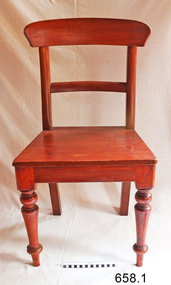 Flagstaff Hill Maritime Museum and Village
Furniture - Chair, 1880s
... ...ann street williamstown...The connection of this set of chairs to the Mission to Seamen and to the Ladies Lightkeepers’ Auxiliary highlights the strong community awareness of the life of people at sea, their dangers and hardships, and their need for physical, financial, spiritual and moral support. flagstaff hill warrnambool shipwrecked coast flagstaff hill maritime museum maritime museum shipwreck coast flagstaff hill maritime village great ocean road religion religious service sailors rest sailors’ church bethel sailors’ church bethel floating church ladies harbour light guild lightkeepers’ auxiliary missions to seamen victoria mission to seafarers flying angel’s club ann street williamstown st nicholas seaman’s church williamstown st nicholas mission to seamen church williamstown mission to seamen williamstown st nicholas seamen’s church flagstaff hill 139 nelson place williamstown church furniture religious furniture religious worship anglican church chair dining chair kitchen chair domestic furniture colonial chair australian colonial period cedar chair Chair: Australian Colonial rail back dining chair. ...This chair is one of a set of four chairs from the St. Nicholas Seamen’s Church, 139 Nelson Place, Williamstown, Victoria, during religious services there. The Church was operated by the Mission to Seamen organisation. * for more detailed history please see our Registration Number 658, Set of chairs This set of chairs is significant historically for its origin in the St Nicholas Mission to Seamen's Church in Williamstown, established in 1857 to cater for the physical, social, and spiritual needs of seafarers. It originated in Bristol, England when a Seamen's Mission was formed in 1837. The set of chairs is historically significant for its connection to the Ladies Lightkeepers’ Auxiliary, an organisation of women, formed to support seafarers. The connection of this set of chairs to the Mission to Seamen and to the Ladies Lightkeepers’ Auxiliary highlights the strong community awareness of the life of people at sea, their dangers and hardships, and their need for physical, financial, spiritual and moral support. Chair: Australian Colonial rail back dining chair. Chair is one of a set of four (4) cedar wood chairs. Each chair has a rounded rail back, flat cross rail, flat solid wood seat, curved back legs and colonial turned front legs. Mid-brown colour, veneer finish. The set of chairs is part of the St Nicholas Seamen's Church Williamstown Collection. flagstaff hill, warrnambool, shipwrecked coast, flagstaff hill maritime museum, maritime museum, shipwreck coast, flagstaff hill maritime village, great ocean road, religion, religious service, sailors rest, sailors’ church, bethel sailors’ church, bethel floating church, ladies harbour light guild, lightkeepers’ auxiliary, missions to seamen victoria, mission to seafarers, flying angel’s club, ann street williamstown, st nicholas seaman’s church williamstown, st nicholas mission to seamen church williamstown, mission to seamen williamstown, st nicholas seamen’s church flagstaff hill, 139 nelson place williamstown, church furniture, religious furniture, religious worship, anglican church, chair, dining chair, kitchen chair, domestic furniture, colonial chair, australian colonial period, cedar chair -
 Flagstaff Hill Maritime Museum and Village
Furniture - Chair, 1880s
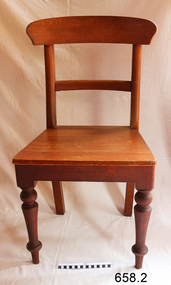
... ...ann street williamstown...The connection of this set of chairs to the Mission to Seamen and to the Ladies Lightkeepers’ Auxiliary highlights the strong community awareness of the life of people at sea, their dangers and hardships, and their need for physical, financial, spiritual and moral support. flagstaff hill warrnambool shipwrecked coast flagstaff hill maritime museum maritime museum shipwreck coast flagstaff hill maritime village great ocean road religion religious service sailors rest sailors’ church bethel sailors’ church bethel floating church ladies harbour light guild lightkeepers’ auxiliary missions to seamen victoria mission to seafarers flying angel’s club ann street williamstown st nicholas seaman’s church williamstown st nicholas mission to seamen church williamstown mission to seamen williamstown st nicholas seamen’s church flagstaff hill 139 nelson place williamstown church furniture religious furniture religious worship anglican church chair dining chair kitchen chair domestic furniture colonial chair australian colonial period cedar chair Chair: Australian Colonial rail back dining chair. ...This chair is one of a set of four chairs from the St. Nicholas Seamen’s Church, 139 Nelson Place, Williamstown, Victoria, during religious services there. The Church was operated by the Mission to Seamen organisation. * for more detailed history please see our Registration Number 658, Set of chairs This set of chairs is significant historically for its origin in the St Nicholas Mission to Seamen's Church in Williamstown, established in 1857 to cater for the physical, social, and spiritual needs of seafarers. It originated in Bristol, England when a Seamen's Mission was formed in 1837. The set of chairs is historically significant for its connection to the Ladies Lightkeepers’ Auxiliary, an organisation of women, formed to support seafarers. The connection of this set of chairs to the Mission to Seamen and to the Ladies Lightkeepers’ Auxiliary highlights the strong community awareness of the life of people at sea, their dangers and hardships, and their need for physical, financial, spiritual and moral support. Chair: Australian Colonial rail back dining chair. Chair is one of a set of four (4) cedar wood chairs. Each chair has a rounded rail back, flat cross rail, flat solid wood seat, curved back legs and colonial turned front legs. Mid-brown colour, veneer finish. The set of chairs is part of the St Nicholas Seamen's Church Williamstown Collection. flagstaff hill, warrnambool, shipwrecked coast, flagstaff hill maritime museum, maritime museum, shipwreck coast, flagstaff hill maritime village, great ocean road, religion, religious service, sailors rest, sailors’ church, bethel sailors’ church, bethel floating church, ladies harbour light guild, lightkeepers’ auxiliary, missions to seamen victoria, mission to seafarers, flying angel’s club, ann street williamstown, st nicholas seaman’s church williamstown, st nicholas mission to seamen church williamstown, mission to seamen williamstown, st nicholas seamen’s church flagstaff hill, 139 nelson place williamstown, church furniture, religious furniture, religious worship, anglican church, chair, dining chair, kitchen chair, domestic furniture, colonial chair, australian colonial period, cedar chair -
 Flagstaff Hill Maritime Museum and Village
Furniture - Chair, 1880s
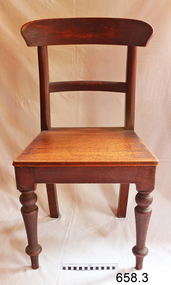
... ...Ann Street Williamstown...Flagstaff Hill Warrnambool Shipwrecked coast Flagstaff Hill Maritime Museum Maritime Museum Shipwreck coast Flagstaff Hill Maritime Village Great Ocean Road Religion Religious service Sailors Rest Sailors’ Church Bethel Sailors’ Church Bethel Floating Church Ladies Harbour Light Guild Lightkeepers’ Auxiliary Missions to Seamen Victoria Mission to Seafarers Flying Angel’s Club Ann Street Williamstown St Nicholas Seaman’s Church Williamstown St Nicholas Mission to Seamen Church Williamstown Mission to Seamen Williamstown St Nicholas Seamen’s Church Flagstaff Hill 139 Nelson Place Williamstown Church furniture Religious furniture Religious worship Anglican Church Chair Dining chair Kitchen chair Domestic furniture Colonial chair Australian colonial period Cedar chair Chair: Australian Colonial rail back dining chair. ...This chair is one of a set of four chairs from the St. Nicholas Seamen’s Church, 139 Nelson Place, Williamstown, Victoria, during religious services there. The Church was operated by the Mission to Seamen organisation. * for more detailed history please see our Registration Number 658, Set of chairs This set of chairs is significant historically for its origin in the St Nicholas Mission to Seamen's Church in Williamstown, established in 1857 to cater for the physical, social, and spiritual needs of seafarers. It originated in Bristol, England when a Seamen's Mission was formed in 1837. The set of chairs is historically significant for its connection to the Ladies Lightkeepers’ Auxiliary, an organisation of women, formed to support seafarers. The connection of this set of chairs to the Mission to Seamen and to the Ladies Lightkeepers’ Auxiliary highlights the strong community awareness of the life of people at sea, their dangers and hardships, and their need for physical, financial, spiritual and moral support. Chair: Australian Colonial rail back dining chair. Chair is one of a set of four (4) cedar wood chairs. Each chair has a rounded rail back, flat cross rail, flat solid wood seat, curved back legs and colonial turned front legs. Mid-brown colour, veneer finish. The set of chairs is part of the St Nicholas Seamen's Church Williamstown Collection. flagstaff hill, warrnambool, shipwrecked coast, flagstaff hill maritime museum, maritime museum, shipwreck coast, flagstaff hill maritime village, great ocean road, religion, religious service, sailors rest, sailors’ church, bethel sailors’ church, bethel floating church, ladies harbour light guild, lightkeepers’ auxiliary, missions to seamen victoria, mission to seafarers, flying angel’s club, ann street williamstown, st nicholas seaman’s church williamstown, st nicholas mission to seamen church williamstown, mission to seamen williamstown, st nicholas seamen’s church flagstaff hill, 139 nelson place williamstown, church furniture, religious furniture, religious worship, anglican church, chair, dining chair, kitchen chair, domestic furniture, colonial chair, australian colonial period, cedar chair -
 Flagstaff Hill Maritime Museum and Village
Furniture - Chair, 1880s
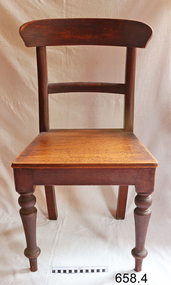
... ...ann street williamstown...The connection of this set of chairs to the Mission to Seamen and to the Ladies Lightkeepers’ Auxiliary highlights the strong community awareness of the life of people at sea, their dangers and hardships, and their need for physical, financial, spiritual and moral support. flagstaff hill warrnambool shipwrecked coast flagstaff hill maritime museum maritime museum shipwreck coast flagstaff hill maritime village great ocean road religion religious service sailors rest sailors’ church bethel sailors’ church bethel floating church ladies harbour light guild lightkeepers’ auxiliary missions to seamen victoria mission to seafarers flying angel’s club ann street williamstown st nicholas seaman’s church williamstown st nicholas mission to seamen church williamstown mission to seamen williamstown st nicholas seamen’s church flagstaff hill 139 nelson place williamstown church furniture religious furniture religious worship anglican church chair dining chair kitchen chair domestic furniture colonial chair australian colonial period cedar chair Chair: Australian Colonial rail back dining chair. ...This chair is one of a set of four chairs from the St. Nicholas Seamen’s Church, 139 Nelson Place, Williamstown, Victoria, during religious services there. The Church was operated by the Mission to Seamen organisation. * for more detailed history please see our Registration Number 658, Set of chairs This set of chairs is significant historically for its origin in the St Nicholas Mission to Seamen's Church in Williamstown, established in 1857 to cater for the physical, social, and spiritual needs of seafarers. It originated in Bristol, England when a Seamen's Mission was formed in 1837. The set of chairs is historically significant for its connection to the Ladies Lightkeepers’ Auxiliary, an organisation of women, formed to support seafarers. The connection of this set of chairs to the Mission to Seamen and to the Ladies Lightkeepers’ Auxiliary highlights the strong community awareness of the life of people at sea, their dangers and hardships, and their need for physical, financial, spiritual and moral support. Chair: Australian Colonial rail back dining chair. Chair is one of a set of four (4) cedar wood chairs. Each chair has a rounded rail back, flat cross rail, flat solid wood seat, curved back legs and colonial turned front legs. Mid-brown colour, veneer finish. The set of chairs is part of the St Nicholas Seamen's Church Williamstown Collection. flagstaff hill, warrnambool, shipwrecked coast, flagstaff hill maritime museum, maritime museum, shipwreck coast, flagstaff hill maritime village, great ocean road, religion, religious service, sailors rest, sailors’ church, bethel sailors’ church, bethel floating church, ladies harbour light guild, lightkeepers’ auxiliary, missions to seamen victoria, mission to seafarers, flying angel’s club, ann street williamstown, st nicholas seaman’s church williamstown, st nicholas mission to seamen church williamstown, mission to seamen williamstown, st nicholas seamen’s church flagstaff hill, 139 nelson place williamstown, church furniture, religious furniture, religious worship, anglican church, chair, dining chair, kitchen chair, domestic furniture, colonial chair, australian colonial period, cedar chair -
 Glen Eira Historical Society
Article - St. Agnes Church, Booran Road, 116, Glen Huntly
... ... Ann Street...Agnes’ Church Glen Huntly Road Augusta Street Ann Street Carnegie Fielder Mrs. Confectionery Stores Caulfield Homes for the Aged Ames Avenue Article St. ...Newspaper article from V. Monro from Caulfield Contact dated 26/03/1981. Article is on writers collections of life around the Caulfield area and St. Agnes’ Church.caulfield contact, monro v., caulfield south, burrindi road, market gardens, bent street, booran road, st. agnes’ church, glen huntly road, augusta street, ann street, carnegie, fielder mrs., confectionery stores, caulfield homes for the aged, ames avenue -
 Whitehorse Historical Society Inc.
Legal record - Document, Forest Hill, 12/08/1913
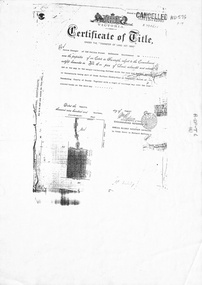
... ...lee-ann street...glebe street forest hill land subdivision draeger carl julius otto vicki street bindy street lee-ann street Photocopy of Certificate of Title. ...Photocopy of Certificate of Title. Vol 3715 Fol. 742903 to Julius Draeger, 12 August 1913, for fifteen acres of land being part of Crown Portion 94, including plan of subdivision (P72294) cancelling title. [Contract of Sale ND567]Photocopy of Certificate of Title. Vol 3715 Fol. 742903 to Julius Draeger, 12 August 1913, for fifteen acres of land being part of Crown Portion 94, including plan of subdivision (P72294) cancelling title. [Contract of Sale ND567]Photocopy of Certificate of Title. Vol 3715 Fol. 742903 to Julius Draeger, 12 August 1913, for fifteen acres of land being part of Crown Portion 94, including plan of subdivision (P72294) cancelling title. [Contract of Sale ND567]glebe street, forest hill, land subdivision, draeger, carl julius otto, vicki street, bindy street, lee-ann street -
 Stawell Historical Society Inc
Photograph, Oates family home
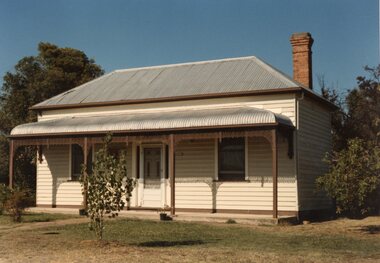
... 7045 On reverse: St 85 Ann St. 7045-1 On reverse: Sept. 28 1988 Oates Homestead Stawell Ann Street...Oates 7045 On reverse: St 85 Ann St. 7045-1 On reverse: Sept. 28 1988 Oates Homestead Stawell Ann Street 7045 White Weatherboard hosue with Iron roof with Vernadah Brown Trim 7045-1 Smae house with white trim, with four people two adults and 2 children. ...7045 White Weatherboard hosue with Iron roof with Vernadah Brown Trim 7045-1 Smae house with white trim, with four people two adults and 2 children.7045 On reverse: St 85 Ann St. 7045-1 On reverse: Sept. 28 1988 Oates Homestead Stawell Ann Streetoates -
 Stawell Historical Society Inc
Photograph, Oates family home
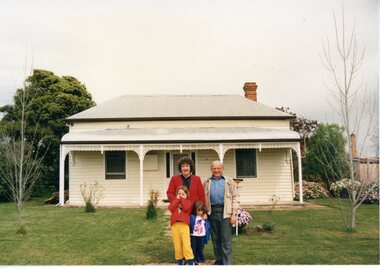
... 7045 On reverse: St 85 Ann St. 7045-1 On reverse: Sept. 28 1988 Oates Homestead Stawell Ann Street...Oates 7045 On reverse: St 85 Ann St. 7045-1 On reverse: Sept. 28 1988 Oates Homestead Stawell Ann Street 7045 White Weatherboard hosue with Iron roof with Vernadah Brown Trim 7045-1 Smae house with white trim, with four people two adults and 2 children. ...7045 White Weatherboard hosue with Iron roof with Vernadah Brown Trim 7045-1 Smae house with white trim, with four people two adults and 2 children.7045 On reverse: St 85 Ann St. 7045-1 On reverse: Sept. 28 1988 Oates Homestead Stawell Ann Streetoates -
 Williamstown Historical Society Inc
Photograph - Nelson Place, c.1860's
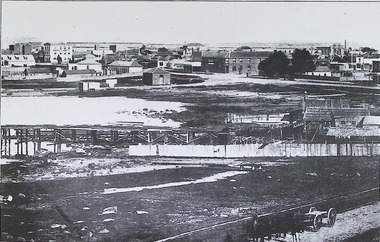
... This image was taken in the 1860's and shows Gem Pier and the old Morgue in its original location, prior to being relocated to Ann Street. The three-storey Barkly Arms hotel, later named Oriental Hotel can be seen in the background....Nelson Place 1860's This image was taken in the 1860's and shows Gem Pier and the old Morgue in its original location, prior to being relocated to Ann Street. The three-storey Barkly Arms hotel, later named Oriental Hotel can be seen in the background. ...This image was taken in the 1860's and shows Gem Pier and the old Morgue in its original location, prior to being relocated to Ann Street. The three-storey Barkly Arms hotel, later named Oriental Hotel can be seen in the background.nelson place, 1860's -
 Seaworks Maritime Museum
Model Yacht
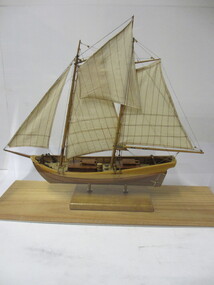
... American coastal schooner built on the SS Rip while at the Ann Street Pier, Williamstown ...American coastal schooner built on the SS Rip while at the Ann Street Pier, Williamstown Displayed in Perspex case. ...American coastal schooner built on the SS Rip while at the Ann Street Pier, Williamstown Displayed in Perspex case. Yacht has 2 masts, and a raw polish finish. The model is of an American coastal schooner named Alert -
Whitehorse Historical Society Inc.
Book, Sevenoaks Park, 1980 repr. 2004
... Ann...Jeffery Street Blackburn...Contains old maps and land titles Sevenoaks Park Jeffery Mary Ann Jeffery Street Blackburn Blackburn Road Blackburn Lake Road Blackburn Da Costa Robin Burns Frank Satchwell Keith A history of Jeffery Street Blackburn and surrounding area once known as Sevenoaks Park. ...A history of Jeffery Street Blackburn and surrounding area once known as Sevenoaks Park.A history of Jeffery Street Blackburn and surrounding area once known as Sevenoaks Park. Contains old maps and land titlesA history of Jeffery Street Blackburn and surrounding area once known as Sevenoaks Park. sevenoaks park, jeffery, mary ann, jeffery street blackburn, blackburn road blackburn, lake road blackburn, da costa, robin, burns, frank, satchwell, keith -
 Port Fairy Historical Society Museum and Archives
Photograph
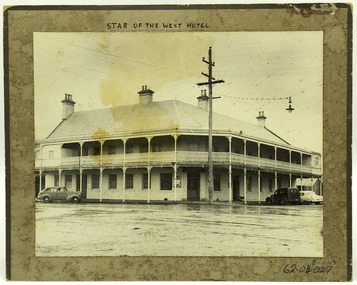
... ann...bank street...Iconic Hotel in Port Fairy Built as the first of a proposed chain of hotels by John Walwyn Taylor in 1855 on the corner of Bank and Sackville Streets. 2 stories with a balcony wrapping around 2 sides of the building. The site was formerly occupied by the wooden hotel "The Sally Ann". ...A snapshot of time showing the hotel the power lines, and the style of cars from that era. john walwyn taylor the sally ann bank street sackville street hotel star of the west Written in Pen at top and underlined - STAR OF THE WEST HOTEL Lower right - ball point pen museum numbers 62.04B.011D On Back- Pencil - 3-17 - S2-7-57 - j o h 2-7-57 Black and white photograph of the Star of the West Hotel on a brown bordered mount Photograph Photograph ...Iconic Hotel in Port Fairy Built as the first of a proposed chain of hotels by John Walwyn Taylor in 1855 on the corner of Bank and Sackville Streets. 2 stories with a balcony wrapping around 2 sides of the building. The site was formerly occupied by the wooden hotel "The Sally Ann". A snapshot of time showing the hotel the power lines, and the style of cars from that era.Black and white photograph of the Star of the West Hotel on a brown bordered mountWritten in Pen at top and underlined - STAR OF THE WEST HOTEL Lower right - ball point pen museum numbers 62.04B.011D On Back- Pencil - 3-17 - S2-7-57 - j o h 2-7-57john walwyn taylor, the sally ann, bank street, sackville street, hotel, star of the west -
Phillip Island and District Historical Society Inc.
Book, RATCLIFFE, Dorothy Una (Una McGrigor Phillips), Swallow of the sea : pages from a yacht's log, 1937
... Loose flier inside front cover '42 Ann Street, Edinburgh 4, June 1956, with good wishes from D.U. ...Loose flier inside front cover '42 Ann Street, Edinburgh 4, June 1956, with good wishes from D.U. ...Labelled 'Presented by Mrs McGrigor Phillips (Dorothy Una Ratcliffe) to the Public Library, Cowes, Phillip Island', 'Cowes Free Public Library'. Loose flier inside front cover '42 Ann Street, Edinburgh 4, June 1956, with good wishes from D.U. McGrigor Phillips'. Stamped 'Cowes Free Public Library'. -
Mission to Seafarers Victoria
Flyer, 1904-1908
... The Williamstown location of the institute on Ann Street where it was still in the Wesleyan Church and the name of Reverend Goldsmith dates the flyer between 1904-1908. ...The Williamstown location of the institute on Ann Street where it was still in the Wesleyan Church and the name of Reverend Goldsmith dates the flyer between 1904-1908. ...Wool and grain were an important trading commodity with France, particularly wool which France heavily imported for its textile industry. The ladies from the Guild, having often been educated in good school had learned French which was the only foreign language taught in Victoria at the time. The Williamstown location of the institute on Ann Street where it was still in the Wesleyan Church and the name of Reverend Goldsmith dates the flyer between 1904-1908. The flyer is a rare example of the flyer in foreign language.Medium size flyer printed in blue ink on a creamy paper.Missions de Victoria pour les Marins Tous les marins sont invités chaleureusement à se servir de la Salle pour lire écrie et fumer. Journaux, Index Maritime etc. Tout ce qu'il faut pour écrire dans la Salle. Jeux. Boissons sans spiritueux.french, francais, soirees speciales -
 Clunes Museum
Photograph
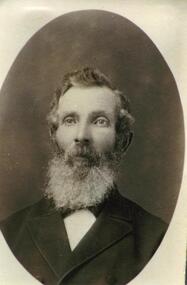
... WILLIAM BROWN - HUSBAND OF MARY ANN OF THORNTON STREET, CLUNES....WILLIAM BROWN - HUSBAND OF MARY ANN OF THORNTON STREET, CLUNES. local history early citizens WILLIAM BROWN COPY OF PHOTOGRAPH OF WILLIAM BROWN OF CLUNES - BEARDED, HEAD AND SHOULDERS PHOTOGRAPH Photograph PHOTOGRAPH ...WILLIAM BROWN - HUSBAND OF MARY ANN OF THORNTON STREET, CLUNES.COPY OF PHOTOGRAPH OF WILLIAM BROWN OF CLUNES - BEARDED, HEAD AND SHOULDERS PHOTOGRAPHlocal history, early citizens, william brown -
 Clunes Museum
Photograph
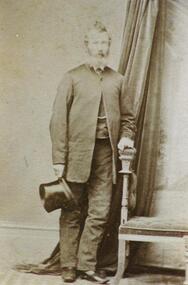
... WILLIAM BROWN - HUSBAND OF MARY ANN BROWN - THORNTON STREET, CLUNES....WILLIAM BROWN - HUSBAND OF MARY ANN BROWN - THORNTON STREET, CLUNES. local history photographs costumes WILLIAM BROWN COPY OF PHOTOGRAPH OF WILLIAM BROWN, STANDING BY CHAIR. ...WILLIAM BROWN - HUSBAND OF MARY ANN BROWN - THORNTON STREET, CLUNES.COPY OF PHOTOGRAPH OF WILLIAM BROWN, STANDING BY CHAIR. HOLDING A TOP HAT.local history, photographs, costumes, william brown -
Clunes Museum
Photograph - PHOTOGRAPH ALBUM
... On binding; ALBUM Inside cover: Hand drawn calligraphy, "Mrs. Ann Stevens West Street Clunes June 23 1884"...Clunes Pioneer Stevens Local History Photo Album On binding; ALBUM Inside cover: Hand drawn calligraphy, "Mrs. Ann Stevens West Street Clunes June 23 1884" Album leather bound, gold and black embossed pattern on front, metal clasp to keep book closed Photograph PHOTOGRAPH ALBUM ...Portraits displayed in an album, collated by Mrs Ann Stevens an early pioneer of Clunes, Victoria, Australia. After the death of her husband Richard in 1884. There is no information of who the images portray.Album leather bound, gold and black embossed pattern on front, metal clasp to keep book closedOn binding; ALBUM Inside cover: Hand drawn calligraphy, "Mrs. Ann Stevens West Street Clunes June 23 1884"clunes pioneer, stevens, local history, photo album -
 Mission to Seafarers Victoria
Photograph - Gelatin silver photograph, Studio portrait of seated man with hat and walking stick, circa 1880-1900
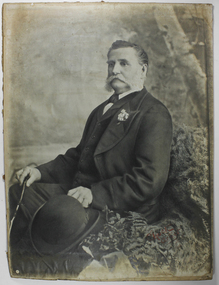
... Captain McCallum was secretary of the Williamstown Sailors' Rest, located in Ann Street, and had himself saved the rest paying some of its debt. ...Captain McCallum was secretary of the Williamstown Sailors' Rest, located in Ann Street, and had himself saved the rest paying some of its debt. ...This portrait could be of Captain Daniel McCallum. In the Williamstown Chronicle dating back Saturday 16 March 1895 we could read: " An interesting ceremony will be performed at the Sailor's Rest next Thursday 21st. inst., when a large photo of the late Captain D. McCallum (which has been presented to the Rest) will be unveiled, in the presence, it is expected, of several of those who assisted Captain McCallum in his good, work amongst the sailors, and others who were closely connected with the Mr Ronald Reid a will supply the musical part of the pogramme." Captain McCallum was secretary of the Williamstown Sailors' Rest, located in Ann Street, and had himself saved the rest paying some of its debt. He died in 1887.Many portraits of supporters were unveiled in the several buildings of the Mission. Sadly few reached us and are difficult to identify.Studio portrait of a man sitting, with moustache, wearing a 3 piece suit with buttonhole spray, walking cane ad bowler hat.Signature in red ink in the bottom right corner: "CHUCK-artist"portait, bowler hat -
 Whitehorse Historical Society Inc.
Book - Copy book
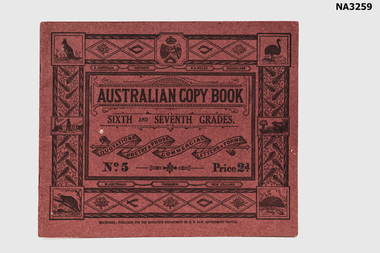
... Copy book used by Lola Ann Myers at Stewart Street State School from 1916 onwards. ...Copy book used by Lola Ann Myers at Stewart Street State School from 1916 onwards. ...Copy book used by Lola Ann Myers at Stewart Street State School from 1916 onwards. From collection of Betty McPhee; donated by Cathy McCann.Small paperback schoolbook. Maroon covers with Australian motifs. On back cover, picture of student seated at deskAustralian Copy Book Sixth and Seventh Grades|Quotations|Poetry and Prose|Commercial Letters and Formsbooks, school/educational -
 Ballarat Heritage Services
Photograph, William Botten, c1916
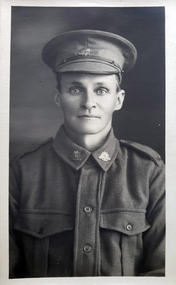
... During World War One his wife was Ann Botten of Green Street, Carisbrook. He rerurned to Australia on 31 October 1917 after an appendectomy. ...street, Carisbrook, William Alfred, dearly loved husband of Fanny, and loved father of Bernie, Peggy (Mrs. J. Meagher), Mollie (Mrs. N. Trembath), Jack, Flora (Mrs. W. Baker), Bill, and Bob, aged 69 years. (The Argus, 22 Oct 1945) EM22 Carisbrook William Botten Photograph of an Australian World War One Soldier, William Alfred (Bill) Botten. During World War One his wife was Ann ...Bill Botten was born in Carisbrook . He enlisted for service during World War One on 22 August 2016. He died in 1945. BOTTEN.— On October 21, at his residence, Simpson street, Carisbrook, William Alfred, dearly loved husband of Fanny, and loved father of Bernie, Peggy (Mrs. J. Meagher), Mollie (Mrs. N. Trembath), Jack, Flora (Mrs. W. Baker), Bill, and Bob, aged 69 years. (The Argus, 22 Oct 1945) Photograph of an Australian World War One Soldier, William Alfred (Bill) Botten. During World War One his wife was Ann Botten of Green Street, Carisbrook. He rerurned to Australia on 31 October 1917 after an appendectomy. em22, carisbrook, william botten -
 Williamstown Historical Society Inc
Photograph - Nelson Place, No. 131-137
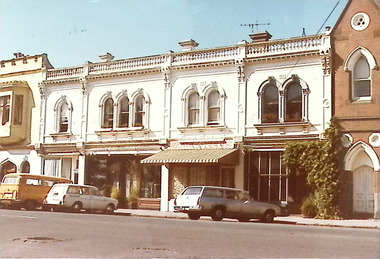
... Owning and part occupying already two shops in Nelson Place, between Thompson and Ann Streets (built for Creeke in 1864-5), architect Michael Egan called tenders for the first two, then single storey, stone and brick shops (135-37) of this group in 1873. ...Owning and part occupying already two shops in Nelson Place, between Thompson and Ann Streets (built for Creeke in 1864-5), architect Michael Egan called tenders for the first two, then single storey, stone and brick shops (135-37) of this group in 1873. ...No. 131-137 Nelson Place are shops and residences, designed by Michael Egan and constructed between 1873 and 1885. The building is recorded in the Hobsons Bay Heritage Study Amended 2017, which notes the following: Sale of the old Customs House Reserve in 1872 generated these allotments for boot maker, Robert Creeke's commercial development. Owning and part occupying already two shops in Nelson Place, between Thompson and Ann Streets (built for Creeke in 1864-5), architect Michael Egan called tenders for the first two, then single storey, stone and brick shops (135-37) of this group in 1873. Early lessees were George Douglas, watchmaker and Charles Lumsden who kept dining rooms (2). In 1877, Creeke built another (No. 133) of two storeys and of five rooms and occupied it, still leasing out the two older premises to George Taylor, a tobacconist, and a firm of drapers, Tait and Aitken (2). By 1885, 131 Nelson Place was constructed and a storey added to the others so now these four shops of four rooms and numbers 133-37, of six rooms each, were owned by Creeke until at least 1902 (3). His tenants were various tradesmen. e.g. Henry Drew, a boot maker, Alfred Brown a watchmaker, Miss Jane Service, a stationer; and George Morwick Jnr., a sail-maker. It is presumed that Egan designed the final complex.nelson place, 131-137 nelson place -
 Mission to Seafarers Victoria
Print - Engraving, Sailors' Rest, Williamstown, 31 October 1878
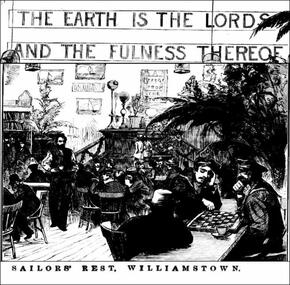
... The Sailors' Rest, located in Ann Street, Williamstown opened on 24 May 1878. ...The Sailors' Rest, located in Ann Street, Williamstown opened on 24 May 1878. ...The Sailors' Rest, located in Ann Street, Williamstown opened on 24 May 1878. An article dating 25 May 1878, in the Williamstown Chronicle, describes the interior of the renovated Wesleyan chuch as depicted on the print: "Inside the building the carpenters and painters have been busily engaged. It has been painted throughout, the lower part of the walls be ing stained blue. There is a form all round the building with tables up the sides, and a number of small round tables are scattered about the roomi. In the centre is a splendid wire stand for pot plants, of which there is a grand display. Pictures adorn, the walls; singing birds warble their sweet strains ; and the silent gold fish of which there are several globes add to the beauty of the display. At the east end of the room is the bar, occupying one corner, while in the other are the shelves which accommodate the books of the Library, while last evening across the end wall was in large illuminated letters-'" The earth is the Lord's and the fulness thereof." On the platform are a piano and harmonium. The room is very presentable whether in day light or illuminated vith gas." Eva Carmichael, one of the two survivors of the Loch Art tragedy, visited here on 19 July 1878. She had stayed with Mr and Mrs Gibson and travelled from Camperdown to Melbourne (15 July 1878) to sail back to Ireland. Article in the Leader, 20 July 1878, Page 19: "The Saitors' Rest at Williamstown was yesterday visited by Miss Carmichael, Mr. T. Pearce and Mr. and Mrs. Gibson. The objects of the institution were explained to them, and after a brief stay they complimented the committee on their arrangement. The attendance has ho largely increased that the receipts now average £80 per month. The print is a rare insight of the Sailors' Rest in Williamstown, depicitng the room filled with plants, birds in cages, the seamen enjoying some board games, and coffee.Illustration depicting the interios of the Williamstown Sailors' Rest in 1878 with decoration (plants, paintings, birds in cages), and sailors at tables busy playing chess, talking, having a drink.sailors' rest, williamstown, 1878, plants, books, library, tables, sailors, games, chess, coffee, seamen, sir william stawell, hugh ronald reid -
 Warrnambool and District Historical Society Inc.
Letter - Letters - Swinton/ Thomson, 1950s
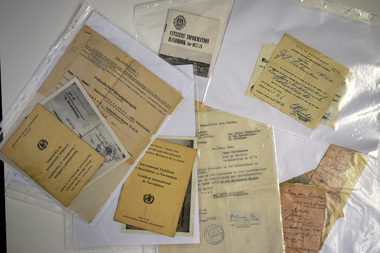
... The Swinton business in Warrnambool was founded by William and Ann Swinton in Timor Street in 1865. In 1934 the firm of George Swinton and Sons was selling furniture, clothing and glass ware and the other branch of Swintons Pty.Ltd. sold seeds, produce and hard ware. ...The Swinton business in Warrnambool was founded by William and Ann Swinton in Timor Street in 1865. In 1934 the firm of George Swinton and Sons was selling furniture, clothing and glass ware and the other branch of Swintons Pty.Ltd. sold seeds, produce and hard ware. ...These four items are annual letters of appreciation to Helen Thomson who was employed by George Swinton and Sons in the 1940s and 1950s. She received a monetary bonus each year. The Swinton business in Warrnambool was founded by William and Ann Swinton in Timor Street in 1865. In 1934 the firm of George Swinton and Sons was selling furniture, clothing and glass ware and the other branch of Swintons Pty.Ltd. sold seeds, produce and hard ware. Today the Swinton family still operate the furniture store in Timor Street. . These letters are of of minor interest as a memento of a prominent store in Warrnambool. They reflect the kindly attitude between emploer and employee.These are four letters from Keith Swinton of George Swinton and Sons Pty. Ltd. to staff member Helen Thomson. The letters date from 1949 to 1955.Three letters are typed and one is hand written. The four letters have the the George Swinton and Sons letterhead.swintons store warrnambool, keith swinton, helen thomson warrnambool -
 Melton City Libraries
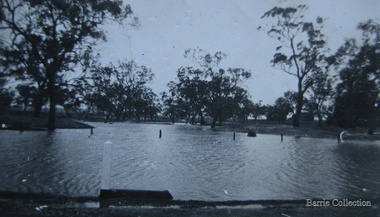
Photograph, Myers Gully, 1935
... Eliza married in Williamstown 1862 to William Daley a Bootmaker of Ann St, Williamstown. In 1865, Eliza and William lived in High Street Melton. ...Eliza married in Williamstown 1862 to William Daley a Bootmaker of Ann St, Williamstown. In 1865, Eliza and William lived in High Street Melton. ...Mary, Eliza and Ann Dowling arrived in Melbourne in June 1855 on the ship “Hotspur” as assisted immigrants. Mary married in Melton in 1857 to John Luby.The couple lived in Reserve Road Melton. Eliza married in Williamstown 1862 to William Daley a Bootmaker of Ann St, Williamstown. In 1865, Eliza and William lived in High Street Melton. Ann was a domestic servant in Williamstown and married Henri Miers in Melbourne in 1867.They built their house in Melton on the Ballarat road near the intersection of Reserveroad in 1867–Ryans Creek, referred to as Myers GullyMyers Gully at the junction of Reserve Road, now known as Ryans Creeklandscapes of significance, local identities, pioneer families -
 Uniting Church Archives - Synod of Victoria
Photocopy of hand-drawn portrait, Unknown
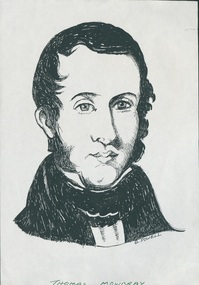
... Later he established the Presbyterian Church in Queensland, with the Ann Street Presbyterian Church being established in 1849." ...Later he established the Presbyterian Church in Queensland, with the Ann Street Presbyterian Church being established in 1849." ...Born: 1812 at Hamilton, Lanarkshire, Scotland Baptised: Arrived: 26 January 1842 per "Robert Benn" from Greenock, Scotland Church Registers: Presbyterian Baptisms Campbellfield 1842 Church Registers: Presbyterian Burials Melbourne 1840-1842 Church Registers: Presbyterian Burials Melbourne 1843 Married: 17 August 1841 at West Colinton, Edinburgh, Scotland to Williamina Anderson Died: 24 December 1867 at Kangaroo Point, Moreton Bay, Queensland Buried: 25 December 1867 at Paddington Cemetery, Brisbane, Queensland "As the European population grew, settlement outside Melbourne developed, and the Colonial Committee of the Church of Scotland sent out more ministers. The second to arrive was the Rev. Thomas Mowbray, on January 28th 1842. He almost immediately settled in Campbellfield, called by a small congregation brought into being largely by the work of people such as Neil Campbell, Dr Wilson and George Somerville. Mr Campbell donated five acres of land to the Presbyterian Church for the purposes of building a church, a school-house and a manse. No pictures or clear description of the church that Mowbray built on the site. One source described it as being “built of logs and roofed with imported shingles”, another said it was “shingle-roofed wattle and daub”, and still others mention “rough adzed beams” and a “bark roof”. No trace remains on the site now. Yet while it may have been “so low that people had to stoop to enter”, it is certain that the building was erected with great pride and it was with much excitement that regular, well-attended worship services began on the present Campbellfield site with its dedication on May 8th 1842. An early colonist recollected that over the next two and half years Campbellfield developed into “an important charge, with many influential and wealthy adherents”. The first meeting of the Presbytery of Melbourne was held on June 7th 1842, with the Revs James Forbes, Thomas Mowbray and Peter Gunn, with Dr David Patrick (Elder) . Their first priority for action was public education. At their second meeting on September 6th it was reported that “schools which had been established by Mr Forbes in Melbourne were well attended and efficiently taught; also that schools were connected with the congregations at Campbellfield, Geelong and Portland.” The official history of Presbyterianism in Victoria , written in 1888, says of Mowbray: He was a man of high scholarly attainments, took special interest in the cause of education, and was a preacher of superior ability. His useful and acceptable labours were very much confined to the district in which he was settled. By reason of infirm health he was unable to undergo the fatigue of long excursions into the interior. But his labours were highly appreciated at the school which he originated and superintended sustained a good reputation. No official public records can be traced pertaining to Mowbray’s school. There may be a simple reason for this, and it is suggested that it has to do with the rifts in Presbyterianism which culminated in the Great Disruption in the Church of Scotland in May of 1843. The same divisions were by then already reflected in Victoria. Clergy from both ‘sides’ came to Australia and the main criterion for categorising them as Presbyterians of the Established Church of Scotland or Free Presbyterians was their acceptance or non-acceptance of state aid. Mowbray remained neutral in the 1846 Assembly-level wrangling and, although there is no evidence to support this contention, he may well have struggled to maintain his school with local resources rather than accept Government money; hence the lack of Government records. Unfortunately Mr Mowbray’s health declined rapidly and in answer to a call from Sydney on the 3rd of December 1844, he left Campbellfield on Boxing Day in 1844. Later he established the Presbyterian Church in Queensland, with the Ann Street Presbyterian Church being established in 1849." Quoted from "Scots Church Campbellfield—A Brief History" (ed. Robert Renton), 2nd Ed. 2017, pp. 2–4.Head and shoulders portrait (drawing) of Thomas Mowbray by E PowellChurch & Nation 10/8/1988 p32; Rev. Thomas Mowbrayrev. thomas mowbray; ordained 1841 church of scotland. served at campbellfield (scots) 1842, sydney 1844, moreton bay 1847 qld. pioneer of the presbyterian church of queensland -
 Flagstaff Hill Maritime Museum and Village
Photograph - Historical, religious, mid-20th century
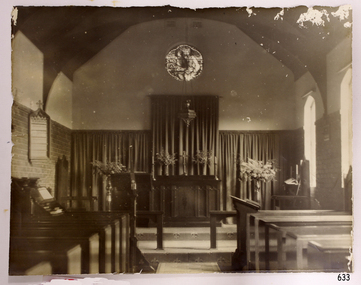
... In 1878, the Sailors’ Church moved into an old Wesleyan chapel in Ann Street. By the end of that year, they managed to purchase the building, which they had already refurbished. ...In 1878, the Sailors’ Church moved into an old Wesleyan chapel in Ann Street. By the end of that year, they managed to purchase the building, which they had already refurbished. ...This photograph records the interior of St Nicholas Seamen's Church at 139 Nelson Place, Williamstown, Victoria, which was purchased and furnished around 1943. The furniture and furnishings are now part of the St. Nicholas Seamen's Church collection. HISTORY of the Missions to Seamen: - DETAILED HISTORY of the Missions to Seamen: - The Missions to Seamen is an Anglican (Church of England) charity that has served the world’s seafarers since 1856. It was inspired by the work of Rev. John Ashley, who, 20 years earlier, had pioneered a ministry to seafarers in the Bristol Channel in Great Britain. When Ashley retired, others continued the work, founding the Missions to Seamen. It adopted a Flying Angel as its symbol, inspired by a verse from the Bible in Revelation 14. Today, over 200 world ports have Missions to Seamen centres and chaplains. A Missions to Seamen’s Club warmly welcomes sailors of all colours, creeds and races and provides a wide range of facilities. The Missions to Seamen organisation changed its name to the Mission to Seafarers in 2000, continuing to include Missions to Seamen clubs in Victoria’s cities of Melbourne, Portland, Geelong and Hastings. Flagstaff Hill’s St Nicholas’ Seamen’s Church is named after its namesake from Williamstown, Victoria, which began in 1857. Bishop Perry opened the first Sailors’ Church there, known as ‘Bethel’, on an old hulk floating in Hobson’s Bay, Port of Melbourne. In 1860, a Sailors’ Rest started operating from rented premises in Williamstown. In 1878, the Sailors’ Church moved into an old Wesleyan chapel in Ann Street. By the end of that year, they managed to purchase the building, which they had already refurbished. In 1883, they affiliated with the Victorian Seamen’s Mission. A few years later, in 1906, the building had to be demolished because it was no longer safe. While they raised funds for a new building, the Sailors’ Rest temporarily moved to premises in front of Customs House in Nelson Place. Around this time, in 1906, the Ladies Harbour Lights Guild was formed in Australia to support and raise funds for the Mission to Seamen organisation in Melbourne. Two of the most significant ladies of the Guild were founding members Ethel Godfrey and Alice Sibthorpe. During the Mission's time at Siddeley Street, Melbourne, the activities of the Guild raised funds for the Mission to Seamen's Chapel at their new, and still current, premises in Flinders Street, Melbourne, opened in 1917. The Guild continued its important work until the 1960s. In 1908, the Williamstown Mission had enough money to purchase the former Mascotte skating rink on Thompson Street, Williamstown. In August of that year, they were inaugurated into the Victorian Missions to Seamen. They continued at that venue for a few decades. In 1943, the former ES&A Bank building at 139 Nelson Place, Williamstown, was purchased to become the new Mission to Seamen’s Club. On May 6th, 1944, it was officially opened, described as a ‘distinctive little building’. Funds had previously been raised for the building and furnishing of the chapel at the rear. The chapel was named St Nicholas’ Seamen’s Church, after St Nicholas, fourth-century bishop and patron saint of sailors. Services were held on Wednesdays and Sundays. The church was supported by the Williamstown Lightkeepers’ Auxiliary, newly founded by Mrs Ethel Margaret Musther in 1943, as well as the Harbour Lights Guild and the League of Soldiers’ and Sailors’ Friends. The Williamstown Mission to Seamen’s Church operated until 1966, when large international ships no longer used the Port of Williamstown. The Commonwealth Government then leased the premises. In the formative years of Flagstaff Hill Maritime Village, the Advisory Board decided to include a Missions to Seamen Chapel and Recreation Room in its village. The Missions organisation was a significant feature of ports during the late 1800s and early 1900s, the period that the Village represents. They often erected Missions to house social and worshipful activities for seamen. Flagstaff Hill’s curator, Mr Ken Marshman, approached the Melbourne Board of Management of Missions to Seamen regarding the Williamstown branch. Consequently, the Board permitted the furnishings of the Williamstown chapel to be transferred to Flagstaff Hill Maritime Village. A provision of the transfer was that the Victoria Missions to Seamen be recognised, that the items would remain as a collection, and that the chapel would be called St Nicholas Seamen’s Church and conduct Divine services. The donation was approved on 21st May 1979. Flagstaff Hill's St. Nicholas Seamen's Church: - The idea behind Flagstaff Hill’s Missions to Seamen’s Church was partly driven by the offer of Stained Glass Memorial Windows that originated from the Warrnambool and District Base Hospital, which was undergoing multi-storey expansion in the late 1960s and early 1970s. The hospital’s Manager/Secretary was eager to see the historic window installed in a suitable place. The church, or chapel, was designed by a local architectural draftsman in collaboration with the Flagstaff Hill Planning Board and was constructed by Mr Leon Habel. The designers hoped that the church would be used for formal worship such as weddings, funerals, and multi-denominational special services like war commemorations. The design is inspired by the ‘Missions to Seamen’ buildings in Portland and the Port of Melbourne. The furniture and furnishings were placed as accurately as possible according to photographs of the Williamstown St Nicholas Seamen’s Church and with assistance from local clergy. The Recreation Room was furnished and arranged on advice from experienced members of the Missions to Seamen organisation. A framed document in the building recognises the donor of the furnishings, Victoria Missions to Seamen, and includes the names of some original donors and their donated item/s. The building’s design incorporates local features such as Warrnambool sandstone, which was no longer commercially available but was procured from demolished buildings and uniformly cut to use as a veneer over the stronger Mt. Gambier stone. Also, traditional green American roofing slate was used, sourced from the 1908 local shipwreck “Falls of Halladale” by Flagstaff Hill volunteer divers. The bell tower includes a bell believed to be from a local shipwreck. Additional furnishings were acquired locally, along with several items donated by Warrnambool residents. Light fittings in both rooms were assembled to simulate 19th-century gas light fittings. The stained-glass window at the back of the church is a memorial to Dr Connell, a well-respected member of the Warrnambool community. It was originally installed in 1928 in the main building of Warrnambool Hospital. The St Nicholas’ Seamen’s Church at Flagstaff Hill was officially opened by His Worship the Mayor, Cr. John Lindsay, on Sunday, 11th October 1981. The event included a service of thanksgiving conducted by the Warrnambool Ministers Fraternal. Since then, the Chapel has been the historic venue for many weddings. This photograph is significant through its association with the St Nicholas' Mission to Seamen Church in Williamstown, Melbourne, established in 1857. The building in the photograph is the former English, Scottish and Australian Bank (ES&A bank), also known as the Mission to Seamen. It is listed on the Victorian Heritage Database for having local historic and aesthetic interest. Photograph of St Nicholas Seamen's Church, Williamstown. Sepia photograph. The photograph shows the inside of the Chapel of Mission to Seamen, including organ, pews and other furniture and furnishings. There is a circular stained glass window high on the back wall depicting a sailor at the helm of a ship and a man standing behind him and pointing the way - "Christ Showing The Helmsman The Way". A Sanctuary Light is suspended from the ceiling. The Sanctuary chars are visible. This shows the St Nicholas Seamen's Church in Williamstown, the furnishings and furniture of which is now part of the St Nicholas Seamen's Church Collection’.flagstaff hill, warrnambool, shipwrecked-coast, flagstaff-hill, flagstaff-hill-maritime-museum, maritime-museum, shipwreck-coast, flagstaff-hill-maritime-village, st nicholas mission to seamen's church williamstown, mission to seamen williamstown, mission to seamen victoria, st nicholas mission to seamen, chapel window, christ showing the helmsman the way, stained glass window, st nicholas seamen's church, religion, religious service, sailor's rest, ladies harbour light guild -
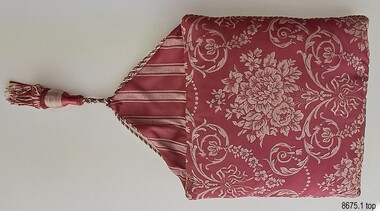 Flagstaff Hill Maritime Museum and Village
Textile - Seat Squabs, mid-20th century
... In 1878, the Sailors’ Church moved into an old Wesleyan chapel in Ann Street. By the end of that year, they managed to purchase the building, which they had already refurbished. ...In 1878, the Sailors’ Church moved into an old Wesleyan chapel in Ann Street. By the end of that year, they managed to purchase the building, which they had already refurbished. ...The term 'seat squabs' is no longer commonly used, but is sometimes referred to in the upholstery and motor vehicle industries. Squabs are padded cushions frequently added to wooden chairs or benches to add comfort to their hard forms. They have been made to an 18th-to-19th-century pattern using beautiful, richly coloured satin fabric and fancy cord tassels. The weighted flap at the rear of the squabs helps to keep them in place on the chair, and could be used on the top of the backrest instead of on the seat. These days, squabs are attached with fabric ties or hook-and-loop tabs. These seat squabs were once used in the St Nicholas Seamen's Church at 139 Nelson Place, Williamstown, Victoria, which was purchased and furnished around 1943. The furniture and furnishings are now part of the St. Nicholas Seamen's Church collection. DETAILED HISTORY of the Missions to Seamen: - The Missions to Seamen is an Anglican (Church of England) charity that has served the world’s seafarers since 1856. It was inspired by the work of Rev. John Ashley, who, 20 years earlier, had pioneered a ministry to seafarers in the Bristol Channel in Great Britain. When Ashley retired, others continued the work, founding the Missions to Seamen. It adopted a Flying Angel as its symbol, inspired by a verse from the Bible in Revelation 14. Today, over 200 world ports have Missions to Seamen centres and chaplains. A Missions to Seamen’s club warmly welcomes sailors of all colours, creeds and races and provides a wide range of facilities. The Missions to Seamen organisation changed its name to the Mission to Seafarers in 2000, continuing to include Missions to Seamen clubs in Victoria’s cities of Melbourne, Portland, Geelong and Hastings. Flagstaff Hill’s St Nicholas’ Seamen’s Church is named after its namesake from Williamstown, Victoria, which began in 1857. Bishop Perry opened the first Sailors’ Church, which was known as ‘Bethel’, on an old hulk floating in Hobson’s Bay, Port of Melbourne. In 1860, a Sailors’ Rest started operating from rented premises in Williamstown. In 1878, the Sailors’ Church moved into an old Wesleyan chapel in Ann Street. By the end of that year, they managed to purchase the building, which they had already refurbished. In 1883, they affiliated with the Victorian Seamen’s Mission. A few years later, in 1906, the building had to be demolished because it was no longer safe. While they raised funds for a new building, the Sailors’ Rest temporarily moved to premises in front of Customs House in Nelson Place. Around this time, in 1906, the Ladies Harbour Lights Guild was formed in Australia to support and raise funds for the Mission to Seamen organisation in Melbourne. Two of the most significant ladies of the Guild were founding members Ethel Godfrey and Alice Sibthorpe. During the Mission's time at Siddeley Street, Melbourne, the activities of the Guild raised funds for the Mission to Seamen's Chapel at their new, and still current, premises in Flinders Street, Melbourne, opened in 1917. The Guild continued its important work until the 1960s. In 1908, the Williamstown Mission had enough money to purchase the former Mascotte skating rink on Thompson Street, Williamstown. In August of that year, they were inaugurated into the Victorian Missions to Seamen. They continued at that venue for a few decades. In 1943, the former ES&A Bank building at 139 Nelson Place, Williamstown, was purchased for the new Mission to Seaman’s Club. The official opening was on May 6th, 1944. It was described as a ‘distinctive little building’. Funds had previously been raised for the building and furnishing of the chapel at the rear. The chapel was named St Nicholas’ Seamen’s Church, after St Nicholas, fourth-century bishop and patron saint of sailors. Services were held on Wednesdays and Sundays. The church was supported by the Williamstown Lightkeepers’ Auxiliary, newly founded by Mrs Ethel Margaret Musther in 1943, as well as the Harbour Lights Guild and the League of Soldiers’ and Sailors’ Friends. The Williamstown Mission to Seamen’s Church operated until 1966, when large international ships no longer used the Port of Williamstown. The Commonwealth Government then leased the premises. In the formative years of Flagstaff Hill Maritime Village, the Advisory Board decided to include a Missions to Seamen Chapel and Recreation Room in its village. The Missions organisation was a significant feature of ports during the late 1800s and early 1900s, the period that the Village represents. They often erected Missions to house social and worshipful activities for seamen. Flagstaff Hill’s curator, Mr Ken Marshman, approached the Melbourne Board of Management of Missions to Seamen regarding the Williamstown branch. Consequently, the Board permitted the furnishings of the Williamstown chapel to be transferred to Flagstaff Hill Maritime Village. A provision of the transfer was that the Victoria Missions to Seamen be recognised, that the items would remain as a collection, and that the chapel would be called St Nicholas Seamen’s Church and conduct Divine services. The donation was approved on 21st May 1979. Flagstaff Hill's St. Nicholas Seamen's Church: - The idea behind Flagstaff Hill’s Missions to Seamen’s Church was partly driven by the offer of Stained Glass Memorial Windows that originated from the Warrnambool and District Base Hospital, which was undergoing multi-storey expansion in the late 1960s and early 1970s. The hospital’s Manager/Secretary was eager to see the historic window installed in a suitable place. The church, or chapel, was designed by a local architectural draftsman in collaboration with the Flagstaff Hill Planning Board and was constructed by Mr Leon Habel. The designers hoped the church would be used for formal worship, such as weddings, funerals, and multi-denominational special services like war commemorations. Its design was inspired by the ‘Missions to Seamen’ buildings in Portland and the Port of Melbourne. The furniture and furnishings were placed as accurately as possible according to photographs of the Williamstown St Nicholas Seamen’s Church and with assistance from local clergy. The Recreation Room was furnished and arranged on advice from experienced members of the Missions to Seamen organisation. A framed document in the building recognises the donor of the furnishings, Victoria Missions to Seamen, and includes the names of some original donors and their donated item/s. The building’s design incorporates local features such as Warrnambool sandstone, which was no longer commercially available but was procured from demolished buildings and uniformly cut to use as a veneer over the stronger Mt. Gambier stone. Also, traditional green American roofing slate was used, sourced from the 1908 local shipwreck “Falls of Halladale” by Flagstaff Hill volunteer divers. The bell tower includes a bell believed to be from a local shipwreck. Additional furnishings were acquired locally, and several items were donated by Warrnambool residents. Light fittings in both rooms were assembled to simulate 19th-century gas light fittings. The stained-glass window at the back of the church is a memorial to Dr Connell, a well-respected member of the Warrnambool community. It was originally installed in 1928 in the main building of Warrnambool Hospital. The St Nicholas’ Seamen’s Church at Flagstaff Hill was officially opened by His Worship the Mayor, Cr. John Lindsay, on Sunday, 11th October 1981. The event included a service of thanksgiving conducted by the Warrnambool Ministers Fraternal. Since then, the Chapel has been the historic venue for many weddings. This pair of seat squabs is historically significant for its origin in the St Nicholas Mission to Seamen's Church in Williamstown, established in 1857 to cater for seafarers’ physical, social, and spiritual needs. The organisation originated in Bristol, England, when a Seamen's Mission was formed in 1837. The squabs are also significant for their use in the St Nicholas Missions to Seamen's chapel, Williamstown, as the original building is now listed on the Victorian Heritage Register. Squabs or padded seat cushions, a pair of two. These 18th to 19th-century design squabs have crimson and cream satin fabric on top and underneath, and weighted tassels are attached to their rear corners. They can be used for comfort on hard seats and benches. The squabs were furnishings from the Missions to Seamen chapel in Williamstown, and they are now part of the St Nicholas Seamen's Church Collection.flagstaff hill, warrnambool, shipwrecked-coast, flagstaff-hill, flagstaff-hill-maritime-museum, maritime-museum, shipwreck-coast, flagstaff-hill-maritime-village, st nicholas mission to seamen's church williamstown, mission to seamen williamstown, mission to seamen victoria, st nicholas mission to seamen, st nicholas seamen's church, religion, religious service, sailor's rest, ladies harbour light guild, squab, seat covers, cushions, squabs, religious furnishing, padded seats, seating, accessory
