
Showing 108 items matching "australian unity"
-
 Bendigo Historical Society Inc.
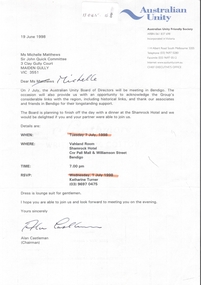
Document - Invitation, Michele Matthews Collection
... Australian Unity...Australian Unity was formed by the merger of the Australian Natives Association Friendly Society (ANA) and the Manchester Unity Independent Order of Oddfellows (Manchester Unity) in 1993. ...Australian Unity dinner menu....srsltid=AfmBOopvdyeJJU2WYTAqoFtv1kIASXSiTJrD8qxk9q0F6odeRWWOY0jo Australian Unity Sir John Quick Committee Invitation letter for Michele Mathews to an Australian Unity Dinner held on 7.7.1998. ...Australian Unity was formed by the merger of the Australian Natives Association Friendly Society (ANA) and the Manchester Unity Independent Order of Oddfellows (Manchester Unity) in 1993. Source https://www.australianunity.com.au/about-us/our-history?srsltid=AfmBOopvdyeJJU2WYTAqoFtv1kIASXSiTJrD8qxk9q0F6odeRWWOY0joInvitation letter for Michele Mathews to an Australian Unity Dinner held on 7.7.1998. Single type page. Australian Unity dinner menu.australian unity, sir john quick committee -
 Bendigo Historical Society Inc.
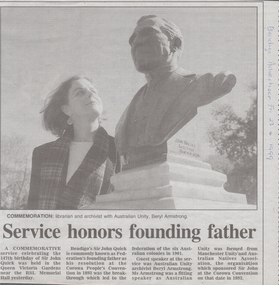
Newspaper - Sir John Quick Commemorative Service, Michele Matthews Collection, 23.4.1999
... ...Australian Unity...Guest speaker was Australian Unity archivist Beryl Armstrong. Black and white photograph....Guest speaker was Australian Unity archivist Beryl Armstrong. Black and white photograph. ...The Sir John Quick Committee was formed in 1991 to commemorate the achievements of Sir John Quick who played a prominent role in the federation of Australia. The Committee aimed to raise awareness of the contribution of Sir John Quick and to ensure that he was recognized for the part he played.Newspaper article about the commemorative service held on 22.4.1999 to celebrate the 147th birthday of Sir John Quick. Guest speaker was Australian Unity archivist Beryl Armstrong. Black and white photograph.sir john quick committee, beryl armstrong, australian unity -
 Whitehorse Historical Society Inc.
Article, Bob walks for his life
... Article on Bob Gardiner, Olympian walker in Australian Unity Newsletter, Winter 2000....Gardiner Bob Tallent Jared Athletics Article on Bob Gardiner, Olympian walker in Australian Unity Newsletter, Winter 2000. Article on Bob Gardiner, Olympian walker in Australian Unity Newsletter, Winter 2000. ...Article on Bob Gardiner, Olympian walker in Australian Unity Newsletter, Winter 2000.Article on Bob Gardiner, Olympian walker in Australian Unity Newsletter, Winter 2000.Article on Bob Gardiner, Olympian walker in Australian Unity Newsletter, Winter 2000.gardiner, bob, tallent, jared, athletics -
 Bendigo Historical Society Inc.
Document - LONG GULLY HISTORY GROUP COLLECTION: A VOICE FROM THE GOLDEN CITY - BENDIGO
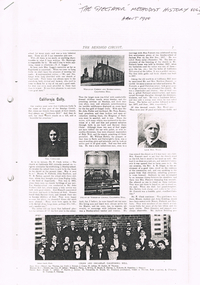
... ... Australian Unity...BHS Collection BENDIGO History long gully history group The Long Gully History Group - A Voice from the Golden City - Bendigo Cassell's Picturesque Australasia Thomas Wright John Carter Northcote W E D Stewart Alexander Fox Nicholas Caire George Rowe Ludwig becker S T Gill George Lacy James Edwin Meadows C D Richardson Dr Backhaus George Lansell William Charles Vahland robert Getzschmann William Beebe Cohn Brothers Bolton Brothers Bendigo Pottery Bendigo Advertiser Bendigo Tramways Sandhurst Trustees Sun Loong Chinese Dragon Shamrock Hotel Diamond Lil Bendigo William thompson Knipe's Castle No 3 Shaft of the Garden Gully Mine Cascade in Rosalind Park Dame Nellie Melba Post Office Clock Alexandra Fountain Town Hall Post Office Masonic Hall Beehive Store Princess Theatre Bendigo Art Gallery Karen Quinlan Australian Unity Bendigo Historical Society City of Greater Bendigo National Library of Australia National Sound and Film Archive the National Trust Bendigo Branch North Central Goldfields Library Coliban Water 3BO Ten Victoria Albion Chambers Albion Hotel Leaflet titled A Voice from the Golden City - Bendigo Artists, Architects and Visionaries. ...BHS Collection Leaflet titled A Voice from the Golden City - Bendigo Artists, Architects and Visionaries. An exhibition held at the Bendigo Art Gallery until 4 July 1999. Mentioned are photographers and artists including Thomas Wright, John Carter Northcote, W E D Stuart, Alexander Fox, Nicholas Caire, George Rowe, Ludwig Becker, S T Gill and George Lacy who took photos and painted pictures of the City from local vantage points. Also included are local identities and buildings. Written by Karen Quinlan, Curator. The front has a faded out impression of the fountain, and the back has a photo taken by Nicholas Caire titled Sandhurst - North Part, as seen from the top of the Masonic Hall 1875 photograph: Bendigo Art Gallery.bendigo, history, long gully history group, the long gully history group - a voice from the golden city - bendigo, cassell's picturesque australasia, thomas wright, john carter northcote, w e d stewart, alexander fox, nicholas caire, george rowe, ludwig becker, s t gill, george lacy, james edwin meadows, c d richardson, dr backhaus, george lansell, william charles vahland, robert getzschmann, william beebe, cohn brothers, bolton brothers, bendigo pottery, bendigo advertiser, bendigo tramways, sandhurst trustees, sun loong chinese dragon, shamrock hotel, diamond lil, bendigo william thompson, knipe's castle, no 3 shaft of the garden gully mine, cascade in rosalind park, dame nellie melba, post office clock, alexandra fountain, town hall, post office, masonic hall, beehive store, princess theatre, bendigo art gallery, karen quinlan, australian unity, bendigo historical society, city of greater bendigo, national library of australia, national sound and film archive, the national trust, bendigo branch, north central goldfields library, coliban water, 3bo, ten victoria, albion chambers, albion hotel -
 Whitehorse Historical Society Inc.
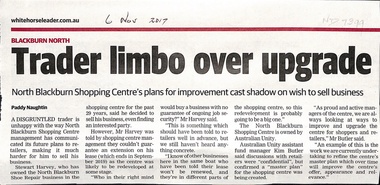
Article, North Blackburn Shopping Centre, 2017
... ...australian unity...The North Blackburn Shopping Centre will not renew his lease beyond Sep 2019 due to plans to upgrade the Centre. north blackburn square shopping centre australian unity north blackburn shoe repair harvey stewart Mr Harvey of the North Blackburn Shoe Repair is wanting to sell his business. ...Mr Harvey of the North Blackburn Shoe Repair is wanting to sell his business.Mr Harvey of the North Blackburn Shoe Repair is wanting to sell his business but the North Blackburn Shopping Centre will not renew his lease beyond Sep 2019 due to plans to upgrade the Centre.Mr Harvey of the North Blackburn Shoe Repair is wanting to sell his business.north blackburn square shopping centre, australian unity, north blackburn shoe repair, harvey, stewart -
Lakes Entrance Historical Society
Functional object - Stamper/Manchester Unity, 1980
... Stamper used by Australian Unity Society...Stamper used by Australian Unity Society Clubs Management Manchester Unity Stamper Functional object Stamper/Manchester Unity ...Stamper used by Australian Unity SocietyStamper Manchester Unityclubs, management -
 Wycheproof & District Historical Society Inc.
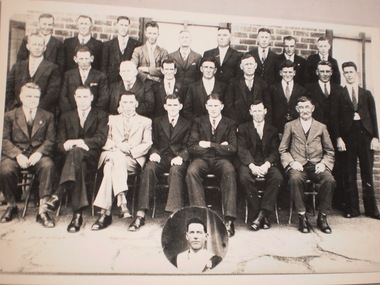
Framed photograph, AUSTRALIAN NATIVES' ASSOCIATION A.N.A, 1932
... Later it became Australian Unity....Later it became Australian Unity. Photograph with brown timber frame. 1929-1932 twenty-six Australian Natives' Members: Bill Dawson, Jim Carlyon, George Arnel, Ernie Dawson, Les Williams, Herb McCoy, George Sanger, Bob Ramage, Das. ...A.N.A at Wycheproof opened November 24,1885. Later it became Australian Unity.Photograph with brown timber frame. 1929-1932 twenty-six Australian Natives' Members: Bill Dawson, Jim Carlyon, George Arnel, Ernie Dawson, Les Williams, Herb McCoy, George Sanger, Bob Ramage, Das. McKellar, Charlie Payne, Alf Poole, Bill McGillivray, Bill Jones, Les Parker, Bob Reade, Con Taylor, F.Mannix , Bert Locke , Fred Golder, Clem Rogers, Jim Robertson , Eric Taylor, Keith Pym, Harold Harbour, George Atkinson, Angus Brown. -
 Greensborough Historical Society
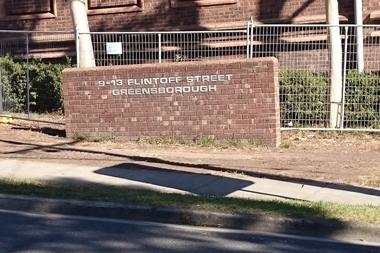
Photograph - Digital image, Marilyn Smith, 9-11 Flintoff Street Greensborough Sign, 28/02/2017
... This property in Flintoff Street Greensborough was once the Banyule Council's Service Centre and was recently (2016) purchased by Australian Unity to be developed as a health care facility....This property in Flintoff Street Greensborough was once the Banyule Council's Service Centre and was recently (2016) purchased by Australian Unity to be developed as a health care facility. flintoff street 4 digital colour photographs 9-11 Flintoff Street Greensborough Sign Photograph - Digital image Marilyn Smith ...This property in Flintoff Street Greensborough was once the Banyule Council's Service Centre and was recently (2016) purchased by Australian Unity to be developed as a health care facility.4 digital colour photographsflintoff street -
 St Kilda Historical Society
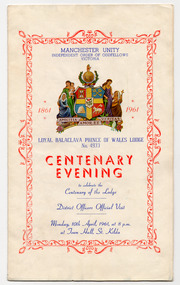
Ephemera - Program, Centenary Evening, 1961
... In 1993 Manchester Unity (Victoria) merged with the Australian Natives Association to form Australian Unity Friendly Society Limited, now known as Australian Unity Limited....In 1993 Manchester Unity (Victoria) merged with the Australian Natives Association to form Australian Unity Friendly Society Limited, now known as Australian Unity Limited. ...Program of an evening to celebrate the centenary of the Loyal Balaclava Prince of Wales Lodge No. 4933, of the Manchester Unity Independent Order of Oddfellows (MUIOOF) Victoria, on 10 April 1961. MUIOOF originated in Manchester, England and was established in Melbourne in 1840. By the end of the century, it had an extensive network of lodges throughout Victoria. In 1993 Manchester Unity (Victoria) merged with the Australian Natives Association to form Australian Unity Friendly Society Limited, now known as Australian Unity Limited.Two white pages, discoloured with age, being a cover page and insert, folded and printed on one side in blue and red. On the cover page is a multi-coloured insignia.Handwritten in blue on the cover page: 'Presented to Historical Society of St. Kilda by Mrs. E. Tieiney 2/12/78'manchester unity -
 Warrnambool and District Historical Society Inc.
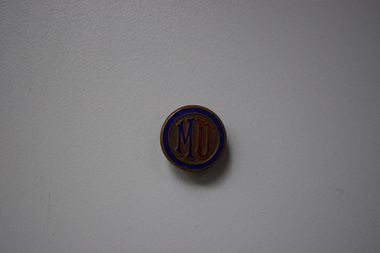
Badges, Manchester Unity, Mid 20th century
... Some years ago the Manchester Unity I. O.O.F. joined with the Australian Natives Association to form a new benefit group, Australia Unity. ...Some years ago the Manchester Unity I. O.O.F. joined with the Australian Natives Association to form a new benefit group, Australia Unity. ...The MU on these badges stands for Manchester Unity Independent Order of Oddfellows. This was one of the most prominent of the benefit societies operating in Warrnambool over the years. Originating in England, Manchester Unity I.O.O.F. was established in Warrnambool in 1860. This benefit society built and opened the Oddfellows Hall in Koroit Street Warrnambool in 1869 (building still extant but now used for office space). Some years ago the Manchester Unity I. O.O.F. joined with the Australian Natives Association to form a new benefit group, Australia Unity. These badges are of interest as mementoes of a benefit society that was prominent in Warrnambool for over 100 years..1 A round metal lapel badge with gilt edging, an outer blue band and the letters ‘MU’ in blue and red on a gold-coloured background. The stud clip is at the back. .2 As above except that it has a long stick pin attached to the back instead of a stud. MUmanchester unity independent order of oddfellows, benefit societies in warrnambool, history of warrnambool -
 Warrnambool and District Historical Society Inc.
Badge - A.N.A. Badge, 1960s
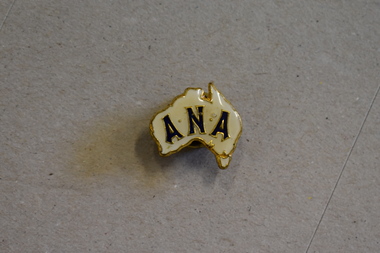
... It was historically an influential organization, being a prominent supporter of the White Australia Policy and a campaigner for Federation. It amalgamated with Manchester Unity in 1990 to form the association, Australia Unity. ...It was historically an influential organization, being a prominent supporter of the White Australia Policy and a campaigner for Federation. It amalgamated with Manchester Unity in 1990 to form the association, Australia Unity. ...This badge would have been worn by an A N A (Australian Natives' Association) member in the 1960s or 1970s. The Australian Natives' Association was a benefit association originally founded in 1871 for Australian-born white males. It was historically an influential organization, being a prominent supporter of the White Australia Policy and a campaigner for Federation. It amalgamated with Manchester Unity in 1990 to form the association, Australia Unity. The Warrnambool branch of the Australian Natives' Association, Branch Number 100, was founded in 1889 and was a prominent group in that town/city for many years.The original owner of this badge is unknown but it is retained as a memento of the A.N.A., an important group in Warrnambool for over 100 years. This is a metal badge in the shape of a stylized map of Australia with gold-coloured edgiing. It has a yellow enamel front surface with lettering in gold and black. The back has a metal pin for attachment to a lapel or other item of clothing. A N A australian natives' association, warrnambool history -
 Warrnambool and District Historical Society Inc.
Certificate, Loyal Victoria Lodge, mid 1940s
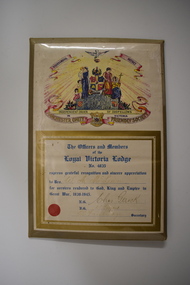
... Natives Association and today the new name in Australian Unity. No details are available on W. ... Natives Association and today the new name in Australian Unity. No details are available on W. ...The Loyal Victoria Lodge was established in Warrnambool in1862. It was a Lodge connected with the Friendly Society Manchester Unity Independent Order of Oddfellows. Friendly Societies were established to give members assistance in times of illness and hardship and to offer insurance against such events. The MUIOOF had its origins in Manchester, England. The Warrnambool Lodge built the Oddfellows Hall in Koroit Street in 1869 and in 1872 it joined with other friendly societies and established the Friendly Societies Park in Koroit Street. The MUIOOF joined with the Australian Natives Association and today the new name in Australian Unity. No details are available on W. A. McLean but the certificate indicates that he served his country during World War Two.This certificate is of considerable interest as the Loyal Victoria Lodge was a pioneer friendly society in Warrnambool with its history going back to 1862. It is also a good example of the certificates given to Warrnambool residents who had rendered significant war time service in World War Two.Framed Certificate featuring text and a coloured picture. The picture includes: a dove, five scrolls, a laurel wreath surrounding a globe, three women in long dresses, three young children, two stylised flower beds, rays of light, a hill and four coats of arms. It is covered with clear plastic with a metal back and metal prop. WARRNAMBOOL DISTRICT INDEPENDENT ORDER OF ODDFELLOWS IN VICTORIA MANCHESTER UNITY FRIENDLY SOCIETY. The Officers and Members of the Loyal Victoria Lodge No. 4835 express grateful recognition and sincere appreciation to Bro. W. A. McLean for services rendered to God, King and Empire in Great War, 1939- 1945. N.G.Chas Gerock V.G. F.J. Toogood Rob Fairbridge Secretary. a circular red seal. -
 Warrnambool and District Historical Society Inc.
Administrative record (collection) - Warrnambool Lodge Collection, Loyal Warrnambool Lodge, throughout the 20th century
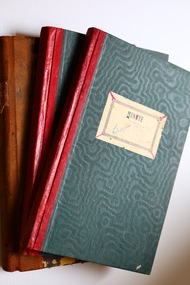
... Natives Association (A.N.A.) and today operates as Australia Unity.... Natives Association (A.N.A.) and today operates as Australia Unity. This collection is an important historical record of 2 benefit groups in Warrnambool, with the Minute Books in particular containing much material of use to researchers. ...Collection of items donated in past by unknown donor(s)Record of Warrnambool Benefit GroupCollection kept in archival boxes and recorded on data baseLodge Minute Books (6), Rule Books (2), Accounting sheets (3)warrnambool benefit societies, loyal victoria lodge, warrnamboolwarrnambool benefit societies, loyal victoria lodge, warrnambool -
 Warrnambool and District Historical Society Inc.
Book, Horticultural Press Pty Ltd, Australian Natives Association Reports of Proceedings, 1941
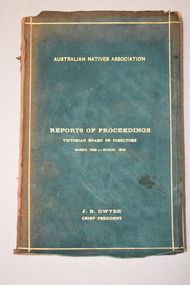
... The A.N.A. was influential in Australian politics, especially in the 1890s when it campaigned vigorously for Federation. In 1993 it merged with Manchester Unity I.O.O.F. to form Australia Unity, for many years the largest benefit society in Australia. ...The A.N.A. was influential in Australian politics, especially in the 1890s when it campaigned vigorously for Federation. In 1993 it merged with Manchester Unity I.O.O.F. to form Australia Unity, for many years the largest benefit society in Australia. ...This book, a de-luxe copy, was given to John Dwyer as the Chief President of the Australian Natives Association from 1938 to 1940. The Australian Natives Association (A.N.A.) was established in Melbourne in 1871 as a benefit society. Originally membership was restricted to white men born in Australia. The A.N.A. was influential in Australian politics, especially in the 1890s when it campaigned vigorously for Federation. In 1993 it merged with Manchester Unity I.O.O.F. to form Australia Unity, for many years the largest benefit society in Australia. The annual Victorian Conference of A.N.A was held in Warrnambool in 1931. John Beynon Dwyer (1904-1999) came to Warrnambool in 1937 and assumed control of the legal practice in Kepler Street of Desmond Dunne, retiring in 1984. J. B. Dwyer was a long-serving City Councillor (1937-1975) and was awarded an O.B.E. for municipal service in 1966. This book is of considerable importance as it was a presentation copy given to John B. Dwyer, a prominent Warrnambool lawyer, when he retired as Chief President of the Australian Natives Association in 1940. This is a soft-cover book of 92 pages. It is a de-luxe edition with a green leather cover with gold printing on the front. The inside of the covers has a green and yellow mottled pattern. The leather on the spine is very worn and the book’s cover is scuffed. There are some insert title pages in yellow and blue thick card. There is one loose leaflet.‘Australian Natives Association’ ‘Reports of Proceedings Victorian Board of Directors March 1938 to March 1940’ ‘J.B.Dwyer Chief President’ john b. dwyer, warrnambool, australian natives association, history of warrnambool -
 Warrnambool and District Historical Society Inc.
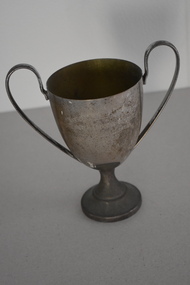
Trophy, W&D United Friendly Benefit Quoits 1933, 1933
... The A.N.A merged with the M.U.I.O.O.F some years ago and operates today as the benefit group, Australia Unity. The trophy won by A.N.A. in 1933 was for quoits, a popular indoor game in the 1930s and still played today, mainly on social occasions. ...The A.N.A merged with the M.U.I.O.O.F some years ago and operates today as the benefit group, Australia Unity. The trophy won by A.N.A. in 1933 was for quoits, a popular indoor game in the 1930s and still played today, mainly on social occasions. ...This is a trophy awarded by an association of Friendly Societies in Warrnambool in 1933. Friendly or Benefit Societies have operated in Warrnambool since 1860 when the Manchester Unity Independent Order of Oddfellows Lodge was formed. Benefit societies such as this were set up mainly for social reasons and to assist members in times of sickness or to provide insurance in case of illness or hardship. Other societies had specific aims such as the promotion of temperance or allegiance to a particular church or country. The Australian Natives Association (A.N.A.) the winner of this trophy was set up in Warrnambool in the late 19th century and it was an active society with regular meetings, discussion groups, lectures and campaigns for the social justice issues of the day. The A.N.A. in Australia was influential in promoting nationalism and campaigning for Federation. The A.N.A merged with the M.U.I.O.O.F some years ago and operates today as the benefit group, Australia Unity. The trophy won by A.N.A. in 1933 was for quoits, a popular indoor game in the 1930s and still played today, mainly on social occasions. This trophy is of interest as it dates from the 1930s and is connected with the Warrnambool Friendly Societies of the time and especially the Australian Natives Association (A.N.A.)This is an electro plated nickel silver cup with two side handles, a short stem and a round silver base. An inscription is on one side of the cup. The cup is much stained. ‘Warrnambool & District United Friendly Benefit Societies Association Quoits 1933 Won by A.N.A.’friendly societies warrnambool, australian natives association warrnambool -
 Bendigo Historical Society Inc.
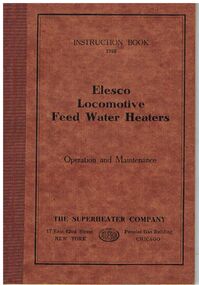
Book - BADHAM COLLECTION: 1925 INSTRUCTION BOOK - ELESCO LOCOMOTIVE FEED WATER HEATERS
... Inside the cover is a branch rubber stamp, The Superheater company (Australia) Ltd, Manchester unity Building, 185 Elizabeth St, Sydney NSW. ...Inside the cover is a branch rubber stamp, The Superheater company (Australia) Ltd, Manchester unity Building, 185 Elizabeth St, Sydney NSW. ...Instruction Book 1925. Elesco Locomotive Feed Water Heaters, operation and maintenance. The Superheater Company, 17 East 42nd Street new York, peoples gas building Chicago, Copyright 1925. Inside the cover is a branch rubber stamp, The Superheater company (Australia) Ltd, Manchester unity Building, 185 Elizabeth St, Sydney NSW. The book has a small brown cardboard cover with purple binding.document, memo, railway, elesco locomotive feed water heaters. the superheater company 17 east 42nd street new york. -
 Bendigo Historical Society Inc.
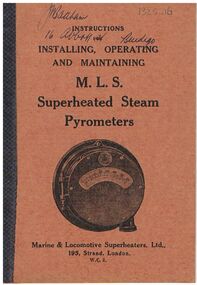
Document - BADHAM COLLECTION: INSTALLING, OPERATING AND MAINTAINING M.L.S. SUPERHEATED STEAM PYROMETERS
... 16 Abbott St Bendigo / 'The Superheated Company (Australia ) Ltd Manchester Unity Building ...On page 1 rubber stamp 'The Superheated Company (Australia ) Ltd Manchester Unity Building, 185 Elizabeth St. ...On page 1 rubber stamp 'The Superheated Company (Australia ) Ltd Manchester Unity Building, 185 Elizabeth St. ...Instructions for installing, operating and maintaining M.L.S. Superheated Steam Pyrometers, Marine and Locomotive Superheaters Ltd , 195 Strand, London wc2. Owner J Badham, 16 Abbott St Bendigo. Small booklet with brown cover in black binding shows picture of Pyrometer on front. On page 1 rubber stamp 'The Superheated Company (Australia ) Ltd Manchester Unity Building, 185 Elizabeth St. Sydney NSW - phone MA 5886'.book, engineering, pyrometers, marine and locomotive superheaters ltd , 195 strand , london wc2 / owner j badham , 16 abbott st bendigo / 'the superheated company (australia ) ltd manchester unity building , 185 elizabeth st. sydney nsw - phone ma 5886 -
 Flagstaff Hill Maritime Museum and Village
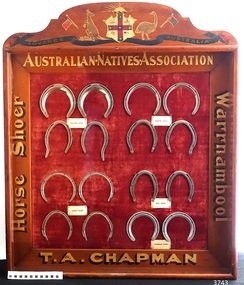
Memorabilia - Horseshoe Case, 1906 – 1907
... The ANA campaigned against the Australian Federal Government's new immigration policy after the Second World War (non-British immigration from southern and central Europe) in order to maintain a 'white Australia', and resisted changes when the Labor government during the 1970s fully dismantled and abandoned the White Australia Policy. The ANA merged with Manchester Unity Independent Order of Oddfellows, in 1993 to become Australian Unity Ltd. ...The ANA campaigned against the Australian Federal Government's new immigration policy after the Second World War (non-British immigration from southern and central Europe) in order to maintain a 'white Australia', and resisted changes when the Labor government during the 1970s fully dismantled and abandoned the White Australia Policy. The ANA merged with Manchester Unity Independent Order of Oddfellows, in 1993 to become Australian Unity Ltd. ...The horseshoes in this purpose-built display case were made by Thomas Alfred Chapman in 1906-1907. Chapman operated a blacksmith’s shop in Mortlake Rd, Purnim, about 15 mins drive from Warrnambool. Chapman made this horseshoe case especially for the 3rd Exhibition of Australian Manufacturers and Products, held in the Exhibition Building in Melbourne, which was organised and promoted by the Australian Natives Association (ANA). Reference is made to the horseshoe case in the Exhibition’s Souvenir Catalogue of 1907 on page 85, under the heading 'In the Machinery Section the following exhibits are also shown … 'CHAPMAN, T.A. , Woolsthorpe, via Warrnambool, Case of Horseshoes'. The Australian Natives’ Association (ANA) were a non-partisan and non-sectarian, friendly society founded in Melbourne, Australia in April 1871. It was set-up for the benefit of Australian-born white men, and membership was restricted exclusively to that group. Men of other races including the Chinese and Indigenous people were not allowed to join. The ANA had relatively progressive views on women (for the time) and attracted suffragists seeking support for their cause, and in 1894, the ANA advocated for women’s enfranchisement. Although, white women were only admitted as members from 1964. The organisation was most prominent in Victoria and sought to shape Australia’s national identity and was a training ground for businessmen, trade unionists and politicians including many of Australia’s early prime ministers such as Edmund Barton, Alfred Deakin, James Scullin and Francis Forde, and the first Australian-born governor-general, Isaac Isaacs, was a member. By 1910 it had developed into a nationwide association with real political and social influence, and members would participate in many activities. The ANA lobbied strongly for anti-Chinese legislation and were an ardent believer of colonial unification. Its mission and efforts are largely credited for the successful referendums that resulted in Federation of the six Australian colonies into a new nation, the association’s most important legacy. The ANA was also a supporter of trade protection, and were a staunch advocate of the first act of Australia's new parliament, the Immigration Restriction Act 1901 (cth) or commonly known as the White Australia Policy, which became one of the central pillars of Australian nationalism in the 20th-century. The ANA campaigned against the Australian Federal Government's new immigration policy after the Second World War (non-British immigration from southern and central Europe) in order to maintain a 'white Australia', and resisted changes when the Labor government during the 1970s fully dismantled and abandoned the White Australia Policy. The ANA merged with Manchester Unity Independent Order of Oddfellows, in 1993 to become Australian Unity Ltd. The display case of horseshoes changed hands several times, going from its maker Thomas Chapman to his mother then various other members of his family. The case was also displayed at the Lee Family’s butcher shop at 188 Liebig St Warrnambool, and in the Purnim Hotel during the Warrnambool May Races. In the late 1950s the horseshoe case went to Thomas’s son, Brian. He was a Master Farrier and completed his apprenticeship at Flemington Racecourse, and in Warrnambool he owned a blacksmith business at the Warrnambool Racecourse Grounds. Brian later operated a blacksmith’s at Flagstaff Hill, where his customers would bring their horses to be shod. Brian passed away in August 2017. The horseshoe case is significant as an example of trades in the early 20th century in Western Victoria, Australia. It is also significant as an example of horseshoes from the early 20th century. The horseshoe display case is also significant for its association with the Australian Exhibition of 1907, showcasing Australian produce and manufacturing to the world. The horseshoe display case is locally significant for its association with local families, essential businesses and community events. Display case of homemade horseshoes. Wooden case with glass front containing 16 horse shoes grouped in sets, each set with a label: Made 1906-1907 for Australian Exhibition of 1907 by Thomas Alfred Chapman of Warrnambool. The case contains (a) complete chrome set each of Trotting Shoes, Hunting Shoes and Racing Plates, and (b) one pair of Hind Polo Shoes and one pair of Front Aluminium Shoes. The wooden frame has gold lettering on each side proclaiming “Australian Natives Association, T.A. Chapman, horse shoer, Warrnambool” and is topped by a painted Australian coat of arms. Gold lettering on frame, in the order of top/bottom/ left/right “AUSTRALIAN.NATIVES.ASSOCIATION / T.A. CHAPMAN / Horse Shoer / Warrnambool”flagstaff hill, warrnambool, shipwrecked coast, maritime museum, shipwreck coast, horseshoe display case 1906-1907, chromed set of trotting shoes 1906-1907, chrome set of hunting shoes 1906-1907, chrome set of racing plates 1906-1907, pair of hind polo shoes 1906-1907, pair of front aluminium shoes 1906-1907, australian exhibition 1907, australian natives association (ana), t.a. chapman horse shoer warrnambool, thomas alfred chapman, brian chapman, brian “snacks” chapman, blacksmith warrnambool, warrnambool may races, warrnambool racecourse, purnim hotel, lee family’s butcher shop warrnambool -
Glen Eira Historical Society
Book - Uniting Church in Australia – Elsternwick/Caulfield South Parish
... Australia Elsternwick/Caulfield South Parish. There were previously nine churches before the union. The book includes short histories about all of the churches, their congregation ministers and some memories from the church members. There are twenty black and white photographs, three illustrations and a map of the churches in the book. Included at p32 is 1 1/2 pages of memories from Glen Eira Historical Society member Norma Ward. 2/The second document is an order of service for the Unity...Australia Elsternwick/Caulfield South Parish. There were previously nine churches before the union. The book includes short histories about all of the churches, their congregation ministers and some memories from the church members. There are twenty black and white photographs, three illustrations and a map of the churches in the book. Included at p32 is 1 1/2 pages of memories from Glen Eira Historical Society member Norma Ward. 2/The second document is an order of service for the Unity ...Two items about this subject: /A book written by Gwenda Mann (donator) about the coming together of Uniting Church Australia Elsternwick/Caulfield South Parish. There were previously nine churches before the union. The book includes short histories about all of the churches, their congregation ministers and some memories from the church members. There are twenty black and white photographs, three illustrations and a map of the churches in the book. Included at p32 is 1 1/2 pages of memories from Glen Eira Historical Society member Norma Ward. 2/The second document is an order of service for the Unity Church Australia on 09/08/1998. There are two illustrations in the pamphlett.balaclava methodist, caulfield – kooyong road methodist, caulfield – hawthorn road methodist, caulfield – bambra road methodist, caulfield – bundeera road methodist, caulfield west – ontario street methodist, elsternwick – orrong road methodist, elsternwick congregational – ex union church, elsternwick – st. john’s presbyterian, elsternwick methodist, camden primitive methodist, ontario street methodist, bundeera road methodist, bambra road methodist, kooyong road methodist, caulfield presbyterian church, caulfield union church, mann gwenda, gray gordon, wright joan rev., parish, church, ward norma -
 Sunshine and District Historical Society Incorporated
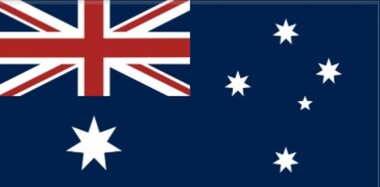
Flag - Australian Flag
... Australia’s history and national story. The Union Jack - Located in the canton (top-left corner), the position of honour. - Acknowledges the history of British settlement and the institutions inherited from Britain, the parliamentary democracy, rule of law, and civic rights. The Commonwealth Star - Large seven‑pointed star beneath the Union Jack. - Six points, the six points represent the states, the seventh point represents all territories. - Represents federation and the unity of Australia as a Commonwealth. ...Australia’s history and national story. The Union Jack - Located in the canton (top-left corner), the position of honour. - Acknowledges the history of British settlement and the institutions inherited from Britain, the parliamentary democracy, rule of law, and civic rights. The Commonwealth Star - Large seven‑pointed star beneath the Union Jack. - Six points, the six points represent the states, the seventh point represents all territories. - Represents federation and the unity of Australia as a Commonwealth. ...The Australian flag symbolises the nation’s origins, identity, and political structure. Its three core elements, the Union Jack, the Commonwealth Star, and the Southern Cross represent a different layer of Australia’s history and national story. The Union Jack - Located in the canton (top-left corner), the position of honour. - Acknowledges the history of British settlement and the institutions inherited from Britain, the parliamentary democracy, rule of law, and civic rights. The Commonwealth Star - Large seven‑pointed star beneath the Union Jack. - Six points, the six points represent the states, the seventh point represents all territories. - Represents federation and the unity of Australia as a Commonwealth. The Southern Cross - Five stars on the fly side of the flag. - A constellation visible only in the Southern Hemisphere, long used for navigation by explorers and sailors. - Holds deep significance in First Nations astronomy, with many cultural stories attached to it. - Symbolises Australia’s geographical location and its identity as a southern nation. The Australian flag was first flown in 1901 after a public design competition with over 32,000 entries. It was officially adopted in 1903 and modified in 1908 to add the seventh point to the Commonwealth Star. It became the official national flag in 1954 under the Flags Act, reflecting Australia’s growing independence from Britain.Australian Flag. This flag is suitable to be flown on a flagpole.Manufacturer's Tag: Manufactured in Australia by Carroll & Richardsonaustralian flag -
 Flagstaff Hill Maritime Museum and Village
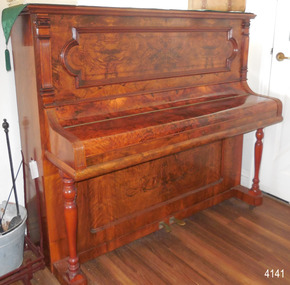
Instrument - Musical, Piano, Renardi, c. 1900
... Australian music stores. This Renardi piano represents an era where musical gatherings were part of domestic entertainment. Pianos were ialso installed in clubs, public halls and hospitality businesses for song nights and concerts were encouraged for community unity. flagstaff hill warrnambool shipwrecked-coast flagstaff-hill flagstaff-hill-maritime-museum maritime-museum shipwreck-coast flagstaff-hill-maritime-village musical instrument upright piano german renardi victorian era late 19th century entertainment "RENARDI" Piano, upright, walnut veneer with floral design on panels. ...This solid, late Victorian era piano is branded Renardi, which is a German name. In the late 19th century thousands of pianos were exported from Germany to Australia. Some, unfortunately, were amongst the cargo of shipwrecks. It seems that the Renardi pianos were not made by a Renardi company but made to order by any of a number of German piano manufacturer and branded for distribution by Australian music stores.This Renardi piano represents an era where musical gatherings were part of domestic entertainment. Pianos were ialso installed in clubs, public halls and hospitality businesses for song nights and concerts were encouraged for community unity.Piano, upright, walnut veneer with floral design on panels. Turned columns, hinged lid and two metal pedals. Branded Renardi, a German name, made c. 1900. "RENARDI"flagstaff hill, warrnambool, shipwrecked-coast, flagstaff-hill, flagstaff-hill-maritime-museum, maritime-museum, shipwreck-coast, flagstaff-hill-maritime-village, musical instrument, upright piano, german, renardi, victorian era, late 19th century, entertainment -
 Federation University Historical Collection
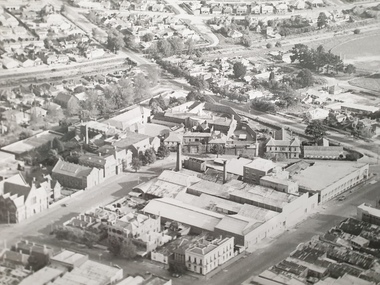
Photograph - Photorgraphs - Black and White, Aerial Photographs around the Ballarat School of Mines, Pre 1967
... Shows Ballarat School of Mines, Ballarat Gaol, Ballarat Junior Technical School, Albert Street, Gaol garden, Manchester Unity Hall Aerial Photographs around the Ballarat School of Mines Photograph Photorgraphs - Black and White Australia Victoria Ballarat ...Ballarat School of Mines is in Lydiard Street South, in close proximity to White Flat oval. 3821.1 & .2 - Black and white photograph taken from an aeroplane over Ballarat. Shows Ballarat School of Mines, Ballarat Gaol, Ballarat Girls' Technical School, gasometers, White Flat, Yarrowee Channel. 8251.3 & .4 & .5 - Black and white photograph taken from an aeroplane over Ballarat. Shows Ballarat School of Mines, Ballarat Gaol, Ballarat Junior Technical School, Albert Street, Gaol garden, Manchester Unity Hall ballarat school of mines, aerial photograph, hickman street, white flat oval, former ballarat gaol, ballarat girls' technical school, gasometer, aeroplane, white flat, armstrong street south, ballarat gaol, manchester university hall -
 Federation University Historical Collection
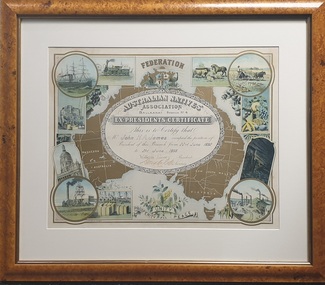
Certificate - Framed certificate, F.W. Niven and Co, Australian Natives' Assoiation Ballarat Branch No 4 Certificate, c1893
... The motto of the ANA was Unity, Prosperity, Peace ana australian natives' association john h.a. jones ship steam train horses cows plough industry\weaving mining f.w. niven poppet head A framed certificate of the Australian Natives' Assoiation Ballarat Branch No 4 made out to Hohn H.A. ...The motto of the ANA was Unity, Prosperity, PeaceA framed certificate of the Australian Natives' Assoiation Ballarat Branch No 4 made out to Hohn H.A. James.ana, australian natives' association, john h.a. jones, ship, steam train, horses, cows, plough, industry\weaving, mining, f.w. niven, poppet head -
 Federation University Historical Collection
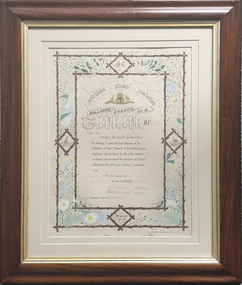
Administrative record - Framed certificate, Arnold S. Burbidge, Ballaarat, Australian Natives' Assoiation Ballarat Branch No 4 Certificate, c1882
... The motto of the ANA was Unity, Prosperity, Peace ana australian natives' association r. mcrae ballarat branch no 4 A framed certificate of the Australian Natives' Assoiation Ballarat Branch No 4 made out to R. ...The motto of the ANA was Unity, Prosperity, PeaceA framed certificate of the Australian Natives' Assoiation Ballarat Branch No 4 made out to R. McRae.ana, australian natives' association, r. mcrae, ballarat branch no 4 -
 Flagstaff Hill Maritime Museum and Village
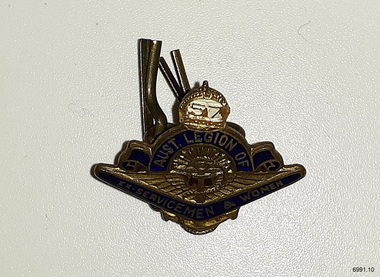
Badge - Australian Legion of Ex-Servicemen and Women, Stokes, Membership badge, 1957
... The badge was issued by the Victorian branch (indicated by the 'V' on the reverse) of the Australian Legion of Ex-Servicemen and Women and is referred to as The Badge of Unity or Tri-Services badge, uniting the armed services of Australia; the Army (rising sun), the Navy (anchor) and the Air Force (pair of wings). ...The badge was issued by the Victorian branch (indicated by the 'V' on the reverse) of the Australian Legion of Ex-Servicemen and Women and is referred to as The Badge of Unity or Tri-Services badge, uniting the armed services of Australia; the Army (rising sun), the Navy (anchor) and the Air Force (pair of wings). ...The badge was issued by the Victorian branch (indicated by the 'V' on the reverse) of the Australian Legion of Ex-Servicemen and Women and is referred to as The Badge of Unity or Tri-Services badge, uniting the armed services of Australia; the Army (rising sun), the Navy (anchor) and the Air Force (pair of wings). The number '57' on the crown represents the year of paid membership; 1957. The badge belonged to Dr W R Angus, who served in the Australian Army as a military doctor during WWII. It was made in Melbourne by Stokes in 1957, around 100 years after the firm was established by Thomas Stokes in Mincing Lane, Melbourne. The firm was operating from Caledonian Lane/Post Office Place in the 1950s. The badge is one of a set of badges collected by Dr W R Angus from the organisations in which he was involved. They are now part of Flagstaff Hill’s comprehensive W.R. Angus Collection, donated by the family of Dr W R Angus, surgeon and oculist. Australian Legion of Ex-Servicemen and Women was formed in 1944 to "entourage fellowship and assist those who have served". The organisation is open to members from Australia, British Commonwealth and Allied ex-service personnel. The W.R. Angus Collection: - The W.R. Angus Collection includes historical medical equipment, surgical instruments and material once belonging to Dr Edward Ryan and Dr Thomas Francis Ryan, (both of Nhill, Victoria) as well as Dr Angus’ own belongings. The Collection’s history spans the medical practices of the two Doctors Ryan, from 1885-1926 plus that of Dr Angus, up until 1969. It includes historical medical and surgical equipment and instruments from the doctors Edward and Thomas Ryan of Nhill, Victoria. Dr Angus married Gladys in 1927 at Ballarat, the nearest big city to Nhill where he began as a Medical Assistant. He was also Acting House surgeon at the Nhill hospital where their two daughters were born. During World War II He served as a Military Doctor in the Australian Defence Force. Dr Angus and his family moved to Warrnambool in 1939, where Dr Angus operated his own medical practice. He later added the responsibility of part-time Port Medical Officer and was the last person appointed to that position. Both Dr Angus and his wife were very involved in the local community, including the planning stages of the new Flagstaff Hill and the layout of the gardens there. Dr Angus passed away in March 1970.This Badge of Unity, or Tri-Service badge, is significant for connecting Doctor Angus with organisations that support men and women who performed military service for Australia. The badge was for membership with the organisation, which supports ex-servicemen and women of the three military forces; Army, Navy and Air Force. The W.R. Angus Collection is significant for still being located at the site it is connected with, Doctor Angus being the last Port Medical Officer in Warrnambool. The Collection includes historical medical objects that date back to the late 1800s.Badge; a gold-coloured metal and enamel badge. The blue boomerang-shaped band is below an arch of blue, below a crown with a number and coloured red, white and blue. There are symbols in the centre; a rising sun, above a pair of wings, with an anchor in the centre of both. There is red and blue scrollwork behind the symbols. Inscriptions are on the front and back of the badge. There are two loops and pins on the back of the badge. It is a membership badge of the Victorian branch of the Australian Legion of Ex-Servicemen and Women and was made by Stokes in 1957. The badge has a Serial Number. This badge is part of a set of badges collected by Dr Angus and is part of the W.R. Angus Collection.FRONT; “AUST. LEGION OF / EX-SERVICEMEN & WOMEN” On crown “57” REVERSE; “V” “13156" "STOKES” flagstaff hill, warrnambool, maritime museum, maritime village, great ocean road, shipwreck coast, w.r. angus, badge, ladies’ badge, military service, stokes, melbourne, australian legion of ex-servicemen and women, membership badge, 1957 membership badge, ex=service personnel, heraldry, world war ii, second world war, tri-services symbol, badge of unity, rising sun, anchor, pair of wings -
 Flagstaff Hill Maritime Museum and Village
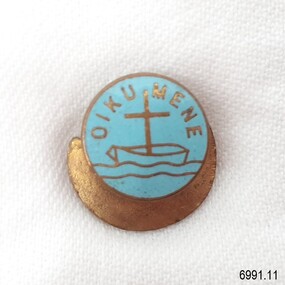
Badge - World Council of Churches, OIKUMENE, 1940s
... Australian organisations of the early-to-mid 20th century, including those relating to military service support. The W.R. Angus Collection is significant for still being located at the site it is connected with, Doctor Angus being the last Port Medical Officer in Warrnambool. The Collection includes historical medical objects that date back to the late 1800s. Flagstaff Hill Warrnambool Maritime Museum Maritime Village Great Ocean Road Shipwreck Coast Oikumene W.R. Angus metal badge enamel badge organisation badges religious badge lapel badge OIKOUMENE World Council of Churches WCC Christian unity ...This small label badge carries the symbol of the World Council of Churches (WCC), which was established in 1948. The WCC states on its website "The World Council of Churches (WCC) is the broadest and most inclusive among the many organized expressions of the modern ecumenical movement, a movement whose goal is Christian unity. " The 'V' on the back of the badge possibly stands for Victoria. The word on the logo of this badge has the spelling "OIKUMENE" but in many other WCC logos, the Greek word "Oikoumene" is used. The term is translated as "inhabited earth" and is used fifteen times in the original Greek New Testament, including in Matthew 24:14, which says "And the gospel of the kingdom shall be preached in all the world for a witness unto all nations and then shall the end come." The WCC explains that the logo uses early Christian symbols to portray its message, with the church portrayed as a boat afloat on the sea of the world with the mast in the form of a cross. This badge is part of a set of eleven badges collected from the 1920s to the 1940s by Dr W. R. Angus. The set represents various organisations that he had interests in. It was donated to Flagstaff Hill Maritime Village by the family of Doctor Angus, Surgeon and Oculist. The set of badges is part of the “W.R. Angus Collection” which includes historical medical equipment, surgical instruments and material once belonging to Dr Edward Ryan and Dr Thomas Francis Ryan, (both of Nhill, Victoria) as well as Dr Angus’ own belongings. The Collection’s history spans the medical practices of the two Doctors Ryan, from 1885-1926 plus that of Dr Angus, up until 1969. ABOUT THE “W.R.ANGUS COLLECTION” Doctor William Roy Angus M.B., B.S., Adel., 1923, F.R.C.S. Edin.,1928 (also known as Dr Roy Angus) was born in Murrumbeena, Victoria in 1901 and lived until 1970. He qualified as a doctor in 1923 at the University of Adelaide, was Resident Medical Officer at the Royal Adelaide Hospital in 1924 and for a period was a house surgeon to Sir (then Mr.) Henry Simpson Newland. Dr Angus was briefly an Assistant to Dr Riddell of Kapunda, then commenced private practice at Curramulka, Yorke Peninsula, SA, where he was a physician, surgeon and chemist. In 1926, he was appointed as the new Medical Assistant to Dr Thomas Francis Ryan (T.F. Ryan, or Tom), in Nhill, Victoria, where his experiences included radiology and pharmacy. In 1927 he was Acting House Surgeon in Dr Tom Ryan’s absence. Dr Angus married Gladys in 1927 at Ballarat, the nearest big city to Nhill where he began as a Medical Assistant. He was also Acting House surgeon at the Nhill hospital where their two daughters were born. During World War II He served as a Military Doctor in the Australian Defence Forces. Dr Angus and his family moved to Warrnambool in 1939, where Dr Angus operated his own medical practice. He later added the part-time Port Medical Officer responsibility and was the last person appointed to that position. Both Dr Angus and his wife were very involved in the local community, including the planning stages of the new Flagstaff Hill and the layout of the gardens there. Dr Angus passed away in March 1970.This religious lapel badge of the World Council of Churches represents one of the organisations in which Dr Angus had an interest. The set of badges is significant for connecting Doctor Angus with Australian organisations of the early-to-mid 20th century, including those relating to military service support. The W.R. Angus Collection is significant for still being located at the site it is connected with, Doctor Angus being the last Port Medical Officer in Warrnambool. The Collection includes historical medical objects that date back to the late 1800s.Lapel badge; a small round blue enamel badge with gold image and text. The image contains the symbol of a cross above a small boat on waves. The image is the logo of the World Council of Churches.This badge is part of a set of badges collected by Dr W R Angus. the set represents organisations that he was involved in, and is part of the W.R. Angus Collection.Test above Logo: “OIKUMENE” Logo; [cross] above [small boat] above [waves] Text under clip; “V” flagstaff hill, warrnambool, maritime museum, maritime village, great ocean road, shipwreck coast, oikumene, w.r. angus, metal badge, enamel badge, organisation badges, religious badge, lapel badge, oikoumene, world council of churches, wcc, christian unity -
 Orbost & District Historical Society
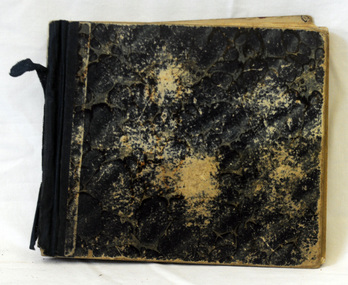
book, 1928-1933
... Unity Independent Order of Oddfellows (MUIOOF) had its origins in Manchester, England. It was established in Melbourne on 7 December 1840 when Augustus Greeves, a member of the MUIOOF in England, migrated to Australia and formed the first friendly society. ...Unity Independent Order of Oddfellows (MUIOOF) had its origins in Manchester, England. It was established in Melbourne on 7 December 1840 when Augustus Greeves, a member of the MUIOOF in England, migrated to Australia and formed the first friendly society. ...Manchester Unity Independent Order of Oddfellows (MUIOOF) had its origins in Manchester, England. It was established in Melbourne on 7 December 1840 when Augustus Greeves, a member of the MUIOOF in England, migrated to Australia and formed the first friendly society. In 1840 Manchester Unity IOOF was founded in Victoria.Friendly Societies were founded in the Australian Colonies in the mid-19th Century by immigrants from England who had been members in Societies which dated back to the 18th Century. Like all working people these immigrants experienced sickness, accidents, unemployment, death and burial. They needed help of like fellows to tide their families over these times. So they formed a branch of one of the Friendly Societies back in the mother country. The idea was to make fixed contributions to a fund and when they were off work they would receive a payment. When they died funeral benefits would be paid and the widow and children would be cared for. It was a form of local insurance for hard times. This was a time of 'look after yourself' as the Colonial Governments did not provide pensions or benefits. This item reflects those times. A small hard cover blue book holding certificates of M.O.O.O.F. members.m.u.i.o.o.f. friendly-society -
 Orbost & District Historical Society
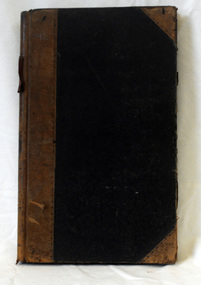
book, 1936
... (Manchester Unity Independent Order Of Oddfellows) accounts of the Orbost group. Friendly Societies were founded in the Australian Colonies in the mid-19th Century by immigrants from England who had been members in Societies which dated back to the 18th Century. ...(Manchester Unity Independent Order Of Oddfellows) accounts of the Orbost group. Friendly Societies were founded in the Australian Colonies in the mid-19th Century by immigrants from England who had been members in Societies which dated back to the 18th Century. ...This book contains M.U.I.O.O.F. (Manchester Unity Independent Order Of Oddfellows) accounts of the Orbost group. Friendly Societies were founded in the Australian Colonies in the mid-19th Century by immigrants from England who had been members in Societies which dated back to the 18th Century. Like all working people these immigrants experienced sickness, accidents, unemployment, death and burial. They needed help of like fellows to tide their families over these times. So they formed a branch of one of the Friendly Societies back in the mother country. The idea was to make fixed contributions to a fund and when they were off work they would receive a payment. When they died funeral benefits would be paid and the widow and children would be cared for. It was a form of local insurance for hard times. This account book was used in a a time of 'look after yourself' as the Colonial Governments did not provide pensions or benefits. This item reflects those times.A hard back book with a blue cover and a brown spine.on spine on red flock in gold lettering "NIGHT BOOK:m.u.i.o.o.f.friendly-societies -
 Orbost & District Historical Society
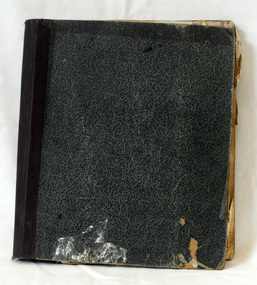
book, 1936
... (Manchester Unity Order of Oddfellows) Friendly Societies were founded in the Australian Colonies in the mid-19th Century by immigrants from England who had been members in Societies which dated back to the 18th Century. ...This book was used byb the Orbost branch of M.U.I.O.O.F. (Manchester Unity Order of Oddfellows)Friendly Societies were founded in the Australian Colonies in the mid-19th Century by immigrants from England who had been members in Societies which dated back to the 18th Century. Like all working people these immigrants experienced sickness, accidents, unemployment, death and burial. They needed help of like fellows to tide their families over these times. So they formed a branch of one of the Friendly Societies back in the mother country. The idea was to make fixed contributions to a fund and when they were off work they would receive a payment. When they died funeral benefits would be paid and the widow and children would be cared for. It was a form of local insurance for hard times. This was a time of 'look after yourself' as the Colonial Governments did not provide pensions or benefits. This item reflects those times.A hard back book with a green / blue mottled cover with a brown binding. It includes a receipt book with no cover. It holds M.I.U.O.O.F. (Manchester Unity Order of Oddfellows) accounts.friendly-society m.u.i.o.o.f. accounts -
 Orbost & District Historical Society
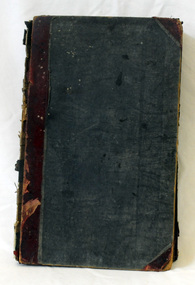
minute book, 1886
... (Manchester Unity Order of Oddfellows) Friendly Societies were founded in the Australian Colonies in the mid-19th Century by immigrants from England who had been members in Societies which dated back to the 18th Century. ...This minute book was used by the Orbost branch of M.U.I.O.O.F. (Manchester Unity Order of Oddfellows)Friendly Societies were founded in the Australian Colonies in the mid-19th Century by immigrants from England who had been members in Societies which dated back to the 18th Century. Like all working people these immigrants experienced sickness, accidents, unemployment, death and burial. They needed help of like fellows to tide their families over these times. So they formed a branch of one of the Friendly Societies back in the mother country. The idea was to make fixed contributions to a fund and when they were off work they would receive a payment. When they died funeral benefits would be paid and the widow and children would be cared for. It was a form of local insurance for hard times. This was a time of 'look after yourself' as the Colonial Governments did not provide pensions or benefits. This item reflects those times.A large thick hard back minute book used by M.U.I.O.O.F. ( Manchester Unity Order of Oddfellows). It has a blue cover with a red spine.
