
Showing 28 items matching "chairman of municipality"
-
 City of Greater Bendigo - Civic Collection
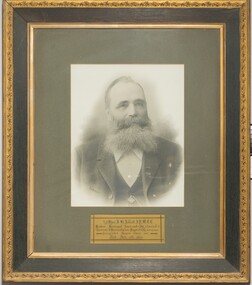
Photograph - Commemorative portrait, Hon J. H. A. Abbott J.P., M.L.C, c 1904
... ...Chairman of Municipality.... / member Municipal, town and City Council / Chairman of Municipality 1860, manager of City 1891 & 1892 / Inaugurated Mayor's Chain 1891 / Died Nov 10th 1904 llc; Bartlet Bros...Chairman of Sandhurst Borough Chairman of Municipality City of Bendigo Mayor City of Bendigo Mayoress Ann Abbott Hon J. ...Joseph Henry Abbott arrived in Australia from Birmingham England in 1852 aged 22 hoping to make his fortune on the goldfields. In 1853 he opened a store in Bendigo, Abbott and Co and from there began a lengthy career as a business man supplying the local community with goods and services, owning the New Times Boot Market & Factory in Pall Mall, Sandhurst, run by his wife, Anne (nee Deague). J H Abbott’s main ambitions were to serve on the local and state councils. He was elected Chairman of the Sandhurst Borough Council in 1860, Mayor of the City of Bendigo in 1891 and was gazetted a Justice of the Peace in 1864. Over his lifetime J H Abbott was closely linked to nearly all the leading institutions in Bendigo and worked for the benefit of local charities. He was trustee of the Bendigo Art Gallery and a Freemason and was said to be the first person in Bendigo to have a telephone installed in1882 between his residence and his business in Pall Mall. After JH Abbott died in 1904 he passed on his businesses to his son JH Abbott Jnr and adopted son RHS Abbott. These businesses continued to trade under the name JH Abbott & Co and today still operates under the name Abbott Supply although the last of the family interests ceased in 1986.Head and shoulder portrait in sepia tone of Joseph Henry Abbott. Framed and mounted photograph with separate hand-inscribed title panel. Ornamental frame with a green window mount. Hon J. H. Abbott J.P. M.L.C. / member Municipal, town and City Council / Chairman of Municipality 1860, manager of City 1891 & 1892 / Inaugurated Mayor's Chain 1891 / Died Nov 10th 1904 llc; Bartlet Broschairman of sandhurst borough, chairman of municipality, city of bendigo mayor, city of bendigo mayoress, ann abbott -
 Bendigo Historical Society Inc.
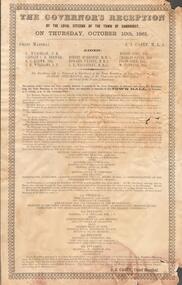
Document - GOVERNOR'S RECEPTION 1861
... 'His Excellency will be welcomed to Sandhurst at the Town Boundary at Two o'clock p.m by Robert Strickland Esq. J.P. Chairman of the Municipality on behalf of the People of Sandhurst'...'His Excellency will be welcomed to Sandhurst at the Town Boundary at Two o'clock p.m by Robert Strickland Esq. J.P. Chairman of the Municipality on behalf of the People of Sandhurst' Document GOVERNOR'S RECEPTION 1861 ...Victorian Governor, Sir Henry Barkly visited Bendigo in Oct. 1861 as part of his regional tour that included, Castlemaine, Chewton, Back Creek and Inglewood.Buff coloured document. Written on top 'The Governor's Reception by the Loyal Citizens of the Town of Sandhurst on Thursday October 10th 1861. The program for the day is detailed, with instructions as to the order that participants should muster before the greeting of the Governor at the City Boundary at Kangaroo Flat. 'His Excellency will be welcomed to Sandhurst at the Town Boundary at Two o'clock p.m by Robert Strickland Esq. J.P. Chairman of the Municipality on behalf of the People of Sandhurst'bendigo, council, governor's reception 1861 -
 Kew Historical Society Inc
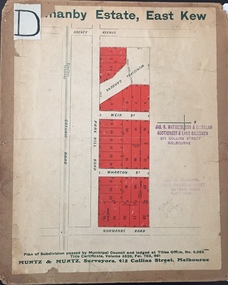
Plan - Subdivision Plan, J R Mathers & McMillan, Normanby Estate, c.1913
... The plan is interesting as it shows Wharton Street, named after the architect and town planner George Wharton, who was the first chairman of the Municipality of Kew. The street was to later be renamed Cecil Street. ...The plan is interesting as it shows Wharton Street, named after the architect and town planner George Wharton, who was the first chairman of the Municipality of Kew. The street was to later be renamed Cecil Street. ...The Kew Historical Society's map collection includes a substantial number of real estate subdivision plans, mainly of Kew but also of surrounding suburbs in Melbourne. Most of the subdivision plans date from the 1920s and 1930s when the districts old homes and local farmland were being split up to accommodate residential growth in the postwar period. These early plans were assembled by a local firm, Jas R Mather & McMillan, which had an office in Cotham Road. Many of the plans, and sometimes photos, were annotated by the agents.Subdivision plans are historically important documents used as evidence for the growth of suburbs in Australia. They frequently provide information about when the land was sold as well as evidence relating to surveyors and real estate and financial agents. The numerous subdivision plans in the Kew Historical Society's collection represent working documents, ranging from the initial sketches made in planning a subdivision to printed plans on which auctioneers or agents listed the prices for which individual lots were sold. In a number of cases, the reverse of a subdivision plan in the collection includes a photograph of a house that was also for sale by the agent. These photographs provide significant heritage information relating house design and decoration, fencing and household gardens.The photograph may also be aesthetically significant depending on the importance of the photographic atelier.The Normanby Estate, which was adjacent to Normanby Road, Kew East, included thirty-one lots for sale. Streets on the subdivision plan include Adeney Avenue, Park Hill Road, Normanby Road, Weir Street and Wharton Street. Cotham Road and its tramway are shown nearby. The plan is interesting as it shows Wharton Street, named after the architect and town planner George Wharton, who was the first chairman of the Municipality of Kew. The street was to later be renamed Cecil Street. Also shown are proposed ‘Municipal Gardens’ where Parkhill Drive is now located."D" in top left corner. Stamped auctioneers contact details: "Jas. R. Mathers & Son & McMillan / Auctioneer & Land Salesmen, / 271 Collins Street / Melbourne" and Jas. R. Mathers / Estate & Financial Agent / Cotham Road / Kew".weir street - kew, wharton street - kew, normanby road - kew, cotham road - kew, municipal gardens - kew, park hill parkhill road - kew, braemar - kew, subdivision plans - kew -
 Kew Historical Society Inc
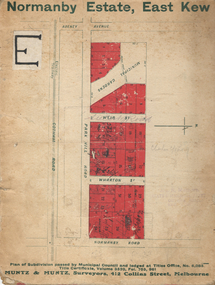
Plan - Subdivision Plan, Normanby Estate, East Kew, 1913
... The plan is interesting as it shows Wharton Street, named after the architect and town planner George Wharton, who was the first chairman of the Municipality of Kew. The street was to later be renamed Cecil Street. ...The plan is interesting as it shows Wharton Street, named after the architect and town planner George Wharton, who was the first chairman of the Municipality of Kew. The street was to later be renamed Cecil Street. ...Pru Sanderson, in her groundbreaking ‘City of Kew Urban Conservation Study : Volume 2 - Development History’ (1988), summarised the periods of urban development and subdivisions of land in Kew. The periods that she identified included 1845-1880, 1880-1893, 1893-1921, 1921-1933, 1933-1943, and Post-War Development. These periods were selected as they represented periods of rapid growth or decline in urban development. An obvious starting point for Sanderson’s groupings involved population growth and the associated economic cycles. These cycles also highlighted urban expansion onto land that was predominantly rural, although in other cases it represented the decline and breakup of large estates. A number of the plans in the Kew Historical Society’s collection can also be found in other collections, such as those of the State Library of Victoria and the Boroondara Library Service. A number are however unique to the collection.The Kew Historical Society collection includes almost 100 subdivision plans pertaining to suburbs of the City of Melbourne. Most of these are of Kew, Kew East or Studley Park, although a smaller number are plans of Camberwell, Deepdene, Balwyn and Hawthorn. It is believed that the majority of the plans were gifted to the Society by persons connected with the real estate firm - J. R. Mathers and McMillan, 136 Cotham Road, Kew. The Plans in the collection are rarely in pristine form, being working plans on which the agent would write notes and record lots sold and the prices of these. The subdivision plans are historically significant examples of the growth of urban Melbourne from the beginning of the 20th Century up until the 1980s. A number of the plans are double-sided and often include a photograph on the reverse. The Normanby Estate, which was adjacent to Normanby Road, Kew East, included thirty-one lots for sale. Streets on the subdivision plan include Adeney Avenue, Park Hill Road, Normanby Road, Weir Street and Wharton Street. Cotham Road and its tramway are shown nearby. The plan is interesting as it shows Wharton Street, named after the architect and town planner George Wharton, who was the first chairman of the Municipality of Kew. The street was to later be renamed Cecil Street. Also shown are proposed ‘Municipal Gardens’ where Parkhill Drive is now located.subdivision plans - kew, normanby estate -
 Numurkah & District Historical Society
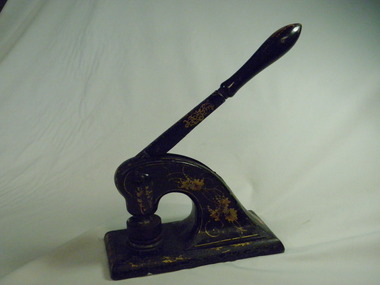
Functional object - Numurkah Shire Common Seal
... The common seal of the municipality shall be kept in a box having two locks, of one of which locks the chairman of the municipality shall have a key and of the other of which locks the key shall be kept by the municipal clerk; and the corporate seal shall not be affixed to any document unless the chairman of the municipality and one other member of the council or in the absence of such chairman unless two councillors be present. 91. ...The common seal of the municipality shall be kept in a box having two locks, of one of which locks the chairman of the municipality shall have a key and of the other of which locks the key shall be kept by the municipal clerk; and the corporate seal shall not be affixed to any document unless the chairman of the municipality and one other member of the council or in the absence of such chairman unless two councillors be present. 91. ...THE CONSTITUTION OF MUNICIPALITIES GENERALLY. DIVISION 1. INCORPORATION AND GOVERNMENT OF MUNICIPALITIES AND BOUNDARIES OF DISTRICTS. 8. (1) The inhabitants of every shire borough town and city inhabitants of for the time being subject to the provisions of this Act shall, under corporation. the name of the president councillors and ratepayers of such shire N°-5203 «• '• the mayor councillors and burgesses of such borough the mayor councillors and burgesses of such town or the mayor councillors and citizens of such city as the case may be, be a body corporate with perpetual succession and a common seal with power to break alter and change the same from time to time with the approval of the Governor in Council and shall by such name be capable in law of suing and being sued, of purchasing holding and alienating land, and of doing and suffering subject to the provisions of this Act all such other acts and things as bodies corporate may by law do and suffer. (2) The corporation of ******** Shire Common Seal 54. The common seal of the municipality shall be kept in a box having two locks, of one of which locks the chairman of the municipality shall have a key and of the other of which locks the key shall be kept by the municipal clerk; and the corporate seal shall not be affixed to any document unless the chairman of the municipality and one other member of the council or in the absence of such chairman unless two councillors be present. 91. The Council’s Common Seal (1) The Chief Executive Officer must ensure the security of the Council's common seal at all times. (2) The Council's common seal may only be used on the authority of the Council given either generally or specifically and every document to which the seal is affixed must be signed by the Chief Executive Officer or a senior officer authorised by him or her. (3) Any person who uses the Council's common seal without authority is guilty of an offence. (4) Any person who uses any replica of the council’s seal without authority is guilty of an offence. The Numurkah Shire was amalgamated into the Moira Shire and the seal now redundant. This is the only Numurkah Shire Common Seal in existence.local government, common seal, numurkah -
 City of Ballarat
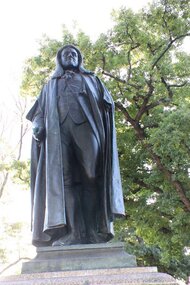
Artwork, other - Public Artwork, Peter Lalor by Thomas Nelson McLean, 1883
... The statue was gifted to the citizens of Ballarat by James Oddie, who founded a number of Ballarat institutions and was the first chairman of the municipality. It was unveiled by then Premier of Victoria Duncan Gillies on 26 January 1883 to a cheering crowd reported to be in the thousands. ...The statue was gifted to the citizens of Ballarat by James Oddie, who founded a number of Ballarat institutions and was the first chairman of the municipality. It was unveiled by then Premier of Victoria Duncan Gillies on 26 January 1883 to a cheering crowd reported to be in the thousands. ...The Peter Lalor statue by Thomas Nelson McLean is said to be a striking likeness of Lalor who is remembered as the leader of the Eureka Rebellion. The artist has depicted Lalor’s missing arm which he lost in the Rebellion efforts on of 3rd December 1854 and 4 bronze relief panels depict major events in Lalor`s life including his involvement at Eureka and in Parliament, where he served as the Speaker of the House. The cast bronze statue stands at a grand scale of 3 meters high and is mounted on a pedestal of polished Aberdeen granite. The statue was gifted to the citizens of Ballarat by James Oddie, who founded a number of Ballarat institutions and was the first chairman of the municipality. It was unveiled by then Premier of Victoria Duncan Gillies on 26 January 1883 to a cheering crowd reported to be in the thousands. The commission cost £2,200. The sculpture was unveiled by then Premier of Victoria Duncan Gillies on 26 January 1983 to a cheering crowd reported to be in the thousands, such was the popularity of Lalor and the appreciation of Eureka rebellion efforts. The statue is of historic and aesthetic significance to the people of BallaratThe cast bronze statue of Peter Lalor stands 3 meters high and is mounted on a pedestal of polished Aberdeen graniteNames of rebellion dead. Artist signature on bronze base.peter lalor, eureka rebellion, eureka, ballarat -
 Kew Historical Society Inc
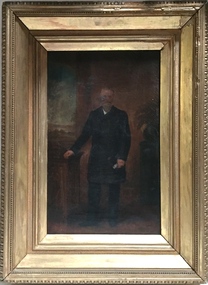
Painting - John Halfey, c.1882
... chairman of kew...boroondara roads board...municipality...municipality. He was elected to the Council in 1861, replacing Cr. Oswin, and subsequently served as the second Chairman of the Municipality in 1862-1863. ...municipality. He was elected to the Council in 1861, replacing Cr. Oswin, and subsequently served as the second Chairman of the Municipality in 1862-1863. ...John Halfey (1825-89) was born in Southport, Lancashire and migrated to Victoria in 1852. After finding gold at Sandhurst, and representing the latter in the Victorian Parliament, he moved to Melbourne to engage in various commercial pursuits, including directorships of insurance, mining and banking companies. A resident of Kew from the late 1850s, he was known for the hospitality provided at his house Ordsall (later Southesk) in Cotham Road. On 14 December 1860, Halfey chaired a public meeting calling for separation from the Boroondara Roads Board, which led, four days later, to the proclamation of Kew as a separate municipality. He was elected to the Council in 1861, replacing Cr. Oswin, and subsequently served as the second Chairman of the Municipality in 1862-1863. John Halfey became a trustee of Holy Trinity Church in Bulleen Road (now High Street) in 1862. He was to resign from Council after four years in 1865. Twenty-four years later in January 1889, he died aged 63 from a seizure, at his rooms at the Herald Office. He was interred in the Boroondara General Cemetery where his monument is the tallest in the Cemetery. Donated by Eileen Grigg, 2017Small, full-length portrait of John Halfey in an original gilded frame. The artist depicts him formally dressed in a frock coat beside an open window. He is shown holding a document or perhaps a pair of gloves. The painting is badly damaged with a hole in the area of his face that has been patched and repainted.john halfey, ordsall, chairman of kew, boroondara roads board, municipality of kew -
 City of Greater Bendigo - Civic Collection
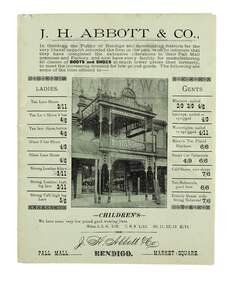
Flyer, Bolton Brothers Printers, J.H. Abbott & Co, c 1880
... He was elected to the Sandhurst Borough Council and in 1860 became chairman of the municipality....He was elected to the Sandhurst Borough Council and in 1860 became chairman of the municipality. Chairman of Sandhurst Borough Anne Abbott City of Greater Bendigo Commerce Two single colour printed gatefold flyer on green paper advertising J.H. ...In 1867 J.H. Abbott established the New Times Boot Market & Factory in Pall Mall, Sandhurst. In 1867, his wife Anne took over running the shop which was located next to the Bendigo Arcade near Williamson Street and was successful in creating a successful business. In 1876, the leather business of T. Baulderstone was purchased, and operations were further expanded later by the acquisition of the Edinburgh Tannery at Sheepwash Creek, and The Edinburgh Leather & Grindery warehouse in Bull Street, Sandhurst. In 1889, Joseph Abbott passed all interests in the business to his son, who shared the same name, in partnership with an adopted son, Richard Hartley Smith Abbott. The business continued trading under the name J. H. Abbott & Co. A number of branches of the business had been established in the early 1900s. In 1959 the Pall Mall business relocated to 291 Hargreaves Street. The whole business was soon after consolidated and conducted from the Market Square branch (Lyttleton Terrace) as the Abbott Supply Company. Harold Abbott, the last of the family to work in the business, died in 1979. In 1980 the business shifted to a new purpose-built store and warehouse on the corner of Abel & Deborah Streets, Bendigo. Sandhurst Trustees administered the business from 1979 until its sale in 1986. He was elected to the Sandhurst Borough Council and in 1860 became chairman of the municipality.Two single colour printed gatefold flyer on green paper advertising J.H. Abbott and Co.'s boot and shoe store on Pall Mall Bendigo. Contains information on products and the fitting services provided in store for customers. chairman of sandhurst borough, anne abbott, city of greater bendigo commerce -
 Ballarat Heritage Services
Photograph - Photograph - Colour, Burke and Wills Memorial at Bendigo Cemetery, 2018, 02/09/2018
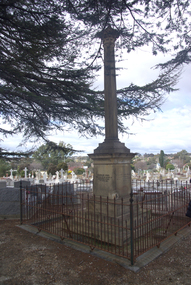
... The foundation block was laid on 20 August 1862 by Chairman of the Bendigo Municipality, Charles Burrows – exactly two years after the Expedition left Melbourne. ...The foundation block was laid on 20 August 1862 by Chairman of the Bendigo Municipality, Charles Burrows – exactly two years after the Expedition left Melbourne. ...Robert O'Hara Burke and Thomas Pope Besnard were childhood friends. As sexton of the local Back Creek Cemetery Thomas Besnard organised a subscription to raise the money for a monument to Burke, Wills and Gray. A subscription of one shilling, no more and not less, was asked so all subscribers were equal. The Bendigo monument was designed by Adam Duncan and features a Corinthian column mounted on a foundation stone, topped with a Grecian urn draped with the Union Jack. The stone for the monument was quarried from New Chum Mine. The site in the Bendigo Cemetery was selected by Besnard so the monument was on a grass knoll well clear of any other graves. The design included landscaping with a path and garden beds that provided dignified access. The Burke and Wills Monument in Bendigo has been entered on the Register of the National Estate as being important for its association with historical events and developments associated with exploration in the early days of Colony of Victoria. Two conifers remain from the original group sent by Mueller of the Melbourne Botanical Gardens to develop the garden layout on the knoll. These two trees are listed as Significant Trees by City of Greater Bendigo. The foundation block was laid on 20 August 1862 by Chairman of the Bendigo Municipality, Charles Burrows – exactly two years after the Expedition left Melbourne. A half day holiday was declared by Bendigo Council, and a procession left the Bendigo Town Hall and marched to the cemetery where 8000 people were gathered and another 4000 lined the route. John King was unable to attend due to ill health. Chairman of the Municipality of Bendigo, Charles Burrows, gave a long address, and diaries of members of the expedition, the Sandhurst Almanac, the Bendigo Advertiser, the Bendigo Independent Evening News, photographs of the deceased, photographs of Public Buildings in Bendigo, a Sydney half sovereign and all the silver coins of the Realm were wrapped in a Union Jack and placed in a niche in the foundation stone. Fifteen months later a column was erected on the foundation stone after Besnard openly criticised the Memorial Committee for their lack of action. The Bendigo Advertiser was disappointed at the location of the monument preferring a more central location and in 1893 an attempt was made to move the monument to Rosalind Park. On 19 May 1893, Mr Minto, the City Surveyor of the Bendigo MunicIpality reported it would cost £25, and no other action occurred. In 1940 the land around the memorial was sold off as grave sites and the paths and garden beds disappeared with graves now surrounding the base of the monument. The Burke and Wills Monument in Bendigo Cemetery was entered on the Register of the National Estate for its association with historical events and developments associated with exploration in the early days of Colony of Victoria. Two conifers remain from the original group sent by Mueller of the Melbourne Botanical Gardens to develop the garden layout on the knoll. These two trees are listed as Significant Trees by City of Greater Bendigo.Burke and Wills Memorial at Bendigo Cemetery, 2018Erected by the people of Bendigo in honor of the Victorian Explorers, Burke, Wills, Gray and King who first crossed the continent of Australia. King alone surviving the privation and suffering under which his three brave ill-fated companions sank. A.D. 1862. Robert O'Hara Burke, leader of the Victorian Expedition, left Melbounre 24th August 1860. Reached Carpentaria 12th Feby 1861. Died on his return at Coopers Creek, 30th June 1861. Charles Gray, died also on his return at Polygorum Swamp. 17th April 1861. William John Wills, second in command, died also near Coopers Creek, 29th June 1861. bendigo cemetery, burke and wills, burke and wills memorial, william john wills, john o'hara burke, charles gray, polygonum swamp, coopers creek, victorian expedition, carpentaria, bendigo public cemetery, bendigo remembrance park, thomas pope besnard -
 Flagstaff Hill Maritime Museum and Village
Letter - Loch Ard Centenary Letter, Koroit Council, March 1978
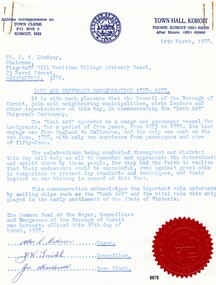
... Lindsay, /Chairman,/ Flagstaff Hill Maritime Village Advisory Board,/ WARRNAMBOOL. 3280" "LOCH ARD CENTENARY COMMEMORATION 1878 - 1978" (underlined) The letter begins - "It is with much pleasure that the Council of the Borough of Koroit, join with neighbouring municipalities, civic leaders and other organisations on this day, in commemorating the "Loch Ard" Shipwreck centenary. ...Lindsay, /Chairman,/ Flagstaff Hill Maritime Village Advisory Board,/ WARRNAMBOOL. 3280" "LOCH ARD CENTENARY COMMEMORATION 1878 - 1978" (underlined) The letter begins - "It is with much pleasure that the Council of the Borough of Koroit, join with neighbouring municipalities, civic leaders and other organisations on this day, in commemorating the "Loch Ard" Shipwreck centenary. ...The Loch Ard was an iron hulled clipper, built in Scotland in 1873 and wrecked on the southwest coast of Victoria in 1878 at what is now known as Loch Ard Gorge, near Port Campbell. Fifty two crew and passengers died and only Tom Pierce and Eva Carmichael survived. The Loch Ard was the last sailing ship to lose emigrants' lives when negotiating the entrance to Bass Strait. One of the most unlikely pieces of cargo to have survived the shipwreck was a Minton porcelain peacock - one of only nine in the world. The peacock was destined for the Melbourne International Exhibition in 1880. It had been well packed, which gave it adequate protection during the violent storm. Today, the Minton peacock can be seen at the Flagstaff Hill Maritime Museum in Warrnambool. From Australia's most dramatic shipwreck it has now become Australia's most valuable shipwreck artefact and is one of very few 'objects' on the Victorian State Heritage Register. The Victorian History Advisory Council decided 1978 was an appropriate year to mark, not only the centenary of the sinking of the Loch Ard in 1878, but also commemorate the large part played by sailing ships in immigration, and through this, the development of Australia. The Victorian Government authorised the commemoration and a "Loch Ard Centenary Committee" was formed. It was established to create public interest and awareness for the 100th anniversary of the tragic Loch Ard shipwreck. Activities and events included student essays, exhibitions, videos, publications, competitions and historical information. A booklet called "Settlers Under Sail" by Don Charlwood was commissioned to be made available to all school children. The anchor of the Loch Ard was raised from the wreck and displayed at Port Campbell, a memorial plaque (erected by The National Park) was unveiled at Loch Ard Gorge, a special "Loch Ard Shipwreck Centennial Port Campbell" postmark was issued by the Post Office and a model ship competition was held. Flagstaff Hill Maritime Museum and Village, together with other local towns and shires along the south-west coast participated in many of these commemorative activities. This letter is a significant reminder (and recognition) of the importance the Loch Ard (and other immigrant ships) played in the settling of Victoria and the dangers faced by the settlers who came to Australia in these ships. Flagstaff Hill’s collection of artefacts from LOCH ARD is significant for being one of the largest collections of artefacts from this shipwreck in Victoria. It is significant for its association with the shipwreck, which is on the Victorian Heritage Register (VHR S417). The collection is significant because of the relationship between the objects, as together they have a high potential to interpret the story of the LOCH ARD. The LOCH ARD collection is archaeologically significant as the remains of a large international passenger and cargo ship. The LOCH ARD collection is historically significant for representing aspects of Victoria’s shipping history and its potential to interpret sub-theme 1.5 of Victoria’s Framework of Historical Themes (living with natural processes). The collection is also historically significant for its association with the LOCH ARD, which was one of the worst and best-known shipwrecks in Victoria’s history.Single page letter typed in blue ink, on behalf of Koroit Council, written on 14th March 1978 and addressed to the Chairman, Flagstaff Hill Maritime Village Advisory Board, in recognition of the "Loch Ard Centenary Commemoration 1878 - 1978". It has the "Borough of Koroit" stamp at the top of the page and a red "Borough of Koroit" seal on the bottom right-hand corner of the page. It is signed by the Mayor (Allan R. Waterson), a councillor (J. W. Smith) and the Town Clerk (Jim Macdonald). The letter is in a plain buff manilla folder labelled in blue type.Top left corner - "Address correspondence to:/TOWN CLERK / P.O. BOX 5/KOROIT, 3282" Top Centre - blue circular ink stamp of "BOROUGH OF KOROIT 1870" with coat of arms in the center Top right - "TOWN HALL,KOROIT/ PHONE KOROIT (055) 658230/After Hours (055) 658490" The letter is addressed to - "CR. J. S. Lindsay, /Chairman,/ Flagstaff Hill Maritime Village Advisory Board,/ WARRNAMBOOL. 3280" "LOCH ARD CENTENARY COMMEMORATION 1878 - 1978" (underlined) The letter begins - "It is with much pleasure that the Council of the Borough of Koroit, join with neighbouring municipalities, civic leaders and other organisations on this day, in commemorating the "Loch Ard" Shipwreck centenary. The "Loch Ard" operated as a cargo and passenger vessel for immigrants, for a period of five years, from 1873 to 1878. Its last voyage was from England to Melbourne, and the ship was sunk on the 1st June 1878, with only two survivors from passengers and crew of fifty-four. The celebrations being conducted throughout our district this day will help us all to remember and appreciate the determination and spirit shown by these people, for they had the faith to realise that their endeavours would be successful, even against great odds in comparison to present day standards and techniques, and their imprint on our history is record of this fact. This commemoration acknowledges the important role undertaken by sailing ships such as the "Loch Ard" and the vital role this ship played in the early settlement of the State of Victoria." The letter ends with -" the Common Seal of the Mayor, Councillors and Burgesses of the Borough of Koroit was hereunto affixed this 18th day of March, 1978." The letter is signed "Allan J. Waterson Mayor/J. W. Smith Councillor/ Jim Macdonald Town Clerk and a large red seal of the Borough of Koroit (with their coat of arms) is in the bottom right-hand corner. Front of manilla folder - "BOROUGH OF KOROIT / LOCH ARD CENTENARY COMMEMORATION/ 1878 - 1978" "4050" written in black ink top right-hand corner next to a scribbled out numberflagstaff hill maritime museum and village, warrnambool, great ocean road, shipwreck coast, loch ard, port cambell, shipwreck, commemorative committee, loch ard centenary, koroit council, commemorative letter, loch ard commemorative committee -
 City of Moorabbin Historical Society (Operating the Box Cottage Museum)
Photograph - Map of Dendy's Special Survey, 1852 Map of Henry Dendy's Special Survey of 1841, 19th Century
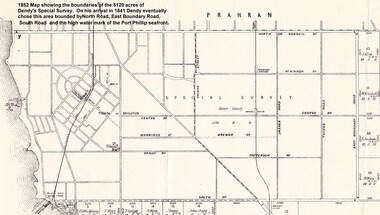
... Municipality and a Borough by October 1863. Meanwhile, following a Petition, the area of East and South Brighton, incorporating Mordialloc, Cheltenham, Mentone, Sandringham and Oakleigh separated from Brighton to form the Moorabbin District Roads Board becoming the first Local Government Authority. Col. William Mair was elected as the first Chairman ...A Map drawn in 1852 that shows the 5,120 acres that formed Dendy's Special Survey of 1841. In 1840 Henry Dendy, a farmer in Surrey, England acquired a "Special Survey" from the Commissioners for Land and Emigration which gave Dendy the right to choose land in Port Phillip for the "bargain basement" price of only £1 per acre for 5120 acres, (an area of 8 square miles). The Special Survey also included the right to "the shipment of a worker for every £20 spent on land, whose free passage was paid by the Crown, equalling a total of 100 workers ". Accordingly Dendy sold his English holdings and paid the required £5120 and arrived in Melbourne in February 1841. However by this time land in the new colony was selling for £5 - £40 per acre. Because Henry Dendy possessed the order from the Colonial Office in London he was able to successfully oppose Governor LaTrobe's attempts to alter the price of the land. Dendy appointed Jonathan Were, (an entrepreneur, who had arrived in 1839), as his Manager and who later became a partner. Together, Dendy and Were decided on an area 5 miles south from Melbourne, bounded by North Road, East Boundary Road, South Road and to the west by Port Phillip Bay. Were and Dendy pitched their tents in the area now known as ' Park St, Brighton' and sank a well near the corner of 'St Andrew's St and Wells St'. By 1845 J.B Were and Company had bought almost half of Dendy's land and Were built himself "Moorabbin House" in Were St Brighton made from stone, quarried from local cliffs. It was still standing in 1924. Legend records Moorabbin is named after the Aboriginal word for ' Mother's Milk ' The soil is very fertile and well supplied with water especially in the area called 'East Brighton' - now known as Bentleigh and East Bentleigh - By 1850 the area had developed with numerous market gardens, dairy farms, fruit gardens and vineyards supplying food for the growing population of Melbourne.This Map shows the birth of the Brighton and Moorabbin area. On 18th January1859 Brighton was proclaimed a Municipality and a Borough by October 1863. Meanwhile, following a Petition, the area of East and South Brighton, incorporating Mordialloc, Cheltenham, Mentone, Sandringham and Oakleigh separated from Brighton to form the Moorabbin District Roads Board becoming the first Local Government Authority. Col. William Mair was elected as the first Chairman of the Moorabbin Roads Board. Moorabbin Shire 1871 developed further and was declared a City in1934. The City of Moorabbin was the largest Municipality in Melbourne before the Amalgamation of Councils in 1994 when it was divided in the south to City of Kingston and in the north to City of Glen Eira A Photo-lithographed 1852 Map showing the 5,120 acres that formed Dendy's Special Survey of 1841. Henry Dendy & Jonathan Were chose an area 5 miles south from Melbourne, bounded by North Road, East Boundary Road, South Road and to the west by Port Phillip Bay. Moorabbin County of Bourke / Photo-Lithographed at the department of Lands and Survey. /Melbourne. / Price 1/- brighton, moorabbin, bentleigh, cheltenham, dendy henry, bent thomas, were jonathan, special survey -
 Glenelg Shire Council Cultural Collection
Document - Testimonial, Municipality of Portland testimonial to Philip Scott, 1863
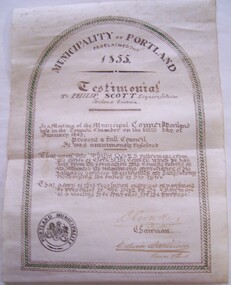
... Parchment document with calligraphic writing, Municipality of Portland seal and signatures of________, Chairman, and Edwin Atkinson, Town Clerk. ...Written on the retirement of Philip Scott as This copy kept by Council Portland Town Council archives Parchment document with calligraphic writing, Municipality of Portland seal and signatures of________, Chairman, and Edwin Atkinson, Town Clerk. ...Written on the retirement of Philip Scott as This copy kept by Council Portland Town Council archives -
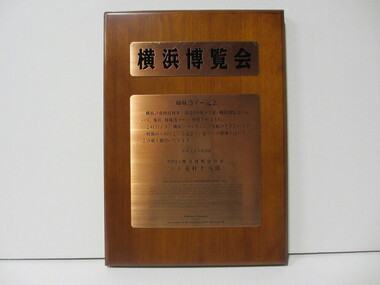 Seaworks Maritime Museum
Plaque
... municipality and the 130th anniversary of the/ opening of is port, 29 August 1989 has been designated as Friendship Ports'/ Day. The day's activities and the participation of Melbourne have brought/ about mutual understanding and have strengthened the ties of/ friendship between Melbourne and Yokohama./ We present this plaque as a symbol of our deep appreciation and of/ our desire for continued friendship and exchange/ 29 August 1989/ Nichachiro Hanamura/ Chairman/ Association for the Yokohama Exotic Showcase '89" Japanese writing on reverse : "PMA 0135"...municipality and the 130th anniversary of the/ opening of is port, 29 August 1989 has been designated as Friendship Ports'/ Day. The day's activities and the participation of Melbourne have brought/ about mutual understanding and have strengthened the ties of/ friendship between Melbourne and Yokohama./ We present this plaque as a symbol of our deep appreciation and of/ our desire for continued friendship and exchange/ 29 August 1989/ Nichachiro Hanamura/ Chairman/ Association for the Yokohama Exotic Showcase '89" Japanese writing on reverse : "PMA 0135" Wooden plaque with metal plate with English and Japanese writing Plaque ...Wooden plaque with metal plate with English and Japanese writing "In Commemoration of FRIENSHIP PORTS' Day/ On the occasion of the Yokohama Exotic Showcase '89, celebrating/ Yokohama's centennial as a municipality and the 130th anniversary of the/ opening of is port, 29 August 1989 has been designated as Friendship Ports'/ Day. The day's activities and the participation of Melbourne have brought/ about mutual understanding and have strengthened the ties of/ friendship between Melbourne and Yokohama./ We present this plaque as a symbol of our deep appreciation and of/ our desire for continued friendship and exchange/ 29 August 1989/ Nichachiro Hanamura/ Chairman/ Association for the Yokohama Exotic Showcase '89" Japanese writing on reverse : "PMA 0135" -
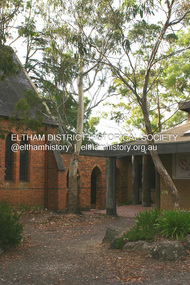 Eltham District Historical Society Inc
Photograph - Digital Photograph, Alan King, St Margaret's Anglican Church, Pitt Street, Eltham, 30 January 2008
... St Margaret’s membership has included economist and ABC chairman, Richard Downing; political commentator, diplomat and academic, William Macmahon Ball; Eltham civic leader, Charles Wingrove; artist, Peter Glass; and Eltham’s first postmaster, Frederick Falkiner. This collection of almost 130 photos about places and people within the Shire of Nillumbik, an urban and rural municipality ...St Margaret’s Church of England was officially opened on December 12, 1861. It is the oldest intact church building in Eltham. At the time it was known as Christ Church until its consecration in 1871, when it was completely free of debt (£1,700 for the church and parsonage) despite the district’s poverty. This was largely due to the free labour and materials, including locally made bricks donated by local artisans and others. The church is historically significant because it is the oldest church in the former Shire of Eltham and has associations with the philanthropist and founder of Brighton, Henry Dendy (who donated the land on which the church is built), the architect Nathaniel Billing and the prominent local builder, George Stebbing. The church is architecturally and aesthetically significant because it is constructed in the Gothic Revival style with several stained-glass windows of various dates and is also a very early use of polychromatic brickwork in Victoria. Billing was one of the first Melbourne architects to employ polychromatic brickwork and an important early architect. The rear wall was intended to be temporary. A major feature of the design is the large buttresses with long, steeply graded upper faces. The overall design is well proportioned with the surface brick patterns relieving an otherwise austere design. The church is spiritually and socially significant because it has been an important place of worship for the people of Eltham for almost 150 years. The land on which the buildings stand was donated by Henry Dendy. Dendy arrived in Melbourne in 1841 after purchasing in England eight square miles at Brighton under the system of "special surveys". After this land passed out of his hands, Dendy moved about Victoria, visited England, then returned to settle in Eltham where he purchased a flour mill. Dendy chaired the meeting held in 1860 “for the purpose of devising such means as may be expedient for the establishment of a Church of England in the township of Eltham”. He became chairman and treasurer of the church committee. Unlike the establishment of many early churches in Victoria where a vicar was appointed to a parish and later a permanent church was constructed, the population at Eltham initiated action to build a church. The nearest church at that time was at Heidelberg and the Eltham settlement was part of the parish of St Johns Heidelberg. Isolation and the tedious, time consuming journey between Heidelberg and Eltham resulted in the Eltham community taking its own action. The original vicarage (Dendy House) at the rear of the church is also an important part of the cultural significance of this place because it is connected to the church and the development of the Eltham area. Together, the church and the vicarage are aesthetically significant because they form a significant streetscape feature. The mud-brick community hall designed by Robert Marshall was added in 1978. In 2014 the original temporary rear wall was removed as part of a modern extension designed by Architects Atelier Wagner and constructed by Conrad Construction and Management. Covered under Heritage Overlay, Nillumbik Planning Scheme. National Trust of Australia (Victoria) State significance Victorian Heritage Published: Nillumbik Now and Then / Marguerite Marshall 2008; photographs Alan King with Marguerite Marshall.; p67 St Margaret’s Anglican Church in Pitt Street, Eltham, which officially opened on December 12, 1861, is the oldest intact church building in Eltham.1 With the nearby courthouse and police station, it was one of the first permanent community buildings in the district. The church and vicarage are on the Register of the Heritage Council of Victoria and the National Trust of Australia – Victoria. The church is important as an early example of polychrome brickwork by the notable architect Nathaniel Billings. It is also notable for its historic associations with the early settlement of the Shire of Eltham and its connection with Henry Dendy, Brighton’s founder.2 Henry Dendy, who lived in Eltham much longer than at Brighton, chaired the original meeting which planned the church, and he donated the half-acre (0.2ha) site. Dendy had arrived in Melbourne in 1841 after buying eight square miles (20.7sq km) at Brighton while in England. After this land passed out of his hands, he eventually settled in Eltham where he bought a flour mill, west from the corner of Main Road and Pitt Street (then called Brewery Lane). The vicarage was named Dendy House after him. The Eltham settlers were unusual in initiating the establishment of a church. Usually in Victoria a vicar was appointed to a parish and then a permanent church was constructed. But then, the nearest church was at Heidelberg, which was a tedious and time-consuming journey. St Margaret’s builder was a local, George Stebbing, who also constructed the former Methodist, later Uniting, Church at John Street and the Shillinglaw Cottage near Eltham’s Central Park. It is believed the first Anglican Bishop of Melbourne, Bishop Perry, dedicated the church. After the ceremony he joined in the festivities at the nearby pub and a bill was sent to the parish for teas taken there by the bishop with other participants. The first vicar was the Reverend Robert Mackie from 1864 to1866. St Margaret’s Church was originally called Christ Church until its consecration in 1871, when it was completely free of debt (£1700 pounds for the church and parsonage) despite the district’s poverty. This was largely due to the free labour and materials, including local bricks, donated by local artisans and others. St Margaret’s Church is in the Gothic Revival tradition with a buttressed nave, paired lancet windows, porch and bell-cote. It was the first polychromatic brick church in Australia, using softly contrasting coloured brickwork.3 Billing was one of the first architects to introduce polychrome brickwork into Melbourne. His original drawings for St Margaret’s survive in a folio of his architectural work. However the church’s brickwork is more subdued than in his drawings. About half the windows – those in clear glass with gold borders – are original. The stained glass windows were made much later, but the one behind the altar is thought to be the oldest in the Diamond Valley. It was to be temporary until the congregation could afford to extend the church. In the early 1960s the original cedar pews were replaced by blonde timber pews and the originals were sold to restaurants and to private individuals. Eminent local sculptor Matcham Skipper created a crucifix for the church. A major addition was made in 1978, when the weatherboard hall was replaced by a mud-brick hall. Made of local material, it was designed by local architect and a former shire president Robert Marshall. The mud-brick hall reflects the style of building in Eltham of the late 1970s and for which Eltham is well-known. Perhaps because its earthy tones blend with the surrounding environment, the hall sits well with the church building. St Margaret’s membership has included economist and ABC chairman, Richard Downing; political commentator, diplomat and academic, William Macmahon Ball; Eltham civic leader, Charles Wingrove; artist, Peter Glass; and Eltham’s first postmaster, Frederick Falkiner.This collection of almost 130 photos about places and people within the Shire of Nillumbik, an urban and rural municipality in Melbourne's north, contributes to an understanding of the history of the Shire. Published in 2008 immediately prior to the Black Saturday bushfires of February 7, 2009, it documents sites that were impacted, and in some cases destroyed by the fires. It includes photographs taken especially for the publication, creating a unique time capsule representing the Shire in the early 21st century. It remains the most recent comprehenesive publication devoted to the Shire's history connecting local residents to the past. nillumbik now and then (marshall-king) collection, eltham, st margaret's anglican church, st margaret's church, st margarets church hall, christ church -
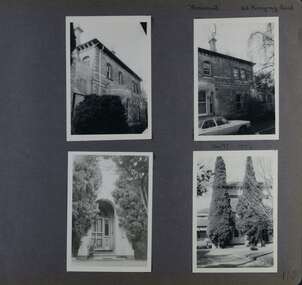 Glen Eira Historical Society
Album - Album page, Rosemont, 112 Kooyong Road, Circa 1972
... This significance is enhanced by the associations of the place with Godfrey Howitt and later James Grice, National Bank chairman and owner of "Stonnington" in Glenferrie Road, Malvern and Thomas King, councillor and successful negotiator for the extension of the electric tramway system to the Municipality. trevor hart caulfield john bakewell francis mcdonnell gabled slate roofs rosemont caulfield north kooyong road 1860's godfrey howitt james grice thomas king villa residence decorative brickwork curved windows bay window garden victorian style mansions polychrome bricks porches arches parapets verandahs slate roofs Handwritten: "Rosemont" 112 Kooyong Road [top right] / Neg 97 1972 / [under top right photo] / 110 [bottom right] Page 110 of photograph album with 4 photos (portraits) of varying views of Rosemont's exterior and garden. ...This photograph is part of the Caulfield Historical Album 1972. This album was created in approximately 1972 as part of a project by the Caulfield Historical Society to assist in identifying buildings worthy of preservation. The album is related to a Survey the Caulfield Historical Society developed in collaboration with the National Trust of Australia (Victoria) and Caulfield City Council to identify historic buildings within the City of Caulfield that warranted the protection of a National Trust Classification. Principal photographer thought to be Trevor Hart, member of Caulfield Historical Society. Most photographs were taken between 1966-1972 with a small number of photographs being older and from unknown sources. All photographs are black and white except where stated, with 386 photographs over 198 pages.From Victorian Heritage Database citation for Rosemont HO124 - 112 Kooyong Road Caulfield North https://vhd.heritagecouncil.vic.gov.au/places/35588 Rosemont'' is situated at no.112A Kooyong Road, Caulfield North and was built in 1869 for Godfrey Howitt, physician, president and honorary physician of the Melbourne Benevolent Society, Council member of the University of Melbourne and founding vice president of the Royal Society of Victoria. It is historically significant (Criterion A) as an early and substantial villa residence demonstrating Caulfield's early attraction as a residential retreat for Melbourne's elite. This significance is enhanced by the associations of the place with Godfrey Howitt and later James Grice, National Bank chairman and owner of "Stonnington" in Glenferrie Road, Malvern and Thomas King, councillor and successful negotiator for the extension of the electric tramway system to the Municipality.Page 110 of photograph album with 4 photos (portraits) of varying views of Rosemont's exterior and garden.Handwritten: "Rosemont" 112 Kooyong Road [top right] / Neg 97 1972 / [under top right photo] / 110 [bottom right]trevor hart, caulfield, john bakewell, francis mcdonnell, gabled slate roofs, rosemont, caulfield north, kooyong road, 1860's, godfrey howitt, james grice, thomas king, villa residence, decorative brickwork, curved windows, bay window, garden, victorian style, mansions, polychrome bricks, porches, arches, parapets, verandahs, slate roofs -
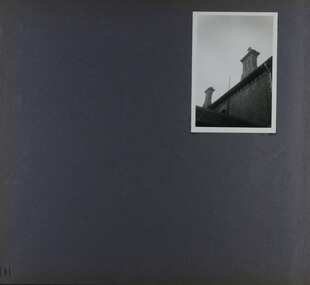 Glen Eira Historical Society
Album - Album page, Rosemont, 112 Kooyong Road, Circa 1972
... This significance is enhanced by the associations of the place with Godfrey Howitt and later James Grice, National Bank chairman and owner of "Stonnington" in Glenferrie Road, Malvern and Thomas King, councillor and successful negotiator for the extension of the electric tramway system to the Municipality. trevor hart caulfield john bakewell francis mcdonnell gabled slate roofs rosemont caulfield north kooyong road 1860's godfrey howitt james grice thomas king decorative brickwork bay window garden mansion chimneys victorian architectural style polychrome bricks roofs Handwritten: 111 [bottom left] Page 111 of photograph album with 1 photograph (portrait) of Rosemont's roof line. ...This photograph is part of the Caulfield Historical Album 1972. This album was created as part of a project from approximately 1966-1972 by the Caulfield Historical Society to assist in identifying buildings worthy of preservation. This album is related to a Survey the Caulfield Historical Society developed in collaboration with the National Trust of Australia Victoria and Caulfield City Council to identify historic buildings within the City of Caulfield that warranted the protection of a National Trust Classification. Photographers Jenny O’Donnell and Trevor Hart, members of Caulfield Historical Society. Some photographs are older and from unknown sources. All photographs are black and white except where stated.From Victorian Heritage Database citation for Rosemont - HO124 112 Kooyong Road Caulfield North https://vhd.heritagecouncil.vic.gov.au/places/35588 Rosemont'' is situated at no.112A Kooyong Road, Caulfield North and was built in 1869 for Godfrey Howitt, physician, president and honorary physician of the Melbourne Benevolent Society, Council member of the University of Melbourne and founding vice president of the Royal Society of Victoria. It is historically significant (Criterion A) as an early and substantial villa residence demonstrating Caulfield's early attraction as a residential retreat for Melbourne's elite. This significance is enhanced by the associations of the place with Godfrey Howitt and later James Grice, National Bank chairman and owner of "Stonnington" in Glenferrie Road, Malvern and Thomas King, councillor and successful negotiator for the extension of the electric tramway system to the Municipality.Page 111 of photograph album with 1 photograph (portrait) of Rosemont's roof line.Handwritten: 111 [bottom left]trevor hart, caulfield, john bakewell, francis mcdonnell, gabled slate roofs, rosemont, caulfield north, kooyong road, 1860's, godfrey howitt, james grice, thomas king, decorative brickwork, bay window, garden, mansion, chimneys, victorian architectural style, polychrome bricks, roofs -
 Ararat & District Historical Society (operating the Langi Morgala Museum)
Document - Municipal record
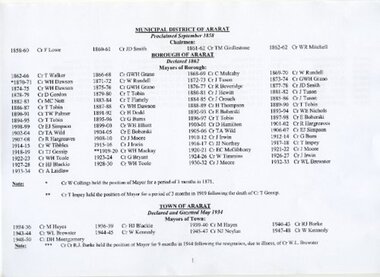
... municipality governing body. As a full listing of 74 past Chairmen and Mayors, from proclamation in 1858 through to 1950, this record provides a glimpse of the social and historic make-up of the town. Municipal Borough Town Ararat Chairman ...This document offers an insight into the formative structure of the (now) City of Ararat municipality governing body. As a full listing of 74 past Chairmen and Mayors, from proclamation in 1858 through to 1950, this record provides a glimpse of the social and historic make-up of the town. Single page (double-sided) paper record, listing official members of the Municipal District of Ararat since 1858 including Chairman and Mayors in both the Borough of Ararat and the Town of Ararat up to and including 1990.municipal, borough, town, ararat, chairman, councilors, mayor, 1858, government, local government -
 Bendigo Historical Society Inc.
Document - DRAFT ARTICLES FOR RHSV (BENDIGO) NEWSLETTER, MAY 1972
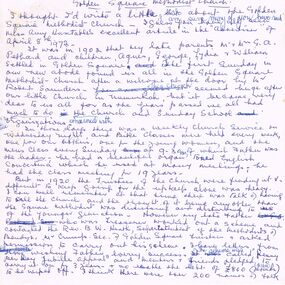
... Names listed of officers of the 40th Foot (Captain's detachment); Location of two cemeteries; Municipal Council of 1858 - Chairman and councillors and meeting times and place; Police Department - names listed of officers of department, Sandhurst Municipality, 'The District' and Eaglehawk Township (names for the last being only on the handwritten copy); 4. ...Names listed of officers of the 40th Foot (Captain's detachment); Location of two cemeteries; Municipal Council of 1858 - Chairman and councillors and meeting times and place; Police Department - names listed of officers of department, Sandhurst Municipality, 'The District' and Eaglehawk Township (names for the last being only on the handwritten copy); 4. ...Draft articles for RHSV (Bendigo) Newsletter, May 1972. 1. ''Golden Square Methodist Church'' by Lydia Chancellor - memories of church services, Sunday School and Bible classes. Mention of (Minister?) Mr Robert Saunders. Also - Rev B W Heath; Mr Crump, Rev Henry Worrall; reference to Jubilee of church in 1923. 2. Article submitted by Mrs E M Checcucci re the 'White Works' (clothing factory making underwear at the top of Wattle Street) - visited by Prince of Wales in 1920; 3. Handwritten and typewritten version of ''Extracts from the 'Sandhurst Library Almanac 1858', published by P M Sparkes, Bookseller and Stationer (four doors from Shamrock Hotel). Names listed of officers of the 40th Foot (Captain's detachment); Location of two cemeteries; Municipal Council of 1858 - Chairman and councillors and meeting times and place; Police Department - names listed of officers of department, Sandhurst Municipality, 'The District' and Eaglehawk Township (names for the last being only on the handwritten copy); 4. Article (w Perry) ''Australian Aboriginals on the Bendigo Gold Field’’ reference to ''King Charlie'' and finding of gold by him (reference to this in the Bendigo Advertiser 1856 & 1857). The gold purchased by a Mr Bannerman; 5. Article on introduction of gas in Bendigo (by I Hendry). Ref to ''Spotlight'' article in Advertiser of Oct 13, 1950. Mention of Mr Dondy (first user of gas in Bendigo); early use and price of gar; poor gas pressure in Eaglehawk; 6. Handwritten article submitted by John O'C Hattam re 'Indian Hawkers in Bendigo': with request to members to join him in further researching this interesting project; mention of accommodation in Hopetoun Street in terrace houses of the same design as Specimen Cottage (''now occupied by ' Glover??? Mills - but referred to in printed Newsletter of April/May 1972 as ''a site occupied by a clothing factory''); mention of hawkers by name - Rajah Singh, Mahonett Betth, Mahonett Shang, Rajah Bouth, Mahoety Bux, Abdul Rahman (last hawker)document, names of bendigo pioneers, bendigo advertiser -
 Otway Districts Historical Society
Voters, Shire of Otway, Shire of Otway, Voters' Rolls, 1963, 23 July 1963
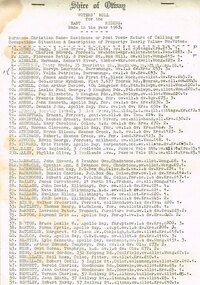
... municipalities who owned allotments in the Shire of Otway entitled to vote in Shire of Otway elections. shire; otway; voter roll; Variously underlined, marked, and written on the verso. Typescript. Shire of Otway, Voters' Roll for the East (a), Central (b), West (c) and Apollo Bay [comprising a portion of the Parish of Krambruk] (d) Ridings, made in the year 1963. Certified for each riding that it "has been revised and is correct", signed by W.H. Tann, Chairman ...After going to a Revision Court where the voters' rolls had been revised and certified correct every voter on the Shire of Otway register was listed with his or her surname, christian names, residence or post town, nature of calling or occupation, situation and description of property, the yearly value, and the number of votes to which the incumbent was entitled. It included both local residents and residents from other municipalities who owned allotments in the Shire of Otway entitled to vote in Shire of Otway elections.Typescript. Shire of Otway, Voters' Roll for the East (a), Central (b), West (c) and Apollo Bay [comprising a portion of the Parish of Krambruk] (d) Ridings, made in the year 1963. Certified for each riding that it "has been revised and is correct", signed by W.H. Tann, Chairman of Revision Court, 23rd July, 1963.Variously underlined, marked, and written on the verso.shire; otway; voter roll; -
 Port Melbourne Historical & Preservation Society
Book, H H Bell, Melbourne Tramways Board, Report of H.H. Bell, Chairman of the Melbourne and Metropolitan Tramways Board, on his overseas tour, March - October 1938, 1939
... Bound volume containing detailed report by Tramways Board Chairman on matters of relevance to Port Melbourne and other municipalities compiled after his overseas tour, 1938. ...Bound volume containing detailed report by Tramways Board Chairman on matters of relevance to Port Melbourne and other municipalities compiled after his overseas tour, 1938. ...Bound volume containing detailed report by Tramways Board Chairman on matters of relevance to Port Melbourne and other municipalities compiled after his overseas tour, 1938. A covering letter is loose inside front cover. The report is indexed.A letter loose inside front cover 17.3.1939 indicates the Chairman sent a copy of his rport to the Council. Name of report appears inside volumen.transport - tramways, transport - bus, h h bell -
 Chiltern Athenaeum Trust
Photograph, JUDGE W. H. GAUNT
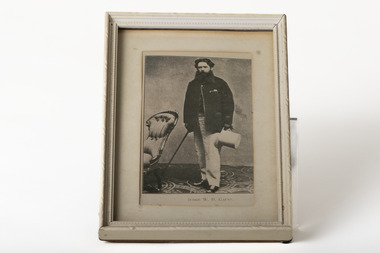
... In 1900 he was chairman of the royal commission which considered Metropolitan Board of Works matters, and in 1902 was president of the inquiry into the unification of municipalities in Victoria. ...In 1900 he was chairman of the royal commission which considered Metropolitan Board of Works matters, and in 1902 was president of the inquiry into the unification of municipalities in Victoria. ...This photograph is a copy displayed in the Australian Dictionary of Biography. The original photograph is in the La Trobe Collection in the State Library of Victoria. William Henry Gaunt (1830-1905), judge, was born on 27 July 1830 at Leek, Staffordshire, England, son of John Gaunt, banker, and his wife Mary, née Bakewell. Educated at Leek Grammar School and Whitchurch, Salop, he migrated to Melbourne, and entered the Victorian public service and was rapidly promoted. By March 1854 he was chief clerk at Beechworth, the administrative centre of the Ovens goldfield. In July 1855 the resident warden commended Gaunt as 'a highly valuable public servant' with an intimate knowledge of the district and the 'temper and disposition of the miners'. Appointed sub-warden in the Beechworth district in January 1856 and a Chinese protector in August, he was given control of the extensive Woolshed district. When European miners attacked a party of Chinese at the Buckland River diggings in May 1857 Gaunt was sent to restore order. One of his proclamations, issued in Chinese characters, concluded 'W. H. Gaunt, your protector—tremble and obey!' In June he was appointed a police magistrate and next month was sent to take charge at the Buckland where the Chinese had been expelled from the diggings; the police force assisting him was led by Robert O'Hara Burke. In January 1858 Gaunt was appointed a warden, in November was transferred to Chiltern, north of Beechworth, and in August 1859 was made a commissioner of crown lands. In February 1860 Gaunt was appointed a coroner of Victoria, acting at Indigo, near Chiltern. In April 1865 he was transferred to Beechworth, became visiting justice of the gaol and later moved to Sandhurst. In January 1869 he was appointed returning officer for the mining district of Ballarat and visiting justice of the gaol. He was associated with this area for the rest of his life and won high repute for his integrity. In 1874 he chaired the inaugural meeting of the first Australian competitive swimming club. For years he studied law and was called to the Bar in December 1873. He was one of the many public servants dismissed by Graham Berry on 9 January 1878 (Black Wednesday). After petitioning the Queen in vain over his dismissal he began practice in Ballarat as a barrister. He soon became a leading authority on mining laws; one of the cases in which he was involved was the lengthy inquest on the bodies of the twenty-two miners drowned in the New Australasian mine disaster at Creswick in 1882. He was appointed a temporary judge of the Insolvency Court in 1889 and a County Court judge in 1891. In 1900 he was chairman of the royal commission which considered Metropolitan Board of Works matters, and in 1902 was president of the inquiry into the unification of municipalities in Victoria. In 1860 Gaunt married Elizabeth Mary, the youngest daughter of Frederick Palmer; they had nine children. Of the surviving five sons and two daughters, Ernest Frederick Augustus and Guy Reginald Archer both became admirals and were knighted; Cecil Robert became a lieutenant-colonel, Clive Herbert a government advocate in Rangoon and Mary (Mrs H. L. Miller) one of the first women students to enrol at the University of Melbourne (1881), although she did not complete her degree; she became a successful novelist. Gaunt died on 5 October 1905. An anonymous colleague said: 'I don't think he was ever excelled as a police magistrate, and during the many years he was on the County Court bench he earned the highest regard. His capacities were as unquestioned as his integrity, and more could not be said of any judge'. Select Bibliography Votes and Proceedings (Legislative Assembly, Victoria), 1878, 3, (58) Government Gazette (Victoria), 22 Feb, 15 Aug 1856, 30 June 1857, 5 Jan 1858, 16 Aug 1859, 3 Feb 1860, 7 Mar, 11 Oct 1862, 28 Mar, 4 Apr 1865, 17 May 1867, 9 June 1868, 22, 29 Jan 1869 Ovens and Murray Advertiser, 21 May 1857, 11 Mar 1865 Colonial Secretary's in-letters, goldfields, 25 Mar 1854, 21 July, 18 Nov 1855, 22 Aug 1857 (Public Record Office Victoria) scrapbook and newsclippings (privately held). Related Entries in NCB Sitesview family tree Gaunt, Mary Eliza (daughter)go to ADB entryPhotograph of Judge W. H. Gaunt standing beside chair holding top hat and cane, under glass, in cream frame with cream matte.Printed name underneath: JUDGE W. H. GAUNT -
 Clunes Museum
Photograph, RICHARDS & CO. ART STUDIO, C. 1863
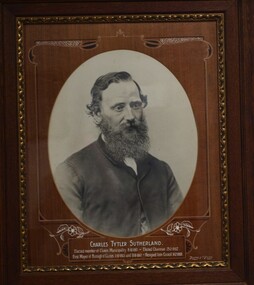
... ELECTED MEMBER OF CLUNES MUNICIPALITY 8.10.1861 ELECTED CHAIRMAN 25.2.1862. FIRST MAYOR OF BOROUGH OF CLUNES 1.10.1863 UNTIL 8.8.1867. ...LOCAL HISTORY PHOTOGRAPHY PHOTOGRAPHS COUNCILLORS & OFFICERS ELECTED MEMBER OF CLUNES MUNICIPALITY 8.10.1861 ELECTED CHAIRMAN 25.2.1862. FIRST MAYOR OF BOROUGH OF CLUNES 1.10.1863 UNTIL 8.8.1867. ...IT IS ON PERMANENT LOAN FROM HEPBURN SHIRE COUNCIL. CR. C.T. SUTHERLAND WAS ELECTED COUNCILLOR TO CLUNES BOROUGH COUNCIL IN 1861, AND WAS MAYOR 1863 - 1867. THE PHOTOGRAPH ORIGINALLY HUNG IN THE CLUNES TOWN HALL DURING HIS TERM OF MAYOR.FRAMED PHOTOGRAPH OF CR. CHARLES TYTLER SUTHERLANDELECTED MEMBER OF CLUNES MUNICIPALITY 8.10.1861 ELECTED CHAIRMAN 25.2.1862. FIRST MAYOR OF BOROUGH OF CLUNES 1.10.1863 UNTIL 8.8.1867. RESIGNED FROM COUNCIL 14/2/1868 RICHARDS & CO PHOTOSlocal history, photography, photographs, councillors & officers -
 Melbourne Tram Museum
Booklet, City of Northcote, "Northcote Municipal Tramways - Employees' Regulations", 1916
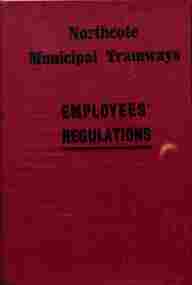
... Municipality. The City operated the cable tram from Clifton Hill to Northcote from June 1916 to Feb. 1920 when it was absorbed into the MMTB. Has a table of contents. Yields information about the operation of the Northcote cable tramways and its employees' rules. trams tramways melbourne City of Northcote Cable Trams rules Regulations Stamped "Copy to Chairman" on top of page 1. ...Booklet titled "Northcote Municipal Tramways - Employees' Regulations", providing all the rules and procedures to cable tram employees of the Northcote Municipality. The City operated the cable tram from Clifton Hill to Northcote from June 1916 to Feb. 1920 when it was absorbed into the MMTB. Has a table of contents.Yields information about the operation of the Northcote cable tramways and its employees' rules.Booklet - 48 pages + red rexine cover, centre stapled.Stamped "Copy to Chairman" on top of page 1.trams, tramways, melbourne, city of northcote, cable trams, rules, regulations -
 Melbourne Tram Museum
Photograph - Official opening of Malvern to Kew PMTT line, 30 May 1913
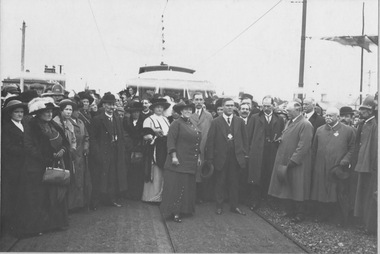
... chairman of the Prahran and Malvern Tramways Trust (PMTT), Mr Alexander Cameron. The Malvern Town Hall is shown at left with its clock showing 2.30pm on Friday 30 May 1913, the day before the federal election in which the Labor government was defeated by the Liberal Party by one seat. Federal Parliament sat in Melbourne until 1927. This ceremony officially opened the new double track electric line along Glenferrie Road from the Town Hall at High Street, Malvern to Cotham Road, Kew. Negotiations between the three municipalities...chairman of the Prahran and Malvern Tramways Trust (PMTT), Mr Alexander Cameron. The Malvern Town Hall is shown at left with its clock showing 2.30pm on Friday 30 May 1913, the day before the federal election in which the Labor government was defeated by the Liberal Party by one seat. Federal Parliament sat in Melbourne until 1927. This ceremony officially opened the new double track electric line along Glenferrie Road from the Town Hall at High Street, Malvern to Cotham Road, Kew. Negotiations between the three municipalities ...One photograph shows a line of many decorated north-bound single truck tramcars with drivers at controls stopped behind a ceremonial ribbon as a woman reaches upward to cut it. Crowds of adults and children dressed in heavy coats and hats stand behind and in front of barriers. To the right in a lighter coloured overcoat is the chairman of the Prahran and Malvern Tramways Trust (PMTT), Mr Alexander Cameron. The Malvern Town Hall is shown at left with its clock showing 2.30pm on Friday 30 May 1913, the day before the federal election in which the Labor government was defeated by the Liberal Party by one seat. Federal Parliament sat in Melbourne until 1927. This ceremony officially opened the new double track electric line along Glenferrie Road from the Town Hall at High Street, Malvern to Cotham Road, Kew. Negotiations between the three municipalities had taken much effort to reach an agreement. At Cotham Road, the track branched west to the Kew Post Office at High Street and east to Burke Road. Services were then provided from both these termini to St Kilda Beach via Glenferrie Road, Hawthorn Road and Balaclava Road. Two further ceremonies occurred at Gardeners Creek and Barkers Road, the boundaries between three municipalities. A second photograph shows the same convoy of tram cars stationary for an additional event at Burwood Road adjacent to the Hawthorn Town Hall (out of shot to the left). A large crowd is gathered as a photographer captures a Lady Mayoress at the driver's controls. A third photograph shows a larger crowd at the corner of Glenferrie Road and Cotham Road, Kew in front of and hanging from an electric tramcar stationary on double track. The 400 guests in fine attire included state government ministers, spouses, local municipal mayors and councillors. Also present were the Prahran and Malvern Tramways Trust (PMTT) Board, including Chairman Alexander Cameron, at right in a lighter coloured overcoat. The well dressed woman out front may be Councillor Mrs Wood, the Mayoress of Hawthorn. Yields information about early Glenferrie Road electric line to Kew and PMTT.Three black and white photographs, some mounted on cardboard with no notes attachedglenferrie road, electric trams, ceremonial ribbon, heavy coats, chairman, pmtt, malvern town hall, 30 may 1913, cotham road, kew, kew post office, burke road, st kilda beach, balaclava road, federal election, hawthorn road, alexander cameron, mayoress of hawthorn, gardeners creek, barkers road, prahran and malvern tramways trust, burwood road, hawthorn town hall -
 Wodonga & District Historical Society Inc
Photograph - Les Stone, Last Shire President and first Mayor of the Rural City of Wodonga
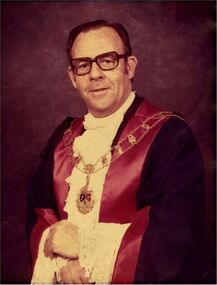
... A champion and defender of local government, Les served as Chairman of the North East Region of Municipalities which comprised 13 Councils including Wodonga and Wangaratta. ...A champion and defender of local government, Les served as Chairman of the North East Region of Municipalities which comprised 13 Councils including Wodonga and Wangaratta. ...Les Stone was the last Shire President of Wodonga and first Mayor of the Rural City of Wodonga. Born in Collingwood, Victoria on 24th August 1919, he was the first of his family to obtain a post-secondary education. He became a Christian Brother but left the ministry after 10 years and became a trained primary school teacher. Les held various teaching appointments in and around country Victoria and Wodonga, the last as Principal of Wodonga West Primary School. It was in Wodonga that Les and his wife Pam settled with their family. Their contribution to the Wodonga community and local government was outstanding. Les established a strong network in the local migrant community, helping many new arrivals at Bonegilla Migrant Reception Centre with language issues and settling them into their new environment. He worked in support of all underprivileged people in the community. In 1967 Les was elected as a Councillor for the West Riding of Wodonga Council. The following year he was elected Deputy Shire President. He was the last Shire President of Wodonga and in 1971 became the inaugural Mayor of the Rural City of Wodonga. The City of Wodonga was proclaimed on 14th March 1973 and Les was re-elected as Mayor. He chose to serve one full term as Mayor having previously served two terms as Shire President. Les Stone passed away at the Mercy Hospital Albury on 28th December 1974 at 54 years of age. He left behind an enduring legacy which included the proactive encouragement of industry to Wodonga. He also championed the selection of Wodonga as a Growth Centre. A champion and defender of local government, Les served as Chairman of the North East Region of Municipalities which comprised 13 Councils including Wodonga and Wangaratta. He also played a critical role on the Albury Wodonga Development Corporation for five years in the early period of the Whitlam decentralization scheme. Les Stone’s life of giving wasn’t just about local government and teaching. He was an old-fashioned community activist who gave far more than he took from the community. Les worked tirelessly for numerous organizations including the Royal Children’s Hospital, Royal Melbourne Hospital (he was made a Life Governor of both), the Wodonga Good Neighbour Council, and Knights of the Southern Cross, Rotary, the St. Vincent de Paul Society and St. Augustine’s Parish Council. However it is in local government that he remains best remembered. He was an active and vocal councillor and gave over 16 years of service to the people of Wodonga - his election and re-election was never once opposed. Les Stone was interned in the Lawn Cemetery in Wodonga. He was aged 54 years. The naming and dedication of the Les Stone Park in West Wodonga is an important acknowledgement of Les Stone’s life. The inscription reads: '’Leslie Edwin Stone JP was the first Mayor of Wodonga from 1972 to 1974 and a former Shire President (1972). A school teacher and principal by profession Les had a long history of involvement with the migrant community and Catholic Church. He was an acknowledged champion of decentralisation’’. These photos are significant because they document the service of an important civic leader in Wodonga.A collection of coloured images related to Les Stone, Mayor of Wodongales stone, wodonga civic leaders, wodonga council -
Vision Australia
Text, RVIB Central Auxiliary, 1927 - 2004
... Municipality. It has long been felt that such an Auxiliary would bring the work of the Institute more prominetly under the notice of the public and assist in finding the large sum required each year to carry on. A meeting was accoringly called for the purpose and an auxilirary formed. A strong committee was elected with Mrs James Angus as President. Mr James Angus Vice- President of the Institute was appointed by the Board of Management as Chairman...Municipality. It has long been felt that such an Auxiliary would bring the work of the Institute more prominetly under the notice of the public and assist in finding the large sum required each year to carry on. A meeting was accoringly called for the purpose and an auxilirary formed. A strong committee was elected with Mrs James Angus as President. Mr James Angus Vice- President of the Institute was appointed by the Board of Management as Chairman ..." An important decision was made by the board in May last 1927 to form a Central Auxiliary with representatives from each Municipality. It has long been felt that such an Auxiliary would bring the work of the Institute more prominetly under the notice of the public and assist in finding the large sum required each year to carry on. A meeting was accoringly called for the purpose and an auxilirary formed. A strong committee was elected with Mrs James Angus as President. Mr James Angus Vice- President of the Institute was appointed by the Board of Management as Chairman of the Auxiliary." From RVIB Annual Report 1927. This collection includes Annual reports for 1966, 1969 -1970, 1973 - 1974, 1976 - 1977, 1978- 1979 and 1980 - 1981 and an incomplete lists of 10 - 25 years service badge Auxiliary members and Life Governors. The Auxiliary members did not only raise money they also raised awareness of the services provided by RVIB and worked closely with the Public Relations/Fundraising departments. Trudi Westh from Camberwell in Melbourne was recognised with a medal of the Order of Australia OAM . Mrs Westh finished her 18 year term as President of the Council of Auxiliaries in 2004. A Brief history of Auxiliaries is included. Annual reports -- minutes-- letters -- newspaper clippings -- 1 account book -- photos -- various loose papers. royal victorian institute for the blind -
 Kew Historical Society Inc
Photograph - Digital Photograph, Robert Baker, Grave of George Wharton, Boroondara General Cemetery, 2013
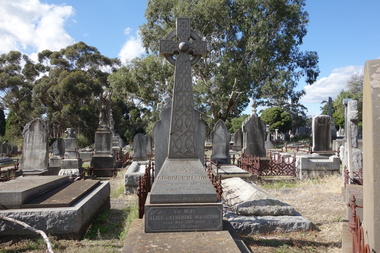
... George Wharton created the first survey of Kew and was elected the Municipality's first Chairman in 1861....George Wharton created the first survey of Kew and was elected the Municipality's first Chairman in 1861. Grave of George Wharton, Boroondara General Cemetery Photograph Digital Photograph Robert Baker ...The Victorian-era architect George Wharton, the initial surveyor of Kew. In 1866, he designed and had built Fernhurst in Studley Park, the house a prominent landmark. He resided there until his death, aged 69, on 26 November 1891. He was buried on 27 November in Grave 1520, Church of England Compartment B, Boroondara General Cemetery. Fernhurst Grove is named after his house, which was demolished in 1979.Born digital image of the grave and headstone of the architect George Wharton in the Boroondara General (Kew) Cemetery, 2013. George Wharton created the first survey of Kew and was elected the Municipality's first Chairman in 1861.victorian architects - george wharton, chairmen of kew (vic) - george wharton, boroondara general (kew) cemetery -
 Kew Historical Society Inc
Container - Presentation Jewellery Box, 1948
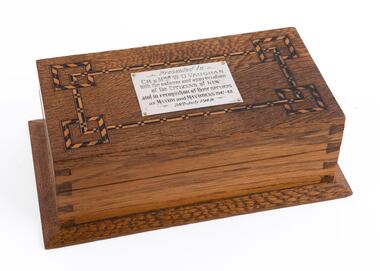
... chairman of the Free Library Services Board. In 1960, he published his history of Kew - 'Kew's Civic Century'. Vaughan’s third term as Mayor in 1962-63 saw the erection of the pavilion at Victoria Park and the final clean-up of the Outer Circle Railway. He died in September 1976. This inlaid and engraved jewellery box was part of a larger donation made to the Mayor and Mayoress of Kew in 1948 by the citizens of the municipality ...In 1948, the citizens of Kew presented this jewellery box to the outgoing Mayor and Mayoress of Kew, Cr & Mrs W D Vaughan. In 2021, it returned to Kew, thanks to the generous donations of our Friends of the Collection. William David Vaughan to whom the jewel box was presented in 1948 was a publisher, politician and historian, born in 1897 at Heathcote. By 1922, he had become a publisher and Secretary of Victorian Newspapers Ltd. In October 1922, he married Muriel Gladys Frazer in Bendigo. He purchased 'Elsfield' in Cotham Road, renamed it 'Carramar', and resided there for almost fifty years. His wife, the Mayoress, was an accomplished pianist and entertained the wives of councillors and supported many charitable works from her home. In 1926, Vaughan founded a local newspaper, the Kew Advertiser. During his second term as Mayor, he was elected president of Melbourne Suburban Newspapers’ Association, In April 1947, he was appointed to and later became chairman of the Free Library Services Board. In 1960, he published his history of Kew - 'Kew's Civic Century'. Vaughan’s third term as Mayor in 1962-63 saw the erection of the pavilion at Victoria Park and the final clean-up of the Outer Circle Railway. He died in September 1976. This inlaid and engraved jewellery box was part of a larger donation made to the Mayor and Mayoress of Kew in 1948 by the citizens of the municipality. It is the only 'civic award' in the collection given to a former civic leader and complements the large collection of civic portraits in the collection. The box is additionally significant because of its association with William David Vaughan - newspaper proprietor, local politician, and local historian. A presentation jewellery box, she-oak with barber pole inlay adorned with an Australian silver plaque.Engraved inscription on silver plaque - "Presented to Cr & Mrs W.D. Vaughan With The Esteem And Appreciation Of The Citizens Of Kew And In Recognition Of their Services As Mayor And Mayoress 1947-48. 28th July 1948"w d vaughan, mayors of kew, kew advertiser, kew (vic.) -- history
