
Showing 194 items matching "decorative art"
-
 Federation University Historical Collection
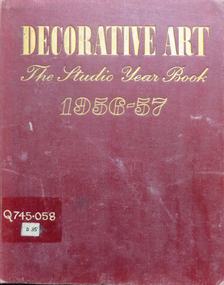
Book, Decorative Art: The Studio Year Book 1956-1957, c1956
... Decorative Art: The Studio Year Book 1956-1957...decorative art...Formerly in the Ballarat School of Mines Library decorative art rathone holme kathleen frost ballarat school of mines library architecture furniture ceramics Maroon hard covered book of 148 pages Decorative Art: The Studio Year Book 1956-1957 Book Book ...Formerly in the Ballarat School of Mines LibraryMaroon hard covered book of 148 pagesdecorative art, rathone holme, kathleen frost, ballarat school of mines library, architecture, furniture, ceramics -
 Bendigo Art Gallery
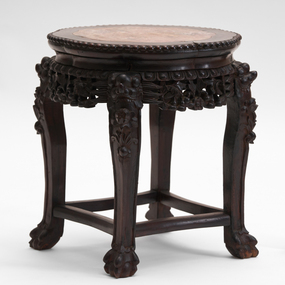
Furniture, UNKNOWN, Small Round Pedestal Table, 19th Century
... decorative art...decorative art furniture side table table marble cherrywood woodwork Small Round Pedestal Table Furniture UNKNOWN ...decorative art, furniture, side table, table, marble, cherrywood, woodwork -
 Ballarat Heritage Services
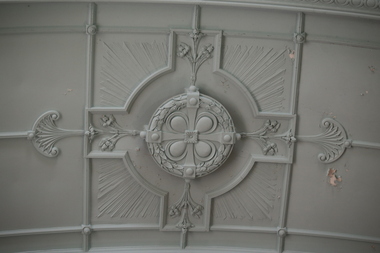
Photograph - Digital photographs, L.J. Gervasoni, St Brigid's Crossley - ceiling plaster detail, 2016
... ...decorative plaster...art...victoria crossley st brigid's crossley st brigid's catholic church catholic church religion ceiling decorative plaster art nouveau Digital images of the plaster ceiling at St Brigid's Catholic Church, Crossley, Victoria. ...Digital images of the plaster ceiling at St Brigid's Catholic Church, Crossley, Victoria. victoria, crossley, st brigid's crossley, st brigid's, catholic church, catholic, church, religion, ceiling, decorative plaster, art nouveau -
 The Cyril Kett Optometry Museum
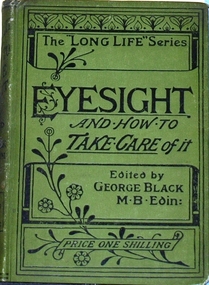
Book, Eyesight and how to take care of it, 1888 (estimated)
... Small hardback book in original printed green cloth covers, 139 pages and 21 figures with 20 pages of book advertisements. The decorative Art Nouveau cover is visually attractive. ...Small hardback book in original printed green cloth covers, 139 pages and 21 figures with 20 pages of book advertisements. The decorative Art Nouveau cover is visually attractive. ...This book is a guide to eyecare for the intelligent lay-reader, not so different from books still published today. It appeared in a number of editions until about 1900. This one is edited by George Black MB(Edin) as part of the Long Life Series. As this book is a guide to eyecare for the lay-reader it is socially significant. It is not rare, but being somewhat ephemeral it would not be expected to see copies of this book surviving in the very good condition of our copy. No other copies are listed on WorlCat for Australia.Small hardback book in original printed green cloth covers, 139 pages and 21 figures with 20 pages of book advertisements. The decorative Art Nouveau cover is visually attractive. It is a late nineteenth century guide to eyecare for the intelligent lay-reader. It was priced at one shilling.Signature of J B Shattock on half title page.ophthalmology, eye, eyesight, eyecare -
 Bendigo Historical Society Inc.
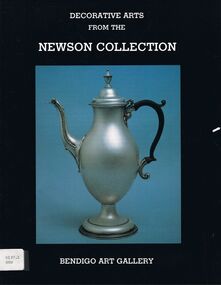
Book - BENDIGO ART GALLERY
... art... decorative arts...Two copies of ' Decorative Arts from the Newson Collection.' Bendigo Art Gallery Publication 1981. ...ARTWORK Newson Collection Bendigo Art Gallery artwork art decorative arts silver porcelain furniture antiques collection Newson family. ...Cataloguing the work of Marc Newson who was born in Sydney in 1963. Known for his industrial design including furniture, transportation, fashion, homewares and fine art. Recognised for his organic shapes with no sharp edges.Two copies of ' Decorative Arts from the Newson Collection.' Bendigo Art Gallery Publication 1981. Catalogue compiled and researched by Jean Newson, Honorary Curator of Decorative Arts.14 pgs. (ill.). Bottom left corner of front cover is sticker with the number 0137.1 NEW, 0137.2 NEW.artwork, newson collection, bendigo art gallery, artwork, art, decorative arts, silver, porcelain, furniture, antiques, collection, newson family. bottom left corner of front cover is a stcker with numbers 0137.1 new, 0137.2 new. -
 Hymettus Cottage & Garden Ballarat
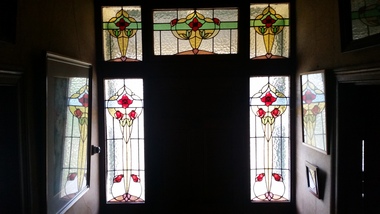
Decorative object - Door surround, Leadlight Entrance glass
... The decorative art-nouveau style leadlight side and transom lights were a popular form of entrance lighting set into recessed panels in late Victorian homes at Ballarat. ...The decorative art-nouveau style leadlight side and transom lights were a popular form of entrance lighting set into recessed panels in late Victorian homes at Ballarat. ...The decorative art-nouveau style leadlight side and transom lights were a popular form of entrance lighting set into recessed panels in late Victorian homes at Ballarat. This home built by local architect/builder Thomas Turton features these popular glass lights.The side and transom lights at Hymettus form part of a significant and representative historical collection that reflects Ballarat's local history from a family perspective and popular art and architecture movements at the turn of the 19th and 20th centuries. They contribute to our understanding of social and family life in twentieth century Ballarat and providing interpretative capacity for family, local, art, architecture and social history themes.ballarat architects and architecture,, hymettus, taffe, art nouveau, leadlight -
 Orbost & District Historical Society
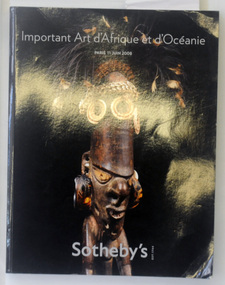
catalogue, Important Art d'Afrique et d'Oceanie, 2008
... It is one of the world's largest brokers of fine and decorative art, jewelry, real estate, and collectibles. ...It is one of the world's largest brokers of fine and decorative art, jewelry, real estate, and collectibles. ...Sotheby's is a British multinational corporation headquartered in New York City. It is one of the world's largest brokers of fine and decorative art, jewelry, real estate, and collectibles. The catalogue was prepared for a Sotheby's auction in Paris. On page 36 of this catalogue is a description, photograph and detailed provenance of the Morton mask sold by Orbost & District Historical society in 2008. (details in the Newsletter, July 2008) NEWSLETTER JULY, 2008This item reflects a significant event in the history of the Orbost Historical Society.A thick glossy catalogue. The front cover has a glossy black backround with the title " Important Art d'Afrique et d'Oceanie" in white print at the top. Under this is "Paris 11 Juin 2008'. There is a large coloured photograph of an early wooden tribal mask and "Sotheby's" beneath that. The catalogue contains photographs, descriptions and provenance of artwork for sale by Sotheby's.morton-mask sotheby's-catalogue -
 City of Greater Bendigo - Civic Collection
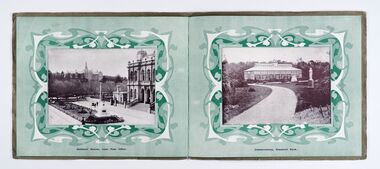
Souvenir - Album, Bolton Brothers Printers, Bendigo
... Each photograph is surrounded by a decorative art nouveau style border. The Bolton family founded a printing business in Bendigo in 1885. ...Each photograph is surrounded by a decorative art nouveau style border. The Bolton family founded a printing business in Bendigo in 1885. ...A large souvenir publication containing photographic images depicting key attractions around Bendigo. Each photograph is surrounded by a decorative art nouveau style border. The Bolton family founded a printing business in Bendigo in 1885. Benjamin Bolton was a prominent businessman and on this death in 1901 William Bolton (Mayor 1936 -37) and his brothers took over the business. Bolton's remains a well known office and printing suppliers in Bendigo today.Sixteen page publication with black and white photographs of buildings, parks and gardens, statues and gold mines around Bendigo. Album has a green front and back cover. Title printed in gold ink.Bendigobolton brothers printers, city of bendigo tourism, making a nation exhibition, city of greater bendigo commerce, city of bendigo mayor, mayor bolton -
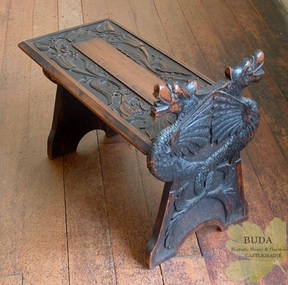 Buda Historic Home & Garden Castlemaine
Domestic furniture, Timber hand-carved boot stool, c1900
... , design and craft techniques at the Castlemaine School of Mines from the 1890s to the early 1900s and this boot stool, hand-carved by Gertrude, is an example of the influence of the Arts and Crafts Movement on her decorative art. See: Zilles, Lauretta (2010), Buda and the Leviny Family, Castlemaine: Buda Historic Home & Garden Inc...., design and craft techniques at the Castlemaine School of Mines from the 1890s to the early 1900s and this boot stool, hand-carved by Gertrude, is an example of the influence of the Arts and Crafts Movement on her decorative art. See: Zilles, Lauretta (2010), Buda and the Leviny Family, Castlemaine: Buda Historic Home & Garden Inc. ...The British Arts and Crafts Movement was a major influence on handcrafts made by the Leviny women at Buda. This Movement spread knowledge of craft techniques in the decorative arts and encouraged women to partake in fields that had traditionally been the domain of men, such as metalcraft and woodwork. The Leviny women studied art, design and craft techniques at the Castlemaine School of Mines from the 1890s to the early 1900s and this boot stool, hand-carved by Gertrude, is an example of the influence of the Arts and Crafts Movement on her decorative art. See: Zilles, Lauretta (2010), Buda and the Leviny Family, Castlemaine: Buda Historic Home & Garden Inc.This is a rare example of a unique hand-carved boot stool made in Australia by Gertrude Leviny in the British Arts and Crafts Movement style at the turn of the twentieth century.Timber boot stool, hand-carved by Gertrude Leviny. Made using the 'chip carving' technique, with dragon heads on upright at one end, and plant design in relief on the seat. Timber finish has a blackened effect.'K/40' (Old Registration Number)gertrude leviny, wood carving, arts and crafts movement, buda, castlemaine, dragon's heads, c1900, domestic furniture, castlemaine school of mines -
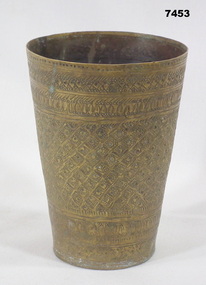 Bendigo Military Museum
Souvenir - BRASS VESSEL, c WW1
... Brass mug shaped vessel with decorative etching. possibly trench art made from some other decorative brass item....Souvenir WW1 Trench ART Brass mug shaped vessel with decorative etching. possibly trench art made from some other decorative brass item. ...Brass mug shaped vessel with decorative etching. possibly trench art made from some other decorative brass item.souvenir, ww1, trench art -
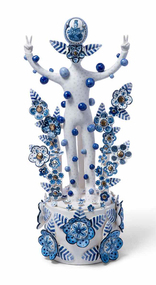 Nillumbik Shire Council
Ceramic, Vipoo Srivilasa, We Come In Peace III, 2017
... His work is both a playful, and at times a political, blend of historical figurative and decorative art practices with contemporary culture. ...His work is both a playful, and at times a political, blend of historical figurative and decorative art practices with contemporary culture. ...Vipoo Srivilasa works predominantly in ceramics, creating unique contemporary porcelain sculptures, vessels and figures to transmit a universal message of cross-cultural experience. His works explore similarities between the cultures of homeland, Thailand and his adoptive home, Australia. His work is both a playful, and at times a political, blend of historical figurative and decorative art practices with contemporary culture. For more than 20 years, Vipoo has exhibited both internationally and throughout Australia, including Museum of Fine Arts, Boston; Saatchi Gallery, London; Ayala Museum, Philippines; Yingge Ceramics Museum, Taiwan; Nanjing Arts Institute, China and the National Gallery of Thailand. His work is held in national and international collections including the National Gallery of Australia, the Art Gallery of South Australia, GOMA, and the Craft Council, UK. -
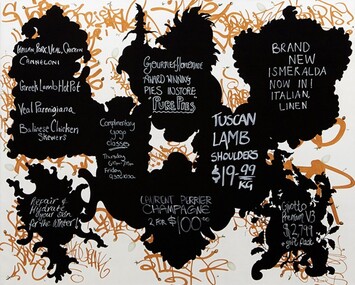 Bayside Gallery - Bayside City Council Art & Heritage Collection
Painting - oil on linen, Stieg Persson, Duck and quail eggs, Italian herbs, 2015
... Persson’s work is celebrated for his distinct (yet eclectic) style, which consists of elements associated with abstraction, figuration and decorative art, as well as the artist’s deeply intellectual interrogation of Australian culture and society. ...Persson’s work is celebrated for his distinct (yet eclectic) style, which consists of elements associated with abstraction, figuration and decorative art, as well as the artist’s deeply intellectual interrogation of Australian culture and society. ...With a career spanning over 30 years as a painter, Stieg Persson is a well known figure within the Australian and international art world. Persson’s work is celebrated for his distinct (yet eclectic) style, which consists of elements associated with abstraction, figuration and decorative art, as well as the artist’s deeply intellectual interrogation of Australian culture and society. In this work titled, Duck and quail eggs, Italian herbs, Persson reflects on contemporary parallels in changes of taste and the desire for decadence as a political and social drive. Inspired by Brighton’s iconic Church and Bay Streets, the artist addresses the social currency of luxury and high-end cuisine by depicting rococo style blackboards which offer the latest in fine dining, alcohol, exercise classes, skin treatments and lavish linens. Persson is presenting a subtle critique of the contemporary obsession with food; as contemporary society places greater significance on the connoisseurship of eating, it does so in lieu of engagement with culture as it is traditionally conceived (music, theatre, literature and art).oil on linenstieg persson, brighton, signage, graffiti, food, chalkboard, bayside, painting -
 University of Melbourne, Burnley Campus Archives
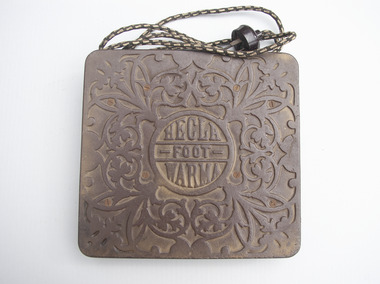
Accessory - Foot Warmer (electric), Hecla Australia, Foot Warmer, Undated
... Brown iron and tin electric foot warmer with art nouveau decorative design surrounding branding inscription 'Hecla Foot Warma,' in centre. ...Brown iron and tin electric foot warmer with art nouveau decorative design surrounding branding inscription 'Hecla Foot Warma,' in centre. ...Probably used by staff in the PavilionBrown iron and tin electric foot warmer with art nouveau decorative design surrounding branding inscription 'Hecla Foot Warma,' in centre. Electric cord and plug attached."Hecla Foot Warma" on front. "230/250 volts, 80 watts, cat. no. F28. Hecla Australia" on back.hecla, foot warmer, footwarmer, hecla foot warma, artifact -
 Federation University Historical Collection
Book, Ballarat Technical Art School Register, 1955-1971, 1955-1971
... Junior Art, Building Construction, Matriculation Art, Needlework, Painting, Life Class, Decorative Needlework, General Art Course, Sculpture...Junior Art, Building Construction, Matriculation Art, Needlework, Painting, Life Class, Decorative Needlework, General Art Course, Sculpture Ballarat Technical Art School Register, 1955-1971 Book ...The Ballarat Technical Art School (No. 10) was a division of the Ballarat School of Mines. Green ledger with black spine. Lists Student Number, Name, Trade or Occupation, Age at Last Birthday, Address, Date of Joining the School, Course Work. Courses listed include dressmaking, Elementary Art, Ticket Writing, Shorthand, Drawing, Pottery and Drawing. Pottery, Millinery. Junior Art, Building Construction, Matriculation Art, Needlework, Painting, Life Class, Decorative Needlework, General Art Course, Sculptureballarat technical art school, art general register, student enrolments, alumni, art studies, ballarat school of mines -
 Hymettus Cottage & Garden Ballarat
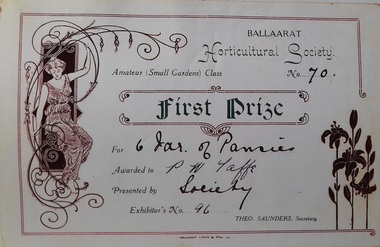
Work on paper - Horticultural award certificate, Ballarat Horticultural Society Amateur {Small Gardens) Class First Prize
... The Taffe family were keen exhibitors at flower shows and garden shows in the early twentieth century and the Ballarat Horticultural Society and also the city were renowned for flower shows, and open garden with tourists travelling to view them. The art nouveau decorative design by printers, Ballarat Lithography Co is typical of the era....The Taffe family were keen exhibitors at flower shows and garden shows in the early twentieth century and the Ballarat Horticultural Society and also the city were renowned for flower shows, and open garden with tourists travelling to view them. The art nouveau decorative design by printers, Ballarat Lithography Co is typical of the era. ...non-fictionballarat, horticulture, art nouveau, ballarat horticultural society, pansies -
 Coal Creek Community Park & Museum
Bookcase and books
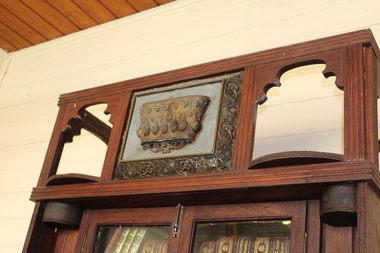
... 8724.1 - Ornate wooden bookcase with six pigeon holes, a cabinet to store books, either side of the cabinet are four small rounded shelves, there are also cupboards below the pigeon holes and also two larger shelves either side of a metal decorative art piece. 8724.2 - Red leather bound book. 8724.3 - Green leather bound book. 8724.4 - Green leather bound book. 8724.5 - Green leather bound book. 8724.6 - Green leather bound book. 8724.7 - Encyclopaedia Britannica VOL XXXIII 8724.8 - Encyclopaedia Britannica VOL XXXII 8724.9 - Encyclopaedia Britannica VOL XXXIV MAPS 8724.10 - Encyclopaedia Britannica VOL XXXV INDEX 8724.11 - Encyclopaedia Britannica VOL I 8724.12 - Encyclopaedia Britannica VOL II 8724.13 - Encyclopaedia Britannica VOL III 8724.14 - Encyclopaedia Britannica VOL IV 8724.15 - Encyclopaedia Britannica VOL V 8725.16 - Encyclopaedia Britannica VOL VI 8725.17 - Encyclopaedia Britannica VOL VII 8724.18 - Encyclopaedia Britannica VOL VIII 8724.19 - Encyclopaedia Britannica VOL IX 8724.20 - Encyclopaedia Britannica VOL X 8724.21 - Encyclopaedia Britannica VOL XI 8724.22 - Encyclopaedia Britannica VOL XII 8724.23 - Encyclopaedia Britannica VOL XIII 8724.24 - Encyclopaedia Britannica VOL XIV 8724.25 - Encyclopaedia Britannica VOL XV 8724.26 - Encyclopaedia Britannica VOL XVI 8724.27 - Encyclopaedia Britannica VOL XVII 8724.28 - Encyclopaedia Britannica VOL XVIII 8724.29 - Encyclopaedia Britannica VOL XIX 8724.30 - Encyclopaedia Britannica VOL XX 8724.31 - Encyclopaedia Britannica VOL XXI 8724.32 - Encyclopaedia Britannica VOL XXII 8724.33 - Encyclopaedia Britannica VOL XXIII 8724.34 - Encyclopaedia Britannica VOL XXIV 8724.35 - Encyclopaedia Britannica VOL XXV 8724.36 - Encyclopaedia Britannica VOL XXVI 8724.37 - Encyclopaedia Britannica VOL XXVII 8724.38 - Encyclopaedia Britannica VOL XXVIII 8724.39 - Encyclopaedia Britannica VOL XXIX 8724.40 - Encyclopaedia Britannica VOL XXX 8724.41 - Encyclopaedia Britannica VOL XXXI...8724.7 - Encyclopaedia Britannica VOL XXXIII 8724.8 - Encyclopaedia Britannica VOL XXXII 8724.9 - Encyclopaedia Britannica VOL XXXIV MAPS 8724.10 - Encyclopaedia Britannica VOL XXXV INDEX 8724.11 - Encyclopaedia Britannica VOL I 8724.12 - Encyclopaedia Britannica VOL II 8724.13 - Encyclopaedia Britannica VOL III 8724.14 - Encyclopaedia Britannica VOL IV 8724.15 - Encyclopaedia Britannica VOL V 8724.16 - Encyclopaedia Britannica VOL VI 8724.17 - Encyclopaedia Britannica VOL VII 8724.18 - Encyclopaedia Britannica VOL VIII 8724.19 - Encyclopaedia Britannica VOL IX 8724.20 - Encyclopaedia Britannica VOL X 8724.21 - Encyclopaedia Britannica VOL XI 8724.22 - Encyclopaedia Britannica VOL XII 8724.23 - Encyclopaedia Britannica VOL XIII 8724.24 - Encyclopaedia Britannica VOL XIV 8724.25 - Encyclopaedia Britannica VOL XV 8724.26 - Encyclopaedia Britannica VOL XVI 8724.27 - Encyclopaedia Britannica VOL XVII 8724.28 - Encyclopaedia Britannica VOL XVIII 8724.29 - Encyclopaedia Britannica VOL XIX 8724.30 - Encyclopaedia Britannica VOL XX 8724.31 - Encyclopaedia Britannica VOL XXI 8724.32 - Encyclopaedia Britannica VOL XXII 8724.33 - Encyclopaedia Britannica VOL XXIII 8724.34 - Encyclopaedia Britannica VOL XXIV 8724.35 - Encyclopaedia Britannica VOL XXV 8724.36 - Encyclopaedia Britannica VOL XXVI 8724.37 - Encyclopaedia Britannica VOL XXVII 8724.38 - Encyclopaedia Britannica VOL XXVIII 8724.39 - Encyclopaedia Britannica VOL XXIX 8724.40 - Encyclopaedia Britannica VOL XXX 8724.41 - Encyclopaedia Britannica VOL XXXI 8724.1 - Ornate wooden bookcase with six pigeon holes, a cabinet to store books, either side of the cabinet are four small rounded shelves, there are also cupboards below the pigeon holes and also two larger shelves either side of a metal decorative art piece. 8724.2 - Red leather bound book. 8724.3 - Green leather bound book. 8724.4 - Green leather bound book. 8724.5 - Green leather bound book. 8724.6 - Green leather bound book. 8724.7 - Encyclopaedia Britannica VOL XXXIII 8724.8 - Encyclopaedia Britannica VOL XXXII 8724.9 - Encyclopaedia Britannica VOL XXXIV MAPS 8724.10 - Encyclopaedia Britannica VOL XXXV INDEX 8724.11 - Encyclopaedia Britannica VOL I 8724.12 - Encyclopaedia Britannica VOL II 8724.13 - Encyclopaedia Britannica VOL III 8724.14 - Encyclopaedia Britannica VOL IV 8724.15 - Encyclopaedia Britannica VOL V 8725.16 - Encyclopaedia Britannica VOL VI 8725.17 - Encyclopaedia Britannica VOL VII 8724.18 - Encyclopaedia Britannica VOL VIII 8724.19 - Encyclopaedia Britannica VOL IX 8724.20 - Encyclopaedia Britannica VOL X 8724.21 - Encyclopaedia Britannica VOL XI 8724.22 - Encyclopaedia Britannica VOL XII 8724.23 - Encyclopaedia Britannica VOL XIII 8724.24 - Encyclopaedia Britannica VOL XIV 8724.25 - Encyclopaedia Britannica VOL XV 8724.26 - Encyclopaedia Britannica VOL XVI 8724.27 - Encyclopaedia Britannica VOL XVII 8724.28 - Encyclopaedia Britannica VOL XVIII 8724.29 - Encyclopaedia Britannica VOL XIX 8724.30 - Encyclopaedia Britannica VOL XX 8724.31 - Encyclopaedia Britannica VOL XXI 8724.32 - Encyclopaedia Britannica VOL XXII 8724.33 - Encyclopaedia Britannica VOL XXIII 8724.34 - Encyclopaedia Britannica VOL XXIV 8724.35 - Encyclopaedia Britannica VOL XXV 8724.36 - Encyclopaedia Britannica VOL XXVI 8724.37 - Encyclopaedia Britannica VOL XXVII 8724.38 - Encyclopaedia Britannica VOL XXVIII 8724.39 - Encyclopaedia Britannica VOL XXIX 8724.40 - Encyclopaedia Britannica VOL XXX 8724.41 - Encyclopaedia Britannica VOL XXXI Bookcase and books ...8724.1 - Ornate wooden bookcase with six pigeon holes, a cabinet to store books, either side of the cabinet are four small rounded shelves, there are also cupboards below the pigeon holes and also two larger shelves either side of a metal decorative art piece. 8724.2 - Red leather bound book. 8724.3 - Green leather bound book. 8724.4 - Green leather bound book. 8724.5 - Green leather bound book. 8724.6 - Green leather bound book. 8724.7 - Encyclopaedia Britannica VOL XXXIII 8724.8 - Encyclopaedia Britannica VOL XXXII 8724.9 - Encyclopaedia Britannica VOL XXXIV MAPS 8724.10 - Encyclopaedia Britannica VOL XXXV INDEX 8724.11 - Encyclopaedia Britannica VOL I 8724.12 - Encyclopaedia Britannica VOL II 8724.13 - Encyclopaedia Britannica VOL III 8724.14 - Encyclopaedia Britannica VOL IV 8724.15 - Encyclopaedia Britannica VOL V 8725.16 - Encyclopaedia Britannica VOL VI 8725.17 - Encyclopaedia Britannica VOL VII 8724.18 - Encyclopaedia Britannica VOL VIII 8724.19 - Encyclopaedia Britannica VOL IX 8724.20 - Encyclopaedia Britannica VOL X 8724.21 - Encyclopaedia Britannica VOL XI 8724.22 - Encyclopaedia Britannica VOL XII 8724.23 - Encyclopaedia Britannica VOL XIII 8724.24 - Encyclopaedia Britannica VOL XIV 8724.25 - Encyclopaedia Britannica VOL XV 8724.26 - Encyclopaedia Britannica VOL XVI 8724.27 - Encyclopaedia Britannica VOL XVII 8724.28 - Encyclopaedia Britannica VOL XVIII 8724.29 - Encyclopaedia Britannica VOL XIX 8724.30 - Encyclopaedia Britannica VOL XX 8724.31 - Encyclopaedia Britannica VOL XXI 8724.32 - Encyclopaedia Britannica VOL XXII 8724.33 - Encyclopaedia Britannica VOL XXIII 8724.34 - Encyclopaedia Britannica VOL XXIV 8724.35 - Encyclopaedia Britannica VOL XXV 8724.36 - Encyclopaedia Britannica VOL XXVI 8724.37 - Encyclopaedia Britannica VOL XXVII 8724.38 - Encyclopaedia Britannica VOL XXVIII 8724.39 - Encyclopaedia Britannica VOL XXIX 8724.40 - Encyclopaedia Britannica VOL XXX 8724.41 - Encyclopaedia Britannica VOL XXXI8724.7 - Encyclopaedia Britannica VOL XXXIII 8724.8 - Encyclopaedia Britannica VOL XXXII 8724.9 - Encyclopaedia Britannica VOL XXXIV MAPS 8724.10 - Encyclopaedia Britannica VOL XXXV INDEX 8724.11 - Encyclopaedia Britannica VOL I 8724.12 - Encyclopaedia Britannica VOL II 8724.13 - Encyclopaedia Britannica VOL III 8724.14 - Encyclopaedia Britannica VOL IV 8724.15 - Encyclopaedia Britannica VOL V 8724.16 - Encyclopaedia Britannica VOL VI 8724.17 - Encyclopaedia Britannica VOL VII 8724.18 - Encyclopaedia Britannica VOL VIII 8724.19 - Encyclopaedia Britannica VOL IX 8724.20 - Encyclopaedia Britannica VOL X 8724.21 - Encyclopaedia Britannica VOL XI 8724.22 - Encyclopaedia Britannica VOL XII 8724.23 - Encyclopaedia Britannica VOL XIII 8724.24 - Encyclopaedia Britannica VOL XIV 8724.25 - Encyclopaedia Britannica VOL XV 8724.26 - Encyclopaedia Britannica VOL XVI 8724.27 - Encyclopaedia Britannica VOL XVII 8724.28 - Encyclopaedia Britannica VOL XVIII 8724.29 - Encyclopaedia Britannica VOL XIX 8724.30 - Encyclopaedia Britannica VOL XX 8724.31 - Encyclopaedia Britannica VOL XXI 8724.32 - Encyclopaedia Britannica VOL XXII 8724.33 - Encyclopaedia Britannica VOL XXIII 8724.34 - Encyclopaedia Britannica VOL XXIV 8724.35 - Encyclopaedia Britannica VOL XXV 8724.36 - Encyclopaedia Britannica VOL XXVI 8724.37 - Encyclopaedia Britannica VOL XXVII 8724.38 - Encyclopaedia Britannica VOL XXVIII 8724.39 - Encyclopaedia Britannica VOL XXIX 8724.40 - Encyclopaedia Britannica VOL XXX 8724.41 - Encyclopaedia Britannica VOL XXXI -
 Victorian Aboriginal Corporation for Languages
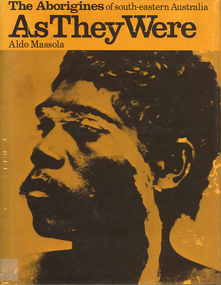
Book, Aldo Massola, The Aborigines of south-eastern Australia : as they were, 1971
... natural rock formations, mythical beasts (Bunyip, Mindie), stellar beliefs; magic, medicine men, powers, native remedies for sickness, describes ceremony held in Melbourne, 1847 to avert evil, sorcery, pointing bone, love magic, rain makers; messengers, appearance, etiquette, message sticks; p.54-71; Rock art, motifs, colours, decorative art, engraving of utensils, rock engravings, manufacture &? ...natural rock formations, mythical beasts (Bunyip, Mindie), stellar beliefs; magic, medicine men, powers, native remedies for sickness, describes ceremony held in Melbourne, 1847 to avert evil, sorcery, pointing bone, love magic, rain makers; messengers, appearance, etiquette, message sticks; p.54-71; Rock art, motifs, colours, decorative art, engraving of utensils, rock engravings, manufacture &? ...Contents: p.1-3; Origins, arrival in Australia; p.4-9; How they lived - camp sites, dating (including carbon dating); p.10-27; Physical appearance, skin colour, hair, clothing, body ornaments, cicatrization; exchange system, distribution of food, marriage &? sexual relations; the tribe - structure, relationship to land, territory, gives map showing locations of tribes, New South Wales, Victoria &? eastern South Australia, leadership, government, division of labour, status of women, estimated population at white settlement, density of population (Victoria); p.28-31; Language - names &? naming, reproduces Wembawemba vocabulary, notes use of secret languages, gives 12 rules for pronounciation; p.32-53; Religion, spirit beliefs, totemism, moieties, phratries, marriage rules; mythology, gives eaglehawk &? crow myth from Lake Victoria &? other myths illustrating origins of fire &? natural rock formations, mythical beasts (Bunyip, Mindie), stellar beliefs; magic, medicine men, powers, native remedies for sickness, describes ceremony held in Melbourne, 1847 to avert evil, sorcery, pointing bone, love magic, rain makers; messengers, appearance, etiquette, message sticks; p.54-71; Rock art, motifs, colours, decorative art, engraving of utensils, rock engravings, manufacture &? use of pigments, engraving techniques; trade system, objects bartered, meeting places for trade (Victoria), map shows possible routes (south east Australia); corroborees, purpose, body ornaments &? decorations, musical instruments; p.72-93; Ceremonial life, marriage, punishment for infidelity, birth, childhood, games &? amusements, initiation, etiquette of visiting tribes, details of ceremony, womens role, earth figures &? ground designs, bull roarers, female puberty ceremonies; p.94-133; Shelters, fire making, cooking, construction of canoes, wooden implements, use of reeds, animal skins &? sinews, shells; stone tools, cylindro conical stones, scrapers, knives &? microliths; hunting weapons, spear, other methods pits, nets; fishing methods &? spears, traps; food sharing, womens responsibilities for collecting, digging stick, cooking methods, insect foods, plant foods, water resources; manufacture &? use of spears, spear throwers, shields, clubs, boomerangs; inter- &? intratribal fighting; p.134-147; Death, disposal of body - eating of the dead, burial, cremation, platform exposure, dendroglyphs (N.S.W.), Aboriginal burial grounds (Darling &? Murray Rivers), mourning, widowhood, kopi caps (N.S.W.), causes of death, inquest ceremonies, revenge expedition, after death beliefs; p.148-157; The end of the tribes white settlement &? its impact on Aboriginal life, friction between natives &? settlers, establishment of Protectorates; copiously illustrated throughout.maps, b&w illustrations, b&w photographswemba wemba, murray river, darling river, lake victoria -
 Flagstaff Hill Maritime Museum and Village
Container - Ink Bottle, Royal Doulton, 1853-1878
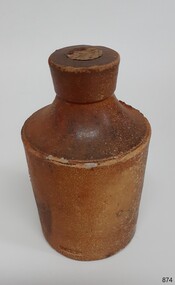
... The company always made some more decorative items, initially still mostly stoneware, and from the 1860s the firm made considerable efforts to get a reputation for design, in which it was largely successful, as one of the first British makers of art pottery. ...The company always made some more decorative items, initially still mostly stoneware, and from the 1860s the firm made considerable efforts to get a reputation for design, in which it was largely successful, as one of the first British makers of art pottery. ...The ink bottle was made by the Royal Doulton company which began as a partnership between John Doulton, Martha Jones, and John Wattis an English ceramic and home accessories manufacturer founded in 1815. Operating initially in Vauxhall, London, it later moved to Lambeth, In1882 it opened a factory in Burslem, Stoke on Trent, in the centre of English pottery. The business specialised in making salt-glazed stoneware articles, including utilitarian or decorative bottles, jugs and jars, much of it intended for inns and pubs. The backbone of the business was a wide range of utilitarian wares, mostly stoneware's, including storage jars, tankards and the like, and later extending to pipes for drains, lavatories and other bathroom ceramics. From 1853 to 1902 its wares were marked Doulton & Co., then from 1902, when a royal warrant was given, wares were marked Royal Doulton. The company always made some more decorative items, initially still mostly stoneware, and from the 1860s the firm made considerable efforts to get a reputation for design, in which it was largely successful, as one of the first British makers of art pottery. Initially, this was done through artistic stoneware made in Lambeth, but in 1882 the firm bought a Burslem factory, which was mainly intended for making bone china table wares and decorative items. History of the Loch Ard: The Loch Ard got its name from ”Loch Ard” a loch that lies to the west of Aberfoyle, and the east of Loch Lomond. It means "high lake" in Scottish Gaelic. The vessel belonged to the famous Loch Line which sailed many vessels from England to Australia. The Loch Ard was built in Glasgow by Barclay, Curdle and Co. in 1873, the vessel was a three-masted square-rigged iron sailing ship that measured 79.87 meters in length, 11.58 m in width, and 7 m in depth with a gross tonnage of 1693 tons with a mainmast that measured a massive 45.7 m in height. Loch Ard made three trips to Australia and one trip to Calcutta before its fateful voyage. Loch Ard left England on March 2, 1878, under the command of 29-year-old Captain Gibbs, who was newly married. The ship was bound for Melbourne with a crew of 37, plus 17 passengers. The general cargo reflected the affluence of Melbourne at the time. Onboard were straw hats, umbrellas, perfumes, clay pipes, pianos, clocks, confectionery, linen and candles, as well as a heavier load of railway irons, cement, lead and copper. There were other items included that were intended for display in the Melbourne International Exhibition of 1880. The voyage to Port Phillip was long but uneventful. Then at 3 am on June 1, 1878, Captain Gibbs was expecting to see land. But the Loch Ard was running into a fog which greatly reduced visibility. Captain Gibbs was becoming anxious as there was no sign of land or the Cape Otway lighthouse. At 4 am the fog lifted and a lookout aloft announced that he could see breakers. The sheer cliffs of Victoria's west coast came into view, and Captain Gibbs realised that the ship was much closer to them than expected. He ordered as much sail to be set as time would permit and then attempted to steer the vessel out to sea. On coming head-on into the wind, the ship lost momentum, the sails fell limp and Loch Ard's bow swung back towards land. Gibbs then ordered the anchors to be released in an attempt to hold their position. The anchors sank some 50 fathoms - but did not hold. By this time the ship was among the breakers and the tall cliffs of Mutton Bird Island rose behind. Just half a mile from the coast, the ship's bow was suddenly pulled around by the anchor. The captain tried to tack out to sea, but the ship struck a reef at the base of Mutton Bird Island, near Port Campbell. Waves subsequently broke over the ship and the top deck became loosened from the hull. The masts and rigging came crashing down knocking passengers and crew overboard. When a lifeboat was finally launched, it crashed into the side of Loch Ard and capsized. Tom Pearce, who had launched the boat, managed to cling to its overturned hull and shelter beneath it. He drifted out to sea and then on the flood tide came into what is now known as Lochard Gorge. He swam to shore, bruised and dazed, and found a cave in which to shelter. Some of the crew stayed below deck to shelter from the falling rigging but drowned when the ship slipped off the reef into deeper water. Eva Carmichael a passenger had raced onto the deck to find out what was happening only to be confronted by towering cliffs looming above the stricken ship. In all the chaos, Captain Gibbs grabbed Eva and said, "If you are saved Eva, let my dear wife know that I died like a sailor". That was the last Eva Carmichael saw of the captain. She was swept off the ship by a huge wave. Eva saw Tom Pearce on a small rocky beach and yelled to attract his attention. He dived in and swam to the exhausted woman and dragged her to shore. He took her to the cave and broke the open case of brandy which had washed up on the beach. He opened a bottle to revive the unconscious woman. A few hours later Tom scaled a cliff in search of help. He followed hoof prints and came by chance upon two men from nearby Glenample Station three and a half miles away. In a complete state of exhaustion, he told the men of the tragedy. Tom then returned to the gorge while the two men rode back to the station to get help. By the time they reached Loch Ard Gorge, it was cold and dark. The two shipwreck survivors were taken to Glenample Station to recover. Eva stayed at the station for six weeks before returning to Ireland by steamship. In Melbourne, Tom Pearce received a hero's welcome. He was presented with the first gold medal of the Royal Humane Society of Victoria and a £1000 cheque from the Victorian Government. Concerts were performed to honour the young man's bravery and to raise money for those who lost family in the disaster. Of the 54 crew members and passengers on board, only two survived: the apprentice, Tom Pearce and the young woman passenger, Eva Carmichael, who lost her family in the tragedy. Ten days after the Lochard tragedy, salvage rights to the wreck were sold at auction for £2,120. Cargo valued at £3,000 was salvaged and placed on the beach, but most washed back into the sea when another storm developed. The wreck of Lochard still lies at the base of Mutton Bird Island. Much of the cargo has now been salvaged and some items were washed up into Lochard Gorge. Cargo and artefacts have also been illegally salvaged over many years before protective legislation was introduced in March 1982. One of the most unlikely pieces of cargo to have survived the shipwreck was a Minton majolica peacock- one of only nine in the world. The peacock was destined for the Melbourne 1880 International Exhibition. It had been well packed, which gave it adequate protection during the violent storm. Today the Minton peacock can be seen at the Flagstaff Hill Maritime Museum in Warrnambool. From Australia's most dramatic shipwreck, it has now become Australia's most valuable shipwreck artifact and is one of very few 'objects' on the Victorian State Heritage Register.An early utilitarian stoneware item made by a well-known company that specialised in making salt-glazed items that later earned a reputation for making stoneware art objects. Of additional significance is that it was recovered from the wreck of the Loch Ard. A shipwreck that is of additional significance as it is registered on the Victorian Heritage Register ( S 417). Flagstaff Hill has a varied collection of artefacts from Loch Ard and its collection is significant for being one of the largest accumulations of artefacts from this notable Victorian shipwreck of which the subject items are a small part. The collections objects give us a snapshot of how we can interpret the story of this tragic event. The collection is also archaeologically significant as it represents aspects of Victoria's shipping history that allows us to interpret Victoria's social and historical themes of the time. Through is associated with the worst and best-known shipwreck in Victoria's history. Salt glazed stoneware ink bottle, large capacity, tapered lip and body, two-tone brown with some encrustation on surface, still sealed with cork. Inscription in clay. Recovered from the wreck of the LOCH ARD.Stamped into clay "DOULTON LAMBETH"flagstaff hill, warrnambool, flagstaff hill maritime museum, shipwreck coast, flagstaff hill maritime village, great ocean road, loch line, loch ard, captain gibbs, eva carmichael, tom pearce, glenample station, mutton bird island, loch ard gorge, ink bottle, bulk ink bottle, writing accessory, stationery, stoneware, doulton lambeth, royal doulton, writing equipment -
 Flagstaff Hill Maritime Museum and Village
Craft - Scrimshaw
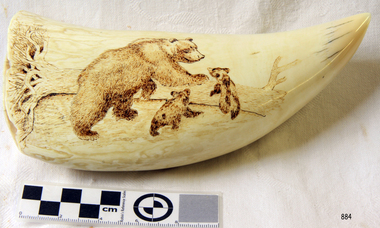
... art and museum copies are usually clearly marked and openly sold for what they are. The biggest problems in the general antiques market are the mass produced synthetic reproduction pieces, such as this item, that can be mistaken for the genuine item. The scrimshaw is a modern reproduction of a typical scrimshaw scene and engraved onto a synthetic substance. It has been created as a decorative ...When scrimshaw is mentioned, most people think of carving on sperm whale teeth only. But scrimshaw also includes engravings on skeletal whale bone–such as the jaw bone, called panbone–and ivory from other marine mammals such as walrus. Although scrimshaw is widely associated with nautical themes and designs of the 19th century whaling industry, vintage scrimshaw was also produced as tribal art in many cultures. Today, scrimshaw is recognized as a unique medium in which present-day artists have developed their own modern themes. Scrimshaw reproductions may take several forms. There are - New carvings on genuine ivory or bone with the deliberate intent to create an "antique” - New carvings on genuine ivory or bone sold as signed and dated contemporary art - Clearly marked synthetic museum reproductions and mass marketed - Unmarked synthetic replicas Painstakingly carved deliberate replicas are directed towards the scrimshaw collector and seldom appear in the general market. Pieces of contemporary art and museum copies are usually clearly marked and openly sold for what they are. The biggest problems in the general antiques market are the mass produced synthetic reproduction pieces, such as this item, that can be mistaken for the genuine item. The scrimshaw is a modern reproduction of a typical scrimshaw scene and engraved onto a synthetic substance. It has been created as a decorative piece and is currently displayed as a representation of the craft of scrimshaw.Scrimshaw carved on a non-natural material in the shape of a whale tooth. Engraving depicts a grizzly bear with two cubs next to a fallen tree. Nonewarrnambool, flagstaff-hill, flagstaff-hill-maritime-museum, maritime-museum, shipwreck-coast, flagstaff-hill-maritime-village, craft work, carving on bones, whale bone carving, engraving, scrimshaw, carving, reproduction scrimshaw -
 Federation University Historical Collection
Book, Charles Auguste Albert Racinet, Polychromatic Ornament, 1877 (exact)
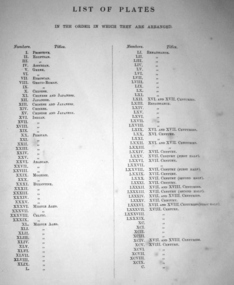
... decorative arts of the time. Racinet learned his trade from his father. He was trained by neo-classical artists in the ambit of Percier and Fontaine. August Racinet was influenced by the Schinkel tendency and supported by architects such as Hittorf and Voillet-le-Duc. art paintings textile designs decoration and craft ornaments ballarat technical art school library bookplate A book plate inside front cover with a heading "Ballarat School of Art Library No. ...Monsieur Charles Auguste Albert Racinet was born in Paris on July 20th, 1825. His job was representative of a group of 19th-century industrial draughtsmen, teachers of technical drawing and factory studio manager. He helped in spreading the most significant design of the decorative arts of the time. Racinet learned his trade from his father. He was trained by neo-classical artists in the ambit of Percier and Fontaine. August Racinet was influenced by the Schinkel tendency and supported by architects such as Hittorf and Voillet-le-Duc.Book. Large red leather cover. Title written in gold on spine. Illustrations (black & white), 100 of chromolithographic plates in gold, silver and colours. Various styles of ancient, oriental and medieval art including the Renaissance, the 17th, and the 18th centuries. Subjects are arranged in historical order. Text translated from the original French. The book includes a table of contents, a list of plates, a classified index and an introduction.A book plate inside front cover with a heading "Ballarat School of Art Library No. R/171. Stamped with "Reference","Education Department" and "Ballarat School of Art Library"art, paintings, textile, designs, decoration and craft, ornaments, ballarat technical art school library, bookplate -
 Federation University Historical Collection
Book, H. Th. Bossert, Peasant Art in Europe, 1927 (exact)
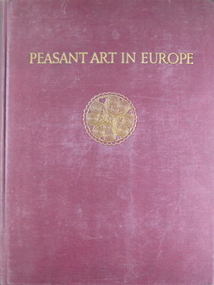
... art...embroideries...handicraft...decorative...It contains about 2100 examples of European folk-arts, such as ornaments, ceramics, embroideries, wickerwork and basketwork, fabrics, wood, handicraft, glass and metalwork. embroidery europe ceramics ornaments peasant art h th bossert folk art embroideries handicraft decorative arts textile fabrics Inside front cover there is a plate titled "Ballarat Technical Art School Library no. ...Red cloth large hardcover book. Title is written on the front cover and on spine in gold. Small gold circle pattern on front cover. The book contains 100 coloured plates, 32 b/w plates with images of peasant handicraft. The book includes table of content, index, bibliography and a library due date card inside back cover, it was borrowed by Donald Ferguson(an art lecturer)on 13 May 1957. Page numbers written in roman numerals. embroidery, europe, ceramics, ornaments, peasant art, h th bossert, folk art, embroideries, handicraft, decorative arts, textile fabrics -
 Federation University Historical Collection
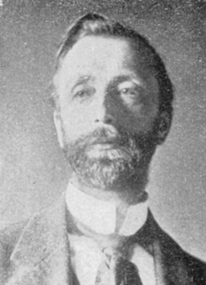
Photograph - Black and White, Ponsonby May Carew Smyth, 1906
... Art' exhibition. In the 1930s he wrote wide-ranging, informative and sometimes humorous articles for the Argus on various aspects of the decorative arts. ...Art' exhibition. In the 1930s he wrote wide-ranging, informative and sometimes humorous articles for the Argus on various aspects of the decorative arts. ...Ponsonby Carew Smyth, A.R.C.A. London, was Victorian Art Inspector of Technical Schools. "Ponsonby May Carew-Smyth (1860-1939), educationist, was born on 7 August 1860 at Cork, Ireland, son of Emmanuel Uniacke Smyth, gentleman, and his wife Catherine Giles, née Carew. Carew-Smyth's initial art training and teaching was at the Belfast Government School of Art and Design. In 1885 he entered the National Art Training School at South Kensington, London, where he remained as student and teacher for five years. He also taught at Rugby School, studied at the Royal School of Wood Carving and the Guild School of Handicrafts, London, and was sent by the Department of Science and Art to study art, art education and museum procedures in Paris. Testimonials to his career in England affirm his ability and dedication as an educationist and his integrity as a man. On 23 December 1890 Carew-Smyth married Marie Reynolds of Brixton; they migrated to Australia next January. In September Carew-Smyth applied from Melbourne for the position of master of the school of art and design, established under the auspices of the Ballarat Fine Art Gallery. Opening in November, the school offered day classes and a broad curriculum, and under Carew-Smyth's guidance, established a sound reputation. In November 1899 he was appointed inspector of drawing in the Department of Education. Carew-Smyth saw drawing as a crucial link between primary and technical education, insisting on it as a 'mental process quite as much as a manual'; he believed strongly in the utilitarian value of drawing to the artisan class and of art as 'craftmanship'. By his emphasis on teacher-training, by his role in the Teachers' Training College, and by his constant travels, writing and lecturing, he upgraded both the standard and importance of drawing early in the century. His meticulous mind formulated the Austral Drawing Books which provided the basis of instruction in the subject in Victoria until 1927. Although he gave his occupation as 'artist', Carew-Smyth was primarily an educationist. He was actively involved in the early years of Prahran and Swinburne Technical colleges, and especially the Working Men's College which held his interest even after his retirement. In 1906 he was appointed chairman of the Victorian State Schools' Equipment and Decoration Society, and he was important in the organization of the state schools' exhibition that year. He designed the commemorative wall plaques installed in state schools after World War I, and the art teachers' certificate. He was prominent in bringing about the 1922 Jubilee Exhibition, and the 1926 showing of work of overseas schools, and especially the 1934 Melbourne centenary 'Early Victorian Art' exhibition. In the 1930s he wrote wide-ranging, informative and sometimes humorous articles for the Argus on various aspects of the decorative arts. In mid-1936 he was acting director of the National Gallery of Victoria. To students his single-mindedness sometimes suggested sternness, but Carew-Smyth was always held in the highest regard both professionally and personally. His colleagues recalled a man of kindness, unstinting devotion to work, and humour; he was considered quite a raconteur. Survived by his wife, a son and a daughter, he died in his home at South Yarra on 9 October 1939, and was cremated." (Margot Lethlean, 'Carew-Smyth, Ponsonby May (1860–1939)', Australian Dictionary of Biography, National Centre of Biography, Australian National University, http://adb.anu.edu.au/biography/carew-smyth-ponsonby-may-5501/text9359, accessed 4 June 2013.)Image of the face and shoulders of a bearded man - Ponsonby Carew Smyth. The image was originally published from the State Schools Exhibition Catalogue, 1906. (Cat. No. 401)carew smyth, inspector, technical schools, art. -
 Federation University Historical Collection
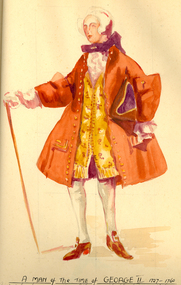
Book, Historic Ornament Parts I and II. Ballarat Technical Art School Art History Books, 1931, 1931
... Art School as Edith Lawn. She retired in 1972 at which time she was the Lecturer in Charge of Craft Edith Lawn was a member of inaugural Ballarat School of Mines Old Girls Association, and served as first Press Correspondent. Her daughter, Valda Lawn (later D'Angri) also attended and taught at the School. One of the subjects Curnow studied was Historic Ornament. This subject spanned time and space to inform and inspire designers. Students studied the influences of history, geography, culture and climate on ornamental aesthetics, including the tools, materials and methods applied to decorative...Art School as Edith Lawn. She retired in 1972 at which time she was the Lecturer in Charge of Craft Edith Lawn was a member of inaugural Ballarat School of Mines Old Girls Association, and served as first Press Correspondent. Her daughter, Valda Lawn (later D'Angri) also attended and taught at the School. One of the subjects Curnow studied was Historic Ornament. This subject spanned time and space to inform and inspire designers. Students studied the influences of history, geography, culture and climate on ornamental aesthetics, including the tools, materials and methods applied to decorative ...Edith CURNOW (1913–2003) Ballarat | Australia Edith Gertrude Curnow undertook Industrial Art teacher training at the Ballarat Technical Art School, with a five-year Senior Technical Scholarship, between 1926 and 1931. She taught for a time before marrying compositor James Lawn in 1937. She reportedly continued to teach at the Ballarat Technical Art School as Edith Lawn. She retired in 1972 at which time she was the Lecturer in Charge of Craft Edith Lawn was a member of inaugural Ballarat School of Mines Old Girls Association, and served as first Press Correspondent. Her daughter, Valda Lawn (later D'Angri) also attended and taught at the School. One of the subjects Curnow studied was Historic Ornament. This subject spanned time and space to inform and inspire designers. Students studied the influences of history, geography, culture and climate on ornamental aesthetics, including the tools, materials and methods applied to decorative objects, interior design and architecture.Two books containing student notes and drawing relating to courses at the Ballarat techncial Art School in 1931. The work was undertaken by Edith Curnow. .1) - Foolscap red covered book on Historic Ornament. Includes History of Ornament, Egyptian Ornament, Assyrian Ornament; Greek Ornament, Roman Ornament, Pompeian Ornament, Byzantine, Romanesque Ornament, Norman, Decorated Gothic, Perpendicular Gothic, Renaissance. .2) Green quarto book on Historic Ornament Part 2: Costume. The work includes Egyptian Costume, Greek Costume, Roman Costume, Richard I, Crusades, Edward III, Charles I, Charles II, George II.ballarat school of mines, ballarat technical art school, art history, edith lawn, edith curnow, val lawn, val d'angri, curnow, lawn, ornament, costume., ballarat technical art school library, artists workbook, journal, historic ornament, university women, ballarat school of mines old girls association -
 Federation University Historical Collection
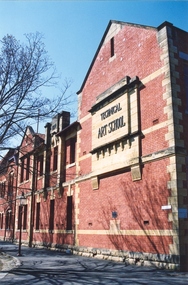
Photograph, Clare Gervasoni, Ballarat School of Mines Technical Art School, c2008, c2008
... decorative cast iron downpipes. The entrance on the northern side has attractive leadlight glazing in an art deco style. ...decorative cast iron downpipes. The entrance on the northern side has attractive leadlight glazing in an art deco style. ...The former Ballarat Circuit Court Building, later the first building of the Ballarat School of Mines, was demolished to make way for a new custom built Art School building. Sir Alexander Peacock opened the Ballarat Technical Art School in July 1915. It cost 10,000 pounds and was constructed by the Public Works Department from plans drawn by the then Art School Principal, Herbert H. Smith. The building contractors were Messrs Gower and Eddards. According to the SMB Annual Report of 1914 'the internal upholstering and fittings have all been carried out in Australian timbers, with Queensland maple largely used throughout.' Before this building was constructed art and craft classes were held in various buildings around Ballarat. The building could be described as federation-art deco in style. It features sandstone insertion with sandstone string coursing. The base of the building is rusticated sandstone. The relief stone panel on the front with the words "Technical Art School" features stone pilaster brackets and corbels. In the centre front can be seen rectangular sandstone pediment with decorative stonework incorporating the date of construction. The windows in the lower floor feature five supporting keystones whereas the upper windows have sandstone lintels. The building also features decorative cast iron downpipes. The entrance on the northern side has attractive leadlight glazing in an art deco style. Above the door a miner's lamp and pick are featured in the design. The building is functional in design with large metal windows in the south wall to ensure good light into the studios. The northern wall has standard double hung windows. The interior of the building features a carved wooden staircase and cast iron ceiling vents. The rear drawing studios can be made into one large studio by opening panelled timber doors. This opening features classical plaster pilasters with a pediment above.Colour photographs of a double storey, red brick building built - the Ballarat Technical Art School, a division of the Ballarat School of Minesballarat school of mines, ballarat technical art school, architecture, art, gribble building -
 Federation University Historical Collection
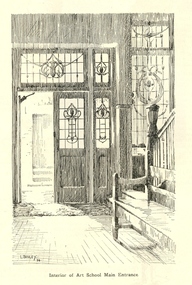
Artwork, other - Artwork, Artwork from the Ballarat School of Mines Students' Magazine, 1934, 1934
... decorative cast iron downpipes. The entrance on the northern side has attractive leadlight glazing in an art deco style. ...decorative cast iron downpipes. The entrance on the northern side has attractive leadlight glazing in an art deco style. ...Sir Alexander Peacock opened the Ballarat Technical Art School in July 1915. It cost 10,000 pounds and was constructed by the Public Works Department from plans drawn by the then Art School Principal, Herbert H. Smith. The building contractors were Messrs Gower and Eddards. According to the SMB Annual Report of 1914 'the internal upholstering and fittings have all been carried out in Australian timbers, with Queensland maple largely used throughout.' Before this building was constructed art and craft classes were held in various buildings around Ballarat. The building could be described as federation-art deco in style. It features sandstone insertion with sandstone string coursing. The base of the building is rusticated sandstone. The relief stone panel on the front with the words "Technical Art School" features stone pilaster brackets and corbels. In the centre front can be seen rectangular sandstone pediment with decorative stonework incorporating the date of construction. The windows in the lower floor feature five supporting keystones whereas the upper windows have sandstone lintels. The building also features decorative cast iron downpipes. The entrance on the northern side has attractive leadlight glazing in an art deco style. Above the door a miner's lamp and pick are featured in the design. The building is functional in design with large metal windows in the south wall to ensure good light into the studios. The northern wall has standard double hung windows. The interior of the building features a carved wooden staircase and cast iron ceiling vents. The rear drawing studios can be made into one large studio by opening panelled timber doors. This opening features classical plaster pilasters with a pediment above. This building is now the Gribble Building on the Federation University Australia SMB Campus.Artwork by students of the Ballarat Technical Art School from the 1934 Ballarat School of Mines Students' Magazine .1) Stairs to the Ballarat Junior Technical School from Grant Street .2) Caricatures by Nornie Gude .3) work by Colin S. Hunt .4) A girl and a rooster by Gilda Gude .5) Self Portrait .6) Main entrance to the Ballarat Technical Art School by Lorna Bailey .7) Artwork from the magazineballarat technical art school, gribble building, gribble, stained glass, white flat, hopwood, bailey, gude, ballarat junior technical school, visual arts -
 Flagstaff Hill Maritime Museum and Village
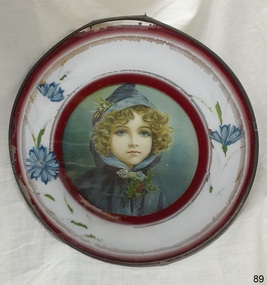
Decorative object - Flue Cover Art, 1890s to 1930s
... decorative and usually inexpensive wall hanging to prevent draughts and dust. The practice was especially popular in France and Germany where a lot of the artwork originated. The covers were no longer needed after households changed over to more modern designs of heaters. The flue covers were known as Wall Art...There is a metal chain attached for hanging the cover. Decorative object Flue Cover Art ...In the late 19th and early-20th centuries household heaters burned wood and coal for heating. In winter the warm air from the fireplace would flow into the room through a round flue in the face of the chimney. In the warmer months the unnecessary heater and flue was removed and the chimney cleaned. Homemakers then covered the circular flue hole with a decorative and usually inexpensive wall hanging to prevent draughts and dust. The practice was especially popular in France and Germany where a lot of the artwork originated. The covers were no longer needed after households changed over to more modern designs of heaters. The flue covers were known as Wall Art or Flue Cover Art. They were usually round and illustrated with a lithograph or chromograph print. The picture was then mounted on card, covered with glass, and framed with a brass or tin rim. The border was commonly gilt with a black stripe around the centre. There were numerous illustrations, many with a European appearance, and were easily bought through local merchants for a small price.This pretty flue cover is significant for representing a common domestic wall decoration from the late Victorian to the Edwardian eras, when solid fuel heaters were used in low to high income homes. The picture is similar to many other flue cover images, apart from the holly clutched in the girl’s hand, which gives the cover a Christmas theme. This flue cover is the only one in our collection and appears to have a unique design; the hand painted floral decoration on the glass and the two crimson rings around the edges of the frame’s white border haven’t been seen on other flue covers. Flue cover, metal and glass. Print of a young girl with blue eyes and curly blonde hair, a hooded blue cape, a silver clasp with blue stones, and a sprig of holly in her hand. The round metal frame forms a deep, white-painted, crimson-edged border for the illustration. The hand-painted blue flowers on the glass front form add to the border and give a 3-dimensional effect. The picture is between the cardboard backing and the glass front, with the metal frame holding them together. There is a metal chain attached for hanging the cover.warrnambool, flagstaff hill maritime museum, picture, handpainted, portrait, girl in blue cape, metal frame, round picture, illustration, print, holly, christmas, child in blue cape, silver and blue clasp, holly sprig, late 19th century, early 20th century, 1890s-1930s, victorain, edwardian, flue cover, flue cover art, wall art, chimney flue cover, chimney hole cover, stove pipe cover, fireplace flue cover, antique, victorian, glass frame, chromograph, lithograph, tin, brass, lithograph print, chromo print, christmas girl, blue cape, blonde girl -
 Flagstaff Hill Maritime Museum and Village
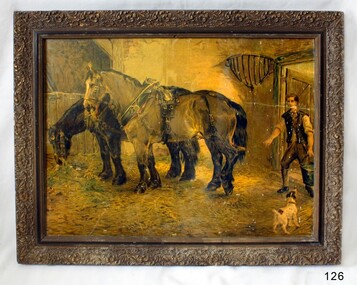
Print - Picture, 1900 to 1950
... decorative use. This picture is currently not associated with a historical event, person or place at this time and is being used to augment Flagstaff's village display. flagstaff hill warrnambool shipwrecked coast flagstaff hill maritime museum flagstaff hill maritime village great ocean road print wall decoration art farm scene Picture in a gilded frame behind glass. ...This picture is an inexpensive item made for domestic decorative use. This picture is currently not associated with a historical event, person or place at this time and is being used to augment Flagstaff's village display.Picture in a gilded frame behind glass. Print of a man, dog, and two horses in a barn. Print is on grainy paper.flagstaff hill, warrnambool, shipwrecked coast, flagstaff hill maritime museum, flagstaff hill maritime village, great ocean road, print, wall decoration, art, farm scene -
 Flagstaff Hill Maritime Museum and Village
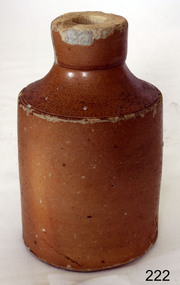
Ceramic - Stoneware Bottle, Doulton Lambeth, Circa 1870 - 1890
... The company always made some more decorative items, initially still mostly stoneware, and from the 1860s the firm made considerable efforts to get a reputation for design, in which it was largely successful, as one of the first British makers of art pottery. ...The company always made some more decorative items, initially still mostly stoneware, and from the 1860s the firm made considerable efforts to get a reputation for design, in which it was largely successful, as one of the first British makers of art pottery. ...The Royal Doulton company began as a partnership between John Doulton, Martha Jones, and John Wattis an English ceramic and home accessories manufacturer founded in 1815. Operating originally in Vauxhall, London, later moving to Lambeth, in 1882 it opened a factory in Burslem, Stoke-on-Trent, in the centre of English pottery. The business was specialised in making salt-glazed stoneware articles, including utilitarian or decorative bottles, jugs and jars, much of it intended for inns and pubs. The backbone of the business was a wide range of utilitarian wares, mostly stone wares, including storage jars, tankards and the like, and later extending to pipes for drains, lavatories and other bathroom ceramics. From 1853 to 1902 its wares were marked Doulton & Co., then from 1902, when a royal warrant was given, Royal Doulton. The company always made some more decorative items, initially still mostly stoneware, and from the 1860s the firm made considerable efforts to get a reputation for design, in which it was largely successful, as one of the first British makers of art pottery. Initially, this was done through artistic stoneware's made in Lambeth, but in 1882 the firm bought a Burslem factory, which was mainly intended for making bone china table wares and decorative items. An early utilitarian stoneware item made by a well-known company that specialised in making salt-glazed items that later earned a reputation for making stoneware art objects.Ink bottle, brown salt glazed stoneware with narrow mouth tamped Doulton Lambeth cork missing. Stamp impressed into clay on edge "(2)32 / Doulton / Lambeth" flagstaff hill, warrnambool, shipwrecked coast, flagstaff hill maritime museum, flagstaff hill maritime village, great ocean road, stoneware, stoneware jar, doulton lambeth, kitchen ware, salt glazed -
 Mission to Seafarers Victoria
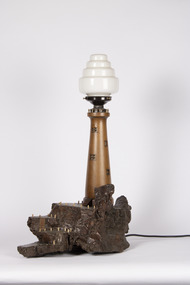
Decorative object - Lamp, c. 1930
... (Victorian Railways newsletter April 1948, p 11) The lighthouse is the symbol of hope and security for seafarers. lighthouse lamp maritime art art deco Lighthouse shaped lamp with art deco lamp shade. Base is mallee wood, lighthouse is kauri wood. Decorative object Lamp ...From research from PROV, maker could be Arthur Apps, a Victorian Railways employee (Head Office liftman), who was making those lamps to sell for his "favourite" charity, the Children's Hospital where he was a Life Governor. (Victorian Railways newsletter April 1948, p 11)The lighthouse is the symbol of hope and security for seafarers.Lighthouse shaped lamp with art deco lamp shade. Base is mallee wood, lighthouse is kauri wood.lighthouse, lamp, maritime art, art deco -
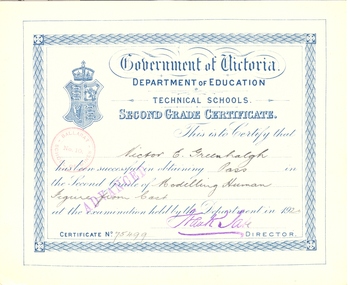 Federation University Historical Collection
Certificate, Education Department, Victoria, Victorian Education Department Certificates, 1916-1928
... art school...arnold j. allen...florence allen...m.a. ansen...dressmaking...modelling human figure from cast...ruby e. allison...drawing fro memory...nancy b. angwin...maude arberry...douglas w. arch...muriel j. arch...eileen bailey...annie c. baker...percy j. baker...general design...light metal work...bessie m. barbery...commerical arithmetic...decorative...Ballarat Technical Art School was a division of the Ballarat School of Mines. ann duke plain needlework victor greenhalgh frank tate ballarat technical art school arnold j. allen florence allen m.a. ansen dressmaking modelling human figure from cast ruby e. allison drawing fro memory nancy b. angwin maude arberry douglas w. arch muriel j. arch eileen bailey annie c. baker percy j. baker general design light metal work bessie m. barbery commerical arithmetic decorative needlework bert bernaldo drawing from a flat example lorna m. mccallum brush drawing stanley g.a. barnett millinery mavis g. beacham theodore k. beckwith isabel j. bell kelva e. bellingham leslie bennett olive van berkel elizabeth e. berry beatrice m. blake thomas g. blake catherine m. bowers nancy w. bowe clarice v. branagh harold r. brown architecture modelling the head from life henry bull light metalwork ivan d. brown thyra j. brown henry j. bull leila m. burford embossed leathwork lettering drawing fro dressmakers irene m. burke josephine m. callery modelling mona r. callow herbert cameron lillias cameron william e. carlyon doris l. carter ruth e. catt hiram e. chamberlain stephen chambers jack d. chand jack d. chard clara v. clegg beryl e. coad john c. collins keith m. collins robert g. collins kathleen m. conway athol b. cornish ballantyne cottier douglas s. cotton lilith s. christmas perspective doreen coughlan ivy g. crompton phyllis culliver joan m. cuthbertson alan r. cutter john l. daniel arthur dansey katherine d'arcy dorothy f. darling myrtle f. darling reginal a. davey gwladys h. davies annie dellaca henry a. deller ivy f. denovan joyce doepel bessie donacaster charles o. dowie horace b. dowsing walter dunstan mary dwyer allan r. egglestone melville g. ellingsen hugh o. elliott beryl r. ellis cecil f. engish allan e. evans matson l. eves olive j. fairlie robert j. falla mavis felstead lena featherston albert c. ferguson alma ferguson hilda m. ferguson john f. ferguson beatrice m. field clarice f. fisher philip h. fleischer building construction olive p. francis agnes fraser essie gale gilbert foster pearle fricke effie gascoigne enid m. gates clarice gear james a. geary sylvia f. greenhalgh evelyn f. geddes thomas j. gibson wavie b. gilbert edna m. gilmer nancy govan eula h. gower doris e. gray lesley j. gower henry n. graham victor e. greenhalgh melva e. gribble human anatomy roy k. griggs jack gullan robert gullan alma m. gunn dorothy j. hallan lucy hamilton james hammer dorothy e. hamond christopher j. hanlon catherin hardess lily haymes gladys hedges irene h. hewitt john hill victor j. hill olive hillings john a. hobill frances k. holmes gertrude m. hopkins alice horan marjorie hudson linda m. hughes lydia hughes winifred humphreys commercial english agnes a. humphries colin hunt kathleen hutchinson francis n. king jean king hilda knox john kopke isabel a. kopke hazel jackson freda jacobi agnes james william r. james alexander johnson edward j. jones eleanor w.h. jones nellie kau thomas kean francis kelly roy k. kelly thomas g. kierce theo e. leonard esther f. leviston bessie lockett norman h. long ena mackay gwenda e. mann robert v. maddison herbert w. malin dorothy m. marriott john c. mcarthur james p. mcculloch doris mcdougall cyril mcgibbony thelma mcgibbony jean mcgregor kenneth mciver constance m. mckenzie elsie j. mckissock alexander k.mcleod grace b. mclean john f.w. mclean rebecca mcphan vera meeny edna merritt dougald miller florence h. mingst agnes m. monteith doreen j. montgomery jean e. montgomery robert w.p. montgomery margaret b. moore harry e. morrish james mow gwendoline r. neagle gerald r. newson robert j. nicol helen f. nicholl george m. norton edward s. oliver mavis e. oliver hector h, osborne henry parker norma e. parr doris m. patterson elsie pearce celia pearlman leslie pearlman edna pearson william j. perriman eulalie perry ernest b. pinney charles e. peverill clarence r. pittock raymond b. pitts phyllis polson cynthia b. power bessie puzey john m. punshon evelyn a.v. ramsay robert i ramsay william a. rattray drawing for builders and artisans george h. reed fred reeves mavis i. regelhuth george r. renkin annie e. reynolds lizzie rice eileen l. richards henry c. riegelhuth gladys m. riley charles a. rimmington amy robson ernest w. robson florence a. rogers dorothy rppney kathleen rooney hugh n. ross stella m. rowe agnes w. ryan rosaling e. sage cora sandberg eric c. sanders douglas f. scott sylvia e. selkirk dorine a. shearer gladys sheldon emily e. simper veri slattery florence c. smith hilda m. spencer rose spiers mopna g. spiller alma m. stapleton joyce w. stark marcus m. stone commercial correspondence beatrice m. stuart ena v. sullivan margaret a. sydes rita tainsh norman b. tamlyn arthur w. thane alma m. thomas david e. thomas william h. thompson william m. thomas edgatr j.t. tippett sidnet tippett gladys tongway mavis toop hugh d. trainor annie e. treloar john h. treloar eilleen trumain linda f. treewk percival a. trompf percy trompf jean tunbridge ruth e. tunbridge allan j. twaits irene m. utting elizabeth van beek william a. wade agnes a. walker james a. walker vera v. aller john walsh marjorie walters rex warrillow edith watson bernice e. webb constance i weeks ina m. westcott pearl whan violet wheeler myrtle d. whitfield annie whitl richard l. whitla charles f. whitla grace a. wilcock murray a. wilkie andrew w. william arthur williams baden p. williams david d. williams grace f. williams maude h. williams mavis m. williams james williamson ivy wilson hector g wilson frederick w.r. wilson david s. wood Stamped Ballarat School of Mines No.10 Stamped signature "Frank Tate" 373 certificates in 2 boxes. ...Ballarat Technical Art School was a division of the Ballarat School of Mines.373 certificates in 2 boxes. Most appear to be related to subjects undertaken at the Ballarat Technical Art School. Director of education stamped signature Frank Tate.Stamped Ballarat School of Mines No.10 Stamped signature "Frank Tate"ann duke, plain needlework, victor greenhalgh, frank tate, ballarat technical art school, arnold j. allen, florence allen, m.a. ansen, dressmaking, modelling human figure from cast, ruby e. allison, drawing fro memory, nancy b. angwin, maude arberry, douglas w. arch, muriel j. arch, eileen bailey, annie c. baker, percy j. baker, general design, light metal work, bessie m. barbery, commerical arithmetic, decorative needlework, bert bernaldo, drawing from a flat example, lorna m. mccallum, brush drawing, stanley g.a. barnett, millinery, mavis g. beacham, theodore k. beckwith, isabel j. bell, kelva e. bellingham, leslie bennett, olive van berkel, elizabeth e. berry, beatrice m. blake, thomas g. blake, catherine m. bowers, nancy w. bowe, clarice v. branagh, harold r. brown, architecture, modelling the head from life, henry bull, light metalwork, ivan d. brown, thyra j. brown, henry j. bull, leila m. burford, embossed leathwork, lettering, drawing fro dressmakers, irene m. burke, josephine m. callery, modelling, mona r. callow, herbert cameron, lillias cameron, william e. carlyon, doris l. carter, ruth e. catt, hiram e. chamberlain, stephen chambers, jack d. chand, jack d. chard, clara v. clegg, beryl e. coad, john c. collins, keith m. collins, robert g. collins, kathleen m. conway, athol b. cornish, ballantyne cottier, douglas s. cotton, lilith s. christmas, perspective, doreen coughlan, ivy g. crompton, phyllis culliver, joan m. cuthbertson, alan r. cutter, john l. daniel, arthur dansey, katherine d'arcy, dorothy f. darling, myrtle f. darling, reginal a. davey, gwladys h. davies, annie dellaca, henry a. deller, ivy f. denovan, joyce doepel, bessie donacaster, charles o. dowie, horace b. dowsing, walter dunstan, mary dwyer, allan r. egglestone, melville g. ellingsen, hugh o. elliott, beryl r. ellis, cecil f. engish, allan e. evans, matson l. eves, olive j. fairlie, robert j. falla, mavis felstead, lena featherston, albert c. ferguson, alma ferguson, hilda m. ferguson, john f. ferguson, beatrice m. field, clarice f. fisher, philip h. fleischer, building construction, olive p. francis, agnes fraser, essie gale, gilbert foster, pearle fricke, effie gascoigne, enid m. gates, clarice gear, james a. geary, sylvia f. greenhalgh, evelyn f. geddes, thomas j. gibson, wavie b. gilbert, edna m. gilmer, nancy govan, eula h. gower, doris e. gray, lesley j. gower, henry n. graham, victor e. greenhalgh, melva e. gribble, human anatomy, roy k. griggs, jack gullan, robert gullan, alma m. gunn, dorothy j. hallan, lucy hamilton, james hammer, dorothy e. hamond, christopher j. hanlon, catherin hardess, lily haymes, gladys hedges, irene h. hewitt, john hill, victor j. hill, olive hillings, john a. hobill, frances k. holmes, gertrude m. hopkins, alice horan, marjorie hudson, linda m. hughes, lydia hughes, winifred humphreys, commercial english, agnes a. humphries, colin hunt, kathleen hutchinson, francis n. king, jean king, hilda knox, john kopke, isabel a. kopke, hazel jackson, freda jacobi, agnes james, william r. james, alexander johnson, edward j. jones, eleanor w.h. jones, nellie kau, thomas kean, francis kelly, roy k. kelly, thomas g. kierce, theo e. leonard, esther f. leviston, bessie lockett, norman h. long, ena mackay, gwenda e. mann, robert v. maddison, herbert w. malin, dorothy m. marriott, john c. mcarthur, james p. mcculloch, doris mcdougall, cyril mcgibbony, thelma mcgibbony, jean mcgregor, kenneth mciver, constance m. mckenzie, elsie j. mckissock, alexander k.mcleod, grace b. mclean, john f.w. mclean, rebecca mcphan, vera meeny, edna merritt, dougald miller, florence h. mingst, agnes m. monteith, doreen j. montgomery, jean e. montgomery, robert w.p. montgomery, margaret b. moore, harry e. morrish, james mow, gwendoline r. neagle, gerald r. newson, robert j. nicol, helen f. nicholl, george m. norton, edward s. oliver, mavis e. oliver, hector h, osborne, henry parker, norma e. parr, doris m. patterson, elsie pearce, celia pearlman, leslie pearlman, edna pearson, william j. perriman, eulalie perry, ernest b. pinney, charles e. peverill, clarence r. pittock, raymond b. pitts, phyllis polson, cynthia b. power, bessie puzey, john m. punshon, evelyn a.v. ramsay, robert i ramsay, william a. rattray, drawing for builders and artisans, george h. reed, fred reeves, mavis i. regelhuth, george r. renkin, annie e. reynolds, lizzie rice, eileen l. richards, henry c. riegelhuth, gladys m. riley, charles a. rimmington, amy robson, ernest w. robson, florence a. rogers, dorothy rppney, kathleen rooney, hugh n. ross, stella m. rowe, agnes w. ryan, rosaling e. sage, cora sandberg, eric c. sanders, douglas f. scott, sylvia e. selkirk, dorine a. shearer, gladys sheldon, emily e. simper, veri slattery, florence c. smith, hilda m. spencer, rose spiers, mopna g. spiller, alma m. stapleton, joyce w. stark, marcus m. stone, commercial correspondence, beatrice m. stuart, ena v. sullivan, margaret a. sydes, rita tainsh, norman b. tamlyn, arthur w. thane, alma m. thomas, david e. thomas, william h. thompson, william m. thomas, edgatr j.t. tippett, sidnet tippett, gladys tongway, mavis toop, hugh d. trainor, annie e. treloar, john h. treloar, eilleen trumain, linda f. treewk, percival a. trompf, percy trompf, jean tunbridge, ruth e. tunbridge, allan j. twaits, irene m. utting, elizabeth van beek, william a. wade, agnes a. walker, james a. walker, vera v. aller, john walsh, marjorie walters, rex warrillow, edith watson, bernice e. webb, constance i weeks, ina m. westcott, pearl whan, violet wheeler, myrtle d. whitfield, annie whitl, richard l. whitla, charles f. whitla, grace a. wilcock, murray a. wilkie, andrew w. william, arthur williams, baden p. williams, david d. williams, grace f. williams, maude h. williams, mavis m. williams, james williamson, ivy wilson, hector g wilson, frederick w.r. wilson, david s. wood
