
Showing 446 items matching "education changes"
-
 Federation University Historical Collection
Document, Scrapbook of Ballarat College of Advanced Education Changes in Tertiary Education, 1987-8, 1987-1988
... Scrapbook of Ballarat College of Advanced Education Changes in Tertiary Education, 1987-8...Scrapbook of Ballarat College of Advanced Education Changes in Tertiary Education, 1987-8...Ballarat College of Advanced Education Tertiary Education Scrapbook of Ballarat College of Advanced Education Changes in Tertiary Education, 1987-8 Scrapbook of Ballarat College of Advanced Education Changes in Tertiary Education, 1987-8 Document ...Scrapbook of Ballarat College of Advanced Education Changes in Tertiary Education, 1987-8ballarat college of advanced education, tertiary education -
Federation University Historical Collection
Book - Book - Scrapbook, Ballarat College of Advanced Education: Scrapbook of newspaper cutting, Book 20; February 1987 to May 1987
... ...education changes...The cuttings cover the period from 23 February 1987 to 21 May 1987. . employment advertisements application for enrolment outline of courses ballarat college of advanced education bcae health and safety jim goulding australian academy of hypnotic science community officer hamlet has wide appeal paul tolton as hamlet pottery work chosen for melbourne exhibition tax hits enrolments call to scrap fees colleges oppose fees john sharpham next bcae head arts mean tourist dollars courses professionally recognised janet rubin theatre expert exercise to music mike whitesideand secret tunnel joint showing of local artista rick calvert civil engineering sino-australian relations enrolments new orchestra ready for first night adrian thomas bso concert a success paul tolton the lost generation john sharrock david lance - winemaker degrees herald future karen bibby engineering medal jack's final degree ceremony 'full tertiary fees' college will give nurses 'merited new status' mathews defends library $2m cut rodney brown wins geology award royal australian nurses' federation irene bolger - secretary education changes stayers and sprinters compared koji hoashi - ceramics paul mason community arts officer "barefoot in the park" Book with green cover, front. ...Newspaper cuttings relating to Ballarat College of Advanced Education. These are from various newspapers and include The Age, Ballarat Courier, The Australian, The Herald. The cuttings cover the period from 23 February 1987 to 21 May 1987. . Book with green cover, front. Spiral bound.employment advertisements, application for enrolment, outline of courses, ballarat college of advanced education, bcae, health and safety, jim goulding, australian academy of hypnotic science, community officer, hamlet has wide appeal, paul tolton as hamlet, pottery work chosen for melbourne exhibition, tax hits enrolments, call to scrap fees, colleges oppose fees, john sharpham next bcae head, arts mean tourist dollars, courses professionally recognised, janet rubin theatre expert, exercise to music, mike whitesideand secret tunnel, joint showing of local artista, rick calvert civil engineering, sino-australian relations, enrolments, new orchestra ready for first night, adrian thomas, bso concert a success, paul tolton, the lost generation, john sharrock, david lance - winemaker, degrees herald future, karen bibby engineering medal, jack's final degree ceremony, 'full tertiary fees', college will give nurses 'merited new status', mathews defends library $2m cut, rodney brown wins geology award, royal australian nurses' federation, irene bolger - secretary, education changes, stayers and sprinters compared, koji hoashi - ceramics, paul mason community arts officer, "barefoot in the park" -
Bendigo Historical Society Inc.
Newspaper - HARRY BIGGS COLLECTION: INDUSTRIAL SCHOOL, Feb 1884
... A proposal was put forward to have the Education Department change the Industrial School to a State School....A proposal was put forward to have the Education Department change the Industrial School to a State School. ...Newspaper. Harry Biggs Collection. Newspaper cutting attached to foolscap paper. Is a report from a monthly committee meeting. A proposal was put forward to have the Education Department change the Industrial School to a State School.Feb 1884newspaper, harry biggs collection, industrial school -
 Sunshine and District Historical Society Incorporated
Administrative record - Sunshine College 1991 Name Change History
... This is a spiral backed booklet to the minister of Education requesting a name change from Sunshine Technical School to Sunshine College...A document recording the name of name of the school Sunshine Secondary School Secondary School Staff This is a spiral backed booklet to the minister of Education requesting a name change from Sunshine Technical School to Sunshine College Administrative record Sunshine College 1991 Name Change History ...A document recording the name of name of the schoolsunshine secondary school, secondary school, staff -
Bendigo Historical Society Inc.
Document - Amy Huxtable Memorial History Prize Winners, 1992-93
... Paper: A review of pre-federation and post federation education, and the transitional changes that took place....Paper: A review of pre-federation and post federation education, and the transitional changes that took place. Document Amy Huxtable Memorial History Prize Winners ...Amy Huxtable was born at Cheltenham in 1918, to Robert Henry Huxtable and Violet a Dagg. Her father was an installer for an oil company and travelled the State. taking his family with him. She completed her education at the Bendigo High School and later attended the Bendigo Business College, becoming an expert shorthand writer. Her first position was as a copy writer with Radio 3BO, in the mid 1930s. She worked with an advertising agency in Melbourne and then with the Age,newspaper. In 1953, Miss Huxtable was appointed temporarily to succeed Miss E B Millane as social editress of the Bendigo Advertiser, during the latter's absence abroad. In 1956, Amy travelled abroad and on her return in 1957 was appointed permanently as Women's editor, a position she held for twenty-three ears. During her early years with The Advertiser she wrote under the name Toora, but in later years her own name became widely known. Miss Huxtable was well known both in her professional capacity and through a interest and involvement in community activites. She was life governor of the Bendigo Hospital, the Bendigo Home for the Aged, and Mirridong Home for the Blind, she was a member of Soroptimist International and the Business and Professional Women's Club. Amy was also a tireless worker for the spastic society and a strong supporter of the YWCA. When Amy Huxtable died at Mt AJvernia Hospital on 16 January 1980 Mayor Campbell ordered the city flag to be flown at half-mast. "Lowering the flag is the least we can do for such a lady" Cr Campbell said. Douglas Lockwood, editor of the Bendigo Advertiser said, "She was a devot d colleague who gave her craft and her newspaper the kind of service which identified a rare and generous spirit." She was a true professional who decided to make Bendigo her home. More than 300 people packed St Paul's Church for her funeral ervice the bell tolled as the casket was carried from the church. At a ceremony in the Conservatory Gardens on No ember 22 1981 The Amy Huxtable Memorial Committee presented to the City of Bendigo, a garden seat in memory of the late Miss Huxtable. This Bendigo manufactured seat was a fitting tribute to one ofBendigo's most loved and esteemed citizens. All Miss Huxtable's Advertiser articles were microfilmed and presented to the Library by the above committee. Amy Huxtable Memorial History Prize Winners for 1992 as announced in 1993 by the Bendigo Historical Society, Dudley House, View Street, Bendigo. * First Prize - Michael Jaeger. Paper: A reconstruction of the landscape of a portion of the Parish of Runnymede, Northern Plains, Victoria. * Highly Commended - Mrs Jeanette Margison. Paper: A review of pre-federation and post federation education, and the transitional changes that took place.history, amy huxtable, bendigo, amy huxtable memorial history awards -
Federation University Historical Collection
Document - Document - Discussion Paper from Government, Discussion Paper from J S Dawkins, MP re Higher Education: an Agenda for Change, 1987
... Discussion Paper from J S Dawkins, MP re Higher Education: an Agenda for Change, 1987. ...education...agenda for change...Document is a Draft of the proposed "Higher Education: an Agenda for Change". It is from the Minister for Employment, Education and Training, Hon J S Dawkins, MP. ...Document is a Draft of the proposed "Higher Education: an Agenda for Change". It is from the Minister for Employment, Education and Training, Hon J S Dawkins, MP. ...E.J. Barker is a past principal of the School of Mines Ballarat and the Library at the Mt Helen Campus is named after him. Document is a Draft of the proposed "Higher Education: an Agenda for Change". It is from the Minister for Employment, Education and Training, Hon J S Dawkins, MP. Dated December 1987. Throughout this draft are notations. Noted throughout is "Cabinet-in-Confidence". Handwritten sheets are comments by Jack Barker re this paper which became known as "The Green Paper". Ballarat College of Advanced Education Director Dr John Sharpham wrote document "Ballarat College of Advanced Education and the Future" in response. Document divided into 4 Parts totaling 10 Chapters plus Tables and Figures and Appendices.Presented in blue plastc folder with metal slide fastener. This has made rust marks on paper. Foreward by the Minister.e.j. barker, ballarat college of advanced education, dr j sharpham, director, green paper, cabinet-in-confidence, higher education, agenda for change, minister for employment education and training, j s dawkins, draft paper, responses to paper -
 Sunshine and District Historical Society Incorporated
Photograph - St. Albans Primary School Photographs
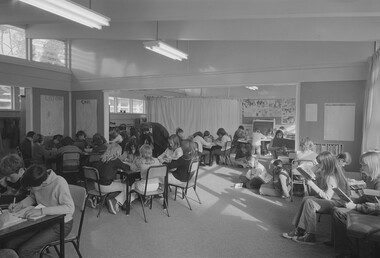
... Albans Primary School received its current name in 1970, when the Victorian Education Department changed all “State School” names to “Primary School.” ...Albans Primary School received its current name in 1970, when the Victorian Education Department changed all “State School” names to “Primary School.” ...The St. Albans State School, now the St. Albans Primary School opened in 1889 and is one of the oldest continuously operating schools in Melbourne’s western suburbs. The school was founded by early farming families shortly after the suburb itself was created by Alfred Padley and the Cosmopolitan Land & Banking Co. around the railway line. Local families needed a permanent school to replace informal or church-based teaching arrangements and this school was built. St. Albans grew dramatically after WWII due to migrant settlement and with industrial expansion in Sunshine, Tottenham, and Braybrook. The school was expanded with additional classrooms, specialist rooms (art, library, music) and larger playgrounds and assembly areas. By the 1960s–70s, the state School was a major multicultural school serving a rapidly growing suburb. For more than a century, the school has been central to migrant education, local civic life, community events and fetes The school has tight partnerships with the St. Albans High School and other local institutions. The school remains one of the longest running institutions in the district. St. Albans Primary School received its current name in 1970, when the Victorian Education Department changed all “State School” names to “Primary School.” St. Albans Primary School continues to operate on its original site and remains a key part of the educational landscape of Melbourne’s western suburbs.st. albans primary school, west esplanade, st. albans, st. albans state school -
 Sunshine and District Historical Society Incorporated
Photograph - St. Albans State School Photographs
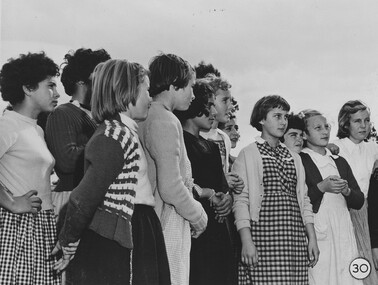
... Albans Primary School received its current name in 1970, when the Victorian Education Department changed all “State School” names to “Primary School.” ...Albans Primary School received its current name in 1970, when the Victorian Education Department changed all “State School” names to “Primary School.” ...The St. Albans State School, now the St. Albans Primary School opened in 1889 and is one of the oldest continuously operating schools in Melbourne’s western suburbs. The school was founded by early farming families shortly after the suburb itself was created by Alfred Padley and the Cosmopolitan Land & Banking Co. around the railway line. Local families needed a permanent school to replace informal or church-based teaching arrangements and this school was built. St. Albans grew dramatically after WWII due to migrant settlement and with industrial expansion in Sunshine, Tottenham, and Braybrook. The school was expanded with additional classrooms, specialist rooms (art, library, music) and larger playgrounds and assembly areas. By the 1960s–70s, the state School was a major multicultural school serving a rapidly growing suburb. For more than a century, the school has been central to migrant education, local civic life, community events and fetes The school has tight partnerships with the St. Albans High School and other local institutions. The school remains one of the longest running institutions in the district. St. Albans Primary School received its current name in 1970, when the Victorian Education Department changed all “State School” names to “Primary School.” St. Albans Primary School continues to operate on its original site and remains a key part of the educational landscape of Melbourne’s western suburbs.These photographs show how multicultural the school had become after the post WW2 migrant boom.st. albans primary school, west esplanade, st. albans, st. albans state school -
 Broadmeadows Historical Society & Museum
Photograph - Group Photograph, Fotek School Portraits, Jacana Primary School: Staff, 1994, 1994
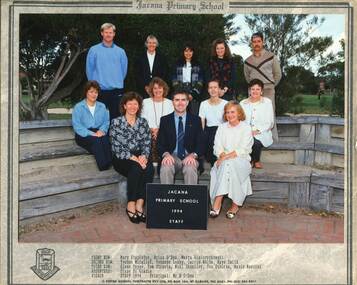
... The 1994 staff photograph captures a moment in time when public education was undergoing significant change, including curriculum reforms and shifts in teaching practices. ...The 1994 staff photograph captures a moment in time when public education was undergoing significant change, including curriculum reforms and shifts in teaching practices. ...Jacana Primary School, located in Melbourne’s northern suburbs, served the local community for several decades before its closure. Established during a period of suburban expansion, the school became a cornerstone of early childhood education in the area, known for its inclusive ethos and strong community engagement. By the 1990s, Jacana Primary reflected the cultural diversity of its neighbourhood, with staff and students from a wide range of backgrounds contributing to a rich and supportive learning environment. The 1994 staff photograph captures a moment in time when public education was undergoing significant change, including curriculum reforms and shifts in teaching practices. It showcases the dedicated educators who worked collaboratively to foster student growth and wellbeing. Their commitment helped shape the lives of countless children and left a lasting impact on the community. The image also offers visual cues to the era—fashion, hairstyles, and photographic style—providing a nostalgic link to the social and cultural context of the mid-1990s. Today, it stands as a meaningful artefact, honouring the legacy of Jacana Primary School and the people who made it a vibrant place of learning. This 1994 photograph of the Jacana Primary School staff holds deep historical and emotional significance. As a visual record of a now-closed institution, it captures the professional community that supported and shaped early childhood education in the area. The image reflects the school’s vibrant spirit, cultural diversity, and collaborative ethos, preserving the legacy of a dedicated team that played a vital role in nurturing young learners and strengthening community ties. Offering a glimpse into the fashion and hairstyles of the era, it also serves as a nostalgic artefact for former staff, students, and the broader community.Colour photograph on Matte Photographic paper, mounted on a Mottled brown card.Front: See attachment Back: Top right Corner - Blue Label: PH - 1669jacana primary school, students, staff, 1994, education, marta bialocerkowski, mary stapleton, brian o'dea, yvonne micallef, suzanne leahy, carrie white, kaye smith, niki skoullos, sue osborne, nazio mancini, glenn payne, pam streete, diane di grazia, mr b o'dea -
 Flagstaff Hill Maritime Museum and Village
Functional object - Blackboard & Easel, Probably first half of 20th century
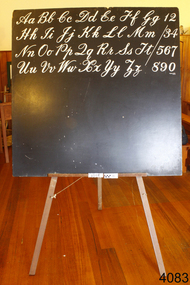
... education and composition in Europe as far back as the 16th century.The term "blackboard" is attested in English from the mid-18th century; the Oxford English Dictionary provides a citation from 1739, to write "with Chalk on a black-Board". The first attested use of chalk on blackboard in the United States dates to 1801, in a lecture course in mathematics given by George Baron. James Pillans has been credited with the invention of coloured chalk (1814); he had a recipe with ground chalk, dyes and porridge! The use of blackboards did change...education and composition in Europe as far back as the 16th century.The term "blackboard" is attested in English from the mid-18th century; the Oxford English Dictionary provides a citation from 1739, to write "with Chalk on a black-Board". The first attested use of chalk on blackboard in the United States dates to 1801, in a lecture course in mathematics given by George Baron. James Pillans has been credited with the invention of coloured chalk (1814); he had a recipe with ground chalk, dyes and porridge! The use of blackboards did change ...The first classroom uses of large blackboards are difficult to date, but they were used for music education and composition in Europe as far back as the 16th century.The term "blackboard" is attested in English from the mid-18th century; the Oxford English Dictionary provides a citation from 1739, to write "with Chalk on a black-Board". The first attested use of chalk on blackboard in the United States dates to 1801, in a lecture course in mathematics given by George Baron. James Pillans has been credited with the invention of coloured chalk (1814); he had a recipe with ground chalk, dyes and porridge! The use of blackboards did change methods of education. Manufacturing of slate blackboards began by the 1840s. A green porcelain enamel surface was first used in 1930, and as this type of board became popular, the word "chalkboard" appeared. Various types of easel have been in use since ancient times, in particular for supporting paintings and other artwork. However, the schoolroom easel would have been introduced around the same time as when the blackboard started to be used in educational establishments. Wooden board painted black, resting on wooden easel with rope supporting the three easel legs.Noneflagstaff hill, warrnambool, shipwrecked-coast, flagstaff-hill, flagstaff-hill-maritime-museum, maritime-museum, shipwreck-coast, flagstaff-hill-maritime-village -
 Federation University Historical Collection
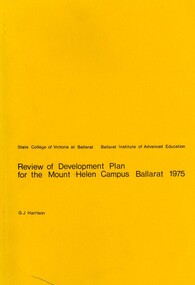
Book, G.J. Harrison, Review of Development Plan for the Mount Helen Campus Ballarat, 1975, 1975
... Education (BIAE) to move from the crowded Lydiard Street site, to occupy new accommodation designed for the purpose. The brief given to the campus master planners called for the creation of a modern, attractive, efficient and stimulating concept. It called for careful landscaping and enhancement of the environment, but above all it demanded flexibility for an unpredictable future. During 1974 major new directions were made at Government level quite beyond the scale of change...Education (BIAE) to move from the crowded Lydiard Street site, to occupy new accommodation designed for the purpose. The brief given to the campus master planners called for the creation of a modern, attractive, efficient and stimulating concept. It called for careful landscaping and enhancement of the environment, but above all it demanded flexibility for an unpredictable future. During 1974 major new directions were made at Government level quite beyond the scale of change ...In 1967 the site for the Mt Helen Campus was selected and purchased to permit the tertiary division of the Ballarat School of Mines - the Ballarat Institute of Advanced Education (BIAE) to move from the crowded Lydiard Street site, to occupy new accommodation designed for the purpose. The brief given to the campus master planners called for the creation of a modern, attractive, efficient and stimulating concept. It called for careful landscaping and enhancement of the environment, but above all it demanded flexibility for an unpredictable future. During 1974 major new directions were made at Government level quite beyond the scale of change that had been foreseen in 1967. This change was to be that of merging BIAE and the State College of Victoria at Ballarat (formerly Ballarat Teachers' College) into one large new college of broadened scope. By the end of 1974 joint committees representing the still separate, autonomous Councils of the two institutions had agreed on the means of achieving the merger to the extent that a new brief as prepared and given to G.J. Harrison, one of the original master planners who had been chosen to revise the plan to meet the new needs. Yellow soft covered book of 63 pages reviewing the Development Plan for Mount Helen Campusuniversity of ballarat, ballarat institute of advanced education, mount helen, master plan, ballarat college of advanced education, mb john, ian gordon, pdf, development plan, mount helen campus, g.j. harrison, state college of victoria ballarat, m.b. john, canadian valley, aquinas college, site survey, land use zones, landscaping, campus plan, mt helen campus -
 Federation University Historical Collection
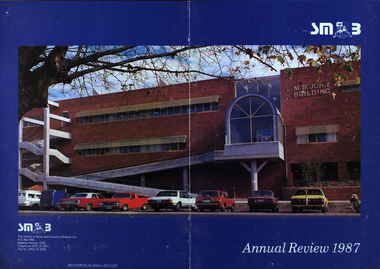
Booklet - Annual Review, Ballarat School of Mines Annual Review, 1986 -1991
... education in Australia. The Board was concerned with the shortage of mine managers for the goldfields. Classes began in surveying, mathematics, and chemistry and a decade later they included metallurgy , assaying and geology. With the decline in goldmining the direction of the college changed...education in Australia. The Board was concerned with the shortage of mine managers for the goldfields. Classes began in surveying, mathematics, and chemistry and a decade later they included metallurgy , assaying and geology. With the decline in goldmining the direction of the college changed ...The Ballarat School of Mines was established in 1870 through the initiatives of the Ballarat Mining Board making it the oldest site of technical education in Australia. The Board was concerned with the shortage of mine managers for the goldfields. Classes began in surveying, mathematics, and chemistry and a decade later they included metallurgy , assaying and geology. With the decline in goldmining the direction of the college changed and broadened, the art School was established and the Ballarat Junior Technical School developed. In 1976, the tertiary sector seperated from the School of Mines and Industries Ballarat to form the Ballarat College of Advanced Education. In the 1980s SMB was a Community College of Technical Education and Further Education (TAFE) offering a wide range of vocational, enrichment and preparatory programs. It is continuing the tradition of providing for the educaiton needs of people within the Central Highlands. During the 1970s and 80s it acquired and refurbished old buildings and developed new facilities to keep up with the needs of an expanding curriculum and student population. The era of these annual reports is just before the merger with the University of Ballarat.A number of soft card covered annual report for the Ballarat School of Mines. .1) 12 page black covered report featuring an image of the E.J. Tippett Library. Includes information on death of E.J. Tippett, disability policy, Peter Quinn, Patti McNulty, Bob Feary, Shane Everand, Integration, Fiona Watson, retirement of Robert Morgan, Opening of the carpentry and Joinery Facility in Davey Street, formation of the School of Business and Information Technology, Melissa Bone, opening of the E.J. T. Tippett Learning Resource Centre (Library), Refurbishment of the Administration Building, Food Service Building (Prospects), Court House Theatre, Enrolment centre, Museum, Creche, Women's Trade technical Program, Rural Education Program, Ararat Prison Program, Community Studies Section, Ararat Adult Literacy Group. Literacy Assistance for Undergraduates, Fire training, fitness, open Learning, Training & Employment Group, Awards, Filipino Visitors, oil Seed Research, Brunei, Barometer (gift) for Horticulture, Special Equipment (guillotine and brake press; programmable logic Controller; theodolite: laser lever; Universal testing Machine; Atomic Absorption Spectrophotometer)., organisational Structure. Photos include Ken Flecknoe, Peter Quinn, Patti McNulty, Bob Feary, Shane Everard, Fiona Watson,Linda Bland, Robert Morgan, David McCaughey, E.J. Tippett, Frank Sheehan, Julie Baulch, Jo Reeves, Col McCurry, Jenny Garnham .3) Blue covered book with a photograph of the M.B. John Building taken from Albert Street on the cover. Topics include: Ken Flecknoe, Peter Shiells, Ararat Campus, David Haddow, Kevin Martin, Rendle Hannah, Gary Eason, Geoff Pope, Albert Peart, M.B. John building opened, Hairdressing Salon, Community Centre, Creche, closure of Lydiard Street, Museum, Jenny Levison, Inskill, Small Business Training, Ballarat Eat free Library, Barkly Street, Wormalds Valve Group, Aboriginal Programs, Horticulture Center, Awards, Country fire Authority, tractor Donation, Women's Policy. Special purchases included surveying equipment with data recorder, test rig , CDT MIG welder, compact gas chromatograph with FID and single pen recorder, Olivetti stand-alone word processing unit. Images include Ken Flecknoe. Peter Shiells, John Crowe, Trevor Slater, Brian McLennan, Kerrie Cross, Albert Peart, John Cain, M.B. John, Enrollment Centre, Museum, Jo Watson, Wormalds, Brian Webber, Dianna Nikelson, Ian Aitken, Brendan B, Chez Dichiera, Heather Dixon, Julie Broadbent .4) 1993 - Brown and white soft covered annual review featuring students of the Ballarat School of Mines at work. Bill Gribble, Brian McLennan, Peter Shiells Retirement, Robert C. Lovett, Steven Mendelson, Max Palmer, Jenny Gough, Mary Molloy, Barrie Firth, Colin McCurry, Dora Hormann, Organisation Structure, Brewery Acquisition, Humffray Street Primary School, Grant Street Retaining Wall, Neville Bunning Plaque, VCE Plus, Ballarat Small Business centre, Ararat Prison, Ballarat Showgrounds Rotunda, .6) Green covered annual review with an aerial photograph over Albert Street, Ballarat. Content include Kerrie Cross, Peter Shiells. Kenneth Flecknoe Obituary, Ian Pimblett, Keith Boast, David Nicholson, Max Palmer, Brian Webber, Bob Lovett, Linda Bland, Prospects, Training restaurant, 3BBB, Malcolm Vallance, Aboriginal Programs, Ian Cathie, Koorie Support Unit, Caroline Hogg, 'Trained Men Make Their Own Terms' exhibition at the Gold Museum, Ricky Hains, Stephen Hughes, Jeff White, Dennis Bolster .8) Blue covered review for 1989. The contents include: Kerrie Cross, Peter Shiells, Ann McCaffrey, Kevin Alsop, Mary Molloy, Ross Furness, Robert Lovett, Victoria Street Student Hostel, Hugh Beggs, Ballarat Small Business Centre, Inskill, Ararat Campus, Hospitality and Tourism, Koorie Support Unit, Fiona Warsn, Bruce Staley, Terry Moran, Anthony Wonish, Ivan Deveson, Leo Shannon Memorial Award, Bryan Crebbin, Geoff Howard, R.C.W. Burdett, Jeff White, Ian Harris, Tom Wiseman, Bill Gribble, Allison Kay, Steven Mendelson, Keith Boast. .9) Grey covered book with a coloured photo of the Victoria Street Student Residence. Contents include: Kerry Cross, Peter Shiells, Morgan Bevan John Illuminated address. Jean Phillips, Koorie Support Unit, Andrew Sullivan, Victoria Street Student Residence, Horticulture, Inskill, Tertiary Awareness Project, Adult Education, Ivan Deveson, Brian Howe, Barry Jones, Joan Kirner, Andrew Trigg, Warren Perry, Murrell Rock Collections, Gwyn Hanssen-Piggott, Disability Awareness Day, Sebastopol Borough Logo, Phoebe Rimmer, Russell Jackson, R.J. Young Scholarship, Peter Muir, Founders Day Cake, Morgan John. .11) Black card covered booklet with five images of exteriors of the Ballarat School of Mines. the contents include: Jack Barker, Peter Shiells, Peter Ellyard, Ian Stoney, Terry Moran, Wayne Strong, David Ince, Simone Titheridge, Ian Aitken,Kevin Alsop, Bill Bridges, Clive Carmichael, Bob Feary, Rendle hannah, Roly Parfenovics, Graham Snibson, Kevin Stockdale, Len Wilson, Child Care Centre opening, Student accommodation, Victoria Street, Brewery site. naming buildings, E.J. barker. A.W. Steane K.J. Flecknow, Carpentry and joinery, Inskill, Hospitality, Pottery, ceramics, Founders' Day, Warren Perry, Agreement between Ballarat School of Mines and Ballarat university College, merger, Peter Baldwin, Awards, obituary Lindsay Hillman. Images include: Wayne Strong, David Ince, Simone Titheridge, kerrie Cross, Joan Kirner, Frank Sheehan, Bill Gribble Ros Wilkie, Judi O'Loughlin, Tony Leonard, Gemma Hearnes, Brendan Hill, Joanne Bell, Karl Moon, Stella Savy, Shirley Falkinder, Peter Baldwin, Jack Barker, Michael Ronaldson, David Kemp, Peter Shiells, Margot Healey, Sharon McLennan, Kerrie Firns, Petrena Brookers, Deb Goudappel, Claire Bond, Administration Building Lindsay Hillman. .13 ) Brown covered report with photographic images. Content includes: Pam Merrett. , Peter Shiells, Robert Lovett, Steven Mendelson, Max Palmer, Jenny Gough, Barrie Firth .14) Brown covered report with photographic images. Content includes: .15) Green covered report with photographic images. The blond woman standing on the right looking at a computer screen is Pam Merrett. Content includes: Bill Gribble, Ron Wild, Doug Sarah, Martin Hill, John Kemp, David Manterfield, Leslie Comy, Linette Penhall, Glen Martland. Virginia Fenelon. Michael Bracher, Brewery Building. Child care centre, Prospects Cafe Opening, Horticulture Training Centre, Retaining Wall, The Gordon, University of Ballarat and Ballarat School of Mines affiliation, Geoffrey Blainey, Ararat Community College Memo of understanding, Brian McLennan. Founders Day (Hadden Storey), Gwyn Hanssen-Pigott, Ken Latta, Neville Bunning Outstanding Achievement Award, Valerie Wilson, Jack Barker, John Sharpham, Jack Barker Resignation.ballarat school of mines, university of ballarat, integration, shane everard, robery morgan, linda bland, ballarat junior technical school, former court house, ken flecknoe, bruce muir, lindsay hillman, neil crouch, jack barker, keith boast, rex hollioake, m.b. john, bob lovett, brian mclennan, peter shiells, bruce tanner, jeff white, bryan crebbin, kerrie cross, ric dunlop, tom wiseman, barbara hughes, chris matheson, morgan b. john, albert street, steven mendelson, john crowe, ann mccaffrey, kevin alsop, mary molloy, ross furness, robert lovett, victoria street student hostel, student residences, hugh beggs, ballarat small business centre, inskill, ararat campus, hospitality and tourism, koorie support unit, fiona watson, bruce staley, terry moran, anthony wonish, ivan deveson, leo shannon memorial award, geoff howard, r.c.w. burdett, ian harris, bill gribble, allison kay, liz eddy, pam merrett, doug sarah, martin hill, john kemp, david manterfield, leslie comy, linette penhall, glen martland, virginia fenelon, michael bracher, brewery building, child care centre, prospects cafe, horticulture training centre, retaining wall, the gordon, university of ballarat and ballarat school of mines affiliation, geoffrey blainey, ararat community college memo of understanding, founders day, hadden storey, gwyn hanssen-pigott, ken latta, neville bunning outstanding achievement award, valerie wilson, john sharpham, kerry cross, morgan bevan john illuminated address, jean phillips, andrew sullivan, victoria street student residence, horticulture, inskill, tertiary awareness project, adult education, brian howe, barry jones, joan kirner, andrew trigg, warren perry, murrell rock collections, gwyn hanssen-piggott, disability awareness day, sebastopol borough logo, phoebe rimmer, russell jackson, r.j. young scholarship, peter muir, kenneth flecknoe obituary, ian pimblett, david nicholson, brian webber, prospects, training restaurant, 3bbb, malcolm vallance, aboriginal programs, ian cathie, caroline hogg, 'trained men make their own terms' exhibition at the gold museum, ricky hains, stephen hughes, dennis bolster, aboriginal education, e.j. tippett obituary, patti mcnulty, bob feary, equal opportunity officer, robert c. morgan, school of business and information technology, e.j. tippett library, e.j. tippett library opening, carpentry and joinery, women's trade and technical program, rural education program, ararat prison program, barometer, oil seed research, . bill gribble, peter shiells retirement, robert c. lovett, max palmer, jenny gough, barrie firth, colin mccurry, dora hormann, organisation structure, brewery acquisition, humffray street primary school, grant street retaining wall, neville bunning plaque, vce plus, ararat prison, ballarat showgrounds rotunda -
 Federation University Historical Collection
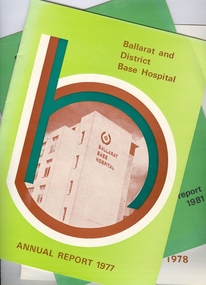
Booklet - Annual Report, Ballarat and District Base Hospital, Ballarat and District Base Hospital Annual Reports (1977, 1978, 1981), 1977 - 1981
... changed and is based to a large extent on State and Commonwealth Grants. Contribution from the public remain important particulalry in the purchase of equipement and ultimately the services provided by the hospital. Since 1887 the Ballarat Base Hospital has been an important training centre for nurses. In 1978 the hospital not only caters for general nursing and midwifery training, but also provides under graduate training for medical students." edgar bartrop ballarat college of advanced education ...Before the training of nurses at the Ballarat College of Advanced Education (now University of Ballarat) Ballarat nurses trained at the Ballarat Base Hospital. The 1978 Annual report gives the following hospital background: 'The foundation stone for the original 42 bed hospital was laid on the existing site on 25th December, 1855. Ballarat at that time had a population of between 40,000 and 50,000 people, with the demands on the hospital services being mainly for medical care resulting from mining accidents. Medical, Nursing and General care were provided by the resident Surgeon, matron and wardsmen. Financial support depended on donations from churches masonic lodges, the public and bequests. The hospital today provides centralized health services and specialist medical, surgical and ancillart assistance to the communities in the Central Highlands Region. The trend in hospital financing today has changed and is based to a large extent on State and Commonwealth Grants. Contribution from the public remain important particulalry in the purchase of equipement and ultimately the services provided by the hospital. Since 1887 the Ballarat Base Hospital has been an important training centre for nurses. In 1978 the hospital not only caters for general nursing and midwifery training, but also provides under graduate training for medical students."3 booklets, each of about 20 pages. 1977 is light green covered, 1978 white with brown text, and 1981 mid green covered.edgar bartrop, ballarat college of advanced education, nursing, nurse, bcae, ballarat base hospital, shirley falkinder, shirley ogden, school of nursing, nurse educaiton, pathology, radiology, m stevens, winsome menedue, trained nurses league, contributers -
 Federation University Historical Collection
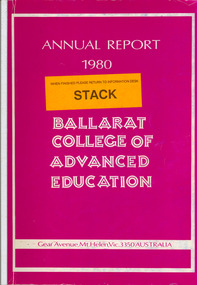
Book, Ballarat College of Advanced Education Annual Report, 1980
... The major contribution made to the progress and stature of became the Ballarat College of advanced Education by both the VIC and SCV, and their Councils and officers, over the formative years of rapid change and evolution is acknowledged and recorded with appreciation. ...The major contribution made to the progress and stature of became the Ballarat College of advanced Education by both the VIC and SCV, and their Councils and officers, over the formative years of rapid change and evolution is acknowledged and recorded with appreciation. ...In 1980 M.B.John was Council President. In 1980 the School of Arts moved into their new building, 1870 Founders Hall was financed - at a cost of $800,000 - from the proceeds of the SMB Centenary Appeal, and was completed late in 1980. Extensive work was carried out on the Student Residences and the former Education Department Hostel in Victorian Street. The amphitheatre adjacent to the eastern side of the Education Buildings was constructed, together with the nearby disabled ramp. Negotiations with the Shire of Buninyong were continued for access to the campus from the Green Hill Road. Following the creation by Act of Parliament in 1978 of the Victorian Post-Secondary Education Commission (VPSEC) amendments to the same Act early in 1980 made provision for the repeal of the VIC and SCV Acts. From mid-December 1980 these latter two bodies ceased to exist when the provisions for repeal of their Acts were proclaimed. The Victorian Institute of Colleges had been set up in 1965 to aid in the co-ordination and development of a number of non-university tertiary institutions that affiliated with it from 1965 on to become Colleges of Advanced Education. In taking up this role which had been spelt out in 1964 by the martin Committee, the VIC broke new ground in a whole range of operations. It became responsible for the physical development of new building programmes and new campuses from many of its colleges, for the procurement of operating funds from the Commonwealth, for the accreditation of new courses of study, for the first non-university degrees to be awarded in Australia and so on. The Former Ballarat Institute of Advanced Education (the tertiary division of the School of Mines) was affiliated with the VIC from the outset and its progress towards a new status, rapid growth and vastly improved physical resources was closely linked to and dependent upon the efforts of the VIC. The similar co-ordinating authority - The State College of Victoria - was established in 1973 to similarly foster the autonomous development of the former teachers colleges. its early work was highly influential in the transition of the Ballarat Teachers' College into the State College of Victoria at Ballarat. On the merging of the BIAE and the SCVB in 1976, the new college continued under the co-ordination of the Victorian Institute of Colleges. The major contribution made to the progress and stature of became the Ballarat College of advanced Education by both the VIC and SCV, and their Councils and officers, over the formative years of rapid change and evolution is acknowledged and recorded with appreciation. Such efforts by the two central authorities have markedly assisted in bringing the College to the present point where its accumulated experiences and traditions provide a sound basis on which it can confidently and responsibly exercise the greater autonomy gradually passing it. Purple soft covered book of 47 pages. Contents include: development of a Nurse education course, College organisational Structure, Role of Head of School, resignation of Norman Baggaley, appointment of R. Macgowan, opening of Business Resource Centre, Librarianship, resignation of M.J. Sandow-Quirk, E.A. Widdop, J. Leeuwenburg, Thelma Rungkat, Erica Myers, former Acting Head of School John Mildren elected to the Federal seat of Ballarat, Ray Watson, Resignation of A.C. Burrow, return of W.J. Vermeend, P.L. McCarthy, P.R. Calder, J.A. Fulcher, L.E. Taylor, L.J. McGrath, Teaching Resource Centreballarat college of advanced education, bcae, mt helen, mount helen, sandow-quirk, widdop, leeuwenburg, rungkat, myers, burrow, vermeend, mccarthy, calder, fulcher, taylor, victoria street -
Federation University Historical Collection
Booklet, Education Department Victoria, Curriculum Policy Making: An introduction for School Councils, 1984, 1984
... education department of victoria Brown soft covered book of 20 pages. Contents include: Why have a policy?; What approaches are generally used to develop curriculum policy?; What changes ...Brown soft covered book of 20 pages. Contents include: Why have a policy?; What approaches are generally used to develop curriculum policy?; What changes, if any, should be made to the school's present curriculum policy?; what are some features of a school curriculum policy?education, curriculum, policy, victorian education department, education department of victoria -
 Federation University Historical Collection
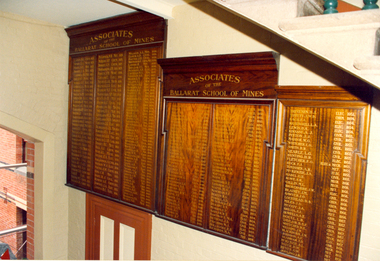
Honour Boards, Boards Listing Associates of the Ballarat School of Mines
... changes was the introduction of a three years course of training under the professors to qualify students for the following three professions: Analyst and Metallurgist, Electrician, and Geologist and Mining Surveyor. The Council was to confer the distinction of Associate. (Warren Perry, The School of Mines and Industries, Ballarat, 1984, p77) Students who took single subjects or pursued such courses as those for certificate of either mine manager or assayer were not required to pass an entrance examination. Students who wished to qualify for an associateship in once of the courses were expected to have a general education...changes was the introduction of a three years course of training under the professors to qualify students for the following three professions: Analyst and Metallurgist, Electrician, and Geologist and Mining Surveyor. The Council was to confer the distinction of Associate. (Warren Perry, The School of Mines and Industries, Ballarat, 1984, p77) Students who took single subjects or pursued such courses as those for certificate of either mine manager or assayer were not required to pass an entrance examination. Students who wished to qualify for an associateship in once of the courses were expected to have a general education ...In 1883 the Ballarat School of Mines made some changes in order to make better use of the services of the teachers and to extend "as far as practicable the special educational advantages already afforded" by the School. One of the changes was the introduction of a three years course of training under the professors to qualify students for the following three professions: Analyst and Metallurgist, Electrician, and Geologist and Mining Surveyor. The Council was to confer the distinction of Associate. (Warren Perry, The School of Mines and Industries, Ballarat, 1984, p77) Students who took single subjects or pursued such courses as those for certificate of either mine manager or assayer were not required to pass an entrance examination. Students who wished to qualify for an associateship in once of the courses were expected to have a general education of matriculation standard and to have attended all the prescribed courses of instruction unless they were able to produce to the satisfaction of the School's Board of Examiners evidence of having attained elsewhere the degree of proficiency which was required in any particular subject or subjects. (Warren Perry, The School of Mines and Industries, Ballarat, 1984, p177) Ballarat School of Mines Associateships have been conferred since 1894 on candidates who had passed the prescribed examinations in one or other of the following three courses: Geology, Metallurgy and Mining engineering. Each of these three courses had an additional, but optional, fourth year of study. The prescribed subjects of study for an Associateship were set out in 'The Calendar of the Ballarat School of Mines' in each year. (Warren Perry, The School of Mines and Industries, Ballarat, 1984, p177)A number of timber boards with gold lettering. The list names in date order of when they became an Associates of the Ballarat School of Mines.ballarat school of mines, ballarat school of mines associate, associate of the ballarat school of mines, lonie, jennifer drummond, jill blee, jilian norton, zig plavina, associate boards -
 Flagstaff Hill Maritime Museum and Village
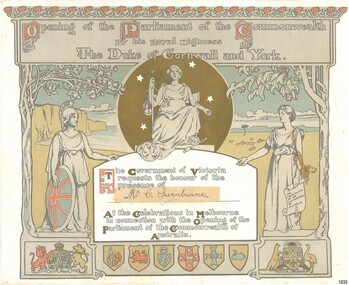
Certificate - Invitation, Norman Lindsay (Artist), Opening of the Parliament of the Commonwealth by His Royal Highness The Duke of Cornwall and York, ca. 1901
... education, and public service. In Melbourne, the occasion was followed by two weeks of celebrations. The decorative, elaborate design of the certificate-size invitation represents Australia’s colonial history and its transition to the Federated Commonwealth of Australia. The National Gallery of Australia attributes the artwork of this invitation to Australian artists Norman Lindsay (1879–1969) and John Longstaff (1861–1941) and its printing to Sands & McDougall Limited, Melbourne. The invitation has no date or location details. This invitation has the label “Mr. C Swinburne” added over an original, handwritten name. Perhaps it was a spelling correction, or a late change...education, and public service. In Melbourne, the occasion was followed by two weeks of celebrations. The decorative, elaborate design of the certificate-size invitation represents Australia’s colonial history and its transition to the Federated Commonwealth of Australia. The National Gallery of Australia attributes the artwork of this invitation to Australian artists Norman Lindsay (1879–1969) and John Longstaff (1861–1941) and its printing to Sands & McDougall Limited, Melbourne. The invitation has no date or location details. This invitation has the label “Mr. C Swinburne” added over an original, handwritten name. Perhaps it was a spelling correction, or a late change ...Australia became a Federation on January 1st, 1901, uniting Australia's six British colonies - New South Wales, Victoria, Queensland, South Australia, Western Australia and Tasmania – into States of the Commonwealth of Australia. The Government of Victoria invited 12,000 guests to attend the official celebrations for the Opening of the Federal Parliament by His Royal Highness, the Duke of Cornwall and York (later King George V). The historic occasion was held at noon on May 9th, 1901, at Melbourne's Royal Exhibition Building, the only building large enough for that number of guests. The guests represented all six states of Australia with varied connections and interests, including politics, business and industry, the arts, religion, education, and public service. In Melbourne, the occasion was followed by two weeks of celebrations. The decorative, elaborate design of the certificate-size invitation represents Australia’s colonial history and its transition to the Federated Commonwealth of Australia. The National Gallery of Australia attributes the artwork of this invitation to Australian artists Norman Lindsay (1879–1969) and John Longstaff (1861–1941) and its printing to Sands & McDougall Limited, Melbourne. The invitation has no date or location details. This invitation has the label “Mr. C Swinburne” added over an original, handwritten name. Perhaps it was a spelling correction, or a late change, with Swinburne attending in the place of another citizen. The book “Our Invited Guests An Official Directory, Melbourne, Victoria, 1901” lists all the guests, but not one has the surname SWINBURNE. There are five Warrnambool listings, eight people in all: - - MoCOBMICK, G. D., Esq., P.M., Warrnambool. - O’DOWD, The Ven. Monsignor, Warrnambool. - OPIE, C. N. T., Esq. (and Lady), Warrnambool. - OSBORNE, Hy. Wm., Esq., Shire Secretary (and Lady), Town Hall, Warrnambool. - STEVENS, Mrs. F. P., Mia Mia, Warrnambool. CHARLES GRANT SWINBURNE (1864-1934): - Charles Grant Swinburne, known as Chas.., was a prominent Warrnambool figure: a member of Toc H., the Progress Association and several other local clubs and societies. He purchased Warrnambool’s Tattersall’s Hotel in 1911 and had a booth at the 1914 Warrnambool Show. In 1891, he married Susan Jane Granter (1867-19 June 1935), daughter of Joseph Granter (1832-1879) and Ann (born Holley). Joseph had arrived in Melbourne on the famous tall ship Marco Polo in February 1856. In 1868, he was a shareholder of the Warrnambool Steam Packet Co., trading along the coast of Victoria. His portrait is among those recognised on the historic Warrnambool Pioneers Board. The invitation is nationally significant for its connection with the first Federal Parliament in May 1901, where the first federal parliamentarians were sworn in, and where the Duke and Duchess of Cornwall and York attended, representing the continued link with Britain. The invitation also unites a local Warrnambool businessman, Mr C Swinburne, with the 12,000 guests representing their towns and states that in 1901 became the Commonwealth of Australia. Swinburn was also married to the daughter of Joseph Granter, an early pioneer recognised on Warrnambool’s Pioneer Board. Invitation: certificate size, colour lithograph on cream card with gilt highlights. The Victorian Government invited Mr C Swinburne to celebrate the Opening of Federal Parliament by HRH the Duke of Cornwall and York, held in Melbourne. The invitation has printed drawings of figures, decorations, heraldic symbols, and gilt accents behind the central figure, on the capital letters of the message, and the Advance Australia Arms. Inscribed with a handwritten label that covers handwritten text. [The event was held at Noon, 9th May 1901, Royal Exhibition Building, Melbourne.] Inscription, handwritten on a label: "Mr. C. Swinburne" Left image: [figure of Britannia holding a blue shield with three crossing red bands, standing below an oak tree] Central image, in front of a gilt circle : [symbolic female royal future with Orbe and Sceptre seated on throne, four stars around her] Right image: [young female figure representing Australia holding a scroll, standing below a flowering gum] "THE CONSTITUTION OF THE COMMONWEALTH OF AUSTRALIA" Bottom left: Combined Arms: "[Duke of Cornwall and York, Prince George Frederick Ernest Albert, Princess Alexandra, his Duchess]" Bottom centre: [six symbols representing the Coat of Arms for each state of Australia] Bottom right: Advance Australia Arms "[Shield with six symbols, between Kangaroo and Emu, and below Rising Sun'] ADVANCE AUSTRALIA"flagstaff hill maritime museum and village, flagstaff hill, maritime museum, maritime village, warrnambool, great ocean road, shipwreck coast, invitation, certificate, mr c swinburne, government of victoria, opening of federal parliament, hrh the duke of cornwall and york, c swinburne, susan jane granter, susan jane swinburne, federal parliament, 1901, australian federation, ceremonies, politics, royal exhibition building, invited guest, britannia, orb, sceptre, advance australia arms, constitution of the commonwealth of australia, norman lindsay, john longstaff, sands & mcdougall, federation, british colonies, commonwealth of australia, charles grant swinburne, chas swinburne, c g swinburne, opening of the federal parliament, duke of cornwall and york, may 9th, tattersall’s hotel, marco polo, warrnambool steam packet co, warrnambool pioneers board, joseph granter, ann granter -
 Flagstaff Hill Maritime Museum and Village
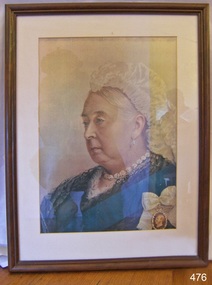
Print - Portrait of Queen Victoria, Hoy Art Picture Framing, Original probably painted in 1887 or 1897 to commemorate 50 or 60 years on the throne
... education, hospitals and other areas. Victoria and her family travelled and were seen on an unprecedented scale, thanks to transport improvements and other technical changes such as the spread of newspapers and the invention of photography. ...education, hospitals and other areas. Victoria and her family travelled and were seen on an unprecedented scale, thanks to transport improvements and other technical changes such as the spread of newspapers and the invention of photography. ...Queen Victoria was born at Kensington Palace, London, on 24 May 1819. She was the only daughter of Edward, Duke of Kent, the fourth son of George III. Her father died shortly after her birth and she became heir to the throne because the three uncles who were ahead of her in the succession - George IV, Frederick Duke of York, and William IV - had no legitimate children who survived. Warmhearted and lively, Victoria had a gift for drawing and painting; educated by a governess at home, she was a natural diarist and kept a regular journal throughout her life. On William IV's death in 1837, she became Queen at the age of 18. Queen Victoria is associated with Britain's great age of industrial expansion, economic progress and, especially, empire. At her death, it was said, Britain had a worldwide empire on which the sun never set. In the early part of her reign, she was influenced by two men: her first Prime Minister, Lord Melbourne, and then her husband, Prince Albert, whom she married in 1840. Both men taught her much about how to be a ruler in a 'constitutional monarchy, in which the monarch had very few powers but could use much influence. Albert took an active interest in the arts, science, trade and industry; the project for which he is best remembered was the Great Exhibition of 1851, the profits from which helped to establish the South Kensington museums complex in London. Her marriage to Prince Albert produced nine children between 1840 and 1857. Most of her children married into other Royal families in Europe. Edward VII (born 1841), married Alexandra, daughter of Christian IX of Denmark. Alfred, Duke of Edinburgh and of Saxe-Coburg and Gotha (born 1844) married Marie of Russia. Arthur, Duke of Connaught (born 1850) married Louise Margaret of Prussia. Leopold, Duke of Albany (born 1853) married Helen of Waldeck-Pyrmont. Victoria, Princess Royal (born 1840) married Friedrich III, German Emperor. Alice (born 1843) married Ludwig IV, Grand Duke of Hesse and by Rhine. Helena (born 1846) married Christian of Schleswig-Holstein. Louise (born 1848) married John Campbell, 9th Duke of Argyll. Beatrice (born 1857) married Henry of Battenberg. Victoria bought Osborne House (later presented to the nation by Edward VII) on the Isle of Wight as a family home in 1845, and Albert bought Balmoral in 1852. Victoria was deeply attached to her husband and she sank into depression after he died, aged 42, in 1861. She had lost a devoted husband and her principal trusted adviser in affairs of state. For the rest of her reign she wore black. Until the late 1860s she rarely appeared in public; although she never neglected her official Correspondence, and continued to give audiences to her ministers and official visitors, she was reluctant to resume a full public life. She was persuaded to open Parliament in person in 1866 and 1867, but she was widely criticised for living in seclusion and quite a strong republican movement developed. Seven attempts were made on Victoria's life, between 1840 and 1882 - her courageous attitude towards these attacks greatly strengthened her popularity. With time, the private urgings of her family and the flattering attention of Benjamin Disraeli, Prime Minister in 1868 and from 1874 to 1880, the Queen gradually resumed her public duties. In foreign policy, the Queen's influence during the middle years of her reign was generally used to support peace and reconciliation. In 1864, Victoria pressed her ministers not to intervene in the Prussia-Denmark war, and her letter to the German Emperor (whose son had married her daughter) in 1875 helped to avert a second Franco-German war. On the Eastern Question in the 1870s - the issue of Britain's policy towards the declining Turkish Empire in Europe - Victoria (unlike Gladstone) believed that Britain, while pressing for necessary reforms, ought to uphold Turkish hegemony as a bulwark of stability against Russia, and maintain bi-partisanship at a time when Britain could be involved in war. Victoria's popularity grew with the increasing imperial sentiment from the 1870s onwards. After the Indian Mutiny of 1857, the government of India was transferred from the East India Company to the Crown, with the position of Governor-General upgraded to Viceroy, and in 1877 Victoria became Empress of India under the Royal Titles Act passed by Disraeli's government. During Victoria's long reign, direct political power moved away from the sovereign. A series of Acts broadened the social and economic base of the electorate. These acts included the Second Reform Act of 1867; the introduction of the secret ballot in 1872, which made it impossible to pressurise voters by bribery or intimidation; and the Representation of the Peoples Act of 1884 - all householders and lodgers in accommodation worth at least £10 a year, and occupiers of land worth £10 a year, were entitled to vote. Despite this decline in the Sovereign's power, Victoria showed that a monarch who had a high level of prestige and who was prepared to master the details of political life could exert an important influence. This was demonstrated by her mediation between the Commons and the Lords, during the acrimonious passing of the Irish Church Disestablishment Act of 1869 and the 1884 Reform Act. It was during Victoria's reign that the modern idea of the constitutional monarch, whose role was to remain above political parties, began to evolve. But Victoria herself was not always non-partisan and she took the opportunity to give her opinions, sometimes very forcefully, in private. After the Second Reform Act of 1867, and the growth of the two-party (Liberal and Conservative) system, the Queen's room for manoeuvre decreased. Her freedom to choose which individual should occupy the premiership was increasingly restricted. In 1880, she tried, unsuccessfully, to stop William Gladstone - whom she disliked as much as she admired Disraeli and whose policies she distrusted - from becoming Prime Minister. She much preferred the Marquess of Hartington, another statesman from the Liberal party which had just won the general election. She did not get her way. She was a very strong supporter of the Empire, which brought her closer both to Disraeli and to the Marquess of Salisbury, her last Prime Minister. Although conservative in some respects - like many at the time she opposed giving women the vote - on social issues, she tended to favour measures to improve the lot of the poor, such as the Royal Commission on housing. She also supported many charities involved in education, hospitals and other areas. Victoria and her family travelled and were seen on an unprecedented scale, thanks to transport improvements and other technical changes such as the spread of newspapers and the invention of photography. Victoria was the first reigning monarch to use trains - she made her first train journey in 1842. In her later years, she became the symbol of the British Empire. Both the Golden (1887) and the Diamond (1897) Jubilees, held to celebrate the 50th and 60th anniversaries of the Queen's accession, were marked with great displays and public ceremonies. On both occasions, Colonial Conferences attended by the Prime Ministers of the self-governing colonies were held. Despite her advanced age, Victoria continued her duties to the end - including an official visit to Dublin in 1900. The Boer War in South Africa overshadowed the end of her reign. As in the Crimean War nearly half a century earlier, Victoria reviewed her troops and visited hospitals; she remained undaunted by British reverses during the campaign: 'We are not interested in the possibilities of defeat; they do not exist.' Victoria died at Osborne House on the Isle of Wight, on 22 January 1901 after a reign which lasted almost 64 years, then the longest in British history. Her son, Edward VII succeeded her. She was buried at Windsor beside Prince Albert, in the Frogmore Royal Mausoleum, which she had built for their final resting place. Above the Mausoleum door are inscribed Victoria's words: "Farewell best beloved, here, at last, I shall rest with thee, with thee in Christ I shall rise again." Source: https://www.royal.uk/queen-victoria This picture captures Queen Victoria in her later years. It may well have been painted to commemorate her Golden Anniversary in 1887, or her Diamond Anniversary in 1897.Picture, print, reproduction of a drawing or photograph of Queen Victoria. She is wearing a dark-coloured dress, white headdress and a diamond necklace and earrings. On her left shoulder is the Royal Order of Victoria and Albert, awarded to female members of the British Royal Family and female courtiers. There are four grades or classes of this Royal Order as well as the Sovereign's Badge, which is exclusive to her. Also across her left shoulder, is a blue riband representing the Order of the Garter. The picture is in a medium-coloured timber frame with a white string across the width at the rear. The label says it was framed by Hoy Art, Warrnambool. The signature of the Queen is on the picture but is not obvious since the picture has been re-framed."HOY ART / PICTURE FRAMING / 48 Kepler St, Warrnambool 3280 / Phone (055) 62 8022" Signature (hidden by new framing) "Victoria H.R.S."flagstaff hill, warrnambool, shipwrecked-coast, flagstaff-hill, flagstaff-hill-maritime-museum, maritime-museum, shipwreck-coast, flagstaff-hill-maritime-village, picture of queen victoria, queen victoria, the royal order of victoria and albert, the order of the garter, hoy art -
 The Beechworth Burke Museum
Audio - Oral History, Joyce Snow
... She gave information about the settlements and life of the prisoners of First World War, the early forms of entertainment, education system and societal roles. She also mentioned changes in employment and migrant communities. ...Joyce Snow was born in Avenel and came to Beechworth at the age of twenty-three. She grew up at Bundarta, a place just out of Shepparton. Her father was a soldier who was part of the 37th Battallion while her mother's family were some of the pioneers of Beechworth--the Duracks. She finished school at about thirteen years old, did a correspondence course, and when she was old enough, she went training for nursing. Joyce was a trained nurse at the old Mooroopna Base, Hospital. She working at a Hospital in Shepparton when Manpower sent her to Beechworth. She arrived at Beechworth in 1943 at a train in Wangaratta. She had been a nurse in Beechworth for more than seven years. She got married in Beechworth and had three children, two girls and one boy. By the time of her third child, she studied a one year supplementary course on Psychy at May Day. Joyce had nursed prisoners of the First World War. She shared about the differences of medical practice back then in comparison to now. This oral history recording was part of a project conducted by Jennifer Williams in the year 2000 to capture the everyday life and struggles in Beechworth during the twentieth century. This project involved recording seventy oral histories on cassette tapes of local Beechworth residents which were then published in a book titled: Listen to what they say: voices of twentieth century Beechworth. These cassette tapes were digitised in July 2021 with funds made available by the Friends of the Burke.Joyce Snow's account of her life in the early 20th century is historically and socially significant to the cultural heritage of the region. She gave information about the settlements and life of the prisoners of First World War, the early forms of entertainment, education system and societal roles. She also mentioned changes in employment and migrant communities. This oral history account is socially and historically significant as these accounts provide a unique insight into the day-to-day life of the town's residents during the 20th century, many of which will have now been lost if they had not been preserved.This is a digital copy of a recording that was originally captured on a cassette tape. The cassette tape is black with a horizontal white strip and is currently stored in a clear flat plastic rectangular container. It holds up 40 minutes of recordings on each side.Joyce Snowburke museum, beechworth, hospital, oral history, nursing, nurse, first world war, prisoners of war, tatatura, moonrapna, peritontitis, doctors, tuck shops, largactil, rock films, victoria park, kings in grass castle, durack, duracks, glory box, d'oylies -
 The Beechworth Burke Museum
Photograph - Lantern Slide, c1900
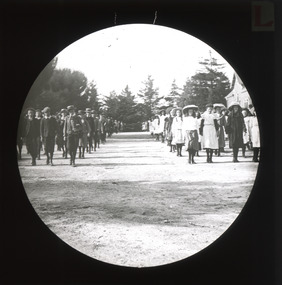
... Its name was changed to Common School number 36 in 1862 and the Beechworth Academy prior to being taken over by the Education department in 1873. ...Its name was changed to Common School number 36 in 1862 and the Beechworth Academy prior to being taken over by the Education department in 1873. ...This picture shows an angle of Beechworth Primary School (State School number 1560) which is also pictured in the building's entry in the Victorian Heritage Register (VHR record 1718). The school began as a national school in 1858 as an alternative to Wesleyan and Anglican schools already operating in the area. Its name was changed to Common School number 36 in 1862 and the Beechworth Academy prior to being taken over by the Education department in 1873. The new premises were built in 1875 utilising the skills of architect Henry Bastow though the original design may be attributable to the firm Wharton and Vickers. The design was used with modifications for other schools in Victoria, including the Competition School in Errol Street, North Melbourne. The school moved to the building pictured from its original premises in Loch Street, designed by Thomas Dalziel, which later became the office of the Ovens Advertiser. The school was opened on 2 July 1875 by former Beechworth resident G.B. Kerferd, who was then the Premier of Victoria. The image shows approximately ninety older students at the school in approximately 1900. There are approximately equal numbers of boys and girls pictured, with most of the individuals pictured appearing to be between the ages of twelve and fifteen. Although the school had more than 1000 students enrolled at its height, enrolments had declined to 304 in 1890. Also visible is a fringe of sequoia pines which were planted by the school children as a project lasting through to the late 1930s. Lantern slides, sometimes called 'magic lantern' slides, are glass plates on which an image has been secured for the purpose of projection. Glass slides were etched or hand-painted for this purpose from the Eighteenth Century but the process became more popular and accessible to the public with the development of photographic-emulsion slides used with a 'Magic Lantern' device in the mid-Nineteenth Century. Photographic lantern slides comprise a double-negative emulsion layer (forming a positive image) between thin glass plates that are bound together. A number of processes existed to form and bind the emulsion layer to the base plate, including the albumen, wet plate collodion, gelatine dry plate and woodburytype techniques. Lantern slides and magic lantern technologies are seen as foundational precursors to the development of modern photography and film-making techniques.The image is significant because it sheds light on the educational infrastructure present in Beechworth in the early part of the Twentieth Century, including the prevalence of education for students after current-day primary-school age and the education of girls. It also provides insight into the building and design practices used by Government departments at the time. Thin translucent sheet of glass with a circular image printed on the front and framed in a black backing. It is held together by metals strips to secure the edges of the slide.Obverse: L / burke museum, beechworth, lantern slide, slide, glass slide, plate, burke museum collection, photograph, monochrome, schools, education, high school, primary school, common school, state school, state school 1560, common school 36, beechworth academy, g.b. kerferd, thomas dalziel, henry bastow, victorian heritage register, beechworth primary school, girls education, boys education, public schools, education department, pines, trees, sequoias, competition school -
Federation University Historical Collection
Poster, Federation University: Our History, 2019, 2019
... The name Federation University Australia was chosen to convey the scope and capacity of an expanded regional university with a federated network of campuses. timeline ballarat school of mines ballarat junior technical school ararat technical school stawell school of design stawell technical school stawell junior technical school wimmera institute of tafe horsham technical school ballarat base hospital school of nursing ballarat teachers' college ballarat school of industries ballarat technical school ballarat institute of advanced education ballarat school of mines and industries ballarat college of advanced education yallourn technical school yallourn technical college gippsland institute of advanced education horsham working men's college ballarat university college university of ballarat monash university college monash university gippsland federation university australia state college of victoria ballarat chart university of ballarat establishment ballarat school of mines establishment berwick campus gisspland campus brisbane campus White, blue, grey and gold poster outlining the establishment date of each organisation and dates of name changes at Federation University Australia as of 2019. ...Federation University Australia was established on 1 January 2014. Formerly known as the University of Ballarat, its enabling legislation was the University of Ballarat Amendment (Federation University Australia) Act 2013. Although formally created as a University in 1994, the University of Ballarat has a lineage back to 1870 with the establishment of the School of Mines Ballarat, making it the third institution of higher learning to be established in Australia and the first to be established in regional Australia. On 1 January 1994, Ballarat University College became the University of Ballarat and in 1998 the University merged with three TAFE Institutes to become a dual sector institution with multiple campuses. On 1 January 2014, the University of Ballarat amalgamated with the Monash University Gippsland Campus to form Federation University Australia. The Gippsland Campus also had a long lineage dating back to 1928 with the establishment of the Yallourn Technical School which became a predecessor institution to the Gippsland College of Advanced Education formed in 1968. In 1990, it was renamed the Monash University College and in 1993 became the Gippsland Campus of Monash University. In 2016, Federation University Australia announced plans to take possession, over a two-year period, of Monash’s Berwick Campus in the south-east corridor of Melbourne. Federation University Australia, or FedUni, is headquartered in Ballarat and offers programs in Higher Education and Vocational Education and Training to regional Victoria and beyond. The University’s commitment to educational and social equity, teaching excellence, research distinction, environmental sustainability and regional capacity building has enabled it to develop in a way that draws on its proud heritage to inform its future. Its regional character sets a framework for the University’s priorities but does not constrain it from serving wider community interests, nationally and internationally. The name Federation University Australia was chosen to convey the scope and capacity of an expanded regional university with a federated network of campuses.White, blue, grey and gold poster outlining the establishment date of each organisation and dates of name changes at Federation University Australia as of 2019. timeline, ballarat school of mines, ballarat junior technical school, ararat technical school, stawell school of design, stawell technical school, stawell junior technical school, wimmera institute of tafe, horsham technical school, ballarat base hospital school of nursing, ballarat teachers' college, ballarat school of industries, ballarat technical school, ballarat institute of advanced education, ballarat school of mines and industries, ballarat college of advanced education, yallourn technical school, yallourn technical college, gippsland institute of advanced education, horsham working men's college, ballarat university college, university of ballarat, monash university college, monash university gippsland, federation university australia, state college of victoria ballarat, chart, university of ballarat establishment, ballarat school of mines establishment, berwick campus, gisspland campus, brisbane campus -
 Federation University Historical Collection
Booklet, Eugene Kneebone, Explore Discover Apply: University of Ballarat Research Report, 2007, 2007
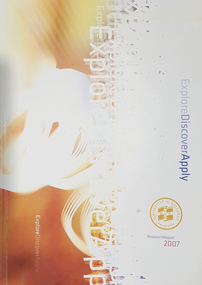
... It includes information on: * Institute for Regional and Rural Research and Innovation * Centre for Regional Innovation and Competitiveness * Teaching to Global Citizenship * Older BLokes and Their Sheds: Community based Men's Sheds in Australia * Education and Re-education in Child Sexual Abuse * Water Demand Management and Climate Change * An Indigenous History of Stonington * Key Drivers of Change in Adult and Community Education * Benchmaking Research * Training for Child Protection * Grabbing a Lifeline to Better Health * Enhancing Nurse Preparation for health care practice * ACT for depression in adolescence * FRom Pokies to Peremptory PErsonal Pleasures * Worksafe Awards * Mineral Sands that are not sinking * Rising Generation Inspired by Trace Elements * Environmental Research from Namibia to Ballarat * Evaluation of VicHealth Sport & Physical Activity Programs * A good Hard Look at Sports Grounds * Preventing Knee Injuries inn Community Australian Football * WIDCORP Beyond the Pipelines *Woodside Energy Ltd Optimizes its Production * Australian Defence Force Seeks Best Fit * Mapping Augmentation Structures Images include: David Battersby, Wayne Robinson, Joel Epstein, Georgina Tsolidis, Barry Golding, Caroline Taylor, Julian Lowe, Laura Kostanski, Ian D. ...It includes information on: * Institute for Regional and Rural Research and Innovation * Centre for Regional Innovation and Competitiveness * Teaching to Global Citizenship * Older BLokes and Their Sheds: Community based Men's Sheds in Australia * Education and Re-education in Child Sexual Abuse * Water Demand Management and Climate Change * An Indigenous History of Stonington * Key Drivers of Change in Adult and Community Education * Benchmaking Research * Training for Child Protection * Grabbing a Lifeline to Better Health * Enhancing Nurse Preparation for health care practice * ACT for depression in adolescence * FRom Pokies to Peremptory PErsonal Pleasures * Worksafe Awards * Mineral Sands that are not sinking * Rising Generation Inspired by Trace Elements * Environmental Research from Namibia to Ballarat * Evaluation of VicHealth Sport & Physical Activity Programs * A good Hard Look at Sports Grounds * Preventing Knee Injuries inn Community Australian Football * WIDCORP Beyond the Pipelines *Woodside Energy Ltd Optimizes its Production * Australian Defence Force Seeks Best Fit * Mapping Augmentation Structures Images include: David Battersby, Wayne Robinson, Joel Epstein, Georgina Tsolidis, Barry Golding, Caroline Taylor, Julian Lowe, Laura Kostanski, Ian D. ...University of Ballarat is a predecessor institution of Federation University AustraliaPredominantly white and gold soft covered book outlining Research at the University of Ballarat. It includes information on: * Institute for Regional and Rural Research and Innovation * Centre for Regional Innovation and Competitiveness * Teaching to Global Citizenship * Older BLokes and Their Sheds: Community based Men's Sheds in Australia * Education and Re-education in Child Sexual Abuse * Water Demand Management and Climate Change * An Indigenous History of Stonington * Key Drivers of Change in Adult and Community Education * Benchmaking Research * Training for Child Protection * Grabbing a Lifeline to Better Health * Enhancing Nurse Preparation for health care practice * ACT for depression in adolescence * FRom Pokies to Peremptory PErsonal Pleasures * Worksafe Awards * Mineral Sands that are not sinking * Rising Generation Inspired by Trace Elements * Environmental Research from Namibia to Ballarat * Evaluation of VicHealth Sport & Physical Activity Programs * A good Hard Look at Sports Grounds * Preventing Knee Injuries inn Community Australian Football * WIDCORP Beyond the Pipelines *Woodside Energy Ltd Optimizes its Production * Australian Defence Force Seeks Best Fit * Mapping Augmentation Structures Images include: David Battersby, Wayne Robinson, Joel Epstein, Georgina Tsolidis, Barry Golding, Caroline Taylor, Julian Lowe, Laura Kostanski, Ian D. Clark, Jessie Harman, Patrick White, Angela Murphy, Katrina Brown, John McDonald, Robert Watson, Sally Wellard, Louise Hayes, Stephen Cowley, Susan Leggett, Steve Hall, Stafford McKnight, Larissa Koroznikova, Patrick Graz, David Stratton, Andrew Stranieri, John Yearwood widcorp, water in drylands collaborative research project, eugene kneebone -
Federation University Historical Collection
Book - Ledger, Ballarat School of Mines Minute Book, 1942-1946, 03/03/1942-20/03/1946
... Whiteside and Civil Engineering Course pg 128-130 - Technical Education pg 193 - Proposed new buildings pg 272 - Retirement of J.M. Sutherland pg 280 - Proposed change of name to school pg 297 - Woolclassing Room pg. 342 - pg 353 - D. ...Whiteside and Civil Engineering Course pg 128-130 - Technical Education pg 193 - Proposed new buildings pg 272 - Retirement of J.M. Sutherland pg 280 - Proposed change of name to school pg 297 - Woolclassing Room pg. 342 - pg 353 - D. ...The Ballarat School of Mines was established in 1870 and was the first School of Mines in Australasia. Blue hard covered book with brown leather spine and corners. pg 4 - Farewell for Albert W. Steane pg 9 - Instruction in Electrical Engineering pg 30 - The late Cr M. Martin pg 38 - Caretakers Duties pg 40 - The late Cr F. Barrow pg 43 - John Brittain Telescope pg 43 - Martha Pinkerton Bequest pg 66 - Resignation of Albert E. Williams pg 85 - N. Whiteside and Civil Engineering Course pg 128-130 - Technical Education pg 193 - Proposed new buildings pg 272 - Retirement of J.M. Sutherland pg 280 - Proposed change of name to school pg 297 - Woolclassing Room pg. 342 - pg 353 - D. Taylor Kellock pg 353 - Resignatin of Miss Grigg pg 367 - Dr Pern's Collections of Aboriginal Artefacts pg 377 - Inmates of Ballarat Orphanage pg 356 - Ballarat School of Mines Museum contents Loose - Resolutions Passed by Technical Schools' Association of Victoria, October, 1942, with the Minister's Replies.Pg 367 - "Dr Pern's Collection Cr Lederman reported on the proceedings of the special committee meeting held on the 19th February. At that meeting it was suggested that the Ballarat Historical Society might consider transferring their collection to the Museum. It was decided that any expert from Melbourne be invited to come to Ballarat for the purpose of inspecting the mounted birds, which in many instances were falling to pieces, and recommending the best way of dealing with them."m. grigg, t.h. trengrove, building plans, john brittain telescope, new workshops, t. barrow, a.w. steane, martha pinkerton, ballarat school of mines museum, sydney pern, pern collection, ballarat orphanage, thomas aggett, william aggett, sebastian fumberger, peter hogg, ronald irving, eric jackson, ray lear, ken mason, john birch, william gleeson, robert gleeson, robert guyas, ronald holmes, albert king, stuart smith, alan snell, martha pinkerton scholarship, frank pinkerton scholarship, thomas trengrove, d. taylor kellock, architecture course -
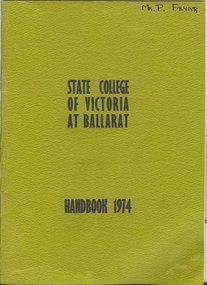 Federation University Historical Collection
Booklet, State College of Victoria, Ballarat Handbook, 1974, 1974
... In 1975 State College of Victoria at Ballarat moved to the Ballarat Institute of Advanced Education campus at Mount Helen, and the name was changed to Ballarat College of Advanced Education. ...In 1975 State College of Victoria at Ballarat moved to the Ballarat Institute of Advanced Education campus at Mount Helen, and the name was changed to Ballarat College of Advanced Education. ballarat teachers' college state college of victoria at ballarat state college of victoria, ballarat art collection handbook gillies street 'Mr P. ...In 1958 the Ballarat Teachers' College moved from Dana Street Primary School to a custom built college in Gillies Street. Accommodation again became a problem in 1968 with the introduction of the three year Diploma of Teaching (Primary) course. On 19 December 1972 the State College of Victoria Act received Royal Assent. The Act restructured the teacher training policies of Victoria. Ballarat was one of the State Teachers' Colleges which until 30th June 1973, was under Education Department control. Ballarat Teachers' College was renames the State College of Victoria at Ballarat and had its own governing council. In 1975 State College of Victoria at Ballarat moved to the Ballarat Institute of Advanced Education campus at Mount Helen, and the name was changed to Ballarat College of Advanced Education. Small, green, soft covered booklet. Th book includes course, regulations, assessments, subject details, general information, art collection overview and student organisations. A good history of the evolution of the Ballarat Teachers' College and State College Victoria at Ballarat (SCVB) is given. 'Mr P. Fryar' on front cover. Signed 'Peter Fryar' on inside front page. ballarat teachers' college, state college of victoria at ballarat, state college of victoria, ballarat, art collection, handbook, gillies street -
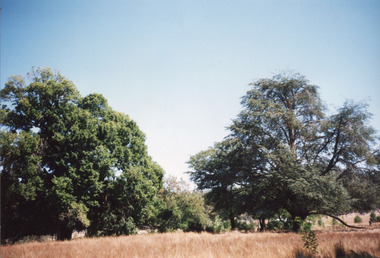 The Beechworth Burke Museum
Photograph, 2000
... education. The image is also useful for prompting discussion about how Beechworth has changed over time, with the photograph taken 78 years after the school closed down. beechworth burke museum school education trees nature state school woolshed gold mining teachers over time Owens and Murray advertiser public meetings public dance c. o'donoghue spring creek state governor Sir Reginald Talbot miners honour roll world war 1 Woolshed State. / School site / 2000 / - remnant trees / / co A colour rectangular photograph printed on glossy photographic paper. ...Woolshed is a small area about five kilometres north west of Beechworth, and almost about 225km north east of Melbourne. When gold was discovered at the nearby Spring Creek in February 1852, Woolshed was one of three settlements set up to house miners and their families. At its peak in 1857, Woolshed was also populated by 29 storekeepers and 14 hotels, as well as the Woolshed State School, which stood near where this photograph was taken. The school often played host to public meetings, as well as a public dance in 1897. The school was subject to some controversy in 1874 when one parent complained about the head of the school in the local newspaper, the Owens and Murray Advertiser, and at least three letters to the editor were exchanged between the two. According to the parent, C. O'Donoghue was not providing enough amusement for the children and was disrespectful to parents and staff. When the State Governor, Sir Reginald Talbot, visited Beechworth in 1906, the school organised a celebratory welcome. The Woolshed State School was ultimately closed in 1922 as miners had exhausted the Spring Creek gold supply and were moving elsewhere. This photograph, taken in about 2000, shows the trees that grew on or near the site of the original school. The Woolshed State School Honour Roll, with a list of the men from the school who served in the First World War, also still exists. It is stored in the Beechworth RSL as of 2015.This photograph is significant for its connection to an important site in Beechworth's gold mining history. Woolshed served a significant community of miners, with a population of at least 138 according to the 1911 census, with families that needed the school site to ensure their children's education. The image is also useful for prompting discussion about how Beechworth has changed over time, with the photograph taken 78 years after the school closed down.A colour rectangular photograph printed on glossy photographic paper.Woolshed State. / School site / 2000 / - remnant trees / / cobeechworth, burke museum, school, education, trees, nature, state school, woolshed, gold mining, teachers, over time, owens and murray advertiser, public meetings, public dance, c. o'donoghue, spring creek, state governor, sir reginald talbot, miners, honour roll, world war 1 -
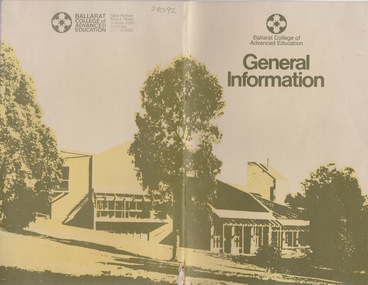 Federation University Historical Collection
Booklet - Booklet - BCAE General Information, ZILLES COLLECTION: Ballarat College of Advanced Education; A Guide including details of courses and requirements, costs and facilities
... Education. It remained as such until 1990 when it became Ballarat University College then in 1994 University of Ballarat. 2014 saw it change again to become Federation University. ...Education. It remained as such until 1990 when it became Ballarat University College then in 1994 University of Ballarat. 2014 saw it change again to become Federation University. ...Zilles Printers was begun by Lewis Zilles in the early 1930s. It was in McKenzie Street Ballarat. His son Jeffrey also became a printer - letterpress, offset and screen printer. The business became Zilles Printers/Graphics and was in Armstrong Street and later Bell Street Ballarat. Ballarat College of Advanced Education evolved over time with the merger of other sectors of Education in Ballarat. Ballarat College of Victoria and Ballarat Institute of Advanced Education merged in 1976 to form Ballarat College of Advanced Education. It remained as such until 1990 when it became Ballarat University College then in 1994 University of Ballarat. 2014 saw it change again to become Federation University. Booklet outlines details of courses, entry requirements, application procedures, costs and facilities. There is a tear-off section on Back cover that can be filled in and returned to the Information Officer, BCAE, Gear Avenue, Mount Helen.Small booklet with beige coloured cover, brown print and illustration. Sixteen pages stapled together.Symbol of Ballarat College on coverzilles printers, ballarat college of advanced education, course details, entry requirements, application procedures, costs, facilities, information officer -
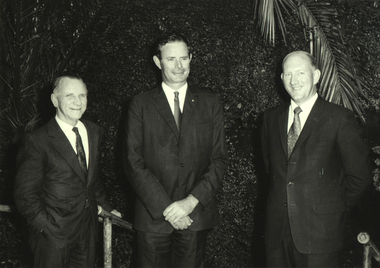 Federation University Historical Collection
Document - Documents, Ken Clements (BCAE Registrar), Academic Registrar Information, 1972-1988
... "The Developmen of Tertiary Education in Ballarat" a report to the Victorian Minister of Education 14. Director's Advice of change of classification for Ken Clements 15. ..."The Developmen of Tertiary Education in Ballarat" a report to the Victorian Minister of Education 14. Director's Advice of change of classification for Ken Clements 15. ...The collection of material was collected and compiled by Ken Clements, Academic Registrar.A grey cardboard file box with information compiled by Ken Clements, the first Academic Registrar at Ballarat Institute of Advanced Education and Ballarat College of Advanced Education (later Federation Univeristy). The information includes: 1. Ballarat School of Mines advertisement for the Academic Registrar Position 2. Details of Position 3. Ballarat Institute of Advanced Educaton information for Lectureship applicants 4. Copy of Ken Clements application for the position. 5. Principal's Recipt of application note 6. Request to and reference from R.F. Colbourne 7. Request to attend for interview from Deputy Principal 8. Principal's receipt of appointment advice from Ken Clements 9. Ballarat Courier Photo of January 1972 - Deputy Principal H. Trudinger, Principal E.J. (Jack) Barker, Academic Registrar Ken Clements. 10. Plans for storage and operation of student records with Electronic Data Processing 11. Memo to Heads of Departments for current enrolment data, with Academic Registrar duties statement attached for information 12. Subject COding Scheme first draft. 13. "The Developmen of Tertiary Education in Ballarat" a report to the Victorian Minister of Education 14. Director's Advice of change of classification for Ken Clements 15. "Professional Experience Program Report: Ken Clements 1980 16. Sample commuinuicaiton re Registry Stadd traditional end of year function 17. Sample Enrolment Manual 18. Copy of application for La Troe position 19 CAEnews, April - Produced for Registry as an information service for Ballarat College of Advanced Education Staff. Includes infromation on the northwest access to the Mount Helen Campus. Photos include roadworks on Greenhill Road, a rehearsal for the play "Little Malcom", John Langer, Jayne Wilkins, Ian Gomm, Gary Gorman 20. Part of Notes for participants in Conferring Ceremony 21. Ken Clements notes re admission to tertiary education 22. Letterhead re Ballarat College of Advanced Education 23. Memo re 1988 Admission process 24. Staff Club Activities Survey 25. 1988 Enrolment Manual 26. Sundry cards used by registry for public and internal communication, 27. Listing of Ken Clement snad B. Coldwell duties March 1988 28. Docuemnts and memos re classifications of Ballarat College of advanced Education Staff, most are to do with the Academic regsitrar position 29. Notes re Ken Clements leaving Ballarat College of Advanced Education in 1988 30. Ken Clements notes for University of Ballarat Retired Staff Association Newsletter 1997 31. Ken Clements data in Ballarat University College "Biographical Archive of Retired Staff, 1996 32. Listing of some projects undertaken by Ken Clements as a volunteer at the University of Ballarat art and Historical Collection. ken clements, john langer, ian gomm, gary gorman, leslie clements, jayne wilkins, academic registrar, retired staff association, staff club -
 Federation University Historical Collection
Costume, Professional, Ballarat College of Advanced Education Nurses Uniform, 1980s
... This uniform would have been worn by the students of the Ballarat College of Advanced Education, School of Nursing. The colour of the uniform was changed at the request of trained staff in white....This uniform would have been worn by the students of the Ballarat College of Advanced Education, School of Nursing. The colour of the uniform was changed at the request of trained staff in white. nursing university of ballarat ballarat college of advanced education nursing nurse uniform textiles costume apron Printed in blue - Ballarat C.A.E. ...This uniform would have been worn by the students of the Ballarat College of Advanced Education, School of Nursing. The colour of the uniform was changed at the request of trained staff in white.This apricot princess style dress with a central front zipper and side pockets has a collar and short sleeves. The back has a yoke with side pleats and a half belt between the seams. There is machine embroidery on the collar and sleeves. There is a blue logo printed on the left breast. Original sales tag attaches to sleevePrinted in blue - Ballarat C.A.E. Nursingnursing, university of ballarat, ballarat college of advanced education nursing, nurse uniform, textiles, costume, apron -
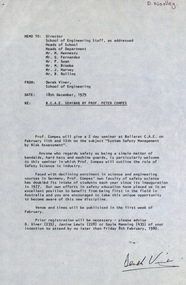 Federation University Historical Collection
Document - Document - Timetable for Seminar, VIOSH: Ballarat College of Advanced Education; Seminar by Prof Peter Compes, 1980
... Education invited Professor Peter Compes of Germany to conduct a Seminar on the subject "System Safety Management by Risk Assessment". This was to be held over two days in February 1980. Registration to attend was no later than 8 February 1980. Prof Compes was Professor of General Safety Science, University of Wuppertal, Federal Republic of Germany. The seminar was to look at current experiences with accidents and disasters and future projections. The moral. legal and economic need for change...Education invited Professor Peter Compes of Germany to conduct a Seminar on the subject "System Safety Management by Risk Assessment". This was to be held over two days in February 1980. Registration to attend was no later than 8 February 1980. Prof Compes was Professor of General Safety Science, University of Wuppertal, Federal Republic of Germany. The seminar was to look at current experiences with accidents and disasters and future projections. The moral. legal and economic need for change ...Victorian Institute of Occupational Safety and Health (VIOSH) Australia is the Asia-Pacific centre for teaching and research in occupational health and safety (OHS) and is known as one of Australia's leaders on the field. VIOSH has a global reputation for its innovative approach within the field of OHS management. VIOSH had its first intake of students in 1979. At that time the Institution was known as the Ballarat College of Advanced Education. In 1990 it became known as Ballarat University College, then in 1994 as University of Ballarat. It was 2014 that it became Federation University. VIOSH Australia students are safety managers, senior advisors and experienced OHS professionals. They come from all over Australia and industry. Students are taught active research and enquiry; rather than textbook learning and a one-size fits all approach. VIOSH accepts people into the Graduate Diploma of Occupational Hazard Management who have no undergraduate degree - on the basis of extensive work experience and knowledge. Ballarat College of Advanced Education invited Professor Peter Compes of Germany to conduct a Seminar on the subject "System Safety Management by Risk Assessment". This was to be held over two days in February 1980. Registration to attend was no later than 8 February 1980. Prof Compes was Professor of General Safety Science, University of Wuppertal, Federal Republic of Germany. The seminar was to look at current experiences with accidents and disasters and future projections. The moral. legal and economic need for change and the need for a system safety concept.Five A4 pages - one with news article Signatures of Derek Viner and Derek Woolley. Dates 1977 to 1980.viosh, victorian institute of occupational safety and health, ballarat college of advanced education, derek viner, derek woolley, professor peter compes, professor of general safety science, federal republic of germany, system safety management by risk assessment, seminar, university of wuppertal, school of engineering -
Federation University Historical Collection
Document - Document - Minutes, VIOSH: Ballarat College of Advanced Education; OHM Course Committee MInutes of Meetings, 1984 - 1988
... Slight changes occurred over time. derek woolley chairman max brooke keith brown b cossins p coman g fernandez legal j harvey p hope p kelly raymond lang b lees r maud tom norwood p swan eric wigglesworth l colbourn p dressing j castleman r gillis j lowinger p mccarthy d shannon steve cowley phillip beaumont brad rhodes warren payne dennis else graham bradley brett wood neil dine chris schaper tony thatcher lyn roberts peter reid dulcie brooke gwen wilson Minutes typed - A4 pages. Grouped into years. VIOSH: Ballarat College of Advanced Education ...Victorian Institute of Occupational Safety and Health (VIOSH) Australia is the Asia-Pacific centre for teaching and research in occupational health and safety (OHS) and is known as one of Australia's leaders on the field. VIOSH has a global reputation for its innovative approach within the field of OHS management. VIOSH had its first intake of students in 1979. At that time the Institution was known as the Ballarat College of Advanced Education. In 1990 it became known as Ballarat University College, then in 1994 as University of Ballarat. It was 2014 that it became Federation University. VIOSH Australia students are safety managers, senior advisors and experienced OHS professionals. They come from all over Australia and industry. Students are taught active research and enquiry; rather than textbook learning and a one-size fits all approach. VIOSH accepts people into the Graduate Diploma of Occupational Hazard Management who have no undergraduate degree - on the basis of extensive work experience and knowledge. Committee Meetings were held monthly. All aspects of the courses were discussed and recommendations were made for changes and requests from students considered. Committee members were from the different areas / subjects of the courses. Slight changes occurred over time.Minutes typed - A4 pages. Grouped into years.derek woolley, chairman, max brooke, keith brown, b cossins, p coman, g fernandez, legal, j harvey, p hope, p kelly, raymond lang, b lees, r maud, tom norwood, p swan, eric wigglesworth, l colbourn, p dressing, j castleman, r gillis, j lowinger, p mccarthy, d shannon, steve cowley, phillip beaumont, brad rhodes, warren payne, dennis else, graham bradley, brett wood, neil dine, chris schaper, tony thatcher, lyn roberts, peter reid, dulcie brooke, gwen wilson
