
Showing 12 items matching "government railways victoria - passenger services"
-
 Victorian Railway History Library
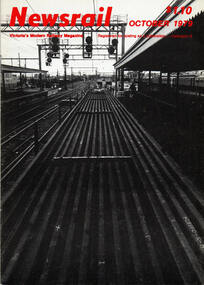
Journal - Newsrail October 1979, Peter J. Vincent and Jack McLean, Wagon Bodies around the State and Bendigo and Beyond, Easter 1941, 1979
... Government Railways Victoria - Passenger Services...Wagon Bodies around the State and Bendigo and Beyond, Easter 1941 Government Railways Victoria - Rolling Stock - Preservation Government Railways Victoria - Passenger Services Index,Ill, p.28. ...Index,Ill, p.28. non-fiction government railways victoria - rolling stock - preservation, government railways victoria - passenger services -
 Victorian Railway History Library
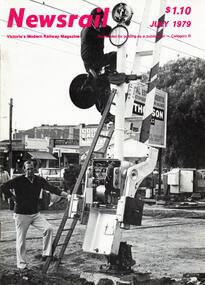
Journal - Newsrail July 1979, R. L. Abbot and P. J. Barry, Fuel is the Key Part 2 and The 1978 Bendigo Cup, 1979
... Government Railways Victoria - Passenger Services...Fuel is the Key Part 2 and the 1978 Bendigo Cup Railways - traction proposals Government Railways Victoria - Passenger Services Index,Ill, p.28. ...Index,Ill, p.28. non-fiction railways - traction proposals, government railways victoria - passenger services -
 Wodonga & District Historical Society Inc
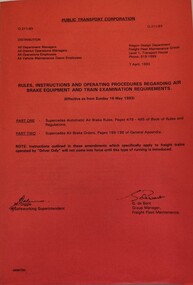
Manual - Public Transport Corporation Memo 7541, Public Transport Corporation Victoria, 1993
... The Public Transport Corporation (PTC) was a Victoria State Government owned statutory authority formed under the Transport Act 1983 which operated passenger and freight trains, trams and bus services. This booklet is significant as it reflects safety standards and instructions regulating locomotive drivers in Victoria in the mid 1990s. Locomotive manuals Victorian Railways ...The Public Transport Corporation (PTC) was a Victoria State Government owned statutory authority formed under the Transport Act 1983 which operated passenger and freight trains, trams and bus services. It was established on 1 July 1989. This memo was effective as from Sunday 16th May, 1993 and pertained to rules instructions and operating procedures regarding air brake equipment and train examination requirements. As noted on the cover: "Part One - Supersedes Automatic air brake rules, pages 479-495 of Book of rules and regulations. -- Part Two - Supersedes Air brake orders, pages 189-198 of General appendix." The cover bears the signatures of M. Digging, Safeworking Superintendent and G. De Bont, Group Manager, Freight Fleet Maintenance.A booklet with a red cover and black print. There are extensive instructions on the cover which include distribution details and dates on which these instructions came into effect, fiction The Public Transport Corporation (PTC) was a Victoria State Government owned statutory authority formed under the Transport Act 1983 which operated passenger and freight trains, trams and bus services. It was established on 1 July 1989. This memo was effective as from Sunday 16th May, 1993 and pertained to rules instructions and operating procedures regarding air brake equipment and train examination requirements. As noted on the cover: "Part One - Supersedes Automatic air brake rules, pages 479-495 of Book of rules and regulations. -- Part Two - Supersedes Air brake orders, pages 189-198 of General appendix." The cover bears the signatures of M. Digging, Safeworking Superintendent and G. De Bont, Group Manager, Freight Fleet Maintenance. locomotive manuals, victorian railways, public transport corporation victoria, victorian railways -- rules and practice. -
 Wodonga & District Historical Society Inc
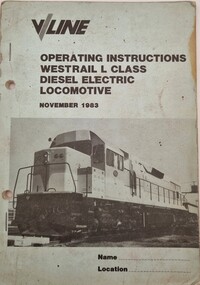
Manual - Collection of VLine operating instruction manuals for diesel electric locomotives
... Railways Victoria Diesel-electric locomotives The manuals refer to the following locomotives:- Westrail L Class (November 1983) originally built by Clyde Engineering from 1967 for the Western Australian Government Railways (WAGR) for use on the Eastern Goldfields Railway between Perth and Kalgoorlie. In 1983, three were leased to V/Line to haul services on the standard gauge Melbourne to Albury line, sometimes extending through to Sydney.A class (January 1984) were initially used for "Intercity" passenger ...The manuals refer to the following locomotives:- Westrail L Class (November 1983) originally built by Clyde Engineering from 1967 for the Western Australian Government Railways (WAGR) for use on the Eastern Goldfields Railway between Perth and Kalgoorlie. In 1983, three were leased to V/Line to haul services on the standard gauge Melbourne to Albury line, sometimes extending through to Sydney.A class (January 1984) were initially used for "Intercity" passenger services within Victoria. In this service, they operated at speeds up towards 125 km/h. Later, they were also used for freight services.N class (September 1985) produced by Clyde Engineering and entered service in 1985 and still operating in 2023. 422 Class diesel-electric locomotives (August 1983), designed by Clyde Engineering were introduced in January 1969. Following crew training, the engines entered service on the Main Southern line between Sydney and Albury and the Illawarra line from Sydney to Port Kembla and Moss Vale. Among the passenger services they hauled were the Southern Aurora and the Spirit of Progress. From 1982, they began to operate through to Melbourne. This ceased in February 1990 when non-air-conditioned locomotives would no longer be accepted by Victorian drivers.A collection of Locomotive operation manuals. All are paperback and feature an image of the relevant locomotive on the cover. Relevant illustrations are included in each publication. Cover is of card and they are bound with staples. fiction The manuals refer to the following locomotives:- Westrail L Class (November 1983) originally built by Clyde Engineering from 1967 for the Western Australian Government Railways (WAGR) for use on the Eastern Goldfields Railway between Perth and Kalgoorlie. In 1983, three were leased to V/Line to haul services on the standard gauge Melbourne to Albury line, sometimes extending through to Sydney.A class (January 1984) were initially used for "Intercity" passenger services within Victoria. In this service, they operated at speeds up towards 125 km/h. Later, they were also used for freight services.N class (September 1985) produced by Clyde Engineering and entered service in 1985 and still operating in 2023. 422 Class diesel-electric locomotives (August 1983), designed by Clyde Engineering were introduced in January 1969. Following crew training, the engines entered service on the Main Southern line between Sydney and Albury and the Illawarra line from Sydney to Port Kembla and Moss Vale. Among the passenger services they hauled were the Southern Aurora and the Spirit of Progress. From 1982, they began to operate through to Melbourne. This ceased in February 1990 when non-air-conditioned locomotives would no longer be accepted by Victorian drivers. railways victoria, diesel-electric locomotives -
 Wodonga & District Historical Society Inc
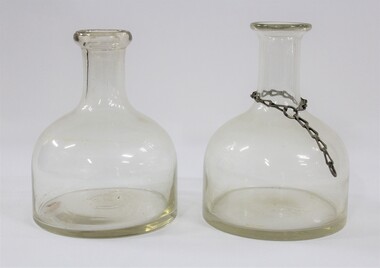
Functional object - Two Clear Glass Water Containers used in Railway Passenger Trains c1900s
... railway passenger trains in the c. 1900s. The Wodonga train line and train station opened in November 1873 when the section of the line from Wangaratta to Wodonga was completed. The expansion of Victorian Railways to the northeast of Victoria occurred after the Victorian Government took over the railways in 1867 and the trains serviced large towns such as Seymour, Wangaratta and Wodonga, as well as smaller towns along the way....railway passenger trains in the c. 1900s. The Wodonga train line and train station opened in November 1873 when the section of the line from Wangaratta to Wodonga was completed. The expansion of Victorian Railways to the northeast of Victoria occurred after the Victorian Government took over the railways in 1867 and the trains serviced large towns such as Seymour, Wangaratta and Wodonga, as well as smaller towns along the way. ...The two glass water containers/bottles are thought to have been used in railway passenger trains in the c. 1900s. The Wodonga train line and train station opened in November 1873 when the section of the line from Wangaratta to Wodonga was completed. The expansion of Victorian Railways to the northeast of Victoria occurred after the Victorian Government took over the railways in 1867 and the trains serviced large towns such as Seymour, Wangaratta and Wodonga, as well as smaller towns along the way. The two glass water containers/bottles have historic significance as examples of the equipment used in passenger trains in Australia in the c. 1900s. Two clear glass water containers/bottles with a narrow neck and flaring body, which were used in railway passenger trains c. 1900s. The slightly taller water container/bottle has a metal chain around the neck. " c / NSW / TD" on the base of the taller water container. railways water containers, passenger train water containers, passenger trains water bottles, glass water bottles, railway equipment -
 Wodonga & District Historical Society Inc
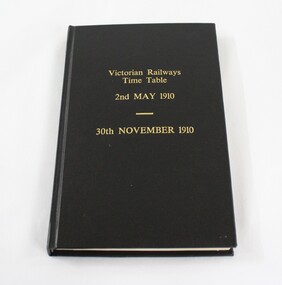
Administrative record - Victorian Railways Time Table 1910
... The expansion of the railways to the northeast of Victoria occurred after the Victorian Government took over the railways in 1867 and the trains serviced large towns such as Seymour, Wangaratta and Wodonga, as well as smaller towns along the way. The first section of the Wodonga to Tallangatta line opened in 1889 and was further extended in 1891. It was a vital community link until the passenger...The expansion of the railways to the northeast of Victoria occurred after the Victorian Government took over the railways in 1867 and the trains serviced large towns such as Seymour, Wangaratta and Wodonga, as well as smaller towns along the way. The first section of the Wodonga to Tallangatta line opened in 1889 and was further extended in 1891. It was a vital community link until the passenger ...The Wodonga line and train station opened in November 1873 when the section of the line from Wangaratta was completed. The expansion of the railways to the northeast of Victoria occurred after the Victorian Government took over the railways in 1867 and the trains serviced large towns such as Seymour, Wangaratta and Wodonga, as well as smaller towns along the way. The first section of the Wodonga to Tallangatta line opened in 1889 and was further extended in 1891. It was a vital community link until the passenger service closed in September 1961 The last regular goods train on the line ran on 21st April 1978. The north- east train line to Wodonga remained a significant factor in the development of Wodonga as a rural city in the 20th century. Local significance due to the importance of the railways to Wodonga as a means of transport, communication and impact on business and commerce. State and national significance due to the role played by the railways in opening up the country for development. A bound volume of the Victorian Railways Time Table for 2nd May 1910 to 30th November 1910. Black with gold inscription. The binding is not original but was carried out to preserve the contents "Victorian Railways/Time Table/ 2nd May 1910/ 30th November 1910" victorian railways, wodonga, timetable, transport -
 Wodonga & District Historical Society Inc
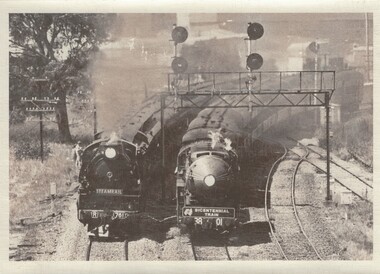
Photograph - Fred Rochow Railways Collection - Locomotive R761 and Bicentennial Train 3801 departing Wodonga, 16 October 1988
... service on the 5th September 1974, ending 120 years of mainline steam operation in Victoria. After years of debate about its future, on the 30th March 1985 the loco was officially returned to service, hauling special trains to celebrate the years of steam locomotives. Locomotive 3801 was built by Sydney company The Clyde Engineering Co. Ltd., Granville in 1943 as the first of five streamlined (C) 38-class locomotives for the New South Wales Government Railways’ top-link express passenger...service on the 5th September 1974, ending 120 years of mainline steam operation in Victoria. After years of debate about its future, on the 30th March 1985 the loco was officially returned to service, hauling special trains to celebrate the years of steam locomotives. Locomotive 3801 was built by Sydney company The Clyde Engineering Co. Ltd., Granville in 1943 as the first of five streamlined (C) 38-class locomotives for the New South Wales Government Railways’ top-link express passenger ...The Fred Rochow Railways Collection incorporates photos related to the operation of the Wodonga Railway Station including different types of trains and railways staff C. 1930 – 1990. It was donated to the Wodonga Historical Society by Fred Rochow, a railwayman who spent many years based in Wodonga. He joined the Victorian Railways on 17th June l947 and retired in 1988. For some time, he was a member of the Australian Federated Union of Locomotive Enginemen and served a term as a member of the Trades Hall Council. He had an extensive knowledge of the struggles that took place to achieve better conditions for railway workers. Fred worked for many years as a fireman and then worked his way up the ranks to driver, experiencing many changes from the days of steam locomotives through to diesel trains, locomotives and even the modern XPT train. He worked throughout Victoria at different stages of his career, with his final working years focused on the northeast of Victoria and the Albury to Melbourne line. After his retirement, Fred continued to share his love of steam miniature trains with the community. This collection has local and statewide significance as it captures images of trains, locomotives and personnel who operated the railway services in Wodonga and throughout Northeast Victoria. The railways played a critical role in opening up Victoria and connecting Australia for trade, business, social communication and transport. Locomotive R761 with Driver Norm Depomeroy and Fireman Steve Gibson running in parallel with the Bicentennial Train hauled by Locomotive 3801 with Driver Fred Rochow and Fireman David Brown. Locomotive R761 - The R761 arrived in Victoria on the 28th February 1952 upon the ship ‘Helenus’ and entered service on the 9th April 1952. R761 spent long periods in storage and occasionally saw service until it was withdrawn. In 1970 R761 was overhauled and was made available for use on special trains. It became the final R class to run in VR service on the 5th September 1974, ending 120 years of mainline steam operation in Victoria. After years of debate about its future, on the 30th March 1985 the loco was officially returned to service, hauling special trains to celebrate the years of steam locomotives. Locomotive 3801 was built by Sydney company The Clyde Engineering Co. Ltd., Granville in 1943 as the first of five streamlined (C) 38-class locomotives for the New South Wales Government Railways’ top-link express passenger duties. The delivery of 3801 was much delayed due to wartime labour & material shortages, together with competing wartime construction priorities. After many years of service, 3801 had been scheduled for withdrawal in 1962 due to deteriorating mechanical condition, but rail enthusiasts raised sufficient funds to cover the cost of its overhaul. 3801 joined the collection of the New South Wales Rail Transport Museum (NSWRTM), Enfield on withdrawal from NSWGR service and continued in operation as a tour locomotive. It hauled the “Western Endeavour” on the first crossing of the Australian continent by a standard gauge train from Sydney to Perth and return in August – September 1970. 3801 also stars in the railway film ‘A Steam Train Passes’ made by Film Australia in 1974 By 1976 had been withdrawn from service due to poor boiler condition and placed on static display by the Rail Transport Museum in Thirlmere, NSW. The Locomotive remained in Thirlmere until 1983 when it was decided it should be restored for the Australian Bicentenary in 1988. A new organisation was created specifically for the purpose of operating 3801, and thus 3801 Limited was incorporated on 5th June 1985. Work on the locomotive was completed after three years, with 3801 making its debut at a special Railway Ball hosted in its honour on 29th November 1986. During the Australian Bicentenary celebrations in 1988, it operated an extensive program across Australia visiting every mainland capital accessible by rail including an appearance at AusSteam ’88 in Melbourne in October 1988, stopping over in Wodonga on the way. After the company’s 20-year lease on the locomotive expired in 2006 Railcorp chose not to extend the agreement, and the locomotive returned to the Rail Transport Museum at Thirlmere (now the NSW Rail Museum). 3801 was withdrawn from service in 2007 for major boiler repairs. Locomotive 3801 was officially relaunched at Sydney's Central Station on Friday 12 March 2021 by Her Excellency, the Honourable Margaret Beazley AC QC, Governor of New South Wales. On front of locomotive on the left "STEAMRAIL /R761". On front of locomotive on the right "BICENTENNIAL TRAIN/3801" railways wodonga, fred rochow, locomotive r761, bicentennial train, locomotive 3801 -
 Wodonga & District Historical Society Inc
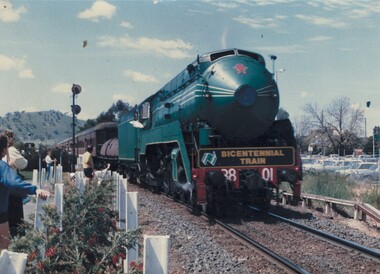
Photograph - Fred Rochow Railways Collection - Bicentennial Train Locomotive 3801, 29 October 1988
... railway services in Wodonga and throughout Northeast Victoria. The railways played a critical role in opening up Victoria and connecting Australia for trade, business, social communication and transport. Railways Wodonga Fred Rochow Locomotive R761 Bicentennial Train Locomotive 3801 On front of locomotive Australia Bicentennial logo and sign "BICENTENNIAL TRAIN/3801" Bicentennial Train hauled by Locomotive 3801 passing through Wodonga. Locomotive 3801 was built by Sydney company The Clyde Engineering Co. Ltd., Granville in 1943 as the first of five streamlined (C) 38-class locomotives for the New South Wales Government Railways’ top-link express passenger ...The Fred Rochow Railways Collection incorporates photos related to the operation of the Wodonga Railway Station including different types of trains and railways staff C. 1930 – 1990. It was donated to the Wodonga Historical Society by Fred Rochow, a railwayman who spent many years based in Wodonga. He joined the Victorian Railways on 17th June l947 and retired in 1988. For some time, he was a member of the Australian Federated Union of Locomotive Enginemen and served a term as a member of the Trades Hall Council. He had an extensive knowledge of the struggles that took place to achieve better conditions for railway workers. Fred worked for many years as a fireman and then worked his way up the ranks to driver, experiencing many changes from the days of steam locomotives through to diesel trains, locomotives and even the modern XPT train. He worked throughout Victoria at different stages of his career, with his final working years focused on the northeast of Victoria and the Albury to Melbourne line. After his retirement, Fred continued to share his love of steam miniature trains with the community. This collection has local and statewide significance as it captures images of trains, locomotives and personnel who operated the railway services in Wodonga and throughout Northeast Victoria. The railways played a critical role in opening up Victoria and connecting Australia for trade, business, social communication and transport. Bicentennial Train hauled by Locomotive 3801 passing through Wodonga. Locomotive 3801 was built by Sydney company The Clyde Engineering Co. Ltd., Granville in 1943 as the first of five streamlined (C) 38-class locomotives for the New South Wales Government Railways’ top-link express passenger duties. The delivery of 3801 was much delayed due to wartime labour & material shortages, together with competing wartime construction priorities. After many years of service, 3801 had been scheduled for withdrawal in 1962 due to deteriorating mechanical condition, but rail enthusiasts raised sufficient funds to cover the cost of its overhaul. 3801 joined the collection of the New South Wales Rail Transport Museum (NSWRTM), Enfield on withdrawal from NSWGR service and continued in operation as a tour locomotive. It hauled the “Western Endeavour” on the first crossing of the Australian continent by a standard gauge train from Sydney to Perth and return in August – September 1970. 3801 also stars in the railway film ‘A Steam Train Passes’ made by Film Australia in 1974 By 1976 had been withdrawn from service due to poor boiler condition and placed on static display by the Rail Transport Museum in Thirlmere, NSW. The Locomotive remained in Thirlmere until 1983 when it was decided it should be restored for the Australian Bicentenary in 1988. A new organisation was created specifically for the purpose of operating 3801, and thus 3801 Limited was incorporated on 5th June 1985. Work on the locomotive was completed after three years, with 3801 making its debut at a special Railway Ball hosted in its honour on 29th November 1986. During the Australian Bicentenary celebrations in 1988, it operated an extensive program across Australia visiting every mainland capital accessible by rail including an appearance at AusSteam ’88 in Melbourne in October 1988, stopping over in Wodonga on the way. After the company’s 20-year lease on the locomotive expired in 2006 Railcorp chose not to extend the agreement, and the locomotive returned to the Rail Transport Museum at Thirlmere (now the NSW Rail Museum). 3801 was withdrawn from service in 2007 for major boiler repairs. Locomotive 3801 was officially relaunched at Sydney's Central Station on Friday 12 March 2021 by Her Excellency, the Honourable Margaret Beazley AC QC, Governor of New South Wales. On front of locomotive Australia Bicentennial logo and sign "BICENTENNIAL TRAIN/3801" railways wodonga, fred rochow, locomotive r761, bicentennial train, locomotive 3801 -
 Wodonga & District Historical Society Inc
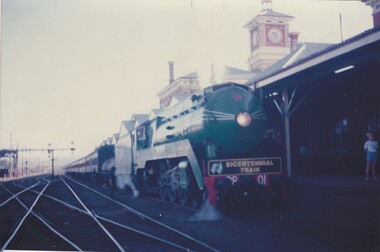
Photograph - Fred Rochow Railways Collection - Bicentennial Train Locomotive 3801 arriving in Albury, 29 October 1988
... railway services in Wodonga and throughout Northeast Victoria. The railways played a critical role in opening up Victoria and connecting Australia for trade, business, social communication and transport. Railways Wodonga Fred Rochow Locomotive R761 Bicentennial Train Locomotive 3801 On front of locomotive Australia Bicentennial logo and sign "BICENTENNIAL TRAIN/3801" Bicentennial Train hauled by Locomotive 3801 arriving at Albury Station, Locomotive 3801 was built by Sydney company The Clyde Engineering Co. Ltd., Granville in 1943 as the first of five streamlined (C) 38-class locomotives for the New South Wales Government Railways’ top-link express passenger ...The Fred Rochow Railways Collection incorporates photos related to the operation of the Wodonga Railway Station including different types of trains and railways staff C. 1930 – 1990. It was donated to the Wodonga Historical Society by Fred Rochow, a railwayman who spent many years based in Wodonga. He joined the Victorian Railways on 17th June l947 and retired in 1988. For some time, he was a member of the Australian Federated Union of Locomotive Enginemen and served a term as a member of the Trades Hall Council. He had an extensive knowledge of the struggles that took place to achieve better conditions for railway workers. Fred worked for many years as a fireman and then worked his way up the ranks to driver, experiencing many changes from the days of steam locomotives through to diesel trains, locomotives and even the modern XPT train. He worked throughout Victoria at different stages of his career, with his final working years focused on the northeast of Victoria and the Albury to Melbourne line. After his retirement, Fred continued to share his love of steam miniature trains with the community. This collection has local and statewide significance as it captures images of trains, locomotives and personnel who operated the railway services in Wodonga and throughout Northeast Victoria. The railways played a critical role in opening up Victoria and connecting Australia for trade, business, social communication and transport. Bicentennial Train hauled by Locomotive 3801 arriving at Albury Station, Locomotive 3801 was built by Sydney company The Clyde Engineering Co. Ltd., Granville in 1943 as the first of five streamlined (C) 38-class locomotives for the New South Wales Government Railways’ top-link express passenger duties. The delivery of 3801 was much delayed due to wartime labour & material shortages, together with competing wartime construction priorities. After many years of service, 3801 had been scheduled for withdrawal in 1962 due to deteriorating mechanical condition, but rail enthusiasts raised sufficient funds to cover the cost of its overhaul. 3801 joined the collection of the New South Wales Rail Transport Museum (NSWRTM), Enfield on withdrawal from NSWGR service and continued in operation as a tour locomotive. It hauled the “Western Endeavour” on the first crossing of the Australian continent by a standard gauge train from Sydney to Perth and return in August – September 1970. 3801 also stars in the railway film ‘A Steam Train Passes’ made by Film Australia in 1974 By 1976 had been withdrawn from service due to poor boiler condition and placed on static display by the Rail Transport Museum in Thirlmere, NSW. The Locomotive remained in Thirlmere until 1983 when it was decided it should be restored for the Australian Bicentenary in 1988. A new organisation was created specifically for the purpose of operating 3801, and thus 3801 Limited was incorporated on 5th June 1985. Work on the locomotive was completed after three years, with 3801 making its debut at a special Railway Ball hosted in its honour on 29th November 1986. During the Australian Bicentenary celebrations in 1988, it operated an extensive program across Australia visiting every mainland capital accessible by rail including an appearance at AusSteam ’88 in Melbourne in October 1988, stopping over in Wodonga on the way. After the company’s 20-year lease on the locomotive expired in 2006 Railcorp chose not to extend the agreement, and the locomotive returned to the Rail Transport Museum at Thirlmere (now the NSW Rail Museum). 3801 was withdrawn from service in 2007 for major boiler repairs. Locomotive 3801 was officially relaunched at Sydney's Central Station on Friday 12 March 2021 by Her Excellency, the Honourable Margaret Beazley AC QC, Governor of New South Wales. On front of locomotive Australia Bicentennial logo and sign "BICENTENNIAL TRAIN/3801" railways wodonga, fred rochow, locomotive r761, bicentennial train, locomotive 3801 -
 Wodonga & District Historical Society Inc
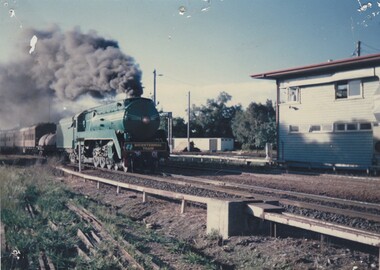
Photograph - Fred Rochow Railways Collection - Bicentennial Train Locomotive 3801 passing Wodonga Signal box, 29 October 1988
... railway services in Wodonga and throughout Northeast Victoria. The railways played a critical role in opening up Victoria and connecting Australia for trade, business, social communication and transport. Railways Wodonga Fred Rochow Locomotive R761 Bicentennial Train Locomotive 3801 On front of locomotive Australia Bicentennial logo and sign "BICENTENNIAL TRAIN/3801" Bicentennial Train hauled by Locomotive 3801 passing the Wodonga Signal box. Locomotive 3801 was built by Sydney company The Clyde Engineering Co. Ltd., Granville in 1943 as the first of five streamlined (C) 38-class locomotives for the New South Wales Government Railways’ top-link express passenger ...The Fred Rochow Railways Collection incorporates photos related to the operation of the Wodonga Railway Station including different types of trains and railways staff C. 1930 – 1990. It was donated to the Wodonga Historical Society by Fred Rochow, a railwayman who spent many years based in Wodonga. He joined the Victorian Railways on 17th June l947 and retired in 1988. For some time, he was a member of the Australian Federated Union of Locomotive Enginemen and served a term as a member of the Trades Hall Council. He had an extensive knowledge of the struggles that took place to achieve better conditions for railway workers. Fred worked for many years as a fireman and then worked his way up the ranks to driver, experiencing many changes from the days of steam locomotives through to diesel trains, locomotives and even the modern XPT train. He worked throughout Victoria at different stages of his career, with his final working years focused on the northeast of Victoria and the Albury to Melbourne line. After his retirement, Fred continued to share his love of steam miniature trains with the community. This collection has local and statewide significance as it captures images of trains, locomotives and personnel who operated the railway services in Wodonga and throughout Northeast Victoria. The railways played a critical role in opening up Victoria and connecting Australia for trade, business, social communication and transport. Bicentennial Train hauled by Locomotive 3801 passing the Wodonga Signal box. Locomotive 3801 was built by Sydney company The Clyde Engineering Co. Ltd., Granville in 1943 as the first of five streamlined (C) 38-class locomotives for the New South Wales Government Railways’ top-link express passenger duties. The delivery of 3801 was much delayed due to wartime labour & material shortages, together with competing wartime construction priorities. After many years of service, 3801 had been scheduled for withdrawal in 1962 due to deteriorating mechanical condition, but rail enthusiasts raised sufficient funds to cover the cost of its overhaul. 3801 joined the collection of the New South Wales Rail Transport Museum (NSWRTM), Enfield on withdrawal from NSWGR service and continued in operation as a tour locomotive. It hauled the “Western Endeavour” on the first crossing of the Australian continent by a standard gauge train from Sydney to Perth and return in August – September 1970. 3801 also stars in the railway film ‘A Steam Train Passes’ made by Film Australia in 1974 By 1976 had been withdrawn from service due to poor boiler condition and placed on static display by the Rail Transport Museum in Thirlmere, NSW. The Locomotive remained in Thirlmere until 1983 when it was decided it should be restored for the Australian Bicentenary in 1988. A new organisation was created specifically for the purpose of operating 3801, and thus 3801 Limited was incorporated on 5th June 1985. Work on the locomotive was completed after three years, with 3801 making its debut at a special Railway Ball hosted in its honour on 29th November 1986. During the Australian Bicentenary celebrations in 1988, it operated an extensive program across Australia visiting every mainland capital accessible by rail including an appearance at AusSteam ’88 in Melbourne in October 1988, stopping over in Wodonga on the way. After the company’s 20-year lease on the locomotive expired in 2006 Railcorp chose not to extend the agreement, and the locomotive returned to the Rail Transport Museum at Thirlmere (now the NSW Rail Museum). 3801 was withdrawn from service in 2007 for major boiler repairs. Locomotive 3801 was officially relaunched at Sydney's Central Station on Friday 12 March 2021 by Her Excellency, the Honourable Margaret Beazley AC QC, Governor of New South Wales. On front of locomotive Australia Bicentennial logo and sign "BICENTENNIAL TRAIN/3801" railways wodonga, fred rochow, locomotive r761, bicentennial train, locomotive 3801 -
 Melbourne Tram Museum
Document - Report, Bureau of Census and Statistics, "Summary of Australian Statistics for Transport and Communication for the Years 1926 to 1936", 1936, 1971
... Victoria Ballarat Bendigo .1 - Report - 60 pages within a grey cover stapled on the side titled "Summary of Australian Statistics for Transport and Communication for the Years 1926 to 1936", Bulletin No. 27, prepared by the Government Statistician Roland Wilson. Details statistics for Railways, tramways, motor vehicles, aviation, traffic accidents, shipping, posts, telegraphs and telephones and wireless communications. The tramway pages have been scanned. .2 - Photocopy of a similar document for June 1971 - for Tramways, Trolley-bus, Omnibus and Ferry Services. private railways, Gives tables of route miles, vehicle miles, rolling stock, passengers ....1 - Report - 60 pages within a grey cover stapled on the side titled "Summary of Australian Statistics for Transport and Communication for the Years 1926 to 1936", Bulletin No. 27, prepared by the Government Statistician Roland Wilson. Details statistics for Railways, tramways, motor vehicles, aviation, traffic accidents, shipping, posts, telegraphs and telephones and wireless communications. The tramway pages have been scanned. .2 - Photocopy of a similar document for June 1971 - for Tramways, Trolley-bus, Omnibus and Ferry Services. private railways, Gives tables of route miles, vehicle miles, rolling stock, passengers, revenue and expenses, employees and accidents. trams, tramways, statistics, australian trams, melbourne, victoria, ballarat, bendigo -
 Victorian Railway History Library
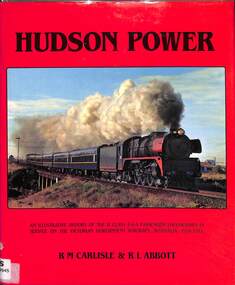
Book, Carlisle, Robert et al, Hudson Power, 1985
... steam locomotives - Victoria- history R class locomotive - Victoria - history An illustrative history of the R class 4-6-4 passenger locomotives in service on the Victorian Government Railways Australia from 1954 to 1974. index, ill, p.154. ...An illustrative history of the R class 4-6-4 passenger locomotives in service on the Victorian Government Railways Australia from 1954 to 1974.index, ill, p.154. non-fiction An illustrative history of the R class 4-6-4 passenger locomotives in service on the Victorian Government Railways Australia from 1954 to 1974. steam locomotives - victoria- history, r class locomotive - victoria - history
