
Showing 105 items matching "high adventure"
-
 Whitehorse Historical Society Inc.
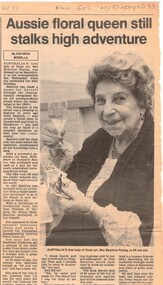
Article, Aussie Floral Queen Still Stalks High Adventure, 1/05/1989
... Aussie Floral Queen Still Stalks High Adventure...Also a three page document outlining her life written by Giselda Bannister Aussie Floral Queen Still Stalks High Adventure Article ...Beatrice Pooley who was Australia's first lady of floral art celebrated her 94th birthday in 1895.Newspaper cutting to celebrate the 94th birthday of Mrs. Beatrice Pooley who established a floral art correspondence school in the 1950s. She has written two books 'Millefleurs (a thousand flowers) and 'Mardie'. Photograph. Cutting from Nunawading Gazette, 10 May, 1989. Also a three page document outlining her life written by Giselda Bannisternon-fictionBeatrice Pooley who was Australia's first lady of floral art celebrated her 94th birthday in 1895.floral art, pooley beatrice, bonella kathryn, bannister giselda -
 Moorabbin Air Museum
Book - Flying magazine, The Best of Flying A Fifty Year Sampler
... High adventure...Flight magazine High adventure Personalities Air power Airways Technique Inventions Space Collection of Flight magazine articles spanning a 50 year period, circa 1981 The Best of Flying A Fifty Year Sampler Book Flying magazine ...Collection of Flight magazine articles spanning a 50 year period, circa 1981non-fictionCollection of Flight magazine articles spanning a 50 year period, circa 1981high adventure, personalities, air power, airways, technique, inventions, space -
 Greensborough Historical Society
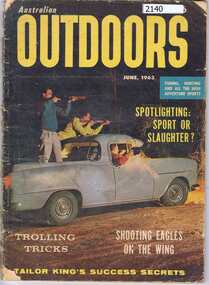
Magazine, Gordon and Gotch, Australian Outdoors, June 1963, 1963_06
... Magazine contains stories on fishing, hunting and high adventure sports....Magazine contains stories on fishing, hunting and high adventure sports. Example of 1960s magazine hunting 74 pages. ...Magazine contains stories on fishing, hunting and high adventure sports.Example of 1960s magazine74 pages. Text and black and white images.hunting -
 Ruyton Girls' School
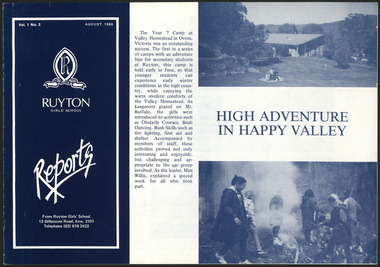
Newsletter, Ruyton Reports, 1986
... As the leader, Miss / Willis, explained a special / week for all who took / part. / HIGH ADVENTURE / IN HAPPY VALLEY /...As the leader, Miss / Willis, explained a special / week for all who took / part. / HIGH ADVENTURE / IN HAPPY VALLEY / Black and white newsletter printed on paper with staple binding. 8 pages. ...The Ruyton Reporter (formerly known as Ruyton Reports) captures the essential Ruyton Girls' School experience for the broader school community. It has been produced since 1986.The record has strong historic significance as it pertains to the fourth oldest girls' school in Victoria, Australia. Ruyton was founded in 1878 in the Bulleen Road, Kew, home of newly widowed Mrs Charlotte Anderson (now High Street South). Thus, the record can be used as a reference example for research into Victorian school history. It also gives insight into the types of activities and events undertaken at Ruyton Girls' School during the period of its production. The record's significance is further enhanced by its exceptionally well-documented provenance, having remained the property of Ruyton Girls' School since its production.Black and white newsletter printed on paper with staple binding. 8 pages.Front Page: Vol. 1 No. 2 AUGUST, 1986 / R / RECTE ET FIDE LITER / RUYTON / GIRLS' SCHOOL / Reports / From Ruyton Girls' School / 12 Selbourne Road, Kew. 3101 / Telephone (03) 819 2422 / The Year 7 Camp at / Valley Homestead in Ovens, / Victoria was an outstanding / success. The first in a series / of camps with an adventure / bias for secondary students / at Ruyton, this camp is / held in early June, so that / younger students can / experience early winter / conditions in the high coun- / try, while enjoying the / warm modern comforts of / the Valley Homestead. As / kangaroos grazed on Mt. / Buffalo, the girls were / introduced to activities such / as Obstacle Courses, Bush / Dancing, Bush Skills such as / fire lighting, first aid and / shelter. Accompanied by / members of staff, these / activities proved not only / interesting and enjoyable, / but challenging and ap- / propriate to the age group / involved. As the leader, Miss / Willis, explained a special / week for all who took / part. / HIGH ADVENTURE / IN HAPPY VALLEY /ruyton girls' school, ruyton, school, students, newsletter, ruyton reports, ruyton news, kew, victoria, melbourne, girls school -
 Flagstaff Hill Maritime Museum and Village
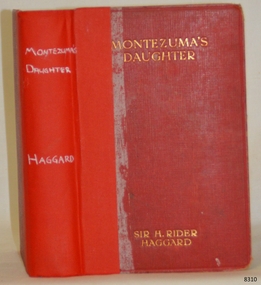
Book - Fictional Novel, H Rider Haggard, author, Montezumas Daughter, 1893
... Haggard was an expert storyteller known for blending meticulous historical or geographical backdrops with high adventure and mysticism. Montezuma’s Daughter holds a poignant place in his bibliography; while researching the book in Mexico in 1891, he received news that his only son, Jock, had died suddenly. ...Haggard was an expert storyteller known for blending meticulous historical or geographical backdrops with high adventure and mysticism. Montezuma’s Daughter holds a poignant place in his bibliography; while researching the book in Mexico in 1891, he received news that his only son, Jock, had died suddenly. ...Montezuma’s Daughter (1893) is an epic Victorian adventure and historical fiction novel set during the sixteenth-century Spanish conquest of the Aztec Empire. The story is narrated in the first person by an elderly Englishman, Thomas Wingfield, reflecting on the tumultuous journey of his youth. After his Spanish mother is murdered by his malicious cousin, Juan de Garcia, Thomas embarks on a quest for vengeance. His pursuit takes him across Europe, through a brush with the Spanish Inquisition, and onto a ship bound for the New World. Following a shipwreck and capture, Thomas finds himself in Mexico, where he is initially slated for Aztec human sacrifice. He is ultimately spared, rises to high status among the Aztecs, and marries Princess Otomie, the daughter of Emperor Montezuma. The narrative reaches its emotional and historical peak as Thomas fights alongside the Aztecs against Hernán Cortés during the brutal siege and fall of Tenochtitlan. Prior to its book release, the novel was serialised in the British weekly newspaper The Graphic between July and November of 1893. Longmans, Green, and Co. published the official first book edition in London on November 13, 1893, printing an initial run of 10,000 copies.Montezumas Daughter Author: H Rider Haggard Publisher: Longmans Green Date: 1893 A novel in a red, hard covered book with a reinforced spine with a handwritten title, front cover has gold embossed title. Inscriptions include stickers and a stamp. It is part of the Pattison Collection.fictionMontezuma’s Daughter (1893) is an epic Victorian adventure and historical fiction novel set during the sixteenth-century Spanish conquest of the Aztec Empire. The story is narrated in the first person by an elderly Englishman, Thomas Wingfield, reflecting on the tumultuous journey of his youth. After his Spanish mother is murdered by his malicious cousin, Juan de Garcia, Thomas embarks on a quest for vengeance. His pursuit takes him across Europe, through a brush with the Spanish Inquisition, and onto a ship bound for the New World. Following a shipwreck and capture, Thomas finds himself in Mexico, where he is initially slated for Aztec human sacrifice. He is ultimately spared, rises to high status among the Aztecs, and marries Princess Otomie, the daughter of Emperor Montezuma. The narrative reaches its emotional and historical peak as Thomas fights alongside the Aztecs against Hernán Cortés during the brutal siege and fall of Tenochtitlan. Prior to its book release, the novel was serialised in the British weekly newspaper The Graphic between July and November of 1893. Longmans, Green, and Co. published the official first book edition in London on November 13, 1893, printing an initial run of 10,000 copies.flagstaff hill, warrnambool, shipwrecked coast, flagstaff hill maritime museum, maritime museum, shipwreck coast, flagstaff hill maritime village, great ocean road, book, pattison collection, warrnambool library, warrnambool mechanics’ institute, ralph eric pattison, corangamite regional library service, warrnambool city librarian, mechanics’ institute library, victorian library board, warrnambool books and records, warrnambool children’s library, montezumas daughter, h rider haggard, longmans green and co., thomas longman, paternoster row london, free library -
 Flagstaff Hill Maritime Museum and Village
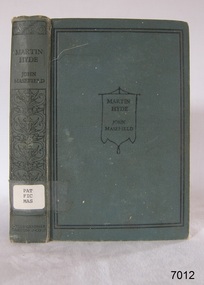
Book - Fictional Story, John Masefield, Martin Hyde The Dukes Messenger, 1928 to 1949
... adventure fiction, including Jim Davis and The Bird of Dawning, as well as children's classics like The Midnight Folk and The Box of Delights. Wells Gardner, Darton & Co. was a prominent British publishing firm specialising in children's literature, young adult fiction, and educational and religious texts. The firm was formed in 1859 when William Wells Gardner partnered with Joseph William Darton. The Darton family had been prominent publishers of children's literature in London since the 1780s. Under the leadership of F. J. Harvey Darton (who served as a director from 1904), the firm became known for publishing high...adventure fiction, including Jim Davis and The Bird of Dawning, as well as children's classics like The Midnight Folk and The Box of Delights. Wells Gardner, Darton & Co. was a prominent British publishing firm specialising in children's literature, young adult fiction, and educational and religious texts. The firm was formed in 1859 when William Wells Gardner partnered with Joseph William Darton. The Darton family had been prominent publishers of children's literature in London since the 1780s. Under the leadership of F. J. Harvey Darton (who served as a director from 1904), the firm became known for publishing high ...Martin Hyde, the Duke's Messenger is a historical novel set in the late 17th century, following a young boy named Martin Hyde as he moves from a carefree childhood in rural Suffolk into a web of intrigue in London. Orphaned young, Martin goes to live with his uncle in London, where he becomes tangled up in royal conspiracies and secret missions. After his father's death in 1685, the 12-year-old goes to live with his uncle and eventually becomes messenger for James Scott, Duke of Monmouth, as Monmouth tries to build support for his claim to the English throne after the death of Charles II. It's often compared to Robert Louis Stevenson's Treasure Island or Kidnapped a boy's-own adventure that takes Martin overseas and eventually back to England to take part in the Monmouth Rebellion of 1685, with a rival working for the Crown whom he has to outwit. A reviewer also notes a small, restrained love-story thread Martin's messenger rival turns out to be a girl in disguise which nudges the book slightly outside the standard boys'-adventure genre of its era.Hard cover book. Martin Hyde “The Dukes Messenger” Author: John Masefield Publisher: Wells Gardner Darton & Co Date: 1928 to 1949 Further Information: Blue Cloth hardcover with lettering and patterning to spine in black. Publisher Logo to front cover with title & authors name. The spine has a Library label with an inscription.fictionMartin Hyde, the Duke's Messenger is a historical novel set in the late 17th century, following a young boy named Martin Hyde as he moves from a carefree childhood in rural Suffolk into a web of intrigue in London. Orphaned young, Martin goes to live with his uncle in London, where he becomes tangled up in royal conspiracies and secret missions. After his father's death in 1685, the 12-year-old goes to live with his uncle and eventually becomes messenger for James Scott, Duke of Monmouth, as Monmouth tries to build support for his claim to the English throne after the death of Charles II. It's often compared to Robert Louis Stevenson's Treasure Island or Kidnapped a boy's-own adventure that takes Martin overseas and eventually back to England to take part in the Monmouth Rebellion of 1685, with a rival working for the Crown whom he has to outwit. A reviewer also notes a small, restrained love-story thread Martin's messenger rival turns out to be a girl in disguise which nudges the book slightly outside the standard boys'-adventure genre of its era.warrnambool, shipwrecked-coast, flagstaff-hill, flagstaff-hill-maritime-museum, maritime-museum, shipwreck-coast, flagstaff-hill-maritime-village, shipwrecked-artefact, martin hyde the dukes messenger, john masefield, book, warrnambool mechanics’ institute, pattison collection, warrnambool library, ralph eric pattison, corangamite regional library service, warrnambool city librarian, mechanics’ institute library, victorian library board, warrnambool books and records, warrnambool children’s library -
 Flagstaff Hill Maritime Museum and Village
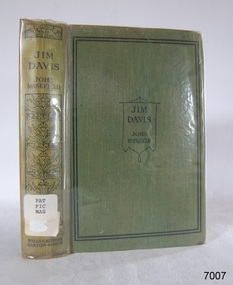
Book - Fictional Story, John Masefield, Jim Davis, 1912-1220s
... adventure fiction, including Jim Davis and The Bird of Dawning, as well as children's classics like The Midnight Folk and The Box of Delights. Wells Gardner, Darton & Co. was a prominent British publishing firm specialising in children's literature, young adult fiction, and educational and religious texts. The firm was formed in 1859 when William Wells Gardner partnered with Joseph William Darton. The Darton family had been prominent publishers of children's literature in London since the 1780s. Under the leadership of F. J. Harvey Darton (who served as a director from 1904), the firm became known for publishing high...adventure fiction, including Jim Davis and The Bird of Dawning, as well as children's classics like The Midnight Folk and The Box of Delights. Wells Gardner, Darton & Co. was a prominent British publishing firm specialising in children's literature, young adult fiction, and educational and religious texts. The firm was formed in 1859 when William Wells Gardner partnered with Joseph William Darton. The Darton family had been prominent publishers of children's literature in London since the 1780s. Under the leadership of F. J. Harvey Darton (who served as a director from 1904), the firm became known for publishing high ...Jim Davis is a classic British sea-adventure novel written for young adults. Set along the Devon coast of England in 1812, the story follows a twelve-year-old orphan named Jim Davis. While exploring local caves and coastlines, Jim inadvertently stumbles upon a ring of night-riders and smugglers led by a fierce, charismatic captain named Marah. To protect their operational secrets, the smugglers kidnap Jim and take him to sea. The novel details his reluctant adventures aboard smuggling luggers, evasions of the coastguard, skirmishes, and his eventual effort to escape and return to civilian life.Hard cover book. Jim Davis Author: John Masefield Publisher: Wells Gardner Darton & Co Date: 1912-1920s Further Information: Green Cloth hardcover with lettering and patterning to spine in black. The spine has a Library label with an inscription.fictionJim Davis is a classic British sea-adventure novel written for young adults. Set along the Devon coast of England in 1812, the story follows a twelve-year-old orphan named Jim Davis. While exploring local caves and coastlines, Jim inadvertently stumbles upon a ring of night-riders and smugglers led by a fierce, charismatic captain named Marah. To protect their operational secrets, the smugglers kidnap Jim and take him to sea. The novel details his reluctant adventures aboard smuggling luggers, evasions of the coastguard, skirmishes, and his eventual effort to escape and return to civilian life.warrnambool, shipwrecked-coast, flagstaff-hill, flagstaff-hill-maritime-museum, maritime-museum, shipwreck-coast, flagstaff-hill-maritime-village, shipwrecked-artefact, book, jim davis, john masefield, warrnambool mechanics’ institute, pattison collection, warrnambool library, ralph eric pattison, corangamite regional library service, warrnambool city librarian, mechanics’ institute library, victorian library board, warrnambool books and records, warrnambool children’s library -
 Mission to Seafarers Victoria
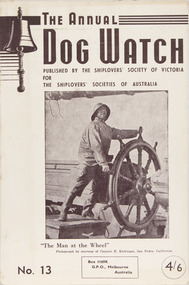
Journal (item) - Periodicals-Annual, Shiplovers' Society of Victoria, The Annual Dog Watch
... adventures and hardships of a seaman's life. Many of the stories are of sailing ships. Contributes to our knowledge of the importance of shipping and places on record those stories of the sea which would otherwise be lost. sailing ships steamships shipping seafaring life shiplovers' society of victoria dog watch Contents Foreword - 13 Editorial - 15 “Tyburnia” — London - R. W. Glassford - 19 Australian Reminiscences - Captain Carl Meyer - 30 By Tug from England - Geo. W. Torry - 40 New Year Revels in Honolulu - Richard Lunn - 44 Yuletide on the High ...This journal provides the reader with glimpses of the adventures and hardships of a seaman's life. Many of the stories are of sailing ships.Contributes to our knowledge of the importance of shipping and places on record those stories of the sea which would otherwise be lost.Contents Foreword - 13 Editorial - 15 “Tyburnia” — London - R. W. Glassford - 19 Australian Reminiscences - Captain Carl Meyer - 30 By Tug from England - Geo. W. Torry - 40 New Year Revels in Honolulu - Richard Lunn - 44 Yuletide on the High Seas - Sir James Bisset, C.B.E., R.D., R.N.R., LL.D., Cantab. - 50 My Last Voyage in Sail - Captain Harry Daniel, M.B.E, D.S.C. - 54 “Emma,” Annie Larsen” and “Maverick” - Winston Langdon - 62 Hell’s Gates — Macquarie Harbour - Captain W. E. Eglen - 80 Jack of All Trades - J. H. Barr - 86 A Centenary Missionary Cruise - Captain E. Moodie-Heddie, O.B.E. - 92 The Steamship — “Sir John Harvey” Erik Heyl - 96 Memories of Childhood on Board the “Carlisle Castle” - J. M. Bruce Robertson - 101 Jorgen Jorgensen - George R. Leggett, B.A. - 109 Survivors of Sail - Captain H. R. Watson - 114 “Hard Over” - W. A. Thomson - 119 Intrepid South Sea Pioineers - Captain Harry O’May - 124 Memories of the “Strathdon” - Taken from Papers of the Late Captain W. Philip - 127 The Story of the “Rip” - E. M. Christie - 134 Postscript, “Superb” — London - R.W.G. - 137 Book Reviews - 139sailing ships, steamships, shipping, seafaring life, shiplovers' society of victoria, dog watch -
 Marysville & District Historical Society
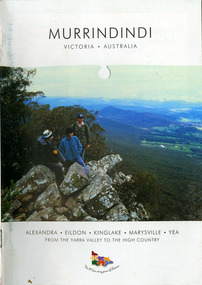
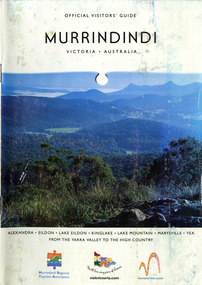
Booklet (Item) - Information booklet, Alexandra Newspapers, MURRINDINDI VICTORIA-AUSTRALIA, 02-2004
... high country...visit victoria...alexandra newspapers...murrindindi tourism association...rubicon valley horse riding...cathedral range state park...murrindindi scenic reserve...yarra ranges national park...cumberland memorial scenic reserve...the big culvert...cambarville...the big tree...steavenson falls...cora lynn falls...cumberland falls...lady talbot drive...phantom falls...keppel falls...the beeches...the cascades...wilhelmina falls...murrindindi cascades...lake mountain...cathedral lane vineyard...south cathedral farm...marysville holiday cottages...crystal journey...country touch...marysville ski centre...mountain lodge marysville...eco adventure...An information booklet on the Murrindindi region in Victoria. murrindindi victoria australia alexandra eildon kinglake marysville yea yarra valley high country visit victoria alexandra newspapers murrindindi tourism association rubicon valley horse riding cathedral range state park murrindindi scenic reserve yarra ranges national park cumberland memorial scenic reserve the big culvert cambarville the big tree steavenson falls cora lynn falls cumberland falls lady talbot drive phantom falls keppel falls the beeches the cascades wilhelmina falls murrindindi cascades lake mountain cathedral lane vineyard south cathedral farm marysville holiday cottages crystal journey country touch marysville ski centre mountain lodge marysville eco adventure tours the mountain gallery marysville country real estate camellia log cabin crossways historic country inn marylands country house ashlar cottage b&b kerami guesthouse melina cottages willowbank at taggerty mary lyn holiday resort kooringa resort & conference centre marysville caravan & holiday park lyell guest cottages eagle mountain retreat keppels hotel motel anastasia fairytale cottage mystic mountain holiday cottages esa camping & conference centre buxton trout & salmon farm woodlands rainforest bungalows the old woolshed cafe yarrolyn holiday park Produced and published by Alexandra Newspapers/ Pty Ltd in partnership with the Murrindindi Regional/ Tourism Association. ...An information booklet on the Murrindindi region in Victoria. This information booklet was produced by Alexandra Newspapers in partnership with the Murrindindi Regional Tourism Association in February 2004.An information booklet on the Murrindindi region in Victoria.Produced and published by Alexandra Newspapers/ Pty Ltd in partnership with the Murrindindi Regional/ Tourism Association. murrindindi, victoria, australia, alexandra, eildon, kinglake, marysville, yea, yarra valley, high country, visit victoria, alexandra newspapers, murrindindi tourism association, rubicon valley horse riding, cathedral range state park, murrindindi scenic reserve, yarra ranges national park, cumberland memorial scenic reserve, the big culvert, cambarville, the big tree, steavenson falls, cora lynn falls, cumberland falls, lady talbot drive, phantom falls, keppel falls, the beeches, the cascades, wilhelmina falls, murrindindi cascades, lake mountain, cathedral lane vineyard, south cathedral farm, marysville holiday cottages, crystal journey, country touch, marysville ski centre, mountain lodge marysville, eco adventure tours, the mountain gallery, marysville country real estate, camellia log cabin, crossways historic country inn, marylands country house, ashlar cottage b&b, kerami guesthouse, melina cottages, willowbank at taggerty, mary lyn holiday resort, kooringa resort & conference centre, marysville caravan & holiday park, lyell guest cottages, eagle mountain retreat, keppels hotel motel, anastasia fairytale cottage, mystic mountain holiday cottages, esa camping & conference centre, buxton trout & salmon farm, woodlands rainforest bungalows, the old woolshed cafe, yarrolyn holiday park -
 Marysville & District Historical Society
Booklet (Item) - Information booklet, Alexandra Newspapers, OFFICIAL VISITORS' GUIDE MURRINDINDI VICTORIA-AUSTRALIA, 03-2005
... high country...visit victoria...alexandra newspapers...murrindindi tourism association...rubicon valley horse riding...cathedral range state park...murrindindi scenic reserve...yarra ranges national park...cumberland memorial scenic reserve...the big culvert...cambarville...the big tree...steavenson falls...cora lynn falls...cumberland falls...lady talbot drive...phantom falls...keppel falls...the beeches...the cascades...wilhelmina falls...murrindindi cascades...lake mountain...cathedral lane vineyard...south cathedral farm...marysville holiday cottages...crystal journey...country touch...marysville ski centre...mountain lodge marysville...eco adventure...An information booklet on the Murrindindi region in Victoria. murrindindi victoria australia alexandra eildon kinglake marysville yea yarra valley high country visit victoria alexandra newspapers murrindindi tourism association rubicon valley horse riding cathedral range state park murrindindi scenic reserve yarra ranges national park cumberland memorial scenic reserve the big culvert cambarville the big tree steavenson falls cora lynn falls cumberland falls lady talbot drive phantom falls keppel falls the beeches the cascades wilhelmina falls murrindindi cascades lake mountain cathedral lane vineyard south cathedral farm marysville holiday cottages crystal journey country touch marysville ski centre mountain lodge marysville eco adventure tours the mountain gallery marysville country real estate camellia log cabin crossways historic country inn marylands country house ashlar cottage b&b kerami guesthouse melina cottages willowbank at taggerty mary lyn holiday resort kooringa resort & conference centre marysville caravan & holiday park lyell guest cottages eagle mountain retreat keppels hotel motel anastasia fairytale cottage mystic mountain holiday cottages esa camping & conference centre buxton trout & salmon farm woodlands rainforest bungalows the old woolshed cafe yarrolyn holiday park Produced and published by Alexandra Newspapers/ Pty Ltd in partnership with the Murrindindi Regional/ Tourism Association. ...An information booklet on the Murrindindi region in Victoria. This information booklet was produced by Alexandra Newspapers in partnership with the Murrindindi Regional Tourism Association in March 2005.An information booklet on the Murrindindi region in Victoria.Produced and published by Alexandra Newspapers/ Pty Ltd in partnership with the Murrindindi Regional/ Tourism Association. murrindindi, victoria, australia, alexandra, eildon, kinglake, marysville, yea, yarra valley, high country, visit victoria, alexandra newspapers, murrindindi tourism association, rubicon valley horse riding, cathedral range state park, murrindindi scenic reserve, yarra ranges national park, cumberland memorial scenic reserve, the big culvert, cambarville, the big tree, steavenson falls, cora lynn falls, cumberland falls, lady talbot drive, phantom falls, keppel falls, the beeches, the cascades, wilhelmina falls, murrindindi cascades, lake mountain, cathedral lane vineyard, south cathedral farm, marysville holiday cottages, crystal journey, country touch, marysville ski centre, mountain lodge marysville, eco adventure tours, the mountain gallery, marysville country real estate, camellia log cabin, crossways historic country inn, marylands country house, ashlar cottage b&b, kerami guesthouse, melina cottages, willowbank at taggerty, mary lyn holiday resort, kooringa resort & conference centre, marysville caravan & holiday park, lyell guest cottages, eagle mountain retreat, keppels hotel motel, anastasia fairytale cottage, mystic mountain holiday cottages, esa camping & conference centre, buxton trout & salmon farm, woodlands rainforest bungalows, the old woolshed cafe, yarrolyn holiday park -
Federation University Historical Collection
Book - Book - Scrapbook, Ballarat School of MInes: Scrapbook of Newspaper Cuttings, Book 17, February 1983 to June 1983
... high quality...ballarat teacher's antarctic adventure...The papers concerned are The Courier, Ballarat, The Australian, The Age over the period of 12 February 1983 to 4 June 1983. courses available teaching positions advertised helping unemployed cope with life jill ewence coordinator of ballarat program women's access program at smb judy mills convenor new clothing firm aims for high quality ballarat teacher's antarctic adventure catering and hospitality course at smb tafe manager peter cutter official opening of smb hairdressing training school at smb 10/03/1983 revising educational aims smb catering course gillian malone pam hekkema fiona cox rod brangrove janine cody joanne filippe bernadette groat sherri lang oddie brings state's first country exchange to ballarat introduction of phone smb starts course for machinists rick van berkel wins tippett award motorcycle riders' training complex - site selected greg mannix fashion and fabric design visit by indonesian education advisors geoff mainwaring artist - work belongs to the nation vocational skills centre opened at smb - 29 April 1983 graduates face great challenges money for smb sports building philiptjerkstra competing in internationalskill olympics in austria mining education returns home bcae gains honor position helping young unemployed john francis top apprentice motor mechanic new breed of secretary industrial training centre Book with white cover, front, spiral bound. ...Collection of newspaper articles related to Ballarat School Of Mines.They cover activities and advertisements for staff. The papers concerned are The Courier, Ballarat, The Australian, The Age over the period of 12 February 1983 to 4 June 1983.Book with white cover, front, spiral bound. courses available, teaching positions advertised, helping unemployed cope with life, jill ewence coordinator of ballarat program, women's access program at smb, judy mills convenor, new clothing firm aims for high quality, ballarat teacher's antarctic adventure, catering and hospitality course at smb, tafe manager peter cutter, official opening of smb hairdressing training school at smb, 10/03/1983, revising educational aims, smb catering course, gillian malone, pam hekkema, fiona cox, rod brangrove, janine cody, joanne filippe, bernadette groat, sherri lang, oddie brings state's first country exchange to ballarat, introduction of phone, smb starts course for machinists, rick van berkel wins tippett award, motorcycle riders' training complex - site selected, greg mannix fashion and fabric design, visit by indonesian education advisors, geoff mainwaring artist - work belongs to the nation, vocational skills centre opened at smb - 29 april 1983, graduates face great challenges, money for smb sports building, philiptjerkstra competing in internationalskill olympics in austria, mining education returns home, bcae gains honor position, helping young unemployed, john francis top apprentice motor mechanic, new breed of secretary, industrial training centre -
 Flagstaff Hill Maritime Museum and Village
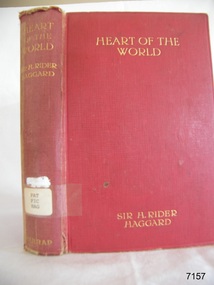
Book - Novel, H Rider Haggard, author, Heart of The World, 1894
... adventure set in Mexico. This book is part of the Pattison Collection at Flagstaff Hill. The book was published in 1895 by the British firm George G Harrap & Co. Ltd. of London, a firm that specialised in high...adventure set in Mexico. This book is part of the Pattison Collection at Flagstaff Hill. The book was published in 1895 by the British firm George G Harrap & Co. Ltd. of London, a firm that specialised in high ...H. Rider Haggard (1856-1925) (Sir H. Rider Haggard), a British author, wrote fiction and non-fiction works and had letters and articles published in newspapers and journals. His novel, Heart of the World, was an adventure set in Mexico. This book is part of the Pattison Collection at Flagstaff Hill. The book was published in 1895 by the British firm George G Harrap & Co. Ltd. of London, a firm that specialised in high-quality publishing with many of the books containing fine line drawings.The book has additional importance for its connection to the Pattison Collection, which, along with other items at Flagstaff Hill Maritime Village, was originally part of the Warrnambool Mechanics' Institutes’ Collection. The Warrnambool Mechanics’ Institute book collection has historical and social significance for its strong association with the Mechanics Institute movement and its important role in people's intellectual, cultural and social development throughout the latter part of the nineteenth century and the early twentieth century. The collection of books is a rare example of an early lending library and its significance is enhanced by the survival of an original collection of many volumes. The Warrnambool Mechanics' Institute’s publication collection is of both local and state significance.Heart of The World Author: H Rider Haggard (Sir H. Rider Haggard) Publisher: George G Harrap & Co. Ltd. Date: 1894 The red hardcover book has gold embossed lettering on the spine and cover. The Fly page has a logo of flying horse, it also has inscriptions on a label and stickers. This book is part of the Pattison Collection.Label "PAT FIC HAG" Sticker: "Warrnambool Public Library" covered by a sticker "Corangamite Regional Library Service" Inscription: "1300" Logo: [Flying horse or winged horse]flagstaff hill, flagstaff hill maritime museum and village, warrnambool, maritime museum, maritime village, great ocean road, shipwreck coast, pattison collection, ralph eric pattison, warrnambool mechanics’ institute, mechanics’ institute library, warrnambool library, free library, corangamite regional library service, george g. harrap and company, h rider haggard, 1985 novel, sir h. rider haggard, heart of the world, fiction, adventure, 1894, flying horse logo, winged horse logo -
 Flagstaff Hill Maritime Museum and Village
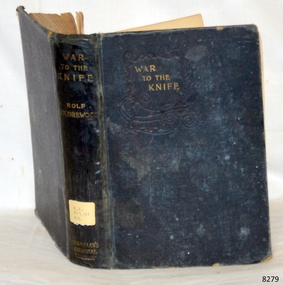
Book - Fictional Novel, Rolf Boldrewood (Pen Name), War to The Knife, 1899
... adventure and a fresh start. Upon arriving, he finds himself caught squarely in the middle of the violent clash between the Pakeha (British colonial settlers) and the indigenous Maori tribes over the ownership of the Waitara land block. Written in a late-Victorian style that heavily blends high ...War to the Knife; or, Tangata Maori is a late 19th-century historical romance novel written by the prominent Australian author Rolf Boldrewood (the pen name of Thomas Alexander Browne) and published by the historic house Macmillan & Co. in 1899. Unlike most of Boldrewood's work, which is rooted deeply in the Australian outback, War to the Knife shifts its setting to New Zealand during the Waikato War of the 1860s, which was part of the New Zealand Land Wars. The story follows Sir Roland Massinger, a cultured English squire who suffers a devastating heartbreak at home when the woman he loves, Hypatia Tollemache, rejects him to pursue a life dedicated to social reform. Distraught, Sir Roland leaves his ancestral estate and emigrates to New Zealand in search of adventure and a fresh start. Upon arriving, he finds himself caught squarely in the middle of the violent clash between the Pakeha (British colonial settlers) and the indigenous Maori tribes over the ownership of the Waitara land block. Written in a late-Victorian style that heavily blends high-stakes adventure with a romanticised "frontier" view, the book attempts to explore colonial identity and the cultural friction of the era.War to The Knife Author: Pen Name Rolf Boldrewood For (Thomas Alexander Browne) Publisher: Macmillan And Co Printer: Robert Clark Date: 1899 Blue cloth hardcover and spine with spine lettering in gilt. The spine has a Library label with inscription.fictionWar to the Knife; or, Tangata Maori is a late 19th-century historical romance novel written by the prominent Australian author Rolf Boldrewood (the pen name of Thomas Alexander Browne) and published by the historic house Macmillan & Co. in 1899. Unlike most of Boldrewood's work, which is rooted deeply in the Australian outback, War to the Knife shifts its setting to New Zealand during the Waikato War of the 1860s, which was part of the New Zealand Land Wars. The story follows Sir Roland Massinger, a cultured English squire who suffers a devastating heartbreak at home when the woman he loves, Hypatia Tollemache, rejects him to pursue a life dedicated to social reform. Distraught, Sir Roland leaves his ancestral estate and emigrates to New Zealand in search of adventure and a fresh start. Upon arriving, he finds himself caught squarely in the middle of the violent clash between the Pakeha (British colonial settlers) and the indigenous Maori tribes over the ownership of the Waitara land block. Written in a late-Victorian style that heavily blends high-stakes adventure with a romanticised "frontier" view, the book attempts to explore colonial identity and the cultural friction of the era. flagstaff hill, warrnambool, shipwrecked coast, flagstaff hill maritime museum, maritime museum, shipwreck coast, flagstaff hill maritime village, great ocean road, book, pattison collection, warrnambool library, warrnambool mechanics’ institute, ralph eric pattison, corangamite regional library service, warrnambool city librarian, mechanics’ institute library, victorian library board, warrnambool books and records, warrnambool children’s library, war to the knife, rolf bolderwood -
 Flagstaff Hill Maritime Museum and Village
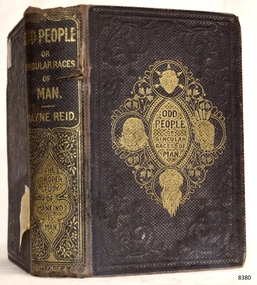
Book - Anthropological Travelogue/Fictional, Captain Mayne Reid, Odd People being A Popular Description of Singular Races of Man, 1860
... He specialized in "juvenile literature"—thrilling adventures set in exotic localities like the American West, the Amazon, and Africa—that combined high stakes with educational facts about botany, zoology, and geography. ...He specialized in "juvenile literature"—thrilling adventures set in exotic localities like the American West, the Amazon, and Africa—that combined high stakes with educational facts about botany, zoology, and geography. ...Odd People: Being a Popular Description of Singular Races of Man (1860) is an interesting piece of 19th-century literature. The book was written by Captain Thomas Mayne Reid (1818–1883), a Scots-Irish American novelist and adventurer. He was immensely popular in the mid-to-late 19th century for his boys' adventure novels, tales of the American West, and travelogues. The true first edition was published in London by Routledge, Warne & Routledge in 1860. In the United States, it was published around the same time (1860/1861) by Ticknor and Fields in Boston, and later editions were retitled The Man-Eaters and Other Odd People. The book is an early work of popular ethnology and anthropology, written for a general audience and heavily marketed toward young readers and armchair travelers of the Victorian era.Book, brown covers, embossed with borders and patterns and gilt decoration and titles. The book includes illustrations. Handwritten inscription on the front paste-down page. The opposite page has a stamped and a handwritten inscription. The book was presented as a prize to a Latin student at the National School, Warrnambool in 1861. Title: Odd People being a Popular Description of Singular Races of Man. Alternate title: Odd People or Singular Races of Man Author: Captain Mayne Reid Publisher: Routledge Warne & Routledge, London Date: 1860 Further information: additional text on the spine reads 'A Proper Study of Mankind is Man'fictionOdd People: Being a Popular Description of Singular Races of Man (1860) is an interesting piece of 19th-century literature. The book was written by Captain Thomas Mayne Reid (1818–1883), a Scots-Irish American novelist and adventurer. He was immensely popular in the mid-to-late 19th century for his boys' adventure novels, tales of the American West, and travelogues. The true first edition was published in London by Routledge, Warne & Routledge in 1860. In the United States, it was published around the same time (1860/1861) by Ticknor and Fields in Boston, and later editions were retitled The Man-Eaters and Other Odd People. The book is an early work of popular ethnology and anthropology, written for a general audience and heavily marketed toward young readers and armchair travelers of the Victorian era.shipwrecked-coast, flagstaff-hill, flagstaff-hill-maritime-museum, warrnambool, maritime-museum, shipwreck-coast, flagstaff-hill-maritime-village, shipwrecked-artefact, book, odd people, captain mayne reid, national school warrnambool., daniel b sellers, classic fiction, the proper study of mankind is man, singular races of man, , routledge warne and routledge, latin student -
Eltham District Historical Society Inc
Document - Folder, Webb, Alexandra
... adventure of Biggles" Diamond Valley Leader, 4 May 2005. Alexandra Webb created CD cover and other items for singer Schan Marshall. Alexandra Webb Eltham High ...Artist Alexandra Webb lives in Eltham. Contents Newspaper article: "Flair adventure of Biggles" Diamond Valley Leader, 4 May 2005. Alexandra Webb created CD cover and other items for singer Schan Marshall.Newspaper clippings, A4 photocopies, etcalexandra webb, eltham high school, melbourne museum, schan marshall, cat {pwer cd, royal melbourne institute of technology -
 Kiewa Valley Historical Society
Gaiters Riding, Late 19th Century
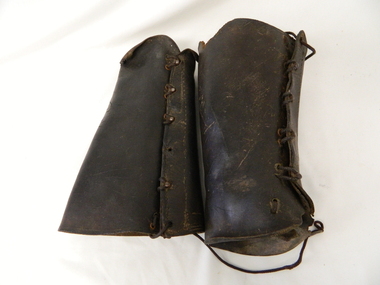
... high plains and not so rugged mountain slopes. Small settlements such as Mount Beauty, Bogong village and Falls Creek provided a secure backdrop for short term horse back adventures. ...These gaiters where used circa 1800's to mid 1900's, by horse riders "cattle men" to protect their shins and long trousers against wear and tear. They were used rather than having expensive boots damaged. Gaiters were a lot easier to fasten and clean than boots. They were used in the Kiewa Valley and the High Plains grazing areas.These gaiters were part of a cattleman's "out fit". The Gaiters were easily cleaned and did away with expensive riding boots. They were used throughout the valley and high plains areas both by horse riders herding cattle and the recreational rider of both sexes. After the 1950s more recreational riders from Melbourne ventured onto the high plains and not so rugged mountain slopes. Small settlements such as Mount Beauty, Bogong village and Falls Creek provided a secure backdrop for short term horse back adventures. The increasing pressure of city life provided a greater flow of stressed out city dweller to find the peace and quiet that city life does not have. Horse riding preceded the modern trail bikes and other recreational vehicles of the late 1900s. Thick leather tapered gaiters with six metal Hooks and Leather lacing through metal eyelets. All bar two eyelets have a metal reinforced punch holes. Left gaiter missing most of lacing.horse, country, leather, gaiters, high, grazing, cattlemen, laces, studs -
 Kiewa Valley Historical Society
Journal - Reference, Mountain Work and Walks 1945-48,The Joy of Being Alive, circa 1950s
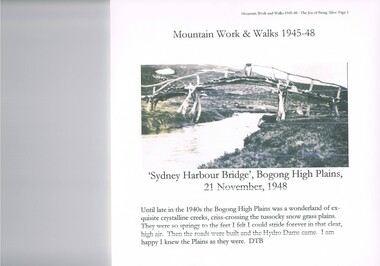
... high plains regions during various "walks during the years 1945 to 1948. These walks were undertaken during the various Hydro - electricity generating plants and infra structures were being installed. It relays how the walker and adventurer enjoyed the pristine Alpine regions of Victoria. The wilderness and higher sense of adventure...high plains regions during various "walks during the years 1945 to 1948. These walks were undertaken during the various Hydro - electricity generating plants and infra structures were being installed. It relays how the walker and adventurer enjoyed the pristine Alpine regions of Victoria. The wilderness and higher sense of adventure ...This journal detailing the author and friends walks and observations together with black and white photographs of the Kiewa Valley and the Bogong high plains regions during various "walks during the years 1945 to 1948. These walks were undertaken during the various Hydro - electricity generating plants and infra structures were being installed. It relays how the walker and adventurer enjoyed the pristine Alpine regions of Victoria. The wilderness and higher sense of adventure encountered by the author and his "walking party" is now no longer that intense. The isolation of the region was, at that time, still a barrier for the casual adventurer and required a dedication of the "pioneer" mountain walker.The significance of this journal is that both the photographs and accounts of those intrepid adventurers walking throughout the Victorian Alps and the Bogong High Plains details the countryside in one of the remaining years of relative pristine and minimal "tourist" developed regions of rural Victorian. The necessity of greater electrical power supply to the rapidly growing demand from cities and larger towns, post World War II immigration, had resulted in drastic changes to the infrastructure of the Victorian Alpine regions and particularly the Kiewa Valley. The photographs and the written accounts of the "adventurers" in this journal presents the last phases of the " Australian rough outback environment" and also the typical "bush wise" city/town dweller that although lived in towns and cities still had the adventurers heart of their fore fathers.This item has been photocopied by the author of his journal, consisting 27 pages of A4 size paper. A covering letter by the author is at the front of this loose leafed journal. The journal is bound in a yellow plastic cover with spirals. At the back is a 2 page biography of Myrtle Emily (Grigg) Deamer 1922-2006, then a photo of Meg with baby Bryn and son Tony followed by a letter from David BottomleyThe author's correspondence and covering letter has his signature "D Bottomley"alpine country, bush walking, bogong mountain, alpine adventures -
 Warrnambool and District Historical Society Inc.
Book, Allan Scarfe, The Dissident Guru, 2004
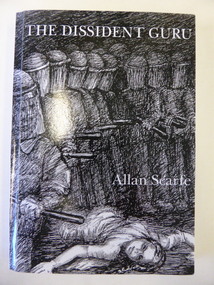
... He taught in India, England and Australia (including several years at Warrnambool High School) and was the joint author with his wife Wendy of 12 non-fiction books published in Australia, India, England and the U.S.A. He and Wendy were twice awarded Australia Council Literature Board grants. The Dissident Guru was one of several crime and adventure...He taught in India, England and Australia (including several years at Warrnambool High School) and was the joint author with his wife Wendy of 12 non-fiction books published in Australia, India, England and the U.S.A. He and Wendy were twice awarded Australia Council Literature Board grants. The Dissident Guru was one of several crime and adventure ...An anti-globalisation thriller drawing on the author's experiences in India.This is a soft cover book of 328 pages. It was written by Allan Scarfe. The cover is black, grey and white and the lettering is white on the front cover and black on the spine. The front cover has an illustration of masked figures and a body and the back cover has excerpts from critics’ remarks about other Scarfe books. fictionAn anti-globalisation thriller drawing on the author's experiences in India.allan scarfe, warrnambool author -
 Kiewa Valley Historical Society
Plate Enamel, mid 1900's
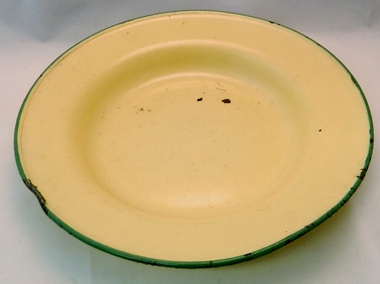
... It was at the start of the city based outdoor campers Australian bush adventure holidays. This plate is very significant to the High Plains cattlemen of the Victorian Alpine Region. ...This "outdoor" dinner plate was made in Hong Kong and is therefore dated well after World War II. It was imported from Hong Kong at the beginning of the start of the great Asian influx of cheap household/camping kitchen and dinner plates(1960's onward). It is also during the time before stronger and more resilient plastic "camper" goods. It was at the start of the city based outdoor campers Australian bush adventure holidays.This plate is very significant to the High Plains cattlemen of the Victorian Alpine Region. Because of its unbreakable and easy to clean qualities this type of plate and associate mugs where a necessity for overnight workers and campers in the upper Kiewa Valley and its high plains regions. The Kiewa Valley has small township centres and to survive in the Australian bush high country environment camp-side fires and meals required sturdy utensils and plates.This yellow enameled tin soup/salad/dinner plate has a green boarded rim and can hold a variety of different meals. This plate is sturdy enough for any outdoor activity and was used by campers and cattlemen.Stamped on the bottom base " made in Hong Kong 24 cm E MELLING CO LTD"enamel outdoor plates and mugs, camping kitchen utensils -
 Monbulk RSL Sub Branch
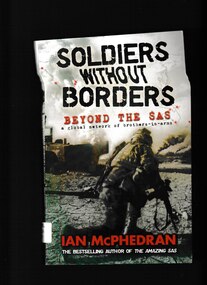
Book, Harper Collins Australia, Soldiers without borders: Beyond the SAS, a global network of brothers in arms, 2008
... adventures unfold. Some go on to establish and lead major corporations or to advise multinational companies about risk where the commercial stakes are high. ..."What happens to the elite, close-knit soldiers of the SAS after they leave the tight world of the military? For some, there are highly paid jobs as trigger men with security companies in the worlds war zones and trouble spots. But for many, unexpected adventures unfold. Some go on to establish and lead major corporations or to advise multinational companies about risk where the commercial stakes are high. Some join foreign defence forces, training new elite special forces in unusual places. For others, life takes a different twist. They become top government advisers and even hardened criminals. Most sinister of all is the shadowy world of black ops - risky, rewarding and adrenaline-driven jobs that governments always deny. But wherever they are, the former elite soldiers are never far from each other, bound in an exclusive global network of brothers-in-arms."-Index, ill (plates col, b/w), maps, p.364.non-fiction"What happens to the elite, close-knit soldiers of the SAS after they leave the tight world of the military? For some, there are highly paid jobs as trigger men with security companies in the worlds war zones and trouble spots. But for many, unexpected adventures unfold. Some go on to establish and lead major corporations or to advise multinational companies about risk where the commercial stakes are high. Some join foreign defence forces, training new elite special forces in unusual places. For others, life takes a different twist. They become top government advisers and even hardened criminals. Most sinister of all is the shadowy world of black ops - risky, rewarding and adrenaline-driven jobs that governments always deny. But wherever they are, the former elite soldiers are never far from each other, bound in an exclusive global network of brothers-in-arms."-soldiers - retirement, australian army - special air regiment -
 Monbulk RSL Sub Branch
Book, Roger McDonald, 1915, 1979
... gallipoli campaign - fiction world war 1914-1918 - fiction The year young Australians sailed off to war in high hopes of adventure, only to find themselves faced with disaster. ...The year young Australians sailed off to war in high hopes of adventure, only to find themselves faced with disaster. The tragedy and violence of Gallipoli provide the climax to this very personal, moving and surprisingly romantic story. With remarkable skill and in achingly beautiful prose, Roger McDonald takes the reader on an archetypal Australian journey which parallels the nation's progress from its country childhood, through the adolescent exuberance of its young cities, to initiation on one of the world's ancient battlefields. It is a vital journey, haunted by menace and disillusionment, one embedded in our national mythology. This astonishing first novel, published to great critical acclaim in 1979 and since then selling over 100,000 copies, tells the story of two boys from the bush, the thoughtful and awkward Walter and his knowing friend Billy Mackenzie, and their girls Frances and Diana. Together they discover a future which seems full of promise, drawing them into the exciting turmoil of passion and war. But theirs is a fateful alliance, in a world all too quickly passing, with an outcome they never could have foreseen.p.426fictionThe year young Australians sailed off to war in high hopes of adventure, only to find themselves faced with disaster. The tragedy and violence of Gallipoli provide the climax to this very personal, moving and surprisingly romantic story. With remarkable skill and in achingly beautiful prose, Roger McDonald takes the reader on an archetypal Australian journey which parallels the nation's progress from its country childhood, through the adolescent exuberance of its young cities, to initiation on one of the world's ancient battlefields. It is a vital journey, haunted by menace and disillusionment, one embedded in our national mythology. This astonishing first novel, published to great critical acclaim in 1979 and since then selling over 100,000 copies, tells the story of two boys from the bush, the thoughtful and awkward Walter and his knowing friend Billy Mackenzie, and their girls Frances and Diana. Together they discover a future which seems full of promise, drawing them into the exciting turmoil of passion and war. But theirs is a fateful alliance, in a world all too quickly passing, with an outcome they never could have foreseen.gallipoli campaign - fiction, world war 1914-1918 - fiction -
 Monbulk RSL Sub Branch
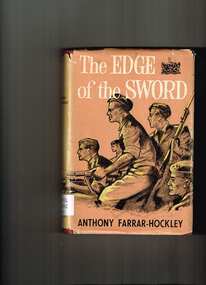
Book, Readers Book Club, The edge of the sword, 1954
... It is, above all, an amazing story of human fortitude and high adventure. Ill, p.286 The edge of the sword Book Readers Book Club Anthony Farrar Hockley ...In April 1951, at the height of the Korean War, Chinese troops advanced south of the 38th parallel towards a strategic crossing-point of the Imjin River on the invasion route to the South Korean capital of Seoul. The stand of the 1st Battalion, the Gloucestershire Regiment, against the overwhelming numbers of invading troops has since passed into British military history. In The Edge of the Sword General Sir Anthony Farrar-Hockley, then Adjutant of the Glosters, has painted a vivid and accurate picture of the battle as seen by the officers and soldiers caught up in the middle of it. The book does not, however, end there. Like the majority of those who survived, the author became a prisoner-of-war, and the book continues with a remarkable account of his experiences in and out of Chinese prison camps. This book is not an attempt at a personal hero-story, and it is certainly not a piece of political propaganda. It is, above all, an amazing story of human fortitude and high adventure.Ill, p.286non-fictionIn April 1951, at the height of the Korean War, Chinese troops advanced south of the 38th parallel towards a strategic crossing-point of the Imjin River on the invasion route to the South Korean capital of Seoul. The stand of the 1st Battalion, the Gloucestershire Regiment, against the overwhelming numbers of invading troops has since passed into British military history. In The Edge of the Sword General Sir Anthony Farrar-Hockley, then Adjutant of the Glosters, has painted a vivid and accurate picture of the battle as seen by the officers and soldiers caught up in the middle of it. The book does not, however, end there. Like the majority of those who survived, the author became a prisoner-of-war, and the book continues with a remarkable account of his experiences in and out of Chinese prison camps. This book is not an attempt at a personal hero-story, and it is certainly not a piece of political propaganda. It is, above all, an amazing story of human fortitude and high adventure. korean war 1950-1953 - history, korean war - campaigns - gloucestershire regiment -
 Narre Warren and District Family History Group
Book, Narre Warren & District Family History Group Inc, Casey Cardinia Collection - Pakenham Information File - Volume 1, 2014
... Orchards 14 Nov 2007 Pigeons take flight 25 Jul 2007 Oh how the town’s grown 26 Mar 2008 Historic hotel has new look – Pakenham Hotel 10 Dec 2008 Stock agent who called the shots – Roly Hewson 10 Dec 2008 Apple a day keeps orchardists aweigh – Hardings Orchard 06 Feb 2008 Service is in the can – Ray Coombs from Nestle Unknown It’s service with a smile – Charlie Rossetti 02 Apr 2008 The hell that was Gallipoli 05 Dec 2007 Una (Cafra) at 101 is unstoppable 05 Sep 2007 Neighbours for seven decades (Bill Shelton & Jack Buckland) 00 Dec 2008 Connectsus –newsletter of the Beaconhills College Alumni 19 Oct 2011 Historic Oak Journey Continues 19 Oct 2011 Beat is their guiding light 08 Sep 2010 Printz’s passion hits home 8 Apr 2015 Chuggs Tug at Heartstrings - Jean & Dennis Chugg 2 Sep 2015 Silence for a Good Man - John Goff 19 Oct 2016 Iconic Home is up for Sale 18 Jan 2017 A Great Blast from the Past - Pakenham East Cricket Club 23 Nov 2016 Her Caring Nature - Patricia Benyan 18 Jan 2017 Magical 100 Candles Lit - Mary Blundy 14 Oct 2015 Loyal Race Club Stalwarts Retire - Frances Knapp & Ron Carroll 17 Feb 2016 Pakenham Icon Passes - Gavan Bourke 17 Feb 2016 Pakenham Mourns a legend - Gavan Bourke 21 Sep 2016 Hughie Loved Community - Hughie Bourke 27 Jul 2016 It’s a Grant to Remember 1 Jun 2016 Principal Out of Trenches - St Patrick’s Primary School 150th 15 Jun 2016 Rotary was Charlie’s Life - Charlie Huyskens 31 Aug 2016 Man of Letters - John Murrell 20 Oct 2010 Hairdressing Win Career Highlight - Bronny Saunders 10 Feb 2016 Shut Down for Dore Milestone - John Dore 30 Apr 2008 Time for Reflection - Pakenham Cemetery Trust 5 Nov 2003 A Return to Glory Days for Former Shire Offices 23 Mar 1994 Ellie Ellett’s Memories of a Fortunate Life 23 Apr 2008 From Concrete to Soil - Roger & Chris McGill 21 Dec 2009 Joe is Fondly Remembered - Joe Russell 21 Dec 2009 Lorna’s Elegance Shone Through - Lorna Giles nee Ramage 16 Jan 2013 Johnny Appleseed - John Wiadrowski 13 Feb 2013 Treloar Makes Final Cut - Graham Treloar 13 Feb 2013 Pakenham as it was 17 Jun 2009 Learning Keeps Jean Young - Jean Ferguson 29 Oct 2014 Sweet Man with a Sweet Tooth - Keith Cook 22 May 2013 Machinery was Alan’s Game - Alan Porter 16 Sep 2015 Lucy’s Long, Loving Life - Lucy Rouse 22 Jul 2015 French Decoration - Jack Kane 13 Jan 2016 Athlete Marches Off - Sheldon Ronald 10 Feb 2016 Friends for Life - 60 Years not out - Bob & Kath Florance 10 Feb 2016 Newborn is Across the Generations - Nate Delphine 25 Apr 2012 Exhausted but Excited by Milestone Birthday - Ellen McKenzie 25 Aug 2005 Newspaper Pioneer Dies - Florrie Thomas 2010 Loss of Former Scout Leader - Joe Zaal 15 Jul 2015 Senior Citizens Celebrate Birthday 15 Jul 2015 Congrats Joan on OAM - Joan Vogels 26 May 2010 Cath is our Centenarian - Cath Marson 15 Sep 2021 Together 50 Golden Years - Alwyn & Terry Williams 10 Jun 2021 They Made the Regal List - Donald Duffy 12 Jun 2013 Zach’s Footy Dream Comes True - Zach Stephens 10 Jun 2015 Stableford a Welcome Relief 15 May 2013 Jackie Loves Scouting Life - Jackie Connelly 5 Aug 2009 Sisters in Arms - Thelma Rhein & Joan Hayles 11 Feb 2009 Death of a Soldier - Aaran McCann 18 Feb 2015 Poppy Plaque for Service 28 Jun 2017 Sports Carnival was a Gift 23 Sep 2015 Hardware Icon Unhooks - Hardys 28 Jun 2017 Norm’s Dedication to RSL - Norm Joseph 25 Nov 2009 Pottering Around - Robert Gordon Pottery 1 Oct 2014 Hardy’s Toasts 60 Years 27 May 2015 Sod Turns New Page in Family’s History - Webster 4 Aug 2021 Siren Goes for “Stinger” - Ian Murphy 24 May 2017 50th Anniversary - Pakenham Secondary School 22 Sep 2021 Trusting in our Future - PB Ronald Memorial Trust 16 Dec 2009 Spotlight on the Hoof and Hook 15 May 2013 Sporting Legend who Rode High in the Saddle of Life 7 Jan 2009 Jubilee Team Nod is Jewel in Crown - Lionel Sexton 12 Aug 2015 Papers Together - Dandenong Journal 12 Aug 2015 Dickson - a Doyen of Jounal(ism) - Greg Dickson 12 Aug 2015 Quiet Man had Depth of Strength - Harold Tulloch 8 Sep 2021 100 and More Birthdays - Hautie Crick & Sybil Hickman 5 Aug 2015 St James Marks Ruby 6 Oct 2021 Young Spirit Worth Bottling - Daryl Young 12 Aug 2015 Gwen Followed the Paper Trail - Gwen Jarvis 12 Aug 2015 We Loved Our Youthful Adventures - Sue Jarvis 13 Oct 2021 Pizza Queen’s Farewell - Rosa Santo 4 Feb 2009 Gaynor Goes it Alone as Family Spreads Wide - Rotteveel 25 Feb 2009 Hooves of History - Pakenham Show 19 Sep 2018 Uncertain Future for Post-War Pat - St James Village 19 Sep 2018 Do You Recognise These Soldiers? ...Orchards 14 Nov 2007 Pigeons take flight 25 Jul 2007 Oh how the town’s grown 26 Mar 2008 Historic hotel has new look – Pakenham Hotel 10 Dec 2008 Stock agent who called the shots – Roly Hewson 10 Dec 2008 Apple a day keeps orchardists aweigh – Hardings Orchard 06 Feb 2008 Service is in the can – Ray Coombs from Nestle Unknown It’s service with a smile – Charlie Rossetti 02 Apr 2008 The hell that was Gallipoli 05 Dec 2007 Una (Cafra) at 101 is unstoppable 05 Sep 2007 Neighbours for seven decades (Bill Shelton & Jack Buckland) 00 Dec 2008 Connectsus –newsletter of the Beaconhills College Alumni 19 Oct 2011 Historic Oak Journey Continues 19 Oct 2011 Beat is their guiding light 08 Sep 2010 Printz’s passion hits home 8 Apr 2015 Chuggs Tug at Heartstrings - Jean & Dennis Chugg 2 Sep 2015 Silence for a Good Man - John Goff 19 Oct 2016 Iconic Home is up for Sale 18 Jan 2017 A Great Blast from the Past - Pakenham East Cricket Club 23 Nov 2016 Her Caring Nature - Patricia Benyan 18 Jan 2017 Magical 100 Candles Lit - Mary Blundy 14 Oct 2015 Loyal Race Club Stalwarts Retire - Frances Knapp & Ron Carroll 17 Feb 2016 Pakenham Icon Passes - Gavan Bourke 17 Feb 2016 Pakenham Mourns a legend - Gavan Bourke 21 Sep 2016 Hughie Loved Community - Hughie Bourke 27 Jul 2016 It’s a Grant to Remember 1 Jun 2016 Principal Out of Trenches - St Patrick’s Primary School 150th 15 Jun 2016 Rotary was Charlie’s Life - Charlie Huyskens 31 Aug 2016 Man of Letters - John Murrell 20 Oct 2010 Hairdressing Win Career Highlight - Bronny Saunders 10 Feb 2016 Shut Down for Dore Milestone - John Dore 30 Apr 2008 Time for Reflection - Pakenham Cemetery Trust 5 Nov 2003 A Return to Glory Days for Former Shire Offices 23 Mar 1994 Ellie Ellett’s Memories of a Fortunate Life 23 Apr 2008 From Concrete to Soil - Roger & Chris McGill 21 Dec 2009 Joe is Fondly Remembered - Joe Russell 21 Dec 2009 Lorna’s Elegance Shone Through - Lorna Giles nee Ramage 16 Jan 2013 Johnny Appleseed - John Wiadrowski 13 Feb 2013 Treloar Makes Final Cut - Graham Treloar 13 Feb 2013 Pakenham as it was 17 Jun 2009 Learning Keeps Jean Young - Jean Ferguson 29 Oct 2014 Sweet Man with a Sweet Tooth - Keith Cook 22 May 2013 Machinery was Alan’s Game - Alan Porter 16 Sep 2015 Lucy’s Long, Loving Life - Lucy Rouse 22 Jul 2015 French Decoration - Jack Kane 13 Jan 2016 Athlete Marches Off - Sheldon Ronald 10 Feb 2016 Friends for Life - 60 Years not out - Bob & Kath Florance 10 Feb 2016 Newborn is Across the Generations - Nate Delphine 25 Apr 2012 Exhausted but Excited by Milestone Birthday - Ellen McKenzie 25 Aug 2005 Newspaper Pioneer Dies - Florrie Thomas 2010 Loss of Former Scout Leader - Joe Zaal 15 Jul 2015 Senior Citizens Celebrate Birthday 15 Jul 2015 Congrats Joan on OAM - Joan Vogels 26 May 2010 Cath is our Centenarian - Cath Marson 15 Sep 2021 Together 50 Golden Years - Alwyn & Terry Williams 10 Jun 2021 They Made the Regal List - Donald Duffy 12 Jun 2013 Zach’s Footy Dream Comes True - Zach Stephens 10 Jun 2015 Stableford a Welcome Relief 15 May 2013 Jackie Loves Scouting Life - Jackie Connelly 5 Aug 2009 Sisters in Arms - Thelma Rhein & Joan Hayles 11 Feb 2009 Death of a Soldier - Aaran McCann 18 Feb 2015 Poppy Plaque for Service 28 Jun 2017 Sports Carnival was a Gift 23 Sep 2015 Hardware Icon Unhooks - Hardys 28 Jun 2017 Norm’s Dedication to RSL - Norm Joseph 25 Nov 2009 Pottering Around - Robert Gordon Pottery 1 Oct 2014 Hardy’s Toasts 60 Years 27 May 2015 Sod Turns New Page in Family’s History - Webster 4 Aug 2021 Siren Goes for “Stinger” - Ian Murphy 24 May 2017 50th Anniversary - Pakenham Secondary School 22 Sep 2021 Trusting in our Future - PB Ronald Memorial Trust 16 Dec 2009 Spotlight on the Hoof and Hook 15 May 2013 Sporting Legend who Rode High in the Saddle of Life 7 Jan 2009 Jubilee Team Nod is Jewel in Crown - Lionel Sexton 12 Aug 2015 Papers Together - Dandenong Journal 12 Aug 2015 Dickson - a Doyen of Jounal(ism) - Greg Dickson 12 Aug 2015 Quiet Man had Depth of Strength - Harold Tulloch 8 Sep 2021 100 and More Birthdays - Hautie Crick & Sybil Hickman 5 Aug 2015 St James Marks Ruby 6 Oct 2021 Young Spirit Worth Bottling - Daryl Young 12 Aug 2015 Gwen Followed the Paper Trail - Gwen Jarvis 12 Aug 2015 We Loved Our Youthful Adventures - Sue Jarvis 13 Oct 2021 Pizza Queen’s Farewell - Rosa Santo 4 Feb 2009 Gaynor Goes it Alone as Family Spreads Wide - Rotteveel 25 Feb 2009 Hooves of History - Pakenham Show 19 Sep 2018 Uncertain Future for Post-War Pat - St James Village 19 Sep 2018 Do You Recognise These Soldiers? ...Folder containing a table of contents and various newspaper clippings and other information pertaining to the Pakenham area Volume 1. The date the articles were published, and title of articles are listed below. 10 Aug 2005 John McMillan honoured as Secretary of Pakenham Cemetery Trust 09 Feb 2005 Arch Munro – obituary 17 Nov 2004 St. James 120th Anniversary 17 Nov 2004 Gwen Crouch – people in profile 23 Mar 2005 Ranald & Rae Webster Diamond Anniversary 19 May 2004 Curnow Farm, Henry Road 23 Jun 2004 Lottie Schultz – obituary 17 Dec 2003 Doris Kirkland – obituary 13 Oct 1993 Main Street 1947 08 Jan 2004 Toomuc Ridge – sale of property 24 Nov 1998 Berwick-Pakenham Historical Society 02 Aug 2002 Joseph Purves – obituary 19 Jan 1999 Pakenham Stockyards 27 Oct 2004 Artefacts halt pool dig 12 Oct 1999 Pakenham Library 10 Nov 2004 Joyce Parker – widow wages war against injustice Unknown John Chapman celebrates six decades at Pakenham Sale Yards 12 Sep 2007 Noel Gardner – obituary 21 Jul 2004 Mick Manestar – RSL top honour for war veteran 31 Mar 2004 William Bruce Ronald Reserve 08 Sep 2004 Muriel Gladys Treloar – obituary 02 May 2007 Anzac Day at Pakenham 23 Sep 1998 Lorna Anderson – people in profile 21 Apr 2004 Max & Toni Myers – organic apple orchard 14 May 2008 Lorna Jackson – moving 14 May 2008 Norma Jackson – people in profile 14 May 2008 Bill Shelton – me and my car 31 Jun 2007 Vandals Raid RSL 05 Mar 2008 Vicki Mantel – nee McLeod 31 Jan 2007 Sisters follow family style – Green family 08 Jun 2005 Alice Bould – 81st birthday 12 Jan 2011 Church Robbers 03 Dec 2008 Una’s 102 not out – Una Cafra 14 Nov 2007 Dot Murphy & the Pakenham Pool 04 Feb 2009 Jack Buckland 20 May 2003 It was apples at the orchard school 18 Feb 2009 Aaron Stewart McCann 18 Feb 2009 Ray Caldwell 29 Nov 2006 Una Cafra – people in profile 05 Dec 2007 Apples to the core – Priest Bros. Orchards 14 Nov 2007 Pigeons take flight 25 Jul 2007 Oh how the town’s grown 26 Mar 2008 Historic hotel has new look – Pakenham Hotel 10 Dec 2008 Stock agent who called the shots – Roly Hewson 10 Dec 2008 Apple a day keeps orchardists aweigh – Hardings Orchard 06 Feb 2008 Service is in the can – Ray Coombs from Nestle Unknown It’s service with a smile – Charlie Rossetti 02 Apr 2008 The hell that was Gallipoli 05 Dec 2007 Una (Cafra) at 101 is unstoppable 05 Sep 2007 Neighbours for seven decades (Bill Shelton & Jack Buckland) 00 Dec 2008 Connectsus –newsletter of the Beaconhills College Alumni 19 Oct 2011 Historic Oak Journey Continues 19 Oct 2011 Beat is their guiding light 08 Sep 2010 Printz’s passion hits home 8 Apr 2015 Chuggs Tug at Heartstrings - Jean & Dennis Chugg 2 Sep 2015 Silence for a Good Man - John Goff 19 Oct 2016 Iconic Home is up for Sale 18 Jan 2017 A Great Blast from the Past - Pakenham East Cricket Club 23 Nov 2016 Her Caring Nature - Patricia Benyan 18 Jan 2017 Magical 100 Candles Lit - Mary Blundy 14 Oct 2015 Loyal Race Club Stalwarts Retire - Frances Knapp & Ron Carroll 17 Feb 2016 Pakenham Icon Passes - Gavan Bourke 17 Feb 2016 Pakenham Mourns a legend - Gavan Bourke 21 Sep 2016 Hughie Loved Community - Hughie Bourke 27 Jul 2016 It’s a Grant to Remember 1 Jun 2016 Principal Out of Trenches - St Patrick’s Primary School 150th 15 Jun 2016 Rotary was Charlie’s Life - Charlie Huyskens 31 Aug 2016 Man of Letters - John Murrell 20 Oct 2010 Hairdressing Win Career Highlight - Bronny Saunders 10 Feb 2016 Shut Down for Dore Milestone - John Dore 30 Apr 2008 Time for Reflection - Pakenham Cemetery Trust 5 Nov 2003 A Return to Glory Days for Former Shire Offices 23 Mar 1994 Ellie Ellett’s Memories of a Fortunate Life 23 Apr 2008 From Concrete to Soil - Roger & Chris McGill 21 Dec 2009 Joe is Fondly Remembered - Joe Russell 21 Dec 2009 Lorna’s Elegance Shone Through - Lorna Giles nee Ramage 16 Jan 2013 Johnny Appleseed - John Wiadrowski 13 Feb 2013 Treloar Makes Final Cut - Graham Treloar 13 Feb 2013 Pakenham as it was 17 Jun 2009 Learning Keeps Jean Young - Jean Ferguson 29 Oct 2014 Sweet Man with a Sweet Tooth - Keith Cook 22 May 2013 Machinery was Alan’s Game - Alan Porter 16 Sep 2015 Lucy’s Long, Loving Life - Lucy Rouse 22 Jul 2015 French Decoration - Jack Kane 13 Jan 2016 Athlete Marches Off - Sheldon Ronald 10 Feb 2016 Friends for Life - 60 Years not out - Bob & Kath Florance 10 Feb 2016 Newborn is Across the Generations - Nate Delphine 25 Apr 2012 Exhausted but Excited by Milestone Birthday - Ellen McKenzie 25 Aug 2005 Newspaper Pioneer Dies - Florrie Thomas 2010 Loss of Former Scout Leader - Joe Zaal 15 Jul 2015 Senior Citizens Celebrate Birthday 15 Jul 2015 Congrats Joan on OAM - Joan Vogels 26 May 2010 Cath is our Centenarian - Cath Marson 15 Sep 2021 Together 50 Golden Years - Alwyn & Terry Williams 10 Jun 2021 They Made the Regal List - Donald Duffy 12 Jun 2013 Zach’s Footy Dream Comes True - Zach Stephens 10 Jun 2015 Stableford a Welcome Relief 15 May 2013 Jackie Loves Scouting Life - Jackie Connelly 5 Aug 2009 Sisters in Arms - Thelma Rhein & Joan Hayles 11 Feb 2009 Death of a Soldier - Aaran McCann 18 Feb 2015 Poppy Plaque for Service 28 Jun 2017 Sports Carnival was a Gift 23 Sep 2015 Hardware Icon Unhooks - Hardys 28 Jun 2017 Norm’s Dedication to RSL - Norm Joseph 25 Nov 2009 Pottering Around - Robert Gordon Pottery 1 Oct 2014 Hardy’s Toasts 60 Years 27 May 2015 Sod Turns New Page in Family’s History - Webster 4 Aug 2021 Siren Goes for “Stinger” - Ian Murphy 24 May 2017 50th Anniversary - Pakenham Secondary School 22 Sep 2021 Trusting in our Future - PB Ronald Memorial Trust 16 Dec 2009 Spotlight on the Hoof and Hook 15 May 2013 Sporting Legend who Rode High in the Saddle of Life 7 Jan 2009 Jubilee Team Nod is Jewel in Crown - Lionel Sexton 12 Aug 2015 Papers Together - Dandenong Journal 12 Aug 2015 Dickson - a Doyen of Jounal(ism) - Greg Dickson 12 Aug 2015 Quiet Man had Depth of Strength - Harold Tulloch 8 Sep 2021 100 and More Birthdays - Hautie Crick & Sybil Hickman 5 Aug 2015 St James Marks Ruby 6 Oct 2021 Young Spirit Worth Bottling - Daryl Young 12 Aug 2015 Gwen Followed the Paper Trail - Gwen Jarvis 12 Aug 2015 We Loved Our Youthful Adventures - Sue Jarvis 13 Oct 2021 Pizza Queen’s Farewell - Rosa Santo 4 Feb 2009 Gaynor Goes it Alone as Family Spreads Wide - Rotteveel 25 Feb 2009 Hooves of History - Pakenham Show 19 Sep 2018 Uncertain Future for Post-War Pat - St James Village 19 Sep 2018 Do You Recognise These Soldiers? 26 Jul 2016 Beatrice Breaks Through the Glass Ceiling - Beatrice Thomas 25 Apr 2018 Navy Veteran Finds God - Ken Walton 27 Apr 2016 Light in the Darkness 23 Aug 2017 Memory Lives on in Trust - P.B. Ronald 19 Jul 2017 Les Answered Call to Duty - Les Futcher 11 Oct 2017 A Fortunate Life - Liz Jeavons 11 Jun 2014 No Stone is Left Unturned - Stone family 20 Jun 2018 Telling War Stories - Patrick Ferry 27 Sep 2017 Sybil Makes 100 - Sybil Hickman 20 Jul 2016 Save Our Storenon-fictionpakenham (vic.), john mcmillan -
 Kiewa Valley Historical Society
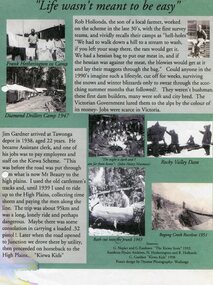
Posters – Set of 3 A4 posters depicting the early days and people in the Kiewa Valley
... adventures to be handed down to future generations. These 3 posters, which were most likely produced for promotional purposes provide a glimpse into the early lives of the pioneer families of the Kiewa Valley through pictures and verse. They show their lifestyle and outline the hardships they had to endure in living and working in the Alpine region. They also highlight the early arguments regarding grazing in the high ...In the 1830’s, European pastoralists started moving south from NSW into the Alps. In 1836, cattle grazing began around Omeo and the runs spread out into the foothills. The higher country was used for summer grazing and huts were built for shelter and storage during stock mustering. The lure of gold brought many people to the Alps from around 1850 to 1900. Bushfires destroyed the forests around Melbourne in 1939 and the boom in house-building after World War II ked to increased demand for timber from the Alps. This resulted in the building of a network of roads which helped open up access to the Alps. The early 1940’s brought the first of many workers to the Alps for the planning and construction of the Hydro-Electric Scheme. These were the pioneers and early settlers of the Kiewa Valley and provided a wealth of characters and a tapestry of stories and adventures to be handed down to future generations.These 3 posters, which were most likely produced for promotional purposes provide a glimpse into the early lives of the pioneer families of the Kiewa Valley through pictures and verse. They show their lifestyle and outline the hardships they had to endure in living and working in the Alpine region. They also highlight the early arguments regarding grazing in the high country which would ultimately lead to the end of the long traditions of the high country cattle men. Set of 3 A4 size posters with black and white photographs and text and colour background depicting various parts of the history of the Kiewa Valley. 1. Titled - ‘Life wasn’t meant to be easy’ Describes early life for Kiewa Hydro workers. 2. Titled - ‘Cattlemen of the High Plains’ Describes a brief history of life of the cattlemen of the high plains 3. Titled – ‘There are Places I’ll remember’ Depicts early photographs of residents of the Kiewa Valley, also includes the words from a John Lennon song as per poster title. Printed on each poster – Poster designed by Dyanne Photography - Wodonga 1. Printed at bottom of poster – Sources: G Napier and G Easdown “The Kiewa Story” 1993. Southern Hydro Archives, N Hetherington and R Hollands. G Gardner “The Kiewa Kids” 1998. 2. Printed at bottom of poster – Sources: D Purland. Handwritten at top of poster- Poster 4 3. Printed at bottom of poster – Sources: B Roper, W Davies, D Higginson, H Ryder. Handwritten at top of poster- Poster 3 kiewa valley; tourism; lifestyles -
 Uniting Church Archives - Synod of Victoria
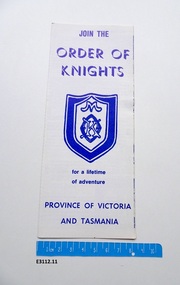
Pamphlet - Order of Knights Province of Victoria, Join the Order of Knights for a lifetime of adventure
... High Court regalia: Gold collar and purple sheild. General Court regalia: Purple collar and shield. Officers of the local courts wore their symbols as part of their regalia. Methodist Order of Knights E3112.11.1 - E3112.11.5 four-fold white paper information pamphlets with blue ink on the Order of Knights Province of Victoria and Tasmania. The pamphlets have the MOK emblem and four photographs. Join the Order of Knights for a lifetime of adventure ...The pamphlets contain information for prospective MOK candidates and includes membership requirements, Christian knigthood, activities, uniform and FAQs. The Methodist Order of Knights was the official youth organisation of the Methodist Church of Australasia. It originated in Hurstville, NSW, on the 4th October 1914 by the then Mr and later Rev Alex Bray. Alex Bray was a Sunday School teacher and spoke to his class of the Knights of the Round Table. In 1917 the Order of Knights was officially recognised by the Sunday School Dept of the NSW Methodist Conference. Courts spread thoroughout Australia. In 1927 the High Court of NSW called for designs for a badge and in 1929 the General Conference of the Methodist Church of Australasia recognised the Order as an approved Organisation. In 1938 the Senior Section was organised into Degrees of Sincerity, Service and Sacrifice; the Junior Section into Pages' Degree with advancement to Esquire. In 1954 the Junior Section was reorganised into two groups: Pages 8 to 11 years and Esquires 12 to 15 years. The Knight's Motto: "Live Pure, Speak True, Right Wrong, Follow Christ the King, else wherefore born?" Courts of the Order: General Conference Department of the Christian Education - General Court - Provincial High Court - District Court - Local Court - Senior Court - Intermediate Court - Junior Court . Regalia: All members of the Intermediate and Senior Courts wore regalia consisting of a cloth shield superimposed by a cross of light and dark blue ribbons, and supported by a cloth collar. Esquire and Degree of Sincerity regalia: White collar and white shield. Degree of Service regalia: Green collar and shield. Degree of Sacrifice: Scarlet collar and shield. District Court regalia: Blue collar and gold shield. High Court regalia: Gold collar and purple sheild. General Court regalia: Purple collar and shield. Officers of the local courts wore their symbols as part of their regalia. E3112.11.1 - E3112.11.5 four-fold white paper information pamphlets with blue ink on the Order of Knights Province of Victoria and Tasmania. The pamphlets have the MOK emblem and four photographs.methodist order of knights -
 Sunshine and District Historical Society Incorporated
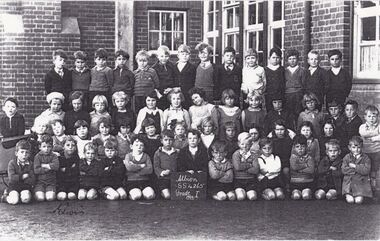
Photograph - Albion State School 1934 Class Photographs
... High' in all we do so that our students grow to be socially capable, reach their full academic potential and become caring, respectful community minded people. Albion Primary School is located in a residential area in Albion, a small pocket of the local government area of Brimbank, approximately 10 kilometres west of Melbourne and was established in 1926. Our current enrolment is 199 students. We have a rich cultural diversity amongst our school community. The school is set around a courtyard with spacious playing areas including a grassed oval, running track, games courts, an adventure ...The current school, Albion Primary School, No 4265 opened in 1926. It was built on a site once owned by John Fitzgerald (1850s). The land was later acquired by H. V. McKay who had transferred his Sunshine Harvester Works to the area in 1905 - 7. In 1920, the Albion railway station was moved nearer Ballarat Road at the request of Mr McKay. More people came to live in the area including soldier settlers.Albion Primary School's mission is to 'Aim High' in all we do so that our students grow to be socially capable, reach their full academic potential and become caring, respectful community minded people. Albion Primary School is located in a residential area in Albion, a small pocket of the local government area of Brimbank, approximately 10 kilometres west of Melbourne and was established in 1926. Our current enrolment is 199 students. We have a rich cultural diversity amongst our school community. The school is set around a courtyard with spacious playing areas including a grassed oval, running track, games courts, an adventure playground, sand pit, jumping pits, shady courtyard and garden areas, a vegetable garden and fruit tree orchard. As well as classroom groups, we have our learning teams, student house groups (siblings are allocated to the same house) and a Junior School Council. The school has four main buildings. All classrooms have air conditioning and interactive screens. Block A houses classrooms, staff areas and the administration offices. Our newest building has classrooms and some small group/office spaces. Block B includes our library, canteen and a multi-purpose room used for indoor physical education, Perceptual Motor Program, drama, visiting performers, and community activities. Block C houses classrooms and specialist rooms. We expect and receive the best from our students in terms of their learning and behaviour. The school’s dedicated and effective staff is strongly committed to helping students achieve personal, behavioural, social and academic success. In terms of learning, the highest priority is placed on the work in English and Mathematics. We also have a range of specialist and extra-curricular programs that we provide. Our specialist teacher-librarian is involved in reading extension programs that support development in literacy. All children are able to develop their artistic abilities through visual arts and music program. Our music program is supported by the Australian Children's Music Foundation. A specialist Physical Education teacher provides lessons for all children as well as the opportunity for students to participate in organised lunch time sporting competitions between the house groups. Auslan is the additional language all students learn at Albion. All children participate in a student wellbeing program that focuses on developing strong connections and a sense of belonging within the school. Our school student leaders participate in programs that help develop their leadership skills. 5100.01 - Albion State School 1934 Grade 1 5100.02 - Albion State School 1934 Grade 2 5100.04 - Albion State School 1934 Grade 4 5100.05 - Albion State School 1934 Grade 5 5100.06 - Albion State School 1934 Grade 6 albion state school, albion primary school, adelaide street, albion -
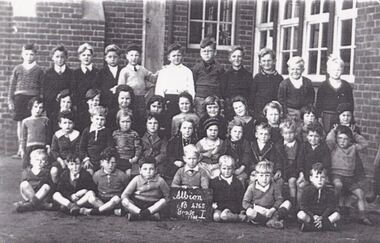 Sunshine and District Historical Society Incorporated
Photograph - Albion State School 1935 Class Photographs
... High' in all we do so that our students grow to be socially capable, reach their full academic potential and become caring, respectful community minded people. Albion Primary School is located in a residential area in Albion, a small pocket of the local government area of Brimbank, approximately 10 kilometres west of Melbourne and was established in 1926. Our current enrolment is 199 students. We have a rich cultural diversity amongst our school community. The school is set around a courtyard with spacious playing areas including a grassed oval, running track, games courts, an adventure ...The current school, Albion Primary School, No 4265 opened in 1926. It was built on a site once owned by John Fitzgerald (1850s). The land was later acquired by H. V. McKay who had transferred his Sunshine Harvester Works to the area in 1905 - 7. In 1920, the Albion railway station was moved nearer Ballarat Road at the request of Mr McKay. More people came to live in the area including soldier settlers.Albion Primary School's mission is to 'Aim High' in all we do so that our students grow to be socially capable, reach their full academic potential and become caring, respectful community minded people. Albion Primary School is located in a residential area in Albion, a small pocket of the local government area of Brimbank, approximately 10 kilometres west of Melbourne and was established in 1926. Our current enrolment is 199 students. We have a rich cultural diversity amongst our school community. The school is set around a courtyard with spacious playing areas including a grassed oval, running track, games courts, an adventure playground, sand pit, jumping pits, shady courtyard and garden areas, a vegetable garden and fruit tree orchard. As well as classroom groups, we have our learning teams, student house groups (siblings are allocated to the same house) and a Junior School Council. The school has four main buildings. All classrooms have air conditioning and interactive screens. Block A houses classrooms, staff areas and the administration offices. Our newest building has classrooms and some small group/office spaces. Block B includes our library, canteen and a multi-purpose room used for indoor physical education, Perceptual Motor Program, drama, visiting performers, and community activities. Block C houses classrooms and specialist rooms. We expect and receive the best from our students in terms of their learning and behaviour. The school’s dedicated and effective staff is strongly committed to helping students achieve personal, behavioural, social and academic success. In terms of learning, the highest priority is placed on the work in English and Mathematics. We also have a range of specialist and extra-curricular programs that we provide. Our specialist teacher-librarian is involved in reading extension programs that support development in literacy. All children are able to develop their artistic abilities through visual arts and music program. Our music program is supported by the Australian Children's Music Foundation. A specialist Physical Education teacher provides lessons for all children as well as the opportunity for students to participate in organised lunch time sporting competitions between the house groups. Auslan is the additional language all students learn at Albion. All children participate in a student wellbeing program that focuses on developing strong connections and a sense of belonging within the school. Our school student leaders participate in programs that help develop their leadership skills. 5101.01 - Albion State School 1935 Grade 1 5101.02 - Albion State School 1935 Grade 2 5101.04 - Albion State School 1935 Grade 4 5101.05 - Albion State School 1935 Grade 5 albion state school, albion primary school, adelaide street, albion -
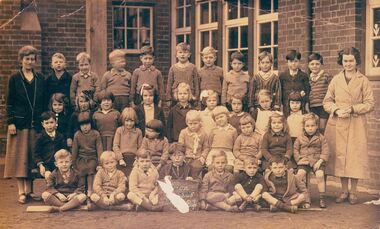 Sunshine and District Historical Society Incorporated
Photograph - Albion State School 1936 Class Photographs
... High' in all we do so that our students grow to be socially capable, reach their full academic potential and become caring, respectful community minded people. Albion Primary School is located in a residential area in Albion, a small pocket of the local government area of Brimbank, approximately 10 kilometres west of Melbourne and was established in 1926. Our current enrolment is 199 students. We have a rich cultural diversity amongst our school community. The school is set around a courtyard with spacious playing areas including a grassed oval, running track, games courts, an adventure ...The current school, Albion Primary School, No 4265 opened in 1926. It was built on a site once owned by John Fitzgerald (1850s). The land was later acquired by H. V. McKay who had transferred his Sunshine Harvester Works to the area in 1905 - 7. In 1920, the Albion railway station was moved nearer Ballarat Road at the request of Mr McKay. More people came to live in the area including soldier settlers.Albion Primary School's mission is to 'Aim High' in all we do so that our students grow to be socially capable, reach their full academic potential and become caring, respectful community minded people. Albion Primary School is located in a residential area in Albion, a small pocket of the local government area of Brimbank, approximately 10 kilometres west of Melbourne and was established in 1926. Our current enrolment is 199 students. We have a rich cultural diversity amongst our school community. The school is set around a courtyard with spacious playing areas including a grassed oval, running track, games courts, an adventure playground, sand pit, jumping pits, shady courtyard and garden areas, a vegetable garden and fruit tree orchard. As well as classroom groups, we have our learning teams, student house groups (siblings are allocated to the same house) and a Junior School Council. The school has four main buildings. All classrooms have air conditioning and interactive screens. Block A houses classrooms, staff areas and the administration offices. Our newest building has classrooms and some small group/office spaces. Block B includes our library, canteen and a multi-purpose room used for indoor physical education, Perceptual Motor Program, drama, visiting performers, and community activities. Block C houses classrooms and specialist rooms. We expect and receive the best from our students in terms of their learning and behaviour. The school’s dedicated and effective staff is strongly committed to helping students achieve personal, behavioural, social and academic success. In terms of learning, the highest priority is placed on the work in English and Mathematics. We also have a range of specialist and extra-curricular programs that we provide. Our specialist teacher-librarian is involved in reading extension programs that support development in literacy. All children are able to develop their artistic abilities through visual arts and music program. Our music program is supported by the Australian Children's Music Foundation. A specialist Physical Education teacher provides lessons for all children as well as the opportunity for students to participate in organised lunch time sporting competitions between the house groups. Auslan is the additional language all students learn at Albion. All children participate in a student wellbeing program that focuses on developing strong connections and a sense of belonging within the school. Our school student leaders participate in programs that help develop their leadership skills. 5102.01 - Albion State School 1936 Grade 1 and 2 5102.04 - Albion State School 1936 Grade 4 5102.05 - Albion State School 1936 Grade 5 and 6 5102.07 - Albion State School 1936 Prep 5102.07 - Albion State School 1936 Prep Names Back Row L2R Miss Catt Albert Powerlett Ron Masson Don Powerlett Keith Rarborough Unknown Unknown Geoff Affleck Unknown Eddie Penierici Alan Jenkins Miss White 2nd Row L2R Josie Gahan Elaine Wilson Vilma Hayes Unknown Joy Fisher Unknown Margaret Baker Evelyn Whitcombe Mavis Cameron 3rd Row L2R Bobby Hodge Pat Baker June Richards Unknown Pat Robinson Mary Hall Shirley Black Beryl Phillips George Thomas Front Row L2R Brian Allen Les Trickey Unknown Kevin James Albert Hayden Howard Stephens Syd Smith 5102.08 - Albion State School 1936 Staff 5102.08 - Albion State School 1936 Staff Names Rear L2R Mr Bern Hovenden Student Teacher PT Grade 3 Miss Molly Brink Grade 5 Mr Hee Wood Student Teacher PT Grade 3 Miss Nanny White Preps and Grade 1 Seated L2R Miss Holly North Infant Mistress Grade 2 Mr George Polson Head Teacher Grade 6 Miss Eileen Lennox Grade 4 albion state school, albion primary school, adelaide street, albion -
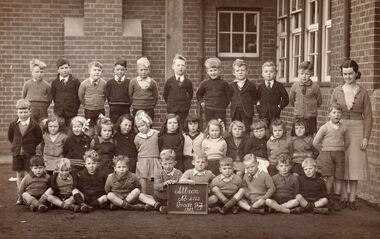 Sunshine and District Historical Society Incorporated
Photograph - Albion State School 1937 Class Photographs
... High' in all we do so that our students grow to be socially capable, reach their full academic potential and become caring, respectful community minded people. Albion Primary School is located in a residential area in Albion, a small pocket of the local government area of Brimbank, approximately 10 kilometres west of Melbourne and was established in 1926. Our current enrolment is 199 students. We have a rich cultural diversity amongst our school community. The school is set around a courtyard with spacious playing areas including a grassed oval, running track, games courts, an adventure ...The current school, Albion Primary School, No 4265 opened in 1926. It was built on a site once owned by John Fitzgerald (1850s). The land was later acquired by H. V. McKay who had transferred his Sunshine Harvester Works to the area in 1905 - 7. In 1920, the Albion railway station was moved nearer Ballarat Road at the request of Mr McKay. More people came to live in the area including soldier settlers.Albion Primary School's mission is to 'Aim High' in all we do so that our students grow to be socially capable, reach their full academic potential and become caring, respectful community minded people. Albion Primary School is located in a residential area in Albion, a small pocket of the local government area of Brimbank, approximately 10 kilometres west of Melbourne and was established in 1926. Our current enrolment is 199 students. We have a rich cultural diversity amongst our school community. The school is set around a courtyard with spacious playing areas including a grassed oval, running track, games courts, an adventure playground, sand pit, jumping pits, shady courtyard and garden areas, a vegetable garden and fruit tree orchard. As well as classroom groups, we have our learning teams, student house groups (siblings are allocated to the same house) and a Junior School Council. The school has four main buildings. All classrooms have air conditioning and interactive screens. Block A houses classrooms, staff areas and the administration offices. Our newest building has classrooms and some small group/office spaces. Block B includes our library, canteen and a multi-purpose room used for indoor physical education, Perceptual Motor Program, drama, visiting performers, and community activities. Block C houses classrooms and specialist rooms. We expect and receive the best from our students in terms of their learning and behaviour. The school’s dedicated and effective staff is strongly committed to helping students achieve personal, behavioural, social and academic success. In terms of learning, the highest priority is placed on the work in English and Mathematics. We also have a range of specialist and extra-curricular programs that we provide. Our specialist teacher-librarian is involved in reading extension programs that support development in literacy. All children are able to develop their artistic abilities through visual arts and music program. Our music program is supported by the Australian Children's Music Foundation. A specialist Physical Education teacher provides lessons for all children as well as the opportunity for students to participate in organised lunch time sporting competitions between the house groups. Auslan is the additional language all students learn at Albion. All children participate in a student wellbeing program that focuses on developing strong connections and a sense of belonging within the school. Our school student leaders participate in programs that help develop their leadership skills. 5103.01 - Albion State School 1937 Grade 1 and 2 5103.01 - Albion State School 1937 Grade 1 and 2 Names Back Row L2R Unknown George Unknown Bill Dickie Keith Narborough Wally Lawrence Kevin James John Hall Unknown Barry McKay Bertie Noble 2nd Row L2R Eddite Penterick Jean Duncan Josie Gahan Elaine Wilson Lorraine Brown Joy Fisher Beth Powell Vilma Hayes Mavis Cameron Albert Powerlett 3rd Row L2R Les Trickey Cynthia Strachan Beryl Phillips Joan Unknown Dorothy Long Margaret Baker Val Doherty Pat Robinson Brian Allen Front Row L2R Jan Mollison Alan Cockrane Syd Smith Ron Masson Alan Jenkins Graeme Lee Keith Reyland Unknown Unknown Alf Richer 5103.02 - Albion State School 1937 Grade 3 4 5103.03 - Albion State School 1937 Grade 5 6 5103.03 - Albion State School 1937 Grade 5 6 Names Back Row L2R Gordon Durham Harry Rhodes Ron Afflick Gordon Barnard Victor Weaver Ivan McBride Eric McKenzie Don Durham Eric Wegdon Jack McKay Jack Trickey 2nd Row L2R John Scott Cecelia Kellett Joan Montgomery Eileen Jenkins Lorraine Gorman Phyllis Mills Iris Hall Laura Narborough Marie Keogh Betty Shuffery Patricia Hayden Norma Close 3rd Row L2R May Schleebs Pat Mollison Mary Cockeraine Thelma Washington Doris Marchant Hilda Thomas Elizabeth Foxcroft Heather Gorman Shirley Hayes Marjory Thompson Dorothy Lowe Bonnie Dickie Mavis Judd Judith Powell Bernard Doherty 4th Row L2R Gordon Paton Sam Maloney Ken Barnard Austin Cairns Gerald Pemberton Billy Clark Bill Markham Maurice Canlishaver Bobby Dean Ivan Lowe Malcolm Cockrane Dexter Turner John Machin Front Row L2R Ken Pearce Don Jackson Ronny Stevens Jack Phelp Dick Hodge Keith Higgins Drummond Perkins Edwin MacMurray Ernie McBridge Keith Block Billy Lawson Brian Wright Peter Stuart Headmaster Mr Roach Teacher Miss Ashford 5103.04 - Albion State School 1937 Prep 5103.04 - Albion State School 1937 Prep Names Back Row L2R Ken Brown Les Heffer Ian Stephenson Geoff Afflick Unknown Unknown Jim Sutherland Unknown Ian McBean Doug Pyers Peter Buckingham Centre Row L2R Unknown Leila Heffer Celia Banks Unknown Unknown Mary Hall June Markham Heather Neish Bev Mollison June White Shirley Black Unknown Leila Heffer Bill Wilson Miss White Front Row L2R Roy Paton Ron Hill Laurie Mottin George Thomas Don Powlett Albert Hayden Unknown Max Richer Unknown Unknown 5103.05 - Albion State School 1937 Inspectors Report on Miss Catt albion state school, albion primary school, adelaide street, albion -
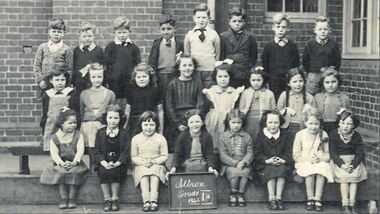 Sunshine and District Historical Society Incorporated
Photograph - Albion State School 1946 Class Photographs
... High' in all we do so that our students grow to be socially capable, reach their full academic potential and become caring, respectful community minded people. Albion Primary School is located in a residential area in Albion, a small pocket of the local government area of Brimbank, approximately 10 kilometres west of Melbourne and was established in 1926. Our current enrolment is 199 students. We have a rich cultural diversity amongst our school community. The school is set around a courtyard with spacious playing areas including a grassed oval, running track, games courts, an adventure ...The current school, Albion Primary School, No 4265 opened in 1926. It was built on a site once owned by John Fitzgerald (1850s). The land was later acquired by H. V. McKay who had transferred his Sunshine Harvester Works to the area in 1905 - 7. In 1920, the Albion railway station was moved nearer Ballarat Road at the request of Mr McKay. More people came to live in the area including soldier settlers.Albion Primary School's mission is to 'Aim High' in all we do so that our students grow to be socially capable, reach their full academic potential and become caring, respectful community minded people. Albion Primary School is located in a residential area in Albion, a small pocket of the local government area of Brimbank, approximately 10 kilometres west of Melbourne and was established in 1926. Our current enrolment is 199 students. We have a rich cultural diversity amongst our school community. The school is set around a courtyard with spacious playing areas including a grassed oval, running track, games courts, an adventure playground, sand pit, jumping pits, shady courtyard and garden areas, a vegetable garden and fruit tree orchard. As well as classroom groups, we have our learning teams, student house groups (siblings are allocated to the same house) and a Junior School Council. The school has four main buildings. All classrooms have air conditioning and interactive screens. Block A houses classrooms, staff areas and the administration offices. Our newest building has classrooms and some small group/office spaces. Block B includes our library, canteen and a multi-purpose room used for indoor physical education, Perceptual Motor Program, drama, visiting performers, and community activities. Block C houses classrooms and specialist rooms. We expect and receive the best from our students in terms of their learning and behaviour. The school’s dedicated and effective staff is strongly committed to helping students achieve personal, behavioural, social and academic success. In terms of learning, the highest priority is placed on the work in English and Mathematics. We also have a range of specialist and extra-curricular programs that we provide. Our specialist teacher-librarian is involved in reading extension programs that support development in literacy. All children are able to develop their artistic abilities through visual arts and music program. Our music program is supported by the Australian Children's Music Foundation. A specialist Physical Education teacher provides lessons for all children as well as the opportunity for students to participate in organised lunch time sporting competitions between the house groups. Auslan is the additional language all students learn at Albion. All children participate in a student wellbeing program that focuses on developing strong connections and a sense of belonging within the school. Our school student leaders participate in programs that help develop their leadership skills. 5104.01 - Albion State School 1946 Grade 1A 5104.02 - Albion State School 1946 Grade 3 4 5104.03 - Albion State School 1946 Grade 5 5104.04 - Albion State School 1946 Grade 6 5104.04 - Albion State School 1946 Grade 6 Names Back Row L2R Max Anderson Leon Clemson Reg Ayton George Baxter Ian Teague Bill Bonner Colin Phillips Allan Pearce 2nd Row L2R Judith Bonner Betty Montgomery Lena Brown Pam Carver Unknown Valerie Munro Dora Presser 3rd Row L2R Ann Clues Joan Boorer Pam Scrivener Valma Hawker Marjorie Lewis Front Row L2R Dick Duggan Ray Briggs Kevin James Ron Cameronalbion state school, albion primary school, adelaide street, albion
