
Showing 160 items matching "international competition"
-
 National Wool Museum
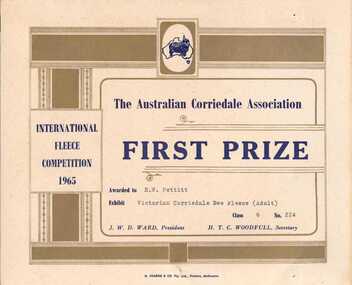
Certificate - International Fleece Competition, H. Hearne & Co Pty Ltd, 1965
... International Fleece Competition...First Prize certificate for the Australian Corriedale Association, International Fleece Competition 1965, awarded to R W Pettitt for the Victorian Corriedale Ewe Fleece (Adult) Class 6 No 224....Front: [printed] The Australian Corriedale Association / FIRST PRIZE / INTERNATIONAL / FLEECE / COMPETITION / 1965 / Awarded to R. ...Certificate International Fleece Competition H. Hearne & Co Pty Ltd Australian Corriedale Association ...First Prize certificate for the Australian Corriedale Association, International Fleece Competition 1965, awarded to R W Pettitt for the Victorian Corriedale Ewe Fleece (Adult) Class 6 No 224.Certificate featuring printed dark blue and gold text and graphics. Front: [printed] The Australian Corriedale Association / FIRST PRIZE / INTERNATIONAL / FLEECE / COMPETITION / 1965 / Awarded to R. W. Pettitt / Exhibit Victorian Corriedale Ewe Fleece (Adult) / Class 6 No. 224 / J. W. D. WARD, President / H. T. C. WOODFULL, Secretary / H. HEARNE & CO. Pty. Ltd., Printers, Melbourne.corriedale sheep sheep breeding agricultural shows, australian corriedale association, pettitt, mr r. w., corriedale sheep, sheep breeding, agricultural shows -
 National Wool Museum
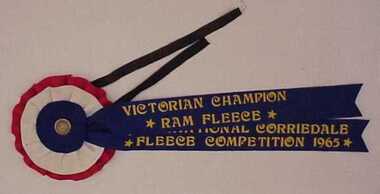
Rosette, Victorian Champion Ram Fleece: International Corriedale Competition 1965
... Victorian Champion Ram Fleece: International Corriedale Competition 1965...Red white and blue felt trophy rosette, International Corriedale Fleece Competition, 1965, and Victorian Champion Ram Fleece, presented to Stanbury Coriedale Stud, R EWettenhall...INTERNATIONAL CORRIEDALE FLEECE COMPETITION 1965 VICTORIAN CHAMPION RAM FLEECE...Wettenhall Mrs Janet Victoria Corriedale sheep Sheep breeding Agricultural shows INTERNATIONAL CORRIEDALE FLEECE COMPETITION 1965 VICTORIAN CHAMPION RAM FLEECE Victorian Champion Ram Fleece: International Corriedale Competition 1965 Rosette ...Red white and blue felt trophy rosette, International Corriedale Fleece Competition, 1965, and Victorian Champion Ram Fleece, presented to Stanbury Coriedale Stud, R EWettenhallINTERNATIONAL CORRIEDALE FLEECE COMPETITION 1965 VICTORIAN CHAMPION RAM FLEECEcorriedale sheep sheep breeding agricultural shows, stanbury corriedale stud, wettenhall, mr rupert e. wettenhall, mrs janet, victoria, corriedale sheep, sheep breeding, agricultural shows -
 National Wool Museum
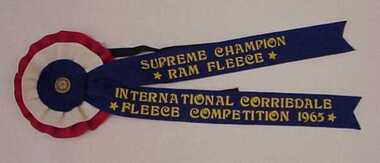
Rosette, Supreme Champion Ram Fleece: International Corriedale Competition 1965
... Supreme Champion Ram Fleece: International Corriedale Competition 1965...Red white and blue felt trophy rosette, International Corriedale Fleece Competition, 1965, and Supreme Champion Ram Fleece, presented to the Stanbury Coriedale Stud, R EWettenhall....INTERNATIONAL CORRIEDALE FLEECE COMPETITION 1965 SUPREME CHAMPION RAM FLEECE...Wettenhall Mrs Janet Victoria Corriedale sheep Sheep breeding Agricultural shows INTERNATIONAL CORRIEDALE FLEECE COMPETITION 1965 SUPREME CHAMPION RAM FLEECE Supreme Champion Ram Fleece: International Corriedale Competition 1965 Rosette ...Red white and blue felt trophy rosette, International Corriedale Fleece Competition, 1965, and Supreme Champion Ram Fleece, presented to the Stanbury Coriedale Stud, R EWettenhall.INTERNATIONAL CORRIEDALE FLEECE COMPETITION 1965 SUPREME CHAMPION RAM FLEECEcorriedale sheep sheep breeding agricultural shows, stanbury corriedale stud, wettenhall, mr rupert e. wettenhall, mrs janet, victoria, corriedale sheep, sheep breeding, agricultural shows -
 National Wool Museum
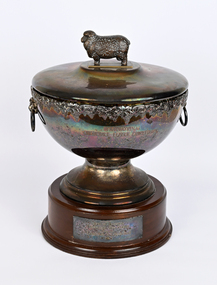
Award - International Corriedale Fleece Competition Champion Cup, 1965
... International Corriedale Fleece Competition Champion Cup...INTERNATIONAL / CORRIEDALE FLEECE COMPETITION SUPREME CHAMPION / CORRIEDALE RAM FLEECE /WON BY ESTATE LATE R E WETTENHALL / 1965...Award International Corriedale Fleece Competition Champion Cup ...The Wettenhall family were well known sheep breeders. The family owned the "Stanbury" corriedale stud at Ceres.Silver plated trophy cup, large, with a lid and on a wooden base. The cup has grape and vine decoration to edge of lip, two ringed handles with lion head attachment. The plain lid has bronze caste ram as a finial. The base is turned wood with felt runner. The cup is engraved and the base has an engraved silver plaque.INTERNATIONAL / CORRIEDALE FLEECE COMPETITION SUPREME CHAMPION / CORRIEDALE RAM FLEECE /WON BY ESTATE LATE R E WETTENHALL / 1965sheep breeding corriedale studs agricultural shows, stanbury corriedale stud, wettenhall, mr rupert e., sheep breeding, corriedale studs, agricultural shows, awards, cups, breeding, agriculture, stanbury -
 National Wool Museum
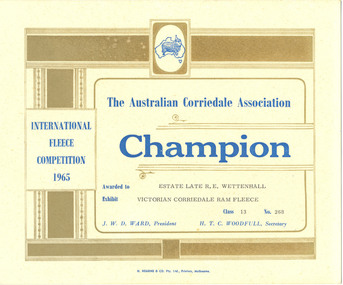
Certificate, The Australian Corriedale Association: Champion - International Fleece Competition 1965
... The Australian Corriedale Association: Champion - International Fleece Competition 1965...Sheep breeding Corriedale Studs Agricultural shows Stanbury Corriedale Stud Australian Corriedale Association Sheep breeding Corriedale Studs Agricultural shows ESTATE LATE R E WETTENHALL/ VICTORIAN CORRIEDALE RAM FLEECE/ 13/ 268 The Australian Corriedale Association: Champion - International Fleece Competition 1965 Certificate ...The Wettenhall family were well known sheep breeders. The family owned the "Stanbury" corriedale stud at Ceres.ESTATE LATE R E WETTENHALL/ VICTORIAN CORRIEDALE RAM FLEECE/ 13/ 268sheep breeding corriedale studs agricultural shows, stanbury corriedale stud australian corriedale association, sheep breeding, corriedale studs, agricultural shows -
 National Wool Museum
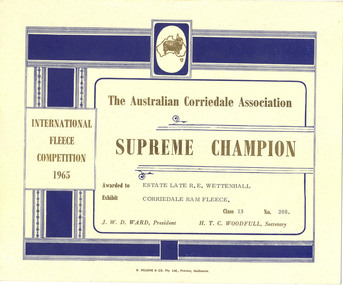
Certificate, The Australian Corriedale Association: Supreme Champion - International Fleece Competition 1965
... The Australian Corriedale Association: Supreme Champion - International Fleece Competition 1965...Sheep breeding Corriedale Studs Agricultural shows Stanbury Corriedale Stud Australian Corriedale Association Sheep breeding Corriedale Studs Agricultural shows ESTATE LATE R E WETTENHALL/ VICTORIAN CORRIEDALE RAM FLEECE/ 13/ 268 The Australian Corriedale Association: Supreme Champion - International Fleece Competition 1965 Certificate ...The Wettenhall family were well known sheep breeders. The family owned the "Stanbury" corriedale stud at Ceres.ESTATE LATE R E WETTENHALL/ VICTORIAN CORRIEDALE RAM FLEECE/ 13/ 268sheep breeding corriedale studs agricultural shows, stanbury corriedale stud australian corriedale association, sheep breeding, corriedale studs, agricultural shows -
 National Wool Museum
Ribbon
... Blue trophy ribbon, International Corriedale Fleece Competition, 1965, presented to Mr R W Pettitt....INTERNATIONAL CORRIEDALE FLEECE COMPETITION 1965...Blue trophy ribbon, International Corriedale Fleece Competition, 1965, presented to Mr R W Pettitt. ...Blue trophy ribbon, International Corriedale Fleece Competition, 1965, presented to Mr R W Pettitt.INTERNATIONAL CORRIEDALE FLEECE COMPETITION 1965corriedale sheep sheep breeding agricultural shows, australian corriedale association, pettitt, mr r. w., corriedale sheep, sheep breeding, agricultural shows -
 National Wool Museum
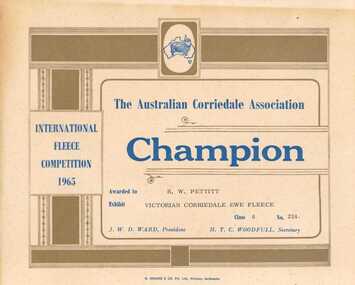
Certificate
... Champion certificate for the Australian Corriedale Association, International Fleece Competition 1965 awarded to R W Pettitt for the Victorian Corriedale Ewe Fleece Class 6 No 224...Certificate for Champion in the International Fleece Competition, Australian Corriedale Association. ...Champion certificate for the Australian Corriedale Association, International Fleece Competition 1965 awarded to R W Pettitt for the Victorian Corriedale Ewe Fleece Class 6 No 224 Corriedale sheep Sheep breeding Agricultural shows Australian Corriedale Association Pettitt Mr R. ...Champion certificate for the Australian Corriedale Association, International Fleece Competition 1965 awarded to R W Pettitt for the Victorian Corriedale Ewe Fleece Class 6 No 224Certificate for Champion in the International Fleece Competition, Australian Corriedale Association. Won by Mr R.W. Pettitt's corriedale ewe fleece, 1965.R W Pettitt/Victorian Corriedale Ewe Fleee/ 6/224corriedale sheep sheep breeding agricultural shows, australian corriedale association, pettitt, mr r. w., corriedale sheep, sheep breeding, agricultural shows -
 Galen Catholic College
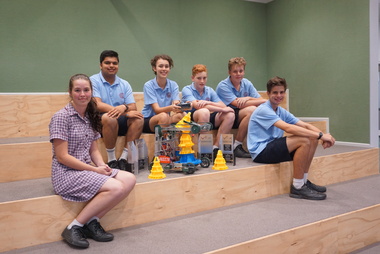
Vex Robotics Team, 2018
... ...International Competition...Galen Catholic College Galen College VEX Robotics Robotics Inter-school International Competition 2018 Vex Robotics Team, 2018 Vex Robotics Team, 2018 ...galen catholic college, galen college, vex robotics, robotics, inter-school, international competition, 2018 -
 National Wool Museum
Score Card
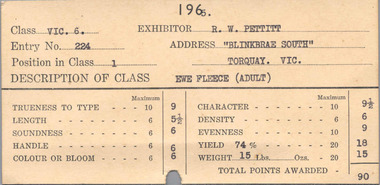
... Score card for the Australian Corriedale Association, International Fleece Competition 1965 for a fleece No 224,entered by R W Pettitt in the Victorian Corriedale Ewe Fleece (Adult) Class 6. ...Pettitt's corriedale ewe fleece entered into the 1965 International Fleece Competition, Australian Corriedale Association. ...Score card for the Australian Corriedale Association, International Fleece Competition 1965 for a fleece No 224,entered by R W Pettitt in the Victorian Corriedale Ewe Fleece (Adult) Class 6. ...Score card for the Australian Corriedale Association, International Fleece Competition 1965 for a fleece No 224,entered by R W Pettitt in the Victorian Corriedale Ewe Fleece (Adult) Class 6. This card was for the winnning fleece.Score card for Mr R.W. Pettitt's corriedale ewe fleece entered into the 1965 International Fleece Competition, Australian Corriedale Association. The fleece was champion and first prize winner.1965/ VIC.6./224/1/R W PETTITT/"BLINKBRAE SUTH"/ TORQUAY, VIC/ EWE FLECE (ADULT)corriedale sheep sheep breeding agricultural shows, australian corriedale association, pettitt, mr r. w., corriedale sheep, sheep breeding, agricultural shows -
National Wool Museum
Rosette
... Red white and blue felt trophy rosette, International Corriedale Fleece Competition, 1965, and Victorian Champion Ewe Fleece, presented to Mr R W Pettitt....INTERNATIONAL CORRIEDALE FLEECE COMPETITION 1965 VICTORIAN CHAMPION EWE FLEECE...Red white and blue felt trophy rosette, International Corriedale Fleece Competition, 1965, and Victorian Champion Ewe Fleece, presented to Mr R W Pettitt. ...Red white and blue felt trophy rosette, International Corriedale Fleece Competition, 1965, and Victorian Champion Ewe Fleece, presented to Mr R W Pettitt.INTERNATIONAL CORRIEDALE FLEECE COMPETITION 1965 VICTORIAN CHAMPION EWE FLEECEcorriedale sheep sheep breeding agricultural shows, australian corriedale association, pettitt, mr r. w., corriedale sheep, sheep breeding, agricultural shows -
 National Wool Museum
Tray
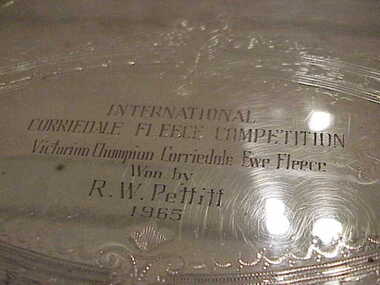
... Detail of inscription on silver plated presentation tray: "International Corriedale Fleece Competition Victorian Champion Corriedale Ewe Fleece Won by R.W. ...INTERNATIONAL / CORRIEDALE FLEECE COMPETITION / Victorian Champion Corriedale Ewe Fleece / Won by / R.W. ...Competition in 1965. Mr Pettitt was a breeder and judge of corriedales for many years. Pettitt Mr R. W. INTERNATIONAL ...Trophy won by the donor, Mr R.W. Pettitt, for the Victorian Champion Corriedale Ewe fleece in the Internation Corriedale Fleece Competition in 1965. Mr Pettitt was a breeder and judge of corriedales for many years.Detail of inscription on silver plated presentation tray: "International Corriedale Fleece Competition Victorian Champion Corriedale Ewe Fleece Won by R.W. Pettitt 1965" Tray, silver plated. Presented to R.W. Pettitt, 1965, for the Victorian Champion Corriedale Ewe Fleece, International Corriedale Fleece Competition.INTERNATIONAL / CORRIEDALE FLEECE COMPETITION / Victorian Champion Corriedale Ewe Fleece / Won by / R.W. Pettitt / 1965 SILVER PLATED / MADE IN ENGLAND / 8921 Proudspettitt, mr r. w. -
 Robin Boyd Foundation
Document - Manuscript, Robin Boyd, The Vision and the Anger, 1965
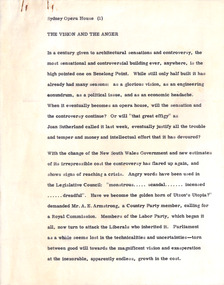
... ... International Architecture Competition...Jorn Utzon Sydney Opera House Sydney Opera House Project International Architecture Competition Cost of building robin boyd manuscript Typewritten, quarto, 10 pages The Vision and the Anger Document Manuscript Robin Boyd ...Piece discussing and defending the construction of the Sydney Opera House and Jorn Utzon. Boyd recounts how the impatience of Sydney and necessity to show the progress of the building have resulted in premature construction and inflation of the cost. Piece ends with questioning whether the Opera House will be worth it. A copy of the published article was in the Sydney Opera House scrapbook in the desk cupboard (item P1378.19).Original manuscript of an article published in The Australian on 18.09.1965. This is the first part of a three part series called 'This Opera House' published 18th, 19th and 21st September 1965 (see D175 and D176).Typewritten, quarto, 10 pagesjorn utzon, sydney opera house, sydney opera house project, international architecture competition, cost of building, robin boyd, manuscript -
 Robin Boyd Foundation
Document - Manuscript, Robin Boyd, Sydney, The Reluctant Patron, 1965
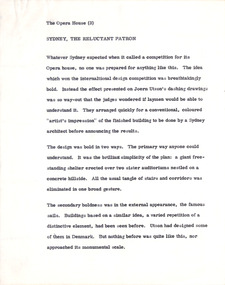
... International Architecture Competition...This is the third part of a three part series called 'This Opera House' published 18th, 19th and 21st September 1965 (see D174 and D175). International Architecture Competition Utzon Sydney Opera House Sydney Opera House Project Cost of Building robin boyd manuscript Typewritten, quarto, 8 pages Sydney, The Reluctant Patron Document Manuscript Robin Boyd ...Article questioning the assessment of the success of the Sydney Opera House by three main categories: will it work; artistically, is the vision exciting; what does the project do for Australian culture? Article concludes that the true worth of the Sydney Opera House is in its audacity, presence on the global stage, and its patronage to the arts. A copy of the published article was in the Sydney Opera House scrapbook in the desk cupboard (item P1378.21).Original manuscript of an article published in The Australian on 21.09.1965. This is the third part of a three part series called 'This Opera House' published 18th, 19th and 21st September 1965 (see D174 and D175).Typewritten, quarto, 8 pagesinternational architecture competition, utzon, sydney opera house, sydney opera house project, cost of building, robin boyd, manuscript -
 Eltham District Historical Society Inc
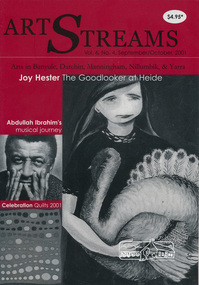
Journal, Peter Doughtery, ArtStreams: News in Banyule, Darebin, Manningham, Nillumbik & Yarra; Vol. 6, No. 4, Sep-Oct 2001, 2001
... Melboune International Chamber Music Competition...." - Eltham District Historical Society Newsletter No. 161, March 2005 art streams Andy Ingham Nina Christesen Abdullah Ibrahim Nillumbik art in Public Places Award Banyule winter festival Joy Hester heide museum of modern art Seren Little Sophie Avgoulis Plenty Views Golf Park Dynamic Vegies Montsalvat Banyule Young Artists Award kyla jane hunt perin roberts smith jonathon woods laura hassaram lisa o'gorman quilts gerry smith dunmoochin mandy hayley Kinglake Gallery Eltham Wiregrass Gallery Bundoora Homestead bulleen art & garden centre Melboune International Chamber Music Competition Thompson's Pharmacy Colour front and back cover with feature articles and literary pieces with photographs and advertisements printed in black and white. 36 pages, 30 cm. ...Vol. 6, No. 4, Sep-Oct 2001 CONTENTS Vale Andy Ingham and Nina Christensen 2 What is this thing called jazz 3 Abdullah Ibrahim's musical journey Joy Hester The Goodlooker at Heide 8 A Sense of Place 10 Seren Little on the art of Peter Block Homecoming 12 Short Story by Sophie Avgoulis Banyule Young Artists Award 17 The winners for 2001 Australian Classical Music 20 Elizabeth Scarlett Celebration Quilts 2001 21 Gerry Smith Dumnoochin 22 History goes up in smoke by Mandy Haley Bundoora Homestead 23 From Horse Stud to Art Gallery Wildflowers of Victoria 25 Book Review by Gwen Ford CD Reviews 26 Cate Bailey, Andrew MacGregor, Judy Turner ARTIN' ABOUT 27 Wining & Dining 30 Poetry in motion 32 Sandy Jeffs plays tennis "Peter Dougherty has been involved in the local art scene for many years. As publisher and editor of the arts magazine Artstreams, his comments on the various branches of the arts are widely respected. His "The Arts" column in the Diamond Valley Leader presents a brief summary for a much wider cross section of the local community. Peter also operates his own gallery and the Artstreams Cafe at the St Andrews market. Peter has a wealth of knowledge about present day and historical aspects of local art and artists." - Eltham District Historical Society Newsletter No. 161, March 2005Colour front and back cover with feature articles and literary pieces with photographs and advertisements printed in black and white. 36 pages, 30 cm. Vol. 1, no. 1 (Nov. 1996) - Vol. 10, no. 5 (summer ed. 2005/06) art streams, andy ingham, nina christesen, abdullah ibrahim, nillumbik art in public places award, banyule winter festival, joy hester, heide museum of modern art, seren little, sophie avgoulis, plenty views golf park, dynamic vegies, montsalvat, banyule young artists award, kyla jane hunt, perin roberts smith, jonathon woods, laura hassaram, lisa o'gorman, quilts, gerry smith, dunmoochin, mandy hayley, kinglake gallery, eltham wiregrass gallery, bundoora homestead, bulleen art & garden centre, melboune international chamber music competition, thompson's pharmacy -
Clunes Museum
Instrument - CORNET, CASE AND ACCESSORIES
... This instrument was played in many international competitions outside of Australia. Locally this cornet was played by Mr. ...This instrument was played in many international competitions outside of Australia. Locally this cornet was played by Mr. ...This instrument was played in many international competitions outside of Australia. Locally this cornet was played by Mr. Stewart Dunn of Angus Street, Clunes, during the 1930's Mr. Roberts played with the Clunes Brass Band for 35 years and in 1908 was presented with a hot water kettle in recognition of his service to the band. BRASS CORNET, BLACK WOODEN CASE AND CORNET ACCESSORIES, (9 Pieces in Total) BELONGED TO MR. JOSEPH TIPPET ROBERTS, DUKE OF EDINBURGH HOTEL, FRASER STREET, CLUNESEN ARGENT ANTOINE COURTOIS & MILLE MILLE SEN. FACTEUR DU CONSERVATOIRE NATIONAL 88 RIE DES MARAIS ST MARTIN PARIS 1ST. PRIX ECT.brass musical instrument, clunes brass band -
 Kiewa Valley Historical Society
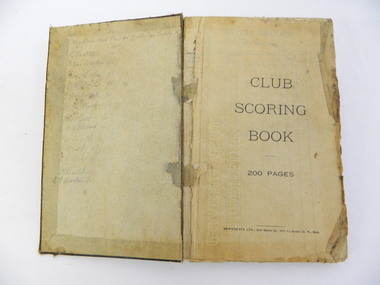
Book - Kiewa Valley Rifle Club, Club Scoring Book
... In 1876, an Australian Rifle Team, consisting of shooters from N.S.W. and Victoria was the first team ever to officially represent Australia in any sport in international competition. In 1885, the first civilian Rifle Club was formed. ...In 1876, an Australian Rifle Team, consisting of shooters from N.S.W. and Victoria was the first team ever to officially represent Australia in any sport in international competition. In 1885, the first civilian Rifle Club was formed. ...The Kiewa Valley Rifle Club belonged to the Australian Rifle Clubs. They were in the Military District No. 304 and operated as early as the 1920's. In 1876, an Australian Rifle Team, consisting of shooters from N.S.W. and Victoria was the first team ever to officially represent Australia in any sport in international competition. In 1885, the first civilian Rifle Club was formed. In 1921 they were reconstituted as a purely civilian organisation where they have remained ever since.This scoring book is evidence that the Kiewa Valley Rifle Club existed from the 1930's, enabling its members to participate in a sport that had 12232 members and 313 Rifle Clubs in Victoria by 1939.Hard covered dark brown book with very yellowed pages that have come away from the spine. It has 200 pages titled "Match Record" with only about the first 40 filled in in ink with names and scores.The entries date from 1932 to 1937Inside front cover "Members that paid for Bulls Eye Trophy" followed by a list of 13 - very faint.kiewa valley. rifle. club. community. -
 Robin Boyd Foundation
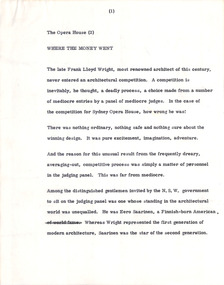
Document - Manuscript, Robin Boyd, Where the Money Went, 1965
... Account of the international competition for the Sydney Opera House, in which Eero Saarinen claims responsibility for the outcome. ...Account of the international competition for the Sydney Opera House, in which Eero Saarinen claims responsibility for the outcome. ...Account of the international competition for the Sydney Opera House, in which Eero Saarinen claims responsibility for the outcome. The building costs progressively grow due to the redesign of the shells to conform to more conventional construction methods. Article concludes that, despite cost increase that will eventually be forgotten, the success of the Sydney Opera House will be determined by whether the initial vision will be carried through. A copy of the published article was in the Sydney Opera House scrapbook in the desk cupboard (item P1378.20).Original manuscript of an article published in The Australian on 20.09.1965. This is the second part of a three part series called 'This Opera House' published 18th, 19th and 21st September 1965 (see D174 and D176).Typewritten, quarto, 8 pagesPencil mark ups on first pageinternational architecture competitions, sydney opera house, jorn utzon, sydney opera house project, eero saarinen, design vision, cost of building, robin boyd, manuscript -
 Kiewa Valley Historical Society
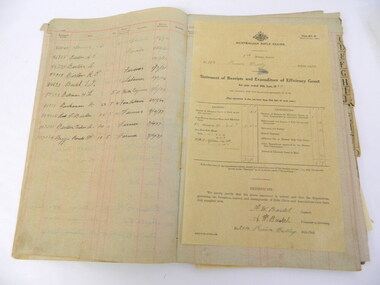
Ledger - Kiewa Valley Rifle Club
... In 1876 an Australian Rifle Team, consisting of shooters from N.S.W. and Victoria, was the first team ever to officially represent Australia in any sport in international competition. In 1885 the first civilian Rifle Club was formed and after 1901 Rifle Clubs came under army control. ...In 1876 an Australian Rifle Team, consisting of shooters from N.S.W. and Victoria, was the first team ever to officially represent Australia in any sport in international competition. In 1885 the first civilian Rifle Club was formed and after 1901 Rifle Clubs came under army control. ...The Kiewa Valley Rifle Club belonged to the Australian Rifle Clubs. They were in Military district No. 304 and operated as early as the 1920s. In 1876 an Australian Rifle Team, consisting of shooters from N.S.W. and Victoria, was the first team ever to officially represent Australia in any sport in international competition. In 1885 the first civilian Rifle Club was formed and after 1901 Rifle Clubs came under army control. In 1921, they were reconstituted as a purely civilian organisation where they have remained ever since.This ledger is evidence that the Kiewa Valley Rifle Club existed in the 1920's and 1930's, enabling its members to participate in a sport that had 12232 members and 313 Rifle Clubs in Victoria by 1939.Large yellowed alphabetical ledger covering the 1920's and 1930's with names, age, height, occupation and date of enrolment. There are not many entries Inserted between pages are forms from the 'District Base Headquarters' with the headings filled out for - 'Name of New Member' and his 'Registration Number Allotted'rifle club. kiewa valley. ledger. community. -
 Disability Sport & Recreation Victoria
Photo, Allan Studios, Paravics Sports Club
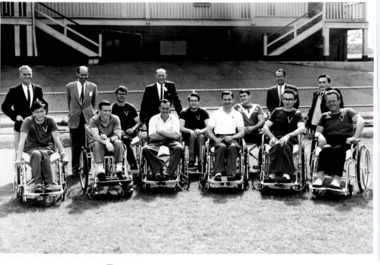
... Founded in 1962, the ParaVics Sports Club (now Disability Sports and Recreation Victoria) was established to help a group of eight athletes with disability compete in national and international sporting competitions....Founded in 1962, the ParaVics Sports Club (now Disability Sports and Recreation Victoria) was established to help a group of eight athletes with disability compete in national and international sporting competitions. Paravics Sports Club disabled sports wheelchair sport Herb Sanderson Geoff Luke Cyril Thomas Bruno Moretti Ross Tong Alan Yeomans Graeme Ball Ian Duckling Ivan Watt Bill Ingrams Tony Crisp Handwritten (in pen) notes of those in photo Standing: Herb Sanderson, Geoff Luke, Cyril Thomas, Bruno Moretti. ...Founded in 1962, the ParaVics Sports Club (now Disability Sports and Recreation Victoria) was established to help a group of eight athletes with disability compete in national and international sporting competitions.Black and white photo of members of the Paravics Sports Club, circa the 1960s.Handwritten (in pen) notes of those in photo Standing: Herb Sanderson, Geoff Luke, Cyril Thomas, Bruno Moretti. Ross Tong, Alan Yeomans, Graeme Ball, Ian Duckling, Ivan Watts, Bill Ingrams, Tony Crisp Maker's mark stamp: ALLAN STUDIOS COLLINGWOOD WHEN RE-ORDERING QUOTE NO. 9259 POS. 7Aparavics sports club, disabled sports, wheelchair sport, herb sanderson, geoff luke, cyril thomas, bruno moretti, ross tong, alan yeomans, graeme ball, ian duckling, ivan watt, bill ingrams, tony crisp -
 Kiewa Valley Historical Society
Letter & Envelope - Kiewa Valley Rifle Club
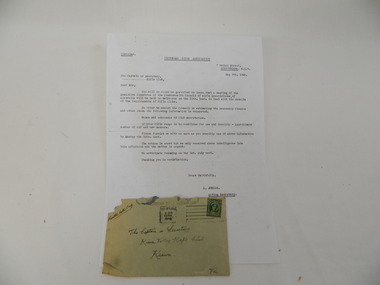
... In 1876, an Australian Rifle Team, consisting of shooters from N.S.W. and Victoria, was the first team ever to officially represent Australia in any sport in international competition. In 1885, the first civilian Rifle Club was formed. ...In 1876, an Australian Rifle Team, consisting of shooters from N.S.W. and Victoria, was the first team ever to officially represent Australia in any sport in international competition. In 1885, the first civilian Rifle Club was formed. ...The Kiewa Valley Rifle Club belonged to the Australian Rifle Clubs. They were in Military District No. 304 and operated as early as the 1920's. In 1876, an Australian Rifle Team, consisting of shooters from N.S.W. and Victoria, was the first team ever to officially represent Australia in any sport in international competition. In 1885, the first civilian Rifle Club was formed. After 1901 Rifle Clubs came under army control. In 1921, they were reconstituted as a purely civilian organisation where they have remained ever since.This letter is evidence that the Kiewa Valley Rifle Club existed in 1946 enabling its members to participate in a sport that had 12232 members and 313 Rifle Clubs in Victoria by 1939.Letter- Dated: May 9th 1946 from Acting Secretary, A. Jordan of Victorian Rifle Association re requirements of Rifle Clubs. Black type on yellowed paper. Folded horizontally in half and then into thirds. Envelope: Greenish yellow addressed to "The Captain or Secretary / Kiewa Valley Rifle Club / Kiewa / Vic. dated 13 May 1946 from Melbourne with a 1d and halfpenny Australian stamp. kiewa valley. rifle club. community. -
 Kiewa Valley Historical Society
Papers - Kiewa Valley Rifle Club
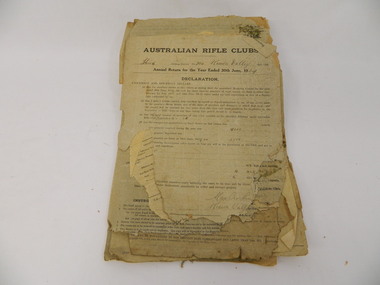
... In 1876 an Australian Rifle Team, consisting of shooters from N.S.W. and Victoria, was the first team ever to officially represent Australia in any sport in international competition. In 1885 the first civilian Rifle Club was formed. ...In 1876 an Australian Rifle Team, consisting of shooters from N.S.W. and Victoria, was the first team ever to officially represent Australia in any sport in international competition. In 1885 the first civilian Rifle Club was formed. ...Kiewa Valley Rifle Club belonged to the Australian Rifle Clubs. They were in Military District No. 304 and operated as early as the 1920's. In 1876 an Australian Rifle Team, consisting of shooters from N.S.W. and Victoria, was the first team ever to officially represent Australia in any sport in international competition. In 1885 the first civilian Rifle Club was formed. After 1901 all Rifle Clubs came under army control. In 1921, they were reconstituted as a purely civilian organisation where they have remained ever since.These papers are evidence that the Kiewa Valley Rifle Club existed from the 1920's, enabling its members to participate in a sport that had 12232 members and 313 Rifle Clubs in Victoria by 1939.Old yellowed torn papers titled Australian Rifle Clubs / Annual Return for the year ended 1929, 1934,1935, 1936, 1937, 1938, 1939, 1940, kiewa valley. rifle club. community -
 Australian Gliding Museum
Machine - Glider – Sailplane
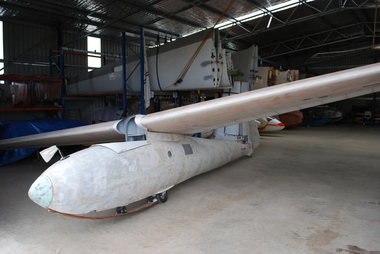
... Prior to World War II an international competition was held for design of a standard sailplane for use in Olympic competition in 1940 in Finland. ...Prior to World War II an international competition was held for design of a standard sailplane for use in Olympic competition in 1940 in Finland. ...Prior to World War II an international competition was held for design of a standard sailplane for use in Olympic competition in 1940 in Finland. The design chosen was the “Meise” from DFS in Germany and its designer Hans Jacob. The 1940 Olympics were cancelled due to the outbreak of war and post war international gliding competition has been organized as World Championships, not as an Olympic event. After the war the Meise was manufactured by firms in Europe and a few were built by amateurs from plans. In 1945, a United Kingdom firm, Chilton Aircraft Limited, revised the plans for the DFS Meise Olympia keeping its aerodynamic shape and prepared new technical drawings for the production of the Chilton Olympia. It engaged Elliotts of Newbury (a firm with aircraft production experience during the war) to built a set of wings for its prototype. The wings were made by Elliotts but it apparently refused to let Chiltons have the jigs required to build more wings. The matter was resolved by Chiltons transferring its production rights and equipment to Elliotts. Elliotts produced several batches of Olympias (the “EON Olympia”) – probably about 150 in total from 1947 including Marks 1, 2 and 3 versions (featuring some structural changes and design improvements). The Australian Gliding Museum’s Olympia is a Mark 2 (actually 2B according to the logbook) which can be distinguished by the built in main wheel and blown Perspex canopy. It was designated as serial number EON/O/34 by Elliotts. It was damaged badly at Bristol, UK, in 1949. The wreckage was acquired by a Melbourne based syndicate including Dave Darbyshire, and imported into Australia. Additional damage occurred in shipping due to the need to shorten the wings to fit them into a crate. The syndicate rebuilt the glider and re-launched it in 1956 (registration number VH-GHR). It was flown by the syndicate and several gliding clubs in Victoria and South Australia until about 1972. A potentially airworthy example of a now rare sailplane of historical importanceSingle seat wooden sailplane, partly restored.australian gliding, glider, sailplane, dfs, hans jacob, meise, olympics, eon olympia, chilton aircraft, elliotts of newbury, dave darbyshire, great eastern gliding club, barossa valley gliding club, murray bridge gliding club -
Disability Sport & Recreation Victoria
Newsletter, Paravics Newsletter Vol. 1 No. 20, January 1972 - Paraplegic and Quadriplegic Association of Victoria, February 1972
... The Paravics Sports Club, now known as Disability Sport and Recreation Victoria, was formed in 1962 to help a group of eight athletes with disability compete in national and international sporting competitions. Apart from its goal for advocating for greater sporting and recreation opportunities for disabled athletes, Paravics / Paraplegic and Quadriplegic Association of Victoria also sought to bring awareness and advocacy to the general needs of wheelchair bound persons. ...The Paravics Sports Club, now known as Disability Sport and Recreation Victoria, was formed in 1962 to help a group of eight athletes with disability compete in national and international sporting competitions. Apart from its goal for advocating for greater sporting and recreation opportunities for disabled athletes, Paravics / Paraplegic and Quadriplegic Association of Victoria also sought to bring awareness and advocacy to the general needs of wheelchair bound persons. ...The Paravics Sports Club, now known as Disability Sport and Recreation Victoria, was formed in 1962 to help a group of eight athletes with disability compete in national and international sporting competitions. Apart from its goal for advocating for greater sporting and recreation opportunities for disabled athletes, Paravics / Paraplegic and Quadriplegic Association of Victoria also sought to bring awareness and advocacy to the general needs of wheelchair bound persons. The newsletter, the first for 1972, includes numerous news items, including: - Cyril Thomas being congratulated by Paravics on his receiving an M.B.E. - A call for ideas for social events, as well as news of social events. - A walkathon - wheelathon fundraiser. - News on the upcoming Paralympics to be held in Heidelberg, Germany With the introduction of the metric system in Australia, Paravics attempted to use the adoption of the metric system for a fundraising campaign called "mark a metre", which included a poster attached to the newsletter.Three photocopied sheets (6 pages, double-sided), two of the sheets are off-white, and the last sheet is pale orange. Stapled together in the top right-hand corner. As well as three pages of news, this newsletter includes a poster for Paravics "Mark a Metre" fundraising campaign,paravics sports club, disabled sports, wheelchair sport, cyril thomas, mike jarrett, metric system, paraplegic and quadriplegic association of victoria -
Disability Sport & Recreation Victoria
Newsletter, Paravics Newsletter Vol. 1 No. 20, January 1972 - Paraplegic and Quadriplegic Association of Victoria, February 1972
... The Paravics Sports Club, now known as Disability Sport and Recreation Victoria, was formed in 1962 to help a group of eight athletes with disability compete in national and international sporting competitions. Apart from its goal for advocating for greater sporting and recreation opportunities for disabled athletes, Paravics / Paraplegic and Quadriplegic Association of Victoria also sought to bring awareness and advocacy to the general needs of wheelchair bound persons. ...The Paravics Sports Club, now known as Disability Sport and Recreation Victoria, was formed in 1962 to help a group of eight athletes with disability compete in national and international sporting competitions. Apart from its goal for advocating for greater sporting and recreation opportunities for disabled athletes, Paravics / Paraplegic and Quadriplegic Association of Victoria also sought to bring awareness and advocacy to the general needs of wheelchair bound persons. ...The Paravics Sports Club, now known as Disability Sport and Recreation Victoria, was formed in 1962 to help a group of eight athletes with disability compete in national and international sporting competitions. Apart from its goal for advocating for greater sporting and recreation opportunities for disabled athletes, Paravics / Paraplegic and Quadriplegic Association of Victoria also sought to bring awareness and advocacy to the general needs of wheelchair bound persons. The newsletter, the first for 1972, includes numerous news items, including: - Cyril Thomas being congratulated by Paravics on his receiving an M.B.E. - A call for ideas for social events, as well as news of social events. - A walkathon - wheelathon fundraiser. - News on the upcoming Paralympics to be held in Heidelberg, Germany With the introduction of the metric system in Australia, Paravics attempted to use the adoption of the metric system for a fundraising campaign called "mark a metre", which included a poster attached to the newsletter.Three photocopied sheets (6 pages, double-sided), two of the sheets are off-white, and the last sheet is pale orange. Stapled together in the top right-hand corner. As well as three pages of news, this newsletter includes a poster for Paravics "Mark a Metre" fundraising campaign,paravics sports club, disabled sports, wheelchair sport, cyril thomas, mike jarrett, metric system, paraplegic and quadriplegic association of victoria -
 City of Ballarat
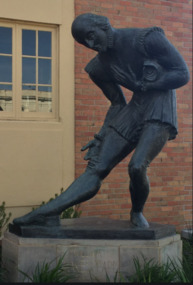
Artwork, other - Public Artwork, Andor Mészáros, Shakespeare by Andor Mészáros, 1960
... competition and installed in 1960. In addition to making sculptures, Mészáros was also renown as a creator of medallions. In 1951 he received 'the highest award' at the International Medallion Exhibition, Madrid and in 1964 he won the 'purchase prize' at the International Medallion Competition, Arezzo, Italy. ...competition and installed in 1960. In addition to making sculptures, Mészáros was also renown as a creator of medallions. In 1951 he received 'the highest award' at the International Medallion Exhibition, Madrid and in 1964 he won the 'purchase prize' at the International Medallion Competition, Arezzo, Italy. ...The well known sculpture of English playwright William Shakespeare takes an elaborate bow before the Civic Hall, a performance and community center for Ballarat. The unique abstract and elongated mannerist style used in this cast bronze sculpture hints at the art deco style of the Hall behind. The sculptor, Andor Mészáros, was from Budapest but created much of his work in Melbourne. He also created works for Canterbury Cathedral in the UK and several carved stone sculptures for Sydney Hospital. The artwork was commissioned in 1959 through a widely publicised competition and installed in 1960. In addition to making sculptures, Mészáros was also renown as a creator of medallions. In 1951 he received 'the highest award' at the International Medallion Exhibition, Madrid and in 1964 he won the 'purchase prize' at the International Medallion Competition, Arezzo, Italy. From 1970 Mészáros worked with his younger son Michael, also a sculptor. In 2002, the City of Ballarat granted permission for Michael Mészáros to make a cast of the Ballarat Shakespeare artwork to create replica installed in Budapest. The Budapest installation commemorates Shakespeare's connection to the City and the achievements of Andor Mészáros. The artwork was unveiled by Mayor Arthur W. Nicholson. The statue was presented by L.F. North, general Manager of the Fidelity Trustee Company Limited, representing the late H.P. Stevens as one of the benefactors whose generosity enabled the Statue to be erected.The artwork is of aesthetic significance to the people of BallaratLarge bronze statue of William Shakespeare mounted on a stone plinthWilliam Shakespeare 1564-1616. Erected by benefactions from Harry Pearson Stevens who settled here 1855 and other Citizens unveiled by Arthur W. Nicholson J.P. Mayor.17.11.1960shakespeare, andor mészáros, civic hall, ballarat -
 Disability Sport & Recreation Victoria
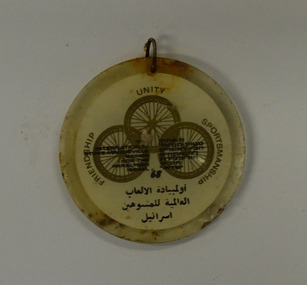
Plastic souvenir, The International Stoke-Mandeville Games for the Paralysed - Israel '68, 1968
... The Games were originally held in 1948 by neurologist Sir Ludwig Guttmann, who organized a sporting competition involving World War II veterans with spinal cord injuries at the Stoke Mandeville Hospital rehabilitation facility in Aylesbury, England, taking place concurrently with the first post-war Summer Olympics in London. In 1952, the Netherlands joined in the event, creating the first international...The Games were originally held in 1948 by neurologist Sir Ludwig Guttmann, who organized a sporting competition involving World War II veterans with spinal cord injuries at the Stoke Mandeville Hospital rehabilitation facility in Aylesbury, England, taking place concurrently with the first post-war Summer Olympics in London. In 1952, the Netherlands joined in the event, creating the first international ...The International Stoke-Mandevile Games, held in Tel-Aviv in 1968, were later classified as the third edition of the Paralympics. The International Wheelchair and Amputee Sports (IWAS) World Games (or IWAS World Games) are a multi-sport competition for athletes with a disability, which under the former name of the International Stoke Mandeville Games were the forerunner of the Paralympic Games. The competition has been formerly known as the World Wheelchair and Amputee Games, the Stoke Mandeville Wheelchair Games, the Stoke Mandeville Games, the World Wheelchair Games, and in the 1960s and 1970s was often referred to as the Wheelchair Olympics. The Games were originally held in 1948 by neurologist Sir Ludwig Guttmann, who organized a sporting competition involving World War II veterans with spinal cord injuries at the Stoke Mandeville Hospital rehabilitation facility in Aylesbury, England, taking place concurrently with the first post-war Summer Olympics in London. In 1952, the Netherlands joined in the event, creating the first international sports competition for the disabled. In 1960, the Ninth Stoke Mandeville Games were held in Rome, Italy, following that year's Olympic Games. These are considered to be the first Paralympic Games.[1] The 2012 Paralympic mascot Mandeville was named after Stoke Mandeville Hospital. While the Paralympic Games evolved to include athletes from all disability groups, the Stoke Mandeville games continued to be organized as a multi-sport event for wheelchair athletes. Games were held annually in Aylesbury under the direction of the International Stoke Mandeville Games Federation (ISMGF), which became the International Stoke Mandeville Wheelchair Sports Federation (ISMWSF)..Plastic medallion encasing a paper disc commemorating the 1968 Stoke-Mandeville Games for the Paralysed. Inscriptions (English): Front: Municipalities - Nazareth Elite - Nazareth. Reverse: The International Stoke-Mandeville Games for the Paralysed - Israel '68. Friendship - Unity - Sportsmanship. On both sides of the medallions there are what are likely to be the equivalent Hebrew and Arabic translations. Images induces Front: Logos of unknown organisations. Reverse: Logo for the 1968 Paralympics, showing three interlocking wheels to represent their values: friendship, unity and sportsmanship 1968 paralympics, 1968 stoke-mandeville-games, 1968 tel-aviv paralympics -
Disability Sport & Recreation Victoria
Newsletter, Paravics Newsletter Vol. 1 No. 12, May 1972 - Paraplegic and Quadriplegic Association of Victoria, May 1971
... The Paravics Sports Club, now known as Disability Sport and Recreation Victoria, was formed in 1962 to help a group of eight athletes with disability compete in national and international sporting competitions. Apart from its goal for advocating for greater sporting and recreation opportunities for disabled athletes, Paravics / Paraplegic and Quadriplegic Association of Victoria also sought to bring awareness and advocacy to the general needs of wheelchair bound persons. ...The Paravics Sports Club, now known as Disability Sport and Recreation Victoria, was formed in 1962 to help a group of eight athletes with disability compete in national and international sporting competitions. Apart from its goal for advocating for greater sporting and recreation opportunities for disabled athletes, Paravics / Paraplegic and Quadriplegic Association of Victoria also sought to bring awareness and advocacy to the general needs of wheelchair bound persons. ...The Paravics Sports Club, now known as Disability Sport and Recreation Victoria, was formed in 1962 to help a group of eight athletes with disability compete in national and international sporting competitions. Apart from its goal for advocating for greater sporting and recreation opportunities for disabled athletes, Paravics / Paraplegic and Quadriplegic Association of Victoria also sought to bring awareness and advocacy to the general needs of wheelchair bound persons. The newsletter, the first for 1972, includes numerous news items, including: - Notes from Dr Burke of the Austin Hospital's Spinal Unit, on a year-long of tour of overseas spinal centres, principally in South Africa, France, United Kingdom, and the United States. Burke notes that based on his observations during tour, the standard and quality of treatment at the Austin for spinal injuries is "As good as anywhere in the world and in some respects the best, particularly that of early treatment after injury". Burke also notes the difference in attitudes between different countries in terms of research focus, equipment and technology, the use of sport as a rehabilitation tool for people with permanent spinal injuries, and staffing levels and education. - Job vacancies - News from the Quadriplegic Activities Group. - Information about various auxiliary groups and fundraising efforts. - News about members of the organisation. - A letter from Mrs D. Kendall about her efforts to improve the situation for disabled car drivers with regards to parking, and for providing wheelchairs to various venues for the purposes of providing access to such places as the Myer Music Bowl, parks, gardens, etc With the introduction of the metric system in Australia, Paravics attempted to use the adoption of the metric system for a fundraising campaign called "mark a metre", which included a poster attached to the newsletter.Three photocopied sheets (6 pages, double-sided), full-text.This newsletter contains six pages of news items.paravics sports club, disabled sports, wheelchair sport, mike jarrett, paraplegic and quadriplegic association of victoria -
 City of Melbourne Libraries
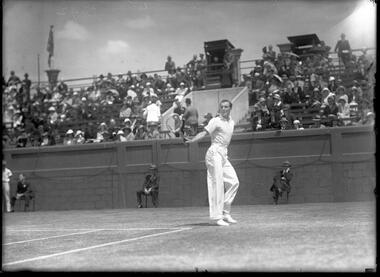
Photograph, Bull, Hugh Jones, 1897-1993, Tennis player Fred Perry, Kooyong
... For this reason, if for none other, we view with great misgivings any action which may well undermine all that is most valuable in international competitions. Yours faithfully, H.W. Austin, Fred Perry.” ...For this reason, if for none other, we view with great misgivings any action which may well undermine all that is most valuable in international competitions. Yours faithfully, H.W. Austin, Fred Perry.” ...Tennis champion Fred Perry backhands the ball at Kooyong, 1934 “I didn’t aspire to be a good sport, “champion” was good enough for me.” Fred Perry (1909-1995) was an English tennis champion who won eight Grand Slam titles including Wimbledon in 1934, 1935, 1936 and the Australian Open in 1934. Australian sports journalist Alan Trengove remarked, “When Perry walked out to play in his crisp white flannels and matching white blazer, thousands of female hearts missed a beat!” In 1935, Fred and Dorothy defeated Harry and Nell Hopman in the Wimbledon mixed doubles, and in 1936 they won against America. Fred started a successful sportswear brand in 1952, which continues today. Fred initially wanted a smoking pipe as the emblem as he was an enthusiastic smoker, but was talked out of it because it wouldn’t appeal to women. The familiar laurel was used instead. Featured in "Newsworthy: Melbourne in photographs 1933-1936" exhibition at East Melbourne Library, October to December 2023. Exhibition caption by project volunteer Fiona Collyer. Photographer notations on slide: "F. Perry 1934 Action B42" Photograph taken at Kooyong, Melbourne, but used in article about Wimbledon 1934. Published: The Age 7 July 1934 p 13 Published title: "THE FINAL STAGE." Published caption: F. J. Perry (England) Trove article identifier: http://nla.gov.au/nla.news-article205525840 Research by project volunteer Fiona Collyer: Frederick John Perry, 18 May 1909 to 2 Feb 1995 Fred Perry was an English tennis and table-tennis champion. He won eight Grand Slam titles – Wimbledon Gentlemen’s Singles, US Open three times, Australian Open and French Open once each. Fred had natural hand-to eye co-ordination, solid strokes and a devastating forehand that he used soon after the ball bounced. His fierce competitiveness and unabashed confidence gave him the winning edge. Fred was born in Stockport, Cheshire in 1909. His father, Samuel, a committed socialist, was a cotton spinner who became Secretary of the Co-Operative Party and later a Labour and Co-Operative Party M.P. When Fred was nine years old the family moved to Ealing, London. In 1929, at the age of 19, Fred became the World Champion at table-tennis – a new international sport at the time. He then decided to switch from table-tennis to tennis after his father told him to stop spending so much time in the smoke-filled halls that held table-tennis events. “You look like death warmed up.” he said. In the tennis world, Fred was regarded as an upstart intruder, and was the victim of snobbery and prejudice for his working class background. Fred trained with Arsenal Football Club in defiance of the LTA (Lawn Tennis Association) which had a dim view of extra-curricular exercise. His sarcastic toff-baiting call of “very clevah” when an opponent played a good shot and his habit of vaulting over the net whenever he won a match made Fred compelling to watch. Fred’s prize for winning Wimbledon was a £25 shopping voucher and a replica trophy. There was no on-court presentation; instead it was the custom to offer congratulations in the dressing rooms. One of the defining moments of Fred’s career came on the day he won Wimbledon for the first time in 1934. He was in the bathtub after the match when he over-heard former tennis player Brame Hillyard, a committee member of the All-England Club talking to Australian runner-up Jack Crawford. “This was the one day when the best man didn’t win.” Hillyard had brought a bottle of champagne and an All-England neck-tie, which was official recognition of Fred now being a member of one of the sporting world’s most elite clubs. Instead of a formal presentation to Fred, Hillyard draped the tie unceremoniously over his seat in the dressing room, handed Jack the bottle of champagne, and left. “Instead of Fred Perry the Champ, I felt like J. Fred Muggs the Chimp!” he said. When Fred finally went professional, an official at LTA told him he would never wear the club sweater again. Fred said “I made sure he wouldn’t have to worry about that, I sent a sleeve to him as a present!” In 1935, RKO offered Fred a contract for two movies at $50,000 each, but he had to turn down the offer as it would be in breach of LTA rules and he would lose his amateur status. In 1935, Fred married American film actress Helen Vinson in Harrison, New York, waking up a registrar at five minutes to midnight to avoid being married on Friday the thirteenth – “To be on the safe side” they said. In 1936, having been world number one tennis player for three years, Fred quit amateur tennis and moved to America. He joined tennis players Ellsworth Vines and Don Budge on a professional tennis circuit, travelling around US cities and receiving a share of the gate receipts. The All-England Club removed his honorary membership and the tie that went with it – “After all the trouble they’d gone to presenting it to me.” he quipped acidly. Despite being a three-time Wimbledon champion, Fred was barred from playing on LTA affiliated courts, so when he held his pro-tour through the UK in 1937, the matches had to be played on a portable wooden court, transported around by truck to football grounds. Fred was co-owner of the Beverley Hills Tennis Club. The exclusive membership consisted of Hollywood actors, directors, writers and studio heads. At the launch of the re-branded club in 1937, Fred played a doubles match with Charlie Chaplin, Groucho Marx and Ellsworth Vines, which he won with Charlie. Watching on was a Who’s Who of Hollywood actors including Barbara Stanwyck, Joan Crawford, the Marx Brothers, Errol Flynn, and Ronald Coleman to name a few. Fred was romantically linked to Hollywood actresses Marlene Dietrich, Jean Harlow, and Bette Davis, and was engaged to British actress Mary Lawson. In 1939, he became a US citizen and in 1942 enlisted in the US Air Force. Fred wore medical gauze around his right wrist while playing to stop sweat from flowing onto the handle of his racket and to wipe sweat from his brow. He paired up with former footballer Austrian Tibby Wegner to develop an anti-perspirant device. The prototype towelling sweatbands were given free to players at tournaments and proved popular. In 1952, Fred Perry Sportswear began and the trademark slimfit white polo shirt with embroidered laurel wreath on the left breast was born. The laurel wreath was inspired by Wimbledon’s original emblem and is the ancient symbol for triumph and victory. Fred was an enthusiastic pipe smoker and wanted a pipe to be the logo, however he was persuaded that it wouldn’t appeal to women. Years after the brand started, French tennis champion and sportswear designer Rene Lacoste and Fred were interviewed together for TV. Lacoste said ”I made the shirt and you made me a great compliment doing the same thing.” Fred responded “You made the back of it longer than the front – so between us we revolutionised it, didn’t we?” After Fred retired from competition tennis in 1956, he worked as a BBC tennis commentator for TV and radio and wrote columns for British newspapers. He also coached at Beca Raton Club in Florida and was director of golf at Runaway Bay in Jamaica. In 1984, 50 years after his first title, Wimbledon erected a statue of Fred. “I never thought I’d live to see the day when a statue was put up to the son of a Labour M.P. inside the manicured grounds of Wimbledon,” he said. Fred married four times, firstly to Texan actress Helen Vinson. His final marriage to Barbara Riese in 1952 lasted until his death. They had two children, Penny and David. Fred died in the Epworth Hospital, Richmond, Melbourne after falling in his hotel bathroom while visiting for the Australian Open. His ashes are in an urn near his statue at Wimbledon. - In 1975, Fred was inducted into the International Tennis Hall of Fame. - In 2002, the Fred Perry 23 km walking route was opened in Stockport. - An English Heritage blue plaque was attached to his Ealing house where he lived in from 1919-1935. A letter to The Times… In 1932, Dr Daniel Prenn and Gottfried Von Cramm of Germany beat the formally dominant Great Britain team of Fred Perry and Bunny Austin in the Davis Cup. Prenn was not selected for the 1933 Davis Cup Team after Chancellor Adolf Hitler announced his “Aryan only” agenda for Germany’s sporting bodies. Dr Prenn, a Jew, was born in Vilnius (then part of Russia), and in 1920 his family fled to Berlin as refugees after the pogroms. On 15 April 1933, Fred Perry and Bunny Austin (a member at the Oxford Group, a Christian anti-war movement), wrote a letter of protest to the London Times: "Sir, We have read with considerable dismay the official statement which has appeared in the Press that Dr D.D. Prenn is not to represent Germany in the Davis Cup on the grounds that he is of Jewish origin. We cannot but recall the scene when, less than twelve months ago, Dr Prenn before a large crowd at Berlin won for Germany against Great Britain the semi-final round of the European Zone of the Davis Cup, and was carried from the arena amidst spontaneous and tremendous enthusiasm. We have always valued our participation in international sport, because we believed it to be a great opportunity for the promotion of better international understanding and because it was a human activity that countenanced no distinction of race, class or creed. For this reason, if for none other, we view with great misgivings any action which may well undermine all that is most valuable in international competitions. Yours faithfully, H.W. Austin, Fred Perry.” Daniel Prenn emigrated to Britain in 1935. References: Fred Perry: British tennis legend, Kevin Jefferys, Pitch Publishing, 2017 'Fred Perry: The hero from the wrong side of the tramlines', Paul Newman, tennis correspondent, The Independent, 21 November 2015 https://www.independent.co.uk/sport/tennis/fred-perry-the-hero-from-the-wrong-side-of-the-tramlines-a6743721.html. 'Fred Perry: the radical of Wimbledon', Bob Holman, Socialist Worker, 26 June 2009 https://socialistworker.co.uk/comment/fred-perry-the-radical-of-wimbledon/ 'Daniel Prenn (1904-1991) – A little-known Jewish German tennis player', newmark401, Tennis Warehouse forums, 12 May 2011 http://tt.tennis-warehouse.com/index.php?threads/daniel-prenn-1904-1991-–-a-little-known-jewish-german-tennis-player.379780/Photographer notations on slide: "F. Perry 1934 Action B42".tennis, 1930-1939 -
 Flagstaff Hill Maritime Museum and Village
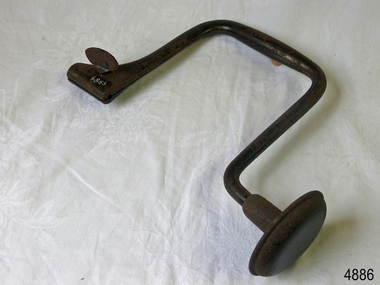
Tool - Brace & Bit, John S Fray, 1883 - 1906
... By 1889, the firm was located at the industrial complex that sits between the former International Silver Company and the former Bridgeport Chain Company on Crescent Avenue and is identified on the Sanborn Insurance Atlas as a manufacturer of Spofford bit braces, hollow handle awl, and toolsets. The company was in competition...By 1889, the firm was located at the industrial complex that sits between the former International Silver Company and the former Bridgeport Chain Company on Crescent Avenue and is identified on the Sanborn Insurance Atlas as a manufacturer of Spofford bit braces, hollow handle awl, and toolsets. The company was in competition ...Context: A brace is a hand tool used with a bit (drill bit or auger) to drill holes, usually in wood. The pressure is applied to the top and the tool is rotated with a U-shaped grip. Bits used to come in a variety of types but today the more commonly used Ridgeway and Irwin pattern bits also rely on a snail point (called the snail), which is a tapered screw point shaped the same as a wood screw thread, which helps to pull the bit into the wood as the user turns the brace handle and applies pressure. The designs used today come from an original idea and pattern invented by John S Fray. Company History: John S. Fray (1833 ) immigrated to Bridgeport Connecticut USA from England in the 1850s and established a working relationship with Nelson Spofford, who held an 1858 patent for a bit brace (the tool could be augured in a continuous circular motion by hand). He established the John S. Fray Co. around the same time and immediately began producing the Spofford bit brace. Fray himself held at least two patents: one awarded in 1869 for a boring brace attachment, and another awarded in 1883 for a tool handle. By 1889, the firm was located at the industrial complex that sits between the former International Silver Company and the former Bridgeport Chain Company on Crescent Avenue and is identified on the Sanborn Insurance Atlas as a manufacturer of Spofford bit braces, hollow handle awl, and toolsets. The company was in competition with Peck Stow and Wilcox Co. of Southington, and in 1898 was enjoined from making a ratchet bit brace for which the latter company held a patent. By the 1920s, the factory had been purchased by the Stanley Company of New Britain and leased to the American Tube and Stamping Company, a manufacturer of brass, copper, seamless, and bicycle tubing, which also ran a rolling mill to the south on Stafford Avenue (now demolished). The Stanley Company bought both mills in 1926, perhaps as a strategic move to be located along the Bridgeport Harbour, through which much of the raw material used in its operations throughout the state came. By the 1950s, the Crescent Avenue operations had been moved to other sites in Connecticut, and Stanley again leased the building to a company called Cornwall and Patterson, a manufacturer of piano hardware. Today the building appears to be vacant. An early carpenters tool made by a well known early manufacturer from America who instigated many innovations to the making of tools. His early pattern for the improvement of a tool that could be used for the boring of holes in wood was a significant step forward. His design for a boring brace attachment and later a specific handle is still in use today and his original brace and bit is now sought after by collectors of antique tools. Spofford Carpenter's Bit Brace metal has bit attached. Wing nut holds bit in place but nut missing. holds bit in place. 285mm long x 160mm Noneflagstaff hill, warrnambool, shipwrecked-coast, flagstaff-hill, flagstaff-hill-maritime-museum, maritime-museum, shipwreck-coast, flagstaff-hill-maritime-village
