
Showing 131 items matching "kew civic offices"
-
 Kew Historical Society Inc
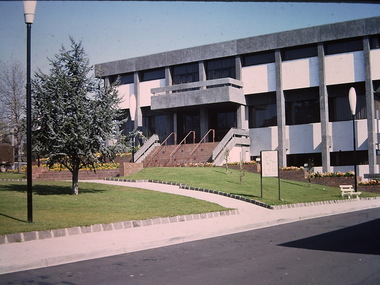
Photograph - Kew Civic Offices, Ron Setford, 1973
... Kew Civic Offices......Kew Civic Offices...Ron Setford Photographs -- Kew (Vic.) -- 1960s Kew Civic Offices Kew Town hall "The "Taj-Mahal" / $1.250.000 Council Offices (we have to pay for it)" Photograph Kew Civic Offices Ron Setford ...Ron Setford and his wife Grace Setford lived in Tanner Avenue, East Kew, from c.1946 to c.1995. A keen photographer, he recorded the changing face of Kew over a 20 year period. Apart from 30 photographs of built structures and places in Kew dating from 1960 and 1961, 145 of his 35mm colour slides chronicle the development of the Eastern Freeway through the Yarra Valley over a five year period from c.1972 to c.1977. This important collection was donated to the Society by his granddaughter in 2025.This collection of 175 35mm slides is of local and statewide significance, owing to its subject matter, particularly the major development of road transport infrastructure during the 1970s with the construction of the Eastern Freeway. The photographer also took care to annotate and date most of his slides which enable the researcher to pinpoint temporal and spatial locations."The "Taj-Mahal" / $1.250.000 Council Offices (we have to pay for it)"ron setford, photographs -- kew (vic.) -- 1960s, kew civic offices, kew town hall -
 Kew Historical Society Inc
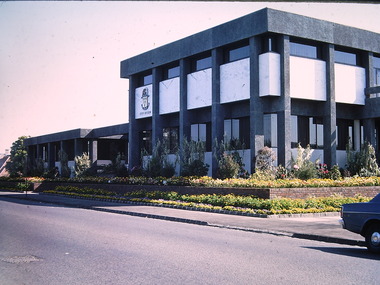
Photograph - Kew Civic Offices, Ron Setford, 1973
... Kew Civic Offices......Kew Civic Offices...Ron Setford Kew Civic Offices "Kew - "Taj-Mahal" / Cotham Rd - Charles St / Oct 73" Photograph Kew Civic Offices Ron Setford ...Ron Setford and his wife Grace Setford lived in Tanner Avenue, East Kew, from c.1946 to c.1995. A keen photographer, he recorded the changing face of Kew over a 20 year period. Apart from 30 photographs of built structures and places in Kew dating from 1960 and 1961, 145 of his 35mm colour slides chronicle the development of the Eastern Freeway through the Yarra Valley over a five year period from c.1972 to c.1977. This important collection was donated to the Society by his granddaughter in 2025.This collection of 175 35mm slides is of local and statewide significance, owing to its subject matter, particularly the major development of road transport infrastructure during the 1970s with the construction of the Eastern Freeway. The photographer also took care to annotate and date most of his slides which enable the researcher to pinpoint temporal and spatial locations."Kew - "Taj-Mahal" / Cotham Rd - Charles St / Oct 73"ron setford, kew civic offices -
 Kew Historical Society Inc
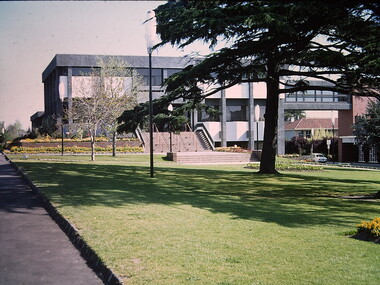
Photograph - Kew Civic Offices, Ron Setford, 1973
... Kew Civic Offices......Kew Civic Offices...Ron Setford Kew Civic Offices "Kew Taj-Mahal" Photograph Kew Civic Offices Ron Setford ...Ron Setford and his wife Grace Setford lived in Tanner Avenue, East Kew, from c.1946 to c.1995. A keen photographer, he recorded the changing face of Kew over a 20 year period. Apart from 30 photographs of built structures and places in Kew dating from 1960 and 1961, 145 of his 35mm colour slides chronicle the development of the Eastern Freeway through the Yarra Valley over a five year period from c.1972 to c.1977. This important collection was donated to the Society by his granddaughter in 2025.This collection of 175 35mm slides is of local and statewide significance, owing to its subject matter, particularly the major development of road transport infrastructure during the 1970s with the construction of the Eastern Freeway. The photographer also took care to annotate and date most of his slides which enable the researcher to pinpoint temporal and spatial locations."Kew Taj-Mahal"ron setford, kew civic offices -
 Kew Historical Society Inc
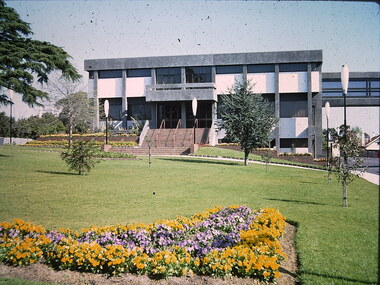
Photograph - Kew Civic Offices, Ron Setford, 1973
... Kew Civic Offices......Kew Civic Offices...Ron Setford Kew Civic Offices "Kew Council Offices" Photograph Kew Civic Offices Ron Setford ...Ron Setford and his wife Grace Setford lived in Tanner Avenue, East Kew, from c.1946 to c.1995. A keen photographer, he recorded the changing face of Kew over a 20 year period. Apart from 30 photographs of built structures and places in Kew dating from 1960 and 1961, 145 of his 35mm colour slides chronicle the development of the Eastern Freeway through the Yarra Valley over a five year period from c.1972 to c.1977. This important collection was donated to the Society by his granddaughter in 2025.This collection of 175 35mm slides is of local and statewide significance, owing to its subject matter, particularly the major development of road transport infrastructure during the 1970s with the construction of the Eastern Freeway. The photographer also took care to annotate and date most of his slides which enable the researcher to pinpoint temporal and spatial locations."Kew Council Offices"ron setford, kew civic offices -
 Kew Historical Society Inc
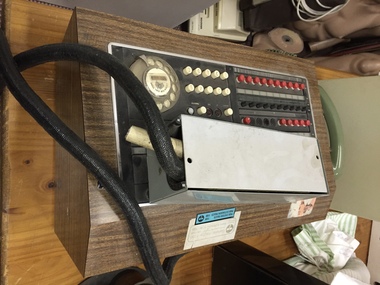
Equipment, City of Kew Switchboard, 1960s
... Kew was established in 1860. Through successive incarnations as a municipality, borough, town and city, its headquarters, at least until 1972, were located in a town hall in Walpole Street. In 1994, the city was amalgamated into a new City of Boroondara. This items served as telephone equipment - a switchboard - in the City's civic offices...Switchboard used in the City of Kew's Civic Offices in Walpole Street. The redundant equipment was donated to the Society in 1988..... office equipment city of kew switchboards Switchboard used in the City of Kew's Civic Offices in Walpole Street. The redundant equipment was donated to the Society in 1988. ...The local government area of Kew was established in 1860. Through successive incarnations as a municipality, borough, town and city, its headquarters, at least until 1972, were located in a town hall in Walpole Street. In 1994, the city was amalgamated into a new City of Boroondara. This items served as telephone equipment - a switchboard - in the City's civic offices.Switchboard used in the City of Kew's Civic Offices in Walpole Street. The redundant equipment was donated to the Society in 1988.office equipment, city of kew, switchboards -
 Kew Historical Society Inc
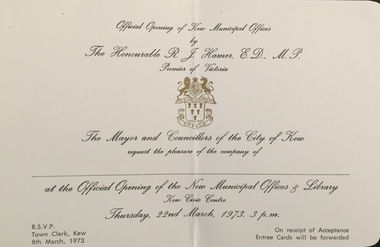
Document (item) - Invitation, City of Kew, Official Opening of Kew Municipal Offices, 1973
... civic invitations -- kew (vic)...kew town hall -- charles street -- kew (vic.)...kew civic offices...OFFICIAL OPENING OF KEW MUNICIPAL OFFICES / BY / THE HONOURABLE R J HAMER, PREMIER OF VICTORIA / THE MAYOR AND COUNCILLORS OF THE CITY OF KEW / REQUEST THE PLEASURE OF THE COMPANY OF / ___________ / OFFICIAL OPENING OF THE NEW MUNICIPAL OFFICES & LIBRARY / KEW CIVIC CENTRE / THURSDAY, 22ND MARCH, 1973, 3 P.M./ RSVP TOWN CLERK , KEW 8TH MARCH, 1973 / ON RECEIPT OF ACCEPTANCE ENTREE CARDS WILL BE FORWARDED...As a continuous record, ranging across most decades of the Twentieth Century, they reveal changing tastes in design, values and relationships in the history of local government in Victoria. civic invitations -- kew (vic) kew town hall -- charles street -- kew (vic.) kew civic offices OFFICIAL OPENING OF KEW MUNICIPAL OFFICES / BY / THE HONOURABLE R J HAMER, PREMIER OF VICTORIA / THE MAYOR AND COUNCILLORS OF THE CITY OF KEW / REQUEST THE PLEASURE OF THE COMPANY OF / ___________ / OFFICIAL OPENING OF THE NEW MUNICIPAL OFFICES & LIBRARY / KEW CIVIC CENTRE / THURSDAY, 22ND MARCH, 1973, 3 P.M./ RSVP TOWN CLERK , KEW 8TH MARCH, 1973 / ON RECEIPT OF ACCEPTANCE ENTREE CARDS WILL BE FORWARDED Single-sided invitation sent to invited guests for the official opening of the Kew Municipal Offices and Library in 1973 Official Opening of Kew Municipal Offices Document Invitation City of Kew ...The Municipality of Kew (1860-1863), the Borough of Kew (1863-1910), the Town of Kew (1910-1921) and the City of Kew (1921-1994) were local government instrumentalities in the State of Victoria. In 1994, the City of Kew was amalgamated, together with the former Cities of Camberwell and Hawthorn, into the new City of Boroondara (1994- ). Like other local government entities of the period, Kew was administered by town clerks. The two notable town clerks in Kew's history were H. H. (Henry Hirst) Harrison (1868-1955) and W. D. (William Dickie) Birrell (1899-1974). Harrison was appointed to the position in 1901 and retired in 1938 after 37 years. Birrell, appointed Acting Town Clerk in 1921, became Town Clerk in 1938, following Harrison's retirement. He continued in this role until his retirement in 1966.This card is part of an historically significant civic collection, containing hundreds of separate invitations, documents, greeting cards, programmes and tickets issued and/or collected by successive town clerks. Items in the collection illuminate the political, social and cultural history of the district. As a continuous record, ranging across most decades of the Twentieth Century, they reveal changing tastes in design, values and relationships in the history of local government in Victoria.OFFICIAL OPENING OF KEW MUNICIPAL OFFICES / BY / THE HONOURABLE R J HAMER, PREMIER OF VICTORIA / THE MAYOR AND COUNCILLORS OF THE CITY OF KEW / REQUEST THE PLEASURE OF THE COMPANY OF / ___________ / OFFICIAL OPENING OF THE NEW MUNICIPAL OFFICES & LIBRARY / KEW CIVIC CENTRE / THURSDAY, 22ND MARCH, 1973, 3 P.M./ RSVP TOWN CLERK , KEW 8TH MARCH, 1973 / ON RECEIPT OF ACCEPTANCE ENTREE CARDS WILL BE FORWARDEDcivic invitations -- kew (vic), kew town hall -- charles street -- kew (vic.), kew civic offices -
 Kew Historical Society Inc
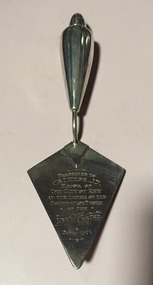
Ceremonial object, Unknown, Commemorative Trowel in Presentation Box, 1971, 1982
... ...kew civic offices... projects in the former City of Kew. cr ivan wade hamer court commemorative trowels kew civic offices city of kew 1860-1993 Front: "Presented to Cr Wade J.P. / Mayor of / the City of Kew / at the laying of the / foundation stone / of the / Kew Civic Centre /20-8-1971." ...WADE, Ivan Mayor 1969-70, 1970-71 Ivan Wade grew up in Bendigo and Brunswick, one of eight children. After his marriage, he moved with his wife and young family to Kew in 1951. In 1959, he took a year’s sabbatical in 1959 to build a new family home for his wife and four children at 222 Cotham Road, Kew. He worked professionally in the Meat Industry, successfully building a small chain of retail butcher shops, and a meat exporting business. He worked for improvements in the Trade through involvement in the Meat and Allied Trades Federation, of which he was the first State, and then Federal President. He was to be awarded an OBE for his services to the Meat Industry in 1979. Having been a long-time member of Melbourne Lions Club, he helped start Chadstone Lions’ Club as an inaugural tenant of the Chadstone Shopping Centre in 1979. He was also a tireless worker for charity, making his home available for functions raising funds for local groups. His passion for the community led him to stand for Kew Council as a representative of College Ward. As a councillor, he was elected mayor for two terms. During his term of office, new Kew Municipal Offices were constructed in Cotham Road. An active worker for the Kew Elder Citizens Association, he was involved in the establishment of an Opportunity Shop in Walpole Street to raise funds for the development of a new Centre in High Street. The Opportunity Shop was used to train locally unemployed youth skills such as furniture repair. (GW)Silver presentation trowel associated with the opening of significant civic projects in the former City of Kew.Commemorative, inscribed silver-plated presentation trowel given by the City of Kew to the Mayor, Cr Ivan Wade, on the occasion of the laying of the foundation stone of the new Kew Civic Centre on the corner of Cotham Road and Charles Street, now part of Trinity Grammar School. The silver trowel was presented in a black leather case lined with blue velvet. The trowel was to be used a second time in 1982 when Cr Wade and his wife laid the foundation stone of Hamer Court. The trowel was later donated to Kew Historical Society Inc by Gwlad Wade, the wife of Cr Ivan Wade, on 20 August 2000. Front: "Presented to Cr Wade J.P. / Mayor of / the City of Kew / at the laying of the / foundation stone / of the / Kew Civic Centre /20-8-1971." Reverse: This trowel was also used / by / Cr Ivan Wade OBE JP & Mrs Gwlad Wade / at the laying / of the foundation stone / of / "Hamer Court" / Hostel for the Aged / 22nd August 1982"cr ivan wade, hamer court, commemorative trowels, kew civic offices, city of kew 1860-1993 -
 Kew Historical Society Inc
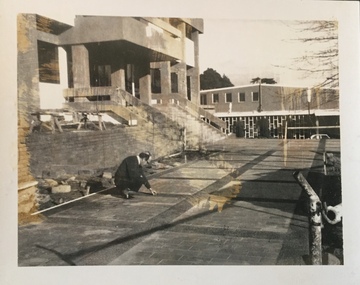
Photograph - Construction of the Kew Civic Centre, 1972
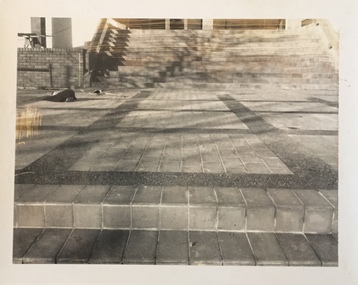
... kew civic centre...kew civic offices...The Kew Civic Centre, as opposed to the adjacent Kew Civic Hall (see also Kew City Hall), was built to house a new Council Chamber and Council Offices in 1972. ...Kew Historical Society) moved across the road to the reconfigured Civic Hall. The Civic Centre, pictured here, was ultimately sold to Trinity Grammar School following the amalgamation of Kew into the City of Boroondara. These four black and white photographs were taken by a photographer in the City Engineer's Department during the final construction phase. Each is dated and inscribed with a description. kew civic centre kew civic offices ...The Kew Civic Centre, as opposed to the adjacent Kew Civic Hall (see also Kew City Hall), was built to house a new Council Chamber and Council Offices in 1972. The Kew Library was to be located on the ground floor and accessed from the current carpark. This building replaced the former Town Hall in Walpole Street, Kew which had served as a town hall from 1865-1972. After the sale of the old Town Hall, the new Civic Centre was built to a design of the architects A K Lines, MacFarlane & Marshall. A fit-out of the building was still occurring when councillors and council officers moved into the building. In 1987, the Kew Library (and the Kew Historical Society) moved across the road to the reconfigured Civic Hall. The Civic Centre, pictured here, was ultimately sold to Trinity Grammar School following the amalgamation of Kew into the City of Boroondara.These four black and white photographs were taken by a photographer in the City Engineer's Department during the final construction phase. Each is dated and inscribed with a description.Laying of concrete tiles in the forecourt of the new Kew Civic Centre in 1972. The Civic Hall (now the Kew Library) is in the background. Annotated verso: "Civic Centre - Forecourt / 17.7.72"kew civic centre, kew civic offices, city of kew -- council chamber -
 Kew Historical Society Inc
Photograph - Construction of the Kew Civic Centre, 1972
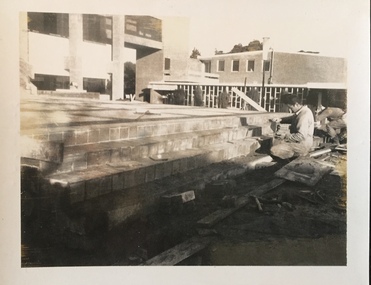
... kew civic centre...kew civic offices...The Kew Civic Centre, as opposed to the adjacent Kew Civic Hall (see also Kew City Hall), was built to house a new Council Chamber and Council Offices in 1972. ...Kew Historical Society) moved across the road to the reconfigured Civic Hall. The Civic Centre, pictured here, was ultimately sold to Trinity Grammar School following the amalgamation of Kew into the City of Boroondara. These four black and white photographs were taken by a photographer in the City Engineer's Department during the final construction phase. Each is dated and inscribed with a description. kew civic centre kew civic offices ...The Kew Civic Centre, as opposed to the adjacent Kew Civic Hall (see also Kew City Hall), was built to house a new Council Chamber and Council Offices in 1972. The Kew Library was to be located on the ground floor and accessed from the current carpark. This building replaced the former Town Hall in Walpole Street, Kew which had served as a town hall from 1865-1972. After the sale of the old Town Hall, the new Civic Centre was built to a design of the architects A K Lines, MacFarlane & Marshall. A fit-out of the building was still occurring when councillors and council officers moved into the building. In 1987, the Kew Library (and the Kew Historical Society) moved across the road to the reconfigured Civic Hall. The Civic Centre, pictured here, was ultimately sold to Trinity Grammar School following the amalgamation of Kew into the City of Boroondara.These four black and white photographs were taken by a photographer in the City Engineer's Department during the final construction phase. Each is dated and inscribed with a description.Forecourt of the new Kew Civic Centre in 1972.Annotated verso: "Civic Centre - Forecourt / 16.7.72"kew civic centre, kew civic offices, city of kew -- council chamber -
 Kew Historical Society Inc
Photograph - Construction of the Kew Civic Centre, 1972
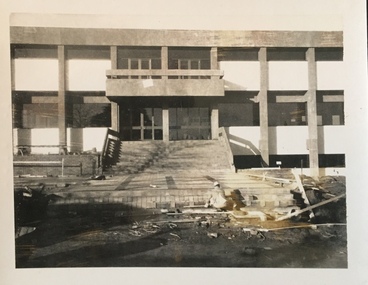
... kew civic centre...kew civic offices...The Kew Civic Centre, as opposed to the adjacent Kew Civic Hall (see also Kew City Hall), was built to house a new Council Chamber and Council Offices in 1972. ...Kew Historical Society) moved across the road to the reconfigured Civic Hall. The Civic Centre, pictured here, was ultimately sold to Trinity Grammar School following the amalgamation of Kew into the City of Boroondara. These four black and white photographs were taken by a photographer in the City Engineer's Department during the final construction phase. Each is dated and inscribed with a description. kew civic centre kew civic offices ...The Kew Civic Centre, as opposed to the adjacent Kew Civic Hall (see also Kew City Hall), was built to house a new Council Chamber and Council Offices in 1972. The Kew Library was to be located on the ground floor and accessed from the current carpark. This building replaced the former Town Hall in Walpole Street, Kew which had served as a town hall from 1865-1972. After the sale of the old Town Hall, the new Civic Centre was built to a design of the architects A K Lines, MacFarlane & Marshall. A fit-out of the building was still occurring when councillors and council officers moved into the building. In 1987, the Kew Library (and the Kew Historical Society) moved across the road to the reconfigured Civic Hall. The Civic Centre, pictured here, was ultimately sold to Trinity Grammar School following the amalgamation of Kew into the City of Boroondara.These four black and white photographs were taken by a photographer in the City Engineer's Department during the final construction phase. Each is dated and inscribed with a description.Tiling the steps leading from the forecourt to the new Kew Civic Centre in 1972.Annotated verso: "Civic Centre - Forecourt / 16.7.72"kew civic centre, kew civic offices, city of kew -- council chamber -
 Kew Historical Society Inc
Photograph - Construction of the Kew Civic Centre, 1972
... kew civic centre...kew civic offices...The Kew Civic Centre, as opposed to the adjacent Kew Civic Hall (see also Kew City Hall), was built to house a new Council Chamber and Council Offices in 1972. ...Kew Historical Society) moved across the road to the reconfigured Civic Hall. The Civic Centre, pictured here, was ultimately sold to Trinity Grammar School following the amalgamation of Kew into the City of Boroondara. These four black and white photographs were taken by a photographer in the City Engineer's Department during the final construction phase. Each is dated and inscribed with a description. kew civic centre kew civic offices ...The Kew Civic Centre, as opposed to the adjacent Kew Civic Hall (see also Kew City Hall), was built to house a new Council Chamber and Council Offices in 1972. The Kew Library was to be located on the ground floor and accessed from the current carpark. This building replaced the former Town Hall in Walpole Street, Kew which had served as a town hall from 1865-1972. After the sale of the old Town Hall, the new Civic Centre was built to a design of the architects A K Lines, MacFarlane & Marshall. A fit-out of the building was still occurring when councillors and council officers moved into the building. In 1987, the Kew Library (and the Kew Historical Society) moved across the road to the reconfigured Civic Hall. The Civic Centre, pictured here, was ultimately sold to Trinity Grammar School following the amalgamation of Kew into the City of Boroondara.These four black and white photographs were taken by a photographer in the City Engineer's Department during the final construction phase. Each is dated and inscribed with a description.Creating the forecourt to the new Kew Civic Centre in 1972.Annotated verso: "Civic Centre - Forecourt / 16.7.72"kew civic centre, kew civic offices, city of kew -- council chamber -
 Kew Historical Society Inc
Photograph - Historical exhibition at the Festival of Kew, 1976
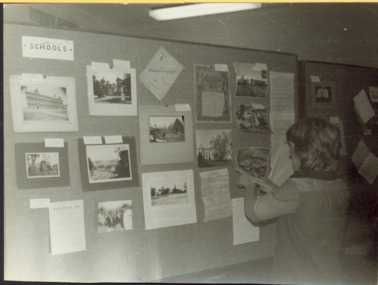
... While they were mostly held at what was to become known as the Phyllis Hore Room of the Kew Library, some exhibitions were held in the Kew Civic Offices or Kew Civic Hall (from1987 Kew Library)....While they were mostly held at what was to become known as the Phyllis Hore Room of the Kew Library, some exhibitions were held in the Kew Civic Offices or Kew Civic Hall (from1987 Kew Library). kew historical society - exhibitions kew - schools "Schools" Illustrations of schools in Kew attached to a display board, viewed by a member of the public. ...The Kew Festival was initiated in 1974 by Cr Gerry Petrie. At each festival, members of the Society would display items, typically from the collection. Typically, exhibitions were themed. While they were mostly held at what was to become known as the Phyllis Hore Room of the Kew Library, some exhibitions were held in the Kew Civic Offices or Kew Civic Hall (from1987 Kew Library).Illustrations of schools in Kew attached to a display board, viewed by a member of the public. None of the illustrations match current items in the collection so they were possibly donated for the event by individuals and or schools. "Schools"kew historical society - exhibitions, kew - schools -
 Kew Historical Society Inc
Photograph - Historical exhibition at the Festival of Kew, 1976
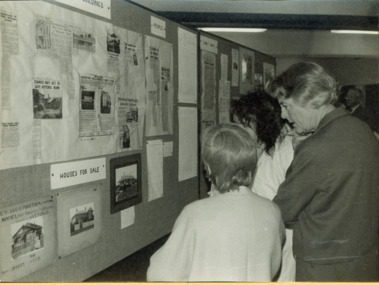
... While they were mostly held at what was to become known as the Phyllis Hore Room of the Kew Library, some exhibitions were held in the Kew Civic Offices or Kew Civic Hall (from1987 Kew Library)....While they were mostly held at what was to become known as the Phyllis Hore Room of the Kew Library, some exhibitions were held in the Kew Civic Offices or Kew Civic Hall (from1987 Kew Library). kew historical society - exhibitions "Buildings / Houses for Sale / People / Early Days" Illustrations of buildings, people and early days in Kew attached to a display board, viewed by a members and visitors. ...The Kew Festival was initiated in 1974 by Cr Gerry Petrie. At each festival, members of the Society would display items, typically from the collection. Typically, exhibitions were themed. While they were mostly held at what was to become known as the Phyllis Hore Room of the Kew Library, some exhibitions were held in the Kew Civic Offices or Kew Civic Hall (from1987 Kew Library).Illustrations of buildings, people and early days in Kew attached to a display board, viewed by a members and visitors. The section Houses for Sale includes photos on the back of real estate plans in the collection, proving that they were held by the Society before 1976."Buildings / Houses for Sale / People / Early Days"kew historical society - exhibitions -
 Kew Historical Society Inc
Photograph - Historical exhibition at the Festival of Kew, 1976
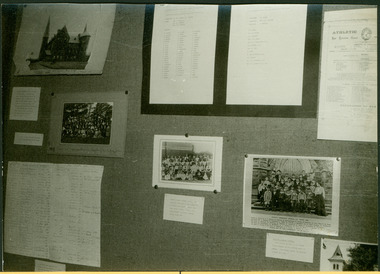
... While they were mostly held at what was to become known as the Phyllis Hore Room of the Kew Library, some exhibitions were held in the Kew Civic Offices or Kew Civic Hall (from1987 Kew Library)....While they were mostly held at what was to become known as the Phyllis Hore Room of the Kew Library, some exhibitions were held in the Kew Civic Offices or Kew Civic Hall (from1987 Kew Library). kew historical society - exhibitions Illustrations of churches and their congregations in Kew attached to a display board. ...The Kew Festival was initiated in 1974 by Cr Gerry Petrie. At each festival, members of the Society would display items, typically from the collection. Typically, exhibitions were themed. While they were mostly held at what was to become known as the Phyllis Hore Room of the Kew Library, some exhibitions were held in the Kew Civic Offices or Kew Civic Hall (from1987 Kew Library).Illustrations of churches and their congregations in Kew attached to a display board. Included are documents, certificates and photographskew historical society - exhibitions -
 Kew Historical Society Inc
Archive (series) - Subject File, ANDERSON, William Nicholls (1873-1927), 1958
... Much of the correspondence between the Society and the City of Kew relates to the painting and its location in the Mayor’s Room at the Kew Civic Offices in Charles Street, where it was on loan from the Society. ...Much of the correspondence between the Society and the City of Kew relates to the painting and its location in the Mayor’s Room at the Kew Civic Offices in Charles Street, where it was on loan from the Society. ...Various PartiesReference, Research, InformationKHS Imposed OrderWilliam Nicholls Anderson (1873-1927) was an Australian painter, one of whose works from the 1906 series River + Rail is in the Kew Historical Society’s art collection (donated 1984). The archive file contains correspondence, biographical information (written by his niece), and locations in Kew where he lived. Much of the correspondence between the Society and the City of Kew relates to the painting and its location in the Mayor’s Room at the Kew Civic Offices in Charles Street, where it was on loan from the Society. Lucy M (Jean) Hornby, the artist’s niece was a resident of 5 and 20 Queen Street, Kew. william nicholls anderson, artists - kew (vic)william nicholls anderson, artists - kew (vic) -
 Kew Historical Society Inc
Painting, W Nicholls Anderson, Adeney Avenue, Kew, 1906
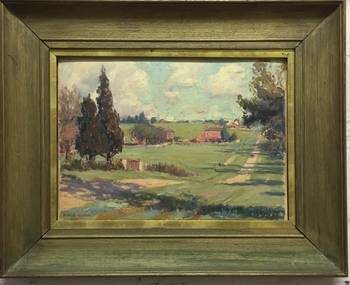
... Much of the correspondence between the Society and the City of Kew relates to the painting and its location in the Mayor’s Room at the Kew Civic Offices, Charles Street, where it was on loan from the Society. ...Much of the correspondence between the Society and the City of Kew relates to the painting and its location in the Mayor’s Room at the Kew Civic Offices, Charles Street, where it was on loan from the Society. ...William Nichols Anderson (1873-1927) was an Australian painter, one of whose works from the 1906 series River + Rail is in the Kew Historical Society’s art collection (donated 1984). A separate archive file contains correspondence, biographical information (written by his niece), and locations in Kew where he lived. Much of the correspondence between the Society and the City of Kew relates to the painting and its location in the Mayor’s Room at the Kew Civic Offices, Charles Street, where it was on loan from the Society. Lucy M (Jean) Hornby, the artist’s niece and the donor of the painting was a resident of 5 and 20 Queens Street, Kew (Vic). Australian ImpressionismGift of Lucy Hornby, 1984Framed oil on canvas by W. Nicholls Anderson of Park Street, Kew (now Adeney Avenue) looking uphill in a southerly direction towards Cotham Road. The painting is dated to 1906. The two storey house at left was known as 'Eborensis'. The house is still extant on the corner of Adeney Avenue and Parkhill Road. On sticker on back of frame - Adeney Ave./1913/ £3.3.0/ 13th Annual/ Exhib. V.A.S [Victorian Artists Society]/1911 Aust Art Exhib/the Guidlhall/Swanston st Melb./ Adeney's Paddock/ Kew. £3.0.0.artists - kew - victoria - australia, victorian artists society, william nicholls anderson (1873-1927), adeney avenue kew, australian art exhibition 1911, victorian artists' society, w. nicholls anderson -
 Kew Historical Society Inc
Photograph - Publicity Photograph, Herald Feature Service, Inspection of Architectural Models for a New Kew City Hall, circa 1959, 1959
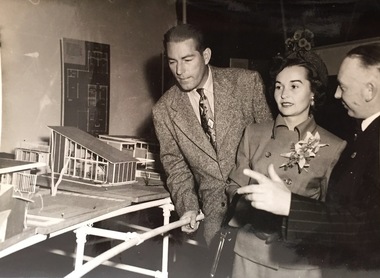
... Kew Town Hall offices were located in Walpole Street, Kew. Before 1960, even though it had been much discussed over a number of decades, Kew did not have a 'civic hall'. ...Kew Town Hall offices were located in Walpole Street, Kew. Before 1960, even though it had been much discussed over a number of decades, Kew did not have a 'civic hall'. ...The original Kew Town Hall offices were located in Walpole Street, Kew. Before 1960, even though it had been much discussed over a number of decades, Kew did not have a 'civic hall'. When required, events such as balls, exhibitions or theatrical events were held in the Kew Recreation Hall in Walpole Street. A new City Hall was to be opened by Sir Robert Menzies in 1960. It was located beside the Alexandra Gardens in Cotham Road. It is now used as the Kew Library. Cr Hugh George Ferguson (at right) was born in June 1900 in Williamstown. After his family moved to Kew, they lived in Fernhurst Grove while his future wife’s family lived in Fellows Street. He married in 1940 and subsequently joined the Australian Imperial Forces. After the war he worked as a Billeting Affairs Organiser for the Dutch Government, resettling migrants in Australia. He also worked in advertising as an account manager, and was campaign director for Arthur Rylah is Victorian politics. He organised the first major trade fairs at the Royal Exhibition Buildings after the Second World War, including a World Trade Fair. He built a home in Brougham Street and represented North Ward on Kew Council from 1952 to 1968. He was elected Mayor for the 1959-60 term. He died in 1975, aged 75, and is buried in Boroondara Cemetery.An item of historical interest donated by members of the Dods family in 2006. The Dods-Ferguson Collection includes a number of items once in the possession of the families related to or descended from two mayors of Kew: Cr. Hugh Ferguson and Cr. Frederick Dods.Publicity photograph of two men and a woman inspecting architectural models for a new Kew City Hall. The man at the right of the photograph is Cr Hugh George Ferguson, Mayor of Kew 1959-60. The Hall, now occupied by the Kew Library, was opened by The Hon H.E. Bolte MLA, Premier of Victoria in 1960.Herald Sun Feature Service / Hugh G. Ferguson & Associates / New Kew City Hall. kew city hall, hugh g. ferguson & asociates, architectural models - kew, cr hugh george ferguson -
 Kew Historical Society Inc
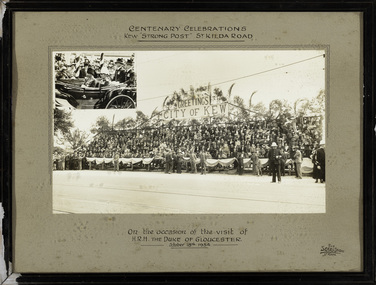
Photograph, The Sears Studio, Centenary Celebrations : Kew "Strong Post" St Kilda Road, 1934
... The photograph of the Kew Strong Post was once part of the Municipal Collection of the former City of Kew and was presented to the Kew Historical Society before the move from the Walpole Street (Kew) Town Hall to new Civic offices in Charles Street in 1971....The photograph of the Kew Strong Post was once part of the Municipal Collection of the former City of Kew and was presented to the Kew Historical Society before the move from the Walpole Street (Kew) Town Hall to new Civic offices in Charles Street in 1971. ...Cr. W.D. Vaughan in 'Kew's Civic History' (1960) records that: "In connection with the Melbourne Centenary Celebrations in 1934, the Kew Council decided to organise a strong post as an appropriate gesture of welcome to H.R.H. the Duke of Gloucester. Also that the municipality be represented by a symbolic floral float in the Royal pageant. This was a striking entry and won first prize, and evoked much comment on account of its originality and truly Australian motif." The photograph of the Kew Strong Post was once part of the Municipal Collection of the former City of Kew and was presented to the Kew Historical Society before the move from the Walpole Street (Kew) Town Hall to new Civic offices in Charles Street in 1971.Historic photograph of participation by the City of Kew in celebrations for a royal visitFramed and glazed photograph on its original inscribed mount and original frame of the Kew "Strong Post" in St Kilda Road on the occasion of the visit to Melbourne of the Duke of Gloucester. The photograph has two components, at the upper left is a photo of the royal carriage while the man photo shows the people of Kew on a decorated 'Strong Post' on St Kilda Road, along which the procession progressed. T"Centenary Celebrations / Kew "Strong Post" St Kilda Road / On the occasion of the visit of / H.R.H. The Duke of Gloucester / October 18th 1934."royal visits - melboure - 1934, duke of gloucester, kew (vic.) — municipal collection -
 Kew Historical Society Inc
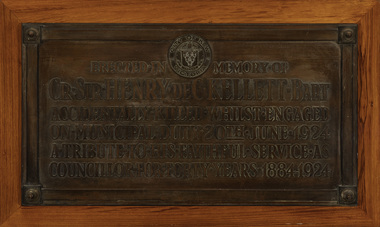
Plaque - Cr. Sir Henry de C. Kellett Bart, 1924
... The plaque to Henry Kellett was originally mounted in the vestibule of the Kew Town Hall in Walpole Street The plaque was once part of the Municipal Collection of the former City of Kew and was presented to the Kew Historical Society before the move from the Walpole Street (Kew) Town Hall to new Civic offices in Charles Street in 1971. sir henry de castres kellett mayors of kew (vic) councillors of kew (vic) "City of Kew Victoria [logo] / Erected in Memory of / Cr. ...The plaque to Henry Kellett was originally mounted in the vestibule of the Kew Town Hall in Walpole StreetThe plaque was once part of the Municipal Collection of the former City of Kew and was presented to the Kew Historical Society before the move from the Walpole Street (Kew) Town Hall to new Civic offices in Charles Street in 1971.Bronze funeral plaque commemorating the life and death of Sir Henry de Castres Kellett, who was killed in a traffic accident in 1924. The plaque bears an extensive dedication and is mounted on a wooden mount that was previously attached to a wall in the Walpole Street [Kew] Town Hall ."City of Kew Victoria [logo] / Erected in Memory of / Cr. Sir Henry de C. Kellett Bart. / Accidentally Killed Whilst Engaged / On Municipal Duty 20th June 1924 / A Tribute to His Faithful Service as / Councillor for Forty Years 19884-1924"sir henry de castres kellett, mayors of kew (vic), councillors of kew (vic) -
 Kew Historical Society Inc
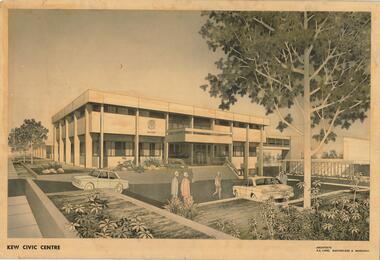
Drawing, AK Lines, Macfarlane & Marshall, Kew Civic Centre, c.1970
... Kew Civic Centre (A K Lines, MacFarlane & Marshall, 1972) was built next to the Kew Civic Hall (A C Leith & Bartlett, 1960) on the site of the former mansion Ordsall (later renamed South Esk). Whereas the entrance to the Civic Hall was positioned off Civic Drive, the main entrance to the Civic Centre faced Cotham Road, as shown in the undated perspective drawing of the proposed building. The Civic Hall was used for public functions and performances, while the Civic Centre was used for civic offices...Kew Civic Centre (A K Lines, MacFarlane & Marshall, 1972) was built next to the Kew Civic Hall (A C Leith & Bartlett, 1960) on the site of the former mansion Ordsall (later renamed South Esk). Whereas the entrance to the Civic Hall was positioned off Civic Drive, the main entrance to the Civic Centre faced Cotham Road, as shown in the undated perspective drawing of the proposed building. The Civic Hall was used for public functions and performances, while the Civic Centre was used for civic offices ...The Kew Civic Centre (A K Lines, MacFarlane & Marshall, 1972) was built next to the Kew Civic Hall (A C Leith & Bartlett, 1960) on the site of the former mansion Ordsall (later renamed South Esk). Whereas the entrance to the Civic Hall was positioned off Civic Drive, the main entrance to the Civic Centre faced Cotham Road, as shown in the undated perspective drawing of the proposed building. The Civic Hall was used for public functions and performances, while the Civic Centre was used for civic offices. It also contained the Council Chamber. The building opened in 1972, following the relocation of the councillors and council officers from the former Town Hall in Walpole Street (now a Woolworth's supermarket). Following the amalgamation of the former City of Kew into the City of Boroondara in 1994, the Civic Centre was sold to Trinity Grammar School. The exterior of the Centre has been modified by Trinity Grammar.A report for Heritage Victoria (date) describes how two architectural firms dominated the designs for new civic buildings in Victoria during the post war period. The report claims that: "An interesting sub-theme in the erection of post-war municipal offices in Victoria is that a considerable proportion were designed by the same three or four Melbourne-based architectural firms, who established themselves as the leading specialists in this type of work. The two most prolific firms in this regard were A K Lines, MacFarlane & Marshall, and A C Leith & Bartlett; both, in fact, had made names for themselves as designers of local government offices prior to the Second World War. Lines' office, for example had designed the Eltham Shire Offices in 1941, while Leith's firm had been responsible for the celebrated Heidelberg Town Hall in 1937). Both practices parleyed this early experience into a lucrative post-war career, designing numerous municipals offices well into the 1970s." (Survey of Post-War Built Heritage in Victoria, Built Heritage Pty Ltd, 2010.) The perspective drawing importantly captures the original design and function of the exterior of the building and its public entrance.Hand-coloured perspective sketch of the new Kew Civic Centre, completed in 1972 to designs by A K Lines, MacFarlane & Marshall; and located on the corner of Charles Street and Cotham Road, Kew. The sketch represents the front elevation of the building and its relation to the preexisting Kew Civic Hall at right. The three storey building features strong vertical concrete buttresses that extend across the three levels. KEW CIVIC CENTRE / A K LINES, MACFARLANE & MARSHALLkew civic centre, a.k. lines, macfarlane & marshall, architectural drawings, civic buildings -- kew (vic.), town hall -- kew (vic) -
 Kew Historical Society Inc
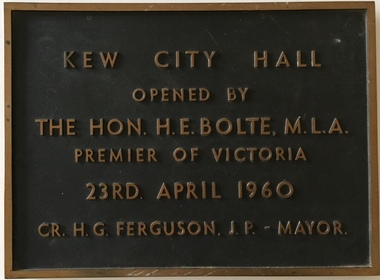
Plaque, Kew City Hall : Opened by The Hon H.E. Bolte M.L.A. Premier of Victoria 23rd April 1960 : Cr H.H. Ferguson J.P. Mayor, 1960
... Kew was proclaimed on 19 December 1860, then upgraded to a Borough (1863), a Town (1910) and finally a City (1921). From 1865, its offices were based in the former Athenaeum Hall in Walpole Street, which, although extended in 1883, inevitably became inadequate. Plans for a new purpose-built Town Hall were first mooted in the late 1880s, but fell prey to six subsequent decades of debate. During that time, many sites were considered and rejected, and several schemes prepared. Finally, in 1945, it was resolved to build a new civic...Kew was proclaimed on 19 December 1860, then upgraded to a Borough (1863), a Town (1910) and finally a City (1921). From 1865, its offices were based in the former Athenaeum Hall in Walpole Street, which, although extended in 1883, inevitably became inadequate. Plans for a new purpose-built Town Hall were first mooted in the late 1880s, but fell prey to six subsequent decades of debate. During that time, many sites were considered and rejected, and several schemes prepared. Finally, in 1945, it was resolved to build a new civic ...The Municipality of Kew was proclaimed on 19 December 1860, then upgraded to a Borough (1863), a Town (1910) and finally a City (1921). From 1865, its offices were based in the former Athenaeum Hall in Walpole Street, which, although extended in 1883, inevitably became inadequate. Plans for a new purpose-built Town Hall were first mooted in the late 1880s, but fell prey to six subsequent decades of debate. During that time, many sites were considered and rejected, and several schemes prepared. Finally, in 1945, it was resolved to build a new civic centre as a war memorial. The council acquired Southesk, a mansion on the south-west corner of Cotham Road and Charles Street – first mooted as a possible Town Hall site two decades earlier – and plans for a civic precinct were drawn up by John Scarborough. The project stalled until 1957, when a Town Hall Committee was formed and a new architect appointed: Harold Bartlett of Leith & Bartlett. He also proposed an entire civic precinct, of which a large public hall would constitute Stage One. Designed to accommodate almost any public or official function, the space had had a small stage at one end for intimate theatrical productions, a larger stage at the other (with operable sunken orchestra pit) for musical performances, plus the most up-to-date equipment for live TV transmission. The building, befitting its original intent as a war memorial, was also to include a sculpted monument, for which a separate design competition was held. First prize went to George H Allen (1900-1972), long-time head of the Sculpture Department at RMIT and a former war artist himself (the only one, in fact, to have worked in the medium of sculpture). At the time of the Kew project, Allen was best known for his Cenotaph at the Shrine of Remembrance (1955) and a controversial abstract sculpture at Hume House in William Street (1957). Tenders for the new hall were called and the contract (worth £104,986) was awarded to H F Yuncken. The foundation stone was laid by the Mayor, Cr F C O'Brien, on 1 June 1959. Completion (initially scheduled for October) was delayed by the unavailability of certain materials; it was barely finished in time for the official opening (by Premier Henry Bolte) on 23 April 1960. The war memorial was unveiled two days later (Anzac Day) by Bolte's deputy, the Hon A G Rylah. Fittingly, that year also marked Kew's municipal centenary, and many celebratory events were held in and around the new civic centre in December, including a special council meeting (attended by the Prime Minister), a tree planting ceremony and a youth ball. Source: Survey of Built Heritage in Victoria: Stage Two (Built Heritage Pty Ltd., 2010)Plaque commemorating the opening of a new town hall in KewMetal plaque recording the official opening of the Kew City Hall, 23rd April 1960. This plaque was given to the Kew Historical Society in 1991 by the former City of Kew.Kew City Hall / Opened by / The Hon. H.E. Bolte M.L.A. / Premier of Victoria / 23rd April 1960 / Cr. H.G. Ferguson J.P. - Mayor.kew city hall, foundation stones - kew (vic), sir henry bolte, local government -- kew (vic.) -
 Kew Historical Society Inc
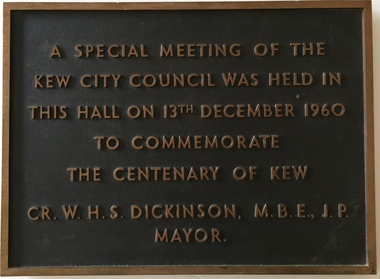
Plaque, A Special Meeting of the Kew City Council Was Held in This Hall on 13th December 1960 to Commemorate the Centenary of Kew : Cr. W.H.S. Dickinson M.B.E., J.P. Mayor, 1960
... Kew was proclaimed on 19 December 1860, then upgraded to a Borough (1863), a Town (1910) and finally a City (1921). From 1865, its offices were based in the former Athenaeum Hall in Walpole Street, which, although extended in 1883, inevitably became inadequate. Plans for a new purpose-built Town Hall were first mooted in the late 1880s, but fell prey to six subsequent decades of debate. During that time, many sites were considered and rejected, and several schemes prepared. Finally, in 1945, it was resolved to build a new civic...Kew was proclaimed on 19 December 1860, then upgraded to a Borough (1863), a Town (1910) and finally a City (1921). From 1865, its offices were based in the former Athenaeum Hall in Walpole Street, which, although extended in 1883, inevitably became inadequate. Plans for a new purpose-built Town Hall were first mooted in the late 1880s, but fell prey to six subsequent decades of debate. During that time, many sites were considered and rejected, and several schemes prepared. Finally, in 1945, it was resolved to build a new civic ...The Municipality of Kew was proclaimed on 19 December 1860, then upgraded to a Borough (1863), a Town (1910) and finally a City (1921). From 1865, its offices were based in the former Athenaeum Hall in Walpole Street, which, although extended in 1883, inevitably became inadequate. Plans for a new purpose-built Town Hall were first mooted in the late 1880s, but fell prey to six subsequent decades of debate. During that time, many sites were considered and rejected, and several schemes prepared. Finally, in 1945, it was resolved to build a new civic centre as a war memorial. The council acquired Southesk, a mansion on the south-west corner of Cotham Road and Charles Street – first mooted as a possible Town Hall site two decades earlier – and plans for a civic precinct were drawn up by John Scarborough. The project stalled until 1957, when a Town Hall Committee was formed and a new architect appointed: Harold Bartlett of Leith & Bartlett. He also proposed an entire civic precinct, of which a large public hall would constitute Stage One. Designed to accommodate almost any public or official function, the space had had a small stage at one end for intimate theatrical productions, a larger stage at the other (with operable sunken orchestra pit) for musical performances, plus the most up-to-date equipment for live TV transmission. The building, befitting its original intent as a war memorial, was also to include a sculpted monument, for which a separate design competition was held. First prize went to George H Allen (1900-1972), long-time head of the Sculpture Department at RMIT and a former war artist himself (the only one, in fact, to have worked in the medium of sculpture). At the time of the Kew project, Allen was best known for his Cenotaph at the Shrine of Remembrance (1955) and a controversial abstract sculpture at Hume House in William Street (1957). Tenders for the new hall were called and the contract (worth £104,986) was awarded to H F Yuncken. The foundation stone was laid by the Mayor, Cr F C O'Brien, on 1 June 1959. Completion (initially scheduled for October) was delayed by the unavailability of certain materials; it was barely finished in time for the official opening (by Premier Henry Bolte) on 23 April 1960. The war memorial was unveiled two days later (Anzac Day) by Bolte's deputy, the Hon A G Rylah. Fittingly, that year also marked Kew's municipal centenary, and many celebratory events were held in and around the new civic centre in December, including a special council meeting (attended by the Prime Minister), a tree planting ceremony and a youth ball. Source: Survey of Built Heritage in Victoria: Stage Two (Built Heritage Pty Ltd., 2010)Historically significant commemorative plaqueMetal plaque relating to special Council meeting to mark centenary of Kew, 13th December 1960. This plaque was given to the Kew Historical Society in 1991 by the former City of Kew.A Special Meeting Of The / Kew City Council Was Held In / This Hall On 13th December 1960 / To Commemorate / The Centenary of Kew / Cr. W.H.S. Dickinson, M.B.E., J.P., / Mayorkew city hall, foundation stones - kew (vic), cr. w.h.s. dickinson, local government -- kew (vic.) -
 Kew Historical Society Inc
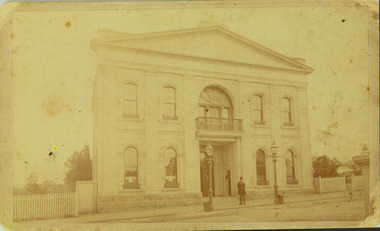
Photograph - Former Kew Town Hall, Walpole Street, 1887
... Kew Council in 1865. The Town Hall was sold to Woolworth's and subsequently demolished in 1972 when the civic offices were transferred to a new building on the corner of Charles Street and Cotham Road....Kew Council in 1865. The Town Hall was sold to Woolworth's and subsequently demolished in 1972 when the civic offices were transferred to a new building on the corner of Charles Street and Cotham Road. ...The earliest building on the Walpole Street site was the Kew Athenaeum Hall (built 1860) which was purchased by Kew Council in 1865. The Town Hall was sold to Woolworth's and subsequently demolished in 1972 when the civic offices were transferred to a new building on the corner of Charles Street and Cotham Road.This is the earliest known image of the old Kew Town Hall following the addition of the new facade in the 1880s.A print copy of a gelatin silver photograph of the former Kew Town Hall in Walpole Street, Kew. The photograph shows the neo-classical facade added to the former Atheneum building in the 1880s. The recessed doors in the entrance are now held by Trinity Grammar School. A man, probably Cr Edmund Marshall, is standing outside the entrance. Two gas lamps stand in front of the Hall.Reverse in pencil: "Edmund Marshall Councillor 1887"town halls, kew town hall, walpole street - kew (vic.) -
Kew Historical Society Inc
Journal, Kewriosity : May 1991
... Kew] Community House courses / p7. Coming events at Trinity [Grammar] / p7. Carmelite Monastery restoration / p7. Council Chamber or Council void? [descriptive comparison of Walpole Street Town Hall with the Chamber at the Municipal [Civic] Offices] / p8. ...Flying doctors descend on Kew [Crawford Productions] / p1. Computerised court opens [Penalty Enforcement by Registration of an Infringement (PERIN)] / p1. Stop or give-way? [Council assessment of intersections] / p1. Council seeks kinder review / p1. Diary dates for May / p2. Your marching champions [Kew Band, Kew Youth Band] / p2. Word of mouth [Pre-school story time at Kew Library 1996- ] / p2. Something airey [exhibition at Kew Gallery] / p2. Something pre-loved [Glass Street Kindergarten trash 'n treasure sale] / p2. Commentary [Willsmere redevelopment] / Cr Daryl Oldaker p3. Traffic headaches for Barkers Road [drain upgrade] / p3. Trees versus powerlines / p4. Loyal service [Tom Gascoyne] / p4. Traffic Management update [Area 7, Area 10] / p4. Cleaner shopping centres / p4. Hard rubbish collection / p4. Willsmere Drain / p4. Survey of dual occupancy / p4. Health [Department] stall / p5. Women's health workshops / p5. Baby Change Room [Walpole Street] / p5. Nursing Mothers' meetings / p5. Status quo for family day care [industrial award ruling] / p5. Immunisation - Important / p5. Daytime garden / p6. Library Friends' [book] sale / p6. [East Kew Bowling Club] Indoor bowls / p6. Chrysanthemums, M'am [Kew Garden Club] / p6. Handy Veterans Service [Kew sub-branch of the RSL] / p6. Crime wave [Neighbourhood Watch Areas G64, G97] / p6. All this for sixpence [Balwyn Cinema history] / p6. Positive [survey] feedback [to Kewriosity] / p6. Arthritis meeting / p6. Something fishy [Ian Napier at Raya Gallery] / p7. [Kew] Community House courses / p7. Coming events at Trinity [Grammar] / p7. Carmelite Monastery restoration / p7. Council Chamber or Council void? [descriptive comparison of Walpole Street Town Hall with the Chamber at the Municipal [Civic] Offices] / p8. Evangelist meeting [St Hilary's] / p8. Youth empowerment [Youth Resource Centre] / Kate Lang p8. Missions meeting [Kew Baptist Church Hall] / p8.Kewriosity was a local newsletter combining Kew Council and community news. It was published between November 1983 and June 1994, replacing an earlier Kewriosity [broad] Sheet (1979-84). In producing Kewriosity, Council aimed to provide a range of interesting and informative articles covering its deliberations and decision making, together with items of general interest and importance to the Kew community and information not generally available through daily media outlets.non-fictionFlying doctors descend on Kew [Crawford Productions] / p1. Computerised court opens [Penalty Enforcement by Registration of an Infringement (PERIN)] / p1. Stop or give-way? [Council assessment of intersections] / p1. Council seeks kinder review / p1. Diary dates for May / p2. Your marching champions [Kew Band, Kew Youth Band] / p2. Word of mouth [Pre-school story time at Kew Library 1996- ] / p2. Something airey [exhibition at Kew Gallery] / p2. Something pre-loved [Glass Street Kindergarten trash 'n treasure sale] / p2. Commentary [Willsmere redevelopment] / Cr Daryl Oldaker p3. Traffic headaches for Barkers Road [drain upgrade] / p3. Trees versus powerlines / p4. Loyal service [Tom Gascoyne] / p4. Traffic Management update [Area 7, Area 10] / p4. Cleaner shopping centres / p4. Hard rubbish collection / p4. Willsmere Drain / p4. Survey of dual occupancy / p4. Health [Department] stall / p5. Women's health workshops / p5. Baby Change Room [Walpole Street] / p5. Nursing Mothers' meetings / p5. Status quo for family day care [industrial award ruling] / p5. Immunisation - Important / p5. Daytime garden / p6. Library Friends' [book] sale / p6. [East Kew Bowling Club] Indoor bowls / p6. Chrysanthemums, M'am [Kew Garden Club] / p6. Handy Veterans Service [Kew sub-branch of the RSL] / p6. Crime wave [Neighbourhood Watch Areas G64, G97] / p6. All this for sixpence [Balwyn Cinema history] / p6. Positive [survey] feedback [to Kewriosity] / p6. Arthritis meeting / p6. Something fishy [Ian Napier at Raya Gallery] / p7. [Kew] Community House courses / p7. Coming events at Trinity [Grammar] / p7. Carmelite Monastery restoration / p7. Council Chamber or Council void? [descriptive comparison of Walpole Street Town Hall with the Chamber at the Municipal [Civic] Offices] / p8. Evangelist meeting [St Hilary's] / p8. Youth empowerment [Youth Resource Centre] / Kate Lang p8. Missions meeting [Kew Baptist Church Hall] / p8. publications -- city of kew (vic.), kewriosity, council newsletters, community newsletters -
Kew Historical Society Inc
Journal, Kewriosity : February 1990
... Kew Recreation Centre] / p3. Due you have a hearing problem? / p3. Bluestone sales / p3. Council meetings resume / p3. CEO takes up the reins [Malcolm Hutchinson] / p3. Bushwalking provides photographic opportunities / p4. Notices / p4. Council building works complete [Civic Offices ...Theatre group changes track [Track Players] / p1. Rates reminder / p1. People's Day / p2. Dates for February / p2. Children's Services Committee to re-convene / p2. Recycle your children's toys / p2. Senior Citizens' Week / p2. Cash-a-can centre for Kew / p2. Kindergarten places [Davis Street Kindergarten] / p2. Trill with the Phil [Kew Philharmonic Society] / p2. Commentary /Cr Michael Montalto p3. Council sets community reps [ Kew Recreation Centre] / p3. Due you have a hearing problem? / p3. Bluestone sales / p3. Council meetings resume / p3. CEO takes up the reins [Malcolm Hutchinson] / p3. Bushwalking provides photographic opportunities / p4. Notices / p4. Council building works complete [Civic Offices] / p4. Promise of brightest festival yet / p5. Meetings reminder / p5. Christmas gifts for HKC / p5. Spare room? Need help? / p5. Opposition leaders' new move / p5. Keri provides support for all / p5. Kew Community House / p6. War on waste slowed / p6. Council appeals for co-operation on rubbish days / p6. Traffic management update / p6. Historic bridge restored [Kane's Bridge] / p6. Time up for Kew Community House co-ordinator [Judy Price] / p7. Heritage advice / p7. Caption videos for the deaf / p7. Physiotherapy for children / p7. Memorial Walk [People Against Drink Driving, PADD] / p7. Footy news [Kew Football Club] / p8. Neighbourhood Watch / p8. Something for all at Seniors Centre / p8. Keeping you informed [Citizen's Advice Bureau] / p8. Rotarians entertain older citizens / p8.Kewriosity was a local newsletter combining Kew Council and community news. It was published between November 1983 and June 1994, replacing an earlier Kewriosity [broad] Sheet (1979-84). In producing Kewriosity, Council aimed to provide a range of interesting and informative articles covering its deliberations and decision making, together with items of general interest and importance to the Kew community and information not generally available through daily media outlets.non-fictionTheatre group changes track [Track Players] / p1. Rates reminder / p1. People's Day / p2. Dates for February / p2. Children's Services Committee to re-convene / p2. Recycle your children's toys / p2. Senior Citizens' Week / p2. Cash-a-can centre for Kew / p2. Kindergarten places [Davis Street Kindergarten] / p2. Trill with the Phil [Kew Philharmonic Society] / p2. Commentary /Cr Michael Montalto p3. Council sets community reps [ Kew Recreation Centre] / p3. Due you have a hearing problem? / p3. Bluestone sales / p3. Council meetings resume / p3. CEO takes up the reins [Malcolm Hutchinson] / p3. Bushwalking provides photographic opportunities / p4. Notices / p4. Council building works complete [Civic Offices] / p4. Promise of brightest festival yet / p5. Meetings reminder / p5. Christmas gifts for HKC / p5. Spare room? Need help? / p5. Opposition leaders' new move / p5. Keri provides support for all / p5. Kew Community House / p6. War on waste slowed / p6. Council appeals for co-operation on rubbish days / p6. Traffic management update / p6. Historic bridge restored [Kane's Bridge] / p6. Time up for Kew Community House co-ordinator [Judy Price] / p7. Heritage advice / p7. Caption videos for the deaf / p7. Physiotherapy for children / p7. Memorial Walk [People Against Drink Driving, PADD] / p7. Footy news [Kew Football Club] / p8. Neighbourhood Watch / p8. Something for all at Seniors Centre / p8. Keeping you informed [Citizen's Advice Bureau] / p8. Rotarians entertain older citizens / p8. publications -- city of kew (vic.), kewriosity, council newsletters, community newsletters -
 Kew Historical Society Inc
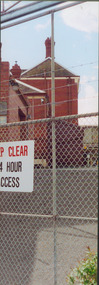
Photograph - Former Kew Police Station : Parking lot, 1996
... A civic campaign for new public offices developed in Kew in the 1880s. ...A civic campaign for new public offices developed in Kew in the 1880s. ...A civic campaign for new public offices developed in Kew in the 1880s. After much deliberation, the location chosen was the junction of Bulleen and Cotham Roads. The buildings were designed by George Watson and John Henry Harvey, architects within the Department of Public Works (Victoria). Building was commenced in 1887, and after one year, the buildings were opened. The Post Office was transferred to the new Commonwealth Government in 1901. The Police Station and Court House, sold by the Victorian Government to the City of Boroondara in 2007, are now a community cultural centre and performing arts venue.The buildings were listed on the Victorian Heritage Register Register (HO885) in 1991. They are historically and architecturally significant to the State of Victoria because Watson and Harvey's designs exhibit diversity in integrating civil offices, they accommodate the apex of road junctions, and they demonstrate a departure from the contemporaneously favoured High Victorian Classical to the Queen Anne style in the design of civic buildings.View through the old wire gates into the parking lot behind the former Kew Police Station and Court House. This was the entrance from Cotham Road with which supplies, prisoners, and police cars would enter.kew court house, public offices -- kew (vic), kew police station -
 Kew Historical Society Inc
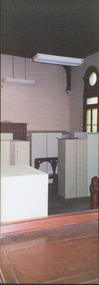
Photograph - Former Kew Court House : Court Room, 1996
... A civic campaign for new public offices developed in Kew in the 1880s. ...A civic campaign for new public offices developed in Kew in the 1880s. ...A civic campaign for new public offices developed in Kew in the 1880s. After much deliberation, the location chosen was the junction of Bulleen and Cotham Roads. The buildings were designed by George Watson and John Henry Harvey, architects within the Department of Public Works (Victoria). Building was commenced in 1887, and after one year, the buildings were opened. The Post Office was transferred to the new Commonwealth Government in 1901. The Police Station and Court House, sold by the Victorian Government to the City of Boroondara in 2007, are now a community cultural centre and performing arts venue.The buildings were listed on the Victorian Heritage Register Register (HO885) in 1991. They are historically and architecturally significant to the State of Victoria because Watson and Harvey's designs exhibit diversity in integrating civil offices, they accommodate the apex of road junctions, and they demonstrate a departure from the contemporaneously favoured High Victorian Classical to the Queen Anne style in the design of civic buildings.Former court room of the Kew Court House. By 1993 when this photograph was taken, the room had been taken over by the Kew Police Station and used for police lockers and as a briefing room. In the foreground the edge of the magistrates' desk can be seen and in the distance the railing used to separate the public gallery from the main section of the court. This railing was repositioned to the foyer during the renovations of the Court House from 2007-11. The magistrates' desk was destroyed. kew court house, public offices -- kew (vic), kew police station -
 Kew Historical Society Inc
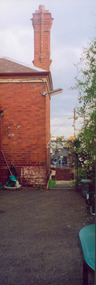
Photograph - Former Kew Police Station : Wall and chimney, 1996
... A civic campaign for new public offices developed in Kew in the 1880s. ...A civic campaign for new public offices developed in Kew in the 1880s. ...A civic campaign for new public offices developed in Kew in the 1880s. After much deliberation, the location chosen was the junction of Bulleen and Cotham Roads. The buildings were designed by George Watson and John Henry Harvey, architects within the Department of Public Works (Victoria). Building was commenced in 1887, and after one year, the buildings were opened. The Post Office was transferred to the new Commonwealth Government in 1901. The Police Station and Court House, sold by the Victorian Government to the City of Boroondara in 2007, are now a community cultural centre and performing arts venue.The buildings were listed on the Victorian Heritage Register Register (HO885) in 1991. They are historically and architecturally significant to the State of Victoria because Watson and Harvey's designs exhibit diversity in integrating civil offices, they accommodate the apex of road junctions, and they demonstrate a departure from the contemporaneously favoured High Victorian Classical to the Queen Anne style in the design of civic buildings.View through the Cotham Road carpark towards High Street of the southeast corner of the former police station. The use of red brick, tall brick chimneys and slate roof were representative of the Queen Ann Style used in the construction of the Kew Public Offices in 1888.public offices -- kew (vic), kew police station -
 Kew Historical Society Inc
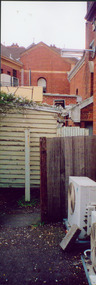
Photograph - Former Kew Court House : Outbuildings, 1996
... A civic campaign for new public offices developed in Kew in the 1880s. ...A civic campaign for new public offices developed in Kew in the 1880s. ...A civic campaign for new public offices developed in Kew in the 1880s. After much deliberation, the location chosen was the junction of Bulleen and Cotham Roads. The buildings were designed by George Watson and John Henry Harvey, architects within the Department of Public Works (Victoria). Building was commenced in 1887, and after one year, the buildings were opened. The Post Office was transferred to the new Commonwealth Government in 1901. The Police Station and Court House, sold by the Victorian Government to the City of Boroondara in 2007, are now a community cultural centre and performing arts venue.The buildings were listed on the Victorian Heritage Register Register (HO885) in 1991. They are historically and architecturally significant to the State of Victoria because Watson and Harvey's designs exhibit diversity in integrating civil offices, they accommodate the apex of road junctions, and they demonstrate a departure from the contemporaneously favoured High Victorian Classical to the Queen Anne style in the design of civic buildings.View of old weatherboard outbuildings, including a toilet, constructed in the formerly open area behind the Post Office, Court House and Police Station. In the distance is a wall of the former Post Office.kew court house, public offices -- kew (vic), kew police station, kew post office -
 Kew Historical Society Inc
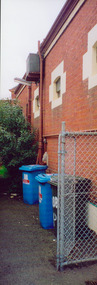
Photograph - Former Kew Post Office : Exterior wall, 1996
... A civic campaign for new public offices developed in Kew in the 1880s. ...A civic campaign for new public offices developed in Kew in the 1880s. ...A civic campaign for new public offices developed in Kew in the 1880s. After much deliberation, the location chosen was the junction of Bulleen and Cotham Roads. The buildings were designed by George Watson and John Henry Harvey, architects within the Department of Public Works (Victoria). Building was commenced in 1887, and after one year, the buildings were opened. The Post Office was transferred to the new Commonwealth Government in 1901. The Police Station and Court House, sold by the Victorian Government to the City of Boroondara in 2007, are now a community cultural centre and performing arts venue.The buildings were listed on the Victorian Heritage Register Register (HO885) in 1991. They are historically and architecturally significant to the State of Victoria because Watson and Harvey's designs exhibit diversity in integrating civil offices, they accommodate the apex of road junctions, and they demonstrate a departure from the contemporaneously favoured High Victorian Classical to the Queen Anne style in the design of civic buildings.Side wall, facing Cotham Road of the former Kew Post Officekew court house, public offices -- kew (vic), kew police station, kew post office
