
Showing 45 items matching "life in the 1900's"
-
 Bendigo Historical Society Inc.
Audio - MARRIAGE AND CHILDREN, 1900s
... Life in the 1900's...Life in the 1900's Marriage and children DVD. Marriage and Children of the 1900s. ...DVD. Marriage and Children of the 1900s. Wave file.life in the 1900's, marriage and children -
 Tatura Irrigation & Wartime Camps Museum
Booklet, Making A Crust In The Depression and Entertaining Ourselves When Young, 1991
... farming in the 1900's...life...Stories of life on the land, early 1900's and how the young people entertained themselves,...Stories of life on the land, early 1900's and how the young people entertained themselves, farming in the 1900's life on the land White booklet, black lettering, stories of early farming and fruit growing. ...Stories of life on the land, early 1900's and how the young people entertained themselves,White booklet, black lettering, stories of early farming and fruit growing. Kyabram and Lancaster area.farming in the 1900's, life on the land -
 Ballarat Clarendon College
Photograph, 1908 (estimated)
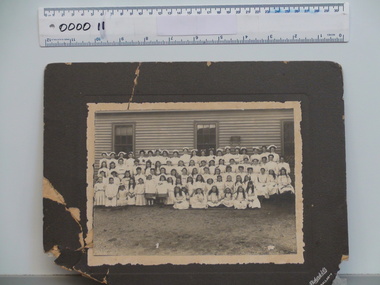
... This extraordinary record of the student cohort in 1908 reveals many aspects of school life in the early 1900's. The fashions, hair coiffure and accessories and added costuming are fascinating. ...This extraordinary record of the student cohort in 1908 reveals many aspects of school life in the early 1900's. The fashions, hair coiffure and accessories and added costuming are fascinating. ...This extraordinary record of the student cohort in 1908 reveals many aspects of school life in the early 1900's. The fashions, hair coiffure and accessories and added costuming are fascinating. The sport detail from the basketball hoop is significant. This photograph has social significance because of its detail regarding female school activities in the early 1900s. Black and white photograph mounted on grey card of Clarendon Ladies College student cohort in 1908. The students are arranged in five tiered rows. The photograph is taken against wall of a timber building. There is a basketball net fixed to the wall above the last row. Many of the girls are wearing fancy hats, some decorated with birds. Two young girls in the front row wear poster boards over their clothing advertising an event not to be missed; something to do with a menagerie. All the students are dressed in white, some in dresses, some n skirts and blouses and many have aprons over their skirts. The photograph is accompanied with a typed list of namesPrinted on front righthand bottom corner of mount: 'Richards & Co/Ballarat'1908, uniform, richardson, clarendon ladies college, costume, menagerie, hilda farmer, avenel halls, sylvia eyres, ella morrow, florence sides, gertie owen, laela williams, lorna dowler, emma buchanan, phyllis doepel, daisy llewellyn, adeline purser, sophie anderson, helen mathieson, d brophy, lily wright, margaret dowler, dulce deardon, gladys small, marjory howe, jessie kelsall, erica mckay, pearl eyres, iris llewellyn, edith bishop, marjorie walker, violet howard, hazel wlls, effie white, mimi murphy, carrie miners, edith murphy, irene palamountain, miss allan, marjorie salmon, dollie snow, naomi franklin, elsie powell, rachael kennedy, rose paull, sylvia barnett, esther, lilah emblling, trixie kliender, chrissie anderson, agnes wheen, kitty dawbarn, hazel clements, m serjeant, dolly gill, beryl bach, dorothy nicholas, frances gill, meg moore, jessie eyres, blanche murphy, merle booth, melba mcconnel, edna clark, betty lester, bessie hoad, madge dearden, kate cameron, olive mathews, grace nicholas, mollie souter, isabel mctaggart, madge llewellyn, mollie mary buley, alice ralph, ruth tyler, rebecca abraham, joyce eyres, nellie salmon -
 Flagstaff Hill Maritime Museum and Village
Postcard - Coastal Scene, Joseph Jordan Photographic Studio, Breakwater, Warrnambool, circa 1907
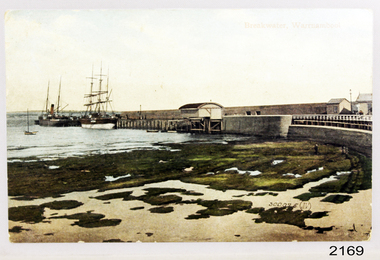
... Life Honorary Member" of the Warrnambool Returned Soldiers League and in 1933 he was recognised as being the oldest living soldier in Victoria. Joseph died in 1935 aged 95. Valentine Publishing Company Pty. Ltd. Valentine and Sons was a printing and photography business based in Dundee, Scotland and Canada. In the early 1900's...Life Honorary Member" of the Warrnambool Returned Soldiers League and in 1933 he was recognised as being the oldest living soldier in Victoria. Joseph died in 1935 aged 95. Valentine Publishing Company Pty. Ltd. Valentine and Sons was a printing and photography business based in Dundee, Scotland and Canada. In the early 1900's ...The Port of Warrnambool - In the early years the Port of Warrnambool was a busy port. Steamships and sailing ships were frequent visitors to the port. Steam navigation companies were plentiful, carrying passengers and freighting cargo such as coal, timber, food, livestock, furniture, hardware and haberdashery between Melbourne and the ports along the southwest coast of Victoria, including Warrnambool. The carts would take their loads into the township for distribution. The Breakwater was built (using 32 ton blocks of concrete) between 1874 and 1890 to provide ships with greater protection from the Southern Ocean. The Lifeboat and Rocket House - The coastline of South West Victoria has had over 600 shipwrecks and many lost lives; even in Warrnambool’s Lady Bay there were around 16 known shipwrecks between 1850 and 1905, with eight lives lost. In 1859 the first Government-built lifeboat arrived at Warrnambool Harbour and a shed was soon built to house it, followed in 1864 by a rocket house to safely store the Rocket Rescue equipment. In 1878 the buildings were moved to the Breakwater area, and in 1910 the new Lifeboat Warrnambool arrived with its ‘self-righting’ design. For almost one hundred years the lifeboat and rocket crews, mostly local volunteers, trained regularly to maintain and improve their skills, summoned when needed by alarms, gunshots, ringing bells and foghorns. Some became local heroes but all served an important role. By the end of the 1950s the lifeboat and rescue equipment had become obsolete. Joseph Jordan - Joseph Jordan was born in 1841 in Leicester England. When he was 16 he joined the 7th Queen's Own Hussars and was sent to India at the outbreak of the mutiny. He took part in the relief of Lucknow and remained in India for eleven years. It was during this time, he became interested in photography. He was posted to New Zealand and later came to Victoria, becoming a sergeant major of the Mounted Rifles. In the mid 1880s he came to the Western district where he was responsible for establishing units of the Mounted Rifles in various country towns such as Dunkeld, Mortlake, Panmure, Bushfield, Koroit etc. He resigned from the army in 1889 and set up a professional photography studio in Liebig Street, Warrnambool. He became very well known in the Western District for family photographs, official photographs of local councillors and groups as well as views of local scenery. In 1891 he photographed the wrecked barque "Fiji" at "Wrecks Beach" near Princetown. His business was taken over by his son Arthur around 1917. Joseph was a keen rifle shot and in 1924 he donated the "Jordan Shield" as a prize to the Victorian Rifle Association. He was made a "Life Honorary Member" of the Warrnambool Returned Soldiers League and in 1933 he was recognised as being the oldest living soldier in Victoria. Joseph died in 1935 aged 95. Valentine Publishing Company Pty. Ltd. Valentine and Sons was a printing and photography business based in Dundee, Scotland and Canada. In the early 1900's, at the height of the postcard craze, they published large numbers of postcards in the U.K., Canada, U.S., Australia and South Africa. Valentine postcards have a 6 digit serial number on the view side with the initials "J. V." in a circle adjacent to the number. The 300,000's related to views of Australia. From around 1900 (or earlier) the firm bought many images for their postcards from local and national photographers who sold publishing rights to Valentines.This postcard is significant for its association with the Port of Warrnambool and the Warrnambool Breakwater as it shows a point in time when shipping activities were an important part of Warrnambool's commerce and social development. It is also a record of the Warrnambool Lifeboat and Rocket house which was important in aiding ordinary citizens, harbour employees and the volunteer boat and rescue crew in saving the lives of sailors and passengers due to the high number of shipwrecks that occurred along the coastline. Joseph Jordan is a significant figure in Warrnambool history as he helped to establish early units of the Mounted Rifles (G Company) in local towns during the late 1880's and later, photographed local scenes, groups and citizens of early Warrnambool. It is also a culturally significant example of the type of postcards that were very popular in the early part of the 20th century.Photograph of breakwater from beachFront of card - Breakwater, Warrnambool / 300,025 J.V [in a circle] Back of card - POSTCARD / VALENTINE'S SERIES / - This space may be used for communication / The address only to be written here - Miss Alice Griffen / Howard St / Warrnambool - How are you enjoying your holiday we are grand. / from / Dodo, Dodo, Dodo with love - Leura? / Marjory Craig? / BL006 / R99A / REG NO 2169flagstaff hill, warrnambool, shipwrecked-coast, flagstaff-hill, flagstaff-hill-maritime-museum, maritime-museum, photograph, warrnambool breakwater, breakwater, shipwreck-coast, flagstaff-hill-maritime-village, warrnambool harbour, postcard, joseph jordan, valentine and sons, valentine publishing company, lady bay, life boat house, rocket house, steam ship, barque, jordan photography -
Ballarat Clarendon College
Invoice
... 1900's. Invoice bears a stamp duty stamp dated 10/06/1909 Receipt bears the Ballarat College crest Photocopy of official invoice issued by Clarendon Ladies College to T. Fawcett Esq on May 16, 1905. A4 sheet single-sided. Also photocopied receipt issued by the Old Ballarat Collegians Association to W.T Fawcett for payment of Life ...The invoice issued by Clarendon ladies College details the sundry expenses of a girl's boarding education in 1905, including tuition and boarding fees, books & music and disbursements. The invoice is socially and historically significant because it provides comment on the economics of education in the early 1900's. Photocopy of official invoice issued by Clarendon Ladies College to T. Fawcett Esq on May 16, 1905. A4 sheet single-sided. Also photocopied receipt issued by the Old Ballarat Collegians Association to W.T Fawcett for payment of Life member's Subscription 3/12/1912. Invoice bears a stamp duty stamp dated 10/06/1909 Receipt bears the Ballarat College crest -
 Federation University Historical Collection
Booklet, Ballarat School of Mines, Student Magazine, April ,1900, 04/1900
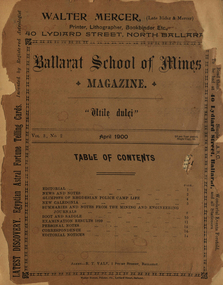
... s. burdekin g. mcintyre c. a. m. deane mining education ballarat school of mines rifle club phoenix foundry model locomotive engine mining laboratory building rhosesian police camp life c.a.m. deane railway locomotive Soft covered magazine of 14 pages. Articles include: News and notes, Glimpses of Rhodesian Police Camp Life, New Caledonia, Summaries and notes from the mining and engineering journals, Boot and saddle, Examination results 1899, Personal notes, Correspondence, Editorial Notes. Ballarat School of Mines, Student Magazine, April ,1900 ...Soft covered magazine of 14 pages. Articles include: News and notes, Glimpses of Rhodesian Police Camp Life, New Caledonia, Summaries and notes from the mining and engineering journals, Boot and saddle, Examination results 1899, Personal notes, Correspondence, Editorial Notes.news and notes, glimpses of rhodesian police camp life, new caledonia, summaries and notes from the mining and engineering journals, boot and saddle, examination results 1899, alumni, john dunstan, prof. horwood, alex purdie, c. f. eeles, d. w. r, arthur, r. j. allan, b, reid, a. s. burdekin, g. mcintyre, c. a. m. deane, mining education, ballarat school of mines rifle club, phoenix foundry model locomotive engine, mining laboratory building, rhosesian police camp life, c.a.m. deane, railway locomotive -
 City of Moorabbin Historical Society (Operating the Box Cottage Museum)
Photograph - Photograph , City of Moorabbin Mayoral Chain, circa 1990
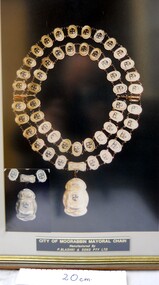
... Since the 1960s far-sighted community members have generously donated many significant items to the ‘Box Cottage’ museum, specifically to provide future generations with a fascinating, and tangible insight into day-to-day life from the 1800’s and up to the mid 1900's. Moorabbin City Council supported their efforts until the Amalgamation of Councils 1994. ...City of Moorabbin was proclaimed 1934 and managed the areas of Cheltenham, Highett, Moorabbin, Bentleigh, East Bentleigh, East Brighton, McKinnon, Ormond until the Amalgamation of Councils in 1994. The City of Kingston then took over the area south of South Road while City of Glen Eira took the area to the north Kingston City Council possesses the original Mayoral Chain of former City of Moorabbin and it is displayed on the Moorabbin Mayoral Robe at KCC Office Cheltenham for the Annual Opening meeting of KCC in February . 2018 The Moorabbin Mayoral Robe was sent on 7 year loan to KCC for display at Cheltenham with the former City of Chelsea and former City of Mordialloc Mayoral Robes.Since the 1960s far-sighted community members have generously donated many significant items to the ‘Box Cottage’ museum, specifically to provide future generations with a fascinating, and tangible insight into day-to-day life from the 1800’s and up to the mid 1900's. Moorabbin City Council supported their efforts until the Amalgamation of Councils 1994. The City of Kingston donated the 1990 City of Moorabbin Mayoral Robes in 2007 Photograph of the City of Moorabbin Mayoral Chain circa 1990 in a glass covered, wooden frame Photograph of Mayoral Chain worn by Kingston City Council Mayor Steve Staikos, with Councillor Brownlees, in November 2018 when Robe and Jabot were loaned to KCC by CMHS Box Cottage MuseumPlate at base of photograph frame states ' City of Moorabbin Mayoral Chain /Manufactured By / P. Blashki & Sons Pty.Ltd'/moorabbin, kingston, mayors, glen eira, mayoral chain, moorabbin shire -
 City of Moorabbin Historical Society (Operating the Box Cottage Museum)
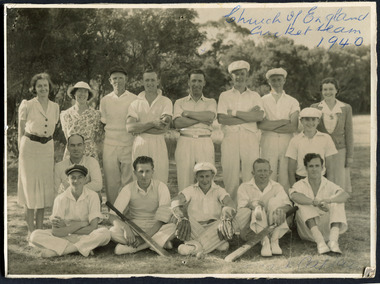
Photograph, Black & White, St Matthew's Church of England Cricket Team c 1940, c1940
... St Matthew's Church of England Cheltenham was erected in 1867 and was integral to the spiritual well being and social life of the early settlers. smith j l; smith mary ann, stanley helen, chaff cutter, horse drawn carts, toll gates brighton, motor cars 1900, steam engines, early settlers, bentleigh, parish of moorabbin, city of moorabbin, county of bourke, moorabbin roads board, shire of moorabbin, henry dendy's special survey 1841, were j.b.; bent thomas, o'shannassy john, king richard, charman s, highett william, ormond francis, maynard dennis, market gardeners, vineyards, orchards, Front ; Church of England Cricket Team 1940 Back ; Written - Ladies / Hilda Biehl, Bertha Schneeberber, Mrs Wootton, / We made afternoon tea from / a kerosene tin for 30 players / each Saturday they played at home !! ...The Cheltenham parish was created in 1865 by excising a portion of the parish of St Andrews Brighton. A small brick church was completed in 1867 to serve a rural community stretching from Brighton South (Moorabbin) to Mordialloc. 1867 St Matthew's Church of England was erected in Cheltenham beside the Nepean Highway near Charman Road. The early settlers established a tennis club, cricket team and social groups.St Matthew's Church of England Cheltenham was erected in 1867 and was integral to the spiritual well being and social life of the early settlers.Black & White photograph of the St Matthews Church of England Cricket team Cheltenham c 1940Front ; Church of England Cricket Team 1940 Back ; Written - Ladies / Hilda Biehl, Bertha Schneeberber, Mrs Wootton, / We made afternoon tea from / a kerosene tin for 30 players / each Saturday they played at home !!smith j l; smith mary ann, stanley helen, chaff cutter, horse drawn carts, toll gates brighton, motor cars 1900, steam engines, early settlers, bentleigh, parish of moorabbin, city of moorabbin, county of bourke, moorabbin roads board, shire of moorabbin, henry dendy's special survey 1841, were j.b.; bent thomas, o'shannassy john, king richard, charman s, highett william, ormond francis, maynard dennis, market gardeners, vineyards, orchards, -
 Flagstaff Hill Maritime Museum and Village
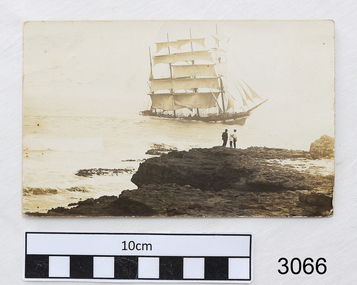
Postcard, c. Nov 1908-1910
... life from the shipwreck). The note is addressed to a single female family member and includes greetings to people they both know. The address of Oakleigh is approximately 20km south east of Melbourne. The writer talks of being tired and weary, inviting the receiver to visit and help with the 'office', also hinting at some matchmaking for his/her Aunt. It would be a long journey for a person to travel from Oakleigh to the South West Victoria areas. This postcard is an example of the style of writing in Victoria in the early 1900's ...This postcard was written by a person referring to themselves as 'Malee Male', possibly living in the Malee area of South West Victoria. It was written after the wreck of the sailing ship Falls of Halladale, wrecked at Peterborough in November 1908, and before the reign of King George V in May 1910, at which time new postage stamps would have been issued to replace those of Queen Victoria. The writer refers to the excitement of the shipwreck and of having a sailor from the ship working for his/her mother (there was no loss of life from the shipwreck). The note is addressed to a single female family member and includes greetings to people they both know. The address of Oakleigh is approximately 20km south east of Melbourne. The writer talks of being tired and weary, inviting the receiver to visit and help with the 'office', also hinting at some matchmaking for his/her Aunt. It would be a long journey for a person to travel from Oakleigh to the South West Victoria areas. This postcard is an example of the style of writing in Victoria in the early 1900's and of social issues and concerns, including shipwrecks.Postcard, black and white photograph of the Falls of Halladale in full sail. Back of card has handwritten, black script. Top right has 2 x Half Penny stamps, green, Queen Victoria's profile. A short note addressed to a family member Miss M. (Maysie) MacLean c/o Mrs Waite, Warragul Rd, Oakleigh and signed of Mallee Male, refers to the photograph on the front and sailors from the ship.Note on card is addressed to Miss M. MacLean c/o Mrs Waite, Warragul Rd, Oakleigh and signed of Mallee Male. Message on card is ."Dear Maysee and all, too busy and tired to write but not to forget you all. This is a view of the ship Falls of Halladale, great excitement, one sailor boy came back to work for Mum and he and one crew ... When are you coming up Maysie, If you haven't any things else on hand. You can come and assist me with office. Aunt is feeling ... Do you know of any nice boys for Aunt anywhere? Dear old chicken, I am so weary so tata. Stacks of love to all and ... Mallee Male." flagstaff hill, warrnambool, shipwrecked coast, flagstaff hill maritime museum, maritime museum, shipwreck coast, flagstaff hill maritime village, great ocean road, falls of halladale, peterborough, 14/11/1908 shipwreck, queen victoria half penny stamp, maysie maclean warragul rd oakleigh, mrs waite warragul rd oakleigh, post card, postcard, communication early 1900's, mallee male, sailor employment -
 Australian National Surfing Museum
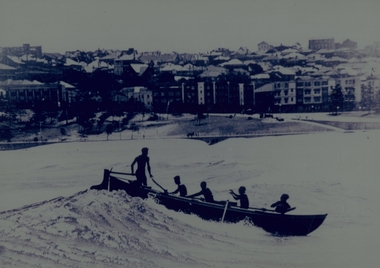
Photograph, Unknown, Surfboat at Bondi Beach 1923
... 1900's. This boat at the famous Bondi Beach can be seen riding a wave to the beach with the standard five man crew. Many early Australian surfers were members of Surf Life Saving Clubs regularly riding the waves in surfboats, surf ski's and other surf rescue craft....1900's. This boat at the famous Bondi Beach can be seen riding a wave to the beach with the standard five man crew. Many early Australian surfers were members of Surf Life Saving Clubs regularly riding the waves in surfboats, surf ski's and other surf rescue craft. ...Surfboats have played an important role in saving lives on Australian beaches since the early 1900's. This boat at the famous Bondi Beach can be seen riding a wave to the beach with the standard five man crew. Many early Australian surfers were members of Surf Life Saving Clubs regularly riding the waves in surfboats, surf ski's and other surf rescue craft.Rare image of an Australian surfboat riding a wave at one of Australia's most iconic surf beaches in Sydney during the 1920's.Black and white photograph'Donated by John Pettigrove' on the backsydney, bondi beach, surfboat, surf life saving clubs -
 Orbost & District Historical Society
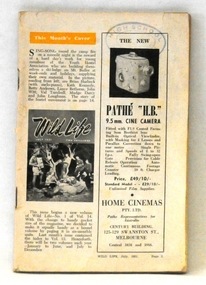
maagazine, Wild Life, July 1951
... s Crosbie Morrison (1900 - 1958) became Australia's best known naturalist. As a journalist with commercial radio and the Australian Broadcasting Commission, he made regular national nature study broadcasts to schools and other radio listeners for 20 years. He was the editor of Wild Life...s Crosbie Morrison (1900 - 1958) became Australia's best known naturalist. As a journalist with commercial radio and the Australian Broadcasting Commission, he made regular national nature study broadcasts to schools and other radio listeners for 20 years. He was the editor of Wild Life ...This magazine promotes the protection of wildlife and the need for proper management of national parks. Its editor Crosbie Morrison lobbied for a National Parks Authority which was finally set up under Morrison's directorship in 1957. During the 1940's and 1950's Crosbie Morrison (1900 - 1958) became Australia's best known naturalist. As a journalist with commercial radio and the Australian Broadcasting Commission, he made regular national nature study broadcasts to schools and other radio listeners for 20 years. He was the editor of Wild Life, a magazine which fostered interest in Australia's natural history and conservation, from 1938-54. (ref. CHAH web-site)This magazine reflects the work and legacy of Crosbie Morrison who campaigned for Victoria's national park system.A 100 pp magazine, covers missing, with b/ w photographs and articles on wildlife. It was intended for campers and those interested in nature. This is Volume 14 No 1.stamp of High School Orbostmagazine-wildlife morrison-crosbie natural-science -
 Orbost & District Historical Society
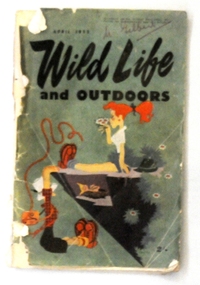
magazine, Wild Life, April 1953
... s Crosbie Morrison (1900 - 1958) became Australia's best known naturalist. As a journalist with commercial radio and the Australian Broadcasting Commission, he made regular national nature study broadcasts to schools and other radio listeners for 20 years. He was the editor of Wild Life...s Crosbie Morrison (1900 - 1958) became Australia's best known naturalist. As a journalist with commercial radio and the Australian Broadcasting Commission, he made regular national nature study broadcasts to schools and other radio listeners for 20 years. He was the editor of Wild Life ...This magazine promotes the protection of wildlife and the need for proper management of national parks. Its editor Crosbie Morrison lobbied for a National Parks Authority which was finally set up under Morrison's directorship in 1957. During the 1940's and 1950's Crosbie Morrison (1900 - 1958) became Australia's best known naturalist. As a journalist with commercial radio and the Australian Broadcasting Commission, he made regular national nature study broadcasts to schools and other radio listeners for 20 years. He was the editor of Wild Life, a magazine which fostered interest in Australia's natural history and conservation, from 1938-54. (ref. CHAH web-site) This magazine reflects the work and legacy of Crosbie Morrison who campaigned for Victoria's national park system.A 398 pp soft covered magazine with green covers. The title "WILD LIFE and OUTDOORS" is in black print.Below this is a coloured drawing of two women camping on the edge of a cliff. One is hanging on to the edge looking at a bird's nest. The magazine contains articles and photographs in black / white print.on front cover - "M. Gilbert' in red penmagazine-wild-life morrison-crosbie natural-history natural-science -
 Eltham District Historical Society Inc
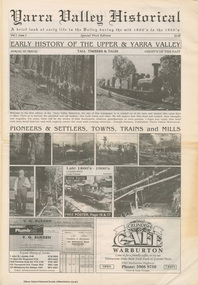
Work on paper (item) - Newspaper, Joseph Dubois, Yarra Valley Historical: a brief look at early life in the Valley during the mid 1800's to the 1900's
... Yarra Valley Historical: a brief look at early life in the Valley during the mid 1800's to the 1900's...Powelltown p30. lilydale mt evelyn wandin seville woori yallock yellingbo hoddles creek launching place yarra junction don reid reminiscences wesburn warburton big pats creek mcmahons creek reefton gladysdale gilderoy powelltown newspaper 32 pages Yarra Valley Historical: a brief look at early life in the Valley during the mid 1800's to the 1900's Work on paper Newspaper Joseph Dubois ...Volume 1, Issue 1. Early History of the Upper and Yarra Valley. "Welcome to the fist edition of the Yarra Valley historical, the aim of this newspaper is to remind us of the men and women who came here to mine, farm or harvest the plentiful and tall timbers, that built towns and cities..." Estimated date of publication 2010. The newspaper is full of potted histories of places with historical photographs, maps and timelines. Acknowledgment and citations for source material given. Advertisements for business's at the time of publicaion. Lilydale, De Castella family, p2. Mount Evelyn p6. Wandin [Anker family] p7. Seville [William Henry Smith; Mr and Mrs Thomas Payne; Duck family; Chandler family] p8. Woori Yallock p10. Yellingbo p11. Hoddles Creek p12. Launching Place p13. Yarra Junction p14. Reminiscences of Don 'Ripper' Reid p18. Wesburn p20. Warburton Village Settlement p22. Warburton p23. Big Pats Creek p26. McMahons Creek / Reefton [Brimbonga School] p27. Gladysdale / Gilderoy [Saxton family] p28. Powelltown p30.lilydale, mt evelyn, wandin, seville, woori yallock, yellingbo, hoddles creek, launching place, yarra junction, don reid, reminiscences, wesburn, warburton, big pats creek, mcmahons creek, reefton, gladysdale, gilderoy, powelltown, newspaper -
 Kiewa Valley Historical Society
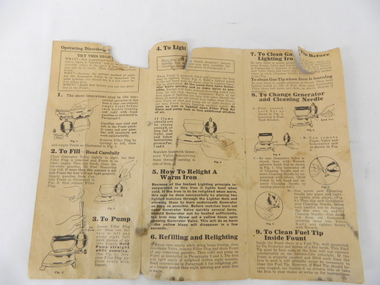
Document Instruction and Parts Sheet, Instructions for Operating the Coleman Self Heating Iron Model No. 4 Instant Lighting, circa 1950
... During the earlier 1900's and before "the throw away" culture evolved(circa 1950's), reliability and long term application of domestic appliances was a necessity above all costs, especially in isolated rural areas. The construction of these appliances was geared to a longer service life...During the earlier 1900's and before "the throw away" culture evolved(circa 1950's), reliability and long term application of domestic appliances was a necessity above all costs, especially in isolated rural areas. The construction of these appliances was geared to a longer service life ...This operating and parts information sheet was supplied to consumers to help users of this kerosene iron, not only understand the operation of this self lighting iron, but also to be able to order any replacement parts that may be required for this high level usage appliance. At this period in time(1950's), this item was at the leading edge of ironing technology. During the earlier 1900's and before "the throw away" culture evolved(circa 1950's), reliability and long term application of domestic appliances was a necessity above all costs, especially in isolated rural areas. The construction of these appliances was geared to a longer service life and not to a cheaper two to three year life warranty. With levels of world wide technology at an ever increasing pace, long term reliability of any appliance was no longer sought after. Appliance upgrades and new improved model accessibility especially in rural areas has changed rural consumer's buying patterns. Although the concept of instructional and parts/warranty information booklets has not become obsolete, the ability to access information via electronic means has vastly improved the ability to obtain qualified technical help through local avenues. This access was not available in the time period(circa 1950), when the appliance covered by this document was issued. The rate of development within the home appliance field has mushroomed during the time period post 1950. The costs and the increased levels of product choices and consumer awareness has provided rural areas (once isolated e.g. Kiewa Valley) with a greater ability to satisfy their needs because of a greater diverse range of domestic appliances offered.This discoloured, sepia paper has black print and is folded into three equal pages. The information contained covers operational and part numbers for the kerosene fired hand held iron. there are kerosene stains on the last page and these have soaked through onto the second page. The form no.-3-3C- McACO.-4363Printed in U.S.A.instructions, household appliances, ironing, domestic ironing -
 Warrnambool and District Historical Society Inc.
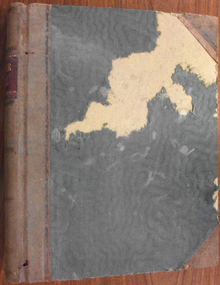
Legal record - Letter Book, G.S. Mackay, Circa 1920
... 1900’s. G. S Mackay was prominent in legal, civic and religious life in Warrnambool almost from the time of his arrival in 1893 until his death in 1926. ...This book contains private letters which G. S. Mackay wrote to his daughter, Meta? and his aunt in the 1920’s. G. S. Mackay was born in Sutherlandshire Scotland in 1850. He qualified as a solicitor and came to Australia in 1884 and later to Warrnambool in 1893. He served as a Warrnambool City Councillor and also held a number of important positions within the Presbyterian Church. He was one of the earliest and strongest supporters of the Warrnambool High School. Many of the letters within this book are to his daughter who studied medicine in Glasgow in the early 1900’s. G. S Mackay was prominent in legal, civic and religious life in Warrnambool almost from the time of his arrival in 1893 until his death in 1926. Many of these letters are of a religious nature and as such display that aspect and personal thoughts of Mr Mackay’s personal life. Dark green fabric cover with light brown suede spine and cover edges. Hard cover. Green patterned paper inside front and back covers. Alphabetical index at front. Pale fine yellow pages numbered up to 502. L. ****Queen Douglas, Newpark West Calder, MidLothian 14 miles from Edin’h Ry Stn Newpark. Meta Selby The Calouda(?) Club 35 St Georges Square London S.W.1 warrnambool, g.s. mackay letter book, solicitor, g. s mackay councillor. -
 Kiewa Valley Historical Society
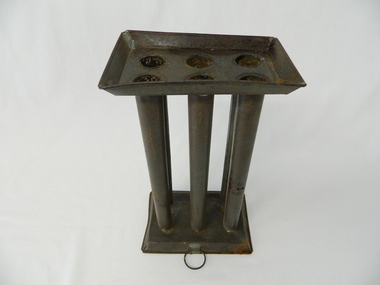
Mould Candle Making, Circa mid 1900's
... The demand and usage of cheaper and affordable lighting that wax candles provided was for some rural families a way of life until the mid 1900's. parrafin wax candles domestic household ighting This candle making mould is made from mild rolled sheet steel(tin). ...Candle stick manufacturing moulds were extensively used throughout the Kiewa Valley and its regions to provide rural homes and businesses with illumination during times of limited light e.g. night time. These candles were used before the Kiewa Valley was placed of the electrical grid. The candles were made from parrafin wax. Before the 1920"s electricity was in limited supply due to the inability of the private electricity suppliers to service isolated rural regions. It was not until the Victorian State Government passed legislation (1920) to improve electricity supplies by forming the State Electricity Commission of Victoria (S.E.C.V.) Isolated rural communities could not meet the higher costs to have electricity supplies connected and therefore it was not until the 1950's that adequate domestic electrical power could be supplied.The isolation that the Kiewa Valley provided was of a greater hindrance to any utility (power,roads & telephone) where the cost per instillation was beyond the rural population's ability to pay either directly or indirectly. One of the benefits that the "closed" community of Mount Beauty had, when it was administered by the SECV was that some utility costs were a lot lower than that of the other settlements in the Kiewa Valley. This disparity led to a conference in 1928 of the rural and regional councils to demand from the Government an equality of electricity tariffs. This equality did not take place until 1965. The demand and usage of cheaper and affordable lighting that wax candles provided was for some rural families a way of life until the mid 1900's.This candle making mould is made from mild rolled sheet steel(tin). The top basin is rectangular in shape with beveled edges(facing in on all sides. There are six holes in the top basin for vertical hollow tubes to feed off. The six tapered cyclindrical tubes running from the top basin to the bottom raised platform base. All connections are welded together. The bottom of each cylinder has an opening for the candle wick. The wick is positioned in place before the molten wax is poured into the cylinders. A positioning ring has been welded to one bottom ring for stability.parrafin wax, candles, domestic household ighting -
 Kiewa Valley Historical Society
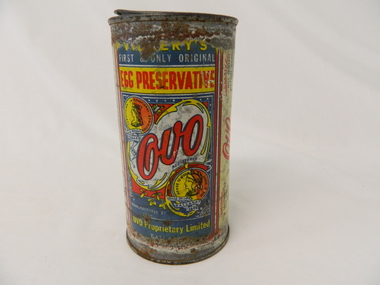
Tin Egg Preservative, from mid 1800's to mid 1900's
... life" organic produce. This tin which contained egg preservative powder is very significant to a rural region (Kiewa Valley) in the late 1800's to early 1900's. ...The egg preservation material offered in this tin was during a period in Australia's history (especially in the rural areas) when the "freshness" of produce was not able to be maintained by refrigeration means. Rural towns did rely on the "Ice Works" providing block ice for prolonging "produce shelf life" however semi remote and smaller communities did not have that facility. It was products such as this egg preserving ability that enabled these smaller rural communities to maintain a constant source of healthy "short life" organic produce.This tin which contained egg preservative powder is very significant to a rural region (Kiewa Valley) in the late 1800's to early 1900's. It details the type of food preservative methods that were available to rural areas which lacked proper refrigeration means at their disposal. Basic foodstuff which required "special" preservation means to extend their "shelf" life were sometimes regarded as luxuries by semi remote communities. Kiewa Valley and its regions were typical of these remote communities in the time frame of this egg preservation product. The ability to keep products that deteriorate due to "normal" outdoor temperature (bacterior prone produce) was a factor of rural living.This round "tubular" tin has a indented lid which fits snugly into the top opening. The lid has a rolled out lip which ensures a degree of "air" tightness. The tin is pressed and folded together and has no synthetic inner cover to protect the egg preservative powder from the raw tin surface. This "raw" method was the typical application for all tins containing dry food stuffs in this period(mid 1900's) of goods manufacture. The outer tin surface has a tightly pressed laminated paper label with product and manufacturer's information (promotional, preservation "tips" and usage details - will preserve sixteen dozen eggs). On the "front" side "EGG PRESERVATIVE" underneath "OVO" ,underneath "REGISTERED" and in a double lined enclosed square "AWARDED TWO GOLD MEDALS" underneath is a sketch of a mixing dish containing fourteen visible eggs. The bottom label has within an oval boundary (white print on a blue background) "FOR HOUSEHOLD USE" underneath "OVO" and underneath "PRESERVES EGGS PERFECTLY WITHOUT MESS OR TROUBLE" On the opposite side of the tin is printed "VICKERY'S FIRST & ONLY ORIGINAL EGG PRESERVATIVE - in red print. Underneath this is a "round stamp" with the figurehead(royalty) and these encircling words" TASMANIAN INTERNATIONAL EXHIBITION" with a scrolled "GOLD MEDAL HOBART 1895" with another medal like "medallion" showing another female face with a "warrior" headdress and these encircling words "HONOR TO WHOM HONOR IS DUE". Below this within a scrollis printed "GOLD MEDAL BALLARAT 1896" underneath this is printed "MANUFACTURED BY OVO PROPRIETARY LIMITED BALLARAT"egg preservation, rural food storage, kitchen preservation facilities -
 Kiewa Valley Historical Society
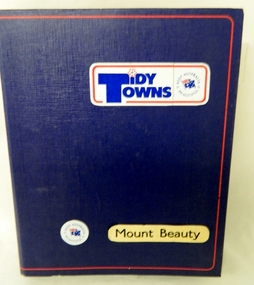
Folder - Tidy Towns, Tidy Towns Mount Beauty, 1984/85
... It was present in the period before the 1990's but fell so ever slightly away through the faster pace of the "modern" life evolution into a more "introspective" life style. The changes brought on by technology e.g. computers, mobile telephone "texting" and the internet has slowly impinged upon those community "get togethers" of the 1900's. ...It was present in the period before the 1990's but fell so ever slightly away through the faster pace of the "modern" life evolution into a more "introspective" life style. The changes brought on by technology e.g. computers, mobile telephone "texting" and the internet has slowly impinged upon those community "get togethers" of the 1900's. ...This folder represents the true "Aussie" and the pride felt living in small rural communities. It was present in the period before the 1990's but fell so ever slightly away through the faster pace of the "modern" life evolution into a more "introspective" life style. The changes brought on by technology e.g. computers, mobile telephone "texting" and the internet has slowly impinged upon those community "get togethers" of the 1900's. Life in small rural towns and regions however have only slowly moved away from the community self worth attitudes which were so strong when life in rural areas was more insulated through physical and technologically isolation.This Tiny Towns Folder with its content is highly significant to the small town of Mount Beauty and the Kiewa Valley and its region because it represents the "true" value of rural life in the "modern" Australia. The "old" values of "mateship" and looking after the community is still very strong in the rural sector, as compared with living in the cities. The psychological and physical benefits of living in smaller rural centres is clearly demonstrated by the contents of this "Tidy Towns", keep Australia Beautiful, competition. The value of "the true blue, dinky die mateship" is still very much alive in country towns and rural environments. Although the physical isolation of yesteryear may not be so strong as the technology and population growths boost a greater interaction between city and rural folk, the ingrained attitude of comradeship still prevades. This large blue coloured lever arch folder (cloth with a red lined border) has 104 plastic pockets each with two sheets of documentation for the appraisal of the decision makers/judges of the "Keep Australia Beautiful Council (Vic), "Tidy Towns" competition.Adhesive stickers on front cover "Tidy Towns" "Keep Australia Beautiful" below this "Mount Beauty" community beautification programs, rural town pride, community pride -
 Kiewa Valley Historical Society
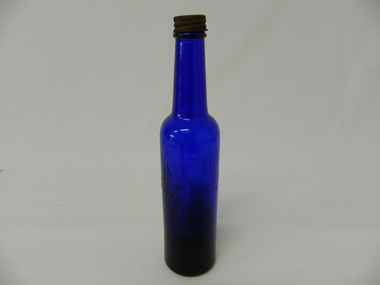
Bottle - Castor Oil, Circa 1920's to 1900's
... This bottle of castor oil was used during the mid to late 1900's when there was a Hospital in the Kiewa Valley, but regarded as only for serious injuries and near death situation. For this reason many households had a "first aid" box full of items such as this bottle of castor oil. Home based remedies for non life...This bottle of castor oil was used during the mid to late 1900's when there was a Hospital in the Kiewa Valley, but regarded as only for serious injuries and near death situation. For this reason many households had a "first aid" box full of items such as this bottle of castor oil. Home based remedies for non life ...This bottle of castor oil was used during the mid to late 1900's when there was a Hospital in the Kiewa Valley, but regarded as only for serious injuries and near death situation. For this reason many households had a "first aid" box full of items such as this bottle of castor oil. Home based remedies for non life threatening injuries and illnesses were a part of life in a semi remote rural region. True and trusted family "health" remedies were passed from generation to generation.This Castor Oil bottle is very significant to the Kiewa Valley as it demonstrates the self reliance of the early farming and grazing pioneer families. Knowledge of "first aid" was uppermost to the survival of families before the late 1900's. Naturopathic remedies such as connected with the castor oil contained in this bottle, although may not be sanctioned by medical research, does not take into account of the positive "self healing" of the human mind (if you think it is doing you good it creates a positive action). Such preservation techniques were handed down through the generations.Medical Reference material was limited to books available and read and not not from "the internet" in the latter part of the 1900's. The availability of General Practitioners increased because of the boost in the population growth (SEC Vic Hydro Electricity Scheme) in the Kiewa Valley from 1940's onward. This small indigo coloured glass bottle has a narrow neck and a screw on lid.It has an embossed manufacturer's name and contents (Castor Oil) on one side and identification marks embossed on the underside base.medicine bottles, home first aid remedies, indigo glass medicine bottles -
 Warrnambool and District Historical Society Inc.
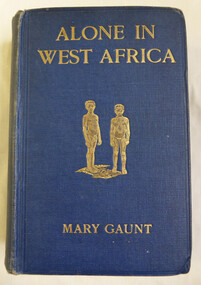
Book, Alone in West Africa by Mary Gaunt, Printed 1912
... 1900’s for the Times in London on women issues. She was an independent thinker and worker. Apart from the text of “Alone in West Africa,” the work contains 97 black and white photographs which Mary had taken and developed herself. These photos are a significant view of aspects of life ...“Alone in West Africa” is one of a number of works written by Mary Gaunt. Her other works include, A Woman in China, The End of the Earth, Kirkhams Find, The Moving Finger and Deadman’s. Mary was born at Indigo near Chiltern in 1862 and lived for many years in Ballarat where her father W.H. Gaunt was gold commissioner and later a judge. The original Gaunt family home was converted into St Patrick’s College. She married Dr Lindsay Miller and moved to Warrnambool and after his death in 1899 she embarked on her travels which took her to many parts of the world. She died in Cannes, France in January 1942. Mary Gaunt wrote over 25 novels, numerous travel books and many stories and articles. She had a strong link with Warrnambool and details of the district are included among her writings. She also wrote regularly in the early 1900’s for the Times in London on women issues. She was an independent thinker and worker. Apart from the text of “Alone in West Africa,” the work contains 97 black and white photographs which Mary had taken and developed herself. These photos are a significant view of aspects of life in Africa at that timeDark blue cover with gold text. Title, “Alone in West Africa” with sketch of two children in the centre, with Mary Gaunt underneath. The back cover has an embossed letter “L”. Inside the front cover is a rough sketch of the author’s route of the French Ivory Coast. It contains a number of black and white plates and index. 399 pages.T Werner Laurie on bottom of spine. Black and white photograph of author with autograph underneath. T Werner Laurie Clifford’s Inn London. Acknowledgements included in the dedication, Sir Charles Lucas, Sir George Denton, Elder Dempster and Co. Messrs. Swanzy and Co.,gaunt, mary gaunt, alone in west africa, french ivory coast 1912 -
 Kiewa Valley Historical Society
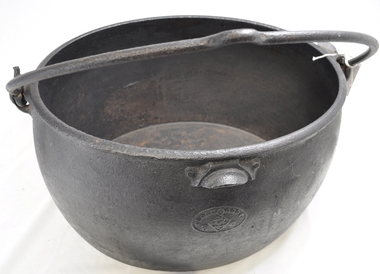
Pot Boiler, circa early 1900s
... life was ingrained until well past the day of the "Australian Federation". It was not until the friendly "American soldier" invasion during World War II that the "Empire" bondage was being eroded away. The transition from the good "rural war cry" of "Australia prospers off the sheep's back" was slipping away and the industrial monolith started its challenge. This change was the slowest in semi remote rural centres such as the Kiewa Valley. The "old English" values lingered on until the mid 1900's ...This cast iron "boiler" was produced by one of the largest foundries in England during the late 1700's and onwards. These products were "shipped to the far realms of the "British Empire". This source was one of the only ones available to the early settlers in Australia until the mid 1900's. The catch cry of those "early " times was "the best of British" which was ingrained into the early (Australian) settler's iron and cast iron purchasing mind set. It was not until after World War II did that mindset change, when both American and Asian based manufacturers' products were accepted by the Australian consumer. The city based consumer embraced the swing a lot earlier than the more "traditional" rural consumer. This cast iron 8 gallon "boiler" is very significant to the Kiewa Valley not only that large "boilers" were used to "boil" clothes clean, over an open flame source, but also because it demonstrates one of the most important "rural" mores founded by the "early" settlers in this region. That more was the very "close" tie to "Mother England" and the "establishment". The social and "family" values from the "English" way of life was ingrained until well past the day of the "Australian Federation". It was not until the friendly "American soldier" invasion during World War II that the "Empire" bondage was being eroded away. The transition from the good "rural war cry" of "Australia prospers off the sheep's back" was slipping away and the industrial monolith started its challenge. This change was the slowest in semi remote rural centres such as the Kiewa Valley. The "old English" values lingered on until the mid 1900's.This large (8 gallons) cast iron boiler is oval in shape and has a cast iron (swivel) carrying handle. The handle has a "bend" in the centre position to allow hook and straight type rods to facilitate the positioning of a "hot" boiler. This boiler would have been used over an open fire or placed on top of "coals". On the top rim and evenly spaced between the fixed handle joins is a slightly semi curved balancing/control lip.At the bottom (underneath) "CLARK & Co. PATENT", Below this a six star triangle with the letter "C" in the middle.. On the opposite end "BEST QUALITY" and underneath "8 Gall s"camp fire cooking utensils, hot plate, cast iron cooking and boiling appliance, drovers kitchen -
Port Melbourne Historical & Preservation Society
Book - Scrapbook of general items relating to the 1920's to 40's, 1900 - 1950
... 1900 & 1950. Although not specifically relating to Port Melbourne it reflects products and imagery generic for the first half of the 20th century. The 40 pages are made from ironed brown paper wrapping sheets sewn down the spine. Domestic Life Large brown paper scrapbook filled with cuttings from magazines, newspapers, calendars etc. Book Scrapbook of general items relating to the 1920's ...Scrapbook complied by donor's grandmother between 1900 & 1950. Although not specifically relating to Port Melbourne it reflects products and imagery generic for the first half of the 20th century. The 40 pages are made from ironed brown paper wrapping sheets sewn down the spine.Large brown paper scrapbook filled with cuttings from magazines, newspapers, calendars etc. domestic life -
 Warrnambool and District Historical Society Inc.
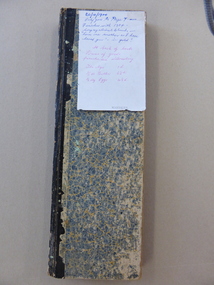
Ledger, Alex Black Painter and Decorator 1900-1904, Circa 1900
... This ledger provides a snapshot of daily life in the early 1900’s and documents the type of work completed by tradesman and their associated costs. ...Alexander Black was a painter and decorator who operated a business in Timor St below Swintons. This ledger has entries which relate to work completed at the time including the Kirkstall school, Miss Murray of Waikato, W Fletcher, tender to Fritz Landman and work on St John’s Presbyterian Church, the Warrnambool Race Club and works for J.J Forrester.This ledger provides a snapshot of daily life in the early 1900’s and documents the type of work completed by tradesman and their associated costs. It lists a number of people and organisations which are of historical interest to Warrnambool and district.Long thin rectangular ledger book. Blue and yellow mottled cardboard cover with black binding. Pink and blue multi-coloured edge of pages. Handwritten entries in front and back pages. Loose envelope addressed to Mr. Alex Black inside front cover. warrnambool,alex black, alexander black , timor st warrnambool, alex black painter and decorator, -
 Warrnambool and District Historical Society Inc.
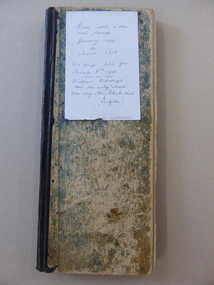
Ledger, Alex Black Painter & Decorator 1908-1918, Circa 1908
... This ledger provides a snapshot of daily life in the early 1900’s and documents the type of work completed by tradesman and their associated costs. ...Alexander Black was a painter and decorator who operated a business in Timor St below Swinton’s. This ledger shows the items typically sold by the painting and decorating trade as well as names of local people and businesses such as T Redford, PJ McGennan, Smith Bakery, Sheldrick Brewery, and Co, Mr. Plowright and Victorian Railways and Gas works.This ledger provides a snapshot of daily life in the early 1900’s and documents the type of work completed by tradesman and their associated costs. It lists a number of people and organizations which are of historical interest to Warrnambool and district.Long thin rectangular ledger book. Worn dark aqua cardboard cover with black binding. Handwritten entries occupy three quarters of the ledger with line drawn through each entry. The entries relate to goods sold. Year written at top of page and dated in left hand column. warrnambool, warrnambool painters and decorators, black painters warrnambool, -
Winchelsea and District Historical Society
Collection photos, J W (Jack) McClelland, Circ.1915
... life style of the workers is covered showing both the working and living environments. The photos were taken by J W (Jack) McCleland on glass and copies were made available to the Winchelsea Historical Society by a descendant. The collection shows the working and living environment of workers in the timber industry in the early 1900's ...A series of photos taken in the Otways circ. 1915 showing aspects of the logging operations The actual logging operations are show including logging , transport and mill operations. Also shown are views of the forest at that time including scenic attractions. The life style of the workers is covered showing both the working and living environments. The photos were taken by J W (Jack) McCleland on glass and copies were made available to the Winchelsea Historical Society by a descendant. The collection shows the working and living environment of workers in the timber industry in the early 1900'sSeries of 70 photos from glass plates showing logging by Hendy & Sons near Mt Sabine and views of the Otways. Taken around 1915Nilotways, timber, henry, sabine mcclelland, rail, photo, -
 Chiltern Athenaeum Trust
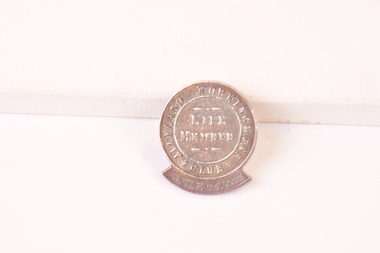
Life Member Badge Auckland Workingmen's Club : S. W. Eustace, Circa 1900-1920
... Eustace Life member Badge...Cica 1900-1920...S...s, belongs to S.W. Eustace, former Chiltern Resident who was involved int he Boer War and WW1 Campaigns. Auckland Working Mans Club S.W. Eustace Life member Badge Cica 1900 ...late 1800's and early 1900s clubs designed to bring working men from all walks of life together in a relaxed, friendly and companionable manner. A majority of these types of clubs catered to ex-servicemen which assisted with their integration back into social circles after their challenging war experiences. Early 1900's, belongs to S.W. Eustace, former Chiltern Resident who was involved int he Boer War and WW1 Campaigns. Round silver badge, missing back hinge and pin. Inscribed "Auckland Workingmen's Club" S.W. Eustace. auckland working mans club, s.w. eustace life member badge, cica 1900-1920, s. w. eustace boer war and ww1 -
Tatura Irrigation & Wartime Camps Museum
Document - Book, H M Rehabilitation Centre Dhurringile: A Conservation Analysis, 1995
... A comprehensive book on the life of Dhurringile Mansion from 1800's to late 1900's. Includes maps showing the layout of the Mansion....A comprehensive book on the life of Dhurringile Mansion from 1800's to late 1900's. Includes maps showing the layout of the Mansion. ...A comprehensive book on the life of Dhurringile Mansion from 1800's to late 1900's. Includes maps showing the layout of the Mansion.Printed pages held together with a multiring binder of black plastic. Front cover is clear, back cover is black. Title and black and white photograph of Dhurringile in a square on front.dhurringile mansion, h m rehabilitation centre, winter irving family -
Lakes Entrance Historical Society
Book, Daryl Tonkin and Carolyn Landon, Jackson's Track, 1998
... Story of the life of Daryl Tonkin who with his brother was a sawmill owner on Jackson's Track in West Gippsland. It highlighted the problems between Aboriginals and White Authorities in the mid 1900's....Story of the life of Daryl Tonkin who with his brother was a sawmill owner on Jackson's Track in West Gippsland. It highlighted the problems between Aboriginals and White Authorities in the mid 1900's. ...Story of the life of Daryl Tonkin who with his brother was a sawmill owner on Jackson's Track in West Gippsland. It highlighted the problems between Aboriginals and White Authorities in the mid 1900's.297 Pagesnon-fictionStory of the life of Daryl Tonkin who with his brother was a sawmill owner on Jackson's Track in West Gippsland. It highlighted the problems between Aboriginals and White Authorities in the mid 1900's.settlement, timber industry, aboriginals -
 Lakes Entrance Historical Society
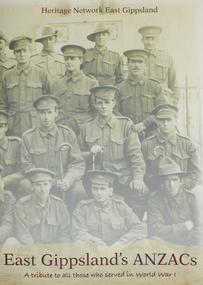
book, Heard, Barry, View from Connor's Hill, 2007
... Barry Heard tells of life in Swifts Creek area in mid 1900's...Settlement Social History Barry Heard tells of life in Swifts Creek area in mid 1900's View from Connor's Hill book Heard, Barry ...Barry Heard tells of life in Swifts Creek area in mid 1900'ssettlement, social history -
 Whitehorse Historical Society Inc.
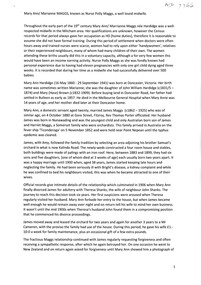
Document - Family History Research paper, Nurse Polly Maggs (Mary Ann/ Marianne Maggs nee Hardidge), February 2021
... Nurse Polly Maggs (Mary Ann/ Marianne Maggs nee Hardridge (1860-1941)) was a well respected midwife in the Mitcham area throughout the early 1900's, following her divorce from James Maggs . Document also includes includes details of her life (growing up in Doncaster), government pensions and a brief history of the establishment of the midwifery profession in Victoria....Nurse Polly Maggs (Mary Ann/ Marianne Maggs nee Hardridge (1860-1941)) was a well respected midwife in the Mitcham area throughout the early 1900's, following her divorce from James Maggs . Document also includes includes details of her life (growing up in Doncaster), government pensions and a brief history of the establishment of the midwifery profession in Victoria. ...Family history of Mary Ann/ Marianne Maggs nee Hardridge (Nurse Polly Maggs) in Doncaster and Mitcham/Ringwood during early 1900's.Printed research paper, 5 pages, single sidednon-fictionFamily history of Mary Ann/ Marianne Maggs nee Hardridge (Nurse Polly Maggs) in Doncaster and Mitcham/Ringwood during early 1900's.maggs family, maggs harriet, maggs james, maggs marianne, maggs mary, maggs nurse, hardridge, hardidge, midwifery act 1901
