
Showing 181 items matching "locomotives - victoria - australia"
-
 Victorian Railway History Library
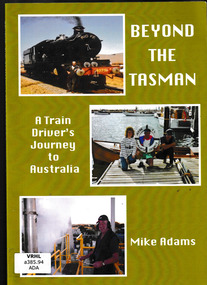
Book, Mike Adam, Beyond the Tasman : a train driver's journey to Australia, 2025
... ...Locomotives - Victoria - Australia...Railways - Australia - Anecdotes Locomotives - Victoria - Australia Anecdotes of a train driver's journey to Australia Ill, p.116. ...Anecdotes of a train driver's journey to AustraliaIll, p.116.non-fictionAnecdotes of a train driver's journey to Australiarailways - australia - anecdotes, locomotives - victoria - australia -
 Flagstaff Hill Maritime Museum and Village
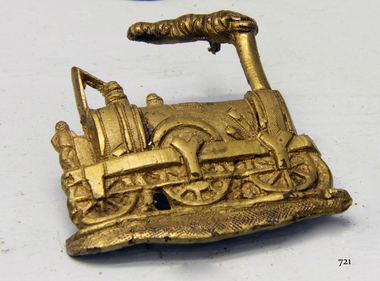
Accessory - Badge, Before 1855
... The shipwreck is of additional historical significance for representing aspects of Victoria’s shipping history and for its association with the first passenger ship, which was designed not only to be the fastest and most luxurious of its day but foundered on its maiden voyage to Australia. warrnambool flagstaff-hill flagstaff-hill-maritime-museum shipwreck-coast flagstaff-hill-maritime-village schomberg shipwrecked-artefact clipper ship black ball line 1855 shipwreck captain forbes ss queen badge Charles Tayleur Great Western Railway Vulcan Foundry Isambard Kingdom Brunel locomoive brooch Gold coloured brass badge depicting an 1840's steam engine or locomotive with the figure of a fireman standing on the back. ...The badge recovered from the Schomberg wreck is believed to depict one of the first steam engines. The engine's design by Charles Tayleur & Co. was to be produced for the Great Western Railway in England. The first nineteen of these locomotives were ordered by Isambard Kingdom Brunel for the Great Western Railway including six 2-2-2 Charles Tayleur locomotives. They were built by Charles Tayleur and Company, which later the Vulcan Foundry. The locomotives were unsuccessful and were rapidly supplemented by the Star Class locomotives ordered by Daniel Gooch once he had been appointed as the Locomotive Engineer. As built, they comprised two groups of three, the first group, was delivered in 1837. This locomotive was the first to run on the Great Western Railway when it was tested on 28 December 1837 from its shed at West Drayton. It was withdrawn in 1843 but was rebuilt as a 2-2-2T tank locomotive and returned to service in 1846, running in this form until 1868. It survived for two more years at Reading as a stationary boiler. It is named after the workshops where it was built, which themselves were named after the Roman god of fire. (Although a supposition, it is possible that the owner was a passenger on the ill-fated Schomberg and that they worked either for the Great Western Railway or the Vulcan Foundry that made the engine in the 1830s.) Wreck of the Schomberg: Schomberg was a large three-masted full-ship rigged wooden ship built in 1855 by Alexander Hall and Co in Aberdeen, Scotland for James Baines' famous Black Ball Line at £43,103. The vessel was 288 feet (88 meters) in length, with a beam of 45 feet (14 meters), a depth of 29.5 feet (8.99 meters) of 2,284 tons. The mainmast was 210 feet (64 meters) high and she carried 3.3 acres of sail. The vessel was constructed with three skins. One planked fore and aft, and two diagonally planked, fastened together with screw-threaded trunnels (wooden rails). The Schomberg is one of only three clipper wrecks in Victorian waters that operated the England to Australia run. While the other two, Empress of the Sea and Lightning, were built by the famous American shipbuilder, Donald Mac Kay. Schomberg was an attempt to build a faster ship than Mac Kay and a vessel fast enough to break the sailing record to Australia. The Schomberg sailed on her maiden voyage from Liverpool on 6 October 1855, under the command of Captain James Forbes, on its maiden voyage to Australia with a general cargo, jewellery, spirits, machinery, and 2,000 tons of iron rails and equipment intended to build the Melbourne to Geelong Railway and a bridge over the Yarra from Melbourne to Hawthorn. She also carried a cow for fresh milk, pens for fowls and pigs, plus 90,000 gallons of water for washing and drinking. She also carried 17,000 letters and 31,800 newspapers. There were approximately 473 passengers and a crew of 105. It was hoped that Schomberg would make Melbourne in sixty days, setting a record for the voyage, but light winds at the equator dashed those expectations. The ship sighted Moonlight Head in southwest Victoria on Christmas Day but through a deadly combination of wind, currents, and unmarked sand spits, the vessel gently ran aground on 26 December 1855 on a spit that juts into Newfield Bay, just east of Curdies Inlet, and the present town of Peterborough. Fortunately, the SS Queen was nearby and managed to save all passengers and crew. The steamers Keera and Maitland were dispatched to salvage the passenger's baggage and the more valuable cargo. Other salvage attempts were made, but deteriorating weather made the work impossible, and within two weeks the Schomberg's hull was broken up and the vessel abandoned. The wrecking of the Schomberg caused quite a public stir, particularly in light of the fact the vessel was supposed to be, the most perfect clipper ship ever built. Captain Forbes was charged in the Supreme Court under suspicion that he was playing cards with two female passengers below decks when his ship ran aground. Despite a protest meeting, two inquiries, and the court proceedings, he was found not guilty and cleared of all charges. In 1975, divers from Flagstaff Hill, including Peter Ronald, found an ornate communion set at the wreck. The set comprised a jug, two chalices, a plate, and a lid. The lid did not fit any of the other objects and in 1978 a piece of the lid broke off, revealing a glint of gold. As museum staff carefully examined the lid and removed marine growth, they found a diamond ring, which is currently on display in the Great Circle Gallery at the Flagstaff Hill Maritime Museum that also displays ship fittings and equipment, and personal effects. Most of the artefacts were salvaged from the wreck by Peter Ronald, former director of Flagstaff Hill.The Schomberg has historical significance as one of the first luxurious ships built to bring emigrants to Australia to cash in on the gold rush era. And is included on the Victorian Heritage Register (VHR S612). The collection of Schomberg artefacts held at Flagstaff Hill Museum is primarily significant because of the relationship between these recovered items having a high potential to interpret the story of the Schomberg and its foundering during a storm. The shipwreck is of additional historical significance for representing aspects of Victoria’s shipping history and for its association with the first passenger ship, which was designed not only to be the fastest and most luxurious of its day but foundered on its maiden voyage to Australia.Gold coloured brass badge depicting an 1840's steam engine or locomotive with the figure of a fireman standing on the back. Smoke is coming from the smokestack. The reverse has three holes, possible where a mounting pin or fastener was attached. The badge was recovered from the wreck of the Schomberg.warrnambool, flagstaff-hill, flagstaff-hill-maritime-museum, shipwreck-coast, flagstaff-hill-maritime-village, schomberg, shipwrecked-artefact, clipper ship, black ball line, 1855 shipwreck, captain forbes, ss queen, badge, charles tayleur, great western railway, vulcan foundry, isambard kingdom brunel, locomoive, brooch -
 Federation University Historical Collection
Letter, Ballarat School of Mines Correspondence, 1895, 1895
... Locomotive Arthur Kildahl G. Seymour Mt Lyell E.H. Parry D. Grassy Aurora Gold Mining co J. Broomfield Burbury Dawburn Eustace M. Weston English and Austrakuab Copper Co Martin Gardiner William Little David Gracey A number of letters clipped together with a brass split in. * Rock Specimen from J. Hornsby, Clunes * Bendigo School of Mines Letterhead from G. A. Thomas * J.A. Bickford, Daylesford * Geelong Technical College * Library of Victoria * Australian ...A number of letters clipped together with a brass split in. * Rock Specimen from J. Hornsby, Clunes * Bendigo School of Mines Letterhead from G. A. Thomas * J.A. Bickford, Daylesford * Geelong Technical College * Library of Victoria * Australian Museum Letterhead from S. Sinclair * University of Sydney Letterhead from H.L. Barff, Librarian * Library, Museum and Art Gallery of South Australia letterhead * Library, Museum and National Gallery and Victoria * Central Gold Mining Company by John Dunlop * SMB Students asking the Council to strenuously attempt to retain the services of Professor Krause ( Signed by about 70 students) * SMB staffmembers asking the Council to strenuously attempt to retain the services of Professor Krause ( Signed by Dawbarn, Dawson, Daniel Walker. W.E. Bennett, Kerr, Henry J. Hall) * Correspondence from Ferdinand Krause * Telegram from R.T. Vale * Queensland Museum letterhead * Stawell Technical College and School of Mines from W. Matthews j. hornsby, ballarat school of mines, letter card, j.a> bickford, daylesford, south central gold mining company, mining, geelong technical college, geelong technical school, state library of victoria, library of victoria, e.f. pittman, australian museum, alfred meller, e. whatman, university of sydney, richard benham, art gallery of south australia, national gallery of victoria, j.j. lanigan, ferdinand krause, j. flegeltaub, william reid, j.h. crittenden, james gibson, c.j. sayle, f.h. hollway, theo willaims, j. sutherland, p. flegeltaub, maurice hamburger, s. marrow, f. kittelty, a. don, a. bell, james a. gilchrist, j. ronaldson, e. stuck, w.j. whyte, ernest leggo, percy learmonth, kaboonga mining company, smeaton, g. alec thornsol, alex gilfillan, geologist, thomas j. hart, alfred hodgkinson, george t. clarke, a.w. pratt, walter fieder, w. macdonald, queensland museum, r.h. walcoth, stawell school of mines, stawell technical college, stephen richards, martin ford, b. herold, george w. gallagher, broomfield, j. money, smythesdale, john law, great western, mordaunt hall, eight hour procession, model locomotive, arthur kildahl, g. seymour, mt lyell, e.h. parry, d. grassy, aurora gold mining co, j. broomfield, burbury, dawburn, eustace m. weston, english and austrakuab copper co, martin gardiner, william little, david gracey -
 Flagstaff Hill Maritime Museum and Village
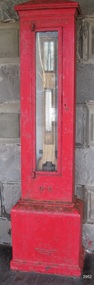
Instrument - Barometer, 1867
... Victoria and was responsible for casting the first bell and lamp-posts in the colony. The business was carried on by his sons after Henry's death. The company was responsible for fabricating the boiler for the first railway locomotive to operate in Australia, built-in 1854 by Robertson, Martin & Smith for the Melbourne and Hobson's Bay Railway Company. ...Victoria and was responsible for casting the first bell and lamp-posts in the colony. The business was carried on by his sons after Henry's death. The company was responsible for fabricating the boiler for the first railway locomotive to operate in Australia, built-in 1854 by Robertson, Martin & Smith for the Melbourne and Hobson's Bay Railway Company. ...Langlands Company History: Langlands foundry was Melbourne's first foundry and iron shipbuilder established in 1842, only 8 years after the founding of the Victorian colony by two Scottish immigrants, Robert Langlands and Thomas Fulton, who had formed a partnership before emigrating (1813–1859). The business was known as the 'Langlands Foundry Co'. Henry Langlands (1794-1863), left Scotland in 1846 with his wife Christian, née Thoms, and five surviving children to join his brother Robert. By the time he arrived in early January of 1847 the partnership of Robert Langlands and Fulton had dissolved as Fulton had gone off to establish his own works. It was at this time that the two brothers took over ownership of Langlands foundry. Several years later Robert retired and Henry became sole the proprietor. The foundry was originally located on Flinders Lane between King and Spencer streets. Their sole machine tool, when they commenced as a business, was a small slide rest lathe turned by foot. In about 1865 they moved to the south side of the Yarra River, to the Yarra bank near the Spencer Street Bridge and then in about 1886 they moved to Grant Street, South Melbourne. The works employed as many as 350 workers manufacturing a wide range of marine, mining, civil engineering, railway and general manufacturing components including engines and boilers. The foundry prospered despite high wages and the lack of raw materials. It became known for high-quality products that competed successfully with any imported articles. By the time Henry retired, the foundry was one of the largest employers in Victoria and was responsible for casting the first bell and lamp-posts in the colony. The business was carried on by his sons after Henry's death. The company was responsible for fabricating the boiler for the first railway locomotive to operate in Australia, built-in 1854 by Robertson, Martin & Smith for the Melbourne and Hobson's Bay Railway Company. Also in the 1860s, they commenced manufacture of cast iron pipes for the Board of Works, which was then laying the first reticulated water supply system in Melbourne. Langlands was well known for its gold mining equipment, being the first company in Victoria to take up the manufacture of mining machinery, and it played an important role in equipping Victoria's and Australia's first mineral boom in the 1850s and 1860s. Langlands Foundry was an incubator for several engineers including Herbert Austin (1866–1941) who worked as a fitter at Langlands and went on to work on the Wolesely Shearing machine. He also founded the Austin Motor Company in 1905. Around the 1890s Langlands Foundry Co. declined and was bought up by the Austral Otis Co. in about 1893. History for Grimoldi: John Baptist Grimoldi was born in London UK. His Father was Domeneck Grimoldi, who was born in Amsterdam with an Italian Father and Dutch mother. Domeneck was also a scientific instrument maker. John B Grimoldi had served his apprenticeship to his older brother Henry Grimoldi in Brooke Street, Holburn, London and had emigrated from England to Australia to start his own meteorological and scientific instrument makers business at 81 Queens St Melbourne. He operated his business in 1862 until 1883 when it was brought by William Samuel and Charles Frederick, also well known scientific instrument makers who had emigrated to Melbourne in 1875. John Grimoldi became successful and made a number of high quality measuring instruments for the Meteorological Observatory in Melbourne. The barometer was installed at Warrnambool's old jetty and then the Breakwater as part of the Victorian Government's insistence that barometers be placed at all major Victorian ports. This coastal barometer is representative of barometers that were installed through this government scheme that began in 1866. The collecting of meteorological data was an important aspect of the Melbourne Observatory's work from its inception. Just as astronomy had an important practical role to play in navigation, timekeeping and surveying, so the meteorological service provided up to date weather information and forecasts that were essential for shipping and agriculture. As a result, instruments made by the early instrument makers of Australia was of significant importance to the development and safe trading of companies operating during the Victorian colonies early days. The provenance of this artefact is well documented and demonstrates, in particular, the importance of the barometer to the local fishermen and mariners of Warrnambool. This barometer is historically significant for its association with Langlands’ Foundry which pioneered technology in the developing colony by establishing the first ironworks in Melbourne founded in 1842. Also, it is significant for its connection to John B Grimoldi who made the barometer and thermometer housed in the cast iron case. Grimoldi, a successful meteorological and scientific instrument maker, arrived in the colony from England and established his business in 1862 becoming an instrument maker to the Melbourne Observatory. Additional significance is its completeness and for its rarity, as it is believed to be one of only two extant barometers of this type and in 1986 it was moved to Flagstaff Hill Maritime Village as part of its museum collection. Coast Barometer No. 8 is a tall, red painted cast iron pillar containing a vertical combined barometer and thermometer. Half way down in the cast iron framed glass door is a keyhole. Inside is a wooden case containing a mercury barometer at the top with a thermometer attached underneath, each with a separate glass window and a silver coloured metal backing plate. Just below the barometer, on the right-hand side, is a brass disc with a hole for a gauge key in the centre. The barometer has a silvered tin backing plate with a scale, in inches, of "27 to 31" on the right side and includes a Vernier with finer markings, which is set by turning the gauge key. The thermometer has a silvered tin backing plate with a scale on the left side of "30 to 140". Each of the scales has markings showing the units between the numbers.Inscription at the top front of the pillar reads "COAST BAROMETER" Inscribed on the bottom of the pillar is "No 8". and "LANGLANDS BROS & CO ENGINEERS MELBOURNE " The barometer backing plate is inscribed "COAST BAROMETER NO. 8, VICTORIA" and printed on the left of the scale, has "J GRIMOLDI" on the top and left of the scale, inscribed "Maker, MELBOURNE". There is an inscription on the bottom right-hand side of the thermometer scale, just above the 30 mark "FREEZING" Etched into the timber inside the case are the Roman numerals "VIII" (the number 8)flagstaff hill, warrnambool, maritime village, maritime museum, flagstaff hill maritime museum & village, shipwreck coast, great ocean road, warrnambool breakwater, coast barometer, coastal barometer, barometer, weather warning, ports and harbours, fishery barometer, sea coast barometer, austral otis co, coast barometer no. 8, henry grimoldi, henry langlands, john baptist grimoldi, langlands foundry co, meteorological instrument maker, robert langlands, scientific instrument maker, thermometer, thomas fulton -
 Eltham District Historical Society Inc
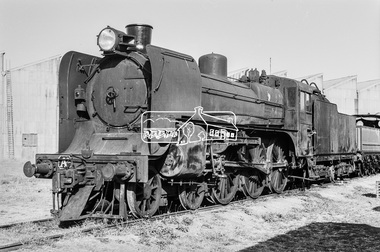
Photograph, George Coop, A2 Class Steam locomotive, Newport Railway Workshops, c.Feb.1964
... Newport Railway Workshops is now home to the Australian Railway Historical Society Museum and Steamrail Victoria A2 Class Steam Locomotive Australian Railway Historical Society Museum Film - Ilford FP3 Newport Railway Workshops Steamrail Victoria Digital TIFF file Scan of 35mm Ilford FP3 black and white transparency A2 Class Steam locomotive, Newport Railway Workshops Photograph Photograph George Coop ...Newport Railway Workshops is now home to the Australian Railway Historical Society Museum and Steamrail VictoriaDigital TIFF file Scan of 35mm Ilford FP3 black and white transparencya2 class steam locomotive, australian railway historical society museum, film - ilford fp3, newport railway workshops, steamrail victoria -
 Bendigo Historical Society Inc.
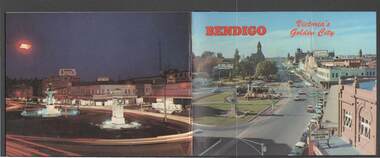
Book - BENDIGO: VICTORIA'S GOLDEN CITY
... Victoria Hill... Look-out Tower Rosalind Park... Conservatory Gardens... Conservatory... Bendigo Pottery... Bendigo Municipal Offices... Bendigo Institute of Technology... Mt Alvernia Hospital... Cobb & Co Coach... R Class Locomotive... Bendigo Railway Station... Bendigo Tramcar... Lake Weeroona... Lake Eppalock Pumping Station... Art Gallery... Historical Museum Eaglehawk... Melville's Caves... Whitehall Cenotaph... Nucolorvue Productins Pty Ltd... National Library of Australia...BENDIGO Tourism photographs of bendigo icons Bendigo - Victoria's Golden City Fortuna Shamrock Hotel Gold Mines Hotel City Hall Post Office Law Courts Home for the Aged Victoria's 'White House' Sacred Heart Cathedral St Paul's Specimen Cottage Log Lock-up Chinese Joss House Charing Cross Cenotaph Alexandra Fountain Centra Deborah Gold Mine Army Cartographic Unit Miner's Cottage Harvey Town Victoria Hill Look-out Tower Rosalind Park Conservatory Gardens Conservatory Bendigo Pottery Bendigo Municipal Offices Bendigo Institute of Technology Mt Alvernia Hospital Cobb & Co Coach R Class Locomotive Bendigo Railway Station Bendigo Tramcar Lake Weeroona Lake Eppalock Pumping Station Art Gallery Historical Museum Eaglehawk Melville's Caves Whitehall Cenotaph Nucolorvue Productins Pty Ltd National Library of Australia Nucolorvue Productions Pty Ltd Coloured booklet of various scenes and buildings in and around Bendigo, titled Bendigo Victoria's Golden City. ...Coloured booklet of various scenes and buildings in and around Bendigo, titled Bendigo Victoria's Golden City. The front cover has a scene of Charing Cross looking towards Pall Mall. Inside the front cover is a very brief history and some Historical Buildings are mentioned. They are: Fortuna, Shamrock Hotel, Gold Mines Hotel, City Hall, Post Office, Law Courts, the Home for the Aged, Sacred Heart Cathedral, St. Paul's, Specimen Cottage, Log Lock-up and the Chinese Joss House. The coloured pictures inside are: The Central Deborah Gold Mine, Fortuna, Miner's Cottage, The Gold Mines Hotel, Victoria Hill, Bendigo Law Courts, Eaglehawk Log Lock-up, Look-out Tower Rosalind Park, Alexandra Fountain - Charing Cross, Conservatory Gardens with Law Courts in background, Inside the Conservatory, Bendigo Home & Hospital for the Aged - Victoria's 'White House', Sacred Heart Cathedral, Chinese Joss House, Chinese Joss House - Interior of the Main Temple, Bendigo Pottery - Potter at work, Bendigo Municipal Offices, Bendigo Institute of Technology at Flora Hill, Mt. Alvernia Hospital, Cobb & Co Coach, R Class Locomotive, Bendigo Tramcar, Lake Weeroona and Lake Eppalock Pumping Station. Some more attractions are mentioned inside the back cover. On the back cover is the Cenotaph - the only scale replica of the Whitehall Cenotaph - and Alexandra Fountain by night.Nucolorvue Productions Pty Ltdbendigo, tourism, photographs of bendigo icons, bendigo - victoria's golden city, fortuna, shamrock hotel, gold mines hotel, city hall, post office, law courts, home for the aged, victoria's 'white house', sacred heart cathedral, st paul's, specimen cottage, log lock-up, chinese joss house, charing cross, cenotaph, alexandra fountain, centra deborah gold mine, army cartographic unit, miner's cottage, harvey town, victoria hill, look-out tower rosalind park, conservatory gardens, conservatory, bendigo pottery, bendigo municipal offices, bendigo institute of technology, mt alvernia hospital, cobb & co coach, r class locomotive, bendigo railway station, bendigo tramcar, lake weeroona, lake eppalock pumping station, art gallery, historical museum eaglehawk, melville's caves, whitehall cenotaph, nucolorvue productins pty ltd, national library of australia -
 Bendigo Historical Society Inc.
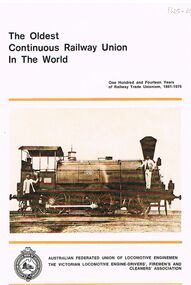
Magazine - BADHAM COLLECTION: AUSTRALIAN FEDERATED UNION OF LOCOMOTIVE ENGINEMEN MAGAZINE
... Australian Federated Union of Locomotive enginemen magazine 20.8.1975. Showing union seal in glossy paper, stapled and old photo of old steam engine on front cover. Title 'The oldest Continuous Railway Union in the world' sub-title 'The Victorian federated union of locomotive engine-drivers, firemen's and cleaners Association'. Photos include official logo, the loco theatre - Victoria...Australian Federated Union of Locomotive enginemen / The Victorian federated union of locomotive engine-Drivers firemen's and cleaners Association / Australian Federated Union of Locomotive enginemen magazine 20.8.1975. Showing union seal in glossy paper, stapled and old photo of old steam engine on front cover. Title 'The oldest Continuous Railway Union in the world' sub-title 'The Victorian federated union of locomotive engine-drivers, firemen's and cleaners Association'. Photos include official logo, the loco theatre - Victoria ...Australian Federated Union of Locomotive enginemen magazine 20.8.1975. Showing union seal in glossy paper, stapled and old photo of old steam engine on front cover. Title 'The oldest Continuous Railway Union in the world' sub-title 'The Victorian federated union of locomotive engine-drivers, firemen's and cleaners Association'. Photos include official logo, the loco theatre - Victoria St North Melbourne, the earliest photo of Spencer street station 1860, North Melbourne 1902, the 'spirit' leaving Spencer St. Station 1937, men who formed the A.F.U.L.E. 1920.magazine, organization, victorian railways, australian federated union of locomotive enginemen / the victorian federated union of locomotive engine-drivers , firemen's and cleaners association / -
 Otway Districts Historical Society
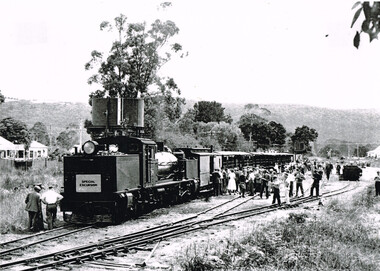
Photograph, Doug McLean, Gellibrand: "Kanyana Special" train, 1 March 1959, 1 March 1959
... Australian Railways Historical Society in conjunction with the "Kanyana: Festival Committee of Colac, Victoria, to run from Colac to Beech Forest. Eight NBH carriages, in store at Newport, were transferred to Colac. The train proved to be so popular that additional trains were later run over the next two years until the temporarily disused Puffing Billy needed the NBH carriages returned. Beech Forest; Colac; railways; A.R.H.S.; Kanyana Festival Committee; Locomotive ...With the approval of the railways, in February1959 a special tourist train was organized by the Australian Railways Historical Society in conjunction with the "Kanyana: Festival Committee of Colac, Victoria, to run from Colac to Beech Forest. Eight NBH carriages, in store at Newport, were transferred to Colac. The train proved to be so popular that additional trains were later run over the next two years until the temporarily disused Puffing Billy needed the NBH carriages returned.Locomotive G42, labelled "A.R.H.S., Special Excursion, Kanyana", with a guard's van, eight NBH excursion carriages and an additonal guard's van attached, stands at Gellibrand Station with a large group of passengers milling outside the train. Note on the left a group of domestic railway dwellings, and, on the right side, two empty wagons. B/W.beech forest; colac; railways; a.r.h.s.; kanyana festival committee; -
 Otway Districts Historical Society
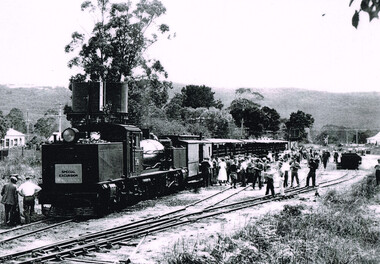
Photograph, Doug McLean, Gellibrand: Kanyana Special to Beech Forest, 1 March 1959
... Australian Railways Historical Society in conjunction with the Kanyana Festival Committee of Colac, Victoria. It proved so popular that additional trains were later organized. Temporarily in storage at Newport railway yards eight NBH excursion carriages were transferred to Colac which ran on the special trains until early-1962. gellibrand; railways; kanyana special; colac; beech forest; loco g41; A A.R.H.S. "Kanyana" special excursion locomotive ...On the 1st March, 1959, the first special train was organized by the Australian Railways Historical Society in conjunction with the Kanyana Festival Committee of Colac, Victoria. It proved so popular that additional trains were later organized. Temporarily in storage at Newport railway yards eight NBH excursion carriages were transferred to Colac which ran on the special trains until early-1962. A A.R.H.S. "Kanyana" special excursion locomotive G41, an NC guard's van and NBH excursion carriages at halts at Gellibrand while the fireman attends to the engine requirements (or 'ER' in railways' parlance). The passengers are milling outside the excursion carriages while two are talking to the driver. Houses are in the background. B/W.gellibrand; railways; kanyana special; colac; beech forest; loco g41; -
Port Melbourne Historical & Preservation Society
Document - List of Port Melbourne Hotels & Licencees 1872, 1872
... BARTLETT Edward SUFFOLK Martin CLASBY Mrs PEATT W KINYON William SPIRE Thomas TURVILLE Charles PEACOCK J WILLIAMS William CANNON J BELL Michael FLANAGAN William CARROLL J W CARR John ALLEN J E CROCKFORD Charles SHARP Henry O'BRIEN G T POTTER F JOHNSON All England Eleven Hotel Auld Reekie Hotel Australian Hotel Bay View Hotel Brunswick Pier Hotel Chequers Inn Chusan Hotel Commercial Hotel Cosmopolitan Hotel Customs House Hotel Exchange Hotel Fitzjames Hotel Floodgate Hotel Foresters Arms Hotel Foundry Hotel Fountain Inn Freemasons Hotel Happy Home Hotel Hibernian Hotel Kent Hotel Locomotive Hotel Lord Raglan Hotel Marine Hotel Naval Brigade Hotel New Great Britain Hotel Pier Hotel President Lincoln Hotel Prince Alfred Hotel Retreat Inn Royal Hotel Ship Hotel Station Hotel Victoria Hotel W CRUIKSHANK Army and Navy Hotel A4 size handwritten sheet with names, addresses and licencees of Port Melbourne hotels in 1872. ...Handwritten list of hotels & their licencees in 1872 believed to have been complied by donor's ancestor, a member of the LOBB family.A4 size handwritten sheet with names, addresses and licencees of Port Melbourne hotels in 1872.business and traders - hotels, built environment - commercial, lobb, h. fonseca, harry hall, william hays, j mcculloch, wm reynolds, g sefton, mrs crockford, andrea lagogiannis, g braithwaite, v sanderson, j carter, g w hall, j michie, t cowling, jas. bartlett, edward suffolk, martin clasby, mrs peatt, w kinyon, william spire, thomas turville, charles peacock, j williams, william cannon, j bell, michael flanagan, william carroll, j w carr, john allen, j e crockford, charles sharp, henry o'brien, g t potter, f johnson, all england eleven hotel, auld reekie hotel, australian hotel, bay view hotel, brunswick pier hotel, chequers inn, chusan hotel, commercial hotel, cosmopolitan hotel, customs house hotel, exchange hotel, fitzjames hotel, floodgate hotel, foresters arms hotel, foundry hotel, fountain inn, freemasons hotel, happy home hotel, hibernian hotel, kent hotel, locomotive hotel, lord raglan hotel, marine hotel, naval brigade hotel, new great britain hotel, pier hotel, president lincoln hotel, prince alfred hotel, retreat inn, royal hotel, ship hotel, station hotel, victoria hotel, w cruikshank, army and navy hotel -
 Sunshine and District Historical Society Incorporated
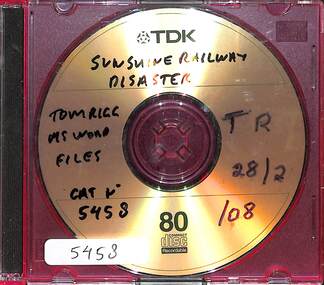
Document - Sunshine Railway Disaster - Tom Rigg MS Word Files CD
... The Sunshine rail disaster occurred on 20 April 1908 at the junction at Sunshine railway station (in Sunshine, Victoria, Australia) when a Melbourne-bound train from Bendigo collided with the rear of a train from Ballarat. 44 people were killed and over 400 injured, almost all of them from the Ballarat train, as the Bendigo train was cushioned by its two locomotives....The Sunshine rail disaster occurred on 20 April 1908 at the junction at Sunshine railway station (in Sunshine, Victoria, Australia) when a Melbourne-bound train from Bendigo collided with the rear of a train from Ballarat. 44 people were killed and over 400 injured, almost all of them from the Ballarat train, as the Bendigo train was cushioned by its two locomotives. ...The Sunshine rail disaster occurred on 20 April 1908 at the junction at Sunshine railway station (in Sunshine, Victoria, Australia) when a Melbourne-bound train from Bendigo collided with the rear of a train from Ballarat. 44 people were killed and over 400 injured, almost all of them from the Ballarat train, as the Bendigo train was cushioned by its two locomotives.Sunshine Railway Disaster Tom Rigg MS Word Files TR 28/2/08sunshine railway disaster, tom rigg -
 Sunshine and District Historical Society Incorporated
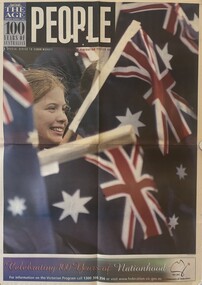
Poster - The Age 100 Years Of Australian People Poster, The Age, 5th March 2001
... Australia became a single nation on the 1st January 1901 when the six British colonies of New South Wales, Victoria, Queensland, South Australia, Western Australia, and Tasmania, united to form the Commonwealth of Australia. This moment is known as the Federation of Australia. This poster marked the 100th anniversary of this event. Supplement contains a feature article on Norman "Norm" De Pomeroy, a Sunshine resident and train driver. Norman "Norm" De Pomeroy had a Vline XF35 Locomotive ...Australia became a single nation on the 1st January 1901 when the six British colonies of New South Wales, Victoria, Queensland, South Australia, Western Australia, and Tasmania, united to form the Commonwealth of Australia. This moment is known as the Federation of Australia. This poster marked the 100th anniversary of this event.The Age 100 Years of Australian People A Special series to commemorate The Centenary of Federation Poster No 1 -
 Puffing Billy Railway
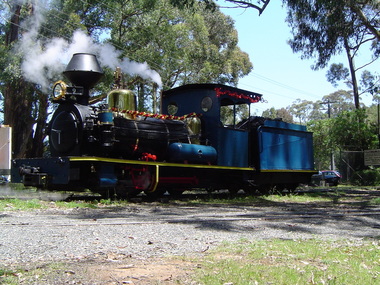
Hudswell Clarke 1863 - MKD Number 9 , Victoria Mill "CORONATION" Steam Locomotive, 1952
... It was also the last steam locomotive imported Australia for use on the Queensland Cane fields It originally worked at the Victoria Mill at Ingham ,Queensland and was named "CORONATION" it was latter transferred to Macknade Mill where it was numbered "9"...It was also the last steam locomotive imported Australia for use on the Queensland Cane fields It originally worked at the Victoria Mill at Ingham ,Queensland and was named "CORONATION" it was latter transferred to Macknade Mill where it was numbered "9" Historic - Industrial Narrow gauge Railway - Steam locomotive - CSR - Colonial Sugar Refining Co. - Victoria Mill, Ingham, Queensland, Australia coronation puffing billy no9 hudswell clarke 1863 steam locomotive victoria mill csr - colonial sugar refining co. 1863 Steam Locomotive - 2' gauge 0-6-0 tender locomotive made of iron, steel Hudswell Clarke 1863 - MKD Number 9 , Victoria Mill "CORONATION" Steam Locomotive Hudswell Clarke ...1863 was the last steam locomotive built by Hudswell Clarke for the Colonial Sugar Refining Co (CSR). It was also the last steam locomotive imported Australia for use on the Queensland Cane fields It originally worked at the Victoria Mill at Ingham ,Queensland and was named "CORONATION" it was latter transferred to Macknade Mill where it was numbered "9"Historic - Industrial Narrow gauge Railway - Steam locomotive - CSR - Colonial Sugar Refining Co. - Victoria Mill, Ingham, Queensland, Australia Steam Locomotive - 2' gauge 0-6-0 tender locomotive made of iron, steel 1863coronation, puffing billy, no9, hudswell clarke, 1863, steam locomotive, victoria mill, csr - colonial sugar refining co. -
 Puffing Billy Railway
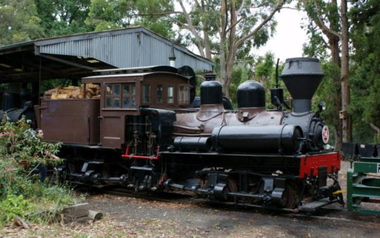
Number 14 - Shay Locomotive (Builder’s Number 2549), 22 June 1912
... Locomotive Corporation In service 22 June 1912 Samuels, Samuels & Co., Ltd. (D), Taipei, Formosa (Japan); For: Alishan Forest RY #14, Kirun (Keelung), Formosa, (Japan) (1945) Alishan Forest RY #14, Keelung (Chilung), Taiwan (12 Oct 1971) Puffing Billy RY #14, Belgrave, Victoria, Australia Gauge 30" Status Preserved - In Storage at Museum There is only one original LIMA mark left on any of the Alishan RY Shays and it has no number. ...Locomotive Corporation In service 22 June 1912 Samuels, Samuels & Co., Ltd. (D), Taipei, Formosa (Japan); For: Alishan Forest RY #14, Kirun (Keelung), Formosa, (Japan) (1945) Alishan Forest RY #14, Keelung (Chilung), Taiwan (12 Oct 1971) Puffing Billy RY #14, Belgrave, Victoria, Australia Gauge 30" Status Preserved - In Storage at Museum There is only one original LIMA mark left on any of the Alishan RY Shays and it has no number. ...geared steam locomotive Built by the Lima Locomotive Works, USA in 1912 (Builder’s Number 2549). “Class a” 13 Ton (13.3 tonne) . This locomotive hauled freight on the Ali-Shan Forest Railway in Taiwan and is capable of pulling 90 Tons (91.8 tone) loads over steep gradients at low speeds. . This A-type Shay locomotive was built by Lima Locomotive Works, Ohio (builder's number 2549 of 1912) for the Alishan Forest Railway, Taiwan. The Alishan Forest Railway featured a large fleet of Shay locomotives and many still survive, together with a portion of the railway which is now a tourist operation. Alishan Shay No.14 was gifted to the Puffing Billy railway in 1971 by the Alishan Forest Railway - Taiwan Government forest Bureau and arrived on the 12th October 1971 at the Puffing Billy Museum at Menzies Creek. Loco: Shay No.14 ( Shop Number 2549 ) Class: A 18-2 ( 2-cylinders / 2-trucks Class A ) Built for: Alishan Forest Railway Bulit by Lima Locomotive Corporation In service 22 June 1912 Samuels, Samuels & Co., Ltd. (D), Taipei, Formosa (Japan); For: Alishan Forest RY #14, Kirun (Keelung), Formosa, (Japan) (1945) Alishan Forest RY #14, Keelung (Chilung), Taiwan (12 Oct 1971) Puffing Billy RY #14, Belgrave, Victoria, Australia Gauge 30" Status Preserved - In Storage at Museum There is only one original LIMA mark left on any of the Alishan RY Shays and it has no number. All of their Shays have been re-built, changing much of the original Lima product. Most were renumbered for various reasons without regard to Lima Shop Numbers over the years. "Girder Type Frame" details from http://www.shaylocomotives.com/data/lima3354/sn-2549.htm Historic - Industrial Narrow Gauge Railway - Geared Steam Locomotive which worked on the Alishan Forest Railway, Taiwan.geared steam locomotive - Class: A 18-2 ( 2-cylinders / 2-trucks Class A ) - made of wood and iron and wrought iron, Glass14puffing billy, shay, geared locomotive, steam locomotive, industrial narrow gauge railway, 2'6", ali shan forest railway -
 Puffing Billy Railway
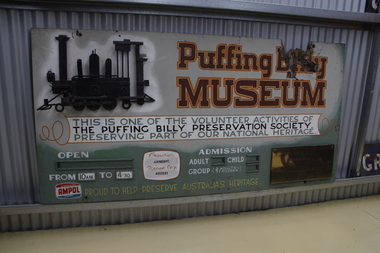
Sign - Puffing Billy Museum Entry
... locomotive ex Erica State Saw Mill (CLIMAX) had arrived. The Museum was opened to the public in November 1970 but was officially opened by His Excellency the Governor of Victoria, Sir Rohan Delacombe on Saturday 7th April 1973. Historic - Puffing Billy Museum Entry Sign puffing billy menzies creek sir rohan delacombe narrow gauge steam Puffing Billy Museum This is one of the Volunteer activities of The Puffing Billy Preservation Society Preserving part of our National Heritage Proud to Help Preserve Australia's Heritage Puffing Billy Museum Entry Sign Rectangular hand painted sign in use from 1970. ...The Museum was first considered in 1963 when it was felt that Victorian narrow gauge railway history was quickly being destroyed by progress. Originally it was planned to only cater for two locomotives and some rolling stock associated with the Moe and Walhalla Railway. Construction of the site commenced on Labour Day Weekend in March 1964, the area was then fenced. The first exhibit arrived soon after and companies with locomotives and other railway features offered items to the Museum. When interesting exhibits from the "Steam Era " were known to be coming available,discussions were held with the owners in an attempt to obtain the item for preservation. In 1965 an Umbrella style shed was built and by May, the first locomotive ex Erica State Saw Mill (CLIMAX) had arrived. The Museum was opened to the public in November 1970 but was officially opened by His Excellency the Governor of Victoria, Sir Rohan Delacombe on Saturday 7th April 1973.Historic - Puffing Billy Museum Entry SignPuffing Billy Museum Entry Sign Rectangular hand painted sign in use from 1970.Puffing Billy Museum This is one of the Volunteer activities of The Puffing Billy Preservation Society Preserving part of our National Heritage Proud to Help Preserve Australia's Heritage puffing billy, menzies creek, sir rohan delacombe, narrow gauge, steam -
 Puffing Billy Railway
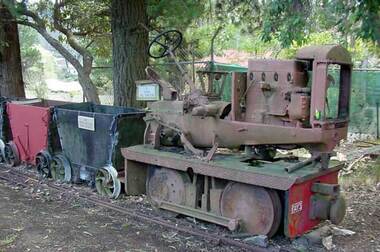
Day's Petrol Rail Tractor, Petrol Rail Tractor Gauge 2'0", circa 1926 - 1940
... locomotive is believed to have been one of two Day's Petrol Rail tractors formerly used by Cheetham Salt, possibly at the Moolap works near Geelong. Service History :owned by Cheetham Salt, Moolap ( dates unknown ) Geelong Steam Preservation Society , Belmont 1973 ? Puffing Billy Steam Museum , Menzies Creek Historic - Industrial Narrow gauge Railway - Rail Tractor used by Cheetham Salt Company works at Laverton, Moolap and Geelong, Victoria , Australia puffing billy industrial narrow gauge railway rail tractor days engineering cheetham salt, petrol rail tractor Petrol Rail Tractor made of Iron , wrought iron, steel Petrol Rail Tractor Gauge 2'0" Day's Petrol Rail Tractor W. ...Rail tractors were popular with Victorian sawmillers. They were generally cheaper than a steam locomotive, required no special qualifications to drive, and used proven power plants for which spares were available locally. The tractor was constructed by Day’s Engineering of South Melbourne which, although better known for its pumping equipment, built more than fifty rail tractors for Victorian sawmillers and other industrial tramway users. W. Day & Sons is believed to have constructed its first light railway locomotive in 1926. From then until the mid 1940s, the firm appears to have built at least fifty locomotives at its premises in South Melbourne, of which roughly half were four-wheel locomotives and roughly half were six-wheel locomotives like the restored Day’s rail tractor formerly operated by Ruoak Timbers. Of the four-wheel locomotives, ten were 2-ft (610mm) gauge locomotives similar to this one. Today, only two survive, a complete example at the Puffing Billy Railway Museum at Menzies Creek, and one at Alexandra Timber Tramway Museum This 2-ft gauge 4wPM locomotive is believed to have been one of two Day's Petrol Rail tractors formerly used by Cheetham Salt, possibly at the Moolap works near Geelong. Service History :owned by Cheetham Salt, Moolap ( dates unknown ) Geelong Steam Preservation Society , Belmont 1973 ? Puffing Billy Steam Museum , Menzies Creek Historic - Industrial Narrow gauge Railway - Rail Tractor used by Cheetham Salt Company works at Laverton, Moolap and Geelong, Victoria , Australia Petrol Rail Tractor made of Iron , wrought iron, steel puffing billy, industrial narrow gauge railway, rail tractor, days engineering, cheetham salt,, petrol rail tractor -
 Puffing Billy Railway
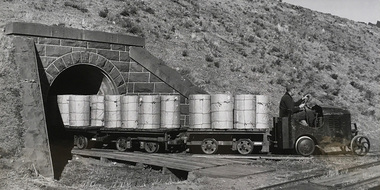
Clarkat Tug Locomotive, 13 April 1943
... CK 43 470 Code: Heavy Des.Pat. 116092 Historic - Industrial Narrow gauge railway equipment - Jack's Magazine, Maribyrnong, Victoria, Australia clarkat clarkat aircraft tug puffing billy jack's magazine Coal Creek Tug Clarkat Serial No. CK 43 470 Code: Heavy Des.Pat. 116092 Clarkat Aircraft Tug that has been converted to run on Rails, made of steel Clarkat Tug Locomotive Clark Tructractor - Div of Clark Equipment Co ...Clarkat A Clarkat Aircraft Tug that has been converted to run on Rails, This Clarkat 'B' was one of 11 machines shipped on 13 April 1943 to the Lathrop Holding & Re-consignment Depot in Lathrop, California. and was used at Jack's Magazine, Maibyrnong, Victoria and later on at Coal Creek Historical Village, Gippsland, Victoria. Clarkat Tug Model C S/N Cx30F Made by Clark Tructractor Div of Clark Equipment Co Battle Creek Michigan U.S.A Serial No. CK 43 470 Code: Heavy Des.Pat. 116092 Historic - Industrial Narrow gauge railway equipment - Jack's Magazine, Maribyrnong, Victoria, Australia Clarkat Aircraft Tug that has been converted to run on Rails, made of steel Coal Creek Tug Clarkat Serial No. CK 43 470 Code: Heavy Des.Pat. 116092 clarkat, clarkat aircraft tug, puffing billy, jack's magazine -
 Puffing Billy Railway
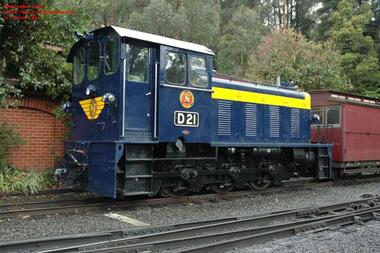
D21 - Diesel Mechanical locomotive, 1968
... locomotives were purchased by the Mount Lyell Mining and Railway Company in 1953. When it closed in 1963, 2405 was sold to the Emu Bay Railway as number 22, while 2406 went to the TGR as V13. All the TGR units were withdrawn between 1983 and 1987 while the Emu Bay unit remained in service until 2000. Ten have been preserved: V1 by the Bellarine Peninsula Railway, Victoria V2 by the Don River Railway V4 by the Hotham Valley Railway, Western Australia...locomotives were purchased by the Mount Lyell Mining and Railway Company in 1953. When it closed in 1963, 2405 was sold to the Emu Bay Railway as number 22, while 2406 went to the TGR as V13. All the TGR units were withdrawn between 1983 and 1987 while the Emu Bay unit remained in service until 2000. Ten have been preserved: V1 by the Bellarine Peninsula Railway, Victoria V2 by the Don River Railway V4 by the Hotham Valley Railway, Western Australia ...D21 - Diesel Mechanical locomotive Date built - 1968 Original owner - TGR Original gauge - 1067mm Withdrawn - 1983 Built to 3'6" gauge in 1968 by the Tasmanian Government Railways and numbered V12, ownership of this Diesel Mechanical locomotive was transferred to Australian National Railways (Tas.) in 1978. It was withdrawn and sold to the E.T.R.B. in 1983 1968 - D21 ex-Tasmanian Government Railways (TGR) V class No.12, built by the TGR Launceston Workshops in 1968 to a design of Vulcan-Drewry (England). Tasmanian Government Railways V class The V class were the first diesel locomotives operated by the Tasmanian Government Railways (TGR) with four delivered by the Vulcan Foundry in 1948 to a design by the Drewry Car Co. They were a narrow gauge version of the British Rail Class 04. In 1951 a fellow two were delivered followed by another two in 1955. Between 1959 and 1968 the TGR built a further four at its Launceston Workshops. Two identical locomotives were purchased by the Mount Lyell Mining and Railway Company in 1953. When it closed in 1963, 2405 was sold to the Emu Bay Railway as number 22, while 2406 went to the TGR as V13. All the TGR units were withdrawn between 1983 and 1987 while the Emu Bay unit remained in service until 2000. Ten have been preserved: V1 by the Bellarine Peninsula Railway, Victoria V2 by the Don River Railway V4 by the Hotham Valley Railway, Western Australia V5 by the Hotham Valley Railway, Western Australia V7 by the Derwent Valley Railway V8 by the Bellarine Peninsula Railway, Victoria V9 by the West Coast Wilderness Railway V12 by the Puffing Billy Railway, Victoria (regauged to 760 mm gauge and numbered D21) V13 by the Zig Zag Railway, New South Wales, sold to the West Coast Wilderness Railway, renumbered D2 22 by the West Coast Wilderness Railway, renumbered D1 Tasmanian Government Railways V class Manufacturer Vulcan Foundry Tasmanian Government Railways Entered service 1948 Number built 14 Number preserved 10 Fleet numbers TGR: V1-V13 Emu Bay: 22 Power: 152kW (204hp) or 114kW (153hp) Motor: Gardner 8L3 (V) or Gardner 6L3 (VA) Wheel Arrangement: - C - Weight: 25.6t Allowable load on 1:40 grade: 170t Length over headstocks: 6.8m (22ft 6in) Introduced: 1948 Built By: Vulcan Foundry, England; TGR Workshops, Launceston; Using parts supplied by Drewry Car Co (UK) Number Preserved: 10 Number In Service: 0 Total Number Built: 14Historic - Tasmanian Government Railways - Diesel Mechanical locomotive - V12 / Puffing Billy Railway Diesel Mechanical locomotive D21D21 - Diesel Mechanical locomotive made of steel D21diesel mechanical locomotive, puffing billy, d21, v12 diesel mechanical locomotive, d21 diesel mechanical locomotive, tasmanian government railways -
 Puffing Billy Railway
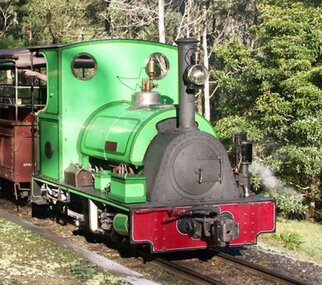
Peckett, 1711 Peckett Steam Locomotive, 1926
... Historic - Industrial Narrow Gauge Railway - Steam Locomotive used at the Metropolitan Gas Coy., West Melbourne, Victoria, Australia peckett “sir john grice” 1711 peckett puffing billy steam locomotive industrial narrow gauge railway metropolitan gas coy., west melbourne Peckett Steam Locomotive made of steel, wrought iron 1711 Peckett Steam Locomotive Peckett Peckett & Sons ...Steam Locomotive - 1711 Peckett “Sir John Grice” Date built - 1926 Locomotive type ; Cranmore Original owner - Metropolitan Gas Coy., West Melbourne Original gauge - 762mm Withdrawn - 1941 Next owner - Whistle Stop Amusement Park, Frankston Built in 1926 for the West Melbourne site of the Metropolitan Gas Company, and issued to traffic the same year this saddle tank locomotive was named “Sir John Grice” in 1928. It was withdrawn from traffic in 1941 and stored until sold privately in 1962. In 1965 it was sold again and went to the Whistle Stop Amusement Park in Frankston and again stored until bought at auction by the Puffing Billy Preservation Society in 1974 and put on static display in the Steam Museum. Restoration started in 1978 and it was returned to service in 1981 painted light green with yellow lining. It is temporarily renamed “Thomas the Tank Engine” with a fibreglass “Thomas” body cover each time it appears in the “Thomas the Tank Engine” shows at Gembrook station.Historic - Industrial Narrow Gauge Railway - Steam Locomotive used at the Metropolitan Gas Coy., West Melbourne, Victoria, AustraliaSteam Locomotive made of steel, wrought iron Peckettpeckett “sir john grice”, 1711 peckett, puffing billy, steam locomotive, industrial narrow gauge railway, metropolitan gas coy., west melbourne -
 Puffing Billy Railway
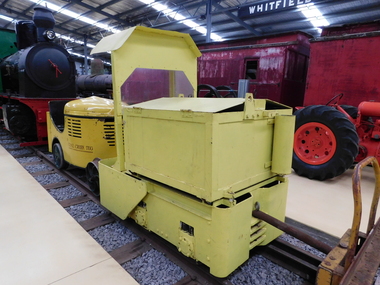
Greenbat Battery Loco, Greenwood & Batley ltd
... Historic - Industrial Narrow Gauge Railway - Battery Locomotive - Orica - Deer Park Munitions factory - Deep park, Victoria, Australia puffing billy greenbat battery loco battery locomotive industrial narrow gauge railway orica - deer park munitions factory Battery Locomotive - made of iron Greenbat Battery Loco Greenwood & Batley ltd ...Greenbat Battery Loco Built by Greenwood & Batley Ltd Builders No. 420363/2 This Greenbat Battery Loco has been loaned to the Museum by the Walhalla Goldfields Railway, who had acquired it in 2013 along with a large quantity of narrow gauge trollies and light rail from Orica’s now closed munitions factory in Melbourne’s western suburbs. The trolley on display was one of two in use from the 1970s. Orica - Deer Park Munitions factory Orica Deer Park in Melbourne’s west has been used since circa 1875 for various forms of manufacturing and storage of chemicals. Although the site is bounded by Ballarat Road, Station Street, Tilburn Road and the Western Ring Road, the current entry point for industrial operations is situated at Gate 6 off Tilburn Road. Operations include: • a specialty chemicals facility producing products for mining services operations • quarry services • other chemical manufacture activities. The Deer Park factory complex is of historical significance as the location of the first plant for the manufacture of high explosives in Australia and has been, for its entire history, the most important, if not only, commercial manufacturer of high explosives in Australia. It commenced operation under the importer Jones Scott and Co, and then the Australian Lithofracteur Company (Krebs Patent), a rival to Nobel's dynamite patent. The factory was producing nitro-glycerine based explosives in Australia only a couple of years after Nobel's Ardeer factory began operating in Scotland. The explosives factories complex is of historical significance for the association with the Australian Lithofracteur Company, Australian Explosives and Chemicals, the Nobel company and later ICIANZ, which grew to become one of the largest explosives, chemical and plastics manufacturers in Australia. It was the pioneer of the industry and retained its dominance through monopolistic practices, taking over most of its competitors in the Australasian region. Substantial parts of the pre-Second World War layout of the site remain which, with a number of significant buildings dating back to the 1920s and '30s, indicate past and present processes of manufacturing, the necessary safety measures required and the integrated nature of the explosives and chemical industry. The narrow gauge tramway, which ran through the explosives section, was a rare survivor of nineteenth century materials-handling methods into the 21st Century. Greenwood & Batley were a large engineering manufacturer with a wide range of products, including armaments, electrical engineering, and printing and milling machinery. They also produced a range of battery-electric railway locomotives under the brand name Greenbat. The works was in Armley, Leeds, UK. Greenbat was the trade name for the railway locomotives built by Greenwood & Batley. The company specialised in electric locomotives, particularly battery-powered types for use in mines and other hazardous environments. Historic - Industrial Narrow Gauge Railway - Battery Locomotive - Orica - Deer Park Munitions factory - Deep park, Victoria, Australia Battery Locomotive - made of iron puffing billy, greenbat battery loco, battery locomotive, industrial narrow gauge railway, orica - deer park munitions factory -
 Wodonga & District Historical Society Inc
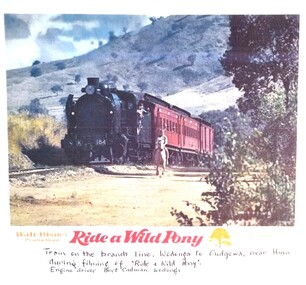
Poster - Advertising Still - Ride a Wild Pony, 1974
... Australian actors John Meillon, Andrew McFarlane and Lorraine Bayly. The images in these posters were taken on the Branch Line, Wodonga to Cudgewa near Huon. The Engine Driver is Bert Cadman of Wodonga. These images are significant because they promote an early feature movie filmed in Northeast Victoria. Bert Cadman Wodonga to Cudgewa Branch Line “Ride A Wild Pony” Walt Disney Productions / Ride a Wild Pony / Technicolor Two coloured photographs of a steam locomotive ...The feature film “Ride A Wild Pony” was the first Walt Disney Production film made in Australia. It was based on the 1973 book “A Sporting Proposition” by James Aldridge and was filmed in 1974. The majority of filming took place in Chiltern, Victoria with Conness Street being transformed into the fictional town of ‘Barambogie’. Other film locations were in the hills around Beechworth and the school in Stanley as well as on the banks of the Murray River and along the railway track near the Huon Railway Siding. Filming was completed on 11th December 1974. It featured British actor Michael Craig as well as Australian actors John Meillon, Andrew McFarlane and Lorraine Bayly. The images in these posters were taken on the Branch Line, Wodonga to Cudgewa near Huon. The Engine Driver is Bert Cadman of Wodonga. These images are significant because they promote an early feature movie filmed in Northeast Victoria.Two coloured photographs of a steam locomotive on the Wodonga to Cudgewa Line at Huon and a boy on a white pony. The locomotive driver can be seen looking out of the cabin.Walt Disney Productions / Ride a Wild Pony / Technicolorbert cadman, wodonga to cudgewa branch line, “ride a wild pony” -
 Federation University Art Collection
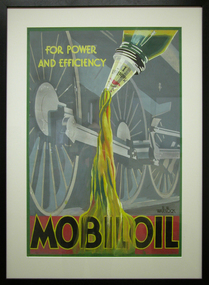
Painting - poster, R.W. Warnock, 'Mobil Oil', c1935
... The Art Collection features over 1000 works and was listed as a 'Ballarat Treasure' in 2007. art artwork warnock mobil oil poster r.w. warnock available alumni locomotive steam engine motor oil advertisement reginald warnock "For power and efficiency" "Mobil Oil" Framed original poster completed at the Ballarat Technical Art School by R.W. Warnock. It shows Oil pouring from a bottle in front of a steam engine. Please use the comment link below if you can assist with information about R.W. Warnock. 'Mobil Oil' Painting poster Australia Victoria ...Reginald (Reg) WARNOCK (1915-1991) Reginald William Warnock undertook the Commercial Art course during the 1930s. On completion, he worked as a designer at Paton’s Advertising Service, Melbourne. Commercial art subjects between 1915 and 1939 reflected changing practises and industry requirements, with Ballarat graduates in demand. In the 1936 Ballarat School of Mines Annual Report it was stated: "It is my pleasure to report a most successful year in the Technical Art School. I the Annual Poster Competition for Technical Schools, organised by Wiltshires Pty Limited, 16 prized valued at 33 pounds 8 shillings - out of 23 prizes valued at 56 pounds - were won by our students. R.W. Warnock moved from Ballarat to Moonee Ponds towards the end of March, 1937. This item is part of the Federation University Art Collection. The Art Collection features over 1000 works and was listed as a 'Ballarat Treasure' in 2007.Commercial art Framed original poster completed at the Ballarat Technical Art School by R.W. Warnock. It shows Oil pouring from a bottle in front of a steam engine. Please use the comment link below if you can assist with information about R.W. Warnock."For power and efficiency" "Mobil Oil"art, artwork, warnock, mobil, oil, poster, r.w. warnock, available, alumni, locomotive, steam engine, motor oil, advertisement, reginald warnock -
 Unions Ballarat
Leaflets, pamphlets, periodicals, newspapers, cuttings and roneoed material retained by the Council, 1891-1962
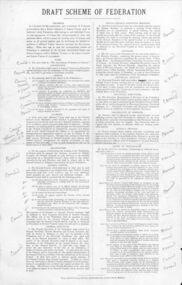
... victoria...ballarat east...plumbers and gasfitters employees' union of australia...menzies...w.g. spence...new unionism...universal business directories...victoria apprenticeship commission...victorian labor college...w.f. williams...workers' industrial union of australia. preamble, classification and rules. melbourne, 1919?...amalgamated engineering union...american economist...australian worker...building workers' organiser...building trades federation...economic information service...the courier...ballarat star...the clerk...common cause...miners' federation of australia...evening echo...evening post...industrial herald...labor call...labor supplement...light journal...locomotive...TBA TBA ballarat trades and labour council ballarat trades hall unions anti-hanging committee hanging ballarat banking co. ltd. country municipal association geelong town band ironmasters' association of victoria general iron trades' conference museum of applied science of victoria new australian trade unionist committee ironmoulders' society melbourne trades hall council btlc intercolonial trades and labor union congress, 7th. trade mark committee report committee on federation report australasian federation of labor asian and pacific regions peace conference australian bureau of census and statistics abs australian bureau of statistics trade marks bill actu australian council of trade unions australian labor party alp australian textile union w.a. baker building workers' industrial union carters and drivers' union tom dougherty eight hours' anniversary sports programme labour and industrial statistics workers' trade marks building workers santamaria arthur w. fadden federated clerks' union fennessy braun greater ballarat association h.e. langridge metal trades federation municipal association of victoria ballarat east plumbers and gasfitters employees' union of australia menzies w.g. spence new unionism universal business directories victoria apprenticeship commission victorian labor college w.f. williams workers' industrial union of australia. preamble, classification and rules. melbourne, 1919? amalgamated engineering union american economist australian worker building workers' organiser building trades federation economic information service the courier ballarat star the clerk common cause miners' federation of australia evening echo evening post industrial herald labor call labor supplement light journal locomotive journal australian federated union of locomotive enginemen people's tribune supplement railways union gazette frank hyett rehab news central ex-servicemen's office sheet metal worker sheet metal working, agricultural implement and stovemaking union of australia socialist comment tocsin tribune un world eight hour anniversary electoral rolls progress freemasonry st patrick's gazette hrh duke of edinburgh incentive payments wages f.j. riley Two boxes, paper. 1. ...TBATBATwo boxes, paper. 1. Anti-Hanging Committee - regarding hanging. 1962. 2. Ballarat Banking Co. Ltd. Chairman's address and 145th report. August 1954. 3. Country Municipal Association circular regarding conference on centralisation, Ballarat. 22 November 1916. 4. Geelong Town Band's weekly performance programme. n.d. 5. Ironmasters' Association of Victoria rules and regulations agreed upon at the General Iron Trades' Conference, Melbourne. 1891. 6. Melbourne Eight Hours Anniversary programme. 1901. 7. Museum of Applied Science of Victoria, on gas from our brown coal. n.d. 8. New Australian Trade Unionist Committee regarding rally to protect shooting of Polish workers. 195-? 9. Circular from Ballarat Trades and Labour Council to Ironmoulders' Society regarding the Congress. 1891. 10. List of subjects to be discussed at Congress. 11. Circular from Melbourne Trades Hall Council regarding financial help for Congress. 1891. 12. Reports of Standing Orders Committee appointed by the Congress, 23-29 April 1891. 13. Trade Mark Committee report. 14. Committee on Federation report. 15. Draft scheme of Federation (Australasian Federation of Labor). 16. Draft scheme of Federation (Australasian Federation of Labor) to the Labour Councils and Unions of Australasia. (2 copies.) 17. Asian and Pacific Regions Peace Conference, Peking, October 1962. Report on Peking, Melbourne. 1962. (2 copies). 18. Australian Bureau of Census and Statistics. Labour and Industrial Statistics, Melbourne. 1911. 19. Australia. Laws, Statutes, etc Trade Marks Bill, 1905. Workers' Trade Marks. Melbourne, 1905. 20. Australian Council of Trade Unions. Agenda paper for ... Congress, 1953. Melbourne, 1953. 21. Australian Labor Party. Work of the Labor government. Melbourne, 1928. 22. Australian Textile Union, Victorian Branch. Wages Sheet. Melbourne, 1953? 23. Baker, W.A. The Commonwealth Basic Wage. 1907-1953. Sydney, 1953? 24. Building Workers' Industrial Union. Building Workers support your convention. n.p. 1954? 25. Carters' and Drivers' Union. Committee of Management. Important to members of Carters and Drivers' Union. Melbourne, 1936. 26. Dougherty, Tom. Santamaria unmasked. Melbourne, 1954? 27. Eight Hours' Anniversary Sports Programme, 1893. Ballarat 1893. 28. Eight Hours' Anniversary Programme, 1894. Ballarat, 1894. 29. Fadden, Arthur W. The menace of political banking. Sydney, 1945. 30. Federated Clerks' Union, Victoria Branch. The Fennessy Story. The Braun Story. n.p., 1954. 31. Federated Clerks' Union, Victoria Branch. Manifesto, n.p., 1955. 32. Greater Ballarat Association. Seventeenth annual report. Ballarat, 1954. 33. Langridge, H.E. Employers in the Labor Party. Melbourne, 1914. 34. Metal Trades Federation. National Conference of Federal Council and delegates from State branches. Sydney, 1960. 35. Municipal Association of Victoria. Arbitration aware regarding employment of members of the Municipal Officers Association of Australia. Melbourne, 1950. 36. Municipality of the Town of Ballarat East. Annual report, 1919. Ballarat, 1919. 37. Plumbers and Gasfitters Employees' Association of Australia. Melbourne Branch. Why did Menzies abdicate when he had a working majority and 18 months to go? Melbourne, 1955? 38. Plumbers and Gasfitters Employees Union of Australia, Melbourne Branch. Who are the wreckers in the Australian Labor Party? Melbourne, 1955. 39. Spence, W.G. The ethics of New Unionism. Sydney, 1892. (42 copies) 40. Trades Hall Council, Melbourne. Statement of accounts, 1959. Melbourne, 1959. 41. Universal Business Directories (Australia) Pty. Ltd. Home edition for Ballarat. Melbourne, 1954. 42. Victoria, Apprenticeship Commission. Twenty-seventh annual report. Melbourne, 1956. 43. Victorian Labor College. Labor Colleges. Melbourne 191? (3 copies) 44. W.F. Williams. An appeal to the workers of Victoria. n.p., 19?? 45. Workers' Industrial Union of Australia. Preamble, classification and rules. Melbourne 1919? 46. ACTU Bulletin, 1955, Vol 2, No. 2 47. Amalgamated Engineering Union monthly journal, 1954, No. 3. March 48. American Economist, (New York), 1893, Vol 12, No 12, September 49. Australian Worker, (Sydney), 1955, Vol 64, No. 10, May; No. 15, September (held by ANU and at Trove online) 50. Building Workers' Organiser, official organ of the Building Trades Federation, 1954, June 51. Bulletin issued by the Economic Information Service, Melbourne. No. 2 1954, Nos. 10, September; 13 August; 1956, No 14, January 52. Ballarat Courier, 1890, Vol 46, No. 7096, April 53. Ballarat Star, 1888, Vol 33, No. 95, April 54. The Clerk, official journal of Federated Clerks' Union, Victorian Branch, 1955, Vol 10, No. 2, February/March 55. Common Cause, official journal of the Miners' Federation of Australia 1954 Vol 19, No. 10, March; No. 12, April 1955 Vol 20, No. 12, April; No. 19, May 1955 Vol 20, No. 23, June; No 28 July 1955 Vol 20, No. 29, August 1956 Vol 21, No. 17, May 56. Evening Echo, Ballarat, 1915, No. 6673, September 57. Evening Post, Ballarat, 1889, Vol 38, No. 6326, March 58. Industrial Herald, published by Labor Press, Geelong 1952 Vol 34, No. 35, June 1954 Vol 36, No. 20, March; No. 23, April 1954 No. 36, July; No. 39 July 1958 Vol 40, No. 19, March 59. Labor Call, published by Industrial Printing and Publicity Co., Melbourne. 1953, Vol 46, No. 2417, September 60. Labor Supplement. 1952, November 1954, February; March 61. Light, Ballarat diocesan journal. 1955, September. 62. Locomotive journal, published by the Australian Federated Union of Locomotive Enginemen. 1954, Vol. 16, No. 4, January. 63. People's Tribune Supplement, ed. by E.E. Jones, Melbourne. 1886, Vol 5, No. 20, April. 64. Railways' Union Gazette, published by J.D. Michie, Melbourne. 1919, June, Frank Byett in memoriam edition. 65. Rehab News issued by Central Ex-Servicemen's Office, Melbourne. 1946, Vol 2, No. 30, May. 66. Sheet Metal Workers, official organ of the Sheet Metal Working, Agricultural Implement and Stovemaking Union of Australia, Sydney. 1954, No. 107, February. 67. Socialist Comment, Socialist Party of Australia, Melbourne. 1937, No. 2, February. 68. Tocsin, A.L.P. Victorian Branch. 1955?, No. 2, October; No. 4, December. 1956, No. 5, February. 69. Tribune, CPA Sydney. 1965, No. 958, August. 70. UN World, published by Egbert White, New York. 1948, Vol 2, No. 11, December. 71. Miscellaneous newspaper cuttings. Posters 72. Eight Hours' Anniversary, Ballarat, 22 April 1892. 73. Eight Hours' Anniversary, Ballarat, 21 April 1894. 74. Eight Hours' Anniversary, Ballarat, 21 April 1913. 75A. Eight Hours' Anniversary, Ballarat, 3 April 1922. 75B. Electoral Rolls, persons entitled to be enrolled and to vote, 1922. 76. Progress, prospectus of debentures to publish a daily Labour paper to be called "Progress". 1904, Vol 1, No. 1, December. Cards 87. Smoke night social 88. Bi-election 89. How to vote card Roneoed material 77. Circular letter regarding new morning newspaper. n.d. 78. Circular letter from Trades Hall Council, Melbourne. 21 March 1955. 79. Article, History of the recent ALP dispute. n.d. 80. Article: What is freemasonry (from Ballarat St. Patrick's Gazette, October 1854). (2 copies) 81. Information summary of HRH Duke of Edinburgh's study conference on the human problems of industrial communities. ALP Broadcasts from Station 3KZ 82. Incentive payments by Norman A. Gibbs. 17 August 1953. 83. Escalating wages by F.J. Riley. 25 February 1954. 84. Margins by F.J. Riley. 4 March 1954. 85. Freezing margins by F.J. Riley. 17 March 1954. 86. The struggle across the Ages (No. 2) by F.J. Riley. 7 May 1954. ballarat trades and labour council, ballarat trades hall, unions, anti-hanging committee, hanging, ballarat banking co. ltd., country municipal association, geelong town band, ironmasters' association of victoria, general iron trades' conference, museum of applied science of victoria, new australian trade unionist committee, ironmoulders' society, melbourne trades hall council, btlc, intercolonial trades and labor union congress, 7th., trade mark committee report, committee on federation report, australasian federation of labor, asian and pacific regions peace conference, australian bureau of census and statistics, abs, australian bureau of statistics, trade marks bill, actu, australian council of trade unions, australian labor party, alp, australian textile union, w.a. baker, building workers' industrial union, carters and drivers' union, tom dougherty, eight hours' anniversary sports programme, labour and industrial statistics, workers' trade marks, building workers, santamaria, arthur w. fadden, federated clerks' union, fennessy, braun, greater ballarat association, h.e. langridge, metal trades federation, municipal association of victoria, ballarat east, plumbers and gasfitters employees' union of australia, menzies, w.g. spence, new unionism, universal business directories, victoria apprenticeship commission, victorian labor college, w.f. williams, workers' industrial union of australia. preamble, classification and rules. melbourne, 1919?, amalgamated engineering union, american economist, australian worker, building workers' organiser, building trades federation, economic information service, the courier, ballarat star, the clerk, common cause, miners' federation of australia, evening echo, evening post, industrial herald, labor call, labor supplement, light journal, locomotive journal, australian federated union of locomotive enginemen, people's tribune supplement, railways union gazette, frank hyett, rehab news, central ex-servicemen's office, sheet metal worker, sheet metal working, agricultural implement and stovemaking union of australia, socialist comment, tocsin, tribune, un world, eight hour anniversary, electoral rolls, progress, freemasonry, st patrick's gazette, hrh duke of edinburgh, incentive payments, wages, f.j. riley -
Unions Ballarat
In the service? : a history of Victorian Railways workers and their union, Butler-Bowden, Eddie, 1991
... Relevant to trade union history in Victoria (Australia) and railroad employees. btlc ballarat trades and labor council ballarat trades hall unions railroad workers railways workers victorian railways union australian railways union - victorian branch locomotives Cover: title and author's name. ...A history of the Victorian Railway Workers and their union. The union was formed from an amalgamation of various craft unions in 1911 and has involved itself in social change. The union is now part of the Australian Railways Union.Relevant to trade union history in Victoria (Australia) and railroad employees.Paper; book. Cover: black background, one colour picture.Cover: title and author's name.btlc, ballarat trades and labor council, ballarat trades hall, unions, railroad workers, railways workers, victorian railways union, australian railways union - victorian branch, locomotives -
Hand Tool Preservation Association of Australia Inc
Photographs
... This item is part of the Thomas Caine Tool Collection, owned by The National Trust of Australia (Victoria) and curated by the Hand Tools Preservation Association of Australia. 3 photos, locomotive scenes Photographs ...This item is part of the Thomas Caine Tool Collection, owned by The National Trust of Australia (Victoria) and curated by the Hand Tools Preservation Association of Australia.3 photos, locomotive scenes -
 Wodonga & District Historical Society Inc
Magazine - Newsrail magazine, Victorian Division of the Australian Railway Historical Society, 1974
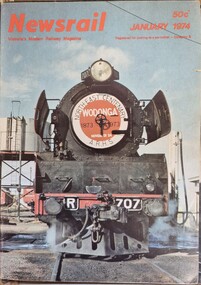
... Locomotive R707 Newsrail magazine Wodonga Railway Centenary Newsrail is a monthly railway magazine covering the railways and tramways of Victoria. This publication was launched in January 1973 by the Australian ...Newsrail is a monthly railway magazine covering the railways and tramways of Victoria. This publication was launched in January 1973 by the Australian Railway Historical Society's Victorian Division. It replaced the Divisional Diary magazine which had been published since November 1957. It includes features on both rural and metropolitan railways and contains articles and photographic presentations. Our collection includes all issues from January until December 1974. This featured item from January 1974 includes an article and photograph of the Northeast Railway Centenary celebration train, R707, to Wodonga. The magazine is still in publication in 2023.A magazine featuring articles and news items from the Australian Railway Historical Society's Victorian Division. Each issue is in the same format and includes a coloured photograph on the cover.non-fictionNewsrail is a monthly railway magazine covering the railways and tramways of Victoria. This publication was launched in January 1973 by the Australian Railway Historical Society's Victorian Division. It replaced the Divisional Diary magazine which had been published since November 1957. It includes features on both rural and metropolitan railways and contains articles and photographic presentations. Our collection includes all issues from January until December 1974. This featured item from January 1974 includes an article and photograph of the Northeast Railway Centenary celebration train, R707, to Wodonga. The magazine is still in publication in 2023.locomotive r707, newsrail magazine, wodonga railway centenary -
 Wodonga & District Historical Society Inc
Manual - Operating Manuals for Clyde Diesel Locomotives
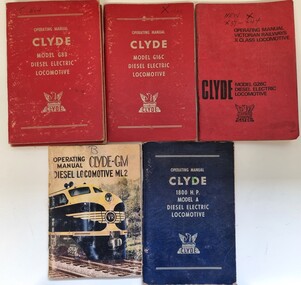
... Australian engineering firms whose history spanned just over a century and was one of the few locomotive and rolling stock builders in the world that transitioned from steam to diesel to electric traction. The company was formed by Walter Maplesden Noakes who purchased the works of Hudson Brothers Limited in the Sydney suburb of Granville, which had been established by in 1882. The manuals refer to the following locomotives:- Clyde Model G8B which operated in Victoria...locomotive was ascribed in Victoria. The Clyde Engineering Company Limited was registered on 30 September 1898 in New South Wales. It was one of the iconic Australian...Victoria. The B class were the first mainline diesel-electric locomotives in Victoria entering service in June 1952. They were initially used on the main passenger and freight services, before moving out to other areas. They remained in service until the early 1990s. These manuals document changed to diesel locomotives operated in Victoria over time. These locomotives played a vital role in the development of the railway service locally in Wodonga, as well as throughout Victoria and Australia ...This collection of Diesel Locomotive Manuals was published by the Clyde EngineeringA collection of 5 manuals for a range of Clyde Diesel Locomotives. The collection includes instructions for the Clyde G8B, G16C, G26C, 1800 HP Model A and the Clyde Mailiner Model 2. On the cover of each manual, the owner has written the letter for the name of class which the relevant locomotive was ascribed in Victoria. The Clyde Engineering Company Limited was registered on 30 September 1898 in New South Wales. It was one of the iconic Australian engineering firms whose history spanned just over a century and was one of the few locomotive and rolling stock builders in the world that transitioned from steam to diesel to electric traction. The company was formed by Walter Maplesden Noakes who purchased the works of Hudson Brothers Limited in the Sydney suburb of Granville, which had been established by in 1882. The manuals refer to the following locomotives:- Clyde Model G8B which operated in Victoria as the new T class locomotive. It was introduced in 1955 and was the most numerous class of diesel locomotive used in Victoria. This model continued in operation until 1968, although many were modified for continued service. Clyde Model G16C, later superseded by the G26C operated in Victoria as the X class locomotive between 1966 and 1976. Clyde Model 1800HP Model A became the S class locomotives in Victoria. Additional numbers were purchased in preparation for the opening of the standard gauge line between Melbourne and Albury, They entered service between 1957 and 1961. Clyde Mainline Model 2 became the B class in Victoria. The B class were the first mainline diesel-electric locomotives in Victoria entering service in June 1952. They were initially used on the main passenger and freight services, before moving out to other areas. They remained in service until the early 1990s.fiction This collection of Diesel Locomotive Manuals was published by the Clyde Engineeringclyde engineering, diesel locomotives, locomotives victoria -
 Wodonga & District Historical Society Inc
Manual - Collection of VLine operating instruction manuals for diesel electric locomotives
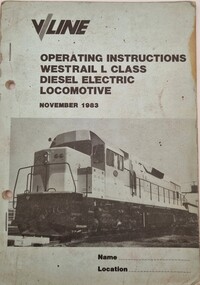
... Railways Victoria Diesel-electric locomotives The manuals refer to the following locomotives:- Westrail L Class (November 1983) originally built by Clyde Engineering from 1967 for the Western Australian Government Railways (WAGR) for use on the Eastern Goldfields Railway between Perth and Kalgoorlie. ...The manuals refer to the following locomotives:- Westrail L Class (November 1983) originally built by Clyde Engineering from 1967 for the Western Australian Government Railways (WAGR) for use on the Eastern Goldfields Railway between Perth and Kalgoorlie. In 1983, three were leased to V/Line to haul services on the standard gauge Melbourne to Albury line, sometimes extending through to Sydney.A class (January 1984) were initially used for "Intercity" passenger services within Victoria. In this service, they operated at speeds up towards 125 km/h. Later, they were also used for freight services.N class (September 1985) produced by Clyde Engineering and entered service in 1985 and still operating in 2023. 422 Class diesel-electric locomotives (August 1983), designed by Clyde Engineering were introduced in January 1969. Following crew training, the engines entered service on the Main Southern line between Sydney and Albury and the Illawarra line from Sydney to Port Kembla and Moss Vale. Among the passenger services they hauled were the Southern Aurora and the Spirit of Progress. From 1982, they began to operate through to Melbourne. This ceased in February 1990 when non-air-conditioned locomotives would no longer be accepted by Victorian drivers.A collection of Locomotive operation manuals. All are paperback and feature an image of the relevant locomotive on the cover. Relevant illustrations are included in each publication. Cover is of card and they are bound with staples.fictionThe manuals refer to the following locomotives:- Westrail L Class (November 1983) originally built by Clyde Engineering from 1967 for the Western Australian Government Railways (WAGR) for use on the Eastern Goldfields Railway between Perth and Kalgoorlie. In 1983, three were leased to V/Line to haul services on the standard gauge Melbourne to Albury line, sometimes extending through to Sydney.A class (January 1984) were initially used for "Intercity" passenger services within Victoria. In this service, they operated at speeds up towards 125 km/h. Later, they were also used for freight services.N class (September 1985) produced by Clyde Engineering and entered service in 1985 and still operating in 2023. 422 Class diesel-electric locomotives (August 1983), designed by Clyde Engineering were introduced in January 1969. Following crew training, the engines entered service on the Main Southern line between Sydney and Albury and the Illawarra line from Sydney to Port Kembla and Moss Vale. Among the passenger services they hauled were the Southern Aurora and the Spirit of Progress. From 1982, they began to operate through to Melbourne. This ceased in February 1990 when non-air-conditioned locomotives would no longer be accepted by Victorian drivers.railways victoria, diesel-electric locomotives -
 Wodonga & District Historical Society Inc
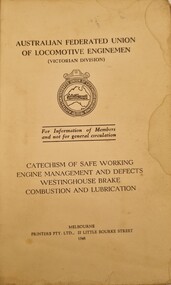
Manual - Australian Federated Union of Locomotive Enginemen Catechism of Safe Working
... Vline safety Vline training Railways Victoria railway unions This booklet was prepared by the executive committee of the Australian Federated Union of Locomotive Enginemen in order to assist its members to become proficient in the Rules and Regulations, Engine Working, Westinghouse Brake, and other subjects, which were essential for the proper performance of their daily duties, and to especially assist those who were preparing for examination for Driver's Certificate. ...This booklet was prepared by the executive committee of the Australian Federated Union of Locomotive Enginemen in order to assist its members to become proficient in the Rules and Regulations, Engine Working, Westinghouse Brake, and other subjects, which were essential for the proper performance of their daily duties, and to especially assist those who were preparing for examination for Driver's Certificate. It included a foreword written by W. C. H. COLLINS, General Secretary.A small booklet with a brown cover and a foreword section outlining the purpose of the publication. This copy has been covered in brown paper to protect the covered. The title has then been handwritten on the paper by the owner.fictionThis booklet was prepared by the executive committee of the Australian Federated Union of Locomotive Enginemen in order to assist its members to become proficient in the Rules and Regulations, Engine Working, Westinghouse Brake, and other subjects, which were essential for the proper performance of their daily duties, and to especially assist those who were preparing for examination for Driver's Certificate. It included a foreword written by W. C. H. COLLINS, General Secretary.vline safety, vline training, railways victoria, railway unions -
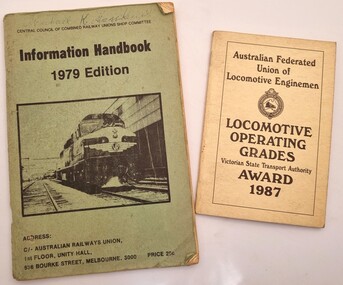 Wodonga & District Historical Society Inc
Manual - Railways Union Booklets, Australian Railways Union, 1979 & 1987
... Vline safety Vline training Railways Victoria Australian Federated Union of Locomotive Enginemen These handbooks document changes in industrial awards put in place to regulate the work conditions and safety in the railways. ...These handbooks document changes in industrial awards put in place to regulate the work conditions and safety in the railways. The 1979 Information Handbook was issued by the Central Council of Combined Railway Unions. The 1987 publication by the Australian Federated Union of Locomotive Enginemen outlined the Locomotive Operating Grades Award as implemented by the Victorian State Transport Authority.2 booklets documenting Union regulations for railway employees, the 1979 publication on green paper and the 1987 publication on buff coloured paper. Both have staple binding on the spine.fictionThese handbooks document changes in industrial awards put in place to regulate the work conditions and safety in the railways. The 1979 Information Handbook was issued by the Central Council of Combined Railway Unions. The 1987 publication by the Australian Federated Union of Locomotive Enginemen outlined the Locomotive Operating Grades Award as implemented by the Victorian State Transport Authority.vline safety, vline training, railways victoria, australian federated union of locomotive enginemen
