
Showing 164 items matching "management of environment"
-
 Federation University Historical Collection
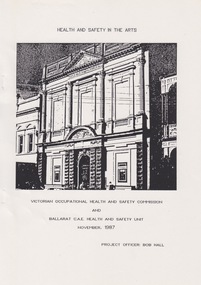
Document - Document - Booklet, VIOSH: VIOSH Commission and Ballarat College of Advanced Education Health and Safety Unit: Health and Safety in the Arts, Bob Hall, 1987
... ...management of environment...Management who have no undergraduate degree - on the basis of extensive work experience and knowledge. The stimulus for this project to investigate health and safety in art teaching and to suggest cost effective control measures, arose from concerns that had been expressed by some members of staff within the Arts Faculty at the Ballarat College of Advanced Education about aspects of health and safety at their workplace. As a non-artist it is hard to attempt to describe the artists' perspective of their working environment...Comments made by Bob Hall; Project Officer BCAE viosh victorian institute of occupational safety and health bob hall project officer commission ballarat college of advanced eucation health and safety in the arts control measures codes and standards of practice chemical environment protective equipment management of environment noise machines temperature control Sixty pages stapled together. ...Victorian Institute of Occupational Safety and Health (VIOSH) Australia is the Asia-Pacific centre for teaching and research in occupational health and safety (OHS) and is known as one of Australia's leaders on the field. VIOSH has a global reputation for its innovative approach within the field of OHS management. VIOSH had its first intake of students in 1979. At that time the Institution was known as the Ballarat College of Advanced Education. In 1990 it became known as Ballarat University College, then in 1994 as University of Ballarat. It was 2014 that it became Federation University. VIOSH Australia students are safety managers, senior advisors and experienced OHS professionals. They come from all over Australia and industry. Students are taught active research and enquiry; rather than textbook learning and a one-size fits all approach. VIOSH accepts people into the Graduate Diploma of Occupational Hazard Management who have no undergraduate degree - on the basis of extensive work experience and knowledge. The stimulus for this project to investigate health and safety in art teaching and to suggest cost effective control measures, arose from concerns that had been expressed by some members of staff within the Arts Faculty at the Ballarat College of Advanced Education about aspects of health and safety at their workplace. As a non-artist it is hard to attempt to describe the artists' perspective of their working environment. Within the artistic community there is a great concern for individuality and this is expressed in the artists' work. The need for flexibility and spontaneity is a vital and intuitive part of the artistic environment. Consequently codes and standards of practice that would restrict this environment ethic are unlikely to be viewed favourably by artists. Comments made by Bob Hall; Project Officer BCAESixty pages stapled together. Type written with illustrations relevant to safety issues. Front has clear perspex sheetviosh, victorian institute of occupational safety and health, bob hall, project officer, commission, ballarat college of advanced eucation, health and safety in the arts, control measures, codes and standards of practice, chemical environment, protective equipment, management of environment, noise, machines, temperature control -
 Whitehorse Historical Society Inc.
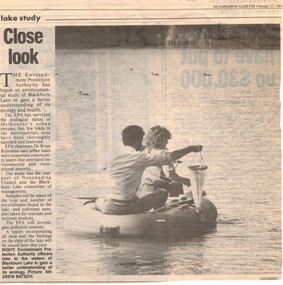
Article, Close look, 23/02/1993 12:00:00 AM
... blackburn lake committee of management...environment...robinson brian dr environment protection authority victoria blackburn lake committee of management environment Environment Protection Authority carries out study of Blackburn Lake Environment Protection Authority carries out study of Blackburn Lake Close look Article Article ...Environment Protection Authority carries out study of Blackburn LakeEnvironment Protection Authority carries out study of Blackburn LakeEnvironment Protection Authority carries out study of Blackburn Lakerobinson, brian dr, environment protection authority, victoria, blackburn lake committee of management, environment -
 Lakes Entrance Historical Society
Book, Johnson, Dick, The Alps at the Crossroads, 1974
... Contains historical evidence of the use and misuse of the Alpine area and the need for management of this special environment by the establishment of an Alpine National Park. ...Environment Settlement Contains historical evidence of the use and misuse of the Alpine area and the need for management of this special environment by the establishment of an Alpine National Park. ...Contains historical evidence of the use and misuse of the Alpine area and the need for management of this special environment by the establishment of an Alpine National Park. Many illustrations and maps.environment, settlement -
Lakes Entrance Historical Society
Book, Landsmith Pty Ltd, North Arm Action Plan 1996, 1996
... This plan was formulated as a comprehensive guide for sustainable management of the waters and environment of the North Arm while providing recreational opportunities that are in balance with the environmental values of the North Arm and its catchment Lak...Environment Vegetation Recreation This plan was formulated as a comprehensive guide for sustainable management of the waters and environment of the North Arm while providing recreational opportunities that are in balance with the environmental values of the North Arm and its catchment Lak North Arm Action Plan 1996 Book Landsmith Pty Ltd ...This plan was formulated as a comprehensive guide for sustainable management of the waters and environment of the North Arm while providing recreational opportunities that are in balance with the environmental values of the North Arm and its catchment Lakenvironment, vegetation, recreation -
Federation University Historical Collection
Book, Sivaprasad Das Gupta, Journal of Tertiary Education Administration, 1992, 1992
... Contents include University Management: Tensions in a Changing Environment, New Agenda for Higher Education, The Establishment of Curtin University of technology, University Computing Centres, Admission of School Leavers to Higher Education in Queensland....Contents include University Management: Tensions in a Changing Environment, New Agenda for Higher Education, The Establishment of Curtin University of technology, University Computing Centres, Admission of School Leavers to Higher Education in Queensland. ...Robert H.T. Smith was Chancellor of University of Ballarat (later Federation University Australia).Soft blue/green covered book. .1) Vol. 14, No 1., May 1992. Contents include Governance and Corporate Indentity in Network Universities; Management of Multicampus Insitutions, Australian Universities, Equal Opportunity Officers in Australian Higher Educaiton Institutions. .2) Vol 12, No. 1, May 1990. Contents include University Management: Tensions in a Changing Environment, New Agenda for Higher Education, The Establishment of Curtin University of technology, University Computing Centres, Admission of School Leavers to Higher Education in Queensland.robert h.t. smith, university, higher education -
 Marysville & District Historical Society
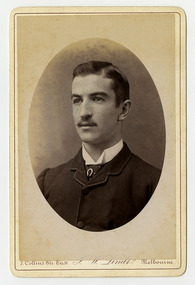
Photograph (Item) - Black and white portrait, John William Lindt, 1870s
... management of Wagner’s studio in 1869. He married Wagner’s daughter, Anna on 13 January 1872. Over 1873-1874, using the slow and laborious wet-plate collodion process, John Lindt produced photographs of the local indigenous people both in their environment conducting actual traditional ceremonies in the Clarence River district, and in his studio. ...A black and white portrait of an unknown man taken by John William Lindt.A black and white portrait of an unknown man taken by John William Lindt. John William Lindt was born in Germany in 1845. At 17 he took a working passage to Australia on a Dutch sailing ship. Taking up work as an itinerant piano-tuner, he traveled amongst towns in Victoria and New South Wales before settling in Grafton in 1863 where he became assistant and apprentice to photographer Conrad Wagner. After a brief return to Germany in 1867 Lindt took over management of Wagner’s studio in 1869. He married Wagner’s daughter, Anna on 13 January 1872. Over 1873-1874, using the slow and laborious wet-plate collodion process, John Lindt produced photographs of the local indigenous people both in their environment conducting actual traditional ceremonies in the Clarence River district, and in his studio. Twelve of this series is included in his 1874 album Australian Aboriginals. John Lindt moved to Melbourne in 1876 where he worked for Batchelder & Co. before opening his own opulent studios at number 7 at the top of Collins Street opposite the Treasury, in 1877. John Lindt's business of this period was wide-ranging, and included portraits, records of Melbourne public buildings and streetscapes, the Botanical Gardens, and Port Melbourne. He was a welcome photographer of members of parliament and other Melbourne personalities, their society and cultural life including the theatre, and was known as a ‘rich man’s photographer’ for those whose families he grouped informally on the lawns in front of their mansions, with servants at the rails of the upstairs balconies. He continued with landscape, producing folios Fernshaw and Watt River Scenery, Victoria ( c.1878-82), Scenery on the Ovens and Buckland Rivers, Victoria (c.1878–82) and Lorne, Louttit Bay and Cape Otway Ranges (1883). Sales of his Black Spur scenery amounted to approximately 25,000 copies printed from the original negatives between 1882 and 1892. John Lindt, in collaboration with Nicholas John Caire, produced a tourist booklet on the area around "The Hermitage" in 1913.7 Collins Str. East/ J.W. Lindt/ Melbournejohn william lindt, conrad wagner, australian aboriginals, batchelder & co, nicholas john caire, anna lindt -
 Marysville & District Historical Society
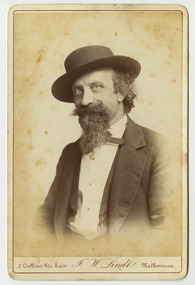
Photograph (Item) - Black and white portrait, John William Lindt, 1870s
... management of Wagner’s studio in 1869. He married Wagner’s daughter, Anna on 13 January 1872. Over 1873-1874, using the slow and laborious wet-plate collodion process, John Lindt produced photographs of the local indigenous people both in their environment conducting actual traditional ceremonies in the Clarence River district, and in his studio. ...A black and white portrait of an unknown man taken by John William Lindt.A black and white portrait of an unknown man taken by John William Lindt. John William Lindt was born in Germany in 1845. At 17 he took a working passage to Australia on a Dutch sailing ship. Taking up work as an itinerant piano-tuner, he traveled amongst towns in Victoria and New South Wales before settling in Grafton in 1863 where he became assistant and apprentice to photographer Conrad Wagner. After a brief return to Germany in 1867 Lindt took over management of Wagner’s studio in 1869. He married Wagner’s daughter, Anna on 13 January 1872. Over 1873-1874, using the slow and laborious wet-plate collodion process, John Lindt produced photographs of the local indigenous people both in their environment conducting actual traditional ceremonies in the Clarence River district, and in his studio. Twelve of this series is included in his 1874 album Australian Aboriginals. John Lindt moved to Melbourne in 1876 where he worked for Batchelder & Co. before opening his own opulent studios at number 7 at the top of Collins Street opposite the Treasury, in 1877. John Lindt's business of this period was wide-ranging, and included portraits, records of Melbourne public buildings and streetscapes, the Botanical Gardens, and Port Melbourne. He was a welcome photographer of members of parliament and other Melbourne personalities, their society and cultural life including the theatre, and was known as a ‘rich man’s photographer’ for those whose families he grouped informally on the lawns in front of their mansions, with servants at the rails of the upstairs balconies. He continued with landscape, producing folios Fernshaw and Watt River Scenery, Victoria ( c.1878-82), Scenery on the Ovens and Buckland Rivers, Victoria (c.1878–82) and Lorne, Louttit Bay and Cape Otway Ranges (1883). Sales of his Black Spur scenery amounted to approximately 25,000 copies printed from the original negatives between 1882 and 1892. John Lindt, in collaboration with Nicholas John Caire, produced a tourist booklet on the area around "The Hermitage" in 1913.7 Collins Str. East/ J.W. Lindt/ Melbournejohn william lindt, conrad wagner, australian aboriginals, batchelder & co, nicholas john caire, anna lindt -
 Marysville & District Historical Society
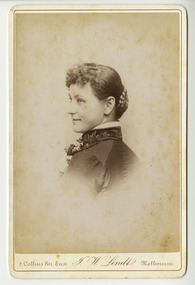
Photograph (Item) - Black and white portrait, John William Lindt, 1870s
... management of Wagner’s studio in 1869. He married Wagner’s daughter, Anna on 13 January 1872. Over 1873-1874, using the slow and laborious wet-plate collodion process, John Lindt produced photographs of the local indigenous people both in their environment conducting actual traditional ceremonies in the Clarence River district, and in his studio. ...A black and white portrait of an unknown woman taken by John William Lindt.A black and white portrait of an unknown woman taken by John William Lindt. John William Lindt was born in Germany in 1845. At 17 he took a working passage to Australia on a Dutch sailing ship. Taking up work as an itinerant piano-tuner, he traveled amongst towns in Victoria and New South Wales before settling in Grafton in 1863 where he became assistant and apprentice to photographer Conrad Wagner. After a brief return to Germany in 1867 Lindt took over management of Wagner’s studio in 1869. He married Wagner’s daughter, Anna on 13 January 1872. Over 1873-1874, using the slow and laborious wet-plate collodion process, John Lindt produced photographs of the local indigenous people both in their environment conducting actual traditional ceremonies in the Clarence River district, and in his studio. Twelve of this series is included in his 1874 album Australian Aboriginals. John Lindt moved to Melbourne in 1876 where he worked for Batchelder & Co. before opening his own opulent studios at number 7 at the top of Collins Street opposite the Treasury, in 1877. John Lindt's business of this period was wide-ranging, and included portraits, records of Melbourne public buildings and streetscapes, the Botanical Gardens, and Port Melbourne. He was a welcome photographer of members of parliament and other Melbourne personalities, their society and cultural life including the theatre, and was known as a ‘rich man’s photographer’ for those whose families he grouped informally on the lawns in front of their mansions, with servants at the rails of the upstairs balconies. He continued with landscape, producing folios Fernshaw and Watt River Scenery, Victoria ( c.1878-82), Scenery on the Ovens and Buckland Rivers, Victoria (c.1878–82) and Lorne, Louttit Bay and Cape Otway Ranges (1883). Sales of his Black Spur scenery amounted to approximately 25,000 copies printed from the original negatives between 1882 and 1892. John Lindt, in collaboration with Nicholas John Caire, produced a tourist booklet on the area around "The Hermitage" in 1913.7 Collins Str. East/ J.W. Lindt/ Melbournejohn william lindt, conrad wagner, australian aboriginals, batchelder & co, nicholas john caire, anna lindt -
 Marysville & District Historical Society
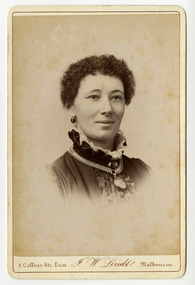
Photograph (Item) - Black and white portrait, John William Lindt, 1870s
... management of Wagner’s studio in 1869. He married Wagner’s daughter, Anna on 13 January 1872. Over 1873-1874, using the slow and laborious wet-plate collodion process, John Lindt produced photographs of the local indigenous people both in their environment conducting actual traditional ceremonies in the Clarence River district, and in his studio. ...A black and white portrait of an unknown woman taken by John William Lindt.A black and white portrait of an unknown woman taken by John William Lindt. John William Lindt was born in Germany in 1845. At 17 he took a working passage to Australia on a Dutch sailing ship. Taking up work as an itinerant piano-tuner, he traveled amongst towns in Victoria and New South Wales before settling in Grafton in 1863 where he became assistant and apprentice to photographer Conrad Wagner. After a brief return to Germany in 1867 Lindt took over management of Wagner’s studio in 1869. He married Wagner’s daughter, Anna on 13 January 1872. Over 1873-1874, using the slow and laborious wet-plate collodion process, John Lindt produced photographs of the local indigenous people both in their environment conducting actual traditional ceremonies in the Clarence River district, and in his studio. Twelve of this series is included in his 1874 album Australian Aboriginals. John Lindt moved to Melbourne in 1876 where he worked for Batchelder & Co. before opening his own opulent studios at number 7 at the top of Collins Street opposite the Treasury, in 1877. John Lindt's business of this period was wide-ranging, and included portraits, records of Melbourne public buildings and streetscapes, the Botanical Gardens, and Port Melbourne. He was a welcome photographer of members of parliament and other Melbourne personalities, their society and cultural life including the theatre, and was known as a ‘rich man’s photographer’ for those whose families he grouped informally on the lawns in front of their mansions, with servants at the rails of the upstairs balconies. He continued with landscape, producing folios Fernshaw and Watt River Scenery, Victoria ( c.1878-82), Scenery on the Ovens and Buckland Rivers, Victoria (c.1878–82) and Lorne, Louttit Bay and Cape Otway Ranges (1883). Sales of his Black Spur scenery amounted to approximately 25,000 copies printed from the original negatives between 1882 and 1892. John Lindt, in collaboration with Nicholas John Caire, produced a tourist booklet on the area around "The Hermitage" in 1913.7 Collins Str. East/ J.W. Lindt/ Melbournejohn william lindt, conrad wagner, australian aboriginals, batchelder & co, nicholas john caire, anna lindt -
 Marysville & District Historical Society
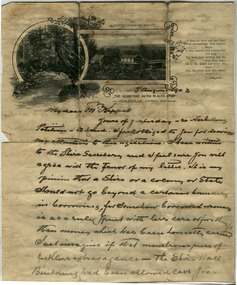
Letter (Item) - Hand written letter, John William Lindt, 1903
... management of Wagner’s studio in 1869. He married Wagner’s daughter, Anna on 13 January 1872. Over 1873-1874, using the slow and laborious wet-plate collodion process, John Lindt produced photographs of the local indigenous people both in their environment conducting actual traditional ceremonies in the Clarence River district, and in his studio. ...A letter written to Maurice Keppel by John William Lindt in 1903.A letter written to Maurice Keppel by John William Lindt in 1903. John William Lindt was born in Germany in 1845. At 17 he took a working passage to Australia on a Dutch sailing ship. Taking up work as an itinerant piano-tuner, he traveled amongst towns in Victoria and New South Wales before settling in Grafton in 1863 where he became assistant and apprentice to photographer Conrad Wagner. After a brief return to Germany in 1867 Lindt took over management of Wagner’s studio in 1869. He married Wagner’s daughter, Anna on 13 January 1872. Over 1873-1874, using the slow and laborious wet-plate collodion process, John Lindt produced photographs of the local indigenous people both in their environment conducting actual traditional ceremonies in the Clarence River district, and in his studio. Twelve of this series is included in his 1874 album Australian Aboriginals. John Lindt moved to Melbourne in 1876 where he worked for Batchelder & Co. before opening his own opulent studios at number 7 at the top of Collins Street opposite the Treasury, in 1877. John Lindt's business of this period was wide-ranging, and included portraits, records of Melbourne public buildings and streetscapes, the Botanical Gardens, and Port Melbourne. He was a welcome photographer of members of parliament and other Melbourne personalities, their society and cultural life including the theatre, and was known as a ‘rich man’s photographer’ for those whose families he grouped informally on the lawns in front of their mansions, with servants at the rails of the upstairs balconies. He continued with landscape, producing folios Fernshaw and Watt River Scenery, Victoria ( c.1878-82), Scenery on the Ovens and Buckland Rivers, Victoria (c.1878–82) and Lorne, Louttit Bay and Cape Otway Ranges (1883). Sales of his Black Spur scenery amounted to approximately 25,000 copies printed from the original negatives between 1882 and 1892. John Lindt, in collaboration with Nicholas John Caire, produced a tourist booklet on the area around "The Hermitage" in 1913. Maurice Keppel, from Ireland, was one of the first landholders in the newly surveyed town of Marysville in 1864. He and his wife ran the successful Keppel’s Australian Hotel. Two of their sons, John and Jerry, established a farm and opened up the surrounding high country. The Keppel lease was one of the longest held in the high country and the Keppel Family were amongst Marysville's pioneering families.maurice keppel, keppel family, keppel's australian hotel, marysville, victoria, john william lindt, conrad wagner, australian aboriginals, batchelder & co, nicholas john caire, anna lindt -
Federation University Historical Collection
Book, Hepburn Shire Council - Hepburn Shire - Tourism Directions Statement 2002, 2002
... management...major themes...future directions...community...environment...Hepburn Shire Council - Hepburn Shire - Tourism Directions Statement 2002 hepburn sustainable tourism management major themes future directions community environment customers council organisational roles recommended structure - sustainable economic development advisory group sustainable tourism focus group Hepburn Shire COuncil White bound book of 31 pages. ...Hepburn Shire Council - Hepburn Shire - Tourism Directions Statement 2002White bound book of 31 pages.hepburn, sustainable tourism management, major themes, future directions, community, environment, customers, council, organisational roles, recommended structure - sustainable economic development advisory group, sustainable tourism focus group, hepburn shire council -
Federation University Historical Collection
Photograph - Photograph -Colour, VIOSH: B P Certificate Course in Health Safety and Environment, 1996
... VIOSH accepts people into the Graduate Diploma of Occupational Hazard Management who have no undergraduate degree - on the basis of extensive work experience and knowledge. B P Group who did the VIOSH Certificate Course in Health, Safety and the Environment, c1997. ...VIOSH accepts people into the Graduate Diploma of Occupational Hazard Management who have no undergraduate degree - on the basis of extensive work experience and knowledge. B P Group who did the VIOSH Certificate Course in Health, Safety and the Environment, c1997. ...Victorian Institute of Occupational Safety and Health (VIOSH) Australia is the Asia-Pacific centre for teaching and research in occupational health and safety (OHS) and is known as one of Australia's leaders in the field. VIOSH has a global reputation for its innovative approach within the field of OHS management. VIOSH had its first intake of students in 1979. At that time the Institution was known as the Ballarat College of Advanced Education. In 1990 it became known as Ballarat University College, then in 1994 as University of Ballarat. It was 2014 that it became Federation University. VIOSH Australia students are safety managers, senior advisors and experienced OHS professionals. They come from all over Australia and industry. Students are taught active research and enquiry; rather than textbook learning and a one-size fits all approach. VIOSH accepts people into the Graduate Diploma of Occupational Hazard Management who have no undergraduate degree - on the basis of extensive work experience and knowledge. B P Group who did the VIOSH Certificate Course in Health, Safety and the Environment, c1997. Certificates being presented to John Pearson and James Forrester. Also on the course was Maria Batchelor.Four colour photographs viosh, victorian institute of occupational safety and health, bp group, certificate course in health, safety and the environment, john pearson, james forrester, maria batchelor, bp oil -
 Federation University Historical Collection
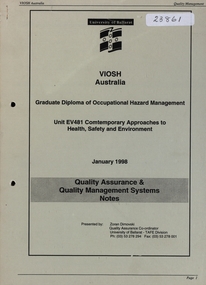
Book, Zoran Dimovski, VIOSH: Australia Graduate Diploma of Occupational Hazard Management: Unit EV481 Contemporary Approaches to Health, Safety and Environment, 1998, 01/1998
... VIOSH: Australia Graduate Diploma of Occupational Hazard Management: Unit EV481 Contemporary Approaches to Health, Safety and Environment, 1998...management systems...victorian institute of occupational safety and health...university of ballarat...tafe division...zoran dimovski...quality assurance co-ordinator...unit ev481...contemporary approaches to health...safety and environment...VIOSH: Australia Graduate Diploma of Occupational Hazard Management: Unit EV481 Contemporary Approaches to Health, Safety and Environment, 1998 Book Book Zoran Dimovski ...Victorian Institute of Occupational Safety and Health (VIOSH) Australia is the Asia-Pacific centre for teaching and research in occupational health and safety (OHS) and is known as one of Australia's leaders on the field. VIOSH has a global reputation for its innovative approach within the field of OHS management. VIOSH had its first intake of students in 1979. At that time the Institution was known as the Ballarat College of Advanced Education. In 1990 it became known as Ballarat University College, then in 1994 as University of Ballarat. It was 2014 that it became Federation University. VIOSH Australia students are safety managers, senior advisors and experienced OHS professionals. They come from all over Australia and industry. Students are taught active research and enquiry; rather than textbook learning and a one-size fits all approach. VIOSH accepts people into the Graduate Diploma of Occupational Hazard Management who have no undergraduate degree - on the basis of extensive work experience and knowledge. Quality Assurance and Quality management Systems Notes prepared by Zoran Dimovski, Quality Assurance Co-ordinator, University of Ballarat - TAFE Division, January 1998.Beige covered, stapled book of notes or around 100 pages from the University of Ballarat ( now Federation University Australia) Department of Occupational Health & Safety.viosh, hazard management, quality assurance, quality management systems, victorian institute of occupational safety and health, university of ballarat, tafe division, zoran dimovski, quality assurance co-ordinator, unit ev481, contemporary approaches to health, safety and environment, january 1998 -
Marysville & District Historical Society
THE TRIANGLE NEWS-VOL 39 NO 34-SEPTEMBER 7 2012
... management plan puts certainty into bushfire response...breakfast for men...church notices...venue change for mav councillor information session...murrindindi shire council...fathers day raffle...marysville primary school...councillor comment...bushdance buxton hotel...buxton primary school invitation to preschool age children...marysville golf report...council invites federal environment...marysville victoria australia oeg outlines future plans outdoor education group thank you from buxton school what's on when in september lantern making workshop marysville community market creative triangle marysville cfa-first aid course level 1 fire management plan puts certainty into bushfire response breakfast for men church notices venue change for mav councillor information session murrindindi shire council fathers day raffle marysville primary school councillor comment bushdance buxton hotel buxton primary school invitation to preschool age children marysville golf report council invites federal environment minister to toolangi alexandra library september events real estate don giovanni opera comes to marysville marysville community centre advertisements marysville ymca council supports proposed planning zone reforms alexandra clearing sale alexandra cinema murrindindi shire council elections THE TRIANGLE NEWS-VOL 39 NO 34-SEPTEMBER 7 2012 ...marysville, victoria, australia, oeg outlines future plans, outdoor education group, thank you from buxton school, what's on when in september, lantern making workshop, marysville community market, creative triangle, marysville cfa-first aid course level 1, fire management plan puts certainty into bushfire response, breakfast for men, church notices, venue change for mav councillor information session, murrindindi shire council, fathers day raffle, marysville primary school, councillor comment, bushdance buxton hotel, buxton primary school invitation to preschool age children, marysville golf report, council invites federal environment minister to toolangi, alexandra library september events, real estate, don giovanni opera comes to marysville, marysville community centre, advertisements, marysville ymca, council supports proposed planning zone reforms, alexandra clearing sale, alexandra cinema, murrindindi shire council elections -
Marysville & District Historical Society
THE TRIANGLE NEWS-VOL 39 N 47-DECEMBER 7 2012
... management of the gallipoli park precinct...marysville golf report...mayor's chair...maryton beer & garden platter...maryton park...seed production area supporting threatened woodlands...funded governance training available for community groups...advertisements...public notice councillor allowances...prepare for australia day 2013...real estate...buxton post office notice...christmas tree festival...st johns anglican church...firewood collection season closed...department of sustainability & environment...marysville victoria australia east meets west successful networking meeting marysville & district chamber of commerence kinglake ranges business network what's on when in december marysville football & netball agm change of date buxton progress assocn community notice marysville community market creative triangle emotions anonymous international buxton community christmas party church notices lakeside fellowship eildon carols to celebrate carols by candlelight at lions park mops council offers popular free mulch loading weekends the committee of management of the gallipoli park precinct marysville golf report mayor's chair maryton beer & garden platter maryton park seed production area supporting threatened woodlands funded governance training available for community groups advertisements public notice councillor allowances prepare for australia day 2013 real estate buxton post office notice christmas tree festival st johns anglican church firewood collection season closed department of sustainability & environment council meeting dates 2013 special meeting of council alexandra chambers council aims for inclusive community buxton clearing sale councillor comment THE TRIANGLE NEWS-VOL 39 N 47-DECEMBER 7 2012 ...marysville, victoria, australia, east meets west, successful networking meeting, marysville & district chamber of commerence, kinglake ranges business network, what's on when in december, marysville football & netball agm change of date, buxton progress assocn, community notice, marysville community market, creative triangle, emotions anonymous international, buxton community christmas party, church notices, lakeside fellowship eildon, carols to celebrate, carols by candlelight at lions park, mops, council offers popular free mulch loading weekends, the committee of management of the gallipoli park precinct, marysville golf report, mayor's chair, maryton beer & garden platter, maryton park, seed production area supporting threatened woodlands, funded governance training available for community groups, advertisements, public notice councillor allowances, prepare for australia day 2013, real estate, buxton post office notice, christmas tree festival, st johns anglican church, firewood collection season closed, department of sustainability & environment, council meeting dates 2013, special meeting of council, alexandra chambers, council aims for inclusive community, buxton clearing sale, councillor comment -
Marysville & District Historical Society
THE TRIANGLE NEWS-VOLUME 40 NO 3-FEBRUARY 1 2013
... management of the gallipoli park precinct...marysville brownie guides...marysville community market...creative triangle...a wedding to remember at steavenson falls...triangle comumunity dinner...marysville golf club...church notices...funded governance training available for community groups...marysville community golf & bowls club...happy hour...department of sustainability & environment...marysville victoria australia australia day celebrations another success for marysville australia day awards murrindindi shire council community event of the year alexandra and district open gardens citizen of the year young citizen of the year what's on when buxton recreation reserve community meeting inviting public the committee of management of the gallipoli park precinct marysville brownie guides marysville community market creative triangle a wedding to remember at steavenson falls triangle comumunity dinner marysville golf club church notices funded governance training available for community groups marysville community golf & bowls club happy hour department of sustainability & environment adventurous cooks mayor's chair marysville golf report marysville lolly shop advertisements council recognises community contribution by julia foletta healthy and active in the third age consultation community bbq galipoli park marysville & triangle community foundation ltd councillor comment payment of rates and charges buxton recreation reserve development works update real estate THE TRIANGLE NEWS-VOLUME 40 NO 3-FEBRUARY 1 2013 ...marysville, victoria, australia, australia day celebrations, another success for marysville, australia day awards, murrindindi shire council, community event of the year, alexandra and district open gardens, citizen of the year, young citizen of the year, what's on when, buxton recreation reserve, community meeting inviting public, the committee of management of the gallipoli park precinct, marysville brownie guides, marysville community market, creative triangle, a wedding to remember at steavenson falls, triangle comumunity dinner, marysville golf club, church notices, funded governance training available for community groups, marysville community golf & bowls club, happy hour, department of sustainability & environment, adventurous cooks, mayor's chair, marysville golf report, marysville lolly shop, advertisements, council recognises community contribution by julia foletta, healthy and active in the third age consultation, community bbq galipoli park, marysville & triangle community foundation ltd, councillor comment, payment of rates and charges, buxton recreation reserve development works update, real estate -
Marysville & District Historical Society
THE TRIANGLE NEWS-VOL 40 NO 26-JULY 12 2013
... environment & primary industries...fox control...marysville branch liberal party christmas in july dinner...marysville and surrounds events program funding available...eildon and marysville turn for free mulch loading...municipal public health and wellbeing plan 2013-2017...buxton recreation reserve notice of agm...alexandra tennis club committee of management...marysville victoria australia tumbling waters recreation reserve vicroads murrindindi shire council library services joe dolce singer and poet barry dickins playwright what's on when in july marysville cricket club agm the committee of management of the gallipoli park precinct marysville community market creative triangle one poor quarter costs villains the game marysville football club church notices marysville & district lions club lakeside fellowship eildon intrepid triangle buswalkers councillor comment marysville primary school parents club mayor's chair marysville community centre an invitation australian centre for grief and bereavement 2009 bushfire survivors ugfm presents a taste of tamworth fundraiser concert at alexandra town hall advertisements coming to lake mountain school holiday white christmas marysville & district historical society sharing community stories for historical archives lake mountain alpine resort christmas in july gala dinner real estate triangle arts group 1000 hands project a meaningful art installation for marysville police news cross country ski hire tender right workshop lions triangle tool library department of environment & primary industries fox control marysville branch liberal party christmas in july dinner marysville and surrounds events program funding available eildon and marysville turn for free mulch loading municipal public health and wellbeing plan 2013-2017 buxton recreation reserve notice of agm alexandra tennis club committee of management notice of agm murrindindi shire council community leadership programs clp wood stolen marysville lions club THE TRIANGLE NEWS-VOL 40 NO 26-JULY 12 2013 ...marysville, victoria, australia, tumbling waters recreation reserve, vicroads, murrindindi shire council library services, joe dolce singer and poet, barry dickins playwright, what's on when in july, marysville cricket club agm, the committee of management of the gallipoli park precinct, marysville community market, creative triangle, one poor quarter costs villains the game, marysville football club, church notices, marysville & district lions club, lakeside fellowship eildon, intrepid triangle buswalkers, councillor comment, marysville primary school, parents club, mayor's chair, marysville community centre, an invitation australian centre for grief and bereavement, 2009 bushfire survivors, ugfm presents a taste of tamworth, fundraiser concert at alexandra town hall, advertisements, coming to lake mountain school holiday white christmas, marysville & district historical society, sharing community stories for historical archives, lake mountain alpine resort christmas in july gala dinner, real estate, triangle arts group, 1000 hands project, a meaningful art installation for marysville, police news, cross country ski hire, tender right workshop, lions triangle tool library, department of environment & primary industries, fox control, marysville branch liberal party christmas in july dinner, marysville and surrounds events program funding available, eildon and marysville turn for free mulch loading, municipal public health and wellbeing plan 2013-2017, buxton recreation reserve notice of agm, alexandra tennis club committee of management notice of agm, murrindindi shire council, community leadership programs, clp, wood stolen, marysville lions club -
Marysville & District Historical Society
THE TRIANGLE NEWS-VOL 40 NO 28-JULY 26 2013
... management of the gallipoli park precinct...creative triangle...marysville community market...captive bred regent honeyeaters put on a show at chiltern...department of environment...marysville victoria australia international delegates look to murrindindi leadership what's on when in august intrepid triangle bushwalkers the committee of management of the gallipoli park precinct creative triangle marysville community market captive bred regent honeyeaters put on a show at chiltern department of environment & primary industries marysville & district lions club water diving course (scuba) church notices new beginnings my hope for australia paster charles & marjorie lazaro from india councillor comment narbethong community hall free movie night marysville preschool hosts annual fundraiser footy-pie night taggerty community dinner pioneer reserve gets a minor makeover stolen wood piece of history to take root in shire murrindindi shire council the hovell tree school crossing safely the marysville historical society sharing community stories for historical archives real estate marysville football club reunion premiers 1973 black spur inn ugfm presents a taste of tamworth snags survey to guide work on victorian rivers mayor's chair australian grief and bereavement centre buxton fire brigade bushdance at buxton hall triangle community dance group lions-wood raffle have your say on new national parks regulations municipal public health and wellbeing plan 2013-2017 buxton recreation reserve notice of agm alexandra tennis club committee of management notice of agm THE TRIANGLE NEWS-VOL 40 NO 28-JULY 26 2013 ...marysville, victoria, australia, international delegates look to murrindindi leadership, what's on when in august, intrepid triangle bushwalkers, the committee of management of the gallipoli park precinct, creative triangle, marysville community market, captive bred regent honeyeaters put on a show at chiltern, department of environment & primary industries, marysville & district lions club, water diving course (scuba), church notices, new beginnings my hope for australia, paster charles & marjorie lazaro from india, councillor comment, narbethong community hall, free movie night, marysville preschool hosts annual fundraiser footy-pie night, taggerty community dinner, pioneer reserve gets a minor makeover, stolen wood, piece of history to take root in shire, murrindindi shire council, the hovell tree, school crossing safely, the marysville historical society, sharing community stories for historical archives, real estate, marysville football club reunion premiers 1973, black spur inn, ugfm presents a taste of tamworth, snags survey to guide work on victorian rivers, mayor's chair, australian grief and bereavement centre, buxton fire brigade, bushdance at buxton hall, triangle community dance group, lions-wood raffle, have your say on new national parks regulations, municipal public health and wellbeing plan 2013-2017, buxton recreation reserve notice of agm, alexandra tennis club committee of management notice of agm -
Marysville & District Historical Society
THE TRIANGLE NEWS-VOL 40 NO 30-AUGUST 9 2013
... environment & primary industries...what's on when in august...tag agm...the committee of management...marysville victoria australia guthega skink gives up a few secrets threatened species of alpine skink department of environment & primary industries what's on when in august tag agm the committee of management of the gallipoli park precinct marysville community market creative triangle murrindindi shire council strategic planning officer position vacant church notices marysville & district lions club upper goulburn food wine and culture group grants coordinator permanent p/t position villains cement final berth marysville football club mayor's chair advertisements marysville golf report mops sale high tea at st john's alexandra real estate ugfm presents a taste of tamworth alexandra town hall the marysville television translator buxton recreation reserve notice of agm alexandra tennis club committee of management notice of agm australian centre for grief & bereavement buxton fire brigade triangle community dance group bushdance buxton hall lions wood raffle THE TRIANGLE NEWS-VOL 40 NO 30-AUGUST 9 2013 ...marysville, victoria, australia, guthega skink gives up a few secrets, threatened species of alpine skink, department of environment & primary industries, what's on when in august, tag agm, the committee of management of the gallipoli park precinct, marysville community market, creative triangle, murrindindi shire council, strategic planning officer position vacant, church notices, marysville & district lions club, upper goulburn food wine and culture group, grants coordinator permanent p/t position, villains cement final berth, marysville football club, mayor's chair, advertisements, marysville golf report, mops sale, high tea at st john's alexandra, real estate, ugfm presents a taste of tamworth, alexandra town hall, the marysville television translator, buxton recreation reserve notice of agm, alexandra tennis club committee of management notice of agm, australian centre for grief & bereavement, buxton fire brigade, triangle community dance group, bushdance buxton hall, lions wood raffle -
Marysville & District Historical Society
THE TRIANGLE NEWS-VOL 40 NO 33-AUGUST 30 2013
... management of the gallipoli park precinct...marysville community market...creative triangle...celebrate senior's week...murrindindi shire council...advertise your regional tourism event for free...advertisements...triangle community dinner...el kanah...church notices...marysville & district kindergarten assocn...preschool centre taking enrolments...councillor comment...massage work & play-a natural combination...mayor's chair...customer service officer...vic senior's festival...afternoon tea dance...alexandra secondary college hall...marysville community centre...community correctedness facilitator...real estate...spring domestic firewood collection season open...project fire fighter applications open...department of environment...marysville victoria australia villains fall short marysville football club what's on when in september intrepid triangle bushwalkers the committee of management of the gallipoli park precinct marysville community market creative triangle celebrate senior's week murrindindi shire council advertise your regional tourism event for free advertisements triangle community dinner el kanah church notices marysville & district kindergarten assocn preschool centre taking enrolments councillor comment massage work & play-a natural combination mayor's chair customer service officer vic senior's festival afternoon tea dance alexandra secondary college hall marysville community centre community correctedness facilitator real estate spring domestic firewood collection season open project fire fighter applications open department of environment & primary industries lions triangle tool library murrindindi bushfire memorial update australian centre for grief & bereavement irwell street string band marysville cultural community THE TRIANGLE NEWS-VOL 40 NO 33-AUGUST 30 2013 ...marysville, victoria, australia, villains fall short, marysville football club, what's on when in september, intrepid triangle bushwalkers, the committee of management of the gallipoli park precinct, marysville community market, creative triangle, celebrate senior's week, murrindindi shire council, advertise your regional tourism event for free, advertisements, triangle community dinner, el kanah, church notices, marysville & district kindergarten assocn, preschool centre taking enrolments, councillor comment, massage work & play-a natural combination, mayor's chair, customer service officer, vic senior's festival, afternoon tea dance, alexandra secondary college hall, marysville community centre, community correctedness facilitator, real estate, spring domestic firewood collection season open, project fire fighter applications open, department of environment & primary industries, lions triangle tool library, murrindindi bushfire memorial update, australian centre for grief & bereavement, irwell street string band, marysville cultural community -
Marysville & District Historical Society
THE TRIANLGE NEWS-VOL 40 NO 37-SEPTEMBER 27 2013
... environment & primary industries...narbethong history group...narbethong hall book launch...black spur inn tradie meal & stay deal...road management...marysville victoria australia narbethong fire brigade alexandra group training exercise marysville primary school netball team tigers note from editor what's on when in october buxton progress assocn agm marysville & district football & netball club agm marysville community market creative triangle murrindindi shire council payment of rate instalments celebrate senior's week triangle community dinner el kanah village church notices breakfast all for men intrepid triangle bushwalkers mayor's chair great victorian rail trail marketing opportunities marysville golf report expressions of interest advertisements 2013 open gardens the salvation army funding available 2009 bushfire relief dalton fiske foundation grant buxton hotel taste of italy pasta night local bus tours real estate marysville triangle community men's shed agm victorian senior's festival afternoon tea dance lions triangle tool library community safety a priority for council heart foundation walkers wanted art show kinglake amnesty supports fire prevention efforts australian centre for grief and bereavement australia day award nominations renewal of wildlife licence department of environment & primary industries narbethong history group narbethong hall book launch black spur inn tradie meal & stay deal road management plan review highlights works priorities office manager camp marysville sixteenth annual steam and wood show taggerty dance on again casual situation vacant in triangle area marysville & district kindergarten assocn preschool centre open & enrolment day buxton recreation reserve working bee the committee of management of the gallipoli park precinct leadership course funded by bendigo bank THE TRIANLGE NEWS-VOL 40 NO 37-SEPTEMBER 27 2013 ...marysville, victoria, australia, narbethong fire brigade, alexandra group training exercise, marysville primary school netball team tigers, note from editor, what's on when in october, buxton progress assocn agm, marysville & district football & netball club agm, marysville community market, creative triangle, murrindindi shire council payment of rate instalments, celebrate senior's week, triangle community dinner, el kanah village, church notices, breakfast all for men, intrepid triangle bushwalkers, mayor's chair, great victorian rail trail marketing opportunities, marysville golf report, expressions of interest, advertisements, 2013 open gardens, the salvation army, funding available, 2009 bushfire relief, dalton fiske foundation grant, buxton hotel taste of italy pasta night, local bus tours, real estate, marysville triangle community men's shed agm, victorian senior's festival, afternoon tea dance, lions triangle tool library, community safety a priority for council, heart foundation walkers wanted, art show kinglake, amnesty supports fire prevention efforts, australian centre for grief and bereavement, australia day award nominations, renewal of wildlife licence, department of environment & primary industries, narbethong history group, narbethong hall book launch, black spur inn tradie meal & stay deal, road management plan review highlights works priorities, office manager camp marysville, sixteenth annual steam and wood show, taggerty dance on again, casual situation vacant in triangle area, marysville & district kindergarten assocn, preschool centre open & enrolment day, buxton recreation reserve working bee, the committee of management of the gallipoli park precinct, leadership course funded by bendigo bank -
Marysville & District Historical Society
THE TRIANGLE NEWS-VOL 40 NO 47-DECEMBER 6 2013
... management of the gallipoli park precinct...australia day celebrations...marysville lions club...marysville community market...sod turn event...church notices...carols by candlelight at lions park...lakeside fellowship eildon carols by candlelight...mayor's chair...councillor comment...marysville primary school presents the victoria police showband...advertisements...20 years of waterwatch-why we monitor our waterways...nye at crossways...real estate...murrindindi shire council...planning and environment...marysville victoria australia saleyard celebrations look to the next 20 years what's on when in december the committee of management of the gallipoli park precinct australia day celebrations marysville lions club marysville community market sod turn event church notices carols by candlelight at lions park lakeside fellowship eildon carols by candlelight mayor's chair councillor comment marysville primary school presents the victoria police showband advertisements 20 years of waterwatch-why we monitor our waterways nye at crossways real estate murrindindi shire council planning and environment act 1987 murrindindi planning scheme tender project management services tender engineering services marysville beer and platter garden marysville country bakery cafe position vacant solid start to achieving goals of council plan black spur inn pizza and beer night marysville golf report spring domestic fire-wood collection season ends wanted the bin team THE TRIANGLE NEWS-VOL 40 NO 47-DECEMBER 6 2013 ...marysville, victoria, australia, saleyard celebrations look to the next 20 years, what's on when in december, the committee of management of the gallipoli park precinct, australia day celebrations, marysville lions club, marysville community market, sod turn event, church notices, carols by candlelight at lions park, lakeside fellowship eildon carols by candlelight, mayor's chair, councillor comment, marysville primary school presents the victoria police showband, advertisements, 20 years of waterwatch-why we monitor our waterways, nye at crossways, real estate, murrindindi shire council, planning and environment act 1987, murrindindi planning scheme, tender project management services, tender engineering services, marysville beer and platter garden, marysville country bakery cafe position vacant, solid start to achieving goals of council plan, black spur inn pizza and beer night, marysville golf report, spring domestic fire-wood collection season ends, wanted the bin team -
Marysville & District Historical Society
THE TRIANGLE NEWS-VOL 41 NO 1-JANUARY 17 2014
... management of the gallipoli park precinct...taggerty four seasons summer market...creative triangle...marysville community market...temporary pool closures yea and alexandra...marysville golf report...church notices...bushfire campaign calls for action against arson...mayor's chair...councillor comment...yea arts carnivale 2014...advertisements...katerina paul scores 3rd in us national championships...marysville police news...marysville real estate...council supporting adaptation to climate change in agribusiness...marysville region really long lunch...department of environment...marysville victoria australia celebrate australia day in murrindindi flag bearers wanted what's on when in january the committee of management of the gallipoli park precinct taggerty four seasons summer market creative triangle marysville community market temporary pool closures yea and alexandra marysville golf report church notices bushfire campaign calls for action against arson mayor's chair councillor comment yea arts carnivale 2014 advertisements katerina paul scores 3rd in us national championships marysville police news marysville real estate council supporting adaptation to climate change in agribusiness marysville region really long lunch department of environment and primary industries thank you marysville & district lions club mindfulness in marysville australia day office closures cafe culture series 2014 4 acts 2009 victorian bushfires fifth anniversary remembrance event the bigger picture australia day parade join in celebrations michele lee launches tuesday talk THE TRIANGLE NEWS-VOL 41 NO 1-JANUARY 17 2014 ...marysville, victoria, australia, celebrate australia day in murrindindi, flag bearers wanted, what's on when in january, the committee of management of the gallipoli park precinct, taggerty four seasons summer market, creative triangle, marysville community market, temporary pool closures yea and alexandra, marysville golf report, church notices, bushfire campaign calls for action against arson, mayor's chair, councillor comment, yea arts carnivale 2014, advertisements, katerina paul scores 3rd in us national championships, marysville police news, marysville real estate, council supporting adaptation to climate change in agribusiness, marysville region really long lunch, department of environment and primary industries, thank you marysville & district lions club, mindfulness in marysville, australia day office closures, cafe culture series 2014, 4 acts, 2009 victorian bushfires fifth anniversary remembrance event, the bigger picture, australia day parade join in celebrations, michele lee launches tuesday talk -
Marysville & District Historical Society
THE TRIANGLE NEWS-VOL 41 NO 5-FEBRUARY 14 2014
... management of the gallipoli park precinct...creative triangle...marysville community market...fishing competition...family picnic and fun day...buxton ridge vineyard wine tasting...church notices...the annual motorhome event at buxton...looking for helpers...highwood health...mayor's chair...planning and environment...marysville victoria australia marysville & district lions club skate park/bmx/basketball practice area complete what's on when in february marysville p.s. parents club agm marysville op shop agm marysville sub branch rsl agm men's shed the committee of management of the gallipoli park precinct creative triangle marysville community market fishing competition family picnic and fun day buxton ridge vineyard wine tasting church notices the annual motorhome event at buxton looking for helpers highwood health mayor's chair planning and environment act 1987 adventurous cooks black spur caravan park t20 cricket comes to marysville advertisements payment of rate instalment murrindindi shire council marysville real estate fallons bus service alexandra marysville route service position vacant parks & gardens officer marysville branch liberal party agm valentine's day 3 course dinner black spur inn heartfelt thoughts mark anniversary murrindindi shire council kinglake office buxton hall show councillor comment irish band saoirse el kanah marysville culture community frog trail hopping along despite fungus foe department of environment & primary industries promote your community group on line opening of upper room restaurant regional information for 8 & 9 feb valentine's day maryton park made in marysville grand opening compensation bid 2009 black saturday fires scarecrow competition marysville region really long lunch buxton progress assocn rock 'n roll night at buxton hall murrindindi shire council welcomes new citizens world's greatest shave THE TRIANGLE NEWS-VOL 41 NO 5-FEBRUARY 14 2014 ...marysville, victoria, australia, marysville & district lions club, skate park/bmx/basketball practice area complete, what's on when in february, marysville p.s. parents club agm, marysville op shop agm, marysville sub branch rsl agm, men's shed, the committee of management of the gallipoli park precinct, creative triangle, marysville community market, fishing competition, family picnic and fun day, buxton ridge vineyard wine tasting, church notices, the annual motorhome event at buxton, looking for helpers, highwood health, mayor's chair, planning and environment act 1987, adventurous cooks, black spur caravan park, t20 cricket comes to marysville, advertisements, payment of rate instalment, murrindindi shire council, marysville real estate, fallons bus service alexandra marysville route service, position vacant parks & gardens officer, marysville branch liberal party agm, valentine's day 3 course dinner, black spur inn, heartfelt thoughts mark anniversary, murrindindi shire council kinglake office, buxton hall show, councillor comment, irish band saoirse, el kanah, marysville culture community, frog trail hopping along despite fungus foe, department of environment & primary industries, promote your community group on line, opening of upper room restaurant, regional information for 8 & 9 feb, valentine's day maryton park, made in marysville grand opening, compensation bid 2009 black saturday fires, scarecrow competition, marysville region really long lunch, buxton progress assocn, rock 'n roll night at buxton hall, murrindindi shire council welcomes new citizens, world's greatest shave -
Marysville & District Historical Society
THE TRIANGLE NEWS-VOL 41 NO 12-APRIL 4 2014
... environment & primary industries...depi...murrindindi cycle club...new contact details for triangle news...what's on when in march...taggerty 4 seasons autumn market...the committee of management...marysville victoria australia perfect spot for mountain bike enthusiasts department of environment & primary industries depi murrindindi cycle club new contact details for triangle news what's on when in march taggerty 4 seasons autumn market the committee of management of the gallipoli park precinct marysville community market village walk marysville shop to lease triangle community dinner el kanah village 2014 seasonal influenza vaccine available church notices mystic mountains tourism marysville & district chamber of commerce special general members meeting dog & cat registrations due mayor's chair buxton park first bootcamp tupperware sale advertisements councillor comments marysville cultural community tenders jer's tradies-golf day final update vale dr neil mckern residential and rural real estate marysville triangle real estate marysville & triangle community foundation new logo required buxton hotel parma night sport & recreational grants to improve facilities for sale portable building expressions of interests marysville district football & netball club season opener lunch marysville villains operation trident targets illegal commercial firewood sales marysville preschool centre long day care & kindergarten marysville beer & platter garden notice of proposal to make a local law come dine with the doc dr galen comstock zoning changes open opportunities across shire lake mountain alpine resort casual employment position vacant library & customer service marsyville golfers play well at the murrindindi masters easter monday with marysville preschool burns planned near marysville black spur inn trivia night holly eradication program at narbethong an open letter to triangle communities buxton hall kicks up its heels the big egg hunt THE TRIANGLE NEWS-VOL 41 NO 12-APRIL 4 2014 ...marysville, victoria, australia, perfect spot for mountain bike enthusiasts, department of environment & primary industries, depi, murrindindi cycle club, new contact details for triangle news, what's on when in march, taggerty 4 seasons autumn market, the committee of management of the gallipoli park precinct, marysville community market, village walk marysville shop to lease, triangle community dinner, el kanah village, 2014 seasonal influenza vaccine available, church notices, mystic mountains tourism, marysville & district chamber of commerce, special general members meeting, dog & cat registrations due, mayor's chair, buxton park first bootcamp, tupperware sale, advertisements, councillor comments, marysville cultural community, tenders, jer's tradies-golf day final update, vale dr neil mckern, residential and rural real estate, marysville triangle real estate, marysville & triangle community foundation new logo required, buxton hotel parma night, sport & recreational grants to improve facilities, for sale portable building, expressions of interests, marysville district football & netball club season opener lunch, marysville villains, operation trident targets illegal commercial firewood sales, marysville preschool centre, long day care & kindergarten, marysville beer & platter garden, notice of proposal to make a local law, come dine with the doc, dr galen comstock, zoning changes open opportunities across shire, lake mountain alpine resort casual employment, position vacant, library & customer service, marsyville golfers play well at the murrindindi masters, easter monday with marysville preschool, burns planned near marysville, black spur inn trivia night, holly eradication program at narbethong, an open letter to triangle communities, buxton hall kicks up its heels, the big egg hunt -
Marysville & District Historical Society
THE TRIANGLE NEWS-VOL 41 NO 36-SEPTEMBER 19 2014
... management of the gallipoli park precinct...marysville community market...creative triangle...murrindindi environment...marysville victoria australia investing in the marysville & triangle communities what's on when in october the committee of management of the gallipoli park precinct marysville community market creative triangle murrindindi environment advisory committee membership south cathedral landcare group church notices marysville golf report mayor's chair by margaret rae councillor comment by cr cris ruhr advertisements open air burning amnesty-residential areas expressions of interest 2014-2015 fire season slashing programs emotions anonymous international meeting buxton hall social dance residential & rural real estate marysville triangle real estate community golf & bowls grand final day community openings skate park & bbq canopy marysville cricket club registration day retail opportunity buxton progress assocn agm marysville preschool centre long day care & kindergarten great day of footy & netball buxton bootcamp position vacant camp marysville marysville community golf & bowls club-curries THE TRIANGLE NEWS-VOL 41 NO 36-SEPTEMBER 19 2014 ...marysville, victoria, australia, investing in the marysville & triangle communities, what's on when in october, the committee of management of the gallipoli park precinct, marysville community market, creative triangle, murrindindi environment advisory committee membership, south cathedral landcare group, church notices, marysville golf report, mayor's chair by margaret rae, councillor comment by cr cris ruhr, advertisements, open air burning amnesty-residential areas, expressions of interest 2014-2015 fire season slashing programs, emotions anonymous international meeting, buxton hall social dance, residential & rural real estate, marysville triangle real estate, community golf & bowls grand final day, community openings skate park & bbq canopy, marysville cricket club registration day, retail opportunity, buxton progress assocn agm, marysville preschool centre, long day care & kindergarten, great day of footy & netball, buxton bootcamp, position vacant camp marysville, marysville community golf & bowls club-curries -
Marysville & District Historical Society
THE TRIANGLE NEWS-VOL 41 NO 38-OCTOBER 3 2014
... management of the gallipoli park precinct...marysville community market...creative triangle...position vacant...advertisements...church notices...marysville golf report...funding advocacy feedback period drawing to a close...mayor's chair by cr margaret rae...councillor comment by john walsh koriella ward...emotions anonymous international meeting...marysville triangle community men's shed...private burn escapes a concern this spring...department of environment...marysville victoria australia marysville art show what's on when in october the committee of management of the gallipoli park precinct marysville community market creative triangle position vacant advertisements church notices marysville golf report funding advocacy feedback period drawing to a close mayor's chair by cr margaret rae councillor comment by john walsh koriella ward emotions anonymous international meeting marysville triangle community men's shed private burn escapes a concern this spring department of environment & primary industries a note from police residential & rural real estate marysville triangle real estate the friends of marysville walks working bee at beauty spot buxton hall social dance australian sparkling wine show business breakfast community light the night leukaemia foundation buxton progress assocn marysville preschool centre long day care & kindergarten alexandra automotive swap meet marysville ses volunteers needed news from country touch notice of special meeting of council adventurous cooks murrindindi shire council public notice murrindindi shire council tenders murrindindi shire council annual report friends of marysville walks holly eradication program narbethong 2014 racv great vic bike ride final community meeting racv marysville marathon festival THE TRIANGLE NEWS-VOL 41 NO 38-OCTOBER 3 2014 ...marysville, victoria, australia, marysville art show, what's on when in october, the committee of management of the gallipoli park precinct, marysville community market, creative triangle, position vacant, advertisements, church notices, marysville golf report, funding advocacy feedback period drawing to a close, mayor's chair by cr margaret rae, councillor comment by john walsh koriella ward, emotions anonymous international meeting, marysville triangle community men's shed, private burn escapes a concern this spring, department of environment & primary industries, a note from police, residential & rural real estate, marysville triangle real estate, the friends of marysville walks working bee at beauty spot, buxton hall social dance, australian sparkling wine show, business breakfast, community light the night, leukaemia foundation, buxton progress assocn, marysville preschool centre, long day care & kindergarten, alexandra automotive swap meet, marysville ses volunteers needed, news from country touch, notice of special meeting of council, adventurous cooks, murrindindi shire council public notice, murrindindi shire council tenders, murrindindi shire council annual report, friends of marysville walks holly eradication program narbethong, 2014 racv great vic bike ride final community meeting, racv marysville marathon festival -
Marysville & District Historical Society
THE TRIANGLE NEWS-VOL 42 NO 4-FEBRUARY 6 2015
... management of the gallipoli park precinct...council seeks community feedback on news draft rating strategy...murrindindi shire council...marysville golf report...church news...gardeners urged to look out for giant pinescale...mayor's chair cr margaret rae...councillor comment cr john walsh koriella...payment of rates & charges...advertisements...dept of environment...marysville victoria australia recollections from 1939 fires marysville approaches 6 years since black saturday fires what's on when in february black saturday community gathering the committee of management of the gallipoli park precinct council seeks community feedback on news draft rating strategy murrindindi shire council marysville golf report church news gardeners urged to look out for giant pinescale mayor's chair cr margaret rae councillor comment cr john walsh koriella payment of rates & charges advertisements dept of environment land water & planning delwp tlc for upper murray 4wd tracks traineeship cert iii business buxton bootcamp sophie curran names victorian of the year buxton ridge winery change of opening hours marysville triangle real estate evie gleeson donations free parent information sessions emotions anonymous international meeting sponsor a post trevor harrow oval gallipoli park lake mountain alpine resort proposal assignment of council lease alexandra district health board of management appointments THE TRIANGLE NEWS-VOL 42 NO 4-FEBRUARY 6 2015 ...marysville, victoria, australia, recollections from 1939 fires, marysville approaches 6 years since black saturday fires, what's on when in february, black saturday community gathering, the committee of management of the gallipoli park precinct, council seeks community feedback on news draft rating strategy, murrindindi shire council, marysville golf report, church news, gardeners urged to look out for giant pinescale, mayor's chair cr margaret rae, councillor comment cr john walsh koriella, payment of rates & charges, advertisements, dept of environment land water & planning, delwp, tlc for upper murray 4wd tracks, traineeship cert iii business, buxton bootcamp, sophie curran names victorian of the year, buxton ridge winery change of opening hours, marysville triangle real estate, evie gleeson donations, free parent information sessions, emotions anonymous international meeting, sponsor a post trevor harrow oval, gallipoli park, lake mountain alpine resort, proposal assignment of council lease, alexandra district health, board of management appointments -
Marysville & District Historical Society
THE TRIANGLE NEWS-VOL 42 NO 5-FEBRUARY 13 2015
... management of the gallipoli park precinct...dr don batten...question evolution...mt cathedral community baptist church...marysville golf report...church notices...mayor's chair by cr margaret rae...venom banking...dept of environment...marysville victoria australia dick smith vic dept of human services dhs australian lions foundation what's on when in february marysville market the committee of management of the gallipoli park precinct dr don batten question evolution mt cathedral community baptist church marysville golf report church notices mayor's chair by cr margaret rae venom banking dept of environment land water & planning delwp payment of rates and charges marysville & triangle community men's shed advertisements thank you from kate & michael for fundraising for evie free parenting information session marysville primary school parents club agm traineeship cert iii business buxton bootcamp proposed assignment of council lease buxton ridge winery change of opening hours marysville triangle real estate evie gleeson donations sponsor a post trevor harrow oval gallipoli park lake mountain alpine resort investigation works to princess alexandra statue triangle table tennis lions triangle tool library intrepid triangle bushwalkers bike ride for evie gleeson THE TRIANGLE NEWS-VOL 42 NO 5-FEBRUARY 13 2015 ...marysville, victoria, australia, dick smith, vic dept of human services, dhs, australian lions foundation, what's on when in february, marysville market, the committee of management of the gallipoli park precinct, dr don batten, question evolution, mt cathedral community baptist church, marysville golf report, church notices, mayor's chair by cr margaret rae, venom banking, dept of environment land water & planning, delwp, payment of rates and charges, marysville & triangle community men's shed, advertisements, thank you from kate & michael for fundraising for evie, free parenting information session, marysville primary school parents club agm, traineeship cert iii business, buxton bootcamp, proposed assignment of council lease, buxton ridge winery change of opening hours, marysville triangle real estate, evie gleeson donations, sponsor a post trevor harrow oval, gallipoli park, lake mountain alpine resort, investigation works to princess alexandra statue, triangle table tennis, lions triangle tool library, intrepid triangle bushwalkers, bike ride for evie gleeson -
 Federation University Historical Collection
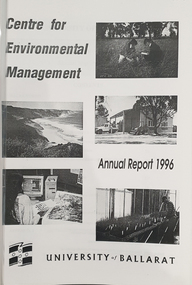
Booklet, University of Ballarat Centre for Environmental Management, 1996
... The Centre for Environmental Management as established in July 1995 as a strategic development initiative to consolidate the University's position as a centre for industry linked environmenttal teaching, resarech and consultancy. ...The Centre for Environmental Management as established in July 1995 as a strategic development initiative to consolidate the University's position as a centre for industry linked environmenttal teaching, resarech and consultancy. ...The Centre for Environmental Management as established in July 1995 as a strategic development initiative to consolidate the University's position as a centre for industry linked environmenttal teaching, resarech and consultancy. Page 19 "SPECIAL INITIATIVES Establishment of field Research Stations Two areas of concentration of research effort for the Centre are the Otways in the south western Victoria and the Scotia Country in the rangelands of NSW. In both these areas it is essential that ther be a secure accomodation abase for research students. In the former case there is a need for a sheltered base to enable year round field work in cold wet conditions and in the latter a base with a reliable water supply and the facilities to allow field work in very hot dry conditions which prevail from much of the year. It has been an ibjective of the Centre to establish field stations at these two sites and considerable progress has been made through the year. (i) Nanya Field Station in the Scotial Country Through the generosity of the owner, Mr Rob Taylor, an unused homestead on Nanya Station was made available to the Centre. Largely through voluntary labour during research field trips during the year this previously derelict homestead has been restored to functionality and now has facilities for up to 20 research workers with a reliable water supply, cooking, washing, and refrigeration facilities. (ii) Cape Otway Resaerch Centre Negotiations have continued through the year with the potential lessees of the Cape Otway Lighthouse Precinct with the support of the Vice Chancellor and other potential user groups within the University these have reached a successful outcome. The University will be working with the lessees to develop the historic Telegraph Station as a dual purpose facility for interpretation and research." Black and white cover with clear plastic sheet. university of ballarat, centre for environmental management, martin westbrooke, richard mcewan, mal weston, john miller, nanya, telegraph station, cape otway, cape otway lighthouse station, cape otway telegraph station, field resaerch stations, s. hadden, peter dahlhaus, r.j. macewan, pat prevett, native vegetation assessment, fauna management, pest plants and animal research, soil and water assessment, conservation reserve management, paul ryan, richard macewan
