
Showing 105 items matching "mayor of williamstown"
-
 Williamstown Historical Society Inc
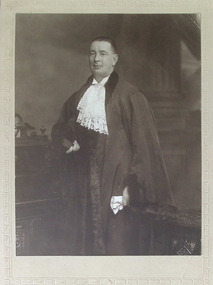
Photograph - Cr. Thomas Briggs, Mayor of Williamstown, 1932-3, 1942-3
... Thomas Briggs, Mayor of Williamstown, 1932-3, 1942-3......Mayor of Williamstown...Councillor Thomas Briggs was a prominent local civic leader who served two distinct terms as the Mayor of the City of Williamstown during 1932-33 and 1942-43. ...Thomas Briggs, Mayor of Williamstown, 1932-3, 1942-3 ...Councillor Thomas Briggs was a prominent local civic leader who served two distinct terms as the Mayor of the City of Williamstown during 1932-33 and 1942-43. He enlisted in the Australian Army during the first World War, and had the distinction of being appointed private masseur to the then Prime Minister, the Right Hon. Wm. Hughes. He again offered his services when the second World War broke out, and was appointed in command of a section of the Garrison Guards. Councillor Briggs sought and found many avenues of public service. He was a special magistrate in the Children’s Court, a member of the R.S.S.A.I.L.A., and was actively associated with the Salvation Army. Councillor Briggs passed away suddenly on July 6, 1949. source: Williamstown Advertiser Saturday 9 July 1949 Obituary.cr. thomas briggs, mayor of williamstown -
 Williamstown Historical Society Inc
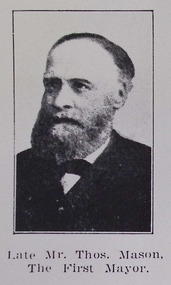
Photograph - Mr Thomas Mason, First Lord Mayor of Williamstown
... Mr Thomas Mason, First Lord Mayor of Williamstown...Mayor...Williamstown...He went on to become a respected local merchant, the first Post Master, the first Registered Auctioneer, a Magistrate, a Member of the Legislative Assembly between 1868 and 1871, and three-time Mayor of Williamstown. Mason Street Newport was named in his honour. ...Mr Thomas Mason Lord Mayor Williamstown Thomas Mason (1822-1896) arrived in the Colony of Victoria in March 1841 on the ship HMS Argyle at the age of 19. ...Thomas Mason (1822-1896) arrived in the Colony of Victoria in March 1841 on the ship HMS Argyle at the age of 19. He was first a shepherd in country Victoria before settling in Williamstown. In 1844, he became the lighthouse keeper at Williamstown, earning 22 pence per day. He went on to become a respected local merchant, the first Post Master, the first Registered Auctioneer, a Magistrate, a Member of the Legislative Assembly between 1868 and 1871, and three-time Mayor of Williamstown. Mason Street Newport was named in his honour. Source: www.williamstownhistsoc.org.au/our-collections/streets-details mr thomas mason, lord mayor, williamstown -
 Williamstown Historical Society Inc
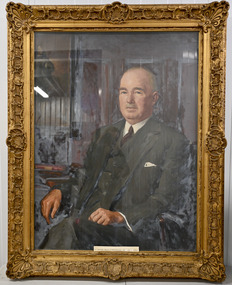
Painting - Painting - Portrait of J.J. Liston
... John James Liston was mayor of Williamstown in 1901 -1902, 1913 - 1914, 1922 and 1927, and was a leading community figure. ...Unsigned oil portrait of John James Liston, Mayor of Williamstown, in an elaborate gold painted, carved wooden frame....J. Liston mayor of Williamstown 1901 -1902, 1913 - 1914, 1922 - 1927 On reverse: "JOHN THALLON/CARVER & GILDER/24 MARKET LANE/BOURKE ST MELBOURNE"...John James Liston was mayor of Williamstown in 1901 -1902, 1913 - 1914, 1922 and 1927, and was a leading community figure. ...John James Liston was mayor of Williamstown in 1901 -1902, 1913 - 1914, 1922 and 1927, and was a leading community figure. The portrait frame was made by a leading Melbourne frame makng business, John Thallon, probably between 1927 and 1929.Unsigned oil portrait of John James Liston, Mayor of Williamstown, in an elaborate gold painted, carved wooden frame.On Frame: J. J. Liston mayor of Williamstown 1901 -1902, 1913 - 1914, 1922 - 1927 On reverse: "JOHN THALLON/CARVER & GILDER/24 MARKET LANE/BOURKE ST MELBOURNE"frame making -
 Williamstown Historical Society Inc
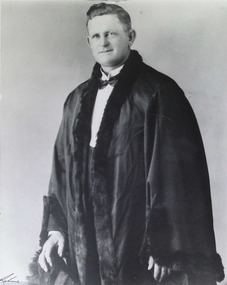
Photograph - George Alexander Paine, Mayor, 1929-31
... Mayor of Williamstown...Councillor George Alexander Paine was a prominent civic leader who served two consecutive terms as the Mayor of the City of Williamstown during 1929-1930 and 1930-1931. ...Mayor of Williamstown George Alexander Paine 1929-31 Councillor George Alexander Paine was a prominent civic leader who served two consecutive terms as the Mayor of the City of Williamstown during 1929-1930 and 1930-1931. ...Councillor George Alexander Paine was a prominent civic leader who served two consecutive terms as the Mayor of the City of Williamstown during 1929-1930 and 1930-1931. Cr. He served on the for the Victoria Ward on the City of Williamstown Council, for approximately 20 years, spanning from the late 1920s through the late 1940s.mayor of williamstown, george alexander paine, 1929-31 -
 Williamstown Historical Society Inc
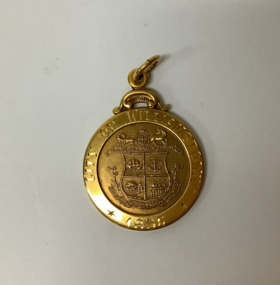
Medal - City of Williamstown Mayoral medallion
... Robert Ducrow lived in Oxford Street Newport and was Mayor of Williamstown between 1948 and 1960. He owned a grocery shop in Hudson Road Spotswood ...The medallion commemorates Councillor R A E Ducrow, Mayor of Williamstown from 1948 to 1960. The medallion is in its original cream coloured plastic square lidded box, with burgundy velvet lining....Front face: "CITY OF WILLIAMSTOWN/1856" Obverse: "CR R. A. E. DUCROW/J.P./MAYOR/1948/1960/KGLUKE/9C" Lid of case: "MEDALLIONS/BY/K.G. ...Medal City of Williamstown Mayoral medallion ...Robert Ducrow lived in Oxford Street Newport and was Mayor of Williamstown between 1948 and 1960. He owned a grocery shop in Hudson Road Spotswood Small nine-carat round gold medallion with a ring for attaching to a chain or fob. Coat of arms of Williamstown on the face. Obverse engraved. The medallion commemorates Councillor R A E Ducrow, Mayor of Williamstown from 1948 to 1960. The medallion is in its original cream coloured plastic square lidded box, with burgundy velvet lining.Front face: "CITY OF WILLIAMSTOWN/1856" Obverse: "CR R. A. E. DUCROW/J.P./MAYOR/1948/1960/KGLUKE/9C" Lid of case: "MEDALLIONS/BY/K.G. LUKE PTY LTD Inside lid: K.G.LUKE/PTY LTD/MEDALLISTS/MELBOURNE" -
 Australian Commando Association - Victoria
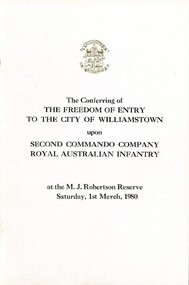
Booklet, Conferring of Freedom of Entry to City of Williamstown upon 2 Commando Company
... major robin mcbride-freedom of entry-city of williamstown-second commando company-fort gellibrand-mayor of williamstown...This was the first time the Commando Company had been formally recognised in a traditional ceremony by the city where it was based. major robin mcbride-freedom of entry-city of williamstown-second commando company-fort gellibrand-mayor of williamstown Coat of arms of the City of Williamstown on front cover and page 1. ...The booklet gives the order of proceedings for the ceremony, on 1st March 1980, of the conferring of the Freedom of Entry to the City of Williamstown upon Second Commando Company, based at Fort Gellibrand, Williamstown.This was the first time the Commando Company had been formally recognised in a traditional ceremony by the city where it was based.12 page (white) rectangular A5 paper booklet, including cardboard cover.Coat of arms of the City of Williamstown on front cover and page 1. Title: "The Conferring of The Freedom of Entry to the City of Williamstown upon Second Commando Company Royal Australian Infantry."major robin mcbride-freedom of entry-city of williamstown-second commando company-fort gellibrand-mayor of williamstown -
 Emerald Museum & Nobelius Heritage Park
Slide - Colour photographic slide, Olive Hamilton, Circa 1963
... Colour photographic mounted transparency (slide) depicting a group of sea scouts and the mayor of Williamstown wearing mayoral Chain. Kodachrome transparency....The transparency is historically significant as it was taken by Olive Hamilton Transparency slide William Olive hamilton Written “14” stamped “22 & May 63M” Colour photographic mounted transparency (slide) depicting a group of sea scouts and the mayor of Williamstown wearing mayoral Chain. Kodachrome transparency. ...The transparency was taken by Olive Hamilton who was a prominent local figure during the 1940s and 1950s. Olive was also president of the Victorian Amateur Cine Society Ladies Auxiliary. Most notably Olive and her husband William documented the 1954 Royal Visit.The transparency is historically significant as it was taken by Olive HamiltonColour photographic mounted transparency (slide) depicting a group of sea scouts and the mayor of Williamstown wearing mayoral Chain. Kodachrome transparency.Written “14” stamped “22 & May 63M”transparency, slide, william, olive, hamilton -
 Williamstown Historical Society Inc
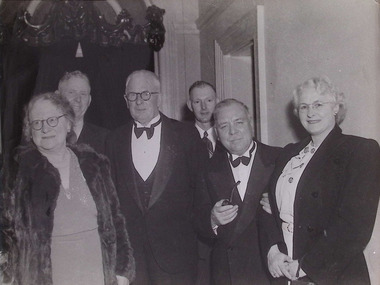
Photograph - Mrs Jackson, Mr Segal, Cr. Jackson, Miss Segal
... Councillor Ernest Walter Jackson was elected to the Williamstown Council in December 1937 and served as Mayor of Williamstown during 1945, 1949 and 1957. He was a local funeral director and undertaker based on Ferguson Street, Williamstown. ...Jackson Miss Segal Councillor Ernest Walter Jackson was elected to the Williamstown Council in December 1937 and served as Mayor of Williamstown during 1945, 1949 and 1957. He was a local funeral director and undertaker based on Ferguson Street, Williamstown. ...Councillor Ernest Walter Jackson was elected to the Williamstown Council in December 1937 and served as Mayor of Williamstown during 1945, 1949 and 1957. He was a local funeral director and undertaker based on Ferguson Street, Williamstown. The E.W. Jackson Reserve located at Melbourne Road and John Liston Drive was named in his honour.mrs jackson, mr segal, cr. jackson, miss segal -
 Williamstown Historical Society Inc
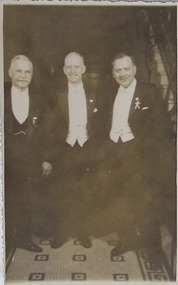
Photograph - Cr. Harvey, Cr. Owens, Cr. Jackson
... Jackson who was a councillor from late 1930s through to mid-1950's and as Mayor of Williamstown in 1944-45 and 1948-49....Jackson who was a councillor from late 1930s through to mid-1950's and as Mayor of Williamstown in 1944-45 and 1948-49. Photograph Cr. ...Three former councillors of Williamstown. From left to right: Councillor Henry Johnston Harvey, who represented the South Ward during the 1930's Councillor Evan Charles Owens, who represented the North Ward in the 1930's Councillor Ernest W. Jackson who was a councillor from late 1930s through to mid-1950's and as Mayor of Williamstown in 1944-45 and 1948-49.councillor jackson, cr. harvey, councillor owens -
 Hobsons Bay City Council
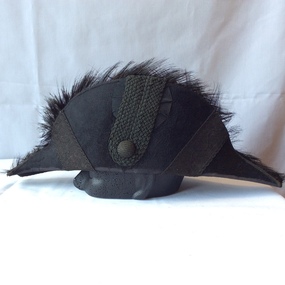
Bicorn Hat, Circa pre 1880
... This hat was part of the ceremonial dress of Williamstown Mayors. It is evident in early photographs of Williamstown Mayors from circa 1880 to the 1920's. ...This hat was part of the ceremonial dress of Williamstown Mayors. It is evident in early photographs of Williamstown Mayors from circa 1880 to the 1920's. ...This hat was part of the ceremonial dress of Williamstown Mayors. It is evident in early photographs of Williamstown Mayors from circa 1880 to the 1920's. The hat is designed to be folded as is often shown carried under the arm in Mayoral portraits.The hat is significant as an example of Mayoral ceremonial dress and is documented in Mayoral portraits associated with Williamstown Council.Black beaver fur bicorn ceremonial hat with silk brocade and ostrich feather trim. Silk lined. -
 Williamstown Historical Society Inc
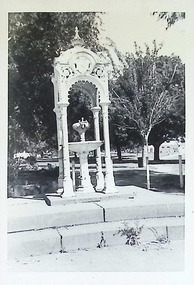
Photograph - Nelson Place, Wilkinson Drinking Fountain
... The fountain is included in the Hobsons Bay Heritage Study Amended 2017 - Volume 3 as noted as follows: The Wilkinson Memorial Drinking Fountain was inaugurated on 17 October 1876 by the Bishop of Ballarat, Dr Thornton, in the presence of the Mayor of Williamstown, ministers of all denominations and over 2000 people. ...The fountain is included in the Hobsons Bay Heritage Study Amended 2017 - Volume 3 as noted as follows: The Wilkinson Memorial Drinking Fountain was inaugurated on 17 October 1876 by the Bishop of Ballarat, Dr Thornton, in the presence of the Mayor of Williamstown, ministers of all denominations and over 2000 people. ...Undated photograph. The Wilkinson Memorial Drinking Fountain, was designed and constructed in 1876 by Walter Macfarlane and is situated facing Nelson Place in what is now the Commonwealth Reserve. The fountain is included in the Hobsons Bay Heritage Study Amended 2017 - Volume 3 as noted as follows: The Wilkinson Memorial Drinking Fountain was inaugurated on 17 October 1876 by the Bishop of Ballarat, Dr Thornton, in the presence of the Mayor of Williamstown, ministers of all denominations and over 2000 people. It had been paid for by public subscription to commemorate the Reverend George Wilkinson, the local Anglican minister who had died the previous year. nelson place, wilkinson drinking fountain, rev george wilkinson -
 Williamstown Historical Society Inc
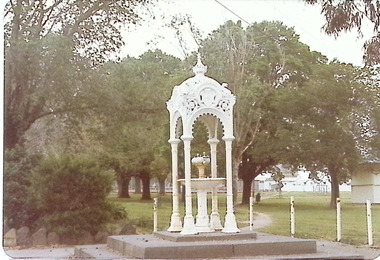
Photograph - Nelson Place, Wilkinson Drinking Fountain
... The fountain is included in the Hobsons Bay Heritage Study Amended 2017 - Volume 3 as noted as follows: The Wilkinson Memorial Drinking Fountain was inaugurated on 17 October 1876 by the Bishop of Ballarat, Dr Thornton, in the presence of the Mayor of Williamstown, ministers of all denominations and over 2000 people. ...The fountain is included in the Hobsons Bay Heritage Study Amended 2017 - Volume 3 as noted as follows: The Wilkinson Memorial Drinking Fountain was inaugurated on 17 October 1876 by the Bishop of Ballarat, Dr Thornton, in the presence of the Mayor of Williamstown, ministers of all denominations and over 2000 people. ...Undated photograph. The Wilkinson Memorial Drinking Fountain, was designed and constructed in 1876 by Walter Macfarlane and is situated facing Nelson Place in what is now the Commonwealth Reserve. The fountain is included in the Hobsons Bay Heritage Study Amended 2017 - Volume 3 as noted as follows: The Wilkinson Memorial Drinking Fountain was inaugurated on 17 October 1876 by the Bishop of Ballarat, Dr Thornton, in the presence of the Mayor of Williamstown, ministers of all denominations and over 2000 people. It had been paid for by public subscription to commemorate the Reverend George Wilkinson, the local Anglican minister who had died the previous year. nelson place, wilkinson drinking fountain, rev george wilkinson -
 Flagstaff Hill Maritime Museum and Village
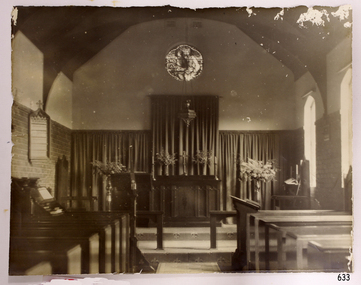
Photograph - Historical, religious, mid-20th century
... Mayor, Cr. John Lindsay, on Sunday, 11th October 1981. The event included a service of thanksgiving conducted by the Warrnambool Ministers Fraternal. Since then, the Chapel has been the historic venue for many weddings. This photograph is significant through its association with the St Nicholas' Mission to Seamen Church in Williamstown ...This photograph records the interior of St Nicholas Seamen's Church at 139 Nelson Place, Williamstown, Victoria, which was purchased and furnished around 1943. The furniture and furnishings are now part of the St. Nicholas Seamen's Church collection. HISTORY of the Missions to Seamen: - DETAILED HISTORY of the Missions to Seamen: - The Missions to Seamen is an Anglican (Church of England) charity that has served the world’s seafarers since 1856. It was inspired by the work of Rev. John Ashley, who, 20 years earlier, had pioneered a ministry to seafarers in the Bristol Channel in Great Britain. When Ashley retired, others continued the work, founding the Missions to Seamen. It adopted a Flying Angel as its symbol, inspired by a verse from the Bible in Revelation 14. Today, over 200 world ports have Missions to Seamen centres and chaplains. A Missions to Seamen’s Club warmly welcomes sailors of all colours, creeds and races and provides a wide range of facilities. The Missions to Seamen organisation changed its name to the Mission to Seafarers in 2000, continuing to include Missions to Seamen clubs in Victoria’s cities of Melbourne, Portland, Geelong and Hastings. Flagstaff Hill’s St Nicholas’ Seamen’s Church is named after its namesake from Williamstown, Victoria, which began in 1857. Bishop Perry opened the first Sailors’ Church there, known as ‘Bethel’, on an old hulk floating in Hobson’s Bay, Port of Melbourne. In 1860, a Sailors’ Rest started operating from rented premises in Williamstown. In 1878, the Sailors’ Church moved into an old Wesleyan chapel in Ann Street. By the end of that year, they managed to purchase the building, which they had already refurbished. In 1883, they affiliated with the Victorian Seamen’s Mission. A few years later, in 1906, the building had to be demolished because it was no longer safe. While they raised funds for a new building, the Sailors’ Rest temporarily moved to premises in front of Customs House in Nelson Place. Around this time, in 1906, the Ladies Harbour Lights Guild was formed in Australia to support and raise funds for the Mission to Seamen organisation in Melbourne. Two of the most significant ladies of the Guild were founding members Ethel Godfrey and Alice Sibthorpe. During the Mission's time at Siddeley Street, Melbourne, the activities of the Guild raised funds for the Mission to Seamen's Chapel at their new, and still current, premises in Flinders Street, Melbourne, opened in 1917. The Guild continued its important work until the 1960s. In 1908, the Williamstown Mission had enough money to purchase the former Mascotte skating rink on Thompson Street, Williamstown. In August of that year, they were inaugurated into the Victorian Missions to Seamen. They continued at that venue for a few decades. In 1943, the former ES&A Bank building at 139 Nelson Place, Williamstown, was purchased to become the new Mission to Seamen’s Club. On May 6th, 1944, it was officially opened, described as a ‘distinctive little building’. Funds had previously been raised for the building and furnishing of the chapel at the rear. The chapel was named St Nicholas’ Seamen’s Church, after St Nicholas, fourth-century bishop and patron saint of sailors. Services were held on Wednesdays and Sundays. The church was supported by the Williamstown Lightkeepers’ Auxiliary, newly founded by Mrs Ethel Margaret Musther in 1943, as well as the Harbour Lights Guild and the League of Soldiers’ and Sailors’ Friends. The Williamstown Mission to Seamen’s Church operated until 1966, when large international ships no longer used the Port of Williamstown. The Commonwealth Government then leased the premises. In the formative years of Flagstaff Hill Maritime Village, the Advisory Board decided to include a Missions to Seamen Chapel and Recreation Room in its village. The Missions organisation was a significant feature of ports during the late 1800s and early 1900s, the period that the Village represents. They often erected Missions to house social and worshipful activities for seamen. Flagstaff Hill’s curator, Mr Ken Marshman, approached the Melbourne Board of Management of Missions to Seamen regarding the Williamstown branch. Consequently, the Board permitted the furnishings of the Williamstown chapel to be transferred to Flagstaff Hill Maritime Village. A provision of the transfer was that the Victoria Missions to Seamen be recognised, that the items would remain as a collection, and that the chapel would be called St Nicholas Seamen’s Church and conduct Divine services. The donation was approved on 21st May 1979. Flagstaff Hill's St. Nicholas Seamen's Church: - The idea behind Flagstaff Hill’s Missions to Seamen’s Church was partly driven by the offer of Stained Glass Memorial Windows that originated from the Warrnambool and District Base Hospital, which was undergoing multi-storey expansion in the late 1960s and early 1970s. The hospital’s Manager/Secretary was eager to see the historic window installed in a suitable place. The church, or chapel, was designed by a local architectural draftsman in collaboration with the Flagstaff Hill Planning Board and was constructed by Mr Leon Habel. The designers hoped that the church would be used for formal worship such as weddings, funerals, and multi-denominational special services like war commemorations. The design is inspired by the ‘Missions to Seamen’ buildings in Portland and the Port of Melbourne. The furniture and furnishings were placed as accurately as possible according to photographs of the Williamstown St Nicholas Seamen’s Church and with assistance from local clergy. The Recreation Room was furnished and arranged on advice from experienced members of the Missions to Seamen organisation. A framed document in the building recognises the donor of the furnishings, Victoria Missions to Seamen, and includes the names of some original donors and their donated item/s. The building’s design incorporates local features such as Warrnambool sandstone, which was no longer commercially available but was procured from demolished buildings and uniformly cut to use as a veneer over the stronger Mt. Gambier stone. Also, traditional green American roofing slate was used, sourced from the 1908 local shipwreck “Falls of Halladale” by Flagstaff Hill volunteer divers. The bell tower includes a bell believed to be from a local shipwreck. Additional furnishings were acquired locally, along with several items donated by Warrnambool residents. Light fittings in both rooms were assembled to simulate 19th-century gas light fittings. The stained-glass window at the back of the church is a memorial to Dr Connell, a well-respected member of the Warrnambool community. It was originally installed in 1928 in the main building of Warrnambool Hospital. The St Nicholas’ Seamen’s Church at Flagstaff Hill was officially opened by His Worship the Mayor, Cr. John Lindsay, on Sunday, 11th October 1981. The event included a service of thanksgiving conducted by the Warrnambool Ministers Fraternal. Since then, the Chapel has been the historic venue for many weddings. This photograph is significant through its association with the St Nicholas' Mission to Seamen Church in Williamstown, Melbourne, established in 1857. The building in the photograph is the former English, Scottish and Australian Bank (ES&A bank), also known as the Mission to Seamen. It is listed on the Victorian Heritage Database for having local historic and aesthetic interest. Photograph of St Nicholas Seamen's Church, Williamstown. Sepia photograph. The photograph shows the inside of the Chapel of Mission to Seamen, including organ, pews and other furniture and furnishings. There is a circular stained glass window high on the back wall depicting a sailor at the helm of a ship and a man standing behind him and pointing the way - "Christ Showing The Helmsman The Way". A Sanctuary Light is suspended from the ceiling. The Sanctuary chars are visible. This shows the St Nicholas Seamen's Church in Williamstown, the furnishings and furniture of which is now part of the St Nicholas Seamen's Church Collection’.flagstaff hill, warrnambool, shipwrecked-coast, flagstaff-hill, flagstaff-hill-maritime-museum, maritime-museum, shipwreck-coast, flagstaff-hill-maritime-village, st nicholas mission to seamen's church williamstown, mission to seamen williamstown, mission to seamen victoria, st nicholas mission to seamen, chapel window, christ showing the helmsman the way, stained glass window, st nicholas seamen's church, religion, religious service, sailor's rest, ladies harbour light guild -
 Mission to Seafarers Victoria
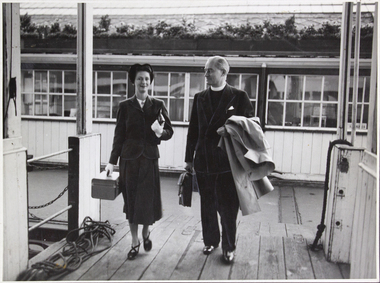
Photograph - Photograph, Black and white, Associated Photo Services, Reverend C.J Brown and his wife embarking at Liverpool for their Australian and Far East Tour, 1952
... Port Melbourne and Williamstown, and to Geelong and Balla-rat, a tour of the Bay, an inspection of the work of a sister organisation, the British Sailors' Society, Geelong, and then on , to Geelong Grammar School. Mr. and Mrs. Brown will be the guests of the Governor and Lady Brooks at lunch at Government House tomorrow, and of the Lord Mayor...Port Melbourne and Williamstown, and to Geelong and Balla-rat, a tour of the Bay, an inspection of the work of a sister organisation, the British Sailors' Society, Geelong, and then on , to Geelong Grammar School. Mr. and Mrs. Brown will be the guests of the Governor and Lady Brooks at lunch at Government House tomorrow, and of the Lord Mayor ...This photograph was probably sent to be used for advertising purposes to the mission. Here is the program of the tour published in the Age on Saturday 22 November 1952, page 16: "Australia's 15 stations of the world-famous Missions to Seamen are being visited by the general superintendent of the parent body in London, Rev. C. J. Brown, and. Mrs. Brown, who will arrive from Adelaide today. This is the first visit of the world head of the organisation to this country. Mr; Brown will attend the triennial Australasian chaplains' conference at the Central Club, Flinders-street Extension, next month. A full programme will include visits to the three clubs at Central. Port Melbourne and Williamstown, and to Geelong and Balla-rat, a tour of the Bay, an inspection of the work of a sister organisation, the British Sailors' Society, Geelong, and then on , to Geelong Grammar School. Mr. and Mrs. Brown will be the guests of the Governor and Lady Brooks at lunch at Government House tomorrow, and of the Lord Mayor at a reception on Tuesday. On Friday afternoon Archbishop and Mrs. Booth will hold a reception at Bishopscourt to enable the visitors to meet heads of the churches. Mr. Brown will preach at St. Paul's Cathedral tomorrow morning, and at St. Peter's Mariners' Church at 7 p.m. On December 7 he will preach, at Ballarat Cathedral, afterwards meeting workers of the Missions to. Seamen. He will address a Rotarians' luncheon on Wednesday. On Thursday evening he will meet the Company of Master Mariners. At a reception by the chairman of the Harbor Trust (Mr. A. D. Mackenzie) on December 8, Mr. Brown will meet the heads of Melbourne shipping firms."This was the first visit of the world head of the organisation to Australia since the beginning of the Missions to Seamen in this country.Black and white photograph depicting Reverend C.J Brown and his wife embarking at Liverpool for their Australian and Far East Tour.Written at the back in black ink: Missions to Seamen/Australasian and Far East Tour of General Superintendant (Rev. C.J. Brown, M.A. and Mrs Brown/Arriving in Melbourne by air from Adelaide on Saturday next (22/11). This will be the first visit of the world chief of the Missions to Seamen in the nearby 100 years history of the Society in Melbourne/The photograph shows the visitors embarking at Liverpool when setting out on their tour. In pencil: Padre+wife/2 vol./Pg 5 One black ink stamp from Associated Photo Services , 12A, Mount Pleasant, Liverpool 3 / one purple ink stamp emptyreverend c.j. brown, liverpool -
 Flagstaff Hill Maritime Museum and Village
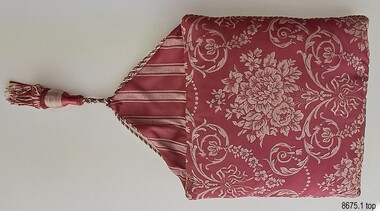
Textile - Seat Squabs, mid-20th century
... Mayor, Cr. John Lindsay, on Sunday, 11th October 1981. The event included a service of thanksgiving conducted by the Warrnambool Ministers Fraternal. Since then, the Chapel has been the historic venue for many weddings. This pair of seat squabs is historically significant for its origin in the St Nicholas Mission to Seamen's Church in Williamstown ...The term 'seat squabs' is no longer commonly used, but is sometimes referred to in the upholstery and motor vehicle industries. Squabs are padded cushions frequently added to wooden chairs or benches to add comfort to their hard forms. They have been made to an 18th-to-19th-century pattern using beautiful, richly coloured satin fabric and fancy cord tassels. The weighted flap at the rear of the squabs helps to keep them in place on the chair, and could be used on the top of the backrest instead of on the seat. These days, squabs are attached with fabric ties or hook-and-loop tabs. These seat squabs were once used in the St Nicholas Seamen's Church at 139 Nelson Place, Williamstown, Victoria, which was purchased and furnished around 1943. The furniture and furnishings are now part of the St. Nicholas Seamen's Church collection. DETAILED HISTORY of the Missions to Seamen: - The Missions to Seamen is an Anglican (Church of England) charity that has served the world’s seafarers since 1856. It was inspired by the work of Rev. John Ashley, who, 20 years earlier, had pioneered a ministry to seafarers in the Bristol Channel in Great Britain. When Ashley retired, others continued the work, founding the Missions to Seamen. It adopted a Flying Angel as its symbol, inspired by a verse from the Bible in Revelation 14. Today, over 200 world ports have Missions to Seamen centres and chaplains. A Missions to Seamen’s club warmly welcomes sailors of all colours, creeds and races and provides a wide range of facilities. The Missions to Seamen organisation changed its name to the Mission to Seafarers in 2000, continuing to include Missions to Seamen clubs in Victoria’s cities of Melbourne, Portland, Geelong and Hastings. Flagstaff Hill’s St Nicholas’ Seamen’s Church is named after its namesake from Williamstown, Victoria, which began in 1857. Bishop Perry opened the first Sailors’ Church, which was known as ‘Bethel’, on an old hulk floating in Hobson’s Bay, Port of Melbourne. In 1860, a Sailors’ Rest started operating from rented premises in Williamstown. In 1878, the Sailors’ Church moved into an old Wesleyan chapel in Ann Street. By the end of that year, they managed to purchase the building, which they had already refurbished. In 1883, they affiliated with the Victorian Seamen’s Mission. A few years later, in 1906, the building had to be demolished because it was no longer safe. While they raised funds for a new building, the Sailors’ Rest temporarily moved to premises in front of Customs House in Nelson Place. Around this time, in 1906, the Ladies Harbour Lights Guild was formed in Australia to support and raise funds for the Mission to Seamen organisation in Melbourne. Two of the most significant ladies of the Guild were founding members Ethel Godfrey and Alice Sibthorpe. During the Mission's time at Siddeley Street, Melbourne, the activities of the Guild raised funds for the Mission to Seamen's Chapel at their new, and still current, premises in Flinders Street, Melbourne, opened in 1917. The Guild continued its important work until the 1960s. In 1908, the Williamstown Mission had enough money to purchase the former Mascotte skating rink on Thompson Street, Williamstown. In August of that year, they were inaugurated into the Victorian Missions to Seamen. They continued at that venue for a few decades. In 1943, the former ES&A Bank building at 139 Nelson Place, Williamstown, was purchased for the new Mission to Seaman’s Club. The official opening was on May 6th, 1944. It was described as a ‘distinctive little building’. Funds had previously been raised for the building and furnishing of the chapel at the rear. The chapel was named St Nicholas’ Seamen’s Church, after St Nicholas, fourth-century bishop and patron saint of sailors. Services were held on Wednesdays and Sundays. The church was supported by the Williamstown Lightkeepers’ Auxiliary, newly founded by Mrs Ethel Margaret Musther in 1943, as well as the Harbour Lights Guild and the League of Soldiers’ and Sailors’ Friends. The Williamstown Mission to Seamen’s Church operated until 1966, when large international ships no longer used the Port of Williamstown. The Commonwealth Government then leased the premises. In the formative years of Flagstaff Hill Maritime Village, the Advisory Board decided to include a Missions to Seamen Chapel and Recreation Room in its village. The Missions organisation was a significant feature of ports during the late 1800s and early 1900s, the period that the Village represents. They often erected Missions to house social and worshipful activities for seamen. Flagstaff Hill’s curator, Mr Ken Marshman, approached the Melbourne Board of Management of Missions to Seamen regarding the Williamstown branch. Consequently, the Board permitted the furnishings of the Williamstown chapel to be transferred to Flagstaff Hill Maritime Village. A provision of the transfer was that the Victoria Missions to Seamen be recognised, that the items would remain as a collection, and that the chapel would be called St Nicholas Seamen’s Church and conduct Divine services. The donation was approved on 21st May 1979. Flagstaff Hill's St. Nicholas Seamen's Church: - The idea behind Flagstaff Hill’s Missions to Seamen’s Church was partly driven by the offer of Stained Glass Memorial Windows that originated from the Warrnambool and District Base Hospital, which was undergoing multi-storey expansion in the late 1960s and early 1970s. The hospital’s Manager/Secretary was eager to see the historic window installed in a suitable place. The church, or chapel, was designed by a local architectural draftsman in collaboration with the Flagstaff Hill Planning Board and was constructed by Mr Leon Habel. The designers hoped the church would be used for formal worship, such as weddings, funerals, and multi-denominational special services like war commemorations. Its design was inspired by the ‘Missions to Seamen’ buildings in Portland and the Port of Melbourne. The furniture and furnishings were placed as accurately as possible according to photographs of the Williamstown St Nicholas Seamen’s Church and with assistance from local clergy. The Recreation Room was furnished and arranged on advice from experienced members of the Missions to Seamen organisation. A framed document in the building recognises the donor of the furnishings, Victoria Missions to Seamen, and includes the names of some original donors and their donated item/s. The building’s design incorporates local features such as Warrnambool sandstone, which was no longer commercially available but was procured from demolished buildings and uniformly cut to use as a veneer over the stronger Mt. Gambier stone. Also, traditional green American roofing slate was used, sourced from the 1908 local shipwreck “Falls of Halladale” by Flagstaff Hill volunteer divers. The bell tower includes a bell believed to be from a local shipwreck. Additional furnishings were acquired locally, and several items were donated by Warrnambool residents. Light fittings in both rooms were assembled to simulate 19th-century gas light fittings. The stained-glass window at the back of the church is a memorial to Dr Connell, a well-respected member of the Warrnambool community. It was originally installed in 1928 in the main building of Warrnambool Hospital. The St Nicholas’ Seamen’s Church at Flagstaff Hill was officially opened by His Worship the Mayor, Cr. John Lindsay, on Sunday, 11th October 1981. The event included a service of thanksgiving conducted by the Warrnambool Ministers Fraternal. Since then, the Chapel has been the historic venue for many weddings. This pair of seat squabs is historically significant for its origin in the St Nicholas Mission to Seamen's Church in Williamstown, established in 1857 to cater for seafarers’ physical, social, and spiritual needs. The organisation originated in Bristol, England, when a Seamen's Mission was formed in 1837. The squabs are also significant for their use in the St Nicholas Missions to Seamen's chapel, Williamstown, as the original building is now listed on the Victorian Heritage Register. Squabs or padded seat cushions, a pair of two. These 18th to 19th-century design squabs have crimson and cream satin fabric on top and underneath, and weighted tassels are attached to their rear corners. They can be used for comfort on hard seats and benches. The squabs were furnishings from the Missions to Seamen chapel in Williamstown, and they are now part of the St Nicholas Seamen's Church Collection.flagstaff hill, warrnambool, shipwrecked-coast, flagstaff-hill, flagstaff-hill-maritime-museum, maritime-museum, shipwreck-coast, flagstaff-hill-maritime-village, st nicholas mission to seamen's church williamstown, mission to seamen williamstown, mission to seamen victoria, st nicholas mission to seamen, st nicholas seamen's church, religion, religious service, sailor's rest, ladies harbour light guild, squab, seat covers, cushions, squabs, religious furnishing, padded seats, seating, accessory -
 City of Moorabbin Historical Society (Operating the Box Cottage Museum)
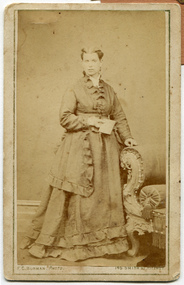
Photograph, B&W, Eleanor Rushall 2nd wife of John Box 1841-1913, c1890
... Mayor of Fitzroy 1875 and the family enjoyed the benefits of their prosperity. She had singing lessons with Dame Nellie Melba. His business foundered during the 1892/93 Bank Crash. However Nellie is recorded as the owner of the 10 roomed Terminus Hotel in Williamstown...Mayor of Fitzroy 1875 and the family enjoyed the benefits of their prosperity. She had singing lessons with Dame Nellie Melba. His business foundered during the 1892/93 Bank Crash. However Nellie is recorded as the owner of the 10 roomed Terminus Hotel in Williamstown ...John Box 1841 - 1913 the 4th son of George and Mary Box, was born in Withyham, Sussex England and came to Australia in 1856 with his parents. He lived and worked on his fathers market garden in East Brighton ( now Bentleigh) for several years and then rented a property in Tucker Road in 1862. John married Martha Sheldrake and they had 10children who were all born in East Brighton ( now Ormond ). After Martha died 1895 John Box married Eleanor Rushall c1900 Eleanor (Nellie) Rushall b 1866 in Fitzroy daughter of George Rushall b 1823 in London and Mary Ann Jones b 1823 in Battersea, who arrived in Portland 1849 and later settled in Fitzroy. George was an Auctioneer and was elected to Council 1874 becoming Mayor of Fitzroy 1875 and the family enjoyed the benefits of their prosperity. She had singing lessons with Dame Nellie Melba. His business foundered during the 1892/93 Bank Crash. However Nellie is recorded as the owner of the 10 roomed Terminus Hotel in Williamstown a favoured watering hole for the sailors from the many ships that came to the port. Nellie had a daughter Lavilla who sadly died aged 1 year in 1898. Nellie is then recorded as a housekeeper to a medical doctor in Cockatoo and later working for John Box, in Brighton. She married John Box in 1900 and they had 3 children Nellie, Jack and Alexander. After John Box died 1913, Nellie rented a house on the family estate in Oakleigh. She raised 2 other children Ray and Thelma and received some income by caring for several welfare children. In her later years Nellie lived with each of her children who had inherited from the John Box Estate when they turned 21 years. John Box is the brother of William Box who, with his wife Elizabeth Box, lived in Box Cottage . John Box was a pioneer market gardener in East Brighton now Bentleigh. He married Martha Sheldrake and they had 10 children. The eldest daughter Rebecca was a Methodist Missionary in China and Alonzo, their 9th child, served in the Army WW1 at Gallipoli, France and Flanders. Rebecca sent the hand embroidered Chinese silk material for the Wedding Dress worn by Mary Closter at her marriage to Alonzo Box 1918. After Martha died he married Eleanor Rushall and they had 3 children. John was well respected by the community and also a Methodist lay preacher. Box Cottage Museum, a reconstruction of an early settler hut, is named after the Box family who resided there 1865 -1913 . William Box who, with his wife Elizabeth Avis Box and 13 children, lived and farmed on the block of land in Jasper Road, East Brighton ( now McKinnon / Ormond) that was part of the Henry Dendy Special Survey 1841. Inscribed in Album “ The early photos in this album were found by Mr (Laurie) Lewis when he was demolishing the Old Box Cottage. He gave them to Mrs Avis Box Eldridge who in turn gave them to me. They were not identified. I believe they rightly belong in the Cottage. I have attempted to identify them and present them in a way they can be preserved as a historical record of the era.” A B Leigh A black and white photograph of Eleanor Rushall b1866 the 2nd wife of John Box 1841 -1913F.C Burman Photos / 196 Smith St. Fitzroybox william, box elizabeth, box george, box john, sheldrake martha, box alonzo, box mary, box rebecca, rushall eleanor, moorabbin, bentleigh, brighton, ormond, market gardeners, pioneers, early settlers, withyham sussex england, rushall george, fitzroy melbourne, dame nellie melba, helen porter mitchell, terminus hotel williamstown, williamstown melbourne, -
 City of Moorabbin Historical Society (Operating the Box Cottage Museum)
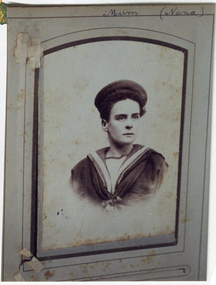
Photographs x 3 , B&W Eleanor Rushall 2nd wife John Box, c1880
... Mayor of Fitzroy 1875 and the family enjoyed the benefits of their prosperity. She had singing lessons with Dame Nellie Melba. His business foundered during the 1892/93 Bank Crash. However Nellie is recorded as the owner of the 10 roomed Terminus Hotel in Williamstown...Mayor of Fitzroy 1875 and the family enjoyed the benefits of their prosperity. She had singing lessons with Dame Nellie Melba. His business foundered during the 1892/93 Bank Crash. However Nellie is recorded as the owner of the 10 roomed Terminus Hotel in Williamstown ...John Box 1841 - 1913 the 4th son of George and Mary Box, was born in Withyham, Sussex England and came to Australia in 1856 with his parents. He lived and worked on his fathers market garden in East Brighton ( now Bentleigh) for several years and then rented a property in Tucker Road in 1862. John married Martha Sheldrake and they had 10children who were all born in East Brighton ( now Ormond ). After Martha died 1895 John Box married Eleanor Rushall c1900 Eleanor (Nellie) Rushall b 1866 in Fitzroy daughter of George Rushall b 1823 in London and Mary Ann Jones b 1823 in Battersea, who arrived in Portland 1849 and later settled in Fitzroy. George was an Auctioneer and was elected to Council 1874 becoming Mayor of Fitzroy 1875 and the family enjoyed the benefits of their prosperity. She had singing lessons with Dame Nellie Melba. His business foundered during the 1892/93 Bank Crash. However Nellie is recorded as the owner of the 10 roomed Terminus Hotel in Williamstown a favoured watering hole for the sailors from the many ships that came to the port. Nellie had a daughter Lavilla who sadly died aged 1 year in 1898. Nellie is then recorded as a housekeeper to a medical doctor in Cockatoo and later working for John Box, in Brighton. She married John Box in 1900 and they had 3 children Nellie, Jack and Alexander. After John Box died 1913, Nellie rented a house on the family estate in Oakleigh. She raised 2 other children Ray and Thelma and received some income by caring for several welfare children. In her later years Nellie lived with each of her children who had inherited from the John Box Estate when they turned 21 years. John Box is the brother of William Box who, with his wife Elizabeth Box, lived in Box Cottage . John Box was a pioneer market gardener in East Brighton now Bentleigh. He married Martha Sheldrake and they had 10 children. The eldest daughter Rebecca was a Methodist Missionary in China and Alonzo, their 9th child, served in the Army WW1 at Gallipoli, France and Flanders. Rebecca sent the hand embroidered Chinese silk material for the Wedding Dress worn by Mary Closter at her marriage to Alonzo Box 1918. After Martha died he married Eleanor Rushall and they had 3 children. John was well respected by the community and also a Methodist lay preacher. Box Cottage Museum, a reconstruction of an early settler hut, is named after the Box family who resided there 1865 -1913 . William Box who, with his wife Elizabeth Avis Box and 13 children, lived and farmed on the block of land in Jasper Road, East Brighton ( now McKinnon / Ormond) that was part of the Henry Dendy Special Survey 1841. Three black and white photographs of Eleanor Rushall the 2nd wife of John BoxA Nellie Rushall; B Mum ( Nana) C possibly 'Eleanor'* box william, box elizabeth, box george, box john, sheldrake martha, box alonzo, box mary, box rebecca, rushall eleanor, moorabbin, bentleigh, brighton, ormond, market gardeners, pioneers, early settlers, withyham sussex england, rushall george, fitzroy melbourne, terminus hotel williamstown, williamstown melbourne, -
Port Melbourne Historical & Preservation Society
Functional object - Missions to Seamen building, Port Melbourne, BI Ltd, 1937
... Liana THOMPSON, Mayor of Port Phillip at the time, purchased many of the bricks from the demolished Mission and used them to pave their yard at 488 Williamstown Road. ...Liana THOMPSON, Mayor of Port Phillip at the time, purchased many of the bricks from the demolished Mission and used them to pave their yard at 488 Williamstown Road. ...Liana THOMPSON, Mayor of Port Phillip at the time, purchased many of the bricks from the demolished Mission and used them to pave their yard at 488 Williamstown Road. She and David saved two for PMH&PSTwo bricks from the 1937 Missions to Seamen building demolished 1995. Salmon coloured, with bits of mortar; impressed one side with 'BI Ltd'mission to seamen, demolitions, liana thompson, harry a norris -
Port Melbourne Historical & Preservation Society
Plan - Williamstown Road, Derham Street to Raglan Street, Port Melbourne, 14 Mar 1893
... Bartlett (Mayor). Plan of Williamstown road from Derham street to Raglan street. (67.1), together with written specification of works attached. (67.2), 1893. ...Plan of Williamstown road from Derham street to Raglan street. (67.1), together with written specification of works attached. (67.2), 1893.A.V. Heath (Town Surveyor). J.J. Bartlett (Mayor).engineering - roads streets lanes and footpaths, arthur victor heath, town clerks, james john bartlett, mayors -
Port Melbourne Historical & Preservation Society
Document - Specification, Williamstown Road, Derham Street to Raglan Street, Port Melbourne, 14 Mar 1893
... Mayor). Written specification of works attached to plan of Williamstown Road from Derham Street to Raglan Street. (67.1) 1893. ...Written specification of works attached to plan of Williamstown Road from Derham Street to Raglan Street. (67.1) 1893.A.V. Heath (Town Surveyor). J.J. Bartlett (Mayor).engineering - roads streets lanes and footpaths, arthur victor heath, town clerks, james john bartlett, mayors -
Port Melbourne Historical & Preservation Society
Plan - Raglan Street from Williamstown Street to Ross Street, 14 Mar 1893
... Engineering - Roads Streets Lanes and Footpaths Town Planning Town Clerks Mayors Arthur Victor HEATH James John BARTLETT Plan of Raglan Street from Williamstown Road to Ross Street, 1893 Plan Raglan Street from Williamstown Street to Ross Street ...Plan of Raglan Street from Williamstown Road to Ross Street, 1893engineering - roads streets lanes and footpaths, town planning, town clerks, mayors, arthur victor heath, james john bartlett -
 Port Melbourne Historical & Preservation Society
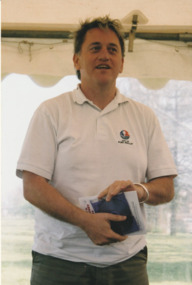
Photograph - Launch of History of a Street Precinct, 25 Sep
... Williamstown Road, Farrell Street both the E & W sides plus the section of Ross Street between Farrell and Bridge and the part of Derham Street between Farrell and Bridge. The resulting map and an interactive CD won the Best Community Research, Registers & Records project at the 2007 Victorian Community History Awards. The project was launched on the railway reserve near the corner of Evans & Farrell streets. Darren Ray, Mayor...Williamstown Road, Farrell Street both the E & W sides plus the section of Ross Street between Farrell and Bridge and the part of Derham Street between Farrell and Bridge. The resulting map and an interactive CD won the Best Community Research, Registers & Records project at the 2007 Victorian Community History Awards. The project was launched on the railway reserve near the corner of Evans & Farrell streets. Darren Ray, Mayor ...In 2005, members of the PMH&PS undertook a study of the residents of the houses in a Port Melbourne street precinct from the 1880s to 1960. The area is bounded by Evans Street, the E side of Bridge Street, S side of Williamstown Road, Farrell Street both the E & W sides plus the section of Ross Street between Farrell and Bridge and the part of Derham Street between Farrell and Bridge. The resulting map and an interactive CD won the Best Community Research, Registers & Records project at the 2007 Victorian Community History Awards. The project was launched on the railway reserve near the corner of Evans & Farrell streets. Darren Ray, Mayor of City of Port Phillip.City of Port Phillip mayor, Cr Darren Ray at the launch of the History of a Street Precinct25/9/05 Darren Ray Mayor CoPPhistory of a street precinct, darren ray -
 Port Melbourne Historical & Preservation Society
Photograph - Launch of History of a Street Precinct, 25 Sep
... Williamstown Road, Farrell Street both the E & W sides plus the section of Ross Street between Farrell and Bridge and the part of Derham Street between Farrell and Bridge. The resulting map and an interactive CD won the Best Community Research, Registers & Records project at the 2007 Victorian Community History Awards. The project was launched on the railway reserve near the corner of Evans & Farrell streets. Janet BOLITHO, former mayor...Williamstown Road, Farrell Street both the E & W sides plus the section of Ross Street between Farrell and Bridge and the part of Derham Street between Farrell and Bridge. The resulting map and an interactive CD won the Best Community Research, Registers & Records project at the 2007 Victorian Community History Awards. The project was launched on the railway reserve near the corner of Evans & Farrell streets. Janet BOLITHO, former mayor ...In 2005, members of the PMH&PS undertook a study of the residents of the houses in a Port Melbourne street precinct from the 1880s to 1960. The area is bounded by Evans Street, the E side of Bridge Street, S side of Williamstown Road, Farrell Street both the E & W sides plus the section of Ross Street between Farrell and Bridge and the part of Derham Street between Farrell and Bridge. The resulting map and an interactive CD won the Best Community Research, Registers & Records project at the 2007 Victorian Community History Awards. The project was launched on the railway reserve near the corner of Evans & Farrell streets. Janet BOLITHO, former mayor of City of Port Phillip.Former City of Port Phillip mayor, Janet Bolitho, at the launch of the History of a Street Precinct25/9/05 Janet Bolithohistory of a street precinct, janet bolitho -
 Port Melbourne Historical & Preservation Society
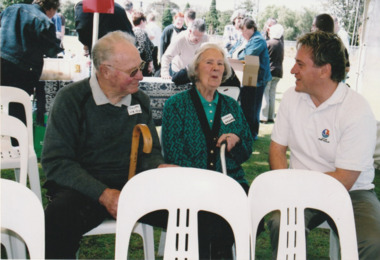
Photograph - Launch of History of a Street Precinct, 25 Sep
... Williamstown Road, Farrell Street both the E & W sides plus the section of Ross Street between Farrell and Bridge and the part of Derham Street between Farrell and Bridge. The resulting map and an interactive CD won the Best Community Research, Registers & Records project at the 2007 Victorian Community History Awards. The project was launched on the railway reserve near the corner of Evans & Farrell streets. L - R - Unknown, Norah HOWARD, Mayor...Williamstown Road, Farrell Street both the E & W sides plus the section of Ross Street between Farrell and Bridge and the part of Derham Street between Farrell and Bridge. The resulting map and an interactive CD won the Best Community Research, Registers & Records project at the 2007 Victorian Community History Awards. The project was launched on the railway reserve near the corner of Evans & Farrell streets. L - R - Unknown, Norah HOWARD, Mayor ...In 2005, members of the PMH&PS undertook a study of the residents of the houses in a Port Melbourne street precinct from the 1880s to 1960. The area is bounded by Evans Street, the E side of Bridge Street, S side of Williamstown Road, Farrell Street both the E & W sides plus the section of Ross Street between Farrell and Bridge and the part of Derham Street between Farrell and Bridge. The resulting map and an interactive CD won the Best Community Research, Registers & Records project at the 2007 Victorian Community History Awards. The project was launched on the railway reserve near the corner of Evans & Farrell streets. L - R - Unknown, Norah HOWARD, Mayor Darren RAY.CoPP mayor and PMHPS members at the launch of the History of a Street Precinct25/9/05 Not known, Norah Howard, Darren Ray, Mayorhistory of a street precinct, darren ray, norma howard -
 Port Melbourne Historical & Preservation Society
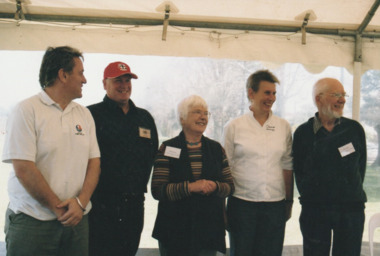
Photograph - Launch of History of a Street Precinct, 25 Sep
... Williamstown Road, Farrell Street both the E & W sides plus the section of Ross Street between Farrell and Bridge and the part of Derham Street between Farrell and Bridge. The resulting map and an interactive CD won the Best Community Research, Registers & Records project at the 2007 Victorian Community History Awards. The project was launched on the railway reserve near the corner of Evans & Farrell streets. l - R - Mayor...Williamstown Road, Farrell Street both the E & W sides plus the section of Ross Street between Farrell and Bridge and the part of Derham Street between Farrell and Bridge. The resulting map and an interactive CD won the Best Community Research, Registers & Records project at the 2007 Victorian Community History Awards. The project was launched on the railway reserve near the corner of Evans & Farrell streets. l - R - Mayor ...In 2005, members of the PMH&PS undertook a study of the residents of the houses in a Port Melbourne street precinct from the 1880s to 1960. The area is bounded by Evans Street, the E side of Bridge Street, S side of Williamstown Road, Farrell Street both the E & W sides plus the section of Ross Street between Farrell and Bridge and the part of Derham Street between Farrell and Bridge. The resulting map and an interactive CD won the Best Community Research, Registers & Records project at the 2007 Victorian Community History Awards. The project was launched on the railway reserve near the corner of Evans & Farrell streets. l - R - Mayor Darren RAY, David THOMPSON, Margaret BRIDE, Janet BOLITHO, Graham BRIDE.CoPP mayor and PMHPS members involved in the production at the launch of the History of a Street Precinct25/9/05 Mayor, David Thompson, Margaret Bride, Janet Bolitho, Graham Bridehistory of a street precinct, darren ray, graham bride, margaret bride, janet bolitho, david thompson -
 Port Melbourne Historical & Preservation Society
Photograph - Launch of History of a Street Precinct, 25 Sep
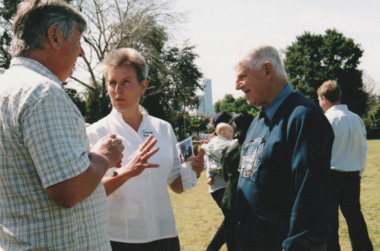
... Williamstown Road, Farrell Street both the E & W sides plus the section of Ross Street between Farrell and Bridge and the part of Derham Street between Farrell and Bridge. The resulting map and an interactive CD won the Best Community Research, Registers & Records project at the 2007 Victorian Community History Awards. The project was launched on the railway reserve near the corner of Evans & Farrell streets. L - R - Unknown, Janet BOLITHO, Glen STUART. History of a Street Precinct Janet BOLITHO Glen STUART 25/9/05 Not known, Janet Bolitho, Glen Stuart CoPP mayor ...In 2005, members of the PMH&PS undertook a study of the residents of the houses in a Port Melbourne street precinct from the 1880s to 1960. The area is bounded by Evans Street, the E side of Bridge Street, S side of Williamstown Road, Farrell Street both the E & W sides plus the section of Ross Street between Farrell and Bridge and the part of Derham Street between Farrell and Bridge. The resulting map and an interactive CD won the Best Community Research, Registers & Records project at the 2007 Victorian Community History Awards. The project was launched on the railway reserve near the corner of Evans & Farrell streets. L - R - Unknown, Janet BOLITHO, Glen STUART.CoPP mayor and PMHPS members at the launch of the History of a Street Precinct25/9/05 Not known, Janet Bolitho, Glen Stuarthistory of a street precinct, janet bolitho, glen stuart -
 Port Melbourne Historical & Preservation Society
Photograph - Cr Darren RAY, Launch of History of a Street Precinct, 25 Sep 2005
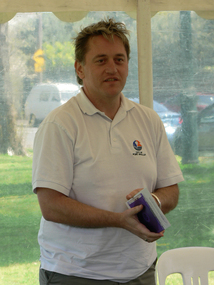
... Williamstown Road and Evans, Bridge and Farrell Streets, since 1880. A brochure containing a map of the area and photos and information on key properties (2148.01) and an interactive CD (2148.02) containing information and photographs on 91 buildings and their occupants over time were produced. The project subsequently won the 2007 Victorian Local History Award for research and is now available on the PMHPS website. History of a Street Precinct Port Melbourne Historical & Preservation Society PMHPS Darren RAY Mayors ...In 2005 Margaret BRIDE, Graham BRIDE and David THOMPSON, members of PMHPS, completed the History of a Street Precinct project documenting 80 years plus of the history of the area bounded by Williamstown Road and Evans, Bridge and Farrell Streets, since 1880. A brochure containing a map of the area and photos and information on key properties (2148.01) and an interactive CD (2148.02) containing information and photographs on 91 buildings and their occupants over time were produced. The project subsequently won the 2007 Victorian Local History Award for research and is now available on the PMHPS website.Digital copy of a colour photograph showing City of Port Phillip Mayor, Cr Darren RAY at the launch of the History of a Street Precinct project on 25 Sep 2005 at the Railway Reserve opposite Evans Street.history of a street precinct, port melbourne historical & preservation society, pmhps, darren ray, mayors, councillors -
 Port Melbourne Historical & Preservation Society
Photograph - Norah HOWARD, Cr Darren RAY, Launch of History of a Street Precinct, 25 Sep 2005
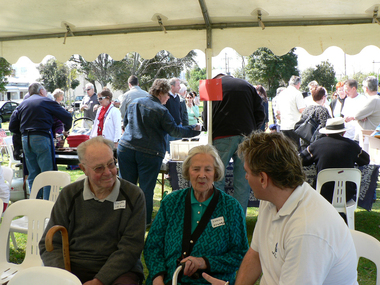
... Williamstown Road and Evans, Bridge and Farrell Streets, since 1880. A brochure containing a map of the area and photos and information on key properties (2148.01) and an interactive CD (2148.02) containing information and photographs on 91 buildings and their occupants over time were produced. The project subsequently won the 2007 Victorian Local History Award for research and is now available on the PMHPS website. History of a Street Precinct Port Melbourne Historical & Preservation Society PMHPS Darren RAY Mayors ...In 2005 Margaret BRIDE, Graham BRIDE and David THOMPSON, members of PMHPS, completed the History of a Street Precinct project documenting 80 years plus of the history of the area bounded by Williamstown Road and Evans, Bridge and Farrell Streets, since 1880. A brochure containing a map of the area and photos and information on key properties (2148.01) and an interactive CD (2148.02) containing information and photographs on 91 buildings and their occupants over time were produced. The project subsequently won the 2007 Victorian Local History Award for research and is now available on the PMHPS website.Digital copy of a colour photograph showing City of Port Phillip Mayor, Cr Darren RAY chatting with Claude ANDERSON and Norah HOWARD at the launch of the History of a Street Precinct project on 25 Sep 2005 at the Railway Reserve opposite Evans Street.history of a street precinct, port melbourne historical & preservation society, pmhps, darren ray, mayors, councillors, norah howard nee mallet, claude anderson -
 Port Melbourne Historical & Preservation Society
Photograph - Launch of History of a Street Precinct, 25 Sep 2005
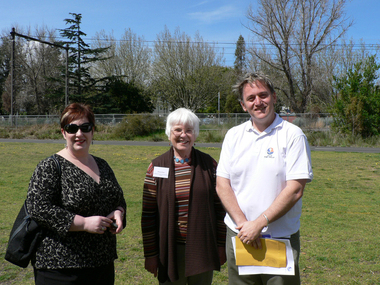
... Williamstown Road and Evans, Bridge and Farrell Streets, since 1880. A brochure containing a map of the area and photos and information on key properties (2148.01) and an interactive CD (2148.02) containing information and photographs on 91 buildings and their occupants over time were produced. The project subsequently won the 2007 Victorian Local History Award for research and is now available on the PMHPS website. History of a Street Precinct Port Melbourne Historical & Preservation Society PMHPS Liana THOMPSON Margaret BRIDE Darren RAY Councillors Mayors ...In 2005 Margaret BRIDE, Graham BRIDE and David THOMPSON, members of PMHPS, completed the History of a Street Precinct project documenting 80 years plus of the history of the area bounded by Williamstown Road and Evans, Bridge and Farrell Streets, since 1880. A brochure containing a map of the area and photos and information on key properties (2148.01) and an interactive CD (2148.02) containing information and photographs on 91 buildings and their occupants over time were produced. The project subsequently won the 2007 Victorian Local History Award for research and is now available on the PMHPS website.Digital copy of a colour photograph showing Liana THOMPSON, Margaret BRIDE and Cr Darren RAY, Mayor of Port Phillip at the launch of the History of a Street Precinct project on 25 Sep 2005 at the Railway Reserve opposite Evans Street.history of a street precinct, port melbourne historical & preservation society, pmhps, liana thompson, margaret bride, darren ray, councillors, mayors -
Port Melbourne Historical & Preservation Society
Film - Video Recording - Digital, I Wish I Had Been There, 28 Jul 2020
... Williamstown Football Clubs swapped players. Sue LEONG wishes she was there in July, 1901 in front of the building where she now lives but previously was a stables and carrier’s business. David RADCLIFFE wishes he was there in March, 1924 when the HMS Hood and the HMS Repulse arrived in Port Melbourne. Beris CAMPBELL wishes she was there in 1974 at Arch TODD's Mayoral...Williamstown Football Clubs swapped players. Sue LEONG wishes she was there in July, 1901 in front of the building where she now lives but previously was a stables and carrier’s business. David RADCLIFFE wishes he was there in March, 1924 when the HMS Hood and the HMS Repulse arrived in Port Melbourne. Beris CAMPBELL wishes she was there in 1974 at Arch TODD's Mayoral ...The Port Melbourne Historical and Preservation made history on the 28 July 2020 when, because of the COVID-19 pandemic, we hosted our first meeting via Zoom.Digital video recording of PMHPS meeting held via Zoom on 28 July 2020. Eight members spoke on the theme “I Wish I Had Been There …” Margaret BRIDE wishes she had there when Wilbraham LIARDET had ridden up and down Bay Street proclaiming the separation of Victoria from New South Wales. John MAY wishes he was there in 1937 when Port Melbourne and Williamstown Football Clubs swapped players. Sue LEONG wishes she was there in July, 1901 in front of the building where she now lives but previously was a stables and carrier’s business. David RADCLIFFE wishes he was there in March, 1924 when the HMS Hood and the HMS Repulse arrived in Port Melbourne. Beris CAMPBELL wishes she was there in 1974 at Arch TODD's Mayoral Ball at Port Melbourne Town Hall. Garry SMART wishes he was there for the Sandridge Council meeting held at the newly built court house on 23 August 1860. Helen BARRY wishes she was there at the Graham Street railway gates where her grandfather proposed to her grandmother. Lex JOHNSON wishes he was there on the last Saturday in August, 1946 when Port Melbourne took on Coburg at North Port Oval.margaret bride, wilbraham frederick evelyn liardet, wfe liardet, separation, john may, port melbourne football club, williamstown football club, sue leong, knight's transport, david radcliffe, hms hood, hms repulse, beris campbell, archibald (arch) todd, gary smart, local government - municipal district of sandridge, court house, helen barry, lex johnston, coburg football club, celebrations fetes and exhibitions
