
Showing 56 items matching "miner's lamp"
-
 Greensborough Historical Society
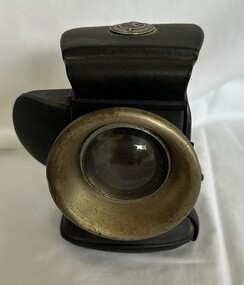
Functional object - Lamp, Miner's lamp, 1960s
... Miner's lamp...Dark metal miner's lamp with internal wick and belt loop on back....Miner's lamp Functional object Lamp ...A small lamp, most likely used for mining. Could be fixed to belt by loops on back; light is provided by an internal wick.Dark metal miner's lamp with internal wick and belt loop on back.mines and mining, lamps -
 Stawell Historical Society Inc
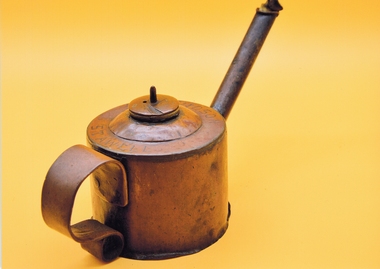
Photograph, Miners Lamp
... Round Miners Lamp with screw filler long spout and wick....Miners Lamps Engraved R Davidson Stawell...Miners Lamp Photograph ...Round Miners Lamp with screw filler long spout and wick.Miners Lamps Engraved R Davidson Stawellmining, gold -
 Clunes Museum
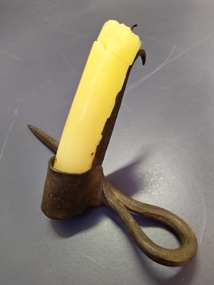
functional object - MINER'S SPIDER LAMP
... MINER'S SPIDER LAMP...MINER'S SPIDER LAMP, METAL CANDLE HOLDER WITH LOOPED HANDLE, HOOK AND SPIKE...Source: https://collection.powerhouse.com.au/object/255879 local history mining mine illumination MINER'S SPIDER LAMP, METAL CANDLE HOLDER WITH LOOPED HANDLE, HOOK AND SPIKE functional object MINER'S SPIDER LAMP ...Made of wrought iron, the spider was either pushed into the side of a tunnel or hammered into a timber mine support. It is an example of the earliest method of illuminating mine workings. Source: https://collection.powerhouse.com.au/object/255879MINER'S SPIDER LAMP, METAL CANDLE HOLDER WITH LOOPED HANDLE, HOOK AND SPIKElocal history, mining, mine illumination -
 Federation University Historical Collection
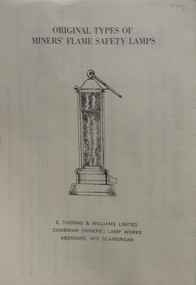
Mining Lamp, E. Thomas and Williams Ltd, Welsh Mining Lamp
... ...miner's lamp...It was purchased from the supplier around mid 1995. The Welsh Miners’ Lamps were ingeniously designed over 180 years ago to alert coal miners to danger. ...Solid Brass traditional miners Flame Safety Lamp with Copper Chimney. The base of this lamp is tooled from solid brass because brass does not spark when it hits rock and is therefore the safest metal to use underground. ...Cambrian Lamps are approved for use in coal mines where methan gas and oxygem deficinecy are hazards. mining lamp miner's lamp thomas and williams wales welsh welsh miners lamp mining cambrian lampworks miners flame safety lamps R. ...This lamp is typical of lamps used in Welsh Coal Mines. It was purchased from the supplier around mid 1995. The Welsh Miners’ Lamps were ingeniously designed over 180 years ago to alert coal miners to danger. It ensures the burning of a protected flame in the presence of explosive gas, by regulating the necessary supply of atmospheric air, and by allowing the products of combustion to pass through without igniting the gaseous atmosphere. If the atmosphere is so heavily charged that noxious gas enters the lamp, its presence will be indicated by a change in the length and color of the flame, and (unless there are exceptional circumstances), the miner has sufficient warning to secure his safety. (http://www.welshminerslamps.com/info_lamp_personaluse.shtml, accessed 06/05/2015) E. Thomas & Williams, Ltd. mining lamps have been in continuous production since 1860. Cambrian Lamps are approved for use in coal mines where methan gas and oxygem deficinecy are hazards.Solid Brass traditional miners Flame Safety Lamp with Copper Chimney. The base of this lamp is tooled from solid brass because brass does not spark when it hits rock and is therefore the safest metal to use underground. The lamp burns lamp oil (kerosene). R. Thomas and Williams Ltd Makers Aberdare Wales Cambrian No 152897mining lamp, miner's lamp, thomas and williams, wales, welsh, welsh miners lamp, mining, cambrian lampworks, miners flame safety lamps -
 Bright & District Historical Society operating the Bright Museum
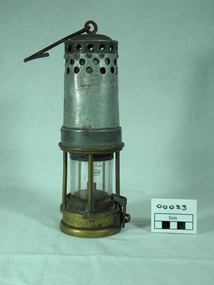
Lamp miner's safety, mid 18th-century
... Lamp miner's safety...Safety lamp made for underground miners to replace naked flame lighting... ( on brass) 3BB BOSS ( on screw off base) 56 and 10 metal and glass oil powered lamp Lamp miner's safety ...Safety lamp made for underground miners to replace naked flame lightingUsed in underground mining in Ovens or Buckland mining districtsmetal and glass oil powered lamp(partly obscured on glass) BRITISH MFP. ( on brass) 3BB BOSS ( on screw off base) 56 and 10mining, lamp, oil, safety, kerosene, underground -
 Federation University Historical Collection
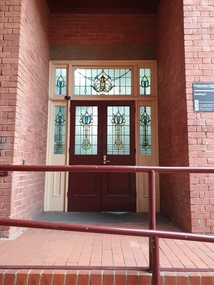
Photograph, Ballarat Technical Art School Stained Glass Windows, 23/04/2020
... ...Miner's Lamp...Stained glass Ballarat Technical Art School. Miner's Lamp Colour photographs of the Stained Glass Window at the Ballarat Technical Art School, A division of the Ballarat School of Mines. ...Colour photographs of the Stained Glass Window at the Ballarat Technical Art School, A division of the Ballarat School of Mines.stained glass, ballarat technical art school., miner's lamp -
 Bendigo Historical Society Inc.
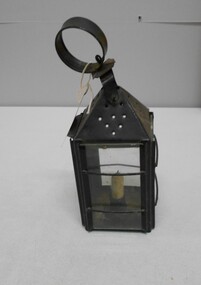
Functional object - MINERS' LAMP
... Black metal miners' lamp, rectangular base with 'pyramid' shaped, perforated, top section. ...GOLD MINING Mining equipment Miners' lamp Black metal miners' lamp, rectangular base with 'pyramid' shaped, perforated, top section. ...Black metal miners' lamp, rectangular base with 'pyramid' shaped, perforated, top section. Circular metal loop attached to top with metal pin. Glass sides with metal cross bar for protection. Candle holder inside lamp.gold mining, mining equipment, miners' lamp -
 Federation University Historical Collection
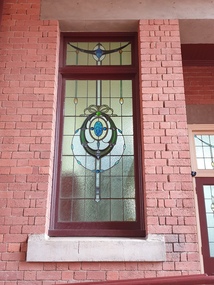
Photograph, Clare Gervasoni, Stained Glass window at the Ballarat School of Mines, 04/2020
... The design features three tools associated with mining, the miners lamp and two hammers. Their is also stained glass on the entrance doors and a window by the entrance....The design features three tools associated with mining, the miners lamp and two hammers. Their is also stained glass on the entrance doors and a window by the entrance. ...The Ballarat Technical Art School building was opened in 1915. It is not known when the stained glass was put into position.Colour digital photograph showing the stained glass at the Ballarat Technical Art School. The mining lamp detail is on the entrance door to the Ballarat School of Mines Technical Art School building. The design features three tools associated with mining, the miners lamp and two hammers. Their is also stained glass on the entrance doors and a window by the entrance.ballarat school of mines, ballarat technical art school, stained glass, miners lamp, entrance -
 Warrnambool and District Historical Society Inc.
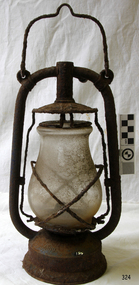
Functional object - Kerosene Lantern, Nier Feuerhand Company, Germany, c. 1930
... Hermann Nier began making miners' lamps and household lanterns in the 1870s in East Germany and in 1893 he and his brother Ernst founded the Nier Feuerhand Company. ...Hermann Nier began making miners' lamps and household lanterns in the 1870s in East Germany and in 1893 he and his brother Ernst founded the Nier Feuerhand Company. ...This lantern was made about 1930 by the Nier Feuerhand Company of Germany. Hermann Nier began making miners' lamps and household lanterns in the 1870s in East Germany and in 1893 he and his brother Ernst founded the Nier Feuerhand Company. By 1930 this company was the world's largest producer of household lanterns and after an interruption in World War Two it was re-established in West Germany and continued until the 1990s with the trade name still in use today. Feuerhand lanterns were used extensively in countries such as Australia because of his strong lighting qualities and its ability to stay alight in external conditions.This lantern has no known local provenance but is retained because it is a fine example of the type of household lighting used in Australian homes, farms and businesses in the 19th and early 20th centuries.This is a kerosene lantern with a metal base and frame holding a plain glass mantle open at the top. A metal handle is attached to loops at the top of the frame. There is a wooden handle at the top to assist in the removal of the glass mantle. The base has an opening with a screw top for the filling with kerosene or other heating liquid and also a rotating wheel on the side for controlling the size of the flame. The glass has printing and a logo etched on to it and the base has printing and a logo. The item is very rusted but appears to have been painted brown.Feuerhand Made in Germany No. 327vintage lighting, feuerhand lanterns -
 Flagstaff Hill Maritime Museum and Village
Functional object - Lamp, Carl Hermann Nier, 1928-1932
... Carl Hermann Nier in 1877 a silverware maker started to produce miners lamps and household lanterns in Beierfeld, Saxonia, East Germany. ...Carl Hermann Nier in 1877 a silverware maker started to produce miners lamps and household lanterns in Beierfeld, Saxonia, East Germany. ...Carl Hermann Nier in 1877 a silverware maker started to produce miners lamps and household lanterns in Beierfeld, Saxonia, East Germany. In January 1902 he established the Nier-Feuerh and company in his home town to produce kerosene lanterns. Carl's three sons Bruno, Curt and Woldemar Nier made the company into the largest lantern producer in the 1930s with Bruno Nier holding many patents for lamps. Lantern production was interrupted by World War II and ceased at the end of 1944 because of the shortage of materials and the advancing Russian army. After the Second World War the company restart the lantern production in 1947 at Luedenscheid and Hohenlockstedt north of Hamburg and fully re-establishing the company in 1950. A domestic item with an interesting history that now is sought after by collectors giving an insight into how hurricane kerosene lamps came into being from a manufacturer in Germany that held numerous patents for oil lamps from 1902 until 1940.Kerosene Lamp with handle, blue in colour, badly rusted. Lamp shade has lever to lift so you can light. Marked "Feuerhand Nr 327" "Made in Germany".flagstaff hill, warrnambool, shipwrecked coast, flagstaff hill maritime museum, shipwreck coast, flagstaff hill maritime village, great ocean road, lamp, kerosene lamp, hurricane lamp, nier-feuerh, carl hermann nier -
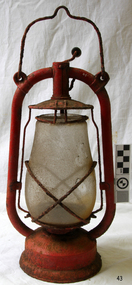 Flagstaff Hill Maritime Museum and Village
Functional object - Lamp, Carl Hermann Nier, 1928-1932
... Carl Hermann Nier in 1877 a silverware maker started to produce miners lamps and household lanterns in Beierfeld, Saxonia, East Germany. ...Carl Hermann Nier in 1877 a silverware maker started to produce miners lamps and household lanterns in Beierfeld, Saxonia, East Germany. ...Carl Hermann Nier in 1877 a silverware maker started to produce miners lamps and household lanterns in Beierfeld, Saxonia, East Germany. In January 1902 he established the Nier-Feuerh and company in his home town to produce kerosene lanterns. Carl's three sons Bruno, Curt and Woldemar Nier made the company into the largest lantern producer in the 1930s with Bruno Nier holding many patents for lamps. Lantern production was interrupted by World War II and ceased at the end of 1944 because of the shortage of materials and the advancing Russian army. After the Second World War the company restart the lantern production in 1947 at Luedenscheid and Hohenlockstedt north of Hamburg and fully re-establishing the company in 1950. A domestic item with an interesting history that now is sought after by collectors giving an insight into how hurricane kerosene lamps came into being from a manufacturer in Germany that held numerous patents for oil lamps from 1902 until 1940.Kerosene lamp with handle, red in colour, badly rusted. Lamp shade has lever to lift so you can light it.Marked "Feuerhand Nr 327" "Made in Germany".flagstaff hill, warrnambool, shipwrecked coast, flagstaff hill maritime museum, shipwreck coast, flagstaff hill maritime village, great ocean road, lamp, kerosene lamp, hurricane lamp, nier-feuerh, carl hermann nier -
 Parks Victoria - State Coal Mine - Wonthaggi
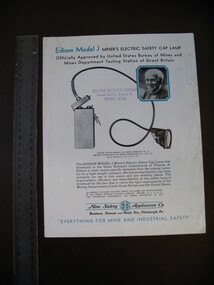
Booklet, Sullivan Machinery Company
... Booklet about the Edison Model J Miners Electric Safety Cap Lamp. ...Booklet about the Edison Model J Miners Electric Safety Cap Lamp. Small booklet with black and blue text, appears to be the manual for the lamp (SCM 0004) Booklet Sullivan Machinery Company ...Booklet about the Edison Model J Miners Electric Safety Cap Lamp. Small booklet with black and blue text, appears to be the manual for the lamp (SCM 0004) -
Federation University Historical Collection
Booklet, The Science and Art of Mining: Handbook for Mining Students and Colliery Managers
... Fifty page book with the following sections: * Geology * Surveying * Lighting of Mines (safety lamp, Dr Clowes' gas detecting lamp, Mueseler and Marsact Safety Lamp * Coal Miners Regulation Act...coal mining colliery mining safety lamp Fifty page book with the following sections: * Geology * Surveying * Lighting of Mines (safety lamp, Dr Clowes' gas detecting lamp, Mueseler and Marsact Safety Lamp * Coal Miners Regulation Act The Science and Art of Mining: Handbook for Mining Students and Colliery Managers Booklet ...Fifty page book with the following sections: * Geology * Surveying * Lighting of Mines (safety lamp, Dr Clowes' gas detecting lamp, Mueseler and Marsact Safety Lamp * Coal Miners Regulation Actcoal mining, colliery, mining, safety lamp -
 Federation University Historical Collection
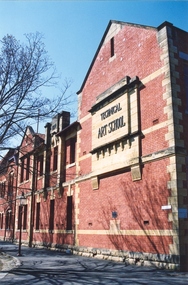
Photograph, Clare Gervasoni, Ballarat School of Mines Technical Art School, c2008, c2008
... Above the door a miner's lamp and pick are featured in the design. ...Above the door a miner's lamp and pick are featured in the design. ...The former Ballarat Circuit Court Building, later the first building of the Ballarat School of Mines, was demolished to make way for a new custom built Art School building. Sir Alexander Peacock opened the Ballarat Technical Art School in July 1915. It cost 10,000 pounds and was constructed by the Public Works Department from plans drawn by the then Art School Principal, Herbert H. Smith. The building contractors were Messrs Gower and Eddards. According to the SMB Annual Report of 1914 'the internal upholstering and fittings have all been carried out in Australian timbers, with Queensland maple largely used throughout.' Before this building was constructed art and craft classes were held in various buildings around Ballarat. The building could be described as federation-art deco in style. It features sandstone insertion with sandstone string coursing. The base of the building is rusticated sandstone. The relief stone panel on the front with the words "Technical Art School" features stone pilaster brackets and corbels. In the centre front can be seen rectangular sandstone pediment with decorative stonework incorporating the date of construction. The windows in the lower floor feature five supporting keystones whereas the upper windows have sandstone lintels. The building also features decorative cast iron downpipes. The entrance on the northern side has attractive leadlight glazing in an art deco style. Above the door a miner's lamp and pick are featured in the design. The building is functional in design with large metal windows in the south wall to ensure good light into the studios. The northern wall has standard double hung windows. The interior of the building features a carved wooden staircase and cast iron ceiling vents. The rear drawing studios can be made into one large studio by opening panelled timber doors. This opening features classical plaster pilasters with a pediment above.Colour photographs of a double storey, red brick building built - the Ballarat Technical Art School, a division of the Ballarat School of Minesballarat school of mines, ballarat technical art school, architecture, art, gribble building -
 Federation University Historical Collection
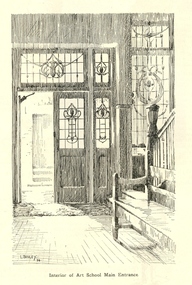
Artwork, other - Artwork, Artwork from the Ballarat School of Mines Students' Magazine, 1934, 1934
... Above the door a miner's lamp and pick are featured in the design. ...Above the door a miner's lamp and pick are featured in the design. ...Sir Alexander Peacock opened the Ballarat Technical Art School in July 1915. It cost 10,000 pounds and was constructed by the Public Works Department from plans drawn by the then Art School Principal, Herbert H. Smith. The building contractors were Messrs Gower and Eddards. According to the SMB Annual Report of 1914 'the internal upholstering and fittings have all been carried out in Australian timbers, with Queensland maple largely used throughout.' Before this building was constructed art and craft classes were held in various buildings around Ballarat. The building could be described as federation-art deco in style. It features sandstone insertion with sandstone string coursing. The base of the building is rusticated sandstone. The relief stone panel on the front with the words "Technical Art School" features stone pilaster brackets and corbels. In the centre front can be seen rectangular sandstone pediment with decorative stonework incorporating the date of construction. The windows in the lower floor feature five supporting keystones whereas the upper windows have sandstone lintels. The building also features decorative cast iron downpipes. The entrance on the northern side has attractive leadlight glazing in an art deco style. Above the door a miner's lamp and pick are featured in the design. The building is functional in design with large metal windows in the south wall to ensure good light into the studios. The northern wall has standard double hung windows. The interior of the building features a carved wooden staircase and cast iron ceiling vents. The rear drawing studios can be made into one large studio by opening panelled timber doors. This opening features classical plaster pilasters with a pediment above. This building is now the Gribble Building on the Federation University Australia SMB Campus.Artwork by students of the Ballarat Technical Art School from the 1934 Ballarat School of Mines Students' Magazine .1) Stairs to the Ballarat Junior Technical School from Grant Street .2) Caricatures by Nornie Gude .3) work by Colin S. Hunt .4) A girl and a rooster by Gilda Gude .5) Self Portrait .6) Main entrance to the Ballarat Technical Art School by Lorna Bailey .7) Artwork from the magazineballarat technical art school, gribble building, gribble, stained glass, white flat, hopwood, bailey, gude, ballarat junior technical school, visual arts -
 Federation University Historical Collection
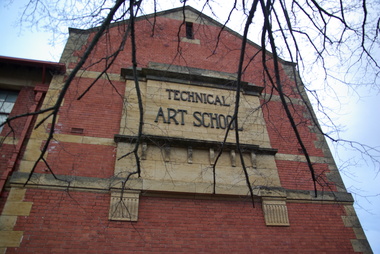
Photograph, Clare Gervasoni, Ballarat School of Mines Technical Art School, c2008, 29/07/2020
... Above the door a miner's lamp and pick are featured in the design. ...Above the door a miner's lamp and pick are featured in the design. ...The former Ballarat Circuit Court Building, later the first building of the Ballarat School of Mines, was demolished to make way for a new custom built Art School building. Sir Alexander Peacock opened the Ballarat Technical Art School in July 1915. It cost 10,000 pounds and was constructed by the Public Works Department from plans drawn by the then Art School Principal, Herbert H. Smith. The building contractors were Messrs Gower and Eddards. According to the SMB Annual Report of 1914 'the internal upholstering and fittings have all been carried out in Australian timbers, with Queensland maple largely used throughout.' Before this building was constructed art and craft classes were held in various buildings around Ballarat. The building could be described as federation-art deco in style. It features sandstone insertion with sandstone string coursing. The base of the building is rusticated sandstone. The relief stone panel on the front with the words "Technical Art School" features stone pilaster brackets and corbels. In the centre front can be seen rectangular sandstone pediment with decorative stonework incorporating the date of construction. The windows in the lower floor feature five supporting keystones whereas the upper windows have sandstone lintels. The building also features decorative cast iron downpipes. The entrance on the northern side has attractive leadlight glazing in an art deco style. Above the door a miner's lamp and pick are featured in the design. The building is functional in design with large metal windows in the south wall to ensure good light into the studios. The northern wall has standard double hung windows. The interior of the building features a carved wooden staircase and cast iron ceiling vents. The rear drawing studios can be made into one large studio by opening panelled timber doors. This opening features classical plaster pilasters with a pediment above.Colour photograph of a sandstone detail on a double storey, red brick building - the Ballarat Technical Art School, a division of the Ballarat School of Minesballarat school of mines, ballarat technical art school, architecture, art, gribble building -
Federation University Historical Collection
Object, Miners Safety Lamp
... staszic poland mining lamp miners lamp safety lamp mining Metal mining safety lamp with ceramic base and hanging hook Miners Safety Lamp Object ...Metal mining safety lamp with ceramic base and hanging hookstaszic, poland, mining lamp, miners lamp, safety lamp, mining -
Federation University Historical Collection
Tool - Object, J.K. Dey & Sons, Mining Safety Lamp, c1967
... (http://www.jkdey.com/history.html, accessed 06/05/2015) mining lamp safety lamp miners lamp calcutta india mining J.K. Dey & Sons Calcutta Velox Velox G Metal mining safety lamp with copper bas and hanging hook. ...The Mining Safety Lamp is used in flammable atmospheres, and consists of a wick lamp with a mesh screen enclosing the flame. It was created for use in coal mines, to reduce the danger of explosions due to the presence of methane and other flammable gases, called firedamp or minedamp. J. K. DEY & SONS was established in 1947 and manufactures Safety Lamps, Torches and Carbide Lamps. In 1967 the Mining Authority of India issued approval of the Velox GL5 Flame Safety Lamp ( Kerosene burning ) self-extinguishing type. At that time J.K. Dey captured the whole mining market of safety lamps in India. (http://www.jkdey.com/history.html, accessed 06/05/2015)Metal mining safety lamp with copper bas and hanging hook. The Dey Velox GL5 Gas Testing Flame Safety Lamp boasts sharp detection of methane gas; detection of the shortage of oxygen; detection of the presence of Carbon-dioxide, is magnetically unlocked; ncludes a top feed device for testing Methane Gas close to the roof; contains an auto extinguisher. J.K. Dey & Sons Calcutta Velox Velox Gmining lamp, safety lamp, miners lamp, calcutta, india, mining -
Federation University Historical Collection
Tool - Object, E. Thomas & Williams Limited, Cambrian Lampworks, Kop Staszic Carbide Lamp
... (http://en.wikipedia.org/wiki/Carbide_lamp, accessed 06/05/2015) miners lamp mining lamp statszic poland carbide mining Metal Carbide Mining lamp with light reflector and hook. ...Carbide lamps, or acetylene gas lamps, are simple lamps that produce and burn acetylene (C2H2) which is created by the reaction of calcium carbide (CaC2) with water. Acetylene gas lamps were used to illuminate buildings, as lighthouse beacons, and as headlights on motor-cars and bicycles. Portable acetylene gas lamps, worn on the hat or carried by hand, were widely used in mining in the early twentieth century. A mining or caving lamp has calcium carbide placed in a lower chamber, the generator. The upper reservoir is then filled with water. A threaded valve or other mechanism is used to control the rate at which the water is allowed to drip into the chamber containing the calcium carbide. By controlling the rate of water flow, the production of acetylene gas is controlled. This, in turn, controls the flow rate of the gas and the size of the flame at the burner, and thus the amount of light it produces. Staszic is a coal mine located in Katowice , in the district Giszowiec, Poland This type of lamp generally has a reflector behind the flame to help project the light forward. An acetylene gas powered lamp produces a bright, broad light. Many cavers prefer this type of unfocused light as it improves peripheral vision in the complete dark. The reaction of carbide with water produces a fair amount of heat independent of the flame. In cold caves, carbide lamp users can use this heat to help stave off hypothermia. When all of the carbide in a lamp has been reacted, the carbide chamber contains a wet paste of slaked lime (calcium hydroxide). This is emptied into a waste bag and the chamber can be refilled. (http://en.wikipedia.org/wiki/Carbide_lamp, accessed 06/05/2015)Metal Carbide Mining lamp with light reflector and hook.miners lamp, mining lamp, statszic, poland, carbide, mining -
 Bright & District Historical Society operating the Bright Museum
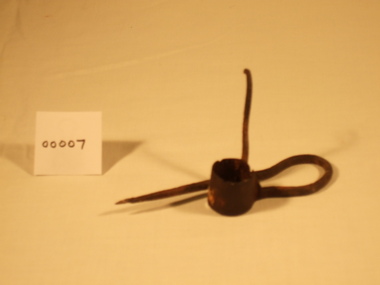
Spider, miner's
... miner and larrikin, had an alluvial claim, next to the Great Alpine Road at Freeburgh, called the "Goat's Arse". This candle holder or "spider" was used by Artie in this and other mines, including the Mount Orient. Relevant to the gold mining history of the area. mining candle lamp ...Artie Dibbin, local Freeburgh identity, cattle grazier, horseman, miner and larrikin, had an alluvial claim, next to the Great Alpine Road at Freeburgh, called the "Goat's Arse". This candle holder or "spider" was used by Artie in this and other mines, including the Mount Orient.Relevant to the gold mining history of the area. Miner's spider made of bent metal.mining, candle, lamp, spider -
 Bright & District Historical Society operating the Bright Museum
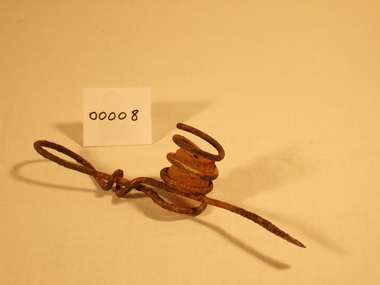
Spider, miner's
... Relevant to the gold mining history of the area. mining candle lamp sider Miner's spider handmade of twisted wire. ...Relevant to the gold mining history of the area.Miner's spider handmade of twisted wire. Contains remnants of candle in situ.mining, candle, lamp, sider -
 Federation University Historical Collection
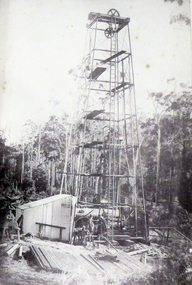
Report, Annual Report for the Secretary For Mines, 1889, 1889
... duncan gillies mining safety cages timbering in mines ballarat minin district statistics chinese fossil plants wolf's miners' safety lamp thorneburry safety lamp wood's point clunes chiltern valley underground survey wire ropes ballarat warrenheip dowling forest Blue soft covered book. ...Blue soft covered book.duncan gillies, mining, safety cages, timbering in mines, ballarat minin district, statistics, chinese, fossil plants, wolf's miners' safety lamp, thorneburry safety lamp, wood's point, clunes, chiltern valley, underground survey, wire ropes, ballarat, warrenheip, dowling forest -
 Bendigo Historical Society Inc.
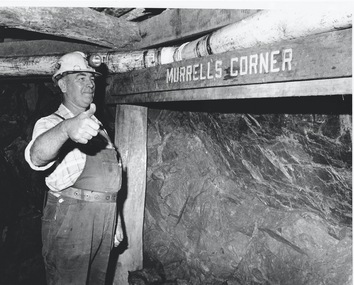
Photograph - AUSTIN COLLECTION: Ray Beer, Central Deborah Gold Mine
... The Central Deborah was very much a hands-on mine and the conditions that the miners worked in would be considered shocking by today's standards – being lowered underground in a cage with only two sides, often working ankle to knee deep in water, filling up to 32 ore trucks a shift by hand which were then pushed a mile or more along rails in the drives, working by carbide lamp, breathing in the fumes and rock dust and communication by bells. ...The Central Deborah was very much a hands-on mine and the conditions that the miners worked in would be considered shocking by today's standards – being lowered underground in a cage with only two sides, often working ankle to knee deep in water, filling up to 32 ore trucks a shift by hand which were then pushed a mile or more along rails in the drives, working by carbide lamp, breathing in the fumes and rock dust and communication by bells. ...Ray Beer was an employee of the Central Deborah Gold Mine. February 15th 2009: Bendigo Advertiser: 'MINING stalwart Raymond Beer has died at the age of 74 after a battle with cancer. He leaves behind an extended family and a legacy in Bendigo’s mining history. Ray was mine manager at the Central Deborah Gold Mine - appointed in 1978 - and led the team that made possible the underground project at the second level. He had a vision to allow visitors to go underground and experience Bendigo’s mining heritage first hand. Ray was responsible for developing the new battery, shaft and poppet head to make this a reality. It took persistence and lots of hard work. Friend and work colleague Bill McNamara said Ray was as good as 10 men. His enthusiasm and work ethic were unprecedented. Ray will be sadly missed by his wife, Thelma, six children, 15 grandchildren, seven brothers, three sisters, his extended family, and friends. He will be remembered for his kindness, tenacity and strength of character. In recognition of his contribution to Bendigo’s mining history, after more than 20 years of service at his retirement, a bronze life-sized statue was unveiled in his honour'. Central Deborah Gold Mine history: At its peak, Central Deborah Gold Mine reached a depth of 412 metres. It has 17 separate levels and 15 kilometres of drives and cross cuts (tunnels). The Central Deborah was very much a hands-on mine and the conditions that the miners worked in would be considered shocking by today's standards – being lowered underground in a cage with only two sides, often working ankle to knee deep in water, filling up to 32 ore trucks a shift by hand which were then pushed a mile or more along rails in the drives, working by carbide lamp, breathing in the fumes and rock dust and communication by bells. Geez, they were ironmen. However, at the time working conditions were considered to be among the best on the goldfields at Central Deborah, after all it was one of the only mines that had hot showers. Following Central Deborah Gold Mine's closure, the Bendigo skyline began to noticeably change. Obvious remnants of mining such as poppet heads, engine rooms, service quarters, battery houses and chimneys were steadily disappearing. After intense lobbying by the local community, the Bendigo City Council purchased the still very much intact Central Deborah Gold Mine in 1970 for a mere $6,000 to ensure that a vital link to Bendigo's historic golden past was maintained. The Bendigo Trust was then formed to oversee the operations of the Central Deborah Gold Mine, which led to the surface of the mine being opened to the public in 1971. Initially the surface was open for just 12 hours a week and as the demand for viewing a part of Bendigo's history increased, so did the opening hours. In 1974 the mine was gazetted as a Public Historical Purposes Reserve and attracted such visitors as H.R.H Prince Charles. By far the greatest shortcoming at this stage was that no one could view the underground workings, as these had become flooded. After what could only be described as a monumental effort by everyone involved, Level 2 of the mine was officially opened to the public by the Premier of Victoria, the Honourable John Cain, on 20 June 1986, which brought to fruition a long standing dream.Black and white photograph. Ray Beer, underground at Central Deborah Gold Mine, standing alongside wooden sign 'Murrell's Corner'. Sign is placed horizontally on timber supports, side of drive visible in background. Ray is wearing bib and brace overalls and hard hat with a belt around his waist. He is giving a 'thumbs up' sign. gold mining, central deborah gold mine, ray beer, mine manager -
 Bendigo Historical Society Inc.
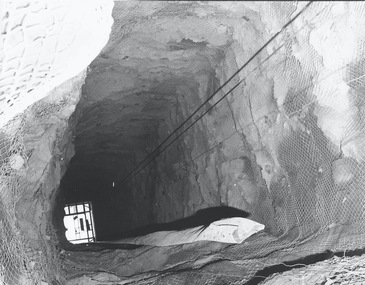
Photograph - AUSTIN COLLECTION: Central Deborah Gold Mine Lift Shaft
... The Central Deborah was very much a hands-on mine and the conditions that the miners worked in would be considered shocking by today's standards – being lowered underground in a cage with only two sides, often working ankle to knee deep in water, filling up to 32 ore trucks a shift by hand which were then pushed a mile or more along rails in the drives, working by carbide lamp, breathing in the fumes and rock dust and communication by bells. ...The Central Deborah was very much a hands-on mine and the conditions that the miners worked in would be considered shocking by today's standards – being lowered underground in a cage with only two sides, often working ankle to knee deep in water, filling up to 32 ore trucks a shift by hand which were then pushed a mile or more along rails in the drives, working by carbide lamp, breathing in the fumes and rock dust and communication by bells. ...Central Deborah Gold Mine history: At its peak, Central Deborah Gold Mine reached a depth of 412 metres. It has 17 separate levels and 15 kilometres of drives and cross cuts (tunnels). The Central Deborah was very much a hands-on mine and the conditions that the miners worked in would be considered shocking by today's standards – being lowered underground in a cage with only two sides, often working ankle to knee deep in water, filling up to 32 ore trucks a shift by hand which were then pushed a mile or more along rails in the drives, working by carbide lamp, breathing in the fumes and rock dust and communication by bells. Geez, they were ironmen. However, at the time working conditions were considered to be among the best on the goldfields at Central Deborah, after all it was one of the only mines that had hot showers. Following Central Deborah Gold Mine's closure, the Bendigo skyline began to noticeably change. Obvious remnants of mining such as poppet heads, engine rooms, service quarters, battery houses and chimneys were steadily disappearing. After intense lobbying by the local community, the Bendigo City Council purchased the still very much intact Central Deborah Gold Mine in 1970 for a mere $6,000 to ensure that a vital link to Bendigo's historic golden past was maintained. The Bendigo Trust was then formed to oversee the operations of the Central Deborah Gold Mine, which led to the surface of the mine being opened to the public in 1971. Initially the surface was open for just 12 hours a week and as the demand for viewing a part of Bendigo's history increased, so did the opening hours. In 1974 the mine was gazetted as a Public Historical Purposes Reserve and attracted such visitors as H.R.H Prince Charles. By far the greatest shortcoming at this stage was that no one could view the underground workings, as these had become flooded. After what could only be described as a monumental effort by everyone involved, Level 2 of the mine was officially opened to the public by the Premier of Victoria, the Honourable John Cain, on 20 June 1986, which brought to fruition a long standing dream.Black and white photograph, looking from bottom of lift shaft towards the surface; light visible at top of shaft. Lift cables and safety mesh on sides of shaft. gold mining, central deborah gold mine, ray beer, mine manager -
 Bendigo Historical Society Inc.
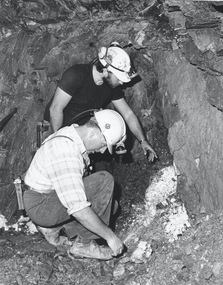
Photograph - AUSTIN COLLECTION: Central Deborah Gold Mine, Possibly 1990's
... The Central Deborah was very much a hands-on mine and the conditions that the miners worked in would be considered shocking by today's standards – being lowered underground in a cage with only two sides, often working ankle to knee deep in water, filling up to 32 ore trucks a shift by hand which were then pushed a mile or more along rails in the drives, working by carbide lamp, breathing in the fumes and rock dust and communication by bells. ...The Central Deborah was very much a hands-on mine and the conditions that the miners worked in would be considered shocking by today's standards – being lowered underground in a cage with only two sides, often working ankle to knee deep in water, filling up to 32 ore trucks a shift by hand which were then pushed a mile or more along rails in the drives, working by carbide lamp, breathing in the fumes and rock dust and communication by bells. ...Central Deborah Gold Mine history: At its peak, Central Deborah Gold Mine reached a depth of 412 metres. It has 17 separate levels and 15 kilometres of drives and cross cuts (tunnels). The Central Deborah was very much a hands-on mine and the conditions that the miners worked in would be considered shocking by today's standards – being lowered underground in a cage with only two sides, often working ankle to knee deep in water, filling up to 32 ore trucks a shift by hand which were then pushed a mile or more along rails in the drives, working by carbide lamp, breathing in the fumes and rock dust and communication by bells. Geez, they were ironmen. However, at the time working conditions were considered to be among the best on the goldfields at Central Deborah, after all it was one of the only mines that had hot showers. Following Central Deborah Gold Mine's closure, the Bendigo skyline began to noticeably change. Obvious remnants of mining such as poppet heads, engine rooms, service quarters, battery houses and chimneys were steadily disappearing. After intense lobbying by the local community, the Bendigo City Council purchased the still very much intact Central Deborah Gold Mine in 1970 for a mere $6,000 to ensure that a vital link to Bendigo's historic golden past was maintained. The Bendigo Trust was then formed to oversee the operations of the Central Deborah Gold Mine, which led to the surface of the mine being opened to the public in 1971. Initially the surface was open for just 12 hours a week and as the demand for viewing a part of Bendigo's history increased, so did the opening hours. In 1974 the mine was gazetted as a Public Historical Purposes Reserve and attracted such visitors as H.R.H Prince Charles. By far the greatest shortcoming at this stage was that no one could view the underground workings, as these had become flooded. After what could only be described as a monumental effort by everyone involved, Level 2 of the mine was officially opened to the public by the Premier of Victoria, the Honourable John Cain, on 20 June 1986, which brought to fruition a long standing dream.Black and white photograph. Two men with hard hats and lights, inspecting quartz outcrop on wall of drive at Central Deborah Gold Mine.gold mining, central deborah gold mine, ray beer, mine manager -
 Bendigo Historical Society Inc.
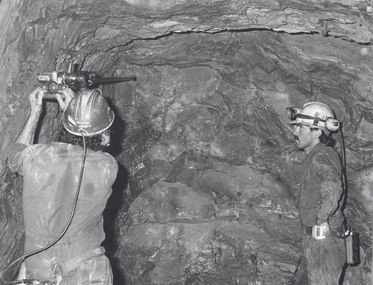
Photograph - AUSTIN COLLECTION: Operating rock drill, Central Deborah Gold Mine, Possibly 1990's
... The Central Deborah was very much a hands-on mine and the conditions that the miners worked in would be considered shocking by today's standards – being lowered underground in a cage with only two sides, often working ankle to knee deep in water, filling up to 32 ore trucks a shift by hand which were then pushed a mile or more along rails in the drives, working by carbide lamp, breathing in the fumes and rock dust and communication by bells. ...The Central Deborah was very much a hands-on mine and the conditions that the miners worked in would be considered shocking by today's standards – being lowered underground in a cage with only two sides, often working ankle to knee deep in water, filling up to 32 ore trucks a shift by hand which were then pushed a mile or more along rails in the drives, working by carbide lamp, breathing in the fumes and rock dust and communication by bells. ...Central Deborah Gold Mine history: At its peak, Central Deborah Gold Mine reached a depth of 412 metres. It has 17 separate levels and 15 kilometres of drives and cross cuts (tunnels). The Central Deborah was very much a hands-on mine and the conditions that the miners worked in would be considered shocking by today's standards – being lowered underground in a cage with only two sides, often working ankle to knee deep in water, filling up to 32 ore trucks a shift by hand which were then pushed a mile or more along rails in the drives, working by carbide lamp, breathing in the fumes and rock dust and communication by bells. Geez, they were ironmen. However, at the time working conditions were considered to be among the best on the goldfields at Central Deborah, after all it was one of the only mines that had hot showers. Following Central Deborah Gold Mine's closure, the Bendigo skyline began to noticeably change. Obvious remnants of mining such as poppet heads, engine rooms, service quarters, battery houses and chimneys were steadily disappearing. After intense lobbying by the local community, the Bendigo City Council purchased the still very much intact Central Deborah Gold Mine in 1970 for a mere $6,000 to ensure that a vital link to Bendigo's historic golden past was maintained. The Bendigo Trust was then formed to oversee the operations of the Central Deborah Gold Mine, which led to the surface of the mine being opened to the public in 1971. Initially the surface was open for just 12 hours a week and as the demand for viewing a part of Bendigo's history increased, so did the opening hours. In 1974 the mine was gazetted as a Public Historical Purposes Reserve and attracted such visitors as H.R.H Prince Charles. By far the greatest shortcoming at this stage was that no one could view the underground workings, as these had become flooded. After what could only be described as a monumental effort by everyone involved, Level 2 of the mine was officially opened to the public by the Premier of Victoria, the Honourable John Cain, on 20 June 1986, which brought to fruition a long standing dream.Black and white photograph. Two men with hard hats and lights standing in front of underground rock surface at Central Deborah Gold Mine. Paul Maker on left hand side of image is operating a small rock drill. John Jeffrey on right hand side is observing the procedure. gold mining, central deborah gold mine, rock drill, underground -
 Bendigo Historical Society Inc.
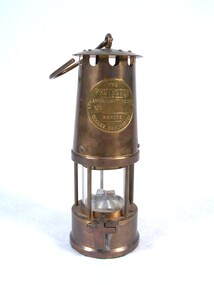
Functional object - Miners Lamp
... MANCHESTER Functional object Miners Lamp ...A Davey Lamp made of brass. and glass. THE PROTECTOR LAMP AND LIGHTING Co Ld No MAKERS ECCLES. MANCHESTERPRESENTED TO THE MAYOR OF BENDIGO BY COUN G HAZELWOOD HOYLAND NETHER URBAN DISTRICT COUNCIL YORKSHIRE ENGLAND. ON THE VISIT OF MR. E B MASHEDER (PRESIDENT OF THE CHAMBER OF TRADE HOYLAND)davey lamp, eccles manchester, mayor of bendigo -
 Bendigo Historical Society Inc.
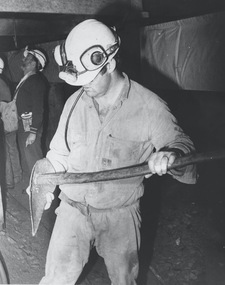
Photograph - AUSTIN COLLECTION: miner with peiican pick, 1987
... Black and white photograph: miner, wearing hard hat and lamp, holding a pelican pick. ...Gold Mining underground Williams United Gold Mine Eaglehawk Western Mining GMC pelican pick Black and white photograph: miner, wearing hard hat and lamp, holding a pelican pick. ...Black and white photograph: miner, wearing hard hat and lamp, holding a pelican pick. Two miners in background. Williams United Gold Mine, Eaglehawk. gold mining, underground, williams united gold mine, eaglehawk, western mining gmc, pelican pick -
 Bendigo Historical Society Inc.
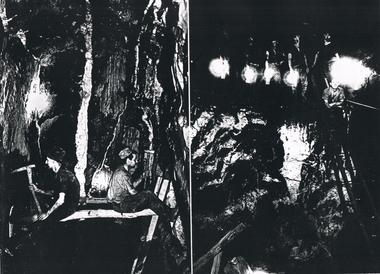
Photograph - LONG GULLY HISTORY GROUP COLLECTION: TWO UNDERGROUND PHOTOS
... miners facing the sides of the shaft prior to the boxing in with red gum slabs. one man is using a sledge hammer and the other is using a hand pick. The right-hand side photo This photo was either the Shenandoah or the New Chum Railway. Five men standing on a higher part are holding lamps...The left side one shows two miners facing the sides of the shaft prior to the boxing in with red gum slabs. one man is using a sledge hammer and the other is using a hand pick. The right-hand side photo This photo was either the Shenandoah or the New Chum Railway. Five men standing on a higher part are holding lamps ...Copies of two dark black and white photos of underground mining at the Hercules mine. The left side one shows two miners facing the sides of the shaft prior to the boxing in with red gum slabs. one man is using a sledge hammer and the other is using a hand pick. The right-hand side photo This photo was either the Shenandoah or the New Chum Railway. Five men standing on a higher part are holding lamps and one man is standing on a ladder.bendigo, history, long gully history group, the long gully history group - two underground photos, hercules, shenandoah, new chum railway, victoria quartz -
 Bendigo Historical Society Inc.
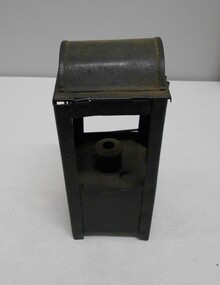
Functional object - MINERS' UNDERGROUND LAMP
... Further research required re operation and provenance of lamp. Functional object MINERS' UNDERGROUND LAMP ...Black metal lamp with handle attached to top. Lamp is a rectangular shape with small curved section on top. Top of lamp hinged to allow access to inside section. No glass on side panels. Small cylindrical section in centre of inside section of lamp presumably to hold light source (candle?) Further research required re operation and provenance of lamp.gold mining, mining equipment, lamp
