
Showing 52 items matching "motivation"
-
 National Vietnam Veterans Museum (NVVM)
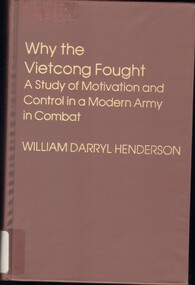
Book, Henderson, William Darryl, Why the Vietcong fought: a study of motivation
... Why the Vietcong fought: a study of motivation...Vietnamese conflict - 1961-1975 Vietcong A study of motivation and control in a modern army in combat. ...A study of motivation and control in a modern army in combat.A study of motivation and control in a modern army in combat.vietnamese conflict - 1961-1975, vietcong -
 RMIT Design Archives
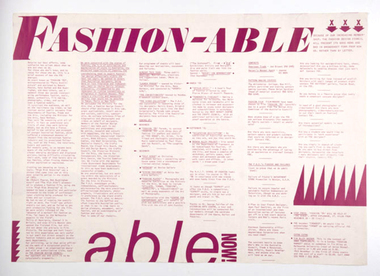
Work on paper - Newsletters, Fashion-Able, 1984
... This issue of the Fashion Design Council of Australia Newsletter describes the role, purpose and motivation of the FDC. It also lists the programme of events for November 1984 - September 1985 and includes minutes of the General Meeting held 16th June 1984. ...It describes the role, purpose and motivation of the Fashion Design Council. It also lists the programme of events for November 1984 - September 1985 and incudes minutes of the General Meeting held 16th June 1984....This issue of the Fashion Design Council of Australia Newsletter describes the role, purpose and motivation of the FDC. It also lists the programme of events for November 1984 - September 1985 and includes minutes of the General Meeting held 16th June 1984. ...The Fashion Design Council (FDC) was founded by Robert Buckingham, Kate Durham and Robert Pearce in 1983. This issue of the Fashion Design Council of Australia Newsletter describes the role, purpose and motivation of the FDC. It also lists the programme of events for November 1984 - September 1985 and includes minutes of the General Meeting held 16th June 1984. The newsletter was designed by graphic designer, Robert Pearce. The FDC ceased operation in 1983, and its archive of some 1,500 artefacts is held at the RMIT Design Archives.The Fashion Design Council of Australia Newsletter. It describes the role, purpose and motivation of the Fashion Design Council. It also lists the programme of events for November 1984 - September 1985 and incudes minutes of the General Meeting held 16th June 1984.fashion design, australian fashion, graphic design -
 Sunshine and District Historical Society Incorporated
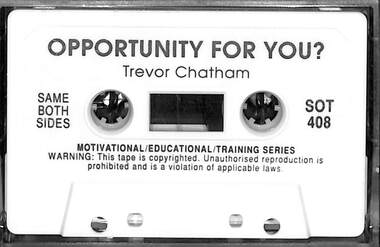
Audio - Opportunity For You Audio Tape
... Trevor Chatham Motivational Educational Training Series...Trevor Chatham Motivational Educational Training Series Audio Tape This audio tape has been digitised. ...Opportunity For You? Trevor Chatham Motivational Educational Training Seriestrevor chatham -
 St Patrick's Old Collegians Association (SPOCA)
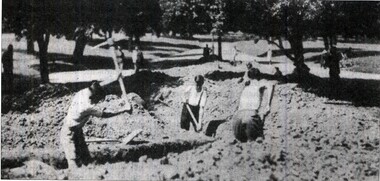
Photograph - Students, 1940s
... 1940 Students digging air-raid shelters in Fitzroy Gardens as safety precaution. (Equal motivation beyond safety was reputedly the provision of tea and sandwiches by the PLC girls from their Albert St college campus.)...1940 Students digging air-raid shelters in Fitzroy Gardens as safety precaution. (Equal motivation beyond safety was reputedly the provision of tea and sandwiches by the PLC girls from their Albert St college campus.) ... -
 Robin Boyd Foundation
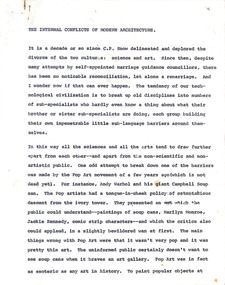
Document - Manuscript, Robin Boyd, The Internal Conflicts of Modern Architecture
... Discusses the artistic and intellectual motivations behind building and the role of the architect. ...Discusses the artistic and intellectual motivations behind building and the role of the architect. ...Discusses the artistic and intellectual motivations behind building and the role of the architect. Robert Venturi is mentioned as being important in the movement towards modern architecture. The question asked is "What is architecture?"Typewritten (c copy), quarto, 20 pagesmodern architecture, pop art, art and science, architects, robert venturi, building, robin boyd, manuscript -
 Alfred Hospital Nurses League - Nursing History Collection
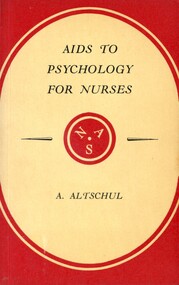
Book - Textbook, A Altschul 1919-2001, Aids to psychology for nurses, 1962
... ...motivation...Author was a pioneerng figure in British psychiatric nursing.her work shifted the role of psychiatric nursing from simple 'doctor's assistant' to a therapeutic partnership with the patient Insight into psychology in the 1960's nursing study and teaching human development personality psychiatric nursing psychological reaction to illness motivation This vintage book was designed to cover psychological principles necessary for nurses in their training and work for effective patient communication and care At the base of the front endpage is a printed black and white donation sticker: black Maltese cross in circle, 'This book was donated to Alfred Archival Association Nursing Division by' Marjorie Connor [handwritten black ink]. previous catalogue number is also written on this label [black ink] Book with red and cream cover. ...This vintage book was designed to cover psychological principles necessary for nurses in their training and work for effective patient communication and careBook with red and cream cover. Front cover has a large cream oval in the centre of which is a red circle with crean margin and the lettter N A S also in cream. Above this circle is the title [black print] and below is the author's name. The oval is superimposed on a red background. Title [black ink] and N A S [white print on individual red circles] are printed on spinenon-fictionThis vintage book was designed to cover psychological principles necessary for nurses in their training and work for effective patient communication and carenursing study and teaching, human development, personality, psychiatric nursing, psychological reaction to illness, motivation -
 Tatura Irrigation & Wartime Camps Museum
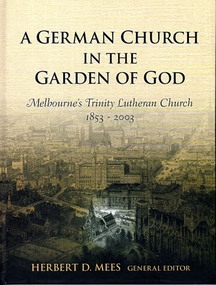
Book, A German Church in the Garden of God, 2004
... Published for 150 years of Melbourne Trinity Lutheran Church, 1853-2003, not only as a source of reference and awareness about its own background but also as an incentive and motivation for continued active engagement of a large membership...Published for 150 years of Melbourne Trinity Lutheran Church, 1853-2003, not only as a source of reference and awareness about its own background but also as an incentive and motivation for continued active engagement of a large membership luthern church melbourne mees hd steiniger d steiniger h rechner p camps tatura ww2 lutheran church books history local Presented to Tatura & District historical Society In. with the compliments of Trinity Lutheran Church of Melbourne. ...Published for 150 years of Melbourne Trinity Lutheran Church, 1853-2003, not only as a source of reference and awareness about its own background but also as an incentive and motivation for continued active engagement of a large membershipCharcoal grey to beige at the top, of a hard cardboard cover book. Cover depicts Melbourne 1887 and title in black text. Back cover depicts "The Sower" window donated in 2004. 2 copiesPresented to Tatura & District historical Society In. with the compliments of Trinity Lutheran Church of Melbourne.luthern church, melbourne, mees hd, steiniger d, steiniger h, rechner p, camps, tatura, ww2, lutheran church, books, history, local -
 Sunshine and District Historical Society Incorporated
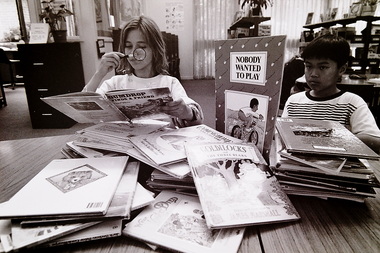
Photograph - Albion Primary School Multiple Sclerosis (MS) Read-A-Thon Emma Christopoulos And Herve Tran 1991 Photographs, Adam Ellwood, 8th May 1991
... Its importance comes from how it blends reading motivation, habit‑building, community engagement, and measurable literacy gains in a way few other programs can match....Its importance comes from how it blends reading motivation, habit‑building, community engagement, and measurable literacy gains in a way few other programs can match. ...A primary school Read‑a‑thon is far more than a fundraising activity, it’s one of the most effective literacy promotion tools schools can run. Its importance comes from how it blends reading motivation, habit‑building, community engagement, and measurable literacy gains in a way few other programs can match.Albion Primary School M.S. Read-A-Thon Emma Christopoulos And Herve Tran 204.5albion primary school, adelaide street, albion, emma christopoulos, herve tran -
 Sunshine and District Historical Society Incorporated
Photograph - Albion Primary School Read-A-Thon For Kids 1990 Photographs, Sharon Cavanagh, 25th May 1990
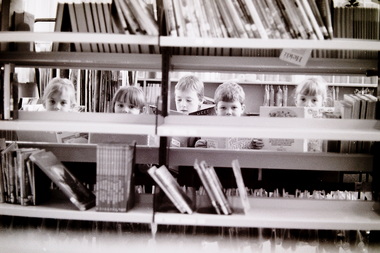
... Its importance comes from how it blends reading motivation, habit‑building, community engagement, and measurable literacy gains in a way few other programs can match....Its importance comes from how it blends reading motivation, habit‑building, community engagement, and measurable literacy gains in a way few other programs can match. ...A primary school Read‑a‑thon is far more than a fundraising activity, it’s one of the most effective literacy promotion tools schools can run. Its importance comes from how it blends reading motivation, habit‑building, community engagement, and measurable literacy gains in a way few other programs can match.Read-A-Thon For Kids Albion Primary School 282.1albion primary school, adelaide street, albion -
 Emerging Writers' Festival
Book, The Reader - Volume Two
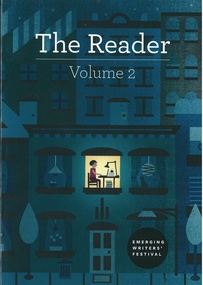
... It’s about writing and everything that comes with that: editing and publishing, motivation and distraction, the missed opportunities and the poetics of failure. ...It’s about writing and everything that comes with that: editing and publishing, motivation and distraction, the missed opportunities and the poetics of failure. ...The Reader brings together ideas and insights into the craft, philosophy and politics of being a writer. It’s about writing and everything that comes with that: editing and publishing, motivation and distraction, the missed opportunities and the poetics of failure. With articles, essays, poems, fiction and artworks, The Reader blurs the lines between the creative and the critical, ultimately asking, what is it to be a writer? The book was published in 2010 and edited by Aden RolfeThe second volume of The Reader, this book has a blue cover depicting a drawn writer at work in the only light room of a building.emerging writers' festival, 2009, literary programming, the wheeler centre, the reader, books, aden rolfe, 2010, -
 Ballarat Tramway Museum
Memorabilia - Decimal conversion - training materials, Motivational Sales Promotions, 1966
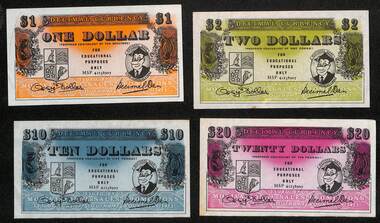
... A $5 note was not introduced until 1967. Printed by Motivational Sales and Promotions of South Melbourne....Memorabilia Decimal conversion - training materials Motivational Sales Promotions ...As part of the process of training workers who handled cash (coins and banknotes) these training material replica (colour only) notes were produced. Has the equivalent value given under the written face value of the note. This set was used by the Post Office. Decimal conversion occurred on 14/2/1966. A $5 note was not introduced until 1967. Printed by Motivational Sales and Promotions of South Melbourne.Demonstrates decimal conversion training materials.Set of four paper colour replica Australian bank notes - in the colours that were actually used - 1$, 2$, $10 and $20. decimal conversion, banking, training, australia post, bank notes -
 Truganina Explosives Reserve Preservation Society Inc (TERPS)
Digitised Oral History – Truganina Explosives Reserve - Tape 9 Andrew Shannon and Judy Hindle, 2018
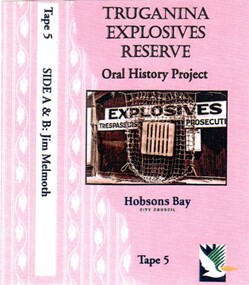
... Judy was an Altona resident and Andrew was an environment planner, first with Parks Victoria and then the local council. Their motivation was to not only save the site for open space but to capture what Judy described as the only in-tact historical site in the area. ...Judy was an Altona resident and Andrew was an environment planner, first with Parks Victoria and then the local council. Their motivation was to not only save the site for open space but to capture what Judy described as the only in-tact historical site in the area. ...The interviews were recorded in 2000 by Bronwen Gray and Alan Young for the production of Unreserved, Stories from Truganina Explosives Reserve, animated stories from past residents, workers and interested people of the Reserve (subject to copyright 2004). Judy Hindle and Andrew Shannon worked jointly on saving the Truganina Explosives Reserve from being sold for development by the State Government. Judy was an Altona resident and Andrew was an environment planner, first with Parks Victoria and then the local council. Their motivation was to not only save the site for open space but to capture what Judy described as the only in-tact historical site in the area. A primary source of information on memories of the Truganina Explosives Reserve and Altona,VictoriaDigital copy of original cassette recorded in 2000 and digitised in 2018chirnside, explosives, tin fence, coastal vegetation, parks victoria, joan kirner, cheetham wetlands, doug grant, gahnia, salt marsh, sand ridges, rob andrew, nessie hardy, aboriginal middens, altona, truganina swamp -
 Kew Historical Society Inc
Photograph, J F C Farquhar, Ratting on the Yarra, 1891
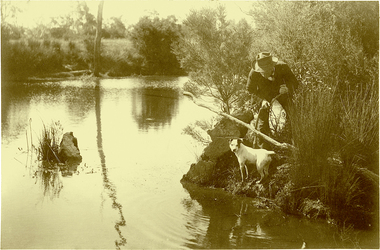
... In Farquhar’s close-up portrait of the rat catcher and his dog, the photographer excludes any extraneous data that otherwise might have provided a spatial or motivational context. The contemporary or the present day viewer is required to construct a narrative to explore or understand what is occurring. ...The individual images have proved essential in identifying buildings and places of heritage value in the district. kew illustrated kew where we live photographic books henry kellett yarra river Ratting on the Yarra In Farquhar’s close-up portrait of the rat catcher and his dog, the photographer excludes any extraneous data that otherwise might have provided a spatial or motivational context. The contemporary or the present day viewer is required to construct a narrative to explore or understand what is occurring. ...At the beginning of the 1890s, the Kew businessman and Town Councillor, Henry Kellett, commissioned J.F.C. Farquhar to photograph scenes of Kew. These scenes included panoramas as well as pastoral scenes. The resulting set of twelve photographs was assembled in an album, Kew Where We Live, from which customers could select images for purchase.The preamble to the album describes that the photographs used the ‘argentic bromide’ process, now more commonly known as the gelatine silver process. This form of dry plate photography allowed for the negatives to be kept for weeks before processing, hence its value in landscape photography. The resulting images were considered to be finely grained and everlasting. Evidence of the success of Henry Kellett’s venture can be seen today, in that some of the photographs are held in national collections.It is believed that the Kew Historical Society’s copy of the Kellett album is unique and that the photographs in the book were the first copies taken from the original plates. It is the first and most important series of images produced about Kew. The individual images have proved essential in identifying buildings and places of heritage value in the district.In Farquhar’s close-up portrait of the rat catcher and his dog, the photographer excludes any extraneous data that otherwise might have provided a spatial or motivational context. The contemporary or the present day viewer is required to construct a narrative to explore or understand what is occurring. The title of the picture might incline a viewer to believe that what they see is an exercise in vermin control, and that the rat concerned might be an introduced black or brown rodent. A more likely scenario is that the rat catcher is focussed on catching ‘rakali’, a native water-rat once widely trapped for its fur. The trapping of rakali for use in the manufacture of fashionable clothing accelerated as introduced furs such as musquash became more expensive. It was not until 1938 that rakali were granted protected status.Ratting on the Yarrakew illustrated, kew where we live, photographic books, henry kellett, yarra river -
 The Beechworth Burke Museum
Audio - Oral History, Jennifer Williams, John Watson, 22 June 2000
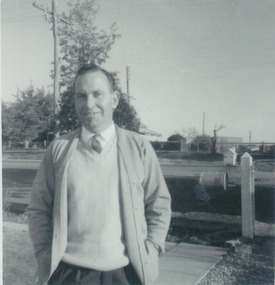
... John Watson's story shows insight to the families that moved to Beechworth and the motivation behind this. It showcases the nuances of life in the district and the day to day ways of living. ...John Watson's story shows insight to the families that moved to Beechworth and the motivation behind this. It showcases the nuances of life in the district and the day to day ways of living. ...John Watson's story shows insight to the families that moved to Beechworth and the motivation behind this. It showcases the nuances of life in the district and the day to day ways of living. This history speaks of land cultivation and the innovation of industry in the region, in particular cattle farming and butchering. Watson's account speaks of the way that the practice of breeding cattle effects the rural lifestyle, and the hardships that come with working on the land. This oral history recording was part of a project conducted by Jennifer Williams in the year 2000 to capture the everyday life and struggles in Beechworth during the twentieth century. This project involved recording seventy oral histories on cassette tapes of local Beechworth residents which were then published in a book titled: Listen to what they say: voices of twentieth century Beechworth. These cassette tapes were digitised in July 2021 with funds made available by the Friends of the Burke.Watson's account is historically significant due to its ability to illustrate the lifestyle and industry of those in Beechworth during the twentieth century. It is a rare insight into the the practices of residents of this time. This oral history also shows deep insight into the social structure of the community. It describes the family and community dynamics over a long period of time, the motivations behind behaviour, and the greater community fabric. This is a digital copy of a recording that was originally captured on a cassette tape. The cassette tape is black with a horizontal white strip and is currently stored in a clear flat plastic rectangular container. It holds up 40 minutes of recordings on each side.John Watson1800s beechworth, 20th century beechworth, beechworth, farming and agriculture, farm, farm work, farmers, farming, cattle, industry, oral history, john watson -
 Flagstaff Hill Maritime Museum and Village
Book - Fictional Stories, Henry James Jr, Washington Square, 1881
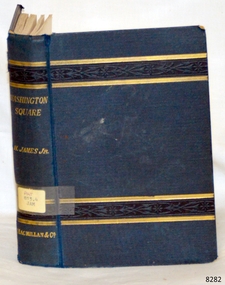
... James was a pioneer of literary realism and the psychological novel, shifting the focus of fiction from external plot to the complex, internal motivations of his characters. The publisher, Macmillan & Co., was one of the premier publishing giants of the Victorian era. ...James was a pioneer of literary realism and the psychological novel, shifting the focus of fiction from external plot to the complex, internal motivations of his characters. The publisher, Macmillan & Co., was one of the premier publishing giants of the Victorian era. ...This volume compiles three distinct early works by Henry James that explore his signature theme of the clash of social manners, money, and personal integrity. Set in 1840s New York City, the masterpiece Washington Square follows Catherine Sloper, a plain, introverted heiress. She is caught between her cold, brilliant father, Dr Austin Sloper, who often views his daughter with disappointment and contempt, and Morris Townsend, a charming but penniless suitor whom the doctor rightly suspects is a mercenary fortune-hunter. It is a devastating, brilliantly controlled story about emotional manipulation and dignity. The second story, The Pension Beaurepas, is a comic yet biting sketch set at a boarding house in Geneva, Switzerland. It satirizes the 'American abroad', focusing on wealthy American tourists and the stark cultural differences between the Old World and the New. The third story, A Bundle of Letters, is an epistolary short story told entirely through letters, featuring a cast of international guests staying at a Paris hotel. Each letter writer reveals their own cultural biases, blind spots, and vanity.Washington Square Author: Henry James Jr Publisher: MacMillian & Co Date: 1881 Further Information: Blue cloth hardcover and spine with spine lettering in gilt. Cover & spine have black patterned strip edged with gilt. The spine has a Library label with inscription. Book has 3 parts 1. Washington Square 2. The Pension Beaurepas 3. A Bundle of LettersfictionThis volume compiles three distinct early works by Henry James that explore his signature theme of the clash of social manners, money, and personal integrity. Set in 1840s New York City, the masterpiece Washington Square follows Catherine Sloper, a plain, introverted heiress. She is caught between her cold, brilliant father, Dr Austin Sloper, who often views his daughter with disappointment and contempt, and Morris Townsend, a charming but penniless suitor whom the doctor rightly suspects is a mercenary fortune-hunter. It is a devastating, brilliantly controlled story about emotional manipulation and dignity. The second story, The Pension Beaurepas, is a comic yet biting sketch set at a boarding house in Geneva, Switzerland. It satirizes the 'American abroad', focusing on wealthy American tourists and the stark cultural differences between the Old World and the New. The third story, A Bundle of Letters, is an epistolary short story told entirely through letters, featuring a cast of international guests staying at a Paris hotel. Each letter writer reveals their own cultural biases, blind spots, and vanity.flagstaff hill, warrnambool, shipwrecked coast, flagstaff hill maritime museum, maritime museum, shipwreck coast, flagstaff hill maritime village, great ocean road, book, pattison collection, warrnambool library, warrnambool mechanics’ institute, ralph eric pattison, corangamite regional library service, warrnambool city librarian, mechanics’ institute library, victorian library board, warrnambool books and records, warrnambool children’s library, washington square, henry james jr -
 Bendigo Historical Society Inc.
Magazine - THE AUSTRALIAN STANDARD NOVEMBER 2002 VOL 23 NO 10
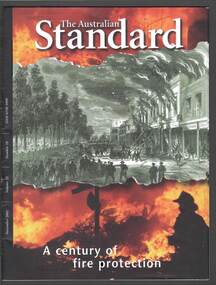
... An article mentions that on 25 August 1871, 18 year old Edward Hope Kirkby, watched the burning of the Beehive Building, home of the Bendigo Stock Exchange, this may have been his motivation to become one of the most prolific inventors of communication apparatus and fire protection equipment in Australia. ...An article mentions that on 25 August 1871, 18 year old Edward Hope Kirkby, watched the burning of the Beehive Building, home of the Bendigo Stock Exchange, this may have been his motivation to become one of the most prolific inventors of communication apparatus and fire protection equipment in Australia. ...Magazine titled 'The Australian Standard'. Dated November 2002 Volume 23 Number 10. Contains new and revised Australian Standards, publications and projects. Front cover has a part sketch of the Beehive Building, home of the Bendigo Stock Exchange, in Sandhurst (now Bendigo). Above and below the sketch is a part coloured picture of a fireman at a fire. An article mentions that on 25 August 1871, 18 year old Edward Hope Kirkby, watched the burning of the Beehive Building, home of the Bendigo Stock Exchange, this may have been his motivation to become one of the most prolific inventors of communication apparatus and fire protection equipment in Australia. Has a small full picture of the Burning of the Beehive Stores and Chambers, Sandhurst and picture of the E H kirkby Fire Alarm System.magazine, organization, standards australia, the australian standard november 2002 volume 23 number 10, felicity pontoni, tom godfrey, mark elder, pmp print, beehive building, bendigo stock exchange, edward hope kirkby, la trobe picture collection, state library of victoria, barry lee oam, brian kirkby, david michel -
 Wodonga & District Historical Society Inc
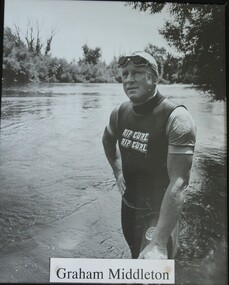
Photograph - Portrait - Graham Middleton, Rob Elliott, 1993
... This feat was recognised in The Guiness Book of Records and was sponsored by the Rotary Club of Corryong. His motivation was to raise money to help children with cancer. ...This feat was recognised in The Guiness Book of Records and was sponsored by the Rotary Club of Corryong. His motivation was to raise money to help children with cancer. ...Graham Wells Middleton was born in Corryong in Northeast Victoria in 1935. He was the first person to swim the length of the Murray River. He began on November 30th 1991 at Bringenbong, near Corryong. After completing a distance of 2366 kilometres over 138 consecutive days, Graham finished his marathon swim in Lake Alexandrina, South Australia on April 14th 1992. This feat was recognised in The Guiness Book of Records and was sponsored by the Rotary Club of Corryong. His motivation was to raise money to help children with cancer. In the process he raised $100,000 for cancer research which made Graham Middleton the first individual in Australia to raise $100,000 for the cause. In the weeks and months after his swim ended, donations continued to be made, with the final total exceeding $200,000. The proceeds raised by the swim were donated to " Kids 'n' Cancer" and the Australian Rotary Health Research Fund. Graham Middleton died on October 27, 1995This photo is significant as Graham Middleton was a resident of Northeast Victoria who made an outstanding contribution to the community and to supporting medical research as a result as the Murray River swim depicted in this image.A black and white photo of Graham Middleton, a marathon swimmer who swam the Murray River. The photo has been mounted in a metal frame.graham middleton, murray river, murray river swim -
 Ringwood and District Historical Society
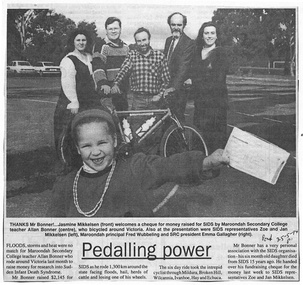
Article, Maroondah Secondary College - Newspaper article 25-5-1994 - "Pedalling Power"
... Despite facing floods, storms, hail, cattle on the road, and even losing a wheel, he raised $2,145 during the six‑day journey, which took him through towns including Mildura, Broken Hill, Wilcannia, Ivanhoe, Hay, and Echuca. Bonner’s motivation is deeply personal: his six‑month‑old daughter died from SIDS 15 years earlier. ...Despite facing floods, storms, hail, cattle on the road, and even losing a wheel, he raised $2,145 during the six‑day journey, which took him through towns including Mildura, Broken Hill, Wilcannia, Ivanhoe, Hay, and Echuca. Bonner’s motivation is deeply personal: his six‑month‑old daughter died from SIDS 15 years earlier. ...Newspaper clipping - The article reports on Allan Bonner, a Maroondah Secondary College teacher who completed a 1,300‑kilometre bicycle ride around Victoria to raise funds for Sudden Infant Death Syndrome (SIDS) research. Despite facing floods, storms, hail, cattle on the road, and even losing a wheel, he raised $2,145 during the six‑day journey, which took him through towns including Mildura, Broken Hill, Wilcannia, Ivanhoe, Hay, and Echuca. Bonner’s motivation is deeply personal: his six‑month‑old daughter died from SIDS 15 years earlier. The fundraising cheque was presented at Maroondah Secondary College, where young Jasmine Mikkelsen accepted it on behalf of the organisation. Also present were SIDS representatives Zoe Mikkelsen and Jan Mikkelsen, school principal Fred Wubbeling, and SRC president Emma Gallagher. (Co-pilot summary 8/8/2026)Caption "Thanks Mr Bonner!" -
 Ballaarat Mechanics' Institute (BMI Ballarat)
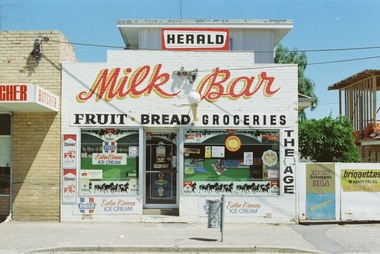
Landsborough St Milk Bar, Geoff Wallis, 1970s
... The photographs were to be the starting point for an artistic project but this didn’t eventuate. Though my motivation was primarily artistic I was also interested in milk bars as familiar and essential parts of daily life. ...The photographs were to be the starting point for an artistic project but this didn’t eventuate. Though my motivation was primarily artistic I was also interested in milk bars as familiar and essential parts of daily life. ...This photograph is held in the Ballaarat Mechanics' Institute Audio Visual Collection. Please contact BMI for all print and usage inquiries. Ballarat artist and educator Geoff Wallis took a series of photographs of Ballarat Milk Bars in the 1970s. This is one of his favourites. He notes: “My ‘local’ is not the pub that stands on a corner only 100 metres from my home but the milk bar that is across the road from the pub in Peel Street North. It is an extraordinary example of the milk bar fulfilling its time-honoured role of being every suburb or town’s Aladdin’s Cave. It is well worth a visit. I photographed this milk bar in 1979 when it was a much more conventional shop and then continued on taking photographs of all the milk bars I could locate around Ballarat. The photographs were to be the starting point for an artistic project but this didn’t eventuate. Though my motivation was primarily artistic I was also interested in milk bars as familiar and essential parts of daily life. Their accoutrements of Peters Ice Cream cones, newspaper headlines, and colourful signage made them distinctive features of the townscape. Milk bars had been part of my life from when I first was sent to ‘the shop’ as a little boy clutching a ration card. My parents bought a milk bar in Camberwell when I was nine and though I only lived there for a year, it is still vivid in my mind. Lollies, comics, ice cream, milkshakes -- all the treasures essential for a happy childhood -- awaited any child who pushed through the door. Though milk bars were once scattered throughout the city, competition from many sources is making them an endangered species.”ballarat, milk bar, shop, landsborough, herald, groceries -
 National Wool Museum
Film - Transfiguration, Max Bell, Streamline Media and Communications Group Pty Ltd, 2025
... The films feature artist interviews from three finalists from We the Makers, providing insights into their personal influences, the motivations behind their material choices and the impact of culture on artistic practice. ...The films feature artist interviews from three finalists from We the Makers, providing insights into their personal influences, the motivations behind their material choices and the impact of culture on artistic practice. ...One of three We The Makers videos commissioned by the Programs and Education department at the National Wool Museum to assist in learning and engagement alongside the We The Makers Sustainable Fashion Prize 2025 exhibition at the National Wool Museum. The films feature artist interviews from three finalists from We the Makers, providing insights into their personal influences, the motivations behind their material choices and the impact of culture on artistic practice. This film features designer Max Bell and his work 'Transfiguration'. Artist Statement: This collection, ‘Transfiguration’, originally stems from the way Brutalist architecture spaces, commonly cold and geometric, have been transformed with plants and organic matter to create an interesting dichotomy. Max translates this to his collection through viewing it as a growing canvas with the collection beginning as geometric and technological based looks to then morphing into an ethereal and organic look with the garments being taken over by moss slowly growing on the collection. Max has depicted this moss through the rug making process of tufting, highlighting the differing greens and levels throughout through a mastery of these skills. These processes are then depicted onto silhouettes commonly within the gorpcore aesthetic further promoting the outdoor element of the collection. Max utilises a series of ripstop fabrics and technical style nylons commonly associated with the outdoors which is juxtaposed by the wool yarn of the tufting promoting themes of renewability and nature. This works represents his design aesthetic through common use of functional fabrics, a fascination with textures and use of uncommon fabrics to try and create an innovative design or to explore an untapped idea. Through this collection the sustainable practice arises from the use of dead stock fabrics and primary use of wool yarn a notoriously renewable material that leaves a positive impact.Three minute and eleven second digital video with audio. fashion, design, max bell, we the makers, sustainability, textiles -
 National Wool Museum
Film - 16o8, Abha Gupta, Streamline Media and Communications Group Pty Ltd, 2025
... The films feature artist interviews from three finalists from We the Makers, providing insights into their personal influences, the motivations behind their material choices and the impact of culture on artistic practice. ...The films feature artist interviews from three finalists from We the Makers, providing insights into their personal influences, the motivations behind their material choices and the impact of culture on artistic practice. ...One of three We The Makers videos commissioned by the Programs and Education department at the National Wool Museum to assist in learning and engagement alongside the We The Makers Sustainable Fashion Prize 2025 exhibition at the National Wool Museum. The films feature artist interviews from three finalists from We the Makers, providing insights into their personal influences, the motivations behind their material choices and the impact of culture on artistic practice. This film features designer Abha Gupta and her work '1608'. Artist Statement: ‘16o8' collection by designer Abha Gupta pays tribute to the historic moment when the British first arrived in India, a pivotal event that reshaped the country's fashion landscape for over two centuries. She launched this collection under her brand name, ‘Antiek East’. Designed under the mentorship of RMIT professor Blake Barns, the collection draws inspiration from the era of British colonisation, reflecting its profound influence on Indian fashion history. Drape suit jacket in the collection is meticulously handwoven and handmade by local artisans using natural fibres, embodying a commitment to traditional craftsmanship. Beyond creating aesthetically compelling garments, ‘16o8’ project served as a catalyst for social impact. By prioritising fair wages and opportunities for marginalised communities, she uplifted artisans and craftspeople, embedding sustainability across all levels and stages of her endeavour. This commitment not only resonated through the ethical sourcing of materials but also through the conscientious production practices that minimise environmental impact. Circular design principles guided the approach of this project, emphasising materials that are biodegradable and minimise environmental impact. Natural dyeing processes not only uphold traditional craftsmanship but also reduce harmful chemical runoff into ecosystems. By choosing sustainable fabrics and methods, the project aimed to create garments that are not only beautiful but also ethically and environmentally sound.Three minute eighteen second digital video with audio. abha gupta, fashion, designer, film, we the makers, sustainability, textiles -
 National Wool Museum
Film - Sustain Our Stains, Corin Cocoran, Streamline Media and Communications Group Pty Ltd, 2025
... The films feature artist interviews from three finalists from We the Makers, providing insights into their personal influences, the motivations behind their material choices and the impact of culture on artistic practice. ...The films feature artist interviews from three finalists from We the Makers, providing insights into their personal influences, the motivations behind their material choices and the impact of culture on artistic practice. ...One of three We The Makers videos commissioned by the Programs and Education department at the National Wool Museum to assist in learning and engagement alongside the We The Makers Sustainable Fashion Prize 2025 exhibition at the National Wool Museum. The films feature artist interviews from three finalists from We the Makers, providing insights into their personal influences, the motivations behind their material choices and the impact of culture on artistic practice. This film features designer Corin Corcoran and their work 'Sustain Our Stains'. Artist Statement: This work explores the tension between what we discard and what remains. The dress is a meditation on waste, memory, and the marks we leave behind — often without realising. Constructed from reclaimed textiles, the surface has been stained using collected metal waste. Rust, born from decay, becomes the medium through which this piece tells its story. These marks aren’t artificial embellishments — they are scars left by objects that were once useful, now forgotten. The process of rusting becomes a slow, quiet collaboration between time, weather, and the materials we throw away. At the heart of this work is the idea that nothing truly disappears. Even in decay, objects carry history — and they imprint that history onto the world around them. The rusted stains serve as a metaphor for the often-invisible impact of human consumption. We discard things — metal scraps, clothing, time, people — without thinking about the residue they leave behind. This dress captures those traces, preserving them in a way that’s both intimate and unsettling. The piece asks the viewer to consider the long life of what we call waste. It challenges us to look more closely at what we overlook, and to understand that the things we abandon continue to speak, to stain, to shape. In a world striving for sustainability, perhaps we must also learn to sustain our stain — to acknowledge and carry the weight of our impact, rather than pretending it disappears. This is a dress made not only from waste, but with waste — a collaboration with rust, with the discarded, with the forgotten — inviting reflection on permanence, responsibility, and the quiet weight of residue.Three minute fifty one second digital video file with audio.fashion, sustainability, design, we the makers, film, documentary, artist, corin corcoran, education -
 Flagstaff Hill Maritime Museum and Village
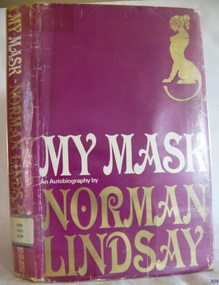
Book - Biography, Norman Lindsay (Artist), My Mask, 1975
... He was influenced by Nietzsche's philosophy and explored themes of morality, human motivation and the absurdity of existence. Across his career he authored eleven novels, including Curate in Bohemia (1913), Redheap (1930), Age of Consent (1935) and Rooms and Houses, in addition to two children's books (The Magic Pudding, 1918, and The Flyaway Highway, 1936). ...He was influenced by Nietzsche's philosophy and explored themes of morality, human motivation and the absurdity of existence. Across his career he authored eleven novels, including Curate in Bohemia (1913), Redheap (1930), Age of Consent (1935) and Rooms and Houses, in addition to two children's books (The Magic Pudding, 1918, and The Flyaway Highway, 1936). ...My Mask is Norman Lindsay's autobiography, an account written by Lindsay of himself, running to 245 pages with numerous photographic illustrations, published in boards with a dust jacket by Angus & Robertson in Sydney in 1970. Notably, it was actually written in 1957 but wasn't published until after Lindsay's death, and one source specifies it was released by his widow the year after he died. It covers ten pages of front matter plus 205 pages of text and 28 pages of illustrations, bound in blue cloth. It was the last of three autobiographical works Lindsay produced, and his final book overall. The work capped a 56-year writing career that began with his first novel in 1913. As a genre piece, it's a memoir/reflection on his own life and creative persona; the title itself, My Mask, signals that it's presented as a curated self-portrait rather than a full confessional.Hard cover book. My Mask Author: Norman Lindsay Publisher: Angus & Robertson Date: 1970 Further Information: Hardcover with dust jacket lettering and patterning to spine. The spine has a Library label with an inscription.non-fictionMy Mask is Norman Lindsay's autobiography, an account written by Lindsay of himself, running to 245 pages with numerous photographic illustrations, published in boards with a dust jacket by Angus & Robertson in Sydney in 1970. Notably, it was actually written in 1957 but wasn't published until after Lindsay's death, and one source specifies it was released by his widow the year after he died. It covers ten pages of front matter plus 205 pages of text and 28 pages of illustrations, bound in blue cloth. It was the last of three autobiographical works Lindsay produced, and his final book overall. The work capped a 56-year writing career that began with his first novel in 1913. As a genre piece, it's a memoir/reflection on his own life and creative persona; the title itself, My Mask, signals that it's presented as a curated self-portrait rather than a full confessional.shipwrecked-coast, flagstaff-hill, flagstaff-hill-maritime-museum, warrnambool, maritime-museum, shipwreck-coast, flagstaff-hill-maritime-village, shipwrecked-artefact, book, pattison collection, warrnambool library, warrnambool mechanics’ institute, ralph eric pattison, corangamite regional library service, warrnambool city librarian, mechanics’ institute library, victorian library board, warrnambool books and records, warrnambool children’s library, my mask, norman lindsay -
 The Beechworth Burke Museum
Photograph - Lantern Slide, c1900
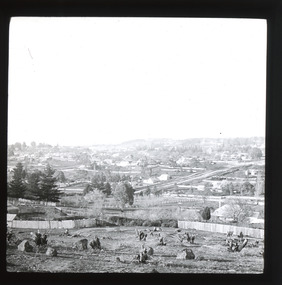
... Miners from Snake Valley lobbied the Victorian Government in 1855 to make land available for sale for farming purposes as an alternative occupation and income for people who wished to stay in the region but move away from gold mining. A secondary motivation was to increase the supply of fresh produce and decrease prices of items that otherwise needed to be transported from Melbourne or other regions. ...Miners from Snake Valley lobbied the Victorian Government in 1855 to make land available for sale for farming purposes as an alternative occupation and income for people who wished to stay in the region but move away from gold mining. A secondary motivation was to increase the supply of fresh produce and decrease prices of items that otherwise needed to be transported from Melbourne or other regions. ...Miners from Snake Valley lobbied the Victorian Government in 1855 to make land available for sale for farming purposes as an alternative occupation and income for people who wished to stay in the region but move away from gold mining. A secondary motivation was to increase the supply of fresh produce and decrease prices of items that otherwise needed to be transported from Melbourne or other regions. Forty-three country lots were initially offered in the Three Mile area, ranging in size from two to ninety acres and costing from £1 to £3 per acre. An additional eighty-five country lots were auctioned later in the year, in addition to many smaller suburban lots. More lots were offered than sold, initially, but this represented conditions of sale requiring the total purchase cost up front which many people interested in purchasing could not afford, especially as land purchased for farming would accrue substantial additional costs for clearing and labour before becoming productive. Further lobbying activities and the election of parliamentary members sympathetic to the cause took place through the 1850s. Ovens Parliamentary Member, Daniel Cameron, was re-elected in 1856 on a platform of surveying the land for public selection with deferred payment options. Land reform remained an issue in the area through the 1850s and early 1860s, impacting broader decisions in the new State of Victoria relating to voting rights, use of Crown land and the farming of land that wasn't always suitable for the purpose. This photograph depicts Beechworth in approximately 1900, after several waves of land sales resulted in increasingly levels of development. Lantern slides, sometimes called 'magic lantern' slides, are glass plates on which an image has been secured for the purpose of projection. Glass slides were etched or hand-painted for this purpose from the Eighteenth Century but the process became more popular and accessible to the public with the development of photographic-emulsion slides used with a 'Magic Lantern' device in the mid-Nineteenth Century. Photographic lantern slides comprise a double-negative emulsion layer (forming a positive image) between thin glass plates that are bound together. A number of processes existed to form and bind the emulsion layer to the base plate, including the albumen, wet plate collodion, gelatine dry plate and woodburytype techniques. Lantern slides and magic lantern technologies are seen as foundational precursors to the development of modern photography and film-making techniques.This glass slide is significant because it provides insight into Beechworth's built environment and infrastructure in the early Twentieth Century, around the time of Australia's Federation. It is also an example of an early photographic and film-making technology in use in regional Victoria in the time period.Thin translucent sheet of glass with a square-edged image printed on the front and framed in a black backing. It is held together by metal strips to secure the edges of the slide.burke museum, beechworth, lantern slide, slide, glass slide, plate, burke museum collection, photograph, monochrome, indigo shire, north-east victoria, farming, squatters, miners, agriculture, land-clearing, land reform, daniel cameron, land sales, three mile, snake valley, tarrawingee -
 Federation University Historical Collection
Book, University of Ballarat Research + Innovation Digest
... Contents include: * Technologies that combat climate change by Alberto Boretti * Case Studies in keeping food safe by Benu Adhikari * Learning to lead - leading to learn by Neil Trivett * Depression, diabetes and motivation by Mirella di Benedetto * Valueing Lake Wendouree by Julian Lowe * What's in a Name by Laura Kostanski * Optimizing regional and international research by John Yerwood * Sport, physical activity and health research by Warren paynbe * Climate secrets in sediments by Peter Gell * UB Sports Injuty Centre supported by IOC * Men's Sheds and other learning places by Barry Golding * New economy, new work, new qualificatins by Erica Smith * Cross-Cultural communications in a shrinking world by Georgina Tsoldis * Child Protection and family services reform by Angela Murphy * Making a difference for older Victorians by Sally Wellard * Making good (and goodly) profits by Jackie Tuck * Not too much 'ordinary' about The Ordinary by Lorraine Sim * Gaming machines and regional gamblers by John McDonald * Toe nail clippings reveal their secrets by Kim Dowling * Magnificently preserves magafauna trackways in the Victorian volcanic plains * A stuttering start for a stunning outcome * Supporting patients and theor carers * Out od Africa and beyond * Taking a hard lok to avaid hard knocks * Skilling people for business success by Andy Smith * Promoting risk awareness in industry by David Borys * Researching China's rise and ris by Mike Willis * Sex hormones link to heart disease by Fadi Charchar * Human Factors in computer security * Are our rivers up the creek by Peter Gell * Wmen as managers and entrepreneurs by Glenice Wood * Revisioning values and norms by Jane Mummery * 'Wimmera' - an Epic Poem by Homer Rieth * Recycling, consumerism, climate change and art practice by Marie Purtill * Investing in ecologically sustainable development by jerry Courvisanos * Indigenous peoples of the goldfields * Astists install images of sustanability by Jill Orr "Addressing disadvantage and nequality with passion by John Smyth * Breaking up insulin hexamers by Mark Myers ...Contents include: * Technologies that combat climate change by Alberto Boretti * Case Studies in keeping food safe by Benu Adhikari * Learning to lead - leading to learn by Neil Trivett * Depression, diabetes and motivation by Mirella di Benedetto * Valueing Lake Wendouree by Julian Lowe * What's in a Name by Laura Kostanski * Optimizing regional and international research by John Yerwood * Sport, physical activity and health research by Warren paynbe * Climate secrets in sediments by Peter Gell * UB Sports Injuty Centre supported by IOC * Men's Sheds and other learning places by Barry Golding * New economy, new work, new qualificatins by Erica Smith * Cross-Cultural communications in a shrinking world by Georgina Tsoldis * Child Protection and family services reform by Angela Murphy * Making a difference for older Victorians by Sally Wellard * Making good (and goodly) profits by Jackie Tuck * Not too much 'ordinary' about The Ordinary by Lorraine Sim * Gaming machines and regional gamblers by John McDonald * Toe nail clippings reveal their secrets by Kim Dowling * Magnificently preserves magafauna trackways in the Victorian volcanic plains * A stuttering start for a stunning outcome * Supporting patients and theor carers * Out od Africa and beyond * Taking a hard lok to avaid hard knocks * Skilling people for business success by Andy Smith * Promoting risk awareness in industry by David Borys * Researching China's rise and ris by Mike Willis * Sex hormones link to heart disease by Fadi Charchar * Human Factors in computer security * Are our rivers up the creek by Peter Gell * Wmen as managers and entrepreneurs by Glenice Wood * Revisioning values and norms by Jane Mummery * 'Wimmera' - an Epic Poem by Homer Rieth * Recycling, consumerism, climate change and art practice by Marie Purtill * Investing in ecologically sustainable development by jerry Courvisanos * Indigenous peoples of the goldfields * Astists install images of sustanability by Jill Orr "Addressing disadvantage and nequality with passion by John Smyth * Breaking up insulin hexamers by Mark Myers University of Ballarat Research + Innovation Digest Book Book ...Black soft covered book of 48 pages. Contents include: * Technologies that combat climate change by Alberto Boretti * Case Studies in keeping food safe by Benu Adhikari * Learning to lead - leading to learn by Neil Trivett * Depression, diabetes and motivation by Mirella di Benedetto * Valueing Lake Wendouree by Julian Lowe * What's in a Name by Laura Kostanski * Optimizing regional and international research by John Yerwood * Sport, physical activity and health research by Warren paynbe * Climate secrets in sediments by Peter Gell * UB Sports Injuty Centre supported by IOC * Men's Sheds and other learning places by Barry Golding * New economy, new work, new qualificatins by Erica Smith * Cross-Cultural communications in a shrinking world by Georgina Tsoldis * Child Protection and family services reform by Angela Murphy * Making a difference for older Victorians by Sally Wellard * Making good (and goodly) profits by Jackie Tuck * Not too much 'ordinary' about The Ordinary by Lorraine Sim * Gaming machines and regional gamblers by John McDonald * Toe nail clippings reveal their secrets by Kim Dowling * Magnificently preserves magafauna trackways in the Victorian volcanic plains * A stuttering start for a stunning outcome * Supporting patients and theor carers * Out od Africa and beyond * Taking a hard lok to avaid hard knocks * Skilling people for business success by Andy Smith * Promoting risk awareness in industry by David Borys * Researching China's rise and ris by Mike Willis * Sex hormones link to heart disease by Fadi Charchar * Human Factors in computer security * Are our rivers up the creek by Peter Gell * Wmen as managers and entrepreneurs by Glenice Wood * Revisioning values and norms by Jane Mummery * 'Wimmera' - an Epic Poem by Homer Rieth * Recycling, consumerism, climate change and art practice by Marie Purtill * Investing in ecologically sustainable development by jerry Courvisanos * Indigenous peoples of the goldfields * Astists install images of sustanability by Jill Orr "Addressing disadvantage and nequality with passion by John Smyth * Breaking up insulin hexamers by Mark Myers david battersby, research, frank stagnitti, jill orr, john smyth, fred cahir, peter gell, andy smith, grant meredith, stuttering, kim dowling, stephen carey, megafauna, john mcdonaldgaming machines, men's sheds, barry golding -
Federation University Historical Collection
Book, University of Ballarat Research + Innovation Digest
... Contents include: * Case studies in keeping food safe, Benu Adhikari * technologies that combat climate change - Alberto Boretti *Learning t lead- leading to learn, Neil Trivett * Depression, diabities and motivation, Mirella Di Benedetto * Valuing Lake Wendouree, Julian Lowe * What's in a name, Laura Kostanski * Optimizing Regional & International Research, John Yearwood * Sport, physical activity and health research, Warren Payne * Climate secrets in the sediments, Peter Gell * Injury prevention and saftey promotion research theme, UB Sports injury centre, Caroline Finch, Men's Sheds & other learning places, Barry Golding * New economy, new work, new qualifications, Erica Smith * Cross-cultural communication in a shrinking world, Georgina Tsolidis * Child Protection & family services reform, Angela Murphy * making a difference for older Victorians, Sally Wellard * Making good (and goodly) profits, jackie tuck * Not too much 'ordinary' about Teh Ordinry, Lorraine Sim * Gaming Machines & regional gamblers * Toe nail clippings revel their secrets, Kim Dowling * Magnificently preserved megafaunal trackways in the Victorian volcanic plans, Stephen Carey * A stuttering start for a stunning outcome, Grant Meridith * Supporting patients & their careres, Anthony Love * Out of Africa and beyond, James O'Meara * Taking a hard look to avoid hard knocks, Caroline Finch and Dara Twomey * Skilling people for business success, Andy Smith * Promoting risk awareness in industry, David Borys * researching China's Rise & Rise, Mike Willis *Sex hormones link to heart disease, Fadi Charchar * Human factors in computer security, Paul watters * Are our rivers up the creek, Peter Gell * Women as managers7 entrepreneurs, Glenice Wood * Revisoning values and norms, Jane Mummery * 'Wimmera" - an epic Poem, Homer Rieth * Recycling, consumerism, climate change and art peactice, marie Purtill * Investing in ecologically sustainable development, Jerry Coursisanos * Indigenous peoples of the goldfields, Fred Cahir * Artists install images of sustainability, Jill Orr * addresing disadvantage& inequality with passion, John Smyth * Breaking up insulin haxamers, Mark Myers...Contents include: * Case studies in keeping food safe, Benu Adhikari * technologies that combat climate change - Alberto Boretti *Learning t lead- leading to learn, Neil Trivett * Depression, diabities and motivation, Mirella Di Benedetto * Valuing Lake Wendouree, Julian Lowe * What's in a name, Laura Kostanski * Optimizing Regional & International Research, John Yearwood * Sport, physical activity and health research, Warren Payne * Climate secrets in the sediments, Peter Gell * Injury prevention and saftey promotion research theme, UB Sports injury centre, Caroline Finch, Men's Sheds & other learning places, Barry Golding * New economy, new work, new qualifications, Erica Smith * Cross-cultural communication in a shrinking world, Georgina Tsolidis * Child Protection & family services reform, Angela Murphy * making a difference for older Victorians, Sally Wellard * Making good (and goodly) profits, jackie tuck * Not too much 'ordinary' about Teh Ordinry, Lorraine Sim * Gaming Machines & regional gamblers * Toe nail clippings revel their secrets, Kim Dowling * Magnificently preserved megafaunal trackways in the Victorian volcanic plans, Stephen Carey * A stuttering start for a stunning outcome, Grant Meridith * Supporting patients & their careres, Anthony Love * Out of Africa and beyond, James O'Meara * Taking a hard look to avoid hard knocks, Caroline Finch and Dara Twomey * Skilling people for business success, Andy Smith * Promoting risk awareness in industry, David Borys * researching China's Rise & Rise, Mike Willis *Sex hormones link to heart disease, Fadi Charchar * Human factors in computer security, Paul watters * Are our rivers up the creek, Peter Gell * Women as managers7 entrepreneurs, Glenice Wood * Revisoning values and norms, Jane Mummery * 'Wimmera" - an epic Poem, Homer Rieth * Recycling, consumerism, climate change and art peactice, marie Purtill * Investing in ecologically sustainable development, Jerry Coursisanos * Indigenous peoples of the goldfields, Fred Cahir * Artists install images of sustainability, Jill Orr * addresing disadvantage& inequality with passion, John Smyth * Breaking up insulin haxamers, Mark Myers University of Ballarat Research + Innovation Digest Book Book ...Black, soft covered book of 48 pages outlining research at the University of Ballarat. Contents include: * Case studies in keeping food safe, Benu Adhikari * technologies that combat climate change - Alberto Boretti *Learning t lead- leading to learn, Neil Trivett * Depression, diabities and motivation, Mirella Di Benedetto * Valuing Lake Wendouree, Julian Lowe * What's in a name, Laura Kostanski * Optimizing Regional & International Research, John Yearwood * Sport, physical activity and health research, Warren Payne * Climate secrets in the sediments, Peter Gell * Injury prevention and saftey promotion research theme, UB Sports injury centre, Caroline Finch, Men's Sheds & other learning places, Barry Golding * New economy, new work, new qualifications, Erica Smith * Cross-cultural communication in a shrinking world, Georgina Tsolidis * Child Protection & family services reform, Angela Murphy * making a difference for older Victorians, Sally Wellard * Making good (and goodly) profits, jackie tuck * Not too much 'ordinary' about Teh Ordinry, Lorraine Sim * Gaming Machines & regional gamblers * Toe nail clippings revel their secrets, Kim Dowling * Magnificently preserved megafaunal trackways in the Victorian volcanic plans, Stephen Carey * A stuttering start for a stunning outcome, Grant Meridith * Supporting patients & their careres, Anthony Love * Out of Africa and beyond, James O'Meara * Taking a hard look to avoid hard knocks, Caroline Finch and Dara Twomey * Skilling people for business success, Andy Smith * Promoting risk awareness in industry, David Borys * researching China's Rise & Rise, Mike Willis *Sex hormones link to heart disease, Fadi Charchar * Human factors in computer security, Paul watters * Are our rivers up the creek, Peter Gell * Women as managers7 entrepreneurs, Glenice Wood * Revisoning values and norms, Jane Mummery * 'Wimmera" - an epic Poem, Homer Rieth * Recycling, consumerism, climate change and art peactice, marie Purtill * Investing in ecologically sustainable development, Jerry Coursisanos * Indigenous peoples of the goldfields, Fred Cahir * Artists install images of sustainability, Jill Orr * addresing disadvantage& inequality with passion, John Smyth * Breaking up insulin haxamers, Mark Myersaborigines, mens shed, wimmera, gambling, megafauna, gell, golding, carey, cahir, purtill -
 Federation University Historical Collection
Pamphlet - Promotional brochure, Bachelor of Visual Arts, Graphic Design/Multimedia, c1999
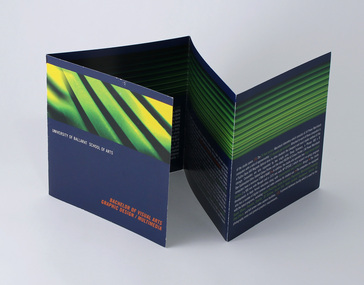
... "Selection is determined by the perceived potential of the student, their motivation and reason for study within the field as well as their previous experience in the Visual Arts. ..."Selection is determined by the perceived potential of the student, their motivation and reason for study within the field as well as their previous experience in the Visual Arts. ...Promoting the Graphic Design/Multimedia program being offered by the University of Ballarat at the Mt Helen Campus. Promoted course as "one of the smallest and arguably the best three year programs of its kind in Australia and the South Pacific region." The brochure lists student awards received including Platinum and Gold in the AGFA International Young Designer Contest, 1999; two meritorious awards in The Art Directors Club Student Awards, New York, USA 1999; Graphis New Talent 1999; two Gold in Souther Cross Packaging Awards, 1998. At time of publication, the School of Arts, Visual Arts reportedly had 210 students with majors in Graphic Design/Multimedia, Ceramics/3D, Painting, Drawing, and Multidiscipline. Minors studies included Printmaking, Photography, 3D, 2D, and Graphic Communication. ___ Course aimed to train "independent, flexible thinkers". The course promised to "Promote creativity, originality and imaginative thinking; Develop self-directed learners, displaying initiative in the formation of ideas and the confidence to construct personal responses; Develop appropriate conceptual, technical and professional skills; Develop the student's critical process: ability to undertake research, and to make informed decisions; Clarify thinking, concepts and understanding and deep knowledge, attitudes and skills enabling the designer to respond to community needs." Studio and working environment described as "one open space with working facilities for approximately 75 students across 3 year levels. The area is divided up into work stations where 1st, 2nd and 3rd year students intermix, allowing a natural interaction. These workstations are configurations of six, consisting of two students from each year level. This reinforces the area's ongoing development with an open ethos and cross-level delivery and learning. This maximises the use of information in order for it to be applied throughout all levels of the learning process, whilst allowing a natural mentor arrangment to be developed for all first year students, " "The open ethos approach also encourages students and staff to freely express their opinions in relation to design via cross-level critiques, whilst allowing for a liberal arts approach and structure to the development of the creative process." "Emphasis is placed on experimentation, innovation, expression and the development of the individual's design philosophies, concepts and style." Also notes the 24 hour access Macintosh laboratory, with 34 Power Macintosh computers, ratio of one for every 2.5 students. Each with a Fujitsu Dyna Magneto Optical drive for file storage and transport. Two Sharp scanners, Phaser Dye-Sublimation Extra Tabloid colour printer and Ricoh A3 colour printer. Two large format printers. Digital and video cameras. Software: Adobe Photoshop, Illustrator, Acrobat; QuarkXpress; Macromedia Freehand; Pagemaker; Premier; Director; 3D Extreme; Sound Eidt, Shockwave, Infinite 3D and After Effects. Approx 4.5 staff, "all of whom are practicing designers. They have a full understanding of industry requirements and trends which assists in the development of industrial contacts when specialists are required." Prospective students interviewed in late Nov/ early Dec, face to face. Present a "comprehensive folio of work", academic records, references. "Selection is determined by the perceived potential of the student, their motivation and reason for study within the field as well as their previous experience in the Visual Arts. Folio work should be representative of the individual's ideas and abilities. Qualities of importance are: originality, innovation, imagination, experimentation and a competent display of the basic skills associated with visual arts [evidence of drawing skills should be included]." Demonstration of GD/MM computer skills an advantage. Students also asked to bring sketch books. Promotional brochure for prospective students. 8pp Double fold brochureuniversity of ballarat, federation university, graphic design, multimedia, bachelor, degree -
 Federation University Historical Collection
Book, Victoria Education Gazette and Teachers' Aid, 1921-1930, 1921-1930
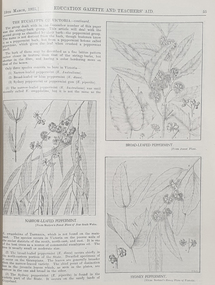
... Kernot, A Stand of Corsican Pines at Creswick, Victoria .10) Some Remarks on the Relationship of the technical Schools to the University (Donald Clark) , Present Day Education in England , Memorial to Joseph Cornwall, Spelling, motivation, Singing, State Scholarships, Agriculture, T.W. ...Kernot, A Stand of Corsican Pines at Creswick, Victoria .10) Some Remarks on the Relationship of the technical Schools to the University (Donald Clark) , Present Day Education in England , Memorial to Joseph Cornwall, Spelling, motivation, Singing, State Scholarships, Agriculture, T.W. ...The Victoria Education Gazette and Teachers' Aid was published for Victoria's teachers and was sent to all school on the state. In 1920 The Ballarat School of Mines had donated 136 pounds 14 shillings and 10 pence to the Victorian Education Department's War Relief Account, and the Ballarat Junior Technical School had donated 10 pounds 6 shillings and 10 pence.Ten black hard covered volumes with red tape spine, covering 1921 to 1930. The gazettes include Education Department appointments, transfers, resignations and retirements, vacancies, notices, queries, notices of books, examination papers, original articles, lesson plans, suggestions for lessons, drawing, obituaries, notes on nature study, mathematics, music, sloyd woodwork, English grammar, Victorian State School Swimming Clubs, Geography, penmanship, science, History, Latin, Geography, The School Garden, horticulture, singing, World War One; ANZAC Day, lifesaving, Astronomy, Empire Day, ANZAC Buffet London, Victorian Education Department's War Relief Fund .1) 1928. Articles include: New Caledonia, Swimming and Lifesaving, School forestry, a visit to the pyramids, Exploration of Gippsland, paul de Strezelecki, Angus McMillan, Villers Bretonneux Memorial School, American Black Walnut, Red Gum, Messmate Stringybark, The Great Barrier Reef, retirement of Frank Tate, Stawell High School, Report on Some Aspects of Education in the United States, Jubilee Education Exhibition , New School Readers; measured Drawing Images include: Macarthur Street School's Plantation, Maryborough School Plantation, Pinus Insignis (Radiata) ready for Milling, Creswick State Forest, Metalwork, Daylesford Pine Plantation four years old, Henry Harvey (art Inspector); Omeo School Endowment Plantation; Frank Tate; Stawell High School Drawings From Casts; Lake Tyers School Endowment Plantation, measured drawing, Thomas H. Stuart, GEorge Swinburne. J.R. Tantham-Fryer, Cookery Class, John Edward Thomas. .3) War Savings Stampsm Swimming and Life-saving, Teh Rural School System of Victoria, Imaginative Composition, ANZAC Day, Retardation, Teh Bright Child Hudson Hard Obituary, Leeches, Relief for Distress in Europe, Dental, Teachers' Library, History of Portarlington, J.E. Stevens Obituary, Victorian Teachers in England Images: Swimming and Life-Saving Medallion .3) Swimming and Lifesaving, Bronze medallion, Victoria Leage of Victori, War Savings Stamps, Rural School Sytem of Victoria, .4) War Relief, Talbot Colony for Epileptics Masonmeadows, Discipline New and Old (Percy Samson), Soldier teachers, Preservation of Australian Birds, Arbor Day, Jubilee of Free Education, Teaching Geography, Poery in Schools, School Committees, Shelter Pavilion, Mysia Memorial School, Clovers, Jubilee Exhibition, Domestic Arts, Louis Pasteur, .5) Victoria League of Victoria, An Endowment Scheme (Pine Plantations), School Endowment Plantations, Protecting our trees by Owen Jones,. Victorian State Schools Horticultural Society, Sloyd Woodwork, School Forestry, Thomas Brodribb Obituary and portrait, Imperial Education Conference London, school Management and Method, School plantations, Eucalypt plantations in the Bendix and Heathcote District, Junior Red Cross, Jubilee Education Exhibition, Gould League Competitions, handwriting, The School Magazine, Frank Tate in London, Victorian beetles, Council of Public Education, Villers Bretonneux and its new School, Death of Samuel Summons, Woodwork Summer School, Swimming, Japanese Relief Fund, Retirement of John Cross, reminiscences of the Late Mr Albert Mattingley .6) Thomas H. Trengrove and the Villers Bretonneux School hall and pilaster carvings, forestry, visit of Maryborough teachers to Ballarat Water Reserves, noxious weeds, relief for Distressed Europe, The Dalton Plan, Empire Day, Retirement of Mr Fussell, Centenary of Hume and Hovell Expedition, League of Kindness, Effective Nature Study in a Rural School, Some Facts About Paper and their Bearing Upon School Plantations, Council of the Working Men's College Melbourne, Maria Montessori, University Vacation School, Horticulture in State Schools, An Informal Chat About French Schools (C.R. McRae), The Vacation School, Johann Heinrich Pestalozzi, Inspector's Report on a 5th-class School, Can Children Write Verse, John Adams, Victoria League of Victoria, R.F. Toutcher, Sir James Barbie's Address to High-School Girls, Impressions of a High School Teacher Abroad (R.D. Collman), The Spirit of the School Plantation Scheme, Monument of the Late Mr and Mrs A.T. Sharp at Box Hill Cemetery, The Teaching of Geography, The Treatment of Poetry in Class, Two Difficult Arithmetic Lessons, Location of Principal Australian Timbers, Dr John Smyth, Stammering and its Influence on Education, Wireless Broadcasting as an Educational Medium, Boys School at Villers Brettonneux, The New School at Villers Brettonneux, Bird Day, Messmate or Stringybark, What Every Woman Knows, Director's Report on Denmark .7)1925 . Includes: School Forestry, horticulture, J.H. Betheras retirement, Ivanhoe School, Coburg School, Moorabool Junior Technical School, Villers Bretonneux School hall and pilaster carvings, Francis Ormond, William Charles Kernot, Corsican Pnes at Creswick, Ballarat High School Plantation, Workin Men's College, RMIT, Naorrow LEafed Peppermint, Education and World Peace, Eucalypts of Victoria, John C. Eccles, Blue Gum. Manners, Giving the Poorly Nourished Boy A Chance, Native Ferns, Marybourough Technical School, Memorial School at Villers-Brettonneux .8) Experimental Plots in Country Schools (W.W. Gay), Villers Bretonneaux and its Memorial School. nominated classes for Art Teachers, The Teachers Act 1925, Horsham High School, Richmond Technical School, Farewell to Messrs C.R. Long and Ponsonby Carew-Smyth, Frank Tate, Phyiscal Training, Arbor Day, ANZAC Day, Shakespeare Day,Bendigo Junior Techncial School, Musical Appreciation, Motor Dental Unit, School Camps, Education Act of 1872: Mr Angus McKay's Part (George Mackay), A Bush Fire Experience (Irene Stable), Black Sunday, Californian Red Pine, Women's Education in America, Farewell to Lord and Lady Stradbroke, Grevilia Robusta, Silky Oak, Redwood, John E. Grant, The Need for Research (Donald Clark), Junior Drama, Ida D. Marshall, John Pounds, Australian Books, Fish Creek School, State Boundaries, History in the Curriculum, Ceramic Art in Australia (Percy E. Everett), Choice of School Songs, Tasmanian Beech, Should History be Taught on a National or an International Basis, Hydatid Disease, James Holland Obituary, Florrie Hodges, Queensland Maple, Post Bushfire Ruins at Fumina, Arbor Day at Fumina, Queensland Rosewood, Omeo Endowment Plantation, Bird Day, Junior Red Cross, Pioneers' Day, Edward Henty, Junior Technical Schools, Yellow Pine, History and Progress of Needlework, A.B.C. of Astronomy, Northumberland Mental tests, Queensland Red Cedar, Teh Globe Theatre, .9) 1927 includes The ABC of Astronomy, Atr Theatre, English Beech, Angus McMillan Art Pottery, School Singing, State Schools' Nursery, School endowment plantations, Making a Man, experimental proof of Charles's Law, John Smyth obituary and portrait, Linton Pine Planation, motivation of arithmetic, Women's Classes at Dookie, Swimming and Lifesaving, Pioneers Day, Drawing, Ballarat High School planation, biting fly, Tir-Na-N'og, John Byatt retirement and portrait, Technical Schools Conference at Daylesford, Ethel Osborne and portrait, library. Francis Thompson portrait, Adam Lindsay Gordon, Solar movement, motor transport, Liverpool Cathedral, Teh Story of the Cathedral, Bendigo School of Mines, Omeo School pine plantation, Egypt and the Nile, Self-Criticism Images include Ballarat High School Pine Plantation, Vale Park, Francis Ormond, Woking Men's College (RMIT), W.N. Kernot, A Stand of Corsican Pines at Creswick, Victoria .10) Some Remarks on the Relationship of the technical Schools to the University (Donald Clark) , Present Day Education in England , Memorial to Joseph Cornwall, Spelling, motivation, Singing, State Scholarships, Agriculture, T.W. Bothroyd, The Swimmer - A Summer School Sketch (H.H. Croll), Swimming woodwork, Farewell to Dr Sutton. ,Drowning, War Savings Movement, White Beech. George S. Browne , Example of School Honor Book, Blackwood, Optimistic teacher, Soldier settlement around Shapparton, Oral Hygiene, Cinema Machines, Basketball, Wakter M. Camble obituary, ANZAC day Pilgrimage in England, Froebel's System, Montessori Method, War Relief Fund, New Zealand Kauri Tree, Bat Tenis at a Bush School., Advice to Australian Girls, Chrysanthemums, Royal Visit, National Parks of Victoria, Maurice Copland Obituary, total eclipse of the Moon, School libraries, The teacher and the COmmunity (A.M. Barry), The Reading Lesson, Swimming and Life-saving, MElbourne Teachers' College War Memorial Windows Old Trainees War Memorial, Cultivating a Natinoal Art education gazette, school, education, teaching, teacher, world war one, school plantations, macarthur street pine plantation, school forestry, creswick state forest, anzac day, armistance celebrations, frank tate, frank tate retirement, drawing from cast, education department school readers, lake tyers pine plantation, w.n. kernot, rmit, working men's college, francis ormond, pine plantations, calenbeem park, creswick, villers-brettonneux school hall and carvings, thomas trengrove, corsican pines, creswick, pine endowment plantations, mccarthur st primary school pine plantation, ballarat high school pine plantation, vale park, mount pleasant primary school pine plantation, golden point pine plantation, angus macmillan, paul de strzelecki, gippsland, villers-bretonneaux memorial school, francis thompson, english ash, pestalozzi centenary, shakespeare day, swimming classes, clear pine, cinema in education, american black walnut, red gum, thomas wolliam bothroyd obituary, and portrait, physical training displays, teaching of spelling, ohm's law, blue gum -
 Sunshine and District Historical Society Incorporated
Archive - Gwen Goedecke Collection - War Peace Activism
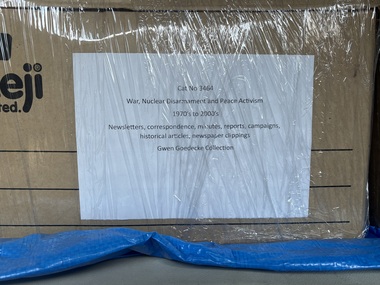
... (April 2003) A.N.S.W.E.R Coalition response to President Bush's National TV address of September 7, 2003 |Peace andTerror World Peace Council Presidential Committee meeting, Stockholm (1975) (2 reports) 'Challenging the Cold War' - an analysis of the motivation and strategies of the Victorian Peace Council in the 1950's, by Nancy Florence Phillips B.A. ...(April 2003) A.N.S.W.E.R Coalition response to President Bush's National TV address of September 7, 2003 |Peace andTerror World Peace Council Presidential Committee meeting, Stockholm (1975) (2 reports) 'Challenging the Cold War' - an analysis of the motivation and strategies of the Victorian Peace Council in the 1950's, by Nancy Florence Phillips B.A. ...Gwyneth "Gwen" Goedecke collectionHiroshima|Historical articles, Hiroshima Day Speech (Rally 2007) Melbourne|Campaign for International Co-operation & Disarmament (CICD) - 40 years on - Commemoration (1985) |Nuclear Disarmament - People for Nuclear Disarmament (PND) including the Footscray Sunshine PND group|signed petition World Disarmament Campaign (1982) sponsored by the UN Association of Australia|Scottish Campaign for Nuclear Disarmament (post 2007) - Why the US is targeting Russia and Iran ...... Nuclear Primacy|publication of the Medical Association for Prevention of War (Australia) 2007 titled ' Understanding the Nuclear Non-Proliferation Treaty'|Australian Nuclear Free Zones Secretariat including minutes and correspondence - Sunshine Council|Non- Proliferation Legislation Amendment Bill 2003 (Australia) Uranium Mining - protest groups meetings, rally notices, newspaper articles, Atomic Energy in Australia magazines Volume 18, number 4 |Campaign for International Co-Operation and Disarmament (CICD) - Australia's longest runing peace movement, founded in 1959 by unionists, church leaders and peace activists (originally called World Congress for Disarmament and International Co-Operation) |United Nations - Australia and the United Nations Annual Report Card (2007) - report by Gwen Goedecke (1995) - 50th Anniversary Conference : The United Nations - Between Sovereignty and Global Governance - (La Trobe University)|UNITY - newsletters, publications of the UN Association of Australia -#274 (September 2001) AND #331 (March 2003) -compiled from Federal Parliamentary and other sources relevant to Australia's obligations to the UN | Arms Race/Spending: Newspaper clippings '70s to 2008 Senate Motion on National Missile Defence (200?) Submission re Australian involvement in Missile Defence dated? Defence White Paper Community Consultation Process and correspondence (July to September 2008) Exposing the Bare Essentials Behind the Arms Trade: Connecting Women's Rights & The Peace Process - by Yum Lee, Women's International League for Peace and Freedom (1995) Various articles on arms/disarmaments/national security/defence spending including Senate Questions (1994 &1995) Australian Controls on the Export of Defence & Related Goods - Guidelines for Exporters - Department of Defence (1992) World Action to Stop the Deadly Arms Race - report isssued by Alf Watt for the Australian Socialist Group NSW (post 1975) Anti US/Foreign bases in Australia - '80s to 2000 Anti US bases in Australia and the Paciic including PINE GAP newspaper - Oceania (1986) |East Timor Article by Vera Butler (PHD, Political Science, Uni of Melbourne) on Australia, East Timor and The Clinton Doctrine - September 1999 |Middle East List of UN Resolutions against Israel (1955-1992) Map of Middle East Theatre of War, from the Centre for Research on Globilisation, Canada (2003) Brief - Middle East highlights (1973) by Israel Press Ltd., Tel Aviv |Iraq War (1998-2004 Newspaper arlticles Flyers protesting the war, rally notices Reports, emails, correspondence, media releases, petitions, newsletters Socialist Worker pamphlet - 'Is the UN an alternative to the US Empire?' Report by Dr Carmen Laswrence MP - 'What War?' (April 2003) A.N.S.W.E.R Coalition response to President Bush's National TV address of September 7, 2003 |Peace andTerror World Peace Council Presidential Committee meeting, Stockholm (1975) (2 reports) 'Challenging the Cold War' - an analysis of the motivation and strategies of the Victorian Peace Council in the 1950's, by Nancy Florence Phillips B.A. (Oct 1986) Palm Sunday Peace Rally & Festival poster (1988) Media Report (2003 'Managing Terror in the Media', together with Gwen's notespeace -
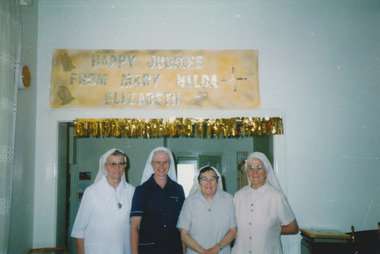 The Beechworth Burke Museum
Audio - Oral History, Jennifer Williams, Sister Elizabeth McGovern, Sister Mary Lacey, Sister Mary Griffiths, Sister Gerardus Thistlewaite, 18th March 2000
... It is significant both for what it illustrates about the lives and motivation of the Sisters, and for what it tells us about how the role of religious education and figures shifted in Beecjhworth from 1950 onward. ...Sister Elizabeth McGovern, Sister Mary Lacey, Sister Mary Griffiths, and Sister Gerardus Thistlewaite were all nuns of the Brigidine Order in Beechworth in the second half of the twentieth century. They had backgrounds in teaching and office work. As nuns, their contributions to the community included teaching, running camps, being there for community members wishing to talk to them or pray, and visiting prisons and hospitals. During their time in the order, the role of the nuns in Beechworth shifted due to the closing down of the Priory School, and changes in where housing for nuns was provided. The oral history also includes stories of boarding at the convent in the 1950s, and reflections on how the experience of being a nun has changed due to increasing immersion in the modern world, and the move from convent to house. This oral history recording was part of a project conducted by Jennifer Williams in the year 2000 to capture the everyday life and struggles in Beechworth during the twentieth century. This project involved recording seventy oral histories on cassette tapes of local Beechworth residents which were then published in a book titled: Listen to what they say: voices of twentieth century Beechworth. These cassette tapes were digitised in July 2021 with funds made available by the Friends of the Burke.Sister Elizabeth McGovern, Sister Mary Lacey, Sister Mary Griffiths, and Sister Gerardus Thistlewaite's interview with Jennifer Williams is revealing of the history of the Brigidine order in Beechworth, and the role religion and nuns played in the wellbeing, education, and life of the community in the latter half of the twentieth century. It is significant both for what it illustrates about the lives and motivation of the Sisters, and for what it tells us about how the role of religious education and figures shifted in Beecjhworth from 1950 onward. It is especially illuminating about the experience of women in education. This oral history account is socially and historically significant as it is a part of a broader collection of interviews conducted by Jennifer Williams which were published in the book 'Listen to what they say: voices of twentieth-century Beechworth.' While the township of Beechworth is known for its history as a gold rush town, these accounts provide a unique insight into the day-to-day life of the town's residents during the 20th century, many of which will have now been lost if they had not been preserved.This is a series of digital recordings that were originally recorded on multiple cassette tapes. The cassette tapes are black with a horizontal white strip and are currently stored in a clear flat plastic rectangular container. They up to 40 minutes of recordings on each side.Sister Elizabeth McGovern, Sister Mary Lacey, Sister Mary Griffiths, Sister Gerardus Thistlewaitelisten to what they say, listen to what they say: voices of twentieth century beechworth, nuns, brigidine sisters, brigidine convent, school, religion, prison, boarding school, modernization, food, women's history, teaching, teachers, education, hospitals, beechworth hospital, charity, old priory, father stockdale, easter, beechworth 1950s
