
Showing 55 items matching "narrow door"
-
 Ballarat Tramway Museum
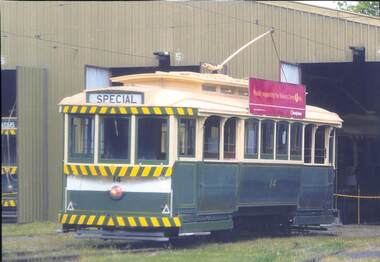
Photograph - Photograph - coloured, Tram No.14: Outside the sheds at Ballarat Tramway Museum
... ...narrow door...Entry was by the narrow door at the driver's end of the tram. People would pay their fare to the driver. ...Entry was by the narrow door at the driver's end of the tram. People would pay their fare to the driver. ...Tram 14 was a small green and cream single truck tram operated by one person. Entry was by the narrow door at the driver's end of the tram. People would pay their fare to the driver. There was no conductor. Pink advertisement for the Bendigo Bank was on the side. The tram is photographed outside the Shed at the Ballarat Tramway Museum. Tram body was built in 1915 for the Prahran and Malvern Tramways Trust. Sold to the Melbourne Electric Supply Co. Ltd. in 1927 and ran in Geelong. Transferred by the State Electricity Commission to Ballarat in 1936. It was the last tram to be overhauled by the SEC. It is now the property of the Ballarat City Council and on loan to the Museum.Coloured photograph of No. 14 tram. Advertising board on side for Bendigo Bank. Laminated'Green and cream coloured with gold number and lines. Special in destination window.tram 14, driver, small tram, narrow door, special, ballarat tramway museum, shed, advertisement, green and cream, single truck, 1915, prahran and malvern tramway museum, melbourne electric supply co, 1927, geelong, state electricty commission, ballarat, 1936, ballarat city council -
 Mt Dandenong & District Historical Society Inc.
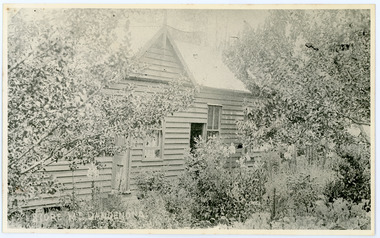
Photograph, Home and Shop of Edward Joseph Price
... Under the gable was a large room planned for public use but never used owing to Health Department Regulations. The narrow door (open) and window were the shop which was the district’s first newsagency. ...Under the gable was a large room planned for public use but never used owing to Health Department Regulations. The narrow door (open) and window were the shop which was the district’s first newsagency. ...John Lundy-Clarke grew up in the Kalorama/Mt Dandenong area and later in life (1972-74) began to write a comprehensive history of the district working from an original settlement map in an effort to cover all areas. Edward Joseph Price was the first settler to take up a lot (Lot 1, Section 1) in the Village Settlement. He built a slab hut and brought up his family in 1896. This photograph shows a newer home built in 1908. It had a section used as a shop and also had a large room built that was to be used for public gatherings. Health department regulations led to this being impossible. The house faced Ridge Road.Black and white close up photograph showing a building made from wooden boards with trees in the front. Reverse of photograph has handwritten description by John Lundy-Clarke.On Front STORE MT DANDENONG On Reverse Home and Shop of Edward Joseph Price LOT 1 SECT 1 erected in 1908 on site of earlier dwelling from which goods had been sold without a special room for shop. In picture the room on the extreme left was bedroom for boys Charlie and Ted (Edward John). Under the gable was a large room planned for public use but never used owing to Health Department Regulations. The narrow door (open) and window were the shop which was the district’s first newsagency. Window behind leaves at right was the kitchen. 1908-1912. Gabled portion is now part of home “Mirra Laken” 1975edward joseph price, store, shop -
 Linton and District Historical Society Inc
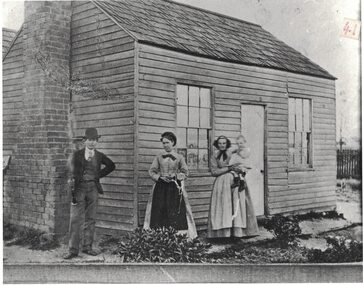
Photograph, Miner's Cottage, Woady Yaloak District
... Black and white copy of original photograph which shows a timber cottage with two windows at the front, one each side of a fairly narrow central door. The house has no awning or verandah. ...Black and white copy of original photograph which shows a timber cottage with two windows at the front, one each side of a fairly narrow central door. The house has no awning or verandah. ...Black and white copy of original photograph which shows a timber cottage with two windows at the front, one each side of a fairly narrow central door. The house has no awning or verandah. It has a shingle roof, and a chimney on one side. A man, two women and a child are outside the front of the house. The man is wearing a waistcoat, tie, jacket and bowler hat, and he is holding a clarinet. The two women are wearing aprons and one of them is holding the child. The location of the house, date of the photograph and the identities of the people in it are unknown.Typed on a piece of paper attached to back of the photograph: "Early wooden miner's cottage, Woady Yaloak District".buildings, houses -
 Flagstaff Hill Maritime Museum and Village
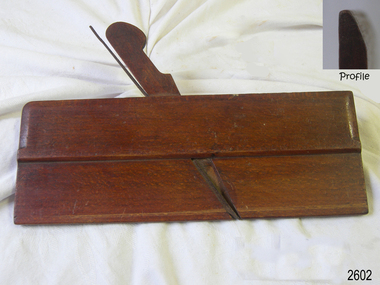
Tool - Wood Moulding Plane, George Hathersich, 1797-1851
... doors, tables, cabinets and elaborate cabinetry. The maker, Hathersich, was a very early plane maker from Manchester, England. Hathersich's early 19th-century hand-operated planes are rare examples of crafted woodworking tools. Similar tools are still made today and used by specialists in cabinet and woodcraft trades. Flagstaff Hill Flagstaff Hill Maritime Museum and Village Warrnambool Maritime Museum Maritime Village Great Ocean Road Shipwreck Coast wood work builder carpenter wood worker woodworking plane moulding plane tool woodworking tool George Hathersich Shudehill Manchester England C S Schofield "Hathersich" "C S Schofield" Plane; hand-operated mounding plane, round type. A narrow ...George Hathersich made wood moulding planes at 30 Shade Hill Street, Manchester, England, from 1797 to 1851. After his death, his wife, Elizabeth, carried on making planes. Moulding planes are used to create decorative edges on timber for doors, tables, cabinets and elaborate cabinetry.The maker, Hathersich, was a very early plane maker from Manchester, England. Hathersich's early 19th-century hand-operated planes are rare examples of crafted woodworking tools. Similar tools are still made today and used by specialists in cabinet and woodcraft trades.Plane; hand-operated mounding plane, round type. A narrow rectangular plane with a wooden wedge and an iron blade inserted in the bed. The wooden surface is stained and varnished. It has inscriptions. Made by George Hathersich of Manchester, UK. Also marked C S Schofield. "Hathersich" "C S Schofield"flagstaff hill, flagstaff hill maritime museum and village, warrnambool, maritime museum, maritime village, great ocean road, shipwreck coast, wood work, builder, carpenter, wood worker, woodworking, plane, moulding plane, tool, woodworking tool, george hathersich, shudehill, manchester, england, c s schofield -
 Federation University Historical Collection
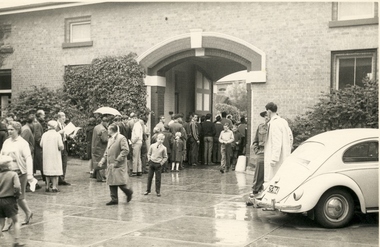
Photograph - Photograph - Black and White, W.G.(Geoff) Little, Open Day at the Former Ballarat Gaol, 1964, 07/03/1964
... narrow steps from the top of the wall. This would have been used by guards; .7) Area showing the individual cell doors; .8) People in cell area. ...narrow steps from the top of the wall. This would have been used by guards; .7) Area showing the individual cell doors; .8) People in cell area. ...On 7 March 1964 the Former Ballarat Gaol was opened to the public resulting in a large turnout. These photos were taken during the visit and show various sections, inside and outside, of the gaol. .1) Shows the ground queued up; .2) Front entrance, people starting to move inside; .3) Looking through the bars; .4) view of the curved wall with sentry's walk and guard's tower; .5) Looking through bars to stone wall; .6) Walking down the narrow steps from the top of the wall. This would have been used by guards; .7) Area showing the individual cell doors; .8) People in cell area. An upper level is shown. The gallows is on this level; .9) Stairs leading up to the gallows; .10) Turret above the cell block; .11) Cell area; .12) Cobbled area.Twelve black and white images taken at the open day of the Former Ballarat Gaol, held by the Ballarat Branch of the National Trust on 7 March 1964.ballarat gaol, ballarat school of mines, gaol, bluestone, national trust tours, entrance to gaol, sentry's walk, guard's tower, cells, gallows, stairs to gallows, cobbled area, geoff little -
 Flagstaff Hill Maritime Museum and Village
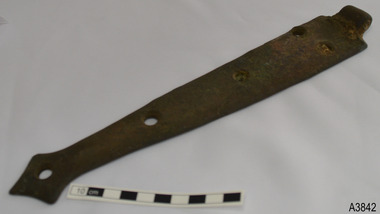
Functional object - Hinge, 1800s to early 1900s
... Items that come from several wrecks have since been donated to the Flagstaff Hill Maritime Village’s museum collection by his family, illustrating this item’s level of historical value. flagstaff hill warrnambool flagstaff hill maritime museum maritime museum shipwreck coast flagstaff hill maritime village great ocean road john chance hinge hardware flat hinge door fitting ship’s fitting 19th century metalwork forged hinge Hinge; heavy bronze flat hinge, hand forged. Flat with narrow ...This flat hinge was recovered from an unknown shipwreck in the coastal waters of Victoria in the late 1960s to early 1970s. It is part of the John Chance Collection. The size of the hinge indicates that it was used for a large item such as an entry door, gate or perhaps a ship fitting. The blue-green patina on the metal is caused by a reaction from its exposure to external elements such as the sea water. The hinge is likely to have been in the water for over 100 years, as the more widely known shipwrecks along Victoria’s Shipwreck Coast date from 1837 to 1940. Before the Middle Ages metal was expensive and took a lot of effort to work with As time went on, methods were discovered for working more easily with metals, and ways were found for combining different metals to make alloys that made the metals stronger and more durable. Hinges forged by blacksmiths began to be common in homes. In the Victorian Era steam power was introduced and manufacturing boomed. Hinges could be made by machines quickly and in great number. All sorts of applications were found to take advantage of the features of hinges. They continue to be developed and used in a huge variety of ways. Although the hinge is not linked to a particular shipwreck, it is recognised as being historically significant as an example of hardware either as part of the ship’s fittings or imported for use in Colonial Victoria in the 19th to early 20th century. The hinge is also significant as it was recovered by John Chance, a diver in Victoria’s coastal waters in the late 1960s to early 1970s. Items that come from several wrecks have since been donated to the Flagstaff Hill Maritime Village’s museum collection by his family, illustrating this item’s level of historical value. Hinge; heavy bronze flat hinge, hand forged. Flat with narrow, arrow shaped end that lares outward to wider straight end. Attached to the wide end is a rectangular, upward curved knuckle. There are five formed holes along the hinge, two are oval shaped and three are round. The hinge has a blue-green patina.flagstaff hill, warrnambool, flagstaff hill maritime museum, maritime museum, shipwreck coast, flagstaff hill maritime village, great ocean road, john chance, hinge, hardware, flat hinge, door fitting, ship’s fitting, 19th century metalwork, forged hinge -
 Flagstaff Hill Maritime Museum and Village
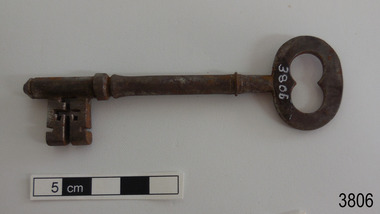
Functional object - Key, circa 1866
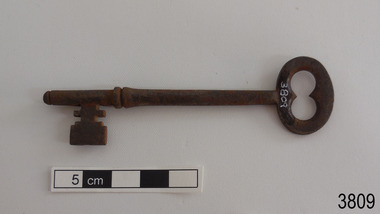
... Key; steel domestic door key. Flat open bow with 'figure 8' space, narrow collar on shank, close to the bow. ...The shipwreck of the Loch Ard itself is of significance for Victoria and is registered on the Victorian Heritage Register (S417). flagstaff hill warrnambool flagstaff hill maritime museum maritime museum shipwreck coast flagstaff hill maritime village great ocean road glenample homestead victorian heritage register vhr h0392 georgian homestead loch ard princetown jane shields eva carmichael tom pearce blue china tea set antique door key glenample photographs john chance Key; steel domestic door key. Flat open bow with 'figure 8' space, narrow collar on shank, close to the bow. ...The key is one of a collection of seven 1860s keys once belonged to the Glenample Homestead near Princetown. They are all keyed with different bits and would have opened the external panelled doors of the Georgian building. The keys would now be around 150 years old. The keys are now part of the John Chance Collection. Locksmiths became a recognised trade by the middle of the 19th century, doing work that blacksmiths and gunsmiths would have done. They were craftsmen and trained apprentices for their trade. The local community and businesses relied on them for making a wide variety of precision objects such as locks and keys, knives, ornamental and decorative latticework, fine instruments, accurate tools and hardware items. Glenample Homestead became famous after the disastrous wreck of the sailing ship Loch Ard on June 1, 1878. The owners, Hugh Hamilton Gibson and Peter McArthur, were involved in the rescue and recovery of Eva Carmichael and Tom Pearce, the only two survivors, as well as overseeing the salvage of items from the shipwreck and the burial of those who lost their lives. Eva first met Jane Shields at Glenample and they became long-time friends.The keys are significant as an example of mid-19th century locksmith hardware, and for their connection with Glenample Homestead, and for their connection to the history of the Loch Ard shipwreck’s only two survivors. The set of keys also hold significance as they were discovered by John Chance, who was also a diver from the wreck of the Loch Ard in the 1960s-70s. Items that come from several wrecks along Victoria's coast have since been donated to the Flagstaff Hill Maritime Village’s museum collection by his family, illustrating this item’s level of historical value. Glenample Homestead is of historical, social and architectural significance to the State of Victoria and is listed on the Victorian Heritage Register (VHR H0392). It is a historical example of early settlement and development of a run in the coastal land of South West Victoria, and it is constructed from locally quarried sandstone but doesn’t take away from its Georgian design. Glenample Homestead is of State significance through its unique connection with the wreck of the ship Loch Ard and the connection to its owners, Hugh and Lavinia Gibson and Peter McArthur, played a historically and socially significant role in the rescue and care of the survivors, the salvage of goods and the burial of those who lost their lives. The shipwreck of the Loch Ard itself is of significance for Victoria and is registered on the Victorian Heritage Register (S417). Key; steel domestic door key. Flat open bow with 'figure 8' space, narrow collar on shank, close to the bow. Round shank flares out slightly above the collar on the bit. The rectangular bit has internal and external notches and grooves. There is a rounded pin on the end.flagstaff hill, warrnambool, flagstaff hill maritime museum, maritime museum, shipwreck coast, flagstaff hill maritime village, great ocean road, glenample homestead, victorian heritage register vhr h0392, georgian homestead, loch ard, princetown, jane shields, eva carmichael, tom pearce, blue china tea set, antique door key, glenample photographs, john chance -
 Flagstaff Hill Maritime Museum and Village
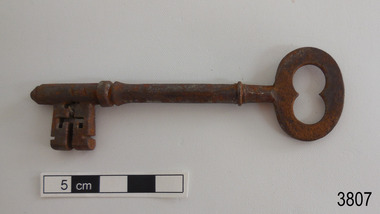
Functional object - Key, circa 1866
... Key; steel domestic door key. Flat open bow with 'figure 8' space, narrow collar on shank, close to the bow. ...The shipwreck of the Loch Ard itself is of significance for Victoria and is registered on the Victorian Heritage Register (S417). flagstaff hill warrnambool flagstaff hill maritime museum maritime museum shipwreck coast flagstaff hill maritime village great ocean road glenample homestead victorian heritage register vhr h0392 georgian homestead loch ard princetown jane shields eva carmichael tom pearce blue china tea set antique door key glenample photographs john chance Key; steel domestic door key. Flat open bow with 'figure 8' space, narrow collar on shank, close to the bow. ...The key is one of a collection of seven 1860s keys once belonged to the Glenample Homestead near Princetown. They are all keyed with different bits and would have opened the external panelled doors of the Georgian building. The keys would now be around 150 years old. The keys are now part of the John Chance Collection. Locksmiths became a recognised trade by the middle of the 19th century, doing work that blacksmiths and gunsmiths would have done. They were craftsmen and trained apprentices for their trade. The local community and businesses relied on them for making a wide variety of precision objects such as locks and keys, knives, ornamental and decorative latticework, fine instruments, accurate tools and hardware items. Glenample Homestead became famous after the disastrous wreck of the sailing ship Loch Ard on June 1, 1878. The owners, Hugh Hamilton Gibson and Peter McArthur, were involved in the rescue and recovery of Eva Carmichael and Tom Pearce, the only two survivors, as well as overseeing the salvage of items from the shipwreck and the burial of those who lost their lives. Eva first met Jane Shields at Glenample and they became long-time friends. The keys are significant as an example of mid-19th century locksmith hardware, and for their connection with Glenample Homestead, and for their connection to the history of the Loch Ard shipwreck’s only two survivors. The set of keys also hold significance as they were discovered by John Chance, who was also a diver from the wreck of the Loch Ard in the 1960s-70s. Items that come from several wrecks along Victoria's coast have since been donated to the Flagstaff Hill Maritime Village’s museum collection by his family, illustrating this item’s level of historical value. Glenample Homestead is of historical, social and architectural significance to the State of Victoria and is listed on the Victorian Heritage Register (VHR H0392). It is a historical example of early settlement and development of a run in the coastal land of South West Victoria, and it is constructed from locally quarried sandstone but doesn’t take away from its Georgian design. Glenample Homestead is of State significance through its unique connection with the wreck of the ship Loch Ard and the connection to its owners, Hugh and Lavinia Gibson and Peter McArthur, played a historically and socially significant role in the rescue and care of the survivors, the salvage of goods and the burial of those who lost their lives. The shipwreck of the Loch Ard itself is of significance for Victoria and is registered on the Victorian Heritage Register (S417). Key; steel domestic door key. Flat open bow with 'figure 8' space, narrow collar on shank, close to the bow. Round shank flares out slightly above the collar on the bit. The Rectangular bit has internal and external notches and grooves. There is a rounded pin on the end.flagstaff hill, warrnambool, flagstaff hill maritime museum, maritime museum, shipwreck coast, flagstaff hill maritime village, great ocean road, glenample homestead, victorian heritage register vhr h0392, georgian homestead, loch ard, princetown, jane shields, eva carmichael, tom pearce, blue china tea set, antique door key, glenample photographs, john chance -
 Flagstaff Hill Maritime Museum and Village
Functional object - Key, circa 1866
... Key; steel domestic door key. Flat open bow with 'figure 8' space. Round narrow shank flares out slightly above the collar on the bit. ...The shipwreck of the Loch Ard itself is of significance for Victoria and is registered on the Victorian Heritage Register (S417). flagstaff hill warrnambool flagstaff hill maritime museum maritime museum shipwreck coast flagstaff hill maritime village great ocean road glenample homestead victorian heritage register vhr h0392 georgian homestead loch ard princetown jane shields eva carmichael tom pearce blue china tea set antique door key glenample photographs john chance Key; steel domestic door key. Flat open bow with 'figure 8' space. Round narrow shank flares out slightly above the collar on the bit. ...The key is one of a collection of seven 1860s keys once belonged to the Glenample Homestead near Princetown. They are all keyed with different bits and would have opened the external panelled doors of the Georgian building. The keys would now be around 150 years old. The keys are now part of the John Chance Collection. Locksmiths became a recognised trade by the middle of the 19th century, doing work that blacksmiths and gunsmiths would have done. They were craftsmen and trained apprentices for their trade. The local community and businesses relied on them for making a wide variety of precision objects such as locks and keys, knives, ornamental and decorative latticework, fine instruments, accurate tools and hardware items. Glenample Homestead became famous after the disastrous wreck of the sailing ship Loch Ard on June 1, 1878. The owners, Hugh Hamilton Gibson and Peter McArthur, were involved in the rescue and recovery of Eva Carmichael and Tom Pearce, the only two survivors, as well as overseeing the salvage of items from the shipwreck and the burial of those who lost their lives. Eva first met Jane Shields at Glenample and they became long-time friends. The keys are significant as an example of mid-19th century locksmith hardware, and for their connection with Glenample Homestead, and for their connection to the history of the Loch Ard shipwreck’s only two survivors. The set of keys also hold significance as they were discovered by John Chance, who was also a diver from the wreck of the Loch Ard in the 1960s-70s. Items that come from several wrecks along Victoria's coast have since been donated to the Flagstaff Hill Maritime Village’s museum collection by his family, illustrating this item’s level of historical value. Glenample Homestead is of historical, social and architectural significance to the State of Victoria and is listed on the Victorian Heritage Register (VHR H0392). It is a historical example of early settlement and development of a run in the coastal land of South West Victoria, and it is constructed from locally quarried sandstone but doesn’t take away from its Georgian design. Glenample Homestead is of State significance through its unique connection with the wreck of the ship Loch Ard and the connection to its owners, Hugh and Lavinia Gibson and Peter McArthur, played a historically and socially significant role in the rescue and care of the survivors, the salvage of goods and the burial of those who lost their lives. The shipwreck of the Loch Ard itself is of significance for Victoria and is registered on the Victorian Heritage Register (S417). Key; steel domestic door key. Flat open bow with 'figure 8' space. Round narrow shank flares out slightly above the collar on the bit. The rectangular bit has has external notches and grooves. There is a rounded pin on the end.flagstaff hill, warrnambool, flagstaff hill maritime museum, maritime museum, shipwreck coast, flagstaff hill maritime village, great ocean road, glenample homestead, victorian heritage register vhr h0392, georgian homestead, loch ard, princetown, jane shields, eva carmichael, tom pearce, blue china tea set, antique door key, glenample photographs, john chance -
 Orbost & District Historical Society
peephole
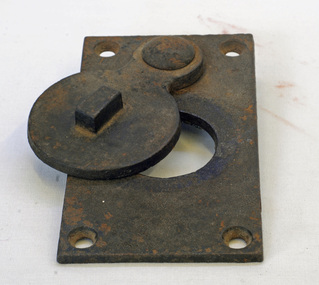
... Convicts there would sleep on a narrow wooden shelf, the only furnishing in the cell, and were watched through a peephole in the cell door....Convicts there would sleep on a narrow wooden shelf, the only furnishing in the cell, and were watched through a peephole in the cell door. peephole Port- Arthur convict A rectangular iron peephole from a prison door. it has a bolted metal flap that can be pushed aside to allow an outside person a view of the inside of the cell. peephole ...This is a peephole from a solitary confinement cell cell at Port Arthur. There were 12 cells, measuring 3m x 1.5m, used for solitary confinement. Convicts there would sleep on a narrow wooden shelf, the only furnishing in the cell, and were watched through a peephole in the cell door.A rectangular iron peephole from a prison door. it has a bolted metal flap that can be pushed aside to allow an outside person a view of the inside of the cell.peephole port- arthur convict -
 Mission to Seafarers Victoria
Furniture - Desk, unknown
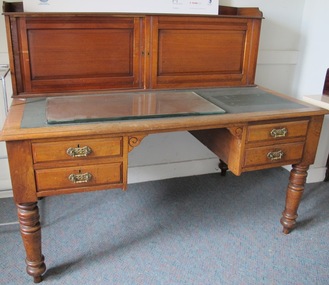
... door lockable cabinet with small bookshelf backed with shallow pediment. Sorting / sectioned pigeonhole interiors to the top cabinets see images. The main table desk appears to be of a different wood with green leather inset to top surface and heavy legs. Drawers with heavily decorated brass handles. The top cabinet features finer cabinetry and darker colour wood or stain which could be cedar.with simple narrow...door lockable cabinet with small bookshelf backed with shallow pediment. Sorting / sectioned pigeonhole interiors to the top cabinets see images. The main table desk appears to be of a different wood with green leather inset to top surface and heavy legs. Drawers with heavily decorated brass handles. The top cabinet features finer cabinetry and darker colour wood or stain which could be cedar.with simple narrow ...This desk was donated to the MTSV in 2017 by a descendant of Padre Oliver, Chaplain from 1930-1960.This desk belonged to Rodney Oliver and is believed to have been used by Padre Oliver and his wife while Chaplain, and the family resided at the MTS and thereafter in subsequent parish postings. The desk makes a link with one of the longest serving Chaplains who had a significant influence through the intense period of operations early - mid 20th C. The Padre's influence was substantial. The desk is also believed to have been used by son Rodney Oliver who also served the Mission as Chairman in the later 20th C.A four drawer leather topped desk with detachable unit comprising double sliding door lockable cabinet with small bookshelf backed with shallow pediment. Sorting / sectioned pigeonhole interiors to the top cabinets see images. The main table desk appears to be of a different wood with green leather inset to top surface and heavy legs. Drawers with heavily decorated brass handles. The top cabinet features finer cabinetry and darker colour wood or stain which could be cedar.with simple narrow reeded decoration. interior two pigeon holes with labelsfrank leslie oliver, padre oliver, chaplain, desk, mission to seafarers, melbourne, seamen's mission, flinders street, padre frank leslie oliver -
 Flagstaff Hill Maritime Museum and Village
Container - Glass Bottle, W T Rawleigh, 1920s
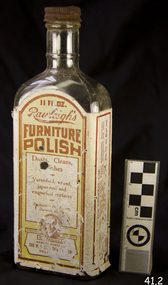
... The item demonstrates how selling house hold products door to door was pioneered in Australia by the Rawleigh’s company in the early 1900s and is still in existence today. flagstaff hill warrnambool flagstaff hill maritime museum shipwreck coast flagstaff hill maritime village great ocean road bottle rawleigh's furniture polish furniture polish rawleigh's cleaning label of Rawleigh's Furniture Polish Bottle, glass, narrow neck rectangular base with metal screw top. ...W.T. Rawleigh's & Co. manufactured various household products in a factory in Collins Place, Melbourne, between 1930 and 1935. The W.T. Rawleigh Company was an American company started by William Rawleigh in 1889. The company expanded to both Canada and Australia with the Rawleigh company specialising in medicines, remedies, food additives, cleaning products and toiletries. Due to increased demand, Rawleigh’s required a larger factory and thus built the factory in Dawson Street Brunswick Victoria and by 1950 the factory had been extended to include 98,000 square feet of floor space. The Brunswick factory ceased production in the late 1970s and manufacturing was moved to New South Wales. During the peak of production, more than 200 people were employed in the Brunswick factory and several independent sale representatives sold their products door-to-door throughout the country. The ‘Rawleigh’s man’ was a regular door-to-door salesman of inter war and post-war suburban Melbourne. Rawleigh’s products are still in production today.A significant item as it gives a snapshot into domestic life and social norms of the pre and post war period in Melbourne and throughout Australia and New Zealand. The item demonstrates how selling house hold products door to door was pioneered in Australia by the Rawleigh’s company in the early 1900s and is still in existence today.Bottle, glass, narrow neck rectangular base with metal screw top.label of Rawleigh's Furniture Polishflagstaff hill, warrnambool, flagstaff hill maritime museum, shipwreck coast, flagstaff hill maritime village, great ocean road, bottle, rawleigh's furniture polish, furniture polish, rawleigh's, cleaning -
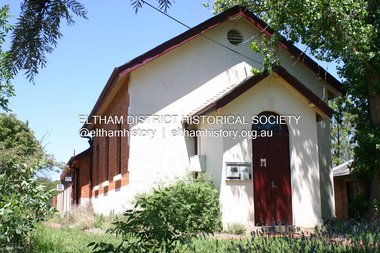 Eltham District Historical Society Inc
Photograph - Digital Photograph, Alan King, Eltham Court House, 730 Main Road, Eltham, 28 December 2007
... narrow, oblong building with handmade orange bricks. Its gabled roof and porch are covered with brown slate tiles and it has 12-paned windows. Inside, the roof is peaked and the courthouse is still ventilated by oblong slits near the ceiling. Most of the fine carved timber and upholstered furniture is original. The original prisoners’ door...narrow, oblong building with handmade orange bricks. Its gabled roof and porch are covered with brown slate tiles and it has 12-paned windows. Inside, the roof is peaked and the courthouse is still ventilated by oblong slits near the ceiling. Most of the fine carved timber and upholstered furniture is original. The original prisoners’ door ...The Eltham Court House is Eltham's oldest public building. It was classified by the National Trust in 1977. In 1857 five Eltham residents petitioned the licensing magistrates of the Heidelberg district asking for better police protection, including from itinerant gold prospectors who turned to crime when their quest was unsuccessful. In response the Eltham Courthouse was constructed in 1860. Over the years it has also been used for other activities, including for electoral polling purposes, inquests, early meetings of the Eltham Roads Board and even as an overflow classroom. This type of localised solution is characteristic of the self-reliance preserved in Eltham today. The court house is an important symbol of the spirit which makes Eltham distinctive as a community. The Eltham Courthouse is historically significant because its construction was intended to emphasise the centralised control over law and order in the Colony of Victoria in the wake of the 1852 Snodgrass committee report on the Victorian police force and the resulting Police Regulation Act (1853). The nature of the Court House planning and use of architectural devices make the building's function easily interpreted. The arrangement of rooms, with public entry and clerical rooms to the rear, and the use of raised floor levels throughout these spaces to signify relative rank is easily perceived. The distinction in entries, public, magistrate and person-in-custody, and the existing court furniture enhances appreciation of this building. The Eltham Court House is one of only two intact examples in the state of this simple design with projecting entry. The building is of architectural significance because it retains intact early features. These include use of handmade bricks, simple decoration, roof trusses, timber ceiling boards, original windows, doors and associated hardware and a collection of court furniture. Additions to the court house have been done in a manner which did not interfere with the fabric of the original building. Typical cases heard before the Court of Petty Sessions included financial debt, straying livestock, theft, assault, drunkenness, public disorder, truancy, motor vehicle offences, unregistered animals and failing to have children attend school, or be vaccinated. The courthouse operated for over 120 years before it closed in 1985. In April 2021, Nillumbik Shire Council authorised restoration of the building and furnishings. The extensive works required for the total restoration of this highly valued heritage building was undertaken by Ducon Building Solutions and other specialist contractors. Covered under Heritage Overlay, Nillumbik Planning Scheme. Victorian Heritage National Trust of Australia (Victoria) State significance Published: Nillumbik Now and Then / Marguerite Marshall 2008; photographs Alan King with Marguerite Marshall.; p65 A demand for better police protection resulted in the building of the Eltham Courthouse and the police residence beside it. In 1857 five Eltham residents petitioned the Heidelberg district licensing magistrates. They pointed out that Eltham had two hotels, a population of about 1000, and many strangers employed on the public roads. Yet the nearest police were at Heidelberg eight miles (12.8km) away, or at the Caledonia Diggings 21 miles (33.7km) away.1 Subsequently the courthouse and then the police residence, near the corner of Main Road and Brougham Street, were built in 1859/60. The courthouse is Eltham’s oldest public building and the National Trust classified it in 1977. It ceased operation in 1984 and has since been used by local groups. There are only six other known examples of similar small brick country courthouses in Victoria . For £536, a Mr Duncan built the courthouse – a neat, narrow, oblong building with handmade orange bricks. Its gabled roof and porch are covered with brown slate tiles and it has 12-paned windows. Inside, the roof is peaked and the courthouse is still ventilated by oblong slits near the ceiling. Most of the fine carved timber and upholstered furniture is original. The original prisoners’ door, now permanently closed, led from the police station to the dock. Builders, Langridge Wright and Witney built a timber police station (since demolished) and a brick residence to its north,2 for £1150/7/-. Built around the same time were the lock-up behind the residence, also later demolished, and the two-storey orange brick stables. The former police residence also has a brown slate roof and handmade bricks. The front veranda roof is made of corrugated iron, as is the roof of the back weatherboard extension. The application for police protection was approved within a few months and police operated from a cottage rented at ten shillings a week and owned by William Jarrold. This was probably the one at the corner of Main Road and Dalton Street called Jarrold or White Cloud Cottage. In 1858 a second constable was appointed to Eltham following a fight at the hotel. The timber police office a replica of which was built in the early 1990s is at the building’s side. The lock-up was demolished following the relocation of the police to a new station in about 1952. The residence has been used as the Eltham District Historical Society centre since 1997. Records show court cases were held at Eltham before the courthouse was built, but the location is unknown. Some court cases were not very different from those today. In 1891 a man was charged with being drunk while in charge of a horse and was fined ten shillings. The courthouse was used for other purposes during its long history. It was probably used as a polling place as indicated by old photographs of election-day crowds outside. The Eltham Road Board met there from the early 1860s until 1868 when the Board transferred to Kangaroo Ground. During the same period the Road Board Secretary used the courthouse as an office until 1867 when it was transferred to his home at Wingrove Cottage. The courthouse was also used as an overflow classroom for the Dalton Street school in 1875. The two buildings can further link us with Eltham’s early days through Police Department correspondence. The first constable-in-charge was George Reid. In 1860 a letter to The Argus newspaper signed ‘A Sufferer’ declared the Eltham police were not active enough in their duties. The writer suggested that the ‘very snug’ police quarters were too comfortable, and he detailed various incidents including one of an alleged break-in to the Road Board Secretary’s home. But the Board Secretary, C S Wingrove, wrote to the Police Department refuting The Argus letter saying he had received full co-operation from Sen. Constable Peter Lawler.This collection of almost 130 photos about places and people within the Shire of Nillumbik, an urban and rural municipality in Melbourne's north, contributes to an understanding of the history of the Shire. Published in 2008 immediately prior to the Black Saturday bushfires of February 7, 2009, it documents sites that were impacted, and in some cases destroyed by the fires. It includes photographs taken especially for the publication, creating a unique time capsule representing the Shire in the early 21st century. It remains the most recent comprehenesive publication devoted to the Shire's history connecting local residents to the past. nillumbik now and then (marshall-king) collection, eltham, eltham court house, main road -
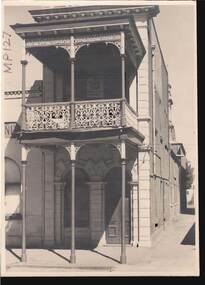 Bendigo Historical Society Inc.
Photograph - DR. LAMSEYS ROOMS, HOWARD PLACE, BENDIGO
... Two storey building, narrow, one arched window and one door. Verandah with lace work. ...Two storey building, narrow, one arched window and one door. Verandah with lace work. ...black and white image. Two storey building, narrow, one arched window and one door. Verandah with lace work. Former building occupied by Dr. Lamsey. On front in pen MP 127, on rear in pen Dr. Lamsey's Rooms, Howard Place. MP 127 -
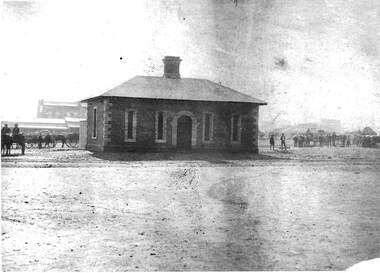 Bendigo Historical Society Inc.
Photograph - WATCHHOUSE: SANDHURST, 1861
... Brick building with central arched doorway and 2 narrow windows each side of door. 1 window on Lh end of building. ...Brick building with central arched doorway and 2 narrow windows each side of door. 1 window on Lh end of building. ...Black and white reprint of Batchelder: watchhouse ( James Lerk 28.2.2000 ) , Market Square. Drays loaded with sacks both left and right. Brick building central chimney. Unmade roadway. Brick building with central arched doorway and 2 narrow windows each side of door. 1 window on Lh end of building. Contrast colour brick quoins around windows and door.batchelderbuildings, government, watch house, sandhurst -
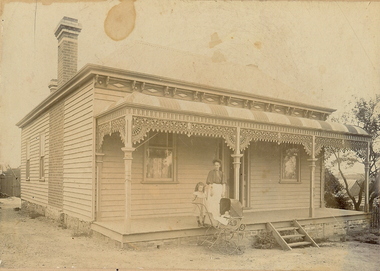 Bendigo Historical Society Inc.
Photograph - HOUSE: MOTHER AND CHILD C 1890'S
... Bull nose varandah with roof painted in broad stripes with narrow stripes between Intricate lace work across verandah. Two windows - one each side of central door. 4 wooden steps to verandah. 3 brick chimneys. ...Bull nose varandah with roof painted in broad stripes with narrow stripes between Intricate lace work across verandah. Two windows - one each side of central door. 4 wooden steps to verandah. 3 brick chimneys. ...sepia photo mounted on brown board, weatherboard house, front verandah. Lady and girl child with pram and baby. Bull nose varandah with roof painted in broad stripes with narrow stripes between Intricate lace work across verandah. Two windows - one each side of central door. 4 wooden steps to verandah. 3 brick chimneys. On back: ' Hazel and mother' in ball point pen.cottage, miners -
 Charlton Golden Grains Museum Inc
Photograph, Charlton Gentlemen's Club c. 1987, c.1987
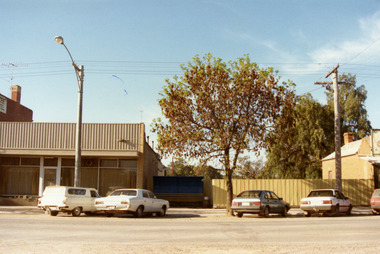
... The original building had a narrow entrance off High St, between Egan & Spain's Grocery Shop and the Central Café. After fire damaged the buildings in the 1970s, the club was extended to its present size. The vacant block next door...The original building had a narrow entrance off High St, between Egan & Spain's Grocery Shop and the Central Café. After fire damaged the buildings in the 1970s, the club was extended to its present size. The vacant block next door ...The Charlton Gentleman's Club was established in 1900 by solicitor Ben Green. The original building had a narrow entrance off High St, between Egan & Spain's Grocery Shop and the Central Café. After fire damaged the buildings in the 1970s, the club was extended to its present size. The vacant block next door was formerly Clark's butcher's shop. Part of a series of streetscapes taken for the Charlton Shire in 1987. Charlton club was established in 1900 in a building with a narrow entrance off High Street between Egan and Spain's Grocery shop and the Central Cafe. After fire damaged the buildings in 1970's the Club was extended to its present size. The vacant block was formerly a butchers shop.Colour photograph of a single storey, glass fronted building with a white-framed front door. There is a large light pole and a white panel van and a white car are in front of the building. There is a blue awning over a yellow seat to the right of the building. Next to the seat is yellow metal fencing. On the far right of the photo is the side of an old brick building. charlton gentlemen's club, ben green, clark's butcher -
 Lakes Entrance Historical Society
Photograph - Historic House 216 marine Parade, 1999
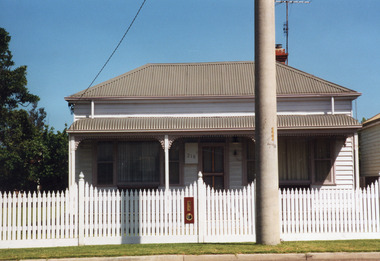
... Picture window bordered by narrow sash windows each side of front door, which has fan light above. ...Picture window bordered by narrow sash windows each side of front door, which has fan light above. ...Believed to have been built around WW1Colour photograph of a timber dwelling at 216 marine Parade. Hipped roof with bull nose veranda of corrugated iron . Picture window bordered by narrow sash windows each side of front door, which has fan light above. White painted picket fence. Lakes Entrance Victoriahouses, heritage study -
 Puffing Billy Railway
1 NT, Victorian Railways 2'6" Gauge Insulated Wagon, 1899
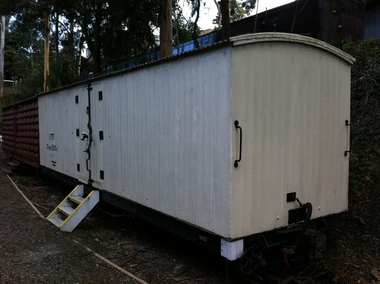
... doors either side in the middle, as have the NU vans. The van was painted white, in an attempt to reflect the summer heat. There was only one built for the narrow...doors either side in the middle, as have the NU vans. The van was painted white in an attempt to reflect the summer heat. There was only one built for the narrow...doors either side in the middle, as have the NU vans. The van was painted white, in an attempt to reflect the summer heat. There was only one built for the narrow ...INSULATED wagon. Built in 1899 and numbered 1, it was the only one of its type built Service History : NTT In October 1899 a bogie insulated van was built and placed into traffic. In 1926, the class was relettered to NT. Obtained by the Puffing Billy Preservation Society By 1969, the vehicle was in the Menzies Creek Museum. Currently Located at Belgrave Station The NT is an insulated van. The wooden body (both sides and roof) was insulated with cowhair. It had two swinging doors either side in the middle, as have the NU vans. The van was painted white, in an attempt to reflect the summer heat. There was only one built for the narrow gauge lines. Vehicle Length 25 feet 2 inches ( 7671 mm) Coupled Length 27 feet 4 inches (8330 mm) Width 6 feet 3 inches (1905 mm) Weight 7 tons Capacity 10 tons Built 1899 Number Built 1 In use none To be restored 1Historic - Victorian Railways - Narrow Gauge Rolling Stock - Insulated Wagon 1NT Victorian Heritage Register (VHR) Number H2187 Puffing Billy Locomotives and Rolling Stock Collectiontimber constructed body wall cavity filled with horse hair for insulation The NT is an insulated van. The wooden body (both sides and roof) was insulated with cowhair. It had two swinging doors either side in the middle, as have the NU vans. The van was painted white in an attempt to reflect the summer heat. There was only one built for the narrow gauge.1nt1nt, puffing billy, insulated van -
 Puffing Billy Railway
1 NH, Powder & General Goods Van, June 1910
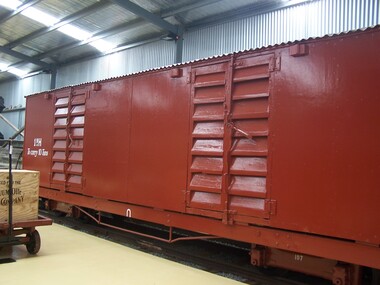
... Vehicle Length 25 feet 2 inches ( 7671 mm) Coupled Length 27 feet 4 inches (8330 mm) Width 6 feet 3 inches (1905 mm) Weight 7 tons Capacity 10 tons Built 1910 Number Built 1 In use - Static display Historic - Victorian Railways - narrow gauge rolling stock - Powder & General Goods Van Victorian Heritage Register (VHR) Number H2187 Puffing Billy Locomotives and Rolling Stock Collection puffing billy powder & general goods van nh1 nh1 powder & general goods van victorian railways narrow gauge rolling stock NH1 To carry 10 tons 1 NH - Powder & General Goods Van Made of Timber - wood, wrought iron and metal sheet There were two compartments: a 10ft 8¾ inch (3,270 mm) section for explosives and a 13 ft 7 in (4,140 mm) section for general goods. The sides, ends covered in sheet metal with NU type louvre doors ...V.R. Powder & General Goods Van NH1 Gauge 2'6" The NH Powder and Goods van was built in 1910. Its purpose was to carry explosives and general goods, Originally classed as NPH. There were two compartments: a 10ft 8¾ inch (3,270 mm) section for explosives and a 13 ft 7 in (4,140 mm) section for general goods. The sides, ends and doors were covered in sheet metal. With the closing of the mines at Walhalla the need to carry explosives ended and both compartments were used for general goods. The doors were replaced with NU type louvre doors for ventilation. NH1 Covered Truck Service History : NPH NPH 1 was built and issued to traffic June 1910. It was a bogie boxvan set up for general goods and the transportation of explosives. It could carry 6 tons of goods and 4 tons of explosives. No doubt the van was stationed on the Moe - Walhalla line. Walhalla was a gold mining town and the rail line had been built from Moe to provide a faster means of transportation than bullock teams from the sailing boats from Melbourne to Port Albert/Sale via Heyfield. In 1911 the van was converted to all goods transport and recoded to NH. NH The van was fitted with autocouplers in 1928. It was scrapped in 1954. By 1968, the vehicle body had been found and was placed into the Museum at Menzies Creek. Body donated to the Puffing Billy Preservation Society. Vehicle Length 25 feet 2 inches ( 7671 mm) Coupled Length 27 feet 4 inches (8330 mm) Width 6 feet 3 inches (1905 mm) Weight 7 tons Capacity 10 tons Built 1910 Number Built 1 In use - Static displayHistoric - Victorian Railways - narrow gauge rolling stock - Powder & General Goods Van Victorian Heritage Register (VHR) Number H2187 Puffing Billy Locomotives and Rolling Stock Collection1 NH - Powder & General Goods Van Made of Timber - wood, wrought iron and metal sheet There were two compartments: a 10ft 8¾ inch (3,270 mm) section for explosives and a 13 ft 7 in (4,140 mm) section for general goods. The sides, ends covered in sheet metal with NU type louvre doors for ventilation. NH1 To carry 10 tonspuffing billy, powder & general goods van nh1, nh1, powder & general goods van, victorian railways, narrow gauge rolling stock -
 Embroiderers Guild, Victoria
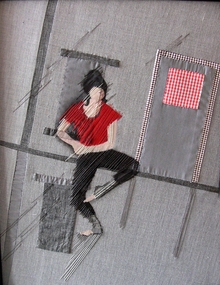
Artwork, other - Picture, Wendy Lees, "Dancer in Red Blouse", 1985
... Door and windows are applique. Background is finely checked grey cotton. Narrow black frame. ...Door and windows are applique. Background is finely checked grey cotton. Narrow black frame. ...Designed and worked by the donor as a teaching aid for her classes. Figure of dancer is painted and embroidered using long straight stitches in red and black. Door and windows are applique. Background is finely checked grey cotton. Narrow black frame. Worked and designed by Wendy Lees.embroidery, creative, pictures, 1980-2000, england -
 Puffing Billy Railway
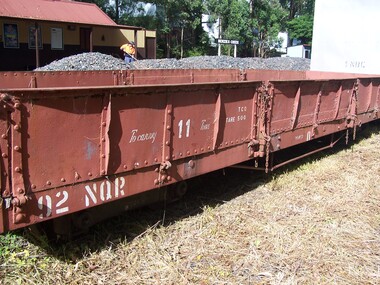
92 NQR - Open Medium Truck, 2/ 3/1907
... doors formed the sides thus allowing easy loading and unloading. 218 of these goods vehicles were built between 1898 and 1914 ? numbered 1 - 218. Originally, these wagons carried the code letter R as they were built with sides and ends. They later had the R removed. Unlike the Broad Gauge, VR's 2 ft 6 in (762 mm) narrow...doors formed the sides thus allowing easy loading and unloading. 218 of these goods vehicles were built between 1898 and 1914 ? numbered 1 - 218. Originally, these wagons carried the code letter R as they were built with sides and ends. They later had the R removed. Unlike the Broad Gauge, VR's 2 ft 6 in (762 mm) narrow ...The NQRs were the standard Medium open goods wagon. Generally the sides and ends were removable thus providing a totally flat truck. Three long drop-down doors formed the sides thus allowing easy loading and unloading. 218 of these goods vehicles were built between 1898 and 1914 ? numbered 1 - 218. Originally, these wagons carried the code letter R as they were built with sides and ends. They later had the R removed. Unlike the Broad Gauge, VR's 2 ft 6 in (762 mm) narrow gauge network never had four-wheeled wagons (aside from a handful of trolleys). Because of this, a single design of open wagon emerged and this was the only type of wagon ever used on these lines. This was the NQR class, a wagon with the same length and loading capacity as a Broad Gauge four-wheeled open wagon to make transferring freight between the gauges easier. The wagons, numbered 1 through 218, were built between 1898 and 1914. The wagons used the same underframe as most other non-locomotives on the VR Narrow Gauge. Letters and numbers were originally painted only on the end bulkheads and doors, both of which could be removed as traffic dictated, and this made wagon identification difficult until the decals were transferred to the underframes of each wagon In the 1910s some NQRs were provided with removable wood and steel frameworks with canvas roof canopies and side curtains, and internal seating to supplement the rest of the passenger stock during busy holiday periods. Puffing Billy has re-created these for emergency capacity. Five more NQRs, numbered 219-223, were built between 1990 and 1992 initially for passenger use so were fitted with the removable frames In the 1960s the Puffing Billy Railway added grids in the floor of some to enable them to be used to drop ballast on the track where needed. Vehicle Length 25 feet 2 inches ( 7671 mm) Coupled Length 27 feet 4 inches (8330 mm) Width 6 feet 3 inches (1905 mm) Weight 5 tons Capacity 11 tons Built 1898 - 1915 (1992) Number Built 218 (223) In use 14 To be restored 6 92NQR - Goods Vehicle - Open Medium Truck NQ/NQR OPEN MEDIUM TRUCKS. 218 of these goods vehicles were built between 1898 and 1914 numbered 1-218. Originally, these wagons carried the code letter R as they were built with sides and ends. Some later had the R removed if they regularly ran as flat wagons without theh sides and ends. Over the years, a number of NQRs were provided with removable wood and steel frameworks with canvas roof canopies and side curtains, and internal seating to supplement the rest of the passenger stock during busy holiday periods. Puffing Billy has re-created these for emergency capacity. Five more NQRs, numbered 219-223, were built between 1990 and 1992 initially for passenger use so were fitted with the removable frames. 92 NQR VR Service History : *NQR 92.VA - 2/ 3/1907 NWS Built new - / /1926 - To NQ 92.VA -Historic - Victorian Railways - Narrow Gauge Rolling Stock - NQR Open Medium Truck with drop ends Victorian Heritage Register (VHR) Number H2187 The Puffing Billy Rolling Stock Collection 92NQR - Open Medium Truck with drop ends made of Steel and metal92NQR puffing billy railway, pbr, rolling stock , 29 nqr, narrow gauge rolling stock, victorian railways, nqr wagon -
 Puffing Billy Railway
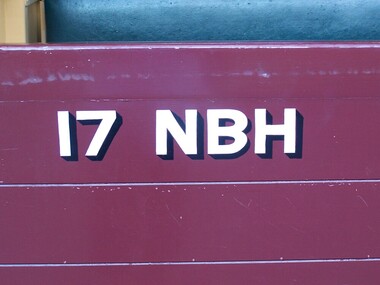
17 NBH - Passenger Carriage - Excursion Car, 1981
... Puffing Billy Service History or Notes April 2016 - New doors being prepared July 2016 - In for repairs and repaint Aug 2016 - In for repairs and repaint Sept 2016 - In for repairs and repaint. Historic - Puffing Billy Railway Narrow ...17NBH - Excursion Car (28) VR Service History built in 1981, (16 & 17). Puffing Billy Service History or Notes April 2016 - New doors being prepared July 2016 - In for repairs and repaint Aug 2016 - In for repairs and repaint Sept 2016 - In for repairs and repaint.Historic - Puffing Billy Railway Narrow Gauge - Passenger Rolling Stock: Excursion Car17 NBH Passenger Carriage - Excursion Car made of wrought iron and timber17NBHpuffing billy, pbr, rolling stock, 17 nbh, narrow gauge - passenger rolling stock, passenger carriage - excursion car -
 Puffing Billy Railway
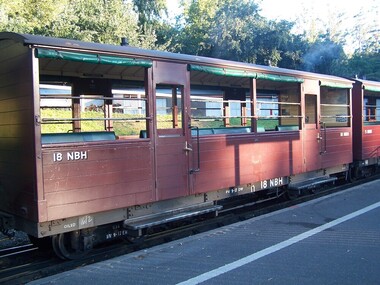
18 NBH - Passenger Carriage - Excursion Car, Between 1979 and 1988
... doors and space for wheel chairs at one end. The photo on the right shows the exterior of one such NBH. These have a seating capacity of 24 passengers. Historic - Puffing Billy Railway Narrow ...18NBH - Excursion Car (28) Puffing Billy Service History or Notes Between 1979 and 1988 the Puffing Billy railway built six more NBHs, numbered 18-23. These had steel frames, padded seats, and a wide "window sill". At first glance they look the same as the previous NBHs. There are other minor construction differences due to the use of steel framing. 18NBH entered traffic on 19/4/1997; Currently these six steel framed NBHs (numbers 18-23) are being modified to provide double doors and space for wheel chairs at one end. The photo on the right shows the exterior of one such NBH. These have a seating capacity of 24 passengers.Historic - Puffing Billy Railway Narrow Gauge - Passenger Rolling Stock: Excursion Car18 NBH Passenger Carriage - Excursion Car18NBHpuffing billy railway, pbr, rolling stock , 18 nbh, narrow gauge - passenger rolling stock, passenger carriage - excursion car -
 Puffing Billy Railway
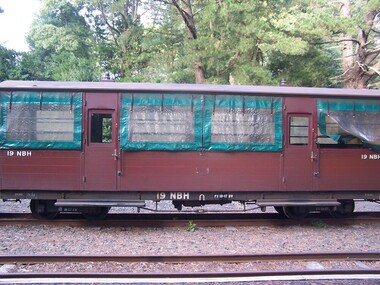
19 NBH - Passenger Carriage - Excursion Car, Between 1997 and 1998
... doors and space for wheel chairs at one end. The photo on the right shows the exterior of one such NBH. These have a seating capacity of 24 passengers. Historic - Puffing Billy Railway Narrow ...19NBH - Excursion Car Puffing Billy Service History or Notes Between 1997 and 1998 the Puffing Billy railway built six more NBHs, numbered 18-23. These had steel frames, padded seats, and a wide "window sill". At first glance they look the same as the previous NBHs. There are other minor construction differences due to the use of steel framing. 19NBH entered traffic on 5/12/1997 Currently these six steel framed NBHs (numbers 18-23) are being modified to provide double doors and space for wheel chairs at one end. The photo on the right shows the exterior of one such NBH. These have a seating capacity of 24 passengers.Historic - Puffing Billy Railway Narrow Gauge - Passenger Rolling Stock: Excursion Car19 NBH - Passenger Carriage - Excursion Car made of wrought iron and timber19NBHpuffing billy, pbr, rolling stock, 19 nbh, narrow gauge - passenger rolling stock, passenger carriage - excursion car -
 Puffing Billy Railway
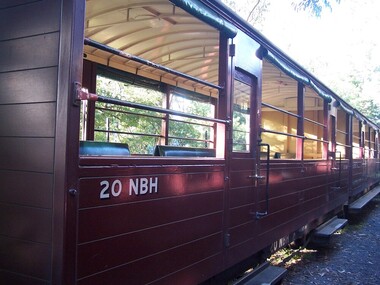
20 NBH - Passenger Carriage - Excursion Car, Between 1998 and 1989
... doors and space for wheel chairs at one end. The photo on the right shows the exterior of one such NBH. These have a seating capacity of 24 passengers. Historic - Puffing Billy Railway Narrow ...20NBH - Excursion Car Puffing Billy Service History or Notes Between 1979 and 1988 the Puffing Billy railway built six more NBHs, numbered 18-23. These had steel frames, padded seats, and a wide "window sill". At first glance they look the same as the previous NBHs. There are other minor construction differences due to the use of steel framing. 20NBH entered traffic on 19/12/1997 Currently these six steel framed NBHs (numbers 18-23) are being modified to provide double doors and space for wheel chairs at one end. The photo on the right shows the exterior of one such NBH. These have a seating capacity of 24 passengers.Historic - Puffing Billy Railway Narrow Gauge - Passenger Rolling Stock: Excursion Car20 NBH - Passenger Carriage - Excursion Car Steel Iron and timber20NBHnbh, puffing billy, narrow gauge -
 Puffing Billy Railway
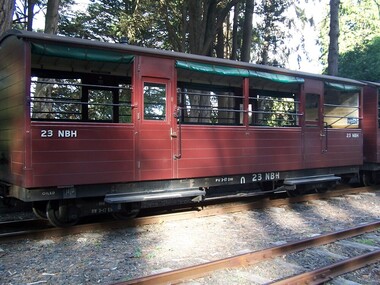
23 NBH - Passenger Carriage - Excursion Car, Between 1998 and 1989
... doors and space for wheel chairs at one end. The photo on the right shows the exterior of one such NBH. These have a seating capacity of 24 passengers. Historic - Puffing Billy Railway Narrow ...23NBH - Excursion Car Puffing Billy Service History or Notes Between 1979 and 1988 the Puffing Billy railway built six more NBHs, numbered 18-23. These had steel frames, padded seats, and a wide "window sill". At first glance they look the same as the previous NBHs. There are other minor construction differences due to the use of steel framing. 23NBH entered traffic in 1998. Currently these six steel framed NBHs (numbers 18-23) are being modified to provide double doors and space for wheel chairs at one end. The photo on the right shows the exterior of one such NBH. These have a seating capacity of 24 passengers.Historic - Puffing Billy Railway Narrow Gauge - Passenger Rolling Stock: Excursion Car23 NBH - Passenger Carriage - Excursion Car 23NBHpuffing billy, pbr, rolling stock , 23 nbh, narrow gauge - passenger rolling stock, passenger carriage - excursion car -
 Puffing Billy Railway
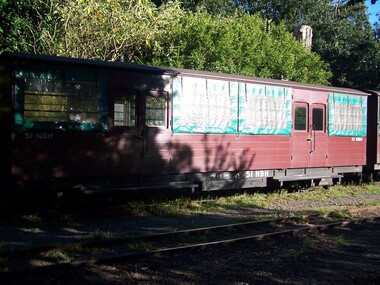
51 NBH - Passenger Carriage - Excursion Car for wheelchairs, 1981
... door access and fold-up seats) was built, the second following in 1983. These were numbered 51 & 52 - a separate number series because of their length made them different from the other NBHs. May 2016 - In for repairs to the roof Historic - Puffing Billy Railway Narrow ...51 NBH - Excursion Car for wheelchairs - specially built for Wheelchair access allowing it to carry 24 passengers or 20 passengers and 3 wheelchairs, or 16 passengers & 6 wheelchairs Puffing Billy Service History or Notes Coupled Length 31 feet 4 inches (9550 mm) Width 6 feet 3 inches (1905 mm) Height 9 feet 2 inches (2794 mm) Weight 8 tons Capacity 24 passengers, or 20 passengers and 3 wheelchairs, or 16 passengers and 6 wheelchairs Number Built 2 In use 2 In 1981 the first of two extended NBHs with provision for wheelchair passengers (double door access and fold-up seats) was built, the second following in 1983. These were numbered 51 & 52 - a separate number series because of their length made them different from the other NBHs. May 2016 - In for repairs to the roofHistoric - Puffing Billy Railway Narrow Gauge - Passenger Rolling Stock: Excursion Car specially built for Wheelchairs access51 NBH - Excursion Car for wheelchairs - specially built for Wheelchair access allowing it to carry 24 passengers or 20 passengers and 3 wheelchairs, or 16 passengers & 6 wheelchairs made of wrought iron and timber 51NBH -
 Puffing Billy Railway
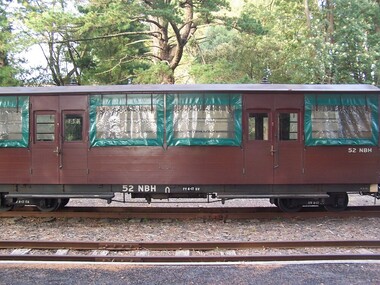
52 NBH - Passenger Carriage - Excursion Car for wheelchairs, 1983
... door access and fold-up seats) was built, the second following in 1983. These were numbered 51 & 52 - a separate number series because of their length made them different from the other NBHs. May 2016 - In for repairs to the roof Historic - Puffing Billy Railway Narrow ...52NBH - Excursion Car for wheelchairs - specially built for Wheelchair access allowing it to carry 24 passengers or 20 passengers and 3 wheelchairs, or 16 passengers & 6 wheelchairs Puffing Billy Service History or Notes Coupled Length 31 feet 4 inches (9550 mm) Width 6 feet 3 inches (1905 mm) Height 9 feet 2 inches (2794 mm) Weight 8 tons Capacity 24 passengers, or 20 passengers and 3 wheelchairs, or 16 passengers and 6 wheelchairs Number Built 2 In use 2 In 1981 the first of two extended NBHs with provision for wheelchair passengers (double door access and fold-up seats) was built, the second following in 1983. These were numbered 51 & 52 - a separate number series because of their length made them different from the other NBHs. May 2016 - In for repairs to the roofHistoric - Puffing Billy Railway Narrow Gauge - Passenger Rolling Stock: Excursion Car specially built for Wheelchairs access52 NBH - Excursion Car for wheelchairs - specially built for Wheelchair access allowing it to carry 24 passengers or 20 passengers and 3 wheelchairs, or 16 passengers & 6 wheelchairs made of wrought iron and timber52NBHpuffing billy, pbr, rolling stock , 52 nbh, narrow gauge - passenger rolling stock: excursion car for wheelchair -
 Puffing Billy Railway
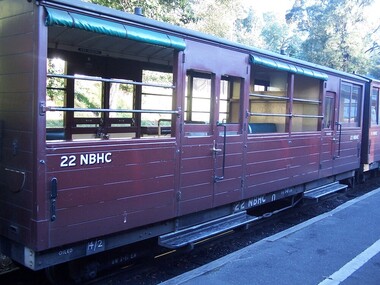
22 NBHC - Passenger Carriage - Excursion Car for wheelchairs and Guard's Van, Between 1997 and 1998
... doors and space for wheel chairs at one end. The photo on the right shows the exterior of one such NBH. These have a seating capacity of 24 passengers. Oct 2009 - Rebuild continues. Aug 2016 - 22NBC Wheel flats removed Sept 2016 - 22NBC Wheel flats removed Historic - Puffing Billy Railway Narrow Gauge - Passenger Rolling Stock: Excursion Car 22 NBH which has been converted by the addition of a Guard's Van compartment and modified for Wheelchairs access by Puffing Billy Railway and re classed & numbered 22NBHC puffing billy, pbr, rolling stock , 22 nbhc 22NBHC 22 NBHC - Passenger Carriage - Excursion Car - specially modified for Wheelchair access allowing it to carry wheelchairs and to have a Guard's Van compartment. made of wrought iron and timber 22 NBHC - Passenger Carriage - Excursion Car for wheelchairs and Guard's Van Puffing Billy Railway ...22 NBHC - Passenger Carriage - Excursion Car - specially modified for Wheelchair access allowing it to carry for wheelchairs and Guard's Van Puffing Billy Service History or Notes Between 1979 and 1988 the Puffing Billy railway built six more NBHs, numbered 18-23. These had steel frames, padded seats, and a wide "window sill". At first glance they look the same as the previous NBHs. There are other minor construction differences due to the use of steel framing. 22NBH entered traffic in 1998. Currently these six steel framed NBHs (numbers 18-23) are being modified to provide double doors and space for wheel chairs at one end. The photo on the right shows the exterior of one such NBH. These have a seating capacity of 24 passengers. Oct 2009 - Rebuild continues. Aug 2016 - 22NBC Wheel flats removed Sept 2016 - 22NBC Wheel flats removedHistoric - Puffing Billy Railway Narrow Gauge - Passenger Rolling Stock: Excursion Car 22 NBH which has been converted by the addition of a Guard's Van compartment and modified for Wheelchairs access by Puffing Billy Railway and re classed & numbered 22NBHC22 NBHC - Passenger Carriage - Excursion Car - specially modified for Wheelchair access allowing it to carry wheelchairs and to have a Guard's Van compartment. made of wrought iron and timber22NBHCpuffing billy, pbr, rolling stock , 22 nbhc
