
Showing 171 items matching "national dress"
-
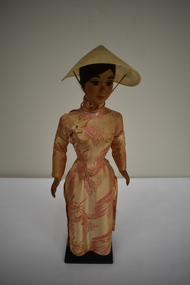 Dandenong/Cranbourne RSL Sub Branch
Souvenir - Vietnamese figurine
... Vietnamese figurine wearing national dress...Vietnamese figurine wearing national dress Souvenir Vietnamese figurine. ...Vietnamese figurine wearing national dress -
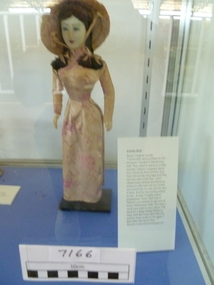 National Vietnam Veterans Museum (NVVM)
Souvenir, Doll
... Coolie doll of Vietnamese lady in national dress and coolie hat...Vietnamese Doll Coolie Coolie doll of Vietnamese lady in national dress and coolie hat Doll Souvenir Souvenir ...Coolie doll of Vietnamese lady in national dress and coolie hatvietnamese, doll, coolie -
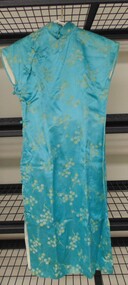 National Vietnam Veterans Museum (NVVM)
Clothing - AO DAI
... ...national dress...This dress was purchased in Saigon by National Serviceman Gary Elliott before he returned home in 1969 for his then girlfriend, (later to be his wife). ...Saigon AO DAI dress silk national dress costume Vietnamese dress Vietnamese women Aqua silk traditional Vietnamese (dress) AO DAI. ...This dress was purchased in Saigon by National Serviceman Gary Elliott before he returned home in 1969 for his then girlfriend, (later to be his wife). Gary served as a Craftsman in 102 Field Workshop, RAEME, in Vietnam 1968-69.Aqua silk traditional Vietnamese (dress) AO DAI. The dress has a peter pan collar with front opening secured by four covered buttons. A zipper runs along the side seam. The garment is lined with white silk. elliott, 3793300, craftsman, royal corps of australian electrical and mechanical engineers., saigon, ao dai, dress, silk, national dress, costume, vietnamese dress, vietnamese women -
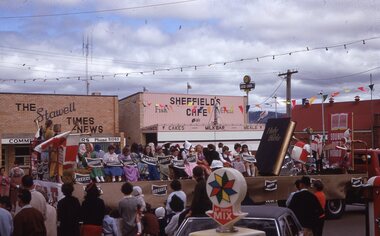 Stawell Historical Society Inc
Photograph, Ian McCann, Parades
... Chidren on float some in national dress of couties some holding names of countries, large bible and sign reading Sounding out the Word ?. ...Parades Chidren on float some in national dress of couties some holding names of countries, large bible and sign reading Sounding out the Word ?. ...Chidren on float some in national dress of couties some holding names of countries, large bible and sign reading Sounding out the Word ?. parades -
 Ithacan Historical Society
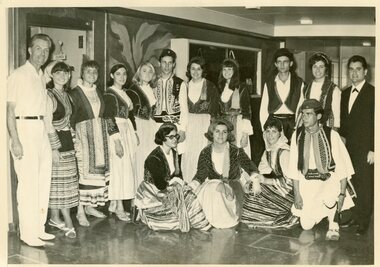
Photograph, Group in Greek traditional costumes, c1960
... A black and white photograph of a group some of whom are dressed in Greek national dress. The 10 women in the photograph are all in national costume; of the five men three are wearing traditional dress....A black and white photograph of a group some of whom are dressed in Greek national dress. The 10 women in the photograph are all in national costume; of the five men three are wearing traditional dress. ...The photograph is taken on board an ocean liner heading for Greece. Those in Greek costumes are paseengers; the two men in civilian clothes crew members. Fourth and fifth from the left respectively are cousins Penelope Billiter (nee Kallinikos) and Athena Sikiotis. Penelope 's father Spiro Kallinikos and Athena's mother Chrisoula were siblings.Many Australian born people of Greek heritage have made trips back to their parents' homeland in a bid to learn more about their heritage and to meet family. A black and white photograph of a group some of whom are dressed in Greek national dress. The 10 women in the photograph are all in national costume; of the five men three are wearing traditional dress. -
 Bendigo Historical Society Inc.
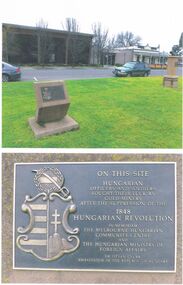
Photograph - HUNGARIAN MEMORIAL
... Page 2 shows a litle girl in national dress laying some flowers at the base of the Memorial and a little boy looking on. ...Page 2 shows a litle girl in national dress laying some flowers at the base of the Memorial and a little boy looking on. ...Four pages of coloured photographs of the unveilling of the Hungarian Memorial. Two photos on each page. Page 1 has a man leaning on the memorial and being photographed with a crowd looking on. The second photo shows the crowd and the Memorial before the unveilling. The Australian and Hungarian flags in the background. Across the street is the Foundry Arms Hotel and Safeway Supermarket. Written on the back is: 2 November 2002 Photographed by James Lerk, (written on the back of the four pages). Bendigo Advertiser Photographer Bill Hawkings posing the Hungarian Ambassador. Page 2 shows a litle girl in national dress laying some flowers at the base of the Memorial and a little boy looking on. The second photo is the unveilling. Page 3 shows the plaque on the left and on the right is the Memorial and standing behind it are 6 men, Rod Fyffe is on the left. The two flags behind them. Page 4 shows some children, 2 in national dress, the flowers at the base of the memorial and the men and flags behind them. The second photo is a close up of the side of the Memorial and children in national dress, the flowers and some of the crowd. The inscription reads: On this site Hungarian Officers and Soldiers sought their luck as gold miners after the suppression of the 1848 Hungarian Revolution. In Memoriam. The Melbourne Hungarian Community Centre and the Hungarian Ministry of Foreign Affairs. Dr Istvan Gyurk Ambassador of the Republic of Hungary. Beside the inscription is an emblem. Included is a page from the Memorials Australia website.hungarian memorial, james lerk, bendigo advertiser, bill hawkings -
 Embroiderers Guild, Victoria
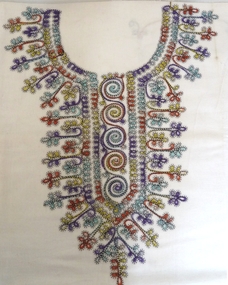
Clothing - Embroidered Pakistani Kurta (unmade)
... The Shalwar kameez, Achkan, Sherwani and Kurta shalwar Kameez are the national dresses of Pakistan and are worn by men and women in all five provinces of Punjab, Sindh, Balochistan, Khyber Pakhtunkhwa, and Gilgit-Baltistan in the country and in Azad Kashmir....The Shalwar kameez, Achkan, Sherwani and Kurta shalwar Kameez are the national dresses of Pakistan and are worn by men and women in all five provinces of Punjab, Sindh, Balochistan, Khyber Pakhtunkhwa, and Gilgit-Baltistan in the country and in Azad Kashmir. ...Acquired by donor in Pakistan. The Shalwar kameez, Achkan, Sherwani and Kurta shalwar Kameez are the national dresses of Pakistan and are worn by men and women in all five provinces of Punjab, Sindh, Balochistan, Khyber Pakhtunkhwa, and Gilgit-Baltistan in the country and in Azad Kashmir.Piece of fine cotton fabric, embroidered. Intended to be made into a kurta (shirt). Embroidery done in black with an ari and then whipped with bright coloured silks.embroidery, kurta, pakistan -
 Ithacan Historical Society
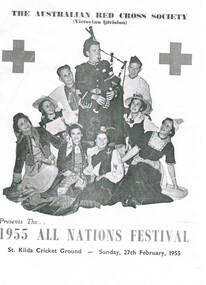
Poster, All Nations Festival, 1955
... Consisting of a group 3 men and 6 women dressed in different national traditional dress. There is a Red Cross symbol either side of the group.... in different national traditional dress. There is a Red Cross symbol either side of the group. ...An advertising poster for the 1955 All Nations Festival which was presented by the Australia Red Cross Society, Victorian Branch. Nina and Olga Black participated in the festival and were featured on the poster (seated at front first and second from left) wearing Greek traditional costumes. Other recognisable national costumes are Scottish Piper and Dutch.The event held in 1955 by the Australian Red Cross promoted multicultural Australia and members of the Ithacan Philanthropic Club participated. It was the period of post WW2 mass migration which saw many nationalities making Australia their home.Photocopy of a poster for the 1955 All Nations Festival. Consisting of a group 3 men and 6 women dressed in different national traditional dress. There is a Red Cross symbol either side of the group.THE AUSTRALIAN RED CROSS SOCIETY / VICTORIAN DIVISION/PRESENTS THE / 1955 ALL NATIONS FESTIVAL / ST. KILDA CRICKET GROUND - SUNDAY, 27TH FEBRUARY 1955folk dancing, national costimes -
 Bendigo Military Museum
Postcard - POSTCARDS - Scenic postcards from Wales, J.Jones et al
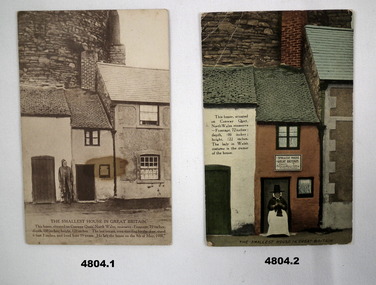
... There is Lady in National dress, seated at the door doing knitting. 3. ...There is Lady in National dress, seated at the door doing knitting. 3. ...WW!, Tourist cards sent home by Joe Stuart.1. Sepia coloured photo of small house in Great Britain, located at Conway Quay, North Wales. The house is 6 feet wide. 2. Colourised picture of smallest house in Great Britain, Conway Quay. There is Lady in National dress, seated at the door doing knitting. 3. Colourised photo of kitchen of above. 4. Colourised photo of bedroom of above. The house size frontage 72 inches. Back to front 100 inches, Height 122 inches.1. On the rear Is addressed to "Dear Susie - Best love Joe". 2. 3. & 4. Nil on rear.wales, small housing -
 Bendigo Historical Society Inc.
Postcard - Mabel Tully Collection: Three period postcards sent and delivered to Mabel; circa 1907, circa 1907
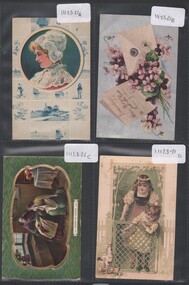
... Mabel Tully Collection: Four coloured tourist postcards; circa 1910. 11123.21 A - A Dutch themed postcard, includes a Dutch girl in profile and national dress. Undated sent to Mabel from Pearle, Louise & Daisy. 11123.21 B - A postcard showing violets and a letter on a silvered background post marked Footscray 23/11/1907. ...Mabel Tully Collection: Four coloured tourist postcards; circa 1910. 11123.21 A - A Dutch themed postcard, includes a Dutch girl in profile and national dress. Undated sent to Mabel from Pearle, Louise & Daisy. 11123.21 B - A postcard showing violets and a letter on a silvered background post marked Footscray 23/11/1907. ...Mabel Beatrice Josephine Tully was born to John Patrick Tully and Mary Elizabeth Dole at White Hills on 16.07.1896.. Mabel lived in the family home at 61 Charleston Rd. Bendigo and was employed as a saleswoman until she married John (Jack) Killeen in 1925. Jack was a junior postal worker. Mabel's father John Tully died on 11.08.1926. In 1927 Mabel and Jack were living at 70 Abbott Street Bendigo. Mabel did home duties and Jack was employed as a postal linesman. In 1931 Mabel and Jack were living back at 61 Charleston Rd Sandhursr East. In 1937 Jack was working as a barman, and as a fruiterer in 1943. Mabel's mother died 11.01.1941. Mabel's husband Jack Killeen died on 22.06.1975 aged 79 years. Mabel died on 7.01.1987 aged 90 years. She is buried in the White Hills Cemetery. Mabel Tully Collection: Four coloured tourist postcards; circa 1910. 11123.21 A - A Dutch themed postcard, includes a Dutch girl in profile and national dress. Undated sent to Mabel from Pearle, Louise & Daisy. 11123.21 B - A postcard showing violets and a letter on a silvered background post marked Footscray 23/11/1907. Sent to Mrs. P. Davies from Violet. 11123.21 C - A postcard shoeing two women in a salon entitled "Words of Wisdom" on a green background; sent to Mabel from Meryle. 11123.21 D - An undated postcard sent to Mabel with love and kisses from Pearle, Louise & Daisy. postcard shows two girls at a trellis gate feeding and hen and her three chicks.Handwritten messages on all four postcards.mabel tully, diverse postcards -
 Ithacan Historical Society
Photograph, Greek dance group, 1948
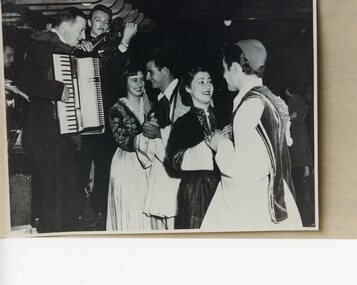
... The photo was taken at a Grecian Ball at which the Olympic Club Dancing Group dressed in national costumes performed Greek traditional dances. ...The photo was taken at a Grecian Ball at which the Olympic Club Dancing Group dressed in national costumes performed Greek traditional dances. ...The photo was taken at a Grecian Ball at which the Olympic Club Dancing Group dressed in national costumes performed Greek traditional dances. The couple on the left is Madelaine Cosmas and Spiro Paizis; the on right in the foreground are Irini Pappas and Nick Lappas.The maintenance of traditional Greek dancing has been an important in retaining traditional culture within expatriate Greek communities.A print of a black and white photograph of two ladies and two menders in Greek traditional costume and dancing. Two musicians, a violinist and a piano accordion player are providing the music for the dancers. -
 Federation University Historical Collection
Photograph, Noel L. Harvey, Yendon Railway Station, 1968, 03/12/1968
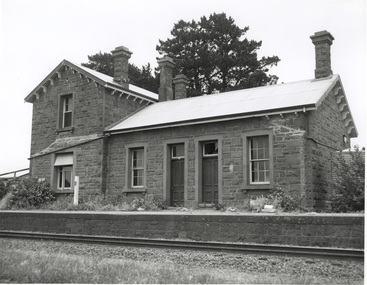
... National Trust as one of special interest. The Railways Department advised the meeting that an inspection had been made at the Yendon level crossing, but no recommendation could be made at present for installation of flashing light signals.' university of ballarat ballarat institute of advanced education yendon railway bluestone john vernon Verso in blue ballpoint pen 'No 47 Yendon Railway Stn' Stamped in purple ink 'N.L. Harvey & Son, Photographers, 131 Sturt Streeet Ballarat, Phone 25766, After hours 23397, Will photograph anywhere anytime any place. (in pen 3/12/68), Bluestone building with dressed ...Buninyong had no railway station so residents would travel to Yendon to catch the train. The Yendon Railway Station building was demolished soon after this photograph was taken. The bluestone was purchased by John Vernon, and was used to construct retaining walls in a garden enclosure between the first two buildings at the new Ballarat Institute of Advanced Education campus at Mt Helen. This is now known as the courtyard between building 'F' and building 'G' at the University of Ballarat mt Helen Campus. The following article was published in the Ballarat Courier on 06 December 1968. 'Yendon Station to be demolished - The old bluestone railway station at Yendon is to be demolished. C.A.D. Fisken told Buninyong Shire Council of the proposal at its meeting yesterday. Fortunately, he said, the beautiful stonework would not be lost. It would be used and incorporated in the new School of Mines building at Mt Helen. the retention of the century-old building was the subject of representations by Council to the Railways following the closure of the station for goods traffic 'some time ago'. The building had also been noted by the National Trust as one of special interest. The Railways Department advised the meeting that an inspection had been made at the Yendon level crossing, but no recommendation could be made at present for installation of flashing light signals.'Bluestone building with dressed bluestone door and window jambs and chimney. The roof is corrugated iron. The platform edge is also of bluestone construction. The building is the former Yendon Railway Station (now demolished) on the Ballarat -Geelong main line (the original Melbourne to Ballarat mainline). When the line was opened, this station may have been originally called Buninyong as it was built a number of years before the Ballarat to Buninyong branch line was built. This this has subsequently caused some confusion. The station was later renamed Yendon. Verso in blue ballpoint pen 'No 47 Yendon Railway Stn' Stamped in purple ink 'N.L. Harvey & Son, Photographers, 131 Sturt Streeet Ballarat, Phone 25766, After hours 23397, Will photograph anywhere anytime any place. (in pen 3/12/68),university of ballarat, ballarat institute of advanced education, yendon, railway, bluestone, john vernon -
 Blacksmith's Cottage and Forge
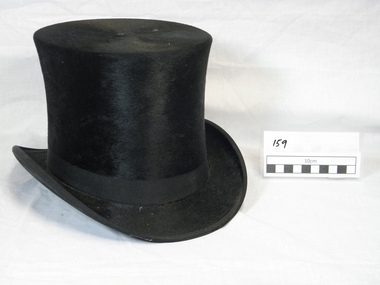
Top Hat, late 19th century
... This item has historical significance at a local, state and national level. It is representative of formal gentlemen's dress in the latter part of the 19th century/early 20th century. 1910 top hat gentlemen s fashion mr grant velour ninteenth century attire skilled hatter upper class attire formal wear monopoly token president bacchus marsh shire federation celebrations 1910 federation owner millbank mad hatter opening parliament 1910 royal exhibition building original box greaseproof prize medal royal isignia the sea breeze no 5044 size 6 7 8 Inscription in gold inside hat reads "GREASE PROOF / Prize Medal" / Royal Insignia with motto "Honi soit qui mal y pense" / "VENTILATED / AND / FELT BANDED". ...This hat belonged to Mr William Grant, Shire President of Bacchus Marsh. Mr Grant and his wife were invited to the opening of the first Federal Parliament held in the Royal Exhibition Building, Carlton, on the 9th May 1901. The opening was attended by the Duke and Duchess of Cornwall and York (later George V and Queen Mary) and 12,000 guests. Mr Grant's family were early settlers in Bacchus Marsh, and both he and his father were influential people in the town. They owned the property "Millbank". When William Grant died in 1924, his obituary in the 'Express' listed 17 public positions he held, including severaal terms as Shire President.This item has historical significance at a local, state and national level. It is representative of formal gentlemen's dress in the latter part of the 19th century/early 20th century.Gentleman's black shiny velour top hat with silk ribbon band, bound inside with leather sweat band, adjustable with silk ties. Inscription inside hat. Purple lining with gold embossing. Light canvas coated inside. Protective silver paper sweat band under leather sweat band.Inscription in gold inside hat reads "GREASE PROOF / Prize Medal" / Royal Insignia with motto "Honi soit qui mal y pense" / "VENTILATED / AND / FELT BANDED".1910, top hat, gentlemen s fashion, mr grant, velour, ninteenth century attire, skilled hatter, upper class attire, formal wear, monopoly token, president bacchus marsh shire, federation celebrations 1910, federation, owner millbank, mad hatter, opening parliament 1910, royal exhibition building, original box, greaseproof prize medal royal isignia, the sea breeze, no 5044, size 6, 7 8 -
 Flagstaff Hill Maritime Museum and Village
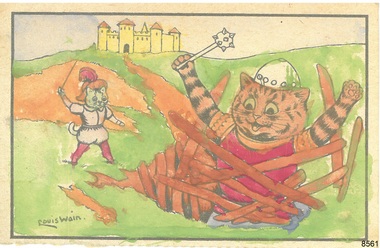
Postcard - Picture Postcard, Louis Wain (illustrator / artist), 1880s to 1930s
... Flagstaff Hill Maritime Museum and Village Warrnambool Great Ocean Road Shipwreck Coast postcard picture postcard Louis Wain fighting cats child's postcard cat artist animal portraits National Cat Club fencing illustrator children's books children's author children's illustrator watercolour cats dressed as humans cats dressed as knights popular art Victorian art Signature: "Louis Wain." ...The picture postcard is illustrated in a simple, child-like manner. It has a personal message on the back, perhaps sent by an adult called Lily to a young relative or friend. Its rough edges indicate that it may have been torn out of a book or from a sheet of cards. It is one of the hundreds of illustrations by artist Louis Wain, quoted as being "one of the most popular commercial illustrators in the history of England" (IllustrationChronicles.com). English artist Louis Wain (1860-1939) was famous for his illustrations of cats, many of which he gave human characteristics and personalities. Wain married Emily. They owned a cat called Peter who was a great comfort to Emily through her cancer illness and consequent death after only a few years of marriage. At 22 years old Wain gave up his job as a teacher to work full time as an illustrator. He was able to produce hundreds of drawing a year for journals, books, postcards and advertisements. Later he wrote and illustrated children's books. However he didn't benefit much from copyrighting his work as he sold his work to publishers together with the copyright, so reproductions of his works didn't earn him money. Wain said that he owned his career as a cat artist to Peter. Wain spent over a decade in mental asylums before his death in 1939.This picture postcard is an example of the work of Louis Wain, English artist of the 19th and early 20th century. He is famous for his drawings of cats, which he continued producing throughout his life. He is also known for producing the world's first screen cartoon cat, called "Pussyfoot". In 1972 Wain's work was presented at an exhibition in the Victorian and Albert Museum.Rectangular picture postcard printed on think cream card. Picture on postcard is outlined in black and coloured in roughly painted watercolours. The drawing has two cats dressed in armour standing and fighting in front of a turreted castle. The picture is a black framed outline. The artist's printed signature is in the bottom left corner. The artist is Louis Wain. The reverse has a vertical dividing line and a square outline for a postage stamp's location. It also has printed headings. There is a handwritten Pencil inscription. The postcard's left side and lower edge have rough uneven edges.Signature: "Louis Wain." Printed headings: "POST CARD" "THIS SPACE MAY BE USED FOR COMMUNICATION" "THE ADDRESS TO BE WRITTEN HERE" Handwritten on back: "To Dr R - - - - - - / with love / from Lilly"flagstaff hill maritime museum and village, warrnambool, great ocean road, shipwreck coast, postcard, picture postcard, louis wain, fighting cats, child's postcard, cat artist, animal portraits, national cat club, fencing, illustrator, children's books, children's author, children's illustrator, watercolour, cats dressed as humans, cats dressed as knights, popular art, victorian art -
 Geelong RSL Sub Branch
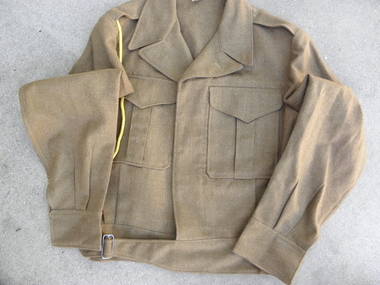
Uniform - Battle Dress, Blouse 1956, Trousers no date (mid 20 cenrtury
... dress...australian army...national...This uniform was used by 3/92813 K Walters a National Serviceman circa 1950. uniform k walters battle dress australian army national service Blouse - D D Made in Australia 1956, M. ...This Uniform was worn by members of the Australian Army circa 1950 - 1980?This uniform was used by 3/92813 K Walters a National Serviceman circa 1950.Battle Dress Blouse - Khaki. Battle Dress Trousers with Map Pocket - Khaki and Yellow Lanyard (RAASC) Blouse - D D Made in Australia 1956, M. TX Size 7. Trousers -Regimental No 3/92813 Name K Walters M. TX Size 7.uniform, k walters, battle dress, australian army, national service -
 City of Moorabbin Historical Society (Operating the Box Cottage Museum)
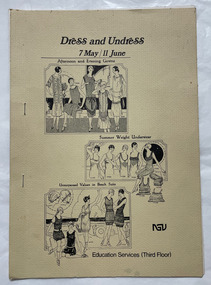
Book, Berclouw, Marja, Dress and undress, 1979
... National Gallery of Victoria 7 May-11 June. Includes bibliographical references. 1 v. (unpaged) : ill. ; Includes bibliographical references. Dress ...Catalogue of and exhibition held and the National Gallery of Victoria 7 May-11 June.1 v. (unpaged) : ill. ; Includes bibliographical references.non-fictionCatalogue of and exhibition held and the National Gallery of Victoria 7 May-11 June.underwear, clothing, dress -
 Montmorency–Eltham RSL Sub Branch
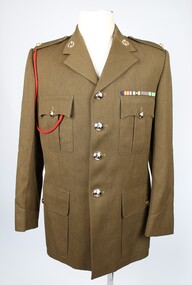
Uniform - Jacket, Khaki, Service Dress, Khaki Service Dress Jacket, Unknown, post Vietnam era
... National Medal, Republic of Vietnam Star. Donor served in 3rd Battalion, Royal Australian Regiment in Vietnam uniform military officers vanzwol vanswol Label inside - Cardone Apparel Victoria with care instruction and broad arrow. Hand written ‘14-4-80’ and ‘J A VANSWOL’ Officers Khaki Serge Jacket with brass buttons & rank insignia, and 4-medal riband bar Khaki Service Dress ...Military uniform of an R.A.Regiment Captain, post Vietnam. The uniform is missing two ‘pips’ from both epaulettes, the date bar from the Vietnam Star, and the belt. Ribbon bar - Australian Vietnam Medal, Defence Force Service Medal with Clasp, National Medal, Republic of Vietnam Star. Donor served in 3rd Battalion, Royal Australian Regiment in VietnamOfficers Khaki Serge Jacket with brass buttons & rank insignia, and 4-medal riband barLabel inside - Cardone Apparel Victoria with care instruction and broad arrow. Hand written ‘14-4-80’ and ‘J A VANSWOL’ uniform, military, officers, vanzwol, vanswol -
 Greensborough Historical Society
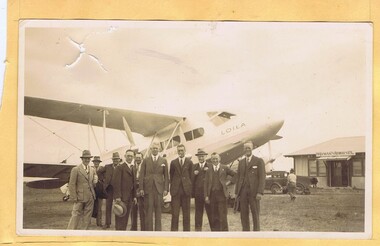
Photograph - Digital Image, Mystery mine photographs: Gentlemen and the plane "Loila", 1935c
... dressed men pose with plane. Plane “Loila” (DeHavilland) operated by Holyman’s Airways Pty Ltd., based in Tasmania. “Loila” was operational in 1935, which helps to date the photographs. Holyman’s Airways became Australian National...dressed men pose with plane. Plane “Loila” (DeHavilland) operated by Holyman’s Airways Pty Ltd., based in Tasmania. “Loila” was operational in 1935, which helps to date the photographs. Holyman’s Airways became Australian National ...Group of well-dressed men pose with plane. Plane “Loila” (DeHavilland) operated by Holyman’s Airways Pty Ltd., based in Tasmania. “Loila” was operational in 1935, which helps to date the photographs. Holyman’s Airways became Australian National Airways in 1936 following a merger with Adelaide Airways. .An interesting collection of photographs, the connection to Greensborough remains a mystery. Digital copy of black and white photograph, one of 30 photos of mining operations.Photos have no markings or dates. Donor unknown.mining, tasmania, holymans airways -
 Supreme Court of Victoria Library
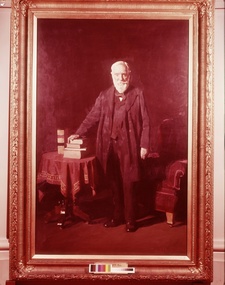
Portrait, John Schutt, Supreme Court Librarian, 1916/1917
... National Gallery of Victoria. This portrait is of interest for whom it portrays and as the work of a well known artist Signed Meldrum lower right hand corner. Plaque inscription is John Schutt, Esq. Supreme Court Librarian Full length portrait in oils of John Schutt. Schutt is standing up looking out the to the viewer. His hand rests on a small pile of books. He is dressed ...This portrait was presented by the Victorian Bar to the Library in 1917 to commemorate Schutt’s fifty years as the Supreme Court Librarian. The portrait was presented at a ceremony presided over by Mr Mitchell KC who noted the “unanimity with which the members of the profession had adopted the suggestion that the eminent services of Mr Schutt should be recognised in this way.” Chief Justice Madden also spoke on this occasion and there were a number of judges and members of the legal profession present. John Schutt had been born in England in 1831 and migrated to Victoria as a young man, initially working as a school teacher he was appointed librarian, during Redmond Barry’s time in 1866. He started work in the Old Court in Russell street and would have supervised the move of the library to its new and greatly expanded premises in William Street in 1884. As well as secretary to the Library committee, he also acted as the Secretary of the Board of Examiners on occasion. After his death in 1919 in its obituary, the Williamstown Chronicle noted that Schutt was regarded as a Solon, an ancient greek law giver who gave wise advice. Away from the Court he was a councillor of many years standing in Williamstown, representing the Victoria Ward, what is now the suburb of Newport, it would appear Schutt street in Newport was named after him. His eldest son William Schutt was appointed a Supreme Court judge in 1919. The portrait of Schutt is a companion piece to the Sir Thomas a’Beckett picture painted shortly before the Schutt portrait and for the same client, they share the same frame design with gum leaf motif. This portrait was undertaken early in Meldrum’s career and before he had fully developed his theory of painting. Duncan Max Meldrum (1875-1955) was a controversial figure in his later years as he strongly opposed modernism and non-figurative art. His works are found in most of the state galleries, including a wide selection at the National Gallery of Victoria. This portrait is of interest for whom it portrays and as the work of a well known artistFull length portrait in oils of John Schutt. Schutt is standing up looking out the to the viewer. His hand rests on a small pile of books. He is dressed soberly in a three piece black suit. His white beard and hair all meticulously trimmed and realised. The props used in this painting provide the main colour as the background has become dark over the years. The books sit atop of a red and gold draped table. Behind Schutt is what appears to be a crimson velvet chair and he gives every appearence of having just arisen from the chair to engage with the viewer. The painting has an unusual light source at the foot of the painting with Schutt's legs providing shadows. Signed Meldrum lower right hand corner. Plaque inscription is John Schutt, Esq. Supreme Court Librarian -
 Flagstaff Hill Maritime Museum and Village
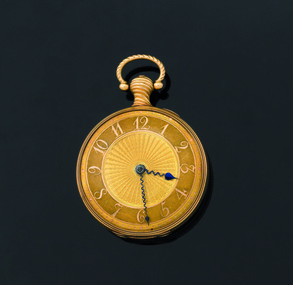
Instrument - Fob watch, 1814
... dress. In its own right the watch is of artistic and monetary value and is a rare and beautiful object depicting watch making in the early 19th century. It is a historically significant object in it’s own right and there is additional importance, surviving a significant event in the maritime history of Victoria. The wreck of the Loch Ard, Victoria's greatest maritime disaster has also been declared an event of National ...Watchmaker History: James McCabe was born in 1748. He was the son of Patrick McCabe, a notable watchmaker from Lurgan in County Armagh, Ireland. James McCabe immigrated to London in 1775 and established his business in Bells Building, Fleet Street, on 2nd April 1781. He was made an Honorary Freeman of the Clockmakers Company. The House of McCabe was renowned for the sheer variety of its designs, and the creativity and prestige of its manufacture were celebrated and revered by owners worldwide. These pieces remain highly collectable today and fetch increasingly higher prices at auction houses worldwide. Watch association with the Loch Ard: The watch was saved from the sea when discovered on the body of Mrs Rebecca Carmichael from Dublin and handed to Eva Carmichael, the only family member to survive the fatal wreck of the Loch Ard on 1st June 1878. Eva gifted the watch to her husband, Thomas Achilles Townsend when they married in 1884; his name is engraved on the rear movement cover. The watch was held by the family until 2011 when they decided to bring the watch, to Australia for auction. At this time the watch was in the possession of Eva Carmichael's grandson, Robert Townsend. Given its connection with the Loch Ard shipwreck, it was purchased at auction by Flagstaff Hill Maritime Village on 25th October 2011 to add to its Loch Ard collection and is currently referred to as the Carmichael watch. It is now on display alongside the Minton Peacock, which also survived the Loch Ard shipwreck, and other artefacts from the collection. James McCabe was originally a Belfast watchmaker who had moved his business to London. At the time James McCabe was much esteemed for producing fine watches and clocks, especially for export to India. Only the best watches were inscribed “James McCabe” and many with highly decorated cases were intended for the Indian market. Contemporary newspaper accounts of the watch's discovery echoed a Carmichael family tradition that the watch had been intended as a gift from the City of Dublin to King George IV to mark his planned visit to the city in 1821, however, there is no evidence to support this theory. Dr Evory Carmichael, according to some accounts, bought this watch from a nobleman for about £100 at some point and so it travelled with him on his final fateful journey to Australia. Today we can only guess at the actions of Mrs Carmichael in the chaos and darkness of the pre-dawn shipwreck. Perhaps the two items that were found on her body, the watch and a locket, were items that reminded her of those she held most dear, her husband and her family. When Mrs Carmichael's body was washed ashore the watch was found secreted in the waistband of her dress. In its own right the watch is of artistic and monetary value and is a rare and beautiful object depicting watch making in the early 19th century. It is a historically significant object in it’s own right and there is additional importance, surviving a significant event in the maritime history of Victoria. The wreck of the Loch Ard, Victoria's greatest maritime disaster has also been declared an event of National Significance because of its strong connection to Australia's immigration and maritime history. The watch, together with the Loch Ard Peacock, make up the two most significant shipwreck artefacts in Australia. Both of these items are of great social significance to not only local people but the wider Australian community. Funding for the watches purchase came from six local trusts and one anonymous citizen and is now on permanent display. Both these artefacts symbolise and helps to interpret the stories of survival along the Shipwreck Coast. Fob Watch, known as the "Carmichael Watch" or the "Loch Ard Watch". 1814 fob pocket watch belonging to the Carmichael family, recovered from the wreck of the Loch Ard. Fob watch (or pocket watch)and winding key, made by James McCabe and Son, of Cornhill, London. The watch is in excellent condition and its design is decorative and intricate. The gold face is covered by glass. The gold rear cover is hinged over a silver inner cover that includes the winding hole. The watch has a knob with a swinging ring from which it can be hung. The dial of the gold watch face is textured and has raised Arabic numerals and every minute is marked around the perimeter by a dot, with the 5-minute dots slightly larger. The numerals and dots are a different coloured gold than the rest of the face. The centre of the face has a wavy pattern fanning out to the base of the numerals. The hour and minute hands are of a dark colour. The stems of the hands are a wavy shape and finish with spade shaped tips; the tip of the hour hand is larger than that of the minute hand. The hour hand reaches to the base of the numerals and the minute hand is long enough to rest between the minute dots. The back of the watch is decorated with a detailed design on a textured gold background. The design is embossed in coloured metals; gold, silver, greenish-gold and pink. In the centre is a dove resting on leaves of a pot plant that sits on a silver circular base. Another dove is flying above it, and their beaks touch together. On the right of the base of the pot plant is a dog resting on its hind legs, body facing away from the plant and head twisted around to look at the birds. On the sides of this design and meeting at the base are sprigs of leaves and buds. Around this central design is a rope-like border. Around the perimeter of the case is a border of leaves and budding stems. The inside of this cover has embossed hallmarks, numbers and etched markings indicating that the watch is 18 carat gold, made by James McCabe, assayed in London in 1814 and the case may have been made by Daniel Willmott, case maker. The silver inner workings cover has a full name beautifully engraved on it. There is a winding hole that accesses a square-ended lever for the key to fit over. The handle of the watch is a twisted gold knob with a hollow ‘D’-shaped swinging ring attached to the end of it. This knob also has a hallmark.On the silver inner workings cover “Thomas Achilles Townshend” is engraved, underscored by a thin, delicately decorated line. On the gold handle is the logo of a crown with “18”’ next to it. Inside the gold rear case is stamped “DW’. Under that is etched “JAN 77 II”. Underneath this are 3 logos; a logo “leopard, crowned”’, a logo “ crown on top of 18”, and a logo “T”. Under these 3 symbols is part of a stamp that could possibly be “IMC”. Under this is “ ’ 5 9 4 ”. Other numbers, symbols and letters are etched into this case including “15001”, “2/5/19”. Others are difficult to read.warrnambool, shipwrecked coast, shipwreck coast, flagstaff hill, flagstaff hill maritime museum, flagstaff hill maritime village, maritime museum, shipwrecked artefact, shipwreck artefact, carmichael, townshend, townsend, carmichael watch, loch ard watch, pocket watch, loch ard, 1st june 1878, james mccabe, thomas walker, robert townshend, loch ard gorge, great ocean road, victoria., memorial headstone -
 Bendigo Military Museum
Photograph - PHOTOGRAPH, SOLDIERS MARCHING, Bendigo Advertiser - Photographic Service. Photo order NR. DR143
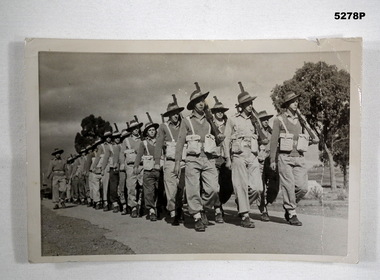
... National Service On rear is = Camp site 17, Seymour support Coy. 1st Nat. Service intake time?. Black and white photo showing Australian soldiers marching .303 rifles at "slope arms" position. They have pattern 37 basic webbing. They have different standards of dress ...Refer to service of Harry Burrell "MM". Refer Cat No 298.4 for his service details. Black and white photo showing Australian soldiers marching .303 rifles at "slope arms" position. They have pattern 37 basic webbing. They have different standards of dress. All have slouch hats in brim down position. They are wearing boots, A. B. leather with ankle gaiters.On rear is = Camp site 17, Seymour support Coy. 1st Nat. Service intake time?.aust soldiers, seymour camp, national service -
 Eltham District Historical Society Inc
Document - Property Binder, Eltham Mall, 10-18 Arthur Street, Eltham
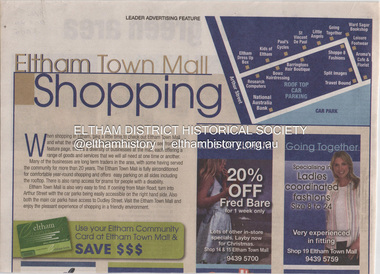
... National Parks Association...Aroma's Cafe and Florist...Arthur Street...Barringtons Hair Boutique...Bowz Hairdressing...Eltham Dress...Advertisement: Huge Bikle Sale, Paul's Cycles, Diamond Valley Leader, February 7, 2007 Eltham Businesses Eltham Town Mall Paul's Cycles shops Brushtailed phascogale Click here to add keywords Cr Greg Johnson Eltham Copper Butterfly Environment Victoria Environmental Significance Overlay Green Wedges Coalition Nillumbik Shire Council Powerful Owl Significant Landscape Overlay Victorian National Parks Association Aroma's Cafe and Florist Arthur Street Barringtons Hair Boutique Bowz Hairdressing Eltham Dress Up Box Going Together Kids of Eltham Leisure Footwear Little Angels National Australia Bank Research Computers Shoppe 8 Fashions Split Images St Vincent de Paul Travel Bound Ward Sagar Bookshop Miscellaneous clippings, notes, photocopies, etc held on the subject property. ...1. Eltham Town Mall Shopping, Diamond Valley Leader, October 26, 2005 [ On reverse - "Red alert for green area by Natalie Birch and Shane Woodrow about a report compiled by Environment Victoria, Melbourne's Threatened Habitats Under Threat: Development Pressures and Conservation Solutions which places the 'Nillumbik Foothills' number seven on list of most endangered by urban sprawl] 2. Advertisement: Huge Bikle Sale, Paul's Cycles, Diamond Valley Leader, February 7, 2007eltham, businesses, eltham town mall, paul's cycles, shops, brushtailed phascogale, click here to add keywords, cr greg johnson, eltham copper butterfly, environment victoria, environmental significance overlay, green wedges coalition, nillumbik shire council, powerful owl, significant landscape overlay, victorian national parks association, aroma's cafe and florist, arthur street, barringtons hair boutique, bowz hairdressing, eltham dress up box, going together, kids of eltham, leisure footwear, little angels, national australia bank, research computers, shoppe 8 fashions, split images, st vincent de paul, travel bound, ward sagar bookshop -
 Running Rabbits Military Museum operated by the Upwey Belgrave RSL Sub Branch
Jacket - Service Dress
... With ribbon bar with Gen. service, Vietnam, National and Vietnam Campaign ribbons Jacket - Service Dress ...Jacket. Khaki serge with WO2 Badges. With ribbon bar with Gen. service, Vietnam, National and Vietnam Campaign ribbonsuniform, 1980, army -
 Kiewa Valley Historical Society
Box Starch, Pre decimal currency date(14th February 1966)
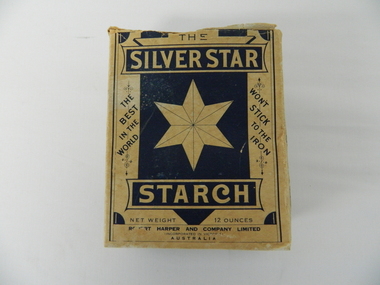
... Formality of dress was a strictly British "class" up-man-ship which from the 1950's onwards became less and less visible. The Australian "Ocker" or fair "dink'm" bloke became more entrenched after World War II. The national...Formality of dress was a strictly British "class" up-man-ship which from the 1950's onwards became less and less visible. The Australian "Ocker" or fair "dink'm" bloke became more entrenched after World War II. The national ...This brand of starch was first manufactured before 1966 and covered the period when Australian made was the preferred clothing due to limited imports from England. This was a period when the demand for "home grown" produce was at its peak. This was in a time when by necessity and ease of supply and not by the "Buy Australian" campaign (of later years), was the major factor for the demand of these type of laundry goods. It was in a time when starch was used in formal clothing to put a "crisp" or fresh new appearance for clothes. This product was in the era and importantly the social more of "clothes make the person" in which starched shirts and dresses was the fashion vogue. Formality of dress was a strictly British "class" up-man-ship which from the 1950's onwards became less and less visible. The Australian "Ocker" or fair "dink'm" bloke became more entrenched after World War II. The national identity was slowly developing.This box of starch is very relevant to the Kiewa Valley because this box highlights the differences ,in this period, between city and rural social standards. Rural areas were deeply entrenched into colonial and the pioneer family structure viz- a-vie social and dress fashion standards. British values and norms lingered on well beyond the changes happening in city fashion. Tradition and English "ties" were the backbone of early colonies and it was only after World War II that these "ties" were becoming irrelevant. Early traditions lingered well past the independence sought by Federation, colony to statehood and trade with other nations eg. USA and Asia. The idea that a change in "status" would automatically change the social mores of Australians, especially in rural ares, was not fully grasped by the "law makers" and those wanting change.This box (capacity 12 ozs) has white(aged into cream) and blue printing and a "white star" on five sides, the sixth side has a laundry scene with two ladies, in early 1900's fashion. The package is made from 200 gsm thick cardboard. As manufacture was made before and during the two World Wars 1914 to 1945 the promotion was heavily focused on Australian made and Australian grown maize. One side of the box has instructions of use and all the other sides are promotional, detailing "the best in the world and won't stick to the iron""SILVER STAR", "THE BEST IN THE WORLD", "WON'T STICK TO THE IRON", "REQUIRES NO BOILING", INSTRUCTIONS FOR USE", "ROBERT HARPER AND COMPANY LIMITED", "INCORPORATED IN VICTORIA, AUSTRALIA", "NET WEIGHT 12 OUNCES", "LARGE BOX 12 OZS"domestic laundry essentials, cotton clothing preparations, household starch "crisp and neat appearances. -
 Bendigo Military Museum
Uniform - ARMY UNIFORM, 4) est 1950
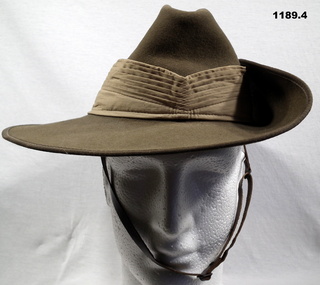
... National Serviceman KIA Vietnam. Refer Cat No 2526.2 for his service history and details re his death. The uniform being winter dress remained in Australia as there was no need for this to go to Vietnam....National Serviceman KIA Vietnam. Refer Cat No 2526.2 for his service history and details re his death. The uniform being winter dress remained in Australia as there was no need for this to go to Vietnam. ...The uniform was issued to Paul Francis Reidy No 3793403 National Serviceman KIA Vietnam. Refer Cat No 2526.2 for his service history and details re his death. The uniform being winter dress remained in Australia as there was no need for this to go to Vietnam..1) Jacket (Battle Dress winter) .2) Trousers (Battle dress winter) .3) Lanyard, red colour. .4) Slouch Hat with leather chin strap, cloth pugaree and brass regimental badge depicting a kangaroo with crossed rifles and wattle. .5) Braces.4) “Reidy 3793403 6 3/8"uniform, slouch hat, army, reidy -
4th/19th Prince of Wales's Light Horse Regiment Unit History Room
Uniform, service dress, WO2 David Key
... Dress, complete. With medals: Vic Police Valour Award for Bravery Medal, Vic Police Diligent and Ethical Service Medal, Royal Life Saving Society of Australia Bravery Cross Medal, Bravery Award and Bar, National Emergency Medal (Vic Fires 2009), National Police Service Medal, Defence Long Service Medal, National Medal, Aust Defence medal...Dress, complete. With medals: Vic Police Valour Award for Bravery Medal, Vic Police Diligent and Ethical Service Medal, Royal Life Saving Society of Australia Bravery Cross Medal, Bravery Award and Bar, National Emergency Medal (Vic Fires 2009), National Police Service Medal, Defence Long Service Medal, National Medal, Aust Defence medal WO2 David Key Uniform, service dress Fletcher Jones ...WO2 Key has provided distinguished service to the 4th/19th Prince of Wales's Light Horse RegimentService Dress, complete. With medals: Vic Police Valour Award for Bravery Medal, Vic Police Diligent and Ethical Service Medal, Royal Life Saving Society of Australia Bravery Cross Medal, Bravery Award and Bar, National Emergency Medal (Vic Fires 2009), National Police Service Medal, Defence Long Service Medal, National Medal, Aust Defence medal -
 Monbulk RSL Sub Branch
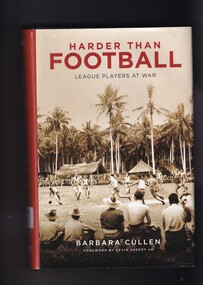
Book, Barbara Cullen, Harder than football : league players at war, 2015
... national game of football. In 'Harder than football' stories of courage, resilience and survival shine through like beacons, along with acts of bravery and sacrifice that so succinctly display the 'Aussie spirit'. Of course, there is the odd larrikin, too, whose often humorous acts of disobedience include smoking on parade, changing pay books, 'accidentally' falling out of a train and 'being improperly dressed on the line'. ...Australian servicemen have long been renowned for their unfaltering courage, sense of mateship and strength of character--the same values that are so apparent in our national game of football. In 'Harder than football' stories of courage, resilience and survival shine through like beacons, along with acts of bravery and sacrifice that so succinctly display the 'Aussie spirit'. Of course, there is the odd larrikin, too, whose often humorous acts of disobedience include smoking on parade, changing pay books, 'accidentally' falling out of a train and 'being improperly dressed on the line'. Within these pages you'll find the stories of the 2494 men who played at least one senior game from 1897 to 1972 and fought for their country in every major conflict from the Boer War to the Vietnam War.ill (b/w), p.628.non-fictionAustralian servicemen have long been renowned for their unfaltering courage, sense of mateship and strength of character--the same values that are so apparent in our national game of football. In 'Harder than football' stories of courage, resilience and survival shine through like beacons, along with acts of bravery and sacrifice that so succinctly display the 'Aussie spirit'. Of course, there is the odd larrikin, too, whose often humorous acts of disobedience include smoking on parade, changing pay books, 'accidentally' falling out of a train and 'being improperly dressed on the line'. Within these pages you'll find the stories of the 2494 men who played at least one senior game from 1897 to 1972 and fought for their country in every major conflict from the Boer War to the Vietnam War.australian football - history, australian football players at war -
 Bendigo Historical Society Inc.
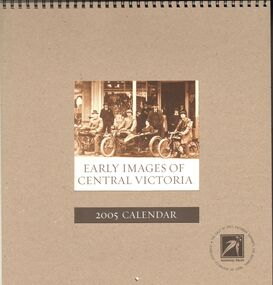
Document - EARLY IMAGES OF CENTRAL VICTORIA
... National Trust 2005 calendar titled 'Early Images of Central Victoria' . 2. A4 sized Deidre Chesney correspondence to Jim Evans thanking him for inclusion of two BHS donated photographs. 3. Order Form. Calendar images in consecutive order 1. Bicycle Race Bendigo c1930. [BHS] 2. First Locomotive leaving Thompson's Foundry Castlemaine. 3. Portrait of Five Sisters. 4. Hanging Rock Races 1890. 5. Heath's Grocery Store. 6. Bendigo Women's Sewing Circle for the Boer War held in Fortuna Villa. 7. The Corner 'Ballarat first Mining Exchange'. 8. Clunes Children in Fancy Dress...National Trust 2005 calendar titled 'Early Images of Central Victoria' . 2. A4 sized Deidre Chesney correspondence to Jim Evans thanking him for inclusion of two BHS donated photographs. 3. Order Form. Calendar images in consecutive order 1. Bicycle Race Bendigo c1930. [BHS] 2. First Locomotive leaving Thompson's Foundry Castlemaine. 3. Portrait of Five Sisters. 4. Hanging Rock Races 1890. 5. Heath's Grocery Store. 6. Bendigo Women's Sewing Circle for the Boer War held in Fortuna Villa. 7. The Corner 'Ballarat first Mining Exchange'. 8. Clunes Children in Fancy Dress ...1. National Trust 2005 calendar titled 'Early Images of Central Victoria' . 2. A4 sized Deidre Chesney correspondence to Jim Evans thanking him for inclusion of two BHS donated photographs. 3. Order Form. Calendar images in consecutive order 1. Bicycle Race Bendigo c1930. [BHS] 2. First Locomotive leaving Thompson's Foundry Castlemaine. 3. Portrait of Five Sisters. 4. Hanging Rock Races 1890. 5. Heath's Grocery Store. 6. Bendigo Women's Sewing Circle for the Boer War held in Fortuna Villa. 7. The Corner 'Ballarat first Mining Exchange'. 8. Clunes Children in Fancy Dress. 9. Walking Group ,Trentham Falls 1920. 10. Motorcyclists outside the Dunn & Allan store Ararat 1920. 12. Daylesford Lacrosse Team, 1910.bendigo, history, early images -
 Bendigo Historical Society Inc.
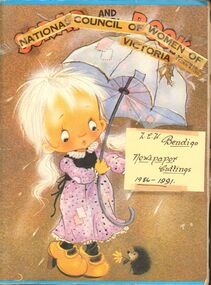
Book - NATIONAL COUNCIL OF WOMEN OF VICTORIA BENDIGO BRANCH COLLECTION: SCRAPBOOK
... dress with spots and patches with yellow shoes and black bodice. An echidna holding a yellow daisy is at her feet. Attached to the front cover is a piece of card with: N.C. W. Bendigo Newspaper Cuttings 1986 - 1991. Cuttings cover many Bendigo topics . Also stuck to the front with sticky tape is: National...ORGANISATION Women national council of women National Council of Women of Victoria Bendigo Branch Collection NCWV Scrap Book Scrapbook with a coloured front and back, It has an illustration of a child holding a patched umbrella. She is wearing a mauve dress ...Scrapbook with a coloured front and back, It has an illustration of a child holding a patched umbrella. She is wearing a mauve dress with spots and patches with yellow shoes and black bodice. An echidna holding a yellow daisy is at her feet. Attached to the front cover is a piece of card with: N.C. W. Bendigo Newspaper Cuttings 1986 - 1991. Cuttings cover many Bendigo topics . Also stuck to the front with sticky tape is: National Council of Women of Victoria Incorporated.organisation, women, national council of women, national council of women of victoria bendigo branch collection, ncwv scrap book -
 Running Rabbits Military Museum operated by the Upwey Belgrave RSL Sub Branch
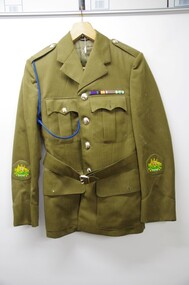
Jacket - Service Dress
... Uniform Army Khaki Walking out Uniform with WO1 Insignia and with Gen. service, Vietnam, National and Vietnm Campaign. Medal ribbons and Blue Lanyard Jacket - Service Dress ...Khaki Walking out Uniform with WO1 Insignia and with Gen. service, Vietnam, National and Vietnm Campaign. Medal ribbons and Blue Lanyarduniform, army
