
Showing 46 items matching "ornamental lakes"
-
 Marysville & District Historical Society
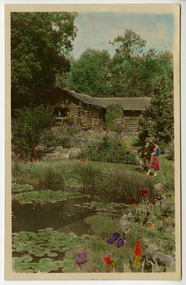
Photograph (Item) - Colour tinted photograph, Australian National Publicity Association, c1940s
... A colour tinted photograph of The Log Cabin and its ornamental lake in Marysville in Victoria....A colour tinted photograph of The Log Cabin and its ornamental lake in Marysville in Victoria....A colour tinted photograph of The Log Cabin and its ornamental lake in Marysville in Victoria. A colour tinted photograph of The Log Cabin and its ornamental lake in Marysville in Victoria. ...A colour tinted photograph of The Log Cabin and its ornamental lake in Marysville in Victoria.A colour tinted photograph of The Log Cabin and its ornamental lake in Marysville in Victoria. The Log Cabin was built by Thomas Henry Branchflower who had arrived from England late in 1921. It was built for Gwendoline Pitman after the death of her father Clarence Pitman and the disappearance of her sister Olive in July 1926. Gwendoline operated an artist and souvenir shop in the newly built Log Cabin in partnership with Peter Mackey who was a Melbourne optician and artist. This photograph was produced by the Australian National Publicity Association.in Walkabout 1942/ This one tinted by Gwenda AUSTRALIAN NATIONAL PUBLICITY/ ASSOCIATION/ FLINDERS STREET RAILWAY STATION/ MELBOURNE, AUSTRALIA Not to be reproduced in Australia unless/ by special permission of the Australian/ National Publicity Association. The Log Cabin, Marysville, Victoria.thomas henry branchflower, gerald branchflower, marysville, mary chain, gwendoline pitman, clarence pitman, kooringa guesthouse, olive pitman, wilbur anderson, peter mackey, photograph, australian national publicity association, the log cabin -
 Marysville & District Historical Society
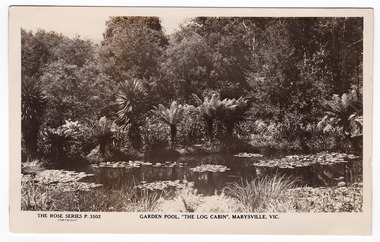
Postcard (Item) - Black and white postcard, Rose Stereograph Company, Garden Pool, "The Log Cabin", Marysville, Vic, 1913-1967
... A black and white postcard of the ornamental lake that was in front of The Log Cabin in Marysville in Victoria....A black and white postcard of the ornamental lake that was in front of The Log Cabin in Marysville in Victoria. ...A black and white postcard of the ornamental lake that was in front of The Log Cabin in Marysville in Victoria. ...A black and white postcard of the ornamental lake that was in front of The Log Cabin in Marysville in Victoria.A black and white postcard of the ornamental lake that was in front of The Log Cabin in Marysville in Victoria. The Log Cabin was built by Thomas Henry Branchflower who had arrived from England late in 1921. It was built for Gwendoline Pitman after the death of her father Clarence Pitman and the disappearance of her sister Olive in July 1926. Gwendoline operated an artist and souvenir shop in the newly built Log Cabin in partnership with Peter Mackey who was a Melbourne optician and artist. This postcard was produced by the Rose Stereograph Company as a souvenir of Marysville.POST CARD The 'Rose" Series/ De Luxe A Real Photograph/ Produced in Australia Published by the Rose Stereograph Co./ Armadale, Victoria.the log cabin, thomas henry branchflower, gerald branchflower, marysville, mary chain, gwendoline pitman, clarence pitman, kooringa guesthouse, olive pitman, wilbur anderson, peter mackey, rose series postcard, rose stereograph co, p. 3502, postcard, souvenir -
 Emerald Museum & Nobelius Heritage Park
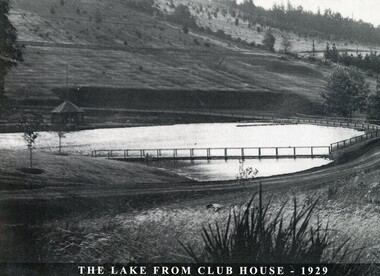
Photograph - Photographic print of the Emerald Country Club ornamental lake, THE LAKE FROM THE CLUB HOUSE - 1929, c.1920s-1930s
... Photographic print of the Emerald Country Club ornamental lake...This photograph of the ornamental lake was taken in 1929....Black and white photographic print of the ornamental lake of the former Emerald Country Club and environs looking west towards the pavilion next to the lake and Lakeside Drive. ...THE LAKE FROM THE CLUB HOUSE - 1929 Photograph Photographic print of the Emerald Country Club ornamental lake ...The Emerald Country Club was originally set up as a country retreat for the wealthy in the late 1920s. It was modelled on American country clubs and it was situated on land formerly owned by the Gembrook Nurseries. It offered accommodation and dining, a nine-hole golf course, tennis courts, a bowling green as well as swimming and fishing facilities. This photograph of the ornamental lake was taken in 1929.This photograph evokes the iconic and beautiful former Emerald Country Club in its earlier days.Black and white photographic print of the ornamental lake of the former Emerald Country Club and environs looking west towards the pavilion next to the lake and Lakeside Drive. The photograph has a printed title at the bottom. On bottom of photograph: 'THE LAKE FROM CLUB HOUSE - 1929'emerald country club, gembrook nurseries, golf -
 Emerald Museum & Nobelius Heritage Park
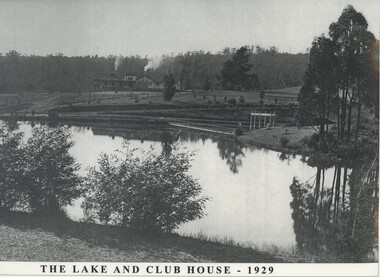
Photograph - Photographic print of the ornamental lake at the Emerald Country Club, THE LAKE AND THE CLUB HOUSE - 1929, 1929
... Photographic print of the ornamental lake at the Emerald Country Club...This photograph focuses on the ornamental lake in front of the club house and was taken in 1929....Black and white photographic print of the ornamental lake at the former Emerald Country Club - the club house with smoking chimneys is in the background. ...This photograph focuses on the ornamental lake in front of the club house and was taken in 1929. ...The Emerald Country Club was originally set up as a country retreat for the wealthy in the late 1920s. It was modelled on American country clubs and it was situated on land formerly owned by the Gembrook Nurseries. It offered accommodation and dining, a nine-hole golf course, tennis courts, a bowling green as well as swimming and fishing facilities. This photograph focuses on the ornamental lake in front of the club house and was taken in 1929.This photograph evokes the iconic and beautiful former Emerald Country Club in its earlier days.Black and white photographic print of the ornamental lake at the former Emerald Country Club - the club house with smoking chimneys is in the background. The print has been laminated and has a printed title at the bottom. On bottom of image: 'THE LAKE AND THE CLUB HOUSE - 1929'emerald country club, gembrook nurseries, golf -
 University of Melbourne, Burnley Campus Archives
Plan, Royal Botanic Gardens Melbourne, 1978
... ...ornamental lakes...jeremy j. wallace royal botanical gardens melbourne Department of Crown Land and Survey Division of Survey and Mapping ornamental lakes Plan of RBG with grid references. ...Plan of RBG with grid references. Produced by Dept. of Crown Lands and Survey, Victoria, Division of Survey and Mapping. Prepared in 1978 from surveys completed in 1976. (1) 2 copies plan. Main areas, buildings, etc., labelled, beds outlined. (2) Original coloured plan and reduced size photocopy. More labelling, particularly beds (handwritten). Labelled Jeremy J. Wallace with handwritten notes on reverse re a project. (3) Reduced size photocopy. Handwritten labelling of beds. (4 - 11) Enlarged photocopies of sections of (1) Handwritten notes and plant labelling. (1). Photgraphed copies by FRESCO 510131-TA. (12) Plan on a grid, coloured. "No Public Access," areas marked.jeremy j. wallace, royal botanical gardens melbourne, department of crown land and survey division of survey and mapping, ornamental lakes -
 Kew Historical Society Inc
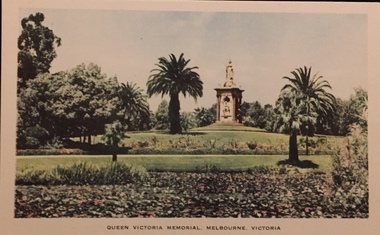
Postcard, Nucolorview Productions, Queen Victoria Memorial, Melbourne, Victoria
... Coloured postcard of the Queen Victoria Memorial in the Domain. An ornamental lake is in the foreground....The postcards are part of a larger collection of photographs, postcards and publications donated to the collection in May 2021. queen victoria monument -- melbourne sculptures -- the domain -- melbourne (vic.) christian-washfold collection Coloured postcard of the Queen Victoria Memorial in the Domain. An ornamental lake is in the foreground. Queen Victoria Memorial, Melbourne, Victoria Postcard Nucolorview Productions ...One of a number of 'real photo' and commercial postcards created by or owned by members of the Christian and Washfold families of Kew. The postcards are part of a larger collection of photographs, postcards and publications donated to the collection in May 2021.Coloured postcard of the Queen Victoria Memorial in the Domain. An ornamental lake is in the foreground.queen victoria monument -- melbourne, sculptures -- the domain -- melbourne (vic.), christian-washfold collection -
 Box Hill Historical Society
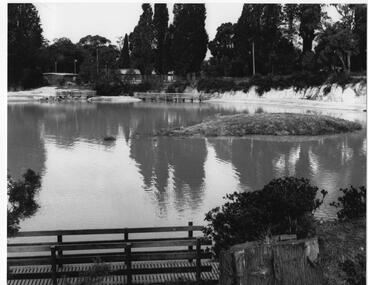
Photograph - Surrey Dive, c.1988
... Surrey Dive ornamental lake circa 1988....Surrey Dive ornamental lake circa 1988. Surrey Dive Sports and recreations Parks and reserves Black and white photo Photograph Surrey Dive ...Surrey Dive ornamental lake circa 1988.Black and white photosurrey dive, sports and recreations, parks and reserves -
 Box Hill Historical Society
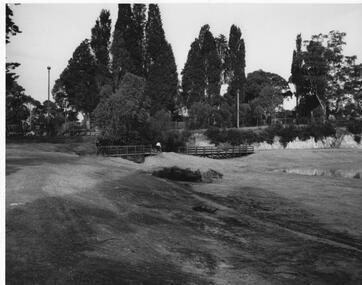
Photograph - Surrey Dive, 1/07/1987
... Surrey Dive, construction of ornamental lake and landscaping, July 1987....Surrey Dive, construction of ornamental lake and landscaping, July 1987. Surrey Dive Swimming Sports and recreations 1987 Parks and reserves Black and white photo Photograph Surrey Dive ...Surrey Dive, construction of ornamental lake and landscaping, July 1987.Black and white photosurrey dive, swimming, sports and recreations, 1987, parks and reserves -
 Williamstown Botanic Gardens- Hobsons Bay City Council
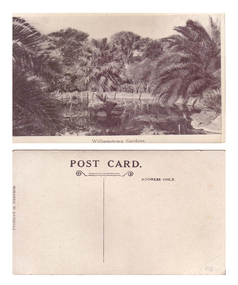
Postcard - Williamstown Botanic Gardens, 1900-1920
... Black and white postcard titled “Williamston Gardens”. Ornamental lake surrounded by palms, with trees in the background and boarded with stone slabs. ...Ornamental lake surrounded by palms, with trees in the background and boarded with stone slabs. ...The original postcards in this series (2013.002 to 2013.018) were generously loaned to Williamstown Botanic Gardens by a private collector for copyingThey are evidence of the interest the gardens held as a subject for postcard publishers. The text and images provide a snapshot into fashions, social interests and concerns of the time. The professionally produced images provide a pictorial history of Gardens including changing planting styles, various structures and features of the Gardens eg the aviary, cannons, the fountain, the second Curator’s Lodge and gates. The images offer an opportunity to compare garden vistas with the present day. This postcard shows the ornamental lake, completed 1904, with its surrounding Guilfoyle influenced rockery, planted with original succulents and palms Black and white postcard titled “Williamston Gardens”. Ornamental lake surrounded by palms, with trees in the background and boarded with stone slabs. There is a small island in the middle of the image surrounded by water lilies. Inscribed on the reverse: ‘POST CARD.’ centre top underlined by two wriggly lines, the bottom one is scrolled at either end / ADRESS ONLY’ top right side of card / ‘PRODUCED IN AUSTRALIA’ vertically on left side of cardpostcard, pond, palms, post-card, williamstown-botanic-gardens, hobsons-bay-city-council, water lilies, pond-island -
 Box Hill Historical Society
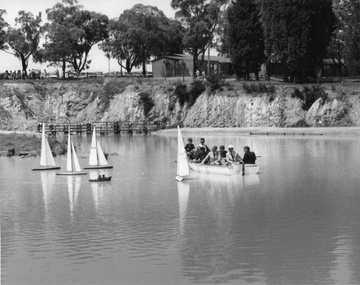
Photograph - SSB Moyne and model boats on Surrey dive for Australia Day celebrations, 1988
... The ornamental lake at Surrey Park established in 1988, which is used by the Surrey Park Model Boat Club....The ornamental lake at Surrey Park established in 1988, which is used by the Surrey Park Model Boat Club. ...The ornamental lake at Surrey Park established in 1988, which is used by the Surrey Park Model Boat Club.B&w photosurrey park, surrey park model boat club, sports and recreations, bicentenary, crawford> russell -
 Williamstown Botanic Gardens- Hobsons Bay City Council
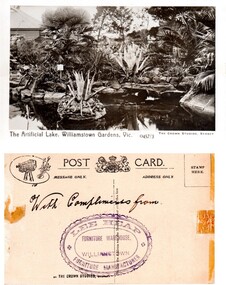
Postcard – Williamstown Botanic Gardens, The Crown Studios, Sydney, c1900-1920
... ...Ornamental Lake...Sepia image of the ornamental lake and part of the Curator’s Lodge in the background on the left side of card. ...Sepia image of the ornamental lake and part of the Curator’s Lodge in the background on the left side of card. ...The lake was built in 1904, during the curatorship of Mr Thake. Lee Heap Furniture Warehouse of Williamstown used the postcards to advertise. The postcards are evidence of the interest the gardens held as a subject for postcard publishers. The text and images provide a snapshot into fashions, social interests and concerns of the time. The professionally produced images provide a pictorial history of Gardens including changing planting styles, various structures and features of the Gardens eg the aviary, cannons, the fountain, the second Curator’s Lodge and gates. The images offer an opportunity to compare garden vistas with the present day.Sepia image of the ornamental lake and part of the Curator’s Lodge in the background on the left side of card. The small island with a succulent is in the centre of the image with a similar plant on the right side of it. The water is edged with rocks. Reflections of the plantings and lodge can be seen.Front: ‘The Artificial Lake, Williamstown Gardens. Vic.’ ‘0457/3’ ‘THE CROWN STUDIOS, SYDNEY’. Reverse: Centre top ‘POST CARD’ with a logo in the middle of the words. Left top corner a drawing of an artist’s board and brushes with a camera in the centre. Left side ‘MESSAGE ONLY.’ Right side ‘ADDRESS ONLY.’ Top right corner inside a dotted rectangle ‘STAMP HERE’. Bottom on card ‘BY THE CROWN STUDIOS, SYNDEY.’ Under the vertical line down the middle line ‘Neither the Address not the Message must cross this line’. In ink ‘With Compliments from’. An oval stamp with scalloped rim ‘LEE HEAP FURNITURE MANUFACTURER’ inside inner oval ‘FURNITURE WAREHOUSE, / WILLIAMSTOWN’.postcard, gardens, post-card, williamstown-botanic-gardens, hobsons-bay-city-council, ornamental lake, crown studios, lee heap furniture warehouse -
 Box Hill Historical Society
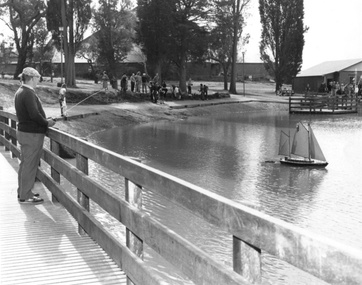
Photograph - Surrey Park
... Surrey Park Model Boat Club used the ornamental lake created at Surrey Park to mark Australia's Bicentenary. ...Surrey Park Model Boat Club used the ornamental lake created at Surrey Park to mark Australia's Bicentenary. ...Surrey Park Model Boat Club used the ornamental lake created at Surrey Park to mark Australia's Bicentenary. Image shows a boat being sailed in the lake. B&w photosurrey park, surrey park model boat club, sports and recreations, bicentenary -
 Williamstown Botanic Gardens- Hobsons Bay City Council
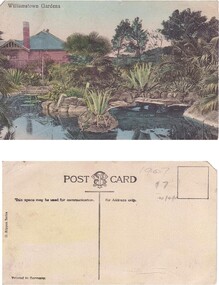
Postcard – Williamstown Botanic Gardens, M Schulz, Prague, c1900-1920
... ...Ornamental Lake...A colour image of the ornamental lake and part of the Curator’s Lodge. ...A colour image of the ornamental lake and part of the Curator’s Lodge. ...The original postcards in this series (2013.002 to 2013.018) were generously loaned to Williamstown Botanic Gardens by a private collector for copying. The Curator’s lodge, designed by the Town Surveyor, HV Champion, was constructed in 1907 following the re-organisation of the north-east corner with the demolition of the old curator's cottage and erection of new gates. Both the lodge and lake (1904) were built during the curatorship of Mr Thake. The logo in the middle of the words ‘POST CARD’ indicates the card was printed by M. Schulz in Prague. Schulz was a long-established company from Prague and printed postcards for customers from worldwide. Schulz printed in photo-chromolithography. The postcards are evidence of the interest the gardens held as a subject for postcard publishers. The text and images provide a snapshot into fashions, social interests and concerns of the time. The professionally produced images provide a pictorial history of Gardens including changing planting styles, various structures and features of the Gardens eg the aviary, cannons, the fountain, the second Curator’s Lodge and gates. The images offer an opportunity to compare garden vistas with the present day.A colour image of the ornamental lake and part of the Curator’s Lodge. The lodge has a green roof, tall brick chimney, is brown timber with brick where the fireplace would be. The small island with a succulent is in the centre of the image. The image looks across the top of the lake where the rock edging can be seen. Reflections of the plantings and lodge can be seen.Front: ‘Williamstown Gardens’. Reverse: Reverse: Centre top ‘POST CARD’ with a logo [MS] in the middle of the words; left side vertical ‘O. Rippon Series’; left side ‘This space may be used for communication.’; right side ‘For Address only.’; left side bottom ‘Printed in Germany’. In pencil top right corner ‘1907 / $7’ (believed to be inserted by the vendor.postcard, gardens, post-card, williamstown-botanic-gardens, hobsons-bay-city-council, curator’s lodge, ornamental lake, succulents, 1907 -
 Emerald Museum & Nobelius Heritage Park
Photograph - Photographic print of Emerald Country Club, The Club House From Sycamore Drive, c.1920s-1930s
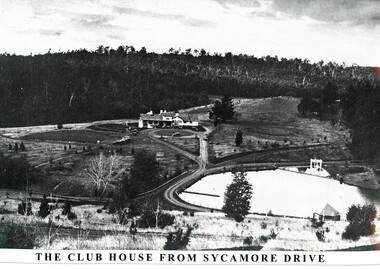
... This photograph shows the club house and environs including the ornamental lake in the foreground....This photograph shows the club house and environs including the ornamental lake in the foreground. This photograph captures the iconic and beautiful former Emerald Country Club in its earlier days. ...The Emerald Country Club was originally set up as a country retreat for the wealthy in the late 1920s. It was modelled on American country clubs, and it was situated on land formerly owned by the Gembrook Nurseries. It offered accommodation and dining, a nine-hole golf course, tennis courts, a bowling green as well as swimming and fishing facilities. This photograph shows the club house and environs including the ornamental lake in the foreground.This photograph captures the iconic and beautiful former Emerald Country Club in its earlier days.Black and white photographic print of the former Emerald Country Club showing the club house in the centre and the lake in the right foreground. The print has been laminated with a printed title at the bottom. On the bottom of print: 'THE CLUB HOUSE FROM SYCAMORE DRIVE'emerald country club, gembrook nurseries, golf -
 City of Greater Bendigo - Civic Collection
Album - Photograph, George Lansell, Photographs of FORTUNA Bendigo, c. 1890's
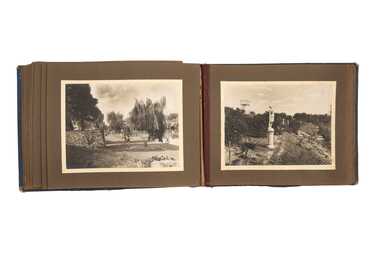
... The photo album depict the ornamental lake, garden, Roman bath and Pompeii fountain, all features of the house. ...The photo album depict the ornamental lake, garden, Roman bath and Pompeii fountain, all features of the house. ...Fortuna Villa is associated with the 180 Mine on the New Chum Reef. Historically ‘Fortuna’ is significant for the record it provides from 1855 to 1871 of Christopher and Theodore Ballerstedt, Australia’s first mining magnates and from 1871 to 1935 of the Lansell family, George Lansell (The Quartz King) being one of Australia’s most successful and adventurous nineteenth century gold mine owners and speculators. The photo album depict the ornamental lake, garden, Roman bath and Pompeii fountain, all features of the house. Bound blue cloth family photo album. Nineteen brown card 'pages' each with photograph adhered to both sides. Total of thirty eight black and white photographs depicting interior and exterior of Fortuna as well as the Lansell family, friends and pets. Photographs attributed to W. Ninnis. Photographs of FORTUNA Bendigofortuna villa, w. ninnis, george lansell, edith lansell -
 Surrey Hills Historical Society Collection
Photograph, The Surrey Dive, January 1931, 1931
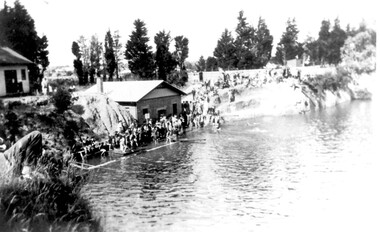
... The dive was closed following the drought of 1967-1968 and redeveloped as an ornamental lake....The dive was closed following the drought of 1967-1968 and redeveloped as an ornamental lake. The Surrey Dive was the first Olympic standard pool in Australia. surrey dive swimming sports and recreations ron falconer Black and white photo of the Surrey Dive taken in January 1931, probably during a swimming carnival. ...The Surrey Dive was formed on the site of a quarry from which clay had been extracted for brick-making. From 1905 Council was petitioned by the newly-formed Surrey Park Swimming Club to develop the site. Improvements including bathing sheds, spring boards and a 10-lane course but it remained a challenging site for inexperienced swimmers because of the sheer cliffs and the drop of 30m. The dive was the site of many swimming carnivals and attracted large spectator crowds. Frank Beaurepaire competed in the first carnival held in 1907 and won the one-mile race in record time. The dive was closed following the drought of 1967-1968 and redeveloped as an ornamental lake.The Surrey Dive was the first Olympic standard pool in Australia. Black and white photo of the Surrey Dive taken in January 1931, probably during a swimming carnival. The dive is in the foreground with 2 buildings on the LHS. One is brick with a chimney and at the water's edge; the other is of timber construction and is on the far LHS on the bank above the water. There is a large group of people in bathing costumes and a crowd which extends up the bank towards the right. There are mature conifer trees in the background. surrey dive, swimming, sports and recreations, ron falconer -
 Williamstown Botanic Gardens- Hobsons Bay City Council
Postcard - Williamstown Botanic Gardens, c1900-1920
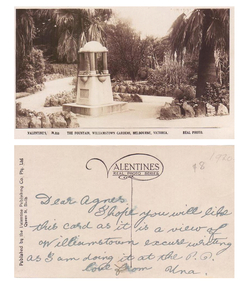
... The fountain is located on the southern side of the ornamental lake and was erected to celebrate the jubilee of the municipality (17 March 1906). ...The fountain is located on the southern side of the ornamental lake and was erected to celebrate the jubilee of the municipality (17 March 1906). ...The original postcards in this series (2013.002 to 2013.018) were generously loaned to Williamstown Botanic Gardens by a private collector for copying. The fountain is located on the southern side of the ornamental lake and was erected to celebrate the jubilee of the municipality (17 March 1906). Controversy surrounded the commission for the design and construction of the fountain, as it was originally assigned to a contractor in Carlton. Williamstown residents insisted the fountain be designed and constructed locally, and on December 1906 the fountain was tendered by local firm Bliss and Sons and opened for public use in 1906. The fountain features a symmetrical plan, consisting of fur granite columns supporting a granite canopy and is fully operational following restoration work in 2013. The idea for the fountain came from an elderly resident of Williamstown who suggested the council follow the example of Ballarat’s gardens with its many statues and monuments. The postcards are evidence of the interest the gardens held as a subject for postcard publishers. The text and images provide a snapshot into fashions, social interests and concerns of the time. The professionally produced images provide a pictorial history of Gardens including changing planting styles, various structures and features of the Gardens eg the aviary, cannons, the fountain, the second Curator’s Lodge and gates. The images offer an opportunity to compare garden vistas with the present day. The significance of the fountain is its reflection of how Williamstown people felt for their Gardens and the importance placed on investing in locally operated business. It was noted in the Brief Jottings column of the Williamstown Chronicle, February 24 1906, the fountain is a “We favor the erection of the jubilee fountain in the Giffard-street (Williamstown Botanic) Gardens. Ornaments of that kind there will make that beauty spot even more attractive.” Sepia scene of a fountain situated on paths bordered with rocks. The fountain in on a plinth and the postcard shows the plaque and two of the four drinking stations. The fountain features a symmetrical plan, consisting of four granite columns supporting a granite canopy. Front: VALENTINE’S, M.355 THE FOUNTAIN, WILLIAMSTOWN GARDENS MELBOURNE, VICTORIA. REAL PHOTO. Reverse: vertical on left side of card and underlined: ‘Published by the Valentine & Sons Publishing Co. Ltd. / Queen St, Melb’. Top centre of card: Contains logo of ‘VALENTINES / REAL PHOTO SERIES’. The postcard is addressed to ‘Dear Agnes’ from ‘Una’. Marked in pencil on to right hand corner ‘1920 / $8’ believed to be put on the postcard by the vendor. postcard, gardens, post-card, williamstown-botanic-gardens, hobsons-bay-city-council, jubilee-fountain, fountain drinking-fountain, 1920, granite, bliss-and-sons, 1906 -
 Williamstown Botanic Gardens- Hobsons Bay City Council
Postcard - Willliamstown Botanic Gardens
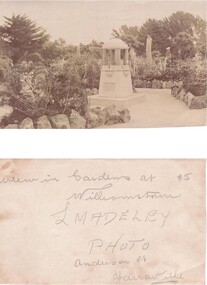
... The fountain is located on the southern side of the ornamental lake and was erected to celebrate the jubilee of the municipality (17 March 1906). ...The fountain is located on the southern side of the ornamental lake and was erected to celebrate the jubilee of the municipality (17 March 1906). ...The original postcards in this series (2013.002 to 2013.018) were generously loaned to Williamstown Botanic Gardens by a private collector for copying. The fountain is located on the southern side of the ornamental lake and was erected to celebrate the jubilee of the municipality (17 March 1906). Controversy surrounded the commission for the design and construction of the fountain, as it was originally assigned to a contractor in Carlton. Williamstown residents insisted the fountain be designed and constructed locally, and on December 1906 the fountain was tendered by local firm Bliss and Sons and opened for public use in 1906. The fountain features a symmetrical plan, consisting of fur granite columns supporting a granite canopy and is fully operational following restoration work in 2013. The idea for the fountain came from an elderly resident of Williamstown who suggested the council follow the example of Ballarat’s gardens with its many statues and monuments. The postcards are evidence of the interest the gardens held as a subject for postcard publishers. The text and images provide a snapshot into fashions, social interests and concerns of the time. The professionally produced images provide a pictorial history of Gardens including changing planting styles, various structures and features of the Gardens eg the aviary, cannons, the fountain, the second Curator’s Lodge and gates. The images offer an opportunity to compare garden vistas with the present day. The significance of the fountain is its reflection of how Williamstown people felt for their Gardens and the importance placed on investing in locally operated business. It was noted in the Brief Jottings column of the Williamstown Chronicle, February 24 1906, the fountain is a “We favor the erection of the jubilee fountain in the Giffard-street (Williamstown Botanic) Gardens. Ornaments of that kind there will make that beauty spot even more attractive.” Sepia scene of a fountain situated on paths bordered with rocks. The fountain in on a plinth with a plaque. The fountain features a symmetrical plan, consisting of four granite columns supporting a granite canopy. High stumps of trees are just behind the fountain with larger trees in the background to the right and left of the image.Postcard, Gardens, Post-Card, Williamstown-Botanic-Gardens, Hobsons-Bay-City-Council, Jubilee-fountain, fountain drinking-fountain, granite, Bliss-and-Sons, Madeleypostcard, gardens, post-card, williamstown-botanic-gardens, hobsons-bay-city-council, jubilee-fountain, fountain drinking-fountain, granite, bliss-and-sons, madeley -
Bendigo Historical Society Inc.
Certificate - Fortuna - Memorial of Conveyance, 6th May 1870
... Lansell expanded the modest home into a lavish 60-room, multi-story mansion and created an opulent estate featuring ornamental lakes and Roman-style baths...Lansell expanded the modest home into a lavish 60-room, multi-story mansion and created an opulent estate featuring ornamental lakes and Roman-style baths bendigo fortuna george lansell ballerstedt Fortuna - Memorial of Conveyance of the Fortuna Property This item contains the following documents: 11217.87a Fortuna - Memorial of Conveyance of the Fortuna Property from Theodore Ballerstedt to George Lansell for 20 thousand pounds on the 6th May 1870 Certificate Fortuna - Memorial of Conveyance ...A Memorial of Conveyance is a historical legal document or deed summary used to prove property ownership under the pre-Torrens General Law system. It recorded transactions like sales, mortgages, or transfers of land, providing an official record of the chain of ownership. The Ballerstedt and Lansell names are the foundation of Bendigo’s gold rush history, intrinsically linked to the sprawling and historic Fortuna Villa. Christopher Ballerstedt (a German migrant who arrived during the 1849 California gold rush) settled in Bendigo in 1855. He managed significant mining claims on the Victoria Reef and built a modest home on the site that would later become Fortuna Villa. Christopher and his son Theodore were among the first to prove that deep underground quartz reefs could yield massive amounts of gold. George Lansell, famously known as the "Quartz King of Bendigo," purchased the Ballerstedt mines, machinery, and residence in 1870 for £20,000. Lansell expanded the modest home into a lavish 60-room, multi-story mansion and created an opulent estate featuring ornamental lakes and Roman-style bathsFortuna - Memorial of Conveyance of the Fortuna Property This item contains the following documents: 11217.87a Fortuna - Memorial of Conveyance of the Fortuna Property from Theodore Ballerstedt to George Lansell for 20 thousand pounds on the 6th May 1870non-fictionbendigo, fortuna, george lansell, ballerstedt -
 Bendigo Historical Society Inc.
Newspaper - Fortuna Articles - "Fortuna part sale idea", Jan 24 2009
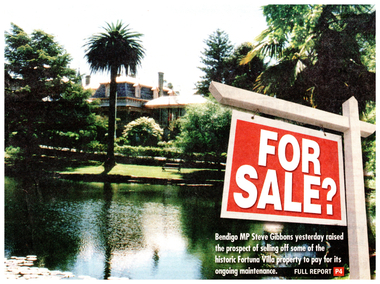
... Steve Gibbons, Federal Member for Bendigo, suggests selling non-heritage parts of the Fortuna Villa property to fund maintenance of the historic mansion, ornamental lake, and mining battery. Non-heritage areas could be subdivided for private housing and possibly a health or aged-care facility. ...Steve Gibbons, Federal Member for Bendigo, suggests selling non-heritage parts of the Fortuna Villa property to fund maintenance of the historic mansion, ornamental lake, and mining battery. Non-heritage areas could be subdivided for private housing and possibly a health or aged-care facility. ...Steve Gibbons, Federal Member for Bendigo, suggests selling non-heritage parts of the Fortuna Villa property to fund maintenance of the historic mansion, ornamental lake, and mining battery. Non-heritage areas could be subdivided for private housing and possibly a health or aged-care facility. A new road connecting Marble and Chum streets could open up the site for these developments. The land west of the heritage lake and buildings is proposed for housing, while the corner of Chum and Booth streets is suggested for a health or aged-care facility. Gibbons emphasizes that only the original George Lansell property and its historic buildings are of heritage value; army-era buildings are not. He proposes that proceeds from development and ongoing rates be set aside to fund future maintenance of the heritage assets. Gibbons insists the mansion should remain in public ownership to preserve George Lansell's legacy and avoid burdening taxpayers or ratepayers. He is open to other ideas for the property's future use but stresses the need for a sustainable funding source. The City of Greater Bendigo is awaiting reports from the Department of Defence before making decisions about the property's future.Fortuna Article - "Fortuna part sale idea" Jan 24 2009 The Bendigo Advertiser by Sara Mennie This item contains the following: 11217.34a Colour Photo of Steve Gibbons, Federal Member for Bendigo 11217.34b Colour Photo of proposed extensions to the Fortuna site 11217.34c Part of Page 4 - Article "Fortuna part sale idea" 11217.34d Colour Photo of Front Page Photo from the Bendigo Advertiser showing Fortuna with a "For Sale Sign"non-fictionbendigo, fortuna, george lansell, steve gibbons -
 Bendigo Historical Society Inc.
Newspaper - Fortuna Articles - "Letters to the Editor", Jan 30 2009
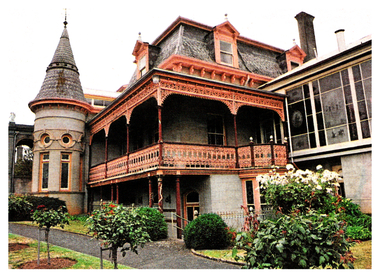
... Steve Gibbons, Federal Member for Bendigo, suggests selling non-heritage parts of the Fortuna Villa property to fund maintenance of the historic mansion, ornamental lake, and mining battery. The Villa Fortuna Action Group (VFAG) is actively engaged with recent developments concerning Fortuna, as reported in The Advertiser.VFAG acknowledges Steve Gibbon's proposal for Fortuna but notes that their own vision for the site differs in certain details. ...Steve Gibbons, Federal Member for Bendigo, suggests selling non-heritage parts of the Fortuna Villa property to fund maintenance of the historic mansion, ornamental lake, and mining battery. The Villa Fortuna Action Group (VFAG) is actively engaged with recent developments concerning Fortuna, as reported in The Advertiser.VFAG acknowledges Steve Gibbon's proposal for Fortuna but notes that their own vision for the site differs in certain details. ...Steve Gibbons, Federal Member for Bendigo, suggests selling non-heritage parts of the Fortuna Villa property to fund maintenance of the historic mansion, ornamental lake, and mining battery. The Villa Fortuna Action Group (VFAG) is actively engaged with recent developments concerning Fortuna, as reported in The Advertiser.VFAG acknowledges Steve Gibbon's proposal for Fortuna but notes that their own vision for the site differs in certain details. The group has been preparing a detailed proposal regarding Fortuna, indicating ongoing planning and advocacy efforts. The group advocates for the Fortuna property to be owned and used by the community.Vision for the Site The proposal envisions a vibrant, world-class, economically viable, and environmentally responsible cultural facility. The facility would leverage the site's unique attributes to benefit the community and region. The centre would host a wide variety of attractions, including ongoing programs and specialized events. There is an emphasis on attracting international events to Bendigo, enhancing its profile. The proposal aims to provide significant promotional opportunities for Bendigo and contribute to its national and international recognition, especially regarding its historic heritage and future growth. Letter written by Merle Hall, President Villa Fortuna Action GroupFortuna Article - "Letters to the Editor" Jan 30 2009 The Bendigo Advertiser by Merle Hall, President Villa Fortuna Action Group This item contains the following: 11217.35a Colour Photo of Fortuna 11217.35b Part of Page 10 - Article Part of Page 4 - Article "Fortuna part sale idea" 11217.35c Part of Page 10 - Article Part of Page 4 - Article "Fortuna part sale idea"non-fictionbendigo, fortuna, george lansell, steve gibbons, villa fortuna action group, merle hall -
Bendigo Historical Society Inc.
Booklet - Fortuna Villa Tour Guide, abt 2013
... The Fortuna grounds cover some 7.57 ha. and feature an ornamental lake, garden, a ‘Roman-Bath’ and the ‘Pompeii Fountain’. ...The Fortuna grounds cover some 7.57 ha. and feature an ornamental lake, garden, a ‘Roman-Bath’ and the ‘Pompeii Fountain’. ...In 1871, the Villa and the associated ‘180 Mine’ on the New Chum Reef was bought by George Lansell who had become successful in his gold mining interests and investments. With his continuing success in deep mining, Lansell undertook major extensions to his home, and in fact continued this expansion and decoration of Fortuna until his death almost 40 years later. Fortuna Villa remains remarkably intact as a house even though it has served as a busy workplace for 65 years. Stained glass, elaborate ceilings, grand cedar and blackwood staircase, solid marble baths, extensive acid-etched glasswork (conservatory) are some of the architectural features that contribute to the outstanding ‘feel’ of the structure. The Fortuna grounds cover some 7.57 ha. and feature an ornamental lake, garden, a ‘Roman-Bath’ and the ‘Pompeii Fountain’. The original quartz-crushing battery building, stables and coach house remain close to the main villa. The magnificent villa itself is the aspirational centerpiece to this remarkable property. It is set in botanic-style gardens featuring established trees. George Lansell’s historic talisman has hosted some iconic characters itself, including leaders and diplomats, Dame Nellie Melba and even HRH the Prince of Wales and the Duke of Edinburgh.Fortuna Villa Tour Guide, seven pages - Photos, History and guide with description for each room or aspect. Chronology on back cover.history, bendigo, fortuna, george lansell -
 Bendigo Historical Society Inc.
Document - Minutes of Army Survey Regiment Unit Historical Fund, Fortuna Villa
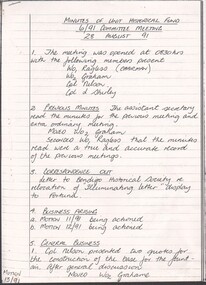
... The 1875 crushing works are attached directly to the mansion, and the mine's tailings and settling ponds (turned into ornamental lakes) represent a direct link between George Lansell's wealth and its source. ...The 1875 crushing works are attached directly to the mansion, and the mine's tailings and settling ponds (turned into ornamental lakes) represent a direct link between George Lansell's wealth and its source. ...Fortuna Villa was initially commenced as a modest single storey home in 1861 next to the 180 Mine by Theodore Ballerstedt, who sold the mine and house to George Lansell in 1869. Lansell already owned the adjacent Fortuna Mine, and through deeper mining techniques greatly expanded the mine's operation, his personal wealth, and the house and grounds. Lansell was soon known as the 'Quartz King', Australia's first gold mining millionaire and credited as the driving force behind much of Bendigo's prosperity. He continuously added to and expanded the villa, decorating it extravagantly with the finest of artworks and materials, into a sprawling mansion with extensive landscaped grounds, to create a house and grounds of a size and grandeur with few rivals in Australia. After his death in 1907, his second wife Edith carried on with improvements, creating a house and grounds developed over 50 years. The attached mine also contributes to its significance, being one of the richest mines in Bendigo, and at one stage probably the deepest gold mine in the world at 3176 feet. The 1875 crushing works are attached directly to the mansion, and the mine's tailings and settling ponds (turned into ornamental lakes) represent a direct link between George Lansell's wealth and its source. Fortuna was compulsorily acquired by the Commonwealth in 1942 as the Cartographic Headquarters of the Australian Survey Corps during World War II, and many ancillary structures were added while preserving the main house and ornamental grounds. Victorian Heritage Database Report https://vhd.heritagecouncil.vic.gov.au/places/68334/download-reportMinutes of Army Survey Regiment Unit Historical Fund, Fortuna Villa (28 Aug 1991 - 25 Nov 1992) 28 August 1991 - cost of construction of base of the fountain, and letter to Bendigo Art Gallery to follow-up loan of the "Venus" statue for display in the RM's office and resurfacing of marble baths in the CO and adjutant's offices. Single undated page from Unit Historical Fund Committee in 1991. 11 Nov 1992 - discussion of Christmas tours and a plaque for hallway. 25 Nov 1992 - lights for the Company's office, and a discussion of five tasks for next year. Lansell's Fortuna flyer for tour.fortuna villa, minutes -
 Bendigo Historical Society Inc.
Administrative record - Minute records Army Survey Regiment Fortuna Historical Society
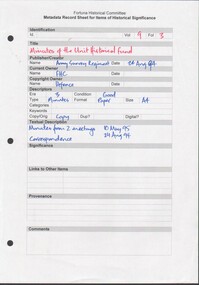
... The 1875 crushing works are attached directly to the mansion, and the mine's tailings and settling ponds (turned into ornamental lakes) represent a direct link between George Lansell's wealth and its source. ...The 1875 crushing works are attached directly to the mansion, and the mine's tailings and settling ponds (turned into ornamental lakes) represent a direct link between George Lansell's wealth and its source. ...Fortuna Villa was initially commenced as a modest single storey home in 1861 next to the 180 Mine by Theodore Ballerstedt, who sold the mine and house to George Lansell in 1869. Lansell already owned the adjacent Fortuna Mine, and through deeper mining techniques greatly expanded the mine's operation, his personal wealth, and the house and grounds. Lansell was soon known as the 'Quartz King', Australia's first gold mining millionaire and credited as the driving force behind much of Bendigo's prosperity. He continuously added to and expanded the villa, decorating it extravagantly with the finest of artworks and materials, into a sprawling mansion with extensive landscaped grounds, to create a house and grounds of a size and grandeur with few rivals in Australia. After his death in 1907, his second wife Edith carried on with improvements, creating a house and grounds developed over 50 years. The attached mine also contributes to its significance, being one of the richest mines in Bendigo, and at one stage probably the deepest gold mine in the world at 3176 feet. The 1875 crushing works are attached directly to the mansion, and the mine's tailings and settling ponds (turned into ornamental lakes) represent a direct link between George Lansell's wealth and its source. Fortuna was compulsorily acquired by the Commonwealth in 1942 as the Cartographic Headquarters of the Australian Survey Corps during World War II, and many ancillary structures were added while preserving the main house and ornamental grounds. Victorian Heritage Database Report https://vhd.heritagecouncil.vic.gov.au/places/68334/download-reportMinutes of the Fortuna Historical Committee held 24 August 1994 (hand written minutes over four sheets, referenced Vol 9 Fol 3) including four pages of stakeholder feedback tabled at the meetingfortuna, historical unit -
 Bendigo Historical Society Inc.
Document - Pompeii Fountain & Adjacent Structures at "Fortuna"
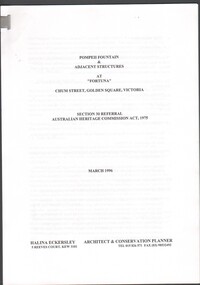
... The 1875 crushing works are attached directly to the mansion, and the mine's tailings and settling ponds (turned into ornamental lakes) represent a direct link between George Lansell's wealth and its source. ...The 1875 crushing works are attached directly to the mansion, and the mine's tailings and settling ponds (turned into ornamental lakes) represent a direct link between George Lansell's wealth and its source. ...Fortuna Villa was initially commenced as a modest single storey home in 1861 next to the 180 Mine by Theodore Ballerstedt, who sold the mine and house to George Lansell in 1869. Lansell already owned the adjacent Fortuna Mine, and through deeper mining techniques greatly expanded the mine's operation, his personal wealth, and the house and grounds. Lansell was soon known as the 'Quartz King', Australia's first gold mining millionaire and credited as the driving force behind much of Bendigo's prosperity. He continuously added to and expanded the villa, decorating it extravagantly with the finest of artworks and materials, into a sprawling mansion with extensive landscaped grounds, to create a house and grounds of a size and grandeur with few rivals in Australia. After his death in 1907, his second wife Edith carried on with improvements, creating a house and grounds developed over 50 years. The attached mine also contributes to its significance, being one of the richest mines in Bendigo, and at one stage probably the deepest gold mine in the world at 3176 feet. The 1875 crushing works are attached directly to the mansion, and the mine's tailings and settling ponds (turned into ornamental lakes) represent a direct link between George Lansell's wealth and its source. Fortuna was compulsorily acquired by the Commonwealth in 1942 as the Cartographic Headquarters of the Australian Survey Corps during World War II, and many ancillary structures were added while preserving the main house and ornamental grounds. Victorian Heritage Database Report https://vhd.heritagecouncil.vic.gov.au/places/68334/download-reportConservation report for the Pompeii Fountain & Adjacent Structures at "Fortuna" Chum Street, Golden Square, Victoria. Prepared for Fortuna Historical Committee. March 1996.Halina Eckersley, Architect & Conservation Planner, Kewpompeii fountain, greenhouse, fortuna lake, gardens -
 Bendigo Historical Society Inc.
Document - Preliminary report of Structural assessment Fortuna
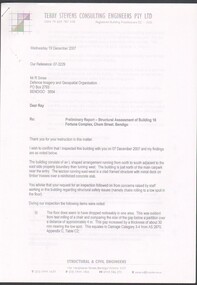
... The 1875 crushing works are attached directly to the mansion, and the mine's tailings and settling ponds (turned into ornamental lakes) represent a direct link between George Lansell's wealth and its source. ...The 1875 crushing works are attached directly to the mansion, and the mine's tailings and settling ponds (turned into ornamental lakes) represent a direct link between George Lansell's wealth and its source. ...Fortuna Villa was initially commenced as a modest single storey home in 1861 next to the 180 Mine by Theodore Ballerstedt, who sold the mine and house to George Lansell in 1869. Lansell already owned the adjacent Fortuna Mine, and through deeper mining techniques greatly expanded the mine's operation, his personal wealth, and the house and grounds. Lansell was soon known as the 'Quartz King', Australia's first gold mining millionaire and credited as the driving force behind much of Bendigo's prosperity. He continuously added to and expanded the villa, decorating it extravagantly with the finest of artworks and materials, into a sprawling mansion with extensive landscaped grounds, to create a house and grounds of a size and grandeur with few rivals in Australia. After his death in 1907, his second wife Edith carried on with improvements, creating a house and grounds developed over 50 years. The attached mine also contributes to its significance, being one of the richest mines in Bendigo, and at one stage probably the deepest gold mine in the world at 3176 feet. The 1875 crushing works are attached directly to the mansion, and the mine's tailings and settling ponds (turned into ornamental lakes) represent a direct link between George Lansell's wealth and its source. Fortuna was compulsorily acquired by the Commonwealth in 1942 as the Cartographic Headquarters of the Australian Survey Corps during World War II, and many ancillary structures were added while preserving the main house and ornamental grounds. Victorian Heritage Database Report https://vhd.heritagecouncil.vic.gov.au/places/68334/download-reportPreliminary report of Structural assessment of Building 16 Fortuna Complex, Chum Street, Bendigo. Four page preliminary report finding the building is structurally safe as at Wed 19 December 2007 with three recommendations. Prepared for DIGO by Structural Engineers - Terry Stevens Consulting Engineers Pty Ltd.fortuna, structural assessment -
 Bendigo Historical Society Inc.
Ephemera - Tour Ticket
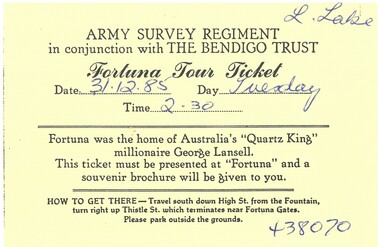
... The 1875 crushing works are attached directly to the mansion, and the mine's tailings and settling ponds (turned into ornamental lakes) represent a direct link between George Lansell's wealth and its source. ...The 1875 crushing works are attached directly to the mansion, and the mine's tailings and settling ponds (turned into ornamental lakes) represent a direct link between George Lansell's wealth and its source. ...Fortuna Villa was initially commenced as a modest single storey home in 1861 next to the 180 Mine by Theodore Ballerstedt, who sold the mine and house to George Lansell in 1869. Lansell already owned the adjacent Fortuna Mine, and through deeper mining techniques greatly expanded the mine's operation, his personal wealth, and the house and grounds. Lansell was soon known as the 'Quartz King', Australia's first gold mining millionaire and credited as the driving force behind much of Bendigo's prosperity. He continuously added to and expanded the villa, decorating it extravagantly with the finest of artworks and materials, into a sprawling mansion with extensive landscaped grounds, to create a house and grounds of a size and grandeur with few rivals in Australia. After his death in 1907, his second wife Edith carried on with improvements, creating a house and grounds developed over 50 years. The attached mine also contributes to its significance, being one of the richest mines in Bendigo, and at one stage probably the deepest gold mine in the world at 3176 feet. The 1875 crushing works are attached directly to the mansion, and the mine's tailings and settling ponds (turned into ornamental lakes) represent a direct link between George Lansell's wealth and its source. Fortuna was compulsorily acquired by the Commonwealth in 1942 as the Cartographic Headquarters of the Australian Survey Corps during World War II, and many ancillary structures were added while preserving the main house and ornamental grounds. Victorian Heritage Database Report https://vhd.heritagecouncil.vic.gov.au/places/68334/download-reportTicket for Fortuna Villa Tour conducted by the Army Survey Regiment and the National Trust. 31/12/1985. Black printing on yellow card.fortuna villa, tour -
 Bendigo Historical Society Inc.
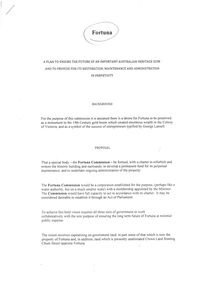
Document - Preservation proposal
... The 1875 crushing works are attached directly to the mansion, and the mine's tailings and settling ponds (turned into ornamental lakes) represent a direct link between George Lansell's wealth and its source. ...The 1875 crushing works are attached directly to the mansion, and the mine's tailings and settling ponds (turned into ornamental lakes) represent a direct link between George Lansell's wealth and its source. ...Fortuna Villa was initially commenced as a modest single storey home in 1861 next to the 180 Mine by Theodore Ballerstedt, who sold the mine and house to George Lansell in 1869. Lansell already owned the adjacent Fortuna Mine, and through deeper mining techniques greatly expanded the mine's operation, his personal wealth, and the house and grounds. Lansell was soon known as the 'Quartz King', Australia's first gold mining millionaire and credited as the driving force behind much of Bendigo's prosperity. He continuously added to and expanded the villa, decorating it extravagantly with the finest of artworks and materials, into a sprawling mansion with extensive landscaped grounds, to create a house and grounds of a size and grandeur with few rivals in Australia. After his death in 1907, his second wife Edith carried on with improvements, creating a house and grounds developed over 50 years. The attached mine also contributes to its significance, being one of the richest mines in Bendigo, and at one stage probably the deepest gold mine in the world at 3176 feet. The 1875 crushing works are attached directly to the mansion, and the mine's tailings and settling ponds (turned into ornamental lakes) represent a direct link between George Lansell's wealth and its source. Fortuna was compulsorily acquired by the Commonwealth in 1942 as the Cartographic Headquarters of the Australian Survey Corps during World War II, and many ancillary structures were added while preserving the main house and ornamental grounds. Victorian Heritage Database Report https://vhd.heritagecouncil.vic.gov.au/places/68334/download-reportProposal for the formation of a Fortuna Commission to ensure the preservation of Fortuna Villa. Written by Daryl McClure. May 2012fortuna villa, preservation, daryl mcclure -
 Surrey Hills Historical Society Collection
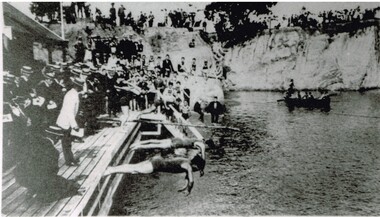
Photograph, Carnival Day at Surrey Dive, Possibly 1909
... Today the site has been turned into an ornamental lake. This image was used as a mural in the refurbishment of the Box Hill Aqualink. ...Today the site has been turned into an ornamental lake. This image was used as a mural in the refurbishment of the Box Hill Aqualink. ...This photo records one of the swimming carnivals held at the Surrey Dive, the first of which was organised in 1907. It was at the 1907 carnival that champion swimmer Frank Beaurepaire won the one-mile championship in record time. In the era before purpose-built municipal swimming pools, Surrey Dive was a popular destination for swimming and people came to it from many Melbourne suburbs. It operated from 1905 to 1967. It was the newly formed Surrey Park Swimming Club (established in 1905) that petitioned the Box Hill Council to purchase the former quarry site associated with the Box Hill Brick Works. A ramp, bathing sheds, springboards, and eventually a 10-lane course were developed, making the Dive the first Olympic standard pool in Australia. The carnivals attracted huge crowds. The original use as a quarry explains the notorious depth of the swimming hole and the sheer, steep cliffs surrounding it. These posed obvious safety issues, as did the water quality. Ivy Lavinia Weber, who was the second woman to be elected to the Victorian parliament (the first at a general election) and renowned for her commitment to health and physical fitness, campaigned for State government assistance to build new baths. These were built adjacent to the Dive and were opened in 1939. The Dive continued as a facility used by experienced swimmers until 1967 when it closed due to the drought causing the water to dry up. Today the site has been turned into an ornamental lake. This image was used as a mural in the refurbishment of the Box Hill Aqualink. The image has strong associations with early industry (brick making), recreation and particularly the early history of the sport of swimming.Black and white photo with a white border. Scan shows image only. It shows 3 men diving from a wooden platform into an area of water beneath higher banks. There is a boat in the background, a building to the LHS of the photo and many spectators in boater hats on the platform, some in bathing suits along a ledge and many around the top of the bank. Two men in the LH foreground may be officials.Printed long the bottom edge of the frame: "An image from history - Carnival Day at the Dive. / (photo: Box Hill Council)"surrey dive, box hill brick works, swimming, surrey park swimming club, (mr) frank beaurepaire, (mrs) ivy lavinia weber, swimming carnivals -
Bendigo Historical Society Inc.
Document - Fortuna Article - Bendigo Memories - The Lansell Legacy, 1990s
... Family stories include playful trespassing, wedding day memories involving the villa's ornamental lake, and relatives who worked at Fortuna. ...Family stories include playful trespassing, wedding day memories involving the villa's ornamental lake, and relatives who worked at Fortuna. ...This document is a personal and nostalgic reflection on Fortuna Villa and the legacy of the Lansell family in Bendigo. The author describes Fortuna Villa as an architecturally eclectic and 'beautifully ugly' building, notable for its size and presence in Bendigo. Despite its unconventional style, the author expresses a deep personal fondness for the building, having grown up nearby and formed many memories connected to it. The narrative includes anecdotes about the author's family, such as their grandfather's friendship with George Victor Lansell and childhood adventures around Fortuna and Chum Street. Family stories include playful trespassing, wedding day memories involving the villa's ornamental lake, and relatives who worked at Fortuna. The document highlights the Lansell family's immigrant background and their impact on Bendigo, contrasting their grand home with the modest miner's cottages of others. It references the villa's later use by the Army Survey Regiment and the technological advancements in map printing and lithography that took place there. Sir George is remembered as a kind, community-minded figure involved in local industry, the military, and cultural institutions like the Bendigo Art Gallery. His contributions to the community and personal interactions with the author are fondly recalled.Reflections and Aspirations for Fortuna's Future. The author suggests removing later additions to restore the villa's original grandeur and imagines a future where it could become a luxury hotel or resort. There is a whimsical proposal to involve international investors to revitalize the property, blending nostalgia with imaginative redevelopment ideas. The document closes with a reaffirmation of the author's lifelong connection to Fortuna and Bendigo, emphasizing the importance of preserving and celebrating local heritage.Overall, the document blends personal memories, local history, and imaginative vision, illustrating the deep ties between people, place, and architectural legacy in Bendigo.Fortuna Article - Bendigo Memories - The Lansell Legacy by Geoff Hocking This item contains the following document: 11217.60a A coloured page 106 from an unknown magazine - memories of Geoff Hocking's and his family living in Chum Street in the shadow of Fortuna. non-fictionbendigo, fortuna, george lansell, george victor lansell, geoff hocking, ivy hocking
