
Showing 273 items matching "plain family"
-
 Mont De Lancey
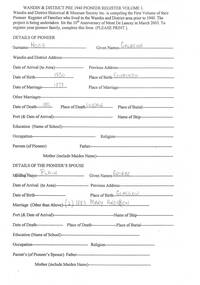
Document - Pioneer Register, 03.2003
... ...Plain Family...Record of Galasina Plain (nee Hogg) and George Plain in Mont de Lancey Pioneer Register, acquired from a family member, accounting their birth and death dates and their children. ...Spans 1850-1883 Family History Galasina Plain (nee Hogg) George Plain Plain Family Hogg Family Mont De Lancey museum 1850s 1860s 1870s 1880s 1 double sided A4 page typed form filled with handwritten blue pen Document Pioneer Register ...Record of Galasina Plain (nee Hogg) and George Plain in Mont de Lancey Pioneer Register, acquired from a family member, accounting their birth and death dates and their children. Spans 1850-1883 1 double sided A4 page typed form filled with handwritten blue pen family history, galasina plain (nee hogg), george plain, plain family, hogg family, mont de lancey museum, 1850s, 1860s, 1870s, 1880s -
 Kiewa Valley Historical Society
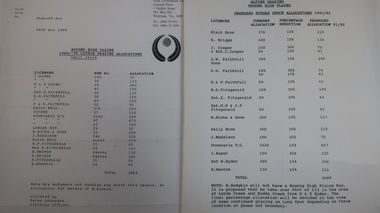
Papers - Cattle Grazing, Bogong High Plains
... In the 1990s government departments allocated the number of cattle being taken up to the Bogong High Plains by the families who traditionally leased land there....In the 1990s government departments allocated the number of cattle being taken up to the Bogong High Plains by the families who traditionally leased land there. ...Cattle grazing. In the 1990s government departments allocated the number of cattle being taken up to the Bogong High Plains by the families who traditionally leased land there. Cattle grazing had been banned in other Alpine areas due to concerns of their impact on the environment. Kiewa Valley cattle graziers were caught up in the controversy as it was their tradition dating back to the 1840s. This controversy continues as cattle grazing was banned in 2005. 4 pages with black print: 1. 1989/90 Cattle Grazing Allocation and Dept. of Conservation Forests and Lands, Wodonga. 2. Proposed Future Stock Allocations 1991/92 list of 16 families 3. & 4. List of families, ear marks, brands etc. dated 22nd Feb. 1979 stapled together ex S.C.A. / Benalla / Received 22nd Feb. 1979 / signed cattle grazing, kiewa valley farmers -
 Kiewa Valley Historical Society
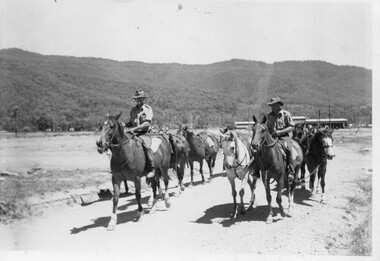
Photo - Pack horses leaving Mt Beauty
... Farmers from the Kiewa Valley drove their cattle up to the Bogong High Plains during summer. Each family had a lease and a hut to stay in. ...Farmers from the Kiewa Valley drove their cattle up to the Bogong High Plains during summer. Each family had a lease and a hut to stay in. ...Farmers from the Kiewa Valley drove their cattle up to the Bogong High Plains during summer. Each family had a lease and a hut to stay in. Pack horses were used to carry food and other necessary items for the men while they were away. The Ryder family farmed in the Kiewa Valley and had a grazing lease and hut on the Bogong High Plains where they droe their cattle during summer. Black and white photo with 2 men on horses each followed by two packhorses. Wally Ryder is on the horseman on the right. January 1947. This photo is published on page 114 of 'A History of the Kiewa Valley' by Esther Temple and David Lloyd. On back 'Pack horses leaving Mt Beauty / January 1947 / Suspect Wally Ryder on right.' wally ryder, cattlemen, packhorses -
 Stawell Historical Society Inc
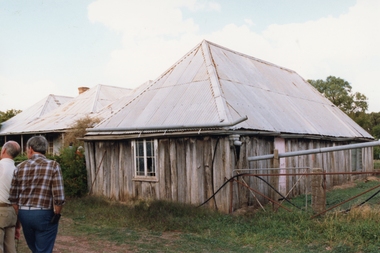
Photograph, Carr's Plains Homestead taken on a trip by Stawell Historical Society -- Coloured
... Photos of Carr's Plains taken on a trip by Stawell Historical Society. First home the family lived in on the Carrs Plains property. ...Photos of Carr's Plains taken on a trip by Stawell Historical Society. First home the family lived in on the Carrs Plains property. ...Photos of Carr's Plains taken on a trip by Stawell Historical Society. First home the family lived in on the Carrs Plains property. The Dennis family later Wettenhall Family. Property owned by Ian & Margaret Taylor until 2025. Built of slabs - Steep roof once shingle then covered with iron. Slab building with a iron roof, two people in the left of photo. carrs plains -
 Kiewa Valley Historical Society
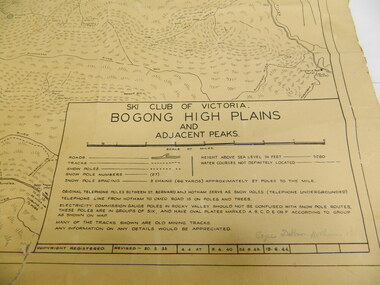
Map - Topographical, Ski Club of Victoria Bogong High Plains and Adjacent Peaks, Early 1930's
... family for approx. 70 years. Probably used when bush walking and skiing in the early days on the Bogong High Plains. ...family for approx. 70 years. Probably used when bush walking and skiing in the early days on the Bogong High Plains. ...This map has been in the Ryder family for approx. 70 years. Probably used when bush walking and skiing in the early days on the Bogong High Plains. The Ryder family are farmers in the Kiewa Valley and were involved in taking their cattle up to the Bogong High Plains where they had a lease. The State Electricity Commission of Victoria constructed the Kiewa Hydro Electric Scheme opening up the area during the 1940's and 1950's. This type of map is an early one, used by people in the Kiewa Valley and possibly by surveyors prior to construction. The map is an early topographic map used by farmers living in the Kiewa Valley. It is historically significant as these people were involved in taking cattle up to the High Plains during summer and may have been used for bush walking and skiing. This is a sepia coloured paper map which was originally printed copyright registered. It was revised in 20/6.33/4.4.37/8.4.40/24.8.43/19/6/54. It shows roads / tracks / snow poles / snow pole numbers (27) / Snow pole spacing (3 chains. 66 yards) approximately 27 poles to the mile / height above sea level in feet - 5280. Water courses not definitely located etc. Rocky Valley Dam (Kiewa Hydro Electric Scheme) has been drawn on the map by hand with a biro. There is a wooden rod at the top of the map. topographic map; kiewa valley; ryder family; high plains of victoria -
 Melton City Libraries
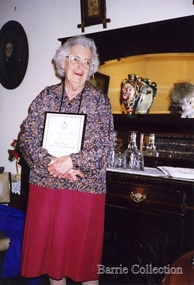
Photograph, Edna Barrie Historical Society Presentation, 1997
... An early example is the naming of Kuranjang and the street names associated with the McPherson family. Plains of Promise (Shire of Melton history) by Joan Starr (1985). ...An early example is the naming of Kuranjang and the street names associated with the McPherson family. Plains of Promise (Shire of Melton history) by Joan Starr (1985). ...Melton and District Historical Society (M&DHS) Foundation Member, 1968 Held President and Secretary positions from its inception Research associated with the classification of Heritage buildings Christ Church Classification C Scots’ Presbyterian Church Classification D Set up the storage and Catalogue system in the Office at the Willows Organised society visits to Heritage sites in and beyond the Shire of Melton, including Stathtulloh, Eynesbury, Deanside, ToolernVale sites including Merrywood (now demolished) Staughton Vale, Chirnside, Point Cook, Shwerkolts Cottage. 1970 – 1983 Melton and District Historical Society Letterhead. Staughton Memorial Light from early newspaper cutting in its location before restoration to present location. Sketch by Wendy Barrie. Designing and printing pamphlets, stationery, and other sale items with Willows title. M&DHS street naming research for new housing developments (1970 – 2000). Collaborated with Mary Tolhurst to research the names of early landowners and pioneer families connected to the first settlers. Researched Aboriginal names for inclusion on lists submitted to developers. An early example is the naming of Kuranjang and the street names associated with the McPherson family. Plains of Promise (Shire of Melton history) by Joan Starr (1985). Edna assisted with Historical Society materials and contributed her own research and photographs. Contacted and organised for Hubert Opperman to launch the book. (She was also present at his last bike ride at Rochester in 1995.) Western Metropolitan Groups of Historical Societies. Member attending meetings and representing Melton, also hosted the Group at Melton Edna receiving a framed certificate local identities, local special interest groups -
 Melton City Libraries
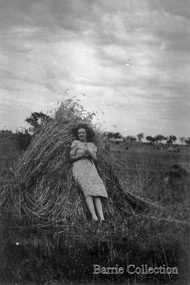
Photograph, Edna Barrie, 1920, 1924, 1933 and 1940
... An early example is the naming of Kuranjang and the street names associated with the McPherson family. Plains of Promise (Shire of Melton history) by Joan Starr (1985). ...An early example is the naming of Kuranjang and the street names associated with the McPherson family. Plains of Promise (Shire of Melton history) by Joan Starr (1985). ...SUMMARY - Edna (Myers) Barrie, 1918 – 2018, Profile Early Life Edna was born at Melton and delivered by Hannah Watts. Her mother Martha walked in the dark at night with her basket under her arm to the bridge over the Toolern Creek Bridge and into Sherwin Street to the corner of Yuille Street to Hannah’s house Lynch Cottage. Martha’s husband was away shearing and eventually heard the news of the birth of their blue eyed third child and second daughter. She was born into a family that was surrounded by music; her father played the “squeeze box” and mother the mouth organ. From an early age the family were aware of the great composers, a framed picture of Beethoven, Chopin, Schubert and Wagner hung above the door to the lounge room of their 4 roomed cottage, the room where the piano stood. Her life on stage started as a singer aged 6 years at the Melton Mechanics Institute Hall. Edna was born with a natural ear for music learning piano and singing from her older sister Marjorie who became an accomplished pianist and soloist and renowned music teacher in Melton and district. In the 1920s and 1930s concerts at the Melton Mechanics Institute were regular events were the local talent was fostered. The Myers children, like other children of Melton and Rockbank, studied singing, piano and elocution, sat examinations, entered in competitions in South Street Ballarat, Footscray and Melbourne. In 1929 a Sacred Concert was broadcast by 3AR from the Hall as part of the Back to Melton Celebrations. Marjorie Myers performed two of the items on the piano. Edna attended Melton State School 430 from 1924 – 1933. Her father Fred had also attended the same school. In 1924 the School staged Cinderella at the Melton Mechanics Institute Hall with a cast of 33 students. After completing her education a Melton she boarded in South Melbourne and attending Melbourne Girls High School (MacRobertson Girls High School), a school which recognized her musical attributes. She travelled home on the train on the weekends, sometimes getting off at Rockbank to save a few pennies in fares. Working life The early 1930s the Depression was a difficult time for a young woman to find work. Jobs were often menial and given to the youngest and therefore cheapest applicant. She worked as sales assistant at Polonskis and Myer in the city, and Irvines Modes in Footscray. Working to 1pm on Saturday, and when held up by a customer meant missing the train home. While at Myer Department store she lived at home and rode her bike to the Melton railway station. On one occasion she had a nasty fall when a part of her bicycle came loose causing the bike to crash rendering her concussed and injuring her nose. During the 1930s she was given a camera “a little snap” by Mrs Kelly her landlady. This began her interest in photography documenting family life at their “Burnbank” home. Musically, while at Myers she participated in annual performances held at The Kings Hall and the Myer Mural Hall. Working in the basement at Myers she was often embarrassed when her name was called, customers assuming she belonged to the Myer Family. Ken Myer worked in the basement at the same time handling the ‘Wheeler’, a wicker basket used for moving goods around the store. The family philosophy was for the children to start at the bottom and work their way up. Social life Social life in her teenage years was connected also with Scots Presbyterian Church. She attended Sunday School classes and received book prizes for attendance. She loved to read and welcomed the times when she received new book. She took part in the Sunday School Anniversaries and was presented with a Bible from the Superintendent, Henry Robinson for her assistance with the music. Marriage and War years In 1941 Edna married Ernest “Bonnie” Barrie. War in the Pacific was soon to break out. While in Sydney on their honeymoon they met up with Jim Barrie who was on his way to Canada via Hawaii just missing Pearl Harbour by two days. Jim became a Spitfire Pilot and joined the RAF and was based in England. He returned to Australia later in RAAF to fight the Japanese off the coast of New Guinea. The three eldest Barrie brothers were farmers and food producers and were thus except from military service. Edna and Bon were members of the VAOC- Volunteer Air Observers Corp entailing being rostered on duty as plane spotters. The women took shifts during the day and the men at night which involved staying overnight in the Shire Offices. Later the spotting tower was built in the plantation opposite the Post Office. Edna and Bon carried on with this from their home in Ferris Rd when the threat of invasion had ceased Community life Community life in Melton revolved around fund raising events for the Melton Mechanics Institute for the War effort and keeping up with maintenance for the Hall. In 1944 the Minister for Health gave approval for the Shire of Melton to open and Infant Welfare Centre inviting Edna to form part of the Committee with seven other women. In 1948 she was President of Melton Branch of the Victorian Health Centres Association. She volunteered this use of her car driving the person in charge, Sister Smith to visit mothers and their babies. In 1963, along with Betty Jones and Isabel Snell, Edna was instrumental in forming the 1st Melton Cub Pack and later supported the formation of the 1st Melton Scouts. During 1963 – 1968 she completed the Australian Boy Scout Association Cub Pack Preliminary Training and achieved her Wood Badge. Country Women’s Association In 1944-1996 she was a member of the Melton Branch Country Women’s Association (CWA), Melton Branch, Secretary of the Branch in 1945 – 1946 and Branch International Secretary 1970-1971. She worked with choir, music and drama interest groups within the branch attaining both first and second place in 1959, second place in 1952 Exhibition and second in Music in 1960 in the state. She was involved in their handicraft craft events, fund raising and musical events and singing competitions. During the 1950s she trained Trios and Quartets in part singing for the CWA competitions in Ballarat and Melbourne. It was at this time that she developed her skill as a conductor and trainer of choirs. She later auditioned for the Victorian Choir for alto parts believing she would stand a better chance of being chosen, because of her ability to sing in natural harmony. In 1962 she participated in the Tenth Australian Country Women of the World (ACWW) Triennial Conference “Australia Presents: CWA Massed Choir” in the Melbourne Town Hall. This event was recorded by Super Sound Spotlight on 45 extended play vinyl record. The songs were Australian music and words, for example The Silver Stars are in the Sky, The Graceful Swaying Wattle and Kookaburra. Edna continued with her interest in the Victorian Choir regularly meeting at the CWA Headquarters in Toorak for rehearsals. In 1974 she took part in the Australian Choir at the fourteenth Triennial conference of the ACWW Interfaith Service held at the Perth Concert Hall on the 13th of October. Arts and Culture Edna was also in the Choir of 3KZ Carols by Candlelight at the Myer Music Bowl in 1963 and 1964. Melton Choral Society. Edna was Director and Conductor in the 1970s performing at many community events such as Carols by Candle Light, Church Services, Easter and Palm Sunday services, Mothers Union and the 1976 Community Services Week Combined Church Service. The October – November 1978 Program covered the following: songs from the Musicals, Choral and Solo with Narratives, Guest Instrumental Item, Recitation Negro Spirituals and Australian Songs. Her involvement with church choirs included the Scots Presbyterian Church Choir Easter and Christmas performances and the 1967 Centenary Service. In 1980s the Melton Uniting Church Sacred Music Performances included The Crucifixion by Stainer, The Olivet to Calvary and other church Hymns. Edna was Musical Director of the Melton Amateur Theatrical Society and worked on performances in collaboration with Mabel Rogers on script and musical interpretation. Melton and District Historical Society Annual Art and Craft Show. First held in Melton Mechanics Institute Hall in 1973, it later took place in the in the Melton Community Hall. The Art Show was also run in conjunction with other community organizations such as Rotary and Girl Guides. Community history and research Melton streetscape and society Over 20 years commencing in the 1970s, Edna undertook extensive photographing of the changing streetscape of Melton’s High Street. She anticipated the impact of change on the community during the time of Melton’s rapid transition from a small farming district to a large urban community and this led to her extensively document and photograph many of the structures and landscape features of the township that have since been lost. She also meticulously recorded much of the contemporary life of the town and has left a significant legacy of archival material. Melton State School 100 Years Celebration, October 1970 Co-author with Mabel Rogers “The First 100 Years, 1870 – 1970” Assembled a collection of School Class Photograph and identified and compiled lists of names for future school history. She also assembled a photographic display for the 125th anniversary in 1995. Melton and District Historical Society (M&DHS) Foundation Member, 1968 Held President and Secretary positions from its inception Research associated with the classification of Heritage buildings Christ Church Classification C Scots’ Presbyterian Church Classification D Set up the storage and Catalogue system in the Office at the Willows Organised society visits to Heritage sites in and beyond the Shire of Melton, including Stathtulloh, Eynesbury, Deanside, ToolernVale sites including Merrywood (now demolished) Staughton Vale, Chirnside, Point Cook, Shwerkolts Cottage. 1970 – 1983 Melton and District Historical Society Letterhead. Staughton Memorial Light from early newspaper cutting in its location before restoration to present location. Sketch by Wendy Barrie. Designing and printing pamphlets, stationery, and other sale items with Willows title. M&DHS street naming research for new housing developments (1970 – 2000). Collaborated with Mary Tolhurst to research the names of early landowners and pioneer families connected to the first settlers. Researched Aboriginal names for inclusion on lists submitted to developers. An early example is the naming of Kuranjang and the street names associated with the McPherson family. Plains of Promise (Shire of Melton history) by Joan Starr (1985). Edna assisted with Historical Society materials and contributed her own research and photographs. Contacted and organised for Hubert Opperman to launch the book. (She was also present at his last bike ride at Rochester in 1995.) Western Metropolitan Groups of Historical Societies. Member attending meetings and representing Melton, also hosted the Group at Melton The Willows Member of the Committee of Management for the restoration of the “Willows” house the establishment of The Willows Park 1982 March - Official Opening of the Willows Park- Preparation and planning for the event. Involved in the collecting of items in the furnishing of the display rooms in the Willows house. Donated items and furniture from the Myers and Daley family houses. (19th century) Machinery Shed Establishment. Involved with Jeff Robinson in the construction and collection of machinery display Other significant sites Championed and participated in the restoration and preservation significant sites in Melton, including: restoration of the Staughton Memorial Light and its return to its present site restoration of the Pykes Grave (using EW Barrie earthmoving equipment) restoration and reconstruction of Dunvegan restoration and reconstruction of Macs Cottage, the management and Caretakers residence Melton State School War Memorial Gates removed from Unitt Street entrance and relocated to the Willows Park Donated the Barrie family single furrow plough which was standing at the Court House Plaza. It removed and to Council Depot and later missing. The plaque was taken to the Willows. Jimmy Melrose (aviator) cairn restoration at crash site in Melton South Donald Mackintosh (Olympic gold medallist marksman) grave site at the Melton Cemetery (Historical items held by the Myers family collection.) Houdini first flight at Diggers Rest. Edna’s father was shearing at Diggers Rest at the time and witnessed the flight. She attended the 90 year anniversary of the event at the site in 2000. Radio and electronics Edna’s husband Bon interest in wireless communication dates in the 1920s with the building of a crystal set in the early days of public broadcasting. At the Back to Melton Celebrations in 1929, 3AR broadcast a concert from the Melton Mechanics Institute on the 20th February at 8pm featuring Footscray City Band, James Hill baritone, Vera Carew Soprano, James Foran Tenor, Marjorie Myers Piano, and James Williamson Entertainer. Accompanists: Miss Agnes Ross and Mrs James Hill. The Myers children had recordings of their piano playing made onto the aluminium records, Martha Myers’ voice can be heard introducing an item. These were made in a studio in Melbourne. Marjorie was given a upright Gramophone by Donald Mackintosh in recognition of her talent and her contribution to the cultural life of Melton. The family were then able to listen to 78rpm recordings of the famous classical recordings. The turntable was hand wound metal stylus needles had to be regularly replaced. The aluminium disk needed a bamboo needle to prevent damage to the surface. Before electricity was introduced to Melton in 1939 the Mechanics Hall relied on generators to produce electricity. Bon Barrie, being mechanically minded, built a public address system for be used a community functions at the Hall and Recreational Park. By 1939 this was up and running and used for over three decades. A large Collection of 78rpm records provided music for dances, marching, parades and any public event needing music and microphones. The early system was portable and worked on batteries. CFA Radio Communication In the 1950s with the introduction two-way HF and later VHF very high frequency radio sets. Melton Rural Fire Brigade was part of the Bacchus Marsh Group. Radio sets where located in the Melton Fire Truck, and in the house of the Barrie family at Ferris Road. This was an ideal location to observe a 360 degree view in all directions when smoke appeared on the horizon. An antenna was erected beside the house. The set OX 7 was located in the kitchen and monitored 24 hours by the family. When an electrical fire occurred at the junction of the electricity to the house there was time to radio the fire station and summons the men working in the paddocks, thus saving the house from possible destruction. With the introduction of UHF – ultra high frequency Vinten Radios the signal was clearer and static and interference lessened and radio traffic became easier to read, and reduced noise levels in the household. VL3 LY Radio Base became the Group Headquarters was established in 1967. By 1970 the Brigades were: Melton, Rockbank, Sydenham, Toolern Vale, Diggers Rest, Truganina, and Werribee. In 1974 when the family moved to First Avenue, another antenna and a small building were erected adjacent to the residence and used to house the equipment, maps. Radio traffic consisted of regular schedule times and communication with adjoining groups of brigades such as Bacchus Marsh, Mt Macedon and Little River Groups. Many of the brigade and group base radios were situated in private residences and operated primarily by fire fighters wives who held the position of Communications Officer, either registered as a brigade member or informally. Edna was never registered as an operational brigade member but operated informally as an assistant to her husband Bon. She was however a member of the Melton Fire Brigade Ladies Auxiliary from its inception in 1968, a non-operational position. Edna kept up to date with radio procedure following the 1967 handbook; preparing maps, plotting compass points and taking notes on weather forecasts from the SA Border and Western District. Daily notes were taken in anticipation of fire warnings. These log books and daily radio traffic were incidental to the regular radio schedules. Emergency turnouts noted, burning off times and predicted location of smoke. In the summer fire season all TBF (total fire ban days were recorded.) In times of emergency the Barrie family assisted Bon the base radio operator to plot the position and location of fire trucks and to help clarify garbled radio traffic, keep notes and make telephone calls. These log books are held in the EE and EW Family Archive. Melton Uniting Church Edna founded the Church Opportunity with Maisie Robinson in 1975 in the Melton South Methodist Church building. Methodist and Presbyterian Churches of Melton had combined severing their long held connection with Bacchus Marsh. A Manse had been recently built for the Melton Minister. At a Parish Committee meeting at the Melton South Church it was suggested to use the building as an Opportunity Shop. It opened in July 1975, and it raised $1,600 contribution to the church budget in 1976. In 1977 The Uniting Church in Australia was formed and the Melton South Uniting Church Opportunity shop continued to go from strength to strength expanding the buildings providing the welfare needs of the community. Archive Set up by Edna Catalogued items dating from 1857 Minute Book and set ongoing system and storage of items of heritage. Melton Un Awards and recognition of service to the Melton community Rotary Award for Community Service, 1980 Victoria 150th Anniversary Celebrations contributions, 1985 Life Membership of the Melton and District Historical Society (M&DHS), 1989 Extra-Ordinary Contribution for years of service to M&DHS, 1992 Long Service for Exceptional Service MD&HS, 1993 Royal Historical Society of Victoria Award of Merit, 1997 Shire of Melton Certificate of Appreciation for continued support and dedication as a member of MD&HS to the preservation of Melton’s History, 1998 Centenary of Federation Peoplescape (Canberra) Melton Shire nomination, 2001 Uniting Church Melton Life Membership of the Opportunity Shop Uniting Church in Australia Commission for Mission for 30 years of hard work and dedications to the Uniting Church, 2007 Uniting Church Adult Fellowship Certificate appreciation in recognition of valuable support through the “Sammy” Stamp Fund Neighbourhood Watch 5 year award Photographs of Edna at different ages local identities -
 Federation University Historical Collection
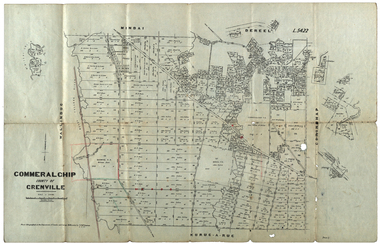
Plan, Commeralghip, County of Grenville, 1905, 03/02/1905
... Plains. The Cape Clear Cemetery T contains the graves of miners and local pioneering families from the Cape Clear, Hollybush, Kaleno, Pitfield Plains, Pitfield, Illabarook, Berringa, Springdallah, Wallinduc, Glenfine, Happy Valley and Western Creek districts....Plains. The Cape Clear Cemetery T contains the graves of miners and local pioneering families from the Cape Clear, Hollybush, Kaleno, Pitfield Plains, Pitfield, Illabarook, Berringa, Springdallah, Wallinduc, Glenfine, Happy Valley and Western Creek districts. commeralghip pitfield plains kaleno dereel glenfine squire richard squire w.t. rowe john cullen alexander mcpherson george currie mt misery William Rowe mindai John Gordon McMillan Plan of allotments in Commeralghip, County of Grenville, Victoria. ...The Township of Kaleno is in the Pitfield Plains. The Cape Clear Cemetery T contains the graves of miners and local pioneering families from the Cape Clear, Hollybush, Kaleno, Pitfield Plains, Pitfield, Illabarook, Berringa, Springdallah, Wallinduc, Glenfine, Happy Valley and Western Creek districts. Plan of allotments in Commeralghip, County of Grenville, Victoria. The plan includes the township of Kaleno, Dereel Pre-Emptice Right (John Cullen), Commeralghip Pre-Emptive Right (John Gordon McMillan and Glenfine Pre-Emptive Right (William Rowe). It also includes landholders such as Robert mcPherson, C. Cameron. John Boyd, John Cullen, W.T. Rowe, George Currie, J.P. Mackay, T. McCaffery, G. Hawkins, Alexander McPherson, C. Cameron. Gift of the Squire Family, 2014 commeralghip, pitfield plains, kaleno, dereel, glenfine, squire, richard squire, w.t. rowe, john cullen, alexander mcpherson, george currie, mt misery, william rowe, mindai, john gordon mcmillan -
 Flagstaff Hill Maritime Museum and Village
Accessory - Mirror
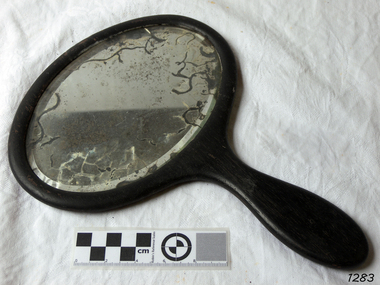
... A handheld mirror such as this one would be used in a 19th century family for personal grooming, or perhaps in a barber or hair dresser shop. The "ebony" wood may have been 'ebonised' wood, a process that made plain wood appear to be ebony. ...A handheld mirror such as this one would be used in a 19th century family for personal grooming, or perhaps in a barber or hair dresser shop. The "ebony" wood may have been 'ebonised' wood, a process that made plain wood appear to be ebony. ...A handheld mirror such as this one would be used in a 19th century family for personal grooming, or perhaps in a barber or hair dresser shop. The "ebony" wood may have been 'ebonised' wood, a process that made plain wood appear to be ebony. The handheld mirror is an example of a 19th and early 20th century personal grooming accessory. A mirror like this would often be sold with a matching hairbrush and comb. Mirror, personal handheld, oval, painted black, with a bevelled edge around the mirror glass and a wooden handle. Wood is ebony. Inscription on handle "EBONY" flagstaff hill, warrnambool, shipwrecked-coast, flagstaff-hill, flagstaff-hill-maritime-museum, maritime-museum, shipwreck-coast, flagstaff-hill-maritime-village, mirror, reflective glass, mirror glass, handheld mirror, personal grooming, personal grooming accessory, barber’s equipment, hairdresser, hairdressing, 19th century personal effects, personal effects, toiletries -
 Flagstaff Hill Maritime Museum and Village
Domestic object - Bread Board
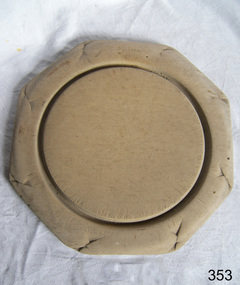
... family members. https://www.woodcuttingboards.com/news/quick-history-of-the-cutting-board-47.aspx The bread board is an example of kitchen equipment used during Victorian times and similar to those used today. Flagstaff Hill Warrnambool Shipwrecked-coast Flagstaff-Hill Flagstaff-Hill-Maritime-Museum Maritime-Museum Shipwreck-coast Flagstaff-Hill-Maritime-Village bread board cutting board pastry board kitchen utensil kitchen equipment baking equipment food preparation None. Bread board. Wooden, octagonal, plain ...In the high tech, fast paced society that we live in, it’s easy to take some things for granted. Case in point: the wood cutting board on which you’ll probably be preparing the evening’s dinner. Have you ever taken the time to think about the history of the cutting board? Where did it come from, and what did ancient civilizations use to cut their meats, fruits and vegetables? Wood throughout the ages Since the dawn of time, wood has been one of the most available materials used by mankind to build tools and lodgings, so it’s not really surprising to know that wood has been used in the preparation of food since the prehistoric ages. Of course, back then, cavemen probably used an unpolished slab of tree trunk to cut the kill of the day on and they probably didn’t think twice about saving it once the meal was over. Chances are they probably threw it in the fire with the rest of the wood needed to kindle it. Advances in technology Throughout the centuries, mankind evolved and started creating machines from steam, electricity and metal. When the circular saw was invented, nicer, cleaner slabs of wood were cut and used as cutting boards. Since soft wood was the most available type of wood at the time, it was the material of choice for to be used for cutting boards. Boards were made smaller since the slab of wood could now be cut to any desired size. Since they were made smaller, they were also used to eat off of and some people referred to them as trenchers. Trenchers were originally pieces of stale hard bread that were used as substitute plates. Wood trenchers quickly became the replacements of the eatable dinnerware. The butcher block: the cutting board’s larger cousin In the industrial ages, many industries rapidly developed, and the butchery industry followed this trend as well. Before the invention of the cutting board, butchers used tree rounds to carve their meat on. The rounds were often too soft and they rapidly became unsanitary. Hard maple wood butcher blocks were the preferred choice of the industry. They were made to be extremely thick and durable, so durable in fact, that a butcher could use the same block for almost his entire career. Cutting boards around the world As cutting boards began to be more and more used in kitchens around North America, the rest of the world crafted such boards from different materials. The East used thick bamboo as their material of choice. Despite its frail appearance, bamboo is quite strong and made durable cutting boards and butcher blocks. Europe used maple in the crafting of their cutting boards while Persia used flat pieces of polished wood in their kitchens. The world then saw cutting boards that were being made from other materials like plastic and they came in all shapes and sizes, but they always served the same purpose, to provide a household with a safe, clean surface on which to prepare meals for their friends and family members. https://www.woodcuttingboards.com/news/quick-history-of-the-cutting-board-47.aspx The bread board is an example of kitchen equipment used during Victorian times and similar to those used today. Bread board. Wooden, octagonal, plain sanded light wood. Has decoration around edge and indented circular line to delineate round cutting board section. None. flagstaff hill, warrnambool, shipwrecked-coast, flagstaff-hill, flagstaff-hill-maritime-museum, maritime-museum, shipwreck-coast, flagstaff-hill-maritime-village, bread board, cutting board, pastry board, kitchen utensil, kitchen equipment, baking equipment, food preparation -
 Marysville & District Historical Society
Document (Item) - Document-Table, Judith Vimpani, Yarra Track Hostelries- Marysville to Woods Point, Unknown
... A document outling all the hostelries that existed along the Yarra Track between Marysville and Wood's Point. yarra track marysville wood's point woods point fernshaw paradise plains black spur mount grant george edwards walker family melbourne new chum hit & miss restaurant mr clifford michael woods glen watts tri bhean hotel ewen cameron ewen hugh cameron thomas barton butler's wood's point directory globe hotel swanston street mount juliet ben more & c jordan district jefferson's watts bridge inn matthew jefferson reefer's hotel boyle's hotel william henry johnson samuel boyle black spur hotel fisher's creek narbethong fisher's home hotel black spur inn frederick fisher william hodson wood's point road acheron river acheron bridge hotel john robson granton clifford wilks creek wilks creek hotel patrick maloney steavenson marysville hotel australian hotel junction hotel the dutchman's restaurant henry kuyper william podlech mount arnold mount arnold hotel charles schultz james toohey john gleeson joy burchall ian newman henry brockman belle isle belle elle bellell creek upper yarra guerin's bridge bell's hotel henry petty celia moran ruth petty cumberland creek cumberland creek store and restaurant cumberland creek hotel charles edwin hargreaves annie hargreaves urina hargreaves alice hargreaves healesville josiah hargreaves henderson drysdale henry whelan halfway house thomas smith svendson gosling donovans creek chesterville perry's hotel john perry perry's coach and horses hotel edward courtney scandinavian hotel the swede's walker's hotel jacob burchart golden fleece theodore kappler george koehler's hotel david walker millicent walker elsie jowett bill walker big river royal mail hotel shaw's slingsby davies edwin jones elizabeth jane parker sandridge archibald charles edwin jones matlock alexander myers frank berwick frederick jones ned jones jennie jones sophie milllicent parker jones thomas shaw dorothy walker travellers rest hotel reefton summers john fehring f fehring katerina fehring john christoph blumeyer anne fehring john baker evelyn observer anna katrina baker hannah catherine baker john frederick baker mcmahon's creek oaks the springs st clair sinclair's valley mountain home hotel neilson collins waters jan emma sinclair john sinclair mr cox peter sinclair willie we have missed you hotel spring vale hotel robert matthews thomas crawford A document outlining all the hostelries that existed along the Yarra Track between Marysville and Wood's Point. ...A document outlining all the hostelries that existed along the Yarra Track between Marysville and Wood's Point. A document outling all the hostelries that existed along the Yarra Track between Marysville and Wood's Point. yarra track, marysville, wood's point, woods point, fernshaw, paradise plains, black spur, mount grant, george edwards, walker family, melbourne, new chum, hit & miss restaurant, mr clifford, michael woods, glen watts, tri bhean hotel, ewen cameron, ewen hugh cameron, thomas barton, butler's wood's point directory, globe hotel, swanston street, mount juliet, ben more & c, jordan district, jefferson's watts bridge inn, matthew jefferson, reefer's hotel, boyle's hotel, william henry johnson, samuel boyle, black spur hotel, fisher's creek, narbethong, fisher's home hotel, black spur inn, frederick fisher, william hodson, wood's point road, acheron river, acheron bridge hotel, john robson, granton, clifford, wilks creek, wilks creek hotel, patrick maloney, steavenson, marysville hotel, australian hotel, junction hotel, the dutchman's restaurant, henry kuyper, william podlech, mount arnold, mount arnold hotel, charles schultz, james toohey, john gleeson, joy burchall, ian newman, henry brockman, belle isle, belle elle, bellell creek, upper yarra, guerin's bridge, bell's hotel, henry petty, celia moran, ruth petty, cumberland creek, cumberland creek store and restaurant, cumberland creek hotel, charles edwin hargreaves, annie hargreaves, urina hargreaves, alice hargreaves, healesville, josiah hargreaves, henderson drysdale, henry whelan, halfway house, thomas smith, svendson, gosling, donovans creek, chesterville, perry's hotel, john perry, perry's coach and horses hotel, edward courtney, scandinavian hotel, the swede's, walker's hotel, jacob burchart, golden fleece, theodore kappler, george koehler's hotel, david walker, millicent walker, elsie jowett, bill walker, big river, royal mail hotel, shaw's, slingsby davies, edwin jones, elizabeth jane parker, sandridge, archibald charles edwin jones, matlock, alexander myers, frank berwick frederick jones, ned jones, jennie jones, sophie milllicent parker jones, thomas shaw, dorothy walker, travellers rest hotel, reefton, summers, john fehring, f fehring, katerina fehring, john christoph blumeyer, anne fehring, john baker, evelyn observer, anna katrina baker, hannah catherine baker, john frederick baker, mcmahon's creek, oaks, the springs, st clair, sinclair's valley, mountain home hotel, neilson, collins, waters, jan emma sinclair, john sinclair, mr cox, peter sinclair, willie we have missed you hotel, spring vale hotel, robert matthews, thomas crawford -
Federation University Historical Collection
Document, Dianne Campbell, Lawyers, Publicans & Women on the Ballarat and Central Victorian Goldfields 1851-1886, 2013
... dianne campbell goldfields lawyers collection lawyers ballarat legal central victoria Maryborough stawell maldon chiltern Otago Pyrenees ararat carisbrook Day Daylesford court houses pleasant creek beaufort Creswick golden plains AVoca Tarnagulla Alexander Fraser Alan Fraser William Rainy raffaello carboni Butler Cole Aspinall Edward John Lewis Richard Ireland Richard Davies Ireland Charles Gavin Duffy Robert Molesworth Edward Fitzgerald Nicholas Fitzgerald Maurice McDonough James William Dunbar Robert Walsh Joseph Henry Dunne Redmond Barry Eureka Stockade MIchael Walsh family history genealogy A conference paper prepared for the Victorian Association of Family History Organisations (VAFHO) Conference, Ballarat, 2013 Lawyers, Publicans & Women on the Ballarat and Central Victorian Goldfields 1851-1886 Document Dianne Campbell ...A conference paper prepared for the Victorian Association of Family History Organisations (VAFHO) Conference, Ballarat, 2013 dianne campbell goldfields lawyers collection, lawyers, ballarat, legal, central victoria, maryborough, stawell, maldon, chiltern, otago, pyrenees, ararat, carisbrook, day, daylesford, court houses, pleasant creek, beaufort, creswick, golden plains, avoca, tarnagulla, alexander fraser, alan fraser, william rainy, raffaello carboni, butler cole aspinall, edward john lewis, richard ireland, richard davies ireland, charles gavin duffy, robert molesworth, edward fitzgerald, nicholas fitzgerald, maurice mcdonough, james william dunbar, robert walsh, joseph henry dunne, redmond barry, eureka stockade, michael walsh, family history, genealogy -
 Federation University Historical Collection
Photograph - Colour, Leigh River near Garibaldi Bridge
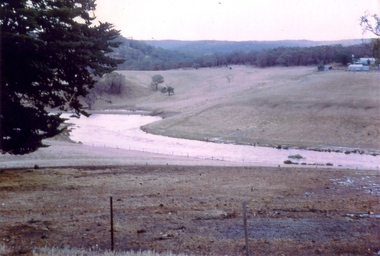
... Plains Shire. The Leigh River rises below Mount Mercer and flows generally south, joined by three minor tributaries before reaching its confluence with the Barwon River, southeast of the central business district of Inverleigh. The river descends 265 metres (869 ft) over its 61-kilometre (38 mi) course. (https://en.wikipedia.org/wiki/Leigh_River_(Victoria) Relates to historical information about flooding of the Leigh River in 1933. Relevant to the history of Garibaldi and Durham Lead. leigh river garibaldi garibaldi bridge durham lead vincent family ...The Leigh River is a major tributary and catchment of the Barwon River. Fed by the Yarrowee River that rises near Ballarat, the Yarrowee reaches its confluence to form the Leigh in the vicinity of Cambrian Hill and Golden Plains Shire. The Leigh River rises below Mount Mercer and flows generally south, joined by three minor tributaries before reaching its confluence with the Barwon River, southeast of the central business district of Inverleigh. The river descends 265 metres (869 ft) over its 61-kilometre (38 mi) course. (https://en.wikipedia.org/wiki/Leigh_River_(Victoria) Relates to historical information about flooding of the Leigh River in 1933. Relevant to the history of Garibaldi and Durham Lead. A number of colour photographs showing the Leigh River between Garibaldi and Durham Lead, Victoria, .1 - .3) photographs of the Leigh River in flood .4 - .18) general photos of the Leigh River and surrounding countryside .19) broad angle photograph of the Leigh River and surrounding countryside leigh river, garibaldi, garibaldi bridge, durham lead, vincent family -
Ballarat Clarendon College
Book, Claud Notman, Of sheep and men: a story of the flocks, the founders and descendants of Victoria's Western Plains over a period of almost 200 years in Australia's history, 1981
... families or individual associated with Ballarat College from its earliest beginnings. Claud Notman Sheep Industry -- Victoria -- Western District -- History. Handwritten on endpage: From Skips Bookshelves / 30/3/1992 / to the young folks of the future Handwritten on inside flyleaf: Claud Notman / 10/10/81 Handwritten on title page: For, the boys of today, / to learn of the, hard times / of years ago / Skipper / 24/4/1993 / Boys note Small hardback book Of sheep and men: a story of the flocks, the founders and descendants of Victoria's Western Plains over a period of almost 200 years in Australia's history Book Claud Notman ...Claud Notman served on the Ballarat College council 1958 - 1973. An old Geelong College collegian he wrote several books relating to the history of Skipton. This book indexes the families or individual associated with Ballarat College from its earliest beginnings. Small hardback book Handwritten on endpage: From Skips Bookshelves / 30/3/1992 / to the young folks of the future Handwritten on inside flyleaf: Claud Notman / 10/10/81 Handwritten on title page: For, the boys of today, / to learn of the, hard times / of years ago / Skipper / 24/4/1993 / Boys note claud notman, sheep industry -- victoria -- western district -- history. -
 Federation University Historical Collection
Newsclip, The Story of Charlotte Plains is One of Extravagances and Tragedy, 1974, 20/07/1974
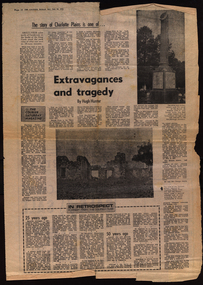
... charlotte plains barone de riebald simson mansion george cain carisbrook hector simson donald simson john simson chatham family archive Newspaper article from the Ballarat Courier on the History of Charlotte Plains. ...Newspaper article from the Ballarat Courier on the History of Charlotte Plains. charlotte plains, barone de riebald, simson mansion, george cain, carisbrook, hector simson, donald simson, john simson, chatham family archive -
Federation University Historical Collection
Book, University of Ballarat Research + Innovation Digest
... Contents include: * Technologies that combat climate change by Alberto Boretti * Case Studies in keeping food safe by Benu Adhikari * Learning to lead - leading to learn by Neil Trivett * Depression, diabetes and motivation by Mirella di Benedetto * Valueing Lake Wendouree by Julian Lowe * What's in a Name by Laura Kostanski * Optimizing regional and international research by John Yerwood * Sport, physical activity and health research by Warren paynbe * Climate secrets in sediments by Peter Gell * UB Sports Injuty Centre supported by IOC * Men's Sheds and other learning places by Barry Golding * New economy, new work, new qualificatins by Erica Smith * Cross-Cultural communications in a shrinking world by Georgina Tsoldis * Child Protection and family services reform by Angela Murphy * Making a difference for older Victorians by Sally Wellard * Making good (and goodly) profits by Jackie Tuck * Not too much 'ordinary' about The Ordinary by Lorraine Sim * Gaming machines and regional gamblers by John McDonald * Toe nail clippings reveal their secrets by Kim Dowling * Magnificently preserves magafauna trackways in the Victorian volcanic plains * A stuttering start for a stunning outcome * Supporting patients and theor carers * Out od Africa and beyond * Taking a hard lok to avaid hard knocks * Skilling people for business success by Andy Smith * Promoting risk awareness in industry by David Borys * Researching China's rise and ris by Mike Willis * Sex hormones link to heart disease by Fadi Charchar * Human Factors in computer security * Are our rivers up the creek by Peter Gell * Wmen as managers and entrepreneurs by Glenice Wood * Revisioning values and norms by Jane Mummery * 'Wimmera' - an Epic Poem by Homer Rieth * Recycling, consumerism, climate change and art practice by Marie Purtill * Investing in ecologically sustainable development by jerry Courvisanos * Indigenous peoples of the goldfields * Astists install images of sustanability by Jill Orr "Addressing disadvantage and nequality with passion by John Smyth * Breaking up insulin hexamers by Mark Myers ...Contents include: * Technologies that combat climate change by Alberto Boretti * Case Studies in keeping food safe by Benu Adhikari * Learning to lead - leading to learn by Neil Trivett * Depression, diabetes and motivation by Mirella di Benedetto * Valueing Lake Wendouree by Julian Lowe * What's in a Name by Laura Kostanski * Optimizing regional and international research by John Yerwood * Sport, physical activity and health research by Warren paynbe * Climate secrets in sediments by Peter Gell * UB Sports Injuty Centre supported by IOC * Men's Sheds and other learning places by Barry Golding * New economy, new work, new qualificatins by Erica Smith * Cross-Cultural communications in a shrinking world by Georgina Tsoldis * Child Protection and family services reform by Angela Murphy * Making a difference for older Victorians by Sally Wellard * Making good (and goodly) profits by Jackie Tuck * Not too much 'ordinary' about The Ordinary by Lorraine Sim * Gaming machines and regional gamblers by John McDonald * Toe nail clippings reveal their secrets by Kim Dowling * Magnificently preserves magafauna trackways in the Victorian volcanic plains * A stuttering start for a stunning outcome * Supporting patients and theor carers * Out od Africa and beyond * Taking a hard lok to avaid hard knocks * Skilling people for business success by Andy Smith * Promoting risk awareness in industry by David Borys * Researching China's rise and ris by Mike Willis * Sex hormones link to heart disease by Fadi Charchar * Human Factors in computer security * Are our rivers up the creek by Peter Gell * Wmen as managers and entrepreneurs by Glenice Wood * Revisioning values and norms by Jane Mummery * 'Wimmera' - an Epic Poem by Homer Rieth * Recycling, consumerism, climate change and art practice by Marie Purtill * Investing in ecologically sustainable development by jerry Courvisanos * Indigenous peoples of the goldfields * Astists install images of sustanability by Jill Orr "Addressing disadvantage and nequality with passion by John Smyth * Breaking up insulin hexamers by Mark Myers University of Ballarat Research + Innovation Digest Book Book ...Black soft covered book of 48 pages. Contents include: * Technologies that combat climate change by Alberto Boretti * Case Studies in keeping food safe by Benu Adhikari * Learning to lead - leading to learn by Neil Trivett * Depression, diabetes and motivation by Mirella di Benedetto * Valueing Lake Wendouree by Julian Lowe * What's in a Name by Laura Kostanski * Optimizing regional and international research by John Yerwood * Sport, physical activity and health research by Warren paynbe * Climate secrets in sediments by Peter Gell * UB Sports Injuty Centre supported by IOC * Men's Sheds and other learning places by Barry Golding * New economy, new work, new qualificatins by Erica Smith * Cross-Cultural communications in a shrinking world by Georgina Tsoldis * Child Protection and family services reform by Angela Murphy * Making a difference for older Victorians by Sally Wellard * Making good (and goodly) profits by Jackie Tuck * Not too much 'ordinary' about The Ordinary by Lorraine Sim * Gaming machines and regional gamblers by John McDonald * Toe nail clippings reveal their secrets by Kim Dowling * Magnificently preserves magafauna trackways in the Victorian volcanic plains * A stuttering start for a stunning outcome * Supporting patients and theor carers * Out od Africa and beyond * Taking a hard lok to avaid hard knocks * Skilling people for business success by Andy Smith * Promoting risk awareness in industry by David Borys * Researching China's rise and ris by Mike Willis * Sex hormones link to heart disease by Fadi Charchar * Human Factors in computer security * Are our rivers up the creek by Peter Gell * Wmen as managers and entrepreneurs by Glenice Wood * Revisioning values and norms by Jane Mummery * 'Wimmera' - an Epic Poem by Homer Rieth * Recycling, consumerism, climate change and art practice by Marie Purtill * Investing in ecologically sustainable development by jerry Courvisanos * Indigenous peoples of the goldfields * Astists install images of sustanability by Jill Orr "Addressing disadvantage and nequality with passion by John Smyth * Breaking up insulin hexamers by Mark Myers david battersby, research, frank stagnitti, jill orr, john smyth, fred cahir, peter gell, andy smith, grant meredith, stuttering, kim dowling, stephen carey, megafauna, john mcdonaldgaming machines, men's sheds, barry golding -
 Flagstaff Hill Maritime Museum and Village
Textile - Plain Sewing Sampler, 1897
... This "Plain Sewing Sampler" was donated from the estate of Susan Henry OAM nee Vedmore (1944 - 2021). Susan's family...family. It has many of the same elements and techniques that were taught by the "Plain Sewing Movement" that originated in England at the end of the nineteenth century. ...A "Plain Sewing Sampler" or "Darning Sampler" was intended to showcase the wide range of sewing techniques and skills a girl or woman had. These skills might include hand sewing techniques such as darning, patching, hemming, mending, structural sewing (making pleats, inserting gussets, joining fabric with seams) making buttonholes and embroidery. Samplers could also be intended for practicing a particular technique. There were several articles printed in Australian newspapers around 1889 referring to the "Plain Sewing Movement". In 1889 a Melbourne branch of the "London Institute for the Advancement of Plain Needlework" was formed by a group of ladies led by Lady Loch and Lady Clarke with the purpose of teaching "plain needlework' to women and girls. "Plain Sewing" included fundamental stitches and techniques that were essential for practical clothing construction and maintenance. Several years later in 1891, another meeting was held at Clivedon (the residence of Lady Clarke) to look into the possibility of improving the teaching of sewing in the state schools. This meeting was attended by several school inspectors and the committee of "the Melbourne Institute for the Advancement of Plain Needlework". This "Plain Sewing Sampler" was donated from the estate of Susan Henry OAM nee Vedmore (1944 - 2021). Susan's family (Harold and Gladys Vedmore) immigrated to Australia from Wales in 1955 and settled in Warrnambool. Susan was well known in the Warrnambool community for her work supporting children and families across the district - particular those with disabilities, or those who were homeless, unemployed or isolated. Susan was the founding trustee of the "Vedmore Foundation" - a Warrnambool philanthropic trust set up to support a range of charitable and not-for-profit causes by providing grant assistance. In 2021, she was awarded a Medal of the Order of Australia for services to the community. It has not been possible to identify the lady (with the initials L. L.) who made this item in 1897 but it was thought to possibly be a female relation in her maternal (or possibly, paternal) grandmother's family. It has many of the same elements and techniques that were taught by the "Plain Sewing Movement" that originated in England at the end of the nineteenth century. This item is a rare example of the handcraft skills learnt by women and girls in the late 1890's to construct and maintain practical clothing for their families. A cream cotton sampler made from three smaller rectangular shapes, displaying a wide variety of plain sewing techniques including hand stitched seams (french, bound and herringboned), inserted patch, buttonhole, button, gathering, a gusset, frills, pintucks, a placket, cross stitch initials and date (L L and 1897) and decorative embroidery. L L/1897 flagstaff hill maritime museum and village, warrnambool, shipwreck coast, needlework, textiles, plain sewing sampler, darning sampler, handwork, sewing, great ocean road, susan henry oam, vedmore trust, hand sewing, sewing techniques -
 Flagstaff Hill Maritime Museum and Village
Textile - Plain Sewing Sampler, 1897
... family. It has many of the same elements and techniques that were taught by the "Plain Sewing Movement" that originated in England at the end of the nineteenth century....family. It has many of the same elements and techniques that were taught by the "Plain Sewing Movement" that originated in England at the end of the nineteenth century. ...A "Plain Sewing Sampler" or "Darning Sampler" was intended to showcase the wide range of sewing techniques and skills a girl or woman had. These skills might include hand sewing techniques such as darning, patching, hemming, mending, structural sewing (making pleats, inserting gussets, joining fabric with seams) making buttonholes and embroidery. Samplers could also be intended for practicing a particular technique. There were several articles printed in Australian newspapers around 1889 referring to the "Plain Sewing Movement". In 1889 a Melbourne branch of the "London Institute for the Advancement of Plain Needlework" was formed by a group of ladies led by Lady Loch and Lady Clarke with the purpose of teaching "plain needlework' to women and girls. "Plain Sewing" included fundamental stitches and techniques that were essential for practical clothing construction and maintenance. Several years later in 1891, another meeting was held at Clivedon (the residence of Lady Clarke) to look into the possibility of improving the teaching of sewing in the state schools. This meeting was attended by several school inspectors and the committee of "the Melbourne Institute for the Advancement of Plain Needlework". This "Plain Sewing Sampler" was donated from the estate of Susan Henry nee Vedmore (1944 - 2021). Susan's family (Harold and Gladys Vedmore) immigrated to Australia from Wales in 1955 and settled in Warrnambool. Susan was well known in the Warrnambool community for her work supporting children and families across the district - particular those with disabilities, or those who were homeless, unemployed or isolated. Susan was the founding trustee of the "Vedmore Foundation" - a Warrnambool philanthropic trust set up to support a range of charitable and not-for-profit causes by providing grant assistance. In 2021, she was awarded a Medal of the Order of Australia for services to the community. It has not been possible to identify the lady (with the initials L. L.) who made this item in 1897 but it was thought to possibly be a female relation in her maternal (or possibly, paternal) grandmother's family. It has many of the same elements and techniques that were taught by the "Plain Sewing Movement" that originated in England at the end of the nineteenth century. This item is a rare example of the handcraft skills needed by women and girls in the late 1890's to construct and maintain practical clothing for their families. A cream flannel sampler made from three smaller rectangular shapes, displaying a wide variety of plain sewing techniques including hand stitched seams (french, bound and herringboned), darned patches, inserted patches, pleats, buttonholes, buttons, a gusset, pintucks, a placket, cross stitch initials and date (L L and 1897) and decorative embroidery. L.L. / ?? Yr 1897 flagstaff hill maritime museum and village, great ocean road, warrnambool, sewing, plain sewing, sewing sampler, plain sewing sampler, darning sampler, hand sewing, textiles, susan henry oam, vedmore foundation, sewing techniques -
 Flagstaff Hill Maritime Museum and Village
Textile - Embroidered Tray Cloth, circa 1950s to 1970's
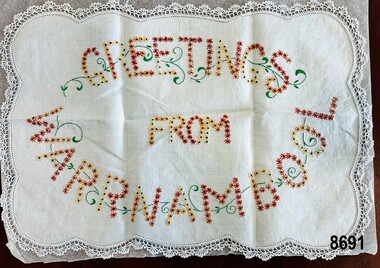
... family. These items often featured local land marks, flora or fauna, maps or emblems of a particular region. This example appears to be handmade using a plain tray cloth with a punctured border ready for the maker to add her own embroidered design and crocheted edge - rather than using a mass produced prestamped design....family. These items often featured local land marks, flora or fauna, maps or emblems of a particular region. This example appears to be handmade using a plain tray cloth with a punctured border ready for the maker to add her own embroidered design and crocheted edge - rather than using a mass produced prestamped design. ...This embroidered tray cloth is a souvenir of Warrnambool and may have been made to remember a holiday or as a gift. Embroidered silk postcards sent by soldiers in WW1 to their families back home, were an early example of embroidered souvenirs. In peacetime, tourists would buy embroidered teatowels, badges, scarves or hankies etc as souvenirs of their trip or to give to friends or family. These items often featured local land marks, flora or fauna, maps or emblems of a particular region. This example appears to be handmade using a plain tray cloth with a punctured border ready for the maker to add her own embroidered design and crocheted edge - rather than using a mass produced prestamped design. This item is a significant example of an Australian handmade embroidered souvenir designed and made as a remembrance of Warrnambool. It is also a significant example of Australian Women's domestic handcraft. Rectangular cotton tray cloth with the words "Greetings from Warrnambool" embroidered in lazy daisy stitch using an orange variegated cotton. A simple stem and leaf design in green stem stitch runs through the letters and the gently curved edge is finished with a white cotton crocheted border. GREETINGS / FROM / WARRNAMBOOL flagstaff hill maritime museum and village, warrnambool, great ocean road, embroidery, embroidered tray cloth, souvenir, embroidered souvenir, tray cloth -
 Flagstaff Hill Maritime Museum and Village
Textile - Waistcoat, circa 1910
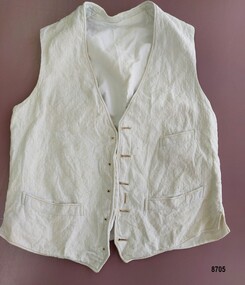
... family man's waistcoat A man's waistcoat with cream cotton weave front pieces and cream cotton lining and back. The left front features five machine worked horizontal buttonholes and one vertical buttonhole (for a fob watch) and two inset pockets. The right hand side has five corresponding stud holes and one inset pocket. The studs or buttons are missing. The lining and back of the waistcoat are made from a plain ...This item is one of a collection of clothing items that belonged to the Stephenson family who lived at 22 McCracken Street, Kensington, Melbourne. Matthew Stephenson (1861 – 1943) who had grown up on the Bendigo goldfields and shifted to Melbourne in the early 1900’s was a train driver and later, a fireman with the railways. His wife Elizabeth Jane (Betsy) Wigley (1865 – 1953) also grew up on the goldfields around Majorca and Bendigo. They married in 1885 in Bendigo. They had two daughters – Ethel Evelyn Stephenson (1886 – 1956) and Lillian or Lila (1891 – 1977) who were milliners and dressmakers and who continued to live in the family home after the death of their parents. The family are recorded as living at 22 McCracken Street, Kensington, as early as 1914. It is not known who made or owned the clothing that makes up this collection but as it appears to be from the late Victorian and early Edwardian era however the vest was probably made by one of the three ladies of the house, for their husband and father, Matthew Stephenson. During W.W.2, a local Warrnambool couple (Meryl and Tony Everard) boarded with them – Tony was in the airforce training paratroopers to jump into (and survive) enemy territory and his wife Meryl worked in the Methodist baby Home. The Everards developed a close friendship with the Stephensons and were responsible for clearing out the house (and finding this clothing collection) after Lila died in 1977. Although by 1916, men's "ready to wear" clothing were widely available, this waistcoat was handmade (possibly by Matthew's wife or daughters). Men's suits in the early part of the twentieth century were predominantly three piece, consisting of a jacket, vest (or waistcoat) and trousers made from matching fabrics. Some men liked to wear a watch attached to their waistcoat with a fob chain. This item is an example of clothing worn by men on special occasions, in the late 19th and early 20th century. A man's waistcoat with cream cotton weave front pieces and cream cotton lining and back. The left front features five machine worked horizontal buttonholes and one vertical buttonhole (for a fob watch) and two inset pockets. The right hand side has five corresponding stud holes and one inset pocket. The studs or buttons are missing. The lining and back of the waistcoat are made from a plain cream cotton fabric. The back also features a cotton strap with a two pronged metal buckle. flagstaff hill maritime museum and village, great ocean road, shipwreck coast, warrnambool, vest, waistcoat, needlework, sewing, stephenson family, man's waistcoat -
 Flagstaff Hill Maritime Museum and Village
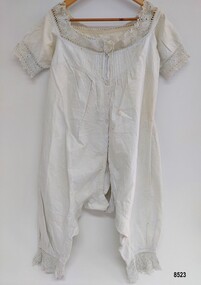
Clothing - Combination Undergarment, Eliza Towns, Late 19th century
... family Nhill Eliza Towns Women’s white cotton and lace all-In-one combination undergarment. The handmade underwear is a combined chemise and bloomers. It has three buttons in the front and a handmade drawstring cord around the square neckline. It is trimmed with crocheted lace (with a floral design) on the neckline, sleeves and pants. It had pintucks and feather stitching on the bodice and the left and right sides are divided from the waist to the crutch. The back of the garment is plain ...This item of underclothing, called a "combination" is one of several linen and clothing items that were made and belonged to Mrs. Eliza Towns and donated to Flagstaff Hill Maritime Museum and Village. Eliza was born Eliza Gould in 1857 in South Melbourne (Emerald Hill) and in 1879 married Charles Towns. In the early 1880's they moved to Nhill in western Victoria and remained there for the rest of their married life. Charles was a jeweller and later became an accountant and for many years was involved with the Shire Council, the local show committee (A & P Society), the Hospital Committee and the Board of the local newspaper (the Nhill Free Press). They had three children and lived a life that would be regarded as comfortably "middle class". Eliza probably had a treadle sewing machine and would have made many of her own clothes as well as clothes for her children - adding her own handmade embroidered or crocheted decorative trim. Combination undergarments combined the chemise and drawers into one garment. The combination is divided, or bifurcated, from the waist to the crutch for easier urinating. This one-piece type of underwear was worn by females from the 1860s and into the early 1900s. The 19th Century garments had front button closures like this one, and those made in the 1900s more often had back closures. Combination underwear was popular because the all-in-one design had far fewer gathers and bulk, making the other clothing look much smoother. Their primary use was to protect clothing from perspiration and because they were made with cotton or linen, were easy to wash. Although they were worn under the corset, next to the skin (and therefore not meant to be seen), they were often decorated with lace and embroidery. Although these combinations are made with a plain cotton fabric, Eliza Towns has incorporated pin tucks, hand embroidery and crocheted lace to embellish her garment. The collection of women’s late-19th-century undergarments is an example of clothing that women would include in their wardrobes. The garments add to the study of the evolution of women's fashions and practicality for the early Australian settlers. The careful needlework in these handmade garments and hand-worked lace trims reflect the maker’s dedication to making even serviceable garments beautiful to look at and wear. Women’s white cotton and lace all-In-one combination undergarment. The handmade underwear is a combined chemise and bloomers. It has three buttons in the front and a handmade drawstring cord around the square neckline. It is trimmed with crocheted lace (with a floral design) on the neckline, sleeves and pants. It had pintucks and feather stitching on the bodice and the left and right sides are divided from the waist to the crutch. The back of the garment is plain with a gathered section at the lower back. flagstaff hill maritime museum and village, maritime museum, maritime village, warrnambool, great ocean road, victorian era, combination undergarment, all-in-one underwear, combination, ‘combinations’, one-piece underwear, one-piece undergarment, chemise and bloomers, combination chemise and bloomers, divided, bifurcated, split, chemise and drawers, women’s underwear, ladies’ underwear, undergarment, women’s clothing, women’s fashion, lingerie, 19th-century undergarment, handmade clothing, handmade lace, crocheted lace, towns family, nhill, eliza towns -
 City of Moorabbin Historical Society (Operating the Box Cottage Museum)
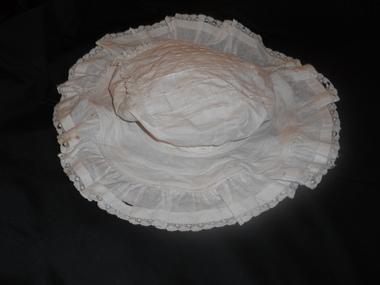
Headwear - Clothing, girl's cotton sun-hat, Early 20th century
... in Moorabbin Shire and this item shows the skill and craftsmanship of the women of these families clothing moorabbin ormond bentleigh dressmaking market gardeners early settlers craftwork Girl's home-made plain white cotton sun-hat with wide brim. ...This girl's white cotton sun-hat has been made at home by a mother determined to get the maximum usage from the garment. The hat has been simply made with a plain crown for the child's day-to-day use. However, the mother has also made a second, very decorative crown, that can be buttoned on and is suitable to be worn on more "dressy" occassions - such as attending Sunday School or on special outings. Early settlers and market gardeners established their families in Moorabbin Shire and this item shows the skill and craftsmanship of the women of these families Girl's home-made plain white cotton sun-hat with wide brim. There have been three rows of fine cord sewn at intervals around the circumference of the hat brim to stiffen it. There is also hand crochet decorating the edge of the hat brim. A very decorative "second" hat crown has also been made. This hat crown has hand crocheted lace, and criss-cross seams, and is designed to be buttoned on over the original plain crown to provide a more decorative hat for special occasions, such as when attending Sunday School. clothing, moorabbin, ormond, bentleigh, dressmaking, market gardeners, early settlers, craftwork -
 City of Moorabbin Historical Society (Operating the Box Cottage Museum)
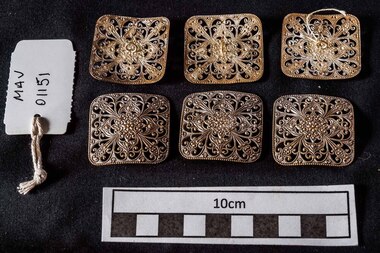
Manufactured Objects, x 6 buttons, white metal filigree, c1900
... c1900 These white metal buttons could be attached to a dress or jacket to possibly match or enhance decorative silver, pewter or brass buckles that were attached by ribbons or straps to plain shoes for evening and special occasions . These buttons were worn by a lady in the family of Ailsa Hunt in Moorabbin Shire ...c1900 These white metal buttons could be attached to a dress or jacket to possibly match or enhance decorative silver, pewter or brass buckles that were attached by ribbons or straps to plain shoes for evening and special occasions . These buttons were worn by a lady in the family of Ailsa Hunt in Moorabbin Shire These decorative white metal buttons were a common accessory for early settler women in Moorabbin Shire c1900 detachable silver buttons, footwear, shoes, buckles, clothing, silver, pewter, brass, white metal, victorian fashion, edwardian fashion, market gardeners, early settlers, moorabbin shire, bentleigh, mckinnon, moorabbin, cheltenham, wedding dresses, evening wear, 6x square white metal buttons with filigree design and attachment loop at back Manufactured Objects, x 6 buttons, white metal filigree Unrecorded metal worker ...c1900 These white metal buttons could be attached to a dress or jacket to possibly match or enhance decorative silver, pewter or brass buckles that were attached by ribbons or straps to plain shoes for evening and special occasions . These buttons were worn by a lady in the family of Ailsa Hunt in Moorabbin Shire These decorative white metal buttons were a common accessory for early settler women in Moorabbin Shire c1900 6x square white metal buttons with filigree design and attachment loop at back detachable silver buttons, footwear, shoes, buckles, clothing, silver, pewter, brass, white metal, victorian fashion, edwardian fashion, market gardeners, early settlers, moorabbin shire, bentleigh, mckinnon, moorabbin, cheltenham, wedding dresses, evening wear, -
 City of Moorabbin Historical Society (Operating the Box Cottage Museum)
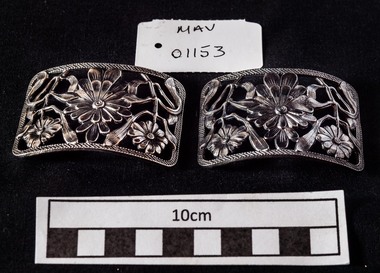
Manufactured Objects, 2x buckles white metal, c1900
... c1900 Decorative silver, pewter or brass buckles were attached by ribbons or straps to plain shoes for evening and special occasions . These buckles were worn by the a lady in the family of Ailsa Hunt in Moorabbin Shire...c1900 Decorative silver, pewter or brass buckles were attached by ribbons or straps to plain shoes for evening and special occasions . These buckles were worn by the a lady in the family of Ailsa Hunt in Moorabbin Shire These decorative shoe buckles were a common accessory for early settler women in Moorabbin Shire c1900 footwear, shoes, buckles, clothing, silver, pewter, brass, victorian fashion, edwardian fashion, market gardeners, early settlers, moorabbin shire, bentleigh, mckinnon, moorabbin, cheltenham, wedding dresses, evening wear, 2 x rectangular white metal buckles with floral filigree Manufactured Objects, 2x buckles white metal Unrecorded metal worker ...c1900 Decorative silver, pewter or brass buckles were attached by ribbons or straps to plain shoes for evening and special occasions . These buckles were worn by the a lady in the family of Ailsa Hunt in Moorabbin Shire These decorative shoe buckles were a common accessory for early settler women in Moorabbin Shire c1900 2 x rectangular white metal buckles with floral filigree footwear, shoes, buckles, clothing, silver, pewter, brass, victorian fashion, edwardian fashion, market gardeners, early settlers, moorabbin shire, bentleigh, mckinnon, moorabbin, cheltenham, wedding dresses, evening wear, -
 City of Moorabbin Historical Society (Operating the Box Cottage Museum)
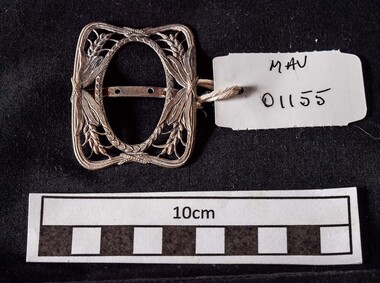
Manufactured Objects, 2 x oval metal buckles, c1900
... c1900 Decorative silver, pewter or brass buckles were attached by ribbons or straps to plain shoes for evening and special occasions . These buckles were worn by the a lady in the family of Ailsa Hunt in Moorabbin Shire...c1900 Decorative silver, pewter or brass buckles were attached by ribbons or straps to plain shoes for evening and special occasions . These buckles were worn by the a lady in the family of Ailsa Hunt in Moorabbin Shire These decorative shoe buckles were a common accessory for early settler women in Moorabbin Shire c1900 footwear, shoes, buckles, clothing, silver, pewter, brass, victorian fashion, edwardian fashion, market gardeners, early settlers, moorabbin shire, bentleigh, mckinnon, moorabbin, cheltenham, wedding dresses, evening wear, On crossbar back : MADE IN FRANCE 2 x oval metal buckles filigree wheat sheathes Manufactured Objects, 2 x oval metal buckles Unrecorded metal worker ...c1900 Decorative silver, pewter or brass buckles were attached by ribbons or straps to plain shoes for evening and special occasions . These buckles were worn by the a lady in the family of Ailsa Hunt in Moorabbin Shire These decorative shoe buckles were a common accessory for early settler women in Moorabbin Shire c1900 2 x oval metal buckles filigree wheat sheathes On crossbar back : MADE IN FRANCE footwear, shoes, buckles, clothing, silver, pewter, brass, victorian fashion, edwardian fashion, market gardeners, early settlers, moorabbin shire, bentleigh, mckinnon, moorabbin, cheltenham, wedding dresses, evening wear, -
 City of Moorabbin Historical Society (Operating the Box Cottage Museum)
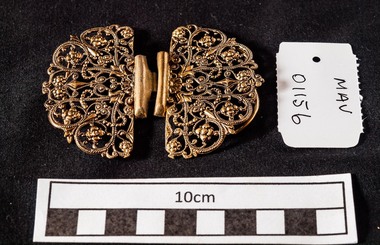
Manufactured Object, 2 x gold metal filigree buckles, c1900
... c1900 Decorative silver, pewter or brass buckles were attached by ribbons or straps to plain shoes for evening and special occasions . These buckles were worn by a lady in the family of Ailsa Hunt in Moorabbin Shire...c1900 Decorative silver, pewter or brass buckles were attached by ribbons or straps to plain shoes for evening and special occasions . These buckles were worn by a lady in the family of Ailsa Hunt in Moorabbin Shire These decorative shoe buckles were a common accessory for early settler women in Moorabbin Shire c1900 footwear, shoes, buckles, clothing, silver, pewter, brass, victorian fashion, edwardian fashion, market gardeners, early settlers, moorabbin shire, bentleigh, mckinnon, moorabbin, cheltenham, wedding dresses, evening wear, 2 x fan shaped gold metal filigree buckles with clasp Manufactured Object, 2 x gold metal filigree buckles Unrecorded metal worker ...c1900 Decorative silver, pewter or brass buckles were attached by ribbons or straps to plain shoes for evening and special occasions . These buckles were worn by a lady in the family of Ailsa Hunt in Moorabbin Shire These decorative shoe buckles were a common accessory for early settler women in Moorabbin Shire c1900 2 x fan shaped gold metal filigree buckles with clasp footwear, shoes, buckles, clothing, silver, pewter, brass, victorian fashion, edwardian fashion, market gardeners, early settlers, moorabbin shire, bentleigh, mckinnon, moorabbin, cheltenham, wedding dresses, evening wear, -
 City of Moorabbin Historical Society (Operating the Box Cottage Museum)
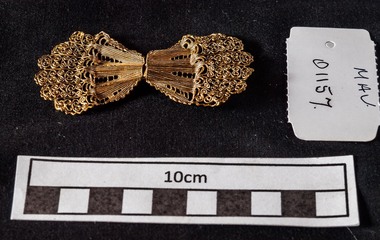
Manufactured Object, 2 x fan shaped gold metal buckles c1900, c1900
... c1900 Decorative silver, pewter, gold plated or brass buckles were attached by ribbons or straps to plain shoes for evening and special occasions . These buckles were worn by a lady in the family of Ailsa Hunt in Moorabbin Shire...c1900 Decorative silver, pewter, gold plated or brass buckles were attached by ribbons or straps to plain shoes for evening and special occasions . These buckles were worn by a lady in the family of Ailsa Hunt in Moorabbin Shire These decorative shoe buckles were a common accessory for early settler women in Moorabbin Shire c1900 footwear, shoes, buckles, clothing, silver, pewter, brass, victorian fashion, edwardian fashion, market gardeners, early settlers, moorabbin shire, bentleigh, mckinnon, moorabbin, cheltenham, wedding dresses, evening wear, 2 x fan shaped gold metal buckles joined by a clasp and with 2 bars at back Manufactured Object, 2 x fan shaped gold metal buckles c1900 Unrecorded metal worker ...c1900 Decorative silver, pewter, gold plated or brass buckles were attached by ribbons or straps to plain shoes for evening and special occasions . These buckles were worn by a lady in the family of Ailsa Hunt in Moorabbin Shire These decorative shoe buckles were a common accessory for early settler women in Moorabbin Shire c1900 2 x fan shaped gold metal buckles joined by a clasp and with 2 bars at back footwear, shoes, buckles, clothing, silver, pewter, brass, victorian fashion, edwardian fashion, market gardeners, early settlers, moorabbin shire, bentleigh, mckinnon, moorabbin, cheltenham, wedding dresses, evening wear, -
 City of Moorabbin Historical Society (Operating the Box Cottage Museum)
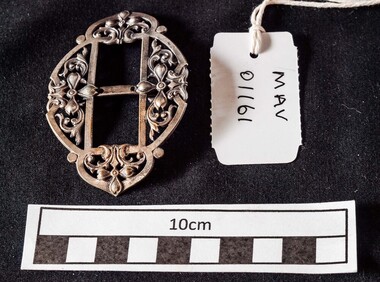
Manufactured Object, 1 x square/ oval white metal buckle, c1900
... c1900 Decorative silver, pewter or brass buckles were attached by ribbons or straps to plain shoes for evening and special occasions . This buckle was worn by a lady in the family of Ailsa Hunt in Moorabbin Shire...c1900 Decorative silver, pewter or brass buckles were attached by ribbons or straps to plain shoes for evening and special occasions . This buckle was worn by a lady in the family of Ailsa Hunt in Moorabbin Shire This decorative shoe buckle was a common accessory for early settler women in Moorabbin Shire c1900 footwear, shoes, buckles, clothing, silver, pewter, brass, victorian fashion, edwardian fashion, market gardeners, early settlers, moorabbin shire, bentleigh, mckinnon, moorabbin, cheltenham, wedding dresses, evening wear, Bridging bar : Made in France An oval white metal shoe buckle with filigree and 2x central square spaces bridged by a bar Manufactured Object, 1 x square/ oval white metal buckle Unrecorded metal worker ...c1900 Decorative silver, pewter or brass buckles were attached by ribbons or straps to plain shoes for evening and special occasions . This buckle was worn by a lady in the family of Ailsa Hunt in Moorabbin Shire This decorative shoe buckle was a common accessory for early settler women in Moorabbin Shire c1900 An oval white metal shoe buckle with filigree and 2x central square spaces bridged by a bar Bridging bar : Made in France footwear, shoes, buckles, clothing, silver, pewter, brass, victorian fashion, edwardian fashion, market gardeners, early settlers, moorabbin shire, bentleigh, mckinnon, moorabbin, cheltenham, wedding dresses, evening wear, -
Glenelg Shire Council Cultural Collection
Ceremonial object - Sash - Ancient Order of Foresters, n.d
... families in times of unemployment, sickness, death, disability and old age. The Society is now known as the Foresters Friendly Society and in July 1999 was incorporated as a public company limited by shares and guarantee. Plain ...The Ancient Order of Foresters, which originated in England in the mid 1700s, established its first branch (Court) in Victoria in 1849. Foresters was set up as a non-profit organisation, the founding principles of the Society being to provide financial and social benefits as well as support to members and their families in times of unemployment, sickness, death, disability and old age. The Society is now known as the Foresters Friendly Society and in July 1999 was incorporated as a public company limited by shares and guarantee. Plain green sash, cloth, hemmed, a narrow piece of lighter green ribbon attached to one of the long sides, about a quarter of the way along. -
Glenelg Shire Council Cultural Collection
Accessory - Sash - Ancient Order of Foresters, n.d
... families in times of unemployment, sickness, death, disability and old age. The Society is now known as the Foresters Friendly Society and in July 1999 was incorporated as a public company limited by shares and guarantee. Ancient Order of Foresters friendly society sash Plain ...The Ancient Order of Foresters, which originated in England in the mid 1700s, established its first branch (Court) in Victoria in 1849. Foresters was set up as a non-profit organisation, the founding principles of the Society being to provide financial and social benefits as well as support to members and their families in times of unemployment, sickness, death, disability and old age. The Society is now known as the Foresters Friendly Society and in July 1999 was incorporated as a public company limited by shares and guarantee. Plain green sash, red fringe either end *T and a bunch of keys in gold and black, printed on to sash ancient order of foresters, friendly society, sash
