
Showing 132 items matching "popular culture"
-
 Women's Art Register
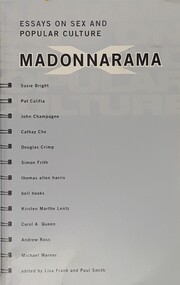
Book, Susie Bright et al, Madonnarama: essays on Sex and popular culture, 1993
... Madonnarama: essays on Sex and popular culture......popular culture...Queen queer theory popular culture A collection of essays from various critics, activists and artists on the phenomenon that is pop-icon Madonna. ...A collection of essays from various critics, activists and artists on the phenomenon that is pop-icon Madonna.non-fictionA collection of essays from various critics, activists and artists on the phenomenon that is pop-icon Madonna.susie bright, pat califia, cathay che, bell hooks, kirsten marthe lentz, carol a. queen, queer theory, popular culture -
 National Vietnam Veterans Museum (NVVM)
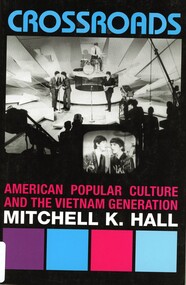
Book, Hall, Mitchell K, Crossroads: American popular culture and the Vietnam Generation, 2005
... Crossroads: American popular culture and the Vietnam Generation.......Popular culture -- United States -- History -- 20th century...United States -- Social life and customs -- 1945-1970 Popular culture -- United States -- History -- 20th century Mitchell Hall's Crossroads is an exciting trip through American popular culture from the 1950s to the 1970s. ...Mitchell Hall's Crossroads is an exciting trip through American popular culture from the 1950s to the 1970s. It is all here - TV, movies, sports, rock and roll - all in living color from American Bandstand to Muhammad Ali to Woodstock to Teh godfather. An entertaining read, especially for those who did not live through that era.Mitchell Hall's Crossroads is an exciting trip through American popular culture from the 1950s to the 1970s. It is all here - TV, movies, sports, rock and roll - all in living color from American Bandstand to Muhammad Ali to Woodstock to Teh godfather. An entertaining read, especially for those who did not live through that era.united states -- social life and customs -- 1945-1970, popular culture -- united states -- history -- 20th century -
 Women's Art Register
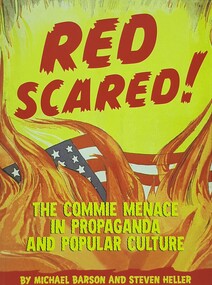
Book - Illustrated book, Michael Barson et al, Red Scared The Commie Menace in Propaganda and Popular Culture, 2001
... Red Scared The Commie Menace in Propaganda and Popular Culture...Communism propaganda posters magazines comics vintage pulp fiction Documents the ephemera used in the USA to warn against the threat of Communism Brightly designed record of posters, pamphlets, vintage books, film promos and comics Red Scared The Commie Menace in Propaganda and Popular Culture Book Illustrated book Michael Barson Steven Heller ...Documents the ephemera used in the USA to warn against the threat of CommunismBrightly designed record of posters, pamphlets, vintage books, film promos and comicsnon-fictionDocuments the ephemera used in the USA to warn against the threat of Communismcommunism, propaganda, posters, magazines, comics, vintage, pulp fiction -
 Glenelg Shire Council Cultural Collection
Magazine, Sungravure Pty. Ltd, Woman's Day, 20/05/1963
... ... popular culture...Womans Day magazine popular culture women Front Cover: Green background. ...Front Cover: Green background. White Woman's Day across top. Head and shoulders shot of young woman with brown hair, check scarf around neck. Backcover: Advertisement for Peter Stuyvesant cigarettes. 104 pages.womans day magazine, popular culture, women -
Glenelg Shire Council Cultural Collection
Magazine, People, 03/08/1960
... ... popular culture...People Magazine 1960s 1960 popular culture news celebrity People August 3, 1960 Vo11. ...People Magazine Front Cover: Red background. Young woman in green bikini with white spots, kneeling. She is surrounded by headlines. Price on cover is 1'6 Back Cover: Advertisement for free Art Ability tests. 56 pages.non-fictionpeople magazine, 1960s, 1960, popular culture, news, celebrity -
 Women's Art Register
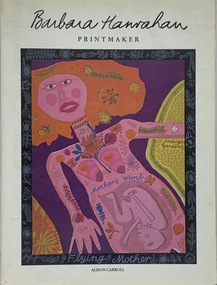
Book - Monograph, Alison Carroll, Barbara Hanrahan. Printmaker, 1986
... ...popular culture...This monograph will complement information already held in The Register on this influential artist printmaking lithography etching linocut screenprinting wood engraving writing sexuality family identity drypoint popular culture body motherhood ageing gender Traces three periods of Hanrahan's practice: early development; first major period of printmaking 1963 to 1967 and her second since 1967. ...Traces three periods of Hanrahan's practice: early development; first major period of printmaking 1963 to 1967 and her second since 1967. Focuses on major themes and motifs and contains a small proportion of images made since 1960, many exploring her family and womens' lives. These themes and the tactile quality of her practice are woven into her 9 published novels, and text often appears in the prints. Includes list of solo exhibitions, a bibliography and biographical details.non-fictionTraces three periods of Hanrahan's practice: early development; first major period of printmaking 1963 to 1967 and her second since 1967. Focuses on major themes and motifs and contains a small proportion of images made since 1960, many exploring her family and womens' lives. These themes and the tactile quality of her practice are woven into her 9 published novels, and text often appears in the prints. Includes list of solo exhibitions, a bibliography and biographical details.printmaking, lithography, etching, linocut, screenprinting, wood engraving, writing, sexuality, family, identity, drypoint, popular culture, body, motherhood, ageing, gender -
 Robin Boyd Foundation
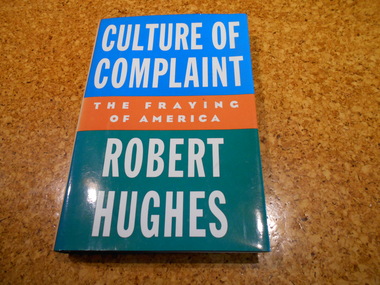
Book, Robert Hughes, Culture of Complaint: The Fraying of America, 1993
... ... popular culture...American history 20th century arts and society popular culture Walsh St library Hardcover w/ Dust Jacket Culture of Complaint: The Fraying of America Book Robert Hughes Oxford University Press ...Hardcover w/ Dust Jacketamerican history, 20th century, arts and society, popular culture, walsh st library -
 Wodonga & District Historical Society Inc
Functional object - Sony Walkman FM/AM Radio and Recorder, Sony Corporation, 1988
... ...Popular Culture...Musical appliances Popular Culture SONY MEGA BASS RECORDING WALKMAN FM/AM plus labels on controls A small portable combined radio and cassette player with recording facility. ...The first Sony Walkman was launched on 22 June 1979 in Tokyo. It was designed under the leadership of Akio Morita and was a modification of an earlier recorder used by journalists called the “Pressman”. The first cassette Walkman TPS-L2 was to forever change the way consumers listen to music." According to Akio Morita "This is the product that will satisfy those young people who want to listen to music all day. They'll take it everywhere with them, and they won't care about record functions. If we put a playback-only headphone stereo like this on the market, it'll be a hit." Sony went on to sell approximately 220 million cassette-based Walkman units before ending production in 2010. This Sony Walkman model is a higher level portable cassette recorder and player featuring Mega Bass, auto-reverse, and an FM/AM radio. It was designed for recording from radio or microphone and was introduced to the market in 1988. This item is significant because the Walkman was widely used especially by young people from the 1980s onwards.A small portable combined radio and cassette player with recording facility. It includes ear buds and a portable plug in microphone. Black plastic cover and metal control buttons. Model name and control names are in a combimation of red, yellow, white and pale blue,SONY MEGA BASS RECORDING WALKMAN FM/AM plus labels on controlsmusical appliances, popular culture -
National Wool Museum
Book, Wool in the Australian Imagination
... This book is the catalogue from an exhibition titled "Wool in the Australian Imagination", an evaluation of the social history and popular culture associated with wool. This exhibition was instigated by the Historic Houses Trust of New South Wales in 1994. ...This book is the catalogue from an exhibition titled "Wool in the Australian Imagination", an evaluation of the social history and popular culture associated with wool. This exhibition was instigated by the Historic Houses Trust of New South Wales in 1994. ...This book is the catalogue from an exhibition titled "Wool in the Australian Imagination", an evaluation of the social history and popular culture associated with wool. This exhibition was instigated by the Historic Houses Trust of New South Wales in 1994. The cataIogue contains essays regarding wool in art, wool in music, science and wool, wool and fashion, mutton and pastoralism. The National Wool Museum lent several collection items to this exhibition (which are mentioned in the checklist of the catalogue) and Rachel Faggeter, the first Director of the Wool Museum, curated the exhibition.Wool / in the Australian Imaginationmerino sheep - history sheep breeding - history wool - history, historic houses trust of new south wales, merino sheep - history, sheep breeding - history, wool - history -
Federation University Art Collection
Painting (tryptich), Ricordi Souvenir Series, c2013
... Her investigation begins with the question, ‘do souvenirs tell us something about the purchaser, mark a particular time and place and/or refer to popular culture?’ Ultimately Covino-Beehre facilitates all participants, including herself, to connect to each other through common experience and the need to belong." ...Her investigation begins with the question, ‘do souvenirs tell us something about the purchaser, mark a particular time and place and/or refer to popular culture?’ Ultimately Covino-Beehre facilitates all participants, including herself, to connect to each other through common experience and the need to belong." ...This work was exhibited in the 2013 Flanagan Art Exhibition "For her project, Ricordi – Souvenirs, the artist delves into history, culture and identity. She tests her ideas by inviting friends and fellow artists to share their own ‘souvenirs’ for scrutiny. The artist filmed and interviewed each participant enquiring as to the meaning and context of their precious objects, their memories of the past. Interviewees trusted the artist with their stories after which she re-configured their anecdotes using the mediums of print and sculpture. Her investigation begins with the question, ‘do souvenirs tell us something about the purchaser, mark a particular time and place and/or refer to popular culture?’ Ultimately Covino-Beehre facilitates all participants, including herself, to connect to each other through common experience and the need to belong." (http://www.acovinobeehre.com/styled-3/styled-12/styled/index.html)artwork, artist, printmaking, covino-beehre -
 Robin Boyd Foundation
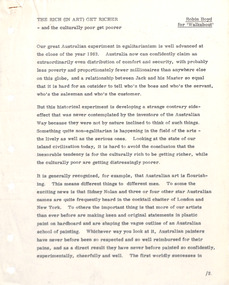
Document - Manuscript, Robin Boyd, The Rich (In Art) Get Richer – and the culturally poor get poorer, 1963
... He praises the growth of local contemporary art, literary magazines and architecture, whilst calling for the development of community pride amongst leaders of commerce and industry, and government control of the ugliness of popular culture. This may have been published in "Walkabout" magazine....He praises the growth of local contemporary art, literary magazines and architecture, whilst calling for the development of community pride amongst leaders of commerce and industry, and government control of the ugliness of popular culture. This may have been published in "Walkabout" magazine. art egalitarianism Sidney Nolan Australian painting Pop art Phil May Dyson Low media cartoons Australian literature radio California Cultural Heritage Board commercial advertising robin boyd manuscript Typewritten (c copy), quarto, 11 pages The Rich (In Art) Get Richer – and the culturally poor get poorer Document Manuscript Robin Boyd ...Boyd argues that the Australian cultural split between what he perceives to be cultured tastes and artistic achievements and the tastes of ordinary Australians is wider and more polarised than in other countries. He derides commercial radio, popular women's magazines, public commercial streets etc - elements of the Australian ugliness. He praises the growth of local contemporary art, literary magazines and architecture, whilst calling for the development of community pride amongst leaders of commerce and industry, and government control of the ugliness of popular culture. This may have been published in "Walkabout" magazine.Typewritten (c copy), quarto, 11 pagesart, egalitarianism, sidney nolan, australian painting, pop art, phil may, dyson, low, media, cartoons, australian literature, radio, california cultural heritage board, commercial advertising, robin boyd, manuscript -
 Robin Boyd Foundation
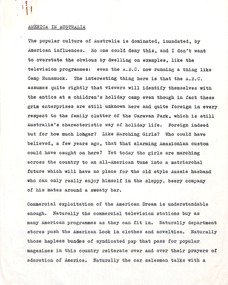
Document - Manuscript, Robin Boyd, America in Australia
... A critique of the adaption of American culture in Australian popular culture, where only the worst or silliest things from the US are adopted. ...A critique of the adaption of American culture in Australian popular culture, where only the worst or silliest things from the US are adopted. ...A critique of the adaption of American culture in Australian popular culture, where only the worst or silliest things from the US are adopted. Boyd suggests the colonial, unambitious and rigid brand of masculinity that characterises the "Aussie myth" hinders the development of an imaginative and creative social climate that manifests in a superficial appropriation of American culture. Boyd is not critical of US culture itself, in fact he has a great appreciation of US culture. He suggests that the Australian brand of Americanisation is only a superficial commercial exploitation of the American dream. It concludes with Boyd rallying for the development of a unique Australian originality with increasing connections to Asia.Typewritten, pencil edits (pages 22a and 22b added after page 22), quarto, 24 pagesamericanisation, american culture, australian culture, masculinity, cultural myths, australian values, social attitudes, ussr, asia, california, sidney nolan, alan moorehead, patrick white, donald horne, john anderson, robin boyd, manuscript -
 Ararat Gallery TAMA
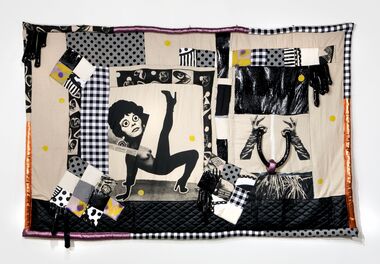
Sarah Contos, Total Control, 2015
... Contos explores identity, eroticism, femininity, materiality, popular culture and history. She describes her life in relation to contradictions, saying: “I make quilts for art but never for warmth. ...Contos explores identity, eroticism, femininity, materiality, popular culture and history. She describes her life in relation to contradictions, saying: “I make quilts for art but never for warmth. ...Sarah Contos is a multidisciplinary artist working across various modes of collage, sculpture and installation. Contos explores identity, eroticism, femininity, materiality, popular culture and history. She describes her life in relation to contradictions, saying: “I make quilts for art but never for warmth. I watch cooking shows but never cook. I want to cover my home in florals, but it ends up in wine stains.” Total Control is a quilted textile work notable for its screen-printed surface of imagery sourced from 1970s editions of the provocative Australasian Post magazine. Contos’ use of dangling fabric tubes, coils and pillows, and fabric patches draw allusions to the body; these elements are both familiar and confronting. -
 The Beechworth Burke Museum
Photograph - Carte de Visite, William E Barnes
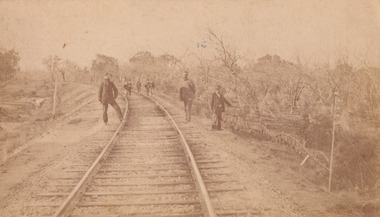
... Ned Kelly and the Kelly gang took their final stand at Glenrowan which has been immortalised through Australian popular culture....Ned Kelly and his gang have become ingrained in Australian popular culture and thus many museums, art galleries and private collections house material connected to the Kelly story which allows the events and people to be researched and interpreted. ...This Carte-de-visite (CdV) taken by renowned Wangaratta based photographer William Edward Barnes previously belonged to the donor's grandfather, Daniel Mullins who was a Police Officer stationed at Glenrowan soon after the Kelly gang siege. Today, the siege has become an important part of Australian culture and Ned Kelly and the Kelly Gang (comprising of Ned Kelly, Dan Kelly, Steve Hart and Joe Byrne) has become ingrained in Australian history and mythology. A CdV is a sepia toned photograph mounted on card and is generally of a small size. This particular style was first patented by Andre Adolphe Eugene Disdéri (1819-1889) in 1854. In 1857, the CdV was introduced to England and after photographs of Queen Victoria, Prince Albert and their family were taken using CdV in 1860 the popularity of this method reached a peak. In this photograph, eight men stand along the railway line near Glenrowan. The photo dates to shortly after 1880 and references the attempt by the Kelly gang to derail a police train in June 1880 on those very tracks. Ultimately, this plan failed and the police train was never derailed. Ned Kelly and the Kelly gang took their final stand at Glenrowan which has been immortalised through Australian popular culture.This photograph is part of the Burke Museum "Kelly album" which includes a significant collection of photographs and artefacts connected to Ned Kelly and the Kelly Gang. Ned Kelly and his gang have become ingrained in Australian popular culture and thus many museums, art galleries and private collections house material connected to the Kelly story which allows the events and people to be researched and interpreted. Artefacts and photographs pertaining to the Kelly gang are particularly valuable for Australian museums. This particular photograph is significant for its connection to Wangaratta based photographer William Edward Barnes and to the Glenrowan Siege of June 1880. Taken at an unknown time, after the siege at Glenrowan, this image depicts eight gentlemen standing about the railway line near Glenrowan. This is a reference to the Kelly gang's plan to derail a train which would barrel up to Glenrowan after news reached Melbourne that Aaron Sherritt had been shot by Joe Byrne in the Woolshed Valley. This image is important for its artistic information that it can provide about the Kelly story and the fashion and streetscape of Glenrowan.This sepia coloured Carte de Visite is attached to yellow cardboard. The obverse of the photo depicts the railway line near Glenrowan around 1880s. The rails are positioned in the centre of the image and are made on an incline of earth. In the foreground are three men, two standing next to the rails and one slightly off to the right of the image. In the background are trees which line the side of the rails and slightly in front of these trees is a group of five men standing on the rails. The reverse of the image is yellow card and contains printed and pencil writing. The printed writing is in the centre of the card. It reveals that the photographer was William E Barnes from Wangaratta. The pencil writing provides the inscription stating that the photo was taken near Glenrowan around the time of Ned Kelly.Pencil: Railway line near / Glen Rowan / Kelly's time / Printed: W. E. Barnes / Photographer / Wangaratta / BMM 8089 /kelly album, glenrowan, glenrowan siege, carte-de-visite, glenrowan railway, ned kelly, kelly gang, last stand, colonial australia, kelly siege, train, railway line, railway, sepia, photography, william e barnes, william barnes -
 Ararat Gallery TAMA
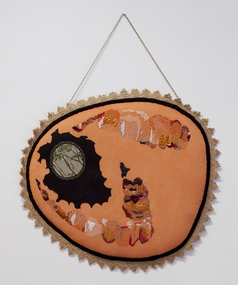
Sera Waters, The Great Australian Bite: Cavernous, 2011
... These two works by Sera Waters draw on myths, histories, and narratives of the Australian bush and interior, weaving together research into explorers, family stories, popular culture, and folklore. Teeth and wild mouths become portals into different times and experiences: our colonial past, fictional bush tales, and lived encounters with a harsh, unpredictable land. ...These two works by Sera Waters draw on myths, histories, and narratives of the Australian bush and interior, weaving together research into explorers, family stories, popular culture, and folklore. Teeth and wild mouths become portals into different times and experiences: our colonial past, fictional bush tales, and lived encounters with a harsh, unpredictable land. ...Sera Waters is an artist, arts writer and academic living on Kaurna land, South Australia. Since being awarded a Ruth Tuck Scholarship in 2006 to study hand embroidery at the Royal School of Needlework in the UK, Waters’ art practice has been characterised by a darkly stitched meticulousness. Her embroideries and hand-crafted sculptures dwell within the gaps of Australian histories to examine settler-colonial home-making patterns and practices, especially her own genealogical ghostscapes. More recently Waters has been exploring how textile traditions can help navigate a future affected by climate change. These two works by Sera Waters draw on myths, histories, and narratives of the Australian bush and interior, weaving together research into explorers, family stories, popular culture, and folklore. Teeth and wild mouths become portals into different times and experiences: our colonial past, fictional bush tales, and lived encounters with a harsh, unpredictable land. Hand-embroidered and embellished with time-intensive techniques once linked to domestic craft, the works embody both fragility and ferocity. Delicate yet unsettling, these works reflect on survival, risk, and endurance, transforming personal and collective histories into strange offerings that are humorous, dark, and deeply human. -
 Ararat Gallery TAMA
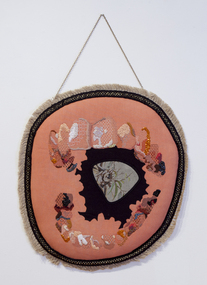
Sera Waters, The Great Australian Bite: Gums, 2011
... These two works by Sera Waters draw on myths, histories, and narratives of the Australian bush and interior, weaving together research into explorers, family stories, popular culture, and folklore. Teeth and wild mouths become portals into different times and experiences: our colonial past, fictional bush tales, and lived encounters with a harsh, unpredictable land. ...These two works by Sera Waters draw on myths, histories, and narratives of the Australian bush and interior, weaving together research into explorers, family stories, popular culture, and folklore. Teeth and wild mouths become portals into different times and experiences: our colonial past, fictional bush tales, and lived encounters with a harsh, unpredictable land. ...Sera Waters is an artist, arts writer and academic living on Kaurna land, South Australia. Since being awarded a Ruth Tuck Scholarship in 2006 to study hand embroidery at the Royal School of Needlework in the UK, Waters’ art practice has been characterised by a darkly stitched meticulousness. Her embroideries and hand-crafted sculptures dwell within the gaps of Australian histories to examine settler-colonial home-making patterns and practices, especially her own genealogical ghostscapes. More recently Waters has been exploring how textile traditions can help navigate a future affected by climate change. These two works by Sera Waters draw on myths, histories, and narratives of the Australian bush and interior, weaving together research into explorers, family stories, popular culture, and folklore. Teeth and wild mouths become portals into different times and experiences: our colonial past, fictional bush tales, and lived encounters with a harsh, unpredictable land. Hand-embroidered and embellished with time-intensive techniques once linked to domestic craft, the works embody both fragility and ferocity. Delicate yet unsettling, these works reflect on survival, risk, and endurance, transforming personal and collective histories into strange offerings that are humorous, dark, and deeply human. -
 The Beechworth Burke Museum
Photograph - Carte de Visite
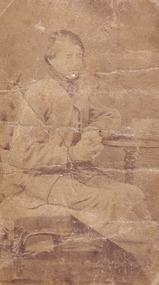
... This event, known commonly as the “Fitzpatrick Incident” resulted in the formation of the Kelly Gang as it is known in popular culture today. After the incident the Kelly Gang disappeared into the bush and a 100 pound award was issued for their arrest. ...This event, known commonly as the “Fitzpatrick Incident” resulted in the formation of the Kelly Gang as it is known in popular culture today. After the incident the Kelly Gang disappeared into the bush and a 100 pound award was issued for their arrest. ...A Carte de Visite (hereafter CdV) (also known as a calling card) was popular within the mid-19th Century. It is a small card with a photographic portrait mounted on it. These cards were exchanged during the Victorian era (peaking in the 1860s) between families and friends. This particular CdV was captured by John Paul Carolin in c.1877. Carolin was a two time Mayor of Bendigo (1889-1990 and 1907-1908) and ran a photography studio on Piper Street in Kyneton from 1866. This photograph depicts a young Daniel “Dan” Kelly posing for his photograph while sitting on an ornate chair and leaning his elbow on a small pedestal table. Dan was approximately seven years younger than his famous brother, Edward “Ned” Kelly. He was born in 1861 to John “Red” Kelly (an Irish ex-convict) and Ellen Quinn. In march 1878, Dan was wanted for arrest on the charge of horse stealing. This event, known commonly as the “Fitzpatrick Incident” resulted in the formation of the Kelly Gang as it is known in popular culture today. After the incident the Kelly Gang disappeared into the bush and a 100 pound award was issued for their arrest. During this period the gang robbed banks including those at Jerilderie, Euroa and Benalla. On the 28th of June 1880, Dan Kelly died at Glenrowan in what was the Kelly Gang’s final stand: the Siege of Glenrowan. Following this event, Dan’s elder brother Ned is the sole survivor of the Kelly Gang until he is executed at the Melbourne Gaol on the 11th of November 1880. The circumstances around the deaths of Dan Kelly and Steve Hart are controversial but it is generally accepted that they died in a suicide pact inside the Ann Jones Inn.This photograph is part of the Burke Museum "Kelly album" which includes a significant collection of photographs and artefacts connected to Ned Kelly and the Kelly Gang. Ned Kelly and his gang have become ingrained in Australian popular culture and thus many museums, art galleries and private collections house material connected to the Kelly story which allows the events and people to be researched and interpreted. Individuals like Dan Kelly played an essential part in the Kelly story which have been adapted for popular culture. The study of these individuals through their images and records can help researchers to correctly interpret their involvement with Ned Kelly and the Kelly gang.Sepia, rectangular, postcard on boardObverse: Carolin Photograph Kyneton / Reverse PHOTOGRAPHED / FROM LIFE / ADVANCE AUSTRALIA / BY / J.P. CAROLIN, / KYNETON. / VICTORIA. / COPIES MAY BE HAD ON / APPLICATION. / DK/Dan Kelly/9 2 48/7#carte de visite, kelly gang, dan kelly, daniel kelly, fitzpatrick, ned kelly, steve hart, joe byrne, ann jones inn, glenrowan, kyneton, 1877, john paul carolin, carolin -
 Flagstaff Hill Maritime Museum and Village
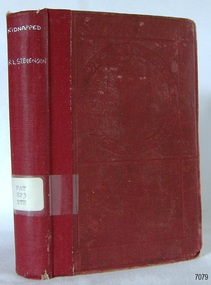
Book - Fictional Story/History, Kidnapped, 1900s–1930s
... The Strange Case of Dr Jekyll and Mr Hyde (1886) followed, a psychological novella that entered popular culture almost immediately as a byword for split identity. ...The Strange Case of Dr Jekyll and Mr Hyde (1886) followed, a psychological novella that entered popular culture almost immediately as a byword for split identity. ...Kidnapped (1886) follows David Balfour, a young orphaned Scot who is swindled out of his inheritance by his uncle Ebenezer, kidnapped and shipped off to be sold into slavery in the Carolinas. After a shipwreck strands him on the west coast of Scotland, he falls in with the Jacobite outlaw Alan Breck Stewart, and the two become fugitives together through the Highlands in the aftermath of the 1745 Jacobite uprising, before eventually returning to Edinburgh so David can reclaim his birthright. It's a historical adventure novel written as a boys' novel, first published in the magazine Young Folks from May to July 1886, before appearing in book form the same year.Hard cover book: Kidnapped Author: Robert Louis Stevenson Publisher: T Nelson & Sons Date: 1900s–1930s Further Information: Red hardcover with decoratively blind-stamped cloth binding with a circular medallion design, and title to spine in white texter. The spine also has a label with a libraries registration.fictionKidnapped (1886) follows David Balfour, a young orphaned Scot who is swindled out of his inheritance by his uncle Ebenezer, kidnapped and shipped off to be sold into slavery in the Carolinas. After a shipwreck strands him on the west coast of Scotland, he falls in with the Jacobite outlaw Alan Breck Stewart, and the two become fugitives together through the Highlands in the aftermath of the 1745 Jacobite uprising, before eventually returning to Edinburgh so David can reclaim his birthright. It's a historical adventure novel written as a boys' novel, first published in the magazine Young Folks from May to July 1886, before appearing in book form the same year.shipwrecked-coast, flagstaff-hill, flagstaff-hill-maritime-museum, warrnambool, maritime-museum, shipwreck-coast, flagstaff-hill-maritime-village, shipwrecked-artefact, book, pattison collection, warrnambool library, warrnambool mechanics’ institute, ralph eric pattison, corangamite regional library service, warrnambool city librarian, mechanics’ institute library, victorian library board, warrnambool books and records, warrnambool children’s library, kidnapped, robert louis stevenson -
 Flagstaff Hill Maritime Museum and Village
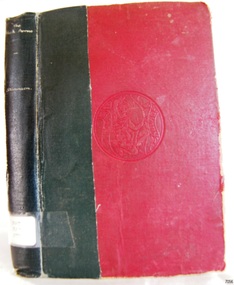
Book - A Fictional story, Robert Louis Stevenson, The Black Arrow, 1897
... The Strange Case of Dr Jekyll and Mr Hyde (1886) followed, a psychological novella that entered popular culture almost immediately as a byword for split identity. ...The Strange Case of Dr Jekyll and Mr Hyde (1886) followed, a psychological novella that entered popular culture almost immediately as a byword for split identity. ...The novel follows young Richard "Dick" Shelton during the Wars of the Roses (1460-1461), as he uncovers his guardian Sir Daniel Brackley's role in his father's murder and joins the Black Arrow outlaws for revenge. Disguised as a boy, Dick's love interest Joanna Sedley aids his quest amid battles, betrayals, and alliances with Yorkist leader Richard Crookback (future Richard III), culminating in justice and marriage. Robert Louis Stevenson drew inspiration for “The Black Arrow” from historical sources and editorial prompts. He primarily relied on “The Paston Letters”, a collection of 15th century correspondence from a Norfolk family that provided authentic details on daily life, feuds, and the Wars of the Roses.Hard cover book, The Black Arrow Author: Robert Louis Stevenson Publisher: Cassell & Co Date: 1897 Red hardcover with Embossed picture of an archer and a black spine. The spine has a label with an inscription.fictionThe novel follows young Richard "Dick" Shelton during the Wars of the Roses (1460-1461), as he uncovers his guardian Sir Daniel Brackley's role in his father's murder and joins the Black Arrow outlaws for revenge. Disguised as a boy, Dick's love interest Joanna Sedley aids his quest amid battles, betrayals, and alliances with Yorkist leader Richard Crookback (future Richard III), culminating in justice and marriage. Robert Louis Stevenson drew inspiration for “The Black Arrow” from historical sources and editorial prompts. He primarily relied on “The Paston Letters”, a collection of 15th century correspondence from a Norfolk family that provided authentic details on daily life, feuds, and the Wars of the Roses.warrnambool, shipwrecked-coast, flagstaff-hill, flagstaff-hill-maritime-museum, maritime-museum, flagstaff-hill-maritime-village, shipwrecked-artefact, book, a life, warrnambool mechanics’ institute, pattison collection, warrnambool library, corangamite regional library service, warrnambool city librarian, mechanics’ institute library, victorian library board, warrnambool books and records, warrnambool children’s library, ralph eric pattison -
 Flagstaff Hill Maritime Museum and Village
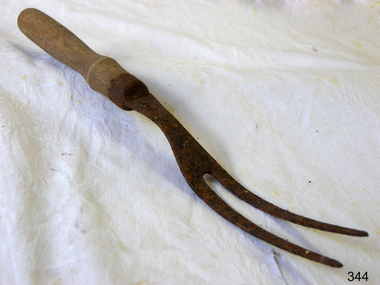
Domestic object - Fork
... popular in North America until near the time of the American Revolution. The curved fork used in most parts of the world today was developed in Germany in the mid 18th century while the standard four-tine design became current in the early 19th century. The fork was important in Germany because they believed that eating with the fingers was rude and disrespectful. The fork led to family dinners and sit-down meals, which are important features of German culture...popular in North America until near the time of the American Revolution. The curved fork used in most parts of the world today was developed in Germany in the mid 18th century while the standard four-tine design became current in the early 19th century. The fork was important in Germany because they believed that eating with the fingers was rude and disrespectful. The fork led to family dinners and sit-down meals, which are important features of German culture ...Naturally, we tend to take commonplace objects for granted, because they have always been there. Yet how many of you actually have thought “hey, where do forks come from?” Well, it takes one trip to China and a 3-year-old laughing at your face because of your desperate attempt to eat with chopsticks to finally appreciate something so ordinary such as a fork. So, where do forks come from? The early history of the fork is obscure. As a kitchen and dining utensil, it is believed to have originated in the Roman Empire, as proved by archaeological evidence. The personal table fork most likely originated in the Eastern Roman (or Byzantine) Empire. Its use spread to what is now the Middle East during the first millennium AD and then spread into Southern Europe during the second millennium. It did not become common in northern Europe until the 18th century and was not common in North America until the 19th century. Carving fork from 1640. Source: Wikipedia/Public Domain Carving Fork from 1640. Source: Wikipedia/Public Domain Some of the earliest known uses of forks with food occurred in Ancient Egypt, where large forks were used as cooking utensils. Bone forks had been found on the burial site of the Bronze Age Qijia culture (2400–1900 BC) as well as later Chinese dynasties’ tombs.The Ancient Greeks used the fork as a serving utensil. Read also: Steven Spielberg to Remake the Classic Musical ‘West Side Story’ In the Roman Empire, bronze and silver forks were used. The use varied according to local customs, social class and the nature of food, but forks of the earlier periods were mostly used as cooking and serving utensils. The personal table fork was most likely invented in the Eastern Roman (Byzantine) Empire, where they were in everyday use by the 4th century (its origin may even go back to Ancient Greece, before the Roman period). Records show that by the 9th century a similar utensil known as a barjyn was in limited use in Persia within some elite circles. By the 10th century, the table fork was in common use throughout the Middle East. Bronze forks made in Persia during the 8th or 9th century.Source: Wikipedia/Public Domain Bronze forks made in Persia during the 8th or 9th century.Source: Wikipedia/Public Domain The first recorded introduction of the fork to Western Europe, as recorded by the theologian and Cardinal Peter Damian, was by Theophano Sklereina the Byzantine wife of Holy Roman Emperor Otto II, who nonchalantly wielded one at an Imperial banquet in 972, astonishing her Western hosts.By the 11th century, the table fork had become increasingly prevalent in the Italian peninsula. It gained a following in Italy before any other Western European region because of historical ties with Byzantium and continued to get popularity due to the increasing presence of pasta in the Italian diet. At first, pasta was consumed using a long wooden spike, but this eventually evolved into three spikes, design better suited to gathering the noodles. In Italy, it became commonplace by the 14th century and was almost universally used by the merchant and upper classes by 1600. It was proper for a guest to arrive with his fork and spoon enclosed in a box called a cadena; this usage was introduced to the French court with Catherine de’ Medici’s entourage. In Portugal, forks were first used at the time of Infanta Beatrice, Duchess of Viseu, King Manuel I of Portugal’s mother around 1450. However, forks were not commonly used in Western Europe until the 16th century when they became part of Italian etiquette. The utensil had also gained some currency in Spain by this time, and its use gradually spread to France. Nevertheless, most of Europe did not adopt the use of the fork until the 18th century. Read also: The 8 Most Famous ‘Functioning Alcoholics’ in History Long after the personal table fork had become commonplace in France, at the supper celebrating the marriage of the Duc de Chartres to Louis XIV’s natural daughter in 1692, the seating was described in the court memoirs of Saint-Simon: “King James having his Queen on his right hand and the King on his left, and each with their cadenas.” In Perrault’s contemporaneous fairy tale of La Belle au bois dormant (1697), each of the fairies invited for the christening is presented with a splendid “fork holder”. The fork’s adoption in northern Europe was slower. Its use was first described in English by Thomas Coryat in a volume of writings on his Italian travels (1611), but for many years it was viewed as an unmanly Italian affectation. Some writers of the Roman Catholic Church expressly disapproved of its use, St. Peter Damian seeing it as “excessive delicacy.” It was not until the 18th century that the fork became commonly used in Great Britain, although some sources say that forks were common in France, England, and Sweden already by the early 17th century. Spaghetti fork By Lady alys - Own work, CC BY-SA 3.0, https://commons.wikimedia.org/w/index.php?curid=6414948 Spaghetti Fork By Lady alys – Own work, CC BY-SA 3.0, The fork did not become popular in North America until near the time of the American Revolution. The curved fork used in most parts of the world today was developed in Germany in the mid 18th century while the standard four-tine design became current in the early 19th century. The fork was important in Germany because they believed that eating with the fingers was rude and disrespectful. The fork led to family dinners and sit-down meals, which are important features of German culture. https://www.thevintagenews.com/2016/08/31/priority-fork-came-italy-european-country-pasta/?chrome=1Serving fork, two prongs, with a shaped wooden handle. Badly rusted.None.flagstaff hill, warrnambool, shipwrecked-coast, flagstaff-hill, flagstaff-hill-maritime-museum, maritime-museum, shipwreck-coast, flagstaff-hill-maritime-village, food, meat, carving -
 Flagstaff Hill Maritime Museum and Village
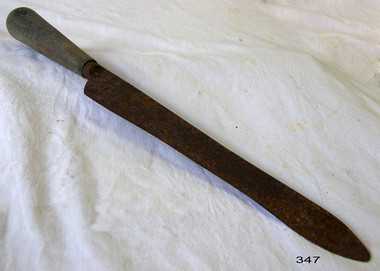
Domestic object - Knife
... culture, science and all other things that brought us to this point of modern civilisation. As a vital tool for survival, combat, construction and food preparation, the knife quickly became the most basic tool from which all others were born. In those ancient times, 500,000 years ago, sharpened stones started slowly evolving, becoming more and more like their modern counterpart. Before the time when fire enabled the melting of the various metals, and forging them into modern knives, their stone counterparts received several visual upgrades. Double bladed knives were most popular...culture, science and all other things that brought us to this point of modern civilisation. As a vital tool for survival, combat, construction and food preparation, the knife quickly became the most basic tool from which all others were born. In those ancient times, 500,000 years ago, sharpened stones started slowly evolving, becoming more and more like their modern counterpart. Before the time when fire enabled the melting of the various metals, and forging them into modern knives, their stone counterparts received several visual upgrades. Double bladed knives were most popular ...From the early days of our race, the knife represented one of the first and most important tools that enabled rise of our technology, military, culture, science and all other things that brought us to this point of modern civilisation. As a vital tool for survival, combat, construction and food preparation, the knife quickly became the most basic tool from which all others were born. In those ancient times, 500,000 years ago, sharpened stones started slowly evolving, becoming more and more like their modern counterpart. Before the time when fire enabled the melting of the various metals, and forging them into modern knives, their stone counterparts received several visual upgrades. Double bladed knives were most popular, and their wooden or stone hilts were decorated with animal skins and feathers. Those knives represented a great deal of pride for the warriors and elders who owned them, and that tradition continued to be practised with the arrival of the Bronze Age. The appearance of metallurgy brought the ability to create knives from softer types of metal. Even though knives from bronze did not provide durability over longer periods of time [easily dulled, and susceptible to corrosion), their sharpness and slim designed proved to be superior to any stone knife tool. As the centuries went on, iron and then steel became commonplace across the entire world. Knives created from those materials were much more durable and easier to maintain their sharpness after prolonged use. During medieval times in Europe, steel metallurgy managed to evolve knives from small single or double-bladed edges to larger sizes - swords, spears and axes. Even with all those advancements, the use of knives as an eating utensil continued to be used in some small circles. Even as early as the 15th century, wealthy circles of people started carrying personal knives, intended for double use - both eating and defending against threats. During those times the host were not obliged to provide their guest with any kind of eating utensil in addition to plates, so wealthy males used their eating knives for cutting their own meals, and the meals of nearby female guests. Slim double-bladed knives were good for cutting and piercing foods. As the use of forks became widespread in the whole of Europe by the late 17th century, most people used this kind of small knife on a regular basis (a combination of two knives, one for stabilising and other for cutting the meal). http://www.eatingutensils.net/history-of-cutlery/knife-history/The knife is one of the most important items that has enabled the development of civilisation over thousands of years.Carving knife with wooden handle and rusted slender metal blade.None.flagstaff hill, warrnambool, shipwrecked-coast, flagstaff-hill, flagstaff-hill-maritime-museum, maritime-museum, shipwreck-coast, flagstaff-hill-maritime-village, knife, kitchen equipment, dining -
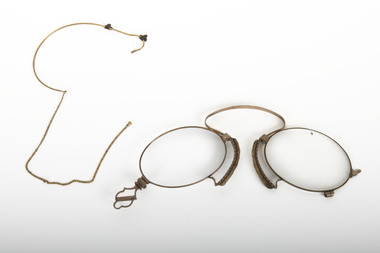 The Beechworth Burke Museum
Functional object - Pince-nez Spectacles, c. late 19th century
... Pince-nez were a style of spectacles that held on to a person's nose by a spring mechanism and was popular in the late 19th and early 20th centuries in European cultures....Pince-nez were a style of spectacles that held on to a person's nose by a spring mechanism and was popular in the late 19th and early 20th centuries in European cultures. The social history objects held in the Burke Museum's collection help to tell the stories of Beechworth's past by showing the social, cultural, and economic aspects of the town's history. glasses eyewear fashion A01156.2 A pair of brass pince-nez styled spectacles with a loose brass chain earpiece Functional object Pince-nez Spectacles ...Pince-nez were a style of spectacles that held on to a person's nose by a spring mechanism and was popular in the late 19th and early 20th centuries in European cultures.The social history objects held in the Burke Museum's collection help to tell the stories of Beechworth's past by showing the social, cultural, and economic aspects of the town's history.A pair of brass pince-nez styled spectacles with a loose brass chain earpieceA01156.2glasses, eyewear, fashion -
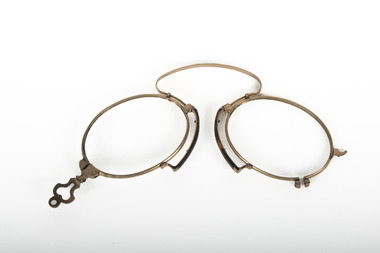 The Beechworth Burke Museum
Functional object - Pince-nez Spectacles, c. late 19th century
... Pince-nez were a style of spectacles that held on to a person's nose by a spring mechanism and was popular in the late 19th and early 20th centuries in European cultures....Pince-nez were a style of spectacles that held on to a person's nose by a spring mechanism and was popular in the late 19th and early 20th centuries in European cultures. The social history objects held in the Burke Museum's collection help to tell the stories of Beechworth's past by showing the social, cultural, and economic aspects of the town's history. glasses eyewear fashion A pair of brass pince-nez styled spectacles. ...Pince-nez were a style of spectacles that held on to a person's nose by a spring mechanism and was popular in the late 19th and early 20th centuries in European cultures.The social history objects held in the Burke Museum's collection help to tell the stories of Beechworth's past by showing the social, cultural, and economic aspects of the town's history.A pair of brass pince-nez styled spectacles.glasses, eyewear, fashion -
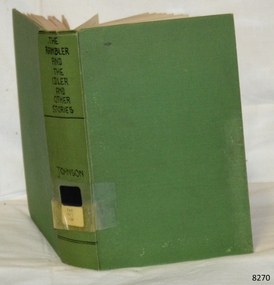 Flagstaff Hill Maritime Museum and Village
Book - Periodical Essays, Dr. Samuel Johnson et al, The Rambler, The Idler, The Adventurer & The Connoisseur, 1876
... Popular Poets" collections. They specialised in packing massive amounts of classic text into single, tightly printed volumes. These books were specifically marketed to the rapidly expanding Victorian middle class and working class self education. Its cultural significance is regarded as high as a historical artefact. The work captures the exact moment in late-Victorian culture...Popular Poets" collections. They specialised in packing massive amounts of classic text into single, tightly printed volumes. These books were specifically marketed to the rapidly expanding Victorian middle class and working class self education. Its cultural significance is regarded as high as a historical artefact. The work captures the exact moment in late-Victorian culture ...This single 1876 volume combines four of the most influential weekly and semi weekly periodical essay series of the mid-18th century. Despite the phrasing of the era, these are not fiction stories or novels. They are periodical essays brief, single-topic pieces written to critique, educate, and entertain 18th-century readers. The collection covers three themes: morality and human nature, with a focus on reflections relating to the disappointments of life, the inevitability of death, managing one's passions, and the search for true happiness, featuring mainly in The Rambler; social satire and manners, with lighthearted and witty take downs of London high society, modern trends, vanity, and standard eccentric characters of the town; and literary criticism, with essays that analyse contemporary poetry and the theatre, along with the evolving English language.Hard cover book,The Rambler & The Idler Author: Dr. Samuel Johnson, Mr. Town, John Hawkesworth Publisher: William P Nimmo, 14 King William St, The Strand, London. W1. Date: 1876 Further Information: The flyleaf reads The Rambler and the Idler. By Samuel Johnson. The Adventurer. By John Hawkesworth. The Connoisseur. By (Mr. Town Pen Name) Green Cloth hardcover with a green spine and lettering in black texter. The spine has a Library label with an inscription.non-fictionThis single 1876 volume combines four of the most influential weekly and semi weekly periodical essay series of the mid-18th century. Despite the phrasing of the era, these are not fiction stories or novels. They are periodical essays brief, single-topic pieces written to critique, educate, and entertain 18th-century readers. The collection covers three themes: morality and human nature, with a focus on reflections relating to the disappointments of life, the inevitability of death, managing one's passions, and the search for true happiness, featuring mainly in The Rambler; social satire and manners, with lighthearted and witty take downs of London high society, modern trends, vanity, and standard eccentric characters of the town; and literary criticism, with essays that analyse contemporary poetry and the theatre, along with the evolving English language.flagstaff hill, warrnambool, shipwrecked coast, flagstaff hill maritime museum, maritime museum, shipwreck coast, flagstaff hill maritime village, great ocean road, book, pattison collection, warrnambool library, warrnambool mechanics’ institute, ralph eric pattison, corangamite regional library service, warrnambool city librarian, mechanics’ institute library, victorian library board, warrnambool books and records, warrnambool children’s library, the rambler and the idler, john hawkesworth., mr. town, samuel johnson -
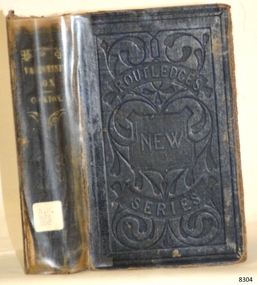 Flagstaff Hill Maritime Museum and Village
Book - Fictional Novel, Henry Cockton, The Life and Adventures of Valentine Fox, 1854
... Unfortunately, Cockton’s fame faded significantly by the 20th century; today, it is mostly read by scholars of Victorian popular culture or magic historians interested in the cultural depictions of ventriloquism. ...The Life and Adventures of Valentine Vox, the Ventriloquist was first published in monthly parts between 1839 and 1840, and is a satirical, lighthearted Victorian novel. The story follows a young man named Valentine Vox who discovers he has an extraordinary talent for ventriloquism. Instead of using his gift for simple entertainment, he acts as a chaotic prankster, throwing his voice in public places to stir up trouble, expose hypocrisy, and drive unsuspecting citizens to near-madness. He makes everyday items appear to speak, creates invisible crowds, and wreaks havoc in taverns, political meetings, and crowded streets. Beneath the slapstick comedy, the novel serves a serious social purpose. Valentine’s antics eventually lead him to expose the horrific conditions and corrupt practices of private lunatic asylums in Victorian England, where sane people were sometimes locked away by greedy relatives. The book actually contributed to real-world public outcry and subsequent legal reforms surrounding mental health facilities.Valentine Vox Author: Henry Cockton Publisher: George Routledge & Co Date: 1854 Further Information: The Life and Adventures of Valentine Fox. The Ventriloquist fictionThe Life and Adventures of Valentine Vox, the Ventriloquist was first published in monthly parts between 1839 and 1840, and is a satirical, lighthearted Victorian novel. The story follows a young man named Valentine Vox who discovers he has an extraordinary talent for ventriloquism. Instead of using his gift for simple entertainment, he acts as a chaotic prankster, throwing his voice in public places to stir up trouble, expose hypocrisy, and drive unsuspecting citizens to near-madness. He makes everyday items appear to speak, creates invisible crowds, and wreaks havoc in taverns, political meetings, and crowded streets. Beneath the slapstick comedy, the novel serves a serious social purpose. Valentine’s antics eventually lead him to expose the horrific conditions and corrupt practices of private lunatic asylums in Victorian England, where sane people were sometimes locked away by greedy relatives. The book actually contributed to real-world public outcry and subsequent legal reforms surrounding mental health facilities.flagstaff hill, warrnambool, shipwrecked coast, flagstaff hill maritime museum, maritime museum, shipwreck coast, flagstaff hill maritime village, great ocean road, book, pattison collection, warrnambool library, warrnambool mechanics’ institute, ralph eric pattison, corangamite regional library service, warrnambool city librarian, mechanics’ institute library, victorian library board, warrnambool books and records, warrnambool children’s library, valentine vox, henry cockton -
 Flagstaff Hill Maritime Museum and Village
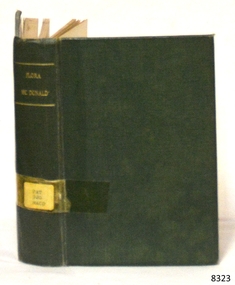
Book - Reference Biography, Scottish Cultural History, Alexander Mcgregor, The Life of Flora McDonald, 1875
... popular 19th-century accounts of the exact same heroine, they frequently blurred together in historical catalogues. The author, Reverend Alexander Macgregor (1806–1881), was a highly respected Church of Scotland minister based in Inverness. He was an avid antiquarian, a passionate writer on Highland folklore, and fluent in Gaelic. Macgregor grew up in the West Highlands, meaning he had direct access to local oral traditions and the descendants of families who actually remembered the Jacobite uprising. His proximity to the culture...popular 19th-century accounts of the exact same heroine, they frequently blurred together in historical catalogues. The author, Reverend Alexander Macgregor (1806–1881), was a highly respected Church of Scotland minister based in Inverness. He was an avid antiquarian, a passionate writer on Highland folklore, and fluent in Gaelic. Macgregor grew up in the West Highlands, meaning he had direct access to local oral traditions and the descendants of families who actually remembered the Jacobite uprising. His proximity to the culture ...The book focuses on the life of Flora Macdonald (1722–1790), one of Scotland’s most legendary romantic heroines. She became a monumental historical figure during the Jacobite Rising of 1745 when she famously risked her life to help Prince Charles Edward Stuart ("Bonnie Prince Charlie") escape the government forces after his defeat at the Battle of Culloden. She famously disguised the prince as her Irish maidservant, "Betty Burke", and smuggled him via boat across the sea to the Isle of Skye. The narrative chronicles her daring rescue, her subsequent imprisonment in the Tower of London, her release, her later migration to North Carolina during the American Revolutionary War, and her ultimate return to Scotland.The Life of Flora McDonald Author: Rev. Alexander Mcgregor Publisher: William P Nimmo, 14 King William St, London Date: 1875 Further Information: Early Life and Adventures, up till imprisonment and journey to Londonnon-fictionThe book focuses on the life of Flora Macdonald (1722–1790), one of Scotland’s most legendary romantic heroines. She became a monumental historical figure during the Jacobite Rising of 1745 when she famously risked her life to help Prince Charles Edward Stuart ("Bonnie Prince Charlie") escape the government forces after his defeat at the Battle of Culloden. She famously disguised the prince as her Irish maidservant, "Betty Burke", and smuggled him via boat across the sea to the Isle of Skye. The narrative chronicles her daring rescue, her subsequent imprisonment in the Tower of London, her release, her later migration to North Carolina during the American Revolutionary War, and her ultimate return to Scotland.flagstaff hill, warrnambool, shipwrecked coast, flagstaff hill maritime museum, maritime museum, shipwreck coast, flagstaff hill maritime village, great ocean road, book, pattison collection, warrnambool library, warrnambool mechanics’ institute, ralph eric pattison, corangamite regional library service, warrnambool city librarian, mechanics’ institute library, victorian library board, warrnambool books and records, warrnambool children’s library, the life of flora mcdonald, alexander mcgregor -
 Flagstaff Hill Maritime Museum and Village
Book - A Fictional Story, Charles Dickens, A Childs History of England, 1900
... It is historically interesting because it was very popular, widely used in schools well into the 20th century, and shows Dickens applying his storytelling skills to nonfiction history. It is not usually ranked with the great novels, but it matters for Dickens studies, Victorian reading culture, and the history of educational writing. ...Charles Dickens (1812–1870) was one of the great English novelists of the Victorian era, famous for vivid characters, social criticism, and stories that were first published in serial form. He began as a journalist, rose to enormous popularity during his lifetime, and wrote major works such as Oliver Twist, David Copperfield, and Great Expectations. “A Child’s History of England” is Dickens’s three volume, child directed history of England, originally serialised in Household Words from 1851 to 1853 and later issued in book form in 1853. It covers English history from ancient times through the fall of James II, with a brief closing summary up to Queen Victoria’s accession to the crown. Dickens wrote it as a readable, lively alternative to dry school history, aiming to interest his own children and young readers. The work is outspoken, often anti monarchical and anti aristocratic in tone, and it uses Dickens’s usual vivid style rather than detached academic prose.A Childs History of England. Author: Charles Dickens. Publisher: Chapman & Hall Ltd, London. Date: 1900. (See note section this document for more information on Edition). Green leather hardcover with title on spine in gold lettering, Charles Dickens signature on front cover written in gold lettering. The spine has a Library label and no Volume information.fictionCharles Dickens (1812–1870) was one of the great English novelists of the Victorian era, famous for vivid characters, social criticism, and stories that were first published in serial form. He began as a journalist, rose to enormous popularity during his lifetime, and wrote major works such as Oliver Twist, David Copperfield, and Great Expectations. “A Child’s History of England” is Dickens’s three volume, child directed history of England, originally serialised in Household Words from 1851 to 1853 and later issued in book form in 1853. It covers English history from ancient times through the fall of James II, with a brief closing summary up to Queen Victoria’s accession to the crown. Dickens wrote it as a readable, lively alternative to dry school history, aiming to interest his own children and young readers. The work is outspoken, often anti monarchical and anti aristocratic in tone, and it uses Dickens’s usual vivid style rather than detached academic prose.book, the old curiosity shop, charles dickens, shipwrecked-coast, flagstaff-hill, flagstaff-hill-maritime-museum, warrnambool, maritime-museum, flagstaff-hill-maritime-village, pattison collection, warrnambool library, warrnambool mechanics’ institute, ralph eric pattison, corangamite regional library service, warrnambool city librarian, mechanics’ institute library, victorian library board, warrnambool books and records, warrnambool children’s library, great ocean road -
 Flagstaff Hill Maritime Museum and Village
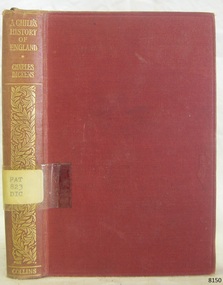
Book - A Fictional Story, Charles Dickens et al, A Childs History of England, 1910
... It is historically interesting because it was very popular, widely used in schools well into the 20th century, and shows Dickens applying his storytelling skills to nonfiction history. It is not usually ranked with the great novels, but it matters for Dickens studies, Victorian reading culture, and the history of educational writing. ...Charles Dickens (1812–1870) was one of the great English novelists of the Victorian era, famous for vivid characters, social criticism, and stories that were first published in serial form. He began as a journalist, rose to enormous popularity during his lifetime, and wrote major works such as Oliver Twist, David Copperfield, and Great Expectations. “A Child’s History of England” is Dickens’s three volume, child directed history of England, originally serialised in Household Words from 1851 to 1853 and later issued in book form in 1853. It covers English history from ancient times through the fall of James II, with a brief closing summary up to Queen Victoria’s accession to the crown. Dickens wrote it as a readable, lively alternative to dry school history, aiming to interest his own children and young readers. The work is outspoken, often anti monarchical and anti aristocratic in tone, and it uses Dickens’s usual vivid style rather than detached academic prose.A Childs History of England. Author: Charles Dickens. Illustrator. Harry Furniss. Publisher: Collins Clear Type Press, London. Date: 1910. (See note section this document for more information on Edition). red cloth hardcover with title on spine in gold lettering and pattern. The spine has a Library label and no Volume information only title and author.fictionCharles Dickens (1812–1870) was one of the great English novelists of the Victorian era, famous for vivid characters, social criticism, and stories that were first published in serial form. He began as a journalist, rose to enormous popularity during his lifetime, and wrote major works such as Oliver Twist, David Copperfield, and Great Expectations. “A Child’s History of England” is Dickens’s three volume, child directed history of England, originally serialised in Household Words from 1851 to 1853 and later issued in book form in 1853. It covers English history from ancient times through the fall of James II, with a brief closing summary up to Queen Victoria’s accession to the crown. Dickens wrote it as a readable, lively alternative to dry school history, aiming to interest his own children and young readers. The work is outspoken, often anti monarchical and anti aristocratic in tone, and it uses Dickens’s usual vivid style rather than detached academic prose.book, the old curiosity shop, charles dickens, shipwrecked-coast, flagstaff-hill, flagstaff-hill-maritime-museum, warrnambool, maritime-museum, flagstaff-hill-maritime-village, pattison collection, warrnambool library, warrnambool mechanics’ institute, ralph eric pattison, corangamite regional library service, warrnambool city librarian, mechanics’ institute library, victorian library board, warrnambool books and records, warrnambool children’s library, great ocean road -
 Greensborough Historical Society
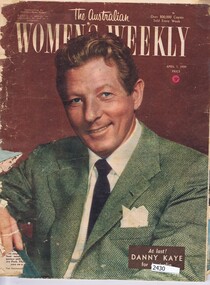
Magazine, The Australian Women's Weekly, The Australian Women's Weekly. April 1, 1959, 01/04/1959
... Content of articles and advertisements illustrates popular culture of the period. magazines the australian womens weekly 1 April 1959 issue. 72p., col. cover. ...An early edition of The Australian Women's Weekly with Danny Kaye on cover.Content of articles and advertisements illustrates popular culture of the period.1 April 1959 issue. 72p., col. cover.magazines, the australian womens weekly -
 Ringwood and District Historical Society
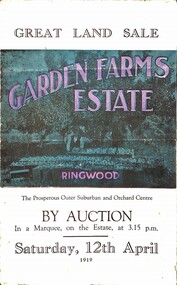
Pamphlet, G.A. Green, Auction Sale Brochure - Garden Farms Estate, Ringwood, Victoria - 1919, 1919
... Its natural boundaries are the River Yarra on the North, Dandenong Creek on the South, the popular town of Croydon on the East, and the suburb of Mitcham on the West. This is a large territory that is steadily being converted from intense culture, and then it might be called (as regards its gardens) "The Devon Territory of Victoria." ...Its natural boundaries are the River Yarra on the North, Dandenong Creek on the South, the popular town of Croydon on the East, and the suburb of Mitcham on the West. This is a large territory that is steadily being converted from intense culture, and then it might be called (as regards its gardens) "The Devon Territory of Victoria." ...Multi-fold brochure advertising public auction of one-acre, 2-acre, 5-acre and 8-acre allotments in Ringwood and Bayswater on Saturday 12th April, 1919. Brochure includes terms of sale, description of subdivision features and local facilities, and photographic images of the area.Subdivison includes Canterbury Road Heathmont, Armstrong Road Heathmont, Armstrong Road Bayswater, Bungalook Road Heathmont, Bungalook Road Bayswater, and Orchard Road Bayswater. Road shown as Bayswater Road to Bayswater became Mountain Highway Bayswater. Vendor: H.E.B.Armstrong, Auctioneers: Coghill & Haughton, 79 Swanston Street Melbourne, Telephone Central 2793, in conjunction with J.B. McAlpin, Ringwood, Opposite Station, Telephone Ringwood 7. (Map) Woodcock & McCormack, Civil Engineers Architects & Surveyors, 430 Little Collins Street, Melbourne, Phone 3241 Central. MOST OF THE MONEY COMES OUT OF THE LAND. And more money can be obtained from anb acre of fruit than from an acre of any other produce. But you do not have to grow fruit on Garden Farms Estate. You can go in for - Outer Suburban Home - Market Garden - Orchard - Pig Raising - Poultry Farm - Small Dairy Farm - Small Fruits - Floral Culture - Scent and Bee Farm - Or just for a Week-end Home. RINGWOOD - THE PLACE TO LIVE. The Beautiful Ringwood District has so many natural attractions, that half a Land Agent's work is done in just showing a prospective buyer round and about. Ringwood has a pull of its own that attracts folk, proved beyond doubt by its rapid development within the last decade (spite the war). First, it is high and healthy, picturesque and undulating, convenient of access, sufficiently close to the Metropolis for City and Business folk to live at Ringwood. Its development is solid, because most of its people are industrious husbandmen, real producers, who have turned idle hills into smiling gardens. These are the kind of real people to live amongst; ones who wear out their spades. The rapidly-developing town has excellent Stores, Trade and Repair Shops Churches, Banks, Telephone Exchange, Weekly General Market, Cool Stores, and good Private and State Schools, etc.; is Electrically lit, has Metropolitan Water Supply, and generally provides so that practically all shopping can be done locally. WHY RINGWOOD MUST GROW. Ringwood is a great centre and must be a greater. Two rapidly-developing railways junction here. The passengers from Ringwood Station cityward, in one year, number 250,000. Ringwood will be the terminus of the Outer Suburban Electric Eastern Railway. Its natural boundaries are the River Yarra on the North, Dandenong Creek on the South, the popular town of Croydon on the East, and the suburb of Mitcham on the West. This is a large territory that is steadily being converted from intense culture, and then it might be called (as regards its gardens) "The Devon Territory of Victoria." ARMSTRONG ROAD. This new road traverses Garden Farms Estate from its northern boundary on the main Canterbury Road, across Dandenong Creek, to its southern boundary on the main Bayswater Road, and will provide a long-desired additional link of communication between Bayswater and Ringwood. The 1-acre building sites on Bayswater Road are within 8 minutes' walk of the Bayswater Railway Station, and the Canterbury Road frontages are only 1-1/2 miles from Ringwood Station, and 1/2 mile from the Railway Station site of Canterbury Road; therefore, the whole Estate is easy of access and there should be a large demand for land so favourably placed. (Image) Cultivation Field - Potatoes on Lot 28 (Image) Picture of Bayswater Creek Flats. (Image) View from "Korumbeen" where Mr. Armstrong lived on Garden Farms Estate. Estate outlined in white ring. (Image) Site of New Bridge over Dandenong Creek. (Image) On one of the timbered lots adjoining railway. (Image) This Dandenong Creek traveres the Estate. (Image) Main Fern Tree Gully Line bisects the Estate.
