
Showing 69 items matching "returned in 1978"
-
 Ballarat Tramway Museum
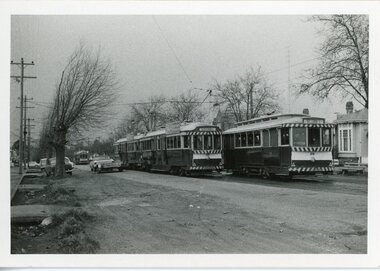
Photograph - Ballarat Trams 26 and 35, Ballarat Trams 26 and 35 in Drummond Street at Urquhart Street loop
... ...returned in 1978...The body returned to the Ballarat Tramway Preservation Society in 1978 and dismantled due to the poor condition it was in. ...The body returned to the Ballarat Tramway Preservation Society in 1978 and dismantled due to the poor condition it was in. ballarat tram 26 ballarat tram 35 urquhart street loop duncan and fraser adelaide 1916 hawthorn tramway trust melbourne and metropolitan tramway board 1920 electrict supply co victoria 1934 state electricity compamy californian combination runs in summer 1947 to ballarat ballarat college tram body in 1971 returned in 1978 dismantled Written on the back in pencil "1971, c.8.15 Urquhart Street loop. ...The photograph shows two trams in Drummond Street at the Urquhart Street Loop. Information on the back shows the photo was taken about 8.15 in the morning. The trams travel down Grey Street Sebastopol, up Victoria Street and then Lydiard Street North. Tram 26 was built in 1916 by Duncan and Fraser, Adelaide for Hawthorn Tramways Trust and was known as Tram No.6. It was renumbered by Melbourne and Metropolitan Tramway Board in 1920 . It became No.111. In 1930 it was sold to the Electric Supply Company of Victoria and numbered 26. In 1934 it passed to the SEC.It is a standard Californian combination - drop ends. The tram is still in the Ballarat Tramway fleet and runs during the Summer. Tram 35 was built in 1916 by Duncan and Fraser, Adelaide. It was part of the Hawthorn Tramways Trust until 1947 when it came to Ballarat. When the trams stopped running in Ballarat in 1971, it went to Ballarat College - known as Ballarat and Clarendon College from 1974. The College received the body only. The trucks were sent to Perth Museum. The body returned to the Ballarat Tramway Preservation Society in 1978 and dismantled due to the poor condition it was in. Black and white photograph of two tramsWritten on the back in pencil "1971, c.8.15 Urquhart Street loop. Down Grey Street Sebastopol, up Victoria St, Lydiard North."ballarat tram 26, ballarat tram 35, urquhart street loop, duncan and fraser adelaide, 1916, hawthorn tramway trust, melbourne and metropolitan tramway board, 1920, electrict supply co victoria, 1934, state electricity compamy, californian combination, runs in summer, 1947 to ballarat, ballarat college, tram body in 1971, returned in 1978, dismantled -
 Bendigo Historical Society Inc.
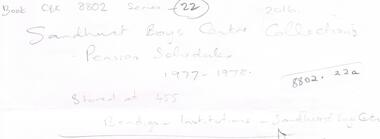
Book - SANDHURST BOYS CENTRE COLLECTION: PENSION SCHEDULES
... Period covered is 6 January 1977 to 30 March 1978. RETURNED TO DHS NOVEMBER 2016...Period covered is 6 January 1977 to 30 March 1978. RETURNED TO DHS NOVEMBER 2016 Book SANDHURST BOYS CENTRE COLLECTION: PENSION SCHEDULES ...Loose-leaf register of residents pension payments. Period covered is 6 January 1977 to 30 March 1978. RETURNED TO DHS NOVEMBER 2016bendigo, institutions, sandhurst boys centre, sandhurst boys centre; financial records; accounting; -
 Uniting Church Archives - Synod of Victoria
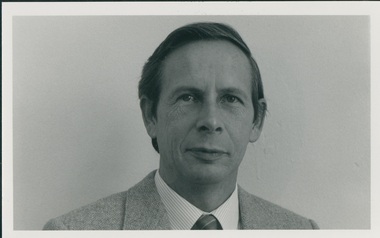
Photograph, Rev G F Brookes, Undated
... Rev G F Brookes was ordained in 1968 in NSW, his first ministry was Bulli 1967-1968, followed by Cooma-Bombala 1969-1972, Kempsey- Gladstone 1973, OD Indonesia Kupang 1974-1977. He returned to NSW in 1978 when he went to Armidale where he stayed until 1985. ...Rev G F Brookes was ordained in 1968 in NSW, his first ministry was Bulli 1967-1968, followed by Cooma-Bombala 1969-1972, Kempsey- Gladstone 1973, OD Indonesia Kupang 1974-1977. He returned to NSW in 1978 when he went to Armidale where he stayed until 1985. ...Rev G F Brookes was ordained in 1968 in NSW, his first ministry was Bulli 1967-1968, followed by Cooma-Bombala 1969-1972, Kempsey- Gladstone 1973, OD Indonesia Kupang 1974-1977. He returned to NSW in 1978 when he went to Armidale where he stayed until 1985. He then joined the Commission for Mission from 1986 to October 1998, and Lakemba 11/1998.B&W head and shoulders photo of Rev. G.F. Brookes, wearing coat and tie.rev g f brookes, uca commission for mission -
 Returned Nurses RSL Sub-branch
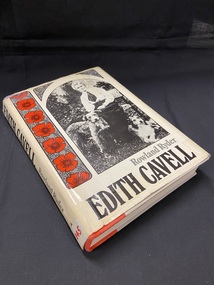
Book - Hardcover book, Rowland Ryder, Edith Cavell, 1975
... 'B45' [Handwritten in pencil on the top of the first page] 'The Returned Nurses / Club / [?] / Jan. 1978' [Handwritten in black ink on the first page] 'RETURNED NURSES CLUB OF VICTORIA / SUB BRANCH R.S.L.' ...'B45' [Handwritten in pencil on the top of the first page] 'The Returned Nurses / Club / [?] / Jan. 1978' [Handwritten in black ink on the first page] 'RETURNED NURSES CLUB OF VICTORIA / SUB BRANCH R.S.L.' ...Edith Louisa Cavell (1865-1915) was a British nurse and patriot. She is celebrated for saving the lives of soldiers from all sides without distinction and in helping some 200 Allied soldiers escape from German-occupied Belgium during World War I, for which she was arrested. She was subsequently court-martialled, found guilty of treason and sentenced to death. Despite international pressure for mercy, she was shot by a German firing squad. Her execution received worldwide condemnation and extensive press coverage. - from Trove record.Hardback book with dustjacket. The dustjacket is cream in colour. Along the spine the title is printed in large black letters, followed by the author's name, and at the bottom is a white sticker with 'B45' handwritten in red texta. The front of the dustjacket shows a black and white photograph of a well-dressed lady sitting on a bench with a dog either side of her. Down the left side of the image is a vertical panel with seven red poppies. The title and author are printed across the bottom of the cover.non-fictionEdith Louisa Cavell (1865-1915) was a British nurse and patriot. She is celebrated for saving the lives of soldiers from all sides without distinction and in helping some 200 Allied soldiers escape from German-occupied Belgium during World War I, for which she was arrested. She was subsequently court-martialled, found guilty of treason and sentenced to death. Despite international pressure for mercy, she was shot by a German firing squad. Her execution received worldwide condemnation and extensive press coverage. - from Trove record. edith cavell, history of nursing, world war one 1914-1918, ww1, wwi -
 Ballarat Clarendon College
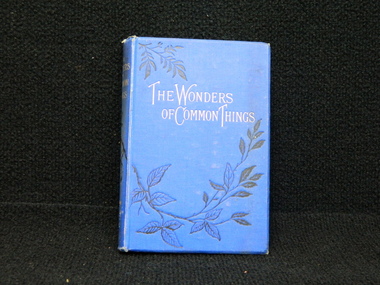
Book, The wonders of common things, Prior to the book prize presented on 19th December, 1883
... 1978 by Fanny's niece. Presbyterian educators placed great value on a classical education matched with diligence in study. Book prizes were highly regarded and academic success admired. In the school’s early years prizes were ordered direct from London and had the school crest embossed in gold on the front or back cover. Many of the prizes given in early years were returned ...This book was awarded to Fanny Nicol in 1883 for special prize for repetition of scripture texts. Fanny enrolled in Clarendon Ladies' College in 1882 along with her sisters Agnes Williamson Nicol and Katy Beatrice Nicol. In the original register the father's name is listed as James and he was a produce merchant who resided at 119 Lydiard Street, North Ballarat. This book was donated to the school library in 1978 by Fanny's niece.Presbyterian educators placed great value on a classical education matched with diligence in study. Book prizes were highly regarded and academic success admired. In the school’s early years prizes were ordered direct from London and had the school crest embossed in gold on the front or back cover. Many of the prizes given in early years were returned to the school to equip the Weatherly Library when it opened in 1936.Bound in blue cloth with gilt lettering on front cover and spine. Black ornate illustrations on front and back cover and spine. Gilt edging, slight foxing on pages, detached pages, black and white illustrated, 284 p.Book plate inside front cover: CLARENDON LADIES' COLLEGE./ BALLARAT./ Special PRIZE./ For Repetition of Scripture Texts/ AWARDED TO/ Fanny Nicol./ 19th December, 1883.fanny-nicol, 1883, book-prize, clarendon-ladies'-college, agnes-williamson-nicol, katy-beatrice-nicol, james-nicol. -
 Ballarat Clarendon College
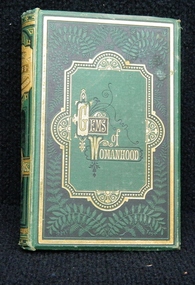
Book, Gall & Inglis, Gems of womanhood, 1870
... 1978 by Fanny's niece. Presbyterian educators placed great value on a classical education matched with diligence in study. Book prizes were highly regarded and academic success admired. In the school’s early years prizes were ordered direct from London and had the school crest embossed in gold on the front or back cover. Many of the prizes given in early years were returned ...This book was awarded to Fanny Nicol in 1882 for special prize for bible. Fanny enrolled in Clarendon Ladies' College in 1882 along with her sisters Agnes Williamson Nicol and Katy Beatrice Nicol. In the original register the father's name is listed as James and he was a produce merchant who resided at 119 Lydiard Street, North Ballarat. This book was donated to the school library in 1978 by Fanny's niece.Presbyterian educators placed great value on a classical education matched with diligence in study. Book prizes were highly regarded and academic success admired. In the school’s early years prizes were ordered direct from London and had the school crest embossed in gold on the front or back cover. Many of the prizes given in early years were returned to the school to equip the Weatherly Library when it opened in 1936.Green cloth cover with ornate gilt decorations on cover, back and spine; gilt edges; color illustrations, slight foxing on pages, 314 p. Book plate inside front cover: CLARENDON LADIES' COLLEGE,/ BALLARAT./ Special prize./ Bible/ Awarded to/ Fanny Nicol./ 19th December, 1882.fanny-nicol, 1882, book-prize, clarendon-ladies'-college, agnes-williamson-nicol, katy-beatrice-nicol, james-nicol. -
 Geelong RSL Sub Branch
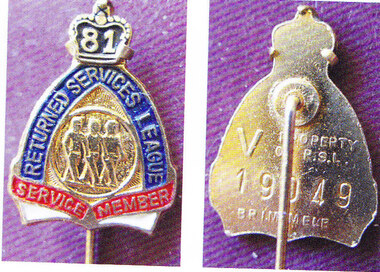
RSL Badge circa 1978-1982, 1978-1982
... RSL Badge 1978-1982 Brass Front - Returned Services League, Service Member. ...This brass badge was made for the RSL 1978-1892.This badge is an original as made for the RSL during 1978-1982.An almost triangle badge, brass, the year 82 attached the the crown at the top. Colours blue, red.gold, whiteFront - Returned Services League, Service Member. Three figures in the centre of the badge. Back - V20731, Property ofg RSL, Brim Melb.rsl, badge 1978-1982, brass -
 Orbost & District Historical Society
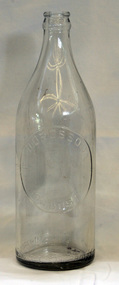
bottle, D. Drossou, 1930's
... 1978 and later served as the headquarters of the Orbost State Emergency Service. The site of the Cordial Factory now forms part of a carpark. A deposit on the bottles was added to all sales as they left the factory. The returned...1978 and later served as the headquarters of the Orbost State Emergency Service. The site of the Cordial Factory now forms part of a carpark. A deposit on the bottles was added to all sales as they left the factory. The returned ...Dross Drossou sold his cordial manufacturing business to Phillips and Stone, a Bairnsdale company, in 1948. Phillips and Stone continued to manufacture soft drinks at Orbost until the early 1970's when the factory became a distribution centre. It closed as a distribution centre in 1978 and later served as the headquarters of the Orbost State Emergency Service. The site of the Cordial Factory now forms part of a carpark. A deposit on the bottles was added to all sales as they left the factory. The returned bottles were washed and the old label removed. The inside was cleaned by pushing the bottle onto a revolving brush. The reusing of the bottles went on until the bottle was broken or the top became chipped. This bottle is an example of a product manufacture by a local industry no longer existing.A clear glass cylindrical bottle with a tapered neck.D. DROSSOU ORBOSTbottle drossou orbost-cordial-factory food beverages -
 Ringwood and District Historical Society
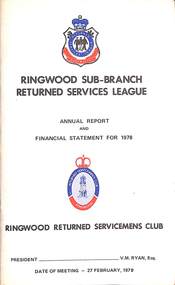
Booklet, Ringwood RSL Annual Report and Financial Statement 1978
... Ringwood Sub-branch, Returned Services League Annual Report and Financial Statement for 1978. 40 pages. ...Ringwood Sub-branch, Returned Services League Annual Report and Financial Statement for 1978. 40 pages. ...Copy provided by Derek F. Snowball, Secretary.Ringwood Sub-branch, Returned Services League Annual Report and Financial Statement for 1978. 40 pages. Enclosure - Notice of AGM Tuesday 27th February, 1979. -
 Orbost & District Historical Society
correspondence books, 1963 - 1979
... returning home from the 1914 to 1918 war was welcomed home in front of the Shire Hall to the music of the Orbost Municipal Band. The band played in the main street on most Friday nights. The various Orbost bands over the years played a major role in community activities providing entertainment and musical experiences for the many members. orbost-municipal-band Three A4 folders containing inward correspondence related to the Orbost Municipal Band. 802.1 has a maroon cover and is dated from 1963 -1977. 802.2 has a grey cover and is dated from 1978 - 1979. 802.3 has a grey cover and is dated 1974 - 1975 . correspondence books Orbost Municipal Band ...Orbost Town Band amalgamated in 1913 to form the Orbost Municipal Band under the conductorship of Mr Charles Spink. The Orbost Municipal Band played a major role in the Orbost community activities. Charles Spink made sure each soldier returning home from the 1914 to 1918 war was welcomed home in front of the Shire Hall to the music of the Orbost Municipal Band. The band played in the main street on most Friday nights. The various Orbost bands over the years played a major role in community activities providing entertainment and musical experiences for the many members.Three A4 folders containing inward correspondence related to the Orbost Municipal Band. 802.1 has a maroon cover and is dated from 1963 -1977. 802.2 has a grey cover and is dated from 1978 - 1979. 802.3 has a grey cover and is dated 1974 - 1975 .orbost-municipal-band -
 Seaworks Maritime Museum
Shipbuilders model, Cape Otway
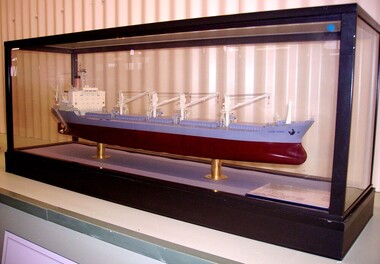
... The Department stated that "state provision of ETVs does not represent a correct use of taxpayers money and that ship salvage should be a commercial matter between a ship's operator and the salvor".Two days after the announcement that the fleet was to be disbanded, Anglian Prince was sent to the aid of the UK's newest and largest nuclear submarine HMS Astute, which ran aground off the Isle of Skye in Scotland during sea trials. 1977 owners became Cape Otway Ltd, same managers 1978 Owners became Otway Shipping Co LTD, same managers August 1981 Returned to owners and bareboat chartered to the Australian National Line 1987: Sold, k/s Hansa Bulk 2. ...The Department stated that "state provision of ETVs does not represent a correct use of taxpayers money and that ship salvage should be a commercial matter between a ship's operator and the salvor".Two days after the announcement that the fleet was to be disbanded, Anglian Prince was sent to the aid of the UK's newest and largest nuclear submarine HMS Astute, which ran aground off the Isle of Skye in Scotland during sea trials. 1977 owners became Cape Otway Ltd, same managers 1978 Owners became Otway Shipping Co LTD, same managers August 1981 Returned to owners and bareboat chartered to the Australian National Line 1987: Sold, k/s Hansa Bulk 2. ...In 2010, the Government announced that the ETV fleet would be no longer be funded by the MCA from September 2011, saving £32.5m over the Spending Review period. The Department stated that "state provision of ETVs does not represent a correct use of taxpayers money and that ship salvage should be a commercial matter between a ship's operator and the salvor".Two days after the announcement that the fleet was to be disbanded, Anglian Prince was sent to the aid of the UK's newest and largest nuclear submarine HMS Astute, which ran aground off the Isle of Skye in Scotland during sea trials. 1977 owners became Cape Otway Ltd, same managers 1978 Owners became Otway Shipping Co LTD, same managers August 1981 Returned to owners and bareboat chartered to the Australian National Line 1987: Sold, k/s Hansa Bulk 2. Barber International A/S managers. Renamed HANSA MARINER. Norway flag 1988 Sold K/S Stamariner. Helmer Staubo and Co Managers, renamed Stamariner. Norway (NIS flag) 1993: Sold Shipping Enterprise, renamed Tamarine, Malta flag 1998: sold renamed Andromechi 1998: Sold, Golden Union Shipping Co S.A Panama flag, renamed Flag Braveheart 2000: sold, Flag Sofia Shipping Company Ltd. renamed Flag Sofia. Malta flag. November 15th reported as being on fire at St Petersburg. Damage to the Officer's dining room, laundry and alleyways 2002: Sold Emirates Shipping Corporation Ltd. Emirates Trading Agency LLC, managers. Renamed PEARL OF ASMAN then amended PEALR OF AJMAN. Malta Flag 2003: March sold for scrap to ship breakers in BangladeshShip builder's model of the bulk carrier Cape Otway IMO 7520229 built by Misui Engineering & Shipping Co. The burgundy and grey hull beneath a deck with detailed fittings and superstructure, presented within a glazed display case. On base of case: " M.V CAPE OTWAY/ OWNER : LYLE SHIPPING CO., LTD/ BUILDER : MITSUI ENGINEERING & SHIPBUILDING CO., LTD CHIBA WORKS/ BUILDER'S NO.: 1093/ CLASS: LLOYD'S REGISTER OF SHIPPING/ DEADWEIGHT...32,504KT/ LENGTH (OVERALL)... 179.000M/ LENGTH (P.p) 170.000M/ BREADTH (MLD)... 14.800M/ FULL LOAD DRAFT (EXT)... 10.677M/ MAIN ENGINE: MITSUI B&W 7K 74EF X 1 SET/ M.C.O.: 13,100 BHP X 124 RPM/ C.S.O: 11,900 BHP X 120 RPM/ TRIAL MAX. SPEED: 17.50 KTS 9AT = 17,870 KT, M.C.O.)/ DELIVERED : DECEMBER, 1976/ SCALE: 1/200" On model: "CAPE OTWAY/GLASGOW" -
 Orbost & District Historical Society
bottle, Pre 1970's
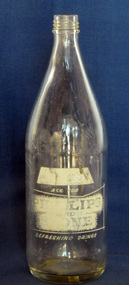
... 1978 and later served as the headquarters of the Orbost State Emergency Service. The site of the Cordial Factory now forms part of a carpark. A deposit on the bottles was added to all sales as they left the factory. The returned...1978 and later served as the headquarters of the Orbost State Emergency Service. The site of the Cordial Factory now forms part of a carpark. A deposit on the bottles was added to all sales as they left the factory. The returned ...Dross Drossou sold his cordial manufacturing business to Phillips and Stone, a Bairnsdale company, in 1948. Phillips and Stone continued to manufacture soft drinks at Orbost until the early 1970's when the factory became a distribution centre. It closed as a distribution centre in 1978 and later served as the headquarters of the Orbost State Emergency Service. The site of the Cordial Factory now forms part of a carpark. A deposit on the bottles was added to all sales as they left the factory. The returned bottles were washed and the old label removed. The inside was cleaned by pushing the bottle onto a revolving brush. The reusing of the bottles went on until the bottle was broken or the top became chipped.This bottle is an example of a product manufacture by a local industry no longer existing.A clear glass bottle with a screw thread top. The label and print ( in upper case) are white.Front- Refreshing Drinks Back-Manufactured by Phillips & Stone Base-1121 P&S Bairnsdale and Orbost Ask for Phillips and Stone Artificially Coloured & Flavoured Net Contents 30 fld ozscontainer beverage bottle phillips-and-stone -
 Orbost & District Historical Society
bottle, before 1975
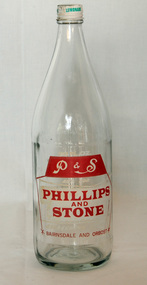
... 1978 and later served as the headquarters of the Orbost State Emergency Service. The site of the Cordial Factory now forms part of a carpark. A deposit on the bottles was added to all sales as they left the factory. The returned...1978 and later served as the headquarters of the Orbost State Emergency Service. The site of the Cordial Factory now forms part of a carpark. A deposit on the bottles was added to all sales as they left the factory. The returned ...Dross Drossou sold his cordial manufacturing business to Phillips and Stone, a Bairnsdale company, in 1948. Phillips and Stone continued to manufacture soft drinks at Orbost until the early 1970's when the factory became a distribution centre. It closed as a distribution centre in 1978 and later served as the headquarters of the Orbost State Emergency Service. The site of the Cordial Factory now forms part of a carpark. A deposit on the bottles was added to all sales as they left the factory. The returned bottles were washed and the old label removed. The inside was cleaned by pushing the bottle onto a revolving brush. The reusing of the bottles went on until the bottle was broken or the top became chipped. This bottle is an example of a product manufacture by a local industry no longer existing.A clear glass bottle with a metal screw cap. on the front is a painted red and white label. It contained lemonade.Lid - Lemonade Base - AGM M 6 inside a circle 9 Front - 30 fl ozs Back - Manufactured by Preservative added M21 A1 P & S Phillips and Stone 28 flavour LOK Ask for Bairnsdale and Orbost Phillips and Stone Preservative added Refreshing drinks Artificially coloured and flavoured Bairnsdale and Orbost bottle phillips-and-stone beverage lemonade container -
 Eltham District Historical Society Inc
Document, Russell Yeoman, Tour of Historic Buildings and Locations, 1978
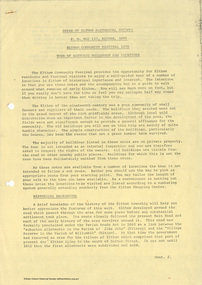
... returning from the High School to the town centre the footpath by the bank of the Diamond Creek provides a pleasant route to finish your walk. The creek is a major tributary of the Yarra River. Together with its own major tributaries Arthurs Creek and Running Creek it commences on the southern slopes of the Dividing Range at Kinglake. It gives the name Diamond Valley to an area extending well beyond its actual drainage catchment. Recognition of the significance of various landmarks to the history of the Eltham community as of 1978 ...Self guided heritage tour information produced by the Shire of Eltham Historical Society for 1978 Eltham Community Festival of 36 locations each numbered on accompanying map. Locations and detail provided current to 1978: 1. ELTHAM SHOPPING CENTRE Whilst very little remains in the centre of historical importance, this area has interest as the "village" which developed over many years following the opening of the railway from Melbourne in 1902. Previously the shopping centre had been spread out over a long length of Main Road to the south. Shops have been continuously demolished or remodelled and the majority of buildings date from the 1950's or later. The recently erected Post Office replaced the "old" Post Office opened on the same site only in 1958. 2. WOOLWORTHS ELTHAM VILLAGE Part of the site of this modern shopping development was occupied by the former Eltham Shire Offices and Hall. The hall was paid for by public subscription whilst the Council raised a loan for the offices. The combined building was opened in 1941. It served as office and Council meeting place until 1965 and as the hall until its demolition in 1970. 3. ELTHAM WAR MEMORIAL The complex of buildings adjoining the present Shire Offices were financed by public subscription as a Memorial following World War II. Their construction and for many years their operation was organised by the now disbanded Eltham War Memorial Committee. The original buildings were the; Infant Welfare Centre, Children’s Library (now War Memorial Hall and Dental Clinic) and Kindergarten. In later years the Elderly Citizens Club was built at the rear. 4. ELTHAM SHIRE OFFICES These offices were opened in 1965 and extended in 1971 to provide additional office accommodation and the Eltham Library. They represent the last of a long line of offices and meeting places of the Eltham Shire Council and its predecessor the Eltham District Road Board. The building occupies the former site of Shillinglaw Cottage. The three tall cypress trees which stood in front of the Cottage have been retained as a feature of the office surrounds. 5. OUR LADY'S CHURCH AND SCHOOL The Catholic Church and School complex opposite the Shires Offices shows a number of stages in the development of Eltham township. The recently constructed church adjoins its predecessor (now the parish centre). Many years ago the Catholic Church was located opposite Wingrove Park and the present central site follows the northerly drift of the township. 6. SHILLINGLAW COTTAGE The Cottage was built in 1859 by George Stebbing, a local builder who was responsible for a number of other prominent buildings in the area. Its removal from the site of the Shire Offices and re-erection on the present site was financed by public subscription. It is built of handmade bricks laid in Flemish Bond with an unusual design featuring burnt "leader" bricks over the whole facade. The Cottage is occupied by Eltham Fleececrafts and will be open during the Festival and at other times during weekends. It is classified by the National Trust. 7. RAILWAY BRIDGE The timber trestle bridge over the Diamond Creek was built in 1901. Whilst all of its timbers have been replaced at various times over the years the only change to its character has been the addition of pylons and wiring for electric trains in 1923. It is one of very few similar bridges remaining in the metropolitan area. In 1976 a proposal to replace the bridge with an earth embankment and large culvert pipes was abandoned following community protests. The bridge, however, remains under threat because of the necessity for future deuplication of the railway line. 8. ELTHAM CENTPAL PARK The area between the railway and the creek has for many years been used as a park which included Eltham' s main football oval. The access road, Panther Place is named after Eltham's team playing in the Diamond Valley League. In recent years a large area extending to Bridge Street and locally known as the Town Park has been landscaped and added to the area. The excellent blending of the park with the natural landscape of the creek valley has earned a National Trust Landscape Classification. 9. OLD BAKERY On the southern corner of York Street and Main Road is an old house with a shop front which was for many years the local baker's shop. The brick bakery at the rear is of somewhat later vintage than the house. 10. BRIDGE STREET CUTTING Before reconstruction of Main Road this intersection had deep cutting embankments on all four corners, forming a distinctive feature of the entrance to Eltham. Roadworks and private development have levelled the land on the low side of the road. A memorial to the Eltham soldiers of World War I which was located at the north-western corner is now situated at the Eltham R.S.L. 11. HILLTOP MILK BAR For many years this was the site of the Eltham Post Office under the control of the Hunniford family and later their descendants the Burgoynes. It was transferred to this site in 1855, although at that time the building apparently fronted Bridge Str e et. The site contained Eltham's first telephone exchange. The post office was relocated in 1954 but the shop was operated until recently by the Burgoyne family who still own the surrounding land. 12. UNITING CHURCH and former C.B.A. BANK The former Methodist Church was built in 1880 by George Stebbing. The Sunday School extension was built in 1929 and there have been more recent extensions. The adjoining opportunity shop was built as a bank in 1874 and purchased by the Methodist Church in 1954. 13. R.S.L. HALL, TELEPHONE EXCHANGE These relatively recent buildings occupy the site of a row of shops forming part of the early ribbon of business development along Main Road. In front of the R.S.L. building is the World War I Memorial relocated from the corner of Bridge Street and Main Road. 14. ELTHAM COMMUNITY CENTRE Australia's first mudbrick "community building" was opened in April this year. Part of the site of the building was purchased in 1856 by Henry Dendy (of Brighton fame). At the rear of the land near the creek was a steam flour mill whilst Dendy's house was at the Main Road frontage of the land. His purchase totalled about 2 Ha (5 acres) and included land on the opposite side of Maria Street (Main Road). Dendy became a prominent member of the Eltham community and served one term as President of the Eltham District Road Board. In 1867 Dendy sold his land and business to William Ford of Malmsbury and shifted to Walhalla. The avenue of trees leading past the Community Centre to the creek may well have bordered the track to the mill. 15. ELTHAM HOTEL The original part of this hotel was built in 1927 following the burning of the former Watson's Eltham Hotel on the same site. The car park on the opposite side of Main Road was also the site of a hotel variously known over the years as; the Fountain of Friendship, the Fountain and the Evelyn Arms. As the Fountain of Friendship it was the first meeting place of the Eltham District Road Board in 1856. 16. ST. MARGARET'S CHURCH, PITT STREET In 1860 Henry Dendy was appointed Chairman of a committee to establish a church of England in Eltham. He donated part of his land in Pitt Street and in 1861 the church was opened. It was built by George Stebbing and remains in a well preserved state today. Th adjoining old vicarage is now named Dendy Hou se. A new mudbrick church hall is under construction on the site. The church and Dendy House are now listed on the Register of Historic Buildings. 17. NO. 86 PITT STREET Cottage built by George Stebbing and believed to be his home for some years in the 1850s. 18. LIVING AND LEARNING CENTRE The house was built in the 1850s with the kitchen at the front being added about 40 years later. By the creek below the house a number of early Eltham industries were located. These included a tannery and a brewery. 19. ELTHAM COURT HOUSE A Court of Petty Sessions was established in Eltham in 1858 and the present building dates from 1860. It is the oldest public building remaining in Eltham. In its early days the building was used as the meeting place and office of the Eltham District Road Board and as an overflow classroom for the local school. The Court House has been classified by the National Trust. The citation states that it is an example of the simple form of early brick Court House with gabled roof and porch. 20. LANDS DEPARTMENT OFFICE This building is the former police station and is probably of about the same age as the Court House. The lockup at the rear has been demolished but the old stables remain as garages. A licence was first granted for a police station at Eltham in 1856. 21. JARROLD COTTAGE The old Cottage opposite Dalton Street was formerly owned by the Jarrold family. Early records indicate that this was the building leased from the Jarrolds as a temporary police station prior to construction of the building on the corner of Brougham Street. The small building on the corner of the property was used as a boot repairer's shop. The elevated studio at the rear is a more recent construction by the present owners. 22. STATE SCHOOL RESIDENCE Erected in 1891 23. WINGROVE COTTAGE This building fills an important place in the history of Eltham and is now used as a medical clinic. It was built in 1858 for Charles S. Wingrove who was Secretary to the Eltham District Road Board and Shire Council from 1858 to 1904. During part of this period he was also Shire Engineer and was Secretary to the Heidelberg Road Board. The house was used as the office of the Board and Council for many years. Wingrove is buried in the cemetery at St. Helena. 24. WINGROVE PARK The parkland opposite Wingrove Cottage has been named after Charles Wingrove. The old Manna Gums are an outstanding feature of the park. 25. ELTHAM FRI.MARY SCHOOL NO. 209 The school first opened in the slab building in 1855 and operated from the present site since 1857. The oldest part of the present school is the stone building erected in 1876. The first school teacher, David Clark remained at the school until 1888. This school is the government township and has always been known as the Eltham School. An earlier school (no.371) known as Little Eltham School operated in Swan Street from 1853 to 1872. 26. "SHOESTRING" This house was built for school teacher David Clark. It has been extensively extended in recent years but the extensions do not detract from the character of the older part of the building. 27. ELTHAM CEMETERY The cemetery contains the graves of many of the district's pioneers . 28. MONTSALVAT This unique complex of buildings was commenced in 1935 by the late Justus Jorgensen and its development has extended over many years. Montsalvat has exerted a significant impact on Eltham The earth and stone construction of many of the buildings has influenced local architecture to a great extent and it has served as a "nerve centre" of the local artistic community. Montsalvat is open to the public for a small charge. 29. MAIN ROAD BRIDGE This location has been the main crossing of Diamond Creek since the earliest days of settlement. The present concrete bridge was erected in 1925 .and was preceded by a number of timber bridges. 30. ELTHAM LOWER PARK This park, being an unusually large flat area for Eltham, was originally the local racecourse. Horse races were held here from 1855 and the area was gazetted as a reserve for a racecourse and recreation reserve in 1857. The park is well known as a venue for school "bird days" and more recently as the site of the Diamond Valley Railway. This miniature railway features scale models of modern and old locomotives and rolling stock and has operated on this site since 1961 . Before that the railway operated at Chelsworth Park, Ivanhoe. 31. FALKINER HOUSE Frederick Falkiner was one of the earliest settlers in the Eltham township area and occupied a substantial leasehold prior to the first land sales. Early records show that Falkiner was the subject of a number of complaints from his neighbours but he has nevertheless been considered a prominent enough citizen to have a street named for him. This house was the home of Evelyn (Ely) Falkiner a member of Frederick's family. 32. WEST HOUSE Behind the large house on the hill is an early house built by the West family. This was relocated from a site near the front of the land by the present owner Mr. Fabbro. 33. FALKINER HOUSE This very old house is believed to have been the home of Frederick and may have been Eltham's first post office. Falkiner was the first post master for a short period. in 1854/55. 34. WITHERS HOUSE This house was the home of famous artist Walter Withers who shifted here from Heidelberg in 1903. 35. ELTHAM HIGH SCHOOL This school celebrated its jubilee this year, having commenced as the Eltham Higher Elementary School 50 years ago. 36. DIAMOND CREEK FOOTWAY If returning from the High School to the town centre the footpath by the bank of the Diamond Creek provides a pleasant route to finish your walk. The creek is a major tributary of the Yarra River. Together with its own major tributaries Arthurs Creek and Running Creek it commences on the southern slopes of the Dividing Range at Kinglake. It gives the name Diamond Valley to an area extending well beyond its actual drainage catchment.Recognition of the significance of various landmarks to the history of the Eltham community as of 1978‘shoestring’, 1978, bridge street cutting, burgoyne store, c.b.a. bank, diamond creek trail, eltham cemetery, eltham central park, eltham community centre, eltham community festival, eltham court house, eltham festival, eltham high school, eltham hotel, eltham lower park, eltham primary school, eltham railway trestle bridge, eltham shire offices, eltham shopping centre, eltham state school no. 209, eltham village, eltham war memorial, falkiner house, heritage trail, hilltop milk bar, jarrold cottage, lands department office, living, living and learning centre, main road bridge, montsalvat, old bakery, our eltham artistic recollections, our lady help of christian’s church, our lady help of christian’s primary school, pitt street, post office, r.s.l. hall, shillinglaw cottage, st margaret’s church, state school residence, stebbing cottage, telephone exchange, uniting church, west house, wingrove cottage, wingrove park, withers house, woolworths -
 Eltham District Historical Society Inc
Newsletter, Eltham District Historical Society, Newsletter, No. 244 February 2019
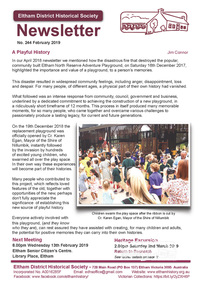
... Contents: • A Playful History by Jim Connor • Our February Meeting • March Excursion – Return to Research • You May Notice • Early Days Recalled At Eltham (Eltham and Whittlesea Shires Advertiser, 21 Nov 1941, p4) • Montmorency Press association – 1927 (Advertiser, 12 Aug 1927, p4) • An Eltham Road (The Argus, 27 Jul 1911, p5) • An Eltham Old resident (Advertiser, 19 Aug 1932, p6) • Eltham Cemetery Stories by Richard Pinn • Contacts for the Eltham District Historical Society The Shire of Eltham Historical Society was formed in October 1967. The first newsletter of the Society was issued May 1978 ...Contents: • A Playful History by Jim Connor • Our February Meeting • March Excursion – Return to Research • You May Notice • Early Days Recalled At Eltham (Eltham and Whittlesea Shires Advertiser, 21 Nov 1941, p4) • Montmorency Press association – 1927 (Advertiser, 12 Aug 1927, p4) • An Eltham Road (The Argus, 27 Jul 1911, p5) • An Eltham Old resident (Advertiser, 19 Aug 1932, p6) • Eltham Cemetery Stories by Richard Pinn • Contacts for the Eltham District Historical Society The Shire of Eltham Historical Society was formed in October 1967. The first newsletter of the Society was issued May 1978 and has been published continuously ever since on a bi-monthly basis. With the cessation of the Shire of Eltham in late 1994, the Society's name was revised to Eltham District Historical Society and this name first appeared with issue No. 103, July 1995. The collection of the Society's newsletters provides a valuable resource on the history of the Society's activities, office bearers and committee members, guest speakers and subjects of historical interest pertinent to the former Shire of Eltham and the Eltham District.A4 newsletter distributed to membersnewsletter, eltham district historical society -
 Bendigo Military Museum
Administrative record - RSL ROSTER EASTER FAIR 1978, Bendigo RSL Sub Branch, March 1978
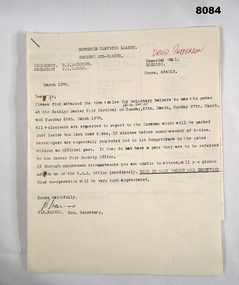
... Page 1, "Returned Services League Bendigo Sub Branch - President D.J. Paterson - Secretary J.K. Barnes - Memorial Hall - Phone 434013 - March 1978. ...David Patterson refer Cat No 8070. brsl smirsl easter Page 1, "Returned Services League Bendigo Sub Branch - President D.J. Paterson - Secretary J.K. Barnes - Memorial Hall - Phone 434013 - March 1978. ...The Bendigo Easter Carnival was a Fund Raiser for the Bendigo Sub Branch for many years. The list of names of the volunteers there are many who were tireless workers for the Sub Branch over many years. Name in red pen. David Patterson refer Cat No 8070.Roster, paper, 4 pages stapled together, the 3/4th pages are fold out. Page 1 is a letter from the Secretary Bendigo RSL Sub Branch detailing the dates and places for RSL Volunteers to man the gates at the Easter Fair and events around town. Page 2 is a list of Volunteers names, dates & places ie Art Show at the Memorial Hall, Football at the QEO, Crowning ceremony at White Hills Technical School. Pages 3/4 details names, dates to man the entrance gates to the Easter Fair ie Park Road, Barnard Street, Fernery Gate and Cohns Gate.Page 1, "Returned Services League Bendigo Sub Branch - President D.J. Paterson - Secretary J.K. Barnes - Memorial Hall - Phone 434013 - March 1978. In red pen on page 1. "David Paterson"brsl, smirsl, easter, -
 Bendigo Military Museum
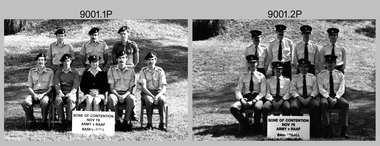
Photograph - Bones Day – Army Survey Regiment Verses RAAF School of Radio at Bendigo, Victoria, 1978
... return was typically very raucous. See item 6275.8P for more photographs taken on this occasion. The history of the Bones Day competition is best described in the booklet titled - Bones of Contention Souvenir Program. 1965. Refer to Item 6267. Royal Australian Survey Corps RASvy Army Survey Regiment Army Svy Regt Fortuna Bones Day .1P to.9P – ‘Bones Day 1978 ...This set of 31 photographs was taken at Bones Day, an annual sports competition between the Army Survey Regiment and the RAAF School of Radio at Bendigo in November 1978. The two units took turns each year to host the event. The day competition usually comprised basketball, cricket, cross country, golf, sailing, squash, softball, tennis, touch football, rifle shooting, tug-of-war and volleyball. The “big bone” trophy comprising a large bone from a beast housed inside a wooden framed glass case, was awarded to the winner of the day competition. The evening competition often included darts, carpet bowls, hookey, quoits and billiards/snooker. The “little bone” (a mounted chicken bone) was the consolation trophy awarded to the winner of the evening competition. The 3-hour bus trip for the visiting unit on their return was typically very raucous. See item 6275.8P for more photographs taken on this occasion. The history of the Bones Day competition is best described in the booklet titled - Bones of Contention Souvenir Program. 1965. Refer to Item 6267.This set of 31 photographs were taken at Bones Day, an annual sports competition between the Army Survey Regiment (ASR) and the RAAF School of Radio (RSR) at Bendigo in November 1978. The photographs were printed on photographic paper and are part of the Army Survey Regiment’s Collection. The black and white photographs were scanned at 300 dpi. .1) - Photo, black & white, 1978, ASR Basketball Team Back row L to R: Jamie ‘Fish’ McRae, John Thomas, Gary Kerr. Front row L to R: Phil McGuire, Bill Jones, Gill Park, Bruce ‘Stretch’ Gordon, Stuart Symonds. .2) - Photo, black & white, 1978, RSR Basketball Team: All unidentified. .3) - Photo, black & white, 1978, Basketball action: Gill Park in No. 8 top, remainder unidentified. .4) - Photo, black & white, 1978, Basketball action: L to R: unidentified (x4), Gill Park, unidentified, Bruce ‘Stretch’ Gordon, remainder unidentified. .5) - Photo, black & white, 1978, ASR Cricket Team Back row L to R: Alan Toogood, Bob Norwood, Ken ‘Sluggo’ Slater, unidentified, Josh Degroot. Front row L to R: Rick van der Bom, Greg Byers, Peter Hammer, 2LT Trevor Black, Alan Bunn, Mark Casey. .6) - Photo, black & white, 1978, RSR Cricket Team: All unidentified. .7) - Photo, black & white, 1978, ASR Rifle Shooting Team Back row L to R: John Cain, Bob Clark, Ian Belmont, unidentified. Front row L to R: Steve Hansen, Struan Robinson, Max Neil, Warren ‘Waldo’ Shirley. .8) - Photo, black & white, 1978, RSR Rifle Shooting Team: All unidentified. .9) - Photo, black & white, 1978, ASR Squash Team Back row L to R: Errol Fletcher, Rick Downie, Andy Wilson, George Timmins, John Bennett. Front row L to R: Terry Danger, Di Norling, Rob John, Dennis Puniard. .10) - Photo, black & white, 1978, Softball action: L to R: Janet (Chopping) Justin, Lorraine ‘Snoopy’ (Daly) Talbot-Smith. In left background: Janet (Chopping) Justin. .11) - Photo, black & white, 1978, Softball action: L to R: Le-anne (Smallshaw) Shirley, Lynn Johnson. .12) - Photo, black & white, 1978, Softball action: L to R: Lorraine ‘Snoopy’ (Daly) Talbot-Smith, John Ashby, unidentified. .13) - Photo, black & white, 1978, RSR Tennis Team: All unidentified. .14) - Photo, black & white, 1978, ASR Volleyball Team Back row L to R: Kerry ‘Gags’ Gallager, Gerry Gates, Bob Clisby, unidentified, Cornelius Moorrees, Laurie Justin. Front row L to R: Chris Edwards, Bob Bright, Keith Quinton, Mick ‘Buddha’ Ellis, George Holland, unidentified. .15) - Photo, black & white, 1978, RSR Volleyball Team: All unidentified. .16) - Photo, black & white, 1978, Volleyball action L to R: Keith Quinton, unidentified, Chris Edwards, remainder unidentified. .17) - Photo, black & white, 1978, Volleyball action L to R: unidentified, Keith Quinton in No. 4 top, unidentified, unidentified. .18) - Photo, black & white, 1978, ASR Tug-of-War Team Back row L to R: Russ Mollenhaur, Brian Collings, Noel ‘Macca’ McNamara, Ken ‘Sluggo’ Slater, Mick Davey, Russell ‘Rusty’ Williams, unidentified. Front row L to R: Wolfgang Thun, Rhys Delaine, Phil Boyle, unidentified, Ian Nelson, Jamie ‘Fish’ McRae. .19) - Photo, black & white, 1978, RSR Tug-of-War Team: All unidentified. .20) - Photo, black & white, 1978, ASR Tug-of-War Team in action. .21) - Photo, black & white, 1978, RSR Tug-of-War Team in action. .22) & .23) - Photo, black & white, 1978, Tug-of-War Teams at end of contest. .24) - Photo, black & white, 1978, Darts competition: Di Chalmers in action. John Ashby in right background. .25) - Photo, black & white, 1978, Carpet bowls competition: All unidentified. .26) - Photo, black & white, 1978, Ian Whittington EXCH-UK admires the view from the Tavern’s rafters. .27) - Photo, black & white, 1978, social activities L to R: Paul Baker, unidentified. .28) - Photo, black & white, 1978, social activities L to R: Adrian Rynberk, unidentified, unidentified. .29) - Photo, black & white, 1978, Trophy presentation. L to R: RAAF CO presents ‘the Little Bone’ to Army’s CO LTCOL Bob Skitch. In background L to R: unidentified, Ian Whittington EXCH-UK in right background. .30) - Photo, black & white, 1978, Trophy presentation. L to R: RAAF CO presents ‘the Little Bone’ to Army’s CO LTCOL Bob Skitch. In background L to R: John Smith, Ian Whittington EXCH-UK. .31) - Photo, black & white, 1978, Trophy presentation. L to R: RAAF CO presents ‘the Little Bone’ to Army’s CO LTCOL Bob Skitch. In background L to R: unidentified, Ian Whittington EXCH-UK in right background. .1P to.9P – ‘Bones Day 1978’ annotated on cover sleeve.royal australian survey corps, rasvy, army survey regiment, army svy regt, fortuna, bones day -
 Eltham District Historical Society Inc
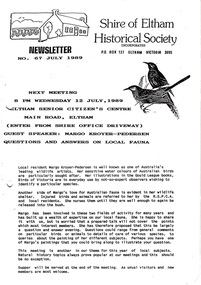
Newsletter, Newsletter, No. 67 July 1989
... Contents: • Next meeting, guest speaker; Margo Kroyer-Pedersen: Questions and Answers on local fauna • Return to Research-Saturday 19 August 1989 • Recent Activities • Other Odds and Ends The Shire of Eltham Historical Society was formed in October 1967. The first newsletter of the Society was issued May 1978 ...Contents: • Next meeting, guest speaker; Margo Kroyer-Pedersen: Questions and Answers on local fauna • Return to Research-Saturday 19 August 1989 • Recent Activities • Other Odds and Ends The Shire of Eltham Historical Society was formed in October 1967. The first newsletter of the Society was issued May 1978 and has been published continuously ever since on a bi-monthly basis. With the cessation of the Shire of Eltham in late 1994, the Society's name was revised to Eltham District Historical Society and this name first appeared with issue No. 103, July 1995. The collection of the Society's newsletters provides a valuable resource on the history of the Society's activities, office bearers and committee members, guest speakers and subjects of historical interest pertinent to the former Shire of Eltham and the Eltham District.A4 photocopied newsletter distributed to membersnewsletter, eltham district historical society, shire of eltham historical society -
 Eltham District Historical Society Inc
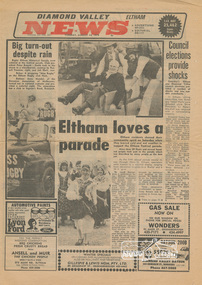
Newspaper clipping, Eltham loves a parade, Diamond Valley News (Eltham), Vol. 33, No. 32, 14 August 1979, p1, 1979
... returned with a commanding majority. Reverse side (p2) story "Laughing cop no softy" is a feature article on Tony Zalewski of Greensborough CIB who was the key policeman involved in a hour-long siege in Norfolk Crescent, Bundoora in 1978 and for which he received the Victoria Police Valour Award...returned with a commanding majority. Reverse side (p2) story "Laughing cop no softy" is a feature article on Tony Zalewski of Greensborough CIB who was the key policeman involved in a hour-long siege in Norfolk Crescent, Bundoora in 1978 and for which he received the Victoria Police Valour Award 1979, Anne Mandel, Ansell and Muir, Bundoora, Elections, Eltham Festival, Eltham Rugby Football Club, Greensborough CIB, Helen Wells, Joh Ebeli, Ken Hines, lyon bros ford, Norfolk Crescent, Parade Floats, Peter Bassett-Smith, Robert Marshall, russell yeoman, Shire of Diamond Valley, shire of eltham, Shire of Eltham Historical Society, Siege, Slovenian Association of Melbourne, Tony Zalewski, Victoria Police Valour Award Newsprint page Eltham loves a parade, Diamond Valley News (Eltham), Vol. 33, No. 32, 14 August 1979, p1 Newspaper clipping ...Feature news story about 1979 Eltham Parade with photo of Society members Joh Ebeli and Russell Yeoman pushing Peter Bassett-Smith along in a wheelbarrow. Others featured were Eltham Rugby club float and Anne Mandel of the Slovenian Association of Melbourne. Other story on "Council elections provide shocks" featured the defeat of Eltham sitting councillors, Ken Hines and Helen Wells with Shire president Cr, Robert Marshall returned with a commanding majority. Reverse side (p2) story "Laughing cop no softy" is a feature article on Tony Zalewski of Greensborough CIB who was the key policeman involved in a hour-long siege in Norfolk Crescent, Bundoora in 1978 and for which he received the Victoria Police Valour AwardNewsprint page1979, anne mandel, ansell and muir, bundoora, elections, eltham festival, eltham rugby football club, greensborough cib, helen wells, joh ebeli, ken hines, lyon bros ford, norfolk crescent, parade floats, peter bassett-smith, robert marshall, russell yeoman, shire of diamond valley, shire of eltham, shire of eltham historical society, siege, slovenian association of melbourne, tony zalewski, victoria police valour award -
 Bendigo Military Museum
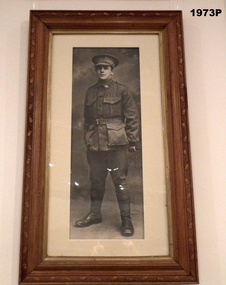
Photograph - PHOTOGRAPH, FRAMED, Framed photo of WW1 soldier believed to be Donald Burnet
... returned to England with under age personnel for some reason on 27.12.1916 and proceeds to get himself in trouble. Finally embarks for France on 19.4.1917 and in trouble 2 days later but rejoins his unit on 25.4.1917, hospital 14.6.1917 with a Sprained right Ankle, rejoin unit 21.6.1917, hospital 7.8.1917 with Diptheria and then gets Tonsilitis, rejoin unit 20.9.1917 and is KIA 5 days later on 25.9.1917. Refer 1978...returned to England with under age personnel for some reason on 27.12.1916 and proceeds to get himself in trouble. Finally embarks for France on 19.4.1917 and in trouble 2 days later but rejoins his unit on 25.4.1917, hospital 14.6.1917 with a Sprained right Ankle, rejoin unit 21.6.1917, hospital 7.8.1917 with Diptheria and then gets Tonsilitis, rejoin unit 20.9.1917 and is KIA 5 days later on 25.9.1917. Refer 1978 ...Donald John BURNET No 2130 enlisted in the AIF in 4th reinforcements 60th Batt on 19.5.1916 age 18 years. Embark for England 1.8.1916, embark for France 11.11.1916. He is then returned to England with under age personnel for some reason on 27.12.1916 and proceeds to get himself in trouble. Finally embarks for France on 19.4.1917 and in trouble 2 days later but rejoins his unit on 25.4.1917, hospital 14.6.1917 with a Sprained right Ankle, rejoin unit 21.6.1917, hospital 7.8.1917 with Diptheria and then gets Tonsilitis, rejoin unit 20.9.1917 and is KIA 5 days later on 25.9.1917. Refer 1978.Framed photograph of WW1 soldier. Black & White full length Portrait of WW1 Soldier, possibly - Donald Burnet, White Hills, Bendigo. Frame - timber, light brown stain, decorative edge, with gold coloured inner edge. Mount - off white cardboard'photography-photographs, frame accessories; trades - carpentry, history, army, ww1 -
 Bendigo Historical Society Inc.
Uniform - WW1 BUTTONS, 1915
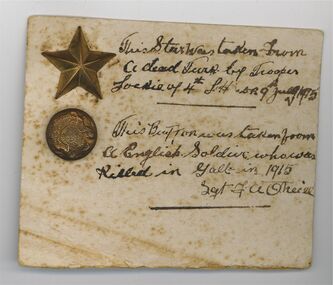
... 1978) was born in Durham, England. He enlisted 24/11/1914 in Bendigo in the 4th Lighthorse with the service number 946. At the time of enlistment he was a miner. He was wounded at Gallipoli by a bomb wound to the foot on 25/8/1915 and was subsequently invalided to Australia on 17/9/1915. Frank Augustus O'Neill (1885- ) was born in Bendigo. He enlisted into the 4th Lighthorse on 12/12/1914 with the service number 1415. He returned...1978) was born in Durham, England. He enlisted 24/11/1914 in Bendigo in the 4th Lighthorse with the service number 946. At the time of enlistment he was a miner. He was wounded at Gallipoli by a bomb wound to the foot on 25/8/1915 and was subsequently invalided to Australia on 17/9/1915. Frank Augustus O'Neill (1885- ) was born in Bendigo. He enlisted into the 4th Lighthorse on 12/12/1914 with the service number 1415. He returned ...Trooper John William Lockey (1892-1978) was born in Durham, England. He enlisted 24/11/1914 in Bendigo in the 4th Lighthorse with the service number 946. At the time of enlistment he was a miner. He was wounded at Gallipoli by a bomb wound to the foot on 25/8/1915 and was subsequently invalided to Australia on 17/9/1915. Frank Augustus O'Neill (1885- ) was born in Bendigo. He enlisted into the 4th Lighthorse on 12/12/1914 with the service number 1415. He returned to Australia in March 1916 and was medically discharged due to a double hernia.Attached to card 1 brass 5 pointed star & 1 brass button showing a crest with lion & unicorn. Card has notations reading, this star was taken from a dead Turk by Trooper Lockie of 4th LH on 9th July 1915 & this button was taken from a English soldier who was killed in Gallipoli in 1915. Sgt F A O'neill.military, world war 1, buttons -
![[Landscape] by Jean Sutherland](/media/collectors/4fcc533e023fd71268453c3f/items/634bed9f7154cba68569e092/item-media/634bee2b7154cba68569e2c0/item-fit-380x285.jpg?cb=6) Victorian Interpretive Projects Inc.
Victorian Interpretive Projects Inc.Photograph, Jean P. Sutherland, [Landscape] by Jean Sutherland
... Jean Parker SUTHERLAND (06 June 1902-July 1978 ) In 1923 Sutherland was awarded the National Gallery of Victoria's prestigious Travelling Scholarship. After four years training and exhibiting in London, Brittany and Rome, she returned to Victoria in 1927, exhibiting with the Melbourne Society of Women Painters for a number of years. ...Jean Parker SUTHERLAND (06 June 1902-July 1978 ) In 1923 Sutherland was awarded the National Gallery of Victoria's prestigious Travelling Scholarship. After four years training and exhibiting in London, Brittany and Rome, she returned to Victoria in 1927, exhibiting with the Melbourne Society of Women Painters for a number of years. ...Jean Parker SUTHERLAND (06 June 1902-July 1978 ) In 1923 Sutherland was awarded the National Gallery of Victoria's prestigious Travelling Scholarship. After four years training and exhibiting in London, Brittany and Rome, she returned to Victoria in 1927, exhibiting with the Melbourne Society of Women Painters for a number of years. She joined the Melbourne Society of Women Painters in 1940 and met Sybil Craig , who became her closest friend. Framed watercolour Landscapejean sutherland, landscape -
 Otway Districts Historical Society
Book, Puffing Billy Preservation Society, G42: Puffing Billy's Big Brother, 1981
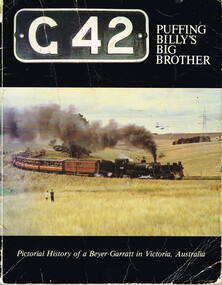
... G41 was overhauled, but not as thoroughly as G42, at then returned to Colac where both Garratts shared regular work on the line until its closure in 1962. From 1978...G41 was overhauled, but not as thoroughly as G42, at then returned to Colac where both Garratts shared regular work on the line until its closure in 1962. From 1978 ...Victoria's narrow gauge railways were from Wangaratta to Whitfield (covering 30.5 miles/49 km) opening in 1899, Colac to Beech Forest (29 miles/46.7 km) opening in 1902 with an addition to Crowes (14.1 miles/22.7 km) opening in 1910, Upper Ferntree Gully to Gembrook (18.2 miles/29.3 km) opening in 1900, and Moe to Walhalla (26 miles/41.3 km) opening in 1910. From the outset these narrow gauge lines proved very uneconomical in operation and were plagued with continuing financial losses. The lines most difficult to work were those carrying the most business, and in particular the trains from Colac and Moe with their 1 in 30 grades and countless curves precluded having engines with large coupled driving wheels operating. Having examined the possible use of articulated locomotives to reduce operating costs on the narrow gauge lines the Victorian Railways decided upon the Beyer-Garratt type of locomotive in 1925 and an order was placed in England for two engines of the 2-6-0 plus 0-6-2 wheel arrangements. These arrived in April 1926. Assembly of the new Garratts was duly completed and steaming trials carried out at Newport, Victoria, the engines being classed as "G" and given the running numbers "41" and "42". G41 was taken to Colac where, on 5 June 1926, it was put to work on the Colac-Beech Forest-Crowes line. G42 soon followed and duly began work on the equally steep and tortuous but shorter Moe-Walhalla line. Following the closure of the Moe line in 1955 G42 was refurbished and went to Colac. G41 was overhauled, but not as thoroughly as G42, at then returned to Colac where both Garratts shared regular work on the line until its closure in 1962. From 1978 G42 continues its operation on the Upper Ferntree Gully-Gembrook line as part of the Puffing Billy Preservation Society.G42: Puffing Billy's Big Brother. Pictorial history of a Beyer-Garratt in Victoria, Australia. Phil A'Vard, Larry James, Ron Peach (concept). Puffing Billy Preservation Society; Belgrave (Vic); 1980. 64 p.; illus; map. Soft cover. ISBN 0 9598392 7 5victorian railways; narrow gauge; moe; walhalla; colac; beech forest; crowes; upper ferntree gully; gembrook; beyer-garratt; -
 Ithacan Historical Society
Photograph, Greek Return Soldiers, Victoria, 16 May 1945
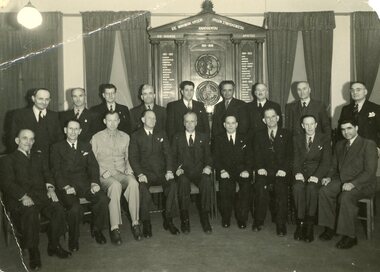
... Returned Servicemen's League hall which was located in Russell Street, Melbourne. The honour board, erected in memory of Greek soldiers, features battle fields where the Greek army participated from 1821, the beginning of Greek War of Independence against the Ottoman Empire, through to World War 2 and the Italian and German occupation of Greece. The man seated in front in an army uniform is an American serviceman. Seated fourth from the left is Spiros E. Raftopoulos who was president of the organisation from 1944 - 1968. Today the Hellenic RSL sub-Branch of Victoria represents and supports the Greek Australian veteran community. In 1978 ...The eighteen men are assembled at the Greek Returned Servicemen's League hall which was located in Russell Street, Melbourne. The honour board, erected in memory of Greek soldiers, features battle fields where the Greek army participated from 1821, the beginning of Greek War of Independence against the Ottoman Empire, through to World War 2 and the Italian and German occupation of Greece. The man seated in front in an army uniform is an American serviceman. Seated fourth from the left is Spiros E. Raftopoulos who was president of the organisation from 1944 - 1968. Today the Hellenic RSL sub-Branch of Victoria represents and supports the Greek Australian veteran community. In 1978 the organisation joined the Returned and Services League of Australia. The Hellenic RSL sub-Branch commemorates all the Greek and Australian national days each year and proudly marches on Anzac Day in Melbourne, alongside veterans from the wars of Korea, Vietnam, and Afghanistan and earlier wars. On Anzac Day 2013 members of the IPS took part in the Anzac Day march for the first time. Greek national days are commemorated with wreath-laying ceremonies inside the Shrine of Remembrance in Melbourne, at which the IPS participates.A black and white photograph of eighteen men seated and standing in front of an honour board, which has curtains on either side of it. -
 Narre Warren and District Family History Group
Book, James Bodell, A soldier's view of empire : the reminiscences of James Bodell, 1831-92, 1982
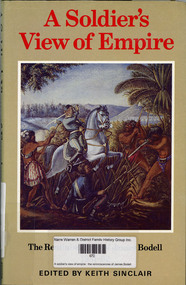
... return trips to England to visit his family in Leicester. In about 1881 he began to write his reminiscences, an ambitious undertaking for a man with so little formal education, and in 1978, on the death of one of his English descendants, the original manuscript was offered to the Bodley Head for publication. ...James Bodell was born in 1831 near Nottingham, the son of poor parents. At sixteen he enlisted in the army and was sent first to Ireland, then slowly recovering from the great potato famine, and then to Hong Kong, where most of his regiment died of malaria or other tropical diseases. He bought himself out of the army and went to Van Doiemen's Land (later Tasmania) where he kept a hotel, but eventually became disgusted with the atmosphere of a recent convict settlement. In 1856 he moved to Victoria, where the great gold rush had begun, prospered, but finally lost his money in unwise speculation during a period of excessive drinking. In 1863 he volunteered to serve in New Zealand in the Maori wars. Discharged in 1866, he was given a town lot of land as well as farming land by the government at the town of Tauranga, where he was an outstanding pioneer, making money and becoming Mayor. He later made two return trips to England to visit his family in Leicester. In about 1881 he began to write his reminiscences, an ambitious undertaking for a man with so little formal education, and in 1978, on the death of one of his English descendants, the original manuscript was offered to the Bodley Head for publication. It has been edited by Keith Sinclair and presents a unique picture of how the British Empire was colonised and what life in the British army of the time was like. This is a frank, often amusing and colourful account of the Empire seen from below. (Inside cover)non-fictionJames Bodell was born in 1831 near Nottingham, the son of poor parents. At sixteen he enlisted in the army and was sent first to Ireland, then slowly recovering from the great potato famine, and then to Hong Kong, where most of his regiment died of malaria or other tropical diseases. He bought himself out of the army and went to Van Doiemen's Land (later Tasmania) where he kept a hotel, but eventually became disgusted with the atmosphere of a recent convict settlement. In 1856 he moved to Victoria, where the great gold rush had begun, prospered, but finally lost his money in unwise speculation during a period of excessive drinking. In 1863 he volunteered to serve in New Zealand in the Maori wars. Discharged in 1866, he was given a town lot of land as well as farming land by the government at the town of Tauranga, where he was an outstanding pioneer, making money and becoming Mayor. He later made two return trips to England to visit his family in Leicester. In about 1881 he began to write his reminiscences, an ambitious undertaking for a man with so little formal education, and in 1978, on the death of one of his English descendants, the original manuscript was offered to the Bodley Head for publication. It has been edited by Keith Sinclair and presents a unique picture of how the British Empire was colonised and what life in the British army of the time was like. This is a frank, often amusing and colourful account of the Empire seen from below. (Inside cover)james bodell, maori wars -
 Moorabbin Air Museum
Manual - CAC Sabre Fatigue data return RMAF FM 1978 Butterworth 11 Squadron, CAC Sabre Fatigue data Butterworth
... CAC Sabre Fatigue data return RMAF FM 1978 Butterworth 11 Squadron...CAC Sabre Fatigue data Butterworth Manual CAC Sabre Fatigue data return RMAF FM 1978 Butterworth 11 Squadron ... -
 Royal Australasian College of Surgeons Museum and Archives
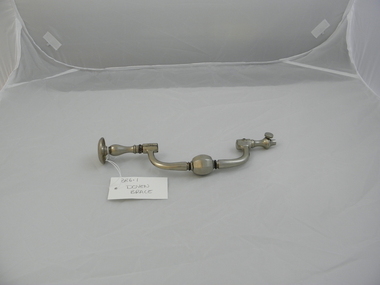
Equipment - Doyen Brace, late 19th/ early 20th century
... Martins fee allowed him to return to England and obtain a degree from Cambridge. in 1888 he returned to Adelaide and became a very successful physician and surgeon, said to be the first surgeon in South Australian to remove a brain tumor in 1901. The brace was later used by Sir Leonard Lindon (1896- 1978...Martins fee allowed him to return to England and obtain a degree from Cambridge. in 1888 he returned to Adelaide and became a very successful physician and surgeon, said to be the first surgeon in South Australian to remove a brain tumor in 1901. The brace was later used by Sir Leonard Lindon (1896- 1978 ...This brace was used in Adelaide by Dr R. Humphrey Marten (1860-1933). he was an English general practitioner who graduated from University College Hospital in 1883. He came to Australia as custodian of a mentally deranged patient. Martins fee allowed him to return to England and obtain a degree from Cambridge. in 1888 he returned to Adelaide and became a very successful physician and surgeon, said to be the first surgeon in South Australian to remove a brain tumor in 1901. The brace was later used by Sir Leonard Lindon (1896- 1978) one of the eight founders of the Neurosurgical Society of Australasia, who had married Marten's daughter.Having been used by two important figures in surgery during the 20th century this item is an excellent representation of the brace described by Eugene Doyen (1859-1916) of Paris in 1896. It is used in conjunction with a perforator, spherical burrs and a n electric saw.Small Brace measuring 25.5 cm, from the handle to the socket. It is nickel plated.doyen, brace, lindon, marten, surgery, neurosurgery. -
 Royal Australasian College of Surgeons Museum and Archives
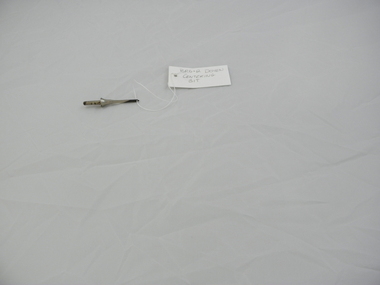
Tool - Doyen Centering Bit
... In 1888 he returned to Adelaide and became a very successful physician and surgeon, said to be the first surgeon in South Australian to have removed a brain tumor in 1901. The brace was later used by Sir Leonard Lindon (1896- 1978...In 1888 he returned to Adelaide and became a very successful physician and surgeon, said to be the first surgeon in South Australian to have removed a brain tumor in 1901. The brace was later used by Sir Leonard Lindon (1896- 1978 ...This attachment was used in Adelaide by Dr R. Humphrey Marten (1860-1933). He was an English general practitioner who graduated from University College Hospital in 1883. He came to Australia as custodian of a mentally deranged patient. Martins fee allowed him to later return to England and obtain a degree from Cambridge. In 1888 he returned to Adelaide and became a very successful physician and surgeon, said to be the first surgeon in South Australian to have removed a brain tumor in 1901. The brace was later used by Sir Leonard Lindon (1896- 1978) one of the eight founders of the Neurosurgical Society of Australasia, who had married Marten's daughter.Having been used by two important figures in surgery during the 20th century this item is an excellent representation of the brace described by Eugene Doyen (1859-1916) of Paris in 1896. It is used in conjunction with a perforator, spherical burrs and an electric saw.small tapered attachment for Doyen Bracedoyen, brace, lindon, marten, surgery, centering bit, neurosurgery. -
Glen Eira Historical Society
Article - VICTORIAN RAILWAYS
... Reference to council minutes regarding request to change the name of Elsternwick station to Caulfield in June 1871. 2/Original newspaper article from ‘The Age’ dated 10/06/1978 by Graeme Davidson titled ‘A case study of Railway politics’. Article refers to a publication called ‘Return to Rosstown, Railway, Land Sales and Sugar Beet ventures in Caulfield’ by D. ...Reference to council minutes regarding request to change the name of Elsternwick station to Caulfield in June 1871. 2/Original newspaper article from ‘The Age’ dated 10/06/1978 by Graeme Davidson titled ‘A case study of Railway politics’. Article refers to a publication called ‘Return to Rosstown, Railway, Land Sales and Sugar Beet ventures in Caulfield’ by D. ...File contains 3 items: 1/Original handwritten notes by Leo J Harrington (VR Melbourne) and T O’Callaghan titled ‘Victorian Railways to ‘62’. Notes include dates of electrification of lines, station openings, valuations, railway station names and their origins. Reference to council minutes regarding request to change the name of Elsternwick station to Caulfield in June 1871. 2/Original newspaper article from ‘The Age’ dated 10/06/1978 by Graeme Davidson titled ‘A case study of Railway politics’. Article refers to a publication called ‘Return to Rosstown, Railway, Land Sales and Sugar Beet ventures in Caulfield’ by D. F. ‘Return to Rosstown’ recounts the story of the Rosstown Junction railway and its creator, William Murray Ross. Tells of Ross’ life since coming to Australia from Liverpool and how he prospered as a land speculator owning large tracts of land in Caulfield, the sugar mill and his plans to operate a railway. 3/Original newspaper article (and image) from ‘Moorabbin Standard’ dated 25/11/1981, titled ‘Centenary train to carry mayors’. Article reports that a special train will run from Spencer Street Station to Mordialloc railway Station on Saturday 19/12/1981 to celebrate the centenary of the railway line to Mordialloc. Story mentions that in 1881, the Caulfield to Mordialloc line was a single track and that passengers can also board the special train at Caulfield Station. Image is of steam train with red ‘tait’ carriages (undated).victorian railways, caulfield, glenhuntly, glen huntly, elsternwick, carnegie, murrumbeena, ormond, steam train, glenhuntly road, glen huntly road, ripponlea, north road, rosstown, rosstown junction railway, ross william murray, railways, trains, south caulfield, grange road, railway stations, mirrambeena, caulfield city council, sugar mill, electrification. -
 Bendigo Military Museum
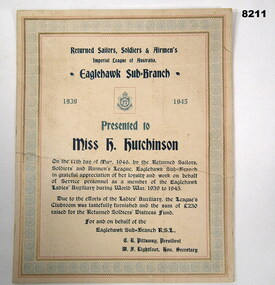
Certificate - APPRECIATION EAGLEHAWK RSL AUXILIARY, C. May 1946
... The Auxiliaries efforts abled the furnishing of the Club rooms and raise 230.00 Pounds for the Returned Soldiers Distress Fund. Hanna was awarded the BEM (British Empire Medal in 1978 Refer Cat No 8212.2 for her Sister Florrie and Photo Cat No 8200P. ...The Auxiliaries efforts abled the furnishing of the Club rooms and raise 230.00 Pounds for the Returned Soldiers Distress Fund. Hanna was awarded the BEM (British Empire Medal in 1978 Refer Cat No 8212.2 for her Sister Florrie and Photo Cat No 8200P. brsl smirsl auxiliary certificate Ehrsl Main points, "Eagle Hawk RSL Sub Branch", "Presented to Miss H Hutchinson" Certificate on cardboard cream coloured with ornate edging in red, blue and brown, all printed text in black & blue, covers the years 1939 - 45, dated at the bottom. ...This certificate was awarded by the Eaglehawk RSL Sub Branch to Miss H. Hutchinson (Hanna) on 17.5.1946 in Appreciation and loyalty to Service personnel as a Member of the Eaglehawk Ladies Auxiliary during the War years. The Auxiliaries efforts abled the furnishing of the Club rooms and raise 230.00 Pounds for the Returned Soldiers Distress Fund. Hanna was awarded the BEM (British Empire Medal in 1978 Refer Cat No 8212.2 for her Sister Florrie and Photo Cat No 8200P. Certificate on cardboard cream coloured with ornate edging in red, blue and brown, all printed text in black & blue, covers the years 1939 - 45, dated at the bottom.Main points, "Eagle Hawk RSL Sub Branch", "Presented to Miss H Hutchinson"brsl, smirsl, auxiliary, certificate, ehrsl
