
Showing 51 items matching "returned nurses members"
-
 Returned Nurses RSL Sub-branch
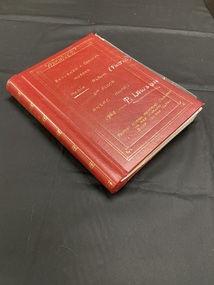
Album - Photograph and media album, Archives: Returned and Services Nurses Media Album, unknown
... Returned Nurses...Returned Nurses Members.... - Programs and menu's from commemorative ceremonies for Returned Nurses - memorabilia from memorial services -handwritten profiles of nurses such as Lieutenant Bertha Alma Hewson - a typed account and photocopies of photos from Sister Kathleen Teresia Keely's wedding at Moratai - Annual reports - photos of 113 AGH Sisters in Darwin Royal Australian Army Nursing Corps RAANC ceremonies Anniversaries WWII Second World War WW2 Military nursing - Australia Bertha Alma Hewson 113 Australian General Hospital Australian Army Nursing Service AANS Returned Nurses Returned Nurses Members ' "ARCHIVES" / RETURNED + SERVICES / NURSES. / MEDIA ALBUM. / 2nd FLOOR / ANZAC HOUSE / 1963 / Photos: NURSES MEMORIAL CANBERRA / 113 AGH. ...A collection of media archived by the Returned and Services Nurses relating to Australian Army nurses and nursing. The collection includes: - newspaper clippings relating to nursing, nurses and the Australian Army Nursing Service, published between 1963-1999. - Programs and menu's from commemorative ceremonies for Returned Nurses - memorabilia from memorial services -handwritten profiles of nurses such as Lieutenant Bertha Alma Hewson - a typed account and photocopies of photos from Sister Kathleen Teresia Keely's wedding at Moratai - Annual reports - photos of 113 AGH Sisters in Darwin Dark red spiral bound photograph album with gold ornate pattern down the spine. An ornate gold triple line border on the front cover with gold handwriting and additional inscriptions in silver marker. The inside pages are paper with plastic pocket inserts across three quarters of each page, the remaining quarter of each page has lined memo sections to fill in. The album contains a variety of mixed media.' "ARCHIVES" / RETURNED + SERVICES / NURSES. / MEDIA ALBUM. / 2nd FLOOR / ANZAC HOUSE / 1963 / Photos: NURSES MEMORIAL CANBERRA / 113 AGH. DARWIN / BCOF. 130 AGH. JAPAN.' [Hand written in gold ink on the front cover] 'SB / 9' [Hand written in silver ink on the spine] '(PHOTOS) / B.LAWSON' [handwritten in silver marker on the front cover]royal australian army nursing corps, raanc, ceremonies, anniversaries, wwii, second world war, ww2, military nursing - australia, bertha alma hewson, 113 australian general hospital, australian army nursing service, aans, returned nurses, returned nurses members -
 Returned Nurses RSL Sub-branch
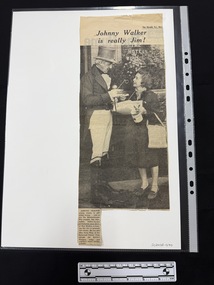
Newspaper - Newspaper clipping, The Herald, Johnny Walker is really Jim!, Friday, November 7 1975
... Photograph depicts a Returned Nurses Club member selling poppies and taking donations for Rememberance Day. ...Photograph depicts a Returned Nurses Club member selling poppies and taking donations for Rememberance Day. ...Photograph depicts a Returned Nurses Club member selling poppies and taking donations for Rememberance Day. The nurse is [Edna Nell] Anna Doig.Newspaper clipping of a large black and white photograph of an older man in a top hat talking to a shorter woman holding a collection tin. The photograph has a caption and heading.returned nurses club, anna doig, edna nell doig -
 Returned Nurses RSL Sub-branch
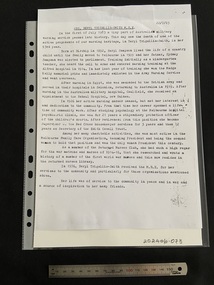
Document - Photocopy of a typed biographical piece written about Beryl Trigellis-Smith on her passing, Mrs. Beryl Trigellis-Smith M.B.E, 22/7/85
... A piece of writing detailing the life of Returned Nurses Club member, Beryl Trigellis-Smith (Sampson) who passed away on July 1st, 1985....A piece of writing detailing the life of Returned Nurses Club member, Beryl Trigellis-Smith (Sampson) who passed away on July 1st, 1985. ...A piece of writing detailing the life of Returned Nurses Club member, Beryl Trigellis-Smith (Sampson) who passed away on July 1st, 1985.Typed document with the title underlined at the top and the date in the right corner, followed by eight short paragraphs.returned nurses club, army nurses, beryl sampson, army nursing service -
 Returned Nurses RSL Sub-branch
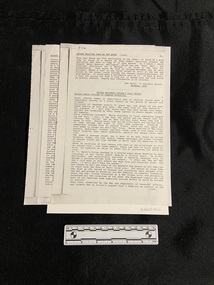
Document - Copy of an article, Lex Arthurson, Bloody bayonets couldn't kill spirit: nurses honor victims of Japanese brutality, 1992
... It was attended by returned nurses and family members of those killed or who died in the camps and the Japanese bombings of ships. ...It was attended by returned nurses and family members of those killed or who died in the camps and the Japanese bombings of ships. ...An article submitted to the Ex Prisoners of War & Relatives Association by Lex Arthurson, to be included in their newsletter. The article is an account of the trek to Bangka Island for the memorial ceremony for those that did not make it home. It was attended by returned nurses and family members of those killed or who died in the camps and the Japanese bombings of ships. The nurses all agreed "we survived because we helped each other and cared for each other".Three single-sided sheets of A4 paper with black type on each. There are margin line marks from where the pages were photocopied from a book.'H74' [handwritten in blue ink in the top left corner of first page]australian army nurses, wwii, ww2, world war two, australian prisoners of war, pows, vyner brooke, vivian statham (nee bullwinkel), bangka island memorial, memorial ceremonies, ellen mavis hannah, ellen mavis allgrove, joyce tweddell, jean ashton, wilma elizabeth forster oram -
 Returned Nurses RSL Sub-branch
Album - Photograph album, Post WWII Corps and RNC, 1994[?]
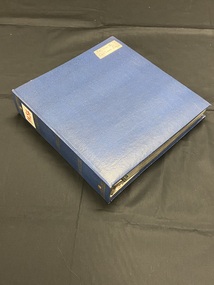
... Three undated sepia coloured photographs of inside the office of the Returned Nurses Club. A variety of coloured photos of Returned Nurses Club members at memorials and events [1994?] ...Three undated sepia coloured photographs of inside the office of the Returned Nurses Club. A variety of coloured photos of Returned Nurses Club members at memorials and events [1994?] ...Seven colour 6x4 photographs taken at the ceremony for the Royal Australian Army Nurses Corps (RAANC) Badged Door Dedication in Kapooka on Saturday October 15th, 1994. Six 6x4 coloured photographs from the ANZAC March in 1994. Three undated sepia coloured photographs of inside the office of the Returned Nurses Club. A variety of coloured photos of Returned Nurses Club members at memorials and events [1994?] A copy of a printed article regarding the Vietnam Women's Memorial (titled: Women of the war by Jeanne Wong). A souvenir card with a photo of Queen Elizabeth. Six photos of the floral garden opposite Victoria Barracks taken in 1983. A 6.5x10 black and white photo of a post war ANZAC Day March. Three ring binder photograph album. The cover is mottled dark blue and black. There are five sets of three gold horizontal lines spaced out down the spine. At the top of the spine is a large white sticker with PA54 in red marker. The top right corner of the front cover has a label with the title handwritten on it in black ink. Inside there are 40 double-sided black self-adhesive pages with plastic covers.[Most pages of photographs have a caption handwritten in blue ink on a white label at the top of the page, some pages have the label further down the page and the caption is typed] 'PA54' [Hand written in red marker on a white label on the spine] 'POST WWII / CORPS AND RNC' [Hand written in black ink on a label attached to the front cover]royal australian army nursing corps, raanc, ceremonies, kapooka, returned nurses club, anzac day march, floral garden - victoria barracks, vietnam women's memorial, betty morton, matron johns, mrs. shippen, jean poulter, betty lawson, billie lindsay, eve graham -
 Returned Nurses RSL Sub-branch
Newspaper - Photocopy of newspaper clippings and a photo, Wodonga local paper, Nellie and Ruth are mates from way back (photocopy), February 1996
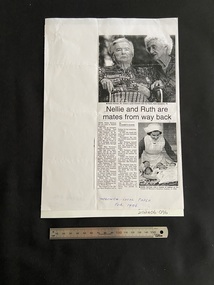
... Article about the friendship between two Returned Nurses; 84 year old Nellie Norman (a resident at Osburn Lodge Wodonga) and 75 year old Ruth Sampson (who visits old soldiers and returned nurses as an RSL member). ...Article about the friendship between two Returned Nurses; 84 year old Nellie Norman (a resident at Osburn Lodge Wodonga) and 75 year old Ruth Sampson (who visits old soldiers and returned nurses as an RSL member). ...Article about the friendship between two Returned Nurses; 84 year old Nellie Norman (a resident at Osburn Lodge Wodonga) and 75 year old Ruth Sampson (who visits old soldiers and returned nurses as an RSL member). Mrs Sampson had one wish, to push Mrs Norman in the ANZAC Day parade. The second page shows a copy of a photo of her fulfilling that wish at the Wodonga ANZAC March in 1996.Photocopy of a newspaper clipping on one page and a photo that accompanies the clipping on the second page.'WODONGA LOCAL PAPER / FEB. 1996' [Handwritten in blue ink on the bottom of the first page] 'NC9' [Handwritten in blue ink at the top of the second page]nellie norman, ruth sampson, military nurses, wodonga - victoria -
 Mission to Seafarers Victoria
Photograph, French sailors at zoo - Madame Lion & Miss Godfrey, 1917
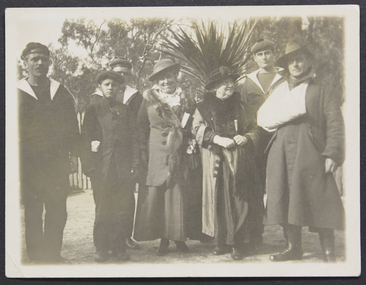
... nurse wounded soldiers. And returned to Adelaide in 1916 after Marie contracted an infection. She was the South Australia representative of the "Société d’assistance maternelle et infantile". After the end of the war a number of French villages were ‘adopted’ by cities in Australia. Dernancourt, a small village in the Somme was adopted by Adelaide, and Mme Mouchette and Mme Lion worked to raise funds to help in the rebuilding of the almost completely destroyed town. The picture shows the link with the French community. Ethel and her sister Frederica Godfrey could speak French and were well acquainted with the members ...Marie Lion migrated with her sister, Berthe Mouchette and her husband in 1885. Berthe established an art school in the city. After the death of her husband the sisters purchased a school, Oberwyl, in St Kilda in 1885. The school was later one of the LHLG schools. Berthe was the founder of the Alliance Française of Melbourne in 1890. With the Great Depression, the sisters had to sell Oberwyl and moved to Adelaide. They returned to France during WWI to nurse wounded soldiers. And returned to Adelaide in 1916 after Marie contracted an infection. She was the South Australia representative of the "Société d’assistance maternelle et infantile". After the end of the war a number of French villages were ‘adopted’ by cities in Australia. Dernancourt, a small village in the Somme was adopted by Adelaide, and Mme Mouchette and Mme Lion worked to raise funds to help in the rebuilding of the almost completely destroyed town.The picture shows the link with the French community. Ethel and her sister Frederica Godfrey could speak French and were well acquainted with the members of this community: Charlotte Crivelli for example. Frederica was secretary of the Alliance Française of Melbourne in the early 1900, in 1917 she also became Honorary Secretary of the French Red Cross, funded by Charlotte Crivelli.Portait of two ladies standing in the middle with 3 soldiers from the French Navy, a wounded digger and a young man.French sailors at zoo / Madame Leon (Lion is the correct spelling) & Miss Godfreylion, marie (1855–1922), mouchette, berthe (1846–1928) nee lion, alliance française of melbourne, société d’assistance maternelle et infantile, france, french, zoo, french red cross, crivelli, charlotte (1863–1956), anzac, french navy, oberwyl, ethel augusta godfrey 1861-1935, frederica godfrey -
 Shepparton RSL Sub Branch
Uniform, Great Coat
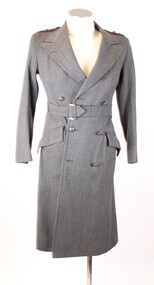
... The uniform set has social significance to the Shepparton area, being owned and worn by a serving community member who was born in Numurkah, enlisted in Shepparton and returned to the community in later life. second world war world war ii medical wwii nurse women Shoulder flashes read "AUSTRALIA" and "BRITISH COMMONWEALTH FORCES". ...Coat worn by Sister Danson (VFX151507) during the British presence in Japan following the end of the Second World War. About 16,000 Australians served in the British Commonwealth Occupation Forces, including 130 from the Australian General Hospital with whom Sister Danson presumably served. Sister Danson was born in Numurkah and served as Leiutentant with the Heidelberg Military Hospital before embarking for Japan in 1947.This coat is part of a complete uniform set held by the Shepparton RSL. The uniform has representative and historic significance as an example of the style of uniform worn by nursing staff of the Australian General Hospital during the 1940s and into the 1950s. The uniform set has social significance to the Shepparton area, being owned and worn by a serving community member who was born in Numurkah, enlisted in Shepparton and returned to the community in later life.Shin length grey woollen double breasted coat fastened with three buttons on front centre. Interior bakelite or plastic button fastens panels on interior. Two hip-height pockets with folded flap on exterior. Grey fabric belt fastened with a metal buckle; belt is held in place with two fabric loops on either side of the waist. "AUSTRALIA" shoulder flashes on both left and right shoulders; on left arm a blue and brown rectangular colour patch and on the right arm, a blue square patch with embroidered crown and the words "BRITISH COMMONWEALTH FORCES." Epaulettes on either shoulder carry two metal badges signifying a senior Sister and fastened with a metal button. A pin is missing from the base of the epaulette. Interior lined with purple-grey lining; pocket on interior left chest and manufacturer's label at base of neck underneath loop.Shoulder flashes read "AUSTRALIA" and "BRITISH COMMONWEALTH FORCES". Label reads "TAILORS & HABIT/MAKERS/J. RAVENSDALE/& SON/NICHOLAS BLDG./SWANSTON ST MELBOURNE/SISTER DANSON". Buttons read "AUSTRALIAN MILITARY FORCES"second world war, world war ii, medical, wwii, nurse, women -
 Shepparton RSL Sub Branch
Uniform, Jacket Belt
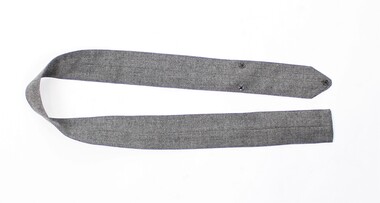
... The uniform set has social significance to the Shepparton area, being owned and worn by a serving community member who was born in Numurkah, enlisted in Shepparton and returned to the community in later life. second world war world war ii medical wwii nurse women Grey fabric belt fastened with a metal buckle; belt is held in place with two fabric loops on either side of the waist. ...Part of a jacket worn by Sister Danson (VFX151507) during the British presence in Japan following the end of the Second World War. About 16,000 Australians served in the British Commonwealth Occupation Forces, including 130 from the Australian General Hospital with whom Sister Danson presumably served. Sister Danson was born in Numurkah and served as Leiutentant with the Heidelberg Military Hospital before embarking for Japan in 1947.This belt is part of a complete uniform set held by the Shepparton RSL. The uniform has representative and historic significance as an example of the style of uniform worn by nursing staff of the Australian General Hospital during the 1940s and into the 1950s. The uniform set has social significance to the Shepparton area, being owned and worn by a serving community member who was born in Numurkah, enlisted in Shepparton and returned to the community in later life.Grey fabric belt fastened with a metal buckle; belt is held in place with two fabric loops on either side of the waist.second world war, world war ii, medical, wwii, nurse, women -
 Shepparton RSL Sub Branch
Uniform, Badge
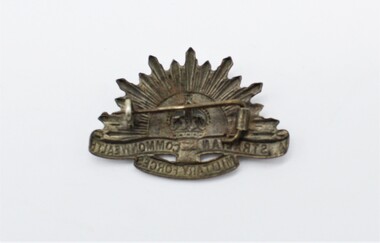
... The uniform set has social significance to the Shepparton area, being owned and worn by a serving community member who was born in Numurkah, enlisted in Shepparton and returned to the community in later life. second world war world war ii medical wwii nurse women badge australian commonwealth military forces military Dark brown metallic badge with pin on the back for fastening. ...This badge is attached to a tie which was worn as part of an official uniform by Sister Danson (VFX151507) during the British presence in Japan following the end of the Second World War. About 16,000 Australians served in the British Commonwealth Occupation Forces, including 130 from the Australian General Hospital with whom Sister Danson presumably served. Sister Danson was born in Numurkah and served as Leiutentant with the Heidelberg Military Hospital before embarking for Japan in 1947.This badge is part of a complete uniform set held by the Shepparton RSL. The uniform has representative and historic significance as an example of the style of uniform worn by nursing staff of the Australian General Hospital during the 1940s and into the 1950s. The uniform set has social significance to the Shepparton area, being owned and worn by a serving community member who was born in Numurkah, enlisted in Shepparton and returned to the community in later life.Dark brown metallic badge with pin on the back for fastening. The badge has embossed features. These depict a crown in the centre, a crescent shaped section which is meant to represent the rising sun and which half encircles the crown as well as three pieces of ribbon (metallic) with the embossed words "Australian Commonwealth Military Forces".second world war, world war ii, medical, wwii, nurse, women, badge, australian commonwealth military forces, military -
 City of Moorabbin Historical Society (Operating the Box Cottage Museum)
Certificate - Certificate of General Nursing - Mary Beatrice Josephine Maggs, 1919
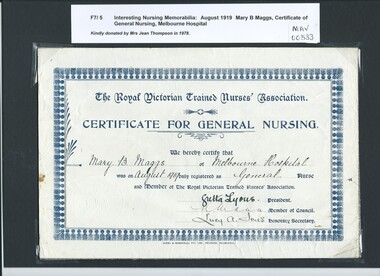
... When she returned to Australia in 1924 she was head nurse at a number of Hospitals, Private Hospital in Loch, Tatura Bush Nursing Home, Mooroopna. maggs mary medicine nursing thompson jean hospitals early settlers pioneers melbourne hospital The Royal Victorian Trained Nurses Association / CERTIFICATE FOR GENERAL NURSING / Signed by President, Member of Council, Secretary Certificate of General Nursing 1919 of Mary B Maggs Certificate Certificate of General Nursing - Mary Beatrice Josephine Maggs Government Printer ...Mary Beatrice Josephine Maggs (1892-1960) came to Australia in 1914 and was a governess for Mr Alfred Rutter Clarke at his mansion "Merriwa" on Orrong Road, Toorak. Mary returned to England in 1919 and furthered her studies in nursing. When she returned to Australia in 1924 she was head nurse at a number of Hospitals, Private Hospital in Loch, Tatura Bush Nursing Home, Mooroopna. Certificate of General Nursing 1919 of Mary B MaggsThe Royal Victorian Trained Nurses Association / CERTIFICATE FOR GENERAL NURSING / Signed by President, Member of Council, Secretarymaggs mary, medicine, nursing, thompson jean, hospitals, early settlers, pioneers, melbourne hospital -
 Eltham District Historical Society Inc
Photograph, Returned soldiers picnic, Police Paddocks, Queenstown, c.1916, c.1916
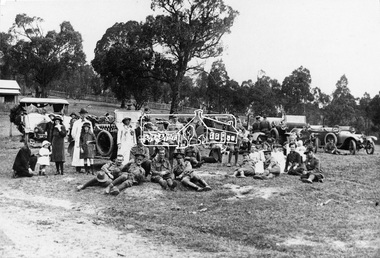
... returned servicemen from Gallipoli. This photo was taken in front of the Police Paddocks with the police station on the left. Model T Fords parked with soldiers, drivers and locals resting on the police paddock in front of the Queenstown (St Andrews) station. The RACV Volunteer Motor Corps service during World War One was the reason the organisation was granted its Royal prefix. Automobile Club of Victoria members volunteered their time and vehicles to collect returning soldiers and nurses...returned servicemen from Gallipoli. This photo was taken in front of the Police Paddocks with the police station on the left. Model T Fords parked with soldiers, drivers and locals resting on the police paddock in front of the Queenstown (St Andrews) station. The RACV Volunteer Motor Corps service during World War One was the reason the organisation was granted its Royal prefix. Automobile Club of Victoria members volunteered their time and vehicles to collect returning soldiers and nurses ...Possibly a picnic for returned servicemen from Gallipoli. This photo was taken in front of the Police Paddocks with the police station on the left. Model T Fords parked with soldiers, drivers and locals resting on the police paddock in front of the Queenstown (St Andrews) station. The RACV Volunteer Motor Corps service during World War One was the reason the organisation was granted its Royal prefix. Automobile Club of Victoria members volunteered their time and vehicles to collect returning soldiers and nurses from ships at Princes Pier, Port Melbourne. Trips were also often arranged for convalescing soldiers to country areas for picnics and to “revive spirits”. The soldiers were also picked up from the Austin Hospital in Heidelberg and Mont Park Military Hospital in Macleod. Queenstown (St Andrews) was a common picnic spot. The Evelyn Observer reported on June 9. 1916 "Some 75 returned soldiers visited Queenstown on Sunday, 28th ult., and were hospitably entertained by local residents who had provided refreshments sufficient for 150. Mr. Milne in an appropriate speech welcomed the soldiers, and Mr. Robison suitably responded.” The photo was reproduced page 108 of “The Diamond Valley Story" by Diane H. Edwards.This photo forms part of a collection of photographs gathered by the Shire of Eltham for their centenary project book,"Pioneers and Painters: 100 years of the Shire of Eltham" by Alan Marshall (1971). The collection of over 500 images is held in partnership between Eltham District Historical Society and Yarra Plenty Regional Library (Eltham Library) and is now formally known as the 'The Shire of Eltham Pioneers Photograph Collection.' It is significant in being the first community sourced collection representing the places and people of the Shire's first one hundred years.Digital image, 16 x 24 and 12.5 x 9 cm and 4 x 5 inch B&W Neg sepp, shire of eltham pioneers photograph collection, queenstown, cars, police station, st andrews, soldiers, picnic, exhibition yprl 2019-12, gallipoli, model t ford, pioneers and painters, police paddocks, retuned soldiers -
 Bendigo Historical Society Inc.
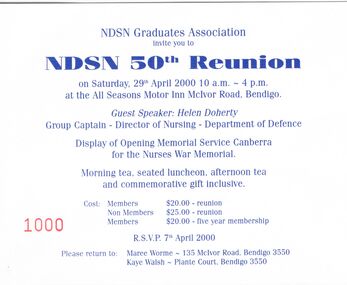
Document - NDSN GRADUATES ASSOCIATION: INVITATION, 7th April 2000
... Display of Opening Memorial Service Canberra for the Nurses War Memorial.Morning tea, seated luncheon, afternoon tea and commemorative gift inclusive.Cost: Members $20.00-reunion; Non Members $25.00- reunion, Members $20.00- five year membership. R.S.V.P. 7th April 2000. Please return...Display of Opening Memorial Service Canberra for the Nurses War Memorial.Morning tea, seated luncheon, afternoon tea and commemorative gift inclusive.Cost: Members $20.00-reunion; Non Members $25.00- reunion, Members $20.00- five year membership. R.S.V.P. 7th April 2000. Please return ...Events, NDSN Graduates Association invite you to NDSN 50th Reunion on Saturday 20th April 2000 10a.m. - 4p.m. at the All Seasons Motor Inn McIvor Road, Bendigo.Guest Speaker: Helen Doherty Group Captain- Director of Nursing- Department of Defence. Display of Opening Memorial Service Canberra for the Nurses War Memorial.Morning tea, seated luncheon, afternoon tea and commemorative gift inclusive.Cost: Members $20.00-reunion; Non Members $25.00- reunion, Members $20.00- five year membership. R.S.V.P. 7th April 2000. Please return to : Maree Worme, 135 McIvor Road, Bendigo,3550., Kaye Walsh, Plante Court, Bendigo 3550. The number of the ticket is 1000.bendigo, hospital, northern district school of nursing -
 Wangaratta RSL Sub Branch
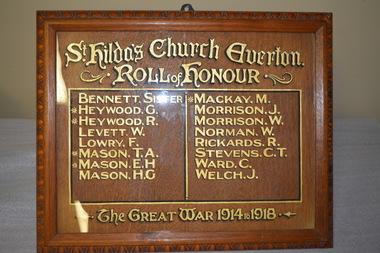
Honour Board - Framed Roll of Honour, St. Hilda's Church, Everton
... nurse in an Army Hospital. During her stay she was invited to Buckingham Palace where she was presented with Red Cross Medal by King George V. BENNETT returned to Victoria and was invited to join the nursing staff at Melbourne's Epworth Hospital with prospects of becoming Matron. Ill health intervened and she died in September 1922. Item said to be made by the family of Gilbert and Richard Heywood both KIA and listed on honour roll. St Hilda's Church Everton Honour Roll contains 16 names of members ...St Hilda's Church Everton, WW1 Roll of Honour - contains 16 names of members of the Everton Community in Victoria who served during the First World War including Nursing Sister Alma Louisa BENNETT (1890-1922) who trained at Melbourne General Hospital. She moved to Western Australia and continued nursing until the advent of World War 1. She immediately sought to enlist but was not granted her request until 1916 and was eventually sent for nursing duties in India. Her arrival coincided with the first convey of wounded after the fall of Kut in Mesopotamia. She was immediately given charge of a ward at Victoria Hospital. The following year she was appointed Matron of the hospital ship "Herefordshire" which transported sick and wounded soldiers from the mouth of the Tigris River to Bombay. Her next appointment was to the 34th Welsh Hospital at Deolali 150 miles from Bombay. The hospital was huge and she took charge as Matron. After 17 months at Deolali BENNETT was awarded the Royal Red Cross Medal First Class one of the highest distinctions in the British Nursing Service. When peace was declared she travelled to England where she continued to nurse in an Army Hospital. During her stay she was invited to Buckingham Palace where she was presented with Red Cross Medal by King George V. BENNETT returned to Victoria and was invited to join the nursing staff at Melbourne's Epworth Hospital with prospects of becoming Matron. Ill health intervened and she died in September 1922. Item said to be made by the family of Gilbert and Richard Heywood both KIA and listed on honour roll.St Hilda's Church Everton Honour Roll contains 16 names of members including Nurse BENNETT, from the Everton Community in Victoria who served in WW1 Carved timber frame and mounting with 16 names in gold coloured paint listed in two columns."St Hilda's Church Everton' "Roll of Honour" "The Great War 1914 to 1918" Sister Bennett/Heywood G/Heywood R/Levett W/Lowry F/Mason T.A/Mason E.H/Mason H.G/MacKay M/Morrison J/Morrison W/Norman W/Rickards R/Steens C.T/Ward C/Welch J.everton, 1914-1918, roll of honour -
 Uniting Church Archives - Synod of Victoria
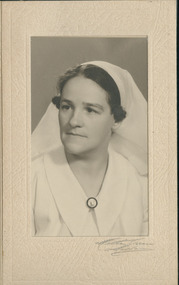
Photograph, C1947
... nurse, Hilda Foster trained to be a Sunday School teacher and was a member of the Sunday School Council of Victoria. She completed first aid courses run through the Presbyterian Deaconesses Institute in Carlton, Victoria, and in 1930 successfully applied to become a trainee nurse at the Austin Hospital for Incurables, in Heidelberg. She commenced her training there in 1931, before moving to the Women's Hospital in 1933. In 1934 she had six months at the Fairfield Infectious Diseases Hospital, before returning...nurse, Hilda Foster trained to be a Sunday School teacher and was a member of the Sunday School Council of Victoria. She completed first aid courses run through the Presbyterian Deaconesses Institute in Carlton, Victoria, and in 1930 successfully applied to become a trainee nurse at the Austin Hospital for Incurables, in Heidelberg. She commenced her training there in 1931, before moving to the Women's Hospital in 1933. In 1934 she had six months at the Fairfield Infectious Diseases Hospital, before returning ...Hilda Charlotte Foster, 1902 - 1990, was a Double Certified Nurse when, at the age of 35, she successfully applied to the board of the Australian Inland Mission (AIM) to work at an outback field centre in South Australia. Born and raised in suburban Melbourne, she had been inspired by stories told to her by other missionaries about the fulfilment to be gained working amongst Aboriginal communities. Given her religious faith and nursing skills, she believed she could make a difference. She worked in Oodnadatta in South Australia for two years (1937-1939), followed by a stint in Innamincka in New South Wales in 1940 -1942. Before she became a nurse, Hilda Foster trained to be a Sunday School teacher and was a member of the Sunday School Council of Victoria. She completed first aid courses run through the Presbyterian Deaconesses Institute in Carlton, Victoria, and in 1930 successfully applied to become a trainee nurse at the Austin Hospital for Incurables, in Heidelberg. She commenced her training there in 1931, before moving to the Women's Hospital in 1933. In 1934 she had six months at the Fairfield Infectious Diseases Hospital, before returning to the Austin, where she was employed when she sat her final exams in November 1934. Her combined skills made her a most attractive option for the Australian Inland Mission. As well as being multi-skilled as a nurse, she provided religious instruction and spiritual ministry to members of the community. https://trove.nla.gov.au/people/762093?c=people Sister Foster nursed at Toora Bush Hospital prior to leaving for the Paton Memorial Hospital, Vila, New Hebrides in 1944. She left the New Hebrides in 1946.Matt, black and white, head and shoulders, studio portrait of Sister Hilda Charlotte Foster on card.australian inland mission, presbyterian deaconess, sister hilda charlotte foster, paton memorial hospital vila new hebrides -
 Wangaratta RSL Sub Branch
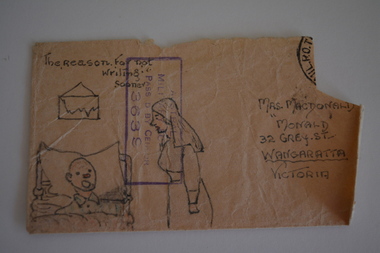
Work on paper - Envelope Art
... Even though the Battation was disbanded in 1946 members and their families return each year, in November, for a commemorative service at the 2/24th Battalion Memorial Wall at the Wangaratta Cemetery. ww2 envelope art Top left - "The reason for not writing sooner" Top right - postage stamp Left side - AIF Censor stamp Right side - Mrs M MacDonald "Monald" 32 Grey Street Wangaratta Victoria Australi Rear - Red cross Cream paper envelope with sketch of a soldier in bed and a nurse Work on paper Envelope Art ...One of several illustrated envelopes, without letter, sketched by soldier/s during the second world war and sent to Mrs MacDonald of Wangaratta Victoria's 2/24th Infantry Battalion was raised in Wangaratta in July 1940. They were welcomed with open arms by the local community as they rapidly built up their numbers. The people of Wangaratta adopted the Battalion and they became known as "Wangaratta's Own" because of the time the battalion spent in the town during its formative period prior to deployment overseas. Many of the soldiers maintained life long friendships with the people of Wangaratta. Even though the Battation was disbanded in 1946 members and their families return each year, in November, for a commemorative service at the 2/24th Battalion Memorial Wall at the Wangaratta Cemetery.Cream paper envelope with sketch of a soldier in bed and a nurseTop left - "The reason for not writing sooner" Top right - postage stamp Left side - AIF Censor stamp Right side - Mrs M MacDonald "Monald" 32 Grey Street Wangaratta Victoria Australi Rear - Red cross ww2, envelope art -
 Whitehorse Historical Society Inc.
Leisure object - Dolls House, Yvonne Fitzmaurice, 1974
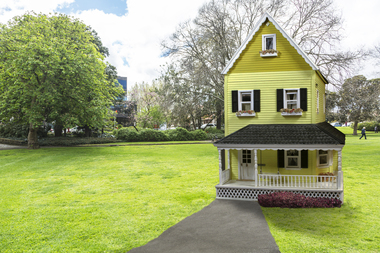
... Nurse and she specialised in hospital theatre work. Later her curiosity bought her to Australia where she worked at the Sydney hospital and with the Australia Flying Doctors service flying in and out of Wilcannia, western New South Wales. On returning to New Zealand Yvonne acted as part of a Medical cover team for the different armed services. one session in the Nary involved pursuing submarines which she described as being very exciting. In 1958 she travelled by sea through the Suez Canal to England and as a member ...THE DOLL HOUSE _ Yvonne Fitzmaurice The ten room fully furnished American farmhouse was created from an idea by former Mitcham resident, Yvonne Fitzmaurice and was constructed between 1976 and 1978 as a birthday present for her daughter, Susan. The house is a unique interpretation of early American architecture and inferior design. It is also a representation of one woman's ability to create and complete a details snapshot of a lifestyle long gone and give pleasure to family, friends and now the community. Yvonne has had an interesting and full life, born in New Zealand where was a State Registered Nurse and she specialised in hospital theatre work. Later her curiosity bought her to Australia where she worked at the Sydney hospital and with the Australia Flying Doctors service flying in and out of Wilcannia, western New South Wales. On returning to New Zealand Yvonne acted as part of a Medical cover team for the different armed services. one session in the Nary involved pursuing submarines which she described as being very exciting. In 1958 she travelled by sea through the Suez Canal to England and as a member of British Services served in the post WWII Germany for three year in the QARANC and also worked at The London Clinic with some high-profile specialists. Yvonne was introduced to her husband-to-be at a tennis party and they lived in Cambridge, UK, where their two children, Alastair and Susan, were born. On coming to Australia in 1965 as "£10 poms" (Yvonne's words) she worked in casualty at the Box Hill hospital. Initially the family lived at Blackburn South before moving to Mitcham in 1968. To help establish a new life with her family in Australia, Yvonne worked in many different positions from nursing, machine knitting for a Prahran shop, making Christmas Cards and as a commercial traveller. As a hobby she also sold a number of pastel paintings. Following the publishing of her first family history in 1994, Yvonne became a member and volunteer at the Whitehorse Historical Society where she has contributed in producing local history publication, articles for the Newsletter and has improved access to the files by creating the detailed "green files". Her interests include art, crafts and writing. Yvonne has a great philosophy, 'each day I must achieve something - no matter how small'.Hand-made child's doll's house. Built by Mrs Yvonne Fitzmaurice and finished in 1979. This house was built as a 1:12 scale and is a model of a Californian house called Peppercorn farm. House was built by Yvonne and her family and took a period of three years. A lot of the furniture is handmade and the rest is collected from various shops. "Susan Fitzmaurice" name on front of building. Date on plaque on top of front wall.na5059, na5061, na5063, na5065, na5068, na5071, na5073, na5075, na5077, na5079, na5081, na5083 -
 Royal District Nursing Service (now known as Bolton Clarke)
Photograph - Photograph, black and white, 30 08 1967
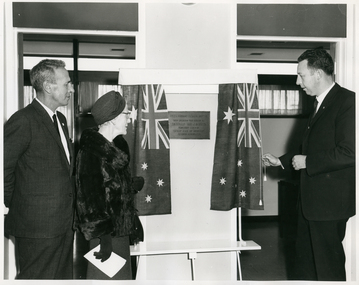
... Wilson was a Committee member, then Vice-president, of Melbourne District Nursing Service, later called Royal District Nursing Service (RDNS) from 1959 until 1964 and President 1965-1967 Gradually over the years, Melbourne District Nursing Service, MDNS, later known as Royal District Nursing Service, RDNS, from 1966 when they received Royal patronage, opened Centres throughout the Melbourne Metropolitan area. Their Trained nurses (Sisters) left from these Centres each morning to carry out their nursing visits in a specific area, taking any sterilized equipment needed with them. They returned ...This photograph records Mr. Ian Muir, President of the Essendon Rotary Club unveiling the plaque at the opening of the Royal District Nursing Service (RDNS) Essendon Centre on the 30th of August 1967. Mrs. E.G. Wilson is President of Royal District Nursing Service (RDNS). Mrs. Wilson was a Committee member, then Vice-president, of Melbourne District Nursing Service, later called Royal District Nursing Service (RDNS) from 1959 until 1964 and President 1965-1967 Gradually over the years, Melbourne District Nursing Service, MDNS, later known as Royal District Nursing Service, RDNS, from 1966 when they received Royal patronage, opened Centres throughout the Melbourne Metropolitan area. Their Trained nurses (Sisters) left from these Centres each morning to carry out their nursing visits in a specific area, taking any sterilized equipment needed with them. They returned at the end of the day to write up their patients nursing histories, clean and reset any equipment used ready for sterilization, and contact other medical personal as necessary. Most of the RDNS cars were housed at each Centre, only a few being driven home by a Sister.Black and white photograph showing Mr.Ian Muir unveiling a plaque. Mr. Muir, on the right hand side of the photograph, has dark short hair and is wearing a dark suit. His is standing side-on facing to the left of the photograph. His right hand is holding the cord of the right hand side Australian flag which was partly covering the plaque. A gentleman, with short grey hair and wearing a dark suit, is on the far left hand side of the photograph. Between him and another Australian flag, on the left hand side of the plaque, stands Mrs. E.G, Wilson, who is wearing glasses and is dressed in a dark suit and a dark hat. The dark plaque is attached to a light coloured section of wall and in the background are the windows above the light coloured far wall of the room.Photographers Stamp. 'Quote No. GJ 73royal district nursing service, rdns, essendon centre, mrs e.g. (hazel janet) wilson, mr ian muir, rdns centre -
 Royal District Nursing Service (now known as Bolton Clarke)
Photograph - Photograph, black and white, Barry Sutton, 1973
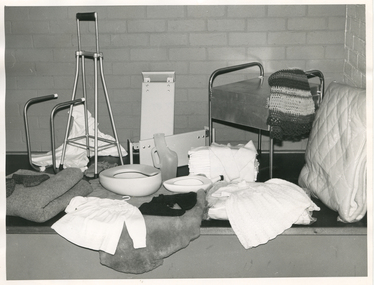
... returned to RDNS and sterilized, or cleaned with disinfectant, whichever is appropriate, once they are no longer required. The material items are given to patient's as required. Many of these items are made and donated by RDNS Auxiliary members. From its inception in 1885, the two Trained nurses ...The equipment items in this photograph are loaned out to Royal District Nursing Service (RDNS) patient's to use in their homes. They are returned to RDNS and sterilized, or cleaned with disinfectant, whichever is appropriate, once they are no longer required. The material items are given to patient's as required. Many of these items are made and donated by RDNS Auxiliary members. From its inception in 1885, the two Trained nurses (Nurses) of the Melbourne District Nursing Society (MDNS) worked in the now CBD, ie from Spencer Street to Spring Street and from Victoria Parade to Flinders Street. At that time they walked the streets and lane ways amid the slums of inner Melbourne carrying their nursing bags containing lotion, ointments, powders, liniment, bandages, dressings, a case of spirits, and the Nurse's own clean apron, soap and small towel. They supplied equipment on loan, such as earthenware hot water bottles, splints, urinals, bed pans, bed cradles, feeding mugs, and air-cushions as well as providing blankets and clean bed linen, and nightdresses and clothes as necessary. The Society was at the forefront of health care and continued to liaise with Doctors as the Society expanded. The Nurses provided high quality nursing care to a range of people, often in destitute situations, some lying on rags on the floor as they had no bed, others with just a bed and maybe a thin blanket, a chair and nothing else. Their ages ranged from babes, children, adults to the elderly. The Nurses gave medications as ordered, dressed wounds e.g. to the injured, and surgical cases, and to those with leg ulcers; attended to patients with ‘surgical ailments’ such as ‘hip disease’; gave care to those with acute illnesses such as bronchitis, pleurisy, pneumonia, measles, and scarlet fever, as well as those with chronic illnesses such as consumption (tuberculosis), heart disease, arthritis, cancer, debility, neuritis and paralysis. They educated their patients, and their Carers, in the curing and prevention of disease; Over the years items were given and equipment was loaned and demonstrated to patients, and if appropriate, to their family members to enable them to care for their loved ones in their homes. The Trained nurses had the rehabilitation of their patients in the forefront of their minds to ensure they were able to live as independently as possible in their own homes. As the years passed the Trained nurses changed from being called 'Nurse' to 'Sister' and the Society changed its name. In the 1970s, now with Royal patronage, and known as Royal District Nursing Service ( RDNS), they contracted a Private and then employed, a Physiotherapist who taught RDNS Sisters the correct transferring techniques, including the use of a hoist when this became available. RDNS Sisters taught and used these techniques in patient’s homes to undertake safe transfer of the patient and to reduce physical strain on RDNS nursing staff and family members. Each RDNS Centre had a room or shed where equipment for loan was kept, and Headquarters also kept additional equipment which could be transported to Centres as required. This black and white photograph shows some of the equipment loaned, along with some to be given, to Royal District Nursing Service (RDNS) patients as required. Rear L-R - a white long nightdress with dark embroidery and buttons on the front and embroidery on the edge of the short sleeves. Next are two wooden bath seats; a square metal commode with lid and with its round legs extended to form handles on the left and right sides. A folded dark and white striped crocheted rug hangs over one of the handles. In the centre L-R, is a metal bed cradle, a metal 4 prong walking stick, bed pans, male urinal, stack of nappies with a white child's knitted jumper hanging over them, and a doona. In the front, L-R is a grey blanket, dark coloured bed socks, a sheepskin with a white smocked baby dress sitting on it, and a white babies nightgown on a clear plastic covered white bundle. A black mat sits under these items and a cream brick wall is in the background. Barry Sutton LS 47royal district nursing service, rdns, rdns equipment, rdns auxiliaries -
 Melbourne Legacy
Badge, R.S.S.I.L.A. Member Badges
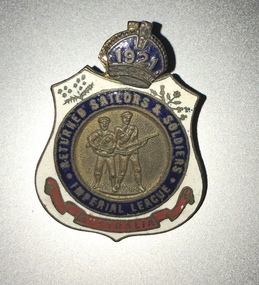
... returned servicemen after World War One. Worn by members of the Returned Sailors, Soldiers Imperial League of Australia, those eligible being members of all services, both wars, including nurses, who have returned from active service outside Australia. ...returned servicemen after World War One. Worn by members of the Returned Sailors, Soldiers Imperial League of Australia, those eligible being members of all services, both wars, including nurses, who have returned from active service outside Australia. ...Two member badges from the The Returned Sailors, Soldiers Imperial League of Australia (RSSILA). The number 68 on the front could be 1968 as it is detachable and could be updated each year. The badge with 1921 could be the year of membership. The member number is engraved on the rear. The shield design is symbolic of the protection provided to those who wear it. Within the badge, red represents the blood ties of war that exist between comrades; white stands for the purity of the motives in joining the league – to render service without personal gain or ambition; and blue indicates a willingness to serve a comrade anywhere under the blue sky. The wattle represents Australia, with the leek, the rose, the thistle and the shamrock standing for Wales, England, Scotland and Ireland respectively. The RSSILA was the precursor to the Returned Services League (RSL) and provided support for returned servicemen after World War One. Worn by members of the Returned Sailors, Soldiers Imperial League of Australia, those eligible being members of all services, both wars, including nurses, who have returned from active service outside Australia. These were with other World War 1 memorabilia that has come from Private John Basil McLean, 2nd Reinforcements, 37th Battalion, A.I.F. J.B. McLean (Service No. 13824) was from near Maffra, Victoria and enlisted on 22 January 1916. He embarked on 16 December 1916 for Europe. He spent time with the Australian Field Artillery (Pack Section). At the end of the war he worked for a year at the A.I.F. Headquarters in London before returning to Australia on the 'Ceramic', arriving in Portsea in 1920. His full war record is available from the National Archives of Australia (B2455, MCLEAN JBM).The RSSILA was an important organisation for ex-servicemen and many Legatees would have been members.Enamel badges from the R.S.S.I.L.A. The centre of the badge shows a sailor and a soldier in raised detail. A blue enamel circle surrounds the central detail and has 'RETURNED SAILORS & SOLDIERS / IMPERIAL LEAGUE' in gilt lettering. The outer edges of the badge are white enamel with a floral spray to the top left and right of the blue circle. At the bottom of the badge is a red enamelled scroll with 'AUSTRALIA' written in gilt lettering. On the reverse of the badge are soldered two brass lugs with a split pin attached for securing the badge to clothing. 01124.1 Front has '68' and 'Returned Sailors and Soldiers Imperial League of Australia'. On the reverse 'V92210 Badge remains the property of League'. 01124.2 Front has '1921' and 'Returned Sailors and Soldiers Imperial League of Australia'. On the reverse 'R 3871' and 'C.C Roeszler and Son Pty Ltd Melb.'world war one, rssila -
 Melbourne Legacy
Photograph, Legacy 'Mother' to Twenty Three, 1959
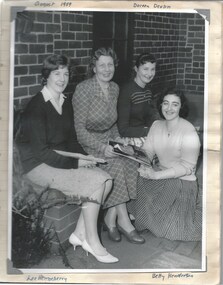
... returned from war service. She had been a trained nurse and served in Middle East and New Guinea with the RAANC. She had been awarded the medal of an Associate of the Royal Red Cross and was mentioned in despatches. Mention of the routine of the house include that the girls sleep in large airy bedrooms which they look after themselves. They generally do their own washing and ironing. There is a well equipped sewing room where they can make their own clothes. There is a radio and television and piano though between 7 and 9pm is quiet study time. A legacy member...returned from war service. She had been a trained nurse and served in Middle East and New Guinea with the RAANC. She had been awarded the medal of an Associate of the Royal Red Cross and was mentioned in despatches. Mention of the routine of the house include that the girls sleep in large airy bedrooms which they look after themselves. They generally do their own washing and ironing. There is a well equipped sewing room where they can make their own clothes. There is a radio and television and piano though between 7 and 9pm is quiet study time. A legacy member ...A photo from a book compiled about the Legacy children's residence called Stanhope. This photo shows Matron Dorrie Vines with three residents. Names around the photo L to R: Lee Henneberry, Doreen Devlin, and Betty Henderson. The newspaper article from The Age was published on 28 August 1959 and mentions Miss Vines has worked at Stanhope since 1946 when she returned from war service. She had been a trained nurse and served in Middle East and New Guinea with the RAANC. She had been awarded the medal of an Associate of the Royal Red Cross and was mentioned in despatches. Mention of the routine of the house include that the girls sleep in large airy bedrooms which they look after themselves. They generally do their own washing and ironing. There is a well equipped sewing room where they can make their own clothes. There is a radio and television and piano though between 7 and 9pm is quiet study time. A legacy member joins them for dinner most evenings and the girls do their own washing up. They can cook in the kitchen if they wish. There is staff of an assistant matron, a cook and two housemaids. Girls have picnics and outings arranged and three or four times a year and they have informal dances at Stanhope. Stanhope was supervised by Matron Dorothy (Dorrie) Vines from the time it opened in 1946 until she retired in December 1966. It is likely she compiled this notebook as she is referred to as 'self' in one photo. Individual pages of photos or newspaper clippings have been added separately. Items 01817 to 01834. Stanhope was a residence run by Melbourne Legacy to take care of children whose fathers were deceased servicemen, and who may have been left orphans, or whose mother may have been unable to care for them herself, or they needed to stay in Melbourne for further education. Generally Stanhope looked after girls over 14. The children were cared for until they were old enough to become independent. A record of life at Stanhope as reported in the Age Newspaper.Black and white photo of Matron and girls in 1959 along with a newspaper clipping about her.residences, dorothy vines, stanhope -
 Returned Nurses RSL Sub-branch
Photograph - Colour printing of photograph on paper, unknown
... after the placement in a cemetery on Lemnos, of a plaque supplied by the Returned Nurses' to commemorate Australian Army Nursing Service members who served on Lemnos during WWI.]...after the placement in a cemetery on Lemnos, of a plaque supplied by the Returned Nurses' to commemorate Australian Army Nursing Service members who served on Lemnos during WWI.] ...[Photograph of Major General David McLaughlan and Jason Smeaton [?] after the placement in a cemetery on Lemnos, of a plaque supplied by the Returned Nurses' to commemorate Australian Army Nursing Service members who served on Lemnos during WWI.]Single page showing a colour photograph of two men on one knee in a cemetery between rows of stone plaques and a small t shaped plaque in the dirt immediately in front of them. Underneath the photograph the number 4 has been printed in the centre. The reverse has information handwritten in pencil.'This small plaque was taken to / LEMNOS off Gallipoli by / Major General David [?] McLaughlan / and Jason SMEATON [?] who / went on a Remembrance visit / The Returned Nurses gave the / plaque to the above and asked / for it to be placed somewhere / in remembrance of the / 1st WWI AANS who served / on LEMNOS' [on reverse in pencil]memorial, lemnos, wwi, ww1, world war one, australian army nursing service -
![Booklet, [Barbara Williams (nee Haynes)], A brief record of the Australian Army Nursing Service : 1939-45, [1985?]](/media/collectors/64a5077bc83bd7b7b94f4211/items/6715c56e6e218d3640ad87c7/item-media/6715cd0f6e218d3640ae4a75/item-fit-380x285.jpg?cb=6) Returned Nurses RSL Sub-branch
Returned Nurses RSL Sub-branchBooklet, [Barbara Williams (nee Haynes)], A brief record of the Australian Army Nursing Service : 1939-45, [1985?]
... Nurses World War Two WW2 Australia Australian Army Nursing Service AANS 'Foreword / The Australian Army Nursing Service, 1939-45. / Compiled by VFX 47777 / This small volume represents a brief account of the work done by its members, at home, and abroad.' Red and white coloured cover, stapled booklet. A brief record of the Australian Army Nursing Service : 1939-45 Booklet [Barbara Williams (nee Haynes)] Returned ...'Foreword / The Australian Army Nursing Service, 1939-45. / Compiled by VFX 47777 / This small volume represents a brief account of the work done by its members, at home, and abroad.'Red and white coloured cover, stapled booklet.non-fiction'Foreword / The Australian Army Nursing Service, 1939-45. / Compiled by VFX 47777 / This small volume represents a brief account of the work done by its members, at home, and abroad.'australian nurses, world war two, ww2, australia, australian army nursing service, aans -
![Booklet, [Barbara Williams (nee Haynes)], A brief record of the Australian Army Nursing Service : 1939-45, [1985?]](/media/collectors/64a5077bc83bd7b7b94f4211/items/6715caf46e218d3640ae25be/item-media/6715cd296e218d3640ae4c7f/item-fit-380x285.jpg?cb=6) Returned Nurses RSL Sub-branch
Returned Nurses RSL Sub-branchBooklet, [Barbara Williams (nee Haynes)], A brief record of the Australian Army Nursing Service : 1939-45, [1985?]
... Nurses World War Two WW2 Australia Australian Army Nursing Service AANS 'Foreword / The Australian Army Nursing Service, 1939-45. / Compiled by VFX 47777 / This small volume represents a brief account of the work done by its members, at home, and abroad.' 'TO A NEW FRIEND / GREETINGS / (2/7 AGH) / Barbara Williams / (NEE HAYNES) / RETURNED ...'Foreword / The Australian Army Nursing Service, 1939-45. / Compiled by VFX 47777 / This small volume represents a brief account of the work done by its members, at home, and abroad.'Red and white coloured cover, stapled booklet.non-fiction'Foreword / The Australian Army Nursing Service, 1939-45. / Compiled by VFX 47777 / This small volume represents a brief account of the work done by its members, at home, and abroad.'australian nurses, world war two, ww2, australia, australian army nursing service, aans -
 Returned Nurses RSL Sub-branch
Document - Member service biographical information form, Proforma, unknown
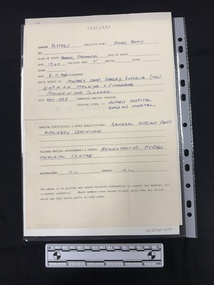
... Form completed about Agnes Betty Jeffrey relating to her training and military information as a member of [Returned Nurses Sub-branch of the RSL Victoria]. ...Form completed about Agnes Betty Jeffrey relating to her training and military information as a member of [Returned Nurses Sub-branch of the RSL Victoria]. ...Form completed about Agnes Betty Jeffrey relating to her training and military information as a member of [Returned Nurses Sub-branch of the RSL Victoria]. Original completed copied form with many headings that are completed in handwritten blue ink'A. G. JEFFREY.' [Blue ink on back of form in the middle]returned nurses club, returned nurses sub-branch rsl victoria, agnes betty jeffrey, training & military service -
 Returned Nurses RSL Sub-branch
Book, Elizabeth Burchill, The paths I've trod, 1981
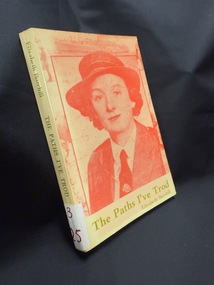
... nursed refugee children during the Spanish Civil War in 1937 and served with the 2nd AIF in Palestine and Egypt in 1940. Following six years as a member of the Australian Army Nursing Service, she took another challenging path, becoming involved in radio broadcasting [Working for 3SR Radio Station, Shepparton p185], writing and lecturing for the Commonwealth Institute in England. Six years later she returned ...'Dora Elizabeth Burchill was born in Hawthorn, Victoria and trained as a triple certificate nurse in Melbourne and London. Proving that nursing is the best passport for travel she subsequently travelled widely and became registered as a nurse in seven countries of the world. Cherishing the ideals of Florence Nightingale in peace and war, Sister Burchill volunteered to serve in Ethiopia during the Italian-Abyssinian War in 1936, nursed refugee children during the Spanish Civil War in 1937 and served with the 2nd AIF in Palestine and Egypt in 1940. Following six years as a member of the Australian Army Nursing Service, she took another challenging path, becoming involved in radio broadcasting [Working for 3SR Radio Station, Shepparton p185], writing and lecturing for the Commonwealth Institute in England. Six years later she returned to nursing and started the first full-time infant welfare clinic in Darwin for the Northern Territory Department of Health and remained in this important post of increasing development in post-war Darwin for five years. Sister Burchill continued this work in Thursday Island and the Sepik District of New Guinea into the 1960s. Many published articles in magazines and newspapers and five published books testify to her skill and determination as a factual writer. ?Innamincka?, is her best-known book. Seeking further worthwhile challenges in the 1970s, Sister Burchill studied for the Higher School Certificate which resulted in her earning a place in the Faculty of Arts, Monash University. She graduated as Bachelor of Arts in 1981. In 1986, she graduated as Bachelor of Letters at the University of Melbourne. Includes index. Bibliography: p. [249]-250. Medicine. Nursing. Burchill, Elizabeth, 1908-. Australia. Biographies (ANB/PRECIS SIN 0516392). Includes bibliographical references (pages 249-250) and index.' From TroveBook with green text on cover and spine and red image on coverfiction'Dora Elizabeth Burchill was born in Hawthorn, Victoria and trained as a triple certificate nurse in Melbourne and London. Proving that nursing is the best passport for travel she subsequently travelled widely and became registered as a nurse in seven countries of the world. Cherishing the ideals of Florence Nightingale in peace and war, Sister Burchill volunteered to serve in Ethiopia during the Italian-Abyssinian War in 1936, nursed refugee children during the Spanish Civil War in 1937 and served with the 2nd AIF in Palestine and Egypt in 1940. Following six years as a member of the Australian Army Nursing Service, she took another challenging path, becoming involved in radio broadcasting [Working for 3SR Radio Station, Shepparton p185], writing and lecturing for the Commonwealth Institute in England. Six years later she returned to nursing and started the first full-time infant welfare clinic in Darwin for the Northern Territory Department of Health and remained in this important post of increasing development in post-war Darwin for five years. Sister Burchill continued this work in Thursday Island and the Sepik District of New Guinea into the 1960s. Many published articles in magazines and newspapers and five published books testify to her skill and determination as a factual writer. ?Innamincka?, is her best-known book. Seeking further worthwhile challenges in the 1970s, Sister Burchill studied for the Higher School Certificate which resulted in her earning a place in the Faculty of Arts, Monash University. She graduated as Bachelor of Arts in 1981. In 1986, she graduated as Bachelor of Letters at the University of Melbourne. Includes index. Bibliography: p. [249]-250. Medicine. Nursing. Burchill, Elizabeth, 1908-. Australia. Biographies (ANB/PRECIS SIN 0516392). Includes bibliographical references (pages 249-250) and index.' From Trovenursing in warfare, elizabeth burchill, world war two, wwii, ww2, china-ethiopian war, spanish civil war, australian army nursing service -
 Returned Nurses RSL Sub-branch
Book, Elizabeth Burchill, The paths I've trod, 1981
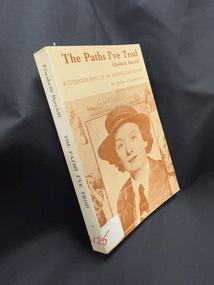
... nursed refugee children during the Spanish Civil War in 1937 and served with the 2nd AIF in Palestine and Egypt in 1940. Following six years as a member of the Australian Army Nursing Service, she took another challenging path, becoming involved in radio broadcasting [Working for 3SR Radio Station, Shepparton p185], writing and lecturing for the Commonwealth Institute in England. Six years later she returned ...'Dora Elizabeth Burchill was born in Hawthorn, Victoria and trained as a triple certificate nurse in Melbourne and London. Proving that nursing is the best passport for travel she subsequently travelled widely and became registered as a nurse in seven countries of the world. Cherishing the ideals of Florence Nightingale in peace and war, Sister Burchill volunteered to serve in Ethiopia during the Italian-Abyssinian War in 1936, nursed refugee children during the Spanish Civil War in 1937 and served with the 2nd AIF in Palestine and Egypt in 1940. Following six years as a member of the Australian Army Nursing Service, she took another challenging path, becoming involved in radio broadcasting [Working for 3SR Radio Station, Shepparton p185], writing and lecturing for the Commonwealth Institute in England. Six years later she returned to nursing and started the first full-time infant welfare clinic in Darwin for the Northern Territory Department of Health and remained in this important post of increasing development in post-war Darwin for five years. Sister Burchill continued this work in Thursday Island and the Sepik District of New Guinea into the 1960s. Many published articles in magazines and newspapers and five published books testify to her skill and determination as a factual writer. ?Innamincka?, is her best-known book. Seeking further worthwhile challenges in the 1970s, Sister Burchill studied for the Higher School Certificate which resulted in her earning a place in the Faculty of Arts, Monash University. She graduated as Bachelor of Arts in 1981. In 1986, she graduated as Bachelor of Letters at the University of Melbourne. Includes index. Bibliography: p. [249]-250. Medicine. Nursing. Burchill, Elizabeth, 1908-. Australia. Biographies (ANB/PRECIS SIN 0516392). Includes bibliographical references (pages 249-250) and index.' From TroveBook with brown text on cover and spine and brown image on coverfiction'Dora Elizabeth Burchill was born in Hawthorn, Victoria and trained as a triple certificate nurse in Melbourne and London. Proving that nursing is the best passport for travel she subsequently travelled widely and became registered as a nurse in seven countries of the world. Cherishing the ideals of Florence Nightingale in peace and war, Sister Burchill volunteered to serve in Ethiopia during the Italian-Abyssinian War in 1936, nursed refugee children during the Spanish Civil War in 1937 and served with the 2nd AIF in Palestine and Egypt in 1940. Following six years as a member of the Australian Army Nursing Service, she took another challenging path, becoming involved in radio broadcasting [Working for 3SR Radio Station, Shepparton p185], writing and lecturing for the Commonwealth Institute in England. Six years later she returned to nursing and started the first full-time infant welfare clinic in Darwin for the Northern Territory Department of Health and remained in this important post of increasing development in post-war Darwin for five years. Sister Burchill continued this work in Thursday Island and the Sepik District of New Guinea into the 1960s. Many published articles in magazines and newspapers and five published books testify to her skill and determination as a factual writer. ?Innamincka?, is her best-known book. Seeking further worthwhile challenges in the 1970s, Sister Burchill studied for the Higher School Certificate which resulted in her earning a place in the Faculty of Arts, Monash University. She graduated as Bachelor of Arts in 1981. In 1986, she graduated as Bachelor of Letters at the University of Melbourne. Includes index. Bibliography: p. [249]-250. Medicine. Nursing. Burchill, Elizabeth, 1908-. Australia. Biographies (ANB/PRECIS SIN 0516392). Includes bibliographical references (pages 249-250) and index.' From Trovenursing in warfare, elizabeth burchill, world war two, wwii, ww2, china-ethiopian war, spanish civil war, australian army nursing service -
 Returned Nurses RSL Sub-branch
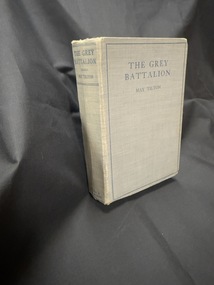
Book, May Tilton, The grey battalion, 1933
... 'B51' [handwritten in pencil top right hand corner first page] 'with best wishes / from the Author / May Tilton' [Handwritten in green/black ink on second page] 'Property of the / Returned Nurses / Club / Anzac House / 4 Collins St / Melbourne / 1975 / From Mrs Bea. Manson / a loyal Club member / for many years.' ...'B51' [handwritten in pencil top right hand corner first page] 'with best wishes / from the Author / May Tilton' [Handwritten in green/black ink on second page] 'Property of the / Returned Nurses / Club / Anzac House / 4 Collins St / Melbourne / 1975 / From Mrs Bea. Manson / a loyal Club member / for many years.' ...War reminiscences and recollections of May Tilton, an Australian Army Nursing Service Sister during World War One.Grey hardback book with blue writing on cover and spinenon-fictionWar reminiscences and recollections of May Tilton, an Australian Army Nursing Service Sister during World War One.world war one, wwi, ww1, australian army nursing service, australian nurses, may tilton -
 Returned Nurses RSL Sub-branch
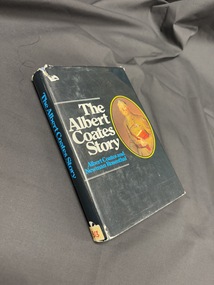
Book, Albert Ernest Coates, The Albert Coates story : The will that found the way, 1977
... '178 B13' [pencil top of first page] 'Presented to the Returned Nurses / Club by Committee Member, also / ex Secretary of the Edith Cavell Trust / Fund. ...[From front dust jacket] '178 B13' [pencil top of first page] 'Presented to the Returned Nurses / Club by Committee Member, also / ex Secretary of the Edith Cavell Trust / Fund. ...'The Albert Coates story is one of heroism, of courage, endurance and service. he is a great civilian as well as a great soldier and the book tells of his contributions to the development of medical studies and services in Melbourne-but the core of the book is his description of three-and-a-half years as a prisoner of the Japanese in Sumatra, Burma and Thailand. Written on scraps of paper of all kinds, toilet paper, anything, in rare moments of solitude between improvising medicines, amputating legs, appealing to the Japanese authorities and administering hospital camps, Albert Coates describes on of history's great feats of medicine. The first and last sections of the book have been written by Newman Rosenthal who also edited the prisoner of war section-so there is continuity of narrative.' [From front dust jacket]Book with a black dustjacket, has a painted portrait of an older man in uniform on cover and white and blue text on cover and spinenon-fiction'The Albert Coates story is one of heroism, of courage, endurance and service. he is a great civilian as well as a great soldier and the book tells of his contributions to the development of medical studies and services in Melbourne-but the core of the book is his description of three-and-a-half years as a prisoner of the Japanese in Sumatra, Burma and Thailand. Written on scraps of paper of all kinds, toilet paper, anything, in rare moments of solitude between improvising medicines, amputating legs, appealing to the Japanese authorities and administering hospital camps, Albert Coates describes on of history's great feats of medicine. The first and last sections of the book have been written by Newman Rosenthal who also edited the prisoner of war section-so there is continuity of narrative.' [From front dust jacket]world war two, wwii, ww2, prisoner of war, japan -
 Returned Nurses RSL Sub-branch
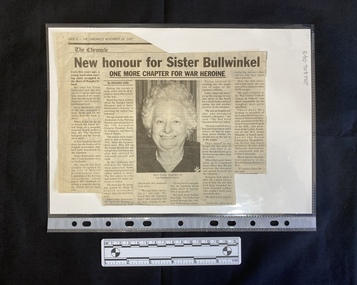
Newspaper - Newspaper clipping, The Chronicle, New honour for Sister Bullwinkel : one more chapter for war heroine, November 24 1987
... nurses who were then shot, along with the bayoneting of the English servicemen. Vivian survived but ultimately became a POW for the next three and a half years. After returning to Australia Vivian gave evidence at the War Crime Trials in Tokyo in 1946-47. More recently Vivian a member...nurses who were then shot, along with the bayoneting of the English servicemen. Vivian survived but ultimately became a POW for the next three and a half years. After returning to Australia Vivian gave evidence at the War Crime Trials in Tokyo in 1946-47. More recently Vivian a member ...The article documents Vivian Statham being recognised by the City of Melville Bicentennial Subcommittee of Ex-Service Associations. Vivian was asked to deliver a requiem at the following year's Anzac service, during which a clock tower would be dedicated to those who served in the war. The article is also biographical, detailing Vivian's experiences 45 years before as, while serving with the Australian Army Nursing Service, the ship she and other nurses were being evacuated on was sunk by the Japanese. Vivian was part of a group that survived to make it shore, where they and a group of English servicemen decided to give themselves up to the Japanese. She was one of twenty-one nurses who were then shot, along with the bayoneting of the English servicemen. Vivian survived but ultimately became a POW for the next three and a half years. After returning to Australia Vivian gave evidence at the War Crime Trials in Tokyo in 1946-47. More recently Vivian a member or representative of many organisations and keeps herself busy.A newspaper clipping with six columns of text and a black and white photo of an smiling older woman centred under the title and subtitleww2, wwll, banka island, japanese, sumatra, vivian bullwinkel, vivian statham (nee bullwinkel), 13th australian general hospital, johore bahru, singapore, vyner brooke, vyner brook
