
Showing 76 items matching "robert knight"
-
 Bendigo Historical Society Inc.
Document - R.S.L. BENDIGO COLLECTION: ANNUAL R.S.L. BALL 1957
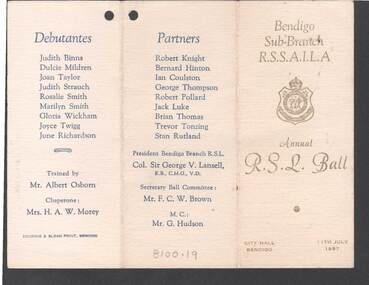
... ... Robert Knight...Chaperone: Mrs H A W Morey. Partners: Robert Knight, Bernard Hinton, Ian Coulston, George Thompson, Robert Pollard, Jack Luke, Brian Thomas, Trevor Tonzing and Stan Rutland. ...Chaperone: Mrs H A W Morey. Partners: Robert Knight, Bernard Hinton, Ian Coulston, George Thompson, Robert Pollard, Jack Luke, Brian Thomas, Trevor Tonzing and Stan Rutland. ...Three copies of the Bendigo Sub-branch R.S.S.A.I.L.A. Annual R.S.L. Ball held at the City Hall, Bendigo on 11th July 1957. Card is cream with gold print on the front and a gold RLS badge. Other printing is blue. The inside of the tri-fold card has a Dance Program of 28 dances and a space for Autographs. The other side has the Debutantes: Judith Binns, Dulcie Mildren, Joan Taylor, Judith Strauch, Rosalie Smith, Marilyn Smith, Gloria Wickham, Joyce Twigg and June Richardson. Trained by Mr Albert Osborn. Chaperone: Mrs H A W Morey. Partners: Robert Knight, Bernard Hinton, Ian Coulston, George Thompson, Robert Pollard, Jack Luke, Brian Thomas, Trevor Tonzing and Stan Rutland. President Bendigo Branch R.S.L. Col Sir George V Lansell, K.B., C.M.G., V.D. Secretary Ball Committee: Mr F C W Brown. M.C.: Mr G Hudson. Printed by Hocking & Sloan Print, Bendigo.Hocking & Sloan Print, Bendigoevent, social, annual ball, r.s.l. bendigo collection - annual r.s.l. ball 1957, judith binns, dulcie mildren, joan taylor, judith strauch, rosalie smith, marilyn smith, gloria wickham, joyce twigg, june richardson, mr albert osborn, mrs h a w morey, robert knight, bernard hinton, ian soulston, george thompson, robert pollard, jack luke, brian thomas, trevor tonzing, stan rutland, col sir george v lansell, mr f c w brown, mr g hudson, hocking & sloan print -
 Bendigo Military Museum
Photograph - Army Survey Regiment GOC Parade Medal Presentations, 1969
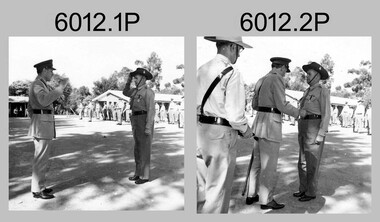
... GOC Southern Command MAJ GEN Robert William Knights CB, CBE formally presented the Defence Force Service Medal to personnel in recognition of 15 years of efficient remunerated service, or the Clasp for each further 5 year period of service. ...MAJ GEN Robert William Knights CB, CBE, unidentified. .7) - Photo, black & white, 1969. ...MAJ GEN Robert William Knights CB, CBE, unidentified. .7) - Photo, black & white, 1969. ...These photographs were taken at a GOC Parade at the Army Headquarters (AHQ) Survey Regiment in 1969. GOC Southern Command MAJ GEN Robert William Knights CB, CBE formally presented the Defence Force Service Medal to personnel in recognition of 15 years of efficient remunerated service, or the Clasp for each further 5 year period of service. These 25 black and white photographs were taken at a GOC Parade Medal Presentation in 1969 at the Army Headquarters (AHQ) Survey Regiment, Bendigo. 25 photographs are on negative film. 13 of photographs are printed on photographic paper. and scanned at 600 dpi. are part of the Army Survey Regiment’s Collection. .1) - Photo, black & white, 1969. L to R: MAJ GEN Robert William Knights CB, CBE, unidentified. .2) & .3)- Photo, black & white, 1969. L to R: MAJ GEN Robert William Knights CB, CBE, SGT Keith Harris. .4) to .6) - Photo, black & white, 1969. MAJ GEN Robert William Knights CB, CBE, unidentified. .7) - Photo, black & white, 1969. L to R: unidentified, MAJ GEN Robert William Knights CB, CBE. .8) - Photo, black & white, 1969. L to R: MAJ GEN Robert William Knights CB, CBE, SGT Ben Williams. .9) - Photo, black & white, 1969. L to R: ex SGT Alan Pollard, MAJ GEN Robert William Knights CB, CBE. .10) - Photo, black & white, 1969. L to R: WO1 Bill Miller, MAJ GEN Robert William Knights CB, CBE. .11) & .12) - Photo, black & white, 1969. WO1 Steve McConnachie, MAJ GEN Robert William Knights CB, CBE, unidentified. .13) - Photo, black & white, 1969. L to R: unidentified, MAJ GEN Robert William Knights CB, CBE. .14) to .15) - Photo, black & white, 1969. L to R:MAJ GEN Robert William Knights CB, CBE, unidentified. .16) - Photo, black & white, 1969. L to R: unidentified, MAJ GEN Robert William Knights CB, CBE, unidentified. .17) - Photo, black & white, 1969. AHQ Survey Regiment standing at ease on the parade ground. .18) - Photo, black & white, 1969. L to R: unidentified, MAJ GEN Robert William Knights CB, CBE, CO LTCOL Lionel Sprenger MBE, MID. .19) & .20) - Photo, black & white, 1969. MAJ GEN Robert William Knights CB, CBE and family. .21) - Photo, black & white, 1969. L to R: Alan Pollard, MAJ GEN Robert William Knights CB, CBE, Bet and Ben Williams. .22) - Photo, black & white, 1969. Ex SGT Alan Pollard and Mrs Pollard. .23) - Photo, black & white, 1969. WO2 Steve MeConnachie and Family. .24) - Photo, black & white, 1969. Unidentified recipient and Family. .25) - Photo, black & white, 1969. WO2 Jack Williams and Family..9) Photo - SGT Alan Pollard identified on back .10) Photo - WO1 Bill Miller identified on back .11) Photo - WO1 Steve McConnachie identified on back royal australian survey corps, rasvy, fortuna, army survey regiment, army svy regt, asr -
 Port Melbourne Historical & Preservation Society
Document - Calendar 2022, Historic Port Melbourne - Workers of Yesteryear, September 2019
... ...Robert KNIGHT...Researched, written and designed by Pat Grainger and PMHPS members "Jack" the horse "Dolly" the horse Sandridge Municipal Brigade Port Melbourne Engineering Works Floodgate Hotel Barry's Ideal Dairy Claude BUTCHER Patrick COLLINS Ellen FITZGERALD Tom FITZGERALD Sandridge Volunteer Fire Brigade Swallow Street Transport - Railways Joe COOPER Terry WILLOWS Carole McBRIDE Jonas CONE William CONE Alfred Thomas HARMON R Knight Pty Ltd Robert KNIGHT Robert Walter CARRICK Mrs TURNER John FAWKNER Arthur BUTCHER Wally LOCKHART Percy Allan MAY William Raeburn STUART George BEAZLEY Tom BROADHURST William DOUGHTY Built Environment - Commercial Built Environment - Domestic Business and Traders "Historic Port Melbourne - Workers of Yesteryear" Produced by PMHPS. ...Researched, written and designed by Pat Grainger and PMHPS members"Historic Port Melbourne - Workers of Yesteryear" Produced by PMHPS. Cover has black and white photo of milk horse "Jack" with milkman Claude BUTCHER walking down Butcher's Lane, Port Melbourne. PMHPS logo at bottom right."jack" the horse, "dolly" the horse, sandridge municipal brigade, port melbourne engineering works, floodgate hotel, barry's ideal dairy, claude butcher, patrick collins, ellen fitzgerald, tom fitzgerald, sandridge volunteer fire brigade, swallow street, transport - railways, joe cooper, terry willows, carole mcbride, jonas cone, william cone, alfred thomas harmon, r knight pty ltd, robert knight, robert walter carrick, mrs turner, john fawkner, arthur butcher, wally lockhart, percy allan may, william raeburn stuart, george beazley, tom broadhurst, william doughty, built environment - commercial, built environment - domestic, business and traders -
 Bendigo Military Museum
Photograph - Royal Australian Survey Corps Formal Dinner, 1966
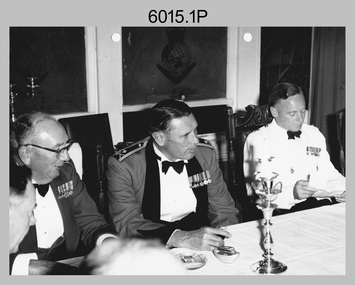
... Known personnel in the photographs were GOC Southern Command MAJ GEN Robert William Knights CB, CBE, COL Don Macdonald MID, Director of the Survey Corps and LTCOL Frank Buckland OBE, MID who was the CO of the Army Headquarters Survey Regiment. ...The photographs were scanned at 300 dpi. .1) - Photo, black & white, 1966, L to R: COL Donald Macdonald MID, MAJ GEN Robert William Knights CB, CBE, LTCOL Buckland OBE, MID. .2) - Photo, black & white, 1966, 50th year Jubilee Dinner Bowl. .3) - Photo, black & white, 1966, L to R: COL Donald Macdonald MID, MAJ GEN Robert William Knights CB, CBE, LTCOL Buckland OBE, MID, unidentified. .4) - Photo, black & white, 1966, L to R: COL Donald Macdonald MID, MAJ GEN Robert William Knights CB, CBE. .5) & .6) - Photo, black & white, 1966, L to R: LTCOL Buckland OBE, MID, unidentified. ...The photographs were scanned at 300 dpi. .1) - Photo, black & white, 1966, L to R: COL Donald Macdonald MID, MAJ GEN Robert William Knights CB, CBE, LTCOL Buckland OBE, MID. .2) - Photo, black & white, 1966, 50th year Jubilee Dinner Bowl. .3) - Photo, black & white, 1966, L to R: COL Donald Macdonald MID, MAJ GEN Robert William Knights CB, CBE, LTCOL Buckland OBE, MID, unidentified. .4) - Photo, black & white, 1966, L to R: COL Donald Macdonald MID, MAJ GEN Robert William Knights CB, CBE. .5) & .6) - Photo, black & white, 1966, L to R: LTCOL Buckland OBE, MID, unidentified. ...These photographs were taken at a RASVY Corps Formal Dinner at the Army Headquarters Survey Regiment in 1966. The formal dinner commemorated the 50th Year Jubilee anniversary of the Royal Australian Survey Corps’ formation. Known personnel in the photographs were GOC Southern Command MAJ GEN Robert William Knights CB, CBE, COL Don Macdonald MID, Director of the Survey Corps and LTCOL Frank Buckland OBE, MID who was the CO of the Army Headquarters Survey Regiment. The 50th year Jubilee Dinner silver bowl often appeared as a centrepiece in Officer’s Mess functions.These six black and white photographs were taken at a RASVY Corps Formal Dinner at the Army Headquarters Survey Regiment in 1966. The photographs were printed on photographic paper and are part of the Army Survey Regiment’s Collection. The photographs were scanned at 300 dpi. .1) - Photo, black & white, 1966, L to R: COL Donald Macdonald MID, MAJ GEN Robert William Knights CB, CBE, LTCOL Buckland OBE, MID. .2) - Photo, black & white, 1966, 50th year Jubilee Dinner Bowl. .3) - Photo, black & white, 1966, L to R: COL Donald Macdonald MID, MAJ GEN Robert William Knights CB, CBE, LTCOL Buckland OBE, MID, unidentified. .4) - Photo, black & white, 1966, L to R: COL Donald Macdonald MID, MAJ GEN Robert William Knights CB, CBE. .5) & .6) - Photo, black & white, 1966, L to R: LTCOL Buckland OBE, MID, unidentified. There are no annotationsroyal australian survey corps, rasvy, fortuna, army survey regiment, army svy regt, asr -
Federation University Historical Collection
Booklet - Register, Record of War Service Old Boys of Junior Technical School Ballarat
... ...robert kneeshaw...william knight...Dunstan f.m. hassell robert kneeshaw william knight maxwell little francis j. longhurst norman w. ludbrook ronald j. ludbrook roy martin albert francis mayne leonard a. moy albert edward phillipsharold l. pittard j.p. rodgers ian rands noel george sandland john w. scott francis spilvogel Handwritten names. ...This listing was probably made after World War One around 1919The information includes rank, service (AIF, RAAF etc) and if Killed in Action.Cream foolscap black lined 36 double sided pages with alphabet tags cut in at the side being an alphabetical listing of Ballarat Junior Technical School Old Boys War War Two Service. Six holes are punched in the left hand side with three brass fastenings. Handwritten names. ABC ... Z, incomplete data, cannot trace, at right hand side. world war two, ballarat junior technical school, jtsb, bjts, war service, old boys, ballarat, soldiers, airman, honour roll, ww2, wwii, aif, raaf, airforce, avy, norman barnett, francis capuano, leslie coad, robert (stewart) sunstan, stanley dunstan, clifford l. dunstan, ran, james g. dunstan, f.m. hassell, robert kneeshaw, william knight, maxwell little, francis j. longhurst, norman w. ludbrook, ronald j. ludbrook, roy martin, albert francis mayne, leonard a. moy, albert edward phillipsharold l. pittard, j.p. rodgers, ian rands, noel george sandland, john w. scott, francis spilvogel -
 Lions Club of Maldon Inc.
Photograph, Maldon Football Club
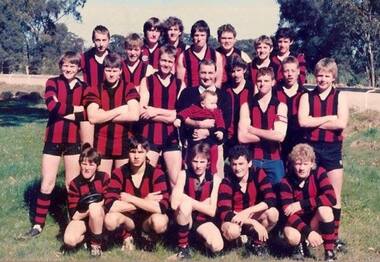
... With Shayne Cole, Norm Reggie Thomas, Con Apostos, Dean Botten, Gary Williams, Doug Doran, David Cattlin, Robert Mc Knight and Tony Brown....With Shayne Cole, Norm Reggie Thomas, Con Apostos, Dean Botten, Gary Williams, Doug Doran, David Cattlin, Robert Mc Knight and Tony Brown. Maldon Football Club Photograph Colin Fricker Colin Fricker ...With Shayne Cole, Norm Reggie Thomas, Con Apostos, Dean Botten, Gary Williams, Doug Doran, David Cattlin, Robert Mc Knight and Tony Brown. -
Glen Eira Historical Society
Article - LEVEY, TRACEY
... She repressed the memories again until she was forty, but recalled them a second time upon reading about Robert Keith Knight, whom she realised might have been the perpetrator. ...She repressed the memories again until she was forty, but recalled them a second time upon reading about Robert Keith Knight, whom she realised might have been the perpetrator. ...This file contains one item: 1/An article from the Extra subsection of The Age, dated 22/12/2013, pertaining to Tracey Levey, a woman who was molested when she was five years old and walking home from school in Glen Huntly. Levey repressed the memories of the event until the fifth birthday of her own daughter, whereupon she underwent depression and marital strife, and had to attend counselling. She repressed the memories again until she was forty, but recalled them a second time upon reading about Robert Keith Knight, whom she realised might have been the perpetrator. Police investigated her case and discerned that the perpetrator was not Knight, but another, deceased, unspecified offender. Tracey wants to encourage other like victims to come forward.levey tracey, child abuse, crime, police, glen huntly, glen huntly primary school, waratah avenue, bentleigh, levey matt, ‘adopt a family’, grange road, amor wayne detective sergeant, munro avenue, moorabbin police station, leete sophie constable -
 Melbourne Tram Museum
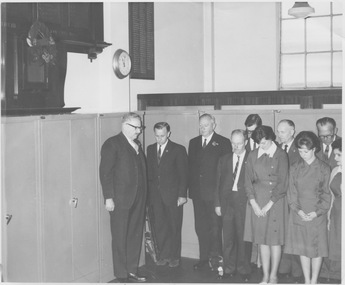
Photograph - Remembrance Day Head Office, 1960s
... The senior male at left is Tramways Board Chairman, Retired Major General Robert Risson (knighted in 1970). The location is likely a locker room in the M&MTB Head Office, Little Collins Street where Honour Rolls of staff who had died during war were fixed to walls above the lockers. ...The senior male at left is Tramways Board Chairman, Retired Major General Robert Risson (knighted in 1970). The location is likely a locker room in the M&MTB Head Office, Little Collins Street where Honour Rolls of staff who had died during war were fixed to walls above the lockers. ...Photograph of seven male staff and three female staff standing with heads bowed with the likelihood of further men and women out of shot. The senior male at left is Tramways Board Chairman, Retired Major General Robert Risson (knighted in 1970). The location is likely a locker room in the M&MTB Head Office, Little Collins Street where Honour Rolls of staff who had died during war were fixed to walls above the lockers. A clock shows 11am, presumably on 11 November sometime in the 1960s, recalling the cesation of World War One. At this exact time each year across the tram network all tramcars were halted in the streets by order of the Board as a mark of respect. The young age of the uniformed female staff compared with the male staff reflected the still current practice that once a woman married she ceased employment.Yields information about administration of Melbourne and Metropolitan Tramways Board. Black and white photograph with no noterisson, remembrance day, 11 november, head office, honour roll, trams halted, single female employees -
 Flagstaff Hill Maritime Museum and Village
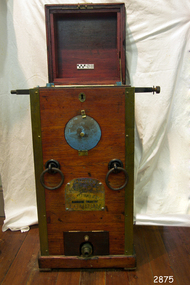
Machine - Diving Compressor, Siebe Gorman & Co. Ltd, 1880-1890
... In 1932, Robert Davis was knighted by King George V, principally for his invention of the ‘Davis Submerged Escape Apparatus’ (D.S.E.A.). ...In 1932, Robert Davis was knighted by King George V, principally for his invention of the ‘Davis Submerged Escape Apparatus’ (D.S.E.A.). ...This compressor was part of the E.G. Ward Collection. It is connected to the diving suit and boots, also in our collection. Siebe Gorman & Company Ltd was a British company that developed diving equipment and breathing equipment and worked on commercial diving and marine salvage projects. The company advertised itself as 'Submarine Engineers'. It was founded by Augustus Siebe, a German-born British engineer chiefly known for his contributions to diving equipment. Siebe Gorman traded as an engineering firm for over 180 years, from 1819 to 1999. The early success of the business was due to its founder, the Prussian immigrant Christian 'Augustus' Siebe (1788-1872). For business reasons, he applied for and was granted British citizenship in 1856. He was a gifted engineer who was able to translate theoretical problems into practical, working products. During the industrial Victorian period, the business traded as 'A. Siebe's at 145 High Street, Holborn, London, but in 1828, new premises were acquired at 5 Denmark Street, Soho. The family firm produced a wide range of manufactured goods, including paper-making machinery, measuring machinery, water-pumps, refrigeration equipment and diving apparatus. Augustus Siebe specialised in submarine engineering early on, and the company gained a reputation for the manufacture of safe, reliable diving apparatus. Augustus Siebe is best remembered for the development and manufacture of the ‘closed’ Diving Dress based on the ideas of Charles and John Deane, George Edwards and Charles Pasley. Apart from some small modifications to valves and diver communications, the basic 12 bolt ‘closed’ diving dress remained relatively unchanged after the 1870s. Later company successes were also based on innovation, with new products that could be successfully developed and manufactured to high standards. This was largely attributed to the inventive nature, foresight, engineering and entrepreneurial skills of Robert Henry Davis (1870-1965). In 1882, RH Davis joined the company of 'Siebe & Gorman' as a young 11-year-old office boy, and he was to remain with the company until he died in 1965. Augustus Siebe retired in 1869 and handed over the company to a new partnership of Henry H. Siebe (1830-1885) and William A. O'Gorman (1834-1904). The new firm traded as 'Siebe & Gorman' (1870-1879) from premises in and around Mason Street, Westminster Bridge Road, Lambeth, London. The two partners soon recognised the potential of R.H. Davis, and in 1894, aged 24, he became General Manager of Siebe & Gorman. Davis increasingly ran the company until the surviving partner (W.A. Gorman) died in 1904. The firm was disposed of to the Vickers (armaments) family, and a new company, Siebe Gorman & Co. Ltd. (1905-1998) was formed. Under the chairmanship of Albert Vickers, R.H. Davis was kept on as Managing Director, and the company forged ahead. However, after WW1, the Great Depression caused manufacturing output and share prices to slump. In 1924, Robert Davis made a deal with the Vickers Board and acquired control of the company through majority shares. Under his leadership, the Siebe Gorman Company flourished, and in time, four of his sons also joined the firm. The company gained a worldwide reputation for the manufacture of diving apparatus, decompression and observation chambers, and safety breathing apparatus of all types for use on the land, in the air and under the sea (including mine rescue, tunnelling, aircraft, diving, submarine escape and in other hazardous environments). Close research and development links with the MOD (especially the Admiralty), also provided a lucrative outlet for the company's products. In 1932, Robert Davis was knighted by King George V, principally for his invention of the ‘Davis Submerged Escape Apparatus’ (D.S.E.A.). Siebe Gorman essentially remained a family firm from the beginning (under A Siebe) until it became a public company for the first time in 1952. However, following WW2, British manufacturing stagnated through stifled investment and post-war austerity, and there was little innovation. Siebe Gorman's fortunes began to decline as an ageing Sir Robert Davis failed to invest or change the company's business and management practices. In 1959, Siebe Gorman was acquired by the “Fairy Group” and the ailing Sir Robert was made Life President. Consequently, nothing changed, and the slow decline continued until Sir Robert's death in March 1965. Around 1960, Siebe Gorman acquired the diving apparatus manufacturer C E Heinke, and for a brief period, it manufactured some diving equipment under the combined name of Siebe Heinke. Around 1964, Mr E. 'Barry' Stephens was appointed as the new Managing Director to modernise Siebe Gorman. Changes were made, including a move to a new factory in Wales in 1975. The new company concentrated on firefighting breathing apparatus and escape equipment, and the move coincided with the loss of many of the older, traditional craft skills. Between 1985 and 1998, Siebe expanded through acquisitions, and several other companies were acquired. The Siebe Gorman (diving apparatus) company has therefore traded as A. Siebe (1819-1870); Siebe & Gorman (1870-1879); Siebe Gorman & Co (1880-1904); Siebe Gorman & Co. Ltd (1905-1998).The diving compressor, along with associated equipment in the Flagstaff Hill collection, represents a highly significant snapshot of marine history. These items are particularly important in understanding the evolution of diving equipment, with a special focus on their use in salvage operations before and throughout the Second World War. Manufactured by a company renowned for its inventions, development, and innovation in marine engineering, the equipment demonstrates the progression of technology in deep-sea diving. Early helmets and related items produced by this company remain highly sought after by collectors worldwide, highlighting their historical and technological value. The presence of these items within the Flagstaff Hill Maritime Museum allows for a unique insight into the working conditions and methods employed by divers. It also illustrates the considerable dangers they faced while performing such essential and hazardous work, underscoring the critical role played by these professionals in maritime history.A single cylinder divers' pump by Siebe Gorman & Co Ltd, London, eccentric hand cranked in brass, brass-mounted mahogany case with instructions to the underside of the lid, brass-covered pressure gauge and air outlet, brass maker's plaque to the front, water inlet and outlet to the rear, green-painted lifting rings. Machinery has some blue-painted areas on the metal. This compressor is part of the E.G. Ward Collection.Plate on the back 'WATER SUPPLY" "WATER OVERFLOW" "WATER DRAIN-IN" Pressure gauge dial "BOURDON'S PRESSURE GAUGE" STEBE GORMAN & CO. LONDON", "LBS PRESSURE" "FEET OF SALT WATER" Plate on the front " PATENT, Siebe Gorman & Co Ltd Submarine Engineers" below emblem (Lion, Crown, Horse)flagstaff hill, warrnambool, flagstaff-hill, maritime-museum, diving compressor, london, siebe gorman & co ltd, marine technology, life saving, deep sea diving, maritime museum, maritime village, manine history, maritime history, marine engineers, marine diving, deep-sea diving, e g ward, vintage diving compressor, e. g. ward, e.g. ward, edward ward, ted ward -
 Flagstaff Hill Maritime Museum and Village
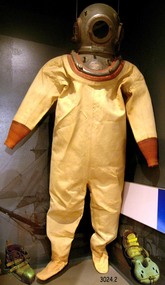
Functional object - Diving Suit, boots and weight, Early-to-mid 20th century
... In 1932, Robert Davis was knighted by King George V, principally for his invention of the ‘Davis Submerged Escape Apparatus’ (D.S.E.A.). ...In 1932, Robert Davis was knighted by King George V, principally for his invention of the ‘Davis Submerged Escape Apparatus’ (D.S.E.A.). ...This diving suit with helmet, boots and weight is part of the E. G.Ward collection, along with the diving compressor and a photograph of a diver in this equipment. Siebe Gorman & Company Ltd was a British company that developed diving equipment and breathing equipment and worked on commercial diving and marine salvage projects. The company advertised itself as 'Submarine Engineers'. It was founded by Augustus Siebe, a German-born British engineer chiefly known for his contributions to diving equipment. Siebe Gorman traded as an engineering firm for over 180 years from 1819 to 1999. The early success of the business was due to its founder, the Prussian immigrant Christian 'Augustus' Siebe (1788-1872). For business reasons, he applied for and was granted British citizenship in 1856. He was a gifted engineer who was able to translate theoretical problems into practical, working products. During the industrial Victorian period, the business traded as 'A. Siebe' at 145 High Street Holborn London, but in 1828 new premises were acquired at 5 Denmark Street, Soho. The family firm produced a wide range of manufactured goods including paper-making machinery, measuring machinery, water pumps, refrigeration equipment and diving apparatus. Augustus Siebe specialised in submarine engineering early on and the company gained a reputation for the manufacture of safe, reliable diving apparatus. Augustus Siebe is best remembered for the development and manufacture of the ‘closed’ Diving Dress based on the ideas of Charles and John Deane, George Edwards and Charles Pasley. Apart from some small modifications to valves and diver communications, the basic 12-bolt ‘closed’ diving dress remained relatively unchanged after the 1870s. Later company successes were also based on innovation, with new products that could be successfully developed and manufactured to high standards. This was largely attributed to the inventive nature, foresight, engineering and entrepreneurial skills of Robert Henry Davis (1870-1965). In 1882, RH Davis joined the company of 'Siebe & Gorman' as a young 11-year-old office boy and he was to remain with the company until he died in 1965. Augustus Siebe retired in 1869 and handed over the company to a new partnership of Henry H. Siebe (1830-1885) and William A. O'Gorman (1834-1904). The new firm traded as 'Siebe & Gorman' (1870-1879) from premises in and around Mason Street, Westminster Bridge Road, Lambeth, London. The two partners soon recognised the potential of R.H. Davis and in 1894, aged 24, he became General Manager of Siebe & Gorman. Davis increasingly ran the company until the surviving partner (W.A. Gorman) died in 1904. The firm was disposed of to the Vickers (armaments) family and a new company 'Siebe Gorman & Co. Ltd.' (1905-1998) was formed. Under the chairmanship of Albert Vickers, R.H. Davis was kept on as Managing Director, and the company forged ahead. However, after WW1, the Great Depression caused manufacturing output and share prices to slump. In 1924 Robert Davis made a deal with the Vickers Board and acquired control of the company through majority shares. Under his leadership, the Siebe Gorman Company flourished and within time, four of his sons also joined the firm. The company gained a worldwide reputation for the manufacture of diving apparatus, decompression and observation chambers, and safety breathing apparatus of all types for use on the land, in the air and under the sea (including mine rescue, tunnelling, aircraft, diving, submarine escape and in other hazardous environments). Close research and development links with the MOD (especially the Admiralty), also provided a lucrative outlet for the company products. In 1932, Robert Davis was knighted by King George V, principally for his invention of the ‘Davis Submerged Escape Apparatus’ (D.S.E.A.). Siebe Gorman essentially remained a family firm from the beginning (under A.Siebe) until it became a public company for the first time in 1952. However, following WW2, British manufacturing stagnated through stifled investment and post-war austerity, and there was little innovation. Siebe Gorman fortunes began to decline as an ageing Sir Robert Davis failed to invest, or change the company business and management practices. In 1959, Siebe Gorman was acquired by the “Fairy Group” and the ailing Sir Robert was made Life President. Consequently, nothing changed and the slow decline continued until Sir Robert's death in March 1965. Around 1960, Siebe Gorman acquired the diving apparatus manufacturer C E Heinke, and for a brief period, it manufactured some diving equipment under the combined name of Siebe Heinke. Around 1964, Mr E. 'Barry' Stephens was appointed as the new Managing Director to modernise Siebe Gorman. Changes were made, including a move to a new factory in Wales in 1975. The new company concentrated on fire-fighting breathing apparatus and escape equipment, and the move coincided with the loss of many of the older, traditional craft skills. Between 1985 and 1998, Siebe expanded through acquisitions, and several other companies were acquired. The Siebe Gorman (diving apparatus) company has therefore traded as A. Siebe (1819-1870); Siebe & Gorman (1870-1879); Siebe Gorman & Co (1880-1904); Siebe Gorman & Co. Ltd (1905-1998).The diving suit, helmet, boots, and weights, along with associated equipment in the Flagstaff Hill collection, represent a highly significant snapshot of marine history. These items are particularly important in understanding the evolution of diving equipment, with a special focus on their use in salvage operations before and throughout the Second World War. Manufactured by a company renowned for its inventions, development, and innovation in marine engineering, the equipment demonstrates the progression of technology in deep-sea diving. Early helmets and related items produced by this company remain highly sought after by collectors worldwide, highlighting their historical and technological value. The presence of these items within the Flagstaff Hill Maritime Museum allows for a unique insight into the working conditions and methods employed by divers. It also illustrates the considerable dangers they faced while performing such essential and hazardous work, underscoring the critical role played by these professionals in maritime history.Diving suit including helmet, boots and a weight. Diving suit is made of canvas with knitted cuffs. The helmet is metal. The boots have a thick sole and thick leather upper that is held on with leather straps and buckles. The toe of the boot is heavy metal. The weight is worn next to the trunk of the diver and it has an inscription to mark the front. It is worn with straps and buckles holding it in place. Royal Navy Admiralty Pattern 6 bolt No 3 light Siebe Gorman light diving helmet circa 1960, used by the Royal Navy before and after World War 2. This equipment is part of the E. G. Ward Collection."Siebe Gorman & Co Ltd Marine Engineers London. Patent" with "E G Ward" on front and back plate. On weight "FRONT"flagstaff hill, warrnambool, diving suit, siebe gorman and co ltd., siebe gorman and co ltd marine engineers london, marine engineers, diving helmet, diving boots, diving weight, marine diving, maritimemuseum, maritime village, maritime history, marine technology, life saving, deep sea diving, maritime museum, siebe gorman and co ltd., siebe gorman and co ltd, london, deep-sea diving, e. g. ward, e g ward, e.g. ward, edward ward, ted ward -
 Flagstaff Hill Maritime Museum and Village
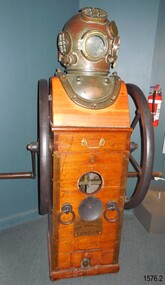
Equipment - Diving compressor and helmet, 1944
... In 1932, Robert Davis was knighted by King George V, principally for his invention of the ‘Davis Submerged Escape Apparatus’ (D.S.E.A.). ...In 1932, Robert Davis was knighted by King George V, principally for his invention of the ‘Davis Submerged Escape Apparatus’ (D.S.E.A.). ...Siebe Gorman & Company Ltd was a British company that developed diving equipment and breathing equipment and worked on commercial diving and marine salvage projects. The company advertised itself as 'Submarine Engineers'. It was founded by Augustus Siebe, a German-born British engineer chiefly known for his contributions to diving equipment. Siebe Gorman traded as an engineering firm for over 180 years from 1819 to 1999. The early success of the business was due to its founder, the Prussian immigrant Christian 'Augustus' Siebe (1788-1872). For business reasons, he applied for and was granted British citizenship in 1856. He was a gifted engineer who was able to translate theoretical problems into practical, working products. During the industrial Victorian period, the business traded as 'A. Siebe' at 145 High Street Holborn London, but in 1828 new premises were acquired at 5 Denmark Street, Soho. The family firm produced a wide range of manufactured goods including paper-making machinery, measuring machinery, water pumps, refrigeration equipment, and diving apparatus. Augustus Siebe specialised in submarine engineering early on and the company gained a reputation for the manufacture of safe, reliable diving apparatus. Augustus Siebe is best remembered for the development and manufacture of the ‘closed’ Diving Dress based on the ideas of Charles and John Deane, George Edwards, and Charles Pasley. Apart from some small modifications to valves and diver communications, the basic 12 bolt ‘closed’ diving dress remained relatively unchanged after the 1870s. Later company successes were also based on innovation, with new products that could be successfully developed and manufactured to high standards. This was largely attributed to the inventive nature, foresight, engineering, and entrepreneurial skills of Robert Henry Davis (1870-1965). In 1882, RH Davis joined the company of 'Siebe & Gorman' as a young 11-year-old office boy and he was to remain with the company until he died in 1965. Augustus Siebe retired in 1869 and handed over the company to a new partnership of Henry H. Siebe (1830-1885) and William A. O'Gorman (1834-1904). The new firm traded as 'Siebe & Gorman' (1870-1879) from premises in and around Mason Street, Westminster Bridge Road, Lambeth, London. The two partners soon recognised the potential of R.H. Davis and in 1894, aged 24, he became General Manager of Siebe & Gorman. Davis increasingly ran the company until the surviving partner (W.A. Gorman) died in 1904. The firm was disposed of to the Vickers (armaments) family and a new company 'Siebe Gorman & Co. Ltd.' (1905-1998) was formed. Under the chairmanship of Albert Vickers, R.H. Davis was kept on as Managing Director, and the company forged ahead. However, after WW1, the Great Depression caused manufacturing output and share prices to slump. In 1924 Robert Davis made a deal with the Vickers Board and acquired control of the company through majority shares. Under his leadership, the Siebe Gorman Company flourished and within time, four of his sons also joined the firm. The company gained a worldwide reputation for the manufacture of diving apparatus, decompression and observation chambers, and safety breathing apparatus of all types for use on the land, in the air, and under the sea (including mine rescue, tunneling, aircraft, diving, submarine escape and in other hazardous environments). Close research and development links with the MOD (especially the Admiralty), also provided a lucrative outlet for the company products. In 1932, Robert Davis was knighted by King George V, principally for his invention of the ‘Davis Submerged Escape Apparatus’ (D.S.E.A.). Siebe Gorman essentially remained a family firm from the beginning (under A.Siebe) until it became a public company for the first time in 1952. However, following WW2, British manufacturing stagnated through stifled investment and post-war austerity, and there was little innovation. Siebe Gorman's fortunes began to decline as an aging Sir Robert Davis failed to invest, or change the company's business and management practices. In 1959, Siebe Gorman was acquired by the “Fairy Group” and the ailing Sir Robert was made Life President. Consequently, nothing changed and the slow decline continued until Sir Robert's death in March 1965. Around 1960, Siebe Gorman acquired the diving apparatus manufacturer C E Heinke, and for a brief period, it manufactured some diving equipment under the combined name of Siebe Heinke. Around 1964, Mr E. 'Barry' Stephens was appointed as the new Managing Director to modernise Siebe Gorman. Changes were made, including a move to a new factory in Wales in 1975. The new company concentrated on fire-fighting breathing apparatus and escape equipment, and the move coincided with the loss of many of the older, traditional craft skills. Between 1985 and 1998, Siebe expanded through acquisitions, and several other companies were acquired. The Siebe Gorman (diving apparatus) company has therefore traded as A. Siebe (1819-1870); Siebe & Gorman (1870-1879); Siebe Gorman & Co (1880-1904); Siebe Gorman & Co. Ltd (1905-1998). (For information regards the diving helmet & Frank King see Notes Section at the end of this document)The items are very significant as a snapshot into marine history and the development of diving equipment generally especially that used for salvage operations before and during WW2. The company that made the equipment was a leading inventor,developer and innovator of marine equipment with its early helmets and other items eagerly sought after today for collections around the world. The items in the Flagstaff Hill collection give us an insight as to how divers operated and the dangers they faced doing a very necessary and dangerous job. Frank Kings' diving helmet and compressor (communication pipe stored separately). Compressor is hand cranked. US Navy diving helmet, Mark V. Two maker's plates attached. Made in 1944.On rear "WATER SUPPLY" On front 'PATENT" " Logo: Images (Lion, Crown, Horse, Shield within an oval) "SIEBE, GORMAN & Co. Ltd. SUBMARINE ENGINEERS, LONDON.flagstaff hill, warrnambool, maritime museum, great ocean road, us navy diving helmet, commonwealth government salvage, diving helmet, marine salvage, frank king, diver, siebe. gorman & co ltd, submarine equipment, diving equipment, communication under water, hand cranked, diving compressor -
 Chiltern Athenaeum Trust
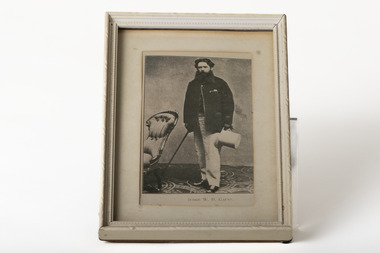
Photograph, JUDGE W. H. GAUNT
... Of the surviving five sons and two daughters, Ernest Frederick Augustus and Guy Reginald Archer both became admirals and were knighted; Cecil Robert became a lieutenant-colonel, Clive Herbert a government advocate in Rangoon and Mary (Mrs H. ...Of the surviving five sons and two daughters, Ernest Frederick Augustus and Guy Reginald Archer both became admirals and were knighted; Cecil Robert became a lieutenant-colonel, Clive Herbert a government advocate in Rangoon and Mary (Mrs H. ...This photograph is a copy displayed in the Australian Dictionary of Biography. The original photograph is in the La Trobe Collection in the State Library of Victoria. William Henry Gaunt (1830-1905), judge, was born on 27 July 1830 at Leek, Staffordshire, England, son of John Gaunt, banker, and his wife Mary, née Bakewell. Educated at Leek Grammar School and Whitchurch, Salop, he migrated to Melbourne, and entered the Victorian public service and was rapidly promoted. By March 1854 he was chief clerk at Beechworth, the administrative centre of the Ovens goldfield. In July 1855 the resident warden commended Gaunt as 'a highly valuable public servant' with an intimate knowledge of the district and the 'temper and disposition of the miners'. Appointed sub-warden in the Beechworth district in January 1856 and a Chinese protector in August, he was given control of the extensive Woolshed district. When European miners attacked a party of Chinese at the Buckland River diggings in May 1857 Gaunt was sent to restore order. One of his proclamations, issued in Chinese characters, concluded 'W. H. Gaunt, your protector—tremble and obey!' In June he was appointed a police magistrate and next month was sent to take charge at the Buckland where the Chinese had been expelled from the diggings; the police force assisting him was led by Robert O'Hara Burke. In January 1858 Gaunt was appointed a warden, in November was transferred to Chiltern, north of Beechworth, and in August 1859 was made a commissioner of crown lands. In February 1860 Gaunt was appointed a coroner of Victoria, acting at Indigo, near Chiltern. In April 1865 he was transferred to Beechworth, became visiting justice of the gaol and later moved to Sandhurst. In January 1869 he was appointed returning officer for the mining district of Ballarat and visiting justice of the gaol. He was associated with this area for the rest of his life and won high repute for his integrity. In 1874 he chaired the inaugural meeting of the first Australian competitive swimming club. For years he studied law and was called to the Bar in December 1873. He was one of the many public servants dismissed by Graham Berry on 9 January 1878 (Black Wednesday). After petitioning the Queen in vain over his dismissal he began practice in Ballarat as a barrister. He soon became a leading authority on mining laws; one of the cases in which he was involved was the lengthy inquest on the bodies of the twenty-two miners drowned in the New Australasian mine disaster at Creswick in 1882. He was appointed a temporary judge of the Insolvency Court in 1889 and a County Court judge in 1891. In 1900 he was chairman of the royal commission which considered Metropolitan Board of Works matters, and in 1902 was president of the inquiry into the unification of municipalities in Victoria. In 1860 Gaunt married Elizabeth Mary, the youngest daughter of Frederick Palmer; they had nine children. Of the surviving five sons and two daughters, Ernest Frederick Augustus and Guy Reginald Archer both became admirals and were knighted; Cecil Robert became a lieutenant-colonel, Clive Herbert a government advocate in Rangoon and Mary (Mrs H. L. Miller) one of the first women students to enrol at the University of Melbourne (1881), although she did not complete her degree; she became a successful novelist. Gaunt died on 5 October 1905. An anonymous colleague said: 'I don't think he was ever excelled as a police magistrate, and during the many years he was on the County Court bench he earned the highest regard. His capacities were as unquestioned as his integrity, and more could not be said of any judge'. Select Bibliography Votes and Proceedings (Legislative Assembly, Victoria), 1878, 3, (58) Government Gazette (Victoria), 22 Feb, 15 Aug 1856, 30 June 1857, 5 Jan 1858, 16 Aug 1859, 3 Feb 1860, 7 Mar, 11 Oct 1862, 28 Mar, 4 Apr 1865, 17 May 1867, 9 June 1868, 22, 29 Jan 1869 Ovens and Murray Advertiser, 21 May 1857, 11 Mar 1865 Colonial Secretary's in-letters, goldfields, 25 Mar 1854, 21 July, 18 Nov 1855, 22 Aug 1857 (Public Record Office Victoria) scrapbook and newsclippings (privately held). Related Entries in NCB Sitesview family tree Gaunt, Mary Eliza (daughter)go to ADB entryPhotograph of Judge W. H. Gaunt standing beside chair holding top hat and cane, under glass, in cream frame with cream matte.Printed name underneath: JUDGE W. H. GAUNT -
 Federation University Historical Collection
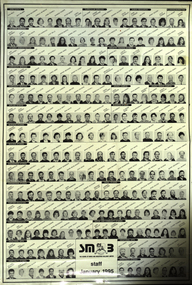
Poster, Ballarat School of Mines Staff, 1995, 1995
... Corporate Services - Graham Penhall, Phil Dixon, Ron Sutton, Ron Lucas, Robert Munt, Garry Christie, Don Lawless, Bernie Stevens, David Fithall, Rebeccah Parker, Craig Holloway. Ararat Campus - David Haddow, Kim Knight, Kevin Martin, Maureen Green, Ian Harris, Adrian McMillan, Frank Parker, Keith Akers. ...Corporate Services - Graham Penhall, Phil Dixon, Ron Sutton, Ron Lucas, Robert Munt, Garry Christie, Don Lawless, Bernie Stevens, David Fithall, Rebeccah Parker, Craig Holloway. Ararat Campus - David Haddow, Kim Knight, Kevin Martin, Maureen Green, Ian Harris, Adrian McMillan, Frank Parker, Keith Akers. ...The Ballarat School of Mines is a predecessor institution of Federation University Austraila.An A2 poster showing small black and white portraits of each staffmember at the Ballarat School of Mines. Names include: Curriculum Services - John Kemp, Roger McFarlane, Leanne Gingell, Sandra Glover, Doug Seymour. Human Resources - Ross Furness, Ian Pym, Jenny Gough, Julie Thomas. Planning/Marketing - Keith Boast, Simone Byrne Student Services - Brian Webber, Janet McGie, Jani White, Jan Harwood, Judy Mills, Kirsten Martin, Barrie Frith, Tania Gaunt, Pam Merrett, Heather Durrant, Jola Piskozub, Frances Ratcliffe, Ian Robinson, Merill Potter, Lorelli Huggins, Maureen Auchettl, Fiona Angus, Natalie Howard. Corporate Services - Graham Penhall, Phil Dixon, Ron Sutton, Ron Lucas, Robert Munt, Garry Christie, Don Lawless, Bernie Stevens, David Fithall, Rebeccah Parker, Craig Holloway. Ararat Campus - David Haddow, Kim Knight, Kevin Martin, Maureen Green, Ian Harris, Adrian McMillan, Frank Parker, Keith Akers. Rural Studies - Andrew Sullivan, Gary Lyttle, Ian Best, Graham Shearer, Malcolm Trainer, Ross Holton, Anthony Thake, Paul Norquay, John Harrison. ballarat school of mines, staff, ron wild, max palmer, heather durant, vl d'angri, alistair heighway, neville french -
 Federation University Historical Collection
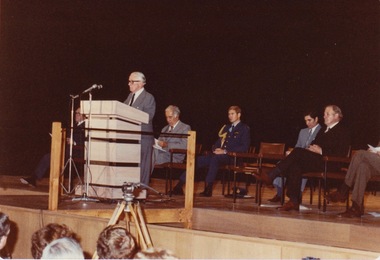
Photograph - Photograph - Colour, VIOSH: Opening of Founder's Hall and First Graduation Ceremony held, 1981, 1979
... Queen Elizabeth II made him a Knight Grand Cross of the Victorian Order on her visit in 1980. viosh viosh australia graduate diploma in occupational hazard management alistair allen noel arnold peter bailey neville betts robert blunt ronald cordinhgley william davis bill embling john florence gwyn griffiths roslyn mancy laurie mason john moroney allen pang graham suckling ross wyatt peter wilson max brooke sir zelman cowen governor general founder's hall e j tippett president of ballarat school of mines Three colour photographs VIOSH: Opening of Founder's Hall and First Graduation Ceremony held, 1981. ...Victorian Institute of Occupational Safety and Health (VIOSH) Australia is the Asia-Pacific centre for teaching and research in occupational health and safety (OHS) and is known as one of Australia's leaders in the field. VIOSH has a global reputation for its innovative approach within the field of OHS management. University of Ballarat is a predecessor institution of Federation University Australia. Federation University VIOSH Australia students are safety managers, senior advisors and experienced OHS professionals. They come from all over Australia and industry. Students are taught active research and enquiry; rather than textbook learning and a one-size fits all approach. VIOSH accepts people into the Graduate Diploma of Occupational Hazard Management who have no undergraduate degree – on the basis of extensive work experience and knowledge. The first intake of students was in 1979. The first graduation ceremony to be held in Founder's Hall in 1981 was this intake of students. The Hall was opened by Sir Zelman Cowen, Governor General of Australia. He was first knighted as Knight Bachelor in 1976. Queen Elizabeth II made him a Knight Grand Cross of the Victorian Order on her visit in 1980.Three colour photographsviosh, viosh australia, graduate diploma in occupational hazard management, alistair allen, noel arnold, peter bailey, neville betts, robert blunt, ronald cordinhgley, william davis, bill embling, john florence, gwyn griffiths, roslyn mancy, laurie mason, john moroney, allen pang, graham suckling, ross wyatt, peter wilson, max brooke, sir zelman cowen, governor general, founder's hall, e j tippett, president of ballarat school of mines -
Federation University Historical Collection
Book, The Network UNE Experience
... Knight...John Lovett...Don McNicol...V. Lynn Meek...Robert...The Network UNE Experience Armidale Coffs Harbour Northern Rivers Orange Grant Harman Rob Robertson-Cuninghame Susan Bambrick John Chudleigh Peter Drake Beryl Evans Terry Field Trevor Knight John Lovett Don McNicol V. Lynn Meek Robert Napier Lionel E. ...The Network UNE Experience: Reflections on the Amalgamated University of New England 1989 - 1993Blue writing on white covered book with picture of building in the backgroundnon-fictionThe Network UNE Experience: Reflections on the Amalgamated University of New England 1989 - 1993 the network une experience, armidale, coffs harbour, northern rivers, orange, grant harman, rob robertson-cuninghame, susan bambrick, john chudleigh, peter drake, beryl evans, terry field, trevor knight, john lovett, don mcnicol, v. lynn meek, robert napier, lionel e. phelps, robert h.t. smith -
 Federation University Historical Collection
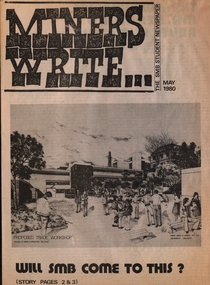
Newspaper - Newspaper - Broadsheet, ZILLES COLLECTION: SMB Student Newspaper; "Miners Write", May 1980, 05/1980
... knight...greg smith...robert...'Miners Write" printed by Jeff Zilles. ballarat school of mines miners write newspaper building plans graham beanland principal letters to the editor sporting results evan jones & associates architects twelve angry men pentridge prison barry hall jim burns lorene guley glenn keating karen knight greg smith robert smith rohan souter jeff zilles 4 sheets folded plus single sheet half the size - 8 plus 2 pages ZILLES COLLECTION: SMB Student Newspaper; "Miners Write", May 1980 Newspaper Newspaper - Broadsheet ...4 sheets folded plus single sheet half the size - 8 plus 2 pagesnon-fictionballarat school of mines, miners write, newspaper, building plans, graham beanland, principal, letters to the editor, sporting results, evan jones & associates, architects, twelve angry men, pentridge prison, barry hall, jim burns, lorene guley, glenn keating, karen knight, greg smith, robert smith, rohan souter, jeff zilles -
Federation University Historical Collection
Ledger, Ballarat School of Mines Student Payments Ledger, 1907-1913, 1907-1913
... knight...leslie henderson...robert...The Ballarat Technical Art School opened in 1907 as a division of the Ballarat School of Mines. ballarat technical art school Clare Elshaug Eileen Coglan alice stanbury will salmon ethel owen isobel cahir dan daly a. greening george archibald t. davies alice coltman mabel fauce may lakeland agnes lamb ethel clegg john archibald mary black lewis charles may lakeland elsie Cassell mary heagney paul lalkeland myrtke harris g.c. haymes v. robinson ruby payne rick herbert herbert hayes tom harris floss rowe g. roberts clyde foord nita featherstone harold smith ernest morshead emily lucas ida holmes james grogan rene knight leslie henderson robert morgan rupert robbins albert perry h.h. blight stan blight h. rowland george anderson alex wilson c. frood vera sykes w.n. gent vera treloar w. holden violet astley percy reece ed olliver perry boweall keith McMillan t. hill eva nankervis bertha marsh ruby gates lizzie till george webb roy cooper w.t. mitchell c. brelaz guido brelaz a. pittard vera fisher Ledger with brown and blue marbled paper cover and brown tape spine. ...The Ballarat Technical Art School opened in 1907 as a division of the Ballarat School of Mines.Ledger with brown and blue marbled paper cover and brown tape spine. Names and amount paid listed on each page. Possibly relating to students of the Ballarat Technical Art School.ballarat technical art school, clare elshaug, eileen coglan, alice stanbury, will salmon, ethel owen, isobel cahir, dan daly, a. greening, george archibald, t. davies, alice coltman, mabel fauce, may lakeland, agnes lamb, ethel clegg, john archibald, mary black, lewis charles, may lakeland, elsie cassell, mary heagney, paul lalkeland, myrtke harris, g.c. haymes, v. robinson, ruby payne, rick herbert, herbert hayes, tom harris, floss rowe, g. roberts, clyde foord, nita featherstone, harold smith, ernest morshead, emily lucas, ida holmes, james grogan, rene knight, leslie henderson, robert morgan, rupert robbins, albert perry, h.h. blight, stan blight, h. rowland, george anderson, alex wilson, c. frood, vera sykes, w.n. gent, vera treloar, w. holden, violet astley, percy reece, ed olliver, perry boweall, keith mcmillan, t. hill, eva nankervis, bertha marsh, ruby gates, lizzie till, george webb, roy cooper, w.t. mitchell, c. brelaz, guido brelaz, a. pittard, vera fisher -
 Federation University Historical Collection
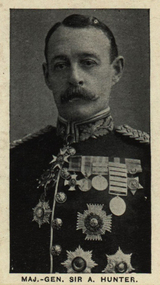
Photograph (black & White), Major-General Sir Archibald Hunter - South Africa
... Roberts' army camped at the captured Orange Free State capital. Hunter led them in the march on Pretoria. Once Pretoria was captured they still had to deal with Guerrilla Warfare and Hunter was sent south as overall commander of five columns that converged on the Free State army camped at Brandwater Basin, forcing the surrender of 4,314 Boers led by Marthinus Prinsloo. He was awarded Knight...Roberts' army camped at the captured Orange Free State capital. Hunter led them in the march on Pretoria. Once Pretoria was captured they still had to deal with Guerrilla Warfare and Hunter was sent south as overall commander of five columns that converged on the Free State army camped at Brandwater Basin, forcing the surrender of 4,314 Boers led by Marthinus Prinsloo. He was awarded Knight ...At the outbreak of the Second Boer War, Major General Hunter was on the staff of Sir George White's Natal Field Force during the Battle of Ladysmith in Natal. He led a small raid against some of the Boers' guns, disabled them and relieved the town. Promotion followed and he became General Officer Commanding 10th Division. The Division was sent to join Lord Roberts' army camped at the captured Orange Free State capital. Hunter led them in the march on Pretoria. Once Pretoria was captured they still had to deal with Guerrilla Warfare and Hunter was sent south as overall commander of five columns that converged on the Free State army camped at Brandwater Basin, forcing the surrender of 4,314 Boers led by Marthinus Prinsloo. He was awarded Knight Grand Cross of the Order of the Bath, Knight Grand Cross of the Royal Victorian Order, Territorial Decoration Legion of Honour (France)Individual image taken from photographed poster of tobacco and cigarette cardssecond boer war, major generl, archibald hunter, natal field force, battle of ladysmith, general officer commanding, sir george white, guerrilla warfare, orange free state, brandwater basin, marthinus prinsloo, knight grand cross of the order of the bath, knight grand crossof the royal victorian order, legion of honour (france) -
 Federation University Historical Collection
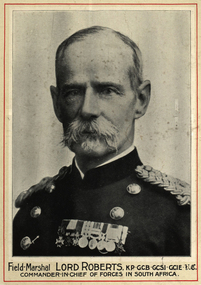
Photograph (black & White), Field-Marshall Lord Roberts, Commander-in-Chief - South Africa
... He was made a Knight of the Order of the Garter; created Earl Roberts of Kandahar, Pretoria and Waterford and Viscount St Pierre. ...He was made a Knight of the Order of the Garter; created Earl Roberts of Kandahar, Pretoria and Waterford and Viscount St Pierre. ...Frederick Sleigh Roberts, 1st Earl Roberts was a British Soldier who served in India, Abyssinia and Afghanistan before leading the British Forces to success in the Second Boer War. He became the last Commander-in-Chief of the Forces before the post was abolished in 1904. While in South Africa he was at the Siege of Kimberley, the Battle of Paardeberg, the Battle of Poplar Grove, the Battle of Diamond Hill and the Battle of Bergendal. Roberts received many awards: Victoria Cross (1858-India); Companion of the Order of the Bath (1872-Afghanistan); Knight Commander of the Order of the Bath (1878-Afghanistan);Knight Grand Cross of the Order of the Bath (1880-Afghanistan) and Companion of the Order of the Indian Empire in the same year. He was Commander-in Chief, India in 1885 was advanced to Knight Commander of the Order of India (1887) and then Knight Grand Commander of the Order of the Indian Empire later that year. He became Knight Grand Commander of the Order of the Star of India. The same year he relinquished his Indian command and became Commander-in-Chief of British Forces in 1895 made a Knight of the Order of St Patrick. In 1899 he returned to South Africa to take overall command of British Forces in the Second Boer War. December 1900 Roberts handed over command to Lord Kitchener and returned to England where more honours were awarded. He was made a Knight of the Order of the Garter; created Earl Roberts of Kandahar, Pretoria and Waterford and Viscount St Pierre. He became a Knight of Grace of the Order of St John (1901) and then Knight of Justice of the Order of St John. The Kaiser awarded him the German Order of the Black Eagle and was among the original recipients of the Order of Merit in the 1902 Coronation Honours. Roberts died in 1914. He was given and State Funeral and buried in St Paul's Cathedral.Individual image taken from photographed poster of tobacco and cigarette cards.frederick sleigh roberts, earl roberts, india, abyssinia, afghanistan, british forces, second boer war, commander-in-chief, south africa, siege of kimberley, battle of paardeberg, battle of poplar grove, battle of diamond hill, battle of bergendal, victoria cross, companion of the order of the bath, knight commander of the order of the bath, knight grand cross of the order of the bath, companion of the order of the indian empire, knight commander of the order of india, knight grand commander of the order of the indian empire, knight grand commander of the order of the star of india, knight of the order of st patrick, knight of the order of the garter, viscount st pierre, knight of grace of the order of st john, knight of justice of the order of st john, order of the black eagle, order of merit, st paul's cathedral, london -
 Federation University Historical Collection
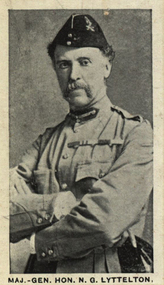
Photograph (black & White), Major-General, Honorable Neville Gerald Lyttelton - South Africa
... Roberts referred to Lyttelton as an officer "with great coolness under fire, and considerable tactical knowledge and resource........an excellent commander in the field." Following the end of the Boer War in 1902, Lyttelton became Commander-in-Chief of the whole of South Africa. He and his wife sought to repair relations with the Boer community. In the South Africa honours of 1902 Lyttelton was knighted...Other awards received were Knight Grand Cross of the Order of the Bath; Knight Grand Cross of the Royal Victorian Order; Order of Osmanieh (Ottoman Empire) neville gerald lyttelton second boer war commander 4th brigade battle of spion kop battle of vaal krantz relief of ladysmith lord roberts commander-in-chief south africa knight commander of the order of the bath royal hospital chelsea order of osmanieh (ottoman empire) knight grand cross of the royal victorian order Individual image taken from photographed poster of tobacco and cigarette cards. ...Lyttelton served in the Second Boer War as Commander of the 4th Brigade from 1899. He temporarily became General Officer Commanding the 2nd Division and the commanded the 4th Division. The Division was involved in the Battle of Spion Kop and the Battle of Vaal Krantz, leading to the Relief of Ladysmith 1900. Lord Roberts referred to Lyttelton as an officer "with great coolness under fire, and considerable tactical knowledge and resource........an excellent commander in the field." Following the end of the Boer War in 1902, Lyttelton became Commander-in-Chief of the whole of South Africa. He and his wife sought to repair relations with the Boer community. In the South Africa honours of 1902 Lyttelton was knighted as Knight Commander of the Order of the Bath. He retired in 1912 and under insistence by the King was appointed as Governor of the Royal Hospital Chelsea from that time until his death there in 1931. Other awards received were Knight Grand Cross of the Order of the Bath; Knight Grand Cross of the Royal Victorian Order; Order of Osmanieh (Ottoman Empire)Individual image taken from photographed poster of tobacco and cigarette cards.neville gerald lyttelton, second boer war, commander, 4th brigade, battle of spion kop, battle of vaal krantz, relief of ladysmith, lord roberts, commander-in-chief, south africa, knight commander of the order of the bath, royal hospital chelsea, order of osmanieh (ottoman empire), knight grand cross of the royal victorian order -
 Federation University Historical Collection
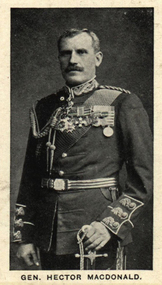
Photograph (black & White), Major General, Sir Hector Archibald MacDonald - South Africa
... Roberts and his Chief of Staff, Lord Kitchener. MacDonald arrived in Cape Town and assumed command of the Highland Brigade stationed at Modder River with rank of Major-general. He took part in the Battle of Paardeberg and later operations in Bloemfontein and Pretoria. In 1901 he was knighted...Roberts and his Chief of Staff, Lord Kitchener. MacDonald arrived in Cape Town and assumed command of the Highland Brigade stationed at Modder River with rank of Major-general. He took part in the Battle of Paardeberg and later operations in Bloemfontein and Pretoria. In 1901 he was knighted ...In 1870 MacDonald joined the Inverness-shire Highland Rifle Volunteers and in 1871 enlisted in the 92nd Gordon Highlanders. He rose rapidly through the noncommissioned ranks. His distinguished conduct in the presence of the enemy during the Second Afghan War led to him being offered either a Victoria Cross or a commission with his regiment. He chose the latter. He served in the First Boer War and at the Battle of Majuba Hill made prisoner. At the Battle of Omdurman (1898), the British commander Lord Kitchener was assisted by the skillful manoeuvring of MacDonald and his men in overcoming the Dervishes. Due to this MacDonald was promoted to colonel, appointed an aide-de-camp to Queen Victoria and received a cash reward. In Scotland MacDonald was regarded the true hero of Omdurman, not Kitchener. In 1899 he was seconded to command a military district in India but with the outbreak of war in South Africa, he was ordered to command the Highland Brigade, under Lord Roberts and his Chief of Staff, Lord Kitchener. MacDonald arrived in Cape Town and assumed command of the Highland Brigade stationed at Modder River with rank of Major-general. He took part in the Battle of Paardeberg and later operations in Bloemfontein and Pretoria. In 1901 he was knighted as Knight Commander of the Order of the Bath In1902 he was appointed Commander-in-Chief of British Troops in Ceylon with the temporary rank of major-generalIndividual image taken from photographed poster of tobacco and cigarette cards.hector macdonald, highland rifle volunteers, gordon highlanders, noncommissioned, second afghan war, victoria cross, first boer war, battle of majuba hill, battle of omdurman, lord kitchener, lord roberts, aide-de-camp, queen victoria, dervishes, cape town, highland brigade, modder river, battle of paardeburg, bloemfontein, pretoria, knight commander of the order of the bath, commander-in-chief, ceylon -
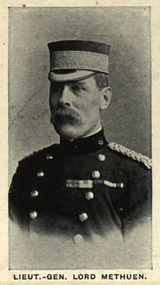 Federation University Historical Collection
Photograph (black & White), Lieutenant-General Lord Methuen - South Africa
... He suffered both defeats and successes during the war - the greatest defeat was at the Battle of Magersfontein, one of three defeats in "Black Week", which led to the dispatch of Lord Roberts to South Africa. During his career he was awarded Knight Grand Cross of the Order of the Bath, Knight Grand Cross of the Order of St Michael and St George and Knight Grand Cross of the Royal Victorian Order....He suffered both defeats and successes during the war - the greatest defeat was at the Battle of Magersfontein, one of three defeats in "Black Week", which led to the dispatch of Lord Roberts to South Africa. During his career he was awarded Knight Grand Cross of the Order of the Bath, Knight Grand Cross of the Order of St Michael and St George and Knight Grand Cross of the Royal Victorian Order. lord methuen south africa adjutant-general major general lieutenant general second boer war "black week" battle of magersfontein lord roberts knight grand cross of the order of the bath knight grand cross of the order of st michael and st george knight grand cross of the royal victorian order Individual image from photographed poster of tobacco and cigarette cards. ...Paul Sanford Methuen became deputy adjutant-general in South Africa in 1888. He was promoted to major general in 1890 and succeeded his father as 3rd baron in 1891. He was promoted to Lieutenant General in 1898 and was given the command of the 1st Division on the outbreak of the Second Boer War. He suffered both defeats and successes during the war - the greatest defeat was at the Battle of Magersfontein, one of three defeats in "Black Week", which led to the dispatch of Lord Roberts to South Africa. During his career he was awarded Knight Grand Cross of the Order of the Bath, Knight Grand Cross of the Order of St Michael and St George and Knight Grand Cross of the Royal Victorian Order.Individual image from photographed poster of tobacco and cigarette cards.lord methuen, south africa, adjutant-general, major general, lieutenant general, second boer war, "black week", battle of magersfontein, lord roberts, knight grand cross of the order of the bath, knight grand cross of the order of st michael and st george, knight grand cross of the royal victorian order -
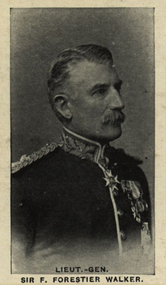 Federation University Historical Collection
Photograph (black & White), Lieutenant-General Sir Frederick Forestier-Walker - South Africa
... Knight Commander of the Order of the Bath. He left Egypt in 1895. In 1899 he returned to Africa, becoming General Officer Commanding Cape Colony and acting as lieutenant general in command of Lines of Communication, South Africa Field Force, 1899-1901. The Commander-in-Chief in South Africa, Lord Roberts...Knight Commander of the Order of the Bath. He left Egypt in 1895. In 1899 he returned to Africa, becoming General Officer Commanding Cape Colony and acting as lieutenant general in command of Lines of Communication, South Africa Field Force, 1899-1901. The Commander-in-Chief in South Africa, Lord Roberts ...In 1873 Forestier-Walker was appointed Military Secretary to the General Officer Commanding Cape Colony. He saw action in the Cape Frontier Wars, for which he was appointed a Companion of the Order ofthe Bath, 1878, and in the Anglo-Zulu War. In 1880 he returned to Britain but in 1882 returned to South Africa. From 1884 he served in Bechuanaland and in 1886 was appointed Companion of the Order of St Michael and St George for services in that protectorate. During service in Egypt in 1890 he was knighted and promoted to a Knight Commander of the Order of the Bath. He left Egypt in 1895. In 1899 he returned to Africa, becoming General Officer Commanding Cape Colony and acting as lieutenant general in command of Lines of Communication, South Africa Field Force, 1899-1901. The Commander-in-Chief in South Africa, Lord Roberts, mentioned Forestier-Walker in espatches in 1900. He was promoted to Knight Grand Cross of the Order of St Michael and St George. In 1901 he became a Knight of Grace of the Order of St John.Individual image from photographed poster of tobacco and cigarette cardsforestier-walker, military secretary, general officer commanding cape colony, cape frontier wars, companion of the order of the bath, anglo-zulu war, south africa, bechuanaland, knight commander of the order of the bath, lieutenant general, south africa field force, commander-in-chief, lord roberts, companion of the order of st michael and st george, knight commander of the order of st michael and st george, knight of grace of the order of st john -
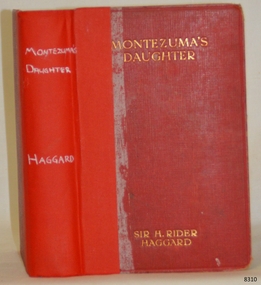 Flagstaff Hill Maritime Museum and Village
Book - Fictional Novel, H Rider Haggard, author, Montezumas Daughter, 1893
... knighted in 1912 for his public service. The Longmans, Green & Co. publishing house was founded in London in 1724 by Thomas Longman. Longmans is one of the most storied names in English publishing history. By the late nineteenth century, under the name Longmans, Green, and Co., the firm had established an incredible reputation for publishing both high-profile educational literature and the finest contemporary fiction. They were the primary British publishers for iconic Victorian authors, including Robert...knighted in 1912 for his public service. The Longmans, Green & Co. publishing house was founded in London in 1724 by Thomas Longman. Longmans is one of the most storied names in English publishing history. By the late nineteenth century, under the name Longmans, Green, and Co., the firm had established an incredible reputation for publishing both high-profile educational literature and the finest contemporary fiction. They were the primary British publishers for iconic Victorian authors, including Robert ...Montezuma’s Daughter (1893) is an epic Victorian adventure and historical fiction novel set during the sixteenth-century Spanish conquest of the Aztec Empire. The story is narrated in the first person by an elderly Englishman, Thomas Wingfield, reflecting on the tumultuous journey of his youth. After his Spanish mother is murdered by his malicious cousin, Juan de Garcia, Thomas embarks on a quest for vengeance. His pursuit takes him across Europe, through a brush with the Spanish Inquisition, and onto a ship bound for the New World. Following a shipwreck and capture, Thomas finds himself in Mexico, where he is initially slated for Aztec human sacrifice. He is ultimately spared, rises to high status among the Aztecs, and marries Princess Otomie, the daughter of Emperor Montezuma. The narrative reaches its emotional and historical peak as Thomas fights alongside the Aztecs against Hernán Cortés during the brutal siege and fall of Tenochtitlan. Prior to its book release, the novel was serialised in the British weekly newspaper The Graphic between July and November of 1893. Longmans, Green, and Co. published the official first book edition in London on November 13, 1893, printing an initial run of 10,000 copies.Montezumas Daughter Author: H Rider Haggard Publisher: Longmans Green Date: 1893 A novel in a red, hard covered book with a reinforced spine with a handwritten title, front cover has gold embossed title. Inscriptions include stickers and a stamp. It is part of the Pattison Collection.fictionMontezuma’s Daughter (1893) is an epic Victorian adventure and historical fiction novel set during the sixteenth-century Spanish conquest of the Aztec Empire. The story is narrated in the first person by an elderly Englishman, Thomas Wingfield, reflecting on the tumultuous journey of his youth. After his Spanish mother is murdered by his malicious cousin, Juan de Garcia, Thomas embarks on a quest for vengeance. His pursuit takes him across Europe, through a brush with the Spanish Inquisition, and onto a ship bound for the New World. Following a shipwreck and capture, Thomas finds himself in Mexico, where he is initially slated for Aztec human sacrifice. He is ultimately spared, rises to high status among the Aztecs, and marries Princess Otomie, the daughter of Emperor Montezuma. The narrative reaches its emotional and historical peak as Thomas fights alongside the Aztecs against Hernán Cortés during the brutal siege and fall of Tenochtitlan. Prior to its book release, the novel was serialised in the British weekly newspaper The Graphic between July and November of 1893. Longmans, Green, and Co. published the official first book edition in London on November 13, 1893, printing an initial run of 10,000 copies.flagstaff hill, warrnambool, shipwrecked coast, flagstaff hill maritime museum, maritime museum, shipwreck coast, flagstaff hill maritime village, great ocean road, book, pattison collection, warrnambool library, warrnambool mechanics’ institute, ralph eric pattison, corangamite regional library service, warrnambool city librarian, mechanics’ institute library, victorian library board, warrnambool books and records, warrnambool children’s library, montezumas daughter, h rider haggard, longmans green and co., thomas longman, paternoster row london, free library -
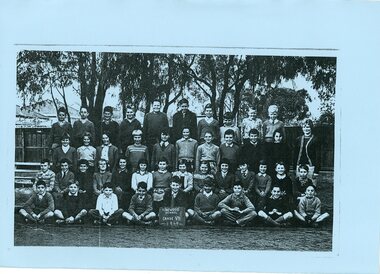 Ringwood and District Historical Society
Photograph, Ringwood Primary School -Class photograph. Grade 5B -1960
... , Cheryl Collings, Glenda Pottenger, Denise Hawkins, Gail Russell, Christina Curtis, Denise Wigley, Sylvia Sefers, Pam Butler. 3rd Row- L to R: Graham Steel, Elizabeth Pumpa, Elaine Salvador, Patricia Browning, Margaret Saines, Marjorie Knight, Wilhelmina Persons, Kathleen McHarry, Heather Wind, Barbara Horn, Neva Lee, Pamela Anderson, Jill Bryant, Robert Baylis. ..., Cheryl Collings, Glenda Pottenger, Denise Hawkins, Gail Russell, Christina Curtis, Denise Wigley, Sylvia Sefers, Pam Butler. 3rd Row- L to R: Graham Steel, Elizabeth Pumpa, Elaine Salvador, Patricia Browning, Margaret Saines, Marjorie Knight, Wilhelmina Persons, Kathleen McHarry, Heather Wind, Barbara Horn, Neva Lee, Pamela Anderson, Jill Bryant, Robert Baylis. ...Black and white photograph"Attached to photograph" Back Row-L to R: Graham Lunn, Max Wardle, Neville Lee-Archer, David Burden, Kelvin Nairn, Philip Dursten, Robin Close, Donald Stephens, Graham World, Stuart Butler. 2nd Row- L to R: Wendy Marshall, Marilyn (?), Cheryl Collings, Glenda Pottenger, Denise Hawkins, Gail Russell, Christina Curtis, Denise Wigley, Sylvia Sefers, Pam Butler. 3rd Row- L to R: Graham Steel, Elizabeth Pumpa, Elaine Salvador, Patricia Browning, Margaret Saines, Marjorie Knight, Wilhelmina Persons, Kathleen McHarry, Heather Wind, Barbara Horn, Neva Lee, Pamela Anderson, Jill Bryant, Robert Baylis. Front Row- L to R: Vincent Crupi, Roderick Alan, Peter Huxley, Rodney Costello, Ian Perkins, Clifford Tann, Ian Roberts, Graham Marsh, Larry Thompson. Teacher: Mrs Steer -
 Eltham District Historical Society Inc
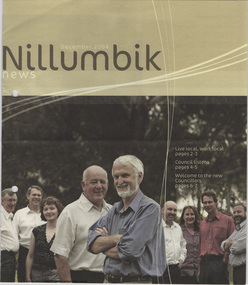
Journal - Newsletter, Nillumbik Shire Council, Nillumbik News, December 2004
... Robert Hayley...Greg Champion...ev hales...Marjorie Lapworth...Jan Kelly...Robina Summers...Janet Mason...Karen Coulton...Elizabeth Gardner...Matthew Dean...Madison Caulfield...Nicole Pless...Mathew Munro...Sten Nigol...Christopher Armet...Rachel Khaw...Melinda Bpuer...David Parsons...Anton Woods...Erin Lorenzini...Zoe Carr...Troy Sandley...Marrissa Filipou...Ben Cukier...nillumbik reconciliation group...Montsalvat...Eltham Craft & Produce Market...Eltham Festival...Nillumbik Artists Open Studios...Hurstbridge High School...Family services...Kangaroo Ground Preschool...Alan Marshall Short Story Award...Tom Dell'Anno...Gayle Knight...Council Newsletters Nillumbik News Nillumbik Shire Council Warwick Leeson Peter Yates Bo Bendtsen Helen Coleman Bill Penrose Greg Johnson Howard Bulmer Bronnie Hattam Michael Young Living & Learning Nillumbik Sally Hansen Julie French Julie Graham Steven Wells Robert Hayley Greg Champion ev hales Marjorie Lapworth Jan Kelly Robina Summers Janet Mason Karen Coulton Elizabeth Gardner Matthew Dean Madison Caulfield Nicole Pless Mathew Munro Sten Nigol Christopher Armet Rachel Khaw Melinda Bpuer David Parsons Anton Woods Erin Lorenzini Zoe Carr Troy Sandley Marrissa Filipou Ben Cukier nillumbik reconciliation group Montsalvat Eltham Craft & Produce Market Eltham Festival Nillumbik Artists Open Studios Hurstbridge High School Family services Kangaroo Ground Preschool Alan Marshall Short Story Award Tom Dell'Anno Gayle Knight 24 x 21 cm, double stapled, 12 pages Nillumbik News Journal Newsletter Nillumbik Shire Council ...The newsletter reports on local council initiatives, community programs, environmental activities, and cultural events taking place across Nillumbik Shire in late 2004. It emphasizes community participation, environmental sustainability, infrastructure improvements, and local cultural life. Key Points Council Projects and Infrastructure: Updates on road maintenance, capital works, and improvements to local facilities across the shire, Continued development of community infrastructure such as recreational facilities, parks, and public spaces, Council planning initiatives aimed at supporting sustainable growth and maintaining rural character. Environment and Sustainability: Programs encourage residents to protect local waterways, conserve native vegetation, and control invasive weeds, Environmental initiatives involve Landcare groups, wildlife monitoring, and sustainability education, Residents are encouraged to participate in community environmental projects and conservation activities. Community Services and Programs: Promotion of community services, volunteer programs, and educational opportunities through local centres. Support for families, seniors, and young people through recreational and learning programs. Community engagement remains a priority for council planning and activities. Arts, Culture and Events: The newsletter highlights local arts initiatives, exhibitions, festivals, and performances. Programs support local artists and cultural organisations, reinforcing the area’s reputation as an artistic community. Tourism and Local Economy: Promotion of local tourism, wineries, markets, and cultural attractions in the region. Efforts to strengthen the local economy and regional identity through tourism and community events. Also includes interviews with Councillors, 2004 Nillumbik Sports Awards and calandar of events. council newsletters, nillumbik news, nillumbik shire council, warwick leeson, peter yates, bo bendtsen, helen coleman, bill penrose, greg johnson, howard bulmer, bronnie hattam, michael young, living & learning nillumbik, sally hansen, julie french, julie graham, steven wells, robert hayley, greg champion, ev hales, marjorie lapworth, jan kelly, robina summers, janet mason, karen coulton, elizabeth gardner, matthew dean, madison caulfield, nicole pless, mathew munro, sten nigol, christopher armet, rachel khaw, melinda bpuer, david parsons, anton woods, erin lorenzini, zoe carr, troy sandley, marrissa filipou, ben cukier, nillumbik reconciliation group, montsalvat, eltham craft & produce market, eltham festival, nillumbik artists open studios, hurstbridge high school, family services, kangaroo ground preschool, alan marshall short story award, tom dell'anno, gayle knight -
 Bendigo Military Museum
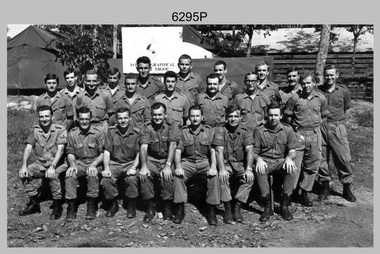
Photograph - A Section, 1st Topographic Survey Troop, Nui Dat, Vietnam, 1969
... Their trades in this photo were as follows - Surveyors Topographic: WO1 Darby Munro, SGT Paddy Strunks, SGT Graeme Birrell, CPL Brian Knight, CPL Colin Laybutt, SPR Roderick Gilbert and SPR Rodney Offer. Draughtsmen Topographic: SGT Terrance Linz, CPL Robert Kay, SPR Peter Aukstinaitis, SPR Lloyd Patterson and SPR Ian Wark. ...Centre row L to R: SPR Peter Aukstinaitis, SPR Ian Hanna, SPR Ian Wark, CPL Robert Kay, CPL George Graham, CPL Oreste Biziak, CPL Brian Knight. Front row L to R: SGT Terrance Linz, SSGT Gordon Haswell, 2IC CAPT Frank Thorogood SB St J, OC MAJ Peter Constantine AM, WO1 Darby Munro, SGT Paddy Strunks, SGT Graeme Birrell....Their trades in this photo were as follows - Surveyors Topographic: WO1 Darby Munro, SGT Paddy Strunks, SGT Graeme Birrell, CPL Brian Knight, CPL Colin Laybutt, SPR Roderick Gilbert and SPR Rodney Offer. Draughtsmen Topographic: SGT Terrance Linz, CPL Robert Kay, SPR Peter Aukstinaitis, SPR Lloyd Patterson and SPR Ian Wark. ...This is a photograph of A Section, 1st Topographic Survey Troop taken at Nui Dat, Vietnam in 1969. A nominal roll of personnel and their trade as of the 30th of September 1969, accompanies this photo. Their trades in this photo were as follows - Surveyors Topographic: WO1 Darby Munro, SGT Paddy Strunks, SGT Graeme Birrell, CPL Brian Knight, CPL Colin Laybutt, SPR Roderick Gilbert and SPR Rodney Offer. Draughtsmen Topographic: SGT Terrance Linz, CPL Robert Kay, SPR Peter Aukstinaitis, SPR Lloyd Patterson and SPR Ian Wark. Photographer Cartographic: CPL George Graham. Clerk Admin: CPL Oreste Biziak. Helioworker: CPL Geoffrey White, SPR Lance Percey. Cook AACC: PTE R. Johnston. The first Royal Australian Survey Corps troops arrived in South Vietnam on the 10th of June 1966. This was a detachment from 1st Topographic Survey Troop, which was to give cartographic support to the Australian Task Force. Their main tasks were to establish a Theatre Grid, map compilation and map revision. Engineer Survey Support in the camp and to the civil community and give assistance to the Cordon Search Missions by producing large scale plots from aerial photos with every house and fence etc plotted and then reproduce these by silk screening usually, within a 24-hour period. This support concluded with the withdrawal of Australian troops from Vietnam in 1972. For more information on the career of A Section’s OC MAJ Peter Constantine AM, refer to item 6159P or 6092P. He was the CO of the Army Survey Regiment from 1975 to 1976 and CO of the School of Military Survey (SMS) from 1976 to his retirement in January 1982. His memoirs of active duty in Vietnam ‘Surveyor - Printer Behind the Lines’ was published in 2022. 2IC CAPT Frank Thorogood SB St J’s career culminated at the rank of LTCOL as the CO Army Survey Regiment from 1980 to 1981. More information on the A Section, 1st Topographic Survey Troop and the Army Survey Regiment’s supporting role is provided in pages 89 to 94 of Valerie Lovejoy’s book 'Mapmakers of Fortuna – A history of the Army Survey Regiment’ ISBN: 0-646-42120-4.This is a photograph of A Section, 1st Topographic Survey Troop taken at Nui Dat, Vietnam in 1969. The black and white photograph was printed on photographic paper and is part of the Army Survey Regiment’s Collection. The photograph was scanned at 300 dpi. .1) - Photo, black & white, 1969. Back row L to R: SPR Lance Percey, SPR Bruce Grisdale, SPR Rodney Offer, SPR Roderick Gilbert, CPL Geoffrey White, PTE R. Johnston, CPL Colin Laybutt, SPR Lloyd Patterson. Centre row L to R: SPR Peter Aukstinaitis, SPR Ian Hanna, SPR Ian Wark, CPL Robert Kay, CPL George Graham, CPL Oreste Biziak, CPL Brian Knight. Front row L to R: SGT Terrance Linz, SSGT Gordon Haswell, 2IC CAPT Frank Thorogood SB St J, OC MAJ Peter Constantine AM, WO1 Darby Munro, SGT Paddy Strunks, SGT Graeme Birrell.An A4 nominal roll of personnel and their trade accompanies the photo, as of the 30th of September 1969. A torn paper identifies the personnel in the photo. Annotated on back of photo – ‘Unit Photo – 1 Topo Svy Tp 30 Sept 69’royal australian survey corps, rasvy, army survey regiment, army svy regt, fortuna, asr -
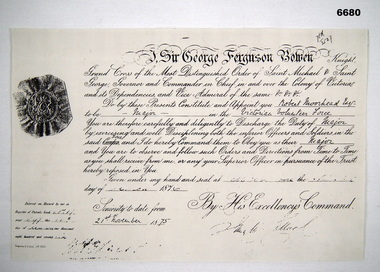 Bendigo Military Museum
Document - LEGAL DOCUMENT - PHOTOCOPY OF ORIGINAL, 1875 Original document. Photocopy unknown
... "I Sir George Ferguson Bowen Knight Grand Cross of the Most Distinguished Order of Saint Michael & Saint George Governor and Commander in Chief in and over the Colony of Victoria and It's Dependencies, and Vice Admiral of the same. Do by these Presents Constitute and Appoint you ROBERT...ROBERT MOORHEAD Esq of the Victorian Volunteer Force. Dated March 1876 Passchendaele Barracks Trust Legal Document Promotion to Major Photocopy 1875 Document "I Sir George Ferguson Bowen Knight Grand Cross of the Most Distinguished Order of Saint Michael & Saint George Governor and Commander in Chief in and over the Colony of Victoria and It's Dependencies, and Vice Admiral of the same. ...Promotion to MAJOR of ROBERT MOORHEAD Esq of the Victorian Volunteer Force. Dated March 1876Legal Document - cream coloured paper with black print and seal."I Sir George Ferguson Bowen Knight Grand Cross of the Most Distinguished Order of Saint Michael & Saint George Governor and Commander in Chief in and over the Colony of Victoria and It's Dependencies, and Vice Admiral of the same. Do by these Presents Constitute and Appoint you ROBERT MOORHEAD Esq to be MAJOR in the Victorian Volunteer Force............passchendaele barracks trust, legal document, promotion to major, photocopy, 1875 document -
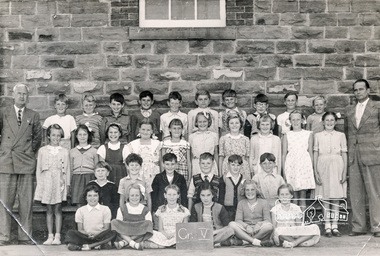 Eltham District Historical Society Inc
Photograph, Rural Photographic Service of Australia, Grade V, Eltham State School 209, Dalton Street, Eltham, 1953, 1953
... Roberts, Max Goldsworthy, - , Teddie Mynott; Front Row (seated): - , Margie? Reed, Margaret Butterway, Nina Macbeth, - , Maureen Davis. Students in grade either not present or unidentified include Faye Helmers, David Knight, Robin Hayes, Bruce Treganan. ...Roberts, Max Goldsworthy, - , Teddie Mynott; Front Row (seated): - , Margie? Reed, Margaret Butterway, Nina Macbeth, - , Maureen Davis. Students in grade either not present or unidentified include Faye Helmers, David Knight, Robin Hayes, Bruce Treganan. ...L to R:- Back Row (standing): Mr Jobling, - , Ben Rutley, Keith Moar, John Squires, Barry (Andy) Matthews, Robert Eisma, Ian Newlands, Stafford Dawson, Peter McCann, Peter Brown, Mr Phillips; Front Row (standing): Yvonne Box, - , - , Pat Davison, Carleen Golgeth, - , -, - , Dorothy Uren, Marjory Bredle; Second Row (kneeling): Michael Sinclair, Johnny Morris, Arthur Roberts, Max Goldsworthy, - , Teddie Mynott; Front Row (seated): - , Margie? Reed, Margaret Butterway, Nina Macbeth, - , Maureen Davis. Students in grade either not present or unidentified include Faye Helmers, David Knight, Robin Hayes, Bruce Treganan. Digital copy scanned by EDHS from an original held by Keith Moar, of Yarra Glen, Vic, 17 Jul 2017. List of names provided by Keith Moar. Keith and brother Barry Moar moved to Eltham in March 1944 where they attended the State School (elder brother Keith from 1949) in Dalton Street. They lived at 11 York Street in a house rented from Ernie Andrew at a cost of £2/week. Other facts noted by Keith Moar: It snowed in Eltham in 1952 or 1953 Andy Matthews was on HMAS Voyager when it was sunk by HMAS Melbourne. Carleen Golgeth's mother used to drive her to school in a c.1928 Rolls Royce taxi (phaeton?)Digital copy of black and white photograph1953, arthur roberts, barry (andy) matthews, ben rutley, carleen golgeth, dorothy uren, eltham state school, grade v, ian newlands, john squires, johnny morris, keith moar, margaret butterway, margie reed, marjory bredle, maureen davis, max goldsworthy, michael sinclair, mr jobling, mr phillips, nina macbeth, pat davison, peter brown, peter mccann, robert eisma, state school no. 209, teddie mynott, yvonne box, barry moar collection -
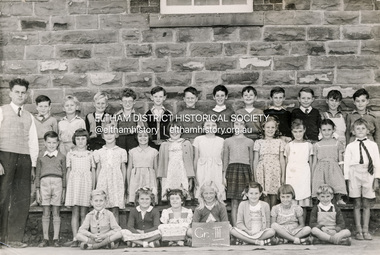 Eltham District Historical Society Inc
Photograph - Black and White Print, Rural Photographic Service of Australia, Grade III, Eltham State School 209, Dalton Street, Eltham, 1953
... Knight...Dirkie Herholdt...Dorothy Uren...Eltham Primary School...Eltham State School No. 209...Faye Helmers...Grade V...Helen Taylor...Ian Newlands...John Hopkins...John Squires...Johnny Morris...Joy Chapman...Keith Moar...Margaret Butterway...Margie? Reed...Marjory Bredle...Maureen Davis...Max Goldsworthy...Michael Sinclair...Mr Jobling...Mr Phillips...Nina Macbeth...Pam Geer...Pat Davison...Peter Brown...Peter McCann...Prue Kimber...Rex Jobling...Robert...1953 eltham state school state school no. 209 grade iii alan pittman barry moar david stokes geoffrey jones michael oldfield mr griffith neil twyford ronny morris Margaret Harding (Joy Chapman) Collection Barry Moar Collection Arthur Roberts Avis Barnes Barry (Andy) Matthews Ben Rutley Beverley Bradbury (nee Stokes) Bronwyn Conibear Bruce Treganan Carleen Golgeth Class Photo David Knight Dirkie Herholdt Dorothy Uren Eltham Primary School Eltham State School No. 209 Faye Helmers Grade V Helen Taylor Ian Newlands John Hopkins John Squires Johnny Morris Joy Chapman Keith Moar Margaret Butterway Margie? ...Teacher: Mr Griffith Back Row (L-R): Mr Griffith, - , - , John Hopkins , Ronny Morris, Michael Oldfield, Rex Jobling , -, - , - , Geoffrey Jones, Barry Moar, David Stokes Middle Row (L-R): - , Avis Barnes , Pam Geer , Prue Kimber , Dirkie Herholdt, - , Bronwyn Conibear , Joy Chapman , - , - , Alan Pittman Front Row (L-R): Neil Twyford , - , Beverley Bradbury (nee Stokes), Susan Gill , Helen Taylor , Thelma Baxter , - . Students in grade either not present or unidentified include Faye Helmers, David Knight, Robin Hayes, Bruce Treganan Photography by Rural Photographic Service of Australia, 8a Bankly Avenue, Malvern, Vic. 5303/5 Digital copies scanned by EDHS from originals held by Barry Moar, of Greensborough, Vic, 17 Jul 2017 and Margaret Harding (nee Joy Chapman.) 15 Nov 2024. Keith and brother Barry Moar moved to Eltham in March 1944 where they attended the State School (elder brother Keith from 1949) in Dalton Street. They lived at 11 York Street in a house rented from Ernie Andrew at a cost of £2/week. Other items of note advised by Barry and Keith Moar: Michael Oldfield was killed in a car accident in South David Stokes, son of Frank Stokes who operated Stokes Orchard was killed in the Black Saturday fire of 7 Feb 2009. It snowed in Eltham in 1952 or 1953 Andy Matthews was on HMAS Voyager when it was sunk by HMAS Melbourne. Carleen Golgeth's mother used to drive her to school in a c.1928 Rolls Royce taxi (phaeton?)Digital copy of black and white photograph x 21953, eltham state school, state school no. 209, grade iii, alan pittman, barry moar, david stokes, geoffrey jones, michael oldfield, mr griffith, neil twyford, ronny morris, margaret harding (joy chapman) collection, barry moar collection, arthur roberts, avis barnes, barry (andy) matthews, ben rutley, beverley bradbury (nee stokes), bronwyn conibear, bruce treganan, carleen golgeth, class photo, david knight, dirkie herholdt, dorothy uren, eltham primary school, eltham state school no. 209, faye helmers, grade v, helen taylor, ian newlands, john hopkins, john squires, johnny morris, joy chapman, keith moar, margaret butterway, margie? reed, marjory bredle, maureen davis, max goldsworthy, michael sinclair, mr jobling, mr phillips, nina macbeth, pam geer, pat davison, peter brown, peter mccann, prue kimber, rex jobling, robert eisma, robin hayes, stafford davison, susan gill, teddie mynott, thelma baxter, yvonne box
