
Showing 268 items matching "room 12"
-
 Broadmeadows Historical Society & Museum
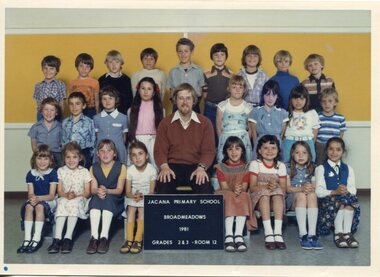
Photograph - Group Photograph, Jacana Primary School: Grade 2 and 3 - Room 12, 1981, 1981
... Jacana Primary School: Grade 2 and 3 - Room 12, 1981......Room 12...This 1981 photograph of Grade 2 and 3 students from Room 12 at Jacana Primary School offers a valuable glimpse into the everyday life of primary education in Melbourne’s northern suburbs during a period of suburban growth and demographic transformation. ...This 1981 photograph of Grade 2 and 3 students from Room 12 at Jacana Primary School offers a valuable glimpse into the everyday life of primary education in Melbourne’s northern suburbs during a period of suburban growth and demographic transformation. ...This 1981 photograph of Grade 2 and 3 students from Room 12 at Jacana Primary School offers a valuable glimpse into the everyday life of primary education in Melbourne’s northern suburbs during a period of suburban growth and demographic transformation. Founded in 1959, Jacana Primary School served the local community for over four decades, providing not only academic instruction but also a vital space for social development and community connection. The image reflects the school’s dedication to creating a nurturing and inclusive environment for young learners in their early years of schooling. It also illustrates the cultural diversity and changing social landscape of Jacana in the late 20th century. As part of the school’s visual archive, this photograph contributes to a broader understanding of how public education supported community cohesion, shaped local identity, and played a formative role in the lives of children and families across generations.The 1981 photograph of Grade 2 and 3 students in Room 12 at Jacana Primary School is a historically significant artefact that captures the everyday realities of early primary education during a period of growth and change in Melbourne’s northern suburbs. It reflects the school’s commitment to providing a nurturing and inclusive learning environment for young children, many of whom came from diverse cultural backgrounds. This image offers insight into the social and educational atmosphere of the early 1980s, including classroom dynamics, fashion, and the evolving demographic character of the Jacana community. As part of the visual legacy of a now-closed institution, the photograph preserves the memory of a school that played a vital role in shaping childhood experiences and fostering community identity across generations.Colour Photograph on Matte Paper, with white borderBack, Top Left Corner: (White label): PH-5009/ (Blue Label): PH-5596 Centre (in pencil) J.P.S., Manufacturers Mark; this paper/Manufactured/ by Kodakjacana primary school, education, photograph, group photograph, class photograph, grade 2 and 3, room 12, 1981 -
 Tatura Irrigation & Wartime Camps Museum
Folio, Internee Deaths & Local Citizens, 1942-1946
... Also index of these and other relevant info.Original certificates in A4 envelope stored in room 12....Also index of these and other relevant info.Original certificates in A4 envelope stored in room 12. Internee Deaths & Local Citizens. Folio ...Material from Australian Archives and Shepparton Family History GroupBlack plastic bound folder containing photocopied sheets of burial and coroner certificates. Also index of these and other relevant info.Original certificates in A4 envelope stored in room 12.Internee Deaths and Local Citizens.internee deaths, local citizens, ww2 -
 Sunshine and District Historical Society Incorporated
Magazine - ICI Green Circle June 1997 Magazine, 35582
... (NB: relocated to ROOM 12, UNIT 1, SHELF 5, BOX 22 Nov 2010)|Vertical FIle. ...(NB: relocated to ROOM 12, UNIT 1, SHELF 5, BOX 22 Nov 2010)|Vertical FIle. ...Newspaper ICI Green Circle ICI and the Environment June 1997ici, deer park -
 Sunshine and District Historical Society Incorporated
Archive - Sunshine Secondary College Office Memorabilia
... School Programs, Course Material & Network Meeting 1992 & 1993|Material for Units on Sunshine History Year 9 Aborginal History before white settlement|Year 7, 8 9 & 10 Handbook|Ex Students Work - Carrol Zerri, Lee Harvard, Kylie, Tanya Wolfe, Shannon Evans, Michelle Alcock, Shelley Quinn, Sharron Greeno, Sheree Tippet, Lisa Steele|Sunshine Technical School Staff Handbook 1976|Humanities Department Room 12 Roll Book 1/4/1985 - 26/11/1985 Rick McLean|Student Study Diary 1994...Sunshine Secondary College Secondard School School Programs, Course Material & Network Meeting 1992 & 1993|Material for Units on Sunshine History Year 9 Aborginal History before white settlement|Year 7, 8 9 & 10 Handbook|Ex Students Work - Carrol Zerri, Lee Harvard, Kylie, Tanya Wolfe, Shannon Evans, Michelle Alcock, Shelley Quinn, Sharron Greeno, Sheree Tippet, Lisa Steele|Sunshine Technical School Staff Handbook 1976|Humanities Department Room 12 Roll Book 1/4/1985 - 26/11/1985 Rick McLean|Student Study Diary 1994 Collection of documents from the former Sunshine Secondary College Office Archive Sunshine Secondary College Office Memorabilia ...School Programs, Course Material & Network Meeting 1992 & 1993|Material for Units on Sunshine History Year 9 Aborginal History before white settlement|Year 7, 8 9 & 10 Handbook|Ex Students Work - Carrol Zerri, Lee Harvard, Kylie, Tanya Wolfe, Shannon Evans, Michelle Alcock, Shelley Quinn, Sharron Greeno, Sheree Tippet, Lisa Steele|Sunshine Technical School Staff Handbook 1976|Humanities Department Room 12 Roll Book 1/4/1985 - 26/11/1985 Rick McLean|Student Study Diary 1994sunshine secondary college, secondard school -
 Musculoskeletal Health Australia (now held by the Glen Eira Historical Society)
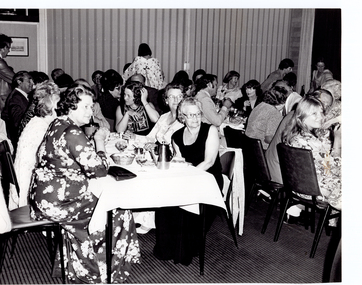
Photograph - Group photo, 02/12/1976
... [Handwritten in light blue ink] 90% PIC “A" [Handwritten in black ink] watching raffle draw Wine Tasting & Smorgasborg Green Room Club, 2/12/76...Office." rheumatism and arthritis association of victoria raav wine tasting smorgasboard fundraising raffle draw guests green room club albert park ben baxter Photographer news review 1976 [Handwritten in light blue ink] 90% PIC “A" [Handwritten in black ink] watching raffle draw Wine Tasting & Smorgasborg Green Room Club, 2/12/76 B&W photo of a large group of people sitting along several long rectangular tables in a large room. ...On Thursday the 2nd of December 1976, the Rheumatism and Arthritis Association of Victoria held a Wine Tasting and Smorgasboard fundraising event at the Green Room Club in Albert Park. It was attended by around 120 members and friends. In this photo, seated guests are watching as the raffle being drawn (off camera). The photo appears on page 8 of the Vol 3, December 1976 edition of the Rheumatism and Arthritis Association of Victoria's quarterly newsletter, News Review. The photo accompanies a brief article titled, "Wine Tasting and Smorgasboard". It is captioned: "A happy group of members and guests watch as the raffle is drawn. Photo: Ben Baxter." Beneath the article and photos is some information about the Photographer: "Ben Baxter is R.A.A.V.'s official Photographer and we are indeed fortunate to have obtained his expertise on a voluntary basis. If you wish to purchase any of the Photographs appearing in News Review, con-tack the Editor direct through the R.A.A.V. Office."B&W photo of a large group of people sitting along several long rectangular tables in a large room. There are also a few people standing. In the background, the is a set of closed concertina doors. On one side of the concertina doors, there is a framed print on the wall, and one the other side, there is a large curtained window.[Handwritten in light blue ink] 90% PIC “A" [Handwritten in black ink] watching raffle draw Wine Tasting & Smorgasborg Green Room Club, 2/12/76rheumatism and arthritis association of victoria, raav, wine tasting, smorgasboard, fundraising, raffle draw, guests, green room club, albert park, ben baxter, photographer, news review, 1976 -
 Musculoskeletal Health Australia (now held by the Glen Eira Historical Society)
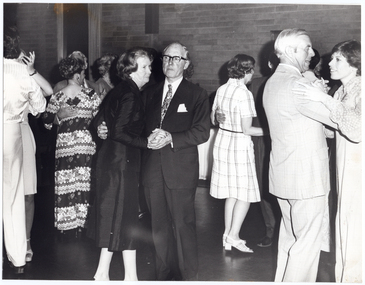
Photograph - Group photo, 02/12/1976
... [Handwritten in light blue ink] 55% Pic "B" [Handwritten in dark blue ink] Dr Stang [sic] dancing with Laurie Griffiths dancing with [Handwritten in black ink] Wine Tasting at Green Room Club 2/12/76...Office." rheumatism and arthritis association of victoria raav wine tasting smorgasboard fundraising dr strang laurie griffiths dancing dance partner dance floor green room club albert park ben baxter Photographer news review 1976 [Handwritten in light blue ink] 55% Pic "B" [Handwritten in dark blue ink] Dr Stang [sic] dancing with Laurie Griffiths dancing with [Handwritten in black ink] Wine Tasting at Green Room Club 2/12/76 B&W photo of several couples dancing on a dance floor at an indoor venue. ...On Thursday the 2nd of December, 1976, the Rheumatism and Arthritis Association of Victoria held a Wine Tasting and Smorgasboard fundraising event at the Green Room Club in Albert Park. It was attended by around 120 members and friends. This photo depicts several couples on the dancefloor during the event. In the foreground are Dr Strang and Laurie Griffiths, each dancing with a dancing partner. This photo appears on page 8 of the Vol 3, December 1976 edition of the Rheumatism and Arthritis Association of Victoria's quarterly newsletter, News Review. It accompanies a brief article titled, "Wine Tasting and Smorgasboard". The photo is captioned: "Everybody enjoyed the dancing and our candid camera caught some well known R.A.A.V. personalities 'tripping the light fantastic'. Photo: Ben Bax-ter." Beneath the article and photos is some information about the Photographer. Under the title "Photographs..." appears the text: "Ben Baxter is R.A.A.V.'s official Photographer and we are indeed fortunate to have obtained his expertise on a voluntary basis. If you wish to purchase any of the Photographs appearing in News Review, con-tack [sic] the Editor direct through the R.A.A.V. Office."B&W photo of several couples dancing on a dance floor at an indoor venue. In the background, there is a brick wall and a curtained window.[Handwritten in light blue ink] 55% Pic "B" [Handwritten in dark blue ink] Dr Stang [sic] dancing with Laurie Griffiths dancing with [Handwritten in black ink] Wine Tasting at Green Room Club 2/12/76rheumatism and arthritis association of victoria, raav, wine tasting, smorgasboard, fundraising, dr strang, laurie griffiths, dancing, dance partner, dance floor, green room club, albert park, ben baxter, photographer, news review, 1976 -
 Musculoskeletal Health Australia (now held by the Glen Eira Historical Society)
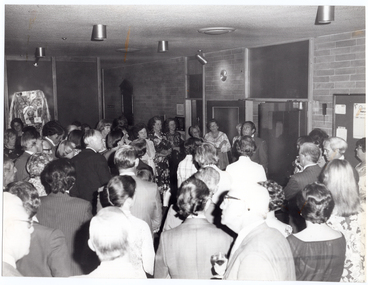
Photograph - Group photo, 02/12/1976
... [Handwritten in light blue ink] 53% PIC "D" [Handwritten in black ink] watching raffle draw [crossed out] Wine talk by rep from Dalgety's (donators of wine) Wine Tasting & Smorgasborg Green Room Club, 2/12/76...Office." rheumatism and arthritis association of victoria raav wine tasting smorgasboard fundraising wine appreciation presentation dalgety’s wine estates donation green room club albert park ben baxter Photographer news review 1976 [Handwritten in light blue ink] 53% PIC "D" [Handwritten in black ink] watching raffle draw [crossed out] Wine talk by rep from Dalgety's (donators of wine) Wine Tasting & Smorgasborg Green Room Club, 2/12/76 B&W photo of a large group of people gathered around a man, who is on one side of a large room. ...On Thursday the 2nd of December 1976, the Rheumatism and Arthritis Association of Victoria held a Wine Tasting and Smorgasboard fundraising event at the Green Room Club in Albert Park. It was attended by around 120 members and friends. In this photo, members and guests listen to a wine appreciation speaker during the event. This photo appears on page 8 of the Vol 3, December 1976 edition of the Rheumatism and Arthritis Association of Victoria's quarterly newsletter, News Review. The photo accompanies a brief article titled, "Wine Tasting and Smorgasboard". It is captioned: "A section of the interested audience listening to an informative wine appreciation talk given by a representative of Dalgetys who so generously donated the wines for the wine tasting. Photo: Ben Baxter." Beneath the article and photos is some information about the Photographer: "Ben Baxter is R.A.A.V.'s official Photographer and we are indeed fortunate to have obtained his expertise on a voluntary basis. If you wish to purchase any of the Photographs appearing in News Review, con-tack the Editor direct through the R.A.A.V. Office."B&W photo of a large group of people gathered around a man, who is on one side of a large room. He is standing near the wall and a double doorway, facing the group of people in the room. There are various items hanging on the wall, including a notice board, a decorative wooden honour board, some coat hooks, and a clock.[Handwritten in light blue ink] 53% PIC "D" [Handwritten in black ink] watching raffle draw [crossed out] Wine talk by rep from Dalgety's (donators of wine) Wine Tasting & Smorgasborg Green Room Club, 2/12/76rheumatism and arthritis association of victoria, raav, wine tasting, smorgasboard, fundraising, wine appreciation, presentation, dalgety’s wine estates, donation, green room club, albert park, ben baxter, photographer, news review, 1976 -
Whitehorse Historical Society Inc.
Newspaper - Article, The Nunawading Post, Housing for low income people
... official opening of 12 room rooming house in Rooks Road, Nunawading on site of the previous Eastbridge Migrant hostel. ...Department of Planning and Development Atkinson Bruce Cameron Athol Baker Heather Article in Nunawading Post. official opening of 12 room rooming house in Rooks Road, Nunawading on site of the previous Eastbridge Migrant hostel. ...Article in Nunawading Post. official opening of 12 room rooming house in Rooks Road, Nunawading on site of the previous Eastbridge Migrant hostel. The rooming house is just part of the multi-million dollar housing complex being developed by the Department of Planning and Development at Rooks Rd, it will be for low income single people.accommodation, outer east regional housing council, victoria. department of planning and development, atkinson, bruce, cameron, athol, baker, heather -
 Bendigo Historical Society Inc.
Document - ALBERT RICHARDSON COLLECTION: HERCULES MINE REPORT 1936
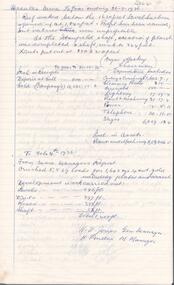
... The three main buildings went for £435 , the office and store room for £80, and die room for £12 Most spirited bidding was for 5 tons of firewood which finally went for £12...The three main buildings went for £435 , the office and store room for £80, and die room for £12 Most spirited bidding was for 5 tons of firewood which finally went for £12 Document ALBERT RICHARDSON COLLECTION: HERCULES MINE REPORT 1936 ...a. four page handwritten report on the Hercules Mine, half yearly reports 1936. Extract: Reef worked below the 1620 feet level has been opened up at 1,840 feet. Profit has been earned but values are now unprofitable. At the Stanfield shaft, erection of plan was completed and shaft sunk to 344 feet. X cuts put out at 230 and 310 feet. Angus Mackay Chairman. b. Summary of sale of mine from Bendigo Advertiser 19.6.1950, handwritten by Albert Richardson, re the sale of the mining equipment at the Hercules Mine. ' Winding engines sold for £200 Compressor £425 and the oregon poppet legs for £41. The three main buildings went for £435 , the office and store room for £80, and die room for £12 Most spirited bidding was for 5 tons of firewood which finally went for £12Albert Richardsonbendigo, mining, hercules mine -
 Bendigo Military Museum
Photograph - Army Headquarters Survey Regiment - Fortuna & Surrounds, Bendigo, c1960s
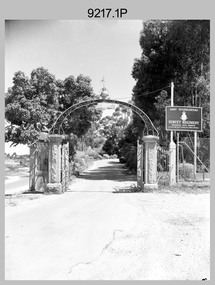
... OR’s Kitchen and Dining Room. .11) & .12) - Photo, black and white, c1960s. ...OR’s Kitchen and Dining Room. .11) & .12) - Photo, black and white, c1960s. ...This set of 12 photographs of the Army Headquarters (AHQ) Survey Regiment’s Fortuna Villa and surrounding facilities was taken circa 1960s. The photos feature much of Fortuna’s exterior and most of the out-buildings spread over the property’s fifteen acres of grounds. After Defence took possession of Fortuna in 1942, the Q-store and engineering workshops were added during the wartime period. Soldiers were accommodated in tents during WW2 for 20 years next to the parade ground before the construction of accommodation buildings in 1962. See item 6456.30P for colour photos of Fortuna Villa’s exterior and surrounding buildings taken over 2O years later in circa 1985.This set of 12 photographs of the Army Headquarters (AHQ) Survey Regiment’s Fortuna Villa and surrounding facilities was taken circa 1960s. The photos are on negative film and scanned at 600 dpi. The photographs are part of the Army Survey Regiment’s Collection. .1) - Photo, black and white, c1960s. AHQ Survey Regiment Front Entry Gate. .2) - Photo, black and white, c1960s. Fortuna Villa – front view. .3) - Photo, black and white, c1960s. Fortuna Villa – Path leading to Fortuna Villa main entrance .4) - Photo, black and white, c1960s. Fortuna Villa – Pompeii Fountain. .5) - Photo, black and white, c1960s. Fortuna Villa – rear view with original Roman Bath on right. .6) - Photo, black and white, c1960s. Fortuna Villa – rear entrance to kitchen and narrow stairs. .7) & .8) - Photo, black and white, c1960s. Fortuna – view from the lake. .9) & .10) - Photo, black and white, c1960s. OR’s Kitchen and Dining Room. .11) & .12) - Photo, black and white, c1960s. Officers and SGT’s Accommodation.There are no annotationsroyal australian survey corps, rasvy, army survey regiment, asr, fortuna -
 Kew Historical Society Inc
Plan - Subdivision Plan, Plan of Subdivision of Crown Portion 71, Parish of Boroondara LP12509, Vol.1678, Fol.335526, Before 1930
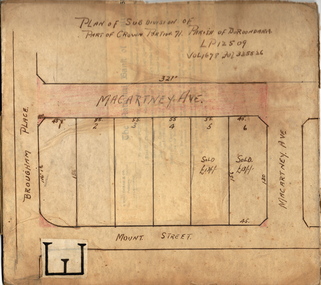
... On the Plan, it is noted that lots 5 and 6 (currently 10 and 12 Macartney Avenue) had been sold for £13 each. By November 1930, the new six-roomed villa built on 12 Macartney Avenue was offered for immediate sale at a ‘sacrifice price’. ...On the Plan, it is noted that lots 5 and 6 (currently 10 and 12 Macartney Avenue) had been sold for £13 each. By November 1930, the new six-roomed villa built on 12 Macartney Avenue was offered for immediate sale at a ‘sacrifice price’. ...Prue Sanderson, in her groundbreaking ‘City of Kew Urban Conservation Study : Volume 2 - Development History’ (1988), summarised the periods of urban development and subdivisions of land in Kew. The periods that she identified included 1845-1880, 1880-1893, 1893-1921, 1921-1933, 1933-1943, and Post-War Development. These periods were selected as they represented periods of rapid growth or decline in urban development. An obvious starting point for Sanderson’s groupings involved population growth and the associated economic cycles. These cycles also highlighted urban expansion onto land that was predominantly rural, although in other cases it represented the decline and breakup of large estates. A number of the plans in the Kew Historical Society’s collection can also be found in other collections, such as those of the State Library of Victoria and the Boroondara Library Service. A number are however unique to the collection.Subdivision plans are historically important documents used as evidence of the growth of suburbs in Australia. They frequently provide information about when the land was sold on which a built structure was subsequently constructed as well as evidence relating to surveyors and real estate and financial agents. The numerous subdivision plans in the Kew Historical Society's collection represent working documents, ranging from the initial sketches made in planning a subdivision to printed plans on which auctioneers or agents listed the prices for which individual lots were sold. In a number of cases, the reverse of a subdivision plan in the collection includes a photograph of a house that was also for sale by the agent. These photographs provide significant heritage information relating house design and decoration, fencing and household gardens.The six lots on the south side of Macartney Avenue, between Macartney Avenue and Daniell Place were part of a subdivision that occurred before 1930. The subdivision plan is of interest in that the original name of Daniell Place was Brougham Place. On the Plan, it is noted that lots 5 and 6 (currently 10 and 12 Macartney Avenue) had been sold for £13 each. By November 1930, the new six-roomed villa built on 12 Macartney Avenue was offered for immediate sale at a ‘sacrifice price’. Any offer in reason would be considered, although a £350 deposit was required.subdivision plans - kew, mount street - kew, brougham street - kew , macartney avenue - kew -
 Kiewa Valley Historical Society
Photographs - Townships of Mt Beauty and Bogong and the Kiewa Valley, c 1940, 1950, 1960
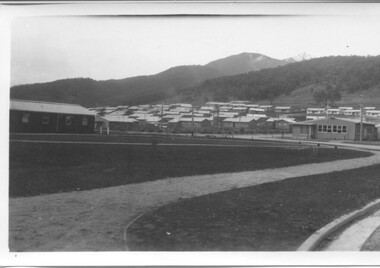
... Sleeping accommodation was provided in hutments, each of four rooms, each room being approx. 12 feet by 10 feet and provided for the accommodation of 2 men. ...Sleeping accommodation was provided in hutments, each of four rooms, each room being approx. 12 feet by 10 feet and provided for the accommodation of 2 men. ...The township of Mt. Beauty was built to provide family accommodation for personnel working on the construction of the Kiewa Scheme. construction commenced in 1946. Photo 1 is looking towards the corner of Lakeside Ave. and Kiewa Crescent. The Post Office is on the corner and the original building housing the Co op store was in Kiewa Crescent. Photo 2 is taken at a later date as the garden in front of the Post Office is well established. The Community Centre is centre left of the photo and the back buildings are the staff accommodation called "The Chalet". Photo 3. Farming country taken from Wallacedale. The Wallaces were one of he early farming families in the Kiewa Valley. Photo 4. This photo is of Junction Camp at Bogong Village and was commenced late in 1939 and by 1940 accommodated 96 men who were engaged in work on Junction Dam. Sleeping accommodation was provided in hutments, each of four rooms, each room being approx. 12 feet by 10 feet and provided for the accommodation of 2 men. This camp remained in use until November 1962.These photos have both historical and social significance. They show the type of accommodation available for workers during the construction of the SEC Kiewa Hydro Scheme as well as early streetscape views of Mt. Beauty. The Junction Camp photo also shows the state of the forest following the 1939 fires in the area.4 Black and white photographs of various sizes.Photo 1. On back, hand written in pencil: top left hand corner: "Sept 1950". Centre of photo: "Return to Gibson Envelope". Right hand side: "Cooper". Bottom left corner: "Mt. Beauty Camp SEC Kiewa Scheme". Photo 2. No inscriptions or markings. Photo 3. Back of photo handwritten in pencil: "In W>T> June 14. 1961 page31. Some of the farming country in the Kiewa Valley. This taken from the home of Mr. Geoff Wallace Wallacedale, Kergunyah where some of his 600 cattle were rounded up." Bottom right corner "Return to Gibson Envelope". There is a copyright stamp belonging to "the Herald & Weekly Times Ltd. also on the back. Photo 4. Typed on a sticker on the back of the photo "Stable attendants Cottage and Camp Sept. 1940".camp, sec kiewa scheme, kiewa, cattle, mt. beauty -
 Wodonga & District Historical Society Inc
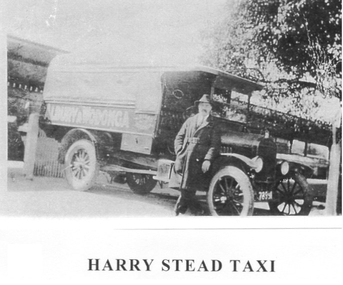
Photograph - Harry Stead Taxi Service
... Drays, although slow, were used with room for 10 or 12 paying passengers, at times. Stead’s paddocks ran back from Sydney Street (now High Street) with stable accommodation for his 70 and more horses. ...Drays, although slow, were used with room for 10 or 12 paying passengers, at times. Stead’s paddocks ran back from Sydney Street (now High Street) with stable accommodation for his 70 and more horses. ...Harry Stead, Snr., owned and operated Wodonga’s first taxi service. He had horse drawn cabs running between Wodonga, and Albury in 1868. He also ran a carrying business with wagons and drays. Workmen from Albury and Wodonga were carried to the construction site of the Hume Weir. Drays, although slow, were used with room for 10 or 12 paying passengers, at times. Stead’s paddocks ran back from Sydney Street (now High Street) with stable accommodation for his 70 and more horses. The Provincial Motel occupied part of the site in later years. Harry’s son, “young Harry” joined his Dad around 1892 as soon as his schooldays were over. After the horse drawn cabs, the Steads began a motorised taxi, hire car and bus services. Some of the taxis used were an A-Model Ford, 1934 Ford, Ford V8, Dodge Tourer, Hudson Six and, earlier, the 1923 Buick with dicky seat. Among the drivers were Stan Hogbin, Gerry Gerrard, Jack O’Neill, “Peggy” O’Neill, Ernie “Honey” Zeinert, Cliff Williams and Les Cole. Young Harry had four cars on the rank from 1930 to 1940 when competition for fares was fierce. He had his regulars who paid 4/- a week to go to and from Albury daily. In 1934, Harry was before the Albury Police Court, charged with having driven his taxi on a public road without a taxi licence. The Albury Municipal Council required all taxi drivers to have a NSW certificate of registration before collecting fares in NSW. The case was held as a test case and as a result the regulation was amended to enable the Council to issue public vehicle licenses to a Victorian registered vehicle as long it travelled no more than 10 miles over the border.These images are significant because they document an early transport service provided to the Wodonga community.Three black and white photos depicting Harry Stead and his Wodonga Taxi Service.harry stead wodonga, transport wodonga, wodonga services -
 Flagstaff Hill Maritime Museum and Village
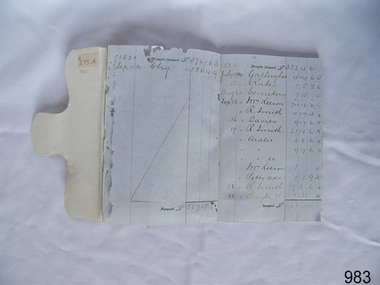
Financial record - Passbook, Bank of Australasia, 1880
... 12 years old, was carried across a tightrope forward and backwards, on the shoulders of the "Australian Blondon" Mr. L' Estrange, at a performance in Warrnambool. Royal Charter of England incorporated the Bank of Australasia in March 1834. It had its Australian beginning on 14th December 1835, opening in Sydney. The Acting Superintendent of the bank at that time was David Charters McArthur. He was Superintendent from 1867 to 1876. The Melbourne branch opened on 28th August 1838 in a two-roomed...12 years old, was carried across a tightrope forward and backwards, on the shoulders of the "Australian Blondon" Mr. L' Estrange, at a performance in Warrnambool. Royal Charter of England incorporated the Bank of Australasia in March 1834. It had its Australian beginning on 14th December 1835, opening in Sydney. The Acting Superintendent of the bank at that time was David Charters McArthur. He was Superintendent from 1867 to 1876. The Melbourne branch opened on 28th August 1838 in a two-roomed ...This bank passbook originated from the Warrnambool branch of the Bank of Australasia with handwritten entries dating from 1880. Names written in the passbook are likely to be people local to Warrnambool. The book belonged to Thomas Smith and was handed over to his Executors. Thomas Smith operated his Gas Printers Works from Koroit Street, Warrnambool, and was a member of the Odd Fellows. In 1878, his son, aged about 12 years old, was carried across a tightrope forward and backwards, on the shoulders of the "Australian Blondon" Mr. L' Estrange, at a performance in Warrnambool. Royal Charter of England incorporated the Bank of Australasia in March 1834. It had its Australian beginning on 14th December 1835, opening in Sydney. The Acting Superintendent of the bank at that time was David Charters McArthur. He was Superintendent from 1867 to 1876. The Melbourne branch opened on 28th August 1838 in a two-roomed brick cottage on the north side of Little Collins Street, where two huge mastiff dogs were used at night to guard the bank. The government also provided an armed military sentinel. Due to the bank's rapid growth, a new building for the Melbourne branch was opened in 1840 at 75 Collins Street West. By 1879, the bank had been upgraded to a magnificent two-storey building on the corners of Collins and Queens Streets, with the entry on Collins Street. In 1951, the Bank of Australasia amalgamated with the Union Bank to form the Australia and New Zealand Bank, now known as the ANZ. Then in 1970, the ANZ merged with both the ES&A and the London Bank of Australia to form the ANZ Banking Group Limited. The ANZ Banking Group Ltd kindly donated a variety of historic items from the Bank of Australasia. BANK of AUSTRALASIA, WARRNAMBOOL – In 1854, Warrnambool had two banks, the Union Bank and the Bank of Australasia. Later, completely different bank businesses opened; in 1867, the National Bank of Australasia, and then in 1875, the Colonial Bank of Australasia. The original Warrnambool branch of the Bank of Australasia was established in July 1854 and operated from a leased cottage on Merri Street, close to Liebig Street. The bank next bought a stone building previously erected by drapers Cramond & Dickson on the corner of Timor and Gibson Streets. Samuel Hannaford was a teller and then Manager at the Warrnambool branch from 1855 to 1856, and the Warrnambool Council chose that bank for its dealings during 1856-57. In 1859, Roberts & Co. was awarded the contract to build the new Bank of Australasia branch for the sum of £3,000; the firm built the Warrnambool Post Office in 1856 and purchased land in Timor Street in 1858. The land was on a sand hill on the northeast corner of Timor and Kepler Streets and had been bought in 1855 from investor James Cust. The new building opened on May 21, 1860. The bank continued to operate there until 1951, when it merged with the Union Bank to form the ANZ Bank, which continued operating from its Liebig Street building. Warrnambool City Council purchased the former Bank of Australasia building in 1971 and renovated it, then on 3rd December 1973, it was officially opened as the Art Gallery by Cr. Harold Stephenson and Gallery Director John Welsh. The Gallery transferred to the purpose-built building in Liebig Street in 1986, and the old bank building is now the Gallery club. Staff at the Bank of Australasia in Warrnambool included the following men but others were also involved: Samuel Hannaford, Teller then Manager from 1855-1856; Hawkins, Manager in 1856, W H Palmer, Manager from January 1857 until November 1869 when the Teller Basil Spence was promoted to Manager; H B Chomley, Manager from April 1873 and still there in 1886; A Butt, Manager in 1895-1904; J R McCleary Accountant and Acting Manager for 12 months, until 1900; A Kirk, Manager 1904; J Moore, staff until his transfer to Bendigo in December 1908; J S Bath was Manager until 1915; C C Cox, Manager until April 1923; Richard C Stanley, Manager 1923 to April 1928. The bank passbook has significance through its association with the Bank of Australasia. The early Australian bank was established in 1834 by Royal Charter and opened in Sydney, Australia, in Sydney in 1835. The bank had many Australian offices in November 1877, particularly on the east and south coasts. Victoria had 45 per cent of all Offices. The passbook is locally significant for its association with the Warrnambool Bank of Australasia, which was established in 1854. It was Warrnambool Council’s first bank. The bank continued to operate until the organisation's merger in 1951 when it became the ANZ Bank Group today. The Bank was an integral part of the growth of local commerce and the community. It has local significance for its association with commercial Warrnambool in 1880, belonging to Thomas Smith, a prominent businessman with a printing works whose son of about 12 years age crossed a tightrope with the 'Australian Blondin', L' Estrange. Bank passbook, Bank of Australasia, Warrnambool branch. Bound with waxed, cream-coloured cardboard cover and tab closure. Pages have blue horizontal lines and red vertical lines. Black ink handwritten entries, with Date, Name and amount. Inscription was written inside and on a sticker inside the front cover. Passbook is dated 1880 and belonged to Thomas Smith.Marked "The Executors of the late Thomas Smith" "Stamped inside "Bank of Australasia, Warrnambool" Handwritten on sticker " R. 273 A" Sample of handwritten entries include "1880" Callaghan" "Rates" A Linch" "Davies" Bottom of page, balance "529 10 21" [529 pounds 10 shillings 21 pence]flagstaff hill, warrnambool, shipwrecked coast, flagstaff hill maritime museum, maritime museum, shipwreck coast, flagstaff hill maritime village, great ocean road, bank of australasia, boa, union bank, australia & new zealand bank, anz bank, david charters mcarthur, d c mcarthur, bank book, pass book, financial record, commerce, thomas smith, thos. smith, gas printing works, australian blondin, thomas smith's son, tightrope walker, odd fellows, l' estrange, passbook, bank passbook -
 Flagstaff Hill Maritime Museum and Village
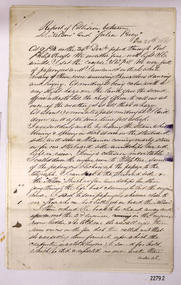
Document, 12-01-1882
... 12" It is transcribed: "Victoria Steam Navigation Board, Melbourne, January 12th 1882 To Frederick Chapman, Master, S.S. "Julia Percy" You are herewith furnished with a copy of the report of the Official Court which assembled to enquire into the circumstances attending the collision between the steamers "Julia Percy" and "Nelson" off Apollo Bay near Cape Otway on the morning of the 25th December 1881, and you are hereby expected to attend at the Board Room, Custom House, Melbourne, at 2pm, on 13th January instant to show cause why you should not be censured accordingly. ...12" It is transcribed: "Victoria Steam Navigation Board, Melbourne, January 12th 1882 To Frederick Chapman, Master, S.S. "Julia Percy" You are herewith furnished with a copy of the report of the Official Court which assembled to enquire into the circumstances attending the collision between the steamers "Julia Percy" and "Nelson" off Apollo Bay near Cape Otway on the morning of the 25th December 1881, and you are hereby expected to attend at the Board Room, Custom House, Melbourne, at 2pm, on 13th January instant to show cause why you should not be censured accordingly. ...This hand written letter, in black ink script on blue lined paper, is impressed with the official stamp of the Victoria Steam Navigation Board. The left margin has the reference “S82/12" It is transcribed: "Victoria Steam Navigation Board, Melbourne, January 12th 1882 To Frederick Chapman, Master, S.S. "Julia Percy" You are herewith furnished with a copy of the report of the Official Court which assembled to enquire into the circumstances attending the collision between the steamers "Julia Percy" and "Nelson" off Apollo Bay near Cape Otway on the morning of the 25th December 1881, and you are hereby expected to attend at the Board Room, Custom House, Melbourne, at 2pm, on 13th January instant to show cause why you should not be censured accordingly. [Signature] Secretary" This document refers to the matter of a collision between two steamships, the Julia Percy and the Nelson, on 25th December 1881. The Julia Percy was at that time owned by her first owners, the Warrnambool Steam Packet Company, and she sailed under the command of Captain Chapman. She had left Melbourne the evening of 24th December, with about 150 passengers, sailing in fine weather through Port Phillip Heads around 9pm. She was headed for Warrnambool, Belfast (now named Port Fairy) and Portland. The Julia Percy was off Apollo Bay when Captain Chapman was woken by the ship’s whistle after midnight, the steamer Nelson being on a collision course with the Julia Percy.[See Link.] The Nelson struck Julia Percy midship. Boats were lowered from the ship (apart from a damaged lifeboat) and about 30-40 of the passengers boarded the Nelson. The engine room and the forehold were checked and found clear of water. The company manager, Mr Evans, had been on the Nelson, so he boarded and inspected the Julia Percy and the decision was made to continue on to Warrnambool with the passengers as there appeared to be no immediate danger. However, Captain Thomas Smith said the Nelson was taking on water, so Julia Percy followed her for about an hour towards Melbourne on standby in case of need. Then Julia Percy turned around towards Warrnambool again. Shortly afterwards the Nelson turned to follow her, the ships stopped and passengers were returned to Julia Percy, and three from Julia Percy boarded the Nelson. Both ships proceeded on their way. Julia Percy passed Cape Otway light afterwards, signalling that there had been a collision. It was discovered later that one of the passengers was missing, then thought to have boarded the Nelson but later thought to have fallen into the sea and drowned while trying to jump from Julia Percy to Nelson. There had been 3 tickets purchased under the same name of that passenger “Cutler”; a father, son and friend named Wordsworth, which had caused quite some confusion. No further mishap occurred to either ship and both the Julia Percy and the Nelson reached their destinations safely. An enquiry was instigated by the Victoria Steam Navigation Board regarding the cause of the accident between the two steamships, in connection with the death of Cutler who was supposed to have lost his life by the collision. The enquiry resulted in the following decision: "The Victorian Steam Navigation Board having taken into consideration the points urged by Captain Thos [Thomas] Smith and also by his legal advisers, is of opinion that the charge prepared against him has been sustained, but taking into consideration Captain Smith’s previous good conduct and character, the board suspends his master’s certificate No 227 issued by this board for a period of six calendar months from this date – Robert Fullarton, Chairman. “The Victorian Steam Navigation Board having beard the statement of Captain Frederick Chapman urged in his defense to the charge of dereliction of duty as master of the Julia Percy, in having no standing order on board that vessel to be called in the event of any approaching steamer’s lights being seen, find such charge sustained, and censure him accordingly – Robert Fullarton, Chairman.” ABOUT “JULIA PERCY” The S.S. Julia Percy (later named Leeuwin ) was an iron passenger-cargo steam ship built in 1876. At one point in time the Julia Percy would sail from Warrnambool to Melbourne every Friday and return from Melbourne to Warrnambool every Tuesday. The cost of a return ticket for a Saloon Fare was £1.0.0. She would sail “if practical and weather permitting”. Shipping was the cheapest and most practical means of carrying produce and goods during the period 1840-1890. Regular domestic steamer services commenced in the Warrnambool district in the late 1850’s and by 1870 the passenger trade was booming. Produce was loaded from the jetty into ‘lighters’ (small boats), which took it to the ships at anchorage in the bay. Passengers were taken to the ship’s side then climbed aboard up ladders or gangways. The coming of the railway in October 1889 meant the gradual decline and end of the steam shipping era. The Julia Percy was built in Glasgow by Thomas Wingate & Company, Whiteinch, in 1876 for the Warrnambool Steam Packet Company, which commissioned her for trade in Victoria’s western district. She was first registered in Warrnambool, Victoria in 1876. The Julia Percy changed hands several times. Her next owner was the Western Steam Navigation Co (1887), managed by Mr. T.H. Osborne (the company’s office was on the corner of Timor and Liebig Streets, Its north-western wall is now part of the current Warrnambool Regional Art Gallery. ) The Melbourne Steamship Co became the next owners (1890), followed by William Howard Smith and Sons (1901) for use in Queensland coastal trades, then she was bought by George Turnbull in 1903 and used for local mail contract in Western Australia. The Julia Percy was sold to the Melbourne Steamship Company Ltd. (1906) and re-named the “Leeuwin” but continued in her Western Australian coastal run. She was converted into a coal hulk in Melbourne in 1910 as a result of damaged caused when she was driven against the jetty at Dongara during a gale. The ship was eventually dismantled and scuttled in Bass Strait on 28 December 1934. The document is significant for its association with the wreck of the Leeuwin (Julia Percy), which is on the Victorian Heritage Register, VHR S413. . It is historically significant for being a rare artefact that has potential to interpret aspects of Western Victoria’s 19th century steamship trade and Victorian cultural history. The Leeuwin (Julia Percy) is listed on the Victorian Heritage Register as being historically significant ‘as one of only four wrecks of steamships in Victorian waters associated with the western district of Victoria’s coastal steamship trade. Reports of Victoria Steam Navigation Board about the collision on 25th December 1881 between the steamers " Julia Percy" and "Nelson". Letter from Victoria Steam Navigation Board, Melbourne to Frederick Chapman, Master, S.S. "Julia Percy", dated January 12th 1882. reference on letter in left margin "S82/12"flagstaff hill, flagstaff hill –maritime museum, maritime museum, shipwreck coast, flagstaff hill maritime village, victoria steam navigation board, captain frederick chapman, captain thomas smith, thomas wingate & company, steamer julia percy, steamer leeuwin, steamer nelson, steam ship, warrnambool steam packet company, t. h. ostorne, western steam navigation co., charles cutler -
 Flagstaff Hill Maritime Museum and Village
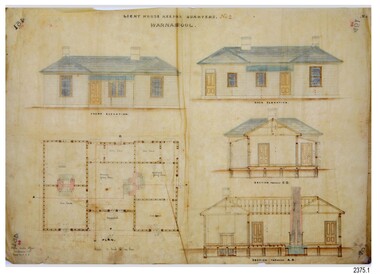
Document - Plans, Lighthouse Keeper's Quarters Warrnambool, 1858-1909
... Room) and a Privy, which was not included in these plans. The Keeper’s bluestone Quarters was a cottage divided into two compartments, one for each keeper and his family. The bluestone Store was divided into three; a store, a workshop an oil store (or office). The Privy comprised of a small building also divided into two separate, back-to-back toilets, one for each Keeper and his family. The Flagstaff Hill Keeper's Quarters have had extensions and additions at various times, and these have also been removed at various other times. THE PLANS - *Dec. 1858 (12...Room) and a Privy, which was not included in these plans. The Keeper’s bluestone Quarters was a cottage divided into two compartments, one for each keeper and his family. The bluestone Store was divided into three; a store, a workshop an oil store (or office). The Privy comprised of a small building also divided into two separate, back-to-back toilets, one for each Keeper and his family. The Flagstaff Hill Keeper's Quarters have had extensions and additions at various times, and these have also been removed at various other times. THE PLANS - *Dec. 1858 (12 ...The set of seven 1858 plans shows proposed plans for the original Lighthouse Complex that was built on Middle Island in 1858-1859. The whole complex was then transferred to Flagstaff Hill in 1871. The plan, dated 1909, is for proposed additions and repairs to the Quarters at Flagstaff Hill. The plan 'Alterations and Additions' shows alternate plans for changes to the quarters at the Flagstaff Hill location. This plan has no date. The Complex comprised the Lighthouse, the Lighthouse Keepers’ Quarters, the Store (now called the Chart Room) and a Privy, which was not included in these plans. The Keeper’s bluestone Quarters was a cottage divided into two compartments, one for each keeper and his family. The bluestone Store was divided into three; a store, a workshop an oil store (or office). The Privy comprised of a small building also divided into two separate, back-to-back toilets, one for each Keeper and his family. The Flagstaff Hill Keeper's Quarters have had extensions and additions at various times, and these have also been removed at various other times. THE PLANS - *Dec. 1858 (12/58) ‘Lighthouse Keepers Quarters No.2 Warrnambool’ (2375.01)* Public Works Office Melbourne – Front and Back elevations, sections, and floor plan. The drawing shows timber walls. [The floor plan is the closest plan to the current building, however, the walls are timber in this plan.] *Nov. 1858 – No.3 ‘Lighthouse Keepers Quarters Warrnambool’ (2375.02)* Office of Public Works, Melbourne – Back and End elevations and section through. The drawing shows stone walls. One side; Senior Keeper’s bedroom, living room and kitchen with storeroom. Another side; is the Assistant’s bedroom, living room and storeroom. *Nov. 1858 - No.4 ‘Lighthouse Stores Warrnambool’ (2375.03)* Office of Public Works – Front, Side and end elevations, centre section. The drawing shows stone walls. *Nov. 1858 – No.4, ‘Lighthouse Stores No. 2 Warrnambool’ (2375.04)* Office of Public Works – Front, side and end elevations, centre section. The drawing shows timber walls. *Nov. 1858 – ‘Details Lighthouse Keepers Quarters No. 2 Warrnambool’ (2375.05)* Public Works Office Melbourne. The plan shows the foundations, joists and eaves. The drawing shows timber walls. (Nov. 1858 – ‘No.4 ‘Lighthouse No. 2 – Warrnambool’ (2375.06)* Public Works Melbourne (Part of the paper is missing). This plan shows an octagonal tower, internal stairs, a balcony landing, and a weather vane on top. *November 1858 – No. 1, ‘Lighthouse – Warrnambool’ (2375.07)* Office of Public Works Melbourne. This plan shows a round tower, including the stairs, windows on the tower and the weather vane on the top. *4/3/9 [1909] – ‘Additions and Repairs, Lighthouse Quarters, Warrnambool, General Plan’ (2375.8)* Department of Public Works Melbourne’s official stamp is signed by Croft. It shows the floor plans of the Store, Upper Lighthouse and the Quarters. The Store building has three sections; a Store, Work-Shop and Office, with an internal wall between them and separate entries. The Quarters are divided into two dwellings. The Senior Keeper’s side on the left has fireplaces in two of the three bedrooms and there is a pantry and wash house. The Assistant’s side has no fireplaces in the bedrooms and there’s no pantry or washhouse. These plans include proposed changes to the buildings. The Senior Keeper’s Quarters would have a partition on bedroom 2, a bath with plumbing and drainage, a wall moved and a built-in side porch. The Store would also have a built-in porch. The undated plan 'Additions and Alterations' (2375.9) shows alternative arrangements for water tanks, plumbing and such. WARRNAMBOOL'S LADY BAY LIGHTHOUSES- In the 1800s ships sailing from England to Australia began to use Bass Strait as a faster route to Melbourne. Small navigation errors led to many tragic shipwrecks. From 1848 lighthouses were operating along Victoria’s southern coast as a guide for sailors. Coastal towns such as Warrnambool grew and the exchange of trade and passengers were of great benefit. However, the uncertain weather changes, relatively shallow waters and treacherous, hidden rocky reefs were not suitable for a Harbour and in the 1840s and 1850s there were many shipwrecks in the area, with some even stranded in its Lady Bay harbour. A jetty was built in 1850 and a flagstaff to guide seafarers was placed up high on what became known now as Flagstaff Hill. In November 1857 the Victorian Government recommended that Warrnambool Harbour had beacons and two lighthouses to guide vessels into and out of the Harbour safely. The white light of the Middle Island lighthouse was to be used for the first time on September 1, 1859. The red light of the Beach Lighthouse, a wooden obelisk structure, was first operated on March 25, 1860, but in 1868 this light was ‘discontinued’ due to it being too low. Melbourne’s Department of Public Works decided to relocate the Middle Island Lighthouse Complex - Lighthouse, Keeper’s Quarters, Privy, Store Room and even water tanks - to Flagstaff Hill. The lower obelisk was shortened, and a protruding gallery, railing, and external ladder were added, as well as the light from the Beach Lighthouse. A green guiding light was erected on the end of the jetty. The transfer of the Complex began in March 1871. Each shaped stone of the lighthouse was carefully numbered, removed then reassembled on Flagstaff Hill. In 1872 the well was sunk behind the Lighthouse Keeper’s Cottage. The Keepers and families had left Middle Island in April and moved to Flagstaff Hill in October 1871. Vessels entering Lady Bay align the Upper and Lower Lighthouse towers during the day and the lights at night. The Upper Lighthouse is a round tower, the Lower Light is square. The Lighthouses were categorised as harbour lights rather than coastal lights, so they remain under the control of the Victorian Government’s Ports and Harbours section. The lights were originally powered by oil, then acetylene gas, later by electricity, and then converted to solar power in 1988. In 1993 the solar panel was replaced by a battery charger. A decision was made in 1936 to replace the lighthouses’ lights with unattended lights that no longer required Keepers and Assistants. At least 29 Keepers had attended to the lighthouse from its opening in 1859 to when the last official Lightkeepers left In April 1916. The Warrnambool Harbour Board rented out the Quarters from 1916 to 1936. The Board closed down but the rentals continued with other unknown landlords. In the 1970s the Flagstaff Hill Planning Board was set up under the chairmanship of John Lindsay. The Board was to make recommendations to the Warrnambool City Council regarding the use of the buildings and the rest of the Crown Land on the site. The Flagstaff Hill Maritime Village opened in 1975 and began renovating the Cottage in stages, during which time evidence of a 1920s fire was found in the eastern section of the cottage. Additions of a porch on the west and a washroom on the east were made in the 1980s. The western part of the building is now a Shipwreck Museum and the east has returned to a late 19th-century Lighthouse Keeper’s cottage and includes the screen made by Assistant Lighthouse Keeper Thomas Hope during one of his two periods of service there. THE LIGHTHOUSE KEEPERS Lighthouse Keepers were responsible for keeping their Lighthouse’s lights shining at night. They kept a lookout for passing vessels and changes in weather. They were expected to clean, polish and maintain the equipment and buildings. They kept regular and detailed records of who was on watch, and the time the light was lit, trimmed and extinguished. They kept a journal about other events that occurred. They keep regular, accurate Meteorological Logs. It was expected that they were competent in Morse code signalling. They would be called to help in times of disasters and shipwrecks, and to give official statements about these events. Many Lighthouse Keepers also volunteered as members of the lifeboat crew. The Lady Bay lighthouses were officially classified as small, so the Keepers had the official titles of Senior Assistant Lighthouse Keeper and Assistant Lighthouse Keeper. They were employed by the Public Service and paid rent to live in the Lighthouse Quarters. They were compulsorily retired at the age of 60, with most receiving a superannuation payment. Despite their time-consuming duties, there was time to follow hobbies and crafts such as growing vegetables, playing musical instruments, making models of buildings including lighthouses, and crafting furniture pieces. An example of a keeper’s skills is the carved fire screen made by /assistant Keeper Thomas Hope in the early 20th century and displayed in the Lighthouse Keeper’s cottage at Flagstaff Hill. The last occupants of the Middle Island Complex were Senior Keeper Robert Deverell, his Assistant Keeper, Andrew Farncombe, and their families. They all became the first occupants at the Lady Bay Lighthouse Keepers’ Quarters on Merri Street. The Warrnambool Lighthouse Complex plans are the origin of what is now the Lady Bay Lighthouse Complex. They are a record of the people, process and departments involved in bringing the complex into fruition. The plans are significant to the Complex, which is now listed on the Victorian Heritage Register, H1520, for being of historical, scientific (technological) and architectural significance to the State of Victoria. The Complex is significant as an example of early colonial development. The plan are significant for their connection with the important navigational function of the Lighthouses, a function still being performed to this day. The plans are also significant as an example of a product from the Public Works Department in Victoria in the mid-to-late 19th century. The structures built to these plans still stand strong. Plans for the Lighthouse Complex in Warrnambool, including Lighthouses, Keeper's Quarters and Stores. Seven of the plans are on thin fragile paper, one is on thicker, stronger paper. The drawings have been made in pens coloured red and black. They originate from Public Works in Melbourne. Seven were drawn in 1858, one in 1904, the other is not dated.Dec. 1858 - Lighthouse Keepers Quarters No.2 Warrnambool. Public Works Office Melbourne. Nov. 1858 - No.3 ‘Lighthouse Keepers Quarters Warrnambool. Public Works Office Melbourne. Nov. 1858 - No.4 ‘Lighthouse Stores Warrnambool. Office of Public Works. Nov. 1858 - No.4, ‘Lighthouse Stores No. 2 Warrnambool. Office of Public Works. Nov. 1858 - Details Lighthouse Keepers Quarters No. 2 Warrnambool. Public Works Office Melbourne. Nov. 1858 - No.4 ‘Lighthouse No. 2 – Warrnambool. Public Works Melbourne. Nov. 1858 - No. 1, Lighthouse - Warrnambool. Office of Public Works Melbourne. 4/3/9 [1909] - Additions and Repairs, Lighthouse Quarters, Warrnambool, General Plan. Department of Public Works Melbourne. SIGNED "Croft" "15A" on reverse [no date] - Lighthouse Quarters Warrnambool, Additions and Alterations. "9A" on reverseflagstaff hill, warrnambool, lighthouse keeper's cottage, lighthouse residence, lighthouse, plans, public works, melbourne, flagstaff hill maritime museum, maritime museum, shipwreck coast, flagstaff hill maritime village, chart room, quarters, privy, middle island, beach lighthouse, obelisk, lighthouse keeper, assistant keeper, lighthouse complex, lady bay, lady bay complex, keepers, upper lighthouse, lower lighthouse, ports and harbours, cottage, harbour board, flagstaff hill planning board, meteorological record, robert deverell, andrew farncombe, warrnambool port, warrnambool harbour, residence, alterations, repairs, department of works, light keeper -
 Mission to Seafarers Victoria
Flyer - Invitation, Invitation to Emmanueli Collection, 2018
... The Mission to Seafarers hosted an art auction on July 12 2018, with works by well-known artists such as R_O_N_E, photographer John Gollings, illustrative artist Jeremy Kyle and Catherine de Boer who brought together their work, as well as her own, into the same room. ...The Mission to Seafarers hosted an art auction on July 12 2018, with works by well-known artists such as R_O_N_E, photographer John Gollings, illustrative artist Jeremy Kyle and Catherine de Boer who brought together their work, as well as her own, into the same room. ...The Mission to Seafarers hosted an art auction on July 12 2018, with works by well-known artists such as R_O_N_E, photographer John Gollings, illustrative artist Jeremy Kyle and Catherine de Boer who brought together their work, as well as her own, into the same room. During an attempt to climb Mt Kilimanjaro in Tanzania Catherine de Boer, promised the guide who helped her, Emmanueli to finance his studies and get his diploma in safari guiding and wildlife management. On the Go Fund Me page Catherine explains: By running this type of event, the Mission to Seafarers demonstrates its support to the Community,emmanueli collection, auction, catherine de boer, tanzania, mount kilimanjaro, community -
 Royal Melbourne Yacht Squadron
Award - Cactus Cup
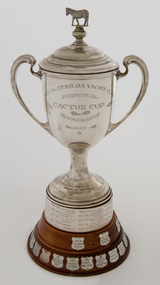
... The next contest was April 12, 1930, for another small trophy also donated by Jim Thorpe, and the crew of the winning yacht Petrel, skippered by Stan Gamble, later on having to arrange for a mussel supper to the extent of Trophy money at an informal musical evening held in the spar room. ...The next contest was April 12, 1930, for another small trophy also donated by Jim Thorpe, and the crew of the winning yacht Petrel, skippered by Stan Gamble, later on having to arrange for a mussel supper to the extent of Trophy money at an informal musical evening held in the spar room. ...“The Squadron’s Most Prestigious Trophy” THE CACTUS STORY Years ago a story was told of a Donkey which lived in the desert. The standard of living was poor, and the main course on the menu when things were tough was cactus. The Donkey accepted the good with the bad, and in bad seasons it was always cactus. One day during his wanderings he came to a high fence. On the other side of the fence was lush grass and all sorts of vegetation and animals in prime condition. The Donkey said to a horse, “things look good in there, how does one get in”. The horse said “go down to the end of this fence, and you will come to a gate, there will be someone at the get, ask to get in”. The Donkey went to the end of the fence, found the gate and asked to get in. The horse at the gate said, “what do you want to come in for, all of us are geldings?”. The Donkey said “if that is the case, it is back to the cactus for me”. It was during the early stages of the great depression of 1929-1932, that this story was simulated to the conditions at the then Royal St. Kilda Yacht Club, when during the yachting season there were very few trophies due to the lack of money. A lot of members were out of work, and each Monday many would front up for the jobs that were offering or those who missed out went back to the dole or as many put it “Back to the Cactus”. The “Cactus Cup” race, to be free of entrance fees, was an idea conceived by H.A. (Toby) Armstrong, soon to be backed by Bert Bryant, Ivor Bowles and Jim Thorpe. It was First sailed March 25, 1922, when 9 yachts on sealed handicaps, raced over a 5 mile rectangular course for a small Trophy donated by Jim E. Thorpe and the winning crew of the yacht Helen, skippered by D.Dowse, entertained at a café after the race by the instigators of the race. The next contest was April 12, 1930, for another small trophy also donated by Jim Thorpe, and the crew of the winning yacht Petrel, skippered by Stan Gamble, later on having to arrange for a mussel supper to the extent of Trophy money at an informal musical evening held in the spar room. From then on races for the Cactus Cup became an annual event. In time the format was changed to result in the crew of the first winning yacht having to collect mussels from the pier on the first Saturday of July, cook and prepare them for a no charge informal supper and entertainment evening held in the spar room, towards which the Club provided a keg of Beer. Member Bob Ellis had a special song for the occasion, “Up at Tumba Bloody Rumba shooting Kanga Bloody Roos”. Jim Thorpe then agreed to purchase a Perpetual Cup to be named the Cactus Cup. As guest of honor at the Cactus Supper Evening, May 1940, a dinner suit function in the Spar room, he presented the Cup along with Replica to Barney Snider who won with Eun-Na-Mara. Soon entries became few, for reason nobody wanted to win because of the penalty of having to collect, cook and prepare the mussels. In the interest of the contest and its revival, it was decided that the crew of the last yacht to finish had to collect, cook and prepare the mussels. On the death of Jim E Thorpe in 1944, the trophy, along with its annual replicas, were then provided for by Ivor Bowles until his death in 1970. In time for reason of pollution, the collecting of mussels from the pier was discontinued, so Otto Meik the new provider decided that the format be changed and be replaced by a supper on the day of the race, consisting of bottle mussels, beer and frankfurts. Following the death of Otto Meik in 1979, with no provider for the trophy of replicas, the Squadron in the early 80’s broke tradition by introducing race entry fees. In 2006 the Cactus Cup Tradition was reinstituted by a donation from J.H. (Bert) Ferris – RMYS historian. The Cactus Cup is now free to enter once again for all. The race is run early and a late afternoon feast of mussels and frankfurts is eaten afterwards.Deep sectioned Silver Cup, 300mm high to lip, tapering to thick plain stem flaring out to stepped footing, has two shaped handles. Silver Lid with Donkey positioned on shaped dome. Overall height 110mm. Cup stands on 145mm high round black base with stepped footing, surrounded with Silver winner inscription band.ROYAL ST. KILDA YACHT CLUB PERPETUAL CACTUS CUP INAUGURATED 1922 INSTIGATED BY H.A. ARMSTRONG ESQ. ORIGINAL CUP PRESENTED BY J.E. THORPE ESQ.cactus cup, trophy -
 Federation University Historical Collection
Equipment - Beam Balance, C. Staudinger & Co, John W. Glover's Beam Balance, c. 1915
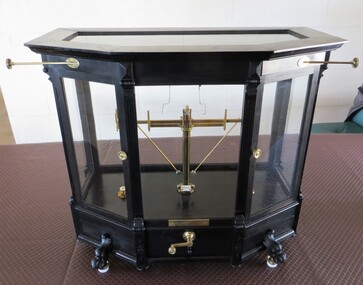
... roomed private laboratory on the grounds for assays associated with his operations. This balance was used at that laboratory. The Webster Street property is believed to be the first brick fronted house in Ballarat and the bricks were ballast from a Scottish Ship. The property remained in the Glover Family until it was sold in 1955. John Warren had car or licence registration no 12...roomed private laboratory on the grounds for assays associated with his operations. This balance was used at that laboratory. The Webster Street property is believed to be the first brick fronted house in Ballarat and the bricks were ballast from a Scottish Ship. The property remained in the Glover Family until it was sold in 1955. John Warren had car or licence registration no 12 ...John Warren Glover was a significant operator of cyanide re-processing works in the goldfields from around 1900. He lived at 123 Webster Street for many years, and operated quite a substantial three roomed private laboratory on the grounds for assays associated with his operations. This balance was used at that laboratory. The Webster Street property is believed to be the first brick fronted house in Ballarat and the bricks were ballast from a Scottish Ship. The property remained in the Glover Family until it was sold in 1955. John Warren had car or licence registration no 12. A German made beam balance that would have been an extremely sensitive, and top of the line for its time (probably 1910 – 20’s). It has a long beam and a complex system of jewel knife edges and bearings. Plaque on front with C. Staudinger & Co. Machf, Gisssen (Gibben)mining, goldfields, beam balance, german, c. standinger & co., jw glover, john glover, warren glover, john warren glover, john w. glover, weights and measures, c. staudinger and co, carl staudinger, scientific equiment -
Federation University Historical Collection
Photograph, Joseph At Her Majesty's Theatre Ballarat, c1990
... 39 Colour Photographs of a Student Production of Joseph At Her Majesty's Theatre Ballarat c. 1990s .1) Len Bauska (Technician) on a red ladder .2) Len Bauska .3) Unknown Student .4) Unknown Student .5) Older woman .6) Rehearsals in Progress .7) Students in Dressing Room .8) Two students .9) Student .10)Rehearsing in Orchestra Pit .11) Rehearsing In Orchestra Pit .12)Rehearsing in Orchestra Pit .13) Set Design .14)Student .15) Two Students .16) Green Room at Her Majesty's Theatre Ballarat .17)Directors and students .18)Len Bauska with Disco Balls .19)On set with ladder .20)Rehearsals .21) Making the Technicolour Dreamcoat .22)Making the Technicolour Dreamcoat .23) Student making costume .24)Students making costumes .25)Student .26)Students making costumes .27)Making costumes .28) Students making costumes .29) students making costumes .30) Younger members of the cast .31) Hair and Makeup .32)Preparing for a performance .33)Male cast members .34) Three cast members .35) Male cast members in dressing room .36) Student on phone .37)Student on phone .38) Courier poster announcing 6 more nights .39) Promotional banner for Joseph and the Amazing Technicolour Dreamcoat - Students in dressing room - Children on stairs -Male actor's headshot ...Possibly dating c. 1990 joseph joseph and his amazing technicolour dreamcoat performing arts alumni her majesty's theatre ballarat ballarat rehearsals costume design stage mirror ball orchestra pit band 1990 Balllarat University College BAPA Ballarat Academy of Performing arts 39 Colour Photographs of a Student Production of Joseph At Her Majesty's Theatre Ballarat c. 1990s .1) Len Bauska (Technician) on a red ladder .2) Len Bauska .3) Unknown Student .4) Unknown Student .5) Older woman .6) Rehearsals in Progress .7) Students in Dressing Room .8) Two students .9) Student .10)Rehearsing in Orchestra Pit .11) Rehearsing In Orchestra Pit .12)Rehearsing in Orchestra Pit .13) Set Design .14)Student .15) Two Students .16) Green Room at Her Majesty's Theatre Ballarat .17)Directors and students .18)Len Bauska with Disco Balls .19)On set with ladder .20)Rehearsals .21) Making the Technicolour Dreamcoat .22)Making the Technicolour Dreamcoat .23) Student making costume .24)Students making costumes .25)Student .26)Students making costumes .27)Making costumes .28) Students making costumes .29) students making costumes .30) Younger members of the cast .31) Hair and Makeup .32)Preparing for a performance .33)Male cast members .34) Three cast members .35) Male cast members in dressing room .36) Student on phone .37)Student on phone .38) Courier poster announcing 6 more nights .39) Promotional banner for Joseph and the Amazing Technicolour Dreamcoat - Students in dressing room - Children on stairs -Male actor's headshot Joseph At Her Majesty's Theatre Ballarat Photograph ...A student production of Joseph and His Amazing Technicolour Dreamcoat. Possibly dating c. 199039 Colour Photographs of a Student Production of Joseph At Her Majesty's Theatre Ballarat c. 1990s .1) Len Bauska (Technician) on a red ladder .2) Len Bauska .3) Unknown Student .4) Unknown Student .5) Older woman .6) Rehearsals in Progress .7) Students in Dressing Room .8) Two students .9) Student .10)Rehearsing in Orchestra Pit .11) Rehearsing In Orchestra Pit .12)Rehearsing in Orchestra Pit .13) Set Design .14)Student .15) Two Students .16) Green Room at Her Majesty's Theatre Ballarat .17)Directors and students .18)Len Bauska with Disco Balls .19)On set with ladder .20)Rehearsals .21) Making the Technicolour Dreamcoat .22)Making the Technicolour Dreamcoat .23) Student making costume .24)Students making costumes .25)Student .26)Students making costumes .27)Making costumes .28) Students making costumes .29) students making costumes .30) Younger members of the cast .31) Hair and Makeup .32)Preparing for a performance .33)Male cast members .34) Three cast members .35) Male cast members in dressing room .36) Student on phone .37)Student on phone .38) Courier poster announcing 6 more nights .39) Promotional banner for Joseph and the Amazing Technicolour Dreamcoat - Students in dressing room - Children on stairs -Male actor's headshot joseph, joseph and his amazing technicolour dreamcoat, performing arts, alumni, her majesty's theatre ballarat, ballarat, rehearsals, costume design, stage, mirror ball, orchestra pit, band, 1990, balllarat university college, bapa, ballarat academy of performing arts -
 Federation University Historical Collection
Photograph - Colour, Jarrod Watt, Hong Kong Street Flyer by an unknown artist, 2019, 06/2019
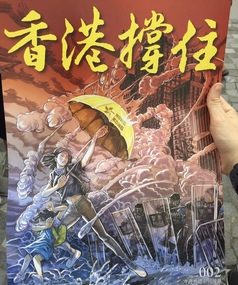
... They also wanted the release of protesters arrested on June 12, and for the government to rescind its description of the demonstrations as a “riot,” a designation that carries legal significance. None of that has happened. Many analysts say Ms. Lam is unlikely to step down, nor would Beijing accept her resignation if she offered it. She has more wiggle room...They also wanted the release of protesters arrested on June 12, and for the government to rescind its description of the demonstrations as a “riot,” a designation that carries legal significance. None of that has happened. Many analysts say Ms. Lam is unlikely to step down, nor would Beijing accept her resignation if she offered it. She has more wiggle room ...Carrie Lam, Hong Kong’s chief executive, had plenty of political support in the territory’s pro-Beijing legislature to pass a bill that would allow extraditions to mainland China. The legislators were set to begin discussing the bill in early June, and intended to vote on it just weeks later. A series of protests took place, and after a June 16 protest saw the largest turnout yet, Ms. Lam made a major concession: She postponed the bill, at least temporarily. It was an undeniable victory for the protesters — but it did little to quell the unrest. Since the bill could later be reintroduced, protesters felt they remained in danger. The police tactics to break up the demonstrations on June 12, including the use of more than 150 tear gas canisters to push protesters far away from the government office, created a new set of demands from the protesters. Now, instead of just calling for the withdrawal of the bill and Ms. Lam’s resignation, they said they wouldn’t be content unless there was an independent investigation of officers’ conduct. They also wanted the release of protesters arrested on June 12, and for the government to rescind its description of the demonstrations as a “riot,” a designation that carries legal significance. None of that has happened. Many analysts say Ms. Lam is unlikely to step down, nor would Beijing accept her resignation if she offered it. She has more wiggle room on the other demands, but has not indicated any willingness to budge. The Hong Kong Protests are a leaderless, digital movement.There is no single leader or group deciding on or steering the strategy, tactics and goals of the movement. Instead, protesters have used forums and messaging apps to decide next steps. Anyone can suggest a course of action, and others then vote on whether they support it. The most popular ideas rise to the top, and then people rally to make them happen. At its best, this structure has empowered many people to participate and have their voices heard. Protesters say it keeps them all safe by not allowing the government to target specific leaders. Their success in halting the extradition bill, which was shelved by the territory’s chief executive, speaks to the movement’s power. Despite the lack of a clear leader, protesters have shown extensive coordination at the demonstrations, having planned the specifics online beforehand. Supply stations are set up to distribute water, snacks, gloves, umbrellas and shields made of cardboard. Volunteer first aid workers wear brightly colored vests. People form assembly lines to pass supplies across long distances, with protesters communicating what they need through a series of predetermined hand signals. Anyone walking in dangerous areas without a helmet or a mask is quickly offered one. No individual can speak on behalf of the protesters, which makes negotiations difficult, if not impossible. (https://www.nytimes.com/2019/07/02/world/asia/hong-kong-protest-explained.html, accessed 07/07/2019) Hong Kong’s amended extradition law would allow the extradition of suspects to mainland China for the first time. Supporters say the amendments are key to ensuring the city does not become a criminal refuge, but critics worry Beijing will use the law to extradite political opponents and others to China where their legal protections cannot be guaranteed. The government claims the push to change the law, which would also apply to Taiwan and Macau, stems from the killing last year of a Hong Kong woman while she was in Taiwan with her boyfriend. Authorities in Taiwan suspect the woman’s boyfriend, who remains in Hong Kong, but cannot try him because no extradition agreement is in place. Under the amended law, those accused of offences punishable by seven years or more in prison could be extradited. The new legislation would give Hong Kong’s leader, known as the chief executive, authority to approve extradition requests, after review by the courts. Hong Kong’s legislature, the legislative council, would not have any oversight over the extradition process. Many Hong Kongers fear the proposed extradition law will be used by authorities to target political enemies. They worry the new legislation spells the end of the “one country, two systems” policy, eroding the civil rights enjoyed by Hong Kong residents since the handover of sovereignty from the UK to China in 1997. Many attending the protests on Sunday said they could not trust China as it had often used non-political crimes to target government critics, and said they also feared Hong Kong officials would not be able to reject Beijing’s requests. Legal professionals have also expressed concern over the rights of those sent across the border to be tried. The conviction rate in Chinese courts is as high as 99%. Arbitrary detentions, torture and denial of legal representation of one’s choosing are also common. Many in the protests on Sunday 09 June 2019 said they felt overwhelmed by a sense of helplessness in the face of mainland China’s increasing political, economic and cultural influence in Hong Kong. Hong Kong’s top political leader is not elected by ordinary voters but by a 1,200-strong election committee accountable to Beijing. Half of its legislature are chosen through indirect electoral systems that favour pro-Beijing figures. Many Hong Kongers also cited the jailing of leaders and activists from the 2014 Occupy Central movement– a 79-day mass civil disobedience movement – as well as the disqualification of young localist lawmakers as signs of the erosion of civil freedoms. Resentment towards China has been intensified by soaring property prices – with increasing numbers of mainland Chinese buying properties in the city – as well as the government’s “patriotic education” drive, and the large numbers of mainland tourists who flock to Hong Kong. Many Hong Kongers are also concerned about China’s growing control over the city’s news media, as they increasingly self-censor and follow Beijing’s tacit orders. https://www.theguardian.com/world/2019/jun/10/what-are-the-hong-kong-protests-about-explainerPhotograph of a street art poster taken on the streets of Hong Kong during the protests against legislation to allow Hong Kong suspects to be extradited to mainland Chinese carrie lam, hong kong protests, extraditions, poster art, posters -
 Federation University Historical Collection
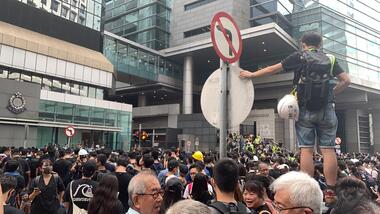
Photograph - Colour, Jarrod Watt, A thousand protestors surround Hong Kong's main police headquarters on Arsenal Street in Wan Chai on June 26th 2019, 21/06/2019
... They also wanted the release of protesters arrested on June 12, and for the government to rescind its description of the demonstrations as a “riot,” a designation that carries legal significance. None of that has happened. Many analysts say Ms. Lam is unlikely to step down, nor would Beijing accept her resignation if she offered it. She has more wiggle room...They also wanted the release of protesters arrested on June 12, and for the government to rescind its description of the demonstrations as a “riot,” a designation that carries legal significance. None of that has happened. Many analysts say Ms. Lam is unlikely to step down, nor would Beijing accept her resignation if she offered it. She has more wiggle room ...Carrie Lam, Hong Kong’s chief executive, had plenty of political support in the territory’s pro-Beijing legislature to pass a bill that would allow extraditions to mainland China. The legislators were set to begin discussing the bill in early June, and intended to vote on it just weeks later. A series of protests took place, and after a June 16 protest saw the largest turnout yet, Ms. Lam made a major concession: She postponed the bill, at least temporarily. It was an undeniable victory for the protesters — but it did little to quell the unrest. Since the bill could later be reintroduced, protesters felt they remained in danger. The police tactics to break up the demonstrations on June 12, including the use of more than 150 tear gas canisters to push protesters far away from the government office, created a new set of demands from the protesters. Now, instead of just calling for the withdrawal of the bill and Ms. Lam’s resignation, they said they wouldn’t be content unless there was an independent investigation of officers’ conduct. They also wanted the release of protesters arrested on June 12, and for the government to rescind its description of the demonstrations as a “riot,” a designation that carries legal significance. None of that has happened. Many analysts say Ms. Lam is unlikely to step down, nor would Beijing accept her resignation if she offered it. She has more wiggle room on the other demands, but has not indicated any willingness to budge. The Hong Kong Protests are a leaderless, digital movement.There is no single leader or group deciding on or steering the strategy, tactics and goals of the movement. Instead, protesters have used forums and messaging apps to decide next steps. Anyone can suggest a course of action, and others then vote on whether they support it. The most popular ideas rise to the top, and then people rally to make them happen. At its best, this structure has empowered many people to participate and have their voices heard. Protesters say it keeps them all safe by not allowing the government to target specific leaders. Their success in halting the extradition bill, which was shelved by the territory’s chief executive, speaks to the movement’s power. Despite the lack of a clear leader, protesters have shown extensive coordination at the demonstrations, having planned the specifics online beforehand. Supply stations are set up to distribute water, snacks, gloves, umbrellas and shields made of cardboard. Volunteer first aid workers wear brightly colored vests. People form assembly lines to pass supplies across long distances, with protesters communicating what they need through a series of predetermined hand signals. Anyone walking in dangerous areas without a helmet or a mask is quickly offered one. No individual can speak on behalf of the protesters, which makes negotiations difficult, if not impossible. (https://www.nytimes.com/2019/07/02/world/asia/hong-kong-protest-explained.html, accessed 07/07/2019) Hong Kong’s amended extradition law would allow the extradition of suspects to mainland China for the first time. Supporters say the amendments are key to ensuring the city does not become a criminal refuge, but critics worry Beijing will use the law to extradite political opponents and others to China where their legal protections cannot be guaranteed. The government claims the push to change the law, which would also apply to Taiwan and Macau, stems from the killing last year of a Hong Kong woman while she was in Taiwan with her boyfriend. Authorities in Taiwan suspect the woman’s boyfriend, who remains in Hong Kong, but cannot try him because no extradition agreement is in place. Under the amended law, those accused of offences punishable by seven years or more in prison could be extradited. The new legislation would give Hong Kong’s leader, known as the chief executive, authority to approve extradition requests, after review by the courts. Hong Kong’s legislature, the legislative council, would not have any oversight over the extradition process. Many Hong Kongers fear the proposed extradition law will be used by authorities to target political enemies. They worry the new legislation spells the end of the “one country, two systems” policy, eroding the civil rights enjoyed by Hong Kong residents since the handover of sovereignty from the UK to China in 1997. Many attending the protests on Sunday said they could not trust China as it had often used non-political crimes to target government critics, and said they also feared Hong Kong officials would not be able to reject Beijing’s requests. Legal professionals have also expressed concern over the rights of those sent across the border to be tried. The conviction rate in Chinese courts is as high as 99%. Arbitrary detentions, torture and denial of legal representation of one’s choosing are also common. Many in the protests on Sunday 09 June 2019 said they felt overwhelmed by a sense of helplessness in the face of mainland China’s increasing political, economic and cultural influence in Hong Kong. Hong Kong’s top political leader is not elected by ordinary voters but by a 1,200-strong election committee accountable to Beijing. Half of its legislature are chosen through indirect electoral systems that favour pro-Beijing figures. Many Hong Kongers also cited the jailing of leaders and activists from the 2014 Occupy Central movement– a 79-day mass civil disobedience movement – as well as the disqualification of young localist lawmakers as signs of the erosion of civil freedoms. Resentment towards China has been intensified by soaring property prices – with increasing numbers of mainland Chinese buying properties in the city – as well as the government’s “patriotic education” drive, and the large numbers of mainland tourists who flock to Hong Kong. Many Hong Kongers are also concerned about China’s growing control over the city’s news media, as they increasingly self-censor and follow Beijing’s tacit orders. https://www.theguardian.com/world/2019/jun/10/what-are-the-hong-kong-protests-about-explainerMore than a thousand protestors surround Hong Kong's main police headquarters on Arsenal Street in Wan Chai on June 26th following a peaceful rally at Edinburgh Place in Central. Doors to the complex were barricaded by protestors, who left after a six hour siege in protest at police violence at a prtest held earlier on 12 June 2019. Protesters ended a six-hour siege of Hong Kong’s police headquarters – their second in a week over the now-suspended extradition bill – early on Thursday morning. More than 1,000 were involved at the height of the protest, which began after 10pm on Wednesday. Around 100 were left at the end and dispersed without a fight when officers with riot shields emerged from the building in Wan Chai at 4am on Thursday. After a peaceful rally attended by thousands earlier at Edinburgh Place in the Central business district, hundreds descended on Arsenal Street, blocking the junction with Lockhart Road to all traffic and sealing the entrances to the police base. (https://www.scmp.com/news/hong-kong/politics/article/3016238/hong-kong-police-under-siege-again-protesters-surround )carrie lam, hong kong protests, extraditions, protest, protestors -
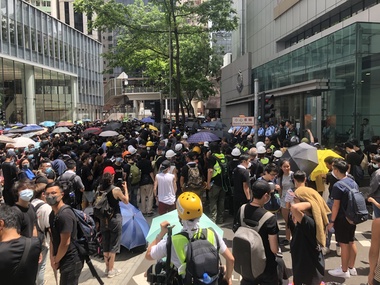 Federation University Historical Collection
Photograph - Photograph - Colour, Jarrod Watt, Seven police officers stand guard in front of Hong Kong's main police headquarters on Arsenal Street in Wan Chai, 2019, 21/06/2019
... They also wanted the release of protesters arrested on June 12, and for the government to rescind its description of the demonstrations as a “riot,” a designation that carries legal significance. None of that has happened. Many analysts say Ms. Lam is unlikely to step down, nor would Beijing accept her resignation if she offered it. She has more wiggle room...They also wanted the release of protesters arrested on June 12, and for the government to rescind its description of the demonstrations as a “riot,” a designation that carries legal significance. None of that has happened. Many analysts say Ms. Lam is unlikely to step down, nor would Beijing accept her resignation if she offered it. She has more wiggle room ...Carrie Lam, Hong Kong’s chief executive, had plenty of political support in the territory’s pro-Beijing legislature to pass a bill that would allow extraditions to mainland China. The legislators were set to begin discussing the bill in early June, and intended to vote on it just weeks later. A series of protests took place, and after a June 16 protest saw the largest turnout yet, Ms. Lam made a major concession: She postponed the bill, at least temporarily. It was an undeniable victory for the protesters — but it did little to quell the unrest. Since the bill could later be reintroduced, protesters felt they remained in danger. The police tactics to break up the demonstrations on June 12, including the use of more than 150 tear gas canisters to push protesters far away from the government office, created a new set of demands from the protesters. Now, instead of just calling for the withdrawal of the bill and Ms. Lam’s resignation, they said they wouldn’t be content unless there was an independent investigation of officers’ conduct. They also wanted the release of protesters arrested on June 12, and for the government to rescind its description of the demonstrations as a “riot,” a designation that carries legal significance. None of that has happened. Many analysts say Ms. Lam is unlikely to step down, nor would Beijing accept her resignation if she offered it. She has more wiggle room on the other demands, but has not indicated any willingness to budge. The Hong Kong Protests are a leaderless, digital movement.There is no single leader or group deciding on or steering the strategy, tactics and goals of the movement. Instead, protesters have used forums and messaging apps to decide next steps. Anyone can suggest a course of action, and others then vote on whether they support it. The most popular ideas rise to the top, and then people rally to make them happen. At its best, this structure has empowered many people to participate and have their voices heard. Protesters say it keeps them all safe by not allowing the government to target specific leaders. Their success in halting the extradition bill, which was shelved by the territory’s chief executive, speaks to the movement’s power. Despite the lack of a clear leader, protesters have shown extensive coordination at the demonstrations, having planned the specifics online beforehand. Supply stations are set up to distribute water, snacks, gloves, umbrellas and shields made of cardboard. Volunteer first aid workers wear brightly colored vests. People form assembly lines to pass supplies across long distances, with protesters communicating what they need through a series of predetermined hand signals. Anyone walking in dangerous areas without a helmet or a mask is quickly offered one. No individual can speak on behalf of the protesters, which makes negotiations difficult, if not impossible. (https://www.nytimes.com/2019/07/02/world/asia/hong-kong-protest-explained.html, accessed 07/07/2019) Hong Kong’s amended extradition law would allow the extradition of suspects to mainland China for the first time. Supporters say the amendments are key to ensuring the city does not become a criminal refuge, but critics worry Beijing will use the law to extradite political opponents and others to China where their legal protections cannot be guaranteed. The government claims the push to change the law, which would also apply to Taiwan and Macau, stems from the killing last year of a Hong Kong woman while she was in Taiwan with her boyfriend. Authorities in Taiwan suspect the woman’s boyfriend, who remains in Hong Kong, but cannot try him because no extradition agreement is in place. Under the amended law, those accused of offences punishable by seven years or more in prison could be extradited. The new legislation would give Hong Kong’s leader, known as the chief executive, authority to approve extradition requests, after review by the courts. Hong Kong’s legislature, the legislative council, would not have any oversight over the extradition process. Many Hong Kongers fear the proposed extradition law will be used by authorities to target political enemies. They worry the new legislation spells the end of the “one country, two systems” policy, eroding the civil rights enjoyed by Hong Kong residents since the handover of sovereignty from the UK to China in 1997. Many attending the protests on Sunday said they could not trust China as it had often used non-political crimes to target government critics, and said they also feared Hong Kong officials would not be able to reject Beijing’s requests. Legal professionals have also expressed concern over the rights of those sent across the border to be tried. The conviction rate in Chinese courts is as high as 99%. Arbitrary detentions, torture and denial of legal representation of one’s choosing are also common. Many in the protests on Sunday 09 June 2019 said they felt overwhelmed by a sense of helplessness in the face of mainland China’s increasing political, economic and cultural influence in Hong Kong. Hong Kong’s top political leader is not elected by ordinary voters but by a 1,200-strong election committee accountable to Beijing. Half of its legislature are chosen through indirect electoral systems that favour pro-Beijing figures. Many Hong Kongers also cited the jailing of leaders and activists from the 2014 Occupy Central movement– a 79-day mass civil disobedience movement – as well as the disqualification of young localist lawmakers as signs of the erosion of civil freedoms. Resentment towards China has been intensified by soaring property prices – with increasing numbers of mainland Chinese buying properties in the city – as well as the government’s “patriotic education” drive, and the large numbers of mainland tourists who flock to Hong Kong. Many Hong Kongers are also concerned about China’s growing control over the city’s news media, as they increasingly self-censor and follow Beijing’s tacit orders. https://www.theguardian.com/world/2019/jun/10/what-are-the-hong-kong-protests-about-explainerSeven police officers stand guard in front of Hong Kong's main police headquarters on Arsenal Street in Wan Chai as an estimated one thousand protestors surround on 26 June 2019. Protestors take turns to step up and hurl abuse at the officers, in a protest lasting 6 hours before peacefully dispersing. The protesters chanted 'Release the martyrs' and 'Stop police violence' in reference to violent clashes with police in the days previous. ( https://www.scmp.com/news/hong-kong/politics/article/3016238/hong-kong-police-under-siege-again-protesters-surround)carrie lam, hong kong protests, extraditions, protest, protestors, police, wan chai -
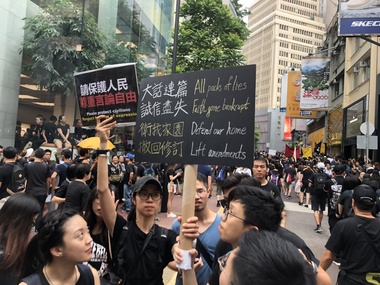 Federation University Historical Collection
Photograph - Colour, Jarrod Watt, Crowds Gather on June 16 on the Streets of Causeway Bay, 2019, 17/06/2019
... They also wanted the release of protesters arrested on June 12, and for the government to rescind its description of the demonstrations as a “riot,” a designation that carries legal significance. None of that has happened. Many analysts say Ms. Lam is unlikely to step down, nor would Beijing accept her resignation if she offered it. She has more wiggle room...They also wanted the release of protesters arrested on June 12, and for the government to rescind its description of the demonstrations as a “riot,” a designation that carries legal significance. None of that has happened. Many analysts say Ms. Lam is unlikely to step down, nor would Beijing accept her resignation if she offered it. She has more wiggle room ...Carrie Lam, Hong Kong’s chief executive, had plenty of political support in the territory’s pro-Beijing legislature to pass a bill that would allow extraditions to mainland China. The legislators were set to begin discussing the bill in early June, and intended to vote on it just weeks later. A series of protests took place, and after a June 16 protest saw the largest turnout yet, Ms. Lam made a major concession: She postponed the bill, at least temporarily. It was an undeniable victory for the protesters — but it did little to quell the unrest. Since the bill could later be reintroduced, protesters felt they remained in danger. The police tactics to break up the demonstrations on June 12, including the use of more than 150 tear gas canisters to push protesters far away from the government office, created a new set of demands from the protesters. Now, instead of just calling for the withdrawal of the bill and Ms. Lam’s resignation, they said they wouldn’t be content unless there was an independent investigation of officers’ conduct. They also wanted the release of protesters arrested on June 12, and for the government to rescind its description of the demonstrations as a “riot,” a designation that carries legal significance. None of that has happened. Many analysts say Ms. Lam is unlikely to step down, nor would Beijing accept her resignation if she offered it. She has more wiggle room on the other demands, but has not indicated any willingness to budge. The Hong Kong Protests are a leaderless, digital movement.There is no single leader or group deciding on or steering the strategy, tactics and goals of the movement. Instead, protesters have used forums and messaging apps to decide next steps. Anyone can suggest a course of action, and others then vote on whether they support it. The most popular ideas rise to the top, and then people rally to make them happen. At its best, this structure has empowered many people to participate and have their voices heard. Protesters say it keeps them all safe by not allowing the government to target specific leaders. Their success in halting the extradition bill, which was shelved by the territory’s chief executive, speaks to the movement’s power. Despite the lack of a clear leader, protesters have shown extensive coordination at the demonstrations, having planned the specifics online beforehand. Supply stations are set up to distribute water, snacks, gloves, umbrellas and shields made of cardboard. Volunteer first aid workers wear brightly colored vests. People form assembly lines to pass supplies across long distances, with protesters communicating what they need through a series of predetermined hand signals. Anyone walking in dangerous areas without a helmet or a mask is quickly offered one. No individual can speak on behalf of the protesters, which makes negotiations difficult, if not impossible. (https://www.nytimes.com/2019/07/02/world/asia/hong-kong-protest-explained.html, accessed 07/07/2019) Hong Kong’s amended extradition law would allow the extradition of suspects to mainland China for the first time. Supporters say the amendments are key to ensuring the city does not become a criminal refuge, but critics worry Beijing will use the law to extradite political opponents and others to China where their legal protections cannot be guaranteed. The government claims the push to change the law, which would also apply to Taiwan and Macau, stems from the killing last year of a Hong Kong woman while she was in Taiwan with her boyfriend. Authorities in Taiwan suspect the woman’s boyfriend, who remains in Hong Kong, but cannot try him because no extradition agreement is in place. Under the amended law, those accused of offences punishable by seven years or more in prison could be extradited. The new legislation would give Hong Kong’s leader, known as the chief executive, authority to approve extradition requests, after review by the courts. Hong Kong’s legislature, the legislative council, would not have any oversight over the extradition process. Many Hong Kongers fear the proposed extradition law will be used by authorities to target political enemies. They worry the new legislation spells the end of the “one country, two systems” policy, eroding the civil rights enjoyed by Hong Kong residents since the handover of sovereignty from the UK to China in 1997. Many attending the protests on Sunday said they could not trust China as it had often used non-political crimes to target government critics, and said they also feared Hong Kong officials would not be able to reject Beijing’s requests. Legal professionals have also expressed concern over the rights of those sent across the border to be tried. The conviction rate in Chinese courts is as high as 99%. Arbitrary detentions, torture and denial of legal representation of one’s choosing are also common. Many in the protests on Sunday 09 June 2019 said they felt overwhelmed by a sense of helplessness in the face of mainland China’s increasing political, economic and cultural influence in Hong Kong. Hong Kong’s top political leader is not elected by ordinary voters but by a 1,200-strong election committee accountable to Beijing. Half of its legislature are chosen through indirect electoral systems that favour pro-Beijing figures. Many Hong Kongers also cited the jailing of leaders and activists from the 2014 Occupy Central movement– a 79-day mass civil disobedience movement – as well as the disqualification of young localist lawmakers as signs of the erosion of civil freedoms. Resentment towards China has been intensified by soaring property prices – with increasing numbers of mainland Chinese buying properties in the city – as well as the government’s “patriotic education” drive, and the large numbers of mainland tourists who flock to Hong Kong. Many Hong Kongers are also concerned about China’s growing control over the city’s news media, as they increasingly self-censor and follow Beijing’s tacit orders. https://www.theguardian.com/world/2019/jun/10/what-are-the-hong-kong-protests-about-explainerPhotograph crowds gathering on June 16 on the streets of Causeway Bay before an estimated 2 million people take part in march protesting the government's push for extradition laws to China and demanding an apology from the chief executrive Carrie Lam. Nearly 2 million’ people take to streets, forcing public apology from Hong Kong leader Carrie Lam as suspension of controversial extradition bill fails to appease protesters. (https://www.scmp.com/news/hong-kong/politics/article/3014737/nearly-2-million-people-take-streets-forcing-public-apology )carrie lam, hong kong protests, extraditions, protest, protestors -
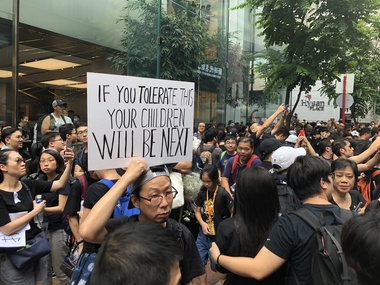 Federation University Historical Collection
Photograph - Photograph - Colour, Jarrod Watt, Street Protests in Hong Kong against proposed extradition laws, 2019, 17/06/2019
... They also wanted the release of protesters arrested on June 12, and for the government to rescind its description of the demonstrations as a “riot,” a designation that carries legal significance. None of that has happened. Many analysts say Ms. Lam is unlikely to step down, nor would Beijing accept her resignation if she offered it. She has more wiggle room...They also wanted the release of protesters arrested on June 12, and for the government to rescind its description of the demonstrations as a “riot,” a designation that carries legal significance. None of that has happened. Many analysts say Ms. Lam is unlikely to step down, nor would Beijing accept her resignation if she offered it. She has more wiggle room ...Carrie Lam, Hong Kong’s chief executive, had plenty of political support in the territory’s pro-Beijing legislature to pass a bill that would allow extraditions to mainland China. The legislators were set to begin discussing the bill in early June, and intended to vote on it just weeks later. A series of protests took place, and after a June 16 protest saw the largest turnout yet, Ms. Lam made a major concession: She postponed the bill, at least temporarily. It was an undeniable victory for the protesters — but it did little to quell the unrest. Since the bill could later be reintroduced, protesters felt they remained in danger. The police tactics to break up the demonstrations on June 12, including the use of more than 150 tear gas canisters to push protesters far away from the government office, created a new set of demands from the protesters. Now, instead of just calling for the withdrawal of the bill and Ms. Lam’s resignation, they said they wouldn’t be content unless there was an independent investigation of officers’ conduct. They also wanted the release of protesters arrested on June 12, and for the government to rescind its description of the demonstrations as a “riot,” a designation that carries legal significance. None of that has happened. Many analysts say Ms. Lam is unlikely to step down, nor would Beijing accept her resignation if she offered it. She has more wiggle room on the other demands, but has not indicated any willingness to budge. The Hong Kong Protests are a leaderless, digital movement.There is no single leader or group deciding on or steering the strategy, tactics and goals of the movement. Instead, protesters have used forums and messaging apps to decide next steps. Anyone can suggest a course of action, and others then vote on whether they support it. The most popular ideas rise to the top, and then people rally to make them happen. At its best, this structure has empowered many people to participate and have their voices heard. Protesters say it keeps them all safe by not allowing the government to target specific leaders. Their success in halting the extradition bill, which was shelved by the territory’s chief executive, speaks to the movement’s power. Despite the lack of a clear leader, protesters have shown extensive coordination at the demonstrations, having planned the specifics online beforehand. Supply stations are set up to distribute water, snacks, gloves, umbrellas and shields made of cardboard. Volunteer first aid workers wear brightly colored vests. People form assembly lines to pass supplies across long distances, with protesters communicating what they need through a series of predetermined hand signals. Anyone walking in dangerous areas without a helmet or a mask is quickly offered one. No individual can speak on behalf of the protesters, which makes negotiations difficult, if not impossible. (https://www.nytimes.com/2019/07/02/world/asia/hong-kong-protest-explained.html, accessed 07/07/2019) Hong Kong’s amended extradition law would allow the extradition of suspects to mainland China for the first time. Supporters say the amendments are key to ensuring the city does not become a criminal refuge, but critics worry Beijing will use the law to extradite political opponents and others to China where their legal protections cannot be guaranteed. The government claims the push to change the law, which would also apply to Taiwan and Macau, stems from the killing last year of a Hong Kong woman while she was in Taiwan with her boyfriend. Authorities in Taiwan suspect the woman’s boyfriend, who remains in Hong Kong, but cannot try him because no extradition agreement is in place. Under the amended law, those accused of offences punishable by seven years or more in prison could be extradited. The new legislation would give Hong Kong’s leader, known as the chief executive, authority to approve extradition requests, after review by the courts. Hong Kong’s legislature, the legislative council, would not have any oversight over the extradition process. Many Hong Kongers fear the proposed extradition law will be used by authorities to target political enemies. They worry the new legislation spells the end of the “one country, two systems” policy, eroding the civil rights enjoyed by Hong Kong residents since the handover of sovereignty from the UK to China in 1997. Many attending the protests on Sunday said they could not trust China as it had often used non-political crimes to target government critics, and said they also feared Hong Kong officials would not be able to reject Beijing’s requests. Legal professionals have also expressed concern over the rights of those sent across the border to be tried. The conviction rate in Chinese courts is as high as 99%. Arbitrary detentions, torture and denial of legal representation of one’s choosing are also common. Many in the protests on Sunday 09 June 2019 said they felt overwhelmed by a sense of helplessness in the face of mainland China’s increasing political, economic and cultural influence in Hong Kong. Hong Kong’s top political leader is not elected by ordinary voters but by a 1,200-strong election committee accountable to Beijing. Half of its legislature are chosen through indirect electoral systems that favour pro-Beijing figures. Many Hong Kongers also cited the jailing of leaders and activists from the 2014 Occupy Central movement– a 79-day mass civil disobedience movement – as well as the disqualification of young localist lawmakers as signs of the erosion of civil freedoms. Resentment towards China has been intensified by soaring property prices – with increasing numbers of mainland Chinese buying properties in the city – as well as the government’s “patriotic education” drive, and the large numbers of mainland tourists who flock to Hong Kong. Many Hong Kongers are also concerned about China’s growing control over the city’s news media, as they increasingly self-censor and follow Beijing’s tacit orders. https://www.theguardian.com/world/2019/jun/10/what-are-the-hong-kong-protests-about-explainerPhotograph of a crowd or protestors against proposed extradition laws gathering on the streets of Causeway Bay, Hong Kong, leading down to the gathering area. carrie lam, hong kong protests, extraditions, protest, protestors -
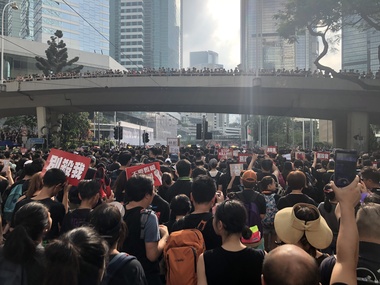 Federation University Historical Collection
Photograph - Colour, Jarrod Watt, Street Protests in Hong Kong against proposed extradition laws, 2019, 17/06/2019
... They also wanted the release of protesters arrested on June 12, and for the government to rescind its description of the demonstrations as a “riot,” a designation that carries legal significance. None of that has happened. Many analysts say Ms. Lam is unlikely to step down, nor would Beijing accept her resignation if she offered it. She has more wiggle room...They also wanted the release of protesters arrested on June 12, and for the government to rescind its description of the demonstrations as a “riot,” a designation that carries legal significance. None of that has happened. Many analysts say Ms. Lam is unlikely to step down, nor would Beijing accept her resignation if she offered it. She has more wiggle room ...Carrie Lam, Hong Kong’s chief executive, had plenty of political support in the territory’s pro-Beijing legislature to pass a bill that would allow extraditions to mainland China. The legislators were set to begin discussing the bill in early June, and intended to vote on it just weeks later. A series of protests took place, and after a June 16 protest saw the largest turnout yet, Ms. Lam made a major concession: She postponed the bill, at least temporarily. It was an undeniable victory for the protesters — but it did little to quell the unrest. Since the bill could later be reintroduced, protesters felt they remained in danger. The police tactics to break up the demonstrations on June 12, including the use of more than 150 tear gas canisters to push protesters far away from the government office, created a new set of demands from the protesters. Now, instead of just calling for the withdrawal of the bill and Ms. Lam’s resignation, they said they wouldn’t be content unless there was an independent investigation of officers’ conduct. They also wanted the release of protesters arrested on June 12, and for the government to rescind its description of the demonstrations as a “riot,” a designation that carries legal significance. None of that has happened. Many analysts say Ms. Lam is unlikely to step down, nor would Beijing accept her resignation if she offered it. She has more wiggle room on the other demands, but has not indicated any willingness to budge. The Hong Kong Protests are a leaderless, digital movement.There is no single leader or group deciding on or steering the strategy, tactics and goals of the movement. Instead, protesters have used forums and messaging apps to decide next steps. Anyone can suggest a course of action, and others then vote on whether they support it. The most popular ideas rise to the top, and then people rally to make them happen. At its best, this structure has empowered many people to participate and have their voices heard. Protesters say it keeps them all safe by not allowing the government to target specific leaders. Their success in halting the extradition bill, which was shelved by the territory’s chief executive, speaks to the movement’s power. Despite the lack of a clear leader, protesters have shown extensive coordination at the demonstrations, having planned the specifics online beforehand. Supply stations are set up to distribute water, snacks, gloves, umbrellas and shields made of cardboard. Volunteer first aid workers wear brightly colored vests. People form assembly lines to pass supplies across long distances, with protesters communicating what they need through a series of predetermined hand signals. Anyone walking in dangerous areas without a helmet or a mask is quickly offered one. No individual can speak on behalf of the protesters, which makes negotiations difficult, if not impossible. (https://www.nytimes.com/2019/07/02/world/asia/hong-kong-protest-explained.html, accessed 07/07/2019) Hong Kong’s amended extradition law would allow the extradition of suspects to mainland China for the first time. Supporters say the amendments are key to ensuring the city does not become a criminal refuge, but critics worry Beijing will use the law to extradite political opponents and others to China where their legal protections cannot be guaranteed. The government claims the push to change the law, which would also apply to Taiwan and Macau, stems from the killing last year of a Hong Kong woman while she was in Taiwan with her boyfriend. Authorities in Taiwan suspect the woman’s boyfriend, who remains in Hong Kong, but cannot try him because no extradition agreement is in place. Under the amended law, those accused of offences punishable by seven years or more in prison could be extradited. The new legislation would give Hong Kong’s leader, known as the chief executive, authority to approve extradition requests, after review by the courts. Hong Kong’s legislature, the legislative council, would not have any oversight over the extradition process. Many Hong Kongers fear the proposed extradition law will be used by authorities to target political enemies. They worry the new legislation spells the end of the “one country, two systems” policy, eroding the civil rights enjoyed by Hong Kong residents since the handover of sovereignty from the UK to China in 1997. Many attending the protests on Sunday said they could not trust China as it had often used non-political crimes to target government critics, and said they also feared Hong Kong officials would not be able to reject Beijing’s requests. Legal professionals have also expressed concern over the rights of those sent across the border to be tried. The conviction rate in Chinese courts is as high as 99%. Arbitrary detentions, torture and denial of legal representation of one’s choosing are also common. Many in the protests on Sunday 09 June 2019 said they felt overwhelmed by a sense of helplessness in the face of mainland China’s increasing political, economic and cultural influence in Hong Kong. Hong Kong’s top political leader is not elected by ordinary voters but by a 1,200-strong election committee accountable to Beijing. Half of its legislature are chosen through indirect electoral systems that favour pro-Beijing figures. Many Hong Kongers also cited the jailing of leaders and activists from the 2014 Occupy Central movement– a 79-day mass civil disobedience movement – as well as the disqualification of young localist lawmakers as signs of the erosion of civil freedoms. Resentment towards China has been intensified by soaring property prices – with increasing numbers of mainland Chinese buying properties in the city – as well as the government’s “patriotic education” drive, and the large numbers of mainland tourists who flock to Hong Kong. Many Hong Kongers are also concerned about China’s growing control over the city’s news media, as they increasingly self-censor and follow Beijing’s tacit orders. https://www.theguardian.com/world/2019/jun/10/what-are-the-hong-kong-protests-about-explainerPhotograph of a crowd on the streets of Hong Kong to protest against proposed extradition laws, heading towards Admiralty. carrie lam, hong kong protests, extraditions, protest, protestors, admiralty -
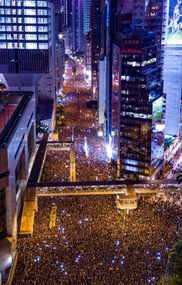 Federation University Historical Collection
Photograph - Colour Photograph, Street Protests in Hong Kong against proposed extradition laws, 2019, 17/06/2019
... They also wanted the release of protesters arrested on June 12, and for the government to rescind its description of the demonstrations as a “riot,” a designation that carries legal significance. None of that has happened. Many analysts say Ms. Lam is unlikely to step down, nor would Beijing accept her resignation if she offered it. She has more wiggle room...They also wanted the release of protesters arrested on June 12, and for the government to rescind its description of the demonstrations as a “riot,” a designation that carries legal significance. None of that has happened. Many analysts say Ms. Lam is unlikely to step down, nor would Beijing accept her resignation if she offered it. She has more wiggle room ...Carrie Lam, Hong Kong’s chief executive, had plenty of political support in the territory’s pro-Beijing legislature to pass a bill that would allow extraditions to mainland China. The legislators were set to begin discussing the bill in early June, and intended to vote on it just weeks later. A series of protests took place, and after a June 16 protest saw the largest turnout yet, Ms. Lam made a major concession: She postponed the bill, at least temporarily. It was an undeniable victory for the protesters — but it did little to quell the unrest. Since the bill could later be reintroduced, protesters felt they remained in danger. The police tactics to break up the demonstrations on June 12, including the use of more than 150 tear gas canisters to push protesters far away from the government office, created a new set of demands from the protesters. Now, instead of just calling for the withdrawal of the bill and Ms. Lam’s resignation, they said they wouldn’t be content unless there was an independent investigation of officers’ conduct. They also wanted the release of protesters arrested on June 12, and for the government to rescind its description of the demonstrations as a “riot,” a designation that carries legal significance. None of that has happened. Many analysts say Ms. Lam is unlikely to step down, nor would Beijing accept her resignation if she offered it. She has more wiggle room on the other demands, but has not indicated any willingness to budge. The Hong Kong Protests are a leaderless, digital movement.There is no single leader or group deciding on or steering the strategy, tactics and goals of the movement. Instead, protesters have used forums and messaging apps to decide next steps. Anyone can suggest a course of action, and others then vote on whether they support it. The most popular ideas rise to the top, and then people rally to make them happen. At its best, this structure has empowered many people to participate and have their voices heard. Protesters say it keeps them all safe by not allowing the government to target specific leaders. Their success in halting the extradition bill, which was shelved by the territory’s chief executive, speaks to the movement’s power. Despite the lack of a clear leader, protesters have shown extensive coordination at the demonstrations, having planned the specifics online beforehand. Supply stations are set up to distribute water, snacks, gloves, umbrellas and shields made of cardboard. Volunteer first aid workers wear brightly colored vests. People form assembly lines to pass supplies across long distances, with protesters communicating what they need through a series of predetermined hand signals. Anyone walking in dangerous areas without a helmet or a mask is quickly offered one. No individual can speak on behalf of the protesters, which makes negotiations difficult, if not impossible. (https://www.nytimes.com/2019/07/02/world/asia/hong-kong-protest-explained.html, accessed 07/07/2019) Hong Kong’s amended extradition law would allow the extradition of suspects to mainland China for the first time. Supporters say the amendments are key to ensuring the city does not become a criminal refuge, but critics worry Beijing will use the law to extradite political opponents and others to China where their legal protections cannot be guaranteed. The government claims the push to change the law, which would also apply to Taiwan and Macau, stems from the killing last year of a Hong Kong woman while she was in Taiwan with her boyfriend. Authorities in Taiwan suspect the woman’s boyfriend, who remains in Hong Kong, but cannot try him because no extradition agreement is in place. Under the amended law, those accused of offences punishable by seven years or more in prison could be extradited. The new legislation would give Hong Kong’s leader, known as the chief executive, authority to approve extradition requests, after review by the courts. Hong Kong’s legislature, the legislative council, would not have any oversight over the extradition process. Many Hong Kongers fear the proposed extradition law will be used by authorities to target political enemies. They worry the new legislation spells the end of the “one country, two systems” policy, eroding the civil rights enjoyed by Hong Kong residents since the handover of sovereignty from the UK to China in 1997. Many attending the protests on Sunday said they could not trust China as it had often used non-political crimes to target government critics, and said they also feared Hong Kong officials would not be able to reject Beijing’s requests. Legal professionals have also expressed concern over the rights of those sent across the border to be tried. The conviction rate in Chinese courts is as high as 99%. Arbitrary detentions, torture and denial of legal representation of one’s choosing are also common. Many in the protests on Sunday 09 June 2019 said they felt overwhelmed by a sense of helplessness in the face of mainland China’s increasing political, economic and cultural influence in Hong Kong. Hong Kong’s top political leader is not elected by ordinary voters but by a 1,200-strong election committee accountable to Beijing. Half of its legislature are chosen through indirect electoral systems that favour pro-Beijing figures. Many Hong Kongers also cited the jailing of leaders and activists from the 2014 Occupy Central movement– a 79-day mass civil disobedience movement – as well as the disqualification of young localist lawmakers as signs of the erosion of civil freedoms. Resentment towards China has been intensified by soaring property prices – with increasing numbers of mainland Chinese buying properties in the city – as well as the government’s “patriotic education” drive, and the large numbers of mainland tourists who flock to Hong Kong. Many Hong Kongers are also concerned about China’s growing control over the city’s news media, as they increasingly self-censor and follow Beijing’s tacit orders. https://www.theguardian.com/world/2019/jun/10/what-are-the-hong-kong-protests-about-explainerCrowds mass on Queens Way in Hong Kong as an estimated 2 million people march in protest at the government's refusal to withdraw a controverisal law allowing people to be extradited to mainland China. Chants demanded the chief executive apologise and the legislation be withdrawn, while many held signs protesting police violence. Nearly 2 million protesters flooded the streets of Hong Kong on Sunday, organisers claimed, delivering a stunning repudiation of Chief Executive Carrie Lam Cheng Yuet-ngor’s governance and forcing a public apology out of the city’s leader over her campaign to bulldoze a controversial extradition bill through the legislature. A day after Lam suspended her push for the bill, expecting it to defuse a crisis that has seen violent clashes between mostly young protesters and police, the centre of Hong Kong was brought to a complete standstill as the masses marched to chastise her for refusing to withdraw the bill or apologise when first asked to, and declaring that nothing short of her resignation would satisfy them now. (https://www.scmp.com/news/hong-kong/politics/article/3014737/nearly-2-million-people-take-streets-forcing-public-apology ) carrie lam, hong kong protests, extraditions, protest, protestors, admiralty -
Federation University Historical Collection
Book - Book - Scrapbook, Ballarat Institute of Advanced Education: Scrapbook of newspaper cutting, Book 4, December 1970 to August 1971
... The cuttings cover the period from 12 December 1970 to 17 August 1971. ballarat institute of advanced education biae employment advertisements application for enrolment outline of courses engineers' conference ballarat technical school institute award to jim ryan ken scull retires first degree course at biae $30000 x-ray unit for metallurgists biae enrolments equipment projects by physics students no room for our potential residents four new buildings planned for biae john vernon's career night school enrolments apprenticeship commission visit education first festival diversity brings fun for all enrolment taxes accommodation overseas brewers have link with ballarat vietnam a spur for student protest mr g b fairhall new student group formed college diplomas "not recognised" smb "boat" on lake wendouree race stock exchange award to danny dimmo australia losing from student restrictions first lecturer in brewing - n m gower biae course encouraged ph.d.for chemistry lecturer smb exhibition of prints impressive art by students mining companies help education christopher dower wins award for third time bid to keep youths in country students in two-storey units smb registrar eric bald retires master's degree to john duruz a united approach? ...Newspaper cuttings relating to Ballarat Institute of Advanced Education. These are from various newspapers and include The Age, Ballarat Courier, The Australian, The Herald. The cuttings cover the period from 12 December 1970 to 17 August 1971. Book with yellow cover, front. Spiral bound. Coloured card pasted on front cover. Front cover coming away.ballarat institute of advanced education, biae, employment advertisements, application for enrolment, outline of courses, engineers' conference, ballarat technical school, institute award to jim ryan, ken scull retires, first degree course at biae, $30000 x-ray unit for metallurgists, biae enrolments, equipment projects by physics students, no room for our potential residents, four new buildings planned for biae, john vernon's career, night school enrolments, apprenticeship commission visit, education first, festival diversity brings fun for all, enrolment taxes accommodation, overseas brewers have link with ballarat, vietnam a spur for student protest, mr g b fairhall, new student group formed, college diplomas "not recognised", smb "boat" on lake wendouree race, stock exchange award to danny dimmo, australia losing from student restrictions, first lecturer in brewing - n m gower, biae course encouraged, ph.d.for chemistry lecturer, smb exhibition of prints, impressive art by students, mining companies help education, christopher dower wins award for third time, bid to keep youths in country, students in two-storey units, smb registrar eric bald retires, master's degree to john duruz, a united approach?, fourth university probe group, university submission well received, wolfgang kotsch state's top aprentice, interest in twin-state uni, carol yates wins trust scholarship, student protest re fees increase, e c jone - architect, diplomas conferred, apprenticeship week display, $100 prize for wolfgang kotsch, bath run to daylesford, technical education - geoff storey, rex hollioake -
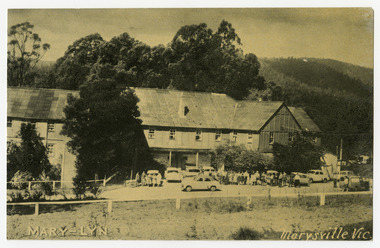 Marysville & District Historical Society
Postcard (item) - Black and white postcard, MARY-LYN Marysville Vic, Unknown
... room./ A number of War/ Widows were having the day out./ I waited for them to finish dinner/ Before appearing. It was very/ hot in Healesville but was cooler/ here. Yesterday was perfect and/ today is going to be warm again./ Violet's husband Fred is in hospital/ at Alexandra and I have been/ with Vi to see him twice. It/ is a lovely drive, he is doing/ well but won't be home for awhile./ Has to get his weight down./ Vi + Glen, her son 12...room./ A number of War/ Widows were having the day out./ I waited for them to finish dinner/ Before appearing. It was very/ hot in Healesville but was cooler/ here. Yesterday was perfect and/ today is going to be warm again./ Violet's husband Fred is in hospital/ at Alexandra and I have been/ with Vi to see him twice. It/ is a lovely drive, he is doing/ well but won't be home for awhile./ Has to get his weight down./ Vi + Glen, her son 12 ...A black and white postcard from Mary-Lyn Guest House in Marysville. Mary-Lyn was a part of the Mary Chain of guest houses built by Eric Dowdle in the Depression years.A black and white postcard from Mary-Lyn Guest House in Marysville.Post Card PRINTED IN AUSTRALIA Friday. 27th Dear Else + Ede, You will have guessed/ that I arrived here safely,/ made good time. When I arrived/ there was a coach at the door +/ a babble of voices from the/ dining room./ A number of War/ Widows were having the day out./ I waited for them to finish dinner/ Before appearing. It was very/ hot in Healesville but was cooler/ here. Yesterday was perfect and/ today is going to be warm again./ Violet's husband Fred is in hospital/ at Alexandra and I have been/ with Vi to see him twice. It/ is a lovely drive, he is doing/ well but won't be home for awhile./ Has to get his weight down./ Vi + Glen, her son 12, have gone/ shopping today at Eastland./ Fred's Aunt, my age, is living/ here so we are company for each/ other. I think its lovely here./ Expect to be home on Monday./ Hope you are both well love Doris XXmarysville, victoria, australia, mary chain guest houses, marylyn, eric dowdle, postcard, souvenir -
Marysville & District Historical Society
THE TRIANGLE NEWS-VOL 35 NO 2-JANUARY 25 2008
... room...regional food & wine centre...marysville village walk...mops...church notices...marysville under 12...marysville victoria australia marysville australia day lions park uppbeats band buxton hall the elderly bros band diary dates deadline advertising rates flags australia day parade buxton progress assocn murrindindi shire council ceo visiting schedule disclaimer fire calls terra cotta room regional food & wine centre marysville village walk mops church notices marysville under 12 cricket marysville start school dates best decorated bike thank you bendigo bank marysville medical clinic bible quote community kitchens advertisements mayor's chair paradise bead & craft centre wirreanda festival 2008 marysville & district historical society automotive needs public notice temporary road closure australia day mystic mountains outdoors community health services outreach services murrindindi business development calendar community events employing people workshop wilks creek & andersons sawmills alexandra clearance sale for sale real estate THE TRIANGLE NEWS-VOL 35 NO 2-JANUARY 25 2008 ...marysville, victoria, australia, marysville australia day, lions park, uppbeats band, buxton hall, the elderly bros band, diary dates, deadline, advertising rates, flags, australia day parade, buxton progress assocn, murrindindi shire council, ceo visiting schedule, disclaimer, fire calls, terra cotta room, regional food & wine centre, marysville village walk, mops, church notices, marysville under 12 cricket, marysville start school dates, best decorated bike, thank you bendigo bank, marysville medical clinic, bible quote, community kitchens, advertisements, mayor's chair, paradise bead & craft centre, wirreanda festival 2008, marysville & district historical society, automotive needs, public notice, temporary road closure australia day, mystic mountains outdoors, community health services, outreach services, murrindindi business development calendar, community events, employing people workshop, wilks creek & andersons sawmills, alexandra clearance sale, for sale, real estate
