
Showing 13 items matching "static museum display"
-
 Ballarat Tramway Museum
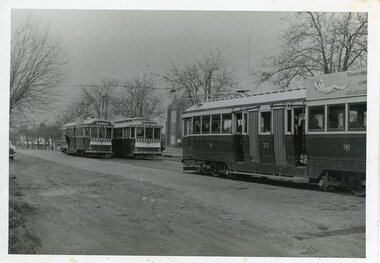
Photograph - Ballarat Trams 35, 39 and 26, Tram 35, 39, 26 in Drummond Street
... ...static museum display...It was converted to a static museum display and souvenir shop. In 1971 it went to the Lions Club of Lismore. ...It was converted to a static museum display and souvenir shop. In 1971 it went to the Lions Club of Lismore. ...Ballarat Tram 35 is a maximum traction truck bogie - eight wheels, with drop end and centre combination. It was built in 1916 by Duncan and Fraser for the Hawthorn Tramways Trust. It came to Ballarat in 1947. In 1974 the body went to Ballarat and Clarendon College. Returned to Ballarat Tramway Preservation Society in 1978. Ballarat Tram 26 was built in 1916 by Duncan and Fraser for the Hawthorn Tramways Trust. It came to Ballarat in 1930 and was part of the SEC's consolidated tramcar fleet. In 1971 it transferred to the Ballarat Tramway Preservation Society. Tram 39 was built in 1914 by Duncan and Fraser for the Prahran and Malvern Tramways Trust. It came to Ballarat in 1951 and was part of the SEC's consolidated tramcar fleet. It was converted to a static museum display and souvenir shop. In 1971 it went to the Lions Club of Lismore. Ballarat Tramway Preservation Society acquired it in 1976. (See No. 10755 for a series of 16 photographs of the return of tram 39 to Ballarat. These were taken by Campbell Duncan) Photo shows the trams in Drummond Street at the Urquhart Street loop.Black and white photographtram 35, tram 39, tram 26, duncan and fraser, hawthorn tramway trust, prahran and malvern tramway trust, ballarat, 1916, 1947, ballarat and clarendon college, 1974, ballarat tramway preservation society, 1978, 1930, lions club lismore, static museum display, drummond street, urquhart street loop, campbell duncan, photographer -
 Ballarat Tramway Museum
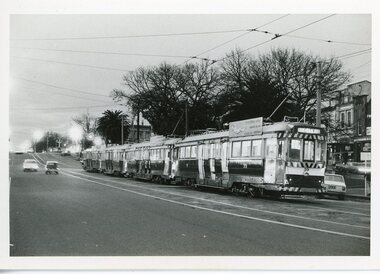
Photograph - Ballarat Tram 39, Ballarat Tram 39 and others at Sturt Street holding depot
... It was converted to a static museum display and souvenir shop. In 1971 it went to the Lions Club of Lismore. ...It was converted to a static museum display and souvenir shop. In 1971 it went to the Lions Club of Lismore. ...Tram 39 was built in 1914 by Duncan and Fraser for the Prahran and Malvern Tramways Trust. It came to Ballarat in 1951 and was part of the SEC's consolidated tramcar fleet. It was converted to a static museum display and souvenir shop. In 1971 it went to the Lions Club of Lismore. Ballarat Tramway Preservation Society acquired it in 1976. (See No. 10755 for a series of 16 photographs of the return of tram 39 to Ballarat. These were taken by Campbell Duncan) The photograph shows Tram 39 and others at the Sturt Street holding depot. This was located in Sturt Street between Greville Street and Lydiard Street. This was where the trams waited to cater for the peak travel times. The numbers on the other trams cannot be identified. Black and white photographtram 39, duncan and fraser, prahran and malvern tramways trust, ballarat 1951, sec fleet, static display, 1971, lions club lismore, ballarat tramway preservation society, 1976, greville street, lydiard street -
 Bendigo Historical Society Inc.
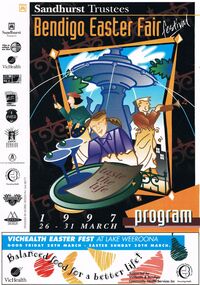
Document - BENDIGO EASTER FAIR FESTIVAL PROGRAM 1997, 26 March 1997
... Static Display... Motorkhana... Time Trial. Dragon Mile. Volkswagen Car Show... National Bug-In. Repco Cycles... Australian Veteran Cycling Council Inc. Championships. Under 17 Australian Badminton Championships. Palm Sunday... Bendigo Symphony Orchestra. Way of the Cross... Bendigo's Combined Churches. The Easter Story... Kangfluca Music. Sunrise Church Service... Bendigo Ministers' Fellowship. Map of CBD Advertisements: Antique Fair. Golden Dragon Museum...Static Display, Motorkhana, Time Trial. Bendigo Bank Dragon Mile. Volkswagen Car Show, a part of the 28th National Bug-In. Repco Cycles, Australian Veteran Cycling Council Inc. Championships. Under 17 Australian Badminton Championships. Palm Sunday, Bendigo Symphony Orchestra. Way of the Cross, Bendigo's Combined Churches. The Easter Story, Kangfluca Music. Sunrise Church Service, Bendigo Ministers' Fellowship. Map of CBD Advertisements: Bendigo Easter Antique Fair. Austar. Bendigo Art Gallery. Bendigo Visitor Information Centre. Prime. Golden Dragon Museum...Static Display Motorkhana Time Trial. Dragon Mile. Volkswagen Car Show National Bug-In. Repco Cycles Australian Veteran Cycling Council Inc. Championships. Under 17 Australian Badminton Championships. Palm Sunday Bendigo Symphony Orchestra. Way of the Cross Bendigo's Combined Churches. The Easter Story Kangfluca Music. Sunrise Church Service Bendigo Ministers' Fellowship. Map of CBD Advertisements: Antique Fair. Golden Dragon Museum ...Bendigo Easter Fair Festival Program, 26-31 March, 1997. Festival Features, Evening of Art & Classical Music, Rotary Club of Bendigo. VicHealth Easter Fest, Victorian Health Promotion Foundation & Bendigo Community Health Services. Fine Food Fest. Free Stage. Free Evening Concert & Fireworks, Zaire. Torchlight Procession, sponsored by Prime TV & Coca Cola, Bendigo Market Place. Fireworks Spectacular, Sponsored by Bendigo Market Place & Prime TV. Street Fiesta, sponsored by Arts Victoria. Street Extravaganza, Coca Cola Carnival, Sponsored by Coca Cola. Star for a Day, Power Audio Visual & Prime Television. Handcraft Bazaar, Rotary Club of Bendigo Sandhurst Art & Craft Market. Cosmopolitan Street Café, Arts Victoria. Awakening of the Dragon, Bendigo Chinese Association. Gala Parade, Prime Television & Coca Cola. Firewalking by the Australian Skeptics, Discovery Science & Technology Centre. Up In Flames, Discovery Science & Technology Centre. Barry Kenny's Country Roundup, Nadort Promotions. School's Day. Teddy Bear's Picnic, Dragon City Marshals. Fire Brigades Children's Carnival. Family Event, Bendigo Minister's Fellowship. Bendigo Easter Antique Fair. Historic Photographic Exhibition, Burt Sargent Circa 1900. Open Garden at Nanga Gnulle (''nanga nully''). A parade of Quilts, Strathdale Bendigo Quilters Inc. Tasting the Life, Gail Tavener Studio. Snakes Alive Dangerous Australians, BRIT. Y's Men's Club of Bendigo Book Fair, YMCA. Bendigo Camera Club, BRIT. Bendigo Woodcraft Exhibition, Woodturners Bendigo Inc. Autumn Bonsai, Bendigo Bonsai Club. Convocation, National Trust Bendigo. Arms & Collectables, Golden City Collectors Assoc. In. Rotary Art Show. Rotary Pottery Exhibition. Women's Vision For The Church, Provincial Council of Mothers Union. Historic Toorak House, Lioness Club of Golden City Bendigo. White Hills Cemetery. Bendigo Cemetery. Festival of Flowers, Craft & Garden, Bendigo Jockey Club. Shannons Corporation Motorfest, City Drive Through, Static Display, Motorkhana, Time Trial. Bendigo Bank Dragon Mile. Volkswagen Car Show, a part of the 28th National Bug-In. Repco Cycles, Australian Veteran Cycling Council Inc. Championships. Under 17 Australian Badminton Championships. Palm Sunday, Bendigo Symphony Orchestra. Way of the Cross, Bendigo's Combined Churches. The Easter Story, Kangfluca Music. Sunrise Church Service, Bendigo Ministers' Fellowship. Map of CBD Advertisements: Bendigo Easter Antique Fair. Austar. Bendigo Art Gallery. Bendigo Visitor Information Centre. Prime. Golden Dragon Museum Inc. Bendigo Heritage Tours. Discovery Science & Technology Centre Bendigo. Sponsors: Sandhurst Trustees, Prime, Vic Health, ABC Radio, Arts Victoria, Coca Cola, Events Bendigo, City Of Greater Bendigo, Bendigo Community Health Services, Shannons., Morris Design PH 5448 8777Morris Designevent, easter fair, bendigo easter fair, bendigo easter fair festival program, 26-31 march, 1997. festival features, evening of art & classical music, easter fest, . fine food fest. free stage. free evening concert & fireworks. torchlight procession. fireworks spectacular, street fiesta, street extravaganza, coca cola carnival, star for a day, handcraft bazaar, art & craft market. cosmopolitan street café, awakening of the dragon. gala parade, firewalking australian skeptics, discovery science & technology centre. up in flames, barry kenny's country roundup, nadort promotions. school's day. teddy bear's picnic, fire brigades children's carnival. family event, bendigo minister's fellowship. antique fair. photographic exhibition, burt sargent circa 1900. open garden nanga gnulle a parade of quilts, strathdale bendigo quilters inc. tasting the life, gail tavener studio. snakes alive dangerous australians, brit. book fair, ymca. bendigo camera club, brit. bendigo woodcraft exhibition, woodturners bendigo inc. autumn bonsai, bendigo bonsai club. convocation, national trust bendigo. arms & collectables, golden city collectors assoc. art show. pottery exhibition. women's vision for the church, provincial council of mothers union. historic toorak house, lioness club. white hills cemetery. bendigo cemetery. festival of flowers, craft & garden, bendigo jockey club. motorfest, drive through, static display, motorkhana, time trial. dragon mile. volkswagen car show, national bug-in. repco cycles, australian veteran cycling council inc. championships. under 17 australian badminton championships. palm sunday, bendigo symphony orchestra. way of the cross, bendigo's combined churches. the easter story, kangfluca music. sunrise church service, bendigo ministers' fellowship. map of cbd advertisements: antique fair. golden dragon museum inc. bendigo heritage tours. discovery science & technology centre bendigo. sponsors: sandhurst trustees, vic health, abc radio, arts victoria, coca cola, events bendigo, city of greater bendigo, bendigo community health services, shannons., morris design. prime tv. austar. bendigo art gallery. bendigo visitor information centre. prime, victorian health promotion foundation, zaire, sponsored by bendigo market place & prime tv, sponsored by arts victoria, sponsored coca cola, power audio visual, rotary club of bendigo sandhurst, bendigo chinese association, y's men's club of bendigo -
 Australian Gliding Museum
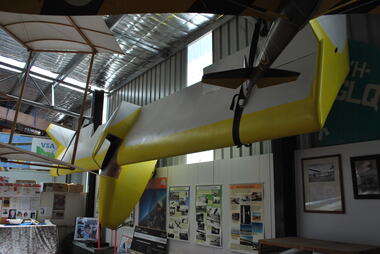
Machine - Glider, 1957
... In addition, a larger two seat derivative (known as the Twin Plank) designed and built by Glidair Sailplanes (completed 1958) is held at the Power House Museum, Castlehill, in Sydney. australian gliding glider flying wing flying plank home-built cliff brown al backstrom fred hoinville glidair sailplanes None Single seat tailless glider with wing tip rudders. The glider is of wood / fabric construction and has been restored for static display ...The aircraft was built in 1957 by Cliff Brown. It is an EPB 1, a 26 foot tailless sailplane designed in United States by Al Backstrom, Phil Easley and Jack Powell in 1954 as a simple, cheap, compact craft.A small number of single seat gliders of this type were built in Australia in the 1950s. As far as is presently known, the only surviving substantially complete EPB 1s are Cliff Brown’s glider and another held by the RAAF Association at Bull Creek in Western Australia. Unfortunately, no trace exists of the Flying Plank built by Glidair Sailplanes in Sydney and test flown by Fred Hoinville at Moorabbin in 1957. In addition, a larger two seat derivative (known as the Twin Plank) designed and built by Glidair Sailplanes (completed 1958) is held at the Power House Museum, Castlehill, in Sydney. Single seat tailless glider with wing tip rudders. The glider is of wood / fabric construction and has been restored for static display by recovering with new fabric and painting. Noneaustralian gliding, glider, flying wing, flying plank, home-built, cliff brown, al backstrom, fred hoinville, glidair sailplanes -
 Australian Gliding Museum
Machine - Glider – Sailplane, 1953
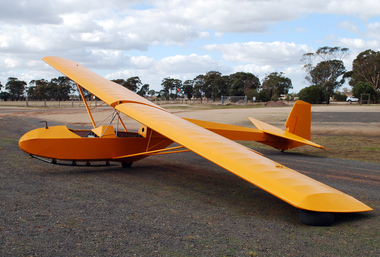
... The Museum volunteers have partly refurbished the ES50 to static display standard. ...The Museum volunteers have partly refurbished the ES50 to static display standard. ...The Schneider ES50 Club was built in 1953 and is the only one of its type. It was designed by Schneider to comply with specifications laid down by the Gliding Federation of Australia for a basic two seat training glider*. It was first flown on 10 May 1953 and delivered to the Renmark Gliding Club. The log book shows that it later passed to other gliding clubs, namely Millicent Gliding Club, Corangamite Soaring Club, Sydney Technical College Gliding Club. Overall, as at September 1967, the glider had logged over 5000 flights and a total airtime of 388 hours. The Museum volunteers have partly refurbished the ES50 to static display standard. [*Plans were also prepared for a single seat version which never eventuated] This glider is one of Edmund Schneider Pty Ltd earliest Australian designs. However, it was a later Schneider design, the ES 52 Kookaburra, which was accepted by many Australian gliding clubs for filling their need for a basic two seat training glider in the 1950s and 1960s. This is a two seat high wing aircraft of mainly wood and fabric construction. The cockpit area of the fuselage is fabric over tubular steel framing. Given serial number 3 by manufacturer and registered as VH-GHPaustralian gliding, glider, sailplane, schneider, es50, renmark gliding club, millicent gliding club, corangamite soaring club, sydney technical college gliding club -
 Puffing Billy Railway
1 NH, Powder & General Goods Van, June 1910
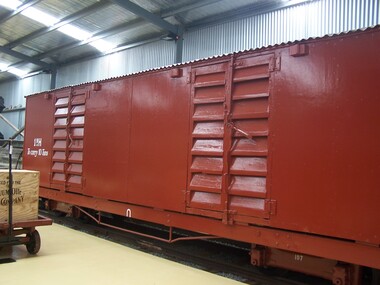
... Museum at Menzies Creek. Body donated to the Puffing Billy Preservation Society. Vehicle Length 25 feet 2 inches ( 7671 mm) Coupled Length 27 feet 4 inches (8330 mm) Width 6 feet 3 inches (1905 mm) Weight 7 tons Capacity 10 tons Built 1910 Number Built 1 In use - Static display...Museum at Menzies Creek. Body donated to the Puffing Billy Preservation Society. Vehicle Length 25 feet 2 inches ( 7671 mm) Coupled Length 27 feet 4 inches (8330 mm) Width 6 feet 3 inches (1905 mm) Weight 7 tons Capacity 10 tons Built 1910 Number Built 1 In use - Static display Historic - Victorian Railways - narrow gauge rolling stock - Powder & General Goods Van Victorian Heritage Register (VHR) Number H2187 Puffing Billy Locomotives and Rolling Stock Collection puffing billy powder & general goods van nh1 nh1 powder & general goods van victorian railways narrow gauge rolling stock NH1 To carry 10 tons 1 NH - Powder & General Goods Van Made of Timber - wood, wrought iron and metal sheet There were two compartments: a 10ft 8¾ inch (3,270 mm) section for explosives and a 13 ft 7 in (4,140 mm) section for general goods. ...V.R. Powder & General Goods Van NH1 Gauge 2'6" The NH Powder and Goods van was built in 1910. Its purpose was to carry explosives and general goods, Originally classed as NPH. There were two compartments: a 10ft 8¾ inch (3,270 mm) section for explosives and a 13 ft 7 in (4,140 mm) section for general goods. The sides, ends and doors were covered in sheet metal. With the closing of the mines at Walhalla the need to carry explosives ended and both compartments were used for general goods. The doors were replaced with NU type louvre doors for ventilation. NH1 Covered Truck Service History : NPH NPH 1 was built and issued to traffic June 1910. It was a bogie boxvan set up for general goods and the transportation of explosives. It could carry 6 tons of goods and 4 tons of explosives. No doubt the van was stationed on the Moe - Walhalla line. Walhalla was a gold mining town and the rail line had been built from Moe to provide a faster means of transportation than bullock teams from the sailing boats from Melbourne to Port Albert/Sale via Heyfield. In 1911 the van was converted to all goods transport and recoded to NH. NH The van was fitted with autocouplers in 1928. It was scrapped in 1954. By 1968, the vehicle body had been found and was placed into the Museum at Menzies Creek. Body donated to the Puffing Billy Preservation Society. Vehicle Length 25 feet 2 inches ( 7671 mm) Coupled Length 27 feet 4 inches (8330 mm) Width 6 feet 3 inches (1905 mm) Weight 7 tons Capacity 10 tons Built 1910 Number Built 1 In use - Static displayHistoric - Victorian Railways - narrow gauge rolling stock - Powder & General Goods Van Victorian Heritage Register (VHR) Number H2187 Puffing Billy Locomotives and Rolling Stock Collection1 NH - Powder & General Goods Van Made of Timber - wood, wrought iron and metal sheet There were two compartments: a 10ft 8¾ inch (3,270 mm) section for explosives and a 13 ft 7 in (4,140 mm) section for general goods. The sides, ends covered in sheet metal with NU type louvre doors for ventilation. NH1 To carry 10 tonspuffing billy, powder & general goods van nh1, nh1, powder & general goods van, victorian railways, narrow gauge rolling stock -
 Puffing Billy Railway
G42, Garratt Steam Locomotive, 1926
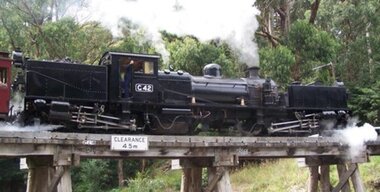
... The Victorian Railways offered G42 to the Puffing Billy Preservation Society, for display as a static exhibit in the Menzies Creek Museum. Over time, a plan evolved to restore G42 to operation, a goal that was eventually achieved by the launch of G42 back into traffic in April 2004. ...The Victorian Railways offered G42 to the Puffing Billy Preservation Society, for display as a static exhibit in the Menzies Creek Museum. Over time, a plan evolved to restore G42 to operation, a goal that was eventually achieved by the launch of G42 back into traffic in April 2004. ...G42 Garratt Steam Locomotive Traffic and train loadings on Victoria's narrow gauge railways reached their peak during the 1920s. To assist in handling the longer, heavier trains, the Victorian Railways ordered two larger, more powerful Beyer Garratt locomotives. These were delivered in 1926 and were numbered G41 and G42. They were sent to work on the Colac–Beech Forest–Crowes line and the Moe–Walhalla line respectively. After the line from Moe closed in 1954, G42 was sent to Colac, where it worked with its mate, G41, until closure of that line in mid-1962. G41 had been in poor condition and was scrapped, whereas a brighter future awaited G42. The Victorian Railways offered G42 to the Puffing Billy Preservation Society, for display as a static exhibit in the Menzies Creek Museum. Over time, a plan evolved to restore G42 to operation, a goal that was eventually achieved by the launch of G42 back into traffic in April 2004. G42 now continues to operate as a restored member of the Puffing Billy Railway's locomotive fleet. No. originally constructed: 2 No. in service: 1 (No. 42) Boiler pressure: (lb/sq. in) 180 Boiler heating surface: 1268 sq ft (117.8 m2) Tractive effort: (85%) 26,860 lbs (12.18 t) Driving wheel diameter: 36" (91.44 cm) Max axle load: 9t 5cwt Length Overall: 51' 7" (15.72m) Height Overall: 10' 8" (3.28m) Date of manufacture: 1926 Manufacturer: Beyer Peacock Place of manufacture: Manchester UK Locomotive Type: Garratt Coal capacity: 70 cwt Cylinder diameter: 13" (33.02 cm) Cylinder stroke: 18" (45.72 cm) Wheel arrangement: 2-6-0+0-6-2 Roadworthy weight: 69t Water capacity: 1680 gal (7,637.43 l) Beyer Peacock - Garratt Locomotives Register Works Number - 6268 / 1926 Gauge/Railway/Class - 2'6"/Victorian Government Rlys/G Type - 2-6-0+0-6-2 No. G42 Notes - Australia G42 Built in 1926 and painted all-over black, this Garratt locomotive was issued to the Moe to Walhalla line where it remained—other than for overhauls—until the line closed in 1954. After an overhaul at Newport Workshops, it was issued to the Colac to Crowes line and remained there until that line closed in 1962 when it was returned to Newport Workshops for storage. In 1964 it was sold to the Puffing Billy Preservation Society and removed from the V.R. register 3 months later. It arrived at Belgrave in 1968 and was hauled to Menzies Creek for static display in the museum. 1986 saw the commencement of restoration the Belgrave workshops and has been restored to its 1946 to 1954 condition with raised cab roof, raised marker lamps, steel cow-catchers and all-over black livery. It was returned to service on April 18, 2004. Service History : Jun 1926 - Moe - initial allocation of a new locomotive Jun 1926 - Oct 1954 Moe Oct 1954 - Jan 1955 Workshops Jun 1955 - May 1962 Colac Jul 1962 - Dec 1965 Workshops - Stored Jan 1968 - Feb 1968 Belgrave - Stored Feb 1968 - 1982 - Menzies Creek Steam Museum 1982 - 2004 - Under restoration Apr 2004 - Belgrave - In active service at Puffing Billy Railway BelgraveHistoric - Victorian Railways - Narrow Gauge - Garratt Steam Locomotive - G42 Victorian Heritage Register (VHR) Number H2187 G42 Garratt Steam Locomotive made of steel, iron and wrought iron with brass fittings - the Locomotive is in Active Service - Belgrave Station G42puffing billy, narrow gauge, garratt, g42, steam locomotive, beyer peacock, victorian railways -
 Puffing Billy Railway
Peckett, 1711 Peckett Steam Locomotive, 1926
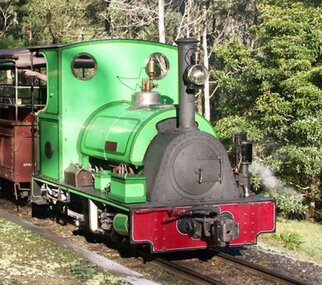
... In 1965 it was sold again and went to the Whistle Stop Amusement Park in Frankston and again stored until bought at auction by the Puffing Billy Preservation Society in 1974 and put on static display in the Steam Museum. Restoration started in 1978 and it was returned to service in 1981 painted light green with yellow lining. ...In 1965 it was sold again and went to the Whistle Stop Amusement Park in Frankston and again stored until bought at auction by the Puffing Billy Preservation Society in 1974 and put on static display in the Steam Museum. Restoration started in 1978 and it was returned to service in 1981 painted light green with yellow lining. ...Steam Locomotive - 1711 Peckett “Sir John Grice” Date built - 1926 Locomotive type ; Cranmore Original owner - Metropolitan Gas Coy., West Melbourne Original gauge - 762mm Withdrawn - 1941 Next owner - Whistle Stop Amusement Park, Frankston Built in 1926 for the West Melbourne site of the Metropolitan Gas Company, and issued to traffic the same year this saddle tank locomotive was named “Sir John Grice” in 1928. It was withdrawn from traffic in 1941 and stored until sold privately in 1962. In 1965 it was sold again and went to the Whistle Stop Amusement Park in Frankston and again stored until bought at auction by the Puffing Billy Preservation Society in 1974 and put on static display in the Steam Museum. Restoration started in 1978 and it was returned to service in 1981 painted light green with yellow lining. It is temporarily renamed “Thomas the Tank Engine” with a fibreglass “Thomas” body cover each time it appears in the “Thomas the Tank Engine” shows at Gembrook station.Historic - Industrial Narrow Gauge Railway - Steam Locomotive used at the Metropolitan Gas Coy., West Melbourne, Victoria, AustraliaSteam Locomotive made of steel, wrought iron Peckettpeckett “sir john grice”, 1711 peckett, puffing billy, steam locomotive, industrial narrow gauge railway, metropolitan gas coy., west melbourne -
 Moorabbin Air Museum
Machine - Duigan Bi-Plane Replica VH-DGN, 2007
... Description: The Duigan Centenary of Flight - 2010 replica aircraft was handed over to the Australian National Aviation Museum in 2011 following its key role in the celebrations of the Centenary. Highlights included static display at Mia Mia in July 2010 and taxi-ing. ...Description: The Duigan Centenary of Flight - 2010 replica aircraft was handed over to the Australian National Aviation Museum in 2011 following its key role in the celebrations of the Centenary. Highlights included static display at Mia Mia in July 2010 and taxi-ing. ...Historical Details: Reproduction. Description: The Duigan Centenary of Flight - 2010 replica aircraft was handed over to the Australian National Aviation Museum in 2011 following its key role in the celebrations of the Centenary. Highlights included static display at Mia Mia in July 2010 and taxi-ing. Level of Importance: -
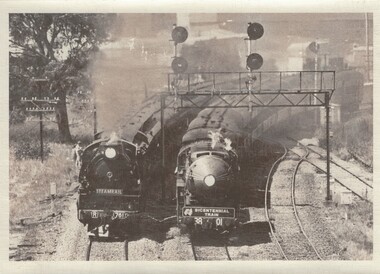 Wodonga & District Historical Society Inc
Photograph - Fred Rochow Railways Collection - Locomotive R761 and Bicentennial Train 3801 departing Wodonga, 16 October 1988
... Museum (NSWRTM), Enfield on withdrawal from NSWGR service and continued in operation as a tour locomotive. It hauled the “Western Endeavour” on the first crossing of the Australian continent by a standard gauge train from Sydney to Perth and return in August – September 1970. 3801 also stars in the railway film ‘A Steam Train Passes’ made by Film Australia in 1974 By 1976 had been withdrawn from service due to poor boiler condition and placed on static display by the Rail Transport Museum in Thirlmere, NSW. ...Museum (NSWRTM), Enfield on withdrawal from NSWGR service and continued in operation as a tour locomotive. It hauled the “Western Endeavour” on the first crossing of the Australian continent by a standard gauge train from Sydney to Perth and return in August – September 1970. 3801 also stars in the railway film ‘A Steam Train Passes’ made by Film Australia in 1974 By 1976 had been withdrawn from service due to poor boiler condition and placed on static display by the Rail Transport Museum in Thirlmere, NSW. ...The Fred Rochow Railways Collection incorporates photos related to the operation of the Wodonga Railway Station including different types of trains and railways staff C. 1930 – 1990. It was donated to the Wodonga Historical Society by Fred Rochow, a railwayman who spent many years based in Wodonga. He joined the Victorian Railways on 17th June l947 and retired in 1988. For some time, he was a member of the Australian Federated Union of Locomotive Enginemen and served a term as a member of the Trades Hall Council. He had an extensive knowledge of the struggles that took place to achieve better conditions for railway workers. Fred worked for many years as a fireman and then worked his way up the ranks to driver, experiencing many changes from the days of steam locomotives through to diesel trains, locomotives and even the modern XPT train. He worked throughout Victoria at different stages of his career, with his final working years focused on the northeast of Victoria and the Albury to Melbourne line. After his retirement, Fred continued to share his love of steam miniature trains with the community.This collection has local and statewide significance as it captures images of trains, locomotives and personnel who operated the railway services in Wodonga and throughout Northeast Victoria. The railways played a critical role in opening up Victoria and connecting Australia for trade, business, social communication and transport.Locomotive R761 with Driver Norm Depomeroy and Fireman Steve Gibson running in parallel with the Bicentennial Train hauled by Locomotive 3801 with Driver Fred Rochow and Fireman David Brown. Locomotive R761 - The R761 arrived in Victoria on the 28th February 1952 upon the ship ‘Helenus’ and entered service on the 9th April 1952. R761 spent long periods in storage and occasionally saw service until it was withdrawn. In 1970 R761 was overhauled and was made available for use on special trains. It became the final R class to run in VR service on the 5th September 1974, ending 120 years of mainline steam operation in Victoria. After years of debate about its future, on the 30th March 1985 the loco was officially returned to service, hauling special trains to celebrate the years of steam locomotives. Locomotive 3801 was built by Sydney company The Clyde Engineering Co. Ltd., Granville in 1943 as the first of five streamlined (C) 38-class locomotives for the New South Wales Government Railways’ top-link express passenger duties. The delivery of 3801 was much delayed due to wartime labour & material shortages, together with competing wartime construction priorities. After many years of service, 3801 had been scheduled for withdrawal in 1962 due to deteriorating mechanical condition, but rail enthusiasts raised sufficient funds to cover the cost of its overhaul. 3801 joined the collection of the New South Wales Rail Transport Museum (NSWRTM), Enfield on withdrawal from NSWGR service and continued in operation as a tour locomotive. It hauled the “Western Endeavour” on the first crossing of the Australian continent by a standard gauge train from Sydney to Perth and return in August – September 1970. 3801 also stars in the railway film ‘A Steam Train Passes’ made by Film Australia in 1974 By 1976 had been withdrawn from service due to poor boiler condition and placed on static display by the Rail Transport Museum in Thirlmere, NSW. The Locomotive remained in Thirlmere until 1983 when it was decided it should be restored for the Australian Bicentenary in 1988. A new organisation was created specifically for the purpose of operating 3801, and thus 3801 Limited was incorporated on 5th June 1985. Work on the locomotive was completed after three years, with 3801 making its debut at a special Railway Ball hosted in its honour on 29th November 1986. During the Australian Bicentenary celebrations in 1988, it operated an extensive program across Australia visiting every mainland capital accessible by rail including an appearance at AusSteam ’88 in Melbourne in October 1988, stopping over in Wodonga on the way. After the company’s 20-year lease on the locomotive expired in 2006 Railcorp chose not to extend the agreement, and the locomotive returned to the Rail Transport Museum at Thirlmere (now the NSW Rail Museum). 3801 was withdrawn from service in 2007 for major boiler repairs. Locomotive 3801 was officially relaunched at Sydney's Central Station on Friday 12 March 2021 by Her Excellency, the Honourable Margaret Beazley AC QC, Governor of New South Wales.On front of locomotive on the left "STEAMRAIL /R761". On front of locomotive on the right "BICENTENNIAL TRAIN/3801" railways wodonga, fred rochow, locomotive r761, bicentennial train, locomotive 3801 -
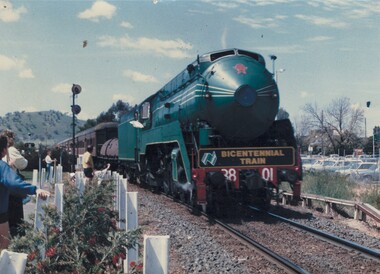 Wodonga & District Historical Society Inc
Photograph - Fred Rochow Railways Collection - Bicentennial Train Locomotive 3801, 29 October 1988
... Museum (NSWRTM), Enfield on withdrawal from NSWGR service and continued in operation as a tour locomotive. It hauled the “Western Endeavour” on the first crossing of the Australian continent by a standard gauge train from Sydney to Perth and return in August – September 1970. 3801 also stars in the railway film ‘A Steam Train Passes’ made by Film Australia in 1974 By 1976 had been withdrawn from service due to poor boiler condition and placed on static display by the Rail Transport Museum in Thirlmere, NSW. ...Museum (NSWRTM), Enfield on withdrawal from NSWGR service and continued in operation as a tour locomotive. It hauled the “Western Endeavour” on the first crossing of the Australian continent by a standard gauge train from Sydney to Perth and return in August – September 1970. 3801 also stars in the railway film ‘A Steam Train Passes’ made by Film Australia in 1974 By 1976 had been withdrawn from service due to poor boiler condition and placed on static display by the Rail Transport Museum in Thirlmere, NSW. ...The Fred Rochow Railways Collection incorporates photos related to the operation of the Wodonga Railway Station including different types of trains and railways staff C. 1930 – 1990. It was donated to the Wodonga Historical Society by Fred Rochow, a railwayman who spent many years based in Wodonga. He joined the Victorian Railways on 17th June l947 and retired in 1988. For some time, he was a member of the Australian Federated Union of Locomotive Enginemen and served a term as a member of the Trades Hall Council. He had an extensive knowledge of the struggles that took place to achieve better conditions for railway workers. Fred worked for many years as a fireman and then worked his way up the ranks to driver, experiencing many changes from the days of steam locomotives through to diesel trains, locomotives and even the modern XPT train. He worked throughout Victoria at different stages of his career, with his final working years focused on the northeast of Victoria and the Albury to Melbourne line. After his retirement, Fred continued to share his love of steam miniature trains with the community.This collection has local and statewide significance as it captures images of trains, locomotives and personnel who operated the railway services in Wodonga and throughout Northeast Victoria. The railways played a critical role in opening up Victoria and connecting Australia for trade, business, social communication and transport.Bicentennial Train hauled by Locomotive 3801 passing through Wodonga. Locomotive 3801 was built by Sydney company The Clyde Engineering Co. Ltd., Granville in 1943 as the first of five streamlined (C) 38-class locomotives for the New South Wales Government Railways’ top-link express passenger duties. The delivery of 3801 was much delayed due to wartime labour & material shortages, together with competing wartime construction priorities. After many years of service, 3801 had been scheduled for withdrawal in 1962 due to deteriorating mechanical condition, but rail enthusiasts raised sufficient funds to cover the cost of its overhaul. 3801 joined the collection of the New South Wales Rail Transport Museum (NSWRTM), Enfield on withdrawal from NSWGR service and continued in operation as a tour locomotive. It hauled the “Western Endeavour” on the first crossing of the Australian continent by a standard gauge train from Sydney to Perth and return in August – September 1970. 3801 also stars in the railway film ‘A Steam Train Passes’ made by Film Australia in 1974 By 1976 had been withdrawn from service due to poor boiler condition and placed on static display by the Rail Transport Museum in Thirlmere, NSW. The Locomotive remained in Thirlmere until 1983 when it was decided it should be restored for the Australian Bicentenary in 1988. A new organisation was created specifically for the purpose of operating 3801, and thus 3801 Limited was incorporated on 5th June 1985. Work on the locomotive was completed after three years, with 3801 making its debut at a special Railway Ball hosted in its honour on 29th November 1986. During the Australian Bicentenary celebrations in 1988, it operated an extensive program across Australia visiting every mainland capital accessible by rail including an appearance at AusSteam ’88 in Melbourne in October 1988, stopping over in Wodonga on the way. After the company’s 20-year lease on the locomotive expired in 2006 Railcorp chose not to extend the agreement, and the locomotive returned to the Rail Transport Museum at Thirlmere (now the NSW Rail Museum). 3801 was withdrawn from service in 2007 for major boiler repairs. Locomotive 3801 was officially relaunched at Sydney's Central Station on Friday 12 March 2021 by Her Excellency, the Honourable Margaret Beazley AC QC, Governor of New South Wales.On front of locomotive Australia Bicentennial logo and sign "BICENTENNIAL TRAIN/3801" railways wodonga, fred rochow, locomotive r761, bicentennial train, locomotive 3801 -
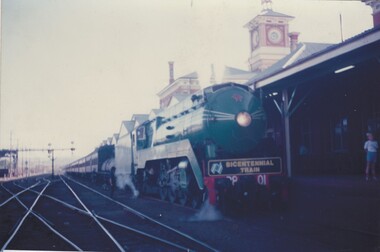 Wodonga & District Historical Society Inc
Photograph - Fred Rochow Railways Collection - Bicentennial Train Locomotive 3801 arriving in Albury, 29 October 1988
... Museum (NSWRTM), Enfield on withdrawal from NSWGR service and continued in operation as a tour locomotive. It hauled the “Western Endeavour” on the first crossing of the Australian continent by a standard gauge train from Sydney to Perth and return in August – September 1970. 3801 also stars in the railway film ‘A Steam Train Passes’ made by Film Australia in 1974 By 1976 had been withdrawn from service due to poor boiler condition and placed on static display by the Rail Transport Museum in Thirlmere, NSW. ...Museum (NSWRTM), Enfield on withdrawal from NSWGR service and continued in operation as a tour locomotive. It hauled the “Western Endeavour” on the first crossing of the Australian continent by a standard gauge train from Sydney to Perth and return in August – September 1970. 3801 also stars in the railway film ‘A Steam Train Passes’ made by Film Australia in 1974 By 1976 had been withdrawn from service due to poor boiler condition and placed on static display by the Rail Transport Museum in Thirlmere, NSW. ...The Fred Rochow Railways Collection incorporates photos related to the operation of the Wodonga Railway Station including different types of trains and railways staff C. 1930 – 1990. It was donated to the Wodonga Historical Society by Fred Rochow, a railwayman who spent many years based in Wodonga. He joined the Victorian Railways on 17th June l947 and retired in 1988. For some time, he was a member of the Australian Federated Union of Locomotive Enginemen and served a term as a member of the Trades Hall Council. He had an extensive knowledge of the struggles that took place to achieve better conditions for railway workers. Fred worked for many years as a fireman and then worked his way up the ranks to driver, experiencing many changes from the days of steam locomotives through to diesel trains, locomotives and even the modern XPT train. He worked throughout Victoria at different stages of his career, with his final working years focused on the northeast of Victoria and the Albury to Melbourne line. After his retirement, Fred continued to share his love of steam miniature trains with the community.This collection has local and statewide significance as it captures images of trains, locomotives and personnel who operated the railway services in Wodonga and throughout Northeast Victoria. The railways played a critical role in opening up Victoria and connecting Australia for trade, business, social communication and transport.Bicentennial Train hauled by Locomotive 3801 arriving at Albury Station, Locomotive 3801 was built by Sydney company The Clyde Engineering Co. Ltd., Granville in 1943 as the first of five streamlined (C) 38-class locomotives for the New South Wales Government Railways’ top-link express passenger duties. The delivery of 3801 was much delayed due to wartime labour & material shortages, together with competing wartime construction priorities. After many years of service, 3801 had been scheduled for withdrawal in 1962 due to deteriorating mechanical condition, but rail enthusiasts raised sufficient funds to cover the cost of its overhaul. 3801 joined the collection of the New South Wales Rail Transport Museum (NSWRTM), Enfield on withdrawal from NSWGR service and continued in operation as a tour locomotive. It hauled the “Western Endeavour” on the first crossing of the Australian continent by a standard gauge train from Sydney to Perth and return in August – September 1970. 3801 also stars in the railway film ‘A Steam Train Passes’ made by Film Australia in 1974 By 1976 had been withdrawn from service due to poor boiler condition and placed on static display by the Rail Transport Museum in Thirlmere, NSW. The Locomotive remained in Thirlmere until 1983 when it was decided it should be restored for the Australian Bicentenary in 1988. A new organisation was created specifically for the purpose of operating 3801, and thus 3801 Limited was incorporated on 5th June 1985. Work on the locomotive was completed after three years, with 3801 making its debut at a special Railway Ball hosted in its honour on 29th November 1986. During the Australian Bicentenary celebrations in 1988, it operated an extensive program across Australia visiting every mainland capital accessible by rail including an appearance at AusSteam ’88 in Melbourne in October 1988, stopping over in Wodonga on the way. After the company’s 20-year lease on the locomotive expired in 2006 Railcorp chose not to extend the agreement, and the locomotive returned to the Rail Transport Museum at Thirlmere (now the NSW Rail Museum). 3801 was withdrawn from service in 2007 for major boiler repairs. Locomotive 3801 was officially relaunched at Sydney's Central Station on Friday 12 March 2021 by Her Excellency, the Honourable Margaret Beazley AC QC, Governor of New South Wales.On front of locomotive Australia Bicentennial logo and sign "BICENTENNIAL TRAIN/3801" railways wodonga, fred rochow, locomotive r761, bicentennial train, locomotive 3801 -
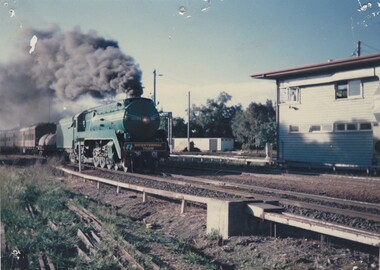 Wodonga & District Historical Society Inc
Photograph - Fred Rochow Railways Collection - Bicentennial Train Locomotive 3801 passing Wodonga Signal box, 29 October 1988
... Museum (NSWRTM), Enfield on withdrawal from NSWGR service and continued in operation as a tour locomotive. It hauled the “Western Endeavour” on the first crossing of the Australian continent by a standard gauge train from Sydney to Perth and return in August – September 1970. 3801 also stars in the railway film ‘A Steam Train Passes’ made by Film Australia in 1974 By 1976 had been withdrawn from service due to poor boiler condition and placed on static display by the Rail Transport Museum in Thirlmere, NSW. ...Museum (NSWRTM), Enfield on withdrawal from NSWGR service and continued in operation as a tour locomotive. It hauled the “Western Endeavour” on the first crossing of the Australian continent by a standard gauge train from Sydney to Perth and return in August – September 1970. 3801 also stars in the railway film ‘A Steam Train Passes’ made by Film Australia in 1974 By 1976 had been withdrawn from service due to poor boiler condition and placed on static display by the Rail Transport Museum in Thirlmere, NSW. ...The Fred Rochow Railways Collection incorporates photos related to the operation of the Wodonga Railway Station including different types of trains and railways staff C. 1930 – 1990. It was donated to the Wodonga Historical Society by Fred Rochow, a railwayman who spent many years based in Wodonga. He joined the Victorian Railways on 17th June l947 and retired in 1988. For some time, he was a member of the Australian Federated Union of Locomotive Enginemen and served a term as a member of the Trades Hall Council. He had an extensive knowledge of the struggles that took place to achieve better conditions for railway workers. Fred worked for many years as a fireman and then worked his way up the ranks to driver, experiencing many changes from the days of steam locomotives through to diesel trains, locomotives and even the modern XPT train. He worked throughout Victoria at different stages of his career, with his final working years focused on the northeast of Victoria and the Albury to Melbourne line. After his retirement, Fred continued to share his love of steam miniature trains with the community.This collection has local and statewide significance as it captures images of trains, locomotives and personnel who operated the railway services in Wodonga and throughout Northeast Victoria. The railways played a critical role in opening up Victoria and connecting Australia for trade, business, social communication and transport.Bicentennial Train hauled by Locomotive 3801 passing the Wodonga Signal box. Locomotive 3801 was built by Sydney company The Clyde Engineering Co. Ltd., Granville in 1943 as the first of five streamlined (C) 38-class locomotives for the New South Wales Government Railways’ top-link express passenger duties. The delivery of 3801 was much delayed due to wartime labour & material shortages, together with competing wartime construction priorities. After many years of service, 3801 had been scheduled for withdrawal in 1962 due to deteriorating mechanical condition, but rail enthusiasts raised sufficient funds to cover the cost of its overhaul. 3801 joined the collection of the New South Wales Rail Transport Museum (NSWRTM), Enfield on withdrawal from NSWGR service and continued in operation as a tour locomotive. It hauled the “Western Endeavour” on the first crossing of the Australian continent by a standard gauge train from Sydney to Perth and return in August – September 1970. 3801 also stars in the railway film ‘A Steam Train Passes’ made by Film Australia in 1974 By 1976 had been withdrawn from service due to poor boiler condition and placed on static display by the Rail Transport Museum in Thirlmere, NSW. The Locomotive remained in Thirlmere until 1983 when it was decided it should be restored for the Australian Bicentenary in 1988. A new organisation was created specifically for the purpose of operating 3801, and thus 3801 Limited was incorporated on 5th June 1985. Work on the locomotive was completed after three years, with 3801 making its debut at a special Railway Ball hosted in its honour on 29th November 1986. During the Australian Bicentenary celebrations in 1988, it operated an extensive program across Australia visiting every mainland capital accessible by rail including an appearance at AusSteam ’88 in Melbourne in October 1988, stopping over in Wodonga on the way. After the company’s 20-year lease on the locomotive expired in 2006 Railcorp chose not to extend the agreement, and the locomotive returned to the Rail Transport Museum at Thirlmere (now the NSW Rail Museum). 3801 was withdrawn from service in 2007 for major boiler repairs. Locomotive 3801 was officially relaunched at Sydney's Central Station on Friday 12 March 2021 by Her Excellency, the Honourable Margaret Beazley AC QC, Governor of New South Wales.On front of locomotive Australia Bicentennial logo and sign "BICENTENNIAL TRAIN/3801" railways wodonga, fred rochow, locomotive r761, bicentennial train, locomotive 3801
